1. Introduction
According to the Paris Agreement goals, limiting global warming actions to be taken to reduce greenhouse gas (GHG) emissions in the transport sector concern improvements in the fuel efficiency of new passenger cars and increasing the share of non-fossil fuel vehicles in new vehicle sales [
1]. Credible projections suggest, however, that even the growth of alternative powertrains will be substantial, and internal combustion engines (ICEs), particularly Spark-Ignited (SI), are to remain the main powertrain for the foreseeable future [
2,
3]. Similarly, most global transport energy will still come from petroleum and, even by 2040, petrol will remain the main source of energy for light-duty vehicles [
4,
5]. Moreover, although a gradual transition towards alternative fuels (biofuels, natural gas (NG), hydrogen, synthetic fuels, electro-fuels, liquid petroleum gas (LPG) and methanol) could be expected, the year 2070 is indicated as the end of the contribution of road transport to direct emissions from fossil fuel combustion [
6].
Among a number of negative environmental effects, e.g., atmospheric contamination, the combustion of conventional fuels derived from petroleum (petrol, diesel) also makes a great contribution to global warming driven by the release of greenhouse gases (GHG). It is estimated that road transport is responsible for almost 16% of global fossil fuel-related CO2. The increasingly stringent vehicular emission regulations, being a result of climate change mitigation and public health protection measures, require continuous improvements in engine technology aimed at reducing tailpipe emissions.
Improvements in vehicle fuel economy, and hence reductions in emission rates, are inherently linked to an engine’s thermal efficiency. Common measures aimed at increasing the thermal efficiency of modern SI engines are downsizing and intake-boosting. Although both approaches are effective, the associated increased compression ratio and engine load result in pressure and temperature increases in the charge during the combustion process and hence lead to a higher propensity for knocking combustion [
7].
Knocking combustion is an abnormal combustion phenomenon which is induced by the spontaneous, undesired autoignition of the fuel–air mixture in the highly compressed unburned end-gas before flame arrival. As a consequence, high-frequency pressure oscillations across the combustion chamber are generated and, due to the metallic noise associated with autoignition events, the term knock is used to characterize this occurrence. Depending on its intensity, knocking combustion at least deteriorates the combustion process or, if more severe, can even damage engine components; therefore, the phenomenon is widely recognized as a key factor that limits improvements in the efficiency of SI engine and hence its performance [
8].
Propensity to this phenomenon depends on the engine geometry, operating conditions (load and speed) and fuel chemistry. The first two factors influence the temperature and pressure of the end-gas and generally arise from engine properties. Thus, for a given engine, fuel chemistry can be considered the most influential factor [
8,
9].
A commonly used fuel for SI engines is petrol, which is a complex liquid mixture of hydrocarbons belonging to several homologous series (paraffins, olefins, naphthenes and aromatics) and referred to as the PONA group. Differences in the structure of compounds affect fuel resistance to autoignition, which is determined by the octane number (ON) rating. The higher the ON, the higher the fuel’s resistance to knocking combustion. It can be assumed that the use of high-octane fuel would enable new engines to be designed with high efficiency (by increasing the compression ratio and boost pressure). In practice, however, ecological, economic and technological factors limit the possibility of using high-octane commercial petrols [
10,
11]. Therefore, various engine control strategies for knock-free operation have to be applied. Such solutions limit the engine operating range, which results in performance and efficiency deterioration and hence increases the exhaust emissions. Since the number of ICEs in use will still be meaningful in the future, in addition to the improvements in vehicle fuel economy, a modification in fuel properties can also play an important role in reducing transport-related CO
2 emissions [
12], especially considering fuel life cycle analysis (LCA), which, besides the burning, also the harvesting, processing and distribution of fossil fuels into account as sources of these emissions. A commonly used fuel LCA for estimating the net GHG emissions from each stage of a fuel’s life is known as Well-to-Wheel (W-t-W) analysis. It can be split into two parts: Well-to-Tank (W-t-T) analysis relates to emissions from the source of the main feedstock (e.g., oil well) through the refining processes up to final distribution to the pump station, while Tank-to-Wheel (T-t-W) analysis refers to emissions from the final use of the fuel in a vehicle.
The petrol fraction obtained from primary petroleum processing (termed naphtha) has a rather low ON—roughly RON 50–70 [
13,
14]. Therefore, further refinery processing, such as catalytic cracking, catalytic reforming, isomerization, etc., to meet the standard anti-knock quality of the fuel is required. A complex refining process results in high energy consumption and increased GHG emissions. On the other hand, the potential to reduce emissions associated with petroleum-based fuels utilization might be achieved with less processed fuel technology [
14].
Although the fuel octane rating affects engine performance significantly, it is worth noting that the knocking tendency depends on operating conditions that correspond to the engine’s octane number requirement (ONR), i.e., the minimum ON value required for knock-free combustion at a given engine operating point [
8]. Some research works focusing on the ONR during simulated driving cycles [
14,
15,
16] indicated that the minimum octane number to achieve a knock-free combustion process in a real-world vehicle operating conditions is not constant, but varies with the severity of the driving cycle. Simulation results suggest that the ON of commercial petrols (in EU RON 95–98) exceeds the ONR at partial loads, whereas it is insufficient to cover it at full loads. This means that knocking combustion becomes an obstacle to proper engine operation, particularly under high-load conditions [
14,
15,
16,
17,
18,
19].
Based on this conclusion, an alternative solution for knocking combustion suppression in SI engine is proposed by the Octane-on-Demand concept (OOD), which relies on the temporary modification of fuel properties to optimize the combustion process under given operating conditions [
14,
15,
17]. In principle, the concept involves an engine supply system with two fuels with different autoignition resistances (reactivities). A base fuel—low-octane—is used when there is no risk of knocking combustion, whereas an additional one—high-octane—is used in cases when the ONR may exceed the base level.
Moreover, considering the current state-of-the-art in terms of engine and fuel fleet, the OOD concept concerns the applicability of less processed, low-octane fuels while fully maintaining engine performance. In this sense, the broader context of the concept is clear, namely, the successful utilization of low-octane fuels in modern engines would have a beneficial impact on the W-t-W balance efficiency as a result of shortening the naphtha processing time and thus reducing the CO2 emission rate. This in turn should be considered as a step toward decarbonizing the transport sector.
The OOD strategy is realized by means of additional fuel system placed on board the vehicle. In this regard, two concepts of an on-board fuel system can be distinguished—one with two fuel tanks and one with only one fuel tank. The former assumes two separately refilled tanks exist—for base and high-octane fuels [
14,
18,
20]—and both need to be refilled. The latter assumes that the high-octane fuel is separated from the base fuel composition by means of a membrane separation technology on board the vehicle [
21,
22,
23]. In the second solution, only refilling the base fuel is required.
Some studies were developed in order to explore the potential and feasibility of the OOD strategy; however, these mainly focused on fuel combinations.
Chang et al. [
14,
24] investigated an OOD strategy with two fuel tanks in a dual-fuel SI engine. As the base fuel (low-octane), the refinery naphtha (RON 61) was used, and as the high-octane fuel, three oxygenates—methanol (RON 107), methyl t-butyl ether (MTBE, RON 114) and ethyl t-butyl ether (ETBE, RON 110)—were applied. During the study, ONR maps for dual-fuel operation and various fuel combinations were established. It was indicated that the refinery naphtha can be sufficient under part-load conditions for proper engine work. During higher loads and dual-fuel operation, in comparison to ETBE and MTBE, less methanol was required to obtain proper combustion due to its higher latent vaporization heat and faster laminar burning velocity. The results of simulated driving cycles showed a lower ONR for fuel combinations in comparison to neat commercial petrol. Almost 50% of operating conditions during driving cycles did not require fuel with an RON over 90.
Similarly, a comprehensive experimental study of the Octane-on-Demand strategy assuming two storage tanks was conducted by Morganti et al. [
25,
26]. Dual-fuel combinations included methanol as a high-octane fuel and three alternative petroleum-derived low-octane fuels (two kinds of refinery naptha and petrol blendstock, RON 61, 75 and 90, respectively). Fuel consumption during dual-fuel operation was estimated through a simulation of drive cycles using ONR maps. In this study, the results showed that the implementation of the OOD strategy has the potential to increase fuel economy and to improve W-t-W efficiency due to the reduction in fuel consumption and hence GHG emissions during dual-fuel operation in comparison to neat commercial petrol (RON 95) supply.
Research works concerning separation technology, a second approach to the OOD strategy, were presented by Kasseris et al. [
19,
23], Partridge et al. [
16] and Chishima et al. [
27]. A fuel system with membrane separation aims to recover high-octane fractions from fuel, most often fuel rich in ethanol (RON 108). For this purpose, ceramic [
27] or polymer [
16,
19] membranes were analyzed. The research results confirmed the potential to increase fuel economy if ethanol derived from petrol by a separation system is used as a high-octane fuel in the OOD strategy. There are, however, other operational issues requiring the further development of such a solution. Concerns indicated in the research conclusions are associated with an insufficient amount of the high-octane fraction, which depends on the ethanol content in petrol, or with the limited life span of the separation membrane. In addition, the test results showed that the separation system can be insufficient during more dynamic driving cycles (i.e., US06) that require a longer period of dual-fuel operation. In that case, there is a risk of lack of high-octane fuel being used when all separated ethanol is consumed before the next refueling [
19].
An alternative approach to onboard separation was presented by Grubel et al. [
28]. Instead of membrane separation, the researchers proposed the implementation of chemically reactive separation methods for the separation of oxygenates (ethanol and butanol) from the composition of petrol. Three approaches to chemical separation—through interaction with amines or ionic liquids—were examined. It should be noted that the methods were demonstrated only as proof-to-concept and are not ready to use in vehicle fuel systems. Moreover, since the amount of separated alcohol depends on its content in petrol, similarly to the systems with membrane, the issue of premature high-octane fuel consumption is to be expected.
Based on the literature review, it can be concluded that exemplary fuel combinations within a preliminary examination of the OOD concept have been proposed. Existing studies have considered alcohols (ethanol, methanol, and butanol), ethers (MTBE and ETBE) or reformed fractions of petrol as a high-octane fuel and refinery naphtha or petrol blendstocks as a base fuel [
14,
15,
17]. However, despite the above-mentioned research works, which confirmed the potential ecological benefits of implementing the OOD concept, the list of fuels that are adequate for application, especially high-octane fuels, is not exhaustive. In addition, there are still aspects of this concept that require further refinement. Issues such as dual-fuel blending behavior, the determination of the principles of temporary modification of the octane number of the fuel mixture, dual-fuel injection strategy optimization considering the octane requirement map and the effectiveness of the OOD regarding knock suppression are crucial to the effective development of this promising concept. Therefore, further research in this regard is necessary.
To the best of the authors’ knowledge, there are no publications concerning a combustion analysis of mixtures of fuels that vary significantly in terms of reactivity specific to the combustion conditions under the OOD strategy. Such studies could provide useful indicators for optimizing the combustion process under specific engine operating conditions, especially when the risk of knocking combustion occurs. The effectiveness of the OOD strategy in terms of knock suppression—the main reason for its application with respect to the combustion process—has not yet been addressed in research. Considering this, the objective of this study was to evaluate the effectiveness of implementing the OOD strategy for knock suppression in an SI engine. A single-fuel solution was used during the study; standard commercial petrol was used simultaneously as a base fuel and as a source of high-octane fractions (HOFs). In this regard, commercial petrol was comprehensively analyzed in terms of the content of specific components, with emphasis on a mixture of HOFs derived from petrol.
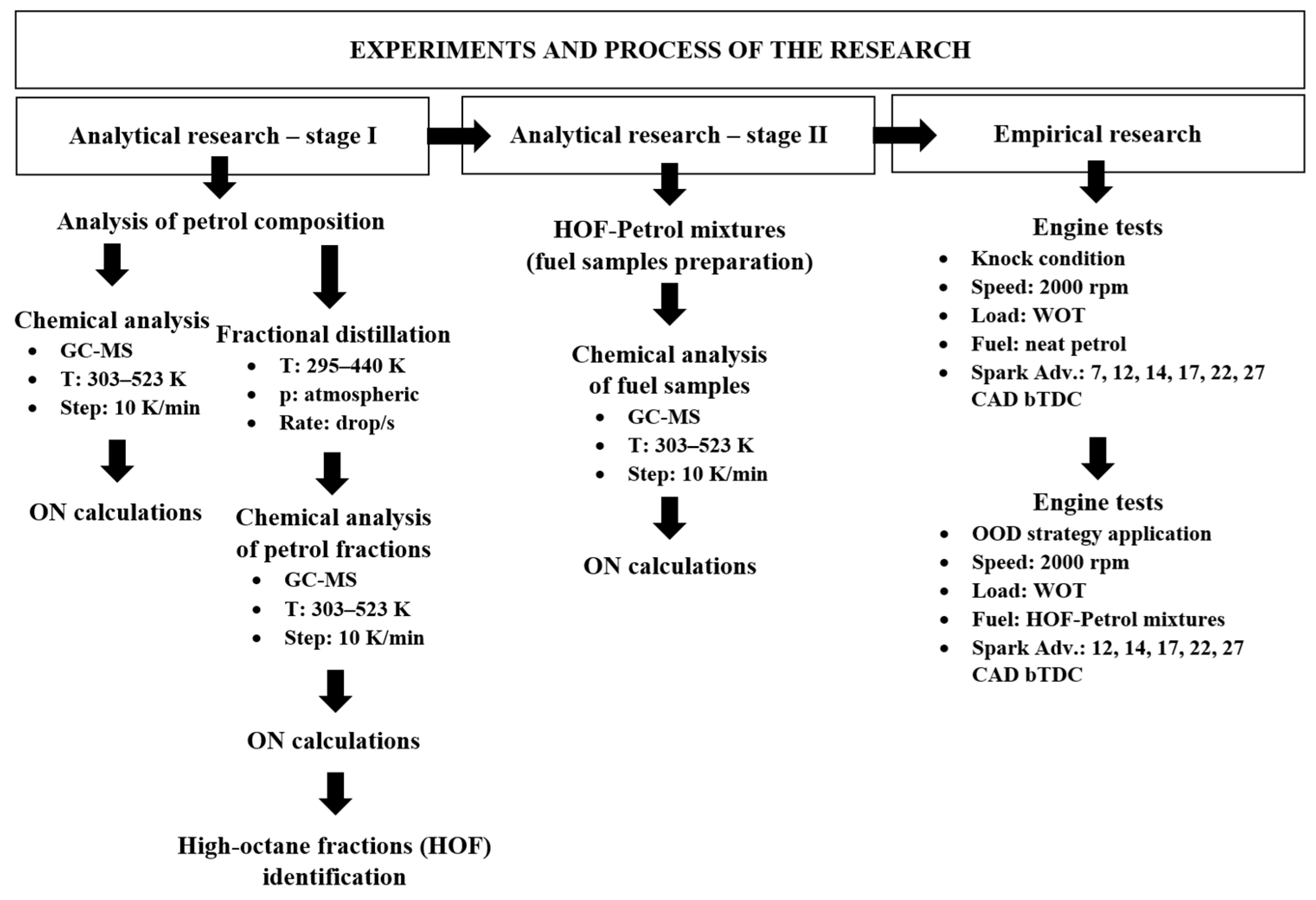
The present investigation involves analytical and empirical research on the application of high-octane components of petrol and is divided into two parts. The first part includes analytical research on fuel composition aimed at determining the content of high-octane compounds in commercial petrol. Moreover, in this section the impact of both fuel mixture compositions on the octane number (RON), based on several fuel samples, was estimated analytically. In the second part, the application and impact of high-octane compounds on knock intensity within the OOD strategy were empirically explored. In this section, the knock intensity was assessed for several engine operating conditions based on in-cylinder pressure analysis. A flowchart showing the experiments and the research process is presented in
Figure 1.
2. Materials and Methods
2.1. Analytical and Empirical Research on Fuel
In the present study, commercial E5 petrol (compliant with EN 228) was used as the reference fuel. The petrol had a density of 0.744 g·cm−3. In the first step, the research covered analysis of the chemical composition using the gas chromatography–mass spectrometry (GC-MS) technique and then determined the presence of high-octane components in petrol.
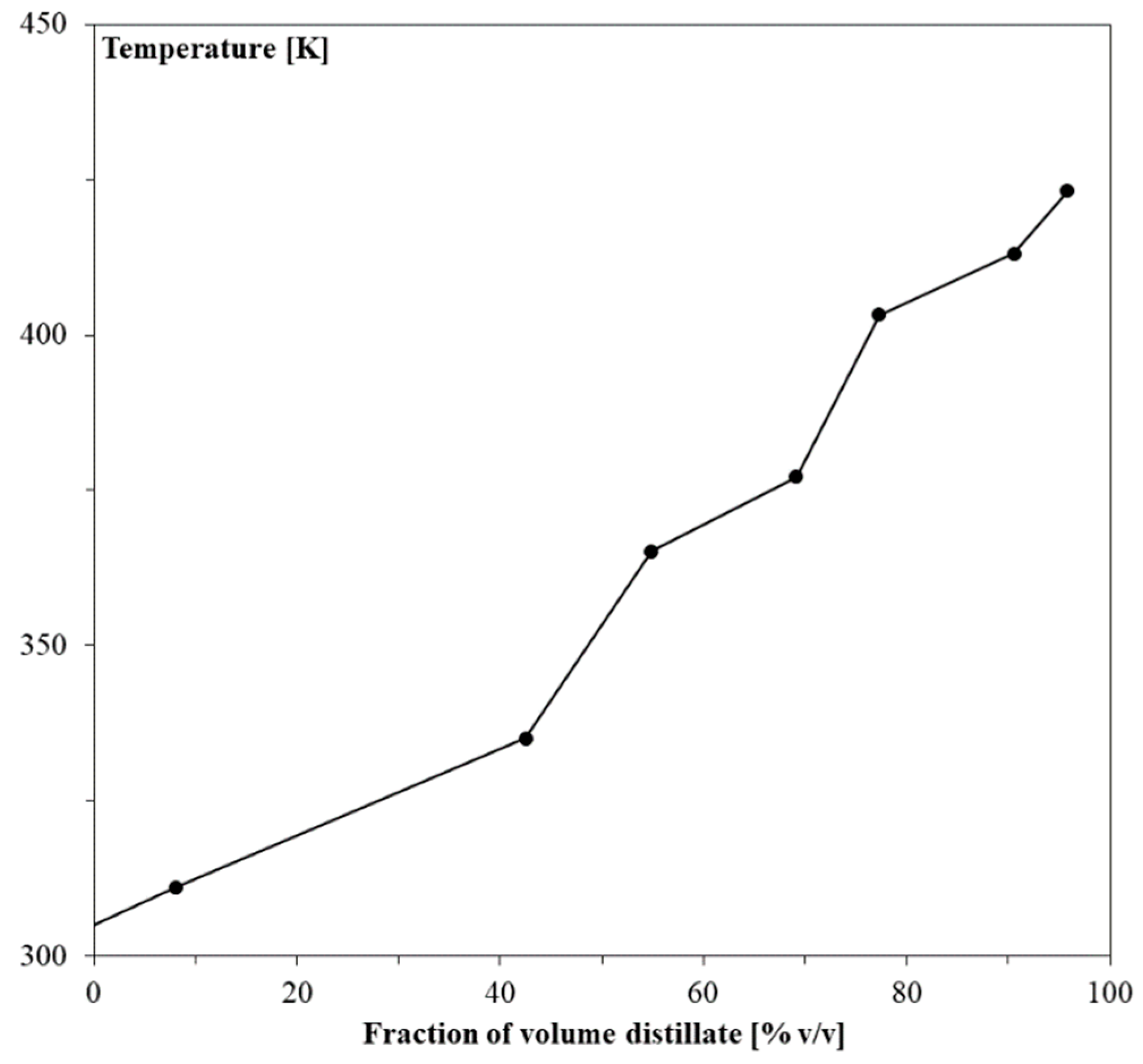
The next step was a fractional distillation of the petrol in order to determine the boiling ranges of its individual fractions and to predict the octane numbers of these fractions. In the following step, fuel samples were prepared as mixtures of petrol and its fractions in various proportions and analyzed anew to determine the impact of fuel proportions on the octane number.
The fractional distillation of petrol was performed manually under atmospheric pressure conditions.
The distillation setup consisted of a heat source, a round-bottomed flask (250 cm3 capacity), a fractionating column (Vigreux, 300 mm length (Pobel S.A., Madrid, Spain)), a thermometer, a Liebig-type condenser, and a receiving flask (Erlenmeyer, 50 cm3 capacity (Pobel S.A., Madrid, Spain)).
The amount of petrol used for the distillation was 100 g. During the distillation process, the temperature of the heat source was controlled to maintain a distillation rate of about one drop per second.
The fuel samples were analyzed using the Agilent 6890N Gas Chromatograph equipped with a HP-5ms capillary column (30 m × 0.25 mm × 0.25 μm), coupled with the Agilent 5973N Mass Selective quadrupole detector (Agilent Technologies, SantaClara, CA, USA). Helium was used as the carrier gas at a constant flow rate of 0.7 mL/min. A liquid sample volume of 0.2 μL was injected in split mode (80:1) without solvent delay. The injector temperature was 523 K. The analyses were carried out within a programmed temperature range of 303–523 K with a temperature ramp rate of 10 K/min. The analysis time was 22.0 min. The ion source and detector temperatures were 503 and 423 K, respectively. The mass range was m/z 10–550. The identification of separated compounds was based on the NIST14 and Wiley’s spectral libraries. Quantitative analysis was carried out using the internal normalization method. Each sample was analyzed three times and the results were averaged.
The study included compounds with a content greater than 0.1%. The identified chemical compounds in each fuel sample were classified according to homologous series in accordance with the PONA algorithm.
In the present study, the octane numbers of the fuel samples were predicted numerically. For this purpose, a composition-based octane model (Equation (1), [
29]) with a standard error of ±1 for the calculated octane numbers (RON, MON) was applied. The model accounts for the nonlinear influence of fuel compounds on the octane number. Data obtained from the GC-MS analysis (the molecular structure and content of fuel compounds) were used as input for the model. The octane model equation can be readily applied as follows:
where
PONA refers to all the homologous series contained in the fuel,
νi values represent the volume fraction (content) of the i-th molecule in the sample,
βi values are the adjustable parameters defined for the model,
values are the interaction parameters, and
ONi values are the octane numbers of the fuel components (as specified in [
11]).
2.2. Empirical Research on the OOD Strategy Implementation
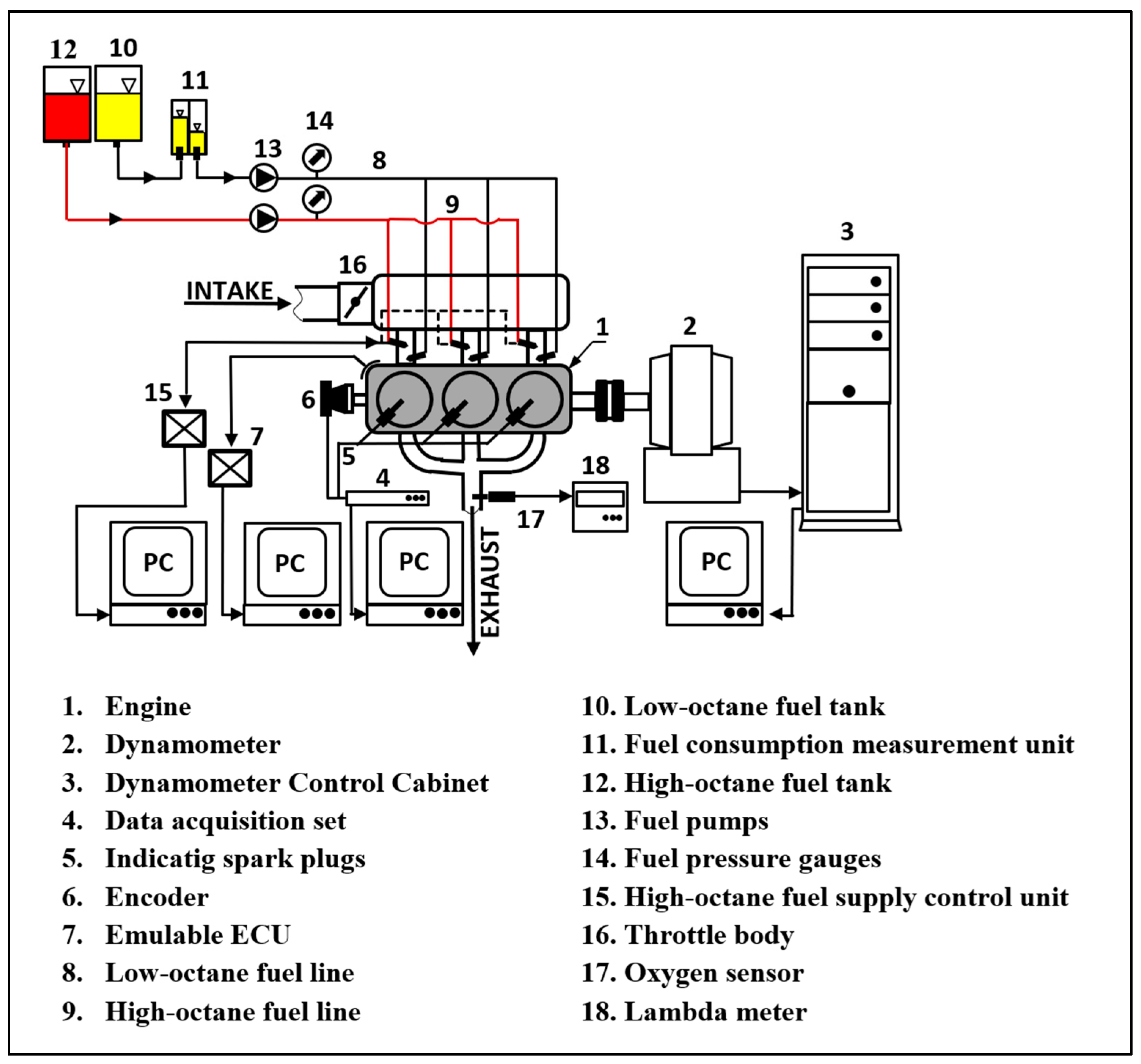
The engine research was conducted on an engine dynamometer test bench. A schematic view of the test cell is presented in
Figure 2.
The in-cylinder pressure signals were captured using AVL ZI31 Y5S (AVL List GmbH, Graz, Austria) indicating spark plugs, centrally located within the combustion chambers and converted by the AVL MicroIFEM 4FP1 charge amplifier. Simultaneously, the pressure signal was correlated with the crank angle at a resolution of 0.1 CAD by the AVL 365C crankshaft encoder. An absolute measurement of the air–fuel ratio (AFR) was obtained using a wide-band oxygen sensor BOSCH LSU 4.9 (Bosch Engineering GmbH Motorsport, Abstatt, Germany) in the TWC housing, connected to the ETAS LA4-4.9E lambda meter (ETAS GmbH, Stuttgart, Germany). The programmable engine control unit (ECU), connected to the ETAS ES592.1 universal interface module and ETAS INCA software ver. 7.1, allowed for control of engine parameters such as spark timing, injection duration, and throttle position. The engine load and speed were adjusted by a Schenck W130 eddy-current dynamometer.
Tests were performed on a PSA 1.2 EB2 EURO 5 engine (Peugeot Société Anonyme, Poissy, France) a three-cylinder, four-stroke, naturally aspirated spark-ignition petrol engine. Further specifications are listed in
Table 1.
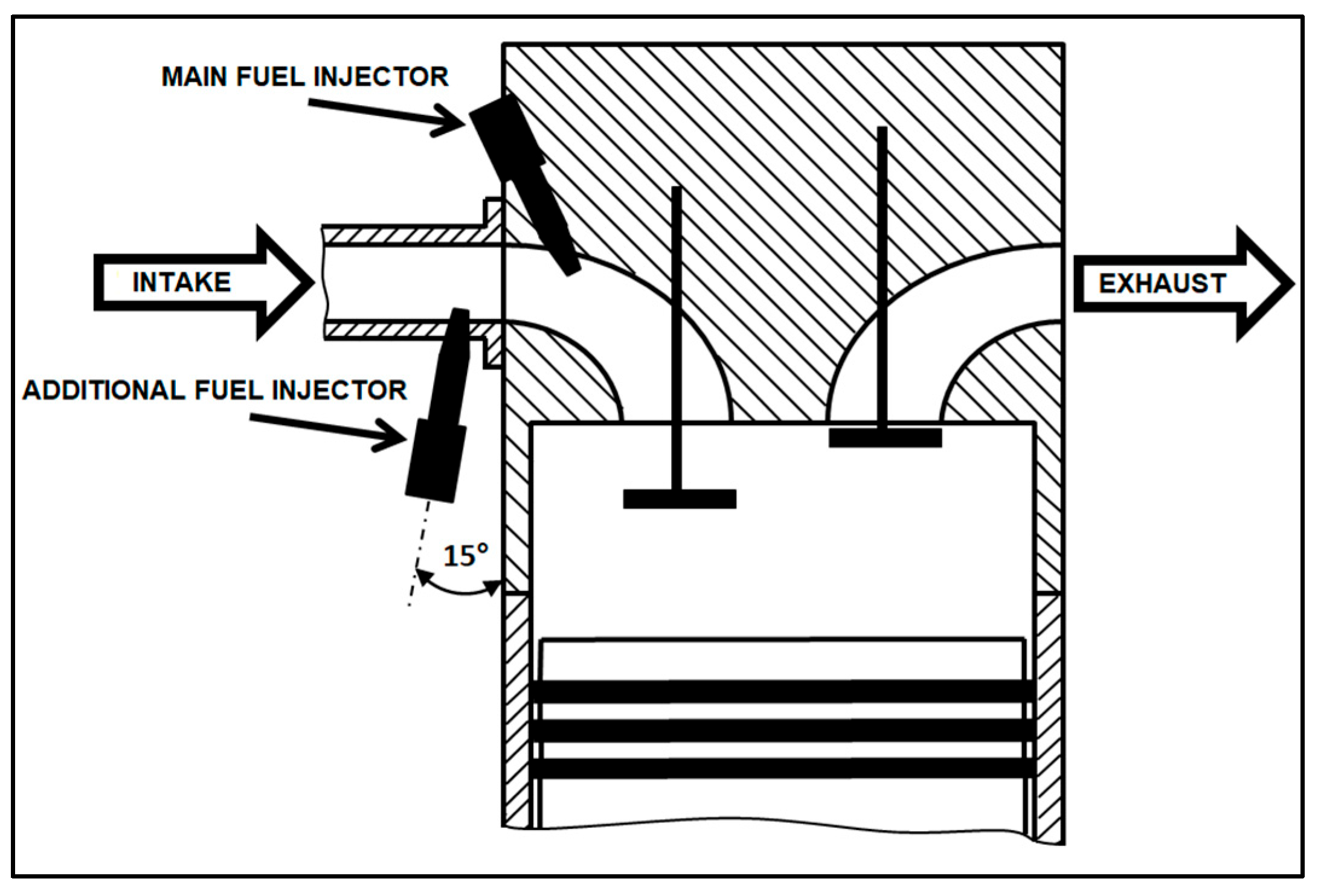
For research purposes, the engine was equipped with an additional, separate fuel supply system while keeping the original MPI (port fuel injection) system unchanged. This configuration allows the engine to operate in a dual-fuel, dual-injection mode (PFI + PFI). The additional system consists of three fuel injectors installed on the intake manifold runners for each cylinder, close to the cylinder head. The injection duration of this system was controlled by a customized control unit with dedicated operating software, synchronized with the injection timing of the main fuel system. A schematic view of the fuel injection components fitted to the engine is shown in
Figure 3.
The experimental tests were conducted at a steady-state engine speed of 2000 rpm under wide-open throttle (WOT) conditions and for six different spark timings. To induce knocking combustion, the ignition timing was advanced starting from the original manufacturer spark advance setting (OEM SA), which corresponds to 7 CAD bTDC, up to 27 CAD bTDC with 5 CAD increments. Additionally, the point at SA = 14 CAD bTDC, corresponding to the minimum spark advance for best torque (MBT), was examined.
As a low-octane (base) fuel, the commercial petrol (E5) analyzed in the fuel research was used. As a high-octane fuel, a mixture of fractions with a boiling range above 363 K, derived from commercial petrol by distillation, was applied. For each case, the engine was first fueled only with the base fuel (petrol) to establish reference conditions, then the high-octane fuel was injected in volumetric proportion to petrol. The following high-octane-to-base-fuel volumetric proportions were used: 0.0:1, 0.2:1, 0.4:1, and 0.6:1. For all test cases, the injection timing of the base fuel was fixed at a value corresponding to the OEM SA. For each operating point, cylinder pressure data were acquired over 50 consecutive cycles at a sampling rate of 100 kHz and an angular resolution of 0.1 CAD. Throughout the study, engine coolant and oil temperatures were maintained at 363 K and 368 K, respectively.
Knock intensity determination was based on a high-frequency component analysis of cylinder pressure data. The commonly used knock indicator MAPO (Maximum Amplitude of Pressure Oscillations), which describes the magnitude of knock relative to the peak of cylinder pressure oscillations, was adopted [
30,
31]. This indicator is given by Equation (2).
where
pFILT is the filtered in-cylinder pressure,
is the crank angle corresponding to the beginning of the calculation window, and
ζ defines the width of the window.
For each individual combustion cycle, the in-cylinder pressure signal was first filtered using a 4th-order Butterworth high-pass filter with a cutoff frequency of 3200 Hz [
32], within the prescribed crank angle window (from
= TDC to
+
ζ = 60 CAD aTDC [
33]). Then, the filtered oscillations were rectified to obtain the absolute values of knock amplitudes. Finally, MAPO was identified as a result of this comparison.
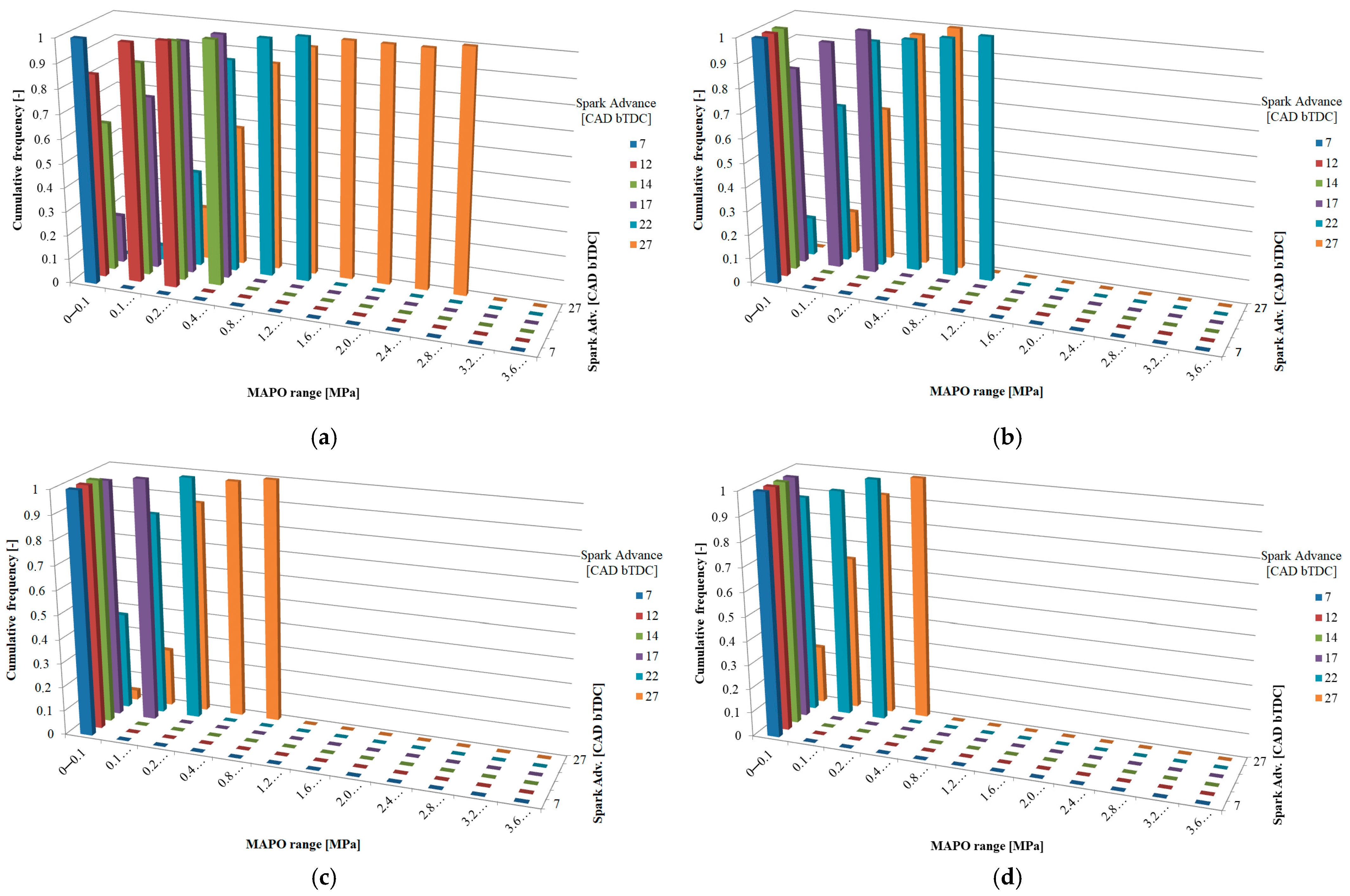
Since knocking has a stochastic occurrence and its severity varies despite steady-state operating conditions, the statistical evaluation of the results was based on the knock amplitudes of engine cycles. For this study, a threshold MAPO = 0.1 MPa was assumed as the level above which a cycle is considered knocking. Moreover, the engine operating point was considered to be in knock condition if more than 10% of all cycles exceeded the threshold level. To distinguish combustion cycles, the threshold corresponding to the 90th percentile of the cumulative frequency distribution of MAPO was determined [
34]. During classification, the entire amplitude range (MAPO values) obtained in the study was divided into a finite number of pressure ranges (knock classes). The number of classes and pressure ranges were determined in accordance with [
32]. By defining knock class frequency as the ratio of the number of cycles in a given knock class to the total number of engine cycles analyzed for a given operating point, the frequencies of individual knock classes were calculated and then presented as a cumulative frequency.
4. Discussion
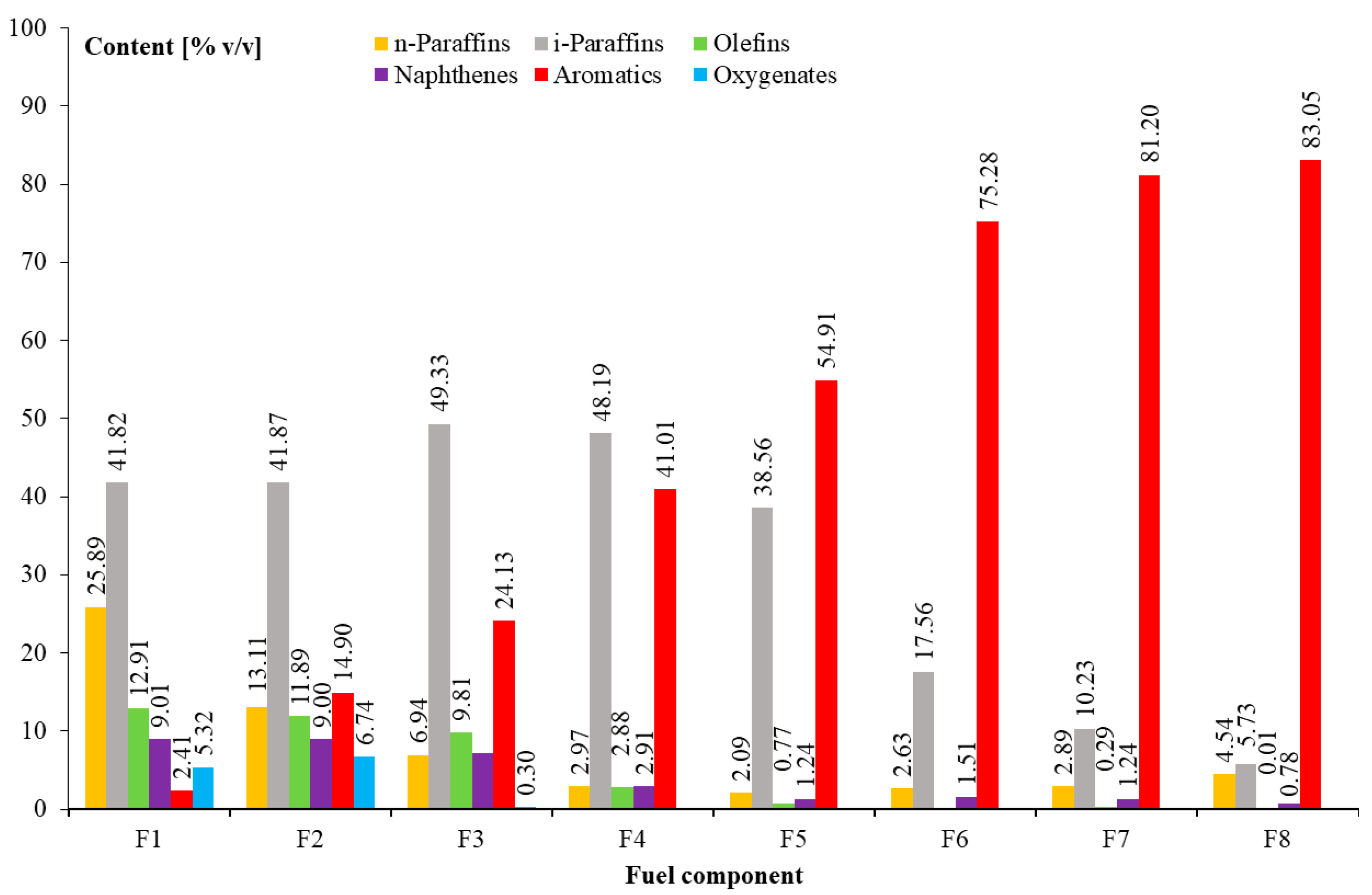
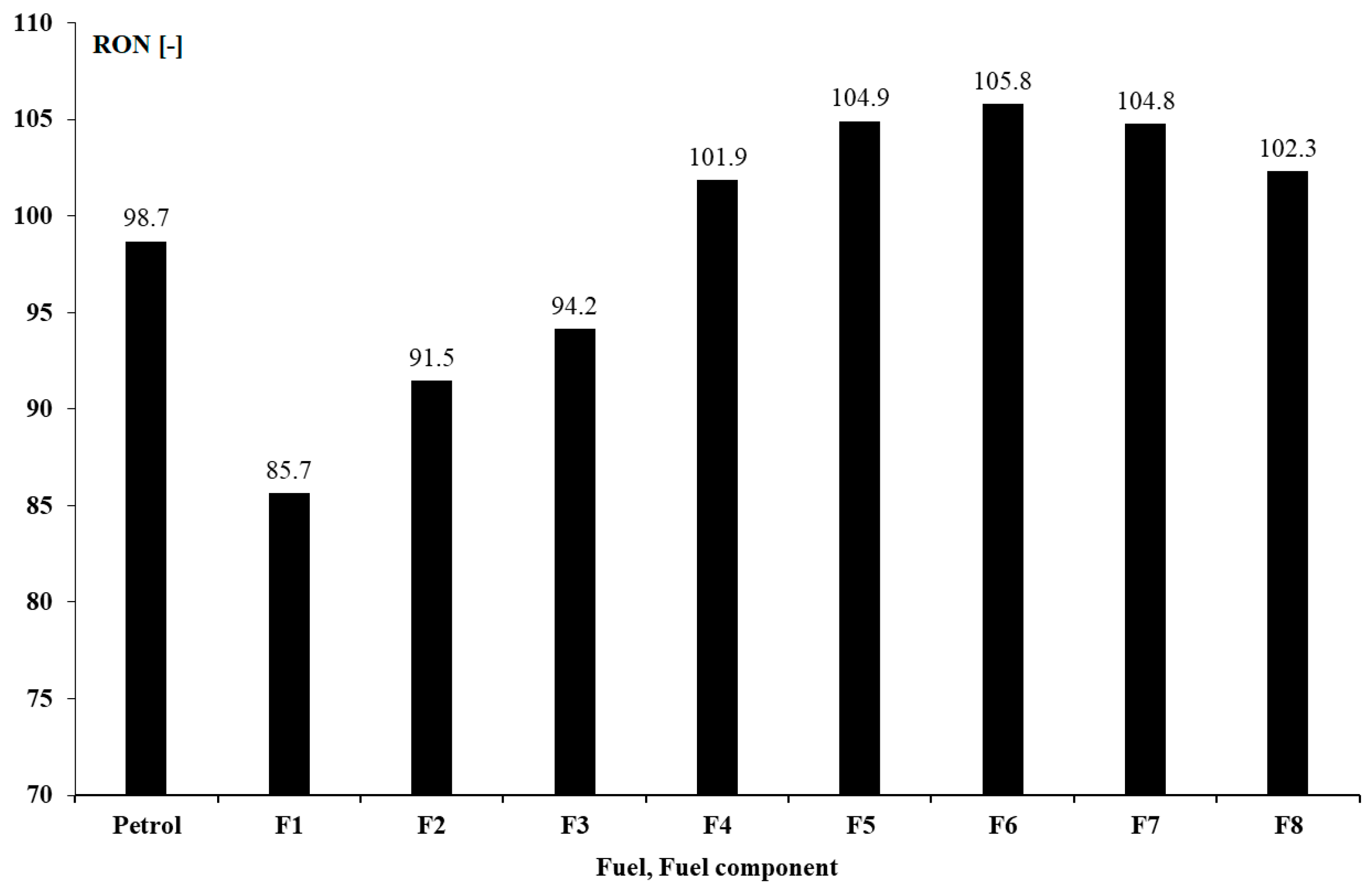
Analyses of petrol and its fractions by means of GC-MS enabled the establishment of a relationship between the distillation temperature range and the content of individual petrol components in each fraction, as well as an explanation of the importance of specific hydrocarbons in terms of octane number.
During the research, a threshold distillation temperature of 363 K was determined to distinguish between the low- and high-octane ranges of commercial petrol fractions, and this result corresponds well with explanations of petrol composition in relation to its boiling range [
35,
36]. The research confirmed the possibility of obtaining high-octane petrol fractions by the distillation method at a temperature range lower than 413–433 K, as required in some solutions using membrane separation systems [
16].
It was found that the volumetric ratio of low- to high-octane fractions in petrol is approximately 60:40%
v/
v. In comparison with membrane separation systems, where the amount of high-octane fractions obtained corresponds to approximately 10–20% of the base fuel volume, the efficiency of the distillation process is nearly twice as high. However, a possible limitation of the present study lies in the fact that approximately 2200 cm
3 of petrol and about 7 h of continuous distillation were required to obtain 1000 cm
3 of the HOF mixture, whereas other studies on membrane separation systems indicate a volumetric efficiency of about 1000 cm
3/h [
16,
19,
27]. It should be noted, however, that the efficiency is influenced by the density of the petrol.
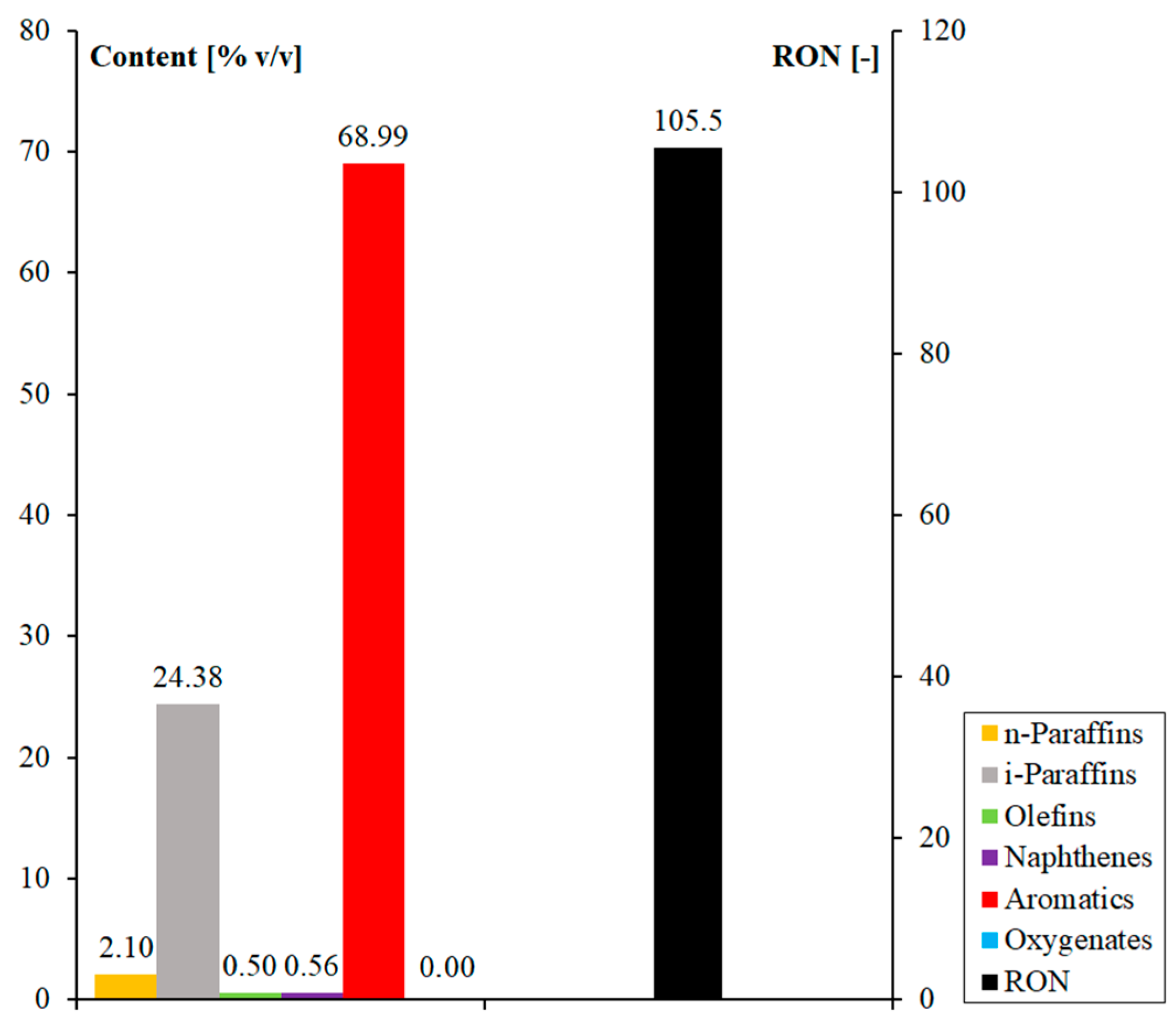
The results of the analytical research revealed that the main component of the HOF mixture is aromatic hydrocarbons, accounting for approximately 70% v/v. Based on octane number predictions, it was determined that the RON of the mixture may be up to seven units higher than that of the commercial petrol used as the substrate for the distillation process. It was also found that the addition of the HOF mixture to petrol increases the fuel’s octane number, with the extent of the increase depending on the volumetric proportion used.
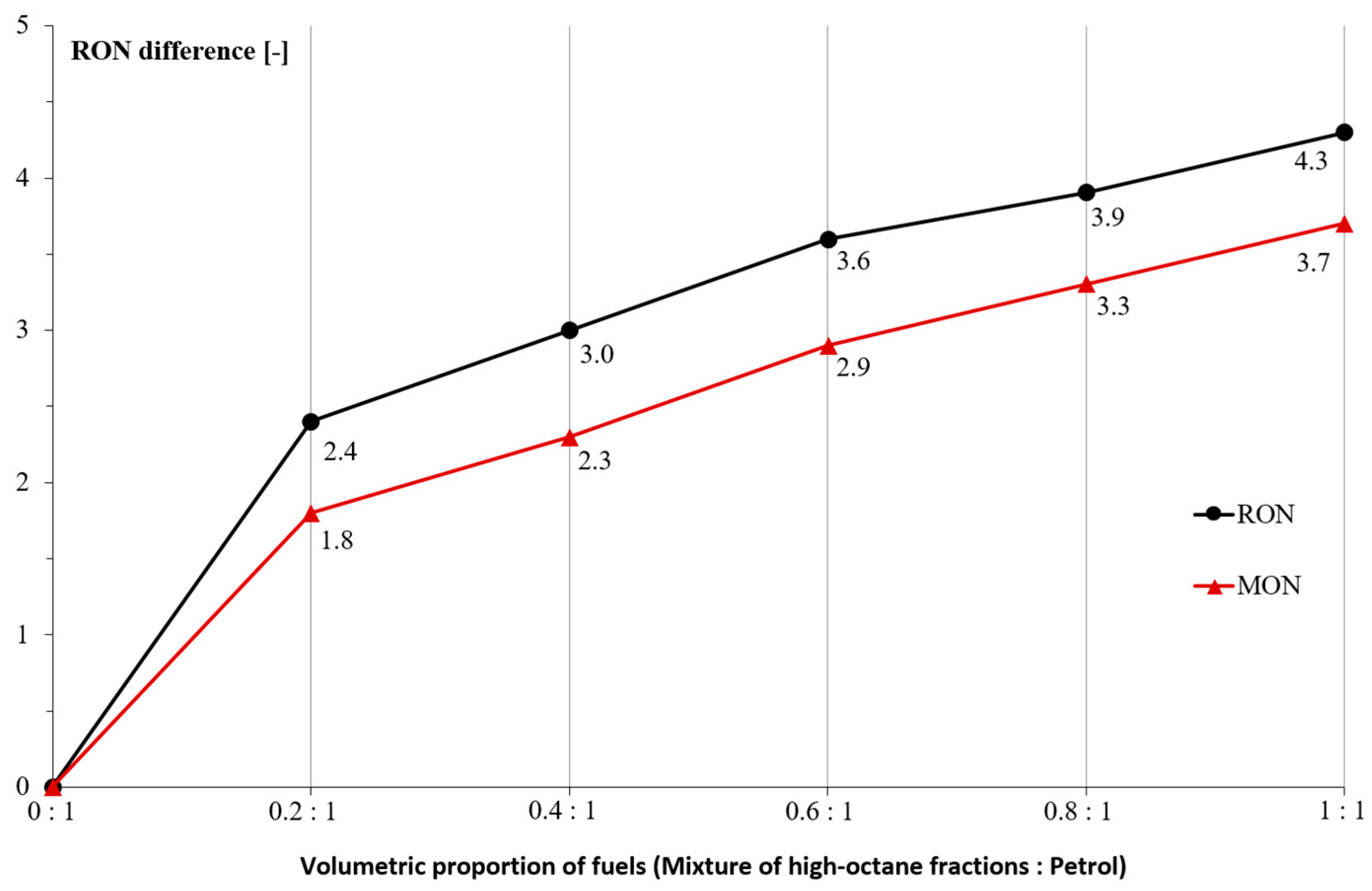
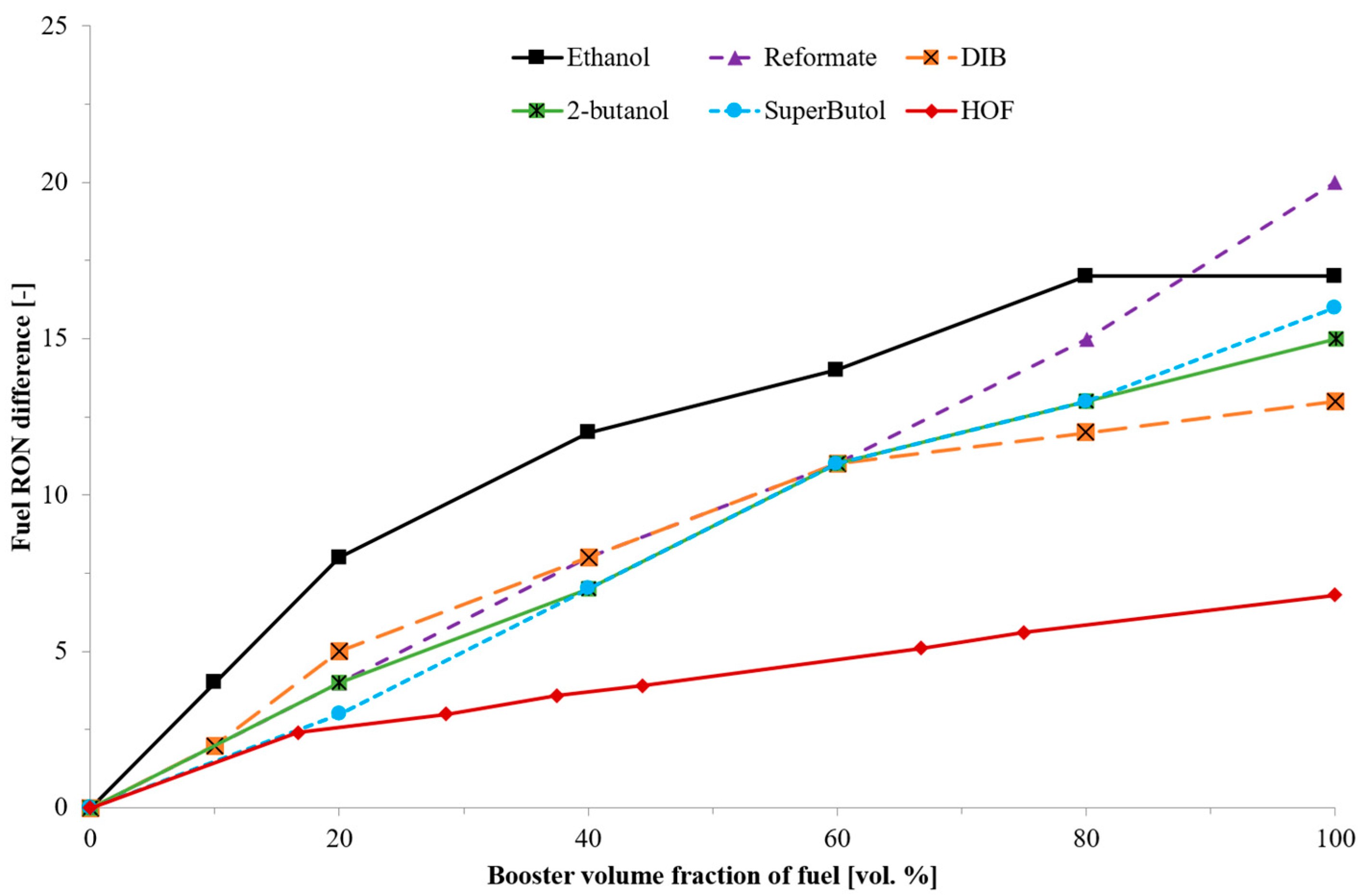
This study complements a related study which found that the greatest impact of an octane booster on the fuel’s octane number (ON) occurs at low volumetric proportions to petrol [
37]. Results from the referenced study, presenting the impact of several boosters (high-octane fuel candidates) on the RON difference in non-oxygenated commercial petrol (RON 91), are presented in
Figure 12. Results from the present study—the impact of adding a mixture of HOF on the RON difference in commercial petrol (RON 95)—are also included in this figure. It was demonstrated that blending the HOF mixture with petrol in volumetric proportions ranging from 0.2:1 to 1:1 resulted in an increase in the fuel’s RON value by approximately 2.5–4.5 units. The largest increase (about 2.5 units) in ON was obtained for the proportion of 0.2:1. Further increasing the amount of the mixture had a smaller effect on ON improvement; moreover, the RON boosting effect is lower when the ON of the base fuel is higher. This suggests that the results from both studies are in good agreement. The non-linear change in octane number can be explained by variations in the proportions of compounds from individual homologous groups contained in the composition of subsequent fuel samples and their non-linear impact on the final ON value [
29]. In addition, it was found that the RON value increased more compared to MON for the corresponding fuel proportions used.
One of the key findings of this research is that the high-octane components of commercial petrol have potential practical applications in the OOD concept, which indicates that high-octane fractions are suitable candidate fuels for this approach. Several properties of the HOF mixture, which is rich in aromatic hydrocarbons, may play a significant role in knock suppression. First, the addition of a high-octane fraction to petrol would increase the overall octane number (ON) of the fuel—an indicator of the fuel’s resistance to knocking combustion. Second, aromatic hydrocarbons, which have a higher vaporization heat compared to petrol, may lower the temperature of the air–fuel mixture in the cylinder and thus reduce the tendency for knocking combustion to occur. Finally, increasing the content of aromatic hydrocarbons in the fuel may result in a higher laminar flame speed, thereby shortening the time for knock development [
38,
39]. Additionally, as an equivalent effect of the increased aromatic content, a lengthened ignition delay time of the fuel—which reduces the tendency toward knock—may also be observed [
40,
41].
According to the literature data, increasing the ignition advance angle by 1.5–2.0 CA without the risk of knock occurrence requires an increase in the fuel’s octane number (RON) by 1 [
35]. Therefore, based on the obtained results, it can be assumed that increasing the ON of the fuel by 2.5–4.5 units through the addition of the HOF mixture would enable knock-free combustion, with the spark advance increased by approximately 4–8 CA at a given engine operating point. Moreover, the literature data indicate that increasing the compression ratio in a given engine without the risk of knock occurrence requires an increase in RON by an average of 3.9 per unit, and that an increase in the compression ratio by 1 allows for an average increase in engine thermal efficiency of about 1.8% [
42]. Referring to the test results and the cited data, it can be assumed that enhancing commercial petrol with RON 95 by adding the HOF mixture would increase the ON sufficiently to allow for knock-free combustion in an engine when the compression ratio is increased by 1.
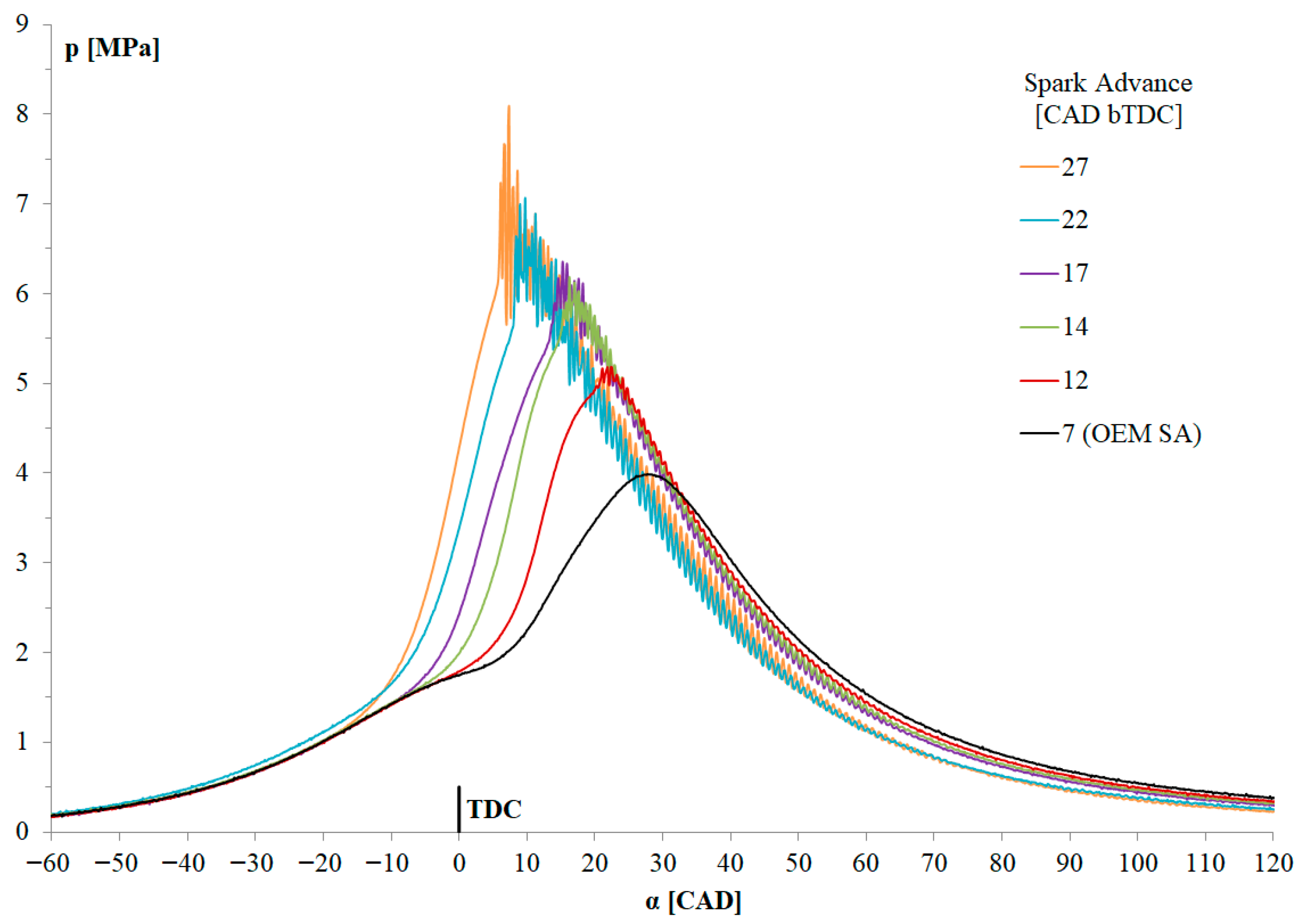
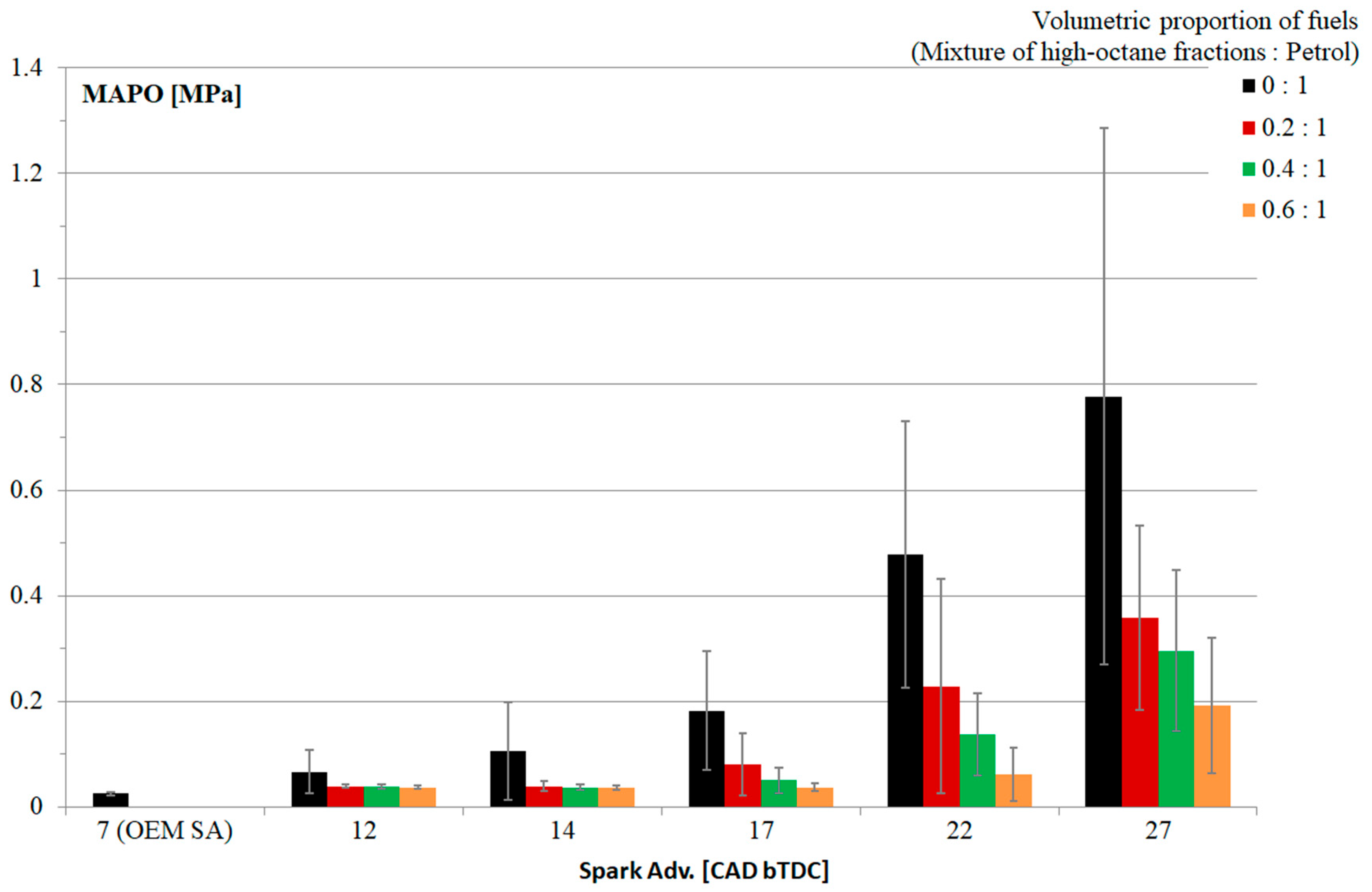
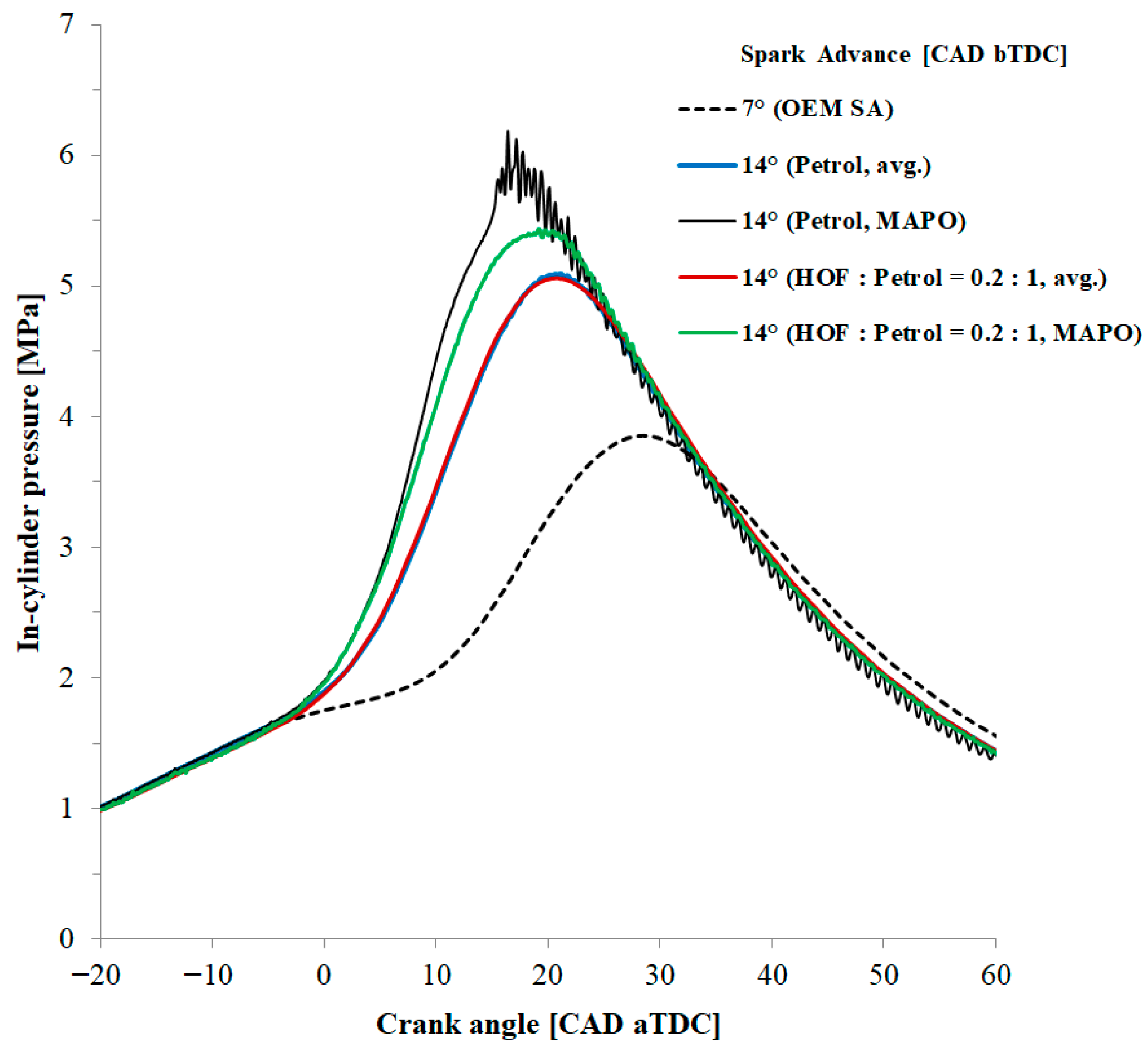
The effectiveness of the high-octane components of petrol was also proven during empirical engine tests. A complete or significant reduction in knock intensity as a result of applying the HOF mixture as an octane-enhancer was achieved for most engine operating points. Moreover, its implementation enabled the avoidance of knock occurrence at the operating point corresponding to MBT conditions (SA = 14 CAD bTDC) at 2000 rpm—a point considered highly prone to knock during the tests.
Figure 13 shows pressure traces from the first cylinder of the engine for operating points at SA of 7 and 14 CAD bTDC. In the case of factory settings (OEM SA, neat petrol)—as shown by the black dashed line—the combustion process was delayed due to the risk of knock occurrence. Increasing the ignition advance angle by 7 CAD (up to 14 CAD bTDC)—as shown by the solid blue line—resulted in an increase in in-cylinder pressure, represented by work per cycle, and thus an increase in the thermal efficiency of the engine; however, knock occurred (solid black line). As a result of implementing the OOD strategy (petrol enhanced with the HOF mixture), proper combustion was achieved without knock events (solid red and green lines).
A reduction in knock intensity was achieved with a volumetric proportion of the HOF mixture to petrol equal to 0.2:1. This indicates that even a relatively small addition of an octane enhancer is sufficient to effectively reduce knock intensity, ensure proper combustion in the cylinder, and eliminate the need to delay ignition timing, which would otherwise deteriorate engine efficiency. This confirms that the use of the OOD strategy and a temporary increase in the fuel’s octane number aligns with the conclusions from other studies, which indicate that a higher octane number allows modern engines to operate more efficiently, establishing operational conditions where combustion is otherwise compromised by knock occurrence [
43]. Although corresponding research on dual-fuel strategies for knock suppression exists [
44], it does not consider the OOD concept, in which the base fuel is ultimately less processed, and thus low-octane, and where a significant difference in fuel reactivity is a key factor.
The positive preliminary results of the present study demonstrate the potential application of high-octane components derived directly from the composition of commercial petrol in the OOD concept. Furthermore, the extended research enabled an assessment of the effectiveness of knock suppression using this concept in an SI engine. It is postulated that the combined studies on fuel chemistry and engine performance presented in this paper represent a novel approach compared to other research works on this concept. However, due to the identified limitations, further research and development efforts are required.



 ,
,