1. Introduction
In response to global climate change and the pursuit of the “dual carbon” goal, the construction of a new power system, primarily based on renewable energy, is rapidly advancing [
1]. However, the inherent intermittency and variability of renewable energy sources, such as wind and solar energy, pose unprecedented challenges to the real-time balancing and economic operation of power systems [
2]. As an advanced energy aggregation technology, the Virtual Power Plant (VPP) has become a critical solution for enhancing system flexibility and integrating renewable energy by coordinating various heterogeneous resources, such as distributed energy storage, electric vehicles (V2G), and flexible loads [
3,
4,
5].
The sustainable commercial operation of a VPP is highly dependent on its profitability in the electricity market [
6]. In the day-ahead energy market, the VPP is required to formulate a bidding strategy one day in advance for the next 24 h to maximize its operating revenue. However, this decision-making process is highly complex, as VPP operators are exposed to dual uncertainties arising from market prices and renewable energy generation [
7]. Sharp fluctuations in market prices and forecasting errors make traditional arbitrage models difficult to implement accurately. Therefore, designing a VPP bidding strategy that enables adaptive decision-making and robust profit maximization under high uncertainty has become a core issue of common concern in both academia and industry [
8].
Existing studies on the VPP market bidding problem can generally be classified into two categories. The first category consists of traditional optimization methods based on mathematical programming, such as stochastic programming and robust optimization. Gulotta et al. [
9] developed an energy management system based on stochastic programming to optimize market bidding and real-time operation of virtual power plants under uncertainty, thereby increasing profits and reducing energy imbalances. Wang et al. [
10] proposed an optimal self-scheduling strategy for a multi-energy virtual power plant providing energy and reserve services under a holistic market framework, enhancing resilience against price volatility. To address uncertainties, Wang et al. [
11] proposed a distributed robust optimization strategy combined with a dual-norm uncertainty set to coordinate multi-energy VPP clusters. Meanwhile, Kong et al. [
12] proposed a decentralized optimization model based on an enhanced Benders decomposition framework to determine the optimal bidding strategy for VPPs in the day-ahead market, effectively balancing privacy protection and bidding performance. Lu et al. [
13] developed a distributed optimization framework integrating peer-to-peer (P2P) power sharing, and addressed uncertainty and privacy protection issues in the cooperative operation of multiple VPPs through stochastic robust modeling and distributed algorithms, thereby improving economic performance and achieving fair benefit allocation. Although the theoretical framework of such methods is relatively mature, they typically rely on accurate probability distribution assumptions for uncertain factors or conservative worst-case estimations, and require highly accurate forecasting information [
14]. In real markets characterized by significant unpredictable noise, these rigid strategies based on perfect information assumptions are often fragile and struggle to adapt to dynamic environmental changes [
15].
The second category comprises rule-based or heuristic strategies derived from domain expert knowledge. For real-time operations, Yu et al. [
16] utilized Lyapunov optimization theory to implement time decoupling within VPPs, effectively transforming long-term scheduling into single-period online optimization to improve computational efficiency. Yu et al. [
17] proposed an improved cooperative particle swarm optimization (ICPSO) algorithm for the energy management of VPPs, which significantly improves computational efficiency and scheduling profitability. In terms of multi-agent interactions, Cao et al. [
18] established a cooperative alliance model for multiple VPPs based on Nash bargaining theory to optimize benefit distribution. Through P2P energy trading, the total cost of the alliance is minimized, and costs are fairly allocated according to the contributions of all participants, thereby increasing renewable energy revenues. Regarding conventional control schemes, Aboelhassan et al. [
19] evaluated rule-based energy management systems (REMS), noting that while they ensure operational stability through fixed logical thresholds, they often lack the adaptability required to fully exploit complex market price fluctuations [
14,
19].
To address the above challenges, deep reinforcement learning (DRL), as a data-driven decision-making approach, has shown great potential [
20]. DRL agents learn through trial-and-error interactions with the environment without requiring an explicit and accurate mathematical model, and are particularly effective in handling complex sequential decision-making problems under uncertainty, which aligns well with the VPP bidding scenario [
21,
22].
Recently, various advanced DRL algorithms have been actively deployed to optimize VPP market bidding and internal energy management. For instance, Jiang et al. utilized a multi-agent twin delayed deep deterministic policy gradient (MATD3) algorithm to derive the optimal bidding strategy for a price-maker VPP in the day-ahead market [
6]. To address the uncertainties of renewable energy, recent studies have combined condition generation adversarial networks with DRL to build robust multi-scenario scheduling strategies [
23]. Furthermore, to improve robust decision-making in complex environments, recent research has proposed double-layer game models based on Soft Actor-Critic (SAC) and double-deep Q networks (DDQN) for VPP energy management [
24], as well as end-to-end DRL methods focusing on feature extraction for bidding with uncertain renewable generation [
25]. However, when DRL is directly applied to the VPP arbitrage problem, a key challenge is that agents are prone to converging to short-sighted local optima driven by instantaneous rewards (e.g., negative profits during charging), making it difficult to learn far-sighted, long-term arbitrage strategies [
26].
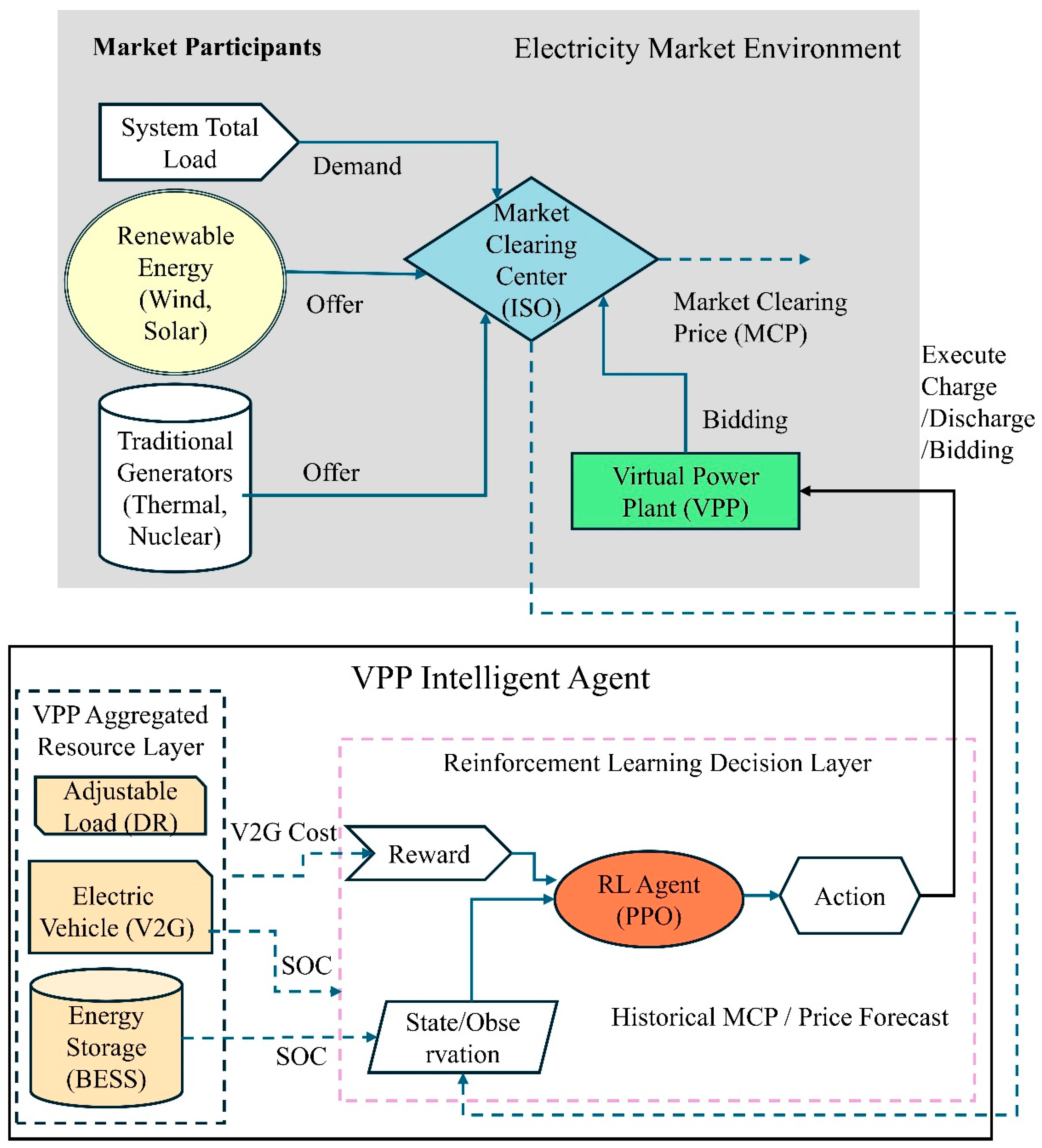
Therefore, this paper proposes an adaptive day-ahead market bidding strategy for virtual power plants under multiple sources of uncertainty. First, a multi-dimensional heterogeneous VPP aggregation model is developed by integrating dedicated energy storage, V2G, and flexible loads, while key practical constraints such as the travel demand of V2G users are explicitly considered. Second, to overcome the limitations of traditional optimization methods, a DRL-based decision-making model is established for VPP bidding. To address the short-sighted behavior of DRL in arbitrage tasks, this paper proposes a potential-based reward shaping mechanism linked to the maximum forecasted electricity price over a future horizon, providing dense long-term guidance signals to encourage agents to learn the long-term optimal strategy of valley charging and peak discharging. Finally, extensive experiments are conducted on a day-ahead electricity market simulation platform, where the proposed method is benchmarked against deterministic optimization and rule-based strategies.
The main contributions of this paper are summarized as follows:
An adaptive VPP bidding framework based on DRL is proposed, which effectively addresses the uncertainties of market prices and renewable energy generation.
A novel potential-based reward shaping mechanism guided by future price signals is developed to mitigate the short-sighted behavior of DRL in arbitrage tasks, thereby significantly improving the long-term profitability of the proposed strategy.
A practical VPP aggregation model is established by incorporating key realistic constraints, such as V2G travel demand and scheduling costs, which enhances the applicability and engineering relevance of this study.
Simulation results demonstrate that the proposed strategy not only significantly outperforms traditional approaches, but also remains highly competitive with the deterministic-optimization benchmark under noisy and realistic market conditions, highlighting the advantage of adaptive bidding in exploiting uncertainty.
3. Adaptive Bidding Decision Model Based on DRL
To achieve adaptive bidding and optimal scheduling of the VPP under an uncertain market environment, the sequential decision-making problem is formulated as a Markov Decision Process (MDP) and solved using a deep reinforcement learning approach. This Section elaborates on the MDP formulation, including the design of the observation space, action space, and reward function.
3.1. Problem Description and MDP Formulation
The day-ahead optimization objective of the VPP is to maximize its total operating profit over the next 24 h by determining charging/discharging schedules and bidding strategies, subject to physical constraints and market rules. The problem is formulated as a MDP defined by the tuple (S, A, P, R, γ):
S: the state space, which contains all information required for VPP decision-making.
A: The action space, which specifies the set of actions that the VPP can take at each time step.
P: The state transition probability P(), which is governed by complex market dynamics and is unknown to the agent.
R: The reward function R(), which quantifies the immediate reward obtained after taking action a in state s.
γ: The discount factor, which balances the importance of immediate and future rewards.
Since P is unknown, a model-free deep reinforcement learning approach is adopted to learn the optimal policy through extensive interactions with the environment.
3.1.1. Observation Space Design
The observation is a concrete representation of the system state S and serves as the direct basis for the decision-making of the DRL agent. A well-designed observation space should include all information relevant to decision-making while avoiding unnecessary redundancy. The observation vectors
adopted in this study are summarized in
Table 1.
Among them, the price signal strength
is calculated as follows:
In the formula, denotes the forecast electricity price at time t, and and represent the mean value and standard deviation of the 24 h forecast price series, respectively.
3.1.2. Action Space Design
The action space in this study is represented as a two-dimensional continuous vector , with each element normalized to the [−1, 1] interval to align with the output of the reinforcement learning algorithm.
- (1)
Power regulation action:
This action determines the overall charging or discharging direction and magnitude of the VPP. If > 0, the VPP operates in discharging mode with a corresponding discharge power ; if < 0, the VPP operates in charging mode with a corresponding charging power . and represent the maximum total discharge and charging power available from the VPP aggregation resources in the current hour, respectively.
- (2)
Quotation adjustment action :
This action determines the bidding strategy of the VPP in the electricity market by fine-tuning the forecast electricity price.
In the formula, denotes the final quotation submitted to the market by the VPP, and k is the quotation adjustment coefficient controlling the allowable fluctuation range of the quotation.
3.2. Reward Function Design with Future Potential Guidance
The reward function serves as a crucial signal for guiding the learning process of the agent. The main challenge of the VPP arbitrage problem lies in the fact that immediate rewards (e.g., negative profit during low-price charging) may mislead the agent, discouraging it from accepting short-term costs in exchange for higher long-term returns, which leads to myopic decision-making. To address this issue, a composite reward function is developed based on the Potential-Based Reward Shaping (PBRS) framework, incorporating immediate profit, future potential, and terminal penalty components. The PBRS approach provides dense guidance signals for the agent while preserving the optimal policy of the original problem, thereby significantly accelerating learning convergence.
The total reward function
R(
t) proposed in this study consists of three components:
- (1)
Instant profit reward :
This component represents the net market transaction profit of the VPP at time
t, serving as the primary basis of the reward design.
In the formula, denotes the actual discharged energy of the VPP in the market at time t, is the market clearing price, and represents the V2G scheduling cost defined in (4).
- (2)
Potential-based shaping reward:
To mitigate the myopic behavior induced by instant profit, a potential function
is introduced for reward shaping.
where
represents the rated energy capacity of the
-th energy storage unit.
According to the PBRS framework, the shaping reward is defined as:
In the formula, is the weight coefficient of the shaping reward, and denotes the discount factor. Intuitively, if an action increases the system’s future potential (e.g., charging during low-price periods), the agent receives a positive shaping reward; otherwise, a negative shaping reward is obtained. This mechanism propagates future revenue signals to the current time step, thereby encouraging long-term and far-sighted decision-making.
- (3)
Terminal penalty
:
In the formula, is the average SOC of all energy storage units at the end of the day, denotes the target SOC, and is the penalty weight. For non-terminal time steps, = 0.
3.3. Model Training Algorithm
In this study, the Proximal Policy Optimization (PPO) algorithm is adopted for model training. As an advanced policy gradient method, PPO demonstrates strong performance in handling continuous action space problems. Its core advantage lies in the introduction of a clipped surrogate objective function, which constrains the update step size of each policy iteration, effectively preventing policy collapse caused by overly large updates and thereby ensuring training stability and high sample efficiency. These characteristics make PPO particularly suitable for solving complex engineering optimization problems, such as VPP scheduling.
4. Case Study and Experimental Analysis
4.1. Experimental Environment and Parameter Settings
To evaluate the effectiveness of the proposed method, a day-ahead electricity market simulation platform is developed using Python 3.9. This section describes the key experimental parameters and their configurations. All parameters are configured according to typical grid operation data and relevant literature to ensure the realism and validity of the simulation results.
4.1.1. Market and VPP Parameters
The physical and economic parameters of the electricity market and the internal resources of the VPP used in the experiments are summarized in
Table 2 and
Table 3, respectively. The market generation parameters are configured with reference to typical day-ahead market settings reported in [
6], while the internal resource parameters of the BESS, V2G, and demand response are determined based on representative values adopted in [
4,
17,
22].
4.1.2. Reinforcement Learning Model Hyperparameters
The hyperparameters of the PPO algorithm and the environment-related reward function are summarized in
Table 4. These parameters are determined through preliminary experiments to balance learning efficiency and final performance.
All simulation experiments are implemented in a Python 3.9 environment using PyTorch 1.13 and the Stable-Baselines3 2.0 library. The hardware platform consists of an Intel Core i7-10700 CPU and 16 GB RAM.
4.1.3. Baseline Strategy Settings
To comprehensively evaluate the performance of the proposed reinforcement learning (DRL) method, two representative baseline strategies are designed for comparison:
- (1)
Deterministic Optimization: This strategy represents a traditional optimization approach under perfect-information assumptions. It assumes that the electricity price curve for the next 24 h is perfectly known in advance. Based on this information, a linear programming model is formulated to maximize the total daily profit, yielding a fixed optimal charging and discharging schedule for the entire day. This strategy serves as a reference benchmark under perfect-information assumptions.
- (2)
Rule-based Strategy: This strategy mimics the intuitive decision-making of domain experts and represents a typical heuristic approach. The control rules are hard-coded as follows: when the predicted electricity price is lower than the predefined charging threshold (380 CNY/MWh), the VPP is charged at full power; when the predicted electricity price exceeds the predefined discharging threshold (700 CNY/MWh), the VPP discharges at full power. No active charging or discharging actions are performed when the price falls between the two thresholds.
All strategies are evaluated under the same realistic scenario with uncertainty to ensure a fair comparison.
4.2. Model Training and Convergence Analysis
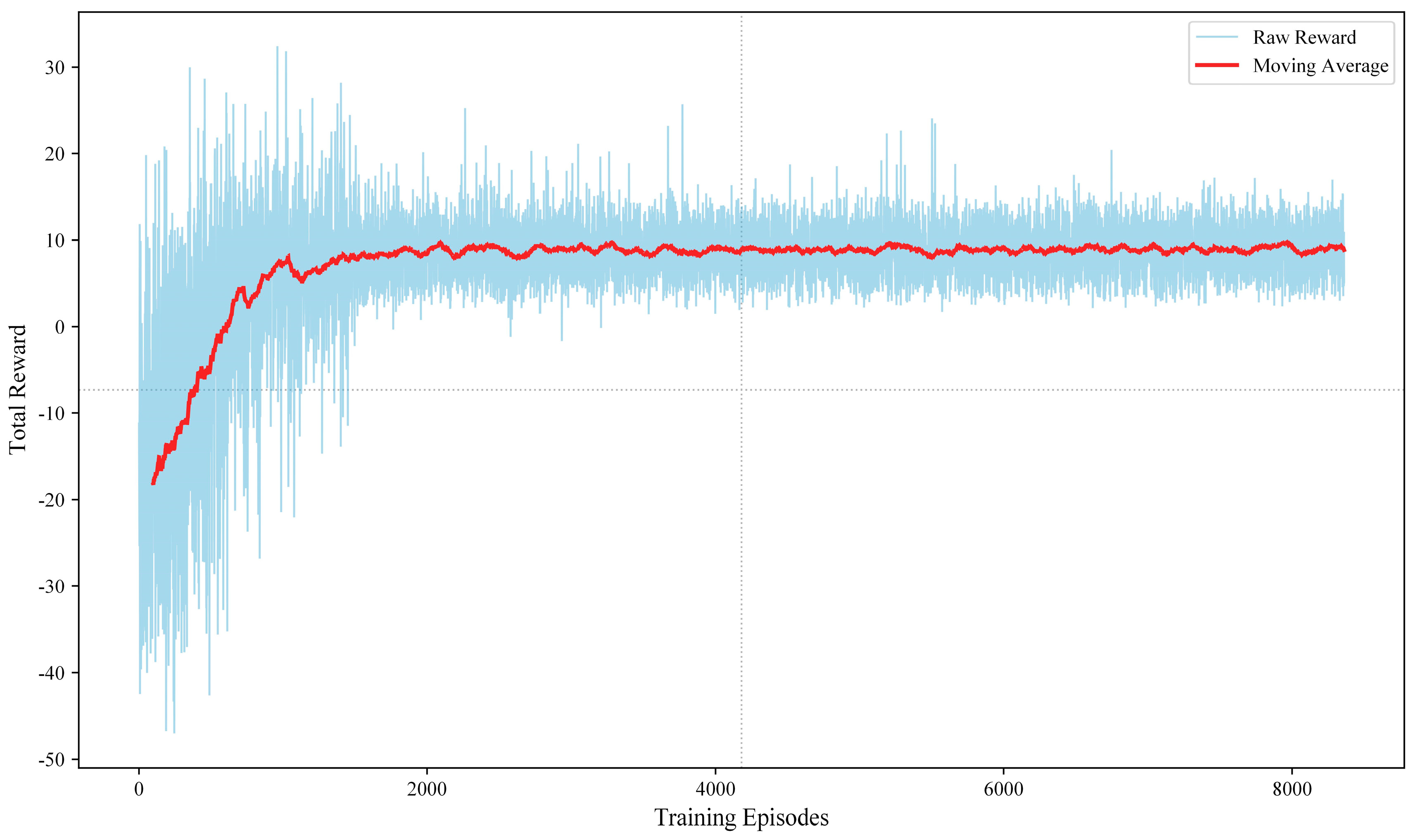
Figure 2 illustrates the learning process of the VPP agent over 8500 training episodes. The horizontal axis represents the number of training episodes, while the vertical axis denotes the normalized total reward per episode.
During the initial training stage (the first 500 episodes), the agent primarily explores the environment through random actions. Due to the absence of effective charging and discharging policies, the agent frequently violates operational constraints or discharges at unfavorable prices, resulting in low reward values. Subsequently, as the PPO algorithm effectively leverages historical experience, the reward curve exhibits a rapid increase between 500 and 1500 episodes. This indicates that the proposed potential-based reward shaping mechanism provides dense guidance signals and significantly accelerates the early learning process.
After approximately 2000 episodes, the red curve representing the moving average reward enters a clear plateau, indicating that the training process has converged. Meanwhile, the raw reward values shown in the light-blue background continue to exhibit noticeable fluctuations. This phenomenon does not indicate a lack of convergence but rather reflects the inherent stochasticity of the electricity market environment. Even under an optimal policy, fluctuations in electricity prices and variations in renewable energy output across different days inevitably lead to variability in daily profits. The ability of the agent to maintain a stable average reward under such a high-noise environment demonstrates the strong robustness of the proposed strategy.
4.3. Comparison of Economic Benefits of Different Strategies
To verify the effectiveness and robustness of the proposed strategy under uncertain environments, the proposed method is compared with deterministic optimization and a rule-based strategy in a realistic scenario with stochastic disturbances. The cumulative net profit of each strategy over a single-day scheduling horizon is summarized in
Table 5.
As shown in
Table 5, the proposed DRL-based strategy achieves the highest daily net profit in this representative realistic scenario, reaching CNY 76,206.64. In comparison, the deterministic optimization strategy and the rule-based strategy yield CNY 66,426.78 and CNY 39,150.00, respectively.
Compared with the rule-based strategy, the DRL-based strategy achieves a profit improvement of 94.65%. This significant improvement can be attributed to the inherent limitations of the rule-based strategy, which relies on fixed charging and discharging thresholds. As a result, it fails to exploit arbitrage opportunities when electricity prices fluctuate within intermediate ranges. In contrast, the DRL agent learns a more flexible nonlinear control policy through continuous interaction with the environment, enabling it to effectively capture small price spreads and adapt to stochastic market conditions.
In addition, the revenue achieved by the DRL-based strategy exceeds that of the deterministic optimization strategy based on perfect price forecasts (CNY 66,426.78), with an improvement of approximately 14.7%. This result highlights the advantages of the DRL model in coordinating heterogeneous resources within the VPP. When addressing the strongly coupled constraints between the BESS and the V2G fleet, traditional deterministic optimization methods often adopt decoupling techniques or sequential solution procedures to reduce computational complexity, which may lead to suboptimal solutions. In contrast, the DRL agent learns an end-to-end control policy that enables global cooperative scheduling of BESS and V2G resources. In particular, it effectively exploits the discharge potential of the V2G fleet during morning and evening peak periods, thereby achieving additional economic gains beyond the conventional optimization benchmark.
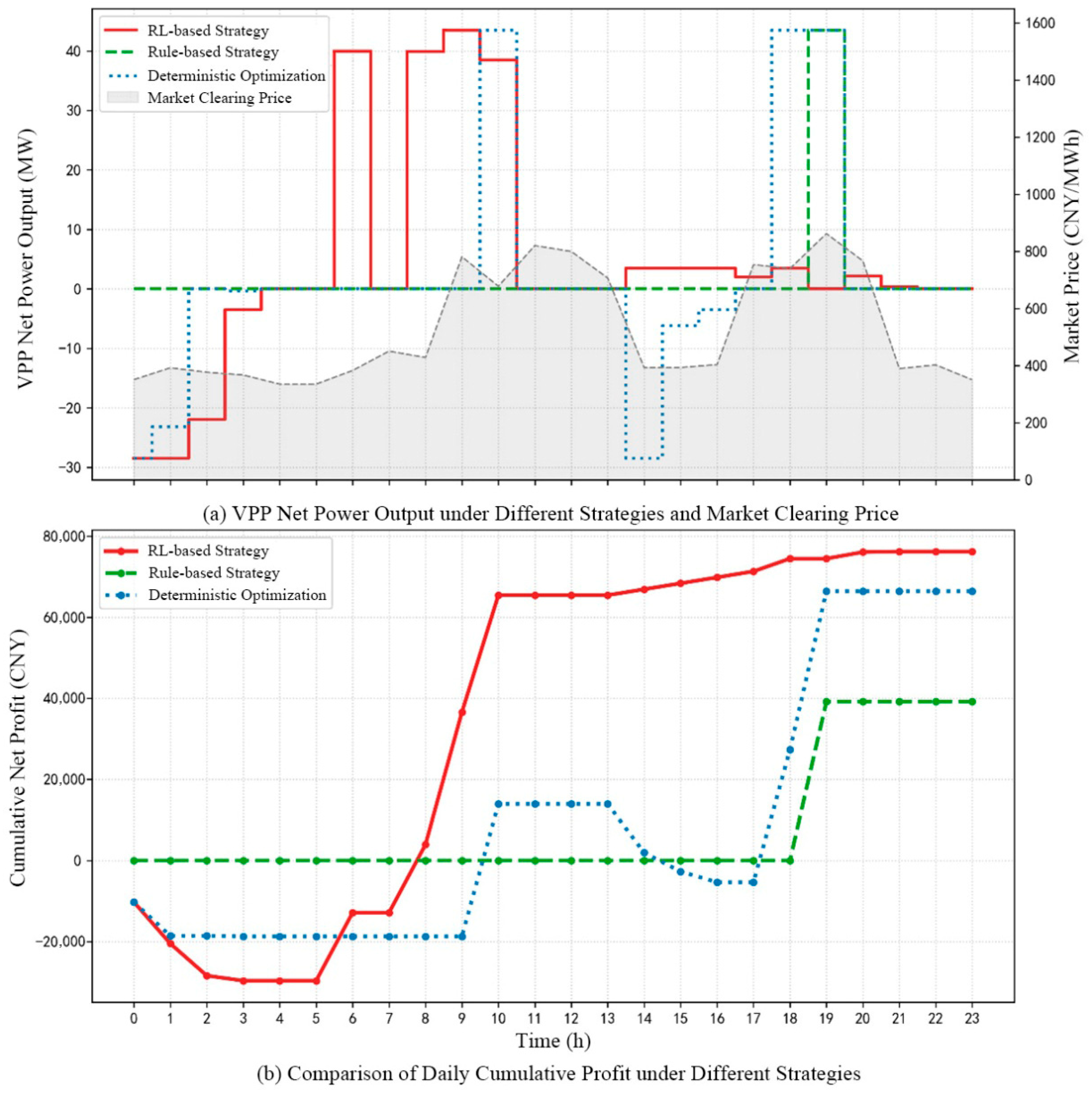
Figure 3 illustrates the dynamic evolution of power response behaviors and cumulative economic benefits of different scheduling strategies under a typical daily scenario. As shown in
Figure 3a, all three strategies generally follow the basic arbitrage principle of charging during low-price periods and discharging during high-price periods. During the low electricity price period (00:00–06:00) in the morning, each strategy controls the energy storage unit to charge, so as to improve the state of charge at a lower cost. However, notable differences emerge among the strategies during periods of significant price fluctuations.
Specifically, the rule-based strategy exhibits clear rigidity in its decision-making due to its reliance on fixed price thresholds. As indicated by the green dotted line, during certain sub-peak periods (e.g., around 18:00), although the market price has reached a relatively high level, the VPP remains inactive because the predefined discharging threshold is not triggered, resulting in missed arbitrage opportunities.
In contrast, the proposed DRL-based strategy (red line) demonstrates stronger adaptability to the market environment. Rather than relying on a single predefined threshold, the DRL agent makes decisions based on the current system state and learned implicit representations of future price trends. During the evening peak period (18:00–21:00), the DRL strategy accurately identifies transient high-price signals and performs timely high-power discharging. Its operational behavior closely aligns with that of the deterministic optimization strategy (blue dotted line), which benefits from a global planning perspective.
This behavioral distinction is directly reflected in the cumulative economic performance shown in
Figure 3b. Before the end of the morning peak, the profit differences among the strategies remain relatively small. With the arrival of the evening peak, the cumulative profit curve of the DRL-based strategy exhibits a steep upward trend due to its accurate timing of discharging actions, rapidly widening the gap with the rule-based strategy. Ultimately, the DRL-based strategy achieves a significantly higher daily cumulative net profit than the rule-based strategy and remains highly competitive with deterministic optimization. These results demonstrate that the proposed algorithm attains strong decision-making performance and robustness in an uncertain electricity market environment.
4.4. In-Depth Analysis of Policy Scheduling Mechanism
To further explore the physical logic and intelligent characteristics underlying the ‘black-box’ decisions of the deep reinforcement learning model, this section provides an in-depth analysis from two dimensions: energy storage state of charge (SOC) management and price-action response mechanisms.
4.4.1. In-Depth Analysis of Energy Storage Resource Utilization
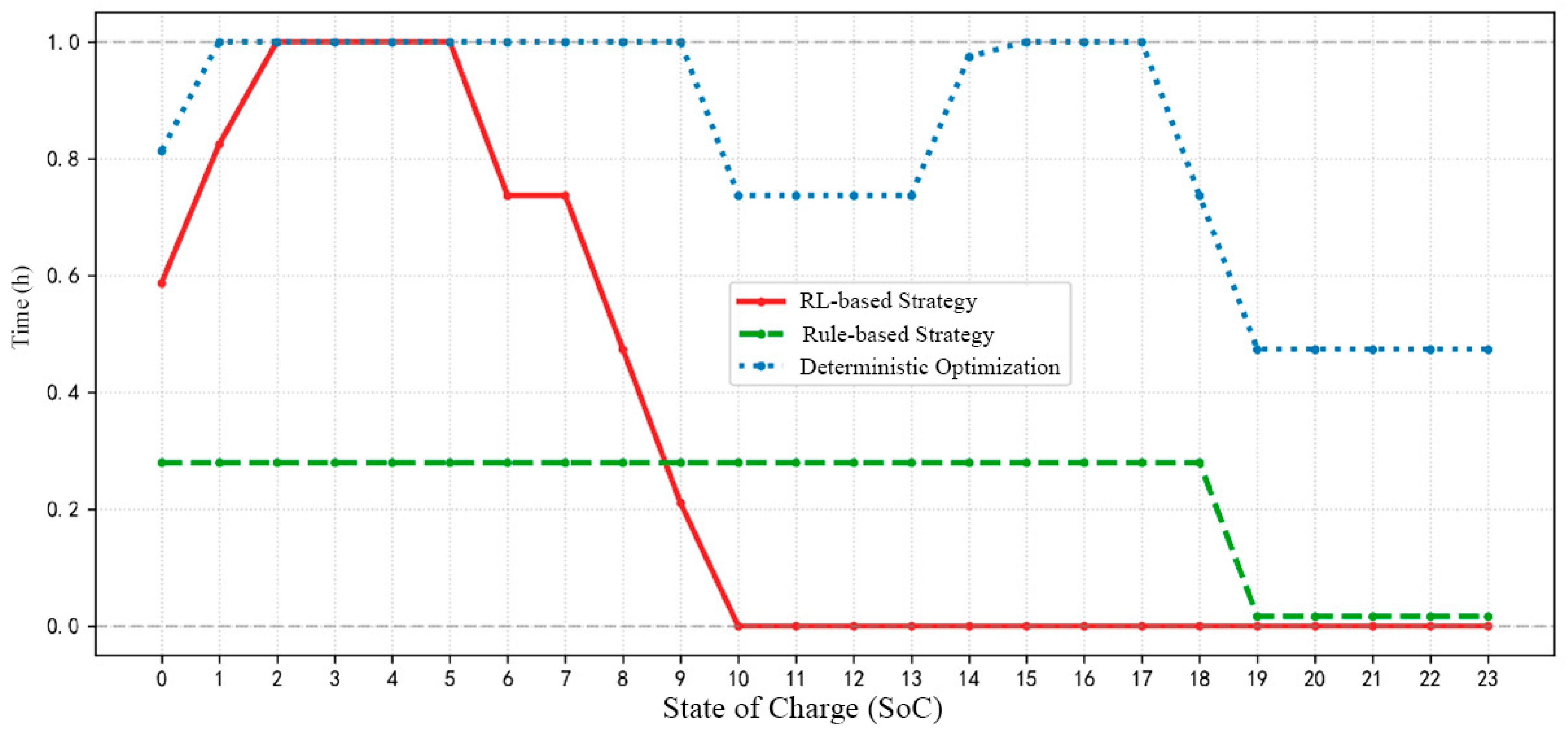
Figure 4 shows the full-day variation in the energy storage unit’s SOC under different control strategies in the same market environment. The comparative analysis demonstrates that the DRL strategy has a significant advantage in resource utilization.
As shown in the figure, the DRL strategy (red line) demonstrates great scheduling flexibility and depth in charge–discharge operations. During the early scheduling phase (00:00–02:00), the DRL strategy quickly charges the SOC from its initial value to 1.0 (full power state) and maintains it until the 5th hour, fully utilizing the low-price period in the morning for energy storage. Subsequently, during the 6th to 10th hour, the DRL strategy performs a decisive discharge operation, reducing the SOC to 0.0, thereby achieving full utilization of the energy storage capacity. This bold strategy illustrates that the agent has successfully learned an arbitrage model that maximizes the use of physical resources while satisfying constraints.
In contrast, the SOC curve of the rule-based strategy (green dotted line) shows minimal fluctuations throughout the entire process, maintaining a low level of around 0.3 for an extended period, with only a small discharge after the 18th hour. This reflects the conservatism of the fixed-threshold strategy: because the predicted price does not reach the preset charging threshold, the energy storage unit remains ‘idle’ for a prolonged period, leading to significant resource wastage and lost opportunity costs. Furthermore, the DRL strategy and the deterministic optimization strategy (blue dotted line) converge near 0 on the final SOC value, further verifying its effective adherence to intra-day resource clearing boundary conditions.
4.4.2. Price Signal and Action Response Mechanism
To reveal the decision logic of the DRL agent,
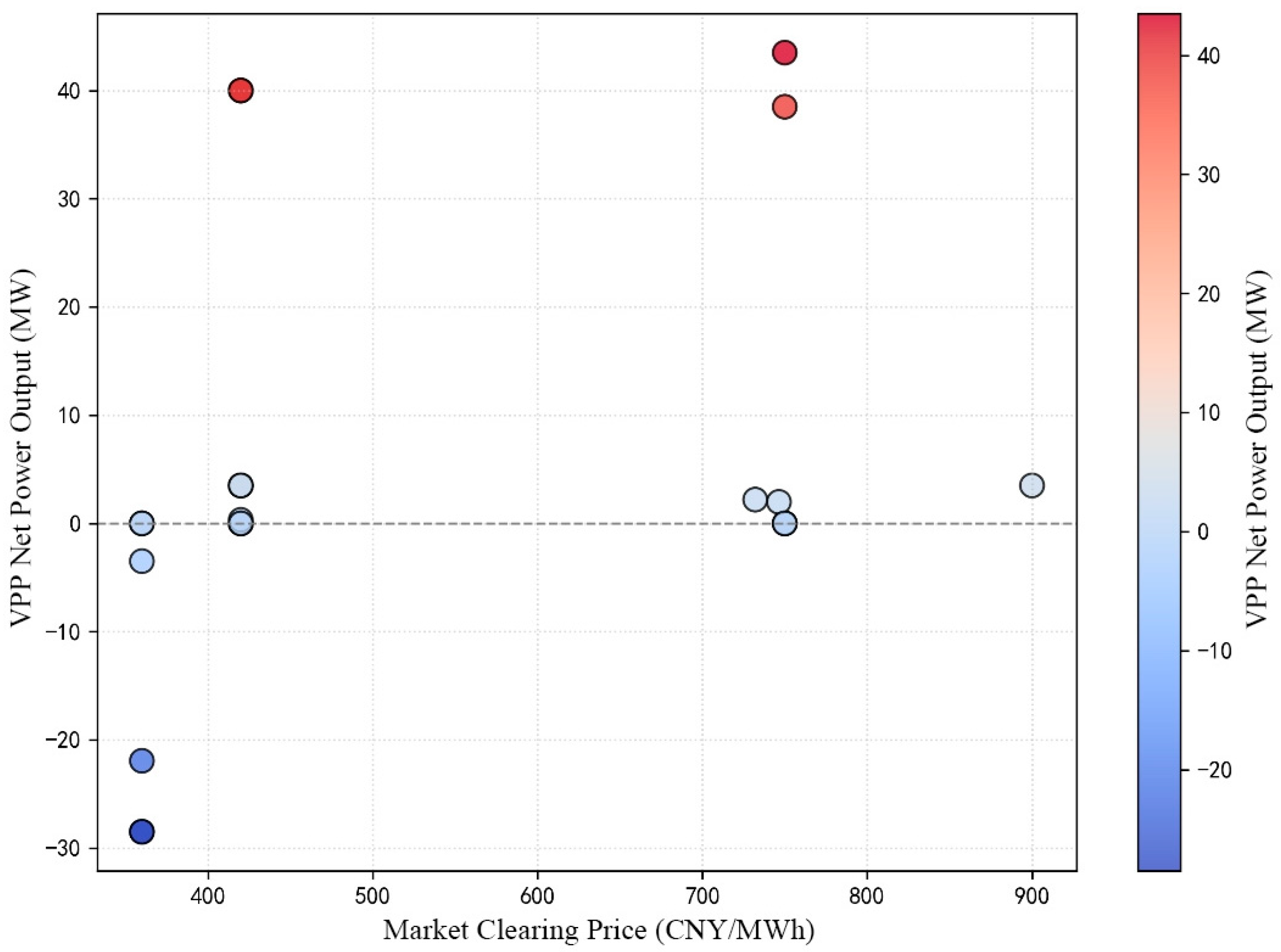
Figure 5 visualizes the net output action distribution of the DRL agent under different market clearing prices (MCPs), where the color of each scatter point represents the output magnitude, with red indicating discharging and blue indicating charging.
- (1)
Nonlinear hierarchical response: The action distribution exhibits a clear polarization pattern. When the electricity price is lower than 400 CNY/MWh (lower-left region of the figure), the scatter points are mainly concentrated in the negative output range (dark blue dots), indicating a strong tendency toward charging behavior. Conversely, when the electricity price exceeds 750 CNY/MWh (upper-right region of the figure), the scatter points are concentrated in the positive peak output range (dark red dots), indicating full discharging behavior.
- (2)
State-dependent decision-making: Notably, at an intermediate price around 420 CNY/MWh, a high-power discharging outlier (red dot) can be observed. This indicates that the DRL strategy does not follow a simple linear price-action mapping, but instead makes decisions by jointly considering the current SOC state (e.g., when the battery is fully charged) and learned expectations of future price movements. This flexibility in handling atypical price conditions constitutes the core advantage of the DRL strategy over rigid rule-based approaches.
4.5. Statistical Robustness and Confidence-Interval Analysis
To further evaluate the reliability of the proposed method under stochastic market disturbances, repeated evaluations were conducted under the same realistic market setting using 20 different random seeds. For each strategy, the daily net profit was recorded and summarized in terms of the mean value, standard deviation, and 95% confidence interval, as reported in
Table 6.
The results show that the proposed DRL-based strategy achieves the highest average daily net profit of CNY 84,374.88, with a standard deviation of 10,685.48 and a 95% confidence interval of [79,691.76, 89,058.00]. In comparison, deterministic optimization achieves an average daily net profit of CNY 59,730.45, with a much larger standard deviation of 30,412.47 and a 95% confidence interval of [46,401.60, 73,059.30], indicating that its performance is considerably less stable under stochastic disturbances. The rule-based strategy yields the lowest average daily net profit of CNY 20,024.96, with a standard deviation of 20,939.98 and a 95% confidence interval of [10,847.61, 29,202.31].
These repeated-evaluation results confirm that the proposed DRL-based strategy not only achieves the highest expected economic return, but also maintains a relatively stable performance under uncertainty. In particular, its confidence interval is clearly separated from those of the rule-based strategy and deterministic optimization, which provides stronger statistical support for the superiority of the proposed method in noisy realistic market scenarios.
4.6. Sensitivity and Ablation Analysis
4.6.1. Sensitivity to the Potential-Based Reward Weight
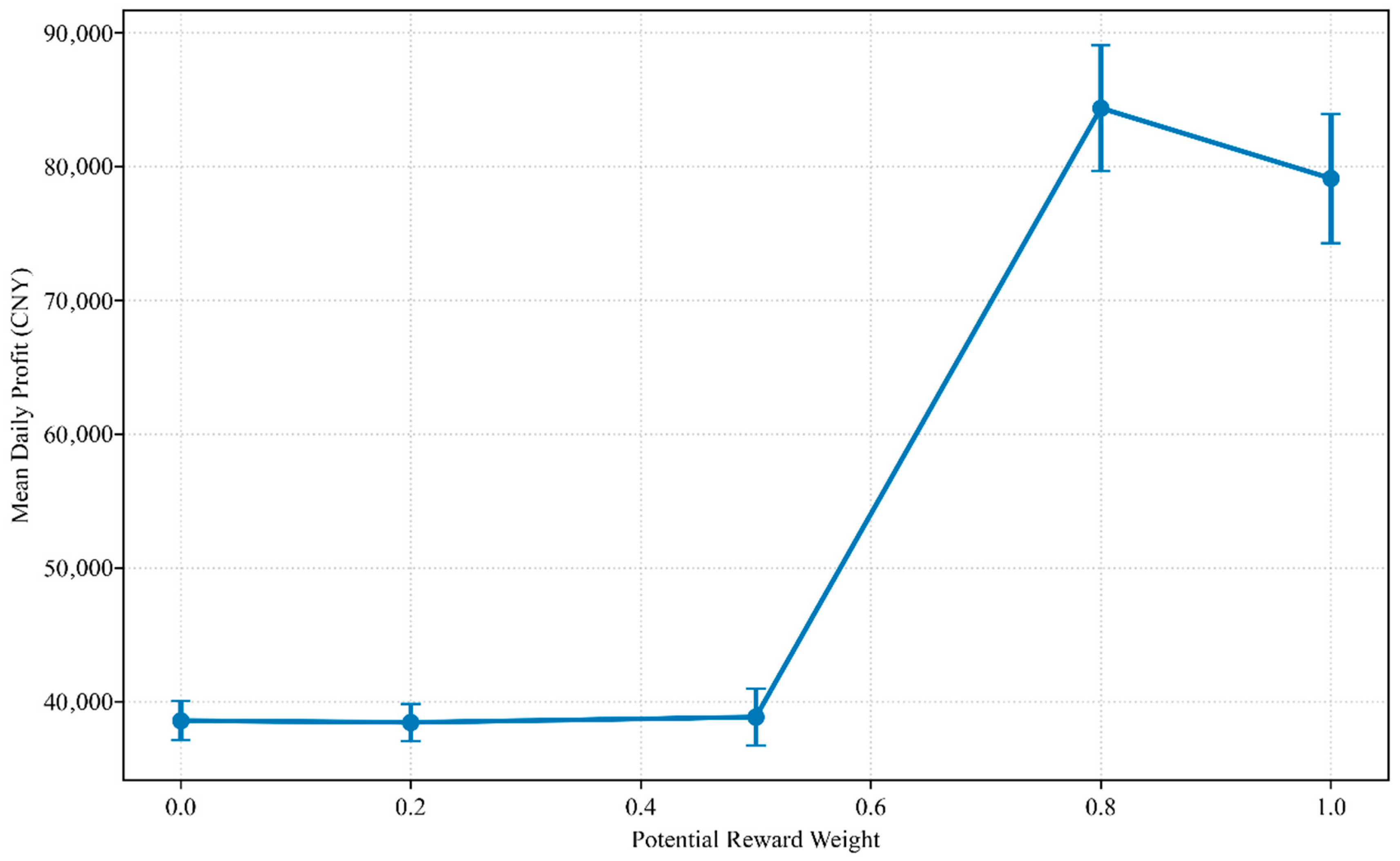
To examine whether the effectiveness of the proposed method depends on a narrowly tuned shaping coefficient, a sensitivity analysis was performed on the potential-based reward weight. Specifically, five representative values, namely 0.0, 0.2, 0.5, 0.8, and 1.0, were tested under the same training and evaluation protocol. The corresponding results are summarized in
Figure 6 and
Table 7.
When the shaping weight is set to 0.0, 0.2, and 0.5, the average daily net profits are CNY 38,573.94, CNY 38,443.63, and CNY 38,843.41, respectively, indicating that weak or absent potential guidance fails to support profitable long-horizon arbitrage behavior. In contrast, when the shaping weight increases to 0.8, the average daily net profit rises sharply to CNY 84,374.88, which is the best performance among all tested settings. When the weight is further increased to 1.0, the average daily net profit remains high at CNY 79,116.51, although it becomes slightly lower than the result at 0.8.
These results indicate that the shaping weight has a substantial impact on the final policy performance. More importantly, the proposed method does not rely on a single fragile parameter point. Rather, it performs strongly within a moderate-to-high shaping range, and the selected value of 0.8 provides the best balance between effective long-term guidance and training stability under the current experimental setting.
4.6.2. Ablation Study on the Reward-Shaping Mechanism
To further verify the actual contribution of the proposed potential-based reward shaping (PBRS) mechanism, an ablation study was conducted by comparing three PPO variants under the same training and repeated stochastic evaluation protocol: PPO with the proposed PBRS, PPO with a simpler heuristic shaping baseline, and vanilla PPO without potential shaping. In the heuristic shaping baseline, the future maximum-price anchor used in the proposed shaping term was replaced by the current forecast price, thereby providing a simpler but more short-sighted guidance signal. The corresponding results are summarized in
Table 8.
As shown in
Table 8, PPO with the proposed PBRS achieves the highest average daily net profit of CNY 84,374.88, with a 95% confidence interval of [79,691.76, 89,058.00]. By contrast, PPO with heuristic current-price shaping achieves only CNY 38,443.63, with a 95% confidence interval of [37,045.75, 39,841.52], while PPO without potential shaping achieves CNY 38,573.94, with a 95% confidence interval of [37,103.86, 40,044.02]. Notably, the heuristic shaping baseline provides no meaningful improvement over the no-shaping baseline, indicating that simply adding an ad hoc shaping term is insufficient to produce strong long-horizon arbitrage behavior.
These results demonstrate that the proposed PBRS mechanism is not merely an auxiliary modification, but a key factor underlying the strong performance of the DRL-based strategy. By explicitly propagating future price potential to the current decision step, the proposed design effectively alleviates myopic behavior and yields a substantial profit improvement of more than 100% over both the heuristic shaping baseline and the no-shaping baseline.
4.7. Additional DRL Baseline and Practical Deployment Discussion
To provide an additional reference beyond PPO, a representative off-policy DRL baseline, namely Soft Actor-Critic (SAC), was also tested under the same environment and repeated stochastic evaluation protocol. Considering the higher computational cost of SAC in this environment, SAC was trained for 50,000 timesteps as a lightweight representative baseline, whereas PPO used the default 200,000-timestep setting. The corresponding comparison is summarized in
Table 9. Under the tested configuration, PPO with the proposed PBRS achieves an average daily net profit of CNY 84,374.88, whereas the SAC-based strategy achieves CNY 53,275.18, with a 95% confidence interval of [45,187.40, 61,362.96]. These results indicate that PPO remains a competitive and effective choice for the current day-ahead VPP bidding problem. It should be noted that this comparison is intended as a representative algorithmic benchmark rather than an exhaustive survey of all DRL architectures.
From a practical deployment perspective, it is important to distinguish between offline training and online decision-making. The computational burden of the proposed DRL framework is mainly concentrated in the offline training phase, where the model learns from historical or simulated market interactions. In contrast, once the policy has been trained, online deployment only requires a forward pass of the neural network to generate the bidding action. The corresponding runtime statistics are summarized in
Table 10.
As shown in
Table 10, the total training time of the PPO-based model is 127.24 s, whereas the average inference time of a single forward pass is only 0.339 ms. This result indicates that, although DRL model training requires offline computation, the trained policy can be deployed efficiently for practical day-ahead bidding support. Therefore, the proposed framework is computationally feasible for real-world VPP operation in scenarios where periodic offline retraining is acceptable.
4.8. Discussion and Limitations
The experimental results presented in
Section 4.2,
Section 4.3,
Section 4.4,
Section 4.5,
Section 4.6 and
Section 4.7 collectively demonstrate the practical viability of the proposed DRL-based bidding framework for VPP operations. As shown in
Table 10, the PPO-based model can be trained offline in approximately two minutes and subsequently deployed with a sub-millisecond inference latency of 0.339 ms per forward pass. This computational profile makes the framework well-suited for real-world day-ahead market operations, where bidding decisions are made on an hourly or daily basis and periodic offline retraining with updated market data is entirely feasible. Moreover, the sensitivity analysis (
Section 4.6.1) confirms that the proposed method performs robustly across a range of shaping weights, reducing the need for exhaustive hyperparameter tuning in practical deployment.
It should be noted that the current study adopts several deliberate modeling simplifications to maintain a clear experimental focus on the proposed reward-shaping mechanism. Specifically, the VPP is modeled as a price-taker, and the market-clearing process does not incorporate detailed network constraints such as transmission line capacities or voltage limits. These simplifications are commonly adopted in the DRL-based energy management literature to isolate algorithmic contributions from environmental complexity. While they may not fully capture all operational factors encountered in real-world markets, the core algorithmic findings—particularly the effectiveness of potential-based reward shaping in overcoming myopic behavior—are expected to remain valid under more detailed market models.
Building on the current work, future research will extend the proposed framework in two directions: (1) incorporating a multi-agent DRL formulation to capture strategic interactions among multiple price-maker participants, and (2) integrating AC network constraints to ensure physically feasible dispatch solutions. These extensions represent natural next steps toward bridging the gap between the simulation environment and full-scale real-world deployment.