1. Introduction
Due to the growing demand for the exploitation of natural resources and their increasing scarcity, society must account for mechanisms that ensure and stabilize energy resources [
1]. According to the report by the International Energy Agency (IEA) [
2], in which comprehensive studies have been carried out, global energy demand increased by 2.2% in 2024, reaching a higher demand in comparison with the last decade. The electricity sector’s markets account for the highest energy consumption. In addition, the emission of greenhouse gases (GHGs), caused by the increase in combustion of fossil fuels, not only represents an environmental risk but also a severe threat to human health and integrity. In 2010, GHG emissions in the European Union led to more than 600,000 premature deaths [
1]. Therefore, the use of biomass is one alternative to mitigate some of the causes of these problems; although this is not a recent technology, it continues to be extensively studied [
3].
The utilization of biomass, especially for the production of biofuels, has been suggested as a strategy to reduce pollutant emissions without compromising the performance of internal combustion engines. These biomasses come from different sources, such as agricultural residues, wastewater, and micro algae, among others [
4,
5,
6,
7,
8].
In the work by Saka, Abel, et al. [
9], obtention of biofuel from mango seed (
Mangifera indica) using zinc oxide (ZnO) nanoparticles as a catalyst in the transesterification process was studied. Several concentrations were tested, and the results showed a reduction in hydrocarbon (HC) and carbon monoxide (CO) emissions; however, an increase in nitrogen oxide (NOx) emissions was reported when compared to conventional diesel.
However, some biomasses do not come from food-related wastes. One of these wastes is the castor seed; refs. [
8,
10] present a study in which they collected castor seeds from a region of Ethiopia and tested, under several concentrations, the biodiesel in an engine. From the results, it is observed that for all concentrations, emissions were lower than those of conventional diesel. However, the brake thermal efficiency and fuel consumption were similar to those of diesel. In addition, one way to improve the biodiesel and its blends from castor seeds is by adding nanoparticles such as cerium oxide (CeO
2), which has been shown to enhance engine performance and emissions while maintaining the reduction in pollutant emissions [
11].
On the other hand, one of the sectors with the highest energy consumption is the construction sector due to the need to condition spaces to achieve thermal comfort through heating and air-conditioning systems. To reduce this energy consumption, several studies have focused on improving building thermal insulation. Ref. [
12] demonstrates that factors such as the thermal inertia of the building envelope, internal loads, and infiltration rates have a decisive influence on seasonal flexibility potential. Finally, through multiple linear regression models, an accurate and rapid estimation of flexibility potential under varying operating conditions is achieved, providing a valuable tool for the design of demand response strategies in residential buildings. Ref. [
13] shows that different demand-side management strategies—energy efficiency, thermal storage, and demand response—enable peak shaving, load shifting, and valley filling depending on system configuration. The results highlight the importance of storage capacity. However, current isolation techniques are mostly based on petroleum derivative products and non-renewable resources, which present a negative environmental impact. This is the reason why environmentally friendly thermal insulators derived from waste materials, particularly those of agricultural origin, have been researched [
14,
15,
16]. Viel in [
15] presents two different biomasses: hemp shiv and corn cob residues, both mixed with binders to form compression molded panels. In this research, the authors observe that the mold made from hemp presents a lower thermal conductivity than panels made from corn residues, mainly due to their lower density.
In addition, it has been observed that the manufacturing process of isolation panels has a lowering effect on thermal conductivity; for example, the use of a delignification process on waste from the wood industry improves the insulation capacity of the panels [
17]. On the other hand, ref. [
18] presented a simplified fabrication method. They produced test panels using wheat bran and studied two variants: one mixed only with water and another with banana peel. From the study, the results showed that the addition of banana peel did not improve the insulation properties of wheat bran, which were already notably good.
Besides generating panels from biomass, the use of biomass as an additive in conventional construction materials has been researched. In ref. [
19], the authors worked with clay bricks incorporating pomegranate peel powder, obtained by the regional juice industry, at different concentrations, that were subsequently subjected to various firing temperatures. From this research, the authors observed that thermal conductivity decreased as the concentration of pomegranate powder increased. This behavior was because, at higher temperatures, the pomegranate powder was consumed during firing, leaving internal cavities within the brick.
In this work, we present the development of low-conductivity, bio-based material derived from recycled castor oil biodiesel waste for use as an additive in construction materials. First, castor beans were collected and processed. Then, their essential oils and biodiesel were extracted. The recycling of castor oil biodiesel waste as an additive for low-conductivity construction materials was the main objective of this study.
2. Materials and Methods
This research is divided into two stages, each with three phases.
2.1. First Stage: Biodiesel Synthesis by Transesterification
2.1.1. Phase A: Sampling and Conditioning of Raw Materials
Ten sampling campaigns were conducted at two castor berry collection sites located in the municipalities of Jacona and Sahuayo, both situated in the state of Michoacán, Mexico. Sampling was carried out during the dry season, specifically between April and June of 2024 and 2025, a key period to ensure the berries were in a dry or semi-dry transitional stage. This condition facilitated the peeling process of the castor berries.
For the manual peeling process, the castor berries were scarified, and between 90 and 115 berries were recovered per plant. Consequently, to obtain one kilogram of castor berries, approximately 2950 to 3000 berries were scarified. Once the raw material was obtained, it was subjected to mechanical grinding with a grain mill to produce an organic micelle.
2.1.2. Phase B: Obtaining Essential Oil and Biodiesel by Transesterification
For the development of this phase, an adaptation of the methodology in [
20] was carried out, in which a 1:10 weight–volume ratio between the micelle obtained in Phase A and
isopropyl alcohol (Sigma-Aldrich, St. Louis, MO, USA, 95%) was used, and the essential oil was extracted using the Soxhlet extraction method.
From each 20 g of micelle, 2 to 3 mL of essential oil was obtained. This oil was subsequently subjected to a transesterification process, yielding biodiesel and glycerin.
The viscosity of the biodiesel was obtained by the Brookfield Ametek DVNext cone/plate rheometer with cone spindle CPA-41Z, from Instituto de Investigaciones en Materiales, Unidad Morelia, Universidad Nacional Autónoma de México (UNAM), México.
2.1.3. Reuse of Organic Waste
Remnants obtained from the second-generation biodiesel obtention pending Phase A were recovered and subjected to a second grinding process to reduce their particle size to approximately 1 mm. These remnants were used as new raw material to produce a material with thermal insulation properties.
2.2. Second Stage: Use of Second-Generation Biofuel Synthesis Residues to Lower the Thermal Conductivity
Utilization of Residues
During the biodiesel production process, along the route involving micelle formation and subsequent essential oil extraction, a residual organic material of an approximately 80 weight percentage was generated. This material was crucial for the fabrication of low-thermal-conductivity material.
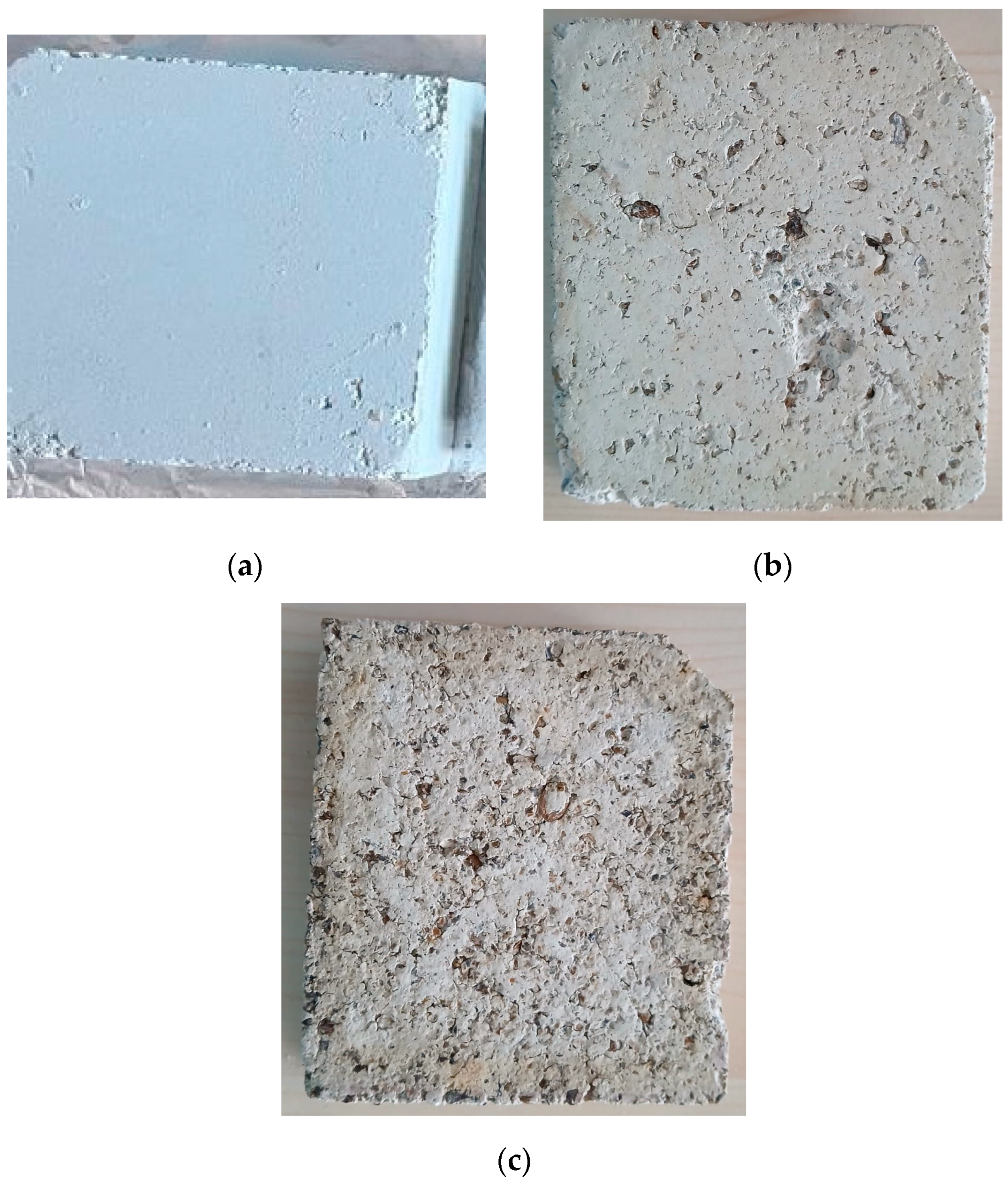
For the manufacture of materials with low-thermal-conductivity properties, the castor micelle obtained from the residual biomass during the biodiesel production process was combined with conventional construction materials. Three formulations were prepared, as shown in
Figure 1. The first formulation was prepared as a control, as it consisted exclusively of construction materials in a 1:1:1:1 ratio (lime:cement:marble powder:water), as presented in
Figure 1a. The second formulation, designated as M1, used a mass ratio of 1:3 between the castor micelle and the construction materials (castor micelle:lime:cement:marble powder:water), as shown in
Figure 1b. Finally, the third formulation, designated as M2, was prepared using a mass ratio of 5:1:1:1:1 (castor micelle:lime:cement:marble powder:water), as shown in
Figure 1c.
For all formulations, the solid materials were weighed separately, distilled water was added, and the mixtures were mixed for 30 min at 1400 rpm in order to obtain homogeneous pastes; all samples were fabricated using a standardized molding procedure. An acrylic mold with internal dimensions matching the final specimen’s geometry was employed. The material was placed into the mold and uniformly compressed using metallic presses, ensuring consistent shape and size. Finally, all three formulations were dried in a laboratory oven (NovaTech from the laboratory of the ingenieria en energia, Universidad de la Ciénega del Estado de Michoacán de Ocampo (UCEMICH), México) at a constant temperature of 100 °C for 24–48 h to ensure adequate removal of moisture and consistent curing conditions across samples.
Therefore, both the biodiesel and its solid residue were characterized using Fourier Transform Infrared (FT-IR) spectroscopy using a Perkin Elmer Frontier spectrometer (Frontier, PerkinElmer, Waltham, MA, USA), from the laboratory of the ingenieria en nanotecnologia, Universidad de la Ciénega del Estado de Michoacán de Ocampo (UCEMICH), México, in the range of 4000–400 cm−1, with the aim of identifying absorption bands and fingerprint regions.
Additionally, the micelle and the material with low-thermal-conductivity properties were gold-coated to facilitate their characterization by scanning electron microscopy (SEM) using a JEOL JSM-6610LV microscope (JSM-6610LV, JEOL, Tokyo, Japan) from the laboratory of the ingenieria en nanotecnologia, Universidad de la Ciénega del Estado de Michoacán de Ocampo (UCEMICH), México. The analyses were performed using secondary electrons at 20 kV, with a spot size of 55 nm, and energy-dispersive X-ray spectroscopy (EDS) from the laboratory of the ingenieria en nanotecnologia, Universidad de la Ciénega del Estado de Michoacán de Ocampo (UCEMICH), México.
2.3. Description of the Thermal Conductivity Measurement Method
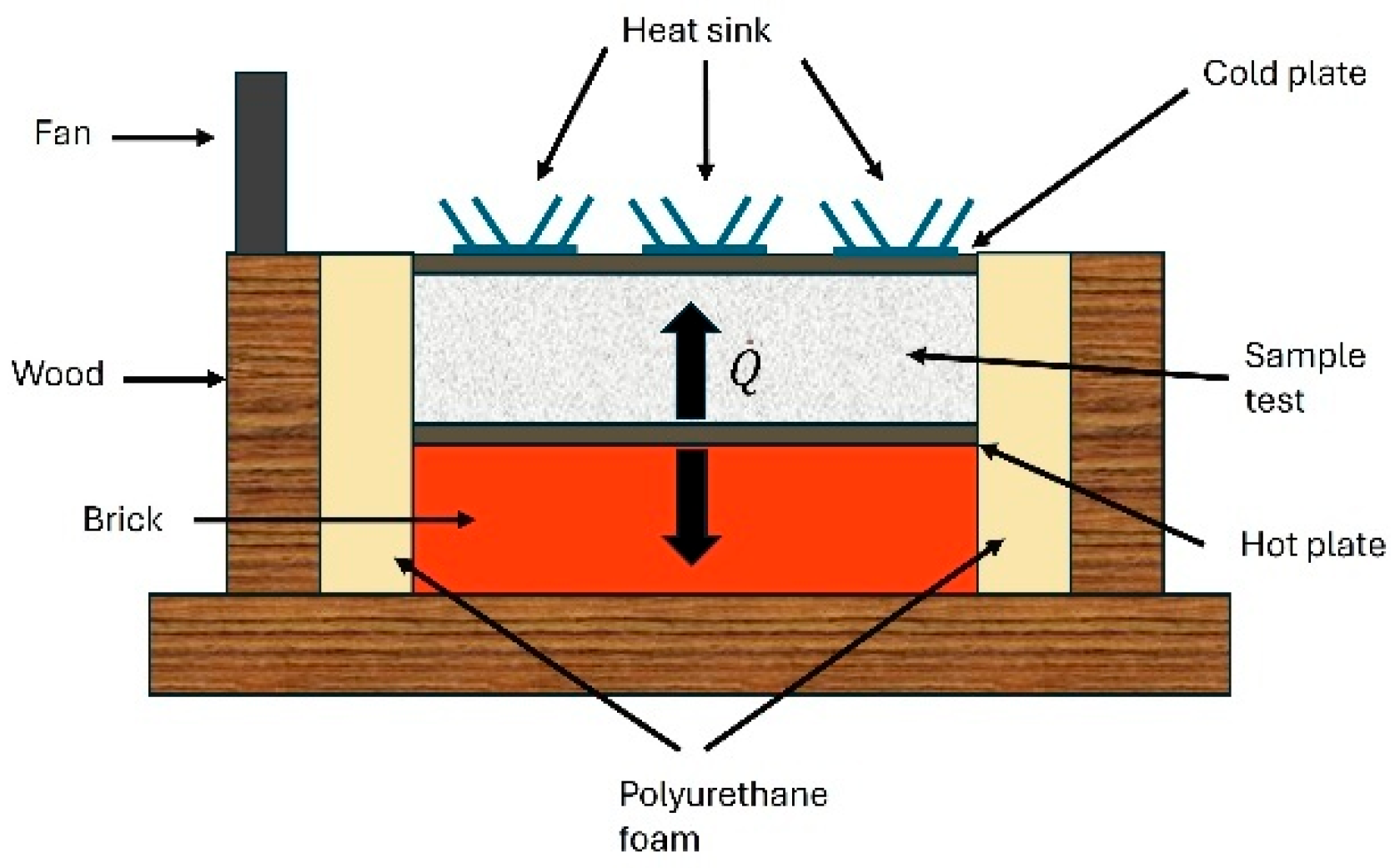
The experimental device is based on the thermal conductivity measurement method known as the hot-plate method. Two plates at different temperatures are placed one above the other, separated by a certain distance. The gap between the plates corresponds to the sample’s test space. The temperatures on the plates are kept fixed and in contact with the material under test. Derived from the temperature difference between the plates, a heat flow is established through the material. Although the device is thermally insulated on the lateral walls, heat losses through the brick base and wooden support cannot be completely avoided. Therefore, the heat transfer process is assumed to be predominantly one-dimensional, which represents a first-order approximation of the thermal behavior of the system. The hot plate is in contact with an electrical resistor that is supplied with constant electrical power; the cold plate is cooled by heat sinks distributed throughout the area and cooled by a fan, as shown in
Figure 2.
To calculate the thermal conductivity of a solid, Fourier’s law, as shown in Equation (1), is used. This law describes the heat flux through a solid as a function of the temperature gradient, its geometric properties, and its thermal conductivity. In one-dimensional form, it looks like:
where
[
] is the heat flux,
[
] is the thermal conductivity,
is the transversal area of the material,
] is the hot temperature in contact with the sample,
is the temperature of the cold plate in contact with the sample, and
is the thickness of the material separating the hot and cold plates.
2.4. Equipment Description
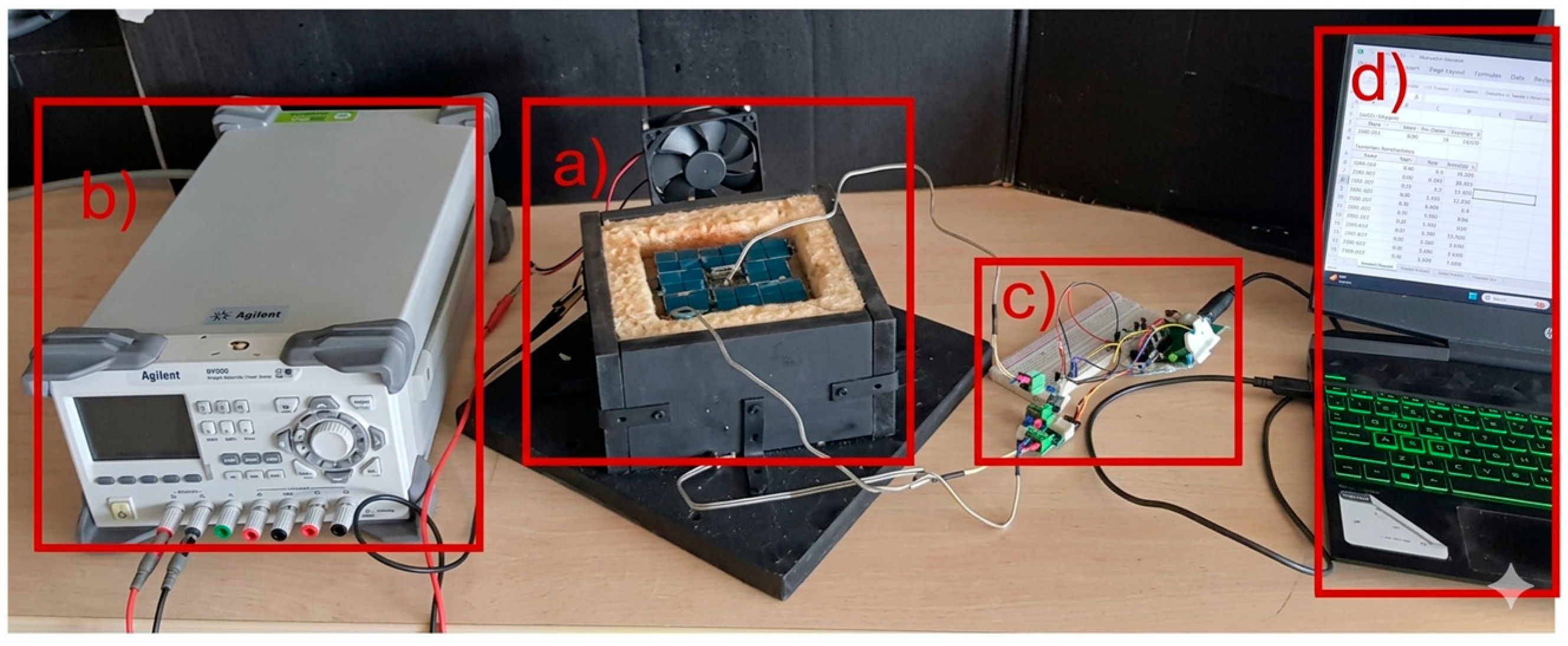
The measurement device, as shown in
Figure 3, consists of a rectangular cavity with wooden side walls. The lengths of the large and short sides of the device are 19.68 cm and 17.46 cm, respectively, the height is 10.16 cm, and the width is 0.59 cm. All vertical walls are set on a wood base measuring 30 cm × 29.5 cm and 1.91 cm wide. The heat flux is supplied by an electric resistance of 400 W electric power and a 40 cm length; it is embedded in a brick. The brick’s measurements are 11.43 cm × 10.16 cm and its width is 5.715 cm. A steel plate is placed above the resistance, which has a width of 3 mm. The electrical resistance is connected to a Rigol DP832 Programmable DC Power Supply (DP832, Rigol Technologies, Beaverton, OR, USA) from the laboratory of the ingenieria en energía, Universidad de la Ciénega del Estado de Michoacán de Ocampo (UCEMICH), México, and a voltage of 15.3 V is supplied at a power of 14.688 W, which allows a constant hot temperature to be maintained. Between the cold and hot plates is the material testing area, which is a rectangular prism with the same area as the partition and 2.54 cm thick. A steel plate is placed above the study material, in contact with it. This plate is kept at a cool temperature by a Thermoelectric Cooler TEC1-12706 (TEC1-12706, Hebei I.T. Shanghai, Shanghai, China) placed on the face exposed to the environment. On the hot side of the Thermoelectric Cooler, heat sinks cooled by a fan are used. The temperature is measured with two thermocouple transducers type “K”, placed on the hot and cold plates, with each thermocouple connected to a Max6675 module. An Arduino one (MAX6675, Maxim Integrated, San Jose, CA, USA) is also used for data acquisition every 30 s via serial communication.
2.5. Device Validation
The hot-plate method works on steady-state and unidirectional flow to ensure these conditions. The next measurements are presented.
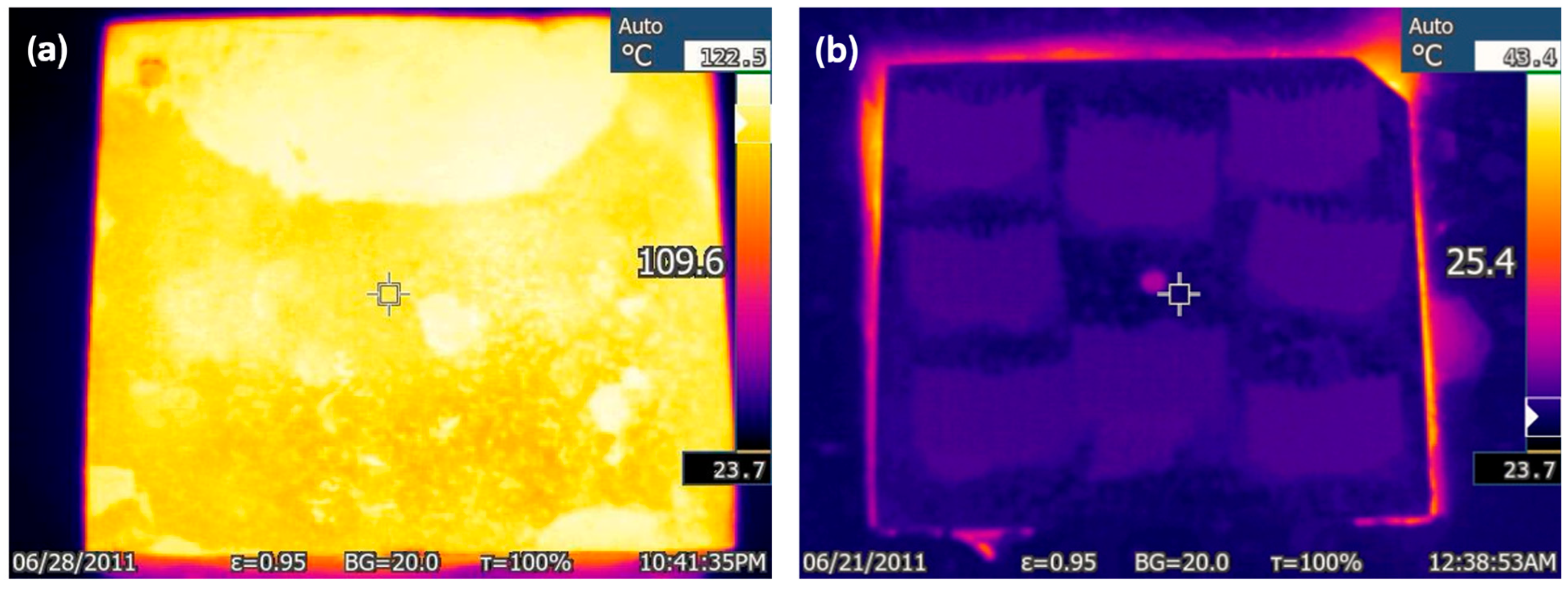
First, using a Fluke TIS55 thermographic camera (TiS55, Fluke Corporation, Everett, WA, USA) from the laboratory of the ingenieria en energía, Universidad de la Ciénega del Estado de Michoacán de Ocampo (UCEMICH), México, uniform hot and cold plates exhibited temperatures across their entire surface by visualizing the temperature field, as presented in
Figure 4a,b. Therefore, we can assume a uniform heat flow.
From a steady-state energy balance for the electrical resistance of the experimental device, the electrical power equals the heat flux through the resistance.
In order to calculate the thermal conductivity, a simplified thermal model is considered. The total heat flux generated by the electrical resistance is assumed to be distributed in two main directions: upward through the sample and downward through the brick and wooden base.
As a first approximation, a symmetric heat flux distribution is considered, assuming that half of the heat flows upward and half flows downward, as illustrated in
Figure 2. Therefore, Equation (2) is used to calculate thermal conductivity:
Additionally, in order to better justify this assumption, an alternative estimation of the heat flux distribution is carried out. Specifically, the temperature at the lower part between the brick and the wood base is measured, allowing us to estimate the heat flux lost downward using Fourier’s law.
Using this approach, the downward heat flux is calculated based on the measured temperature gradient and the thermal conductivity of the brick (k = 0.71 W/m·K), as reported by Cengel and Ghajar [
21].
Then, an energy balance is applied, where the total heat flux supplied by the electrical resistance is equal to the sum of the upward and downward heat fluxes:
From this, the upward heat flux is obtained as:
Using this corrected upward heat flux, the thermal conductivity of the validation samples of cement pastes is recalculated.
The alternative estimation of heat flux allows a more realistic analysis of the thermal behavior of the device. The calculated upward heat flux of 9.7 W is higher than the value obtained under the symmetric heat flux assumption (7.45 W), indicating that the heat transfer in the system is not perfectly symmetric.
This difference is mainly attributed to heat losses through the supporting structure and thermal resistance variations in the device components. However, both approaches produce thermal conductivity values that remain within the ranges reported in the literature for gypsum and cement pastes, which supports the validity of the experimental device.
To characterize the hot-plate device, thermal conductivity measurements were performed for two known materials: gypsum and cement. For this purpose, two samples were made, one of each material, whose dimensions were 11.43 cm × 10.16 cm and thickness of 2.54 cm.
The model was obtained for a steady state; this means that the temperature gradient does not change over time. Therefore,
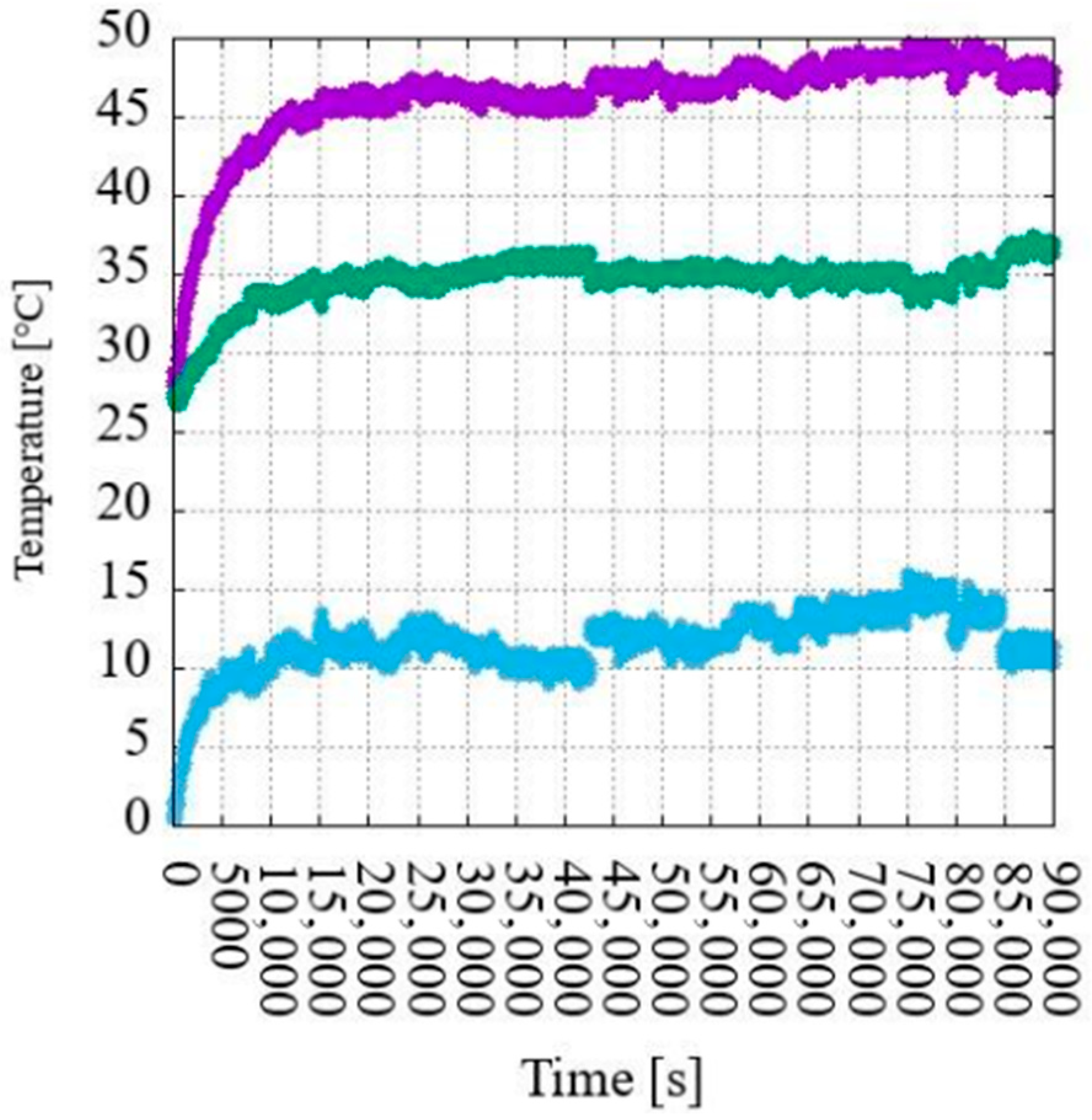
Figure 5 shows measurements of the temperature in the device using cement pastes, which has a sample test. The experiment was conducted for 24 h (86,400 s). We observe, at the beginning, that the temperature increases from room temperature to the operation temperature. After this transitional state, the equipment stabilizes within its environment; however, the temperatures do not stabilize at a single value, but rather within a smooth range. This range exhibits slight variations due to variations within the room itself during the day. However, we can assume that the equipment operates in a steady state.
Based on the measurements presented above, the gradient was calculated, and using the proposed model, the value of thermal conductivity was obtained.
Table 1 shows the thermal conductivity values obtained for gypsum and cement compared with values reported in the literature. The obtained values agree well, allowing us to trust the measuring device.
2.6. Thermal Behavior and Limitations of the Proposed Thermal Model
The main limitation of the experimental device is the assumption of symmetric heat flux distribution. In reality, heat transfer occurs through multiple paths, including conduction through the brick base and convection to the surrounding environment.
The alternative heat flux estimation confirms that asymmetric heat transfer exists in the system. Therefore, the symmetric assumption represents a simplified approach that introduces a systematic uncertainty into the thermal conductivity calculation.
Despite this limitation, the validation using gypsum and cement pastes shows that the obtained values fall within ranges from the literature, indicating that the device provides reliable measurements for comparative analysis of bio-based materials.
Future improvements will include numerical thermal modeling, improved insulation of the supporting structure, and additional experimental measurements to reduce uncertainty and enhance accuracy.
It is important to clarify that the limitation of the proposed approach does not lie in the experimental device itself, but in the thermal model used to interpret the heat flux distribution. The assumption of symmetric heat transfer introduces a systematic deviation (approximately 30%) that leads to an underestimation of thermal conductivity values. Therefore, the obtained results should be considered approximate and mainly useful for comparative evaluation of bio-based insulating materials.
3. Results
Based on the sampling carried out during the collection and conditioning phase of the castor berries, it was possible to obtain a total of 16 kg of castor material in fresh weight. After dehydration and peeling, approximately 6 kg of castor berries was obtained. Subsequently, the essential oil was extracted from these berries using the Soxhlet method, yielding a volume of 450 mL and a biodiesel volume of 302.82 mL, with a viscosity of 187.65 cps at 40 °C.
Regarding the solid residue generated during the essential oil extraction phase from the micelle, a total mass of 1.108 kg was obtained.
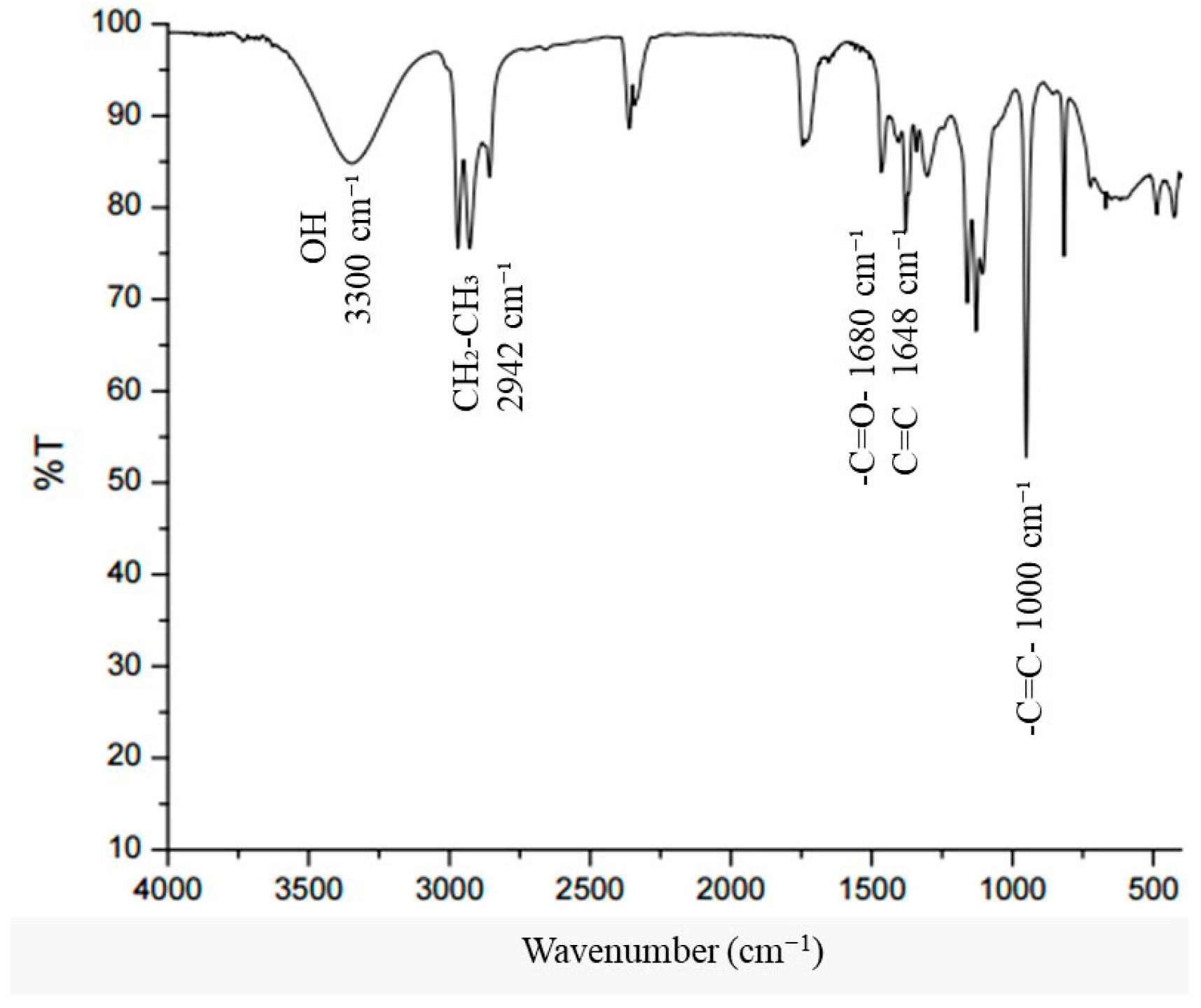
Figure 6 shows the characteristic absorption bands of the biodiesel obtained from castor biomass. Slightly shifted bands can be observed in the region around 3300 cm
−1, corresponding to the OH functional group. Additionally, the presence of CH
2-CH
3 stretching bands is identified in the region of 2942 cm
−1, along with an ester C=O group around 1750 cm
−1 and a C=C double bond in the region of 1648 cm
−1. These results are consistent with those reported by Narwal in [
27], who attribute these features to the presence of
methyl ricinoleate. In the same way, in the fingerprint region of the infrared spectrum, a band corresponding to the -C=O- group is observed around 1680 cm
−1, as well as a slight shift of the -C=C- group near 1000 cm
−1. This fingerprint is associated with the presence of ricinolein acid.
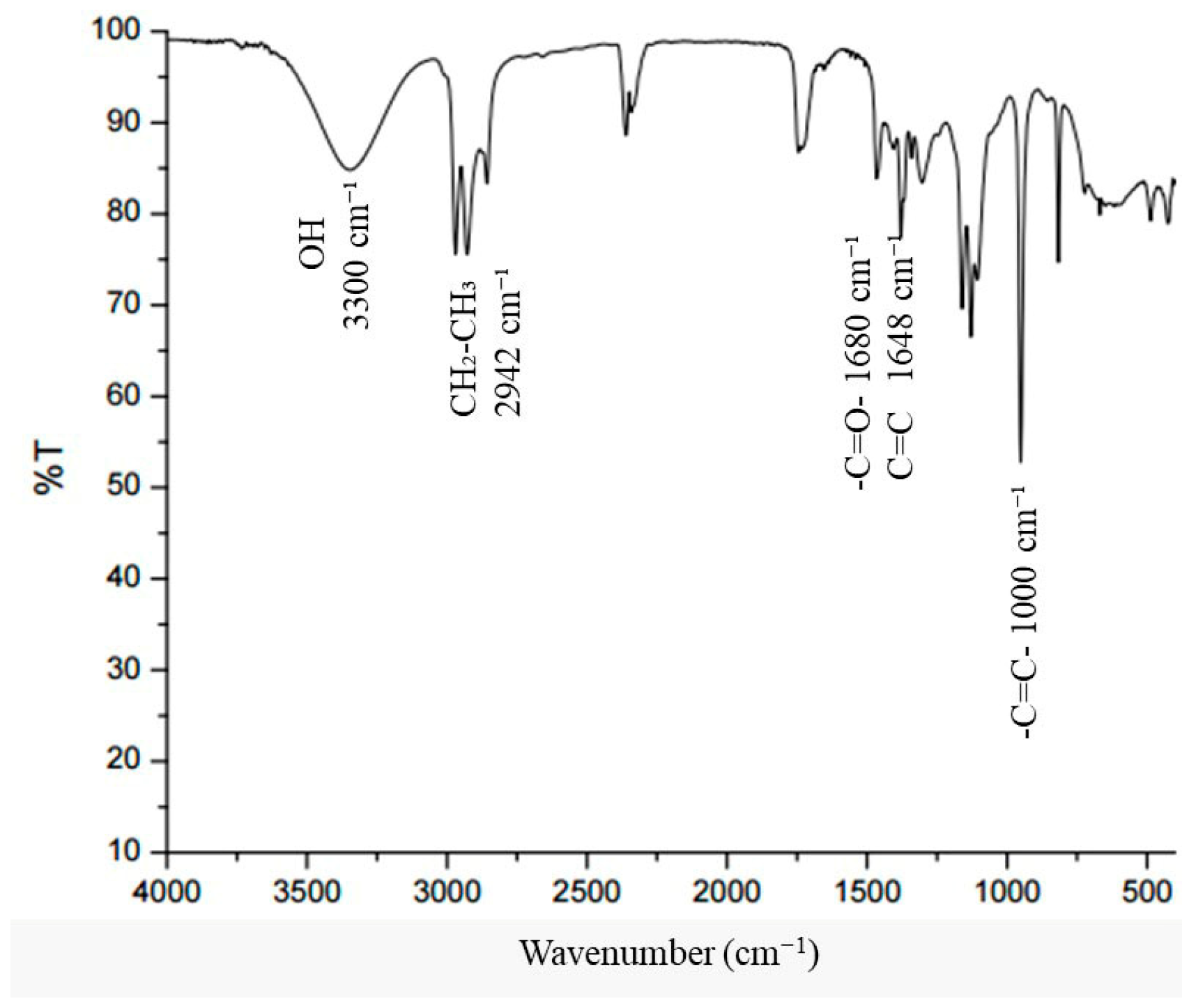
Furthermore, in
Figure 7, different absorption bands corresponding to the micelle remnant after essential oil extraction can be observed. Among the main peaks, the 3676 cm
−1 region stands out, corresponding to the OH functional group with a stretching vibration; similarly, a C=C double bond is identified at 3008 cm
−1, as well as a leftward shift of the -CH
3 group that corresponds to an asymmetric deformation vibration and a single bond band of -C-O- corresponding to a stretching vibration in the fingerprint region at 1200 cm
−1. Mentioning the above, the absorption bands agree with those described by Hui Li [
20], who performed the characterization of castor oil.
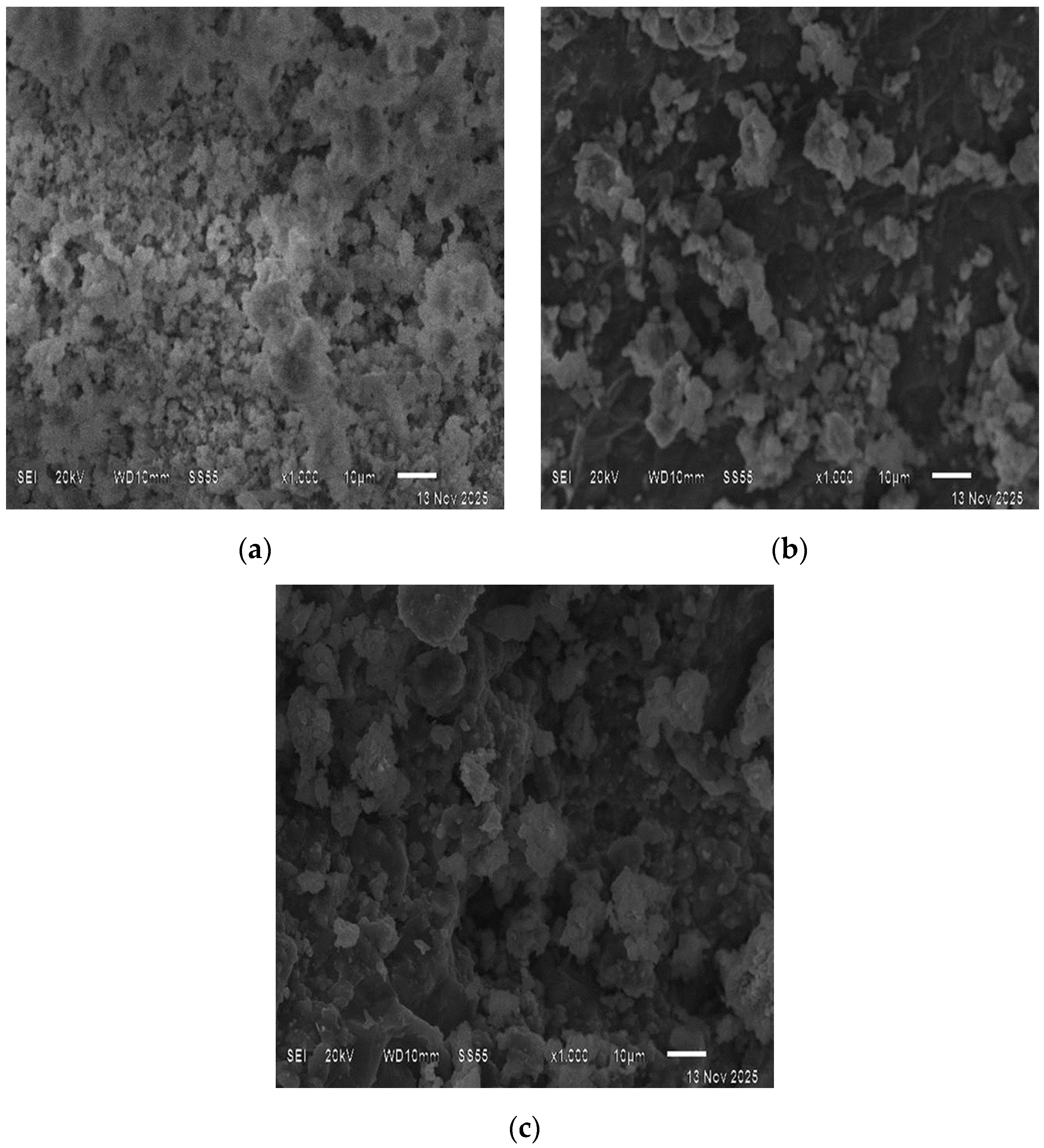
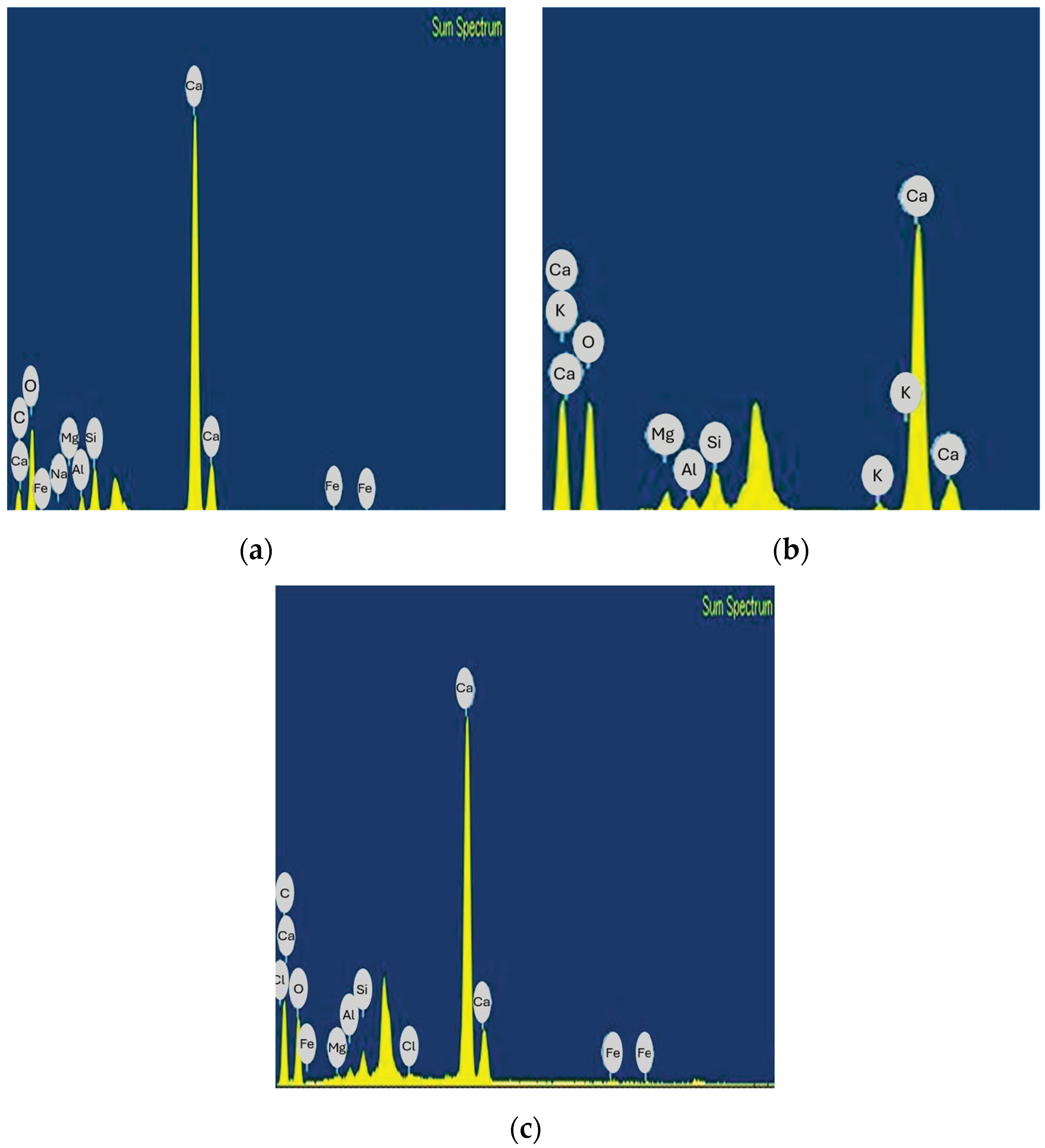
Figure 8 and
Figure 9 show the micrographs of the three formulations at magnifications of 1000× and EDS analyses, respectively. The micrograph of the first formulation, i.e., the control sample, is shown in
Figure 8a, where completely irregular surfaces can be identified. In
Figure 9a, we observe a high incidence of Ca. This coincides with Özkılıç Y.O. et al. (2023) [
28], who characterized hardened concrete by identifying the aggregates present in the mixture. Furthermore, through EDS analysis, they identified a high incidence of Ca, attributed to the presence of CaCO
3.
Regarding the second formulation with castor bean micelle M1, its micrograph and EDS analysis can be observed in
Figure 8b and
Figure 9b, where a heterogeneous and irregular surface is seen, as well as the presence of organic elements, which agrees with that described by Lopes T.A. et al. (2025) [
29], who used castor bean husk as a raw material to evaluate the interaction between the wood and castor bean particles and an adhesive material. It should also be mentioned that the authors conclude that the castor bean improves the thermal insulation properties due to its high porosity and low density [
30].
Similarly, for the third formulation shown in
Figure 8c and
Figure 9c, for sample M2, a heterogeneous morphology is observed, with an irregular and rough surface. Furthermore, the EDS analysis reveals the presence of multiple chemical elements corresponding to the construction materials.
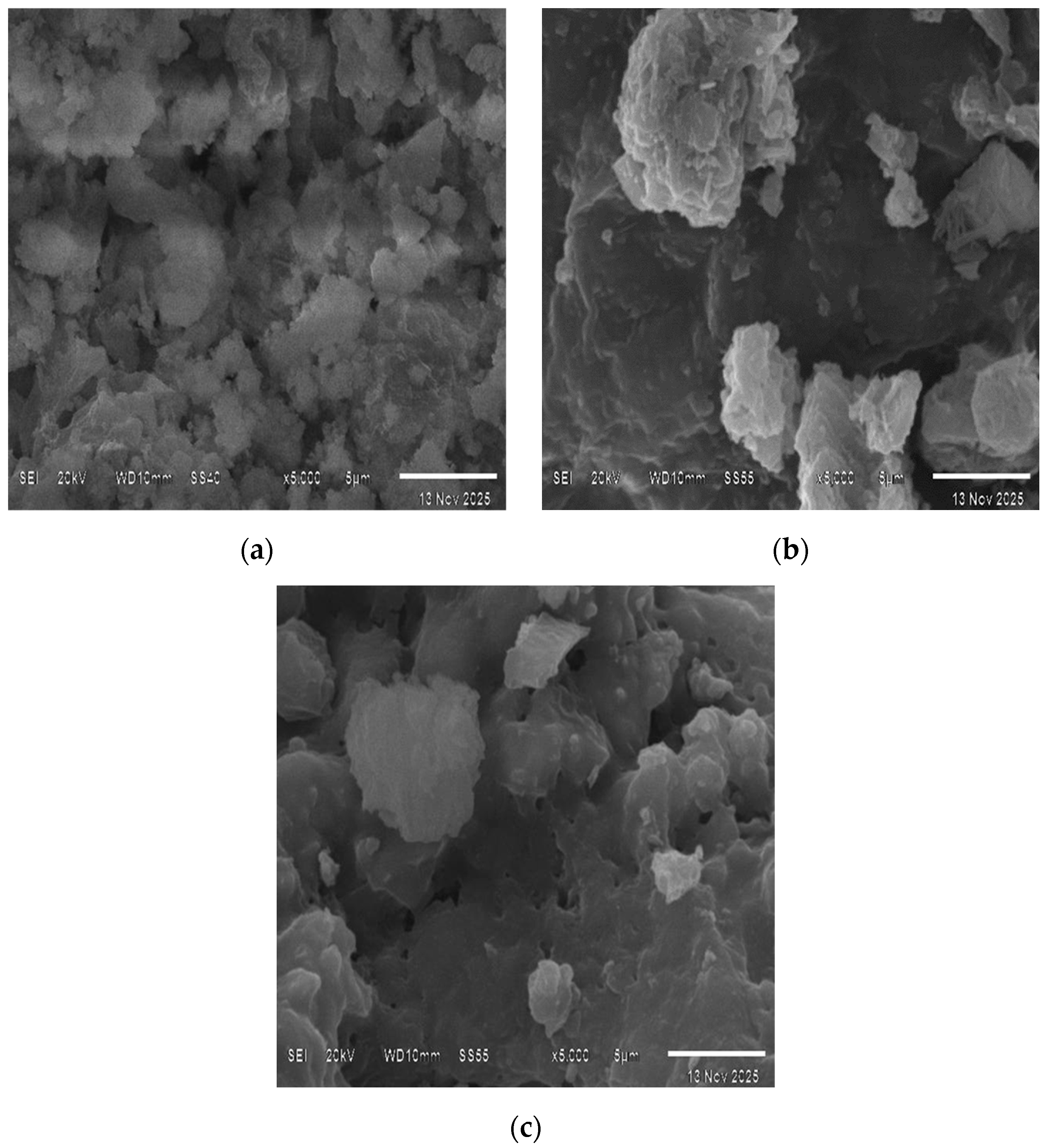
In
Figure 10, micrographs of the three configurations are presented with magnifications of 5000×. In the case of
Figure 10a, the control sample, amorphous aggregates can be observed, which agrees with that described by Rayed Alyousef [
30], who characterized mixtures of cement pastes and marble powder. In
Figure 10b, for M1, a rough and heterogeneous surface is identified, which is consistent with what has been reported in the literature [
28,
29,
30]. Finally, in
Figure 10c, corresponding to M2, a pseudospherical, asymmetrical morphology can be observed, which agrees with the morphology of
Riccinus communis reported by Anjum F. et al. 2022 [
31].
Finally,
Table 2 presents the calculated thermal conductivity results for the control and the two proposed variations with castor oil micelle remnants. It can be seen that the thermal conductivity of the mixture with 25% castor oil micelle remnant decreases by 42.07% compared to the control, and when the castor oil micelle remnant content is increased to 50%, the thermal conductivity decreases by 69.07% compared to the control. Furthermore, the table shows that the result of the second mixture compares well with the values reported in the literature for other biomasses, such as rice and corn. However, the results obtained with better insulators made of plastics, fibers, and vacuum tubes are not achieved.
4. Discussion
Biodiesel was obtained from castor bean seeds from the municipalities of Jacona and Sahuayo, Michoacán, with a volume of 302 mL. This biodiesel was characterized using FT-IR, where its characteristic absorption bands were identified, confirming the presence of this second-generation biofuel. The residue obtained during the essential oil extraction process has potential for use as a raw material for thermal insulation. Characterized by SEM, it presented an irregular surface morphology, and according to the literature, castor-based materials exhibit good properties, such as high porosity and low density, which contribute to their potential for use as thermal insulation. In
Table 2, we analyze the thermal conductivity obtained in this study against different values reported in the literature. We can classify the thermal conductivity into three categories: bio-based materials from agricultural waste, materials from mineral and industrial by-products, and advanced hybrid composites engineered for superior performance. The value obtained in this study compares well with those reported for bio-based materials. Nevertheless, the value is slightly higher than the expected value for a good insulator (K < 0.1), but it significantly improves the thermal conductivity of the studied building materials. For example, compared to the control, we achieved a reduction in thermal conductivity of up to 69%. This is because the progressive incorporation of micelle remnants significantly modifies the microstructure of the cementitious material, creating voids in the structure that decrease thermal conductivity.
The proposed experimental device provides a practical and low-cost method for estimating the thermal conductivity of bio-based construction materials. However, the assumption of symmetric heat flux and the presence of heat losses through the supporting structure introduce some uncertainty into the measurements.
The alternative heat flux estimation improves our understanding of the thermal behavior and confirms that the device operates under steady-state conditions. Therefore, the obtained results should be interpreted as reliable comparative values rather than absolute measurements.
5. Conclusions
In this work, we present the production of a thermal insulator based on the waste obtained from a biofuel production process using castor beans, which were gathered and processed to obtain biofuel. The castor bean waste was incorporated into a mixture of lime, marble dust, and cement. Three different formulations were prepared. The first was a control, without castor beans. In the other two, the construction material was mixed with micelle remnants at percentages of 25% and 50%, respectively.
A measuring device was developed to measure the thermal conductivity of these three samples. The thermal conductivity measurement equipment was validated by measuring the conductivity of two well-known building materials, gypsum and cement, obtaining results consistent with the literature. Subsequently, the conductivity of the three formulations was measured. It was observed that the thermal conductivity of the control decreased as the amount of micelle remnants increased. However, due to the minimum thermal conductivity obtained, it cannot be considered a good thermal insulator, although it agrees well with the values reported in the literature for other biomasses. The incorporation of biomass into the building material allows for a considerable reduction in the thermal conductivity of common building materials. The next step is to incorporate nanomaterials to further improve thermal conductivity.
The developed thermal conductivity measurement device provides reliable comparative measurements for bio-based construction materials under steady-state conditions. The alternative heat flux estimation (9.7 W) compared with the symmetric assumption (7.45 W) indicates a deviation of approximately 30%, confirming that the symmetric model systematically underestimates thermal conductivity values.
The proposed experimental methodology provides approximate thermal conductivity values with a systematic bias toward lower values; however, it is suitable for comparative analysis of bio-based insulating materials and preliminary thermal evaluation.
Future work will focus on improving the thermal model and incorporating numerical heat transfer simulations to reduce systematic deviation and improve accuracy.




 ,
,