1. Introduction
To facilitate the low-carbon transition of global energy systems, renewable energy sources, especially wind power, are being integrated into power systems on a large scale worldwide, driving profound transformations in the power industry [
1,
2]. With the continuously increasing penetration of renewable energy, maintaining the supply–demand balance solely through conventional thermal power units has become increasingly challenging. Both transmission system operators (TSOs), responsible for high-voltage grids, and distribution system operators (DSOs), managing low-voltage grids, are confronted with growing operational flexibility requirements [
3,
4]. To fully exploit the regulation potential of the “last mile” of the power grid, electric vehicles (EVs), capable of participating in system regulation through vehicle-to-grid (V2G) technology, have emerged as a promising flexibility resource [
5,
6]. The electric vehicle charging station (EVCS), serving as a natural EV aggregator, can coordinate distributed EV charging and discharging behaviors to participate in the coordinated optimization of power system operations [
7,
8,
9].
EVCS can effectively mitigate the fluctuation of renewable energy output through flexible regulation of the charging and discharging power [
10,
11], thereby improving the economic performance of system operation [
12,
13]. Research on EVCS participation in flexibility services has been widely explored. In terms of the TSO procurement of ancillary services from EVCS, reference [
14] proposed an optimal bidding strategy for EVCS participation in the flexible ramping market and developed a bi-level optimization model to optimize charging behavior but did not consider the dynamic temporal coupling of charging power. Reference [
15] improved the V2G fleet capacity assessment method based on energy and power availability, and applied it to the dispatch of V2G fleets providing reserve capacity, thus achieving the coordinated scheduling of reserve capacity and charging/discharging plans. Meanwhile, the rapid proliferation of distributed energy resources in distribution networks increases the complexity of DSO dispatch, prompting DSOs to seek service support from EVCS [
16]. From the perspective of uncertainty, reference [
17] developed a robust scheduling model considering network and EVCS constraints, and enhanced computational efficiency by combining duality theory with Benders decomposition. Reference [
18] incorporated EVCS into day-ahead operation planning to coordinately improve the overall operational efficiency of distribution networks and DERs, constructed dynamic locational marginal cost (DLMC) signals, and derived an additive decomposition to characterize inter-temporal coupling and provide a tractable mathematical tool for multi-period scheduling of resources such as EVCS. However, references [
14,
15,
16,
17,
18] mainly focused on leveraging EVs to provide flexibility for a single system operator, i.e., either the TSO or the DSO. Reference [
19] proposed a two-stage TSO-DSO coordination framework: the coordination of service capability and schedules is completed in the day-ahead stage, while EVs perform distributed response and execution on the distribution side in real time. Reference [
20] pointed out that the reserve capacity determined in [
15] did not account for its impact on distribution system operation, and proposed an EVCS capacity assessment method under a transmission–distribution coordination framework, showing that by considering distribution network constraints to optimize the operational boundary of EVCS, EVCS can provide ancillary services to both transmission and distribution networks simultaneously. Nevertheless, since the TSO indirectly accesses flexibility through boundary buses and lacks visibility into DSO operational information, adjustments to boundary-bus power by the TSO during practical operation may still jeopardize distribution network operational security, thereby compromising the reliable delivery of EVCS reserve capacity determined in [
19]. Reference [
20] indicated that there exist conflicts of interest between the TSO and the DSO in the utilization of distributed resources but did not provide specific countermeasures. In summary, the flexibility procured by the TSO may violate distribution network operational constraints or conflict with the DSO regulation requirements, making the services provided by EVCS unable to be reliably delivered. Therefore, the coordination mechanism between the TSO and the DSO requires further in-depth research and refinement to facilitate EVCS flexibility provision while avoiding economic penalties caused by delivery failures.
Driven by policies in various countries, such as FERC Order 2222 in the United States [
21], there is growing academic interest in the coordinated optimal dispatch of transmission and distribution networks, particularly focusing on the integration and cooperative operation of distributed energy resources connected to the distribution network side [
22]. Reference [
23] proposed three TSO-DSO coordinated distributed resource management models: the TSO-managed model, the TSO-DSO hybrid model, and the DSO-managed model. The TSO-managed model involves the TSO managing both transmission and distribution level resources while considering the operational constraints of both grid levels [
24]. Although modeled as a unified single-layer framework, this approach imposes significant computational complexity. In the TSO-DSO hybrid model, the DSO is responsible for validating all distributed resource bids, thereby reducing modeling complexity compared to the TSO-managed model. However, since decision-making is not centralized within a single entity, coordination becomes more intricate [
25]. The DSO-managed model refers to the TSO setting requirements at the TSO-DSO interface, while the DSO organizes and validates distributed resource bids and issues dispatch commands to meet both TSO and local operational needs. This model effectively integrates distributed resources into the grid while considering distribution network constraints, resulting in a more efficient and streamlined coordination process, making it a more practical choice [
26]. However, the existing literature often treats EVCS—as a load-side resource—as a bidirectionally adjustable virtual energy storage system directly participating in grid optimization, which contradicts the reality that EVCS is not a grid-owned resource [
27,
28,
29]. Demand response (DR) may serve as an effective EVCS management strategy [
30,
31]. Embedding DR into transmission–distribution coordinated optimization in practice entails three layers of complex coordination relationships, and related research remains relatively limited. Reference [
32] proposed a price-signal-based DR mechanism for managing EV fleets, in which electricity prices were designed according to pre-specified flexibility requirements to adjust the day-ahead charging and discharging strategies of EV fleets. However, by treating the flexibility requirement as an exogenous parameter rather than an optimization variable, this method may lead to suboptimal solutions when actual operating conditions deviate from the scheduling plan, and may even aggravate wind curtailment and load shedding in the power system. Therefore, further investigation into multi-stage coordinated transmission and distribution optimal scheduling frameworks (e.g., two-stage frameworks) incorporating demand response is still required.
Reference [
33] developed an optimal market model for virtual power plants (VPPs) participating in TSO-DSO coordinated energy and flexibility markets, but the operational requirements at different grid levels were based on a deterministic model. To address the uncertainty of operational requirements, adaptive robust optimization (ARO) is a commonly used method [
34]. For transmission and distribution networks, however, uncertainties in renewable energy output also exist, making the characterization of these two heterogeneous uncertainties a subject worthy of further study. Reference [
35] investigated VPPs providing auxiliary services to the grid, using stochastic optimization (SO) and ARO to handle renewable energy output and grid operational requirement uncertainties, respectively. Reference [
36] employed a combination of robust optimization (RO) and ARO to achieve optimal utilization of reserves in transmission and distribution networks. Distributionally robust optimization (DRO) differs from RO and SO: the former focuses on worst-case scenarios, resulting in overly conservative operational strategies, while the latter requires decision-makers to know the exact probability distribution and may degrade optimization performance under worst-case operating conditions. DRO strikes a balance between these two approaches, and its advantages have been demonstrated in References [
37,
38]. However, based on our investigation, the integration of DRO and ARO for transmission–distribution coordinated optimization remains an area yet to be fully explored.
To address the aforementioned challenges, this paper proposes a multi-stage transmission–distribution coordination framework for the flexible utilization of EVCS resources. To fully exploit the flexibility of EVCS, a novel demand response incentive mechanism based on the DSO-managed model is introduced, encouraging EVCS to provide flexibility services simultaneously to both transmission and distribution networks. The uncertainty of renewable energy in the transmission and distribution grids is modeled using the DRO method. It is particularly noteworthy that ARO is further integrated into the DSO optimization model to address the uncertainty in transmission operational requirements. To alleviate computational burden and address privacy concerns, a distributed algorithm is employed to solve the proposed optimization model. A comparison with existing state-of-the-art methods is presented in
Table 1. We summarize the three main contributions of this paper as follows:
(1) This paper proposes a multi-stage coordinated optimization framework for the flexible utilization of EVCS resources and designs a novel demand response incentive mechanism for EVCS management. Unlike most existing studies that either ignore the economic cost of EVCS operation or treat EVCSs as directly bidirectionally adjustable “virtual energy storage” resources for system optimization [
27,
28,
29], which often overlook the economic costs of EVCS operation or the interactive coordination between EVCS operators and the power grid, the proposed demand response incentive mechanism explicitly incorporates EVCS day-ahead charging/discharging strategies and actual operational constraints into the clearing and dispatch process, enabling EVCS operators to declare their maximum adjustable capacities to the greatest extent. Moreover, unlike Reference [
32], which treats the flexibility requirement as a given parameter, the proposed mechanism is embedded within a multi-stage transmission–distribution coordinated optimization framework with a two-stage scheduling structure, in which the flexibility requirement is optimized as a decision variable through recourse in the intraday re-dispatch stage.
(2) This paper employs DRO to characterize the uncertainty of renewable energy output on both transmission and distribution sides, while ARO is introduced to model the uncertainty of transmission operational requirements. Since the operational requirements are embedded within the optimization model, the proposed method ensures that the system can effectively track them even under the most adverse conditions within the feasible region. Accordingly, the DSO model is formulated as a four-layer min–max–max–min optimization problem, which constitutes a novel mathematical structure. To the best of our knowledge, this is one of the first works to integrate DRO and ARO to jointly characterize heterogeneous uncertainties within a transmission–distribution coordinated optimization framework, thereby providing a more balanced and less conservative operational strategy compared with existing RO- or SO-based approaches.
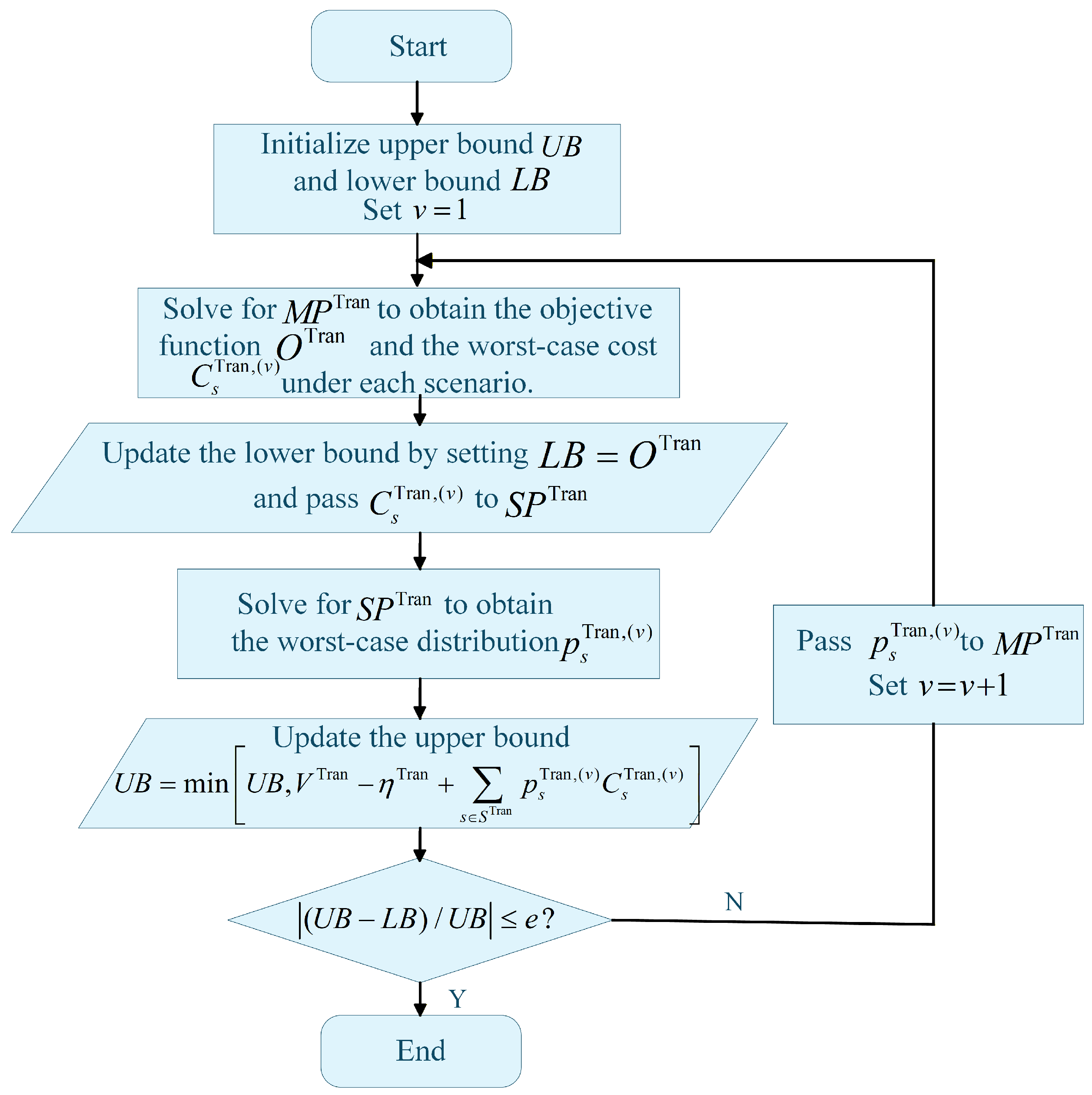
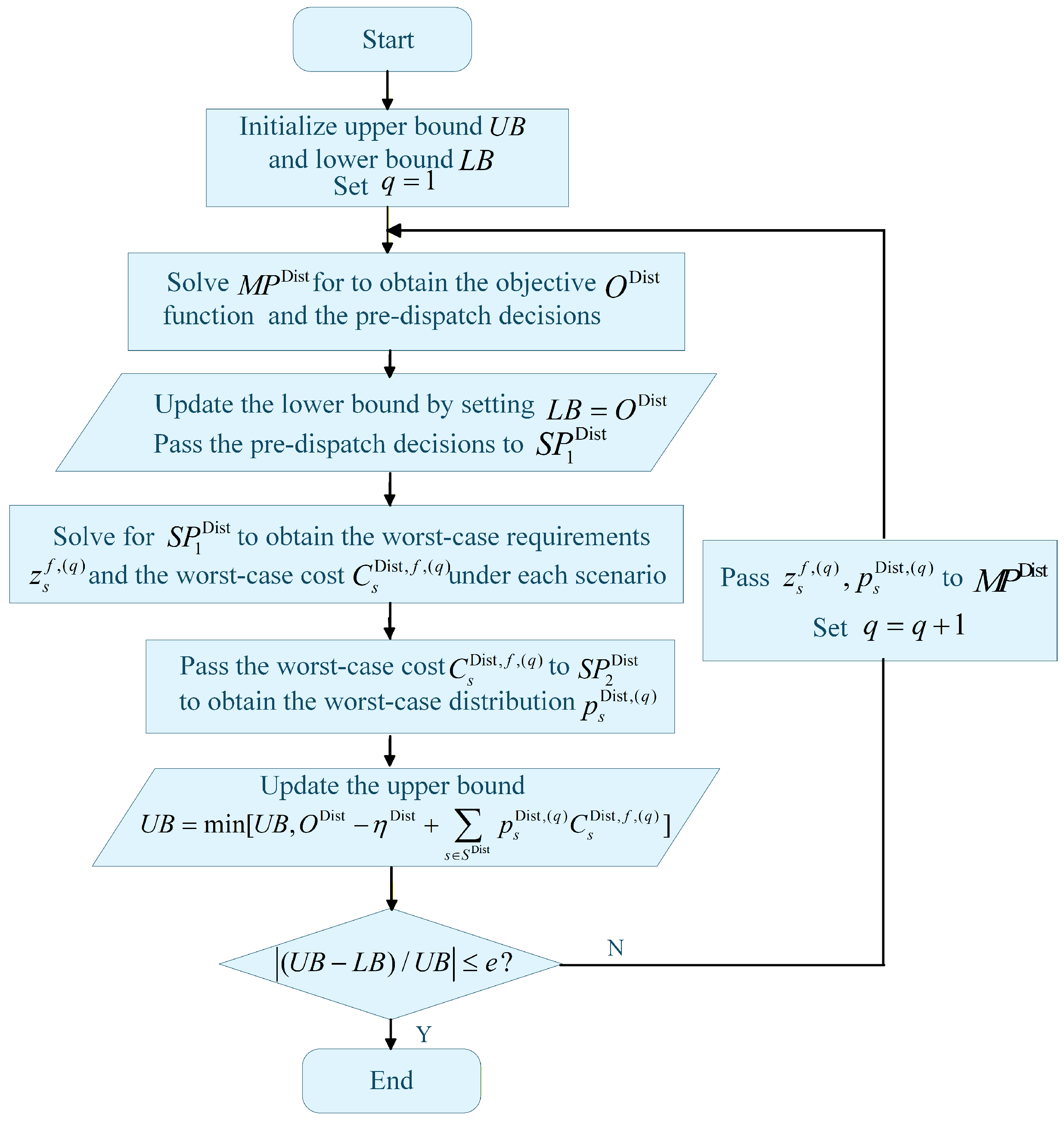
(3) To ensure the privacy of each hierarchical system, this paper adopts a distributed solution method based on the alternating direction method of multipliers (ADMM) and column-and-constraint generation (C&CG). It is particularly noteworthy that a customized C&CG algorithm is developed to solve the formulated four-layer DSO min–max–max–min optimization model under the ADMM-based decomposition framework.
Table 1.
Comparison between this paper and state-of-the-art studies.
Table 1.
Comparison between this paper and state-of-the-art studies.
| Reference | Demand
Response | Flexibility
Requirement | Renewable
Uncertainty | Requirement
Uncertainty | Uncertainty
Modeling |
|---|
| [32] | ✓ | parameter | ✓ | ✗ | RO |
| [33] | ✗ | \ | ✗ | ✗ | \ |
| [35] | ✗ | \ | ✓ | ✓ | SO-ARO |
| [36] | ✗ | \ | ✓ | ✓ | RO-ARO |
| [37] | ✗ | \ | ✓ | ✗ | DRO |
| [38] | ✗ | \ | ✓ | ✗ | DRO |
| This paper | ✓ | variable | ✓ | ✓ | DRO-ARO |
The remainder of this paper is organized as follows.
Section 2 provides a brief overview of the proposed multi-stage transmission–distribution coordination framework for flexible resource utilization in EVCSs.
Section 3 details the formulations of the TSO and DSO optimization models, the construction of ambiguity sets based on the Wasserstein distance for DRO, and the ARO-based scheduling decision uncertainty modeling for the TSO.
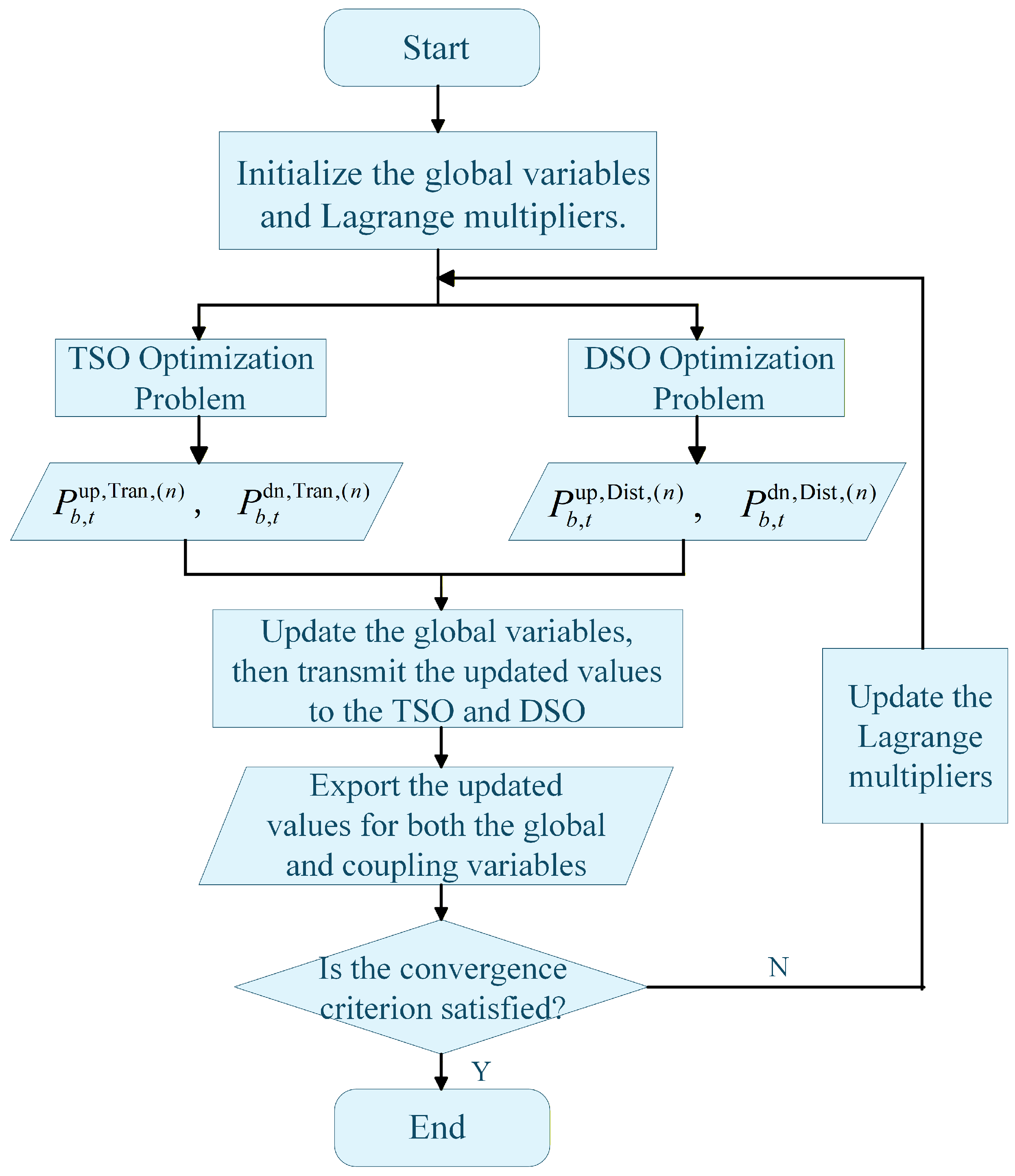
Section 4 designs a distributed solution method to decouple the transmission–distribution coordination model, and describes the solution procedures and algorithm design for each regional problem.
Section 5 presents numerical case studies and analysis. Finally,
Section 6 discusses and concludes the research findings.
2. Demand Response Incentive-Based Multi-Stage Coordinated Optimization Framework for EVCS Flexibility Utilization
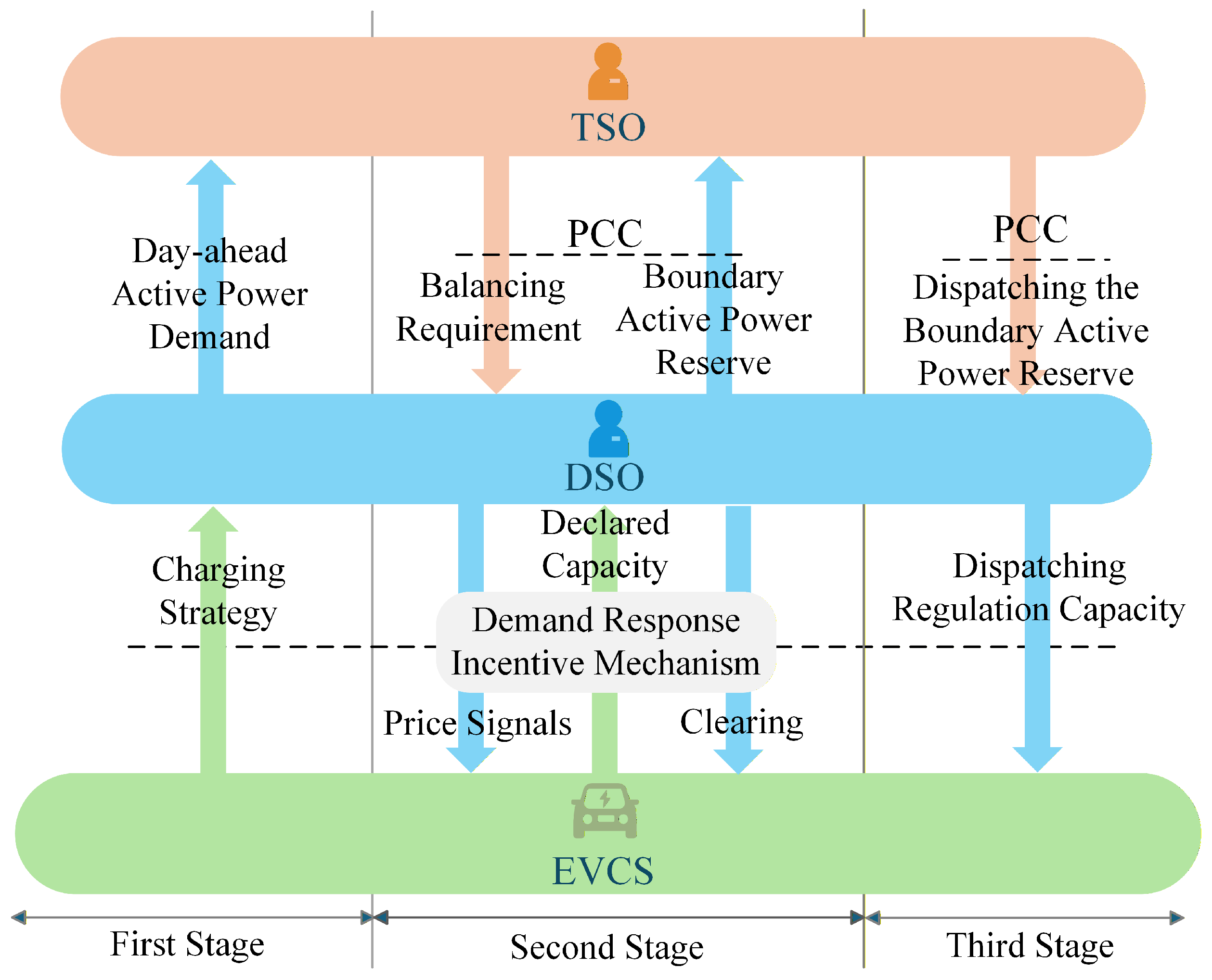
To effectively utilize the flexible regulation characteristics of EVCSs, this section proposes a multi-stage coordinated optimization framework based on a demand response incentive mechanism as illustrated in
Figure 1. Specifically, a DSO-managed TSO-DSO coordinated interaction model is considered, where the DSO is responsible for the management and coordination of distributed EVCSs. The first stage is defined as the day-ahead demand submission stage. In this stage, each EVCS is modeled as a virtual energy storage system via the Minkowski summation method. Under the assumption that EVCSs act as price takers, their day-ahead charging/discharging power
is optimized according to the time-of-use electricity price
. Meanwhile, the DSO collects the aggregated load information and submits the day-ahead boundary active power
to the TSO.
In the second stage, namely the day-ahead optimal dispatch stage, the TSO is responsible for organizing the energy and reserve scheduling of thermal units and issues the upward and downward regulation reserve requirements to the DSO. The DSO then issues upward and downward demand invitations along with the corresponding price signals and to the distributed EVCSs. Based on the operational constraints of the EVCS, the EVCS is allowed to declare its maximum upward and downward regulation capacities, denoted as and , respectively. Based on the TSO regulation requirements and its own operational constraints, the DSO clears the upward and downward regulation capacities and of each EVCS and provides the TSO with the cleared boundary upward/downward active power reserves and .
In the third stage, namely the intraday optimal dispatch stage, the TSO maintains system power balance by dispatching thermal power reserves and the boundary reserves to cope with renewable energy output uncertainty. However, due to the incomplete information of the TSO regarding distribution network operations, its operational requirements may violate the operational constraints of the distribution network during actual implementation. Therefore, at this stage, the DSO must coordinate the transmission operational requirements with the uncertainty of renewable energy output by adjusting the dispatchable capacity of EVCSs. This process ensures that the ransmission operational requirements comply with distribution network security constraints while meeting the local renewable energy consumption requirements of the DSO, thereby guaranteeing the reliable delivery of the cleared boundary reserves. In actual operation, the charging/discharging power of the EVCS is adjusted from
to
, where
denotes the EVCS charging/discharging power adjustment at time
t under scenario
s and operational requirement
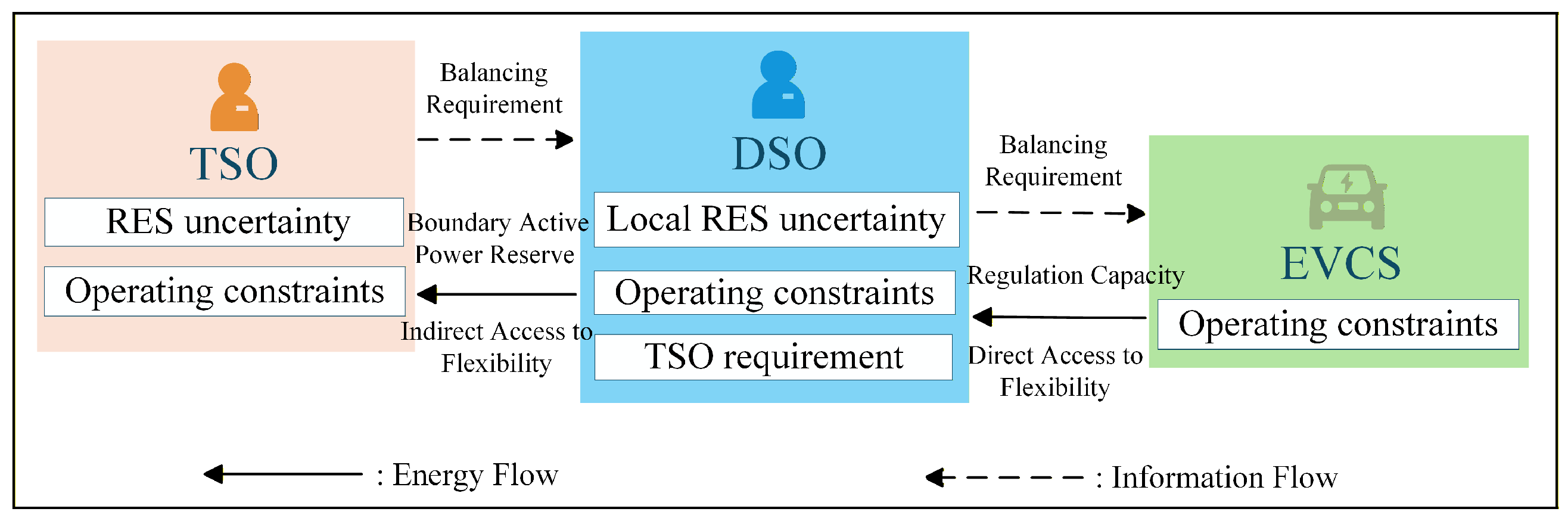
f. In summary, the EVCS provides upward and downward regulation capacity to the TSO and the DSO to balance renewable generation deviations in the intraday stage.
Figure 2 illustrates the coordinated interaction among the TSO, DSO, and EVCS.
It should be noted that, in order to coordinate the charging/discharging power adjustments of EVCSs across multiple time intervals and prevent excessive charging or discharging, cumulative regulation constraints for the EVCSs must be incorporated. The specific constraints are given as follows:
5. Case Studies
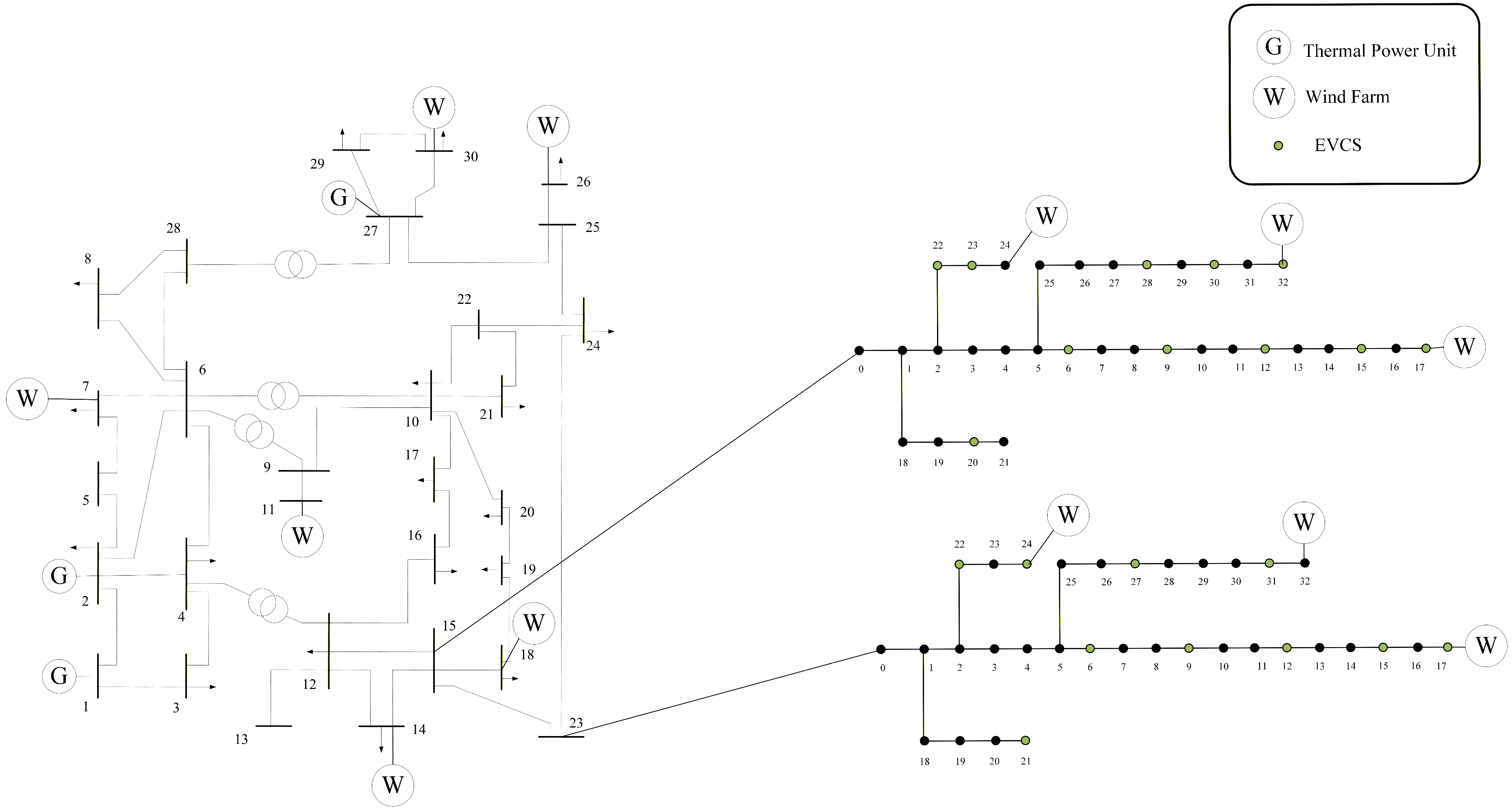
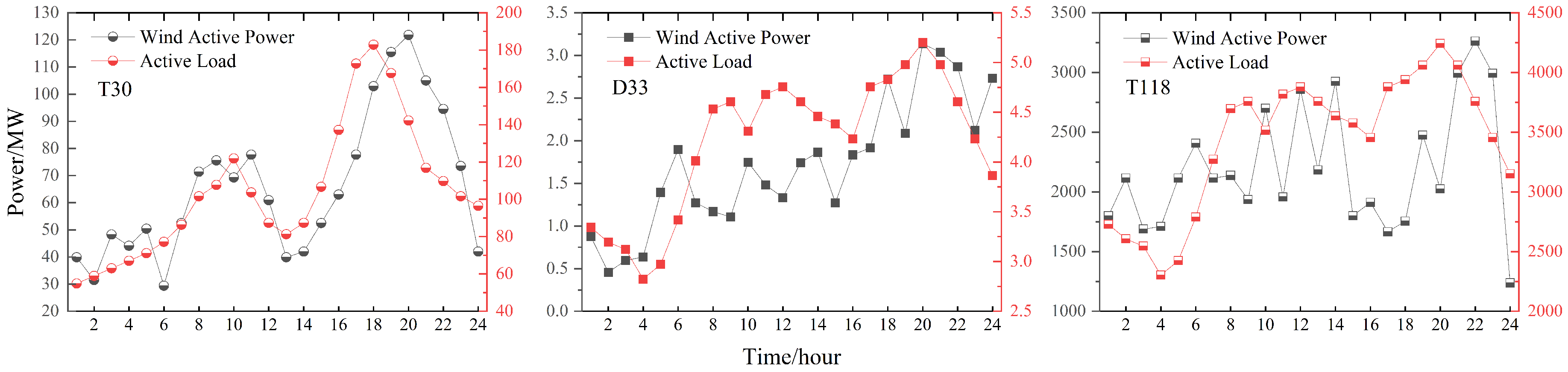
To verify the effectiveness of the proposed method, this paper designs a T30D2 test system for analysis. T30D2 refers to a modified 30-bus transmission network connected to two modified 33-bus distribution networks. The boundary buses are located at buses 15 and 23 in T30, and thermal power units are installed at buses 1, 2, and 27, with a total installed capacity of 190 MW. Wind farms are sited at buses 7, 11, and 14, with a peak capacity of 122 MW. In the D33 networks, distributed wind farms are placed at buses 17, 24, and 32, with a peak capacity of 3.14 MW. EVCSs are installed at buses 6, 9, 12, 15, 17, 20, 22, 23, 28, 30, and 32. The EVCS data are generated using a scenario clustering method, with clustering data sourced from the CalTech EV dataset [
39]. The system topology is shown in
Figure A3, while the wind power and load data of the T30D2 system are presented in
Figure A4. Detailed parameters of the test system can be found in [
40].
To further clarify the case-study setup, the T30D2 system is configured to isolate the impact of EVCS-enabled demand response under high renewable penetration and heterogeneous uncertainties. Therefore, the transmission side includes only thermal units and wind farms as a representative renewable-integration setting, while other distribution-side DERs (e.g., photovoltaic generation and energy storage systems) are omitted in the baseline case to avoid introducing additional flexibility sources that may obscure the contribution of EVCSs. It is worth noting that many adjustable resources can be formulated using a virtual energy storage (VES) model analogous to EVCSs; moreover, other DER types can be incorporated by adding their corresponding operational constraints.
5.1. Analysis of Flexible Resource Utilization for EVCS
To verify that the proposed method can fully exploit the flexibility of EVCSs to provide services for both transmission and distribution systems, Cases 1–3 are designed to analyze different modes of EVCS participation in transmission–distribution coordinated operation. Since the proposed demand response mechanism is embedded in the multi-stage transmission–distribution coordinated optimization framework and jointly designed with EVCS flexibility declaration, boundary reserve coordination, and intraday deliverability under operational deviations and uncertainties, its effectiveness is evaluated through system-level comparative studies that examine how EVCS flexibility is incorporated into transmission–distribution coordination.
: EVCS providing flexible services to Both TSO and DSO;
: EVCS provides flexible services solely to DSO;
: Flexible services from EVCS for both TSO and DSO are not considered.
In this paper, the TSO indirectly obtains flexible services from EVCS by coordinating boundary active power reserves with the DSO. Therefore, when EVCS is not considered for providing flexible services to the TSO, the TSO and DSO operate in isolation. This means that the boundary active power remains fixed at the baseline value
determined in the first stage, and the boundary buses are treated as rigid loads.
Table 2 presents the operational costs of the T30-D2 system for Cases 1–3. A comparison between Cases 1 and 2 indicates that when EVCS is considered to provide flexible services to the TSO, the TSO operational cost decreases by
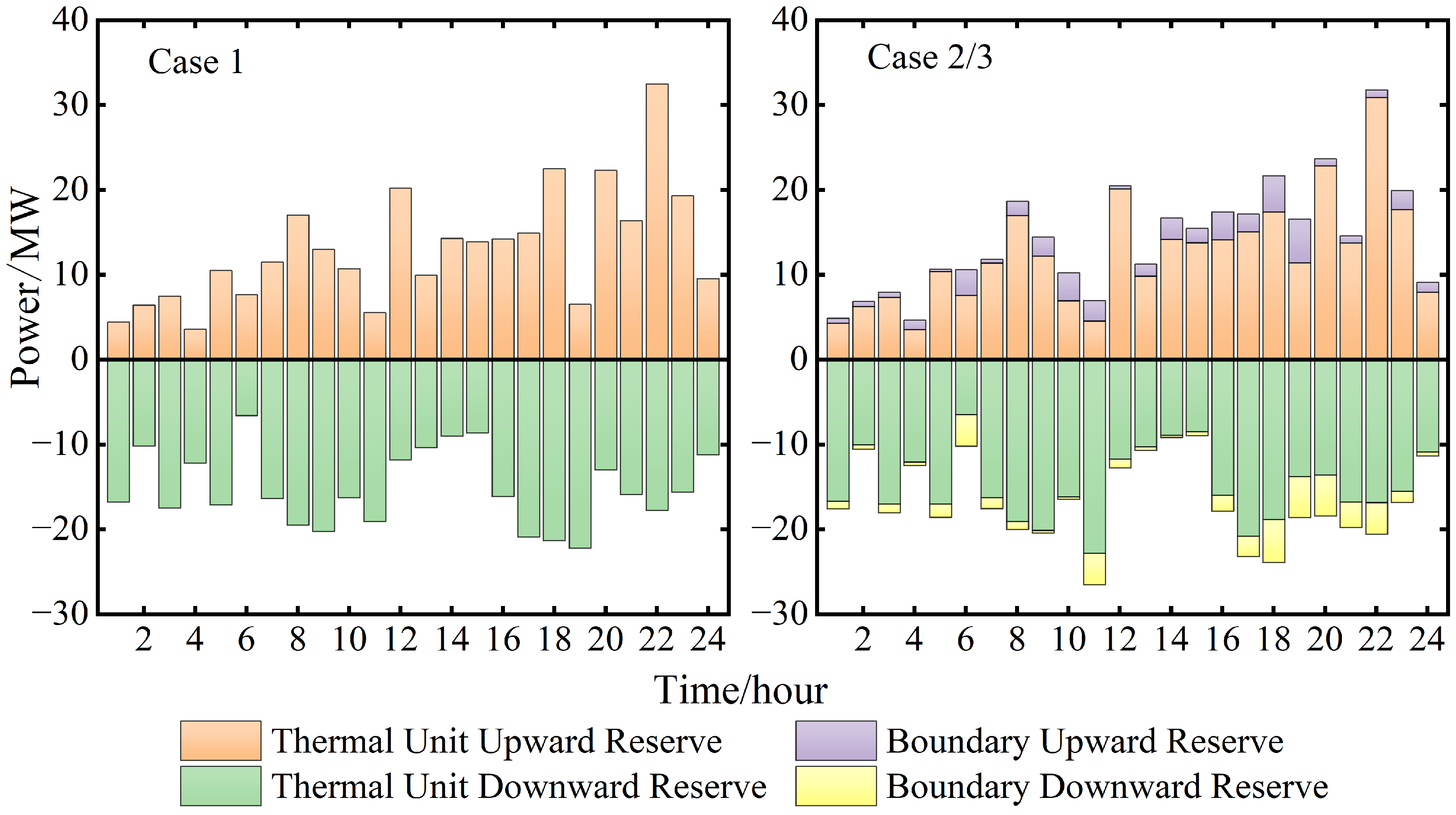
$13,582, representing a relative reduction of 19.87%. Although the DSO operational cost increases, the total operational cost decreases by 13.95% relative to the Case 2. This is because the flexible regulation capability of the TSO is constrained, primarily due to the ramping limitations of thermal power units and the relatively high cost of reserve provision. To address these constraints, the flexible services offered by EVCSs can alleviate the TSO ramping pressure and enable more efficient utilization of its surplus adjustable capacity. These resultant reserve arrangements for the TSO across the three cases are illustrated in
Figure 4. Compared with Case 2, the operational cost of the DSO increases significantly in Case 3. This is because, under the scenarios set for Case 3, when EVCS are not considered for providing flexible services to the DSO, the DSO can only rely on wind curtailment and load shedding to maintain system power balance and satisfy other security constraints.
Table 3 compares the wind curtailment and load shedding in the T30D2 system for Cases 1–3. As shown, compared with Cases 2 and 3, Case 1 reduces wind curtailment by 22.54 MW and 31.64 MW, corresponding to decreases of approximately 75.06% and 80.86%, respectively. Meanwhile, load shedding is reduced by 8.96 MW and 15.02 MW, representing reductions of about 51.76% and 64.27%, respectively.
We define the line maximum loading ratio and the line average loading ratio using Equations (62) and (63), respectively.
Table 4 lists the top three transmission lines in the T30D2 system with the highest maximum loading-rate rankings in Case 1 and Cases 2/3.
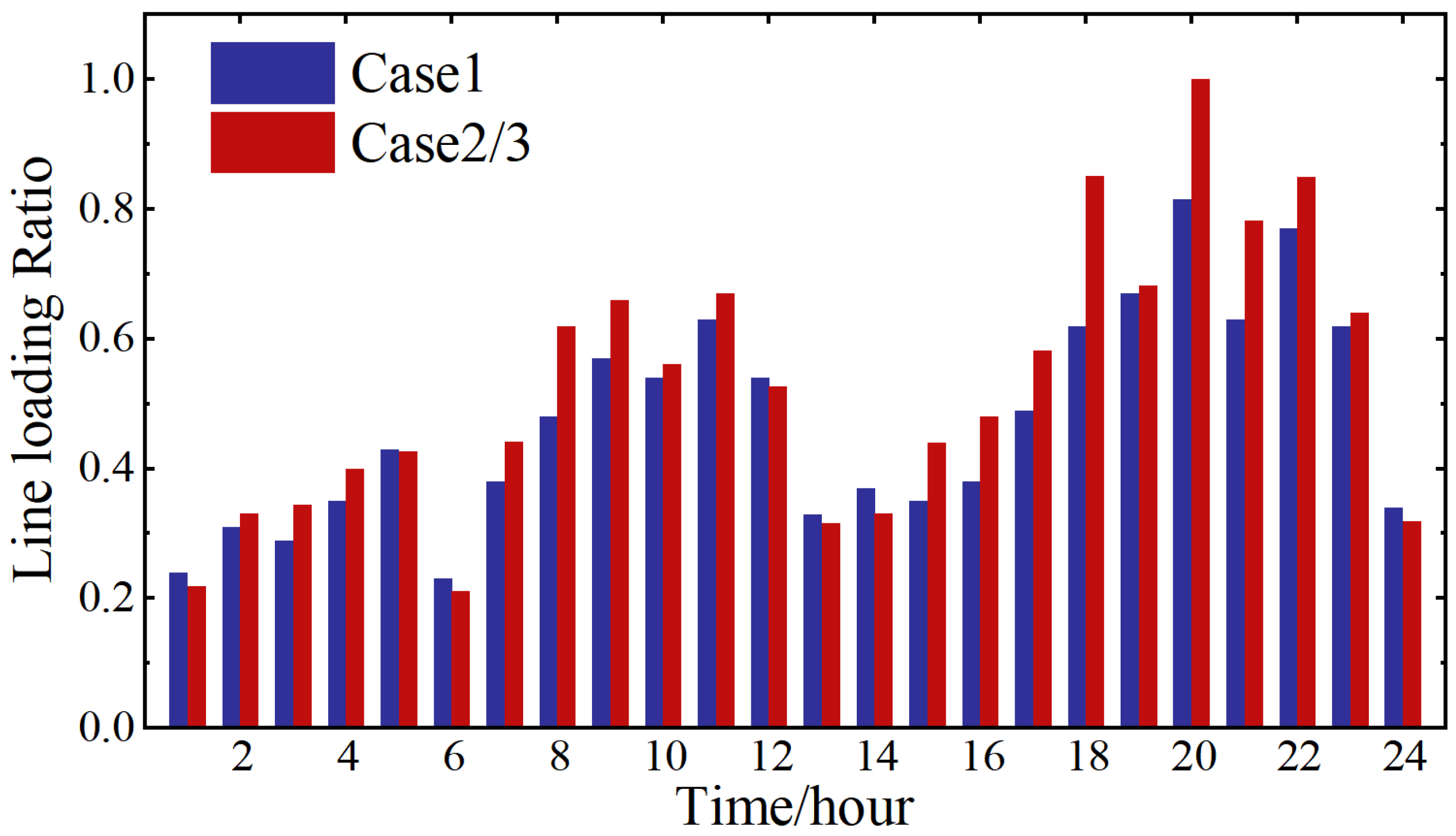
Figure 5 illustrates the daily change in the loading ratio of Line 33 in Cases 1–3 for the T30D2 system. It can be observed that, in Case 1, both the maximum and average line loading ratios are lower than those in Cases 2 and 3. For Line 33, which exhibits the highest loading ratio among all lines, the maximum loading ratio decreases by 18.4 percentage points, and the average loading ratio decreases by 5.4%. During the evening peak-load period, the loading ratio of Line 33 is notably reduced at 18:00, 20:00, and 21:00. The transmission network can alleviate line congestion by leveraging the flexibility provided by EVCSs at the boundary buses:
5.2. Comparative Analysis of Different Uncertainty Models
In this paper, the ambiguity sets are mutually independent across different systems. The radius of the TSO ambiguity set is set to 10, while that of the DSO ambiguity set is set to 1. To validate the effectiveness of the proposed ARO-DRO uncertainty model, Cases 4–6 are established in this paper for comparing different uncertainty models:
: ARO-DRO;
: ARO-RO;
: ARO-SO;
Table 5 compares the operational results for different uncertainty models. Compared to the RO method employed in Case 5, the operational cost of Case 4 decreases by
$6773, representing a relative reduction of 10.11%. Furthermore, by comparing the wind curtailment and load shedding under the worst-case operating scenarios across different cases, Case 4 reduces wind curtailment and load shedding by 11.75 MW and 8.93 MW respectively compared to Case 6 in the worst-case scenario, corresponding to relative reductions of 37.53% and 45.19%. In summary, the proposed method is able to reduce the total operational cost of the transmission–distribution system while enhancing its robustness under the worst-case optimization scenario.
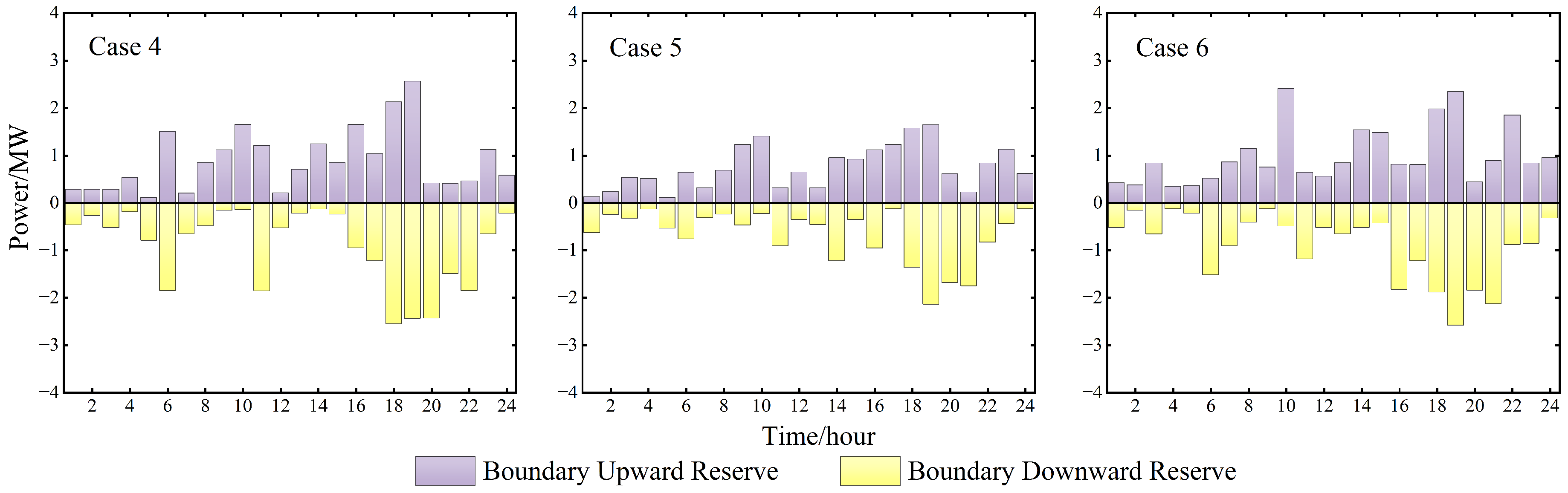
Figure 6 illustrates the comparison of boundary active power reserves obtained from the coordinated dispatch solutions for Cases 4–6. It can be observed that compared with Case 5, Case 4 achieves a more adequate boundary active power reserve.
Table 6 further compares the boundary violation across different cases. Under the worst-case scenario, Case 4 reduces the boundary violation by 4.28 MW relative to Case 6, corresponding to a reduction of 50.12%. The reason for this outcome lies in the fact that, as indicated in
Table 5, Case 4 fully accounts for the impact of the worst-case operating scenario, thereby incentivizing the DSO to clear more adjustable capacity from EVCS to cope with the fluctuations of local renewable energy output and the uncertainties in transmission operational requirement under extreme conditions. To illustrate the flexibility of a single EVCS,
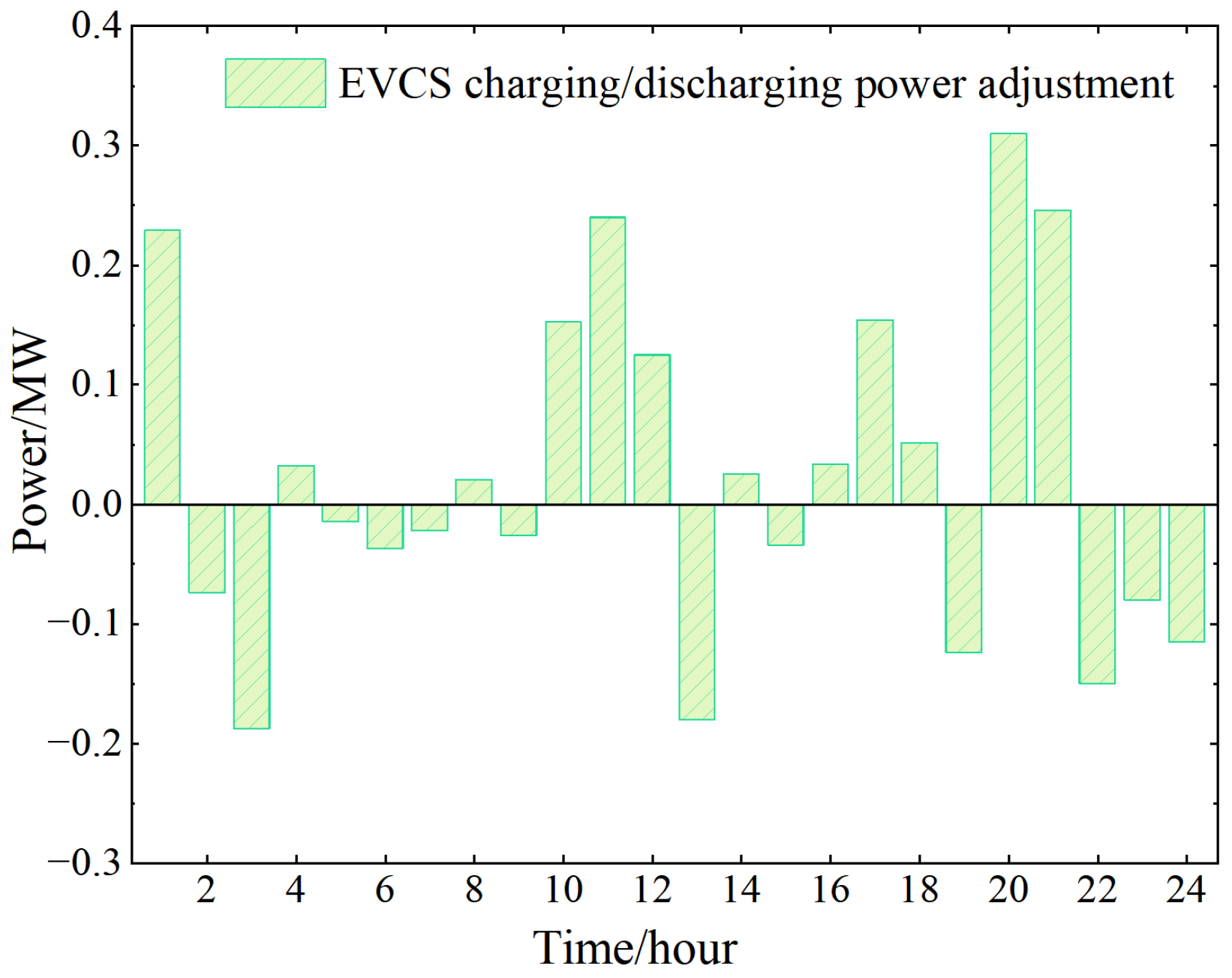
Figure 7 depicts the charging/discharging power adjustment of the EVCS connected to distribution bus 9, where the distribution network is tied to transmission bus 15. The maximum upward adjustment is 0.31 MW, and the maximum downward adjustment is 0.18 MW. In summary, the proposed method not only avoids excessively conservative operational strategies but also effectively enhances the system’s performance under the worst-case scenario.
Furthermore, to further verify the necessity of considering the uncertainty of dispatch decisions in operational optimization,
Case 7 (DRO-only) is introduced, where renewable uncertainty is modeled using DRO while the uncertainty of operational requirements is ignored. To ensure a fair experimental design, the day-ahead solution obtained in Case 7 is evaluated under the worst-case requirement scenario set derived from Case 4.
Table 7 compares the boundary active reserve and boundary violation results of Cases 4 and 7. The results show that, compared with Case 4, the upward and downward boundary active reserves in Case 7 increase by 11.59 MW and 9.28 MW, respectively, whereas the boundary violation under the worst-case scenario increases by 10.89 MW. This indicates that, without considering the uncertainty of intraday operational requirements, the deliverability of boundary active reserve is significantly reduced, and the DSO may face severe economic penalties.
5.3. Algorithm Convergence Performance Analysis and Scalability Test
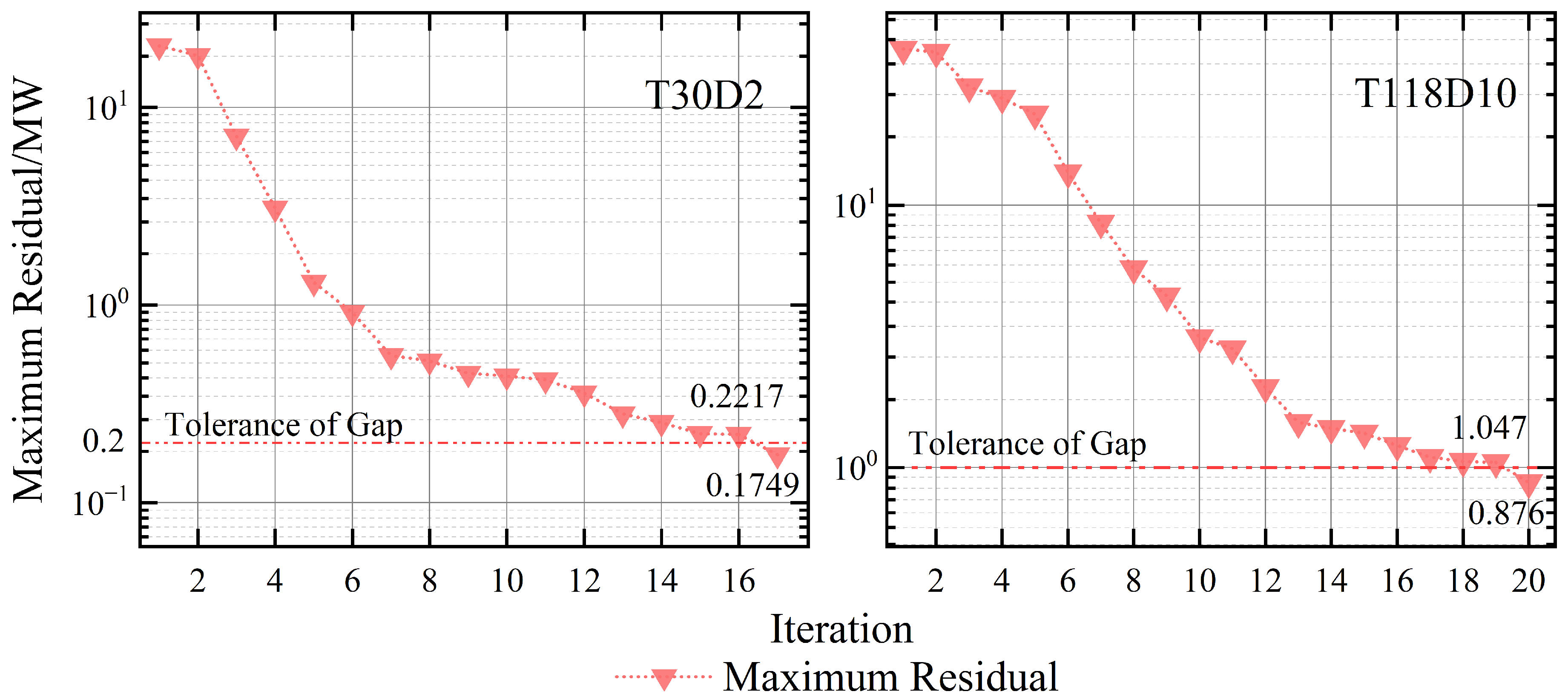
Figure 8 illustrates the convergence evolution of the ADMM-C&CG algorithm for the T30-D2 system. As in [
36], the maximum residual is defined as the larger of the primal residual
and the dual residual
at each iteration. In this study, the convergence criterion for the C&CG algorithm adopted in both the TSO and DSO optimization models is set to 0.5%, while the convergence criterion for the ADMM is set to 0.1 × 2 MW; The penalty factors
and
are set to 15. The algorithm converges after 17 iterations.
To further validate the scalability of the proposed algorithm, a large-scale test system named T118D10 is designed in this paper. This system comprises a modified 118-bus transmission network interconnected with ten modified 33-bus distribution networks. Wind farms are placed at buses 16, 35, 49, 78, and 112 of the T118 system, while boundary buses are established at buses 18, 32, 34, 40, 55, 70, 74, 77, 92, and 112 to link with the distribution networks. The convergence criterion for the C&CG algorithm employed in both the TSO and DSO optimization models is set to 0.5%, while the convergence criterion for ADMM is set to
MW. The penalty factors
and
are set to 20. As shown in
Figure 8, the algorithm converges after 20 iterations.
In this paper, experiments for the previously defined Cases 1–6 are conducted on the T118D10 system, with detailed results provided in
Table A1,
Table A2,
Table A3 and
Table A4 of
Appendix C.
Table A1 compares the operational costs of Cases 1–3 in the T118D10 system. Compared with Case 2, the TSO cost in Case 1 decreases by
$77,779, representing a relative reduction of 6.66%. Although the DSO cost increases, the total cost is reduced by
$60,280. Compared with Case 3, the total cost in Case 1 decreases by
$89,344. Furthermore,
Table A2 compares the operational results of Cases 1–3 in the T118D10 system. Relative to Case 2 and Case 3, the expected wind curtailment in Case 1 decreases by 132.20 MW and 159.45 MW, corresponding to relative reductions of 29.51% and 33.55%, respectively. The expected load shedding decreases by 12.37 MW and 21.39 MW, with relative reductions of 21.11% and 31.64%, respectively.
Table A3 compares the operational results of Cases 4–6 in the T118D10 system. Compared with Case 5, the total cost in Case 4 decreases by
$168,239, i.e., a relative reduction of 13.09%. In terms of the worst-case scenario wind curtailment and load shedding across different cases, Case 4 shows reductions of 45.18 MW and 25.84 MW, respectively, compared with Case 6. Moreover,
Table A4 compares the boundary violations of Cases 4–6 in the T118D10 system. Relative to Case 6, the boundary violation in Case 4 decreases by 20.18 MW, representing a relative reduction of 49.26%.
From the perspective of computational scalability, for the TSO regional problem, the C&CG algorithm solves linear programs (LPs) per iteration; although the grows progressively with the number of iterations, the growth rate remains manageable. For the DSO regional problem, the primary computational burden originates from the four-level min–max–max–min optimization structure. After decomposition by the tailored C&CG algorithm, the subproblem solved in each inner iteration is a mixed-integer linear program (MILP) containing only binary variables, which is of limited scale; subproblem and the master problem are both LPs. Consequently, all subproblems are either LPs or small-scale MILPs that can be efficiently handled by commercial solvers such as Gurobi. Under the distributed ADMM architecture, N DSO subproblems can be solved fully in parallel, and the wall-clock time per ADMM iteration is determined by the TSO subproblem and the slowest DSO subproblem, i.e., . According to the numerical results, when scaling from the T30D2 system to the T118D10 system where the number of distribution networks increases from 2 to 10, the additional computational overhead primarily stems from a modest increase in the number of ADMM iterations (from 17 to 20) rather than from the accumulation of DSO subproblem computation. It should be noted that the proposed framework targets day-ahead transmission–distribution coordination rather than real-time control. Under the experimental setting of this study (without parallel computation), the total computation times for the T30D2 and T118D10 systems are 1480 s and 9613 s, respectively, both well within the acceptable time window for day-ahead scheduling; with a parallel computing architecture, the computation time can be further reduced substantially. Moreover, at each ADMM iteration, the TSO and DSO only need to exchange the boundary active power reserve variables and along with the corresponding Lagrange multipliers, without sharing any internal operational data. The communication frequency is low and the data volume is small, imposing minimal requirements on the communication infrastructure.
In summary, these results validate the scalability of the proposed method using the large-scale test system T118D10 and further indicate its practical feasibility and operational benefits in large-scale grid-connected transmission–distribution systems.
5.4. Sensitivity and Robustness Analysis
To further evaluate the robustness and sensitivity of the proposed framework under parameter variations and uncertainty modeling assumptions, additional sensitivity analyses are conducted. The convergence performance of the ADMM algorithm is significantly influenced by the selection of penalty factors.
Table 8 presents the iteration numbers required for convergence under different penalty factor values in both T30D2 and T118D10 systems. The experimental results demonstrate that the algorithm achieves optimal convergence performance in the T30D2 system when the penalty factor is set to 15. Conversely, for the T118D10 system, the best convergence performance is observed with a penalty factor of 20. Moreover, when the penalty factor is excessively large or excessively small (e.g., 100 or 0.5), the algorithm requires significantly more iterations (over 100) to converge.
Due to the fact that using a fixed penalty factor in the ADMM algorithm may lead to slower convergence, this paper adopts the adaptive penalty factors updating strategy proposed in [
33]. The specific updating rule is given as follows:
where
,
.
Table 8 shows that the adaptive updating mechanism of the penalty parameter can improve the convergence performance of the algorithm to a certain extent.
The economic and robustness performance of the system operation are also influenced by the selection of the ambiguity set radius. As shown in
Table 9, where WC, LS, and BV denote the worst-case wind curtailment, worst-case load shedding, and worst-case boundary violation, respectively, when the ambiguity set radius are reduced to 5 and 0.5 for the TSO and DSO models, respectively, the worst-case wind curtailment, load shedding, and boundary violation increase significantly in both the T30D2 and T118D10 systems, despite a marginal reduction in operational cost in the T118D10 case, indicating degraded robustness under extreme conditions. Conversely, when the radius are increased to 15 and 1.5, the worst-case performance improves at the expense of higher operational costs. These observations are consistent with the theoretical properties of DRO: a larger ambiguity set radius yields more conservative but robust solutions, while a smaller radius produces more economical but less resilient outcomes. In practice, system operators can therefore select the ambiguity set radius according to their risk preference to achieve an appropriate balance between operational economy and robustness.
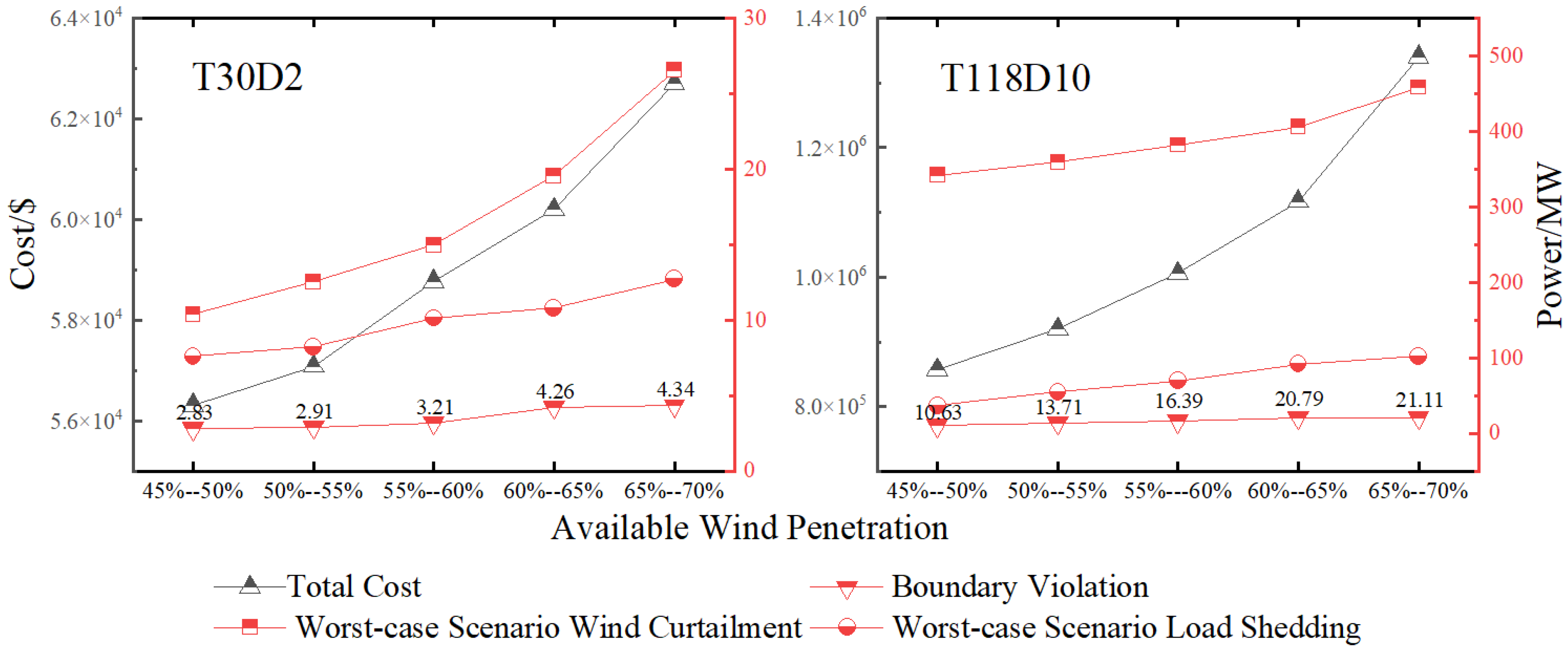
Furthermore, sensitivity and robustness analyses with respect to wind power penetration are carried out. The available wind penetration is defined in (65).
Figure 9 illustrates the operating results of the T30D2 and T118D10 systems as the available wind penetration increases from 45–50% to 65–70%. As the available wind penetration rises, the total system cost, the worst-case scenario wind curtailment, load shedding and boundary violation all exhibit an increasing trend. When the available wind penetration increases from 45–50% to 60–65%, these indicators grow relatively slowly, indicating that, under relatively low system flexibility requirements, EVCSs can provide lower-cost flexible resources to satisfy the regulation needs of both the TSO and DSO. However, when the available wind penetration is further increased from 60–65% to 65–70%, all indicators increase significantly. This is because the flexibility provided by EVCSs is no longer sufficient to meet system requirements, and the TSO relies on thermal units to provide the remaining flexibility, resulting in higher operating costs. Meanwhile, the DSO has to maintain secure system operation through wind curtailment or load shedding:
5.5. Comparison of Distributed and Centralized Solution Methods
To validate the optimality of the designed algorithm,
Table 10 compares the solution results of the centralized and distributed algorithms. The results indicate that the solution errors in both the T30D2 and T118D10 test systems are less than 1%. Since centralized solution methods are impractical in real-world systems due to privacy-preservation requirements, the proposed ADMM-C&CG distributed algorithm is capable of achieving near-optimal solutions.
7. Conclusions
In this paper, a multi-stage transmission–distribution coordination optimization framework leveraging EVCS flexibility is proposed to address renewable energy accommodation challenges in transmission and distribution networks. The main conclusions are summarized as follows.
(1) Value of EVCS flexibility: In the T30D2 system, compared with the case without EVCS flexible services, the proposed approach reduces the total system cost by 20.63% and decreases the expected wind curtailment and load shedding by 31.64 MW and 15.02 MW, respectively, demonstrating improved operational economy and renewable energy accommodation capability.
(2) Effectiveness under heterogeneous uncertainties: In the T30D2 system, compared with the ARO-RO model, the proposed ARO-DRO model reduces operational costs by 10.11%. Compared with the ARO-SO model, it reduces wind curtailment and load shedding in the worst-case scenario by 11.75 MW and 8.93 MW, respectively. Moreover, when considering transmission operational requirements, the proposed ARO-DRO model provides more adequate boundary reserves than the ARO-RO model and reduces boundary violation by 50.12% relative to the ARO-SO model, indicating a better balance between robustness and conservatism.
(3) Convergence and scalability: The proposed algorithm converges within 17 iterations for the T30D2 system. In the T118D10 system, relative to the case without EVCS flexible services, the proposed method reduces the total system cost by $89,344 and decreases the expected wind curtailment and load shedding by 159.45 MW and 21.39 MW, respectively. Compared with the ARO-RO model, the ARO-DRO model reduces system costs by $168,239; relative to the ARO-SO model, it decreases worst-case wind curtailment, load shedding, and boundary violations by 45.18 MW, 25.84 MW, and 20.18 MW, respectively. The algorithm converges within 20 iterations in the T118D10 case, showing promising scalability.
(4) Distributed solution quality: The ADMM-based distributed algorithm achieves a solution error below 1% compared with the centralized solution in both the T30D2 and T118D10 cases, which supports practical implementation when centralized optimization is difficult due to privacy concerns.
In summary, the proposed method can effectively leverage decentralized EVCS resources to address renewable energy accommodation challenges in transmission and distribution networks. Future research will investigate integrating heterogeneous distributed resources into transmission–distribution optimal operation through demand response mechanisms and will further examine revenue and cost allocation mechanisms within the coordinated optimization model.