1. Introduction
The transition from fossil fuels to low-carbon alternatives is recognised as a necessary long-term goal for economic growth [
1,
2], compatible with socio-economic and environmental goals, including reducing carbon emissions, minimising the use of fossil fuels for electricity production, and increasing the share of renewables in the global energy mix [
3]. As the world moves towards decarbonisation, energy systems are currently undergoing a radical transformation from centralised structures to more distributed and flexible low-carbon networks [
4,
5]. Peer-to-peer (P2P) energy trading is an example of this shift [
6,
7]. P2P trading utilises tools such as digital platforms, smart metering, and local energy markets to enable decentralised energy exchange between producers (also known as prosumers) and consumers [
8,
9]. P2P energy trading has the potential to enhance energy access and boost system flexibility by enabling prosumer energy exchange and better matching of local supply and demand, supporting broader sustainability goals [
10,
11].
While P2P electricity markets are well studied, extending them to include additional energy vectors, such as in hydrogen–electricity co-trading, raises fundamental challenges in market clearing and coordination due to inter-temporal coupling, conversion efficiencies, and heterogeneous asset dynamics [
12], exacerbating data protection [
13,
14] and regulatory issues [
15]. While these integrated systems present coordination challenges, they offer opportunities for optimising local energy use, reducing curtailment of renewable energy resources and enhancing network flexibility, therefore facilitating the sustainable energy transition.
Energy markets often utilise double-sided auctions as a means of clearing transactions, including continuous double auctions (CDA), periodic double auctions (PDA), and distributed double auctions (DDA) [
16]. A continuous double auction allows buyers and sellers to submit bids and sell at any time, with trades clearing continuously, whereas a PDA matches accumulated buy and sell orders at periodic time intervals. The DDA, on the other hand, determines transaction prices locally for each matched buyer–seller pair based solely on their own declarations. These clearing methods, however, remain insufficient because they do not account for distance-related losses between peers. As a result, they are unable to fully integrate electricity and hydrogen markets while simultaneously reflecting network constraints, storage dynamics, and conversion efficiencies. The method proposed in this work incorporates both electrical and hydraulic distances into the clearing process, forming the distance-aware PDA (DA-PDA) mechanism, which enhances trading efficiency, improves locational fairness, and strengthens the operational performance of integrated P2P systems. By enabling coordinated, multi-vector electricity–hydrogen trading with dynamic pricing and sector-coupled optimisation, this work directly advances flexible, resilient, and efficient operation of integrated energy systems. From an energy efficiency perspective, increasing electrification and renewable penetration exacerbate temporal and spatial mismatches between supply and demand, often leading to renewable curtailment and inefficient energy utilisation. Addressing these inefficiencies requires integrated coordination mechanisms capable of conserving surplus energy across vectors rather than dissipating it.
This paper makes the following contributions:
Proposes a DA–PDA mechanism for dual-vector P2P trading;
Integrates hydrogen production and storage bids into a unified auction;
Demonstrates improved efficiency and reduced curtailment in a case study.
The rest of the paper is organised as follows.
Section 2 provides a review of the literature pertinent to P2P single-vector and dual-vector energy trading.
Section 3 discusses the System-of-Systems (SoS) analysis framework utilised.
Section 4 introduces the proposed market-clearing methodology based on a modified double auction while focusing on electrical and hydraulic losses-cost reduction. The test case and simulation setup used for investigating the proposed model are discussed in
Section 5, along with the main outcomes and findings from the simulated case studies. Finally,
Section 6 concludes the paper and provides insights into the future expansion of the proposed market-clearing approach.
2. Literature Review
Electrical losses due to energy exchanges are one of the main concerns in the P2P strategy [
17]. The dynamic network structure is examined in the context of P2P energy exchange in [
18], where the authors created a dynamic network model and a P2P energy sharing model to reduce power losses. The impacts of the P2P energy trading mechanism on the voltage imbalance and power losses are also considered in [
19] and [
20], respectively. The authors of [
21] provided a market-clearing approach based on the electrical distance between peers in P2P energy trading according to the CDA mechanism. The results showed that the electrical losses registered low values while making transactions based on the electrical distance between agents. An energy exchange method is presented in [
22] to reduce the power flowing from the transformer to the distribution system. The cost function comprises two components: one associated with the line losses and the other with battery wear and tear. In [
23], the losses associated with the transactions and the prosumers’ profits were considered an evaluation criterion. The proposed market in [
24] considers the distribution network’s utilisation by including a subscription cost for all participants to avoid overloading the transmission lines. According to the proposed market, the participants pay less cost for lower usage of the network. In [
25], a direct-current microgrid system with P2P energy trading is considered using a non-linear programming technique that allows users to share their surplus energy from DERs with minimal losses. The P2P energy trading facilitated in [
25], through a transactive energy framework, enabled a demand-response feature.
P2P energy trading has increasingly been extended beyond single energy vectors (i.e., electricity) to include its integration with multiple energy vectors, primarily heat, hydrogen and natural gas. Coupling technologies have, therefore, been utilised in trading, including heat pumps (electricity-to-heat) [
26], electrolysers (electricity-to-hydrogen) [
27], and power-to-gas technologies (electricity-to-gas) [
28], enabling more holistic energy exchanges. For instance, some studies proposed integrated P2P platforms that allow microgrids to trade excess electricity alongside hydrogen [
29,
30,
31]. The work in [
29] presents a P2P electricity–hydrogen energy trading framework for multi-microgrids, based on a purification sharing mechanism which has been demonstrated to reduce operating costs. The authors of [
30] propose a coordinated framework for hybrid-renewable-to-hydrogen providers using Vickrey auction-based pricing and Stackelberg games to optimise electricity–hydrogen conversion profits. In [
31], a multi-objective decentralised P2P energy trading framework for hydrogen and electricity is presented, with P2P energy market clearing performed through a CDA mechanism. However, the studies do not incorporate electrical or hydraulic distance as a determinant of network losses, despite their significant impact on trading efficiency, locational fairness, and the operational performance of integrated P2P systems. Current P2P studies rarely consider integrated electricity–hydrogen markets with loss-aware, DA, and conversion-aware market clearing. This gap directly motivates the development of the DA–PDA approach.
The market-clearing mechanism is a vital part of the transaction process in the local market. Different market-clearing approaches are proposed and adopted to perform P2P energy exchange. These include game-theoretical approaches, blockchain approaches, distributed approaches, and auction-based approaches [
17]. The authors of [
32] discussed a game theory-based two-sided contract for P2P energy trading amongst small-scale distributed generators. The transactive energy framework, which applies auction theory and incorporates a system of agents, was proposed in [
33]. The auction approach was presented in several studies as the most appropriate method of clearing the market in the local electricity market [
34]. A comprehensive review of business model dimensions, including bidding strategies and game-theoretical and auction-based market-clearing approaches, is presented in [
35]. However, the most appropriate design for the real-time P2P market is currently considered to be auction-based designs [
36]. Auctions refer to the negotiation process based on the bids and offers provided by buyers and sellers. There are several types of auctions: single-sided and double-sided [
37]. Energy markets often utilise double-sided auctions as a means of clearing transactions. These auctions can take different forms, including CDA, PDA, and DDA [
16,
38,
39]. A transactive energy framework, which applies auction theory and incorporates a system of agents, was proposed in [
33]. The authors of [
40] studied a P2P energy trading system among prosumers using a double auction-based game-theoretical approach, where the buyer adjusts the amount of energy to buy according to varying electricity prices to maximise benefit, and the auctioneer controls the game. In [
41], a new iterative sequential approach for the energy and reserve P2P market is proposed to ensure the feasibility of energy and reserve transactions under network constraints. Blockchain technologies and auction mechanisms to facilitate autonomous P2P energy trading within microgrids were explored in [
42].
The double auction mechanism process of clearing the energy market starts by collecting bids and offers and then matching them accordingly. In CDA, bids and offers are organised in ascending and descending order, respectively, and then matched with a clearing point that varies with the objective of the clearing process, as presented in [
38,
39,
40,
41,
42,
43]. In [
39], the authors proposed a DDA for P2P energy exchange, enabling local electricity market participants to behave as auctioneers. The PDA type of auction follows the same pattern as the CDA in terms of matching bids and offers of agents; however, market clearing is done every specific period [
33].
Research Gaps and Contributions
A review of the literature reveals that numerous ideas and concepts on P2P energy exchange and market design approaches have been published. Recent research has also shown how crucial P2P is to enhance the network’s characteristics, including frequency regulation, grid structure, and operation. However, some critical technical aspects are missing from the literature. Maximising the benefits of the scheme to the participants and reducing the electricity and hydraulic loss cost due to energy exchange between the participants are two major concepts that require exploration.
Table 1 emphasises the principal contributions of this paper in comparison with previously published studies in the field.
Given the importance of the P2P approach, this study fills this gap in the literature by introducing a novel P2P electricity–hydrogen exchange framework. The main contributions of this paper are the following:
Proposes an innovative market-clearing strategy to reduce the cost of power losses resulting from energy exchanges. Existing research in the literature considers the losses as a major factor in their market-clearing approach or as a constraint in the optimisation problem. This work proposes to clear the market based on the cost of losses caused by the traded energy and by considering the influence of the prosumers’ locations inside the network and the distribution of these prosumers inside the network.
Integrates hydrogen production and storage bids into a unified electricity–hydrogen auction, enabling coordinated multi-vector market participation.
Reduces renewable curtailment through flexible hydrogen conversion, enhancing utilisation of local resources.
Coupling electricity and hydrogen systems provides several important system-level benefits, particularly in energy systems with high shares of variable renewable generation. Hydrogen production through electrolysis enables the absorption of surplus renewable electricity, which would otherwise be curtailed during periods of high renewable output and low demand, thereby improving renewable energy utilisation. In addition, hydrogen systems provide long-duration energy storage capability, allowing for energy to be shifted across longer time horizons than is typically feasible with conventional battery storage and supporting system reliability during periods of renewable scarcity or peak demand. Beyond functioning solely as a storage medium, hydrogen also serves as an energy carrier and flexibility resource that enables sector coupling across electricity, gas, transport, and industrial systems. Electrolyser operation can provide demand-side flexibility in response to electricity market conditions and network constraints, while stored hydrogen can later be used for electricity generation, industrial processes, or other energy applications.
In addition, the proposed P2P electricity–hydrogen framework contributes to energy efficiency and conservation by enabling surplus renewable electricity to be locally redistributed, converted, and temporally shifted with minimal losses, thereby reducing curtailment at the system level. It is important to note that the framework presented here provides an operational baseline rather than a strategic market simulation. Strategic bidding behaviour, which would require a game-theory analysis, is beyond the scope of this study. The bidding baseline provided reflects short-run operational costs only. A full cost representation, including capital amortisation of electrolysers and hydrogen infrastructure, is not included and is identified as an area for future work.
3. System-of-Systems (SoS) Framework for Multi-Vector P2P Markets
This paper utilises a SoS architecture methodology as a structuring framework to integrate physical assets, information flows, and market mechanisms for implementing DA–PDA in multi-vector P2P markets. The term was first used by the European Network of Transmission System Operators for Electricity (ENTSO-E), an association of European TSOs formed to harmonise electricity markets across the continent [
44].
An SoS is defined as an integration of independent systems that act jointly towards a common goal, through synergies, to collectively offer emergent functionality that cannot be provided by constituent systems alone [
45]. An SoS has distinctive characteristics such as operational and managerial independence, geographical distribution, evolutionary development of its CSs and their synergistic collaboration [
46]. It offers a systematic, multi-layered approach to conceptualising, modelling and evaluating the integration of emerging innovations like P2P trading within the wider energy system [
47,
48]. The proposed method is made up of the following three stages:
Scenario Formulation—for exploring possible conditions under different assumptions;
Conceptual Modelling—for identifying the actors, boundaries, and connections that exist between the market, informational, and physical layers of a system;
Quantitative Modelling—for assessing performance across scenarios using simulation or other analytical techniques.
The SoS methodology operationalises the Multi-System Perspective framework by identifying structural interlinkages between multi-regimes (generation, distribution, and consumption) within decentralised energy systems. In this context, P2P energy trading is conceptualised as part of a broader process of sustainable energy transition, where regimes (generation, networks, and demand) across multiple energy vectors (electricity, heat, and gas) interact. These regimes interact through various layers, including physical (infrastructure), informational (digital platforms) and market (pricing and trading mechanisms) layers, creating a complex and integrated energy landscape.
Integration of regimes involves coupling previously separated regimes to form a new entity, but it does not necessarily mean that parent systems would disappear [
49]. In the context of energy, the CSs are defined as the electricity, gas, heat, and transport systems. The SoS comprises these CSs, where different utility companies are independently responsible for operating, managing and developing the CSs, which are naturally geographically dispersed [
50]. In this case, each CS can maintain its autonomous management, objectives, and resources, while collaborating within the SoS to meet the overall objectives [
51]. More flexibility is provided by the energy SoS compared to the aggregation of traditional means of flexibility in separate CS operation [
52].
4. Peer-to-Peer Energy Trading for Electricity–Hydrogen in Integrated Energy Systems
Surplus electricity generation arises in cases of limited network constraints and declining local demand. Instead of wasting this energy, a possible solution is the incorporation of hydrogen production from renewable energy through water electrolysis, forming a dual-vector system. In this approach, surplus electricity can be transformed into hydrogen, offering a flexible storage solution as well as an extra marketable product. The following general formula can be used to estimate the potential hydrogen yield:
where
is the mass of hydrogen produced (kg),
is the electrolyser efficiency (typically 65–70%),
is the surplus electricity (MWh), and
is the lower heating value of hydrogen (~33.33 kWh/kg). Using this formulation, the 1.47 MWh surplus at 50% penetration could produce approximately 28–31 kg of hydrogen, while the 8.33 MWh surplus at 80% penetration could generate 156–179 kg of hydrogen.
This type of hydrogen production has several uses, including powering hydrogen-powered cars, heating homes and businesses, and supplying small-scale industrial operations such as chemical synthesis and metal processing. For example, at moderate penetration, the produced hydrogen is enough to fuel ~4–5 fuel cell vehicles (assuming 6 kg/100 km), and at high penetration, the produced hydrogen is sufficient for ~25–30 vehicles or a small industrial process. Hence, instead of being exported at low feed-in tariffs, this surplus electricity becomes a valuable hydrogen stream, enabling P2P H2 trading in local pipeline networks. In this case, the hydrogen itself can be traded in P2P schemes through dedicated pipelines or storage tanks, enabling new market designs that mirror electricity P2P mechanisms.
Knowledge derived from electricity P2P markets may also help establish hydrogen bidding prices. Assuming an electricity purchase price of
$0.08/kWh, the equivalent hydrogen production cost is about
$4.1/kg (≈
$0.12/kWh), which provides a natural bidding baseline. A simple profitability model for electrolysers can be expressed as:
where
and
are respectively the electricity and hydrogen prices;
and
are, respectively, the mass of hydrogen produced and the purchased energy by the electrolyser; and
is the electrolyser’s profitability.
The break-even hydrogen price (
is given by:
This ensures that, for electricity priced at $0.08/kWh and = 0.65, the electrolyser must sell hydrogen at $4.1/kg to cover costs. Any market price above this threshold secures profitability. Such dynamic pricing enables electrolysers to act as flexible buyers in electricity markets and competitive sellers in hydrogen markets, enhancing system flexibility, reducing curtailment, and unlocking new value streams in decentralised energy systems.
4.1. Scenario Formulation
The scenario developed for this study features a decentralised distribution network incorporating renewable energy sources (wind turbines and solar PVs), local electrical consumers and prosumers, hydrogen consumers including households/industries using hydrogen for heating, transport (fuel cells), or processes, hydrogen producers including small-scale electrolysers, and hydrogen prosumers including industrial sites or hubs with both hydrogen production (e.g., on-site electrolysis) and consumption (process heat, fuel). The mismatch between renewable electricity supply and demand is addressed by converting surplus electricity into hydrogen, which can be stored and traded. In the electricity network, the consumers and prosumers exchange electrical energy, and in the hydrogen network, the consumers, producers and prosumers exchange hydrogen. For the energy exchange in the two networks, there are two possible markets: an independent market and the coupled/interacted market or multi-vector P2P trading system. In the first market, the electricity and hydrogen markets are separate. Electricity is traded as electricity, hydrogen as hydrogen, with no cross-exchange.
In the hydrogen P2P market, producers (electrolysers), consumers (heating, transport), and prosumers (industrial hubs) trade hydrogen, and the flows are governed by hydraulic incremental resistance. The second market, which is the coupled/interacted market or multi-vector P2P trading system, the electrolysers act as a bridge. They consume electricity and produce hydrogen. A prosumer can decide to trade their electricity surplus directly with neighbours or convert it to hydrogen and sell it in the hydrogen P2P market. As prosumers may act as both buyers and sellers depending on their net position, they are able to submit both bids and offers within the markets.
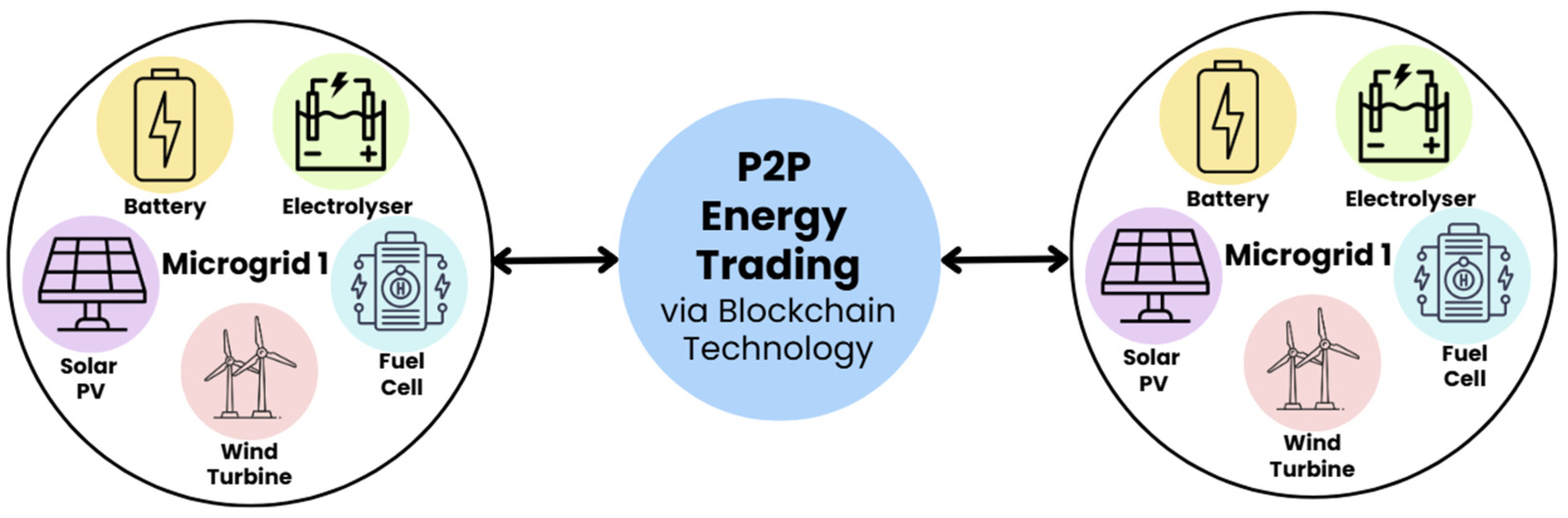
Figure 1 depicts two microgrids engaging in P2P energy trading of both electricity and hydrogen vectors. The two networks integrate renewable energy resources (solar photovoltaics and wind turbines) alongside advanced energy conversion and storage technologies. Electrolysers, hydrogen storage units, hydrogen consumers (e.g., hydrogen vehicles and hydrogen-based boilers) and smart metering infrastructure are the most important technologies in the physical layer, which help with both internal balancing and external trading, while the market layer coordinates trading across vectors. Smart metres work as independent agents, allowing real-time monitoring and automating transactions in the ICT layer. A trading platform based on blockchain connects the networks and enables secure, open, and multi-vector P2P transactions.
4.2. Conceptualisation
Stakeholder involvement includes prosumers; electricity consumers; hydrogen consumers, including households/industries using hydrogen for heating, transport (fuel cells), or processes; hydrogen producers, including small-scale electrolysers; and hydrogen prosumers including industrial sites or hubs with both hydrogen production (e.g., on-site electrolysis) and consumption (process heat, fuel); distribution system operators (DSOs); and market operators (MOs). Regulators are included as institutional stakeholders responsible for policy design, rule setting, and market oversight, but they do not participate in market transactions.
In the electricity P2P market, prosumers and consumers trade surplus electricity locally, with flows governed by electrical distance. The MO oversees the local P2P trading platform. The trading environment, therefore, consists of market participants (prosumers and consumers) operating under the regulatory framework defined by institutional stakeholders (regulators). The DSO holds the operational data and ensures secure grid operation, including voltage regulation, using information from the MO, such as market-cleared schedules and P2P flows.
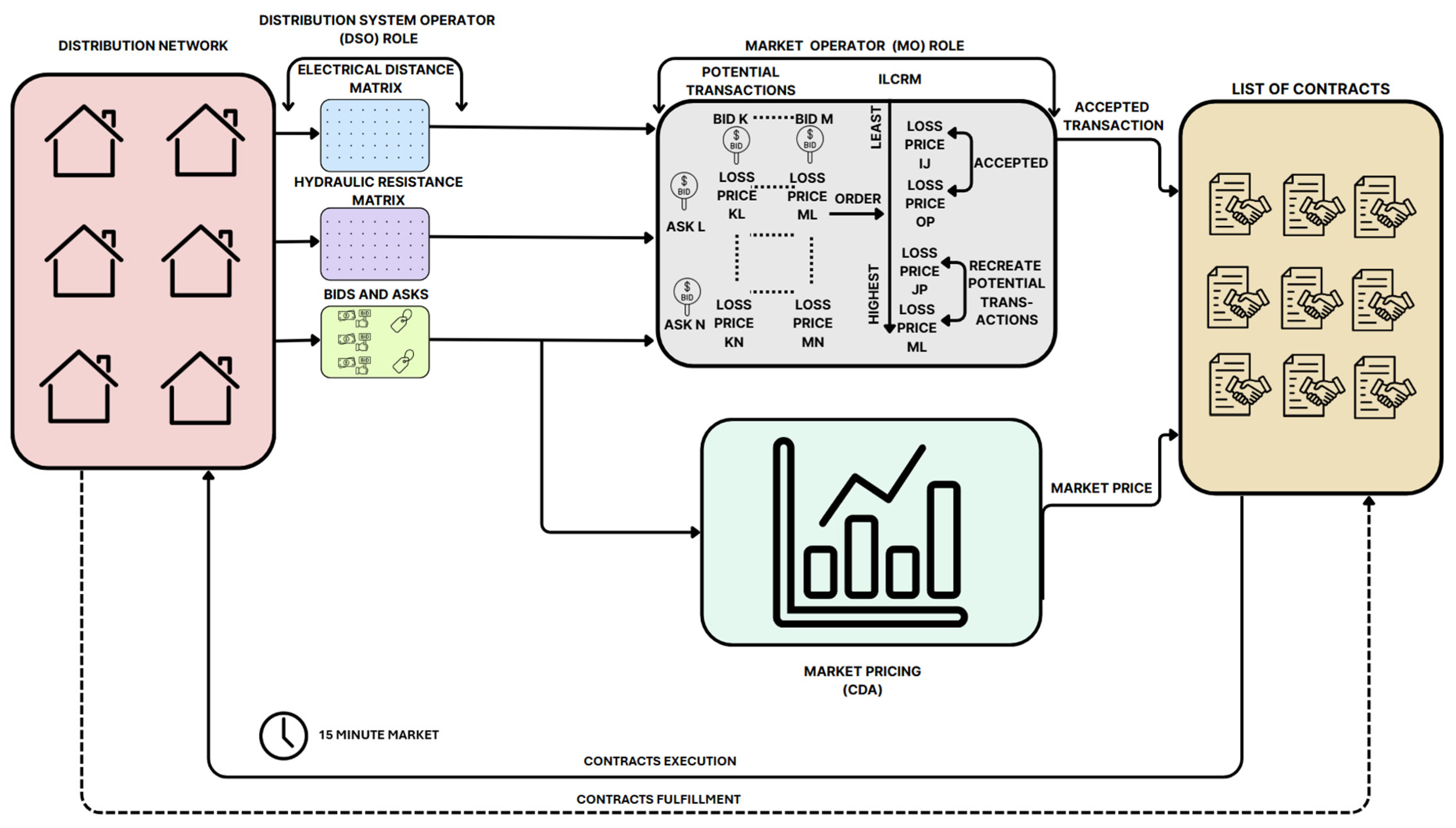
The sharing of information between MOs and DSOs is critical for the coordination and effective operation of the energy system. In the context of the proposed market-clearing mechanism, using a DA mechanism as shown in
Figure 2, the MOs and DSOs must exchange relevant data, including real-time load profiles, renewable generation predictions, and grid constraints. The MOs will need information such as the electrical distance and hydraulic resistance matrix from the DSO, which might represent sensitive data that the DSOs may be reluctant to disclose for security, business, or regulatory reasons. Appropriate security measures should therefore be implemented to safeguard the data exchanged between MOs and DSOs, e.g., robust data encryption protocols and adherence to data protection laws. Establishing explicit agreements and protocols for information sharing and defining the scope of shared data is necessary to promote cooperation and build trust between the MOs and DSOs.
4.3. Quantitative Modelling
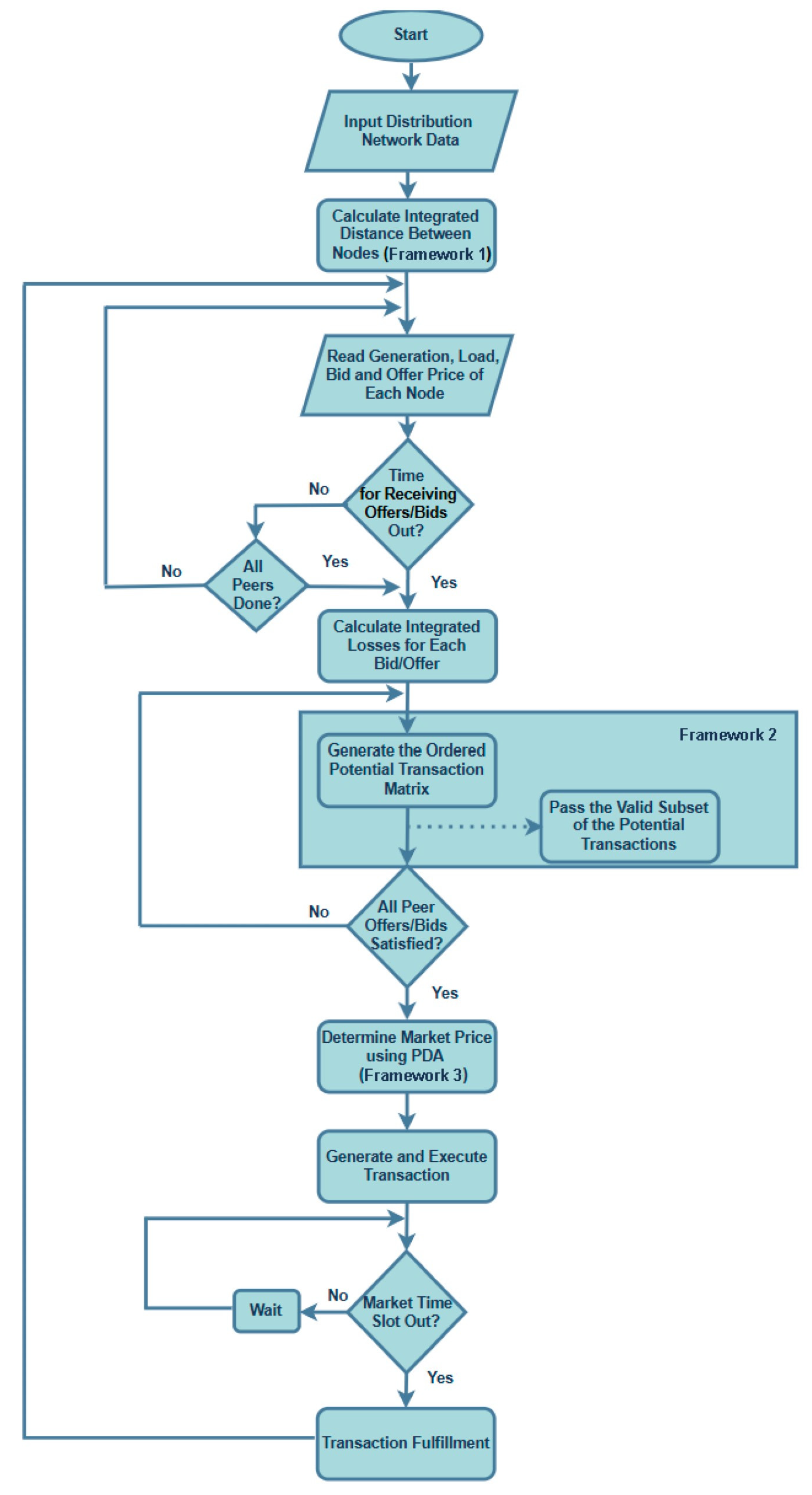
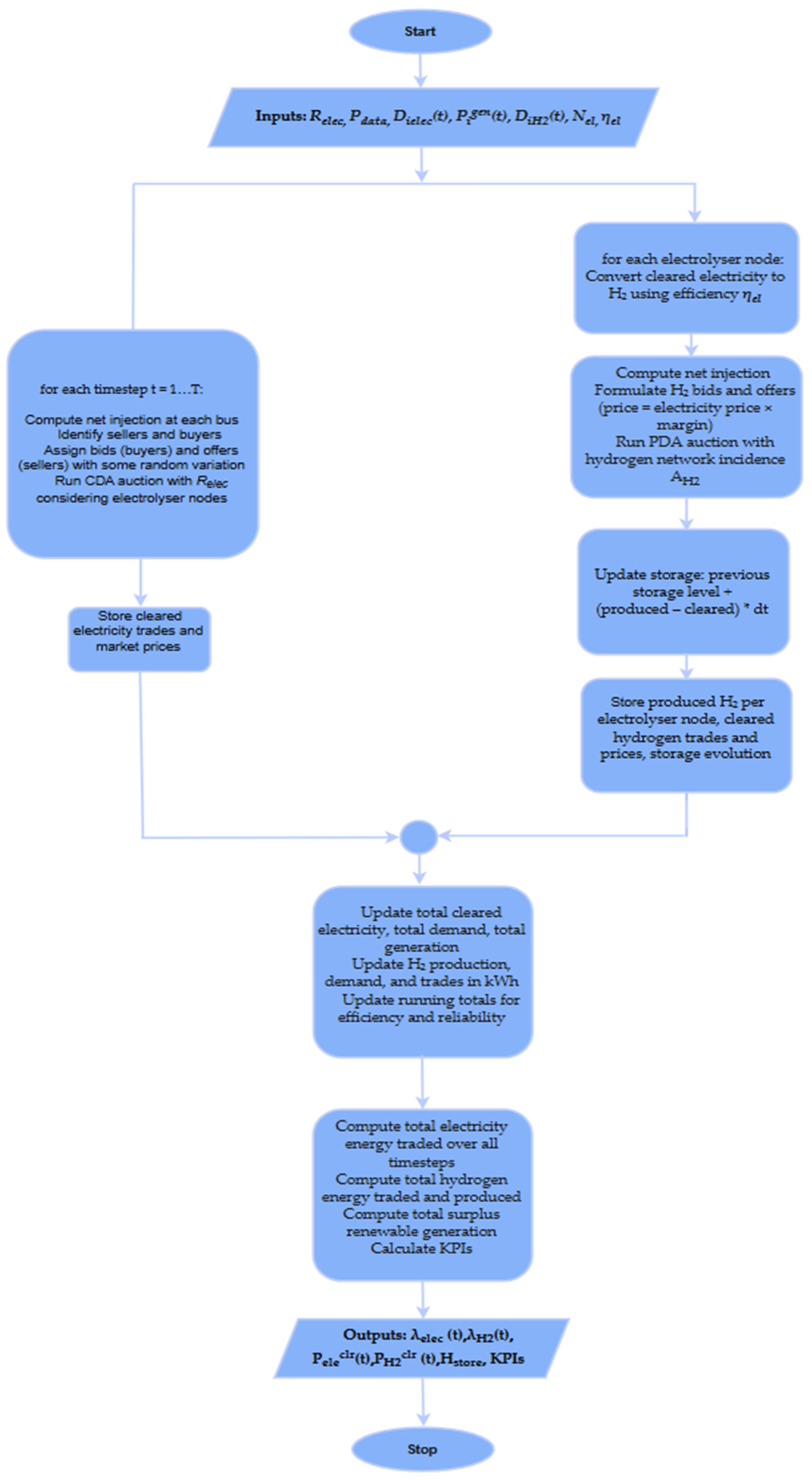
The sequence of execution for the proposed DA-PDA-based market-clearing process is shown in
Figure 3, while
Figure 4 presents the overall framework structure.
The process begins by reading the physical network data, including the locations of all clients, the topology of the electricity and hydrogen networks, and the configuration of the distribution infrastructure. Using this information, the framework computes the electrical distance matrix and the hydraulic resistance matrix, which quantify the total impedance or resistance along the shortest feasible path between any two peers. Electrical distance is calculated using a BFS-based impedance-path method, where the distance between two nodes is the sum of line resistances along the shortest electrical path. This approach is appropriate for low-voltage distribution networks, where resistive components dominate, and reactance plays a minor role. The hydraulic resistance matrix is obtained from the linearised steady-state gas-flow model, which provides an incremental resistance term for each pipeline segment. These matrices are computed once at the start of the simulation and updated only if the underlying network topology changes.
After the distance matrices are established, the trading window begins. During this period, peers submit their bids and offers together with their generation and demand information. Once the data-acquisition period ends, the market-clearing stage commences. At this point, all potential transactions are evaluated using the Integrated Losses–Cost Reduction Matching (ILCRM) mechanism, which ranks each buyer–seller pair according to its loss cost, derived from the corresponding electrical distance or hydraulic resistance. The highest-ranked (i.e., lowest loss cost) transaction is selected first, and the matched quantities are then cleared at a market price determined by the modified PDA. The last phase of the proposed trading framework is transaction fulfilment, in which each transaction is checked for complete delivery at the end of the trading slot.
4.3.1. Frameworks for P2P Trading in Integrated Electricity–Hydrogen Systems
Unlike electricity trading, which can be governed by auction-based clearing and loss cost-based peer matching, hydrogen trading is influenced by factors such as conversion efficiency and inter-vector coupling. Thus, different indicators and mathematical modelling are required to model hydrogen flows. To support this, we develop three frameworks: Integrated Distance Calculation (Framework 1), ILCRM (Framework 2), and Integrated Market Pricing (Framework 3). The Integrated Distance Calculation step computes electrical and hydraulic distances using the network topology and the corresponding resistance matrices. The ILCRM mechanism ranks all potential transactions according to their weighted loss cost and selects the minimum-loss match at each iteration, ensuring efficient allocation across vectors. The Integrated Market Pricing procedure then applies a modified PDA to determine clearing prices after loss-aware matching has been completed.
Integrated Distance Calculation (Framework 1)
Framework 1 is used to determine the electrical distance and hydraulic incremental resistance matrices. While the reactance of the distribution network line could significantly impact the capacity of the network, it is not considered in this study, as the main focus is on the amount of active power traded and not the apparent power. The framework, therefore, starts by defining the adjacency lists for all the buses in the electricity network. An adjacency list of bus
i contains all the buses that bus
i is connected to directly by a single line, with the details of that line. After calculating the adjacency lists of all network buses, the methodology used the well-known Breadth-First Search algorithm [
53] to find the electrical distances between each pair of nodes. The result of this algorithm is the electrical distance matrix,
R, where
Rij represents the resistance from peer bus
i to peer bus
j. This matrix is symmetrical and has zeros along its diagonal, as the electrical distance between the bus and itself is zero. The BFS algorithm is applied individually for each peer bus, including the infinite bus, as its source to the other nodes and returns the resistance from this source to all other nodes. This is done by creating a single-element queue with only the source node,
s.
By definition, incremental hydraulic resistance in a gas/hydrogen network refers to the pressure drop per unit mass flow rate of a component, which is assumed to change in discrete steps, often modelled as an increase in resistance with increasing flow. This “incremental” aspect implies the resistance itself is not a single value but is described by a function that represents how much the resistance grows as the flow in the pipe or component increases, thus accounting for the increasing pressure drop. To find the hydraulic resistance of a given pipeline, the gas flow and pressure relationship is first formulated through the first-order Taylor expansion method, which yields a local approximation centred around a certain nominal operating point. This approximation gives rise to an additional incremental resistance term, which is defined as the local slope of the pressure–flow curve. This slope quantifies the additional pressure required to elevate the flow by a certain amount, thus defining the marginal flow, which is a linear approximation of the transport losses. For more information on the derivation of the incremental hydraulic resistance of a pipeline for hydrogen flow, please refer to
Appendix A (derivation is based on the general gas flow equation [
54]).
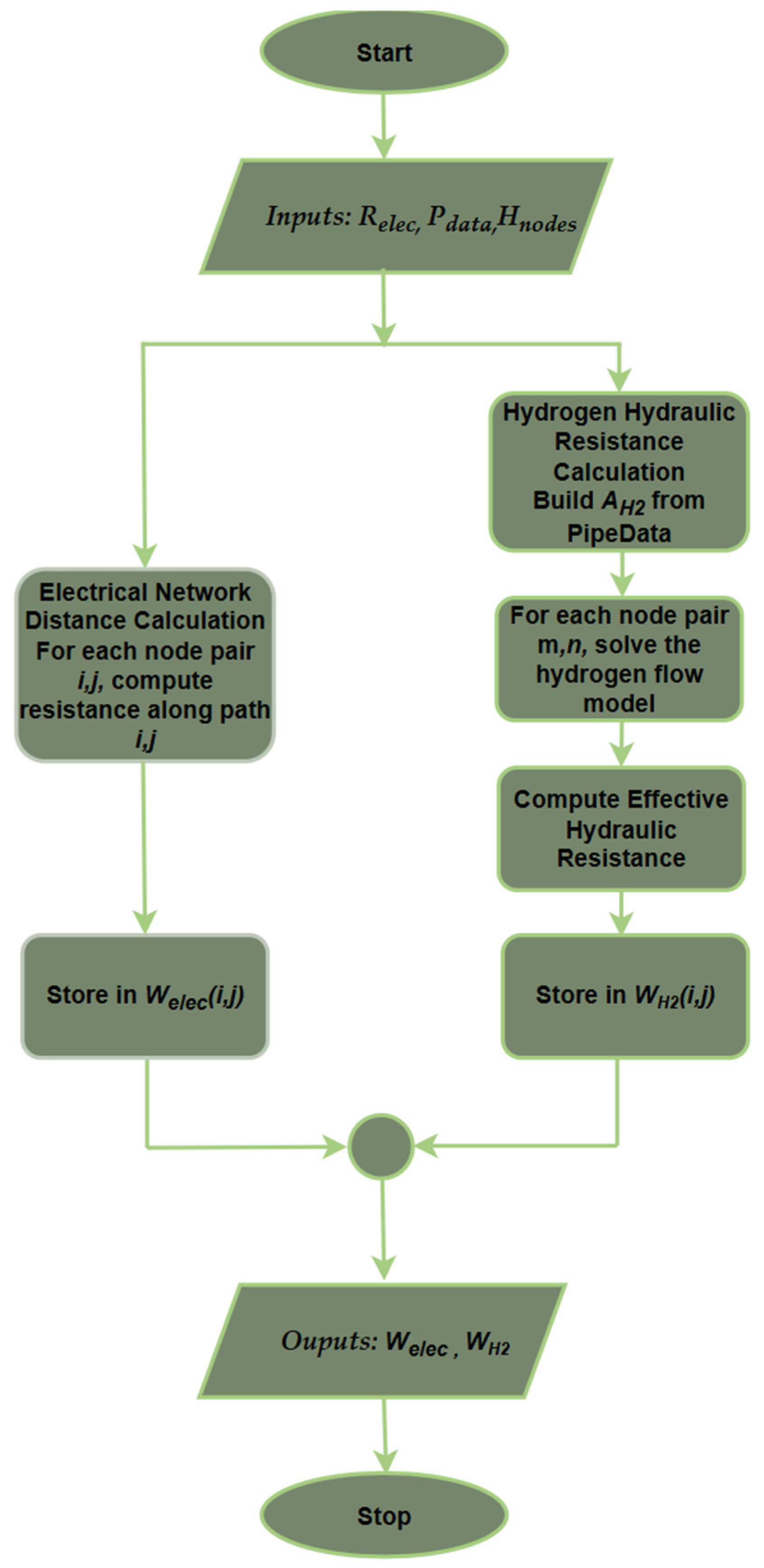
The framework computes the distance- or resistance-based weights for both electricity and hydrogen networks. These weights are later used in loss- and flow-aware peer matching to prioritise nearby trades and account for network constraints. The framework is described in the flowchart of
Figure 5. Note that
represents the electrical resistance matrix,
represents hydrogen network pipe data,
is the incidence matrix from
,
is the number of hydrogen nodes,
is the distance matrix for electricity and
is the hydraulic resistance matrix for hydrogen.
Integrated Losses–Cost Reduction Matching (ILCRM) (Framework 2)
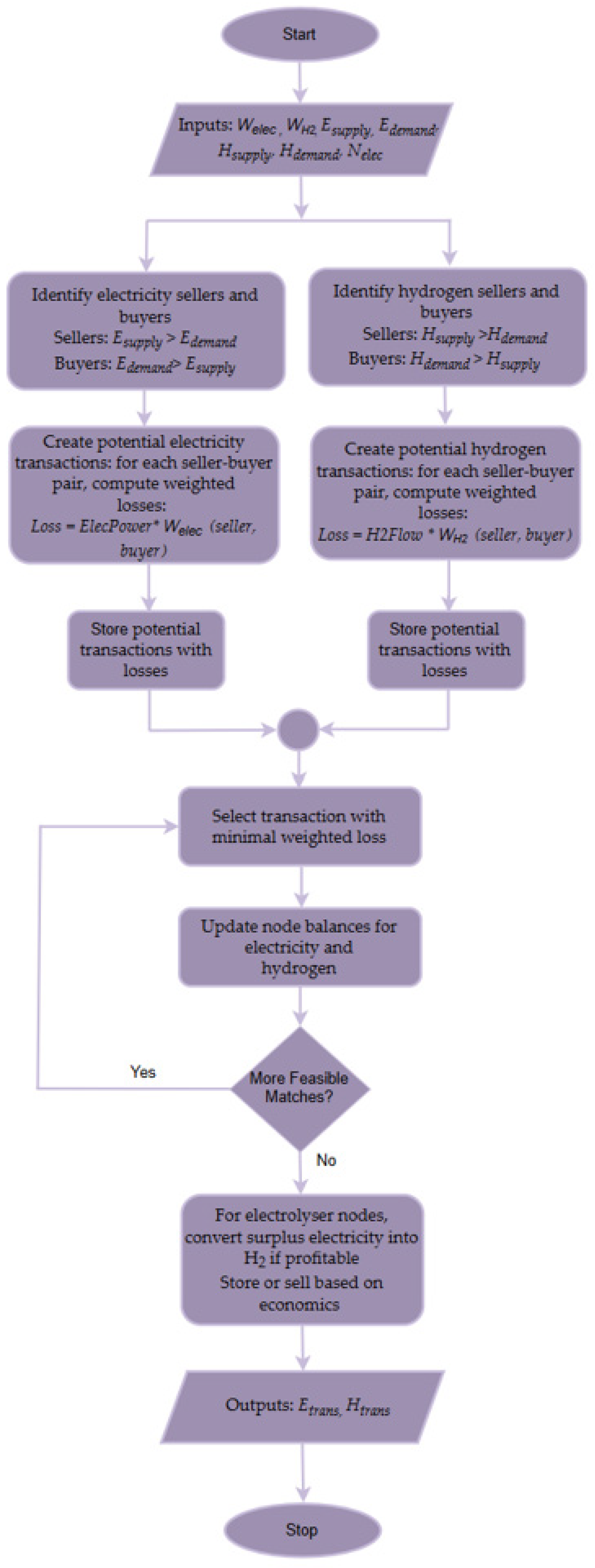
Framework 2 matches buyers and sellers in both electricity and hydrogen markets, while minimising losses and considering the electrical and hydraulic resistances in both networks. Electrolysers dynamically convert electricity into hydrogen production and may offer hydrogen in the P2P market. The framework is described in the flowchart of
Figure 6, showing its outputs as the matched electricity and hydrogen transactions (
Etrans and
Htrans, respectively). Note that the node-level electricity supply/demand is represented as
Esupply/
Edemand, node-level hydrogen supply/demand is represented as
Hsupply/
Hdemand, and nodes with electrolysers are represented as
Nelec.
The main objective of ILCRM is to reduce the losses associated with the bilateral transactions between peers in the transactive distribution network. The first part of the DA-PDA market clearing is associated with matching the consumers’ bids and the prosumers’ offers associated with the least loss costs. To achieve this objective, the losses-cost reduction matching criterion is executed at each market time slot just after the bids’ reception and the participating peers’ requests are closed. Two main clusters of participants are identified: the sellers (prosumers) and the buyers (consumers). Each peer in the network can belong to only one of these clusters, i.e., no peer is allowed to be a seller and buyer at the same time slot. The classification is done based on the reported generation and demand data, as well as the bids/offers that are submitted.
Let
N represent the set of all active peers in the network, then
Ns and
Nb represent the sets of sellers and buyers, respectively, at time step
t as indicated in Equation (4):
After determining the sellers and buyers in the network, the potential transactions between any seller and buyer pair are recorded in the potential transaction matrix Tp, where represents a potential transaction between buyer i and seller j. Each potential transaction results in a certain amount of losses due to transferring the energy (i.e., hydrogen or electricity) from seller to buyer.
The potential transactions are sorted in ascending order based on their associated loss prices. The loss price for each electricity transaction is calculated using Equations (5)–(8), where
is the offered power from buyer ;
is the excess power available from seller ;
is the traded power in transaction .
represents the electrical losses associated with a transaction between seller
and buyer
calculated as:
is the resulting current associated with a transaction, determined based on whether the seller’s available power exceeds the buyer’s demand (
is the assumed constant voltage of 230 V):
is the loss cost of the transaction and combines the electrical loss with the seller’s offer price,
:
is the traded power, accounting for losses and the seller’s capacity constraints:
If it is found that after calculating the losses, the seller’s excess power cannot cover the offered power and the losses, the current is recalculated from Equation (4), and the losses are recalculated from their new value. The same applies to the traded power shown in Equation (8).
The first
K of the sorted potential transactions are passed as confirmed transactions. The value of
K is determined by the number of mutually exclusive transactions, i.e., starting from the first transaction, all transactions are accepted to be confirmed if no peer is involved in more than one transaction with the same counterpart. The idea behind the prevention of allowing the peer from being engaged in multiple transactions with the same counterpart is to prevent the double-spending issue. After confirming the first
K subset of the potential transactions, the bids and offered powers amount for each of the buyers and sellers involved in this subset are updated, as indicated in Equations (9) and (10), respectively:
The peers with no power left to trade are removed from the sets of peers (Ns and Nb). The remaining peers are kept for the next step to be processed, where the potential transaction matrix Tp is recalculated for them, and the whole process keeps repeating until no buyers or no sellers are left. In either case, the remaining peers, sellers or buyers, will be forced to create transactions with the infinite bus, as it can act as a seller with infinite excess energy or a buyer with infinite demand.
Integrated Market Pricing (Framework 3)
Framework 3 clears both the electricity and hydrogen markets using PDA, integrating losses, distances, and dynamic electrolyser offers. It also computes nodal prices for both energy vectors. The loss- and DA transactions produce locational marginal prices for electricity and hydrogen. The hydrogen storage is updated to track surplus and availability for future market periods and to provide inter-temporal coupling.
As discussed previously, the conventional PDA uses the bids and offers prices and quantities to determine the market price for each market time slot. The proposed DA-PDA market-clearing framework depends on the concept of PDA for determining the market-clearing price, which constitutes the second half of the developed approach. The PDA process starts by sorting the received bid prices from the buyers in descending order and sorting the offer prices by the sellers in ascending order, resulting in two curves, one representing the demand and the other representing the generation. Then, the median offer price and the median bid price are found from the sorted lists. If the median offer price is greater than or equal to the median bid price, then the market price is determined as the mean of these two values. This will ensure the maximisation of the community welfare at that time slot for the provided bid and offer prices. Otherwise, rather than the medians of both sorted lists, the next element is taken from both lists alternately, until the offer price is greater than or equal to the bid price. The market price is then determined as the mean of these values.
Figure 7 illustrates the implementation of the PDA within the proposed market-clearing framework.
The framework calculates key performance indicators (KPIs) for the system to measure market efficiency (how much demand was met versus possible), and capture system reliability and the value of cross-vector trading. Note that
represents the time series of electricity demand at each bus,
is the time series of generation at selected nodes,
is the time series of hydrogen demand at each node,
is the location of the electrolysers,
is the maximum hydrogen storage capacity per node and
is electrolyser efficiency.
is the time series of cleared electricity prices at each bus,
is the time series of cleared hydrogen prices at each node,
is the time series of cleared electricity at each bus,
is the time series of cleared hydrogen trades at each node, and
is the storage trajectory per node.KPIs include:
5. Case Study and Results
5.1. Case Study
To demonstrate the applicability of the DA-PDA approachto dual-vector markets, an operational scenario is simulated for integrated electricity and hydrogen P2P trading. The setup consists of the European Union (EU) Low Voltage Test Feeder electricity network and a 7-node hydrogen distribution network, interconnected through two 5 MW electrolysers and hydrogen storage units. While the current setup is suitable for illustrative purposes, it should be clarified that the network configuration is not intended to represent a fully operational system. Furthermore, the electrolyser capacities are intentionally oversized relative to the renewable generation, and this should be noted as a demonstration choice rather than an optimised or system-level design.
Electricity Network: A radial EU low-voltage feeder network [
55] is considered in this scenario, with a high-renewable penetration percentage (i.e., 80%). The feeder model is used alongside the provided electrical specifications of the electrical components, consumption patterns, and bus location used as the testing network.
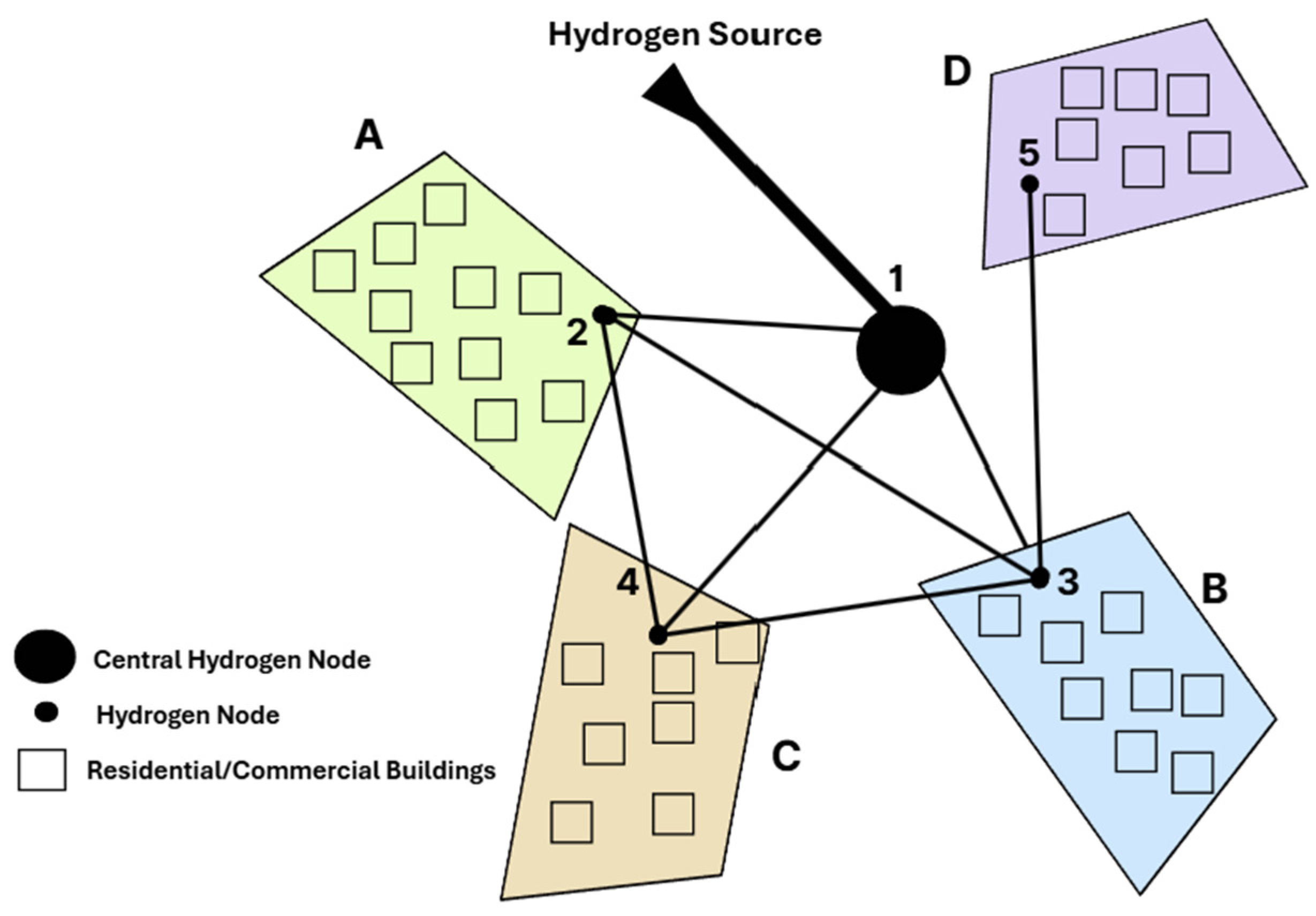
Hydrogen Network: The hydrogen network comprises seven nodes (showing nodes 1–5 in
Figure 8; Node 1: connected with upstream supplier and representing the reference node, Nodes 2–7: aggregated local demand centres for Areas A–F). Area A is supplied from Node 2, corresponding to the electricity network coverage from buses 1–10. Area B is supplied from Node 3, corresponding to buses 11–20. Similarly, Area C is supplied from Node 4 and covers the electricity network from buses 21–28; Area D is supplied from Node 5 and covers the electricity network from buses 29–38; Area E is supplied from Node 6 and covers the electricity network from buses 39–47; and finally, Area F is supplied from Node 7 and covers the electricity network from buses 48–55.
To evaluate the influence of hydraulic distance on the proposed framework, a set of representative pipeline length scenarios is considered in
Table 2. In real-world systems, pipeline distances vary depending on geographic and network constraints. The selected distances, therefore, serve to illustrate how transportation-related costs and losses influence system operation and market coordination outcomes. In particular, a uniform pipeline length of 20,000 m is used as a benchmark case to illustrate system behaviour under relatively long-distance hydrogen transport conditions.
Coupling Components: Electrolysers are connected to Nodes 2 and 7 and are linked to electrical Buses 1 and 48, respectively, enabling the conversion of excess renewable electricity into green hydrogen. This hydrogen can be (i) stored in on-site tanks, (ii) consumed locally in Areas A–F, or (iii) traded P2P across the hydrogen network.
Market Setup and Assumptions: The integrated P2P trading is governed by the three frameworks described in
Section 4.3. Trading is executed on a 15 min market interval over a 24 h horizon and involves simultaneous clearing of electricity and hydrogen bids/offers with cross-vector conversion offers. In these offers, the electricity is offered in the hydrogen market at a break-even price (
) which is given by:
where
is the price of purchased electricity.
In this scenario, the following assumptions are adopted:
Hydrogen demand profiles are based on six aggregated areas (A–F), each with varying hourly consumption.
Electrolyser efficiency is assumed at 65%.
Bid/offer ranges: Bids between 0.1 and 0.5 $/kWh, offers between 0.3 and 0.6 $/kWh. The break-even formulas endogenously determine hydrogen bid/offer ranges.
Network constraints (losses, distances) are incorporated as locational adjustments to the uniform PDA market-clearing price.
Hydrogen storage capacity is 2 MW.
5.2. Simulation Results
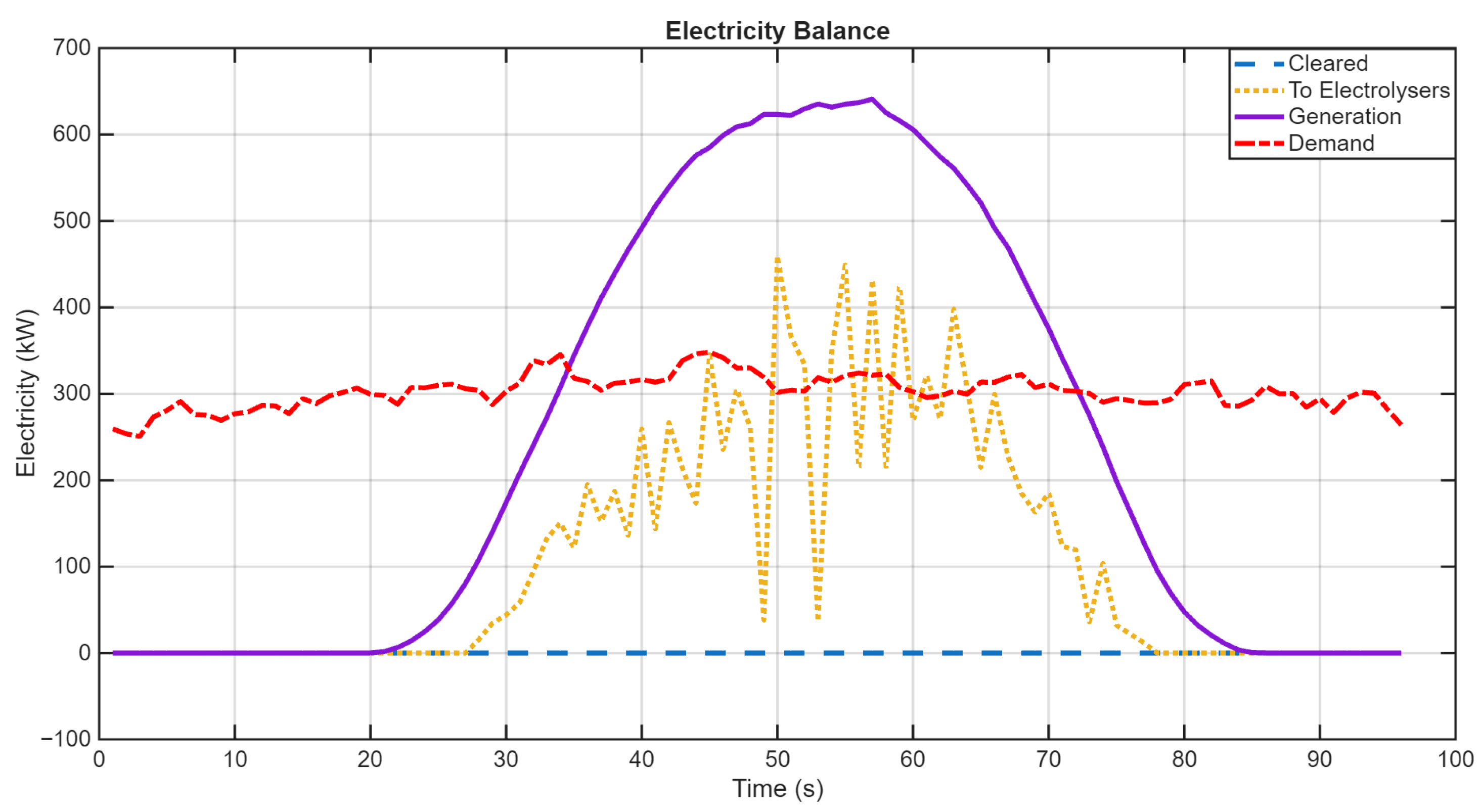
Figure 9 shows the aggregated renewable generation profile, the total electricity demand profile, and the power supplied to the electrolysers. As expected, the electrolysers operate mainly during periods of excess generation. The renewable generation amounted to 4215.3 kWh over the 24 h horizon. A total of 4060.17 kWh was traded in the electricity market, and 2549.1 kWh was supplied to the electrolysers, leading to hydrogen production of 1656.9 kWh, consistent with the assumed electrolyser efficiency of 0.65. The energy flow results are listed in
Table 3.
Figure 9 also illustrates the cleared transactions between sellers and buyers at each time step, where zero cleared quantities indicate an exact balance between supply and demand.
Similarly,
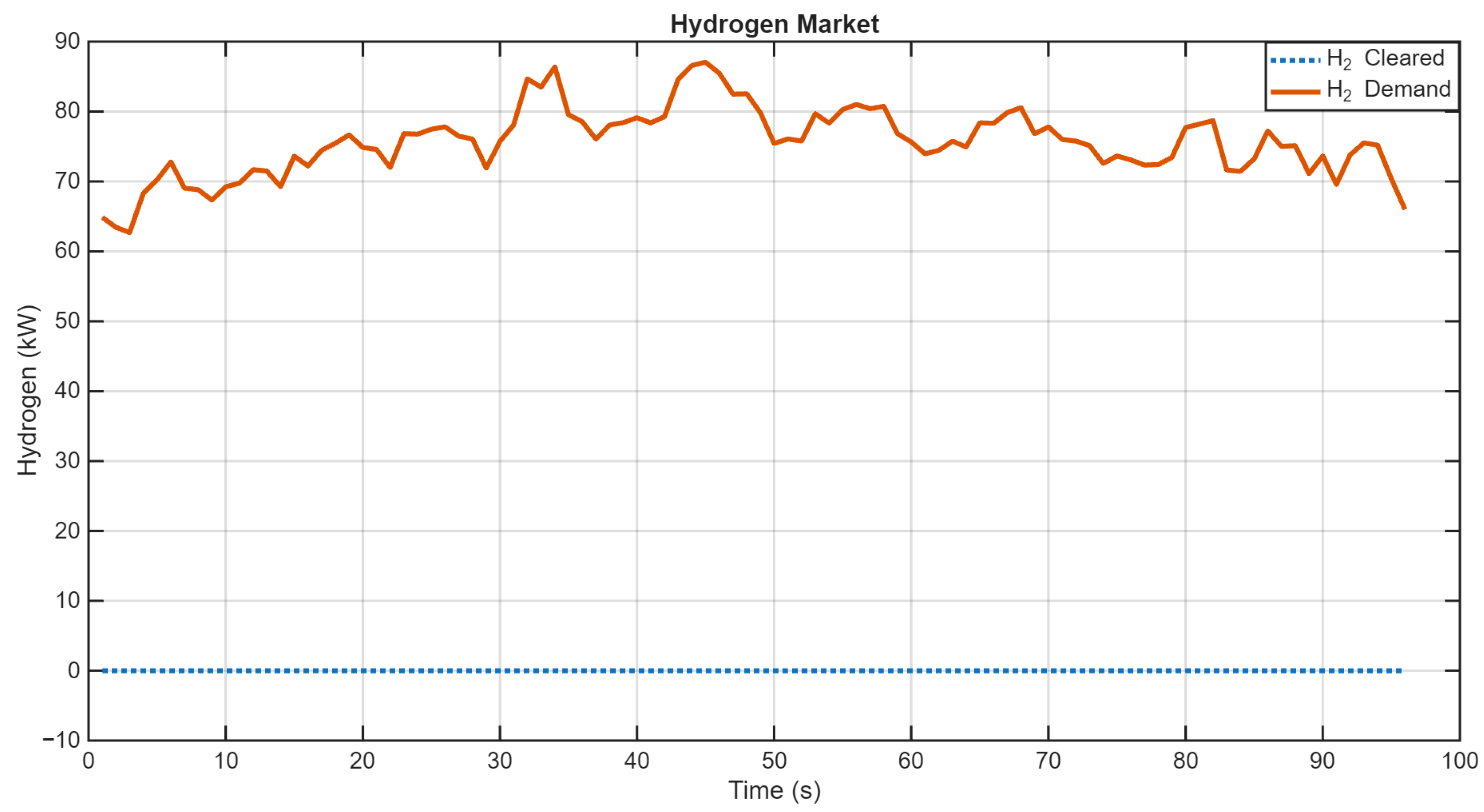
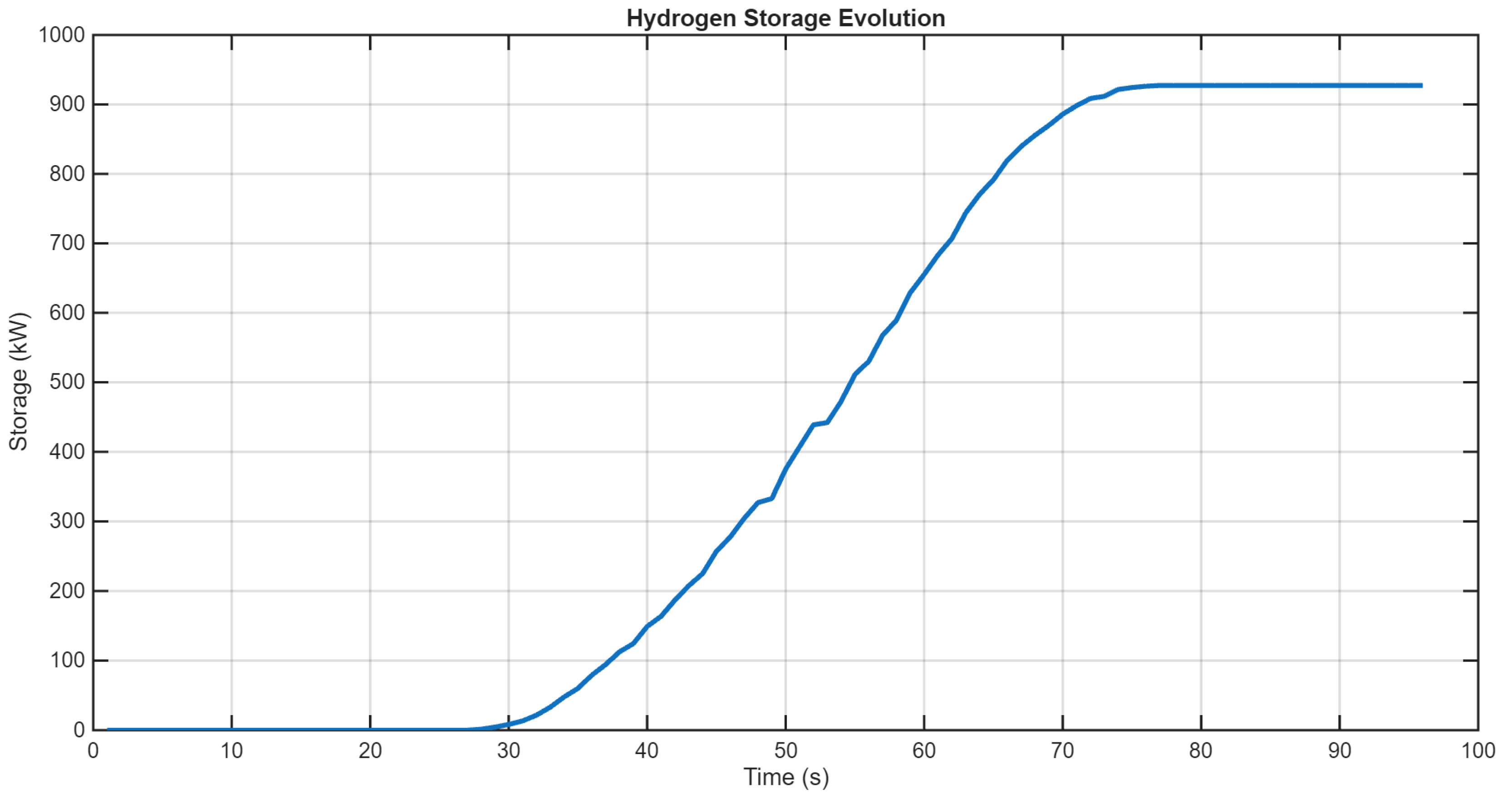
Figure 10 presents the hydrogen demand and the cleared transactions between hydrogen sellers and buyers. The system faced a total hydrogen demand of 1300.6 kWh, of which 622.96 kWh was cleared in the hydrogen market, while an additional 888 kWh was stored.
Figure 11 shows the evolution of the stored hydrogen over 24 h. The difference between the total hydrogen produced and the traded and stored hydrogen represents the network losses. Again, in
Figure 10, the blue curve with a value of zero represents the time periods during which no hydrogen is cleared through the DA–PDA mechanism. This occurs when local hydrogen supply and demand are balanced within the resolution of the simulation at that time step, which eliminates the need for additional market transactions. In such cases, no additional trades are required because the mechanism prioritises loss-minimising, DA matching. The prioritisation of local and loss-aware trades further contributes to operational energy efficiency by reducing unnecessary power flows and transmission losses, reinforcing the efficiency-oriented design of the proposed matching framework. This behaviour also reflects efficient local balancing rather than a lack of market activity. The conversion of surplus electricity into hydrogen and its subsequent storage prevents renewable energy curtailment, thereby conserving energy that would otherwise be wasted. This demonstrates how hydrogen storage enhances overall system efficiency by enabling temporal energy shifting under high renewable penetration.
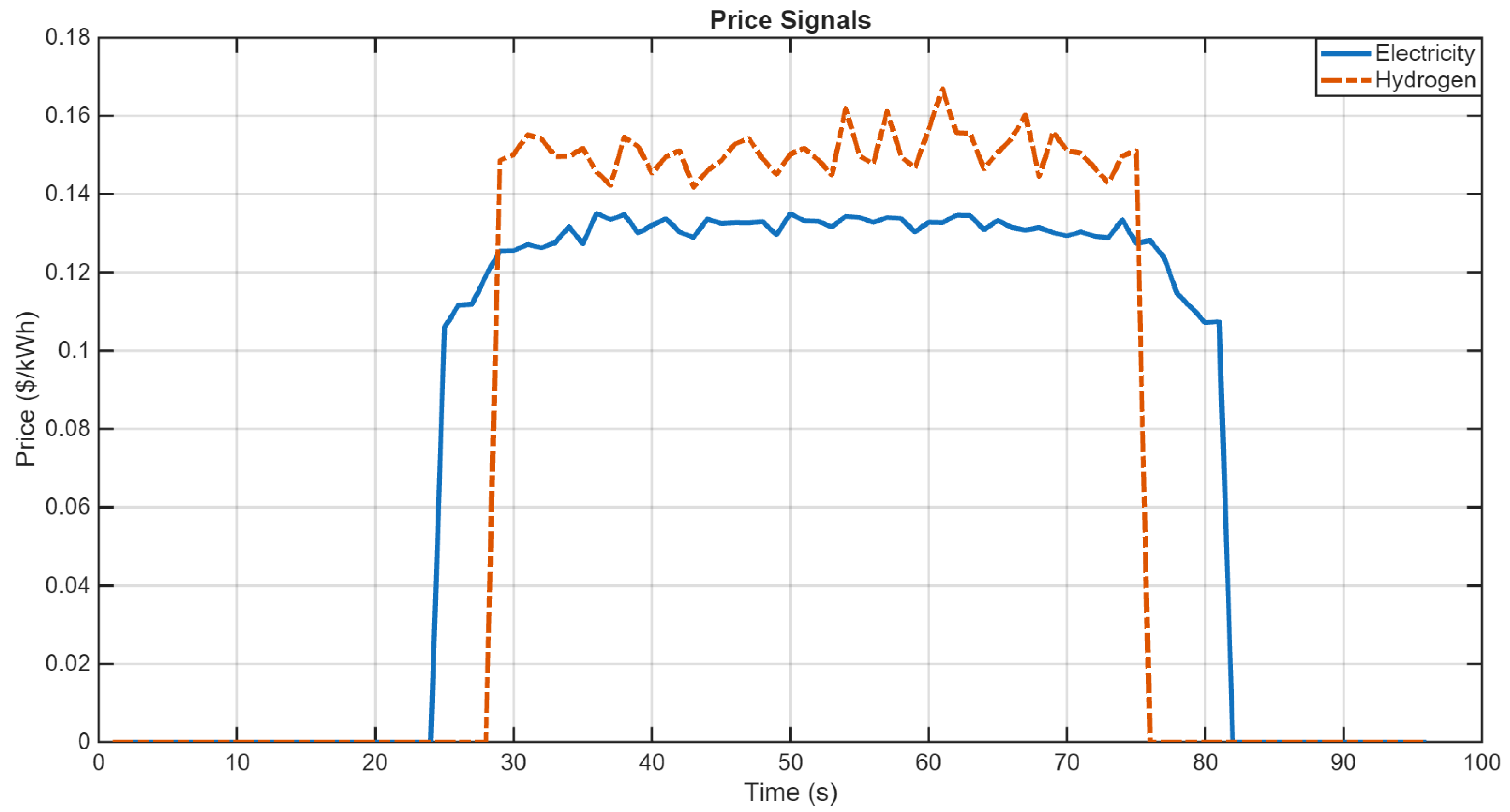
Figure 12 shows the temporal evolution of electricity and hydrogen prices in the P2P trading system. The electricity trading (black line) starts when there is renewable generation (t = 20–82). Hydrogen prices (blue line) closely track electricity prices, but they are higher than the electricity prices, considering the cost of energy lost during the energy conversion.
Table 4 summarises the market KPIs. The efficiency KPIs indicate that 43.9% of renewable electricity generation was successfully used to supply electricity demand, while 37.6% of the renewable energy converted into hydrogen was effectively traded. The high whole-system efficiency (96.32%) highlights that integrating hydrogen production and storage enables most of the surplus renewable energy to be absorbed, thereby minimising curtailment. In this context, efficiency reflects how effectively renewable energy is utilised, while reliability captures the extent to which demand is satisfied through cleared trades. Reliability values are 35% for electricity and 47.9% for hydrogen, with the relatively higher hydrogen reliability reflecting the buffering role of storage, which smooths supply–demand mismatches over time. Storage utilisation (43.88%) further confirms that a significant share of hydrogen was stored and later used to balance temporal fluctuations. Hence, the price signal, combined with the KPIs, demonstrated that P2P trading with sector coupling enhances system-wide efficiency and provides a market-driven mechanism for balancing supply and demand.
It should be noted that only a portion of the produced hydrogen is traded because the framework intentionally allocates part of the hydrogen to storage rather than immediate sale. This is not an inefficiency, but a strategic outcome of the market-clearing process. Storage acts as a temporal buffer, allowing the system to shift energy across time and support demand during low-generation periods. The stored hydrogen therefore represents optimised inter-temporal flexibility, and not unused or wasted energy.
On the other hand, an additional way to enhance the interaction between the electricity and hydrogen markets is by increasing the coupling between the two networks. This may be achieved by adding fuel cells or hydrogen-based generators that can use the stored hydrogen when there is no renewable generation. The market is no longer limited to periods when renewable energy is available, which means that energy can be traded for longer periods of time. Not only does this approach make the system more flexible and reliable, but it also makes the whole market more efficient by using stored energy to balance supply and demand over a longer duration.
As seen in
Table 4, the individual market efficiencies for electricity and hydrogen at 43.9% and 37.6%, respectively, measure how much of the renewable energy entering each market is successfully traded. In contrast, the whole-system efficiency of 96.3% captures the combined utilisation of renewable energy across both vectors through sector coupling, including conversion and storage. The value further indicates that nearly all available renewable energy is effectively utilised within the integrated electricity–hydrogen system. This highlights the role of P2P sector coupling as a system-level energy efficiency and conservation mechanism, rather than merely a market-clearing tool.
This efficiency is high because hydrogen storage absorbs surplus electricity that would otherwise be curtailed, enabling the integrated system to use nearly all available renewable energy.
6. Conclusions
The proposed DA–PDA co-trading framework was applied to an integrated electricity–hydrogen test system to illustrate its operational behaviour and coordination capabilities. The results show that the framework effectively couples electricity and hydrogen vectors, enabling flexible routing of renewable energy between direct electricity trading, hydrogen production, and storage.
The results demonstrate that the framework uniquely internalises network losses and distance effects within the clearing process, enabling more efficient and physically realistic electricity–hydrogen coordination than conventional PDA mechanisms. In the studied case, the results demonstrate that P2P co-trading, if supported by sector coupling, significantly enhances system efficiency, improves utilisation of renewable resources, supports supply–demand balance, and contributes to overall system resilience. The presence of hydrogen storage further supports flexibility by smoothing any variabilities and reducing curtailment. These findings highlight the potential of P2P sector-coupled markets as a practical pathway toward more energy-efficient and sustainable future energy systems. Further integration via fuel cells or hydrogen generators would extend trading beyond renewable generation windows, improving flexibility. A systematic comparison against electricity-only P2P trading and conventional PDA based integrated markets is identified as future work, as such benchmarking would help isolate and quantify the incremental value introduced by the proposed DA-PDA mechanism.