Next Article in Journal
Optimal Voltage Control for Remote Marine Loads via Subsea Cables: A Solution Circle-Based Comparative Efficiency Analysis of UPFC, SSSC, and TCSC
Previous Article in Journal
Vortex-Induced Vibration Energy Harvesting for Road Vehicle Suspensions: Modeling, Prototyping, and Experimental Validation
Previous Article in Special Issue
Fatigue Load Analysis of Yawed Wind Turbines Considering Geometric Nonlinearity of Blades
 
 
Due to scheduled maintenance work on our servers, there may be short service disruptions on this website between 11:00 and 12:00 CEST on March 28th.
Article

Development and Comparative Analysis of Vortex Generators for Boundary Layer and Separation Control on the Suction Side of Wind Turbine Blades

Laboratory of Interdisciplinary Problems in Energy Production, Ulyanovsk State Technical University, 32 Severny Venetz Street, 432027 Ulyanovsk, Russia
*
Author to whom correspondence should be addressed.
Energies 2026, 19(7), 1637; https://doi.org/10.3390/en19071637
Submission received: 24 February 2026 / Revised: 18 March 2026 / Accepted: 24 March 2026 / Published: 26 March 2026
(This article belongs to the Special Issue New Trends in Wind Energy and Wind Turbines)

Abstract

Vortex generators (VGs) are considered in this study as an effective means of controlling the boundary-layer structure and suppressing flow separation on the suction sides of wind turbine blades. An original geometry of a surface-mounted VG has been developed and experimentally investigated, providing a stable modification of the near-wall flow over a wide range of incoming flow velocities. The aerodynamic effect is attributed to the formation of spatially diverging vortex structures that enhance momentum transfer from the outer flow region toward the near-wall layer, thereby increasing the energy level of the boundary layer. This results in an extension of the attached-flow region and an increase in the mean flow velocity over the suction side of the airfoil by up to 6.5%. The proposed configuration enables a 15% increase in the installation spacing of surface-mounted VGs without loss of control efficiency. Experimental investigations were carried out in a subsonic aerodynamic facility using the Particle Image Velocimetry (PIV) method at free-stream velocities of up to 30 m/s. The obtained data will be used for the development and validation of a mathematical model intended for parametric studies of the influence of surface-mounted VGs on various wind turbine blade airfoils under a wide range of atmospheric turbulence conditions.

1. Introduction

Wind energy is one of the leading renewable energy technologies, contributing to the reduction of anthropogenic greenhouse gas emissions and helping to mitigate global climate change [1,2]. As wind turbines continue to increase in size and rated power, improving energy efficiency becomes a primary objective while ensuring the structural reliability of wind turbine systems under increased aerodynamic and mechanical loads.
Aerodynamic flow control in the blade root region plays a significant role in addressing this challenge. This region is characterized by a combination of adverse factors, including high relative airfoil thickness and increased chord length dictated by structural strength requirements, as well as operation at relatively low local Reynolds numbers. Additional complexity arises from the inherent unsteadiness of the atmospheric boundary layer, which promotes the development of separated flow regimes [3,4,5]. The combined influence of these factors increases the sensitivity of the near-wall flow to disturbances and contributes to the premature onset of flow separation on the suction side of the airfoil, thereby limiting the aerodynamic efficiency of the blade root region [6].
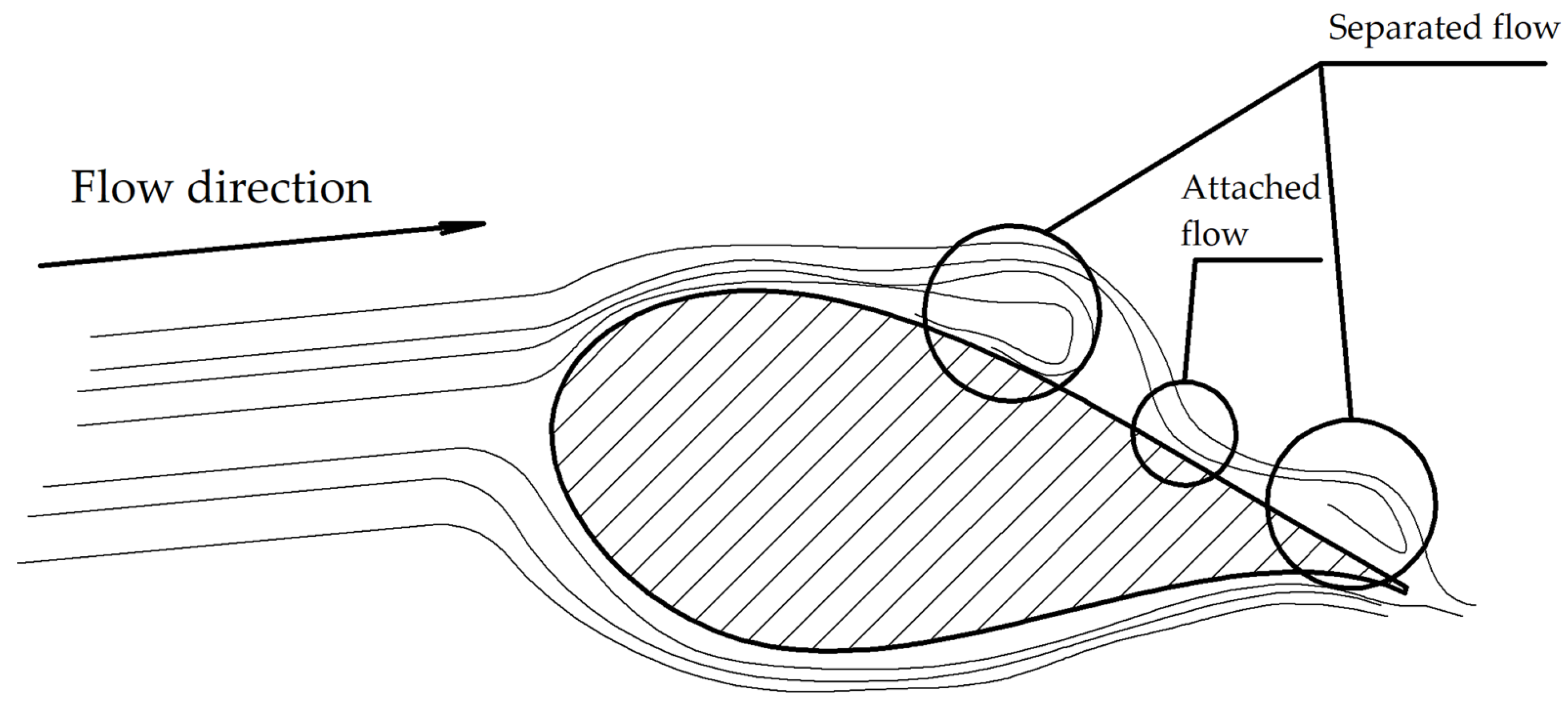
Separated flows represent large-scale turbulent vortex structures that arise during the flow over wind turbine blades at certain angles of attack (for conventional NACA airfoils, α 9 15 ) [7,8,9]. The physical mechanism of this phenomenon can be described as follows: flow separation occurs on the suction side near the leading edge, resulting in the formation of low-pressure regions, or recirculation zones (separation bubbles)—areas in which the flow forms closed vortex structures with reverse motion of the fluid. For airfoils with a large chord length, two or more such separation bubbles are typically formed, with intermediate zones of flow reattachment between them [10,11]. The process of separated flow formation is illustrated in Figure 1.
The occurrence of separated flows leads to a reduction in blade lift and a decrease in the turbine power coefficient. In addition, it results in increased mechanical loads acting on the structure [12]. It has been demonstrated in [13] that the development of flow separation on the suction side under variations of the angle of attack induces pronounced unsteadiness of the aerodynamic forces, accompanied by transient load spikes. The authors emphasize that such effects significantly influence the distribution of bending and torsional moments along the blade and represent one of the key factors contributing to fatigue damage accumulation. The combined long-term impact of these factors ultimately leads to a reduction in the design service life of wind energy conversion systems [12,14].
To mitigate these adverse effects, various boundary-layer control (BLC) methods are employed, which can be classified into two main categories. The first category comprises active BLC methods, whose defining feature is the requirement for additional energy input to ensure their operation. Examples of such systems include high-momentum blowing into the boundary layer or, conversely, suction of the low-energy portion of the boundary layer [15,16]. The second major category consists of passive BLC methods. Their principal distinction from active techniques lies in the absence of additional energy consumption. In most cases, such approaches involve modifications of the blade geometry or the installation of auxiliary aerodynamic devices on the blade surface [16,17].
Under current technological conditions, one of the most relevant and widely applied approaches for mitigating the aforementioned adverse effects is the installation of specialized devices on the blade surface—surface-mounted VGs—aimed at suppressing separated flows [18]. Surface-mounted VGs belong to the category of passive boundary-layer control methods.
The operating principle of surface-mounted VGs can be described as follows. VGs are installed on the wind turbine blade in the region prone to flow separation in order to generate coherent vortex structures. It should be emphasized that not all vortex structures are capable of effectively suppressing separated flows. VGs must generate sufficient momentum to produce stable vortical structures directed toward the outer edge of the boundary layer, thereby promoting momentum transfer from the outer flow region into the near-wall layer. At the same time, the formation of planar coherent vortex structures that intensify the development of separation bubbles must be avoided [19,20]. The geometry of the VGs should ensure efficient vortex generation while not causing a significant increase in blade drag at low angles of attack [21].
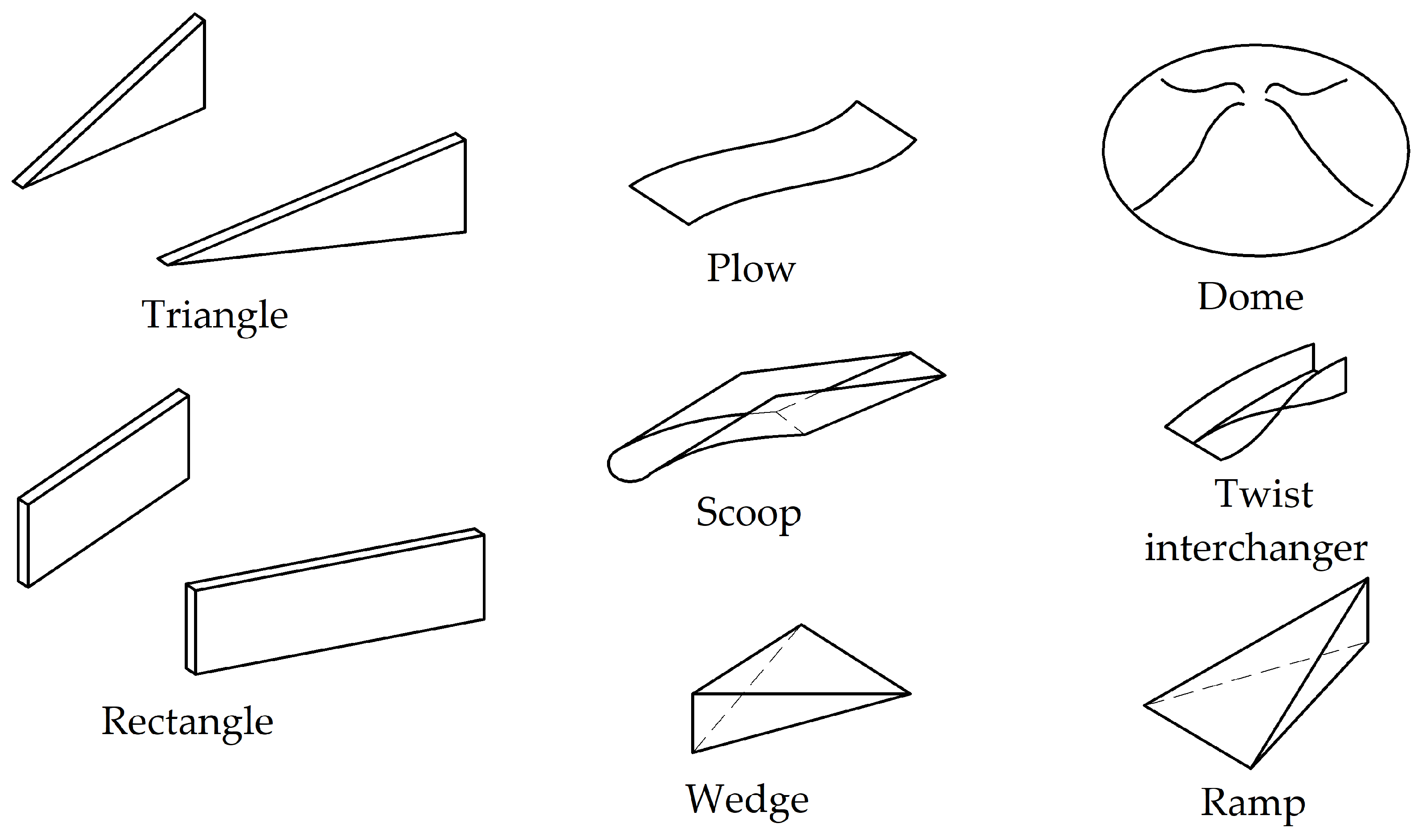
The literature presents a wide range of surface-mounted VG designs differing in the geometry of the vortex-generating elements, their height, relative installation spacing, and orientation with respect to the incoming flow direction. Variations in configuration are primarily motivated by the need to ensure stable generation of streamwise vortex structures and to optimize momentum transfer into the near-wall region under specific flow conditions. The most common types of surface-mounted VGs are shown in Figure 2 [22,23].
According to [24], the application of triangular surface-mounted VGs enables an increase in annual energy production of more than 1.5%. In [4], rectangular VGs were investigated, resulting in an increase in annual energy yield of 0.81%. Other types of VGs and their effectiveness are discussed in [22].
At present, VGs are most widely employed in the design of various aircraft. However, they are also actively applied to wind turbine blades. For the control of separated flows on wind turbine blades, triangular surface-mounted VGs are the most commonly used configuration [24].
A significant limitation of passive boundary-layer control systems, including surface-mounted VGs, is the increase in aerodynamic drag caused by disturbances of the near-wall flow and the formation of additional vortical structures. At the same time, the generation of stable streamwise vortices enhances momentum transfer into the near-wall region, promoting an increase in lift and shifting the stall boundary toward higher angles of attack. The overall influence of VGs on the aerodynamic efficiency of the airfoil [25,26] is determined by the balance between lift enhancement and the associated increase in drag, which can be characterized by the lift-to-drag ratio expressed in Equation (1).
K = C L / C D ,
where C L is the blade lift coefficient and C D is the drag coefficient.
Since the aerodynamic performance of a blade is determined by the characteristics of its airfoil and the prevailing flow conditions, the selection of geometric parameters and the installation scheme of surface-mounted VGs must account for the specific features of the blade, including its geometry, relative thickness, and operational pitch angles [24]. Therefore, the determination of VG dimensions and their chordwise and spanwise positioning should be carried out individually for each blade type, taking into consideration regional wind conditions and the characteristic values of the incoming flow velocity.
The highest effectiveness of surface-mounted VGs is typically achieved when they are installed in the root region of the wind turbine blade. This section is characterized by an increased chord length, a large relative airfoil thickness, and operation at elevated angles of attack, all of which create favorable conditions for the early development of separated flows. As the radial position shifts from the blade root toward the tip, the chord length decreases and the operating angles of attack are reduced, accompanied by an increase in the local Reynolds number and stabilization of the flow. Under these conditions, the likelihood of separation is significantly diminished, making the application of VGs less justified [18].
The selection of geometric parameters of VGs and their placement regions should be based on a comprehensive balance between aerodynamic performance and blade structural constraints [25,27]. At low angles of attack and high free-stream velocities, the induced turbulence of the near-wall layer may result in excessive energy losses, necessitating a rational choice of VG height, shape, and installation spacing. An additional consideration is the cumulative mass of the VGs: their integration into the blade structure may affect mass distribution and the location of the center of gravity, which must be taken into account during blade design and manufacturing [28].
When designing and positioning surface-mounted VGs, the nonlinear nature of the transition to separated flow must be taken into account. Two stable flow regimes—attached and separated—may coexist at identical angles of attack. These regimes differ in terms of lift level and the pressure distribution over the airfoil surface.
The transition between attached and separated flow regimes is inherently unsteady. At identical values of the angle of attack or free-stream velocity, different flow states may occur depending on the prior evolution of the governing parameters and the direction of their variation [14,29]. Such behavior indicates the presence of aerodynamic hysteresis [30]. This phenomenon must be taken into account when evaluating the effectiveness of surface-mounted VGs, since their application is aimed not only at shifting the separation boundary but also at reducing the severity of hysteresis and stabilizing the flow regime. In the operation of wind turbines, these effects become particularly significant under transient conditions, such as rotor start-up and shutdown, variations in blade pitch angle induced by the pitch control system, and adjustments of yaw alignment with respect to the wind direction [31].
VGs are widely used as a passive flow control technique not only in the aerodynamics of wind energy systems but also in other types of turbomachinery and engineering devices. In particular, in recent years, a number of studies have focused on the application of VGs in tidal current turbines (TCTs), which operate based on aerodynamic principles similar to those of horizontal-axis wind turbines (HAWTs). For example, study [32] demonstrated that the installation of low-profile VGs on a tidal turbine blade airfoil reduces the flow separation region and improves aerodynamic efficiency, with a predicted increase in the power coefficient of up to 1.05 % for a full-scale turbine. Numerical investigations reported in [33] also showed that VGs suppress boundary layer separation on the airfoil and enhance lift, leading to improved hydrodynamic performance of horizontal-axis tidal turbines. In [34], it was shown that the installation of VGs modifies the pressure distribution over the airfoil surface, forming characteristic local pressure peaks associated with the generation of streamwise vortices. As a result, the flow separation region is reduced, the velocity range over which dynamic stall occurs under hysteresis conditions is decreased, and the hydrodynamic performance of the airfoil is improved. It was found that placing VGs at approximately 30 % of the airfoil chord length leads to an increase in the turbine power coefficient by about 1.6 % and expands the range of efficient operating conditions. Thus, the analysis of published studies indicates that the application of VGs on the blades of both tidal and wind turbines is based on the same physical principle—namely, the generation of streamwise vortices that promote momentum transfer from the outer region of the boundary layer toward the near-wall region, thereby delaying boundary layer separation. This mechanism enhances the aerodynamic or hydrodynamic efficiency of the airfoil, broadens the operational envelope, and mitigates the effects of separated and unsteady flows. At the same time, differences in the properties of the working medium and flow conditions, including higher Reynolds numbers and different levels of dynamic loading in liquid flows compared to gas flows, lead to variations in VG geometry, their placement on the blade, and the approaches used to evaluate their effectiveness.
The analysis of studies on VG applications shows that triangular and rectangular VGs are the most commonly used configurations in practice. Rectangular VGs are capable of generating more intense streamwise vortex structures, ensuring efficient momentum transfer from the external flow into the boundary layer. This is attributed to their geometry, which promotes the formation of high-energy edge vortices [35]. However, a significant drawback of such generators is the increased aerodynamic drag associated with their geometry and larger surface area. In contrast, triangular VGs are characterized by lower aerodynamic drag [36]. However, the intensity of the vortical structures they generate is typically lower than that of rectangular VGs, resulting in a reduced influence region of each element on the boundary layer. Consequently, achieving the desired flow control effect requires the installation of a larger number of VGs with smaller spacing between them.
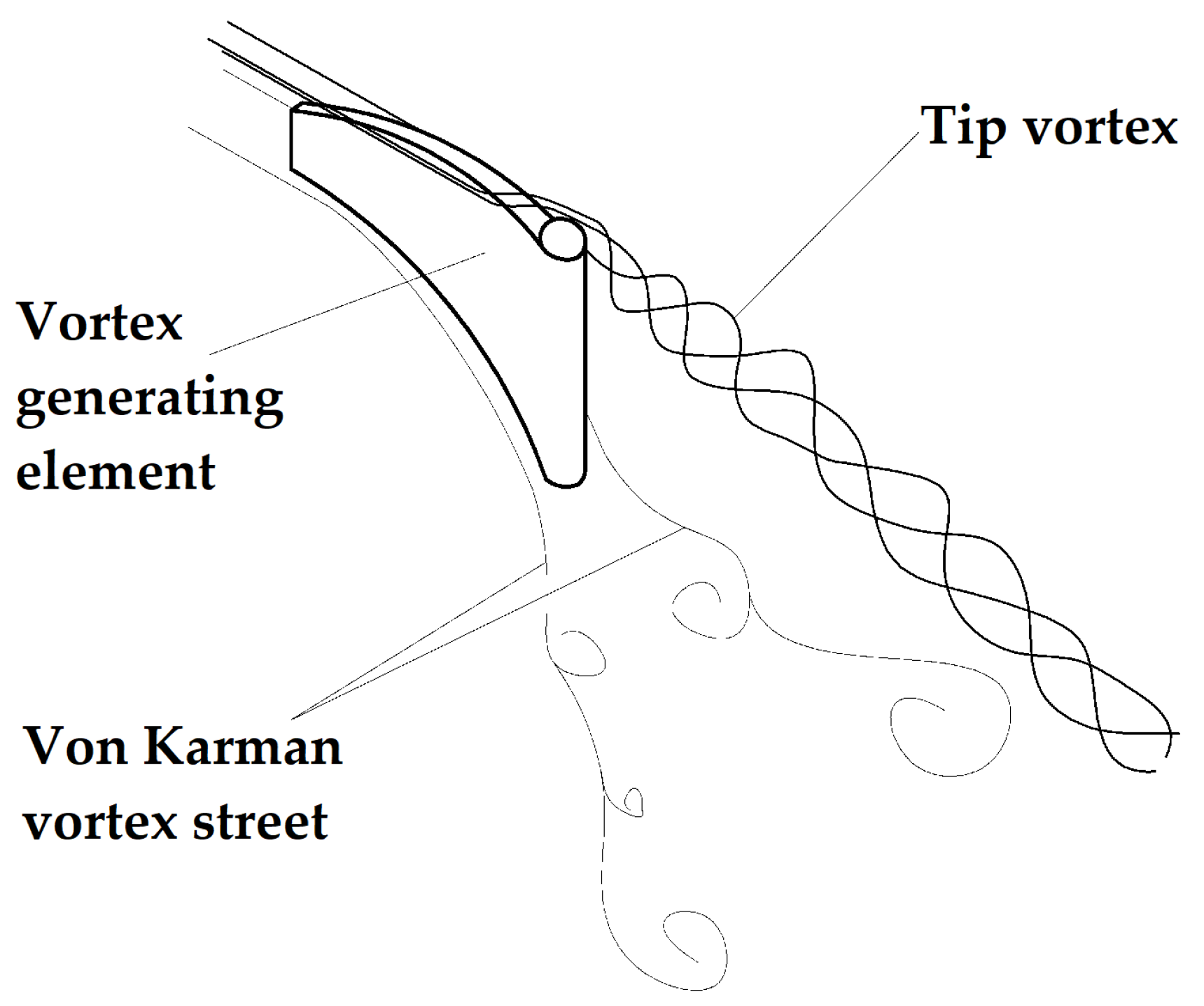
In the present study, a novel VG geometry is proposed, aimed at forming stable diverging vortex structures, which allows for an increased spacing between VGs and a reduction in their total number on the airfoil surface. This effect is achieved through the use of a trapezoidal vortex-generating element with radial curvature, as well as the presence of an aerodynamically streamlined thickened trailing-edge section.
The leading edge of the VG initiates the formation of a streamwise edge vortex characterized by a helical flow structure. The trapezoidal geometry of the element induces a pressure gradient along its upper edge, which promotes cross-flow motion and contributes additional energy to the development of the helical vortex structure. The vortex formation process is completed near the downstream end of the element, where a stable vortex core is established.
In the trailing-edge region of the VG, an aerodynamically streamlined thickening is introduced to equalize the pressure field, thereby suppressing the development of reverse flow in the inter-element region (Figure 3). Collectively, these mechanisms ensure enhanced momentum transfer from the outer flow into the boundary layer and delay flow separation.
The analysis of existing approaches indicates the need for further development of boundary-layer and flow-separation control methods for wind turbine blades. At the same time, the application of surface-mounted VGs in commercial wind turbines is associated not only with aerodynamic trade-offs but also with structural constraints, including an increase in the total mass of the installed elements and the potential shift of the blade center of gravity.
The development of a new VG geometry in the present study is aimed at improving boundary-layer control efficiency through the formation of stable three-dimensional diverging vortex structures with an extended region of influence on the boundary layer. The proposed approach seeks to achieve the required aerodynamic effect while reducing the installation density of VGs and decreasing their total mass, which is of fundamental importance from the standpoint of structural design and integration.
The paper is structured as follows. Section 2 describes the experimental methodology, including the aerodynamic facility, test conditions, and specific features of the PIV system employed for quantitative analysis of the flow structure. Section 3 provides the results of the comparative investigations, their interpretation, and an assessment of the effectiveness of the proposed VG geometry. Section 4 presents the discussion, and Section 5 contains conclusions and a description of further research.

2. Materials and Methods

2.1. PIV System and Methodology

The experimental investigations were carried out using the Particle Image Velocimetry (PIV) method in a subsonic aerodynamic facility. The PIV method provides detailed information on the flow structure; however, it does not enable the quantitative determination of lift and drag.
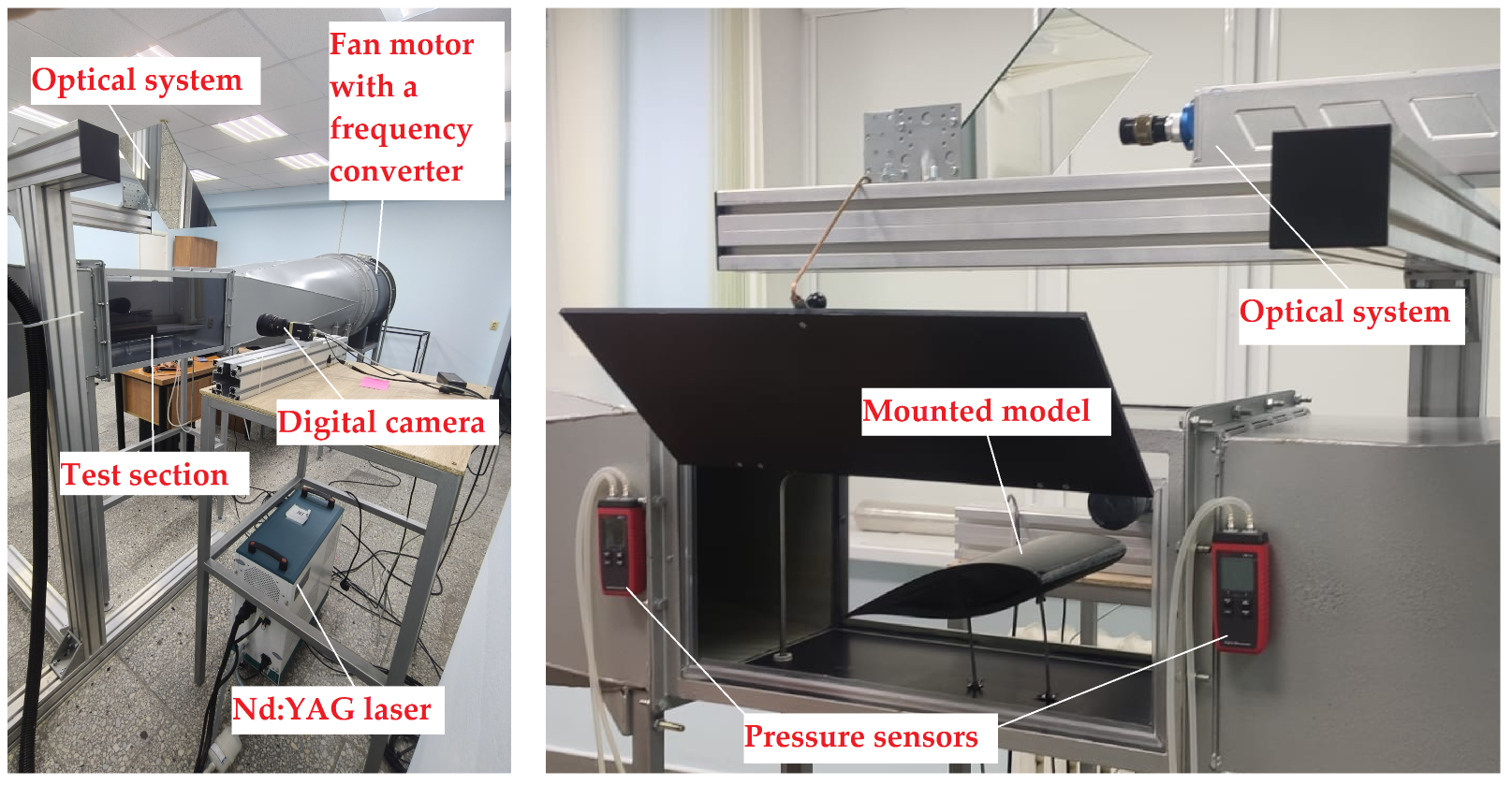
The experimental setup consisted of an open-circuit subsonic wind tunnel with a turbulence intensity not exceeding 2% at the nominal flow velocity, as shown in Figure 4. The dimensions of the test section are 700 × 350 × 350 mm.
The air velocity in the test section of the wind tunnel was varied within the range of 5–30 m/s by adjusting the rotational speed of the VO 21-12 fan motor using an INNOVERT IVD frequency converter [37]. The employed control system provided a velocity setting resolution of 0.15 m/s and high reproducibility of the prescribed flow regimes due to the integrated frequency indicator.
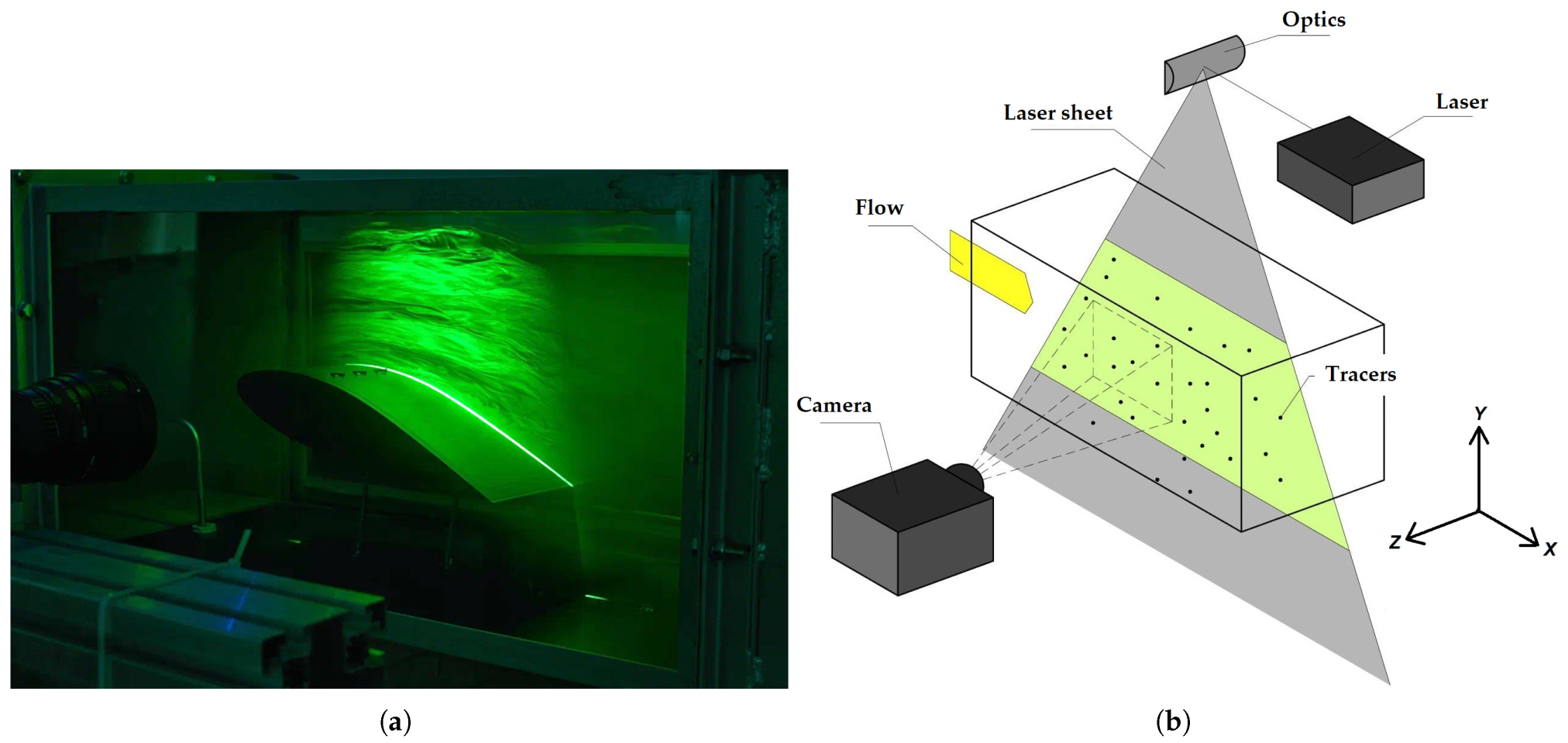
Experimental investigations of the flow structure were performed using the Particle Image Velocimetry (PIV) method. The measurement system employed was the “POLIS” complex [38], which includes a dual-pulse solid-state Nd:YAG laser and an optical system for generating a laser sheet with controlled thickness and spatial intensity uniformity (Figure 5) [39]. The flow was seeded with glycerin-based tracer particles (purity ≥ 99%) with a diameter of 1–2 μ m using a GL-120 (V73) aerosol generator, ensuring a homogeneous distribution of tracers within the measurement region.
Image acquisition was performed using a high-speed digital camera, IMPERX B2720 (Imperx, Boca Raton, FL, USA) with a resolution of 2756 × 2208 pixels, equipped with a long-focus macro lens, providing the required spatial resolution and minimizing optical aberrations. The frame dimensions were 70 × 56 mm. Synchronization of the laser and camera operation, as well as control of the acquisition parameters, were carried out using the Actual Flow software (version 1.18.5.0) package [40]. The acquired images were processed in the Matlab (version 23.2 (R2023b)) environment using the PIVlab toolbox (version 3.06), which includes cross-correlation algorithms, vector field filtering procedures, and the computation of derived flow quantities, including the velocity vector components and the vorticity component normal to the measurement plane.
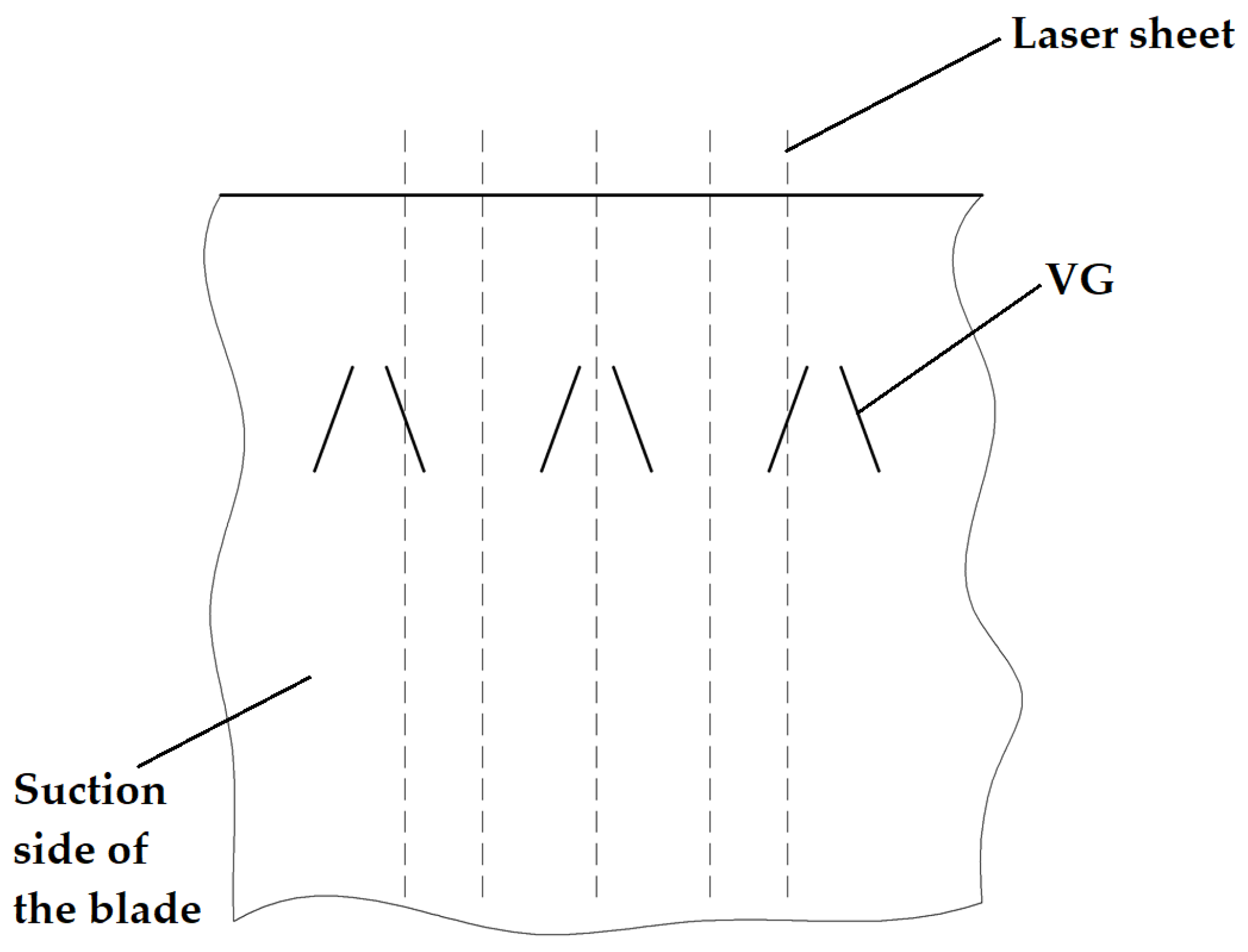
The optical system was focused at the intersection plane of the laser light sheet and the camera focal plane. The imaging scale factor was 0.025 mm/pixel, providing the required spatial resolution of the measurements. The time interval between the two exposures of each image pair was set to 40 μ s. The mean velocity fields were determined through statistical processing of a sample consisting of 50 instantaneous velocity field realizations for each experimental case. The minimum tracer particle displacement, determined using subpixel interpolation, was less than 0.6 pixels. The uncertainties in the velocity components in the x and y directions were estimated as 0.43 m/s and 0.31 m/s, respectively [41]. As a result, the overall relative uncertainty of velocity determination by the PIV method did not exceed 4% of the characteristic free-stream velocity. The dimensions of the interrogation cells was individually selected for each experiment based on the maximum particle displacement. To estimate the flow velocity in the investigated region, in addition to the PIV measurements, two Pitot tubes (type P) were installed and connected to RGK PM-12 digital manometers (measurement accuracy at 25 °C of ±0.5%) [42]. Their readings were compared with the velocity values obtained from the analysis of the PIV images. The investigations were carried out along the suction side of the blade in various cross-sections (between VGs, between vortex-generating elements, and directly at the vortex-generating element). The locations of the cross-sections are shown in Figure 6.
The experimental investigations were carried out at angles of attack in the range α = 9 15 , corresponding to typical blade angles of attack under operational conditions of wind turbines [18].

2.2. Experimental Models

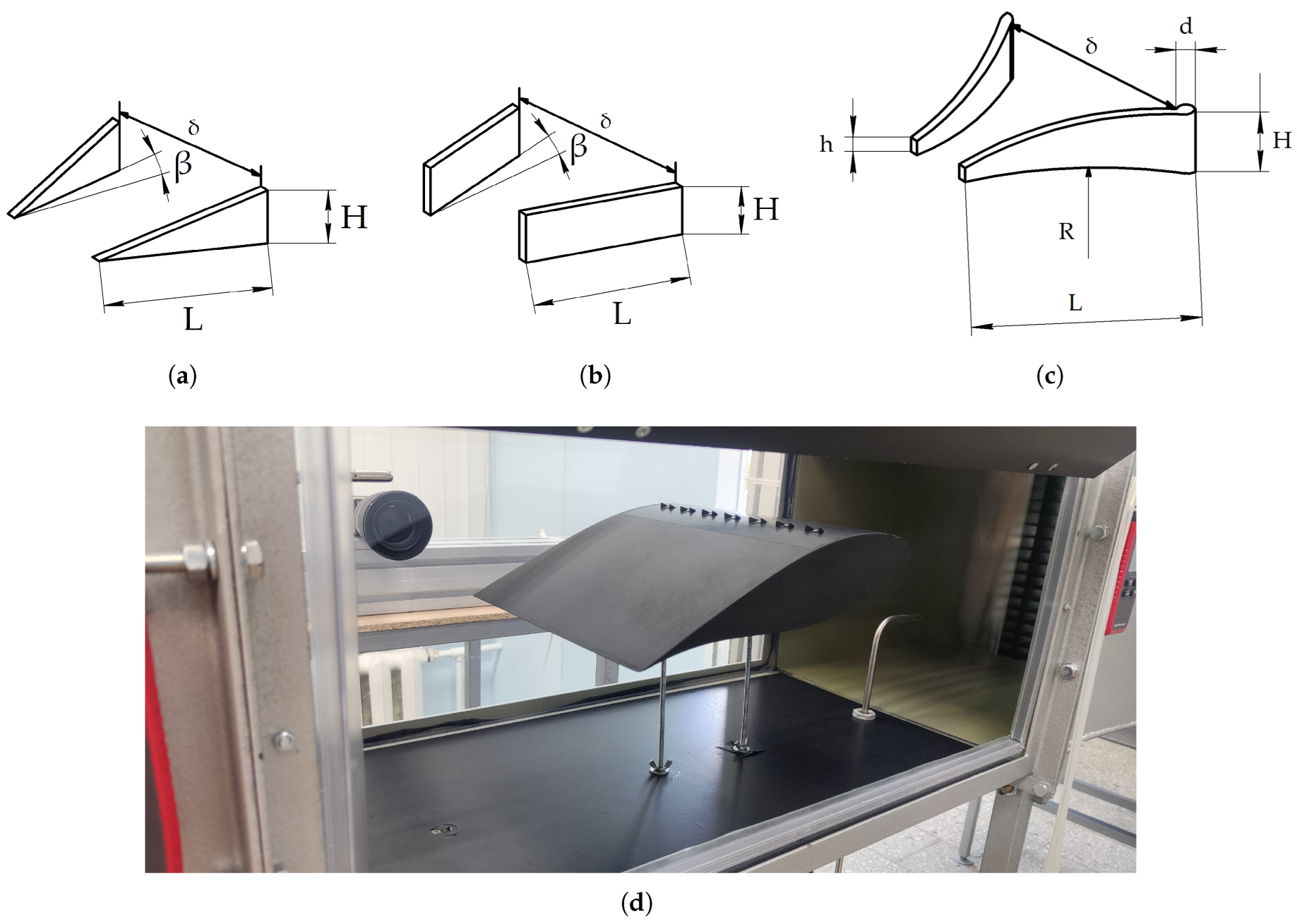
Three configurations of surface-mounted VGs were investigated in the present study (Figure 7). The triangular VG1 and rectangular VG2 correspond to configurations commonly used in the wind energy industry [23,24]. VG3 represents an original configuration developed in this work: a trapezoidal VG characterized by radial curvature and an aerodynamically streamlined thickened profile.
For a detailed investigation of the formation and evolution of vortex structures, VG models were manufactured and tested on a flat plate with a 600 mm upstream (pre-development) section, ensuring the formation of a fully developed boundary layer within the Reynolds number range from R e = 3.04 × 10 5 to R e = 1.06 × 10 6 , corresponding to free-stream velocities of 8–28 m/s. The Reynolds number was calculated based on the chord length of the blade fragment, b = 300 mm , and the velocities corresponding to the incoming flow. Within the framework of these experiments, optimization of the proposed VG configuration was carried out. The model dimensions were as follows: L = 55 mm, H = 27 mm, R = 85 mm, and d = 5 mm.
In [27], results were obtained demonstrating that the height of the VGs should be approximately 0.7 1 % of the blade chord length. Section 3 presents experimental studies conducted to confirm these results. Consequently, for the investigation of VG models on blade fragments, the VG height was defined as a function of the chord length and set equal to 1 % of its value. This choice is motivated by the need to ensure efficient generation of streamwise vortices while minimizing additional aerodynamic drag. A decrease in the VG height leads to a reduction in the intensity of the induced vortex structures and insufficient influence on the boundary layer, whereas an increase in height results in pronounced vortex formation and a reduction in flow velocity.
According to [24,27], the optimal spacing Z between VGs is 5 H . Section 3 presents experimental studies aimed at optimizing the spanwise arrangement of the original VG configuration, as well as a comparison of the effective spanwise placement for all VG types.
The chordwise position of the VGs was determined based on the flow separation point on the airfoil, which was found to lie in the range of 20 % to 30 % of the airfoil chord length.
In the experimental investigations conducted on blade segments, surface-mounted VGs with geometric parameters summarized in Table 1 were employed.
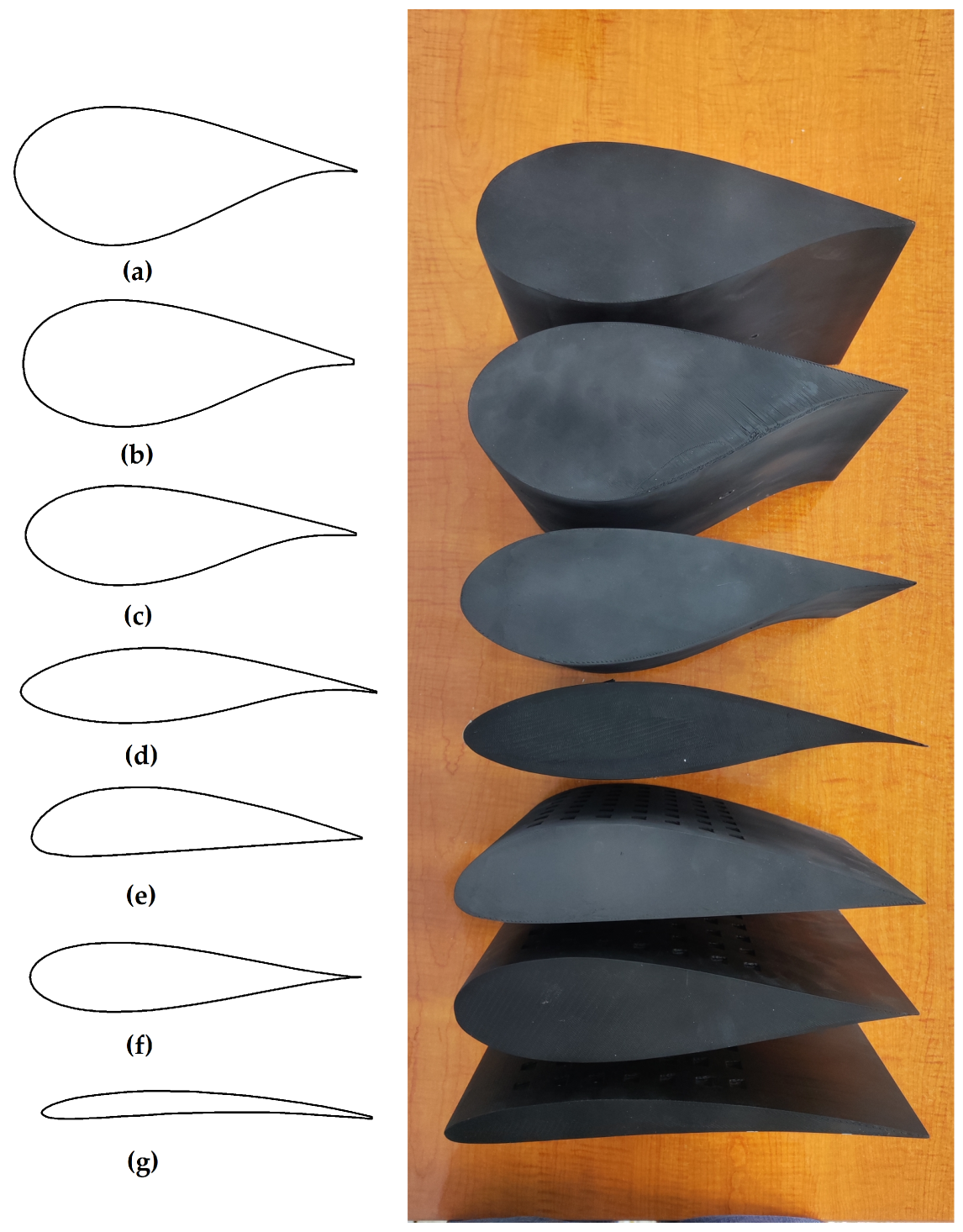
In the course of comprehensive experimental investigations on blade segments, VGs were installed on the airfoil profiles shown in Figure 8. The chord length of each profile was b = 300 mm, which allowed near-wall flows to be examined over a Reynolds number range from R e = 2 × 10 3 to R e = 8 × 10 5 . The Reynolds number was calculated based on the chord length of the blade fragment, b = 300 mm , and the velocities corresponding to the incoming flow. The width of the investigated blade section was 250 mm. All VG models and blade segments were manufactured using additive production technology from polymer materials on a TotalZ AnyForm 1000-LPRO 3D printer [43], ensuring high geometric accuracy and reproducibility of the experimental specimens. It should be emphasized that the main results presented in the following section are demonstrated using the DU35 airfoil, which is employed in the blade design of the reference 5 MW NREL wind turbine [44]. The selection of the DU35 airfoil as the baseline object of analysis is justified by its characteristic aerodynamic and structural features typical of the blade root region of a wind turbine. In this rotor region, the circumferential velocity is relatively low, leading to operation at reduced local Reynolds numbers and increased sensitivity to boundary-layer separation. Moreover, the DU35 airfoil is characterized by increased relative thickness and a substantial chord length, dictated by the strength and stiffness requirements of the blade root. These features create conditions under which boundary-layer control by means of VGs is particularly promising, as it enables flow stabilization in a region of elevated aerodynamic loading and improves the performance characteristics of the blade root section.
The geometric parameters of the presented airfoils are listed in Table 2.

3. Results

3.1. Experimental Studies on a Flat Plate

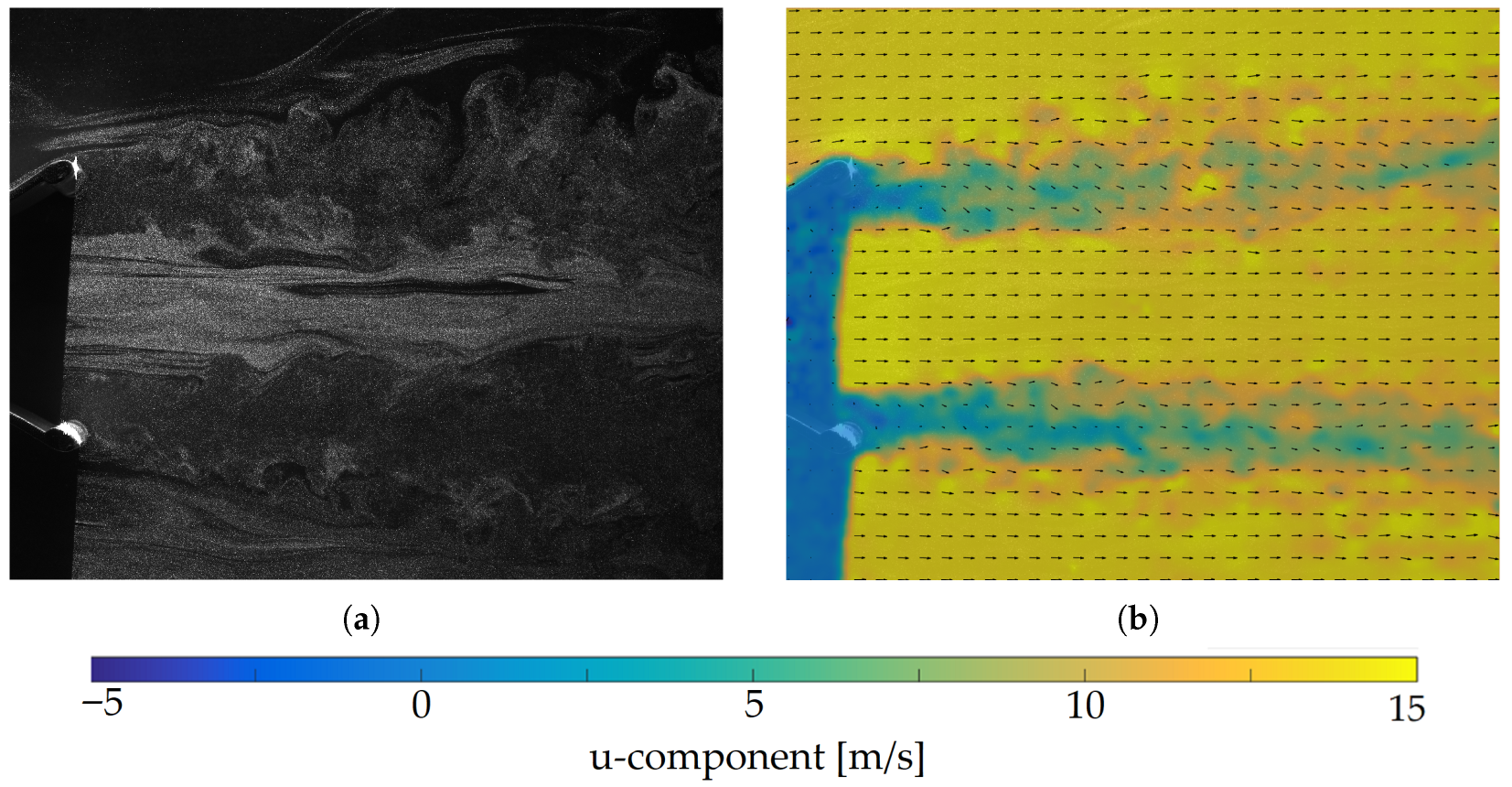
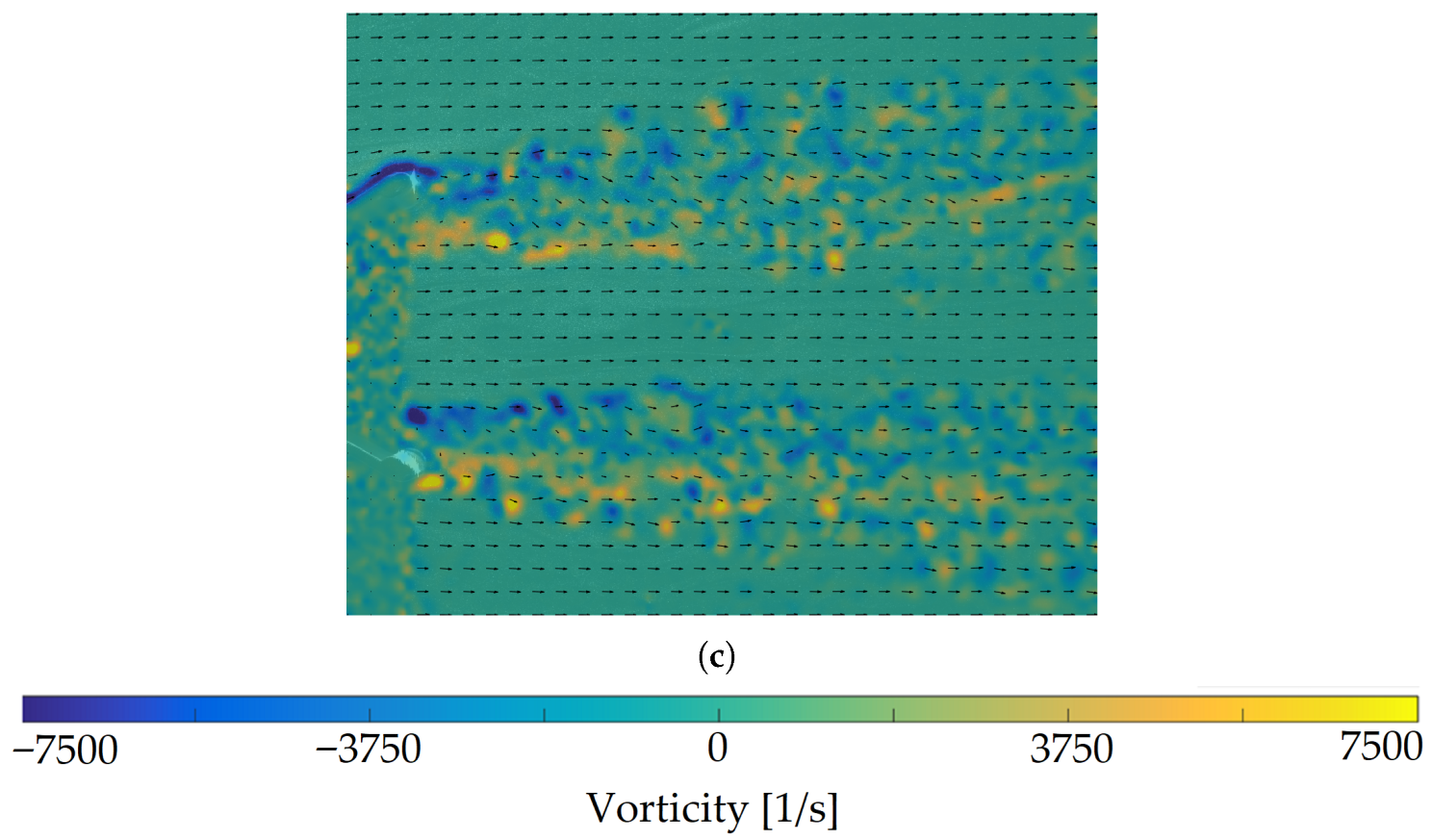
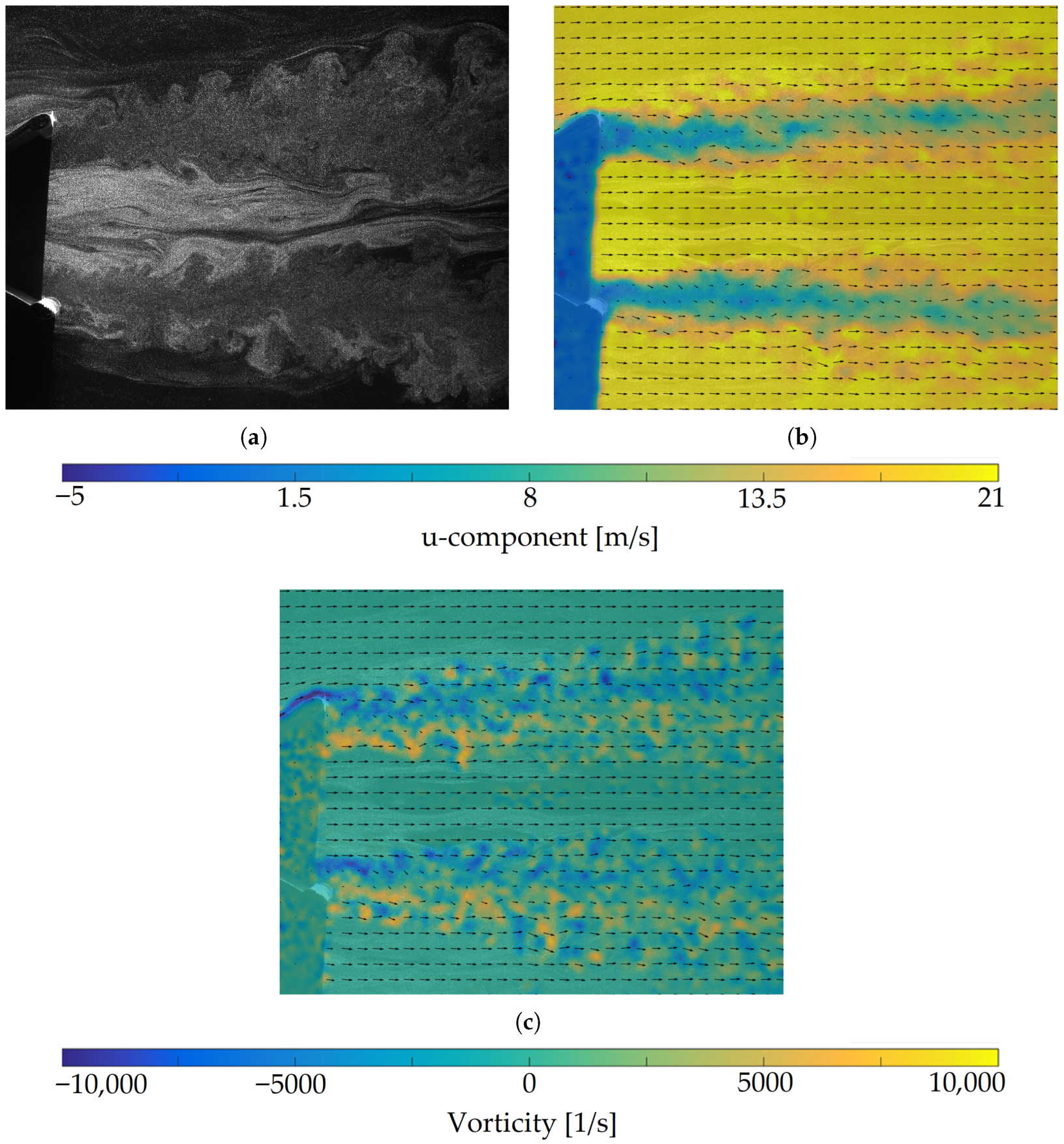
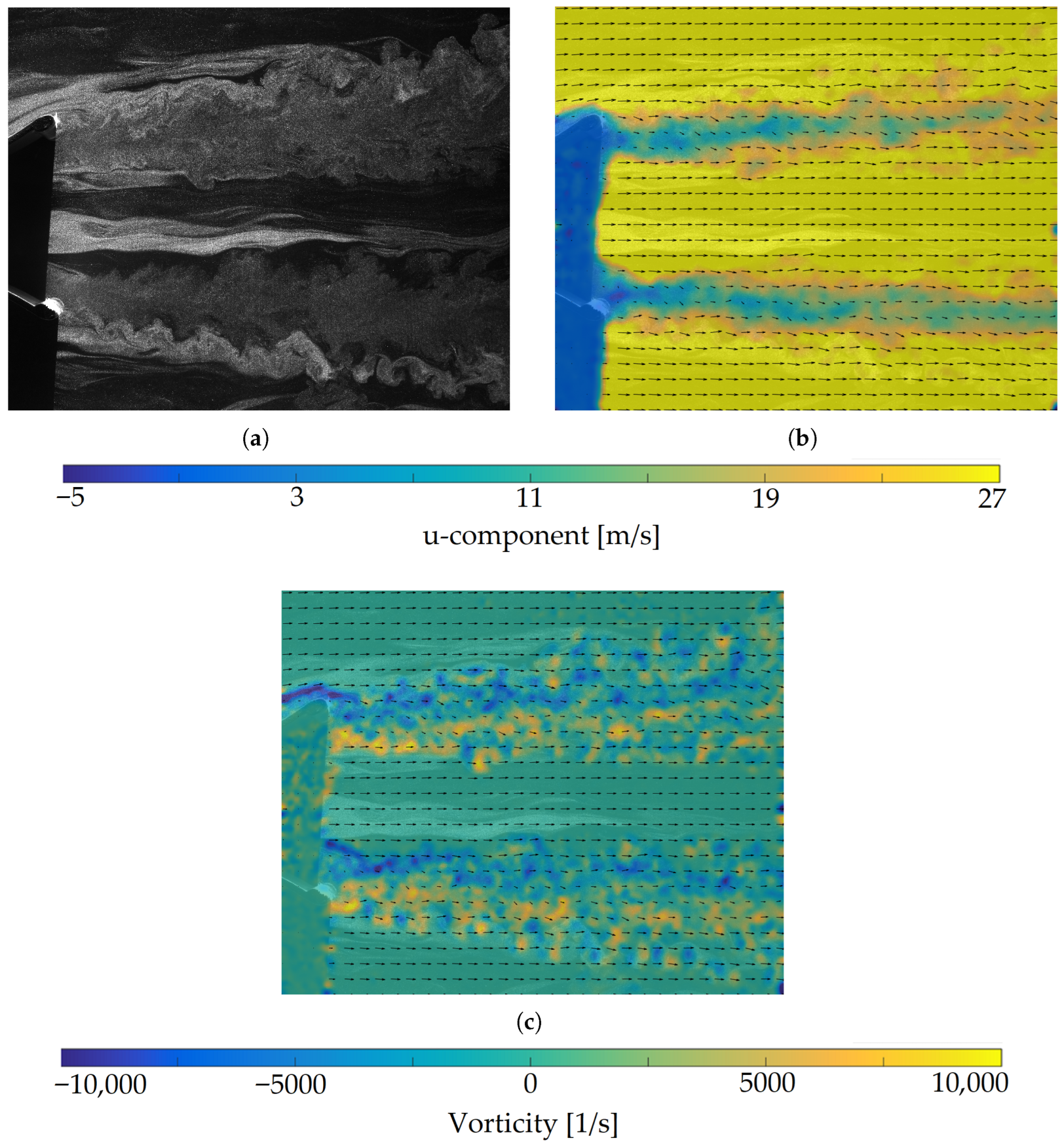
The first stage of the study was carried out on a flat plate with a 400 mm upstream (pre-development) section, which ensured the formation of a fully developed boundary layer within the Reynolds number range from R e = 3.8 × 10 5 to R e = 7.09 × 10 5 at free-stream velocities of 15–27 m/s. The investigation focused on the formation and evolution of vortex structures. Particular attention was paid to the development of tip vortices. To control this phenomenon, aerodynamically streamlined protrusions were implemented at the trailing edge of the VG. Their purpose was to prevent reverse flow into the low-pressure region between the vortex-generating elements, thereby enabling the formation of stable diverging vortex structures downstream of the VG. Figure 9, Figure 10 and Figure 11 present the turbulent wake structures behind the VGs, as well as the velocity and vorticity distribution fields in the VG wake for free-stream velocities ranging from 15 to 27 m/s.
In the wake behind a VG consisting of two trailing edges (Figure 7c), two stably diverging vortex wakes with opposite signs of rotation are induced. The introduction of aerodynamically streamlined protrusions on the trailing edge ensures effective control of the flow structure by blocking reverse flow into the low-pressure region that forms between the edges of the VGs. This minimizes the mutual interaction of the vortices and reduces turbulent dissipation. As a result, the intensity and stability of the vortices are preserved, ensuring a stable energy transfer from the outer boundary layer to the near-wall region. Within the course of the investigations, the optimal diameter of the aerodynamically streamlined protrusions was determined as d = 0.08 R .

3.2. Experimental Studies of the Airfoils of Low Relative Thickness

The second stage of the study was carried out on blade segments with aerodynamic profiles of relatively low thickness, as shown in Figure 8 (profiles (d)–(g)). The investigation focused on the influence of different VG configurations on the velocity fields over the suction side of the profiles. A comparative analysis was performed considering various geometric characteristics and the spacing between VGs.
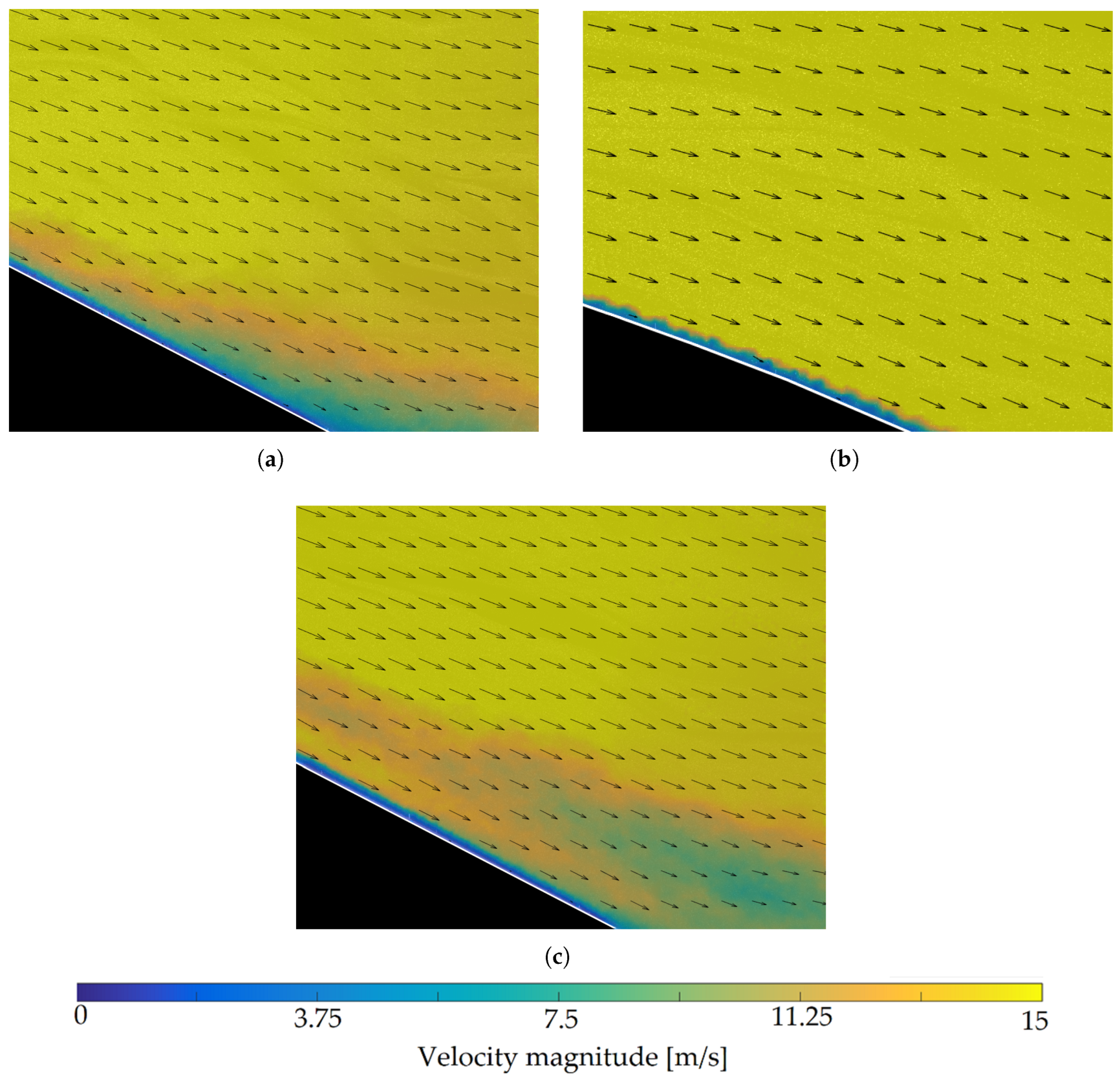
Figure 12 presents the velocity distribution fields along the surface of a blade segment with the DU21 airfoil for triangular surface-mounted VGs with heights H 1 = 1 % and H 2 = 1.5 % of the chord length. The VG is located outside the frame, upstream in the cross-section corresponding to R e = 0.38 × 10 5 . The presented data illustrate the modification of the boundary-layer structure and the velocity distribution associated with the application of VGs of different heights.
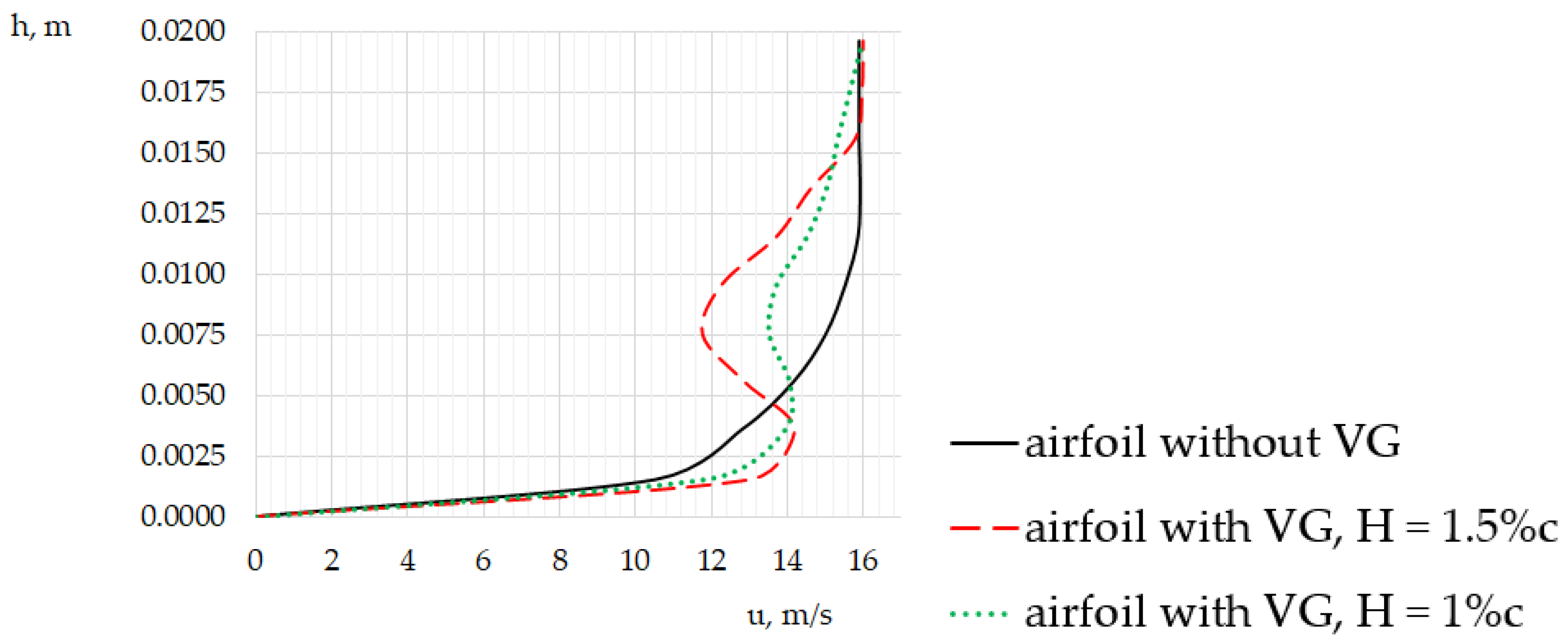
Figure 13 presents the distributions of the mean velocity across the boundary-layer height in the cross-section corresponding to R e = 0.77 × 10 5 based on the chord length. The results demonstrate that the application of VGs with a height of H 2 = 1.5 % of the chord length leads to strong turbulence intensification in the near-wall region along the suction side, resulting in a reduction in flow velocity and, consequently, a decrease in blade lift. The velocity deficit persists along the entire suction surface of the blade segment. The conducted series of experiments for several airfoil profiles confirms the theoretical assumption that the optimal VG height should be on the order of 0.7–1% of the blade chord length [27].
Further investigations were performed under the condition of a fixed VG height of H = 1 % of the airfoil chord length.
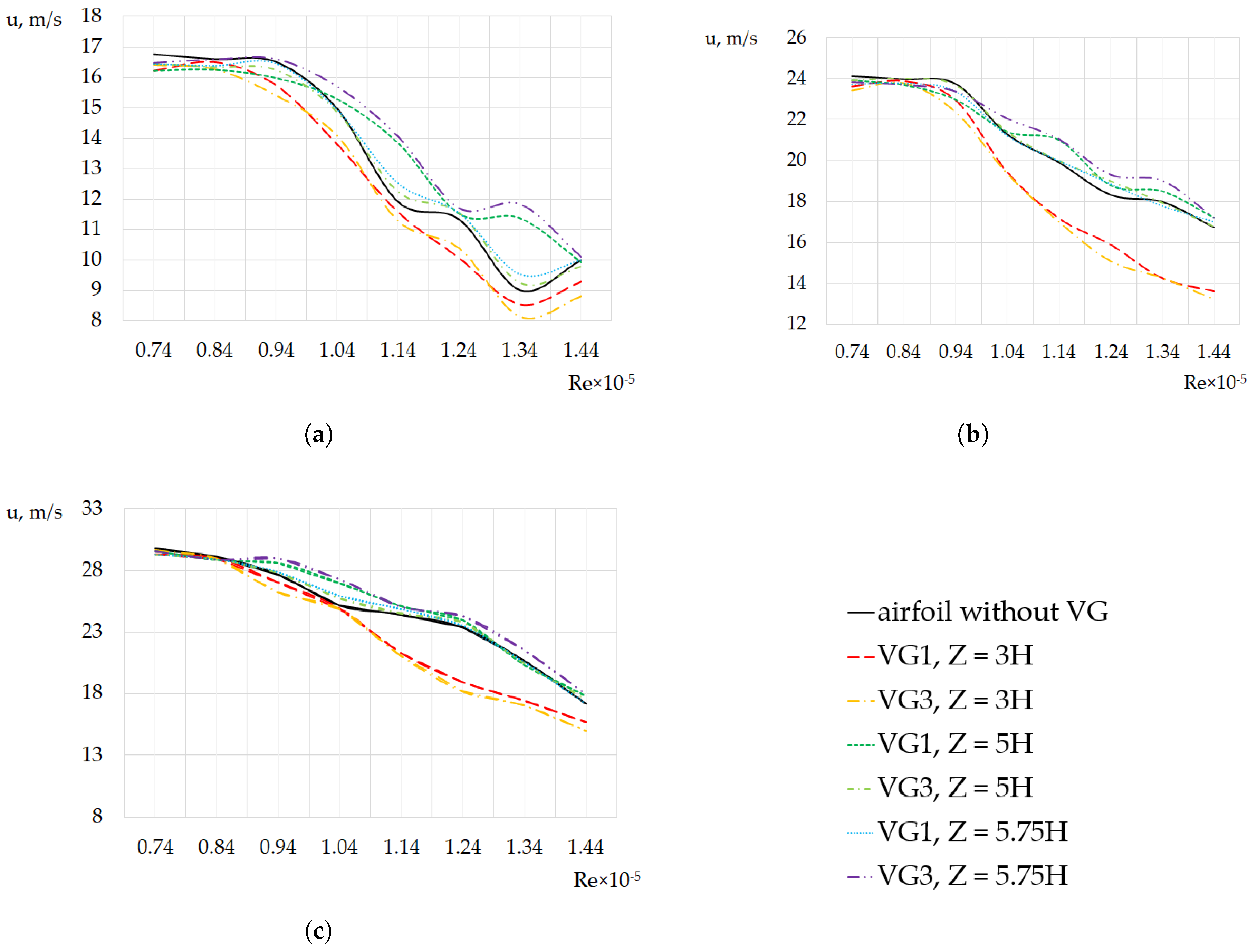
The next stage involved examining the influence of the mutual arrangement of VGs on the velocity distribution fields in the near-wall flow. The experiments were conducted at an angle of attack of 9 and free-stream velocities of u = 15 m/s, 21 m/s, and 27 m/s. The spacing between VGs, Z, was varied within the range from 3 H to 6 H . The results are presented as velocity distribution profiles along the suction side of the blade segment (Figure 14). It should be noted that excessively large spacing between VGs leads to insufficient energy transfer to the boundary layer in the intermediate regions, thereby promoting premature flow separation. However, excessive reduction of the spacing between VGs is also associated with adverse effects. The interaction of the induced vortices may result in partial mutual cancellation, reducing the effectiveness of boundary-layer control. In addition, the increase in aerodynamic drag associated with VG installation is proportional to their number per unit length. This explains the observed velocity reduction in the immediate downstream region of the VGs at the initial part of the velocity distribution curves along the suction side of the blade segment.
According to [24,27], the optimal spacing Z between triangular VGs is approximately 5 H . The proposed VGs allow the optimal spacing to be increased to 5.75 H , owing to the radial curvature of the vortex-generating element and the presence of an aerodynamically streamlined protrusion, which together promote the formation of stable diverging vortex structures. Increasing the spacing between VGs makes it possible to reduce the total VG mass on the wind turbine blade, as well as the associated installation costs.
Further investigations were conducted under the condition that VG1 and VG2 were installed with a spacing of Z = 5 H , while VG3 was installed with a spacing of Z = 5.75 H .
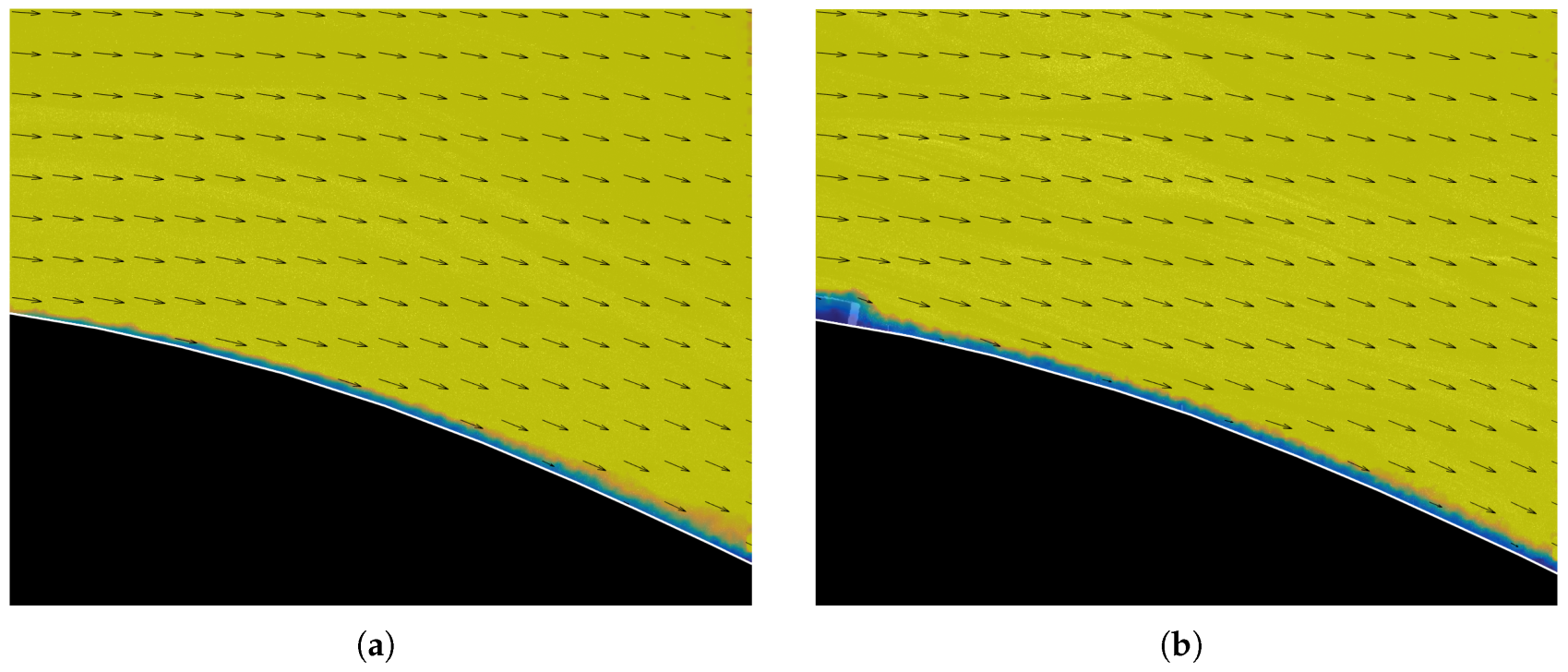
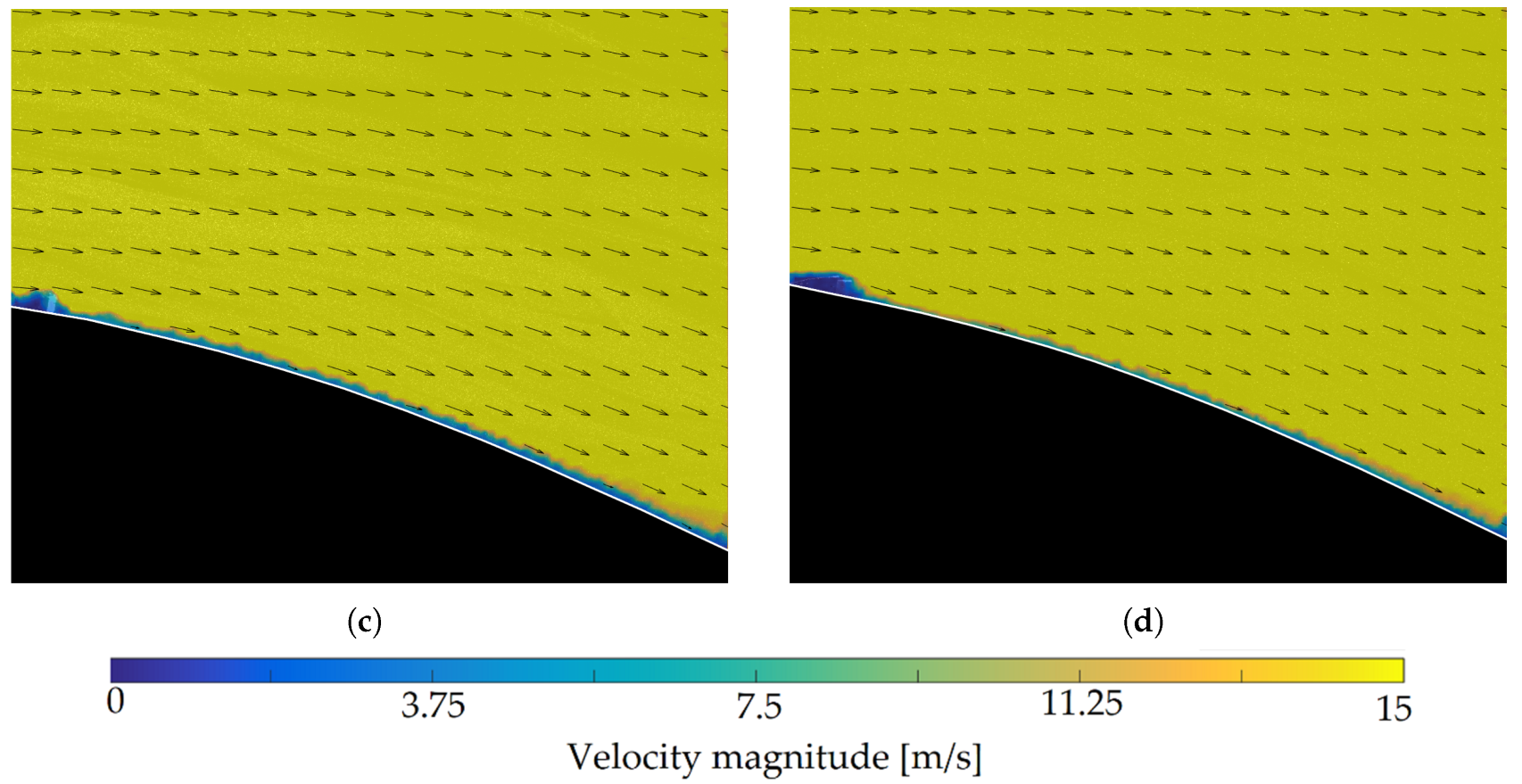
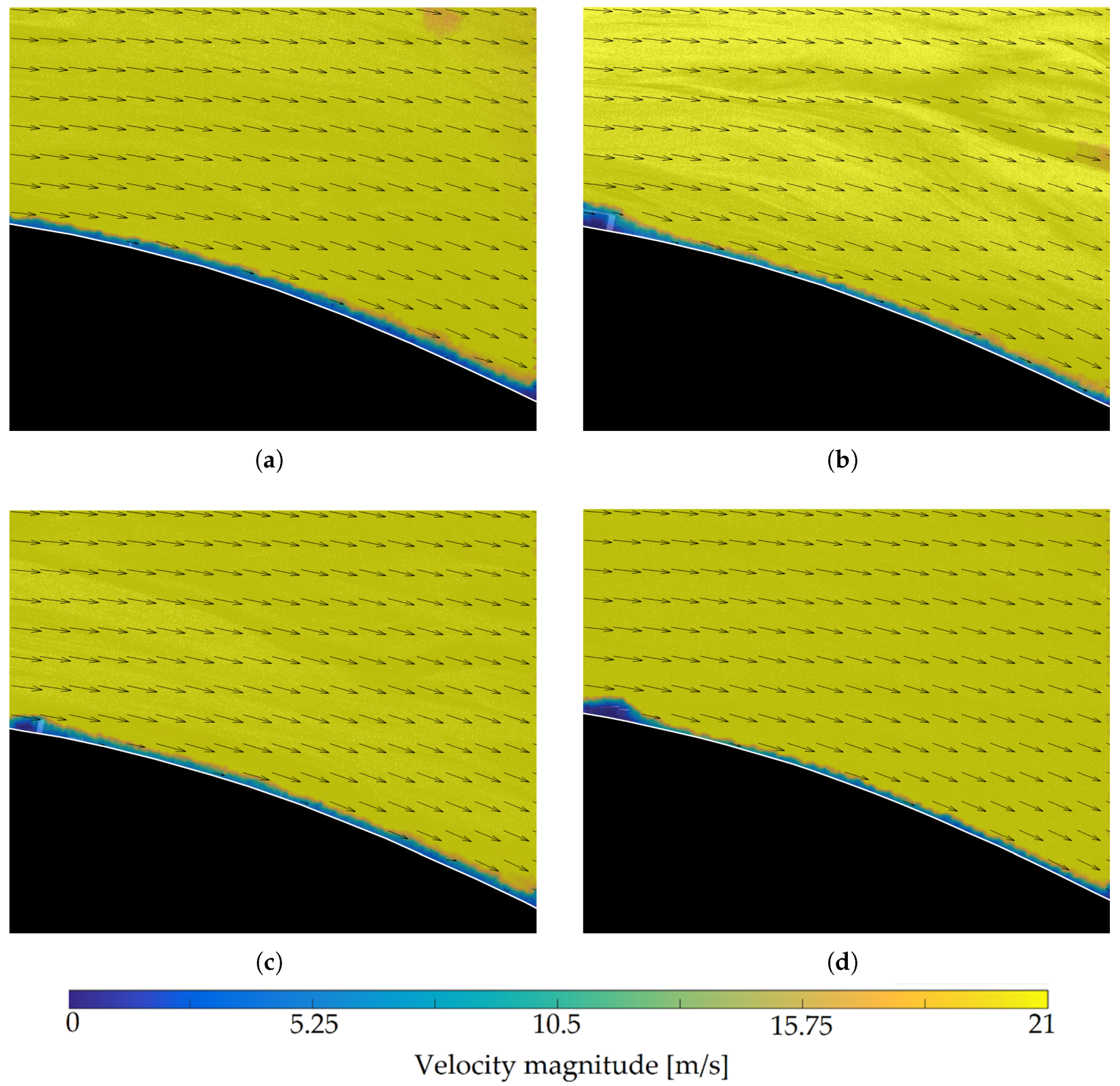
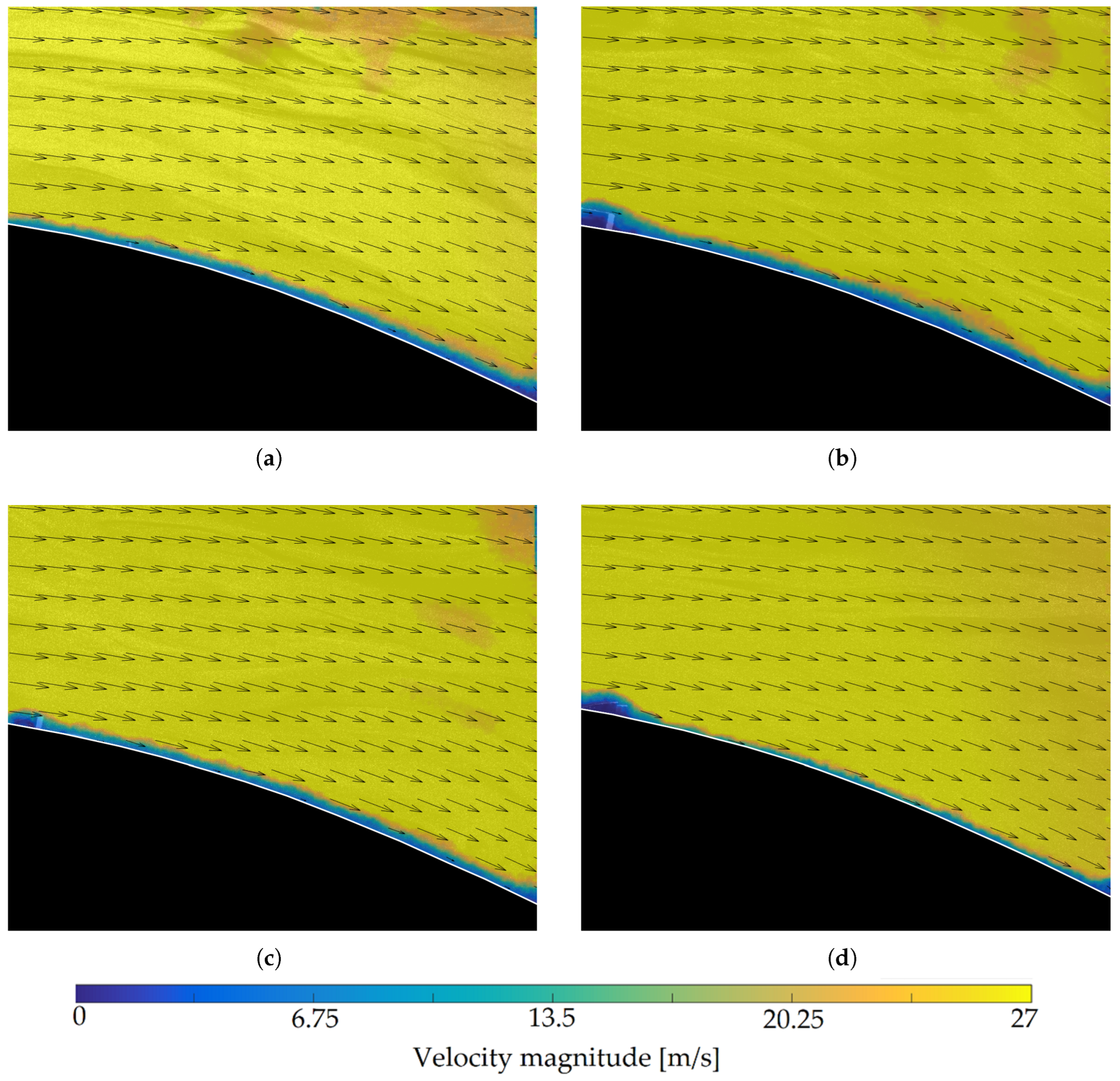
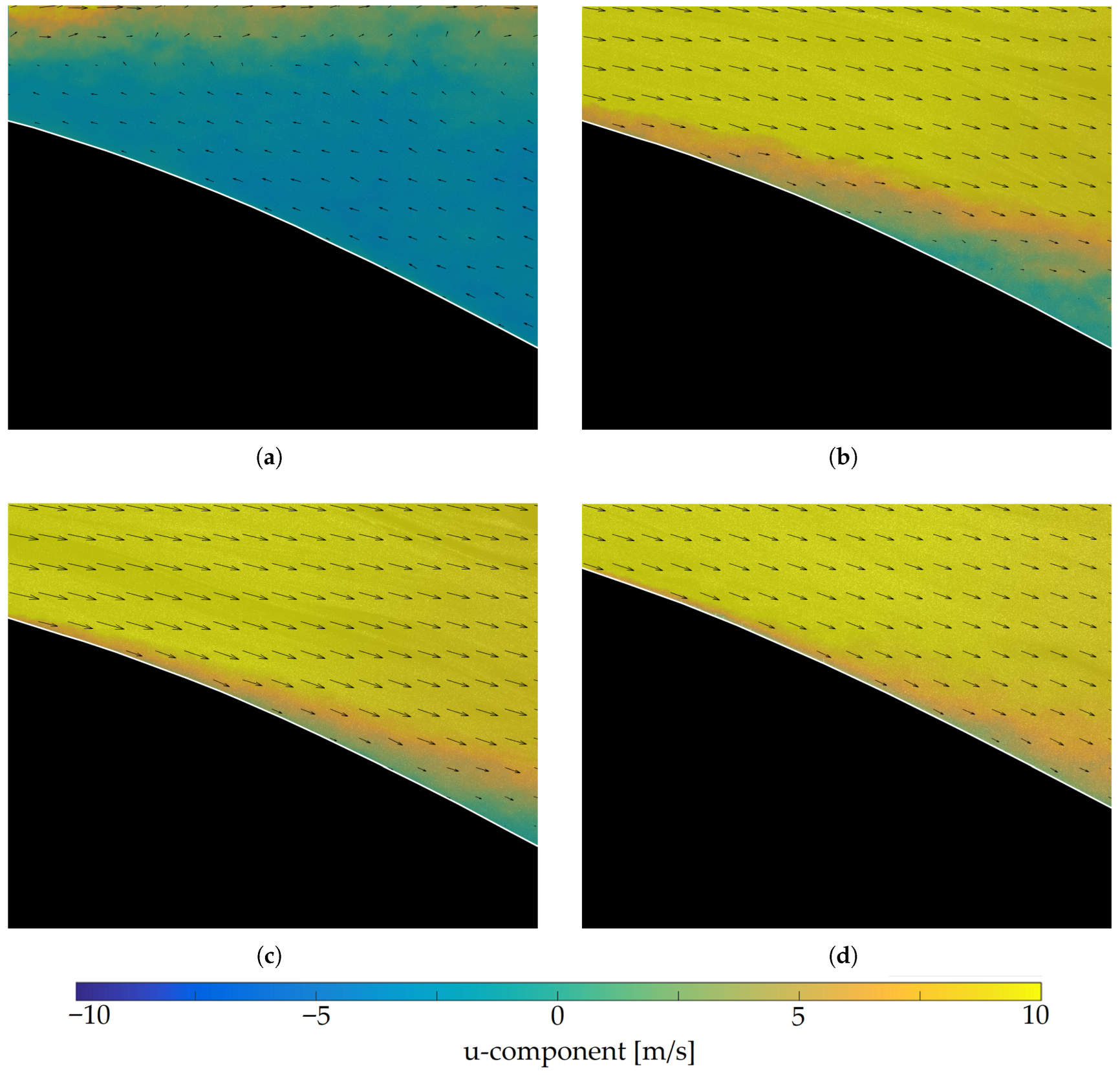
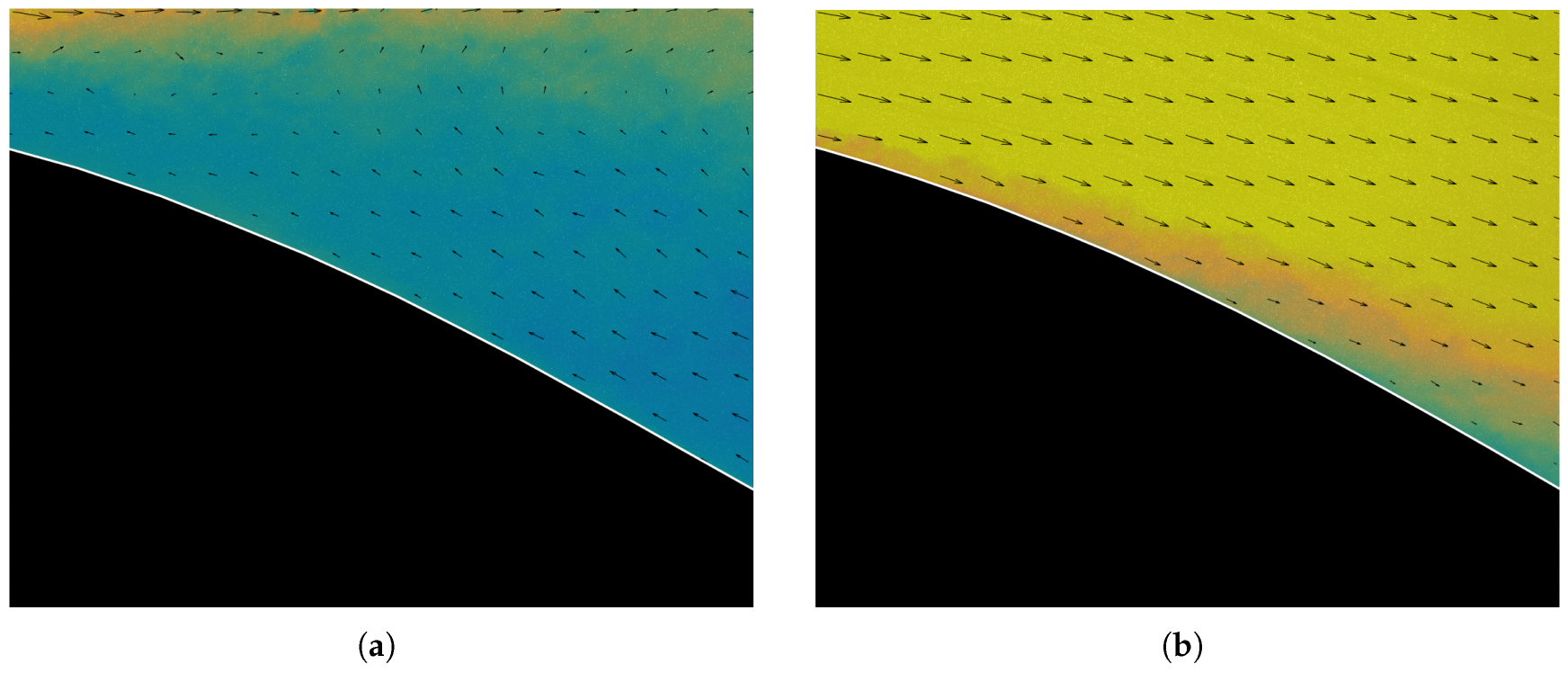
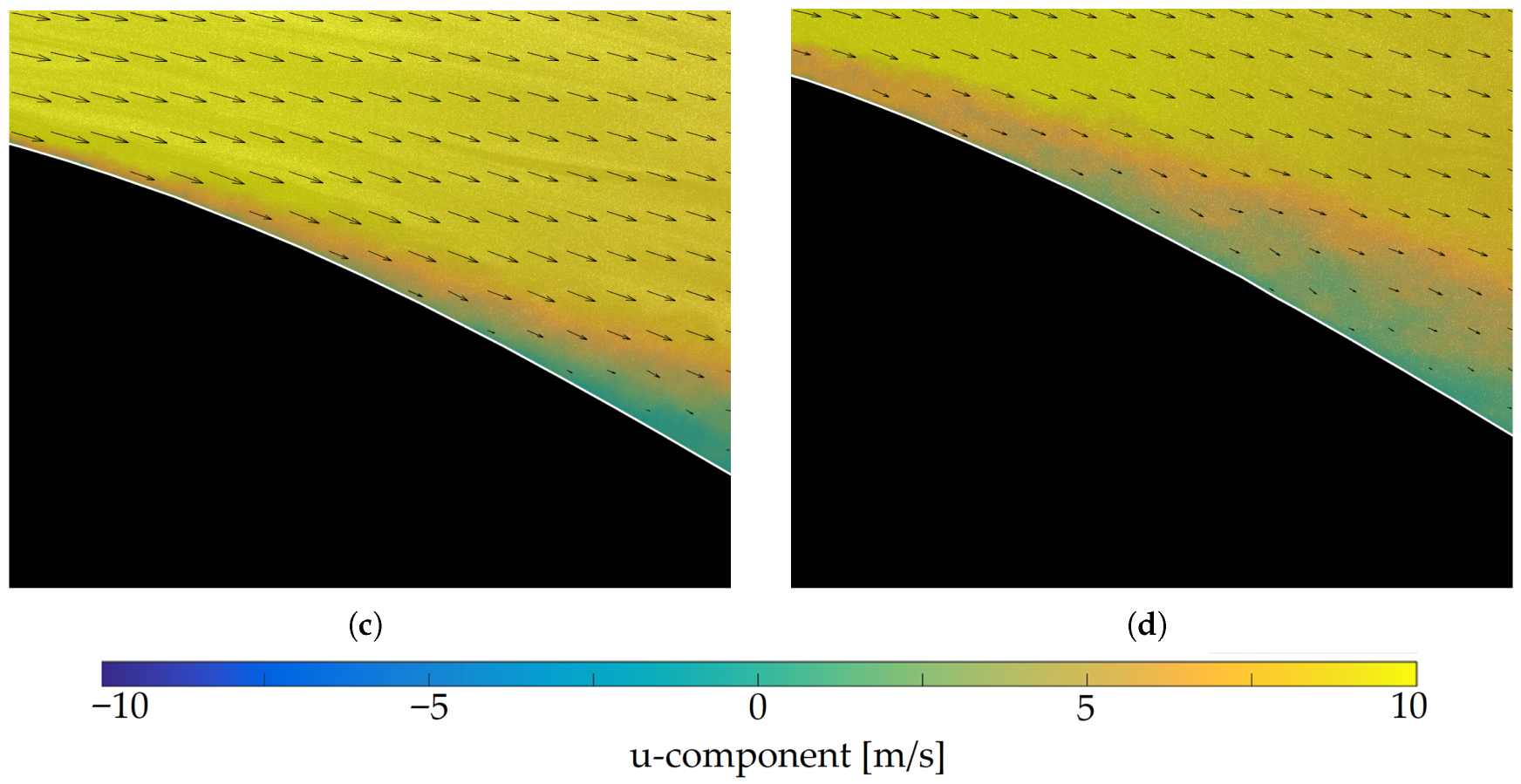
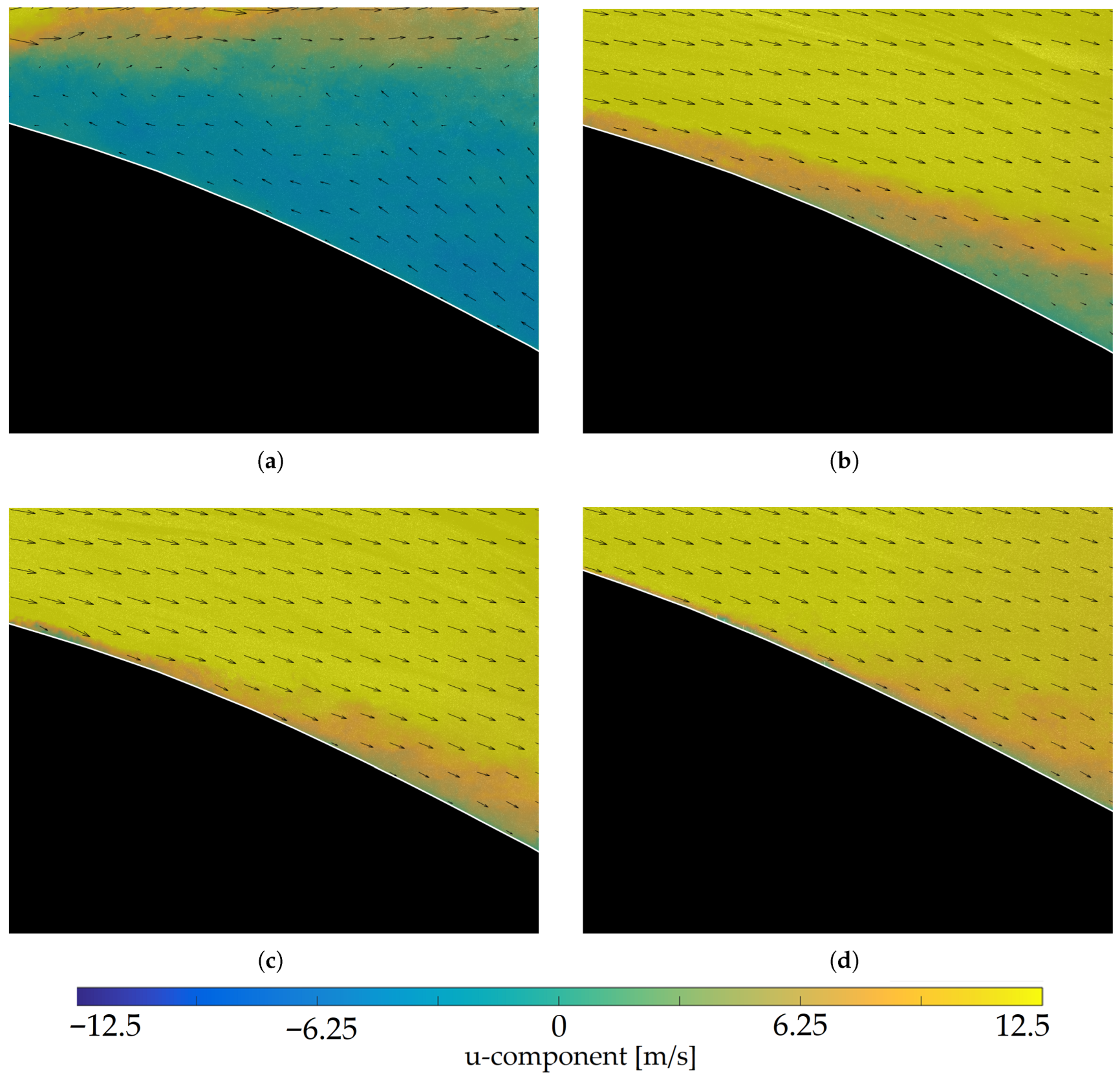
The next stage involved examining the influence of VG shape on the velocity distribution fields in the near-wall flow. Figure 15, Figure 16 and Figure 17 present the velocity distribution fields along the surface of the blade segment with the DU21 airfoil without VGs and with the application of VG1, VG2, and VG3. The angle of attack was set to α = 9 , and the free-stream velocities were u = 15 m/s, 21 m/s, and 27 m/s. The results clearly demonstrate the differences in the influence of various VG types on the boundary-layer structure.
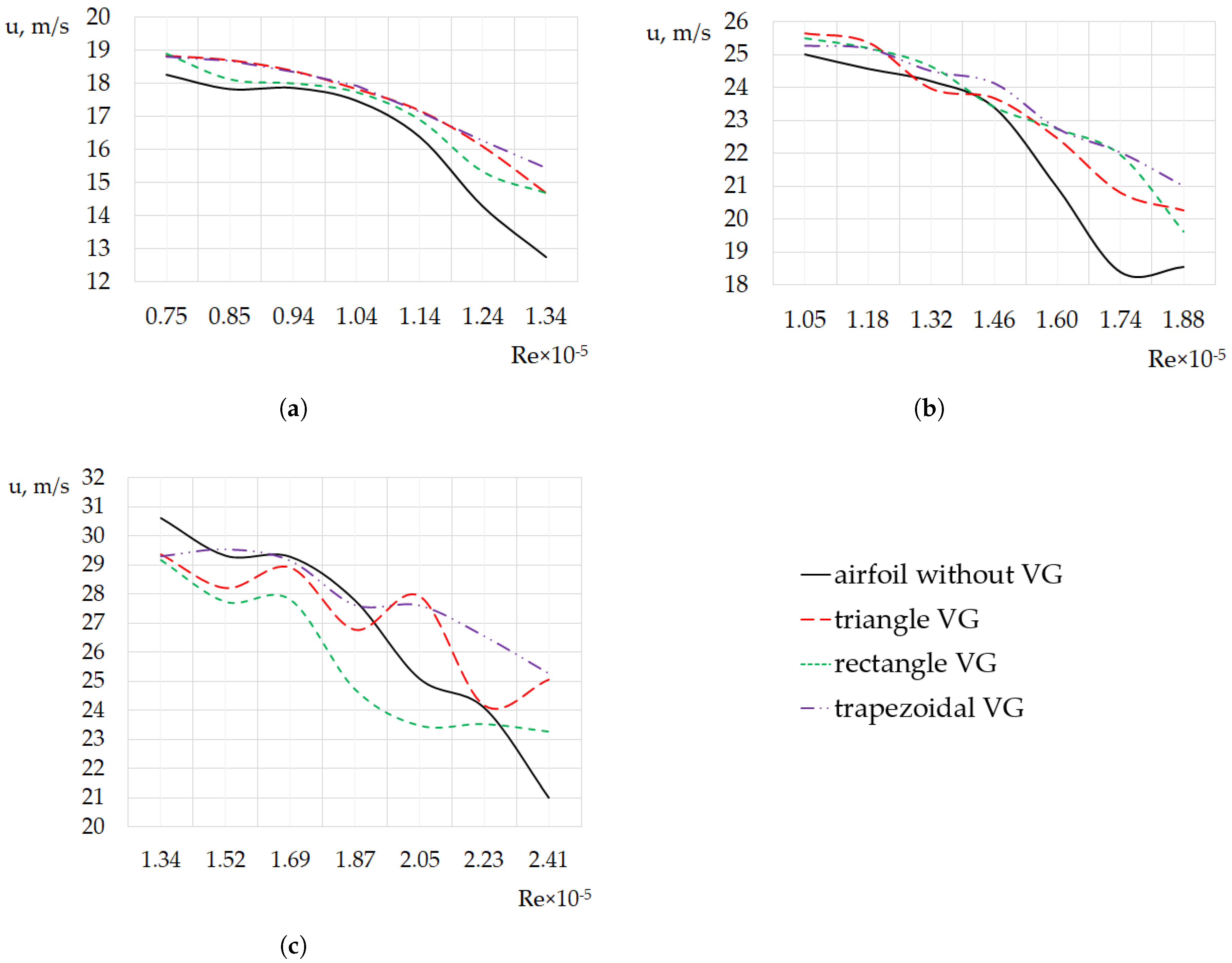
Figure 18 presents the velocity distribution profiles along the suction side of the DU21 airfoil. The obtained results indicate that within the velocity range of u = 15 –21 m/s, the application of all considered VG configurations maintains boundary-layer stabilization without significant deceleration in the wake downstream of the VGs. In particular, VG3 demonstrated a more uniform velocity distribution in the near-wall region. Under conditions of increased free-stream velocity ( u = 27 m/s), a different trend is observed: for the smooth surface without VGs, higher local velocity values are recorded. This indicates an unfavorable effect of additional boundary-layer turbulence induced by VGs at elevated incoming flow velocities.
The results of the comparative analysis of the velocity distributions along the suction side of the investigated airfoils are summarized in Table 3.

3.3. Experimental Studies of the Airfoils of Large Relative Thickness

The third stage of the study was conducted on blade segments with aerodynamic profiles of large relative thickness, as shown in Figure 8 (profiles (a)–(c)), within the angle-of-attack range of α = 9 15 . The selection of this angle range was determined by the operational conditions of these profiles in the blade root region, where thick airfoils are employed in accordance with the blade twist distribution. The investigation focused on the influence of VG1, VG2, and VG3 on separated flows developing on the suction side of the profiles. The experiments were carried out at free-stream velocities in the range of u = 10 –15 m/s. These conditions were selected to ensure the occurrence of flow separation and to capture aerodynamic hysteresis phenomena within the specified velocity range. The results of the investigations, including the recorded velocities corresponding to flow attachment and separation for each of the examined profiles, are presented in Table 4.
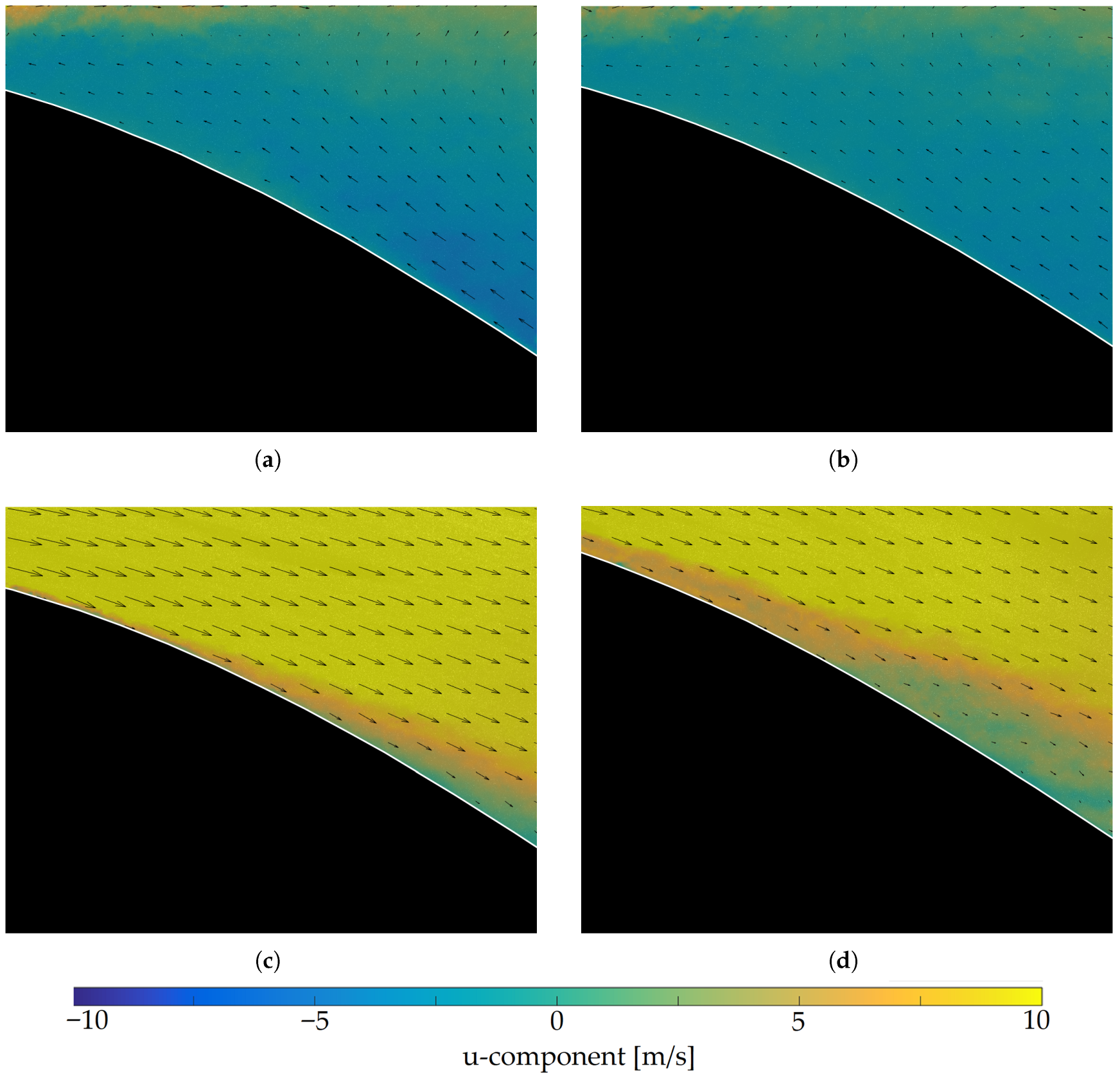
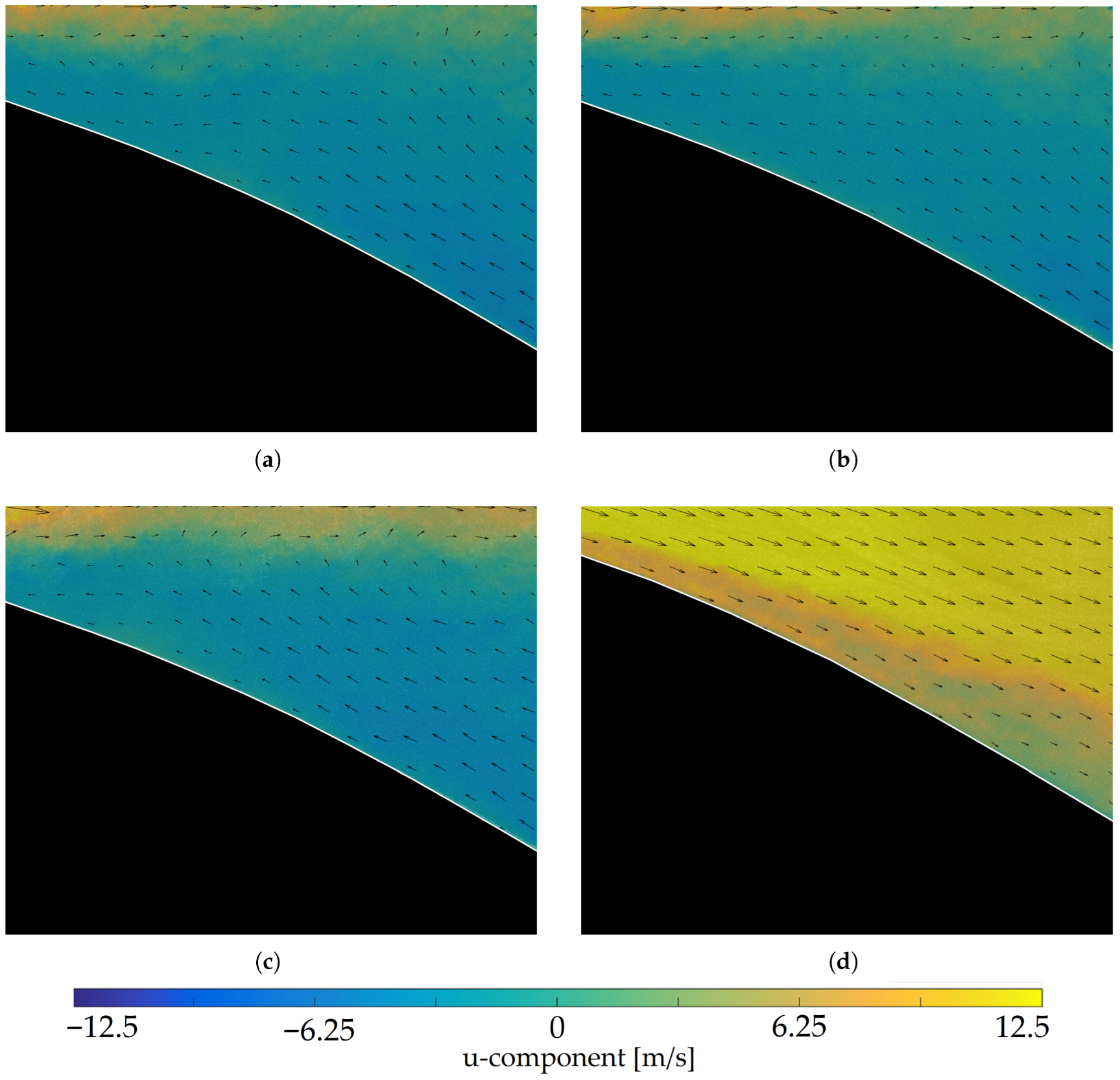
Figure 19, Figure 20 and Figure 21 present the velocity fields along the surface of the DU35 blade segment at u = 10 m/s under conditions of decreasing free-stream velocity. The VG is located outside the frame, upstream in the cross-section corresponding to R e = 0.57 × 10 5 . In this case, flow attachment on the airfoil surface was recorded.
The obtained results confirm the effectiveness of VGs in controlling separated flows. For the airfoil without VGs at a free-stream velocity of u = 10 m/s and angles of attack of α = 9 and 12 , separated flow is observed along the entire suction side of the profile. Under the described conditions, all investigated VG configurations provide effective flow stabilization on the suction surface.
At an angle of attack of α = 15 , the rectangular VGs did not demonstrate sufficient effectiveness: flow stabilization was maintained only at a slightly higher free-stream velocity (approximately 10.5 m/s).
Under conditions of increasing free-stream velocity, at u = 10 m/s, separated flow was observed on the suction side for all the described experimental cases. This indicates that the application of VGs extends the velocity range over which attached flow can be maintained under conditions of aerodynamic hysteresis.
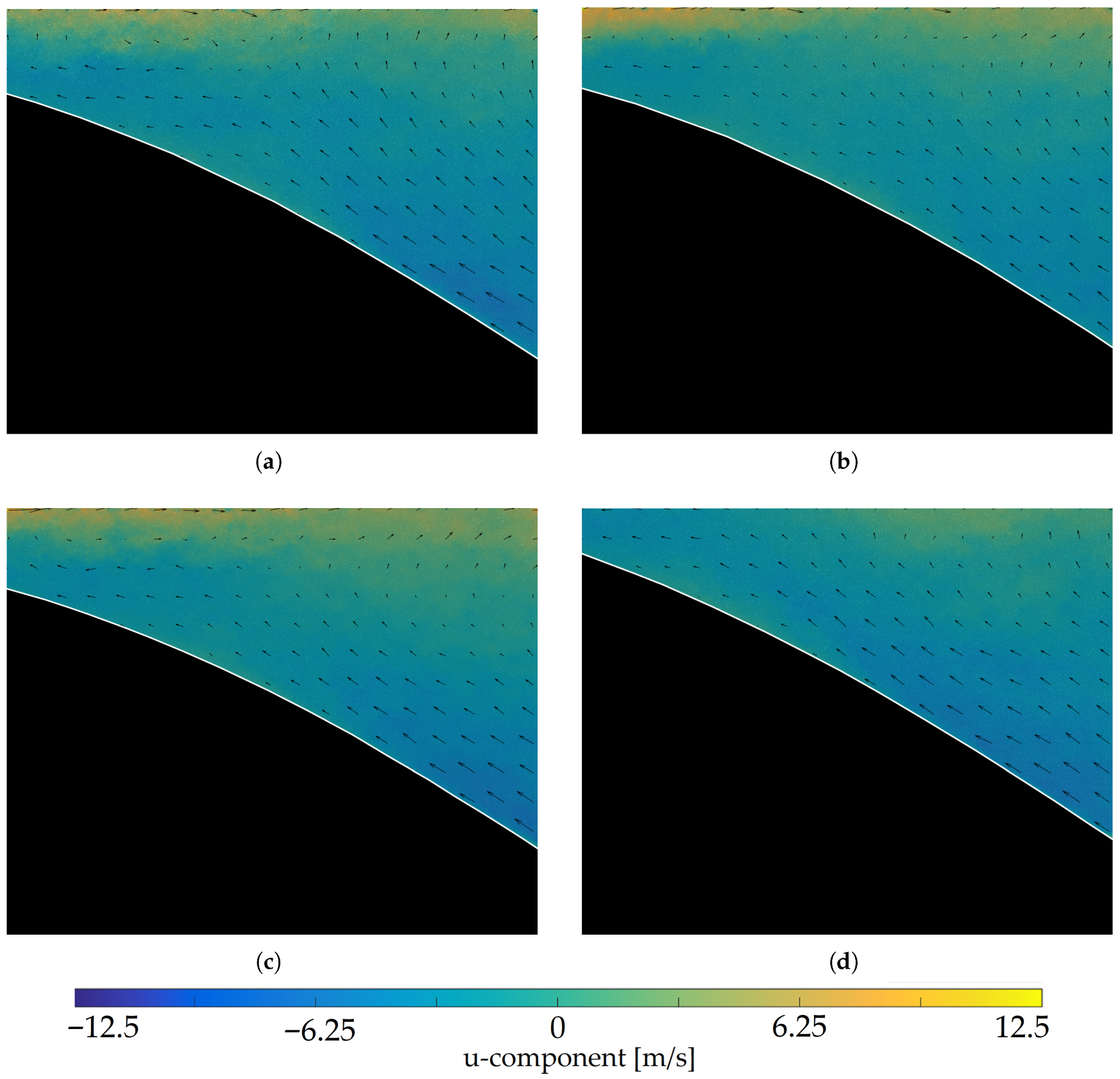
Figure 22, Figure 23 and Figure 24 present the velocity distributions along the surface of the DU35 blade segment at a free-stream velocity of u = 12.5 m/s under conditions of increasing velocity. The VG is located outside the frame, upstream in the cross-section corresponding to R e = 0.57 × 10 5 . In this case, the onset of separated flow was recorded.
For the airfoil without VGs at a free-stream velocity of u = 12.5 m/s and an angle of attack of α = 9 , separated flow is observed along the entire suction side of the profile. Under the described conditions, all investigated VG configurations provide effective stabilization of the flow on the suction surface.
At an angle of attack of α = 12 , effective flow stabilization was achieved only with VG3. VG1 and VG2 enabled flow stabilization only at a higher free-stream velocity (approximately 13 m/s).
At an angle of attack of α = 15 , none of the investigated VG configurations demonstrated effective flow stabilization under the specified conditions. Flow stabilization was achieved only at a higher free-stream velocity (approximately 13 m/s).
Under conditions of decreasing free-stream velocity, at u = 12.5 m/s, attached flow was maintained on the suction side for all the described experimental cases. This indicates that the application of VGs reduces the velocity range over which separated flow persists under conditions of aerodynamic hysteresis.
The results of the investigations, including the recorded velocities corresponding to flow attachment and separation for each examined profile, are presented in Table 4.
According to the obtained results, the trapezoidal VGs with radial curvature and an aerodynamically streamlined thickened element provided the most effective suppression of separated flows on the suction side of the blade. This can be explained by several factors. First, the VG geometry promotes the formation of a low-pressure region downstream of the vortex-generating elements. Higher-energy flow from the outer part of the boundary layer is entrained into this low-pressure region, intensifying the mixing between the low-energy boundary layer and the high-energy core flow. Second, the aerodynamically streamlined protrusions on the vortex-generating elements prevent reverse flow into the low-pressure region and promote the formation of stable vortex structures diverging from the VG elements. Third, the radial curvature of the vortex-generating element contributes to drag reduction while facilitating the generation of stable, spatially diverging vortex structures.

4. Discussion

The results of the present study show that the configuration of VGs has a decisive influence on the boundary layer structure and the effectiveness of suppressing flow separation on the suction side of the airfoil. The obtained results confirm the capability of VGs for boundary-layer control and shifting separation. Experimental data acquired using the PIV technique made it possible to identify the key features of vortex structure formation and evolution, as well as to establish the relationship between the geometric parameters of VGs and their effectiveness in boundary layer and separation control.
The analysis of velocity and vorticity fields revealed that the proposed trapezoidal VGs produce stable vortical structures. The leading edge of the VG initiates a streamwise vortex with a helical structure. The trapezoidal shape and radial curvature enhance the flow swirl intensity, while the aerodynamically streamlined thickening suppresses reverse flow and stabilizes the vortex core. As a result, efficient momentum transfer into the boundary layer is achieved, leading to effective suppression of flow separation.
In contrast to conventional configurations, the proposed geometry provides an optimal balance between vortex generation intensity and the stability of the resulting vortical structures. Quantitative analysis of the results supports the conclusions regarding the effectiveness of the proposed VG configuration. In particular, as shown in Table 3, the use of trapezoidal VGs results in the highest increase in mean velocity within the near-wall region compared to triangular and rectangular VG configurations. For the investigated airfoils, the velocity increase reaches 6.5 % in the freestream velocity range of 15–21 m/s, indicating more efficient momentum transfer into the boundary layer. At the same time, rectangular VGs exhibit a reduction in velocity in certain cases (down to 4.56 % at u = 27 m/s), which indicates excessive flow turbulence and increased aerodynamic losses. Triangular VGs demonstrate intermediate performance, providing a stable but less pronounced effect. Thus, the results presented in Table 3 demonstrate that the proposed geometry achieves a more favorable balance between mixing enhancement and additional aerodynamic losses.
The identified trends are further confirmed by the results obtained for thick airfoils (Table 4), where the analysis of flow separation and reattachment velocities shows that the application of VGs reduces the velocity range over which separated flow persists under aerodynamic hysteresis conditions. In particular, a decrease in the separation velocity and reattachment velocity are observed, indicating enhanced boundary layer stability under unsteady flow conditions. The most pronounced effect is demonstrated by the trapezoidal VGs, which maintain attached flow over a wider range of angles of attack and freestream velocities. This indicates their superior performance under dynamic stall conditions compared to conventional configurations. Thus, the overall results confirm that the proposed geometry not only enhances momentum transfer within the boundary layer but also improves flow stability under aerodynamic hysteresis, thereby extending the operational envelope of the airfoil.
An important finding is the demonstrated possibility of increasing the spacing between VGs by 15 % (up to 5.75 H ) without a loss of effectiveness. This indicates an expansion of the influence region of each element and increased stability of the generated vortical structures. From a practical standpoint, this makes it possible to reduce the number of VGs, decrease aerodynamic drag, and lower the structural mass, which is a critical factor for the implementation of VGs in real applications.
The obtained results allow establishing an indirect relationship between the observed flow structure features and the aerodynamic performance of the airfoil. In particular, the increase in near-wall velocity and the suppression of flow separation, identified from the PIV data, indicate an increase in boundary layer energy and a downstream shift of the separation point. This, in turn, leads to an increase in the effective circulation around the airfoil and, consequently, an increase in lift, as well as a reduction in losses associated with separated flow regions. The downstream shift of the separation point also indicates an expansion of the effective operating range of the airfoil and may contribute to a reduction in unsteady loads and improved flow stability in transitional regimes. Collectively, these effects contribute to enhanced aerodynamic performance and, consequently, to increased energy efficiency of wind energy systems.
The obtained results may also be extended to other types of turbines, in particular tidal turbines; however, they require adjustment of VG parameters to account for higher Reynolds numbers and hydrodynamic loading conditions.
Thus, the present study demonstrates that the proposed VG configuration provides effective boundary layer control through the formation of stable diverging vortical structures that promote momentum transfer into the near-wall region and suppress or delay flow separation. The established relationship between VG geometry and flow characteristics provides a basis for improving airfoil performance, including flow stabilization and expansion of the operational range.

5. Conclusions

The present study demonstrates that the configuration of vortex generators (VGs) has a decisive influence on the boundary layer structure and the effectiveness of flow separation control on the suction side of the airfoil.
The application of trapezoidal VGs provides the highest increase in mean velocity in the near-wall region compared to triangular and rectangular configurations. For the investigated airfoils, the velocity increase reaches 6.5 % in the freestream velocity range of 15–21 m/s, exceeding the values obtained for triangular (up to 5.88 % ) and rectangular (up to 5.14 % ) VGs. An additional increase of approximately 1 % indicates more efficient momentum transfer into the boundary layer.
At the same time, rectangular VGs exhibit a reduction in velocity in certain cases (down to 4.56 % at u = 27 m/s), indicating excessive drag and increased aerodynamic losses. Triangular VGs demonstrate intermediate performance, providing a stable but less pronounced effect.
The analysis of separation and reattachment velocities for thick airfoils shows that the application of VGs reduces the range of velocities associated with separated flow under aerodynamic hysteresis conditions. When trapezoidal VGs are applied, a reduction in separation velocity of up to 0.7 m/s is observed during flow deceleration in the angle-of-attack range of α = 9–15°. For triangular and rectangular VGs, the reduction reaches 0.5–0.6 m/s within the same range. Similarly, trapezoidal VGs reduce the reattachment velocity during flow acceleration by up to 0.7 m/s, whereas triangular and rectangular VGs show reductions of 0.5–0.6 m/s at an angle of attack of α = 9 and up to 0.2 m/s at higher angles. These results indicate the superior performance of trapezoidal VGs under dynamic stall conditions compared to conventional configurations.
The increase in near-wall velocity and suppression of flow separation, as observed from PIV measurements, indicate an increase in boundary layer energy and a downstream shift of the separation point. This leads to an increase in effective circulation around the airfoil and, consequently, an increase in lift, as well as a reduction in losses associated with separated flow regions.
It was demonstrated that the spacing between VGs can be increased by 15 % (from 5 H to 5.75 H ) without a loss of effectiveness. This indicates an expansion of the influence region of each element and improved stability of the generated vortical structures. From a practical perspective, this allows for the number of VGs on the blade to be reduced, decreasing drag, and lowering structural mass, which is an important factor for practical implementation.
The obtained results are applicable to wind turbine blades operating in the Reynolds number range of R e = 2 × 10 3 to R e = 1.06 × 10 6 . The findings may also be extended to other types of turbines, particularly tidal turbines; however, adjustment of VG parameters is required to account for higher Reynolds numbers and hydrodynamic loading conditions.
Further research will focus on numerical modeling and comprehensive investigations of the trapezoidal VG with radial curvature and an aerodynamically streamlined protrusion under realistic gas-dynamic conditions, as well as on validation and verification of the obtained results based on experimental data.

Author Contributions

Conceptualization, A.V.C. and O.V.S.; methodology, A.V.C.; software, A.V.C.; validation, A.V.C. and O.V.S.; formal analysis, A.V.C.; investigation, A.V.C. and O.V.S.; resources, A.V.C. and R.V.F.; data curation, O.V.S.; writing—original draft preparation, A.V.C. and O.V.S.; writing—review and editing, A.V.C. and R.V.F.; visualization, A.V.C. and O.V.S.; supervision, A.V.C.; project administration, A.V.C.; funding acquisition, A.V.C. All authors have read and agreed to the published version of the manuscript.

Funding

The study was supported by the Russian Science Foundation №25-79-00146, https://rscf.ru/project/25-79-00146/ (accessed on 13 February 2026).

Data Availability Statement

The original contributions presented in this study are included in the article. Further inquiries can be directed to the corresponding author.

Conflicts of Interest

The authors declare no conflicts of interest.

Abbreviations

The following abbreviations are used in this manuscript:
VGVortex generator
PIVParticle image velocimetry

References

  1. World Energy Transition Outlook 2023. Available online: https://safety4sea.com/wp-content/uploads/2023/03/World-energy-transitions-outlook-2023.pdf (accessed on 12 February 2026).
  2. Gao, Q.; Ertugrul, N.; Ding, B. Review and Evaluation of Offshore Wind Energy: Resources, Markets and Technologies. Int. Mar. Energy J. 2025, 8, 309–319. [Google Scholar] [CrossRef]
  3. Gogish, L.V.; Neiland, V.; Stepanov, G. Hydromechanics. Theory of Two-Dimensional Separated Flows; VINITI: Moscow, Russia, 1975; 132p. (In Russian) [Google Scholar]
  4. Chen, J.; Wang, Q. Wind Turbine Airfoils and Blades: Optimization Design Theory; De Gruyter: Berlin, Germany, 2017; Volume 3, 392p. [Google Scholar]
  5. Bangga, G.; Lutz, T.; Arnold, M. An Improved Second Order Dynamic Stall Model for Wind Turbine Airfoils. Wind Energy Sci. 2020, 5, 1037–1058. [Google Scholar] [CrossRef]
  6. Moon, H.; Jeong, J.; Park, S.; Kwangtae, H.; Jeong, J. Numerical and experimental validation of vortex generator effect on power performance improvement in MW-class wind turbine blade. Renew. Energy 2023, 212, 443–454. [Google Scholar] [CrossRef]
  7. Kurtulus, D.F. On the Unsteady Behavior of the Flow Around NACA 0012 Airfoil with Steady External Conditions at Re = 1000. Int. J. Micro Air Vehicles 2015, 7, 301–326. [Google Scholar] [CrossRef]
  8. Soetanto, M.F.; Sugianto, S.; Hartono, B.; Rizki, M. Numerical Study of Aerodynamic Characteristics of Airflow Around NACA 0012 and NACA 4412 Airfoils at Re = 170000. Int. J. Appl. Technol. Res. 2023, 4, 133–146. [Google Scholar] [CrossRef]
  9. Rayhan, A.M.; Hossain, M.S.; Mim, R.H.; Ali, M. Computational and Experimental Study on the Aerodynamic Performance of NACA 4412 Airfoil with Slot and Groove. Heliyon 2024, 10, e31595. [Google Scholar] [CrossRef]
  10. Hansen, O.L.M. Aerodynamics of Wind Turbines, 3rd ed.; Earthscan from Routledge: Abingdon, UK, 2015; 173p. [Google Scholar]
  11. Guvernyuk, S.V.; Chulyunin, A.Y. Metastable separated structures in turbulent flow around circular and oval dimples. Tech. Phys. Lett. 2019, 45, 43–46. (In Russian) [Google Scholar] [CrossRef]
  12. Parra, H.G.; Castiblanco, G.H.; Gaona, E.E. Experimental Comparative Analysis of Energy Production in HAWT with Bio-Inspired Active Oscillating Vortex Generators. Energies 2025, 18, 5025. [Google Scholar] [CrossRef]
  13. Shi, Z.; Gao, C.; Zhang, W. Data-Knowledge-Driven Dynamic Stall Modeling Guided by Stall Patterns and Semi-Empirical Model. Phys. Fluids 2025, 37, 045106. [Google Scholar] [CrossRef]
  14. Kaewbumrung, M.; Plengsa-Ard, C.; Pansang, S.; Palasai, W. Preventive maintenance of horizontal wind turbines via computational fluid dynamics-driven wall shear stress evaluation. Results Eng. 2024, 22, 102383. [Google Scholar] [CrossRef]
  15. Vorozhbit, E.E.; Petrov, A.; Sudakov, V. Experimental study of local jet blowing for flow control above the wing of a long-haul aircraft. Fluid Dyn. 2022, 6, 16–25. (In Russian) [Google Scholar]
  16. Akhter, M.Z.; Omar, F.K. Review of Flow-Control Devices for Wind-Turbine Performance Enhancement. Energies 2021, 14, 1268. [Google Scholar] [CrossRef]
  17. Kryukov, A.V.; Konovalov, I.S. Using the wavy surface effect to eliminate flow separation on an aircraft wing. In Proceedings of the XIII All-Russian Conference with International Participation: Actual Issues in Thermal Physics and Physical Hydrodynamics, Novosibirsk, Russia, 20–23 November 2014. (In Russian) [Google Scholar]
  18. Zhao, J.; Jiang, R.; Feng, J.; Liu, H.; Wang, T.; Shen, W.; Chen, M.; Wang, D.; Liu, Y. Researches on vortex generators applied to wind turbines: A review. Ocean Eng. 2022, 253, 111266. [Google Scholar] [CrossRef]
  19. Savelov, O.V.; Kovalnogov, V.N.; Chukalin, A.V.; Kornilova, M.I. Study of Currents in the Wakes of Vortex Generators on the Blades of Wind Power Turbines. Probl. Reg. Energ. 2025, 68, 143–151. (In Russian) [Google Scholar] [CrossRef]
  20. Jayanarasimhhan, K.; Balasubramanian, N.K. An overview of flow control in aerodynamic surfaces using vortex generators. Phys. Fluids 2025, 37, 031307. [Google Scholar] [CrossRef]
  21. Tavernier, D.D.; Ferreira, C.; Vire, A.; LeBlanc, B.; Bernardy, S. Controlling Dynamic Stall Using Vortex Generators on a Wind Turbine Airfoil. Renew. Energy 2021, 172, 1194–1211. [Google Scholar] [CrossRef]
  22. Gyatt, G.W. Development and Testing of Vortex Generators for Small Horizontal Axis Wind Turbines; NREL: Bozeman, MT, USA, 1986; 40p. [Google Scholar]
  23. Li, B.; Cao, H.; Deng, S. Vortex Generator Design and Application on the Flow Control of Top-Mounted Subsonic Intake at High Angle of Attack. J. Vibroeng. 2014, 2, 808–817. [Google Scholar]
  24. Vahl, H.M.; Pechlivanoglou, G.; Nayeri, C.N.; Paschereit, C.O. Vortex Generators for Wind Turbine Blades: A Combined Wind Tunnel and Wind Turbine Parametric Study. In Proceedings of the ASME Turbo Expo 2012: Turbine Technical Conference and Exposition, Copengagen, Denmark, 11–15 July 2012. [Google Scholar]
  25. Ozden, M.; Genc, M.S.; Koca, K. Passive flow control application using single and double vortex generator on S809 wind turbine airfoil. Energies 2023, 16, 5339. [Google Scholar] [CrossRef]
  26. Gerasimov, S.A. Energy Loss and Aerodynamic Quality of an Airscrew. Fundam. Res. 2008, 10, 8–11. (In Russian) [Google Scholar]
  27. Ye, Q.; Avallone, F.; Der Velden, W.V.; Casalino, D. Effect of Vortex Generators on NREL Wind Turbine: Aerodynamic Per-formance and Far-Field Noise. J. Phys. Conf. Ser. 2020, 1618, 052077. [Google Scholar] [CrossRef]
  28. Chen, Y.; Griffith, T. Blade Mass Imbalance Identification and Estimation for Three-Bladed Wind Turbine Rotor Based on Modal Analysis. Mech. Syst. Signal Process. 2023, 197, 110341. [Google Scholar] [CrossRef]
  29. Larsen, J.W.; Nielsen, S.R.K.; Krenk, S. Dynamic Stall Model for Wind Turbine Airfoils. J. Fluids Struct. 2007, 23, 959–982. [Google Scholar] [CrossRef]
  30. Morris, W., II. An Explanation for the Existence of Stall Hysteresis. Fluid Mech. 2025, 10, 1–10. [Google Scholar] [CrossRef]
  31. Hansen, A.C. Yaw Dynamics of Horizontal Axis Wind Turbines; NREL: Golden, CO, USA, 1992; 186p. [Google Scholar]
  32. Manolesos, M.; Chng, L.; Kaufmann, N.; Ouro, P.; Ntouras, D.; Papadakis, G. Using vortex generators for flow separation control on tidal turbine profiles and blades. Renew. Energy 2023, 35, 1025–1039. [Google Scholar] [CrossRef]
  33. Liu, Y.; Zhe, H.; Xue, Y.; Tan, J.; Yuan, P.; Zhang, Q. Effects of vortex generator on the hydrodynamic characteristics of hydrofoil and horizontal axis tidal turbine. Phys. Fluids 2023, 35, 035104. [Google Scholar] [CrossRef]
  34. Wang, P.; Wang, L.; Huang, B.; Wu, R.; Wang, Y. The effects of vortex generators on the characteristics of the tip hydrofoil and the horizontal axis tidal turbine blade. Renew. Energy 2024, 224, 120116. [Google Scholar] [CrossRef]
  35. Velte, C.M.; Okulov, V.L.; Naumov, I.V. Flow modes around a vortex generator. Tech. Phys. Lett. 2012, 38, 54–62. (In Russian) [Google Scholar] [CrossRef]
  36. Velte, C.M.; Braud, C.; Coudert, S.; Foucaut, J.-M. Vortex Generator Induced Flow in a High Re Boundary Layer. J. Phys. Conf. Ser. 2014, 555, 012102. [Google Scholar] [CrossRef]
  37. INNOVERT-IVD. Available online: https://innovert.ru/innovert-ivd/ (accessed on 17 February 2026). (In Russian)
  38. Technical Description of the Measuring Complex “POLIS”. Available online: https://polis-instruments.ru/public/POLISManual-v1.51.pdf (accessed on 17 March 2026). (In Russian)
  39. Raffel, M.; Willert, C.E.; Scarano, F.; Kähler, C.J.; Wereley, S.T.; Kompenhans, J. Particle Image Velocimetry. A Practical Guide, 3rd ed.; Springer: Cham, Switzerland, 2018; 690p. [Google Scholar]
  40. Actual Flow Software User Manual. Available online: http://polis-instruments.ru/public/ActualFlowSoftwareManual-v1.13.pdf (accessed on 9 February 2026). (In Russian)
  41. Soto-Valle, R.; Bartholomay, S.; Alber, J.; Manolesos, M.; Nayeri, C.N.; Paschereit, C.O. Determination of the angle of attack on a research wind turbine rotor blade using surface pressure measurements. Wind Energy Sci. 2020, 5, 1771–1792. [Google Scholar] [CrossRef]
  42. Operating Manual for the RGK PM-12 Digital Manometer. Available online: https://rgk-shop.ru/upload/iblock/08a/6357w1wlh1t7j13lhz6ptw15cz8mcr1m.pdf (accessed on 9 February 2026). (In Russian)
  43. A3D Printer TotalZ AnyForm 1000-LPRO. Available online: https://totalz.ru/produktsiya/3d-printer-anyform-1000-lpro/ (accessed on 9 February 2026). (In Russian)
  44. Jonkman, J.; Butterfield, S.; Musial, W.; Scott, G. Definition of a 5-MW Reference Wind Turbine for Offshore System Development; NREL: Golden, CO, USA, 1992; 186p. [Google Scholar]
Figure 1. Structure of separated flows on the suction side of the blade.
Energies 19 01637 g001
Figure 2. Types of surface-mounted VGs.
Energies 19 01637 g002
Figure 3. Vortex structures on the vortex-generating element.
Energies 19 01637 g003
Figure 4. Subsonic aerodynamic facility for conducting PIV research.
Energies 19 01637 g004
Figure 5. (a) The experimental procedure; (b) Methodology of the investigations.
Energies 19 01637 g005
Figure 6. The studied cross-sections on the suction side of the blade fragment.
Energies 19 01637 g006
Figure 7. VG configurations for the experimental study: (a) Triangle VG (VG1); (b) Rectangle VG (VG2); (c) Trapezoidal VG featuring radial curvature and an aerodynamically streamlined thickening (VG3); (d) Airfoil with VGs.
Energies 19 01637 g007
Figure 8. Airfoils for the experimental study: (a) DU35 (biconvex asymmetrical); (b) IEA-AF-11 (biconvex asymmetrical); (c) IEA-AF-20 (biconvex asymmetrical); (d) DU21 (biconvex asymmetrical); (e) GOE386 (plano-convex); (f) Joukowski-0021 (biconvex symmetrical); (g) A18 (convex-concave).
Energies 19 01637 g008
Figure 9. Turbulent wake structure downstream of the VGs (a), velocity distribution field (b), and vorticity distribution field (c) in the VG wake at a free-stream velocity of u = 15 m/s.
Energies 19 01637 g009aEnergies 19 01637 g009b
Figure 10. Turbulent wake structure downstream of the VGs (a), velocity distribution field (b), and vorticity distribution field (c) in the VG wake at a free-stream velocity of u = 21 m/s.
Energies 19 01637 g010
Figure 11. Turbulent wake structure downstream of the VGs (a), velocity distribution field (b), and vorticity distribution field (c) in the VG wake at a free-stream velocity of u = 27 m/s.
Energies 19 01637 g011
Figure 12. Velocity distribution fields on the suction side of the blade at an angle of attack of 9 and a free-stream velocity of u = 15 m/s: (a) Airfoil without VGs; (b) Triangular VG with a height of H = 1 % c ; (c) Triangular VG with a height of H = 1.5 % c .
Energies 19 01637 g012
Figure 13. Profiles of the mean velocity across the boundary-layer height for the DU21 airfoil at a free-stream velocity of u = 15 m/s.
Energies 19 01637 g013
Figure 14. Velocity profiles along the suction side of the blade segment with the DU21 airfoil for different mutual arrangements of VGs at free-stream velocities of (a) u = 15 m/s; (b) u = 21 m/s; (c) u = 27 m/s.
Energies 19 01637 g014
Figure 15. Velocity distribution fields on the suction side of the blade with the DU21 airfoil at an angle of attack of α = 9 and a free-stream velocity of u = 15 m/s: (a) Airfoil without VG; (b) VG1; (c) VG2; (d) VG3.
Energies 19 01637 g015aEnergies 19 01637 g015b
Figure 16. Velocity distribution fields on the suction side of the blade with the DU21 airfoil at an angle of attack of α = 9 and a free-stream velocity of u = 21 m/s: (a) Airfoil without VG; (b) VG1; (c) VG2; (d) VG3.
Energies 19 01637 g016
Figure 17. Velocity distribution fields on the suction side of the blade with the DU21 airfoil at an angle of attack of α = 9 and a free-stream velocity of u = 27 m/s: (a) Airfoil without VG; (b) VG1; (c) VG2; (d) VG3.
Energies 19 01637 g017
Figure 18. Velocity profiles along the suction side of the blade segment with the DU21 airfoil for VGs of different shapes at free-stream velocities of (a) u = 15 m/s; (b) u = 21 m/s; (c) u = 27 m/s.
Energies 19 01637 g018
Figure 19. Velocity distribution fields on the suction side of the blade at an angle of attack of α = 9 and a free-stream velocity of u = 10 m/s: (a) Airfoil without VG; (b) VG1; (c) VG2; (d) VG3.
Energies 19 01637 g019
Figure 20. Velocity distribution fields on the suction side of the blade at an angle of attack of α = 12 and a free-stream velocity of u = 10 m/s: (a) Airfoil without VG; (b) VG1; (c) VG2; (d) VG3.
Energies 19 01637 g020aEnergies 19 01637 g020b
Figure 21. Velocity distribution fields on the suction side of the blade at an angle of attack of α = 15 and a free-stream velocity of u = 10 m/s: (a) Airfoil without VG; (b) VG1; (c) VG2; (d) VG3.
Energies 19 01637 g021
Figure 22. Velocity distribution fields on the suction side of the blade at an angle of attack of α = 9 and a free-stream velocity of u = 12.5 m/s: (a) Airfoil without VG; (b) VG1; (c) VG2; (d) VG3.
Energies 19 01637 g022
Figure 23. Velocity distribution fields on the suction side of the blade at an angle of attack of α = 12 and a free-stream velocity of u = 12.5 m/s: (a) Airfoil without VG; (b) VG1; (c) VG2; (d) VG3.
Energies 19 01637 g023
Figure 24. Velocity distribution fields on the suction side of the blade at an angle of attack of α = 15 and a free-stream velocity of u = 12.5 m/s: (a) Airfoil without VG; (b) VG1; (c) VG2; (d) VG3.
Energies 19 01637 g024
Table 1. Geometrical parameters of the studied VGs.
VG TypeL, mm δ , mmH, mm β , °R, mmd, mmh, mm
VG11010320---
VG21010320---
VG31083-120.91
Table 2. Geometrical parameters of the studied airfoils.
Airgoilb, mm c max , mm c ¯ max , % x c , %
DU3530012240.730.3
IEA-AF-11300115.138.429.8
IEA-AF-2030090.530.227.8
DU2130062.720.934.9
GOE38630060.820.324.7
Joukowski-0021300632126.6
A18300227.328.7
b—chord length, c max —maximum thickness, c ¯ max —relative thickness, x c —location of maximum thickness.
Table 3. The results of the comparative analysis of the velocity distributions along the suction side of the airfoils of low relative thickness.
u = 15 m/s u = 21 m/s u = 27 m/s
Type of AirfoilType of VG u ¯ , m/s Δ u , % u ¯ , m/s Δ u , % u ¯ , m/s Δ u , %
(d)Without VG16.5-22.16-26.74-
Triangle VG17.45.4123.174.5627.372.36
Rectangle VG17.093.5723.35.1425.52−4.56
Trapezoidal VG17.526.1823.596.4527.874.19
(e)Without VG16.32-22.01-26.15-
Triangle VG17.285.8822.954.2727.24.02
Rectangle VG17.074.622.73.1326.983.17
Trapezoidal VG17.356.3123.034.6327.515.2
(f)Without VG16.77-22.25-26.79-
Triangle VG17.695.4923.164.0927.412.31
Rectangle VG17.283.0423.033.5126.870.3
Trapezoidal VG17.846.3823.696.4727.52.65
(g)Without VG16.28-22.02-26.61-
Triangle VG17.15.0423.14.927.051.65
Rectangle VG16.974.2422.914.0426.720.41
Trapezoidal VG17.336.4523.145.0927.111.88
u ¯ —average speed along the suction side of the blade; Δ u —suggestion of average speed along the suction side of the blade relative to the average speed without VG.
Table 4. The results of the comparative analysis of the velocity distributions along the suction side of the airfoils of large relative thickness.
α = 9° α = 12° α = 15°
Type of AirfoilType of VG u a , m/s u s , m/s u a , m/s u s , m/s u a , m/s u s , m/s
(a)Without VG1310.51310.613.210.6
Triangle VG12.51013101310
Rectangle VG12.51013.11013.110.5
Trapezoidal VG12.49.912.59.912.910
(b)Without VG13.110.51310.513.210.5
Triangle VG12.59.912.9101310
Rectangle VG12.51012.910.41310.4
Trapezoidal VG12.49.912.59.912.910
(c)Without VG12.910.41310.513.110.6
Triangle VG12.41012.81012.910
Rectangle VG12.510.112.910.113.110.1
Trapezoidal VG12.49.912.59.912.59.9
u a —the speed of flow attachment; u s —the speed of flow separation.
Disclaimer/Publisher’s Note: The statements, opinions and data contained in all publications are solely those of the individual author(s) and contributor(s) and not of MDPI and/or the editor(s). MDPI and/or the editor(s) disclaim responsibility for any injury to people or property resulting from any ideas, methods, instructions or products referred to in the content.