Evaluation of Anisotropic Turbulence Models for Flash-Boiling Ammonia Sprays for Clean Fuel and Conceptual Electric Vehicle Cooling Systems



Abstract
1. Introduction
2. Mathematical Formulation of the Euler-Lagrange Framework
3. Mathematical Formulation of Turbulence Modeling
3.1. Rapid Distortion RNG Model
3.2. Model
3.3. LPT Approach for Liquid Phase
3.4. Evaporation and Boiling Processes
3.5. Liquid Flash Boiling Models
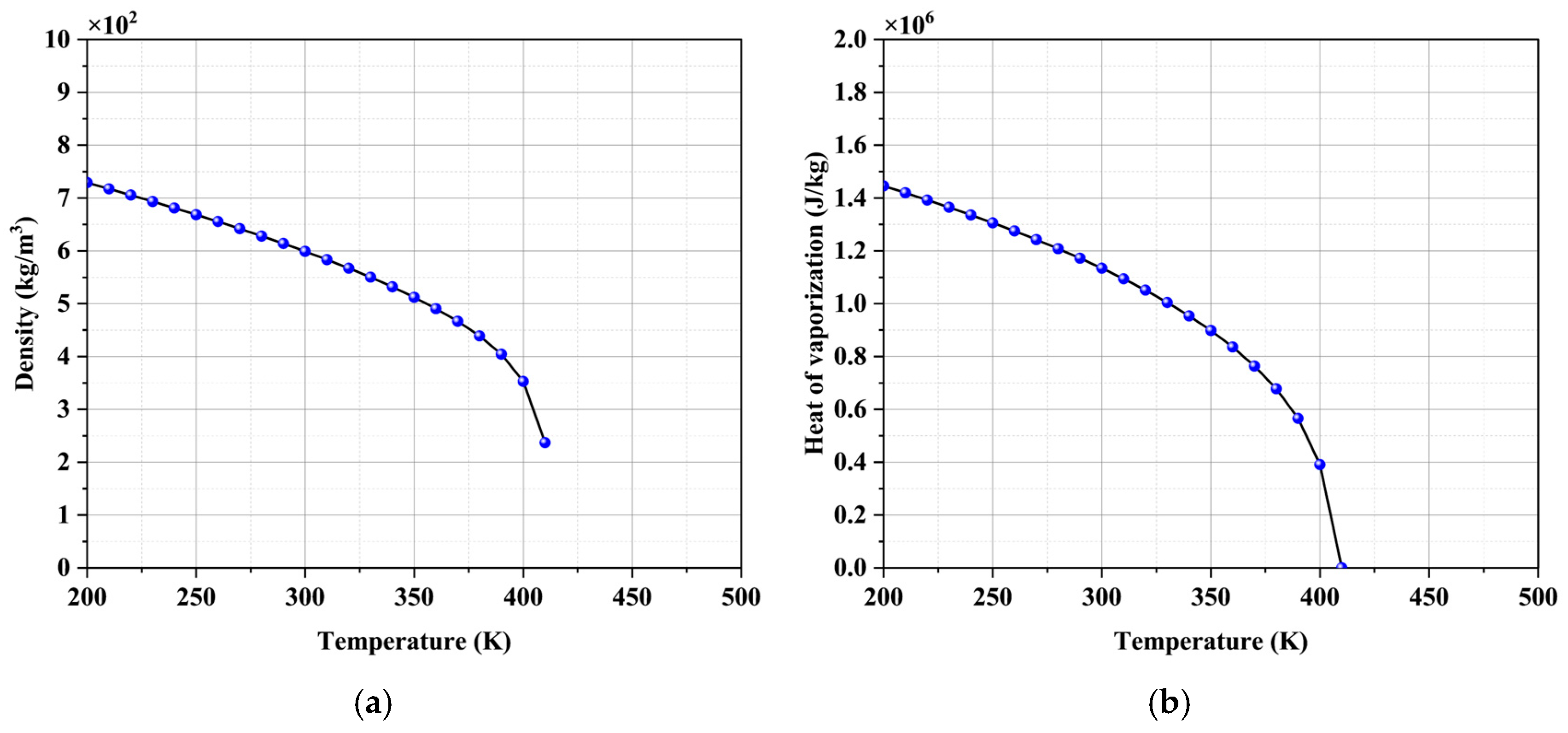
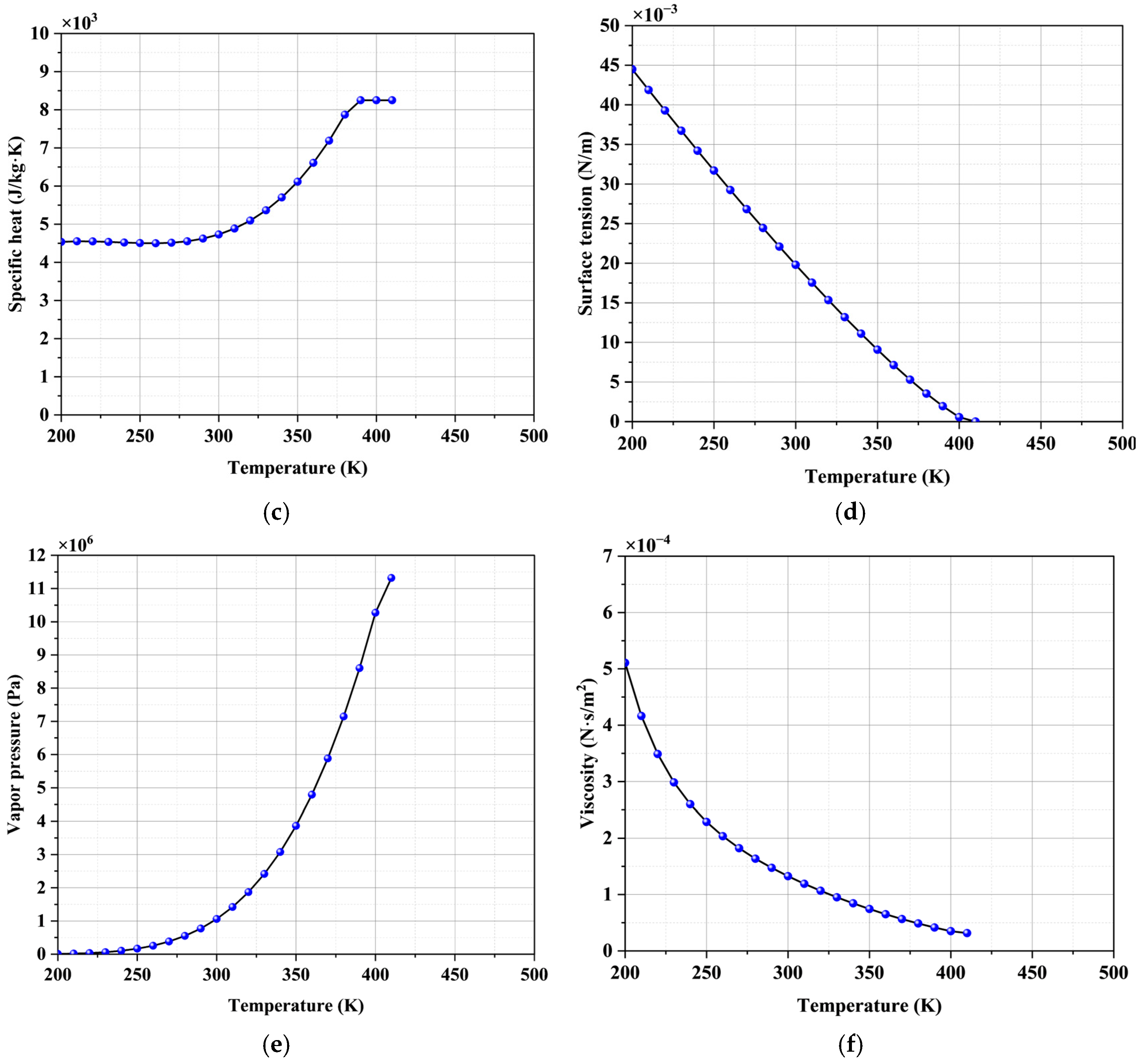
4. Material Properties and Methods
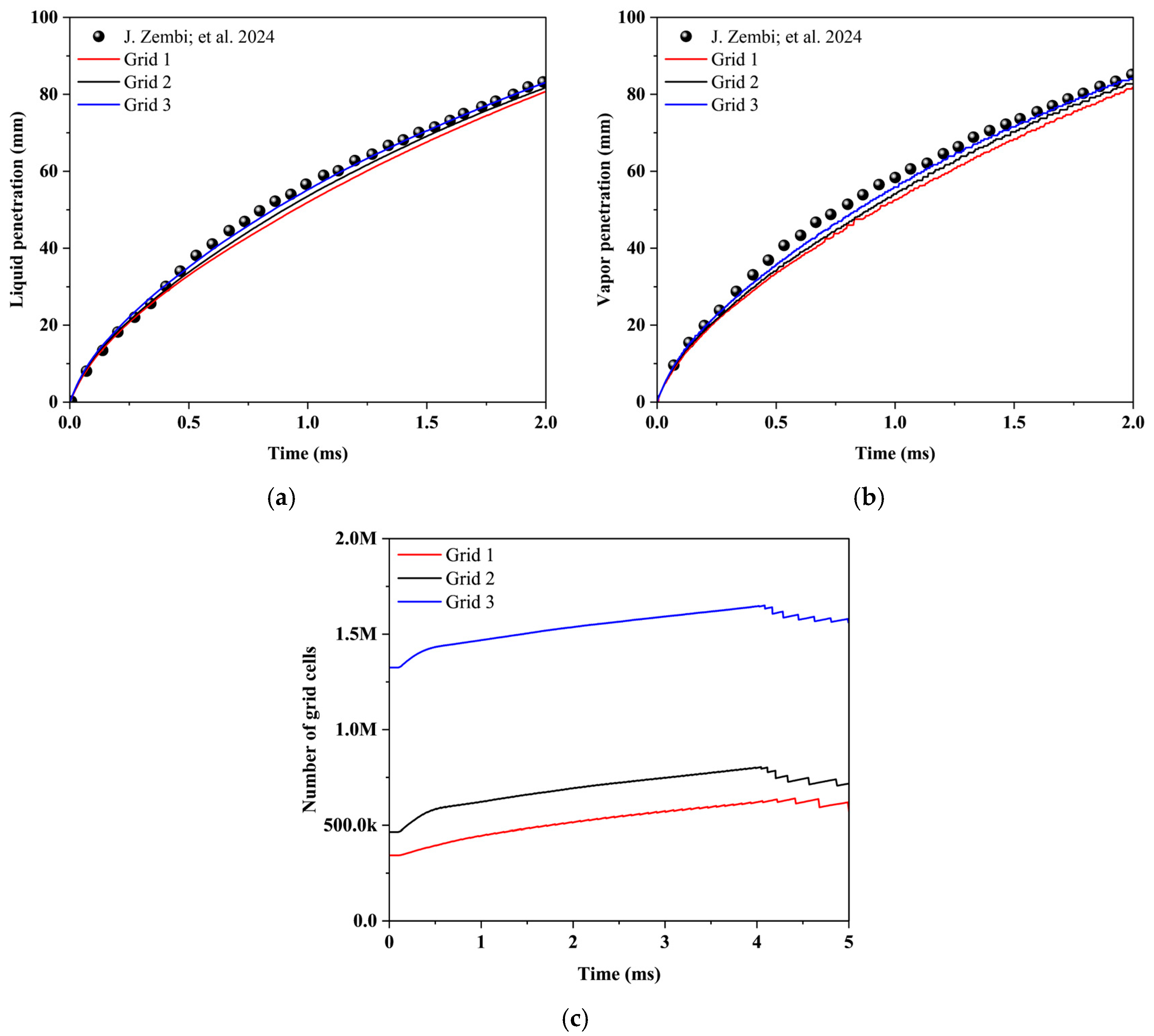
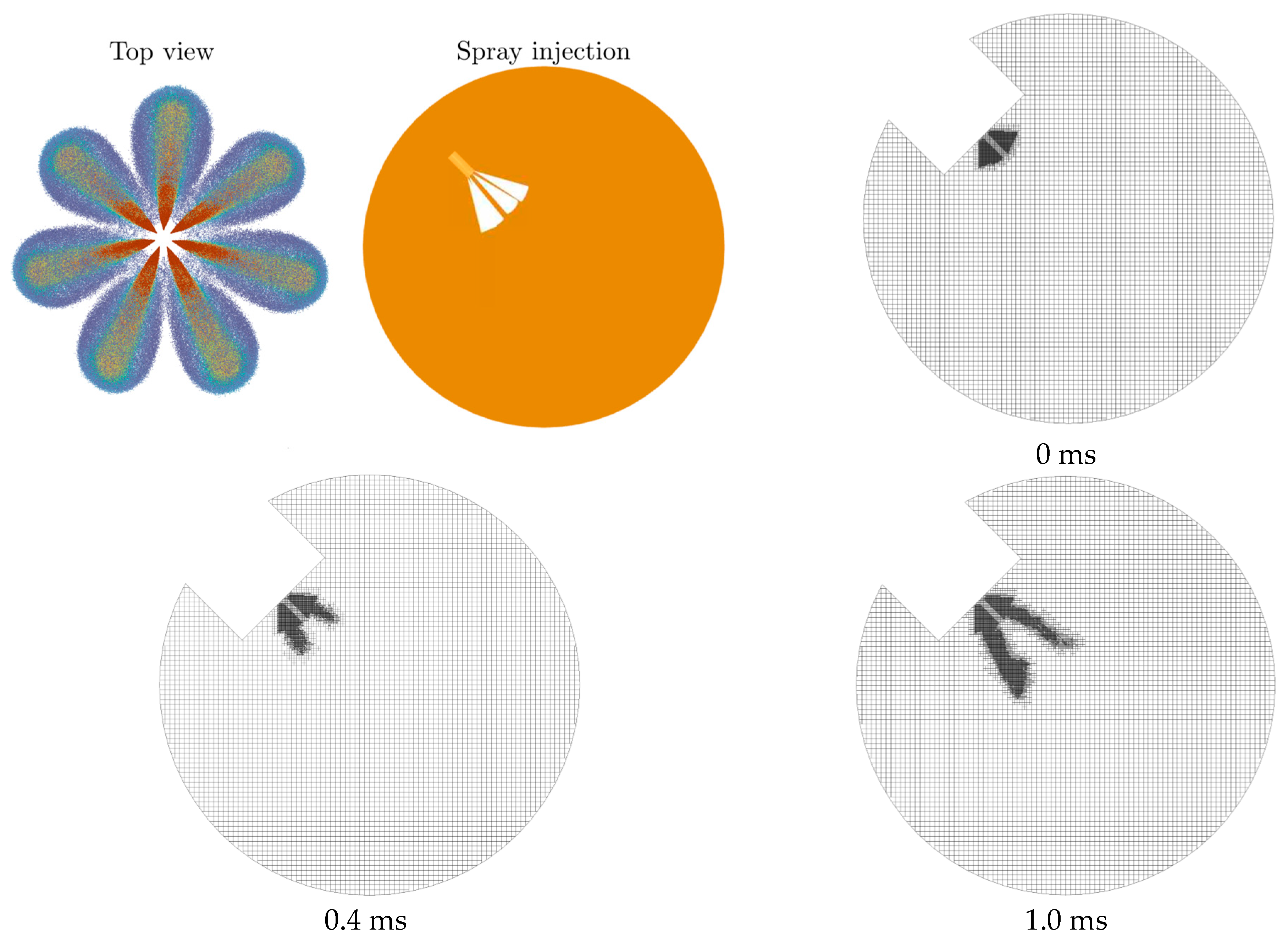
5. Grid Independence Analysis
6. Numerical Framework and Boundary Conditions
7. Results and Discussion
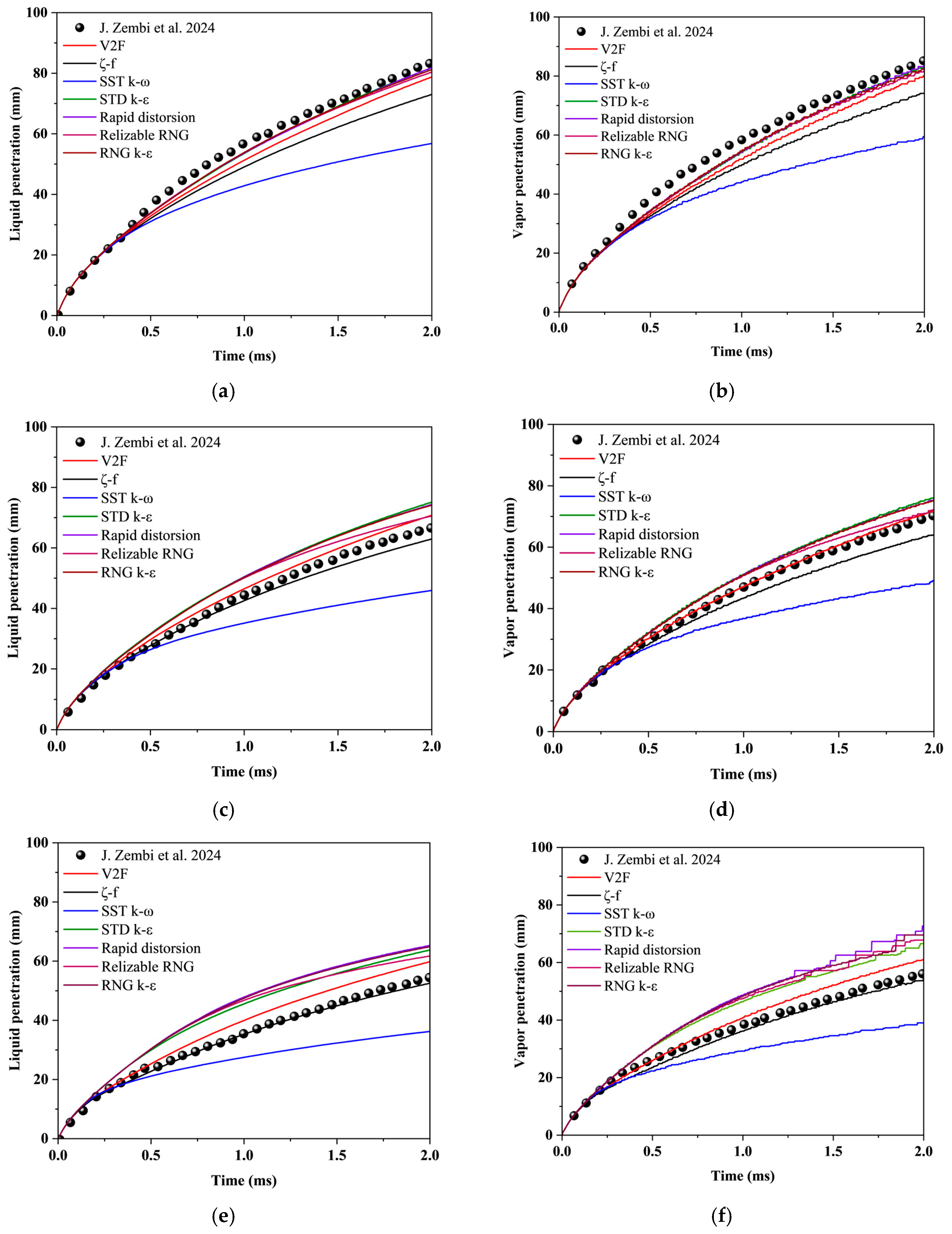
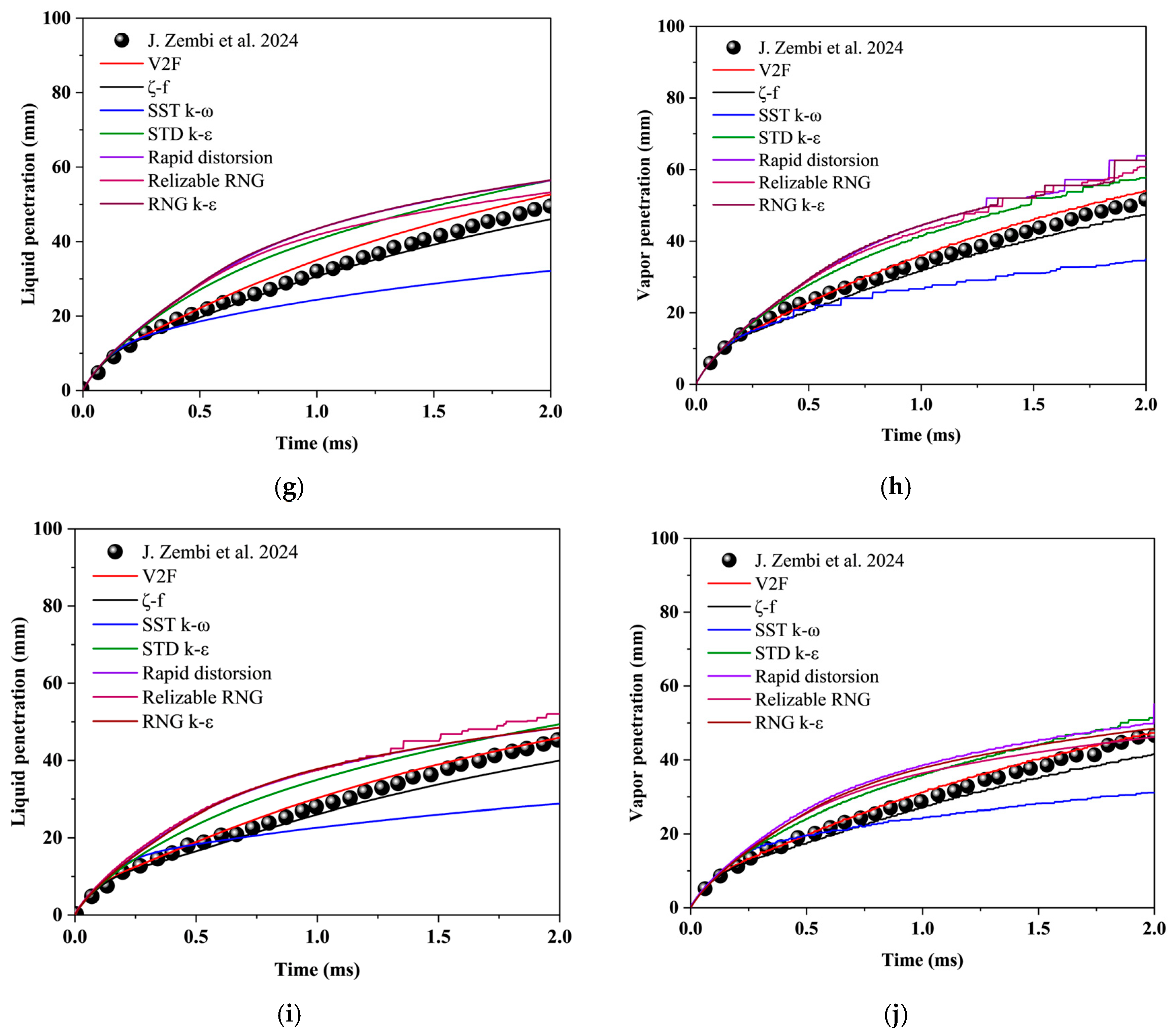
7.1. NH3 Spray Penetration Validation
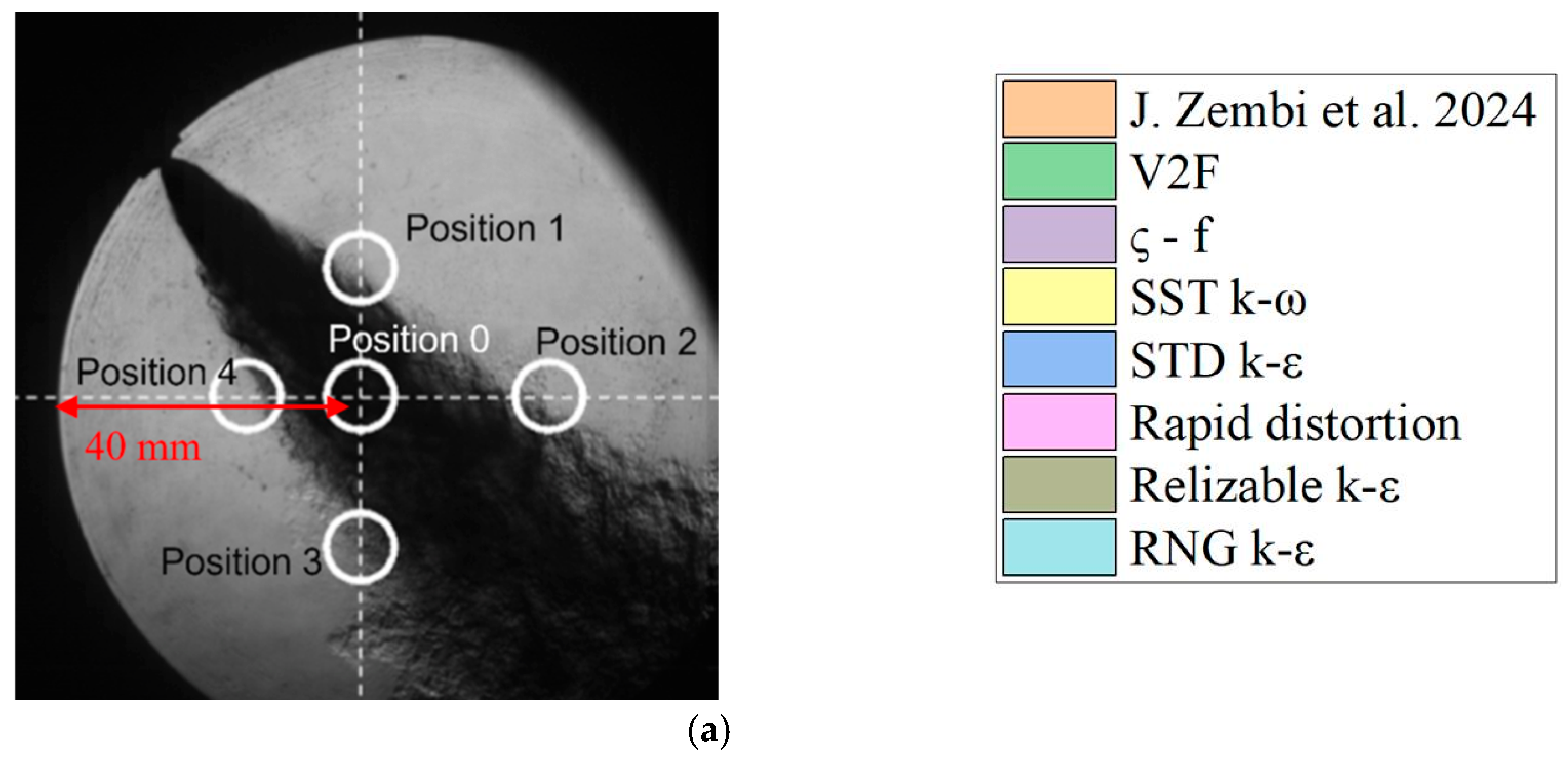
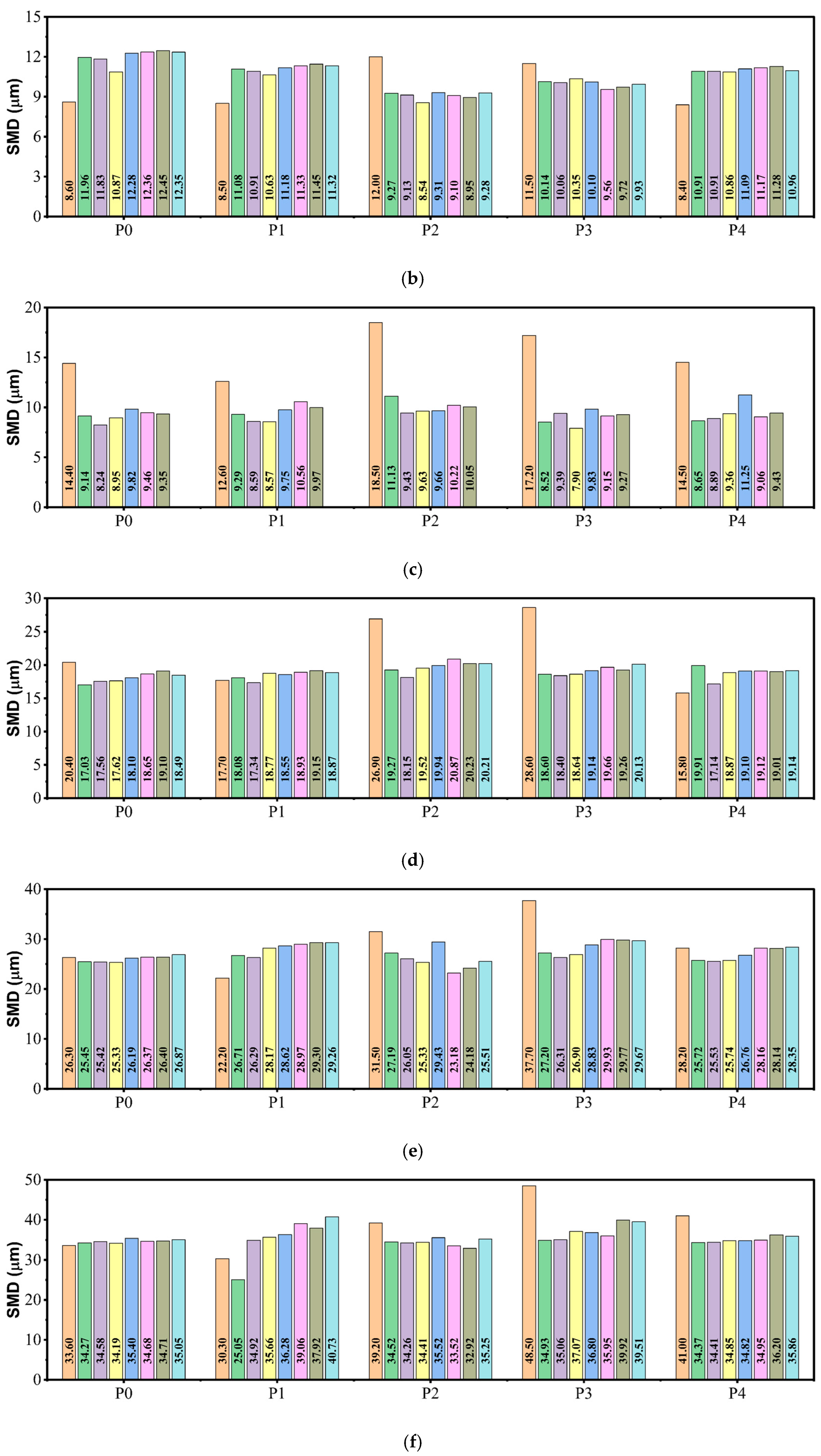
7.2. SMD Validation
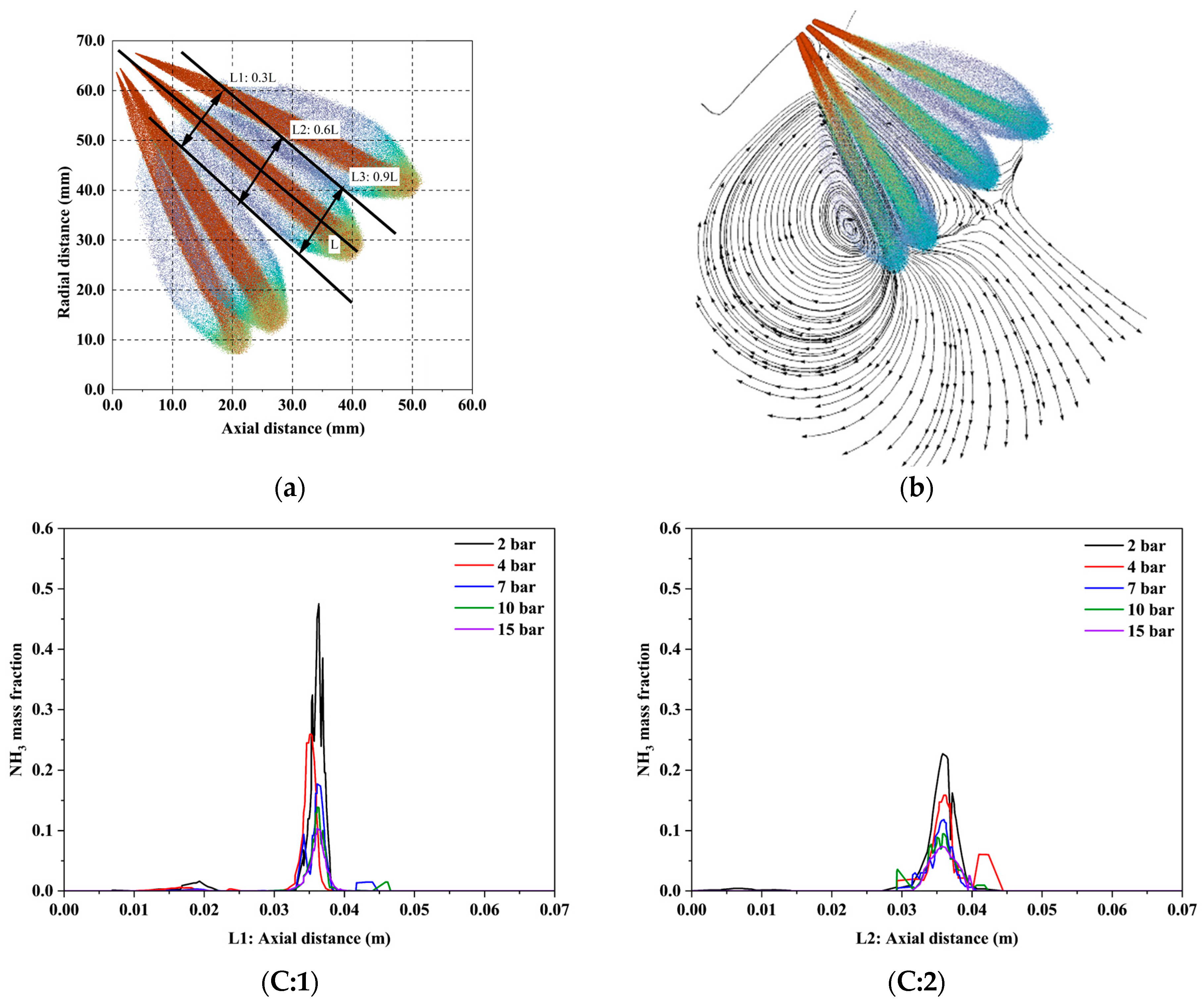
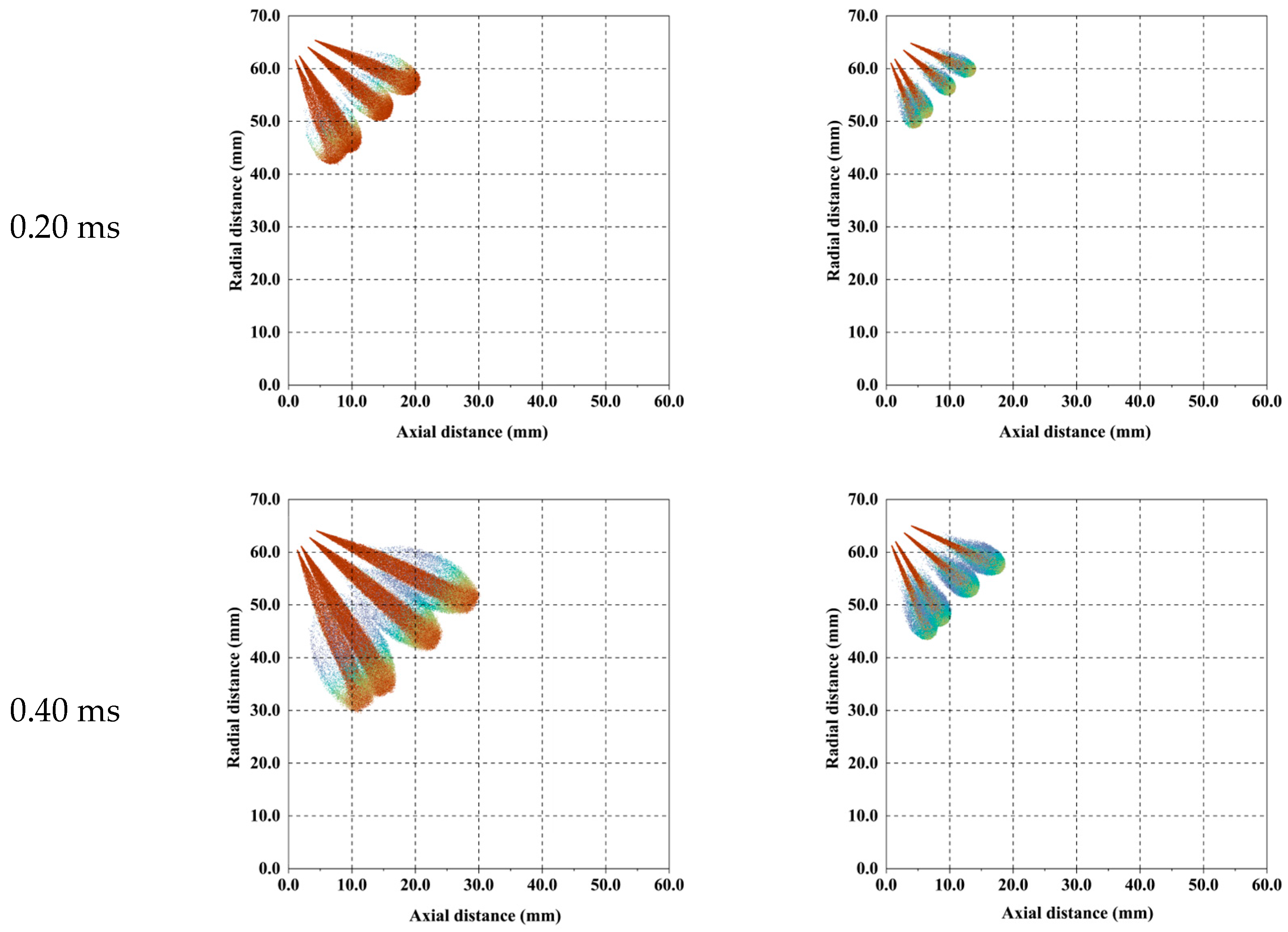
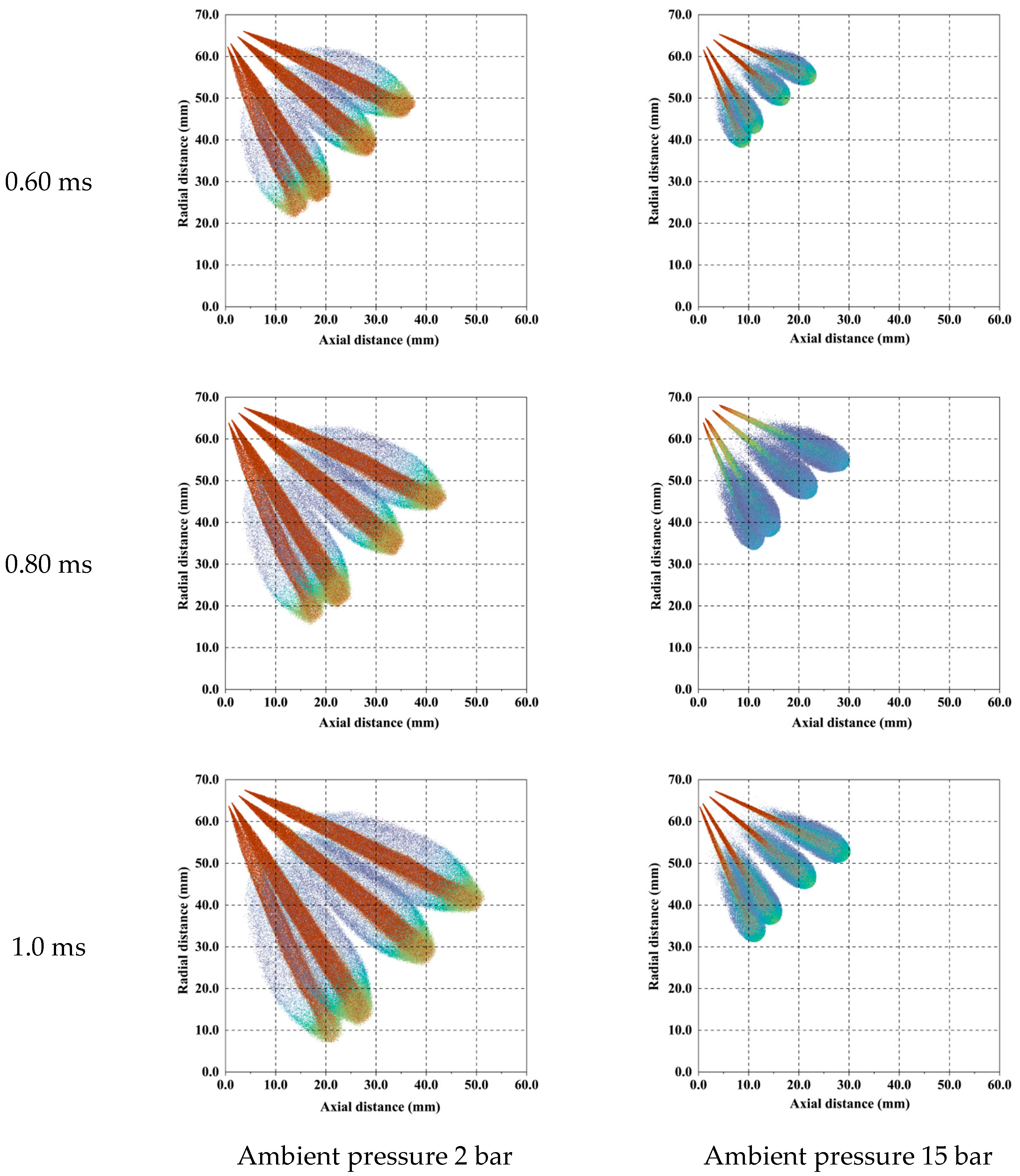
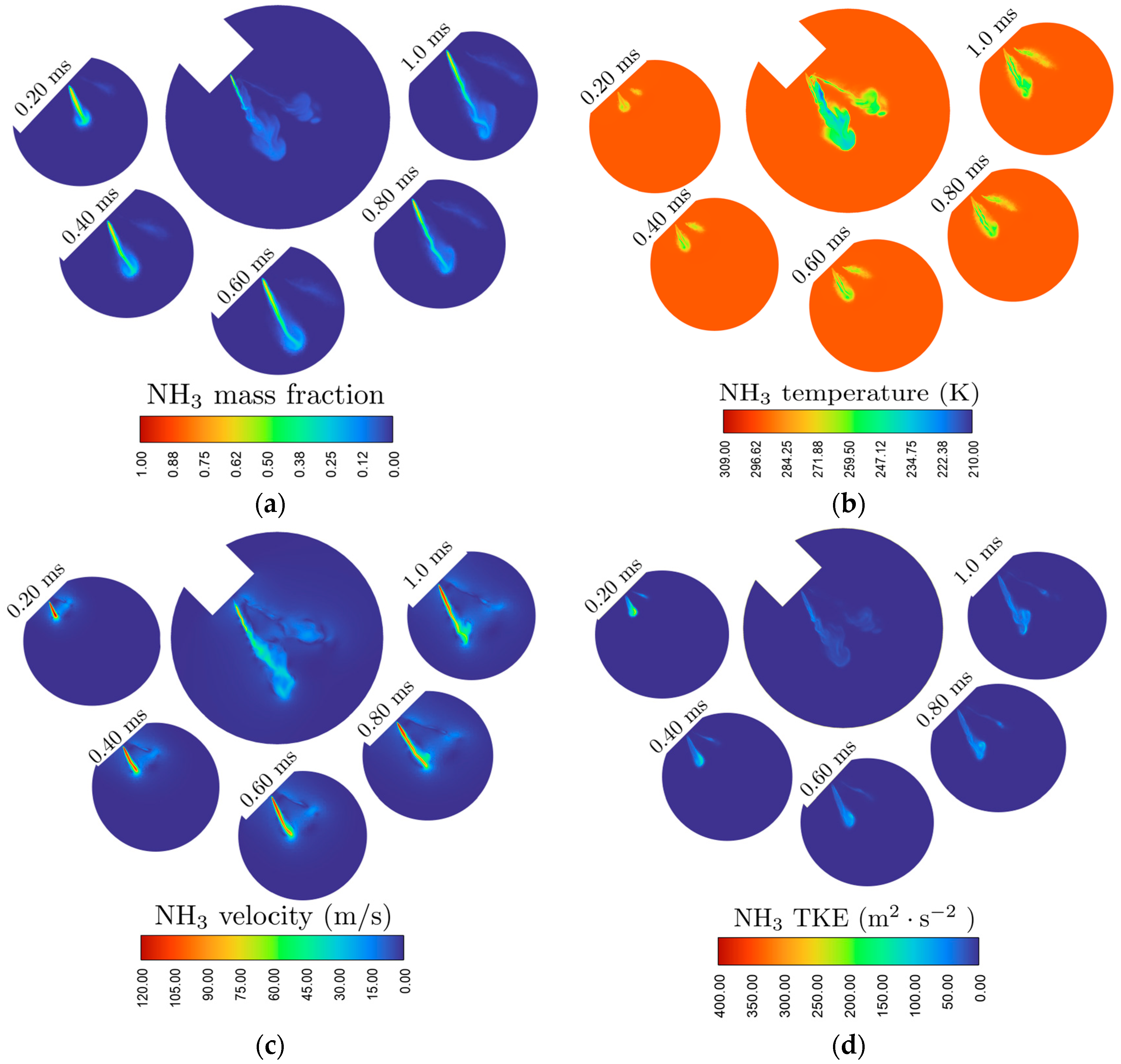
7.3. Spray Characteristics Using V2F Model
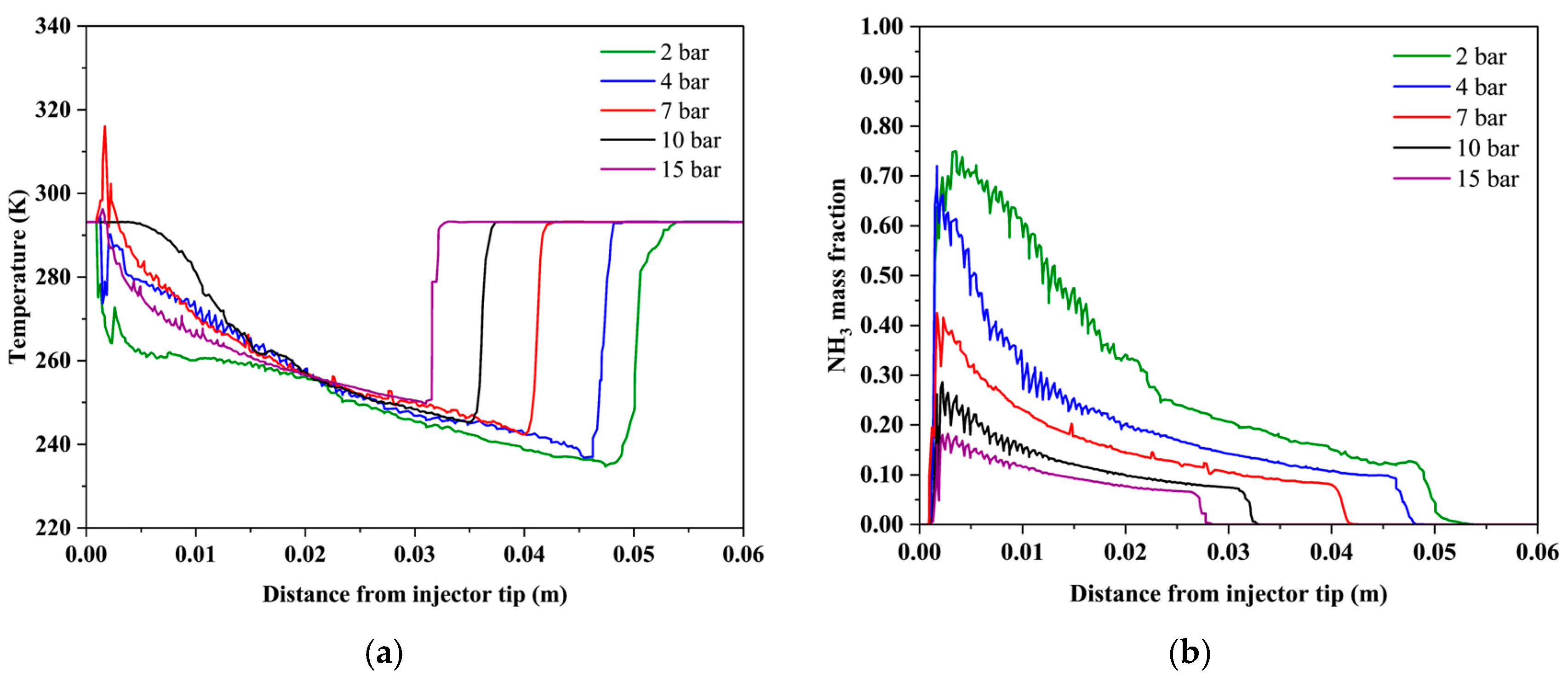
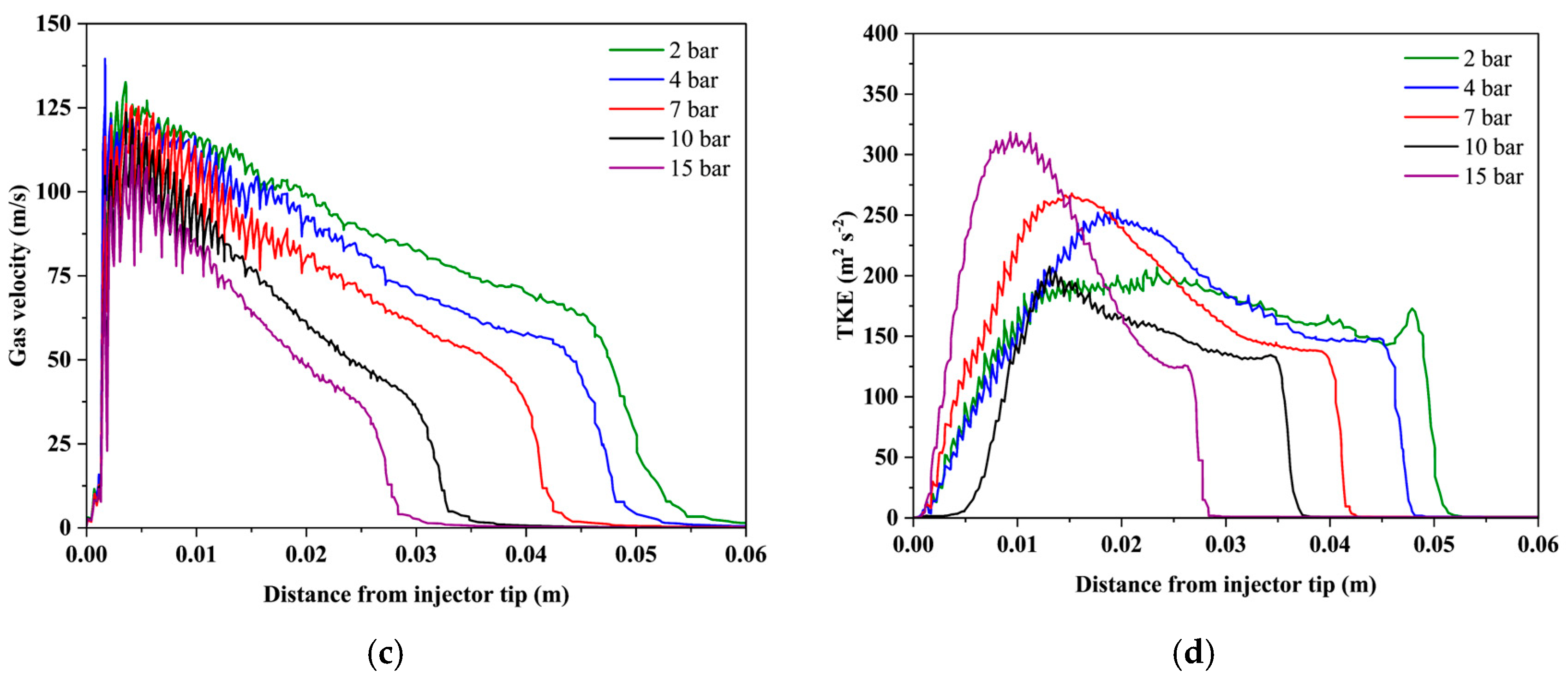
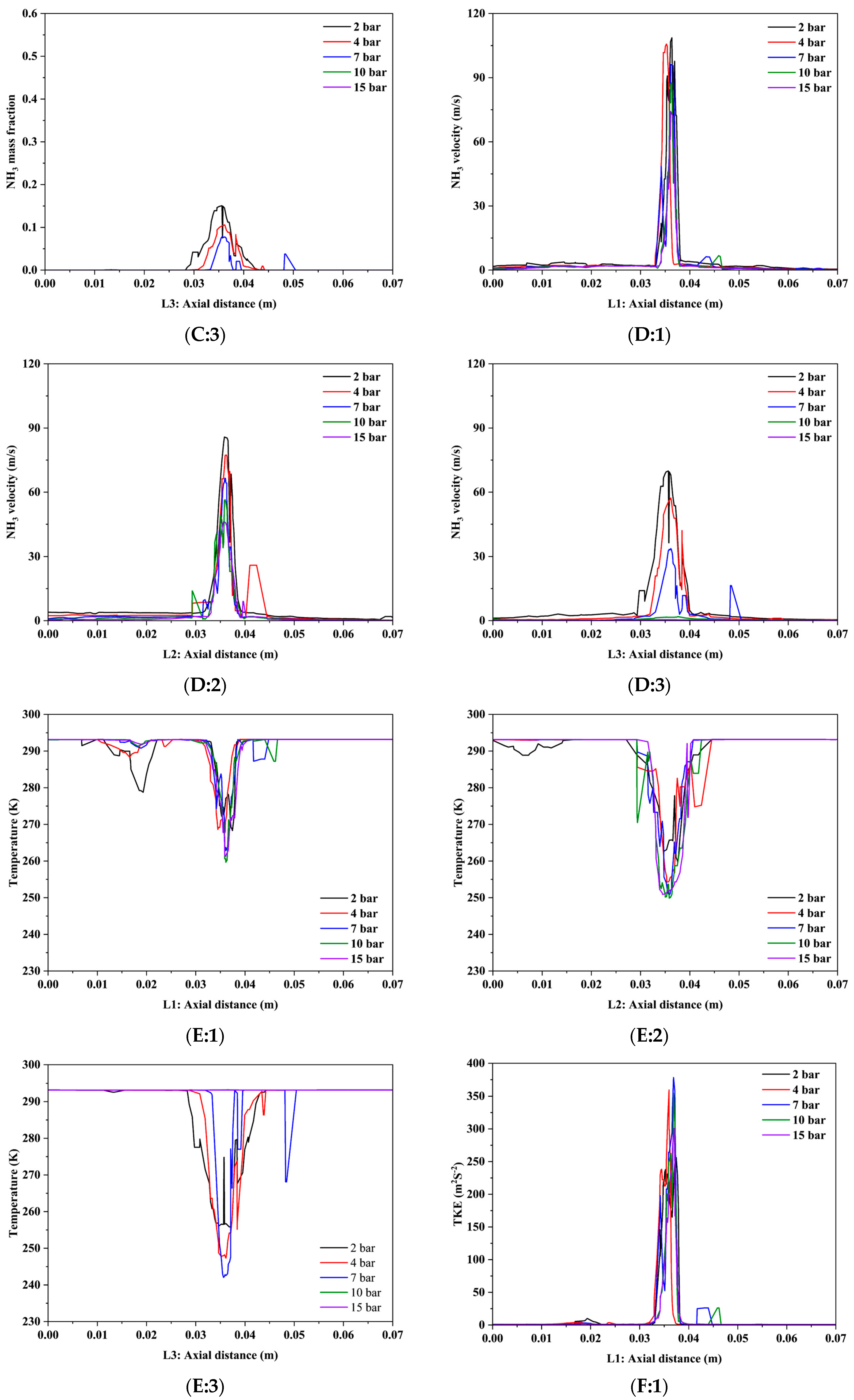
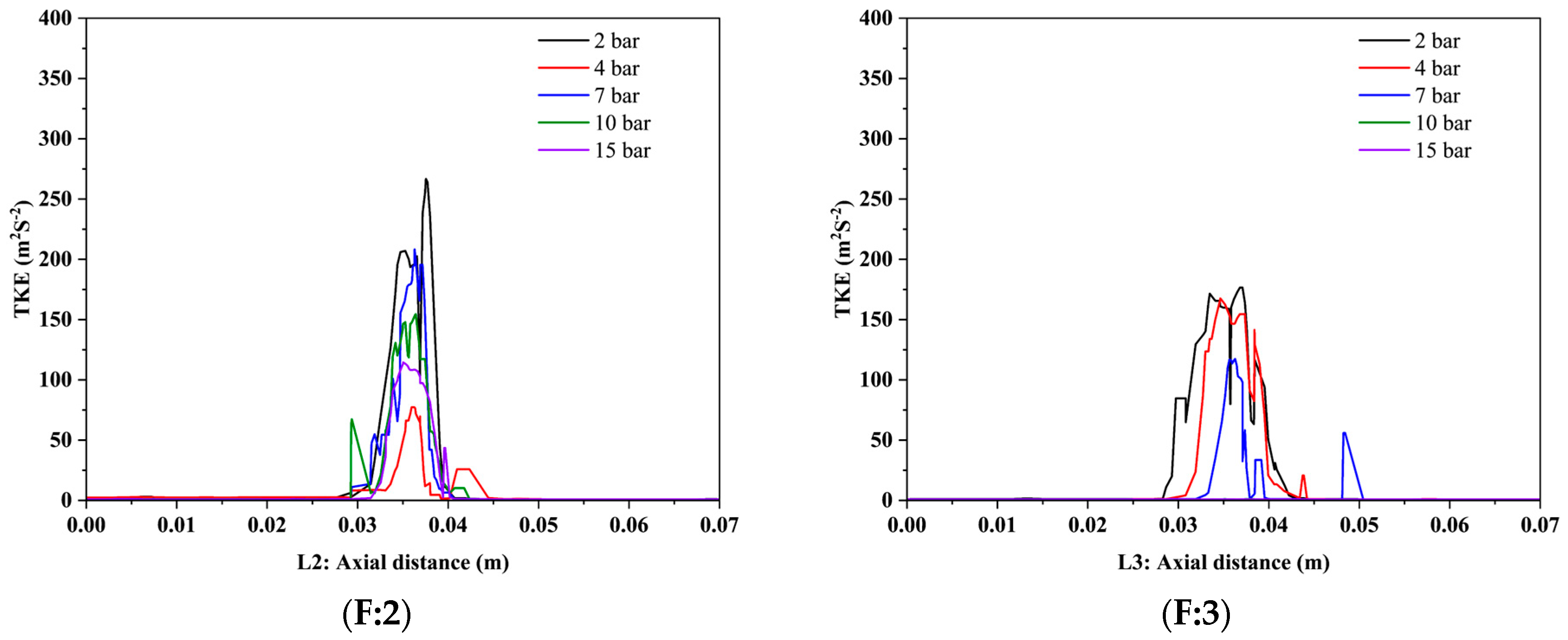
7.4. Axial Distribution of Key Flow Properties in Ammonia Sprays Using V2F Turbulence Model
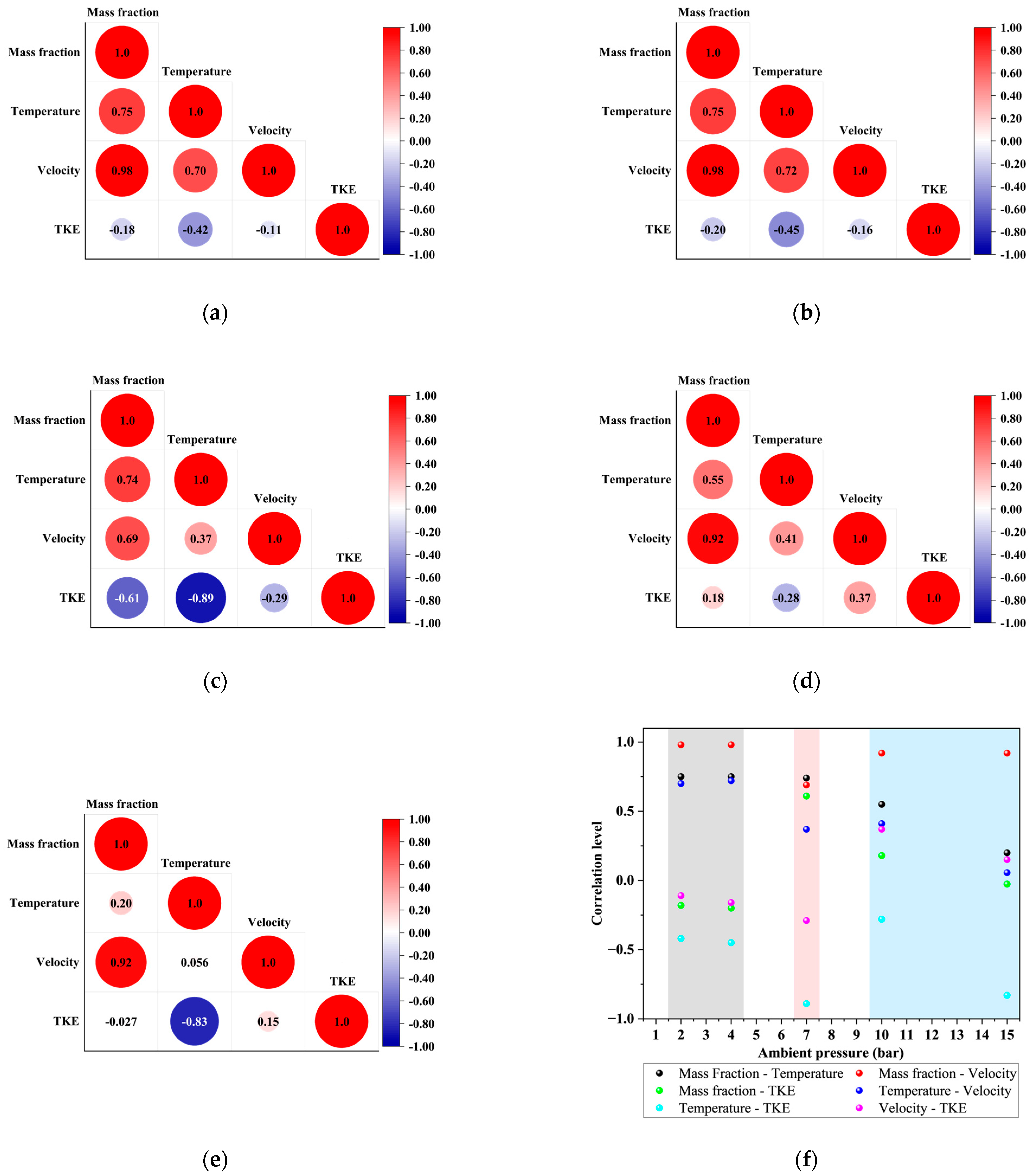
7.5. Thermal–Turbulence Interaction in Ammonia Sprays
7.6. Limitations of V2F Model for Flash-Boiling Phenomena
- Refining the V2F model to include a dedicated source term for TKE production driven by the latent heat of vaporization. This would directly link the phase change rate to the generation of turbulence, thereby improving the prediction of spray morphology;
- Utilizing more advanced models, such as an LES or direct numerical simulation approach, which could resolve the fine-scale turbulent eddies responsible for droplet breakup. However, these methods come with considerably higher computational costs.
7.7. Limitations to Addressing SMD Deviation
- SMD is a statistical measure of droplet size distribution. Predicting it accurately requires capturing the fine-scale turbulent eddies and interfacial instabilities that govern the breakup of the liquid jet into individual droplets. The V2F model, like other RANS models, solves for the time-averaged turbulent quantities. Therefore, it cannot resolve these small-scale, transient phenomena.
- Often, the droplet breakup and atomization models are semi-empirical. Typically, CFD spray models rely on sub-models (Kelvin–Helmholtz, Rayleigh–Taylor, or WAVE models) to predict droplet sizes. These models contain constants that are tuned to match experimental data for specific fluids and conditions. Even advanced turbulence models, such as V2F, cannot fully compensate for the inherent simplifications of these breakup models.
8. Conclusions
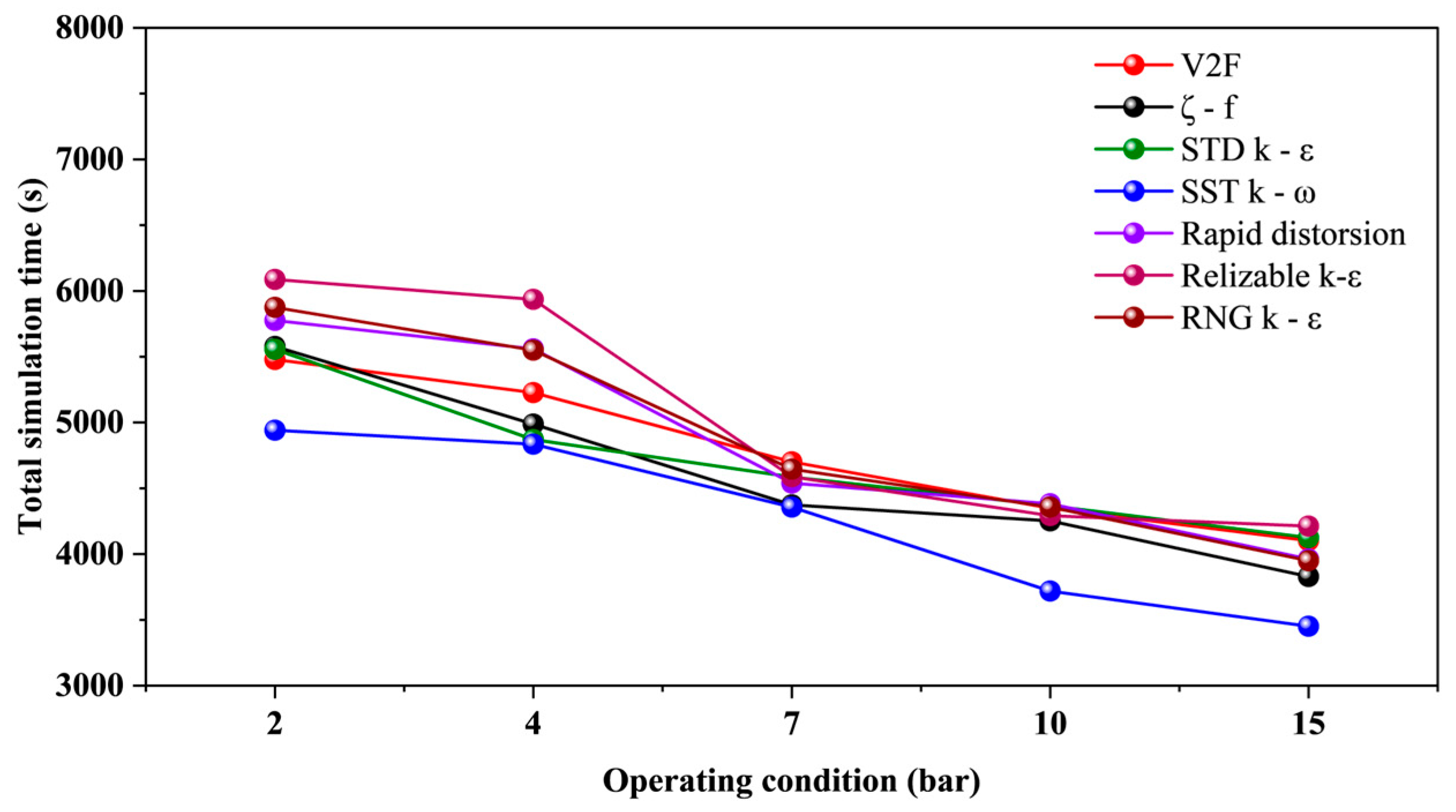
- The V2F and turbulence models demonstrated superior performance in simulating ammonia spray dynamics, particularly due to their ability to better capture turbulence anisotropy compared to traditional models.
- SMD prediction remains a challenge across all cases, underscoring the need for further refinement of models that describe droplet breakup, evaporation, and turbulence-phase interaction.
- Spray penetration decreases with increasing ambient pressure, as higher gas density suppresses flash boiling and increases aerodynamic drag, resulting in reduced droplet breakup and more compact spray structures. However, under strong flash-boiling conditions, such as at 2 bar, the predicted spray morphology revealed limitations in the current modeling assumptions, suggesting that further refinement of the mathematical model, particularly regarding spray shape in intense flashing regimes, may be necessary to achieve more accurate predictions.
- The V2F model demonstrated strong predictive capability across all evaluated parameters (ammonia mass fraction, gas velocity, temperature, and TKE, closely matching physical expectations across the various tested operating conditions.
- Correlation analysis between temperature, mass fraction, velocity, and TKE revealed consistent trends that should inform the development of improved mathematical models and source terms for turbulence-spray interaction in multiphase CFD.
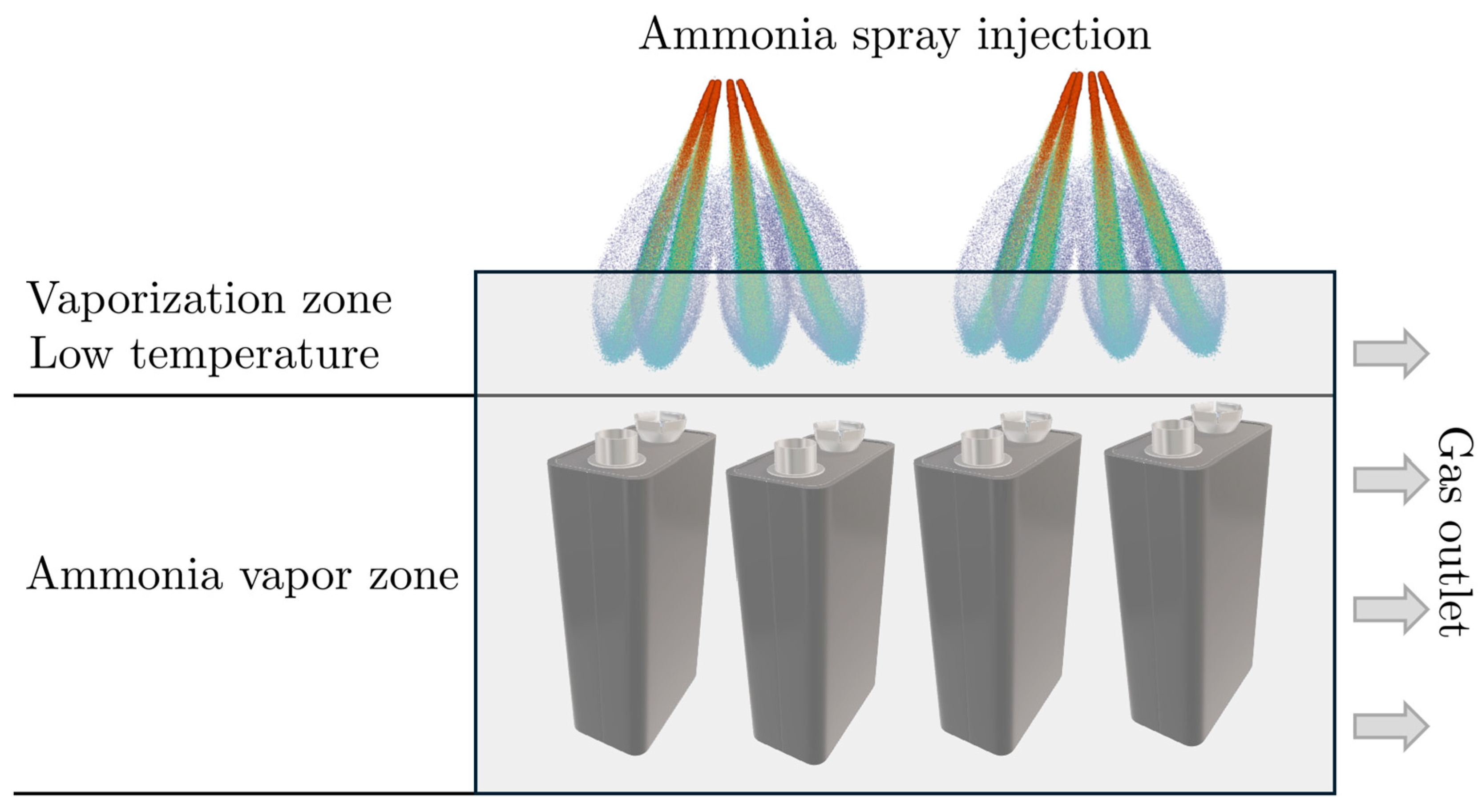
- The validated modeling framework and insights from this study should provide a strong foundation for the future application of flash-boiling ammonia sprays in clean combustion systems and advanced thermal management technologies, such as EV battery cooling, where rapid heat removal and efficient phase change are critical.
- A limitation of this study is that the validation relies on a single published experimental dataset. Therefore, the conclusions are restricted to the tested operating conditions and model settings, and the results should be interpreted as a benchmarking and sensitivity assessment of turbulence-model performance for flash-boiling ammonia sprays.
9. Future Work and Applications in Green Energy and Thermal Management
Author Contributions
Funding
Data Availability Statement
Conflicts of Interest
References
- Zhang, Z.; Zhang, H.; Jiang, H.; Li, L. Green ammonia: Revolutionizing sustainable energy for a carbon-free future. J. Mater. Chem. A 2024, 12, 33334–33361. [Google Scholar] [CrossRef]
- Dey, S.; Das, P.K.; Deb, M.; Sastry, G.R.K. Green Ammonia: An Alternative Sustainable Energy Source for Clean Combustion. In Energy, Environment, and Sustainability; Springer: Singapore, 2024; pp. 11–24. [Google Scholar] [CrossRef]
- Mashruk, S.; Shi, H.; Mazzotta, L.; Ustun, C.E.; Aravind, B.; Meloni, R.; Alnasif, A.; Boulet, E.; Jankowski, R.; Yu, C.; et al. Perspectives on NOX Emissions and Impacts from Ammonia Combustion Processes. Energy Fuels 2024, 38, 19253–19292. [Google Scholar] [CrossRef] [PubMed]
- Szanthoffer, A.G.; Zsély, I.G.; Kawka, L.; Papp, M.; Turányi, T. Testing of NH3/H2 and NH3/syngas combustion mechanisms using a large amount of experimental data. Appl. Energy Combust. Sci. 2023, 14, 100127. [Google Scholar] [CrossRef]
- Li, Y.; Sun, H.; Al-Ansari, M.M.; Gavurová, B.; Sekar, M. Assessment and optimization of combustion efficiency and emissions of industrial gases burner blended with hydrogen and ammonia gaseous fuel. Renew. Energy 2025, 252, 123543. [Google Scholar] [CrossRef]
- Okafor, E.C.; Kurata, O.; Yamashita, H.; Inoue, T.; Tsujimura, T.; Iki, N.; Hayakawa, A.; Ito, S.; Uchida, M.; Kobayashi, H. Liquid ammonia spray combustion in two-stage micro gas turbine combustors at 0.25 MPa; Relevance of combustion enhancement to flame stability and NOx control. Appl. Energy Combust. Sci. 2021, 7, 100038. [Google Scholar] [CrossRef]
- Shen, Y.; Zhang, K.; Duwig, C. Investigation of wet ammonia combustion characteristics using LES with finite-rate chemistry. Fuel 2022, 311, 122422. [Google Scholar] [CrossRef]
- He, X.; Liu, Y.; Zhang, H.; Bi, S.; Xu, K.; Zhao, J. Characteristics of high-pressure liquid ammonia sprays and combustion process in ammonia/diesel HPDI dual-fuel engines. J. Energy Inst. 2025, 120, 102059. [Google Scholar] [CrossRef]
- Wang, C.; Chen, Z.; Li, T.; Zhao, P.; Chen, H. A comparative study the spray and combustion of diesel and ammonia engine under cross and horizontally-opposed dual direct injection. J. Energy Inst. 2025, 120, 102076. [Google Scholar] [CrossRef]
- Liu, X.; Yao, X.; Wang, Z.; Tang, C. Single hole ammonia spray macroscopic and microscopic characteristics at flare and transition flash boiling regions. Appl. Therm. Eng. 2023, 235, 121443. [Google Scholar] [CrossRef]
- Zhang, Y.; Xu, L.; Zhu, Y.; Xu, S.; Bai, X.S. Numerical study on liquid ammonia direct injection spray characteristics under engine-relevant conditions. Appl. Energy 2023, 334, 120680. [Google Scholar] [CrossRef]
- An, Z.; Xing, J.; Kurose, R. Recent progresses in research on liquid ammonia spray and combustion: A review. Appl. Energy Combust. Sci. 2024, 20, 100293. [Google Scholar] [CrossRef]
- Zhou, X.; Li, T.; Chen, R.; Wei, Y.; Wang, X.; Wang, N.; Li, S.; Kuang, M.; Yang, W. Ammonia marine engine design for enhanced efficiency and reduced greenhouse gas emissions. Nat. Commun. 2024, 15, 2110. [Google Scholar] [CrossRef]
- Chen, S.; Qenawy, M.; Tian, J.; Wang, Z.; Wang, H.; Yu, K.; Wang, J.; Chen, B.; Xiong, J. From principles to practice: Review of recent advances and perspectives in spray flash evaporation technology towards thermal management of energy systems. Energy Convers. Manag. 2025, 326, 119499. [Google Scholar] [CrossRef]
- Zembi, J.; Battistoni, M.; Pandal, A.; Pelé, R.; Brequigny, P.; Hespel, C.; Mounaïm-Rousselle, C. Lagrangian CFD modeling of ammonia sprays: A correlation across flash boiling and evaporative conditions. Int. Commun. Heat Mass Transf. 2024, 158, 107866. [Google Scholar] [CrossRef]
- Song, X.; Hu, Y.; Zhao, F.; Yu, W. Modelling of liquid ammonia spray based on flash boiling breakup driven by thermal growth of multiple bubbles. Energy 2025, 325, 136129. [Google Scholar] [CrossRef]
- Ma, Y.; Zhong, W.; Lai, S.; Chen, J.; Pachiannan, T.; Zhang, L.; Yuan, W.; He, Z. Experimental study on the flash boiling spray characteristics and jet fluctuation of high-pressure direct injection liquid ammonia. Appl. Therm. Eng. 2024, 257, 124032. [Google Scholar] [CrossRef]
- Zhong, W.; Chen, J.; Li, C.; Huang, Y.; Pachiannan, T.; Jiang, Z.; Yuan, Y.; He, Z. Visualization study on flash boiling spray characteristics of high-pressure liquid ammonia with different nozzle diameters. Fuel 2024, 367, 131525. [Google Scholar] [CrossRef]
- Zhang, Z.; Long, W.; Cui, Z.; Dong, P.; Tian, J.; Tian, H.; Meng, X. Visualization study on the ignition and diffusion combustion process of liquid phase ammonia spray ignited by diesel jet in a constant volume vessel. Energy Convers. Manag. 2024, 299, 117889. [Google Scholar] [CrossRef]
- Liu, J.; Zhang, M.; An, Z.; Chen, J.; Wang, J.; Tang, C.; Huang, Z. Morphological and mechanistic study of a continuous flash boiling liquid ammonia spray. Phys. Fluids 2025, 37, 013327. [Google Scholar] [CrossRef]
- Li, S.; Liu, S.; Wang, N.; Li, T.; Chen, R.; Yi, P.; Huang, S.; Zhou, X. Atomization and evaporation characteristics of liquid ammonia spray under engine intake stroke conditions. Energy 2025, 316, 134589. [Google Scholar] [CrossRef]
- Wang, S.; Zhang, R.; Mao, X.; Wang, L.; Wei, H.; Pan, J. An investigation on liquid ammonia spray: Emphasis on flash boiling and non-flash boiling characteristics. Appl. Therm. Eng. 2025, 269, 126224. [Google Scholar] [CrossRef]
- Shen, L.; Leach, F. An experimental study on the macroscopic behaviours of ammonia sprays in a constant volume chamber. Int. J. Hydrogen Energy 2025, 126, 386–395. [Google Scholar] [CrossRef]
- Li, X.; Wang, S.; Yang, S.; Qiu, S.; Sun, Z.; Hung, D.L.S.; Xu, M. A review on the recent advances of flash boiling atomization and combustion applications. Prog. Energy Combust. Sci. 2024, 100, 101119. [Google Scholar] [CrossRef]
- Zhang, Y.; Chu, C.; Liu, Z.; Jia, M. Improved dynamics, atomization, and vaporization models for liquid ammonia spray simulations under diverse ambient conditions. Int. J. Multiph. Flow 2025, 188, 105225. [Google Scholar] [CrossRef]
- An, Z.; Xing, J.; Kurose, R. Numerical study on the phase change and spray characteristics of liquid ammonia flash spray. Fuel 2023, 345, 128229. [Google Scholar] [CrossRef]
- Yao, N.-N.; Chen, Y.-F.; Wei, L.-M.; Xu, Q.-Y.; Pan, W.-G. Progress in CFD simulation for ammonia-fueled internal combustion engines and gas turbines. J. Energy Inst. 2024, 119, 101951. [Google Scholar] [CrossRef]
- Qiu, S.; Wang, S.; Zhang, Y.; Li, Y.; Xu, M.; Li, X. Dynamics and mechanisms of spray plume interference under flash boiling conditions. Energy 2025, 314, 134121. [Google Scholar] [CrossRef]
- Xia, L.; Montazeri, H.; Blocken, B. On the accuracy of Eulerian-Lagrangian CFD simulations for spray evaporation in turbulent flow. Int. J. Therm. Sci. 2025, 208, 109461. [Google Scholar] [CrossRef]
- Yang, R.; Liu, H.; Zhang, S.; Li, J.; Tang, Q.; Yao, M. Optical and numerical study on high-pressure liquid ammonia spray atomization and ignition characteristics under different injector nozzle diameters. Energy Convers. Manag. 2025, 333, 119781. [Google Scholar] [CrossRef]
- Jin, Z.; Wu, H.; Xu, S.; Zhou, D.; Mi, S.; Qian, Y.; Lu, X. A unified spray model for large eddy simulations under non-flashing and flash boiling conditions: Effects of in-nozzle flow and external thermal breakup in liquid ammonia injection. Int. J. Multiph. Flow 2025, 184, 105116. [Google Scholar] [CrossRef]
- Yang, R.; Liu, H.; Li, B.; Tang, Q.; Yao, M. Experimental and numerical investigation on the superheated and subcooled ammonia spray characteristics under high injection pressure. Fuel 2025, 387, 134320. [Google Scholar] [CrossRef]
- Hu, Y.; Li, J.; Chen, H.; Zhang, F.; Wang, L. Numerical study on spray characteristics of liquid ammonia based on variable model constants. Appl. Therm. Eng. 2024, 261, 125166. [Google Scholar] [CrossRef]
- Chen, X.; Long, W.; Ma, C.; Dong, P.; Zhang, Z.; Tian, J.; Nishida, K.; Tian, H. Experimental and modeling study on liquid phase ammonia spray characteristics under high-pressure injection and engine-like ambient conditions. Int. Commun. Heat Mass Transf. 2025, 164, 108853. [Google Scholar] [CrossRef]
- Giuntini, L.; Frascino, L.; Ariemma, G.B.; Sorrentino, G.; Galletti, C.; Ragucci, R. Modeling of Ammonia MILD Combustion in Systems with Internal Recirculation. Combust. Sci. Technol. 2023, 195, 3513–3528. [Google Scholar] [CrossRef]
- Mazzotta, L.; Lamioni, R.; Agati, G.; Evangelisti, A.; Rispoli, F.; Valera-Medina, A.; Borello, D. On the Impact of CFD Turbulence Models for Premixed NH3/H2 Combustion on Emissions and Flame Characteristics in a Swirl-Stabilized Burner. Flow Turbul. Combust. 2025, 114, 1043–1063. [Google Scholar] [CrossRef]
- Ilbas, M.; Kekul, O.; Karyeyen, S. Investigation into Thermal-Fluid interaction of ammonia turbulent swirling flames under various Non-Premixed burner conditions. Fuel 2022, 312, 122967. [Google Scholar] [CrossRef]
- Al-Zareer, M.; Dincer, I.; Rosen, M.A. Development and evaluation of a new ammonia boiling based battery thermal management system. Electrochim. Acta 2018, 280, 340–352. [Google Scholar] [CrossRef]
- Al-Zareer, M.; Dincer, I.; Rosen, M.A. Electrochemical modeling and performance evaluation of a new ammonia-based battery thermal management system for electric and hybrid electric vehicles. Electrochim. Acta 2017, 247, 171–182. [Google Scholar] [CrossRef]
- Al-Zareer, M.; Dincer, I.; Rosen, M.A. Heat transfer modeling of a novel battery thermal management system. Numer. Heat Transf. Part A Appl. 2018, 73, 277–290. [Google Scholar] [CrossRef]
- Lee, J.W.; Park, J.H.; Choi, H.W.; Kang, Y.T. Ammonia sorption thermal battery with water-loaded sorbent driven by low-temperature heat source. Energy Convers. Manag. 2023, 295, 117653. [Google Scholar] [CrossRef]
- Yang, J.; Yu, Q.; Chen, S.; Yan, F.; Yu, Y. Analysis of discharge performance and thermo-electric conversion efficiency in thermally regenerative ammonia-based flow battery with foam copper electrode. Energy Convers. Manag. 2024, 311, 118523. [Google Scholar] [CrossRef]
- Zhang, W.Y.; Mehari, A.; Zhang, X.J.; Roskilly, A.P.; Jiang, L. Ammonia-based sorption thermal battery: Concepts, thermal cycles, applications, and perspectives. Energy Storage Mater. 2023, 62, 102930. [Google Scholar] [CrossRef]
- Fathimathul Faseena, A.M.; Sreekumar, A. Advances, perspectives and challenges in phase change material based battery thermal management: A comprehensive review. J. Energy Storage 2025, 113, 115644. [Google Scholar] [CrossRef]
- Yaw, C.T.; Rajamony, R.K.; Bhutto, Y.A.; Bakthavatchalam, B.; Kottala, R.K.; Chopra, K.; Paw, J.K.S.; Doroody, C.; Allasi, H.L.; Soudagar, M.E.M. Two phase heat transfer approaches for battery thermal management: Current status, challenges and future outlook. Results Eng. 2025, 27, 105749. [Google Scholar] [CrossRef]
- Shin, J.; Park, S. Numerical analysis and optimization of combustion and emissions in an ammonia-diesel dual-fuel engine using an ammonia direct injection strategy. Energy 2023, 289, 130014. [Google Scholar] [CrossRef]
- Pelé, R.; Mounaïm-Rousselle, C.; Bréquigny, P.; Hespel, C.; Bellettre, J. First Study on Ammonia Spray Characteristics with a Current GDI Engine Injector. Fuels 2021, 2, 253–271. [Google Scholar] [CrossRef]
- Lewandowski, M.T.; Pasternak, M.; Haugsvær, M.; Løvås, T. Simulations of ammonia spray evaporation, cooling, mixture formation and combustion in a direct injection compression ignition engine. Int. J. Hydrogen Energy 2023, 52, 916–935. [Google Scholar] [CrossRef]
- Kaewbumrung, M.; Plengsa-Ard, C. Numerical simulation of jet impingement relaminarization using nonlinear eddy viscosity turbulence models. Eng. Appl. Comput. Fluid Mech. 2023, 17, 2162132. [Google Scholar] [CrossRef]
- Kaewbumrung, M.; Plengsa-Ard, C. Relaminarization of jet impingement on a flat plate using separation-induced transition correction turbulence modeling, preliminarily applied in archeological applications. Heliyon 2024, 10, e26040. [Google Scholar] [CrossRef]
- Kaewbumrung, M.; Nutasarin, K.; Plengsa-Ard, C.; Palasai, W. Investigating Environmental Impacts on Mural Preservation in Heritage Buildings Using Computational Fluid Dynamics: A Case Study of the Ratchaburana Historical Temple, Thailand. Results Eng. 2025, 27, 106127. [Google Scholar] [CrossRef]
- Zembi, J.; Battistoni, M.; Pandal, A.; Rousselle, C.; Pelè, R.; Brequigny, P.; Hespel, C. Numerical Study of Ammonia Spray with a GDI Engine Injector. J. Ammon. Energy 2023, 1, 59–73. [Google Scholar] [CrossRef]
- Richards, K.J.; Senecal, P.K.; Pomraning, E. CONVERGE 4; Convergent Science: Madison, WI, USA, 2024. [Google Scholar]
- Han, Z.; Reitz, R.D. Turbulence Modeling of Internal Combustion Engines Using RNG κ-ε Models. Combust. Sci. Technol. 1995, 106, 267–295. [Google Scholar] [CrossRef]
- Akram, M.S.; Yeganeh, M.; Cheng, Q.; Kaario, O.; Larmi, M. Experimental Study on Flash Boiling of Ammonia Fuel Sprays—A Potential Alternative Fuel; SAE: Warrendale, PA, USA, 2023. [Google Scholar] [CrossRef]
- Price, C.; Hamzehloo, A.; Aleiferis, P.; Richardson, D. Numerical modelling of droplet breakup for flash-boiling fuel spray predictions. Int. J. Multiph. Flow 2020, 125, 103183. [Google Scholar] [CrossRef]
- Zhang, C.; Bounds, C.P.; Foster, L.; Uddin, M. Turbulence Modeling Effects on the CFD Predictions of Flow over a Detailed Full-Scale Sedan Vehicle. Fluids 2019, 4, 148. [Google Scholar] [CrossRef]
- Rahman, M.M. Developing code-friendly variant of V2F turbulence model. Comput. Fluids 2020, 196, 104346. [Google Scholar] [CrossRef]
- Price, C.; Hamzehloo, A.; Aleiferis, P.; Richardson, D. Numerical modelling of fuel spray formation and collapse from multi-hole injectors under flash-boiling conditions. Fuel 2018, 221, 518–541. [Google Scholar] [CrossRef]
- Loureiro, D.D.; Reutzsch, J.; Kronenburg, A.; Weigand, B.; Vogiatzaki, K. Primary breakup regimes for cryogenic flash atomization. Int. J. Multiph. Flow 2020, 132, 103405. [Google Scholar] [CrossRef]



| Study Case | TLNH3 (K) | Ta (K) | (kg/m3) | Ρa (Bar) | Rp |
|---|---|---|---|---|---|
| 1 | 293 | 293 | 2.38 | 2 | 4.285 |
| 2 | 293 | 293 | 4.76 | 4 | 2.143 |
| 3 | 293 | 293 | 8.32 | 7 | 1.224 |
| 4 | 293 | 293 | 11.88 | 10 | 0.857 |
| 5 | 293 | 293 | 17.82 | 15 | 0.571 |
| Model Parameter | Setup |
|---|---|
| Spray breakup model | Kelvin–Helmholtz and Rayleigh–Taylor (KH-RT) B1 = 17.5, B0 = 1.75 [15] |
| Standard k-ε | Cε1 = 1.55 [52] |
| Spray evaporation model | Frossling model |
| Spray collision model | O’Rourke |
| Liquid parcel collision model | NTC collision |
| Equation of state | Redilich-Kwong |
| Initial, min, max time step (s) | 1 × 10⁻⁷, 1 × 10⁻⁸, 1 × 10⁻⁴ |
| Numerical scheme | Pressure-implicit with splitting of operator’s algorithm—density-based |
| Convective flux scheme | Flux blending |
| Pressure–velocity coupling | Legacy Rhie-Chow scheme |
| Drop drag model | Dynamic drop drag |
Disclaimer/Publisher’s Note: The statements, opinions and data contained in all publications are solely those of the individual author(s) and contributor(s) and not of MDPI and/or the editor(s). MDPI and/or the editor(s) disclaim responsibility for any injury to people or property resulting from any ideas, methods, instructions or products referred to in the content. |
© 2026 by the authors. Licensee MDPI, Basel, Switzerland. This article is an open access article distributed under the terms and conditions of the Creative Commons Attribution (CC BY) license.
Share and Cite
Kaewbumrung, M.; Plengsa-Ard, C.; Palasai, W. Evaluation of Anisotropic Turbulence Models for Flash-Boiling Ammonia Sprays for Clean Fuel and Conceptual Electric Vehicle Cooling Systems. Energies 2026, 19, 1471. https://doi.org/10.3390/en19061471
Kaewbumrung M, Plengsa-Ard C, Palasai W. Evaluation of Anisotropic Turbulence Models for Flash-Boiling Ammonia Sprays for Clean Fuel and Conceptual Electric Vehicle Cooling Systems. Energies. 2026; 19(6):1471. https://doi.org/10.3390/en19061471
Chicago/Turabian StyleKaewbumrung, Mongkol, Chalermpol Plengsa-Ard, and Wasan Palasai. 2026. "Evaluation of Anisotropic Turbulence Models for Flash-Boiling Ammonia Sprays for Clean Fuel and Conceptual Electric Vehicle Cooling Systems" Energies 19, no. 6: 1471. https://doi.org/10.3390/en19061471
APA StyleKaewbumrung, M., Plengsa-Ard, C., & Palasai, W. (2026). Evaluation of Anisotropic Turbulence Models for Flash-Boiling Ammonia Sprays for Clean Fuel and Conceptual Electric Vehicle Cooling Systems. Energies, 19(6), 1471. https://doi.org/10.3390/en19061471