1. Introduction
Since the announcement of South Korea’s “Carbon Neutrality and Green Growth” strategy, electricity generation from renewable energy sources, especially solar and wind power, has expanded notably. In this context, microgrids have garnered substantial interest and have been actively implemented in recent years, given their ability to efficiently integrate renewable energy at the regional and local levels [
1]. Nevertheless, the variability and unpredictability of renewable energy generation present ongoing challenges to the operational reliability and safety of microgrids, particularly in the absence of well-designed scheduling and control strategies [
2]. To tackle these challenges, the adoption of energy storage systems within microgrids has emerged as a viable approach [
3]. On one hand, such systems can buffer the fluctuations inherent in renewable energy generation from solar and wind sources. On the other hand, energy storage enables coordinated operation with distributed energy resources, thereby improving microgrid stability and minimizing the curtailment of renewable energy [
4].
Existing studies generally construct optimization models for microgrid operation from two perspectives: the supply side and the demand side [
5,
6]. On the distributed generation side, research mainly focuses on achieving complementarity and coordination among various generation units, such as photovoltaic systems, wind turbines, and gas turbines, in order to mitigate the fluctuations of renewable energy sources. For example, some studies have proposed multi-time-scale optimal scheduling strategies for microgrids that consider integrated electricity–heat characteristics, effectively enhancing the system’s capability to accommodate renewable energy [
7,
8]. Meanwhile, on the demand side, demand response techniques are primarily employed to guide users in adjusting their electricity consumption behaviors to support optimal grid operation. Price-based or incentive-based demand response models have been widely investigated to achieve peak shaving and valley filling and to improve load profiles [
9,
10]. However, with the continuous increase in the penetration of distributed energy resources, their inherent intermittency and uncertainty pose significant challenges to the stable operation of microgrids. Traditional deterministic optimization methods often struggle to effectively handle such uncertainties, which may result in scheduling decisions deviating from actual operating conditions and may even compromise system security [
11,
12].
To address these challenges, a variety of solution approaches have been developed, which can be broadly classified into two categories: conventional mathematical programming methods and intelligent optimization algorithms. Conventional mathematical programming methods, such as mixed-integer linear programming, stochastic programming, and robust optimization, are theoretically rigorous and capable of handling certain types of uncertainty [
13,
14,
15]. On the other hand, meta-heuristic algorithms represented by genetic algorithms and particle swarm optimization have also been widely applied due to their strong adaptability to problem complexity and nonlinearity [
16,
17]. In recent years, with the rapid advancement of artificial intelligence technologies, machine learning and data-driven approaches have brought new momentum to the optimal operation of microgrids. For instance, deep reinforcement learning has been applied to real-time microgrid scheduling, where optimal control strategies are learned autonomously through continuous interaction with the environment, demonstrating strong potential for coping with complex and uncertain operating conditions [
18,
19]. In addition, digital twin technology, by constructing a high-fidelity virtual model synchronized with the physical microgrid, provides an effective simulation platform for the validation and optimization of operational strategies [
20].
Although data-driven methods have improved scheduling performance, most existing studies either apply a uniform uncertainty treatment or do not explicitly examine how distinct weather regimes affect scheduling behavior. For industrial PV-storage microgrids, however, operational characteristics may differ substantially between typical sunny and cloudy conditions because PV fluctuation patterns, battery charging opportunities, and grid dependence vary considerably under different weather conditions.
To address this issue, this paper proposes an optimal energy storage scheduling framework for industrial microgrids under representative sunny and cloudy weather scenarios. The present study adopts a deterministic scenario-based analysis under representative sunny and cloudy conditions rather than a full probabilistic uncertainty modeling framework. Compared with conventional fixed scheduling methods, the proposed framework integrates data-driven forecasting with optimization-based scheduling, thereby enabling dispatch decisions to adapt to different representative PV generation patterns. Unlike purely data-driven control strategies, the proposed method retains the physical interpretability and explicit operational constraints of optimization-based scheduling.
Specifically, a Light Gradient Boosting Machine (LightGBM) model is developed to forecast PV generation, while the load input is prepared based on recent historical demand patterns. The forecasting characteristics under representative weather scenarios are then analyzed. Based on these inputs, a comprehensive microgrid model incorporating PV generation, battery energy storage, load demand, and grid interaction is established to minimize the total operating cost while considering time-of-use electricity pricing, battery degradation, and state-of-charge (SOC) safety constraints. An optimization-based day-ahead scheduling strategy is then applied, and the effectiveness of the proposed method is validated through simulations using real operational data. The main contribution of this study lies in the integration of LightGBM-based PV forecasting and optimization-based scheduling for industrial microgrid operation under representative weather scenarios using real operational data.
2. Problem Formulation
As shown in
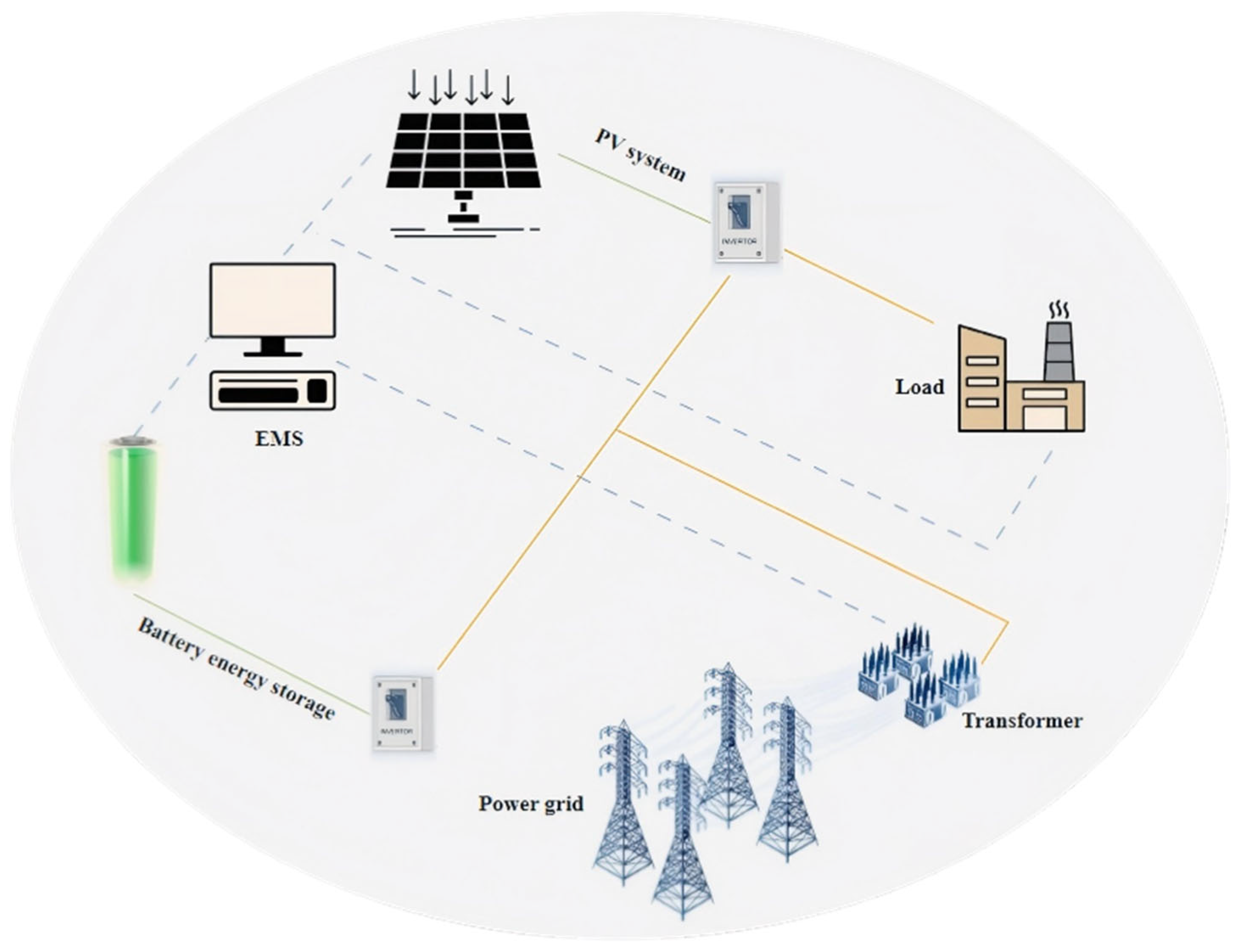
Figure 1, the schematic diagram shows the layout of a full-scale photovoltaic energy storage microgrid in an industrial park in South Jeolla Province, South Korea. The microgrid represents a modern and flexible example of a distributed energy system. The photovoltaic (PV) system generates electricity under solar irradiation and supplies power to the local load through a power conversion unit. Excess PV power is stored in the battery energy storage system or injected into the utility grid via a transformer. When PV generation is insufficient, the load demand is met by the battery system or the power grid. An energy management system (EMS) monitors system states and coordinates power flows among the PV system, battery storage, grid, and load to ensure stable and efficient operation [
21].
The current scheduling and operation mode of the microgrid is described as follows:
From 0:00 to 8:00, the photovoltaic system is not generating power; all loads are supplied by the external power grid, and the batteries are either idle or charging at low power.
From 8:00 to 16:00, photovoltaic power becomes the primary power source, with excess power used to charge batteries and insufficient power supplemented by battery discharge. Grid power fluctuations are significantly smoothed out, serving only as a final backup.
From 16:00 to 24:00, photovoltaic power generation stops, and the batteries are prioritized to discharge to meet the peak nighttime load. Subsequently, as the power output decreases, the power grid gradually increases its output until it can fully take over the entire load.
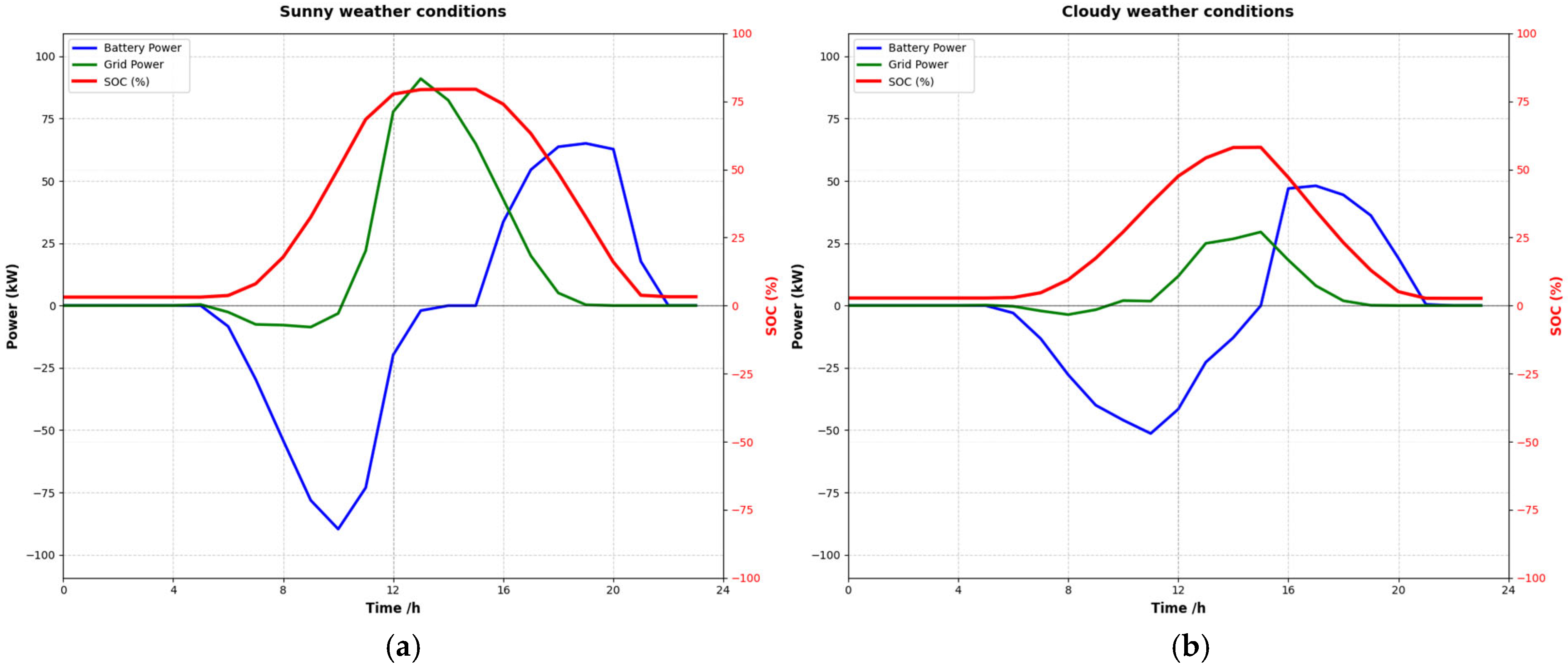
Under the existing operation strategy, the battery mainly follows a conventional charge–discharge pattern driven by PV generation, resulting in a relatively high SOC level around noon. During this period, excess PV power is exported to the main grid, particularly under sunny conditions, indicating limited flexibility of the energy storage system in regulating midday power fluctuations (see
Figure 2a,b). Consequently, this rigid, fixed-schedule operation fails to capitalize on the dynamic arbitrage opportunities presented by fluctuating electricity prices and solar irradiance, leading to suboptimal economic performance. This observation motivates the introduction of an SOC valley-oriented scheduling strategy, in which battery charging and discharging are intentionally adjusted around noon to enhance operational flexibility and improve overall system performance.
2.1. Representative Weather Scenarios
In this study, weather effects are represented using two typical operating scenarios, namely sunny and cloudy conditions. These scenarios are selected to reflect distinct PV generation patterns commonly observed in industrial microgrid operation. Under sunny conditions, PV output is generally smoother and higher during daytime hours, whereas cloudy conditions are associated with reduced generation levels and stronger short-term fluctuations. It should be emphasized that this study does not perform full probabilistic uncertainty modeling. Instead, a deterministic scenario-based analysis is adopted to compare the scheduling behavior of the proposed method under representative weather regimes while maintaining computational tractability. More advanced uncertainty-aware formulations, such as stochastic programming, robust optimization, and probabilistic forecasting, are left for future work.
2.2. Baseline Fixed Dispatch Strategy
For comparison, a rule-based fixed dispatch strategy is adopted as the baseline. Under this strategy, the battery energy storage system follows a predetermined TOU-oriented schedule: it is charged during off-peak tariff periods and discharged during peak-price periods. The baseline does not use updated PV or load forecasts and does not perform rolling re-optimization. Therefore, it represents a conventional heuristic scheduling approach commonly used in practical industrial microgrid operation. The economic benefit of the proposed method is evaluated relative to this baseline strategy.
2.3. Objective Function
The objective of the proposed optimization model is to minimize the total operating cost of the industrial microgrid over the scheduling horizon
T, including electricity purchase cost, battery degradation cost, and PV curtailment penalty [
23]. The objective function is formulated as follows:
where
t denotes the time index,
T is the total number of scheduling periods, and
is the duration of each time interval.
denotes the electricity purchase prices at time step
t, respectively.
denotes the electricity purchase exchanged with the utility grid.
and
denote the charging and discharging power of the battery energy storage system, respectively.
is the battery degradation cost coefficient.
is the PV curtailment penalty coefficient, and
denotes the curtailed PV power at time step
t.
In this study, battery degradation is approximated as a linear throughput-dependent cost to preserve computational tractability in the scheduling optimization framework. This simplified formulation captures the economic impact of battery usage at the scheduling level, while more detailed nonlinear aging effects are left for future work.
Therefore, the objective function aims to minimize the overall operational cost of the industrial microgrid by jointly considering electricity purchasing cost, battery degradation cost, and PV curtailment penalty under the Korean power system framework.
2.4. Constraints
To ensure the physical feasibility, safe operation, and regulatory compliance of the industrial microgrid, the following constraints are imposed.
2.4.1. Battery Energy Balance and SOC Constraints
where
denotes the battery state of charge at time step
t,
and
denote the charging and discharging power, respectively, while
and
are the corresponding charging and discharging efficiencies,
is the scheduling interval, and
is the rated battery energy capacity. These constraints describe the energy evolution of the battery and ensure safe SOC operation.
2.4.2. Battery Operating Mode Constraint
where
are binary variables indicating the charging and discharging status of the battery. These constraints prevent simultaneous battery charging and discharging.
2.4.3. Grid Purchase Constraints
where
denotes the maximum electricity purchase power from the utility grid.
2.4.4. Power Balance Constraint
where
denotes the PV output,
is the curtailed PV power,
is the electricity purchased from the utility grid,
is the battery discharging power,
is the load demand, and
is the battery charging power at time step
t. This constraint ensures the power balance of the industrial microgrid at each time step.
2.4.5. PV Curtailment Constraint
This constraint limits the curtailed PV power so that it cannot exceed the available PV generation.
The above constraints jointly guarantee the operational feasibility, safety, and regulatory compliance of the proposed industrial microgrid optimization model under the Korean power system framework.
2.5. LightGBM-Based Forecasting Method
Light Gradient Boosting Machine (LightGBM) is an efficient gradient boosting framework based on decision tree learning, which has been widely applied in regression and classification tasks due to its high computational efficiency and strong predictive capability. Unlike traditional gradient boosting decision tree (GBDT) methods that grow trees level by level, LightGBM adopts a leaf-wise tree growth strategy, in which the leaf with the maximum loss reduction is expanded at each iteration. This mechanism enables faster convergence and improved accuracy, particularly when handling large-scale and high-dimensional datasets [
24].
To further enhance computational efficiency, LightGBM employs two key techniques: Gradient-based One-Side Sampling (GOSS) and Exclusive Feature Bundling (EFB). GOSS retains instances with large gradients while randomly sampling those with small gradients, thereby reducing the number of data samples without significantly affecting model accuracy. EFB bundles mutually exclusive features into a single feature, effectively decreasing feature dimensionality and memory consumption [
25]. These techniques make LightGBM well-suited for time-series forecasting problems with multiple correlated input variables.
Given the characteristics of industrial microgrid data, which involves complex non-linear relationships and requires rapid processing for real-time dispatch, LightGBM offers a superior balance between prediction accuracy and computational speed compared to other machine learning models.
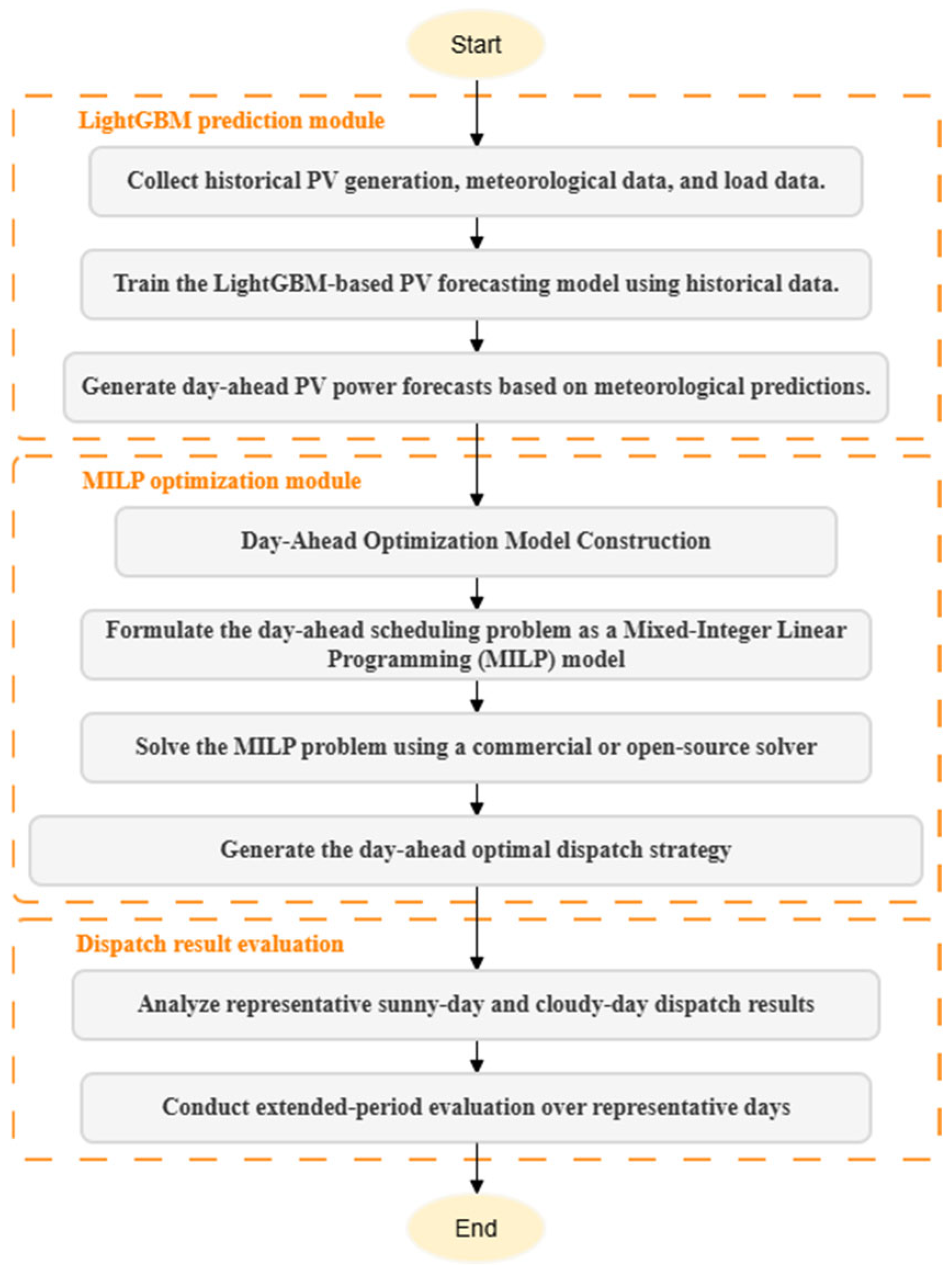
In this study, LightGBM is utilized to develop a forecasting model for photovoltaic (PV) output. The PV forecasting model is constructed using operational and meteorological data, and the input variables include meteorological variables, operational variables, time-related variables, lag features, and rolling statistical features. The main forecasting methods and settings used for PV and load inputs are summarized in
Table 1. In the proposed framework, PV output is forecast using LightGBM, while the load input is prepared based on recent historical demand patterns.
The quantitative forecasting performance of the PV LightGBM model is summarized in
Table 2. On the overall test set, the model achieved an RMSE of 0.84, an MAE of 0.29, and an
value of 1.00. For the selected representative days, the average RMSE/MAE values were 0.41/0.21 under sunny conditions and 0.33/0.11 under cloudy conditions, respectively. For load demand, a short-term forecasting profile is constructed based on recent historical demand patterns to provide the day-ahead scheduling input. Therefore, in the proposed framework, PV output is forecast using LightGBM, while the load input is obtained using a historical-pattern-based forecasting approach.
4. Experimental Result Analysis
To verify the effectiveness of the proposed energy storage optimal dispatch strategy, simulation studies are conducted based on real operational data. Two typical weather scenarios, namely sunny and cloudy days, are considered to evaluate the day-ahead scheduling performance of the microgrid. The results are analyzed in terms of operating cost, grid interaction, and battery operation characteristics. The proposed strategy is further compared with a fixed dispatch strategy to demonstrate its advantages under different weather conditions.
4.1. Forecasting Results and Input Preparation for Day-Ahead Optimization
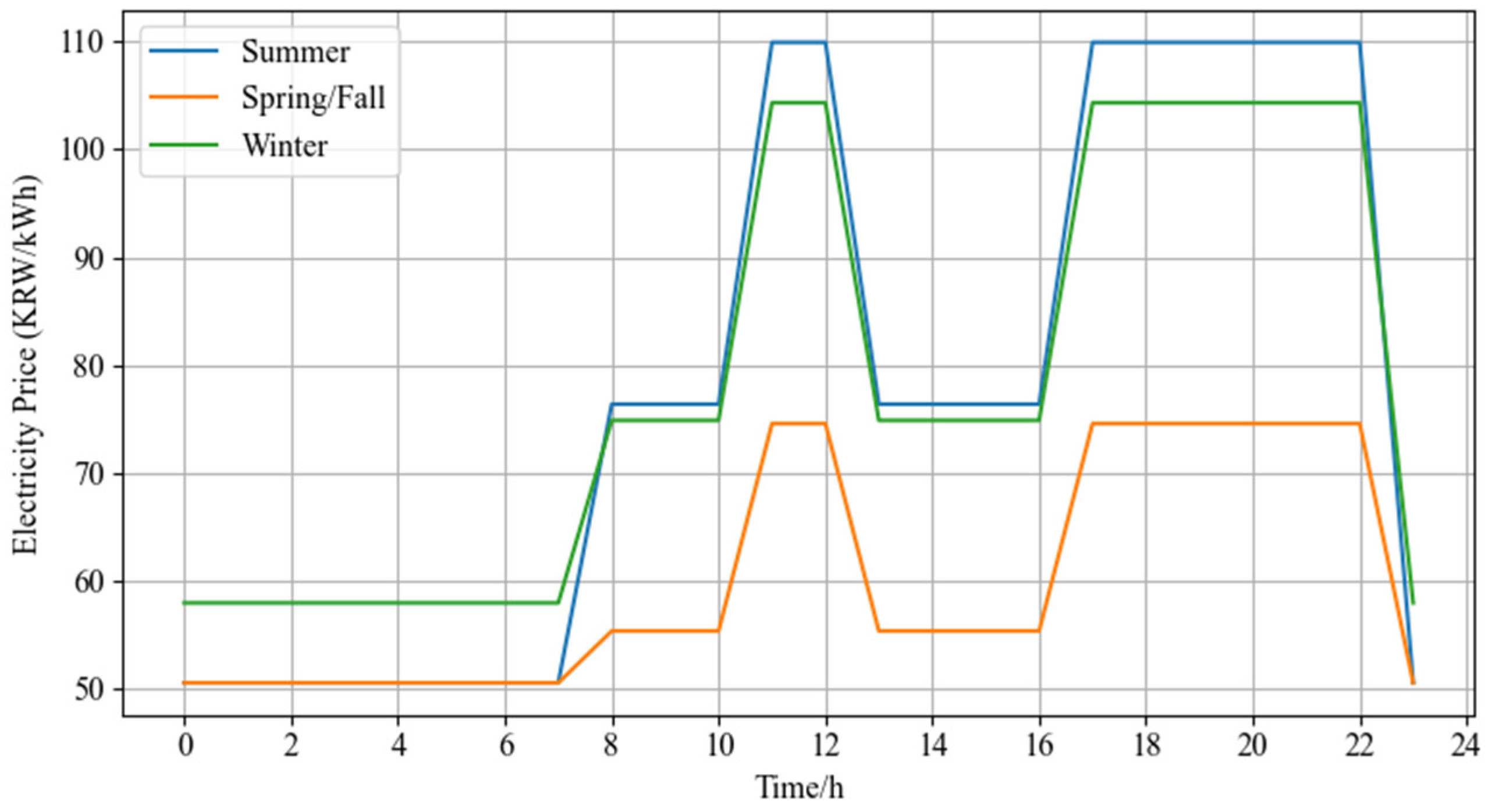
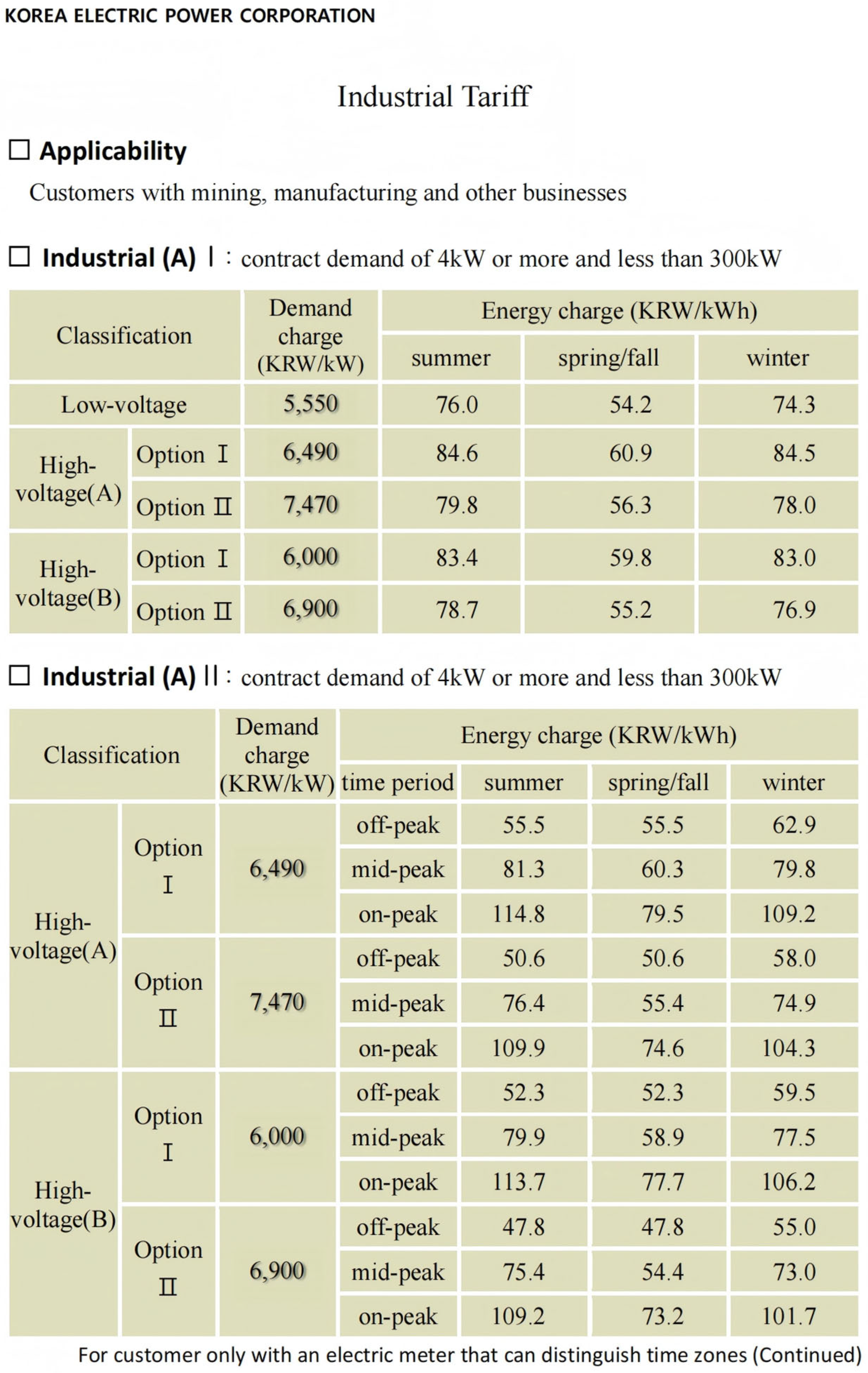
In this study, the Industrial (A) II tariff with time-of-use (TOU) pricing, published by the Korea Electric Power Corporation (KEPCO), is adopted. This tariff is applicable to industrial customers with a contracted demand ranging from 4 kW to 300 kW and provides differentiated electricity prices according to season and time period. As shown in
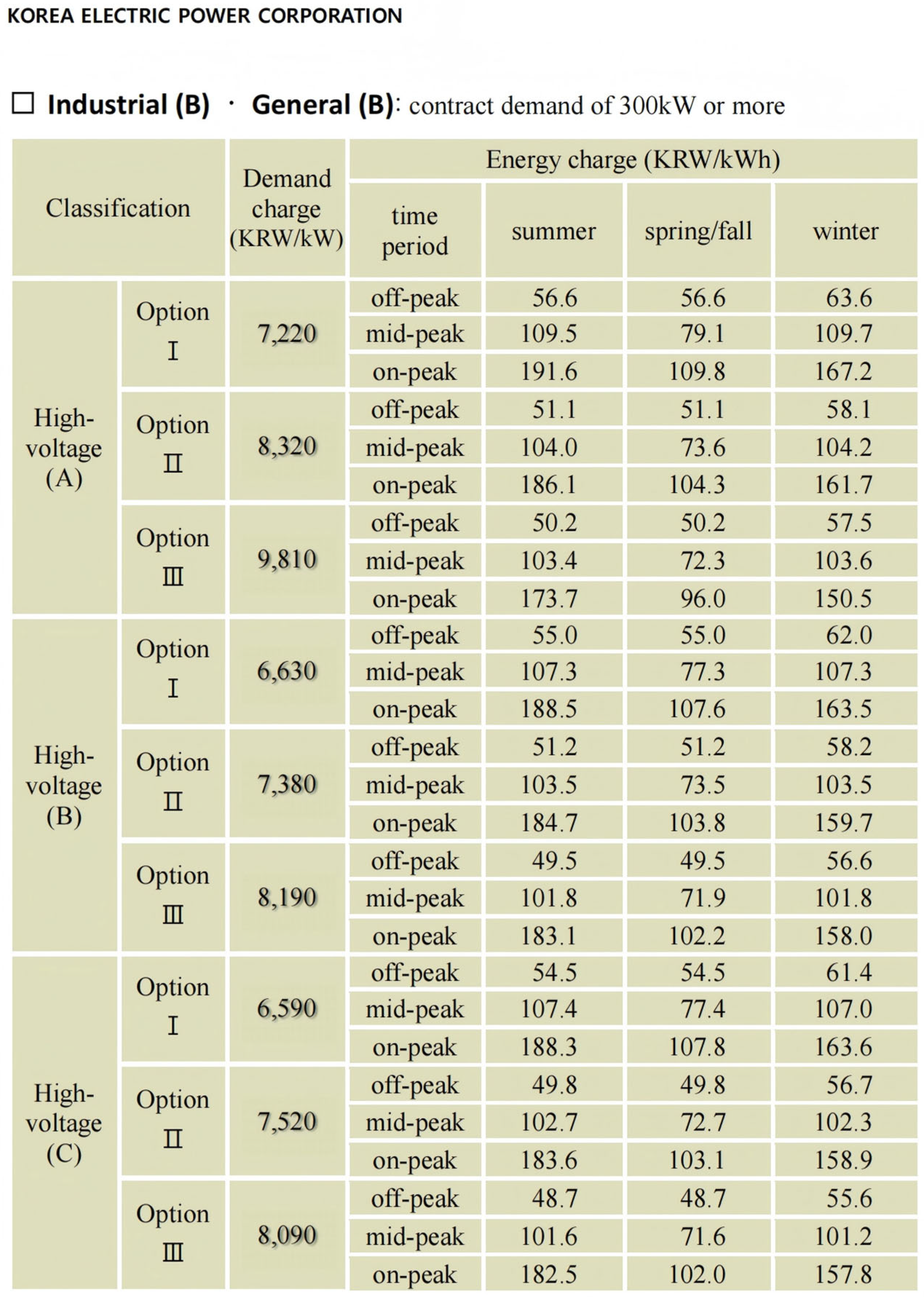
Figure 4, significant price differences exist between on-peak and off-peak periods, which provide economic incentives for battery energy storage systems to perform peak shaving and valley filling through optimal scheduling. To avoid excessive complexity, only the electricity tariff adopted in the optimization model is presented in the main text, while the complete official tariff tables are provided in
Appendix A.
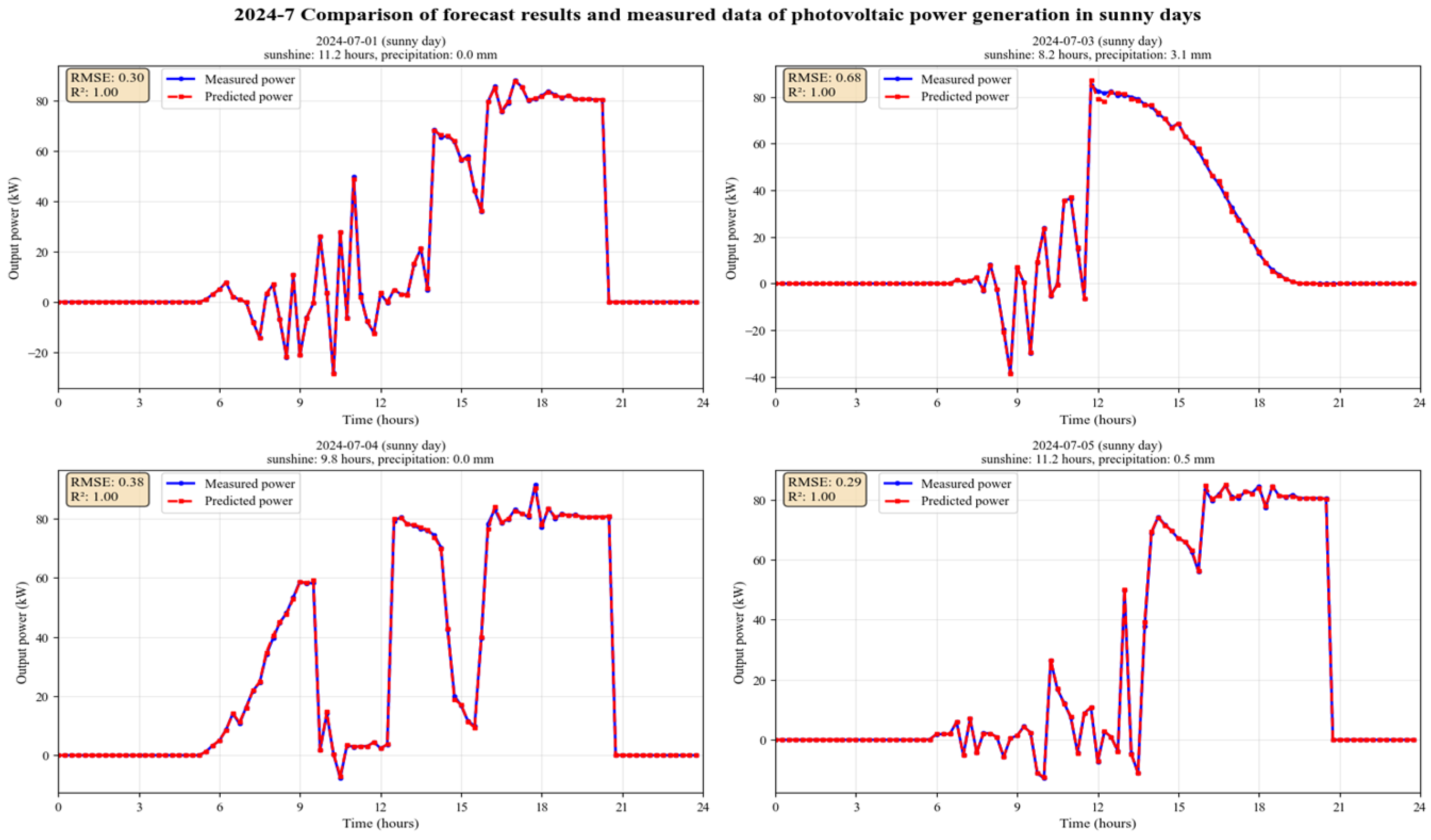
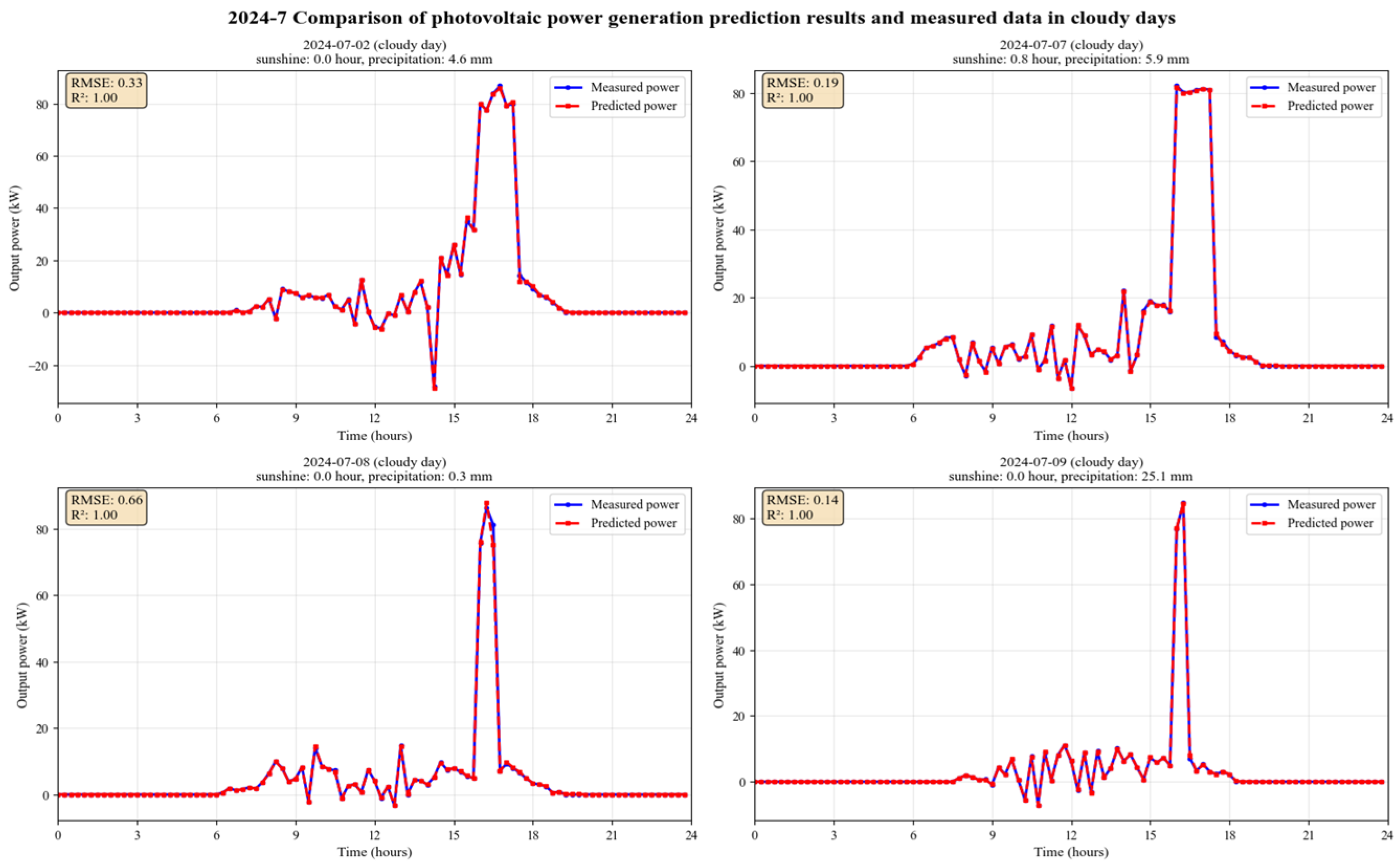
Figure 5 and
Figure 6 present comparisons between the predicted and measured PV power generation on representative sunny and cloudy days, respectively. Under sunny conditions, the PV output exhibits smooth and continuous generation patterns, and the proposed LightGBM-based forecasting model achieves high accuracy, indicating strong predictive capability in stable weather scenarios. In contrast, PV generation on cloudy days shows higher volatility due to intermittent solar irradiance; nevertheless, the proposed model is still able to capture the overall generation trend and short-term fluctuations with satisfactory accuracy, demonstrating satisfactory predictive performance under representative cloudy conditions. The quantitative forecasting performance of the PV LightGBM model is summarized in
Table 2.
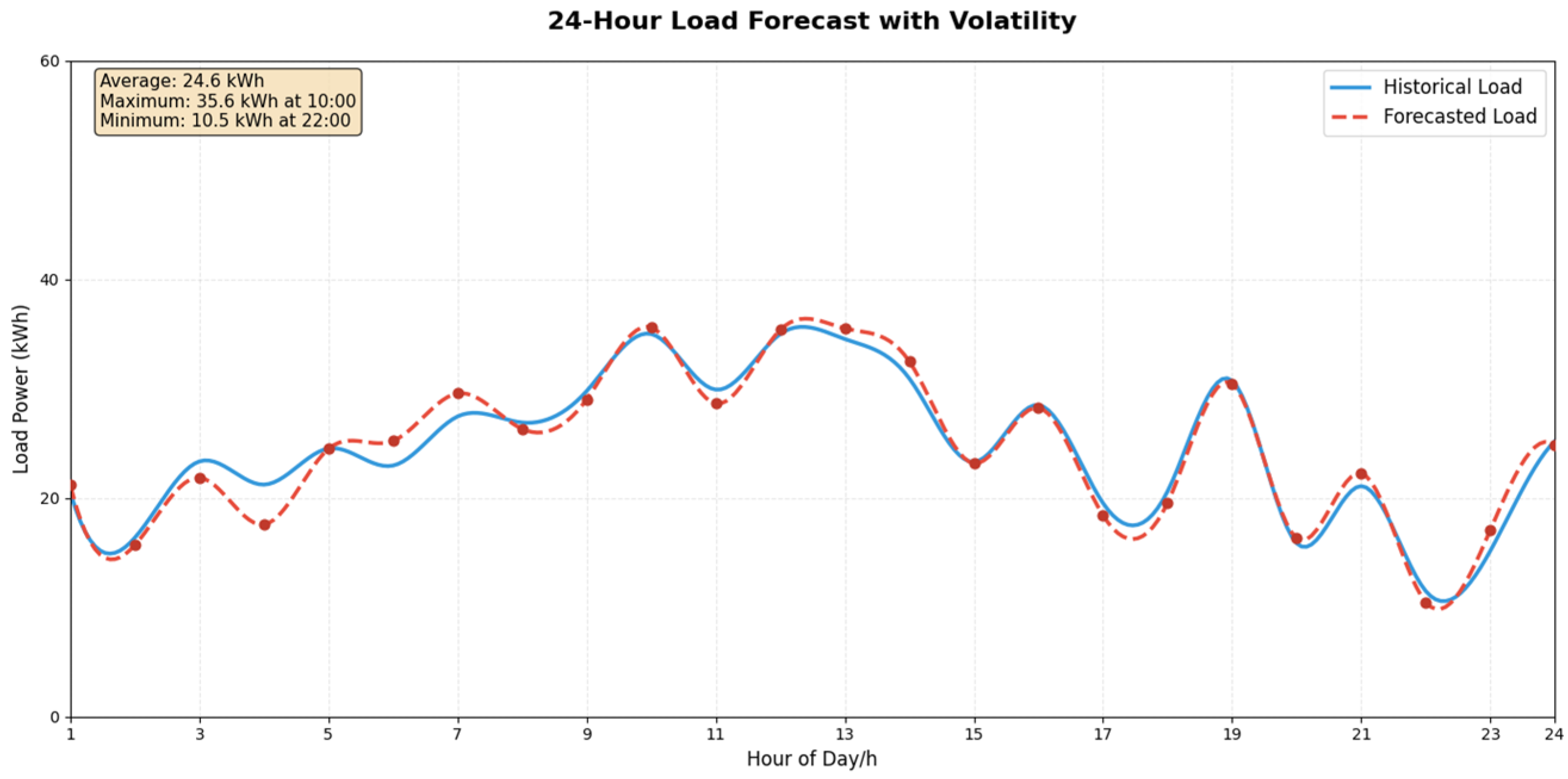
Figure 7 presents the 24 h load forecasting result based on recent historical demand patterns, and Red dots denote the forecasted values at each full hour. The forecast profile preserves the main daily variation characteristics of the load and provides a practical input for the subsequent scheduling model.
Overall, the TOU price profiles and the forecasting results of PV generation and load demand jointly serve as essential inputs for the day-ahead microgrid optimization model discussed in the following section.
4.2. Optimal Dispatch Results Under Representative Weather Conditions
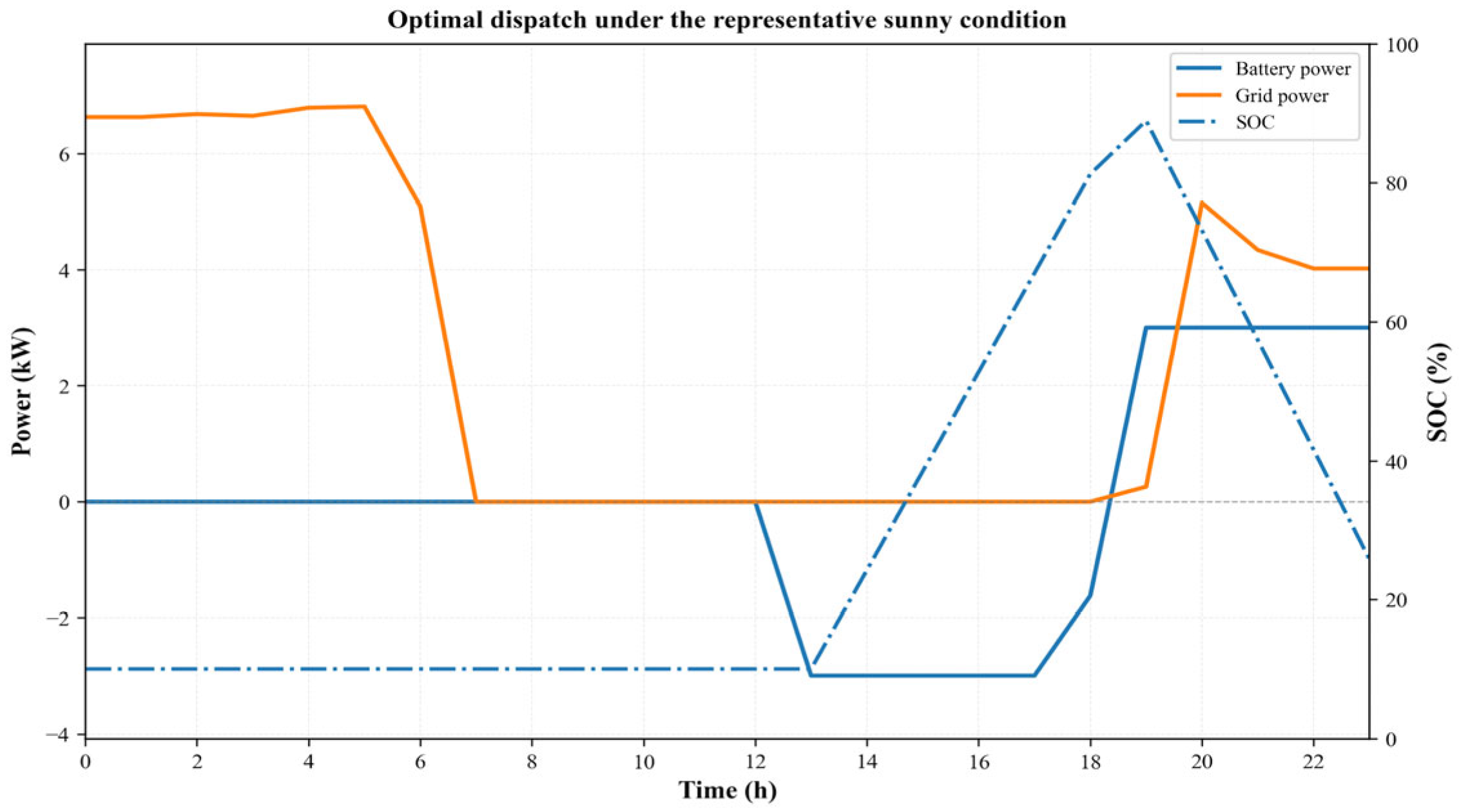
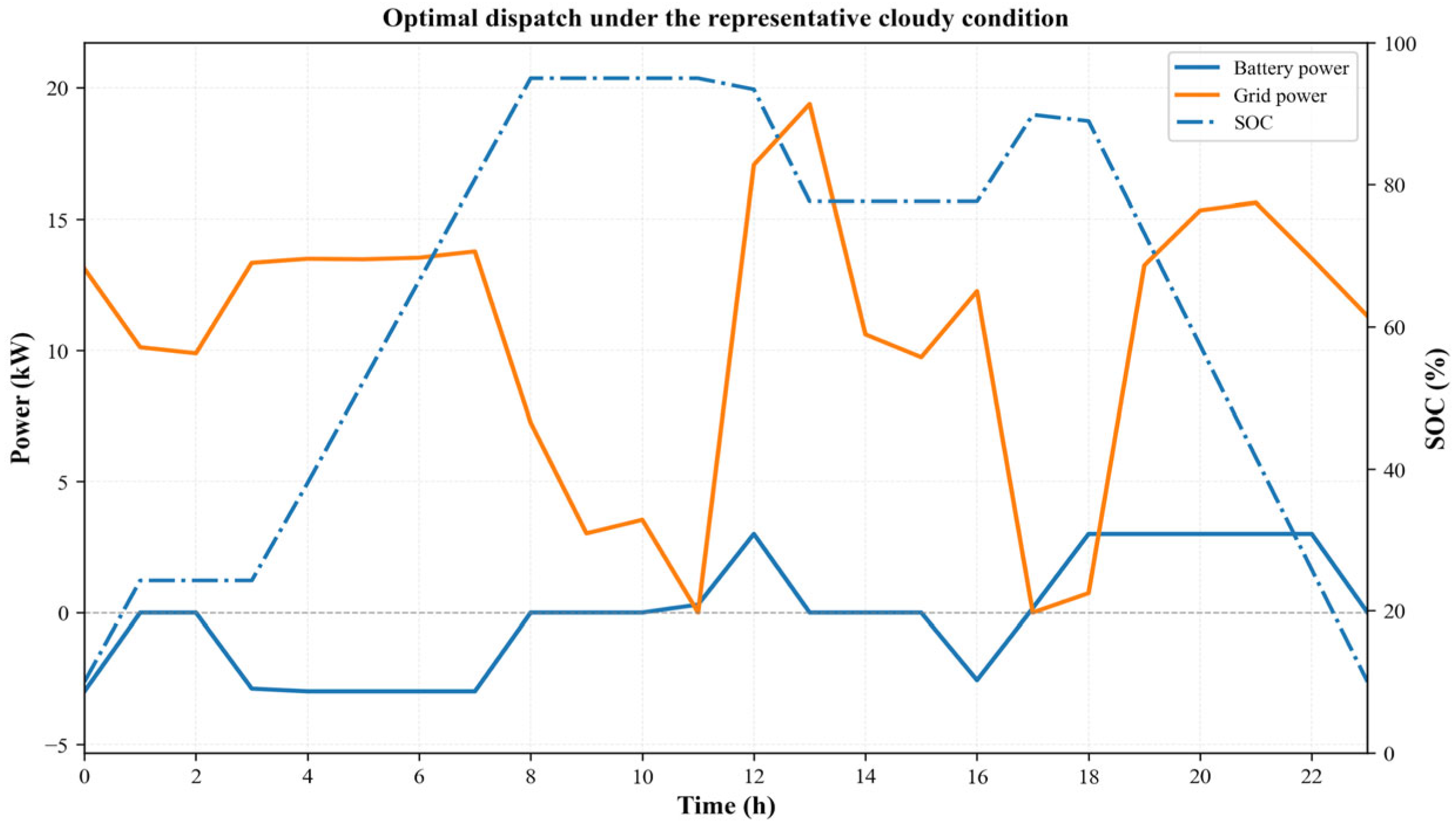
To further examine the scheduling behavior of the proposed method under different operating conditions, two representative daily cases were selected for detailed analysis, namely a representative sunny condition and a representative cloudy condition. The corresponding dispatch results are shown in
Figure 8 and
Figure 9, respectively. In both cases, the proposed method coordinates battery operation and grid interaction according to the photovoltaic availability and the time-of-use electricity price, thereby reducing the daily operating cost compared with the fixed dispatch baseline.
Figure 8 presents the optimal dispatch result under the representative sunny condition. Because PV generation is relatively abundant during daytime hours, the dependence on grid electricity is significantly reduced over the midday period. At the same time, the battery is scheduled more flexibly according to the combined effects of PV availability and TOU pricing. The SOC profile indicates that the battery is charged and discharged strategically to improve the utilization of PV energy and reduce the operating cost. Under this representative sunny condition, the daily operating cost was reduced from 5576.73 KRW to 4465.25 KRW, corresponding to a cost reduction of 19.93%. This result indicates that when PV availability is relatively high, the proposed scheduling strategy can achieve greater economic benefits by improving the coordination between PV generation, battery operation, and grid power exchange.
Figure 9 presents the optimal dispatch result under the representative cloudy condition. In this case, PV generation is very limited, and the microgrid therefore relies more heavily on electricity purchased from the utility grid. As a result, the battery dispatch becomes relatively more conservative than that under the representative sunny condition. Nevertheless, the proposed method still improves the coordination between battery operation and TOU pricing, leading to a reduction in daily operating cost compared with the fixed dispatch baseline. Specifically, the daily operating cost was reduced from 20,439.48 KRW to 19,531.57 KRW, corresponding to a cost reduction of 4.44%. Although the economic improvement is smaller than that under the representative sunny condition, the result still demonstrates that the proposed method can maintain effective scheduling performance under low-PV operating conditions.
By comparing the two representative scenarios, it can be observed that the proposed method achieves greater economic benefits under the representative sunny condition, whereas the improvement under the representative cloudy condition is smaller because of the reduced contribution of PV generation. Nevertheless, positive cost savings are obtained in both cases, confirming the effectiveness of the proposed day-ahead scheduling framework under representative weather conditions.
4.3. Extended-Period Performance Evaluation
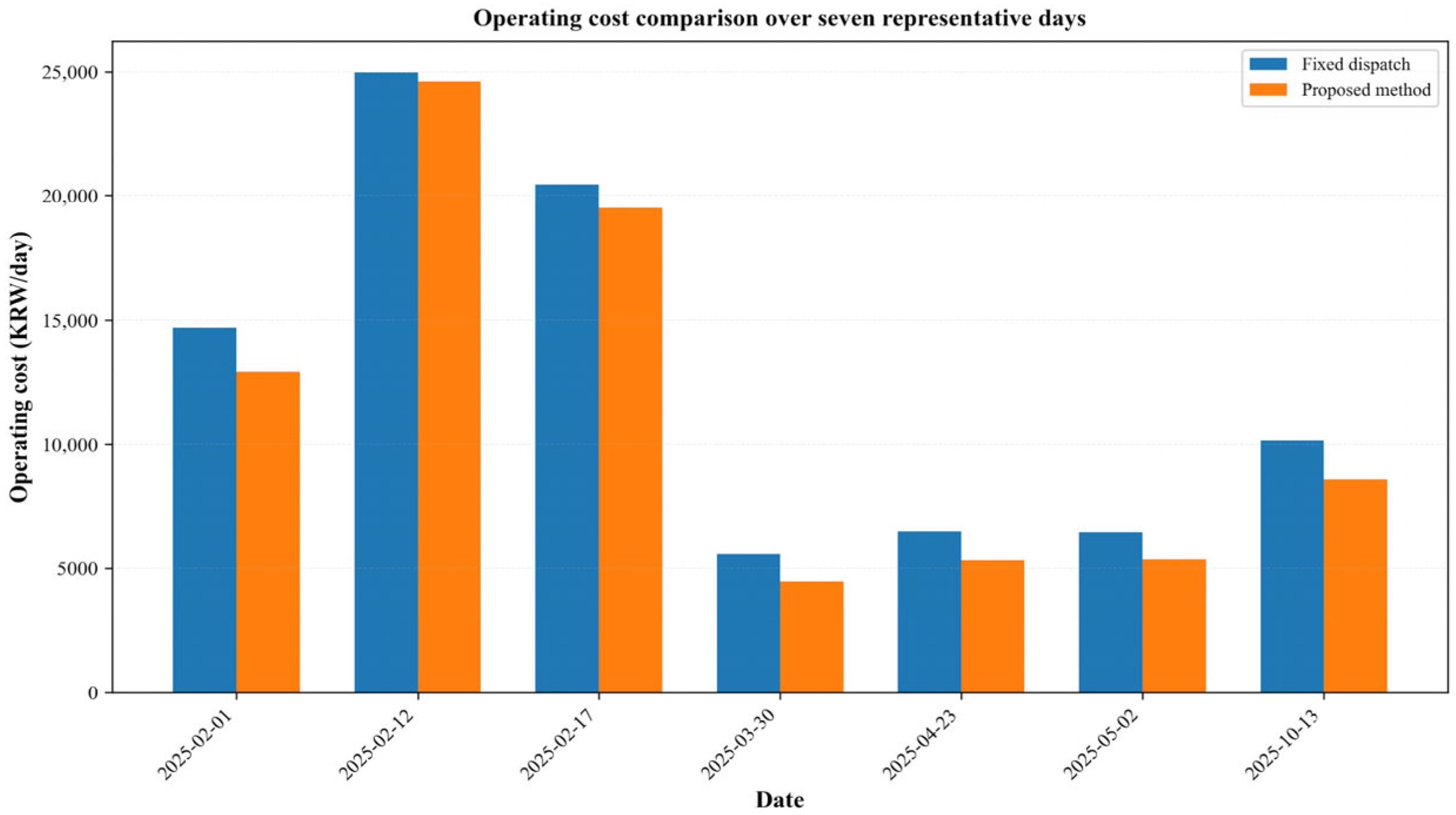
To provide broader validation beyond the two representative daily cases, an additional multi-day evaluation was conducted over seven representative days.
Figure 10 compares the daily operating costs obtained from the fixed dispatch baseline and the proposed method. The results show that the proposed scheduling strategy consistently reduces the operating cost across the selected days, although the magnitude of improvement varies with PV availability and operating conditions.
Over the selected seven representative days, the average operating cost of the fixed dispatch baseline was 12,683.53 KRW/day, while that of the proposed method was 11,546.83 KRW/day. This corresponds to an average daily cost reduction of 1136.70 KRW/day, with an average cost reduction rate of 12.54%. These multi-day results complement the detailed sunny-day and cloudy-day dispatch analyses and provide additional evidence for the effectiveness of the proposed scheduling framework.
5. Conclusions
This study proposed a forecasting-assisted optimal scheduling framework for an industrial PV-storage microgrid under representative weather scenarios. By integrating LightGBM-based PV forecasting, load-profile preparation, MILP-based scheduling, and an optimization-based day-ahead scheduling, the proposed method enables adaptive battery dispatch while considering TOU electricity pricing, battery degradation cost, SOC constraints, and grid interaction.
The case-study results based on real operational data show that the proposed method can effectively reduce operating costs compared with a rule-based fixed TOU dispatch strategy under both representative sunny and cloudy conditions. Under the selected representative sunny condition, the daily operating cost was reduced by 19.93%, whereas under the selected representative cloudy condition, the reduction was 4.44%. In addition, the seven-day extended evaluation showed an average cost reduction rate of 12.54%. These results indicate that higher PV availability provides greater flexibility for battery scheduling and leads to larger economic benefits, while positive cost savings can still be achieved under low-PV conditions.
Beyond the numerical cost reductions, this study demonstrates the practical value of integrating data-driven forecasting with optimization-based day-ahead scheduling for industrial microgrid operation. The results suggest that explicitly considering representative weather scenarios can improve dispatch adaptability and provide more informative operational insights than a single-condition scheduling framework.
Several limitations should also be acknowledged. First, the present study adopts a deterministic analysis under representative sunny and cloudy conditions rather than a full probabilistic uncertainty modeling framework. Second, battery degradation is represented using a simplified linear throughput-based cost model. Third, the case study is based on a single industrial microgrid, which may limit the generalizability of the reported results. In addition, the benchmark comparison is limited to a rule-based fixed dispatch strategy.
Future work will focus on incorporating probabilistic forecasting, stochastic or robust optimization, more detailed battery aging models, richer benchmark strategies, and broader multi-site validation. Extensions to larger-scale microgrids with multiple storage units, controllable loads, and demand response resources will also be investigated.