Article

Dynamic Simulation and Flexible Operation Strategy of Green Methanol Process Under Renewable Energy Fluctuations

School of Chemical Engineering, Sichuan University, Chengdu 610065, China
*
Author to whom correspondence should be addressed.
These authors contributed equally to this work.
Energies 2026, 19(6), 1431; https://doi.org/10.3390/en19061431
Submission received: 22 January 2026 / Revised: 4 March 2026 / Accepted: 10 March 2026 / Published: 12 March 2026
(This article belongs to the Special Issue Clean and Efficient Use of Energy: 3rd Edition)

Abstract

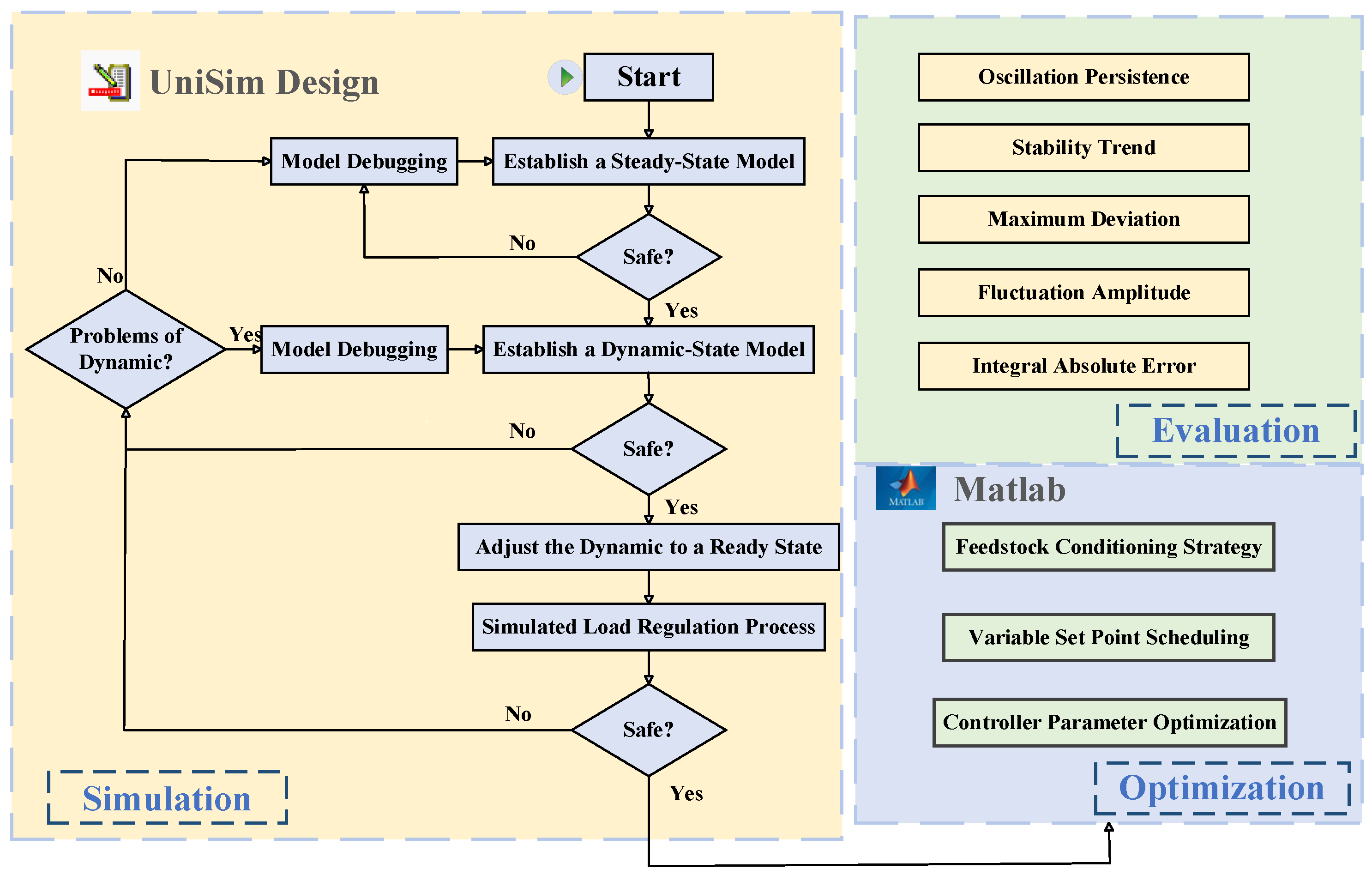
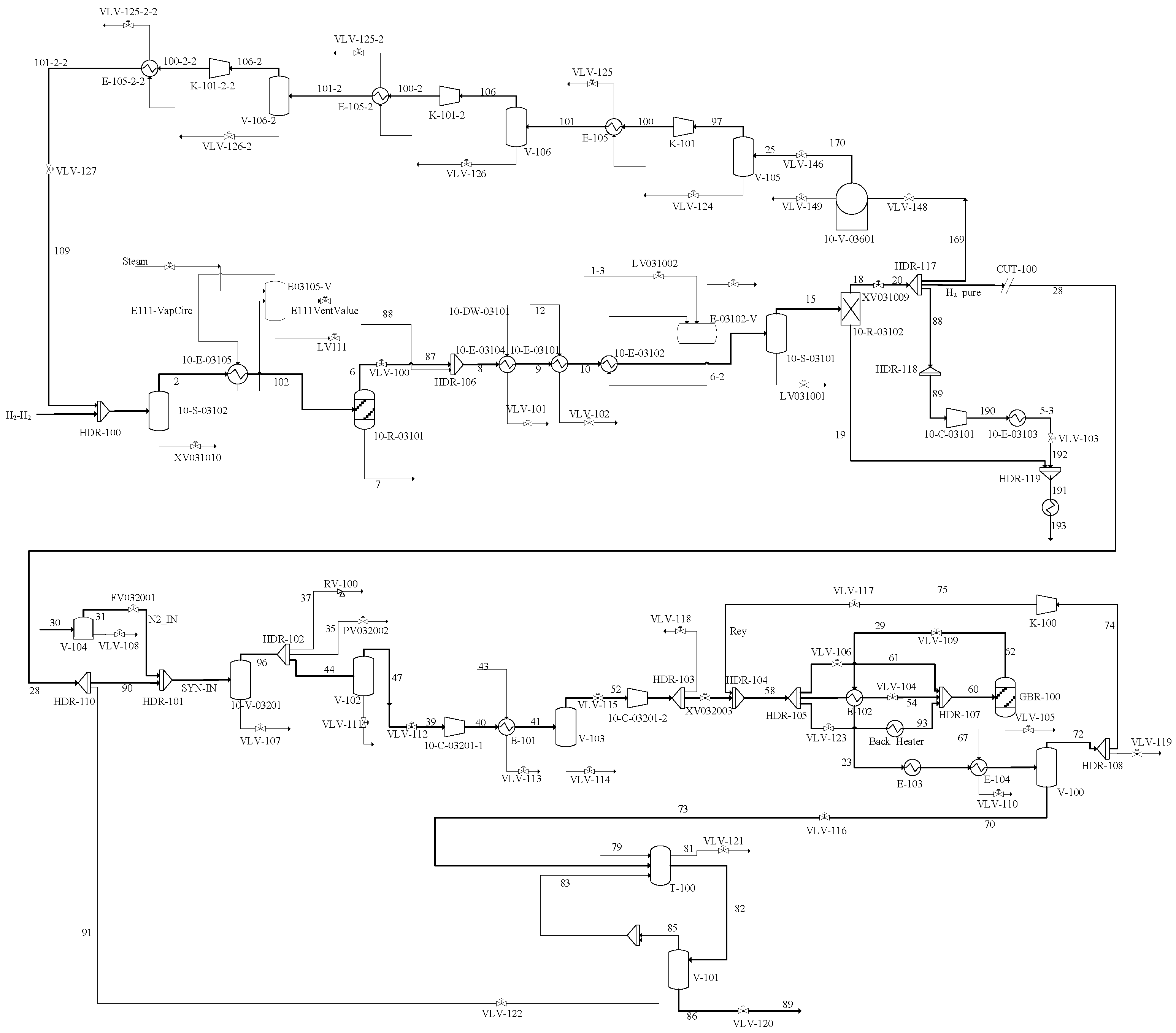
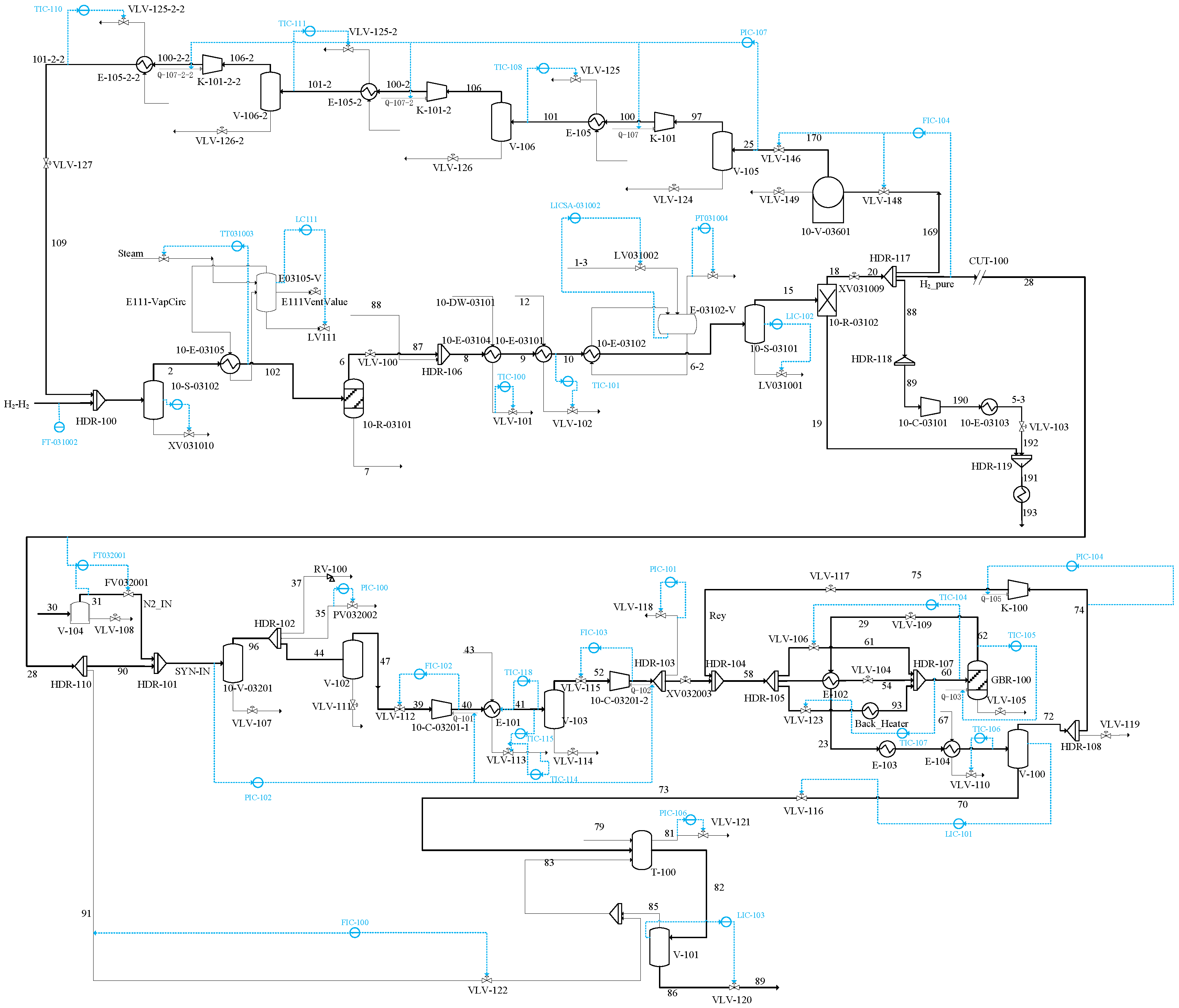
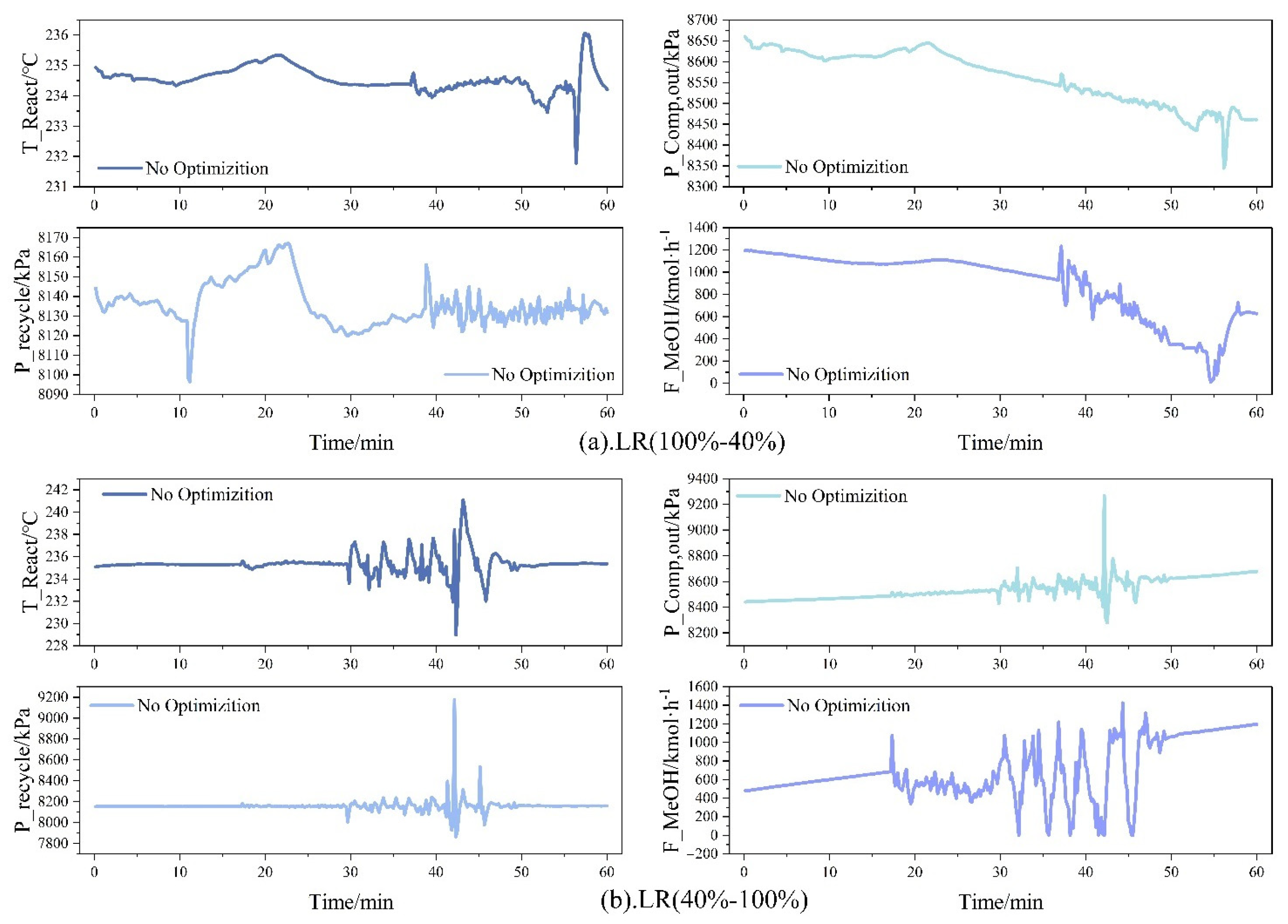
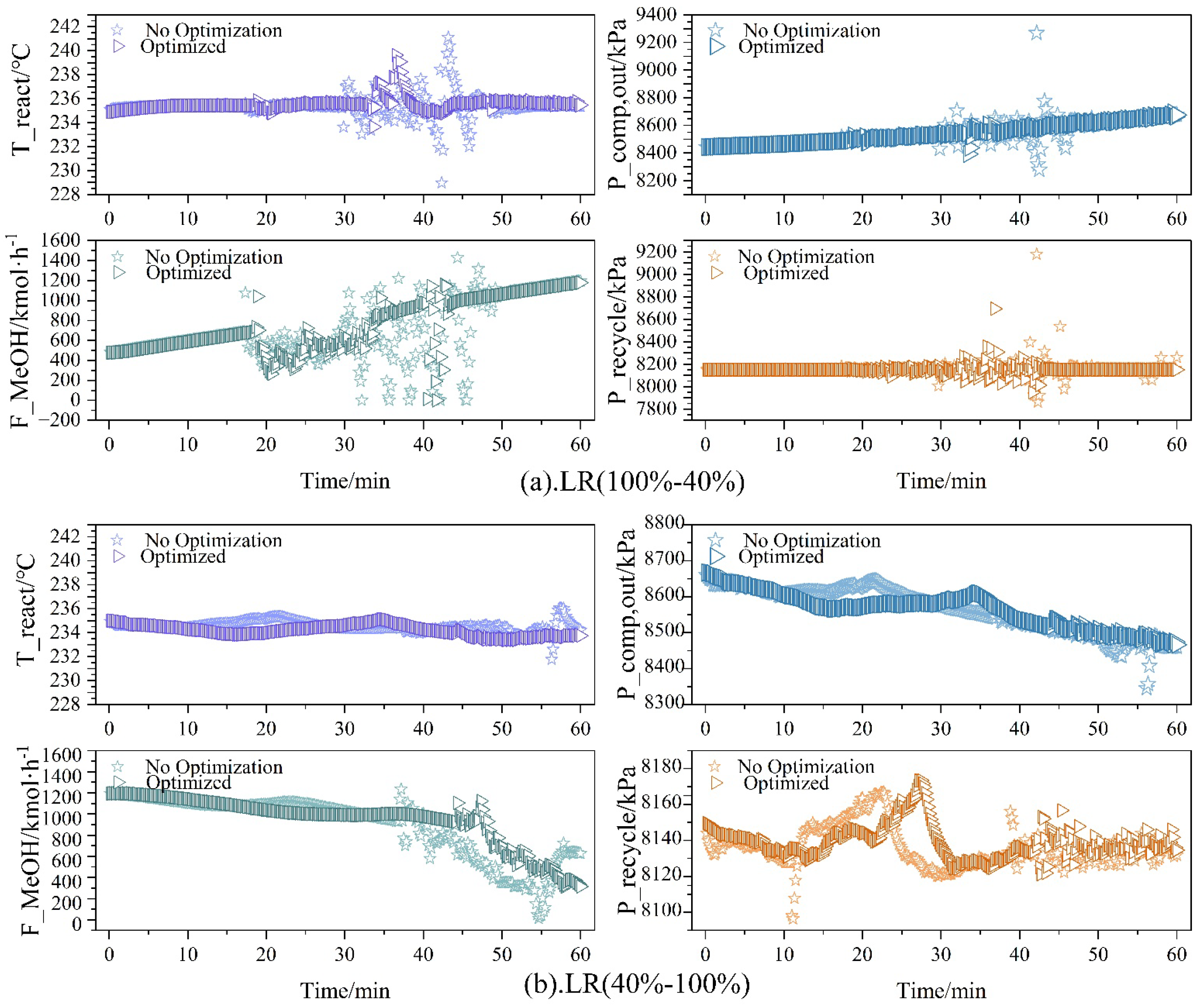
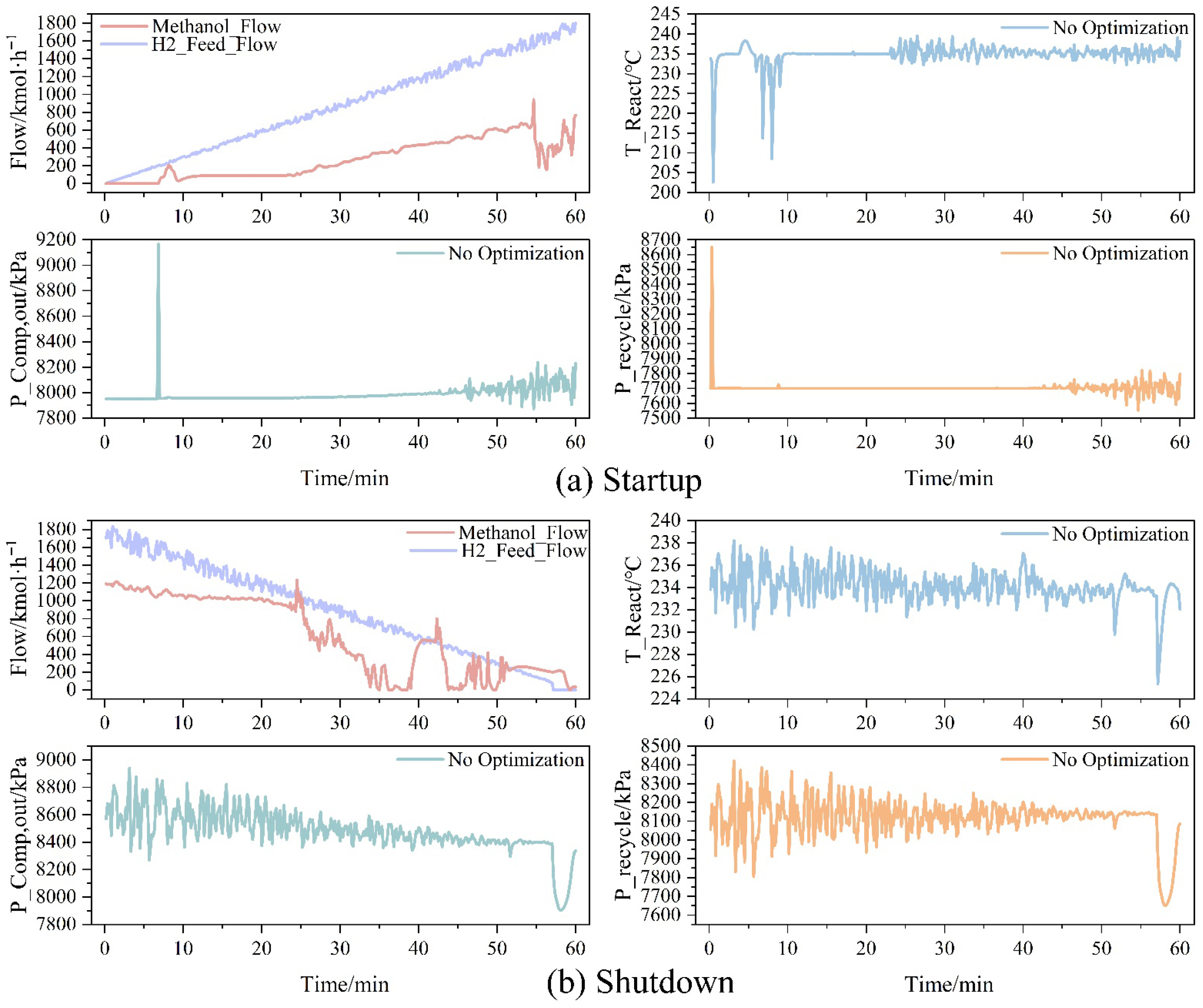
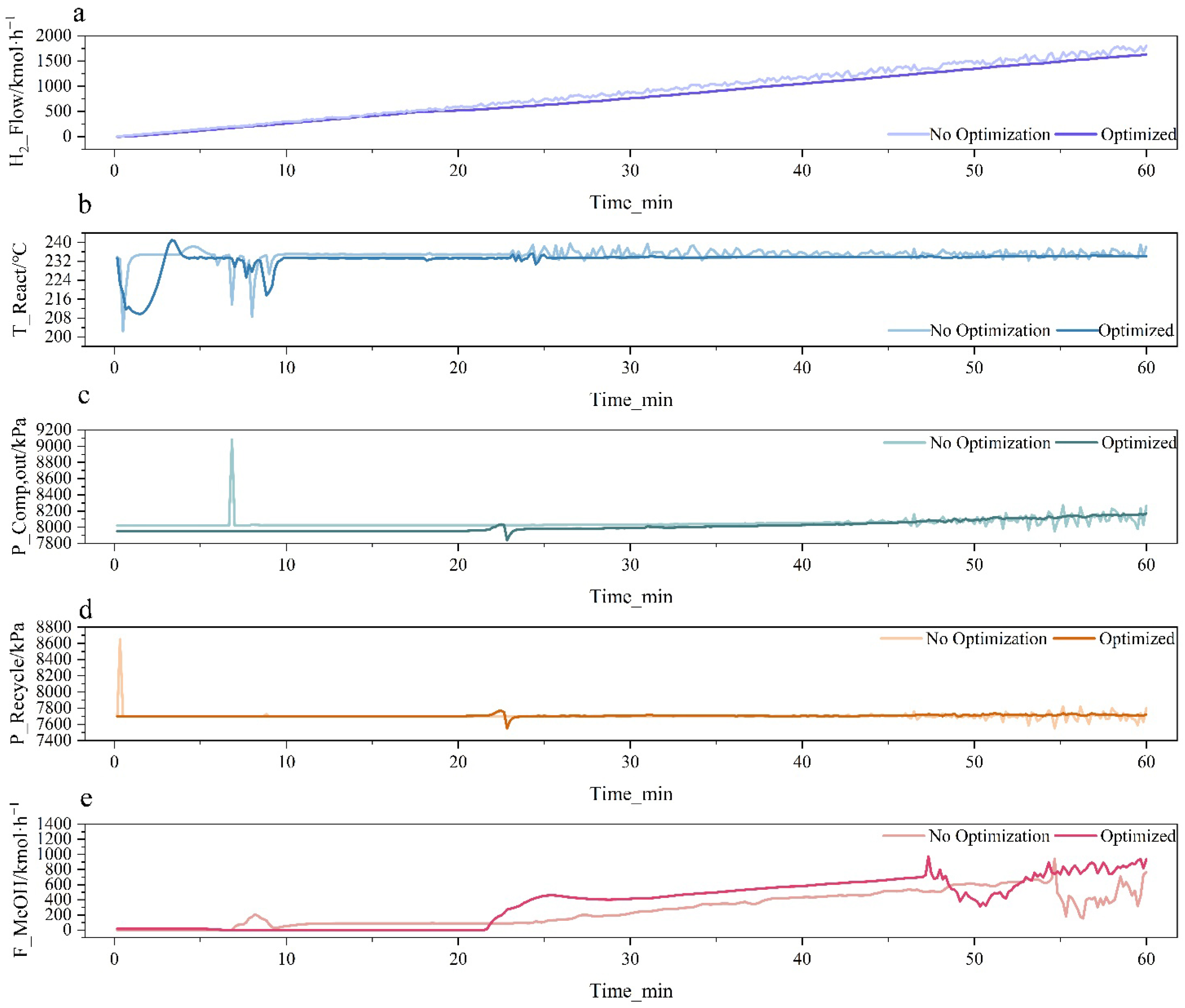
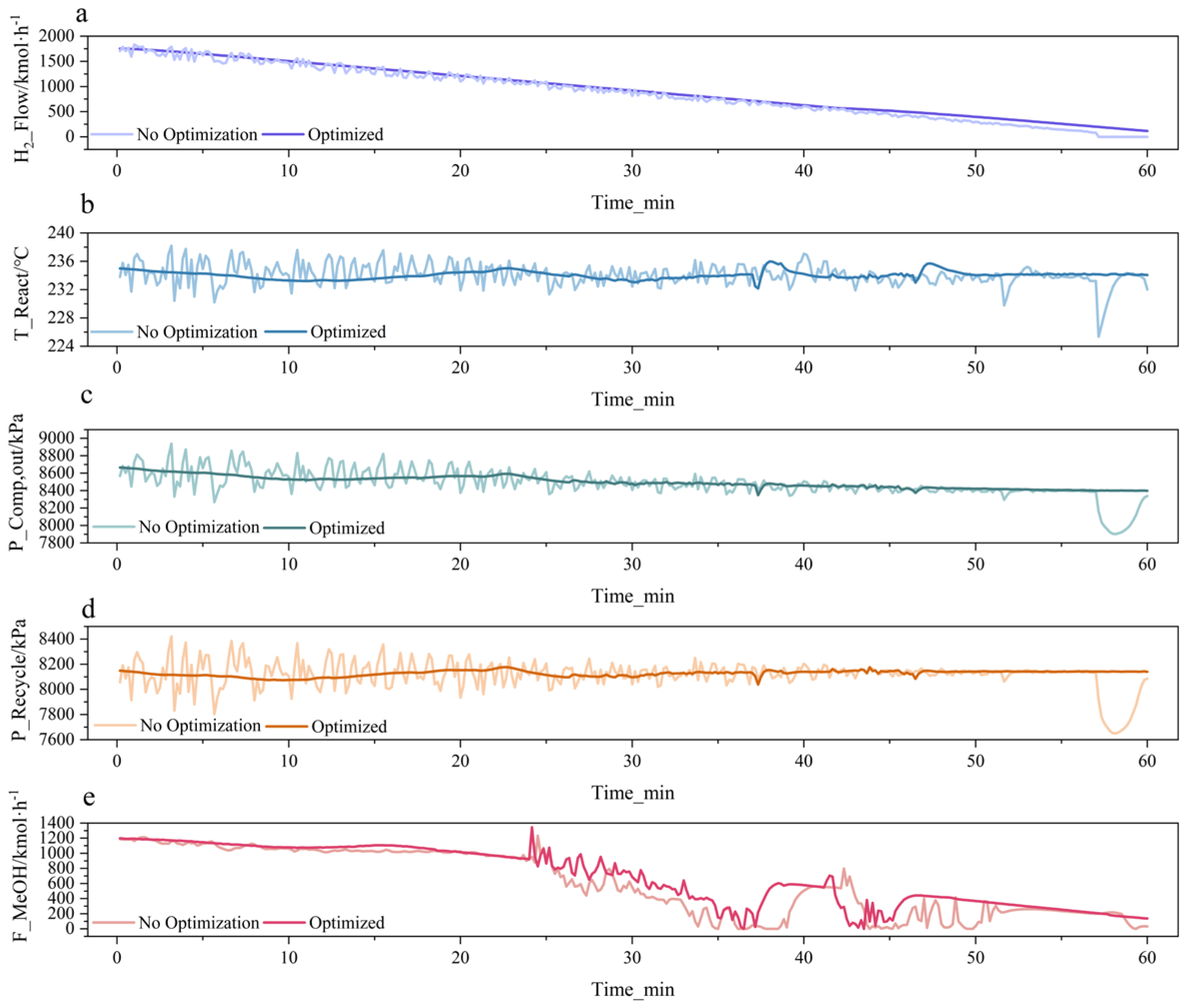
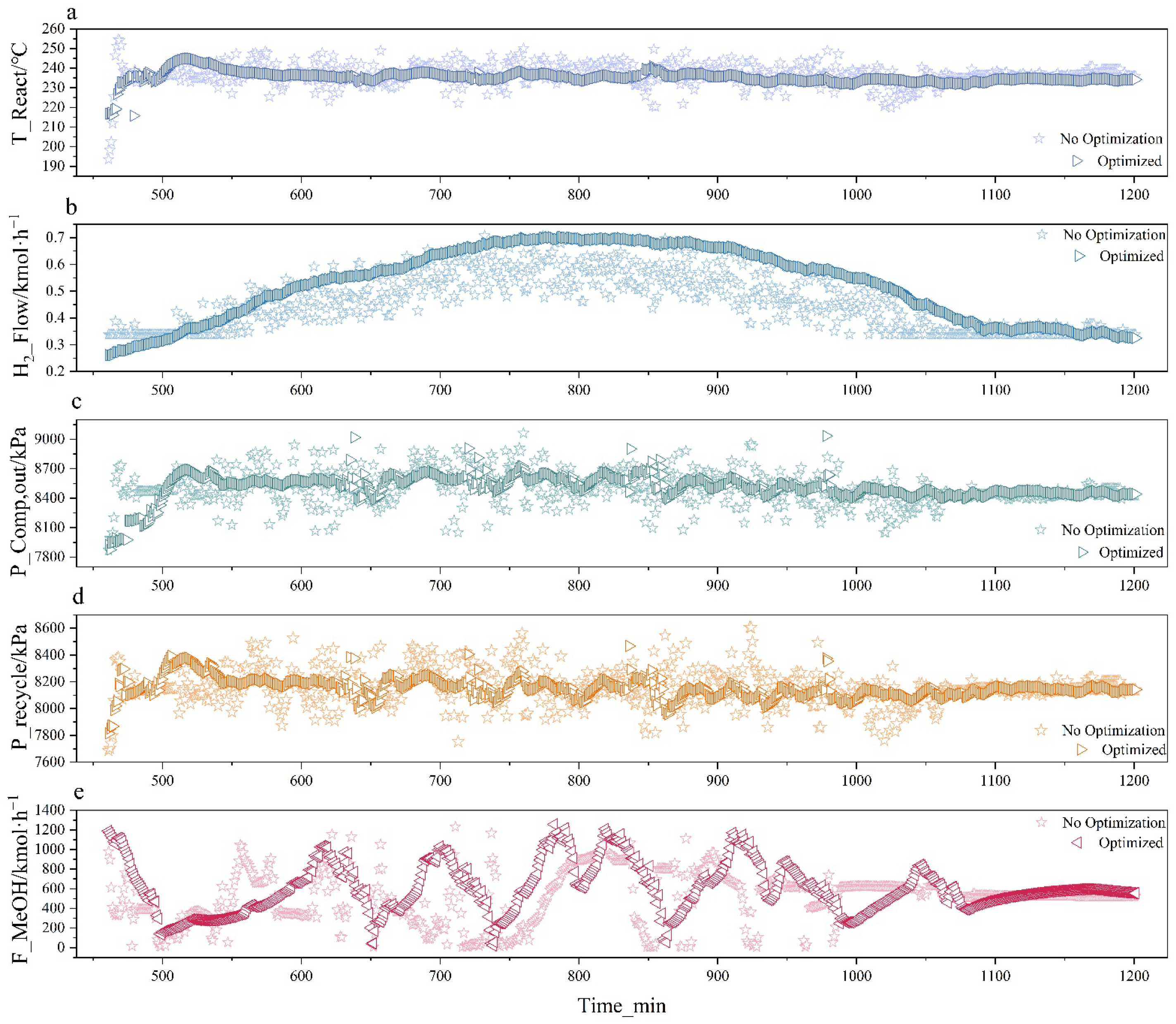
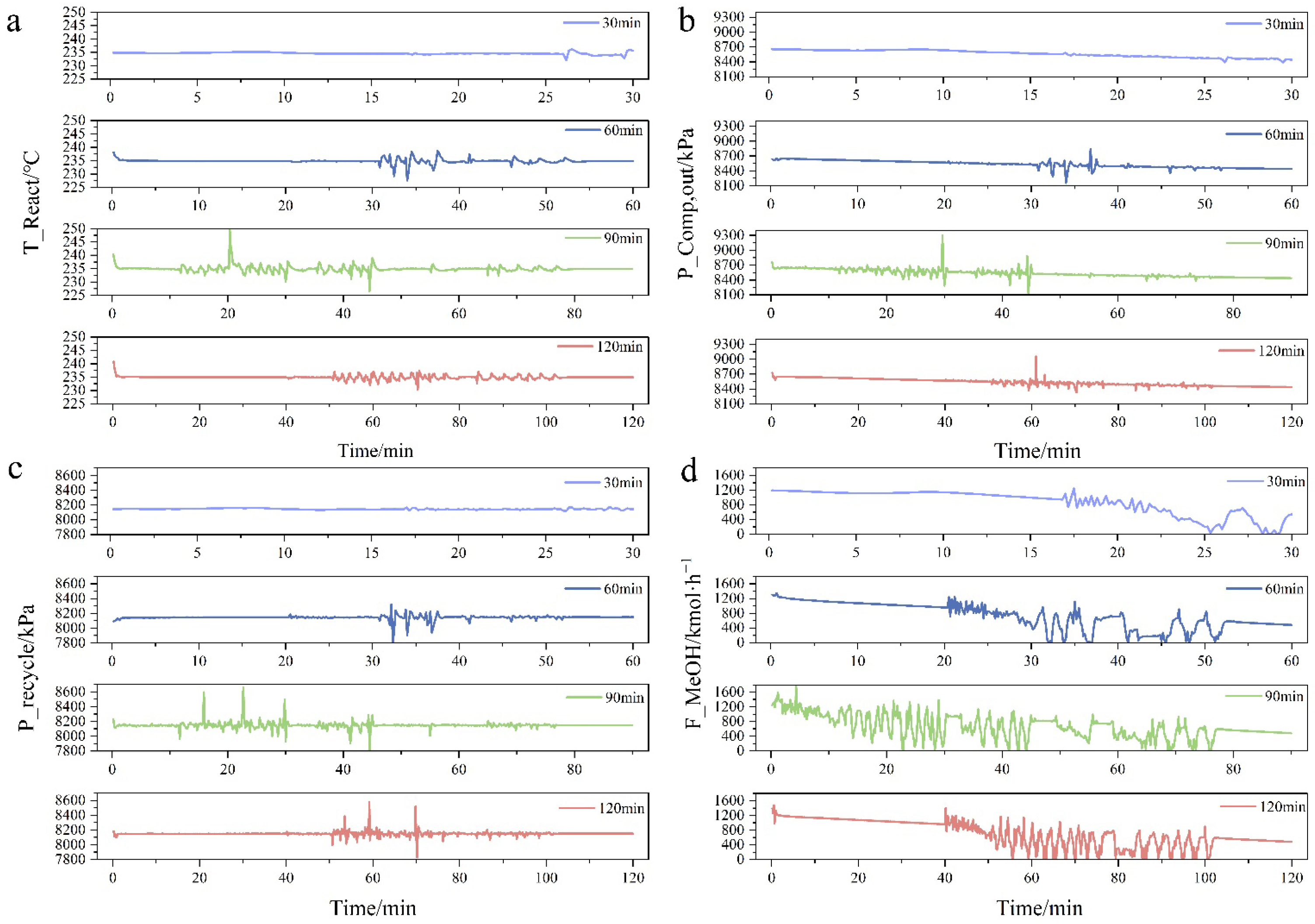
The increasing deployment of renewable energy introduces significant dynamic challenges to green methanol synthesis systems due to its inherent intermittency and variability. However, loop-level dynamic stability and controllability under multi-scenario transient conditions remain insufficiently explored. To address this gap, a steady-state and dynamic model of a renewable-driven methanol synthesis loop was developed in UniSim Design and evaluated under various realistic transient scenarios. Baseline simulations reveal recurring dynamic amplification within the synthesis loop, with pressure deviations exceeding 600 kPa during load increase and persistent oscillatory behavior under fluctuating conditions. To mitigate these instability mechanisms, a control-oriented refinement strategy incorporating first-order feed filtering, load-dependent temperature setpoint scheduling, and gain scheduling of key control loops was implemented. Within the simulation framework, the optimized strategy reduces maximum transient deviations of pressure and temperature by approximately 50–70% and mitigates startup pressure overshoots by over 60%. Under wind–solar-driven operation, pressure integral absolute error (IAE) decreases by up to 42%, and system trajectories become more bounded and better damped. These results provide quantitative insight into renewable-induced instability mechanisms and highlight the potential of control-oriented strategies to enhance dynamic operability in flexible power-to-methanol systems.
Keywords: renewable methanol; dynamic simulation; startup and shutdown; load switching renewable methanol; dynamic simulation; startup and shutdown; load switching