1. Introduction
The rapid intensification of agricultural production has resulted in a proportional increase in the generation of crop residues, posing significant environmental and resource management challenges [
1]. Rice cultivation, which exceeds 700 million tonnes annually at the global scale, generates rice husk as a major by-product, accounting for approximately 22% of the harvested paddy mass as reported by Chieng et al. [
2]. In rice-producing regions such as South and Southeast Asia, rice husk is often disposed of through open-field burning or uncontrolled dumping, practices that contribute to greenhouse gas emissions, particulate pollution, and adverse human health impacts [
3]. These challenges underscore the urgent need for sustainable pathways that enable the productive utilization of rice husk while minimizing environmental burdens.
Thermochemical conversion technologies have emerged as effective routes for valorising lignocellulosic agricultural residues as mentioned in the literature by Raj et al. [
4]. Among these, slow pyrolysis has received considerable attention due to its ability to convert rice husk into biochar, along with bio-oil and syngas as co-products [
5]. Biochar is a carbon-rich solid material with growing applications in soil conditioning, carbon sequestration, environmental remediation, and energy systems [
6]. From a sustainability perspective, biochar production is often promoted as a climate-mitigation strategy; however, its environmental performance is strongly dependent on upstream process design and operational choices, particularly the selection of energy sources for process operations [
7].
Life cycle assessment (LCA) provides a standardized framework to quantify environmental impacts associated with products and processes across defined system boundaries. In the context of biochar, LCA has been widely applied to assess climate change mitigation potential, energy efficiency, and resource consumption [
8,
9]. Nevertheless, reported outcomes vary substantially across studies, largely due to differences in feedstock characteristics, pyrolysis conditions, system boundaries, and most critically, assumptions regarding energy inputs [
10]. Despite energy supply being one of the most dominant contributors to emissions in thermochemical conversion processes, many existing LCA studies do not systematically isolate and evaluate the influence of different energy sources [
11].
Energy demand during biochar production arises primarily from feedstock drying, size reduction, and maintaining pyrolysis temperatures, typically ranging between 400 and 600 °C [
12]. The environmental implications of meeting this demand vary significantly depending on the energy source employed. Grid electricity commonly used in both laboratory-scale and industrial pyrolysis systems often reflects fossil-fuel-dominated generation mixes, particularly in developing countries where coal remains a major contributor [
13]. Alternatively, biomass combustion offers a renewable energy pathway that can be integrated within agricultural systems, potentially enhancing resource circularity [
14]. In parallel, photovoltaic (PV) solar energy has gained attention as a low-emission option for decentralized biomass processing, especially in regions with high solar irradiance as reported by Obaideen et al. [
15].
Despite the recognized importance of energy source selection, a clear gap persists in the literature regarding controlled, scenario-based comparisons that isolate the effect of energy supply on the environmental performance of rice husk biochar production [
16,
17]. Many studies evaluate biochar systems holistically, varying multiple parameters simultaneously, which obscures the specific contribution of energy inputs to key environmental indicators [
18,
19,
20]. Furthermore, while climate change impacts are frequently reported, other critical impact categories such as human toxicity, acidification, and abiotic resource depletion remain underexplored in a consistent and comparable manner [
19,
21].
In this context, the present study aims to perform a gate-to-gate life cycle assessment of biochar production from rice husk via slow pyrolysis, with a specific focus on isolating the role of energy source selection. The analysis compares three energy scenarios, namely, grid-based electricity, biomass combustion, and photovoltaic solar energy, while keeping all other process parameters constant. The assessment focuses on four midpoint impact categories: Global Warming Potential (GWP), Human Toxicity Potential (HTP), Acidification Potential (AP), and Abiotic Depletion Potential (ADP). The functional unit is defined as the production of 1 ton (1000 kg) of biochar. By adopting an Excel-based LCA framework with a controlled system boundary, this study seeks to provide clear insights into the environmental trade-offs associated with alternative energy pathways for rice husk biochar production, supporting informed decision-making for sustainable bioenergy and biochar systems.
2. Materials and Methods
2.1. Goal and Scope Definition
This study follows the ISO 14040 and ISO 14044 standards for LCA [
7,
9]. The analysis employs a gate-to-gate approach focused exclusively on the biochar production stage, enabling a controlled comparison of energy source impacts while maintaining consistency across all other process parameters [
22].
The primary goal of this LCA is to quantify and compare environmental impacts across three energy supply scenarios (grid electricity, biomass combustion, and photovoltaic solar) while maintaining all other process parameters constant. Specific objectives include: (i) isolating energy source effects on GWP, HTP, AP, and ADP; (ii) identifying the most environmentally favorable energy pathway; and (iii) providing transparent, reproducible analysis using accessible modeling tools to support decision-making in biochar facility design.
2.1.1. Functional Unit
The functional unit for this study is defined as the production of one ton (1000 kg) of biochar from rice husk via slow pyrolysis at 500 °C [
23,
24]. This functional unit was selected for several compelling reasons. First, it represents the primary product of interest in biochar production systems. Second, it allows direct and meaningful comparison across different energy scenarios while maintaining consistency. Third, it aligns with common biochar production scales in both pilot and commercial operations [
25]. It also facilitates comparison with existing literature on biochar production life cycle assessment.
2.1.2. System Boundary
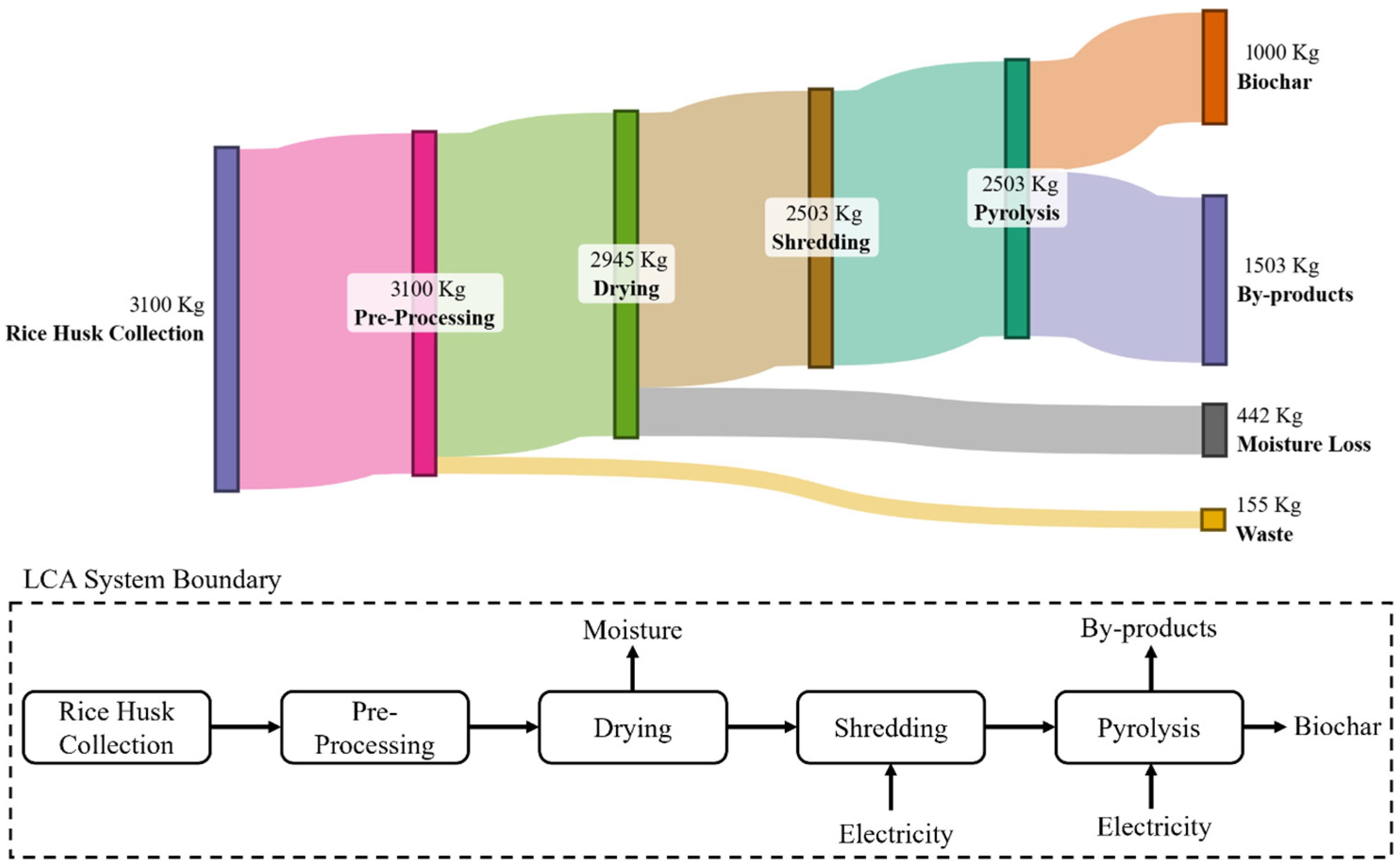
The system boundary is structured into five sequential phases as shown in
Figure 1, to clearly delineate material and energy flows throughout the production chain.
Rice husk is collected from rice mills where it is generated as an agricultural by-product of paddy processing. Short-distance transportation, limited to less than 10 km, is required to move the feedstock from collection points to the biochar production facility. This distance reflects typical local transport patterns in Indian agricultural regions where rice mills and biochar facilities are co-located within the same district, as rice husk has minimal economic value for long-distance transportation. Importantly, since transportation distance and mode remain identical across all three energy scenarios, their environmental impacts are constant and do not affect the comparative analysis or scenario rankings.
The preprocessing stage involves the removal of impurities such as stones, metal fragments, and other non-combustible materials that may be present in the collected rice husk. This cleaning operation results in approximately 5% mass loss as reported by Tsai et al. [
26]. The cleaned feedstock is then staged for subsequent processing operations.
Natural air drying is employed to reduce the moisture content of rice husk from its initial 15% [
4]. This process utilizes ambient air circulation in covered storage areas and does not require external energy input, making it a passive but essential step in feedstock preparation.
Mechanical shredding reduces the particle size of rice husk to the optimal range of 0.5–2 mm. This size reduction enhances the uniformity of heat transfer during pyrolysis and improves process efficiency. The shredding operation requires mechanical energy, the source of which varies according to the energy scenario being evaluated [
27].
The pyrolysis process is conducted at 500 °C under oxygen-limited conditions in the reactor atmosphere. The residence time is maintained at 2 h to ensure complete thermal decomposition. The biochar yield is 40% on a dry feedstock basis, as reported by Sahoo and Remya [
25], for rice husk pyrolysis at this temperature. Following pyrolysis, the biochar is cooled and separated from gaseous and liquid co-products.
Several elements are explicitly excluded from the system boundary to maintain analytical focus. Upstream processes including rice cultivation, harvesting, and primary paddy processing are excluded, as rice husk is considered a by-product with zero environmental burden allocation. Capital goods such as pyrolysis equipment, reactors, and infrastructure are not included, as their environmental impacts are amortized over extended operational lifetimes. Downstream processes including biochar transportation to end-users and soil remediation effects are beyond the scope of this production-focused analysis. Co-products including bio-oil and syngas are generated during pyrolysis, but their utilization pathways are not evaluated; no allocation is performed as the focus remains on biochar production impacts.
2.1.3. Description of Energy Source Scenarios
Three distinct energy source scenarios are compared in this study, each representing a realistic and practical approach to powering biochar production operations.
Scenario 1 utilizes energy from the regional electricity grid, with the energy mix representative of India’s national average for the year 2023. The Indian grid composition consists of multiple generation sources with varying environmental profiles [
28]. Coal-fired power plants constitute the dominant source, followed by renewable energy installations including solar, wind, and hydroelectric facilities, natural gas combined-cycle plants, nuclear power stations, and other minor sources [
29]. The overall carbon intensity of the grid reflects this diverse generation mix. Grid electricity powers all process operations including mechanical shredding machinery, and electric resistance heating elements for the pyrolysis reactor.
Scenario 2 employs biomass combustion using agricultural residues (wheat straw or rice straw) as fuel. The system consists of a fixed-bed combustion chamber with direct heat recovery for the pyrolysis reactor. Biomass combustion operates with controlled air supply in a complete combustion regime [
30]. Heat is directly transferred to the pyrolysis reactor, providing thermal energy for maintaining pyrolysis temperature. This configuration represents a circular agricultural system where crop residues provide energy for rice husk conversion to biochar.
Scenario 3 utilizes a solar photovoltaic system configured as a grid-tied installation to power biochar production operations [
31]. The system comprises: (i) PV panels (monocrystalline silicon, 18–20% conversion efficiency, 25-year operational lifetime), (ii) inverters (10-year lifetime, replaced 2.5 times over the panel life), and (iii) balance-of-system components including mounting structures, wiring, and monitoring equipment (25-year lifetime). In the grid-tied configuration, excess solar generation during peak irradiance periods is fed to the grid, while grid electricity supplements during low-irradiance periods or nighttime operations, eliminating the need for battery storage systems. This configuration represents the most common and practical implementation for industrial-scale biochar facilities, as it avoids the environmental burden and economic cost of large-scale battery systems while maintaining solar PV as the primary energy source [
32]. The environmental impacts of all PV system components, including panel manufacturing, inverter replacements, balance-of-system components, installation, and projected end-of-life management, are included in the assessment and pro-rated over the 25-year operational lifetime.
For clarity, the three energy scenarios are designated throughout this manuscript as follows: Grid-E (grid electricity scenario), Bio-E (biomass combustion scenario), and PV-E (photovoltaic solar scenario). These designations are used consistently in all figures, tables, and text.
All three scenarios are designed to supply equivalent total energy quantities to perform identical processing tasks. The mass of feedstock processed, the operating conditions, and the biochar yield remain constant across scenarios. The sole variable is the environmental footprint associated with generating and delivering the required energy, thereby enabling a controlled comparison that isolates energy-related impacts. The emission factor for each of these energy sources is adopted from the literature [
33].
2.2. Life Cycle Inventory Development
The life cycle inventory (LCI) was developed by combining experimental measurements from pilot-scale pyrolysis operations with established emission factors and characterization factors from peer-reviewed literature and international databases [
8,
33,
34]. All material and energy flows were quantified and normalized to the functional unit of one ton of biochar produced.
While comprehensive LCA software packages (SimaPro, GaBi, OpenLCA) are valuable for complex cradle-to-grave assessments with extensive databases, our focused gate-to-gate comparison with a limited number of impact categories does not require such tools. We employed transparent manual calculations using documented characterization factors from the ReCiPe 2016 methodology [
33]. This approach ensures full transparency, allows for straightforward verification of all calculations, and facilitates adaptation by other researchers. For studies with well-defined system boundaries and explicit inventory data, manual calculation provides equivalent accuracy to commercial software while enhancing reproducibility.
The mass balance for the biochar production system was constructed by reverse-engineering from the functional unit to ensure mass conservation throughout the process chain.
Table 1 presents the complete mass balance for all processing stages.
The process begins with the collection of 3100 kg of rice husk at an initial moisture content of 15% on a wet basis, typical for rice husk stored under covered conditions. During preprocessing, impurities and non-combustible materials are removed, resulting in a 5% mass loss. The air-drying phase removes approximately 442 kg of water through natural evaporation and leaving 2503 kg of dried material. The shredding operation reduces particle size without mass loss, maintaining 2503 kg. At a biochar yield of approximately 40% (to achieve the functional unit of 1000 kg biochar), the remaining 1503 kg is categorised as volatile products including bio-oil, syngas, and minor process losses. Energy consumption values for shredding, and reactor operation were quantified on a per-ton biochar basis. Emission factors for grid electricity, biomass combustion, and photovoltaic electricity generation were sourced from peer-reviewed studies [
32,
35,
36].
The total energy consumption for biochar production is dominated by pyrolysis heating, which accounts for approximately 95.6% of the total energy demand, while mechanical shredding contributes the remaining 4.4%. Other process stages including rice husk collection, preprocessing, and air drying require negligible or zero external energy input. This energy distribution, consistent across all three scenarios, explains why energy source selection for pyrolysis heating is the primary determinant of environmental performance, as discussed in the contribution analysis (
Section 3.6).
2.3. Life Cycle Impact Assessment
The ReCiPe 2016 midpoint method was selected for impact assessment, evaluating distinct environmental impact categories [
37]. These categories provide comprehensive coverage of major environmental concerns associated with industrial processes.
The environmental impact assessment focused on four midpoint impact categories: GWP (kg CO2-eq), HTP (kg 1,4-DCB-eq), AP (kg SO2-eq), and ADP (MJ). Characterization factors were applied manually within Microsoft Excel. Inventory flows were multiplied by corresponding characterization factors to obtain impact indicators normalized to the functional unit.
Emission factors and characterization factors for the impact categories were compiled from multiple authoritative sources to ensure accuracy and regional relevance [
18,
21,
33].
Table 2 presents the emission factors for each energy source across all impact categories.
GWP: Grid electricity from the Indian national grid carries an emission factor that reflects the coal-dominated generation mix typical of South Asian power systems as reported in the literature by Sengupta et al. [
36]. Biomass combustion has a substantially lower emission factor, accounting for biogenic carbon neutrality where CO
2 released during combustion is offset by CO
2 absorbed during biomass growth, with residual emissions attributed to fossil fuel inputs during harvesting and preprocessing. Solar photovoltaic electricity has the lowest emission factor, with lifecycle emissions primarily from panel manufacturing, balance-of-system components, and end-of-life management distributed over the 25-year operational lifetime.
HTP: Grid electricity exhibits elevated toxicity factors due to heavy metal emissions from coal combustion, fly ash disposal, and mining activities [
38]. Biomass combustion shows moderate toxicity impacts from trace contaminants in agricultural residues and ash handling. Solar PV contributes toxicity impacts primarily during material extraction and processing phases of panel manufacturing, particularly from silicon purification and semiconductor fabrication processes [
39].
AP: Grid electricity generates significant acidifying emissions, predominantly Sulphur dioxide and nitrogen oxides from coal combustion. Biomass combustion produces lower acidifying emissions due to the generally low Sulphur and nitrogen content of cereal straws. Solar PV exhibits minimal acidification impact, with residual contributions from industrial processes during manufacturing [
40].
ADP: Grid electricity shows high resource depletion due to consumption of coal and natural gas reserves. Biomass combustion exhibits minimal fossil resource depletion, with small inputs for harvesting equipment operation [
41]. Solar PV has moderate resource depletion reflecting the material-intensive nature of panel production, including silicon, aluminum, copper, and rare earth elements.
2.4. Data Quality and Sources
Primary data including pyrolysis process parameters, mass balances, energy consumption measurements, and rice husk characteristics were obtained from experimental trials conducted at the Engines and Biofuels Research Laboratory, UPES, Dehradun [
4,
21,
41]. Secondary data for background processes were sourced from Ecoinvent 3.8 database, Central Electricity Authority of India reports (2023) and IPCC Guidelines [
36,
42]. Data quality assessment confirmed temporal coverage of 2022–2023, geographical specificity to India (Uttarakhand region), and technological representation of small to medium-scale pyrolysis systems [
33].
2.5. Carbon Sequestration and Avoided Emissions Credits
While this study employs a gate-to-gate system boundary focused on production impacts, it is important to acknowledge the significant environmental credits associated with biochar’s end-use application. When biochar is applied to agricultural soils, it provides durable carbon sequestration and reduces GHG emissions through multiple mechanisms [
43,
44]. According to established carbon removal methodologies, one ton of biochar generates between 2.57 and 3.26 carbon removal credits, with each credit representing one ton of CO
2-eq sequestered. Additionally, biochar application to agricultural soils reduces N
2O emissions by an average of 26%, with reductions as high as 50% under optimal conditions as reported by Hassan et al. [
45].
To provide a comprehensive environmental assessment, we present both gross production impacts (without credits) and net impacts (with application-phase credits) for all scenarios. In the present study, environmental credits are quantified independently for each impact category and applied separately to the corresponding impact indicators. Carbon sequestration credit (2800 kg CO2-eq per ton biochar) is applied exclusively to GWP, heavy metal immobilization credit (10 kg 1,4-DCB-eq) to HTP, reduced acidifying emissions credit (1.0 kg SO2-eq) to AP, and avoided fossil fuel consumption credit (100 MJ) to ADP. Each credit represents category-specific environmental benefits realized during biochar application to agricultural soils. Net environmental impacts are calculated as: Net Impact = Gross Production Impact − Category-Specific Credit. This approach ensures transparent accounting of both production-phase burdens and application-phase benefits for each environmental impact category.
2.6. Key Assumptions and Limitations
This analysis treats rice husk as waste with zero upstream environmental burden and assumes minimal transportation (below 10 km) consistent across all scenarios. Infrastructure and capital equipment are excluded to maintain operational focus, with biochar yield held constant at 40% on a dry basis and process efficiency independent of energy source. The Indian grid mix is assumed constant at 2023 levels [
33]. Key limitations include evaluation of a single pyrolysis temperature (500 °C), extrapolation from pilot-scale batch operations to continuous production, and unmodeled seasonal feedstock variations. Results are specific to the Indian context with coal-dominated grid electricity. The gate-to-gate boundary excludes downstream carbon sequestration benefits and co-product allocation, while local air quality impacts are characterized without spatial population exposure modeling.
3. Results and Discussion
3.1. Environmental Performance
The comparative LCA of the three energy source scenarios reveals significant variations in environmental impacts across all four impact categories evaluated.
The results demonstrate that energy source selection represents the single most influential factor in determining the environmental performance of biochar production from rice husk as similarly reported by Nayak et al. [
46]. The differences among scenarios are substantial, ranging from 51-fold variation in GWP to 48-fold variation in ADP between the best and worst performing scenarios. These findings clearly illustrate that the choice of energy source fundamentally shapes the environmental profile of biochar production systems and should be a primary consideration in facility design and operational planning [
47].
When considering gross production impacts alone, the photovoltaic solar scenario (PV-E) consistently demonstrates superior environmental performance across all four impact categories, followed by biomass combustion (Bio-E), with grid electricity (Grid-E) exhibiting the highest environmental burdens. However, when application-phase credits for carbon sequestration and avoided emissions are incorporated, all three scenarios achieve net negative emissions for GWP, indicating that biochar production and soil application results in net GHG removal from the atmosphere regardless of the energy source employed, though the magnitude of climate benefit varies considerably.
3.2. Global Warming Potential
GWP shows the most dramatic differences among scenarios and provides the clearest indication of climate change mitigation effectiveness.
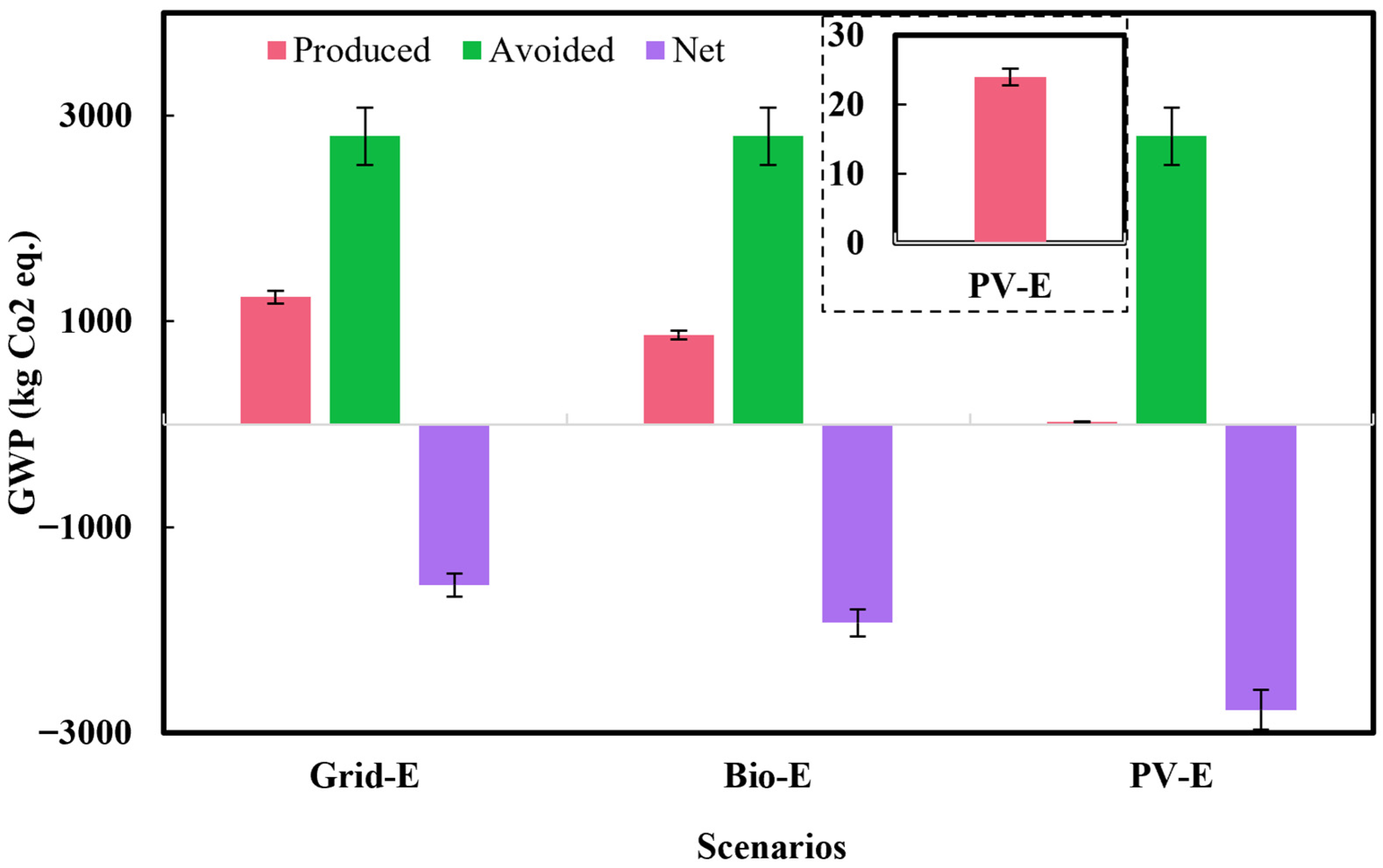
Figure 2 presents the comparative GWP results for all three scenarios.
The Grid-E scenario generates 1237.5 kg CO
2-eq per ton of biochar produced, with pyrolysis heating accounting for 95.6% of total emissions (1182.5 kg CO
2-eq) and shredding operations contributing the remaining 4.4% (55 kg CO
2-eq) as shown in
Figure 2. These substantial emissions reflect the coal-dominated Indian electricity grid, where fossil fuel combustion for power generation releases significant quantities of carbon dioxide, methane from coal mining operations, and nitrous oxide from combustion processes [
48]. The high carbon intensity of grid electricity fundamentally undermines the climate benefits of biochar production when this energy source is employed.
The Bio-E scenario produces 869.6 kg CO
2-eq per ton of biochar, representing a 29.7% reduction compared to grid electricity. The lower emissions in this scenario reflect the partial carbon neutrality of biomass combustion, where the majority of CO
2 released was recently sequestered from the atmosphere during plant growth [
49].
The PV-E scenario achieves remarkably low gross emissions of only 24.0 kg CO
2-eq per ton of biochar, representing a 98.1% reduction compared to grid electricity and a 97.2% reduction compared to biomass combustion. These minimal emissions arise entirely from the lifecycle impacts of PV panel manufacturing, including energy-intensive silicon purification, module assembly, balance-of-system components, and projected end-of-life management, all pro-rated over the 25-year operational lifetime [
31]. During actual operation, the PV system generates electricity with effectively zero direct emissions.
When carbon sequestration credits are applied, all three scenarios achieve net negative emissions, transforming biochar production from a carbon source to a substantial carbon sink. The carbon sequestration credit of 2800 kg CO2-eq per ton of biochar reflects the stable carbon content of biochar that remains sequestered in soil for hundreds to thousands of years, effectively removing atmospheric CO2 on climate-relevant timescales.
These results demonstrate that while biochar production provides net climate benefits regardless of energy source as reported in the literature by Lehmann et al. [
14], the choice of energy supply dramatically affects the magnitude of climate mitigation. Using solar PV rather than grid electricity increases the net carbon removal by 1213.5 kg CO
2-eq per ton of biochar, equivalent to offsetting the annual carbon footprint of approximately 0.3 average global citizens.
3.3. Human Toxicity Potential
HTP exhibits the widest relative variation among scenarios, spanning a 67-fold difference between Grid-E and PV-E scenarios. This impact category quantifies the release of toxic substances that pose risks to human health through various exposure pathways including inhalation, ingestion, and dermal contact.
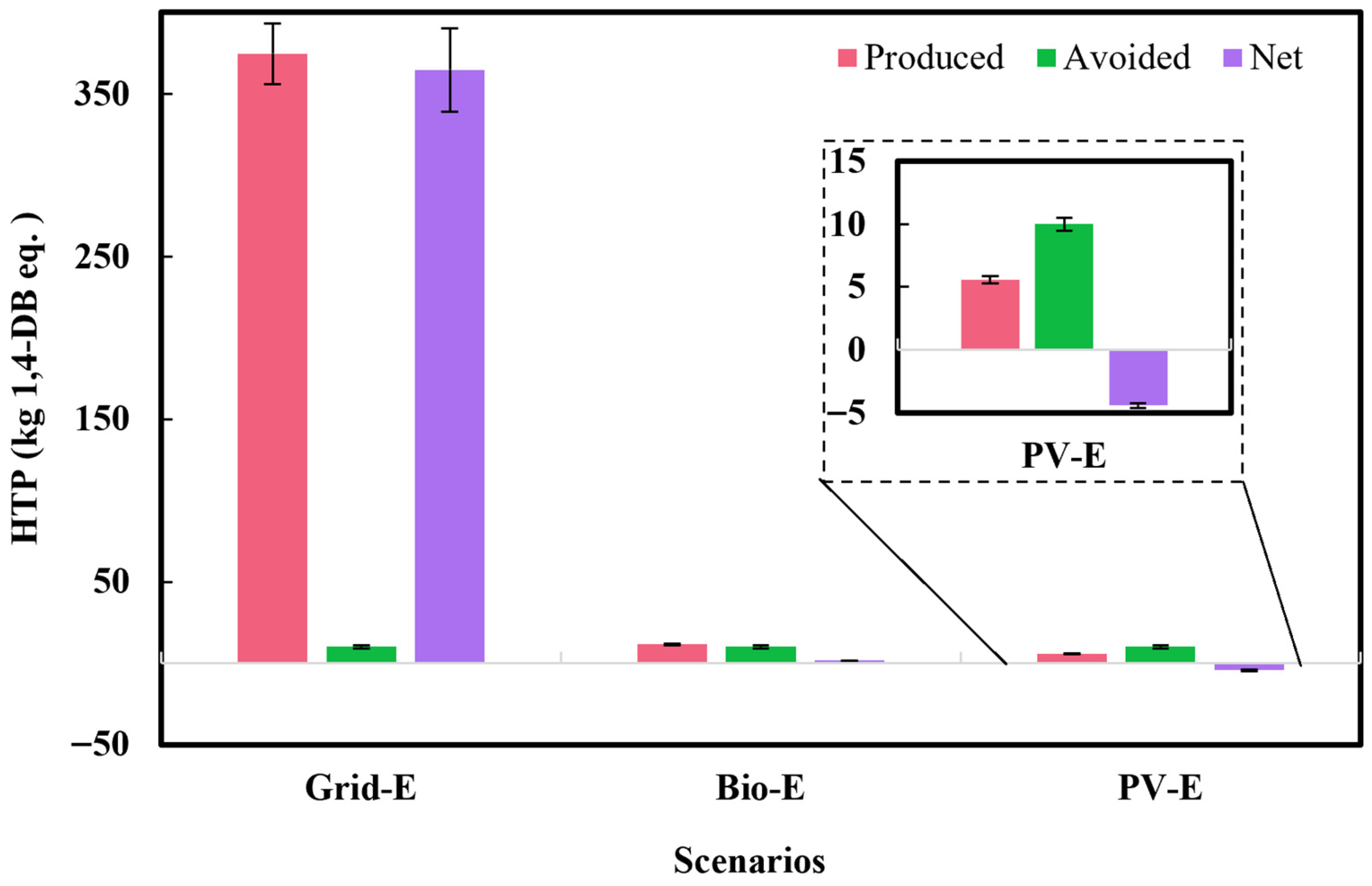
The Grid-E scenario generates 374.6 kg 1,4-DCB-eq per ton of biochar, with the overwhelming majority (358.0 kg 1,4-DCB-eq, 95.6%) attributed to pyrolysis heating as shown in
Figure 3. These high toxicity impacts arise primarily from coal combustion in power plants, which releases heavy metals including mercury, lead, cadmium, and arsenic [
50]. Coal ash disposal contributes additional toxicity through heavy metal leaching into groundwater.
The Bio-E scenario produces dramatically lower toxicity impacts, representing a 96.9% reduction compared to Grid-E. Pyrolysis heating contributes 11.1 kg 1,4-DCB-eq while shredding adds 0.5 kg 1,4-DCB-eq. Biomass combustion generates significantly lower heavy metal emissions than coal due to the fundamentally different chemical composition of biomass [
51]. However, residual impacts arise from trace contaminants in biomass including naturally occurring metals, incomplete combustion products, and ash handling operations.
The PV-E scenario achieves the lowest toxicity impact, representing an 98.5% reduction. These impacts originate entirely from PV panel manufacturing processes, including silicon purification, which uses hydrochloric and sulphuric acids, semiconductor fabrication involving toxic dopants and solvents, and metal extraction for balance-of-system components. Importantly, operational-phase toxicity emissions are effectively zero.
Applying a credit of 10 kg 1,4-DCB-eq for heavy metal immobilization when biochar is applied to soil reveals important distinctions among scenarios. The Grid-E scenario maintains a substantial net positive impact of 364.6 kg 1,4-DCB-eq, indicating that production-phase toxicity greatly exceeds application-phase benefits. The Bio-E scenario achieves near-neutral toxicity at 1.6 kg 1,4-DCB-eq, where production impacts are almost entirely offset by soil remediation benefits. Most notably, the PV-E scenario reaches net negative toxicity of −4.4 kg 1,4-DCB-eq, meaning that the heavy metal immobilization capacity of biochar in soil exceeds the toxicity impacts of PV manufacturing as mentioned in the literature by Tang et al. [
52].
These results have important implications for biochar deployment in contexts where human health protection is paramount, such as near population centres or in regions with existing air quality challenges. The substantial toxicity burden of grid-powered production suggests that facility siting should carefully consider local population exposure, while renewable energy scenarios offer pathways to produce biochar with minimal or even net beneficial toxicity profiles.
3.4. Acidification Potential
AP quantifies emissions of acidifying substances, primarily sulphur dioxide and nitrogen oxides, which contribute to acid rain and ecosystem acidification. This impact category is particularly relevant for assessing regional air quality effects and impacts on terrestrial and aquatic ecosystems.
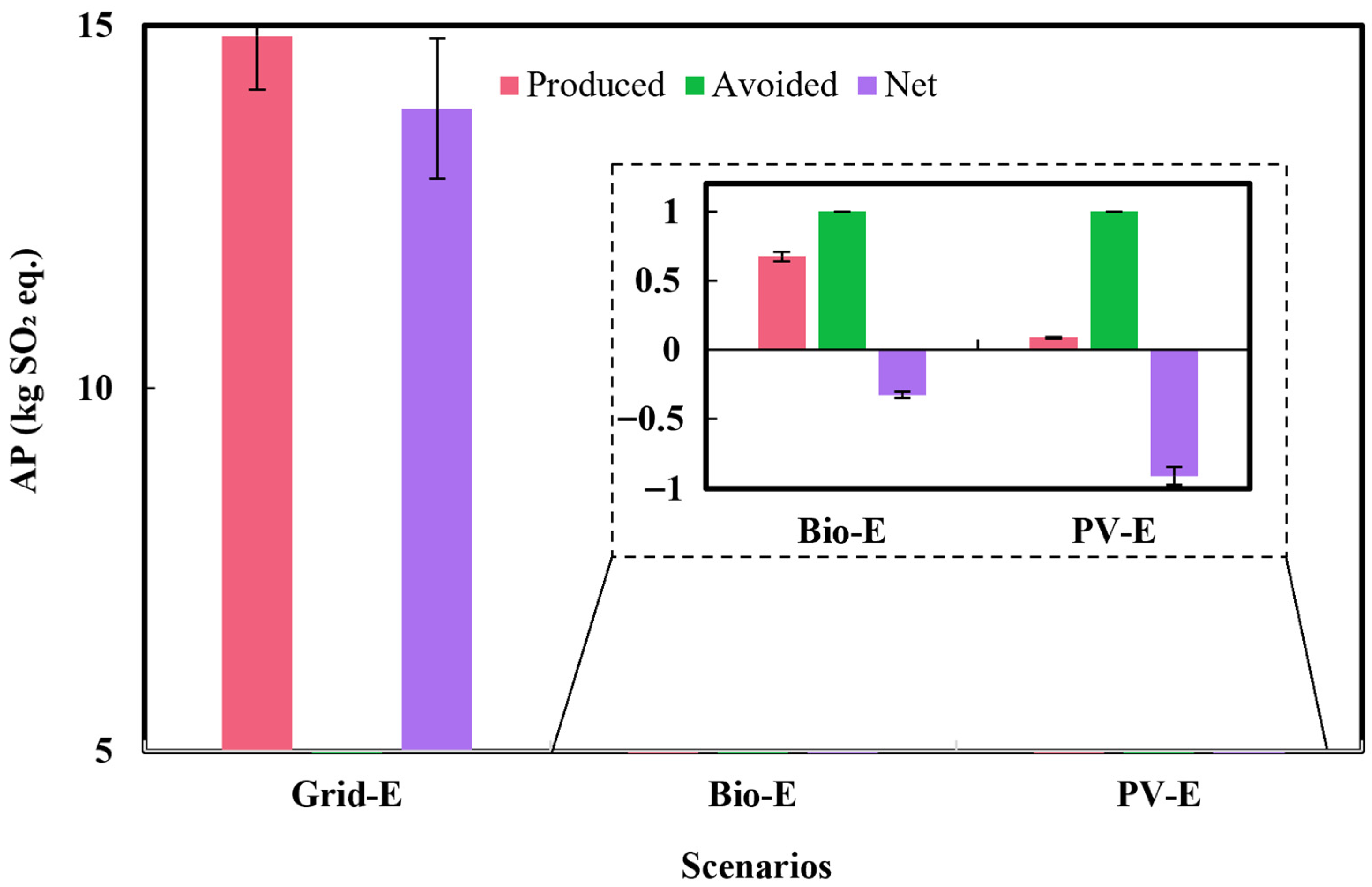
The Grid-E scenario generates 14.85 kg SO
2-eq per ton of biochar as shown in
Figure 4. These substantial acidification impacts reflect the high sulphur content of Indian coal, which releases SO
2 during combustion, along with NO
x formation during high-temperature combustion processes. Coal-fired power generation is a major contributor to acid deposition in South Asia, affecting forest health, freshwater ecosystems, and agricultural productivity in regions downwind of power plants [
53].
The Bio-E scenario produces markedly lower acidification at 0.68 kg SO2-eq per ton of biochar, representing a 95.4% reduction compared to Grid-E. Agricultural residues typically contain low sulphur content compared to coal, resulting in minimal SO2 emissions during combustion.
The PV-E scenario achieves the lowest acidification impact, representing a 99.4% reduction compared to grid electricity and an 86.8% reduction compared to the Bio-E scenario. These minimal impacts originate from industrial processes during PV panel manufacturing, including emissions from aluminium smelting for frames, glass production for modules, and electricity consumption in semiconductor fabrication facilities [
54].
Applying a credit of 1.0 kg SO
2-eq for reduced acidifying emissions through improved nitrogen retention when biochar is applied to soil reveals that two scenarios achieve net negative acidification. The Grid-E scenario maintains a substantial net positive impact of 13.85 kg SO
2-eq, indicating that production-phase acidification greatly exceeds any benefits from reduced nitrogen losses [
55].
These findings suggest that biochar production using renewable energy sources can contribute to regional air quality improvement and ecosystem protection, while grid-powered production exacerbates existing acidification challenges as reported by You et al. [
56]. In regions experiencing acid rain impacts or approaching critical loads for ecosystem acidification, the choice of renewable energy for biochar production becomes an important environmental safeguard.
3.5. Abiotic Depletion Potential
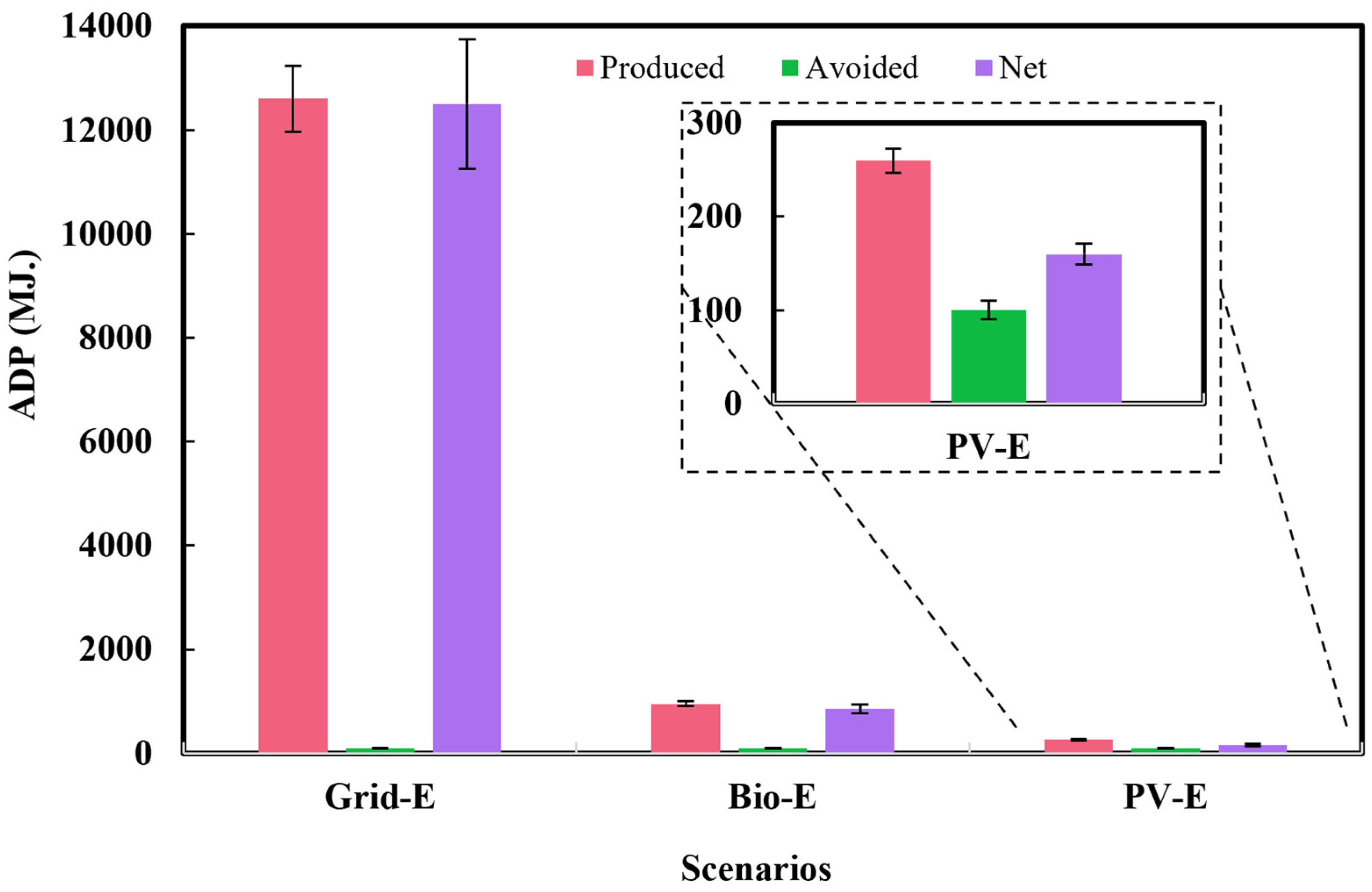
ADP quantifies the consumption of non-renewable resources, particularly fossil fuels and mineral reserves, providing insight into the long-term resource sustainability of different energy pathways. This category is crucial for evaluating the compatibility of biochar production systems with circular economy principles and sustainable resource management.
The Grid-E scenario exhibits the highest resource depletion. This substantial resource consumption reflects the direct depletion of coal and natural gas reserves for electricity generation, along with upstream energy investments in fuel extraction, processing, and transportation. The high ADP value indicates that grid-powered biochar production places significant demands on finite fossil fuel stocks, potentially creating long-term resource constraints as reserves become more difficult and energy-intensive to access [
31].
The Bio-E scenario achieves a 92.5% reduction in resource depletion as shown in
Figure 5. The low ADP reflects the renewable nature of agricultural residues, which regenerate annually through photosynthesis without depleting geological reserves. Residual fossil fuel consumption occurs during operation of biomass harvesting equipment, preprocessing machinery, and transportation, but these inputs are minimal compared to direct fossil fuel combustion for energy.
The PV-E scenario achieves the lowest resource depletion, representing a 97.9% reduction compared to Grid-E and a 72.7% reduction compared to Bio-E. This ADP primarily reflects the embodied energy in materials used for PV panel production, including silicon purification (a highly energy-intensive process), aluminum extraction for frames and mounting structures, copper for electrical connections, and glass production for module encapsulation [
57]. However, once manufactured, the PV system generates electricity for 25 years without consuming any fuel resources, resulting in very low lifecycle resource depletion per unit of energy generated [
58].
Applying a credit of 100 MJ for avoided fossil fuel consumption in synthetic fertilizer production, reflecting improved nutrient retention efficiency when biochar is applied to soil, provides perspective on system-level resource sustainability. The Grid-E scenario maintains a very high net resource depletion of 12,500 MJ, indicating minimal offset from improved nutrient efficiency relative to production-phase fossil fuel consumption. The Bio-E scenario achieves an 93.2% improvement over the Grid-E scenario. The PV-E scenario delivers the lowest resource depletion and demonstrates the greatest alignment with circular economy and resource conservation principles [
54].
These results have important implications for long-term energy security and resource independence. Biochar production facilities powered by renewable energy sources position themselves favourably for sustained operation as fossil fuel prices increase and carbon regulations tighten, while grid-dependent facilities face increasing economic and regulatory risks associated with fossil fuel dependence.
3.6. Contribution Analysis by Process Stage
The results reveal a remarkably consistent pattern: pyrolysis heating dominates total environmental burdens, accounting for 95.6% of impacts across all three energy scenarios and all four impact categories, while shredding operations contribute only 4.4%. This uniform contribution pattern reflects the fundamental energy balance of the biochar production process. Since environmental impacts scale directly with energy consumption within each energy source scenario, this energy ratio translates directly into impact contribution ratios.
The perfect consistency of this 95.6/4.4 split across 12 different scenario–category combinations (3 scenarios × 4 categories) provides strong validation of the calculation methodology and data quality. Any errors in emission factors, energy conversion efficiencies, or calculation procedures would manifest as variations in these contribution percentages. The observed consistency confirms that the inventory data are internally coherent and that the energy-to-impact conversion pathways are correctly implemented.
This contribution analysis provides unambiguous guidance for environmental improvement strategies. Any efforts to reduce the environmental footprint of biochar production must prioritize the energy source for pyrolysis heating, as this single process step determines 95.6% of all lifecycle environmental impacts. By contrast, even dramatic improvements in shredding efficiency, such as reducing energy consumption by 50%, would yield only a 2.2% reduction in total environmental impacts. Similarly, incremental improvements in preprocessing operations contribute negligibly to overall environmental performance.
3.7. Sensitivity Analysis
Sensitivity analysis was performed by varying key parameters including grid carbon intensity (±20%), biochar yield (35–45%), and carbon sequestration credit (2500–3200 kg CO2-eq per ton biochar). The analysis confirms that scenario rankings remain unchanged across all parameter variations, with photovoltaic solar energy consistently demonstrating superior environmental performance, followed by biomass combustion and grid electricity. Even under the most conservative assumptions, all three scenarios achieve net negative GWP, confirming the climate mitigation potential of biochar systems regardless of energy source.
3.8. Practical Implications and Recommendations
The substantial differences in environmental performance among energy source scenarios have important practical implications for biochar production system design. Photovoltaic solar energy represents the preferred option for new facilities, particularly in regions with high solar irradiance where rice husk is abundantly available. Biomass combustion offers a viable intermediate solution for facilities co-located with agricultural operations where multiple residue streams are available. Grid electricity should generally be avoided unless regional grids have achieved substantial decarbonization. The net negative GWP achieved across all scenarios positions biochar production as an attractive carbon removal pathway for carbon markets, though credit values vary substantially with energy source selection. The results align well with existing biochar LCA literature while providing novel insights through controlled energy source comparison.
Our findings are consistent with published biochar LCA literature. For example, Nakum et al. [
59], reported similar GWP ranges for agricultural residue biochar production under different energy scenarios, though our controlled comparison reveals more pronounced differences due to isolating energy effects. The net carbon removal potential (−2776.0 to −1562.5 kg CO
2-eq per ton biochar) aligns with values reported by Terlouw et al. [
60], Lefebvre et al. [
61], and Fawzy et al. [
44], confirming biochar’s climate mitigation potential. Our contribution analysis finding (95.6% of impacts from pyrolysis energy) validates similar findings by Shaheen et al. [
62], emphasizing the critical importance of energy source selection for environmental performance.
4. Conclusions
This gate-to-gate LCA of rice husk biochar production via slow pyrolysis at 500 °C systematically compared three energy source scenarios, i.e., grid electricity, biomass combustion, and photovoltaic solar, across four environmental impact categories. Energy source selection emerged as the dominant determinant of environmental performance, with 48–165-fold differences among scenarios. PV-E energy consistently demonstrated superior performance across all categories (24.0 kg CO2-eq GWP, 5.6 kg 1,4-DCB-eq HTP, 0.09 kg SO2-eq AP, 259.9 MJ ADP per ton biochar), while Bio-E occupied an intermediate position with 30–97% improvements over grid electricity. When carbon sequestration credits (2800 kg CO2-eq per ton) were applied, all scenarios achieved net negative GWP, though magnitudes varied substantially (−2776.0 to −1562.5 kg CO2-eq), representing a 78% difference attributable solely to energy source. Contribution analysis revealed pyrolysis heating accounts for 95.6% of environmental impacts, providing clear guidance that improvement strategies must prioritize energy source optimization. Importantly, no trade-offs existed among impact categories, with solar PV delivering synchronized benefits for climate mitigation, human health, ecosystem protection, and resource conservation.
The practical implications recommend photovoltaic solar energy for new biochar facilities, particularly in regions with high solar irradiance and rice husk availability. Biomass combustion represents a viable intermediate option for co-located agricultural operations, while grid electricity should be avoided unless grids achieve substantial decarbonization. For carbon markets, projects utilizing renewable energy can claim significantly higher carbon removal, with co-benefits commanding premium pricing. Future research should extend analysis to comprehensive lifecycle boundaries encompassing feedstock cultivation, long-term soil carbon dynamics, co-product valorization, economic analysis integrating capital costs and carbon revenues, and regional assessments accounting for local grid compositions and resource availability.