Dynamic Operation and Optimization Analysis of an Innovative Distributed Energy System Based on Full-Spectrum Solar Energy Cascade Utilization

Abstract
1. Introduction
1.1. Hydrogen Energy Based on Full-Spectrum Solar Energy
1.2. Power/Hydrogen Energy Based on Full-Spectrum Solar Energy
1.3. Cooling/Heating/Power/Hydrogen Based on Full-Spectrum Solar Energy
- (1)
- A dynamic simulation method based on full-spectrum solar energy cascade utilization is proposed. The electrical power generation and heat collection based on spectral-splitting utilization are calculated using MATLAB 2023, and the results are input into TRNSYS 18 to simulate system operation, realizing the dynamic characteristics of energy flow and efficiency of the system.
- (2)
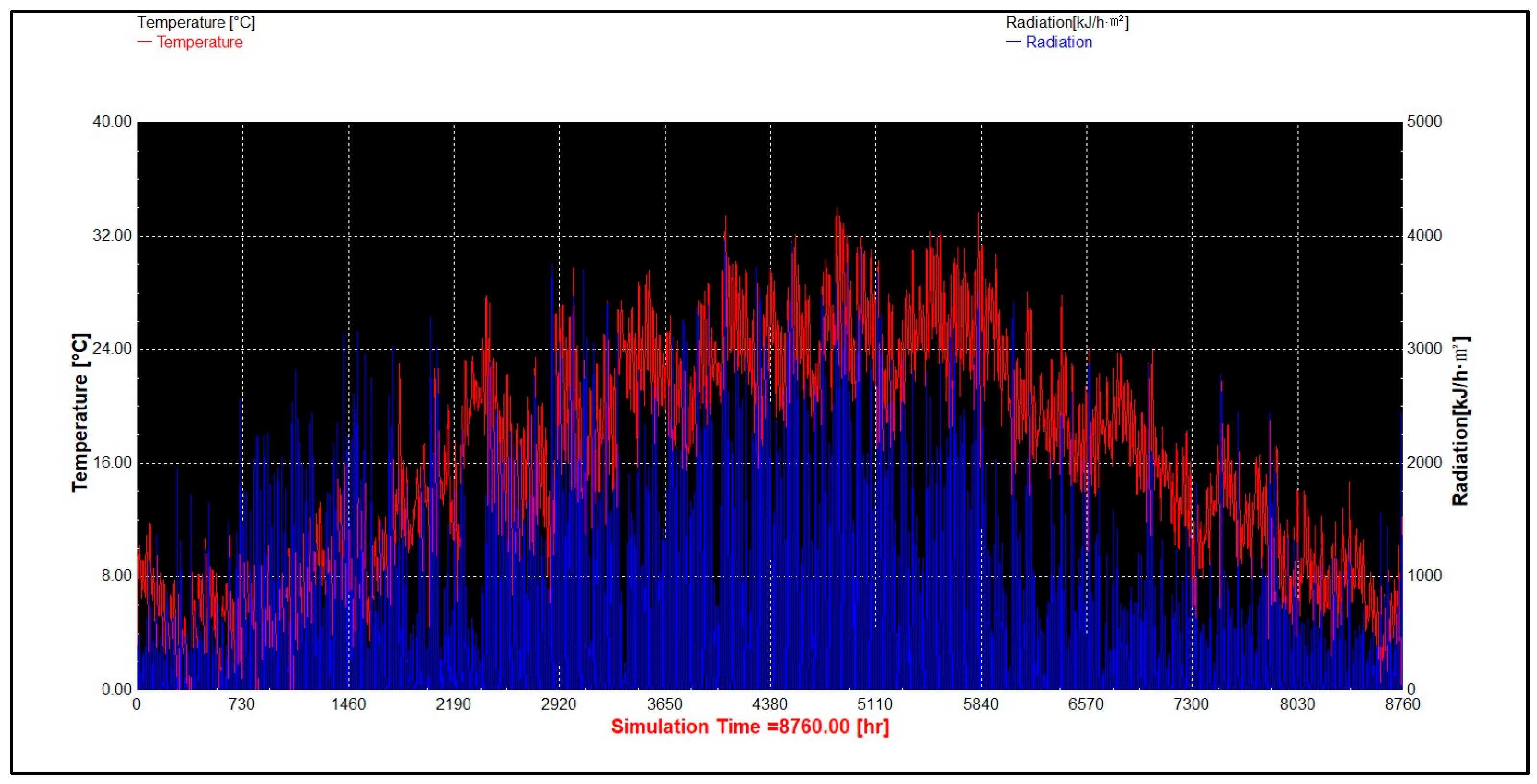
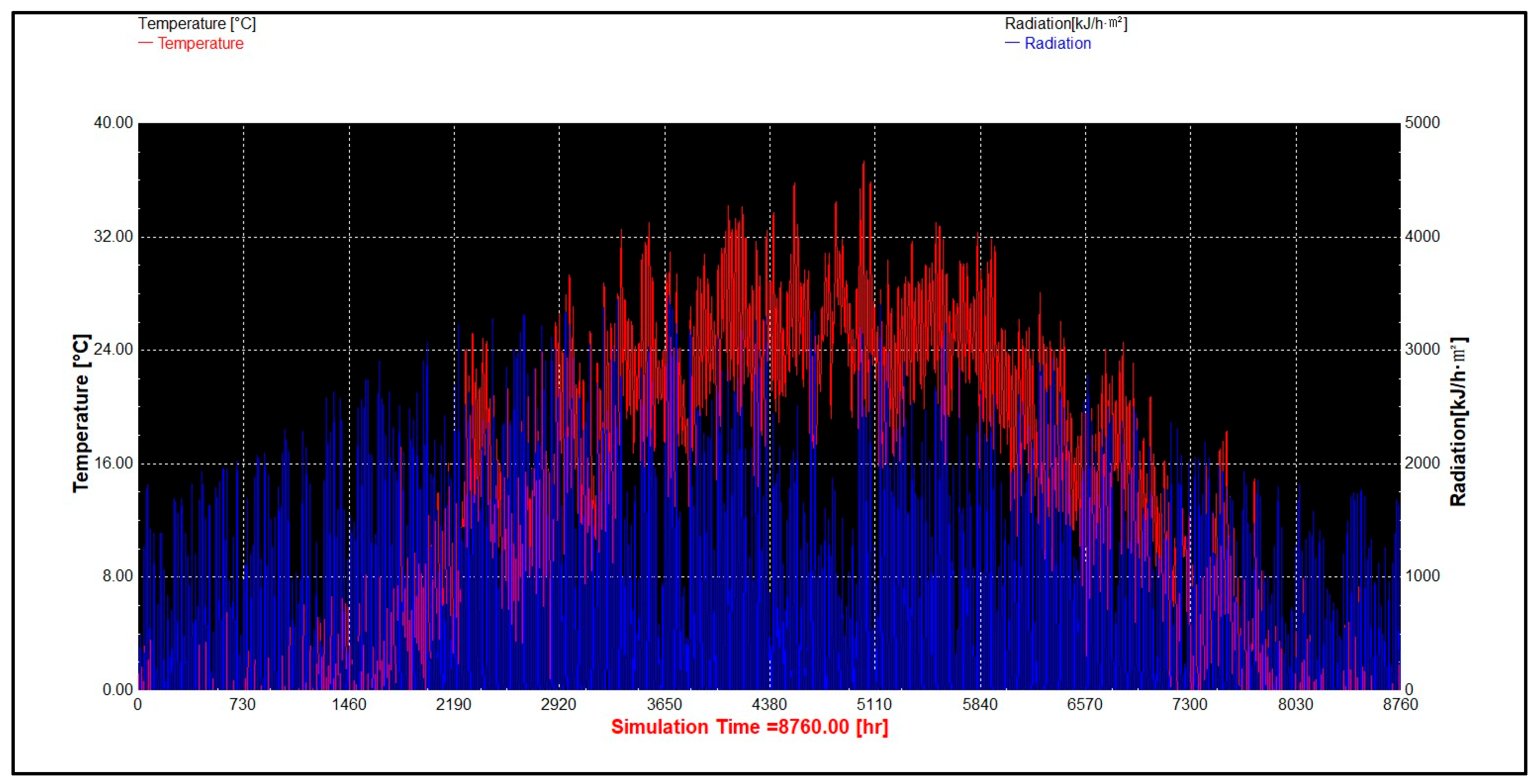
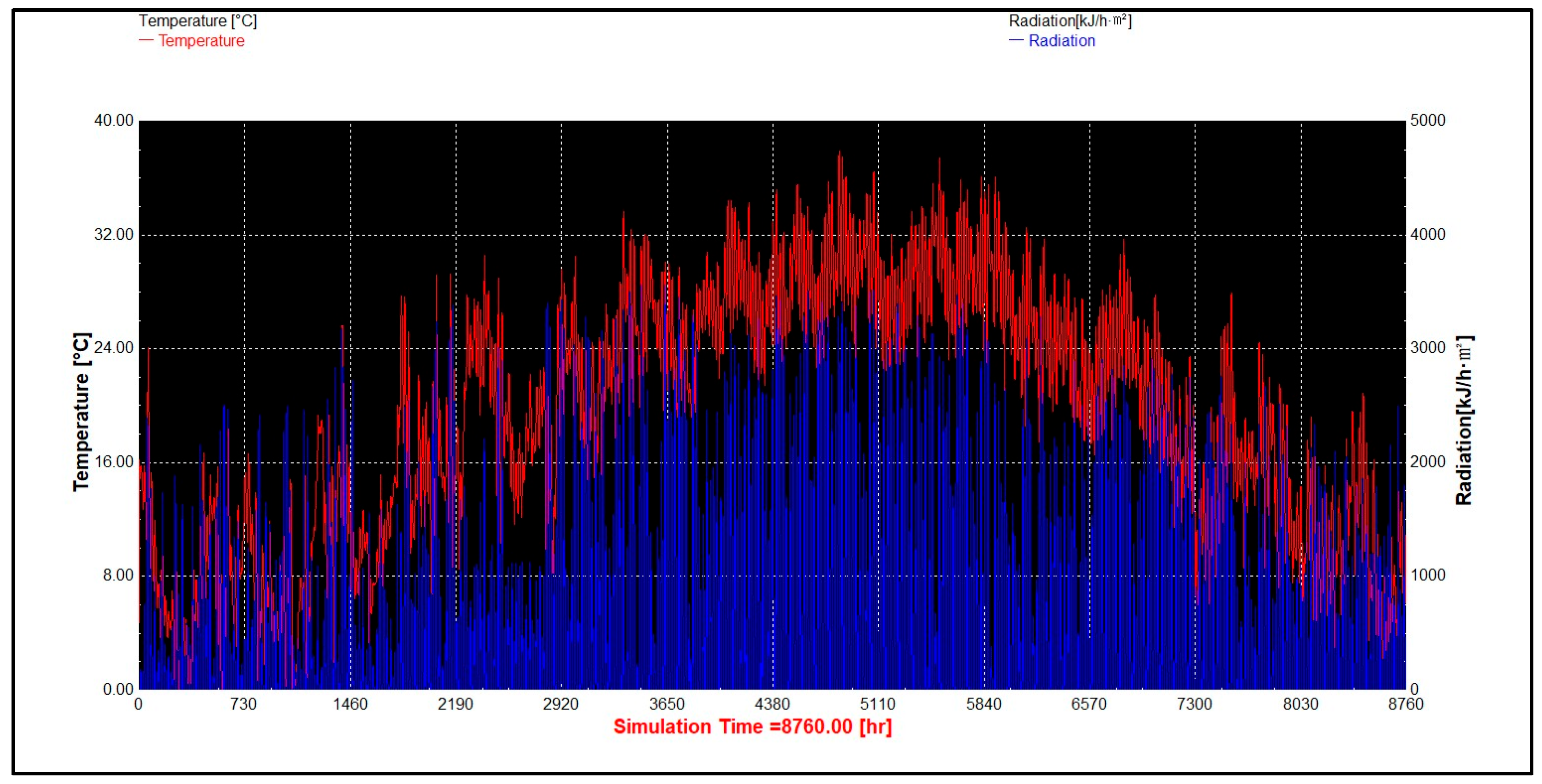
- The impact of different climatic zones (hot summers and cold winters zone, severe cold zone, and hot summers with mild winters zone) on system performance has been taken into account. This is crucial for analyzing the compatibility between systems and building loads, thereby ensuring the model’s feasibility across various regional conditions at the source-load coordination level.
- (3)
- The NPV is taken as the objective to optimize system performance, evaluating the system from technical, economic, and environmental perspectives.
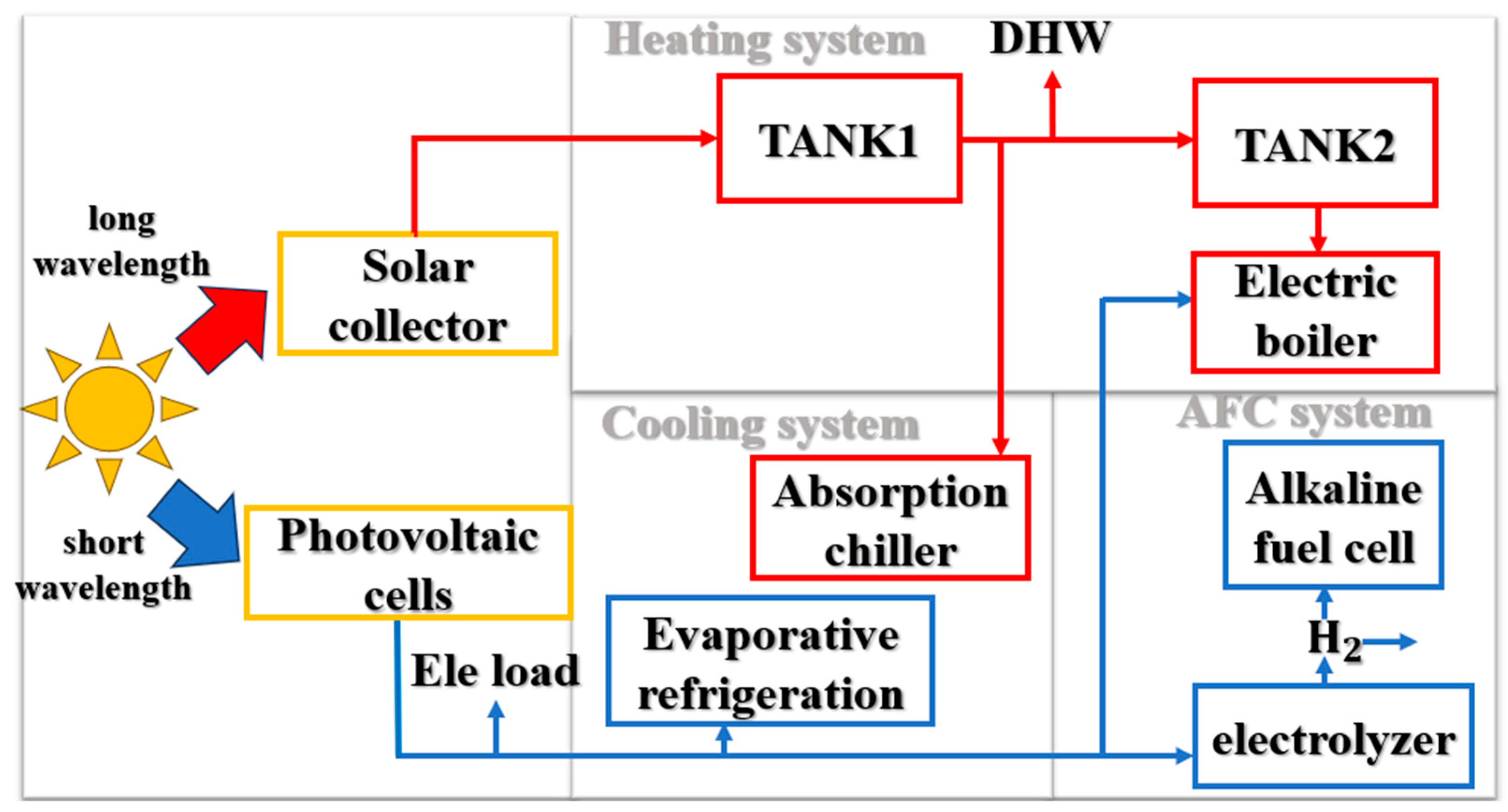
2. System Introduction
2.1. Mathematical Modeling in MATLAB
2.1.1. Frequency Divider
2.1.2. PV/T
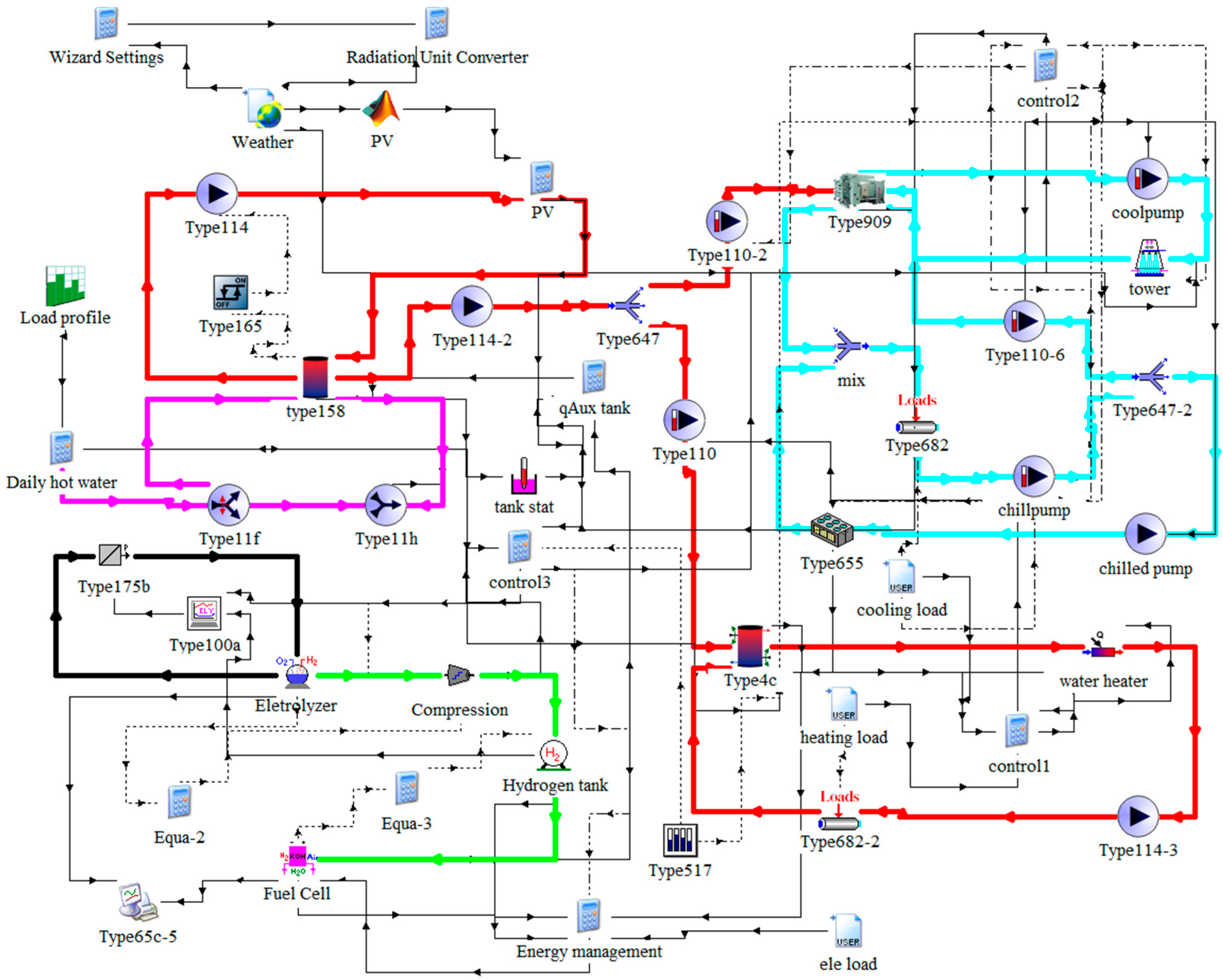
2.2. System Modelling in TRNSYS
2.3. Operation Strategy
2.3.1. PV/T System
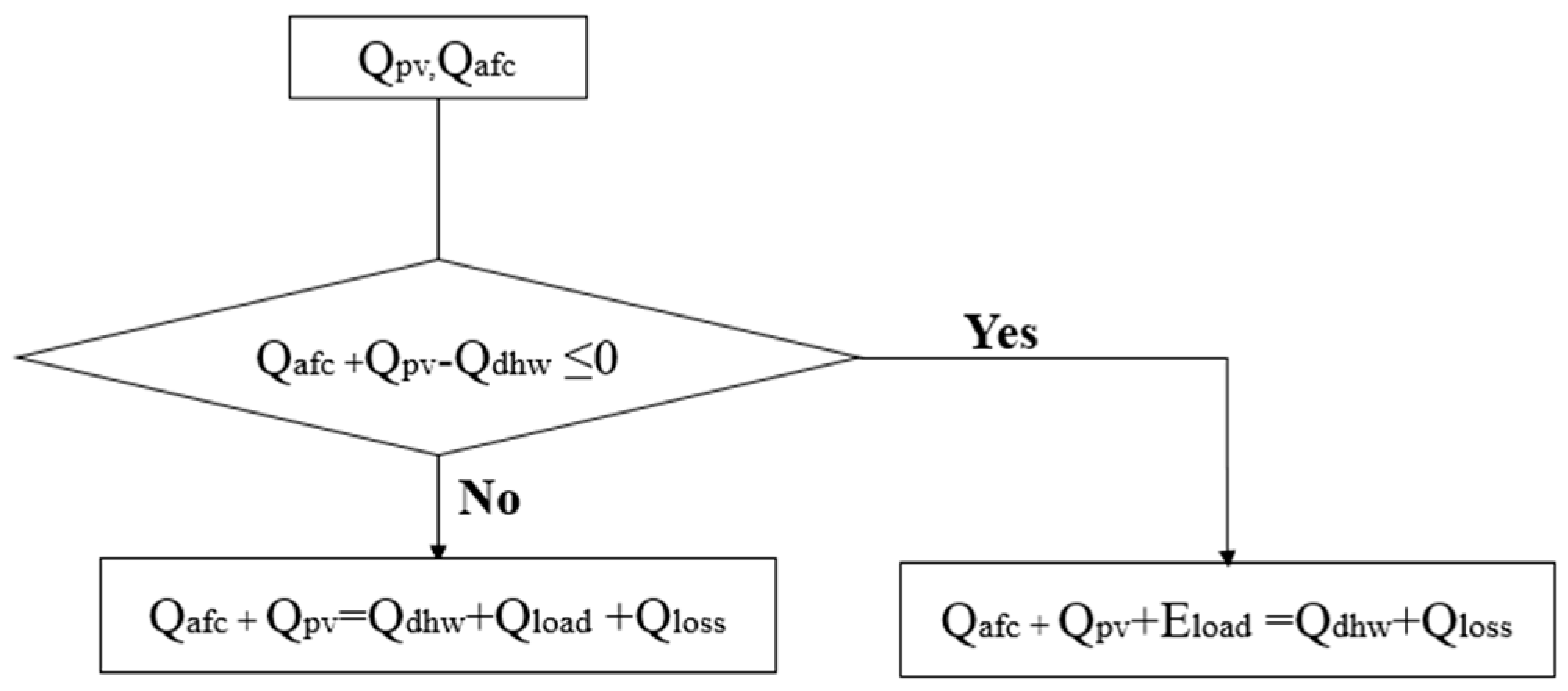
2.3.2. Heating System
2.3.3. Refrigeration System
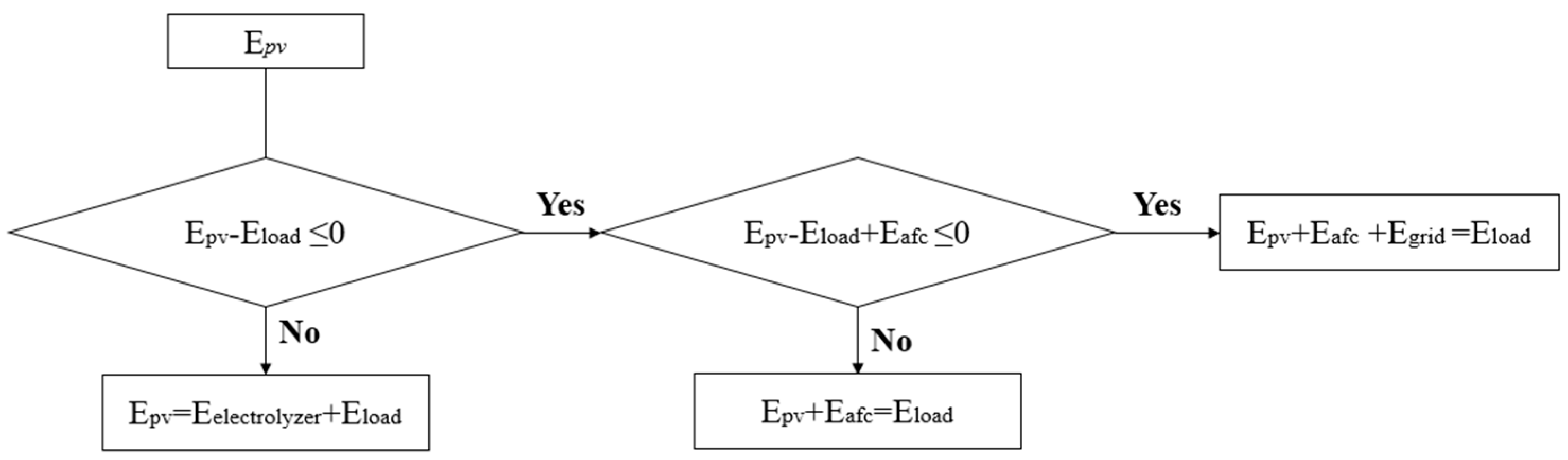
2.3.4. Alkaline Fuel Cell System
3. Optimization Variable
4. Evaluation Indicators
4.1. Technical Indicators
4.2. Economic Indicator
4.3. Environmental Indicator
5. System Analysis
5.1. Location
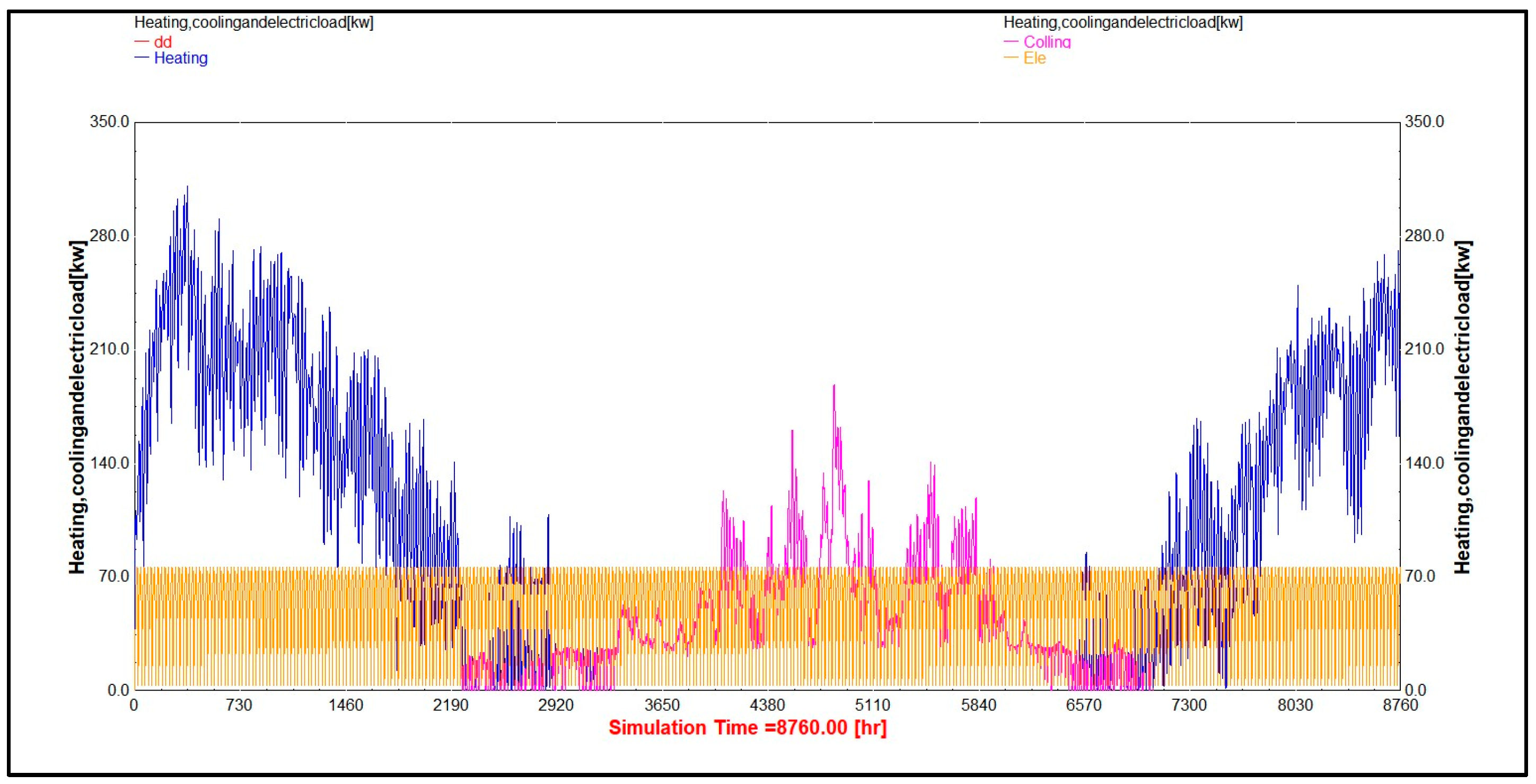
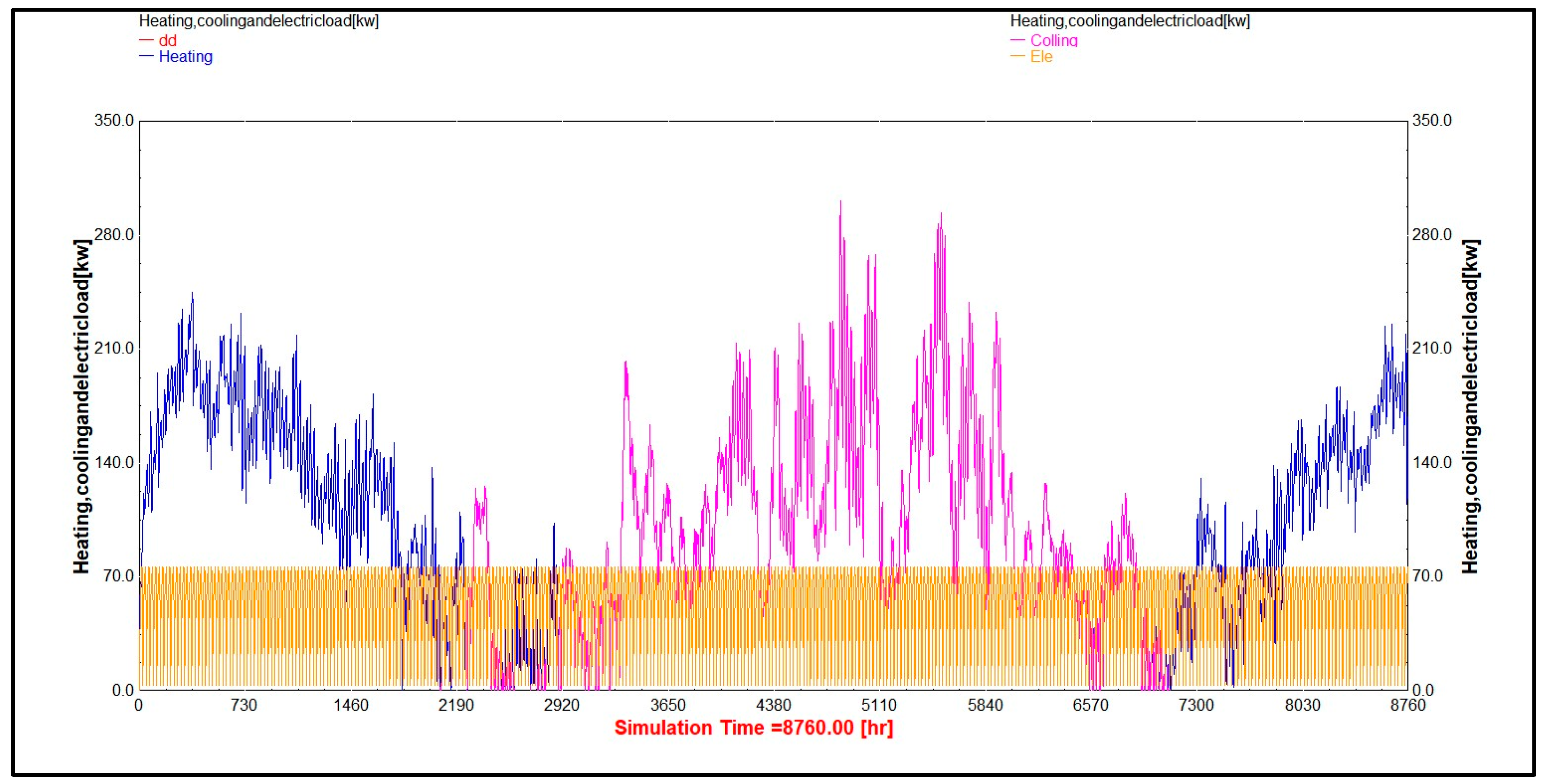
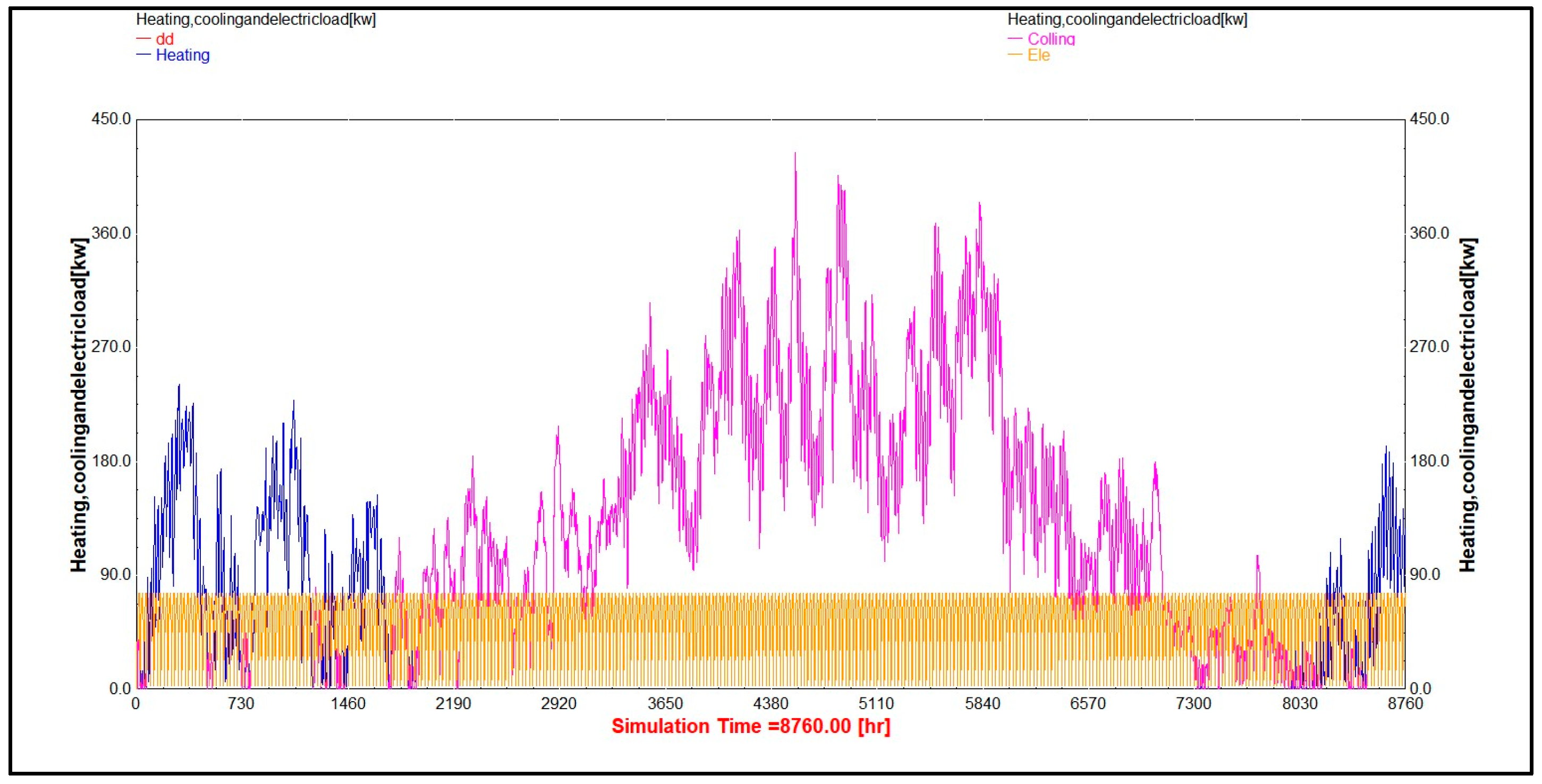
5.2. Building Characteristics
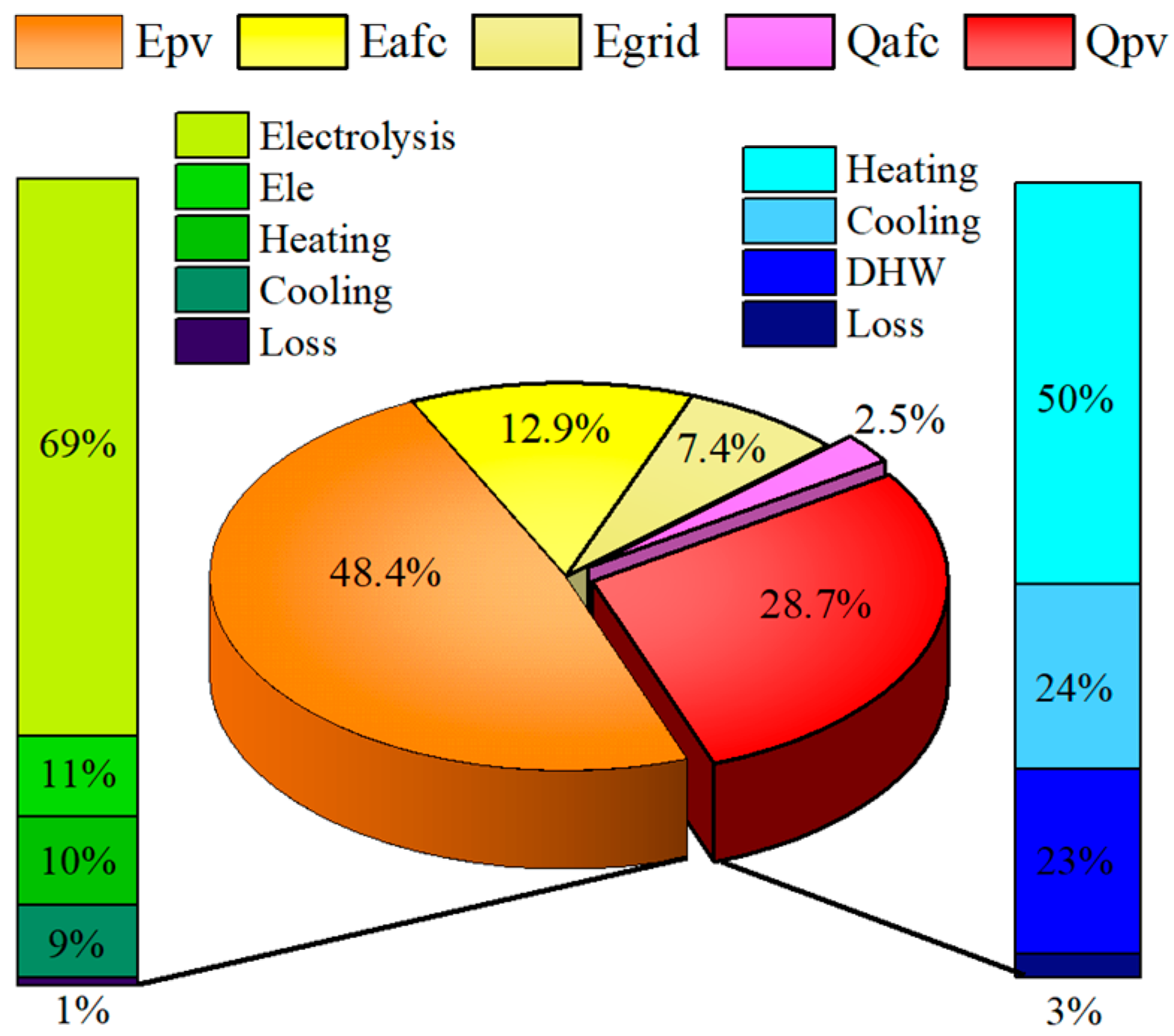
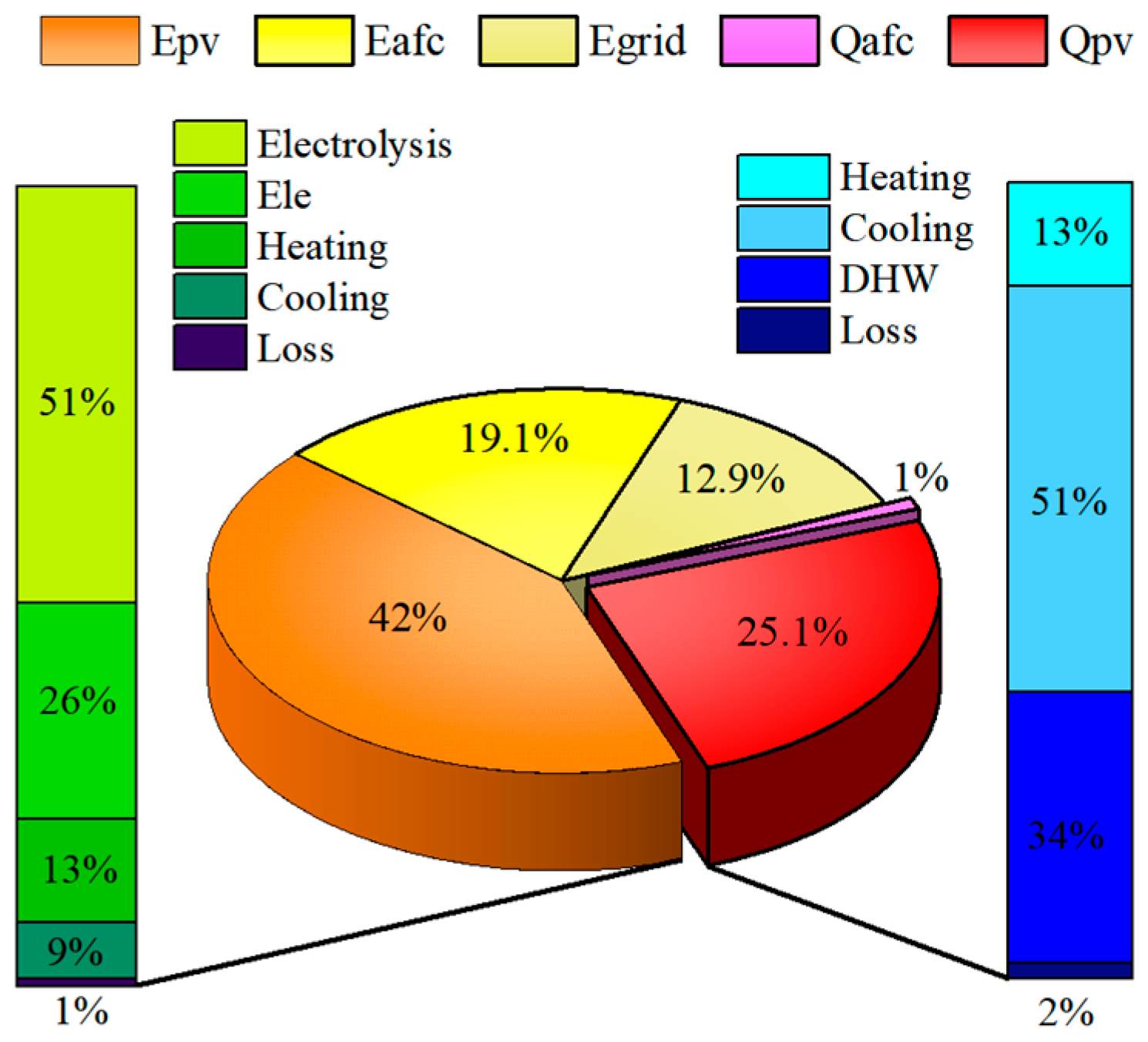
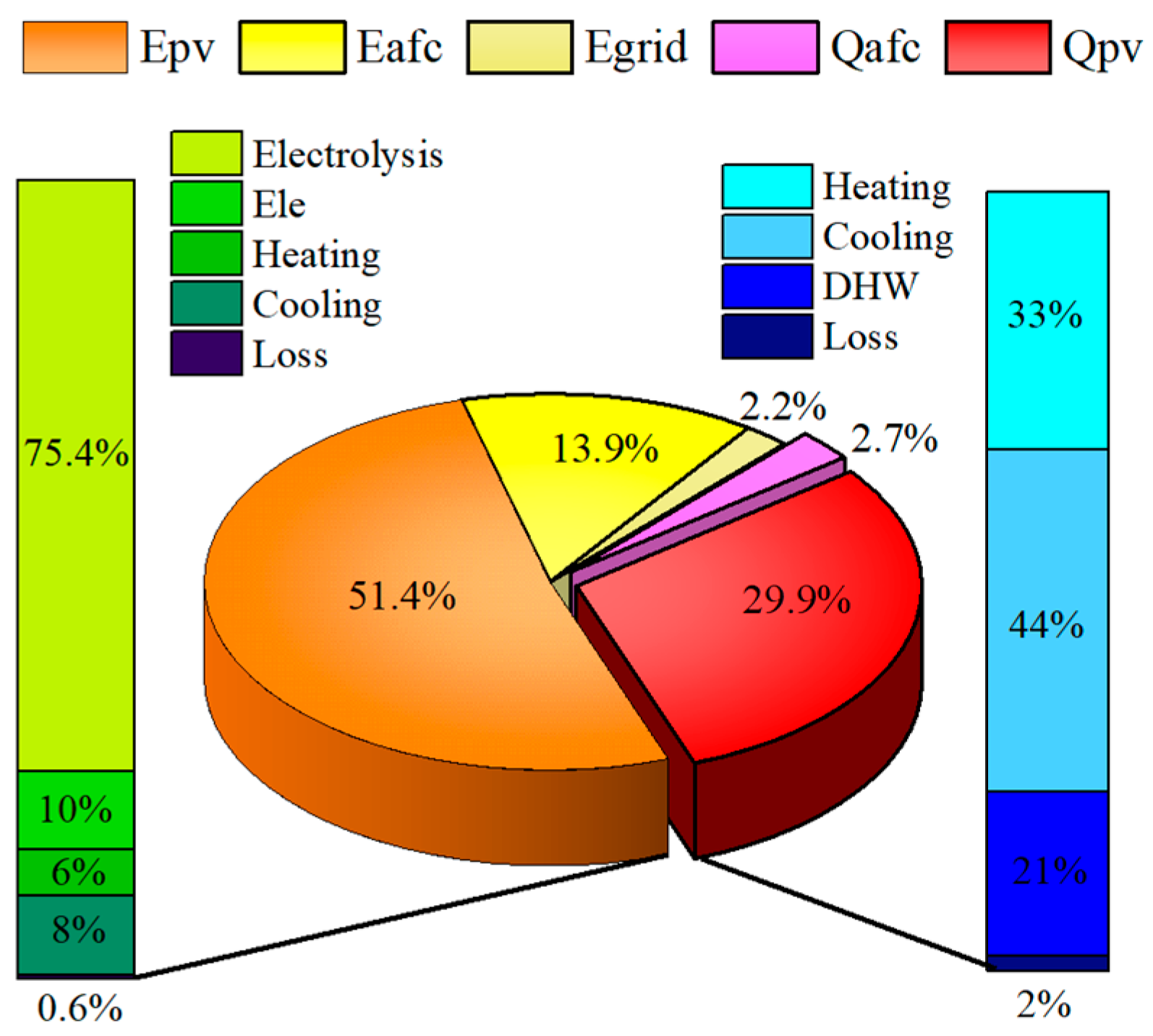
5.3. Annual Operation Analysis
5.4. Typical Day Analysis
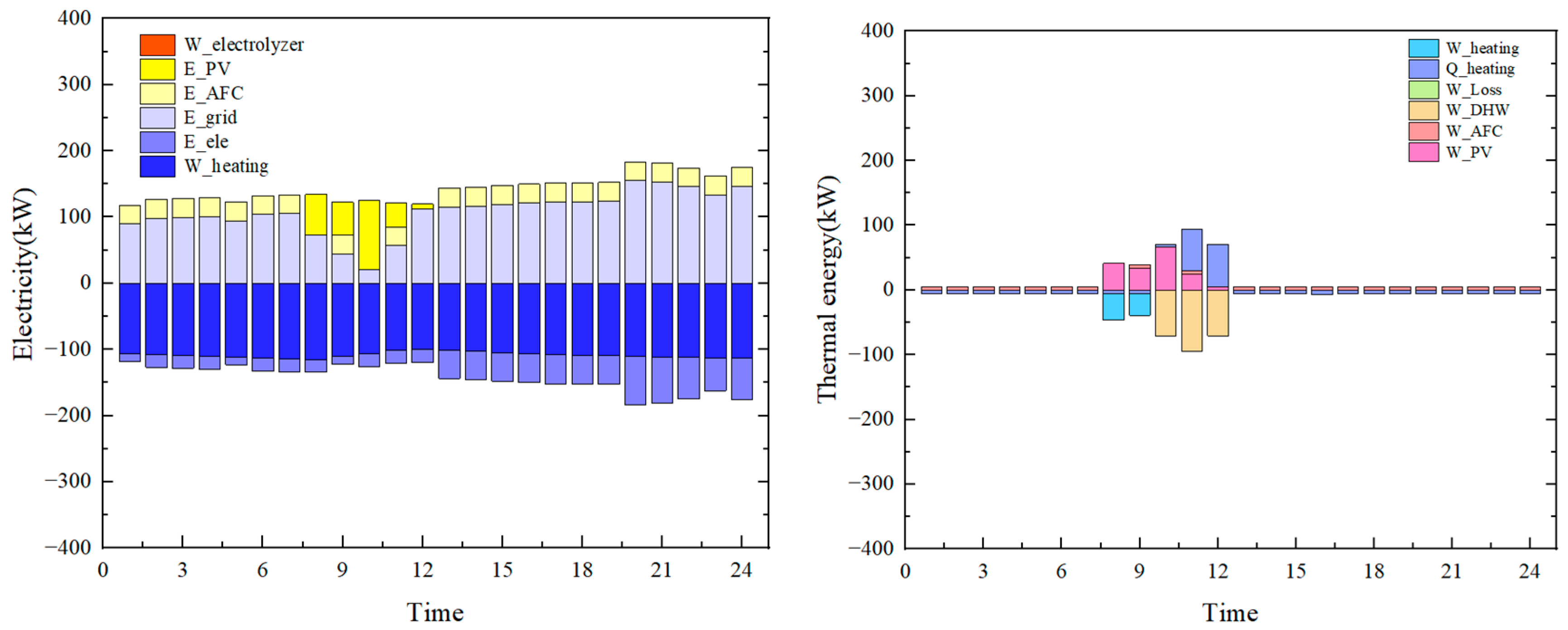
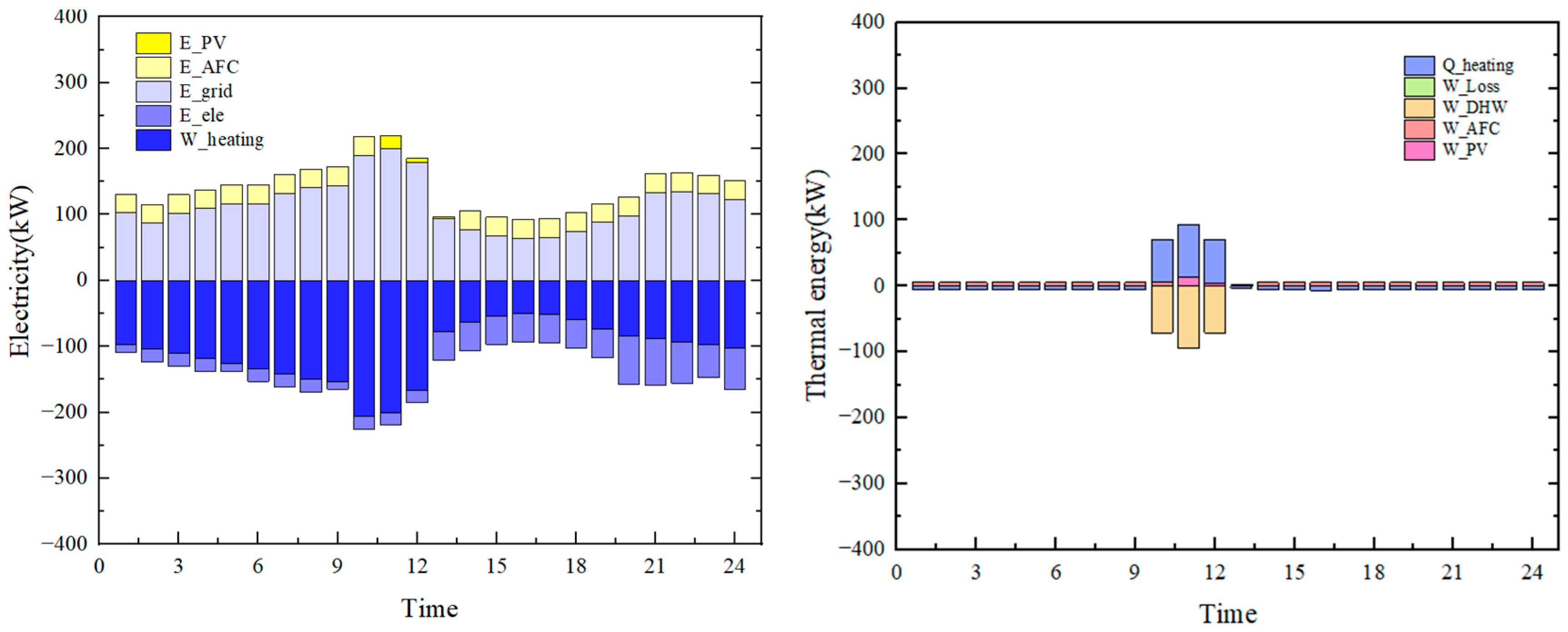
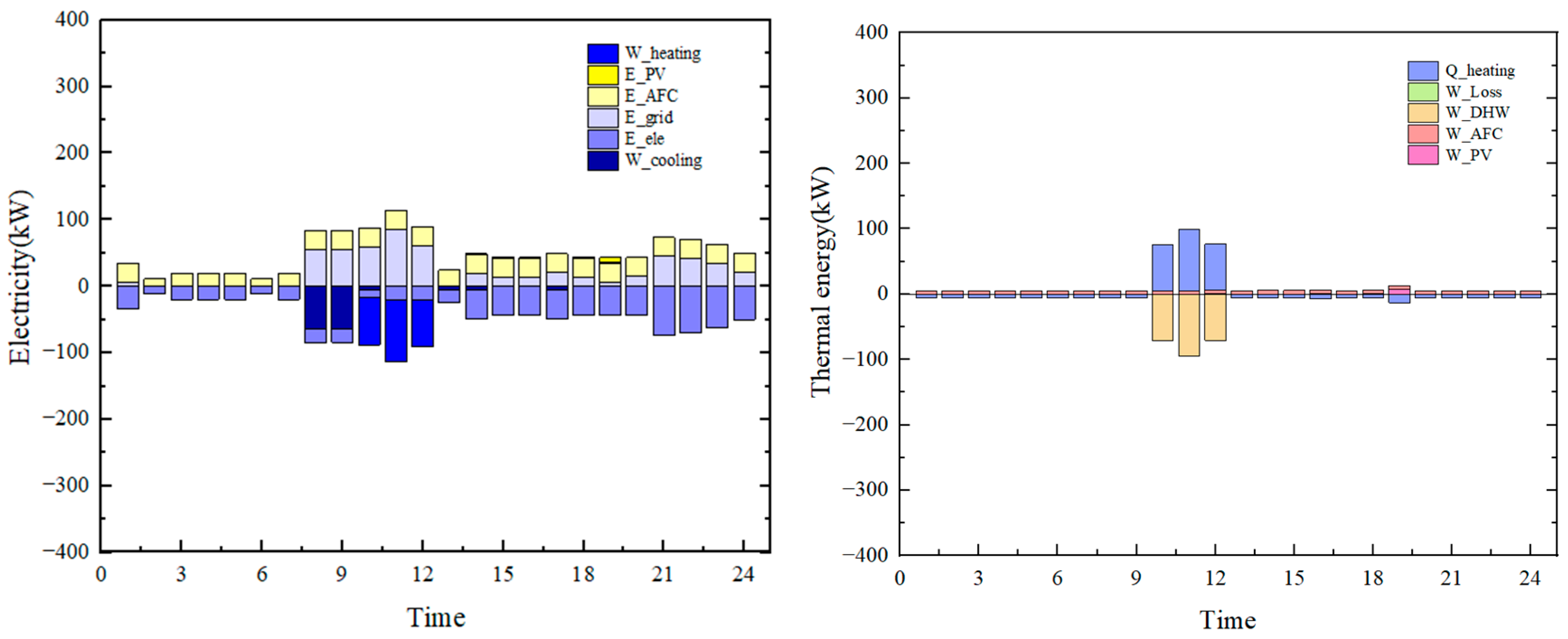
5.4.1. Analysis of Typical Winter Days
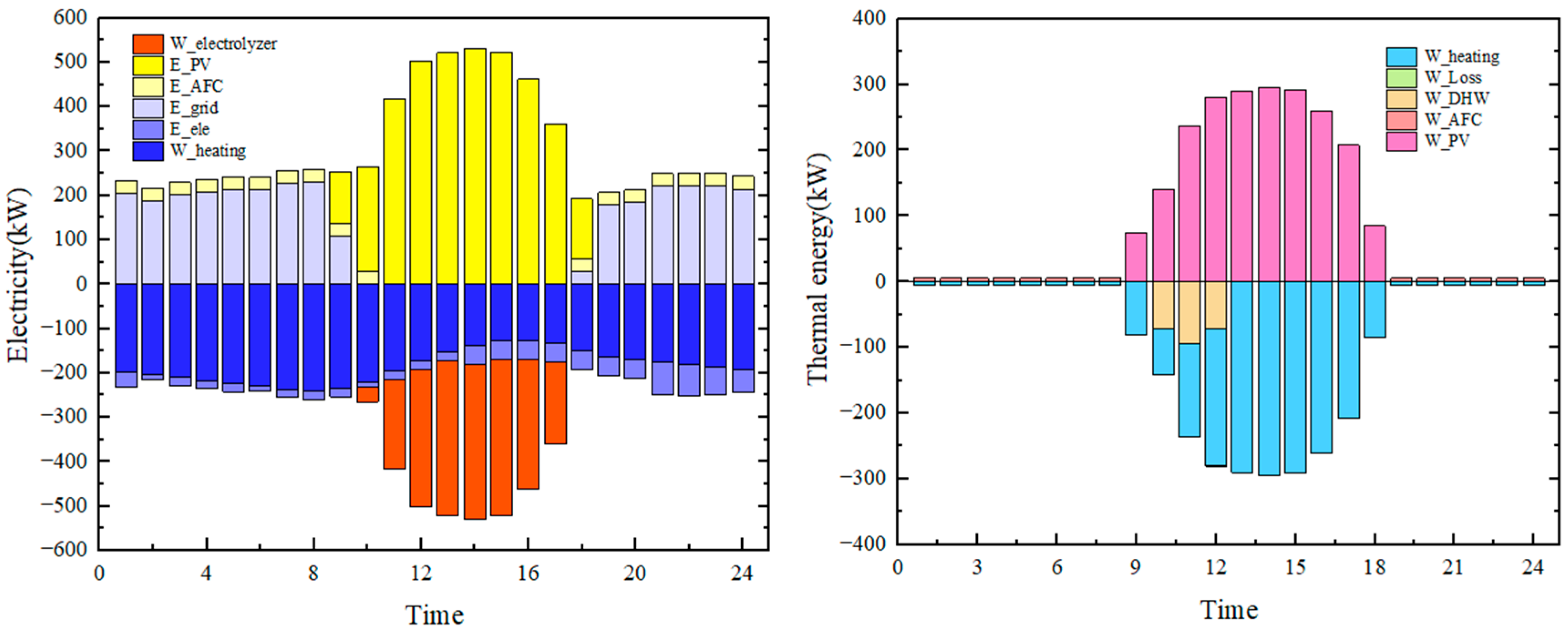
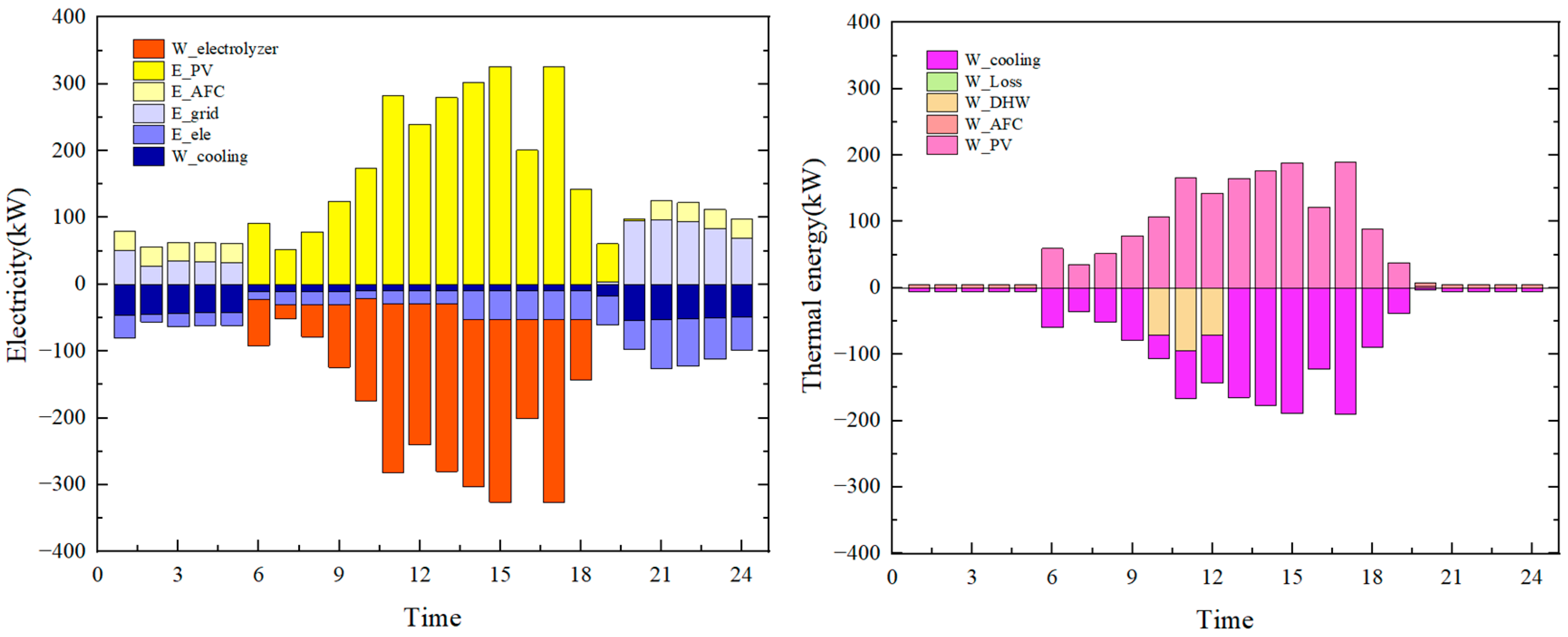
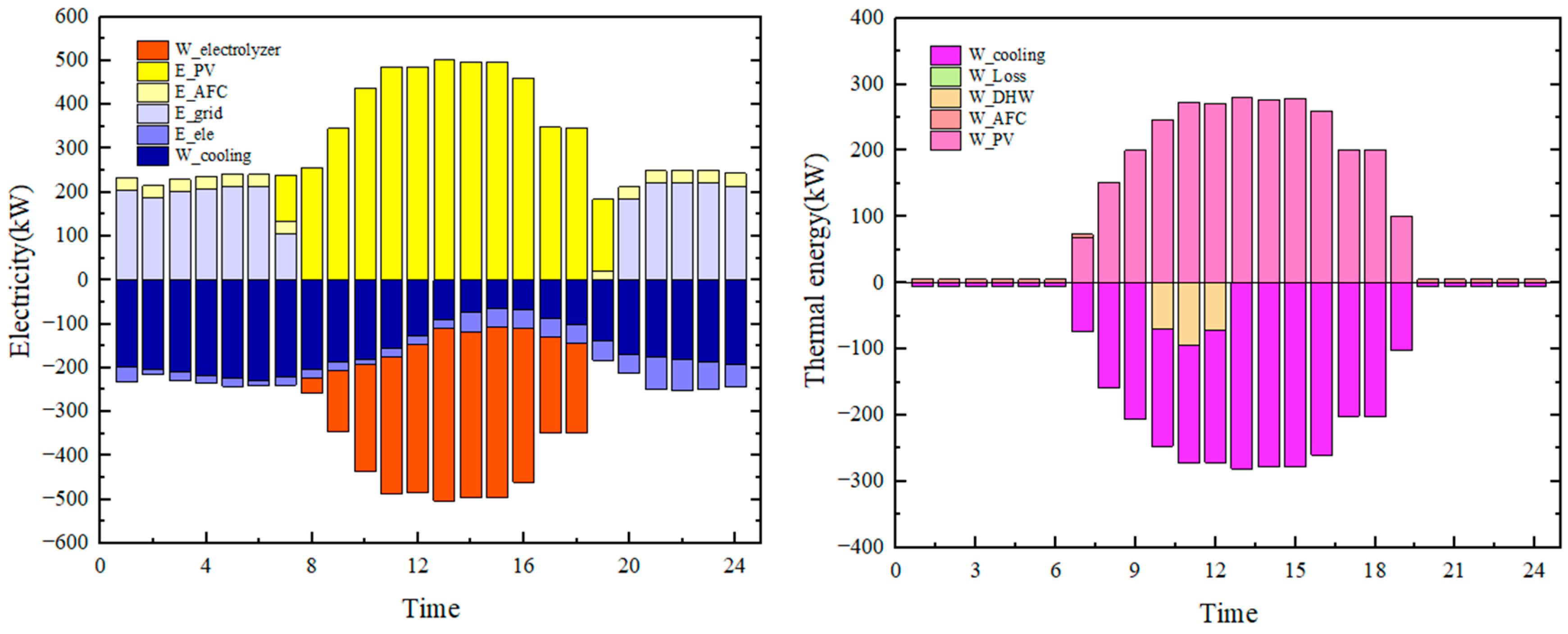
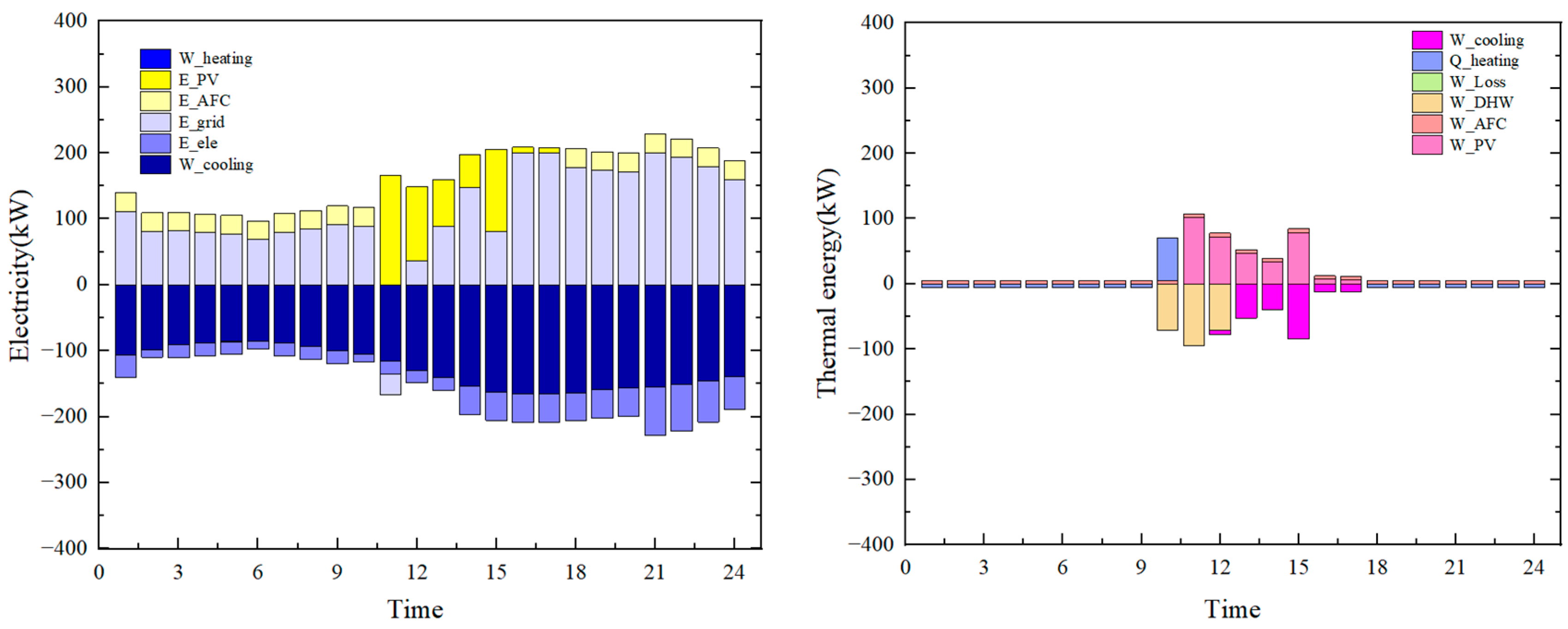
5.4.2. Analysis of Typical Summer Days
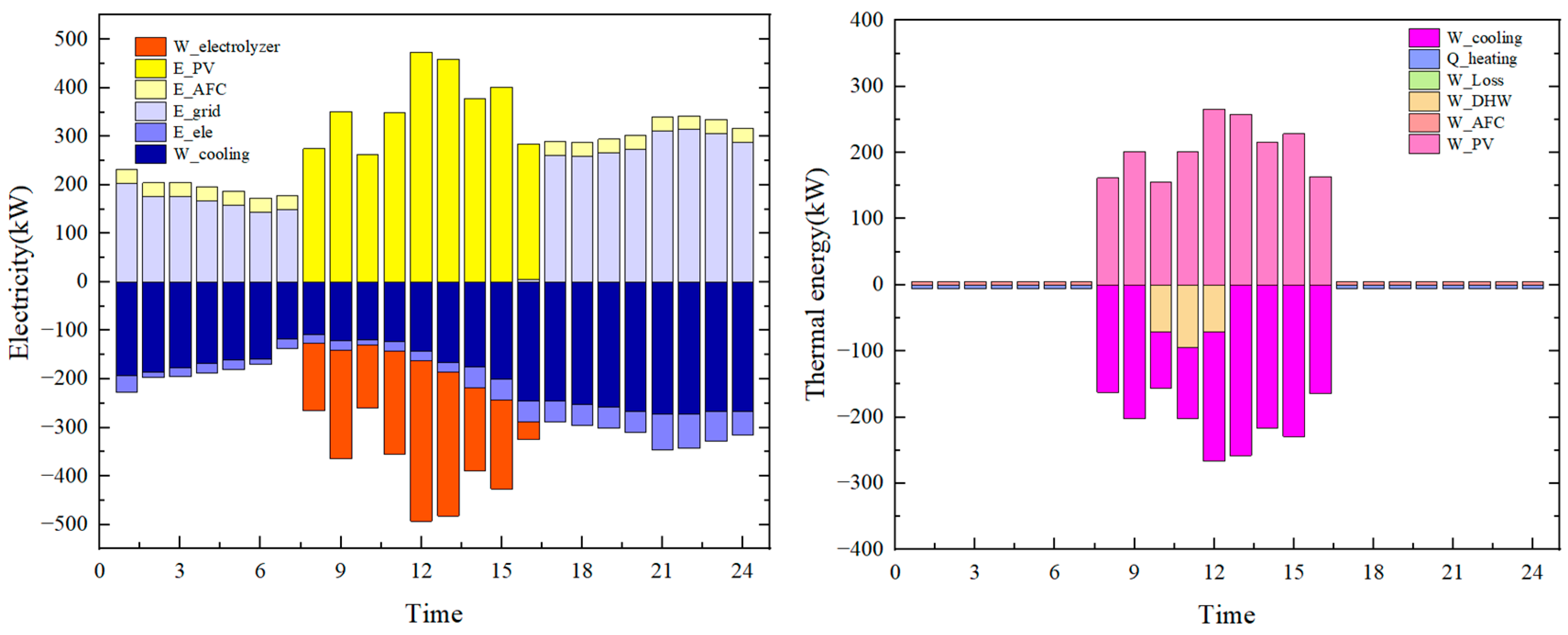
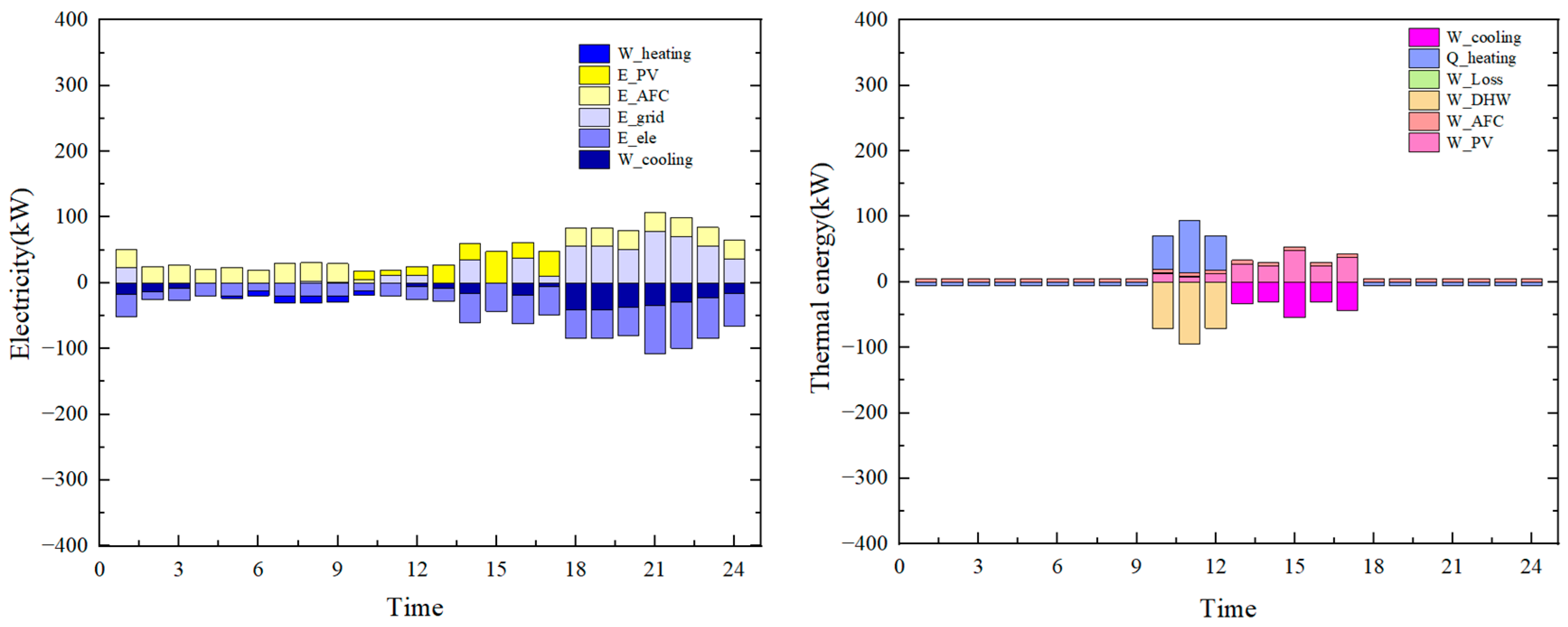
5.4.3. Analysis of Typical Days in Transitional Season
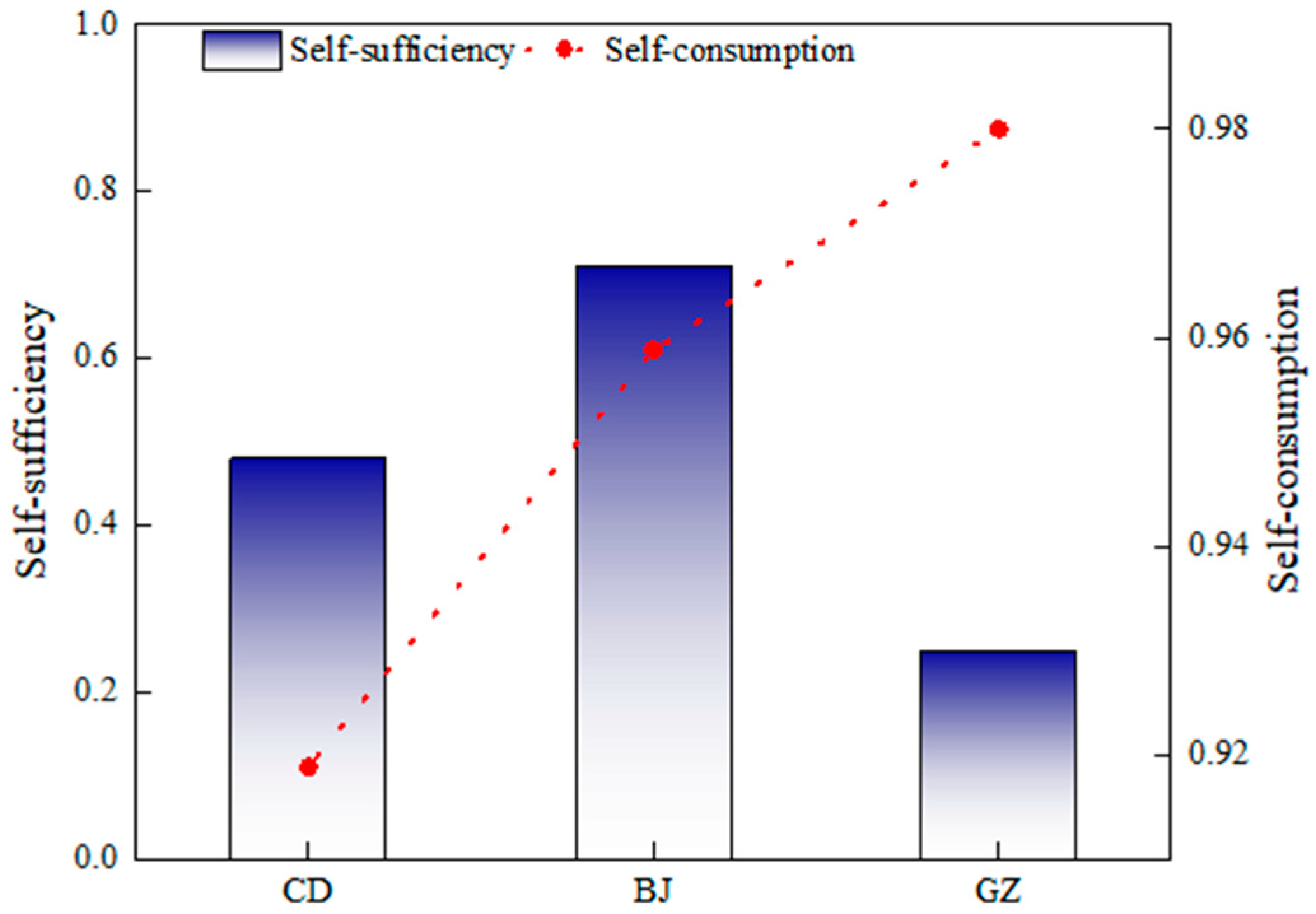
5.5. Comprehensive Performance Evaluation
5.5.1. ,
5.5.2. LCOE
5.5.3. ECE
6. Conclusions
- (1)
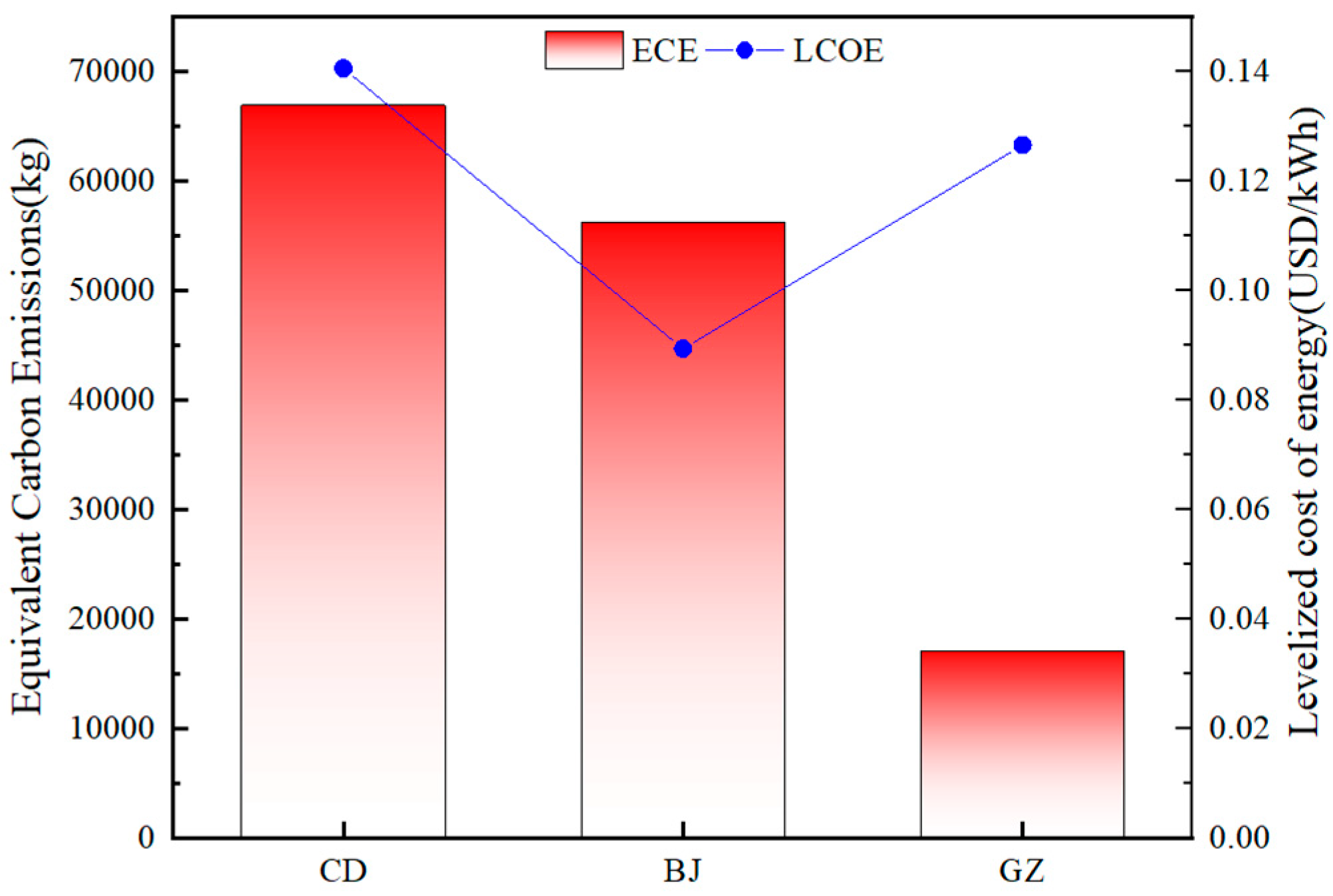
- After optimization, the system in Beijing demonstrates the most favorable economic performance, achieving the lowest levelized cost of energy. This cost advantage stems from the system’s high SS, which substantially reduces grid electricity purchases despite the significant winter heating load. The large heating demand ensures high utilization of the electric boiler and thermal storage equipment, effectively amortizing capital costs. The system in Guangzhou achieves a balanced economic outcome with a moderate LCOE. The excellent temporal matching between its dominant cooling load and abundant solar generation enables the highest SC and lowest ECE. The system in Chengdu exhibits the highest LCOE among the three cities. Although its balanced heating and cooling loads allow for stable year-round operation, its greater reliance on grid electricity during cloudy periods makes its overall economic efficiency lower than that of the other configurations.
- (2)
- Due to the role of SBS, the power generation efficiency of the new system is significantly improved. The low-frequency spectrum is directly collected and converted into heat energy, which avoids the efficiency reduction caused by photovoltaic temperature rise. At the same time, the recovery of heat energy improves energy utilization efficiency and significantly reduces dependence on the grid. The solar energy system can not only reduce electricity costs but also indirectly reduce carbon emissions.
- (3)
- Compared with the traditional photovoltaic system, the proposed system can realize the storage of electric energy and thermal energy. After meeting the hot water supply needs, the excess heat can be supplied to the absorption chiller and used to preheat water in the electric heating unit, providing a reference for the full-spectrum cascade utilization of solar energy and distributed energy systems in different regions.
Author Contributions
Funding
Data Availability Statement
Conflicts of Interest
Nomenclature
| List of symbols | ||||
| Surface area of photovoltaic cells, m2 | c | Speed of light | ||
| Price for purchasing 1 kWh of electricity, USD | Cost for total system purchase, USD | |||
| Concentration ratio | DNI | Direct normal irradiance, W/m2 | ||
| Electrical output of alkaline fuel cells, W | Electricity from the grid, W | |||
| Electrical input to the electrolyzer, W | Total building cooling, heating, and electrical load, W | |||
| Electrical output of solar photovoltaic cells, W | Electrical output of solar photovoltaic cells for self-consumption, W | |||
| ECE | Equivalent carbon emissions | FF | Fill factor | |
| Convective heat transfer coefficient | Annual interest rate | |||
| Short-circuit current density, A | J0 | Saturation current density, A | ||
| LCOE | Levelized cost of energy | NPV | Net present value, USD | |
| Heat generation rate of an alkaline fuel cell, W | Heat generation rate of domestic hot water, W | |||
| Heat loss from the water tank, W | PVT thermal output, W | |||
| PVT thermal output for self-consumption, W | Photon energy, W/(nm·m2) | |||
| Solar collector area, m2 | Self-consumption | |||
| Self-sufficiency | Ambient temperature, K | |||
| Operating temperature of solar photovoltaic cells, K | Effective sky temperature, K | |||
| Open-circuit voltage, V | ||||
| List of Greek letters | ||||
| Influence factor | Correction factor | |||
| Carbon emission factor, Wh/kg | Emissivity of solar photovoltaic cells | |||
| Temperature coefficient of PVT | Wavelength range at the bandgap, nm | |||
| σ | Stefan–Boltzmann constant | Ideality factor | ||
References
- Areerob, Y.; Hamontree, C.; Sricharoen, P.; Limchoowong, N.; Nijpanich, S.; Nachaithong, T.; Oh, W.C.; Pattarith, K. Synthesis of novel MoWO4 with ZnO nanoflowers on multi-walled carbon nanotubes for counter electrode application in dye-sensitized solar cells. Sci. Rep. 2022, 12, 12490. [Google Scholar] [CrossRef] [PubMed]
- Nabavi-Pelesaraei, A.; Bayat, R.; Hosseinzadeh-Bandbafha, H.; Afrasyabi, H.; Chau, K.-W. Modeling of energy consumption and environmental life cycle assessment for incineration and landfill systems of municipal solid waste management—A case study in Tehran Metropolis of Iran. J. Clean. Prod. 2017, 148, 427–440. [Google Scholar] [CrossRef]
- Kolamroudi, M.K.; Jaiyeoba, O.H.; Ilkan, M.; Safaei, B. A comprehensive review on the artificial intelligence for the development of thermal concentrating photovoltaic systems. Sol. Energy 2025, 301, 113937. [Google Scholar] [CrossRef]
- Li, G.; Li, J.; Dai, Z.; Waqar Akram, M. Modelling and analysis of a novel hydrogen production approach by full spectrum solar energy. Energy Convers. Manag. 2022, 263, 115694. [Google Scholar] [CrossRef]
- Liu, J.; Wang, J.; Tang, Y.; Jin, J.; Li, W. Solar photovoltaic–thermal hydrogen production system based on full-spectrum utilization. J. Clean. Prod. 2023, 430, 139340. [Google Scholar] [CrossRef]
- Song, H.; Wang, H.; Zheng, H.; Kong, H. Analysis of cascade and hybrid processes for hydrogen production by full spectrum solar energy utilization. Energy Convers. Manag. 2023, 291, 117289. [Google Scholar] [CrossRef]
- Huang, J.; Han, X.; Abbas Khosa, A. Study on performance of a full spectrum solar-driven hydrogen production system using Ag@SiO2-Au blended nanofluid filters. Energy Convers. Manag. 2023, 295, 117661. [Google Scholar] [CrossRef]
- Liu, J.; Tian, Z.; Sun, M.; Chen, X.; Qiu, L.; Li, W. Efficient and adaptive hydrogen production via integrated full-Spectrum solar energy and solid oxide electrolysis cells with thermal storage. Appl. Energy 2025, 391, 125861. [Google Scholar] [CrossRef]
- Li, W.; Jin, J.; Wang, H.; Wei, X.; Ling, Y.; Hao, Y.; Pei, G.; Jin, H. Full-spectrum solar energy utilization integrating spectral splitting, photovoltaics and methane reforming. Energy Convers. Manag. 2018, 173, 602–612. [Google Scholar] [CrossRef]
- Zhu, L.; Yang, W.; Pan, H.; Shao, Z.; Lu, Y.; Dang, Z.-M. Coupling the full solar spectrum with a two-step thermo-electrolytic cycle for efficient solar hydrogen production. Energy Convers. Manag. 2023, 290, 117161. [Google Scholar] [CrossRef]
- Wu, H.; Shan, S.; Tian, J.; Zhang, G.; Zhou, Z. Thermodynamic theorical and parametric analysis of a photovoltaic-photo/thermochemistry synergistic conversion system with full spectrum cascading utilization. Energy Convers. Manag. 2024, 314, 118701. [Google Scholar] [CrossRef]
- Zhu, T.; Liu, B.; Feng, H.; Zhao, Y.; Liu, D.; Li, Q. Daily operation and regulation of a photovoltaic-thermochemical hybrid solar system for full-spectrum solar fuel production. Appl. Therm. Eng. 2025, 264, 125508. [Google Scholar] [CrossRef]
- Wang, J.; Han, Z.; Liu, Y.; Zhang, X.; Cui, Z. Thermodynamic analysis of a combined cooling, heating, and power system integrated with full-spectrum hybrid solar energy device. Energy Convers. Manag. 2021, 228, 113596. [Google Scholar] [CrossRef]
- Han, Z.; Wang, J.; Chen, H.; Wang, J. Thermodynamic performance analysis and optimization for a novel full-spectrum solar-driven trigeneration system integrated with organic Rankine cycle. Energy Convers. Manag. 2021, 245, 114626. [Google Scholar] [CrossRef]
- Hao, X.; Shan, S.; Gao, N.; Chen, G.; Wang, Q.; Gu, T. Performance analysis of a novel combined cooling, heating and power system with solar energy spectral beam splitting. Energy Convers. Manag. 2023, 276, 116500. [Google Scholar] [CrossRef]
- Fang, J.; Yang, M.; Dong, X.; Luo, T.; Pan, C.; Liu, Z.; Zhang, C.; Wang, H. Electrochemical-thermochemical complementary hydrogen production system for efficient full-spectrum solar energy storage. Therm. Sci. Eng. Prog. 2024, 49, 102501. [Google Scholar] [CrossRef]
- Zhong, F.; Liu, Z.; Zhao, S.; Ai, T.; Zou, H.; Qu, M.; Wei, X.; Song, Y.; Chen, H. A novel concentrated photovoltaic and ionic thermocells hybrid system for full-spectrum solar cascade utilization. Appl. Energy 2024, 363, 123033. [Google Scholar] [CrossRef]
- Mansir, I.B.; Hani, E.H.B.; Ayed, H.; Diyoke, C. Dynamic simulation of hydrogen-based zero energy buildings with hydrogen energy storage for various climate conditions. Int. J. Hydrogen Energy 2022, 47, 26501–26514. [Google Scholar] [CrossRef]
- Li, Z.; Gong, Y.; Zhang, X.; Wen, Y.; Yao, J.; Hu, M.; He, M.; Liu, J.; Li, R.; Wang, F.; et al. Plasmonic coupling-enhanced in situ photothermal nanoreactor with shape selective catalysis for C-C coupling reaction. Nano Res. 2020, 13, 2812–2818. [Google Scholar] [CrossRef]
- Qu, W.; Hong, H.; Su, B.; Tang, S.; Jin, H. A concentrating photovoltaic/Kalina cycle coupled with absorption chiller. Appl. Energy 2018, 224, 481–493. [Google Scholar] [CrossRef]
- Olympios, A.V.; Sapin, P.; Freeman, J.; Olkis, C.; Markides, C.N. Operational optimisation of an air-source heat pump system with thermal energy storage for domestic applications. Energy Convers. Manag. 2022, 273, 116426. [Google Scholar] [CrossRef]
- Green, M.A.; Emery, K.; Hishikawa, Y.; Warta, W.; Dunlop, E.D. Solar cell efficiency tables (Version 45). Prog. Photovolt. Res. Appl. 2015, 23, 1–9. [Google Scholar] [CrossRef]
- Saleem, M.S.; Abas, N.; Kalair, A.R.; Rauf, S.; Haider, A.; Tahir, M.S.; Sagir, M. Design and optimization of hybrid solar-hydrogen generation system using TRNSYS. Int. J. Hydrogen Energy 2020, 45, 15814–15830. [Google Scholar] [CrossRef]
- Huang, S.; Sun, S.; Liu, S.; Deng, S.; Wang, Z. Advancements in hybrid photovoltaic thermal (PV/T) systems multi objective optimization strategies and emerging Frontiers. Sol. Energy 2026, 305, 114179. [Google Scholar] [CrossRef]
- Yadem Lamien, M.H.; Farzaneh, H. A spatial-techno-economic assessment modeling framework for optimal planning of rooftop photovoltaic systems in urban areas: The case of New Assiut City, Egypt. Renew. Energy Focus 2026, 56, 100752. [Google Scholar] [CrossRef]
- Yan, J.; Yang, Y.; Elia Campana, P.; He, J. City-level analysis of subsidy-free solar photovoltaic electricity price, profits and grid parity in China. Nat. Energy 2019, 4, 709–717. [Google Scholar] [CrossRef]
- He, Y.; Guo, S.; Dong, P.; Huang, J.; Zhou, J. Hierarchical optimization of policy and design for standalone hybrid power systems considering lifecycle carbon reduction subsidy. Energy 2023, 262, 125454. [Google Scholar] [CrossRef]
- He, Y.; Song, J.; Guo, S.; Zhou, J.; Markides, C.N. A techno-economic-environmental comparison of residential solar energy systems employing an up-to-date market analysis. Energy Convers. Manag. 2025, 345, 120357. [Google Scholar] [CrossRef]
- GB50015; Standard for Design of Building Water Supply and Drainage. China Planning Press: Beijing, China, 2019.



| Researcher | System | Software | Parameter | Location |
|---|---|---|---|---|
| Li [4] | A full-spectrum solar energy system that integrates photothermal synergistic reactions with photovoltaic water electrolysis | - | T0 = 300 K DNI is fixed | - |
| Liu [5] | A solar photovoltaic–thermal hydrogen production system that employs comprehensive spectrum utilization, harnessing both thermal and electrical energy in a synergistic approach to generate hydrogen | - | T0 = 298.15 K DNI is fixed | - |
| Song [6] | A novel hydrogen production system combining thermochemical water splitting, photovoltaic cells, and SOEC water electrolysis | - | T0 = 298.15 K, DNI is fixed | - |
| Huang [7] | A full-spectrum solar-driven hydrogen production system that couples a concentrated photovoltaic/thermal system with a proton exchange membrane electrolyzer and a methanol steam reforming reactor | MATLAB 2023 | T0 = 298.15 K, DNI is fixed | - |
| Liu [8] | SOEC hydrogen production system with thermal storage module based on full-spectrum solar energy utilization | SMARTS | T0 = 298.15 K DNI = 200–1000 W/m2 | Beijing, China |
| Researcher | System | Software | Parameter | Location |
|---|---|---|---|---|
| Li [9] | A photovoltaic/thermal–methane steam reforming hybrid system for spectral frequency splitting | Aspen Plus | = 25 °C DNI is fixed | - |
| Zhu [10] | A thermodynamic model coupling the full solar spectrum with a two-step thermoelectric cycle | Lab experiment | is changing DNI is fixed | - |
| Wu [11] | The thermodynamic model system of the PV-PTC system from the perspectives of thermodynamic limits | MATLAB | = 300 K DNI is fixed | - |
| Zhu [12] | A spectral frequency splitting technology to couple photovoltaic and thermochemical conversion, simultaneously generating electricity and solar fuels | Lab experiment | is changing DNI is changing | Nanjing, Jiangsu Province, China |
| Researcher | System | Software | Parameter | Location |
|---|---|---|---|---|
| Wang [13] | A combined cooling, heating, and power system utilizing a full-spectrum hybrid solar energy device that integrates a molecular solar thermal system and a solar water heating system | Aspen Plus + EES | T0 = 25 °C DNI = 1000 W/m2 | - |
| Han [14] | A full-spectrum solar-driven tri-generation system incorporating an organic Rankine cycle | EES | is changing DNI is changing | Beijing, China |
| Hao [15] | A new solar spectral split system integrating cooling, heating, and power generation by recovering waste heat from photovoltaics for fluid heating. Additionally, high-temperature thermal energy is used to power an ejector refrigeration system, thus enhancing cooling capacity. | EES | T0 = 42 °C DNI is fixed | - |
| Fang [16] | A photovoltaic electrolysis green hydrogen thermochemical reforming ash hydrogen co-production system based on spectral splitting technology | Aspen Plus | T0 = 298.15 K, DNI = 200–1000 W/m2 | Lanzhou, China |
| Zhong [17] | A new hybrid system combining iTEC and CPV for comprehensive solar cascade utilization | COMSOL 5.4 Multiphysics | = 300 K DNI is fixed | - |
| Variable | The Present Study | The Experimental Data [22] | Unit | Error (%) |
|---|---|---|---|---|
| DNI | 1000 | 1000 | W/m2 | - |
| Atmospheric temperature | 25 | 25 | °C | - |
| Joc | 32.65 | 30.17 | mA/cm2 | 8.22 |
| Voc | 0.85 | 0.79 | V | 7.59 |
| Electrical efficiency | 30.23% | 28.8% | - | 4.96 |
| Variable | The Present Study | Literature [23] | Unit | Error (%) |
|---|---|---|---|---|
| Modules per stack in series | 16 | 16 | - | - |
| Modules per stack in parallel | 1 | 1 | - | - |
| The heat generated by an alkaline fuel cell during the operation | 8775 | 8700 | W | 0.86 |
| The electricity output of an alkaline fuel cell | 6774 | 6700 | W | 1.10 |
| Model | Type | Component Description | Model | Type | Component Description |
|---|---|---|---|---|---|
| PV/T | Type155 | The module connecting TRNSYS and MATLAB | Absorption chiller | Type909 | Harnessing heat to drive cooling systems for buildings |
| Water tank | Type4c | Hot water storage | Electric boiler | Type138 | Heat supply |
| Evaporative refrigeration | Type655 | Utilize electricity to provide cooling for building | Electrolyzer | Type160 | Electrolyze surplus electricity into hydrogen |
| Alkaline fuel cell | Type164b | Transform hydrogen into electrical energy | Multi-stage compressor | Type167 | Compress hydrogen for storage |
| Model | Price | Model | Price |
|---|---|---|---|
| PV/T | 982 USD/m2 | Absorption chiller | 216 USD/kW |
| Water tank | 84.3 USD/m3 | Evaporative refrigeration | 28.10 USD/kW |
| Electric chiller | 136.28 USD/kW | Alkaline Fuel Cell | 1100 USD/kw |
| Hydrogen storage tank | 2100 USD | Multi-stage compressor | 15,000 USD |
| City | Parameters |
|---|---|
| Chengdu | Vtank1 = 10 m3, Vtank2 = 10 m3, Eh = 50 kW, Ed = 351.67 kW, Ex = 70 kW |
| Beijing | Vtank1 = 10 m3, Vtank2 = 10 m3, Eh = 200 kW, Ed = 131 kW, Ex = 85 kW |
| Guangzhou | Vtank1 = 10 m3, Vtank2 = 10 m3, Eh = 50 kW, Ed = 280 kW, Ex = 70 kW |
| Building Envelope | Heat Transfer Coefficient (W/m2·K) | ||
|---|---|---|---|
| Chengdu | Beijing | Guangzhou | |
| external wall | 0.97 | 0.478 | 1.7 |
| exterior window | 2.4 | 1.1 | 2.43 |
| roof | 0.67 | 0.44 | 1.06 |
| internal wall | 0.99 | 1.718 | 1.86 |
Disclaimer/Publisher’s Note: The statements, opinions and data contained in all publications are solely those of the individual author(s) and contributor(s) and not of MDPI and/or the editor(s). MDPI and/or the editor(s) disclaim responsibility for any injury to people or property resulting from any ideas, methods, instructions or products referred to in the content. |
© 2026 by the authors. Licensee MDPI, Basel, Switzerland. This article is an open access article distributed under the terms and conditions of the Creative Commons Attribution (CC BY) license.
Share and Cite
Zeng, R.; Peng, J.; Tang, X. Dynamic Operation and Optimization Analysis of an Innovative Distributed Energy System Based on Full-Spectrum Solar Energy Cascade Utilization. Energies 2026, 19, 1218. https://doi.org/10.3390/en19051218
Zeng R, Peng J, Tang X. Dynamic Operation and Optimization Analysis of an Innovative Distributed Energy System Based on Full-Spectrum Solar Energy Cascade Utilization. Energies. 2026; 19(5):1218. https://doi.org/10.3390/en19051218
Chicago/Turabian StyleZeng, Rong, Jinran Peng, and Xianglin Tang. 2026. "Dynamic Operation and Optimization Analysis of an Innovative Distributed Energy System Based on Full-Spectrum Solar Energy Cascade Utilization" Energies 19, no. 5: 1218. https://doi.org/10.3390/en19051218
APA StyleZeng, R., Peng, J., & Tang, X. (2026). Dynamic Operation and Optimization Analysis of an Innovative Distributed Energy System Based on Full-Spectrum Solar Energy Cascade Utilization. Energies, 19(5), 1218. https://doi.org/10.3390/en19051218