Review

Optimization of Electricity Consumption by Information Technology Devices in Accordance with Environmental, Social, Governance and Sustainable Development Principles


by
Ireneusz Miciuła
1,*,
Henryk Wojtaszek
2,3,
Marcin Mastalerz
4,
Włodzimierz Wysocki
5,
Przemysław Plecka
6,
Maciej Czaplewski
7,
Jacek Doskocz
8 and
Aleksandra Raba-Schulze
9
1
Institute of Economics and Finance, University of Szczecin, 71-101 Szczecin, Poland
2
Nicolaus Copernicus Superior School, College of Economics and Management, 00-695 Warsaw, Poland
3
Institute of Management and Quality, University College of Professional Education in Wroclaw, 53-329 Wroclaw, Poland
4
Department of Computer Science in Management, Faculty of Management, University of Szczecin, 70-453 Szczecin, Poland
5
Department of Software Engineering and Cybersecurity, Faculty of Computer Science, West Pomeranian University of Technology, 71-210 Szczecin, Poland
6
Technical Faculty, Jakub of Paradyż Academy in Gorzów Wielkopolski, 66-400 Gorzów Wielkopolski, Poland
7
Institute of Spatial Management and Socio-Economic Geography, University of Szczecin, 71-101 Szczecin, Poland
8
Institute of Energy and Fuel Processing Technology, ul. Zamkowa 1, 41-803 Zabrze, Poland
9
Institute of Political Science and Security Studies, University of Szczecin, 70-453 Szczecin, Poland
*
Author to whom correspondence should be addressed.
Energies 2026, 19(5), 1139; https://doi.org/10.3390/en19051139
Submission received: 18 December 2025 / Revised: 19 February 2026 / Accepted: 20 February 2026 / Published: 25 February 2026
(This article belongs to the Section K: State-of-the-Art Energy Related Technologies)

Abstract

This article demonstrates the need to optimize the use of electricity by computer devices in accordance with the concept of ESG and to analyze methods of reducing energy consumption. To achieve the goal in the article, extensive literature studies on selected topics were carried out and quantitative data were used to analyze the technical values of modern data centers. These elements are essential in today’s knowledge-based economy, where the Internet of Things and smart cities are current topics. The present article discusses the most popular techniques for reducing energy consumption in electronic systems and by software using the example of data centers, which is of fundamental importance for this type of organization and translates into the costs of the services provided. Addressing energy cost optimization affects the future of the global economy, which will be impacted by smart cities. The added value in this paper is the provided review of the methods for measuring and optimizing energy use in a knowledge-based economy, where the energy industry is the foundation of operation. Additionally, the research analysis conducted in the article is a starting point for solutions in the current economy, where smart cities and the Internet of Things are prevalent global research topics.

1. Introduction

In the modern information society, computers have become a fundamental work tool. The tasks performed using information technology range from relatively simple operations that do not require high computing power, such as document processing, to highly complex computations, such as services provided by data centers. This wide spectrum of applications has led to the development of many types of IT equipment and computers dedicated to specific uses. The market therefore offers ultrabooks—portable computers characterized by low energy consumption—general-purpose laptops, stationary computers (desktops), and high-performance workstations, both portable and stationary. Despite their diversity, all IT devices share a common characteristic from an electrical perspective: they are nonlinear loads with variable power demand. This nonlinearity results from the rectifier systems used in their power supplies [1]. Load variability, in turn, is related to usage patterns, as more complex computational tasks require increased power consumption. Selecting computer equipment based on both performance and energy efficiency can therefore significantly reduce electricity consumption. This reduction directly impacts the operating costs of organizations. Moreover, modern computers are equipped with advanced technical solutions designed to optimize and minimize energy usage. As the number of IT devices continues to grow—particularly in data centers—energy efficiency has become critically important not only from a financial standpoint but also in terms of environmental protection and the sustainable development of the global economy [2].
Undoubtedly, electricity is one of the most essential resources for modern life. However, as recently as 2020, many organizations and enterprises did not address the issue of energy consumption measurement as comprehensively as they do today. Although energy use has always been an important consideration, its significance has increased markedly over time. In particular, rising electricity prices, along with growing awareness of the impact of energy consumption on the environment and the global economy, have elevated this factor to a critical level. These developments have created an unprecedented need to seek methods for conserving energy and reducing operational costs. In an information society, access to measured and well-defined data on energy consumption enables optimization of energy use through various approaches. The deployment of dedicated energy meters for individual devices has therefore become essential, as it allows the application of multiple energy optimization strategies. Moreover, precise measurement facilitates more accurate analyses and supports the implementation of appropriate cost-reduction methods or the incorporation of energy-related costs into the pricing of products and services, as exemplified by data center operations. An additional factor driving the growing importance of energy consumption monitoring is the development of regulatory frameworks and corporate responsibility policies related to energy efficiency and sustainability. Many organizations are increasingly required to report energy usage and carbon footprints as part of environmental, social, and governance (ESG) strategies. Accurate measurement of electricity consumption therefore becomes not only a technical or economic necessity but also a formal requirement supporting transparency and compliance with regulations. Furthermore, the integration of intelligent measurement systems with modern energy management platforms enables real-time monitoring, predictive analysis, and automated control of power usage. Such solutions are particularly relevant in large-scale IT infrastructures, where even small improvements in efficiency can result in significant energy savings and reduced environmental impact.
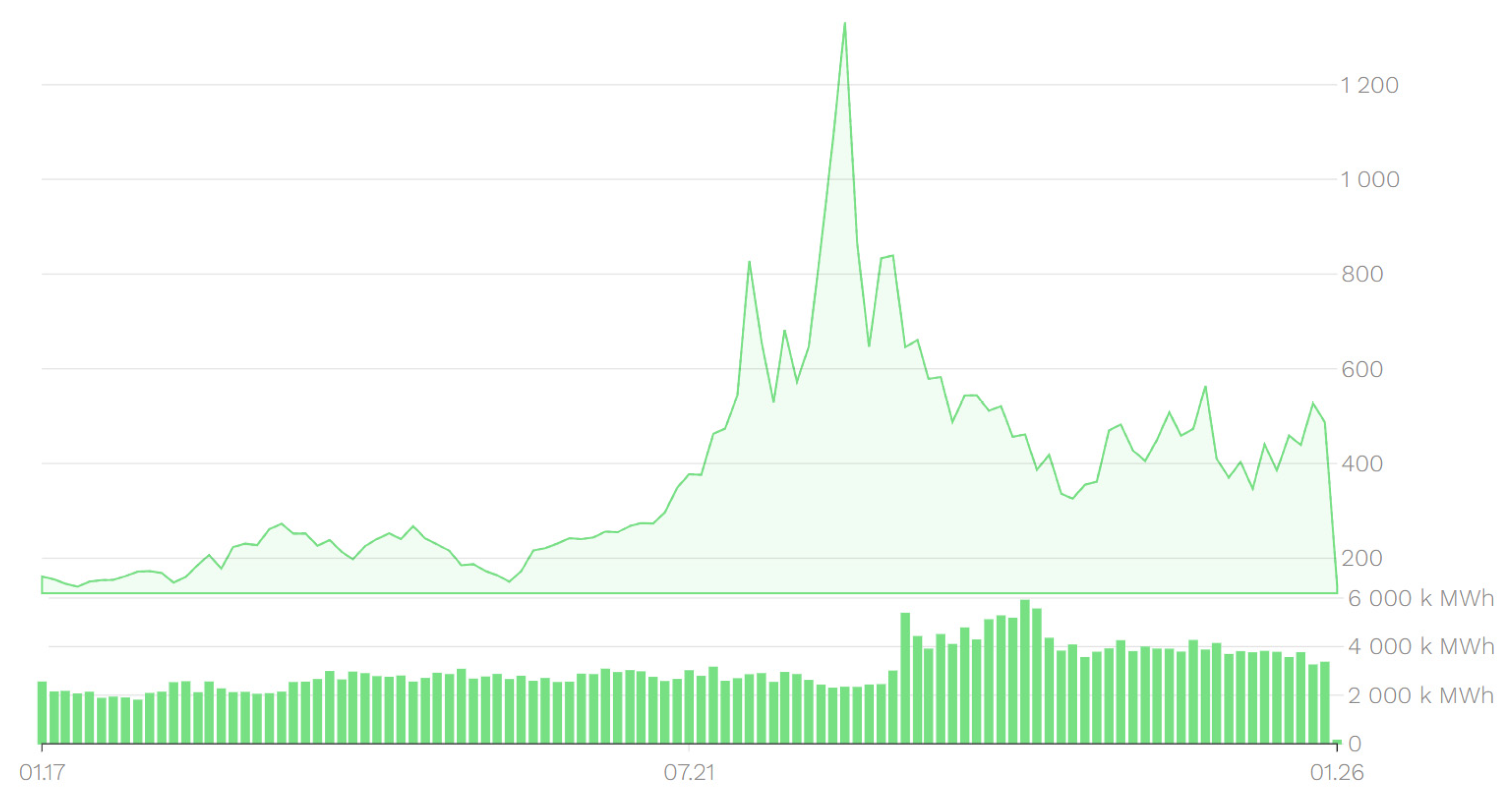
The growing interest in energy resources, consumption measurement, and optimization techniques is further driven by sharply rising electricity prices and the significant, often unpredictable fluctuations in energy markets. The surprising nature of this fluctuation is well illustrated by the graph of energy price formation in individual years, which is shown in Figure 1.
A study by the Boston Consulting Group [6] found the Internet is actually responsible for 2% of all global carbon output—the equivalent of the entire aviation industry.
The aim of this article is to demonstrate the need to optimize electricity consumption by computer devices in accordance with the principles of ESG and sustainable development, as well as to analyze methods for reducing energy usage. The paper presents the most widely used techniques for minimizing energy consumption in electronic systems and through software-based solutions, with particular emphasis on data centers. Due to their scale and operational characteristics, data centers play a fundamental role in this area, as energy efficiency directly influences the cost of provided services and, indirectly, the future development of the global economy, especially in the context of smart city initiatives.
This review is organized around four research questions (RQs) and provides an analytical synthesis (taxonomy, evidence map, and a Smart City implementation framework) to support measurable energy optimization of IT assets.
Research questions (RQs):
RQ1: Which energy optimization methods, broken down by technological approach (hardware, firmware/operating system, virtualization/cloud/data center, network/edge), provide the highest and most promising savings?
RQ2: How do the reviewed approaches align with ESG objectives, and how can the outcomes be operationalized as measurable KPIs for reporting and governance?
RQ3: What actionable framework (process and decision logic) can guide practitioners in selecting, implementing, and validating energy optimization measures in smart city IT infrastructures?
RQ4: Energy optimization in modern Data Centers is evolving from a reactive approach (infrastructure management) toward a proactive and holistic approach, based on the synergy of AI-Driven Management and Grid-Interactive Systems.
The main contributions of this review are: (i) a structured classification of measurement tools (granularity, metrics, and accuracy constraints), (ii) a cross-layer taxonomy of optimization techniques, (iii) a quantitative evidence map summarizing impacts and trade-offs reported in the literature, and (iv) a practical, step-by-step implementation framework linked to ESG reporting needs.

2. Materials and Methods

This study was designed as a structured narrative review supported by illustrative quantitative analysis. The scope covers methods for optimizing electricity use by IT devices in accordance with ESG principles and sustainable development objectives, with particular relevance to Smart City areas. Following the research motivation presented in the Introduction, the review focuses on three interconnected layers of digital infrastructure: (i) end-user computing devices, (ii) embedded and Internet of Things (IoT) systems deployed at scale in urban environments, and (iii) data centers as the core computing layer of the knowledge-based economy.
The review objective was to identify, categorize and synthesize technical approaches that reduce energy consumption through (a) measurement and monitoring practices, (b) hardware-level mechanisms, (c) firmware/operating system power management, and (d) infrastructure-level optimization for data centers (e.g., cooling, consolidation and virtualization). In addition, simplified calculations based on representative electrical parameters and selected technical characteristics of modern data centers were used to illustrate the cost and sustainability relevance of electricity usage and efficiency indicators.

2.1. Sources and Search Strategy

The literature base was compiled through targeted searches in scientific databases and digital libraries (e.g., Scopus, Web of Science, IEEE Xplore, ACM Digital Library, and Google Scholar), complemented with standards, technical documentation and industry reports relevant to IT energy efficiency and data center operation. Due to the interdisciplinary character of the topic, the search strategy combined keywords related to energy consumption, power management, IT devices and Smart City/ESG context, for example:
(“energy consumption” OR “power management” OR “energy efficiency” OR “low-power” OR “sleep mode” OR “DVFS” OR “virtualization” OR “cooling”) AND (“IT devices” OR “computer” OR “data center” OR “IoT” OR “embedded systems” OR “smart city”) AND (“ESG” OR “sustainable development” OR “carbon footprint” OR “green IT”).

2.2. Eligibility Criteria and Analytical Boundaries

Sources were included if they (i) described energy-saving techniques applicable to end-user devices, IoT/embedded systems or data center infrastructure, and/or (ii) discussed measurable outcomes, energy-related indicators, or technically justified mechanisms influencing electricity use (power draw, energy consumption over time, utilization-driven efficiency). Publications focusing on unrelated building–energy topics without a direct link to digital infrastructure operation were excluded. The review prioritized peer-reviewed research and high-quality technical reports that support reproducible interpretation of the presented optimization techniques.

2.3. Data Extraction and Taxonomy Development

For each selected work, the following attributes were extracted: infrastructure layer (end-user/IoT-edge/data center), type of technique (measurement and monitoring, hardware, firmware/OS management, software optimization, infrastructure-level practices), target component (CPU/GPU, memory, storage, display, communication modules, cooling/power delivery), reported metrics (where available) and key implementation constraints (e.g., performance, latency, reliability, usability, cost). Based on this coding, the evidence was grouped into thematic categories and organized into a cross-layer taxonomy linking technical measures to operational efficiency and ESG-oriented governance.

2.4. Illustrative Quantitative Analysis

To support the narrative synthesis, representative calculations were used to illustrate the relationship between voltage/current-based power estimation, energy consumed over time (kWh) and the cost relevance of electricity use in organizational contexts. At the data center level, the quantitative component highlights commonly applied efficiency indicators (e.g., Power Usage Effectiveness, abr. PUE) and their role in benchmarking energy performance. These calculations provide order-of-magnitude evidence supporting decisions on energy optimization techniques and cost reduction priorities.

2.5. Inclusion/Exclusion Criteria and Screening

We included (i) peer-reviewed journal and conference publications that discuss measurement methods, optimization techniques, or quantitative impacts on electricity consumption of IT systems; (ii) studies explicitly relating the interventions to sustainability/ESG or to smart city contexts; and (iii) sources reporting measurable outcomes (e.g., changes in power [W], energy [Wh/kWh], PUE, utilization, or emissions proxies). We excluded non-technical opinion pieces, purely conceptual discussions without actionable methods, and sources without sufficient methodological description to interpret results. Screening was performed in two steps: (1) title/abstract screening to remove out-of-scope items, and (2) full-text screening to retain sources that provide implementable techniques and/or quantitative evaluation. References were de-duplicated across databases. The study selection process is summarized in a PRISMA-style, following the PRISMA 2020 reporting guidance [7].

2.6. Data Extraction and Synthesis

For each retained source, we extracted: (a) the target system layer (device, firmware/OS, virtualization/cloud, data center facility, network/edge), (b) the intervention category, (c) the measurement approach and metrics used, (d) the reported quantitative impact where available (ranges rather than single-point values when heterogeneous), and (e) constraints and trade-offs (performance, reliability, cost, rebound effects).The synthesis is presented as (i) a measurement tool classification, (ii) a cross-layer taxonomy of optimization techniques, (iii) a quantitative evidence map summarizing impacts and limitations, and (iv) an implementation framework that links technical measures to ESG-oriented KPIs and decision making.

2.7. Evidence Synthesis and ESG Interpretation

The extracted findings were synthesized narratively to emphasize recurring patterns and to highlight interactions between methods (e.g., hardware low-power states combined with firmware scheduling and software policies). The synthesis links energy optimization practices to ESG-related implications, including reduced operational electricity demand, improved reporting transparency, and enhanced sustainability of digital services deployed in Smart City environments.

2.8. Methodological Limitations

The review relies mainly on secondary literature and publicly accessible technical information, which limits direct validation under real operational conditions in Smart City infrastructures. In addition, rapid technological evolution in IoT systems, AI workloads and data center architectures can affect the long-term stability of reported parameter values and efficiency ranges. Nevertheless, the adopted structured review and cross-layer taxonomy provide a consistent framework for understanding practical energy optimization approaches and support future empirical studies.

3. Literature Review

This section presents the background literature that frames the article’s focus on electricity consumption of IT devices in Smart City ecosystems and within ESG-driven sustainability objectives. It introduces the ESG concept and Smart City context, summarizes key technology drivers (IT infrastructure, data centers, IoT and AI), and then reviews measurement and monitoring approaches as a prerequisite for energy optimization.

3.1. ESG Framework and Sustainability Drivers ESG Consists of Three Elements

The three elements referred to in this section are the following: E—Environment; S—Social Responsibility; G—Corporate Governance. Their main goal is to provide investors with the possibility of comparing alternative investment directions on one level, by analyzing these three parameters. Based on them, ratings and non-financial assessments of enterprises, countries and other organizations, or specific investments are created [8]. The main goal of assessing an entity in terms of ESG is to develop a synthetic message and an effective way of informing the capital market about the result of the study conducted by analysts independent of the assessed entity. The environmental aspect relates to the criteria for implementing environmental strategies and policies, including environmental management practices and adherence to the principles of responsibility and environmental protection. Social responsibility encompasses factors such as relationships with market stakeholders, including suppliers, customers, and business partners. It also places strong emphasis on working conditions, respect for employee rights, and compliance with occupational health and safety regulations. In addition, governance criteria assess the quality of management policies and procedures, product and service quality, as well as the company’s information policy and the level of transparency in its operations. Corporate governance, on the other hand, concerns the analysis of respect for shareholders’ rights, respect for information obligations towards all shareholders, decision making independence and management skills.
This idea assumes that a company should not only care about its own economic interest. Business should bring broadly understood benefits to all stakeholders, local communities and the environment. This is the only way for a company to ensure sustainable development and stability for itself and the environment in which it is located. As a result of these transformations, there has been a need for an in-depth analysis not limited to the company’s ability to be solvent or cover its own financial obligations, but also in the field of social and environmental responsibility [9]. An economy based on smart cities fits perfectly into this idea, where the latest technologies and the energy they consume play a fundamental role [10]. The European Commission is leading legislative work on the harmonization of standards in the field of ESG reporting (sustainable development reporting). The growing importance of ESG reporting, along with the need to integrate financial and non-financial information, is an important premise for the development of sustainable development accounting. On 17 September 2019, the Energa Group was the first in Poland to obtain financing in the form of a socially responsible revolving credit, which makes the amount of the credit margin dependent on the achievement of sustainable development goals [11]. The funds obtained total PLN 2 billion. The money is intended to be used for the development of renewable energy sources’ generating capacity, among other goals. The acronym ESG has gained popularity due to numerous regulations regarding Sustainable Development (including at the EU level), which use this term to describe measurable requirements and parameters and an analytical approach to this broad field. The abbreviation ESG is used in the context of describing requirements, factors, indicators or assessment criteria regarding the involvement and results of an entity in activities for sustainable development. Hence, the concept of ESG Risk analysis or ESG Ratings is gaining popularity [12]. The basis of ESG is, among others: the 17 UN 2030 Sustainable Development Goals, the UN Global Compact initiative, the UN Guiding Principles on Business and Human Rights and the OECD Guidelines for Multinational Enterprises [13]. To operationalize these principles in urban digital ecosystems, the Smart City concept provides a natural application context.

3.2. Digital Infrastructure Energy Drivers: IT Expansion and Data Centers

Recent literature emphasizes that the rapid expansion of IT infrastructure has led to a significant increase in global energy consumption, positioning energy optimization as a critical challenge for sustainable development and ESG compliance [14,15,16,17,18,19]. In the context of smart cities, data centers, Internet of Things (IoT) devices, and artificial intelligence (AI) systems are identified as the primary drivers of growing electricity demand. These technologies form the backbone of modern urban digital ecosystems but simultaneously generate substantial environmental and operational costs [20]. Numerous studies indicate that data centers are among the most energy-intensive components of smart city infrastructure due to their continuous operation, cooling requirements, and high computational workloads. Research highlights the effectiveness of energy-efficient cooling technologies, server consolidation, virtualization, and dynamic power management in reducing overall energy consumption [21,22]. Standardized metrics, such as Power Usage Effectiveness (PUE), are widely discussed in the literature as essential tools for evaluating and benchmarking data center energy performance. Because optimization depends on reliable baselines, the literature also highlights the role of measurement and monitoring systems for electricity consumption.

3.3. IoT and AI in Smart City Energy Optimization

The literature also underscores the increasing role of IoT devices in smart cities, where millions of interconnected sensors and embedded systems operate continuously. While individual IoT devices consume relatively low amounts of energy, their large-scale deployment results in considerable cumulative power demand [23]. Researchers emphasize energy-aware communication protocols, edge computing, and low-power hardware architectures as key strategies for minimizing energy usage in IoT networks. Additionally, recent studies highlight the dual role of artificial intelligence in energy optimization [24]. On one hand, AI workloads contribute to increased energy consumption due to their computational intensity. On the other hand, AI-based algorithms are increasingly used to optimize energy management, predict workloads, and dynamically control resource allocation in data centers and smart city systems. The reviewed research demonstrates that AI-driven energy management can significantly improve efficiency while supporting the sustainability objectives of ESG-oriented digital infrastructures. These measurement foundations enable subsequent analytics and decision making related to efficiency improvements and technology choices.

3.4. Measurement Tools and Monitoring Systems for Electricity Consumption in IT Devices

Currently, there are many ways to measure the consumption of electricity by a specific device, and there are already systems available for monitoring consumption and automatic response in real time. Using a meter for specific devices is currently necessary due to the possibility of using many methods of optimizing energy consumption. This allows for the current use of appropriate methods of reducing energy consumption or including the resulting costs in the appropriate prices of products or services, as is the case with data centers. The basic meter of electricity consumption is a wattmeter. Just plug it into a socket, and the display will show the current power consumption of the device. This type of power consumption meter is equipped with an LCD display, from which you can read the amount of energy used in kWh. Currently, power consumption meters come in two varieties:
  • Analog watt meters, so-called panel devices due to the fact that the measurement result is displayed on a black scale on a white board;
  • Digital watt meters, a more modern type of meter characterized by better readability of readings thanks to LCD screens.
Professional devices for monitoring energy consumption and controlling electricity costs consist of several devices, creating a specific monitoring system and the ability to respond to energy consumption states on an ongoing basis. Practical energy cost meters plugged directly into network sockets in switchboards allow for control of the energy consumed by devices in real time with a frequency of 5 to 60 s. Common monitoring system variants include optical pulse-based solutions (Opto sense), probe-based inductive sensing (Power sense), plug-level metering with remote control (Plug sense), and DC monitoring configurations (Power sense DC) [25].
The power of the device is important. It informs us how much energy a given device needs to operate. However, it must be remembered that the given value does not always match reality. An example here are stationary computers, where the power supplies have a declared power of approx. 400 W; meanwhile, their actual power consumption during standard operation is much lower. The formula for power consumption is therefore as follows [26]:
device power × time of use × energy rate
Example number 1: 80 W TV operating for 4 h, and the operator’s rate is 65 gr/kWh, the result will be as follows 80 W × 4 h × 0.65 PLN/1000 = 0.21 PLN. Example number 2: the power of a desktop computer is 300 W. The average daily use of this device is 4 h. The computer consumes 1.20 kWh per day, so with the same rate the cost will be 0.78 PLN. Smart metering platforms (e.g., smart-MAIC) support continuous monitoring of network parameters and provide data intervals such as 5 s or 60 s via API/MQTT, enabling near-real-time energy analytics and management [27,28]. Energy monitors allow for measurement of such parameters as: voltage [V], current [A], active power [W], reverse active power [rW], active energy [Wh], or power factor [PF]. Such a number of measured parameters is important for the possibility of using many methods of optimizing electrical energy consumption. However, this type of energy monitoring, analysis, and control is performed in modern systems via wireless interfaces and remote output management. A fundamental relationship used in practical estimation of active power is [29]:
P—the power of the device that we want to know (this is the active power expressed in Watts [W]);
U—the voltage in the socket (for illustrative purposes, U = 230 V was assumed) [V];
I—the measured current [A];
cos(φ)—power factor.
Formula:
P = U × I × cos(φ)
Several limitations should be considered when interpreting electricity measurements in IT environments. First, the rated (nameplate) power of devices, such as PC power supplies, does not represent operating consumption, which depends on workload and device state (active/idle/standby). Second, measurement granularity affects the usefulness of results: device-level meters provide actionable insights for single endpoints, whereas switchboard-level monitoring supports baselining but requires attribution to specific devices or services. Third, because IT equipment is a nonlinear load, power factor (PF) and harmonic components may influence current-based readings and comparability across devices and measurement tools [30].

3.5. Methods for Measuring Energy Consumption by IT Devices

The reviewed evidence indicates that effective energy optimization in IT environments requires reliable measurement of electricity consumption at the appropriate granularity. In practice, energy monitoring is applied at the device level (single endpoints such as computers, peripherals, servers, or IoT nodes) as well as at the infrastructure level (switchboards and multi-device environments), enabling the identification of losses, abnormal operating patterns, and opportunities for cost reduction. In addition, measurement results support the allocation of energy-related costs to products and services, which is particularly relevant for large-scale infrastructures such as data centers.
Measurement approaches discussed in the literature can be grouped into three main categories: (i) plug-in device-level meters that provide direct readings of power and energy usage for individual devices, (ii) monitoring systems integrated with electrical distribution infrastructure enabling near-real-time monitoring at intervals ranging from several seconds to one minute, and (iii) smart metering platforms providing continuous monitoring, remote data access (e.g., via APIs), and integration with analytical tools.
Across these approaches, the most relevant electrical parameters include voltage [V], current [A], active power [W], energy [Wh/kWh], and power factor [PF].Currently, there are many ways to measure the consumption of electricity by a specific device, and there are already systems available for monitoring consumption and automatic response in real time. Using a meter for specific devices is currently necessary due to the possibility of using many methods of optimizing energy consumption. This allows for the current use of appropriate methods of reducing energy consumption or including the resulting costs in the appropriate prices of products or services, as is the case with data centers [31]. The basic meter of electricity consumption is a wattmeter. Just plug it into a socket, and the display will show the current power consumption of the device. A current consumption meter (wattmeter) is most often an inductive, electrodynamic or ferrodynamic device designed to measure active power [32]. This device quickly and easily measures how much current a given device, e.g., a computer, draws. It takes measurements using special coils, from which the wattmeter is built, namely a fixed current coil and a moving voltage coil [33]. The first one is connected in series to the system using special terminals, the second in parallel. The meter plug is plugged into an electrical outlet, where it acts as a splitter or adapter, into which the end of the cable of the tested device is plugged [34].A wattmeter is a device that we place in an electrical outlet, and to it we connect the receiver that we want to monitor [35]. Modern energy measurement systems, such as smart-MAIC intelligent meters, help to monitor and manage electricity consumption in a simple and visual way [36]. They are used for continuous measurement of electrical network parameters and electricity consumption. The most popular example of the smart-MAIC D103 energy monitor for a 3-line network with current transformer type clips up to 100 A is produced in Standard and Extended versions [37]. In the Extended version, the smart meter provides separate bidirectional measurement of energy consumption and generation and 5 s data intervals for API and MQTT, while in the Standard version, the device measures unidirectional power and 60 s data intervals for API and MQTT [38]. Energy monitors allow for measurement of such parameters as: voltage [V], current [A], active power [W], reverse active power [rW], active energy [Wh], or power factor [PF]. Such a number of measured parameters is important for the possibility of using many methods of optimizing electrical energy consumption. However, this type of energy monitoring, analysis, and control is performed in modern systems via wireless interfaces and remote output management. For example, a standard diagnostic tool for technicians in the electrical/electronics industry is a digital multimeter, which is used to measure two or more electrical values, primarily voltage [W], current [A] and resistance [Ohm].
For smart city deployments, measurement is primarily constrained by (i) granularity (from sub-second to hourly), (ii) the measurable electrical quantities (e.g., V, A, W, Wh/kWh, power factor), and (iii) the ability to scale data collection across heterogeneous assets (end-user devices, edge gateways, network equipment, and data-center subsystems) [39].
Table 1 summarizes the main classes of instruments used in the reviewed literature and practice.Across classes, two recurrent limitations should be explicitly considered when interpreting results: (a) power factor (PF) sensitivity, because apparent power and reactive components can bias comparisons when only nameplate data are used; (b) aggregation granularity, because coarse sampling (e.g., 60 s or longer) can miss workload transients and sleep/wake cycles. Therefore, measurement design should match the decision use case (billing/ESG reporting, fault detection, workload optimization, or equipment replacement).

4. Results and Discussion

Drawing on the literature reviewed above, the following section synthesizes practical approaches to measuring and reducing energy consumption in IT systems, with direct implications for ESG performance. This section synthesizes the reviewed approaches to measuring and reducing electricity consumption in IT devices, linking device-level practices with ESG and sustainable development objectives. The discussion follows a measurement-to-optimization logic: first, measurement methods and indicators are summarized; next, optimization strategies are presented from monitoring and operational practices to hardware- and software-level techniques.

4.1. Digitization of Energy Consumption Management and Analytics-Driven Optimization

Today, we are talking about the digitization of energy consumption management, because thanks to the so-called intelligent energy optimization platforms, we have a combination of the previously discussed energy consumption measurement variants with complete analytics. This allows for ongoing tracking of consumption trendsand thus detecting sources of energy losses and unnecessary costs. Additionally, processed measurement data allows for verification of the electricity coefficient in each process and each product or service provided to the customer. Such systems allow for improving energy efficiency, which at the same time eliminates underestimations in the case of readings from electricity meters and overlooking events in the case of temporarily installed meters [43]. An additional advantage is the possibility of verifying anomalies and failures of computer equipment. It also allows for combining data, the analysis of which would be very difficult using the analog method, which can provide feedback on which device is the most energy-intensive. And this also becomes the basis for investment planning and the decision-making process of purchasing new IT devices. The meter itself will show power consumption readings, but it will not contain an automatically performed analytical part. On the other hand, the monitoring system allows for finding many methods of optimizing the consumption of electricity. For example, thanks to the digital system, you can afford to make tests and modifications in the minutes of start-up, as well as to constantly search for better solutions. Therefore, energy management systems are currently becoming channels suggesting optimization solutions, which include [44]:
  • Identifying anomalies and responding to them;
  • Well-thought-out strategies for replacing equipment;
  • Adjusting activity times;
  • Using hardware and programmable techniques for reducing power consumption.
To provide a structured synthesis, we organize the reviewed interventions into a cross-layer taxonomy covering hardware/device design, firmware and operating systems, application and workload management, and infrastructure-level practices for data centers and edge nodes (Table 2).

4.2. Methods for Reducing Energy Consumption in IT Devices in Accordance with ESG and Sustainable Development Principles

Energy efficiency not only lowers operational costs but also directly supports ESG goals: reduced carbon emissions (Environmental), reliable service delivery (Social), and transparent governance through measurable reporting (Governance). Energy efficiency is paramount in modern electronics. Consequently, integrated circuit designers and system architects prioritize innovative methods to reduce operational energy consumption [48]. This includes both hardware-level solutions, such as low-power circuit design, dynamic voltage and frequency scaling, and advanced semiconductor manufacturing technologies, as well as software-based approaches that optimize workload management and resource utilization. Beyond the direct reduction inoperating costs, improving energy efficiency strongly supports the principles of sustainable development and aligns with the ESG framework. From an environmental perspective, lower energy consumption reduces greenhouse gas emissions and the carbon footprint of electronic systems. From a social standpoint, energy-efficient technologies contribute to more responsible resource use and improved reliability of critical digital services. In terms of governance, energy efficiency is increasingly treated as a measurable indicator of responsible management and long-term strategic planning.Moreover, ESG performance has become an important component of non-financial assessments of organizations and companies, influencing investment decisions, regulatory compliance, and corporate reputation [49]. As a result, energy efficiency is no longer solely a technical or economic issue but has evolved into a strategic factor that affects competitiveness, sustainability, and the long-term development of the global digital economy [50].
In the case of signal processing systems, there are many different techniques for reducing power consumption. Their wide range includes both new technologies for manufacturing integrated circuits and software written with the aim of optimization, minimizing energy consumption. Many of the methods are based on turning off temporarily unused functional blocks. The power consumed is also proportional to the frequency of the clock signal, so another way to reduce energy consumption is to control the clock signal so that it has the lowest value that provides sufficient processing efficiency at a given moment. Power also depends on the supply voltage. However, this relationship is no longer linear. Power consumption is proportional to the square of the voltage. This means that reducing the supply voltage has a much stronger effect on power consumption than changing the frequency [41]. Unfortunately, a lower supply voltage means a reduction in the maximum operating frequency, which results in lower efficiency. Therefore, on the one hand, it can be seen that the issue of reducing power consumption is complicated and must take into account the relationships between individual parameters. Despite this, dynamic tuning of many parameters is used in practice. On the other hand, it shows that there are many methods for reducing energy consumption, and the world will currently make their search a priority in the current global economy.
Additionally, progress in miniaturization means that for the latest semiconductor technologies, the leakage current is quite large and can no longer be ignored. In the latest 90 nm or 45 nm technologies, the associated power losses can reach as much as 50% of the dissipated power. The increase in the scale of integration also means an increase in parasitic capacitances between individual elements on the integrated structure and an increase in dynamic current consumption. This is also influenced by the continuous increase in clock frequency, which is practiced due to the growing needs in terms of signal processing speed. These phenomena cause optimization to be sought by operating systems with very low voltage, which reduces dynamic power consumption, and thus has a positive effect on reducing the demand for current. However, this reduces efficiency and therefore other solutions must be sought. Power management and optimization solutions are sought at two stages [40,51]:
  • The first concerns methods of development during the design of integrated circuits—methods at this stage primarily include the selection of hardware and architecture as well as design strategies.
  • The second concerns techniques implemented during system operation.
The power consumption of a device is undoubtedly influenced by the efficiency of its components. For this reason, the most important decision to start the design with is the selection of energy-efficient components [52]. In addition, one of the obvious methods seems to be simply disconnecting inactive elements of the system from the power supply. In many cases, only a small fraction of the entire system is active all the time. Therefore, a significant reduction in energy consumption can be achieved by dividing the system into many areas and supplying power only to active parts.
Another solution is to divide the system into so-called voltage islands. This is a technique of supplying different parts of the system with a lower voltage, depending on the requirements imposed on the operating frequency. Both of these methods are widely described in the literature on the subject. Integrated circuit manufacturers use various techniques to reduce power consumption, mainly by introducing operating modes. One of the most common methods is to use the “sleep” mode, which is available in virtually all digital systems. Deeper sleep modes are also becoming more and more available, which allows for an even more effective reduction in power consumption. However, this creates new problems, such as causing longer delays during the return of the system to full activity.
Functions supporting dynamic voltage and frequency changes are also built into the systems. Programmable clocks that allow the application to limit dynamic power proportional to the reduction in frequency and tunable voltage sources allow for dynamic regulation of the frequency and supply voltage from the software level. An example of the possibilities offered by such regulation is the Intel PXA255 processor (Intel Corporation, Austin, TX, USA), which draws 0.80 mW/MHz if it operates at a frequency of 400 MHz and a voltage of 1.3 V. When the operating frequency is reduced to 200 MHz and the voltage to 1 V, the power consumption is also lower and amounts to 0.58 mW/MHz [42].

4.3. Low-Energy Techniques at Design Time and During Operation

Lower power consumption ensures system initialization while leaving some subsystems unpowered until it is really necessary. Starting the system, in which all of its components are activated at once, causes significant power losses. The system is usually initialized at the maximum clock frequency. During this time, subsystems that are not currently needed or may never be started in the case of a given application will certainly be turned on. However, for years, the goal has been to achieve the highest possible performance in the shortest possible time without analyzing the costs and impact on the global economy and the environment. In the case of portable devices, a common situation is changing the power source from mains to battery, e.g., in laptops. In this case, the operating system registers information about the change in power mode and implements restrictions, such as slowing down the processor speed, shortening the waiting time until the screen and hard drive turn off, or reducing the screen brightness. The task of the operating system is to reach a compromise between the device’s performance and trying to extend the battery life. A similar technique can be used in battery-powered devices, where when a low level of remaining energy is detected, similar steps are taken to limit the operation of some functions. Often, the system is configured to periodically read the state of peripheral devices in order to detect possible events, e.g., cyclic reading of the keyboard state. Instead of such a solution, it is better to use interruptions, which allow the processor to enter an energy-saving mode waiting for an interruption to arrive. An additional advantage of using interrupts is the simplification of the software. At the same time, it is important that the software supporting the given system is optimized for its processing capabilities. Considering power consumption, more efficiently written software usually means a longer period during which the system can work in sleep mode, or during which the processor’s data processing speed can be reduced. Skillful use of instructions can result in different energy requirements. This is the subject of analysis of methods based on the impact of the use of individual instructions on the efficiency of the system. Often a good solution to limiting energy consumption is savings achieved at the expense of calculation accuracy, which is not always necessary for the correct operation of a given application. For some applications, a precise result is not so important. Accepting a loss of some accuracy can, however, significantly simplify results processing, and thus also reduce power consumption. Current techniques used for low energy consumption include [25,40,41,42]:
  • Innovative power-limited modes:
    -
    These are operational modes in a chip or microcontroller that limit power consumption depending on activity.
    Examples:
    -
    Sleep Mode/Deep Sleep: Most parts of the chip are turned off; only essential circuits stay active;
    -
    Standby/Idle Mode: CPU is paused, but peripherals or memory may still operate.
The key idea: only power what’s necessary at a given moment to reduce energy consumption.
  • Intelligent analog peripherals:
    -
    Analog peripherals (like ADCs, DACs, comparators, etc.) can consume significant power if always active.
    -
    Intelligent design allows them to:
    Turn on/off automatically based on need.
    Operate in low-power sampling modes.
    Process signals efficiently without requiring the main CPU to run continuously.
This reduces overall system power consumption.
  • Clock gating:
    -
    Disabling the clock signal to sections of a digital circuit when they are not in use.
    -
    How it helps:
    Digital circuits only consume dynamic power when the clock toggles.
    If a module is idle, gating the clock stops switching, saving power.
    Example: Stop the clock to a UART module when not transmitting.
  • Supply voltage scaling:
    -
    Power consumed by a digital circuit is as follows:
    P = C⋅V2⋅f
    where: C = capacitance switched per cycle; V = supply voltage; f = operating frequency.
    -
    Reducing V significantly reduces power consumption.
    -
    Combined with frequency scaling, this is called Dynamic Voltage and Frequency.
    Scaling (DVFS).
    Example:
    -
    ACPU running at lower performance can drop voltage from 1.2V to 0.9V to save energy.

4.4. Firmware- and Event-Driven Power Management in Standby-Dominated System

However, it should be emphasized that without well-designed and efficiently operating firmware, the full potential of hardware-based power reduction techniques cannot be realized. Modern microcontrollers and electronic devices offer a wide range of low-power modes, dynamic voltage and frequency scaling, and peripheral shutdown capabilities. Yet, the effectiveness of these features largely depends on software that can intelligently manage system resources, schedule tasks, and switch components between active and sleep states at the appropriate times. As new microcontroller solutions with progressively lower power consumption continue to enter the market, the ultimate limit of energy savings in electronic systems will increasingly depend on the quality of the firmware. Efficient software can ensure that devices remain in low-power states whenever possible, minimize unnecessary processing, and optimize communication protocols to reduce energy-intensive operations. For example, in embedded systems and Internet of Things (IoT) devices, firmware can dynamically adjust sensor polling rates, manage radio transmission intervals, and coordinate multi-core processing to achieve substantial energy reductions without compromising performance. Moreover, the growing complexity of modern systems means that firmware must also integrate with higher-level software layers and operating systems to provide comprehensive energy management. In applications such as data centers, smart cities, or wearable electronics, intelligent software control is crucial for translating hardware capabilities into real-world energy savings, reducing operational costs, and supporting sustainable development and ESG goals. Ultimately, the combination of advanced hardware and optimized software will determine the energy efficiency ceiling of modern electronic systems.
It appears that, for energy-saving solutions, the key factor is designing algorithms that allow the processor to remain in deep low-power states for as long as possible. Effective algorithms minimize active processing time, optimize task scheduling, and manage system resources in a way that reduces unnecessary wake-ups and computational overhead. By maximizing the duration in which the processor operates in low-power or sleep modes, the overall energy consumption of the device can be significantly reduced, without compromising performance or responsiveness. This principle is particularly critical in embedded systems, IoT devices, and data center operations, where even small improvements in energy efficiency can have substantial economic and environmental benefits. There are devices, such as TV remote controls or many types of sensors, in which the standby mode lasts over 90% of the time. Such a long stay in sleep mode is possible because the microcontroller and its peripherals can be powered by various sources of clocking and clock signal. Furthermore, peripherals can operate without the processor’s supervision, allowing them to be turned off and reducing overall power consumption. An example is the 16-bit MSP430 microcontroller from Texas Instruments. This means that analog-to-digital converters can sample a signal, timers can count pulses, and serial communication modules can transmit data in a power-saving mode, without the need for the processor to intervene and wake it up from sleep. Power consumption in active mode can range from 100 to 500 μA/MHz. In the case of power-saving mode with the processor turned off, this value can even go below 1 μA [37].Therefore, programmers should consider using the power saving mode, which is currently becoming a required trend. An example is waiting for a change in state or status. Analyzing the example of a TV remote control or a light activated by a motion sensor—these devices usually work in standby mode until the state changes—pressing a button on the remote control or a car appears in front of the infrared sensor. One way to identify a change in status is to constantly check the variable storing the sensor’s state. However, instead of constantly reading the flag, the microcontroller should use the capabilities of integrated peripherals that can operate without a processor. In this case, it is possible to use GPIO ports with interruption support to wake the microcontroller from the low-power mode. Examples of functions in software for using power saving techniques are [37,41]:
  • Initialize GPIO ();—means initializing the port to trigger an interrupt when the voltage changes from low to high and vice versa.
  • Enter Low-Power Mode();thanks to this function, the processor remains in power-saving mode and waits for an interrupt from the I/O port.
The above examples have shown only the two most common areas of using the energy-saving standby mode, and there are many more such possibilities. Therefore, you should always analyze the software code in terms of operations that the peripheral systems of the microcontroller can perform without the processor and waiting moments. In the case of TI MSP430 microcontrollers, to help identify areas where improvements can be made, you can use the ULP Advisor code analysis tool, which analyzes the program source code and displays tips on the possibility of introducing functions related to energy optimization [32,40,53].

4.5. Circuit- and Architecture-Level Techniques for Reducing Dynamic Switching Power

More and more electronic devices are powered by batteries, which naturally causes the need to minimize the energy drawn from the power source. Small size and long operating time without the need to charge the battery or replace the battery are today one of the most important criteria for choosing electronic equipment by consumers and at the same time create a great challenge for the electronics industry [54]. Ubiquitous electronics consume more and more energy in total, which causes a general trend of searching for opportunities to reduce energy consumption. The power drawn from the power source is divided into static and dynamic, i.e., the one that accompanies the change of logical states. In most cases, static power is much smaller than dynamic power, which is why most issues related to power reduction focus on minimizing dynamic power consumption. Among other things, scaling of the size of transistors contained in the semiconductor structure is used, which, using mathematical models, link the consumed power to the width of the transistor gate. The changes made concern only selected components, which most often depend on their location and tasks. Therefore, the most economical elements in terms of consumed power are removed from paths that are critical to the speed of the system. Another method is to build alternative, more economical but slower signal paths, which are selected depending on the current requirements of the system and the tasks performed. Other methods include reducing the clock frequency and lowering the supply voltage. In synchronous systems, the design can be modified so that the clock operates at half the frequency and synchronizes events using both the rising and falling edges. Such a system can operate at a lower supply voltage, and the reduction in power consumption, which is the product of the degree of reduction in the clock frequency and the supply voltage, in this case grows at an exponential rate. The power consumption in integrated circuits is also affected by the arrangement of transistors in the structure. Therefore, they are planned in such a way as to minimize the number of switching operations. One of the main principles is to arrange transistors closer to the output circuits of the circuit if they are to be switched in sequence. This is to prevent the domino effect, in which the activity of one transistor has an adverse effect on the others. Energy saving proposals also involve reducing the switching activity of logic elements, such as flip-flops. For example, you can use your own clock gating circuits for both outputs of a flip-flop, which can be done using a comparator that checks the current and previous state of the inputs. If the signals are the same, additional logic elements inhibit the clock signal. Another solution is a type of economical flip-flop that detects a situation where a change in the state of the inputs will not cause a change in the state of the outputs and inhibits unnecessary internal switching.

4.6. Additional Circuit- and System-Level Techniques

Another method of saving energy, used in practice for years, is to reduce the switching frequency of signals on the digital bus connecting individual blocks using so-called coding schemes. By choosing the appropriate method of encoding digital data, it is possible to achieve such a state that only one bit changes on the bus at each clock cycle. Instead of traditional voltages of ±5 V or ±12 V representing logical states, lower values can be used for transmission purposes. The output signal is then divided into two signals of opposite polarity, limited by the desired voltage range. The receiver treats the voltage difference between the two transmitted signals as the current logical state. In this field, the so-called segmentation mechanism is used, which divides the bus into a number of segments connected by cells, which allows for regulation of traffic between adjacent parts. The cells are activated independently of each other, ensuring that unused parts of the bus are switched off. Then, it is natural that elements that often communicate with each other should be located on the same segments. Another interesting technique is the use of existing static charges to eliminate the need to create new ones. They are transferred from the path that transmitted the high-voltage bit to the path with a low logical state, which is done by initially shorting both paths.
An effective way to minimize energy dissipation in the case of memory systems is to activate only those parts of the circuits that are needed at a given moment. Savings are achieved by partitioning the memory into a number of components with independent access. The second solution is to reduce the number of memory operations. This is achieved by adding a buffering unit (cache) that handles the most frequently occurring references. In order to further improve the energy utilization factor, instructions can be stored in the auxiliary memory in the order in which they are executed, and not in the order in which they were compiled. This results in an overall reduction in the number of memory references.

4.7. Illustrative Device-Level Comparisons and Practical Implications

Simple device-level measurements confirm that electricity consumption depends strongly on the operating state (active, idle, standby) and on the device class. Duringoffice work, a modern desktop computer with a 24-inch monitor consumes 60 W, which is about twice as much as a mid-range laptop under comparable usage conditions [42]. Representative calculations based on measured current and mains voltage illustrate this effect:
  • Laptop off: P = 230 V × 0.024 A × 1 = 6 W.
  • Laptop on during normal operation: P = 230 V × 0.150 A × 1 = 35 W.
These examples show why an accurate understanding of IT equipment characteristics is essential for selecting effective optimization techniques. In practice, certain devices may draw noticeable power even in standby (e.g., speakers or peripherals), while others exhibit very large differences between low-power and active modes. For instance, a game console consumes 7 W in sleep mode and around 120 W when running a game. Such differences indicate that the most impactful improvements often come from extending low-power states, reducing unnecessary active time, and applying automation through system policies and monitoring platforms.
Overall, power management and energy optimization require coordinated efforts on both hardware and software levels. Minimizing power consumption in modern electronic systems integrates multiple disciplines—including physics, electrical engineering, digital logic, system architecture, and computer science—and continued research is necessary as devices and infrastructures become more complex and interconnected [55]. Because the underlying studies report heterogeneous baselines and workloads, the synthesis is presented as indicative ranges and qualitative strength of evidence. The goal is to highlight where quantitative consensus exists (e.g., facility overhead reduction via cooling improvements) and where results are strongly context-dependent (e.g., device-level sleep modes in bursty workloads). According to the International Energy Agency, electricity consumption from data centers is estimated at around 415 TWh in 2024 (about 1.5% of global electricity consumption) [56]. In parallel, industry surveys report an average PUE of 1.56 in 2024, indicating limited improvement in aggregate facility efficiency and reinforcing the need for combined IT and infrastructure-level measures [56].
To operationalized the reviewed methods in a Smart City context, we propose a pragmatic implementation sequence that can be adopted by municipalities and Smart City operators: (1) scope definition (assets, boundaries, and reporting goals), (2) measurement architecture (granularity and instrumentation), (3) baseline establishment, (4) intervention selection using multi-criteria decision analysis (MCDA), (5) controlled rollout and verification, and (6) continuous monitoring and ESG reporting integration. The framework is intended for real-world deployments where thousands of heterogeneous devices operate under varying duty cycles. It explicitly separates billing/ESG reporting measurements (often minute-to-hour granularity) from control-loop measurements used for optimization (seconds-to-minutes), and it requires verification against a baseline to avoid over-claiming effects.
Energy optimization decisions in smart city IT systems involve trade-offs among cost, energy savings, service quality, reliability, and implementation risk [57]. We therefore recommend MCDA to prioritize interventions, using criteria such as expected kWh reduction, payback time, impact on latency/availability, compliance relevance (ESG), and operational complexity. Multi-Criteria Decision Analysis (MCDA) is an operational research tool used to evaluate, rank, or select from complex options based on multiple, often conflicting, quantitative and qualitative criteria. It structures decisions by weighting criteria, scoring options, and applying mathematical models to identify the best alternative. Multi-Criteria Decision Analysis (MCDA) is a set of methods that support decision making in situations where multiple, often conflicting, criteria must be considered. Instead of relying solely on a single metric (e.g., cost, energy consumption), MCDA enables a comprehensive evaluation of alternatives based on various aspects: economic, environmental, technical, and social. MCDA is particularly useful in energy and smart city planning because it allows for the integration of measurement data (IoT), energy forecasts, and social factors into a single decision-making framework. It allows for the comparison of alternatives with different units of measurement (kWh, PLN, CO2, PUE, ERE). It enables the weighting of criteria based on the decision-maker’s priorities and allows for the integration of real and simulated data. The evidence map (Table 3) can be used as an input layer for scoring and uncertainty handling.
To strengthen the ESG framing, optimization outcomes should be translated into measurable indicators. At minimum, electricity savings (kWh) and energy intensity (kWh per service unit) can be mapped to Scope 2 emissions proxies using the applicable grid emission factor [58]. For data centers and edge sites, facility metrics (e.g., PUE) complement device/workload metrics and support governance and external reporting (Table 4).
This works in a smart city because the city already has:
  • Anetwork of energy meters;
  • SCADA/BMS systems;
  • IoT data;
  • An analytical platform.
The key is data integration plus automatic reporting of energy KPIs. For example, consider street lighting modernization (LED + adaptive control). Available data streams include energy consumption from network meters, traffic sensors, twilight sensors, city schedules, and weather data. The result is an ERE of 0.35 (a 35% reduction in energy consumption) and lower operating costs. Another example is a city modernizing its district heating system (SCADA + smart district heating substations). The result is an ERE of 0.22 (a 22% reduction in primary energy consumption), which reduces network losses and CO2 emissions without building new infrastructure. The key element in a smart city is not the construction of new sensors, but data integration (SCADA + IoT + GIS), correction for external factors (weather, load), continuous KPI reporting (PUE, ERE), and automatic closed-loop control.

4.8. Classification of Trends and Technologies for Energy Optimization

Optimizing energy consumption in IT devices requires a multifaceted approach, encompassing both hardware, software, and organizational layers. The following are key design and operational principles that contribute to improved energy efficiency [59,60,61]:
1. The principle of matching resources to workload:
IT devices should be designed and configured to adapt the resources used to current computing demands. An excessive number of active processor cores, excessively high clock speeds, or unnecessarily active peripheral modules lead to unjustified increases in energy consumption.
2. The principle of dynamic power management:
The use of dynamic voltage and frequency scaling (DVFS) mechanisms and switching between power states allows for reduced power consumption during periods of low load. This principle is particularly important in mobile and server systems.
3. The principle of minimizing active state operation:
Energy efficiency increases with a reduction in the time a device remains in an active state. This is achieved by optimizing algorithms, reducing unnecessary operations, and aggregating tasks, which enables faster transitions to low-power states.
4. Principle of using energy-efficient hardware technologies:
The selection of modern components, such as high-efficiency processors, low-power memory, and solid-state drives, has a significant impact on overall energy consumption. Technological advancements allow for significant reductions in energy demand without compromising device functionality.
5. Principle of software optimization:
Software should be designed with energy-efficient considerations in mind. This includes efficient memory management, limiting I/O operations, avoiding busy waiting, and using algorithms with lower computational complexity.
6. Principle of conscious peripheral management:
Communication modules, displays, sensors, and other peripherals should be activated only when needed. Automatically turning off or putting unused components to sleep allows for significant energy reduction, especially in mobile and embedded devices.
7. Principle of monitoring and measuring energy consumption:
Effective optimization requires continuous monitoring of power consumption and analysis of device energy profiles. Measurement data enables the identification of energy-intensive components and processes, which provides the basis for further optimization measures.
8. Principle of system scaling:
In distributed systems and data centers, load consolidation and the dynamic switching of computing nodes on and off are crucial. Reducing the number of active devices while maintaining the required quality of service leads to improved energy efficiency of the entire system.
9. Principle of considering environmental conditions:
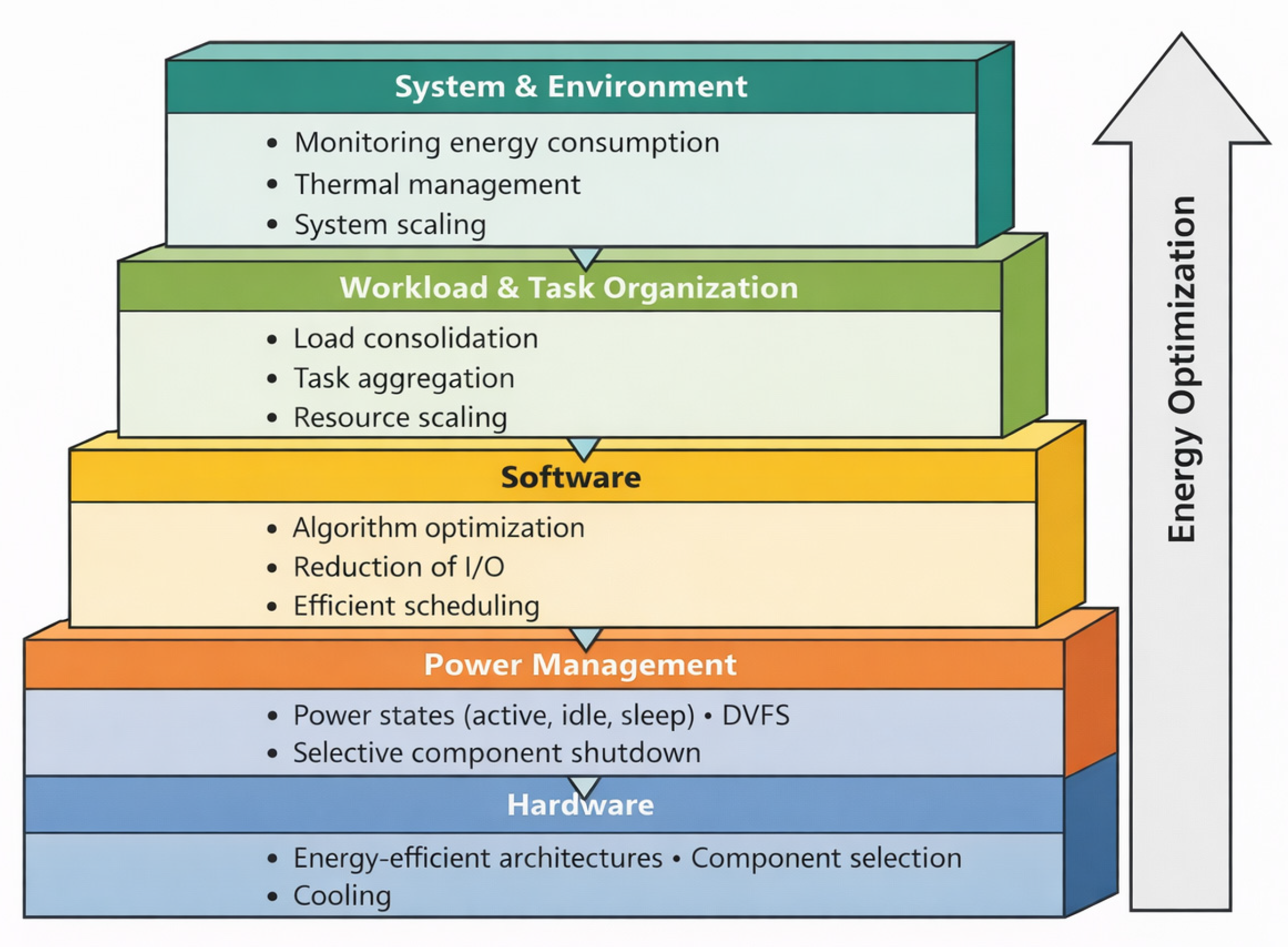
The design and operation of IT devices should consider the impact of temperature and cooling on energy consumption. Efficient heat dissipation systems reduce power losses and the need for additional cooling systems. The application of the presented principles enables systematic reduction inenergy consumption in IT devices without compromising their functionality and performance. Integrating hardware, software, and system approaches is crucial for achieving high energy efficiency in modern IT systems. The analysis presented in the article allowed the creation of a proprietary reference model for energy consumption optimization, as shown in Figure 2.
The model was created as a stack of layers, from hardware (bottom) to system (top), witha vertical arrow representing the flow of control and impact on energy consumption. To systematically analyze and assess the factors influencing energy consumption in IT devices, this study classifies a multi-layer energy optimization reference model. This model provides a methodological framework that allows for a systematic understanding of the complex interdependencies between hardware, energy management mechanisms, software, and the system and environmental context. The use of this reference model is primarily justified by the multidimensional nature of the energy efficiency problem, which cannot be analyzed solely at a single level of abstraction. Energy consumption in IT devices is the result of the interaction of design and operational decisions made at various system levels, from hardware architecture and energy control mechanisms to the way workloads are organized and the operating conditions of the entire system. The reference model allows for the consideration of these interdependencies in a consistent and repeatable manner. The adopted layered structure of the model allows for the separation of responsibilities between individual system components, which is consistent with commonly used principles of systems engineering and IT system design. Each model layer represents a distinct area of influence on energy consumption, while simultaneously maintaining the ability to analyze inter-layer relationships. This approach enables both local analysis (at the level of a single layer) and global analysis encompassing the entire system. The reference model serves as a conceptual tool in research that:
  • Organizes the identification of research variables related to energy consumption;
  • Supports the selection of metrics and experimental scenarios;
  • Enables the unambiguous assignment of observed energy effects to specific system layers.
Another justification for the model’s use is its universality and technological independence. The model is not tied to a specific hardware architecture, operating system, or device class, allowing its use in research across diverse environments, such as embedded systems, mobile devices, server infrastructure, and distributed systems. This enables comparison and generalization of research results. From a methodological perspective, the reference model also serves as a reference point for the interpretation of experimental results. It enables analysis of the impact of the optimization mechanisms used not only in terms of absolute energy consumption reduction but also with respect to the system layer in which the optimization was implemented. This approach increases the transparency of the analysis and facilitates the replicability of the research.
In 2024, the Energy Efficiency Directive (EED) became a key issue, requiring operators to report detailed energy consumption data [62]. Energy optimization has ceased to be a technical choice and has become a key business KPI. The growing demand for computing power, driven by the development of Generative AI and large-scale models is forcing a redefinition of performance paradigms. The traditional PUE (Power Usage Effectiveness) metric is becoming insufficient given the need to report full carbon and water footprints. Recent research [63] demonstrates the use of Deep Reinforcement Learning (DRL) models for real-time dynamic voltage and frequency scaling (DVFS). Peak load prediction has an accuracy exceeding 95%, allowing for early cooling of server rooms (pre-cooling). Literature published between 2024 and 2026 [64,65] focuses on liquid immersion cooling. Analyses demonstrate a reduction in energy consumption by cooling systems by over 90% compared to air-source systems and waste heat recovery (WHR). Publications explore the integration of data centers with municipal heating networks as part of a circular economy, which aligns with the concept of smart cities. A new trend in the literature [58] is the role of data centers in stabilizing power grids, demand response, where UPS systems and battery-powered energy storage (BESS) can be used to feed energy back into the grid during periods of deficit. An additional method is shifting loads over time (Temporal Load Shifting) and performing energy-intensive tasks (e.g., training AI models) during time windows with the highest renewable energy supply. Current scientific publications suggest a shift away from PUE alone and toward multidimensional metrics [65]:
  • PUE (Power Usage Effectiveness)—supporting infrastructure efficiency (standard);
  • WUE (Water Usage Effectiveness)—water consumption in cooling processes (key from 2024);
  • CUE (Carbon Usage Effectiveness)—operational carbon intensity (scope 2);
  • ERE (Energy Reuse Effectiveness)—percentage of energy recovered and transferred.
The contemporary scientific literature indicates a radical shift in the approach to data center energy management, with traditional mechanical air-cooling methods being replaced by technologies based on liquid-phase heat transfer and intelligent load orchestration. Integrating IT systems with critical building infrastructure (Facility) through machine learning (ML) algorithms has become a focal point of research in 2024–2026. Instead of maintaining constant environmental parameters, modern systems employ Predictive Thermal Control, which adjusts cooling intensity to predicted computing power demand. Simultaneously, research on immersion cooling (ICC) demonstrates that eliminating server fans and leveraging the high thermal inertia of dielectrics allows for achieving a PUE below 1.05, a feat that was virtually unattainable in traditional free-cooling systems at high power densities. For every 1.00 kWh consumed by IT equipment, only 0.05 kWh (5%) goes to infrastructure (cooling, UPS, waste). This means 95% of the energy goes directly to IT.PUE Quality Scale: 1.05–1.15 World-Leading, 1.15–1.3 Very Good, 1.3–1.6 Good, 1.6–2.0 Average and >2.0 Poor Data Center.
Table 5 summarizes key technologies described in the latest literature in terms of their impact on efficiency and the degree of difficulty of implementation.

5. Conclusions

There is a growing number of applications in which power consumption plays a critical role, particularly in battery-powered and mobile devices. As a result, an increasing number of electronic component manufacturers are focusing on energy efficiency. This issue is of great significance for knowledge- and technology-based economies, as energy consumption directly affects the operating costs of businesses and, consequently, their economic profitability. Furthermore, the implementation of energy optimization methods aligns with ESG principles and has a positive impact on the environment, supporting the goals of sustainable development. For these reasons, methods for measuring and reducing energy consumption by IT devices are becoming increasingly important, especially in the context of the expanding Internet of Things. Currently, developed countries are actively seeking solutions to optimize energy use, as the insufficient supply of energy could pose a risk to the continued growth and stability of modern economies. At the same time, reporting on sustainable development ESG translates into the identification of opportunities and effects of introduced innovations. Currently, there are many hardware and programming methods for optimizing energy consumption, and we are only at the beginning of their search and application on a large scale. In many sectors and from multiple perspectives, techniques for reducing electricity consumption—the foundation of every economy—should be carefully analyzed and developed, both for the benefit of the environment and to support the sustainable development of the world.
The objectives set out in this article have been fully achieved. The study successfully demonstrated the importance and necessity of optimizing electricity consumption by computer devices in accordance with ESG principles, with particular emphasis on modern data centers as critical elements of the knowledge-based economy. Through a comprehensive literature review and the analysis of quantitative technical data, the article provided a clear and well-founded assessment of current energy consumption challenges in digital infrastructures. The conducted research confirmed that both hardware- and software-based optimization techniques play a crucial role in reducing energy consumption in electronic systems. The analysis showed that solutions such as efficient cooling systems, virtualization, dynamic resource management, workload optimization, and energy-aware software design can significantly lower electricity demand while maintaining system reliability, availability, and performance. These findings underline the practical applicability of the proposed methods and their direct impact on operational costs and environmental performance. Moreover, the article demonstrated that energy optimization in data centers has broader implications beyond individual organizations. By improving energy efficiency, data centers contribute to reduced greenhouse gas emissions and support the transition toward sustainable energy systems, which is a key pillar of ESG-oriented strategies. The results confirm that responsible energy management is an essential factor for the long-term development of smart cities and the Internet of Things, where the demand for computing power and data processing continues to grow. An important contribution of the article is the structured review of measurement indicators and methodologies used to assess energy efficiency, such as power usage effectiveness and related metrics. This review provides a valuable reference framework for decision-makers, engineers, and researchers seeking to evaluate and optimize energy consumption in complex digital environments. The presented analysis highlights the role of data-driven decision making in achieving measurable improvements in energy efficiency. The analysis demonstrates that energy efficiency indicators, such as PUE and ERE, can provide measurable improvements in operational performance and transparent monitoring of urban energy systems. However, the practical utility of the proposed framework requires empirical validation. Future work should include pilot deployments in selected urban subsystems to assess indicator stability under real operational conditions, as well as comparative simulations to evaluate performance under varying external factors. Statistical validation and assessment of interoperability with existing SCADA/BMS platforms will further strengthen the framework’s robustness and support its potential scalability across the city.
This review provides an explicit review protocol and an analytical synthesis (taxonomy, evidence map, and implementation framework) for electricity consumption measurement and optimization of IT devices in Smart City contexts. The results indicate that measurable electricity reductions can be achieved through combinations of facility-level improvements (reducing overhead), workload consolidation (improving utilization), and device/runtime power-management (reducing idle and transient consumption). The most effective strategies depend on workload characteristics and the measurement granularity required for control versus reporting. Finally, by mapping interventions to ESG-oriented KPIs, the work supports decision making and auditability for municipalities and organizations seeking to improve energy efficiency while maintaining service quality. Further progress requires more comparable quantitative studies and standardized measurement practices in large-scale smart city deployments.
In summary, the research outcomes validate the adopted methodology and confirm that the article’s objectives have been successfully met. The presented findings constitute a solid foundation for further scientific research as well as for practical implementation in modern, energy-efficient digital infrastructures. The conclusions drawn support the view that optimizing electricity consumption in computer systems is not only a technical necessity but also a strategic requirement for sustainable economic development in an increasingly digital and interconnected world.

6. Limitations and Future Research

Despite the comprehensive scope of the study, several limitations should be acknowledged. First, the analysis is primarily based on secondary data obtained from the literature and publicly available technical reports related to data centers and IT infrastructure. Although this approach enables a broad overview of current energy optimization practices, it limits the ability to validate the results through direct experimental measurements or real-time operational data. Consequently, the findings may not fully reflect the variability of energy consumption patterns across different geographic regions, organizational scales, or technological configurations. Another limitation concerns the rapidly evolving nature of IT technologies, particularly in the areas of artificial intelligence, Internet of Things devices, and data center architectures. The energy efficiency of these systems is strongly influenced by ongoing advancements in hardware design, software optimization, and energy management techniques. As a result, some of the discussed solutions may require continuous updating to remain aligned with the latest technological developments and regulatory frameworks related to ESG and sustainable development. The synthesized results are limited by heterogeneity of workloads, baseline definitions, and measurement setups across studies. In practice, PF effects, sampling granularity, and the gap between nameplate and actual consumption can bias comparisons if not controlled. Moreover, rebound effects (e.g., increased compute demand after efficiency gains) can offset absolute savings at system level.
Future research should focus on empirical studies conducted in real smart city environments, including detailed case studies of data centers, IoT networks, and AI-driven systems. Such research would enable a more precise assessment of energy consumption and the effectiveness of optimization strategies under real-world operating conditions. Additionally, further work should investigate the integration of renewable energy sources with IT infrastructure, as well as the role of advanced AI-based energy management systems in achieving higher levels of efficiency and sustainability. Future work should (i) standardize measurement and reporting protocols for edge and municipal IT assets, (ii) expand data-backed evaluations under realistic smart city workloads, and (iii) integrate AI-driven control with robust safety constraints to avoid instability in power-management loops. Cross-study comparability would also benefit from publishing open datasets and reference workloads. Moreover, future studies could explore the development of unified ESG-oriented performance indicators that combine energy efficiency, environmental impact, and socio-economic factors. This approach would support more holistic decision making in the design and management of smart city infrastructures. Overall, addressing these research directions would contribute to the advancement of sustainable, energy-efficient IT systems and support the long-term goals of smart cities and the knowledge-based economy.

Author Contributions

Conceptualization, I.M., H.W., M.M., P.P., W.W., M.C., J.D. and A.R.-S.; methodology, I.M., H.W., M.M., P.P. and W.W.; formal analysis, I.M., H.W., M.M., P.P., W.W., M.C., J.D. and A.R.-S.; resources, I.M., H.W., M.M., P.P., W.W., M.C., J.D. and A.R.-S.; data curation, I.M., H.W., M.M., P.P., W.W., M.C., J.D. and A.R.-S.; writing—original draft preparation, I.M., H.W., M.M., P.P., W.W., M.C., J.D. and A.R.-S.; writing—review and editing, I.M. and P.P.; visualization, I.M., H.W., M.M., P.P., W.W., M.C., J.D. and A.R.-S.; supervision, I.M.; project administration, I.M. and H.W.; funding acquisition, I.M., H.W., M.M. and A.R.-S. All authors have read and agreed to the published version of the manuscript.

Funding

This research received no external funding.

Data Availability Statement

Data are contained within the article.

Conflicts of Interest

The authors declare no conflicts of interest.

References

  1. Dobrzycki, A. The impact of computer equipment on electricity parameters in enterprises. Electr. Eng. PoznańUniv. Technol. Acad. J. 2014, 78, 227–234. [Google Scholar]
  2. Ahmed, K.M.U.; Bollen, M.H.; Alvarez, M. A review of data centers energy consumption and reliability modeling. IEEE Access 2021, 9, 152536–152563. [Google Scholar] [CrossRef]
  3. Instrat Foundation (energy.instrat.pl), Based on Polish Power Exchange (TGE) Day-Ahead Market (DAM) Data. Available online: https://energy.instrat.pl/ (accessed on 11 May 2025).
  4. Instrat Foundation. Electricity Price with Next-Day Delivery (DAM) Poland. Available online: https://energy.instrat.pl/en/prices/electricity-dam/ (accessed on 17 January 2026).
  5. TowarowaGiełdaEnergii (TGE). Day-Ahead Market (DAM). Available online: https://tge.pl/electricity-dam (accessed on 17 January 2026).
  6. Boston Consulting Group, Our Latest Thinking on Climate Change and Sustainability. Available online: https://www.bcg.com/capabilities/climate-change-sustainability/insights (accessed on 22 May 2025).
  7. Page, M.J.; McKenzie, J.E.; Bossuyt, P.M.; Boutron, I.; Hoffmann, T.C.; Mulrow, C.D.; Shamseer, L.; Tetzlaff, J.M.; Akl, E.A.; Brennan, S.E.; et al. The PRISMA 2020 statement: An updated guideline for reporting systematic reviews. BMJ 2021, 372, n71. [Google Scholar] [CrossRef]
  8. Miciuła, I.; Stępień, P. Analysis of the Global Market of Energy Resources. Eurasian Business. Perspectives. 2019. Available online: https://link.springer.com/chapter/10.1007/978-3-030-11833-4_6 (accessed on 18 January 2026).
  9. Miciuła, I.; Wojtaszek, H.; Bazan, M.; Janiczek, T.; Włodarczyk, B.; Kabus, J.; Kana, R. Management of the energy mix and emissivity of individual economies in the European Union as a challenge of the modern world climate. Energies 2020, 13, 5191. [Google Scholar] [CrossRef]
  10. Uptime Institute. 2024 Global Data Center Survey Report. 2024. Available online: https://datacenter.uptimeinstitute.com/rs/711-RIA-145/images/2024.GlobalDataCenterSurvey.Report.pdf (accessed on 17 January 2026).
  11. Energa. Energa Obtained the First Socially Responsible Loan in Poland. Press Office; Video Material. Available online: https://media.energa.pl (accessed on 21 December 2024).
  12. PulsBiznesu. Investment Firms Will Force Companies to Implement ESG Factors. Available online: https://www.pb.pl (accessed on 21 December 2024).
  13. Alp, E.A. Energy consumption and economic growth in OECD countries. Int. J. Energy Econ. Policy 2016, 6–7, 753–759. [Google Scholar]
  14. Maśloch, P.; Maśloch, G.; Kuźmiński, Ł.; Wojtaszek, H.; Miciuła, I. Autonomous energy regions as a proposed choice of selecting selected EU regions—Aspects of their creation and management. Energies 2020, 13, 6444. [Google Scholar] [CrossRef]
  15. Oliveira, W.; Torres, W.; Castor, F.; Ximenes, B.H. Native or web? A preliminary study on the energy consumption of Android development models. In Proceedings of the 2016 IEEE 23rd International Conference on Software Analysis, Evolution, and Reengineering (SANER), Osaka, Japan, 14–18 March 2016; Volume 1, pp. 589–593. [Google Scholar]
  16. Pereira, R.; Couto, M.; Ribeiro, F.; Rua, R.; Cunha, J.; Fernandes, J.P.; Saraiva, J. Energy efficiency across programming languages: How do energy, time, and memory relate? In Proceedings of the 10th ACM SIGPLAN International Conference on Software Language Engineering; Association for Computing Machinery: New York, NY, USA, 2017; pp. 256–267. [Google Scholar]
  17. Wohlin, C. Guidelines for snowballing in systematic literature studies and a replication in software engineering. In Proceedings of the 18th International Conference on Evaluation and Assessment in Software Engineering; Association for Computing Machinery: New York, NY, USA, 2014; pp. 1–10. [Google Scholar]
  18. Mancebo, J.; Calero, C.; Garcia, F. Does maintainability relate to the energy consumption of software? A casestudy. Softw. Qual. J. 2021, 29, 101–127. [Google Scholar] [CrossRef]
  19. Danushi, O.; Forti, S.; Soldani, J. Environmentally sustainable software design and development: A systematic literature review. arXiv 2024, arXiv:2407.19901. [Google Scholar] [CrossRef]
  20. Zulfiqar, M.; Tahir, S.H.; Ullah, M.R. Digitalized world and carbon footprints: Does digitalization really matter for sustainable environment? Environ. Sci. Pollut. Res. 2023, 30, 88789–88802. [Google Scholar] [CrossRef]
  21. Jałowiec, T.; Wojtaszek, H.; Miciuła, I. Analysis of the Potential Management of the Low-Carbon Energy Transformation by 2050. Energies 2022, 15, 2351. [Google Scholar] [CrossRef]
  22. Belkhir, L.; Elmeligi, A. Assessing ICT global emissions footprint: Trends to 2040 and recommendations. J. Clean. Prod. 2018, 177, 448–463. [Google Scholar] [CrossRef]
  23. Wysocki, W.; Miciuła, I.; Mastalerz, M. Classification of Task Types in Software Development Projects. Electronics 2022, 11, 3827. [Google Scholar] [CrossRef]
  24. Stecyk, A.; Miciuła, I. Harnessing the Power of Artificial Intelligence for Collaborative Energy Optimization Platforms. Energies 2023, 16, 5210. [Google Scholar] [CrossRef]
  25. Reiss, P.C.; White, M.W. Household electricity demand, revisited. Rev. Econ. Stud. 2005, 72, 853–883. [Google Scholar] [CrossRef]
  26. Energo Monitor. Available online: https://energomonitor.pl/elektrycznost.html (accessed on 17 May 2025).
  27. Fluke. Power Quality Meters. Available online: https://www.fluke.com (accessed on 20 March 2025).
  28. Jacobson, I.; Lawson, H. The Essentials of Modern Software Engineering: Free the Practices from the Method Prisons; ACM Books: New York, NY, USA, 2019; ISBN 978-1-947487-24. [Google Scholar]
  29. PCE Instruments, Technika Pomiarowa. Available online: https://www.pce-instruments.com/ (accessed on 17 January 2026).
  30. Marat, A. Energy storage—Intelligent energy management on the example of automatic system engineering. Distrib. Power Eng. 2022, 8, 69–74. [Google Scholar] [CrossRef]
  31. Agosta, G.; Bessi, M.; Capra, E.; Francalanci, C. Dynamic memoization for energy efficiency in financial applications. In Proceedings of the 2011 International Green Computing Conference and Workshops, Washington, DC, USA, 25–28 July 2011; pp. 1–8. [Google Scholar]
  32. Wysocki, W.; Miciuła, I.; Plecka, P. Methods of Improving Software Energy Efficiency: A Systematic Literature Review and the Current State of Applied Methods in Practice. Electronics 2025, 14, 1331. [Google Scholar] [CrossRef]
  33. Briscar, J.R. Data transmission and energy efficient internet data centers. Am. Univ. Law Rev. 2017, 67, 233. Available online: https://digitalcommons.wcl.american.edu/cgi/viewcontent.cgi?article=2211&context=aulr (accessed on 22 January 2026).
  34. Cai, Q.; González, J.; Magklis, G.; Chaparro, P.; González, A. Thread shuffling: Combining DVFS and thread migration to reduce energy consumption for multi-core systems. In Proceedings of the IEEE/ACM International Symposium on Low Power Electronics and Design, Fukuoka, Japan, 1–3 August 2011; pp. 379–384. [Google Scholar]
  35. Ribic, H.; Liu, Y.D. Energy-efficient work-stealing language runtimes. In Proceedings of the 19th International Conference on Architectural Support for Programming Languages and Operating Systems; Association for Computing Machinery: New York, NY, USA, 2014; pp. 513–528. [Google Scholar]
  36. Elektryka. Available online: https://elektrykadlakazdego.pl/probnik-napiecia-czyli-podstawowe-narzedzie-elektryka/ (accessed on 19 April 2024).
  37. Feitosa, D.; Cruz, L.; Abreu, R.; Fernandes, J.P.; Couto, M.; Saraiva, J. Patterns and energy consumption: Design, implementation, studies, and stories. In Software Sustainability; Calero, C., Moraga, M.Á., Piattini, M., Eds.; Springer International Publishing: Cham, Switzerland, 2021; pp. 89–121. ISBN 978-3-030-69970-3. [Google Scholar]
  38. Hoffmann, H.; Misailovic, S.; Sidiroglou, S.; Sidiroglou, S.; Agarwal, A.; Rinard, M. Using Code Perforation to Improve Performance, Reduce Energy Consumption, and Respond to Failures; Technical Report; Computer Science and Artificial Intelligence Laboratory, MIT: Cambridge, MA, USA, 2009. [Google Scholar]
  39. Georgiou, S.; Rizou, S.; Spinellis, D. Software development lifecycle for energy efficiency: Techniques and tools. ACM Comput. Surv. 2019, 52, 1–33. [Google Scholar] [CrossRef]
  40. Fernandez, A. Niski PobórMocy a Oprogramowanie. Available online: https://elektronikab2b.pl/technika/18411-niski-pobor-mocy-a-oprogramowanie (accessed on 14 April 2024).
  41. Krzesimowski, D. Available online: https://elektronikab2b.pl/technika/3414-metody-zdrowienia-poboru-energii-w-ukladach-elektronicznych (accessed on 25 March 2024).
  42. Magdziak, R. Ćwiczenia z ObniżaniaPoboruMocy. Available online: https://elektronikab2b.pl/biznes/1777-cwiczenia-z-obnizania-poboru-mocy (accessed on 21 March 2024).
  43. Pereira, R.; Couto, M.; Ribeiro, F.; Rua, R.; Cunha, J.; Fernandes, J.P.; Saraiva, J. Ranking programming languages by energy efficiency. Sci. Comput. Program. 2021, 205, 102609. [Google Scholar] [CrossRef]
  44. Morley, J.; Widdicks, K.; Hazas, M. Digitalisation, energy and data demand: The impact of Internet traffic on overall and peak electricity consumption. Energy Res. Soc. Sci. 2018, 38, 128–137. [Google Scholar] [CrossRef]
  45. D’Agostino, D.; Merelli, I.; Aldinucci, M.; Cesini, D. Hardware and software solutions for energy efficient computing in scientific programming. Sci. Program. 2021, 2021, 1–9. [Google Scholar] [CrossRef]
  46. Guo, C.; Luo, F.; Cai, Z.; Dong, Z.Y. Integrated energy systems of data centers and smart grids: State-of-the-art and future opportunities. Appl. Energy 2021, 301, 117474. [Google Scholar] [CrossRef]
  47. Hussein, Y.S.; Alrashd, M.; Alabed, A.S.; Zraiqat, A. Data Centre Infrastructure: Power Efficiency and Protection; IntechOpen: New York, NY, USA, 2023. [Google Scholar] [CrossRef]
  48. Wu, S.; Li, Y. A Study on the Impact of Digital Transformation on Corporate ESG Performance: The Mediating Role of Green Innovation. Sustainability 2023, 15, 6568. [Google Scholar] [CrossRef]
  49. Khaddam, A.A.; Alzghoul, A. Artificial Intelligence-Driven Business Intelligence for Strategic Energy and ESG Management: A Systematic Review of Economic and Policy Implications. IJEEP 2025, 15, 635–650. [Google Scholar] [CrossRef]
  50. Manganelli, M.; Soldati, A.; Martirano, L.; Ramakrishna, S. Strategies for improving the sustainability of data centers via energy mix, energy conservation, and circular energy. Sustainability 2021, 13, 6114. [Google Scholar] [CrossRef]
  51. Kotarba, M. Measuring Digitalization–Key Metrics. Found. Manag. 2017, 9, 123–138. [Google Scholar] [CrossRef]
  52. Słoniec, J.; Kulisz, M.; Małecka-Dobrogowska, M.; Konurbayeva, Z.; Sobaszek, Ł. Awareness of the Impact of IT/AI on Energy Consumption in Enterprises: A Machine Learning-Based Modelling Towards a Sustainable Digital Transformation. Energies 2025, 18, 5573. [Google Scholar] [CrossRef]
  53. Mobayo, J.O.; Aribisala, A.F.; Yusuf, S.O.; Belgore, U. The Awareness and Adoption of Artificial Intelligence for Effective Facilities Management in the Energy Sector. JD-FEWS 2021, 2, 1–18. [Google Scholar] [CrossRef]
  54. Saheb, T.; Dehghani, M.; Saheb, T. Artificial Intelligence for Sustainable Energy: A Contextual Topic Modeling and Content Analysis. Sustain. Comput. Inform. Syst. 2022, 35, 100699. [Google Scholar] [CrossRef]
  55. Wan, W.; Kubendran, R.; Schaefer, C.; Eryilmaz, S.B.; Zhang, W.; Wu, D.; Deiss, S.; Raina, P.; Qian, H.; Gao, B.; et al. A compute-in-memory chip based on resistive random-access memory. Nature 2022, 608, 504–512. [Google Scholar] [CrossRef]
  56. International Energy Agency (IEA). Energy and AI: Energy Demand from AI. 2024. Available online: https://www.iea.org/reports/energy-and-ai/energy-demand-from-ai (accessed on 17 January 2026).
  57. Szturo, M.; Włodarczyk, B.; Burchi, A.; Miciuła, I.; Szturo, K. Improving Relations between a State and a Business Enterprise in the Context of Counteracting Adverse Effects of the Resource Curse. Sustainability 2021, 13, 1067. [Google Scholar] [CrossRef]
  58. International Energy Agency (IEA). Data Centre Energy Use: Critical Review of Models and Results. 2025. Available online: https://www.iea-4e.org/wp-content/uploads/2025/05/Data-Centre-Energy-Use-Critical-Review-of-Models-and-Results.pdf (accessed on 11 February 2026).
  59. Ansett, E.; Ahmed, S. Developing Sustainable Data Centres: A Strategic Roadmap to Achieve Net Zero Carbon and Reduce Environmental Impact. 2025. Available online: https://www.ramboll.com/insights/decarbonise-for-net-zero/how-to-develop-sustainable-data-centres (accessed on 10 February 2026).
  60. Shuai, Q.; Yin, Y.; Huang, S.; Chen, C. Deep Reinforcement Learning-Based Real-Time Energy Management for an Integrated Electric–Thermal Energy System. Sustainability 2025, 17, 407. [Google Scholar] [CrossRef]
  61. Kautish, S.; Gurung, D. Advancing Sustainable Computing: A Systematic Literature Review of Software, Hardware, and Algorithmic Innovations. ICCK Trans. Sustain. Comput. 2025, 1, 1–19. [Google Scholar] [CrossRef]
  62. European Commission. Energy Efficiency Directive (EED)—Reporting Protocols for Data Centers. Available online: https://energy.ec.europa.eu/topics/energy-efficiency/energy-efficiency-targets-directive-and-rules/energy-efficiency-directive_en (accessed on 10 February 2026).
  63. Schneider Electric. AI Optimization in Data Centers: A Blueprint for Efficiency; White Paper No. 110; Schneider Electric: Rueil-Malmaison, France, 2025; Available online: www.cire.pl (accessed on 7 February 2026).
  64. Nowak, A. Green Data Centers: Energy Optimization as a New KPI in the Polish IT Market. PMR Market Insights. 2024. Available online: http://pmrmarketexperts.com/ (accessed on 7 February 2026).
  65. Safari, A.; Sorouri, H.; Rahimi, A.; Oshnoei, A. A Systematic Review of Energy Efficiency Metrics for Optimizing Cloud Data Center Operations and Management. Electronics 2025, 14, 2214. [Google Scholar] [CrossRef]
Figure 1. Fluctuation of energy prices on monthly electricity prices in PLN/MWh. Source: Instrat Foundation (energy.instrat.pl), based on Polish Power Exchange (TGE) Day-Ahead Market (DAM) data; accessed 22 February 2026 [3,4,5].
Energies 19 01139 g001
Figure 2. The reference model for optimizing energy consumption in IT devices, broken down into hardware, software, and system layers. Source: own work using SmartDraw 2024 graphics software.
Energies 19 01139 g002
Table 1. Measurement instrument classes for electricity consumption of IT devices.
Instrument ClassGranularityMetricsKey LimitationsSmart City Use
Plug-in smart plugs/socket meters1–60 sW, Wh/kWh; sometimes V, A, PFLimited accuracy; may omit PF/reactive components; device-level onlyOffice/edge devices; pilot audits
Panel/DIN-rail energy meters (single/3-phase)1–60 sV, A, W, Wh, PF; harmonics (optional)Installation effort; CT placement errors; calibration neededBuilding/room circuits; municipal IT rooms
PDU-level metering (rack)1–60 sW, Wh; outlet-level (optional)Aggregated by rack/outlet; vendor-specific APIsData-center racks; edge micro-DCs
UPS/power supply telemetry1–300 sInput/output W, load %, efficiencyReflects upstream supply; not per-device; efficiency curvesCritical loads; resilience + energy
Software/telemetry estimators (OS/hypervisor)seconds–minutesCPU/RAM utilization → W/WhModel uncertainty; needs calibration vs. physical metersFleet-scale monitoring; workload scheduling
Source: own study based on [40,41,42].
Table 2. Taxonomy of IT electricity optimization techniques and their trade-offs.
LayerTechnique CategoryExamplesEnergy-Saving MechanismTrade-Offs/Constraints
Device/hardwareLow-power designDVFS, clock gating, power gating, voltage islandsReduces dynamic/leakage power when workload allowsMay increase latency; design complexity
Firmware/OSPower management policiesSleep/hibernate, idle timers, device power statesTurns off subsystems during inactivityRequires workload awareness; wake-up penalties
Application/runtimeEnergy-aware softwareEfficient algorithms, batching, reducing polling, adaptive samplingReduces CPU cycles and I/O activityMay reduce accuracy/quality; developer effort
Virtualization/cloudConsolidation and schedulingVM/container consolidation, right-sizing, autoscalingIncreases utilization; enables powering down serversRisk of SLA violations; needs monitoring
Data-center facilityInfrastructure efficiencyCooling optimization, airflow management, hot/cold aislesReduces overhead energy (cooling, power conversion)CapEx; may constrain density
Network/edgePlacement and routingEdge offload, caching, energy-aware routingMoves compute closer to data; reduces transport/idle costsTrade-offs in latency, security, manageability
Source: own study based on [45,46,47].
Table 3. Evidence map of impacts reported for major technique categories (indicative).
CategoryIndicative Impact MetricPrimary Measurement BasisMaturityKey Caveats
Facility efficiency (cooling/power chain)PUE reduction; kWh overhead decreasePUE, facility metersHighSite-specific; climate and load matter
Workload consolidation/virtualizationServers powered down; utilization increaseRack/PDU meters + telemetryHighNeeds SLA-aware scheduling
DVFS/power gatingW reduction at given throughputOn-board sensors + external metersMedium–HighWorkload-dependent; thermal limits
Sleep modes/duty cycling (IoT/edge)Wh/device/day reductionDevice meters, sampling logsMediumDepends on traffic patterns; wake-up cost
Energy-aware softwareCPU time/I/O reduction W/WhProfiling + calibrated modelsMediumModel uncertainty; co-optimizes performance
Source: own study based on [36,37,38,39,44,45,46,47].
Table 4. Example mapping from optimization measures to ESG-oriented KPIs and data sources.
ESG DimensionKPI (Example)Data SourceLinked Interventions
E (Environment)Electricity saved (kWh); Scope 2 proxy (tCO2e)Utility meter + submeteringCooling optimization; consolidation; sleep policies
E (Environment)Energy intensity (kWh/service unit)Service telemetry + metersEnergy-aware software; autoscaling
S (Social)Service availability/resilienceSLA monitoring; UPS telemetryUPS efficiency; redundancy + load management
G (Governance)Auditability of energy dataData lineage; calibration logsMetering architecture; verification procedures
G (Governance)Payback period; capex/opex balanceFinancial records + energy dataRetrofit decisions; equipment replacement
Source: own study based on [48,49,50].
Table 5. Comparison of Energy Optimization Technologies.
TechnologyPotential Energy Reduction (PUE)The Main Optimization MechanismImplementation ChallengesMaturity (TRL—Technology Readiness Levels)
Immersion Cooling (Liquid Immersion)Very high (PUE < 1.05)Complete elimination of fans; high heat capacity of the fluidThe need to replace physical infrastructure (racks, servers)8 (Implemented)
AI-Driven Load OrchestrationMedium/High (15–25% reduction)Dynamic Core Sleep and Virtual Machine Consolidation Using MLAlgorithmic complexity, latency risk9 (Standard)
Waste Heat RecoveryHigh (ERE < 0.6)Transferring heat to municipal heating networks or agricultureLocation of heat pumps close to heat consumers, legal barriers6–7 (Pilots)
Grid-Interactive Systems (BESS)Low (operationally), High (economically)Grid Stabilization (Frequency Response) Using UPS BatteriesCell Degradation and Energy Market Regulation8 (Implemented)
Direct-to-Chip CoolingHigh (PUE ~1.15)Liquid Cooling Directly on the Processor (Cold Plates)Risk of leakage within the server, complex piping.9 (Standard)
Source: own work based on: [52,53,54,55,61,62,63,64,65].
Disclaimer/Publisher’s Note: The statements, opinions and data contained in all publications are solely those of the individual author(s) and contributor(s) and not of MDPI and/or the editor(s). MDPI and/or the editor(s) disclaim responsibility for any injury to people or property resulting from any ideas, methods, instructions or products referred to in the content.