1. Introduction
Reduction in nitrogen oxide emissions remains a key challenge in modern combustion systems, particularly for gaseous fuels such as LPG which are widely used in industrial and energy applications due to their high calorific value and clean-burning characteristics. Swirl-stabilized burners are commonly employed in such systems because they provide enhanced fuel–air mixing, flame stabilization, and compact design. Reducing harmful emissions in Kazakhstan and worldwide is becoming increasingly important. According to the Strategy for Achieving Carbon Neutrality [
1], net greenhouse gas emissions in 2020 reached 351.2 million tons of CO
2 equivalent, of which 77.6% (272.5 million tons CO
2-eq) originated from the energy sector. Under the same strategy, total emissions are planned to reach net zero by 2060. The main gases released during combustion are CO
2, CH
4, and nitrogen oxides. Furthermore, the Environmental Code [
2] imposes increasingly strict limits on nitrogen oxide emissions. Overall, developing new burner systems aimed at reducing the environmental impact of the energy sector is essential for energy facilities.
Among the various strategies for NO
x reduction, air staging has been extensively investigated as an effective and robust approach. Previous studies have demonstrated that staged air supply can reduce peak flame temperatures and suppress thermal NO formation by redistributing the combustion process over multiple zones [
1,
2,
3,
4,
5]. Both experimental and numerical investigations have reported significant NO
x reductions in swirl burners employing primary and secondary air injection under lean operating conditions. Jin et al. [
4] investigated formation processes in a centrally staged swirl combustor consisting of several stages—a pilot and a main stage. The burner features a rectangular flow expansion with holes along the section for cooling. Their study demonstrated that increasing flow velocity decreases the size of the recirculation zone, and that the inclination angle of the cooling holes plays a crucial role in cooling the gas stream. Zhou et al. [
5] examined a staged burner with main and auxiliary stages arranged concentrically around the burner axis. Their results indicated that an increase in the fuel–air ratio leads to higher NO
x concentrations in the exhaust gases, with a particularly sharp rise observed when the ratio exceeds 0.003.
In swirl burners, flame stabilization is strongly governed by the formation of a central recirculation zone (CRZ), whose characteristics depend on swirl intensity, burner geometry, and stabilization elements. Previous works have shown that changes in swirler design, vane angle, and stabilizer shape can significantly affect flame anchoring, mixing intensity, and emission behavior [
6,
7,
8,
9,
10]. Yang et al. [
6] studied a two-stage tangential swirl burner operating on methane and ammonia over an equivalence ratio range of φ = 1.0–1.3. Their experiments showed that with the addition of ammonia, CO concentrations reached up to 120 ppm, while NO
x concentrations rose to 4000–5000 ppm. Wu et al. [
7] analyzed nitrogen oxide formation in a swirl burner during combustion of a propane–ammonia mixture at different primary air ratios. The study revealed that reducing oxygen in the central region of the burner suppresses NO
x formation by limiting the generation of oxygen radicals—the main precursors of nitrogen oxidation at high temperatures. Conversely, increasing the air proportion promotes complete fuel oxidation, thereby raising the central flame temperature. Ti et al. [
8] examined the influence of the secondary-air cone length on NO
x formation in a swirl burner. Their measurements showed that extending the cone reduces nitrogen oxide concentrations. For example, at a distance of 560 mm and r/d = 2.5, the NO
x concentration for the longest cone was 800 mg/m
3, while for the shorter cone it reached 1200 mg/m
3. The study concluded that reducing the cone length strengthens the central recirculation zone, increasing the gas residence time in the high-temperature region. Abdelkader et al. [
9] investigated propane combustion in a swirl burner with a focus on NO
x formation. Their results on the effect of the swirl number on flame characteristics were particularly noteworthy. They demonstrated that above a swirl number of 0.65, the exhaust gas temperature remains nearly constant, while the NO
x concentration decreases noticeably. Up to S = 0.65, CO concentrations drop sharply and then plateau. For instance, at S = 0.65, the NO
x concentration was 0.2, whereas at S = 1.4, it decreased to 0.15. When the swirl number increased by 115%, the NO
x concentration changed by only 33%, indicating a limiting swirl intensity beyond which further increases have little effect.
Shi et al. [
10] investigated ammonia/hydrogen/air combustion in a premixed swirl burner, demonstrating the potential to reduce NO
x concentrations to 33.57 ppm. Liu et al. [
11] studied chemiluminescence associated with nitrogen oxide formation in a swirl burner, with an inner swirl intensity of 0.88 and outer swirl intensities of 0.39, 0.62, and 0.94. The results showed that in all cases, the NO
2 concentrations were nearly zero, with NO being the dominant component of NO
x. The highest NO
x concentrations occurred at the lowest swirl number (S = 0.39, NO
x = 13 ppm, under identical conditions). A noticeable increase in NO
2 was observed only near the stoichiometric equivalence ratio.
Geng et al. [
12] examined a three-stage burner with ammonia addition and found that for all studied flow velocities, a marked decrease in NO
x concentration occurred at φ > 1.0. The highest NO
x concentrations appeared at low flow velocities, while the lowest values were observed at higher velocities.
Lai et al. [
13] investigated NO
x formation mechanisms in a swirl burner, focusing on processes within the recirculation zone. Liu et al. [
14] studied the co-combustion of ammonia and coal in a swirl burner. Deng et al. [
15] analyzed the influence of both the number and the angle of swirl vanes on nitrogen oxide formation. It was found that the number of swirl blades had no direct effect on NO
x generation, whereas the swirl intensity showed a strong correlation due to variations in the structure and strength of the recirculation zones. Jiang et al. [
16] investigated combustion in a swirl burner equipped with separate swirl elements for hydrogen and air. Experiments showed that NO
x concentrations could reach 12 ppm when the flame was anchored at the hydrogen injection port.
Dadsetan et al. [
17] studied the effect of swirl ratio on NO
x formation in an engine, demonstrating that increasing the swirl ratio significantly reduced NO
x emissions, which eventually stabilized at a certain plateau. Zhou et al. [
18] explored a solid-fuel swirl burner and reported the influence of stoichiometric ratio on NO
x and CO concentrations. At a stoichiometric ratio of 1.18, NO
x concentrations reached a maximum of 1982 mg/m
3. Further increases in the stoichiometric ratio led to a marked decrease in both NO
x and CO concentrations in the exhaust gases.
Yang et al. [
19] investigated the formation of toxic compounds in a large-capacity 600 MW swirl burner. Zhou et al. [
20] examined the impact of four different swirl burner configurations on NO
x formation. Their study demonstrated that increasing the number of separation plates significantly reduced NO
x concentrations—from 540 mg/m
3 without plates to 430 mg/m
3 with six plates. Jiang et al. [
21] investigated the spray characteristics of a centrally staged direct-injection combustor. Zhang et al. [
22] analyzed the influence of the vane angle of an internal swirler on nitrogen oxide formation and coal combustion efficiency. Experiments performed within a vane-angle range of 10–35° revealed that NO
x concentrations decreased markedly at angles above 25°, regardless of the coal type.
Qin et al. [
23] studied the combustion of pure ammonia in a swirl burner, while Lin et al. [
24] investigated a modified configuration in which fuel was injected radially downstream of the vane swirlers. The second-tier vane angle varied between 45° and 65°. The experiments showed that the burner with a 45° vane angle produced the shortest flame but the highest central exhaust gas temperature. A review of the literature demonstrates that considerable research has been devoted to the design and optimization of swirl burners. However, the combined effects of swirling the incoming air and the outgoing fuel–air mixture remain insufficiently explored. Moreover, the influence of secondary-air addition on the combustion zone has not been thoroughly investigated. Soliman et al. [
25] studied a burner featuring counter-rotating swirlers and a premix chamber that enhances mixing and flame stability. Their results showed that at an LGR of 70/30, thermal efficiency increased to 51%, CO emissions decreased by 95%, and flame length shortened by 40% compared with pure diesel, while NO
x remained below 18 ppm. Abd-Elgawad et al. [
26] investigated the influence of inert and reactive additives on LPG combustion characteristics. Their study examined the blending of hydrogen, helium, and argon with LPG at ratios of 5–40%, supported by experimental measurements. The results indicated that adding 30% hydrogen reduced CO emissions by up to 70% due to enhanced turbulence and better homogeneity, whereas helium and argon acted as inert carriers, increasing thermal conductivity and flame stability while suppressing NO formation. Similar findings were reported by Wang et al. [
27].
Combustion devices with controlled vortex flow are among the most efficient configurations for achieving stable flames and low emissions in small-scale heating and energy systems. Previous studies on swirl-stabilized liquid-fuel burners have shown that the geometry of the vortex generator and the distribution of secondary air strongly affect the flame structure, temperature field, and pollutant formation. In our earlier work on a kerosene-fired swirl burner [
28,
29], a blade orientation of approximately 45° provided an optimal balance between recirculation and mixing, minimizing NO
x formation while ensuring complete fuel oxidation. The swirl number varied between 0.67 and 3.23 depending on the blade angle, confirming that aerodynamic swirl intensity directly governs residence time and thermal NO
x production.
Despite the extensive body of literature on air-staged swirl combustion, most studies have focused on conventional burner geometries and stabilizing concepts. Experimental data on compact swirl burners incorporating alternative stabilization elements, such as hemispherical flame stabilizers, remain limited. In particular, the combined influence of secondary-air staging and stabilizer geometry on LPG combustion and gaseous emissions has not been sufficiently addressed. The present study extends this concept to gaseous LPG (propane–butane) combustion, focusing on the influence of the secondary-air-channel opening (0–100%) at a constant vane angle of 45°. Unlike the previous liquid-fuel configuration, where droplet evaporation controlled the reaction zone, gaseous fuel allows direct assessment of air-staging effects on equivalence-ratio distribution, recirculation strength, and emission behavior. The main objective of this study is to experimentally investigate the influence of secondary-air staging on flame temperature, emission characteristics, and combustion stability of an LPG-fired swirl burner under a wide range of air velocities. A reduced expansion angle promotes stable flame anchoring and uniform flame shape, as confirmed by experimental observations. The swirl number, calculated based on the vane geometry (β = 45°), was maintained at approximately SW = 0.8 across all cases. The 45° vane angle was selected based on previous experimental studies showing that this inclination provides the maximum swirl intensity and fuel–air mixing efficiency [
29]. Flame stabilization in swirl burners is commonly achieved using bluff-body or curved stabilizers that promote the formation of a central recirculation zone (CRZ). Previous studies have shown that hemispherical and rounded bluff bodies provide enhanced flame anchoring and increased blow-off limits due to smooth pressure recovery and extended recirculation regions [
29,
30,
31,
32]. Based on prior experimental development and literature evidence, a hemispherical stabilizer was selected as a representative and stable configuration for the present study.
2. Materials and Methods
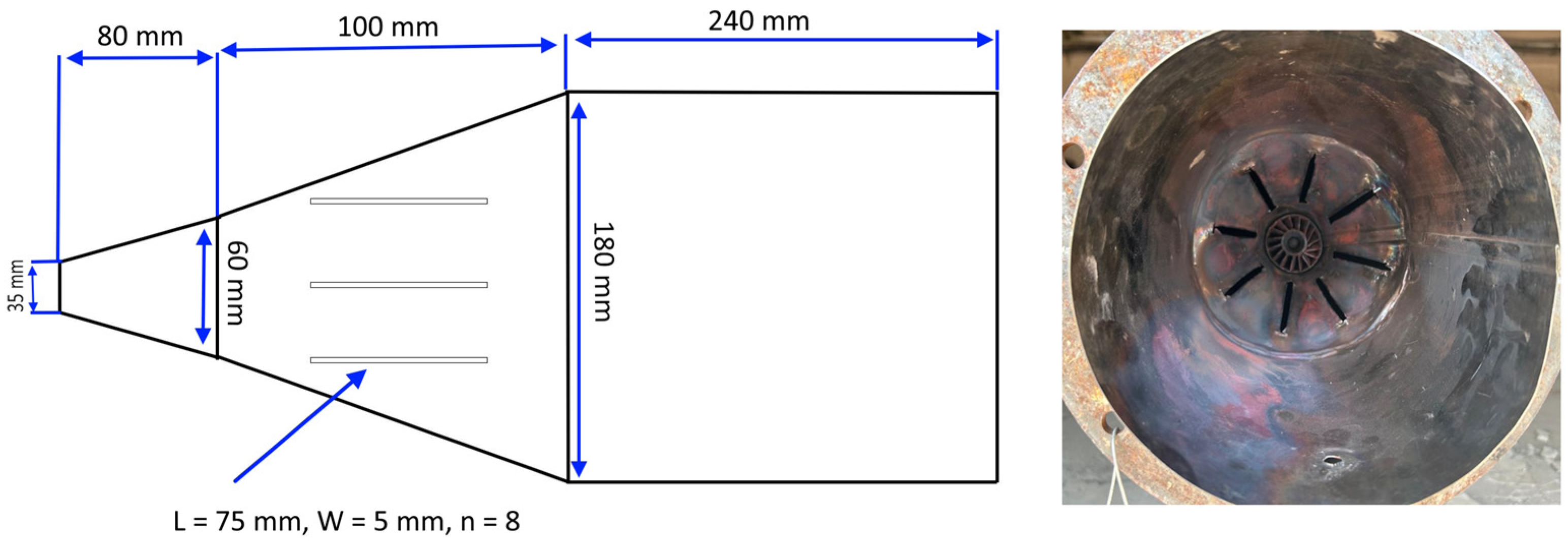
The schematic diagram of the developed swirl burner is shown in
Figure 1. The burner geometry was derived from the previously validated kerosene design [
28]. The main swirl generator included fixed vanes inclined at 45°, producing an estimated swirl number of SW ≈ 0.8 under nominal air-flow conditions. The secondary-air section was equipped with adjustable circumferential slots, allowing the opening degree to vary from 0% (fully closed) to 100% (fully open). The airflow velocity ranged between 20 and 43 m/s. The air-flow velocity range (20–43 m/s) was selected based on burner stability limits observed during preliminary cold-flow and ignition tests. Below 20 m/s, the flame exhibited oscillations and partial detachment from the stabilizer, while above 43 m/s, blow-off occurred due to excessive momentum. This range ensures a stable flame regime for all secondary-air openings (0–100%) and allows direct comparison with previous studies on similar swirl burners [
8,
9,
28]. The chosen velocities also correspond to Reynolds numbers between 2.1 × 10
4 and 4.5 × 10
4, which are typical for transitional–turbulent flows in compact industrial burners.
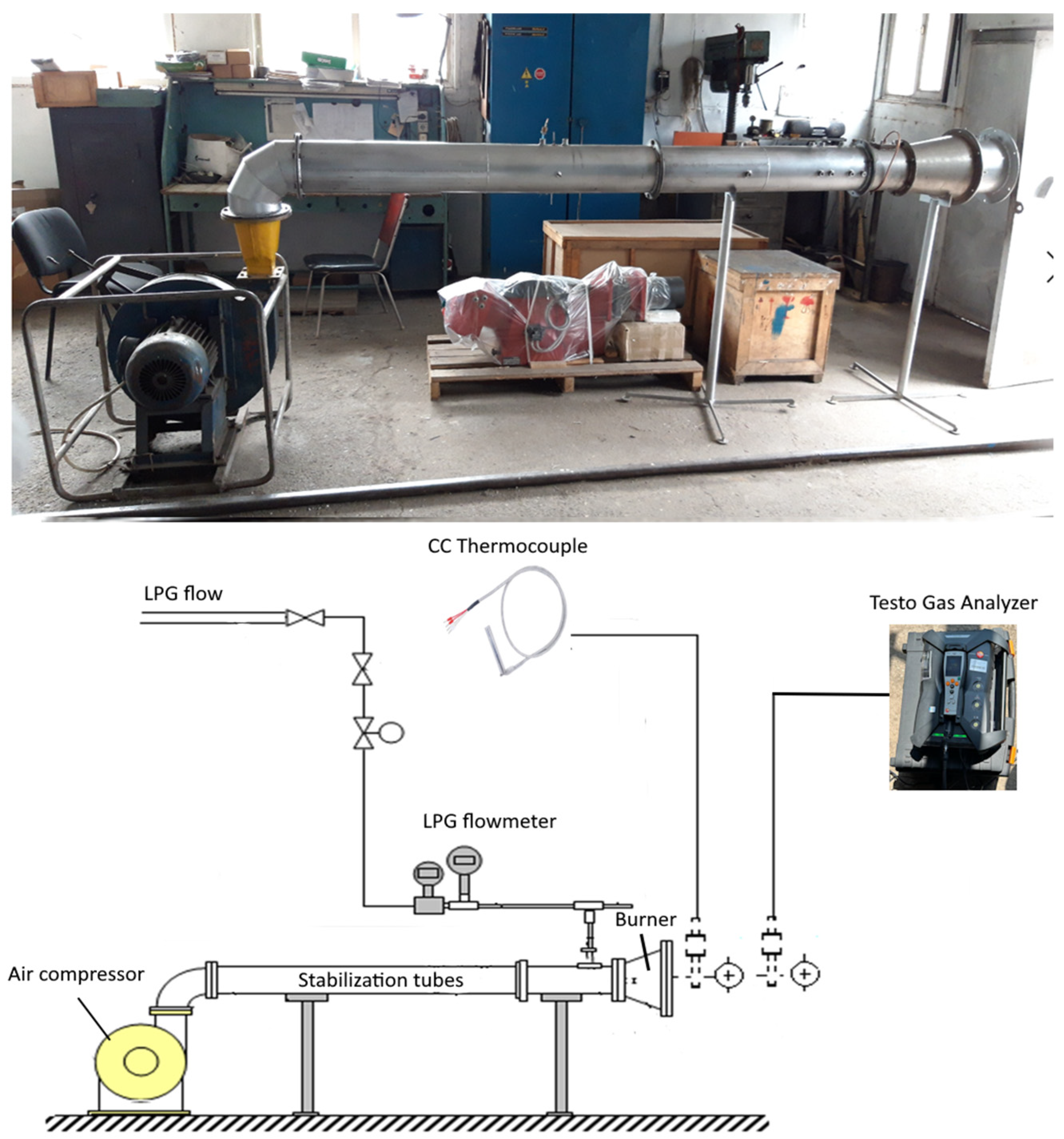
The experimental setup comprised an axial fan, flow-straightening tube bundle, and exhaust gas analyzer (Testo 350). Temperature measurements were taken using Cr–Copel thermocouples (Ø 0.5 mm) positioned 90 mm downstream of the burner exit. All tests were performed under steady-state conditions after flame stabilization. The overall setup is presented in
Figure 2. Experimental conditions are summarized in
Table 1, while the equipment specifications and measurement error margins are listed in
Table 2.
To calculate the equivalence ratio, the following formula was used (1):
where
—equivalence ratio;
—fuel-to-air ratio; and
—stoichiometry.
The degree of flow swirl is calculated using Formula (2):
where
—hub radius;
—outer radius; and
—angle of outlet vanes (45°).
The Reynolds number was calculated by the formula:
where
—velocity;
—diameter; and
—viscosity.
The air velocity was measured using a vane-type anemometer (Testo) at multiple locations across the burner exit cross-section, including the central region and the peripheral zone. The reported velocity represents the cross-sectionally averaged value obtained from these measurements.
The measurement uncertainty was evaluated using a combined Type A and Type B uncertainty approach. Type A uncertainty was determined from repeated measurements under steady-state conditions. For each operating point, the experiment was repeated N times and the standard deviation was calculated as:
where x
i denotes individual measurements and
is the mean value. The standard uncertainty of the mean was calculated as:
Type B uncertainty was estimated based on manufacturer specifications of the measuring instruments. Independent instrument-related contributions were combined using the root-sum-square (RSS) method:
The combined uncertainty was calculated as:
For gas concentration measurements (NOx and CO), the combined uncertainty did not exceed ±5%, while the temperature uncertainty remained within ±2%.
The standard deviation of the measurements are presented in
Table 3.
The overall measurement uncertainty was evaluated based on the specifications of the instruments used. The Testo 350 gas analyzer has an accuracy of ±2 ppm for NO/NO
2 and ±10 ppm for CO within the measured range, while the type-K thermocouples employed for temperature measurements have an uncertainty of ±0.75% of the reading. Considering repeatability and calibration errors, the total uncertainty in gas concentration measurements does not exceed ±5% and the temperature uncertainty remains within ±1 °C.
Table 4 presents the calculated excess-air factors. As shown in the table, at 0% opening, the air enters only through the central (primary) inlet. At 50% opening, a portion of the air is additionally supplied into the combustion zone through the secondary-air inlet, resulting in a noticeable decrease in the local equivalence ratio within the reaction zone. At 100% opening, a similar trend is observed, accompanied by a further reduction in the fuel-rich region due to the larger amount of secondary air. Accordingly, φ
main represents the equivalence ratio calculated using only the air supplied through the main inlet, whereas φ
total denotes the overall equivalence ratio considering the combined air flows from both the main and secondary inlets.
The exhaust gas sampling probe was positioned 90 mm downstream of the burner exit along the centerline. The sampling line was not heated; however, due to the short residence time (≈2 s) and relatively low hydrocarbon content in the exhaust, additional post-oxidation effects were considered negligible. The total uncertainty of gas concentration measurements was estimated by combining the manufacturer-specified analyzer accuracy, repeatability, and calibration uncertainty. The resulting uncertainty does not exceed ±5% for NOx, CO, CO2, and UHC. All measurements were repeated under steady-state conditions, and the reported values represent averaged data. The observed emission trends with increasing air velocity are attributed to internal mixing and residence-time effects rather than uncontrolled entrainment of ambient air at the burner outlet.
3. Results
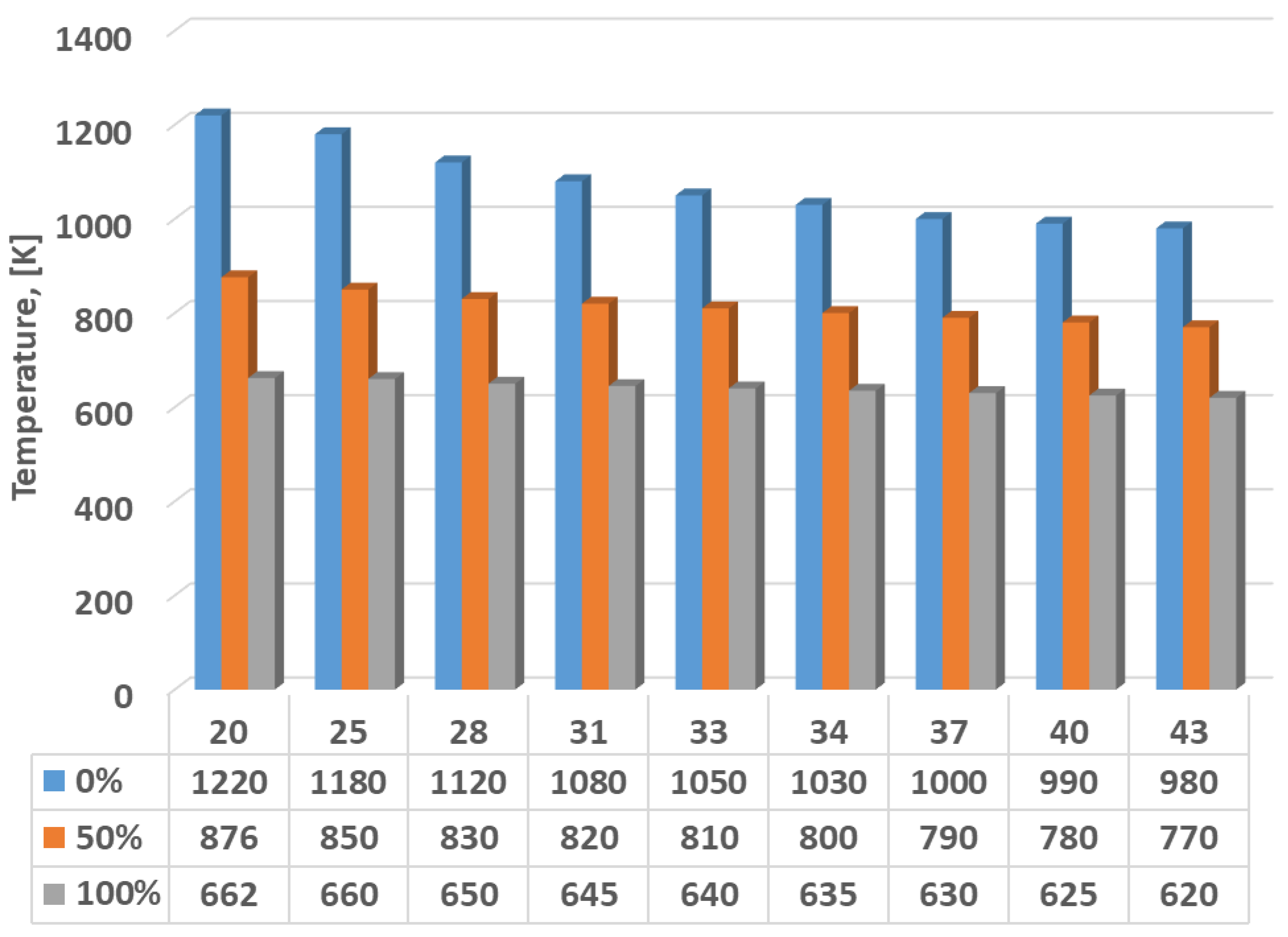
Temperature is a primary indicator of combustion intensity and efficiency. When fuel–air mixing is effective, a stable high-temperature combustion zone is formed, reflecting efficient burner performance and enhanced fuel conversion. As shown in
Figure 3, the mean exhaust gas temperature decreases approximately linearly with increasing air velocity. Two main mechanisms govern this behavior. First, the larger amount of air in the reaction zone enhances dilution and convective cooling toward the outlet section. Second, higher air velocities shorten the post-flame residence time and may occasionally promote partial fuel carryover, thereby limiting complete oxidation. The non-staged case (0% opening) exhibits the highest temperatures because the flame is longer and unaffected by secondary-air dilution.
Overall, the temperature profiles versus air velocity for all secondary-air openings are consistent with previous studies on air-staged swirl combustion (e.g., [
8]), showing a monotonic decrease in mean flame temperature with both air velocity and secondary-air fraction.
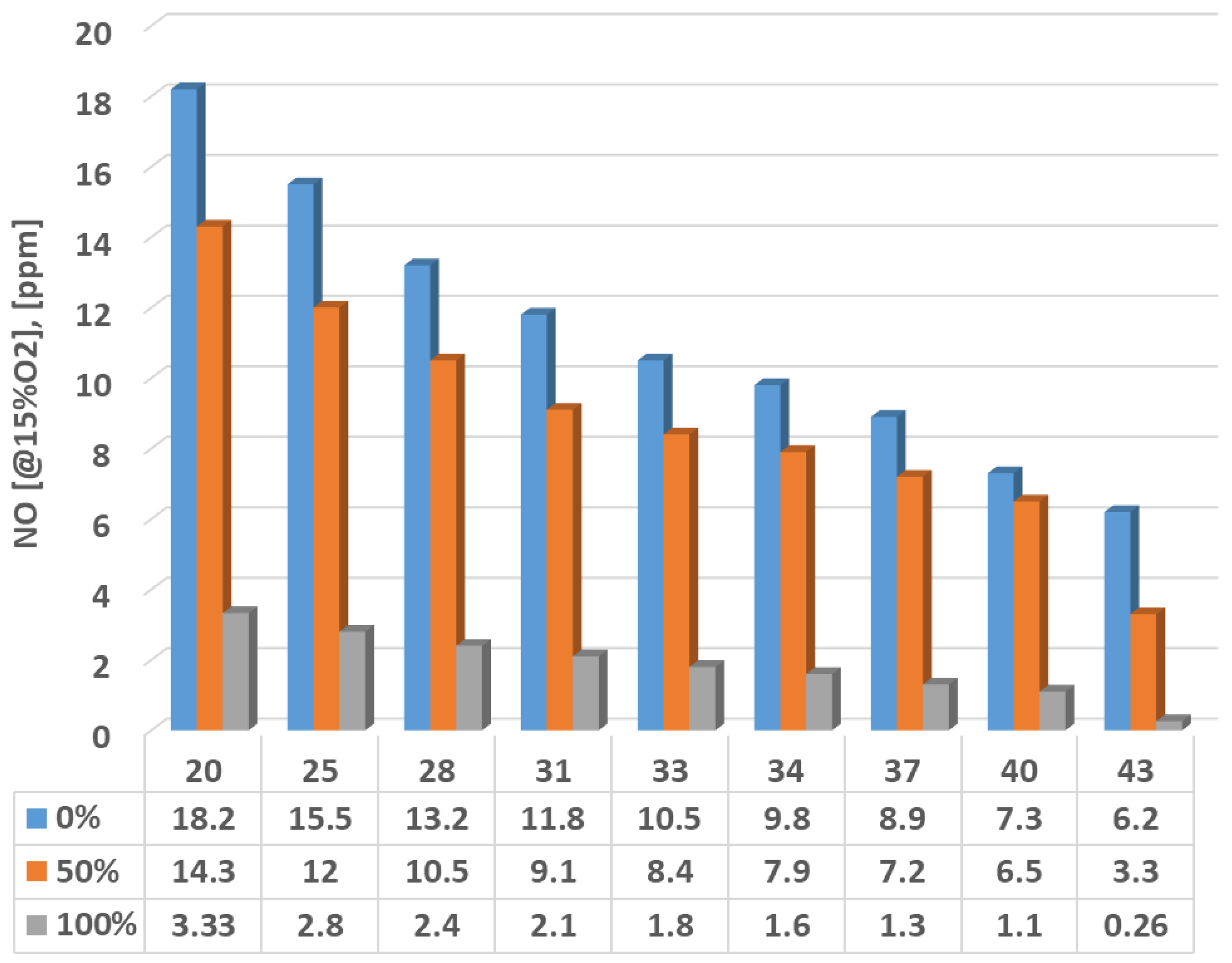
Nitrogen oxides are formed during combustion, and their formation rate increases exponentially with temperature. In addition to temperature, NO formation is strongly affected by fuel–air mixing quality and oxygen availability in the reaction zone.
Figure 4 shows the dependence of NO concentration on air velocity and the secondary-air opening ratio. Across the studied range, the trend is approximately linear, exhibiting a clear decrease with increasing velocity—more pronounced at larger secondary-air fractions. The formation of NO
x is governed primarily by peak temperature, residence time in the high-temperature region, and mixing quality [
3]. The presence of a larger effective recirculation region, typical for swirl-stabilized burners at similar swirl numbers [
3,
9], is commonly associated with longer residence time in the high-temperature region. In the non-staged case (0%), mixing is driven solely by the primary air stream and is insufficient to form an effective recirculation. As a result, the flame lengthens, gases remain for longer in the hot core, and the mean exit temperature rises (see
Figure 3)—all of which promote thermal NO
x formation. At 50–100% opening, the CRZ shortens and the added secondary air increases entrainment and dilution, reducing both the flame-core temperature and residence time; consequently, NO decreases across the entire velocity range. For example, at 20 m/s, NO
x is about 18 ppm for 0% opening and <3 ppm for 100% opening. The overall trend mirrors the temperature evolution in
Figure 3, confirming that thermal NO
x is the dominant formation pathway under the present conditions. The measured NO
x levels are consistent with the literature data at SW ≈ 0.9 and 43 m/s [
9].
Carbon monoxide is one of the most hazardous combustion products and is commonly formed under oxygen-deficient conditions in the reaction zone or when the rapid cooling of combustion products limits the oxidation of CO to CO
2.
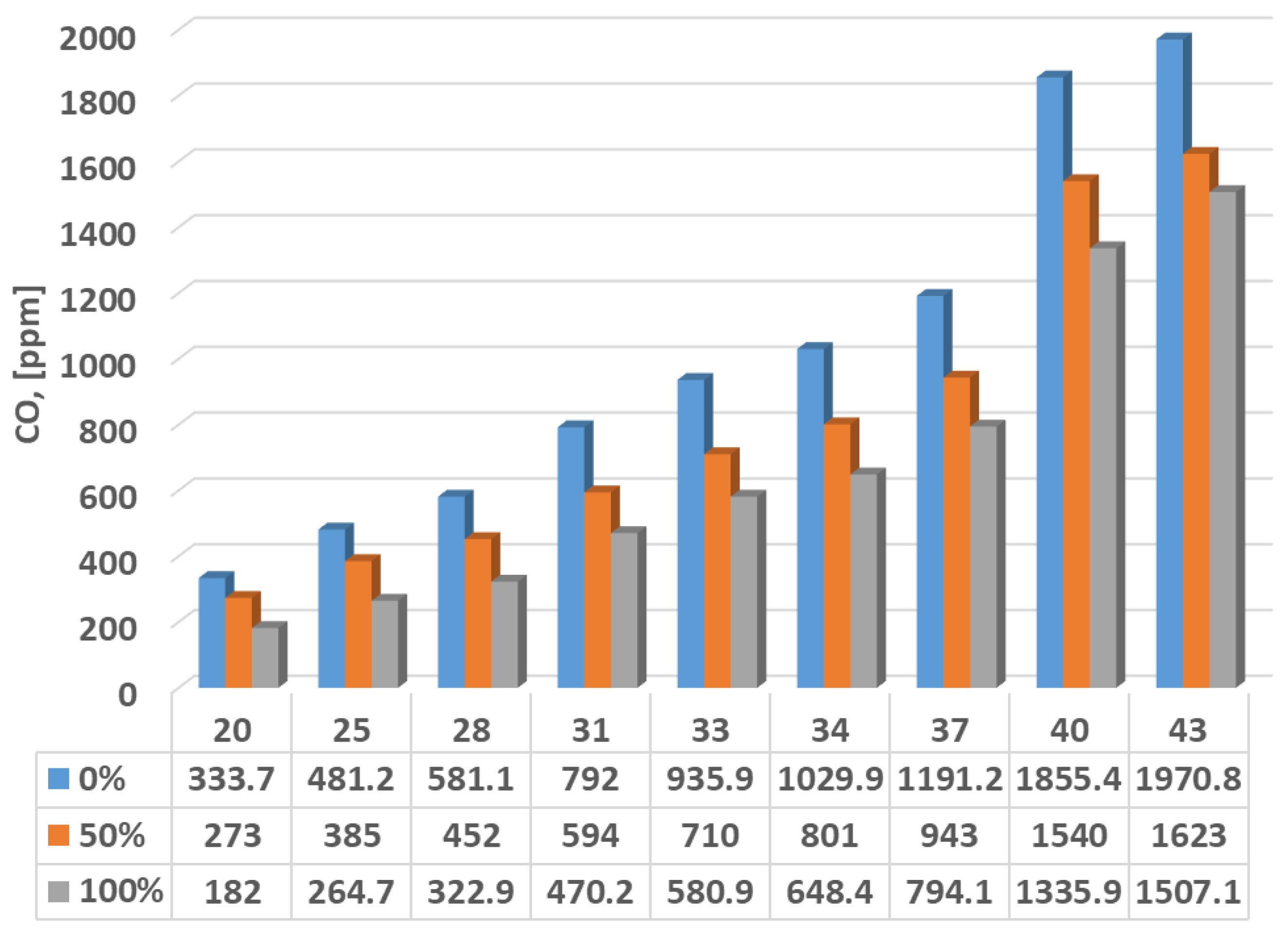
Figure 5 presents the dependence of CO concentration on air velocity and secondary-air opening. In contrast to NO
x, the overall trend increases with velocity: For the non-staged case (0%), CO rises from ≈337 ppm at 20 m/s to ≈1971 ppm at 43 m/s. When the secondary-air opening increases to 100%, the curve shifts downward—indicating improved oxidation—with ≈182 ppm at 20 m/s and ≈1507 ppm at 43 m/s. The 50% case lies between these two limits, reflecting the expected trade-off between enhanced oxidation from added air and reduced residence time at higher flow rates.
The mechanisms governing CO formation are well established and align with our flow-field analysis. At 0% opening, a large central recirculation zone (CRZ) concentrates fuel near the burner axis and limits oxygen availability; together with the longer residence time in the hot core, this promotes incomplete post-flame oxidation. As secondary air is introduced (50–100%), mixing and entrainment improve, increasing local oxygen availability and thus reducing CO compared to the 0% case. However, higher velocities shorten residence time and can partially quench near-wall regions, so absolute CO levels may still increase with velocity even under additional air supply.
Overall, the observed CO behavior agrees with established trends in air-staged swirl combustion and matches the literature data for comparable swirl numbers and velocities (e.g., SW ≈ 0.9, 43 m/s in [
9]).
Carbon dioxide is the primary product of complete fuel oxidation and reflects the overall combustion efficiency. An increase in CO
2 concentration indicates improved fuel conversion and more effective mixing between fuel and oxidizer.
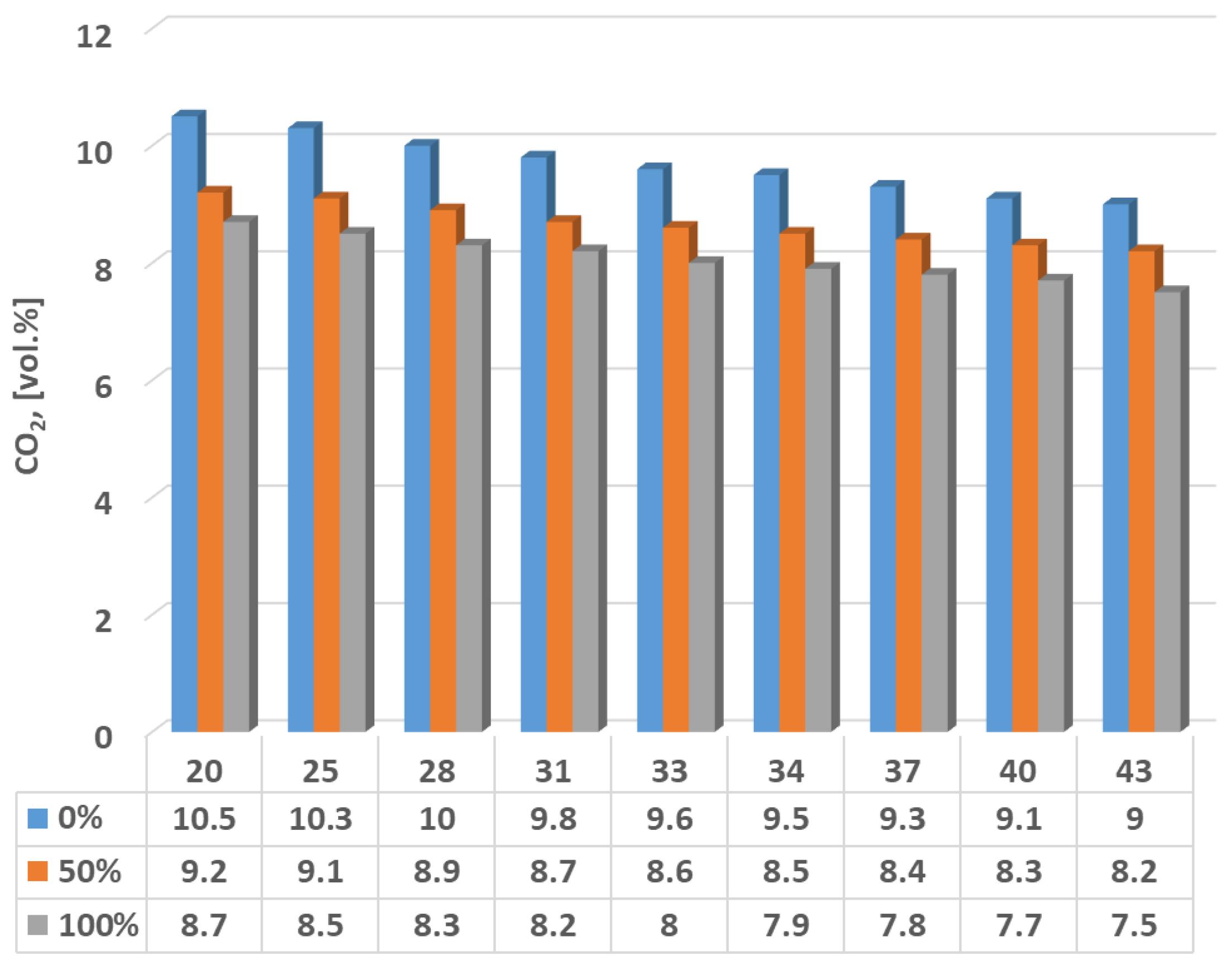
Figure 6 shows the dependence of CO
2 concentration on air velocity and the secondary-air opening. Across the investigated range, the CO
2 volume fraction decreases with increasing velocity, and this decrease is more pronounced at larger secondary-air fractions. Two effects contribute to this behavior: (i) dilution of combustion products by the added air, which lowers the measured CO
2 vol.% at the outlet, and (ii) shorter residence time and reduced core temperature at higher velocities, which limit post-flame oxidation of CO. As a result, the non-staged configuration exhibits the highest CO
2 levels, whereas the 50% and 100% cases show consistently lower concentrations across the entire velocity range. Overall, the observed trend agrees with the established behavior of air-staged swirl flames and complements the NO
x and CO patterns, confirming the interplay between dilution, residence time, and oxidation completeness in staged combustion systems.
Unburned hydrocarbons are generated under conditions of incomplete combustion, such as flame quenching near cold surfaces, inadequate residence time, or locally fuel-rich pockets. In swirl-stabilized burners, UHC emissions are strongly influenced by mixing quality and flame stabilization.
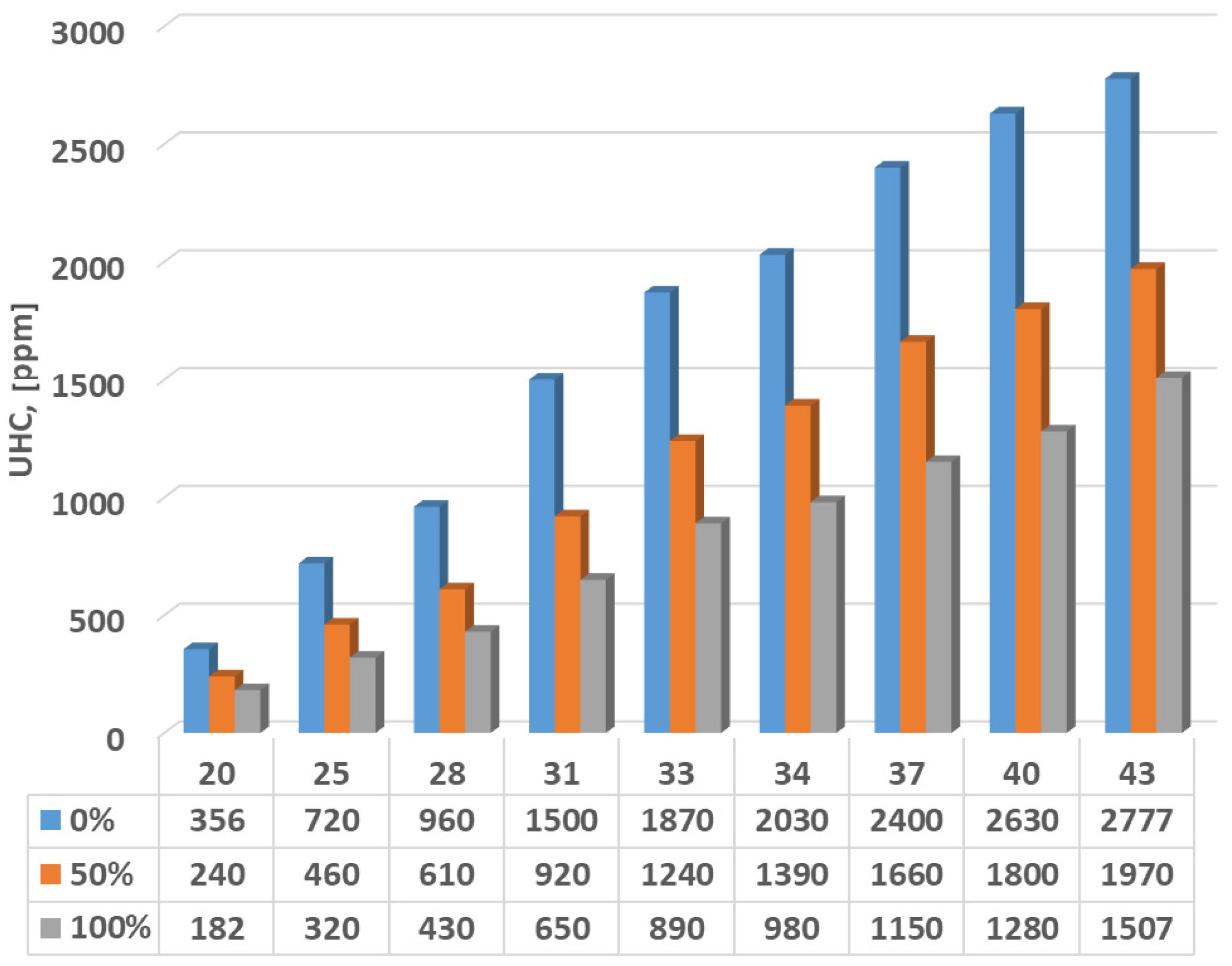
Figure 7 shows the dependence of UHC on air velocity and the secondary-air opening. The highest UHC levels occur in the non-staged case (0%), which is consistent with a longer flame and insufficient oxygen availability in the core. For 0% opening, UHC increases from ≈356 ppm at 20 m/s to ≈2777 ppm at 43 m/s. The curve exhibits a shallow plateau around 33–37 m/s, reflecting a balance between improved entrainment at higher flow rates and the concurrent reduction in residence time that limits post-flame oxidation.
At 50–100% opening, secondary air penetrates the reaction zone, enhances mixing, and promotes afterburning, which reduces UHC across the entire velocity range. In addition, the extra air dilutes the exhaust, further lowering the measured UHC concentrations. As expected, the fully staged configuration (100%) yields the lowest UHC among the tested cases. Overall, the UHC behavior complements the CO and CO
2 trends (
Figure 5 and
Figure 6): configurations that shorten residence time and cool the flame core tend to exhibit higher CO and UHC and lower CO
2, indicating incomplete oxidation under strongly staged, high-velocity conditions. The present work provides a purely experimental dataset that can serve as a reliable benchmark for future numerical studies of air-staged swirl combustion.
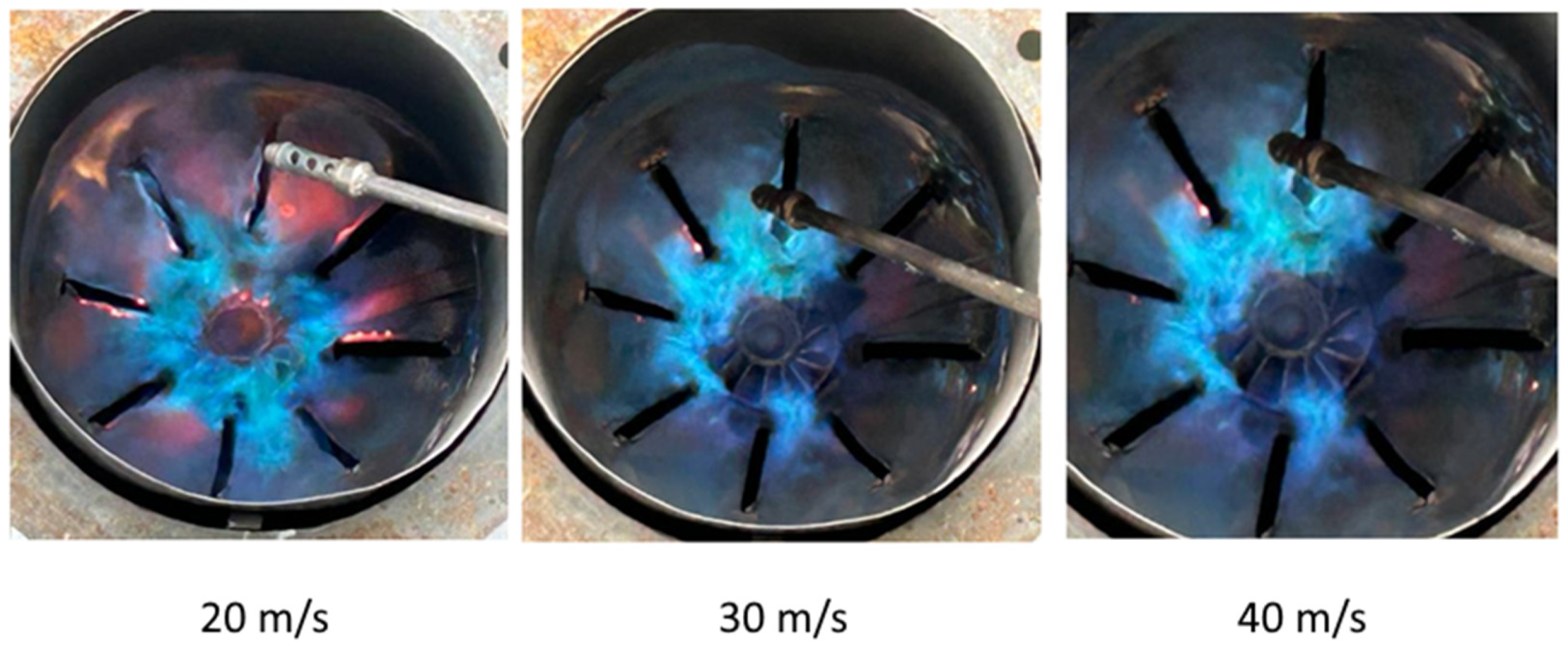
The photographs presented in
Figure 8 correspond to air velocities in the range of 20–40 m/s, which are representative of typical operating conditions. At lower velocities the flame remains compact and predominantly axisymmetric, with a uniform luminous core in the burner center. As the velocity increases, enhanced shear and the penetration of secondary-air jets segment the reaction zone, producing a star-shaped cross-section (“flame cutting”). The observed evolution is consistent with typical behavior reported for air-staged swirl flames reported in the literature: higher air velocity and larger secondary-air opening shorten the effective residence time in the flame core, enhance entrainment and mixing, and increase dilution, resulting in a thinner and azimuthally modulated luminous region.
Table 5 presents a comparison of the developed burner with similar designs reported in the literature. As can be seen from the data, the present burner achieves lower NO
x concentrations in the exhaust gases due to the higher air ratio and optimized stabilizer aerodynamics. In the study by Elbaz et al. [
37], a double-swirl LPG burner was investigated, showing a minimum NO
x value of 18 ppm under optimal swirl and staging conditions. Amrenova et al. [
38] examined several nozzle configurations, where the maximum NO
x concentration reached 54.4 ppm. Overall, the burner developed in this work demonstrates comparable or lower NO
x emissions while maintaining a simpler and more compact design compared with previously published systems.