1. Introduction
Superconducting tapes have great potential for high current applications, e.g., in high field magnets [
1,
2], accelerator magnets [
3,
4], fusion magnets [
5], wind generators [
6], superconducting magnetic energy storage [
7,
8] power cables [
9] and fault current limiters [
10,
11]. There are numerous techniques for joining tape with tape or a copper block. These include soldering joints [
12,
13], ultrasonic welding [
14], diffusion joints [
15], hybrid welding [
16] and demountable connections [
17,
18]. In general, mechanical and soldered joints are simple but have high resistance. Diffusion joints reduce resistance, but the process is more complex and time consuming. Ultrasonic welding has a low time cost, but holes and cracks increase the resistance. Superconducting joints are very high performance, but long oxygen annealing times make them difficult to apply in practice [
19]. Recent years have seen a significant advancement in the field of rare earth–barium–copper–oxide (REBCO) bulks and coated conductor (CC) tapes. For instance, the enhancement of REBCO CC tape industrial production technology has enabled manufacturers to fabricate single-piece REBCO CC tapes that exceed 1 km in length, characterised by exceptional uniformity and high critical currents. Nevertheless, they are still incapable of meeting the requirements of large-scale applications, including in magnet coils and power cables that are several kilometres in length. It is evident that the fabrication of joints for the purpose of connecting REBCO CC tapes constitutes a pivotal element in the development, production and servicing of superconductor devices [
20].
In order to examine multiple samples of superconducting tape at cryogenic temperatures, a detachable connector is required to enable quick and easy replacement. HTS tape testing for use in superconducting current limiters, where the transition of the superconductor from a superconducting to a resistive state is expected and desired, results in frequent damage to the test sample. During a short-circuit test, the temperature of the tape rises by several hundred degrees in a short period of time, causing mechanical stresses that can permanently damage the superconducting layer [
11]. In order to select the appropriate operating parameters for HTS tape, in addition to theoretical calculations, it is necessary to conduct numerous short-circuit tests under cryogenic conditions. Preparing a sample for testing is time-consuming; mounting the sample in the cryostat, then achieving the appropriate vacuum and cooling, takes several hours. In order to reduce the time required to remove and replace a tape sample, it is necessary to employ a cryostat that has been specially adapted for this purpose. This cryostat must be equipped with a cover that can be easily removed, thus enabling access to the HTS tape sample that is being tested. Quick tape replacement is possible by using a screwed connection to the lower part of the current lead. A properly designed demountable, screwed connection provides a low level of contact resistance and a minimised assembly time. While screwed connections are mature technology, the innovation lies in their systematic adaptation and analysis for the specific demands of HTS tape testing at cryogenic temperatures, notably, integrating thermal compensation via disc springs. In contradistinction to conventional soldering, which is both time-consuming and susceptible to thermal degradation of the tape, and to simple mechanical clamping, which frequently suffers from pressure loss and increased contact resistance during cooling, this approach ensures a constant, high-pressure electrical interface from 300 K down to cryogenic temperatures. The maintenance of mechanical load through the utilisation of the elastic energy stored in the disc springs ensures the occupation of a specific niche for rapid-exchange testing. This method provides a robust, demountable solution that guarantees measurement repeatability without compromising the physical integrity of the HTS samples.
2. Screwed Connection
A screwed connection operating at cryogenic temperatures should ensure uniform pressure across the entire surface of the lower part of the current lead connected to the HTS tape at temperatures ranging from room temperature to cryogenic temperatures. Ensuring adequate pressure across such a wide temperature range requires a set of disc springs that compensate for the thermal expansion of the various materials used in the construction of the connection. Non-magnetic materials such as copper, aluminium or stainless steel are commonly used in cryogenic technology. HTS tape intended for use in superconducting current limiters is coated with a layer of silver from 1 to 4 µm thick. The resistance of the unsoldered tape connected to a copper bar depends on the contact area and the transverse pressure [
21]. The manufacturer (SuperPower Inc., Schenectady, NY, USA) recommends that the joint length be 25–100 mm. It is also important not to exceed the tape’s permissible stress, which is 550 MPa [
22]. The literature provides examples showing that above 200 MPa, a slight degradation of the tape occurs at a level of several percent. In order to prevent degradation, it is imperative that the transverse pressure be maintained within the range of 50–100 MPa. This ensures that there is sufficient pressure between the current lead block and the tape. As the pressure increases, the resistance of the joint decreases. At pressures exceeding 50 MPa, further increases in pressure no longer result in substantial changes to the resistance of the joint. Also, the critical current and
n-value are not affected by such transverse pressures, which makes it possible to produce mechanical REBCO joints without soldering [
21]. In soldered joints, which are made using pressure, the adhesive between the copper block and the HTS tape acts as a material that equalises the stresses on the contact surface. In a screwed connection, the stress distribution depends on the shape of the copper block, the number of screws used and the torque with which the screws are tightened. The arrangement and size of the screws have a direct impact on the selection of compensating disc springs, which must ensure the required contact force.
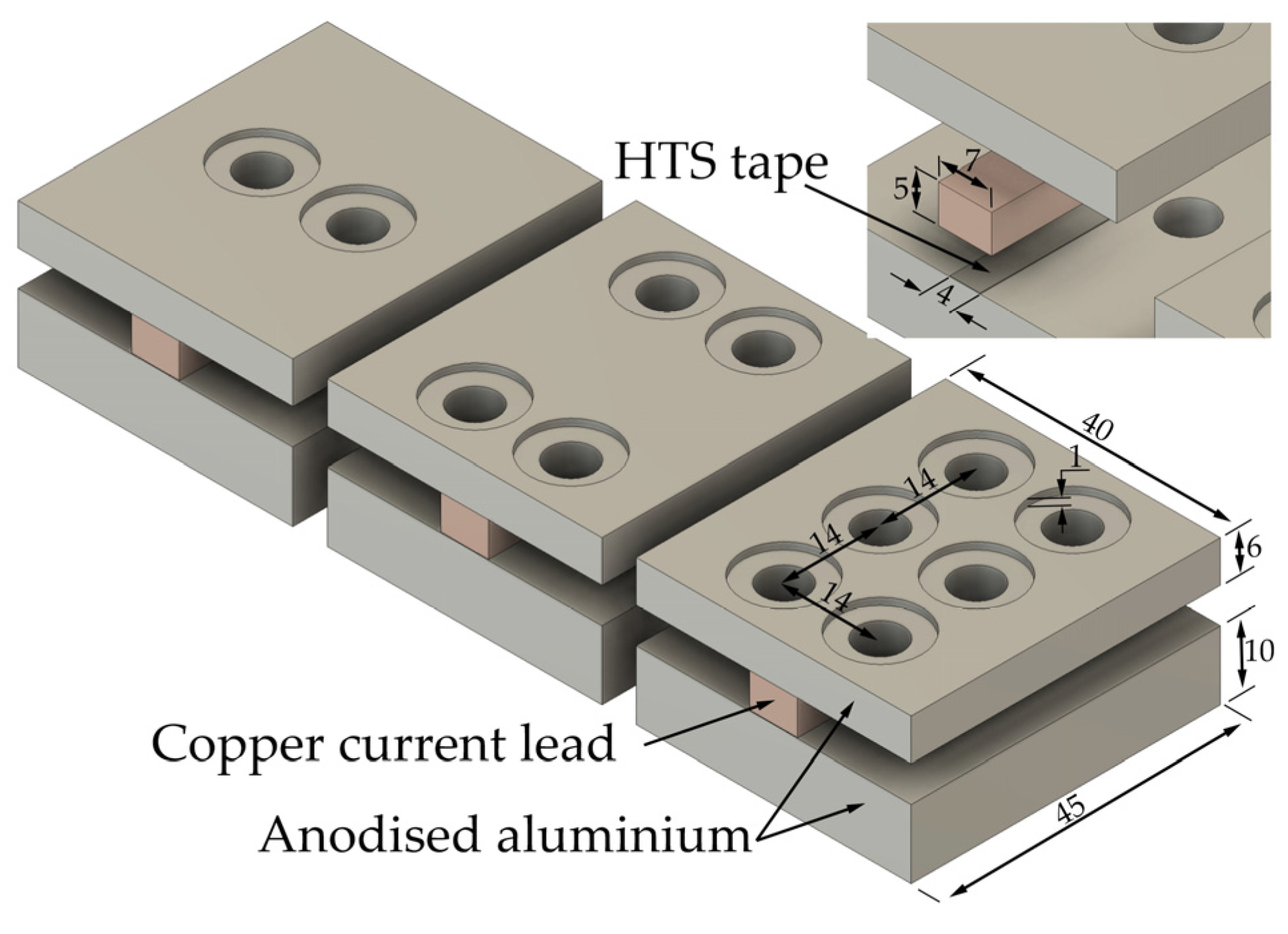
In order to compare the stress distribution on the HTS tape at the point of contact with the copper block of the lower part of the current lead, a solid model of the screwed connection was created in Fusion 360 in three variants. The first variant used two screws, the second–four, and the third–six. The model consists of a base made of 5083 aluminium, HTS tape, a copper block, and a clamp made of 5083 aluminium. A force was applied to the aluminium pressure surface at the point where the screw heads press against the disc springs, forcing the copper block onto the base via the tape. The aluminium blocks are anodised to provide a thin 20 µm insulating layer. In cryogenic engineering, a key factor in the design of a Cu/Ag pressure joint is to achieve uniform and sufficient pressure across the entire contact surface to minimise contact resistance (Rc).
Bare, flat ReBCO tape on Hastelloy substrate can sustain more than 700 MPa, as in the tensile regime. In practice, tape is not flat, which causes stress concentrations. Adding “soft” Cu is reducing the max pressure before degradation as well to 550–650 MPa with a 40 μm Cu layer [
23]. The SF4050 stabiliser-free tape has a silver layer only, with a thickness of 2 µm. The perfectly flat surface of the tape is crucial for achieving maximum compressive strength. Cracks usually appear on the edges of the contact area. The minimum contact resistance (
Rc) for HTS tapes is achieved at pressures ranging from 50 MPa to 100 MPa. Further increases in pressure reduce contact resistance only slightly, but increase the risk of tape damage. To minimise connection resistance and prevent degradation of the HTS tape, the tape pressure was set at the midpoint of this range. The connector will provide contact pressure at 75 MPa.
The contact area between the HTS tape and the copper block is as follows:
where
A—contact area (mm
2),
l—contact length, and
w—tape width.
The total clamping force from the screws is as follows:
where
Ftotal—total clamping force (N) and
P—contact pressure (MPa),
3. Model of Screwed Connection
In order to compare the stress distribution on the tape surface, three variants of the joint model were created (
Figure 1). These models differ in the number of screws used to press the HTS tape to the copper block between the clamp and the base plate.
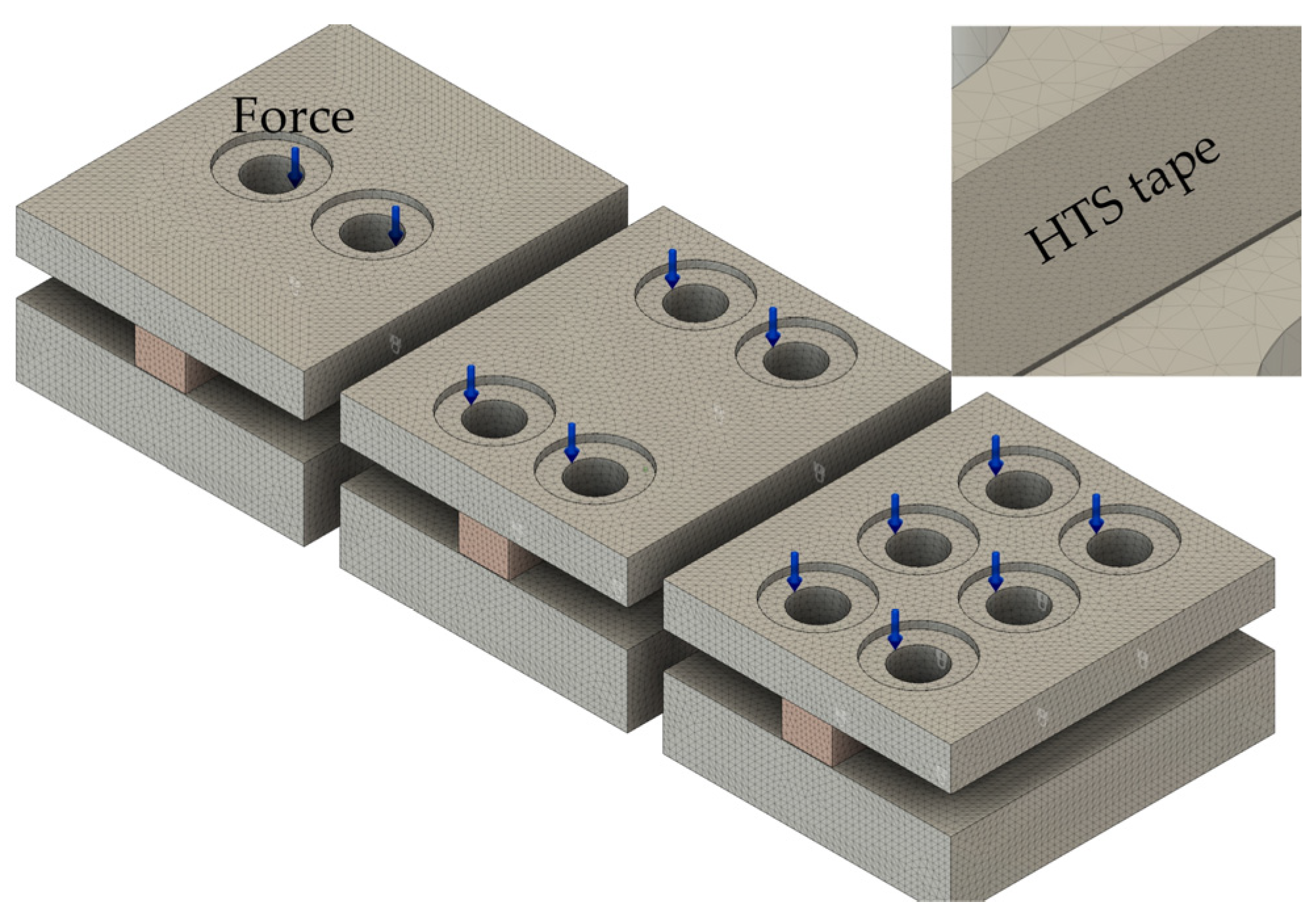
The load force in the model is applied to the surfaces through which the screws press the clamp via disc springs. The total force load for each model is 13.5 kN. The adaptive mesh refinement has been configured to automatically increase the mesh resolution in areas where detailed precision is required, particularly in areas with very thin HTS tape (
Figure 2).
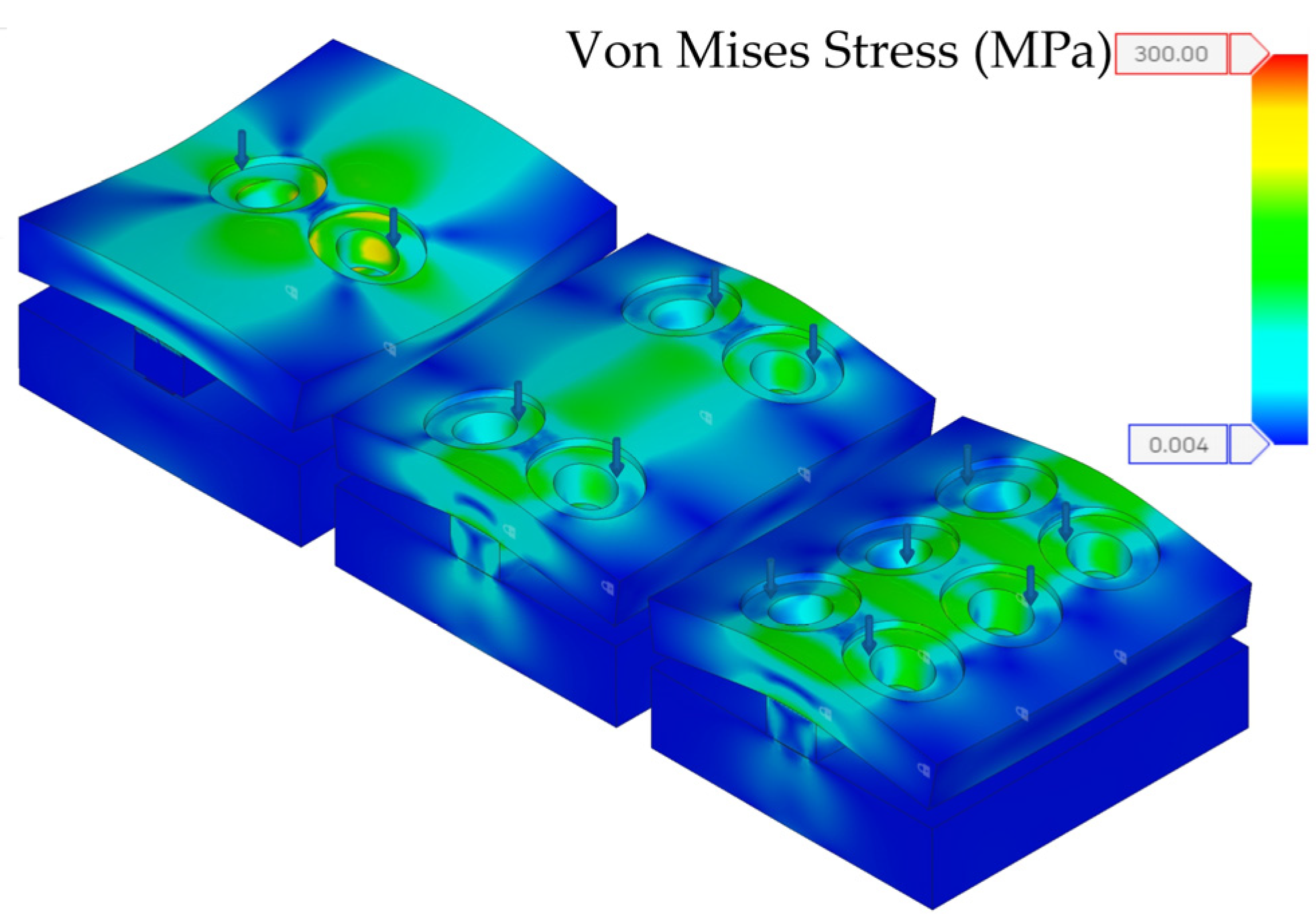
The deformation comparison is presented in
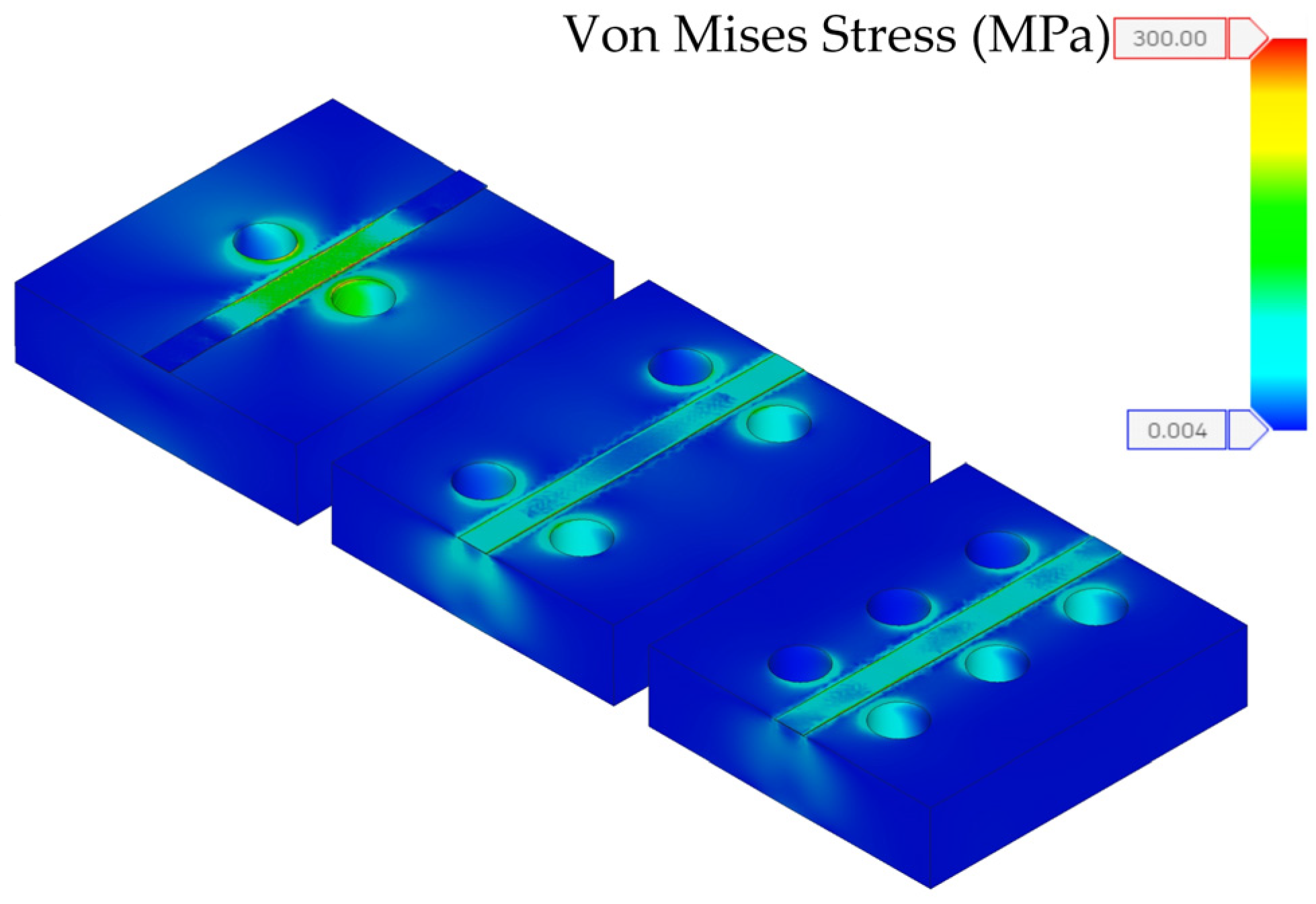
Figure 3. Finite element analysis calculates and displays the von Mises stress distribution across the components. This helps to identify areas of high stress concentration. The calculated deformation is very small and would be invisible to the unassisted eye. In
Figure 3, the deformation scale is used to exaggerate the movement to visualise the mode of deformation and better show how the part is bending.
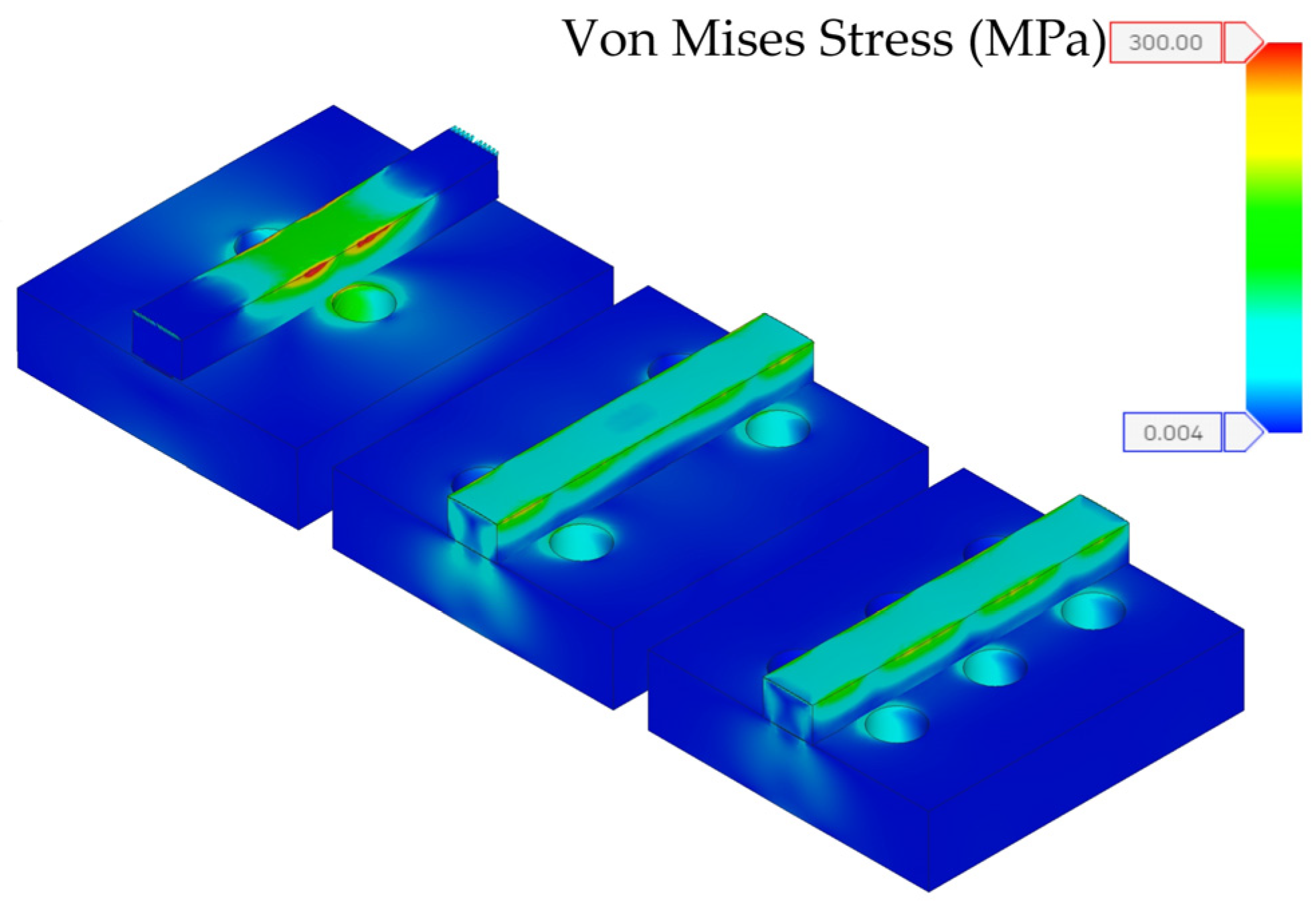
Figure 4 presents the von Mises stress in the copper block of the current lead. The most even distribution of stress occurs in the model with six screws. The load force is evenly distributed across each screw, which means that with two screws, the local stresses are greater than with four screws, and significantly greater than with six screws.
Figure 5 shows a comparison of von Mises stress in HTS tape.
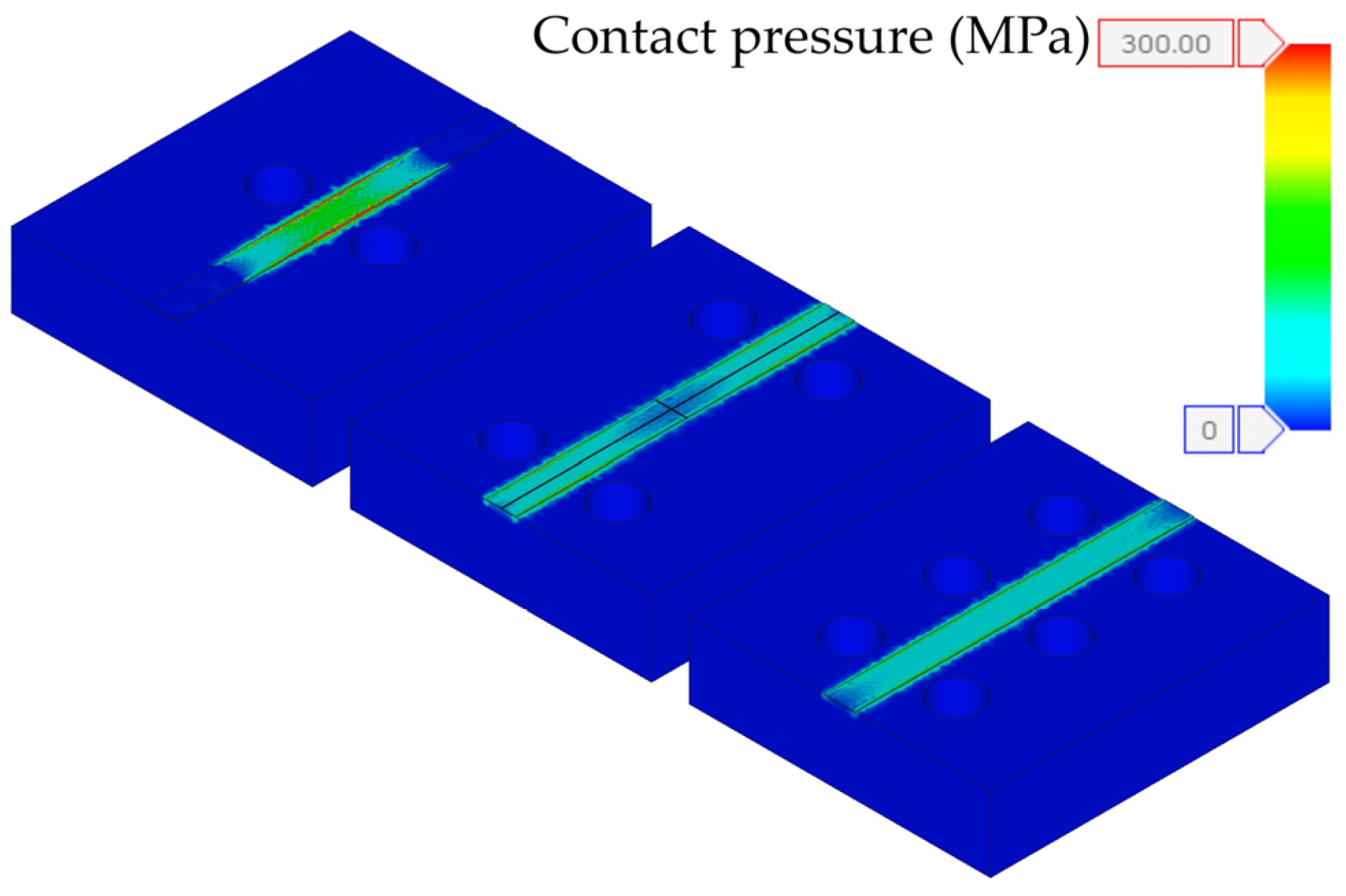
Contact pressure in a Fusion 360 simulation is a resultant variable that is generated at the interface between the parts. It is a crucial result for analysing bolted joints, where parts push against each other. Parts cannot penetrate each other but can slide and fully separate.
Figure 6 shows the contact pressure between the copper block and HTS tape.
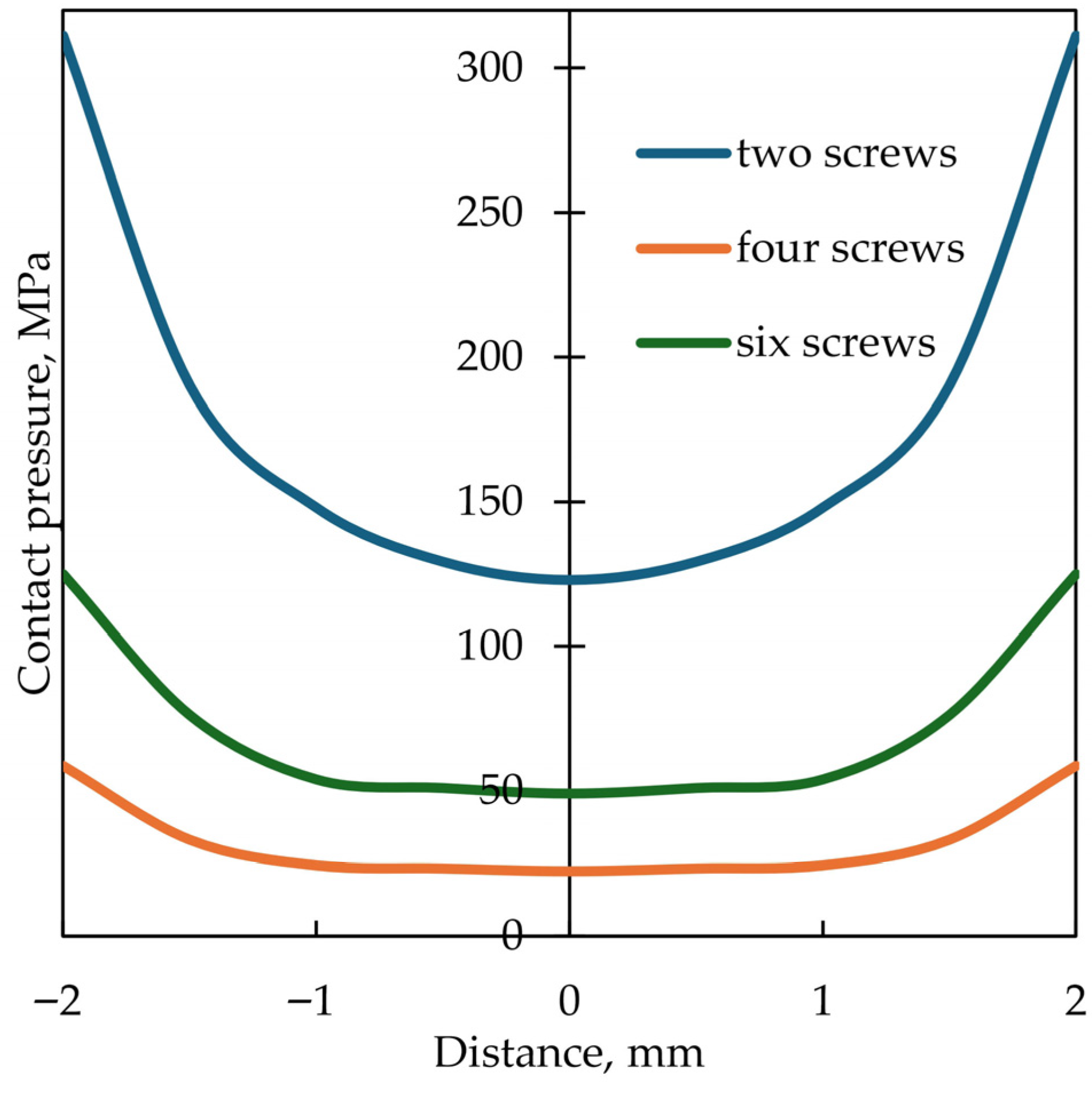
Figure 7 presents the contact pressure between the copper block and HTS tape in the middle of the tape across the tape.
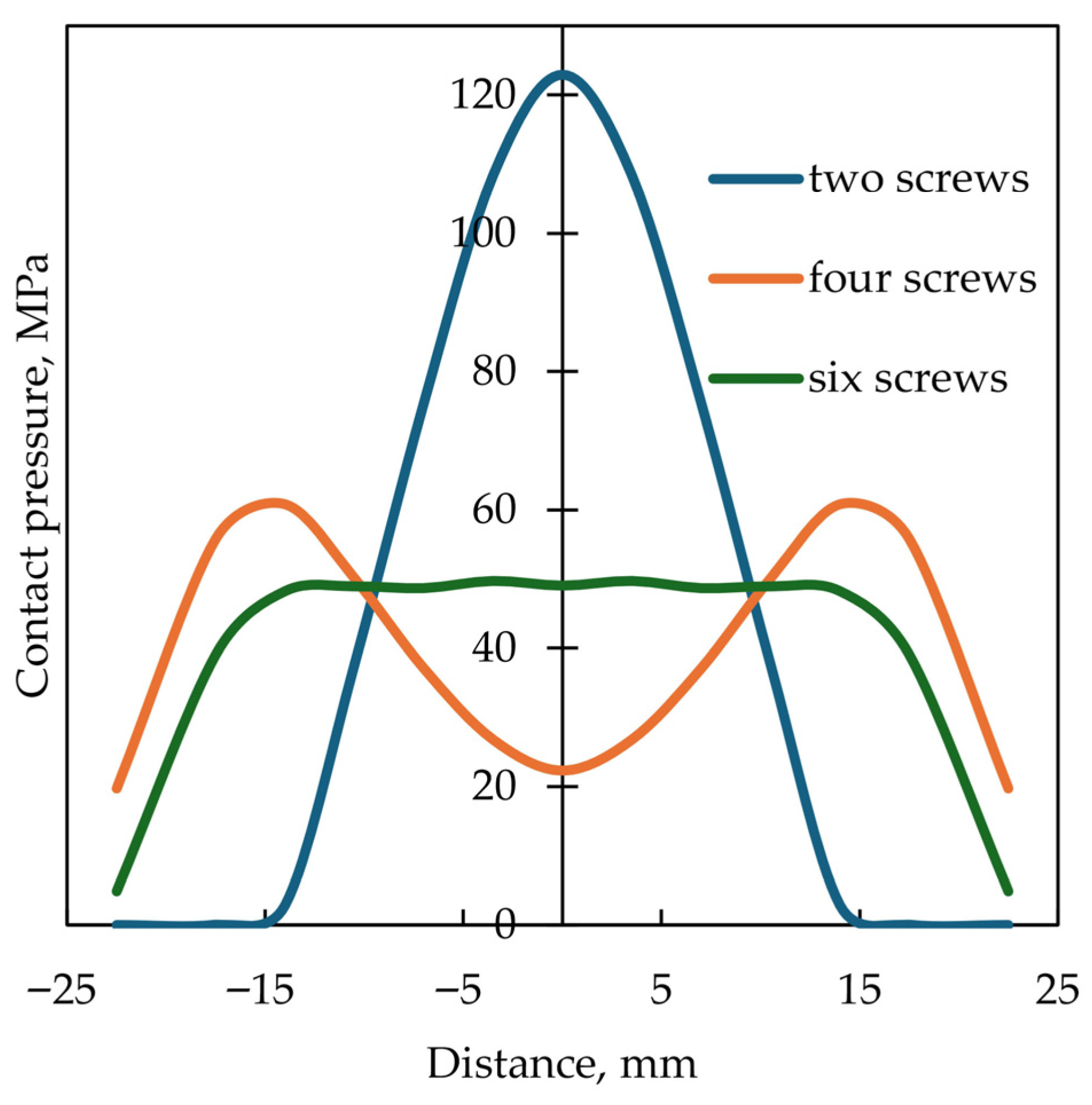
Figure 8 shows the contact pressure between the copper block and HTS tape in the middle of the tape along the tape.
The analysis demonstrates that the optimal solution is identified among the three cases that were studied. The use of a screw connection, consisting of six screws, ensures a uniform distribution of pressure across the majority of the tape’s surface. The pressure on the tape is greater on the edges than in the centre; therefore, it is important to ensure that the screws are tightened evenly. Subsequent calculations pertaining to the selection of disc springs will refer to the solution with six screws. It is imperative that disc springs ensure the calculated pressure of the copper block against the HTS tape is maintained within the temperature range from room temperature to cryogenic temperatures.
3.1. Thermal Expansion
Disc springs must provide the required minimum pressure of 75 MPa and adequate stroke to compensate for thermal expansion. A 5 mm high copper block is pressed by a 5 mm high aluminium clamp. The disc springs and screws are made of stainless steel 304. In cryogenic applications, the key parameter is the total shrinkage in a given temperature range (
Table 1). The fundamental property is the coefficient of linear thermal expansion
[
24],
In practice, the integral of the thermal expansion coefficient is computed from a reference temperature
:
where
is the length of the body at the reference temperature [
25]. Most of the literature reports the integrated linear thermal expansion as a percent change in length from some original length generally measured at 293 K.
where
is the length at some temperature
T, and
L293 is the length at 293 K. This is a practical way of measuring thermal expansion [
26].
The thermal shrinkage of the copper block and aluminium clamp must be compensated for by disc springs placed under the screw head.
The expansion of the screwed connection (
) is as follows:
Screw expansion (
) is as follows:
Thermal expansion difference (
) is as follows:
The connector shrinks 7.25 µm more than the screw. The difference in thermal expansion is negative, which means that the stack of disc springs will loosen, resulting in a reduction in clamping force.
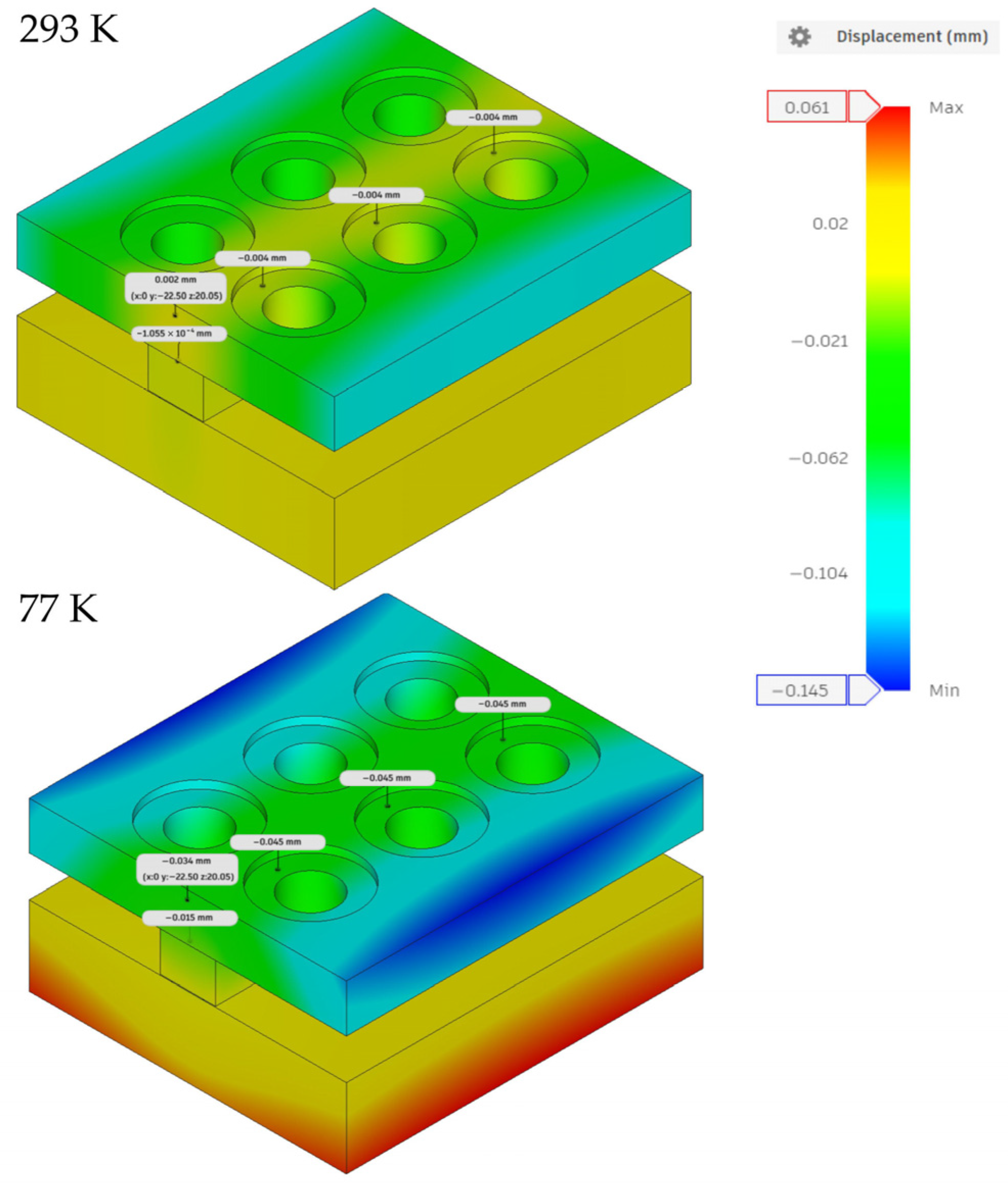
The thermal stress simulation with Fusion 360 presented in
Figure 9 has been conducted to corroborate the analytical results. The analysis was conducted at two different temperatures 293 K and 77 K. The model incorporated the thermal and mechanical parameters of the materials utilised, along with the coefficients of static friction between these materials. The following values were assumed for these coefficients by the model: Al-Ag = 0.3, Al-Cu = 0.35, and Cu-Ag = 0.4. Utilising the surface probe tool, the displacement was examined at both temperatures. The copper block demonstrates a shrinkage of 15 μm, a value that closely approximates the calculation derived from Equation (9). The point probe tool, positioned at the height of the washers, indicates a measurement of +2 μm at 293 K. This result is attributed to the forces acting on the joint. At a temperature of 77 K, the measured displacement at this point is −34 μm. The 36 μm discrepancy is analogous to the value calculated in Equation (9). The model that has been subjected to thermal stress simulation also permits the observation of the displacement of the surfaces on which the disc springs are placed. The calculations derived from this model demonstrate that the displacement at the location of the disc springs is even a few micrometres larger.
For further calculations, the resultant expansion difference was increased to −10 µm to guard against unforeseen problems that could arise from shrinkage. Assuming an engineering margin, it is possible to calculate the force with which the tape will be pressed at room temperature 293 K and the force at 77 K after taking into account the thermal expansion of the materials. Calculating these forces will allow for the correct selection of disc springs to achieve a stress on the tape above the required 75 MPa under cryogenic conditions.
3.2. Disc Springs Stack Configuration
Disc springs are conically shaped, washer-type components designed to be statically loaded or dynamically subjected to continuous load cycling. Disc springs are distinguished by their reliance on standardised calculations in accordance with EN 16984 [
27], a framework that enables a reliable prediction of deflection under specific loads (
Table 2). In order to achieve the most optimal disc spring performance, it is recommended to maintain the working deflection within the range of 15–75% of full deflection. This is due to the fact that in this range, the measured results most accurately correspond to the theoretical characteristics of the disc spring [
28]. In the event that a single disc spring is found to be inadequate in meeting the stipulated force/deflection characteristics, it is possible to employ a series, parallel or combination of disc springs in order to achieve the requisite specifications.
Ratio of outer to inner diameter
δ:
In the case of springs without flat bearings
[
27].
Assuming a screw connection is made using stainless steel generally available M6 A2-70 screws, stainless steel disc springs were also selected with an outer diameter of , an inner diameter of , thickness of single disc spring and free overall height of spring .
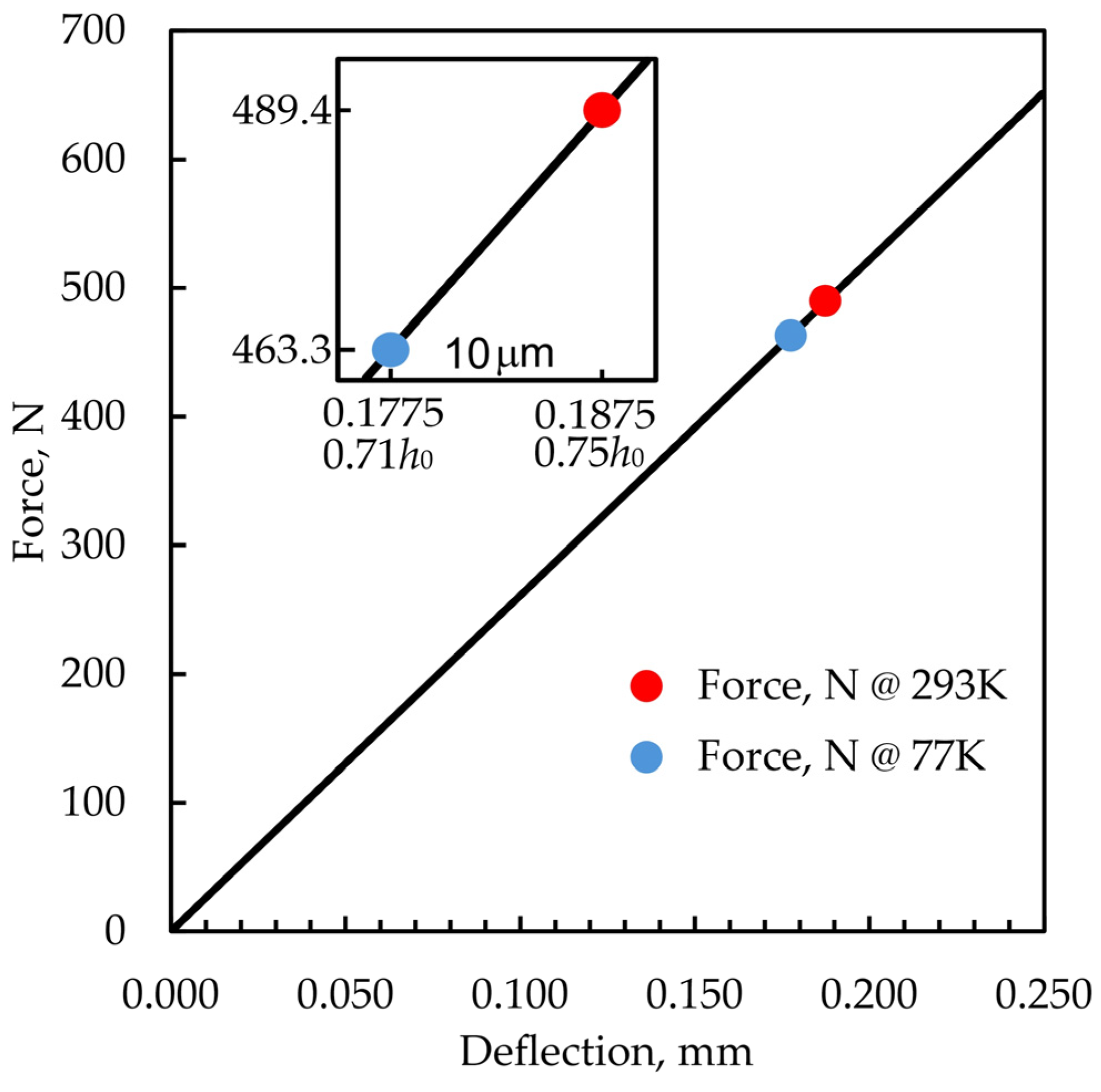
Initial load (
Figure 10) of a single disc spring for a deflection
at room temperature is
after cooling down to 77 K assuming thermal expansion of all materials as −10 μm
the load force is reduced to
Assuming that we use six M6 screws, three on each side of the tape, the disc springs should provide the following force per screw:
The number of single disc springs stacked in parallel under each screw
provides sufficient force. The stack consists of
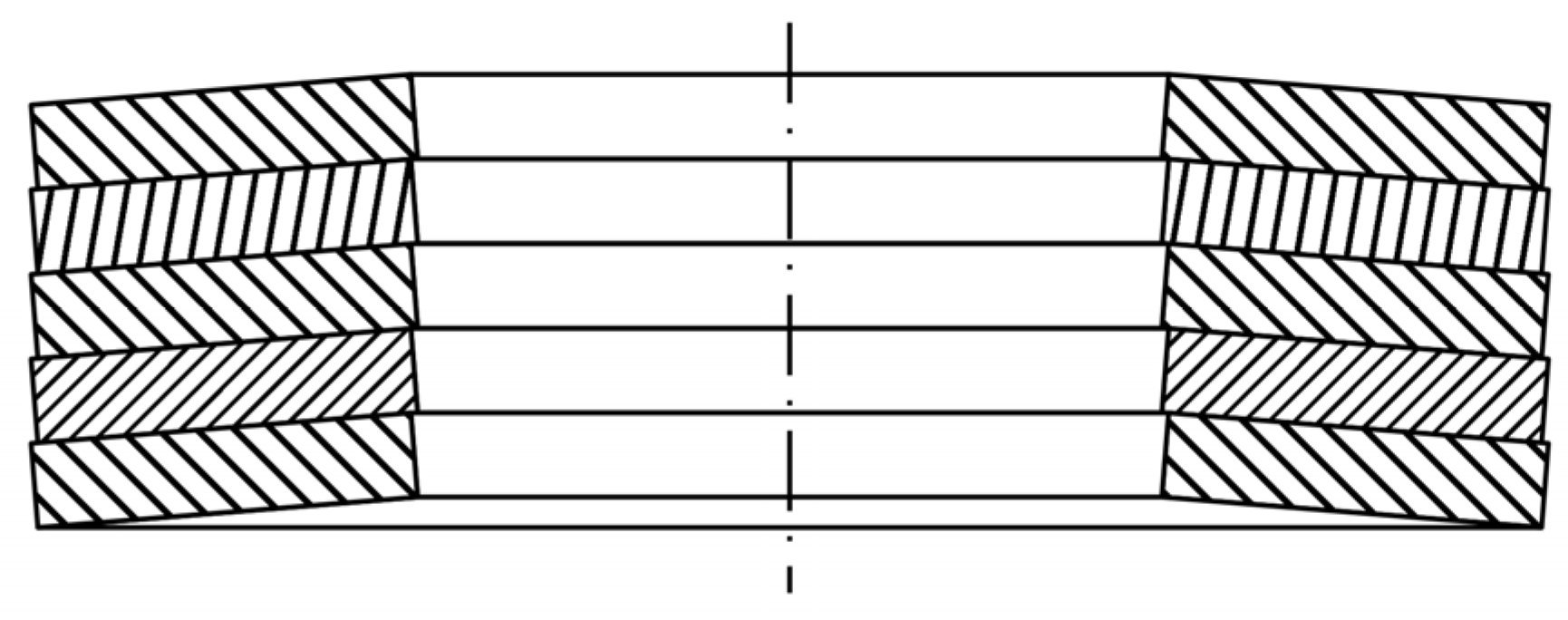
n single disc springs stacked in parallel.
Figure 11 presents a visual representation of a packet containing five disc springs, which have been arranged in a parallel configuration.
The spring load of the springs stacked in parallel
Fges depends on the number of disc springs. The deflection of springs stacked in parallel is equal to the deflection of a single disc spring. The length of springs stacked in parallel in the initial position is determined by Formula (24).
The total clamping force from the six screws,
where
at room temperature in the initial state, and at 77 K
under cryogenic conditions, assuming thermal expansion.
It is assumed that the recommended maximum value for a single disc spring. The initial total clamping force of 14.7 kN, resulting in a contact pressure of 81.6 MPa, will be reduced to 13.9 kN. This will result in a contact pressure of 77.2 MPa under cryogenic conditions.
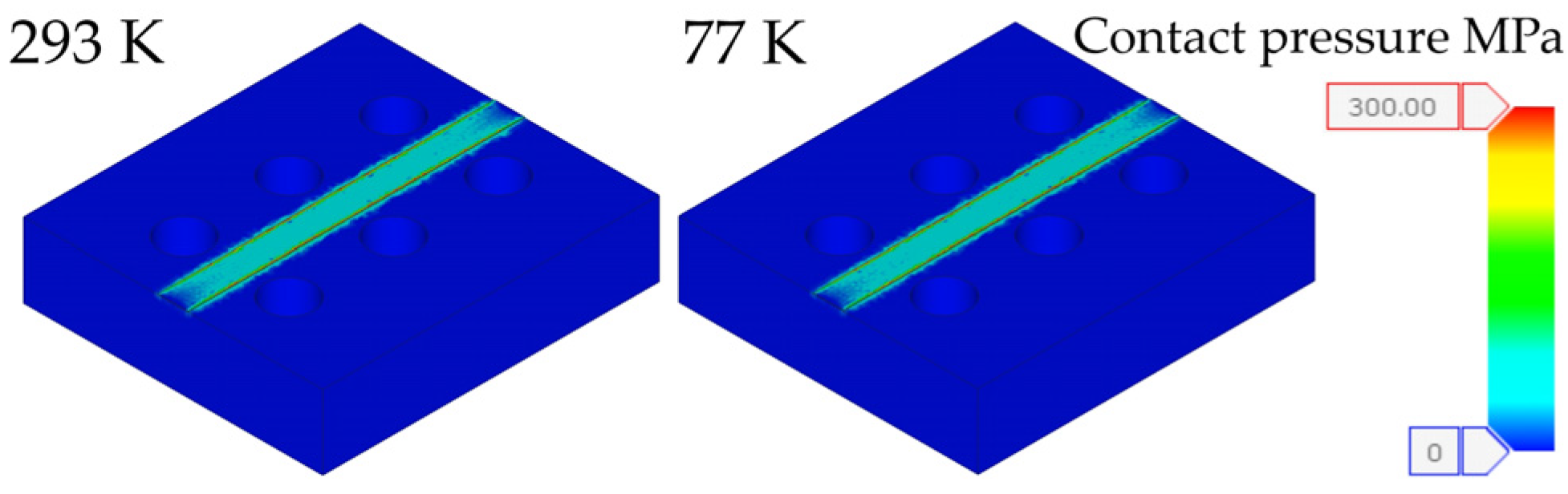
The thermal stress simulation has been shown to be in accordance with analytical calculations. The contact pressure values obtained from the numerical simulations at both temperatures confirm increased pressure values at the edges of the tape and lower pressure values at the ends of the tape (
Figure 12). It is evident that the solution with six screws has almost uniform contact pressure over a considerable area of the HTS tape, which is located beneath the copper block.
4. Discussion
The electrical connection of a superconductor to copper is most commonly achieved through the process of soft soldering. In the present study, the use of a screwed connection has been proposed as a method of reducing the time required for the replacement of a superconductor sample. The screwed connection must ensure good electrical contact over a wide temperature range; consequently, contact pressure distribution and the maintenance of constant contact force are of significance. The primary innovation of the proposed interface lies in its integration of a thermal compensation mechanism, specifically a calibrated disc springs assembly, which has been designed to counteract the different thermal contraction of the material used. The analysis of the CAD model shows that the HTS tape experiences the most uniform pressure distribution when the maximum number of screws is used. For six screws, five washers are required for each screw. For the two-screw variant, fifteen washers would be required for each screw in order to maintain the same pressure. To reduce the stroke of the disc spring required to compensate for thermal expansion, the thickness of both the copper block and the clamp can be reduced. Reducing the thickness also reduces the rigidity of these elements. This increases the pressure on the edges of the tape, which can result in partial degradation of the HTS tape. Conversely, an increase in the clamp’s stiffness, achieved by increasing its height, may necessitate a modification of the disc washer configuration to a series–parallel arrangement. This is to compensate for the increased thermal shrinkage. This arrangement requires twice the number of disc springs to maintain the contact force with increased stroke. In the event that the electrical connection is not soldered under pressure, but is instead a screwed connection, it is imperative that the appropriate disc springs be employed in order to maintain a sufficient pressure to ensure the required contact resistance in cryogenic conditions.
The transition from theoretical design to physical assembly requires bridging the gap between applied torque and resultant clamping force. While torque is the most accessible control parameter in a workshop setting, its efficacy as a predictor of preload is limited by the tribological conditions of the interface. The primary challenge in torque control is the friction phenomenon. In a standard bolted joint, the relationship is typically modelled by the torque coefficient equation according to the ISO 16047 standard [
30]:
where
T is the tightening torque,
K is the torque coefficient,
F is the clamp force and
d is the nominal thread diameter.
where
P is the pitch of the thread,
is the diameter of the bearing surface under the nut or bolt head for friction,
is the coefficient of friction between threads,
is the coefficient of friction between bearing surfaces,
is the basic pitch diameter of the thread, and
is the clearance hole diameter of the washer.
Experimental data suggest that variations in the torque coefficient
K—driven by thread surface finish, thread geometry, coating integrity, and lubrication—can lead to a deviation in preload
F for the same torque input
T. The
K values for stainless steel are higher than for carbon steel due to the high adhesion of the material. In the context of dry conditions, the torque coefficient K, has a mean value of 0.3. Stainless steel bolts are particularly likely to gall. The utilisation of standard technical lubricants has been demonstrated to reduce
K to 0.15–0.2. Furthermore, the utilisation of a solid lubricant paste, comprising a mixture of white mineral oil, molybdenum disulfide, calcium hydroxide and graphite, has been demonstrated to reduce
K to as low as 0.12. The tightening torque of the screws may vary by up to double, depending on the lubrication conditions. Modern structural steel standards acknowledge that the precise relationship between tightening torque
T and preload force
F can only be accurately determined through laboratory testing. This is due to the fact that the vast majority of applied energy is lost to friction, with only approximately 10% of the input torque actually contributing to the tension (stretching) of the bolt [
31].
The unique advantage of utilising disc springs is that they provide a mechanical “visual” of the preload through their axial deflection. Unlike rigid joints where the load–displacement curve is extremely steep, disc springs offer a wider window for adjustment. During assembly, friction between the sliding surfaces of the disc spring causes the loading curve to differ from the unloading curve (hysteresis effects). Initial “bedding-in” of the threads and the spring contact points can lead to an immediate loss of 2–11% of the initial preload. This necessitates a strategy of “pre-seating” the stack or using a multi-stage tightening procedure. To ensure a rational and repeatable preload, the following engineering protocol is proposed: Use lubricants to stabilise the factor across all fasteners. Instead of a single torque target, fasteners should be tightened to a low “snug torque” to align the components, followed by a specific rotation angle. This angle directly correlates to the pitch of the screw and the resulting deflection of the disc spring, bypassing friction-related errors. For such critical joints, the final verification should be the measurement of the compressed height of the disc spring stack using callipers. This provides a direct physical confirmation that the spring has reached its intended point on the force–deflection curve.
By shifting the focus from torque-only control to a deflection-aware strategy, the reliability of the clamping force is significantly enhanced. This approach serves to mitigate the inherent uncertainties associated with thread friction, whilst leveraging the predictable spring rate of the disc springs to ensure equal clamping force for each screw.
In order to execute a tightening procedure on a six-bolt clamp 3 × 2 rectangular pattern of screwed joints, it is imperative to employ a “cross-diagonal” sequence, commencing from the centre toward the free edges. The utilisation of this method is intended to ensure that the clamp is seated with uniformity and to prevent it from tilting. A recommended tightening sequence is as follows: top middle, bottom middle, top left, bottom right, top right, bottom left. It is imperative to refrain from tightening a screw to 100% of the calculated spring washer stroke in a single pass. The following multi-stage tightening procedure should be employed: The initial stage of the process is to secure the clamp in a snug and tight manner. This can be achieved either by manually tightening the clamp or by utilising a torque wrench set at approximately 30% of the final value. The objective of this process is to eradicate any excess material and ensure that all surfaces are properly aligned. The cross-diagonal sequence is to be followed. The subsequent stage of the process is to set the intermediate torque. The torque should be tightened to 60–70% of the target torque [
31]. At this stage, the rotation angle is monitored. For a screw with a pitch of 1.0 mm and an M6 thread, a 360° rotation is equivalent to 1 mm of travel. In the event of a 30° rotation of the bolt without compressing the washer stack, in accordance with the mathematical expectation, it can be deduced that the torque is being “consumed” by thread friction (galling) as opposed to the creation of preload. The third phase of the process pertains to the final preload and verification. The objective of this study is to attain the target clamp load. The calculated result of 0.1875 mm of deflection should thus be obtained at a degree of 67.5. It is imperative that the final washers’ stack deflection is measured.