


Abstract
Natural gas pipeline networks are subject to supply instability due to random fluctuations. Current forecasting methodologies often suffer from limited accuracy, inadequate uncertainty quantification, and poor integration with dynamic network evaluation mechanisms. To address these challenges, this study presents an integrated framework that bridges short-term demand forecasting with supply assurance assessment. A deep learning model that combines a graph convolutional network and a bidirectional long short-term memory network is developed to produce accurate 72 h demand forecasts. Forecasting uncertainty is quantified using the cumulative distribution function. Based on the probabilistic forecasts, a supply assurance evaluation model is constructed that accounts for the dynamic regulation capability of line pack. The comprehensive indicator system incorporates key metrics such as user satisfaction and the line pack demand−storage ratio. A case study was conducted with the proposed method based on a regional real-world pipeline network. The results demonstrate that the proposed model outperforms conventional baselines, achieving a mean absolute percentage error of less than 1%. The uncertainty quantification captures the risk probability associated with demand fluctuations. The proposed evaluation method identifies vulnerable sections and assesses supply margins under various scenarios, thus providing effective decision support for operational scheduling and supply assurance.
1. Introduction
1.1. Background
The ongoing global energy transition has precipitated a substantial surge in natural gas demand, reinforcing its strategic importance as a pivotal bridge fuel within the low-carbon energy architecture [1,2]. As the penetration of intermittent renewable energy sources (such as wind and solar) increases, natural gas pipeline networks are increasingly relied upon to provide flexible peak-shaving services to balance the broader energy grid. This multi-energy coupling, however, introduces compounded complexity. Natural gas networks maintain a delicate supply–demand equilibrium that is significantly perturbed by non-linear factors, including seasonal alternations, extreme meteorological events, market price volatility, and the heterogeneity of end-user consumption patterns [3,4]. These factors induce pronounced stochastic fluctuations in user loads, which not only complicates gas supply assurance but also challenges the hydraulic stability and operational safety of the transmission infrastructure [5]. Consequently, the development of high-precision short-term demand forecasting [6,7] and the robust evaluation of dynamic supply capabilities [8] have emerged as critical imperatives for modern pipeline management.
While existing forecasting methodologies have progressively evolved from classical statistical models toward advanced machine learning and deep learning approaches [9,10,11,12], two primary limitations persist in current practices, hindering their applicability to complex network operations. First, regarding model architecture, traditional paradigms often treat users as independent statistical entities. This approach fails to adequately capture the spatiotemporal correlations induced by the network topology [13,14,15]. Natural gas networks are hydraulically coupled systems where demand perturbations at one node propagate through the physical infrastructure, affecting pressure and flow at adjacent nodes; ignoring these spatial dependencies limits the model’s ability to capture system-wide dynamics. Second, regarding output representation, the majority of existing methods focus on deterministic point forecasts [16,17]. Such deterministic outputs rarely characterize the complete probability distribution of demand fluctuations, resulting in an insufficient quantification of aleatoric uncertainty (inherent data randomness) [18,19,20]. Without probabilistic insights, operators lack the risk-based information necessary to make informed decisions under uncertainty.
Furthermore, in the domain of supply assurance, the operational flexibility of the pipeline itself is often undervalued. Line pack—the volume of gas stored within the pipeline under pressure—is widely recognized as a critical fast-response buffer for accommodating short-term imbalances [21,22]. Unlike underground gas storage (UGS) or LNG terminals, which have longer response latencies, line pack provides immediate “virtual storage.” However, its role is frequently simplified in the existing literature as a static margin rather than a dynamic capability. The transient potential of line pack as a core dynamic control variable for mitigating supply–demand gaps has not yet been fully quantified or integrated into unified evaluation frameworks [23,24]. There is a pressing need for a methodology that not only predicts demand with uncertainty bounds but also explicitly links these probabilistic risks to the available hydraulic buffering capacity of the network.
1.2. The Original Contribution of This Work
The core novelty of this work lies in the seamless integration of deep learning-based probabilistic forecasting with hydraulic supply capability evaluation.
- Integrated Framework: Unlike studies that treat forecasting and evaluation separately, this work bridges the gap by using the probabilistic outputs (CDF) of the GCN-BiLSTM model as direct inputs for the line pack evaluation, transforming ‘data uncertainty’ into ‘supply risk’.
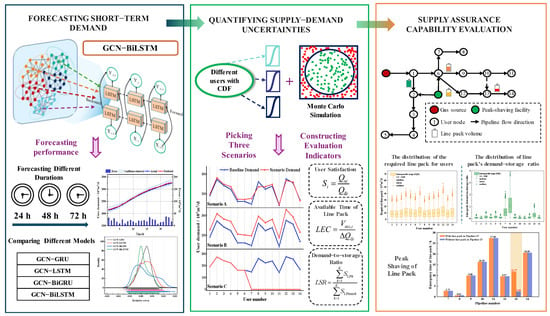
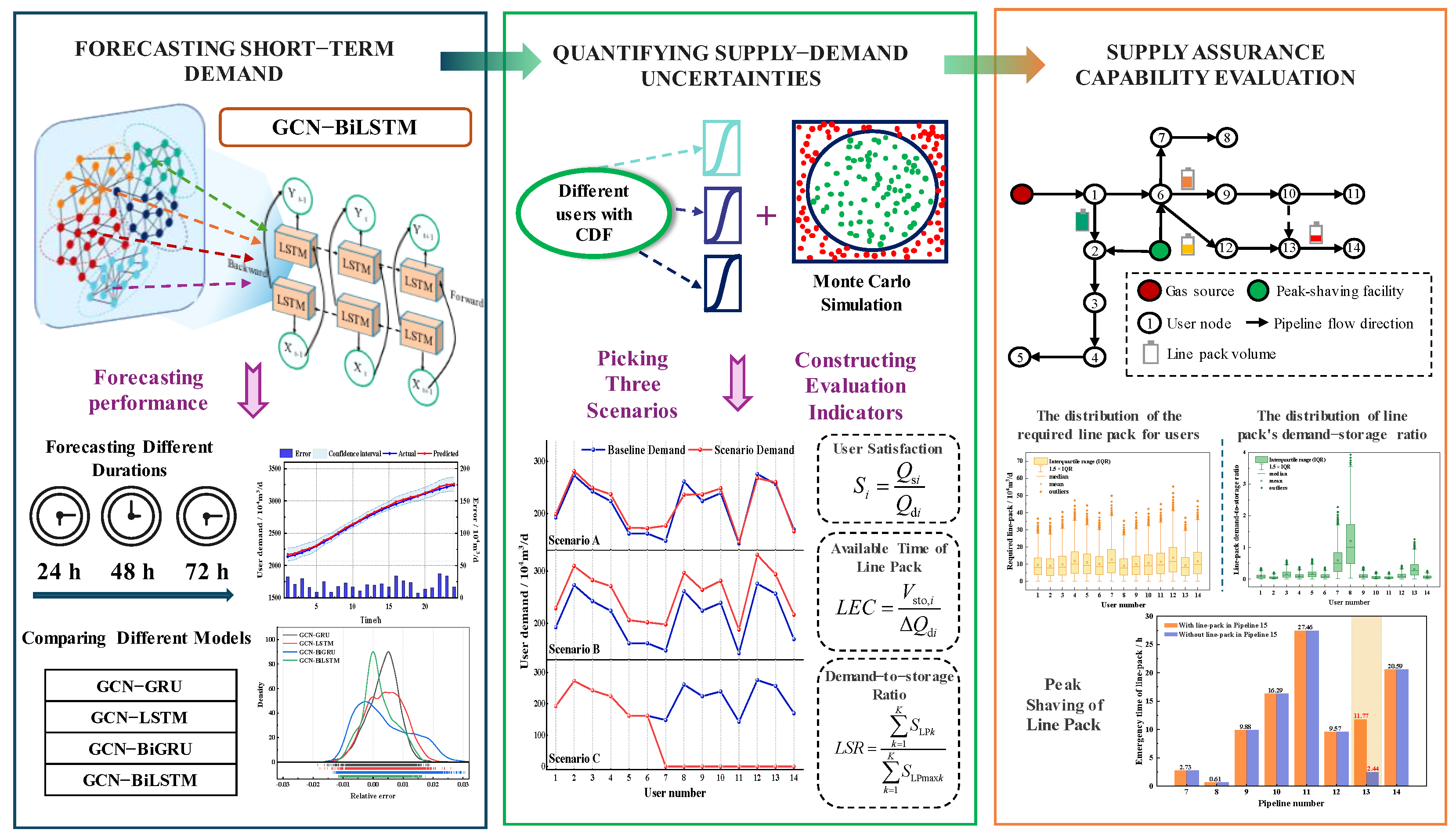
- Risk-Informed Evaluation: A dynamic evaluation system is established where line pack capabilities are assessed not just against deterministic demand, but against the full probability distribution of potential demand scenarios. The overall research framework of this study is illustrated in Figure 1.Figure 1. Overall research framework.
1.3. Paper Organization
The remainder of this paper is organized as follows: Section 2 details the architecture of the GCN-BiLSTM model, the uncertainty quantification procedure using Dropout-based inference, and the development of the supply assurance evaluation indicators. Section 3 presents a case study based on real-world regional pipeline networks (Datasets A and B) to validate forecasting accuracy and evaluate assessment performance under various scenarios. Section 4 summarizes the main findings and discusses potential directions for future research.
2. Model Development
2.1. Short-Term Demand Forecasting Model for Natural Gas Pipeline Networks Based on Uncertainty Quantification and Deep Learning
Accurate user demand forecasting is a prerequisite for evaluating the supply capability of a natural gas pipeline network. User demand varies over time and is influenced by multiple factors. This variability introduces substantial uncertainty into short-term forecasting. Accumulated uncertainty can reduce transmission efficiency and operational stability. This section presents a demand forecasting model that combines deep learning with uncertainty quantification.
The CDF is a fundamental concept in probability theory and statistics. It describes the probability distribution of a real-valued random variable X [25]. For any real number x, the CDF F(x) gives the probability that X is less than or equal to x. It is defined as:
where X is a random variable and x is any real number.
F(x) = P(X ≤ x)
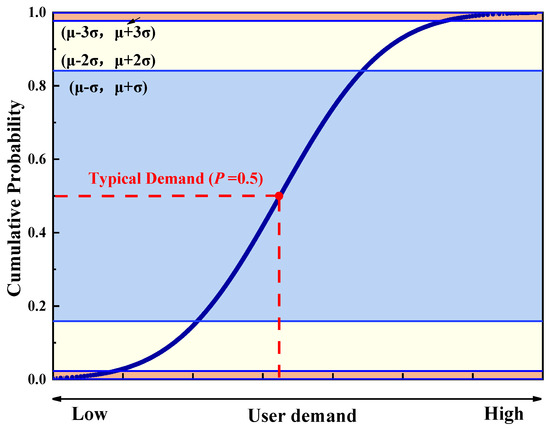
The CDF provides a practical and reliable tool for analyzing user demand in natural gas pipeline networks. Historical demand data are used to estimate the CDF and quantify the probability of observing a specific demand level, as illustrated in Figure 2. The figure illustrates the cumulative probability distribution of user demand, with the horizontal axis representing demand levels and the vertical axis denoting cumulative probability. A blue curve (cumulative distribution function, CDF) depicts the probability that demand is less than or equal to a given level as demand increases. Light blue corresponds to 68.2%(μ−σ,μ+σ), light yellow to 95.4%(μ−2σ,μ+2σ), and orange to 99.7%(μ−3σ,μ+3σ). A red dashed line marks the “typical demand” scenario (p = 0.5), where the 50th percentile of demand intersects the CDF, indicating the demand level below which 50% of observations fall. This information supports more informed supply strategies and helps reduce operational risks.
Figure 2.
The CDF of user demand.
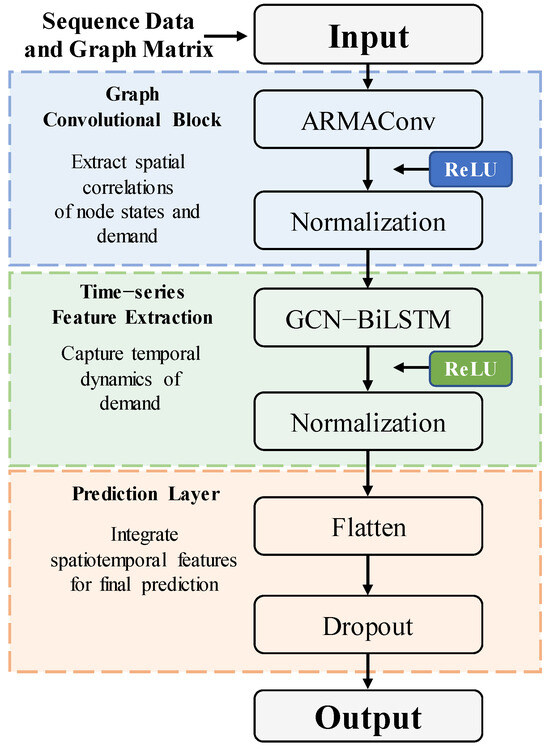
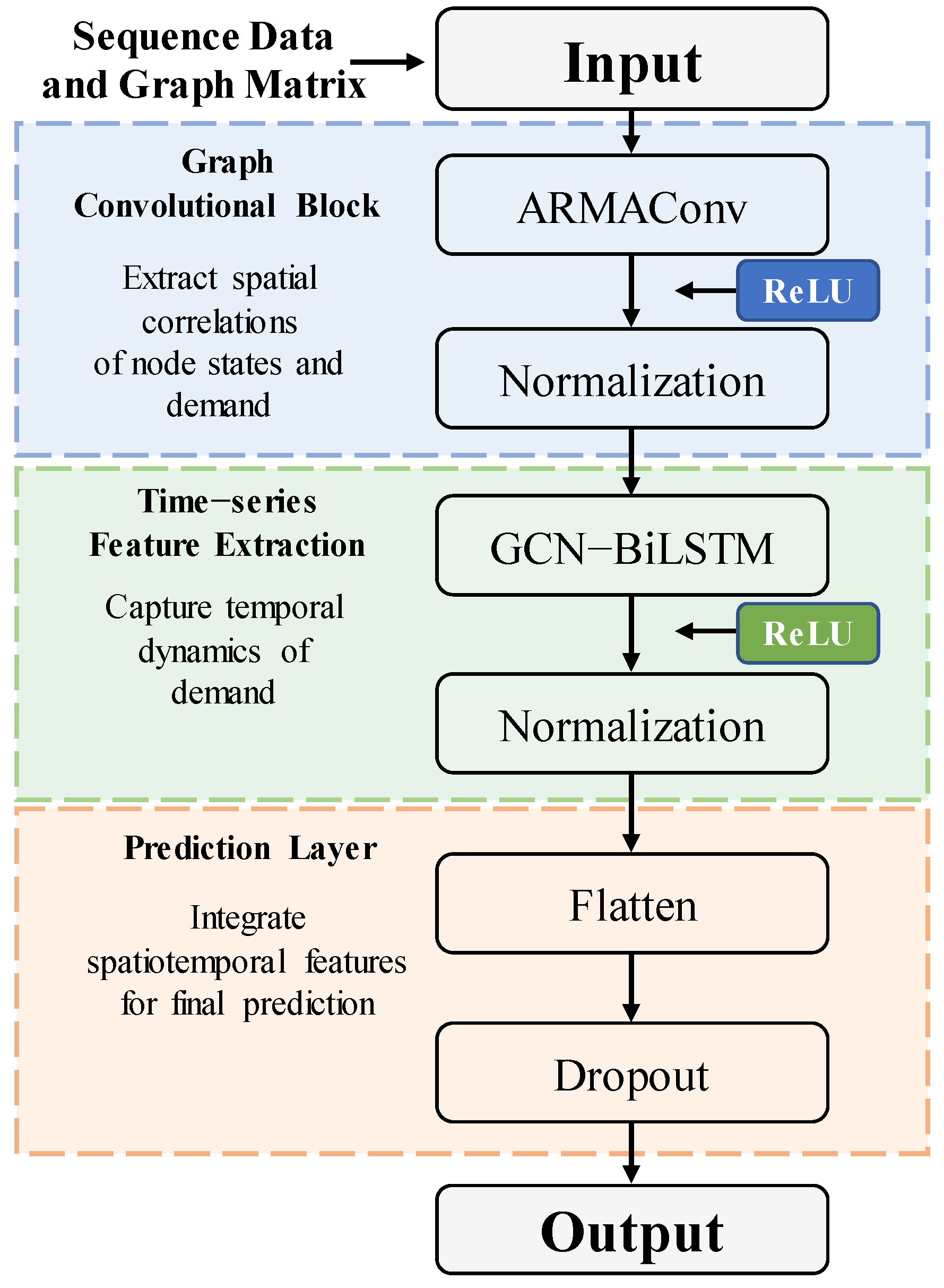
The proposed demand forecasting model has three components: a graph-structure mining layer, a time-series feature extraction layer, and an uncertainty quantification layer. Using historical demand data from the pipeline network, the model forecasts user demand for the next 72 h. The workflow is shown in Figure 3. The main components are described below.
Figure 3.
The building process of improved machine learning.
- Graph convolutional block. This layer captures network topology and spatial characteristics. An ARMA graph convolutional network (ARMAConv) is adopted in this study. Compared to polynomial filter-based methods like ChebNet or standard GCN, ARMA filters offer a rational spectral response, enabling them to capture global graph structures and long-range spatial dependencies more effectively. This capability is particularly well-suited for natural gas pipeline networks, where pressure and flow perturbations propagate across the entire topology rather than remaining strictly local. The ARMA-based convolution is applied to graph-structured inputs with a configuration of K = 2 parallel stacks and a recursion depth of T = 1. This parameterization ensures a localized first-order approximation similar to GCN but with enhanced flexibility, maintaining a linear computational complexity of O(E) suitable for real-time applications.
- Time-series feature extraction. This layer learns temporal patterns from demand sequences and GCN-BiLSTM is used [26]. It combines forward and backward LSTM passes to extract latent temporal features. The forward LSTM models patterns and trends from historical demand. The backward LSTM models dependencies in the reversed sequence to improve forecasting.
- Prediction layer. This layer estimates predictive uncertainty using Dropout. During training, Dropout randomly deactivates neurons to reduce overfitting and improve generalization. During inference, Monte Carlo Dropout is applied by performing T = 100 stochastic forward passes with the dropout mask active. For a given input, the predictive mean is calculated as the average of these T stochastic outputs, and the uncertainty is quantified by their sample variance. The dropout rate is set to 0.2 to prevent overfitting while maintaining model capacity. These statistics are used to construct the Gaussian Cumulative Distribution Function (CDF) for risk assessment [27].
A set of experiments is designed to evaluate the proposed forecasting model and to test its practical applicability. The main steps are described below.
- Forecasting performance is assessed against three baseline sequence models, including GRU, LSTM, and BiGRU. Their prediction results are compared with those of the proposed model. A unified set of metrics is used to quantify prediction accuracy. To control experimental conditions, all models use the ReLU activation function. To ensure a fair comparison, a unified training protocol was adopted. The Adam optimizer was used with an initial learning rate of 0.0005. The maximum number of training epochs was set to 200, coupled with an Early Stopping mechanism (patience = 20) monitoring the validation loss. The hyperparameters were tuned via grid search on the validation set. The evaluation metrics are as follows:
- Root Mean Squared Error (RMSE)
- II.
- Mean Absolute Percentage Error (MAPE)
- III.
- Mean Absolute Error (MAE)
- IV.
- Coefficient of determination (R2)
where n is the number of prediction samples, yi is the true value for sample i, is the predicted value for sample i, is the mean value for yi. - Forecast horizon strongly affects prediction accuracy. The applicability and stability of the proposed method are tested under three horizons: 24 h, 48 h, and 72 h. Model performance is compared across these time scales.
- To examine performance under different network topologies, Model performance is further examined under different pipeline topologies. In addition to the case study on Dataset A, a second network case (Dataset B) is constructed using the same graph-based modeling approach. Forecasting results are reported for 24 h, 48 h, and 72 h in Dataset B to evaluate the model’s adaptability to topology changes and its generalization capability.
2.2. Supply Capability Evaluation Model for Natural Gas Pipeline Networks Considering Line Pack
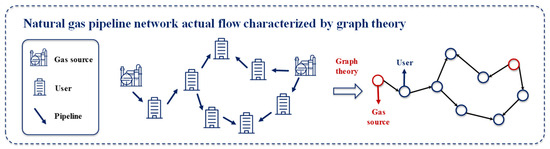
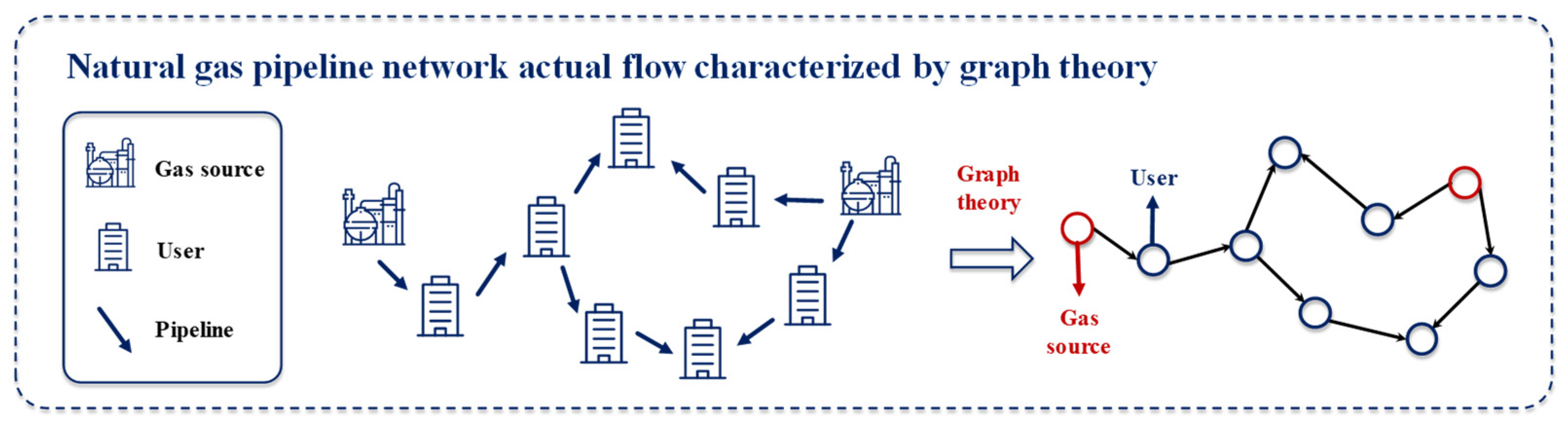
A pipeline network topology model provides the foundation for system modeling and line pack calculation. Graph theory is widely used in computer science [28], biology [29], and transportation [30]. It offers a unified representation of network structure and supports subsequent analysis. Therefore, graph theory is adopted to model the topology of a natural gas pipeline network.
The pipeline network is represented as a directed graph G = (N, L). The adjacency matrix A is constructed based on the physical topology, where Aij = 1 if a physical pipeline segment exists allowing gas flow from node i to node j, and 0 otherwise. This directed structure ensures that the graph convolution operation mimics the actual downstream propagation of gas flow and pressure states. In this graph model, the node features are defined as the normalized historical time-series data corresponding to each specific node, mapped within the 24 h input window to capture local temporal dynamics. Regarding the graph’s connections, while edge weights could theoretically be formulated using physical pipeline parameters (such as pipeline length, inner diameter, or hydraulic friction factors), this study utilizes an unweighted, binary adjacency matrix. The rationale for this unweighted approach is twofold. First, the primary goal of the graph convolution is to extract the macroscopic spatial topology and the downstream propagation paths of demand perturbations. A binary directional matrix efficiently and accurately reflects this physical connectivity. Second, integrating static physical parameters as edge weights could introduce rigid constraints that do not capture the highly dynamic and transient nature of line pack and gas flow, while also unnecessarily increasing computational complexity. Thus, the unweighted directed graph preserves a linear computational complexity of O(E) while remaining highly suitable for capturing system-wide spatial dependencies. With this representation, the pipeline system can be abstracted into a graph model, as shown in Figure 4.
Figure 4.
The topology of natural gas pipeline network based on graph theory.
The proposed framework provides a unified basis for evaluating the supply capability of natural gas transmission networks. This section evaluates supply assurance while accounting for the peak-shaving role of line pack. Line pack is defined as the amount of natural gas stored in pipelines under standard conditions. The evaluation aims to improve supply security and reliability [31].
Supply assurance is quantified using three indicators. User satisfaction quantifies supply performance specifically from the consumer’s perspective. Available time of line pack represents the duration for which pipeline-stored gas can cover the supply–demand gap during emergencies. The line pack demand−storage ratio measures the adequacy of available line pack relative to required line pack. Together, these indicators describe the supply margin from three perspectives: gas delivery, gas storage, and supply service.
- User satisfaction
User satisfaction is defined as the ratio of the actual supplied gas to the user’s demand. It reflects the relationship between supply status and demand stability. Adequate line pack preparation can improve satisfaction during demand peaks. The metric is defined as in Equation (6).
where Si is the satisfaction of user i; Qsi is the actual supplied gas to user i, 104 m3/d; and Qdi is the demand of user i, 104 m3/d.
- 2.
- Available time of line pack
The available time of line pack denotes the duration during which the gas stored within the pipelines can effectively bridge the supply-demand deficit under emergency conditions. This indicator provides time-based guidance for operators. Seasonal changes and other external factors can cause large demand variations. In such periods, the network needs flexible peak shaving to mitigate imbalance. The metric is defined as in Equation (7).
where Vsto,i is the line pack of pipeline i, 104 m3/d, and ΔQdi is the demand increment of user i, 104 m3/d.
- 3.
- Line pack demand−storage ratio
The line pack demand−storage ratio is defined as the ratio of the required line pack to the maximum available line pack. It reflects the adequacy of line pack reserves. When the ratio approaches 1, the required line pack is close to the maximum reserve. In this case, additional peak-shaving measures may be needed to maintain stable and secure operation. A lower ratio indicates more remaining peak-shaving capacity. The metric is defined as in Equation (8).
where SLPk is the required line pack of pipeline k, m3, and SLPmaxk is the maximum available line pack of pipeline k, m3.
3. Case Study
3.1. Data Preparation
A user-demand dataset from an industrial natural gas pipeline network was used for demand forecasting, with its key characteristics summarized in Table 1. The raw dataset (35,000 × 28) underwent strictly preprocessing. Missing values (less than 0.1%) were filled using linear interpolation to maintain continuity. To eliminate dimensional disparities and accelerate gradient descent, all variables were normalized using Min-Max scaling: x’ = (x − xmin)/(xmax − xmin). The processed data was then divided into training, validation, and test sets (7:1:2).
Table 1.
The information of dataset.
For model input, the continuity and periodicity of the time series were considered. The input window length was set to 24 h, so each input sample has a dimension of 24 × 28. The output horizon was determined by the specific forecasting task.
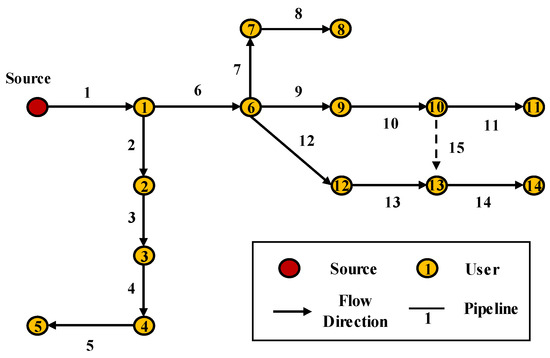
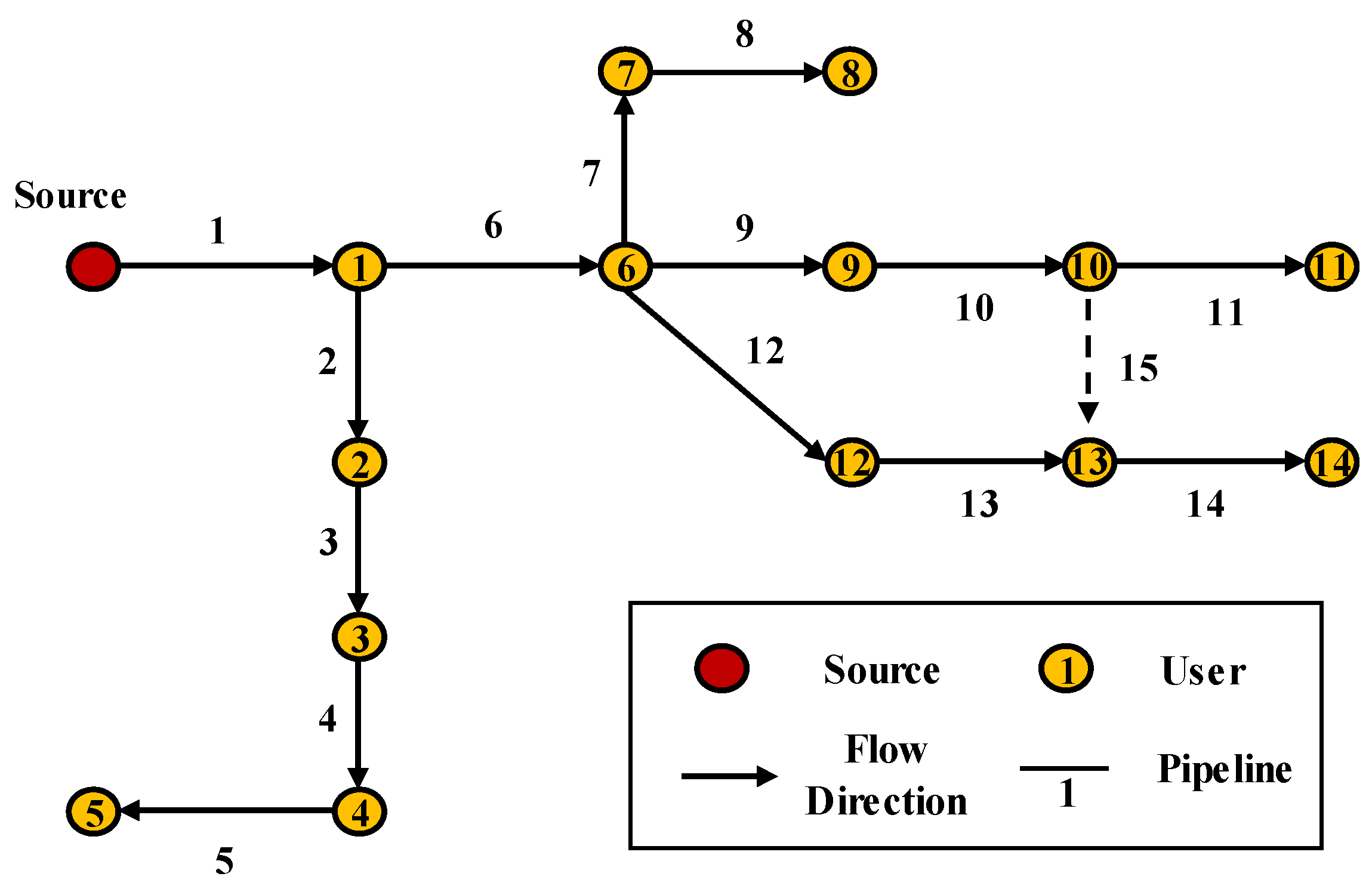
To validate the proposed line pack-based method for supply assurance evaluation, a real-world pipeline network in China was selected as the test system, as illustrated in Figure 5. The physical network was simplified into a graph with nodes and links using the topology model. The network contains 15 nodes. In this model, each user shares the same index as its upstream pipeline. For example, the upstream pipeline of User 1 is Pipeline 1. The pipeline between Users 10 and 13 was included only when assessing the line pack peak-shaving of User 13 using two pipelines.
Figure 5.
The topological of the natural gas pipeline network.
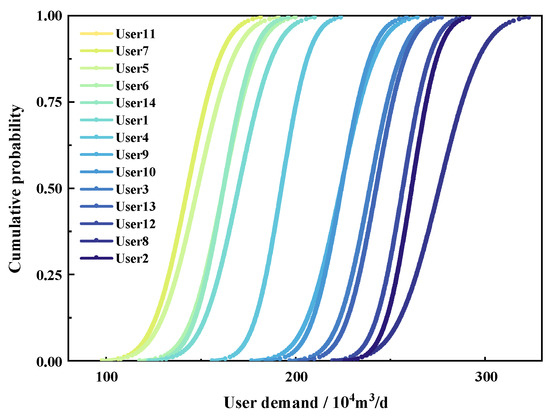
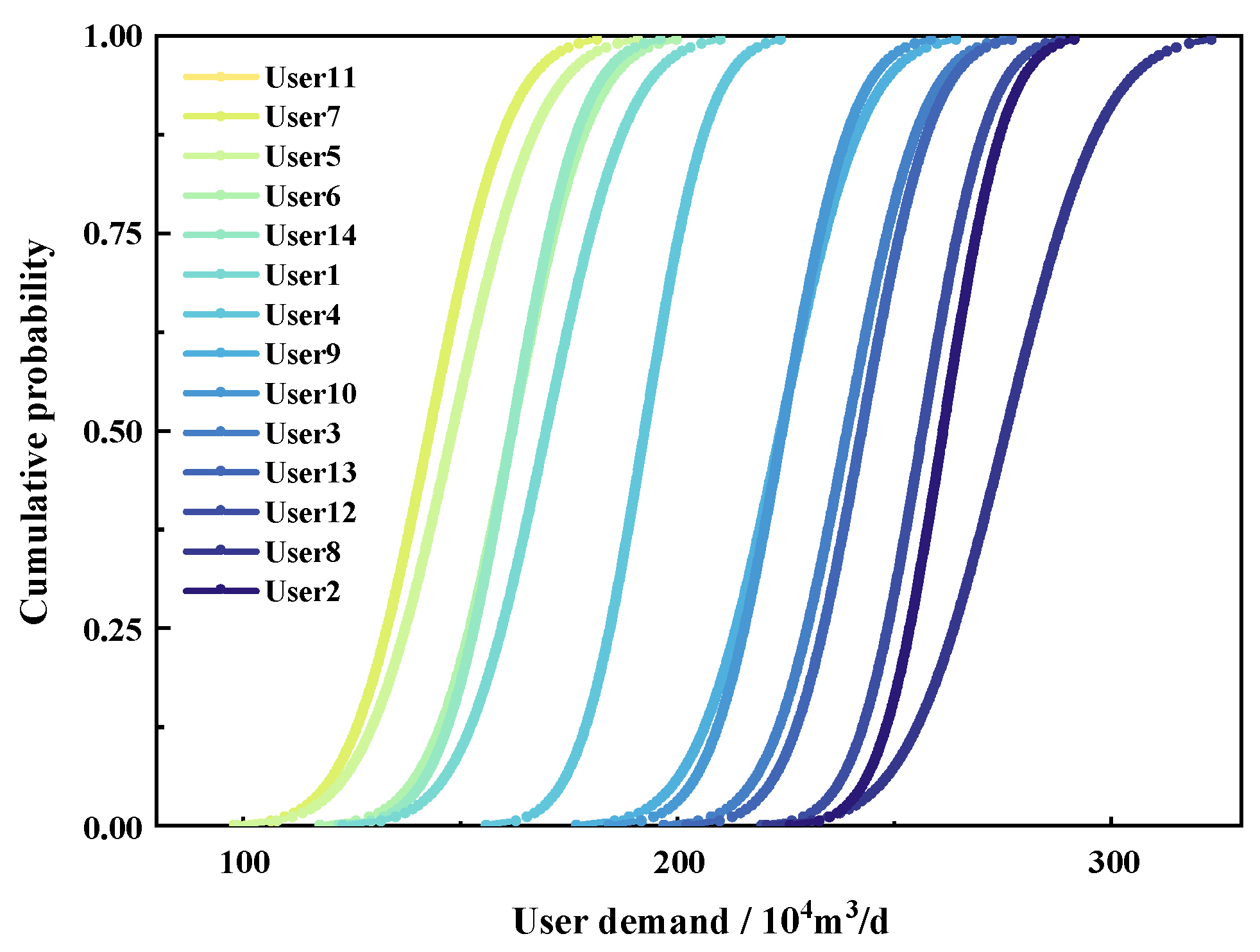
Historical demand data for all users in the network were collected and analyzed using the forecasting method in Section 2.1. Future demand was then predicted for each user. The CDFs of user demand are shown in Figure 6. A baseline demand level under normal operation was defined as the median demand, i.e., the value at a cumulative probability of 0.5. The total baseline demand is 2973.13 × 104 m3/d. Table 2 summarizes the key network parameters and user demand.
Figure 6.
The CDF of different user demands in natural gas pipeline network.
Table 2.
The basic parameters of natural gas pipeline network.
3.2. Scenario Setup
To validate the accuracy and applicability of the proposed supply assurance evaluation model, the following study was designed based on the available data and model settings.
- To quantify the required line pack and the line pack demand−storage ratio, the demand CDF of each user was first obtained using the forecasting method. Monte Carlo sampling was then used to generate a set of representative demand scenarios. For each scenario, the required line pack and the demand−storage ratio were calculated. The CDFs of these indicators were further derived to provide a probabilistic description of supply assurance margins.
- To examine the dynamic interaction between demand changes and supply capability, three representative scenarios were considered. Under normal operation, the total network demand is 2973.13 × 104 m3/d.
- Scenario A: Total demand of all users is 3049.1 × 104 m3/d. This scenario represents a ‘typical high-load’ condition (approximately μ + 0.5 σ), derived from the forecasted CDF to simulate common seasonal fluctuations where demand rises moderately above the baseline.
- Scenario B: Total demand of all users is 3569.0 × 104 m3/d. This scenario represents a ‘synthetic extreme’ condition determined by the 3-sigma rule (μ + 3 σ) It serves as the statistical upper boundary of probable demand, designed to stress-test the network’s supply assurance limit under rare, severe load surges.
- Scenario C: Pipeline 6 is shut down due to compressor maintenance.
3.3. Results and Discussion
3.3.1. Validation of the Forecasting Model
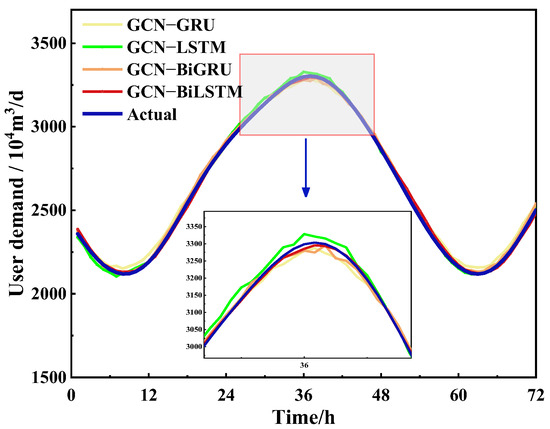
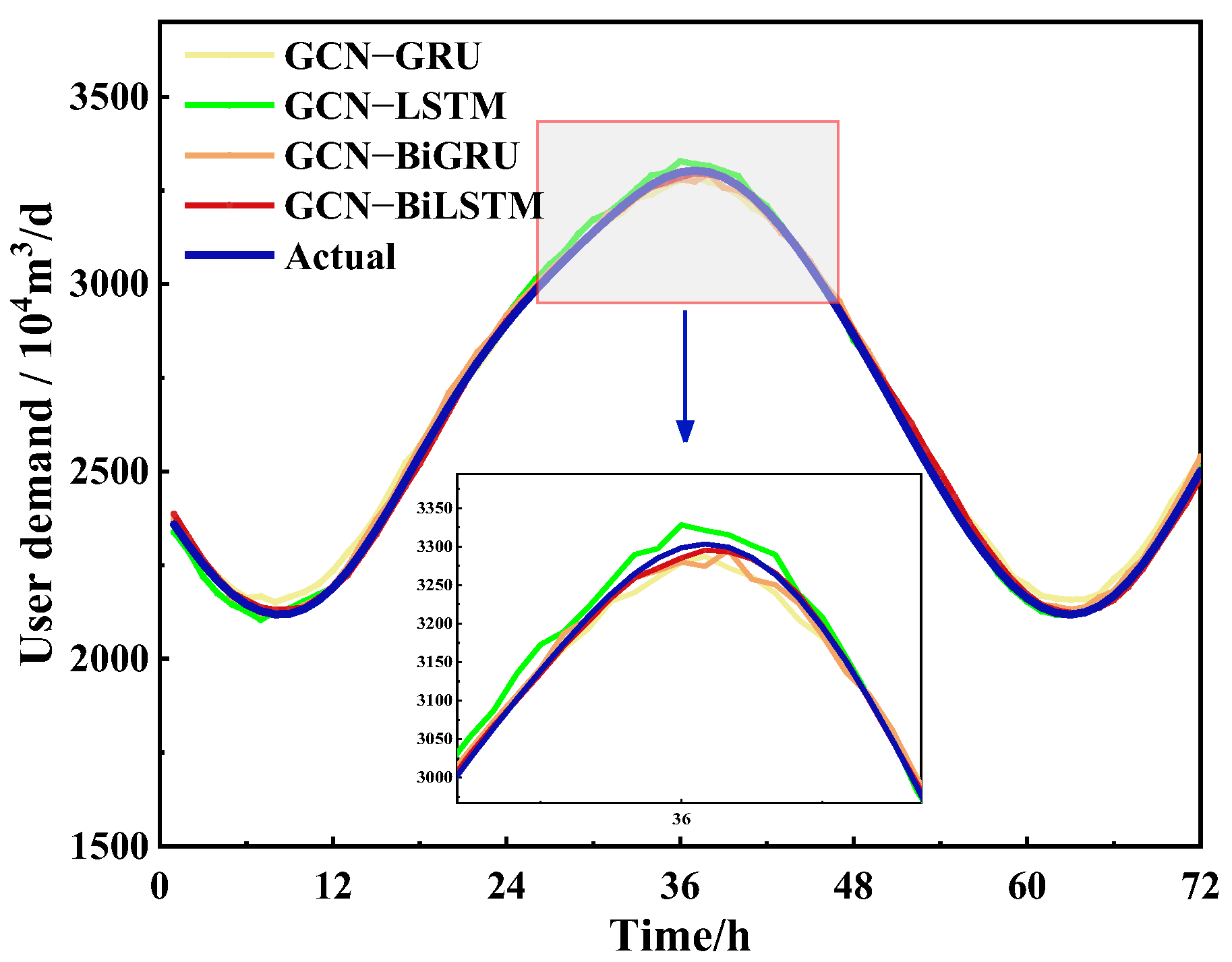
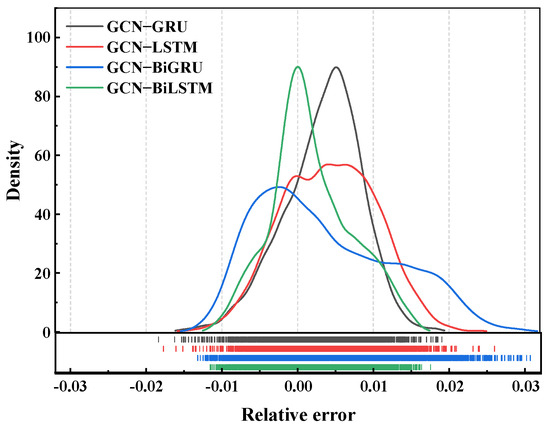
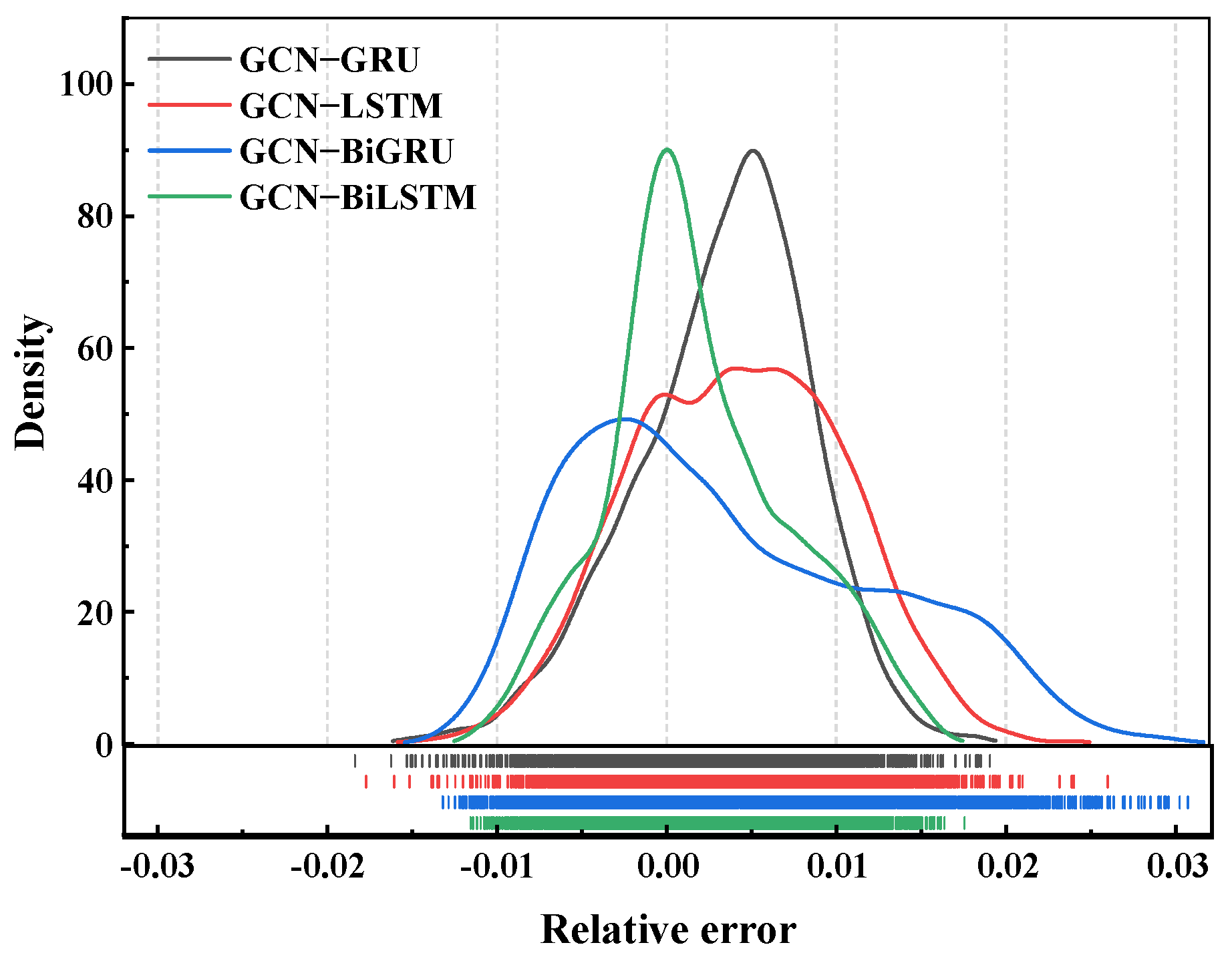
Figure 7 compares the 72 h demand forecasting results of four models. All models show good agreement with the observations, and their predicted trends are similar. To quantify performance differences, multiple evaluation metrics were calculated and are summarized in Table 3. For all models, the MAPE is below 2% and the R2 exceeds 0.95. Figure 8 presents the relative error distributions. The GCN-BiLSTM model shows the closest match to the ground truth and the smallest overall errors among the tested models, indicating the best forecasting performance.
Figure 7.
The single-step prediction results of user demand in different models.
Table 3.
Performance comparison of four forecasting models.
Figure 8.
The relative error of prediction results in different models.
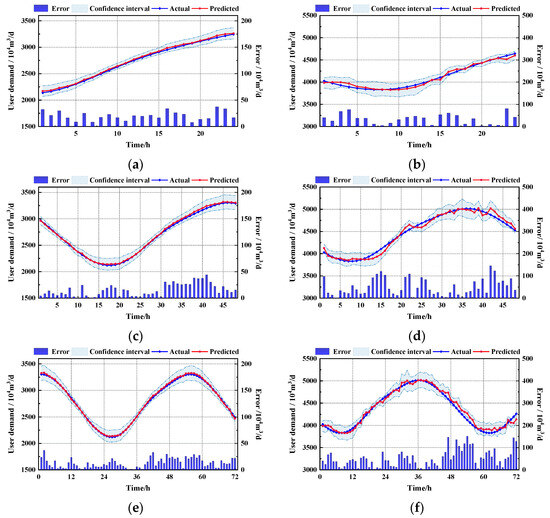
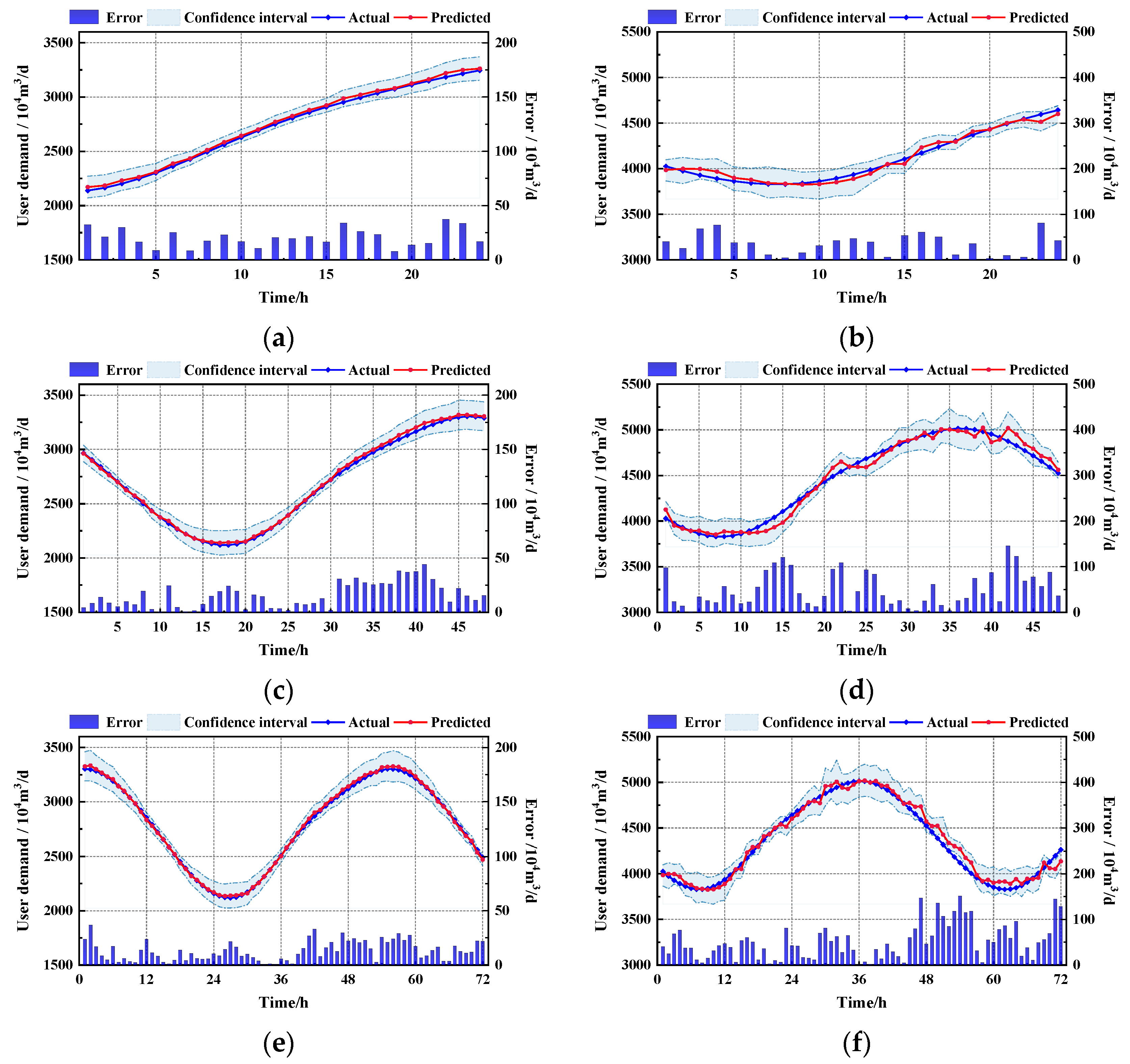
Figure 9a,c,e illustrate the forecasting results for Dataset A across three distinct time horizons (24 h, 48 h, and 72 h). In these plots, the blue curve represents the actual values, the red curve denotes the predicted values, and the light-blue shaded region indicates the confidence interval. The model exhibits stable accuracy across all three tasks. As indicated by the error bars (blue columns), the absolute demand error consistently remains below 50 × 104 m3/d. This demonstrates the model’s robustness and consistency across varying time scales. Furthermore, the model’s generalization capability under a different network structure was evaluated using Dataset B, which consists of one source and 14 user nodes. The results for the corresponding time horizons are presented in Figure 9b,d,f. Although the topological complexity leads to an increase in absolute error compared to Dataset A, the relative error remains stable (below 3%) and does not escalate significantly with rising demand. This suggests that while topology variations influence forecasting performance, the model maintains high accuracy, as the graph component effectively captures spatial dependencies within the network. In summary, the validation confirms that the proposed model delivers accurate forecasts with reliable uncertainty estimates, thereby supporting effective supply assurance evaluation.
Figure 9.
The forecasting performance. (a) 24 h for Dataset A; (b) 24 h for Dataset B; (c) 48 h for Dataset A; (d) 48 h for Dataset B; (e) 72 h for Dataset A; (f) 72 h for Dataset B.
3.3.2. Supply Capability Evaluation
To obtain a statistically meaningful scenario set and improve the reliability and generality of the analysis, 104 Monte Carlo samples were drawn from the CDF of each user’s demand. This process generated a set of demand scenarios. In each scenario, every user is assigned a specific demand value. The resulting scenario set is then used for subsequent supply assurance evaluation.
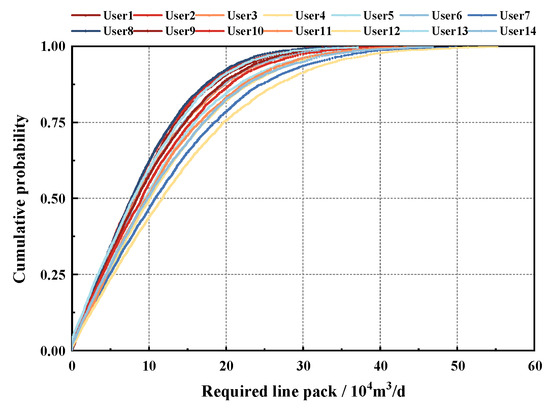
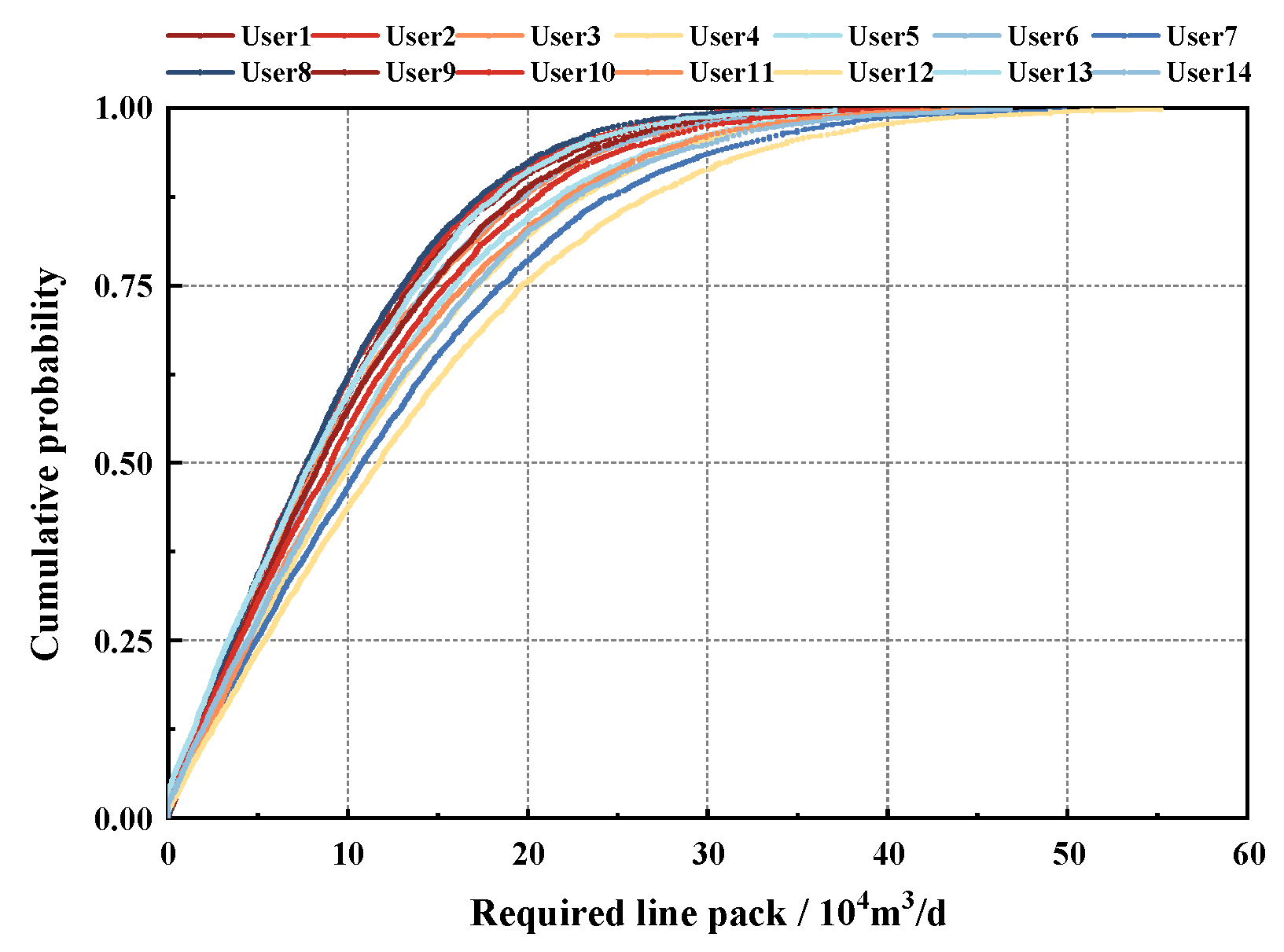
Across different demand scenarios, user demand fluctuates randomly. Line pack is therefore treated as the primary peak-shaving resource. For each scenario, the demand increment relative to normal operation is calculated and defined as the required line pack. The CDF is then used to describe the probability distribution of the required line pack for each user (Figure 10). The results show relatively gentle CDF curves. The required line pack is within 20 × 104 m3/d at the 75th percentile and within 40 × 104 m3/d at the 95th percentile. These distributions support tiered line pack reserve planning under different levels of demand volatility.
Figure 10.
The CDF of required line pack for users.
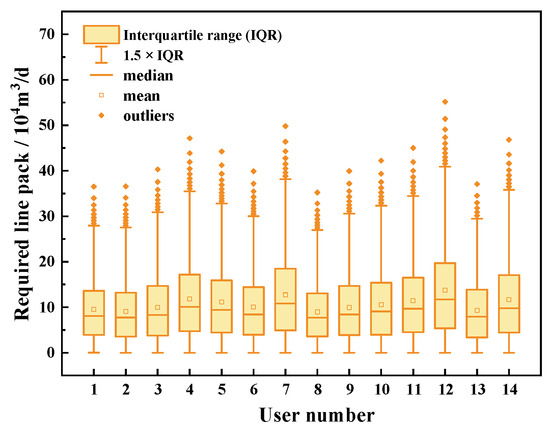
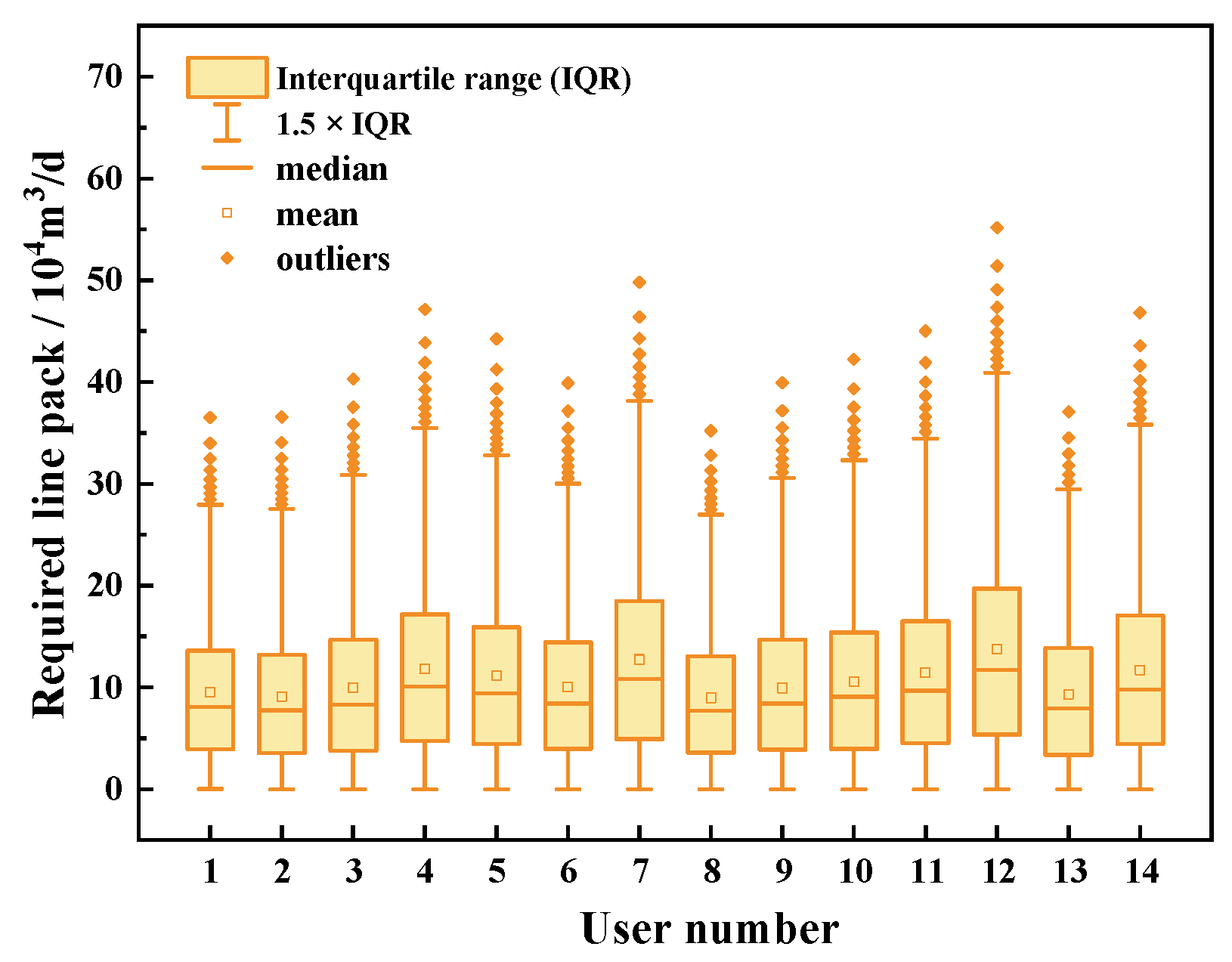
The CDF provides a probabilistic view of the required line pack, but it does not directly show data concentration, medians, or outliers. Box plots are therefore used to examine these statistical properties (Figure 11). Most users show a concentrated distribution, indicating that the required line pack is generally within a stable and controllable range. However, extreme scenarios require attention. For example, the required line pack for User 12 exceeds 50 × 104 m3/d in a few scenarios. This is about five times its median level and far beyond typical conditions. Therefore, operators should prepare separate storage and allocation strategies for normal fluctuations and extreme demand surges to improve supply assurance.
Figure 11.
The distribution of the required line pack for users.
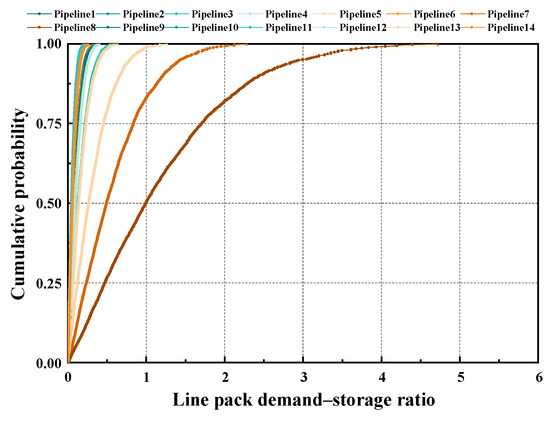
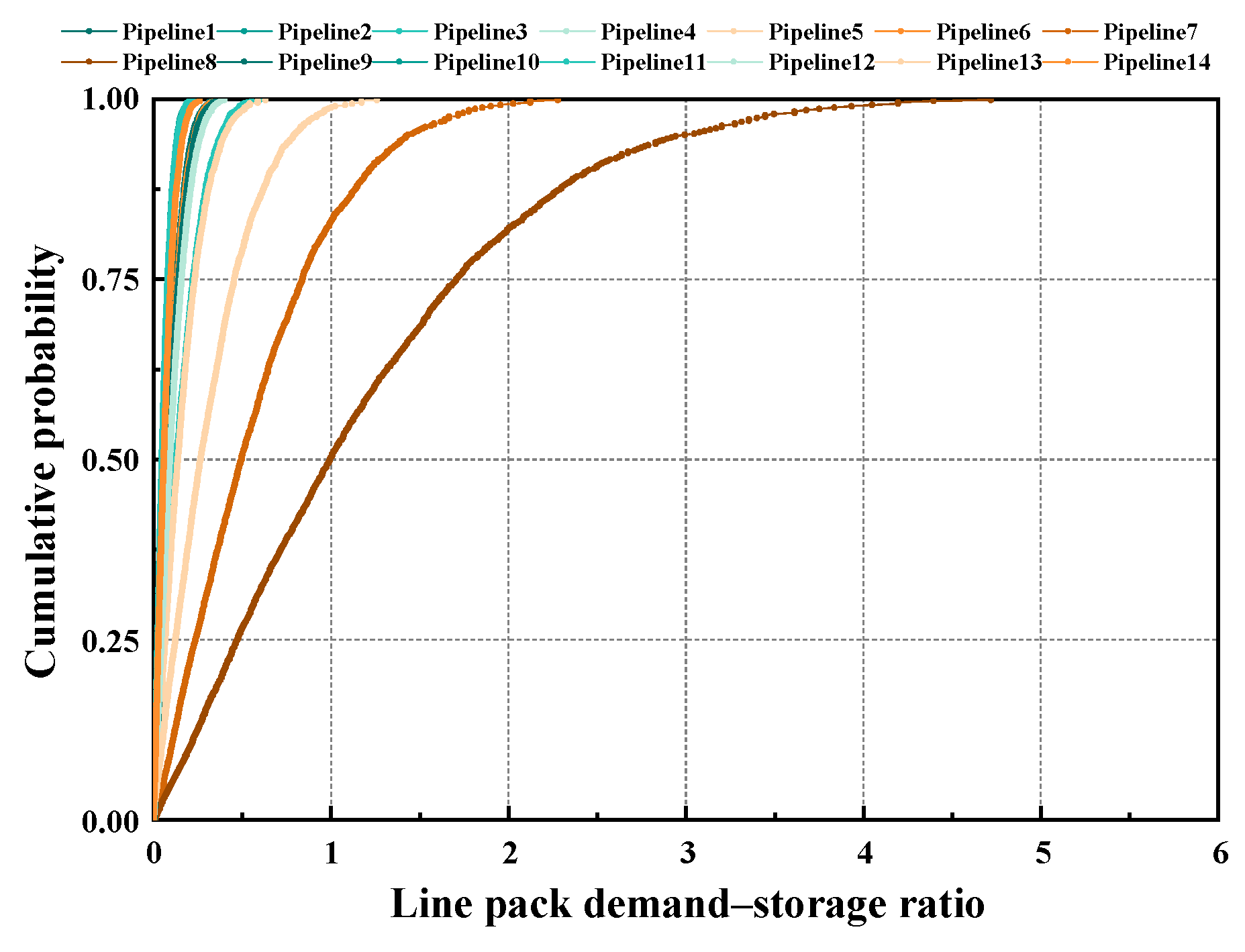
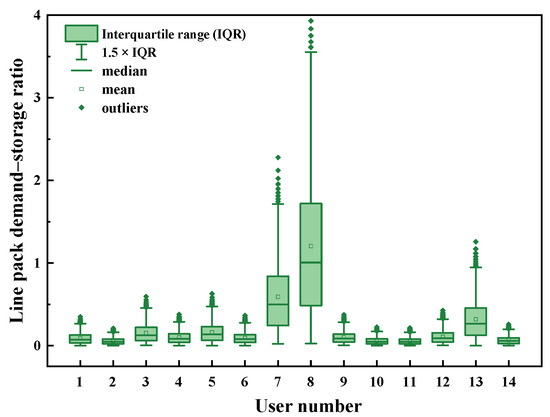
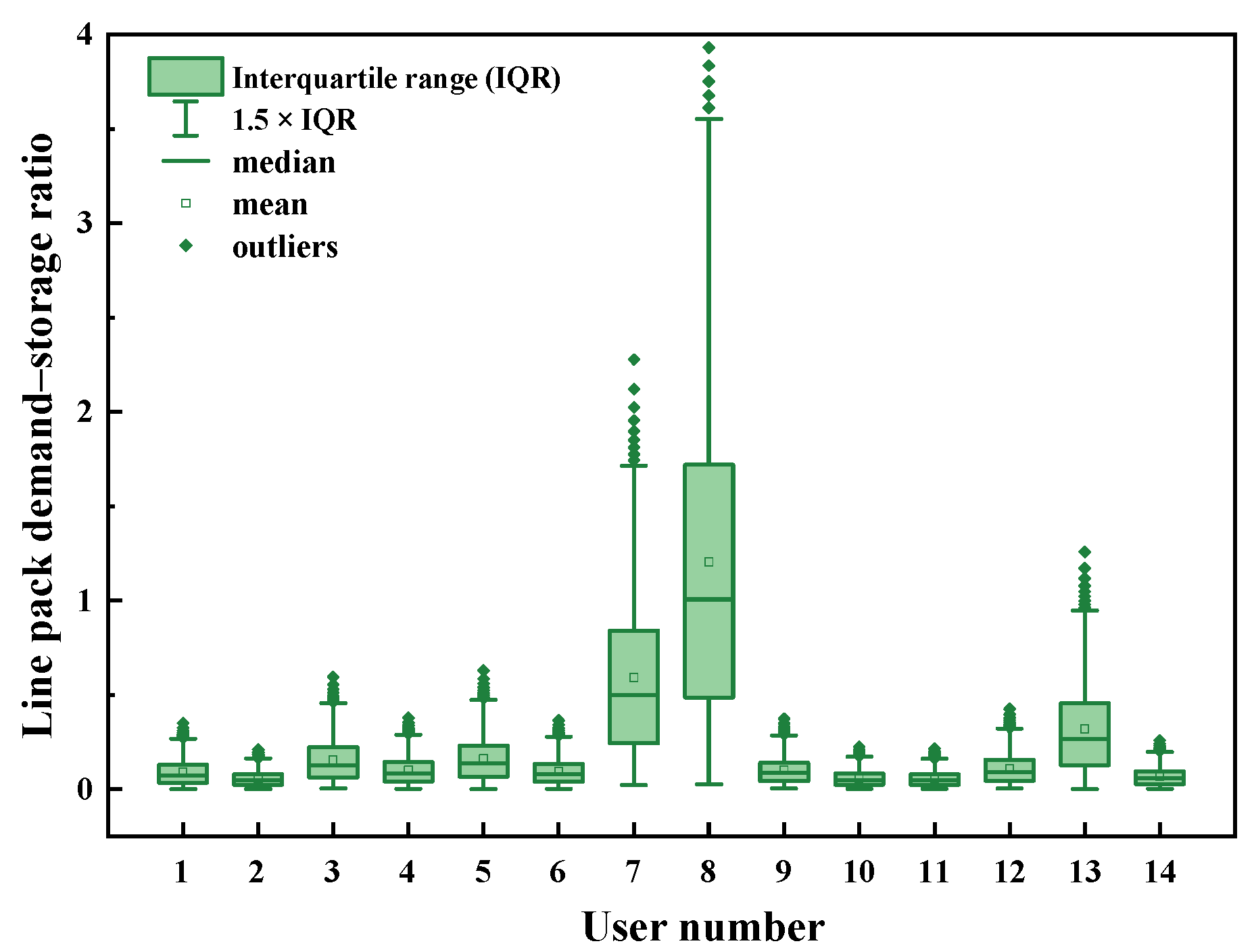
The above analysis is demand-oriented. It does not quantify how much line pack each pipeline can deliver, or whether line pack supply can cover the demand gap. The analysis therefore extends to the line pack demand−storage ratio. Its CDF is shown in Figure 12, and its distribution is summarized by box plots in Figure 13. The results show that Pipelines 7, 8, and 13 exhibit supply shortages over some probability ranges. Their maximum available line pack is not sufficient to cover the deficit, and the ratio exceeds 1.0 in some cases. These pipelines are critical constraints and require priority attention. Under such conditions, additional peak-shaving resources, such as underground gas storage and LNG receiving terminals, should be coordinated to strengthen supply assurance. For the remaining pipelines, the ratio distribution is compact and is mostly below 1.0. This indicates that line pack alone can match the demand gap for most scenarios and can support stable network operation. Overall, the ratio-based results complement the demand-side analysis and provide quantitative guidance for targeted reinforcement and contingency planning.
Figure 12.
The CDF of line pack demand–storage ratio.
Figure 13.
The distribution of line pack demand–storage ratio.
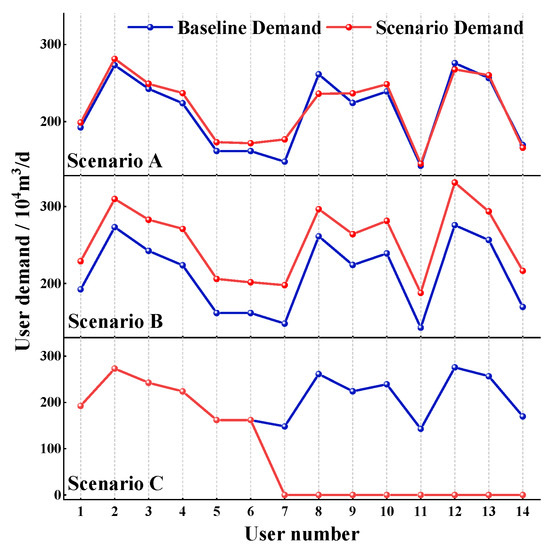
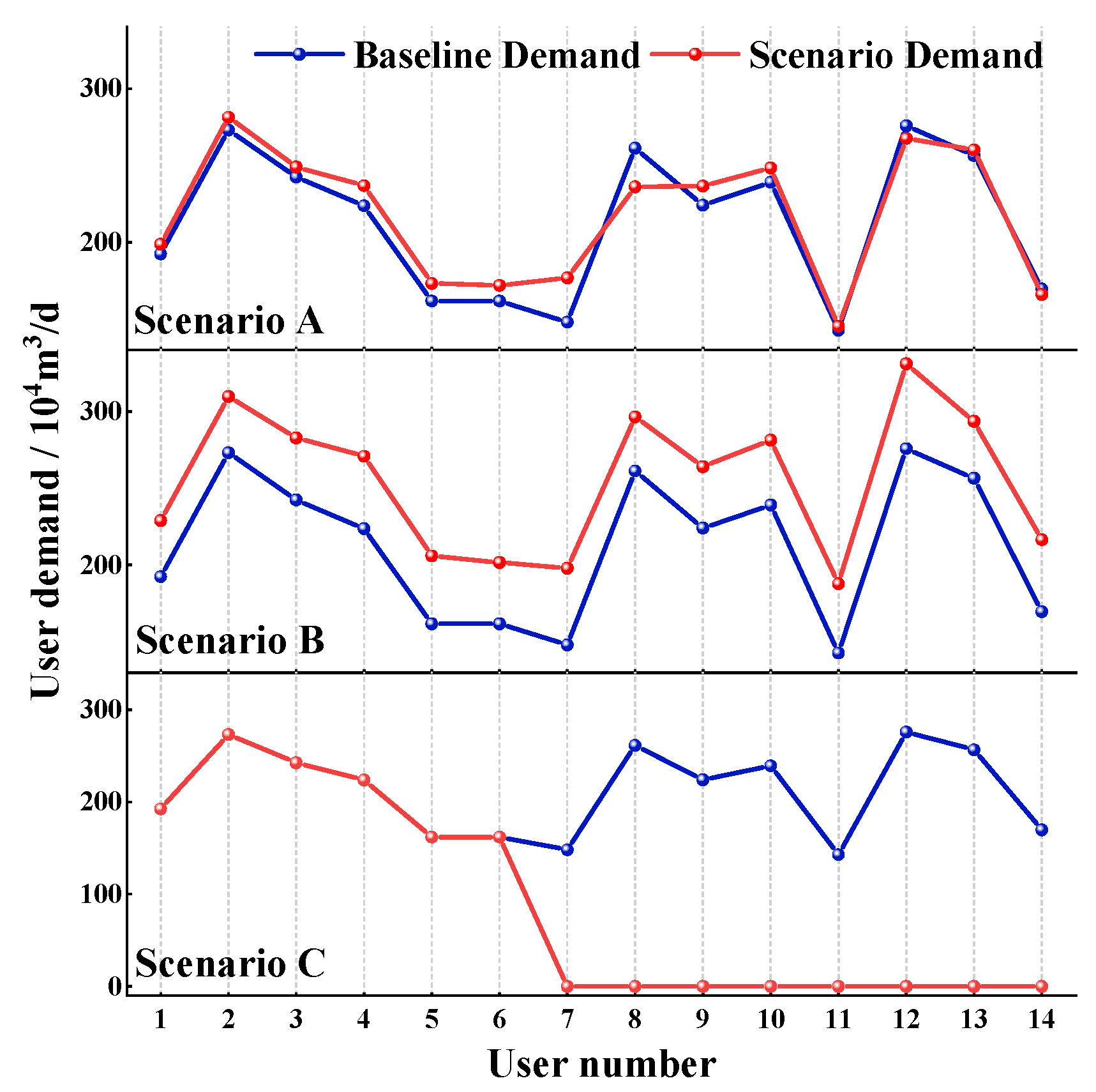
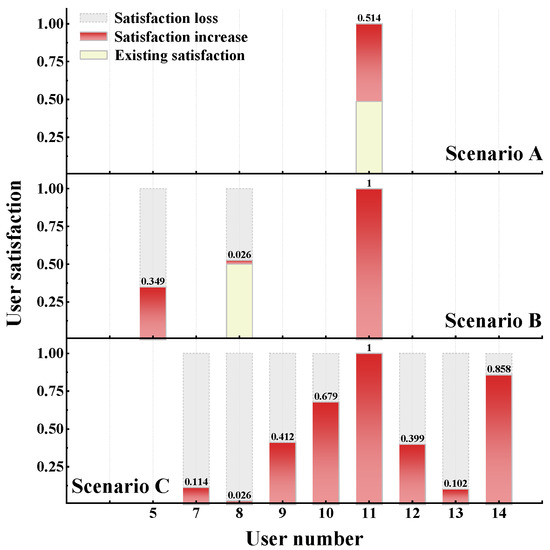
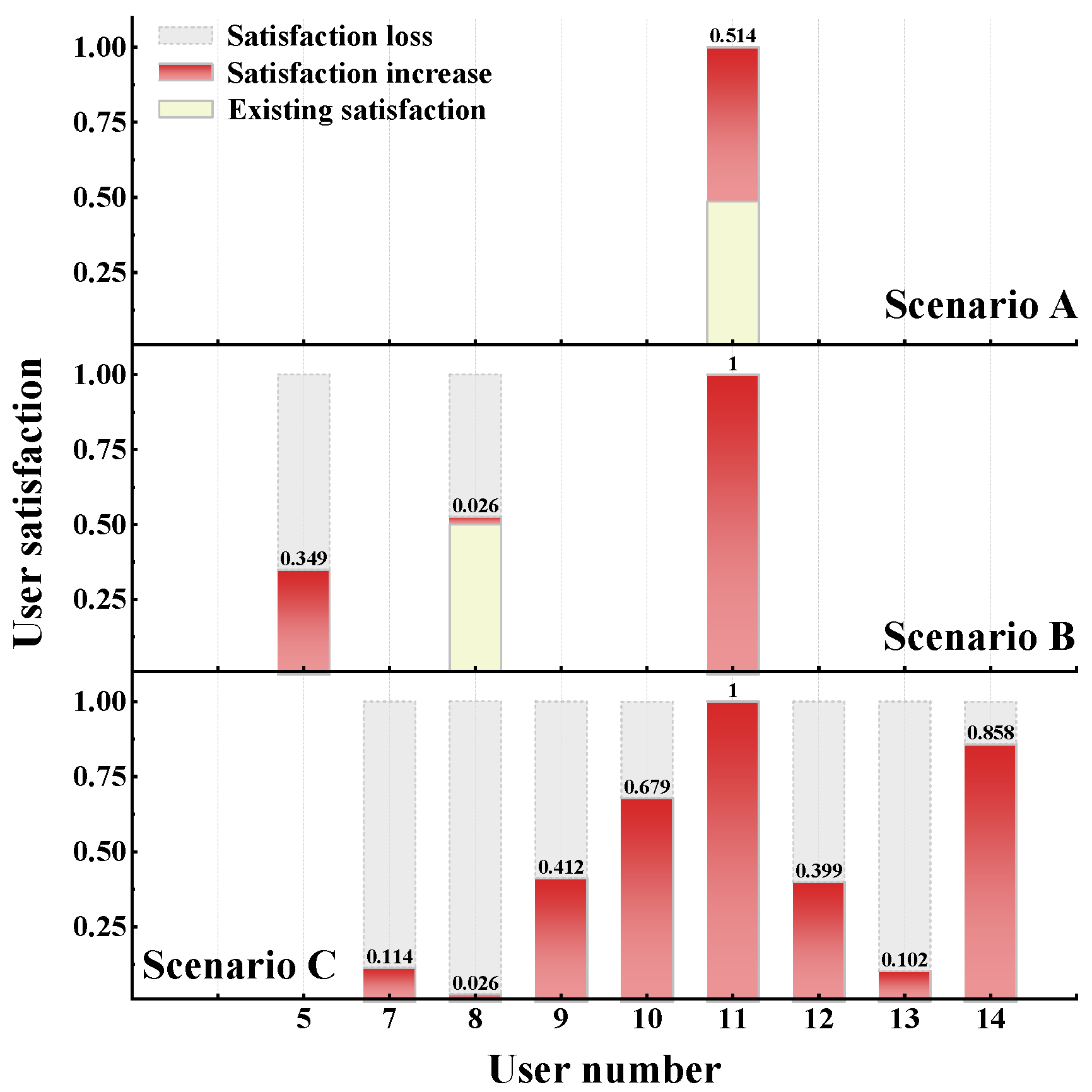
As mentioned previously in Section 3.2, Scenario A simulates a condition where the total demand increases while the gas source supply remains constant, a situation often driven by seasonal variations or price fluctuations. Figure 14 (Scenario A) illustrates the deviation of user demand from normal operations. While most users exhibit demand growth, the fluctuations remain within a moderate range. For instance, the demand for User 7 increases by approximately 25 × 104 m3/d, whereas User 8 shows a corresponding decrease. To address these fluctuations, line pack is prioritized for peak shaving. Figure 15 (Scenario A) compares user satisfaction before and after line pack regulation. Initially, most users maintain near-optimal satisfaction (approx. 100%). However, User 11—located at the extremity of a branch line with lower supply priority—experiences a sharp satisfaction drop of over 50% due to the deficit. Following the redistribution of line pack, the satisfaction of User 11 recovers fully to 1.0 (as shown by the red increment bar). This demonstrates that dynamic line pack allocation effectively enhances supply assurance for terminal users under mild demand fluctuations.
Figure 14.
The changes in user demand.
Figure 15.
The changes in user satisfaction.
Scenario B employs the statistical “3-sigma rule” to define the boundaries of probable events in stochastic simulation, ensuring that approximately 99.73% of demand values fall within the μ ± 3σ range. This approach improves the representativeness of the simulation. Figure 14 (Scenario B) displays the intensified demand variations. Figure 15 (Scenario B) reveals the impact on user satisfaction. Without regulation, Users 5, 8, and 11 suffer noticeable satisfaction losses due to their lower structural importance. After introducing line pack regulation, the stored gas in Pipeline 11 successfully covers the short-term demand surge for downstream users, restoring User 11’s satisfaction to 1.0. Conversely, the line pack associated with Pipelines 5 and 8 is insufficient to meet the increased load; Pipeline 8, in particular, remains severely constrained, resulting in persistent satisfaction loss. This disparity suggests that under stronger disturbances, relying solely on line pack is inadequate. A diversified strategy integrating external resources—such as LNG terminals, underground gas storage, and interruptible loads—is essential to guarantee overall supply assurance.
Scenario C evaluates the system’s emergency response capabilities under facility constraints, complementing the analysis of normal and high-load conditions. Figure 14 (Scenario C) depicts the drastic change in demand availability following a maintenance shutdown of the compressor at Node 6. As Node 6 serves as a critical transmission hub, its failure precipitates a sharp reduction in downstream supply capability (evident where the red curve drops to near zero for users 7–14). Figure 15 (Scenario C) presents the satisfaction outcomes. The results indicate that while line pack can mitigate minor or transient disturbances, its capacity to restore satisfaction under extreme structural failure is limited. For example, while User 11 manages to maintain high satisfaction via local line pack, Users 7, 8, and 13 face deficits far exceeding available storage. Consequently, their satisfaction scores recover only marginally (e.g., User 7 remains at ~0.114). This underscores the limitations of line pack-dependent emergency mechanisms and highlights the critical need for integrating external emergency peak-shaving resources to enhance resilience.
User satisfaction reflects supply assurance only at an aggregate, quantitative level. A time-based view is also needed to assess the peak-shaving value of line pack. Table 4 reports the available line pack time for the pipelines that require regulation in Scenario A. In combination with Figure 15, the results show that upstream line pack for most users is not used to offset demand fluctuations. Because User 5, User 8 and User 11 suffer a large satisfaction loss, the line pack in pipelines is activated. Overall, these results confirm that available line pack volume is a key driver of emergency response capability. Supply planning and risk assessment should therefore prioritize line pack reserves and the corresponding sustainable support time.
Table 4.
The available time of line pack.
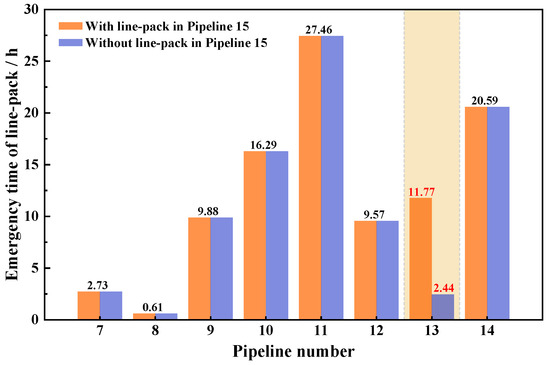
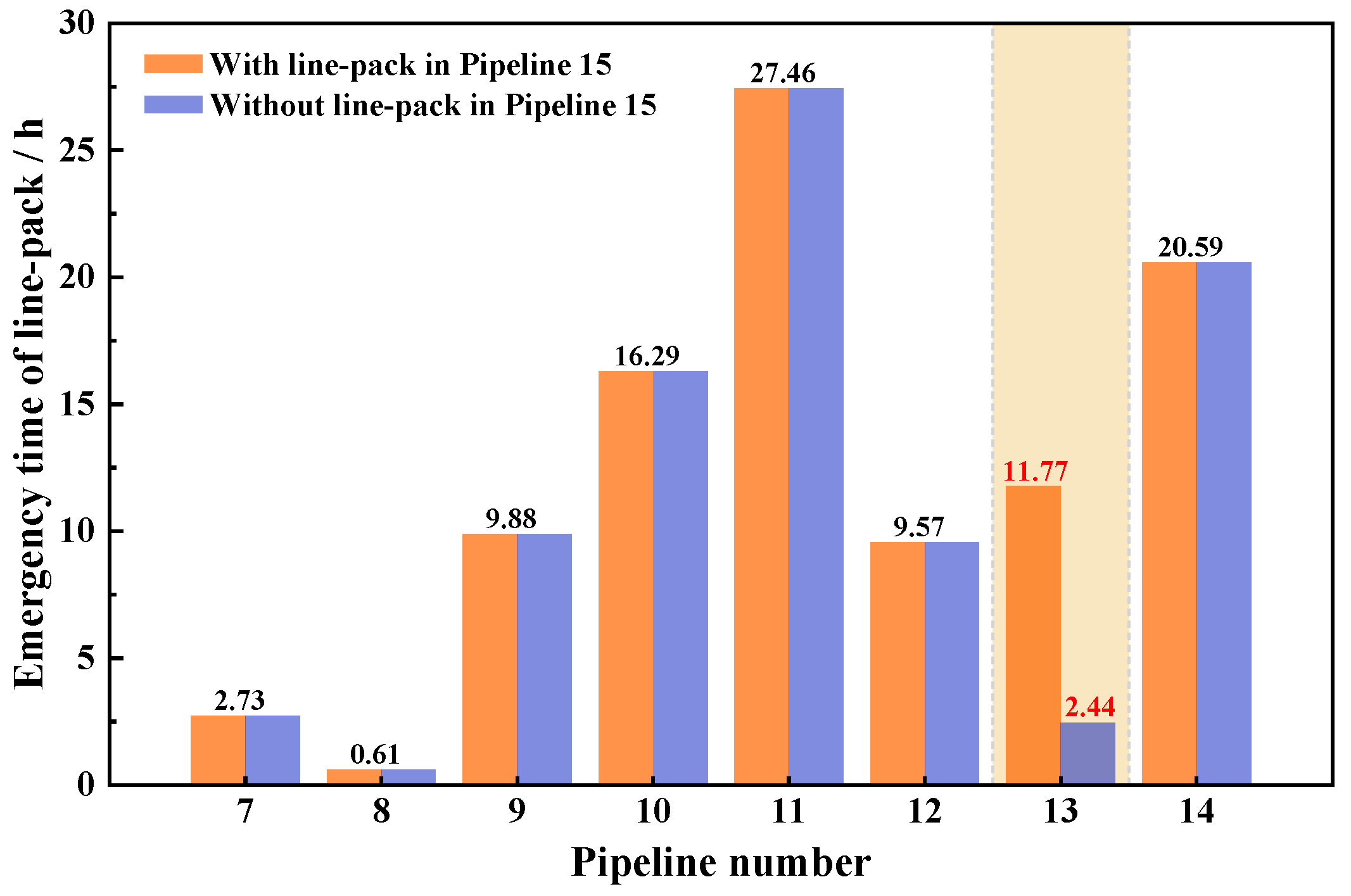
Figure 16 illustrates the impact of different network topologies on the line pack peak-shaving strategy after the shutdown of pipeline 6 caused by compressor maintenance in scenario C. When the line pack gas from pipeline 15 is not considered, User 13 mainly relies on Pipeline 13 for gas, resulting in a relatively singular supply source. After introducing Pipeline 15, the gas supply sources for User 13 are diversified, and the available time of its line pack gas is significantly increased by approximately 4.8 times. Although the available time of line pack gas for User 13 remains limited, this result indicates that the combination of backup supply paths and emergency scheduling can effectively enhance the disturbance resistance of the pipeline network system and its responsiveness to extreme situations.
Figure 16.
The emergency time of line pack (scenario C).
Overall, the proposed evaluation framework quantifies the peak-shaving contribution of line pack and clarifies its effective operating boundary while accounting for structural differences among users and demand uncertainty. In typical demand fluctuations, line pack provides effective short-term flexibility and improves supply assurance. In extreme conditions, line pack alone may not cover all users, especially those far from the source or constrained by limited pipeline storage. In such cases, additional peak-shaving resources should be incorporated. These resources include underground gas storage, LNG receiving terminals, and other flexible supply options. A coordinated strategy can improve system resilience and maintain stable service under severe disturbances.
4. Conclusions
This study addresses the critical challenge of quantifying supply capabilities in natural gas pipeline networks under stochastic demand fluctuations. An integrated “forecasting–evaluation” framework is established, bridging the gap between deep learning-based uncertainty prediction and hydraulic-based supply assurance assessment. The primary contributions and findings are summarized as follows:
- a novel GCN-BiLSTM model with uncertainty quantification has been developed to capture both the topological dependencies and temporal dynamics of user demand. Empirical validation on real-world datasets demonstrates the model’s superiority over classical baselines, achieving a mean absolute percentage error of less than 1% and an R2 exceeding 0.99. Crucially, beyond deterministic accuracy, the model constructs reliable confidence intervals via the Cumulative Distribution Function, providing a probabilistic basis for risk-informed decision-making.
- Moving beyond static storage metrics, this study establishes a dynamic evaluation system centered on the peak-shaving capability of line pack. By defining quantitative indicators—specifically user satisfaction, the line pack demand−storage ratio, and available response time—the framework effectively identifies vulnerable network nodes and quantifies the operational margins under varying uncertainty levels. This probabilistic approach resolves the difficulty of assessing supply reliability when facing data randomness.
- Scenario analysis reveals the critical role and limitations of line pack. Under normal stochastic fluctuations, line pack acts as an effective short-term buffer, maintaining high user satisfaction. However, under extreme scenarios, the analysis identifies clear “capability boundaries” where line pack alone is insufficient, particularly for structurally disadvantaged end-users. These findings suggest a hierarchical scheduling strategy: utilizing line pack for high-frequency, low-amplitude fluctuations, while reserving external resources for low-frequency, high-impact events.
Although the proposed GCN-BiLSTM model demonstrates high accuracy on regional networks, computational scalability remains a challenge when generalizing to large-scale networks with thousands of nodes. The memory consumption for graph processing increases significantly with network size. Additionally, the current evaluation relies on steady-state line pack capacity, which may overestimate supply margins during rapid transient events.
Author Contributions
Conceptualization, J.C. and Y.H.; methodology, J.C. and H.S.; software, J.C. and Y.H.; validation, J.C., Y.H., Q.X. and H.Y.; formal analysis, J.C. and Y.H.; investigation, J.C., Y.H. and Q.X.; resources, H.Y. and W.W.; data curation, P.L. and Z.Z.; writing—original draft preparation, J.C.; writing—review and editing, W.W., Y.H., H.S. and J.Z.; visualization, Z.Y.; supervision, H.S. and J.Z.; project administration, J.Z.; funding acquisition, J.Z. All authors have read and agreed to the published version of the manuscript.
Funding
This research was funded by National Key Research and Development Program of China, grant number 2022YFC2806200. The APC was funded by National Key Research and Development Program of China, grant number 2022YFC2806200.
Data Availability Statement
The data supporting the findings of this study are openly available at https://www.egig.eu/, accessed on 29 January 2026.
Conflicts of Interest
Authors J.C., Q.X., H.Y., W.W. and P.L. was employed by the company CNOOC Research Institute Ltd. Author Y.H. was employed by the company Pipe China Oil and Gas Control Center. The remaining authors declare that the research was conducted in the absence of any commercial or financial relation-ships that could be construed as a potential conflict of interest.
Nomenclature
| x | any real number |
| X | random variable for user demand |
| k | index of a pipeline |
| n | number of prediction samples |
| yi | true value for sample i |
| mean value for yi | |
| i | node i |
| j | node j |
| Qij | volumetric flow rate from node i to node j |
| Si | satisfaction of user i |
| Qsi | actual supplied gas to user i |
| Qdi | demand of user i |
| Vsto,i | line pack of pipeline i |
| ΔQdi | demand increment of user i |
| SLPk | required line pack of pipeline k |
| SLPmaxk | maximum available line pack of pipeline k |
| F(x) | cumulative distribution function value at x |
References
- He, Y.; Xiao, J.; An, X.; Cao, C.; Xiao, J. Short-term power load probability density forecasting based on GLRQ-Stacking ensemble learning method. Int. J. Electr. Power Energy Syst. 2022, 142, 108243. [Google Scholar] [CrossRef] [Scilit]
- Soldo, B. Forecasting natural gas consumption. Appl. Energy 2012, 92, 26–37. [Google Scholar] [CrossRef] [Scilit]
- Szoplik, J. Forecasting of natural gas consumption with artificial neural networks. Energy 2015, 85, 208–220. [Google Scholar] [CrossRef] [Scilit]
- Zhang, W.; Yang, J. Forecasting natural gas consumption in China by Bayesian model averaging. Energy Sci. Res. 2016, 1, 216–220. [Google Scholar] [CrossRef] [Scilit]
- Panapakidis, I.P.; Dagoumas, A.S. Day-ahead natural gas demand forecasting based on the combination of wavelet transform and ANFIS/genetic algorithm/neural network model. Energy 2017, 118, 231–245. [Google Scholar] [CrossRef] [Scilit]
- Wang, P.; Gurmani, S.H.; Tao, Z.; Liu, J.; Chen, H. Interval time series forecasting: A systematic literature review. J. Forecast. 2024, 43, 249–285. [Google Scholar] [CrossRef] [Scilit]
- Hong, T.; Pinson, P.; Wang, Y.; Weron, R.; Yang, D.; Zareipour, H. Energy forecasting: A review and outlook. IEEE Open Access J. Power Energy 2020, 7, 376–388. [Google Scholar] [CrossRef] [Scilit]
- Liu, Z.; Zhu, Z.; Gao, J.; Xu, C. Forecast methods for time series data: A survey. IEEE Access 2021, 9, 91896–91912. [Google Scholar] [CrossRef] [Scilit]
- Guo, Z.; Zhou, K.; Zhang, X.; Yang, S. A deep learning model for short-term power load and probability density forecasting. Energy 2018, 160, 1186–1200. [Google Scholar] [CrossRef] [Scilit]
- Ding, L.; Zhao, Z.; Wang, L. Probability density forecasts for natural gas demand in China: Do mixed-frequency dynamic factors matter? Appl. Energy 2022, 312, 118756. [Google Scholar] [CrossRef] [Scilit]
- Li, Y.; Yu, R.; Shahabi, C.; Liu, Y. Diffusion convolutional recurrent neural network: Data-driven traffic forecasting. In Proceedings of the 6th International Conference on Learning Representations 2017, Toulon, France, 24–26 April 2017. [Google Scholar]
- Qian, L.; Bai, Y.; Wang, W.; Meng, F.; Chen, Z. Natural gas crisis, system resilience and emergency responses: A China case. Energy 2023, 276, 127500. [Google Scholar] [CrossRef] [Scilit]
- Zeniewski, P.; Bolado-Lavin, R. A review of national gas emergency plans in the European Union. Energy Policy 2012, 49, 652–662. [Google Scholar] [CrossRef] [Scilit]
- Lu, W.; Su, M.; Fath, B.D.; Zhang, M.; Hao, Y. A systematic method of evaluation of the Chinese natural gas supply security. Appl. Energy 2016, 165, 858–867. [Google Scholar] [CrossRef] [Scilit]
- Biresselioglu, M.E.; Yelkenci, T.; Oz, I.O. Investigating the natural gas supply security: A new perspective. Energy 2015, 80, 168–176. [Google Scholar] [CrossRef] [Scilit]
- Monforti, F.; Szikszai, A. A MonteCarlo approach for assessing the adequacy of the European gas transmission system under supply crisis conditions. Energy Policy 2010, 38, 2486–2498. [Google Scholar] [CrossRef] [Scilit]
- Holz, F.; Von Hirschhausen, C.; Kemfert, C. A strategic model of European gas supply (GASMOD). Energy Econ. 2008, 30, 766–788. [Google Scholar] [CrossRef] [Scilit]
- Lise, W.; Hobbs, B.F.; Van Oostvoorn, F. Natural gas corridors between the EU and its main suppliers: Simulation results with the dynamic GASTALE model. Energy Policy 2008, 36, 1890–1906. [Google Scholar] [CrossRef] [Scilit]
- Yang, Y.; Li, S.; Li, W.; Qu, M. Power load probability density forecasting using Gaussian process quantile regression. Appl. Energy 2018, 213, 499–509. [Google Scholar] [CrossRef] [Scilit]
- Guo, G.; Liu, S.; Wu, Y.; Li, J.; Zhou, R.; Zhu, X. Short-term water demand forecast based on deep learning method. J. Water Resour. Plan. Manag. 2018, 144, 4018076. [Google Scholar] [CrossRef] [Scilit]
- Pambour, K.A.; Bolado-Lavin, R.; Dijkema, G.P.J. An integrated transient model for simulating the operation of natural gas transport systems. J. Nat. Gas Sci. Eng. 2016, 28, 672–690. [Google Scholar] [CrossRef] [Scilit]
- Mi, J.; Khodayar, M.E. Operation of natural gas and electricity networks with line pack. J. Mod. Power Syst. Clean Energy 2019, 7, 1056–1070. [Google Scholar] [CrossRef] [Scilit]
- Quan, H.; Srinivasan, D.; Khosravi, A. Uncertainty handling using neural network-based prediction intervals for electrical load forecasting. Energy 2014, 73, 916–925. [Google Scholar] [CrossRef] [Scilit]
- He, Y.; Li, H. Probability density forecasting of wind power using quantile regression neural network and kernel density estimation. Energy Convers. Manag. 2018, 164, 374–384. [Google Scholar] [CrossRef] [Scilit]
- Fischer, A.; Gaunt, R.E.; Sarantsev, A. The variance-gamma distribution: A review. Stat. Sci. 2025, 40, 235–258. [Google Scholar] [CrossRef] [Scilit]
- Jailani, N.L.M.; Dhanasegaran, J.K.; Alkawsi, G.; Alkahtani, A.A.; Phing, C.C.; Baashar, Y.; Capretz, L.F.; Al-Shetwi, A.Q.; Tiong, S.K. Investigating the power of LSTM-based models in solar energy forecasting. Processes 2023, 11, 1382. [Google Scholar] [CrossRef] [Scilit]
- Gal, Y.; Ghahramani, Z. Dropout as a bayesian approximation: Representing model uncertainty in deep learning. In Proceedings of the International Conference on Machine Learning PMLR, New York, NY, USA, 20–22 June 2016; pp. 1050–1059. [Google Scholar]
- Jiang, W. Graph-based deep learning for communication networks: A survey. Comput. Commun. 2022, 185, 40–54. [Google Scholar] [CrossRef] [Scilit]
- Patel, A.C.; Sinha, S.; Palermo, G. Graph theory approaches for molecular dynamics simulations. Q. Rev. Biophys. 2024, 57, e15. [Google Scholar] [CrossRef] [Scilit] [PubMed]
- Said, B.; Lathamaheswari, M.; Singh, P.K.; Ouallane, A.A.; Bakhouyi, A.; Bakali, A.; Talea, M.; Dhital, A.; Deivanayagampillai, N. An intelligent traffic control system using neutrosophic sets, rough sets, graph theory, fuzzy sets and its extended approach: A literature review. Neutrosophic Sets Syst. 2022, 50, 2. [Google Scholar]
- Yang, Z.; Xiang, Q.; He, Y.; Peng, S.; Faber, M.H.; Zio, E.; Zuo, L.; Su, H.; Zhang, J. Resilience of natural gas pipeline system: A review and outlook. Energies 2023, 16, 6237. [Google Scholar] [CrossRef] [Scilit]

Disclaimer/Publisher’s Note: The statements, opinions and data contained in all publications are solely those of the individual author(s) and contributor(s) and not of MDPI and/or the editor(s). MDPI and/or the editor(s) disclaim responsibility for any injury to people or property resulting from any ideas, methods, instructions or products referred to in the content. |
© 2026 by the authors. Licensee MDPI, Basel, Switzerland. This article is an open access article distributed under the terms and conditions of the Creative Commons Attribution (CC BY) license.