1. Introduction
In recent years, the urgency to transition toward a carbon-neutral economy has become a cornerstone of European policy. In response to the dual challenges of achieving climate neutrality and ensuring energy security, European countries are diversifying their energy mix. While renewables remain central to this transition, nuclear energy is being reconsidered for its ability to provide stable, low-carbon electricity. Small and micro modular reactors (SMRs and MMRs) are being explored as a promising alternative to conventional large-scale nuclear power plants, offering advantages in flexibility, safety and installation speed [
1,
2].
The Czech Republic is actively investing in SMRs, both through the deployment of existing designs and the development of innovative concepts [
3]. Among them, within a consortium led by Centrum výzkumu Řež (CVŘ), a new concept of MMR cooled by molten salt is under development. Energy Well (EW) is a Fluoride Salt-Cooled High-Temperature MMR concept of 20 MW(t) [
4], designed for decentralized energy production, with a strong emphasis on safety, efficiency and sustainability [
5,
6].
Molten salt reactors belong to the Generation IV class of nuclear reactor designs under development. They are intended to operate at high temperatures (up to 700–750 °C), with the fissile material dissolved in a molten salt mixture, which increases efficiency. They offer several attractive features, such as high thermal stability and boiling point, strong irradiation resistance, the possibility of reusing fuel containing actinides, low operational pressure and many others, all contributing to significant safety and cost advantages [
7,
8].
A relevant class of salt-based reactors is represented by Fluoride Salt-Cooled High-Temperature Reactors. Unlike classic molten salt reactors, they mostly employ solid TRISO (Tri-Structural Isotopic) as fuel while using low-pressure fluoride salts as primary coolants. TRISO fuel particles consist of microscopic uranium-bearing kernels encapsulated in three carbon- and ceramic-based coating layers. These very small and highly robust particles act as a containment system themselves, providing exceptional retention of fission products and resistance to irradiation. This hybrid approach combines the high-temperature performance typical of molten-salt technology with the robust fuel integrity and passive safety characteristics of TRISO fuel [
9,
10].
To this group belongs the EW design, which uses molten salt FLiBe as both its primary and secondary coolant, while the tertiary circuit employs a supercritical CO
2 (sCO
2) loop to enhance efficiency. These innovations make EW suitable for applications such as remote industrial or district heating, hydrogen production and electricity generation [
4].
One of the key steps toward realizing the Energy Well project is the experimental evaluation of its thermohydraulic properties, focusing on the fuel behavior and the heat transfer between FLiBe and supercritical CO
2. This evaluation is crucial for the design and optimization of components such as the reactor vessel and the heat exchangers. To this end, a specialized experimental loop was developed to simulate EW operational conditions, designed and built under the Czech national project Energy Well (TAČR project number TK02030125) [
11]. One of its main tasks is also to provide data for simulating EW flow regimes, particularly fuel and heat exchange, in order to assess the capabilities of computational codes [
6].
This paper focuses on the development of a model of the experimental loop and its assessment, using the system code TRACE (TRAC/RELAP Advanced Computational Engine). The model includes the main components of the loop, for some of which new methodologies were developed. The accuracy and reliability of the model were then evaluated by comparing simulation results with the experimental data obtained during the commissioning phase in October 2024, providing valuable insights for the further development of Energy Well.
3. Models and Methodology
The main components of the experimental facility are as follows:
Main heater;
Heat exchanger;
Process vessel;
Filling vessel;
Pump;
Bypass valve;
Pipelines.
Thermocouples are placed at key points along the loop for temperature monitoring.
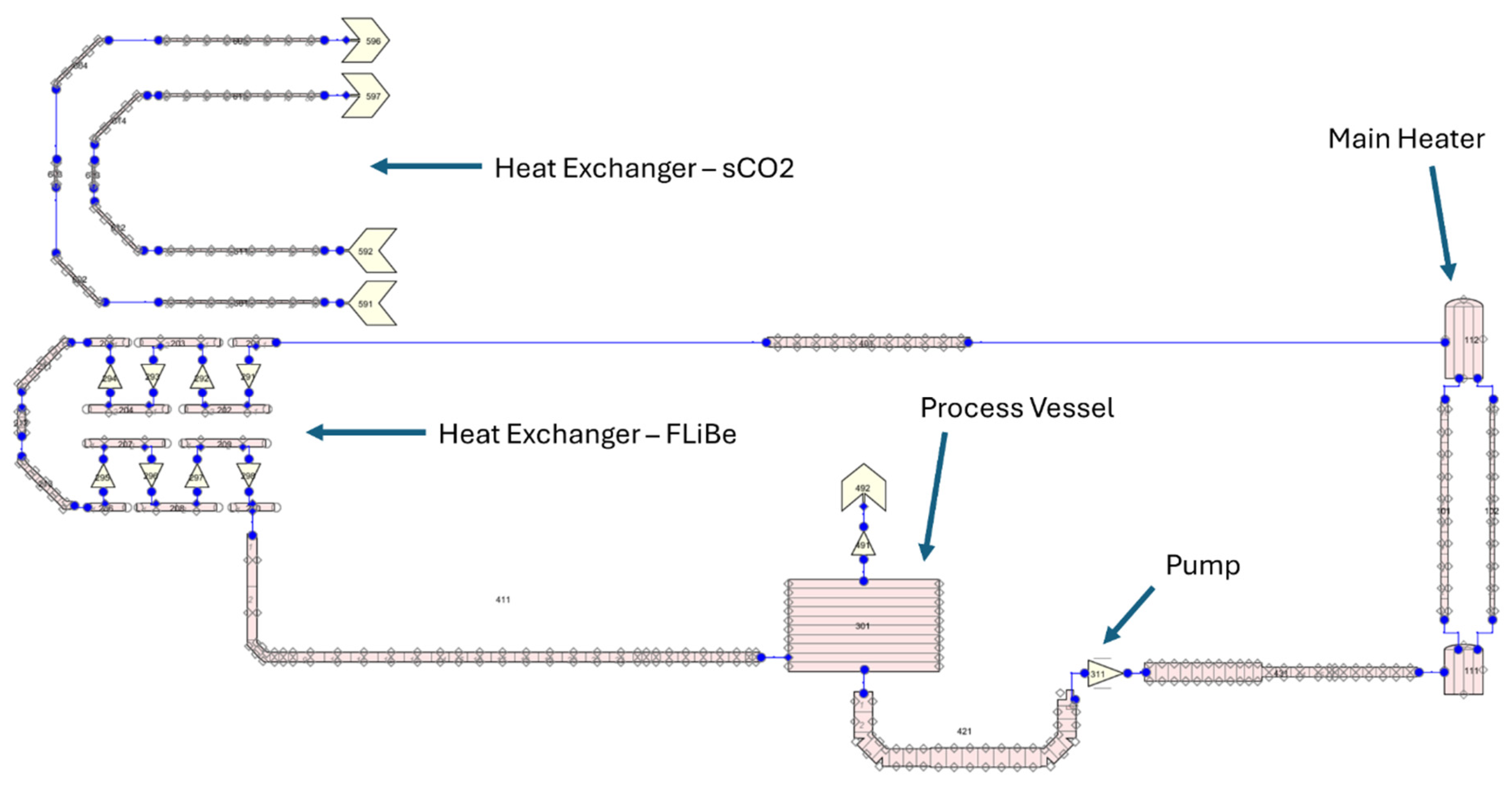
Regarding the TRACE model, whose final version is shown in
Figure 1, not all the main components are included. The filling vessel and the bypass section of the loop are not modeled, for reasons described in the following paragraphs.
All pipelines are modeled with PIPE components, with an average diameter of around 21 mm, aiming to represent them as accurately as possible given the lack of three-dimensional modeling. Each PIPE component is associated with an HTSTR component to represent the solid wall, mainly composed of INCONEL 625 and insulation layers. Most components are made of INCONEL 625, except for the graphite block of the main heater. All of these components are covered with two layers of insulation: a 100 mm Fiberfrax Durablanket layer and an 80 mm Isover LSP layer. None of these materials is included in the TRACE database, so they were introduced as “User Defined Materials”.
It is also important to describe the loop environment’s external conditions, which are used as boundary conditions wherever a heat structure interfaces with the surroundings:
3.1. Main Heater
The main heater heats up the system through the Joule effect, simulating a segment of EW fuel. It is divided into three sections, inlet zone, core and outlet zone, all enclosed in a thin INCONEL 625 shell.
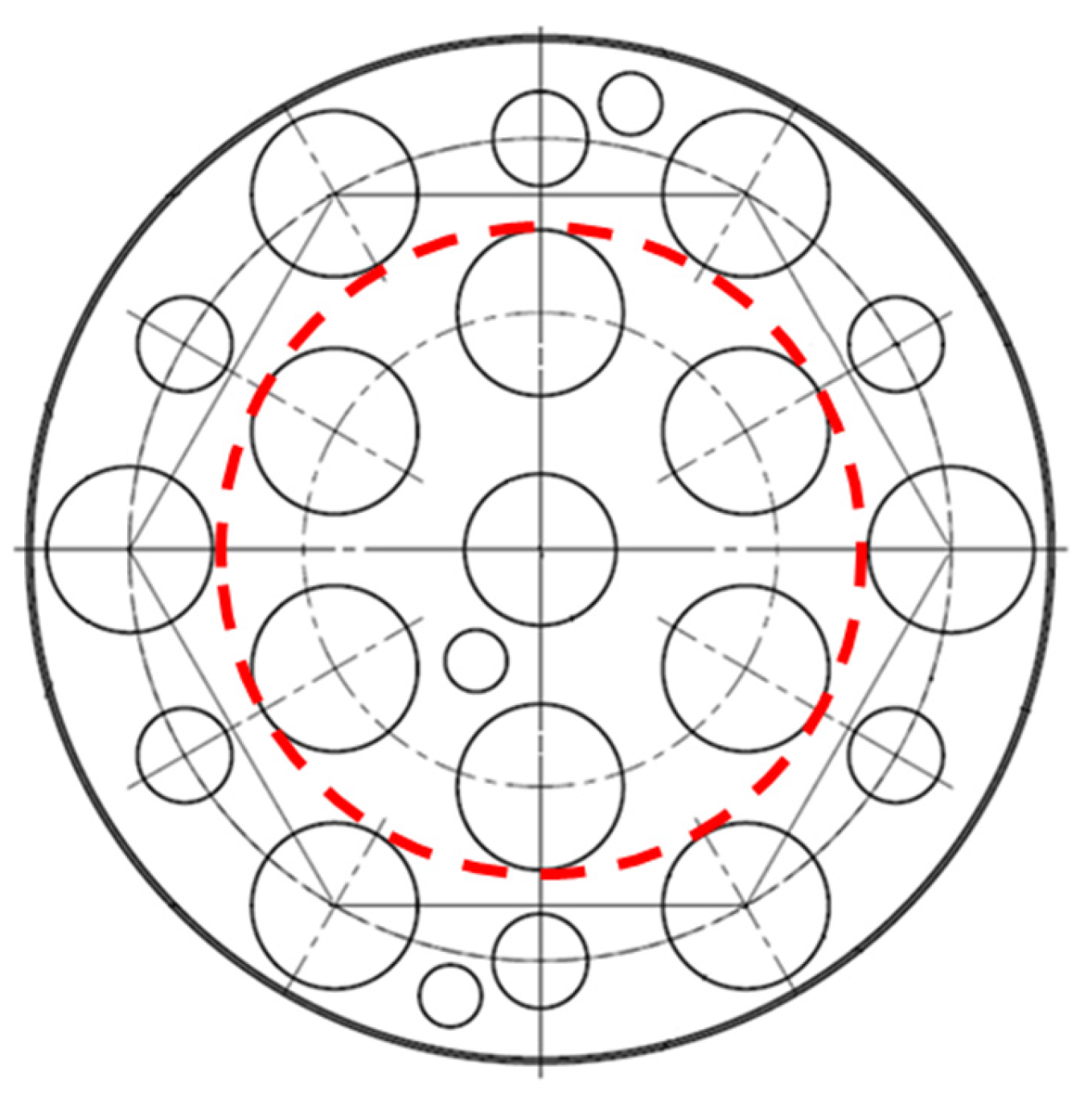
The core, 500 mm long, consists of five graphite blocks. Its cross-section, shown in
Figure 2, has a diameter of around 108 mm and contains several channels of different sizes and purposes:
A central channel through which FLiBe flows (d = 16 mm);
A small channel designated for thermocouple placement (d ≃ 7 mm);
Six channels, called heating rods, each containing a central graphite rod, surrounded by a layer of INCONEL 625, with the electrical heaters located inside the graphite (d ≃ 18 mm);
Twelve channels: Six larger channels identical in size and purpose to the heating rods described above, and six smaller channels (d = 10 mm) through which the FLiBe flows;
Two additional small channels for thermocouples.
Due to its complex cross-section, the modeling of the main heater required us to adapt a specific methodology previously developed [
14]. This methodology is based on the principle of volume conservation to represent an equivalent section that can be easily modeled in the code.
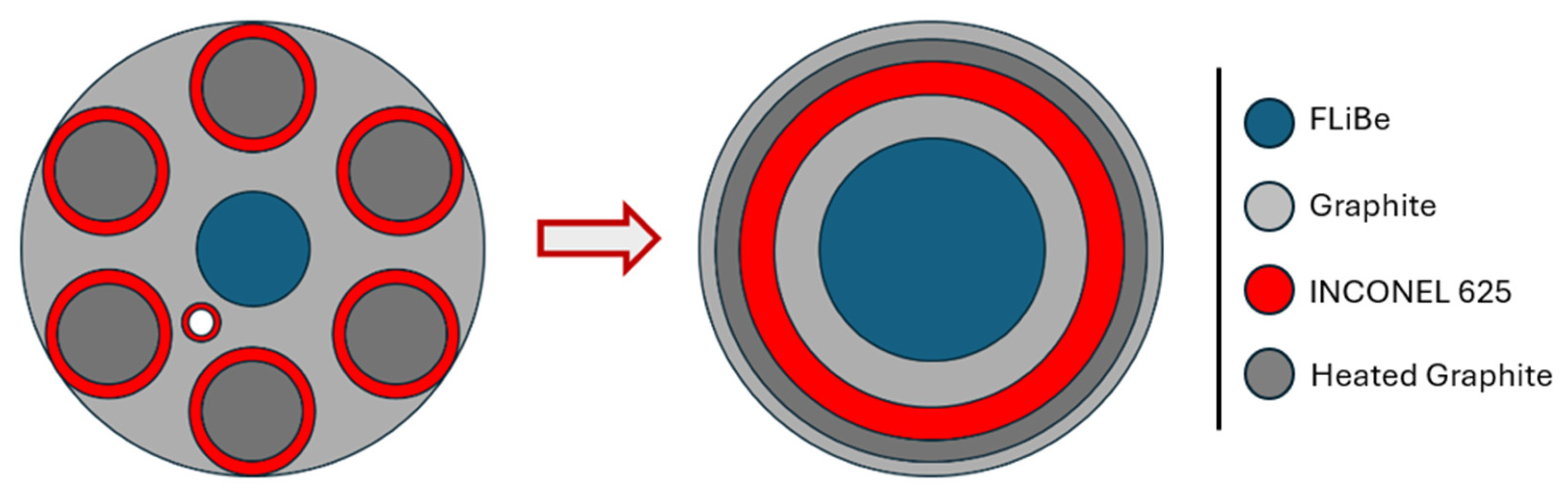
The core is divided into two parts, as shown in
Figure 2, each represented by a PIPE component. The central circle has a diameter of around 67 mm and includes the central FLiBe channel, six heating rods and one thermocouple channel. The development of the equivalent cross-section begins with the central FLiBe channel, which retains its original dimensions. The first layer surrounding the fluid is made of graphite, encompassing all graphite within a circle passing through the centers of the heating rods. Next, there are two layers representing the material of the heating rods: an INCONEL 625 layer, including the thermocouple channel, and a layer for the heated graphite. Finally, an outer graphite layer represents the remaining matrix material. The result is shown in
Figure 3.
In TRACE, this setup is represented by a vertical PIPE component for the FLiBe, coupled with a cylindrical HTSTR component representing all the solid material. The thicknesses of the equivalent section layers are calculated using Equation (1):
where
sn is the calculated thickness of the layer;
AFLiBe is the cross-sectional area occupied by FLiBe;
is the sum of the areas occupied by all materials within the calculated layer, excluding FLiBe;
rFLiBe is the radius of the FLiBe channel;
is the sum of the thicknesses of the material layers within the calculated layer, excluding the thickness of the layer calculated and the radius of the FLiBe channel.
This HTSTR component exchanges heat only internally with the FLiBe. No external boundary condition is applied.
For the second part of the cross-section, the outer ring, the same procedure is applied. Only 1/6 of the ring is simulated, and the HTSTR component includes 1/6 of the solid material, with a multiplicity factor of 6. Three additional layers are added: an INCONEL 625 layer accounting for the main heater shell, and two insulation layers. This HTSTR component transfers heat externally to the environment.
Lastly, the power generation must be modeled. To achieve this, the POWER component is used, allowing a power input value to be distributed within the assigned HTSTR component. As the input power is evenly distributed across the 12 heating rods, two POWER components are used, each assigned half of the total power, applied to the graphite layers associated with the heating rods.
The inlet zone is 102 mm long and serves as a coolant flow distributor, while in the outlet zone, 164 mm long, the flow mixes before entering the heat exchanger. In these regions, the flow is disrupted by structural elements and instrumentation.
The inlet zone is best represented by a VESSEL component, which allows for flow distribution by defining specific flow areas. It consists of one axial level and azimuthal sector, and two radial rings used to distribute the flow between the two core PIPE components. Following the same approach used for the core section, a HTSTR component is assigned to it.
The outlet zone is modeled in the same way.
3.2. Heat Exchanger
The heat exchanger is a “shell-and-tube” type with a horizontal U-shape, in which the sCO
2 flows inside the tubes while the FLiBe flows externally. The FLiBe enters from the top and exits from the bottom, flowing through free volume and encountering baffles. These obstacles, arranged in groups of four within the straight section, enhance heat transfer. On the other hand, the sCO
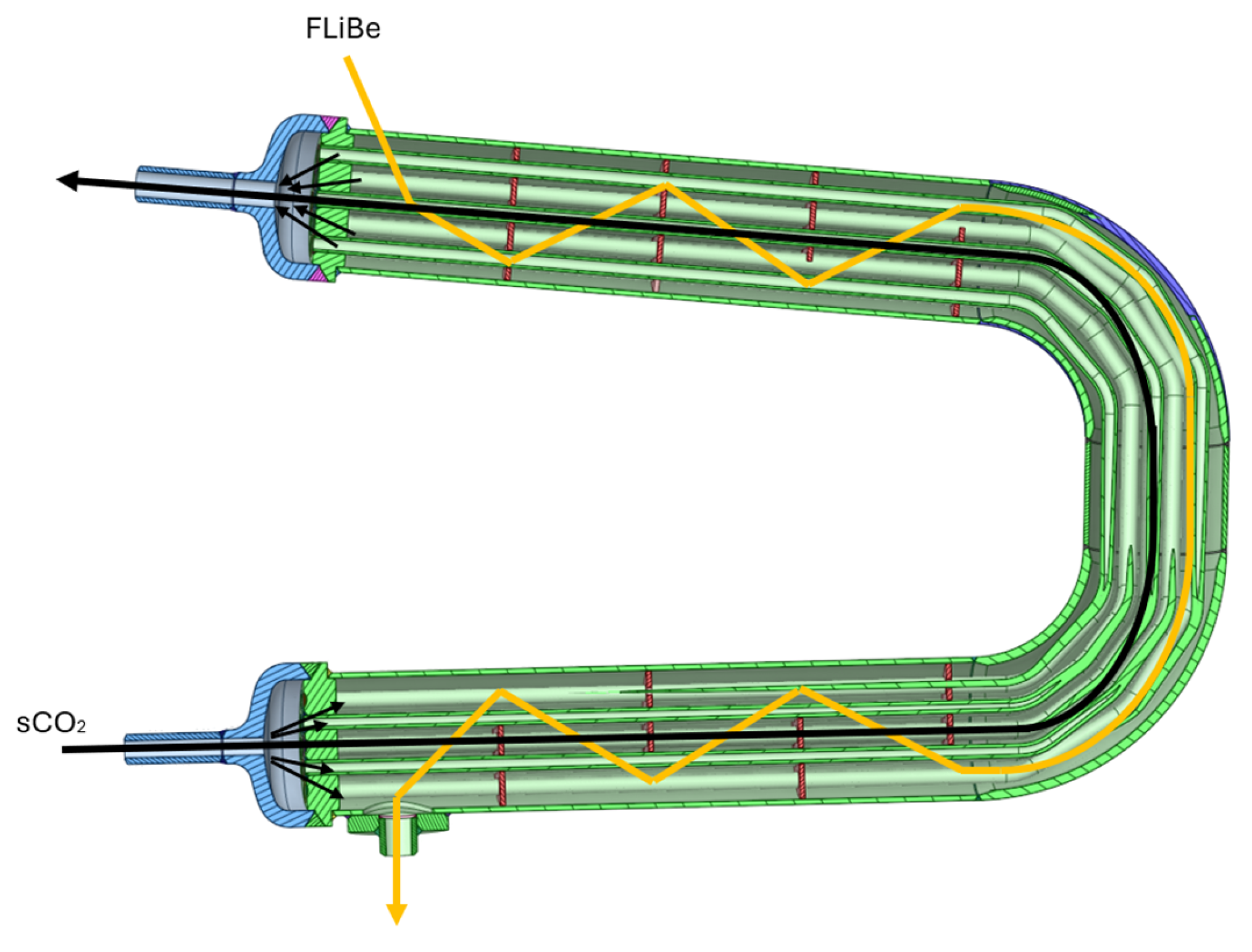
2 flows almost undisrupted inside 19 small tubes, moving from the bottom to the top, allowing for counterflow operation. A CAD drawing of a section of the heat exchanger is shown in
Figure 4: the yellow and black lines represent, respectively, the approximate path of FLiBe and sCO
2, while the red lines represent the baffles.
The heat exchanger, enclosed in a thin INCONEL 625 shell, has a diameter of around 83 mm, while the sCO2 tube’s diameter is 7 mm. The total length is about 1150 mm.
This geometry cannot be directly represented in TRACE, primarily due to the internal tubes and the FLiBe pathway, which includes obstacles. Therefore, a new modeling methodology was developed, incorporating several simplifications necessitated by the lack of 3D modeling capabilities in TRACE.
The heat exchanger model is divided into two parts: the FLiBe side, connected to the loop, and the supercritical CO
2 side, which remains hydraulically disconnected from the rest of the loop, as shown in
Figure 1.
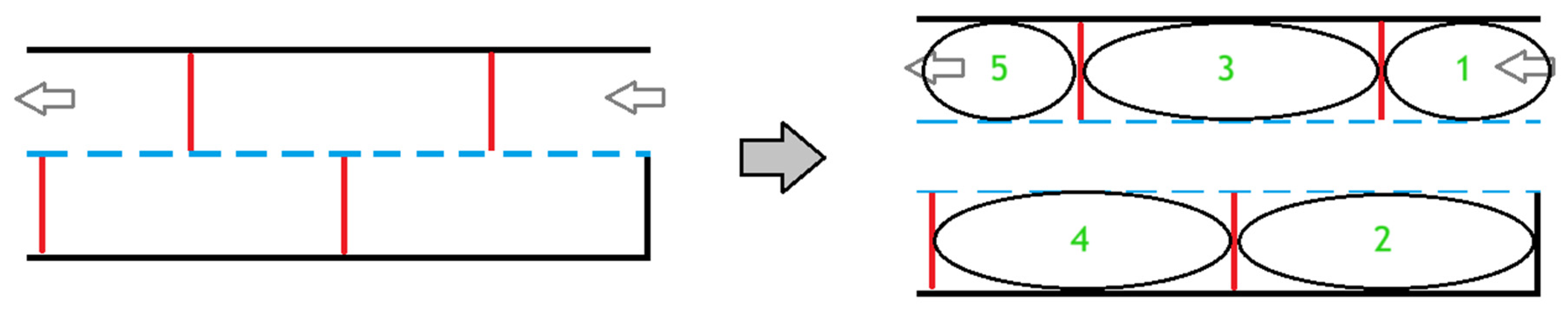
On the FLiBe side, the goal was to simulate the serpentine motion caused by the baffles, as well as the directional changes imposed by the U-shaped structure. Consequently, it is divided into two parts: the straight sections, which contain baffles, and the central section, which is mostly curved and baffle-free.
In the model, the straight sections consist of multiple PIPE components connected in such a way as to reproduce the serpentine flow motion. As shown in
Figure 5, this approach involves horizontally dividing the section in half, so that each half includes two baffles. Then, for each space between two baffles, or between the section inlet/outlet and a baffle, a PIPE component is defined. The dimensions of the PIPE components are equal to the volume occupied by FLiBe in that section. The connection between the upper and lower halves is made laterally by pairing cells, where each cell in the upper half connects to its corresponding cell in the lower half using single-junction components.
In the central, curved section, the salt flow aligns with the shape of the heat exchanger. Three PIPE components are defined for this section, simulating the change in flow direction.
Each PIPE component is coupled with an HTSTR component, representing the shell and insulation layers of the heat exchanger. These components exchange heat internally with the FLiBe and externally with the surrounding environment.
The supercritical CO
2 circuit was not entirely modeled in TRACE. Only the part inside the heat exchanger is represented, as shown in
Figure 1. In the model, the 19 internal tubes are simulated in two independent PIPE components. A FILL and a BREAK component are modeled for each of these PIPE components to simulate inlet and outlet. HTSTR components are assigned to each PIPE component, with a thickness equal to a single tube. These HTSTR components allow for heat transfer between the FLiBe and the sCO
2 sides. The two sCO
2 PIPE components are coupled to the internal and external FLiBe side by specific HTSTR component settings.
Following the commissioning of the experimental loop and the first simulations, a defect in the heat exchanger was identified. Given its configuration, not all the available volume fills with FLiBe. A portion of it remains occupied by nitrogen, which fills the whole loop during non-operational phases. To represent the effect of reduced heat-transfer efficiency, a thin layer of nitrogen is added within the INCONEL 625 in the HTSRT component, achieving the same thermal exchange as observed in the experimental loop.
Regarding the fluid, nitrogen was selected as a substitute for sCO
2 because it most closely matches its thermophysical properties among the built-in TRACE fluids. Additionally, since the focus is on the FLiBe side, we decided to modify the pressure in the secondary circuit to further align the properties of nitrogen with those of sCO
2. As shown in
Table 1, the optimal pressure value is 25 MPa, which replaces the operational pressure of the sCO
2 side. Engineering Equation Solver (EES) V9.994-3D [
15] software was used to calculate carbon dioxide and nitrogen properties, using as reference temperature the average temperature along the sCO
2 tubes. This approach is acceptable because the computational domain on the sCO
2 side is very small, leading to only minor variations in thermophysical properties within the domain. Moreover, the heat exchanger considered in the model operates on the sCO
2 side far from the critical point, where changes in thermodynamic properties are no longer abrupt or pronounced.
In theory, it would be possible to add a fluid, like carbon dioxide, via an External Property Table (XPTB), following the procedure detailed in [
16]. However, at the time of the study, an unknown error consistently occurred when attempting to generate the table, thus requiring the use of surrogate fluid.
3.3. Process Vessel
The process vessel serves as an expansion volume and a storage tank during the normal operation of the loop. It collects the fluid coming from the heat exchanger and the bypass section, while directing it to the pump. The FLiBe occupies around 40% of the volume available, while the rest is filled with nitrogen gas, which prevents corrosion and protects pressure sensors. It has a height of 200 mm and an internal diameter of 344 mm.
In TRACE, this component is modeled simply as a vertical PIPE component with the dimensions of the process vessel. Furthermore, the non-condensable gas option must be enabled so that N2 is represented in the upper cells of the PIPE component. HTSTR components are assigned to the vessel, exchanging heat with the fluids internally and with the environment externally.
A BREAK component is also connected to the top of the process vessel, imposing the pressure boundary condition for the loop.
The process vessel inlet is placed at the bottom instead of at the top, where it should be located. With the inlet at the top, the software simulates FLiBe falling downward, passing through multiple control volumes occupied by nitrogen. This causes substantial computational issues, because TRACE is not optimized for this type of configuration, particularly when molten salt is used as the primary fluid. Placing the inlet close to the bottom allows the incoming FLiBe to flow directly into the FLiBe zone, thereby streamlining the simulation without affecting the results of primary interest.
In addition to the process vessel, the facility also includes a filling vessel. However, this component is not part of the model. Serving as a collection tank during non-operational phases, its presence in the model would be unnecessary, since the simulations exclude startup and transient conditions. For the same reason the process vessel internal heating is not modeled either.
3.4. Pump
The hydrodynamic pump, designed and built by CVŘ, circulates FLiBe through the loop. Although the pump is physically small, it remains “oversized” compared to the actual flow requirements of the loop. Due to this, 90% of the flow is redirected via a bypass valve to the process vessel. Unfortunately, essential input data for the TRACE model, such as curves linking torque and power to rotational speed, are unavailable. For this reason, a highly simplified pump model has been adopted, serving as a boundary condition that imposes a constant flow rate. As a result, the bypass section, including pipes and valve, is not modeled.
3.5. Pressure Losses
The resistance to flow across various piping components, such as fittings, valves and connections, significantly contributes to the pressure drop within the overall piping system. Since a universally standardized methodology does not exist for calculating pressure losses, this section briefly examines the methodology employed to calculate the friction factor (k) for localized head losses along the loop, an essential input for TRACE when determining total pressure losses [
17].
Regarding the localized head losses related to changes in cross-section, the Hooper Method [
18] was selected, as it accounts for a wide range of Reynolds numbers. Equations for loss coefficients vary based on the contraction/enlargement angle (ϑ) and Reynolds number, as well as being a function of the diameter ratio and Darcy factor. For abrupt sectional changes (ϑ = 180°), simplified equations are used.
For head losses associated with changes in flow direction, the Darby Method [
19] was applied. This method, commonly used for sharp bends or tees, accounts for fitting dimensions and types and provides reliable results even in laminar flow conditions. The friction factor is determined using a specific formula with tabulated constants for different components.
Lastly, for complex geometries such as the heat exchanger or main heater, where the above correlations cannot be directly applied, predefined k-factors are assigned:
These values are also used to simulate the flow disruption in the main heater’s inlet and outlet zones.
The applied correlations are consistent with the theory of thermohydraulic similarity and are valid within the appropriate range of Reynolds and Prandtl numbers. However, it is important to mention that these correlations are water-based and therefore may not perfectly represent the FLiBe behavior. They are also generally more accurate for turbulent or high-speed flows. The calculation of head losses for laminar flow is more complex, and this may lead to increased uncertainty in the results.
4. Experimental Campaign
During 2024, the EW experimental facility (including the loop) was used to perform two experimental campaigns [
20]. The main objectives of these campaigns were to assess the operational regimes, including the heat transfer from the FLiBe to sCO
2; to characterize individual component performance; and to generate high-quality data for model validation and system design.
The first campaign, led in March 2024, served as a commissioning phase. It focused on assessing the key components, such as the FLiBe pump, electrical heaters and control system, as well as on developing reliable start-up and shut-down procedures.
Then, in October 2024, the second campaign was performed. The objectives were to demonstrate facility capability to be started and operated repeatedly for extended periods, to investigate the coupled behavior of the FLiBe and sCO2 circuits, and to obtain steady-state data for model assessment.
The second commissioning of the loop started with preheating the entire facility to the target temperature. This procedure lasted about two days, in which the maximum temperature gradient was maintained at 50 K/h to avoid thermal stress. During this period, several stepwise holds at intermediate temperatures were made to ensure safe melting and homogenization of the salt in order to prevent the deterioration of the components’ performances.
Once the system temperature exceeded the salt melting point (732 K), the pump was tested for free rotation and then started. The molten salt was displaced from the filling vessel into the circuit using pressurized nitrogen, while the stability of the mass flow was monitored indirectly via pressure signals and pump discharge conditions. When stable flow conditions were reached, the sCO2 loop was activated and synchronized with the FLiBe loop, enabling heat transfer across the heat exchanger.
During the operation, several boundary conditions were periodically modified to assess the system’s response. On the FLiBe side, the pump’s rotational speed, the electrical heaters’ power and the pipe’s heating levels were varied. On the sCO2 side, both the mass flow rate and the inlet temperature at the heat exchanger were modified.
Also, tests were performed both with auxiliary pipe heating on and off. The latter configuration was used to represent and verify the self-sustaining operation conditions, which are more representative of the EW system’s behavior.
This longer campaign allowed for the acquisition of relevant experimental data, which were analyzed by identifying steady-state intervals, referred to as cases.
A case is defined as a period of time in which the main parameters are stable under steady-state condition, except for small oscillations due to the perturbation of the flow that are normally below the measurements’ uncertainty. Out of all the cases, we decided to analyze only those in which the auxiliary heating system was switched off. These cases are more relevant because the system self-maintains its operating temperatures, without extra heating, similar to the Energy Well steady state. For this reason, Cases 6 and 8 were selected. Case 6 is used to provide an initial assessment of the model, which reached its final form after several simulations under these conditions, in a calibration phase. Case 8 is used to assess the model performance and identify its limitations and potential areas of improvement.
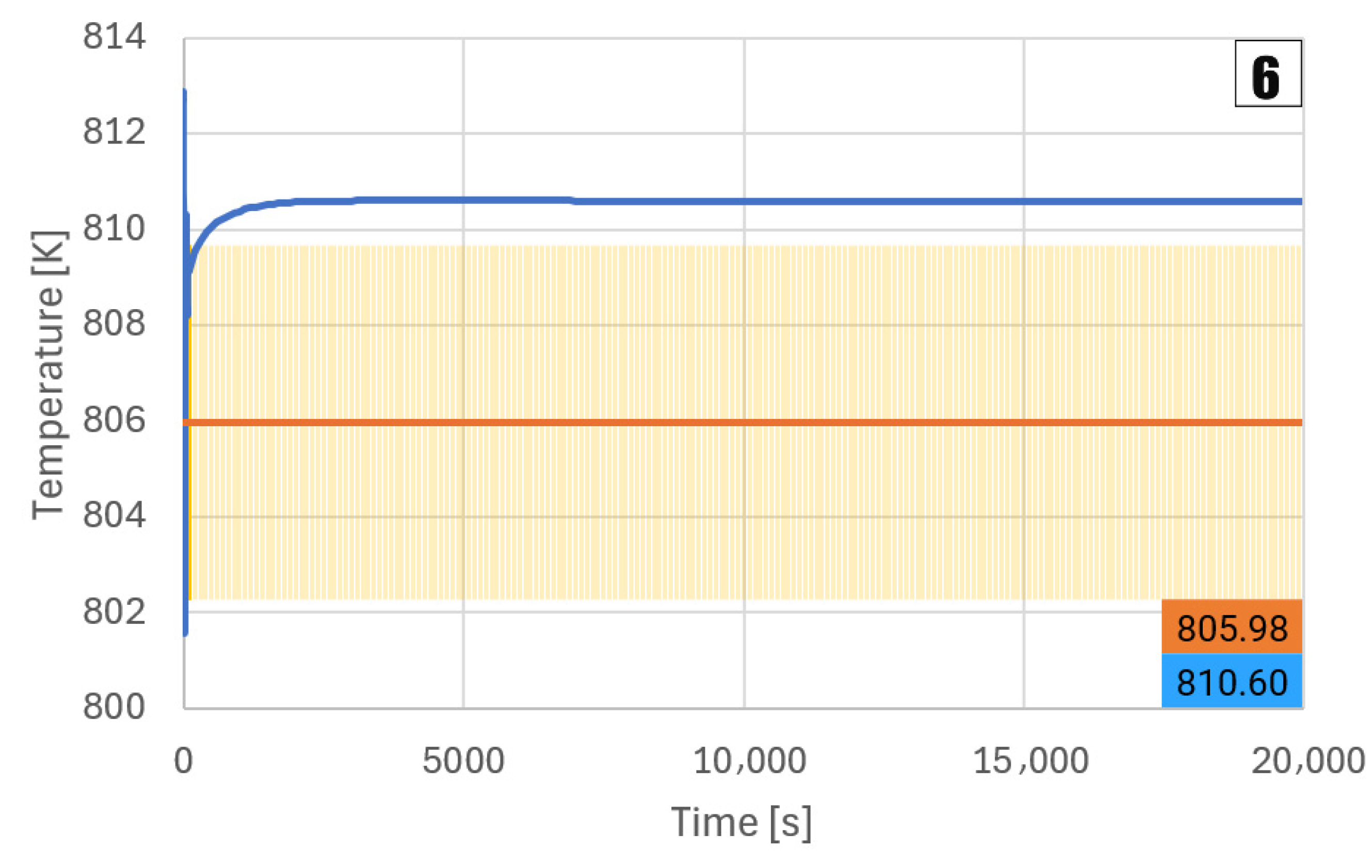
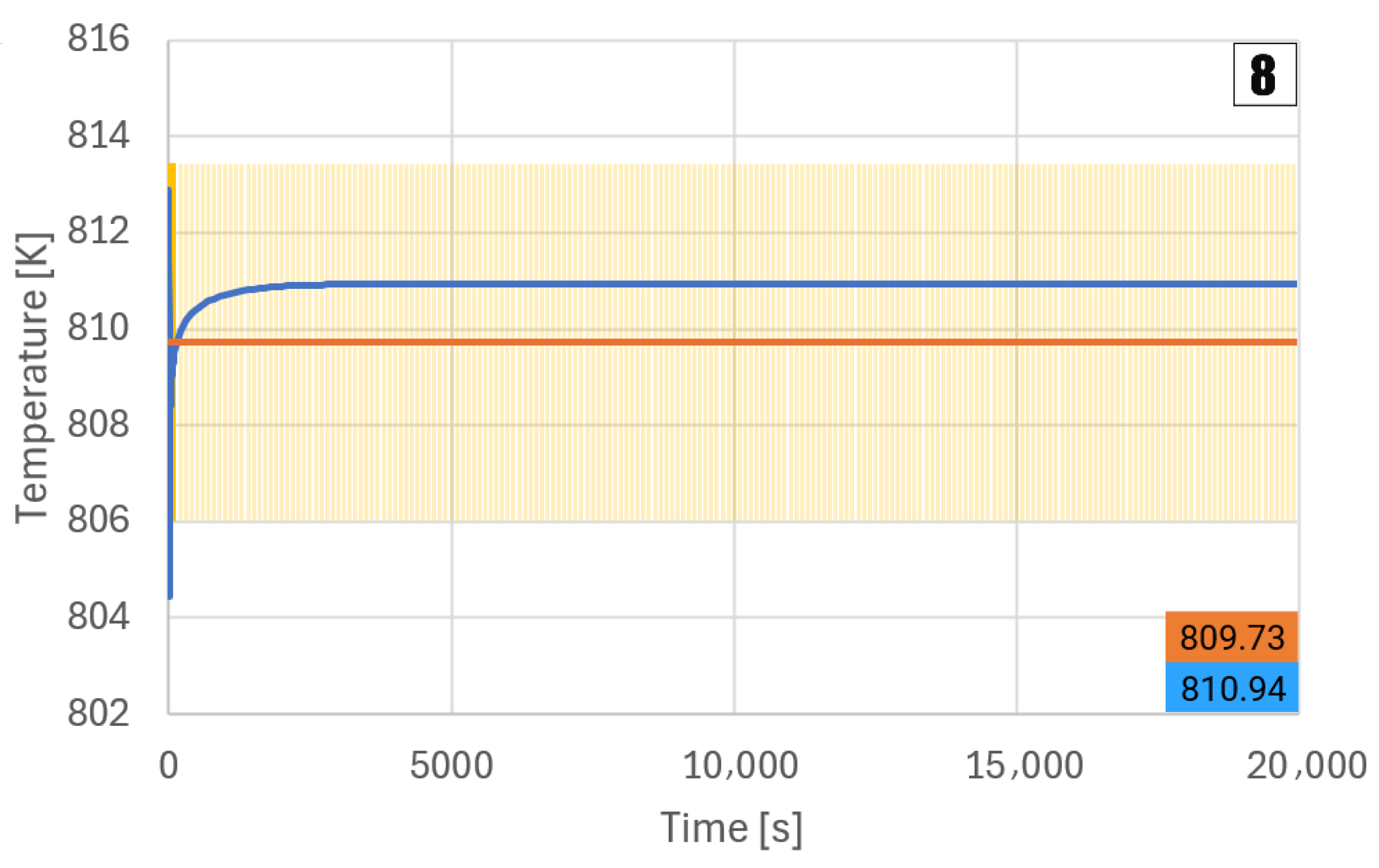
Table 2 shows all the relevant values related to Cases 6 and 8. The highlighted values are those used as input values, while the others are used to benchmark the model. The latter are represented by the orange line in Figures 6–14.
T17 is the thermocouple that measures the FLiBe temperature directly in the flow, before entering the main heater. TC11 and TC12 are instead placed on the pipe surface, respectively, at the main heater outlet and heat exchanger outlet. The pressure in the FLiBe loop is provided only for Case 6, but it is used for both cases during simulations as a boundary condition at the process vessel BREAK component.
It is important to mention that these values are subject to measurement uncertainties. For the thermocouples, the range of uncertainty given is equal to 0.4% of the measured value ± 0.5 K. The figures of the following section present this uncertainty with a yellow band. Additionally, their exact location is unknown, further increasing the uncertainty of the measurements. The mass flow rate is also affected by uncertainties, since it is calculated using energy balances on the loop components, as no specific instrumentation was available.
5. Results
The simulations are run as null transient for 20,000 s to ensure that the proper stable conditions are reached. Before each simulation, boundary conditions and initial values are set according to each case, including pressure losses.
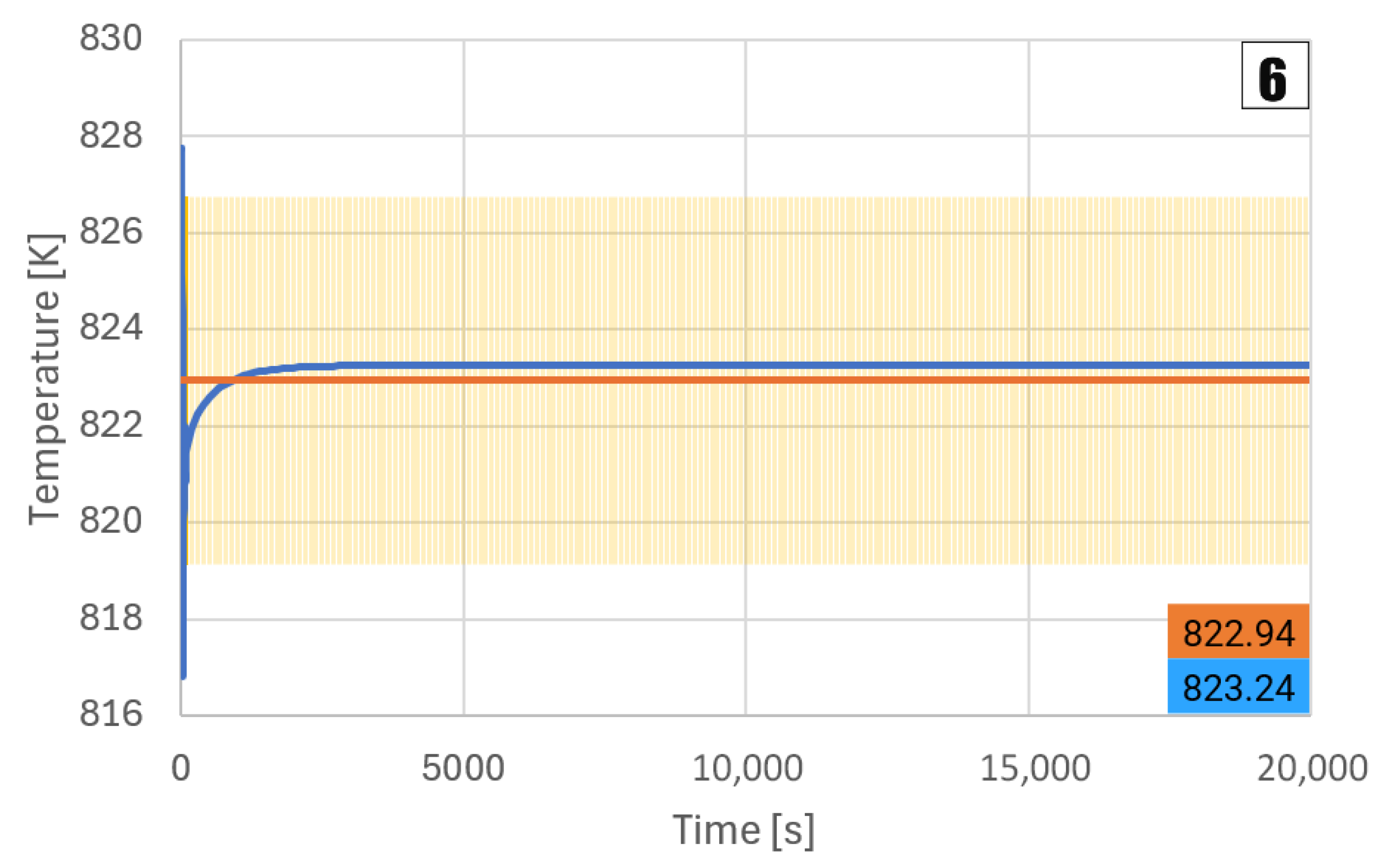
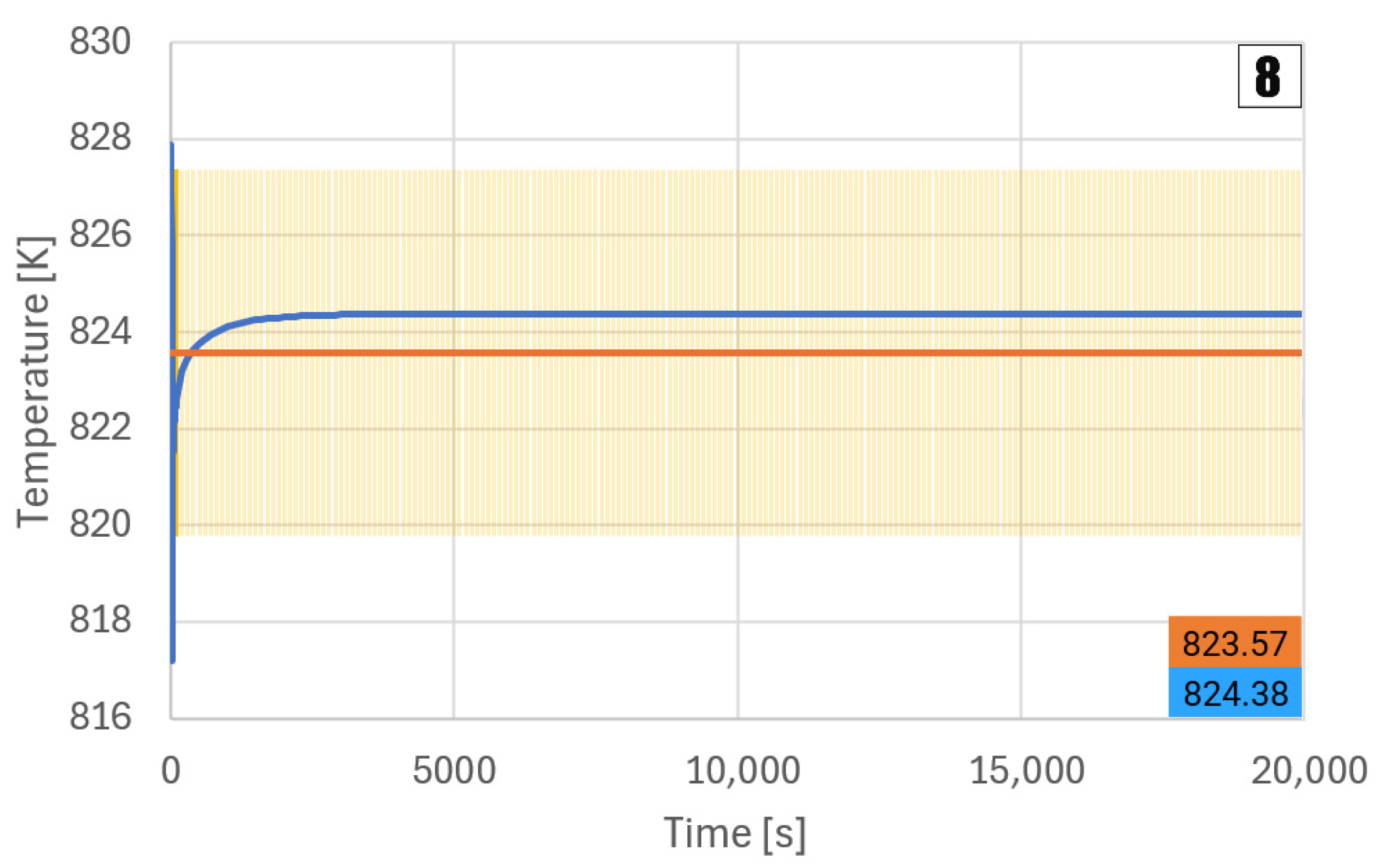
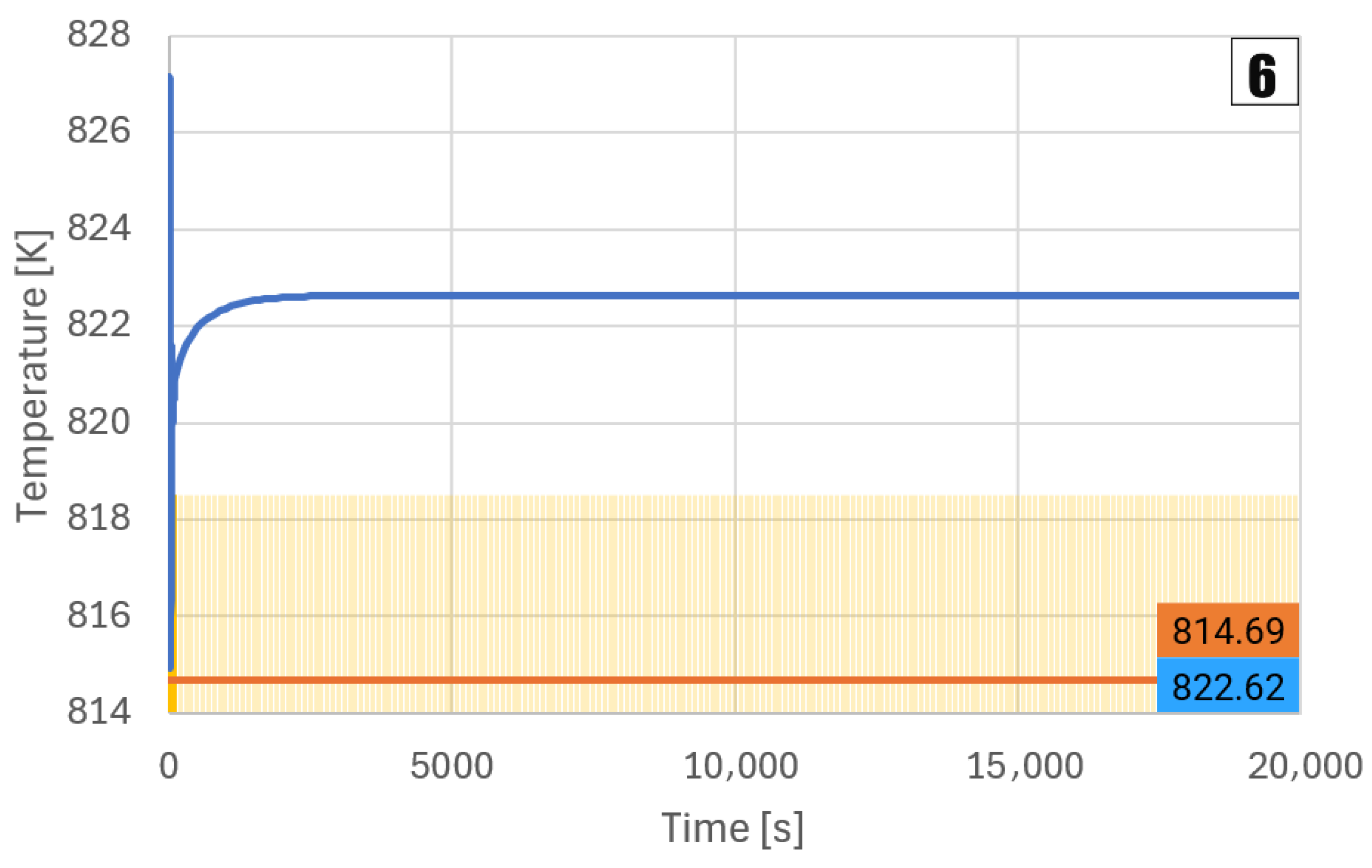
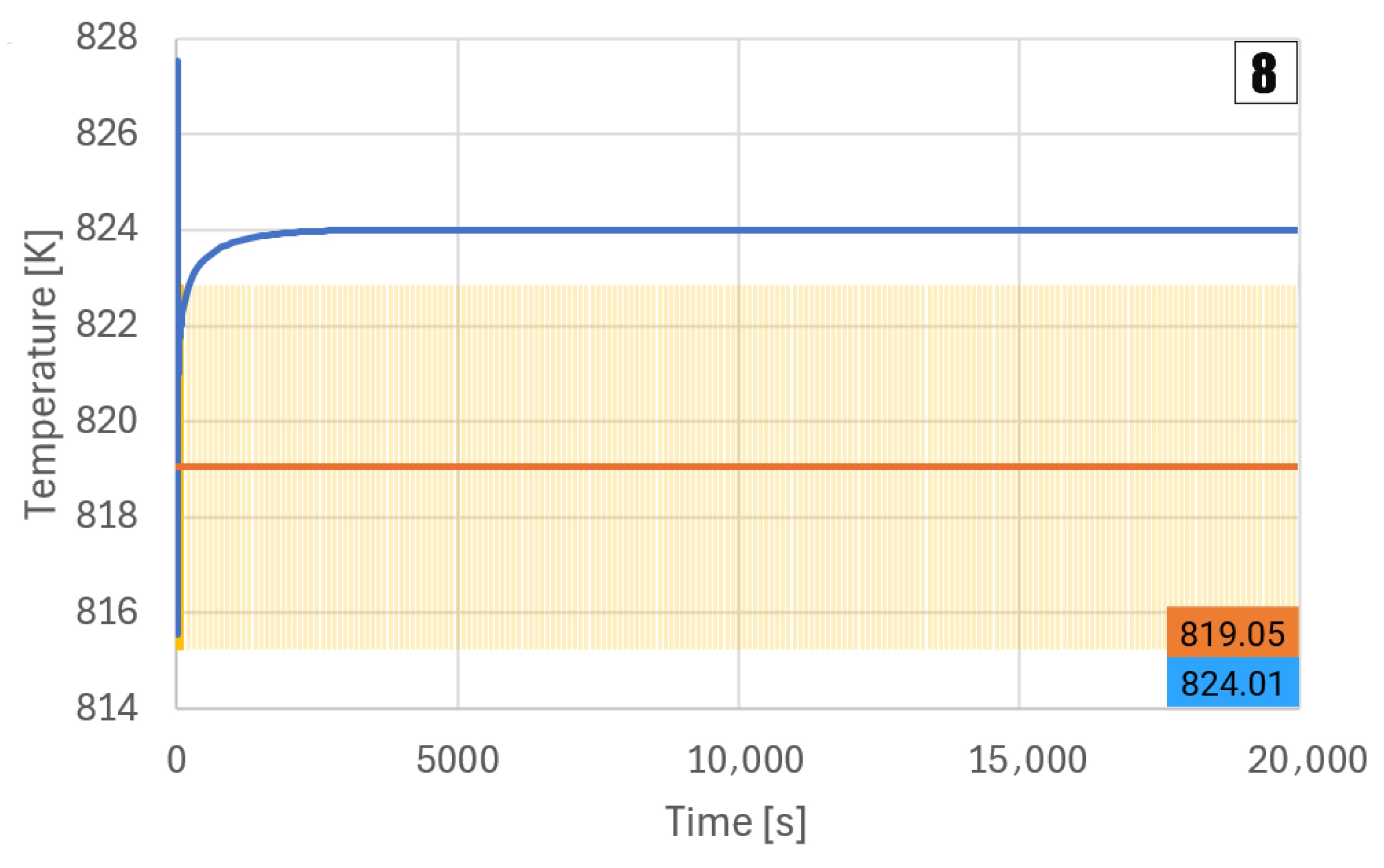
Due to its importance, the first parameter that has been checked is the temperature at the main heater inlet, shown in
Figure 6 and
Figure 7. The N
2 layer thickness in the heat exchanger’s HTSTR components was modified in order to reach a temperature at the main heater inlet, matching Case 6. The value reached is equal to 823.24 K, which is close to the experimental value and within the range of uncertainty. For Case 8, the result is 824.38 K, which is consistent as well. However, for this case, the model was not further adjusted.
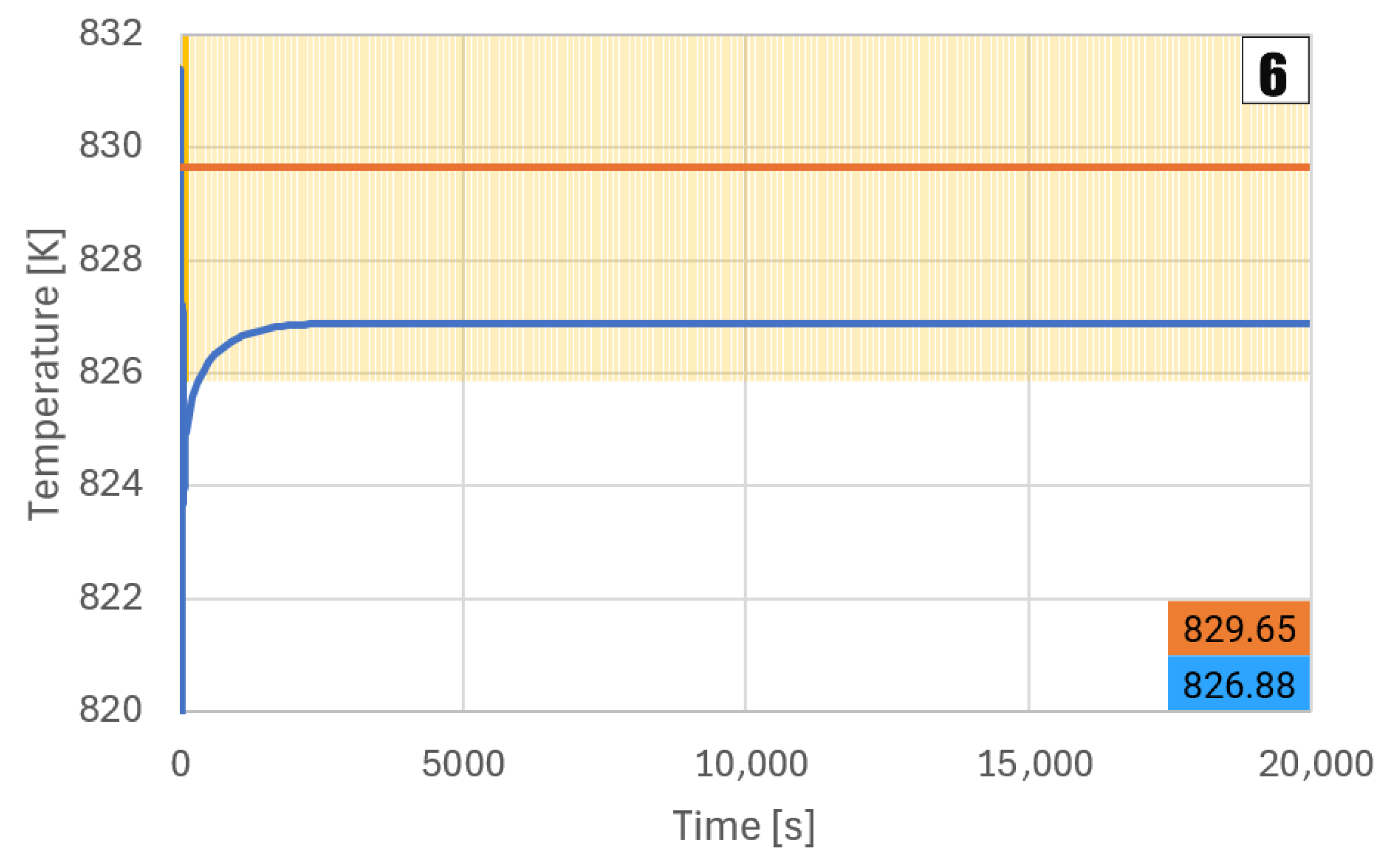
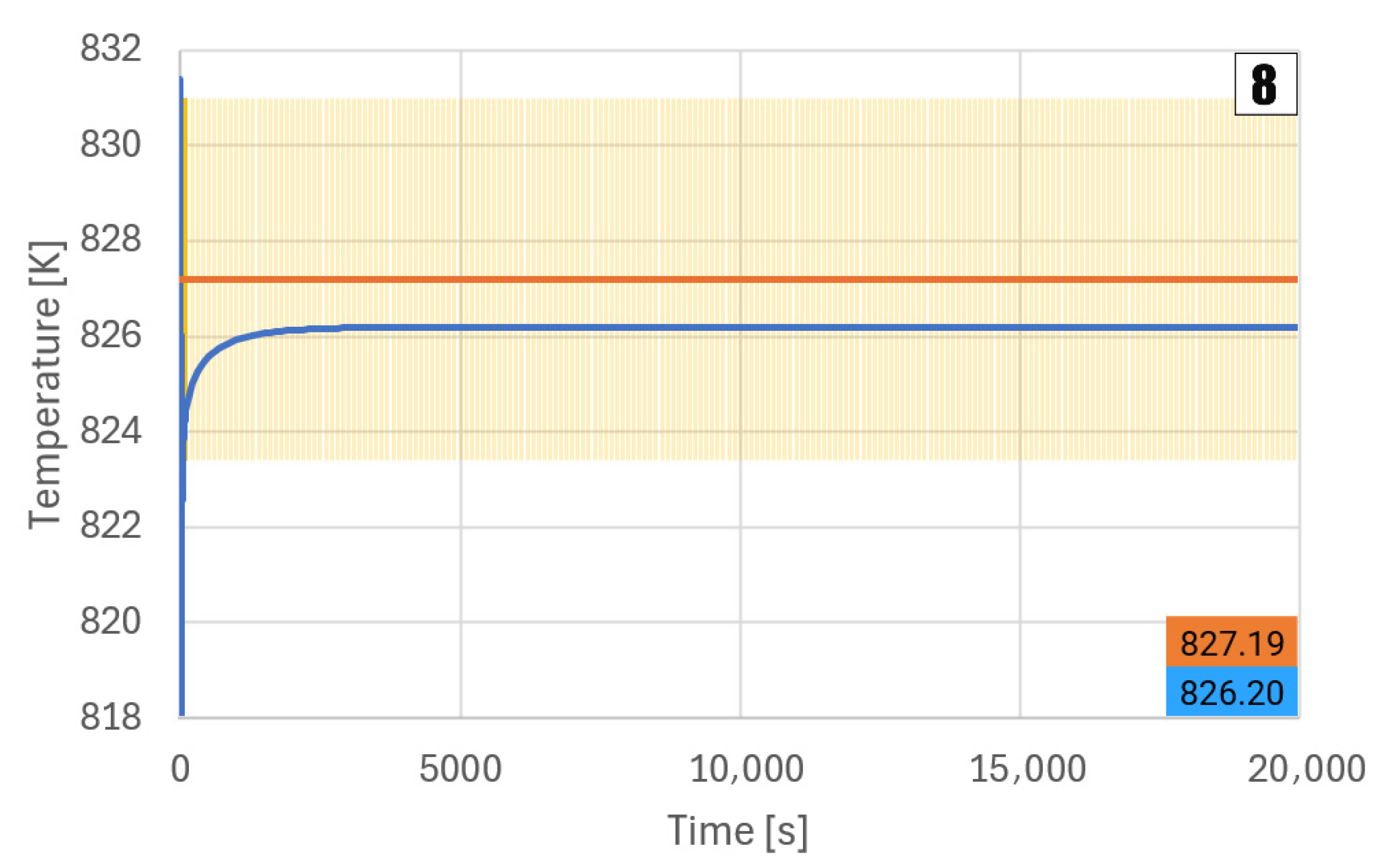
Regarding the main heater outlet temperature, shown in
Figure 8 and
Figure 9, the simulation results are lower than the reference data. For Case 6, the simulation result is 826.88 K, and for Case 8, it is 826.20 K. Despite the difference, these results are within the thermocouple uncertainty range and therefore consistent.
Figure 6.
Temperature T17, main heater inlet, Case 6.
Figure 6.
Temperature T17, main heater inlet, Case 6.
Figure 7.
Temperature T17, main heater inlet, Case 8.
Figure 7.
Temperature T17, main heater inlet, Case 8.
Figure 8.
Temperature TC11, main heater outlet, Case 6.
Figure 8.
Temperature TC11, main heater outlet, Case 6.
Figure 9.
Temperature TC11, main heater outlet, Case 8.
Figure 9.
Temperature TC11, main heater outlet, Case 8.
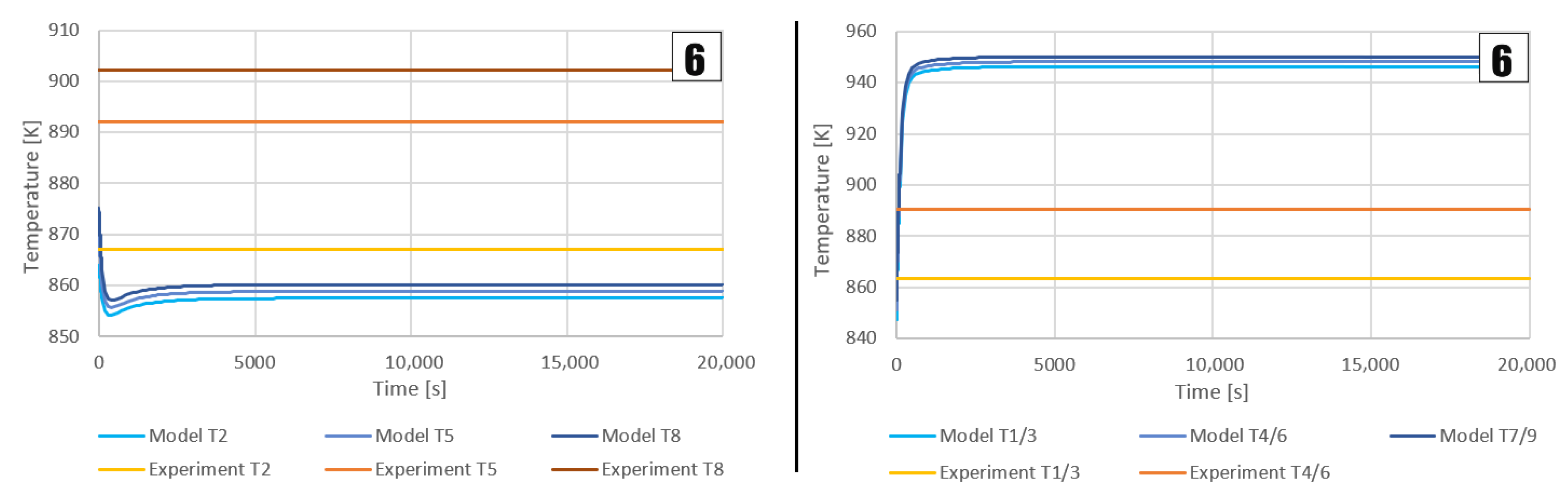
The main heater thermocouples, located in the graphitic core, are also checked in the simulations: three for both PIPE components, in the same axial location as in the real component. As underlined in the Case 6 results, shown in
Figure 10, the model cannot precisely represent the graphite temperature profile during operation. The temperatures and their variation on the axial level are different and inconsistent with the experiment in both the cases analyzed. This could be related to a different heat removal efficiency depending on the channel, different flow distribution in the model or inaccuracy of the graphite properties, which were provided only for room temperature. It should be noted that the TRACE model is based on a one-dimensional representation of a complex system, where certain physical phenomena are necessarily simplified. For this, selected sensitivity analyses were conducted as part of the work described in [
21]. However, the resulted discrepancies do not affect the measured outlet temperature of the salt.
Figure 10.
Main heater’s graphite temperature, Case 6: central part on the left, and outer part on the right.
Figure 10.
Main heater’s graphite temperature, Case 6: central part on the left, and outer part on the right.
For the heat exchanger, the model shows limited heat losses between the two components (about 0.03 K).
Figure 11 and
Figure 12 show the outlet temperature on the FLiBe side. It is notable that in the experimental loop, the FLiBe releases more heat to the sCO
2 than in the model. Even though the temperature difference is 8 K for Case 6, and 5 K for case 8, the results are consistent. In fact, in the experimental loop, there are some heating phenomena (such as thermal inertia phenomena, pump heating through compression and electrical heating in the bypass section) which are not represented in the model. Due to this, it is reasonable that the temperature at the heat exchanger outlet is close to that at the main heater inlet, as heat losses are limited.
Figure 13 and
Figure 14 show the N
2 outlet temperature in the heat exchanger. For Case 8, the difference between model and experiment is smaller than for Case 6, and the model value is within the uncertainty range. In the experiment, there is higher heat transfer to the secondary loop, which causes the outlet flow to be hotter. In the model, this does not occur because the input power must be matched by the heat transferred outside through the heat exchanger and heat losses. Considering also all the simplifications involved (surrogate fluid, open loop, etc.), the results can be considered consistent.
Figure 11.
Temperature TC12, heat exchanger’s FLiBe outlet, Case 6.
Figure 11.
Temperature TC12, heat exchanger’s FLiBe outlet, Case 6.
Figure 12.
Temperature TC12, heat exchanger’s FLiBe outlet, Case 8.
Figure 12.
Temperature TC12, heat exchanger’s FLiBe outlet, Case 8.
Figure 13.
Temperature tout, heat exchanger’s sCO2 outlet, Case 6.
Figure 13.
Temperature tout, heat exchanger’s sCO2 outlet, Case 6.
Figure 14.
Temperature tout, heat exchanger’s sCO2 outlet, Case 8.
Figure 14.
Temperature tout, heat exchanger’s sCO2 outlet, Case 8.
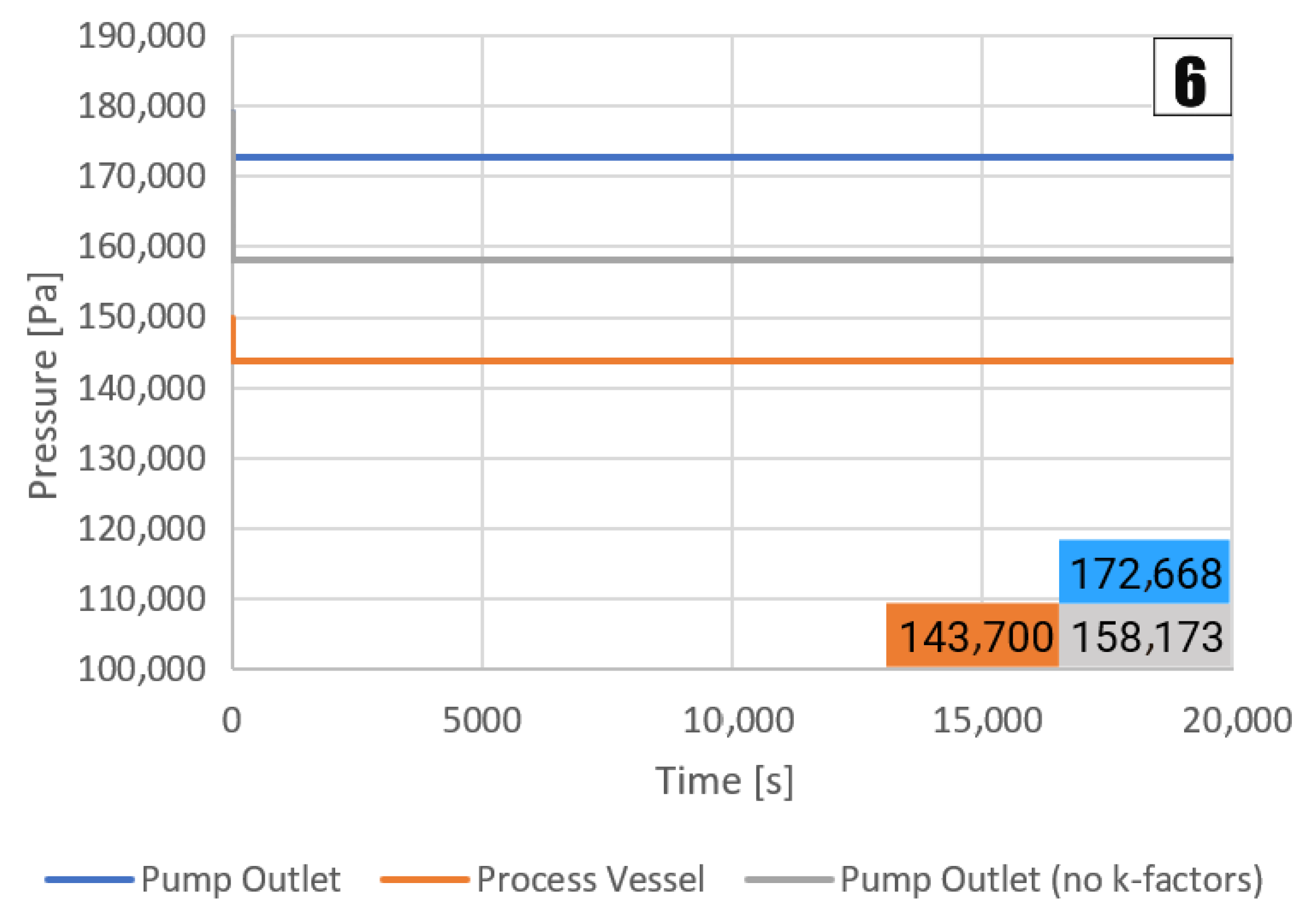
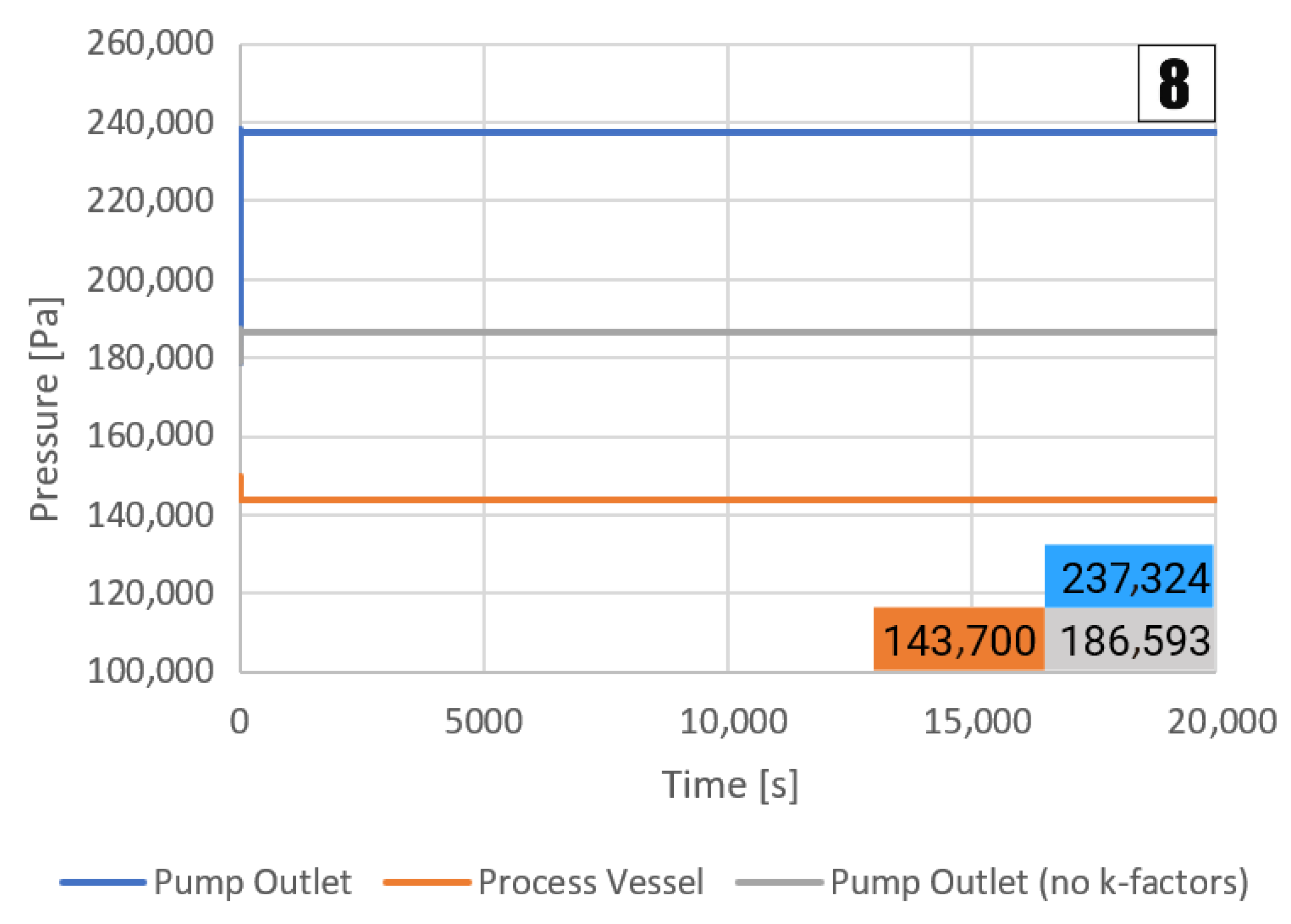
The differential pressure caused by the introduced pressure losses was analyzed as well.
Figure 15 and
Figure 16 display different pressure values in the model:
Pressure at the process vessel (boundary condition);
Pressure measured at the pump discharge;
Pressure measured at the pump discharge with no k-factors applied.
The pressure difference between process vessel and pump (respectively, blue and orange lines) represents the total pressure differential. However, the value presented in
Table 2 differs. It does not include the “dead” pressure difference between the sensors. A simulation was performed without assigning k-factors to the model, resulting in the grey line. The difference between the two pump measurements correspond to the experimental pressure differential. For Case 6, this value is equal to 14,495 Pa, which is consistent compared to the experimental 10,700 Pa, taking into account the pressure loss correlations and simplifications adopted.
In Case 8, the pump pressure measurements show higher values, as expected. The increase in mass flow rate results in higher hydrostatic pressure. However, while in the experiment the pressure differential is similar between the two cases, for Case 8, it is 50,731 Pa, more than four times the experimental one. A reason for this large discrepancy between experiment and model likely lies in the change in correlation equations, due to different flow conditions, since they are a function of the Reynolds number, which is higher in Case 8. Using alternative correlations might produce results more consistent with the experiment. This could be a topic for future studies. It is also important to note that pressure measurements in molten salt circuits are generally complicated, resulting in increased measurement uncertainties. In the present case, the pressure measurement was addressed by maintaining a gas cushion between the molten salt level in the sampling line and the sensor in order to eliminate the risk of salt freezing in the sampling tube. Consequently, the measurement uncertainty is significantly increased by the gas behavior within the sampling tube, and the measured values cannot be directly used for benchmarking the circuit pressure losses.
During the simulations, instabilities were also found in the process vessel. These instabilities are linked to the interaction of the non-condensable gas with a non-standard fluid, in this case, FLiBe. The instability of this interaction was also observed with lead in [
22]. However, this phenomenon has no significant influence on the analysis results.
Finally, as part of the project activity, the heat-transfer coefficients (HTCs) were estimated for comparison with experimental data and the literature values. Unfortunately, due to the experimental limitations and uncertainties mentioned above, it is not possible to determine the HTCs in the heat exchanger with sufficient accuracy. However, data from the main heater, which is sufficiently instrumented, can be used.
For the TRACE model, an average of the axial HTC values was calculated for the two PIPE components. Then, a weighted average based on the flow areas was computed. The result is 1041.9 W/m
2K for Case 6 and 1335.7 W/m
2K for Case 8; these results are consistent with the experimental data in
Table 2. For further comparison, the HTC was also determined analytically using the Hausen correlation, detailed in [
23]. From this, the HTC is 536 W/m
2K for 10 mm diameter channels and 368 W/m
2K for the 16 mm diameter central channel, approximately half of the previous results. The difference may be due to measurement uncertainty or inaccuracy. Another source of deviation may be the uneven power distribution caused by possible uneven flow distribution in individual channels, which cannot be evaluated from the data. However, the obtained results are consistent with those reported in [
24], where experimentally evaluated heat transfers in laminar flow were also higher than the results from correlations in the literature. It should also be mentioned that fully developed laminar flow cannot be assumed in the heater, as the heater is located directly behind a 90° elbow and other circuit components. This may also lead to higher values than those given by correlations assuming fully developed laminar flow.
All the main experimental and model results are summarized and compared in
Table 3.
6. Discussions and Conclusions
The simulations based on the commissioning experimental data revealed several important insights. Overall, the model was consistent, particularly with respect to the heat exchanger and the general performance of the main heater. However, some discrepancies were observed, notably within the main heater’s active channel. These inconsistencies pointed to potential areas for improvement, such as refining the simulation methodology or reassessing the properties of materials. The model also uncovered phenomena of broader relevance. For instance, issues with incorporating an external property table for CO2 were identified and subsequently reported to the USNRC. Additional limitations were observed, such as those associated with non-condensable gas instabilities. Furthermore, these simulations have proven to be an essential tool for collaboration with technicians working on the experimental loop, enabling the identification of inconsistencies in certain sensors measurements and supporting their resolution. This work provides a strong foundation for future improvements.
A key next step will involve introducing CO
2 as the secondary fluid in the heat exchanger, thereby enabling a more detailed investigation of convection involving supercritical CO
2 [
25], particularly its interaction with FLiBe.
Beyond these technical enhancements, the project opens opportunities for international collaboration, promoting shared progress in the development of molten salt reactor technologies, as well as other SMR projects that share similar features and goals, like KRONOS MMR [
26], designed and developed by NANO Nuclear Energy Inc., or R&D activities carried out in academia and research centers [
27]. Thanks to its dedicated facility, it also plays a crucial role in advancing knowledge, as it provides unique data and expertise at a time when suitable infrastructures for the study of molten salts and laminar flows are still very limited. Moreover, the facility offers the potential to conduct experiments over a broader range of operating conditions to derive new correlations for both heat transfer and pressure losses in FLiBe-type salts.
This work underscores the potential of TRACE as a powerful tool for modeling and simulation in this field, encouraging broader use of the code within the global research community. It also will push forward several activities and possible new projects. In particular, as said before, the work can continue to enhance TRACE by improving the know-how of heat transfer and flow regime characterization for molten salts and sCO2. The understanding of these phenomena will lead to the improvement of the EW design, with several crosscutting in advanced SMRs, both primary and secondary circuits, and fusion technologies. Moreover, it will expect to continue in several projects in domestic domains, such as TAČR, and international domains, such as IAEA CRP, EUROfusion and EURATOM.