Article

Carbon Monoxide Recovery from Organic Waste: Assessing Composting as a Sustainable Valorization Pathway

by
Remigiusz Cielecki
and
Karolina Sobieraj
*
Department of Applied Bioeconomy, Wrocław University of Environmental and Life Sciences, 37a Chełmońskiego Street, 51-630 Wrocław, Poland
*
Author to whom correspondence should be addressed.
Energies 2026, 19(4), 1082; https://doi.org/10.3390/en19041082
Submission received: 19 January 2026 / Revised: 6 February 2026 / Accepted: 19 February 2026 / Published: 20 February 2026

Abstract

Carbon monoxide (CO) is a key component of syngas and an important intermediate in the chemical, metallurgical, heavy, and food industries. Although mainly associated with thermochemical processes, CO can also be generated during composting, offering an environmentally friendly biological alternative. This study assessed the potential for CO production during laboratory-scale composting of seven selected organic waste fractions: coffee grounds, green tea leaves/grounds, wheat straw, grass cuttings, branches, food waste, and a biowaste mixture with an optimal C/N ratio. Composting was carried out under laboratory conditions at 45 °C for 14 days, with daily passive aeration and monitoring of CO, CO2, and O2 concentrations in the reactor headspace. CO production kinetics were calculated for each substrate, and the CO mass yield was determined in each bioreactor. The study confirmed the CO generation potential of the analyzed organic waste fractions. The highest CO production was observed for grass cuttings (max. 2000 ppm, 1.21 mg), biowaste mix (2000 ppm, 0.82 mg), and wheat straw (1180 ppm, 0.24 mg). Grass cuttings exhibited the highest average reaction rate (3991.1 ppm·d−1) and the most rapid process (2.920 d−1). Fungal colonization was visibly present in the most CO-productive reactors, suggesting a role of fungal metabolism in CO formation.

1. Introduction

Carbon monoxide (CO) is an odorless, colorless, and tasteless gas that forms as a result of the incomplete combustion of carbon and organic substances [1]. It can also be released from various human-related sources, including vehicle exhaust, fires, and the use of gasoline-powered equipment [2]. CO is highly toxic, and its inhalation poses a serious health risk due to the formation of carboxyhemoglobin (COHb), which reduces the amount of oxygen delivered to tissues [1].
Despite its well-known toxicity, CO is extensively utilized in the energy sector, where it serves as a key component of synthesis gas (syngas) alongside hydrogen. Syngas is an alternative fuel produced via the gasification of solid feedstocks such as biomass, municipal solid waste, and coal. This process is conducted at elevated temperatures (800–1000 °C), under relatively low pressures (1–20 bar), and in conditions of limited oxygen availability [3]. As a fuel, it can be used for internal combustion engines, gas turbines, and cogeneration engines, which simultaneously generate electrical energy and heat [4].
Syngas can be produced from renewable and sustainable carbon sources such as biomass and wastewater [5]. However, this process is associated with several challenges. Biomass gasification leads to the formation of raw syngas containing small but critical amounts of undesirable impurities, including nitrogen-containing compounds (NH3, hydrogen cyanide), sulfur-containing compounds (H2S, carbonyl sulfide), and trace metals (Na, K) [6]. The removal of these contaminants is essential, as their presence limits the effective utilization of biomass-derived syngas. Although a range of efficient purification technologies is available, they are associated with two major drawbacks: a reduction in overall process efficiency due to syngas cooling and high operational costs resulting from the complexity of the cleaning processes [6].
In addition, biomass intended for gasification must be processed into fine particles, the production of which is energy-intensive and costly [7]. Biomass moisture content is another critical parameter influencing gasification performance. Moisture levels exceeding 40% significantly reduce the thermal efficiency of the process [7]. This inefficiency stems from the fact that the energy consumed in heating, evaporating, and superheating the moisture present in biomass is not recovered, thereby constituting a thermal loss and increasing overall process costs. Conversely, complete drying of biomass is economically unfavorable, and the gasification process requires the addition of water to maintain the hydrogen balance in the product gas [7].
While the production of syngas via the gasification of biomass and organic waste is associated with the challenges discussed above, a sustainable and nature-based alternative pathway for CO generation has recently emerged. The release of CO has been observed during the composting of various fractions of organic waste, including source-separated organic household waste [8,9], kitchen waste of vegetable and fruit origin [9], garden waste [8,10,11,12,13,14], agricultural residues [11,13], sewage sludge [14,15,16], and the organic fraction of municipal solid waste [17]. Given the predominantly aerobic nature of the composting process, the relatively high concentrations of CO generated—exceeding 2000 ppm in some cases—were unexpected [12].
CO formation during composting has attracted increasing attention as an emerging approach for CO recovery. When separated from the process gas, compost-derived CO could serve both as a component of syngas and as a fuel, as well as be utilized across multiple industrial sectors. These include the chemical industry, where CO is a key reactant in the production of polymers, solvents, and other chemical compounds, as well as the metallurgical and heavy industries, and the food sector [18,19,20,21].
Previous studies have demonstrated that CO formation during composting can occur under both mesophilic and thermophilic conditions [9]. However, the underlying mechanisms differ substantially between these temperature regimes [22]. Although CO concentrations observed during thermophilic composting are generally higher than those detected under mesophilic conditions, they primarily originate from abiotic processes stimulated by elevated temperatures (typically below 100 °C, around 70 °C) and the presence of oxygen [23]. These processes include thermochemical oxidation reactions involving complex organic matter, as well as microbial cell lysis and subsequent oxidation of dead biomass [24,25]. In contrast, under mesophilic composting conditions, CO production is predominantly biologically mediated [22]. Studies conducted over the past few years have demonstrated that CO is released in compost through microbial activity, particularly by bacteria, including species such as Bacillus licheniformis, Bacillus paralicheniformis, and Geobacillus thermodenitrificans [16]. Overall, CO generation during waste composting can be regarded as the result of a combination of temperature- and oxygen-dependent physicochemical processes and biologically driven microbial activity [22]. Notably, the bacterial CO production offers a more sustainable and environmentally favorable pathway, highlighting its potential as an ecological alternative to abiotic CO formation.
Although CO production has been confirmed for a wide range of organic waste types and their mixtures, it remains difficult to determine the specific CO-release potential of individual waste fractions. This limitation arises from the considerable variability in composting techniques employed (e.g., windrow composting, open or closed reactor systems), as well as differences in process duration, operating temperature, aeration intensity, and other operational parameters [26]. Nevertheless, the relationship between CO emission and the type of composted waste is of critical importance for assessing the suitability of specific waste fractions in composting processes aimed at intentional CO production. Such knowledge is also essential for conducting preliminary techno-economic analyses, enabling the evaluation of the utility, economic competitiveness, and overall feasibility of composting as an alternative pathway for CO generation.
Therefore, identifying the most effective substrates for composting processes optimized for high CO yields represents a crucial first step toward justifying the integration of composting into expanded CO production strategies. Importantly, the recovery of CO from organic waste composting aligns well with the principles of the bioeconomy and circular economy. By valorizing organic waste streams as secondary resources and closing material and energy loops, compost-based CO production supports sustainable resource management. It also contributes to the development of low-carbon and circular industrial systems.
Therefore, this study aimed to comparatively evaluate the potential for CO production during laboratory-scale composting of seven commonly composted organic substrates: spent coffee grounds, green tea residues (leaves/grounds), wheat straw, grass cuttings, food (kitchen) waste, branches, and a mixed biowaste substrate with an optimized C/N ratio. The experiments were conducted over a 14-day incubation period under mesophilic conditions at 45 °C. This temperature range typically persists for the longest duration during the composting process and therefore plays a dominant role in overall gas formation. Passive aeration was applied throughout the experiment. Daily measurements of process gas concentrations (CO, O2, and CO2) enabled the determination of CO production kinetics for each substrate. In addition, a preliminary assessment of the potential CO yields achievable in bioreactor systems was performed.
To the best of our knowledge, this is the first study to systematically screen a wide range of organic waste fractions to identify their potential for CO generation during composting. This novel approach addresses a significant research gap, as previous studies have not explored which waste types are most suitable for CO-oriented composting processes.

2. Materials and Methods

2.1. Organic Waste Fractions

To analyze the potential for CO production during the composting process, six different organic substrates were selected: spent coffee grounds, brewed green tea leaves/grounds, wheat straw, grass, cherry tree (Prunus avium) branches, and model food waste (FW). The FW mixture was prepared based on Valta et al. [27] and consisted of cooked potatoes, rice, pasta, fresh onions, apples, bananas, tomatoes, lettuce, bread, cheese, and ham, all cut into pieces no smaller than 2 cm. The selected substrates represent organic materials most commonly composted in municipal and agricultural waste management systems, including agricultural residues, kitchen waste, green waste, and the organic fraction of municipal solid waste [28]. Additionally, to obtain a seventh substrate with an optimal C/N ratio, a mixture of food waste, branches, straw, and grass was prepared at a mass ratio of 1:1:1:2, hereafter referred to as “biowaste mix”.

2.2. Laboratory-Scale Composting Process

The composting process of the organic substrates was carried out under laboratory conditions for 14 days. This timeframe was intentionally selected to encompass only the initial phase of composting, based on previous studies indicating that CO generation occurs predominantly during the first one to two weeks of the process, after which CO concentrations decline and eventually approach zero [9]. The analyzed wastes were placed in 900 mL glass bioreactors in triplicate. Each bioreactor was sealed with a metal lid equipped with two ports fitted with silicone tubing: one permanently closed, and the other controlled by a Mohr clamp, opened only during measurements of process gas concentrations in the bioreactor headspace. After conducting the measurements using the analyzer (DP-28, Nanosens, Wysogotowo, Poland), each bioreactor was opened to allow passive aeration of the compost, which typically lasted 20 min. The bioreactors were incubated in a climate chamber (ST3, POL-EKO, Wodzisław Śląski, Poland) at a constant temperature of 45 °C.

2.3. Measurement of Process Gas Concentrations (CO, CO2, O2)

Measurements of process gas concentrations in the bioreactor headspace were conducted daily for 14 days, once per day at approximately 10 a.m., using a gas analyzer (DP-28, Nanosens, Wysogotowo, Poland). The concentrations of CO (ppm), CO2 (%), and O2 (%) were determined. The sampling frequency was selected to capture overall temporal trends in gas formation during the composting process rather than short-term fluctuations, which was consistent with the primary objective of comparing CO emission patterns among different waste types. Each bioreactor was connected to the analyzer, and the peak CO values were recorded manually in a prepared data sheet. After disconnecting the bioreactor from the analyzer, a waiting period of approximately 2 min was allowed for the readings to stabilize to atmospheric levels (CO ~0 ppm, CO2 ~0%, O2 ~20.2%). Measurements for the subsequent bioreactors were then performed. All collected measurement data were subsequently transferred to Excel for further processing.

2.4. Substrates and Composts Characterization

Samples of the substrates and of the materials obtained after 14 days of incubation (hereafter referred to as compost) were dried in a laboratory dryer, model KBC-65W (Wamed, Warsaw, Poland), for 24 h at 105 °C to determine their dry matter (d.m.) content in accordance with the PN-EN 14346:2011 standard [29]. Subsequently, to determine the organic dry matter (o.d.m.) content, the previously dried and homogenized samples were ashed in a muffle furnace, model SNOL 8.2/1100 (Snol, Narkūnai, Lithuania), at 550 °C, following the PN-EN 15935:2022-01 standard [30]. The elemental composition (C, H, N, S) was assessed using a Perkin Elmer 2400 Series analyzer (Perkin Elmer, Waltham, MA, USA) in accordance with the PN-EN ISO 16948:2015-07 standard [31]. Additionally, the AT4 respiratory activity was measured using the OxiTop Control system (Xylem Analytics Germany GmbH & Co. KG., Weilheim, Germany), following the methodology described by Binner et al. [32].

2.5. Analytical Procedures

2.5.1. Kinetics of CO Production

First-order linear regression and the Gompertz equation were used to calculate the kinetics of CO production, according to Equations (1) and (2) [9,33]:
C C O = C C O m a x · e k · t
where
  • C C O —CO concentration at time t, ppm;
    C C O m a x —maximum CO concentration, ppm;
    k—decrease in CO concentration rate constant, days−1 (d−1);
    t—time, days (d).
C O t = A · e x p ( exp R · e A λ t + 1 )
where
  • T—time, days (d);
    CO(t)—predicted CO concentration at time t, ppm;
    A—maximum (asymptotic) CO production, ppm;
    R—maximum rate of CO production, ppm·d−1;
    λ—the lag phase, days (d).

2.5.2. Calculation of Daily Emitted CO Mass

The calculation of daily emitted CO mass was carried out based on the methodology described by Sobieraj [34]. More specifically, the CO concentration in the bioreactor headspace, expressed in ppm, was transformed into normalized mass values using the following equation:
C g a s = C p p m · M W · P R · T r
where
  • C g a s —CO concentration, mg·m−3;
    C p p m —CO concentration in parts per million, ppmv;
    MW—molecular weight of CO, MW = 28 g·mol−1;
    P—atmospheric pressure, P = 101.32 kPa;
    R—ideal gas law constant R = 8314 m3·Pa·K−1·mol−1;
    T r —temperature in bioreactor K = 318 K, K.
Using the literature-reported bulk densities of the 7 substrates [35,36,37,38,39], the headspace volume within the bioreactor (defined as the space above the substrates) was computed according to the following equation:
V h e a d s p a c e = V b i o r e a c t o r m S U B ρ S U B
where
  • V h e a d s p a c e —headspace volume in the bioreactor, m3;
    V b i o r e a c t o r —the volume of the bioreactor, V b i o r e a c t o r = 0.0009 m3;
    m S U B —mass of substrate in the bioreactor, kg;
    ρ S U B —bulk density of substrate, ρ S U B = 380 kg∙m−3 for coffee grounds, ρ S U B = 480 kg∙m−3 for tea leaves/grounds, ρ S U B = 80 kg∙m−3 for wheat straw, ρ S U B = 150 kg∙m−3 for grass cuttings, ρ S U B = 650 kg∙m−3 for food waste, ρ S U B = 350 kg∙m−3 for branches, ρ S U B = 145 kg∙m−3 for biowaste mix [35,36,37,38,39].
The daily mass of emitted CO in the bioreactor was determined using the following formula:
m C O = C g a s · V h e a d s p a c e
where
  • m C O —the mass of daily emitted CO in the bioreactor, mg.
The detailed calculations are presented in an Excel spreadsheet available in Supplementary Material Files S1 and S2.

2.6. Statistical Analyses

Data were analyzed using Statistica 13.3 (StatSoft Inc., TIBCO Software Inc., San Ramon, CA, USA), including estimating the measurements’ mean and standard deviation. A first-order reaction and Gompertz models were fitted to the CO production data using a nonlinear estimation. The fitting was carried out using the User-Defined Regression module with the Least Squares Method. The quality of the fit was evaluated based on the coefficient of determination (R2). Additionally, kinetic parameters of the reaction were estimated from the model equations. The model was applied separately to each organic waste fraction to compare kinetic behavior.

3. Results

3.1. Substrate and Product Characteristics

Among all the analyzed substrates, the highest dry matter content was recorded in branches (82.5%) and grass clippings (64.05%), whereas the lowest values were observed in coffee grounds (20.55%) and food waste (24.90%) (Table 1). The organic dry matter content across all substrates was relatively consistent, ranging from 88.23% d.m. to 96.26% d.m.. The carbon content varied between 42.84% and 49.69%, with the highest value observed in coffee grounds (49.69%). Coffee grounds also exhibited the highest hydrogen content (8.07%). The nitrogen content was greatest in food waste (3.73%) and lowest in wheat straw (0.58%). Sulfur content was similar among the samples, although coffee grounds again showed the highest concentration (1.31%). The respiratory activity indicator AT4 reached the highest values for wheat straw (39.2 mg O2∙g d.m.−1) and coffee grounds (34.3 mg O2∙g d.m.−1), while the lowest value was recorded for branches (12.0 mg O2∙g d.m.−1).
After the 14-day composting process, the dry matter content increased for coffee grounds (26.69%), food waste (29.85%), and branches (91.98%), while it decreased for the remaining substrates. The most pronounced change was observed in grass, whose dry matter content dropped from 64.05% before composting to 25.12% afterwards. Dry matter content remained highest in the branches, stabilizing at 82.45%. The composting process did not significantly affect the organic dry matter content across substrates, with values ranging from 83.09% d.m. to 96.62% d.m. for grass and coffee grounds, respectively. Carbon content in the composted materials increased slightly compared to the values recorded before composting, ranging from 0.07 to 6.22 percentage points for straw and food waste, whereas for grass cuttings, it decreased by 2.64 percentage points, reaching 40.20%. Hydrogen content after composting remained similar to pre-process levels, ranging from 6.33% to 8.80%, with the highest value observed in food waste. Nitrogen content increased in all analyzed substrates, with rises between 0.27 and 1.94 percentage points for coffee grounds and grass. Minor changes were also observed for sulfur, with increases ranging from 0.01 to 0.41 percentage points in materials such as grass and straw. AT4 values remained highest for straw (38.8 mg O2∙g d.m.−1) and coffee grounds (33.7 mg O2∙g d.m.−1), while the lowest value continued to be 12 mg O2∙g d.m.−1 for branches, for which no changes were recorded.
The appearance of fungal growth on the compost surface was observed in reactors 7–9 (wheat straw), 10–12 (grass), and 19–21 (biowaste mix), as documented in the photographic evidence presented elsewhere [40].

3.2. Process Gas Concentrations (CO, CO2, O2)

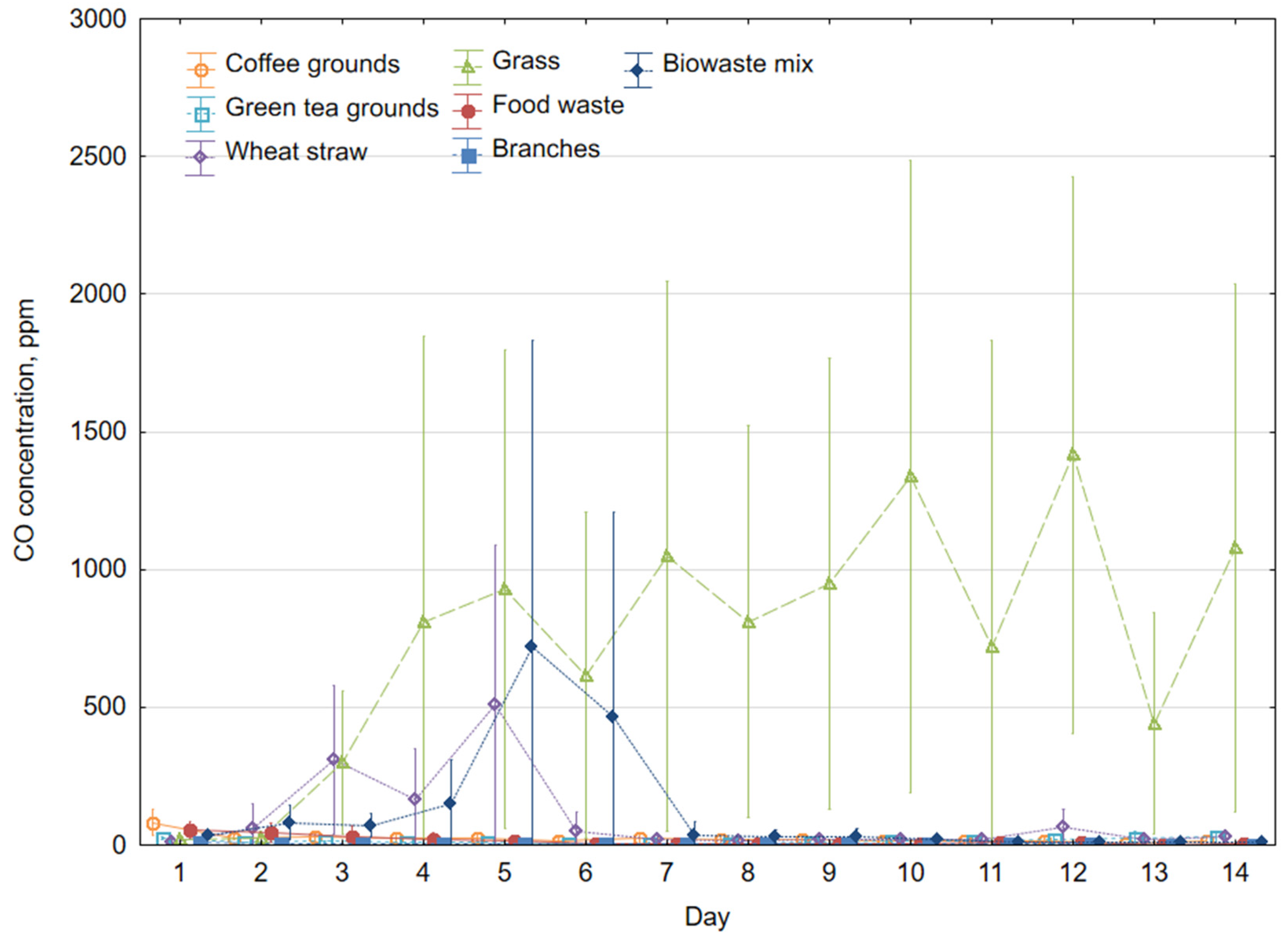
The highest average CO concentration was observed for grass cuttings, with peak values reaching up to 2000 ppm (Figure 1). However, the values were highly irregular. Most of the average daily CO concentrations for this substrate ranged between 500 and 1500 ppm. During the first few days, CO levels gradually increased (up to approximately 900 ppm), followed by a decrease (to around 600 ppm) with significant fluctuations. For most of the measurement period, the biowaste mixture did not show notable CO production; however, during the first week, a peak occurred, with maximum concentrations reaching up to 2000 ppm. The average daily CO concentration for this substrate did not exceed 750 ppm. A similar trend was observed for wheat straw, which also showed elevated CO levels in the first week. Average daily concentrations reached up to 500 ppm, while peak values were approximately 1180 ppm. At the end of the first week, CO concentrations in the straw reactors decreased significantly (to around 20 ppm). Average daily CO levels were low for coffee grounds, green tea leaves/grounds, food waste, and branches (to around 30 ppm).
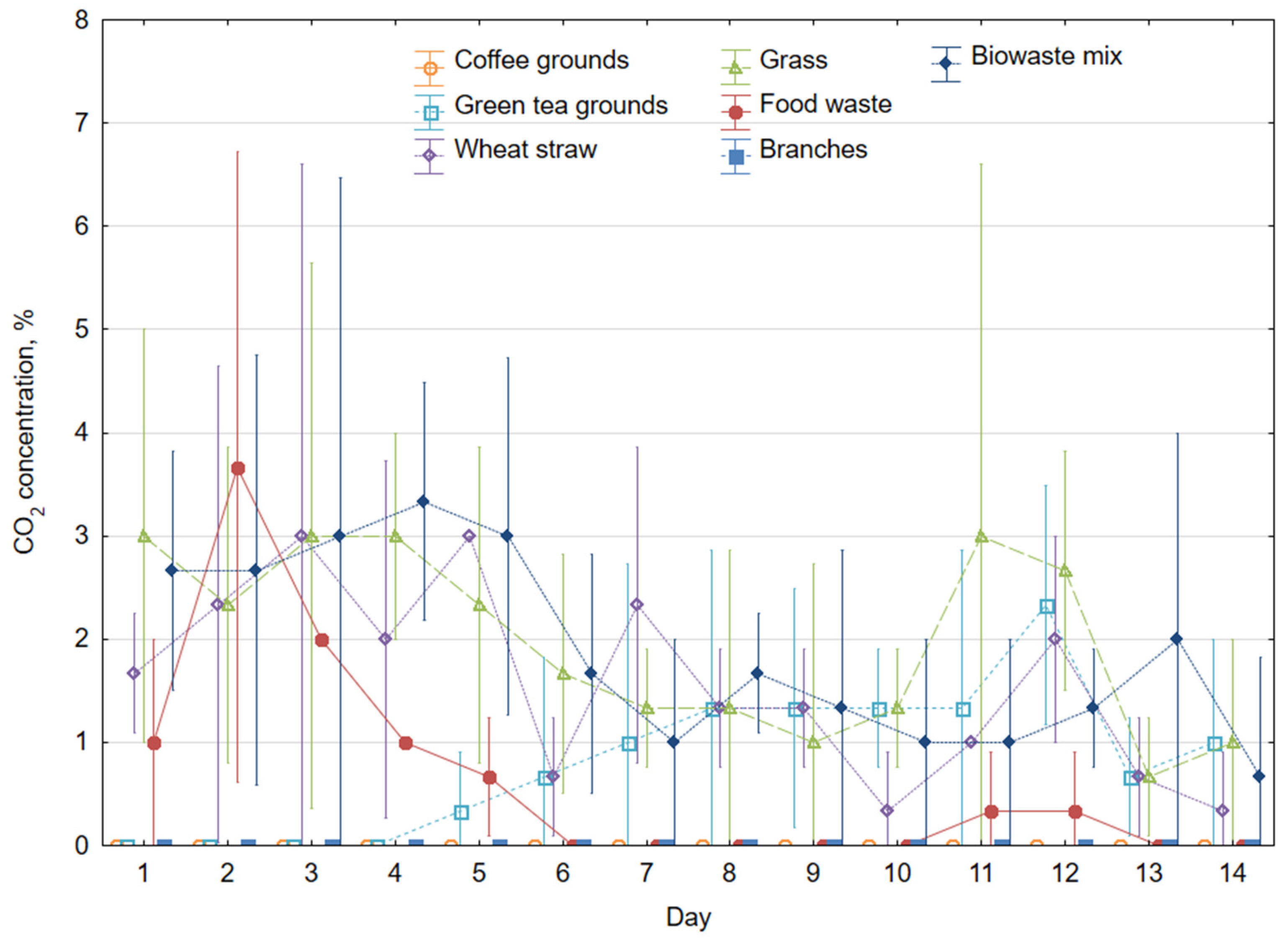
The highest average daily CO2 concentration was recorded on the second day of the study (~3.67%) for food waste (Figure 2). In the following days, this value decreased until it reached 0%. A rising trend in the average CO2 concentration was observed for the biowaste mixture, reaching over 3%. After the fourth day of composting, a decrease to 1% was noted, except on the eighth and thirteenth days (~1.6% and 2%). The average daily CO2 level for grass cuttings showed irregular patterns. The highest values were recorded on the first, third, fourth, and eleventh days (3%). Wheat straw was characterized by higher CO2 concentration during the first week of the study, when it reached 3%. In the second week, a decline was observed, with values approaching zero, except for the eleventh and twelfth days, when the concentrations were 3% and ~2.7%, respectively.
The average CO2 concentrations remained constant for three substrates: coffee grounds, green tea leaves/grounds, and branches. Throughout the laboratory study period, the measured CO2 level for these substrates was 0%.
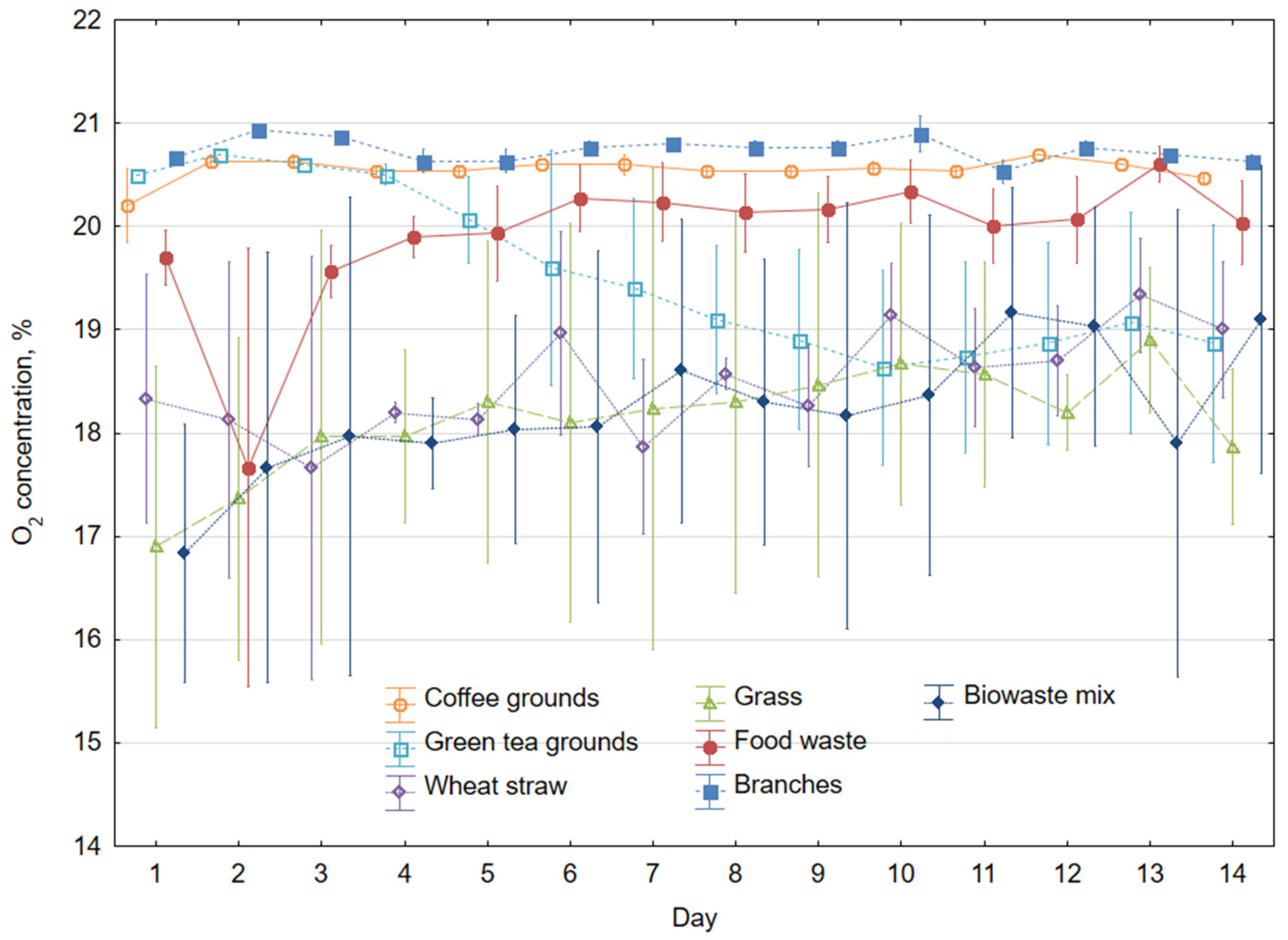
The average O2 concentration for all substrates remained above 16% throughout the entire measurement period, indicating that the material was well oxygenated (Figure 3). Two substrates, in particular, were characterized by especially high oxygen levels: coffee grounds and branches (reaching up to 21%). In the first days of measurements, the O2 concentration for green tea leaves/grounds remained at a high level. On the fifth day, a decrease in the average daily O2 content was observed, reaching about 18.63%. In the final days of the measurements, these values increased slightly (to approximately 19%). The average daily O2 concentrations for food waste also exceeded 20%. The values remained at a similar level throughout the measurement period, except on the second day, when a drastic drop was observed (to approximately 17.5%). The values for straw increased over the 14-day measurement period; however, the average daily O2 concentrations for this substrate were irregular (ranging from about 17.5% to 19.3%).
In the case of the biowaste mixture, the average daily O2 concentration ranged from 17% to 19%. Daily fluctuations in concentrations were observed during the measurements. In the first days of the study, an increase was recorded (up to 18.5%), which stabilized during the middle phase of the experiment, showing only slight variations later on (a single drop to 18%).
Irregular O2 concentration values were also recorded for grass cuttings. In the first days, a rapid increase was observed (exceeding 18%), while during the remaining period of the study, the level rose slightly (up to a maximum of 19%), with several distinct drops toward the end of the measurements (18.2% and 17.8%).

3.3. CO Production Kinetics

In most cases, the decrease in CO concentration during composting followed a first-order reaction, whereas for one compost, the Gompertz model was applied (1st repetition for grass cuttings, Table 2). The fit of the applied models varied: in some cases, the coefficient of determination (R2) exceeded 0.8, indicating a very good fit, while in others, the models explained only slightly more than half of the data variability (R2 > 0.58).
The maximum CO concentration varied depending on the substrate type. The highest values were recorded for grass cuttings (863.12 ppm), accompanied by a large standard deviation (±503.77 ppm), indicating both a high potential for CO production and considerable variability between repetitions. Wheat straw also showed a high CO production potential (626.09 ppm), although the variability was even greater, with an exceptionally high standard deviation (±1028.39 ppm). In contrast, the lowest mean maximum CO concentrations were observed for tea leaves/grounds (13.08 ppm) and branches (7.71 ppm).
Grass cuttings exhibited the highest reaction rate constant (2.920 d−1), suggesting a very rapid CO release process. Food waste followed with the second-highest rate (0.587 d−1). Lower constants were observed for coffee grounds (0.195 d−1), wheat straw (0.173 d−1), and tea leaves/grounds (0.168 d−1). The lowest values were recorded for the biowaste mixture (0.127 d−1) and branches (0.090 d−1).
Analysis of the average reaction rate demonstrated that the highest coefficient was also associated with grass cuttings (3991.1 ppm·d−1). Relatively high values were noted for wheat straw (185.8 ppm·d−1) and food waste (92.8 ppm·d−1). The lowest values were attributed to branches (0.9 ppm·d−1), tea leaves/grounds (2.4 ppm·d−1), coffee grounds, and the biowaste mixture (11.9 ppm·d−1).
The graphs illustrating the kinetics of CO production during composting of various organic waste fractions are provided in Supplementary Material File S3.

3.4. CO Mass in Bioreactors

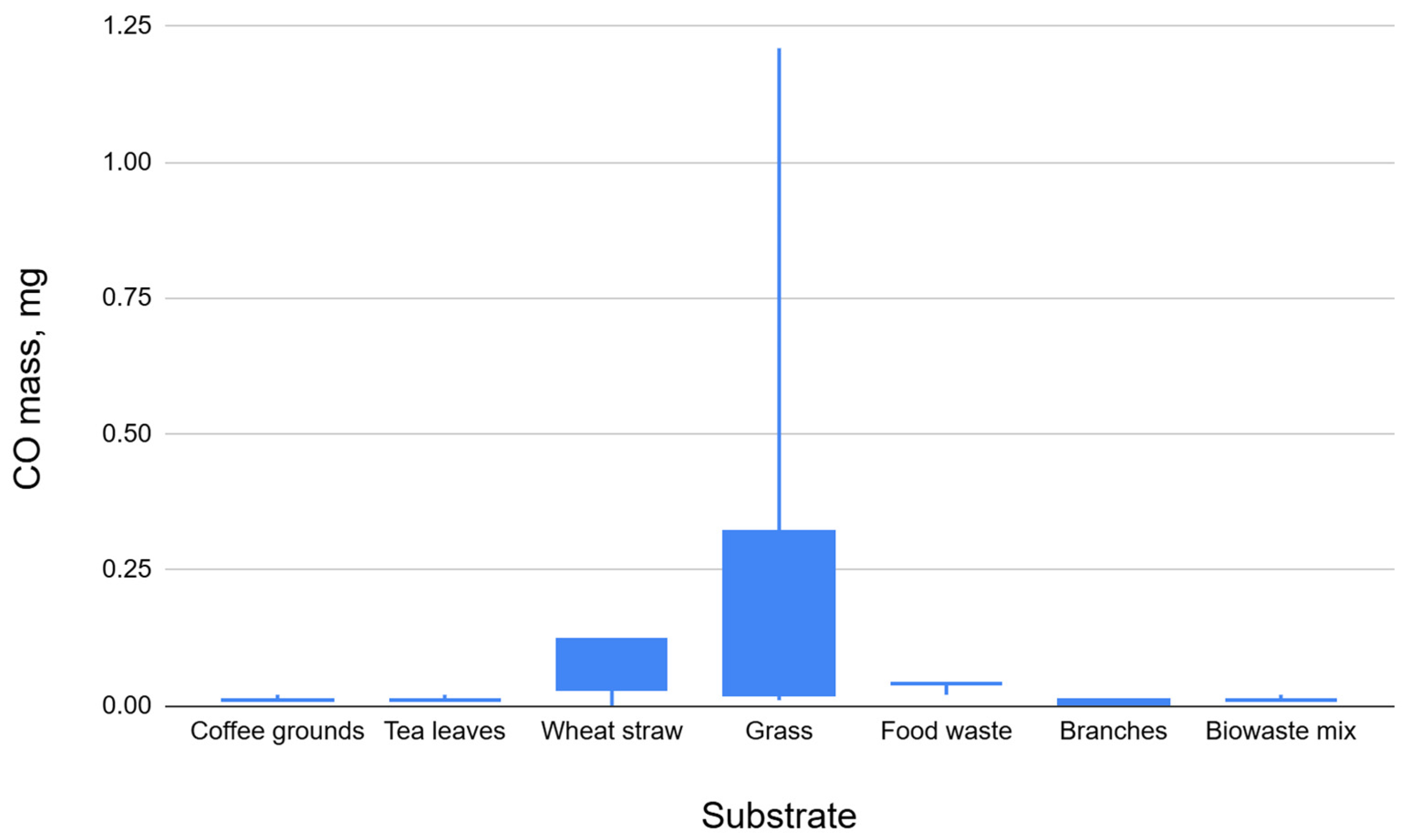
The daily CO mass observed in the reactors ranged from 0 mg to 1.21 mg, depending on the substrate used. The highest emissions were recorded in reactors containing grass cuttings, with a maximum CO mass of 1.21 mg. The average daily CO masses for the three replicates with this substrate were 0.70 mg, 0.02 mg, and 0.64 mg, respectively, indicating both high production potential and notable variability. In contrast, all other substrates—including coffee grounds, green tea leaves/grounds, wheat straw, food waste, branches, and the biowaste mixture—generated CO masses below 0.1 mg. Notably, branches exhibited virtually no CO emission potential, as daily CO production in the corresponding reactors did not exceed 0.01 mg (Figure 4).
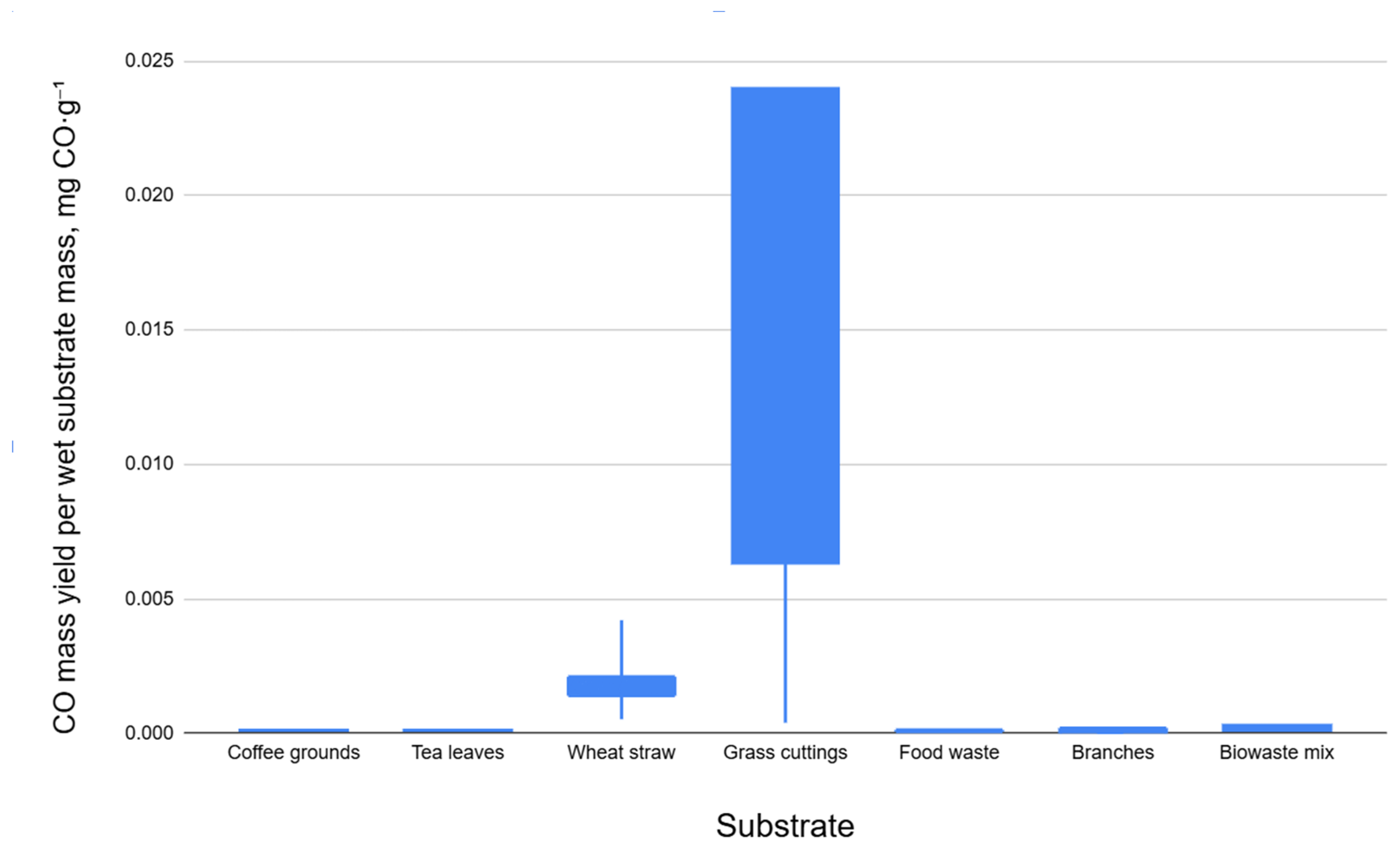
The CO production index, normalized to the wet substrate mass, ranged from 0 to 2.39 × 10⁻² mg CO·g−1, depending on the type of substrate used in the bioreactor. The highest value was observed for grass cuttings, reaching 2.39 × 10⁻² mg CO·g−1. A comparatively elevated value was also recorded for the wheat straw (0.42 × 10⁻² mg CO·g−1). In contrast, the index for all remaining substrates did not exceed 0.2 × 10⁻² mg CO·g−1 (Figure 5).

4. Discussion

In most studies on composting and aerobic biomass degradation, CO is classified as an unintended gaseous product, typically linked to anaerobic processes, compost overheating, oxygen diffusion limitations, or process imbalances [12]. In contrast, the present work reframes CO as a potentially useful biogenic gas with relevance for industrial applications. From this perspective, the separate incubation of selected organic waste fractions served as a screening approach aimed at identifying their capacity for CO generation under controlled conditions, rather than at reproducing realistic composting scenarios. This approach enables a material-oriented interpretation of CO production and provides a basis for evaluating biomass fractions as potential feedstocks for CO generation.
The efficiency of the composting process, the quality of the final product, and the profile of gaseous emissions are jointly influenced by numerous factors. These include substrate structure, moisture content, the relative abundance of readily and slowly degradable organic compounds, the C/N ratio, and nutrient balance [41]. The physicochemical characteristics of the applied substrates directly shape the activity and succession of microbial communities that drive composting, including bacteria, fungi, and protozoa [41,42]. Consequently, substrate properties regulate not only the rate of organic matter decomposition but also the quantity and temporal dynamics of CO formation during organic waste incubation.
Among the seven analyzed substrates, grass cuttings, biowaste mix, and wheat straw exhibited the highest potential for CO production, reaching peak concentrations of up to approximately 2000 ppm for grass cuttings and biowaste mix, and 1180 ppm for wheat straw. Although all three substrates are commonly applied in composting systems, they differ substantially in their physicochemical properties. This observation highlights the multiplicity of interacting factors governing the intensity of CO release during composting, varying depending on the specific feedstock.
In general, grass cuttings, despite their richness in essential nutrients such as nitrogen and phosphorus required for plant growth, are not considered an optimal standalone feedstock for composting. Their fine and compact structure frequently promotes material compaction and the formation of anaerobic zones, which may result in the production of phytotoxic compost [43] and, consequently, contribute to elevated CO emissions. However, in the present experiment, bioreactors containing grass cuttings maintained a high level of O2 availability, as daily passive aeration ensured O2 concentrations remained above 17% throughout the entire incubation period. This unexpected behavior could be associated with the moisture content of the substrate. The grass cuttings used in this study exhibited a moisture content of approximately 36%, which, according to findings reported by Nakasaki et al. [44], may facilitate not only efficient substrate aeration but also relatively low CO2 concentrations within the bioreactors (here on average ≤3%). In contrast, the authors reported that higher moisture levels in grass cuttings (approximately 70%) promoted the development of anaerobic microenvironments during composting. The material became less rigid, thereby constricting the three-dimensional pore structure required for air diffusion and ultimately leading to increased CO2 emissions. Accordingly, despite reports describing grass cuttings as a problematic single substrate in composting systems, the conditions applied in the present study show a different perspective. Grass cuttings exhibited a pronounced capacity for CO formation, indicating their suitability as a feedstock for CO production under controlled incubation conditions.
Grass cuttings alone were not the only substrate exhibiting potential utility in a composting process oriented toward CO production. Based on the CO concentration profiles observed in the present study, the second-highest CO production potential was recorded for the biowaste mix, in which grass cuttings constituted the dominant mass fraction. This suggests that, among the components of the mixture (food waste, branches, straw, and grass), grass cuttings may have played a key role in enhancing CO release. However, the elevated CO production observed for the biowaste mix was pronounced only during the first seven days of the composting process and subsequently declined to very low levels, indicating a more transient and less sustained CO production potential compared to grass cuttings composted as a single substrate.
In contrast to grass cuttings and their mix with other organic waste fractions, the third substrate exhibiting a high potential for CO production—wheat straw—despite similarities in overall organic matter and nutrient content [45], differs substantially in its structural and biochemical composition. This suggests that the availability of readily degradable organic compounds alone does not represent the dominant driver of increased CO generation. Wheat straw is dominated by recalcitrant organic carbon fractions, including lignin, cellulose, and hemicellulose, whose inherent structural complexity and physicochemical stability account for the high persistence of lignocellulosic material during composting processes [46,47]. Accordingly, the high CO production potential observed for wheat straw suggests that factors other than organic matter degradability may govern CO formation. This is further corroborated by the low CO concentrations recorded for another structurally compact and recalcitrant substrate, branches, which exhibited the lowest values among all analyzed organic waste types.
A common feature shared by all three substrates that exhibited the highest CO concentrations in the bioreactors in this study was the visible colonization by fungi. Fungal growth was particularly prominent in the outer layers of the compost, where it appeared as white or gray, fuzzy mycelial formations on the surface. According to Ashraf et al. [48], this morphological trait is characteristic of strictly aerobic compost molds, which corresponds to the aerobic nature of the composting process. The presence of fungi in the incubated bioreactors observed in this study is not surprising, as previous studies have estimated the fungal-to-prokaryotic biomass ratio in compost to be approximately 2:1 [48]. Based on research conducted by other authors, fungal genera such as Aspergillus, Trichoderma, Mucor, Penicillium, and Alternaria have been reported in composts derived from a range of substrates—whether composted individually or in combination—including sugarcane waste, tree bark, grass, leaves, spent tea, and fruit and vegetable residues [48]. Notably, in the study by other researchers, Aspergillus spp. were the most frequently isolated fungi, accounting for 43% of all microbial species identified across various composts they examined. Interestingly, Aspergillus flavus, also reported by other researchers, had already been identified as a CO-producing microorganism as early as 1963 [49].
Although the methodology used in the present study did not include microbial community characterization within the bioreactors, the consistently higher CO levels in reactors where fungal growth was observed suggest a potential role of fungal metabolism in the generation of small aromatic intermediates. In the present study, it is hypothesized that, under certain conditions, these metabolites may undergo further transformation [50,51], leading to the release of CO as a by-product. This hypothesis is further supported by literature indicating that the introduction or emergence of fungi as decomposers of lignin and cellulose has proven particularly effective in composting processes involving substrates with suboptimal C/N ratios [52,53]. This includes composting experiments with wheat straw [54], which aligns with the findings of the present study, where wheat straw was composted both individually and as a component of a biowaste mix in the fungal-colonized reactors, especially since the incubation temperature of 45 °C falls within the optimal range for fungal-mediated lignin degradation [55]. However, this hypothesis requires further verification in future studies.
To further contextualize the present results on CO production, a comparison of kinetics was made with a recently published study investigating CO production during composting of mixed biowaste composed of leaves, fruits and vegetables, tree and shrub prunings, grass, and withered flowers [9]. In the present study, a biowaste mix of different composition—consisting of branches, grass, wheat straw, and food waste—was also examined alongside individual substrates. Despite these compositional differences, both studies yielded comparable CO production characteristics for the mixed substrates. In the cited study, the mixed biowaste reached a maximum average CO concentration of 103.1 ppm, a reaction rate constant of 0.185 d−1, and an average CO production rate of 18.5 ppm·d−1, whereas in the present study, the corresponding values for the biowaste mix were 97.39 ppm, 0.127 d−1, and 11.9 ppm·d−1, respectively. By contrast, composting of individual substrates in the present work resulted in highly divergent CO production dynamics, with grass cuttings exhibiting extremely high values (maximum average CO concentration of 863.1 ppm, reaction rate constant of 2.920 d−1, and average CO production rate of 3991.1 ppm·d−1) and branches showing consistently minimal CO generation (7.7 ppm, 0.090 d−1, and 0.7 ppm·d−1, respectively). From a technological perspective, these findings suggest that mixed biowaste streams tend to buffer substrate-specific effects and lead to more stable CO production. In contrast, single, homogeneous substrates enable substantially higher but also more variable and dynamic CO generation, a distinction that is critical for the design of systems aimed at controlled CO recovery.
The C/N ratio may be regarded as one of the primary factors controlling microbial activity [56] and, consequently, CO production during composting. In the present study, clear differences in CO production kinetics among the investigated substrates were closely related to their initial C/N ratios. Branches exhibited a high C/N value (37), indicating nitrogen limitation, which resulted in slow organic matter degradation and low CO production rates. In contrast, grass clippings showed a C/N ratio of 20, falling within the range favorable for rapid microbial growth, which was reflected in enhanced CO production. Substrates reported in the referenced literature were characterized by C/N values of approximately 24, corresponding to moderate process intensity and intermediate CO production kinetics [9]. For coffee grounds, literature data indicate a progressive decrease in the C/N ratio during composting, often to values below 25 [57], which promotes high microbial activity and metabolic intensity. In the present study, the C/N ratio of coffee grounds decreased from 19.48 to 17.66 after 14 days of composting, indicating conditions conducive to further intensification of carbon mineralization and a potential increase in CO production with prolonged process duration [57].
Changes in the C/N ratio were directly linked to transformations in the elemental composition of the substrates, primarily driven by carbon mineralization and the relative enrichment of nitrogen in the dry matter [58]. Literature data on grass clippings composting report decreases in carbon, hydrogen, and nitrogen contents, accompanied by a reduction in the C/N ratio from 11.83 to 10.11, reflecting advanced biochemical transformations during the process [59]. In the case of food waste, the reported initial elemental composition (47.9% carbon and 3.0% nitrogen; C/N ≈ 16) showed only minor changes after a short, three-day composting period, indicating an early stage of degradation [59]. In contrast, the 14-day composting process applied in the present study resulted in more pronounced changes in elemental composition and a decrease in the C/N ratio to approximately 9, indicating a more advanced stage of organic matter mineralization. These results demonstrate that both substrate selection and process duration are key parameters for enhancing composting intensity and maximizing CO production potential.
Several limitations must be considered when interpreting the findings of this study. It should be acknowledged that the applied gas sampling frequency during composting may have resulted in an underestimation of short-lived CO emission peaks occurring between measurement points. Higher-frequency or continuous monitoring could provide a more detailed resolution of transient CO dynamics and improve kinetic interpretation by capturing rapid CO formation events. Such an approach will be considered in future studies.
Another important limitation pertains to the scale of the conducted study. A key challenge in translating laboratory-scale composting results to industrial-scale applications lies in the level of process control. Laboratory conditions allow for precise regulation of key parameters such as temperature, oxygen availability, and moisture content. In contrast, maintaining these parameters at desired levels in full-scale systems is considerably more difficult due to environmental variability and system complexity. Furthermore, there is currently a lack of gas capture methods specifically designed to address CO emissions during composting. Existing technologies do not adequately consider the unique properties of CO, including its physicochemical behavior and production kinetics. Therefore, there is a need for the development of novel gas capture solutions tailored specifically to CO dynamics in composting environments. Moreover, although enclosed composting systems are classified as Best Available Techniques (BAT) for emission control, they also introduce increased occupational safety risks related to CO accumulation. This underscores the importance of implementing advanced monitoring systems and robust safety protocols to ensure worker safety in enclosed composting operations.

5. Conclusions

This study confirms that different fractions of organic waste exhibit a measurable potential for CO generation during laboratory-scale composting, with differences observed among substrates. Grass cuttings, the biowaste mixture, and wheat straw emerged as the most promising substrates, with maximum CO concentrations reaching up to 2000 ppm for both grass cuttings and the biowaste mix, and approximately 1180 ppm for wheat straw. The highest CO mass yield was observed in reactors with grass cuttings, reaching up to 1.21 mg. In contrast, branches and tea leaves/grounds showed negligible CO production, with concentrations below 10–15 ppm and daily CO masses generally below 0.01 mg.
The results suggest that CO generation during composting is not solely linked to the degradation of readily biodegradable organic matter or to anaerobic conditions. High CO concentrations were observed under well-aerated conditions with high O2 and low CO2 levels, and even substrates with an apparently optimal C/N ratio (biowaste mix) generated measurable amounts of CO. Visible fungal colonization in reactors with the highest CO emissions indicates that fungal activity may play an important role in CO formation, particularly during the degradation of lignocellulosic materials such as wheat straw.
Overall, the findings represent a first step toward assessing composting as a potential process for biogenic CO generation and provide a basis for preliminary techno-economic evaluation of such systems. Future research should focus on optimizing mixtures of the most promising substrates, particularly grass cuttings and wheat straw. It is also recommended to extend the composting period beyond the initial 14 days to better capture the full CO production potential. Additionally, the role of fungi in CO generation should be systematically examined, including microbial identification and analysis of metabolic pathways. These efforts should be combined with a parallel assessment of compost quality.

Supplementary Materials

The following supporting information can be downloaded at: https://www.mdpi.com/article/10.3390/en19041082/s1, Supplementary Material File S1: An Excel spreadsheet showing kinetics calculation of CO production; Supplementary Material File S2: An Excel spreadsheet with 7 sheets showing calculations of daily emitted CO mass; Supplementary Material File S3: Images 1–21 showing CO production kinetics for each reactor.

Author Contributions

Conceptualization, R.C., K.S.; methodology, K.S.; formal analysis, R.C., K.S.; investigation, R.C.; resources, R.C., K.S.; data curation, R.C., K.S.; writing—original draft preparation, R.C., K.S.; writing—review and editing, K.S.; visualization, R.C.; supervision, K.S. All authors have read and agreed to the published version of the manuscript.

Funding

This research received no external funding. The APC is financed by Wrocław University of Environmental and Life Sciences. The funders had no role in the design of the study; in the collection, analyses, or interpretation of data; in the writing of the manuscript; or in the decision to publish the results.

Institutional Review Board Statement

Not applicable.

Informed Consent Statement

Not applicable.

Data Availability Statement

Raw data supporting reported results can be found in the repository: https://doi.org/10.57755/m8r8-xv22 and https://doi.org/10.57755/b9wc-rb46. Additional generated data are presented in the Supplementary Materials.

Acknowledgments

The presented article was prepared as part of the activity of the leading research team—Waste and Biomass Valorization Group (WBVG).

Conflicts of Interest

The authors declare no conflicts of interest.

References

  1. Savioli, G.; Gri, N.; Ceresa, I.F.; Piccioni, A.; Zanza, C.; Longhitano, Y.; Ricevuti, G.; Daccò, M.; Esposito, C.; Candura, S.M. Carbon Monoxide Poisoning: From Occupational Health to Emergency Medicine. J. Clin. Med. 2024, 13, 2466. [Google Scholar] [CrossRef]
  2. Dent, M.R.; Rose, J.J.; Tejero, J.; Gladwin, M.T. Carbon Monoxide Poisoning: From Microbes to Therapeutics. Annu. Rev. Med. 2024, 75, 337–351. [Google Scholar] [CrossRef] [PubMed]
  3. Ghenai, C.; Inayat, A. Sustainable Alternative Syngas Fuel; BoD—Books on Demand: London, UK, 2019; ISBN 978-1-78984-580-8. [Google Scholar]
  4. Khlifi, S.; Pozzobon, V.; Lajili, M. A Comprehensive Review of Syngas Production, Fuel Properties, and Operational Parameters for Biomass Conversion. Energies 2024, 17, 3646. [Google Scholar] [CrossRef]
  5. Leuter, P.; Fendt, S.; Spliethoff, H. Requirements on Synthesis Gas from Gasification for Material and Energy Utilization: A Mini Review. Front. Energy Res. 2024, 12, 1382377. [Google Scholar] [CrossRef]
  6. Abdoulmoumine, N.; Adhikari, S.; Kulkarni, A.; Chattanathan, S. A Review on Biomass Gasification Syngas Cleanup. Appl. Energy 2015, 155, 294–307. [Google Scholar] [CrossRef]
  7. Asadullah, M. Barriers of Commercial Power Generation Using Biomass Gasification Gas: A Review. Renew. Sustain. Energy Rev. 2014, 29, 201–215. [Google Scholar] [CrossRef]
  8. Haarstad, K.; Bergersen, O.; Sørheim, R. Occurrence of Carbon Monoxide during Organic Waste Degradation. J. Air Waste Manag. Assoc. 2006, 56, 575–580. [Google Scholar] [CrossRef]
  9. Sobieraj, K.; Stegenta-Dąbrowska, S.; Zafiu, C.; Binner, E.; Białowiec, A. Carbon Monoxide Production during Bio-Waste Composting under Different Temperature and Aeration Regimes. Materials 2023, 16, 4551. [Google Scholar] [CrossRef]
  10. Andersen, J.K.; Boldrin, A.; Samuelsson, J.; Christensen, T.H.; Scheutz, C. Quantification of Greenhouse Gas Emissions from Windrow Composting of Garden Waste. J. Environ. Qual. 2010, 39, 713–724. [Google Scholar] [CrossRef]
  11. Hellebrand, H.J.; Schade, G.W. Carbon Monoxide from Composting Due to Thermal Oxidation of Biomass. J. Environ. Qual. 2008, 37, 592–598. [Google Scholar] [CrossRef]
  12. Hellebrand, H.J. Emission of Nitrous Oxide and Other Trace Gases during Composting of Grass and Green Waste. J. Agric. Eng. Res. 1998, 69, 365–375. [Google Scholar] [CrossRef]
  13. Hellebrand, H.J.; Kalk, W.-D. Emission of Carbon Monoxide during Composting of Dung and Green Waste. Nutr. Cycl. Agroecosystems 2001, 60, 79–82. [Google Scholar] [CrossRef]
  14. Sobieraj, K.; Giez, K.; Koziel, J.A.; Białowiec, A. Assessment of Emissions and Potential Occupational Exposure to Carbon Monoxide during Biowaste Composting. PLoS ONE 2024, 19, e0290206. [Google Scholar] [CrossRef]
  15. Sobieraj, K.; Żebrowska-Różańska, P.; Siedlecka, A.; Łaczmański, Ł.; Białowiec, A. Analysis of Microbial Community Potentially Involved in Carbon Monoxide Production in Compost and Its Functional Assessment: Utilized Pathways, Enzymes, and Genes. Sci. Total Environ. 2025, 968, 178860. [Google Scholar] [CrossRef] [PubMed]
  16. Sobieraj, K.; Derkacz, D.; Krasowska, A.; Białowiec, A. Isolation and Identification of Carbon Monoxide Producing Microorganisms from Compost. Waste Manag. 2024, 182, 250–258. [Google Scholar] [CrossRef] [PubMed]
  17. Stegenta-Dąbrowska, S.; Randerson, P.F.; Christofides, S.R.; Białowiec, A. Carbon Monoxide Formation during Aerobic Biostabilization of the Organic Fraction of Municipal Solid Waste: The Influence of Technical Parameters in a Full-Scale Treatment System. Energies 2020, 13, 5624. [Google Scholar] [CrossRef]
  18. Medrano-García, J.D.; Ruiz-Femenia, R.; Caballero, J.A. Multi-objective optimization of a carbon dioxide utilization superstructure for the synthesis of formic and acetic acid. In Computer Aided Chemical Engineering; Elsevier: Amsterdam, The Netherlands, 2018; Volume 43, pp. 1419–1424. [Google Scholar] [CrossRef]
  19. Kildahl, H.; Wang, L.; Tong, L.; Cao, H.; Ding, Y. Industrial Carbon Monoxide Production by Thermochemical CO2 Splitting—A Techno-Economic Assessment. J. CO2 Util. 2022, 65, 102181. [Google Scholar] [CrossRef]
  20. Djenane, D.; Roncalés, P. Carbon Monoxide in Meat and Fish Packaging: Advantages and Limits. Foods 2018, 7, 12. [Google Scholar] [CrossRef]
  21. Dang, J.; Chou, K. A Model for the Reduction of Metal Oxides by Carbon Monoxide. ISIJ Int. 2018, 58, 585–593. [Google Scholar] [CrossRef]
  22. Stegenta-Dąbrowska, S.; Drabczyński, G.; Sobieraj, K.; Koziel, J.A.; Białowiec, A. The Biotic and Abiotic Carbon Monoxide Formation During Aerobic Co-Digestion of Dairy Cattle Manure with Green Waste and Sawdust. Front. Bioeng. Biotechnol. 2019, 7, 283. [Google Scholar] [CrossRef]
  23. Sobieraj, K.; Steczkiewicz, Z. Expression Analysis of the Gene Encoding the Carbon Monoxide Dehydrogenase (CODH) Enzyme in Compost Samples; Wroclaw University of Environmental and Life Sciences: Wrocław, Poland, 2025. [Google Scholar] [CrossRef]
  24. Conrad, R.; Seiler, W. Role of Microorganisms in the Consumption and Production of Atmospheric Carbon Monoxide by Soil. Appl. Environ. Microbiol. 1980, 40, 437–445. [Google Scholar] [CrossRef]
  25. Sobieraj, K.; Stegenta-Dąbrowska, S.; Luo, G.; Koziel, J.A.; Białowiec, A. Carbon Monoxide Fate in the Environment as an Inspiration For Biorefinery Industry: A Review. Front. Environ. Sci. 2022, 10, 822463. [Google Scholar] [CrossRef]
  26. Sobieraj, K.; Stegenta-Dąbrowska, S.; Luo, G.; Koziel, J.A.; Białowiec, A. Biological Treatment of Biowaste as an Innovative Source of CO—The Role of Composting Process. Front. Bioeng. Biotechnol. 2023, 11, 1126737. [Google Scholar] [CrossRef] [PubMed]
  27. Valta, K.; Sotiropoulos, A.; Malamis, D.; Kosanovic Milickovic, T.; Antonopoulou, G.; Alexandropoulou, M.; Jonuzay, S.; Lyberatos, G.; Loizidou, M. Assessment of the Effect of Drying Temperature and Composition on the Biochemical Methane Potential of In-House Dried Household Food Waste. Waste Manag. Res. 2019, 37, 461–468. [Google Scholar] [CrossRef] [PubMed]
  28. Abdul Kadir, K.; Wahidah, N.; Jamaludin, S. An Overview of Organic Waste in Composting. MATEC Web Conf. 2016, 47, 05025. [Google Scholar] [CrossRef]
  29. PN EN 14346; 2011 Characterization of Waste—Calculation of Dry Mat. Polish Committee for Standardization: Warsaw, Poland, 2013.
  30. PN-EN 15935:2022-01; Soil, Waste, Treated Bio-Waste and Sewage Sludge. Polish Committee for Standardization: Warsaw, Poland, 2022.
  31. UNE-EN ISO 16948:2015; Solid Biofuels—Determination of Total Content of Carbon, Hydrogen and Nitrogen. ISO: Geneva, Switzerland, 2015. Available online: https://cdn.standards.iteh.ai/samples/58004/c961056749c340a48a61976079c7aa9f/ISO-16948-2015.pdf (accessed on 19 January 2026).
  32. Binner, E.; Böhm, K.; Lechner, P. Large Scale Study on Measurement of Respiration Activity (AT4) by Sapromat and OxiTop. Waste Manag. 2012, 32, 1752–1759. [Google Scholar] [CrossRef]
  33. Hanusz, Z.; Siarkowski, Z.; Ostrowski, K. Zastosowanie Modelu Gompertz’a w Inżynierii Rolniczej. Inżynieria Rol. 2008, 12, 71–77. [Google Scholar]
  34. Sobieraj, K. Optimization of the Organic Matter Content and Temperature in a Bioreactor to Enhance Carbon Monoxide Production During the Initial Phase of Food Waste Composting. Molecules 2025, 30, 2807. [Google Scholar] [CrossRef]
  35. Massaro Sousa, L.; Ferreira, M. Flowability of Dry Spent Coffee Ground (SCG) Powders. In Proceedings of the 8th World Congress on Particle Technology, Orlando, FL, USA, 22–26 April 2018. [Google Scholar]
  36. Charrondiere, U.R.; Haytowitz, D.; Stadlmayr, B. FAO/INFOODS Density Database Version 2; FAO: Rome, Italy; INFOODS: Rome, Italy, 2012. [Google Scholar]
  37. Wilson, L.P.S.; Sokhansanj, S.; Bi, X.; Lim, C.J.; Naimi, L.J.; Mani, S.; Womac, A.R.; Ye, X.P.; Narayan, S.; Hoque, M. Bulk density of wet and dry wheat straw and switchgrass particles. Appl. Eng. Agric. 2008, 24, 351–358. [Google Scholar] [CrossRef]
  38. Kivadanavar, S.V. A Novel Approach to Food Waste Management. Int. J. Sci. Res. Sci. Technol. 2017, 3, 184–187. [Google Scholar]
  39. Typical Calorific Values of Fuels. Forest Research. Available online: https://www.forestresearch.gov.uk/tools-and-resources/fthr/biomass-energy-resources/reference-biomass/facts-figures/typical-calorific-values-of-fuels/ (accessed on 19 January 2026).
  40. Sobieraj, K.; Cielecki, R. Photographic Documentation of Fungal Growth in Bioreactors During Composting of Organic Waste Substrates; Wroclaw University of Environmental and Life Sciences: Wrocław, Poland, 2025. [Google Scholar] [CrossRef]
  41. Azim, K.; Soudi, B.; Boukhari, S.; Perissol, C.; Roussos, S.; Thami Alami, I. Composting Parameters and Compost Quality: A Literature Review. Org. Agr. 2018, 8, 141–158. [Google Scholar] [CrossRef]
  42. Neher, D.A.; Weicht, T.R.; Bates, S.T.; Leff, J.W.; Fierer, N. Changes in Bacterial and Fungal Communities across Compost Recipes, Preparation Methods, and Composting Times. PLoS ONE 2013, 8, e79512. [Google Scholar] [CrossRef] [PubMed]
  43. Michel, F.C., Jr.; Forney, L.J.; Huang, A.J.-F.; Drew, S.; Czuprenski, M.; Lindeberg, J.D.; Reddy, C.A. Effects of Turning Frequency, Leaves to Grass Mix Ratio and Windrow vs. Pile Configuration on the Composting of Yard Trimmings. Compos. Sci. Util. 1996, 4, 26–43. [Google Scholar] [CrossRef]
  44. Nakasaki, K.; Aoki, N.; Kubota, H. Accelerated Composting of Grass Clippings by Controlling Moisture Level. Waste Manag. Res. 1994, 12, 13–20. [Google Scholar] [CrossRef]
  45. Fan, T.; Zhang, X.; Wan, Y.; Deng, R.; Zhu, H.; Wang, X.; Wang, S.; Wang, X. Effect of Different Livestock Manure Ratios on the Decomposition Process of Aerobic Composting of Wheat Straw. Agronomy 2023, 13, 2916. [Google Scholar] [CrossRef]
  46. Xia, Z.; Li, J.; Lu, H.; Zhang, J.; Mi, Q.; Wu, J.; Zheng, X.; Zhang, J. Natural Grass to All-Biomass Biodegradable Tape and Superior Oil-Water Separation Fabric. Resour. Conserv. Recycl. 2022, 182, 106320. [Google Scholar] [CrossRef]
  47. Wang, L.; Wang, T.; Xing, Z.; Zhang, Q.; Niu, X.; Yu, Y.; Teng, Z.; Chen, J. Enhanced Lignocellulose Degradation and Composts Fertility of Cattle Manure and Wheat Straw Composting by Bacillus Inoculation. J. Environ. Chem. Eng. 2023, 11, 109940. [Google Scholar] [CrossRef]
  48. Ashraf, R.; Shahid, F.; Ali, T.A. Association of fungi, bacteria and actinomycetes with different composts. Pak. J. Bot. 2007, 39, 2141–2151. [Google Scholar]
  49. Simpson, F.J.; Narasimhachari, N.; Westlake, D.W.S. Degradation of Rutin by Aspergillus Flavus: The Carbon Monoxide Producing System. Can. J. Microbiol. 1963, 9, 15–25. [Google Scholar] [CrossRef]
  50. Sajjad, K.; Kainaat, H.; Ehsan, A.; Sukmawati, D.; Anvar, A.H.; Shakir, H.A.; Khan, M.; Franco, M.; Irfan, M. LIGNINASES: Current Status, Production, Optimization, Applications and Future Prospects. J. Umm Al-Qura Univ. Appll. Sci. 2025. [Google Scholar] [CrossRef]
  51. Microbial Degradation of Lignin: Role of Lignin Peroxidase, Manganese Peroxidase, and Laccase. Available online: https://www.jstage.jst.go.jp/article/pjab/80/5/80_5_204/_article (accessed on 17 January 2026).
  52. Kumar, V.; Prasher, I.B.; Kumar, V.; Prasher, I.B. Ligninolytic Enzymes Production by Endophytic Fungus Diaporthe Phaseolorum (Desm.) Sacc. under the Influence of Different Carbon and Nitrogen Sources. Stud. Fungi 2021, 6, 531–542. [Google Scholar] [CrossRef]
  53. Zhai, S.; Wang, K.; Yu, F.; Gao, Z.; Yang, X.; Cao, X.; Shaghaleh, H.; Hamoud, Y.A. Effects of Trichoderma Harzianum Combined with Phanerochaete Chrysosporium on Lignin Degradation and Humification during Chicken Manure and Rice Husk Composting. Front. Microbiol. 2025, 16, 1515931. [Google Scholar] [CrossRef]
  54. Hart, T.D.; De Leij, F.A.A.M.; Kinsey, G.; Kelley, J.; Lynch, J.M. Strategies for the Isolation of Cellulolytic Fungi for Composting of Wheat Straw. World J. Microbiol. Biotechnol. 2002, 18, 471–480. [Google Scholar] [CrossRef]
  55. Ryckeboer, J.; Mergaert, J.; Vaes, K.; Klammer, S.; De Clercq, D.; Coosemans, J.; Insam, H.; Swings, J. A Survey of Bacteria and Fungi Occurring during Composting and Self-Heating Processes. Ann. Microbiol. 2003, 53, 349–410. [Google Scholar]
  56. Xie, Y.; Zhou, L.; Dai, J.; Chen, J.; Yang, X.; Wang, X.; Wang, Z.; Feng, L. Effects of the C/N Ratio on the Microbial Community and Lignocellulose Degradation, during Branch Waste Composting. Bioprocess Biosyst. Eng. 2022, 45, 1163–1174. [Google Scholar] [CrossRef]
  57. Ang, Y.C.; Hudson, H.J. The fungi of wheat straw compost. Ecol. Stud. Trans. Br. Mycol. Soc. 1967, 50, 649–666. [Google Scholar]
  58. Li, R.; Ding, W.; Dong, S.; Cong, W.-F.; Zhang, F.; Lambers, H. Organic Carbon to Nitrogen Ratio Influences the Response of Soil N2 Fixation to Nutrient Enrichment: A Meta-Analysis. J. Soil Sci. Plant Nutr. 2025, 25, 7346–7359. [Google Scholar] [CrossRef]
  59. Muhammad Firdaus, A.R.; Abu Samah, M.A.; Abd Hamid, K.B. Chns Analysis towards Food Waste in Composting. J. CleanWAS 2018, 1, 6–10. [Google Scholar] [CrossRef]
Figure 1. CO concentration during composting of different organic waste fractions (average ± standard deviation).
Energies 19 01082 g001
Figure 2. CO2 concentration during composting of different organic waste fractions (average ± standard deviation).
Energies 19 01082 g002
Figure 3. Oxygen concentration during composting of different organic waste fractions (average ± standard deviation).
Energies 19 01082 g003
Figure 4. CO mass yield in bioreactors with different organic substrates (average ± standard deviation).
Energies 19 01082 g004
Figure 5. Specific CO production (mg CO·g−1) for different composting substrates.
Energies 19 01082 g005
Table 1. Characterization of different organic waste fractions used in the study.
MaterialDry Matter (d.m.), %Organic Dry Matter (o.d.m.), % d.m.C, %H, %N, %S, %AT4, mg O2∙g d.m.−1C/N
Ratio, -
SubstratesCoffee grounds20.55 ± 13.5096.26 ± 0.0949.69 ± 0.138.07 ± 0.032.55 ± 0.181.31 ± 0.0434.3 ± 2.119.49
Tea leaves/grounds37.59 ± 10.5395.99 ± 0.3548.53 ± 1.777.73 ± 0.452.89 ± 0.661.19 ± 0.1320.8 ± 0.116.80
Wheat straw32.50 ± 1.8895.39 ± 0.0644.14 ± 1.366.68 ± 0.280.58 ± 0.090.75 ± 0.4839.2 ± 0.576.10
Grass cuttings64.05 ± 9.8488.23 ± 0.4742.84 ± 0.756.40 ± 0.422.11 ± 0.081.09 ± 0.0523.2 ± 0.220.30
Food waste24.90 ± 0.1994.51 ± 1.0843.28 ± 0.437.19 ± 0.103.73 ± 0.531.23 ± 0.0527.1 ± 0.711.60
Branches82.45 ± 0.6195.39 ± 0.0644.85 ± 2.437.20 ± 0.081.22 ± 0.081.19 ± 0.0312.0 ± 0.236.76
Biowaste mix34.99 ± 0.0294.55 ± 0.3246.57 ± 0.207.23 ± 0.181.29 ± 0.311.19 ± 0.1318.1 ± 2.036.10
ProductsCoffee grounds26.69 ± 2.6696.62 ± 0.1949.79 ± 0.758.12 ± 0.182.82 ± 0.221.21 ± 0.2133.7 ± 5.717.65
Tea leaves/grounds20.30 ± 1.0795.53 ± 0.3649.07 ± 1.547.69 ± 0.143.73 ± 0.331.22 ± 0.1120.2 ± 0.813.15
Wheat straw22.40 ± 1.6895.08 ± 0.2444.21 ± 1.636.60 ± 0.251.07 ± 0.131.16 ± 0.3138.8 ± 0.541.31
Grass cuttings25.12 ± 4.4583.09 ± 1.8140.20 ± 3.886.33 ± 0.702.50 ± 0.351.10 ± 0.1420.2 ± 0.816.08
Food waste29.85 ± 6.7294.86 ± 0.9249.50 ± 5.918.80 ± 1.195.67 ± 1.361.54 ± 0.2324.6 ± 0.68.73
Branches91.98 ± 1.0494.16 ± 1.4446.76 ± 1.187.08 ± 0.361.51 ± 0.311.27 ± 0.1712.0 ± 0.930.97
Biowaste mix34.65 ± 14.7592.49 ± 1.0044.10 ± 2.086.86 ± 0.391.88 ± 0.241.26 ± 0.0816.5 ± 1.523.45
Table 2. Kinetic parameters of CO production during composting of different organic waste fractions.
MaterialR2Reaction OrderCCOmax, ppmk, d−1a = k⋅CCO max, ppm⋅d−1
Coffee grounds0.911st order66.36 ± 25.920.195 ± 0.06511.9 ± 1.6
0.641st order
0.861st order
Tea leaves/grounds0.621st order13.08 ± 12.940.168 ± 0.0932.4 ± 3.0
0.861st order
0.831st order
Wheat straw0.671st order626.09 ± 1028.390.173 ± 0.115185.8 ± 316.3
0.771st order
0.671st order
Grass cuttings0.51Gompertz Model863.12 ± 503.772.920 ± 4.4723991.1 ± 6517.6
0.911st order
0.711st order
Food waste0.951st order119.89 ± 74.370.587 ± 0.55592.8 ± 119.4
0.821st order
0.791st order
Branches0.671st order7.71 ± 0.840.090 ± 0.0240.7 ± 0.1
0.581st order
0.801st order
Biowaste mix0.731st order97.39 ± 75.350.127 ±0.01211.9 ± 8.2
0.541st order
0.781st order
Disclaimer/Publisher’s Note: The statements, opinions and data contained in all publications are solely those of the individual author(s) and contributor(s) and not of MDPI and/or the editor(s). MDPI and/or the editor(s) disclaim responsibility for any injury to people or property resulting from any ideas, methods, instructions or products referred to in the content.