1. Introduction
Recent decades have seen a striking escalation in the occurrence, intensity, and geographical coverage of heatwaves throughout the Northern Hemisphere. This trend has been particularly pronounced across regions such as Europe, Scandinavia, and North America. Large, simultaneous heatwaves have become six times more frequent since 1979, accompanied by a 46% expansion in their geographic coverage and a 17% rise in peak intensity [
1,
2]. One illustrative example was the summer of 2018, when prolonged extreme heat swept across central and northern Europe, shattering historical temperature records and triggering widespread disruptions. These types of events, once considered rare, are now significantly more probable due to the influence of human-driven climate change and could become an almost yearly occurrence should global temperatures rise by 2 °C above preindustrial levels [
3,
4]. Notably, Europe stands out as an emerging epicentre, where the pace of heatwave intensification is outpacing that of other northern midlatitude regions, particularly in central Scandinavia, western Europe, and parts of Asia [
5].
Latvia’s climate has already warmed significantly in recent decades; according to 2024 research by the Latvian Environment, Geology and Meteorology Centre (LEGMC) [
6], the annual average air temperature in Latvia during the latest climate normal period (1991–2020) is 1.2 °C higher than in the historical reference period of 1961–1990. Warming has been evident in all seasons, though the summer season has seen a somewhat smaller increase (approximately +1 °C) compared to winter. Even so, extreme heat events have become more frequent. For example, the number of hot summer days (days with maximum temperature above +25 °C) has already increased by roughly 1–5 days per year compared to the earlier climate period (1961–1990). Tropical nights (when nightly lows stay above +20 °C) used to be extremely rare in Latvia—on average well below one per year—but have become more common in recent decades. Notably, 14 tropical nights were recorded in both 2010 and 2018, which is a national record for the number of such hot nights in a year. Climate model projections indicate that warming will continue throughout the 21st century. By the end of the century, Latvia’s average annual temperature is expected to rise by several more degrees. Depending on the emissions scenario (from a slight to significant climate change pathway), the annual mean temperature by 2071–2100 could be about 2.8 °C, 3.7 °C, or 4.9 °C higher than the 1961–1990 baseline.
Table 1 below summarizes key climate change indicators under three end-of-century scenarios (assuming slight, moderate, and significant climate change), alongside the historical baseline and recent observed changes.
Rising global temperatures and the increasing prevalence of heatwaves are turning overheating into a critical issue for buildings originally optimized for colder climates (such as hospitals, schools, and residential housing) in Northern regions. Designed with an emphasis on heat retention, these structures are typically highly insulated and airtight, making them ill-equipped to handle elevated summer temperatures. The primary drivers of overheating in such buildings include higher ambient temperatures, substantial solar heat gains (particularly through large, glazed areas), elevated internal heat loads from occupants and equipment, and limited ventilation capacity. Modern buildings (especially newly built, renovated, or retrofitted ones) tend to be more susceptible to overheating than older, less insulated structures [
7,
8,
9,
10]. Although high levels of insulation and airtightness enhance energy efficiency, they also limit passive heat dissipation, thus increasing vulnerability during warmer seasons and extreme heat events [
11,
12,
13].
Evidence from cold and temperate Europe and Nordic countries indicates that dwellings designed for winter heat retention are now at high risk of summertime overheating, particularly during heatwaves and in upper-storey spaces or rooms located beneath roofs [
14,
15,
16]. Highly insulated and airtight nZEB, Passivhaus, or deeply retrofitted buildings have been shown to experience indoor temperatures approximately 1–2.5 °C higher and a substantially greater number of overheating hours compared with less insulated building stock when ventilation and solar shading are insufficient [
17,
18]. In some Nordic apartment buildings, indoor temperatures have been observed to exceed outdoor conditions (“superheating”), with average indoor temperatures above 27 °C occurring even when daily mean outdoor temperatures were around 19 °C [
14,
19]. These effects are primarily driven by strong solar gains through south-facing glazing, long daylight hours at high latitudes, limited effectiveness of night-time ventilation, urban heat island effects, and internal heat gains from occupants, appliances, and cooking activities [
15,
20].
The problem is further intensified in urban areas due to heat island effects and on higher floors of multi-story buildings, where heat accumulation is more pronounced [
8].
Overheating leads to thermal discomfort and negatively affect cognitive function, concentration, and alertness, ultimately reducing productivity and contributing to higher rates of absenteeism in workplaces and educational institutions [
21,
22]. Objective performance drops 6–10% when indoor temps rise from ~24 °C to 26–28 °C even when people feel thermally comfortable [
23]; at 28 °C plus high VOCs, task errors increase ~5% [
24]. Elevated indoor temperatures are associated with a heightened risk of heat-related health conditions, such as heat exhaustion, heat stroke, and dehydration, as well as increased hospital admissions and mortality rates, especially during periods of extreme heat [
25,
26]. Many health effects (respiratory distress, dementia symptoms, diabetes management) worsen somewhere between 26–32 °C indoors; 26 °C often used as a precautionary upper limit for at-risk groups [
27]. Severe heatwaves across Europe and other regions have led to tens of thousands of excess deaths, the majority of which occurred indoors, disproportionately affecting vulnerable populations such as the elderly, chronically ill, and socially isolated individuals [
28,
29]. Targeted interventions and enhancements in building design are critical to safeguarding vulnerable populations from the growing risks associated with indoor overheating.
Scientific literature consistently highlights that passive mitigation strategies (external shading, night-time ventilation, natural airflow, phase change materials, and low-temperature radiant cooling systems) are among the most effective, energy-efficient, and practical solutions. These measures, particularly when combined, outperform individual interventions and can meet or even exceed thermal comfort standards, even under increasingly extreme weather conditions.
Table 2 presents a review of scientific literature on mitigation strategies.
The performance of overheating mitigation strategies depends on several contextual factors, including building type, orientation, glazing area, user behaviour, and local climate conditions. Dynamic and occupant-responsive systems generally exhibit improved effectiveness, as they can adapt to changing internal and external conditions. While passive measures are often sufficient in many scenarios, projected climate warming may necessitate their supplementation with active cooling technologies, particularly in retrofitted buildings, highlighting the importance of climate-responsive design approaches in both new construction and existing building stock [
30,
31,
32,
33,
34,
35,
36,
37,
38,
39,
40,
41,
42,
43,
44,
45,
46,
47,
48,
49,
50].
The objective of this paper is to investigate and quantify summertime indoor overheating in naturally ventilated public buildings in the Baltic region climate based on field measurements, and to evaluate the relationship between indoor temperature, outdoor air temperature, and solar radiation, providing relevant renovation and operation strategies. The two monitored spaces (a school classroom and a physician’s consultation office) were selected as representative of typical educational and healthcare environments, allowing exploration of how differences in building age, design, occupancy patterns, and orientation may lead to contrasting overheating behaviour under the same climatic conditions.
2. Methods
This study applies a measurement-based field monitoring approach to investigate summertime indoor overheating in naturally ventilated public buildings located in a cool temperate Baltic climate. Continuous indoor air temperature measurements are combined with concurrent outdoor meteorological data to capture real operational conditions and weather-driven dynamics. Such an approach is widely recommended for the assessment of overheating in existing buildings, where indoor thermal conditions are strongly influenced by occupant behaviour, passive control strategies, and short-term climatic variability, which are not fully represented by calculation-based methods.
The experimental framework is designed as a long-term observational field investigation conducted under normal building operation. Unlike controlled laboratory experiments, this approach allows indoor overheating to be evaluated as it occurs in practice, without imposed setpoints or artificial control scenarios. The study is structured as a comparative case study, aiming to examine how differences in building characteristics and operational patterns influence overheating behaviour under similar climatic conditions.
The investigation focuses on two naturally ventilated public spaces—a school classroom and a physician’s consultation office, representing different building ages, constructions, and occupancy patterns. No mechanical cooling systems were present in either space, and indoor thermal conditions were controlled exclusively through passive measures such as manual window opening and solar shading.
2.1. Methodological Approach
The methodological approach is based on continuous monitoring of indoor air temperature and the application of threshold-based overheating indicators. Indoor overheating is evaluated using a fixed temperature threshold of 26 °C, corresponding to the upper limit of strict indoor comfort categories for occupied buildings during the cooling season, as defined in EN 16798-1 and commonly applied in Northern European practice. To characterise more severe overheating conditions, exceedances above 28 °C are additionally considered.
A fixed threshold approach was deliberately selected to ensure consistency and comparability between the monitored spaces and across the entire monitoring period. While adaptive comfort criteria are frequently applied in naturally ventilated buildings, threshold-based indicators remain common in European overheating assessments and are particularly suitable for long-term field monitoring and comparative case studies, where the objective is to quantify overheating exposure and severity.
As no active cooling systems were present, indoor temperature dynamics reflect the combined effects of outdoor air temperature, solar radiation, building thermal mass, internal heat gains, and occupant-driven ventilation behaviour. This framework enables a consistent comparison of overheating performance between the two monitored spaces under real operating conditions.
The use of fixed temperature thresholds reflects both practical constraints and alignment with the comfort framework defined in EN 16798-1. A threshold of 26 °C corresponds to the upper limit of the more stringent comfort Categories I and II for mechanically uncooled occupied buildings during the cooling season and is therefore used to identify the onset of overheating exposure, while 28 °C is applied to distinguish more severe overheating conditions associated with sustained thermal discomfort and reduced functional performance. Adaptive comfort models, such as the adaptive approach described in EN 16798-1, adjust acceptable indoor temperature limits in relation to prevailing outdoor conditions and could therefore permit higher comfort thresholds during heatwave periods. However, the application of such models would require detailed and continuous information on occupancy patterns, clothing levels, metabolic rates, and operative temperature components, which were not available in the present long-term monitoring campaign. Moreover, public buildings such as schools and healthcare facilities often operate under predefined comfort expectations and serve potentially vulnerable user groups, for which fixed upper temperature limits are commonly applied in practice. The selected fixed thresholds therefore provide a conservative and transparent basis for assessing overheating exposure and severity, capturing worst-case absolute indoor temperatures and facilitating comparison with previous empirical studies conducted in similar climatic contexts.
2.2. Data Collection and Analysis
Indoor air temperature was recorded at 10 min intervals using battery-powered data loggers installed at a height of 2.3 m, corresponding to the upper occupied zone of the rooms. In the school classroom, indoor air temperature and relative humidity were measured from 8 May to 15 August 2025 using a UX100-003 data logger. The classroom is located in a massive three-storey building constructed in 1951, with west-facing windows on one façade. Natural ventilation is provided through manual window opening and an exhaust duct.
In the physician’s consultation office, indoor air temperature, relative humidity, and CO
2 concentration were measured from 8 May to 14 October 2025 using an MX1102A data logger (see
Table 3). The room is located on the second floor of a historic massive building from the early 20th century, with an uninsulated attic above and south-facing windows and is naturally ventilated through manual window opening. Although humidity and CO
2 were recorded, the present analysis focuses exclusively on indoor air temperature.
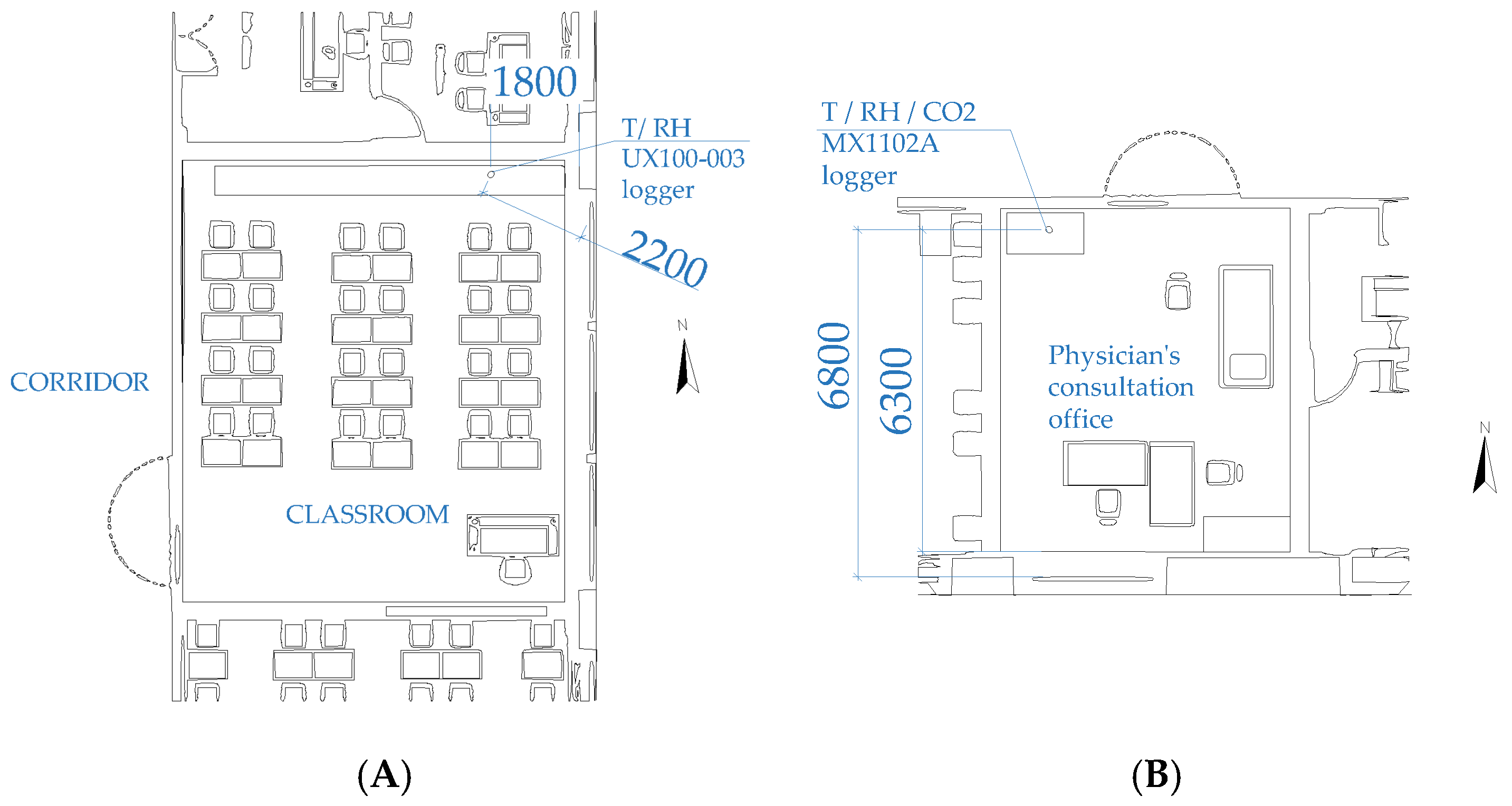
In each space, one fixed measurement point was used. The sensor was positioned to represent the occupied zone and was installed 6.3 m horizontally from the nearest external wall, 6.8 m from the window surface, and 6.3 m from the nearest heat source in the physician’s consultation office. In the school classroom, the sensor was placed 1.8 from the external wall and 2.2 m from the window. Sensors were placed away from direct solar radiation and localised heat sources to minimise measurement bias. Over the monitoring periods, the datasets comprise 2372 temperature records for the school classroom and 3808 temperature records for the physician’s consultation office, corresponding to continuous 10 min measurements. This temporal resolution allows both daily temperature cycles and short-duration overheating peaks to be captured.
Outdoor air temperature and global solar radiation data were obtained from a local meteorological station operated by the Latvian Environment, Geology and Meteorology Centre (LEGMC) at 10–15 min resolution and time-synchronised with the indoor datasets. The meteorological station is located X and Y km from the monitored buildings accordingly.
All-time series were harmonised to a 10 min timestep. For selected reporting and visualisation tasks, indoor temperature data were aggregated to hourly mean values, while all overheating indicators were calculated using the original high-resolution data to preserve short-duration temperature peaks.
Overheating was quantified using several indicators:
overheating hours above 26 °C and 28 °C, calculated by summing all 10 min intervals exceeding the respective thresholds;
degree-hours above 26 °C, capturing both the duration and magnitude of overheating;
basic descriptive statistics, including mean, maximum, and percentile-based indoor temperature values.
In addition, daytime overheating hours (08:00–20:00) were evaluated separately to reflect typical occupancy periods. The monitored spaces are predominantly occupied during daytime hours on weekdays; the school classroom experiences reduced occupancy during the summer vacation period, while the physician’s office operates on a regular weekday schedule throughout the monitoring period.
To explore the influence of external drivers, Pearson correlation coefficients were calculated between indoor air temperature and outdoor air temperature, as well as between indoor temperature and global solar radiation, providing an indication of indoor–outdoor coupling and the role of ambient conditions and solar gains.
2.3. Experimental Procedure
Data loggers were installed at representative indoor locations and configured for continuous operation throughout the monitoring periods. The rooms were operated under normal use conditions and ventilated by manual window opening, without any imposed intervention or control of occupant behaviour. Window opening and solar shading operation were not directly monitored and therefore represent an uncontrolled variable in the present study. This variability is intentionally retained to reflect real building operation and actual indoor thermal conditions experienced by occupants. Each data logger was placed at a representative occupant height (approximately 1.1 m above floor level), away from direct sunlight and local heat sources, as illustrated in
Figure 1, in order to capture breathing-level air temperature representative of typical occupant exposure. This placement was chosen to reflect the average experienced indoor temperature during occupancy. Because only one measurement point was used in each room, potential vertical temperature stratification (particularly under low air movement conditions) or local horizontal temperature gradients (e.g., near windows or external walls) could not be captured. The analysis therefore assumes that the measured point is indicative of the general room environment, which may not hold if significant spatial temperature non-uniformity occurred. A schematic illustration of the measurement setup was prepared to document the placement of the indoor sensors within the rooms, including their position relative to external walls, window surfaces, and local heat sources (see
Figure 1).
Indoor air temperature was measured at a single representative point in each room. While this approach is sufficient to identify general overheating trends, it does not capture potential spatial temperature gradients or vertical stratification. Measurement uncertainty related to sensor accuracy and placement is therefore acknowledged when interpreting absolute temperature values. The analysis focuses primarily on temporal patterns, exceedance-based indicators, and relative differences between spaces, which are less sensitive to local spatial variability. All data processing and statistical analyses were performed using Python 3.13, with the Pandas 2.2.3 library used for time-series handling and analysis.
3. Results
The results presented below are based on the processed indoor and outdoor measurement data described in the methodology section. The analysis focuses on how indoor temperatures in the two monitored spaces evolved during the warm season and how often and how severely comfort thresholds were exceeded. Particular attention is given to differences between the school classroom and the physician’s office in terms of overall overheating exposure, temporal behaviour during warm periods, and sensitivity to outdoor climatic conditions. The results are reported using complementary indicators to capture both the frequency and intensity of overheating.
Table 4 summarises the main overheating indicators derived from hourly mean indoor temperatures for both monitored spaces. The two cases show a pronounced contrast in summertime thermal exposure. The school classroom was monitored for 2374 h and exhibited a mean indoor temperature of 25.4 °C and a P
95 percentile of 29.7 °C, indicating that high-temperature conditions were frequent and persistent during the measurement period. In total, the classroom exceeded 26 °C for 935 h and 27 °C for 721 h, demonstrating substantial overheating exposure.
In contrast, the physician’s office, monitored for 3810 h, maintained a markedly lower indoor temperature profile, with a mean indoor temperature of 23.0 °C and P95 of 25.6 °C. Exceedance above 26 °C occurred for only 140 h, while no exceedance above 27 °C was observed when assessed using hourly means. This divergence indicates that, under the same regional climatic conditions, indoor overheating risk can differ substantially between rooms, reflecting differences in solar exposure, effective thermal mass, ventilation behaviour, and/or envelope characteristics. The fact that the office remained below more stringent overheating thresholds despite continuous operation and internal gains suggests a more buffered indoor thermal environment.
Beyond mean and percentile-based indicators, exceedance-based metrics provide additional insight into the frequency and severity of overheating. Over the monitoring period, the classroom exceeded 26 °C for approximately 39% of the total observed time (935 h out of 2374 h). Even when restricted to typical school occupied hours (08:00–20:00), the classroom still recorded 549 h above 26 °C, indicating that many school days included several hours of thermal discomfort.
When a higher threshold was considered, approximately 485 h in the classroom exceeded 28 °C, of which 312 h occurred during daytime hours. This demonstrates that overheating in the classroom was not limited to marginal exceedances near the comfort threshold but frequently reached severe levels.
In contrast, the physician’s office recorded only about 140 h above 26 °C over the entire spring–summer monitoring period (approximately 4% of the total monitoring time). During daytime working hours, exceedance above 26 °C occurred for approximately 91 h, and no hours above 28 °C were observed. This indicates that critical overheating conditions were effectively avoided in the office throughout the study period.
Degree-hour analysis further emphasises the difference in overheating severity. The classroom accumulated approximately 1996 °C·h above 26 °C over the full monitoring period, compared to only 29 °C·h in the physician’s office. When considering daytime hours only, the classroom accumulated approximately 1242 °C·h, whereas the physician’s office accumulated approximately 22 °C·h, confirming that the most severe overheating in the classroom occurred predominantly during periods of typical occupancy.
3.1. Long-Term Indoor and Outdoor Temperature Dynamics
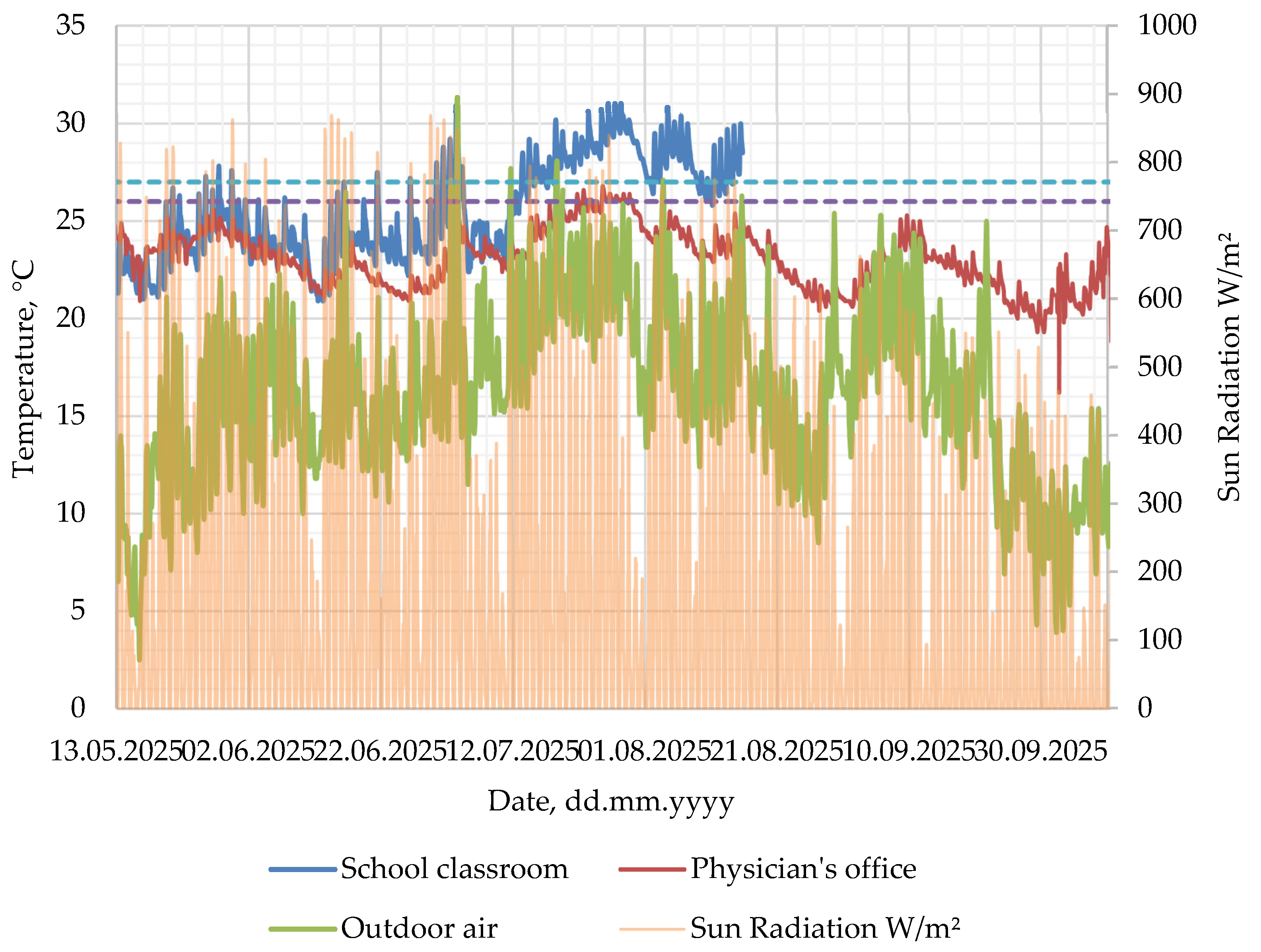
Figure 2 presents the full time series of 15 min outdoor air temperature, indoor air temperature in the school classroom and physician’s office, and global solar radiation from May to mid-October 2025. The figure illustrates the seasonal evolution of thermal conditions and highlights pronounced differences in indoor temperature behaviour between the two spaces.
Throughout the summer period, the classroom frequently exceeded the 26 °C overheating threshold, with several pronounced episodes where indoor temperatures surpassed 28 °C and reached a maximum of 31.1 °C. These episodes typically coincided with elevated outdoor air temperatures and high solar irradiance, which regularly peaked between 800 and 900 W/m2 during clear midday hours. Solar gains were characterised using global horizontal irradiance only, and solar radiation incident on specific building façades was not measured. This limits the ability to directly quantify orientation-dependent solar effects. In particular, the south-facing classroom is likely to have experienced substantial direct solar gains through glazing, which are only indirectly reflected in the global irradiance data. The pronounced overheating observed in the classroom may therefore be partly driven by direct façade-level solar exposure. Nevertheless, the influence of solar radiation can be inferred indirectly from temporal patterns, as peak indoor temperatures in the classroom consistently coincided with periods of high solar angle and elevated irradiance. The availability of façade-specific solar radiation data would allow a more explicit attribution of solar-driven overheating mechanisms and should be considered in future monitoring campaigns. Once elevated, the classroom temperature often remained above 26 °C for extended periods, persisting into the late afternoon and evening. This persistence of elevated indoor temperature beyond periods of peak outdoor air temperature and solar irradiance indicates the presence of time-lag effects associated with the thermal inertia of the building fabric. In the classroom, indoor temperature peaks frequently occurred after maximum external forcing, reflecting delayed heat storage and release rather than an instantaneous indoor–outdoor response.
By contrast, the physician’s office exhibited a much steadier indoor temperature profile. Although indoor temperatures increased during hot outdoor conditions, they generally remained close to or below the 26 °C threshold, with a maximum observed value of approximately 26.8 °C. Even during the hottest days of July and early August, when outdoor air temperatures exceeded 30 °C, the office temperature rose only modestly and cooled more effectively during evening and night-time hours.
During cooler spells and night-time periods, when outdoor temperatures dropped below approximately 15 °C, both indoor spaces cooled; however, the classroom consistently remained warmer than the office overnight. During cooler night-time periods, indoor temperatures in the physician’s office decreased to levels close to the ambient outdoor air temperature, indicating relatively effective night-time cooling. By contrast, the classroom frequently remained several degrees warmer than the outdoor environment throughout the night, suggesting limited removal of accumulated heat. This behaviour points to a combination of higher heat storage within the building fabric and potentially reduced night-time ventilation effectiveness. From an operational perspective, the classroom may not have been ventilated during late evening or night-time hours (e.g., windows remaining closed outside school hours), allowing heat gained during the day to persist. In addition, the classroom’s massive construction likely contributed to greater thermal inertia, with stored heat being released slowly overnight. In comparison, the physician’s office appears to have dissipated heat more effectively, potentially due to lower thermal mass and greater flexibility for occupant-driven ventilation at the end of the working day. This behaviour indicates greater heat retention in the classroom, likely associated with stored heat in the building fabric.
3.2. Indoor Temperature Response During a Representative Heatwave Episode
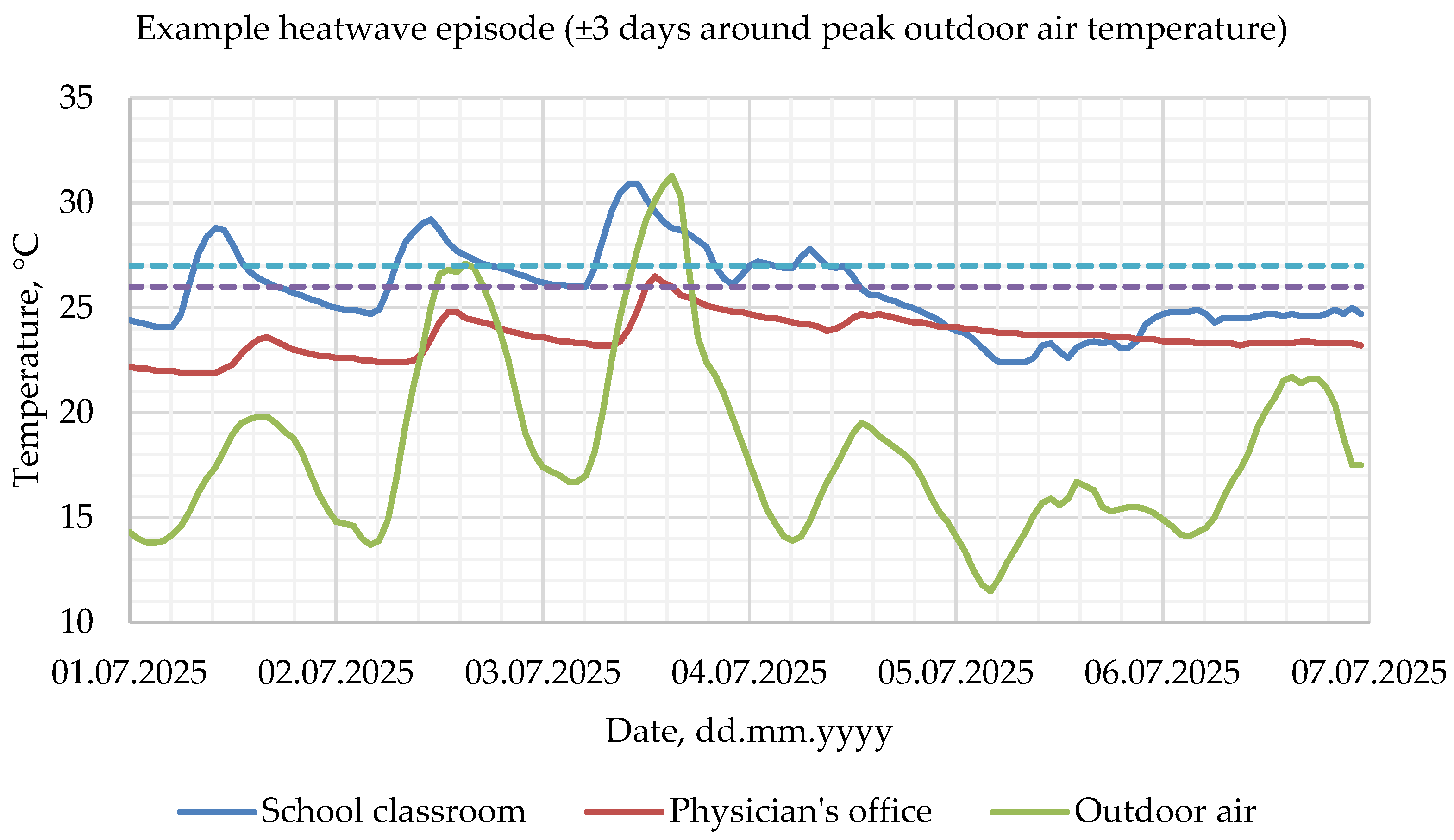
To illustrate short-term dynamics during extreme outdoor conditions,
Figure 3 also highlights a representative heatwave episode selected as ±3 days around the peak outdoor air temperature. Both indoor environments exhibit a clear response to outdoor warming; however, the magnitude and persistence of indoor temperature elevation differ substantially.
In the classroom, indoor temperature rises rapidly into the discomfort range and remains elevated for prolonged periods relative to the outdoor profile, indicating limited removal of accumulated heat once the space warms. This behaviour is consistent with combined effects of strong solar gains through south-oriented glazing and thermal lag, whereby peak indoor temperatures may occur after peak outdoor conditions and persist into the evening. During the heatwave episode, indoor temperature peaks in the classroom consistently lagged behind outdoor air temperature maxima and remained elevated for several hours after external conditions began to moderate. This delayed response highlights the role of thermal inertia and accumulated solar gains, indicating that indoor overheating was driven not only by instantaneous outdoor forcing but also by time-lagged heat storage and release within the building fabric.
In contrast, the physician’s office shows a more damped and stable response during the same episode. Even when outdoor temperatures reach their maximum, the office temperature exhibits smaller amplitude and faster stabilisation, indicating more effective buffering and/or passive heat dissipation. The threshold lines at 26 °C and 27 °C provide a direct visual reference, showing that the classroom crosses these limits more readily and for longer durations than the office.
3.3. Diurnal Distribution of Overheating Hours
Figure 4,
Figure 5 and
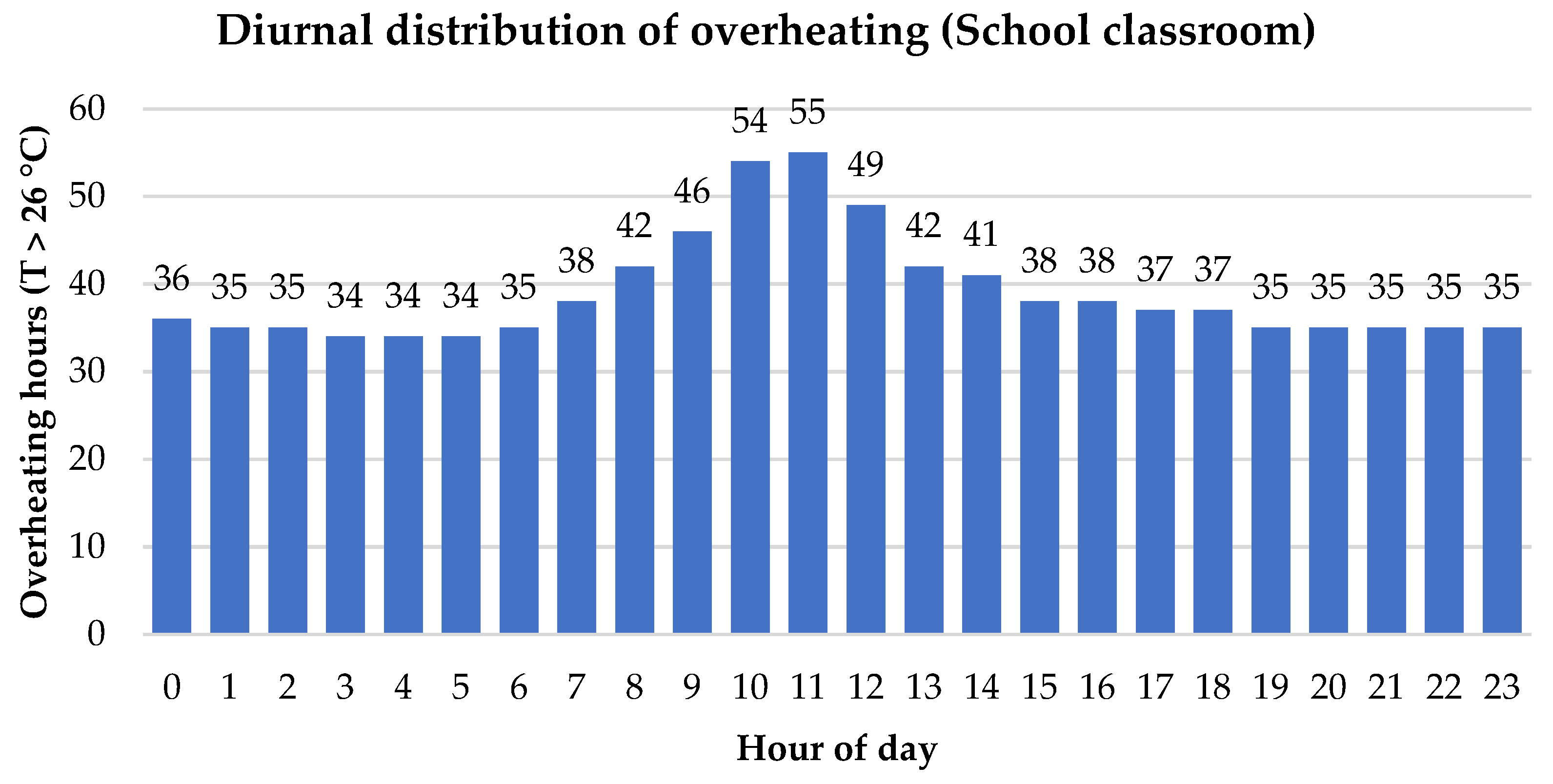
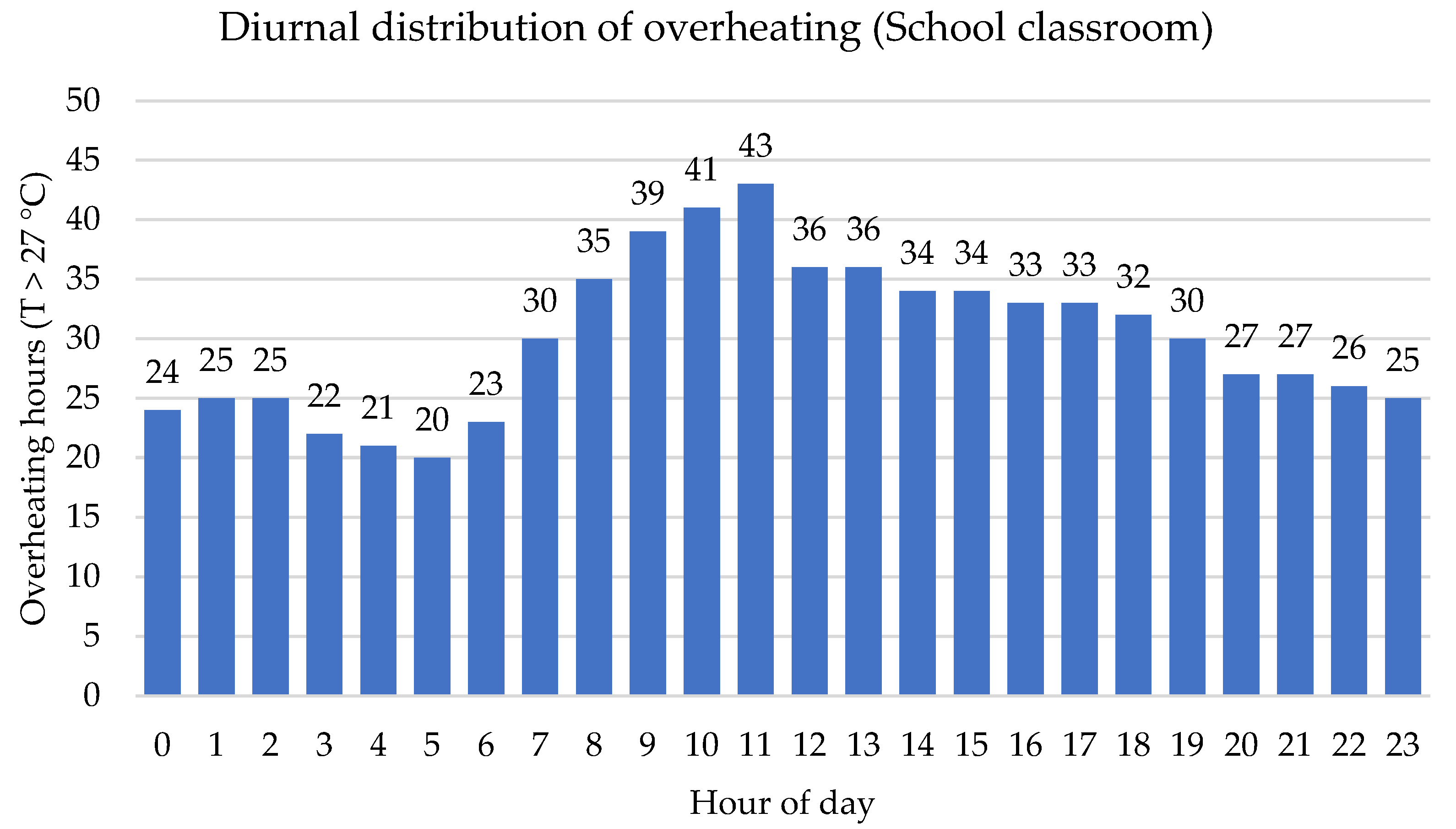
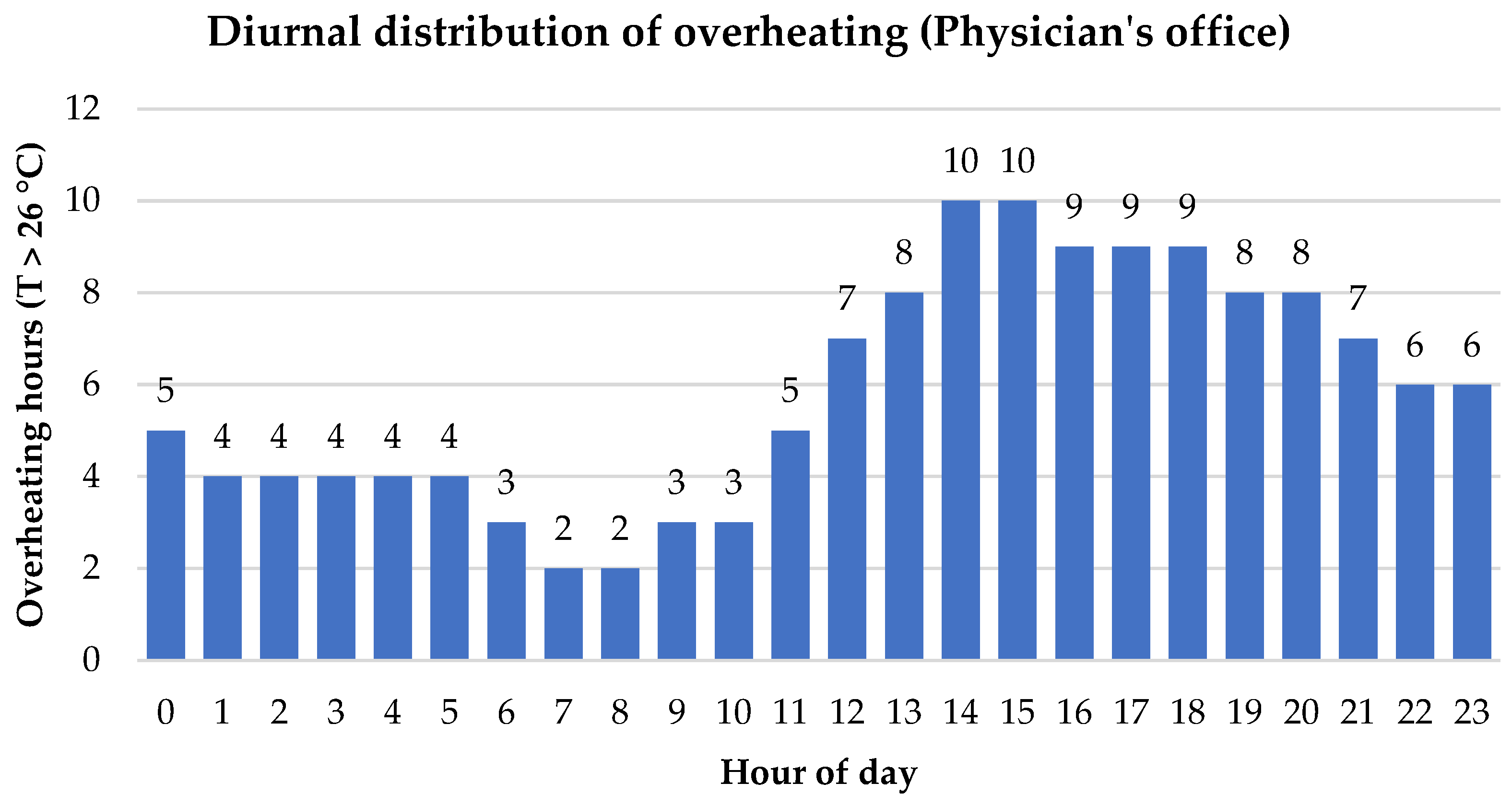
Figure 6 present the diurnal distribution of overheating hours aggregated by hour of day for the school classroom and the physician’s consultation office above 26 °C and 27 °C, respectively. The distributions are based on the sum of hours exceeding the defined temperature thresholds over the full monitoring period and provide insight into the timing and persistence of overheating events.
In the school classroom, overheating above 26 °C exhibits a pronounced diurnal pattern with a clear maximum during late morning and midday hours (
Figure 4). The number of overheating hours increases rapidly from early morning, peaks between 10:00 and 12:00, and remains elevated throughout the afternoon. The highest frequency of exceedance occurs at 11:00, with approximately 55 h accumulated over the monitoring period. Importantly, overheating hours remain substantial during night-time, with values of approximately 34–36 h between 00:00 and 06:00, indicating that elevated indoor temperatures frequently persist overnight. This pattern suggests significant heat storage and limited night-time cooling effectiveness.
When a higher threshold of 27 °C is considered (
Figure 5), the diurnal pattern in the classroom remains similar but with a more pronounced daytime concentration. Overheating above 27 °C is strongly clustered between 08:00 and 18:00, with a maximum of approximately 43 h at 11:00. Although the absolute number of hours decreases compared to the 26 °C threshold, exceedances remain present during night-time hours (approximately 20–25 h), confirming that severe overheating in the classroom is not confined to short daytime peaks but can persist beyond periods of solar radiation.
In contrast, the physician’s consultation office shows a markedly different diurnal behaviour (
Figure 6). Overheating above 26 °C is limited in both magnitude and duration, with a clear peak during the early afternoon. Maximum exceedance occurs between 14:00 and 15:00, reaching approximately 10 h, while night-time exceedance is minimal, typically not exceeding 2–5 h per hour of day. This distribution indicates that overheating in the office is primarily associated with short daytime periods and that indoor temperatures generally recover during evening and night-time hours.
Overheating is strongly concentrated in the afternoon and early evening (approximately 13:00–18:00), consistent with peak solar gains and thermal lag effects within the building envelope. The persistence of exceedance at the higher threshold further indicates that overheating was both frequent and severe during these hours.
3.4. Indoor-Outdoor Temperature Relationship and Thermal Coupling
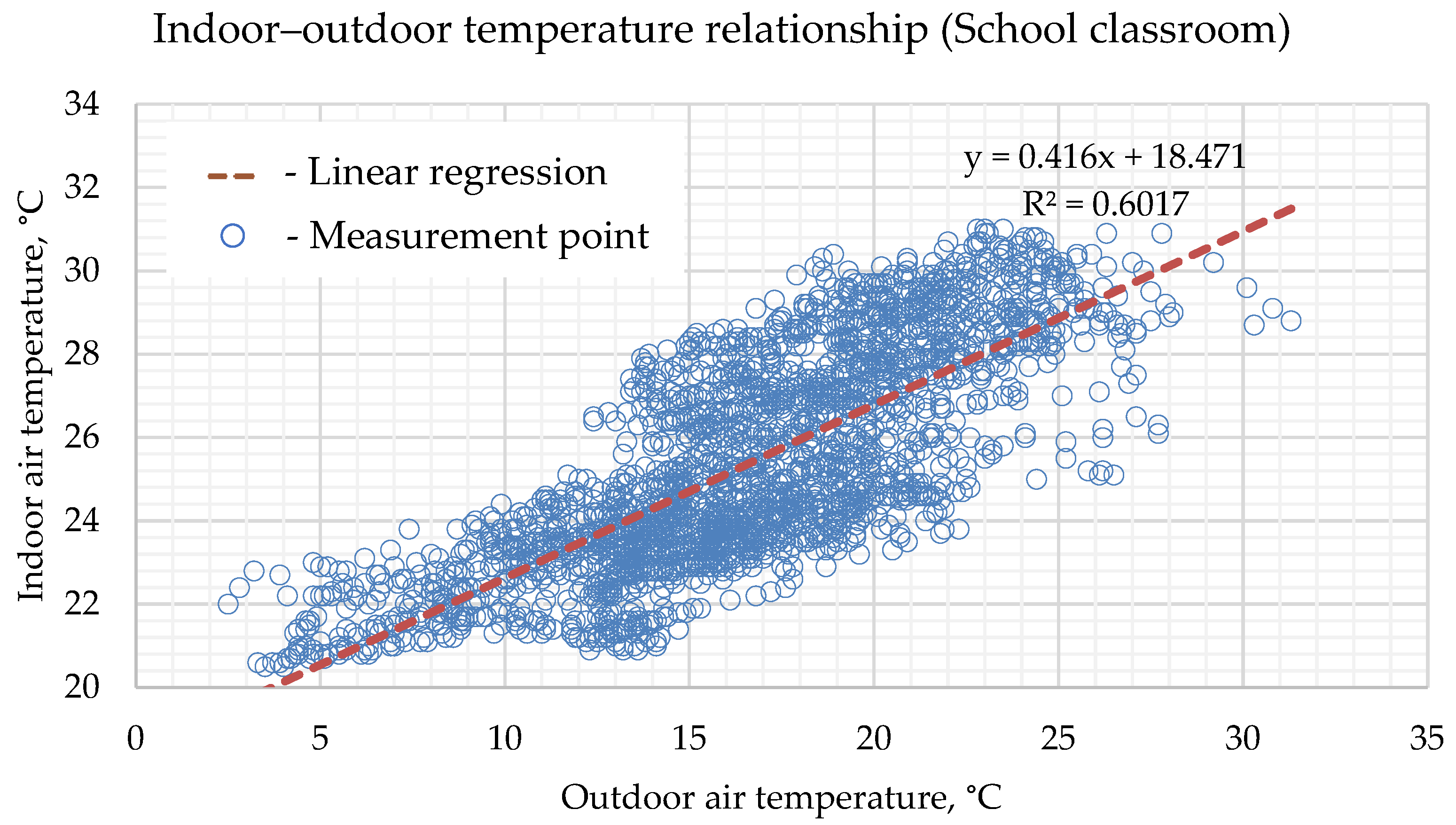
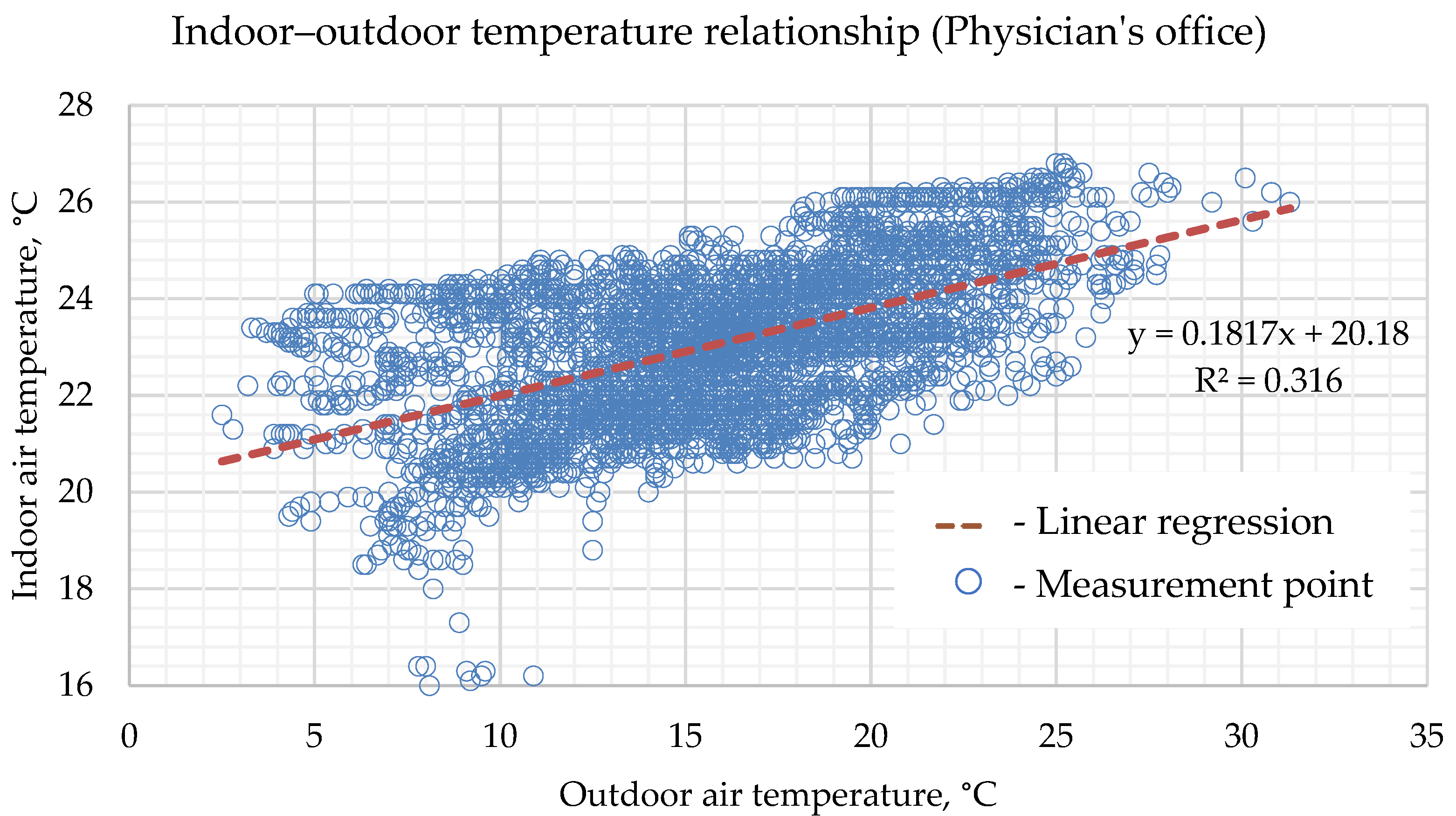
Figure 7 and
Figure 8 quantify the relationship between outdoor air temperature and indoor air temperature in the two monitored spaces. The analysis reveals a clear positive indoor-outdoor association in both cases. However, the strength of the coupling differs substantially between the school classroom and the physician’s consultation office.
The school classroom exhibits strong indoor-outdoor coupling, with a Pearson correlation coefficient of r = 0.78 (
n = 2372), corresponding to determination coefficient R
2 = 0.6017 (
Figure 7). This indicates that a substantial proportion of the variability in classroom indoor temperature can be directly attributed to outdoor temperature conditions. The fitted regression line further indicates a relatively high sensitivity of indoor temperature to external forcing, with an average indoor temperature increase of approximately 0.42 °C for each 1 °C rise in outdoor air temperature. The dense clustering of data points along the regression line at higher outdoor temperatures demonstrates that warm outdoor conditions are consistently transmitted into elevated indoor temperatures in the classroom.
In contrast, the physician’s office shows a markedly weaker relationship between indoor and outdoor temperatures. The correlation coefficient is r = 0.56 (
n = 3808) with determination coefficient R
2 = 0.316 (
Figure 8). This indicates that outdoor air temperature accounts for less than one third of the observed variability in indoor temperature in the office. The corresponding regression line shows a substantially lower sensitivity to outdoor temperature changes, with indoor temperature increasing by only about 0.18 °C per 1 °C rise outdoors.
The broader scatter around the regression line for the physician’s office reflects a more buffered indoor thermal response, where indoor conditions are less directly governed by outdoor air temperature. This behaviour is consistent with the lower overheating exposure reported in
Table 4 and the flatter diurnal distribution of exceedance hours (
Figure 6). Even during hot outdoor periods, indoor temperatures in the office remain within a relatively narrow range and rarely approach critical overheating thresholds, indicating the presence of moderating influences beyond outdoor climate forcing.
4. Discussion
The observed overheating patterns are interpreted in relation to building-specific characteristics, outdoor climate forcing, and the effectiveness of passive heat dissipation. Differences between the two monitored spaces are examined to identify the factors that contributed to their contrasting thermal responses under the same external conditions. The implications of these findings are considered for naturally ventilated public buildings located in a cool temperate climate.
The results reveal a pronounced contrast in summertime overheating behaviour between the school classroom and the physician’s consultation office, despite both spaces being located in the same climatic region and exposed to broadly similar outdoor conditions. As demonstrated by the long-term temperature time series (
Figure 2) and the summary indicators in
Table 4, the classroom experienced frequent and persistent overheating, whereas the office maintained indoor temperatures close to accepted comfort limits for most of the monitoring period.
This contrast indicates that overheating risk in naturally ventilated buildings cannot be inferred from climate conditions alone but is strongly mediated by space-specific characteristics such as solar exposure, effective thermal mass, and operational practices. The school classroom’s occupancy (approximately 20–30 students during school hours) likely introduced substantial internal heat gains, while daytime ventilation was limited due to windows being kept partially closed during lessons and remaining largely unopened after the end of the school term, thereby exacerbating overheating. By comparison, the physician’s office was generally occupied by one to two persons with a computer in use, leading to relatively low internal heat gains. Together with increased solar shading and more regular window ventilation. The classroom exhibited both a higher baseline indoor temperature and more extreme peaks, suggesting a cumulative build-up of heat during warm periods rather than isolated short-term exceedances. In contrast, the physician’s office demonstrated a more buffered thermal response, with smaller temperature amplitudes and faster recovery during night-time cooling.
The combined use of exceedance hours and degree-hour metrics provides important insight into the nature of overheating in the monitored spaces. In the classroom, the large number of hours above both 26 °C and 28 °C, together with the high cumulative degree-hours, demonstrates that overheating was not only frequent but also severe and sustained. This distinction is critical, as short-lived exceedances near the comfort threshold may be tolerable, whereas prolonged exposure to temperatures in the range of 28–30 °C is more likely to impair comfort, performance, and well-being.
By contrast, overheating in the physician’s office was characterised by infrequent and mild exceedances, resulting in very low cumulative degree-hours. Even when indoor temperatures exceeded 26 °C, the magnitude and duration of these events were limited, suggesting that discomfort was episodic rather than systemic. This difference underscores the importance of evaluating both frequency and intensity of overheating, as reliance on a single indicator may underestimate the true thermal burden experienced by occupants.
The strong indoor-outdoor temperature relationship observed in the classroom (R
2 = 0.6017) indicates that outdoor air temperature is a dominant driver of indoor thermal conditions in this space. This level of coupling suggests limited buffering capacity, whereby increases in outdoor temperature are efficiently transmitted into indoor overheating. It should be noted that while outdoor temperature correlates strongly with indoor conditions in the classroom, this statistical relationship does not necessarily imply direct causation in every instance. Other unmeasured factors, such as window opening behaviour or internal heat gains, may influence indoor temperature independently. The persistence of elevated indoor temperatures beyond periods of peak solar radiation further implies that once heat is accumulated in the building fabric, it is not readily dissipated. This behaviour is consistent with building physics principles and prior research showing that high thermal mass can delay heat release, resulting in warmer indoor temperatures during night-time periods if ventilation is insufficient [
13,
51].
Although the instantaneous correlation between indoor temperature and solar radiation was moderate, the diurnal patterns show that overheating is strongly concentrated during periods of high solar exposure and thermal lag. This indicates that solar gains contribute indirectly by accelerating heat accumulation during the day, which then manifests as prolonged overheating into the afternoon and evening. The observed influence of solar exposure aligns with findings from previous studies reporting greater overheating in south-facing rooms lacking adequate external shading in cool and temperate climates [
52,
53,
54,
55].
In the physician’s office, the weaker indoor-outdoor coupling (R2 = 0.316) suggests that additional moderating mechanisms reduce the influence of external conditions. It is therefore hypothesised that more effective, potentially occupant-driven ventilation contributed to the office’s moderated thermal response. Although ventilation rates were not directly measured in this study, this interpretation is supported by existing literature demonstrating that user-controlled ventilation behaviour can significantly alter overheating outcomes in naturally ventilated buildings. The office appears to dissipate heat more effectively, either through more favourable envelope characteristics, reduced solar gains, or more effective ventilation behaviour. The relatively modest response to both outdoor temperature and solar radiation indicate a more resilient thermal performance under warm conditions.
In the classroom, overheating was strongly concentrated in the afternoon and early evening, coinciding with typical periods of school occupancy. This alignment implies that a substantial portion of overheating occurred during active use of the space, increasing the likelihood of adverse impacts on thermal comfort, concentration, and learning performance.
The persistence of elevated temperatures into the evening also suggests limited effectiveness of night-time cooling, which is commonly promoted as a key passive strategy in naturally ventilated buildings. If heat accumulated during the day is not adequately removed overnight, indoor temperatures at the start of the following day may already be elevated, compounding overheating during subsequent warm periods.
In the physician’s office, the flatter diurnal distribution and more rapid night-time cooling indicate a more favourable alignment between indoor thermal conditions and occupancy patterns. Even when overheating occurred, it was less concentrated during peak working hours, reducing the potential impact on occupants.
In contrast to the severe overheating documented in this Baltic classroom, field studies in other cool- and cold-climate schools have more often reported mild or moderate overheating, particularly where effective cross-ventilation, reduced solar gains, or more favourable construction characteristics limited indoor heat accumulation [
56,
57,
58,
59]. The divergence observed here may therefore reflect building-specific conditions, such as large south-facing glazing areas, limited night-time ventilation, and the absence of mechanical or hybrid cooling solutions, rather than being representative of all schools in similar climates. Overall, the results highlight pronounced room-to-room variability in thermal performance, illustrating the concept of microclimatic resilience within buildings and reinforcing the need for cautious, literature-informed interpretation of overheating drivers in naturally ventilated buildings.
5. Conclusions
This study examined summertime indoor overheating in two naturally ventilated public spaces located in a cool temperate Baltic climate using long-term field measurements combined with outdoor meteorological data. Although limited in scope, the results confirm that indoor overheating can occur frequently and persistently in buildings originally designed for heating-dominated conditions, even in regions not traditionally associated with hot climates.
A clear contrast was observed between the two monitored spaces. The school classroom experienced substantial overheating exposure, exceeding 26 °C for approximately 39% of the monitoring period and accumulating nearly 2000 °C·h above this threshold, while also showing strong coupling to outdoor air temperature (R2 = 0.60). In contrast, the physician’s consultation office exhibited markedly lower overheating exposure, with only limited exceedance hours, very low cumulative degree-hours, and weaker indoor–outdoor coupling (R2 = 0.32). These quantitative differences demonstrate that, under the same regional climate, individual rooms can exhibit markedly different thermal responses.
The findings indicate that outdoor air temperature is an important driver of indoor overheating, but its effect is strongly moderated by room-specific characteristics and operational conditions, including solar exposure, effective thermal mass, occupancy-related internal gains, and ventilation behaviour. Within the limitations of the present case study, the results suggest that overheating risk cannot be reliably inferred from building-level averages alone and may vary substantially at the room scale.
From a practical perspective, the results underline the need for targeted overheating assessments at room or zone level, particularly in public buildings with vulnerable occupants, such as schools and healthcare facilities. From an applied perspective, the findings indicate that overheating mitigation should be addressed at room or zone level rather than relying solely on building-level averages. The results demonstrate that even within the same site, individual spaces, such as south-facing, highly occupied classrooms, may experience severe overheating while other rooms remain within acceptable comfort limits. This highlights the importance of identifying and prioritising critical “hot spots” for intervention. For spaces exhibiting similar characteristics to the overheated classroom in this study (e.g., upper-floor location, high solar exposure, and high occupancy), targeted measures such as external shading of south-facing glazing, enhanced night-time ventilation strategies, and effective utilisation of thermal mass through night-time heat purging are recommended. In addition, operational measures, including early-morning or evening ventilation, may help reduce daytime heat accumulation under naturally ventilated conditions. Generic building-level evaluations may overlook critical localised risks. Passive mitigation strategies such as improved solar shading, effective night-time ventilation, and operational optimisation remain essential measures for reducing overheating exposure, especially in existing buildings without mechanical cooling.
While the present study does not allow generalisation across the wider building stock, the reported exceedance hours, degree-hours, and indoor–outdoor coupling metrics illustrate how simple, measurement-based indicators can support the identification of potentially vulnerable spaces. Passive measures such as external shading, improved night-time ventilation, and operational adjustments emerge as plausible mitigation options for rooms exhibiting similar overheating profiles, although their effectiveness should be evaluated in future, larger-scale studies.
Overall, this two-room case study contributes empirical evidence on the magnitude and variability of indoor overheating in a cool-climate context. The results highlight the need for further monitoring across a broader range of buildings and seasons to establish robust design and operational guidance, while demonstrating the usefulness of quantitative, room-level indicators for interpreting overheating risk under current and future climatic conditions.
Limitations and Future Work
Although the analysis is based on monitoring of only two individual rooms, the selected cases were not intended to be statistically representative of the entire stock of naturally ventilated public buildings in the Baltic region. Instead, they were deliberately chosen as contrasting, but typical examples of commonly encountered public spaces (a school classroom and a physician’s consultation office) located in massive buildings constructed prior to the widespread adoption of mechanical cooling. Such building types remain prevalent across the Baltic region and continue to operate predominantly under natural ventilation and occupant-controlled cooling strategies.
The two cases therefore serve as illustrative, exploratory examples that highlight the pronounced space-specific variability of indoor overheating behaviour under identical climatic conditions. The observed contrast demonstrates that overheating risk cannot be inferred solely from regional climate or broad building typology but is strongly influenced by local factors such as solar exposure, effective thermal mass, and operational practices. While the limited sample size restricts broad statistical generalisation, the findings provide valuable empirical evidence of the range of overheating responses that can occur within the existing public building stock and underline the importance of room-level assessment approaches.
Several additional limitations should be considered when interpreting the results. The assessment focused primarily on indoor air temperature as the main indicator of overheating, while other thermal comfort parameters, such as air velocity and mean radiant temperature, were not evaluated. Moreover, ventilation behaviour and occupant actions: including window opening, shading use, and internal heat gains, were not directly monitored and are inferred from temperature response patterns. These unmeasured factors may partly explain the observed scatter in the indoor–outdoor temperature relationships. Because occupant actions (such as window ventilation or shade deployment) were not logged, part of the difference in overheating between the two rooms could stem from how occupants managed heat. Our interpretation that building characteristics drove the contrast is therefore tentative—it assumes similar occupant behavior in both spaces. The markedly different indoor responses under comparable external conditions suggest inherent building factors (mass, solar exposure, etc.) are influential, but we acknowledge that more proactive ventilation by occupants in the office (or less so in the classroom) could also explain some of the disparity
Furthermore, although outdoor meteorological data were time-synchronised with indoor measurements, solar gains were characterised only by using global horizontal irradiance. The lack of façade-specific solar radiation data limits the ability to directly quantify orientation-dependent solar impacts, particularly for south-facing spaces. The monitoring campaign spans a single warm season, with measurements conducted from May to October 2025, and the absolute magnitude of overheating indicators is therefore specific to the climatic conditions of that period. In cooler summers, fewer overheating exceedance hours would be expected, whereas more extreme summers could result in intensified overheating. Nevertheless, the pronounced contrast between the school classroom and the physician’s office (where the classroom consistently exhibits higher overheating exposure) is primarily driven by fundamental differences in building characteristics and occupancy patterns. As such, the relative comparison between the two spaces is expected to remain valid under comparable operating conditions. Extending the monitoring across multiple summer seasons would allow year-to-year variability to be captured and would further strengthen the robustness of the conclusions.
Future research should therefore extend the present approach to a larger and more diverse set of buildings and room types, enabling statistical generalisation and robust comparison across construction periods, envelope characteristics, and ventilation strategies in the Baltic region. Expanding monitoring campaigns to include detailed logging of window states, airflow rates, shading operation, and occupancy patterns would allow a more explicit attribution of dominant overheating drivers. In addition, future studies should assess the effectiveness of targeted mitigation measures (such as external shading, night-time ventilation strategies, and hybrid cooling solutions) under real operating conditions.