1. Introduction
Coal stands at the intersection of industrial heritage and future energy challenges, symbolizing both the economic prosperity it has fueled for centuries and the environmental dilemmas it poses in the era of decarbonization. As both a driver of economic growth and a focal point in the global energy transition, coal embodies the complex balance between resource utilization and environmental responsibility. Coal is a carbon-rich sedimentary rock, formed from ancient plant material over millions of years under pressure and heat [
1,
2], and it has long underpinned industrial advancement and energy security worldwide [
3,
4]. Its abundance, high energy density, and reliability established coal as a dominant fuel throughout the Industrial Revolution and the 20th century [
5]. It exists in various ranks—lignite, sub-bituminous, bituminous, and anthracite—differing in carbon content and energy density [
1,
2,
6]. Major coal reserves are distributed globally, notably in the U.S., China, India, Australia, and Russia, ensuring a diversified supply and reducing geopolitical risks [
7,
8].
From an economic perspective, coal’s relatively low extraction costs, price stability, and substantial export revenues contribute significantly to national GDP, trade balances, and employment, particularly in resource-rich and developing economies [
7,
8,
9]. As shown in
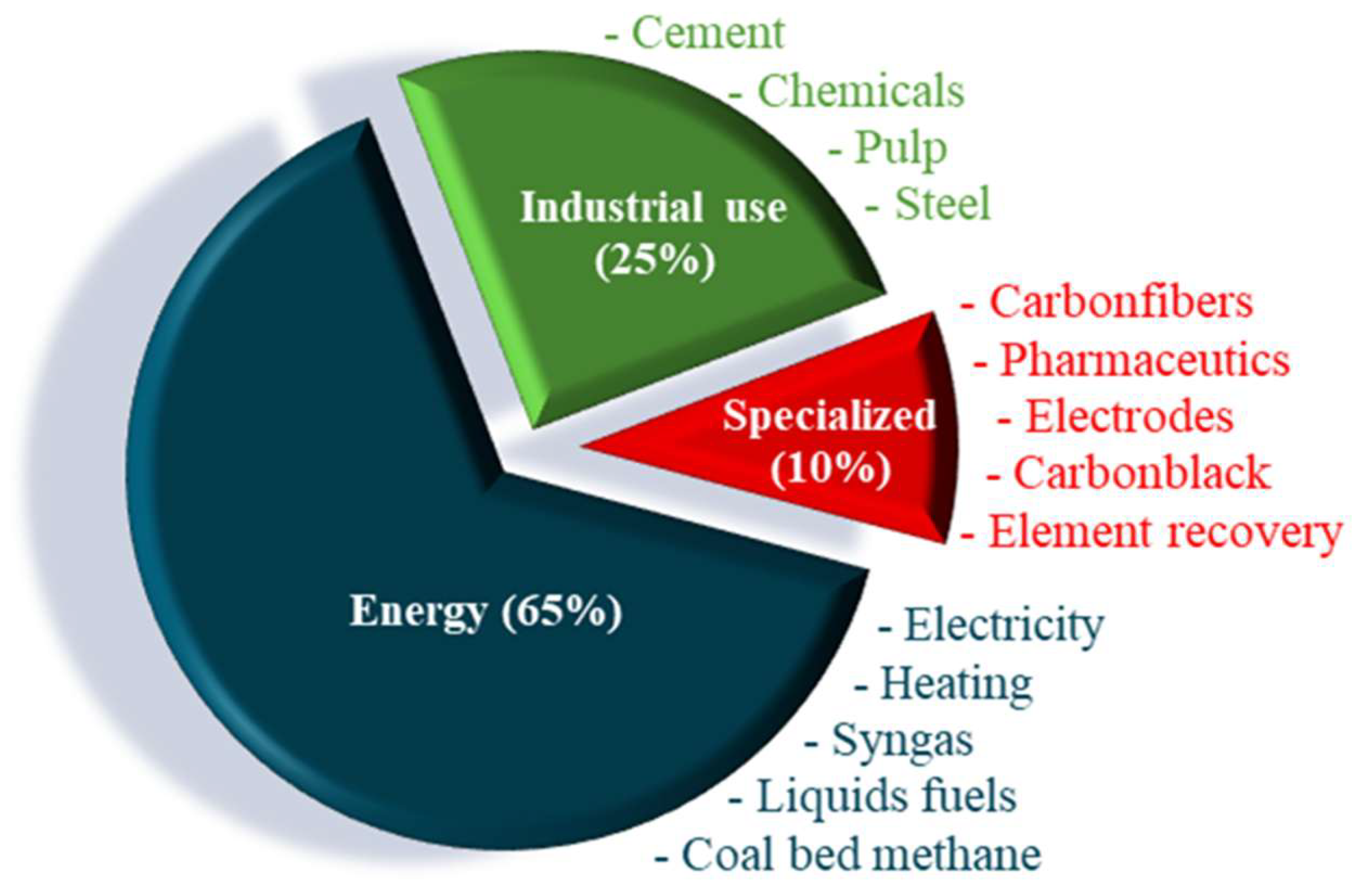
Figure 1, the major sectors utilizing coal and coal-derived products include energy production (65%), industrial manufacturing (25%), and specialized applications (10%).
The energy sector, the largest share of coal use, encompasses electricity generation, residential and industrial heating, syngas production, coal-to-liquid fuels, and coal bed methane. The industrial sector involves cement production, chemical manufacturing, pulp and paper processing, and steelmaking, where coal provides thermal energy and raw material inputs [
7,
8]. Specialized applications include carbon fiber manufacturing, pharmaceuticals, carbon electrodes, carbon black production, and extraction of critical elements from coal and its by-products. Coal also supplies feedstocks for ammonia, methanol, and other chemicals [
10], supports residential heating in some regions [
11], and is used in coal gasification and liquefaction for synthetic fuels and hydrogen production [
12,
13].
Growing awareness of coal’s environmental impacts has driven a shift toward cleaner coal technologies such as gasification and carbon capture and storage, while by-products like fly ash and slag are repurposed in construction and environmental remediation [
14,
15]. These developments influence coal’s ongoing economic role and its adaptation within a low-carbon energy transition shaped by government policies and innovation [
7,
8].
Technologies for coal across all areas have evolved from traditional manual mining and surface methods to mechanized and automated systems that enhance safety and efficiency [
16,
17]. In power generation, conventional pulverized coal plants remain prevalent, while modern High-Efficiency Low-Emission (HELE) and Integrated Gasification Combined Cycle (IGCC) technologies improve efficiency and reduce emissions [
7,
8,
12]. Metallurgical coal continues to support blast furnace steelmaking, with emerging direct reduced iron (DRI) processes using coal-derived syngas aiming to lower carbon emissions [
18,
19]. Coal gasification has progressed from basic chemical production to advanced coal-to-chemicals technologies for cleaner fuels [
10,
13]. Environmental strategies include repurposing fly ash and slag in construction, alongside carbon capture and storage, flue gas desulfurization, and selective catalytic reduction to reduce emissions [
14,
15]. Emerging innovations such as coal liquefaction, hydrogen production, and AI-driven operational optimizations further support cleaner and more efficient coal utilization [
12,
13,
17].
Growing environmental regulations, shifts toward cleaner energy, and the expanding role of coal in advanced industrial processes have driven diverse research on coal utilization, emission control, and sustainable mining. Innovations in carbon capture and storage, coal gasification, and rare earth element recovery, combined with big data and AI applications, are rapidly transforming the coal research landscape, as demonstrated by long-term, national-scale, and topic-specific bibliometric analyses of global coal research trends [
20,
21,
22,
23]. Bibliometric analysis is widely used to manage and interpret large scientific datasets, supported by comprehensive databases like Web of Science, Scopus, and ScienceDirect [
24,
25,
26,
27]. These platforms enable evaluation of research impact, trend identification, and analysis of geographic and institutional outputs, which have been successfully applied in global, national, and thematic coal research studies [
20,
21,
22,
23,
24]. Specialized software—such as Bibexcel, NetDraw, CiteSpace, Pajek, TDA, and VOSviewer—provides tools for network visualization, co-citation mapping, and trend detection, facilitating robust bibliometric studies that inform research evaluation and strategic planning [
25,
28,
29]. Existing bibliometric analyses of coal research have focused on global trends [
20], collaboration structures [
21], national research systems [
22], or specific coal technologies [
23]; this study instead provides a unified long-term global perspective capturing structural, interdisciplinary, and technological transformations in coal research from 1975 to 2024.
The bibliometric analysis in this study covers global coal research from 1975 to 2024, drawing on 272,370 records retrieved from the Web of Science (WoS) database. The WoS database was selected due to its rigorous indexing standards, comprehensive citation metadata, and widespread use in bibliometric studies, which ensure data consistency and analytical reliability for large-scale, cross-disciplinary analyses. Although the use of multiple databases could expand coverage, it may also introduce redundancy and inconsistencies that complicate longitudinal and network-based evaluations; therefore, WoS was adopted as a standardized and widely accepted source for this study. To provide an integrated analytical framework, the study applies both the Cross-Disciplinary Publication Index (CDPI) and the Technology–Economic Linkage Model (TELM). Using VOSviewer software and Microsoft Excel, it examines publication trends, leading researchers and institutions, and frequently occurring keywords, thereby identifying major contributors and dominant research themes. The study aims to (i) trace the historical arc and future trajectory of coal research over this 50-year period to assess how the field has evolved in response to shifting scientific, technological, and societal contexts, (ii) evaluate the interdisciplinary integration of energy, geoscience, and environmental domains, (iii) identify global leaders and institutional networks driving innovation, and (iv) highlight opportunities and gaps for advancing coal research within the context of a low-carbon energy transition. Its implications highlight coal science evolution, reveal research gaps, inform policymakers and industry on low-carbon strategies, and provide a comprehensive overview of the dynamic coal research landscape.
3. Results and Discussion
3.1. Document Types and Annual Distribution of Coal-Related Publications
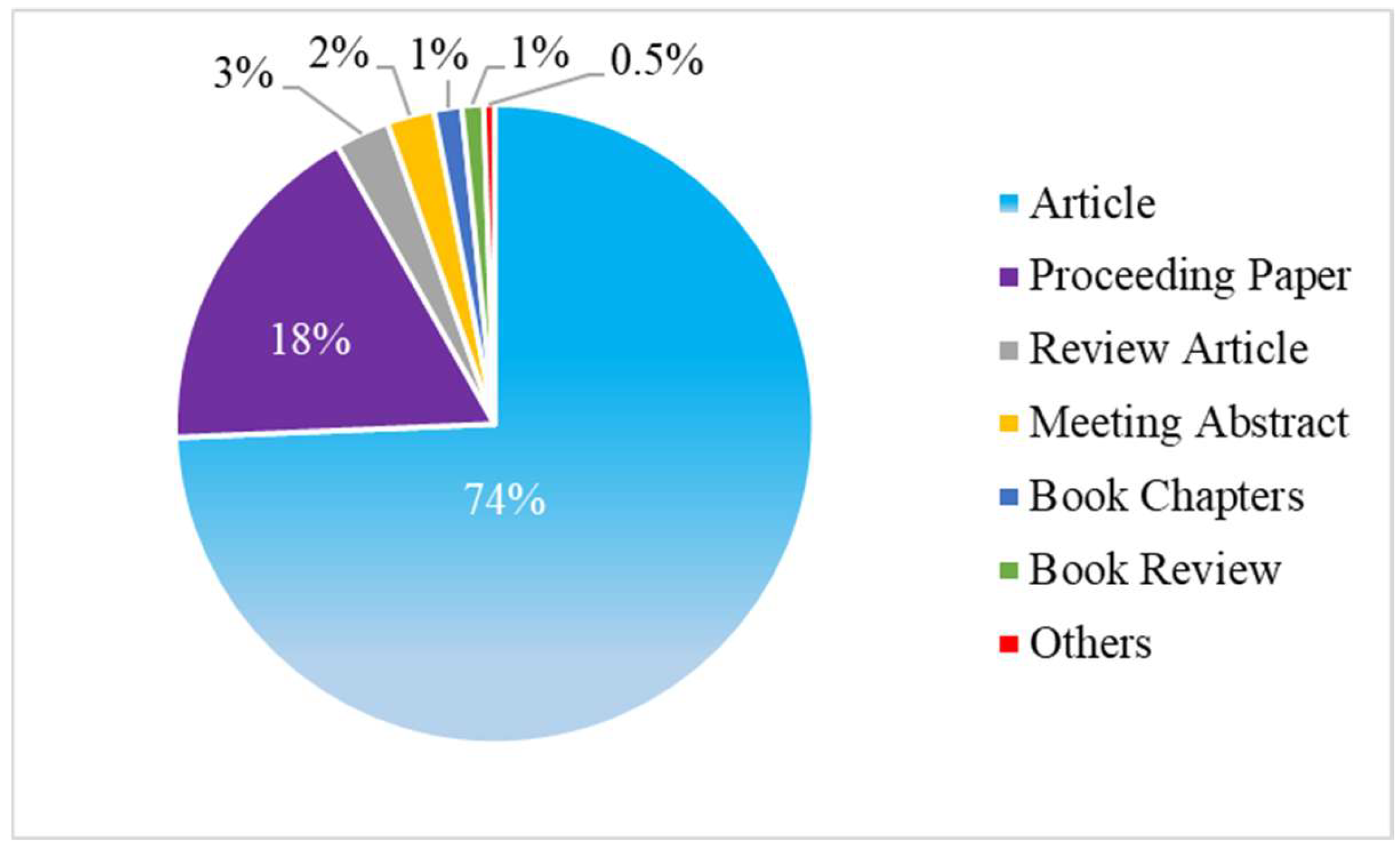
The pie chart in
Figure 3 illustrates the distribution of 272,378 coal-related publications indexed in the Web of Science database from 1975 to 2024, categorized by document type. Articles dominate, comprising 74% of the publications, reflecting the primary mode of scientific communication in this field. Proceeding Papers form the second-largest category at 18%, indicating a significant portion of the literature comes from conference presentations and related proceedings. Review Articles account for 3%, summarizing and synthesizing existing research to provide overviews within coal research. Meeting Abstracts contribute 2%, representing preliminary findings or short summaries presented at scientific meetings. Book Chapters and Book Reviews each make up 1%, showing a smaller yet notable presence of contributions in edited volumes and critical assessments of published books. The others category, at 0.5%, includes less common publication types not classified above. Although
Figure 3 is descriptive, it is important because it provides critical context for interpreting coal research trends and bibliometric networks. Understanding the distribution of document types helps to assess the relative weight of original research versus reviews or conference outputs, which directly influences citation patterns, co-authorship structures, and thematic evolution within the field. This distribution shows that coal research primarily focuses on generating and sharing original findings through articles and conference proceedings, with less emphasis on reviews or other formats.
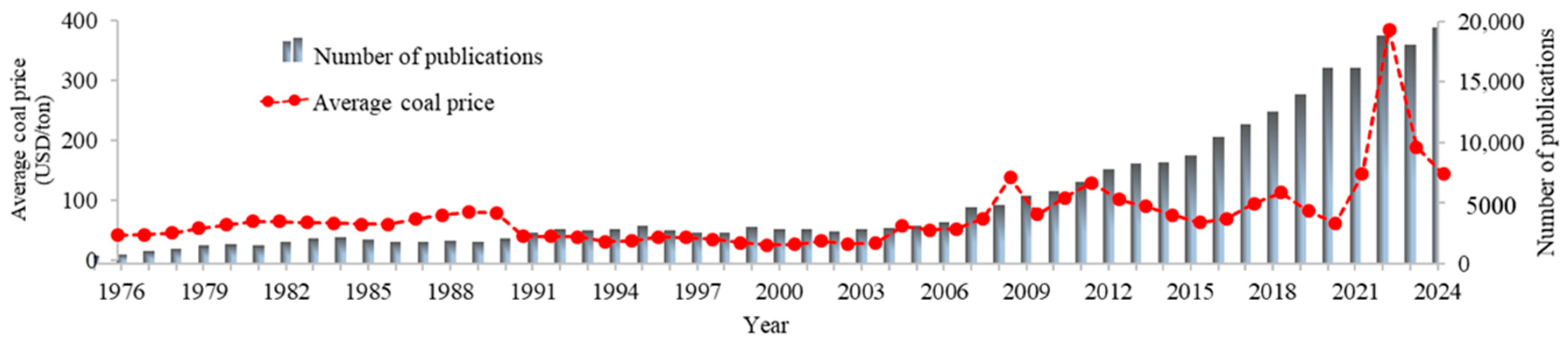
The annual number of coal publications steadily increased from 1975 to 2024, as shown in the TELM chart in
Figure 4, with significant acceleration after 2010. Publication numbers peaked near 2020 and 2022 at over 16,000, followed by a sharp decline in 2023, then rising again to approximately 19,500 in 2024. This growth reflects increasing research interest driven by environmental concerns, technological advances, and geopolitical factors.
Average annual coal prices exhibited considerable volatility over the period. Prices remained relatively stable, fluctuating between $41 and $80 per ton from 1975 to the late 1980s. Between 1990 and 2007, price fluctuations became more frequent, ranging between $25 and $70 per ton, due to changing market dynamics, shifts in global demand, and supply factors. Notable peaks occurred around 2008–2011, reaching a high of $138 per ton, coinciding with the global financial crisis and associated disruptions in energy markets. Another significant spike happened near 2021–2022, with prices rising sharply between $143 and $384 per ton, driven by increased post-COVID-19 demand, supply constraints, and geopolitical tensions affecting coal-exporting regions. Prices fell again in 2024, reflecting easing supply constraints and evolving energy market conditions. These price fluctuations correspond to major global economic events, supply-demand imbalances, and geopolitical factors such as trade policies, export restrictions, and energy crises.
Higher coal prices often stimulate research on market dynamics, sustainability, and technology, while publication growth is more gradual due to research timelines and funding cycles (
Figure 4). Price volatility reflects immediate market forces, whereas publications represent sustained academic interest. While coal prices fluctuate rapidly with market events, coal research output shows steady growth, underscoring coal’s ongoing scientific relevance amid energy transition challenges.
3.2. Analysis of Author Co-Occurrence and Co-Citation Networks
Table 1 ranks the 20 most productive authors in coal-related publications indexed in the Web of Science from 1975 to 2024. Wei, Xian-Yong emerges as the leading author with 621 publications, reflecting a sustained and significant impact on coal research. Following closely are Li, Yw (505 publications), Hower, James (487), and Sun, Yuhan (486), demonstrating consistent and high-volume contributions to both fundamental and applied aspects of coal science.
Other notable contributors include Yu, Guangsuo (450), Yang, Haiping (444, mainly biomass research), and Zheng, CG (434), whose work spans coal geology, mining, and utilization technologies. Authors such as Chen, Hanping (408, mainly biomass research), Xiang, Jun (403), and Yao, Hong (389) also represent the top tier of productivity, significantly shaping research directions within the discipline.
The remaining authors in the top 20—Cen, Kefa (383), Zong, Zhi-Min (366), Hu, Song (360), Xiaodong Wen (341), Liu, Haifeng (291), Wang, Jianguo (290), Zhang, Riguang (288), Xu, Minghou (288), Littke, Ralf (287), and Su, Sheng (287)—collectively reflect the global and interdisciplinary nature of coal research, encompassing areas from geological characterization and mining engineering to energy utilization and environmental impact.
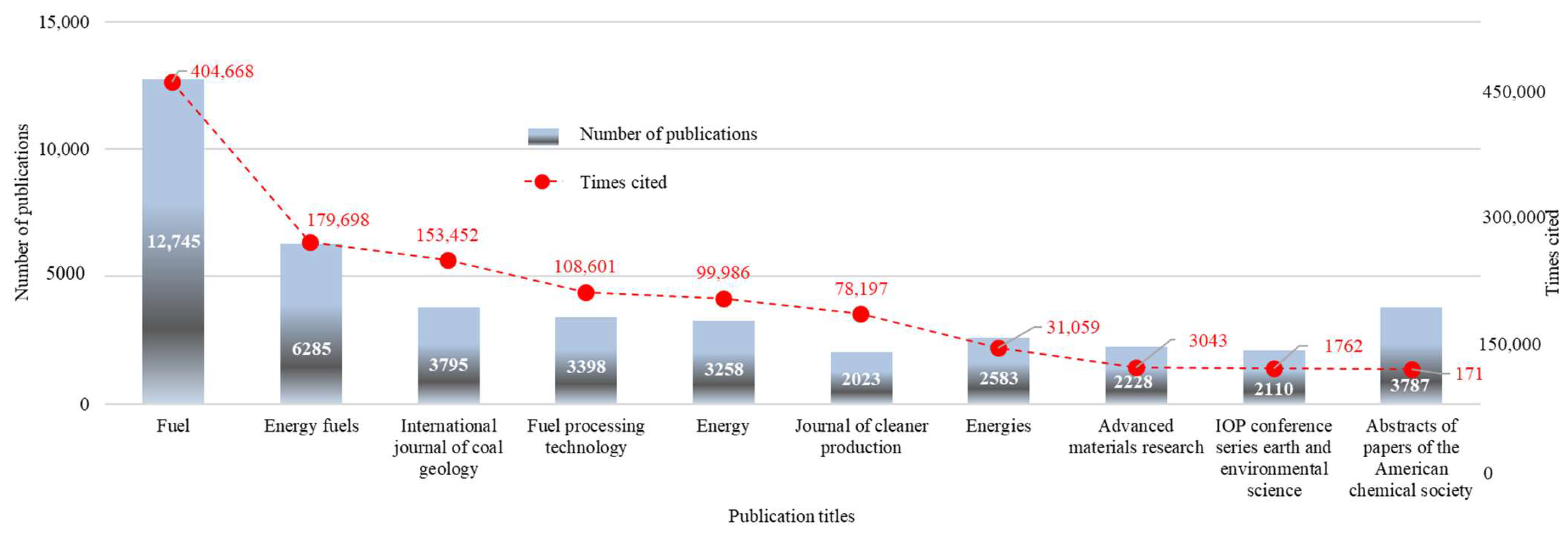
Fuel emerged as the most influential journal in coal-related research, generating 404,668 citations from 12,745 publications (
Figure 5), reflecting both high productivity and exceptional scholarly visibility. Energy & Fuels followed with 179,698 citations from 6285 publications, demonstrating a strong yet more specialized impact compared to Fuel. The International Journal of Coal Geology ranked third, producing 153,452 citations from 3795 publications, indicative of its focused, discipline-specific contribution. Similarly, Fuel Processing Technology accrued 108,601 citations from 3398 publications, highlighting its significance in applied and technological aspects of coal research.
Other notable outlets include Energy (99,986 citations; 3258 publications) and the Journal of Cleaner Production (78,197 citations; 2023 publications), reflecting the growing integration of coal studies with broader energy systems and sustainability research. In contrast, journals such as Energies (31,059 citations; 2583 publications), Advanced Materials Research (3043 citations; 2218 publications), IOP Conference Series: Earth and Environmental Science (1762 citations; 2110 publications), and Abstracts of Papers of the American Chemical Society (171 citations; 3787 publications) exhibit markedly lower citation densities despite substantial publication output.
These patterns indicate that the impact of coal research is concentrated in a few well-established, high-impact journals rather than correlating directly with publication volume. The prominence of Fuel and Energy & Fuels underscores their central role in defining research directions, methodological standards, and citation dynamics in the field. By contrast, lower-cited conference proceedings and broader-scope journals appear less influential, reinforcing the primacy of specialized, peer-reviewed outlets for consolidating and advancing coal science knowledge.
Between 1975 and 2024, the most highly cited contributions in coal-related and allied research (see
Table 2) include Yang et al. (2007, Fuel, 6222 citations) on the pyrolysis characteristics of biomass components; Zhang et al. (2014, Progress in Materials Science, 5299 citations) on high-entropy alloys; and PhH (1993, European Respiratory Journal, 5113 citations) on standardized lung function testing. Additional influential works comprise Blaabjerg et al. (2006, IEEE Transactions on Industrial Electronics, 3677 citations) on control systems for distributed power generation; Rochelle (2009, Science, 3625 citations) on amine-based CO
2 capture; Yunker et al. (2002, Organic Geochemistry, 3503 citations) on PAH source diagnostics; Yagub et al. (2014, Advances in Colloid and Interface Science, 3343 citations) on dye adsorption mechanisms; Lou et al. (2008, Advanced Materials, 2824 citations) on hollow micro-/nanostructures; Nagajyoti et al. (2010, Environmental Chemistry Letters, 2659 citations) on heavy-metal toxicity in plants; and Haszeldine, (2009, Science, 1665 citations) on carbon capture and storage. The prominence of these publications demonstrates the progressive interdisciplinarity of coal-related research, with significant contributions extending into renewable energy systems, advanced materials engineering, environmental chemistry, and occupational health—signaling a paradigm shift toward sustainability-oriented scientific inquiry.
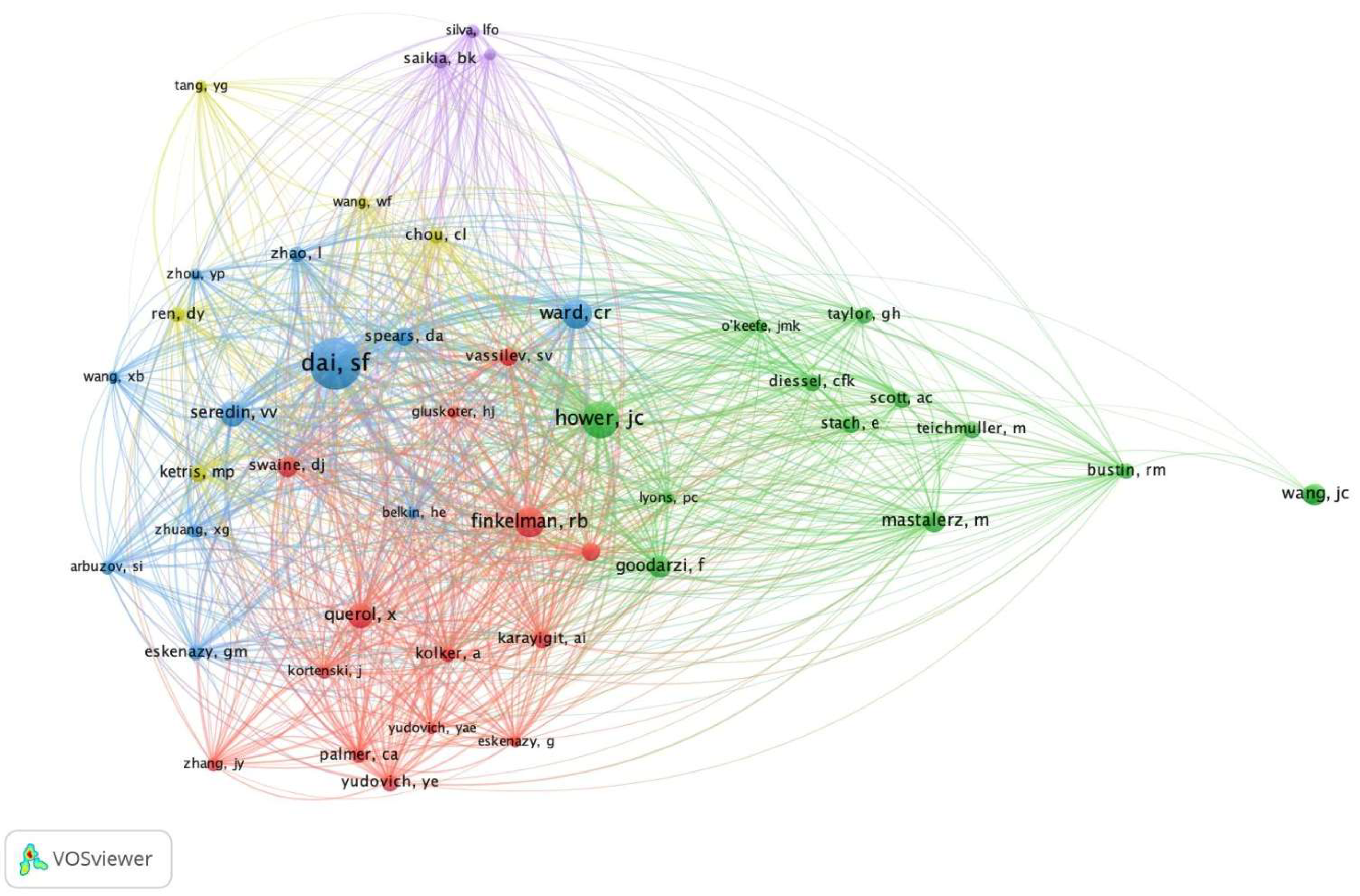
The co-citation network of authors reveals five distinct clusters of influential researchers in coal science, with node size indicating citation frequency and thus relative scientific impact (see
Figure 6). The blue cluster, led by Dai S.F., Ward C.R., and Seredin V.V., is centered on coal geochemistry and mineralogy, particularly the study of rare earth elements and environmental geoscience applications. The red cluster, dominated by Finkelman R.B. and Querol X., emphasizes the environmental and health impacts of coal, including toxic trace elements such as arsenic, mercury, and selenium, along with the geochemical characterization of coal combustion products. The green cluster, anchored by Hower J.C., Goodarzi F., Mastalerz M., and Scott A.C., represents coal petrology and organic geochemistry, encompassing maceral analysis, utilization technologies, and applied energy studies. The purple cluster, driven by Saikia B.K. and Silva L.F.O., focuses on coal combustion residues and their environmental implications, reflecting strong regional collaborations in Asia and South America. Finally, the yellow cluster, including Tang Y.G., Zhao C.L., and Wang W.F., highlights emerging research on clean coal technologies and regional coal geology, particularly within Chinese institutions. Collectively, the network underscores the interdisciplinary structure of coal research, where geochemistry, petrology, and environmental sciences are tightly interconnected, while newer clusters reflect diversification into applied clean energy and region-specific studies.
3.3. Publications Distribution Across Countries/Regions, Universities, and Departments/Laboratories
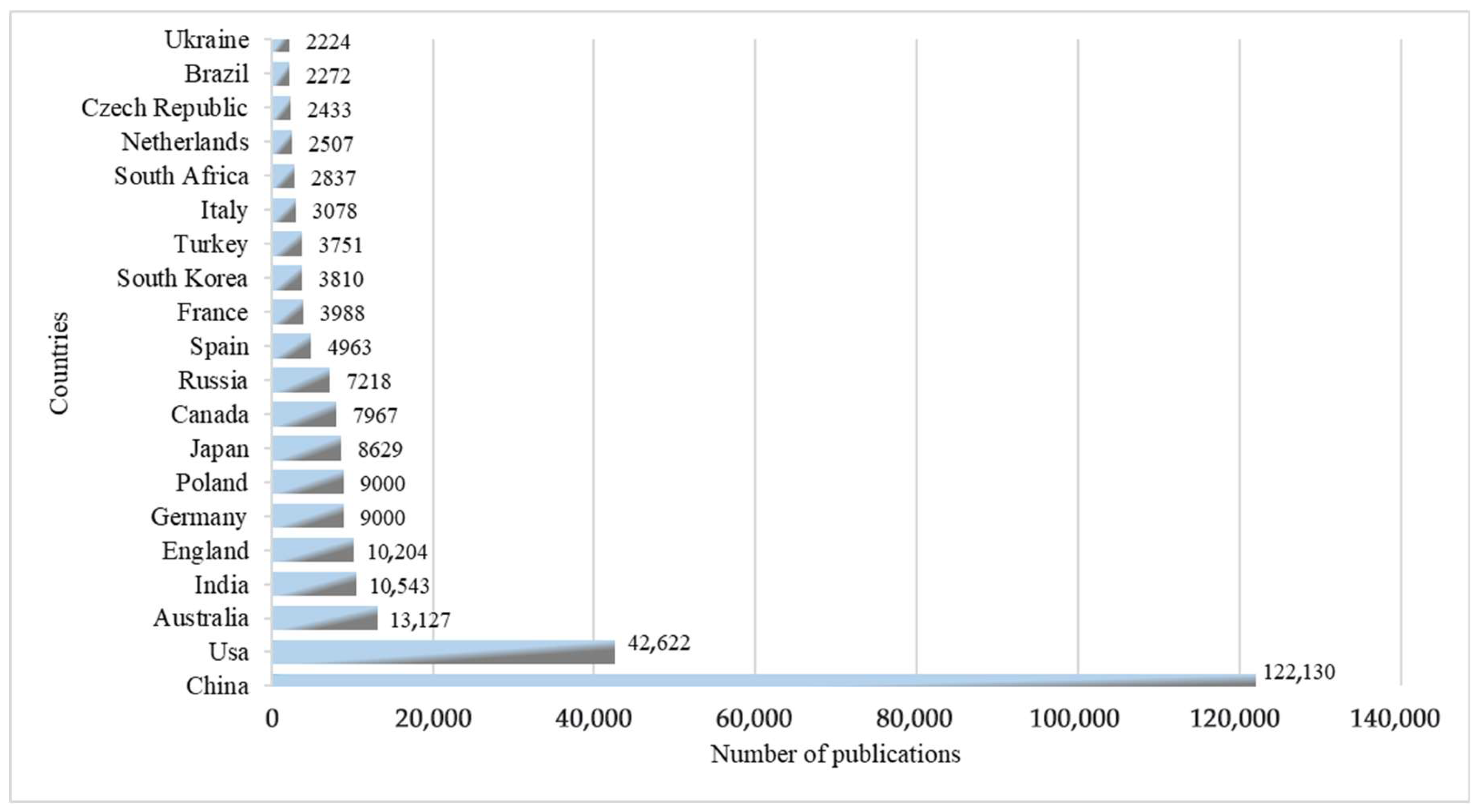
The results show the distribution of coal-related publications across countries/regions, focusing on national contributions among the top 20 publication outputs (see
Figure 7). Between 1975 and 2024, China leads coal-related research with 122,130 publications, followed by the United States (42622), Australia (13,127), and India (10,543). Significant contributions also come from England (10204), Germany (9000), Poland (9000), Japan (8629), and Canada (7967), while Russia, Spain, France, South Korea, Turkey, Italy, South Africa, Netherlands, Czech Republic, Brazil, and Ukraine show moderate outputs ranging from approximately 2200 to 7200 publications. These data underscore China’s dominance in coal research, with major contributions from other coal-producing and industrialized nations, reflecting global research efforts in energy, technology, and environmental studies.
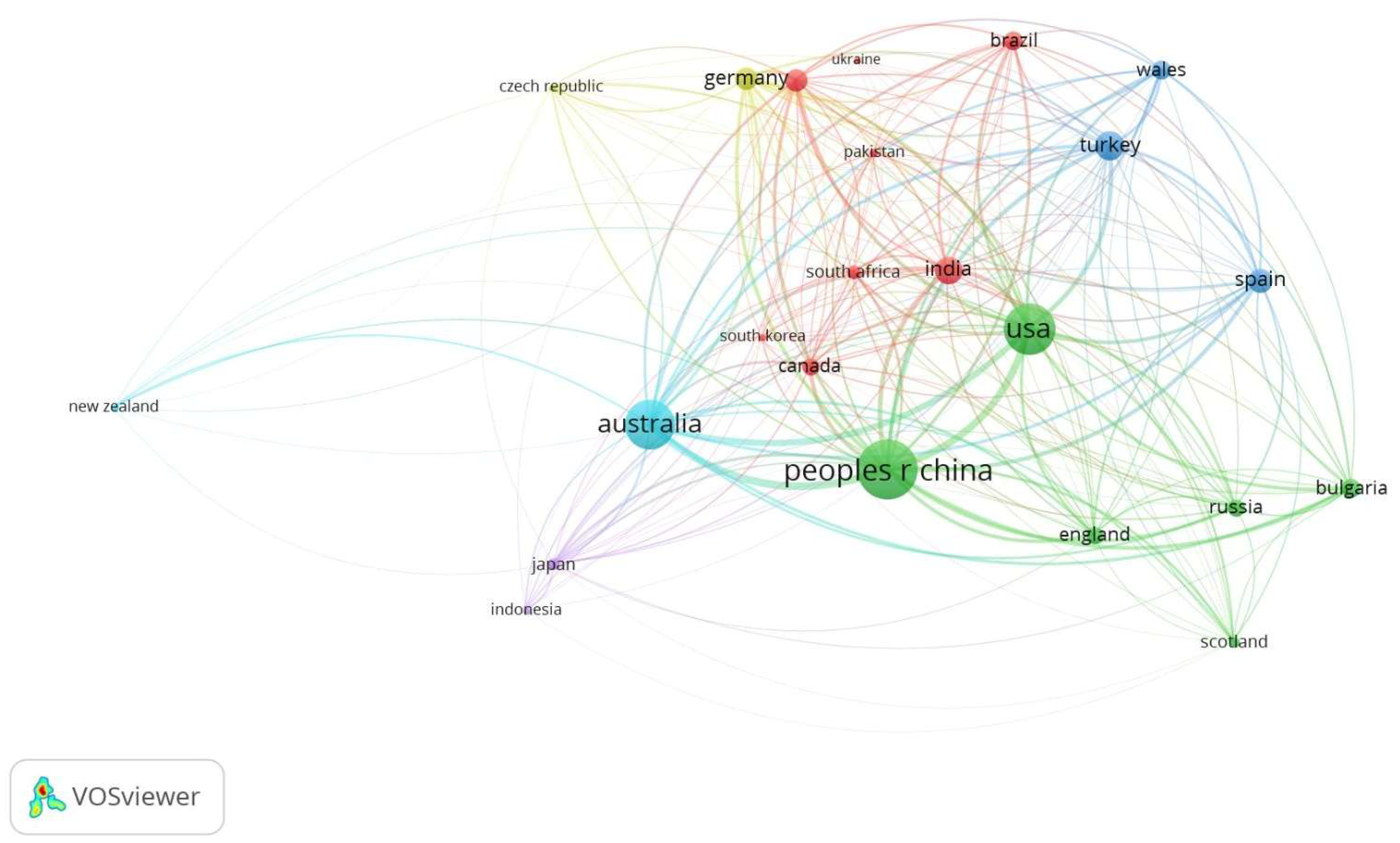
Additionally,
Figure 8 illustrates the cooperation network of leading countries in coal research based on co-authored publications, revealing several distinct clusters of international collaboration. The largest green cluster, led by China, the USA, Russia, England, Scotland, and Bulgaria, highlights global leadership and strong partnerships.
The red cluster, centered on India, Germany, Brazil, South Africa, Pakistan, Ukraine, and Canada, reflects regional and emerging collaborations.
The blue cluster, including Spain, Turkey, and Wales, represents European and neighbouring research ties, while the light blue cluster, dominated by Australia and New Zealand, indicates strong Asia-Pacific cooperation.
The purple cluster, formed by Japan and Indonesia, shows focused bilateral collaboration on applied technologies, and the yellow cluster, led by the Czech Republic, represents specific European regional links. Overall, the network demonstrates that coal research is highly international, with China and the USA serving as dominant global hubs.
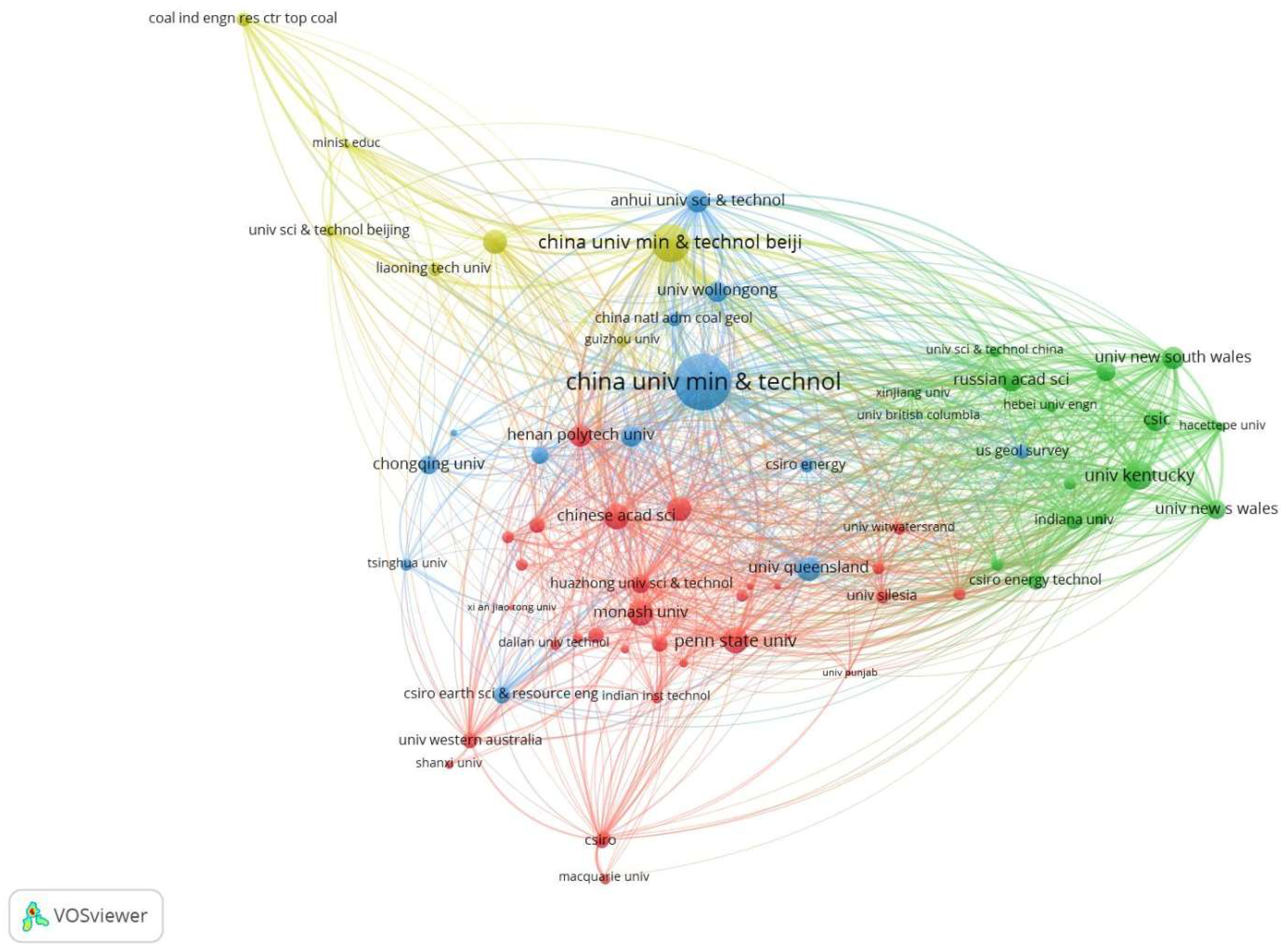
Figure 9 displays the collaborative network of leading universities in coal research, as visualized by VOSviewer, showing four major institutional clusters.
The blue cluster, led by the China University of Mining and Technology (CUMT) and its Beijing branch, represents the largest and most central hub of global coal science. This group, strongly interconnected with domestic institutions such as Henan Polytechnic University, Chongqing University, and Anhui University of Science and Technology, also maintains international collaborations with the University of Wollongong and CSIRO Energy in Australia.
The yellow cluster reflects the more applied and industry-oriented side of research, comprising the Coal Industry Engineering Research Center for Top Coal, the Ministry of Education, the University of Science and Technology Beijing, and Liaoning Technical University. This group emphasizes coal mining technology, safety, and practical engineering applications, with strong ties between industry and academia but fewer global connections.
The red cluster is built around the Chinese Academy of Sciences and highlights extensive international cooperation, particularly with institutions such as Pennsylvania State University, Monash University, Macquarie University, the University of Queensland, and Australia’s CSIRO. This cluster serves as a China–USA–Australia hub, advancing studies on coal utilization, combustion, and environmental impacts.
The green cluster represents a Western and international scientific network, including the University of Kentucky, University of New South Wales, Indiana University, the Russian Academy of Sciences, the US Geological Survey, CSIC (Spain), the University of British Columbia, and Hacettepe University. This group is focused on coal geology, geochemistry, and environmental sustainability. Taken together, the map demonstrates that coal research is structured around a China-centered global network, with CUMT and CAS at its core, bridging domestic applied research with strong international collaborations in the USA, Australia, Europe, and beyond.
Additionally,
Table 3 presents the total publication counts of the top 20 academies over five decades, universities, and institutions, as well as the departments and laboratories involved in coal science.
Affiliations: Analysis of coal-related research output indicates that China University of Mining Technology leads with 20,740 publications, followed by the Chinese Academy of Sciences (16,883), Institute of Coal Chemistry, CAS (7321), University of Chinese Academy of Sciences, CAS (6106), Taiyuan University of Technology (5888), and Huazhong University of Science and Technology (5641), while other notable contributors, including Chongqing University, United States Department of Energy, Shandong University of Science and Technology, Henan Polytechnic University, Russian Academy of Sciences, Xi’an University of Science and Technology, Tsinghua University, Indian Institute of Technology System, and the National Academy of Sciences, Ukraine, reflect both national and international leadership in coal research.
Departments and Laboratories: High-impact outputs are associated with specialized laboratories and departments, including China University of Mining Technology School of Mines (4928 publications), State Key Laboratory of Coal Resources and Safe Mining (3860), Chongqing University State Key Laboratory of Coal Mine Disaster Dynamics and Control (3693), Huazhong University of Science and Technology School of Energy and Power Engineering (3159), and the School of Chemical Engineering (2852). Other significant units include the State Key Laboratory of Coal Combustion, School of Safety Engineering, College of Energy and Mining Engineering, Key Laboratory of Coal Processing and Efficient Utilization, and State Key Laboratory for Geomechanics and Deep Underground Engineering, highlighting the critical role of dedicated laboratories and departments in advancing coal-related scientific research. These findings underscore that specialized institutions and laboratories, particularly in China, serve as key drivers of global coal research, shaping technological development and interdisciplinary collaborations in the field (see
Figure 4).
The presentation of
Table 3 and
Table 4 provides a quantitative overview of the institutional and departmental drivers of coal research, highlighting the critical role of specialized laboratories in advancing scientific knowledge and fostering interdisciplinary collaborations. By identifying the leading institutions and research units, these data not only contextualize the global distribution of coal-related research expertise but also reveal key trends in scientific productivity over the last five decades, demonstrating which organizations have shaped the development of the field.
3.4. WoS Subject Categories and Co-Occurrence of Discipline Pairs
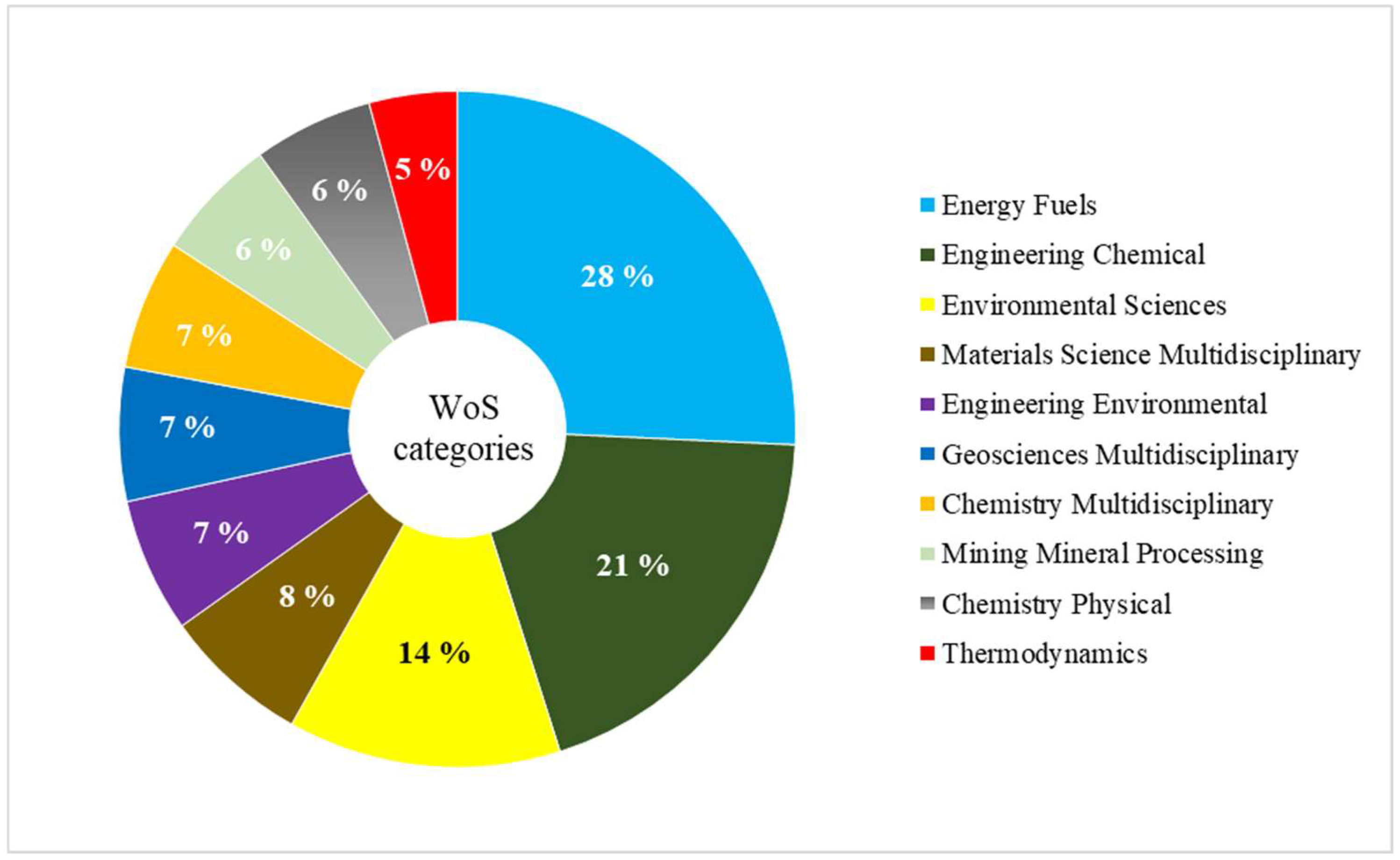
The distribution of coal-related publications across the top 10 Web of Science (WoS) subject categories (
Figure 10) shows that Energy & Fuels holds the largest share (28%), reflecting coal’s central role in global energy systems and fuel technology research. Engineering, Chemical (21%) encompasses process design, combustion systems, and chemical transformation, whereas Environmental Sciences (14%) focuses on environmental impacts, emissions control, and sustainability strategies. Materials Science, Multidisciplinary (8%) highlights interest in coal-derived materials and their applications. Other prominent categories include Engineering, Environmental (7%) and Geosciences, Multidisciplinary (7%), emphasizing the interplay between coal geology, resource assessment, and environmental engineering. Chemistry, Multidisciplinary (7%) and Chemistry, Physical (6%) address fundamental coal chemistry and reaction mechanisms, while Mining & Mineral Processing (6%) centers on extraction and beneficiation technologies. The smallest share, Thermodynamics (5%), relates to specialized studies on energy conversion efficiency and system optimization.
These results confirm the interdisciplinary nature of coal research, spanning energy production, chemical engineering, materials science, and environmental studies. The dominance of Energy & Fuels highlights coal’s continued relevance, while Environmental Sciences reflects growing attention to ecological impacts. Materials Science and Thermodynamics indicate ongoing technological innovation and efficiency improvements, showing a shift toward cleaner, value-added coal applications, balancing traditional priorities with emerging sustainability-focused research.
The CDPI matrix in
Table 5 presents the evolution of cross-disciplinary integration in coal-related research from 1975 to 2024, highlighting three temporal intervals: 1975–1999, 2000–2014, and 2015–2024. Notably, disciplines such as Energy & Fuels consistently show the highest CDPI values, increasing from 0.68 in 1975–1999 to 0.83 in 2015–2024, and demonstrating strong interdisciplinary connections with Environmental Sciences (0.85), Chemical Engineering (0.80), Materials Science (0.82), and Multidisciplinary Chemistry (0.77), underscoring its central role as a hub integrating multiple scientific domains. Engineering, Chemical similarly exhibits high and growing CDPI values (0.64 → 0.80), linking closely with Energy & Fuels, Environmental Sciences, Materials Science, and Physical Chemistry, reflecting its role in process development, chemical transformations, and technological innovation. Environmental Sciences shows a marked increase in CDPI (0.55 → 0.77), highlighting the growing focus on sustainability, emissions control, and environmental impact in coal-related studies.
Materials Science, Multidisciplinary and Chemistry, Multidisciplinary show moderate to high CDPI growth, highlighting the rising role of materials innovation and chemical analyses in coal research. Engineering, Environmental and Geosciences exhibit steady increases, reflecting integration with environmental, mining, and engineering disciplines. Specialized fields such as Mining & Mineral Processing, Chemistry, Physical, and Thermodynamics maintain moderate but stable CDPI values, primarily linked with Energy & Fuels, Chemical Engineering, and Materials Science. Overall, the results demonstrate progressive interdisciplinary integration over five decades, with Energy & Fuels and Chemical Engineering as central hubs and Environmental Sciences, Materials Science, and Chemistry increasingly contributing to sustainable and innovative coal research.
3.5. Evolution of Coal Technologies and Energy Applications (1975–2024)
Table 6 summarizes five decades of coal research, highlighting key discoveries, technological innovations, and publication trends. Between 1975 and 1984, research focused on mechanized mining (longwall and surface) and coal combustion optimization, supported by early environmental controls such as electrostatic precipitators for fly ash capture [
22,
34]. This foundational period generated 14,244 publications, reflecting efforts to improve extraction efficiency and safety.
From 1985 to 1994, advanced coal cleaning techniques, including froth flotation and dense-media separation, became widespread. Simultaneously, coalbed methane (CBM) exploration and initial laboratory-scale rare earth element (REE) recovery from coal and fly ash emerged [
29,
35,
36], corresponding with 22,191 publications.
During 1995–2004, fluidized bed combustion (FBC), coal gasification, CBM commercialization, and pilot-scale REE recovery (e.g., vanadium, scandium) were developed, alongside circulating fluidized bed (CFB) boilers and Integrated Gasification Combined Cycle (IGCC) systems [
37,
38]. This period generated 27,805 publications, reflecting the scale-up of laboratory findings to industrial practice.
From 2005 to 2014, the field increasingly emphasized environmental sustainability. Carbon capture and storage (CCS) pilots, integrated CBM–coal operations, and optimized recovery of REEs, germanium, and mercury from coal by-products were implemented [
38,
39], resulting in 58,707 publications.
In the most recent decade (2015–2024), coal research has shifted toward smart mining, AI/IoT integration, coal-to-chemicals pathways, high-efficiency low-emission (HELE) combustion, and industrial-scale REE and by-product recovery [
29,
35,
36]. The inclusion of large-scale REE extraction, coal-derived nanomaterials, and carbon capture utilization (CCU) highlights the transition toward sustainability and materials valorization, corresponding with 146,174 publications.
Collectively, these trends illustrate how coal research has evolved from mechanization and combustion optimization to integrated energy, materials, and environmental technologies. The increase in publications mirrors the field’s growing interdisciplinary complexity and emphasis on sustainable and high-efficiency technologies [
22,
34,
35,
36,
37,
38,
39].
3.6. Disciplinary Drivers of Coal Research Within Energy Systems
As indicated by the CDPI, coal research has increasingly shifted toward interdisciplinarity between 1975 and 2024. Energy & Fuels acts as the central hub (CDPI = 0.83), strongly linked with Environmental Sciences (0.85), Materials Science (0.82), and Chemical Engineering (0.80), reflecting a broader socio-technical transition: research is no longer limited to energy optimization or combustion efficiency but increasingly addresses environmental management, materials innovation, and chemical processing. Materials Science (0.74) and Chemistry (0.72–0.70) drive innovations in coal characterization and combustion chemistry, while Chemical Engineering and Environmental Sciences support process efficiency and sustainability. Geosciences, Engineering Environmental, Mining & Mineral Processing, and Thermodynamics provide essential foundations for resource management, extraction, and energy conversion. Collectively, these disciplinary interactions illustrate a transformation of coal research from a primarily technical endeavour to an interdisciplinary platform balancing technological development with environmental sustainability.
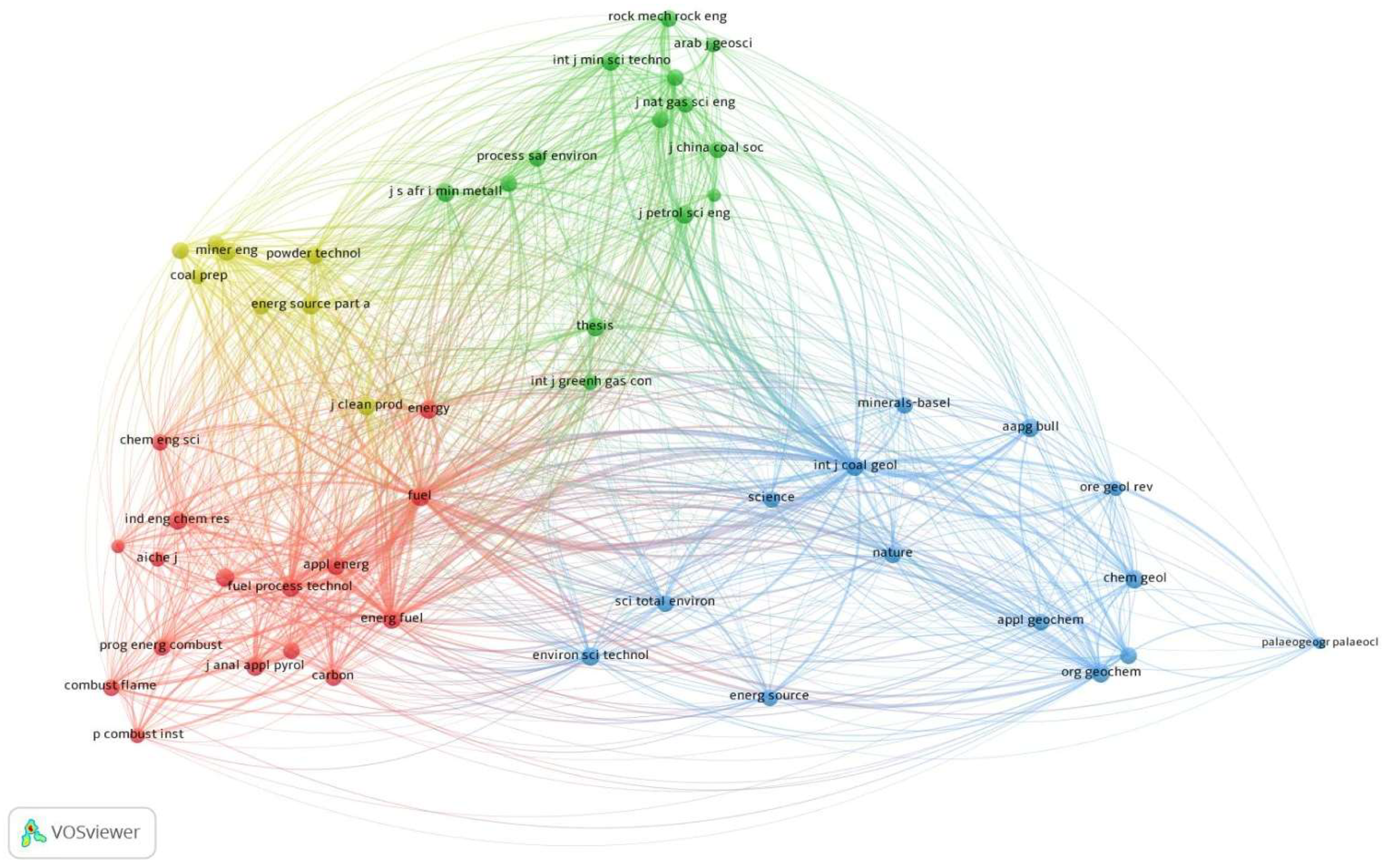
The journal co-citation network (
Figure 11) strongly supports the CDPI-based interpretation that coal-related publications have become an increasingly interdisciplinary field. Clusters reveal distinct yet interconnected domains: the red cluster consists of journals such as Fuel, Energy & Fuels, Applied Energy, and Fuel Processing Technology, reflecting research on coal combustion, pyrolysis, gasification, clean energy conversion, and carbon utilization. The yellow cluster, including Mining Engineering, Powder Technology, Coal Preparation, and Energy Sources Part A, highlights the applied and industry-oriented domain. The green cluster, with journals such as the Journal of Petroleum Science and Engineering, Journal of Natural Gas Science and Engineering, International Journal of Mining Science and Technology, and Journal of the China Coal Society, bridges coal with petroleum, natural gas, rock mechanics, and safety/environmental protection. The blue cluster, containing International Journal of Coal Geology, Organic Geochemistry, Chemical Geology, Applied Geochemistry, Ore Geology Reviews, and Palaeogeography, Palaeoclimatology, Palaeoecology, focuses on coal geology, geochemistry, paleoenvironments, mineralogy, and broader environmental sciences, with high-impact journals such as Science and Nature underscoring the relevance of coal research to global scientific debates. The growing prominence of journals addressing climate change, pollution, and environmental health underscores coal research’s evolving orientation toward ecological and societal challenges. In general, the core disciplines driving coal research growth are energy sciences and geosciences. These patterns indicate that coal studies increasingly serve as a nexus for energy innovation and environmental stewardship.
Table 6 provides clear evidence of leadership in coal research from 1975 to 2024, highlighting the interdisciplinary integration of energy and geoscience. Top authors, including Wei, Xian-Yong; Li, Yw; and James Hower, publish across Engineering, Energy & Fuels, Chemistry, Materials Science, Environmental Sciences, and Geochemistry, reflecting the central role of geoscience in cross-disciplinary coal research. Highly cited papers, such as Lewis & Nocera (2006), Yang et al. (2007), and Zhang et al. (2014), guide research on energy optimization, materials characterization, and environmental management. Leading countries—China, the United States, Australia, and India—dominate both research output and coal reserves, showing that strong geoscience infrastructure drives innovation in resource management and energy technologies. Prominent institutions, including China University of Mining Technology, the Chinese Academy of Sciences, and the Institute of Coal Chemistry CAS, serve as hubs for interdisciplinary innovation. Key journals, such as Fuel, Energy & Fuels, and International Journal of Coal Geology, provide platforms for disseminating research integrating energy, materials, chemical, environmental, and geoscience perspectives. Importantly,
Table 7 synthesizes multiple indicators—authors, citations, countries, institutions, and journals—to demonstrate leadership and influence in coal research, emphasizing the scientific and strategic relevance of these contributors and highlighting the transition of coal research from resource exploitation toward sustainability, climate responsibility, and environmental protection. The environmental domain is equally critical, with research increasingly directed toward carbon capture and storage (CCS), mitigation of greenhouse gas emissions, remediation of coal-derived pollutants, and assessment of public health risks from coal combustion. This dimension highlights the transition of coal studies from resource exploitation toward sustainability, climate responsibility, and environmental protection. This dimension highlights coal research’s role in addressing global environmental challenges.
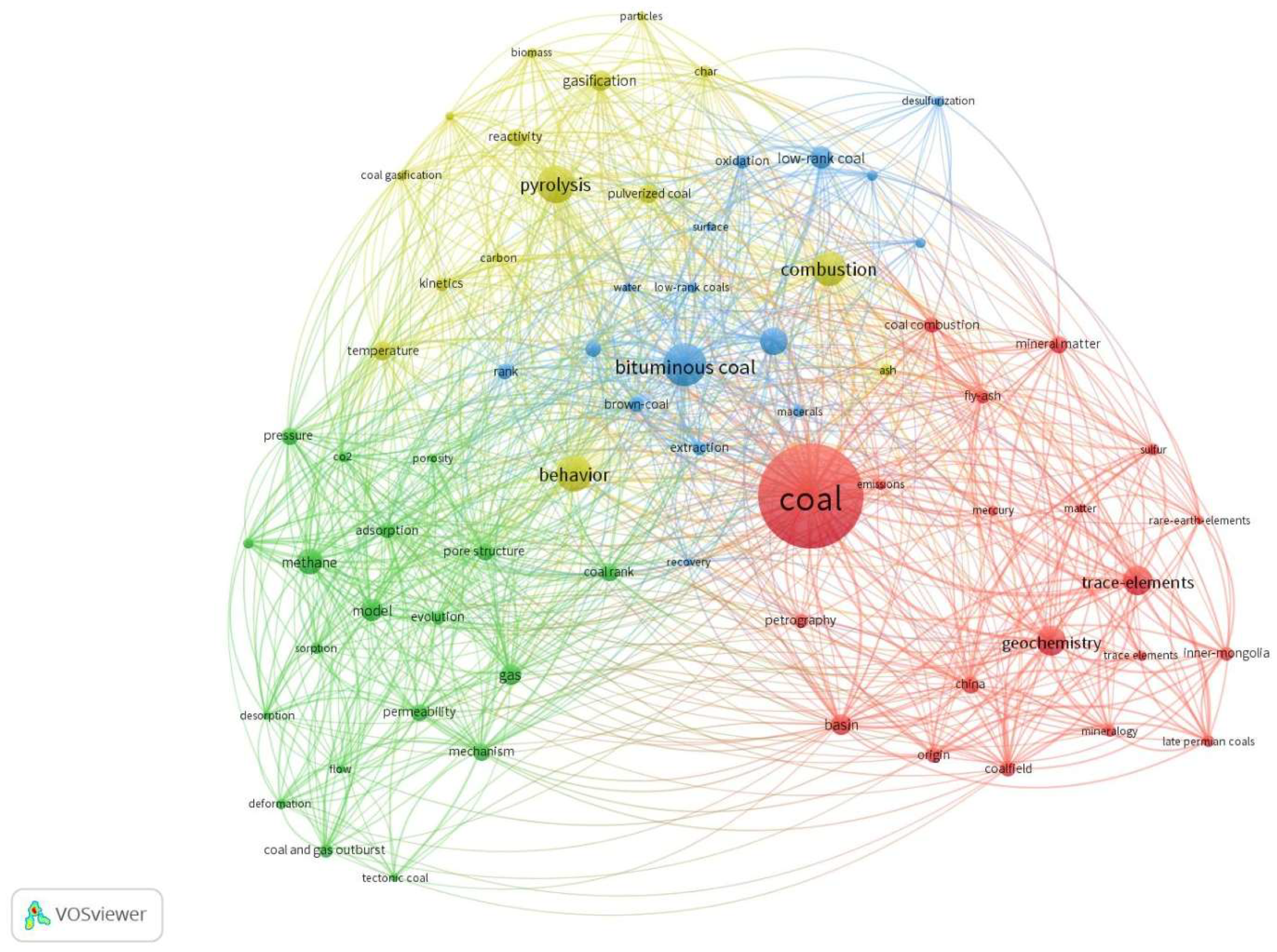
The keyword co-occurrence network (
Figure 12) provides strong supporting evidence for the disciplinary integration and thematic diversity of coal research, directly illustrating how energy and geoscience intersect with environmental and technological studies. This analysis demonstrates that coal research now operates at the intersection of energy technology, geoscience, and environmental sustainability. The keyword co-occurrence network analysis of coal-related publications, visualized using VOSviewer, reveals four major thematic clusters:
The red cluster represents the geochemical and environmental aspects of coal research, with core keywords such as coal, geochemistry, trace elements, basin, petrography, mineral matter, sulfur, mercury, and REE, together with the genetic aspects of coal formation, basin evolution, and environmental implications.
The green cluster is centered on coalbed methane, adsorption, and gas behavior, including keywords such as behavior, methane, adsorption, desorption, permeability, pore structure, gas, evolution, deformation, model, tectonic coal, and coal and gas outburst with applications in both energy extraction and mining safety.
The blue cluster emphasizes coal rank, combustion, and coal types, represented by terms such as bituminous coal, brown coal, low-rank coal, combustion, coal combustion, oxidation, desulfurization, extraction, and recovery, including efficiency, oxidation, emission control, and recovery technologies.
The yellow cluster highlights energy conversion processes such as pyrolysis, gasification, and reactivity, with keywords including pyrolysis, gasification, biomass, reactivity, kinetics, char, carbon, temperature, particles, and pulverized coal with biomass in energy conversion and cleaner technologies.
3.7. Global Research Patterns and Funding Dynamics in Coal Research
The global patterns of coal-related publications from 1975 to 2024 exhibit a high concentration among a limited number of publishers and a pronounced linguistic dominance. As shown in
Table 8 (WoS data), Elsevier ranks as the leading publisher with 92,243 outputs, followed by Springer Nature (20,765), the American Chemical Society (18,522), Taylor & Francis (12,240), and MDPI (11,532), underscoring the pivotal role of major international publishing houses in disseminating coal research. Additional notable contributors include Wiley (11,061), IEEE (5780), IOP Publishing Ltd. (3681), the Royal Society of Chemistry (3605), and Trans Tech Publications Ltd. (3592), collectively accounting for a substantial share of the total publication volume.
In terms of language distribution, English overwhelmingly dominates with 261,534 publications, reinforcing its position as the global lingua franca of scientific communication. Other languages, including German (2513), Russian (2499), Chinese (2317), Polish (926), Japanese (881), French (497), Spanish (298), Ukrainian (235), and Portuguese (186), contribute smaller yet regionally significant shares, reflecting localized research priorities and national coal industry contexts. These findings indicate that coal research is primarily disseminated in English through leading global publishers, such as Elsevier and Springer Nature, whose high visibility and wide indexing facilitate broad readership and citation. While English dominates as the global scientific language, enabling international collaboration, contributions in other languages reflect regional research priorities and national coal industry initiatives, supporting a diverse and internationally integrated research landscape.
Table 9 presents the leading funding sources and conferences driving coal research from 1975 to 2024, based on publication counts. The National Natural Science Foundation of China (NSFC) emerges as the most prolific funder with 64696 publications, followed by the Fundamental Research Funds for the Central Universities (10,520), National Key Research Development Program of China (6716), China Postdoctoral Science Foundation (5878), and the National Basic Research Program of China (4684), highlighting the dominant role of national programs in advancing coal-related research. Additional contributors include the National Key R&D Program of China (4265), Chinese Academy of Sciences (2571), United States Department of Energy (DOE) (2325), Natural Science Foundation of Shandong Province (2320), and the China Scholarship Council (2310), reflecting both domestic and international support.
Regarding scholarly dissemination, the International Symposium on Mining Science and Safety Technology leads with 525 publications, followed by the 8th International Conference on Coal Science (493), the 5th and 4th International Conference on Advances in Energy Resources and Environment Engineering (ICAESEE) (393 and 356), the 10th International Conference on Coal Science (392), and the 1st International Symposium on Mine Safety Science and Engineering (ISMSSE) (383). Other notable venues include the Asia Pacific Power and Energy Engineering Conference (APPEEC, 242), the 3rd ICAESEE (233), the 13th World Hydrogen Energy Conference (231), and the 3rd International Symposium on Modern Mining and Safety Technology (218).
These findings underscore that coal research is concentrated around major national funding programs, particularly in China, and is disseminated through a combination of high-impact international and regional conferences, reflecting strategic investment and the centrality of scholarly communication in advancing the field.
3.8. Environmental Regulation and Sustainability Drivers in Coal Research
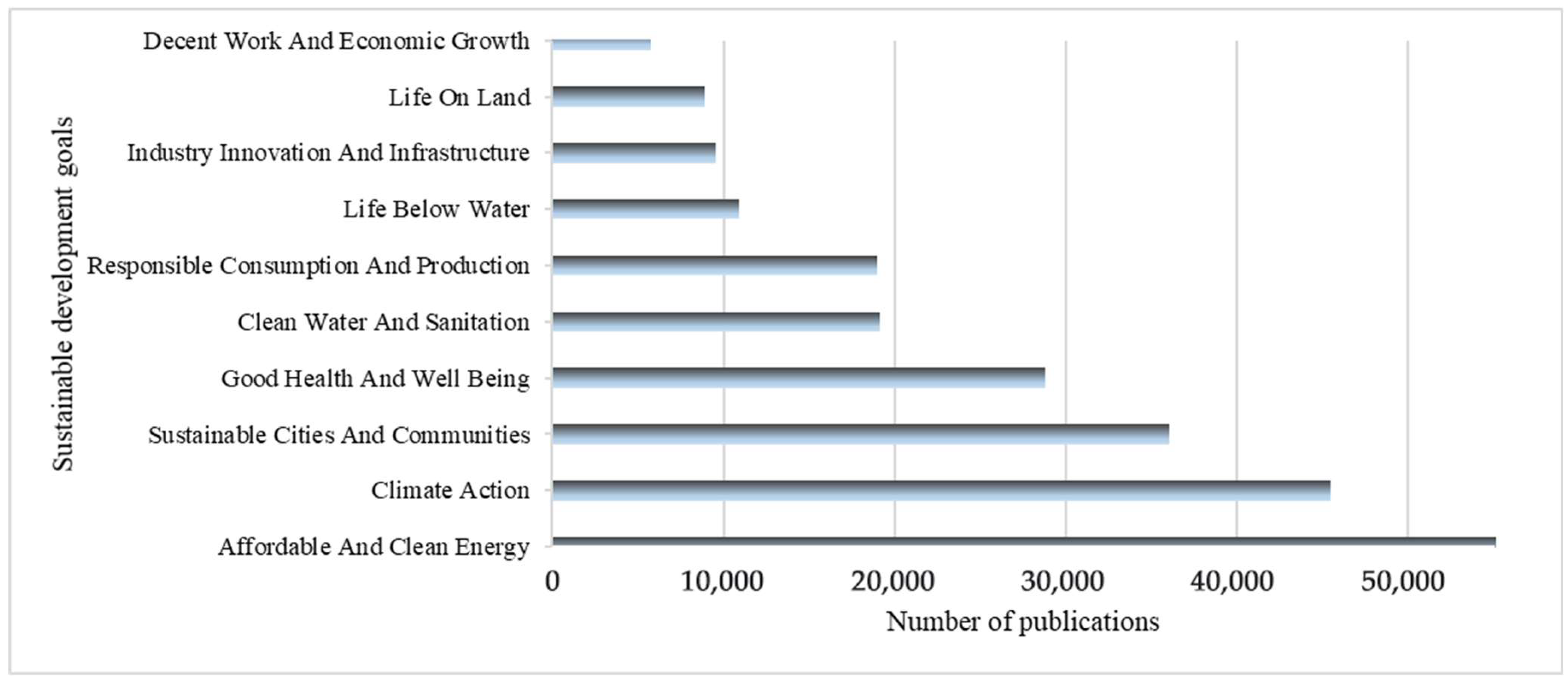
The Sustainable Development Goals (SDGs), as tracked in the Web of Science (
Figure 13), reveal the alignment of coal research with global sustainability priorities. Among the top 10 SDGs, Affordable and Clean Energy dominates with 55,208 publications, reflecting coal’s central role in energy production and technological research. Climate Action follows with 45,443 publications, highlighting studies on emission reduction, carbon mitigation, and the climate impacts of coal utilization. Research addressing Sustainable Cities and Communities (36,049) and Good Health and Well-Being (28,763) emphasizes urban energy systems, air quality, and public health considerations.
Other notable SDGs include Clean Water and Sanitation (19,135), Responsible Consumption and Production (18,996), Life Below Water (10,961), Industry, Innovation, and Infrastructure (9584), Life on Land (8922), and Decent Work and Economic Growth (5751), reflecting coal research contributions to environmental protection, sustainable industrial practices, biodiversity conservation, and socioeconomic development. These findings demonstrate that coal research has evolved beyond traditional energy-focused studies, increasingly integrating environmental, health, and societal dimensions, thereby supporting global sustainability agendas.
Environmental regulations and sustainability considerations are increasingly shaping coal research, driving innovations in both decarbonization and desulfurization technologies. Coal gasification fine slag (CGFS), despite its ultrafine particles and complex carbon–ash intergrowth, can achieve up to 85.23% combustible recovery through a combination of optimized fly ash blending, a methyl oleate collector, ultrasonic treatment, and short-duration ball milling, while significantly reducing the leaching of toxic metals such as Ni, Pb, Mn, and As [
40]. Similarly, fine high-sulfur coal can be efficiently desulfurized using integrated flotation–electrochemical methods, with ultrasonic treatment and grinding enhancing sulfur liberation and removal [
41]. These studies illustrate that environmentally driven research is promoting cleaner, more sustainable coal utilization by improving resource recovery and minimizing pollutant emissions, aligning with the global energy transition and stricter environmental regulations.
3.9. Coal Research in Transition Across Energy Systems, Geosciences, and Environmental Control
Bibliometric evidence highlights three major domains where coal research remains most prominent: the energy sector, geoscientific applications, and the environmental sector, particularly climate and health. In the energy domain, coal continues to play a central role in the global power mix, supplying ~36% of the world’s electricity in 2021 and reaching a record 10,400 TWh in 2022, while also being the single largest source of anthropogenic CO
2, emitting ~15 Gt annually [
7,
8]. Meeting international climate goals requires coal use to decline by 90% by 2050, with unabated coal-fired power phased out by 2040 [
7,
8]. Regional trajectories diverge: in the United States, coal’s share in electricity generation declined substantially over the past two decades, falling from nearly half of total generation in the mid-2000s to roughly ~16% in 2023 according [
42,
43], while in China, coal has remained the dominant source of electricity—accounting for around 60% of total generation in 2023 and 2024 as reported by [
44,
45,
46,
47].
Beyond energy, coal retains significance as a geoscientific resource. It serves as a paleoenvironmental archive and, through combustion products such as fly ash (~580 Mt annually in China), as a potential secondary source of critical raw materials including rare earth elements, scandium, and gallium, with enrichments up to six times higher than in raw coal [
48,
49,
50]. At the same time, extraction and combustion processes present geoscientific challenges such as groundwater contamination, land subsidence, and elevated natural radioactivity [
51].
The environmental domain underscores coal’s dual impact on climate and human health. Combustion accounts for the largest share of global CO
2 emissions [
7,
8], while methane released during mining has a global warming potential ~25 times higher than CO
2 [
52,
53,
54,
55,
56,
57]. Health-related impacts are equally critical: coal burning emits fine particulate matter, sulfur dioxide, nitrogen oxides, and toxic trace elements such as mercury and arsenic, contributing to respiratory and cardiovascular diseases [
57,
58,
59]. In some regions, elevated natural radioactivity in coal and ash compounds occupational and public health risks [
60,
61,
62,
63,
64].
Collectively, these insights position coal at a crossroads: in the energy sector it remains indispensable yet incompatible with net-zero ambitions; in the geosciences it presents both opportunities for critical raw material recovery and risks of environmental degradation; and in the environmental sector it exacerbates climate change while intensifying health burdens. The central challenge for coal science and policy is thus to reconcile these contradictions and determine whether coal persists as a legacy burden or transitions into a managed resource within sustainable energy and material systems.
3.10. Global Dynamics and China’s Leadership in Coal Research (1985–2024)
In this study, as well as in recent bibliometric trends [
23,
38,
39,
40,
41,
65] indicate that coal-related research is not uniform globally but is strongly influenced by national energy policies and economic priorities. Analysis of publication output over the past four decades, disaggregated by country and region, reveals contrasting patterns. Traditionally coal-intensive Western nations, such as the USA, UK, and Germany, have experienced a steady decline in coal-related research since the early 2000s, reflecting the phase-out of coal-fired power plants and a redirection of research funding toward renewable energy technologies.
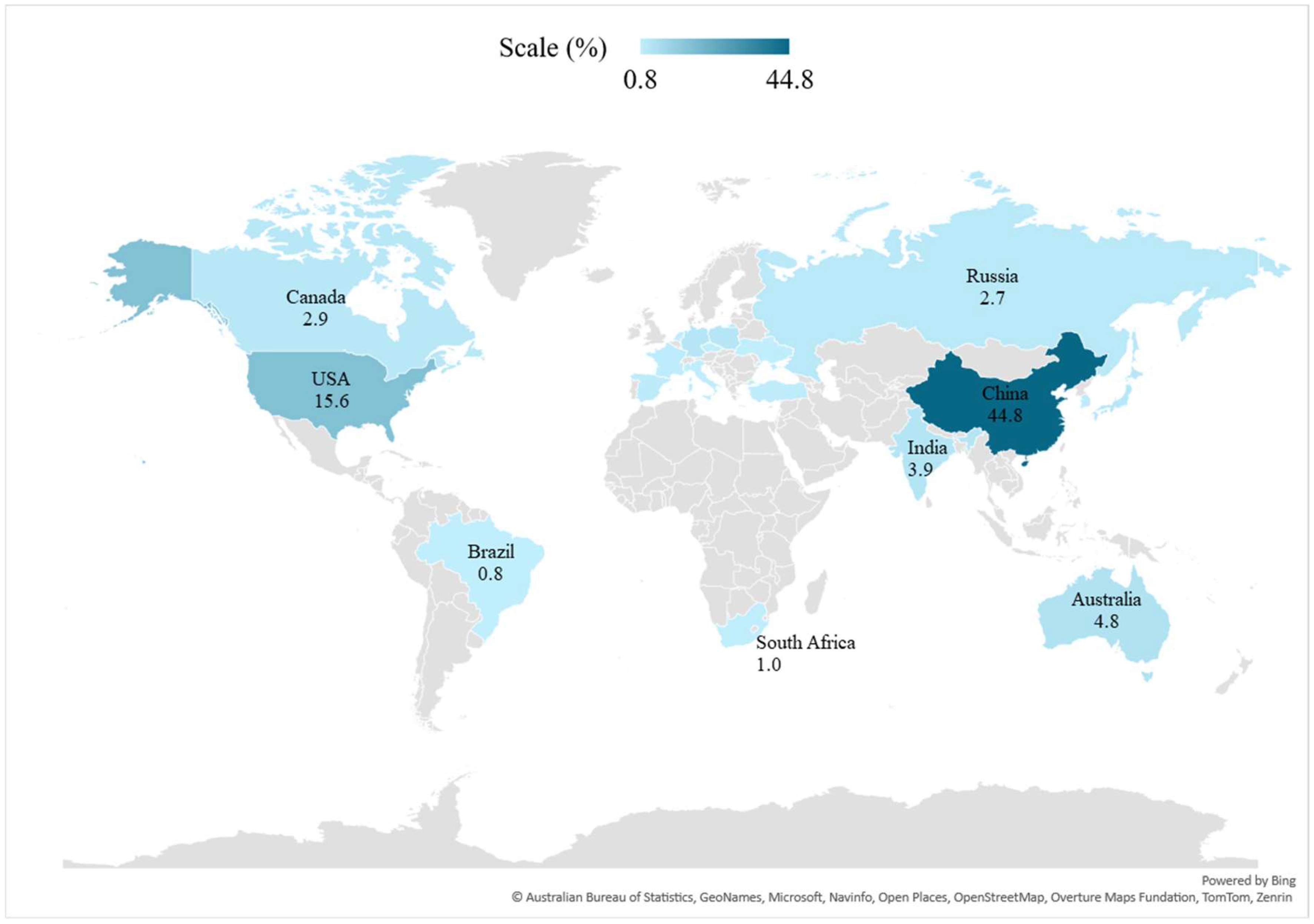
In contrast, China, India, and other Asian countries exhibit substantial growth in coal-related publications, driven by ongoing expansion of coal infrastructure, technological innovation in clean coal and carbon capture, and strategic investment in coal-based energy research. Notably, China alone accounts for approximately 45% of global coal research output, highlighting its dominant role in the field. These trends suggest a geographic “shift” in coal science: while Western nations reduce coal-related research, Asian countries maintain or expand their programs, emphasizing adaptation of coal technologies to national energy needs (see
Figure 14).
China’s leadership in coal research reflects a combination of structural, economic, and policy factors that have driven both sustained demand for coal-related knowledge and the capacity for substantial scientific output, as demonstrated in this study and previous studies [
38,
64]. Bibliometric analyses further indicate that China’s coal research spans a wide range of technical and interdisciplinary fields, including mining and combustion technologies, environmental assessment, and emissions mitigation strategies [
23,
38,
64]. A rapid increase in publication output is particularly evident in areas such as coal gasification, methane emission monitoring, and mining risk assessment [
65]. At the global level, China’s significant contribution to energy-related bibliometric indicators underscores the close alignment between scientific activity, national policy priorities, and coal-dependent industrial development [
23,
38].
At the core of this research output is China’s position as the world’s largest coal producer and consumer. Historically, coal has accounted for the majority of China’s energy consumption, supporting industrialization, electricity generation, and rapid economic growth [
38]. Even as renewable energy sources have expanded in the 21st century, coal continues to represent a dominant share of primary energy, sustaining research interest in coal extraction, utilization, and emissions control [
23,
65]. Economic growth in coal-intensive sectors—including steelmaking, power generation, and heavy industry—has been tightly linked to coal use. This industrial dependence has driven technological innovation and research focused on improving coal efficiency, safety, and environmental performance [
38,
65].
State policy has played a central role in shaping China’s coal research priorities. Energy strategies emphasizing security and self-sufficiency, particularly in response to volatile global energy markets, have reinforced investment in coal infrastructure and associated R&D [
23,
38]. Long-term planning instruments, such as the Five-Year Plans, institutionalized research targets for coal technologies, including clean coal, carbon capture, and emissions reduction [
38,
65]. Such coordinated policy support has enabled domestic institutions to develop significant research capacity and achieve high publication volumes.
Positive Lessons:
(1) Large-scale research investment: Sustained funding and long-term strategic planning can rapidly expand a country’s scientific capacity in key energy sectors, including coal-related technologies [
38,
64].
(2) Integration of technology and policy: Aligning research and development with industrial and energy policy ensures that scientific efforts address practical challenges, such as improving efficiency and reducing emissions, and provides a potential pathway for managing fossil fuels alongside low-carbon energy transitions [
23].
Challenges and Limitations:
(1) Environmental and emissions risks: Prolonged reliance on coal has contributed to severe air pollution and elevated carbon emissions, posing significant risks to public health and climate objectives [
23,
38].
(2) Structural inertia: Continued investment in coal infrastructure can delay the deployment of renewable energy technologies and reinforce long-term fossil fuel dependency, thereby complicating energy transitions [
64].
(3) Research focus imbalance: An excessive emphasis on coal-related technologies may divert resources from emerging low-carbon energy fields if not accompanied by comprehensive and balanced transition strategies [
38,
65].
3.11. Unexplored Themes and Future Directions
While recent bibliometric trends highlight technological and sustainability-focused research, several critical areas remain underexplored. Notably, the social, economic, and policy implications of coal transition have received limited attention. Issues such as workforce displacement, community resilience, and the societal impacts of phasing out coal infrastructure are largely absent from mainstream coal research, despite their relevance for equitable energy transitions. Integrating these dimensions could provide a more holistic understanding of coal’s role in society and inform policy frameworks that balance environmental objectives with social justice considerations.
Emerging areas include the valorization of coal by-products, such as fly ash and coal gangue, for the recovery of REE and other industrially valuable materials, supporting circular economy strategies. Carbon capture, utilization, and storage (CCUS) technologies remain a major frontier, with gaps in process optimization, energy integration, and life-cycle assessment. The integration of digital technologies, artificial intelligence, and machine learning also promises to enhance efficiency, safety, and data-driven understanding in coal research
Additionally, regional disparities in coal science remain insufficiently studied. Bibliometric patterns suggest a shift toward China and other emerging economies, yet the localized consequences of energy transition—such as regional employment, economic diversification, and energy access—warrant targeted investigation. Future research could examine these geographic variations alongside technological innovation to ensure a comprehensive assessment of coal’s evolving role in global energy systems.
Finally, there is a need for studies that bridge technical, environmental, and social perspectives. Interdisciplinary approaches combining environmental science, economics, sociology, and policy analysis could uncover novel pathways for sustainable coal utilization while addressing the broader societal challenges of energy transition. Recognizing these unexplored themes will allow coal research to more effectively guide decision-making and shape socially and environmentally responsible energy futures.
4. Conclusions
This study presents a comprehensive long-term bibliometric analysis of coal research (1975–2024), based on 272,370 Web of Science records, and applies the Cross-Disciplinary Publication Index (CDPI), the Technology–Economic Linkage Model (TELM), VOSviewer, and Excel to evaluate research trends, transitions, and transformations, highlighting growing interdisciplinarity and the central role of global leaders and institutions in advancing coal science.
Results over the past fifty years show coal research is dominated by articles (74%), with steady growth that peaked at ~19,500 in 2024, while, e.g., reviews and book contributions form only a small share, reflecting the field’s emphasis on original research. Publication output increased steadily after 1975, peaking above 16,000 around 2020–2022 before a sharp drop in 2023 and a rebound to ~19,500 in 2024, trends that parallel global coal price fluctuations, as shown by TELM, with spikes during crises (2008–2011 and 2021–2022, $25–$384) and then declined in 2023–2024 as demand weakened, supply expanded, and markets stabilized after the energy shocks. CDPI results highlight Energy & Fuels (0.83), Chemical Engineering (0.80), Environmental Sciences (0.77), Materials Science (0.74), and Geosciences (0.66), confirming coal’s position at the nexus of applied technologies, environmental challenges, and geological resources, with thematic clustering showing a shift from energy and geology toward environmental, sustainability, and advanced materials research. China dominates global coal research output (122,130 publications), supported by leading institutions such as the China University of Mining and Technology and the Chinese Academy of Sciences, while international hubs like the USA, Australia, and Europe maintain strong collaborations.
Our findings demonstrate that coal science has undergone distinct phases of innovation and transformation. Early advances in mechanized mining, coal cleaning, combustion, and coalbed methane (CBM) commercialization generated more than 64,000 publications (1975–2004), followed by a focus on integrated gasification combined cycle (IGCC) and carbon capture and storage (CCS) technologies (58,707 publications, 2005–2014). More recently, by-product valorization, carbon capture utilization and storage (CCUS), and digital technologies (artificial intelligence, AI; internet of things, IoT; machine learning, ML) have emerged as central drivers of innovation, producing 146,174 publications (2015–2024) and signaling a transition toward sustainability-oriented coal science. The disciplinary foundations of coal research continue to be anchored in three major domains. (1) Within the energy domain, coal remains a critical contributor, providing ~36% of global electricity (~10,400 TWh in 2022) but also emitting ~15 Gt of CO2 annually, underscoring the necessity of a 90% reduction by 2050 to align with climate targets. (2) In the geoscientific domain, coal and its by-products—particularly fly ash (~580 million tonnes annually in China)—are recognized both as repositories of rare earth elements (REEs), enriched up to sixfold relative to raw coal, and as sources of risk, with >19,000 studies highlighting subsidence, contamination, and radioactivity (SDG6). (3) From an environmental and health perspective, coal remains a dominant driver of greenhouse gas (GHG) emissions, with methane contributing 25 times the warming potential of CO2, while 28763 studies (SDG3) have documented significant health risks from toxic emissions such as Hg and As. Taken together, these findings illustrate coal’s transitional role across energy, geosciences, and environmental dimensions. Coal science embodies a dual identity: a backbone of global energy supply and industrial processes, yet simultaneously a source of profound environmental and health challenges. The evolving research landscape reflects both the pursuit of technological solutions for efficiency and decarbonization and a growing recognition of coal’s role in resource recovery, environmental sustainability, and public health.
Future coal research is increasingly shifting from traditional extraction and combustion studies toward innovation-driven, sustainability-oriented approaches, emphasizing by-product valorization for rare earth element recovery, CCUS, and the integration of digital technologies such as artificial intelligence and machine learning. These directions position coal science as a multi-dimensional, interdisciplinary field that simultaneously advances technical understanding, environmental sustainability, and circular economy applications.




 ,
,