Broadband Stability Enhancement Method for Grid-Forming Converters Based on Frequency-Segmented Impedance Reshaping

Abstract
1. Introduction
- A systematic “frequency-band decoupling and cooperative reshaping” framework is proposed. By constructing independent outer-loop and inner-loop stabilizers, this paper achieves coordinated mitigation of two stability issues with different physical mechanisms in GFM converters: low-frequency negative-damping oscillations and high-frequency harmonic instability.
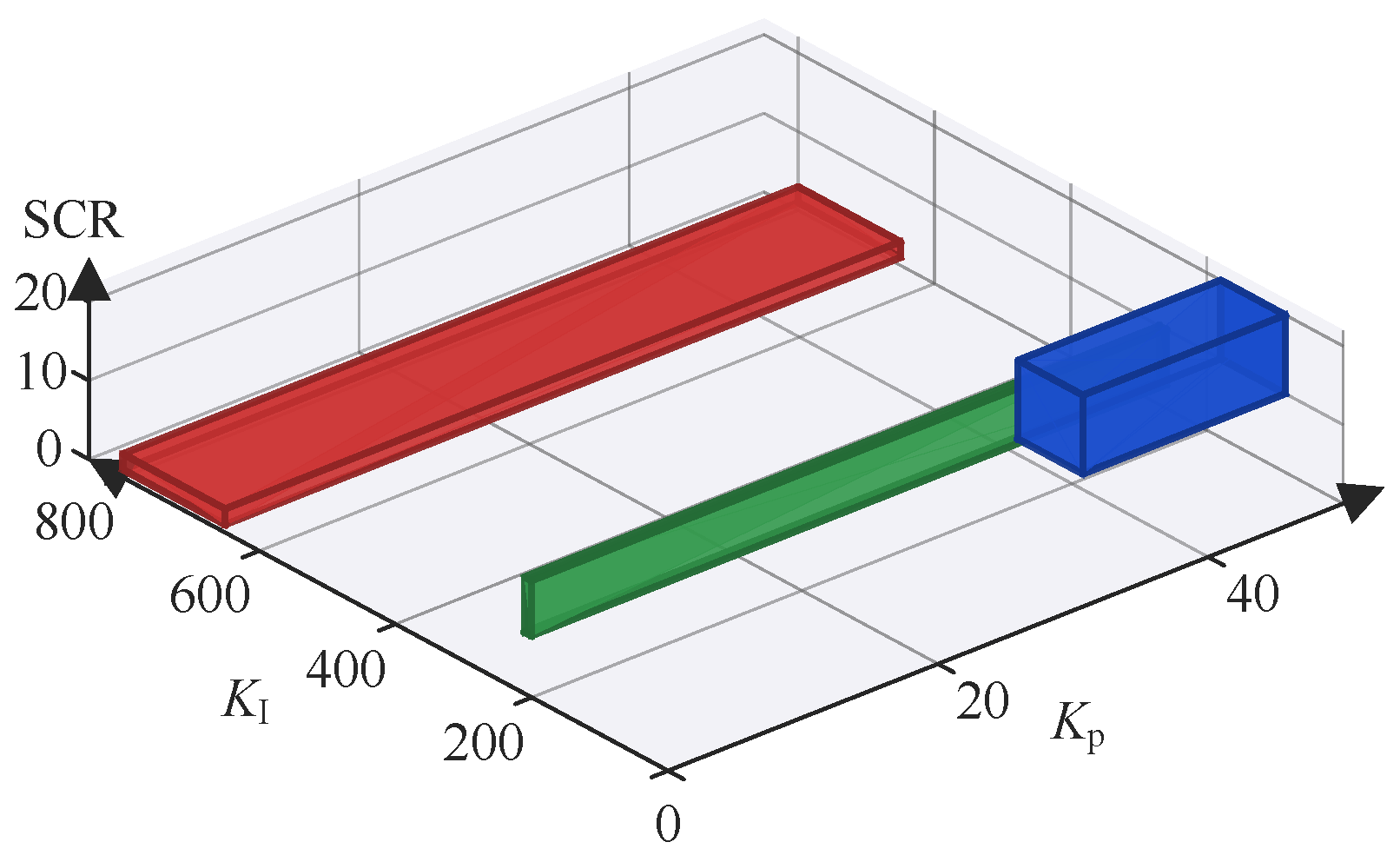
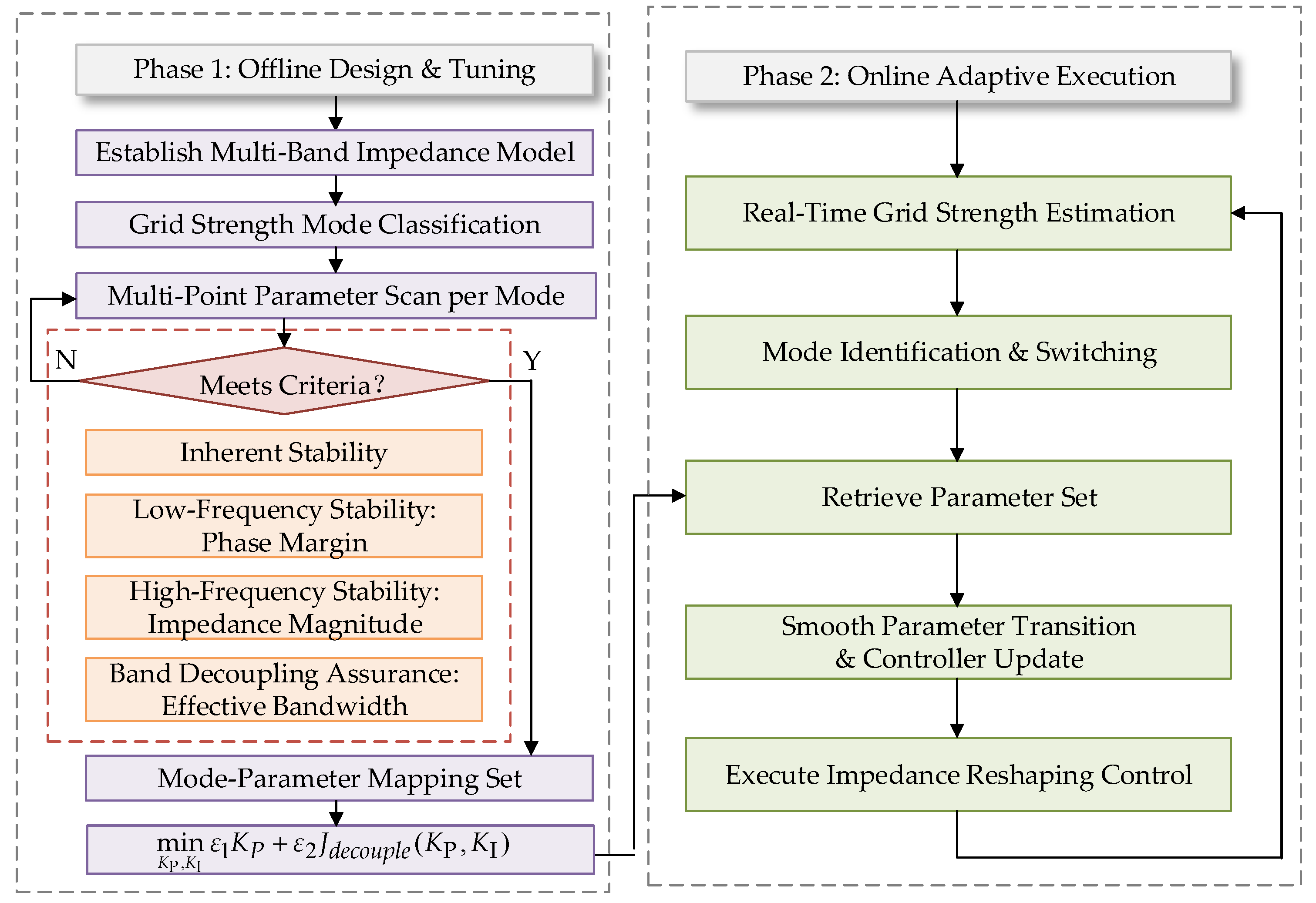
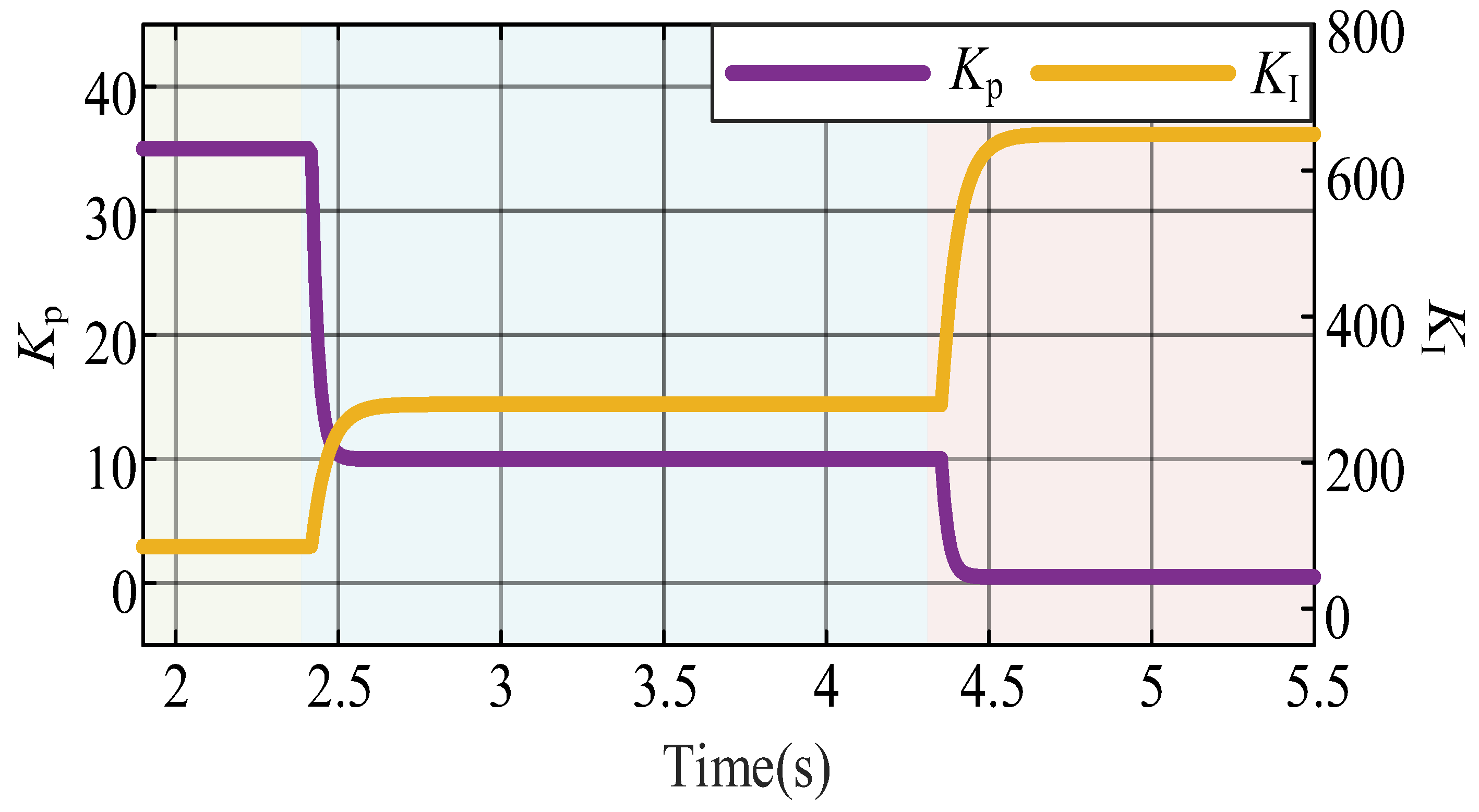
- A broadband adaptive stabilization mechanism based on RSCR partitioned gain-scheduling is developed. This mechanism incorporates quantifiable constraints (e.g., phase margin > 30°; impedance magnitude < −3 dB) into the parameter stability region and performs gain-scheduling via online short-circuit ratio (SCR) identification. It achieves robust controller performance against wide variations in grid strength.
- A complete design procedure is provided, encompassing mathematical modeling, independent controller design, and online gain-scheduling, which demonstrates engineering practicality.
2. Impedance Modeling of GFM Converters
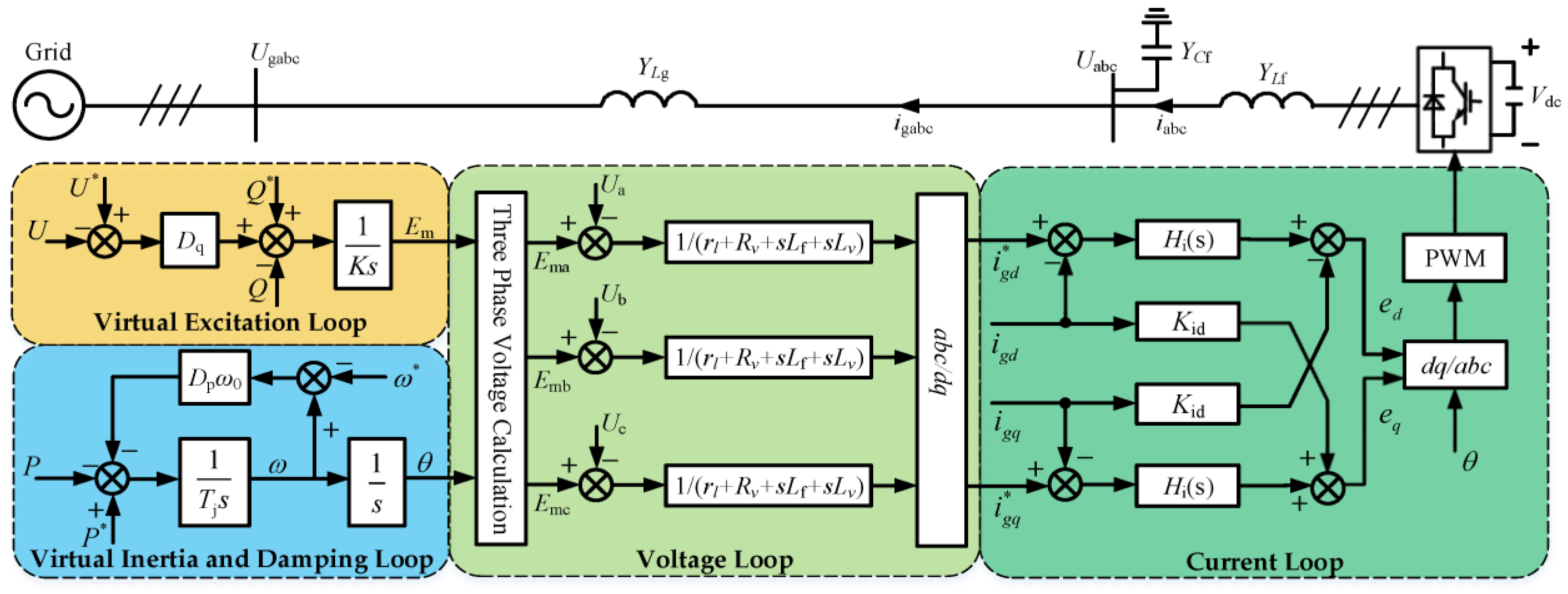
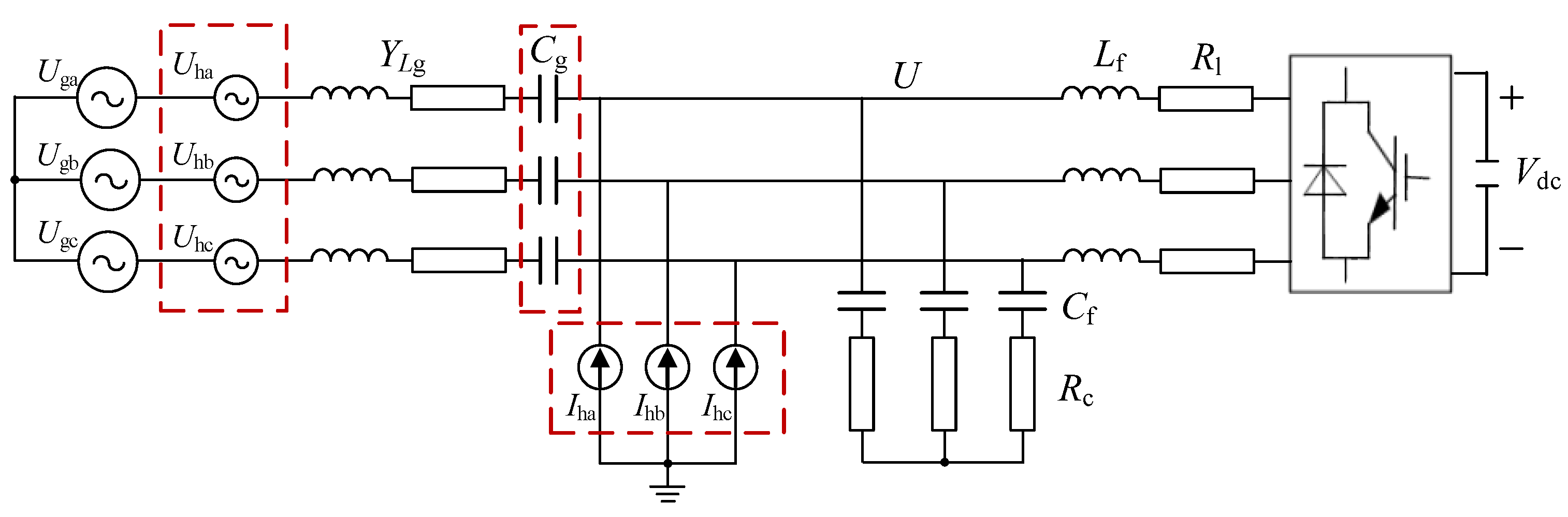
2.1. Control Architecture and Mathematical Model of GFM Converters
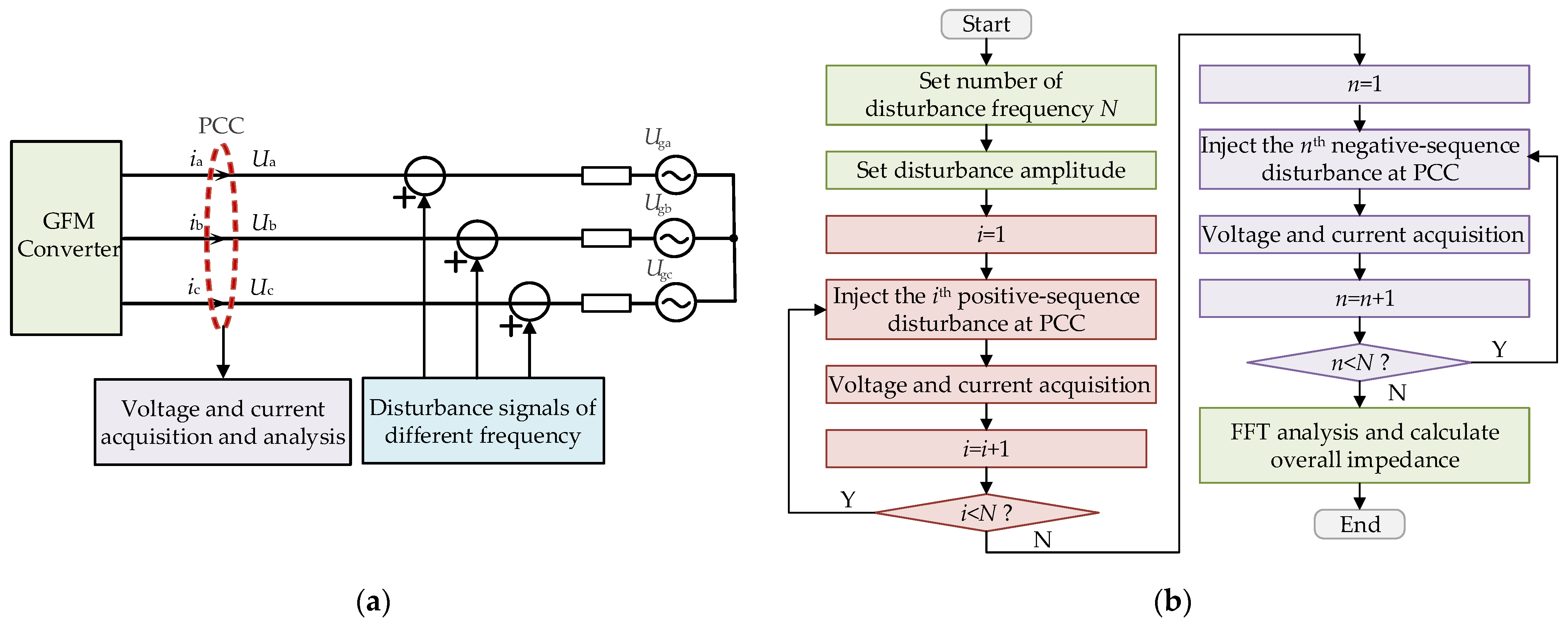
2.2. Impedance Modeling in the Frequency Domain
2.3. Impedance Characteristics in Frequency Bands
2.3.1. Outer Control Loops and Low-Frequency Band Impedance
2.3.2. Inner Control Loops and High-Frequency Band Impedance
3. Frequency-Segmented Impedance Reshaping Design
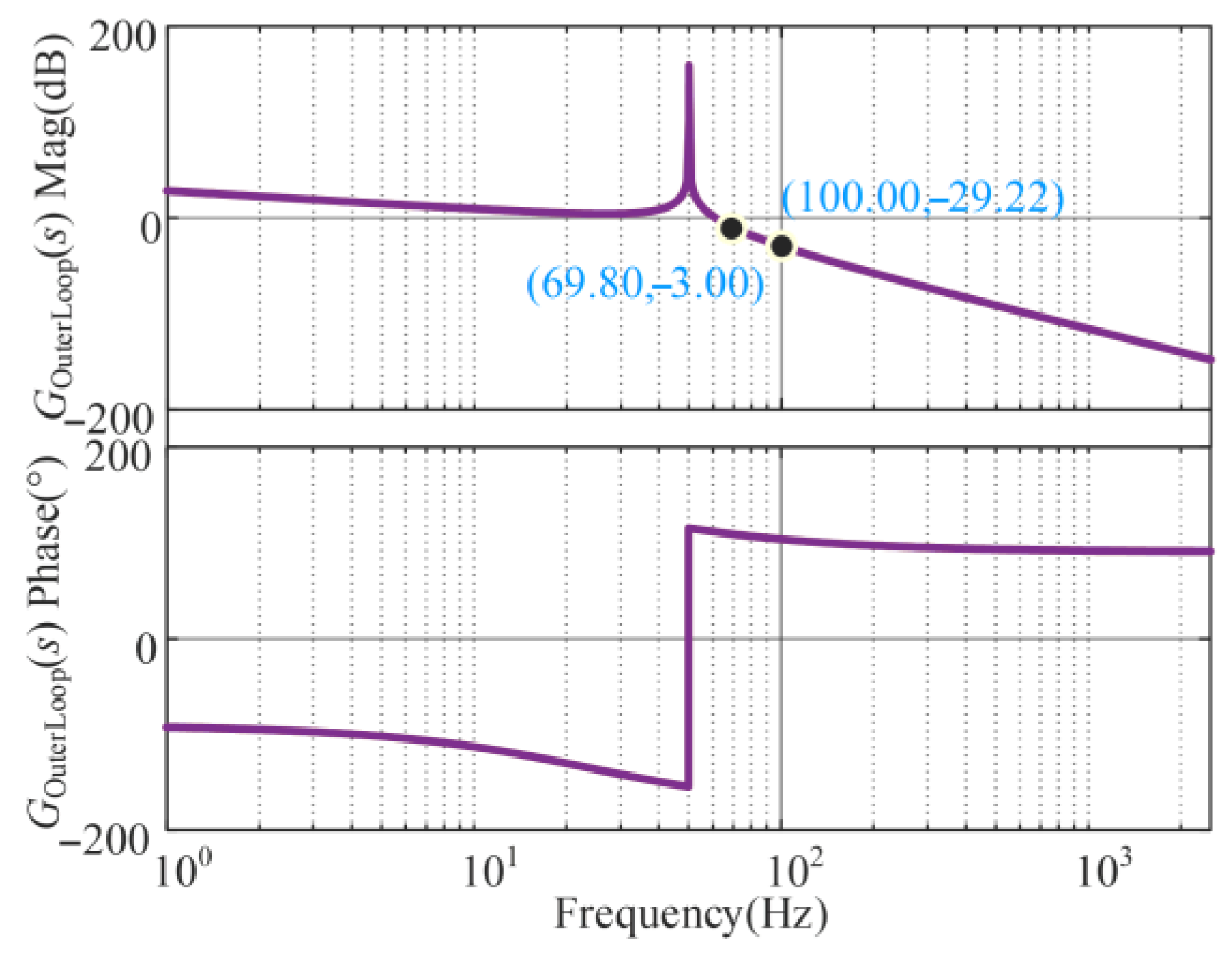
3.1. Outer-Loop Low-Frequency Stabilizer
3.1.1. Controller Design
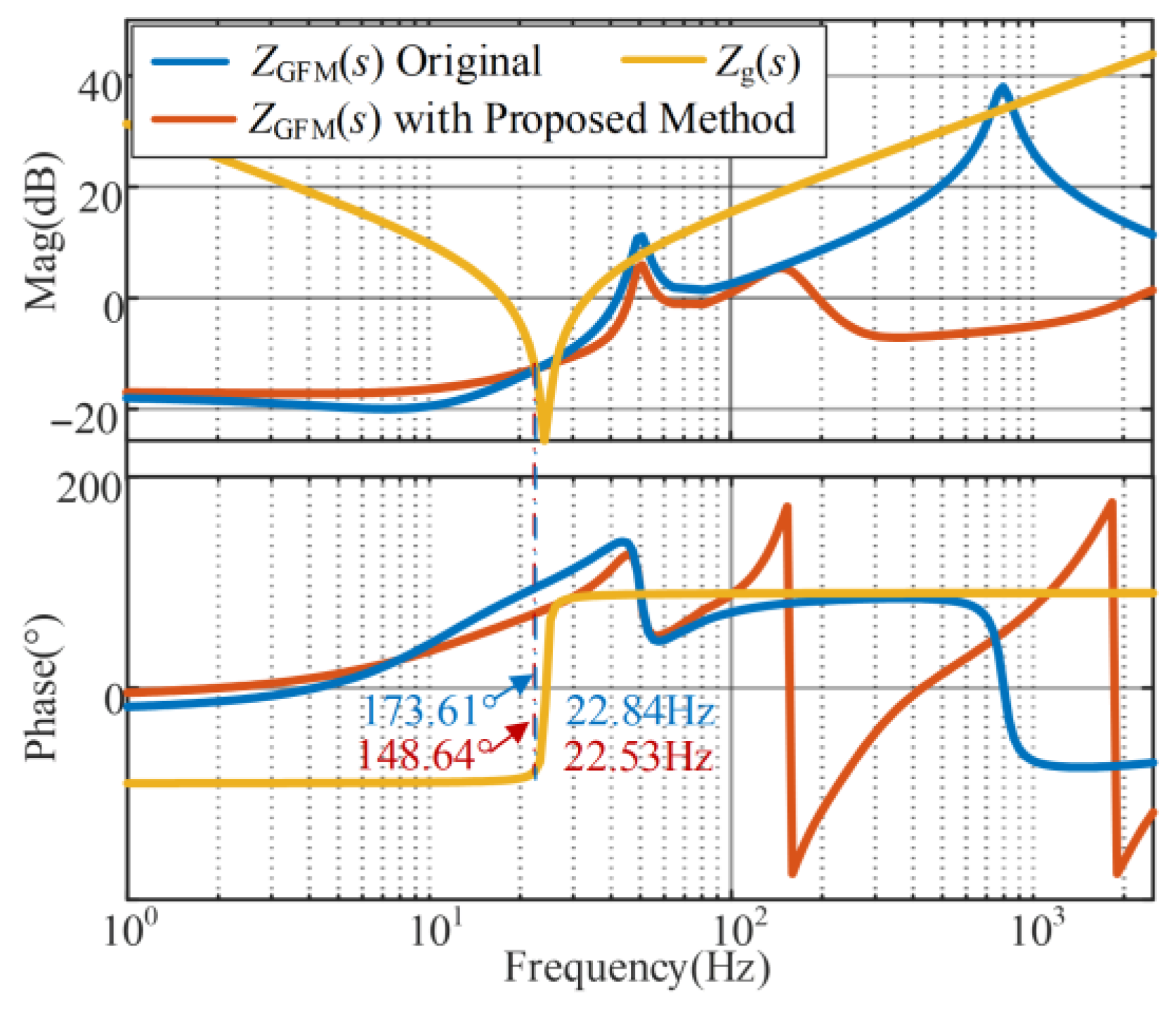
3.1.2. Frequency-Domain Performance Analysis
3.2. Inner-Loop High-Frequency Stabilizer
3.2.1. Controller Design
3.2.2. Frequency-Domain Performance Analysis
3.3. Controller Band Coordination
- (1)
- Boundary Analysis Based on Control Bandwidth
- (2)
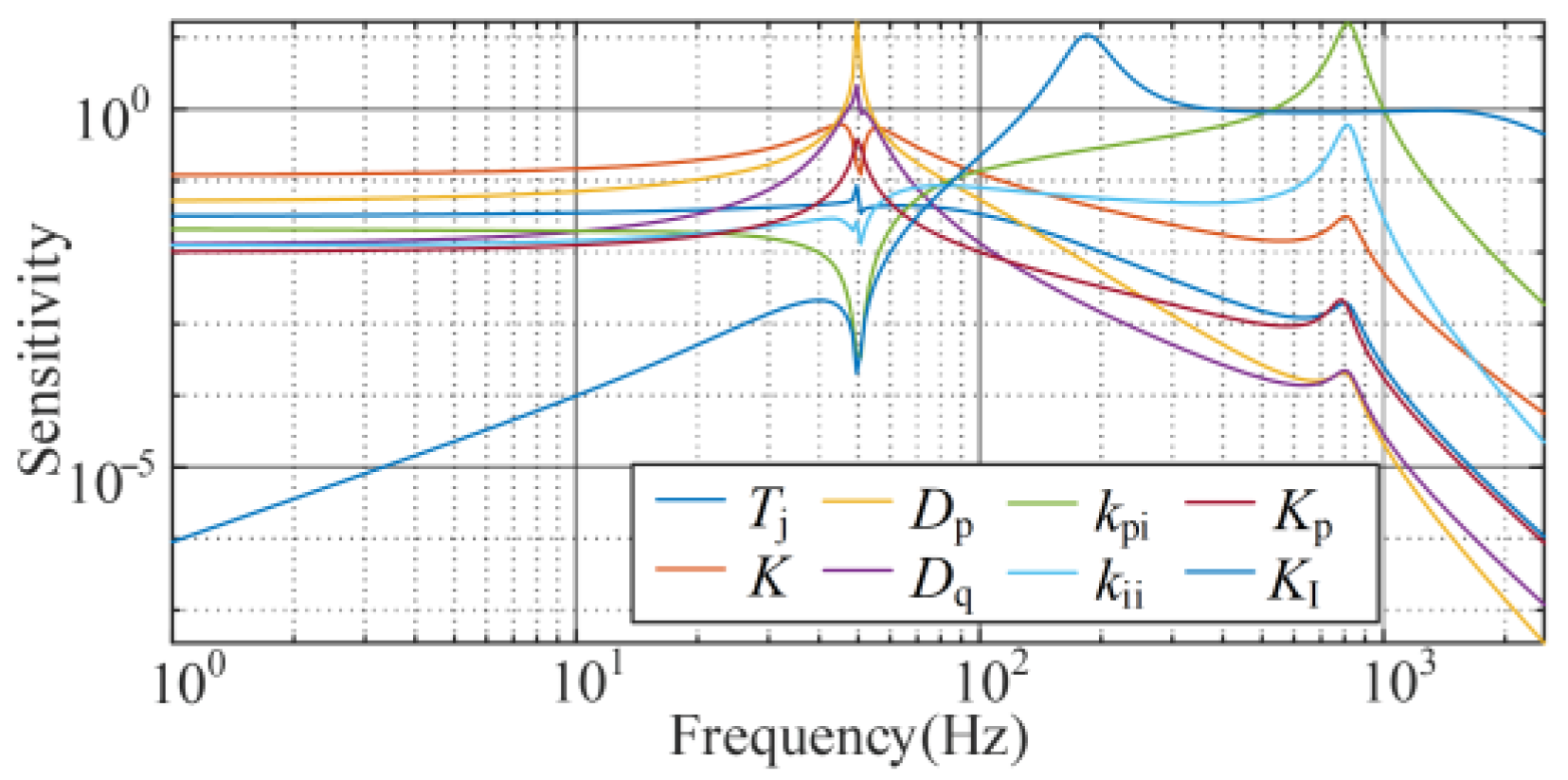
- Boundary Analysis Based on Impedance Sensitivity
3.4. Modeling Methodology
- (1)
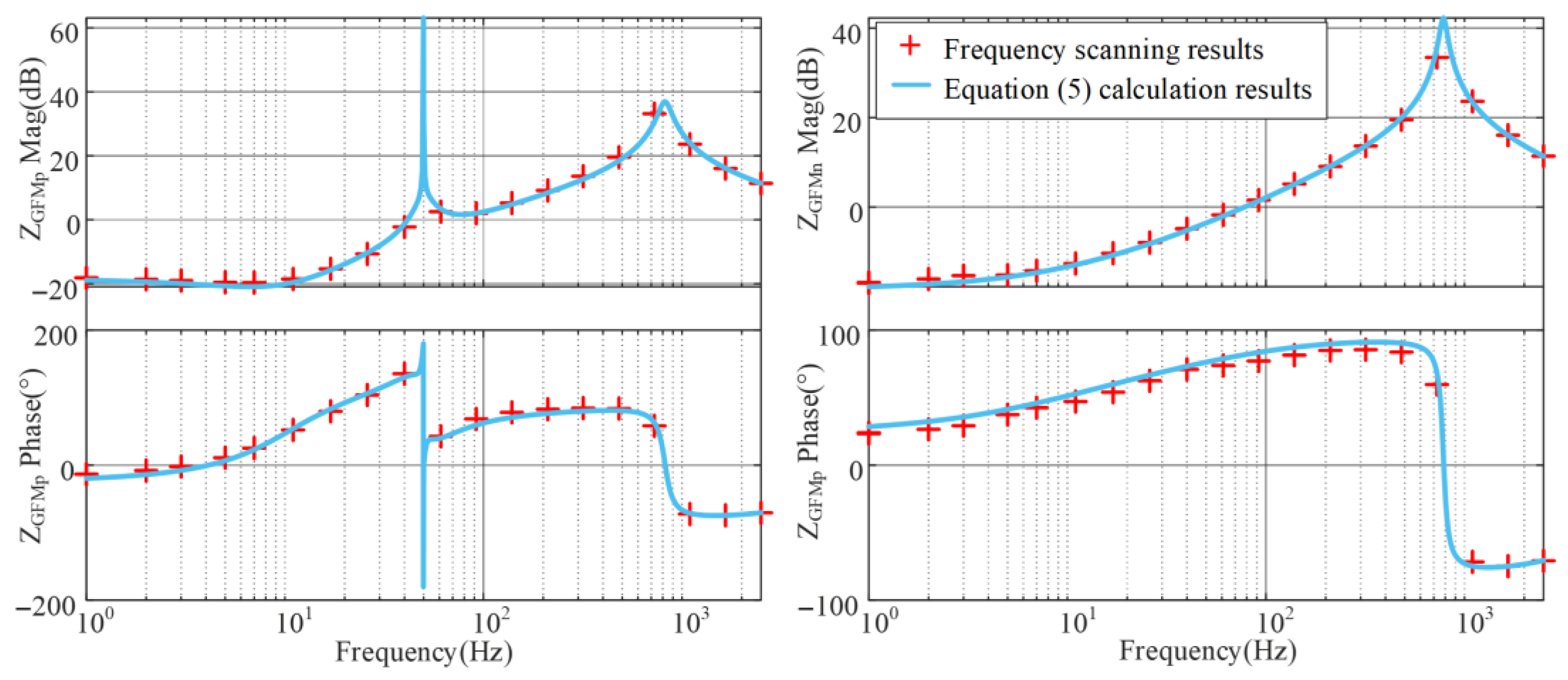
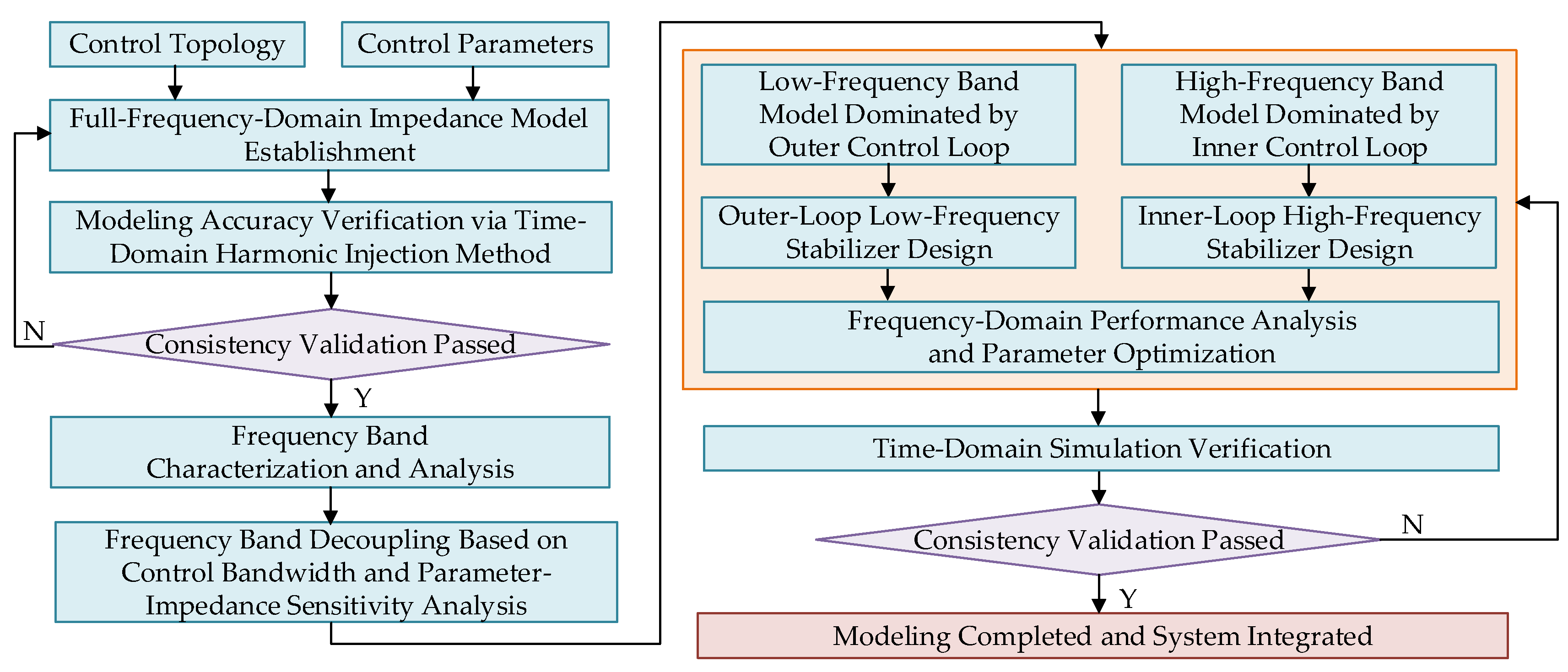
- A full impedance model incorporating virtual synchronous machine control and the dual voltage-current loops is established based on small-signal linearization, and its accuracy is verified via the harmonic injection method.
- (2)
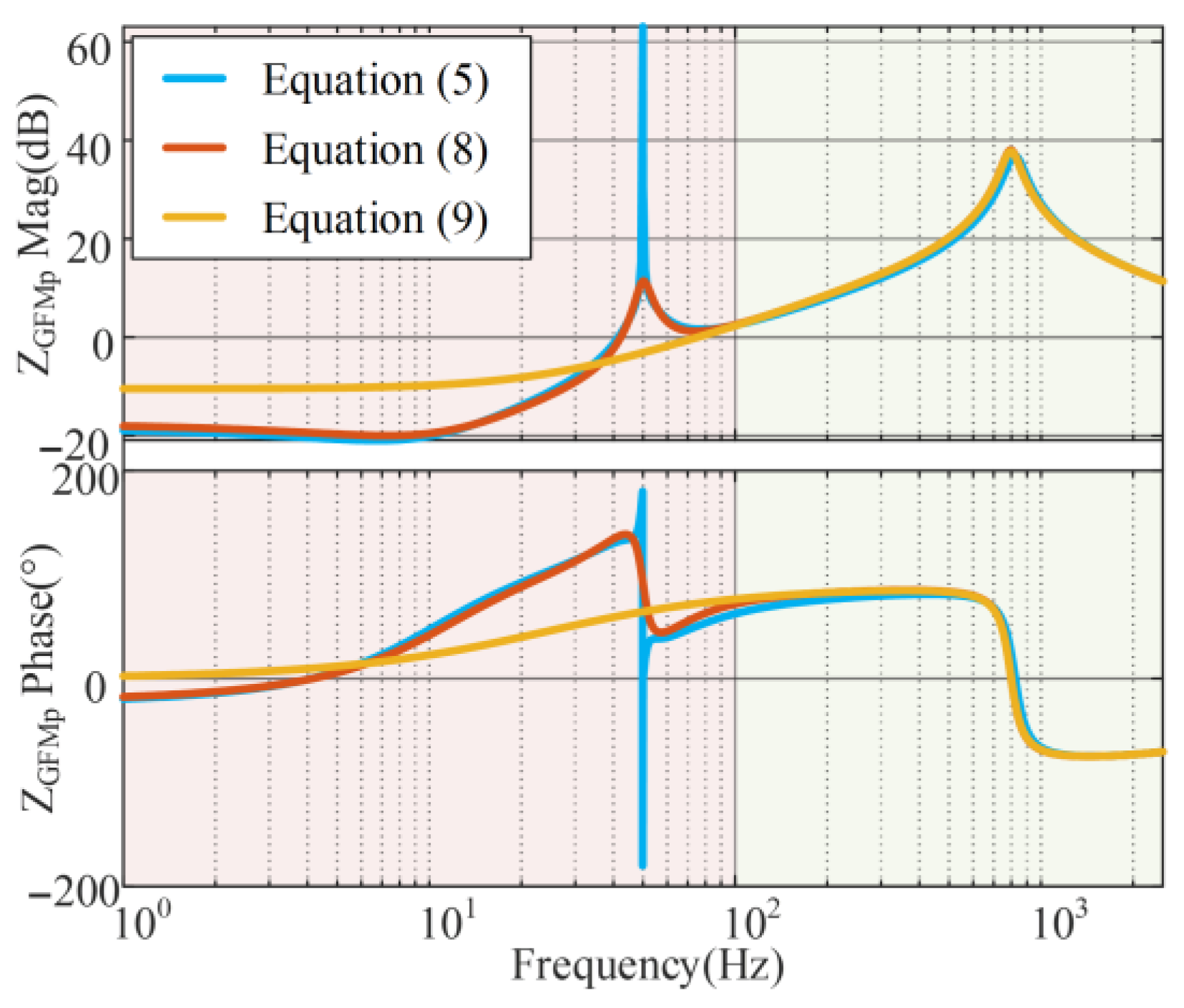
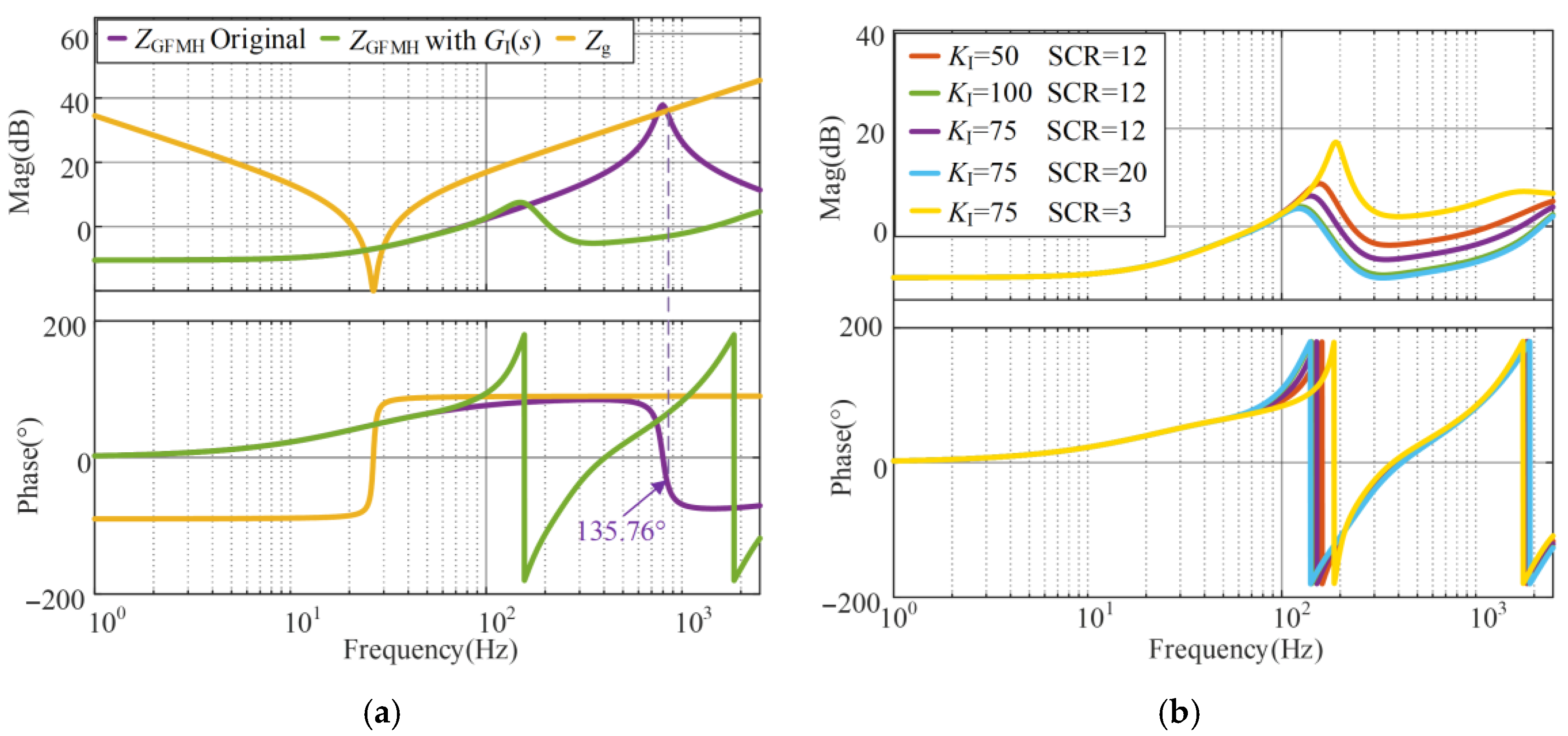
- Through frequency-band characteristic analysis, key stability issues such as negative damping in the low-frequency band and high impedance amplitude in the high-frequency band are identified.
- (3)
- Based on differences in control bandwidth and parameter-impedance sensitivity, the impedance model is decoupled into frequency segments, leading to the derivation of a simplified low-frequency impedance model dominated by the outer loop and a simplified high-frequency impedance model dominated by the inner loop.
- (4)
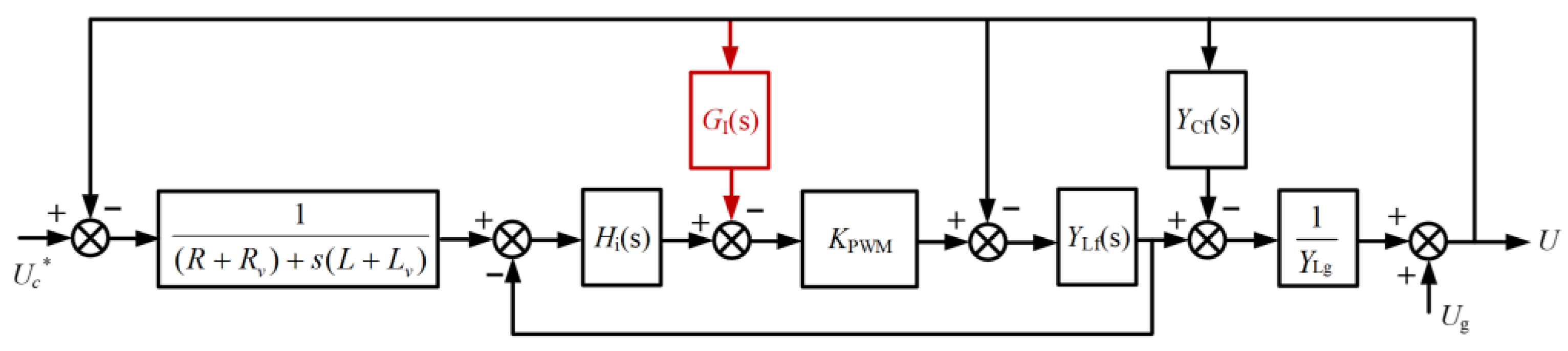
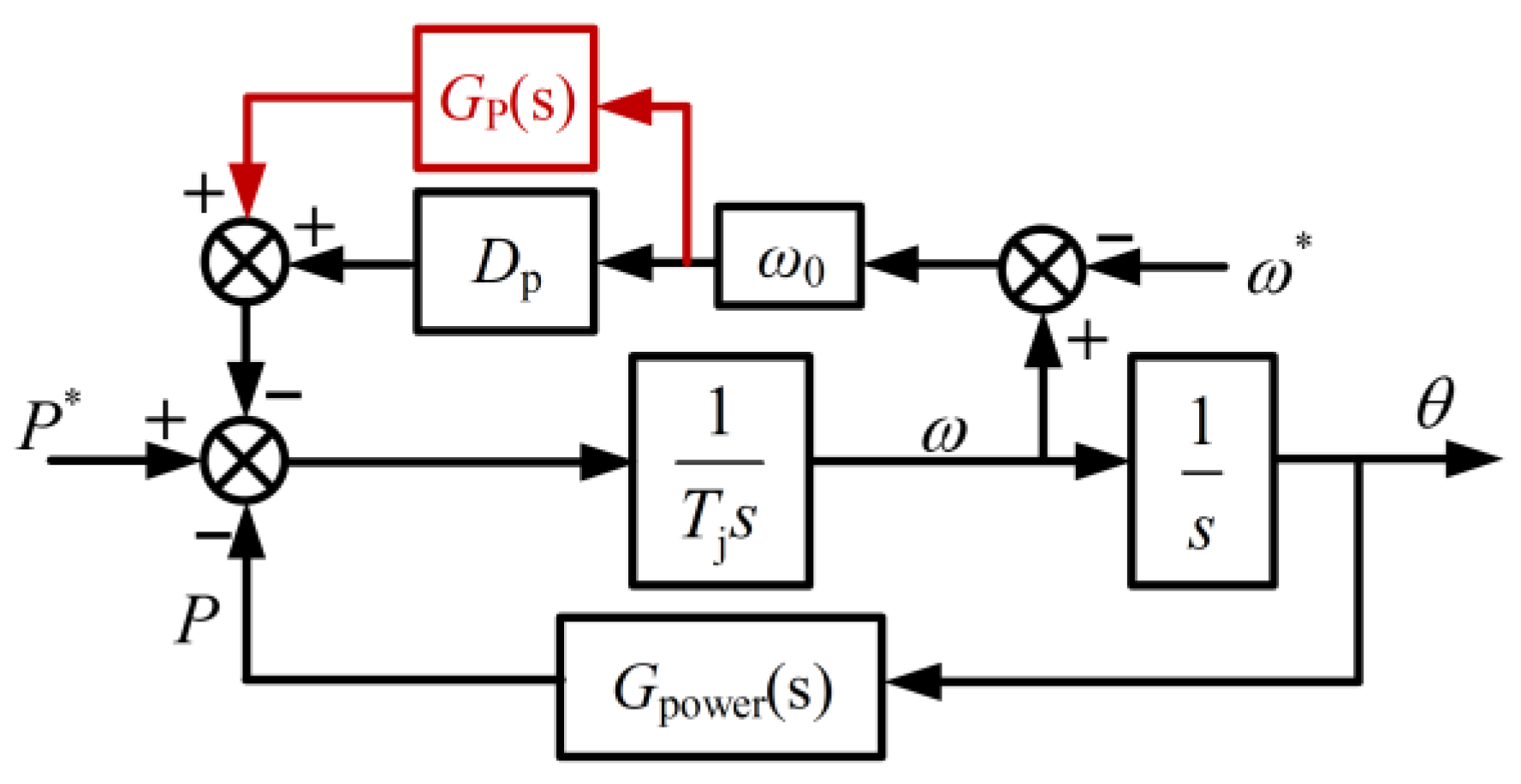
- Utilizing these segmented models, the outer-loop low-frequency stabilizer and the inner-loop high-frequency stabilizer are designed independently. Controller parameters are determined through frequency-domain analysis and parameter optimization.
- (5)
- The effectiveness of the control strategy is evaluated via simulation.
4. Adaptive Impedance Reshaping Strategy Based on Gain-Scheduling
4.1. Online Grid Strength Identification
4.2. Optimized Parameter Selection
- (1)
- GFM Output Impedance Self-Stability Constraint
- (2)
- Low-Frequency Band Stability Constraint
- (3)
- High-Frequency Band Impedance Magnitude Constraint
- (4)
- Frequency Band Decoupling Constraint
4.3. Method Workflow
4.4. Method Evaluation
4.4.1. Control Complexity and Resource Requirement Analysis
- (1)
- Architecture and Signals. The OLS, IHS and RSCR fully reuse the frequency deviation PCC voltage signals and power signals already available within the converter’s existing control architecture. This eliminates the need for additional sensors or sampling channels, thereby avoiding hardware costs and synchronization issues.
- (2)
- Controller Structure. The OLS consists of a DC blocking filter combined with a lead-lag compensator. The IHS is composed of a band-pass filter combined with inherent system parameters, requiring no complex stages such as harmonic voltage extraction. This results in a simple controller design with minimal memory and computational overhead.
- (3)
- Adaptive Mechanism. The RSCR-based gain-scheduling strategy employs an offline parameter table with online lookup, avoiding complex real-time optimization calculations. The RSCR identification is based on a two-time-instant passive measurement method, which has a low computational load and operates at a period significantly slower than the control loops, thus not affecting real-time performance.
4.4.2. Robustness Assessment
- (1)
- Measurement Noise. The method filters out high-frequency disturbances through data preprocessing and screening mechanisms, utilizes the inherent smoothing effect of the algorithm to suppress random noise deviations, and eliminates outliers by incorporating physical constraint validation. Simultaneously, the logical inertia of the gain-scheduling prevents frequent mode switching.
- (2)
- Rapidly Changing Conditions. For rapidly changing operating conditions, although the online identification may transiently fail, the offline-tuned parameter stability region itself possesses robustness. As long as the system operating point remains within the coverage of the grid strength modes and without erroneous triggering or misjudgment, the controller can still ensure stable system operation.
4.4.3. Economic and Engineering Applicability Assessment
- (1)
- Cost-Effectiveness. No additional hardware is required; deployment can be achieved solely through software upgrades. By suppressing broadband oscillations, the method reduces risks such as grid disconnection and equipment damage, thereby enhancing system safety and economic benefits.
- (2)
- Tuning Effort. The frequency-band decoupled design of the OLS and IHS supports independent parameter tuning. The parameters exhibit robustness within a reasonable range. The adaptive mechanism automatically switches parameter sets according to grid strength, significantly reducing the debugging workload for adapting to varying operating conditions.
- (3)
- Commissioning Complexity. A step-by-step commissioning strategy can be adopted, first verifying the basic control and then enabling the stabilizers. The parameter sets are pre-validated offline, requiring only minor on-site fine-tuning. Performance evaluation relies on standard tests (e.g., impedance scanning, harmonic distortion rate) and does not require special equipment.
4.4.4. Comparison with Existing Methods
5. Case Analysis
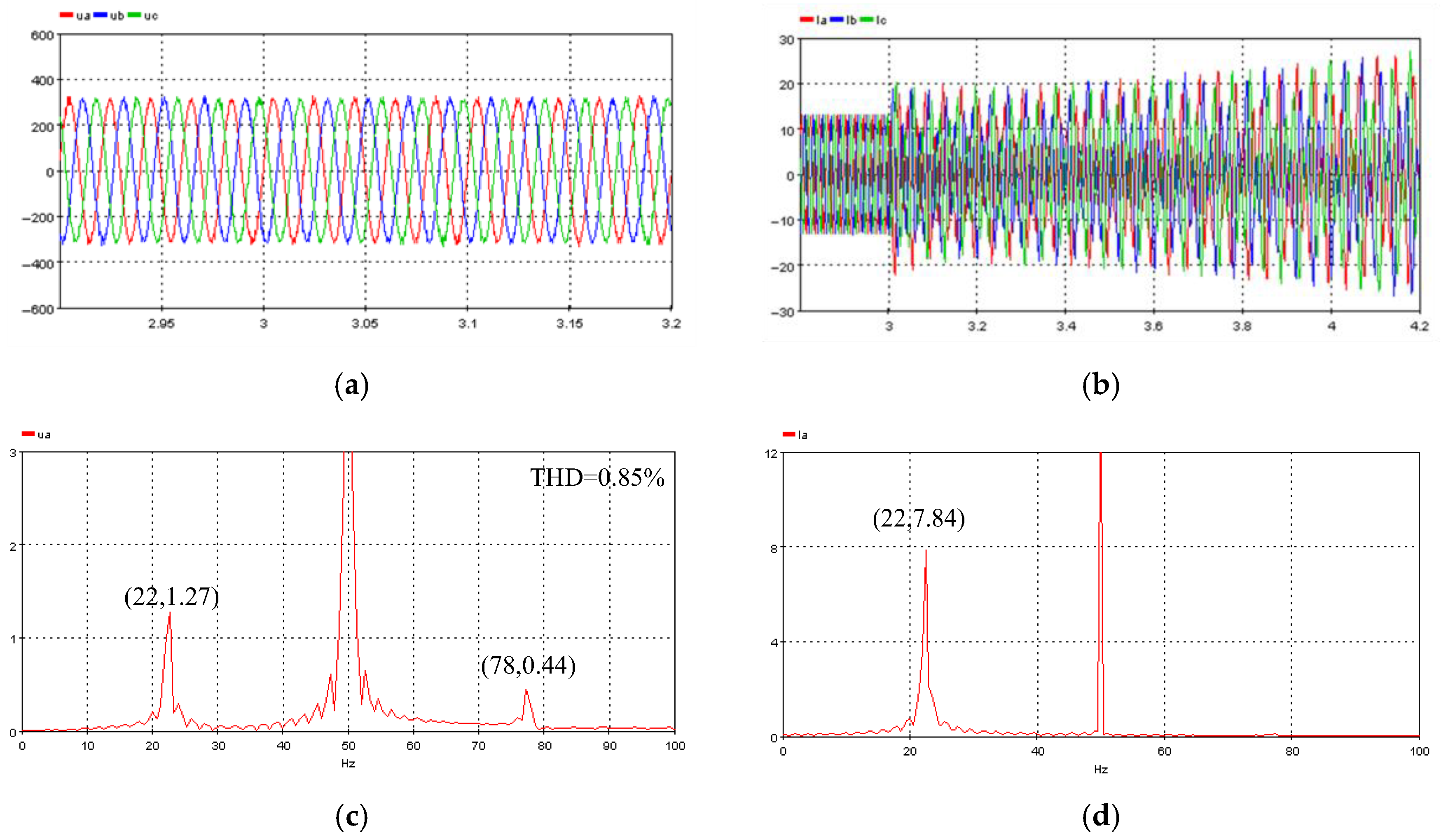
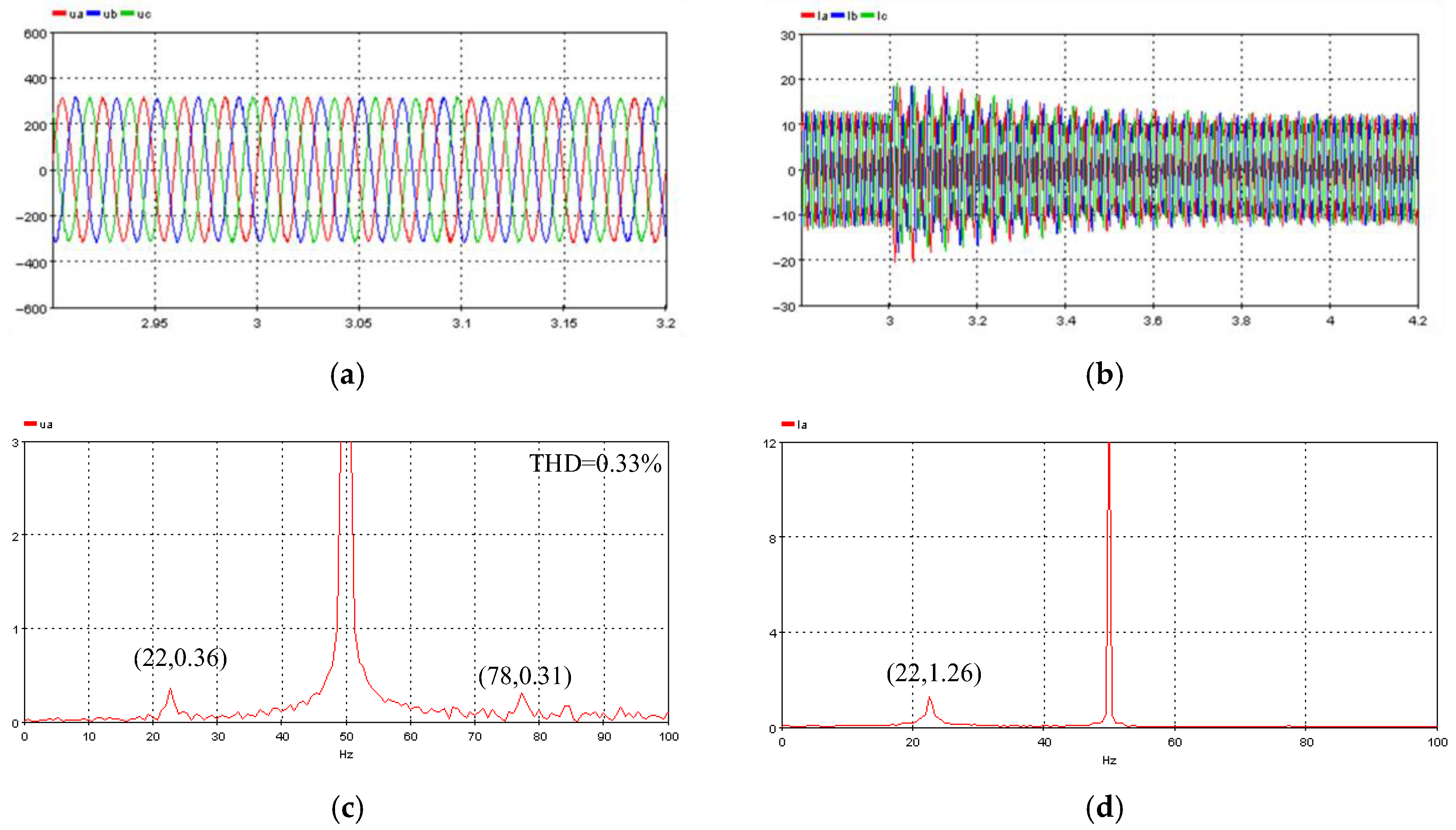
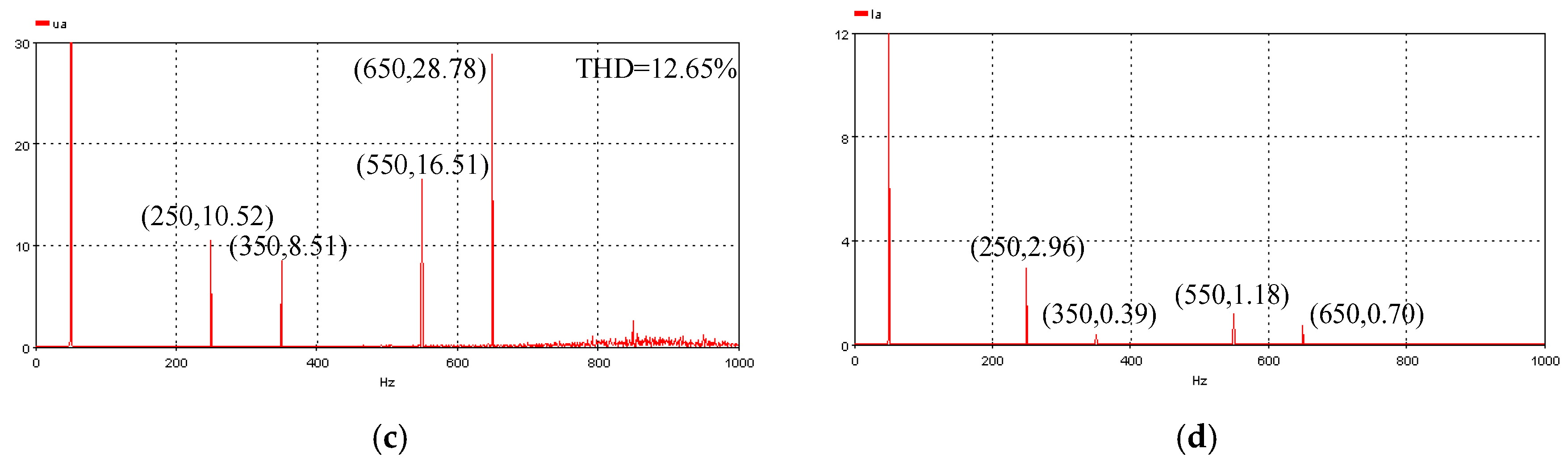
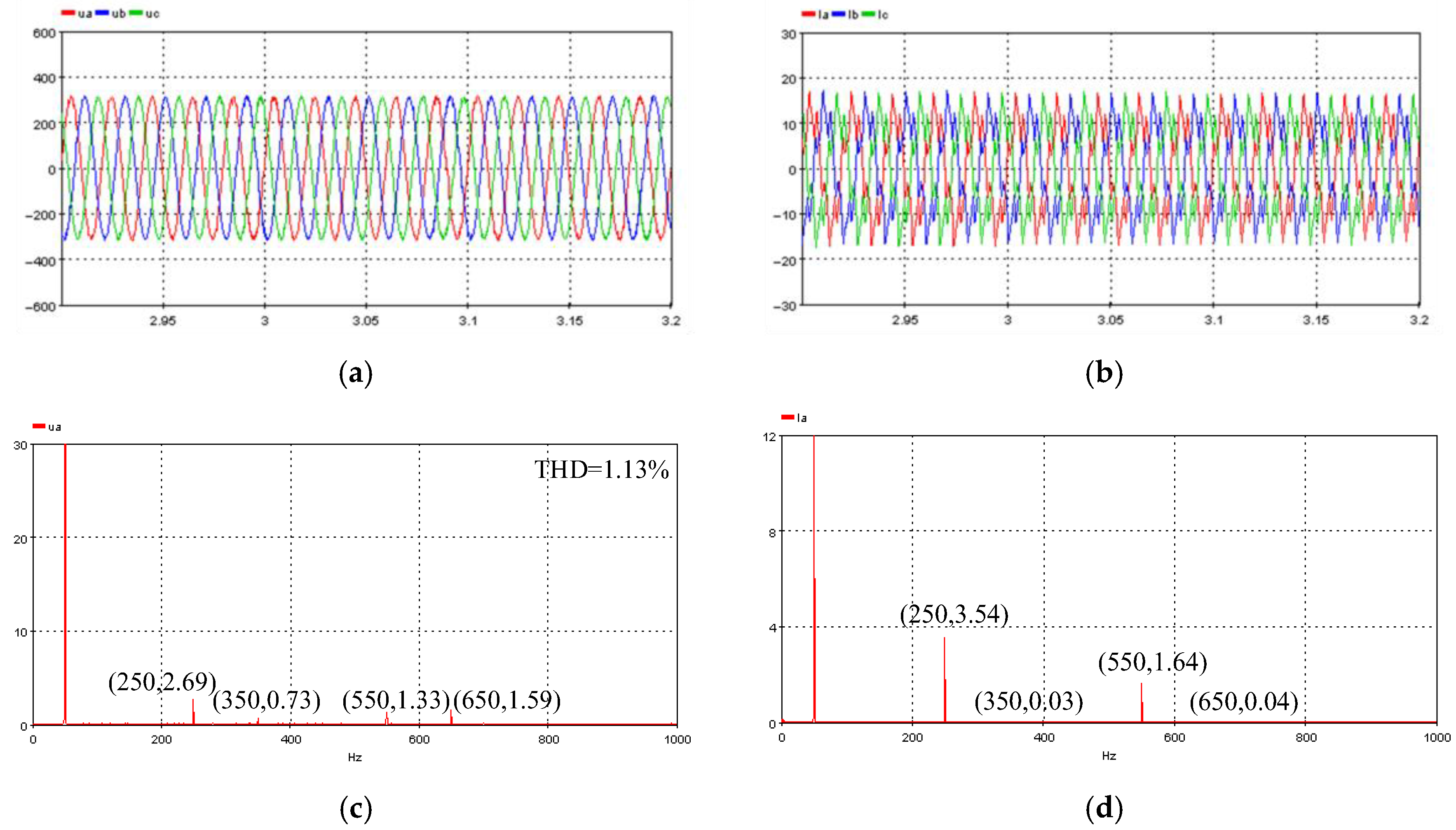
5.1. Time-Domain Oscillation Suppression
5.2. System-Level Stability Verification
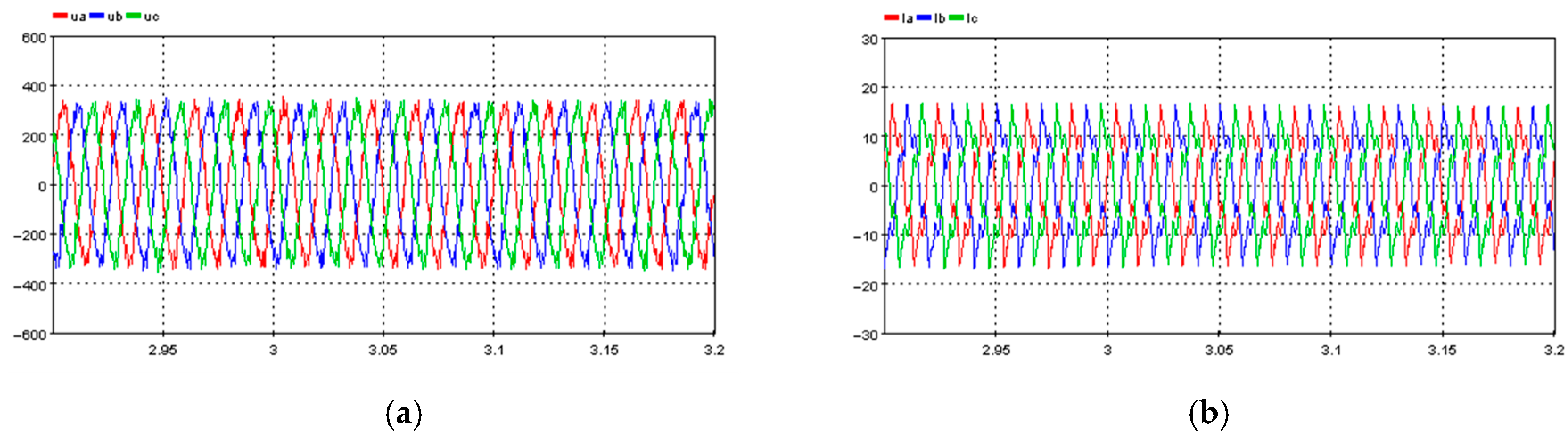
5.3. Conventional Operational Performance Verification
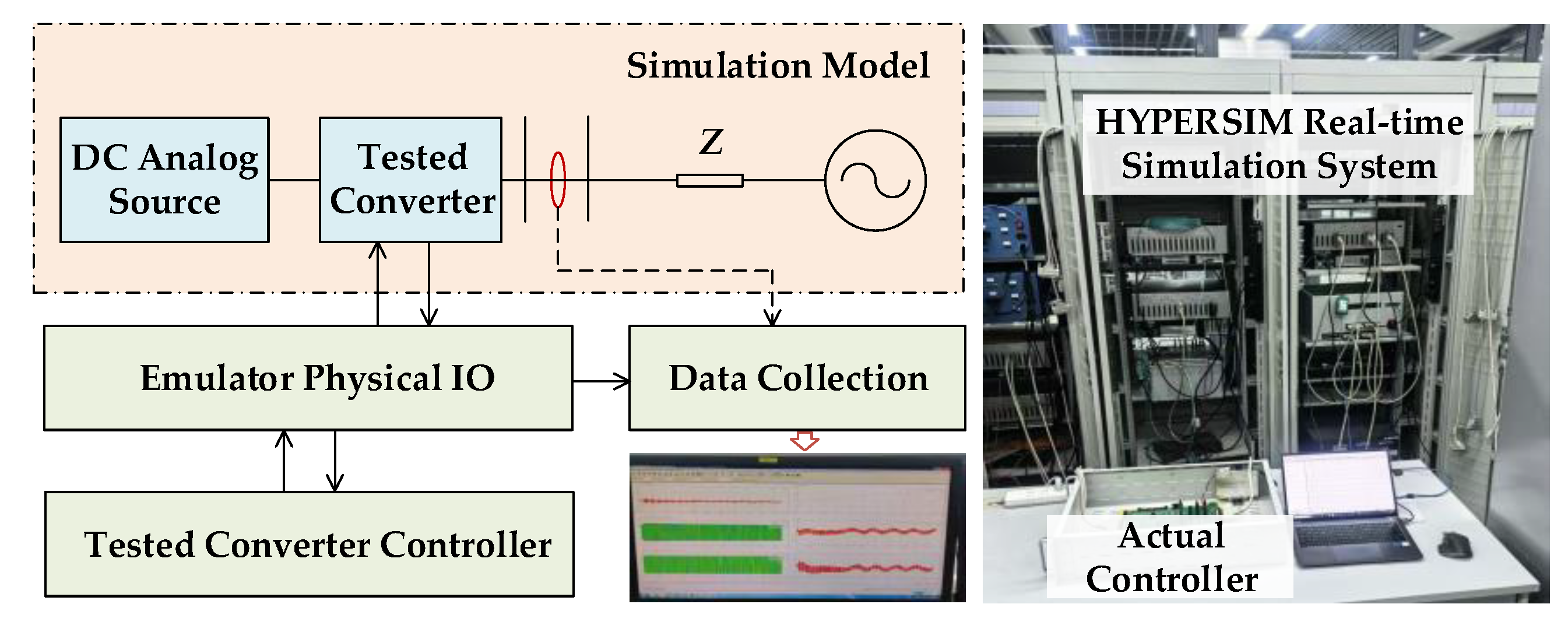
5.4. Experiment Verification
6. Conclusions
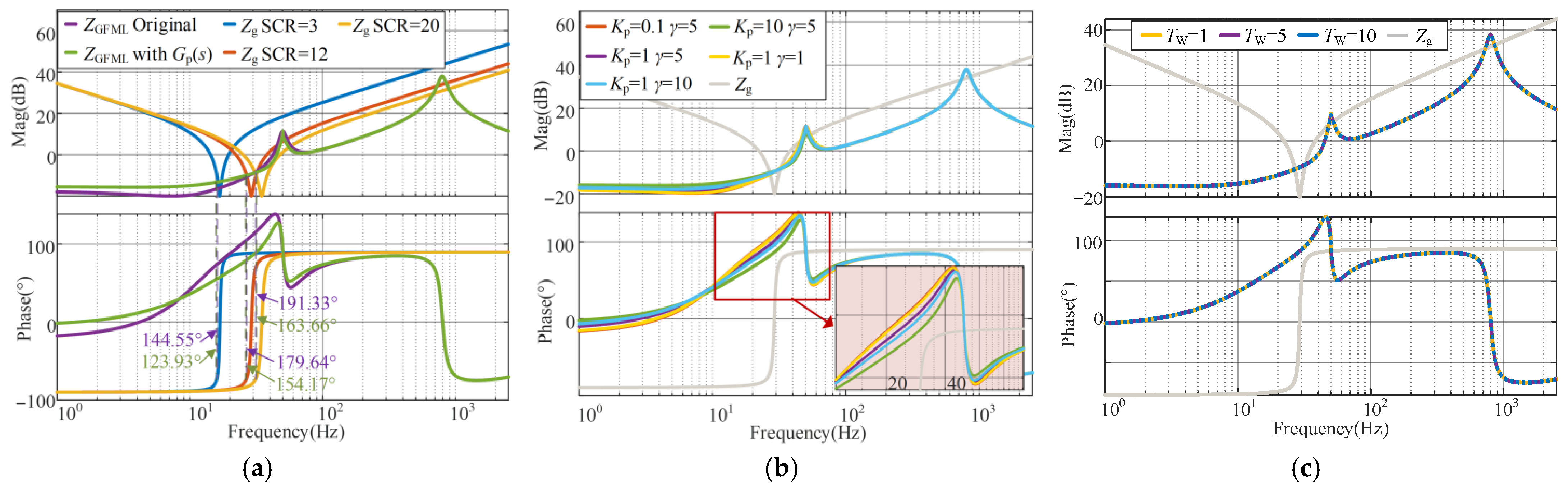
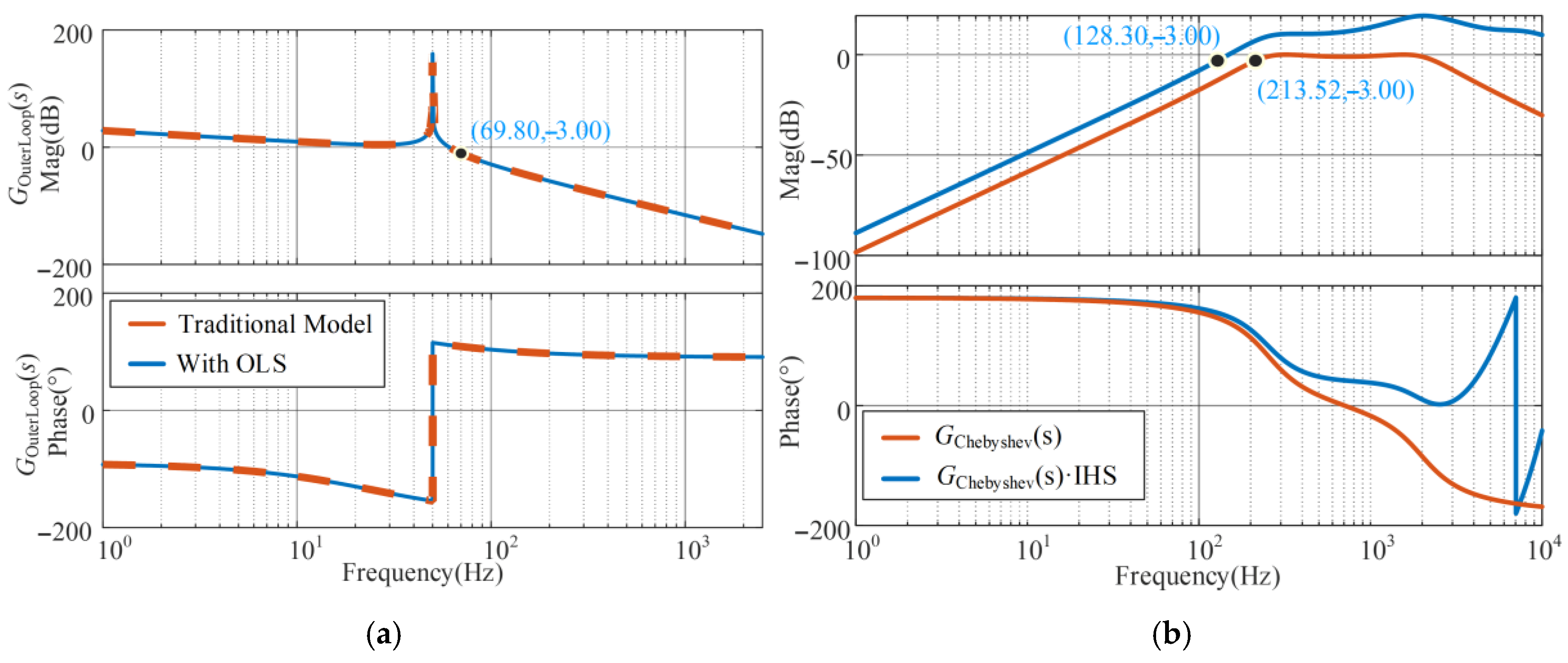
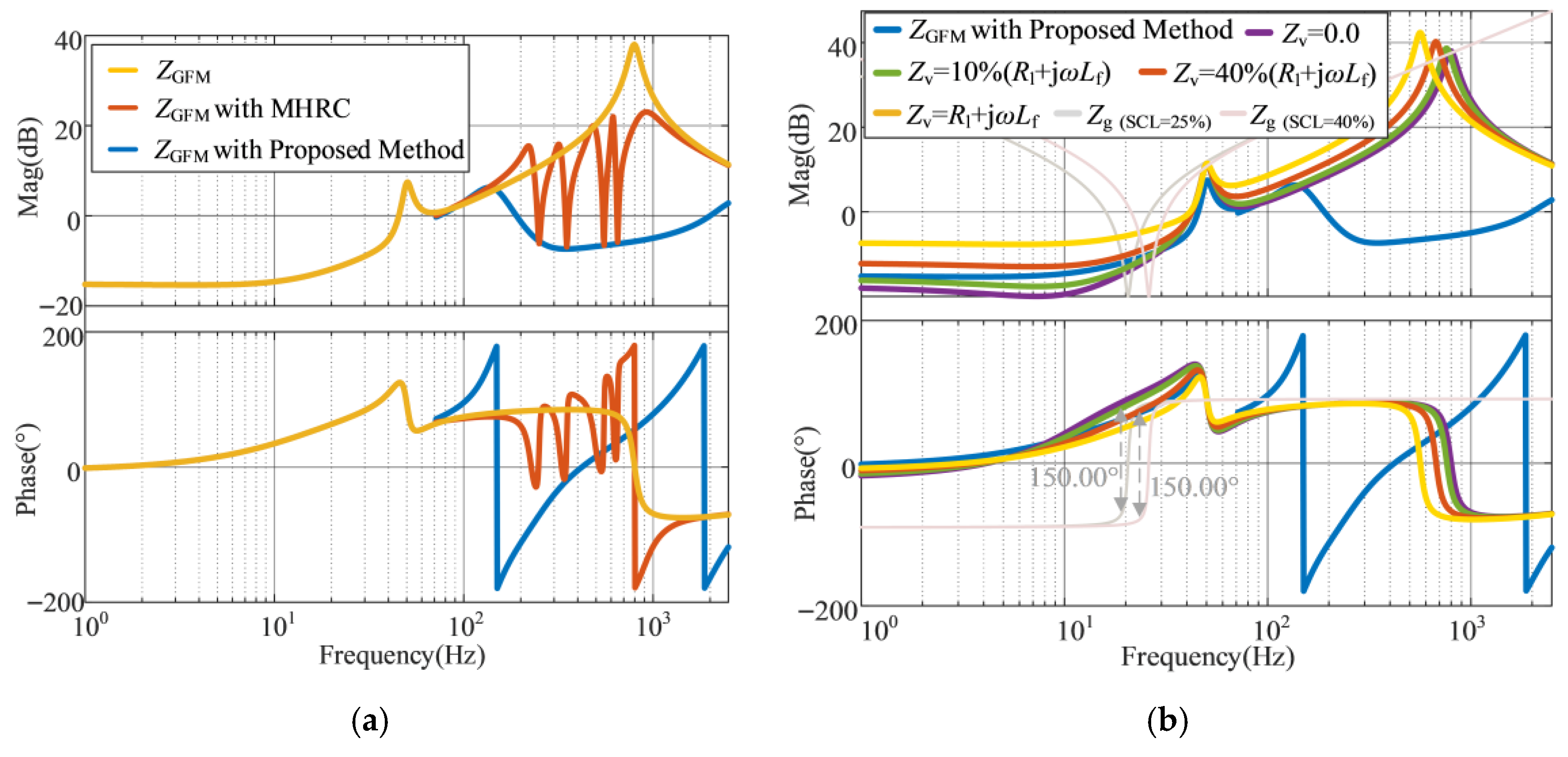
- Frequency-segmented impedance decoupling, reshaping, and coordinated stability enhancement. Simplified impedance models for the low-frequency and high-frequency bands were established, clarifying that the outer and inner loops dominate the impedance characteristics in their respective bands. Accordingly, the designed OLS and IHS reshape the positive damping characteristics in the low-frequency band and reduce the impedance magnitude in the high-frequency band, respectively. The frequency-domain results demonstrate that this method improves the phase margin and eliminates negative resistance in the low-frequency band while suppressing resonant peaks in the high-frequency band, achieving the goal of coordinated, “frequency-segmented and loop-specific” damping.
- Development of a gain-scheduling adaptive mechanism based on SCR partitioning. This enhances the controller’s robustness against grid strength variations. By online identification of the RSCR, the grid is categorized into strength modes, with a pre-stored optimized parameter set for each mode. This method avoids complex online impedance identification, achieving parameter adaptation solely through table lookup and smooth switching. The test results show that the system maintains full-band stability even during dynamic grid strength changes, significantly improving the controller’s adaptability to operating conditions and meeting the engineering goal of adaptive operation.
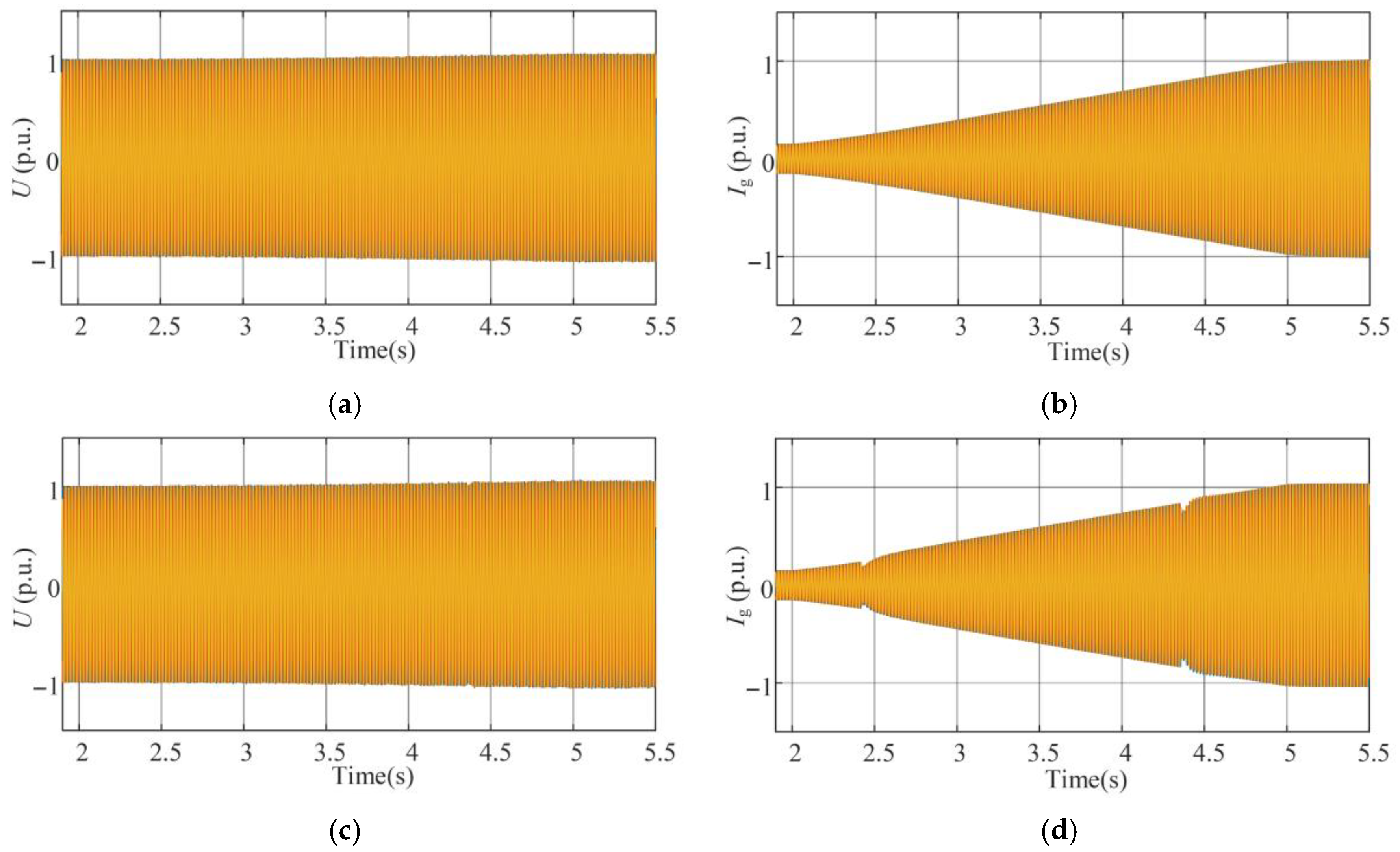
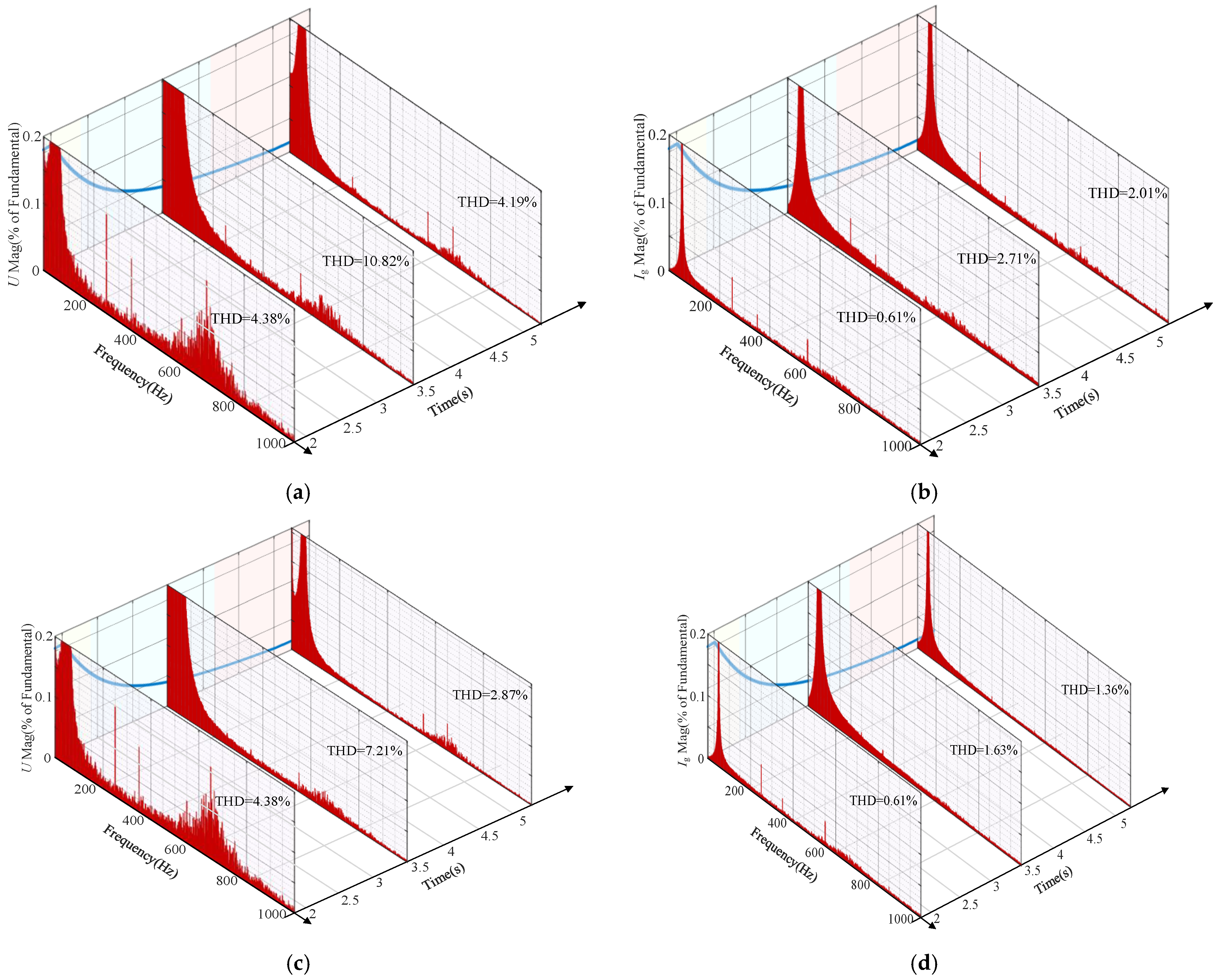
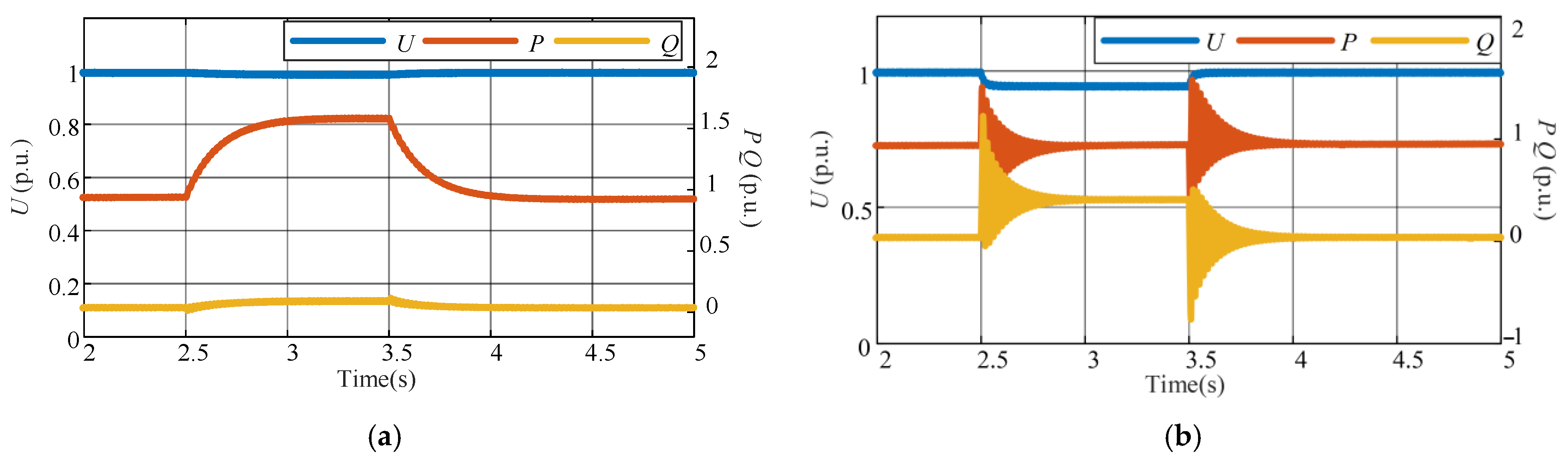
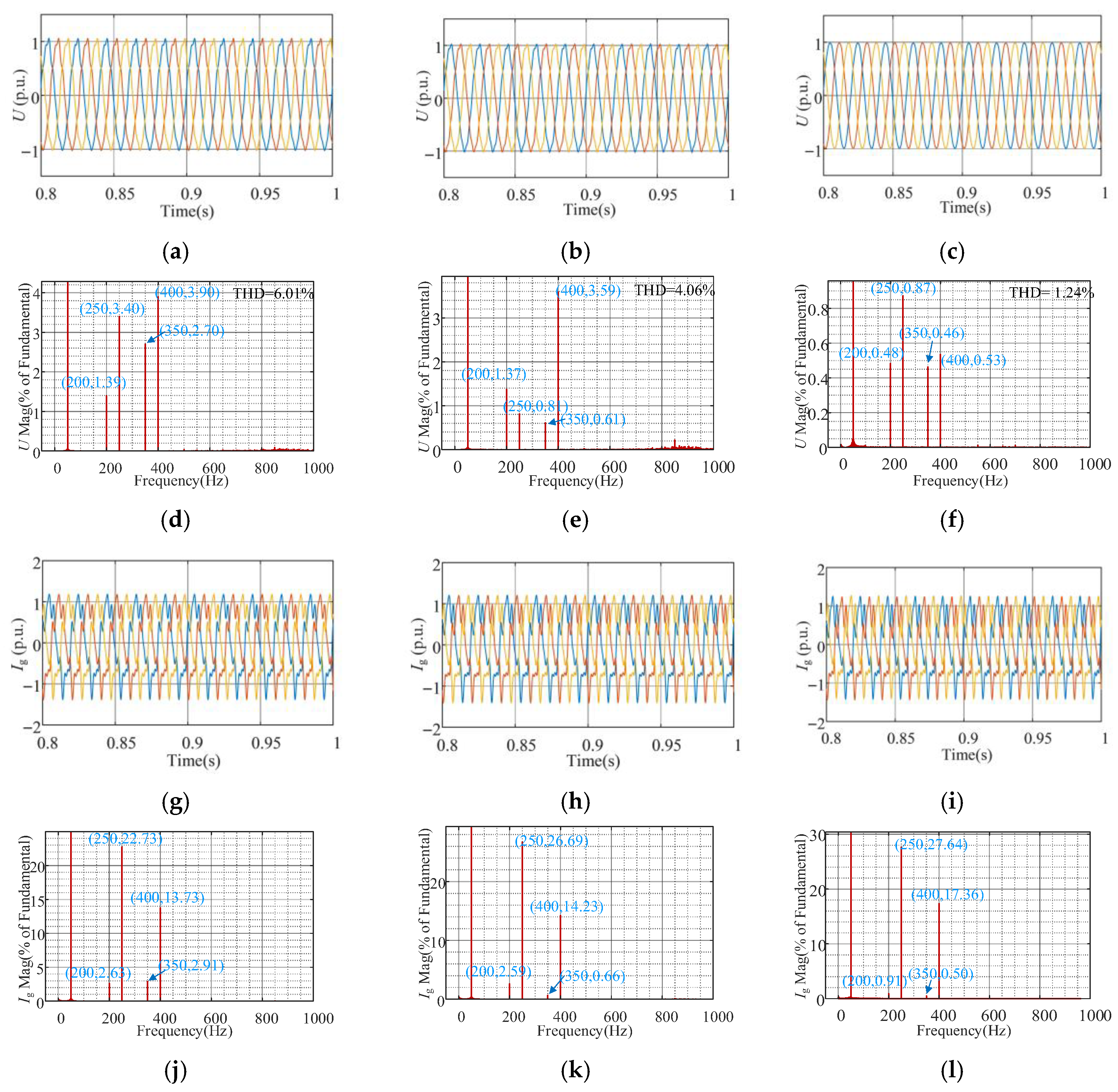
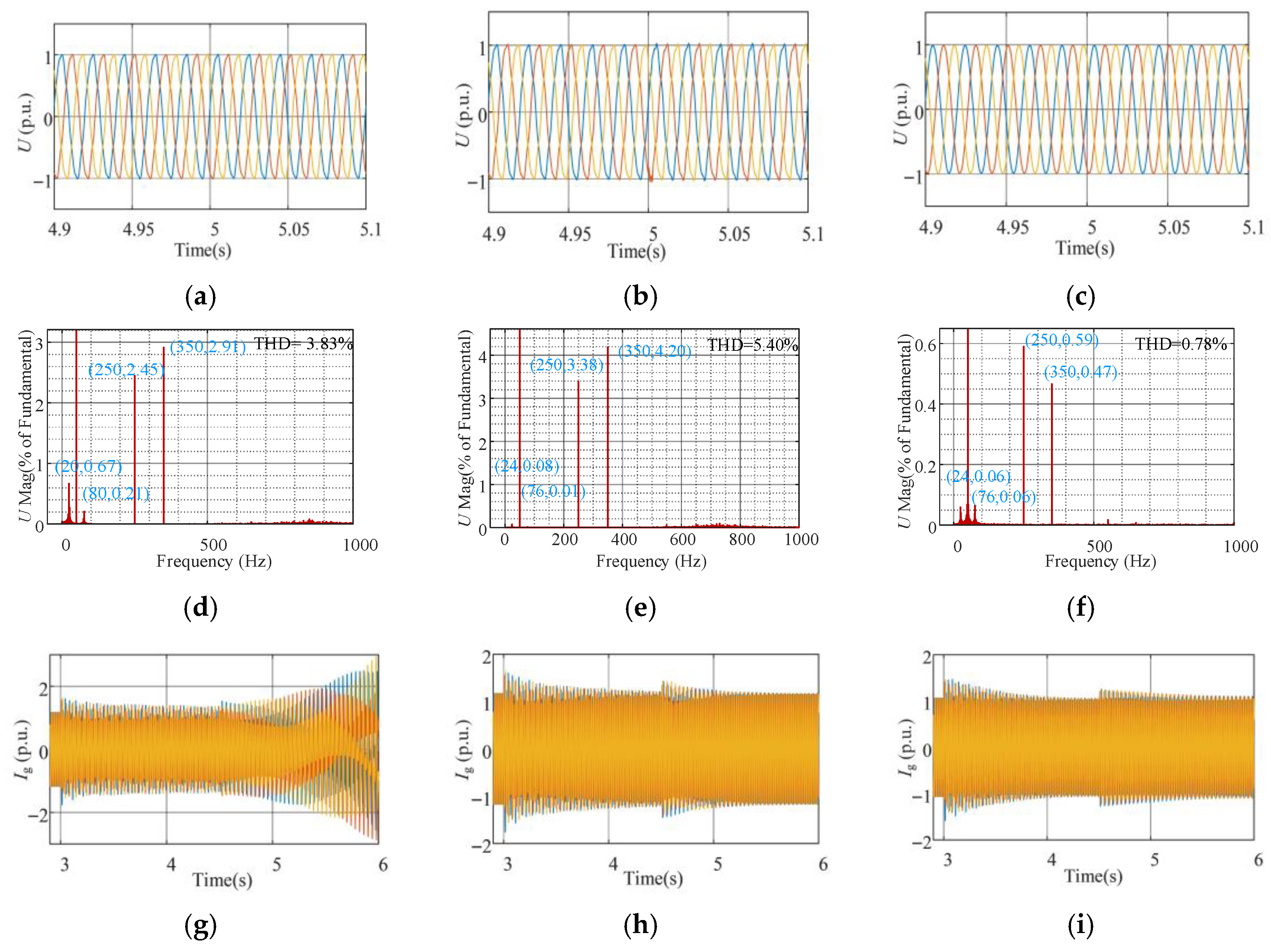
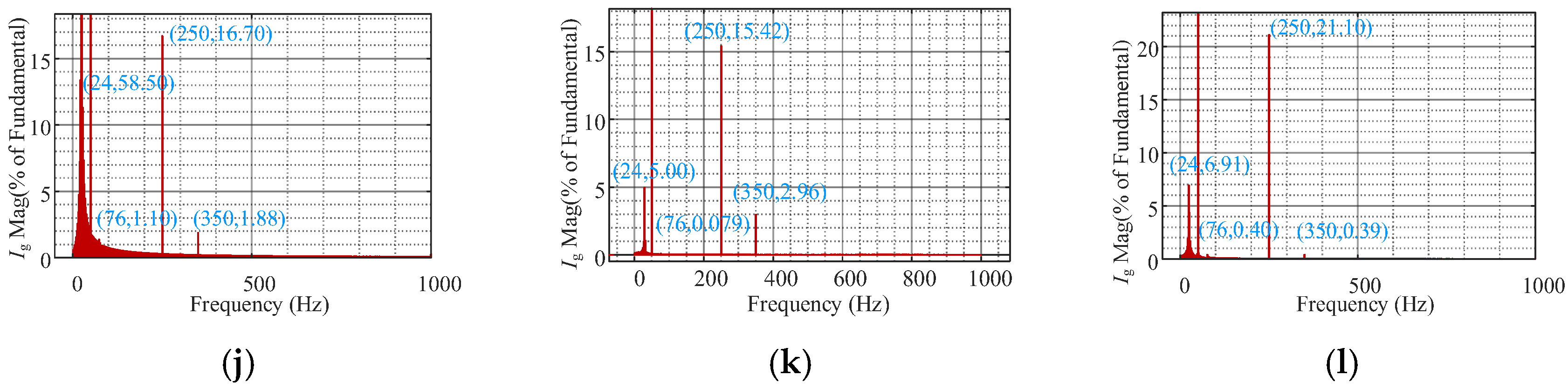
- Comprehensive validation of the proposed strategy through multi-dimensional experiments. In the single-converter system, the method successfully suppressed sub-synchronous oscillations and significantly reduced harmonic distortion rates. Meanwhile, it did not affect the converter’s active frequency and voltage support functions. In the equivalent wind farm system, it achieved smooth parameter switching and stable operation under different grid strengths. The results comprehensively confirm that the proposed method meets the expected targets in single-converter-level and system-level stability.
Author Contributions
Funding
Data Availability Statement
Conflicts of Interest
Appendix A
Appendix A.1. Comparison with Multi-Loop Harmonic Resonant Control


Appendix A.2. Comparison with Adaptive Virtual Impedance


Appendix B

References
- Zhou, X.; Chen, S.; Lu, Z.; Huang, Y.; Ma, S.; Zhao, Q. Technology Features of the New Generation Power System in China. Proc. Chin. Soc. Electr. Eng. 2018, 38, 1893–1904. [Google Scholar]
- Chen, L.; Xu, S.; Sun, H.; Bi, J.; Song, R.; Yi, J.; Guo, Q. A Survey on Wide-Frequency Oscillation for Power Systems with High Penetration of Power Electronics. Proc. Chin. Soc. Electr. Eng. 2021, 41, 2297–2309. [Google Scholar]
- Liu, Z.; Li, D.; Wang, W.; Wang, J.; Gong, D. A Review of the Research on the Wide-Band Oscillation Analysis and Suppression of Renewable Energy Grid-Connected Systems. Energies 2024, 17, 1809. [Google Scholar] [CrossRef]
- Sun, H.; Li, W.; Ai, D.; Sun, H. Response Driven Broadband Oscillation Source Analysis and Localization System in “Double-High” Power System. Power Syst. Technol. 2025; in press. [Google Scholar]
- Qiu, L.; Gu, M.; Chen, Z.; Du, Z.; Zhang, L.; Li, W.; Huang, J.; Fang, J. Oscillation Suppression of Grid-Following Converters by Grid-Forming Converters with Adaptive Droop Control. Energies 2024, 17, 5230. [Google Scholar] [CrossRef]
- Han, F.; Zhang, X.; Li, M.; Li, F.; Zhao, W. Stability Control for Grid-Connected Inverters Based on Hybrid-Mode of Grid-Following and Grid-Forming. IEEE Trans. Ind. Electron. 2024, 71, 10750–10760. [Google Scholar] [CrossRef]
- Xu, H.; Yu, C.; Liu, C.; Wang, Q.; Zhang, X. An Improved Virtual Inertia Algorithm of Virtual Synchronous Generator. J. Mod. Power Syst. Clean Energy 2020, 8, 377–386. [Google Scholar] [CrossRef]
- Leon, A.E.; Mauricio, J.M. Virtual Synchronous Generator for VSC-HVDC Stations with DC Voltage Control. IEEE Trans. Power Syst. 2023, 38, 728–738. [Google Scholar] [CrossRef]
- Xie, Z.; Yang, S.; Dai, P.; Yang, S.; Zhang, X. Grid-Side Coupling Analysis and Suppression Strategy of Grid-Forming Full-Power Wind Turbines. Trans. China Electrotech. Soc. 2023, 38, 3745–3758, 3768. [Google Scholar]
- Zhou, X.; Cheng, S.; Wu, X.; Rao, X. Influence of Photovoltaic Power Plants Based on VSG Technology on Low Frequency Oscillation of Multi-Machine Power Systems. IEEE Trans. Power Deliv. 2022, 37, 5376–5384. [Google Scholar] [CrossRef]
- Xie, X.; Liu, W.; Liu, H.; Du, Y.; Li, Y. A System-Wide Protection Against Unstable SSCI in Series-Compensated Wind Power Systems. IEEE Trans. Power Deliv. 2018, 33, 3095–3104. [Google Scholar] [CrossRef]
- Wu, W.; Zhou, L.; Chen, Y.; Luo, A.; Dong, Y.; Zhou, X.; Xu, Q.; Yang, L.; Guerrero, J.M. Sequence-Impedance-Based Stability Comparison Between VSGs and Traditional Grid-Connected Inverters. IEEE Trans. Power Electron. 2019, 34, 46–52. [Google Scholar] [CrossRef]
- Li, Z.; Tang, X.; He, Y.; Liu, P.; Li, X. Admittance Reshaping Method of Converter for Suppressing Background Harmonic of Grid. Proc. Chin. Soc. Electr. Eng. 2024, 44, 704–714. [Google Scholar]
- Xu, J.; Cao, X.; Hao, Z.; Yang, Q. A Harmonic Current Suppression Method for Virtual Synchronous Rectifier Based on Feedforward of Grid Harmonic Voltage. Trans. China Electrotech. Soc. 2022, 37, 2018–2029. [Google Scholar]
- Zhu, Y. Development and Application of Power System Digital-Analog Hybrid Simulation Technology. Electric. Power Constr. 2015, 36, 42–47. [Google Scholar]
- Han, Y.; Sun, H.; Huang, B.; Qin, S. Discrete-Time Domain Modal Analysis of Oscillatory Stability of Renewables Integrated Power Systems. IEEE Trans. Power Deliv. 2022, 37, 4248–4260. [Google Scholar] [CrossRef]
- Li, Y.; Shuai, Z.; Fang, J.; Wu, X. Stability Improvement Method for Multi-Converter Distribution Systems Based on Impedance Sensitivity. CSEE J. Power Energy Syst. 2025, 11, 318–328. [Google Scholar]
- Cao, W.; Ma, Y.; Wang, F. Sequence-Impedance-Based Harmonic Stability Analysis and Controller Parameter Design of Three-Phase Inverter-Based Multibus AC Power Systems. IEEE Trans. Power Electron. 2017, 32, 7674–7693. [Google Scholar] [CrossRef]
- Man, J.; Xie, X.; Chen, L.; Yao, Q.; Li, P. Overview of Modeling Analysis and Mitigation Strategies of High-Frequency Resonance in MMC-HVDC Systems. Proc. Chin. Soc. Electr. Eng. 2022, 1, 3308–3321. [Google Scholar]
- Su, Y.; Li, B.; Li, S.; Yao, D.; Chu, Z. Research on High-Frequency Oscillation and Suppression Strategies of Flexible HVDC Transmission. Electr. Eng. 2021, 13, 44–47. [Google Scholar]
- Rodríguez-Cabero, A.; Roldán-Pérez, J.; Prodanovic, M. Virtual Impedance Design Considerations for Virtual Synchronous Machines in Weak Grids. IEEE J. Emerg. Sel. Top. Power Electron. 2020, 8, 1477–1489. [Google Scholar] [CrossRef]
- Roldan-Perez, J.; Rodriguez-Cabero, A.; Prodanovic, M. Harmonic Virtual Impedance Design for Parallel-Connected Grid-Tied Synchronverters. IEEE J. Emerg. Sel. Top. Power Electron. 2019, 7, 493–503. [Google Scholar] [CrossRef]
- Li, G.; Chen, Y.; Luo, A.; He, Z.; Wang, H.; Zhu, Z. Analysis and Mitigation of Subsynchronous Resonance in Series-Compensated Grid-Connected System Controlled by a Virtual Synchronous Generator. IEEE Trans. Power Electron. 2020, 35, 11096–11107. [Google Scholar] [CrossRef]
- Zhang, Q.; Liu, J.; Chen, B.; Du, X.; Zou, X. A Sub-Synchronous Oscillation Suppression Strategy for the Grid-Forming Converter Based on Grid-Connected Current Feedback. Trans. China Electrotech. Soc. 2025, 40, 2795–2806. [Google Scholar]
- Li, G.; Chen, Y.; Luo, A.; Wang, Y. An Inertia Phase-Locked Loop for Suppressing Sub-Synchronous Resonance of Renewable Energy Generation System Under Weak Grid. IEEE Trans. Power Syst. 2021, 36, 4621–4631. [Google Scholar] [CrossRef]
- Khajeh, K.G.; Farajizadeh, F.; Solatialkaran, D.; Zare, F.; Yaghoobi, J.; Mithulananthan, N. A Full-Feedforward Technique to Mitigate the Grid Distortion Effect on Parallel Grid-Tied Inverters. IEEE Trans. Power Electron. 2022, 37, 8404–8419. [Google Scholar] [CrossRef]
- Zhang, H.; Ruan, X.; Lin, Z.; Wu, L.; Ding, Y.; Guo, Y. Capacitor Voltage Full Feedback Scheme for LCL-Type Grid-Connected Inverter to Suppress Current Distortion Due to Grid Voltage Harmonics. IEEE Trans. Power Electron. 2021, 36, 2996–3006. [Google Scholar] [CrossRef]
- Yang, Q.; Liang, Y.; Wei, J.; Liu, Y.; Yuan, Z. Research on Harmonic Suppression Strategy of Grid-Connected Inverter Under Multi-Harmonic Sources. Trans. China Electrotech. Soc. 2023, 38, 2908–2920. [Google Scholar]
- Lai, Y.; Sun, Y.; Shan, P.; Ge, J.; Wang, T.; Li, Y. Active Mitigation Method for Harmonic Currents in Distorted Grid Based on a Grid-Forming Converter. Proc. Chin. Soc. Electr. Eng. 2025; in press. [Google Scholar]
- Wu, W.; Chen, Y.; Zhou, L.; Luo, A.; Zhou, X.; He, Z.; Yang, L.; Xie, Z.; Liu, J.; Zhang, M. Sequence Impedance Modeling and Stability Comparative Analysis of Voltage-Controlled VSGs and Current-Controlled VSGs. IEEE Trans. Ind. Electron. 2019, 66, 6460–6472. [Google Scholar] [CrossRef]
- Shi, K.; Wang, Y.; Sun, Y.; Xu, P.; Gao, F. Frequency-Coupled Impedance Modeling of Virtual Synchronous Generators. IEEE Trans. Power Syst. 2021, 36, 3692–3700. [Google Scholar] [CrossRef]
- Lv, S.; Sun, H.; Song, R.; Zheng, C.; Yang, D.; Dong, H. Frequency-domain Aggregation Modeling Method for Direct-drive Wind Farm Clusters Connected to Collection Station Oriented to Power Grid Equivalence. Autom. Electr. Power Syst. 2025, 49, 106–116. [Google Scholar]
- Yu, L.; Xu, S.; Sun, H.; Zhao, B.; Wu, G.; Zhou, X. Multiple Renewable Short-Circuit Ratio for Assessing Weak System Strength with Inverter-Based Resources. CSEE J. Power Energy Syst. 2024, 10, 2271–2282. [Google Scholar]
- Peng, L.; Zhao, J.; Tang, Y.; Mili, L.; Gu, Z.; Zheng, Z. Real-Time LCC-HVDC Maximum Emergency Power Capacity Estimation Based on Local PMUs. IEEE Trans. Power Syst. 2021, 36, 1049–1058. [Google Scholar] [CrossRef]
- Yu, L.; Sun, H.; Xu, S.; Peng, L.; Zhao, B.; Wang, H.; Zhou, X. Research on the Real-Time Measurement Method of the Strength of the Power System with High Penetration of Renewable Energies. Proc. Chin. Soc. Electr. Eng. 2025, 45, 1741–1751. [Google Scholar]
- Liu, H.; Xie, X.; Gao, X.; Liu, H.; Li, Y. Stability Analysis of SSR in Multiple Wind Farms Connected to Series-Compensated Systems Using Impedance Network Model. IEEE Trans. Power Syst. 2018, 33, 3118–3128. [Google Scholar] [CrossRef]



| Control Loop | Dominant Frequency Band | Influence on Impedance Characteristics | Potential Stability Issues |
|---|---|---|---|
| Outer loop | Low-frequency band (sub/super-synchronous frequency band) | Determines low-frequency gain and phase margin; negative damping. | Sub-synchronous oscillation with synchronous machines or series-compensated lines. |
| Inner loop | Medium-to-high-frequency band | Determines high-frequency gain and phase margin; fixed phase lag, high-impedance amplitude. | High-frequency resonance with LC filters or grid components. |
| Tj | K | Dp | Dq | Kpi | Kii | KP | KI | |
|---|---|---|---|---|---|---|---|---|
| <69.8 Hz | 0.0415 | 0.2745 | 0.4534 | 0.1738 | 0.0294 | 0.0352 | 0.0396 | 0.0178 |
| >128.3 Hz | 0.0084 | 0.0367 | 0.0071 | 0.0018 | 1.6240 | 0.0957 | 0.0028 | 2.1290 |
| Method | Effective Frequency Band | Parameter Tuning Complexity | Controller Structure Complexity | Parameter Adaptation | Additional Sampling | Operating Point Deviation | System-level Validation |
|---|---|---|---|---|---|---|---|
| Virtual Impedance [21,23] | Sub-synchronous | Medium | Low | Fixed | None | Possible | Absent |
| Current Feedback [24] | Sub-synchronous | High | Medium | Fixed | None | Possible | Absent |
| Inertia PLL [25] | Sub-synchronous | Medium | Low | Fixed | None | None | Absent |
| Full-Feedforward [26,27] | Medium-to-high | High | Medium | Fixed | Required | None | Present [26] |
| Multi-loop Harmonic Resonant Control [22,28,29] | Medium-to-high | High | High | Fixed | Required [28] | None | Absent |
| Proposed Method | Sub-synchronous & medium-to-high | Medium | Low | Adaptive | None | None | Present |
| Parameter | Value | Parameter | Value |
|---|---|---|---|
| Sn | 6 kW | Kp | 10 |
| Uabc | 380 V | KI | 280 |
| Vdc | 700 V | Hi(s) | 6 + 1100/s |
| Tj | 6.28 s | Lf | 2 mH |
| Dp | 10 | Cf | 20 μF |
| Dq | 200 | Rl | 0.3 Ω |
| K | 6 | Rc | 1 Ω |
Disclaimer/Publisher’s Note: The statements, opinions and data contained in all publications are solely those of the individual author(s) and contributor(s) and not of MDPI and/or the editor(s). MDPI and/or the editor(s) disclaim responsibility for any injury to people or property resulting from any ideas, methods, instructions or products referred to in the content. |
© 2026 by the authors. Licensee MDPI, Basel, Switzerland. This article is an open access article distributed under the terms and conditions of the Creative Commons Attribution (CC BY) license.
Share and Cite
Sun, H.; Li, W.; Sun, H.; Ai, D.; Wang, H.; Du, Y.; Yu, L. Broadband Stability Enhancement Method for Grid-Forming Converters Based on Frequency-Segmented Impedance Reshaping. Energies 2026, 19, 843. https://doi.org/10.3390/en19030843
Sun H, Li W, Sun H, Ai D, Wang H, Du Y, Yu L. Broadband Stability Enhancement Method for Grid-Forming Converters Based on Frequency-Segmented Impedance Reshaping. Energies. 2026; 19(3):843. https://doi.org/10.3390/en19030843
Chicago/Turabian StyleSun, Hangyu, Wenfeng Li, Huadong Sun, Dongping Ai, Hui Wang, Yi Du, and Lin Yu. 2026. "Broadband Stability Enhancement Method for Grid-Forming Converters Based on Frequency-Segmented Impedance Reshaping" Energies 19, no. 3: 843. https://doi.org/10.3390/en19030843
APA StyleSun, H., Li, W., Sun, H., Ai, D., Wang, H., Du, Y., & Yu, L. (2026). Broadband Stability Enhancement Method for Grid-Forming Converters Based on Frequency-Segmented Impedance Reshaping. Energies, 19(3), 843. https://doi.org/10.3390/en19030843