Next Article in Journal
Stackelberg Game-Based Two-Stage Operation Optimization Strategy for a Virtual Power Plant: A Case Study
Previous Article in Journal
Influence of Inherent Circuit Parameters of MVDC Grid Components During Short-Circuit Faults in Ship Power Systems
 
 
Due to scheduled maintenance work on our servers, there may be short service disruptions on this website between 11:00 and 12:00 CEST on March 28th.
Correction published on 23 March 2026, see Energies 2026, 19(6), 1574.
Article

Research on Transport AC Loss Characteristics of Bent Conductor on Round Core Cable

School of Electrical Engineering, Shanghai Jiao Tong University, Shanghai 200240, China
*
Author to whom correspondence should be addressed.
Energies 2026, 19(3), 841; https://doi.org/10.3390/en19030841
Submission received: 2 November 2025 / Revised: 26 January 2026 / Accepted: 1 February 2026 / Published: 5 February 2026 / Corrected: 23 March 2026

Abstract

High-temperature superconducting (HTS) conductor on round core (CORC) cables possess the combined features of high current-carrying capacity, strong mechanical properties, and excellent isotropic flexibility. The current relative research on the electromagnetic properties of straight CORC cables has been exceedingly mature. In high-field magnets, CORC cables are typically bent into coils to meet the compactness requirement. Evaluating the bending characteristics of CORC cables, particularly their post-bending electromagnetic properties, holds great scientific significance. In this paper, CORC cables with different sizes of central formers were fabricated to explore the impacts of the bending process and strain on their transport AC loss characteristics. A mapping method was proposed to couple mechanical and electromagnetic models. Results show that the cable sample with a 4 mm outer diameter of the central former exhibits a superior bending characteristic. The bending process on the transport AC loss of CORC cable lies in the redistribution of the magnetic field, while strain mainly affects AC loss by leading to local critical current (Ic) degradation. CORC cables with small bending diameters require electromagnetic–mechanical-coupling simulation to predict their electromagnetic characteristics accurately. Conclusions drawn from this paper will provide invaluable guidance for the fabrication of bent CORC cables.

1. Introduction

The conductor on round core (CORC) cable is a typical type of spiral cable possessing a high-density helical winding configuration and outstanding ampacity, which make it one of the mainstream choices for coil winding in high-field magnets [1,2]. However, in most application scenarios, the HTS tapes for CORC cable winding are subjected to various mechanical loads, which induce critical current degradation [3,4]. Therefore, extensive studies have been conducted for single tapes, including bending tests [5], tension and compression tests [6,7], tensile–bending tests [8], and tensile–torsional tests [9].
Likewise, there have been quite a few studies on the bending characteristics of CORC cables, including both the mechanical and electromagnetic performance aspects. In 2013, the ACT company employed CORC cables to wind a 12-turn solenoid-type insert magnet, and the critical current reached 1966 A at 4.2 K and 19.8 T, which preliminarily demonstrated the potential of CORC cables in high-field magnet applications [10]. In 2018, Wang et al. established a dynamic numerical model of a CORC cable to evaluate its mechanical winding behavior [11]. In 2019, Pierro F et al. evaluated the bending characteristics of CORC cables under varying friction coefficients, and appropriate friction coefficient values were determined through a comparison between experiments and simulations [12]. In 2020, Jin et al. fabricated a nine-turn solenoid magnet wound from CORC cable, which demonstrated a stable performance in high-field magnet application with electromagnetic and thermal cycles [1].
In 2021, Hu et al. conducted bending simulations of CORC cables under different winding angles, and the results showed that a smaller winding angle could result in a smaller critical bending diameter, and that a moderate winding angle of 53.1° is relatively appropriate [13]. In 2022, Li et al. built an improved FE model of a bending CORC cable to analyze its electromechanical performance, and the strain-dependent Ic model was established to predict the critical current degradation of bending CORC cables [14]. Zhang et al. built numerical models of CORC cables under axial tensile loads to evaluate the AC loss characteristics, and the results indicated that when the helical incidence angle was relatively small, the magnetization loss remained almost unchanged [15]. In 2023, Yan et al. developed an FE model for the torsion of CORC cables, which indicated that the strain limit of the ReBCO layer of HTS tape could be improved through a reduction in the tape gap and the adoption of a small Poisson’s ratio [16].
In 2024, Zhou et al. established the electromagnetic–mechanical one-way coupling model to evaluate the impact of electromagnetic forces on the strain distribution in CORC cables, and the results show that the additional strain induced by electromagnetic forces is primarily concentrated in the gaps between the tapes of the cable [17]. Li et al. simulated the current distribution in each layer of single-turn coils wound with double-layer, four-layer, and six-layer CORC cables, and the results show that compared to straight CORC cables, coils wound with CORC cables exhibit more uniform current distributions across layers due to the influence of the self-field [18]. Tong et al. established models of single-turn coils wound with single-layer CORC cables and calculated the AC loss under different bending radii. The results showed that as the bending radius decreased, the magnetization loss exhibited minimal fluctuation, while the transport loss demonstrated a trend of initial decrease followed by subsequent increase due to the redistribution of the self-field after bending [19]. Liu et al. proposed that winding additional copper tapes around the outermost layer of a CORC cable could effectively enhance the cable’s transverse load acceptance [20].
In this paper, the effect of bending on the electrical properties of CORC cables will be discussed. Two CORC cables with different outer diameters of central formers were fabricated. The critical current test and transport loss measurement were conducted on cable samples under varying bending diameters. Since the two cable samples exhibited distinct bending characteristics, they were respectively employed to explore the impacts of the bending process and strain on the transport AC loss characteristics of CORC cable through both experimental and simulation methods.

2. Sample Preparation

Given that the bending process is accompanied by the imposition of strain on CORC cable and that strain induces local critical current degradation, two CORC cable samples with different covering rates of HTS tapes over the central formers were prepared. To achieve this given setup, two copper tubes with different outer diameters were selected as the central formers of the cable samples. Specifications of the CORC cable samples are detailed in Table 1. From the geometric parameters, it can be observed that sample D4 is tightly wound, while sample D6 is loosely wound.
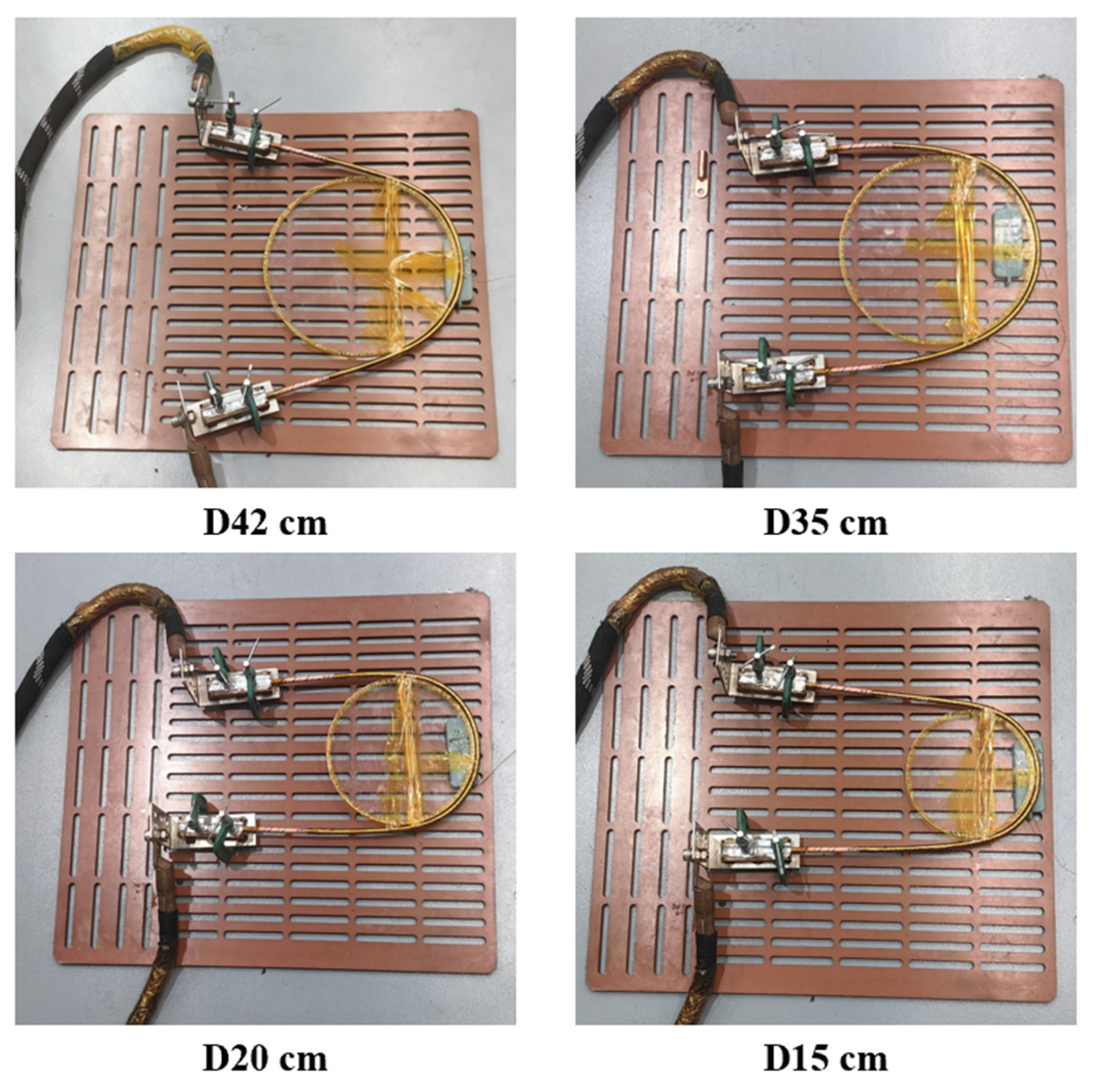
Circular molds were used to bend the cable samples to target diameters at ambient temperature, as shown in Figure 1. The mold diameter corresponded to the bending diameter of the CORC cable sample. The bent section of the cable sample was fixed onto the mold with Kapton tapes, and the on-load cable sample was immersed in a liquid nitrogen bath for critical current testing and transport loss measurement. The bending diameter was initialized at 42 cm and gradually decreased to 15 cm.
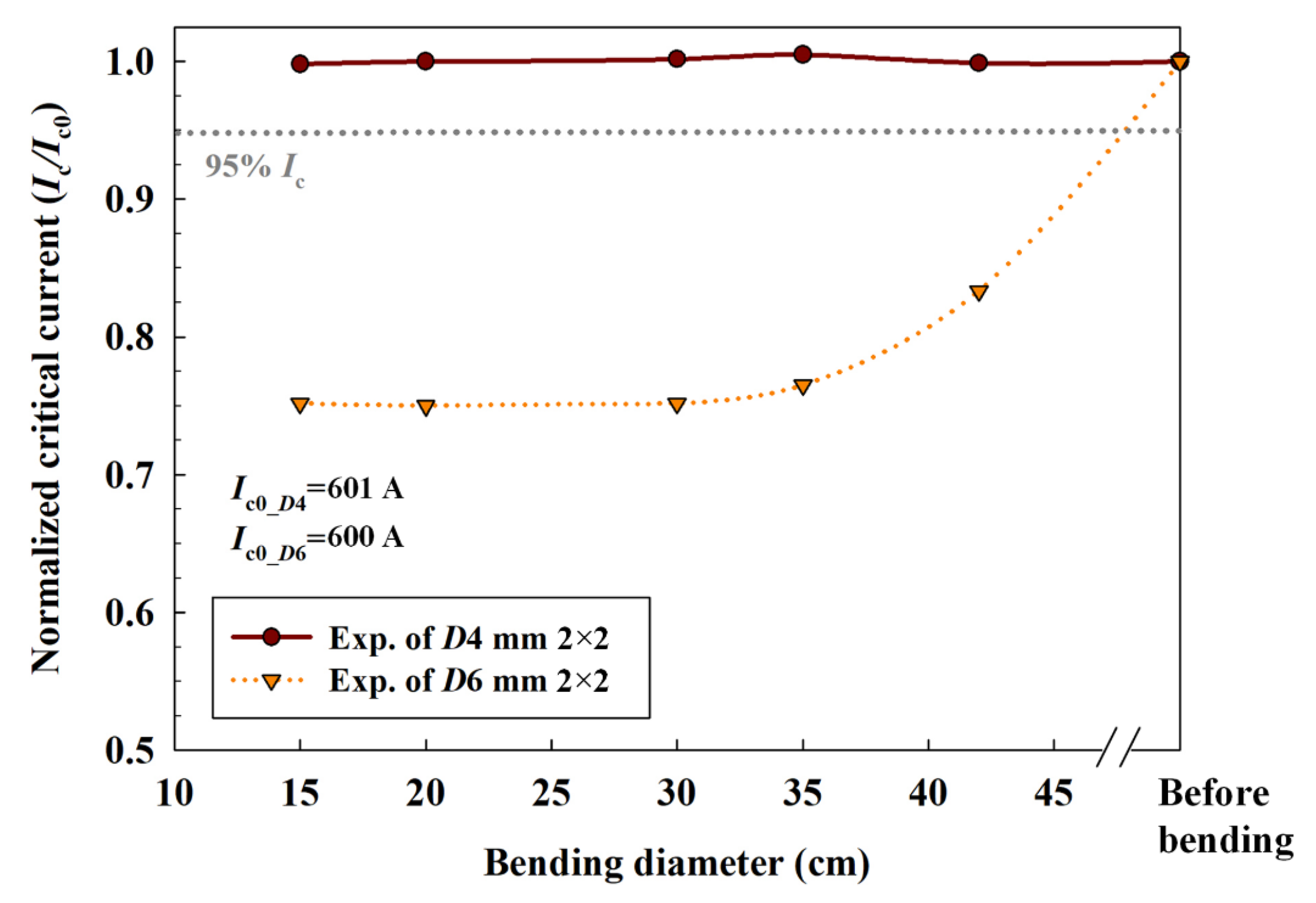
Figure 2 shows the test results of the critical currents of sample D4 and sample D6 under different bending diameters. Ic0 represents the critical current of the cable sample, and label ‘2 × 2’ represents the tape structure of the cable sample (number of tapes per layer and number of layers). As was anticipated, tightly wound sample D4 exhibits nearly no variation in the critical current with the decrease in the bending diameter, while loosely wound sample D6 exhibits critical current degradation induced by strain under bending conditions. Concretely, the critical current of sample D6 drops with the bending diameter, declining from 42 cm to 30 cm, and exhibits stability as the bending diameter decreases further.
For sample D4, the additional strain induced by the bending had almost no impact on the critical current density distribution. Only the geometric structure changes resulting from the bending process indeed affected its transport loss characteristics. For sample D6 under bending diameters ranging from 30 cm to 42 cm, the impact of bending on the transport loss characteristics could be manifested as the combined effects of the bending process and strain. Thus, sample D4 and sample D6 were selected to evaluate the impacts of the bending process and strain on the transport AC loss characteristics of CORC cable, respectively.

3. Numerical Model and Experimental Setup

3.1. Numerical Model

3.1.1. Geometry and Mesh

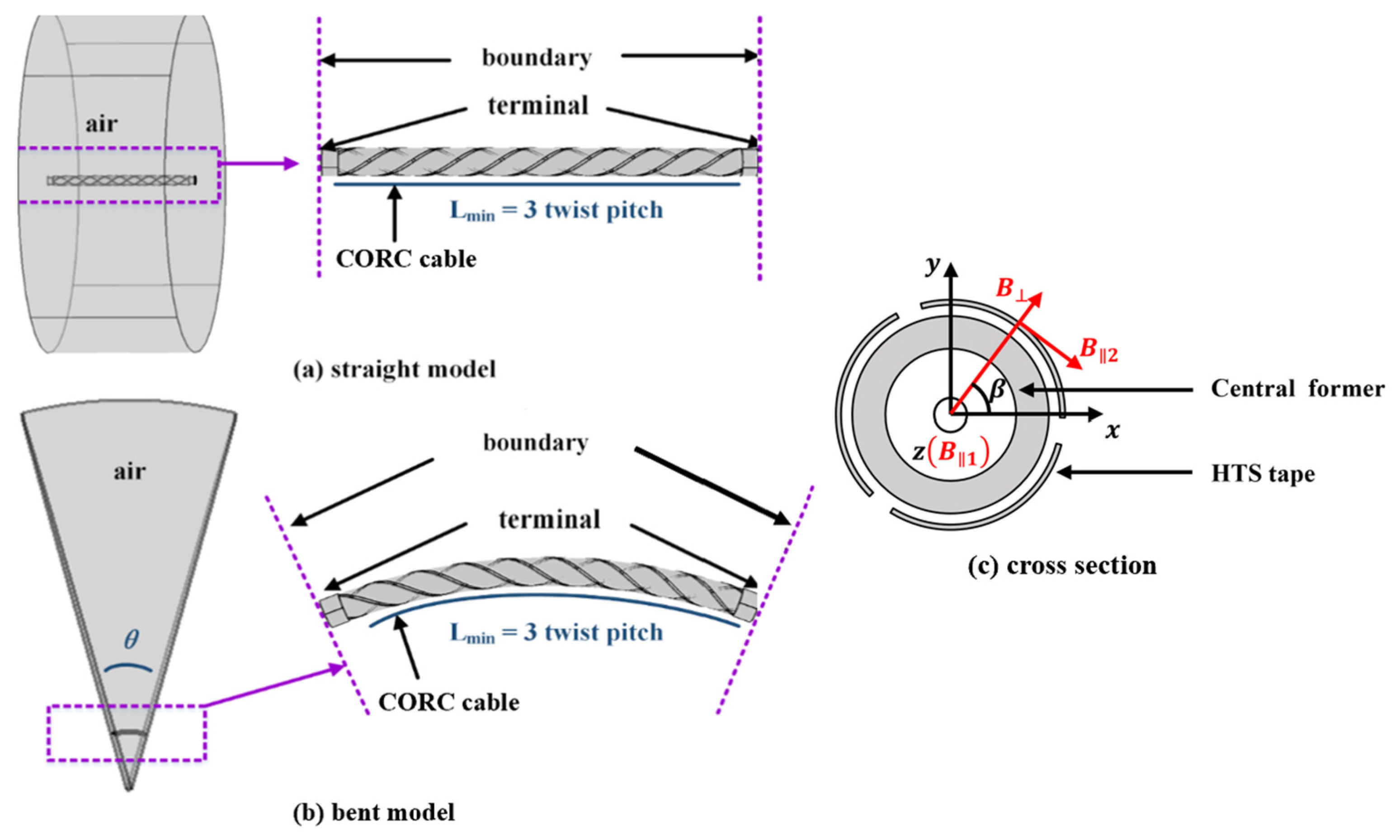
Both cable models are configured with a length equal to three twist pitch units. Two loop-shaped terminals with a length of 3 mm are set on opposite sides of the model to achieve uniform current distribution among HTS tapes. The terminal thickness is set equal to that of HTS tapes. The HTS tapes are constructed detached from the central former to model the air gap between them, which makes computation more accurate [21]. The air domain boundaries of both models coincide entirely with the terminal boundaries on both sides of the cable. The air domain of the straight cable model adopts a cylindrical geometry, whereas the air domain of the bent cable model takes on a sector-shaped geometry, as shown in Figure 3a,b.
To mitigate boundary effects on the simulation results, the outer diameter of the air domain for the straight cable model is set to at least five times the outer diameter of the cable, while for the bent cable model, the outer diameter of the air domain is set to at least five times the bending diameter of the cable.
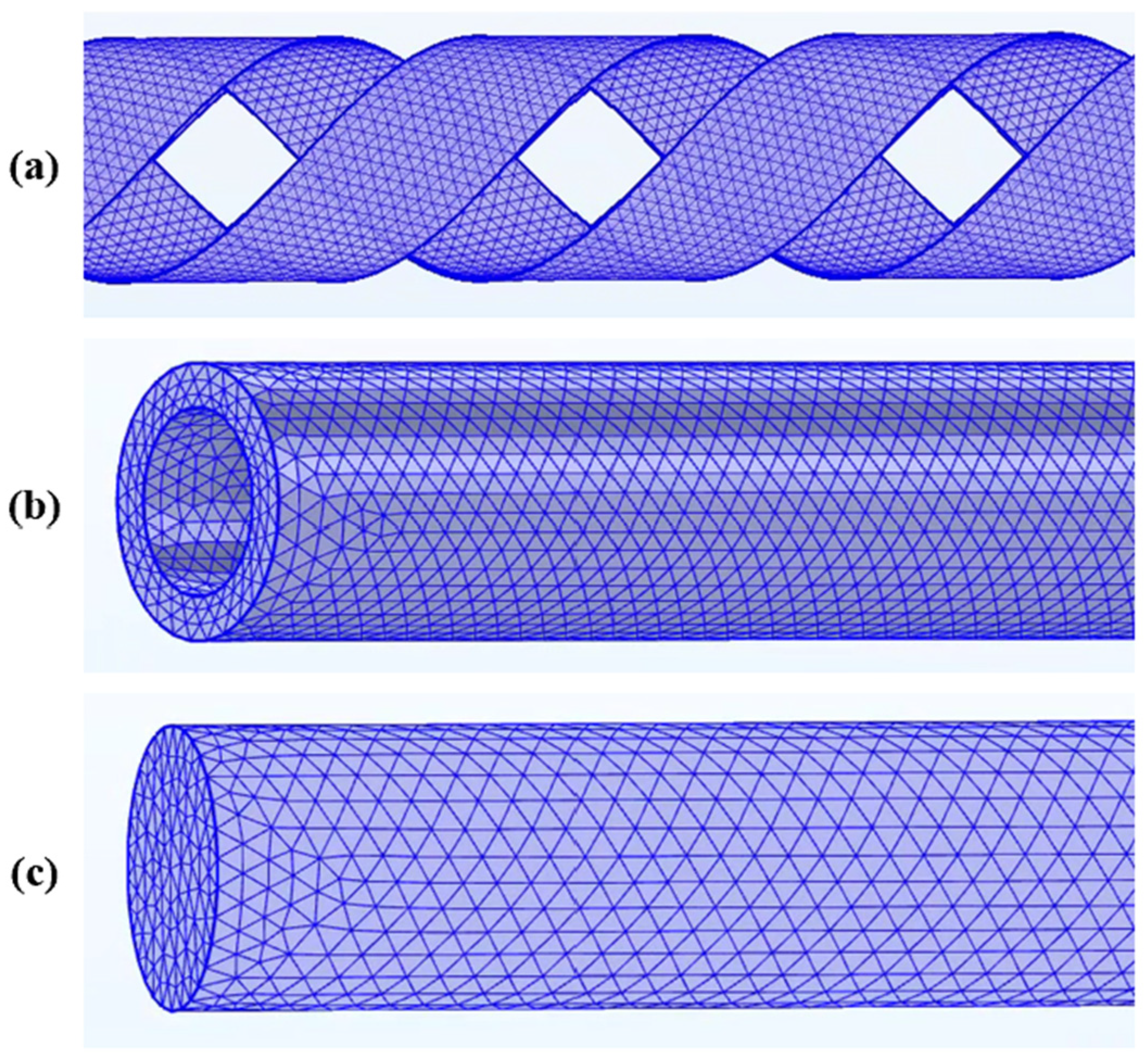
The mesh of HTS tapes is divided into 20 elements along the width direction and 1 element along the thickness direction, with each grid element measuring 0.2 mm × 0.2 mm. Given that almost all the current flows into the superconducting layer with a thickness of 1 μm, the superconducting layer is extended to cover the entire multilayer structure of the HTS tape, and the variations in the current density along the thickness direction can be neglected [22]. Thus, there is no need to increase the number of meshes in the thickness direction. Predefined mesh sizes are adopted for other regions of the cable model. The mesh of each domain is shown in Figure 4.

3.1.2. Boundary Condition Setting

Periodic boundary conditions are implemented on the terminal boundaries and the air domain boundaries at both ends of the cable model. Transport current is imposed by point constraints applied to the terminal boundary and former boundary on one selected side of the cable model, as in (1):
J n d S t e r m i n a l = I c a s i n 2 π f t J n d S f o r m e r = 0 ,
where J is the current density; S t e r m i n a l and S f o r m e r represent the cross sections of the terminal and the central former, respectively; n is the normal vector; I c is the critical current; a = I p e a k / I c is the normalized current; and f is the frequency.

3.1.3. Electromagnetic Setting

The electrical conductivities of the central former domain and air domain are set to 1.80 × 10⁸ S/m and 1 S/m, respectively.
Numerical models in this paper are based on H-formulation [23,24]. The modified Kim critical state model [25,26] is used in the domain of HTS tapes, as in (2):
J c B , B = J c 0 / 1 + k 2 B 2 + B 2 / B 0 b ,
where J c 0 is the critical current density under the self-field; the material parameters k = 0.5 , B 0 = 0.55 , and b = 2.4 are the fitting parameters based on experiments of HTS tapes under 77 K [27]; B and B represent the parallel and perpendicular components of the magnetic field vector based on the surface of the HTS tapes, respectively. B corresponds to the radial direction in the cable model, while B consists of the axial component (B1) and the tangential component (B2), as shown in Figure 3c.
The latter half of one periodic cycle is used to calculate the transport AC loss, as in (3):
Q c y c l e = 2 T 2 T E · J d V d t ,
where T is the period of the cycle, and V is the CORC cable domain.

3.1.4. One-Way Coupled Mechanical–Electromagnetic Mapping

Since HTS tapes subjected to axial strain exhibit an uneven distribution of critical current density, it is essential to evaluate the impact of the mechanical behavior on the electromagnetic properties of CORC cable. In this study, the method of one-way coupled mechanical–electromagnetic mapping was used to transfer the axial strain of the CORC cable from the mechanical model to the electromagnetic model. ABAQUS software 2024 and COMSOL software 6.3 were employed for the mechanical and electromagnetic simulation, respectively.
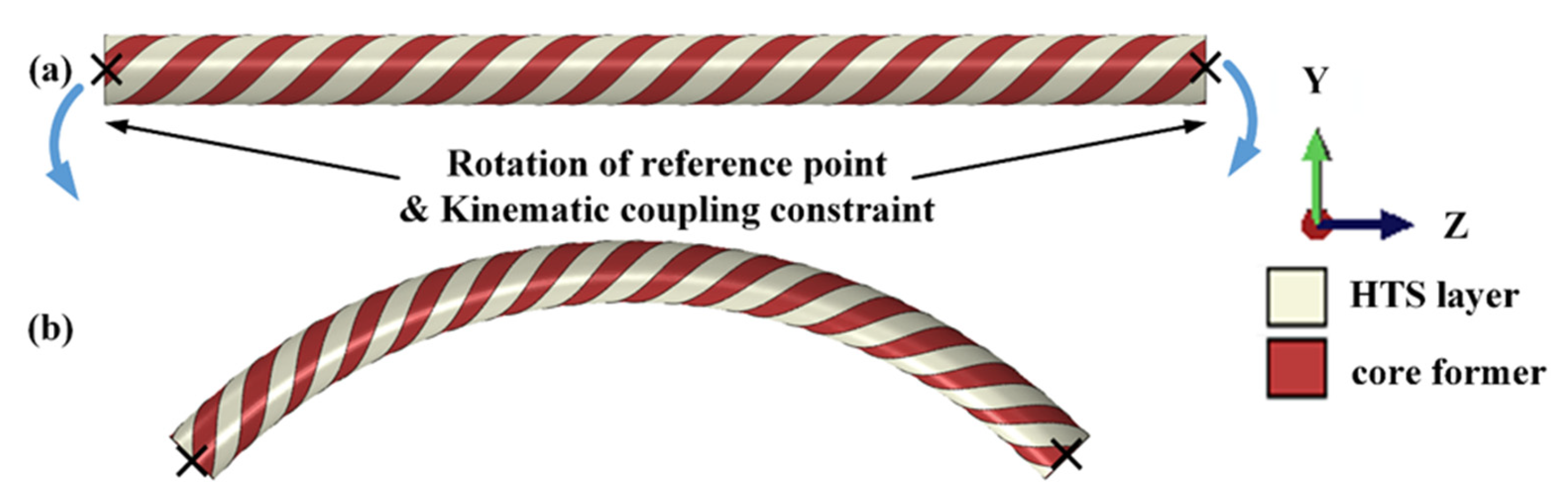
Figure 5 shows the bending model for CORC cable. Two reference points are positioned at the axial centers of both ends of the central former. The kinematic coupling constraint is applied to both points to achieve the bending of the CORC cable, as shown in Figure 5b. Through experiment measurement, the friction coefficient between the tapes and former is set to 0.154, while for the contact between tapes, the tape gap influences the value of the friction coefficient. The friction coefficients between tapes of sample D4 and sample D6 are set to 0.24 and 0.318, respectively.
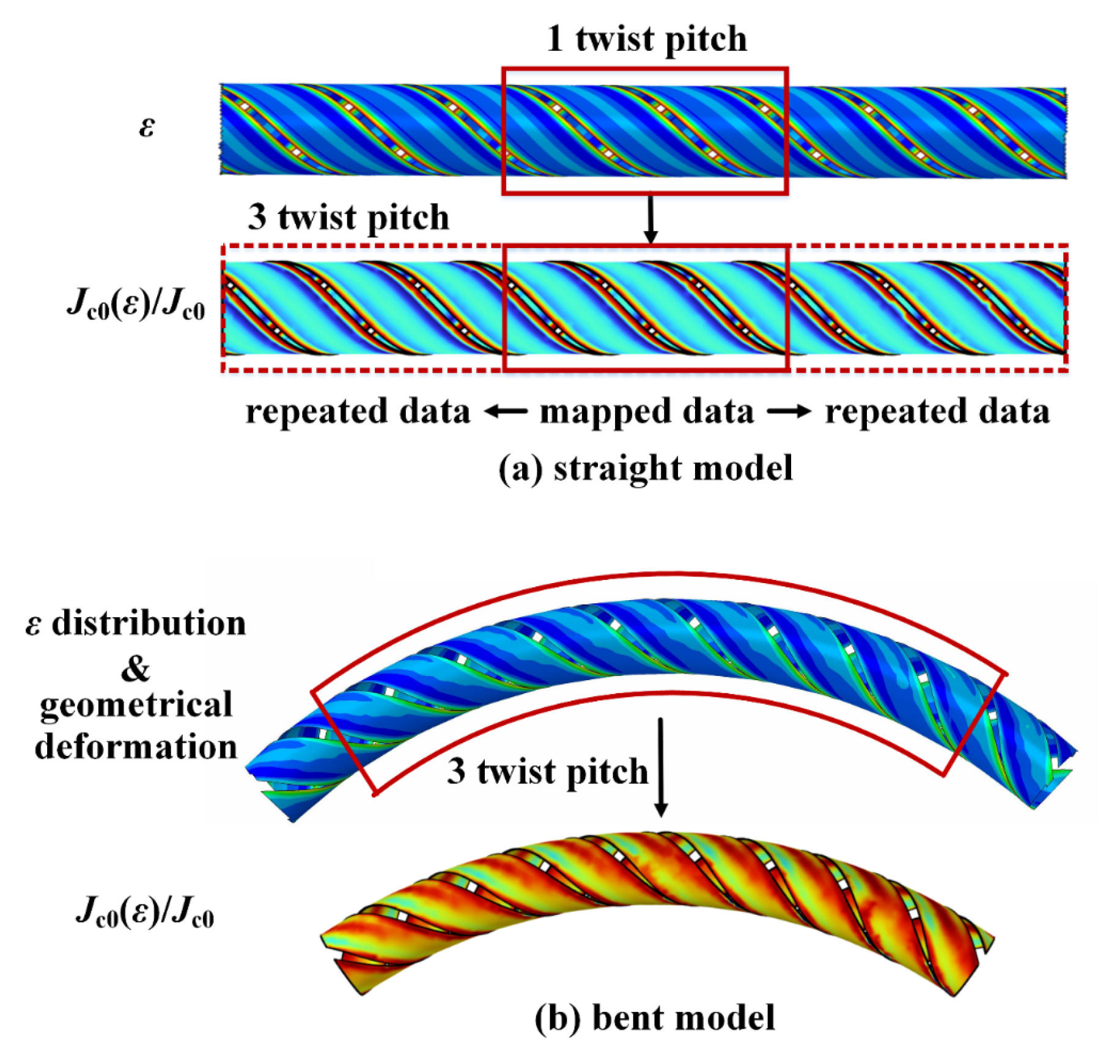
In mechanical simulation, by imposing the mechanical behavior of strain on CORC cable, the axial strain distribution ( ε ) of HTS tapes and possible geometric deformation are obtained. Based on the relationship between the strain and current density, the axial strain distribution ( ε ) is converted into the normalized critical current density distribution ( J c 0 ε / J c 0 ), which is mapped into the electromagnetic model of CORC cable. In electromagnetic simulation, the ultimate distribution of the critical current density ( J c ε , B ) is obtained from J c B and J c 0 ε / J c 0 , as in (4):
J c ε , B = J c B × J c 0 ε / J c 0 = J c 0 ε / 1 + k B 2 + B 2 / B 0 b ,
In mechanics, the critical current of superconducting tapes is typically evaluated using the curve of J c / J c 0 ε , which can be obtained through axial mechanical testing. The curve used in this paper is derived from [28]. J c 0 ε can be obtained based on the curve. Then, the normalized critical current density distribution ( J c 0 ε / J c 0 ) can be mapped into the electromagnetic model in the form of an output document.
Figure 6 illustrates the data mapping process from the axial strain distribution ( ε ) to the normalized critical current density distribution ( J c 0 ε / J c 0 ). To avoid end effects, the axial strain distribution over the central twist pitch is selected, copied, and then extended to cover the other two twist pitches.

3.1.5. Other Settings

The output time step is set to 6.94 × 10⁻⁵ s (1/200th of a cycle time). The maximum time step size of the solver is set to 1.1 × 10⁻⁶ s. The relative tolerance of the solver is set to 1 × 10⁻³ s. The total CPU time for the time-dependent simulation is around 3 h.

3.2. Experimental Setup

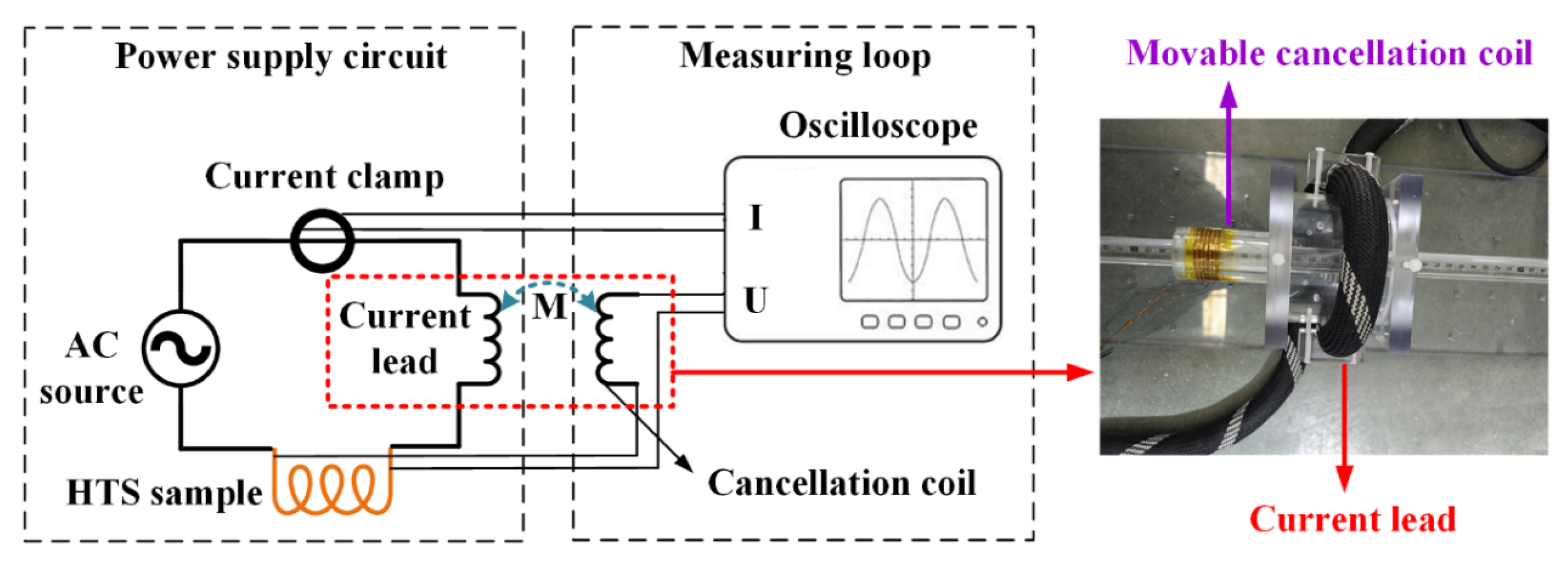
The transport loss measurement system [29] based on the electrical method is shown in Figure 7. Within the power supply circuit, the transport current for the cable sample is supplied by a high-capacity AC source with adjustable amplitude and frequency. The current clamp is used to convert the current signal into a voltage signal and feed it to the oscilloscope. Within the measuring loop, the compensation coil coupled with the current lead form the mutual inductance (M) equal to the self-inductance of the cable sample to eliminate the inductive voltage component of the HTS sample [30].
The applied voltage lead arrangement for CORC cable is shown in Figure 8. Both voltage leads are perfectly contacted with the cable, and one of the leads is wrapped snugly around the cable in a loop to capture the axial magnetic flux of the CORC cable.

4. Results and Discussion

4.1. Impact of Bending Process

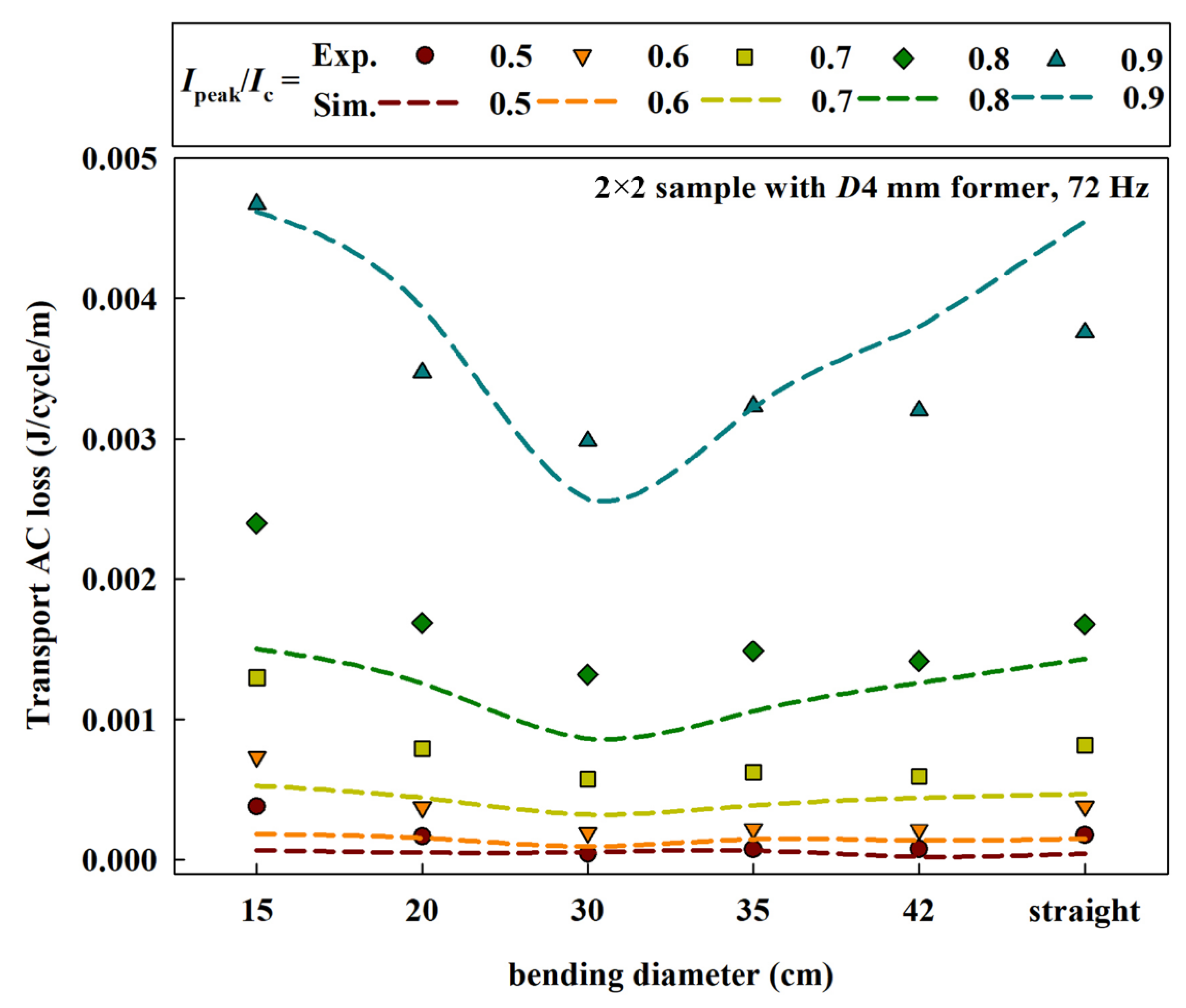
Since sample D4 exhibited almost no variation in the critical current density distribution with the additional strain induced by bending under diameters of 15 cm to 42 cm, it was selected to explore the intrinsic impact of the bending process on the transport AC loss characteristics of CORC cable.
Figure 9 shows the comparison between the experimental and simulation results of the transport AC loss of sample D4 under different bending diameters. As the bending diameter decreases, transport AC losses of sample D4 under different operating currents undergo first a decrease and subsequently an increase. This indicates that the changes in the geometric structure of the cable caused by the bending process could affect the transport loss of CORC cable.
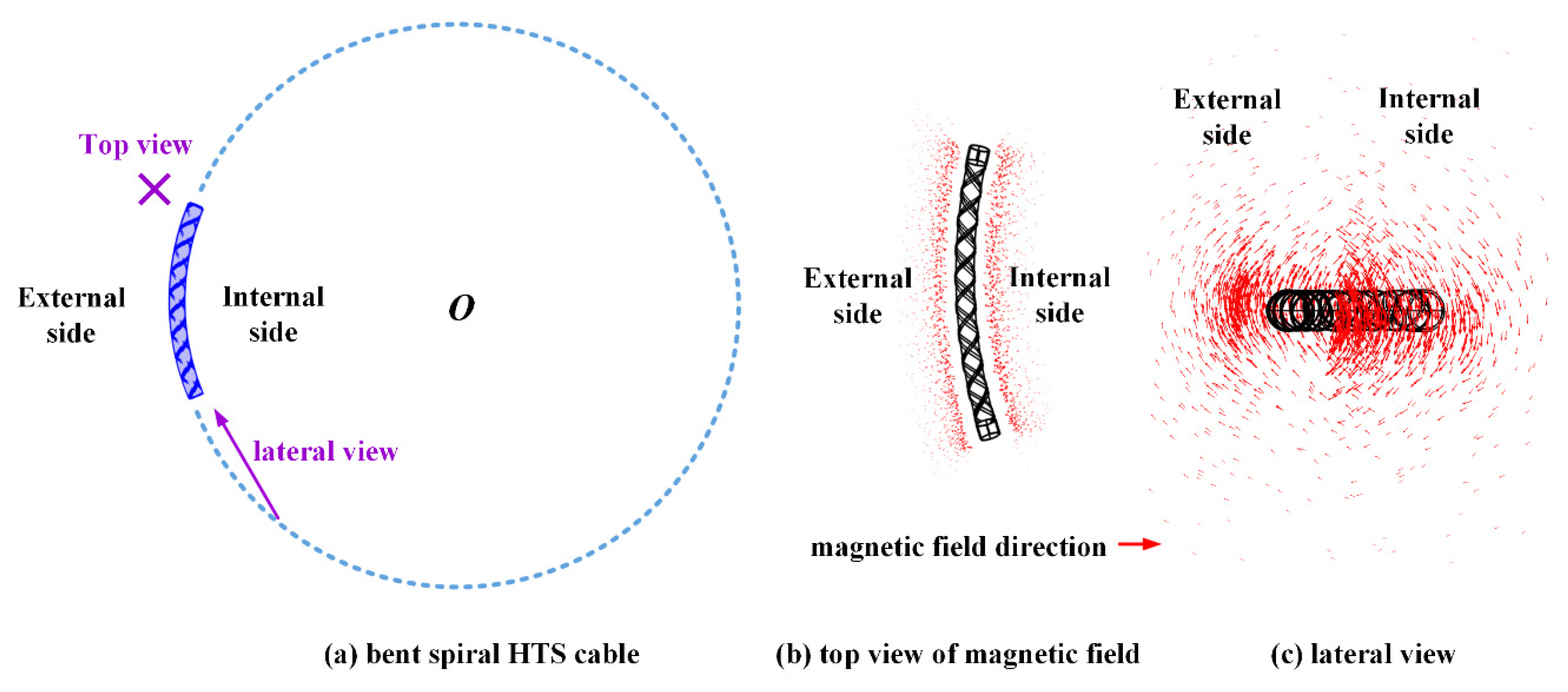
From the perspective of geometry, the most intrinsic effect of the bending process on the AC loss characteristics of CORC cable is the redistribution of the magnetic field around the cable. The bent CORC cable could be visualized as a circular arc segment of a single-turn coil pointing towards the circle center in space. The side closer to the center is defined as the inner side, while the side farther from the center is designated as the outer side, as shown in Figure 10a. Figure 10b,c show the typical magnetic field distribution around the bent cable with arrows representing the magnetic field directions. The arrow density on the internal side is slightly higher than that on the external side, reflecting the central magnetic field concentration effect of the cable under bending conditions.
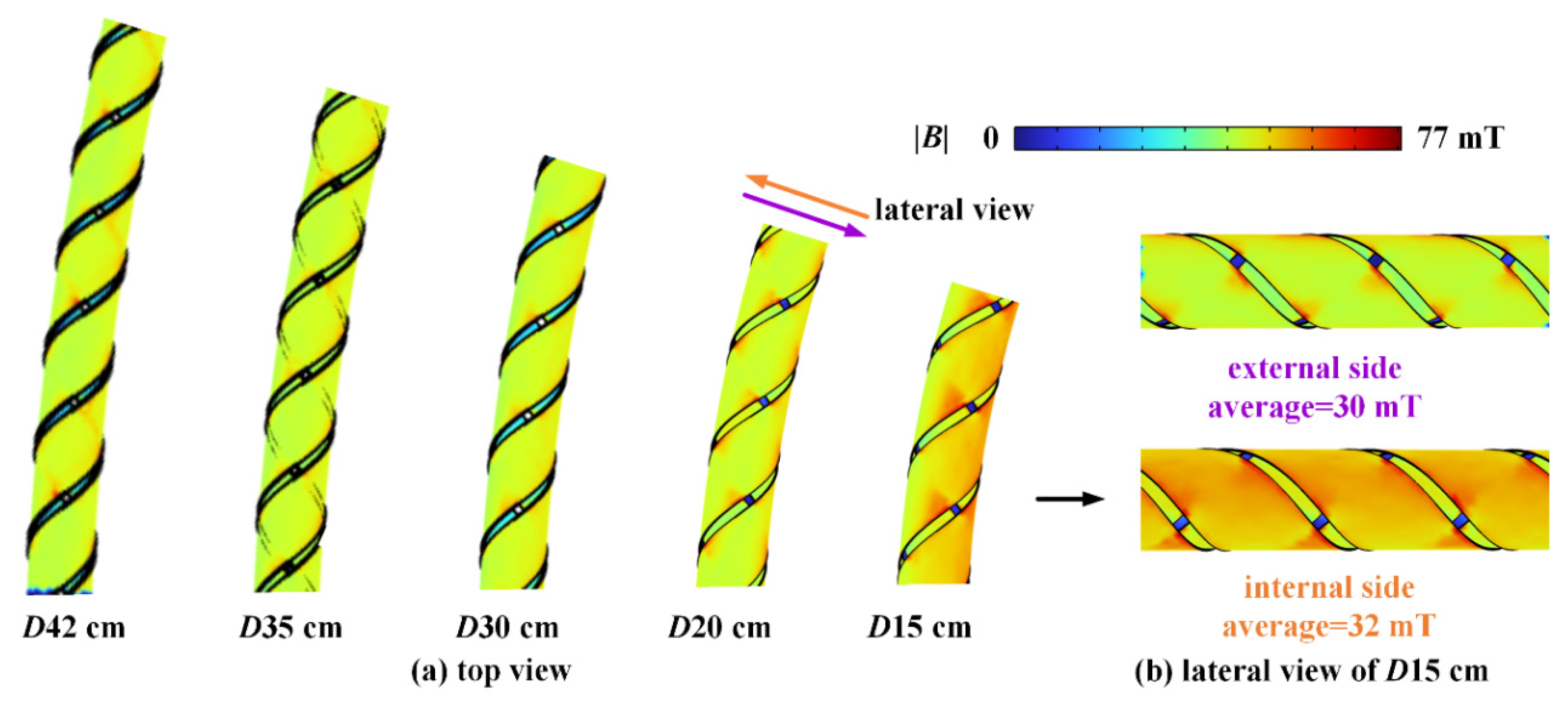
Figure 11a shows the magnetic field distribution around sample D4 under different bending diameters. As the bending diameter decreases, the central magnetic field exhibits increasingly pronounced concentration effects. Under a bending diameter of 15 cm, the average magnetic field of sample D4 on its inner side is 32 mT, which is higher than the 30 mT on its outer side, as shown in Figure 11b.
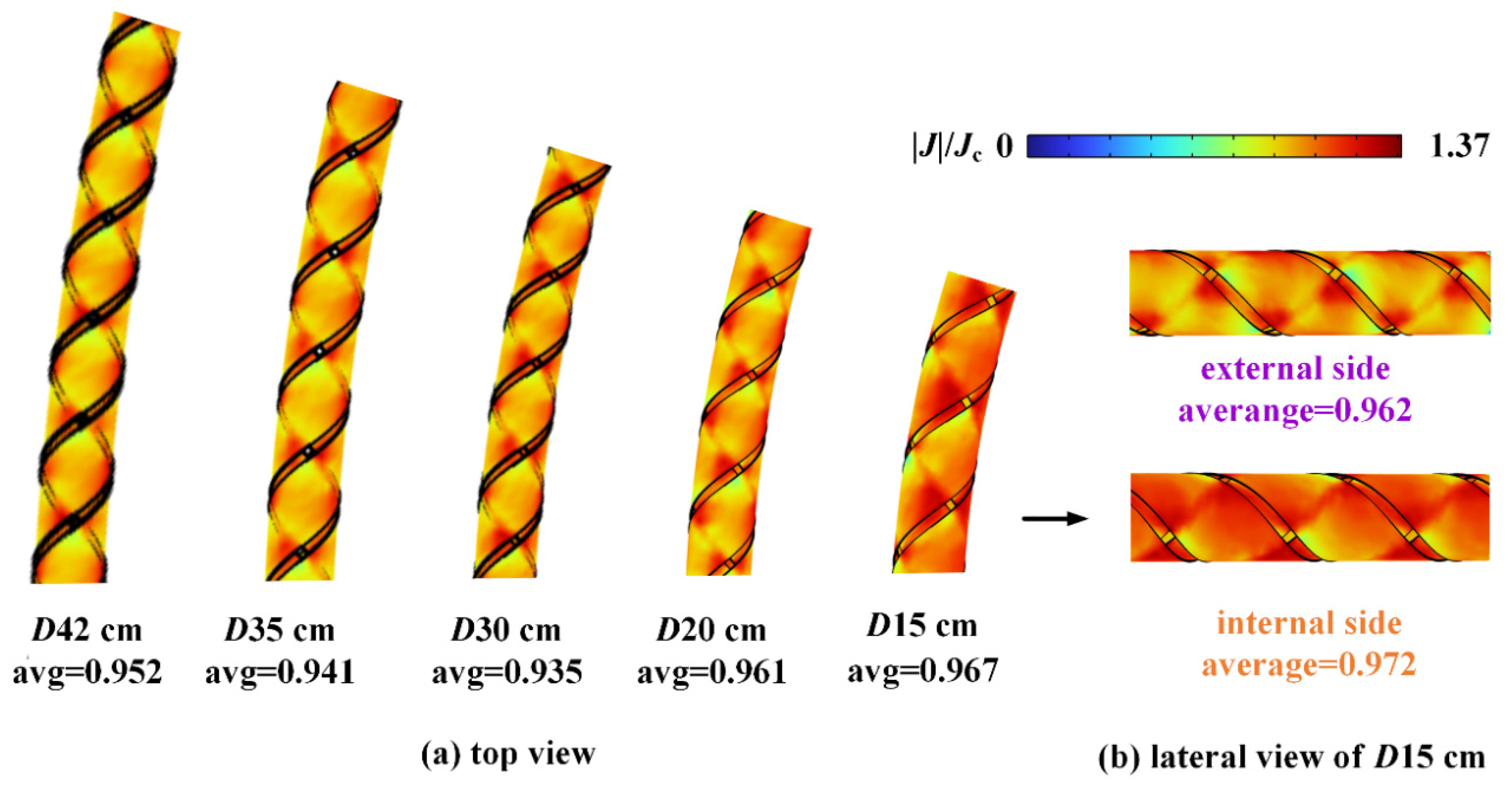
The unbalanced magnetic field distribution around sample D4 subsequently resulted in the uneven distribution of its normalized current density, as shown in Figure 12a. Under I p e a k / I c = 0.9 , t = 0.014   s , the normalized current density on the inner and outer sides of sample D4 exhibits the same distribution discrepancy as the magnetic field. As the bending diameter decreases to 15 cm, the average value of J / J c on the inner side is 0.972, which is higher than the 0.962 on the outer side, as shown in Figure 12b. Hence, it can be derived that the convergence of the magnetic field on the internal side induces the local degradation of the critical current, leading to the aggravation of the AC loss; in contrast, the divergence of the magnetic field on the external side contributes to the local recovery of the critical current, which mitigates the AC loss. Thus, the fluctuation in the transport loss of sample D4 could have resulted from the combination of the above two effects, which vary significantly under different bending diameters. As the bending diameter is around 30 cm, the two effects exhibit a near-complete mutual cancellation, which further demonstrates why 30 cm is the knee point of transport AC loss.
Under large bending diameters, the mitigating effect of the low magnetic field on the external side was relatively pronounced, and the overall average value of J / J c decreased from 0.952 under a bending diameter of 42 cm to 0.935 under 30 cm, which are lower than that of straight cable (0.965). Therefore, the transport AC loss of CORC cable undergoes a decrease during the initial bending stage. As the bending diameter decreased even further, the aggravating effect of the high magnetic field on the internal side began to predominate, and the overall average values of J / J c increased again to 0.961 under a bending diameter of 20 cm and to 0.967 under 15 cm. As a consequence, the transport AC loss exhibits an upward trend.

4.2. Bent CORC Cable with Critical Current Degradation

Strain induces the local degradation of the critical current in HTS samples, which subsequently affects the AC loss. Thus, sample D6 was selected to explore the impact of strain on the transport AC loss characteristics of CORC cable. As mentioned in the Numerical Model and Experimental Setup Section, strain was imposed on the mechanical model of sample D6 to obtain its axial strain distribution, and the corresponding critical current density distribution derived from the axial strain distribution was mapped into the electromagnetic model of sample D6 to calculate its transport AC loss.
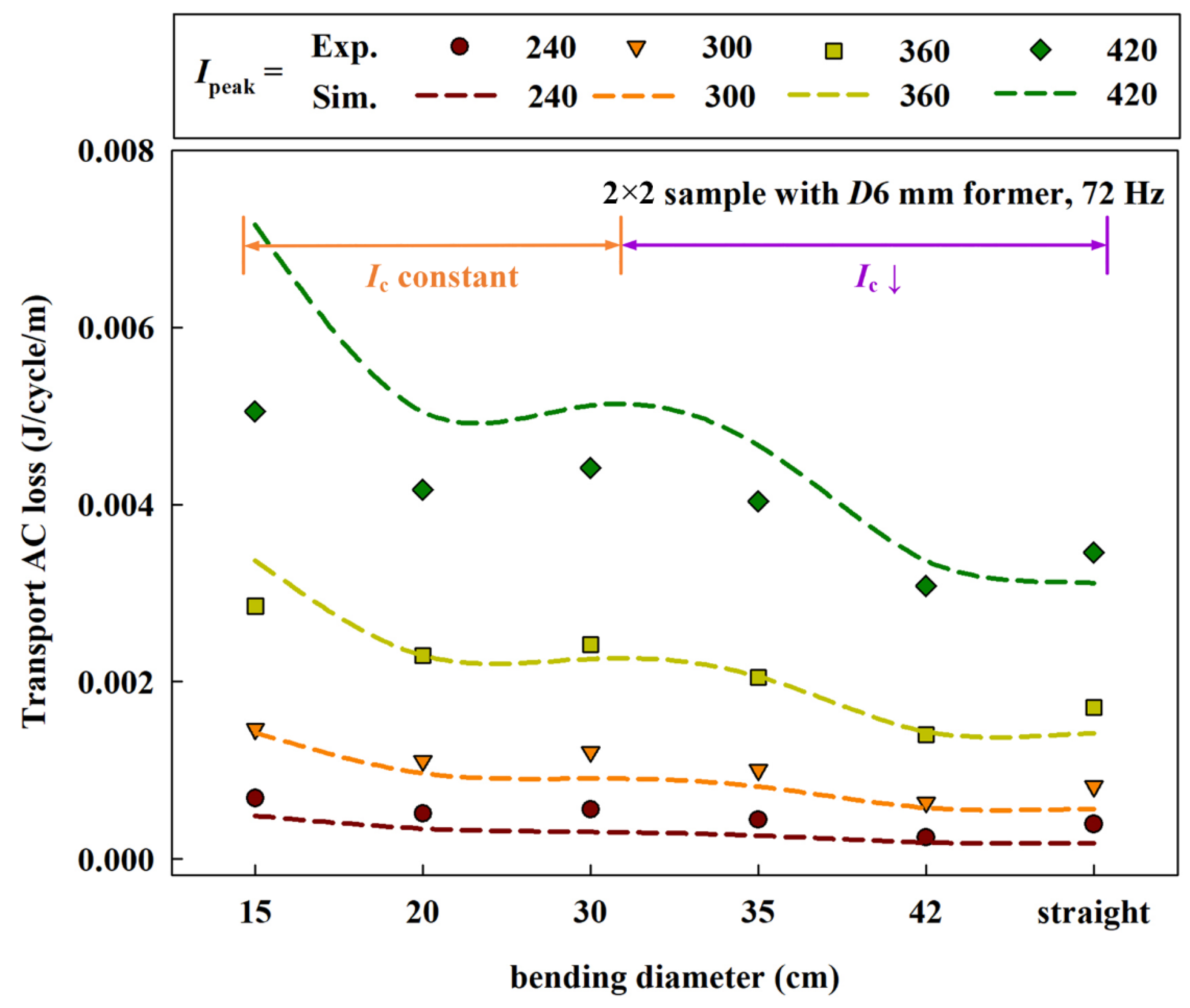
Due to varying degrees of degradation in the critical current under different bending diameters, comparisons between different operating conditions are based on results obtained under the same operating current. Figure 13 shows the comparison between the experimental and simulation results of the transport AC loss of sample D6 under different bending diameters. The experimental and simulation results exhibit consistent trends. However, the experimental and simulation results exhibit high discrepancy under 420 A, which could be attributed to the non-uniform critical current of the employed HTS tapes due to differences in the joint resistance [31]. Moreover, the simulation is based on uniform equivalence without coupled strain. As the bending diameter decreased from 42 cm to 30 cm, strain predominantly induced the attenuation of the critical current and ultimately led to the elevation of AC loss, which demonstrates the combined effects of the bending process and strain on the transport AC loss characteristics of sample D6. As the bending diameter progressively decreases from 30 cm to 15 cm, the critical current of sample D6 exhibits nearly no variation, and the impact of bending on the transport loss characteristics ultimately traces back to the intrinsic bending process itself. Analogously, with the decrease in the bending diameter, the transport AC loss exhibits a non-monotonic behavior, initially decreasing and then increasing.
To further explore the impact of strain on AC loss characteristics, the following simulations are introduced. Simulation A is based on coupled strain, of which the normalized critical current density is J c 0 ε / J c 0 , while simulation B is based on uniform equivalence, of which the critical current density is J c 0 . The deviation ratio (DR) is defined to evaluate the AC loss discrepancy between simulation A and simulation B, as in (5):
D R = Q B Q A / Q B ,
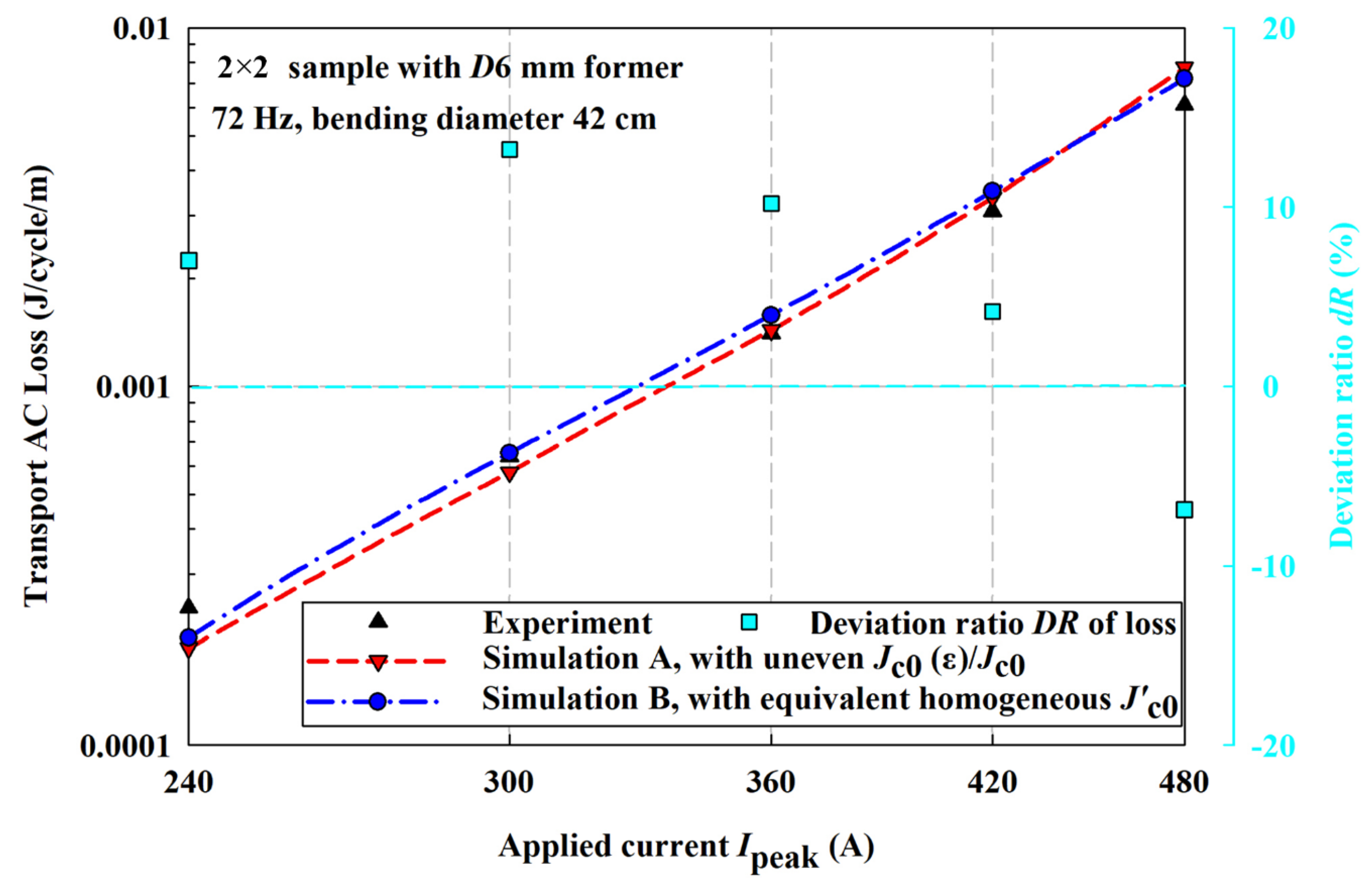
Figure 14 shows a comparison among the experimental results and simulation results of the above two models under a bending diameter of 42 cm. The critical current of sample D6 exhibits only a 16% degradation. The results of both simulation A and simulation B exhibit excellent consistency with the experimental results. Under a low operating current, simulation B overestimates the additional transport loss induced by local critical current degradation. Case in point, the DR is +4% to +13% within the operating current range of 240 A to 420 A, while under high operating current, simulation B underestimates the transport loss. Take the case under 480 A, the DR is −7%, and the significant elevation in the transport loss could be attributed to the generation of extremely high AC loss densities at local regions with critical current degradation. The error between simulation A and the experimental result is 12.1%.
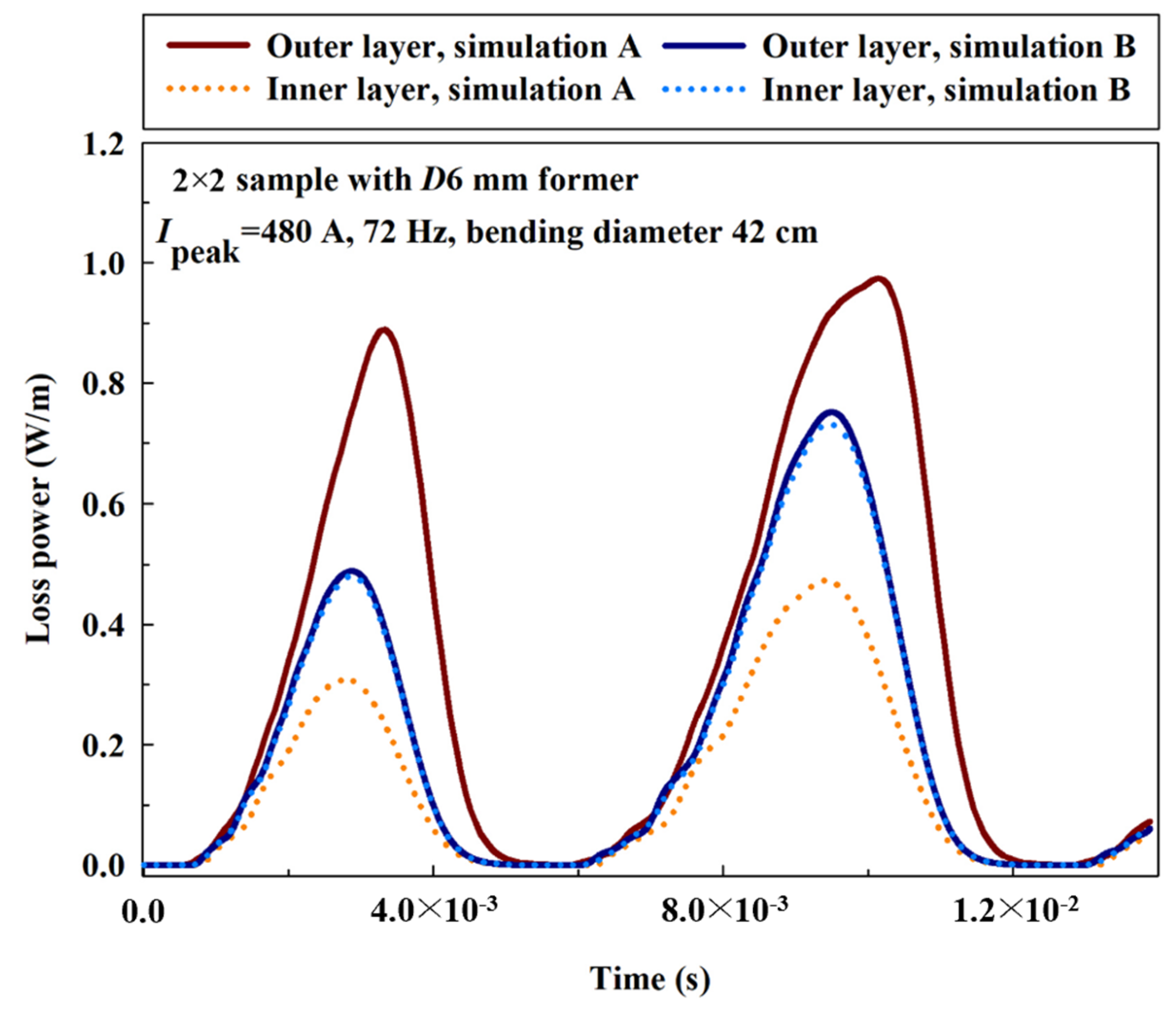
Figure 15 illustrates the simulation results of the transport AC loss power distributions in the inner and outer layers of sample D6 under an operating current of 480 A. For simulation A based on the uniform equivalence of J c 0 , the inner and outer layers exhibit nearly identical transport loss powers. In contrast, for simulation B based on the coupling strain, the transport loss power of the outer layer is significantly higher than that of the inner layer, which constitutes the dominant component in simulation A.
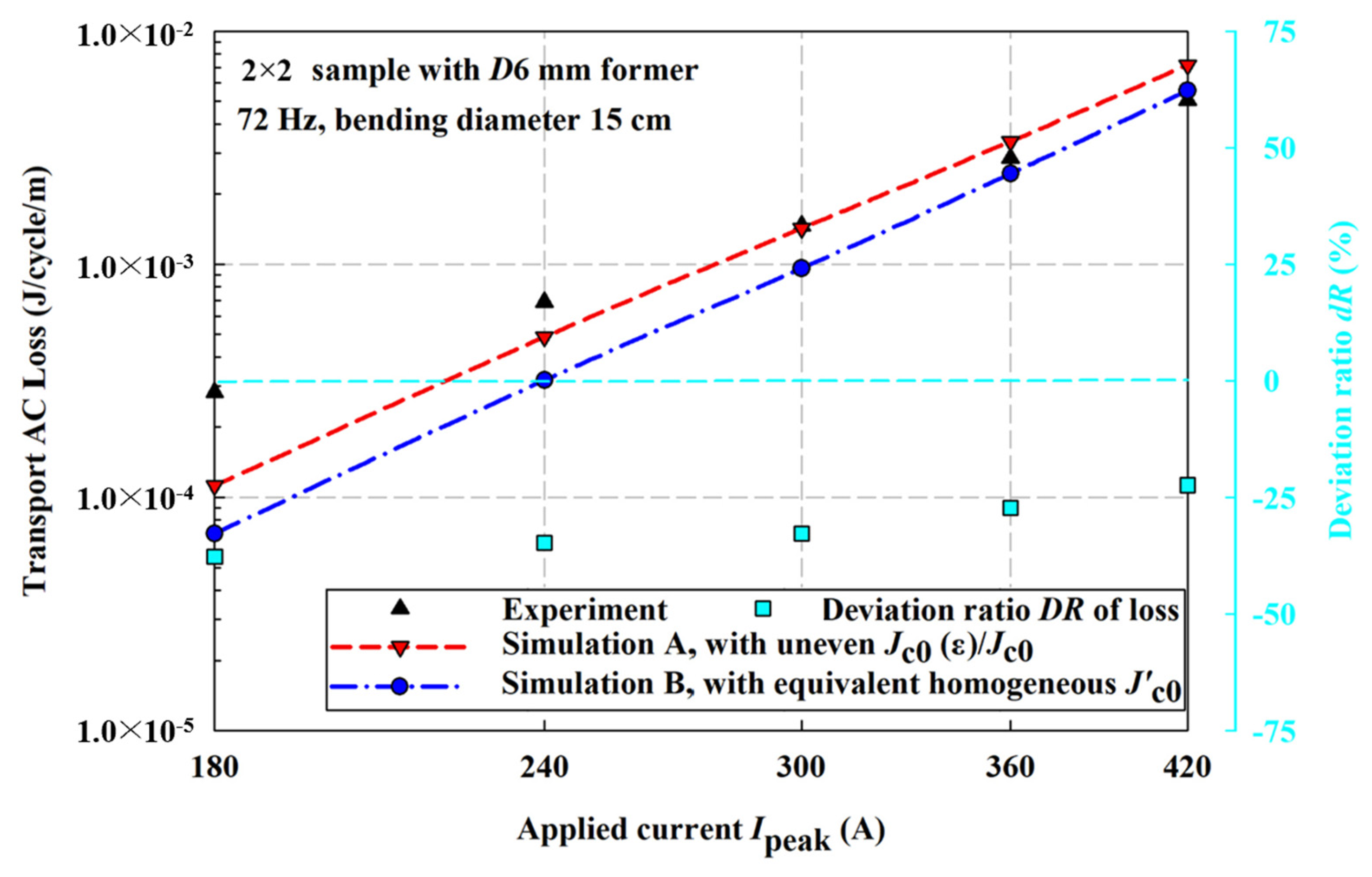
As the bending diameter decreases, the critical current undergoes further degradation accompanied by an increasingly uneven strain distribution. In this case, simulation results based on a uniformly decreasing current density will increasingly deviate from those incorporating coupled strain effects. Figure 16 shows a comparison between the experimental results and simulation results of the above two models under a bending diameter of 15 cm. The discrepancy between simulation A and simulation B is substantially larger than that demonstrated in Figure 14. Simulation B significantly underestimated the transport AC loss, while the result of simulation A is in excellent accordance with the experimental result, with an error of 2.1% under 420 A. Consequently, for CORC cables under small bending diameters, the strain distribution is highly non-uniform, and the corresponding electromagnetic property predictions require coupling strain to achieve accurate modeling.

5. Conclusions

In this study, two cable samples with and without degradation of the critical current under bending conditions were fabricated, and the impacts of the bending process and strain on the AC loss characteristics of CORC cable were evaluated, respectively, through experimental and simulation methods. The results show that the bending characteristic of the cable with a 4 mm outer diameter of the central former is superior to that of 6 mm.
The impact of the bending process itself on the transport AC loss of CORC cable lies in the redistribution of the magnetic field around the cable. The divergence of the magnetic field on the external side of the cable could mitigate the AC loss, while the convergence of the magnetic field on the internal side of the cable could aggravate the AC loss. The overall AC loss variation of the cable assembly results from the synergistic interaction of the above two effects.
While strain mainly affects the transport AC loss of CORC cable by leading to local critical current degradation at the initial stage of bending with large diameters, a decrease in the bending diameter could induce non-uniform strain distribution in the cable, which, in turn, results in the uneven distribution of the critical current density and the elevation of transport loss. Thus, the one-way coupled mechanical–electromagnetic mapping method is proposed to implement the electromagnetic–mechanical-coupling simulation. Through the simulation, the electromagnetic characteristics of CORC cables can be predicted more accurately, especially for cables with small bending diameters.

Author Contributions

Conceptualization, methodology, software, validation, data curation, writing, Y.C.; conceptualization, methodology, software, validation, Z.Y.; validation, investigation, S.Z.; validation, investigation, W.H.; validation, investigation, Y.O.; validation, investigation, X.Z.; conceptualization, methodology, software, review, supervision, J.S. All authors have read and agreed to the published version of the manuscript.

Funding

This research was funded by the National Science and Technology Major Project, grant number 2024ZD1002602.

Data Availability Statement

Data will be shared upon request. The data are not publicly available due to [the data being part of an ongoing associated study, and public sharing would compromise the originality and publication of subsequent research].

Conflicts of Interest

The authors declare no conflicts of interest.

Abbreviations

The following abbreviations are used in this manuscript:
HTSHigh-temperature superconducting
CORCConductor on round core
IcCritical current

References

  1. Jin, H.; Qin, J.G.; Zhou, C.; Liu, H.J.; Liu, F.; Gao, P.; Xiao, G.Y.; Ma, H.J.; Li, J.G.; Wu, Y.; et al. The performance of first CORC cable solenoid insert for development of CFETR high-field magnet. Nucl. Fusion 2020, 60, 096028. [Google Scholar] [CrossRef]
  2. Van der Laan, D.; Weiss, J.; Radcliff, K.; Abraimov, D. CORC® wires allowing bending to 20 mm radius with 97.5% retention in critical current and having an engineering current density of 530 A mm−2 at 20 T. Supercond. Sci. Technol. 2024, 37, 115007. [Google Scholar] [CrossRef]
  3. Van der Laan, D.C.; Ekin, J.W. Large intrinsic effect of axial strain on the critical current of high-temperature superconductors for electric power applications. Appl. Phys. Lett. 2007, 90, 052506. [Google Scholar] [CrossRef]
  4. Gao, P.; Zhang, Y.; Wang, X.; Zhou, Y. Interface properties and failures of REBCO coated conductor tapes: Research progress and challenges. Superconductivity 2023, 8, 100068. [Google Scholar] [CrossRef]
  5. Shin, H.S.; Dedicatoria, M.J.A.; Lee, N.J.; Oh, S.S. Effect of bending test procedure on the degradation behavior of critical current in ReBCO coated conductor tapes. Prog. Supercond. Cryog. 2009, 116, 103285. [Google Scholar]
  6. Zhang, X.; Liu, H.; Shi, Y.; Liu, F.; Lei, L.; Zhang, X. Critical current degradation behavior of SSTC YBCO tapes under uniaxial strain. In Proceedings of the 2018 IEEE International Conference on Applied Superconductivity and Electromagnetic Devices (ASEMD), Tianjin, China, 15–18 April 2018; pp. 1–2. [Google Scholar]
  7. Xiao, G.; Zhou, C.; Qin, J.; Jin, H.; Liu, H.; Zhao, C. Critical current degradation behaviour of various REBCO tapes under uniaxial strain. Fusion Eng. Des. 2023, 190, 113523. [Google Scholar] [CrossRef]
  8. Sugano, M.; Shikimachi, K.; Hirano, N.; Nagaya, S. Simultaneously bending and tensile strain effect on critical current in YBCO coated conductors. Phys. C Supercond. Appl. 2007, 463–465, 742–746. [Google Scholar] [CrossRef]
  9. Gao, P.; Mao, J.; Chen, J.; Wang, X.; Zhou, Y. Electromechanical degradation of REBCO coated conductor tapes under combined tension and torsion loading. Int. J. Mech. Sci. 2022, 223, 107314. [Google Scholar] [CrossRef]
  10. Van der Laan, D.C.; Noyes, P.D.; Miller, G.E.; Weijers, H.W.; Willering, G.P. Characterization of a high-temperature superconducting conductor on round core cables in magnetic fields up to 20 T. Supercond. Sci. Technol. 2013, 26, 045005. [Google Scholar] [CrossRef]
  11. Wang, K.; Ta, W.; Gao, Y. The winding mechanical behavior of conductor on round core cables. Phys. C Supercond. Its Appl. 2018, 553, 65–71. [Google Scholar] [CrossRef]
  12. Pierro, F.; Zhao, Z.; Owen, C.M.; Colcord, C.; Chiesa, L.; Higley, H.C.; Wang, X.; Prestemon, S.O. Finite-element analysis of the strain distribution due to bending in a REBCO coated conductor for canted cosine theta dipole magnet applications. IEEE Trans. Appl. Supercond. 2019, 29, 4600705. [Google Scholar] [CrossRef]
  13. Hu, R.; Yuan, Y.; Chen, Y.; Li, W.R.; Ye, H.S.; Sheng, J.; Zhao, Y.; Jin, Z.J. Numerical study on mechanical properties of conductors on round core cables. IEEE Trans. Appl. Supercond. 2021, 31, 4801405. [Google Scholar] [CrossRef]
  14. Li, X.R.; Xu, Y.; Ren, L.; Tang, Y.J. Improved mechanical models and Ic estimation for the whole life cycle of high temperature superconducting coated conductors. Compos. Struct. 2022, 298, 116000. [Google Scholar] [CrossRef]
  15. Zhang, S.; Wang, K.; Yan, J.; Gao, Y. Magnetization loss of CORC cables under axial tensile loading. Phys. C Supercond. Its Appl. 2022, 603, 1354174. [Google Scholar]
  16. Yan, J.; Wang, K.; Gao, Y. Numerical analysis of the mechanical and electrical properties of CORC cables under torsional loading. Cryogenics 2023, 129, 103624. [Google Scholar] [CrossRef]
  17. Zhou, X.; Liang, H.; Zhou, Q.; Zhu, J.; Chen, P.; Yuan, Y.; Jin, Z.; Sheng, J. Electromagnetic-mechanical coupling analysis of superconducting spiral cable. IEEE Trans. Appl. Supercond. 2025, 35, 4900805. [Google Scholar] [CrossRef]
  18. Li, C.; Yang, W.; Li, Q.; Li, B.; Xin, Y.; Yang, J. Numerical study on the transport current distribution in the multi-layer CORC coil. Supercond. Sci. Technol. 2024, 37, 055013. [Google Scholar] [CrossRef]
  19. Tong, Y.; Li, X.; Xu, Y.; Zhou, X.; Ren, L.; Si, W.; Li, D.; Zhou, Y. A method to model the electromagnetic performance of bent CORC® wires for SMES magnets. J. Energy Storage 2025, 106, 114925. [Google Scholar] [CrossRef]
  20. Liu, H.; Jin, H.; Xiao, G.; Wang, L.; Wu, Y.; Liu, F.; Zhou, C.; Liu, X.; Qin, J. Experimental study on the critical current in highly flexible REBCO cables under copper tube compaction. Fusion Eng. Des. 2024, 209, 114707. [Google Scholar] [CrossRef]
  21. Sheng, J.; Vojenčiak, M.; Terzioğlu, R.; Frolek, L.; Gömöry, F. Numerical study on magnetization characteristics of superconducting conductor on round core cables. IEEE Trans. Appl. Supercond. 2017, 27, 4800305. [Google Scholar] [CrossRef]
  22. Zermeño, V.M.R.; Abrahamsen, A.B.; Mijatovic, N.; Jensen, B.B.; Sørensen, M.P. Calculation of alternating current losses in stacks and coils made of second generation high temperature superconducting tapes for large scale applications. J. Appl. Phys. 2013, 114, 173901. [Google Scholar] [CrossRef]
  23. Sirois, F.; Dione, M.; Roy, F.; Grilli, F.; Dutoit, B. Evaluation of two commercial finite element packages for calculating AC losses in 2-D high temperature superconducting strips. J. Phys. Conf. Ser. IOP Publ. 2008, 97, 012030. [Google Scholar] [CrossRef]
  24. Shen, B.; Grilli, F.; Coombs, T. Overview of H-formulation: A versatile tool for modeling electromagnetics in high-temperature superconductor applications. IEEE Access 2020, 8, 100403–100414. [Google Scholar] [CrossRef]
  25. Kim, Y.B.; Hempstead, C.F.; Strnad, A.R. Critical persistent currents in hard superconductors. Phys. Rev. Lett. 1962, 9, 306. [Google Scholar] [CrossRef]
  26. Pardo, E. Theoretical and experimental study of AC loss in high temperature superconductor. Supercond. Sci. Technol. 2009, 22, 015006. [Google Scholar]
  27. Li, W. Research on High-temperature Superconducting Cables Used in Large Capacity Superconducting Transformers. Ph.D. Thesis, Shanghai Jiao Tong University, Shanghai, China, 2022. [Google Scholar]
  28. Guo, C.; Chen, S.; Liu, X.; Shi, J.; Wu, Y.; Cheng, C.; Zhu, J.; Zhang, Z.; Liu, F.; Li, X. Enhancement of electro-mechanical behaviors in RE–Ba–Cu–O composite superconducting tapes with laser slit edges. Supercond. Sci. Technol. 2022, 35, 115009. [Google Scholar] [CrossRef]
  29. Li, Z.Y.; Li, J.; Wang, Y.; Yao, Z.; Kang, Z.R.; Yuan, B.; Yang, Z.D.; Jin, Z.; Hong, Z. A study on critical current and AC loss characteristics of novel 2G HTS narrow wires. IEEE Trans. Appl. Supercond. 2016, 26, 8201104. [Google Scholar] [CrossRef]
  30. Yuan, W.; Coombs, T.A.; Kim, J.H.; Kim, C.H.; Kvitkovic, J.; Pamidi, S. Measurements and calculations of transport AC loss in second generation high temperature superconducting pancake coils. J. Appl. Phys. 2011, 110, 113906. [Google Scholar] [CrossRef]
  31. Li, C.; Yang, W.; Yang, J.; Li, Q.; Xin, Y. Analysis of the influence of joint resistance on AC loss of CORC cable. Trans. China Electrotech. Soc. 2024, 39, 230970. [Google Scholar]
Figure 1. Photographs of CORC cable samples under various bending diameters.
Energies 19 00841 g001
Figure 2. Experimental results of normalized critical currents of sample D4 and sample D6 under different bending diameters.
Energies 19 00841 g002
Figure 3. Geometry of numerical model of CORC cable: (a) straight model; (b) bent model; (c) cross section.
Energies 19 00841 g003
Figure 4. Mesh of each domain: (a) HTS tape; (b) former; (c) air gap.
Energies 19 00841 g004
Figure 5. Bending model for CORC cable: (a) boundary conditions; (b) typical bent geometry.
Energies 19 00841 g005
Figure 6. Data mapping from axial strain distribution in ABAQUS model to normalized critical current density distribution in COMSOL model: (a) straight model; (b) bent model.
Energies 19 00841 g006
Figure 7. Schematic diagram of transport loss measurement system.
Energies 19 00841 g007
Figure 8. Voltage lead arrangement for transport AC loss measurement of CORC cable.
Energies 19 00841 g008
Figure 9. Experimental and simulation results of transport AC loss of sample D4 under different bending diameters.
Energies 19 00841 g009
Figure 10. Magnetic field distribution around bent CORC cable: (a) schematic view of internal side and external side; (b) top view of magnetic field; (c) lateral view of magnetic field.
Energies 19 00841 g010
Figure 11. Magnetic field distribution of internal side and external side of sample D4 under different bending diameters, I p e a k / I c = 0.9 , t = 0.014   s : (a) top view and (b) lateral view of bending diameter of 15 cm.
Energies 19 00841 g011
Figure 12. The normalized current density distribution of the internal side and external side of sample D4 under different bending diameters: (a) top view and (b) lateral view of bending diameter of 15 cm.
Energies 19 00841 g012
Figure 13. Experimental and simulation results of transport AC loss of sample D6 under different bending diameters.
Energies 19 00841 g013
Figure 14. Comparison of transport AC loss of sample D6 between experimental and simulation results with and without consideration of strain and under a bending diameter of 42 cm.
Energies 19 00841 g014
Figure 15. Simulation result of distribution of transport AC loss power in one cycle in sample D6, with and without consideration of strain, under a bending diameter of 42 cm, Ipeak = 480 A, 72 Hz.
Energies 19 00841 g015
Figure 16. Comparison of transport AC losses of sample D6 between experimental and simulation results, with and without consideration of strain and under a bending diameter of 15 cm.
Energies 19 00841 g016
Table 1. Specifications of HTS tape and CORC cable samples.
Cable SampleD4D6
Manufacturer of HTS tapeSSTC
Width and thickness of HTS tape4 mm × 80 μm
Ic of HTS tape, average, self-field~200 A @ 77 K
Winding angle45°
Number of tapes per layer2
Number of layers2
Outer diameter4 mm6 mm
Inner diameter2 mm4 mm
Measured Ic, 77 K601 A600 A
StructureEnergies 19 00841 i001
Disclaimer/Publisher’s Note: The statements, opinions and data contained in all publications are solely those of the individual author(s) and contributor(s) and not of MDPI and/or the editor(s). MDPI and/or the editor(s) disclaim responsibility for any injury to people or property resulting from any ideas, methods, instructions or products referred to in the content.