Article

Experimental Study on Element Release and Conversion of High-Alkali Coal via Fluidized Preheating

1
Northwest Energy Carbon Neutrality Engineering Research Center of the Ministry of Education, Xinjiang University, Urumqi 830049, China
2
School of Electrical Engineering, Xinjiang University, Urumqi 830049, China
3
State Key Laboratory of Coal Conversion, Institute of Engineering Thermophysics, Chinese Academy of Sciences, Beijing 100190, China
4
University of Chinese Academy of Sciences, Beijing 100049, China
*
Authors to whom correspondence should be addressed.
Energies 2026, 19(3), 691; https://doi.org/10.3390/en19030691
Submission received: 4 December 2025 / Revised: 22 January 2026 / Accepted: 23 January 2026 / Published: 28 January 2026
(This article belongs to the Special Issue Optimization of Efficient Clean Combustion Technology: 2nd Edition)

Abstract

The Zhundong coalfield in Xinjiang contains vast reserves and is a crucial source of thermal coal. However, the Zhundong coal has a high content of alkali and alkaline earth metals, which makes it prone to ash deposition and slagging in boilers, thereby limiting its large-scale utilization. Fluidized-bed preheating is an emerging clean combustion technology that can reduce the slagging and fouling risks associated with high-alkali coal by modifying its fuel properties. This study employs circulating fluidized-bed preheating technology to treat high-alkali coal, with a focus on investigating the effect of the preheated air equivalence ratio on fuel preheating modification. Through microscopic characterization of both the raw coal and preheated char, the release and transformation behaviors of elements and substances during the preheating process are revealed. The results demonstrate that fluidized preheating promotes alkali metal precipitation, and increasing the preheated air equivalence ratio (λPr) enhances gas production and elemental release, with a volatile fraction mass conversion of up to 84.57%. As the λPr value increased from 0.28 to 0.40, the average temperature in the preheater riser increased from 904 °C to 968 °C. Compared to the raw coal, the specific surface area of the preheated char was enhanced by a factor of 3.6 to 9.1 times, with a more developed pore structure and less graphitization, thus enhancing the surface reactivity of the preheated char. The increase in λPr also facilitated the conversion from pyrrolic nitrogen to pyridinic nitrogen, thus improving combustion performance and facilitating subsequent nitrogen removal. These findings provide essential data support for advancing the understanding of preheating characteristics in high-alkali coal and for promoting the development of efficient and clean combustion technologies tailored for high-alkali coal.

1. Introduction

High-alkali coal is widely distributed in regions such as the Zhundong area in Xinjiang, China, as well as in Australia and Indonesia [1]. Recent data show that the predicted coal reserves of the Zhundong coalfield in Xinjiang are approximately 390 billion tons, making it the largest fully explored coalfield in China. These reserves are sufficient to meet the country’s coal consumption demands for the next 100 years [2,3,4]. Its efficient utilization is of significant strategic importance to national energy development.
The Zhundong coalfield offers several advantages, including thick coal seams, low mining costs, and low selling prices. In addition, the coal exhibits high calorific value, good reactivity, and low ignition temperature [5,6,7], making it an excellent fuel for power generation and a high-quality raw material for the coal chemical industry [8,9,10]. According to national standards [11], coal with a Na2O mass fraction (converted from K2O to 0.66Na2O) in ash exceeding 2.5% is classified as high-alkali coal. The Zhundong coal, with its generally high Na and K content, is a typical example of high-alkali coal. However, the presence of these alkali metal elements during combustion can lead to ash deposition and slagging [12,13], thereby reducing the thermal efficiency of the boiler and significantly affecting its operational stability, safety, and economic performance. These challenges greatly limit the large-scale utilization of high-alkali coal for power generation [14,15,16].
The operating temperature of traditional pulverized coal boilers is 900–1200 °C, whereas the operating temperature of circulating fluidized-bed (CFB) boilers is relatively lower, maintained at 850–950 °C. This temperature range can reduce the evaporation of alkali metals and subsequent ash deposition, while promoting efficient combustion of high-alkali coal and minimizing incomplete combustion losses [17,18]. In recent years, researchers at the Institute of Engineering Thermophysics, Chinese Academy of Sciences, led by Lyu Qinggang [19,20], have developed a novel pulverized coal preheating combustion technology. This process integrates fluidized-bed preheating with the combustion chamber, transforming the fuel during the preheating phase into a mixture of high-temperature gases and highly reactive char, enabling efficient combustion of pulverized coal with reduced pollutant emissions. This technology provides an effective platform for investigating and addressing the slagging and fouling issues associated with high-alkali coal combustion.
During circulating fluidized-bed preheating, the preheated air equivalence ratio plays a critical role in combustion behavior, kinetic characteristics, and pollutant formation. Yang Sufeng [21] conducted CFB preheating combustion experiments on blends of bituminous coal and coal slime and found that a lower preheated air equivalence ratio (0.36–0.51) was more favorable for achieving efficient and clean combustion of bituminous coal–coal slime blends. Zhang Shihao [22] conducted CFB preheating experiments on high-alkali coal and combined them with thermogravimetric analysis to investigate the kinetic effects of the preheated air equivalence ratio on preheated coal char, showing that increasing the air equivalence ratio from 0.28 to 0.40 reduced the maximum weight loss rate while increasing both the ignition and burnout temperatures. Zhang Dongxu [23] studied the effects of different air equivalence ratios on the preheating combustion characteristics of high-alkali coal and NOX emissions. The study found that the release rates of elements (such as carbon, nitrogen, and sulfur) in high-alkali coal increased with the increase in air equivalence ratio, while NOX emissions ranged from 200 to 230 mg/m3. Liu Yuhua [24] selected three primary air excess oxygen coefficients (λPr = 0.33, 0.39, and 0.47) and conducted CFB preheating combustion experiments on Shenmu bituminous coal under an O2/CO2 atmosphere. Microstructural analysis of the preheated char revealed that pyrrolic nitrogen (N-5) was transformed into pyridinic nitrogen (N-6) during the preheating process, and that increasing the primary air excess oxygen coefficient inhibited the conversion of N-5 to N-6. Liu [25] conducted a series of oxygen-staging experiments on Shenmu bituminous coal using preheating combustion technology. X-ray photoelectron spectroscopy (XPS) and Raman spectroscopy were employed to investigate the mechanisms of fuel modification during the preheating process at the microscopic scale. However, studies specifically focusing on the preheating combustion of high-alkali coal remain limited, and the intrinsic mechanisms by which the preheated air equivalence ratio regulates elemental migration and transformation during the preheating process of high-alkali coal are still not well understood.
This study employs circulating fluidized-bed preheating combustion technology, with a focus on investigating the effects of the preheated air equivalence ratio on the migration and transformation of elements during the preheating process. Through microscopic analysis of both coal and its derived char, the study elucidates the release and transformation behaviors of substances during the preheating process of high-alkali coal. The findings provide a theoretical foundation for the development and application of preheating combustion technologies for high-alkali coal.

2. Materials and Methods

2.1. Test Setup and Principle

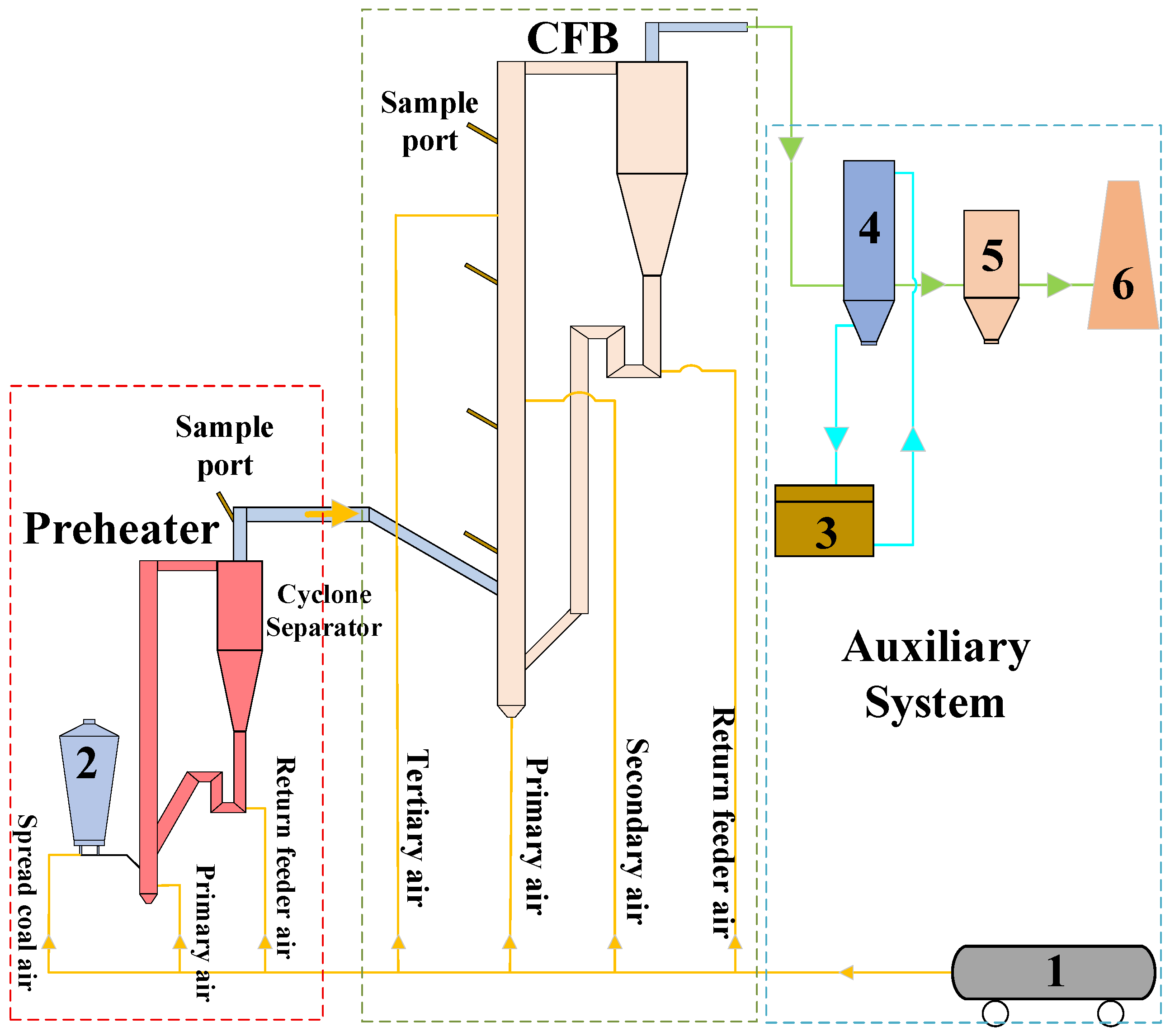
The experimental unit used in this study was a 30 kW circulating fluidized-bed (CFB) preheating combustion test rig. The overall structure is shown in Figure 1. The test system comprised three main components: the fluidized preheater, the main combustion chamber, and the auxiliary system. The auxiliary system includes the electric auxiliary heat system, the coal feeding system, the air distribution system, the flue gas cooling system, and the measurement and control system.
The preheating of the CFB is assisted by resistance wire heating. The furnace body is made of Cr25Ni20 and is externally insulated with asbestos-based material. The height of the preheater riser is 1600 mm, with an inner diameter of 81 mm. The preheating chamber is equipped with five temperature measurement points (K-type thermocouple, ±0.5%FS). Three temperature measurement points are arranged along the riser, located at heights of 200 mm, 500 mm, and 1450 mm from the bottom of the riser. One temperature measurement point is placed at the cyclone separator outlet, and another at the bottom of the return feeder. The total height of the CFB riser is 3000 mm, with an upper diameter of 108 mm and a lower diameter of 89 mm. The riser is equipped with four sampling ports, located at distances of 350 mm, 1050 mm, 1750 mm, and 2450 mm from the top of the riser. The return material inlet of the CFB is positioned 400 mm above the distributor plate, and the preheated fuel inlet is located 430 mm above the distributor plate. Three temperature measurement points are set along the riser, positioned at the lower, middle, and upper sections, with heights of 150 mm, 1480 mm, and 2630 mm, respectively. One temperature measurement point is installed at the return feeder riser, making a total of four temperature measurement points (K-type thermocouple, ±0.5%FS).
Pulverized coal was fed into the preheater, with fluidizing air introduced from the bottom of the unit to fluidize the material and assist combustion. Because the volume of air supplied to the preheater was significantly lower than the theoretical air requirement for complete fuel combustion, a pronounced reducing atmosphere was maintained within the preheater. Under these conditions, the pulverized coal underwent partial combustion and gasification. The heat generated by the exothermic reactions of the fuel maintained the preheater temperature within the range of 800–1000 °C. After preheating, the pulverized coal was converted into high-temperature preheated fuel, consisting of preheated char and preheated gas. This high-temperature preheated fuel was injected into the lower section of the CFB combustion chamber, where complete combustion was achieved through air staging. The primary air for the CFB was supplied from the bottom of this section, while the secondary and tertiary air were introduced at different heights along the riser. The tertiary air inlet is located above the secondary air inlet. The flue gas produced from the complete combustion of the high-temperature preheated fuel in the CFB passed through a flue gas cooler and was subsequently purified using a bag filter before being discharged into the atmosphere through the chimney.

2.2. Test Method

The bed material selected was quartz sand particles with a particle size range of 0.1–0.5 mm. It was introduced into the preheater and the CFB, with respective masses of 2.5 kg and 3.0 kg before the experiment. Simultaneously with the introduction of part of the air flow into both the preheater and CFB, the electric heating system was activated to raise the temperature of the riser. When the temperature in the riser of both the preheater and the CFB reached 600 °C, the coal feeders on both sides were started, and the coal feed rate was gradually increased to further elevate the temperature. As the average riser temperature in the preheater and CFB approached approximately 700 °C, the electric heating systems were switched off, while both the coal feed rate and air flow were subsequently increased. Thereafter, the coal feeder on the CFB side was shut down, and the coal feed rate to the preheater, along with the corresponding air flow in each section, was carefully adjusted to the specified design reference values [25]. Once the overall temperature of the experimental system stabilized, gas analysis and sample collection were carried out. Both solid and gaseous samples were collected from the outlet of the cyclone separator at the top of the preheater.
Proximate analysis was conducted using a TSX-4-14 muffle furnace (Beijing Sinite Technology Co., Ltd., Beijing, China), and ultimate analysis was performed with a vario MACRO cube elemental analyzer (Elementar Analysensysteme GmbH, Langenselbold, Germany). The TY-6030P gas analyzer (Wuhan Tianyu Intelligent Control Technology Co., Ltd., Wuhan, China) was used to measure the high-temperature flue gas at the outlet of the preheater riser, enabling the analysis of its gas composition. The concentrations of NH3 and HCN were determined using specific detection tubes (NH3, 105SB, 50–900 ppm; HCN, 112SB, 0.5–230 ppm) for each respective gas, while the oxygen content at the exhaust was continuously monitored using a zirconia oxygen analyzer. For both the raw coal and sampled coal char, the particle size distribution was measured using a Analysette 22 Nano Tec laser particle size analyzer (Ecom GmbH, Iserlohn, Germany). The surface morphology of the raw coal and preheated char under different operational conditions was observed and compared using scanning electron microscopy (SEM). The observations were conducted using a voltage of 15 kV and a magnification of 7000 times. The specific surface area, average pore diameter, and pore volume of the raw coal and preheated char were determined through nitrogen adsorption. The carbon microcrystalline structure of the samples was analyzed using Raman spectroscopy. Additionally, X-ray photoelectron spectroscopy (XPS) was employed to measure the relative content of functional groups on the surfaces of the samples.
To ensure the reliability and reproducibility of the experimental data, comprehensive control strategies were implemented to maintain the stability of the system throughout the entire testing period. Combustion stability was evaluated based on the oxygen concentration in the flue gas at the outlet, in combination with temperature and pressure measurements. Each operating condition was maintained under steady-state combustion for at least 1.5 h, during which multiple samples were collected. Each run included a valid measurement period of no less than 60 min, and the time-averaged value was taken as the representative result. Each condition was repeated at least twice, and the arithmetic mean of multiple runs was reported as the final experimental value. Considering the continuous variation in the parameters, smooth curves connecting the measurement points at different locations were constructed to represent the most probable evolution trends. This approach was applied to analyze the distributions of furnace temperature, fluidization behavior, and NO and CO concentrations, thereby providing a comprehensive characterization of the in-furnace combustion and heat transfer processes. The proximate and ultimate analyses were conducted in accordance with the national standard GB/T 212-2008 [26] and GB/T 31391-2015 [27], respectively, and the arithmetic mean of repeated measurements was used as the final value. The study primarily employs quantitative analysis and descriptive statistical methods. Data processing and visualization were performed using Excel and Origin 2024.

2.3. Characteristics of Test Raw Materials

The raw material for the experiment is Yihua coal from the Xinjiang Zhundong area. The proximate and ultimate analyses of the coal are presented in Table 1, while the composition analysis of the coal ash is shown in Table 2. The mass fractions of Na2O and K2O in the coal ash are 3.56% and 1.14%, respectively, indicating that the coal exhibits typical high-alkali characteristics. The particle size range of the pulverized coal used in the experiment is 0–0.355 mm. The particle sizes at cumulative volume fractions of 10%, 50%, and 90% were 9.1 μm, 101.4 μm, and 316.0 μm, respectively.

2.4. Test Conditions

During the experiments, parameters such as the coal feed rate, air equivalence ratio in the reduction zone, and the secondary and tertiary air equivalence ratios, as well as the overall excess air coefficient, were kept constant. Only the preheated air equivalence ratio was varied to isolate its effect. The specific experimental conditions are listed in Table 3. To ensure data reliability, each experimental condition was maintained for at least 1.5 h under steady-state combustion.
Here, λPr, λCFB, λRe, λSe, λTh, and λ denote the preheater air equivalence ratio, the CFB primary air equivalence ratio, the reduction zone equivalence ratio, the secondary air equivalence ratio, the tertiary air equivalence ratio, and the excess air factor, respectively. These parameters are defined as follows:
λ P r = A P r / A S t o i c ,
A P r = A P r , C o a l + A P r , D o + A P r , m a t ,
λ C F B = A C F B / A S t o i c ,
A C F B = A C F B , C o a l + A C F B , D o + A C F B , m a t ,
λ R e = ( A P r + A C F B ) / A S t o i c ,
λ S e = A S e / A S t o i c ,
λ T h = A T h / A S t o i c ,
λ = λ P r + λ C B + λ S e + λ T h ,
where APr, APr,Coal, APr,Do and APr,mat are the volume flow rates of fluidizing air, coal spreading air, bottom air and return air of the preheater, respectively, m3/h; AStoic is the theoretical volume of air required for complete combustion of pulverized coal, m3/h; and ACFB, ACFB,Coal, ACFB,Do, ACFB,mat, ASe and ATh are the volume flow rates of CFB primary air, coal sowing air, bottom air, return air, secondary air and tertiary air, respectively, m3/h.

3. Experimental Results and Analysis

3.1. Influence of Preheated Air Equivalent Ratio on Temperature

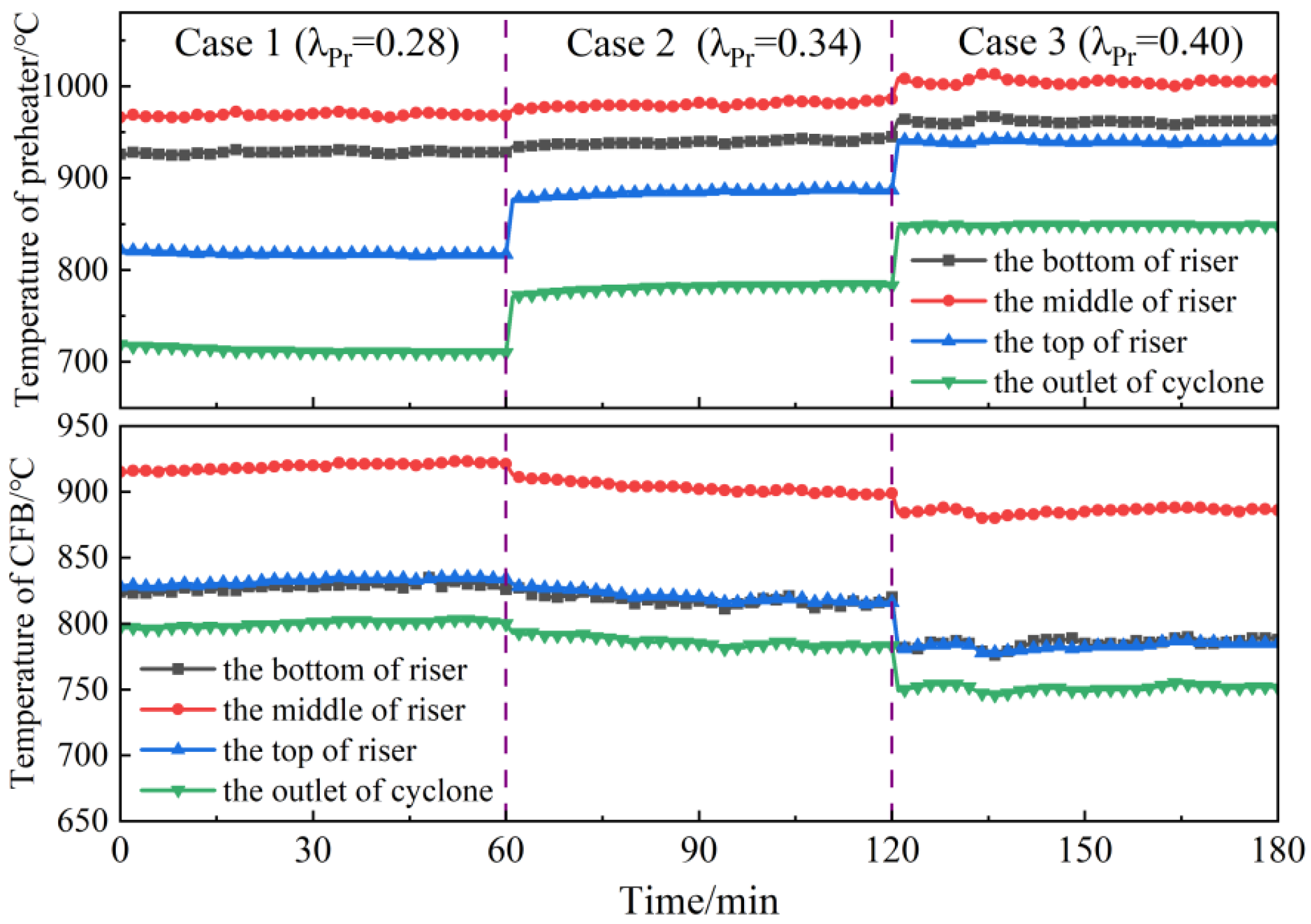
The temperature variations in the preheater and CFB are shown in Figure 2. As λPr increases, the temperature measured at the same position inside the preheater gradually rises. This behavior can be attributed to the fact that the air equivalence ratio in the preheater is significantly less than 1, indicating that the amount of air supplied is insufficient for complete combustion of the fuel. As a result, only partial combustion and gasification of the fuel occur in the preheater. With an increase in λPr, the air supply also increases, enhancing the fuel oxidation and gasification reactions in the preheater. This leads to a higher heat release, which in turn causes the temperature at the corresponding location to rise gradually.
Additionally, as shown in Figure 2, the vertical axial temperature distribution of the riser exhibits a distinct trend with increasing λPr. The temperatures at the furnace inlet and outlet are relatively low, with the high-temperature region concentrated in the middle of the riser, forming a characteristic “C”-shaped temperature field, where the center is hot, and the sides are cooler. The temperature difference between the highest and lowest temperatures in the riser gradually decreases. Specifically, the temperature difference reduces from 150 °C at λPr = 0.28 to 65 °C at λPr = 0.40. This behavior can be attributed to the increase in the fluidizing air volume of the preheater from 6.42 m3/h to 9.12 m3/h as λPr increases from 0.28 to 0.40, while the apparent air velocity in the preheater riser increases from 1.15 m/s to 1.70 m/s. This increase in air volume and velocity enhances the circulation rate of the material in the preheater, thus reducing the temperature gradient.
As shown in Figure 2, λPr increased from 0.28 to 0.40 during the process, while the CFB temperature gradually decreased. The temperature difference inside the riser remained within 100 °C, with the average temperature ranging from 817 °C to 860 °C. Under the same load and coal feed rate, the primary air volume decreased from 11.88 m3/h to 9.12 m3/h. As λPr increased, λCFB decreased from 0.52 to 0.40, and the primary air volume further dropped from 11.88 m3/h to 9.12 m3/h. With the same coal feed, the degree of pyrolysis reaction in the preheating process increases as a result of the higher air supply to the preheater, leading to a greater heat release. Consequently, the latent heat carried by the preheated coal char exiting the preheater cyclone separator decreases, and the calorific value of the gas is reduced. Therefore, the overall temperature decreases during the subsequent combustion of the preheated char in the CFB as λPr increases. This phenomenon is consistent with the findings of Zhang et al. [23], where an increase in the air equivalence ratio resulted in higher preheater temperatures and lower CFB temperatures. Additionally, it enhanced solid circulation and heat transfer efficiency, leading to a more uniform axial temperature distribution within the riser.

3.2. Chemical Characteristics of Preheated Char

The properties of the preheated fuels, namely preheated char and gas, are primarily governed by the intensity of the gasification and combustion reactions governing the preheater [25]. This study subsequently analyzes and discusses the influence of λPr on these fuel characteristics under low oxygen partial pressure conditions.

3.2.1. Conversion Rate of Fuel Composition

The comparison of proximate analysis results for raw coal and preheated char, as presented in Table 4, indicates that the volatile matter content decreases by approximately 59% after preheating, suggesting that a significant portion of the volatile matter is removed during the preheating process.
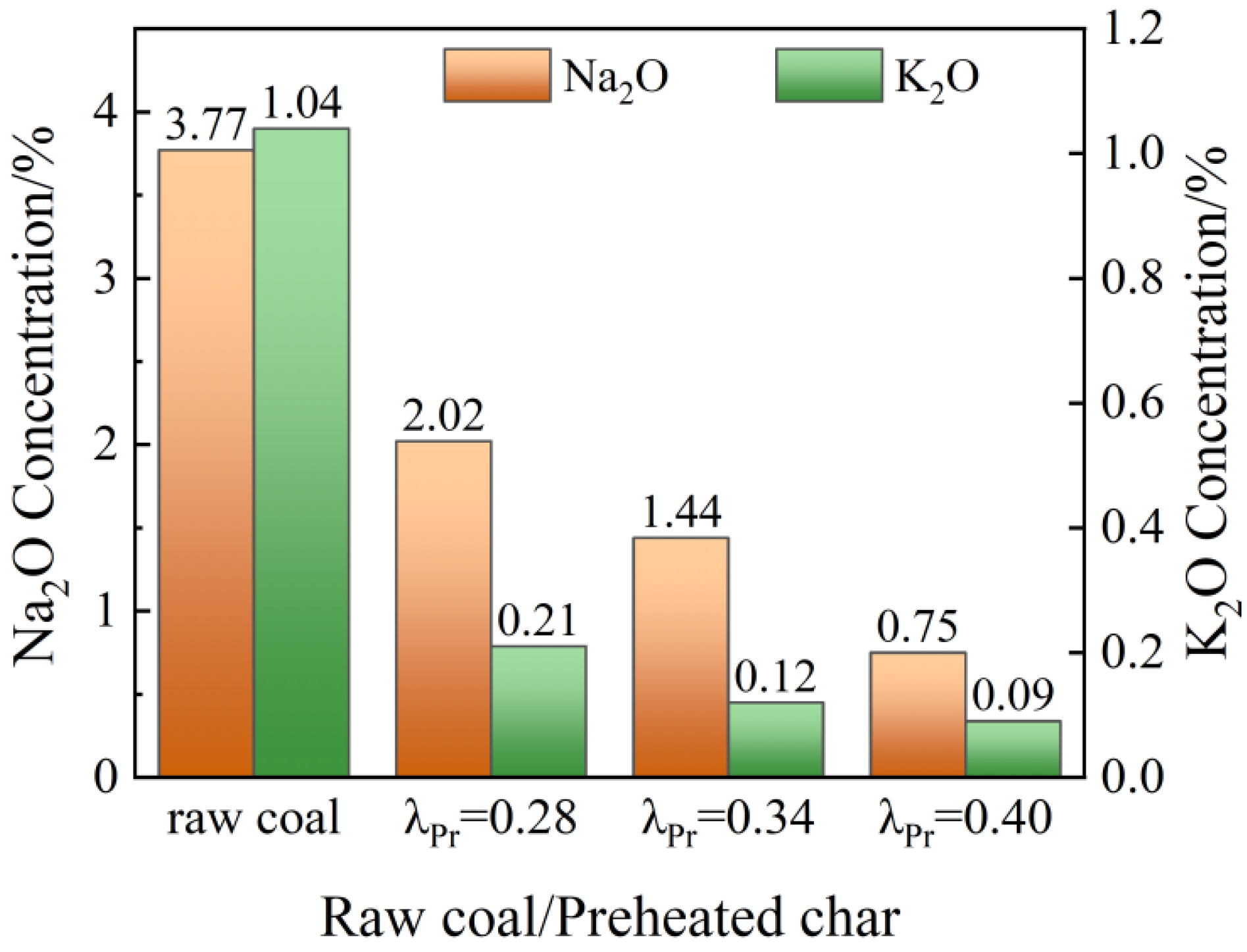
Figure 3 illustrates the changes in the absolute content of alkali metals in both raw coal and preheated char. Alkali metals in the raw coal primarily exist in the form of water-soluble or free inorganic salts, such as Na2O, K2O, and NaCl, which are highly reactive and potentially harmful during combustion. During the preheating process, a portion of the alkali metals volatilizes directly or is released as gaseous products through chemical reactions. Another portion reacts with the major mineral components in the coal ash, such as SiO2 and Al2O3, to form stable aluminosilicate minerals that immobilize alkali metals in the solid phase [28]. A significant amount of volatile matter is released from the raw coal and consumed as fuel, resulting in a significant increase in the relative proportion of mineral matter in the remaining solid phase (preheated char). Consequently, the measured ash content increases compared to that of the raw coal. Although some alkali metals remain in the solid phase, a higher proportion volatilizes into the gas phase, leading to a reduction in alkali metal oxides in the preheated char. A comparative analysis of the data in Figure 3 reveals that the content of Na2O in preheated coal char decreased significantly, and the Na2O content gradually decreased with increasing λPr. This suggests that the preheating process promotes the release and stabilization of alkali metal oxides, such as Na2O and K2O. Higher λPr values lead to a greater degree of Na2O release and stabilization. This behavior is consistent with previous studies on high-alkali coal preheating and gasification, which reported that alkali metals tend to volatilize into the gas phase while the remaining fraction is stabilized through reactions with aluminosilicate minerals in the solid phase [23,29].
Based on the ash balance during the preheating process, assuming that ash does not participate in chemical reactions, the conversion rate Rp of fuel to preheated char can be calculated using Equation (9), while the conversion rate PX of the component X in the raw coal during the preheating process can be determined using Equation (10).
R p = A 1 / A 2 ,
P X = 1 ( A 1 · X 2 ) / ( A 2 · X 1 ) ,
where A1 and A2 represent the ash content in raw coal and preheated char, respectively, while X1 and X2 represent the content of component X in raw coal and preheated char, respectively.
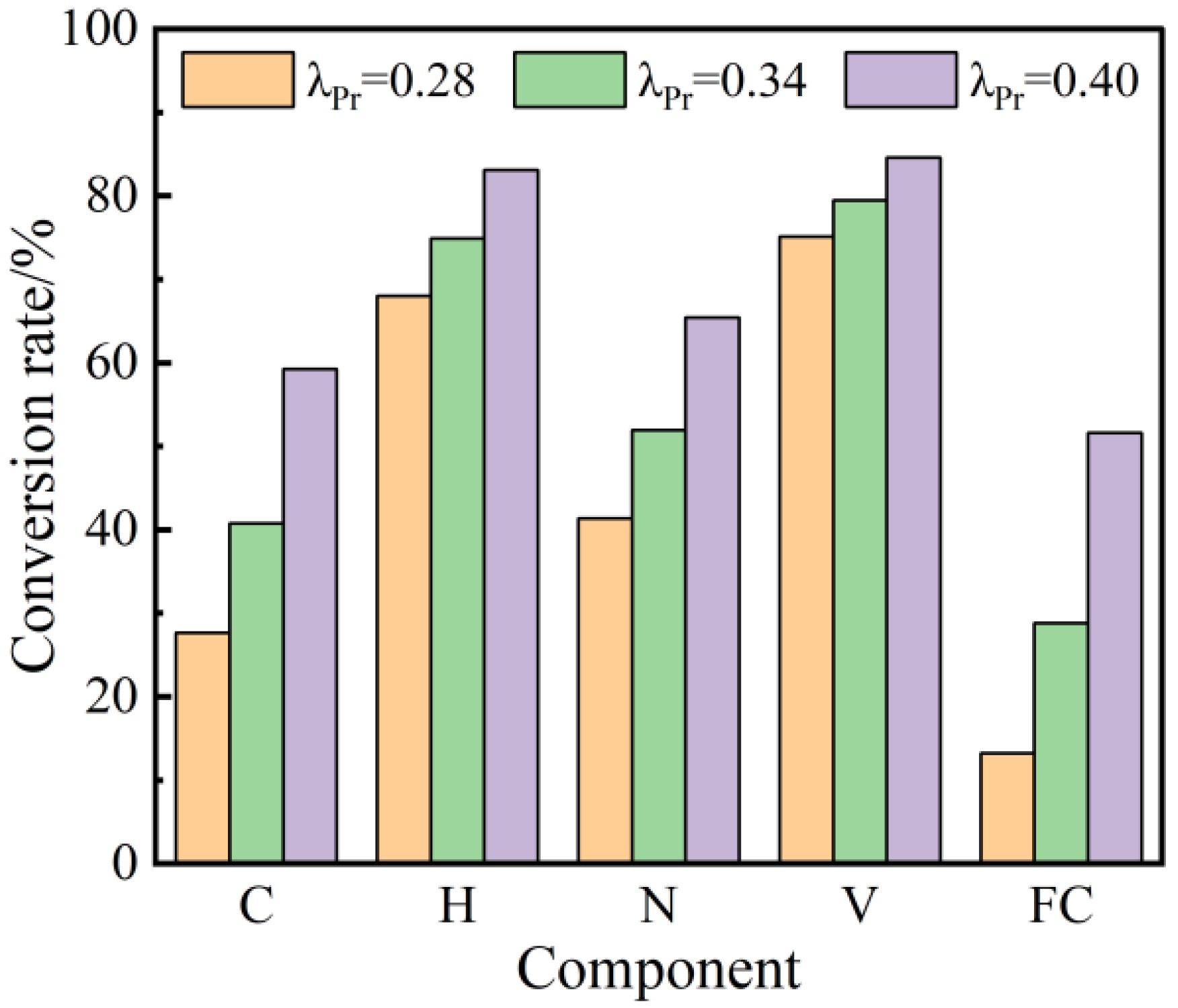
According to the calculations based on Equation (9), approximately 36% to 61% of the raw coal is converted into preheated char. Figure 4 presents the conversion rates of each substance from raw coal to preheated char during the preheating process. The results indicate that the conversion rate of volatile matter (VM) under the three working conditions can reach up to 84.57%, while the conversion rates of elemental nitrogen (N) and carbon (C) can reach 65.45% and 59.28%, respectively. As λPr increases, the conversion ratio from raw coal to preheated char decreases, while the conversion rates of the major elements increase. This indicates that higher λPr promotes the generation of preheated gas and facilitates the release of elements. This phenomenon is consistent with the results obtained by Zhang et al. [23].

3.2.2. Microphysical Structure of Preheated Char

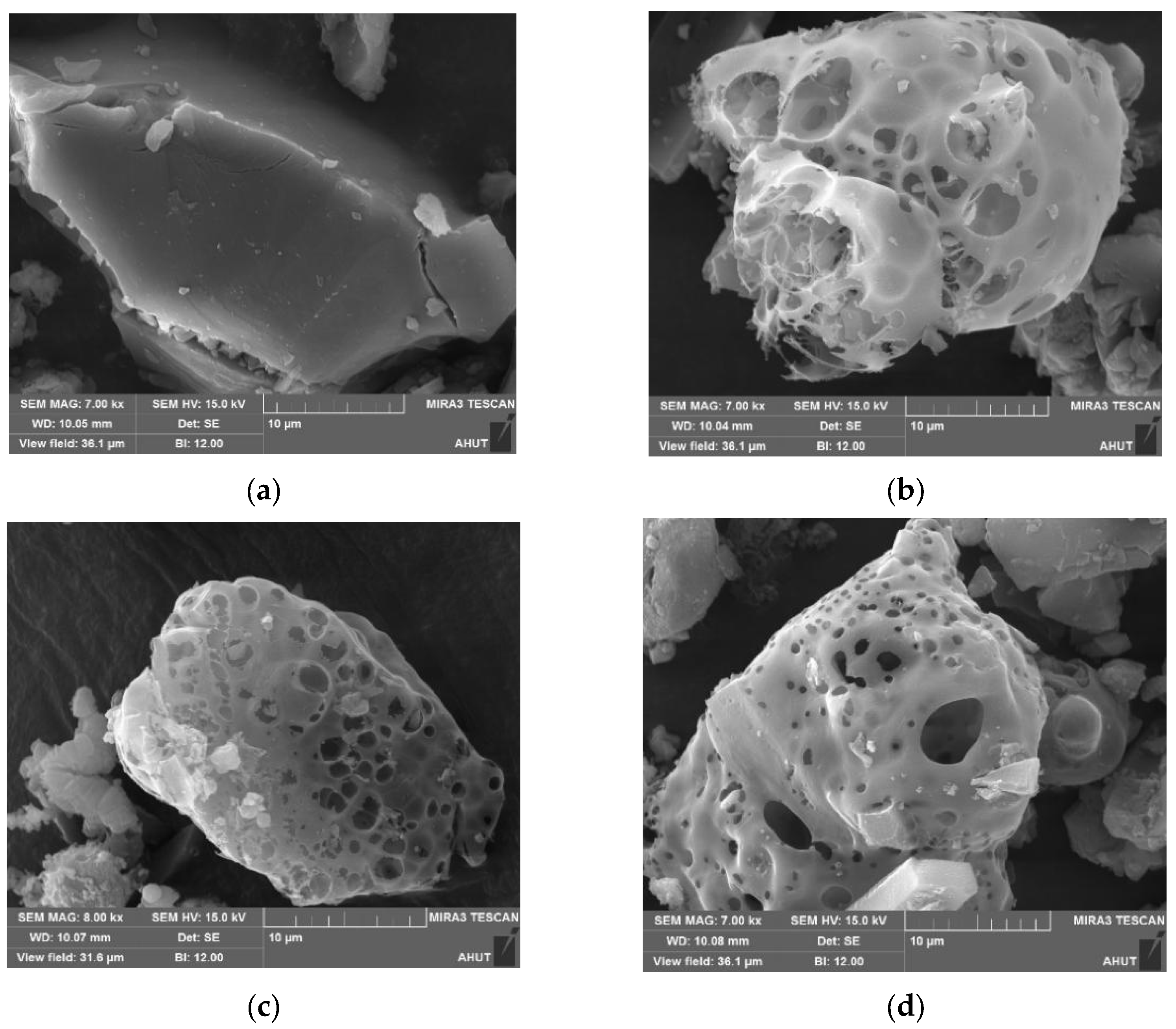
The surface morphology of the raw coal and preheated char under three different operating conditions is presented in Figure 5. The raw coal particles (Figure 5a) exhibit a relatively dense and lumpy structure with smooth surfaces but lack distinct pore structures. During the fluidized-bed preheating process, large particles gradually fractured due to strong thermal stresses. Additionally, the internal structure of the particles collapsed as a result of devolatilization and chemical reactions [28]. Consequently, the apparent morphology of the preheated char (Figure 5b–d) exhibited significant changes, including the formation of large pores on the particle surfaces and a more developed pore structure. The preheated char particles were less angular, becoming rounder and smoother compared to the raw coal.
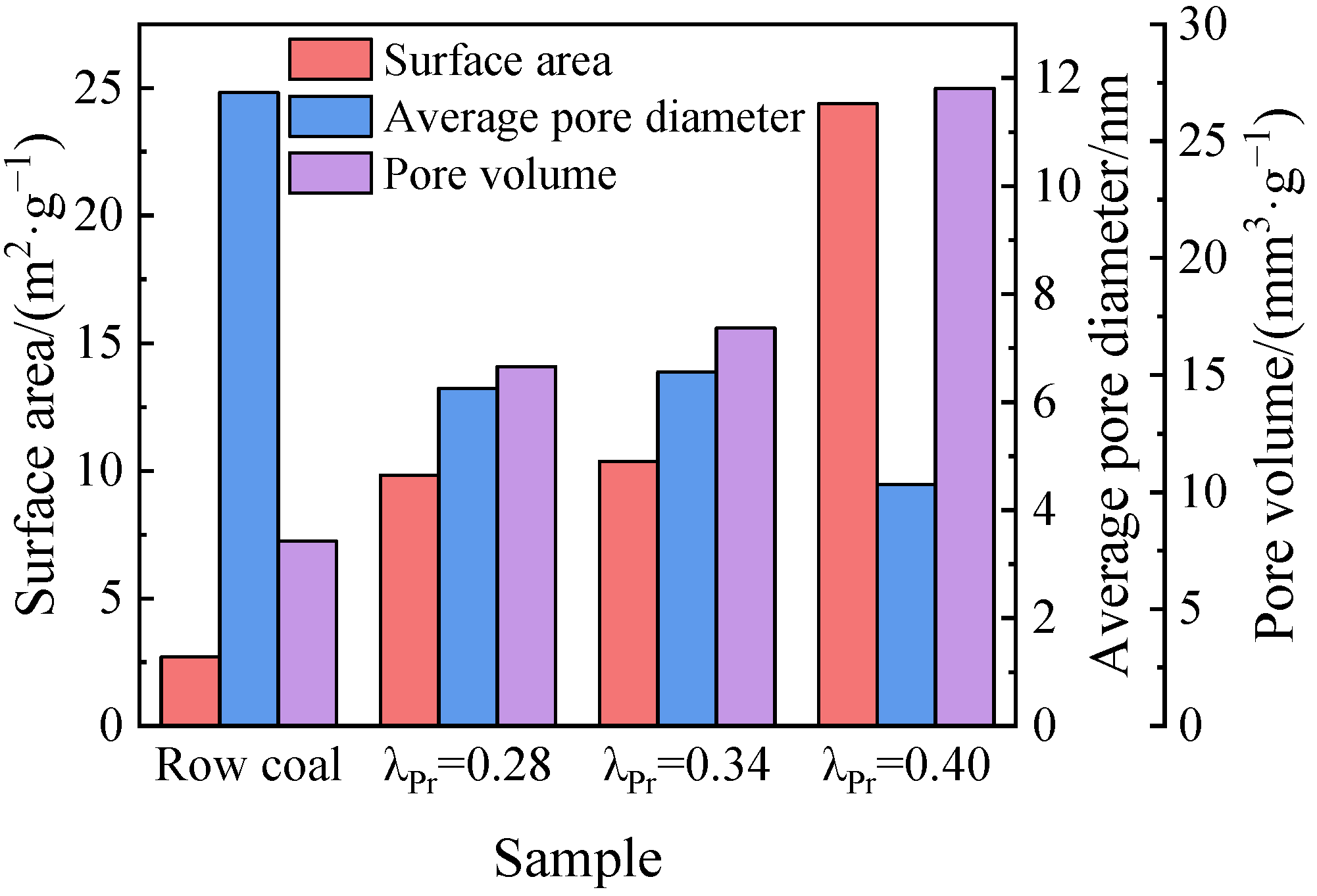
To accurately investigate the modification of the fuel’s pore structure by the preheating process, the specific surface area, average pore diameter, and pore volume of both raw coal and preheated char were measured and analyzed using nitrogen adsorption. The results of the measurements are presented in Figure 6.
As shown in Figure 6, preheating leads to a pronounced development of the pore structure in the coal char. Specifically, the specific surface area of the preheated char increases by approximately 3.6–9.1 times compared with that of the raw coal, while the pore volume increases by 1.9–3.5 times. Meanwhile, the average pore diameter decreases to 38–56% of its original value. During the preheating process, partial combustion and gasification of the pulverized coal occur due to the action of oxidants in the preheater. The volatile components in the fuel undergo devolatilization and are partially released, forming pores both inside the particles and on their surfaces. This is consistent with the SEM observations, which indicate the formation of surface pores and a more developed porous structure in the preheated char. The early release of volatile matter helps reduce NOx emissions from the subsequent preheated fuels during staged air combustion in the CFB. In addition, the more developed pore structure increases the contact area between the fuel particles and O2, enhancing the mass transfer efficiency between the gas and solid phases, which further promotes complete combustion. As the air volume in the preheating burner increases, the intensity of the gasification reaction rises, leading to a gradual increase in the combustion chamber temperature. This results in an increase in the pore volume of the preheated char, showing an upward trend in the fuel’s surface area. These results indicate that the increase in λPr promotes the formation of a more developed pore structure.
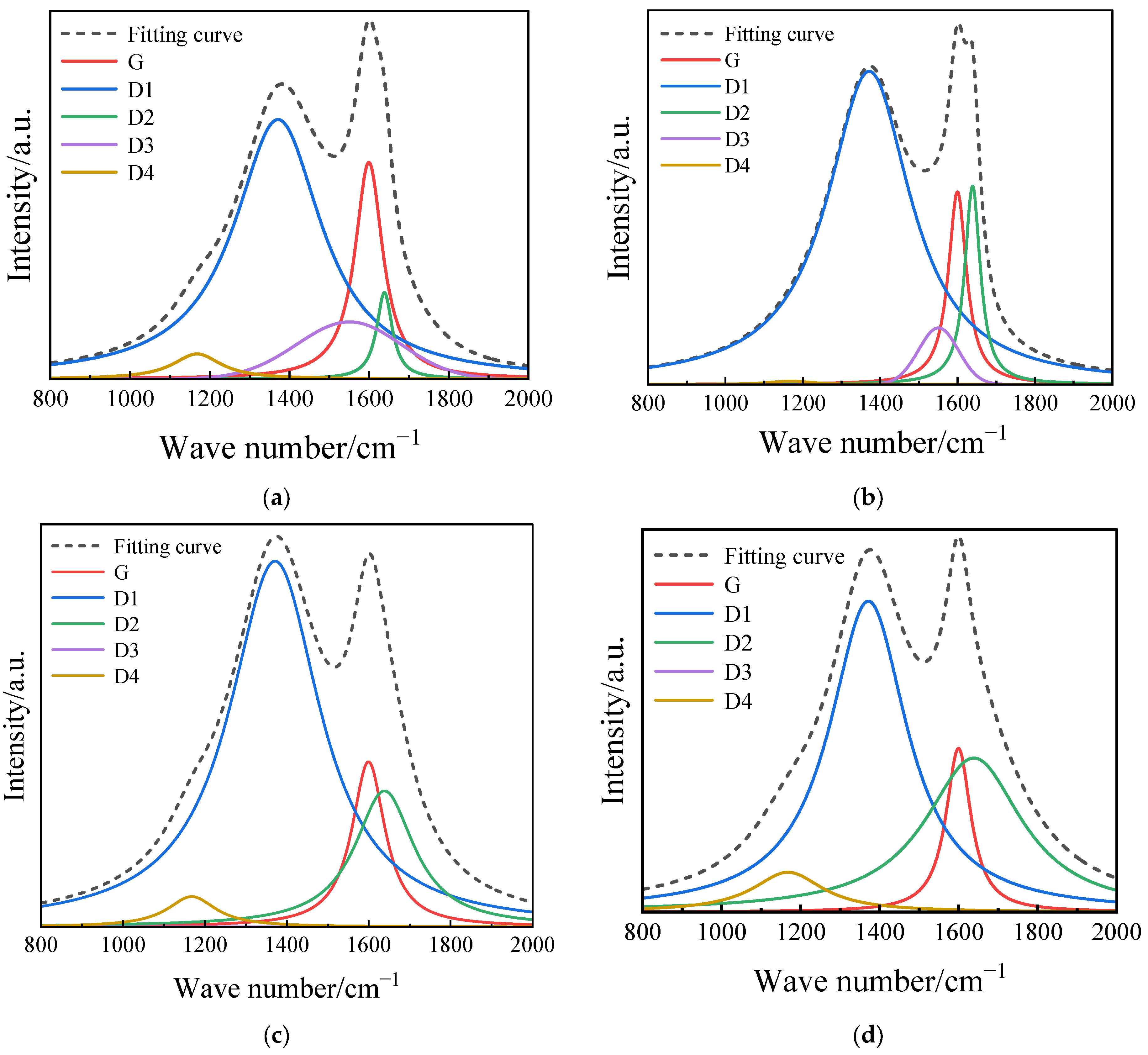
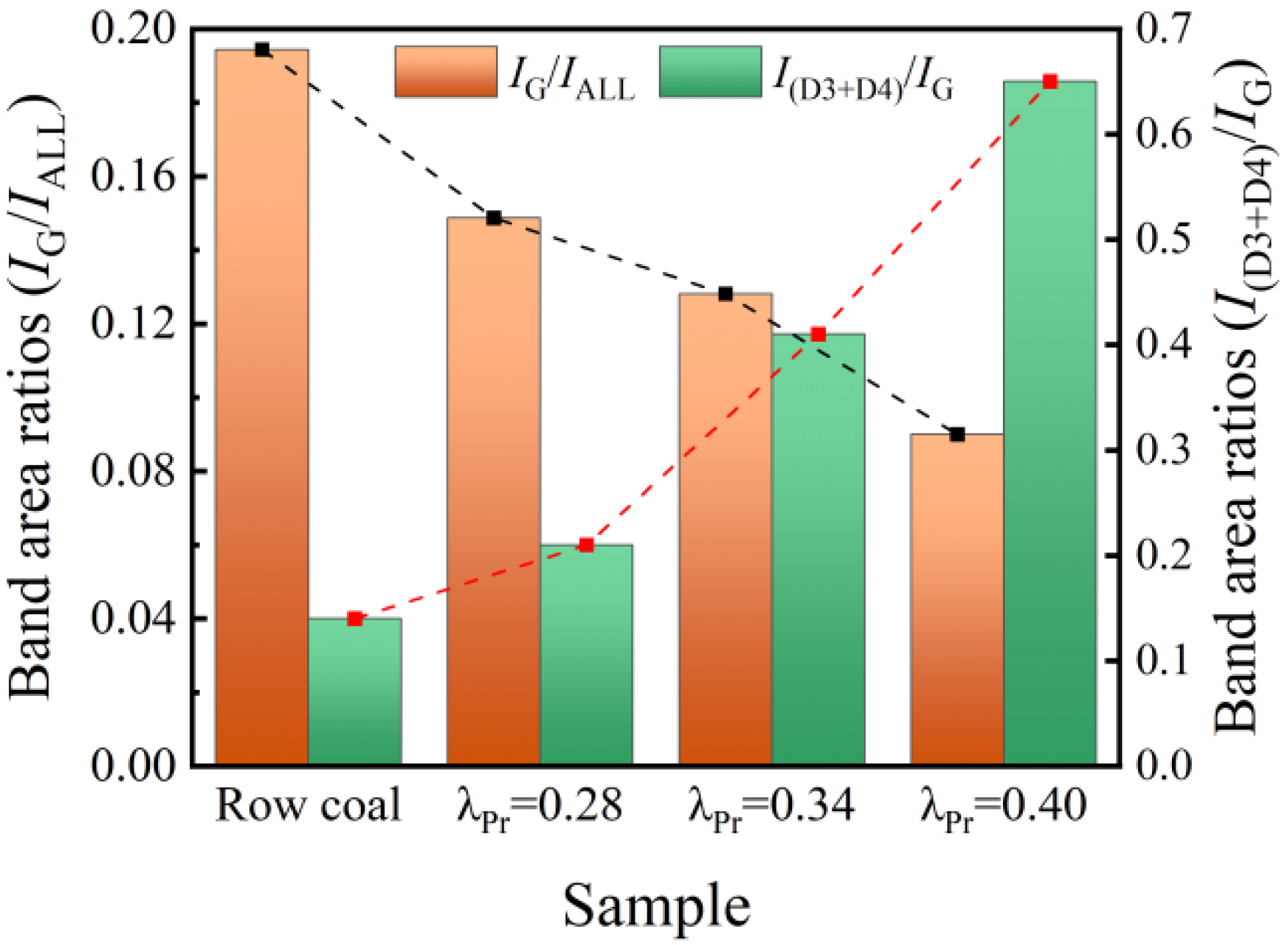
Figure 7 shows the Raman spectra of raw coal and preheated char under three different conditions. After preheating, elements in the fuel are partially released from the interior of the particles, and the carbon framework structure and elemental functional groups undergo changes. The stability of the carbon framework structure and the reactivity of the active sites before and after preheating were analyzed using Raman spectroscopy. The results are presented in Figure 8. The Raman spectra of carbon-containing substances include five peaks: G, D1, D2, D3, and D4, with corresponding wavelength positions at 1580, 1350, 1620, 1530, and 1150 cm−1, respectively [30,31]. The significance of the different peak area ratios varies. The ratio of the G peak area to the sum of all peak areas (IG/IALL) reflects the degree of graphitization of the sample, which characterizes the completeness of the sample’s structure. The ratio of the sum of the D3 and D4 peak areas to the G peak area (I(D3+D4)/IG) indicates the proportion of activated sites in the carbon framework [32,33]. A higher IG/IALL ratio signifies a higher degree of graphitization, while a higher I(D3+D4)/IG ratio indicates a greater proportion of activated sites.
Owing to the high chemical reactivity of raw coal, the graphitization degree of the fuel decreases, and the number of active reaction sites increases after preheating. As λPr increases, the ratio of IG/IALL gradually decreases, while the ratio of I(D3+D4)/IG gradually increases, as illustrated in Figure 8. This indicates that increasing the air volume in the preheater enhances the pyrolysis and gasification reactions of pulverized coal particles, leading to the breaking of macromolecular carbon chains and the production of small-molecular volatiles. Consequently, the graphitization degree of the fuel decreases while its reactivity increases. This behavior is consistent with the increase in specific surface area observed in the Brunauer–Emmett–Teller analysis.
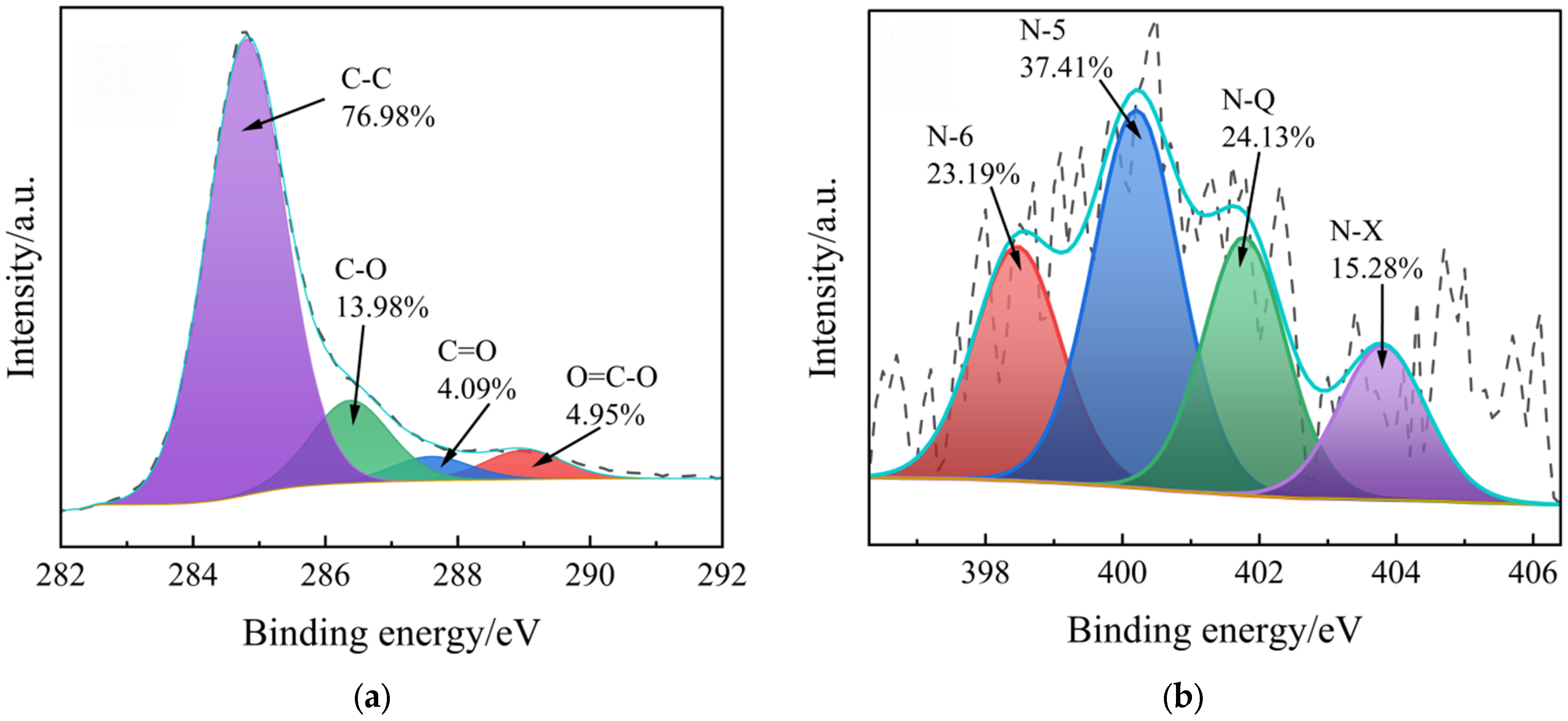
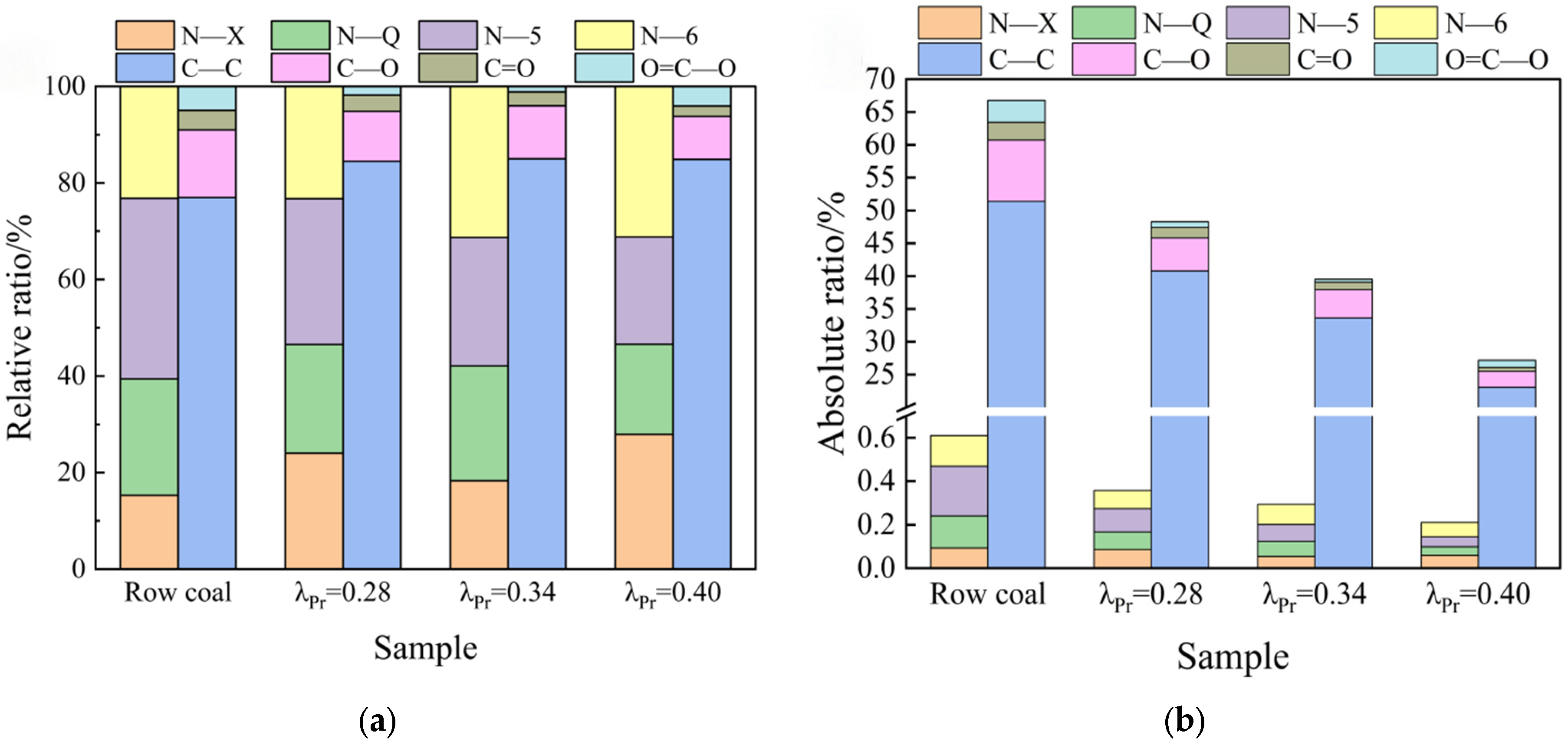
The surface of the fuel contains various carbon- and nitrogen-containing functional groups. The types and quantities of these functional groups reflect the microstructural evolution and chemical transformation of the coal char. X-ray photoelectron spectroscopy (XPS) can effectively determine the relative content of various functional groups on the sample’s surface, which can be correlated with the type and proportion of the corresponding internal functional groups [34]. The corresponding chemical formulas and binding energies of these functional groups in the coal are shown in Table 5 [35,36,37]. Figure 9a,b presents the spectral peaks of C- and N-containing functional groups in raw coal. Figure 10 shows the relative and absolute contents of C- and N-containing functional groups in both raw coal and preheated coal char. The binding energy was referenced to C1s at 285 eV to eliminate the effects of charge displacement [38,39].
The functional group analysis reveals that, in raw coal, the C-containing functional groups are predominantly hydrocarbon groups, while the N-containing functional groups are mainly pyrrole nitrogen. After preheating, the relative proportion of alkanes in the coal char increases, while the relative proportions of phenolic or ether carbon, carbonyl groups, and carboxyl groups decrease. This suggests that the C–O bonding network within the fuel is partially disrupted during preheating, leading to the cleavage of C–O bonds and the subsequent reorganization of carbon structures. Figure 10 shows that as λPr increases, the proportion of hydrocarbons, phenolic or ether carbon, and carbonyl groups decreases, while the proportion of carboxyl groups increases. This suggests that higher λPr promotes the breakdown and reorganization of C-O single and double bonds.
Compared to raw coal, the proportions of N-6 and N-X increase, while the proportion of N-5 in preheated char decreases. N-Q remains relatively stable, and its proportion does not change significantly before or after preheating. This indicates that the release or transformation of N-Q during the preheating process is negligible under the investigated conditions. From a kinetic perspective, the activation energy required for the pyrolysis of N-5 is lower than that for N-6, indicating that N-5 is less stable and more reactive. As λPr increases, the ratio of N-5 to N-6 exhibits an opposite trend. This behavior suggests that higher λPr promotes the conversion of N-5 into N-6. The cracking and transformation of nitrogenous functional groups during preheating are accompanied by the release of nitrogenous volatiles such as NH3 and HCN, which form precursors for NOX. Similar transformation behaviors of nitrogen functional groups during coal preheating have been reported by Liu et al. [24], who observed the conversion of N-5 to N-6 under CFB preheating conditions, supporting the trends observed in the present study.

3.2.3. Preheating Gas

Along with the modification of the solid fuel during the preheating process, a fraction of preheated gases is also generated due to the release of elements. The combustion of this gas in the subsequent CFB influences the combustion atmosphere and pollutant emissions within the furnace. In this experimental study, the proportion of raw coal converted into preheating gas after preheating ranges from approximately 39% to 64%. The calculation formula for the conversion ratio is as follows:
R = 1 R p   ,
where R is the proportion of raw coal converted into preheated gas, %, and Rp is the proportion of raw coal converted into preheated char, %.
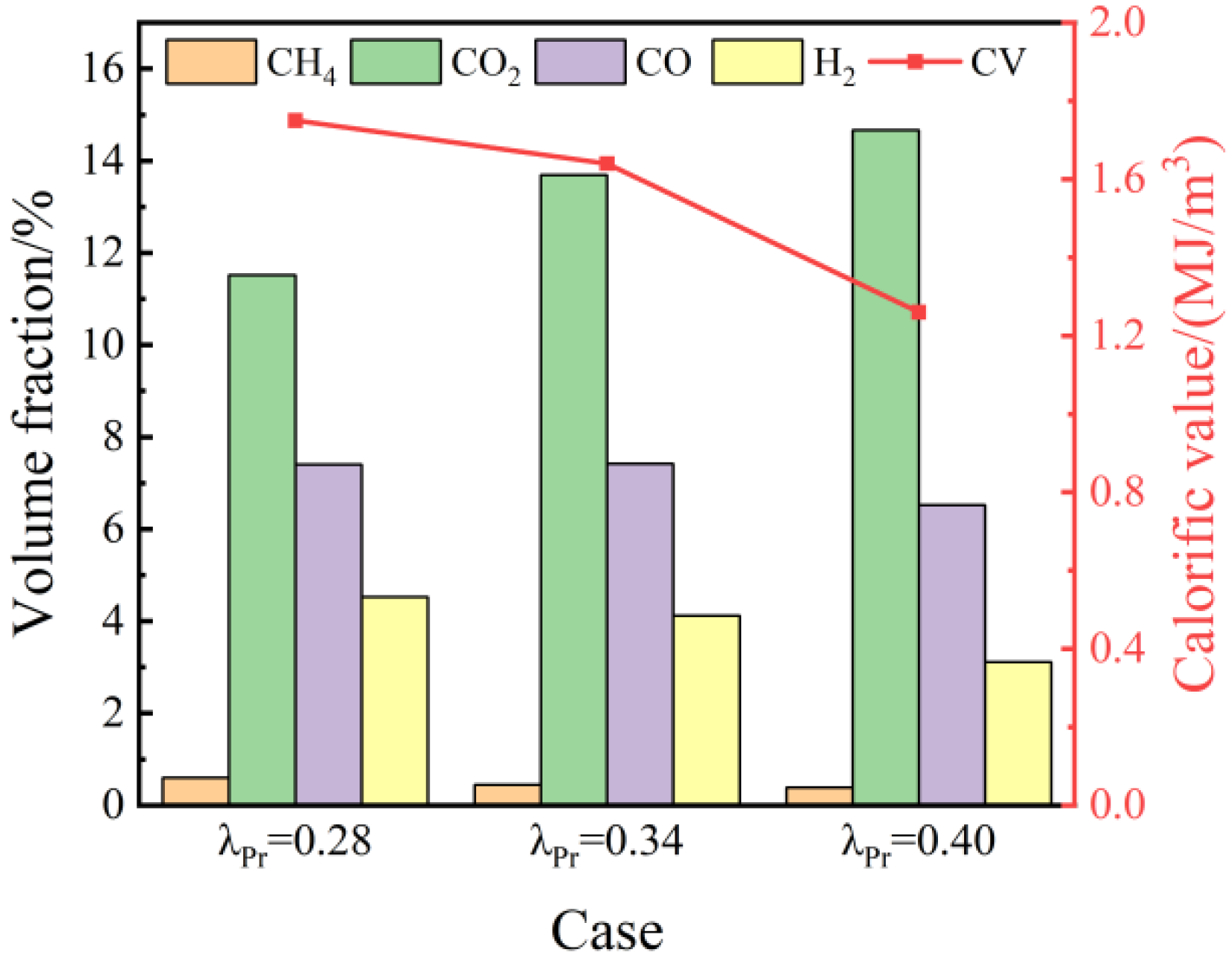
The variations in the composition of the preheated gas and its heating value with λPr are shown in Figure 11. As λPr increases from 0.28 to 0.40, the volumetric fraction of CO2 in the gas increases, while the volumetric fractions of CO, H2, and CH4, as well as the calorific value (CV) of the gas, gradually decrease.
When the coal feed rate remains constant, an increase in λPr leads to a higher volume of air supplied to the preheater, which in turn raises the oxygen/coal ratio in the furnace. This enhances the exothermic reactions of the fuel and the oxidation of CO in the gas, resulting in a decrease in the volumetric fraction of CO and an increase in the volume fraction of CO2. The fuel in the preheating burner is in an oxygen-deficient environment, where only partial pyrolysis and gasification reactions occur. The volatiles in the pulverized coal undergo rapid cracking, producing gas products such as H2, CO, and CH4.
On one hand, as λPr increases, the volume of fluidized air in the preheater rises from 6.42 m3/h to 9.12 m3/h, and the fluidized air velocity in the riser increases from 1.15 m/s to 1.70 m/s. Consequently, the residence time of the fuel in the furnace decreases from 1.39 s to 0.94 s, inhibiting the pyrolysis reactions of the pulverized coal, which leads to a reduction in the production of CO, H2, and CH4. On the other hand, part of the H2 and CH4 produced by pyrolysis reacts with the increased oxygen in the furnace, causing the volume fraction of H2 to decrease from 4.53% to 3.11%, and the volume fraction of CH4 to decrease from 0.60% to 0.39%.
As λPr increases, the production of reducing gases (CO, H2, CH4) in the preheating burner decreases, but their total volume remains above 10%, maintaining a reducing atmosphere in the preheater. This helps inhibit the formation of NOx. Meanwhile, the calorific value of the gas decreases from 1.75 MJ/m3 to 1.26 MJ/m3, and the overall quality of the gas significantly decreases. Similar trends in the evolution of preheated gas composition with increasing air equivalence ratio have been reported in previous studies on fluidized-bed preheating, where higher air supply promoted CO oxidation and reduced the concentrations of reducing gas species [23,24].
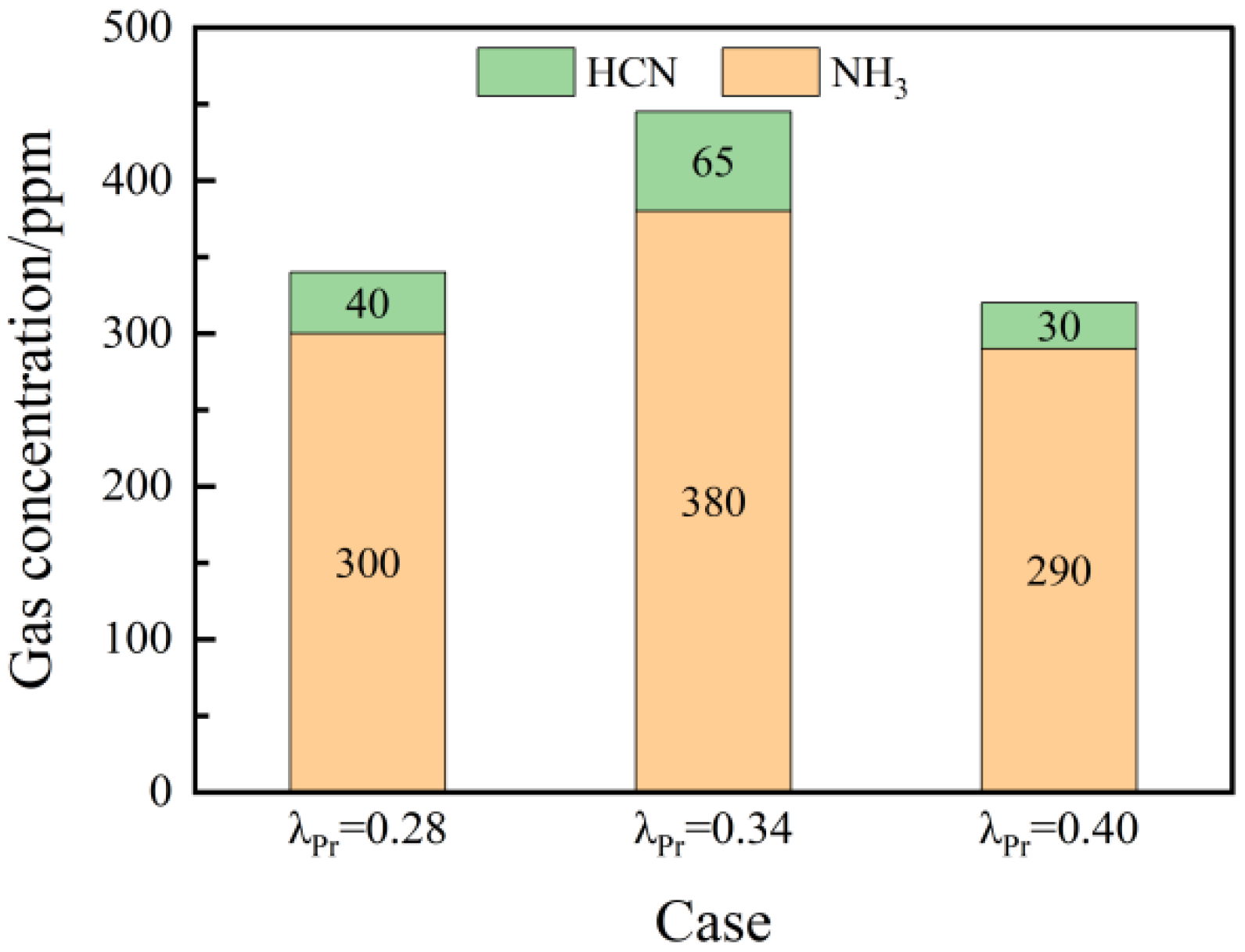
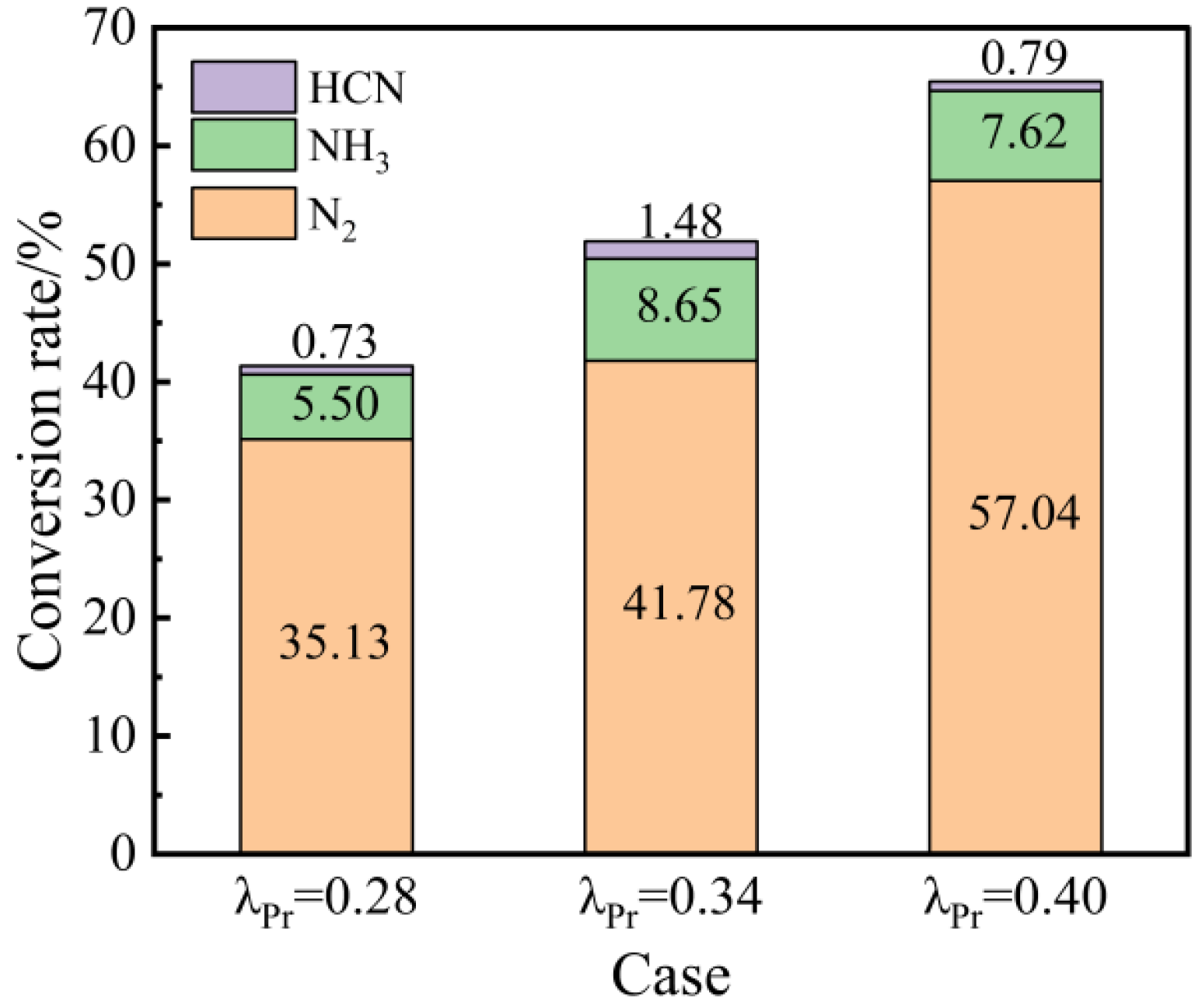
Figure 12 illustrates the concentration of NH3 and HCN in the preheating gas as a function of λPr, and Figure 13 illustrates the conversion of fuel-N to N2, NH4, and HCN during preheating. The corresponding conversion rate is calculated as follows:
α N g a s = P N g a s   ,
α N N H 3 = Y g a s × C N H 3 × 14 100 × N a d × 17 ,
α N H C N = Y g a s × C H C N × 14 100 × N a d × 27 ,
α N N 2 = α N g a s α N N H 3 α N H C N   ,
Y g a s = 79 × V p a N g a s × F c o a l ,
where α N g a s ,   α N N H 3 ,   α N H C N and α N N 2 represent the conversion rates of fuel-N to preheated gas N, NH3, HCN, and N2, respectively, %. Ygas represents the production rate of preheated gas, %. C N H 3 represents the concentrations of NH3 in the preheated gas, mg/m3. C H C N represents the concentrations of HCN in the preheated gas, mg/m3. Nad represents the nitrogen content in raw coal, and Ngas represents the N2 content in preheated gas, %. Vpa represents the amount of air introduced into the preheater, m3/h. Fcoal represents the coal feeding rate, kg/h.
The partial pyrolysis and gasification reactions of the fuel during the preheating process occur in a highly reducing atmosphere, which helps prevent the conversion of fuel-N to NOx [40]. Most of the fuel-N is reduced to N2, while the remainder is converted into nitrogen-containing gases, primarily NH3 and HCN, which are important precursors of NOx. As shown in Figure 12, as λPr increases from 0.28 to 0.40, the contents of NH3 and HCN initially rise and then decrease, with the highest concentration occurring at λPr = 0.34. As shown in the comparison in Figure 13, with the increase in λPr, the rate of fuel-N conversion to N2 is significantly higher than the conversion to NH3 and HCN. These results indicate that increasing λPr promotes the direct conversion of fuel-N to N2 during the preheating process, facilitating the early removal of fuel-N. Additionally, this phenomenon also inhibits the accumulation of nitrogenous pollutants like NH3 and HCN, thereby enhancing the combustion environment.

4. Future Outlook

Although this study provides insights into the preheating behavior of high-alkali coal, several aspects remain to be further explored.
  • The present study investigates only a single type of high-alkali coal. However, due to potential differences in the mineral composition and alkaline earth metal content in high-alkali coals from different mines in the Xinjiang Junggar region, future studies could explore a variety of high-alkali coal fuels. The influence of different alkaline earth metal contents on preheated combustion and the migration and transformation of elements could be further investigated. Additionally, experiments on preheated combustion of high-alkali coal mixed with biomass, ammonia, or hydrogen—zero-carbon fuels—could also be explored.
  • This study focuses on experimental research on Yihua coal fuel with a single particle size of 0.355 mm in an air atmosphere, under fixed medium-high loads and excess air coefficient conditions. Future work could investigate the preheating characteristics of high-alkali coal and the alkali metal release characteristics under varying fuel particle sizes, oxygen-rich or steam atmospheres, different excess air coefficients, and low-load conditions.

5. Conclusions

This study provides a comprehensive analysis of fuel modification by fluidized pre-heating for high-alkali coal, and the main conclusions are as follows:
  • As λPr increases from 0.28 to 0.40, the increased air supply to the preheater enhances fuel oxidation and gasification reactions, raising the average temperature in the preheater riser from 904 °C to 968 °C. Concurrently, the heating value of the preheating gas decreases, and the reduction atmosphere becomes less pronounced. During this process, the conversion rate of fuel-N to N2 increases to 57.04%, facilitating the early removal of fuel-N.
  • The preheating process promotes Na2O precipitation, with the amount of precipitation positively correlated with λPr. As λPr increases, the conversion rates of key elements also rise, with the highest conversion rates for VM, elemental N, and C reaching 84.57%, 65.45%, and 59.28%, respectively. This demonstrates that increasing λPr enhances the generation of preheated gas and the release of elements, particularly alkali metals.
  • At the microscopic level, the preheating process significantly enhances the fuel’s pore structure. The specific surface area of preheated coal char increases by 3.6 to 9.1 times, and the pore volume increases by 1.9 to 3.5 times. This improves the contact area with oxygen in further combustion. As λPr increases, the degree of graphitization of the fuel decreases, enhancing its reactivity. Additionally, the increase in λPr promotes the conversion of N-5 to N-6, improving combustion performance and facilitating subsequent nitrogen removal.

Author Contributions

Conceptualization, S.J. and J.Z.; methodology, S.J.; formal analysis, S.J.; investigation, S.J. and Y.H.; data curation, S.J.; writing—original draft preparation, S.J.; writing—review and editing, J.Z. and M.M.; supervision, J.Z., M.M., J.L. and Q.L. All authors have read and agreed to the published version of the manuscript.

Funding

This research was funded by the National Key Research and Development Program of China (2024YFB4106101-2), the National Key Research and Development Program of China (2024YFB4104902) and the Tianshan Talents Program: Science and Technology Innovation Leader (2022TSYCLJ0001).

Data Availability Statement

The original contributions presented in the study are included in the article, further inquiries can be directed to the corresponding author.

Conflicts of Interest

The authors declare no conflicts of interest.

Abbreviations

CCarbon
CFBCirculating Fluidized Bed
CVCalorific Value, MJ/Nm3
NNitrogen
SEMScanning Electron Microscope
VMVolatile Matter
XPSX-ray Photoelectron Spectroscopy
α N g a s The Conversion Rates of Fuel-N To Preheated Gas N, %
  α N N H 3 The Conversion Rates of Fuel-N To Nh3, %
  α N H C N The Conversion Rates of Fuel-N To Hcn, %
  α N N 2 The Conversion Rates of Fuel-N To N2, %
λThe Excess Air Factor, %
λPrThe Preheated Air Equivalence Ratio, %
λCFBThe Cfb Primary Air Equivalence Ratio, %
λReThe Reduction Zone Equivalence Ratio, %
λSeThe Secondary Air Equivalence Ratio, %
λThThe Tertiary Air Equivalence Ratio, %
APr,CoalThe Volume Flow Rates of Coal Spreading Air, m3/h
APr,DoThe Volume Flow Rates of Bottom Air of The Preheater, m3/h
APr,matThe Volume Flow Rates of Return Air of The Preheater, m3/h
AStoicThe Theoretical Volume of Air Required for Complete Combustion of Pulverized Coal, m3/h
ACFBThe Volume Flow Rates of Cfb Primary Air, m3/h
ACFB,CoalThe Volume Flow Rates of Coal Sowing Air, m3/h
ACFB,DoThe Volume Flow Rates of Bottom Air, m3/h
ACFB,matThe Volume Flow Rates of Return Air, m3/h
ASeThe Volume Flow Rates of Secondary Air, m3/h
AThThe Volume Flow Rates of Tertiary Air, m3/h
AadAsh as received, %
CadCarbon as received, %
C N H 3 The Concentrations of NN3 in the Preheated Gas, Mg/m3
C H C N The Concentrations of HCN in The Preheated Gas, Mg/m3
FcoalThe Coal Feeding Rate, Kg/h
FCadFixed Carbon as received, %
HadHydrogen as received, %
IGThe G Peak Area
IALLThe Sum of All Peak Areas
I(D3+D4)The Sum of the D3 And D4 Peak Areas
MadMoisture as received, %
NadNitrogen as received, %
NgasThe Nitrogen Content in Preheated Gas, %
OadOxygen as received, %
P X The Conversion Rates of the Components of Raw Coal during the Preheating Process, %
Qnet,adNet Heating Value, MJ/kg
RThe Proportion of Raw Coal Converted into Preheated Gas, %
RpThe Conversion Rate of Fuel To Preheated Char, %
SadSulfur as received, %
VadVolatile Matter as received, %
VpaThe Amount of Air Introduced into the Preheater, m3/h
YgasThe Production Rate of Preheated Gas, %
N-5Pyrrole
N-6Pyridine
N-QQuaternary nitrogen
N-XOxidized nitrogen
O=C–OCarboxyl
C=O/O–C–OCarbonyl
C–O/C–OHEther or hydroxyl
C–C/C–HHydrocarbon

References

  1. Zhang, S.Y.; Chen, C.; Shi, D.Z. Situation of combustion utilization of high sodium coal. Proc. CSEE 2013, 33, 1–12. [Google Scholar]
  2. Li, W.; Li, T.J.; Lou, Z.J.; Li, Z.Q.; Gao, Z.; Xu, D.L.; Liu, H.J.; Zhou, H.; Li, J.T. An overview of the research on heating surface coking of boilers burning high alkali coal and its prevention. Therm. Power Gener. 2024, 53, 13–23. [Google Scholar]
  3. Li, X.; Li, J.; Wu, G.-G.; Bai, Z.-Q.; Li, W. Clean and efficient utilization of sodium-rich Zhundong coals in China: Behaviors of sodium species during thermal conversion processes. Fuel 2018, 218, 162–173. [Google Scholar] [CrossRef]
  4. Tang, C.; Pan, W.; Zhang, J.; Wang, W.; Sun, X. A comprehensive review on efficient utilization methods of high-alkali coals combustion in boilers. Fuel 2022, 316, 123269. [Google Scholar] [CrossRef]
  5. Huo, C. Research on distribution characteristics and exploration and development layout of coal resources in Xinjiang. China Coal 2020, 46, 16–21. [Google Scholar]
  6. Bai, Y. Analysis of slagging and fouling characteristics in a purely burning zhundong coal boiler. Clean. Coal Technol. 2017, 23, 118–123. [Google Scholar]
  7. Xu, J.; Xiang, X.; Xu, K.; He, L.; Han, H.; Su, S.; Wang, Y.; Hu, S.; Xiang, J. Developing micro-Raman spectroscopy for char structure characterization in the scale of micro- and bulk: A case study of Zhundong coal pyrolysis. Fuel 2021, 291, 120168. [Google Scholar] [CrossRef]
  8. Yan, B.; Hu, W.B.; Yu, Y.C.; Zhao, Y.C.; Zhao, Y.G.; Bai, Y.; Xu, H.J. The effect of kaolin on the release of sodium in Zhundong coal. Electr. Power Technol. Environ. Prot. 2019, 35, 14–18. [Google Scholar]
  9. Wang, Y.Z.; Jin, J.; Kou, X.S.; Hou, F.X. Understanding the mechanism for the formation of initial deposition burning Zhundong coal: DFT calculation and experimental study. Fuel 2020, 269, 117045. [Google Scholar] [CrossRef]
  10. Hui, S.; Lv, Y.; Niu, Y.; Li, S.; Lei, Y.; Li, P. Effects of leaching and additives on the formation of deposits on the heating surface during high-Na/Ca Zhundong coal combustion. J. Energy Inst. 2020, 94, 319–328. [Google Scholar] [CrossRef]
  11. T/CEC 154-2018; Infurnace Fuel Classification and Selection for the Coal Burning Power Boilers. China Electricity Council: Beijing, China, 2018.
  12. Wang, C.; Yuan, M.; Li, H.; Zhao, L.; Han, T.; Zhu, C.; Che, D. Ash fusion behaviors and physicochemical characteristics of high-alkali coals under oxy-fuel condition. Int. J. Coal Prep. Util. 2022, 42, 113–123. [Google Scholar] [CrossRef]
  13. Wang, C.; Zhao, L.; Sun, R.; Zhou, L.; Jin, L.; Che, D. Experimental study on NO emission and ash deposition during oxy-fuel combustion of high-alkali coal under oxygen-staged conditions. Energy 2022, 251, 123875. [Google Scholar] [CrossRef]
  14. Song, W.J.; Song, G.L.; Zhang, H.X.; Fan, J.L.; Lu, Q.G. Experimental study on alkali metal transformation during high-sodium Zhundong coal pyrolysis. J. Fuel Chem. Technol. 2015, 43, 16–21. [Google Scholar]
  15. Meng, Y.; Li, Y.; Yang, Z.; Qi, Q.; Jiang, T.; Zhao, X.; Nie, M. Adaptability research of different types of boiler burning Naomaohu high-alkali coal in one power plant. Therm. Power Gener. 2023, 52, 142–149. [Google Scholar]
  16. Zhang, H.X.; Zhu, Z.P.; Zhang, S.Y. Research and application progress of circulating fluidized bed gasification with high-alkaline coal. Chem. Ind. Eng. Prog. 2024, 43, 2254–2278. [Google Scholar]
  17. Lyu, Q.G.; Zhu, S.J.; Zhu, J.G. Research and Development on Preheated Combustion of Pulverized Coal. Proc. CSEE 2022, 42, 6535–6547. [Google Scholar]
  18. Ouyang, Z.; Ding, H.; Liu, W.; Li, S.; Cao, X. Effect of the staged secondary air on NOx emission of pulverized semi-coke flameless combustion with coal preheating technology. Fuel 2021, 291, 120137. [Google Scholar] [CrossRef]
  19. Long, X.; Li, J.; Wang, H.; Liang, Y.; Lu, X.; Zhang, D. The morphological and mineralogical characteristics and thermal conductivity of ash deposits in a 220 MW CFBB firing Zhundong lignite. Energy Fuels 2019, 33, 2122–2132. [Google Scholar] [CrossRef]
  20. Jin, Y.H.; Cheng, Z.H.; Lou, Z.F. Summary of efficient combustion methods for Xinjiang high alkali coal in boilers. J. Shanghai Univ. Electr. Power 2023, 39, 467–471. [Google Scholar]
  21. Yang, S.F.; Zhu, J.G. Effect of preheating airequivalent ratio on preheating combustion of coal slime mixed in a cir-culating fluidized bed. Clean. Coal Technol. 2024, 30, 257–264. [Google Scholar]
  22. Zhang, S.H.; Zhu, J.; Meiheriayi, M.; Liu, J.Z.; Lv, Q.G. Study on dynamic characteristics of preheating coal coke with high alkali coal by preheating air equivalent ratio. Clean. Coal Technol. 2025, 31, 36–42. [Google Scholar]
  23. Zhang, D.X.; Han, H.Z.; Zhu, J.G. Preheating and combustion characteristics of high-alkali coal with a novel circulating fluidized bed route. Waste Dispos. Sustain. Energy 2025, 7, 217–228. [Google Scholar] [CrossRef]
  24. Liu, Y.; Liu, J.; Lyu, Q.; Zhu, J.; Pan, F. Microstructure analysis of fluidized preheating pulverized coal under O2/ CO2 atmospheres. Fuel 2021, 292, 120386. [Google Scholar] [CrossRef]
  25. Liu, Y.; Liu, J.; Lyu, Q.; Zhu, J.; Pan, F.; Zhang, X. Effect of oxygen-staging on fluidized preheating combustion of pulverized coal under O2/CO2 atmosphere. J. Energy Inst. 2021, 99, 39–47. [Google Scholar] [CrossRef]
  26. GB/T 212-2008; Proximate analysis of coal. General Administration of Quality Supervision, Inspection and Quarantine of the People’s Republic of China: Beijing, China, 2008.
  27. GB/T 31391-2015; Ultimate Analysis of Coal. General Administration of Quality Supervision, Inspection and Quarantine of the People’s Republic of China: Beijing, China, 2015.
  28. Qi, X.; Song, G.; Song, W. Migration and transformation of alkali metal species during the gasification of Quandong high-alkali coal. J. China Coal Soc. 2016, 41, 1011–1017. [Google Scholar]
  29. Zhang, J.Y.; OuYang, Z.Q.; Ding, H.L.; Su, K. Preheating and combustion characteristics of pine biomass particles. Clean. Coal Technol. 2024, 30, 127–134. [Google Scholar]
  30. Takabayashi, S.; Ješko, R.; Shinohara, M.; Hayashi, H.; Sugimoto, R.; Ogawa, S.; Takakuwa, Y. Chemical structural analysis of diamondlike carbon films: II. Raman analysis. Surf. Sci. 2018, 668, 36–41. [Google Scholar] [CrossRef]
  31. Zaida, A.; Bar-Ziv, E.; Radovic, L.R.; Lee, Y.-J. Further development of Raman microprobe spectroscopy for characterization of char reactivity. Proc. Combust. Inst. 2007, 31, 1881–1887. [Google Scholar] [CrossRef]
  32. Tuinstra, F.; Koenig, J.L. Raman spectrum of graphite. J. Chem. Phys. 1970, 53, 1126–1130. [Google Scholar] [CrossRef]
  33. Guedes, A.; Valentim, B.; Prieto, A.; Noronha, F. Raman spectroscopy of coal macerals and fluidized bed char morphotypes. Fuel 2012, 97, 443–449. [Google Scholar] [CrossRef]
  34. Gorbaty, M.L.; Kelemen, S.R. Characterization and reactivity of organically bound sulfur and nitrogen fossil fuels. Fuel Process. Technol. 2001, 71, 71–78. [Google Scholar] [CrossRef]
  35. Kelemen, S.R.; Afeworld, M.; Gorbaty, M.L.; Cohen, A.D. Characterization of organically bound oxygen forms in lignites, peats, and pyrolyzed peaks by X-ray photoelectron spectroscopy (XPS) and solid-state 13C NMR methods. Energy Fuels 2002, 16, 1450–1462. [Google Scholar] [CrossRef]
  36. Schmiers, H.; Friebel, J.; Streubel, P.; Hesse, R.; Köpsel, R. Change of chemical bonding of nitrogen of polymeric N-heterocyclic compounds during pyrolysis. Carbon 1999, 37, 1965–1978. [Google Scholar] [CrossRef]
  37. Zhang, Y.C.; Zhang, J.; Sheng, C.D.; Liu, Y.X.; Zhao, L.; Ding, Q.Z.; Wang, K. Evolution of carbon functionality during coal char combustion in O2/CO2 atmosphere. Proc. CSEE 2011, 31, 27–31. [Google Scholar]
  38. Duan, X.Q.; Wang, Z.N. XPS analysis of oxygen contained functional group in coal macerals. Liaoning Tech. Univ. 2010, 29, 498–501. [Google Scholar]
  39. Wojtowicz, M.A.; Pels, J.R.; Moulijn, J.A. The fate of nitrogen functionalities in coal during pyrolysis and combustion. Fuel 1995, 74, 507–516. [Google Scholar] [CrossRef]
  40. Hui, J.; Zhu, S.; Zhang, X.; Liu, Y.; Lin, J.; Ding, H.; Su, K.; Cao, X.; Lyu, Q. Experimental study of deep and flexible load adjustment on pulverized coal combustion preheated by a circulating fluidized bed. J. Clean. Prod. 2023, 418, 138040.1–138040.14. [Google Scholar] [CrossRef]
Figure 1. Process of a 30 kW-scale circulating fluidized-bed preheating combustion device: 1: Air compressor, 2: Screw feeder, 3: Water tank, 4: Water cooler, 5: Bag filter, 6: Chimney.
Energies 19 00691 g001
Figure 2. Temperature changes in preheater and CFB.
Energies 19 00691 g002
Figure 3. Absolute content of alkali metals in raw coal and preheated char.
Energies 19 00691 g003
Figure 4. Conversion rates of several components in raw coal to preheated char.
Energies 19 00691 g004
Figure 5. Surface morphology of raw coal and preheated char: (a) Raw coal; (b) Preheated char: λPr = 0.28; (c) Preheated char: λPr = 0.34; (d) Preheated char: λPr = 0.40.
Energies 19 00691 g005
Figure 6. Specific surface area and pore characteristics of raw coal and preheated char.
Energies 19 00691 g006
Figure 7. Raman spectra of raw coal and preheated coal char: (a) Raw coal; (b) Preheated char: λPr = 0.28; (c) Preheated char: λPr = 0.34; (d) Preheated char: λPr = 0.40.
Energies 19 00691 g007
Figure 8. Variations in band area ratios of raw coal and preheated char.
Energies 19 00691 g008
Figure 9. Characteristics of carbon/nitrogen functional groups in raw coal: (a) XPS carbon (1s) spectra; (b) XPS nitrogen (1s) spectra.
Energies 19 00691 g009
Figure 10. Content of carbon/nitrogen functional groups in raw coal and preheated char: (a) Relative ratio of functional groups; (b) Absolute ratio of functional groups.
Energies 19 00691 g010
Figure 11. Changes in the composition and calorific value of preheated gas.
Energies 19 00691 g011
Figure 12. Production of NH3 and HCN during preheating.
Energies 19 00691 g012
Figure 13. Conversion rate of fuel-N to N2, NH3 and HCN.
Energies 19 00691 g013
Table 1. Proximate and Ultimate analysis of Yihua coal.
Proximate Analysis/wt.%Ultimate Analysis/wt.%Qnet,ad/(MJ · kg−1)
MadFCadVMadAadCadHadOadNadSad25.01
10.7954.6929.964.5666.763.9212.930.610.43
Table 2. Composition of ash of Yihua coal.
Composition of Ash/wt.%
SiO2Al2O3Fe2O3CaOMgOTiO2SO3P2O5K2ONa2O
35.2210.897.0622.285.390.7412.120.141.143.56
Table 3. Experimental conditions.
ItemsCase 1Case 2Case 3
Coal feed rate/(kg·h−1)3.733.733.73
λPr0.280.340.40
λCFB0.520.460.40
λRe0.800.800.80
λSe0.200.200.20
λTh0.100.100.10
λ1.101.101.10
Load/kW242424
Table 4. Proximate and Ultimate analysis of preheated char.
ItemsProximate Analysis/wt.%Ultimate Analysis/wt.%
ContentMadFCadVMadAadCadHadOadNadSad
Case 11.8978.2912.307.5279.672.077.670.590.59
Case 21.8476.9912.159.0178.181.957.730.580.70
Case 31.8772.8712.7212.5474.821.827.440.580.93
Table 5. Functional group and bindings energy.
Functional GroupSymbolBinding Energy (eV)
HydrocarbonC–C/C–H285
Ether or hydroxylC–O/C–OH286.3 ± 0.1
CarbonylC=O/O–C–O287.5 ± 0.1
CarboxylO=C–O289 ± 0.1
PyridineN-6398.7 ± 0.4
PyrroleN-5400.5 ± 0.3
Quaternary nitrogenN-Q401.5 ± 0.3
Oxidized nitrogenN-X403.5 ± 0.3
Disclaimer/Publisher’s Note: The statements, opinions and data contained in all publications are solely those of the individual author(s) and contributor(s) and not of MDPI and/or the editor(s). MDPI and/or the editor(s) disclaim responsibility for any injury to people or property resulting from any ideas, methods, instructions or products referred to in the content.