


Abstract
As distribution networks become increasingly intelligent, primary–secondary integrated distribution switches are replacing the traditional electromagnetic type. However, the high degree of integration intensifies inherent electromagnetic compatibility (EMC) challenges. This paper presents a field-circuit hybrid full-wave model to investigate switch characteristics during lightning strikes. A 3D full-wave model of the switch and a distributed parameter circuit model of the connecting lines are coupled via a network parameter matrix. This approach comprehensively accounts for the impacts of transmission lines and structural components on electromagnetic disturbances. Simulation and experimental results reveal that lightning strikes induce high-frequency damped oscillatory waves, primarily caused by traveling wave reflections along overhead lines. The characteristic frequency of disturbance is inversely proportional to the transmission line length. Additionally, internal components significantly influence this frequency; specifically, a larger voltage dividing capacitance in the voltage transformer results in a lower frequency. Model validation was performed using a 20 m transmission line setup. A 75 kV standard lightning impulse was injected into Phase B. At a distance of 500 mm from the voltage transformer, the measured radiated electric field amplitude was 14.12 kV/m (deviation < 5%), and the characteristic frequency was 1.11 MHz (deviation < 20%). These findings offer vital guidance for the lightning protection and EMC design of primary–secondary integrated distribution switches.
1. Introduction
With the digital transformation of power grids, primary–secondary integrated switches are becoming essential for modern fault defense. These devices are poised to replace traditional electromagnetic switches and achieve widespread application. Consequently, electromagnetic compatibility (EMC) has become one of the critical issues that urgently needs to be addressed to ensure the safe and reliable operation of these integrated switches.
Statistics indicate that lightning strikes on overhead lines remain a primary cause of power grid failures [1,2,3]. Due to the high level of integration in primary–secondary integrated distribution switches, EMC issues under lightning impulse conditions are particularly pronounced. Structurally, these integrated switches no longer utilize traditional electromagnetic instrument transformers; instead, they employ electronic instrument transformers, which offer a smaller footprint and superior transient measurement performance [4,5]. However, these electronic components are installed much closer to the primary side, exposing them to a complex and harsh electromagnetic environment. Consequently, electromagnetic disturbances generated by lightning strikes are more likely to induce measurement errors or component failures [6,7,8]. Specifically, high-frequency and high-intensity electromagnetic disturbances caused by lightning strikes can couple into the secondary system via conduction or radiation. This can disrupt the measurement and control functions of the secondary side, potentially triggering various cascading failures. Engineering practice has demonstrated that reliability evaluation indices for traditional electromagnetic transformers are no longer applicable to electronic instrument transformers, and the impact of electromagnetic disturbances on the latter requires in-depth investigation [9,10]. Therefore, investigating the parametric characteristics and influencing factors of electromagnetic disturbances in primary–secondary integrated switches under lightning strike conditions is crucial. Such research can provide technical support for understanding the coupling mechanisms, analyzing electromagnetic effects and protection, and optimizing the EMC design of these devices.
Scholars worldwide have conducted extensive research on the EMC of primary–secondary integrated switch equipment, primarily focusing on disturbance signal characteristics and generation mechanisms. In terms of disturbance signal characteristics, references [11,12,13] performed single-phase lightning injection into primary–secondary integrated distribution switches. Through simulation and measurement of the spatial radiated electromagnetic field around the switch, they found that the disturbance waveforms in the time domain consistently exhibited damped oscillatory characteristics, with peak values far exceeding existing industrial standards. In the frequency domain, the characteristic frequencies of the radiated fields were in the MHz range. Ref. [14] conducted tests on the conducted coupling of lightning impulses to the secondary equipment of these integrated switches, measuring a disturbance voltage peak of approximately 4.5 kV. The frequencies were mainly distributed in the ranges of 1.2–6.7 MHz and 12.5–20 MHz, presenting a damped oscillatory waveform. Ref. [15] measured the electromagnetic disturbance caused by the switching operation of integrated switches, revealing that the interference voltage peak on the secondary side could reach 1.1 kV, with dominant frequencies at 4.4 MHz and 15 MHz, respectively. Ref. [10] summarized that the duration of electromagnetic disturbance generated by switching operations ranges from 3 to 30 ms, with a dominant frequency range of 0.1–80 MHz. Regarding the generation mechanism of electromagnetic disturbance signal waveforms, relevant research remains relatively limited and mostly focuses on time-domain amplitude characteristics. Ref. [16] utilized ATP-EMTP to establish an electromagnetic transient model of transmission lines near a substation, investigating the effects of lightning strike frequency and location on induced overvoltage peaks. Ref. [17], based on an electromagnetic return stroke model, simulated lightning strikes on 10 kV distribution network lines. This study obtained damped oscillatory waveforms similar to measured data and explored the influence of soil conductivity and lightning strike distance on overvoltage magnitude. Conversely, research on electromagnetic disturbances caused by switching operations is more extensive and in-depth. Institutions such as Shenyang University of Technology [18] and Huazhong University of Science and Technology [19] have employed equivalent circuit models to study the generation mechanism of switching disturbances. Meanwhile, Newcastle University in Singapore [20] and Universiti Putra Malaysia [21] have utilized non-full-wave algorithms, such as transmission line theory, to focus on the analysis and calculation of conducted coupling in switch equipment.
In summary, research on electromagnetic disturbances in primary–secondary integrated distribution switches under lightning strike conditions is still at an early stage. Many existing simulation approaches tend to employ standalone circuit analysis or independent electromagnetic field modeling, while the generation mechanism of lightning electromagnetic disturbance waveforms and the influencing factors of their time-frequency domain characteristics require further exploration. Under actual operating conditions, lightning strike locations and the working states of integrated switches are complex and variable. However, the variation laws of electromagnetic disturbances in primary–secondary integrated distribution switches under different lightning strike locations have received limited attention.
Distinguished from conventional standalone circuit or field simulations, this paper establishes a field–circuit hybrid full-wave electromagnetic simulation model. By bridging the 3D electromagnetic field model and the circuit model via S-parameter matrices, this approach simultaneously simulates the voltages and currents in distribution lines along with the complex radiated fields within the switch. This enables a comprehensive consideration of the impacts of both the overhead lines and the switch’s internal structural components on electromagnetic disturbance characteristics under lightning impulses. First, the generation mechanism of the characteristic frequency of lightning electromagnetic disturbances is analyzed based on transmission line theory. Subsequently, the influence of line connection modes and switch components on the characteristic frequency of electromagnetic disturbances is investigated through simulation using the field-circuit hybrid full-wave model. Finally, a lightning impulse experimental platform for the distribution switch with a 20 m-long transmission line was established to conduct electromagnetic disturbance tests. The measured radiated electric field amplitude was approximately 14.12 kV/m, and the characteristic frequency was about 1.11 MHz. The deviations between simulation and measurement for the amplitude and characteristic frequency were less than 5% and 20%, respectively. The electromagnetic disturbance characteristics of primary–secondary integrated distribution switches under lightning strike conditions obtained in this study provide significant guidance for their lightning protection and EMC design.
2. Materials and Methods
To accurately capture the electromagnetic disturbance characteristics of primary–secondary integrated distribution switches, it is essential to consider both the lightning traveling wave processes on overhead lines and the radiative coupling effects induced by the switch’s internal structure and distributed parameters. Thus, this paper proposes a field-circuit hybrid model to reveal the disturbance mechanisms under lightning impulse conditions.
Existing studies consistently indicate that lightning disturbances on primary–secondary integrated distribution switches manifest as damped oscillatory waves, with characteristic frequencies in the MHz range [11,12,13,14]. The duration of lightning waveforms is extremely short, with rise times typically in the μs or even ns range, and their equivalent frequencies reaching several MHz or even higher [22]. Consequently, the wavelength corresponding to the lightning signal spectrum is comparable to the length of the overhead lines. Therefore, overhead lines cannot be accurately modeled as lumped-parameter circuits; instead, transmission line theory must be employed to analyze the lightning traveling wave processes within them. Specifically, this distributed parameter model of the overhead lines constitutes the ‘circuit’ component of the proposed field-circuit hybrid model.
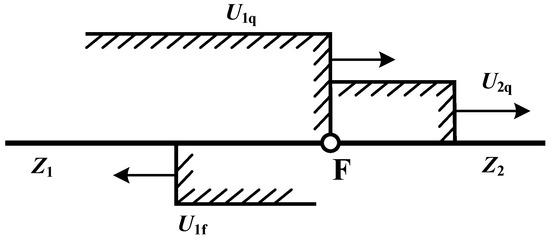
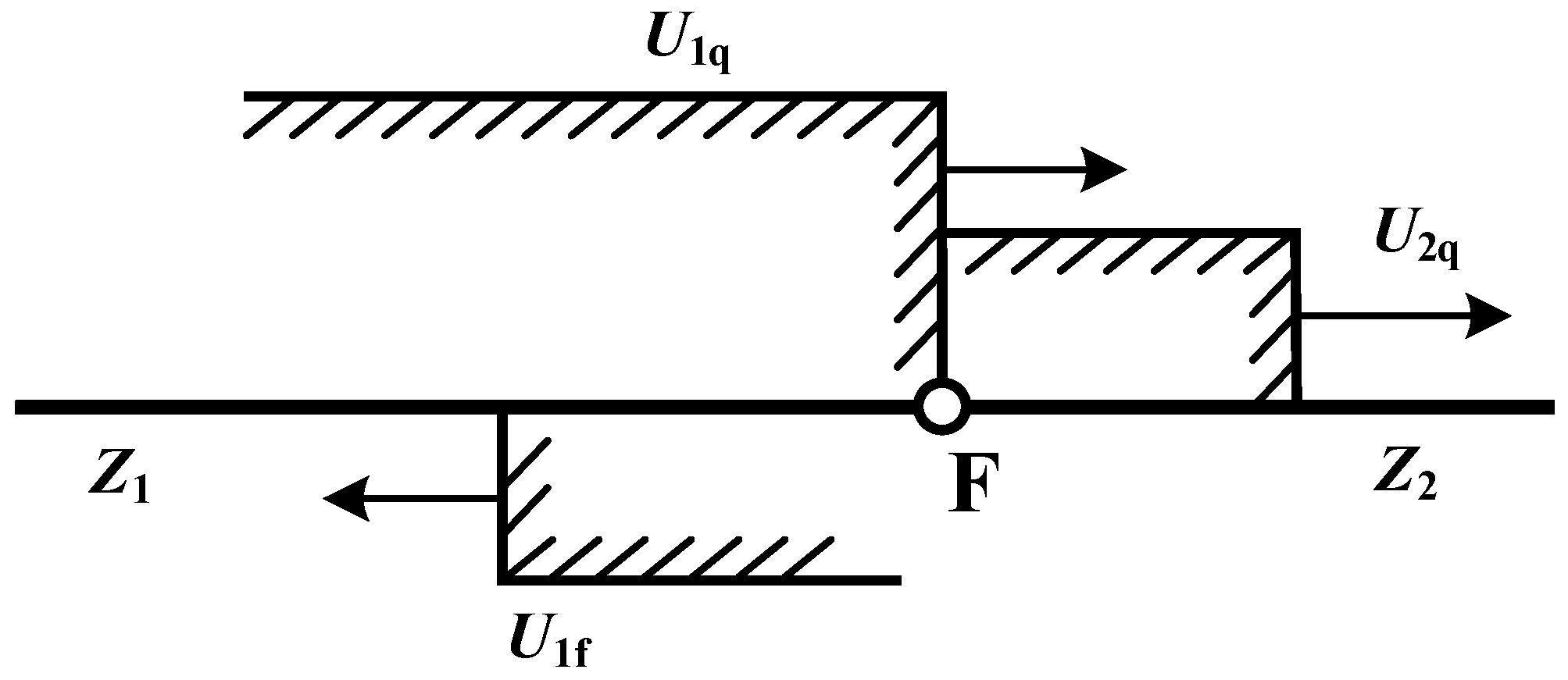
As illustrated in Figure 1, assuming the lightning strike occurs at a distance l from the input port of the switch, the period for the lightning traveling wave to propagate a single round trip in the overhead line is given by:
Figure 1.
Refraction and Reflection of Traveling Waves.
Assuming the lightning wave propagates reflections on the ideal lossless transmission line or n cycles, let An be the peak value of the reflected wave and A0 be the peak value of the initial signal. Accordingly:
where ΓL and ΓS denote the reflection coefficients at the switch terminal and the lightning strike position, respectively. It is evident that as the number of round trips of the lightning wave increases, its peak value exhibits a decaying trend. Moreover, the oscillation period is determined by the distance between the lightning strike position and the switch. As this distance increases, the period of the damped oscillation increases accordingly, leading to the characteristic frequency to decrease.
Electromagnetic disturbance waveforms are significantly influenced by the switch’s internal components and mechanisms. This is due to the device’s complex geometry and the resonance effects occurring when high-frequency lightning wavelengths match its physical dimensions. Therefore, a structurally detailed 3D full-wave model of the switch is constructed to accurately simulate complex electromagnetic processes, such as the spatial radiated fields around the switch, as well as internal structural resonance and coupling. This 3D full-wave model constitutes the ‘field’ component of the proposed field-circuit hybrid model.
Once the “field” and “circuit” models are established, they are coupled via an S-parameter matrix. First, in the 3D full-wave electromagnetic simulation, discrete ports are defined at the connection points between the 3D and circuit models, allowing the 3D structure to be represented as an N-port network. By injecting broadband pulses and recording the response signals, the S-parameter matrix characterizing the electromagnetic behavior between these ports in the 0–50 MHz range is extracted. After ensuring numerical stability through passivity and causality checks, this matrix is then imported into the circuit model as a “black-box” for circuit simulation. Subsequently, the port voltages and currents obtained from the circuit simulation are utilized as excitation sources and fed back into the 3D full-wave electromagnetic model. This process enables the calculation and visualization of the electromagnetic radiation of the 3D model, thereby facilitating the evaluation of electromagnetic disturbance signal characteristics. Figure 2 presents the schematic diagram of the field-circuit hybrid modeling principle.
Figure 2.
Schematic diagram of the field–circuit hybrid modeling principle.
3. Simulation of Lightning Disturbances in Switches
3.1. Structure of the Primary–Secondary Integrated Distribution Switch
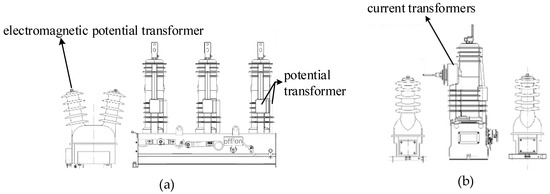
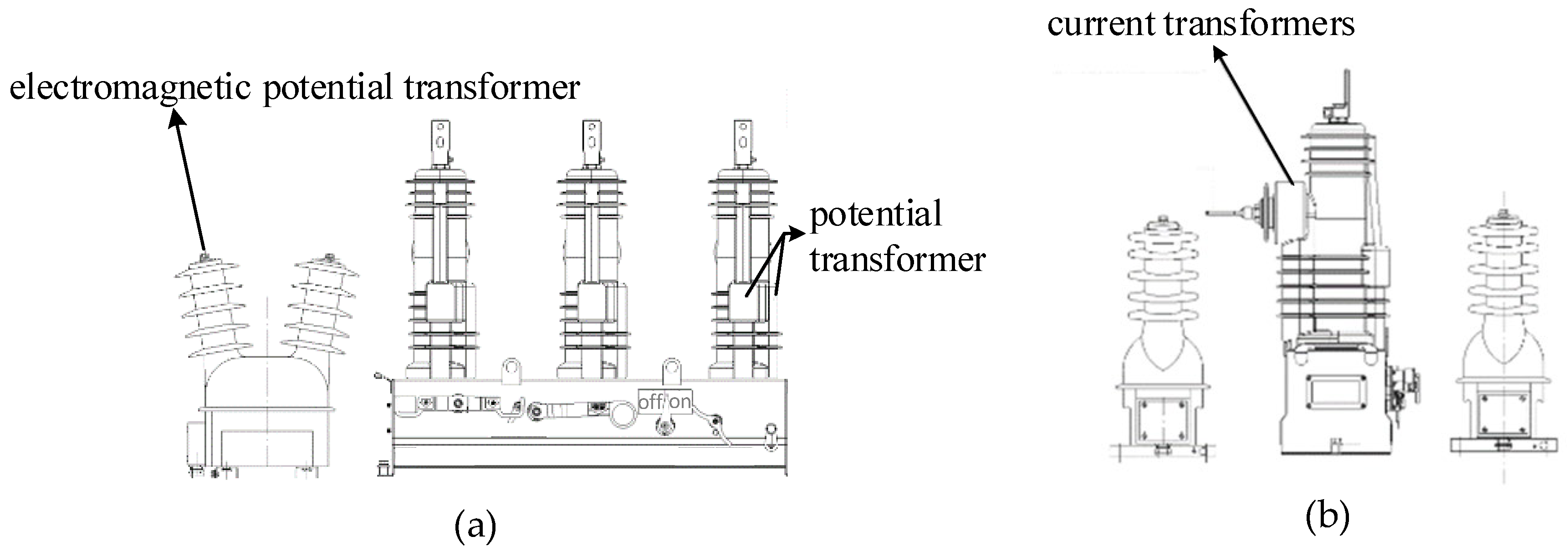
Figure 3 illustrates the structure of a typical primary–secondary integrated distribution switch. The power supply module is an electromagnetic potential transformer (PT), which contains only a dedicated secondary-side power supply winding and is installed independently. The phase measurement PTs are electronic voltage transformers, which are installed independently for each of the three phases. They can be arranged on both the incoming and outgoing line sides to realize measurement, protection, and zero-sequence functions. The current transformers (CTs) include measurement CT and protection CT, with the zero-sequence current obtained through the synthesis of secondary winding currents. The phase measurement PTs and the measurement/protection CTs are encapsulated within the three pole pillars, respectively. Zero-sequence current and voltage signals are obtained via physical synthesis.
Figure 3.
Schematic of a Typical Integrated Primary and Secondary Distribution Switch: (a) Front view; (b) Side view.
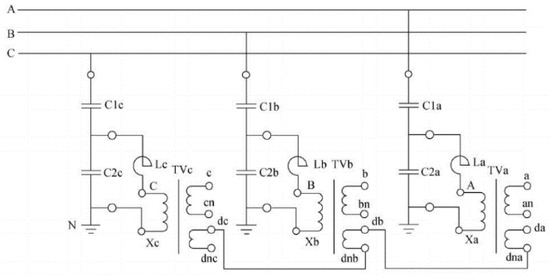
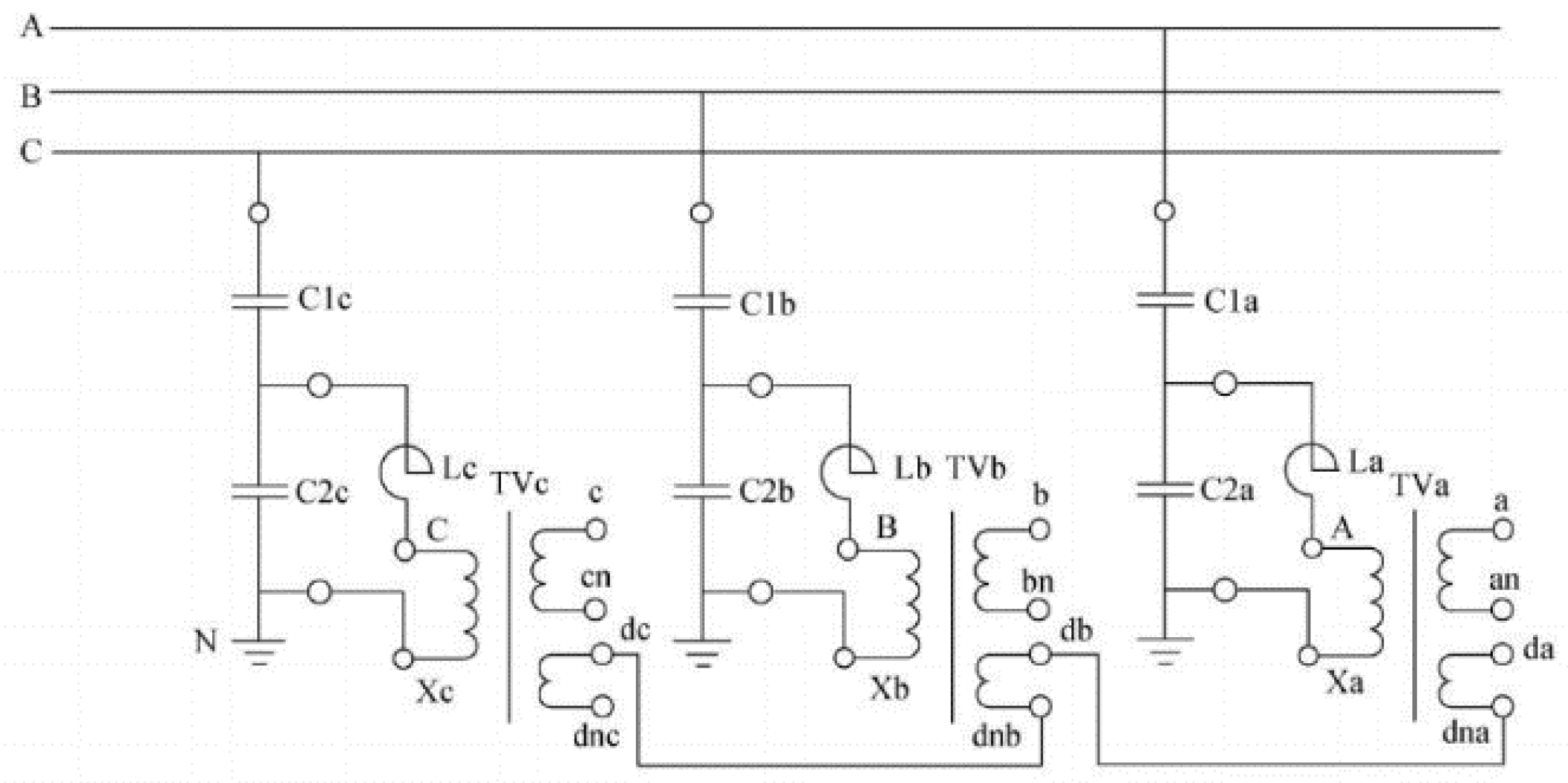
The ZW32-12 deeply integrated pole-mounted circuit breaker investigated in this study employs a Capacitor Voltage Transformer (CVT) as the phase measurement PT. The operating principle of the CVT is based on capacitive voltage division to step down the primary voltage, followed by accurate voltage transformation and electrical isolation using a traditional electromagnetic transformer. Figure 4 presents the wiring schematic of the voltage transformer.
Figure 4.
Potential Transformer Circuit Diagram.
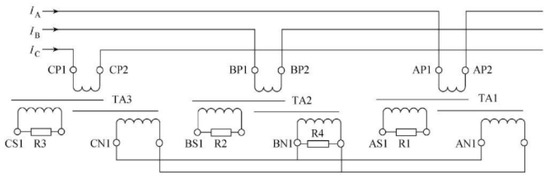
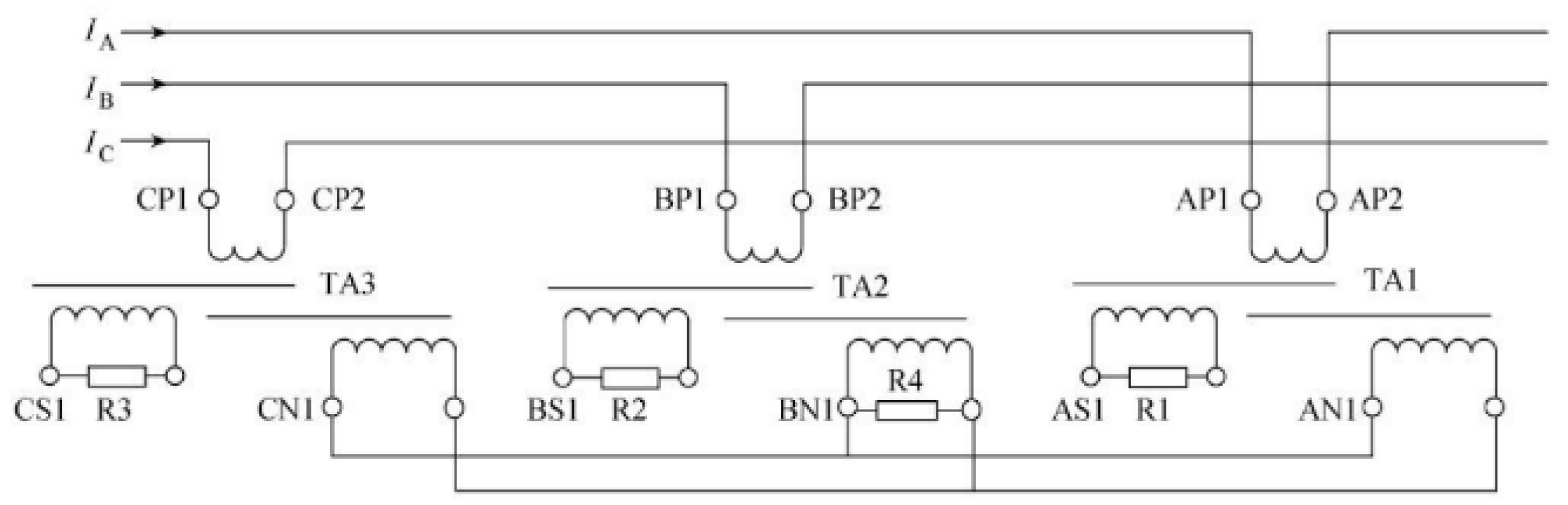
Figure 5 illustrates the working principle of the current transformer. The outgoing line of the integrated switch passes through the center of the transformer. According to the magnetic effect of the current, an alternating magnetic field is generated within the transformer’s iron core, which links with the secondary winding. In accordance with the law of electromagnetic induction, an electromotive force is induced in the secondary winding, thereby generating a proportionally reduced current.
Figure 5.
Current Transformer Connection Diagram.
3.2. Field-Circuit Hybrid Modeling of the Switch
3.2.1. Three-Dimensional Full-Wave Electromagnetic Model
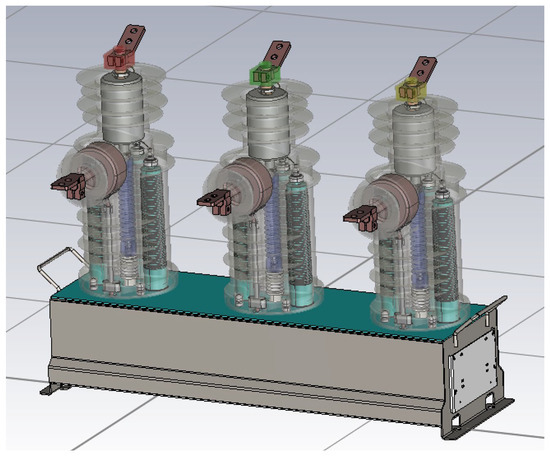
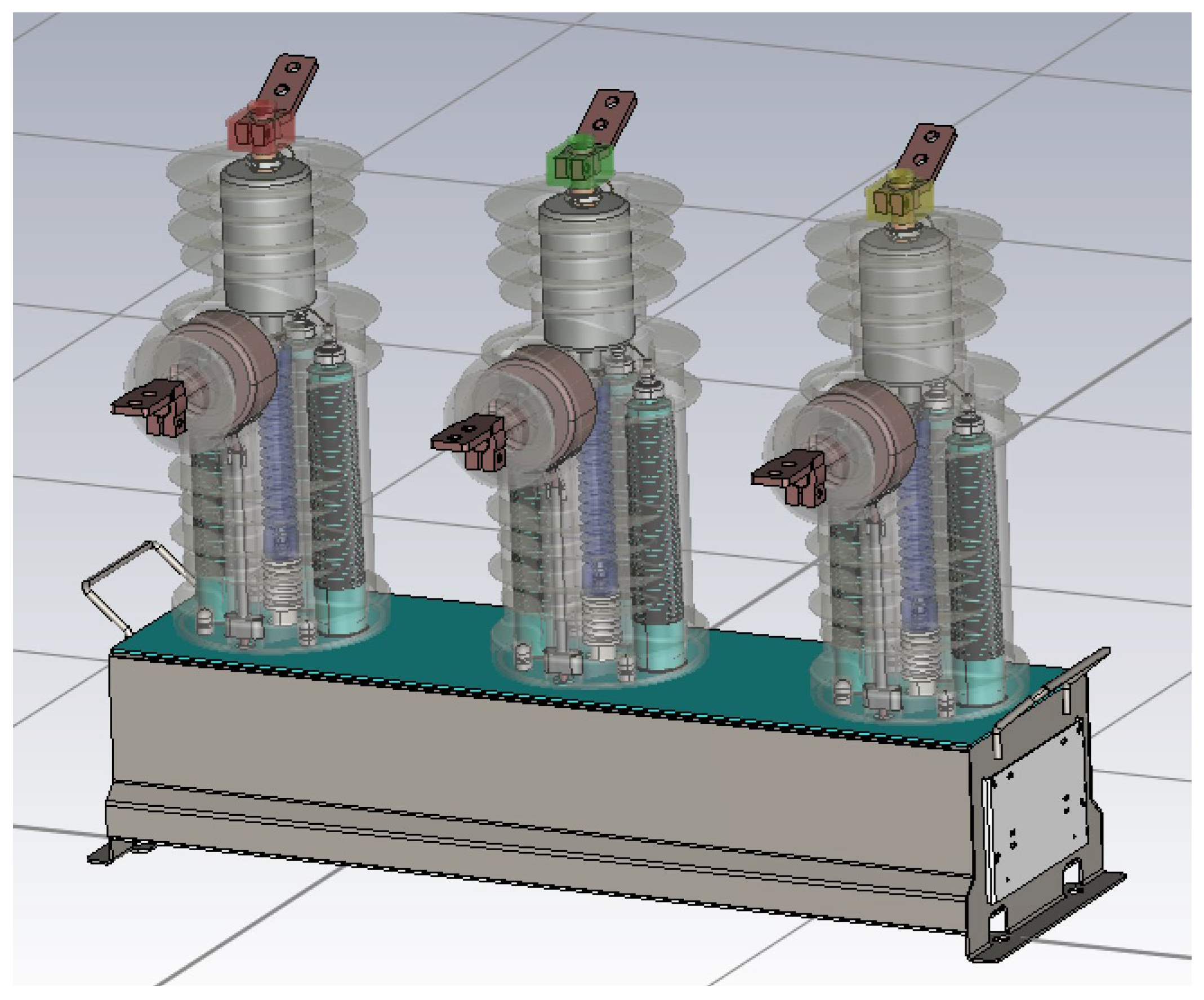
Based on the structural characteristics of the primary–secondary integrated switch, a 3D full-wave model was constructed at a 1:1 scale, as illustrated in Figure 6. The 3D full-wave simulation was executed using a time-domain solver based on the Hexahedral Finite Integration Technique (FIT), with a convergence accuracy threshold of −30 dB. Regarding the boundary conditions, the Zmin plane was defined as a perfect electric conductor “electric (Et = 0)” to simulate the maximum possible disturbance coupling while ensuring the grounding logic remains consistent with the unified grounding grid used in the experiments. The remaining boundaries (Xmin, Xmax, Ymin, Ymax and Zmin) were set to “open (add space)” to simulate an infinite unbounded medium.
Figure 6.
Three-dimensional Illustration of a Switch.
Table 1 presents the electrical parameter settings of the materials in the 3D full-wave model of the primary–secondary integrated switch. In the simulation, the internal material parameters of the switch are assumed to be homogeneous, and all ferromagnetic materials are assumed to operate within their linear magnetization regions.
Table 1.
Switch Material Parameter Settings.
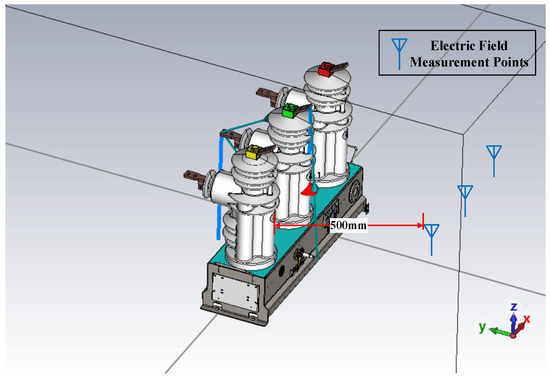
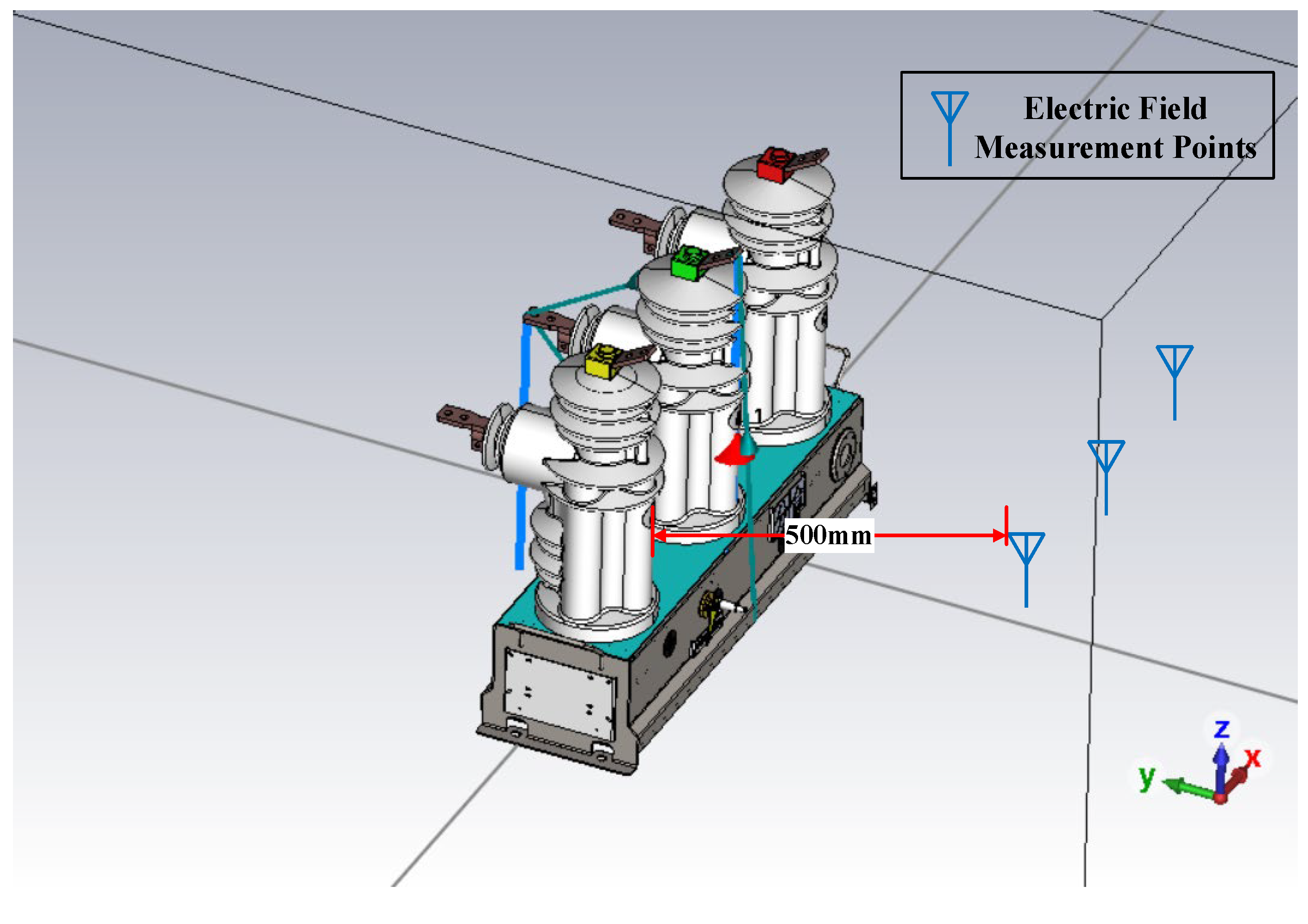
In electromagnetic radiation analysis, the space is classified into the near-field zone, Fresnel zone, and far-field zone based on the distance between the observation point and the radiation source. The distribution switch investigated in this paper possesses small electrical dimensions, and the selected observation points are close to the switch; thus, this constitutes a near-field problem. The electric field disturbance signals around the switch can effectively reflect the variation laws of lightning overvoltage. To obtain the radiated electric field signals in the 3D full-wave model, electric field probes oriented along different directions were placed at a distance of 500 mm from the voltage transformer. The schematic diagram of the probe arrangement is illustrated in Figure 7.
Figure 7.
Electric Field Probe Layout Diagram.
3.2.2. Model Construction and Simulation of the Electromagnetic Disturbance Generation Process
To investigate in depth the waveform characteristics and influencing factors of the radiated electric field of the primary–secondary integrated switch under lightning strike conditions, this study focuses on the impacts of line connection modes, terminal loads, and the internal structure/components of the switch. A simulation study is performed using the control variable method to elucidate the generation mechanism and influencing factors of the electromagnetic disturbance waveform characteristics of the primary–secondary integrated switch under lightning strikes.
- (1)
- Varying Line Connection Modes
To investigate the influence of line connection modes on lightning disturbance characteristics, this paper performed simulations under two conditions: connecting a transmission line only to the input terminal and connecting transmission lines to both the input and output terminals. Furthermore, the impact of transmission line length on the characteristic frequency of lightning disturbances was explored.
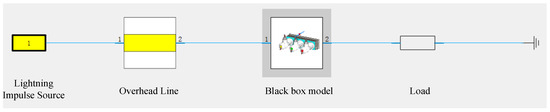
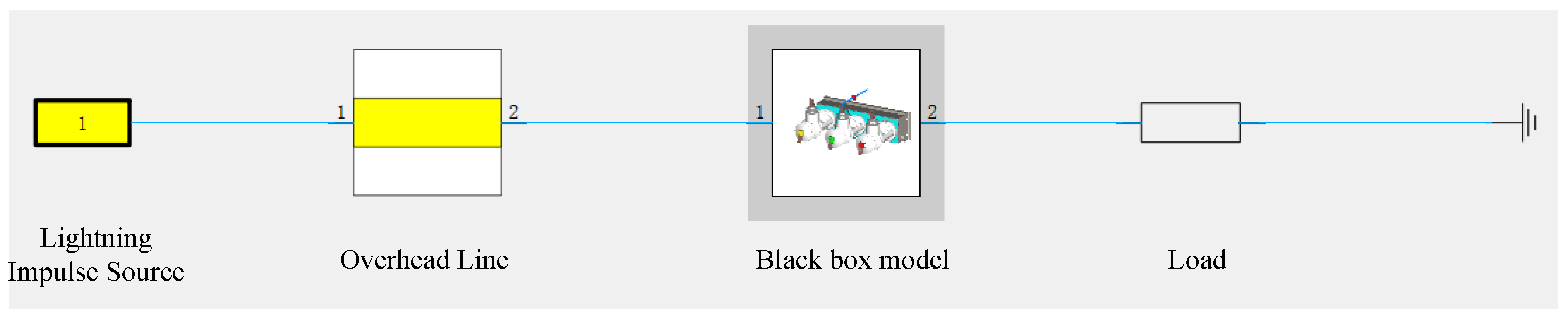
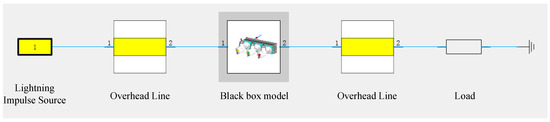
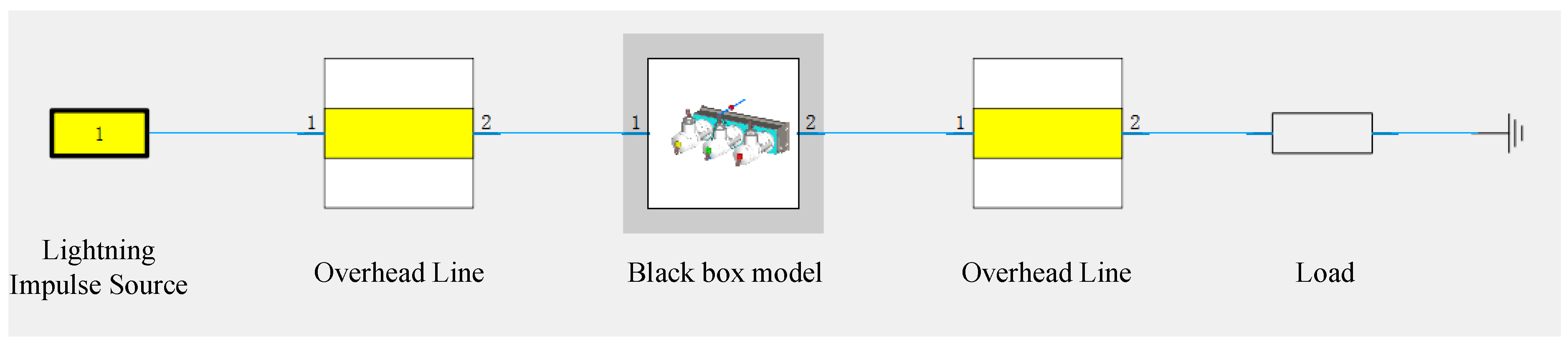
Under the condition where the transmission line is connected only to the input terminal, a 75 kV standard lightning impulse propagates into the distribution switch via the overhead line connected to the Phase B input terminal. The specific circuit model is illustrated in Figure 8. Port 1 of the switch black-box model corresponds to the input terminal, while Port 2 corresponds to the output terminal. An ideal lossless transmission line model with a characteristic impedance of 350 Ω is inserted between the lightning pulse source and the switch input terminal. By varying the length of the transmission line, lightning strikes occurring at different locations along the line are simulated. The output terminal of the switch is connected to a load and then grounded.
Figure 8.
Circuit diagram with a transmission line only at the input.
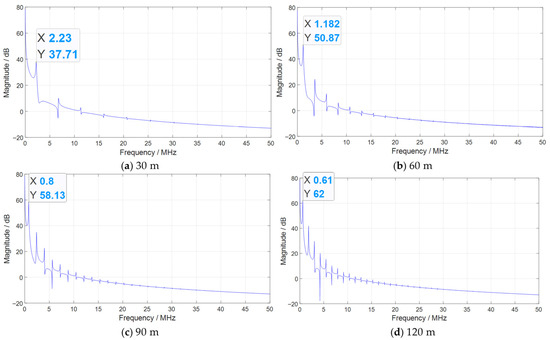
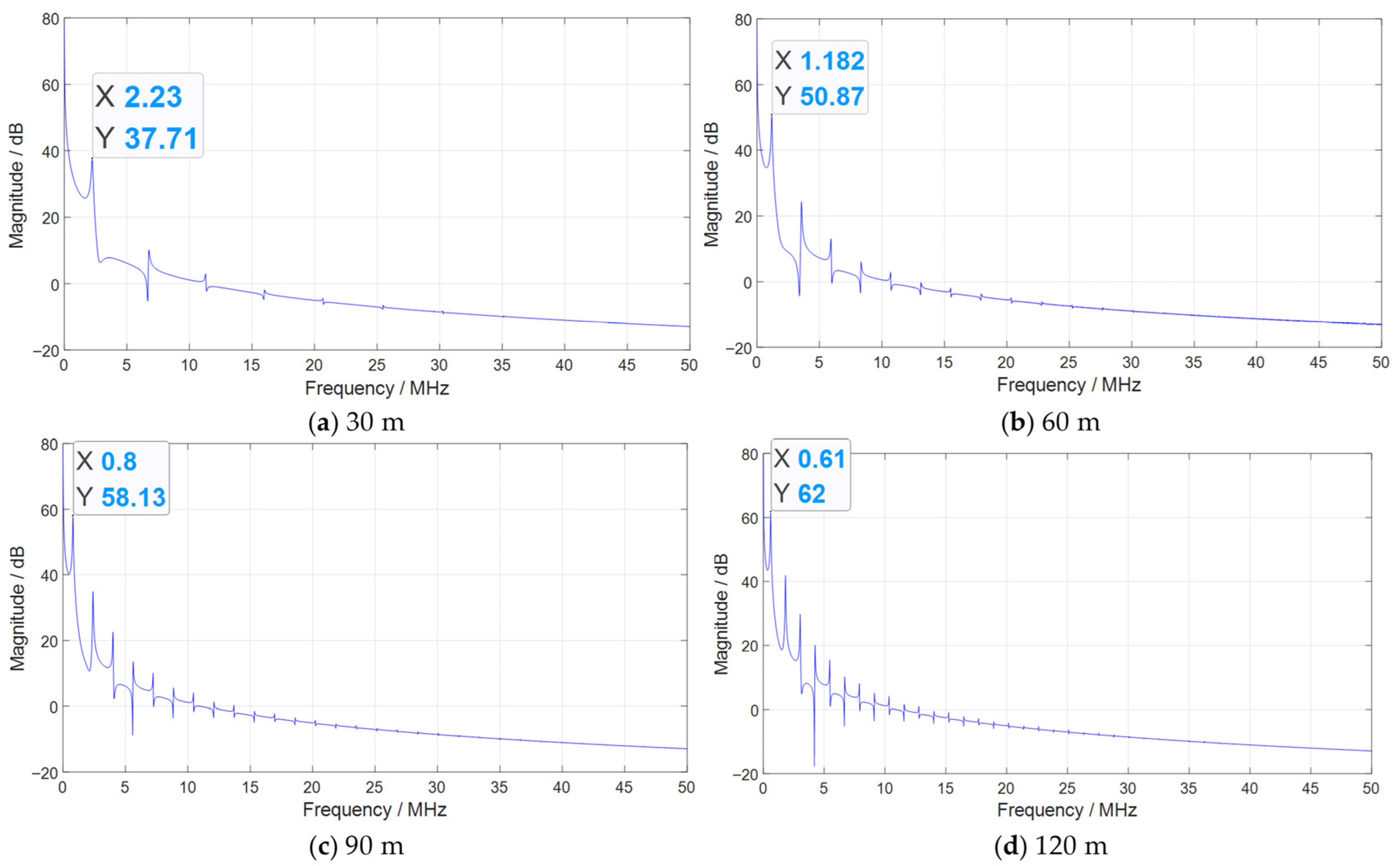
With the output side load maintained at 10 kΩ, transmission line lengths of 30 m, 60 m, 90 m, and 120 m are considered. The corresponding electric field spectra measured near the voltage transformer are presented in Figure 9.
Figure 9.
Radiated electric field frequency spectra for various input terminal transmission line lengths (with no transmission line connected to the output terminal).
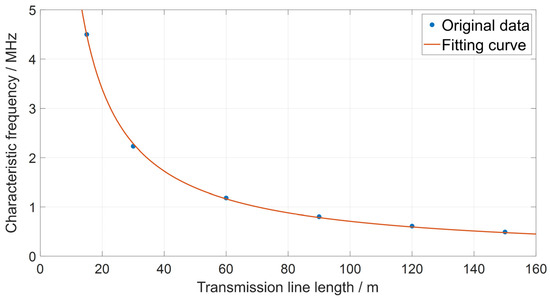
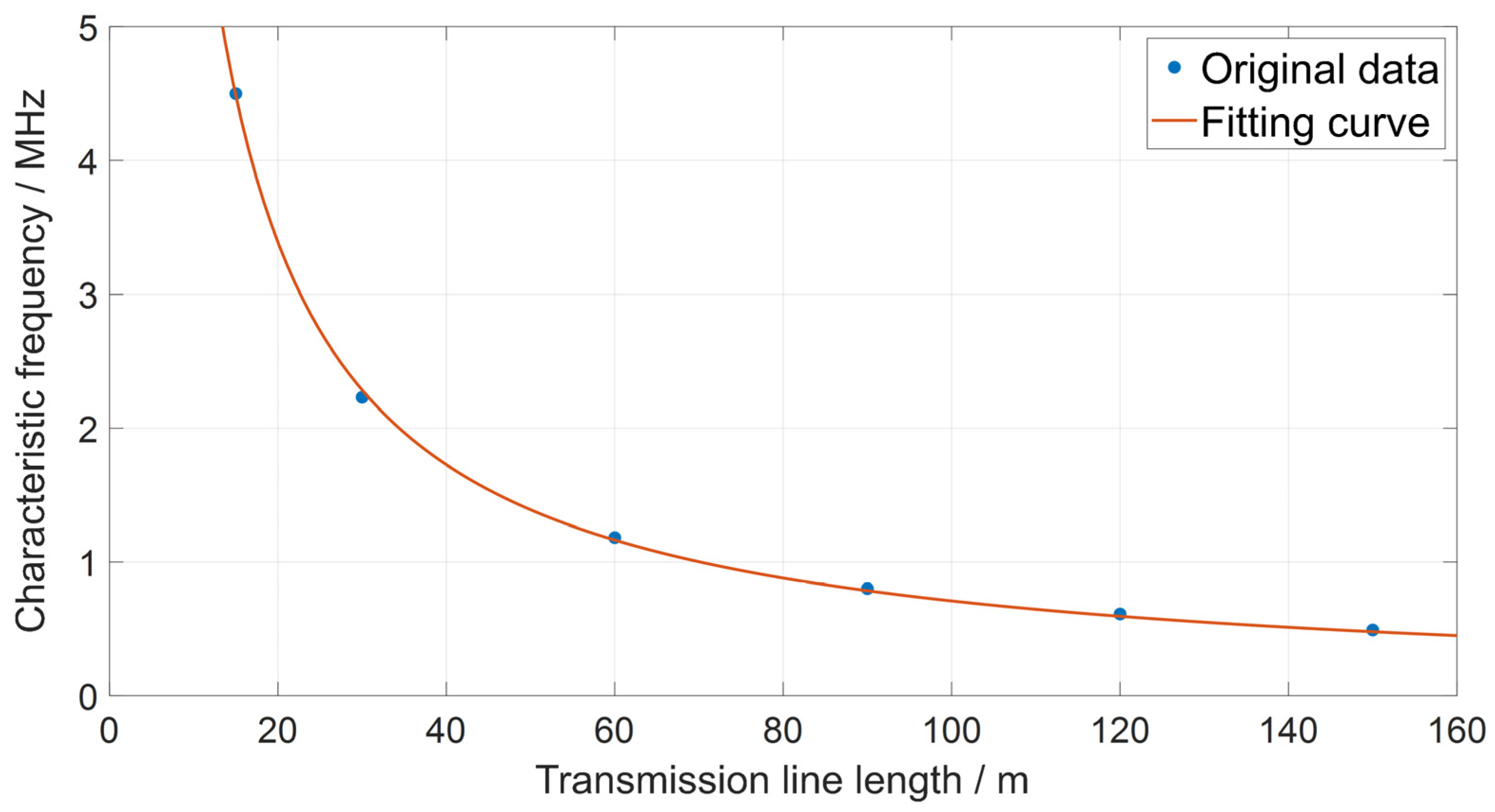
The relationship between the characteristic frequency of the radiated electric field and the transmission line length was analyzed and fitted, as shown in Figure 10. It is evident that as the length of transmission line increases, the round-trip time (and thus the oscillation period) of the reflected traveling wave increases, leading to a decrease in the characteristic frequency. In other words, the greater the distance between the lightning strike location and the primary–secondary integrated switch, the lower the characteristic frequency of the generated radiated electric field. The fitting formula is given by:
where y denotes the characteristic frequency (MHz), and x represents the length of the transmission line in m.
Figure 10.
Relationship between the characteristic frequency of the radiated electric field and the transmission line length connected to the input terminal.
The coefficient of determination (R2) for the fitting is 0.9998, indicating that the characteristic frequency is approximately inversely proportional to the transmission line length, which aligns with Equation (1). The deviation of the characteristic frequency from the ideal y = k∙x−1 relationship can be attributed to the internal conductive structure of the switch, which equivalent extends the line length, and the inherent parasitic inductance and capacitance of its mechanical structure. This deviation highlights the necessity of the field-circuit hybrid model in accurately capturing high-frequency electromagnetic characteristics.
In practical operation, the load side of a distribution switch is typically connected to a load via a connecting line. To account for this scenario, transmission line models were connected to both the line and load sides in the circuit model, as shown in Figure 11. Simulations of various transmission line lengths indicate that the characteristic frequency of the radiated electric field depends solely on the sum of the transmission line lengths at the line and load sides; specifically, a longer total length corresponds to a lower characteristic frequency. This behavior is consistent with the case where a transmission line is connected only to the line side and is thus not elaborated upon further here.
Figure 11.
Circuit Diagram with Transmission Lines at Both Input and Output.
- (2)
- Varying the load connected to the output terminal
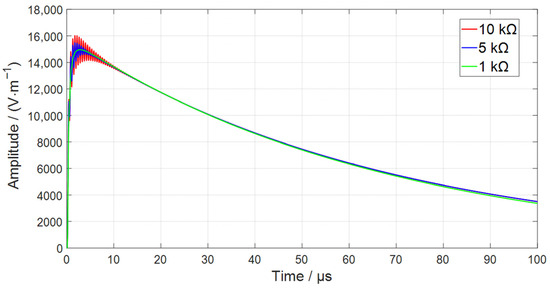
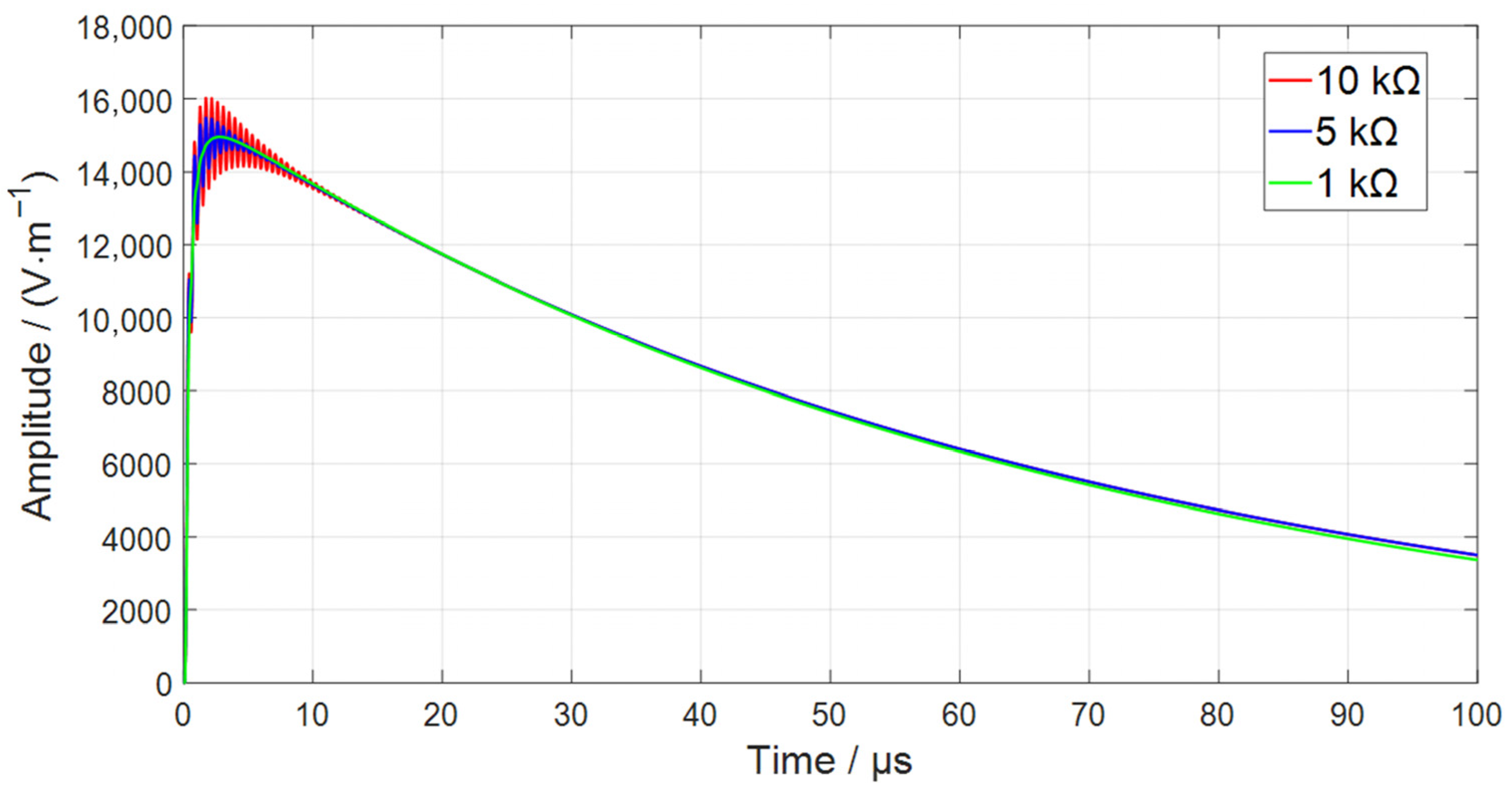
To investigate the influence of the output-terminal load on the characteristics of lightning disturbance waveforms, the transmission line length was maintained at 30 m, while the loads values were set to 1 kΩ, 5 kΩ, and 10 kΩ, respectively. Figure 12 shows the electric field measured near the Phase B voltage transformer of the primary–secondary integrated distribution switch under these conditions.
Figure 12.
Comparison of radiated electric field waveforms for different load conditions at the output terminal.
The results are consistent with the reflection coefficient formula. Specifically, while keeping the transmission line length constant, increasing the load resistance from 1 kΩ to 10 kΩ leads to a 7.2% increase in the amplitude of the radiated electric field disturbance. As the amplitude of the damped oscillatory wave formed by lightning traveling wave reflections increases, the resulting overvoltage superimposed on the lightning wave also becomes larger.
- (3)
- Considering voltage transformer capacitance
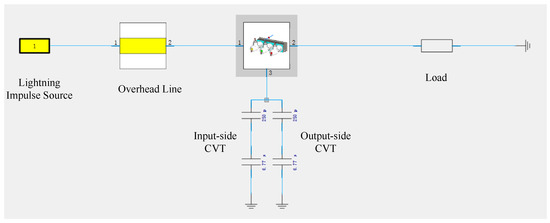
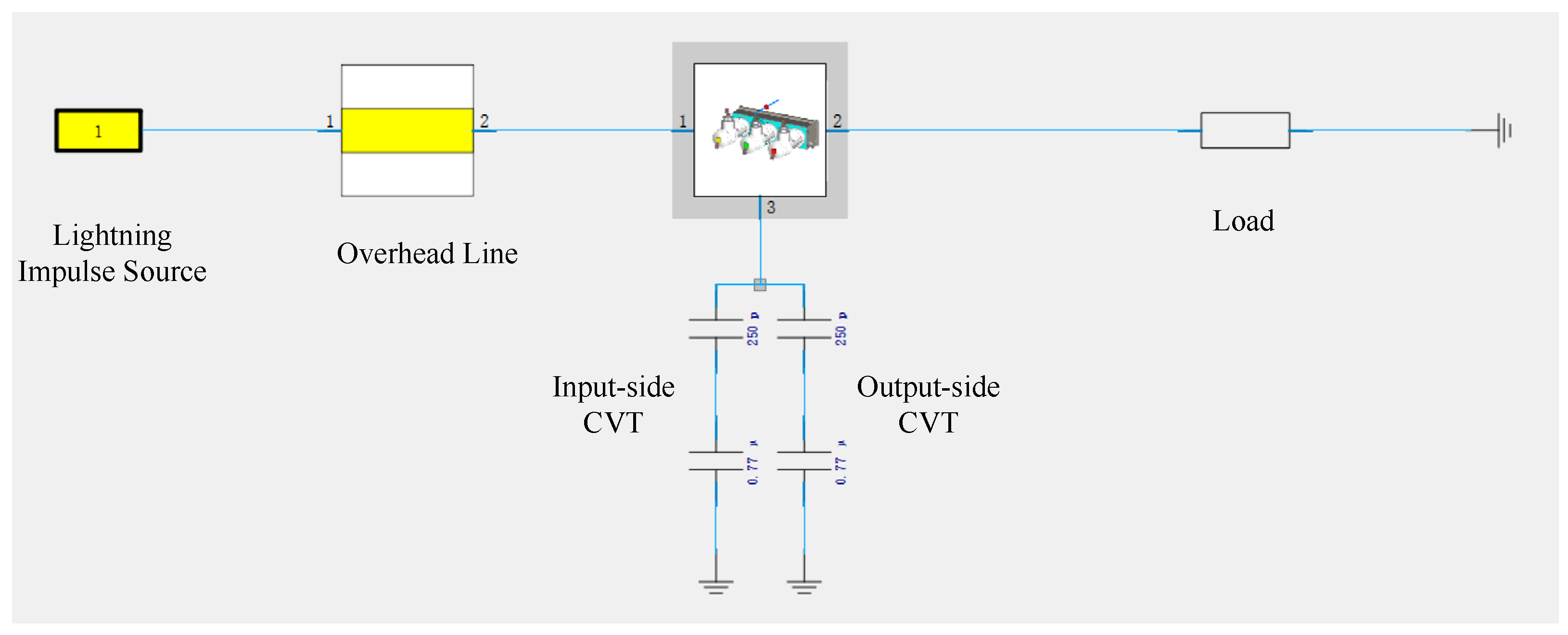
Since the high-voltage side of the metering CVT is directly connected to the primary side, the impact of its voltage dividing capacitance on lightning disturbances must be taken into account in the circuit model. Simulation results indicate that the magnitude of this capacitance significantly influences the characteristic frequency. Consequently, a circuit model incorporating the voltage divider capacitor of the voltage transformer was constructed based on Figure 4, with capacitance values set to match the actual parameters, as shown in Figure 13. The primary and secondary capacitances of the phase metering CVT were set to 250 pF and 0.77 μF, respectively. These values satisfy the voltage division ratio of (10 kV/)/(3.25 V/) and were installed at the input and output terminals.
Figure 13.
Schematic of the circuit model considering CVT capacitance.
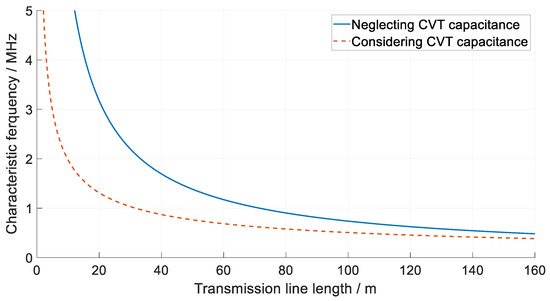
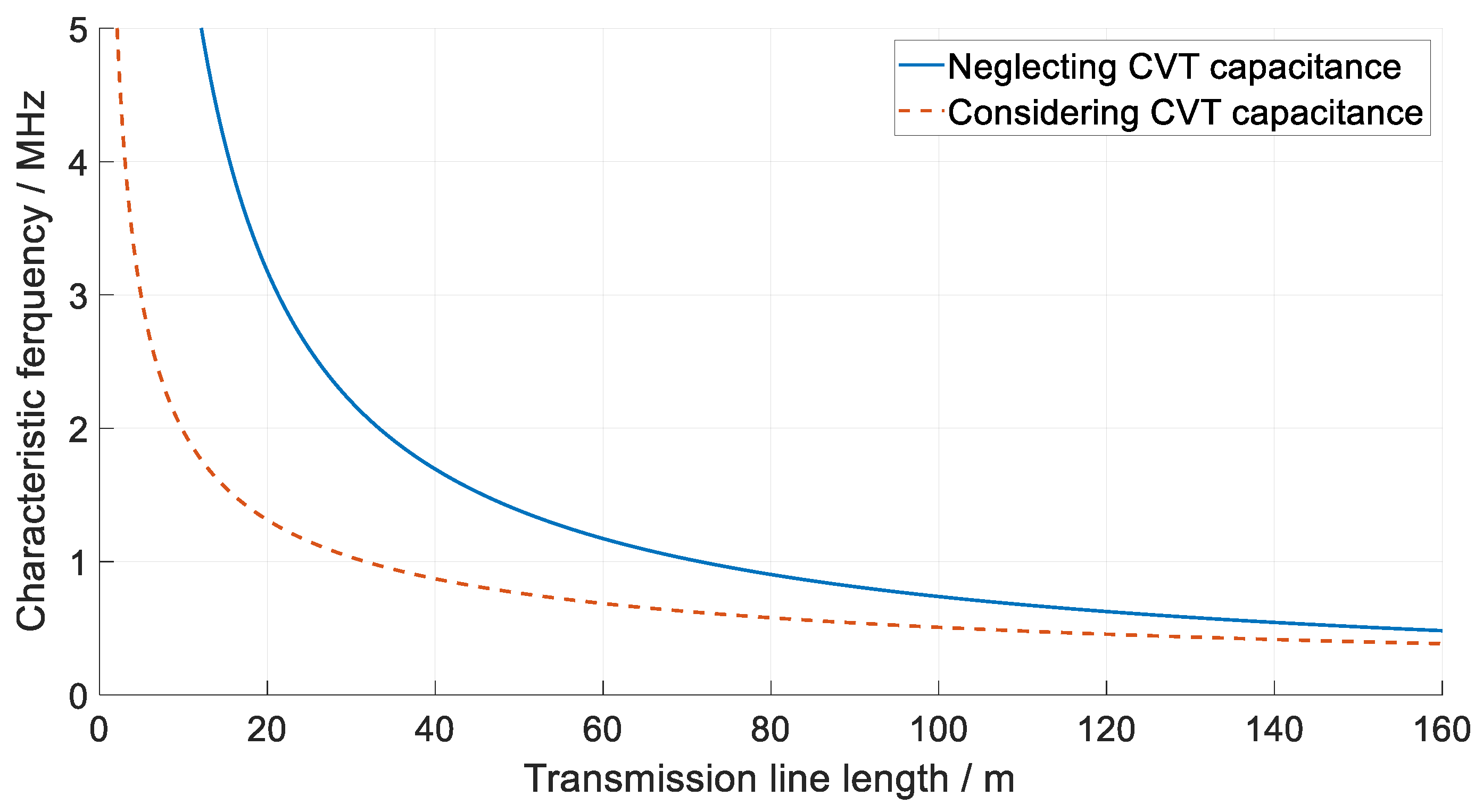
With the load maintained constant, the transmission line length was varied among 20 m, 40 m, 60 m, 80 m, and 100 m to analyze and fit the relationship between the characteristic frequency of the electric field and the transmission line length. The variation in the characteristic frequency with the transmission line length is shown in Figure 14. It is evident that, consistent with the scenario in which CVT capacitance is not considered, the characteristic frequency of the electric field decreases as the transmission line length increases.
Figure 14.
Relationship between the characteristic frequency of the radiated electric field and the input terminal transmission line length (a comparison with and without CVT capacitance).
However, for a given transmission line length, the characteristic frequency of the radiated electric field is significantly lower when CVT capacitance is considered compared to the case where it is neglected. This is attributed to the fact that when the lightning traveling wave reaches the capacitor node, the voltage across the capacitor cannot change abruptly. The charging and discharging process of the capacitor introduces an additional time delay in the reflection of the traveling wave, prolonging the oscillation period and resulting in a decrease in the characteristic frequency. Furthermore, in cases where the CVT voltage-dividing capacitance is considered and transmission lines are connected to both the input and output terminals, simulation results verify that the characteristic frequency of the disturbance is likewise independent of the length distribution between the two terminals. Therefore, this aspect will not be further elaborated upon.
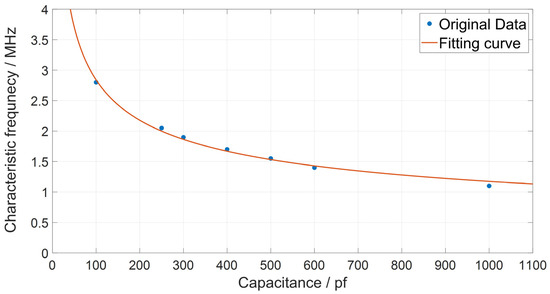
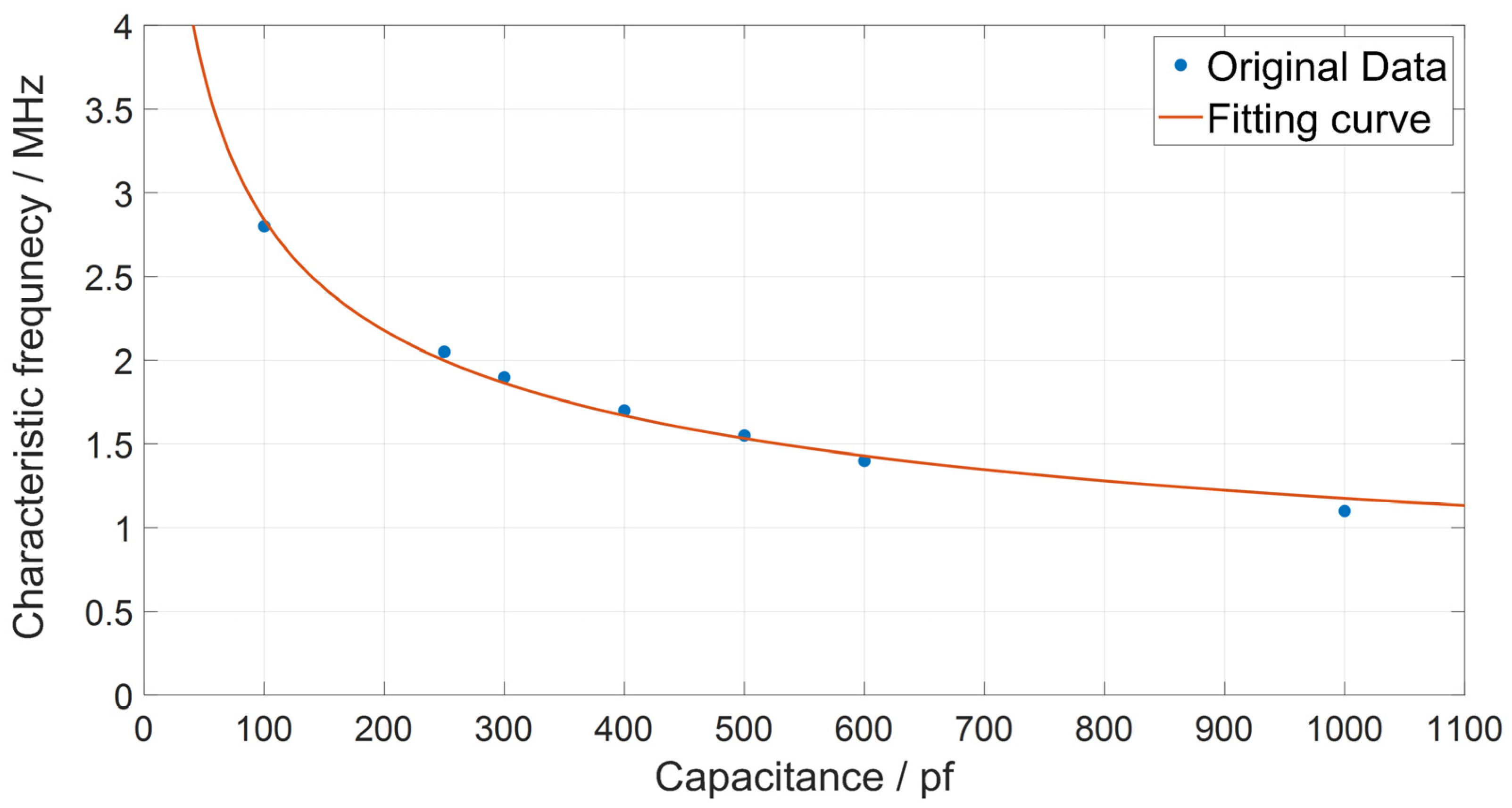
To investigate the influence of the voltage dividing capacitance of the voltage transformer on the characteristic frequency, field-circuit hybrid simulations were performed by varying the high-voltage side capacitance. The variation in the characteristic frequency of the electric field with the capacitance value is presented in Figure 15. A significant inverse correlation is observed between the characteristic frequency and the CVT capacitance. As the high-voltage side capacitance increases from 100 pF to 1000 pF, the characteristic frequency decreases by 60.7%. Furthermore, the system exhibits a pronounced sensitivity to capacitance variations in the lower range, with the frequency dropping sharply by 32.2% when the capacitance increases from 100 pF to 300 pF. It is evident that, since the time constant of the RC circuit is positively correlated with the capacitance, a larger capacitance leads to a slower charging and discharging process, thereby resulting in a lower characteristic frequency of the radiated electric field.
Figure 15.
Relationship between the characteristic frequency of the radiated electric field and transformer capacitance at a fixed transmission line length.
4. Experimental Validation
4.1. Experimental Platform Setup
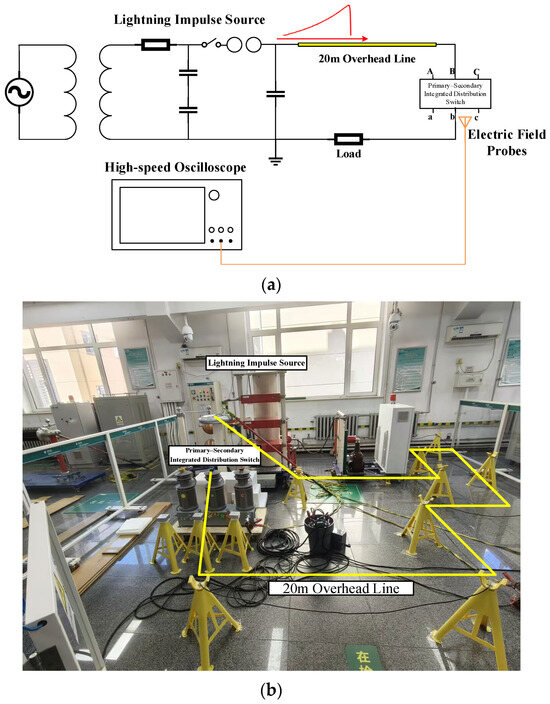
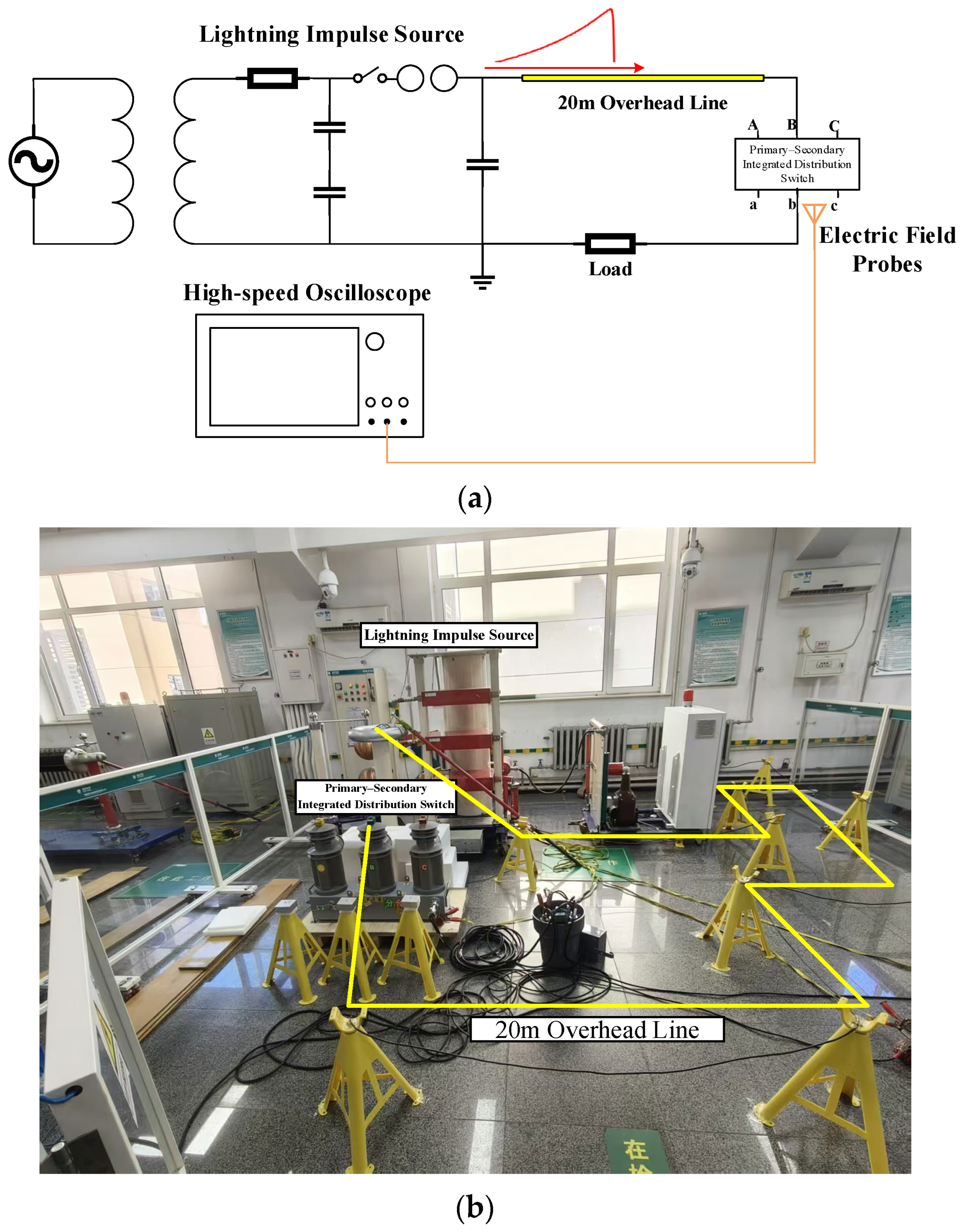
A lightning impulse experimental platform was constructed to validate the proposed simulation model. Figure 16 illustrates the schematic diagram of the experimental platform. Specifically, a 75 kV lightning impulse generator was used to inject the impulse into the Phase B input terminal of the primary–secondary integrated distribution switch through a 20 m insulated power cable. A 30 kΩ resistor was connected to the output terminal as a load, and the electric field near the Phase B voltage transformer was measured. To prevent damage to the oscilloscope caused by the ground potential rise induced by the lightning impulse, an Uninterruptible Power Supply (UPS) was employed to power the oscilloscope. This experimental configuration corresponds to the simulation scenario where a transmission line is connected only to the input terminal.
Figure 16.
Schematic Diagram of the Experimental Platform: (a) Experimental connection schematic; (b) Photograph of the experimental wiring setup.
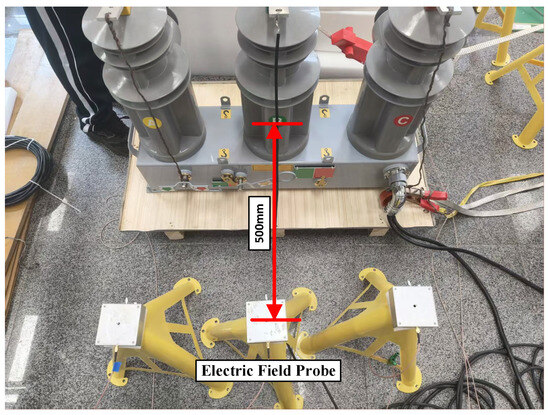
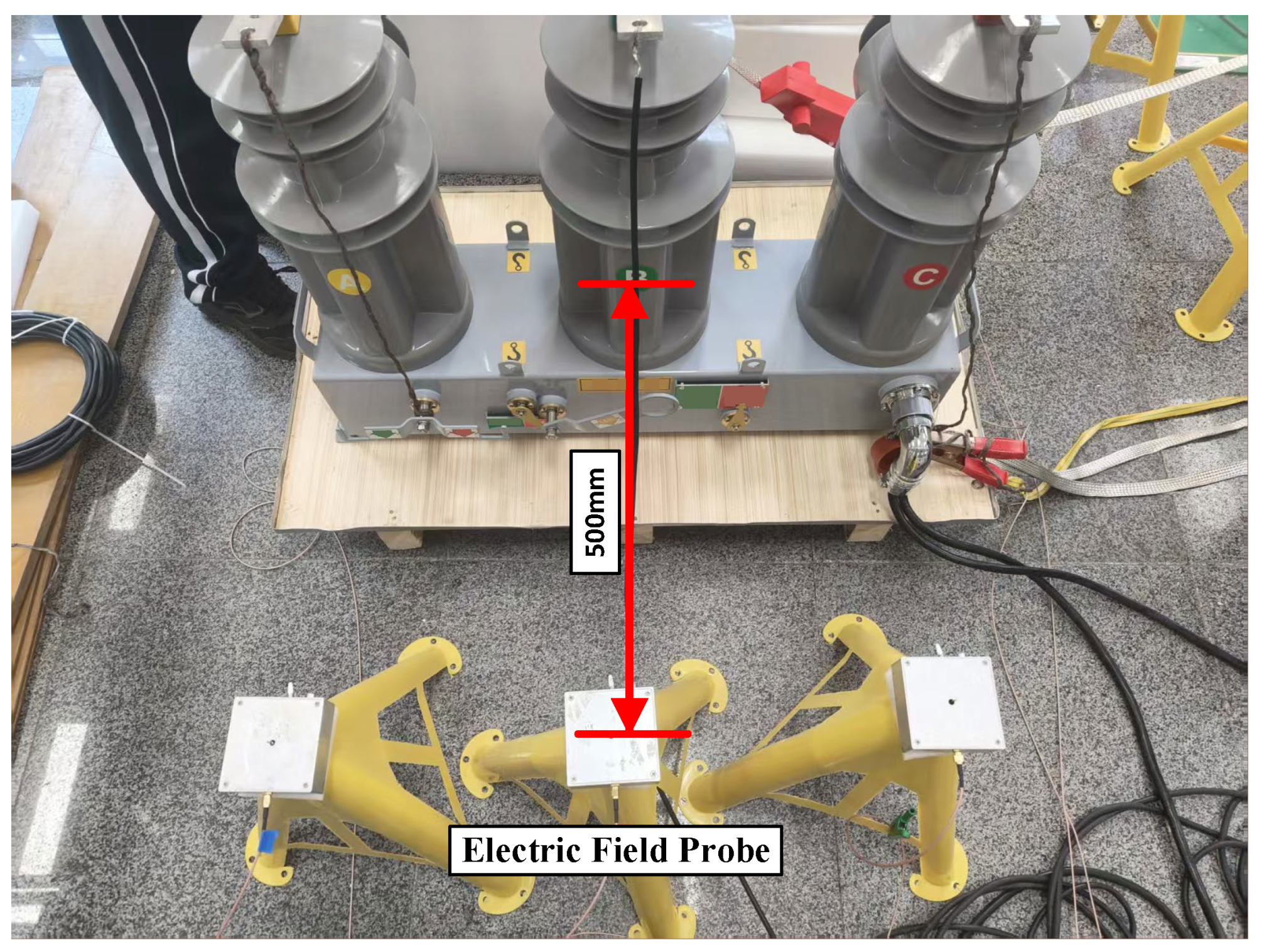
As shown in Figure 17, a rod antenna electric field probe was placed at a distance of 500 mm from the Phase B voltage transformer. The rod electrically small antenna used in the experiment has a height of 10 mm and a radius of 1 mm, with a measurement bandwidth of 0–500 MHz, which satisfies the measurement requirements for electric fields ranging from 1 to 100 kV/m. The antenna was calibrated in a Transverse Electromagnetic (TEM) cell, yielding a calibration factor of K = 24,640 m−1 and an estimated measurement uncertainty of approximately ±3.0 dB.
Figure 17.
Electric Field Probe Layout Diagram.
4.2. Validation of Experimental Results
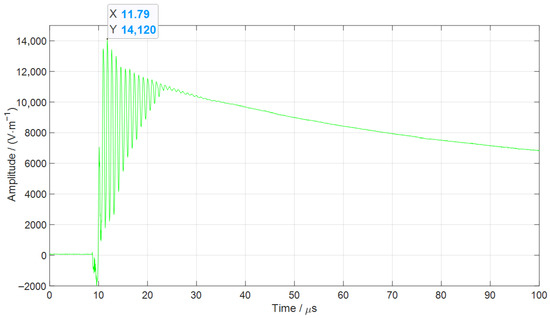
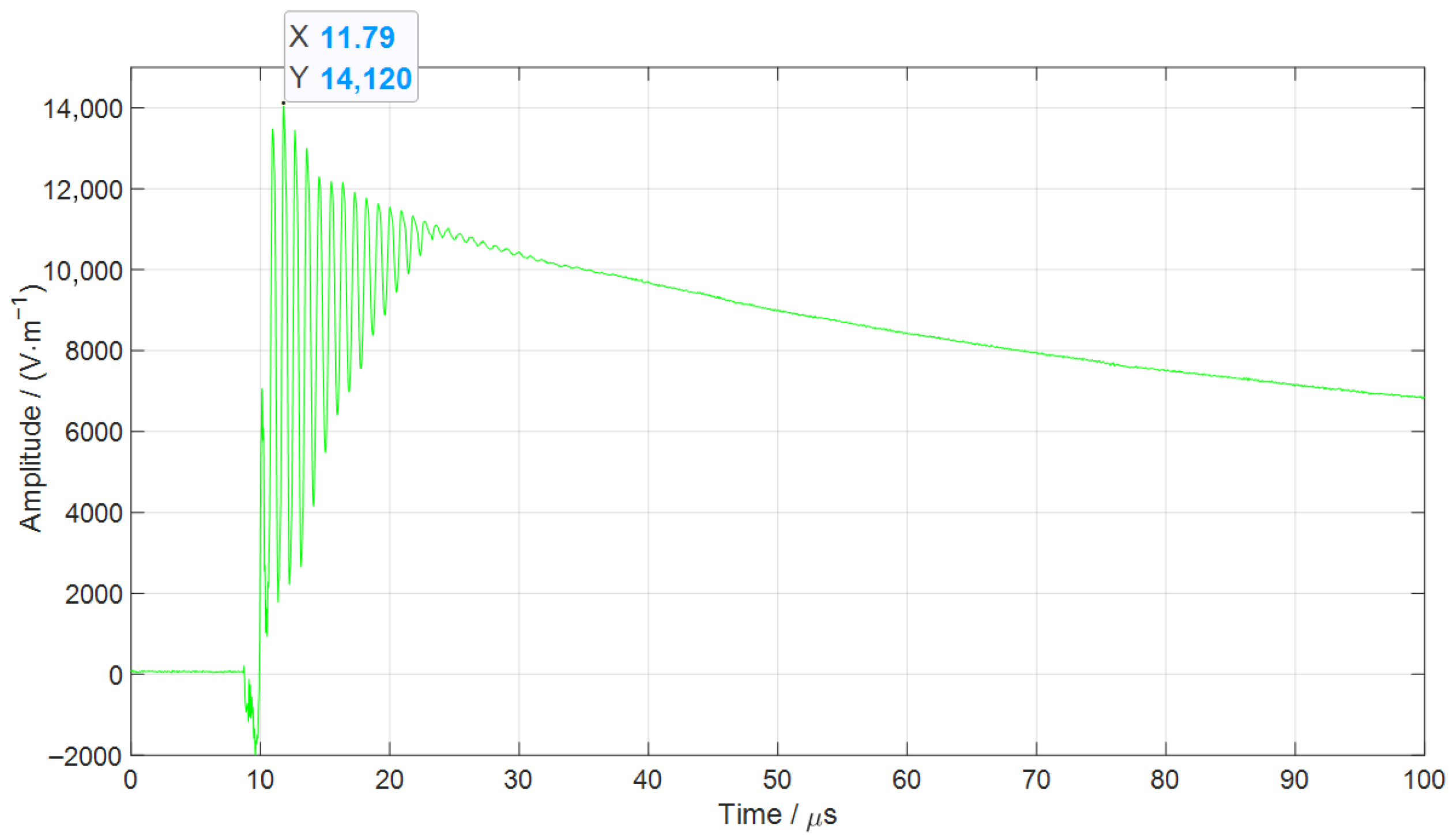
The electric field signal measured near the Phase B voltage transformer is presented in Figure 18. It can be observed that the measured waveform consists of a lightning traveling wave superimposed with a damped oscillatory component. The amplitude of the measured radiated electric field is approximately 14.12 kV/m.
Figure 18.
Measured Electric Field Waveform.
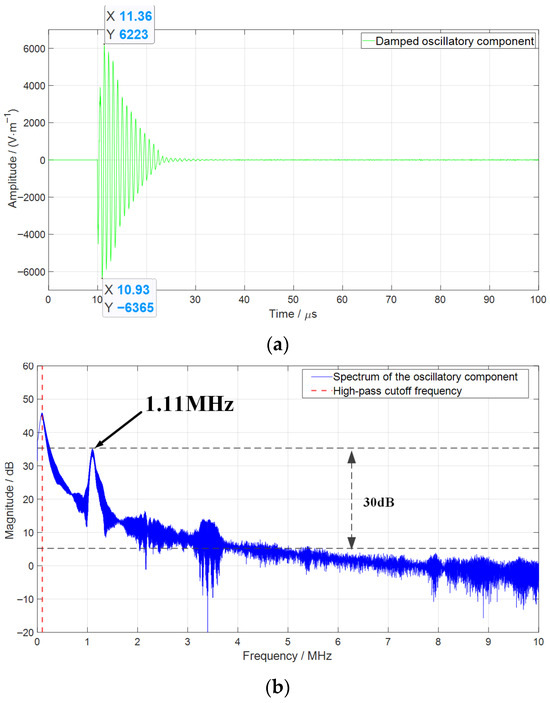
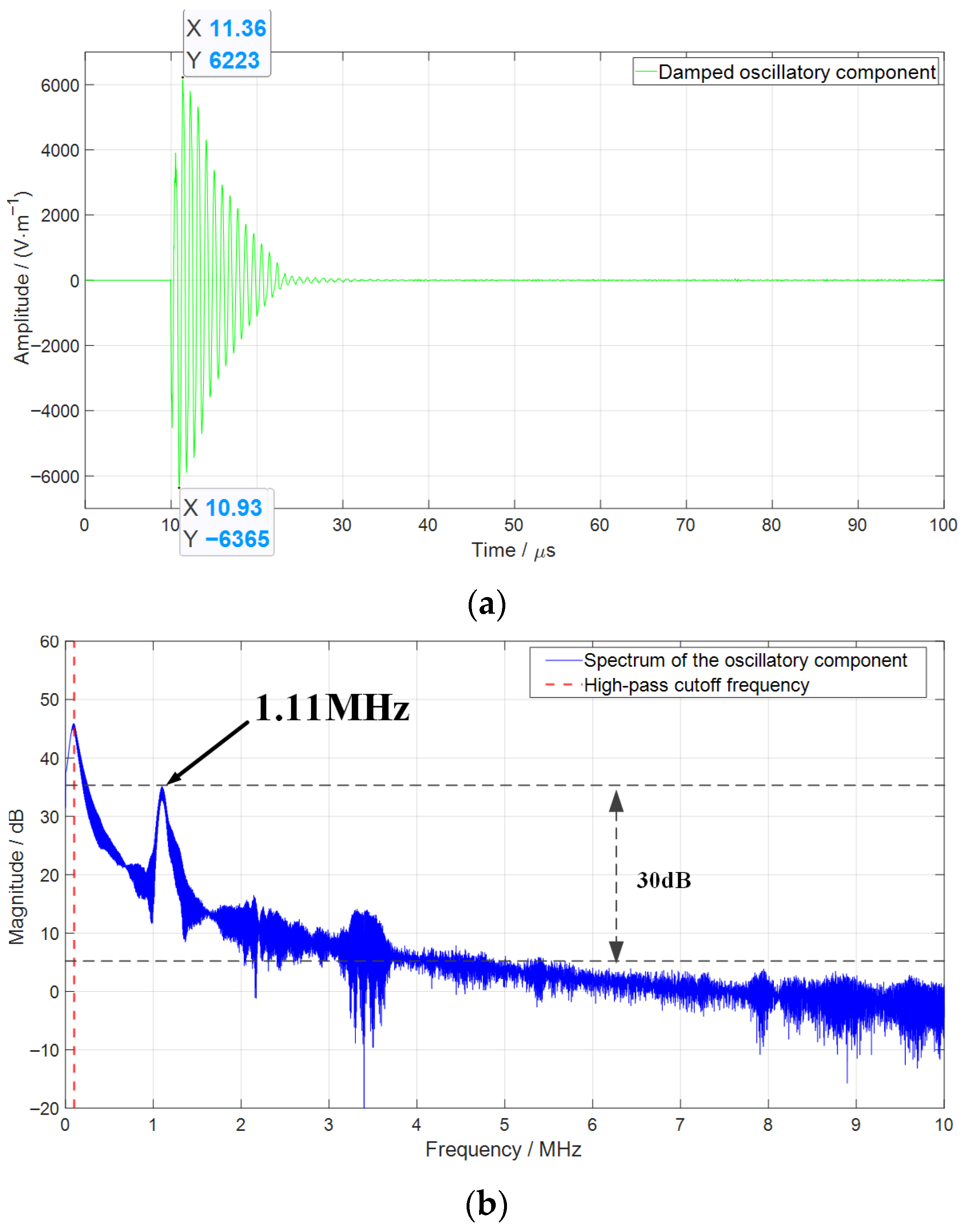
In this study, a fourth-order Butterworth IIR filter with a passband of 0.1 MHz–10 MHz was employed to perform zero-phase filtering on the measured waveforms. Subsequently, the Fast Fourier Transform (FFT) was applied to the extracted damped oscillatory component for spectral analysis. The resulting time-domain and frequency-domain characteristics are presented in Figure 19. Excluding the low-frequency components intrinsic to the lightning impulse itself, the characteristic frequency of the damped oscillatory wave is distinctly observed to be 1.11 MHz.
Figure 19.
Time-Frequency Analysis of a Measured Damped Oscillating Electric Field Waveform: (a) Time-domain waveform; (b) Frequency spectrum.
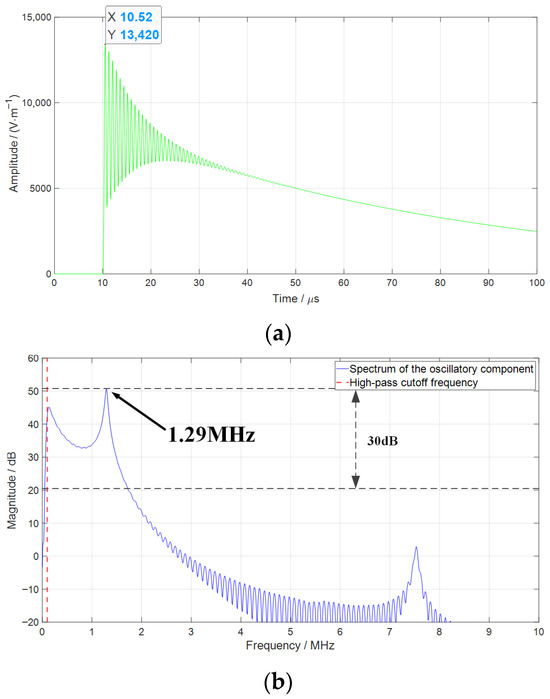
Figure 20 presents the time-frequency analysis of the damped oscillatory component of the electric field around Phase B in the simulation model with a transmission line length of 20 m. In the time domain, the simulated electric field amplitude is approximately 13.42 kV/m, showing a deviation of less than 5% from the measured value. In the frequency domain, the characteristic frequency is 1.29 MHz, with a deviation of no more than 20% from the experimental result, thereby validating the accuracy of the proposed model. The discrepancies observed in weak higher-frequency components, such as the 7.53 MHz resonance, between the simulation and experimental results can be attributed to two main factors. First, environmental background noise significantly limits the detection of weak high-frequency signals. Simulation results indicate that the amplitude of the 7.53 MHz component is approximately 50 dB lower than that of the 1.29 MHz peak. In contrast, the experimental 1.11 MHz peak is only 30 dB above the noise floor, causing the much weaker 7.53 MHz component to be submerged by background noise. Second, measurement hardware limitations, specifically the frequency-dependent attenuation of the rod antenna and transmission cables, reduce the gain for high-frequency components, contributing to the deviations between simulation and experimental results.
Figure 20.
Time-Frequency Analysis of a Simulated Electric Field Waveform: (a) Time-domain waveform; (b) Frequency spectrum.
5. Conclusions
In this paper, a field-circuit hybrid full-wave model of the primary–secondary integrated distribution switch under lightning impulse conditions was constructed to investigate the waveform characteristics and generation mechanisms of electromagnetic disturbances. Through simulation and measurement of electric field signals surrounding the voltage transformer, the impacts of two key factors—transmission line length and the CVT voltage dividing capacitance of the primary–secondary integrated distribution switch—on the frequency-domain characteristics of electromagnetic disturbances were analyzed. The main conclusions are as follows:
- A field-circuit hybrid simulation model of the primary–secondary integrated distribution switch under lightning impulse was established. A 3D electromagnetic full-wave model of the switch was constructed to simulate the complex electromagnetic processes and their influence on the spatial radiated field. In addition, a distributed parameter circuit model was built for the connecting lines to investigate the wave processes of lightning impulses along the transmission lines. These two models were coupled via a network parameter matrix to form the field-circuit hybrid model, enabling a comprehensive consideration of the impacts of transmission lines and switch structural components on electromagnetic disturbance characteristics.
- The lightning disturbance signal consists of a lightning traveling wave component superimposed with a damped oscillatory component. The high-frequency oscillatory component is caused by the reflections of traveling wave along the overhead lines. Its characteristic frequency is determined by the length of the transmission lines connected to the switch and is approximately inversely proportional to the transmission line length. Additionally, the amplitude of the high-frequency oscillatory component is related to the load connected to the output terminal; specifically, with a constant transmission line length, a larger load corresponds to a higher amplitude of the high-frequency oscillatory component.
- Both the physical structure and internal components of the integrated distribution switch affect the electromagnetic disturbance frequencies. Among these factors, the CVT voltage-dividing capacitance leads to a decrease in the characteristic frequency under lightning strike conditions. Specifically, a larger voltage dividing capacitance results in a lower characteristic frequency of the lightning electromagnetic disturbance.
- A lightning impulse experimental platform for the distribution switch with a line length of 20 m was constructed. A 75 kV standard lightning impulse voltage waveform was injected into Phase B of the switch. The amplitude of the radiated electric field measured at a distance of 500 mm from the voltage transformer was 14.12 kV/m, with a deviation of less than 5% between the simulation and experimental results. The characteristic frequency was approximately 1.11 MHz, with a deviation of less than 20%. The comparison between the actual lightning impulse experimental results and the simulation results validates the effectiveness of the proposed modeling method.
The electromagnetic disturbance characteristics obtained in this study provide significant practical engineering value. Regarding the optimization of switch design, the findings offer guidance for the immunity-based selection of electronic components and the structural optimization of the switch body. In terms of lightning protection strategies, this work provides a quantitative reference for the design of filtering schemes, the parameter configuration of surge protective devices (SPDs), and the frequency adaptation of lightning protection equipment. In future research, the field–circuit hybrid model can be further refined in areas such as transmission line loss simulation, non-linear component modeling, and the consideration of parasitic parameters to obtain more accurate simulation results and laws.
Author Contributions
Conceptualization, G.Z., S.G., C.S., H.Y. and S.W.; methodology, Y.T.; software, Y.T.; validation, Y.T., S.L., Y.C., C.J., M.Y. and Y.F.; formal analysis, Y.T.; investigation, Y.C.; resources, C.S. and H.Y.; data curation, Y.F.; writing—original draft preparation, G.Z.; writing—review and editing, Y.T., C.S. and H.Y.; visualization, Y.T.; supervision, S.W.; project administration, G.Z. and S.G.; funding acquisition, C.S. All authors have read and agreed to the published version of the manuscript.
Funding
This research received no external funding. And The APC was funded by China Electric Power Research Institute.
Data Availability Statement
The original contributions presented in this study are included in the article. Further inquiries can be directed to the corresponding author.
Conflicts of Interest
Author Ge Zheng, was employed by the company China Electric Power Research Institute. The remaining authors declare that the research was conducted in the absence of any commercial or financial relationships that could be construed as a potential conflict of interest.
Abbreviations
The following abbreviations are used in this manuscript:
| EMC | electromagnetic compatibility |
| 3D | Three-dimensional |
| ATP-EMTP | Alternative Transients Program–Electromagnetic Transients Program |
| CT | current transformers |
| CVT | Capacitor Voltage Transformer |
| PT | potential transformer |
References
- Chen, J.; Zhao, C.; Gu, S.; Xiang, N.; Wang, Y.; Lei, M. Current status and development trends of lightning monitoring and protection technology in China’s power grid. High Volt. Eng. 2016, 42, 3361–3375. [Google Scholar]
- Yokoyama, S. Countermeasures Against Lightning Damage to Distribution Lines; Wu, G., Translator; China Electric Power Press: Beijing, China, 2008; pp. 14–24. [Google Scholar]
- Zhao, Y.; Wang, J.; Cai, L.; Li, Q.; Zhou, M.; Su, R.; Xu, Z.; Fan, Y. Induced voltage at two poles of 10 kV parallel distribution line caused by direct lightning strike on the phase wire of adjacent line. Electr. Power Syst. Res. 2022, 211, 108215. [Google Scholar] [CrossRef] [Scilit]
- Li, J.; Zheng, Y.; Gu, S.; Xu, L. Application of electronic instrument transformers in digital substations. Autom. Electr. Power Syst. 2007, 31, 94–98. [Google Scholar]
- Yan, Y.; Pan, D.; Zhang, X.; Zhu, M. Study on the electromagnetic compatibility performance of a reflective all-fiber current transformer. High Volt. Appar. 2016, 52, 148–153. [Google Scholar]
- Niu, B.; Liu, J.; Shen, W.; Cheng, L.; Zhang, Z.; Li, W.; Zhang, G. Electromagnetic radiation interference testing and simulation during capacitive switching of pole-mounted switches in distribution networks. High Volt. Appar. 2020, 56, 11–16. [Google Scholar]
- Hu, B.; Feng, X.; Tang, P.; Xiong, J. Measurement accuracy of electronic voltage transformers under surge interference. Electr. Meas. Instrum. 2014, 51, 18–23. [Google Scholar]
- Zhang, K.; Feng, G.; Xu, M.; Ge, G. Key factor analysis of primary–secondary integration of distribution switches based on the AHP–fuzzy comprehensive evaluation method. Dianqi Gongcheng Xuebao J. Electr. Eng. 2022, 17, 187–193. [Google Scholar]
- Tong, Y.; Zhang, Q.; Ye, G.; Guo, K.; Liu, B.; Hu, B. Electromagnetic compatibility performance analysis of electronic instrument transformers. High Volt. Eng. 2013, 39, 2829–2835. [Google Scholar]
- Wang, H.; Huang, D.; Chen, X.; Shuang, M.; Li, H.; Qiu, Y. Research progress on operational electromagnetic disturbance characteristics and protection of primary–secondary integrated switchgear. High Volt. Eng. 2022, 48, 269–280. [Google Scholar]
- Jiang, Z. Transient Electromagnetic Disturbance Characteristics and Immunity Requirements of Pole-Mounted Switches with Primary–Secondary Integration. Master’s Thesis, North China Electric Power University, Beijing, China, 2024. [Google Scholar]
- Zhou, F.; Wu, Y.; Gu, L.; Wu, Y.; Bai, Z.; Du, R.; Jiao, C. Transient voltage induced into a loop during 75 kV lightning impulse test of a 12 kV primary and secondary integrated switch. In Proceedings of the 7th International Symposium on Advances in Electrical, Electronics, and Computer Engineering (ISAEECE) 2022, Xishuangbanna, China, 18–20 March 2022. [Google Scholar]
- Zhang, Z.; Lu, W.; Li, Z.; Duan, J. Lightning-induced magnetic field analysis of primary–secondary integrated distribution switches based on the time-domain finite integration technique (FIT). High Volt. Appar. 2021, 57, 72–79. [Google Scholar]
- Cheng, X.; Zhu, J.; Zhao, H.; Yuan, X.; He, X.; Xu, M. Study on electromagnetic interference of primary–secondary integrated switchgear under lightning impulse. J. Zhengzhou Univ. (Eng. Sci.) 2020, 41, 74–80. [Google Scholar]
- Zhou, F.; Wu, Y.; Gu, L.; Qin, D.; Jiao, C.; Du, Z.; Deng, Z.; Jiang, Z.; Huang, J. Test and Analysis on Electromagnetic Disturbance of Digital Unit of Primary–Secondary Integrated 10 kV Circuit Breaker. IEEE Access 2023, 11, 140395–140405. [Google Scholar] [CrossRef] [Scilit]
- Ding, T.; Gao, J.; Shuai, Z.; Nie, J.; Jiang, T. Analysis of Lightning Overvoltage on the Transmission Line Near a Substation under Multiple Lightning Strikes. In Proceedings of the 2025 IEEE Industry Applications Society Annual Meeting (IAS), Taipei, China, 15–20 June 2025. [Google Scholar]
- Duan, P.; Zhang, L.; Huang, X.; Sun, J.; Qi, Y.; Yang, Q. Evaluation of lightning-induced overvoltage on a 10 kV distribution line based on electromagnetic return-stroke model using finite-difference time-domain. High Volt. 2024, 9, 356–366. [Google Scholar] [CrossRef] [Scilit]
- Yang, Z. Electromagnetic Compatibility Study on the Interference of Fast Transient Overvoltages to Secondary Equipment. Master’s Thesis, Shenyang University of Technology, Shenyang, China, 2019. [Google Scholar]
- Zhang, Q. Electromagnetic Transient Processes of Distribution Switchgear and Their Impact on Electronic Voltage Transformers (EVTs). Master’s Thesis, Huazhong University of Science and Technology, Wuhan, China, 2020. [Google Scholar]
- Darajit, H.; Shuyu, C.; Naayagi, R. Design of EMI filter for switched mode power supply. In Proceedings of the 2020 3rd International Conference on Energy, Power and Environment: Towards Clean Energy Technologies, Shillong, India, 5–7 March 2021. [Google Scholar]
- Yasid, N.; Azis, N.; Yousof, M.; Talib, M.; Murthy, A. Axial and radial force distributions computation in disc-type winding under switching surge. In Proceedings of the IEEE International Conference in Power Engineering Application (ICPEA), Shah Alam, Malaysia, 7–8 March 2022. [Google Scholar]
- Peng, X.; Fan, Y.; Zhou, Y.; Wang, R.; Li, J.; Li, Z.; Chen, Y. Study on the Effect of Lightning Wave and Its Characteristic Parameters on the Level of Lightning Resistance of Transmission Lines. In Proceedings of the 2024 4th International Conference on Intelligent Power and Systems (ICIPS), Yichang, China, 6–8 December 2024. [Google Scholar]



Disclaimer/Publisher’s Note: The statements, opinions and data contained in all publications are solely those of the individual author(s) and contributor(s) and not of MDPI and/or the editor(s). MDPI and/or the editor(s) disclaim responsibility for any injury to people or property resulting from any ideas, methods, instructions or products referred to in the content. |
© 2026 by the authors. Licensee MDPI, Basel, Switzerland. This article is an open access article distributed under the terms and conditions of the Creative Commons Attribution (CC BY) license.