Review

Research Progress and Application Status of Evaporative Cooling Technology

1
School of Nuclear Science, Energy and Power Engineering, Shandong University, Jinan 250061, China
2
Shandong Hetong Information Technology Co., Ltd., Jinan 250013, China
3
Shandong Qinglei Environmental Science and Technology Co., Ltd., Jinan 250400, China
4
Himile Mechanical Science and Technology (Shandong) Co., Ltd., Weifang 261500, China
*
Author to whom correspondence should be addressed.
Energies 2026, 19(2), 570; https://doi.org/10.3390/en19020570
Submission received: 29 December 2025 / Revised: 18 January 2026 / Accepted: 21 January 2026 / Published: 22 January 2026
(This article belongs to the Section J: Thermal Management)

Abstract

This review systematically examines the latest research progress and diverse applications of direct evaporative cooling and indirect evaporative cooling across five core sectors: industrial and energy engineering, the built environment, agriculture and food preservation, transportation and aerospace, and emerging interdisciplinary fields. While existing research often focuses on single application silos, this paper distills two common foundational challenges: climate adaptability and water resource management. Quantitative analysis demonstrates significant performance gains. Hybrid systems in data centers increase annual energy-saving potential by 14% to 41%, while precision root-zone cooling in greenhouses boosts crop yields by 13.22%. Additionally, passive cooling blankets reduce post-harvest losses by up to 45%, and integrated desalination cycles achieve 18.64% lower energy consumption compared to conventional systems. Innovative strategies to overcome humidity bottlenecks include vacuum-assisted membranes, advanced porous materials, and hybrid radiative-evaporative systems. The paper also analyzes sustainable water management through rainwater harvesting, seawater utilization, and atmospheric water capture. Collectively, these advancements provide a comprehensive framework to guide the future development and commercialization of sustainable cooling technologies.

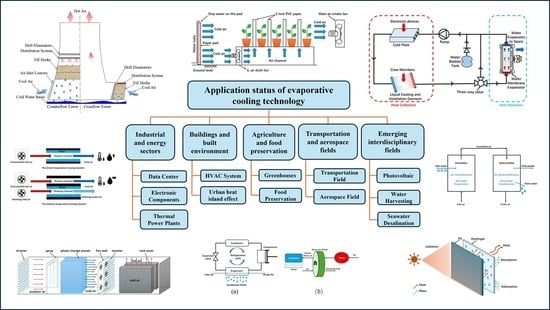
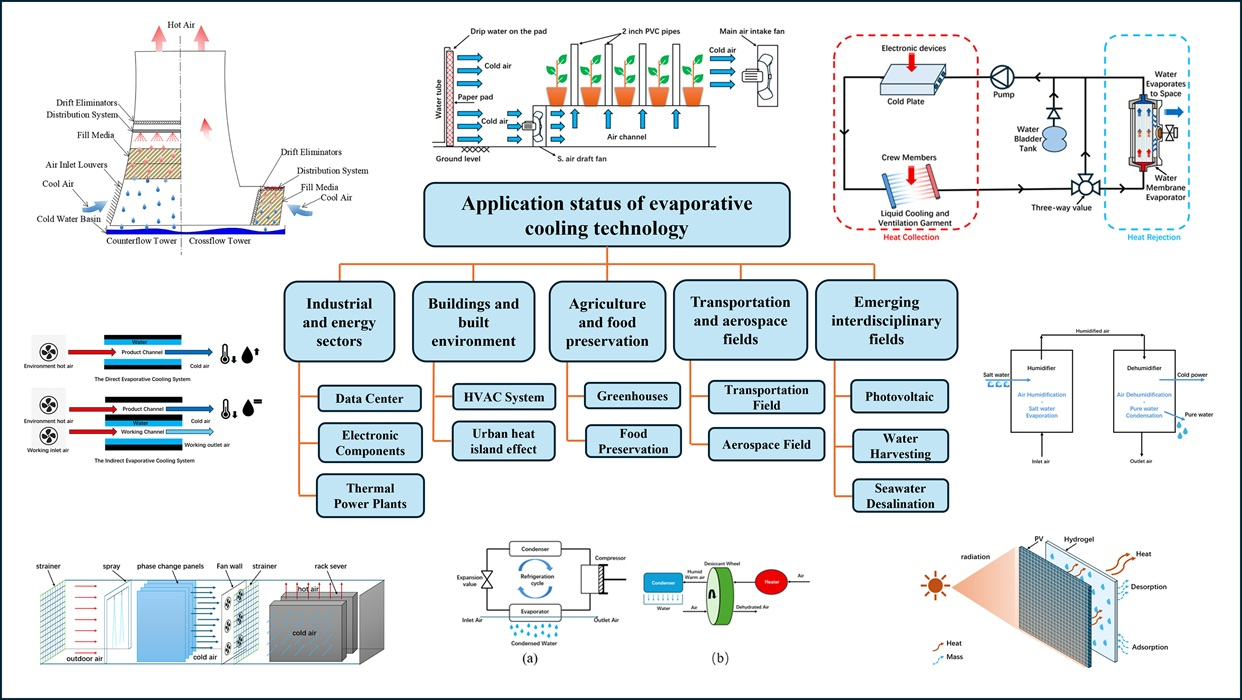
Graphical Abstract

1. Introduction

The growing demand for cooling has become a critical issue that cannot be overlooked amidst the global challenges of climate change, energy security, and sustainable development [1]. According to the International Energy Agency (IEA), global electricity consumption from air conditioners and refrigeration equipment is projected to triple by 2050, becoming the largest source of power demand in the building sector [2]. Traditional cooling technologies are energy-intensive and polluting, and their reliance on fossil fuel-based electricity further exacerbates greenhouse gas emissions [3]. In contrast, evaporative cooling technology utilizes the natural evaporation of water to lower temperatures, offering higher energy efficiency with remarkably low investment and operational costs. Crucially, it does not emit pollutants or significant waste heat, thereby delivering the threefold advantages of energy conservation, environmental protection, and economic viability, making it a highly promising cooling solution [4].
Evaporative cooling technology has shown significant potential for application in numerous fields due to its distinct advantages. A substantial body of innovative research has surfaced, ranging from large-scale applications in building energy efficiency [5] and urban microclimate moderation [6] to pivotal industrial processes [7] and data center cooling [8]. This research also extends to areas closely related to public welfare, such as agricultural preservation [9] and personal thermal comfort [10]. Nevertheless, current review literature is markedly limited in presenting a holistic picture because many reviews focus narrowly on single application areas, creating silos between disciplines. Table 1 summarizes a selection of specialized review articles to illustrate this point.
Much existing research is limited on a more fundamental level to “phenomenological descriptions” of specific applications. These studies often fail to generalize and distill the “common foundational challenges” the technology faces. The performance of evaporative cooling is fundamentally constrained by climate dependency and water management, regardless of the application [18]. In light of the above, a comprehensive review is necessary to systematically evaluate the overall potential of this technology and guide future innovation.
This review integrates multi-disciplinary applications and cutting-edge advancements to cross-compare common challenges and solutions. To fill the existing research gap, this paper adopts an integrative perspective to analyze advancements across five core sectors: industry and energy, buildings, agriculture, transportation/aerospace, and emerging fields. This paper focuses on distilling and cross-comparing innovative strategies for climate adaptability and water management, rather than merely presenting technical characteristics.
The remainder of the paper is structured as follows to provide a clear roadmap. Section 2 examines advancements in industrial and energy engineering, focusing on data center and electronic cooling. Section 3 explores the built environment and urban heat island mitigation. Section 4 discusses agriculture and food preservation. Section 5 reviews the transportation and aerospace sectors. Section 6 analyzes emerging fields, including photovoltaic integration and water resource co-generation. Section 7 provides a synthetic discussion on foundational challenges such as climate dependency and water management. Finally, Section 8 summarizes conclusions and suggests future research directions.

2. Applications in Industries and Energy Engineering

Evaporative cooling technology serves a fundamentally different purpose in the industrial and energy sectors than in the built environment: it guarantees stable equipment operation and enhances system efficiency. Highly efficient thermal management is the lifeline for the stable operation of heat-intensive data centers, thermal power plants, and high-density electronic devices [19,20]. Conventional mechanical cooling often entails significant energy consumption when addressing these common challenges. Evaporative cooling technology exhibits immense application value in these domains due to its low energy consumption. Table 2 summarizes representative applications of evaporative cooling in these sectors, highlighting diverse technological approaches and significant performance benefits.

2.1. Applications in Data Centers and Electronic Components

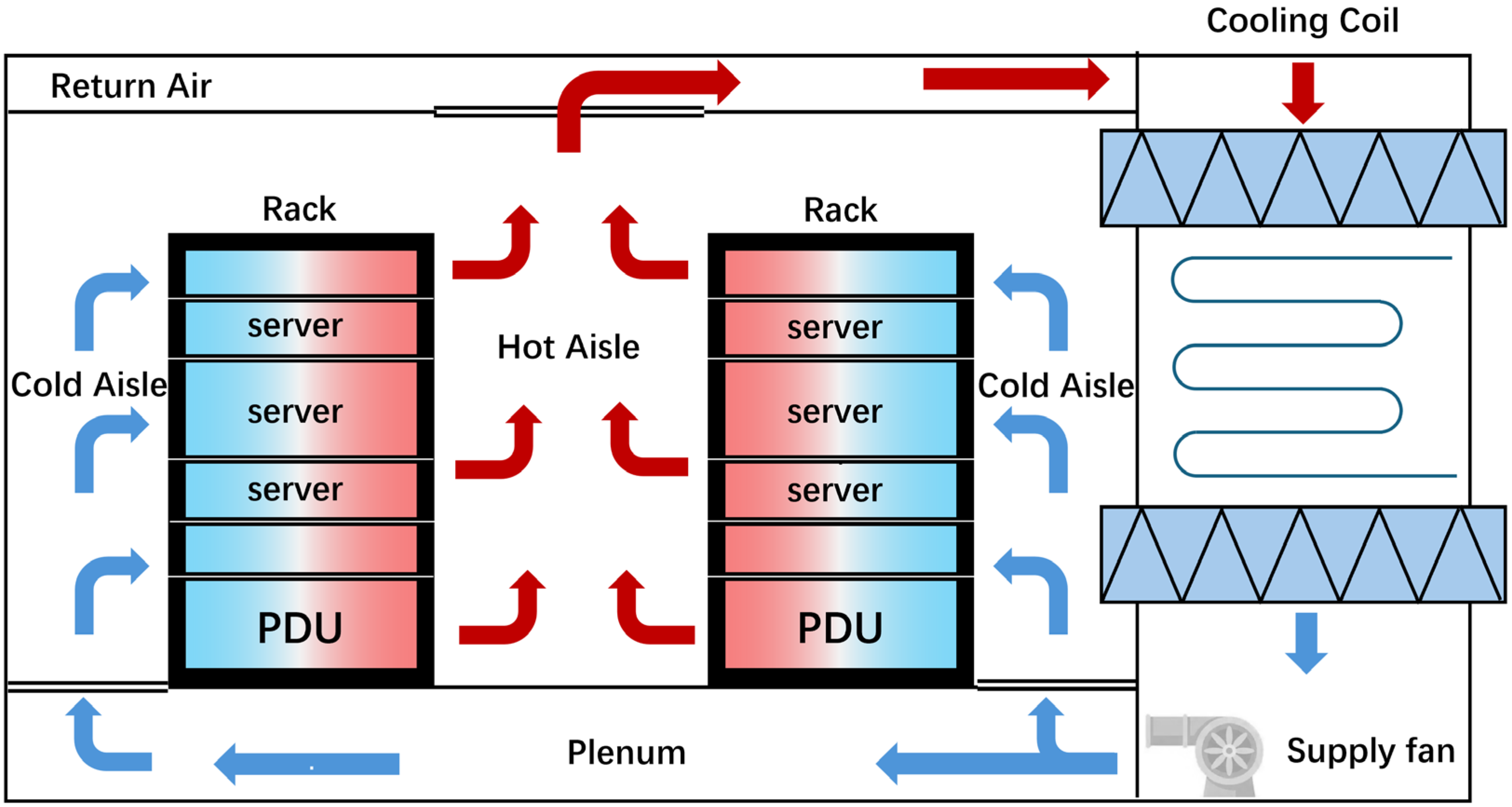
Power consumption densities of data centers and electronic components are rising due to accelerated digitalization, presenting severe common thermal management challenges. Thermal management in this field occurs at two distinct scales. Data center cooling addresses macro-level heat rejection from facilities and racks, while electronic component cooling focuses on micro-level dissipation directly from components to prevent hotspots. Conventional data center cooling typically relies on energy-intensive, multi-stage processes, as shown in Figure 1. These systems use Computer Room Air Conditioner (CRAC) units to deliver cold air to server racks. The heat is then transferred to a chilled water loop, cooled by large chillers, and rejected to the atmosphere via cooling towers. This widely adopted approach, however, has significant drawbacks. Chillers and associated pumps consume major amounts of energy, often accounting for 40% of total data center energy use [33]. The system’s complexity and reliance on mechanical refrigeration lead to high operational costs and a substantial carbon footprint. Furthermore, traditional air-cooling systems often struggle to keep pace with the demands of high-density server racks, which can lead to hotspots that degrade hardware performance and reliability. As traditional cooling methods face efficiency bottlenecks, evaporative cooling technology, especially advanced schemes that act directly on the component surface, has emerged as a cutting-edge research frontier in this domain due to its high efficiency and energy-saving characteristics.
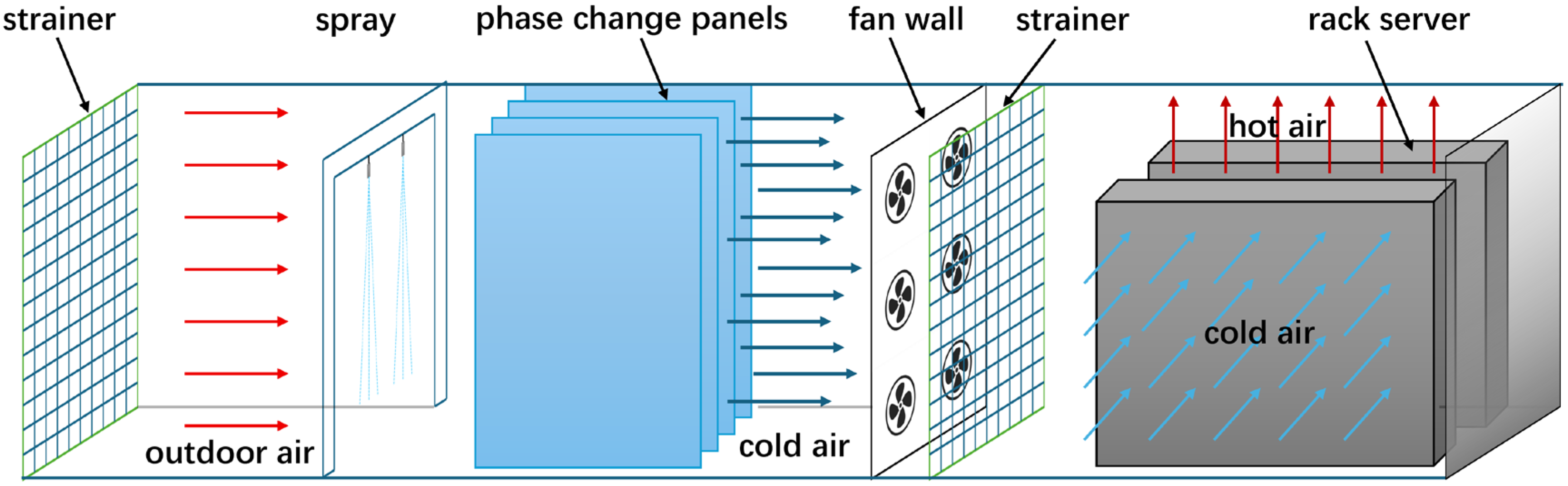
Evaporative cooling has become a key energy-saving alternative to conventional refrigeration at the data center level owing to its extremely low energy use and its ability to effectively manage high heat loads. Recent research focuses on the high-efficiency integration of evaporative cooling technology with other systems to overcome traditional limitations and precisely meet the operational demands of data centers. For instance, a hybrid air conditioning unit developed by Zhang et al., when evaporative cooling is activated, demonstrates an increase in its coefficient of performance (COP) of over 16% compared to conventional computer room air conditioners (CRAC) [21]. This leads to significant annual savings in operational costs. Yi et al. coupled evaporative cooling with phase change energy storage (PCES) technology to address the common challenge of humidity control. Figure 2 shows the schematic for this integrated system, where outdoor air is first cooled by a water spray before passing through phase change panels (PCP) for further regulation. This system significantly reduces temperature and lowers relative air humidity by approximately 35%, effectively mitigating potential risks to IT equipment [22]. Furthermore, through the precise control of cold-mist direct evaporative cooling, research by Mao et al. has confirmed that, even at a high temperature of 37 °C, the system can accurately cool the air to meet the required intake temperature for data center equipment. This boosts the annual energy-saving potential to a range of 14% to 41% and significantly extends the number of hours available for free cooling [8].
Common challenges at the electronic component level are microscopic and concentrated. Traditional air cooling is inefficient. Conventional liquid cooling systems are often hindered by complexity, bulkiness, and leakage risks. Evaporative cooling technology leverages the latent heat of liquid phase change for efficient heat dissipation. The latest research is exploring various innovative evaporative cooling pathways with the goal of achieving efficient, safe, and lightweight thermal management. For example, research by Wang et al. has confirmed that by enabling a refrigerant to evaporate directly within a cooling plate in close contact with the battery, the resulting cooling effect far surpasses that of conventional liquid cooling [35]. Building upon this foundation, Weragoda et al. introduced the novel concept of capillary-driven evaporative cooling. By constructing a porous wicking structure on the battery surface, this method utilizes capillary action to continuously supply the working fluid for evaporation. This approach not only significantly reduces the system’s thermal resistance but also achieves excellent temperature uniformity [23]. Taking this a step further, to achieve fully passive thermal management, Wang et al. developed a highly hygroscopic carbon fiber felt. This material can passively absorb moisture from the air and then utilize the battery’s own waste heat to evaporate it, achieving a significant temperature reduction, from 74.9 °C to 56.9 °C while also offering the unique advantages of zero energy consumption and fire retardancy [24].
Creating and maintaining extremely low-humidity environments is essential in high-tech manufacturing. This core requirement ensures product quality and safety for semiconductor fabrication and lithium-ion battery production. HVAC systems account for 30% to 40% of total energy use in industrial buildings. The dehumidification process contributes 30% to 50% of total cooling load within these systems. Dehumidification equipment is the primary energy consumer in thermal management for these precision industries [36]. To address this, Guan et al. proposed a cascading air-conditioning system for low-humidity industrial settings. Their design integrates desiccant wheels with liquid desiccant dehumidification and evaporative cooling. This hybrid approach leverages evaporative cooling to assist the dehumidification process. It effectively decouples sensible and latent heat management, significantly reducing the thermal load on mechanical refrigeration [25]. Furthermore, Wang et al. demonstrated that integrating desiccant wheels with novel dew-point evaporative cooler (DPEC) designs can provide high-efficiency cooling in tropical climates. Their system achieves a superior Coefficient of Performance (COP) while ensuring strict moisture removal [26]. For applications with low sensible-heat ratios, Park et al. investigated vacuum-based membrane dehumidification coupled with indirect evaporative cooling. Their findings indicate that such configurations can achieve energy savings of over 30% compared to conventional vapor-compression systems [27]. These advancements highlight the transformative potential of evaporative cooling in managing the energy-intensive dehumidification requirements of precision manufacturing.

2.2. Applications in Thermal Power Plants

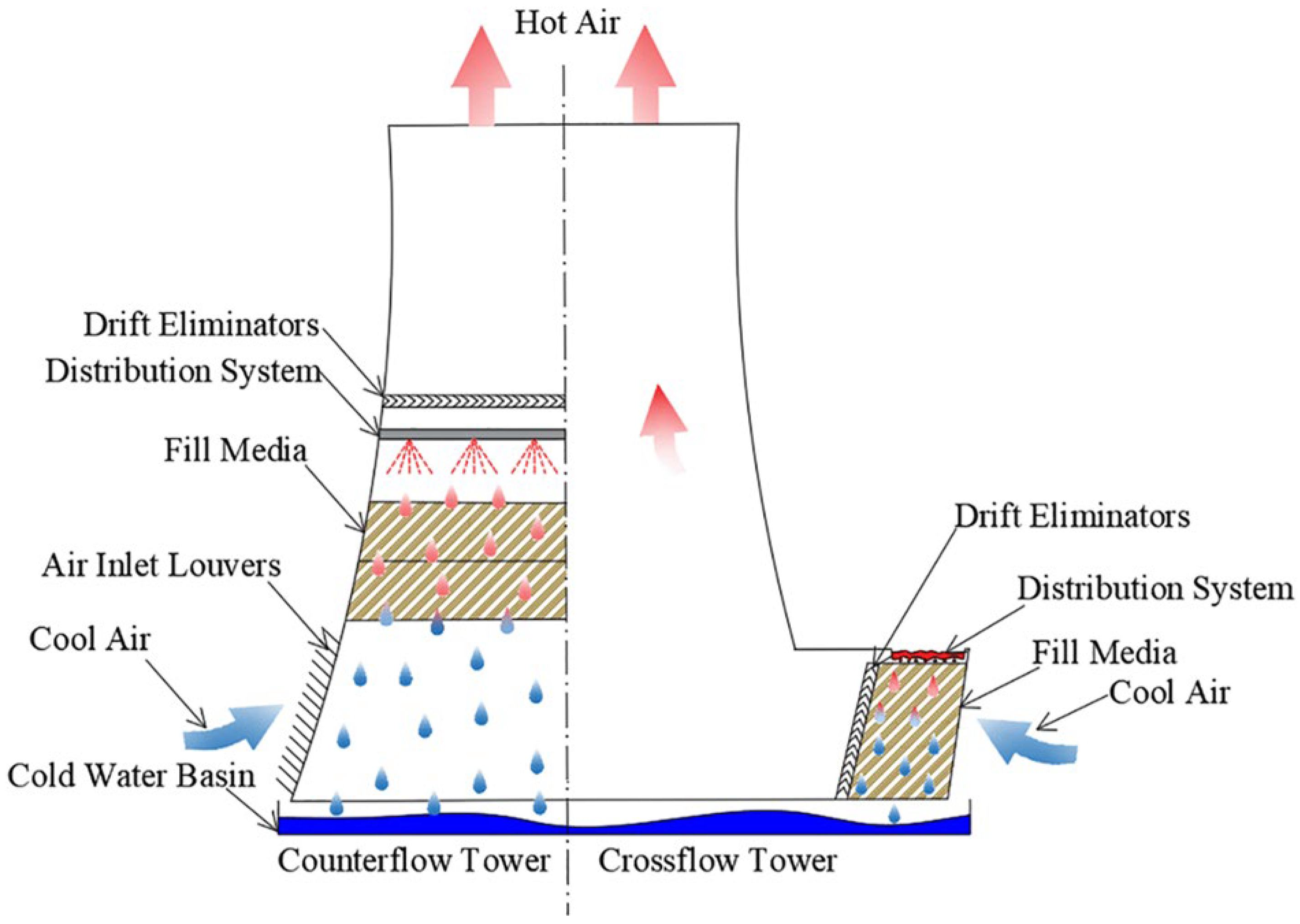
Power generation efficiency depends on the temperature difference between the heat source and the cold sink in fields such as thermal power plants. Effectively rejecting massive amounts of waste heat is critical for stable and efficient operation. The Natural Draft Wet Cooling Tower (NDWCT) is the cornerstone of conventional cooling for large-scale power plants. Figure 3 schematically depicts a typical structure of this system. Hot water from the power plant condenser is pumped to the top of the tower and evenly sprayed by a distribution system onto layers of fill media [37]. The large surface area of the fill promotes heat and mass transfer as the water trickles down. Ambient air is simultaneously drawn in through the inlet louvers at the base. A small fraction of the water evaporates, carrying away a significant amount of latent heat. This process cools the remaining water collected in the cold water basin for recirculation to the condenser. Hot, moist air rises and exits from the top of the tower. However, this widely used technology faces significant common challenges that constrain its application and performance. Firstly, reliance on massive water evaporation leads to substantial water consumption, posing a severe challenge in water-scarce regions. Secondly, the ambient wet-bulb temperature fundamentally limits cooling effectiveness. Performance degrades during hot weather, which can force power plants to reduce their output [38]. Evaporative cooling technology has evolved to overcome these inherent limitations, leading to a series of innovative approaches.
System enhancement primarily involves pre-cooling inlet air for air-cooled condensers. Kahraman et al. showed that pre-cooling inlet air for a power plant air-cooled condenser (ACC) can increase annual electricity generation by 2.9% to 4.6% [28]. This approach also demonstrates high economic feasibility. Research in core equipment innovation focuses on overcoming the common challenges of conventional cooling towers, particularly high water consumption and performance degradation in Natural Draft Wet Cooling Towers (NDWCTs). Innovations have largely followed three distinct pathways. The first involves replacing water-intensive wet towers with dry cooling systems and applying evaporative pre-cooling to compensate for reduced thermal performance in hot conditions. Zhao et al. systematically compared nozzle spray and wet medium pre-cooling for mechanical draft dry towers. Their findings confirmed nozzle spray as the superior method, boosting heat rejection by up to 67.11%. They also quantified a significant water-saving advantage where water consumption per megawatt was merely 59.27% of a conventional wet tower [29]. Luo et al. investigated a synergistic combination of spray pre-cooling with a Y-type windbreak to adapt this technology for complex real-world conditions. This integrated system improved heat rejection by 15.84% even under adverse crosswinds [30]. A second pathway focuses not on replacement, but on the direct retrofitting and enhancement of existing NDWCTs. Addressing the classic bottleneck of insufficient central ventilation in these massive structures, Zhang et al. proposed a hybrid system combining a “dry–wet hybrid rain zone” with auxiliary fans. This active–passive approach directly targets the core aerodynamic limitation, resulting in a remarkable 9.03% increase in cooling efficiency and an 18.52% increase in the Merkel number, offering a highly cost-effective upgrade solution for existing infrastructure [31]. A third stream of innovation delves into the fundamental redesign of the tower’s internal architecture. While their study focused on a mechanical draft tower, Chen et al. introduced a novel crossflow-counterflow combined structure to fundamentally reconstruct the internal flow field. This approach, which achieved a 3.5% increase in circulating water temperature drop, represents a departure from external add-ons and highlights the potential of advanced aerodynamic design. Such a principle of internal flow optimization offers a valuable conceptual direction for the design of next-generation, high-efficiency cooling towers of all types [32].
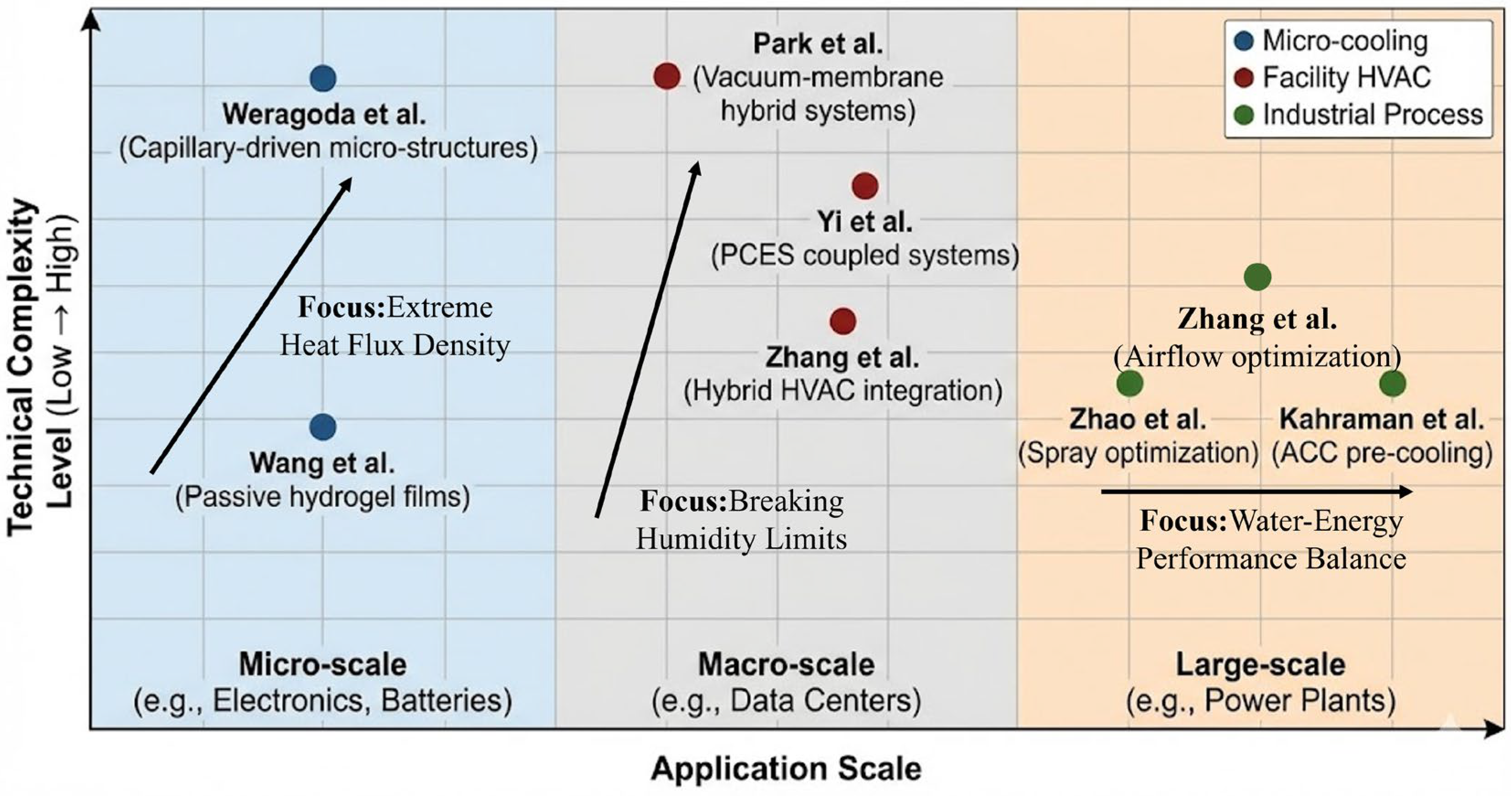
To conclude, the application of evaporative cooling in the industrial sector demonstrates a clear scale-dependent evolution, as systematically mapped in the technical landscape of Figure 4. In the electronic component sector, research has shifted toward localized, high-efficiency solutions where the primary focus is maximizing heat flux density. This ranges from zero-energy passive hydrogel films to high-complexity structures leveraging capillary-driven latent heat dissipation. For data centers and facility HVAC systems, a distinct trend emerges toward breaking ambient humidity limits. While systems like precise cold-mist control offer moderate complexity, advanced schemes such as phase-change energy storage (PCES) coupling and vacuum-assisted membrane technology significantly increase system integration to achieve superior annual energy-saving potential. In thermal power plants and large industrial processes, the scientific focus transitions toward achieving a robust balance between water consumption and thermal performance. This is primarily realized through aerodynamic redesigns and optimized spray strategies for cooling towers. A critical discussion point remains the inherent trade-off between cooling requirements and system complexity. While high-integration architectures successfully decouple performance from climate dependency, they introduce higher initial investment and maintenance demands. Consequently, future research should prioritize stabilizing these high-efficiency integrated systems to ensure long-term operational reliability across diverse and volatile industrial environments.

3. Applications in Buildings and Built Environment

Buildings and the built environment are major sources of global energy consumption and represent a key frontier in the challenge of addressing climate change. According to statistics, heating, ventilation, and air conditioning (HVAC) systems in buildings account for nearly 30% of global energy consumption and 25% of carbon dioxide emissions [39]. The energy consumption driven by the escalating demand for cooling has become a particularly pressing challenge. This section explores the application of evaporative cooling technology in this core domain. It systematically elaborates on how this technology serves as a sustainable solution at two synergistic levels: the building and the external urban environment. Table 3 provides an overview of the key strategies and representative studies within these domains, which will be elaborated upon in the following sections.

3.1. Applications in HVAC Systems

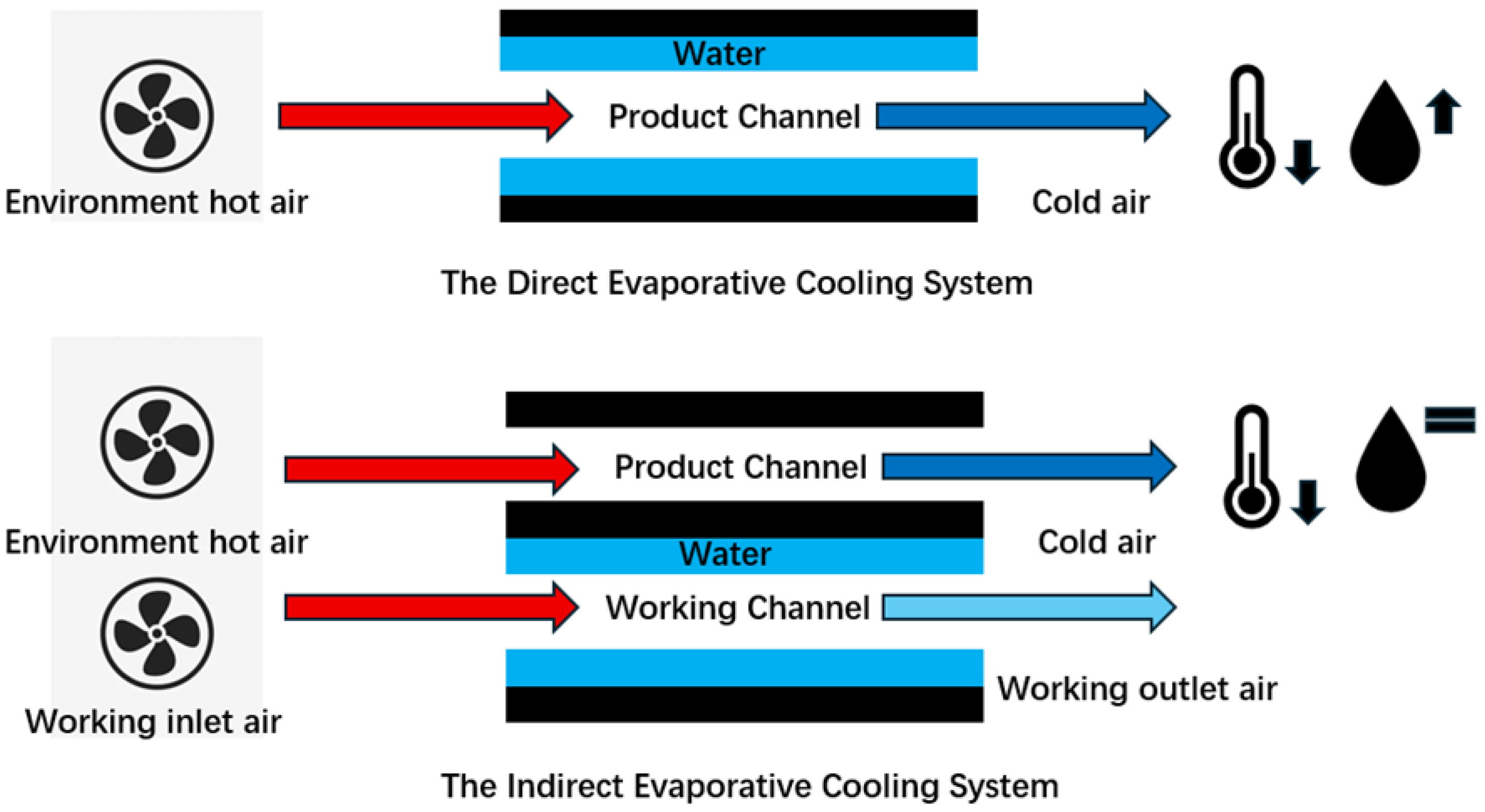
The application of evaporative cooling technology in HVAC systems is primarily realized through two distinct methods: direct evaporative cooling (DEC) and indirect evaporative cooling (IEC). The fundamental principles differentiating these two approaches are illustrated in Figure 5. In a DEC system, cooling is achieved by passing a single stream of air directly through a wetted medium. This process is highly effective at reducing the air’s temperature but, as a direct consequence of the water evaporation, also significantly increases its humidity. Conversely, an IEC system utilizes a heat exchanger with separate wet and dry channels to cool the supply air without adding moisture. As both cooling methods offer unique advantages and disadvantages regarding their structure, cost, and performance, the selection of a suitable approach based on specific conditions is of great significance for reducing HVAC system energy consumption and improving cooling efficiency.
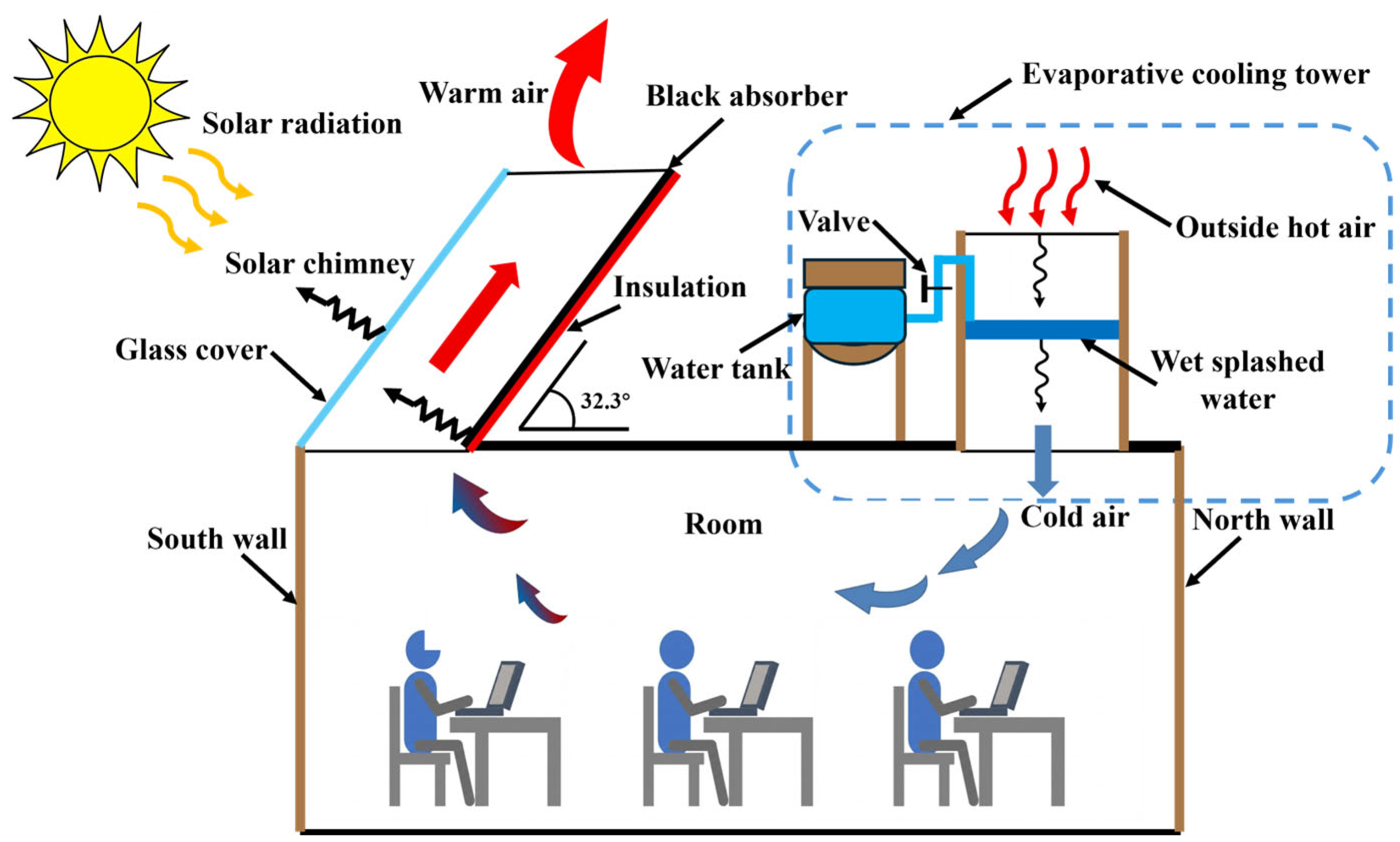
Direct Evaporative Cooling (DEC) integration effectively achieves high-efficiency energy savings in building HVAC systems. Its application strategies primarily utilize natural porous materials as the core wetting medium. Saez et al. conducted an experiment to optimize the cooling efficiency of a direct evaporative cooling system. They compared the performance of five natural materials, such as eucalyptus fiber and wool, as the “cooling pad”—the system’s core component—with the goal of optimizing the heat and mass transfer efficiency of the DEC system through material selection [40]. Abedi et al. proposed an active plant-based biofilter. This system uses a fan to pass air through a moist filter layer formed by plant roots. Water evaporation achieves cooling and humidification, while plants and microorganisms purify the air. The design integrates three functions: cooling, humidification, and purification [41]. Shboul et al. combined evaporative cooling technology with passive design, replacing fans with the thermal buoyancy generated by a solar chimney to drive ventilation. Hot outdoor air is passively drawn into an evaporative cooling tower, cooled, and then enters the room, creating a self-driven ventilation and cooling system that requires no additional power consumption [42]. The operational principle of this integrated passive cooling and ventilation configuration is illustrated in Figure 6.
Despite the immense cooling potential of direct evaporative cooling, its inherent drawback of increasing air humidity has limited its widespread application in HVAC systems with high requirements for occupant thermal comfort. To address this, indirect evaporative cooling (IEC) technology emerged. By separating the airflow into non-contacting dry and wet channels, it achieves effective cooling without increasing the humidity of the supply air, thereby vastly expanding the application boundaries of evaporative cooling. The research by Tripathi et al. serves as a prime example; they experimentally evaluated a solar-driven IEC system featuring a novel structure with multi-channel dry passages. This design aims to maximize the heat and mass exchange efficiency of the IEC system by increasing the heat transfer area and optimizing airflow organization, thereby delivering more robust cooling performance powered by renewable energy [43]. Morselli et al. integrated an indirect evaporative cooler with a ventilated roof concept, achieving a cascade utilization of resources. Cooled air provides indoor cooling, while the cool, moist exhaust stream is channeled into the roof plenum. This exhaust air leverages its residual cooling capacity to remove solar radiation heat from the roof. This approach achieves the objective of “dual use from a single airflow” to maximize efficiency [44]. Allahham et al. employed Indirect Evaporative Cooling (IEC) as the final step in a multi-stage air handling system to address the challenges of hot and humid climates. They designed an integrated system that sequentially utilizes passive chimney ventilation and liquid desiccant dehumidification, followed by the final cooling of the deeply dehumidified, hot–dry air using the IEC unit. This approach makes it possible to deliver cool, dry, and comfortable air even in extremely humid environments [45].

3.2. Applications in Mitigating the Urban Heat Island Effect

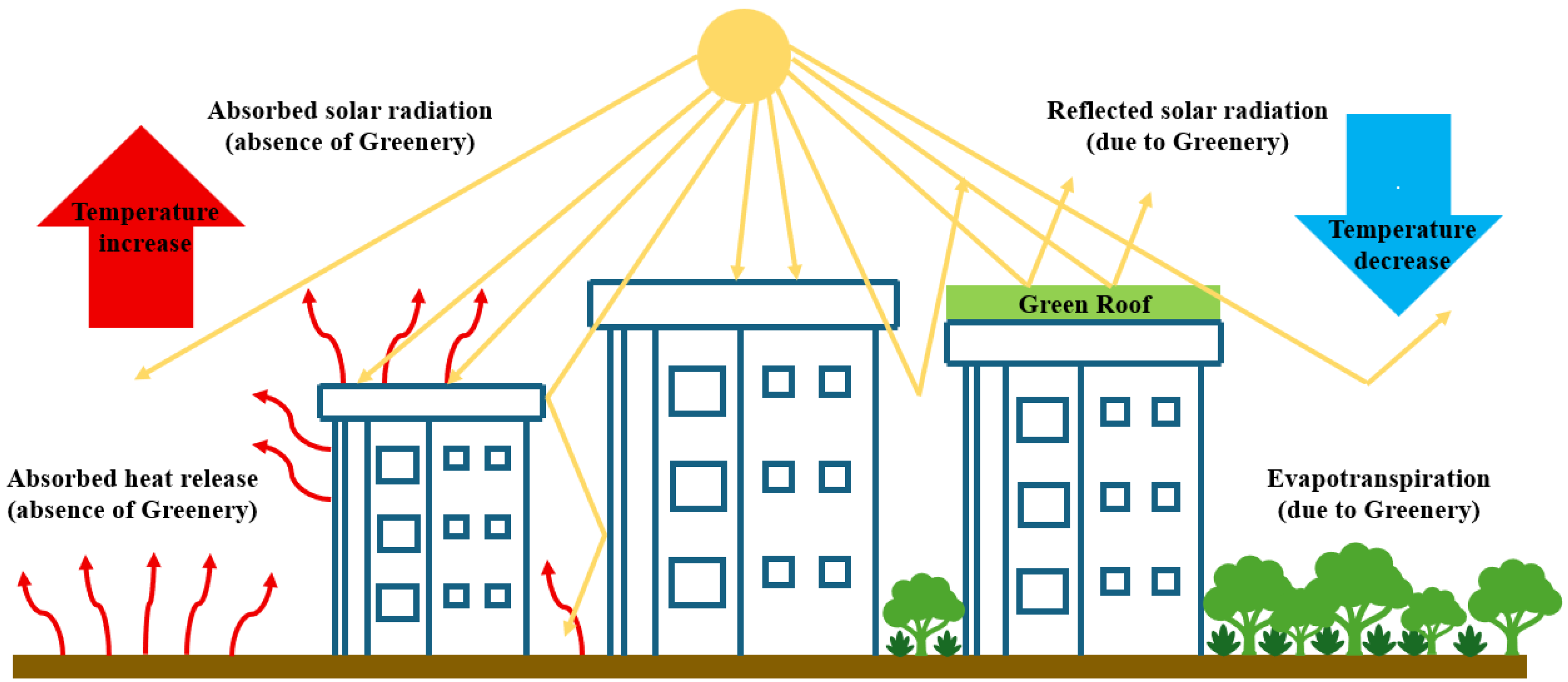
The application value of evaporative cooling technology is not merely limited to regulating the indoor thermal environment of a single building; on a macro scale, it also offers a highly promising solution for mitigating the increasingly severe urban heat island effect [52]. To address this challenge, Urban Green Infrastructure (UGI) has widely been adopted as a primary passive intervention strategy. As illustrated in Figure 7, the introduction of greenery (such as green roofs and vegetation) fundamentally alters the urban thermal balance compared to non-vegetated surfaces. While conventional building materials absorb solar radiation and release sensible heat, leading to temperature increases, UGI facilitates temperature decrease through enhanced reflected solar radiation and the natural cooling process of evapotranspiration. However, the cooling efficiency of biological UGI is fundamentally constrained by physiological and morphological factors. For instance, vegetation cooling is dependent on parameters such as stomatal resistance; under extreme heat or drought stress, plants often close stomata to conserve water, significantly reducing their transpiration cooling capacity [53]. Furthermore, the implementation of large-scale Shading Trees (ST) or Urban Rainwater Ponds (URP) in dense urban centers is often limited by spatial constraints.
Consequently, engineered evaporative cooling technologies have emerged as a more robust alternative. By utilizing the latent heat of water’s phase change, these technologies convert the sensible heat accumulated in the urban environment into latent heat, serving as a highly effective passive or active intervention that mimics the cooling mechanisms of natural ecosystems while offering superior controllability and durability.
Permeable pavements utilize their porous structure to absorb and store rainwater; during hot weather, the evaporation of this water carries away heat, thereby lowering the pavement temperature and effectively mitigating the urban heat island effect [54]. The latest research reveals that the cooling performance of a pavement is critically dependent on the balance of its hydraulic properties. Zhao et al. compared different materials in a field study. Porous asphalt and pervious concrete exhibit high permeability but poor water retention. In contrast, ceramic permeable bricks provide a more durable and significant evaporative cooling effect due to their superior water absorption and retention capabilities. This not only substantially reduces pavement temperature but also effectively improves the thermal comfort of the near-surface air [46]. Through their research on bi-layer pervious concrete, Luo et al. found that adopting an “upper-fine, lower-coarse” structure and optimizing the thickness and porosity of the top layer can maximize the evaporation rate, thereby providing a new approach for customized design based on regional climate conditions [47].
In outdoor open spaces, such as public squares and courtyards, devices like evaporative coolers and misting systems can be deployed to directly cool the surrounding air through the rapid evaporation of water. This approach is an effective strategy for achieving precise, real-time control of the local microclimate and can effectively improve thermal comfort in outdoor spaces during periods of extreme heat. Sun et al. found that mist cooling in courtyards improves local conditions and lowers the indoor temperature of adjacent buildings in hot, arid regions. This simulation study demonstrates a dual benefit for both indoor and outdoor environments. The effect is especially significant for buildings with single-sided ventilation [48]. In more challenging hot and humid climates, innovative evaporative cooling solutions have likewise been proven to be effective. For example, research by Desert et al. has shown that a well-designed misting system can provide a reduction in perceived temperature of over 15 °C even in high-humidity environments, creating an experience of “thermal pleasure” [55]. Moreover, for extreme hot and humid conditions, the hybrid system proposed by Hatoum et al., which integrates dehumidification and evaporative cooling, can create a localized comfort zone that is both cool and dry. It is even capable of reaching the ideal state of zero thermal stress, representing a frontier in the development of this technology [49].
Applying evaporative cooling to the walls and roofs of buildings transforms them into vast evaporative heat dissipation surfaces. This approach actively lowers the building exterior temperature. It effectively mitigates the urban heat island effect by reducing building air conditioning energy consumption. Consequently, this strategy diminishes heat radiation into the urban environment. For wall applications, the water absorption properties of the material are critically important. Research by Li et al. in a climate simulation chamber has confirmed that porous sintered bricks can effectively utilize natural rainfall to achieve sustained cooling for several days, with the cooling effect being more durable with longer rainfall duration [50]. In roof applications, the innovative effects of new materials are significant. A large-scale field experiment by Duan et al. demonstrated that a roof covered with a porous fiber felt delivers a far superior cooling effect compared to a traditional sprayed metal roof, with the surface temperature being additionally reduced by 15 °C. This is attributed to the fiber material’s excellent water retention and uniform distribution capabilities, which enable more efficient water evaporation [51]. Similarly, addressing the challenges of hot and humid climates, Esparza-López et al. evaluated a wet fabric device applied to concrete roofs. Their comparative study demonstrated that by minimizing the water layer thickness, this system not only reduced the structural load but also achieved superior thermal performance compared to traditional roof ponds, lowering indoor temperatures by up to 6.6 °C [56].
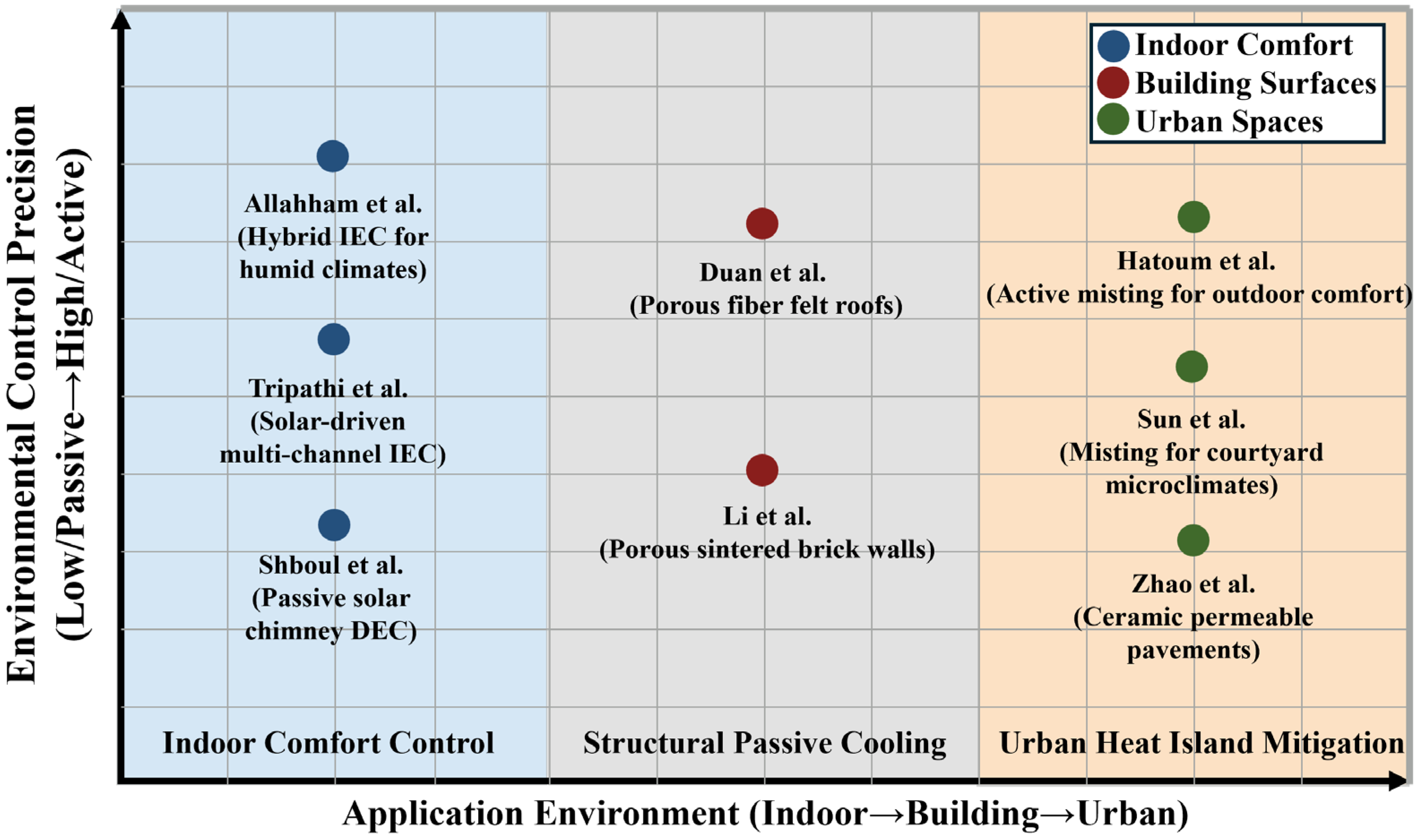
To conclude, the application of evaporative cooling in the built environment demonstrates a strategic divergence based on the environmental scale (Figure 8). In indoor HVAC systems, research focuses on the high-precision decoupling of sensible and latent loads to maintain occupant thermal comfort without excessive humidity. Conversely, as the scale expands to the building envelope and urban spaces, the technology transitions toward passive, nature-mimicking interventions. The primary focus in this macro-context is the efficient mitigation of the urban heat island effect. By transforming engineered surfaces—such as ceramic pavements and porous brick walls—into effective evaporative heat sinks, these strategies convert accumulated sensible heat into latent heat, providing a robust and sustainable solution for urban microclimate restoration.

4. Applications in Agriculture and Food Preservation

Ensuring food security for a growing global population presents severe challenges, including the impact of climate change and intensifying heat stress on crop-growing environments and the prevalent issue of post-harvest losses within the food supply chain. Traditional mechanical refrigeration, while effective, is often energy-intensive and economically inaccessible for many agricultural producers. Against this backdrop, evaporative cooling technology emerges as a highly effective and economically viable solution, providing a powerful tool for enhancing the resilience of the entire agri-food value chain, from primary production to final preservation. Table 4 summarizes key applications and representative studies in both of these critical areas, which will be detailed in the subsequent sections.

4.1. Applications in Greenhouses

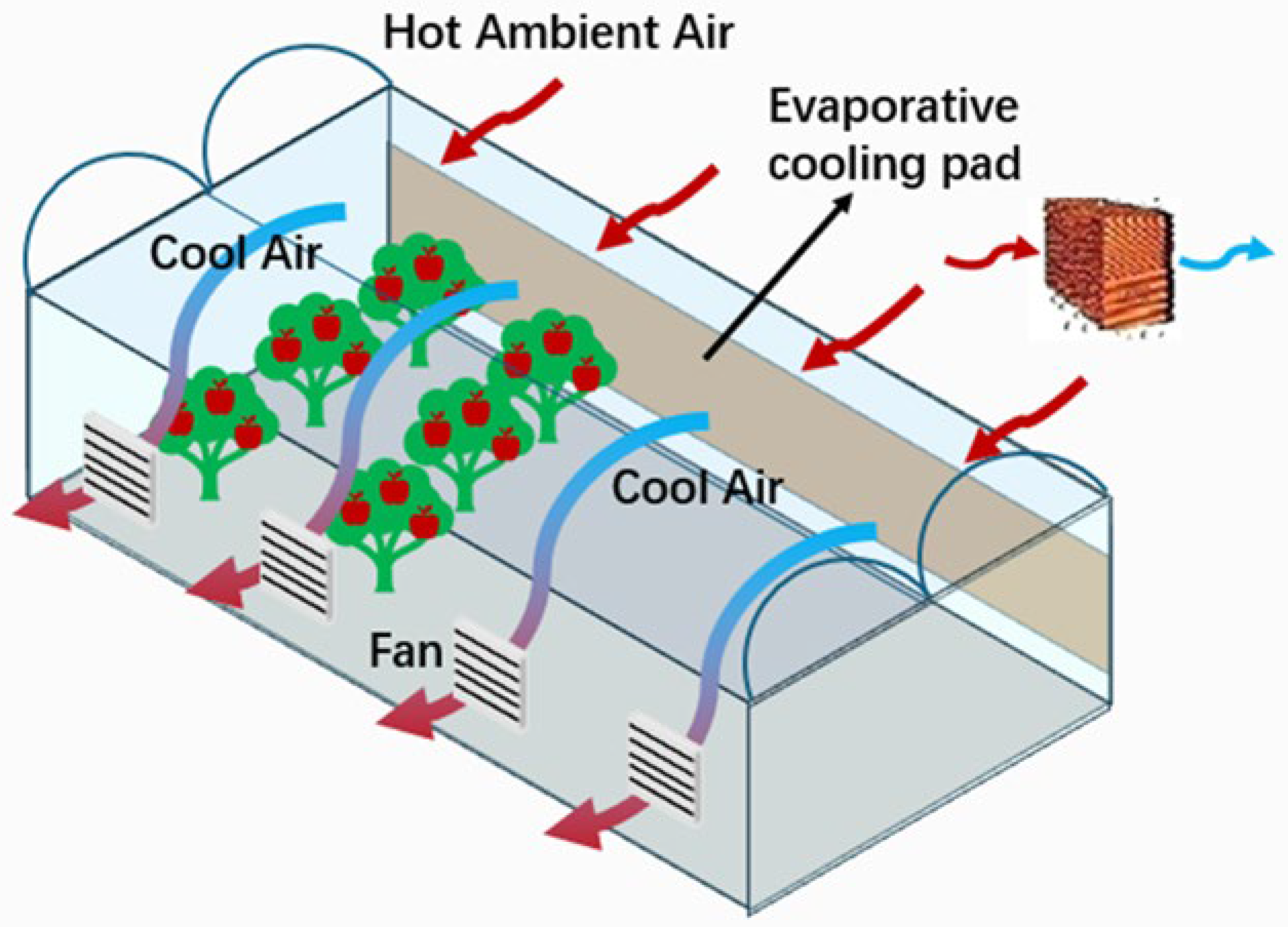
In agricultural production, particularly in hot and arid regions, excessively high temperatures inside greenhouses are a major limiting factor for crop growth and yield. Evaporative cooling technology, especially the fan-and-pad system, has become a core technology for greenhouse environmental control due to its high cost-effectiveness and low energy consumption. Figure 9 illustrates a typical configuration of this technology. The system operates on a negative pressure mechanism. Exhaust fans on one side of the greenhouse extract air to create a pressure differential. This differential draws hot ambient air through a wetted porous pad on the opposite wall. As the air traverses the wet medium, sensible heat is converted into latent heat through water evaporation, resulting in a cool air stream that flows across the crop canopy.
While this traditional fan-and-pad arrangement is widely adopted due to its simplicity and economic viability, it is not without limitations. The primary drawback is the longitudinal temperature gradient; air temperature inevitably rises as it moves from the pad to the fan, potentially leading to non-uniform microclimates and uneven crop growth. Furthermore, the system requires significant water resources and careful maintenance to prevent clogging. Consequently, recent research efforts have shifted towards optimizing component design and system layout to overcome these heterogeneity and efficiency challenges.
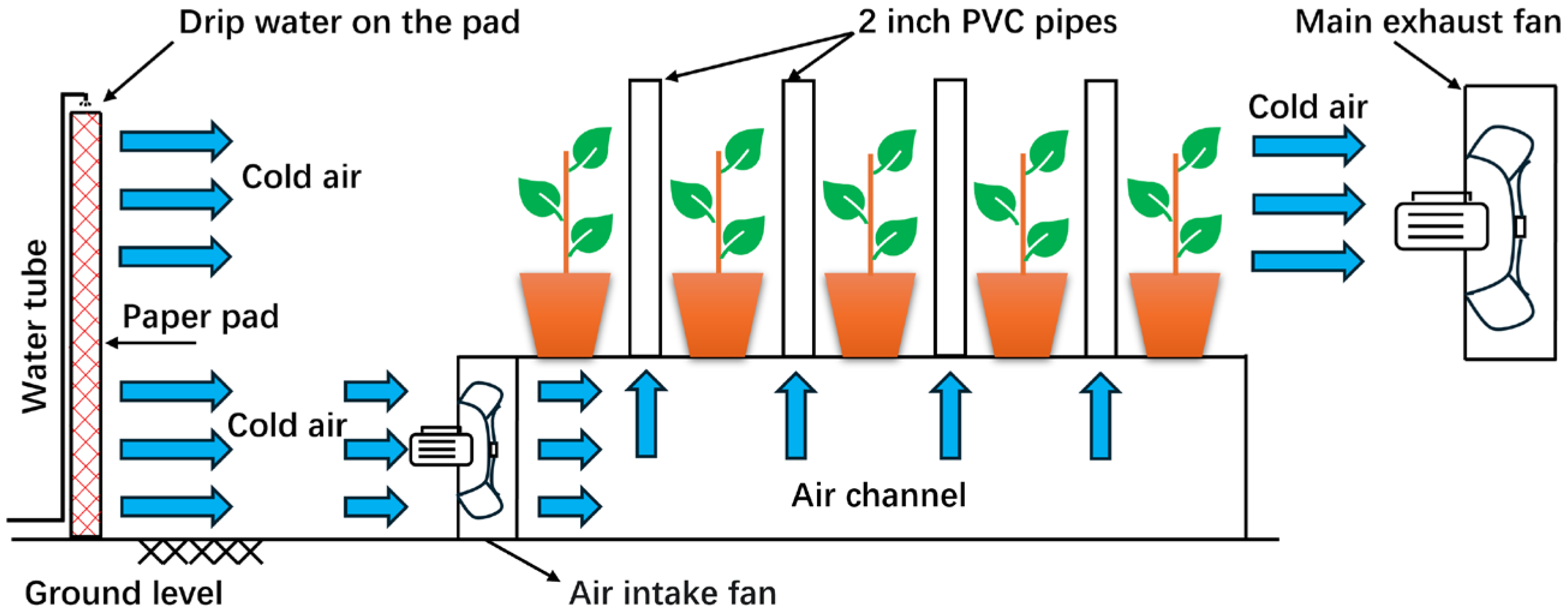
Focusing on the design optimization of the cooling pad itself, through computational fluid dynamics (CFD) and wind tunnel experiments, Li et al. systematically analyzed the influence of the pad’s geometric parameters—such as flute height, flute spacing, and cross-flute angle—on its cooling efficiency and air resistance, providing a scientific basis for its design and selection [57]. To address the uniformity issue at the system level, Allali et al. employed a CFD model to simulate a greenhouse in a semi-arid region. Significantly, the model was rigorously validated against experimental data collected from a physical experimental greenhouse, demonstrating a strong correlation between the numerical predictions and actual measurements. Based on this validated model, their research demonstrated that by optimizing the system layout, the average indoor temperature could be reduced from 40 °C to 21 °C, creating an excellent growing environment [58]. Structural innovations are also expanding to include passive ventilation strategies. A numerical investigation into a passive downdraught evaporative cooling windcatcher (PDEC-WC) demonstrated that such systems can reduce greenhouse temperatures from 45.0 °C to 31.7 °C (a maximum reduction of 13.3 °C) while maintaining adequate airflow, even in hot climates [64]. Moving beyond global space cooling to more efficient localized solutions, Rashwan et al. designed and tested a modified evaporative cooling system for precision cooling. As illustrated in Figure 10, their design features a secondary air draft fan that directs evaporatively cooled air into an adiabatic channel positioned beneath the plants. From this channel, the cold air is delivered vertically through PVC pipes, targeting the root zone of the cucumber plants directly. Compared to conventional systems, this method of precision air delivery significantly reduced the plants’ heat stress, leading to an improvement in physiological indicators such as photosynthesis and transpiration rates, and ultimately increased the crop yield by 13.22% [59]. Beyond controlled greenhouse environments, evaporative cooling is also a vital strategy for open-field cultivation. For instance, research by Murphy et al. confirmed that overhead sprinkler evaporative cooling is a common practice in orchards to prevent high-value fruits, such as apples, from developing “sunscald” caused by heat stress and intense solar radiation. However, the study highlights a critical food safety trade-off: the increased surface moisture from evaporative cooling can facilitate the survival of foodborne pathogens like E. coli on the fruit surface. This underscores that while the technology is effective for safeguarding the commercial appearance and physiological quality of agricultural products in the field, it must be paired with rigorous microbial water quality management to ensure food safety [60].

4.2. Applications in Food Preservation

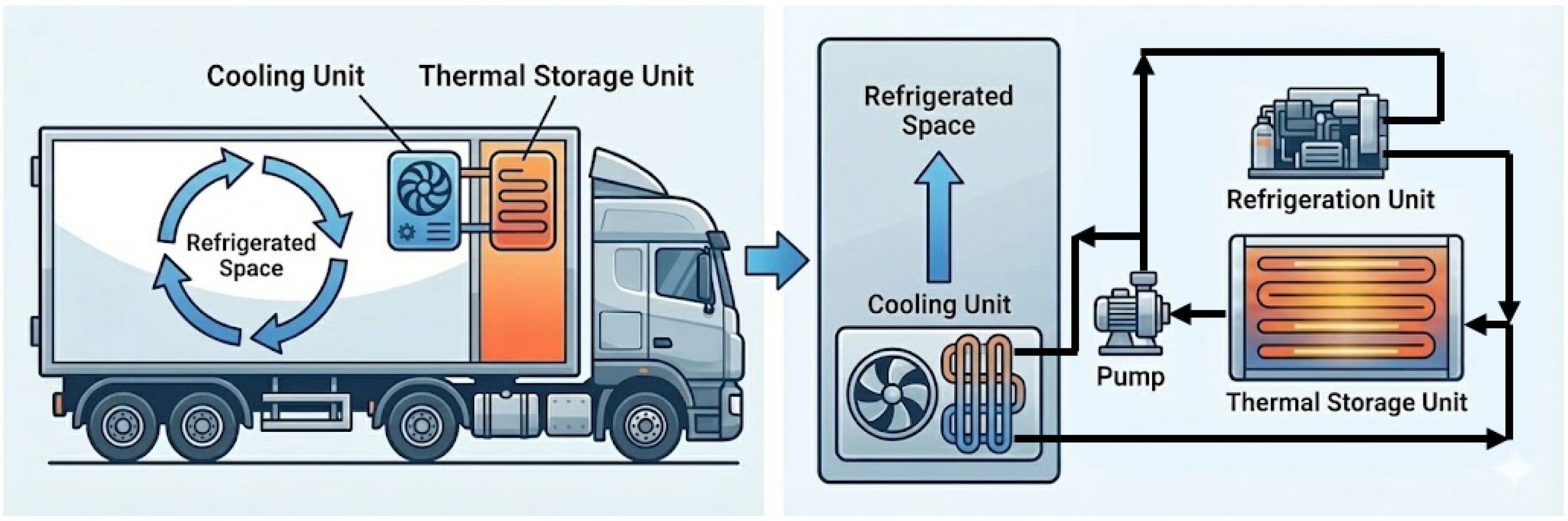
Beyond primary production, evaporative cooling is also critical for addressing post-harvest losses, another major challenge to food security. Conventional preservation strategies, particularly within cold chain logistics, predominantly rely on active mechanical refrigeration systems, as illustrated in Figure 11. In this typical configuration, a high-power refrigeration unit charges a thermal storage module, which is then circulated via a pump to absorb heat and maintain low temperatures within the refrigerated space. While this method offers precise temperature control, it is fundamentally constrained by high energy consumption, heavy reliance on fossil fuels, and significant greenhouse gas emissions [65]. Moreover, the complexity and high capital and operational costs of such systems render them economically inaccessible for many small-scale farmers in resource-constrained or off-grid regions.
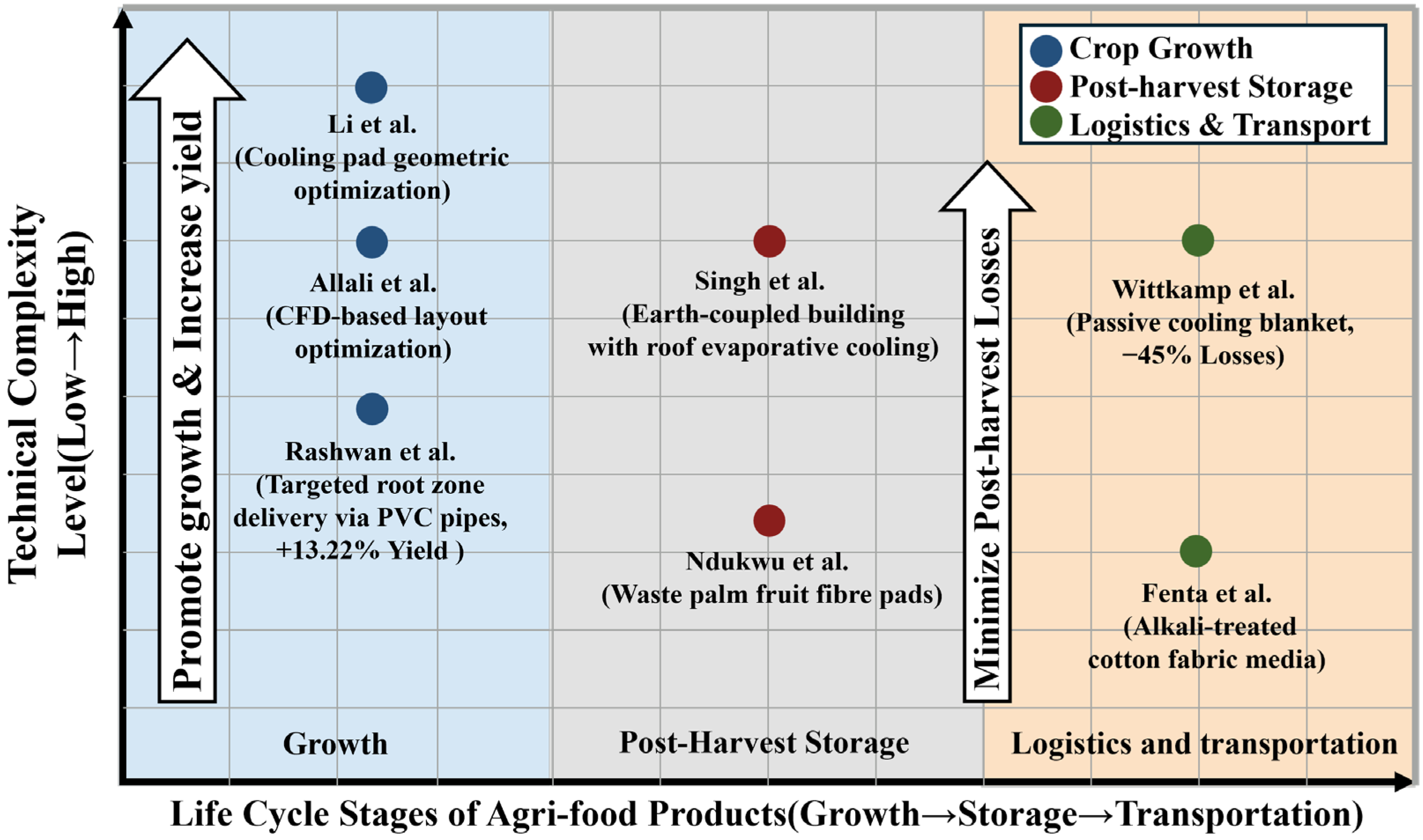
Addressing these challenges necessitates efficient, energy-saving, and sustainable technological interventions. To address these logistical bottlenecks, evaporative cooling offers a low-carbon, decentralized approach specifically for maintaining the quality and shelf-life of harvested produce during the critical stages of storage and transit. The principles of evaporative cooling are first widely applied to pre-harvest quality maintenance. For example, Wittkamp et al. developed a passive “cooling blanket” from low-cost natural materials, which cut post-harvest vegetable losses by up to 45%. Field tests in Kenya showed it lowered temperatures by 3–5 °C while maintaining 95% humidity, demonstrating excellent economic viability with a payback period under three months [61]. For larger-scale cold storage facilities, combining passive strategies is proving effective. Life cycle analysis of a potato storage building indicates that integrating earth-coupling with roof evaporative cooling can yield significant economic savings, particularly when the building is sunken to optimal depths [67]. To further enhance the performance and sustainability of these devices, researchers are also actively exploring novel porous media. Research by Ndukwu et al., for instance, has shown that utilizing discarded palm fruit fibers as the wetting medium can effectively reduce the core temperature of fruits such as oranges and papayas [62]. Meanwhile, Fenta et al. validated the feasibility of using alkali-treated cotton fabric as a material for capillary-driven evaporative cooling, demonstrating that even simple textiles can be used to construct a highly effective cooling system [63].
In summary, evaporative cooling provides a dual-value strategy across the agri-food life cycle (Figure 12). On the production side, it effectively promotes crop growth by mitigating heat stress. A strategic shift toward precision root-zone cooling can achieve a 13.22% increase in yield. For the logistics phase, the technology offers a low-cost solution for food preservation. Passive materials, such as cooling blankets, can reduce post-harvest losses by up to 45%. This is particularly valuable in resource-limited regions. However, a key challenge remains the trade-off between heat mitigation and microbial safety. Future research must prioritize water quality management. High preservation efficiency must not compromise food safety.

5. Applications in Transportation and Aerospace Fields

The transportation and aerospace sectors impose extremely stringent requirements for energy efficiency, lightweight design, and operational reliability while also demanding robust and innovative solutions for immense thermal load management challenges. As the predominant climate control technology in vehicles and aircraft, conventional vapor-compression air conditioning not only utilizes chemical refrigerants but also introduces a cascade of significant drawbacks, including increased fuel consumption, parasitic power loads, excessive system weight, and adverse environmental impacts. Consequently, the pursuit of more sustainable and highly efficient thermal management solutions has become a paramount area of innovation for both industries. Evaporative cooling technology has emerged as a compelling alternative. It offers a fundamentally different heat dissipation pathway that aligns with the core objectives of modern transportation and aerospace. Table 5 summarizes several key research advancements in these fields, demonstrating the technology’s remarkable versatility in addressing mobile and extreme-environment thermal challenges.

5.1. Applications in Transportation Field

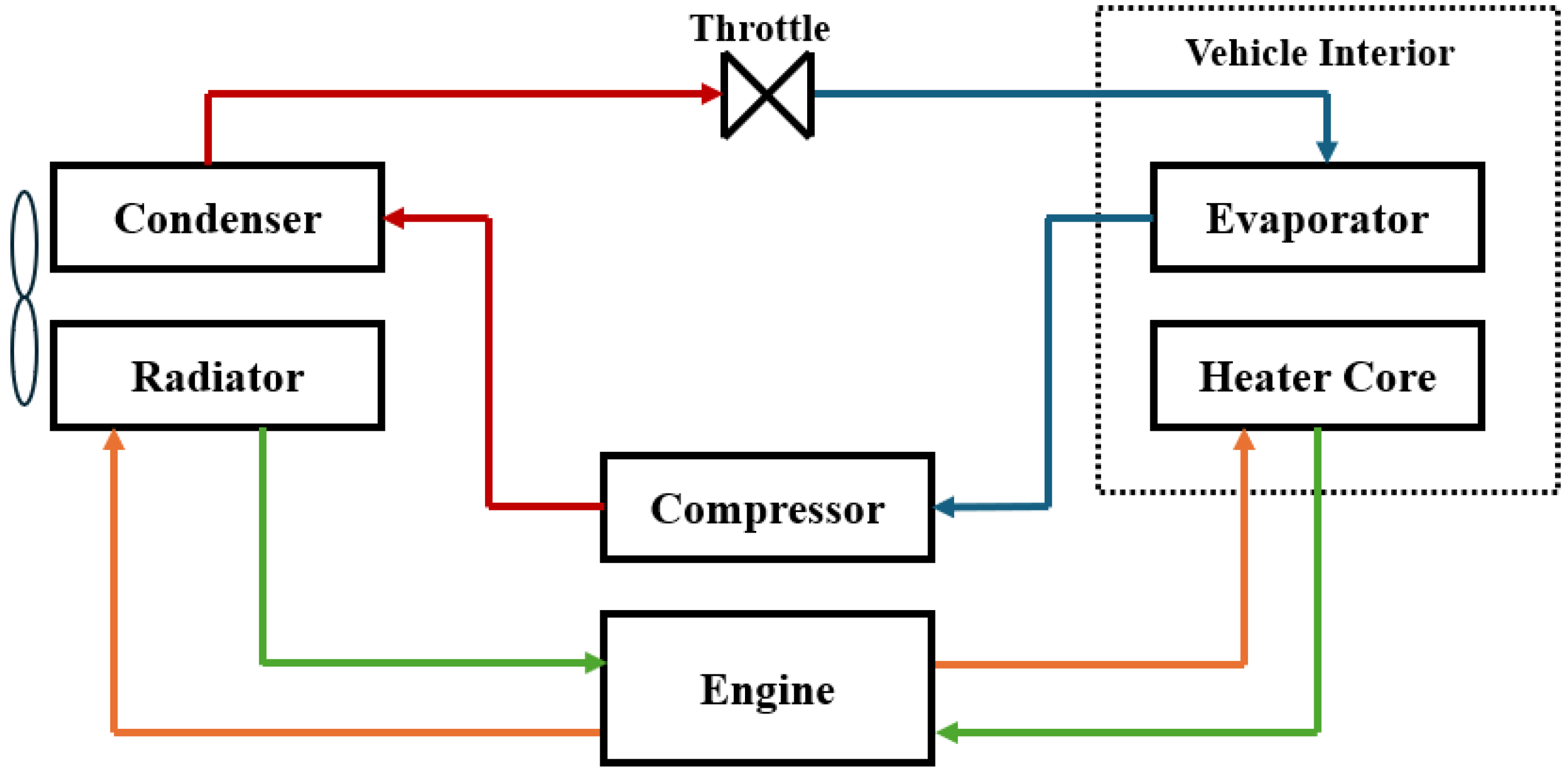
Due to its highly efficient and energy-saving characteristics, evaporative cooling technology is becoming a key solution for addressing the high energy consumption of air conditioning systems in the transportation sector. A typical automotive thermal management system is illustrated in Figure 13. In this conventional vapor-compression configuration, the air conditioning compressor is mechanically driven by the internal combustion engine, while the heater core utilizes the high-temperature coolant from the engine’s loop. Although this mature architecture ensures stable cabin comfort, it imposes a significant parasitic load on the engine, directly leading to increased fuel consumption and exhaust emissions. Furthermore, the efficiency of conventional in-vehicle air conditioners drops sharply in high temperatures, significantly increasing the vehicle’s energy load.
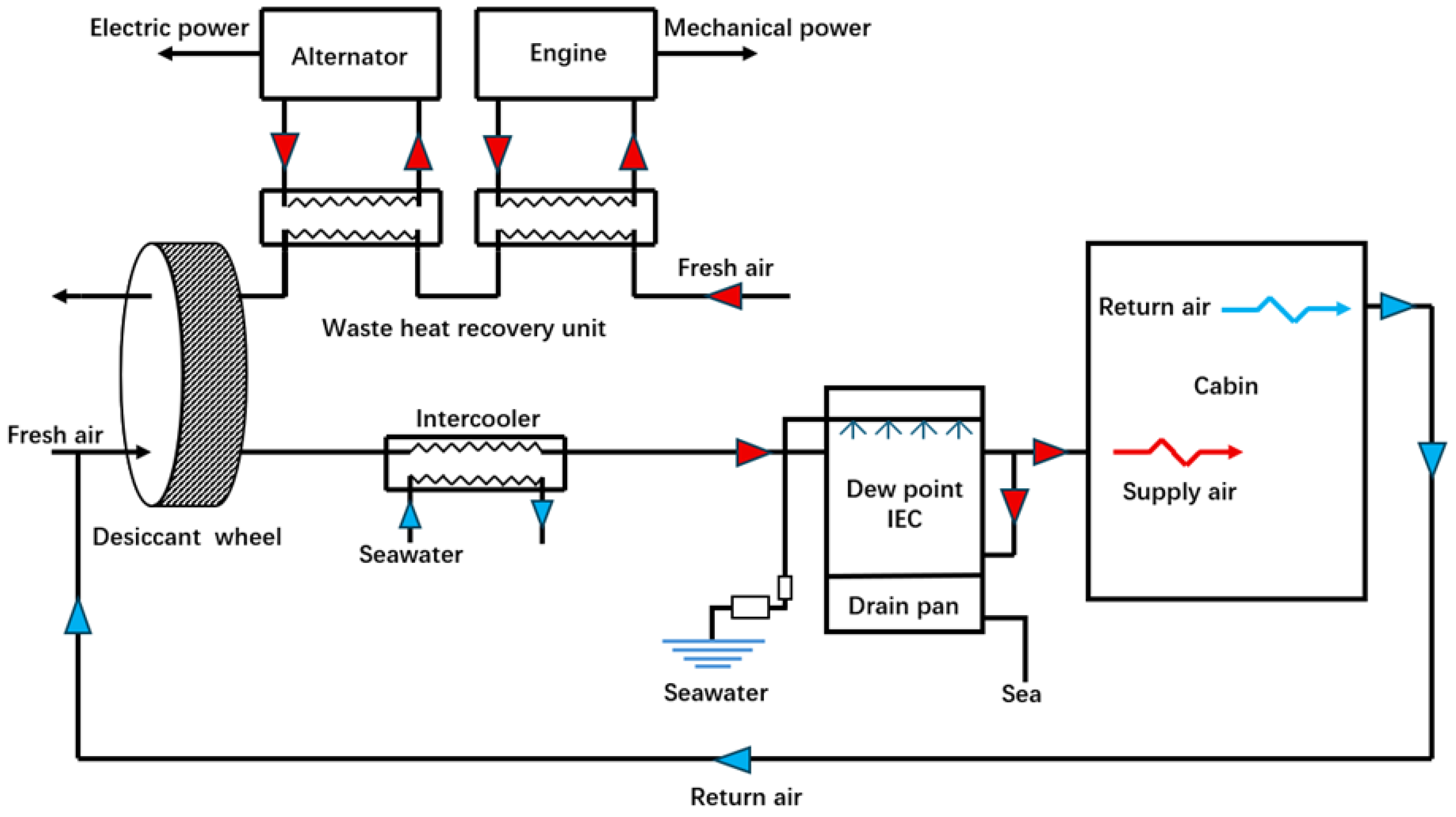
In contrast to these energy-intensive traditional systems, evaporative cooling is uniquely suited to compensate for this weakness. The core principle utilizes the latent heat of water phase change for highly efficient heat dissipation. This performance improves in hot environments. Consequently, the technology is inherently applicable to mobile scenarios. Specific application studies have already covered multiple levels, from passenger cars to large transport vehicles. Hsieh and Teng demonstrated efficiency gains in the passenger car domain by installing a cellulose evaporative cooling pad upstream of the AC condenser. On the air intake side upstream of the AC condenser, it was possible to increase the existing air conditioning system’s Energy Efficiency Ratio (EER) and Coefficient of Performance (COP) by 13.09% and 7.76%, respectively, under high-temperature conditions of 40 °C. This, in turn, effectively reduces both compressor power consumption and fuel consumption [68]. Addressing the critical thermal safety challenges in electric vehicles (EVs), Yin et al. proposed a novel transcritical CO2 thermal management system utilizing two-phase evaporative cooling. To mitigate the risk of thermal runaway caused by flow maldistribution in conventional parallel systems, they developed an innovative series configuration where the battery cold plate functions upstream of the cabin evaporator. This design effectively stabilized the two-phase flow, reducing the vapor quality increment along the channel to just 0.17 compared to 0.71 in traditional setups. Moreover, the integrated system achieved a 13.5% increase in COP at 35 °C, successfully balancing battery safety with energy efficiency [76]. In the realm of new energy buses, Puglia et al. explored the innovative integration of indirect evaporative cooling with hydrogen fuel cell buses. They employed a highly efficient Maisotsenko cycle (M-Cycle) cooler to provide cooling for the air conditioning system, with the required water supply sourced directly from the reclaimed drainage of the proton-exchange membrane fuel cell (PEMFC). This approach not only achieved zero emissions but also resolved the water source issue for evaporative cooling through an internal resource loop, showcasing the immense potential for system-level energy and resource integration [69]. Taking it a step further, in the domain of ocean-going vessels, Liu et al. proposed a more sophisticated hybrid system. The architecture of this system is detailed in Figure 14. It ingeniously leverages the ship’s engine waste heat, captured by a waste heat recovery unit, to regenerate a desiccant wheel that removes moisture from the fresh air, thereby addressing the latent heat load of the high-humidity marine environment. Simultaneously, it employs abundant seawater as the cold source for both an intercooler and a dew point indirect evaporative cooler (IEC) to efficiently manage the sensible heat load before supplying cool, dry air to the cabin. Compared to conventional refrigeration systems, this approach can achieve an energy saving rate of up to 61.62%, providing an effective pathway for energy conservation and emission reduction in large-scale transport vehicles [70].

5.2. Applications in Aerospace Field

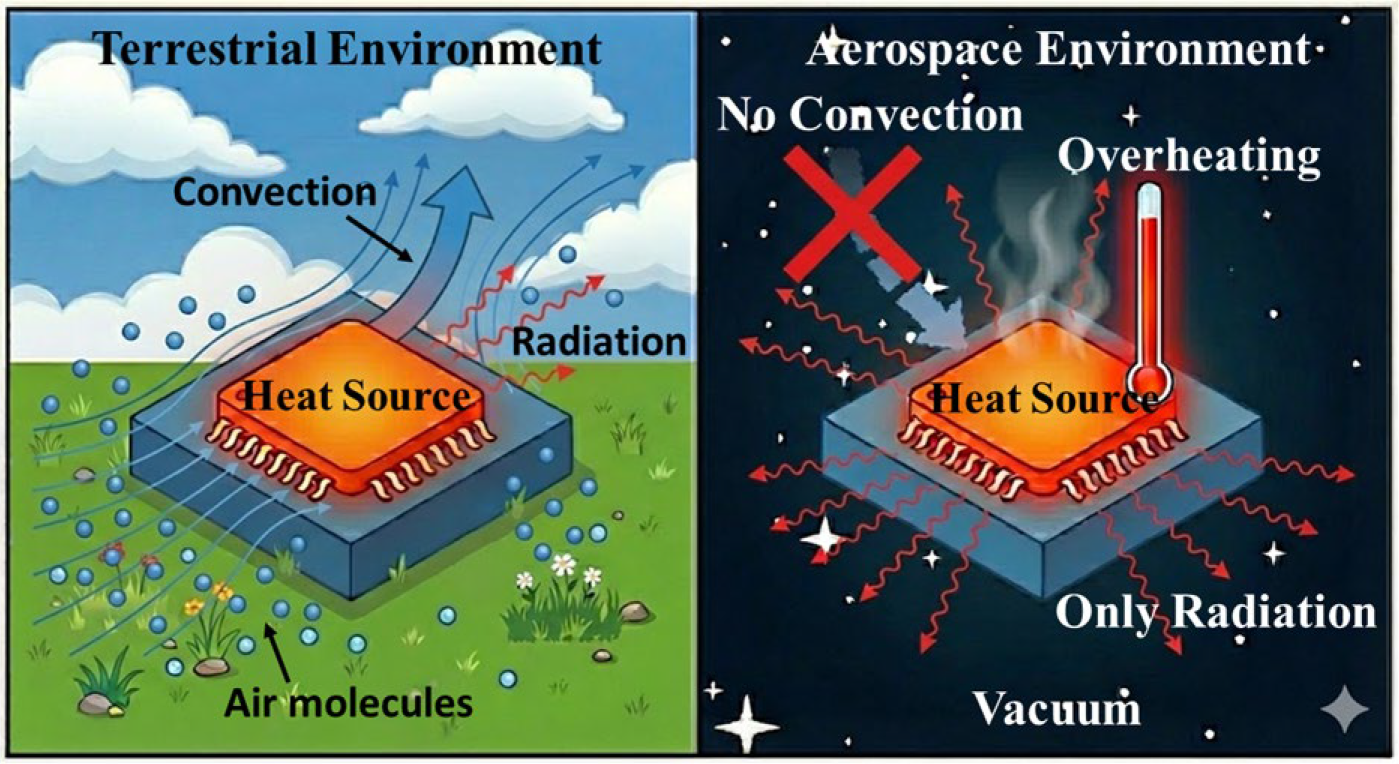
In the aerospace sector, stringent thermal management demands have propelled the advanced application of evaporative cooling technology. Figure 15 presents a comparative schematic of heat transfer mechanisms between terrestrial and aerospace environments. On Earth, electronic components rely heavily on natural or forced air convection to dissipate heat efficiently. However, as depicted on the right side of the figure, the vacuum of space and low-pressure high-altitude environments lack the medium required for convection, rendering this primary heat transfer pathway ineffective. Furthermore, relying solely on radiative cooling is often inadequate for managing the concentrated high heat flux of modern avionics, leading to a high risk of overheating.
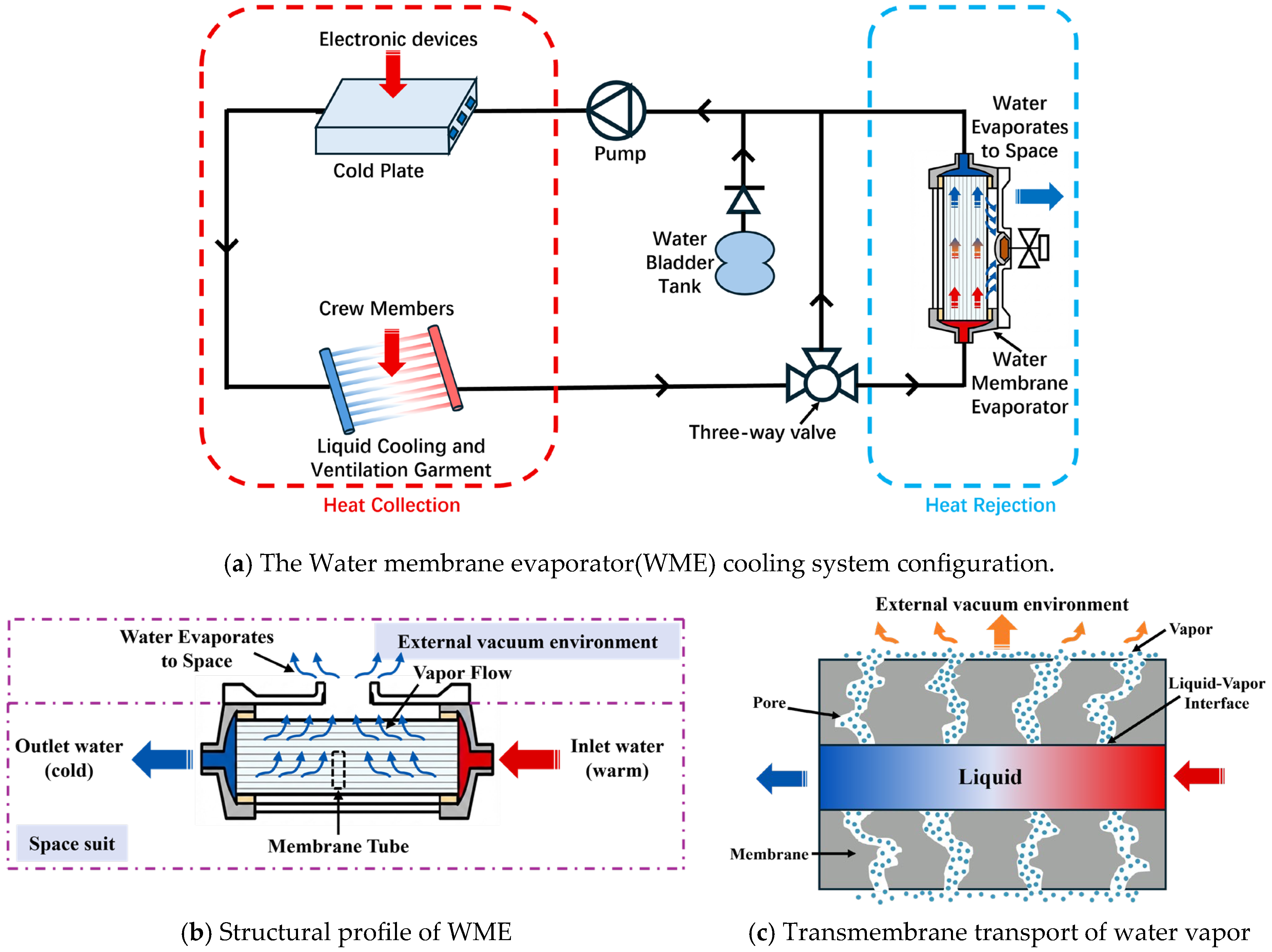
To bridge this thermal management gap, evaporative cooling, which leverages the latent heat of a working fluid’s phase change, has become a highly efficient solution. This technology is not only capable of operating in extreme environments but also offers the critical advantages of being lightweight and compact, making it essential for aerospace vehicles with exceptionally strict payload requirements. Specifically, the research and applications of evaporative cooling have spanned multiple critical areas, from core propulsion components to astronaut life support systems. Regarding future aircraft propulsion systems, Liu et al. proposed and validated an immersion evaporative cooling scheme. By directly immersing the motor windings in a coolant, this approach leverages highly efficient boiling heat transfer to effectively support the stable operation of high-power-density motors [71]. For the thermal protection of electronic equipment in hypersonic vehicles, Quan et al., through their experimental research on vacuum flash evaporation cooling, determined that the energy utilization efficiency can reach 92.9% under optimal operating conditions. This has laid the foundation for the design of lightweight and highly efficient active thermal protection systems [72]. In the domain of manned spaceflight, this technology is a vital component of life support. Y. Li et al. have focused on the membrane evaporator as the next-generation cooling technology for extravehicular spacesuits. Through refined modeling, they have demonstrated its feasibility as an alternative to the traditional sublimator, capable of managing an astronaut’s intense metabolic heat generation of up to 700 W [73]. The structural innovation of this device is illustrated in Figure 16b. Unlike conventional solid-plate heat exchangers, the WME features a bundle of hydrophobic membrane tubes housed within a vacuum casing. As warm coolant flows through the tubes, water vapor permeates through the membrane micropores driven by the pressure difference between the liquid and the external space vacuum. This process efficiently carries away latent heat, significantly cooling the outlet water while strictly containing the liquid phase. The fundamental cooling mechanism occurs at the microscopic level, as depicted in Figure 16c. Finally, to ensure the stability, reliability, and energy efficiency of such a complex cooling system, an intelligent control strategy is paramount. Figure 16a presents the typical architecture of a WME-based thermal control loop. In this closed-loop system, waste heat generated by high-power electronic devices (via cold plates) and crew members (via liquid cooling and ventilation garments) is collected by the circulating coolant. The pump drives the fluid towards the WME for heat rejection, while a three-way valve acts as the critical control actuator. Focusing on this system, E. Li et al. developed a fuzzy coordinated control strategy. This strategy can intelligently and synergistically regulate pump flow rates and valve openings, significantly enhancing the overall performance and level of intelligence of the thermal control loop for aerospace electronic equipment [74].
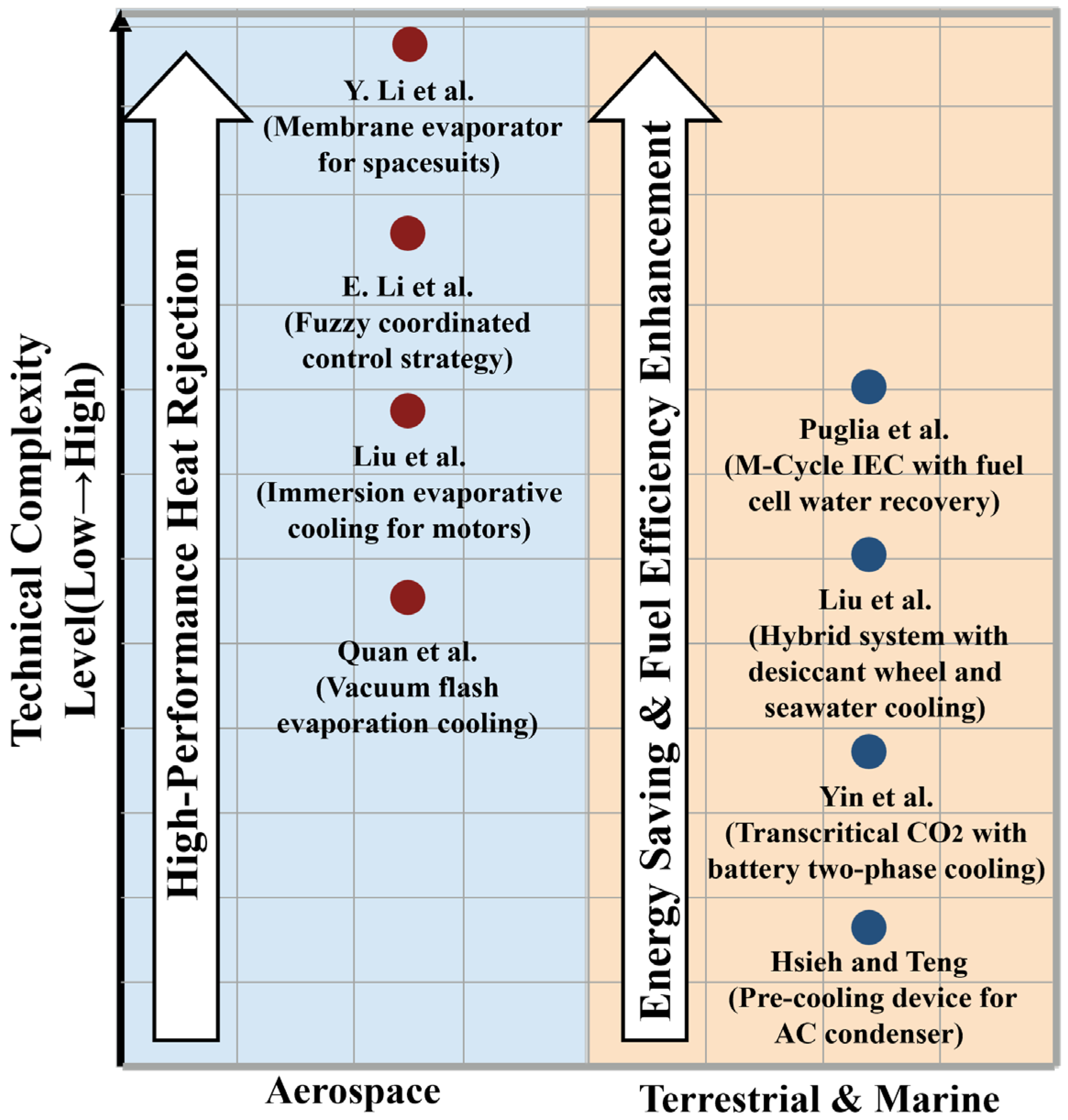
To conclude, evaporative cooling serves distinct roles in the transportation and aerospace sectors (Figure 17). For terrestrial and marine transport, the technology is an effective energy-saving supplement. Innovative strategies, such as fuel-cell water recovery, significantly enhance fuel efficiency. However, the role of the technology changes fundamentally in the aerospace sector. In vacuum environments where convection is absent, evaporative cooling becomes an essential survival technology. It provides a lightweight solution for managing intense metabolic and electronic heat loads. Future progress depends on intelligent control strategies. Advanced algorithms are necessary to ensure system stability under volatile thermal conditions.

6. Applications in Emerging Interdisciplinary Fields

Evaporative cooling, as a mature and inherently efficient thermal management technology, is transcending its traditional application boundaries. Against the backdrop of a global transition towards sustainable development, this technology is no longer merely a means of cooling. Instead, through its deep integration with cutting-edge science and technology, it is creating unprecedented synergistic value in the energy-water nexus. This section explores innovative practices of evaporative cooling technology in two emerging interdisciplinary fields. It showcases how this platform technology provides integrated solutions to enhance renewable energy efficiency and ensure water security in water-stressed regions. Table 6 provides a summary of these applications, which exemplify the technology’s synergistic role in enhancing photovoltaic efficiency, enabling atmospheric water harvesting, and optimizing desalination processes.

6.1. Synergistic Integration of Photovoltaic and Evaporative Cooling Technology

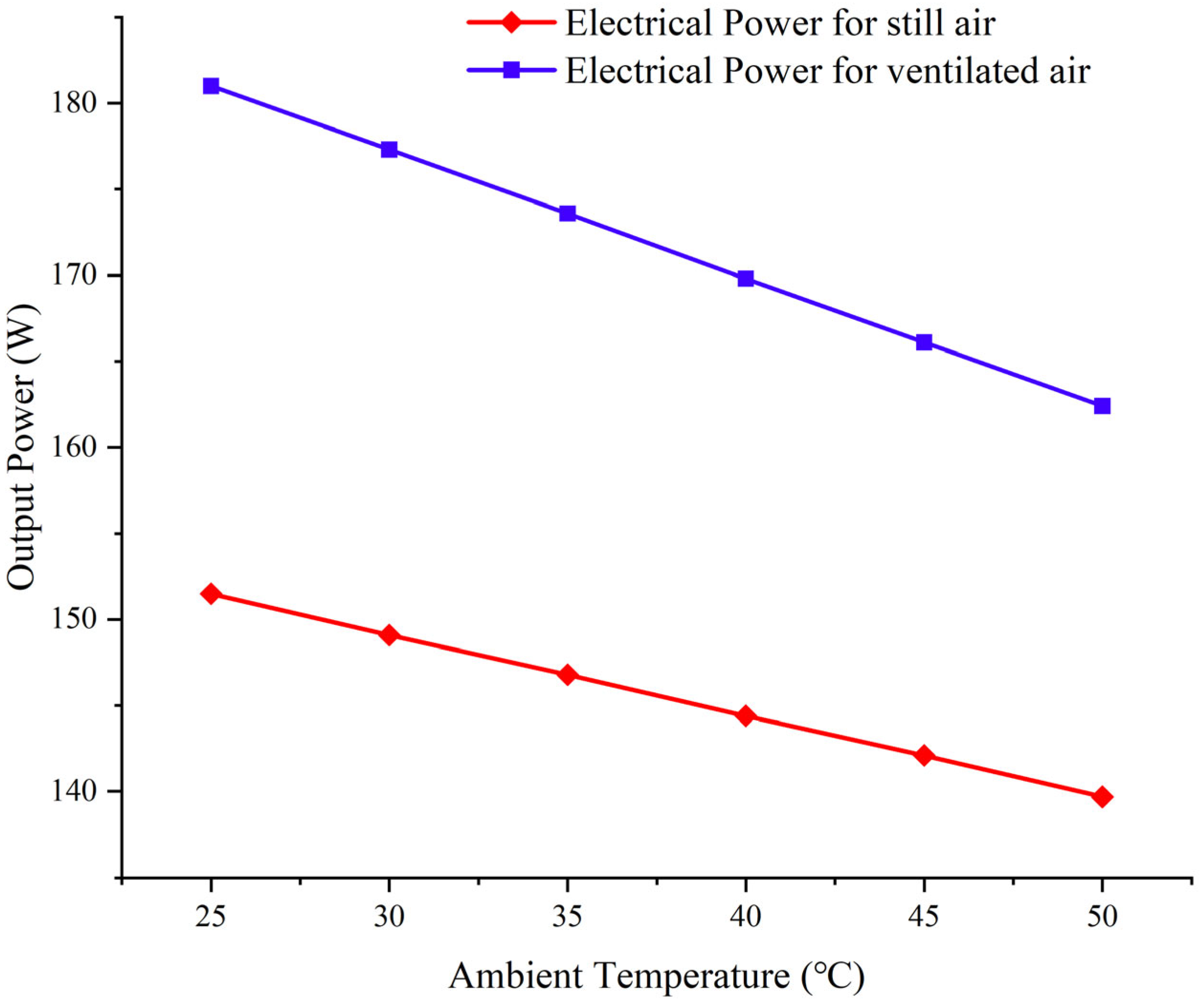
The substantial waste heat generated by photovoltaic (PV) panels during operation raises their temperature, which in turn reduces power generation efficiency and accelerates aging. Figure 18 quantitatively illustrates this critical thermal challenge, depicting the impact of ambient temperature on the output power of a PV module. As shown in the graph, there is a clear linear degradation in output power as the ambient temperature rises (e.g., from 25 °C to 50 °C). This negative correlation confirms that elevated thermal environments significantly compromise the energy generation performance of photovoltaic systems.
To resolve this dilemma, evaporative cooling technology offers a transformative solution. It can effectively cool the PV panels, while the electricity generated by the panels can power the cooling system. This combination forms a self-sufficient, closed-loop system, making it an ideal off-grid solution. In a year-long experiment conducted under the real-world climate conditions of Egypt, Mansour et al. applied evaporative cooling to standard and concentrating photovoltaic (CPV) panels. They found that, across different seasons, the daily average power gain for CPV ranged from 4.7% to 7.4%, while for the higher thermal load Concentrating CPV (CCPV), the Power Improvement Ratio (PIR) was between 6.7% and 12% [77].
Beyond direct cooling applications, recent research has made significant strides in the structural integration and strategic optimization of active spray cooling systems. Zhang et al. proposed a novel PV system integrated with a back-mounted spray cooling section, utilizing the kinetic energy of spray droplets to drive airflow and enhance convective heat transfer. Simulation results demonstrated that, under a spray pressure of 1 bar, this system could reduce the average cell temperature by 12.31 °C and increase photoelectric conversion efficiency by 1.10% [80]. Building upon this foundation, to further address the trade-off between temperature uniformity and energy consumption, Wang et al. systematically investigated various spray strategies with different nozzle numbers and spacing. Their research identified a two-nozzle scheme with 40 mm spacing as the optimal strategy, which not only achieved a temperature reduction of 15.20 °C and an efficiency boost of 1.37% but also significantly improved surface temperature uniformity, thereby effectively extending the module’s lifespan [79].
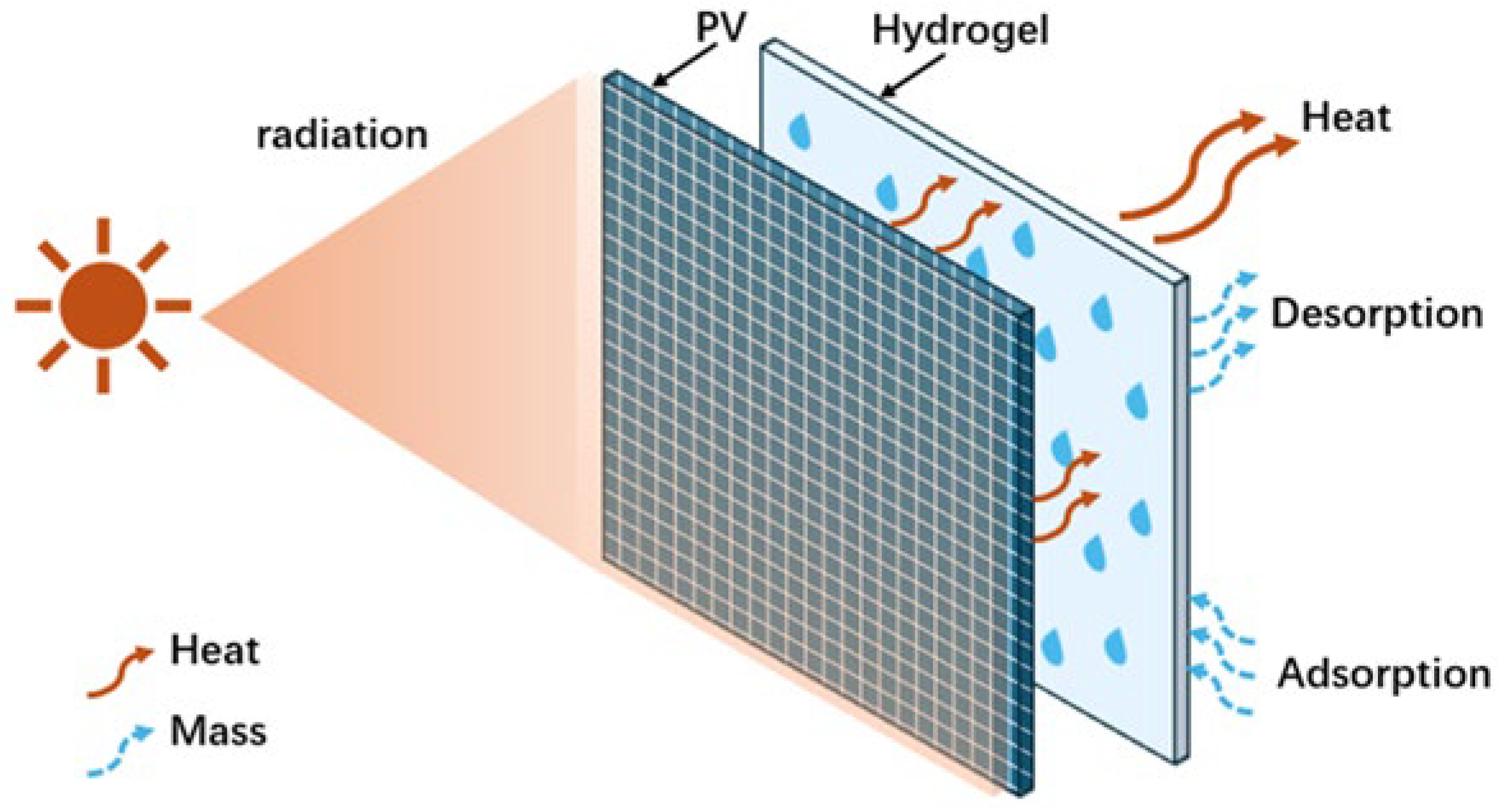
To achieve a higher degree of integration and zero-energy operation, Bai et al. developed an adaptive hydrogel. The working principle of this material is illustrated in Figure 19. The hydrogel layer, attached to the back of the PV panel, passively absorbs moisture from the air at night through adsorption. Then, during the day, it utilizes the PV’s waste heat to evaporate this stored water via desorption, actively cooling the panel. This constitutes a completely passive, closed-loop system that requires no external energy input. Experiments have shown that it can cool the photovoltaic cell by 21.9 °C, increasing its photoelectric efficiency from 15.8% to 16.9%, and also possesses the potential for combined power and water production [78]. For low-concentration photovoltaic (LCPV) systems, where heat is more concentrated, Nourmohammadi and Jahangir employed an indirect evaporative cooling solution that combines water-filled bags with low-power fans. They successfully reduced the panel surface temperature by over 60 °C and increased the power output by more than 50%, with the overall system efficiency leaping from 5.56% to 9.97%. This demonstrates the technology’s immense potential in resolving the thermal bottleneck of concentrating PV systems [87].
On the other hand, photovoltaic systems provide a clean and independent power source for evaporative cooling, making it an ideal off-grid sustainable cooling technology. The core advantage of this combination lies in the inherent match between energy supply and cooling demand: the period of strongest solar radiation is concurrently the peak for both PV power generation and the need for cooling. This natural synergy allows the system to operate with high efficiency and can even reduce the dependency on energy storage devices. Tripathi et al. designed a novel multi-channel indirect evaporative cooler powered entirely by photovoltaic panels. This system is intended to provide a high-efficiency, low-carbon air conditioning solution for buildings, demonstrating its significant application potential in the green building sector [43]. Rashid and Aljubury applied a PV-driven, two-stage evaporative cooling system to emergency relief tents in arid regions. The system operates independently using photovoltaic power to provide the necessary cooling and a thermally comfortable environment inside the tents. This holds significant humanitarian and practical value for post-disaster areas or remote regions that lack a stable electrical grid [88].

6.2. Applications in Atmospheric Water Harvesting and Seawater Desalination

The core principle of evaporative cooling technology lies in utilizing the heat absorption from water’s phase change. This fundamental physical principle is not limited to cooling; through ingenious system design, it can be repurposed or synergistically applied to the collection and production of freshwater. Addressing the increasingly severe global water scarcity, the use of evaporative cooling principles for atmospheric water harvesting and seawater desalination has become a highly promising emerging interdisciplinary field. The key advantage of this technological approach lies in its efficient utilization of low-grade energy and its potential as an alternative to traditional energy-intensive technologies, making it particularly suitable for remote and arid regions with limited infrastructure.
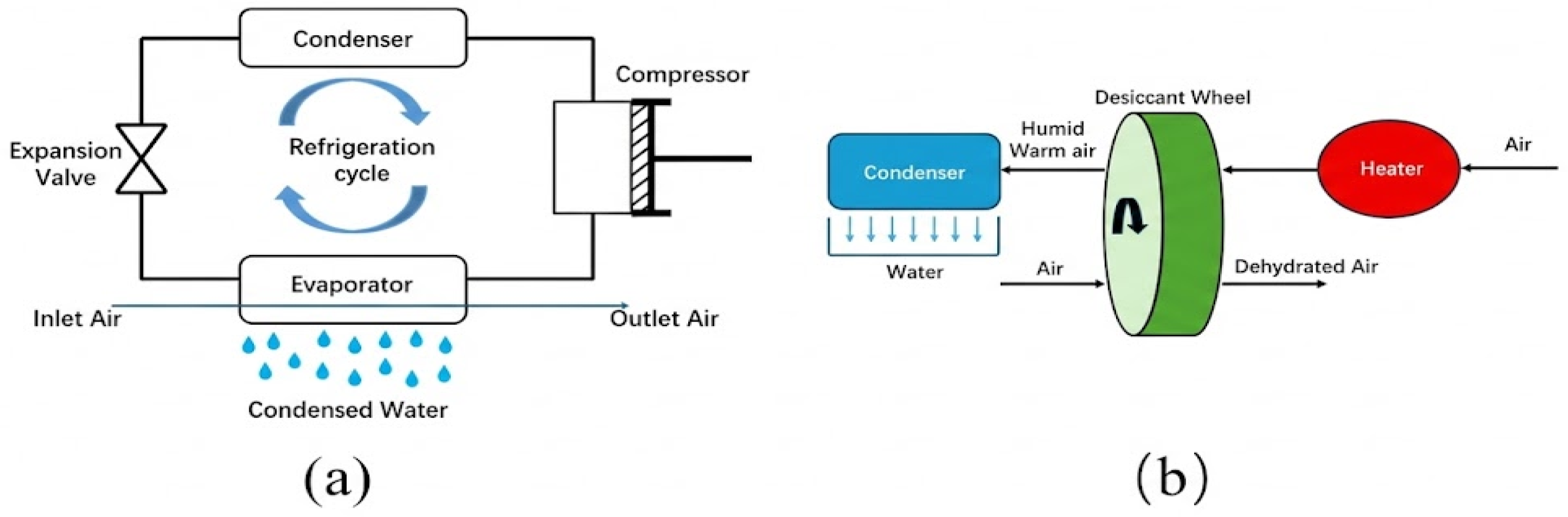
To highlight the necessity of these innovations, it is essential to first understand the thermodynamic limitations of conventional approaches. Figure 20 illustrates two traditional pathways for water harvesting. Figure 20a depicts the standard Vapor Compression Refrigeration (VCR) cycle, which relies on electrically driven compressors to lower the surface temperature below the dew point for condensation. While effective, this method suffers from high parasitic energy consumption and performance degradation in arid conditions where the dew point is low. Figure 20b shows a Desiccant Wheel system, which separates moisture via adsorption. However, this process faces a dual challenge: the high thermal energy penalty for regeneration (Heater) and the critical need for an effective cold sink to condense the regenerated vapor (Condenser). Evaporative cooling technology intervenes precisely to resolve these bottlenecks by providing an efficient, low-energy cold sink or humidification source.
In atmospheric water harvesting (AWH) applications, evaporative cooling is employed to overcome the “condenser limitation” shown in Figure 20b by serving as an efficient, low-energy cold source. The research by Agrawal and Kumar demonstrates a direct application of this approach. In a solar-powered AWH system based on the principle of adsorption, they employed a direct evaporative cooler to pre-cool the ambient air. This cooled air stream is then used as the cold sink in an air-to-air heat exchanger, where it efficiently cools the hot, humid air desorbed from a desiccant on the other side, thereby enabling the condensation and recovery of freshwater [81]. The research by Harrouz et al. has elevated this concept to a new level. They designed a hybrid system for poultry houses in the hot and humid climate of Qatar that integrates dehumidification, cooling, and water recovery. The system first utilizes a solid desiccant to achieve deep dehumidification; subsequently, it employs a dew-point indirect evaporative cooler to efficiently cool the dry air. This ingenious design solves the most significant bottleneck for applying evaporative cooling technology in arid regions—the issue of water supply [82].
Beyond localized water production, these moisture-control strategies provide a critical bridge to the broader water–energy–carbon (WEC) nexus. As Kim et al. highlighted, climate variability significantly impacts AWH performance; their stochastic analysis revealed that environmental fluctuations drastically alter adsorption kinetics and unit harvesting costs (UHC) [90]. In this context, evaporative cooling systems can be deployed to stabilize the thermal-moisture micro-environment, ensuring consistent adsorbent efficiency regardless of ambient volatility. Such thermal-moisture management is equally vital for Direct Air Capture (DAC) and other negative-emission technologies. Niesporek et al. found that rising relative humidity (from 0% to 80%) can increase DAC energy intensity by approximately 34% [91]. Furthermore, Malinauskaite et al. demonstrated that integrated circular solutions, such as recovering heat for advanced evaporative cycles, can reduce energy consumption by up to 80% [92]. By integrating evaporative principles into these frameworks, next-generation systems can achieve operational resilience and maximize thermodynamic efficiency, aligning with global carbon-neutrality goals.
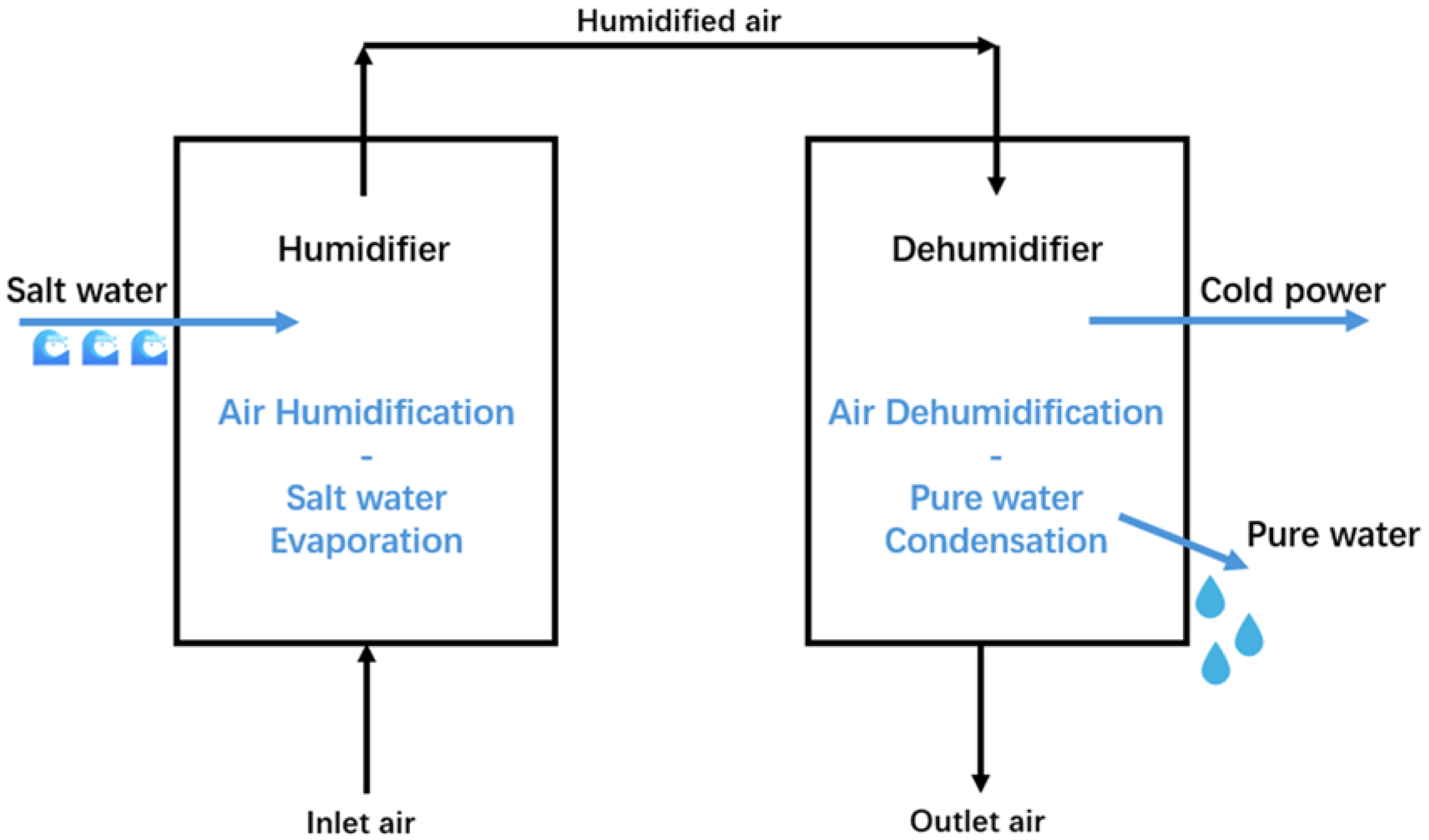
In the field of seawater desalination, evaporative cooling principles are utilized to enhance the humidification process. The basic principle of the HDH process, shown in Figure 21, involves two main stages: air is first saturated with water vapor from a saline source in a humidifier, and then this moisture is condensed back into liquid form as freshwater in a dehumidifier. The research by El Aouni et al. provides a clear example of this process, utilizing an evaporative cooling pad made from corrugated cellulose paperboard as the humidifier for their HDH system. As hot air flows through the packing material wetted by seawater, the seawater evaporates efficiently, allowing the air to carry a large amount of water vapor into the subsequent dehumidification–condensation unit. By optimizing parameters such as the packing thickness, the efficiency of this humidification process can reach as high as 78% [83]. In pursuit of even higher efficiency, Rocchetti and Socci coupled a more advanced indirect evaporative cooler (IEC) with a vapor compression refrigeration (VCR) cycle. In this innovative system, seawater flows through the wet channels of the IEC for high-efficiency evaporative humidification. Meanwhile, the hot side of the VCR cycle is used to heat the air to enhance evaporation, while the cold side is used for the downstream dehumidification and condensation. This configuration achieves a cascade utilization of energy within the system and maximizes its overall efficiency [84]. Lan et al. proposed a concept that is even more groundbreaking. They use a compressor to create a low-pressure environment, causing seawater to flash evaporate directly at a low temperature—a process that inherently produces a cooling effect. The water vapor generated from this evaporation is then compressed, and its latent heat of compression is recovered by a multi-effect evaporation desalination system to produce freshwater. This system not only achieves freshwater production but also co-generates cooling. Its specific energy consumption for water production is 18.64% lower than that of conventional systems [85].
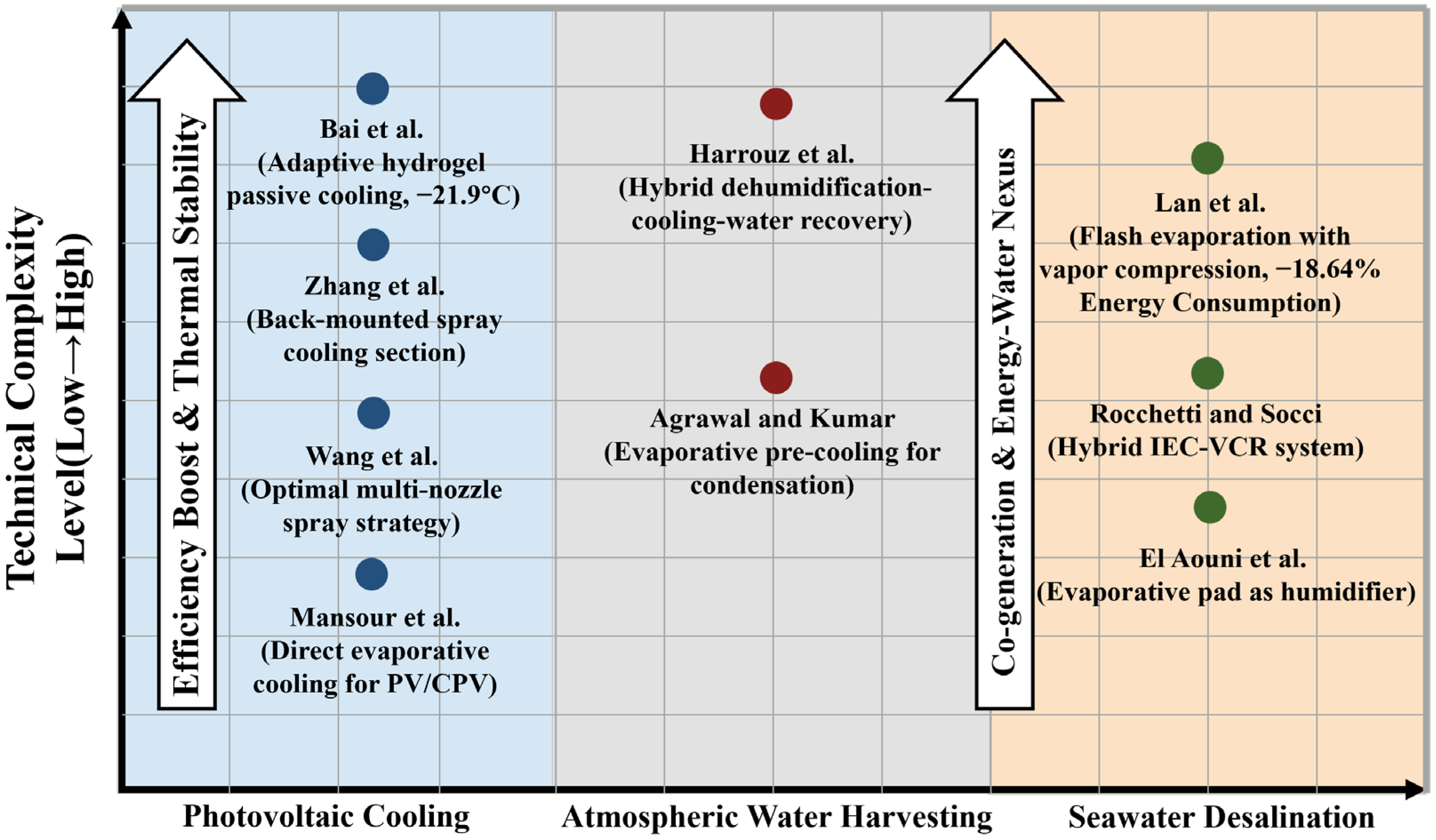
In summary, evaporative cooling has evolved into a versatile platform for the energy-water nexus (Figure 22). Its integration with photovoltaics offers a perfect thermodynamic match. Peak solar radiation concurrently drives both power generation and cooling demand. Beyond thermal management, the technology addresses global water scarcity. It provides low-energy solutions for atmospheric water harvesting and seawater desalination. Adaptive materials, such as hydrogels, enable autonomous operation without external infrastructure. Future innovations must prioritize performance stability under climate variability. Maximizing the efficiency of hybrid co-generation cycles remains a key goal.

7. Discussions

The preceding sections have detailed the extensive applications of evaporative cooling across diverse fields, from industrial processes and building environments to agriculture and aerospace. A comprehensive analysis of this body of research reveals that despite its versatility and inherent energy efficiency, the technology’s widespread adoption is fundamentally constrained by two core, interconnected challenges: climate dependency, which creates performance bottlenecks in humid conditions, and water consumption and management. This discussion section aims to synthesize the innovative strategies that the research community is developing to overcome these critical limitations. Table 7 systematically summarizes these core challenges and the corresponding innovative strategies, which range from hybrid system integration and breaking thermodynamic limits to atmospheric water harvesting and the use of non-conventional water sources. These strategies not only represent the current research frontiers but also illuminate the future development trajectory of the field.

7.1. Climate Dependency and Performance Bottlenecks

The performance of the evaporative cooling technology is fundamentally limited by the thermodynamic state of the local environment, particularly the partial pressure of water vapor in the air. The reduced chemical potential difference that drives evaporation leads to a significant decrease in heat and mass transfer efficiency, creating a performance bottleneck for the technology in high-humidity environments. This inherent limitation greatly constrains its application potential on a global scale, especially in hot and humid climate zones. Various application domains have independently or collaboratively developed a range of innovative strategies to address this common challenge. This section will systematically review these strategies, analyzing how the negative impacts of climate dependency are overcome or mitigated within each field.
Researchers in various fields are pursuing breakthroughs from their unique perspectives using innovative methods to overcome the common challenges of performance bottlenecks and climate dependency that are prevalent in the practical application of evaporative cooling. Alshukri et al. have focused on the working fluid itself in the domain of conventional direct evaporative cooling. They aim to enhance the evaporation efficiency by magnetizing water to alter its physical properties, thereby fundamentally boosting the system’s cooling performance [96]. Hatoum et al. have developed a hybrid system to address the highly challenging application of outdoor thermal comfort in hot and humid climates. This system combines the solid desiccant dehumidification with the indirect evaporative cooling to directly counteract climate limitations by pre-reducing the humidity of the air [49]. Li et al. have similarly adopted a system integration approach in the field of passive building cooling, specifically by combining the evaporative cooling with the passive radiative cooling. Their system simultaneously dissipates heat during the daytime through a bio-inspired composite material design by leveraging both water evaporation and thermal radiation to the cold outer space. This approach breaks through the cooling power limits of a single technology [93]. Yan et al. have developed the vacuum-assisted membrane evaporative cooling technology for high-demand applications such as data centers to fundamentally break free from the dependency on the ambient humidity. This method shifts the cooling limit from the wet-bulb temperature of the ambient air to the saturation temperature of water by creating a vacuum environment, thereby completely resolving the issue of climate dependency [94]. Chen et al. have designed an innovative two-stage cooling system for high-efficiency HVAC equipment to address the internal performance bottleneck of conventional dew-point coolers, which results from the excessively high proportion of working air. They have significantly enhanced the net cooling capacity and energy efficiency of the device by optimizing the airflow organization and the heat and mass transfer [95]. In summary, these solutions, originating from diverse fields, collectively showcase the multifaceted pathways to overcoming the common challenges of evaporative cooling technology, thereby greatly expanding its feasibility under various climate conditions and in different application scenarios.

7.2. Water Consumption and Management

The effective operation of the evaporative cooling technology fundamentally relies on the continuous evaporation of water, making the water consumption an inherent core issue. This constant water use constitutes a “resource bottleneck” for the technology’s large-scale application against a backdrop of increasing water scarcity, particularly in arid and semi-arid regions. This intrinsic challenge significantly constrains its sustainability and feasibility in the water-stressed environments. Various application domains have independently or collaboratively explored a range of solutions for water conservation, recovery, and even generation to address this common challenge. This section will systematically review these approaches and analyze minimizing the technology’s dependence on conventional water while ensuring its cooling performance.
Researchers have started with the operational strategy itself in the HVAC sector, fundamentally reducing both the water pump energy and the ineffective water evaporation through the intermittent spraying [101]. Shi et al., by leveraging the water-retention properties of porous media, have achieved a spray-free cooling duration of up to 40 min [99]. Further research by Stefaniak et al. has confirmed that this strategy is equally effective even on non-porous heat exchangers, and can significantly improve the system’s coefficient of performance (COP) [100]. In building and marine applications, researchers have turned their attention to the “open-source” utilization of non-conventional water resources. The analysis by Englart shows that, under a variety of climate conditions, collected rainwater is 100% sufficient to meet the cooling demands of a building’s fresh air system, thereby achieving a complete replacement of municipal tap water [98]. In the marine environment, Liu et al. have innovatively used seawater as the cooling medium, verifying that its thermal performance is nearly identical to that of freshwater. This opens up a new pathway for ship air conditioning that leverages locally available resources [70].
Taking it a step further, researchers have begun to source water from within the system itself, achieving a closed-loop cycle. For instance, Puglia et al. ingeniously recover the pure water discharged from a hydrogen fuel cell bus to supply the onboard air conditioning system, thereby achieving internal self-sufficiency in water resources [69]. Meanwhile, for agricultural production settings such as poultry houses, Harrouz et al. have designed a composite system with an integrated water recovery unit. This system condenses and reclaims moisture from the hot, humid exhaust air generated during desiccant regeneration, thus resolving a critical application bottleneck in arid regions [82]. To fundamentally eliminate the dependence on external water sources, researchers have developed “water-harvesting” cooling technologies for applications such as photovoltaic panel cooling. Whether utilizing the hydrogel developed by Bai et al. [78] or the salt-based composite material proposed by Cai et al. [97], the core concept remains the same: passively adsorb moisture from the air at night and then use the PV waste heat to evaporate this water for cooling during the day. This creates an all-weather, autonomous operational model that requires no external water replenishment, completely overcoming the application limitations of the technology in arid and remote regions.
These solutions, originating from diverse fields—ranging from the “throttling” of consumption through optimized operation, to the “open-sourcing” of supply by utilizing rainwater, seawater, and industrial process water, and finally to the “production” of water directly from the air—collectively showcase the multifaceted pathways to overcoming the water resource bottleneck of evaporative cooling technology. This greatly expands its potential for sustainable application against the backdrop of increasing global water scarcity.

8. Conclusions and Future Work

8.1. Conclusions

The latest advancements and multidisciplinary applications of the evaporative cooling technology are comprehensively presented in this study. The review covers various sectors, including the built environment, industry, energy, agriculture, transportation, and emerging interdisciplinary fields. The technology demonstrates immense potential as an efficient, energy-saving, and sustainable cooling solution. It remains a critical tool for addressing global challenges related to climate change and energy security. The following conclusions are drawn from the analysis:
(1)
Core advances in cross-disciplinary applications
The technology has evolved from a conventional direct cooling method into a diverse set of sophisticated solutions. The evaporative cooling has progressed from simple direct cooling to advanced dew-point indirect cooling in the domain of buildings and the urban environment. New applications like permeable pavements and cooling walls effectively mitigate the urban heat island effect without increasing indoor humidity. The technology serves as a primary energy-saving method in the industrial and energy sectors. It replaces or supplements traditional mechanical refrigeration in high-demand settings like data centers and power plants. Low-cost passive devices provide economical solutions for greenhouse climate control and post-harvest preservation of agricultural products. Integrating the technology with photovoltaics cools PV modules to enhance the efficiency and utilizes PV-generated power for the cooling system.
(2)
Common challenges in technological applications
Two fundamental challenges constrain the large-scale deployment and sustainability of the technology. The cooling efficiency drops significantly in hot and humid environments. The high partial pressure of water vapor weakens the driving force for evaporation in these climates. The continuous water consumption constitutes a bottleneck in arid and semi-arid regions. This constraint limits the universal applicability of the technology worldwide.
(3)
Mainstream innovative solutions
Novel porous materials and hybrid systems effectively overcome the climate dependency of the technology. Developing materials like metal–organic frameworks (MOFs) and hydrogels improves the adsorption and water transport properties at the material level. Integrating evaporative cooling with the desiccant dehumidification or radiative cooling creates a pathway for stable performance under various conditions. The water dependency is resolved through the intermittent spraying, the recovery of non-conventional water, and atmospheric water harvesting. These strategies minimize the reliance on conventional water while maintaining the cooling performance.

8.2. Future Work

The transformative advancement of the evaporative cooling technology is contingent upon overcoming two fundamental bottlenecks: climate dependency and water consumption. Research must be directed toward two primary thrusts to transcend performance limitations in humid environments. These thrusts include the development of deep dehumidification systems efficiently integrated with low-grade energy sources and the pursuit of thermodynamic innovations to break the constraints of the ambient wet-bulb temperature. A comprehensive solution for water management must be structured around three parallel and complementary strategies. These strategies involve advanced water conservation through the smart intermittent supply, the expanded use of non-conventional water sources such as reclaimed water and rainwater, and the generation of water via integrated atmospheric water harvesting and cooling. Synergistic breakthroughs in these critical domains will empower the evaporative cooling to transcend its traditional limitations. The technology will emerge as a universally applicable and truly sustainable cooling solution poised to play a pivotal role in addressing the global challenges of energy and water security.

Author Contributions

Conceptualization, L.X. and S.H.; methodology, L.X. and S.H.; investigation, L.X., H.L. and S.H.; resources, Z.G., S.Z., F.L., Z.L., J.L., W.Y. and S.H.; writing—original draft preparation, L.X., H.L. and S.H.; writing—review and editing, S.H. and M.G.; visualization, L.X.; supervision, S.H., M.G., Z.G., S.Z., F.L., Z.L., J.L. and W.Y.; project administration, S.H.; funding acquisition, S.H. All authors have read and agreed to the published version of the manuscript.

Funding

This work was supported by the National Natural Science Foundation of China (Grant No. 52476206), the Key R&D Program of Shandong Province, China (Grant No. 2025CXGC010203), the Shandong Natural Science Foundation (Grant No. ZR2022ME008) and the Guangdong Basic and Applied Basic Research Foundation (Grant No. 2025A1515012123).

Data Availability Statement

No new data were created in this study.

Conflicts of Interest

Author Zhe Geng and Shuzhen Zhang were employed by the company Shandong Hetong Information Technology Co., Ltd. Author Feiyang Long and Zongjun Long were employed by the company Shandong Qinglei Environmental Science and Technology Co., Ltd. Author Jisheng Li and Wujin Yuan were employed by the company Himile Mechanical Science and Technology (Shandong) Co., Ltd. The remaining authors declare that the research was conducted in the absence of any commercial or financial relationships that could be construed as a potential conflict of interest.

References

  1. Ürge-Vorsatz, D.; Cabeza, L.F.; Serrano, S.; Barreneche, C.; Petrichenko, K. Heating and Cooling Energy Trends and Drivers in Buildings. Renew. Sustain. Energy Rev. 2015, 41, 85–98. [Google Scholar] [CrossRef]
  2. The Future of Cooling—Analysis. Available online: https://www.iea.org/reports/the-future-of-cooling (accessed on 26 August 2025).
  3. Davis, L.W.; Gertler, P.J. Contribution of Air Conditioning Adoption to Future Energy Use under Global Warming. Proc. Natl. Acad. Sci. USA 2015, 112, 5962–5967. [Google Scholar] [CrossRef] [PubMed]
  4. Haile, M.G.; Garay-Martinez, R.; Macarulla, A.M. Review of Evaporative Cooling Systems for Buildings in Hot and Dry Climates. Buildings 2024, 14, 3504. [Google Scholar] [CrossRef]
  5. Krarti, M.; Ybyraiymkul, D.; Kum Ja, M.; Burhan, M.; Chen, Q.; Shahzad, M.W.; Ng, K.C. Energy Performance of Hybrid Evaporative-Vapor Compression Air Conditioning Systems for Saudi Residential Building Stocks. J. Build. Eng. 2023, 69, 106344. [Google Scholar] [CrossRef]
  6. Kubilay, A.; Derome, D.; Carmeliet, J. Impact of Evaporative Cooling Due to Wetting of Urban Materials on Local Thermal Comfort in a Street Canyon. Sustain. Cities Soc. 2019, 49, 101574. [Google Scholar] [CrossRef]
  7. Aimin, T.; Zhongxuan, L.; Xuefeng, Z.; Jiying, Y.; Shijie, L.; Dongsheng, Z. Simulation and Experimental Verification of Cooling Thermal Performance of Vertical Tube Downflow Composite Evaporative Cooling Tower. Int. J. Refrig. 2025, 175, 85–94. [Google Scholar] [CrossRef]
  8. Mao, R.; Wu, H.; Li, C.; Zhang, Z.; Liang, X.; Zhou, J.; Chen, J. Experimental Investigation on the Application of Cold-Mist Direct Evaporative Cooling in Data Centers. Int. J. Therm. Sci. 2025, 208, 109500. [Google Scholar] [CrossRef]
  9. Defraeye, T.; Schudel, S.; Shrivastava, C.; Motmans, T.; Umani, K.; Crenna, E.; Shoji, K.; Onwude, D. The Charcoal Cooling Blanket: A Scalable, Simple, Self-Supporting Evaporative Cooling Device for Preserving Fresh Foods. Biosyst. Eng. 2024, 238, 128–142. [Google Scholar] [CrossRef]
  10. Liu, Y.; Yan, X.; Zhang, S.; Nie, J.; Wang, X.; Zheng, T.; Zheng, X.; Chang, S. High-Efficiency Application Area in China of Evaporative Cooling Garments: Effects of Solar Radiation and Wind Speed. Appl. Therm. Eng. 2025, 269, 125977. [Google Scholar] [CrossRef]
  11. Nahar, M.M.; Ma, B.; Guye, K.; Chau, Q.H.; Padilla, J.; Iyengar, M.; Agonafer, D. Review Article: Microscale Evaporative Cooling Technologies for High Heat Flux Microelectronics Devices: Background and Recent Advances. Appl. Therm. Eng. 2021, 194, 117109. [Google Scholar] [CrossRef]
  12. Allali, F.E.; Fatnassi, H.; Demrati, H.; Errais, R.; Wifaya, A.; Aharoune, A. Greenhouse Cooling Systems: A Systematic Review of Research Trends, Challenges, and Recommendations for Improving Sustainability. Clean. Eng. Technol. 2025, 26, 100973. [Google Scholar] [CrossRef]
  13. Wardeh, Y.; Kinab, E.; Escadeillas, G.; Rahme, P.; Ginestet, S. Review of the Optimization Techniques for Cool Pavements Solutions to Mitigate Urban Heat Islands. Build. Environ. 2022, 223, 109482. [Google Scholar] [CrossRef]
  14. Ar, K.; Kamble, A. A Review of Mist Air Evaporative Cooling Systems for Enhanced Refrigeration and Air Conditioning Performance. Int. J. Refrig. 2025, 180, 369–384. [Google Scholar] [CrossRef]
  15. Cengiz, M.; Kayri, İ.; Aydın, H. A Collated Overview on the Evaporative Cooling Applications for Photovoltaic Modules. Renew. Sustain. Energy Rev. 2024, 197, 114393. [Google Scholar] [CrossRef]
  16. Chang, K.; Wang, Y.-Y.; Li, Y.-Z. A Review of Water Sublimation Cooling and Water Evaporation Cooling in Complex Space Environments. Prog. Aerosp. Sci. 2023, 140, 100930. [Google Scholar] [CrossRef]
  17. Yang, C.; Li, Z.; Li, S.; Cui, X.; Chen, Q. Sustainable Evaporative Cooling Driven by Saline Water Sources: Opportunities, Challenges and Solutions. Renew. Sustain. Energy Rev. 2025, 218, 115799. [Google Scholar] [CrossRef]
  18. Ishugah, T.F.; Kiplagat, J.; Madete, J.; Musango, J. Current Status, Challenges, and Opportunities of Evaporative Cooling for Building Indoor Thermal Comfort Using Water as a Refrigerant: A Review. Int. J. Energy Res. 2024, 2024, 1026136. [Google Scholar] [CrossRef]
  19. Rahman, I.U.; Nardini, S.; Buonomo, B.; Manca, O.; Khan, H.; Siviero, B. Thermal Interface Materials: A Promising Solution for Passive Heat Dissipation in Electronic Appliances. Therm. Sci. Eng. Prog. 2025, 62, 103673. [Google Scholar] [CrossRef]
  20. Wu, X.; Yang, J.; Liu, Y.; Zhuang, Y.; Luo, S.; Yan, Y.; Xiao, L.; Han, X. Investigations on Heat Dissipation Performance and Overall Characteristics of Two-Phase Liquid Immersion Cooling Systems for Data Center. Int. J. Heat Mass Transf. 2025, 239, 126575. [Google Scholar] [CrossRef]
  21. Zhang, Y.; Han, H.; Zhang, Y.; Li, J.; Zheng, Y.; Liu, C.; Liu, Y.; Gao, D. Experimental Study on the Performance of a Novel Data Center Air Conditioner Combining Air Cooling and Evaporative Cooling. Int. J. Refrig. 2025, 170, 98–112. [Google Scholar] [CrossRef]
  22. Yi, X.; Xu, H.; Mao, R.; Wu, H.; Gao, X.; Zhou, J.; Zhang, Z. Experimental Investigation on Evaporative Cooling Coupled Phase Change Energy Storage Technology for Data Centers under Natural Air Cooling. Int. Commun. Heat Mass Transf. 2024, 159, 108127. [Google Scholar] [CrossRef]
  23. Weragoda, D.M.; Tian, G.; Cai, Q.; Zhang, T.; Hing Lo, K.; Gao, Y. Conceptualization of a Novel Battery Thermal Management System Based on Capillary-Driven Evaporative Cooling. Therm. Sci. Eng. Prog. 2024, 47, 102320. [Google Scholar] [CrossRef]
  24. Wang, S.; Xu, Z.; Zhang, J.; Guo, F.; Wei, Z.; Zhang, T.; Zhao, Y. Highly Hygroscopic Needle-Punched Carbon Fiber Felt with High Evaporative Cooling Efficiency and Fire Resistance for Safe Operation of Ultrahigh-Rate Lithium-Ion Batteries. J. Mater. Sci. Technol. 2025, 220, 43–53. [Google Scholar] [CrossRef]
  25. Guan, B.; Ma, Z.; Wang, X.; Liu, X.; Zhang, T. A Novel Air-Conditioning System with Cascading Desiccant Wheel and Liquid Desiccant Dehumidifier for Low-Humidity Industrial Environments. Energy Build. 2022, 274, 112455. [Google Scholar] [CrossRef]
  26. Wang, B.C.; Chen, Z.; Wei, C.D.; Ding, J.N.; Cheng, G.G.; Bui, D.T. Energy-Efficient Cooling in Tropical Climates: Integrating Desiccant Wheels with Novel Dew-Point Evaporative Cooler Designs. Energy 2025, 341, 139411. [Google Scholar] [CrossRef]
  27. Park, S.-H.; Cheon, S.-Y.; Cho, H.-J.; Jeong, J.-W. Energy Saving of Vacuum-Based Membrane Dehumidification with Indirect Evaporative Cooling in a Low Sensible-Heat-Ratio Building. J. Build. Eng. 2024, 96, 110490. [Google Scholar] [CrossRef]
  28. Kahraman, M.; Olcay, A.B. Techno-Economic Analysis of Evaporative Cooling Enhancement Methods of a 21 MW Air-Cooled Geothermal Power Plant. Geothermics 2023, 107, 102598. [Google Scholar] [CrossRef]
  29. Zhao, C.; Wang, M.; Gao, Q.; Cheng, S.; Liu, Z.; Geng, Z.; Zhang, S.; He, S.; Qi, J.; Han, K.; et al. Comparison on the Cooling Performance of Mechanical Draft Dry Cooling Towers Pre-Cooled with Nozzle Spray and Wet Medium. Int. J. Refrig. 2023, 156, 298–314. [Google Scholar] [CrossRef]
  30. Luo, Y.; Shi, W.; Sun, K.; Pang, H.; He, S.; Gao, Y.; Wang, C.; Zhang, J.; Han, B.; Chaudhary, G.Q.; et al. Investigation on a Good Combination of Inlet Air Spray Pre-Cooling and Y-Type Windbreak in a Natural Draft Dry Cooling Tower. J. Wind. Eng. Ind. Aerodyn. 2025, 265, 106159. [Google Scholar] [CrossRef]
  31. Zhang, Z.; Cui, Y.; Wang, Y.; Gao, M. A Novel Performance Improvement Technology of Wet Cooling Towers with the Dry-Wet Hybrid Rain Zone by Auxiliary Fans. Energy 2025, 340, 139246. [Google Scholar] [CrossRef]
  32. Chen, H.; Wang, Y.; Yuan, X.; He, S.; Gao, M. Study on Enhanced Heat Transfer Mechanism for Crossflow-Counterflow Combined Mechanical Draft Cooling Tower. Energy 2025, 337, 138656. [Google Scholar] [CrossRef]
  33. Zhou, F.; Gu, W.; Ma, G. Advancements in Data Center Cooling Systems: From Refrigeration to High Performance Cooling. Energy Build. 2024, 320, 114634. [Google Scholar] [CrossRef]
  34. Alkrush, A.A.; Salem, M.S.; Abdelrehim, O.; Hegazi, A.A. Data Centers Cooling: A Critical Review of Techniques, Challenges, and Energy Saving Solutions. Int. J. Refrig. 2024, 160, 246–262. [Google Scholar] [CrossRef]
  35. Wang, Z.; Wang, Y.; Xie, Z.; Li, H.; Peng, W. Parametric Investigation on the Performance of a Direct Evaporation Cooling Battery Thermal Management System. Int. J. Heat Mass Transf. 2022, 189, 122685. [Google Scholar] [CrossRef]
  36. Su, X.; Geng, Y.; Huang, L.; Li, S.; Wang, Q.; Xu, Z.; Tian, S. Review on Dehumidification Technology in Low and Extremely Low Humidity Industrial Environments. Energy 2024, 302, 131793. [Google Scholar] [CrossRef]
  37. Shinde, S.S.; Gulhane, N.P.; Taler, J.; Ocłoń, P.; Taler, D.; de Lieto Vollaro, R. Analysis of the Effect of Packing Materials (Fills) and Flow Rate on the Range and Efficiency of a Forced Draft Evaporative Cooling Tower. Energies 2023, 16, 5255. [Google Scholar] [CrossRef]
  38. Liu, T.; Pang, H.; He, S.; Zhao, B.; Zhang, Z.; Wang, J.; Liu, Z.; Huang, X.; Shi, Y.; Gao, M. Evaporative Cooling Applied in Thermal Power Plants: A Review of the State-of-the-Art and Typical Case Studies. Fluid Dyn. Mater. Process. 2023, 19, 2229–2266. [Google Scholar] [CrossRef]
  39. González-Torres, M.; Pérez-Lombard, L.; Coronel, J.F.; Maestre, I.R.; Yan, D. A Review on Buildings Energy Information: Trends, End-Uses, Fuels and Drivers. Energy Rep. 2022, 8, 626–637. [Google Scholar] [CrossRef]
  40. Saez, A.; Barnes, C.; Mendenhall, A. Design and Implementation of a Sensor-Integrated System for Evaluating Evaporative Cooling Performance. J. Build. Eng. 2025, 103, 112153. [Google Scholar] [CrossRef]
  41. Abedi, S.; Soleimani-Alyar, S.; Shahi-bayatany, B.; Joneidi, A.J.; Yarahmadi, R. Thermal Effects, Experimental Evaluation of Evaporative Cooling Performance and Energy Efficiency of Active Botanical Biofilter for Indoor Air Treatment. J. Build. Eng. 2025, 108, 112950. [Google Scholar] [CrossRef]
  42. Shboul, B.; Zayed, M.E.; Abdelrazik, A.S.; Alrbai, M.; Odat, A.-S.; Almomani, F. Exergoeconomic and Environmental Impact Assessment of a Semi-Scale Office with Solar Chimney and Evaporative Cooling Tower for Sustainable Space Cooling and Air Ventilation. Energy Convers. Manag. X 2025, 27, 101191. [Google Scholar] [CrossRef]
  43. Ji Tripathi, R.; Kumar, D.; Sarkar, J. Experimental Investigation on a Novel Multi-Vent Dry-Channel Integrated Solar-Driven Indirect Evaporative Cooler. Appl. Therm. Eng. 2025, 268, 125888. [Google Scholar] [CrossRef]
  44. Morselli, N.; Puglia, M.; Cossu, M.; Pedrazzi, S.; Allesina, G.; Tartarini, P.; Muscio, A. Enhancing Ventilated Roof Performance: A Study on Maisotsenko Indirect Evaporative Cooling for School Buildings. Energy Build. 2025, 338, 115672. [Google Scholar] [CrossRef]
  45. Allahham, O.; Ghali, K.; Ghaddar, N. Novel Energy Efficient Integration of Chimney Ventilation, Liquid Desiccant Dehumidification, and Evaporative Cooling for Humid Climates. Energy Convers. Manag. X 2024, 24, 100755. [Google Scholar] [CrossRef]
  46. Zhao, J.; Lu, J.; Ge, J.; Fan, Y.; Wang, H.; Gu, M.; Xue, Y.; Zhao, Y.; Lv, G.; Lin, H.; et al. Influences of Permeable Pavements with Different Hydraulic Properties on Evaporative Cooling and Outdoor Thermal Environment: Field Experiments. Build. Environ. 2025, 270, 112525. [Google Scholar] [CrossRef]
  47. Luo, Y.; Jin, H.; Qiu, J.; Wang, L.; He, J. Experimental Investigation of the Relationship between Evaporative Cooling Characteristics and Layer Thickness of Dual-Layer Permeable Concrete Pavement. Constr. Build. Mater. 2025, 492, 142885. [Google Scholar] [CrossRef]
  48. Sun, H.; Zhong, H.; Dik, A.; Ding, K.; Jimenez-Bescos, C.; Calautit, J.K. Numerical Investigation of Evaporative Cooling Strategies on the Aero-Thermal Performance of Courtyard Buildings in Hot-Dry Climates. Build. Environ. 2024, 258, 111588. [Google Scholar] [CrossRef]
  49. Hatoum, H.; Younes, J.; Ghali, K.; Ghaddar, N. Enhancing Outdoor Thermal Comfort in Hot Humid Climates by Forming Dry Cool Region under Canopy Using Desiccant-Evaporative Cooling System. Build. Environ. 2025, 277, 112876. [Google Scholar] [CrossRef]
  50. Li, L.; Ye, Z.; Zou, Z.; Zhou, X.; Wang, J. Passive Evaporative Cooling Performance of Building Walls under Typical Wind-Driven Rain of Hot-Humid Climates. Energy Build. 2025, 345, 116048. [Google Scholar] [CrossRef]
  51. Duan, Z.; Shan, K.; Li, Y.; Kang, J. Field and Theoretical Evaluation of the Thermal Performance of Evaporative Cooling Porous Fibre Roofs. Build. Environ. 2025, 270, 112551. [Google Scholar] [CrossRef]
  52. Chaumont, M.; Filaine, F.; Parison, S.; Hendel, M.; Royon, L. Impact of Roof Watering on Urban Cooling during Heat Waves. Energy Build. 2025, 337, 115693. [Google Scholar] [CrossRef]
  53. Manickathan, L.; Defraeye, T.; Allegrini, J.; Derome, D.; Carmeliet, J. Parametric Study of the Influence of Environmental Factors and Tree Properties on the Transpirative Cooling Effect of Trees. Agric. For. Meteorol. 2018, 248, 259–274. [Google Scholar] [CrossRef]
  54. Dalla Mora, T.; Emmi, G.; Ruggeri, P.; De Bei, M.; Peron, F. Mitigation Urban Heat Island by Using Porous and Permeable Block Pavement. Energy Build. 2025, 346, 116149. [Google Scholar] [CrossRef]
  55. Desert, A.; Naboni, E.; Garcia, D. The Spatial Comfort and Thermal Delight of Outdoor Misting Installations in Hot and Humid Extreme Environments. Energy Build. 2020, 224, 110202. [Google Scholar] [CrossRef]
  56. Esparza-López, C.J.; Pozo, C.E.; Al-Obaidi, K.M.; González-Trevizo, M.E. Improving the Thermal Performance of Indirect Evaporative Cooling by Using a Wet Fabric Device on a Concrete Roof in Hot and Humid Climates. Energies 2022, 15, 2213. [Google Scholar] [CrossRef]
  57. Li, H.; Zong, C.; Lu, J.; Zhao, S.; Song, W.; Yang, D. Aerodynamic Analysis and Hygrothermal Transfer Characteristics of Cellulose Evaporative Cooling Pads: A Case Study Applied to Protected Agriculture. Appl. Therm. Eng. 2025, 258, 124674. [Google Scholar] [CrossRef]
  58. Allali, F.E.; Fatnassi, H.; Demrati, H.; Domingo Molina Aiz, F.; Gourdo, L.; Errami, Y.; Wifaya, A.; Aharoune, A. Cfd-Based Optimization of Direct Evaporative Cooling Systems for Canarian Greenhouses in Semi-Arid Regions. Energy Build. 2024, 323, 114767. [Google Scholar] [CrossRef]
  59. Rashwan, M.A.; Al-Helal, I.M.; Al-Showaiman, S.S.; Fickak, A.A.; Almasoud, W.A.; Alkoaik, F.N.; Ibrahim, M.N. Increasing the Productivity and Quality of Cucumber Crop by Improving the Performance of the Evaporative Cooling System. Heliyon 2024, 10, e36997. [Google Scholar] [CrossRef]
  60. Murphy, C.M.; Jeong, K.H.; Walter, L.; Mendoza, M.; Green, T.; Liao, A.; Killinger, K.; Hanrahan, I.; Zhu, M.-J. Survival of Generic Escherichia Coli on In-Field Mature and Immature Gala and Golden Delicious Apples with or Without Overhead Evaporative Cooling Treatment. J. Food Prot. 2025, 88, 100410. [Google Scholar] [CrossRef]
  61. Wittkamp, T.; Defraeye, T.; Yegon, R.; Onwude, D. Enhancing Postharvest Storage in Low- and Middle-Income Countries: Evaluation of the Passive Evaporative Cooling Blanket for Fruits and Vegetables. Energy Sustain. Dev. 2025, 88, 101787. [Google Scholar] [CrossRef]
  62. Ndukwu, M.C.; Tom, C.N.; Akpan, G.; Usoh, G.A.; Akpanmkpuk, S.N.; Grisseur, D.H.; Akuwueke, L.; Ben, A.E.; Abam, F.I.; Simo-Tagne, M.; et al. Assessing Hygrothermal Effects on the Evaporative Cooling of Fruits with Waste Palm Fruit Fibre Pads. Clean. Circ. Bioeconomy 2025, 10, 100131. [Google Scholar] [CrossRef]
  63. Fenta, B.A.; Yilma, B.B.; Dessie, T.A.; Ahmmed, A.S.; Kabish, A.K.; Admasu, B.T. Design, Construction and Performance Evaluation of Cotton Fabric Layer Materials in Micro-Capillary Absorptive Evaporative Cooling. J. Agric. Food Res. 2024, 18, 101534. [Google Scholar] [CrossRef]
  64. Ghoulem, M.; El Moueddeb, K.; Nehdi, E.; Zhong, F.; Calautit, J. Design of a Passive Downdraught Evaporative Cooling Windcatcher (PDEC-WC) System for Greenhouses in Hot Climates. Energies 2020, 13, 2934. [Google Scholar] [CrossRef]
  65. du Plessis, M.; van Eeden, J.; Goedhals-Gerber, L.L. The Carbon Footprint of Transporting Fresh Seasonal Fruit. Transp. Res. Interdiscip. Perspect. 2025, 32, 101551. [Google Scholar] [CrossRef]
  66. Liu, M.; Saman, W.; Bruno, F. Development of a Novel Refrigeration System for Refrigerated Trucks Incorporating Phase Change Material. Appl. Energy 2012, 92, 336–342. [Google Scholar] [CrossRef]
  67. Singh, R.; Buddhi, D.; Vatin, N.I.; Prakash, C.; Dixit, S.; Khera, G.S.; Solovev, S.A.; Ilyashenko, S.B.; John, V. Life Cycle Saving Analysis of an Earth-Coupled Building without and with Roof Evaporative Cooling for Energy Efficient Potato Storage Application. Energies 2022, 15, 4076. [Google Scholar] [CrossRef]
  68. Hsieh, H.-K.; Teng, T.-P. Research on Evaporative Cooling to Improve the Performance of Automobile Air Conditioners. Int. J. Refrig. 2023, 153, 48–57. [Google Scholar] [CrossRef]
  69. Puglia, M.; Morselli, N.; Cossu, M.; Pedrazzi, S.; Allesina, G.; Muscio, A. Recovered Water from Fuel Cells as a Supply for Maisotsenko Evaporative Cooling Systems in a Hydrogen-Powered Urban Bus. Appl. Therm. Eng. 2024, 256, 124053. [Google Scholar] [CrossRef]
  70. Liu, L.; Chen, Y.; Yan, H.; Peng, S.; Pan, Y. Study on Performance of Seawater-Based Evaporative Cooling Integrated with Desiccant Wheel Air-Conditioning System for Marine Vessels. Appl. Energy 2025, 389, 125723. [Google Scholar] [CrossRef]
  71. Liu, Y.; Cao, J.; Song, Y.; Chen, B.; Chen, B.; Li, L. Immersion Evaporative Cooling for High-Power Density Motors in Future Aircraft. Appl. Therm. Eng. 2025, 278, 127036. [Google Scholar] [CrossRef]
  72. Quan, Y.; Chai, J.; Zhang, L.; Fang, H.; Liu, J.; Yin, Q.; Liu, J. Experimental Investigation on the Small Flow Rate Vacuum Flash Evaporation Cooling for Aerospace Equipment. Therm. Sci. Eng. Prog. 2025, 64, 103791. [Google Scholar] [CrossRef]
  73. Li, Y.; Kong, X.; Yang, B.; Yuan, W. Experimental and Numerical Study on Membrane Evaporator Applied to Extravehicular Activity Spacesuit Cooling. Appl. Therm. Eng. 2025, 278, 127489. [Google Scholar] [CrossRef]
  74. Li, E.-H.; Li, Y.-Z.; Xie, J.-Y.; Sun, Y.-H.; Yang, L.-Z.; Ning, X.-W. A Fuzzy Coordination Control of a Water Membrane Evaporator Cooling System for Aerospace Electronics. Appl. Therm. Eng. 2021, 191, 116872. [Google Scholar] [CrossRef]
  75. Zhang, Z.; Wang, J.; Feng, X.; Chang, L.; Chen, Y.; Wang, X. The Solutions to Electric Vehicle Air Conditioning Systems: A Review. Renew. Sustain. Energy Rev. 2018, 91, 443–463. [Google Scholar] [CrossRef]
  76. Yin, X.; Fang, J.; Wang, A.; Song, Y.; Cao, F.; Wang, X. A Novel CO2 Thermal Management System with Battery Two-Phase (Evaporative) Cooling for Electric Vehicles. Results Eng. 2022, 16, 100735. [Google Scholar] [CrossRef]
  77. Mansour, M.S.; Halawa, M.; Yahya, H.; Abdel-Raouf, M.M.; Eid, M.A. Enhancement of PV and Concentered PV Panels Using Evaporative Cooling during Summer and Winter Seasons: A Case Study in Egypt. Case Stud. Therm. Eng. 2024, 63, 105354. [Google Scholar] [CrossRef]
  78. Bai, B.-L.; Du, S.; Li, M.-J. Photovoltaic Efficiency Improved by Self-Adaptive Water Uptake Hydrogel Evaporative Cooling. Appl. Energy 2025, 383, 125367. [Google Scholar] [CrossRef]
  79. Wang, P.; Shi, W.; Liang, C.; Song, X.; Li, Z.; He, S.; Han, B.; Liu, C.; Zhang, S.; Ali, M.; et al. Investigation on the Spray Strategy for Performance Enhancement of Solar Photovoltaic Systems. Appl. Therm. Eng. 2025, 272, 126400. [Google Scholar] [CrossRef]
  80. Zhang, Q.; He, S.; Song, T.; Wang, M.; Liu, Z.; Zhao, J.; Gao, Q.; Huang, X.; Han, K.; Qi, J.; et al. Modeling of a PV System by a Back-Mounted Spray Cooling Section for Performance Improvement. Appl. Energy 2023, 332, 120532. [Google Scholar] [CrossRef]
  81. Agrawal, A.; Kumar, A. Sorption Based Solar Atmospheric Water Harvesting Integrated with a Direct Evaporative Cooler: An Experimental Approach. J. Water Process Eng. 2025, 76, 108237. [Google Scholar] [CrossRef]
  82. Harrouz, J.P.; Katramiz, E.; Ghali, K.; Ouahrani, D.; Ghaddar, N. Life Cycle Assessment of Desiccant–Dew Point Evaporative Cooling Systems with Water Reclamation for Poultry Houses in Hot and Humid Climate. Appl. Therm. Eng. 2022, 210, 118419. [Google Scholar] [CrossRef]
  83. Aouni, I.; Labrim, H.; Ouabida, E.; Errouhi, A.; Bouayadi, R.; Zejli, D.; Saad, A. Performance Evaluation of an Evaporative Cooling Pad for Humidification -Dehumidification Desalination. Fluid Dyn. Mater. Process. 2024, 20, 2323–2335. [Google Scholar] [CrossRef]
  84. Rocchetti, A.; Socci, L. Study of a Novel Humidification-Dehumidification Desalination System Hybridised with Indirect Evaporative Cooling and Vapour Compression Refrigeration. Therm. Sci. Eng. Prog. 2025, 61, 103513. [Google Scholar] [CrossRef]
  85. Lan, W.; Liu, X.; Guo, W.; Lian, H.; Wang, Y.; Ye, K.; Chen, L. Comprehensive Thermodynamic, Economic, and Environmental Analysis of a Novel Cooling and Water Cogeneration System Based on Seawater Evaporation. J. Clean. Prod. 2024, 482, 144208. [Google Scholar] [CrossRef]
  86. Amr, A.A.; Hassan, A.A.M.; Abdel-Salam, M.; El-Sayed, A.M. Enhancement of Photovoltaic System Performance via Passive Cooling: Theory versus Experiment. Renew. Energy 2019, 140, 88–103. [Google Scholar] [CrossRef]
  87. Nourmohammadi, V.; Jahangir, M.H. Experimental Investigation of Indirect Evaporative Cooling Capacity for Electrical Performance Optimization of a CPV System. Energy Convers. Manag. X 2025, 25, 100851. [Google Scholar] [CrossRef]
  88. Rashid, M.A.; Ali Aljubury, I.M. Impact of Two Stage Evaporative Cooling System Using Underground Water Powered by PV Panels on Improving the Thermal Comfort of Emergency Relief Tents in Dry-Hot Climate Regions. Energy Build. 2024, 310, 114100. [Google Scholar] [CrossRef]
  89. Tashtoush, B.; Alshoubaki, A. Atmospheric Water Harvesting: A Review of Techniques, Performance, Renewable Energy Solutions, and Feasibility. Energy 2023, 280, 128186. [Google Scholar] [CrossRef]
  90. Kim, J.; Jamdade, S.; Yuan, Y.; Realff, M.J. Metal-Organic Frameworks for Atmospheric Water Extraction: Kinetic Analysis and Stochastic Programming under Climate Variability. J. Clean. Prod. 2024, 482, 144187. [Google Scholar] [CrossRef]
  91. Niesporek, K.; Wiciak, G.; Kotowicz, J.; Baszczeńska, O. Effect of Humidity on the Energy and CO2 Separation Characteristics of Membranes in Direct Air Capture Technology. Energies 2025, 18, 3422. [Google Scholar] [CrossRef]
  92. Malinauskaite, J.; Delpech, B.; Jouhara, H. The Water-Energy-Materials Nexus in an Industrial Setting: Legal and Practical Peripheries. Energy 2025, 19, 100475. [Google Scholar] [CrossRef]
  93. Li, S.; He, M.; Wu, Y.; Gao, Y.; Sha, Y.; Wang, X.; Yang, L.; Mai, X. High-Performance Daytime Passive Cooling: A Tree-Inspired Approach Utilizing Integrated Radiative and Evaporative Cooling. Next Energy 2025, 8, 100342. [Google Scholar] [CrossRef]
  94. Yan, W.; Yang, C.; Liu, Y.; Zhang, Y.; Liu, Y.; Cui, X.; Meng, X.; Jin, L. Breaking the Limits of Ambient Air Conditions in Evaporative Cooling with Vacuum-Assisted Hollow Fiber Membrane Technology. Energy Build. 2024, 319, 114557. [Google Scholar] [CrossRef]
  95. Chen, Z.; Zhao, W.J.; Wang, B.C.; Huang, L.F.; Ding, J.N.; Cheng, G.G.; Bui, D.T. A First-of-Its-Kind Two-Stage Dew-Point Evaporative Cooler with High Energy Efficiency and Compact Design. Energy Convers. Manag. 2025, 341, 120090. [Google Scholar] [CrossRef]
  96. Alshukri, M.; Al-Khateeb, A.; Alsayah, A.; Eidan, A.; Mahood, H. Enhancing Evaporative Cooler Efficiency through Magnetized Water and Heat Exchanger Optimization. Energy Eng. 2025, 122, 1359–1372. [Google Scholar] [CrossRef]
  97. Cai, J.; Li, W.; Jin, S.; Shen, L.; Wang, B.; Gan, Z.; Pan, Q.; Zheng, X. Thermal Management Performance Study of PV Adsorptive Evaporative Cooling Based on Noncorrosive Salt-Embedded Composites. Renew. Energy 2024, 237, 121805. [Google Scholar] [CrossRef]
  98. Englart, S. Analysis of Rainwater Use in Membrane-Based Semi-Direct Evaporative Cooling of Air. J. Build. Eng. 2024, 90, 109409. [Google Scholar] [CrossRef]
  99. Shi, W.; Min, Y.; Ma, X.; Chen, Y.; Yang, H. Dynamic Performance Evaluation of Porous Indirect Evaporative Cooling System with Intermittent Spraying Strategies. Appl. Energy 2022, 311, 118598. [Google Scholar] [CrossRef]
  100. Stefaniak, Ł.; Walaszczyk, J.; Danielewicz, J.; Rajski, K. Experimental Performance Analysis of Non-Porous Indirect Evaporative Coolers under Intermittent Water Spraying Conditions. J. Build. Eng. 2025, 105, 112585. [Google Scholar] [CrossRef]
  101. Stefaniak, Ł.; Grabka, A.; Walaszczyk, J.; Rajski, K.; Danielewicz, J.; Jaskóła, W.; Wochniak, M.; Żyta, W. Enhancing Dewpoint Indirect Evaporative Cooling with Intermittent Water Spraying and Advanced Materials: A Review. Energies 2025, 18, 2296. [Google Scholar] [CrossRef]
Figure 1. A typical data center’s conventional cooling system configuration (adapted from [34]).
Energies 19 00570 g001
Figure 2. Schematic diagram of the ventilation system coupling evaporative cooling with phase change energy storage (adapted from [22]).
Energies 19 00570 g002
Figure 3. Schematic diagram of a typical Natural Draft Wet Cooling Tower.
Energies 19 00570 g003
Figure 4. Technical landscape of industrial evaporative cooling. References cited in the figure include Weragoda et al. [23], Wang et al. [24], Park et al. [27], Yi et al. [22], Zhang et al. [21], Zhang et al. [31], Zhao et al. [29], and Kahraman et al. [28].
Energies 19 00570 g004
Figure 5. The principles of direct evaporative cooling and indirect evaporative cooling.
Energies 19 00570 g005
Figure 6. Passive cooling system with solar chimney and cooling tower (adapted from [42]).
Energies 19 00570 g006
Figure 7. Classification and schematic illustration of Urban Green Infrastructure (UGI) strategies.
Energies 19 00570 g007
Figure 8. Technical landscape of evaporative cooling in the built environment. References cited in the figure include Allahham et al. [45], Tripathi et al. [43], Shboul et al. [42], Duan et al. [51], Li et al. [50], Hatoum et al. [49], Sun et al. [48], and Zhao et al. [46].
Energies 19 00570 g008
Figure 9. Schematic diagram of a typical fan-and-pad evaporative cooling system in a greenhouse.
Energies 19 00570 g009
Figure 10. Targeted evaporative cooling system for the plant root zone in a greenhouse (adapted from [59]).
Energies 19 00570 g010
Figure 11. Conventional active cooling system for cold chain transport (adapted from [66]).
Energies 19 00570 g011
Figure 12. Technical landscape of evaporative cooling across the agri-food life cycle. References cited in the figure include Li et al. [57], Allali et al. [58], Rashwan et al. [59], Singh et al. [67], Ndukwu et al. [62], Wittkamp et al. [61], and Fenta et al. [63].
Energies 19 00570 g012
Figure 13. Schematic diagram of a conventional automotive air conditioning system driven by the engine (adapted from [75]).
Energies 19 00570 g013
Figure 14. Hybrid desiccant-evaporative cooling system for marine applications, utilizing engine waste heat and seawater (adapted from [70]).
Energies 19 00570 g014
Figure 15. Heat transfer comparison: Terrestrial vs. Aerospace environments.
Energies 19 00570 g015
Figure 16. The WME cooling system’s schematic (adapted from [74]).
Energies 19 00570 g016
Figure 17. Technical landscape of evaporative cooling in transportation and aerospace. References cited in the figure include Y. Li et al. [73], E. Li et al. [74], Liu et al. [71], Quan et al. [72], Puglia et al. [69], Yin et al. [76], and Hsieh and Teng [68].
Energies 19 00570 g017
Figure 18. Calculated output power versus ambient temperature (adapted from [86]).
Energies 19 00570 g018
Figure 19. Working principle of the adaptive hydrogel passive cooling system for photovoltaic panels [78].
Energies 19 00570 g019
Figure 20. Conventional water harvesting methods: (a) Vapor compression refrigeration; (b) Desiccant wheel (adapted from [89]).
Energies 19 00570 g020
Figure 21. Schematic of the Humidification-Dehumidification (HDH) desalination cycle (adapted from [84]).
Energies 19 00570 g021
Figure 22. Technical landscape of evaporative cooling in emerging interdisciplinary fields. References cited in the figure include Bai et al. [78], Zhang et al. [80], Wang et al. [79], Mansour et al. [77], Harrouz et al. [82], Agrawal and Kumar [81], Lan et al. [85], Rocchetti and Socci [84], and El Aouni et al. [83].
Energies 19 00570 g022
Table 1. A summary of selected review articles on evaporative cooling technologies.
Application FieldDescriptionReference
Microelectronics CoolingThis review explores microscale evaporative cooling technologies for high-heat-flux microelectronic devices. It covers factors affecting microscale evaporation, heat transfer enhancement techniques, theoretical models, and the latest measurement methods.Nahar et al. [11]
AgricultureThis review provides a systematic literature review and bibliometric analysis of research trends, challenges, and opportunities in Sustainable Greenhouse Cooling Systems (SGCS) from 1973 to 2024, and proposes recommendations for improving sustainability.Allali et al. [12]
Urban Heat Island MitigationThis review examines optimization techniques for using cool pavements to mitigate the Urban Heat Island (UHI) effect. It analyzes the energy balance on the pavement surface and discusses various factors and materials to enhance its cooling performance.Wardeh et al. [13]
Heating, Ventilation, and Air Conditioning (HVAC)This paper reviews mist air evaporative cooling systems for enhanced refrigeration and air conditioning performance, discussing their operational performance, technological advances and applications in urban and industrial settings.Kashif et al. [14]
PhotovoltaicsThis review provides a comprehensive overview of evaporative cooling applications for photovoltaic (PV) modules, compiling various existing techniques including absorbent pads, synthetic clay, zeolite, phase change layers, and evaporative chimneys.Cengiz et al. [15]
AerospaceThis review covers the application of two typical consumable heat sinks in complex space environments: the water sublimator (WS) and the water membrane evaporator (WME). It includes their component construction, analytical methods, and system architecture.Chang et al. [16]
Water resourcesThis review explores the opportunities, challenges, and solutions for using saline water to drive sustainable evaporative cooling, addressing the issue of high freshwater consumption.Yang et al. [17]
Table 2. Summary of representative studies on evaporative cooling in industry and energy engineering.
Application FieldSpecific TechnologyDescriptionKey ResultsReference
Data Center CoolingHybrid air conditioning unitIntegrates an evaporative cooling module into a hybrid Air Conditioner unit to supplement conventional mechanical refrigeration for high-heat-load facility cooling.The hybrid unit achieved a Coefficient of Performance (COP) increase of over 16% compared to traditional Computer Room Air Conditioner systems. This substantial gain quantitatively proves the scientific superiority of hybrid integration in enhancing energy efficiency for data center thermal management.Zhang et al. [21]
Evaporative cooling with PCESCouples water spray cooling with phase change energy storage (PCES) panels to regulate both air temperature and humidity.This coupled system effectively lowered relative air humidity by approximately 35% while achieving significant temperature reductions. These results scientifically validate the effectiveness of PCES in mitigating the humidity risks inherent in conventional evaporative systems.Yi et al. [22]
Cold-Mist direct evaporative coolingEmploys high-precision control of cold-mist direct evaporation to meet equipment intake temperature requirements across varying ambient conditions.Experimental results confirmed the system’s ability to maintain required intake temperatures even at ambient temperatures as high as 37 °C, boosting annual energy-saving potential to 14–41%. Such high adaptability underscores the scientific rigor of precision mist control in extending free-cooling hours.Mao et al. [8]
Electronic Component CoolingCapillary-Driven evaporative coolingConstructs a porous wicking structure on the battery surface to continuously supply working fluid via capillary action.This approach significantly reduced thermal resistance and ensured temperature uniformity across the battery surface. Such results scientifically demonstrate the potential of capillary-driven mechanisms in managing high-heat-flux micro-environments.Weragoda et al. [23]
Passive hygroscopic coolingEmploys a zero-energy carbon fiber felt to passively absorb atmospheric moisture and evaporate it using the component’s waste heat.The system achieved a temperature reduction of up to 18 °C, specifically lowering battery temperatures from 74.9 °C to 56.9 °C. This validates the scientific feasibility of zero-energy passive thermal management for safe ultrahigh-rate operation.Wang et al. [24]
Precision Industrial Dehumidifi-cationCascading desiccant-evaporative systemIntegrates solid and liquid desiccant wheels with evaporative cooling to decouple sensible and latent heat management.Implementation led to a reduction in summer electricity consumption by up to 58% compared to traditional systems. This effectively proves the scientific rigor of cascading dehumidification in optimizing thermal loads for low-humidity industries.Guan et al. [25]
Dew-point evaporative cooler integrated with desiccant wheelFeatures a compact dew-point cooler with straight-through airflow to minimize pressure drops in tropical climates.The system achieved a high electrical COP of 10.7 while ensuring strict moisture removal. These findings highlight the scientific adaptability of dew-point cooling in maintaining efficiency within challenging humid environments.Wang et al. [26]
Vacuum membrane–IEC couplingCouples isothermal vacuum dehumidification with indirect evaporative pre-cooling for low sensible-heat-ratio environments.This configuration reduced total energy consumption by 16.1%, offering energy savings of over 30% compared to conventional vapor-compression systems. This underscores the scientific reliability of vacuum-assisted membranes in transcending ambient humidity limits.Park et al. [27]
Thermal Power PlantsInlet air pre-cooling of condensersPre-cools the inlet air of air-cooled condensers (ACC) to enhance the heat rejection capability of power plants.Pre-cooling the inlet air can increase annual electricity generation by 2.9% to 4.6%. The high economic feasibility demonstrated in this study provides a scientific basis for upgrading large-scale geothermal and thermal facilities.Kahraman et al. [28]
Comparative analysis of pre-cooling methodsSystematically compares nozzle spray and wet medium pre-cooling for Mechanical Draft Dry Cooling Towers (MDDCTs).Nozzle spray was found to be superior, increasing heat rejection by 67.11% while consuming only 59.27% of the water used by conventional wet towers. This precisely quantifies the scientific balance between performance enhancement and water conservation.Zhao et al. [29]
Synergistic spray pre-cooling and Y-type windbreakCombines spray pre-cooling with a Y-type windbreak to mitigate the adverse effects of crosswinds on cooling performance.The optimal nozzle arrangement increased heat rejection by 15.84% over windbreak-only setups and achieved a water evaporation ratio of 99.00%. These results confirm the scientific robustness of synergistic hybrid solutions in complex outdoor conditions.Luo et al. [30]
Dry–Wet hybrid rain zone with auxiliary fansUtilizes auxiliary fans within a ‘dry–wet hybrid rain zone’ to address insufficient central ventilation in large Natural Draft Wet Cooling Towers (NDWCTs).This active–passive hybrid approach boosted cooling efficiency by 9.03% and the Merkel number by 18.52%. This targets core aerodynamic limitations, validating the scientific value of targeted structural retrofitting.Zhang et al. [31]
Crossflow-counterflow combined structureRedesigns the tower’s internal architecture to reconstruct the air–water flow field for enhanced heat transfer.The structural redesign achieved a 3.5% increase in the circulating water temperature drop. This highlights the potential of fundamental aerodynamic redesign in optimizing internal tower flow fields scientifically.Chen et al. [32]
Table 3. Summary of representative studies on evaporative cooling in built environment.
Application FieldSpecific TechnologyDescriptionKey ResultsReferences
HVAC SystemsDirect Evaporative Cooling (DEC) with novel mediaEmploys natural porous materials or active plant-based biofilters as the cooling pad to facilitate heat and mass transfer.The study optimized cooling efficiency through material selection, achieving a peak efficiency of 42%, and demonstrated that biofilters can scientifically integrate cooling, with temperature reductions of up to 4.2 °C, humidification, and air purification. This multi-functional approach validates the scientific feasibility of using sustainable materials for indoor environmental control.Saez et al. [40];
Abedi et al. [41]
Passive DEC with solar chimneyCombines an evaporative cooling tower with a solar chimney, utilizing thermal buoyancy to drive ventilation without mechanical assistance.This configuration successfully created a self-driven system that requires 0 additional power consumption for fans, mitigating an estimated 4.58 t of CO2 annually. These results verify the scientific potential of passive designs in achieving zero-energy cooling.Shboul et al. [42]
Indirect Evaporative Cooling (IEC) system integrationFeatures separate dry and wet channels within a heat exchanger to cool supply air without increasing its moisture content.Optimized multi-channel designs significantly increased the heat transfer area to deliver more robust cooling performance, achieving a wet bulb effectiveness of up to 91% and a dew point effectiveness of 85.6%. The “dual use” strategy achieved high efficiency by utilizing a single airflow for two cooling purposes, proving its scientific rigor in resource-efficient thermal management.Tripathi et al. [43];
Morselli et al. [44]
Hybrid IEC for humid climatesIntegrates IEC as the final cooling stage following a deep liquid desiccant dehumidification process.The hybrid system effectively delivered cool and dry air, achieving target room conditions of 24 °C and 40–60% relative humidity, even in extremely humid environments. By decoupling sensible and latent heat management, this approach scientifically overcomes the performance bottlenecks of conventional evaporative cooling in tropical climates, saving around 350 kWh of electrical energy during the summer months.Allahham et al. [45]
Urban Heat Island MitigationEvaporative permeable pavementsUtilizes ceramic permeable bricks or bi-layer concrete structures to store rainwater within their porous matrix for subsequent heat dissipation.Field experiments demonstrated that ceramic bricks with superior water retention provide a more durable cooling effect compared to porous asphalt, reducing surface temperatures by over 10 °C after irrigation. The “upper-fine, lower-coarse” configuration was found to scientifically maximize the evaporation rate, proving the effectiveness of customized structural design for diverse regional climates.Zhao et al. [46];
Luo et al. [47]
Outdoor misting and hybrid systemsDeploys misting devices or integrated dehumidification-cooling units in public squares and courtyards to directly cool the microclimate.Misting systems can provide a perceived temperature reduction of over 15 °C even in high-humidity environments. Advanced hybrid configurations are scientifically capable of reaching an ideal state of zero thermal stress, effectively validating the technology’s robustness as a passive intervention in extreme outdoor conditions.Sun et al. [48]; Hatoum et al. [49]
Evaporative building wallsEmploys porous sintered bricks that absorb and leverage natural rainfall to transform wall surfaces into evaporative heat sinks.Climate chamber research confirmed that these materials achieve sustained passive cooling following rainfall, with the effect lasting for 48–84 h. This demonstrates the scientific durability of passive wall cooling in significantly reducing a building’s heat radiation into the surrounding urban environment, achieving a surface temperature reduction of 1.45 °C.Li et al. [50]
Evaporative building roofsImplements highly absorbent materials, such as porous fiber felt or wet fabric devices, on building rooftops.The use of porous fiber felt reduced surface temperatures by an additional 15 °C compared to traditional metal roofs due to superior water distribution. Additionally, wet fabric devices lowered indoor temperatures by up to 6.6 °C, scientifically proving their superior thermal performance and lighter structural load compared to traditional roof ponds.Duan et al. [51]
Table 4. Summary of representative studies on evaporative cooling in agriculture and food preservation.
Application FieldSpecific TechnologyDescriptionKey ResultsReference
Greenhouse Climate ControlCooling pad geometric optimizationAnalyzes the systematic influence of pad geometric parameters, such as flute height and cross-flute angle, through Computational Fluid Dynamics (CFD) and wind tunnel testingThe analysis provided a precise scientific basis for enhancing cooling efficiency while minimizing air resistance, reducing pressure drop by 18.95% while also lowering energy consumption by 45.28%. By quantifying these aerodynamic factors, the study validated the theoretical framework necessary for optimizing cooling pad selection in diverse agricultural settings.Li et al. [57]
System layout optimizationEmploys validated Computational Fluid Dynamics (CFD) models to strategically arrange fan-and-pad components based on regional climate characteristics.The optimized layout successfully reduced the average indoor temperature from 40 °C to 21 °C in a semi-arid region. These results demonstrate the scientific effectiveness of aerodynamic modeling in creating uniform and productive greenhouse microclimates.Allali et al. [58]
Root zone precision coolingTargets the delivery of evaporatively cooled air directly to the root zone via adiabatic channels and vertical Poly Vinyl Chloride (PVC) piping.Precision cooling significantly mitigated plant heat stress and enhanced physiological performance, leading to a 13.22% increase in crop yield. This evidence highlights the scientific merit of localized thermal management over global space cooling for agricultural productivity.Rashwan et al. [59]
Food PreservationOverhead sprinkler systemUtilizes intermittent water spraying in orchards to manage fruit surface temperatures and mitigate the impact of intense solar radiation.The system effectively prevented “sunscald” on high-value fruits, thereby safeguarding commercial quality. This highlights the scientific trade-off between physiological protection and the rigorous microbial water quality management required to ensure food safety.Murphy et al. [60]
Passive cooling blanketDeveloped from low-cost natural materials to provide a localized, high-humidity and low-temperature environment for post-harvest storage.Implementation cut post-harvest vegetable losses by up to 45% by lowering temperatures by 3–5 °C while maintaining 95% relative humidity. With a payback period of under three months, this solution proves the scientific and economic viability of passive cooling for resource-limited regions.Wittkamp et al. [61]
Novel porous media developmentExplores sustainable, alternative wetting media such as alkali-treated cotton fabrics or discarded agricultural palm fruit fibers.Research demonstrated that simple textiles and agricultural waste can effectively drive capillary-driven evaporative cooling for fruit core temperature reduction, achieving a cooling efficiency that ranged from 77% to 98.8%. These findings validate the scientific versatility of non-conventional porous materials in building low-cost, effective preservation systems, resulting in a minimal quality loss of just 0.00257% for oranges during the process.Ndukwu et al. [62]; Fenta et al. [63]
Table 5. Summary of representative studies on evaporative cooling in transportation and aerospace fields.
Application FieldSpecific TechnologyDescriptionKey ResultsReference
TransportationPre-cooling device for Air Conditioning condenserFeatures a cellulose evaporative pad installed upstream of the vehicle’s air conditioning condenser to lower the entering air temperature.The system increased the Energy Efficiency Ratio (EER) by 13.09% and the Coefficient of Performance (COP) by 7.76% under 40 °C conditions. This proves the scientific effectiveness of pre-cooling in reducing compressor load and fuel consumption during peak heat.Hsieh and Teng [68]
M-Cycle IEC with fuel cell water recoveryIntegrates a Maisotsenko cycle (M-Cycle) cooler using reclaimed drainage water from a hydrogen fuel cell to supply the cooling system.This approach created a closed-loop, zero-emission solution by addressing the water supply bottleneck through internal resource recycling, with the fuel cell able to provide 10% to 20% of the water necessary for cooling. It showcases the immense scientific potential for integrating evaporative cooling with new energy vehicle architectures.Puglia et al. [69]
Hybrid system with desiccant wheel and seawater coolingCombines engine waste heat for desiccant regeneration with abundant seawater as the cold sink for an indirect cooler.The sophisticated hybrid system achieved energy savings of up to 61.62% compared to conventional refrigeration. These results validate the scientific rigor of utilizing engine waste heat and seawater for efficient thermal management in marine environments.Liu et al. [70]
AerospaceImmersion evaporative cooling for motorsImmerses high-power-density motor windings directly in a coolant to utilize phase-change heat transfer.This method leverages highly efficient boiling heat transfer, achieving a convective heat transfer coefficient of up to 5328 W/(m2·K), to ensure the stable operation of propulsion systems under extreme loads, maintaining winding temperatures at approximately 100 °C during a 4-h long-term operation. It represents a scientifically advanced solution for the strict thermal demands of future aircraft propulsion.Liu et al. [71]
Vacuum flash evaporation coolingUtilizes the natural vacuum of high-altitude environments to drive an active thermal protection system for electronics.Experimental results demonstrated an energy utilization efficiency of up to 92.9%. This high efficiency lays a solid scientific foundation for the design of lightweight thermal protection systems in aerospace vehicles.Quan et al. [72]
Membrane evaporator for spacesuitsEmploys hydrophobic membrane tubes within a vacuum casing to dissipate metabolic heat via water vapor permeation.The system successfully managed metabolic heat loads of up to 700 W. It proves to be a scientifically viable and lightweight alternative to traditional sublimators for extravehicular life support.Y. Li et al. [73]
Fuzzy coordinated control strategyAn intelligent control architecture that synergistically regulates pump flow rates and valve openings within a closed-loop thermal system.This strategy significantly enhanced the overall performance, stability, and reliability of the thermal control loop for aerospace electronics, with its overshoot being only 50% of that from conventional valve control. By providing precise and intelligent regulation. The system proves the scientific necessity of advanced control algorithms in maintaining operational safety under complex space conditions.E. Li et al. [74]
Table 6. Summary of representative studies on evaporative cooling in emerging interdisciplinary fields.
Application FieldSpecific TechnologyDescriptionKey ResultsReference
Photovoltaic CoolingDirect evaporative cooling for PV/CPV panelsImplements a low-cost evaporative cooling layer on photovoltaic (PV) and concentrating PV (CPV) panels.The application resulted in stable power generation increases ranging from 4.7% to 12% across different seasons. This significant boost confirms the scientific merit of using evaporative cooling to resolve the thermal bottleneck of PV systems.Mansour et al. [77]
Adaptive hydrogel passive coolingEmploys a hydrogel layer that passively adsorbs atmospheric moisture at night and evaporates it using PV waste heat during the day.The zero-energy system increased photoelectric efficiency from 15.8% to 16.9% while reducing panel temperature by 21.9 °C. This validates the scientific breakthrough of achieving fully autonomous, all-weather cooling without external water replenishment.Bai et al. [78]
Optimal multi-nozzle spray strategySystematically optimizes nozzle spacing and quantity to balance cooling uniformity and pump energy consumption.A two-nozzle strategy with 40 mm spacing reduced module temperature by 15.20 °C and improved efficiency by 1.37%. These findings highlight the scientific importance of strategic spray optimization in extending the operational lifespan of PV modules.Wang et al. [79]
Back-mounted Spray Cooling SectionA novel system utilizing guide and support plates to enhance airflow via the kinetic energy of spray droplets.The optimal horizontal nozzle configuration reduced average cell temperatures by up to 12.31 °C and increased conversion efficiency by 1.1%. These results scientifically validate the effectiveness of droplet-driven convection in resolving the thermal degradation issues of PV panels.Zhang et al. [80]
Atmospheric Water HarvestingEvaporative pre-cooling for condensationUses a direct evaporative cooler to pre-cool ambient air, serving as a low-energy cold sink for a desiccant-based harvesting system.The integration effectively enabled freshwater condensation by overcoming traditional “condenser limitations” in water harvesting, achieving a maximum freshwater yield of 7.8 L per day. This underscores the scientific role of evaporative cooling in enhancing the thermodynamic efficiency of atmospheric water capture, with the system reaching an average energy efficiency of 15.11%.Agrawal and Kumar [81]
Hybrid dehumidification-cooling-water recoveryCombines solid desiccant dehumidification with a dew-point indirect cooler and a dedicated water recovery unit.This system achieved efficient cooling in hot and humid climates while recovering moisture for reuse, resulting in a 48% reduction in electrical energy consumption compared to conventional designs. It scientifically demonstrates a resilient solution for water-stressed regions by achieving internal self-sufficiency in water resources, which in turn offers a 27% lower operating cost.Harrouz et al. [82]
Seawater DesalinationEvaporative pad as humidifierUtilizes corrugated cellulose pads as the high-efficiency humidifier in a humidification-dehumidification (HDH) process.The optimized packing thickness allowed humidification efficiency to reach up to 78%. This result proves the scientific effectiveness of using standard evaporative media for enhancing the moisture-carrying capacity of desalination systems.El Aouni et al. [83]
Hybrid IEC-VCR systemA system coupling an indirect evaporative cooler (IEC) with a vapor compression refrigeration (VCR) cycle for cascade energy use.This configuration achieved a cascade utilization of thermal energy, maximizing the efficiency of the evaporative humidification process in desalination. This integration demonstrates a scientifically superior pathway for low-energy freshwater production through hybrid cycles.Rocchetti and Socci [84]
Flash evaporation with vapor compressionUses a compressor to create a low-pressure environment for flash evaporation, co-generating cooling and freshwater.This groundbreaking concept achieved 18.64% lower energy consumption compared to conventional desalination systems. It validates the scientific feasibility of high-efficiency multi-effect desalination through latent heat recovery.Lan et al. [85]
Table 7. Core Challenges of Evaporative Cooling and Innovative Counter-Strategies.
Core ChallengeInnovative StrategyDescriptionKey ResultsReference
Climate dependency and performance bottlenecksHybrid system integrationCombines evaporative cooling with desiccant dehumidification or radiative cooling to create synergistic heat dissipation pathways.This integration provides a perceived temperature reduction of over 15 °C even in humid environments. It is scientifically capable of reaching an ideal state of zero thermal stress, effectively breaking the performance limits of single technologies.Hatoum et al. [49];
Li et al. [93]
Breaking thermodynamic limitsEmploys vacuum-assisted membrane technology to shift the cooling limit from the ambient wet-bulb temperature to the water’s saturation temperature.This approach completely resolved the issue of climate dependency by creating an independent internal evaporation environment, achieving a coefficient of performance (COP) of up to 13.6. This breakthrough underscores the scientific feasibility of decoupling cooling performance from ambient humidity, with the system reaching a cooling capacity per unit volume of 3753.1 kW/m3.Yan et al. [94]
Advanced component designOptimizes internal equipment architecture, such as two-stage dew-point designs, to enhance airflow organization and heat/mass transfer.Implementation significantly enhanced the net cooling capacity and energy efficiency compared to conventional designs, achieving a coefficient of performance (COP) of 15–17 under actual operating conditions. This demonstrates the scientific importance of structural optimization in overcoming internal performance bottlenecks, preserving 88–90% of the product air that would otherwise be lost.Chen et al. [95]
Working fluid modificationFocuses on altering the physical properties of water (e.g., magnetization) to boost the intrinsic evaporation rate.Magnetization was found to fundamentally enhance the evaporation efficiency of the working fluid, increasing cooling efficiency from 70.62% to 91.43%. These results validate the scientific potential of molecular-level modifications in boosting overall system cooling performance, with its integration into a hybrid system further boosting efficiency by 29.5%.Alshukri et al. [96]
Water Consumption and Management“Water-Harvesting” from airUtilizes advanced materials like hydrogels to passively adsorb atmospheric moisture at night for use in daytime cooling.The system achieved a temperature reduction of 21.9 °C and increased photoelectric efficiency from 15.8% to 16.9% without external water supply. This proves the scientific viability of fully autonomous operational models in arid regions.Bai et al. [78];
Cai et al. [97]
Utilization of non-conventional sourcesEmploys locally available, non-potable sources such as collected rainwater or abundant seawater.Rainwater was proven 100% sufficient to meet a building’s fresh air cooling demand. Seawater systems achieved energy savings up to 61.62%, validating the scientific rigor of using non-conventional resources for sustainable thermal management.Englart [98];
Liu et al. [70]
Optimized operational strategiesImplements intelligent control methods, such as intermittent spraying, to leverage the water-retention properties of media.This strategy achieved a spray-free cooling duration of up to 2410 s while significantly improving the system’s COP, which reached a maximum value of 146.3. This quantifies the scientific balance between effective heat dissipation and minimized water waste.Shi et al. [99];
Stefaniak et al. [100]
Disclaimer/Publisher’s Note: The statements, opinions and data contained in all publications are solely those of the individual author(s) and contributor(s) and not of MDPI and/or the editor(s). MDPI and/or the editor(s) disclaim responsibility for any injury to people or property resulting from any ideas, methods, instructions or products referred to in the content.