1. Introduction
CCUS (Carbon Capture, Utilization, and Storage) is one of the key paths for China to achieve its carbon neutrality goal and has been included in the national medium and long-term science and technology development plan [
1,
2]. Carbon capture and storage engineering can significantly reduce greenhouse gas emissions and alleviate global warming [
3,
4,
5,
6,
7]. Against the backdrop of the increasing demand for energy conservation, emission reduction, and environmental protection in the energy and chemical industry, reducing carbon emissions and post-capture reinjection have become important implementation paths [
8,
9,
10,
11,
12]. In the entire CCUS chain, the CO
2 pipeline transportation connects the capture end and the storage end. Its safe, stable, and efficient operation has a critical impact on the cost and reliability of the entire system [
13,
14,
15]. It is expected that by 2060, China will have built a long-distance CO
2 pipeline network with a total scale of approximately 6 × 10
4 kilometers and an annual transmission capacity of 10 × 10
8 tons, which will become important national infrastructure. During the “15th Five-Year Plan” period, it is necessary to accelerate the overall layout of pipelines and technological breakthroughs to provide solid facility support for systematic and large-scale emission reduction [
16]. Wang et al. [
17] systematically reviewed the process types and application scopes of CO
2 pipeline transportation and pointed out that pipeline transportation is currently the most economical CO
2 transportation mode due to its characteristics such as large transportation scale, long distance, and reliable operation. Supercritical carbon dioxide has become the preferred phase for large-scale pipeline transportation due to its physical property advantages of high density and low viscosity. However, during the transient processes such as pipeline shutdown and restart, drastic changes in temperature and pressure can induce phase transformation in the CO
2, causing stepwise changes in physical parameters such as density and specific heat capacity and subsequently inducing phenomena such as pressure pulsation and water hammer, seriously threatening the structural and operational safety of the pipeline system [
18,
19]. Therefore, accurately predicting the phase migration path of CO
2 during the pipeline shutdown process is of great significance for pipeline safety control and risk early warning.
At present, research on the shutdown process of supercritical carbon dioxide pipelines mainly focuses on the definition of safe shutdown times and the analysis of influencing factors. Li et al. [
20] defined the safe shutdown time as “the time from the start of shutdown until the fluid enters the gas–liquid mixed phase region at any position in the pipeline” and derived the slope expression of the phase migration path based on the Peng-Robinson state equation, revealing its correlation with the fluid density.
However, the existing research still has obvious deficiencies in the dynamic prediction model of the slope of the phase migration path: on the one hand, the traditional theoretical model does not consider the dynamic influence of environmental temperature on the slope change, resulting in limited prediction accuracy under different seasonal working conditions; on the other hand, the lack of a method for classifying safe shutdown and transmission conditions based on phase diagram regions makes it difficult to provide intuitive and executable guidance for operators in engineering practice. These limitations restrict the applicability and guiding value of the theoretical model in the actual operation and management of pipelines.
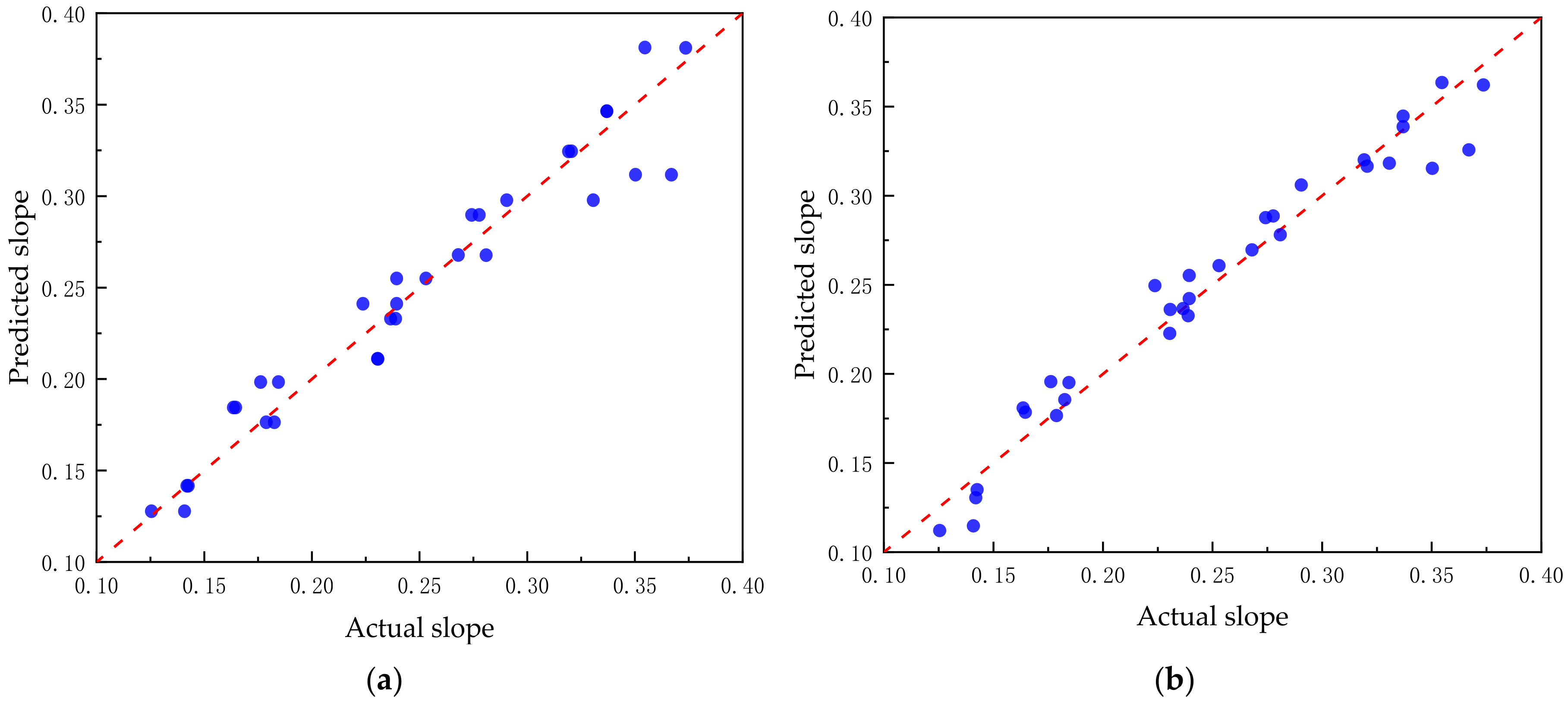
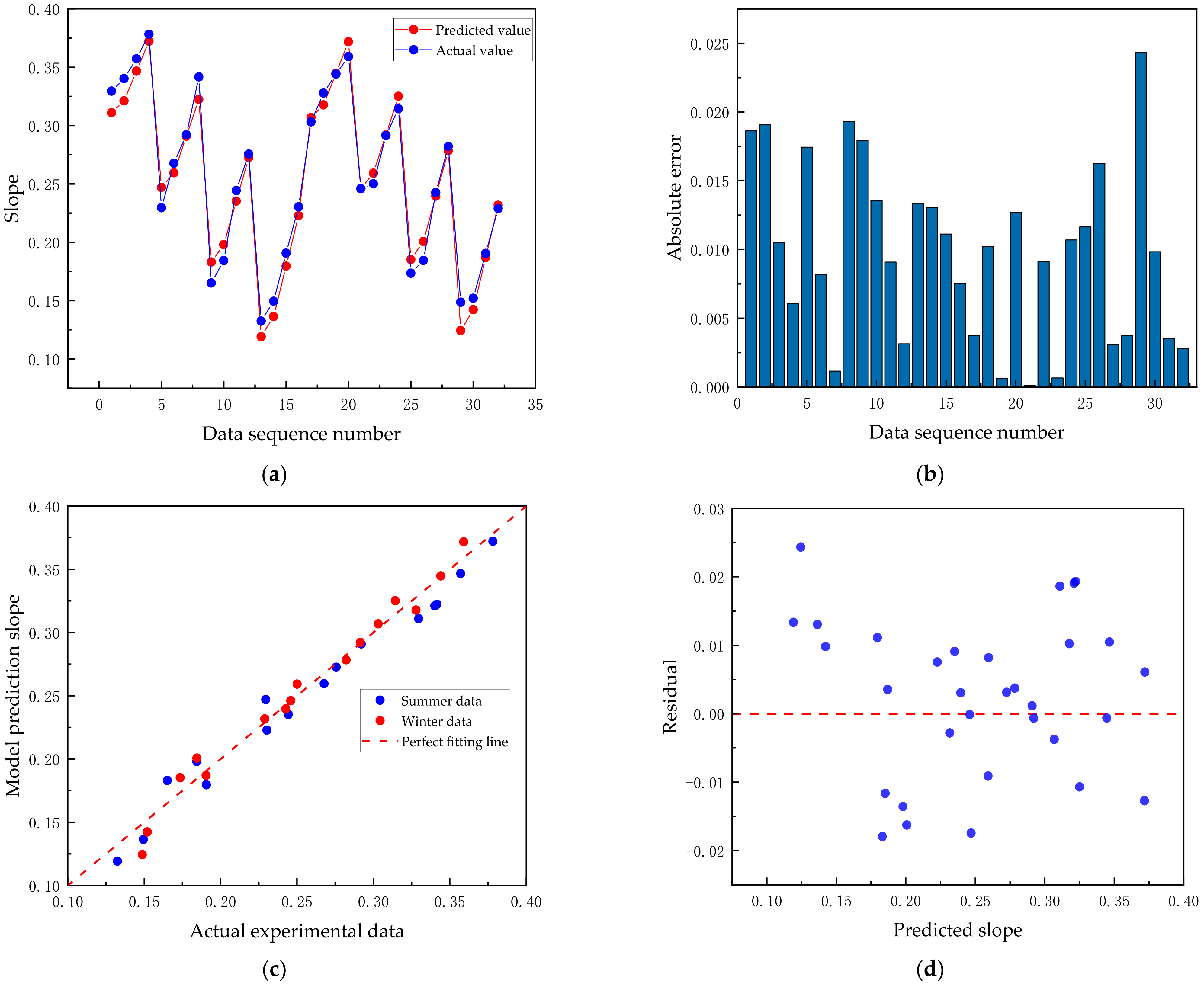
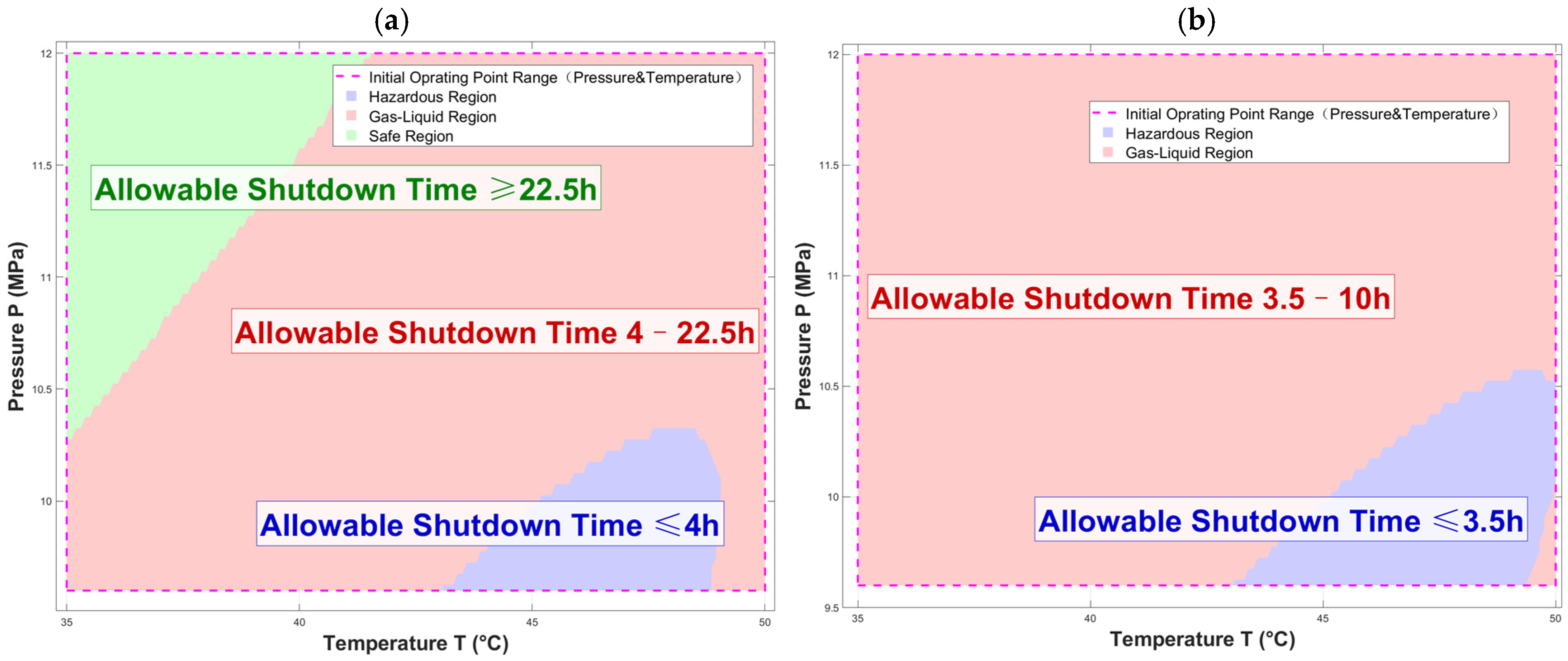
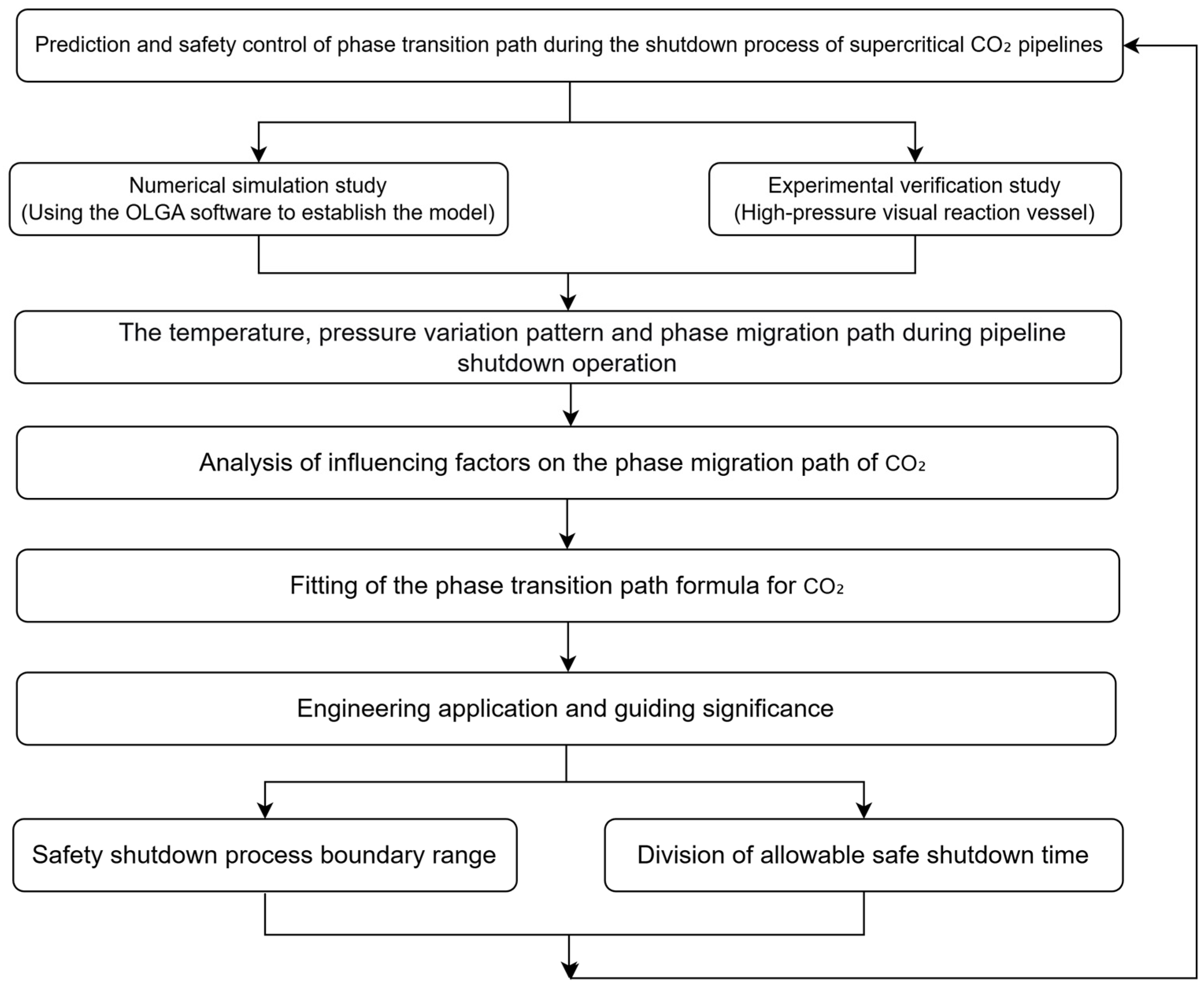
For this purpose, this study takes a supercritical carbon dioxide pipeline in a Xinjiang oilfield as the research object. By combining numerical simulations with a self-developed high-pressure visual reactor experimental system, it systematically investigates the influence mechanisms of initial temperature, initial pressure, and ambient temperature on the slope of the CO2 phase migration path. A dynamic prediction model for the slope based on ridge regression is established. Accordingly, the safe shutdown process boundary ranges and allowable shutdown time ranges for both summer and winter are delineated.
This study aims to fill the gap in existing research in the dynamic prediction of phase migration paths and the division of safe zones, providing more precise and reliable theoretical basis and operational guidelines for the safe shutdown control of supercritical carbon dioxide pipelines.
2. Research Status
At present, numerical simulation is an important means to study the shutdown process of supercritical carbon dioxide pipelines. Zhuo et al. [
21] pointed out that the shutdown problem during the pipeline transportation process of CCUS projects is significantly different from that of conventional oil and gas pipelines, specifically manifested as temperature and pressure changes as well as phase migrations of the transported medium during the transient process. A physical model of a long-distance CCUS pipeline was established based on OLGA, and the influence of different parameters on the safe shutdown time was analyzed through the single-factor experiment method and the gray correlation method. Wang [
22] simulated various transient working conditions in the actual transportation process through transient simulation, including the process of pipeline shutdown and restart. The research found that during the 8 h shutdown process, the pressure along the entire line reached equilibrium and decreased overall at the moment of shutdown, and the fluid in the pipe experienced backflow. Meanwhile, the temperature along the entire line dropped, and the closer it was to the gas source, the greater the drop in temperature was. Chen et al. [
23] studied the pipeline transportation process of supercritical carbon dioxide containing impurities for the CCUS project of Yan Chang Oilfield in Shaanxi Province. Based on the analysis of the physical properties and phase diagrams of CO
2 containing impurities, OLGA was used to study the influencing factors of the shutdown and safe shutdown of supercritical carbon dioxide pipelines. The pulsation law of the fluid reaching the quasi-critical zone during the shutdown process as well as the influence of parameters such as initial temperature and flow rate on the shutdown of CO
2 pipelines were analyzed with focus.
Zhao et al. [
24] combined the quasi-critical characteristics of CO
2 to study the variation law of the fluid in supercritical carbon dioxide pipelines under shutdown conditions. The research results show that the density of CO
2 entering the quasi-critical zone will fluctuate sharply with a slight change in temperature. This fluctuation causes a change in the volume of the CO
2 fluid in the pipe. Under the constraint of a fixed volume of the pipe, it will cause a violent pulsating impact on the pipe. Meanwhile, the axial fluctuation of supercritical carbon dioxide on the pipeline is manifested as the pulsating flow rate of the fluid in the closed pipeline, and the occurrence time of the pulsating flow rate is exactly corresponding to the occurrence time of the pulsating pressure. Liu [
25] obtained the variation laws of various parameters during the shutdown process based on OLGA simulation, found that there was a water hammer phenomenon during the shutdown process, and analyzed the conditions for the sudden change phenomenon occurring inside the pipe. The research suggests that during the shutdown process, the pressure should not drop near the critical point. The safe shutdown time can be prolonged by stopping at the end pressure or increasing the conveying pressure and flow rate.
Miao et al. [
26] conducted a coupling study on water hammer and fluid vaporization during the shutdown process in view of the characteristics of supercritical carbon dioxide long-distance pipelines that distinguish them from conventional oil and gas pipelines. Simulation analysis shows that the valve closing position and ground temperature conditions jointly regulate the starting time of CO
2 vaporization during the pipeline shutdown process. The greater the flow rate is, the shorter the maximum allowable shutdown time is, and the phase change occurs earlier at the front part of the pipeline and the high point of the pipeline than at other positions. TEHC et al. [
27] compared the heat transfer characteristics of liquid and supercritical carbon dioxide in buried pipelines; revealed the influence of environmental temperature and altitude on pipeline design parameters and cooling requirements; and pointed out that in cold climate conditions, liquid CO
2 may have advantages in pipeline design and economy.
Zhu et al. [
28] focused on the pressure rise path and phase state control during the commissioning stage of supercritical carbon dioxide pipelines, pointing out that when the CO
2 pressure rise path (phase state migration path) transitions from the gas phase to the liquid phase, the density increases sharply. Shi et al. [
29] took the supercritical CO
2 pipeline transportation test of a certain CCUS project in Daqing Oilfield as an example and analyzed the phase state changes of CO
2 during the transportation process and its impact on flow safety. It is believed that under the condition of ensuring that the pressure inside the pipe is not less than 1.1 times the critical pressure, for the Daqing area, this coefficient should be increased to no less than 1.2 times.
Lu [
30] believes that during the planned shutdown period, a sufficiently high pipeline pressure should be maintained to prevent the vaporization of dense-phase CO
2 and the formation of free water phases. Wang [
31] employed simulation software, specifically OLGA (v.2020.1.0) to simulate the supercritical–dense-phase CO
2 pipeline transportation process, analyzing the influence of different operating and environmental parameters on the pipeline transportation characteristics. The results showed that under the premise of ensuring that the pipeline did not vaporize, the lower the initial pressure of the pipeline is, the better it is.
In terms of theoretical analysis, Li et al. [
20] established a hydraulic and thermodynamic model of a supercritical carbon dioxide pipeline based on a demonstration project, obtaining the variation laws of pressure, temperature, density, liquid holdup, and phase state along the entire pipeline after its shutdown. The research finds that there is a positive correlation between the fluid density value and the pressure drop value corresponding to the unit temperature drop. Based on the Peng–Robinson state equation, the functional expressions of pressure, temperature, and density changes of the fluid before vaporization were obtained in the study. This temperature–pressure relationship is represented as the slope value of the phase migration path line in the CO
2 phase diagram. Theoretical analysis indicates that the intersection point of the phase migration path line and the gas–liquid equilibrium line in the CO
2 phase diagram is the initial vaporization pressure and temperature point of the fluid.
In conclusion, the existing research, through numerical simulation, theoretical analysis, and other means, has initially revealed the phase evolution laws and key influencing factors of supercritical carbon dioxide pipelines during the shutdown process and has made significant progress in the prediction of safe shutdown time and pressure pulsation analysis. However, at present, the dynamic prediction of the slope of the phase migration path under different environmental conditions still lacks systematic quantification, and the research on the division of safe shutdown conditions based on phase diagram regions is still blank, which limits the guidance of theoretical models in engineering practice. Therefore, based on the existing research, this paper will focus on the prediction modeling of the slope of the phase migration path and the research on the division of safe areas, with the aim of providing more reliable theoretical support and operational guidelines for the safe shutdown of supercritical carbon dioxide pipelines.
3. The Variation Law of Parameters During the Pipeline Shutdown Process
3.1. Project Case
The supercritical carbon dioxide transportation pipeline of Xinjiang Oilfield, as the first large-scale CO
2 oil displacement surface transportation project in the northwest region of China, adopts the supercritical–dense-phase transportation process. Its relevant parameters are shown in
Table 1. The main route of this pipeline is 61 km long, and L450 pipe material is selected, with an outer diameter of 273.1 mm and a pipe wall thickness of 8 mm. The designed annual transportation capacity is 2 million tons, the designed pressure is 13 MPa, and the absolute roughness of the pipe wall is 0.05 mm. The pipeline is buried at a depth of 1.6 to 2.0 m. Taking into account environmental factors such as the large diurnal temperature difference and the fluctuation of soil thermal conductivity in the Gobi area, the overall heat transfer coefficient is set at 1.2 W/(m
2·°C). The conveyed medium is sourced from the CO
2 captured by the power plant, with a volume fraction of CO
2 reaching 99.99%.
3.2. Basic Equations
Based on the continuity, momentum, and energy equations, a hydraulic–thermal calculation model for supercritical carbon dioxide pipelines was derived and established. This model is combined with the PR equation and computed using thermodynamic relationships. The fundamental differential equations for gas pipeline flow are shown in Equations (1)–(3), while density, internal energy, and enthalpy can be expressed as functions of pressure and temperature, as given in Equations (4)–(6). The system of six equations involves six unknown variables:
p,
T,
ρ,
w,
u, and
. From the perspective of solving differential equations, this system is closed.
Among them,
denotes the absolute pressure of the fluid (MPa);
represents the absolute temperature of the fluid (K);
is the fluid density (kg/m3) and indicates the fluid flow velocity (m/s);
A stands for the cross-sectional area of the pipeline (m2);
refers to the specific internal energy per unit mass of fluid (kJ/kg);
is the specific enthalpy per unit mass of fluid (kJ/kg);
represents the distance from the starting point of the pipe section (m);
denotes time describing the flow process (s);
indicates the elevation at each cross-section along the pipe section (m);
is the gravitational acceleration (m/s2);
is the hydraulic friction coefficient of the pipe section;
represents the heat dissipation flux from the fluid inside the pipe to the surrounding environment along the [0, x] pipe section (kJ/s).
3.3. Numerical Modeling
For the transient process during shutdown of a supercritical carbon dioxide pipeline, the specific evolution of flow state—i.e., the spatiotemporal variations of physical parameters such as temperature, pressure, density, liquid holdup, and phase state inside the pipeline—is not only governed by the continuity equation, momentum equation, energy equation, equation of state, internal energy equation, and enthalpy equation but is also subject to the constraints of the boundary and initial conditions of the pipeline system. Therefore, before simulating the shutdown transient, it is necessary to define the boundary and initial conditions for the transient process. The initial conditions refer to the state of the pipeline system at the beginning of the studied time period, while the boundary conditions describe the flow state at the boundaries of the pipeline system throughout the transient process.
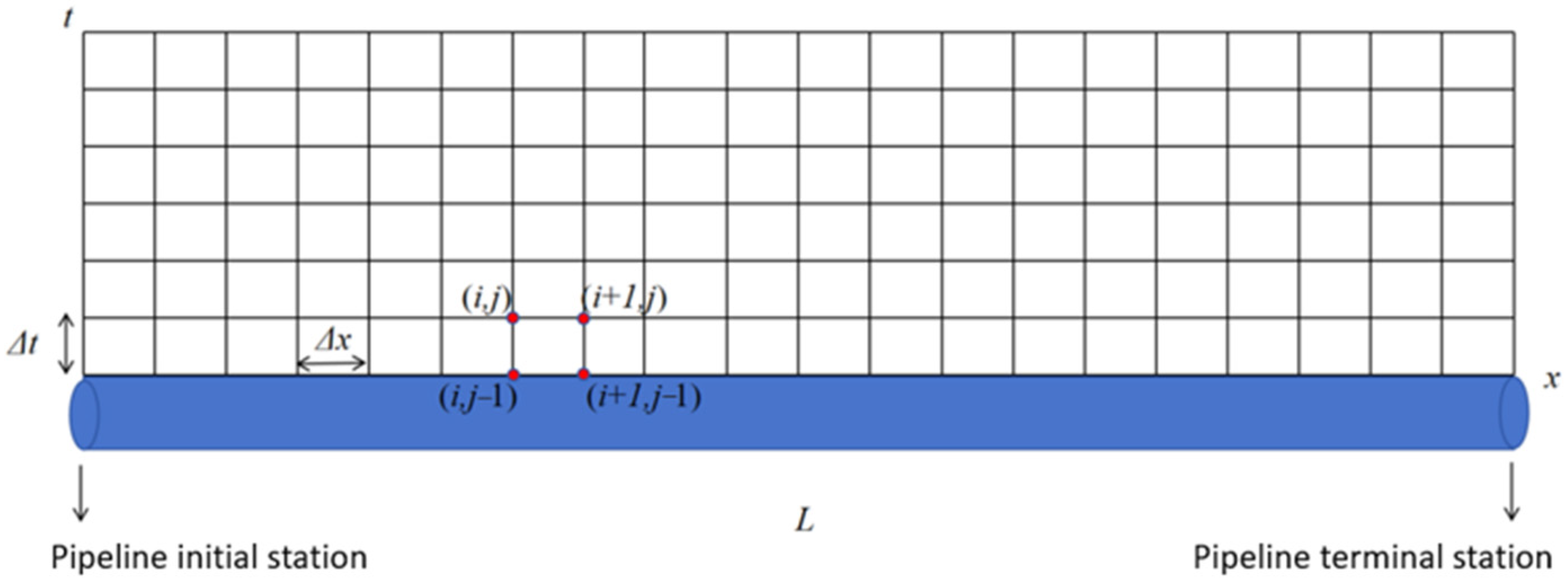
An
grid diagram is constructed, as shown in
Figure 1, where the horizontal axis represents the
x-axis (pipeline mileage axis) and the vertical axis represents the t-axis (time axis).
denotes the total length of the pipeline, which is uniformly divided into n segments.
represents the length of each subdivided pipeline segment, while
denotes the time step. After the pipeline shutdown, with the terminal valve closed, the system comprises the inlet station, the outlet station, and the pipeline between them, containing a total of 6n unknown parameters. Each computational grid can be described by three difference equations, resulting in
difference equations. At the intersection nodes of the pipeline segments, and there are
initial conditions. Including the temperature and mass flow boundary conditions at the inlet as well as the mass flow boundary condition at the terminal valve, a total of
boundary conditions are defined. At this stage, the number of equations amounts to
, while the number of unknown variables is 6n. Since the number of equations equals the number of unknowns, this system of difference equations is solvable.
A hydraulic–thermal calculation model for supercritical carbon dioxide pipelines was developed based on OLGA software (v.2020.1.0). The model mainly consists of an inlet flow control module, pipeline segments, an outlet pressure regulation module, and block valves located at the outlet of the first station and the inlet of the last station (as shown in
Figure 2). The modeling process covers several key steps: selecting the fluid medium using OLGA’s built-in pure CO
2 component (100% content), setting simulation time parameters, defining pipe wall material and thickness parameters, configuring the pipeline network structure, setting heat transfer conditions, adjusting valve parameters, and determining boundary conditions. Through these operations, numerical simulations of shutdown conditions for supercritical carbon dioxide pipelines can be performed. Without compromising simulation accuracy, to accelerate the simulation speed, a segment length of 500 m and a time step of 5 s were adopted during the simulation.
Taking winter conditions (soil temperature of 2 °C) and the pipeline design flow rate as an example, when simulating normal pipeline operation, the boundary conditions were set as follows: the first station was set with a CO2 injection flow rate of 34.7 kg/s and a temperature of 50 °C, while the pressure at the terminal station was set to 10.5 MPa. The block valves at the outlet of the initial station and the inlet of the terminal station remained fully open. Under these conditions, the pressure at the initial station was inversely calculated to be 12 MPa. When simulating the pipeline shutdown condition, the boundary conditions were set as follows: the CO2 injection flow rate at the initial station was linearly reduced from 34.7 kg/s to 0 over 3 min. When the flow rate reached zero, the block valves at the outlet of the initial station and the inlet of the terminal station were simultaneously closed.
3.4. Simulated Result
3.4.1. Parameters Along the Pipeline Before Shutdown
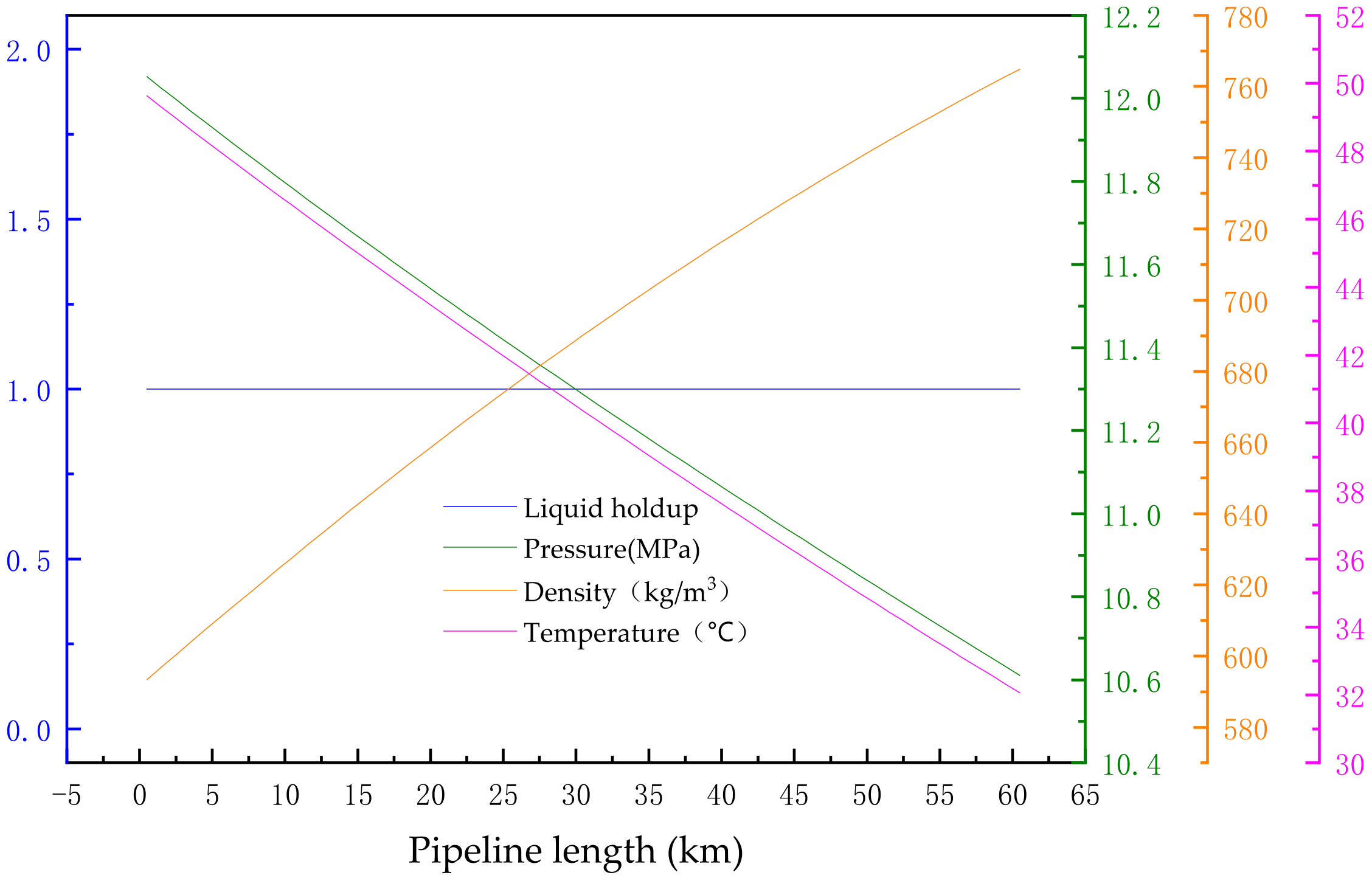
Taking the winter working condition (soil temperature of 2 °C) as an example, the pipeline transportation volume is 34.7 kg/s, and the parameters at the front end of the shutdown are shown in
Figure 3. The starting point (initial station) temperature is 50 °C, the pressure is 12 MPa, and the corresponding density is 587.83 kg/m
3. The temperature at the end of the pipeline (terminal station) is 30 °C, the pressure is 10.6 MPa, and the density is 782.11 kg/m
3. The liquid holdup rate of the entire pipeline has always been 1. Within the first 56 km of the pipe section, the fluid is in a supercritical state. Within the last 5 km, due to the fluid temperature dropping below the critical point, CO
2 is in a dense-phase state.
3.4.2. Parameter Changes Along the Pipeline During Shutdown Process
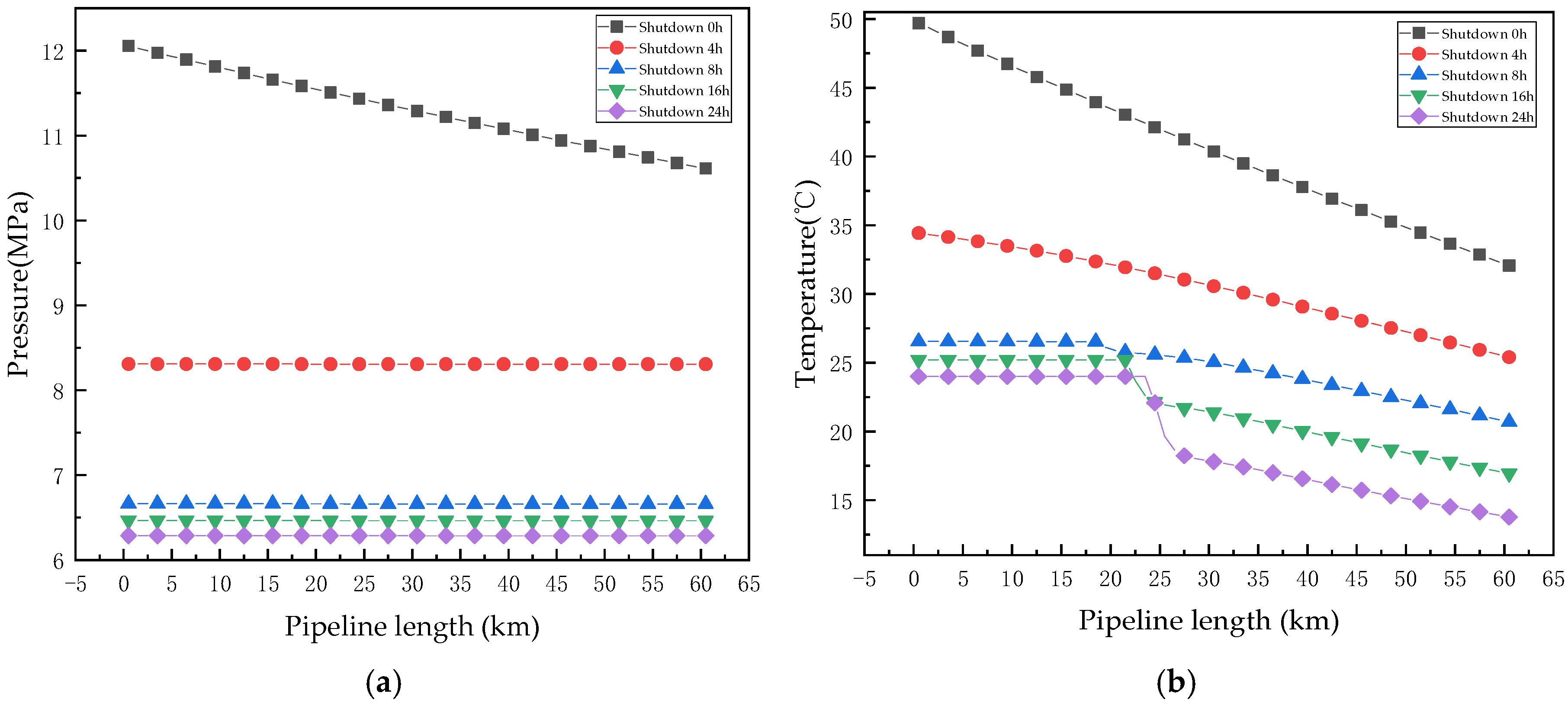
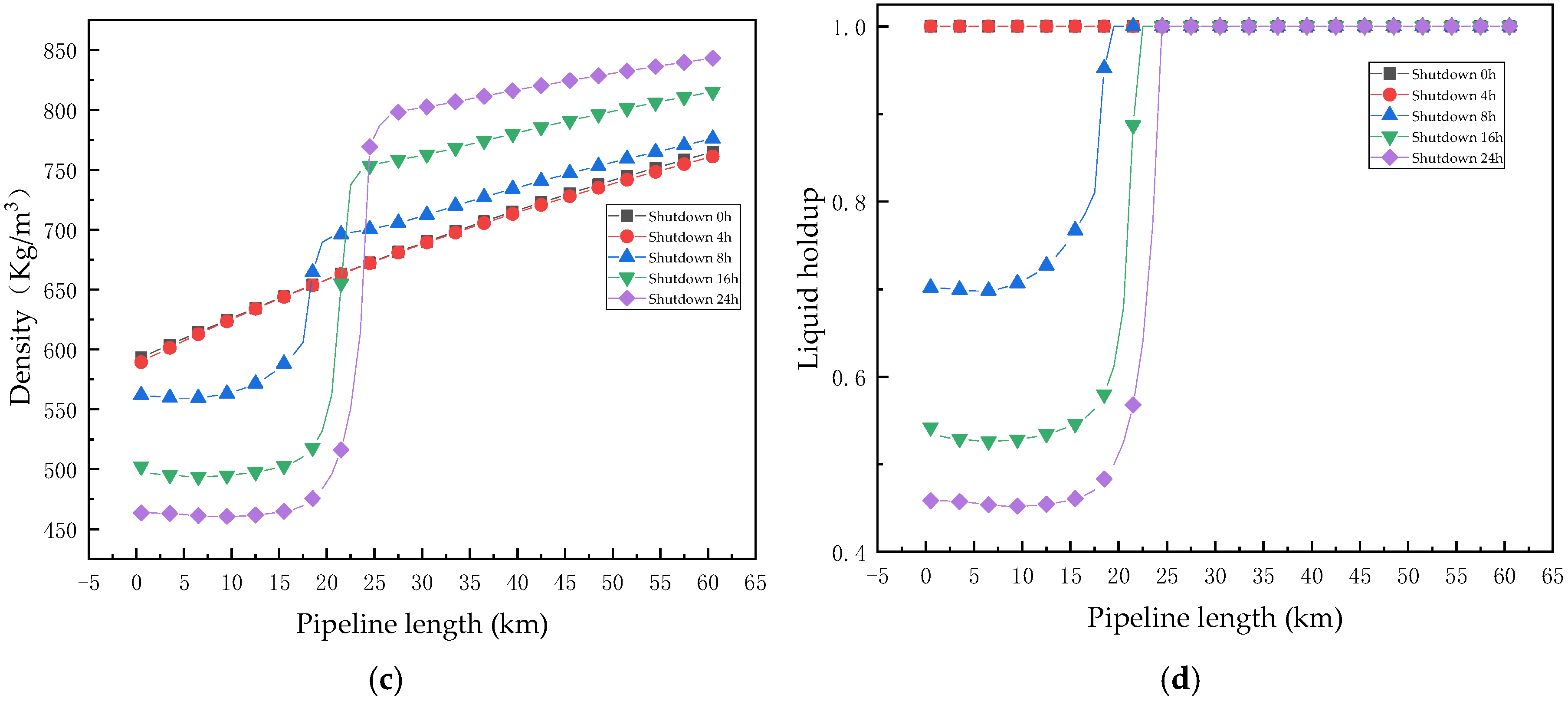
The calculation was carried out for the pipeline shutdown process, with a focus on examining the changing trends of key parameters such as temperature, pressure, liquid holdup, and density along the pipeline over time. The results are shown in
Figure 4.
Figure 4a shows that after the pipeline was shut down for 4 h, the pressure along the pipeline gradually became consistent. Then, as time went on, the pressure along the entire pipeline decreased slowly in unison.
Figure 4b shows that the temperature at each position of the pipeline decreases significantly with the extension of the shutdown time, and the temperature drop in the starting area is particularly significant.
Figure 4c shows that when the pipeline was shut down for approximately 5.11 h, vaporization occurred first at the starting point of the pipeline. As the shutdown time was extended to 8 h, 16 h, and 24 h, the lengths of the vaporization pipe sections were 19.5 km, 22.5 km, and 24.5 km, respectively, indicating that the vaporization phenomenon gradually expanded from the upstream to the downstream.
Figure 4d shows that before vaporization occurs, the pipeline density gradually increases along the mileage, but the overall change is gentle. After vaporization occurs, the density in the upstream section decreases, while that in the downstream section increases.
3.4.3. Process Parameters and Phase State Changes of Characteristic Points During Pipeline Shutdown
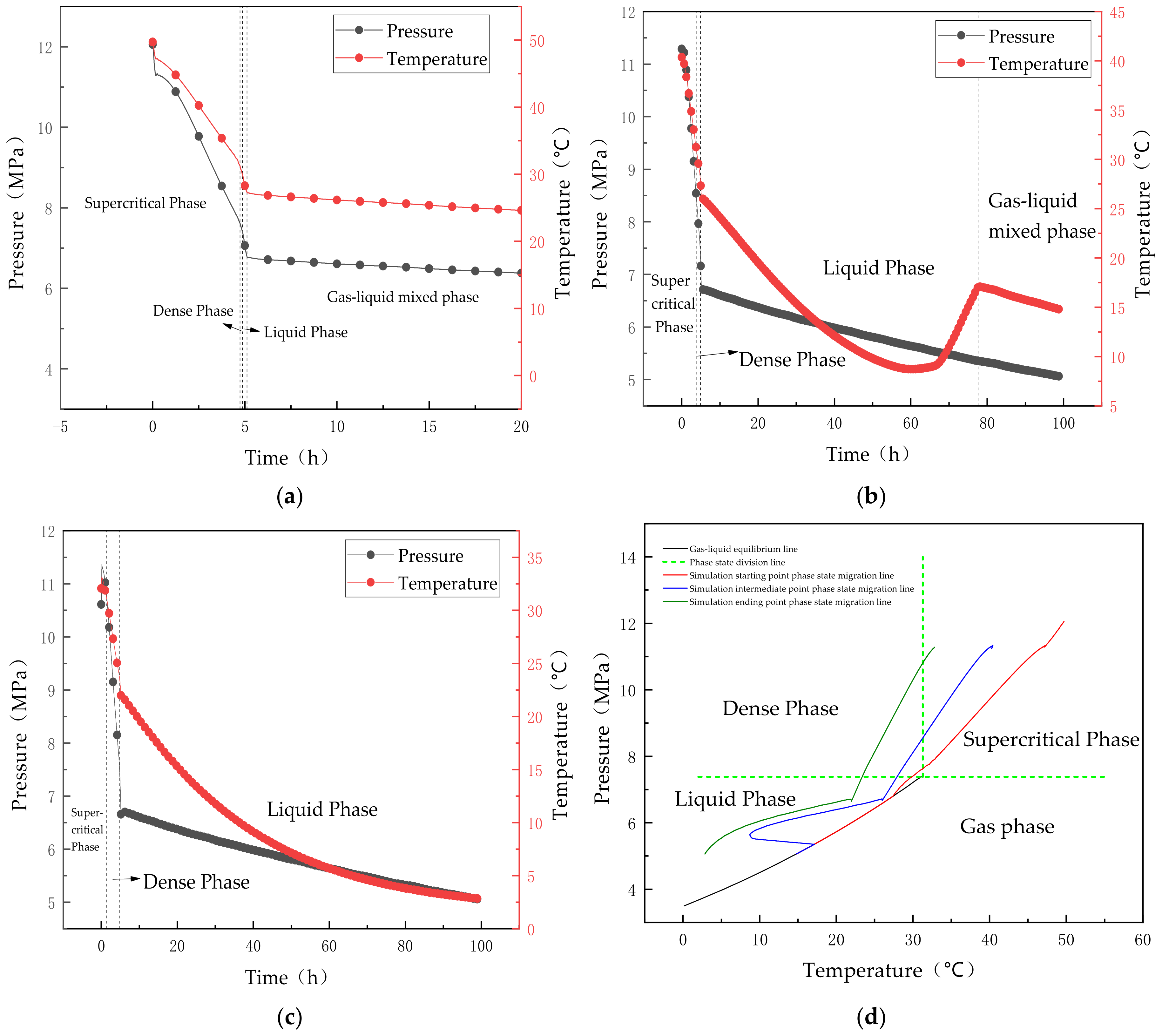
The changes in process parameters and phase evolution at the starting point, midpoint and end point of the pipeline during shutdown process were summarized and analyzed respectively. It can be seen from
Figure 5a that at 4.75 h after the shutdown, the fluid at the starting point enters the dense-phase zone from the supercritical state. At this time, the temperature drops to 31.06 °C, which is lower than the critical temperature of CO
2 (about 31.1 °C), but the pressure is still higher than its critical pressure (about 7.38 MPa). Therefore, the fluid exists in the form of high-density dense phase. At 4.88 h, the system pressure further decreased and was lower than 7.38 MPa, and the fluid changed from dense phase to liquid phase. Then, at 5.11 h, gas–liquid mixed phase separation began to occur at the starting point. With the extension of the stop-transportation time, the vaporization phenomenon gradually intensified, and the proportion of the gas phase continued to increase. The phase state change path of the starting fluid is supercritical → dense phase → liquid phase → gas–liquid mixed phase. The changes in pressure and temperature are synchronous.
As can be seen from
Figure 5b, at 3.8 h stoppage, the fluid at the midpoint enters the dense phase from the supercritical state and then quickly re-enters the liquid phase at the 4.9 h stoppage and remained in the liquid phase for approximately 74 h. At 77.6 h stoppage, vaporization occurs. The path of fluid phase state change is the same as the starting point, but the duration of each phase state varies greatly.
As shown in
Figure 5c, similar to the midpoint fluid, the endpoint fluid completed the transformation from supercritical to dense phase (1.5 h) and then to liquid phase (3.4 h) in an extremely short time. However, the difference lies in that the fluid remained in the liquid phase throughout and did not undergo vaporization. It can be observed that due to the differences in temperature and the pressure of the fluid at different positions along the pipeline at the initial moment of shutdown (as the mileage increases, the temperature and pressure decrease approximately linearly), at different shutdown times, the temperature and pressure of the fluid at different positions are different, resulting in different phase states.
As shown in
Figure 5d of different phase migration path feature points, the pipeline in different positions after shutdown phase migration path of significant differences presents good identifiability and regularity and has definite representative. The path can be used to determine whether vaporization has occurred at each point and the possibility of vaporization occurring. An accurate prediction of the path has practical significance. For this reason, this study will subsequently focus on conducting an in-depth analysis of the CO
2 phase migration path and establishing predictive modeling.
4. Analysis of Influencing Factors on the Migration Path of CO2 Phase During Pipeline Shutdown
4.1. Research Method
4.1.1. Experimental Facility
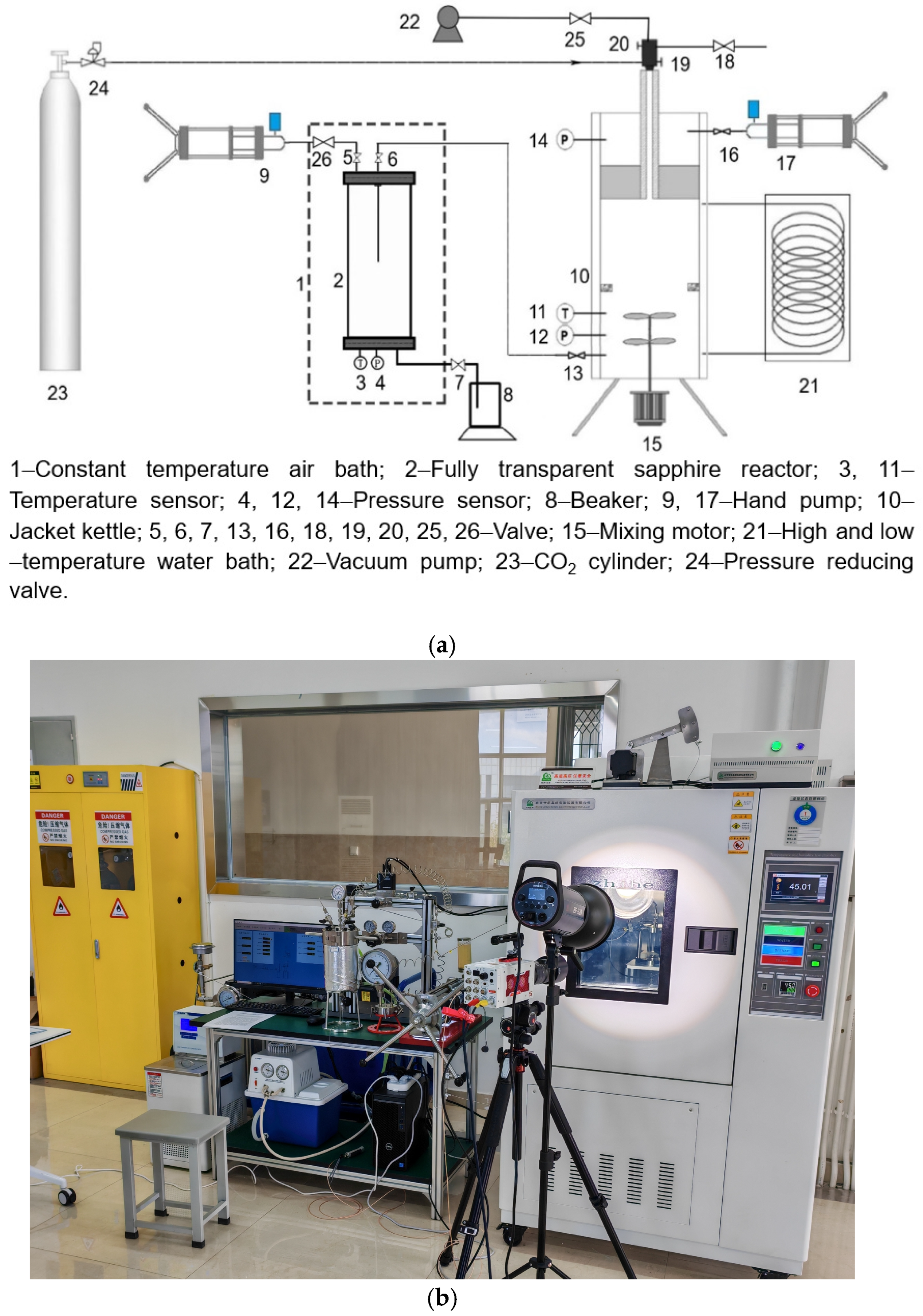
To verify the numerical simulation results and conduct in-depth research on the temperature, pressure and phase change characteristics during the shutdown process of supercritical carbon dioxide, a high-pressure visual reactor experimental system was independently designed and constructed (
Figure 6). The system was composed of CO
2 gas cylinders, compressors, balance vessels, fully transparent sapphire reaction vessels, low-temperature constant temperature baths, high- and low-temperature constant temperature boxes, pressure and temperature detection units, high-precision pressure reducing valves, data acquisition systems, etc. The core component of the experimental system is a multifunctional, fully visible sapphire reaction kettle, the working pressure range 0–25 MPa, working temperature range of −15–80 °C, the reaction kettle of 25 mm in diameter, height of 100 mm, and an effective volume of 50 mL. The temperature control range of environmental chamber was from −20 to 150 °C. The measurement range of the pressure sensor was 0.1–30 MPa, with an accuracy of 0.1%FS. The measurement range of the temperature sensor was −50 to 150 °C, with an accuracy of ±0.2 °C. The data acquisition system can precisely display and control temperature and pressure, achieving online data collection, recording, and display, with the shortest sampling interval being 1 s.
4.1.2. Experimental Conditions
In this experiment, high-purity CO
2 gas cylinders were used as the medium source. The gas was pressurized to the set pressure by adjusting the outlet pressure reducing valve and the compressor unit. After flowing through the balancing reactor, CO
2 enters the high-pressure visible reactor, which is placed in a precisely temperature-controlled environmental chamber to simulate the thermodynamic state evolution of CO
2 under the shutdown condition. To investigate the influence of initial temperature, initial pressure, and ambient temperature on the shutdown process, the experimental conditions designed for this study are summarized in
Table 2. A full-factor experimental design was adopted, with a total of 32 sets of experimental conditions formed, including 2 environmental temperatures (2 °C in winter and 22 °C in summer), 4 temperatures (35 °C, 40 °C, 45 °C, 50 °C), and 4 pressures (9.6, 10.0, 11.0, 12.0 MPa). During the experiment, the CO
2 fluid in the reactor was first preheated and stabilized to the target initial temperature and pressure. Then, the temperature of the constant temperature box was rapidly reduced to the set ambient temperature to simulate the cooling process after pipeline shutdown. The phase change behavior was recorded using a high-speed camera system, and the temperature and pressure data were collected simultaneously; then, the phase change characteristics were analyzed.
4.2. Experimental Result
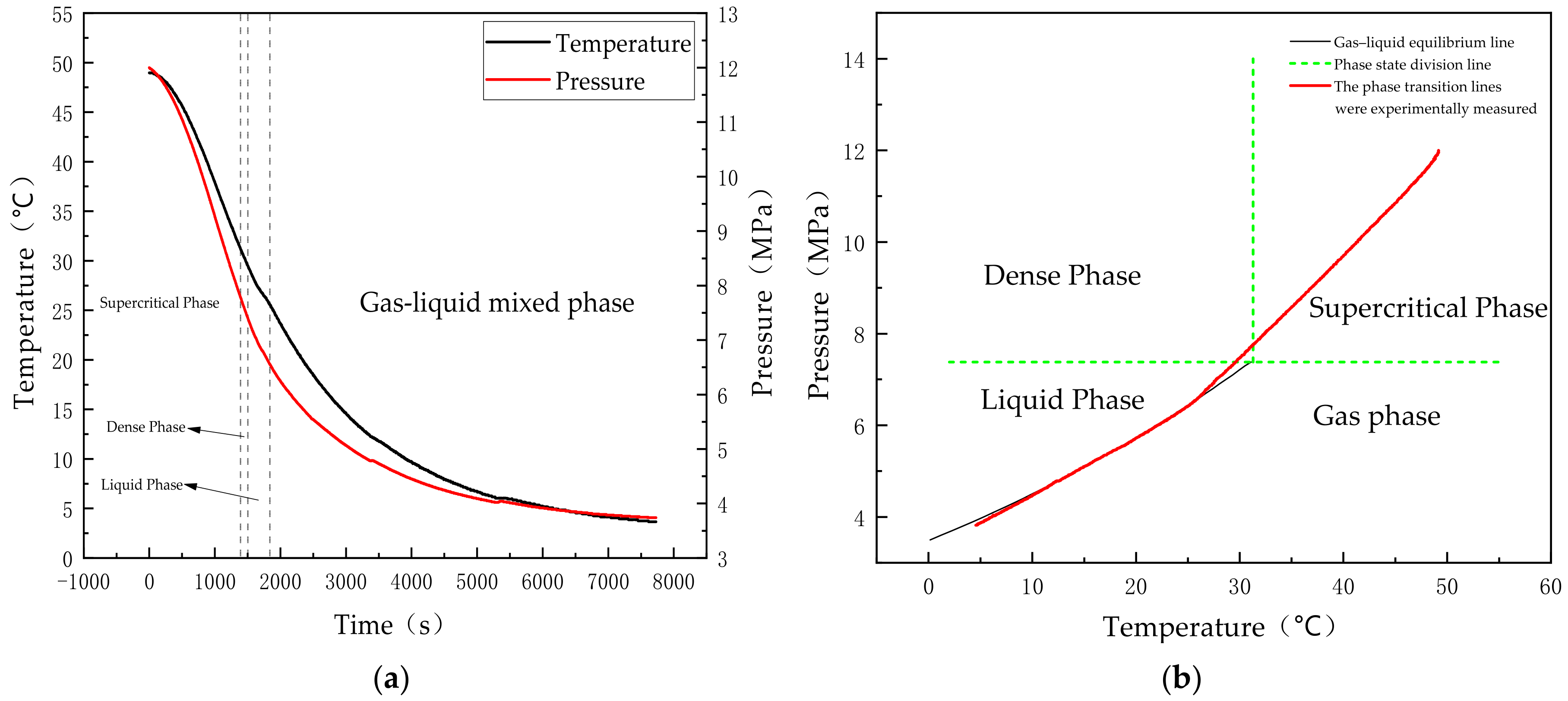
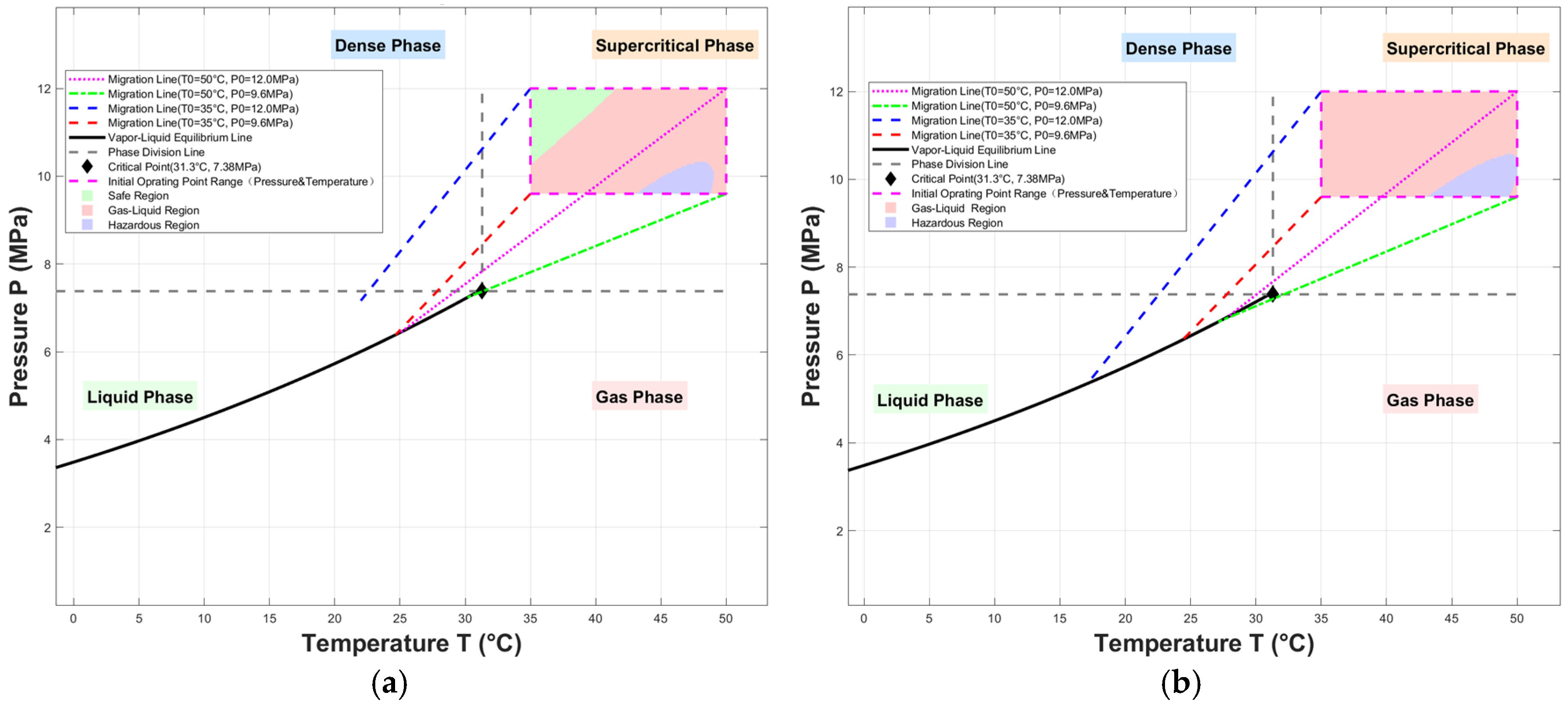
Under the winter shutdown conditions of 12 MPa and 50 °C (ambient temperature 2 °C), the phase migration path of CO
2 was supercritical state → dense phase → liquid phase → gas–liquid mixed phase. The specific process is shown in
Figure 7a.
Figure 7b further demonstrates the key time point of fluid phase change. At 1403 s, the fluid transitioned from the supercritical state to the dense phase at a temperature of 31.28 °C and a pressure of 7.75 MPa. At 1512 s, the dense phase changed to the liquid phase, the temperature dropped to 29.51 °C, and the pressure was 7.37 MPa. At 1850 s, the fluid further transitioned from the liquid phase to a gas–liquid mixed phase state, with the temperature dropping to 25.72 °C, the pressure to 6.53 MPa, and the density significantly decreasing from 662.66 kg/m
3 in the liquid phase to 249.54 kg/m
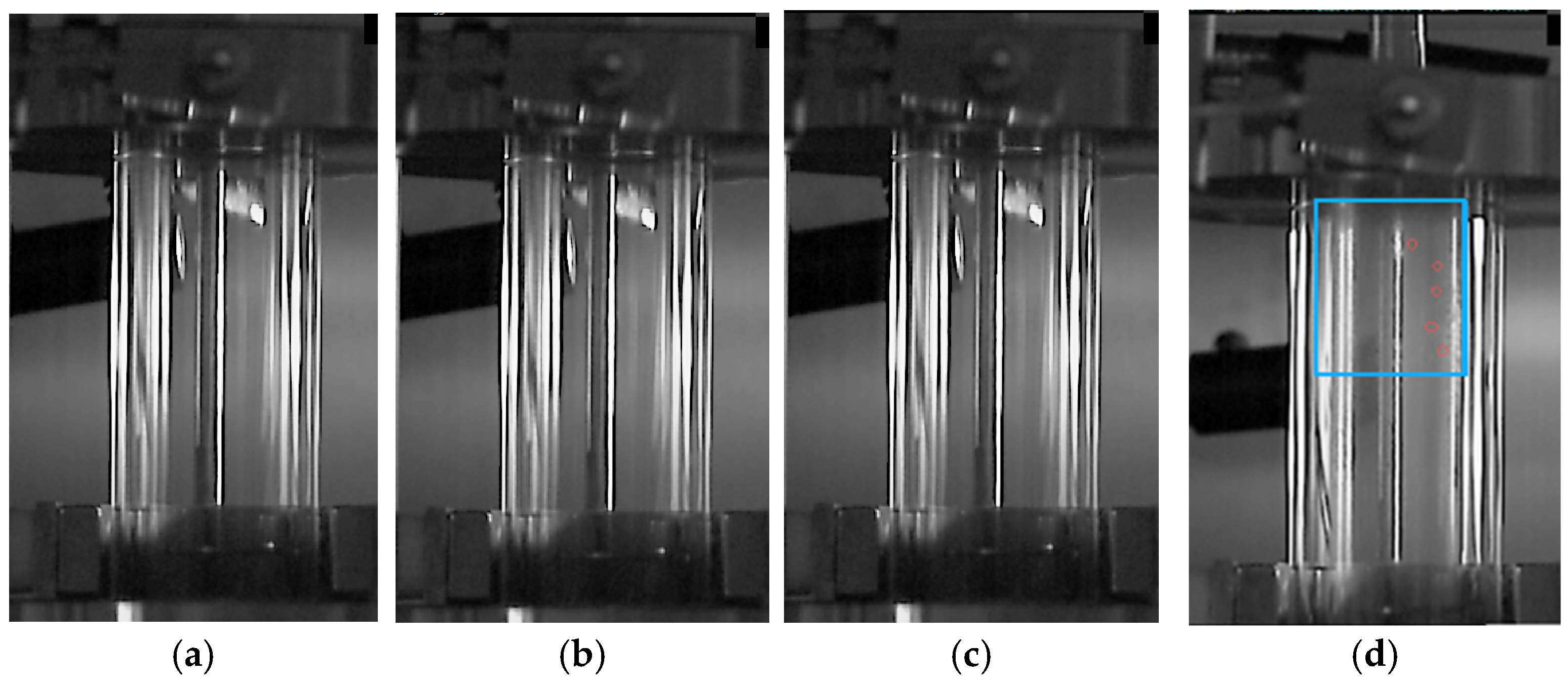
3. Gas–liquid phase change was processed through high-speed cameras record; image results are shown in
Figure 8. In
Figure 8d, the positions of the bubbles caused by the phase change are clearly marked, which intuitively reflects the phase interface characteristics of the gas–liquid mixed phase stage.
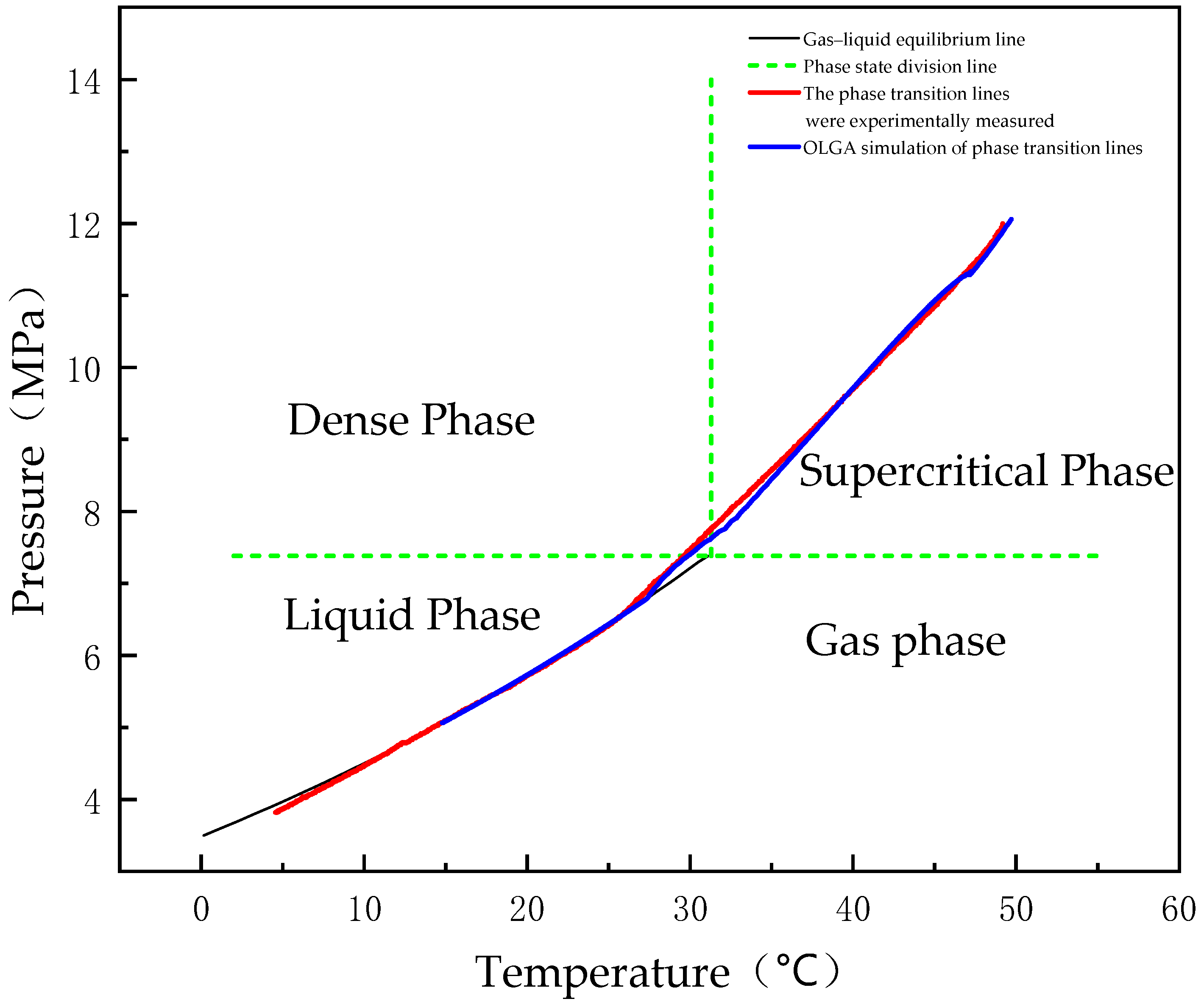
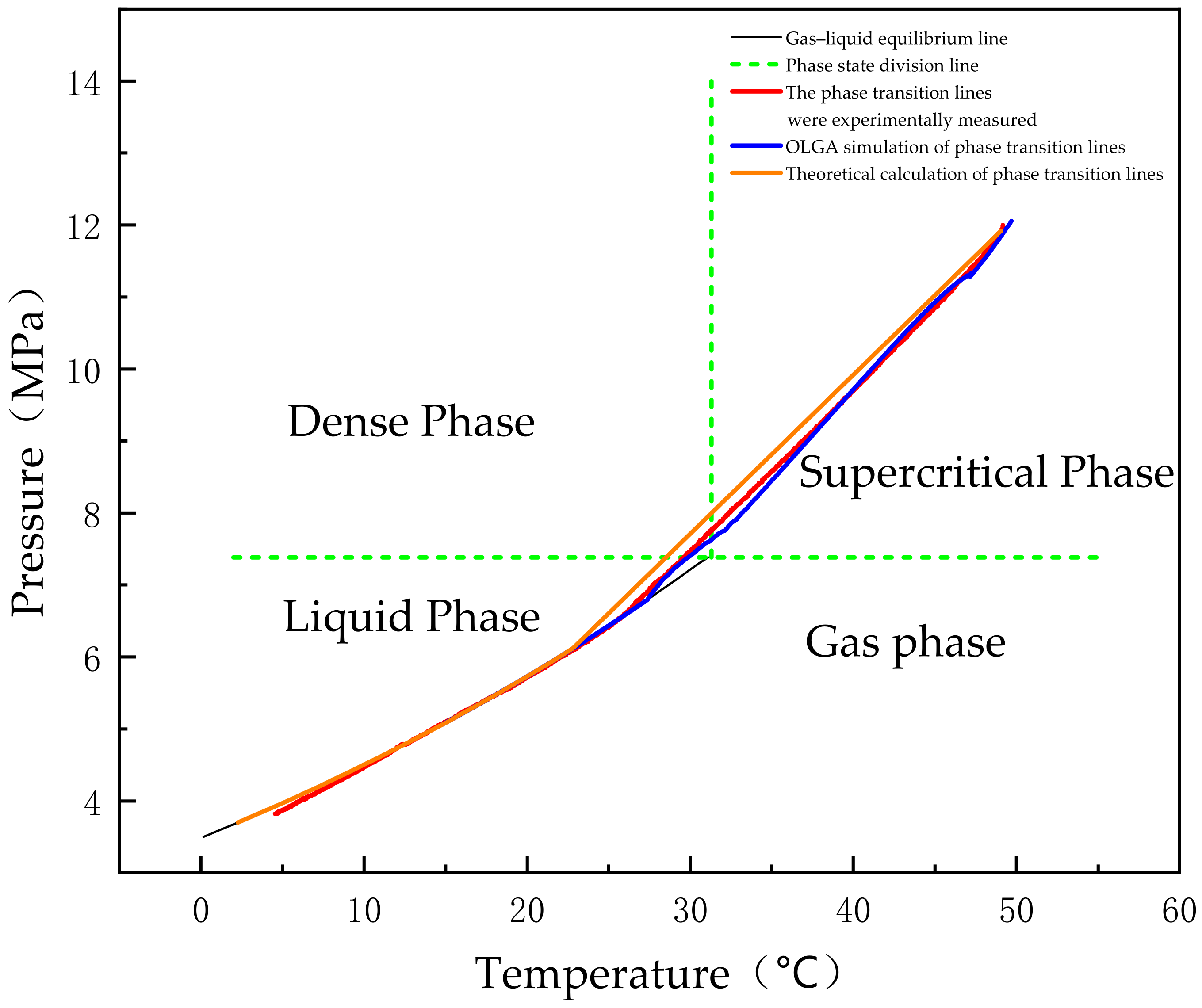
By comparing the phase migration paths of the experiment and the simulation under the same working conditions (
Figure 9), it was found that the slopes of the two paths were highly consistent, with a relative error of only 0.77%, verifying the accuracy of the numerical model. The minor deviations between two may stem from the scale effect between the experimental system and the ideal pipeline, the tiny temperature gradient inside the reactor, and the measurement errors of the data acquisition system. Despite this, the error was within the acceptable range of engineering, which proves that the experimental data is reliable and can be used for subsequent analysis and model verification.
It should be noted that during the operation of long-distance pipelines, process parameters such as pressure and temperature vary significantly along the pipeline. After shutdown, the parameter changes also differ considerably at different locations along the line. Although the above experimental work was carried out for a specific characteristic operating point and lacks data on the overall parameter changes of the pipeline; the experimental results of a single operating point cannot directly reflect the overall situation of the pipeline. However, the purpose of the experiment was to reveal the evolution laws of temperature, pressure, and phase at the characteristic operating point under ambient temperature, which corresponds to the simulation of the temperature, pressure, and phase changes of the fluid at a certain position such as the starting point, midpoint, or endpoint of the pipeline during the shutdown process in the actual field operation. To obtain the parameter variations along the entire pipeline during shutdown, multiple characteristic points can be selected along the pipeline based on the operating and environmental parameters at the initial moment of shutdown. For example, the pipeline can be divided into segments of a certain length, such as 5 km, and shutdown experiments can be conducted simultaneously for each segment. Based on experimental results, including temperature and pressure changes, allowable shutdown time, and phase migration paths for different pipeline sections, each segment can be classified into different safety levels. This allows for the identification of critical pipeline sections and supports the proposal of corresponding recommendations and measures to ensure the safety of the entire pipeline during shutdown.
4.3. Analysis of Influence Factors
To systematically explore the influence laws of various factors on the evolution of the CO2 phase during pipeline shutdown, this study conducted an analysis of key factors such as initial temperature, initial pressure, ambient temperature, and gaseous impurities. Based on experimental observations and data fitting, the influence degrees of each factor were further quantitatively compared. By adopting the single-factor rotation analysis method and successively fixing other variables, the influence of the change of a certain factor at different levels on parameters, such as the initiation time of CO2 vaporization phase migration, phase migration path, and density, was investigated.
4.3.1. Temperature Factor
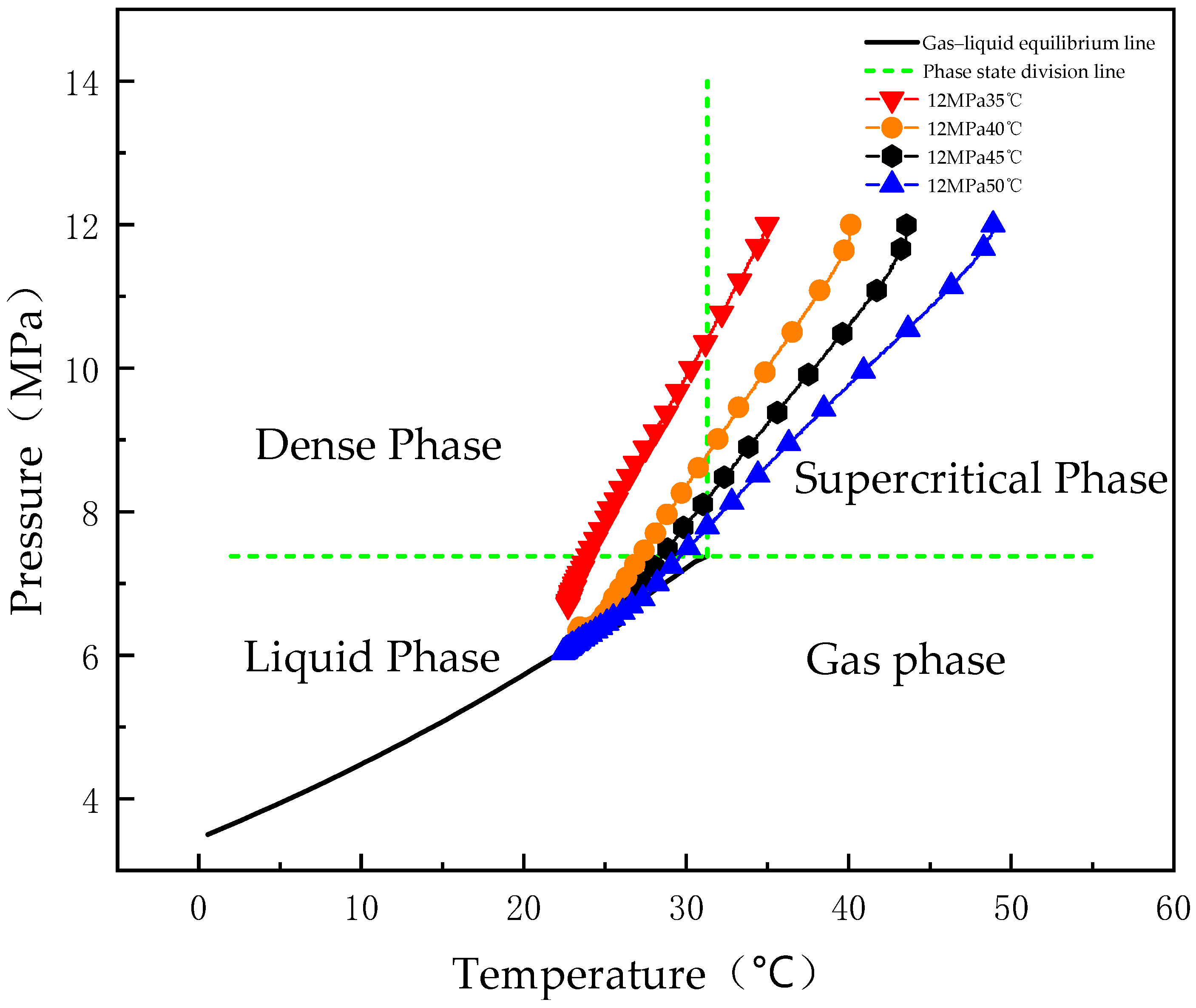
The experiment presents the results of the summer pipeline shutdown of CO
2 under the same initial pressure of 12 MPa and different initial temperatures of 35, 40, 45, and 50 °C, as shown in
Figure 10 and
Table 3. Under the four working conditions, the slopes of the phase migration paths were 0.37819, 0.34164, 0.27567, and 0.2303, respectively. The higher the temperature was, the smaller the slope value was, and the more likely it was to intersect with the CO
2 gas–liquid equilibrium line. The results showed that under high-temperature conditions of 45 °C and 50 °C, the CO
2 fluid vaporized at 3636 s and 3207 s, respectively, and the temperature and pressure at which vaporization occurred were 25.74 °C, 6.54 MPa and 27.53 °C, 6.81 MPa, respectively. At low temperatures of 35 °C and 40 °C, the CO
2 fluid eventually stabilized in the liquid phase.
4.3.2. Pressure Factor
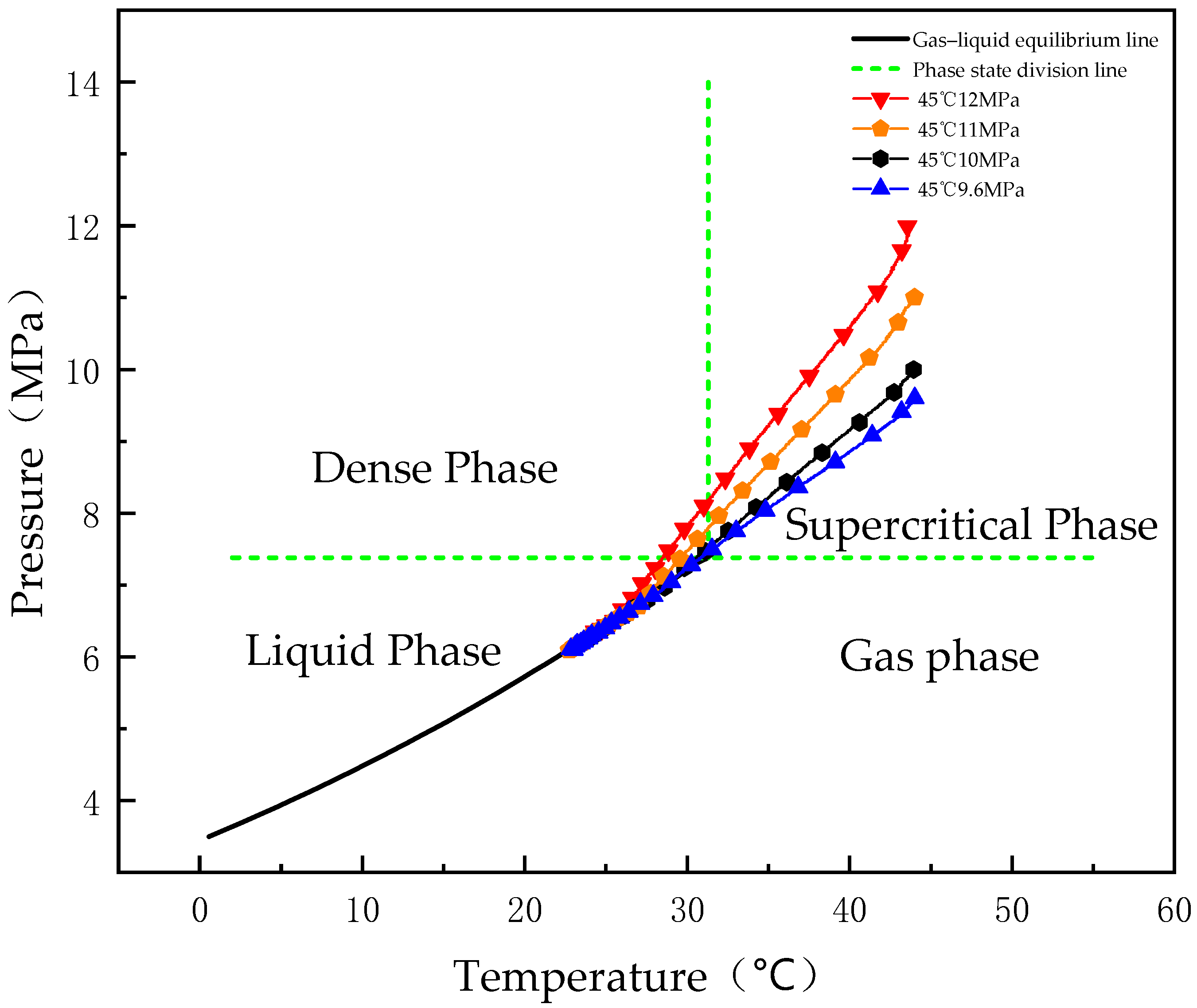
The experiment presents the results of the summer pipeline shutdown of CO
2 under the initial same temperature of 45 °C and different initial pressures of 9.6, 10, 11, and 12 MPa, as shown in
Figure 11. Under the four working conditions, the slopes of the phase migration paths were 0.16514, 0.18442, 0.24435, and 0.27567, respectively. The higher the pressure was, the greater the slope value was. The results showed that the CO
2 fluids all underwent vaporization, which occurred at 2223, 2151, 2806, and 3636 s, respectively. The higher the pressure was, the longer it took for vaporization to occur, and the pressure and temperature during vaporization were also lower. For instance, under conditions of 9.6, 10, 11, and 12 MPa, the temperatures at which vaporization occurs were 29.12, 28.93, 27.53, and 25.74 °C, respectively, and the pressures are 7.07, 7.03, 6.81, and 6.54 MPa, respectively.
4.3.3. Environmental Temperature
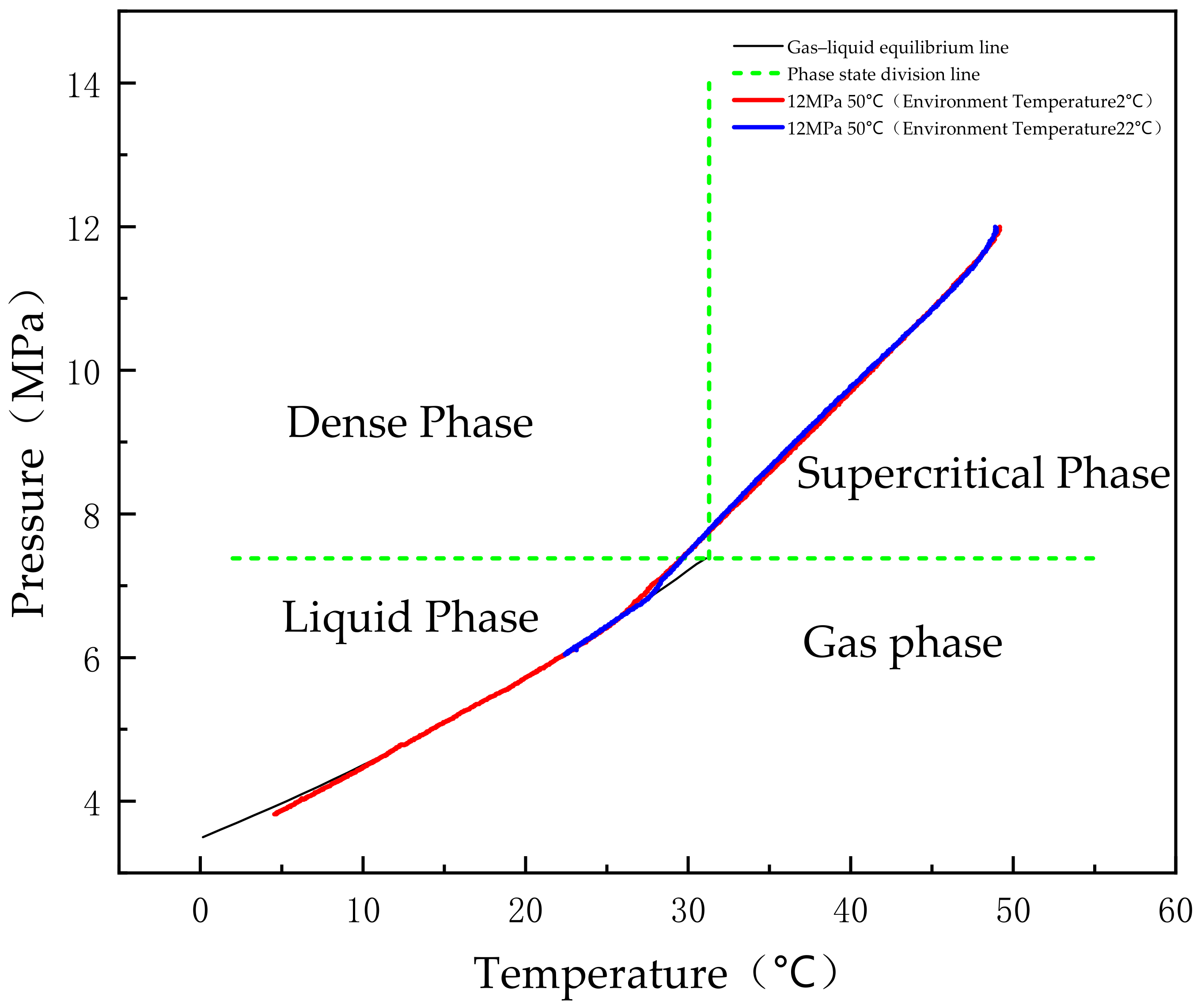
The same initial temperature of 50 °C and initial pressure of 12 MPa were selected, and the shutdown experiments were conducted under the ambient temperatures of 2 °C and 22 °C, respectively. The experimental results are shown in
Table 4 and
Figure 12. From the comparison of the phase path migration lines, it can be seen that the path slopes of the path migration lines under the two working conditions were 0.2303 and 0.2289, respectively, which almost overlap on the graph, indicating that the paths were consistent. However, from the parameter table, it can be seen that the lower the ambient temperature, the earlier vaporization occurred. The initial vaporization times at 2 °C and 22 °C were 1850 s and 2616 s, respectively.
4.3.4. Gaseous Impurities
In
Section 3.1, the medium transported by the engineering case originated from the power plant’s captured CO
2, with a relatively high purity of CO
2. However, the other industrial CCUS pipelines might transport CO
2 containing impurities. The impurities included polar impurities such as H
2S, and non-polar impurities such as H
2, CH
4, N
2, O
2, etc. These impurities all have an impact on the physical properties (density, viscosity, specific heat capacity, thermal conductivity, etc.) and phase characteristics (gas–liquid equilibrium line, critical pressure, critical temperature, quasi-critical zone, etc.) of CO
2.
Therefore, for the CO
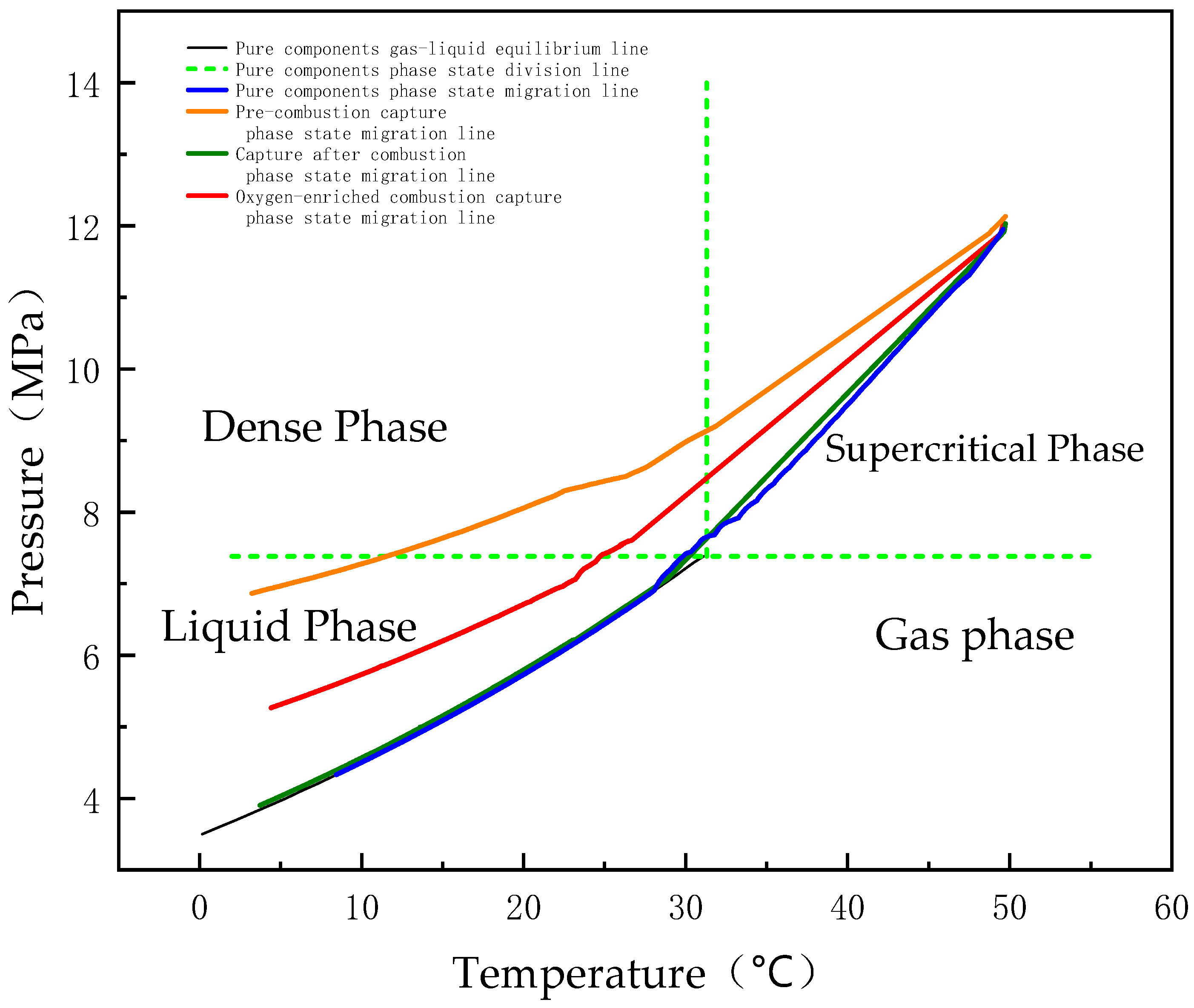
2 with impurities under different typical carbon capture methods, the research was conducted on the influence of these impurities on the fluid phase state migration path during the shutdown process. The content of gas components under different capture methods is shown in
Table 5, and the critical parameters of different gas components and the slope of the phase state migration line during the shutdown process are shown in
Table 6. The comparison of the phase state migration lines during the shutdown process for different gas components is shown in
Figure 13. The results indicated that the impurity content had an impact on the phase state migration line. In the combustion-after-capture method, the gas components were close to pure CO
2, and the difference in the phase state migration line was not significant. However, in the combustion-before-capture and oxygen-enriched combustion capture methods, the slope values of the phase state migration line were smaller, being 0.1514 and 0.1859, respectively. The migration line was located above the pure CO
2 phase state migration line.