


Abstract
With China’s accelerated urbanization, road and tunnel lighting demand and its electricity consumption have grown significantly, making energy conservation, and carbon reduction urgent. GB 37478, the core standard for road and tunnel LED luminaires, is crucial for promoting high-efficiency products and the lighting industry’s energy efficiency transformation. This study focuses on its 2019 and 2025 editions, using a bottom-up model, product Stock model, and carbon reduction potential method to analyze the standard’s energy conservation and carbon reduction potential during 2021–2030, alongside international energy efficiency comparisons. The results show that by 2030, GB 37478 will achieve 162 TWh cumulative electricity savings, over 90 million tons of CO2 reduction. The standard has optimized the market structure: Grade 1 energy efficiency products rose from 5% (2019) to over 60% (2025). China’s energy efficiency requirements for such LED luminaires are internationally advanced. Replacing high-pressure sodium lamps with LEDs (50–60% savings) outperforms LED upgrades (10–20%). Future standards should extend from product to system level, integrating safety, health, and intelligence. This study provides a scientific basis for quantifying the standard’s dual-carbon contribution and references for industry policies.
1. Introduction
In recent years, China’s urbanization process has continued to accelerate [1]. According to data from the National Bureau of Statistics, China’s urbanization rate reached 65.2% in 2023, an increase of nearly 10 percentage points compared with 56.1% in 2015, and it is expected to exceed 70% by 2030. According to the 2023 Statistical Yearbook of Urban Construction, the length of urban roads in China was 459,300 km in 2019 and reached 564,400 km in 2023, with an average annual growth rate of 5.72%. The growth of urban population and the expansion of infrastructure have directly driven the increase in lighting demand for roads, tunnels, commercial and public buildings [2,3,4].
Lighting electricity consumption constitutes a significant portion of urban energy use, with China’s urban road lighting scale ranking first globally [5]. According to data from the China Association of Lighting Industry [6], the average annual growth rate of China’s urban road lighting fixtures reached 5.3% between 2018 and 2022. By 2023, the number of streetlights managed by local municipal authorities nationwide was approximately 40 million units, with high-pressure sodium lamps remaining the dominant product, while LED lighting products accounted for less than 30%. In 2023, China’s road lighting electricity consumption reached about 68 billion kilowatt-hours, marking a 51% increase compared to the 45 billion kilowatt-hours recorded in 2015, with an average annual growth rate of 5.5%. Notably, megacities such as Beijing, Shanghai, and Guangzhou accounted for over 15% of the nation’s total road lighting electricity consumption.
China is a major country in the production, consumption, and export of lighting products [7], and the Chinese government attaches great importance to energy conservation and emission reduction in the lighting field [8,9]. As early as the end of the last century, China gradually implemented mandatory energy efficiency standards for lighting products [10], actively promoting the transformation of lighting technologies and the improvement of energy efficiency of lighting products, and has achieved remarkable energy conservation and environmental protection benefits. Quantifying the potential of energy conservation and carbon reduction through energy efficiency standards for road and tunnel lighting products is conducive to accurately evaluating the key contribution of these standards in accelerating the popularization and promotion of high-efficiency lighting products and promoting the energy efficiency transformation of the lighting market [11,12]. It can provide important support for the lighting industry to achieve the dual-carbon goals of peaking carbon emission before 2030 and reach carbon neutrality before 2060.
2. China’s Energy Efficiency Standard for Road and Tunnel Lighting
2.1. Development Process
China’s research on energy efficiency standards for lighting products began in 1997. The first such standard, GB 17896 [13] was issued in 1999. Since then, energy efficiency standards for lighting products have been successively developed and released, covering traditional lighting products such as fluorescent lamps, halogen tungsten lamps, metal halide lamps, and high-pressure sodium lamps, as well as LED lighting products.
GB 37478 “Minimum Allowable Values of Energy Efficiency and Energy Efficiency Grades for LED Luminaires for Road and Tunnel Lighting” was first released in 2019 [14]. The newly revised 2025 edition has now been officially issued.
2.2. Product Coverage
GB 37478 specifies the energy efficiency grades, minimum allowable values of energy efficiency, and test methods of LED luminaires for road and tunnel lighting. It is applicable to LED luminaires with rated voltage not exceeding 1000 V for road and tunnel lighting.
Compared to the 2019 edition, the 2025 edition expands its scope to include products powered by renewable energy sources, DC power supplies, and other power supply methods, in addition to those can be operated directly on the mains electricity supply.
2.3. Energy Efficiency Grades
GB 37478 uses luminous efficacy of luminaire to determine energy efficiency grades. Luminous efficacy of a luminaire refers to the ratio of the initial luminous flux to the input power of the luminaire under the specified testing conditions. Here, the luminaire includes LED light sources and their control gears. When calculating luminous efficacy, the energy consumption of additional components not related to lighting is not included.
GB 37478 classifies LED luminaires for road and tunnel lighting into three energy efficiency grades, respectively, of which Grade 1 represents the most efficient, and Grade 3 is the minimum allowable value of energy efficiency, serving as the energy efficiency threshold for products to enter the market.
Table 1 presents the luminous efficacy requirements that products of different energy efficiency grades shall reach as specified in GB 37478-2019, and Table 2 shows those in GB 37478-2025 [15]. It can be seen that the revised energy efficiency requirements for LED luminaires for road and tunnel lighting have been significantly upgraded.
Table 1.
Energy efficiency grades of LED luminaires for road and tunnel lighting in GB 37478-2019.
Table 2.
Energy efficiency grades of LED luminaires for road and tunnel lighting in GB 37478-2025.
2.4. International Comparison
Luminaires for public lighting are not directly targeted at general consumers; instead, they are supplied—almost exclusively—through public-procurement channels such as tenders to municipal authorities. Currently, only a few countries/regions have established energy efficiency regulations and standards for outdoor lighting products, including the European Union, Brazil, and African nations represented by Nigeria, among others. To promote energy conservation in public lighting, a growing number of countries have adopted energy label schemes, energy certification programs, or established specialized green procurement requirements [16,17,18,19,20,21], like the EU Energy Label and Green Public Procurement (GPP) program, Brazil’s PROCEL Seal, U.S. DLC Certification, African comparative label.
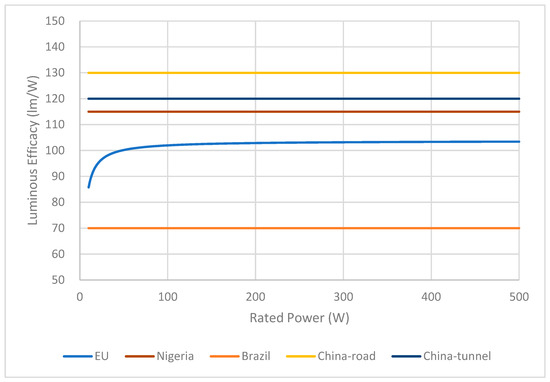
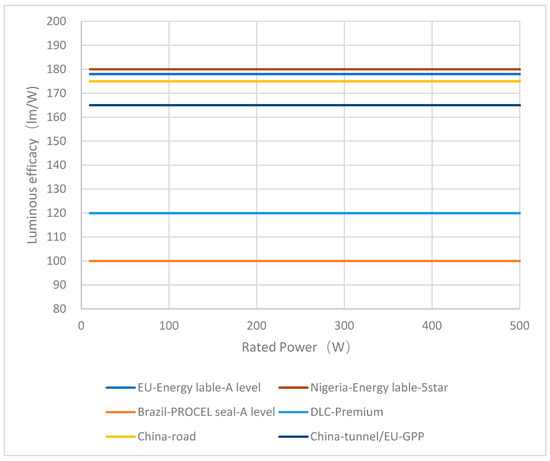
Taking the minimum allowable value of energy efficiency (Grade 3) and the Grade 1 efficiency level for mainstream products with CCT between 3500 K and 5000 K as specified in GB 37478-2025, Figure 1 and Figure 2 present the results of an international comparison. China’s current energy efficiency requirements of market access for road and tunnel lighting products remain among the most stringent worldwide, and the leading energy efficiency indicators for high-performance products also rank among the most advanced internationally.
Figure 1.
International comparison of minimum allowable energy-efficiency values for road and tunnel LED luminaires.
Figure 2.
International comparison of advanced energy efficiency indicators for road and tunnel LED luminaires.
3. Method for Analyzing Energy Savings Potential
3.1. Energy Savings Potential Analysis
The revision of GB 37478 sets separate energy efficiency requirements of LED luminaires for road lighting and tunnel lighting. The assessment of potential energy savings that may be generated after the standard implementation is likewise conducted separately for road and tunnel LED luminaires. A bottom-up model framework is adopted to analyze and predict the potential energy savings by comparing, respectively, the difference between the energy consumption under the policy scenario and that under the baseline scenario of LED luminaires for road and tunnel lighting. The basic calculations are shown in Formulas (1)–(3):
where is the annual unit energy savings, is the annual unit energy consumption of baseline scenario, is the annual unit energy consumption of policy scenario.
where is the total energy saving in year i, —is the stock in year i.
where is the cumulative energy savings up to the year i, n is the prediction period.
Since energy efficiency standard is mandatory, in theory, all products sold on the market after the standard takes effect shall meet the minimum energy efficiency requirements specified, and there will inevitably be products with energy efficiency level exceeding Grade 3. Of course, even without standard, products’ energy efficiency naturally improves over time. Therefore, when calculating annual energy savings per unit product, the offsetting effect of this inherent efficiency improvement can be accounted for by simplifying the comparison between the policy scenario and the baseline scenario to a direct contrast between the minimum energy efficiency thresholds of the two standard versions.
3.2. Stock Model
The stock referred to here comprises only those products affected by the standard—namely, LED luminaires for road and tunnel lighting that have been sold after the standard takes effect and have not yet reached end-of-life. Luminaires already on the market before the standard’s implementation are excluded. The stock therefore captures the interplay among sales volume, operating hours, product lifetime, and retirement.
When analyzing macro-level trends such as the impacts of standard implementation, the average service life for lighting products is typically derived from their operating hours in representative applications and the expected product lifetime. To simplify the complexity of stochastic lifetime distributions, the survival rate is usually calculated by the “sudden death” method: the survival rate is taken as 100% up to the average service life and drops to 0% once that life is reached.
It should be noted that for the products sold in the predicted year, the new stock is calculated as half of the annual sales volume. This is because annual sales volume is a cumulative process, and not all newly added products in the year are sold and put into use at the beginning of the year.
3.3. Carbon Reduction Potential Analysis
The reduction in energy consumption resulting from energy efficiency improvement correspondingly lowers electricity demand, thereby decreasing carbon emissions from fossil fuel combustion. Based on predicted energy savings, the carbon reduction is calculated using the CO2 emission factor of power generation.
3.4. Explanation of Basic Parameters
According to the China Energy Label Registration Database, typical road lighting LED luminaires have rated CCTs between 3500 K and 5000 K and cluster at 120 W, 200 W, 100 W and 150 W; representative tunnel lighting LED luminaires in the same CCT range are concentrated at 60 W and 120 W.
The operating time of road lighting applications is 10 h per day and 365 days per year. That of tunnel lighting applications is 24 h a day and 365 days a year. The lifetime of LED luminaires for road and tunnel lighting is not less than 30,000 h. According to industry research, the actual average service life of such products is 5 years.
The average revision cycle for energy efficiency standards is five years. Based on the effective dates of the standard, the potential analysis sets a ten-year prediction period from 2021 to 2030.
During 2021–2025:
Policy scenario: Implementation of GB 37478-2019.
Baseline scenario: No energy efficiency standard in place.
During 2026–2030:
Policy scenario: Implementation of GB 37478-2025.
Baseline scenario: Continued use of GB 37478-2019.
Referring to the market penetration rate of LED lighting products and industry research, it is assumed that all units sold during the implementation period of the 2019 edition standard replace traditional high-pressure sodium lamps (100% replacement). For units sold during the 2025 edition implementation period, 70% are assumed to replace traditional high-pressure sodium lamps and 30% to replace low-efficiency LED luminaires.
The national average CO2 emission factor for electricity in 2021 is taken as 0.5568 kg CO2/kWh [22], 0.5366 kg CO2/kWh in 2022 [23], and 0.5702 kg CO2/kWh in 2023 [24]. The factors for 2024 to 2030 are projected based on an average annual reduction rate of 3.5%.
It should be noted that this study constructs a model based on fixed assumptions, while this simplification of a complex reality enhances operability, actual product lifetime differ among individuals or batches, replacement rate may be dynamically adjusted as policies or technologies evolve, and sales forecasts are likewise subject to exogenous variables such as macroeconomic conditions and the competitive environment, all of which can introduce bias and entail certain limitations.
4. Analysis Results and Discussion
4.1. Analysis Results
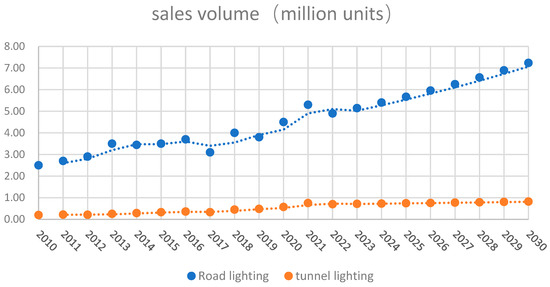
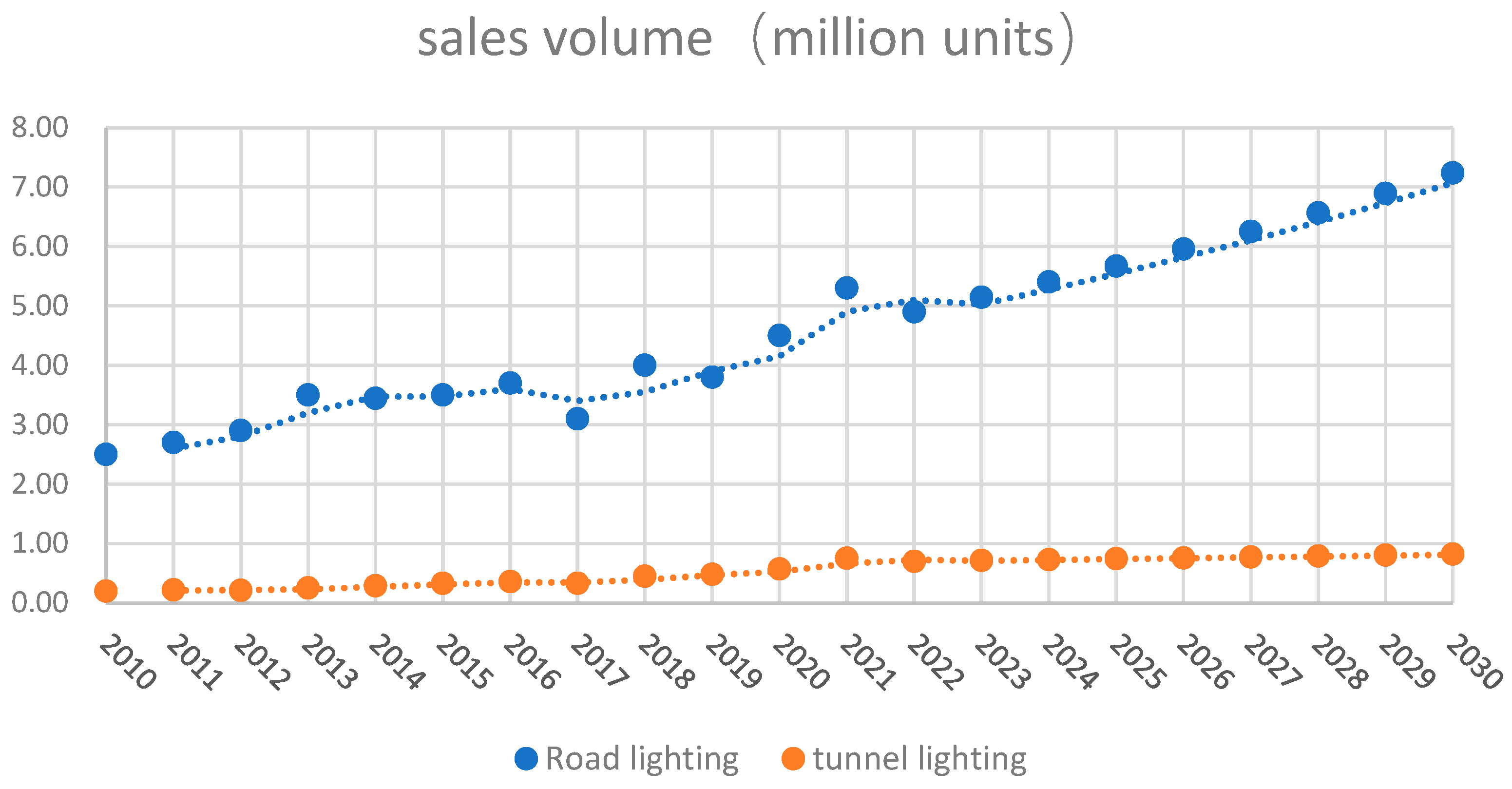
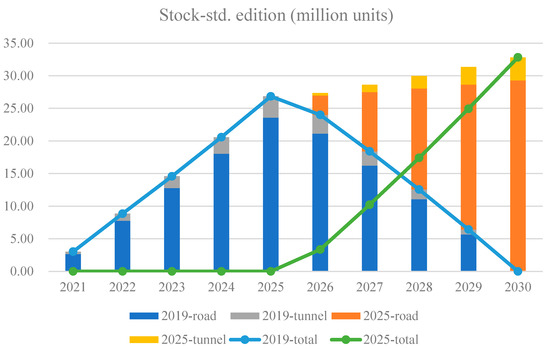
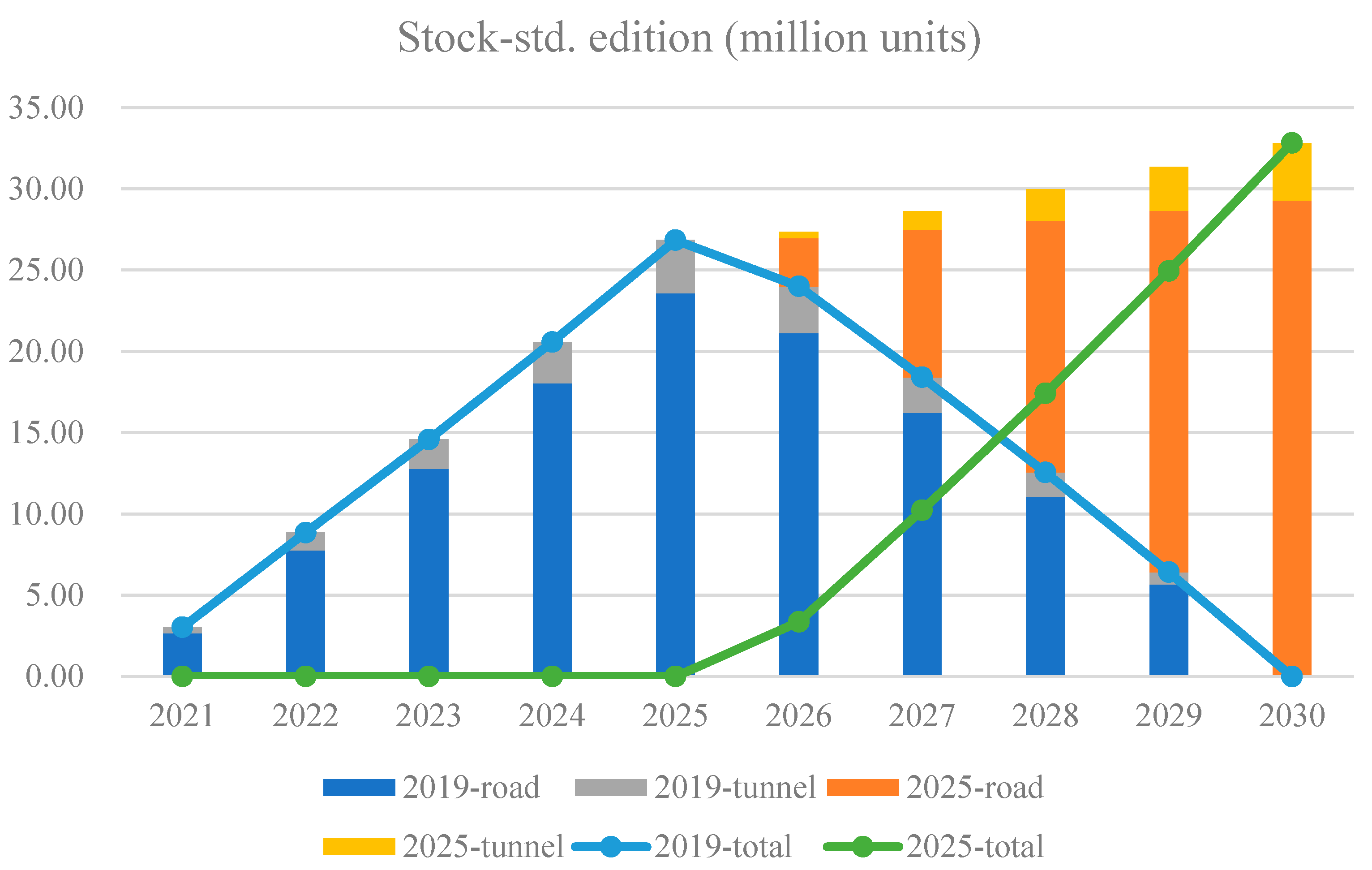
Road and tunnel lighting products are typically customized for specific engineering projects, with generally low inventory levels. During the development of relevant energy efficiency standards, main manufacturers are highly involved, allowing manufacturers to actively prepare and respond quickly to promote product research and development, thereby achieving efficient alignment between the implementation of standards and market application of products. Based on industry research data (from the industry survey of the China Association of Lighting Industry), annual sales volumes of road LED luminaires and tunnel LED luminaires in China are shown in Figure 3, while Figure 4 presents the predicted stock of products affected by GB 37478 over the prediction period.
Figure 3.
Shipments of road and tunnel LED luminaires.
Figure 4.
Stock of road and tunnel LED luminaires affected by the implementation of GB 37478 over the prediction period.
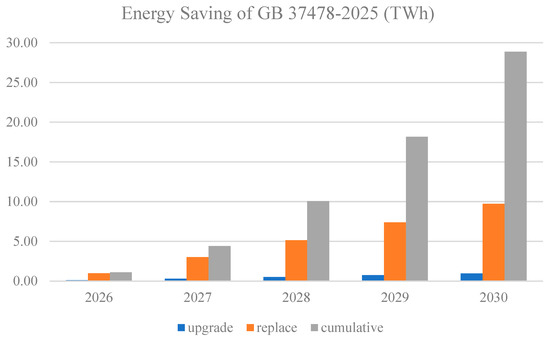
Under the implementation of GB 37478-2019, the predicted energy savings for road LED luminaires are shown in Figure 5, and those for tunnel LED luminaires are shown in Figure 6.
Figure 5.
Energy savings estimation of road LED luminaires by GB 37478-2019 implementation over the prediction period.
Figure 6.
Energy savings estimation of tunnel LED luminaires by GB 37478-2019 implementation over the prediction Period.
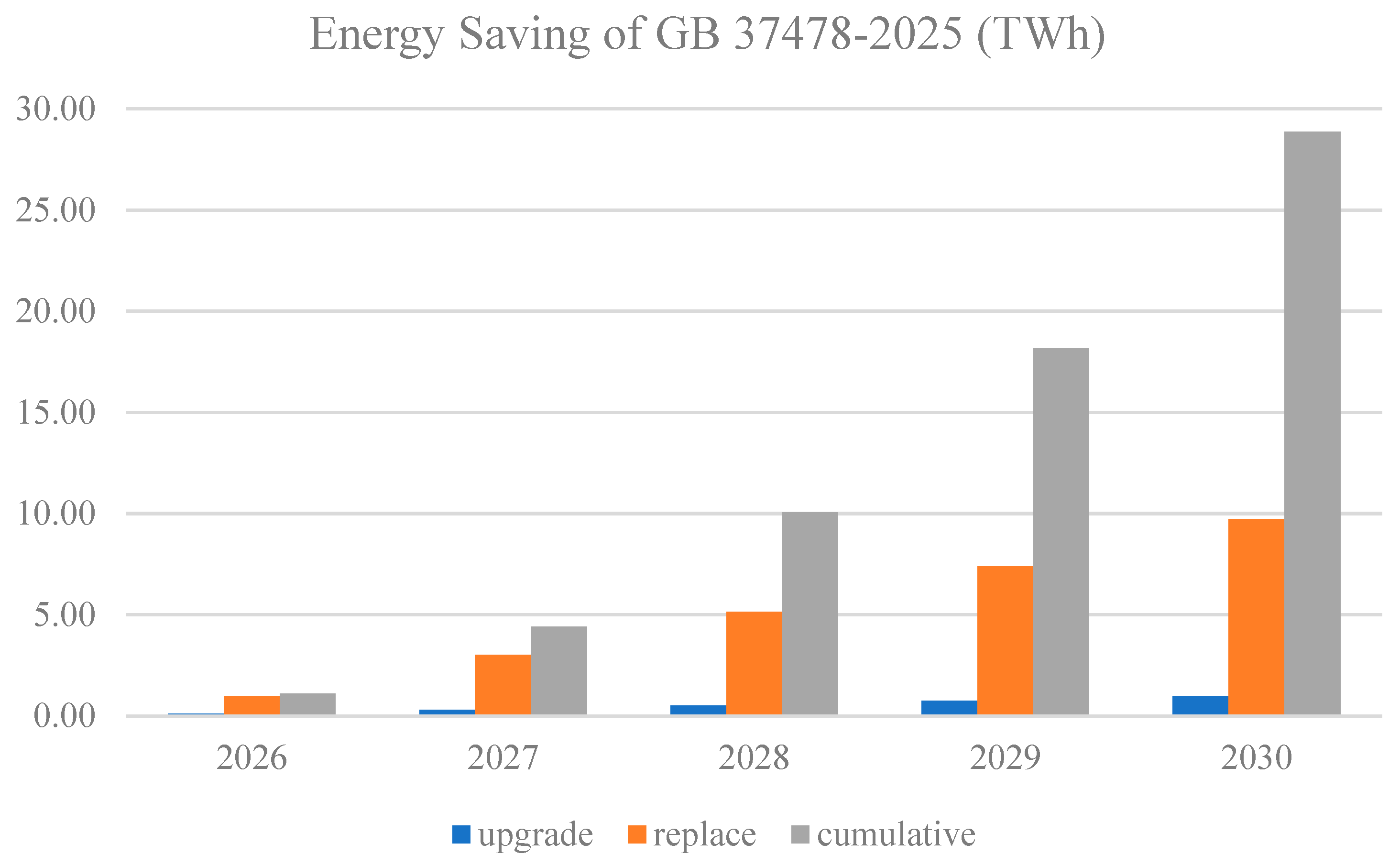
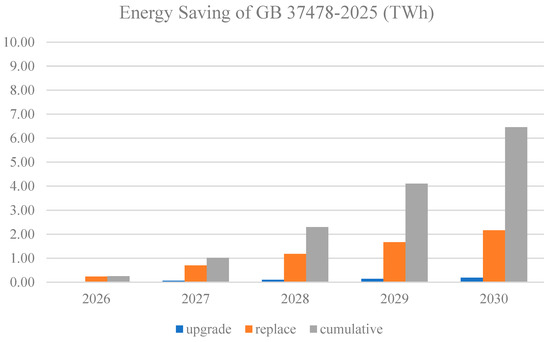
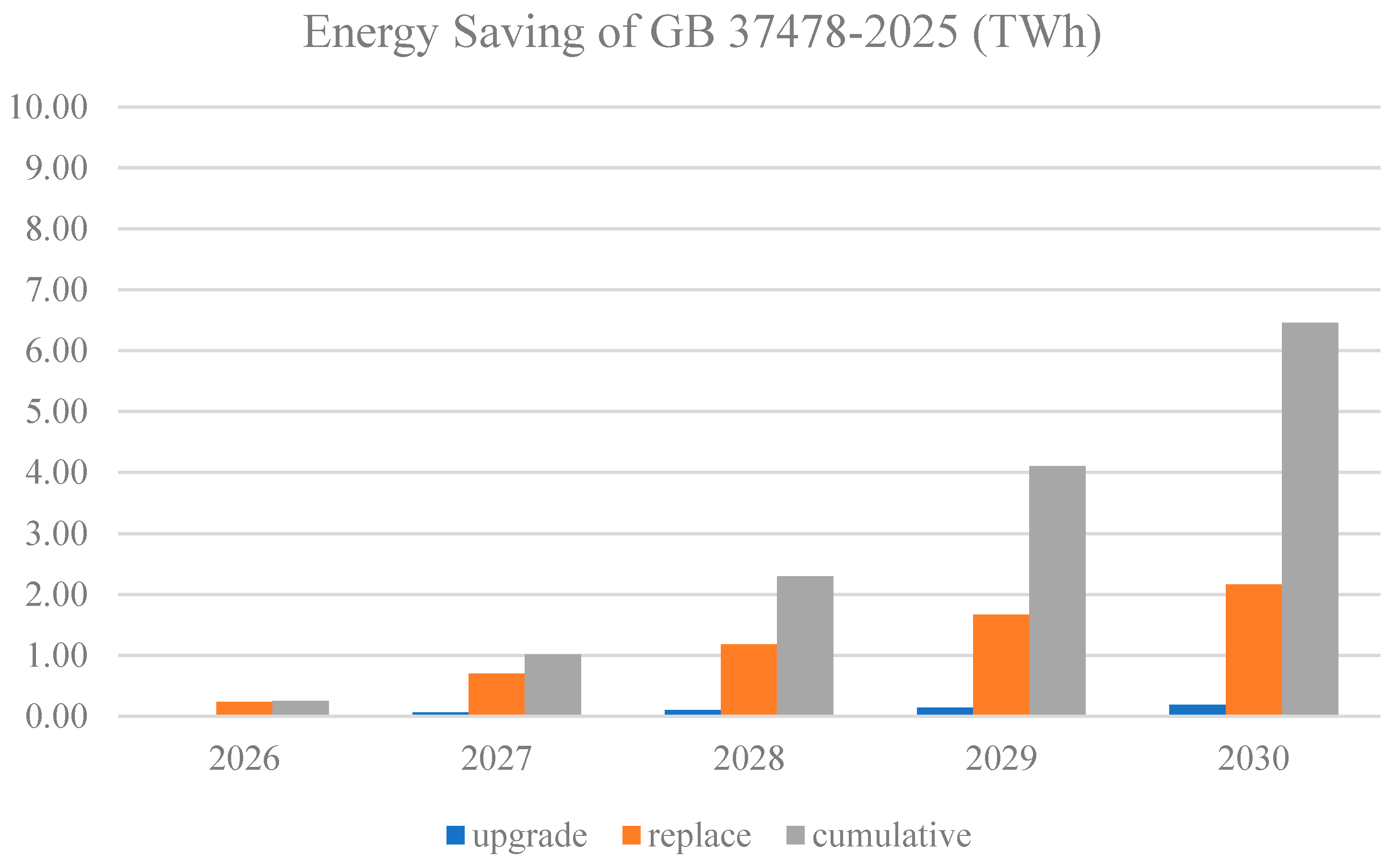
Under the implementation of GB 37478-2025, the predicted energy savings for road LED luminaires are shown in Figure 7, and those for tunnel LED luminaires are shown in Figure 8.
Figure 7.
Energy savings estimation of road LED luminaires by GB 37478-2025 implementation over the prediction period.
Figure 8.
Energy savings estimation of tunnel LED luminaires by GB 37478-2025 implementation over the prediction period.
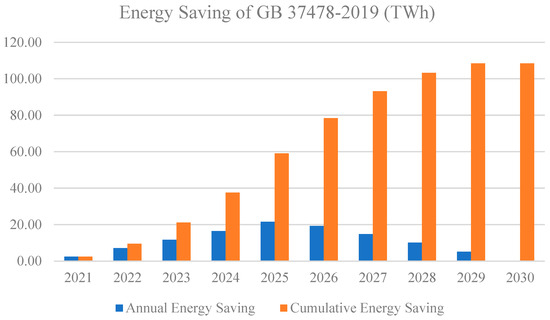
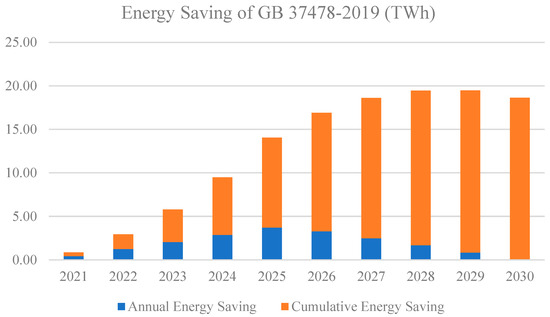
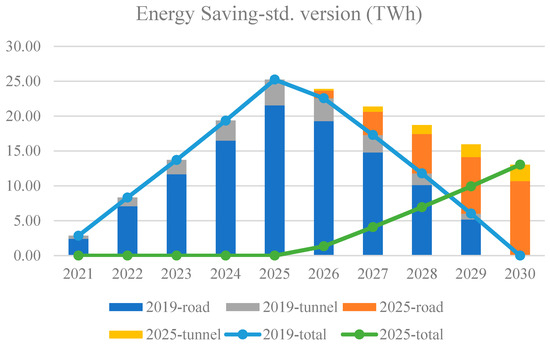
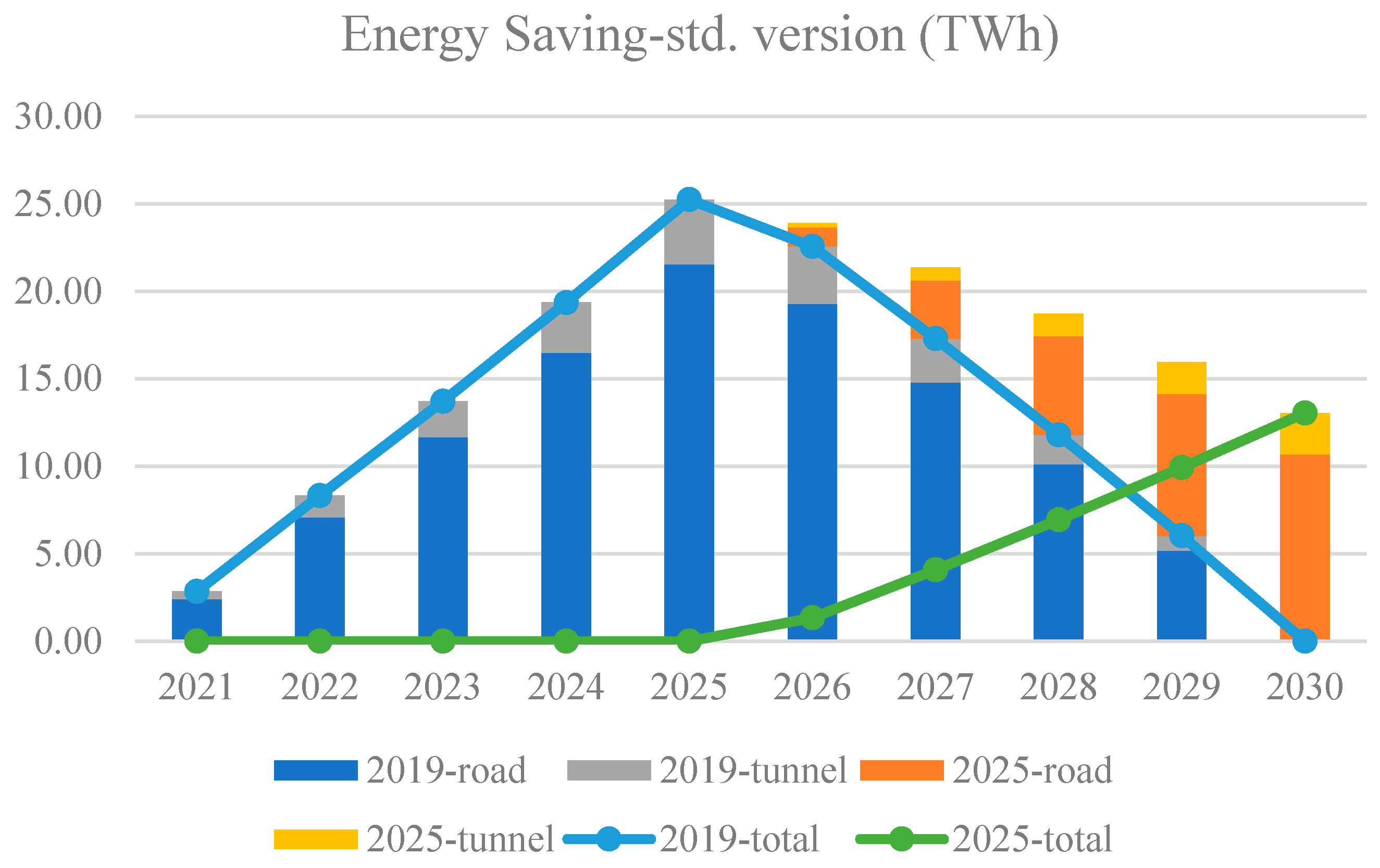
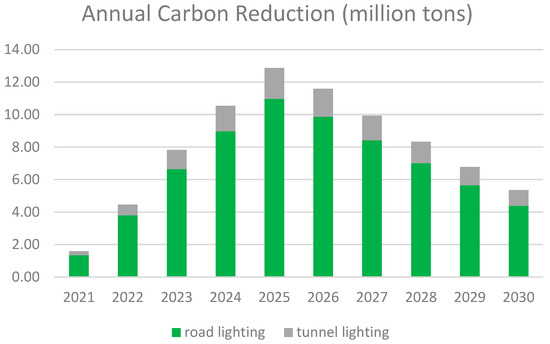
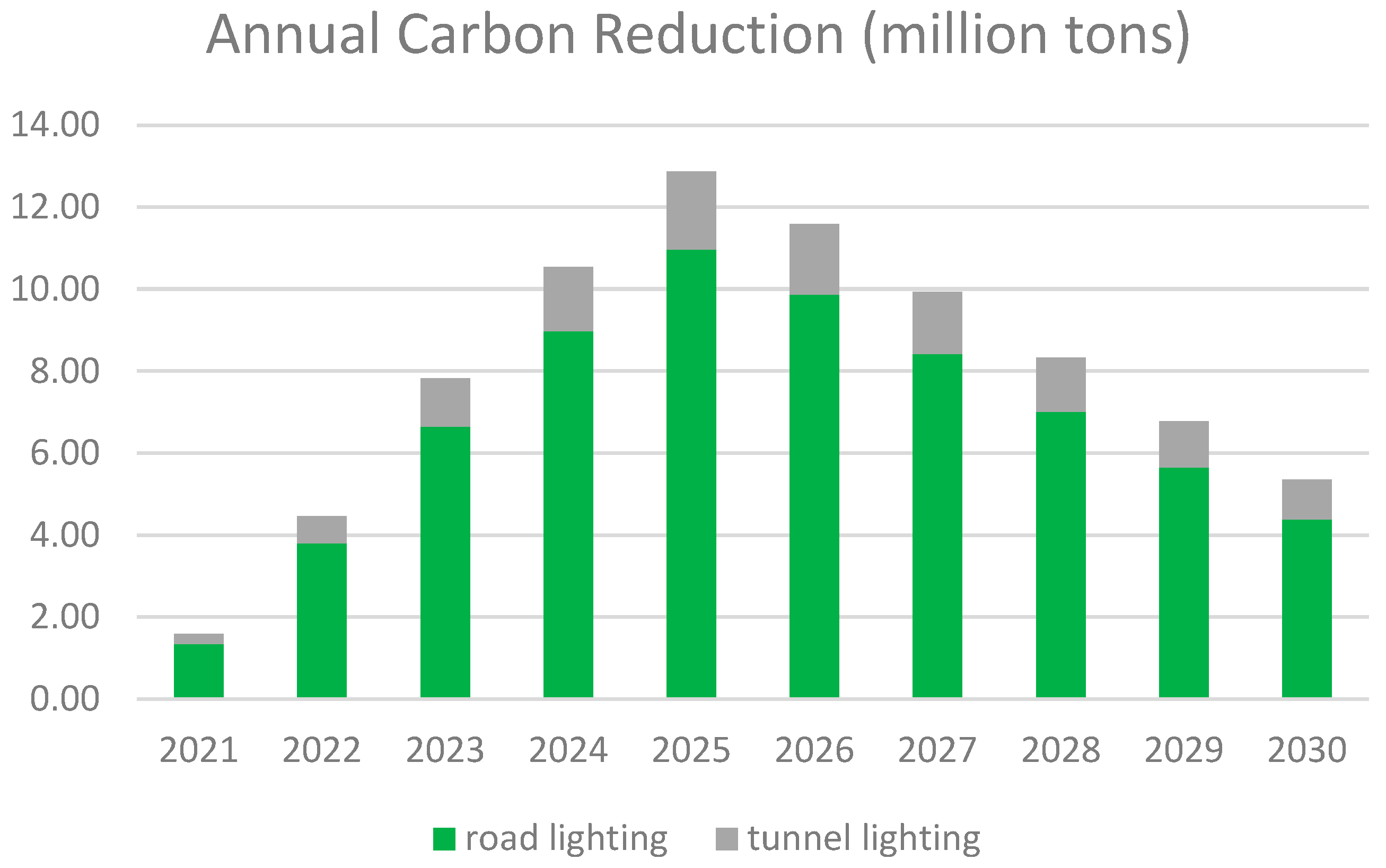
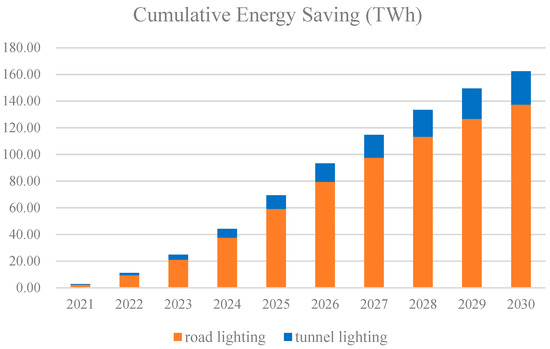
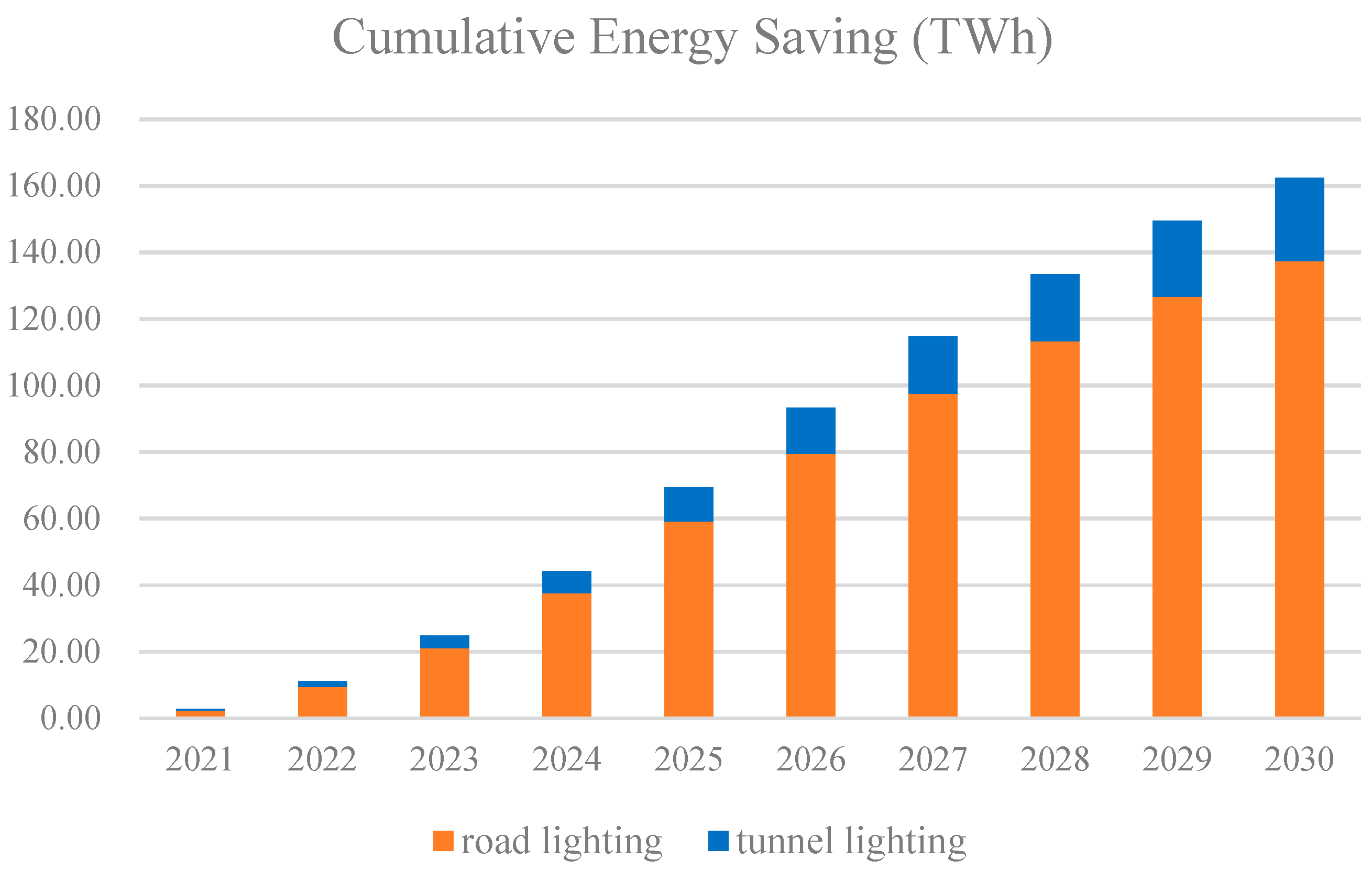
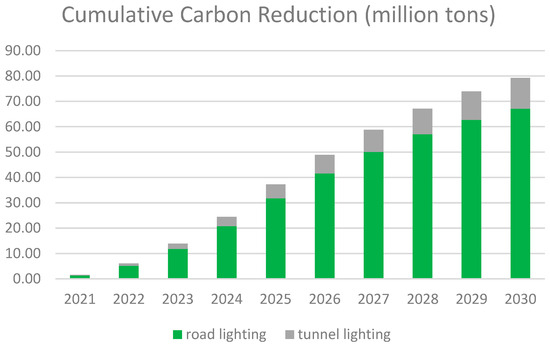
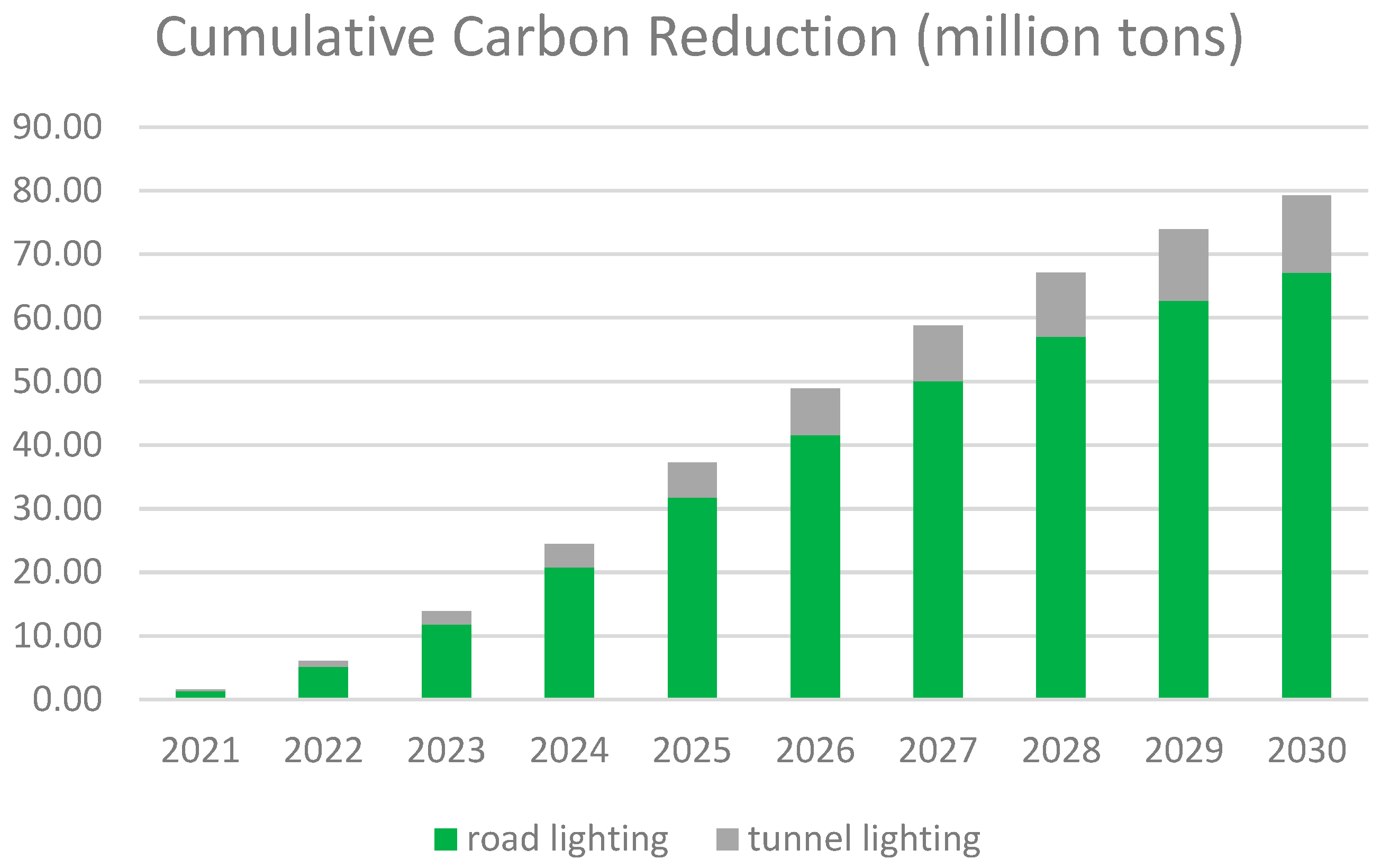
Figure 9 presents the annual energy savings attributable to the implementation of the 2019 and 2025 editions of GB 37478 over the prediction period. The corresponding annual CO2 emission reductions resulting from these energy savings are shown in Figure 10. The cumulative energy savings and CO2 emission reductions are illustrated in Figure 11 and Figure 12, respectively.
Figure 9.
Annual energy savings estimation of road and tunnel LED luminaires by GB 37478 implementation over the prediction period.
Figure 10.
Annual CO2 emission reductions estimation of road and tunnel LED luminaires by GB 37478 implementation over the prediction period.
Figure 11.
Cumulative energy savings estimation of road and tunnel LED luminaires by GB 37478 implementation over the prediction period.
Figure 12.
Cumulative CO2 emission reductions estimation of road and tunnel LED luminaires by GB 37478 implementation over the prediction period.
4.2. Discussion
According to the analysis results, since its implementation in 2021, GB 37478 “Minimum Allowable Values of Energy Efficiency and Energy Efficiency Grades for LED Luminaires for Road and Tunnel Lighting” is predicted to achieve cumulative electricity savings of 162 TWh by 2030, that is equivalent to power generation of one and a half years from the Three Gorges Power Station, and reduce cumulative CO2-missions of nearly 80 million tons. Based on the 2021 average electricity price of 0.59 CNY/kWh for “municipal public utilities” or “general commercial/industrial use” [16,17,18,19,20,21], the standard’s implementation could save CNY 95.8 billion in electricity costs, demonstrating significant economic benefits.
Against the backdrop of China’s accelerating urbanization and transportation infrastructure development, the rapid growth in road and tunnel lighting demand makes energy efficiency standard for lighting products particularly crucial. GB 37478 can effectively slow the growth rate of lighting electricity consumption, alleviate financial pressure on municipal public utilities, and prevent rapid increases in energy use and carbon emissions. As such, they represent an important contributor to achieving China’s dual carbon goals.
Currently, the installed base of road and tunnel lighting products in China is still dominated by traditional high-pressure sodium lamps. Substituting these with LED luminaires yields an energy-saving rate of 50–60% per unit, whereas upgrading from one LED luminaire to a more efficient one yields only about 10–20%. Thus, the benefits of energy saving and carbon reduction from substitution far exceed those of simple upgrades. Accelerating the substitution of high-pressure sodium lamps and vigorously promoting high-efficiency LED luminaires will therefore deliver markedly greater energy saving and carbon reduction impacts.
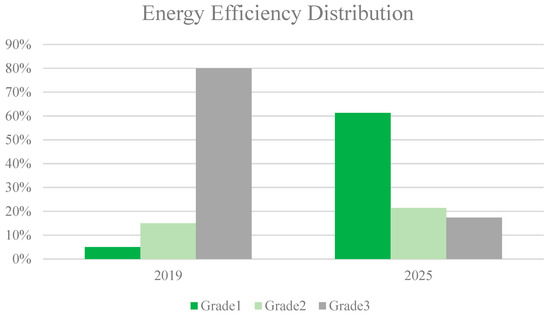
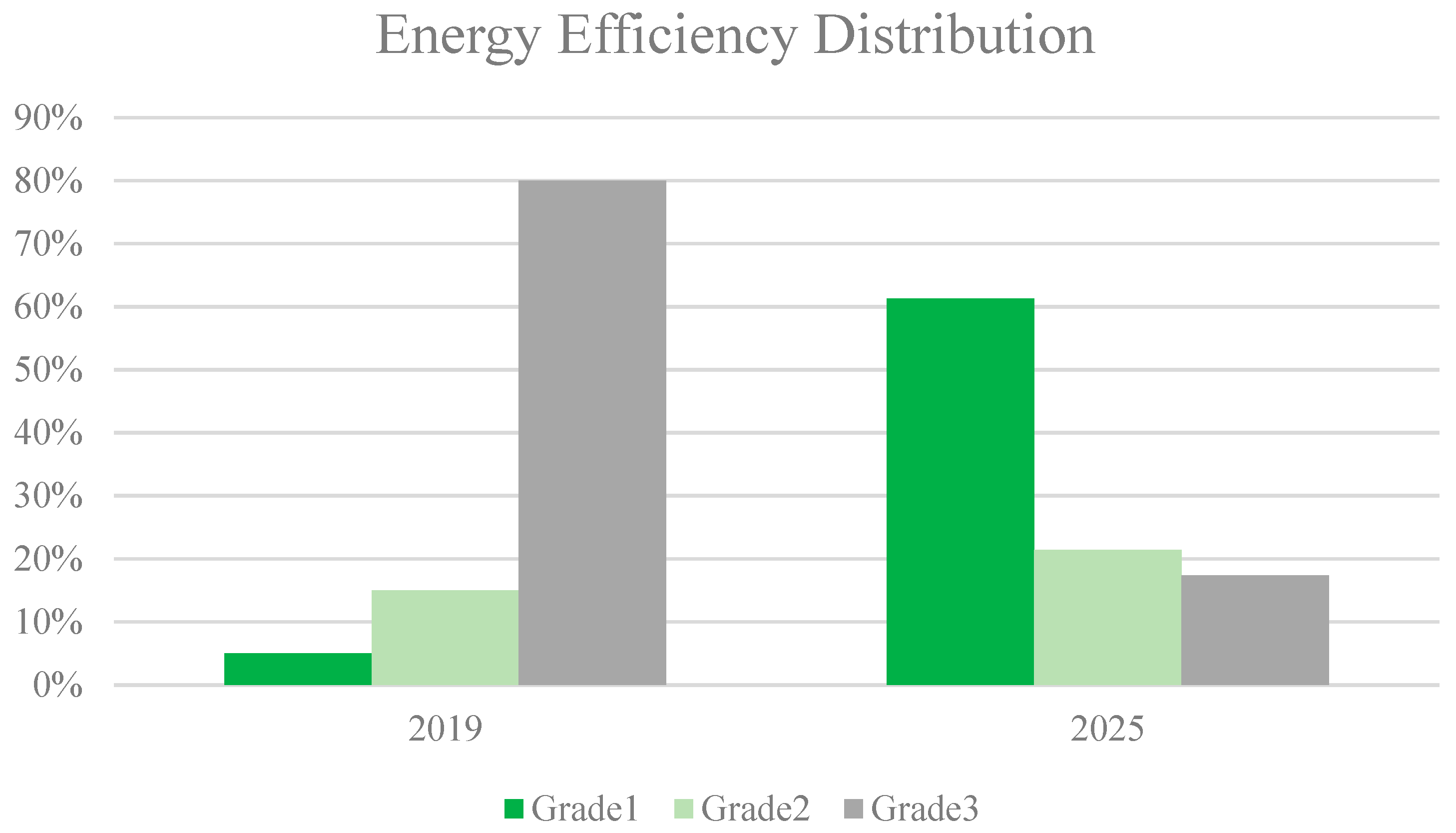
When GB 37478 was first issued in 2019, Grade 1 products accounted for merely 5% of the market. By 2025, Grade 1 products already exceed 60% market share, while Grade 3 products have plunged from 80% to below 20%. Figure 13 illustrates how the standard has positively reshaped the market’s efficiency distribution since its implementation, and its revision and update will continue to drive further energy efficiency improvement.
Figure 13.
Changes in product energy efficiency distribution driven by the implementation of GB 37478.
The revision cycle of GB 37478 aligns with the average service life of road and tunnel LED luminaires. When products sold in the first year of standard implementation reach their retirement phase, the revised standard imposes stricter energy efficiency requirements for replacement products. This synchronization between standard updates and product replace paces drives continuous advancement in lighting energy efficiency.
As LED lighting technology matures, its energy efficiency standard is confronted with new challenges. When luminous efficacy gains begin to plateau and approach the current theoretical limits, how can further energy saving potential be unlocked? One answer lies in shifting the focus of energy efficiency from product-level to system-level and operational management. Wider adoption of intelligent lighting controls, for example, has enabled some cities to achieve an additional 30% reduction in road lighting energy use. Another lies in expanding the dimensions of energy efficiency standard itself. The EU’s Ecodesign Directive for light sources offers a valuable model. In future energy efficiency standards should integrate requirements for safety, health, energy savings, environmental protection, intelligence and so on, serving the overarching goal of comprehensive lighting-quality improvement. Furthermore, the synergy between energy efficiency standards and other energy-saving policies should be enhanced. For instance, in areas such as green procurement, bidding and tendering, central government financial subsidies for energy conservation and emission reduction, and special re-lending programs, energy efficiency standards should be reinforced as the technical basis to accelerate the energy-efficient renovation of road and tunnel lighting projects.
Author Contributions
Conceptualization, X.L.; methodology, X.L. and R.W.; validation, L.Z.; data curation, L.Z.; writing—original draft preparation, X.L.; writing—review and editing, J.L.; visualization, R.L.; supervision, X.L.; funding acquisition, X.L. All authors have read and agreed to the published version of the manuscript.
Funding
This study was supported by the Science and Technology Program of the State Administration for Market Regulation (Grant No. 2024MK201) and the Central Scientific Research Fund (Grant No. 542024Y-11383), under the project entitled Research on Implementation Effect Evaluation and Verification of China’s Mandatory Energy Efficiency and Water Efficiency Standards (Phase I).
Data Availability Statement
The data are available from the corresponding author on reasonable request.
Conflicts of Interest
Author Lei Zeng was employed by CLASP. The remaining authors declare that the research was conducted in the absence of any commercial or financial relationships that could be construed as a potential conflict of interest.
References
- Chen, M.; Liu, W.; Tao, X. Evolution and assessment on China’s urbanization 1960–2010: Under-urbanization or over-urbanization? Habitat Int. 2013, 38, 25–33. [Google Scholar] [CrossRef] [Scilit]
- Stokes, E.C.; Seto, K.C. Characterizing urban infrastructural transitions for the Sustainable Development Goals using multi-temporal land, population, and nighttime light data. Remote Sens. Environ. 2019, 234, 111430. [Google Scholar] [CrossRef] [Scilit]
- Santamouris, M. Energy and Climate in the Urban Built Environment; Routledge: Oxfordshire, UK, 2013. [Google Scholar]
- Zhao, M.; Cheng, C.; Zhou, Y.; Li, X.; Shen, S.; Song, C. A global dataset of annual urban extents (1992–2020) from harmonized nighttime lights. Earth Syst. Sci. Data Discuss. 2021, 2021, 517–534. [Google Scholar] [CrossRef] [Scilit]
- Chang, Y.; Wei, Y.; Zhang, J.; Xu, X.; Zhang, L.; Zhao, Y. Mitigating the greenhouse gas emissions from urban roadway lighting in China via energy-efficient luminaire adoption and renewable energy utilization. Resour. Conserv. Recycl. 2021, 164, 105197. [Google Scholar] [CrossRef] [Scilit]
- CALI. China Lighting Industry Development White Paper. 2023. Available online: http://www.cali-light.com/index/index/newsart/id/26060.html (accessed on 1 December 2025).
- Zissis, G.; Bertoldi, P.; Ribeiro, S.T. Update on the Status of LED-Lighting World Market Since 2018; Publications Office of the European Union: Luxembourg, 2021. [Google Scholar]
- Guo, F.; Pachauri, S. China’s Green Lights Program: A review and assessment. Energy Policy 2017, 110, 31–39. [Google Scholar] [CrossRef] [Scilit]
- Butollo, F.; Brink, T.T. A great leap? Domestic market growth and local state support in the upgrading of China’s LED lighting industry. Glob. Netw. 2018, 18, 285–306. [Google Scholar] [CrossRef] [Scilit]
- Sinton, J.E.; Levine, M.D.; Qingyi, W. Energy efficiency in China: Accomplishments and Challenges. Energy Policy 1998, 26, 813–829. [Google Scholar] [CrossRef] [Scilit]
- Ding, B. Design and Development of Intelligent Lighting Control System for Urban Tunnel. In Proceedings of the 2024 IEEE 8th Conference on Energy Internet and Energy System Integration (EI2), Shenyang, China, 29 November–2 December 2024; pp. 479–484. [Google Scholar]
- Chen, M.; Wang, Q.; Zhen, J.; Xie, W.; Li, Q.; Wu, Y. A review of researches on lighting energy saving technology methods for highway tunnels. IOP Conf. Ser. Earth Environ. Sci. 2020, 510, 052046. [Google Scholar] [CrossRef] [Scilit]
- GB 17896; Limited Values of Energy Efficiency and Evaluating Values of Energy Conservation of Ballasts for Tubular Fluorescent Lamps. National Standard of China: Beijing, China, 1999.
- GB 37478-2019; Minimum Allowable Values of Energy Efficiency and Energy Efficiency Grades for LED Luminaires for Road and Tunnel Lighting. National Standard of China: Beijing, China, 2019.
- GB 37478-2025; Minimum Allowable Values of Energy Efficiency and Energy Efficiency Grades for LED Luminaires for Road and Tunnel Lighting. National Standard of China: Beijing, China, 2025.
- Commission Regulation (EU)2019/2020 of 1 October 2019 Laying Down Ecodesign Requirements for Light Sources and Separate Control Gears Pursuant to Directive 2009/125/EC of the European Parliament and of the Council and Repealing Commission Regulations (EC) No 244/2009, (EC) No 245/2009 and (EU) No 1194/2012. p. 209. Available online: https://eur-lex.europa.eu/eli/reg/2019/2020/oj/eng (accessed on 1 December 2025).
- Solid-State Lighting Qualification Requirements. Available online: https://www.designlights.org/our-work/solid-state-lighting/technical-requirements/ssl-v5-1/ (accessed on 1 December 2025).
- Inmentro Ordinance No.200, of 2021, Complies with the General Product Certification Requirements-RGCP. Available online: https://www.in.gov.br/en/web/dou/-portaria-n-200-de-29-de-abril-de-2021-317630544 (accessed on 1 December 2025).
- Solid-State Technical Requirements. Available online: https://designlights.org/our-work/solid-state-lighting/technical-requirements/ (accessed on 1 December 2025).
- Criteria for Awarding the Energy Saving PROCEL Seal to LED Street Light Luminaires. Available online: http://www.procelinfo.com.br/services/DocumentManagement/FileDownload.EZTSvc.asp?DocumentID=%7B4C1588AE-B2DF-4E7A-8E06-D49C7A0DDF7A%7D&ServiceInstUID=%7B46764F02-4164-4748-9A41-C8E7309F80E1%7D (accessed on 1 December 2025).
- Energy Conservation Program: Energy Conservation Standards for General Service Lamps. Available online: https://www.federalregister.gov/documents/2024/04/19/2024-07831/energy-conservation-program-energy-conservation-standards-for-general-service-lamps#page-28858 (accessed on 1 December 2025).
- Announcement on the 2021 Power Sector CO2 Emission Factors. Available online: https://www.mee.gov.cn/xxgk2018/xxgk/xxgk01/202404/t20240412_1070565.html (accessed on 1 December 2025).
- Announcement on the 2022 Power Sector CO2 Emission Factors. Available online: https://www.mee.gov.cn/xxgk2018/xxgk/xxgk01/202412/t20241226_1099413.html (accessed on 1 December 2025).
- Announcement on the 2023 Power Sector CO2 Emission Factors. Available online: https://www.mee.gov.cn/xxgk2018/xxgk/xxgk01/202512/t20251231_1139517.html (accessed on 1 December 2025).

Disclaimer/Publisher’s Note: The statements, opinions and data contained in all publications are solely those of the individual author(s) and contributor(s) and not of MDPI and/or the editor(s). MDPI and/or the editor(s) disclaim responsibility for any injury to people or property resulting from any ideas, methods, instructions or products referred to in the content. |
© 2026 by the authors. Licensee MDPI, Basel, Switzerland. This article is an open access article distributed under the terms and conditions of the Creative Commons Attribution (CC BY) license.