1. Introduction
The European Union has explicitly identified offshore wind energy as a cornerstone technology for achieving climate neutrality, establishing binding targets of a 55% reduction in greenhouse gas emissions by 2030 and full decarbonisation by 2050 [
1]. Within the broader portfolio of renewable energy technologies, wind power has received sustained scientific, industrial, and policy attention due to its extensive resource availability, technological scalability, and proven contribution to power-system decarbonisation [
2]. While fixed-bottom offshore wind (FBOW) technology has reached a high level of industrial maturity, particularly in the shallow continental shelves of Northern Europe, its deployment remains inherently constrained by bathymetric conditions. In contrast, the steep depth gradients characterising Southern European seas, and the Mediterranean basin in particular, severely limit the technical and economic feasibility of bottom-fixed foundations.
In this context, floating offshore wind (FOW) has emerged as a complementary and enabling technology, capable of unlocking vast deep-water wind resources that remain inaccessible to conventional fixed-bottom solutions [
3,
4]. Although floating installations currently represent a marginal share of global offshore wind capacity, amounting to approximately 233 MW of cumulative installed power [
5], the sector is experiencing accelerated development, driven by advances in structural materials, mooring system design, numerical modelling capabilities, and digital monitoring technologies [
6]. Beyond electricity generation, recent studies have highlighted the strategic role of offshore wind in deep-water contexts as a platform for enabling offshore power-to-X pathways, particularly hydrogen and ammonia production, thereby extending its relevance across multiple industrial value chains [
7]. These configurations are often more compatible with floating solutions, owing to their inherent flexibility in hosting electrolysers and offshore processing units [
7], and they illustrate how deep-water deployment may catalyse the emergence of new offshore energy carriers, long-distance transport systems, and dedicated maritime infrastructure.
This systemic perspective reinforces the necessity of comparing floating and fixed-bottom technologies within a broader analytical framework that extends beyond pure techno-economic metrics to include industrial development potential and long-term energy-market dynamics. The Mediterranean region, characterised by limited shallow shelves and rapidly increasing water depths, represents a paradigmatic case where floating offshore wind could play a decisive role in regional decarbonisation strategies [
8]. Despite this relevance, comparative studies between floating and bottom-fixed systems remain limited, particularly with respect to their integrated technical, economic, and socio-economic implications. Most existing analyses focus either on cost trajectories [
9,
10], life-cycle performance [
11], or isolated technical aspects, without offering a comprehensive and systematic comparison across multiple dimensions.
Concurrently, the literature on energy planning and high-renewable energy systems consistently indicates that technologies capable of operating in complex and constrained contexts will assume an increasingly central role in future energy strategies [
12]. The development of deep-water offshore wind farms has the potential to generate new industrial segments, foster specialised employment, and restructure regional value chains [
13]. In countries where the offshore wind sector is more advanced, such as the United Kingdom, Germany, and the Netherlands, the integration of offshore supply chains with maritime infrastructure, port systems, and manufacturing industries has produced significant economic spillovers while reinforcing energy security [
14]. Similar dynamics are observed in studies addressing industrial decarbonisation pathways, where the diffusion of new energy technologies is closely linked to firms’ adaptive capacity, sustained investment, technological innovation, and workforce reskilling [
15].
Despite this strategic relevance, the available literature exhibits a clear imbalance. Comparative analyses between floating and fixed-bottom offshore wind technologies are scarce and predominantly restricted to narrow techno-economic indicators such as Levelized Cost of Energy (LCOE), Capital Expenditure (CAPEX), Operating Expenditure (OPEX), or life-cycle metrics [
16]. Integrated assessments that simultaneously account for marine morphology, emerging industrial models, and broader socio-economic impacts remain largely absent [
17]. This gap is particularly critical at a time when offshore investments are increasingly shifting towards deeper waters, while the energy and maritime transport sectors are undergoing accelerated reconversion and reskilling processes [
18]. Against this backdrop, developing a comprehensive comparative study that systematically evaluates bottom-fixed and floating offshore wind technologies, considering performance, costs, industrial scalability, and socio-economic implication, becomes strategically essential. Such a comparison constitutes not only a scientific contribution but also a key decision-support tool for offshore energy planning, supply chain development, and investment policy formulation in deep marine environments.
Background Literature and the Necessity of a Comprehensive Comparative Study
The decision to undertake the present research is grounded in a systematic and critical examination of the existing scientific literature, which clearly reveals the absence of a comprehensive review explicitly designed to compare offshore bottom-fixed wind and floating offshore wind technologies through a consistent and integrated set of technical and economic parameters. Although a growing number of studies have addressed aspects of these technologies individually or comparatively, the literature remains highly fragmented, with most contributions focusing on isolated dimensions rather than providing a holistic and directly comparable assessment framework. Initial comparative efforts were predominantly oriented toward structural and mechanical considerations. Chao L. et al. analysed passive vibration-control strategies for floating offshore wind turbines in comparison with bottom-fixed systems, focusing on civil engineering aspects and structural response [
19], without accounting for economic performance. A complementary mechanical perspective was provided by Karimirad M. et al., who introduced real-time hybrid testing to assess the influence of operational conditions on turbines supported by both foundation technologies [
20]. Nevertheless, their analysis was limited to mechanical behaviour and did not extend to system-level implications or techno-economic considerations. Risk-related aspects were discussed by Proskovics R., who examined the potential technical and non-technical risks associated with floating offshore wind in relation to bottom-fixed systems and proposed mitigation strategies [
21]. Despite the relevance of this contribution, the study remained qualitative in nature and did not include quantitative validation.
A critical dimension in comparing these two technologies is their respective position on the technology maturity curve. While FBOW is widely considered a mature technology with a stabilizing learning rate, FOW is currently traversing a pivotal transition toward large-scale commercialization. Recent scholarships have begun to emphasize the strategic importance of coupling floating wind with hydrogen production to enhance system flexibility [
22]. Offshore floating platforms, often situated in deeper waters with superior and more consistent wind resources, provide an ideal infrastructure for integrating electrolyzers. This power-to-X synergy not only optimizes energy yield but also addresses the inherent challenges of long-distance subsea electrical transmission by converting energy into storable and transportable molecular carriers [
23,
24].
As research progressed, attention expanded toward support structures and system integration. Leimeister M. et al. conducted a critical review of offshore support structures using a multicriteria analysis applied to up to ten simulated wind farm configurations [
25]. However, their study did not report direct quantitative comparisons with bottom-fixed foundations and explicitly excluded economic analyses. System-level perspectives were explored by Moore A. et al., who performed a technological comparison focusing on the future balance of the British electricity system and long-term deployment scenarios up to 2050, yet without conducting detailed CAPEX or OPEX assessments. Site-selection risks were comparatively evaluated by Shiokari M. et al. through a foundation-dependent risk assessment model [
26], which, despite its comparative nature, excluded both energy-performance indicators and economic metrics. At the component level, Sivalingam K. et al. reviewed the reliability of power converters differentiated by foundation type [
27], without considering economic aspects.
Foundational qualitative syntheses also played a key role in shaping the field. Anaya-Lara O. et al. published a seminal reference work on wind energy that included a detailed comparison of offshore foundation technologies and grid-integration strategies under offshore conditions [
28]. Although widely regarded as a milestone, this contribution remained largely qualitative and did not provide quantitative performance indicators. More focused technical analyses were carried out by Jiang Z. et al., who compared floating and bottom-fixed foundation systems with respect to mooring configurations and structural response [
29], excluding both energy production and economic comparisons. Griffith D. et al. investigated floating vertical-axis turbines versus fixed horizontal-axis systems and performed preliminary analyses based on LCOE [
30]. However, their comparison did not incorporate additional technical parameters that would allow a broader or more robust assessment.
Network design and dynamic stability were later addressed through advanced modelling approaches. Ding Q. et al. analysed dynamic stability and control optimisation using tuned mass dampers for different foundation types [
31], focusing exclusively on structural and control aspects while neglecting economic implications. Aerodynamic stability was investigated by Johlas H. et al., who compared wake dynamics and turbulent flow characteristics as a function of foundation type [
32]; nevertheless, their study did not adopt energy efficiency indicators and excluded economic considerations. A broader system engineering perspective was proposed by Barter G. E. et al., who conducted a comparative review of floating and bottom-fixed systems with an emphasis on cost modelling and systemic design [
33]. While their work introduced a valuable system engineering approach integrating physics, installation, and maintenance, it relied primarily on theoretical cost models, did not incorporate empirical data from commercial projects, and did not address environmental dimensions in detail. Contextual and sector-adjacent comparisons were explored by Lopez M. et al., who examined the coexistence of floating wind and floating photovoltaic systems [
34], and by Umoh K. et al., who compared barriers to the deployment of floating and bottom-fixed wind technologies in Scotland and South Africa [
35]. In both cases, however, no engineering-based comparisons or quantitative cost analyses were provided. Energy-performance modelling and environmental evaluations became more prominent in subsequent contributions. Johlas H. et al. compared the energy efficiency of floating and bottom-fixed turbines using OpenFAST simulations [
36], explicitly excluding economic parameters. Chen J. et al. focused on gyroscopic effects in floating turbines compared to fixed foundations [
37], limiting their analysis to theoretical dynamics and omitting operational or economic impacts. Elusakin T. et al. applied a stochastic planning model to compare floating and bottom-fixed technologies [
38], without integrating supply chain considerations. Garcia-Teruel A. et al. adopted a life-cycle assessment approach to compare environmental impacts of wind farms based on the two foundation technologies [
39], without addressing economic effects or global techno-economic scenarios. Martinez A. et al. conducted a comparative mapping of LCOE values and analysed cost drivers [
40], while deliberately excluding technical-operational comparisons. Otter A. et al. reviewed offshore wind turbine modelling techniques and highlighted the role of low- and medium-fidelity models in early design stages [
41]; however, their study did not adopt a comparative framework and focused primarily on floating offshore wind technology. More recent reviews further refined specific dimensions of comparison. McMorland J. et al. classified the literature into cost modelling, operation and maintenance, and safety factors [
42], yet did not introduce a unified metric nor jointly consider the parameters addressed in the present work. Saeed K. et al. compared O&M strategies for floating and bottom-fixed technologies and introduced the “tow-to- Shafiee shore” concept, analysing disconnection times and tow speeds but without performing systematic economic comparisons [
43]. Shafiee M. provided a robust analysis of failure modes in floating systems compared to fixed turbines [
44], focusing exclusively on spar platforms and excluding other foundation types. Dong Y. et al. conducted a technical-comparative review of aerodynamic and hydrodynamic coupling effects [
45], restricting their scope to dynamic simulations and excluding economic analyses. Crowle A. P. et al. examined port-infrastructure requirements for floating and fixed installations [
46], again without incorporating economic indicators. Santhakumar S. et al. analysed technological learning mechanisms and cost trajectories, estimating experience curves and economic parity points [
47,
48], but without integrating operational factors in a holistic and synergistic manner. Rowell D. et al. compared site accessibility for the two technologies within the Scottish context [
49], without extending the analysis to additional technical or economic parameters.
The most recent studies have focused on modelling approaches, socio-technical dimensions, and specific performance indicators. Siddiqui M. A. et al. compared CFD and potential-flow methods for modelling floating and bottom-fixed turbines [
50], without correlating the results with actual energy performance or costs. Havinga H. C. et al. conducted a socio-technical comparative review limited to the Norwegian context [
51], adopting a predominantly qualitative approach. Contemporaneously, to assess the growth of wind energy in the North Sea, Santhakumar S. et al. developed an integrated energy model comparing the expected growth of floating and bottom-fixed technologies [
52] without going into the technical details related to installed capacity and therefore farm design. Garcia-Sagrado A. et al. analysed power losses induced by structural motions in floating systems relative to fixed systems [
53], excluding economic considerations. Pérez Rùa J. A. et al. investigated the optimisation of dynamic cable networks for floating offshore wind [
54], without providing a comprehensive and systematic economic assessment. The most recent contribution by El-Gharbawy et al. (2025) analysed the strategic transition from bottom-fixed to floating offshore wind based on real case studies in Scotland [
55], yet without addressing detailed technical performance metrics.
Taken together, these contributions clearly demonstrate that to the best of the authors’ knowledge, no existing study provides a direct and comprehensive comparative review of BFOW and FOW technologies that simultaneously integrates technical parameters, such as installed power, capacity factor, and water depth, with economic indicators, including LCOE, CAPEX, and OPEX. The lack of such an integrated and comparative framework prevents the identification of coherent reference ranges capable of supporting both high-level strategic evaluations and detailed techno-economic analyses. It is precisely this gap that the present research seeks to address. By adopting a structured and explicitly comparative methodology, the proposed study aims to provide both an overarching and a detailed assessment of offshore bottom-fixed and floating wind technologies, thereby establishing a consistent basis for comparison and directly motivating the analytical framework introduced in the following section.
2. Methods
The methodological approach adopted to achieve the objective of comparing offshore wind technologies was based on a structured techno-economic assessment explicitly designed to enable a systematic comparison between bottom-fixed and floating systems. To this end, the analysis was articulated through a sequence of interrelated methodological steps aimed at ensuring scientific rigour, transparency, and comparability of results.
The methodological workflow comprised four main phases:
The execution of a systematic review of the scientific literature, industry reports, and official corporate datasets;
The identification of relevant parameters and the selection of documents suitable for direct comparison, including peer-reviewed papers, technical reports, and corporate datasets;
The adoption of a dedicated qualitative and quantitative comparative framework for the selected parameters;
The execution of the comparative analysis between bottom-fixed and floating offshore wind technologies based on the defined parameter set.
The systematic literature review was conducted using major scientific databases and search engines, including Scopus [
56], Mendeley [
57] and Google Scholar. This strategy was adopted to satisfy a dual methodological requirement: ensuring scientific robustness while achieving informational completeness. Given the rapid evolution of renewable energy technologies, the available sources are inherently heterogeneous and continuously expanding. For this reason, reliance on academic literature alone would not be sufficient to capture the most recent technological and cost developments. Scientific search engines enable access to peer-reviewed publications, ensuring methodological robustness and facilitating the identification of temporal trends and metric evolution relevant to the offshore wind sector [
58]. At the same time, the integration of industry reports and corporate datasets allows the inclusion of recent, verifiable, and geographically contextualised empirical data, thereby improving the representativeness of the comparative assessment [
59]. This combined approach ensures replicability of the source-selection process, facilitates future updates of the analysis, and supports a transparent and critical evaluation of results derived from heterogeneous but consistently filtered data sources.
The search query applied throughout the review process consistently employed the same set of keywords, offshore AND wind AND energy AND impacts AND economic/economy. This choice was motivated by the need to balance breadth and specificity: on the one hand, capturing a sufficiently wide body of literature, and on the other, remaining strictly aligned with the research objective. The query was designed to maximise thematic relevance and disciplinary coherence by filtering the literature toward studies directly addressing economic and performance impacts in the offshore wind sector, while ensuring international comparability of data and indicators. To enable a meaningful comparison between bottom-fixed and floating technologies, an integrated analytical approach was required, as the overall performance of offshore wind systems depends on the interaction between economic factors and the physical behaviour of the turbine and its support structure [
13]. Moreover, the selected keywords ensure objective comparability across different marine contexts, where cost and energy yield primarily vary as functions of the technical parameters considered [
60].
Within this framework, particular attention was devoted to the correct identification and selection of comparison parameters, ensuring that they collectively capture the main cost and performance drivers of offshore wind technologies and allow homogeneous quantification of the relative advantages of bottom-fixed and floating systems across different contexts and levels of supply chain maturity. Each parameter was required to have independent relevance. For instance, installation depth represents a fundamental geotechnical variable, as it directly determines foundation typology, anchoring complexity, and installation costs, thereby strongly influencing the selection of the most suitable technology [
61]. Turbine rated power, in turn, serves as an indirect indicator of technological scale and industrial maturity, as larger turbines enable reductions in unit costs through economies of scale and a decrease in the number of units required for a given installed capacity [
62].
The comparative framework adopted in this study was explicitly conceived to combine qualitative and quantitative perspectives. The qualitative dimension was used to contextualise the scope, objectives, and methodological assumptions of the analysed studies and reports, while the quantitative dimension enabled the comparison of numerical values describing technological and economic performance [
63]. For each source, these two levels of information were systematically extracted to bridge the gap between descriptive analyses and technical datasets, reduce distortions arising from source heterogeneity, and ensure full transparency and traceability of the reported values back to their original references [
63].
To ensure consistency across sources originating from different geographical and temporal contexts, all extracted values were converted to common units of measure prior to comparison. Technical parameters were expressed using standard units, such as metres (m) for water depth and megawatts (MW) for turbine rated power. Economic variables were harmonised by converting values expressed in $/kW to $/MW and values reported in $/kW/year to $/MW/year. This standardisation enabled direct linear comparison between bottom-fixed and floating technologies across the selected parameters.
The procedure adopted to make monetary and ensure comparability across sources involved indexing all economic data to the year 2023 and applying an inflation correction based on the Consumer Price Index (CPI) provided by the Bureau of Labor Statistics (BLS) [
64].
The formula used was as follows:
where the term R
currency is defined as:
This adjustment was implemented using a conversion formula that accounts for inflations and currency variations, thereby enabling the normalization of CAPEX, OPEX, and LCOE values reported in studies published between 2009 and 2025. This approach allowed the elimination of distortions caused by inflation, devaluation, and exchange rate fluctuations [
65]. The choice of the reference year was dictated by the fact that it represents a central point by minimizing ester deviations. Furthermore, there is a wide availability of consolidated macroeconomic data on: harmonized inflation, average exchange rates (according to the European Central Bank ECB [
66] and the Federal Reserve [
67]) and specific cost indices (consistent with studies by the National Renewable Energy Laboratory NREL [
68], the Energy Information Administration EIA [
69] and the Department of Energy DOE [
70]).
Finally, most of the industrial reports and datasets consulted list 2023 as the reference year, making it a perfect year for direct alignment with major international benchmarks.
Similar methodologies have also been applied in other contexts [
71] and within specific macroeconomic analyses [
72].
As a synthesis tool, a comparative table was constructed to integrate the different levels of analysis. The table included:
Identification of common keywords in document titles;
Extraction of relevant descriptive elements;
Collection of direct numerical data;
Classification by technology type.
This structure enabled the creation of a hybrid matrix integrating textual and numerical information, allowing both horizontal comparison across different sources and vertical comparison across parameter categories. In both scientific publications and technical reports, technologies were classified as “floating” based on the presence of keywords such as floating, spar, semi-sub, tension-leg, and barge. Similarly, bottom-fixed technologies were identified through terms such as monopile, fixed, and jacket. All remaining terms not attributable to these categories were classified as “other”.
Through this comparative framework, it was possible to simultaneously achieve two objectives: first, to provide a structured descriptive overview of the technological evolution of offshore wind systems, and second, to derive direct analytical relationships between technical parameters and economic performance. The final step of the methodology therefore consisted in executing the comparative analysis and critically discussing the results obtained, forming the basis for the comparative assessment presented in the subsequent section.
3. Results
The results are presented in accordance with the methodological framework previously described. This section is structured into four subsections, each corresponding directly to one of the methodological steps adopted in the analysis. The systematic review of the literature enabled the examination of a total of 313 documents, the majority of which consisted of scholarly articles. This initial screening phase made it possible to classify each source according to both document type and thematic relevance for the comparative analysis. Two main categories were identified:
Academic studies providing quantitative data on key techno-economic parameters, including LCOE (1), CAPEX, OPEX, turbine rated power, installation depth, and capacity factor;
Technical and institutional reports focusing on investment costs, employment generation, and regional development potential.
The LCOE formula is reported, which allows for a more complete framework in reading the results by relating it to the CF parameter and was adopted as a methodological approach only to establish a correlation between CF and LCOE for each technology considered:
where the terms are defined as:
CAPEX: Capital expenditure [$/kW];
OPEX: Annual operational expenditures [$/year];
PC: Plant capacity [kW];
CF: Capacity factor [%];
crf: Capital recovery factor [%], calculated as
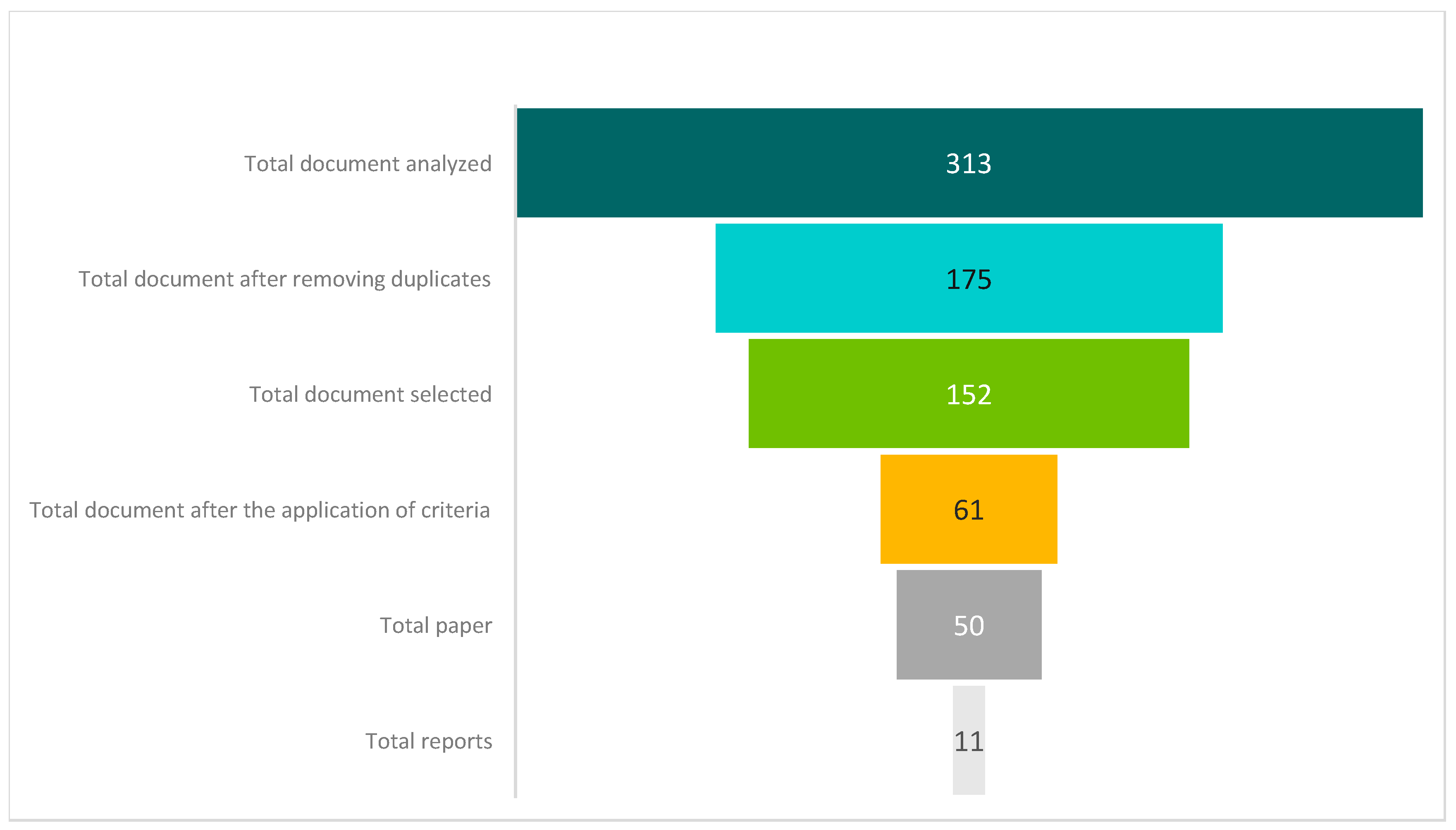
The corpus of analysed sources comprised peer-reviewed articles retrieved from major international scientific databases, complemented by institutional reports and open-access datasets published by sectoral organisations. Through this mapping process, 313 documents were initially screened and subsequently reduced to 175 after the removal of duplicates. A total of 152 documents were considered relevant, and ultimately 61 documents met all the selection criteria. These were further classified into 50 scientific articles and 11 technical or industrial reports. The elimination of duplicates resulted in the exclusion of 44.1% of the initially screened documents; of the total corpus, 48.6% were retained after relevance screening, while only 19.5% of the initially analysed documents were included in the final dataset. Overall, the screening process led to an 81.0% reduction in the number of documents considered [
73].
It is worth highlighting the predominance of scientific articles among the selected sources, which account for 81.97% of the total, compared to 18.03% represented by industry and institutional reports. This distribution confirms the central role of academic research in defining the economic and performance parameters of the offshore wind sector. At the same time, industrial and institutional reports proved essential for providing up-to-date market data, employment estimates, and cost projections, thereby enabling cross-validation of scientific evidence. This progressive reduction in source variability ensured that the subsequent comparative analysis was based on robust, transparent, and methodologically consistent information.
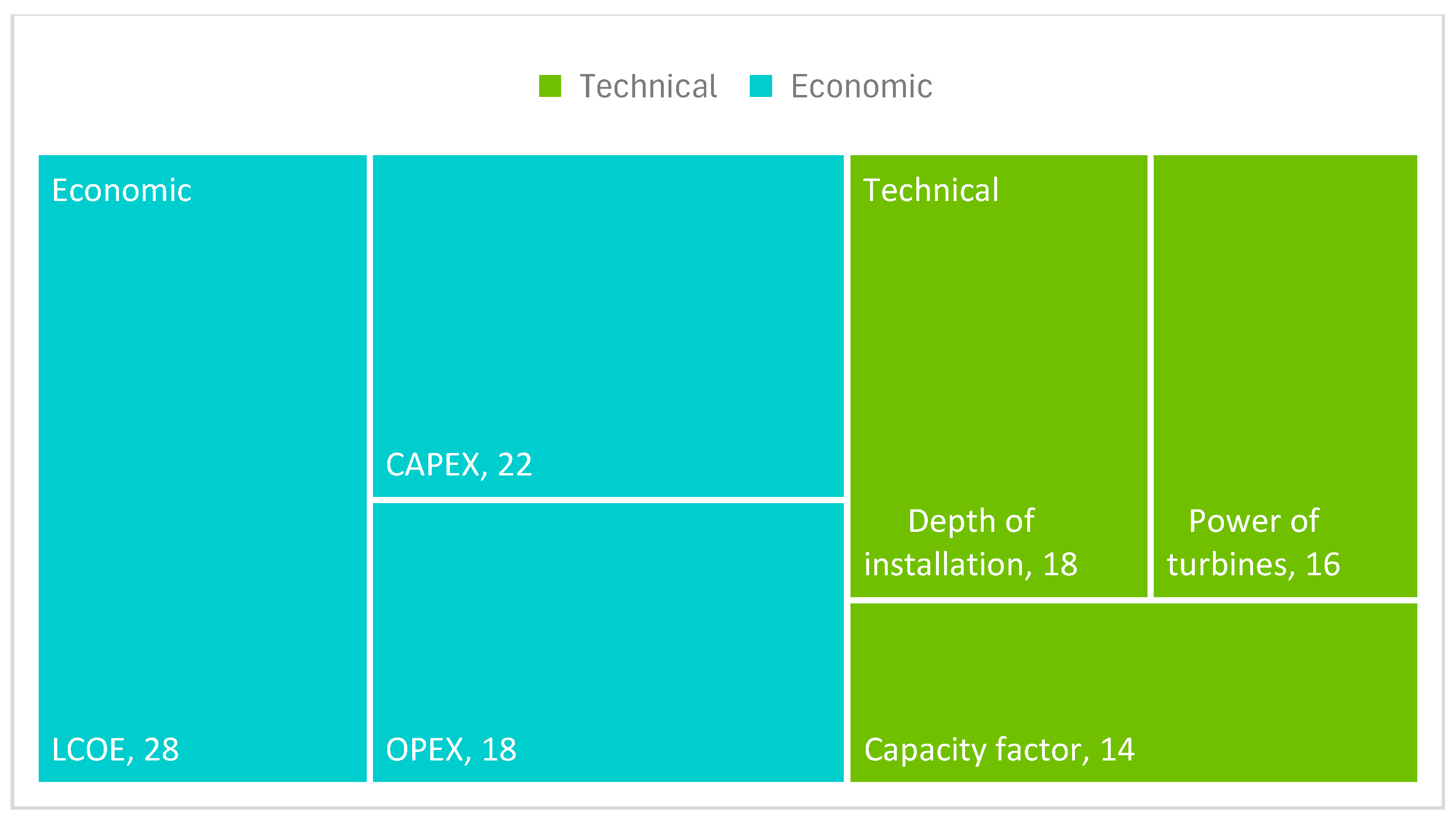
From the final set of 61 documents, 54 explicitly reported quantitative values for at least one of the six key parameters identified as necessary to ensure techno-economic comparability between the two offshore wind technologies considered. Analysis of the selected sources revealed that the recurring and operationally useful parameters for comparative purposes could be grouped into two macro-categories, namely technical and economic parameters, as illustrated in
Figure 1.
The technical parameters included installation depth, harmonised and expressed in metres (m); turbine rated power, expressed in megawatts (MW); and capacity factor, a key indicator of energy efficiency, reported in percentage terms (%). The economic parameters comprised CAPEX, standardised in USD per MW ($/MW); OPEX, expressed in USD per MW per year ($/MW/year); and LCOE, expressed in USD per megawatt-hour ($/MWh). Specifically, 18 documents reported installation depth values, 16 reported turbine power, 14 included capacity factor data, 22 reported CAPEX, 18 reported OPEX, and 28 included LCOE values. It should be noted that these categories are not mutually exclusive, as individual documents frequently report multiple parameters. Consequently, the reported counts indicate the frequency of occurrence of each parameter rather than absolute, non-overlapping totals.
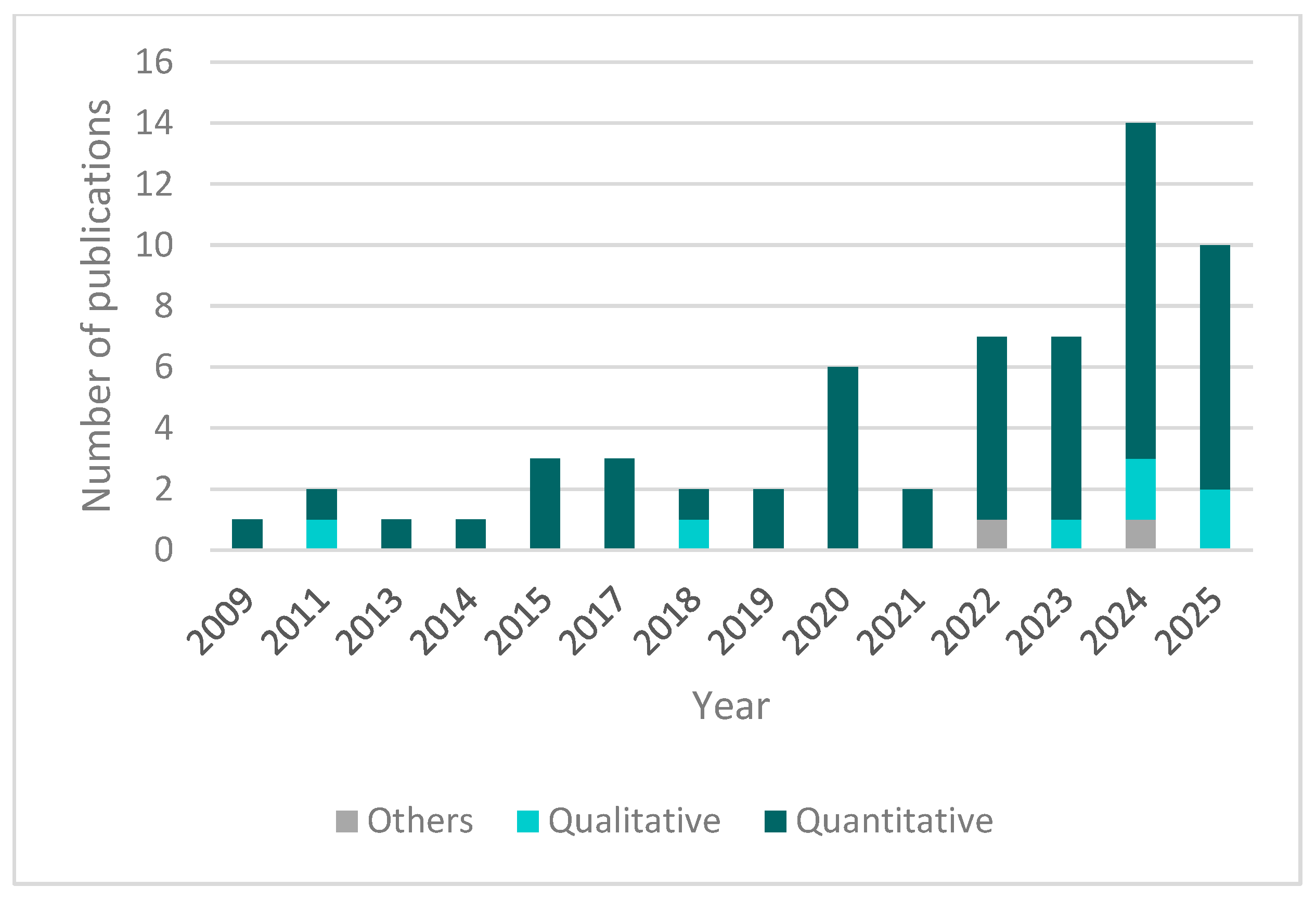
A first key outcome of the comparative framework concerns the typology of publications identified through the review process. The analysis, visualised through an overlapping bar chart, shows that most contributions are quantitative in nature, while qualitative studies are less numerous, although their presence increases after 2018, as illustrated in
Figure 2. A third category was also identified, consisting of studies that could not be clearly classified as purely qualitative or quantitative. Overall, the results indicate that, particularly in recent years, the literature within the analysed database is dominated by quantitative studies.
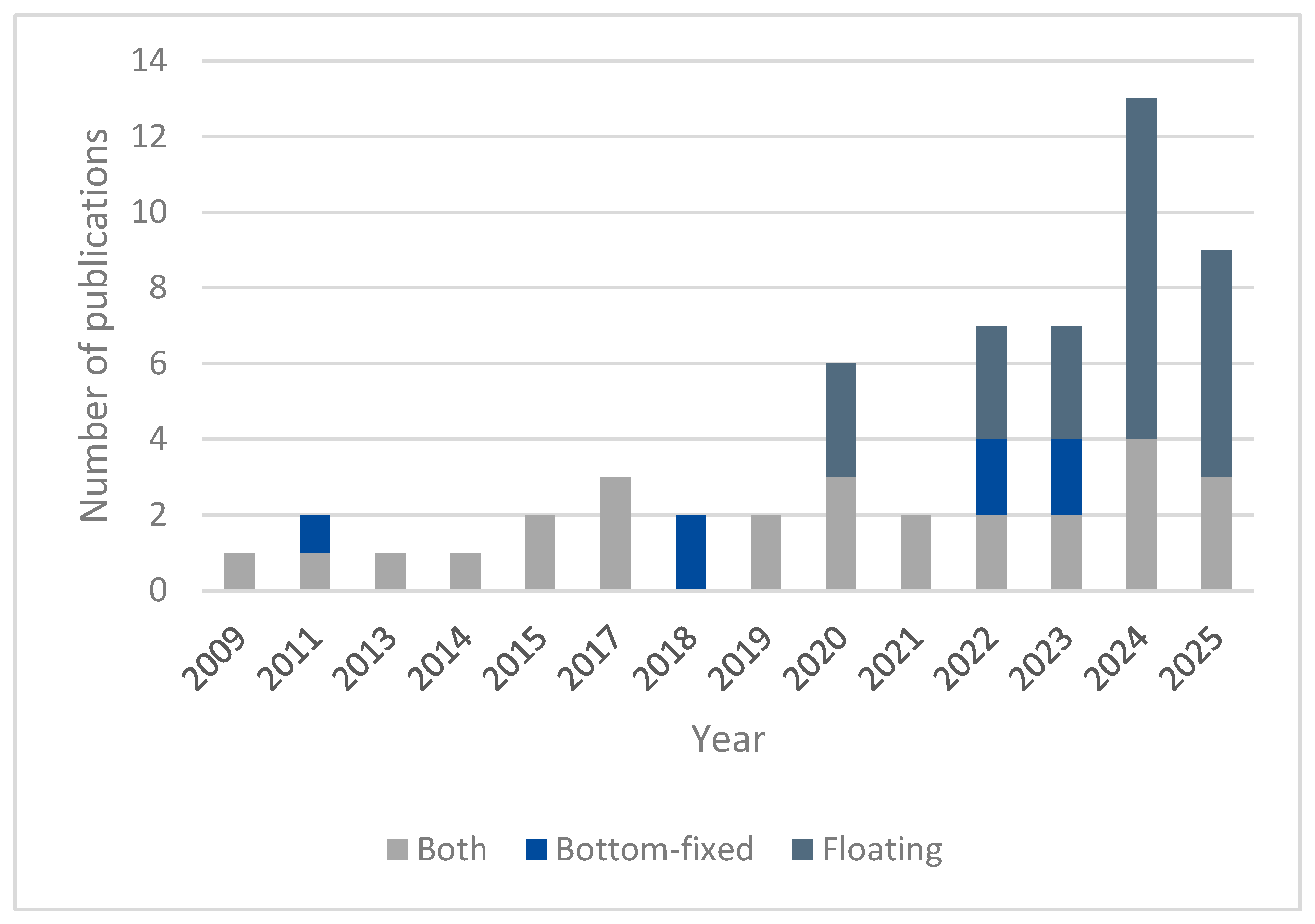
More specifically, until 2019, publications addressing both technologies simultaneously or focusing on generic offshore wind aspects were prevalent. From 2020 onwards, a marked increase in studies dedicated to floating technologies can be observed, with a peak in 2024. Nevertheless, studies considering both technologies remain consistently present over time.
The results further allowed an assessment of the distribution of publications across technological categories, as shown in
Figure 3. The prevalence of quantitative studies over time relative to qualitative ones reflects the progressive industrial maturation of the offshore wind sector. The temporal evolution of the categories, represented through an overlapping bar graph, reveals that in 2019 there was a balance between publications addressing bottom-fixed and floating technologies, primarily focusing on general offshore wind issues. In 2020, studies dedicated to floating technology increased significantly, reaching a maximum in 2024. Contributions addressing both technologies continue to appear with stable frequency, underscoring the ongoing relevance of comparative analyses for guiding both research directions and industrial innovation.
The growth of quantitative studies in recent years also signals a shift in focus from technical feasibility toward economic competitiveness and project bankability. In this context, techno-economic performance increasingly requires, particularly for floating technologies, the availability of robust quantitative data to demonstrate LCOE reduction potential and the effectiveness of economies of scale.
The quantitative analysis of installation depth, turbine rated power, and capacity factor enabled a direct comparative assessment of the two technologies. The results indicate that floating installations operate over a significantly wider depth range than bottom-fixed systems as shown in
Figure 4. At the same time, floating wind farms tend to employ turbines with higher rated power, with average values around 16 MW in the analysed simulations, compared to approximately 11 MW for bottom-fixed systems. Mixed-technology configurations generally assume intermediate values of around 10 MW. Floating wind farms also exhibit a broader power range overall, spanning from 4 MW to 41 MW, compared to bottom-fixed and mixed solutions.
In terms of energy performance, floating projects display higher average capacity factor values, around 38%, whereas bottom-fixed projects average approximately 22%. Studies considering both technologies report intermediate capacity factor values of around 30%. These results suggest that floating installations, by deploying more powerful turbines in deeper waters, can achieve higher capacity factors.
The literature further provides detailed boundary values for these parameters. Snyder B. et al. report a minimum installation depth of 11 m used for simulation and initial testing scenarios [
74], while Myhr A. et al. identify a maximum depth of approximately 1550 m, highlighting the depth potential of floating technology [
75]. Regarding wind farm power, Snyder B. et al. report a minimum value of 3.5 MW [
74], whereas Faraggiana E. et al. indicate values reaching approximately 42 MW [
9,
76]. With respect to capacity factor, the review by Jenniches S. reports a minimum of 20% [
77], while Ojo A. et al. document values as high as 60% [
78].
When distinguishing by technology category, Shimin Y. et al. indicate that floating systems operating beyond 60 m depth are no longer economically advantageous due to cost constraints [
79], which was supplementally confirmed from other research works and reviews [
80,
81]. For bottom-fixed technology, Ebeling A. et al. report operational depths ranging from 26 m to a theoretical upper limit of 80 m [
82]. For floating wind farms, turbine power values in simulations range from 4 MW, as reported by Firdaus N. et al., to approximately 42 MW [
83], consistent with Faraggiana E. et al. [
9,
76]. Bottom-fixed technology shows a single representative power value of 11.5 MW, reported by Kikuchi Y. et al. [
84]. Mixed-technology scenarios span from a minimum of 3.5 MW, as reported by Snyder B. et al. [
74], to a maximum of 15 MW, according to McKenna R. et al. [
85].
For the capacity factor, bottom-fixed technology exhibits values ranging from a minimum of 20%, reported by Jenniches S. et al. [
77], to a maximum of approximately 42%, reported by Kikuchi Y. et al. [
84]. Floating technology shows higher values, with a minimum of around 30% in the work by Martinez A. et al. [
40] and a maximum of approximately 60% reported by Ojo A. et al. [
78]. The higher capacity factors values observed for floating offshore wind are primarily attributable to the spatial flexibility of this technology rather than to intrinsic mechanical efficiency. Floating platforms enable deployment in deep-water areas, typically located further offshore, where wind regimes are characterized by higher average speeds and lower turbulence compared to the near-shore sites accessible to bottom-fixed foundations. This geographic advantage allows floating systems to exploit wind resource classes that remain inaccessible to fixed-bottom technology due to bathymetric constraints, thereby achieving superior energy yields.
Mixed-technology scenarios exhibit a broader range, from about 5%, as reported by Larkin N. et al. [
86], to approximately 53%, according to Briggs C. et al. [
87].
Table 1 summarises these values and the associated references.
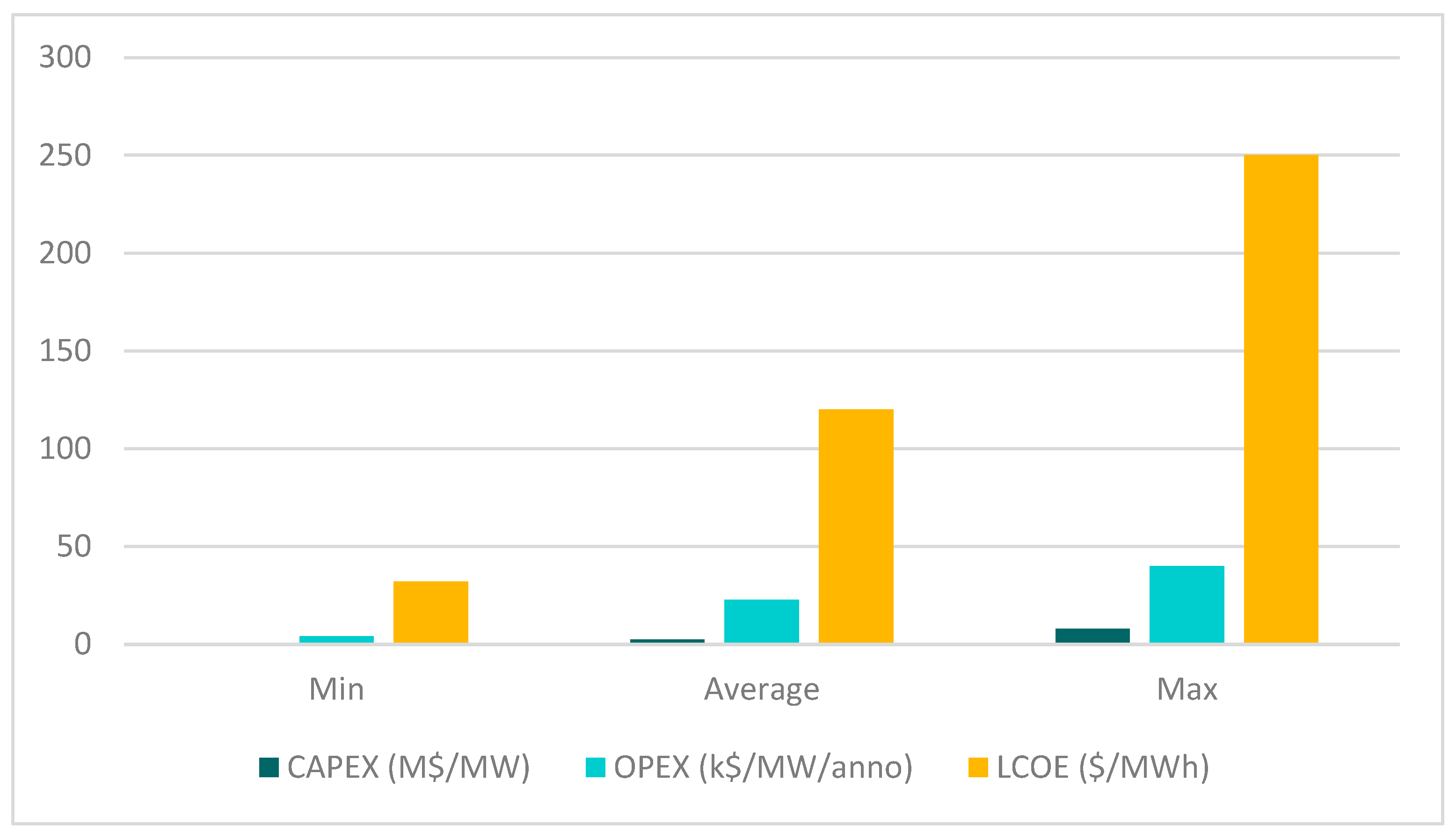
The economic analysis reveals an overall average CAPEX of approximately 2.43 million
$/MW. The minimum CAPEX value, equal to 0.60 million
$/MW, is reported by Ferreira V. J. et al. [
91], while the maximum value of 7.76 million
$/MW is reported by Faraggiana E. et al. [
9,
76]. OPEX values show an overall average of 22.7 thousand
$/MW per year, with a minimum of around 4 thousand
$/MW/year, reported by Santhakumar et al. [
47], and a maximum of approximately 40 thousand
$/MW/year, also reported by Santhakumar et al. [
52]. The LCOE values emerging from the literature indicate an average of approximately 120
$/MWh, with a minimum of 32
$/MWh reported by Ojo A. et al. [
78] and a maximum of 250
$/MWh reported by Thomas B. et al. [
88].
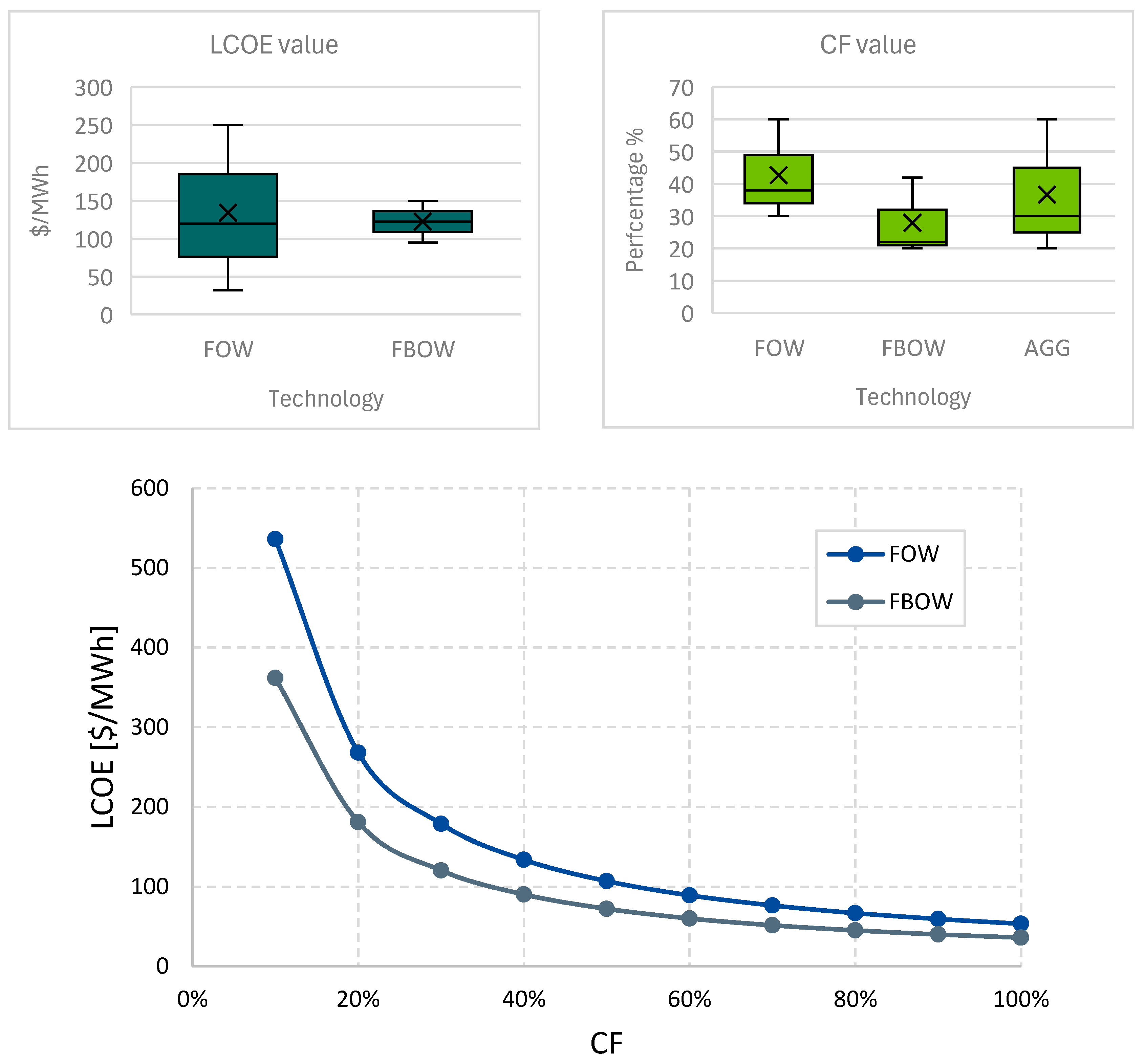
Lastly,
Figure 5 presents a comparative overview of the reported LCOE and CF values for FOW and FBOW technologies. The upper panels display box-and-whisker plots illustrating the distribution and variability of LCOE values for FOW and FBOW, and CF values for FOW, FBOW, and the aggregated dataset. These plots highlight the range, median, and dispersion of the reported values for each technology. The lower panel provides a comparative visualisation of the dispersion of individual CF and LCOE data points, allowing a direct inspection of the spread of reported values across the analysed studies, without implying a direct correlation between the two metrics.
From a qualitative standpoint, the literature indicates that bottom-fixed technology remains closely associated with shallow-water environments due to technological constraints, and research efforts are consequently oriented toward such conditions, albeit with costs that can be higher than those of traditional onshore wind solutions. Typical capacity factor values range between 30% and 40%, converging toward an overall average [
47,
78]. Floating technology, by contrast, emerges as a necessary solution in deep-water contexts, enabling access to higher-quality wind resources and the deployment of turbines with greater installed power. Although CAPEX and OPEX values are initially higher, strong long-term cost-reduction prospects are identified, primarily driven by economies of scale. Capacity factor values frequently exceed 40%, indicating superior energy efficiency for offshore wind farms based on floating technology. Current research trends predominantly focus on technological innovation, such as platform dynamics and mooring systems, while socio-economic and employment impacts remain less extensively explored. A comparative summary of the main techno-economic aspects is provided in
Figure 6.
More specifically, Shimin Y. et al. [
79] demonstrate that floating foundations become nearly indispensable beyond 60 m depth, where the technological complexity of bottom-fixed solutions undermines their economic viability. While deeper waters provide access to stronger and more stable winds, they also require more complex platforms and mooring systems. According to Snyder B. et al. [
74], bottom-fixed solutions are generally simpler and less costly in water depths below 50 m. Esteban M. et al. report that investment costs for bottom-fixed offshore wind can reach up to three times those of traditional onshore wind, with higher OPEX due to access and maintenance challenges [
92]. The same authors observe that CAPEX values increased until 2010, followed by a downward trend thereafter.
For floating projects, Thomas B. et al. show that LCOE decreases significantly with increasing turbine capacity because of economies of scale, with wind farms of approximately 1 GW achieving lower LCOE values than those of 250 MW [
88]. In the case of bottom-fixed technology, Snyder B. et al. report LCOE values that are still not competitive with fossil fuel sources and onshore wind, ranging between 95
$/MWh and 150
$/MWh [
74]. Thomas B. et al. further note that particularly favourable locations, such as the Canary Islands, exhibit LCOE values between 95
$/MWh and 100
$/MWh [
88], whereas less advantageous areas, including parts of the North Atlantic, present substantially higher values. Overall, LCOE tends to increase with turbine size and wind farm scale. Finally, regarding socio-economic and employment impacts, the studies by Sondes K. et al. and Zammit D. et al. highlight that both investment and operation and maintenance phases generate significant employment, producing notable economic benefits for local supply chains [
93,
94].
4. Discussion
The results obtained allow for the identification of clearly differentiated evolutionary trajectories for bottom-fixed and floating offshore wind technologies, reflecting distinct levels of technological maturity, industrial consolidation, and future development potential. The comparative analysis highlights that BFOW has reached a mature technological stage [
48], supported by a long-standing and well-documented learning curve that has progressively stabilised its cost structure. CAPEX values appear to have converged towards relatively narrow ranges, indicating a reduced margin for further cost reductions through conventional incremental innovation. This maturity is accompanied by an intrinsic physical constraint, namely, a practical and theoretical depth limit of approximately 80 m, as summarised in
Table 1. Such a constraint represents a decisive limiting factor for the geographical expansion of BFOW, effectively restricting its deployment in regions characterised by steep bathymetric gradients, such as the Mediterranean Sea, where shallow-water sites are scarce and spatial competition with other marine uses is significant [
95].
In contrast, floating offshore wind emerges from the analysis as a structurally enabling technology rather than a direct substitute for bottom-fixed systems. Although FOW currently exhibits higher CAPEX and LCOE values, the results confirm that it represents the only viable technological pathway for exploiting wind resources in deep water environments [
96]. Its capability to operate at depths reaching up to 1550 m, as reported in
Table 1, allows access to wind regimes that are not only stronger but also more stable, a factor that directly contributes to the significantly higher capacity factor values observed for floating installations. The analysis suggests that the capacity factor gap between the two technologies is not merely a consequence of turbine performance, but a spatial-resource correlation. While FBOW is confined to coastal shelves where wind profiles are often influenced by land–sea thermal gradients and surface roughness, FOW platforms can be deployed in open-sea environments. In these locations, the wind shear is more favorable and the wind speed distribution (Weibull shape parameter) tends to be more consistent. Therefore, the ‘higher performance’ of floating systems documented in the literature should be interpreted as the result of accessing a superior wind class, which offsets the potential aerodynamic losses induced by the additional degrees of freedom and platform motions of floating foundations. From a system-level perspective, these characteristic positions FOW as a cornerstone technology in long-term decarbonisation strategies, particularly for regions where onshore renewable deployment is constrained by land availability, social acceptance, or environmental protection requirements [
97].
From an engineering standpoint, the results underline the central role of design strategies oriented towards standardisation and modularisation in determining the future cost competitiveness of floating platforms. Unlike bottom-fixed foundations, which benefit from decades of accumulated industrial experience, floating systems are still characterised by a high degree of design heterogeneity. Reducing this variability through modular platform architectures, standardised mooring solutions, and serial production is essential to unlock economies of scale and achieve substantial CAPEX reductions. In parallel, the operational dimension emerges as a critical lever for improving the economic performance of FOW. The “tow-to-shore” maintenance strategy represents one of the most distinctive features of floating technology, as it enables major maintenance operations to be carried out in controlled onshore environments, thereby reducing offshore vessel requirements and safety risks. However, the practical implementation of this strategy at a commercial gigawatt scale must be critically evaluated against real-world logistical constraints [
98]. Recent literature, such as the study conducted by Centeno-Telleria M. et al. in 2025, suggests that for large-scale fleets, the downtime associated with disconnecting, towing, and reconnecting turbines can be significantly higher than the established in situ maintenance typical of FBOW using jack-up vessels [
98]. Current evidence, as shown in the research work of de Matos Sá M. et al. in 2024 indicates that for deep-water farms located far from shore, operational delays caused by limited towing weather windows and port congestion may offset the theoretical OPEX savings [
99]. Therefore, the competitiveness of FOW at scale depends not only on incremental technical optimization but also on the development of standardized quick-connection systems and the availability of dedicated maritime infrastructure capable of managing simultaneous unit repairs. Within this framework, fully realizing the expected economic benefits requires the systematic integration of advanced monitoring and diagnostic tools. Digital twins, combined with predictive sensor networks, play a crucial role in anticipating failure modes, optimizing maintenance scheduling, and ensuring the reliability of critical components under complex coupled aerodynamic and hydrodynamic loading conditions [
100]. The deployment of such digital solutions is both a technical and an economic necessity, as unplanned offshore failures and the resulting logistical bottlenecks can rapidly erode the projected OPEX advantages of floating systems.
In parallel, the operational dimension emerges as a critical lever for improving the economic performance of FOW. The potential OPEX advantage associated with “tow-to-shore” maintenance strategies represents one of the most distinctive features of floating technology [
101], as it enables major maintenance operations to be carried out in controlled onshore environments, reducing weather-related downtime, offshore vessel requirements, and safety risks. Fully realising this advantage, however, requires the systematic integration of advanced monitoring and diagnostic tools. Digital twins, combined with predictive sensor networks, play a crucial role in anticipating failure modes, optimising maintenance scheduling, and ensuring the reliability of critical components under complex coupled aerodynamic and hydrodynamic loading conditions [
100]. The deployment of such digital solutions is not only a technical necessity but also an economic one, as unplanned offshore failures can rapidly erode the expected OPEX benefits of floating systems. In this sense, the convergence between offshore wind engineering and digital technologies represents a key enabling factor for the industrial scalability of FOW. The technological trends emerging from the comparative analysis consistently point towards two converging objectives: maximisation of unit power and progressive reduction in LCOE. The commercialisation of next generation turbines rated between 15 and 20 MW, coupled with optimised floating platforms, is expected to significantly reduce the number of units required per wind farm, thereby lowering installation, operation, and grid-connection costs on a per-megawatt basis. At the same time, the results highlight the growing relevance of offshore electrical infrastructure, particularly the adoption of high-voltage direct current (HVDC) transmission systems, which are increasingly necessary to manage the large power outputs associated with multi-gigawatt offshore wind farms located far from shore [
61]. The integration of HVDC technology is therefore not merely a grid issue, but a fundamental component of the overall techno-economic optimisation of future offshore wind systems. A critique of recent technological trajectories suggests that the integration of offshore hydrogen production is evolving from a theoretical concept into a strategic necessity for high-depth energy deployments. The floating wind–hydrogen coupling offers unique structural advantages: FOW platforms can be designed to house modular processing units, effectively transforming surplus wind energy into green hydrogen or ammonia [
102]. However, a critical assessment reveals significant engineering challenges; the inclusion of offshore electrolyzers introduces complex dynamic loads and requires sophisticated fluid management on platforms subject to multi-axis motions [
103]. Consequently, the convergence of naval architecture and chemical engineering is becoming a fundamental pillar for the future competitiveness of FOW [
24]. This integration is expected to accelerate the movement of FOW along the maturity curve, shifting the industry focus from simple electricity generation to the creation of multi-functional offshore energy hubs.
The bibliometric analysis further supports this interpretation, revealing a clear and progressive shift from predominantly qualitative investigations towards quantitatively driven studies, as illustrated in
Figure 3. This transition reflects the broader industrial evolution of the offshore wind sector, in which questions of technical feasibility are increasingly complemented, or replaced, by assessments of economic competitiveness and bankability. Within this context, floating offshore wind has moved from a conceptual and experimental stage towards early commercial demonstration, prompting a growing demand for robust quantitative evidence capable of supporting investment decisions and policy design. Based on the results obtained, future research priorities should therefore focus on areas with the highest potential impact on both technical performance and economic viability. These include the aerodynamic optimisation of turbines operating on floating platforms, where platform motions introduce additional complexity compared to bottom-fixed systems; the development of innovative materials and low-impact manufacturing processes aimed at reducing both CAPEX and environmental footprints; and the on-site integration of power-to-X technologies, which can transform offshore wind farms into multifunctional energy hubs capable of producing hydrogen or synthetic fuels [
104]. Such configurations are particularly relevant for floating systems, given their flexibility in accommodating additional offshore processing infrastructure.
Within this evolving scenario, the role of industrial actors emerges as a decisive factor. The establishment of a robust and resilient supply chain is essential to translate technological advances into cost reductions and deployment scale. The design and manufacturing sectors must commit to pre-commercial demonstration projects that are already representative of future commercial conditions, rather than purely experimental prototypes. Such projects are instrumental in reducing technological risk, accelerating learning effects, and building confidence among investors and policymakers. Ultimately, the comparative evidence presented in this study suggests that while bottom-fixed offshore wind will continue to play a key role in suitable shallow-water contexts, floating offshore wind is poised to become a central pillar of offshore energy systems in deep-water regions, driving both technological innovation and industrial transformation.
Study Limitations and Future Research Directions
It is important to acknowledge certain limitations of the present study to properly contextualize its findings. The analysis did not incorporate variables related to wind resource distribution, grid connection distance, or the decommissioning phase of offshore floating wind turbines, despite their relevance as fundamental design and operational management factors. This omission constitutes a constraint on the comprehensiveness of the comparative framework.
Moreover, the heterogeneity of the data sources employed—ranging from peer-reviewed literature to industrial technical reports—introduces an inherent degree of uncertainty. The absence of standardized reporting protocols within the offshore wind sector frequently results in discrepancies in the accounting of CAPEX and OPEX across different geographical markets. In addition, the scope of this research was primarily limited to techno-economic parameters; consequently, broader environmental and socio-economic dimensions, such as impacts on marine ecosystems or community acceptance, were not addressed.
Future investigations should aim to overcome these limitations by expanding the analytical framework to include comprehensive Life Cycle Assessments (LCA), thereby enabling the evaluation of the total carbon footprint of floating and bottom-fixed structures, including decommissioning and material recycling phases. Further research should also explore regional supply chain dynamics in greater detail, assessing how port infrastructure and shipyard availability influence cost-reduction trajectories, particularly in basins characterized by complex bathymetry such as the Mediterranean. Finally, the development of dynamic modeling tools capable of incorporating fluctuations in raw material prices and global logistics costs would enhance the robustness of LCOE projections, providing a more resilient basis for policy formulation and long-term offshore energy planning.
5. Conclusions
This work has delivered a systematic techno-economic comparison between bottom-fixed and floating offshore wind technologies, addressing a structural gap in the existing literature. By integrating technical and economic parameters within a unified and replicable framework, the study provides a coherent basis for comparing technologies that are often analysed separately or through non-homogeneous metrics.
The findings confirm bottom-fixed offshore wind as a mature and well-established technology, characterised by consolidated cost structures and limited scope for further expansion beyond shallow and intermediate waters. Its long-term contribution appears increasingly bounded by physical and geographical constraints, reinforcing its role as a stable but spatially constrained component of offshore energy systems.
On the other hand, floating offshore wind emerges as a strategic enabler for the future expansion of offshore wind capacity. Although still associated with higher investment costs, floating technology fundamentally reshapes the deployable resource base by enabling access to deep-water regions with superior wind conditions. In this sense, FOW should be interpreted not merely as an alternative foundation concept, but as a necessary technological pathway for scaling offshore wind in regions where bottom-fixed solutions are no longer viable. From an industrial perspective, the results suggest that the competitiveness of floating wind will primarily depend on industrialisation dynamics rather than on incremental technical optimisation alone. Cost reductions are expected to be driven by platform standardisation, serial manufacturing, turbine upscaling and streamlined operational strategies, following learning mechanisms already observed in other renewable energy technologies. As these processes mature, the techno-economic gap between bottom-fixed and floating solutions is likely to narrow progressively. Future research should focus on optimizing tow-to-shore maintenance strategies by systematically evaluating the trade-off between reduced offshore vessel requirements and potential increases in turbine downtime. Attention should be devoted to the development and simulation of rapid-disconnection systems for mooring and cabling, aimed at minimizing energy production losses during maintenance operations and ensuring operational continuity at commercial scale.
Beyond the specific comparison, a key contribution of this paper lies in its informative content. The proposed framework enables transparent cross-comparison of heterogeneous sources and supports continuous updating as new projects, datasets and market conditions emerge. This makes the analysis particularly relevant for strategic planning, investment screening and policy design in a rapidly evolving offshore wind landscape. Looking forward, offshore wind development is expected to move towards increasingly integrated energy systems, where large-scale wind farms interact with offshore grids, storage solutions and power-to-X applications. Within this context, floating offshore wind is likely to play a central role, acting as a platform technology for multi-gigawatt energy hubs rather than as a niche solution. Ultimately, the evolutionary trajectory of the sector indicates that market maturity will be defined by the capacity to implement cross-sectoral energy solutions. The transition from isolated wind farms to integrated Wind-to-Hydrogen energy hubs represents the next logical step on the technological learning curve. Such advancements will allow FOW to transcend current economic barriers, not only by reducing costs through industrial standardization but also by increasing the value of the energy portfolio produced, thereby securing a profound decarbonization pathway for hard-to-abate sectors [
105,
106,
107].
In conclusion, this study provides a strategic and data-driven perspective on the respective roles of bottom-fixed and floating offshore wind technologies. By clarifying their techno-economic positioning and long-term trajectories, the paper supports informed decision-making and contributes to a more coherent and accelerated deployment of offshore wind in support of global decarbonisation goals.



 ,
,