Review

Digital Twin Technology in Wind Turbine Condition Monitoring, Predictive Maintenance, and RUL Estimation: A Systematic Literature Review


by
Jorge Maldonado-Correa
1,*,
José Cuenca-Granda
1,
Joel Torres-Cabrera
1,
Galo Cerda Mejía
2,
Wilson Daniel Bastidas Barragan
2,
Rocío Guapulema
2,
Edwin Paccha-Herrera
1,
Juan Carlos Solano
1,
Darwin Tapia-Peralta
1,
José Benavides
1 and
Cristian Laverde-Albarracín
3
1
Technological and Energy Research Center (CITE), National University of Loja, Loja 110111, Ecuador
2
Faculty of Earth and Water Sciences, Universidad Regional Amazónica IKIAM, Tena 150150, Ecuador
3
Faculty of Engineering Sciences, Technical State University of Quevedo, Quevedo 120301, Ecuador
*
Author to whom correspondence should be addressed.
Energies 2026, 19(6), 1477; https://doi.org/10.3390/en19061477
Submission received: 4 February 2026 / Revised: 8 March 2026 / Accepted: 13 March 2026 / Published: 15 March 2026
(This article belongs to the Special Issue Latest Challenges in Wind Turbine Maintenance, Operation, and Safety)

Abstract

The rapid growth of wind energy has increased the need for advanced condition monitoring (CM), predictive maintenance, and remaining useful life (RUL) estimation strategies for wind turbines. In this context, digital twins (DTs) have emerged as a key tool for improving reliability, availability, and operational efficiency by integrating physical models, operational data, and artificial intelligence (AI). This paper presents a systematic literature review (SLR) aimed at analyzing the state of the art, classifying the main applications, and identifying research gaps. A rigorous search protocol was applied across scientific databases, considering inclusion and exclusion criteria and analysis categories aligned with four research questions. The results show a high concentration of studies on critical wind turbine components, a predominance of hybrid physics-based and data-driven approaches, and an increasing use of deep learning (DL) models. However, several research gaps remain, including the predominance of component-level digital twin implementations rather than system-level architectures, the lack of standardized datasets and benchmarking frameworks, and challenges related to SCADA data heterogeneity and real-time scalability. It is concluded that DTs are evolving toward more autonomous and prescriptive systems; however, they still require further maturation for widespread industrial adoption.

1. Introduction

Renewable energy sources have experienced accelerated growth, largely driven by the need to reduce dependence on fossil fuels. This progress reflects a global effort to adopt cleaner and more sustainable forms of energy generation.
In recent years, significant advances have been observed in the development of renewable energy systems from both technological and resource assessment perspectives [1]. Consequently, electricity generation based on renewable sources has shown continuous growth at the global level. In 2019, it represented approximately 34% of the global installed capacity, while by 2024, it exceeded 4400 GW following the addition of more than 580 GW, according to the International Renewable Energy Agency (IRENA) [2].
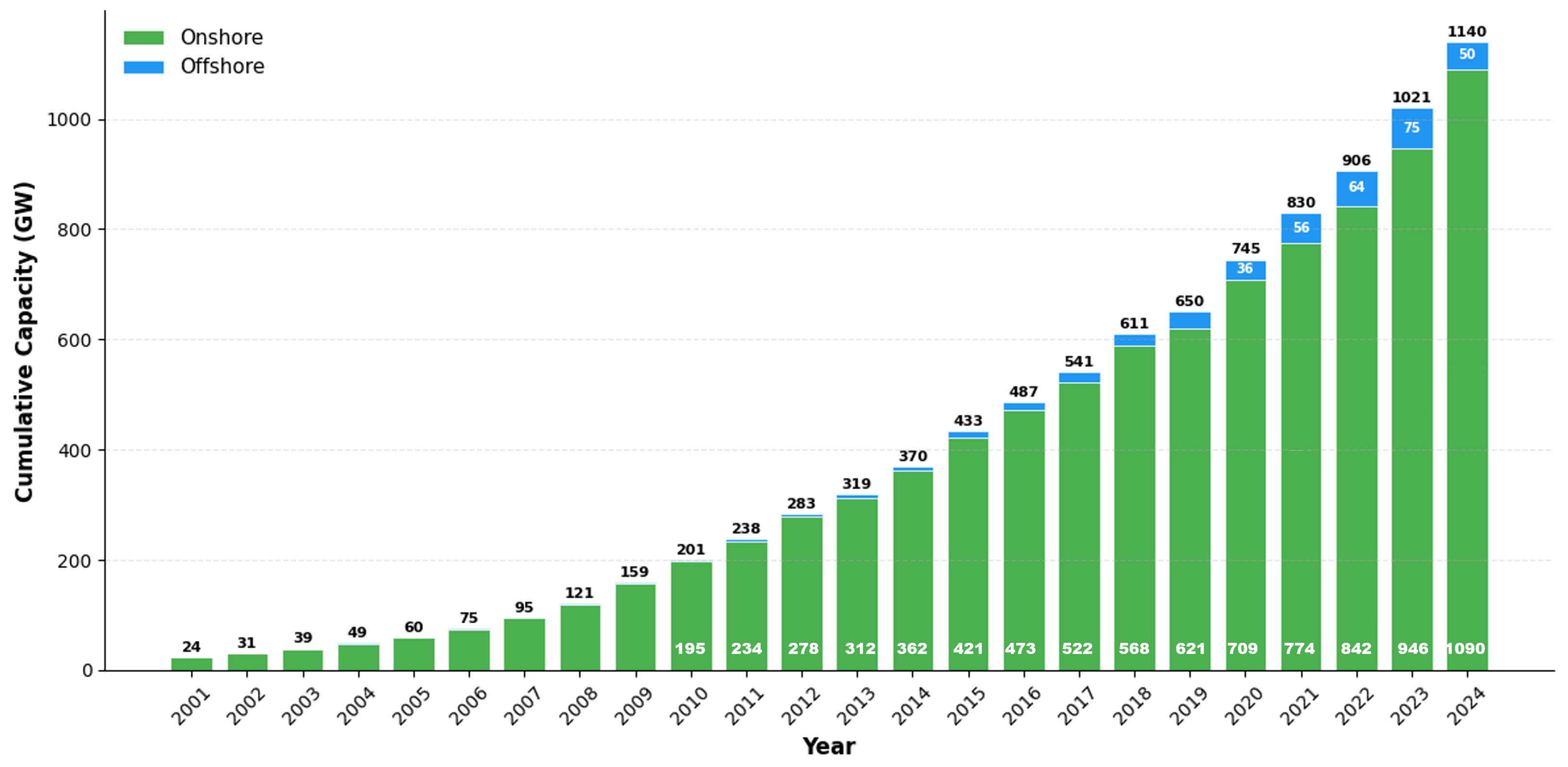
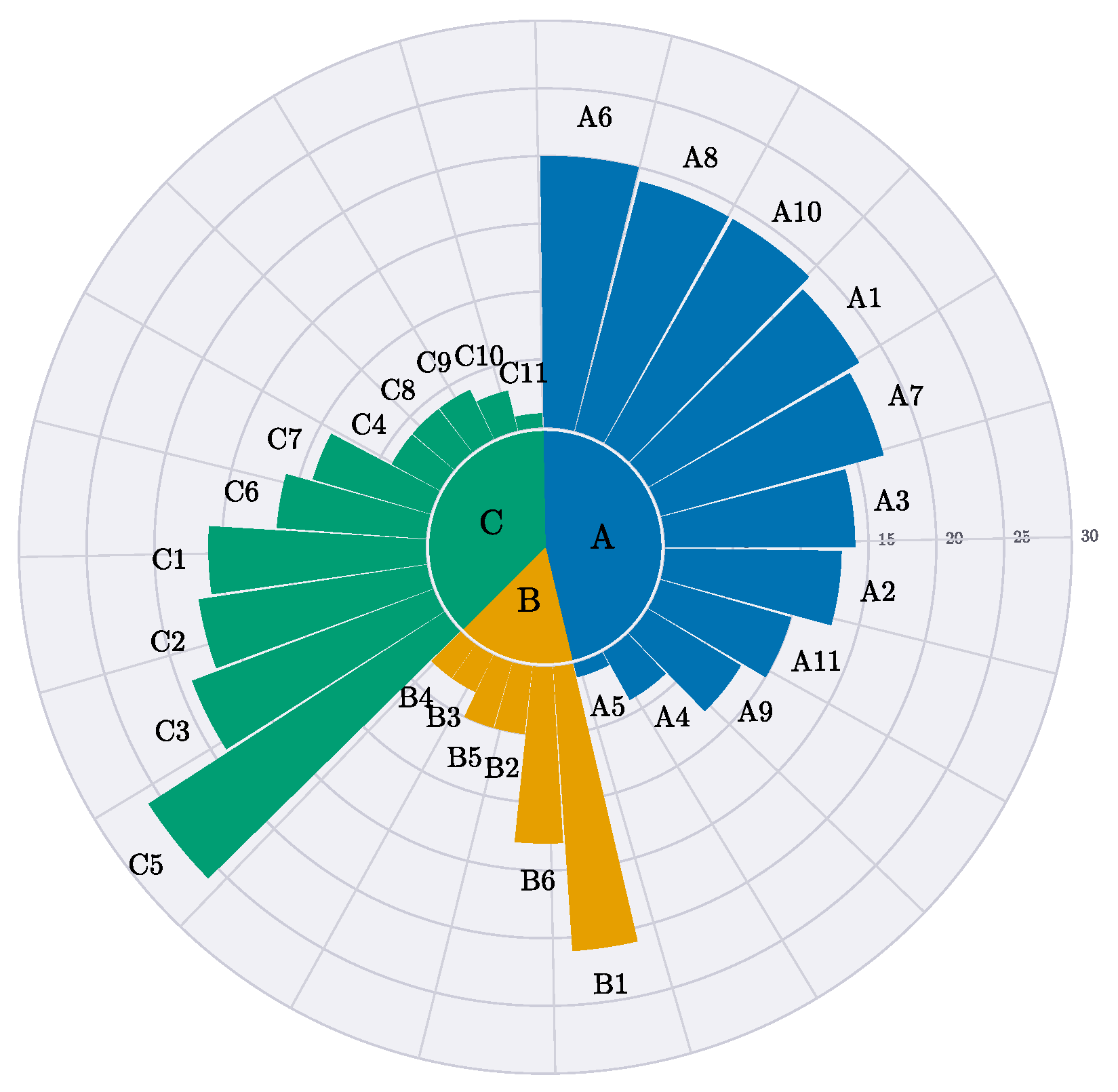
Specifically, wind energy has experienced sustained global growth over the last decade, with notable development in recent years primarily driven by increases in wind turbine capacity. Between July 2024 and June 2025, approximately 148 GW of new wind power capacity was installed, bringing the global wind capacity to nearly 1250 GW by mid-2025. This increase represents an annual growth rate of approximately 13.5%, demonstrating the consolidation of wind energy as one of the main technologies supporting the global energy transition [3].
Figure 1 illustrates the evolution of installed wind capacity worldwide, including both onshore and offshore wind.
In this regard, the development of wind energy has introduced new challenges associated with wind turbine maintenance. Since the economic revenue of a wind farm depends directly on the amount of energy generated, it is essential to minimize downtime caused by wind turbine failures. The implementation of predictive maintenance strategies and early fault detection significantly contributes to reducing unscheduled shutdowns and, consequently, the economic losses associated with such events [4].
Condition monitoring (CM) is a key tool for improving the reliability and performance of wind turbines, as it enables the early identification of faults and degradation processes in their components. Its application supports predictive maintenance, reduces operation and maintenance (O&M) costs, and contributes to increasing the availability and service life of wind turbines.
In this context, the use of data from Supervisory Control and Data Acquisition (SCADA) systems is particularly advantageous, as it provides historical information on the operational state of wind turbines without requiring the installation of additional sensors [5,6].
Furthermore, a Digital Twin (DT) is a virtual representation of a physical system that operates in synchronization with its real counterpart, integrating geometric, operational, and behavioral information [7]. A DT enables the continuous simulation, monitoring, and evaluation of equipment or systems, facilitating data-driven decision-making and performance optimization throughout their life cycle [8].
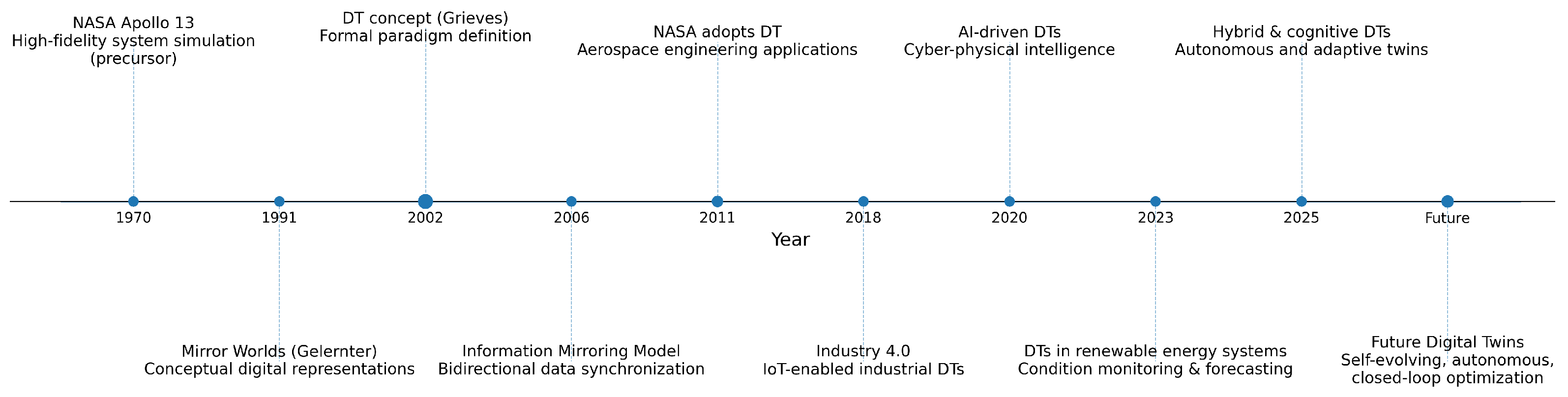
The timeline presented in Figure 2 illustrates the conceptual and technological evolution of the DT paradigm, from its origins in system simulation and virtual mirroring models to its current role as a central component of intelligent cyber–physical infrastructures. Early developments were motivated by the need to replicate physical systems in virtual environments for monitoring, analysis, and fault prevention, as evidenced by initial aerospace applications and conceptual frameworks based on reflection and information models. These foundational ideas progressively evolved toward the formalization of the DT concept and its institutional adoption, particularly in high-risk engineering domains, enabling predictive maintenance strategies and data-driven decision-making [9].
In more recent stages, this paradigm has undergone a substantial transformation driven by advances in artificial intelligence (AI), large-scale sensing systems, and interconnected cyber–physical architectures. This transition has enabled the deployment of adaptive, hybrid, and learning-based DTs capable of operating in real time, integrating heterogeneous data sources, and supporting autonomous optimization processes.
As noted in recent studies, these next-generation DTs are increasingly being integrated into renewable energy systems, where they play a key role in CM, performance optimization, and remaining useful life (RUL) estimation under highly variable environmental conditions [10]. Collectively, this evolution reflects a broader shift from static digital representations toward cognitive, self-adaptive, and system-level DTs that act as active agents within complex energy ecosystems.
This work presents a systematic literature review (SLR) aimed at analyzing the state of the art in the application of DTs in wind turbine O&M activities. Specifically, the main contributions of this research are summarized as follows:
(a)
Through the application of a rigorous search protocol, scientific articles published in the last three years were selected and analyzed to identify the most relevant trends and advances in the use of DTs for wind turbine CM.
(b)
A detailed review of primary studies focused on the application of DTs for predictive maintenance and RUL estimation in wind turbines is conducted.
(c)
Four research questions are formulated and addressed to classify and analyze the most relevant studies according to the following criteria:
  • Which wind turbine components or subsystems are most commonly modeled using DTs for CM and predictive maintenance tasks?
  • What techniques are currently used for the development and implementation of DTs in wind turbines, and what are their main applications?
  • What AI-based models are currently employed in wind turbine DTs for CM, fault prediction, and RUL estimation?
  • What are the main challenges in the implementation and scalability of DTs for wind turbines, and what emerging trends guide their future development in the field of CM and predictive maintenance?
The remainder of this article is organized as follows: Section 2 describes the SLR methodology, including the mentefact, research questions, search strategy, and inclusion and exclusion criteria; Section 3 presents and analyzes the results obtained for each research question; finally, Section 4 presents the main conclusions of the study.

2. Materials and Methods

DTs have established themselves as a key tool for real-time monitoring, CM, fault prediction, and RUL estimation in wind turbines, supporting improvements in the reliability and operational efficiency of wind farms [11]. By creating a virtual replica of the physical system, DTs enable precise fault diagnosis and the implementation of predictive maintenance strategies [12]. In this context, ref. [13] presents a study on a DT for offshore wind turbines that integrates environmental, operational, and market data to estimate failure probability and optimize O&M tasks.
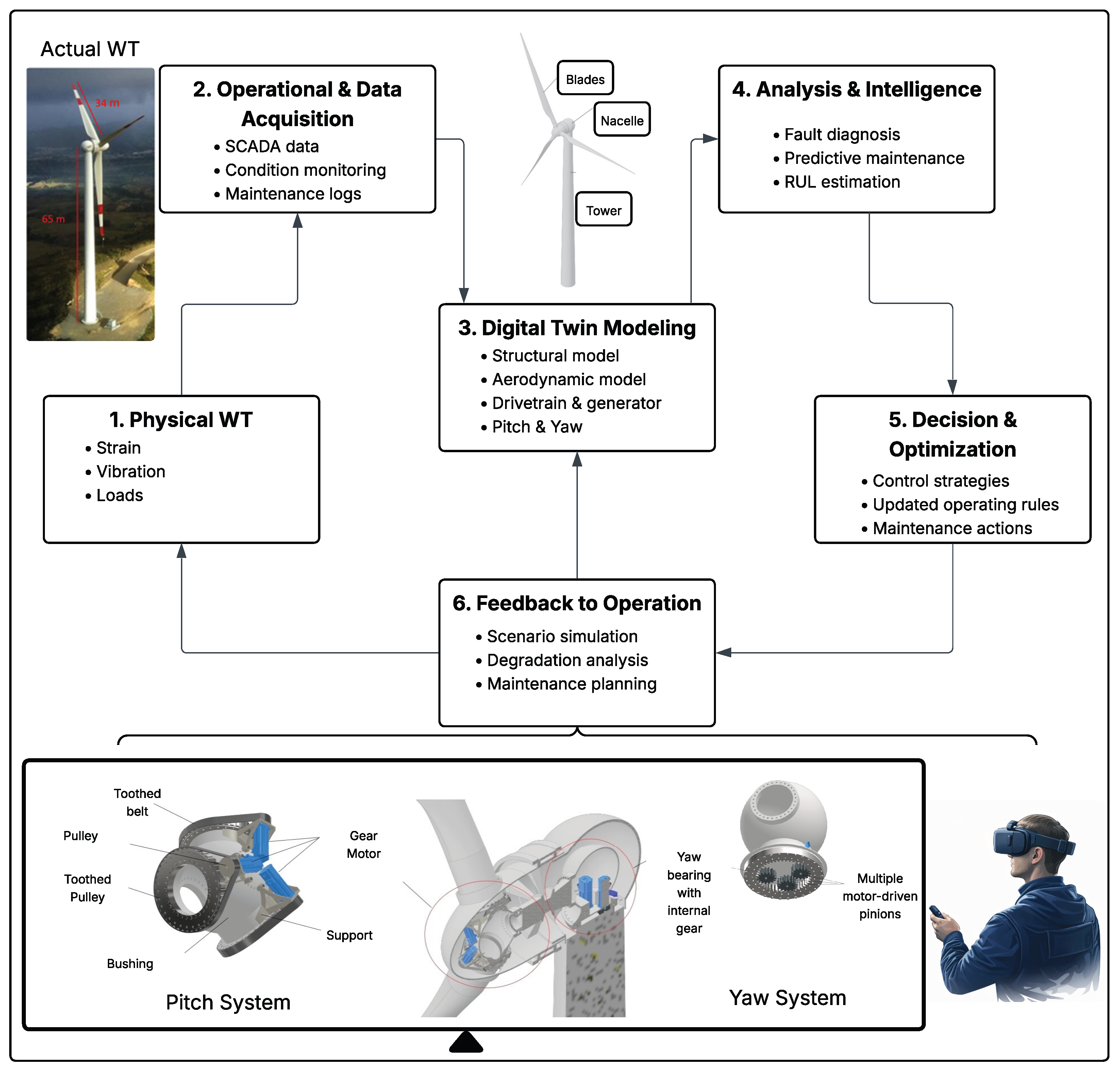
A DT fundamentally consists of modeling, simulation, and visualization. Modeling involves the representation of a physical asset, a mathematical model, or an algorithm to replicate a given phenomenon. Simulation enables the evaluation of multiple operational scenarios without incurring the risks or costs associated with real prototypes. Finally, advanced visualization, supported by Virtual Reality (VR) and Augmented Reality (AR), facilitates a more comprehensive, interactive, and immersive DT experience [14]. Figure 3 depicts a wind turbine DT and its visualization using VR.
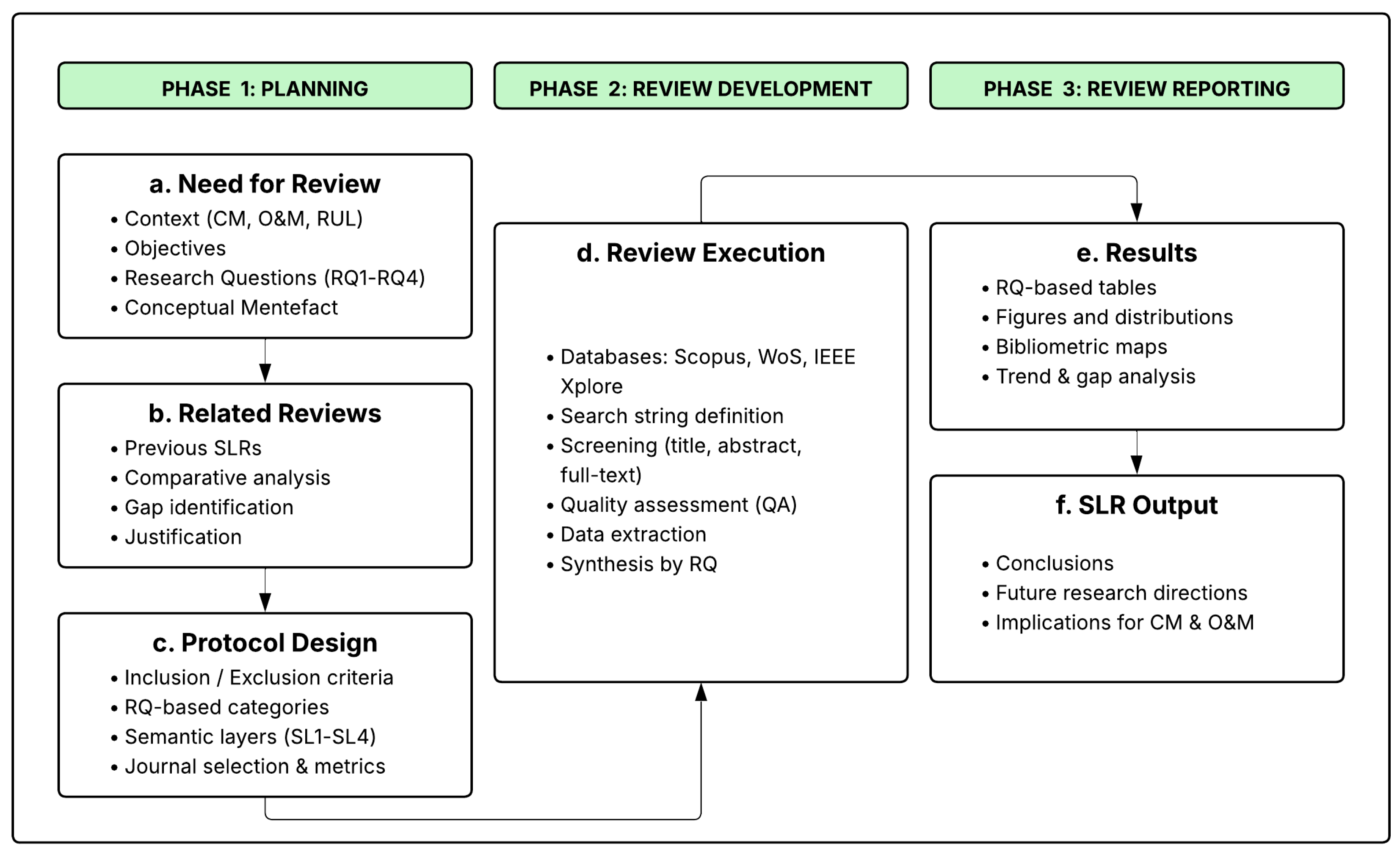
The SLR method proposed by Kitchenham [15] and Bacca [16] was used in this work. This methodology has previously been applied by the authors in related studies [17,18]. As shown in Figure 4, the review process is divided into three phases: planning, review development, and review reporting.

2.1. Phase 1: Planning

2.1.1. Identification of the Need for Review

The increase in installed wind power capacity has intensified the need to ensure high levels of availability and operational efficiency in wind turbines, driving the development of advanced methodologies for their O&M.
The use of DTs has emerged as a modern and promising tool for CM [19], predictive maintenance [20], and RUL estimation [21]. However, although the existing scientific literature is abundant, it presents a high level of dispersion regarding approaches, techniques, and applications and lacks systematic reviews that synthesize the state of the art. Therefore, a SLR is necessary to identify trends, classify the main contributions, and detect research gaps in the application of DTs for wind turbine CM.
  • Research Questions
The purpose of a SLR is to comprehensively collect and analyze empirical evidence that meets previously defined inclusion criteria in order to answer a research question [22]. The formulation of research questions constitutes one of the most important stages within the protocol of an SLR [15]. In this sense, a well-posed research question addresses a relevant problem and contributes to the advancement of knowledge within the scientific community.
Furthermore, considering that O&M costs can represent between 20% and 30% of the total costs associated with energy generation in a wind farm [23,24], it is essential to implement CM strategies that enable the accurate prediction of fault occurrences and the estimation of the service life of wind turbines, their components, and subsystems. These strategies play a key role in operational planning, performance monitoring, and decision-making in wind farm management.
In this context, and with the objective of analyzing how DTs are being used in wind turbine CM, the following research questions are proposed:
RQ1: Which wind turbine components or subsystems are most commonly modeled using DTs for CM and predictive maintenance tasks?
RQ2: What techniques are currently used for the development and implementation of DTs in wind turbines, and what are their main applications?
RQ3: What AI-based models are currently employed in wind turbine DTs for CM, fault prediction, and RUL estimation?
RQ4: What are the main challenges in the implementation and scalability of DTs for wind turbines, and what emerging trends guide their future development in the field of CM and predictive maintenance?
  • Conceptual Mentefact
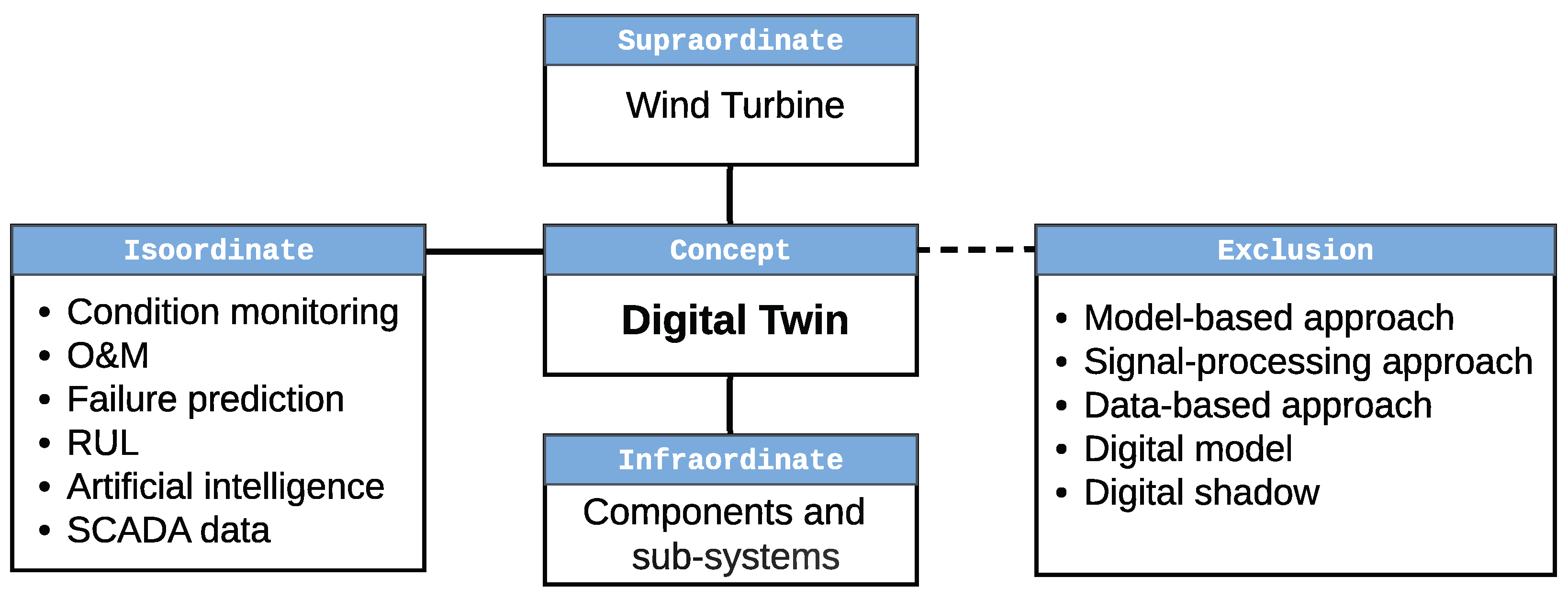
According to [25], a mentefact is an intellectual construction of a non-material nature that represents formalized knowledge such as concepts, theories, models, or ideas. Likewise, ref. [26] indicates that a conceptual mentefact is a pedagogical tool designed to facilitate deep reading and structured learning through the graphical and hierarchical representation of complex concepts. This instrument allows the organization and preservation of knowledge by highlighting fundamental ideas and discarding secondary ones, synthesizing information into a cognitive diagram [17].
In this work, the mentefact is used to organize, classify, synthesize, and filter existing scientific knowledge independently of its authors and original contexts, thereby facilitating a structured understanding of the state of the art.
Figure 5 shows the mentefact used in this research. The construction of the mentefact requires five classes that respond to the following conceptual operations:
(a)
Concept: This class presents the central idea on which the literature review focuses. In this work, the concept is: DT.
(b)
Supraordinate: In this class, the concept is integrated into a higher or more general category that encompasses it, enabling the identification and understanding of its characteristics and properties. In this work, the supraordinate class corresponds to: Wind turbine.
(c)
Isoordinate: This class establishes partial relationships and conceptual links between related propositions, highlighting connections and correspondences without implying complete inclusion. In the present study, the following isoordinate classes have been defined: CM, O&M, failure prediction, RUL, AI, and SCADA data.
(d)
Exclusion: In this class, concepts or approaches that differ from or do not belong to the central concept are identified, allowing for a clearer delimitation of its theoretical scope. In this work, the following exclusions have been considered: model-based approaches, signal-processing approaches, data-based approaches, digital model, and digital shadow.
(e)
Infraordinate: This class defines the specific subcategories or components derived directly from the main concept. In this study, the defined infraordinate class corresponds to wind turbine components and subsystems.
  • Semantic Search Structure
For the development of the bibliographic review, a search script was designed to efficiently retrieve information from different scientific databases, including Scopus, Web of Science (WoS), and IEEE Xplore. This script was structured into four semantic layers (SLs), defined based on the conceptual mentefact and the use of a scientific thesaurus.
From a methodological perspective, the primary function of the thesaurus is to reduce the effects of synonymy and polysemy, phenomena inherent to natural language that hinder precision in information retrieval [26,27]. In this context, the first layer was derived from the central concept identified in the mentefact; the second layer restricted the search to studies related to wind energy; the third layer focused on works associated with artificial intelligence; and the fourth layer was designed to retrieve articles related to CM. Table 1 presents the semantic structure used in the information search process.
Based on the semantic structure shown in Table 1, the base search script was developed (see Table 2), which enabled the identification and selection of the scientific literature analyzed in this SLR.
  • Related Systematic Reviews
To comprehensively address the research questions (RQ1–RQ4), a comparative analysis of the main review studies on DTs applied to wind turbines and wind farms was conducted. As shown in Table 3, this analysis enables not only the identification of current advances but also the highlighting of the main methodological, technological, and conceptual limitations that still persist in this field. This synthesis facilitates a direct comparison among studies, enabling the identification of common patterns, research gaps, and emerging opportunities for the development of comprehensive and scalable DTs oriented toward real-world CM and predictive maintenance applications.
Regarding RQ1, Table 3 shows that most studies concentrate on components with high operational criticality, such as the gearbox, generator, and bearings [28,29,30]. In contrast, structural, hydraulic, and cooling subsystems remain sparsely represented. This trend suggests that the current state of the art is still dominated by approaches focused on isolated components, without an integrated representation of the complete wind turbine system.
Concerning RQ2, it is observed that the analyzed studies consistently classify DTs into physics-based, data-driven, and hybrid models [31,32,33]. However, a significant gap is also evident between the proposed conceptual architectures and their actual implementation in industrial environments. Most studies describe theoretical frameworks without detailing deployment pipelines, system latency, computational costs, or real-time update mechanisms, which limits their practical applicability.
Regarding RQ3, Table 3 reflects a progressive transition from classical machine learning (ML) models toward more complex DL architectures, such as convolutional neural networks (CNNs), Long Short-Term Memory (LSTM) networks, and Transformers [29,30]. However, these models are often treated as black boxes, with limited interpretability and scarce standardization of evaluation metrics. Likewise, it is observed that RUL prediction remains marginal compared with fault detection and diagnosis tasks.
Finally, with respect to RQ4, the most recurrent challenges include data heterogeneity, the scarcity of public datasets, the lack of standardization, and difficulties in achieving scalability and real-time operation. Regarding future trends, the convergence of DTs with AI, the Internet of Things (IoT), and cloud computing is highlighted, along with the growing interest in hybrid DT architectures.

2.1.2. Development of the Review Protocol

Definition of Document Inclusion and Exclusion Criteria
To ensure an efficient and precise search, and considering the high volume of existing scientific literature in the field, specific search criteria were established in the previously mentioned scientific databases. In this context, the search strategy focused on the research topics defined in the conceptual mentefact, and the following criteria were applied:
(a)
Inclusion Criteria:
  • Time range: Articles published between 2023 and 2026 were considered in order to capture the most recent advances in the field. The time window was restricted to the period 2023–2026 to focus the analysis on the most recent developments in DT technologies applied to wind turbines. In recent years, the DT paradigm has rapidly evolved due to advances in artificial intelligence, industrial IoT, and edge–cloud computing architectures. Restricting the search to this period allows the review to capture state-of-the-art implementations and emerging research directions. Earlier foundational studies are indirectly considered through the analysis of existing review articles summarized in Table 3, which provides a comparative synthesis of prior literature and helps contextualize the evolution of the field.
  • Source type: Scientific journals and conference proceedings.
  • Subject areas: Engineering and energy.
  • Document type: Research articles and review articles.
(b)
Exclusion Criteria:
  • Presence of keywords that, although related to the general domain, are conceptually excluded according to the mentefact, such as: Sustainable Development, Vibration Analysis, Prognostic and Health Management, and Digital Transformation.
  • Language: The selection was restricted to documents written in English, excluding publications in Chinese and a small number of works published in Spanish.
  • Document types not considered: Book chapters, full books, short surveys, conference reviews, and editorials.
Definition of Analysis Categories
To organize and analyze the primary studies, analysis categories were defined for each research question, following methodological recommendations reported in the literature [26]. These categories enable the classification of the reviewed studies and facilitate the synthesis of the state of the art with respect to the research questions.
For RQ1, the categories were oriented toward identifying the wind turbine components, subsystems, and SCADA variables that have been modeled using DTs for CM and predictive maintenance tasks. These categories include individual components such as the gearbox, bearings, generator, power converter, transformer, blades, rotor, tower, and foundation, as well as complete subsystems such as the drivetrain; electrical and electronic systems; hydraulic, thermal, and cooling systems; and pitch and yaw mechanisms. Likewise, the most relevant SCADA variables were considered, including wind speed and direction, generated power, and maintenance logs.
For RQ2, the categories were defined based on the techniques, platforms, and architectures used in the development and implementation of DTs. These include data-driven approaches, hybrid models, and multi-sensor systems. Additionally, simulation platforms, cloud and IoT infrastructures, and interactive visualization tools were considered. Regarding architecture, cyber–physical structures; modular, hierarchical, and distributed architectures; and application-specific architectures were identified, as well as the software tools used for modeling, simulation, visualization, and industrial deployment. Finally, the main applications were classified, including fault diagnosis, RUL estimation, and O&M.
To ensure consistency in the classification of the reviewed studies, explicit criteria were defined to distinguish between physics-based, data-driven, and hybrid DT implementations.
Physics-based DTs correspond to approaches in which the digital representation of the wind turbine is primarily constructed using first-principles models, such as aeroelastic, structural, or multiphysics simulations derived from physical equations.
Data-driven DTs correspond to implementations in which the system behavior is modeled mainly through data analytics or ML techniques trained on operational data (e.g., SCADA signals), without explicit physical modeling of the system dynamics.
Hybrid physics–data DTs refer to approaches that combine both strategies, integrating physical simulation models with ML or statistical algorithms to enhance fault diagnosis, prediction, or RUL estimation.
For RQ3, the categories focused on the AI models and evaluation metrics employed in DTs for CM, fault prediction, and RUL estimation. Classical ML models, artificial neural networks, Bayesian approaches, clustering techniques, and DL models were included. Furthermore, evaluation metrics related to predictive performance, fault classification, reliability, and model robustness were considered.
Finally, for RQ4, the categories were defined to analyze the main challenges and trends related to the implementation and scalability of DTs in wind turbines. Identified challenges include real-time processing, data heterogeneity and synchronization, data scarcity, digital model complexity, interoperability, cybersecurity, and experimental validation. Regarding trends, the adoption of IoT and edge computing architectures, the integration of hybrid DTs, the increasing use of AI for RUL prediction and predictive maintenance, and the growing role of Structural Health Monitoring (SHM) are highlighted.
Journal Selection
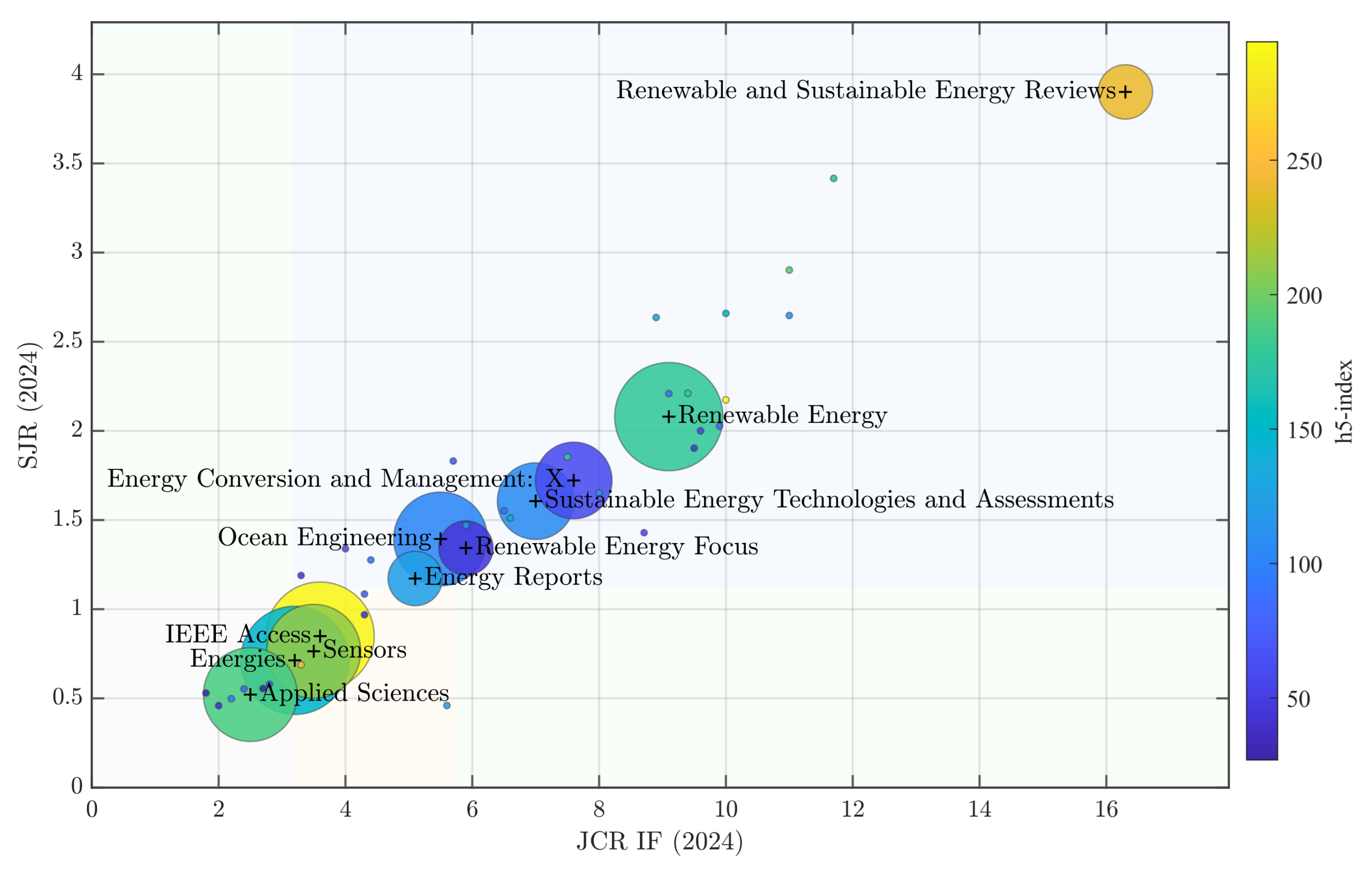
The scientific journals consulted in this study, along with their main bibliometric indicators, are presented in Table 4. Additionally, the number of articles analyzed from each journal is reported, together with a relevance ranking computed using a composite score (Equation (1)) that combines publication frequency and bibliometric visibility indicators, following common practices in SLRs [22,26]:
O r d = 0.25 · n p · I F J C R · S J R · h 5 .
where n p is the number of analyzed papers from each source, I F J C R is the Journal Impact Factor reported in the Journal Citation Reports, S J R is the SCImago Journal Rank indicator, and h 5 is the Google Scholar h 5 -index. The factor 0.25 is used as a scaling coefficient to prevent an excessive dominance of n p over the bibliometric indicators in the composite score.
Figure 6 presents a comparative analysis of the journals reviewed in this SLR. Each bubble represents a source (journal or conference proceeding), whose size is proportional to the number of articles analyzed and whose color encodes the h 5 -index as a complementary visibility indicator. To facilitate the identification of the most representative journals, only those with a number of papers 2 are labeled, revealing a concentration of publications in a small group of journals and a significant number of isolated contributions.
In total, 53 sources (81 articles) were identified, but only eight sources contain more than two publications. The positioning, represented by the JCR Impact Factor and SJR (2024), falls within medium-to-high ranges with variations between indicators. Furthermore, 42 journals include only one article associated with the research questions, evidencing a high degree of editorial dispersion.
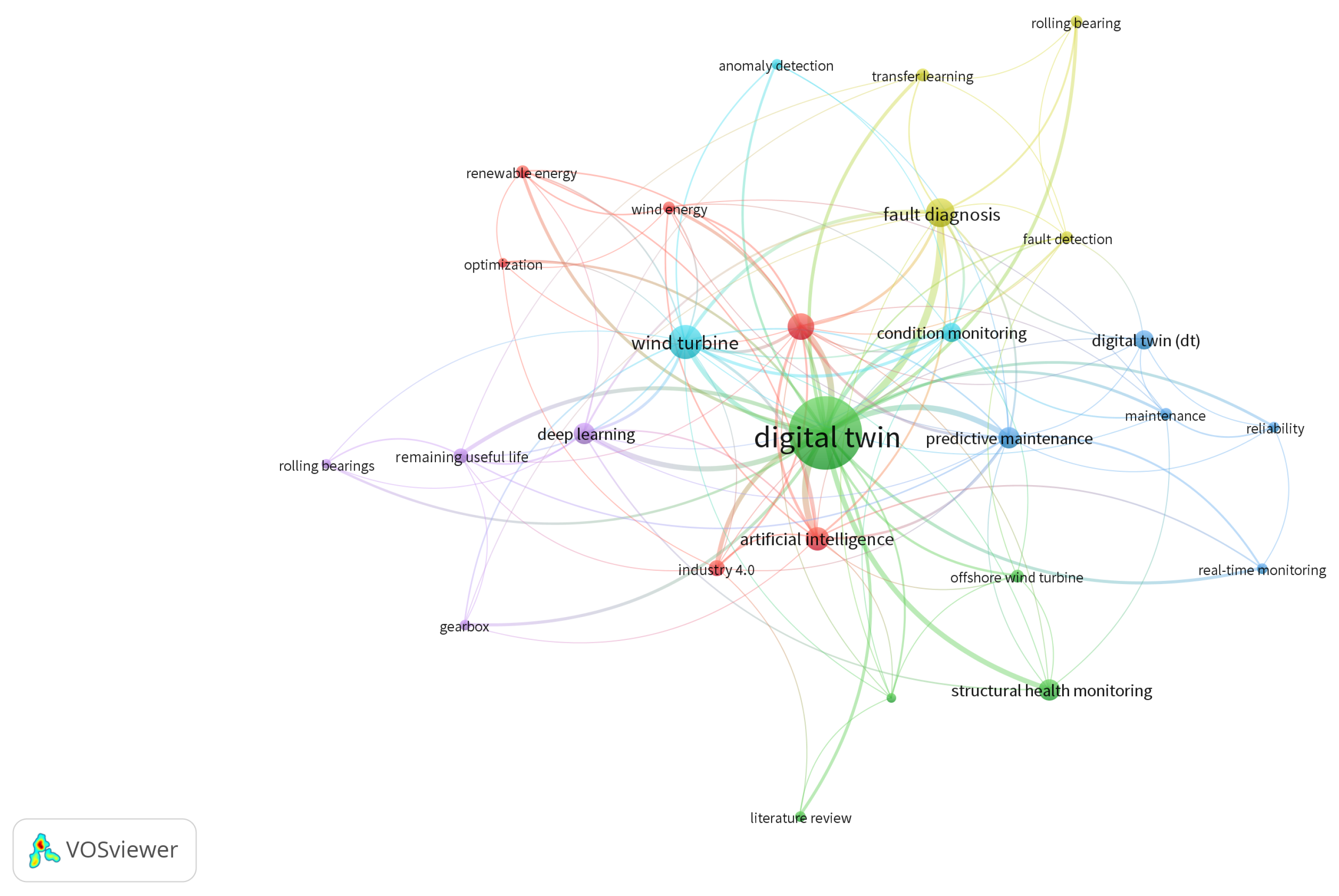
Figure 7 shows the bibliometric keyword co-occurrence map generated with VOSviewer 1.6.20 from the references analyzed in this study. The term “digital twin” appears as the central node, highlighting its dominant role in the literature. Strong relationships are observed with the terms “wind turbine”, “condition monitoring”, “predictive maintenance”, “artificial intelligence”, and “structural health monitoring”, reflecting the integration of these research areas.
Furthermore, the different clusters identified represent consolidated research lines such as fault diagnosis, service life estimation, and RUL prediction.
Although a structured protocol was followed to ensure methodological rigor, this review may still present certain limitations. First, the search was restricted to publications written in English, which may introduce language bias. Second, only major scientific databases were considered, which may have led to the exclusion of relevant studies published in other sources. Finally, publication bias may also be present, as studies reporting significant or positive results are more likely to be published than those reporting negative or inconclusive findings.

2.2. Study Selection Process

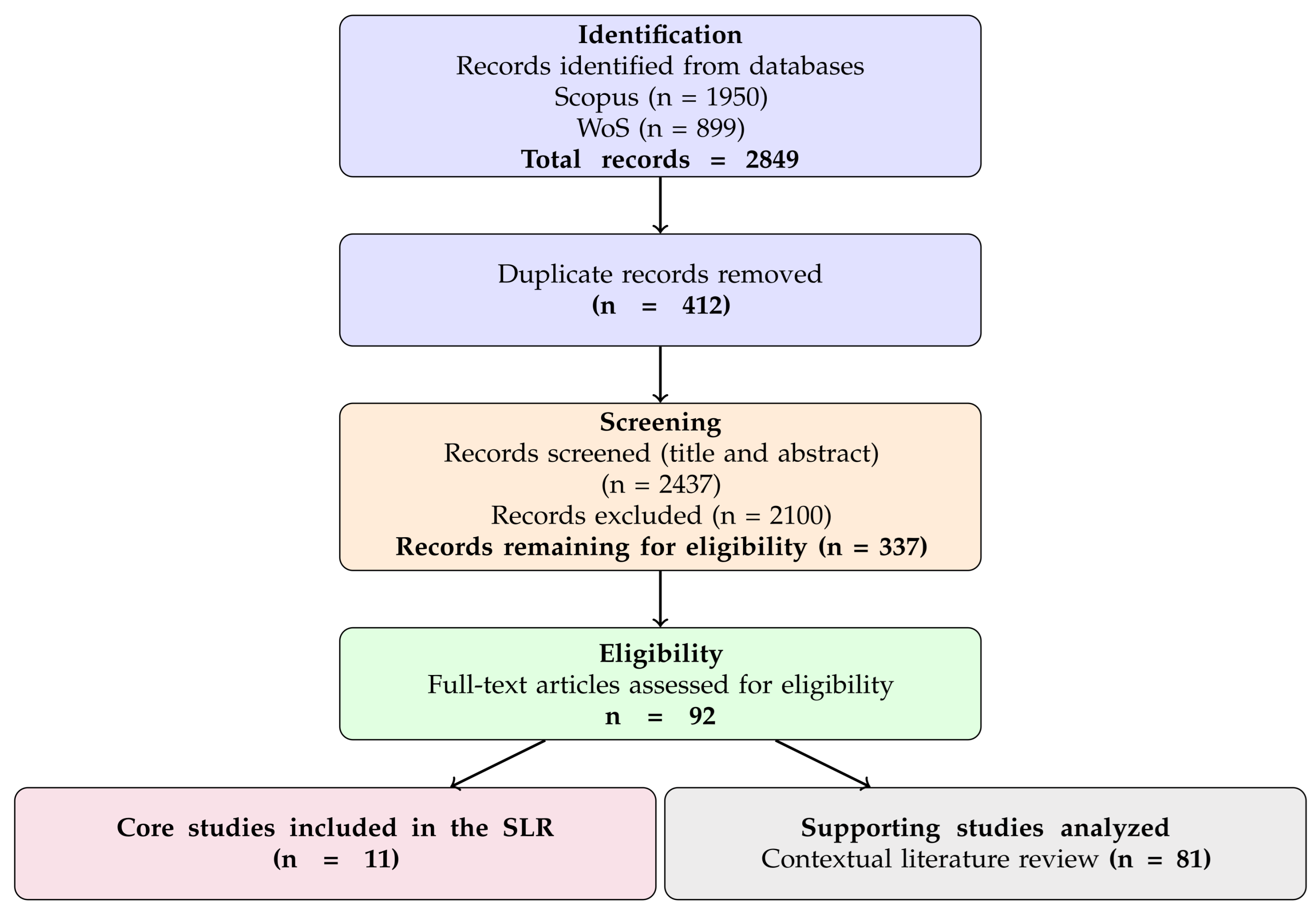
Figure 8 presents the Preferred Reporting Items for Systematic Reviews and Meta-Analyses style (PRISMA) flow diagram illustrating the study selection process applied in this SLR. The process comprises four main stages: identification, screening, eligibility, and final classification of the selected studies. Initially, a total of 2849 records were retrieved from the consulted scientific databases, including Scopus (n = 1950) and WoS (n = 899). After removing 412 duplicate records, 2437 studies remained for the screening stage.
During the title and abstract screening process, 2100 records were excluded because they did not meet the predefined inclusion criteria or were not directly related to the research topic, leaving 337 studies for further evaluation. Subsequently, 92 full-text articles were assessed for eligibility according to the defined inclusion and exclusion criteria. After the eligibility assessment, the selected studies were classified into two groups: 11 studies identified as core contributions that directly address the objectives of this systematic review and were included in the main analysis, and 81 supporting studies retained to provide contextual background and complementary insights related to the research domain.

3. Results

In this section, the results of the bibliographic search corresponding to each research question are presented. Table 5, Table 6, Table 7 and Table 8 summarize the results for research questions RQ1, RQ2, RQ3, and RQ4, respectively, including the associated variables, bibliographic references, and frequency of occurrence.
In the following analysis, the symbol f denotes the frequency of occurrence, that is, the number of reviewed studies in which a specific component, method, or category appears.
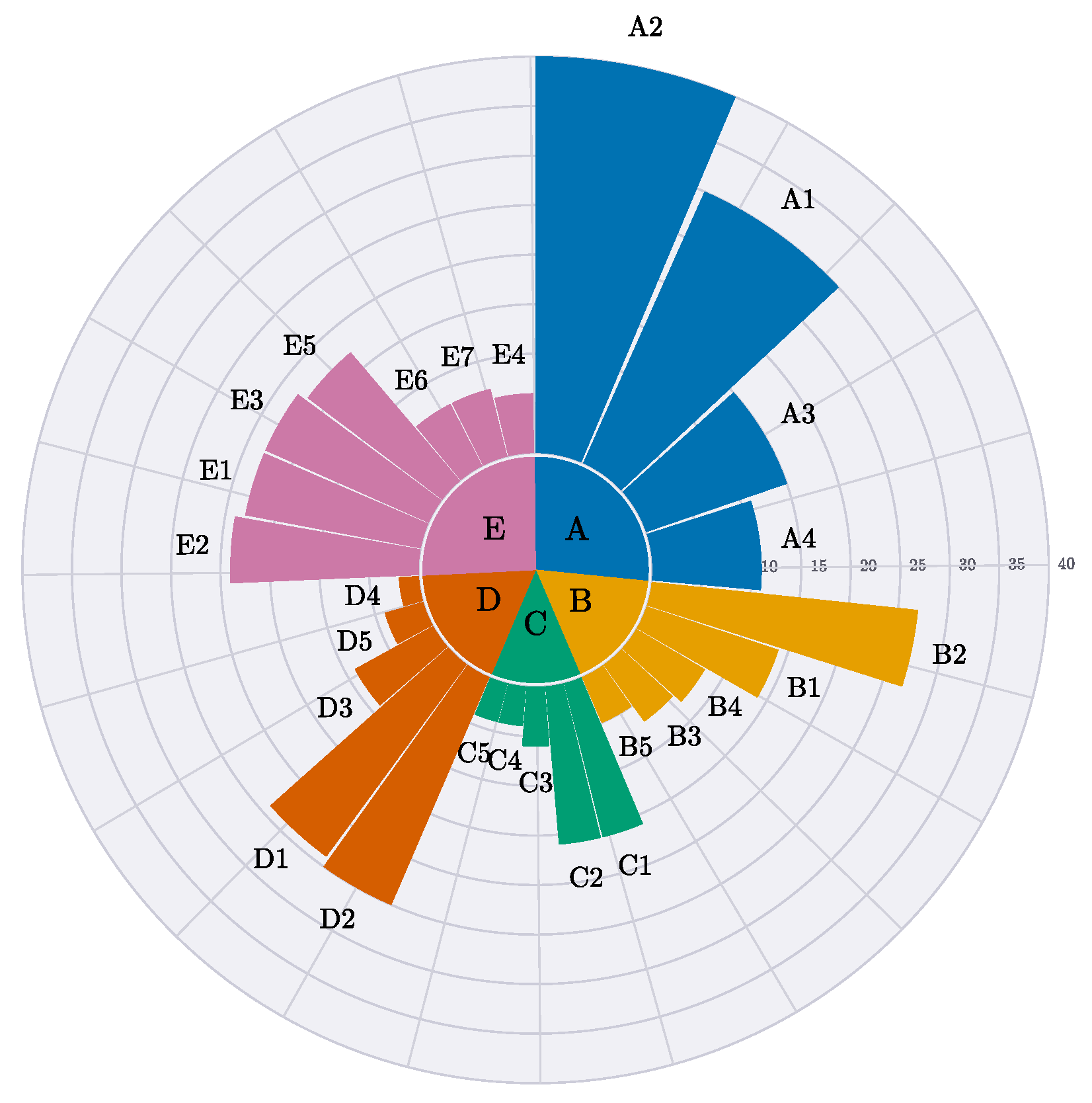
The results presented in Table 5 allow the identification of the wind turbine components that have received the greatest attention in the literature when DTs are applied to CM and predictive maintenance tasks. In particular, blades ( f = 20 ), the tower ( f = 19 ), sensors ( f = 19 ), and the gearbox ( f = 18 ) concentrate the highest number of studies. This trend is largely explained by the exposure of these elements to high dynamic loads and severe environmental conditions, especially in offshore environments.
In such environments, aspects such as tower–foundation interaction, monopiles, and fixed or floating structures are frequently analyzed due to their direct impact on the structural integrity and reliability of the system, as highlighted by [32,35].
Similarly, the rotor–hub assembly ( f = 17 ) and the electrical generator ( f = 14 ) are mainly associated with studies addressing mechanical and electromechanical degradation processes, which have a direct impact on wind turbine availability and performance. This approach is consistent with the analysis by [12], who highlights that these subsystems concentrate a high proportion of critical failures and represent key nodes within DT architectures for diagnosis and prognosis.
At the subsystem level, the drivetrain ( f = 21 ) has also received significant attention, which can be attributed to its high mechanical complexity, its strong coupling with other components, and its critical role in power transmission. In contrast, subsystems such as hydraulic, thermal, and electrical–electronic systems show a considerably lower representation in the literature, suggesting that these domains have not yet been explored in depth and constitute promising directions for future research. This gap has also been highlighted in recent reviews on DTs in wind energy [8,38].
Regarding SCADA variables, those associated with system dynamics and vibration ( f = 26 ) appear most frequently, followed by generated power and energy ( f = 19 ), torque and rotor speed ( f = 17 ), and wind speed and direction ( f = 16 ). This pattern indicates that most current approaches rely on variables capable of capturing dynamic changes in the system, facilitating fault diagnosis, anomaly detection, and RUL estimation. In contrast, thermal and electrical variables appear less frequently, highlighting a clear opportunity to diversify the information sources employed in future DT implementations [28].
Figure 9 illustrates the distribution of components, subsystems, and SCADA variables most frequently modeled using DTs for CM and predictive maintenance tasks. A clear concentration of research effort is observed in a limited set of elements, particularly blades and the gearbox, as well as variables associated with the dynamic behavior of the system, indicating a predominantly component-centric approach within the current state of the art.
Furthermore, Figure 9 reveals a marked asymmetry in the treatment of different wind turbine domains. While the drivetrain and dynamic/vibration variables receive the most attention, other subsystems such as electronic and hydraulic systems remain underrepresented, suggesting that the development of truly comprehensive DTs capable of covering the entire system still constitutes an open research challenge.
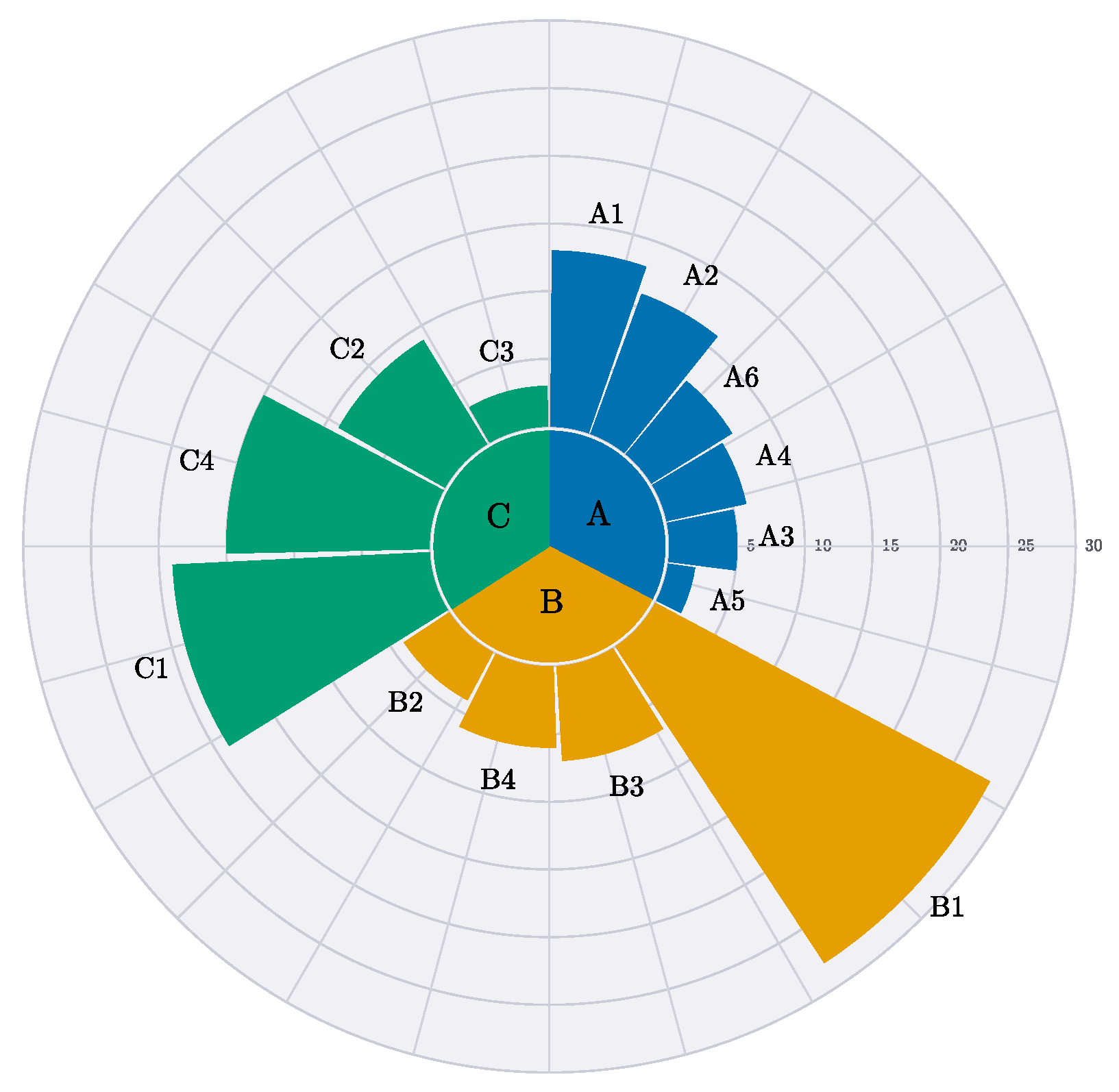
As observed in Table 6, the approaches used for the development of DTs in wind turbines correspond to hybrid physics–data models and purely data-driven schemes. This trend reflects an evolution from exclusively physical representations toward modeling approaches that integrate real operational information, enabling the capture of degradation phenomena, nonlinearities, and emergent behaviors that are difficult to describe solely through analytical equations.
In this context, refs. [12,53] highlight that the integration of ML-based models significantly improves predictive capability, robustness against uncertainties, and the adaptability of DTs in complex rotating systems. Likewise, the increasing presence of multi-sensor approaches and data fusion highlights the need to integrate multiple information sources, such as SCADA, SHM, images, acoustic signals, and IoT data, with the objective of constructing more comprehensive and reliable representations of the wind turbine’s real operating state, as noted by [40,58].
Regarding implementation platforms, Edge–Cloud and IoT infrastructures are observed, followed by simulation and modeling environments such as MATLAB–Simulink, OpenFAST, and OpenSees. This distribution suggests that current DTs are not conceived solely as offline analysis models but as real-time operating systems capable of processing large volumes of data and interacting continuously with physical assets. According to [38,45], this transition toward connected and service-oriented architectures responds to the need to enable predictive maintenance processes, operational optimization, and online decision-making, especially in highly dynamic wind environments. However, the presence of open frameworks and modular platforms indicates that, although there is growing interest in scalable and reusable solutions, the standardization of these environments is still at an early stage, as also noted by [31,103].
From an architectural perspective, closed-loop cyber–physical schemes and modular and hierarchical architectures have been studied, reflecting an effort to structure DTs into functional layers that integrate physical representation, diagnosis, prediction, and decision-making. This layered approach facilitates scalability and interoperability among subsystems, allowing the progressive incorporation of new sensors, physical models, or AI algorithms. However, as highlighted by [8,33], most of these architectures are still implemented at the component or subsystem level, which limits their ability to represent the overall behavior of the wind turbine system. In contrast, federated, distributed, and cognitive architectures still show limited adoption, indicating that full autonomy and cooperation between twins at the wind farm level remain open challenges, as noted by [58,98].
Regarding software tools, the literature highlights the use of physical simulation environments together with the Python ecosystem, confirming the convergence between first-principles modeling and ML methods. This hybrid approach enables not only the simulation of the structural and dynamic behavior of the system but also the learning of failure and degradation patterns from historical data.
Hybrid modeling strategies combining physical knowledge and data-driven techniques have also been explored in other large-scale energy infrastructures. For instance, hybrid approaches have been applied to real-time condition prediction in natural gas pipeline networks, demonstrating the potential of integrating physical models and ML for monitoring complex energy systems and supporting operational decision-making [105].
According to [9,10], this integration of simulation, advanced analytics, and interactive visualization constitutes one of the fundamental pillars of modern DTs applied to renewable energy systems. Finally, current applications are mainly concentrated on fault diagnosis, RUL estimation, and structural risk assessment, indicating that the primary objective of contemporary DT implementations is to improve operational reliability, reduce downtime, and optimize O&M tasks, in line with reports by [74,78,83].
Figure 10 illustrates the areas in which research efforts on wind turbine DTs are currently concentrated. It can be observed that hybrid physics–data and data-driven approaches, together with Edge–Cloud and IoT infrastructures, clearly dominate the literature, confirming that DT development is primarily oriented toward operational applications such as fault diagnosis and RUL estimation.
In contrast, autonomous, federated, and cognitive architectures, as well as open frameworks and standardized platforms, show significantly lower representation. This distribution indicates that, although DTs have reached a considerable degree of maturity at the component or subsystem level, important limitations persist regarding their scalability, interoperability, and large-scale adoption at the wind farm level.
As observed in Table 7, within classical ML approaches, classification and regression models such as Support Vector Machines (SVM), Random Forest, k-nearest neighbors (k-NN), and boosting methods are commonly used. These models have proven effective for early anomaly detection and fault pattern identification in multivariate datasets.
Such strategies have been employed for early diagnosis and structural health assessment tasks, particularly when SCADA data are limited or highly noisy [23].
Likewise, probabilistic and Bayesian models are used to quantify the uncertainty associated with degradation processes and to represent stochastic damage evolution. However, their adoption remains limited due to their dependence on statistical assumptions and their difficulty in capturing highly nonlinear system dynamics.
The predominance of DL architectures indicates that the scientific community has prioritized models capable of learning long-range temporal dependencies and complex degradation patterns [106]. These architectures are widely employed for diagnosis, prognosis, and RUL estimation tasks due to their ability to capture nonlinear relationships and transient behaviors. According to [30], DL enables the modeling of damage evolution in wind turbines with greater precision than classical approaches, particularly under non-stationary operational conditions.
Several studies also report comparative evaluations between classical ML models (e.g., SVM, Random Forest, and k-NN) and DL architectures such as CNNs, LSTMs networks, and transformer-based models. In general, DL approaches tend to achieve higher predictive accuracy in tasks involving complex temporal dependencies and nonlinear degradation patterns. However, classical ML models often provide greater interpretability and require smaller datasets and lower computational costs. Consequently, classical approaches remain useful when training data are limited or when model transparency is required for operational decision-making, whereas DL models are preferred for large-scale monitoring scenarios involving complex multivariate data.
Hybrid predictive approaches that combine signal-processing techniques with DL architectures have also demonstrated strong performance in complex energy time-series modeling. For example, wavelet transform integrated with Deep-RNN models has been successfully applied to natural gas demand forecasting, demonstrating the potential of hybrid signal-processing and DL strategies for advanced predictive analytics in energy systems [107].
Figure 11 illustrates the distribution of AI models currently used in wind turbine DTs. The results indicate that most research relies on DL architectures, particularly convolutional and recurrent neural networks, as well as temporal variants such as LSTM and Temporal Convolutional Networks (TCN), which are capable of capturing complex temporal dependencies. This trend reflects a strong research interest in accurately modeling degradation processes and supporting practical tasks such as fault diagnosis and RUL estimation.
As shown in Table 8, one of the main challenges for the implementation and scalability of DTs is real-time processing and computational latency, particularly when multiple heterogeneous data sources are integrated. Multisensor synchronization, variability in sampling frequencies, and the coexistence of different data formats hinder the continuous updating of the DT state, as discussed by [58,97].
In addition, the scarcity and imbalance of data for model training represent a significant limitation, since many critical failures correspond to rare events, which introduces substantial bias and limits the generalization capability of predictive algorithms [28]. These challenges are further intensified in offshore environments, where severe environmental conditions, corrosion, and wave action introduce additional uncertainty into the modeling process, as documented by [34].
Furthermore, Table 8 highlights several emerging trends that are shaping the future development of wind turbine DTs. Among these trends are IoT architectures with 5G connectivity and edge computing to enable near-real-time monitoring, the integration of hybrid DTs within energy systems, and the growing role of SHM as a key information source for predictive models, as discussed by [10,100,101].
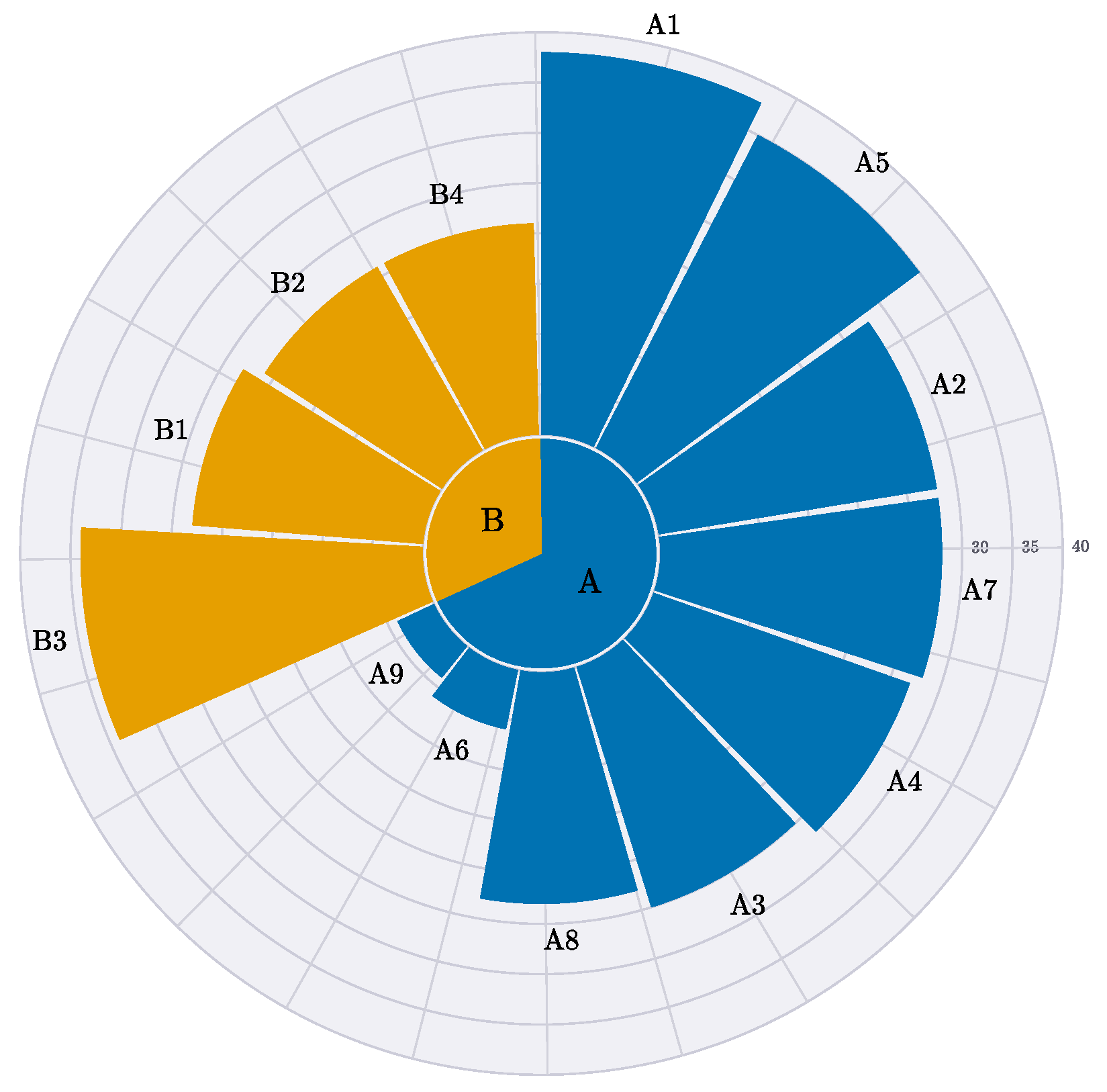
Figure 12 provides a direct comparison of the relative relevance of the main challenges and trends identified in the literature on wind turbine DTs. Regarding the identified challenges, the results show that the greatest attention is concentrated on real-time processing, computational latency, interoperability, and physics–AI integration, indicating that current difficulties are more closely related to the operational management of complex data ecosystems than to the isolated development of individual models.
In contrast, aspects such as extreme environmental variability and governance and regulatory frameworks show a significantly lower representation in the analyzed studies.
From the perspective of emerging trends, Figure 12 shows a marked emphasis on the use of advanced AI for RUL estimation and predictive maintenance, as well as on the adoption of IoT architectures incorporating edge computing and 5G connectivity. Collectively, these results indicate that the evolution of the field is being driven primarily by immediate operational needs, while more integrative and systemic approaches are progressing more gradually.
Overall, the results reveal that current DT applications in wind turbines remain predominantly component-centric, with a strong focus on critical elements such as blades, gearboxes, and drivetrain subsystems. Although hybrid physics–data approaches and advanced AI models are increasingly adopted, most implementations are still limited in terms of system-level integration and real-time scalability. Persistent challenges related to data heterogeneity, synchronization, and standardization hinder the deployment of comprehensive DTs at the wind farm scale. These findings indicate that the field is transitioning toward more operationally oriented DTs; however, significant architectural and methodological gaps still need to be addressed.
Although the literature frequently describes DTs as evolving toward more autonomous and prescriptive systems, most reported implementations currently operate at the decision-support level. In many cases, DT platforms are used to monitor system conditions, detect anomalies, and estimate indicators such as fault probability or RUL. These outputs typically support human operators in maintenance planning rather than enabling fully automated actions.
Only a limited number of studies explore semi-autonomous functions, such as maintenance recommendation systems or optimization-based scheduling tools. Fully autonomous DTs capable of closed-loop control, automated maintenance planning, or real-time operational adaptation remain largely conceptual and have rarely been demonstrated in real wind farm environments. Achieving truly prescriptive DT systems will require advances in real-time data integration, standardized data architectures, reliable predictive model validation, and the integration of optimization and control algorithms within DT frameworks.
Another commonly reported challenge concerns the integration of heterogeneous data sources, including SCADA signals, vibration monitoring systems, meteorological data, and maintenance records. Differences in sampling frequencies, data formats, and sensor availability complicate data synchronization and information fusion processes.
In addition, the absence of standardized data schemas and interoperability frameworks across turbine manufacturers and monitoring platforms remains a major barrier to large-scale DT deployment. These limitations often lead to difficulties in integrating data across wind farms and digital platforms. As a result, several studies emphasize the need for distributed and edge-computing architectures to reduce computational latency and improve the scalability of DT systems.
The results presented in this section reveal several relevant patterns regarding the current development of DT technologies for wind turbines.
The analysis of the reviewed studies indicates that most DT implementations remain focused on individual components such as gearboxes, bearings, and rotor blades. System-level DT architectures capable of integrating multiple subsystems and operational variables remain relatively scarce.
Physics-based degradation modeling is also widely explored for rotating mechanical components. For example, detailed tribological and fatigue-life models have been developed for helical gears operating under mixed lubrication conditions, providing a physics-based framework for estimating degradation and RUL in rotating machinery [108].
In addition, the literature shows a strong predominance of data-driven approaches based on ML and DL techniques. Although these models demonstrate promising predictive capabilities, their limited interpretability and the absence of explicit physical constraints represent important challenges for their adoption in reliability-oriented applications.
Recent studies indicate that several modeling patterns dominate RUL estimation in wind turbine DTs. Sequence-based DL architectures, particularly LSTM networks and other recurrent models, are widely used due to their ability to capture temporal degradation dynamics in SCADA data. Hybrid physics–data models and physics-informed approaches such as Physics-Informed Neural Networks (PINNs) are also increasingly explored to improve interpretability and reliability, while some studies adopt stage-based degradation modeling to represent different phases of system deterioration.
However, important challenges remain, as most existing approaches focus on single-component analysis rather than multi-component system degradation. In addition, covariate shift caused by varying operating conditions and the limited transferability of models across turbines or wind farms remain insufficiently addressed in the current literature.
Another limitation frequently reported in the literature is the lack of publicly available datasets and standardized benchmarking frameworks for the validation and comparison of DT models. Moreover, the heterogeneity of SCADA data sources, sensor synchronization issues, and non-stationary operating conditions introduce additional complexity in the development of robust DT architectures.
Uncertainty-aware state estimation techniques have also been explored to improve the robustness of monitoring systems under measurement noise and model inaccuracies. For instance, Kalman filter–based approaches have been successfully applied for online state estimation in energy systems while compensating for measurement bias and model uncertainty [109]. Such probabilistic estimation frameworks are conceptually relevant for DT implementations, as they can enhance the reliability of online health monitoring and RUL prediction in wind turbine systems.
Several studies report the use of preprocessing pipelines to improve the quality and reliability of SCADA data prior to DT model development. Typical steps include data cleaning and filtering of corrupted measurements, outlier detection using statistical or density-based methods, reconstruction or interpolation of missing data, feature engineering to derive operational indicators, and normalization or scaling procedures. In addition, some studies address seasonal non-stationarity by incorporating contextual variables such as wind speed distribution, ambient temperature, and operational regimes, or by training models on segmented datasets corresponding to different operating conditions.
These findings highlight the need for future research toward hybrid physics–data DT frameworks, improved data standardization practices, and scalable architectures capable of supporting real-time monitoring in large-scale wind farms.
Based on the synthesis of the reviewed studies, a conceptual reference architecture for wind turbine DTs can be outlined. Operational data are collected from SCADA systems, SHM sensors, and environmental measurements, followed by preprocessing stages including data cleaning, synchronization, and feature extraction. Edge computing enables near-real-time monitoring and anomaly detection, while cloud platforms support hybrid modeling that combines physics-based models with AI techniques. The DT core integrates these models to estimate system states and predict degradation or RUL, providing decision support for maintenance planning and wind farm management.

4. Conclusions and Future Research Directions

Based on the systematic review conducted, DTs applied to wind turbines constitute a modern and promising tool for CM, predictive maintenance, and RUL estimation. As evidenced by the results summarized in Table 5, Table 6, Table 7 and Table 8 and Figure 9, Figure 10, Figure 11 and Figure 12, the reviewed literature shows a strong concentration of DT applications in fault diagnosis, degradation monitoring, and prognostic tasks, highlighting their growing relevance for improving operational reliability and maintenance planning in wind energy systems.
The literature indicates that the integration of physical models, operational data, and AI enables improvements in the reliability, availability, and operational efficiency of wind energy systems. However, the current state of the field suggests that these solutions are still at an intermediate stage of development, with predominantly partial approaches and limited industrial adoption.
Regarding RQ1, the analysis of the literature shows a concentration of research on high-criticality components such as blades, gearboxes, bearings, towers, and drivetrain subsystems, as well as on dynamic and vibration-related variables. This trend reflects their high exposure to severe loads and their direct impact on wind turbine downtime. In contrast, electrical, thermal, and hydraulic subsystems, together with electrical and thermal variables, show significantly lower representation, highlighting the absence of truly comprehensive system-level DTs.
In relation to RQ2 and RQ3, a progressive transition is identified from purely physics-based or data-driven approaches toward hybrid physics–data architectures, with a growing predominance of DL models over classical ML techniques. This shift responds to the need to capture nonlinear behaviors, complex temporal dependencies, and degradation processes that are difficult to represent using traditional analytical approaches. However, a recurrent limitation is that many of these models operate as “black boxes,” with limited interpretability and without explicit integration with structural reliability and mechanical damage frameworks.
Concerning RQ4, from a systemic perspective, the main bottlenecks for the scalability and practical deployment of DTs are not primarily algorithmic but structural. Among these challenges, the heterogeneity and low standardization of SCADA data, the scarcity of real failure events, interoperability issues between platforms, and the computational latency associated with centralized architectures are particularly relevant. These limitations hinder the transition of DT solutions from experimental environments to large-scale industrial applications.
Future research directions can be grouped into short-term priorities and longer-term research challenges.
In the short term, research should focus on strengthening the foundations required for scalable DT deployment, including the development of standardized SCADA and DT data schemas, the creation of publicly available benchmark datasets for CM and RUL estimation, and the establishment of shared hybrid modeling pipelines that facilitate reproducibility and interoperability across platforms.
In the longer term, research should move toward more advanced DT ecosystems, including federated wind farm-level DT architectures, autonomous decision-support agents capable of adaptive operational control, and the development of regulatory and governance frameworks to ensure reliability, cybersecurity, and the safe deployment of DT technologies in industrial environments.

Author Contributions

All authors contributed to the conceptualization and methodological design of the study. J.M.-C., J.C.-G., J.T.-C., G.C.M., W.D.B.B., R.G., D.T.-P., J.B. and C.L.-A. carried out the literature search. J.M.-C., J.C.-G. and J.T.-C. analyzed the results and contributed to the preparation of the manuscript. J.C.S. and E.P.-H. contributed to the review and editing of the manuscript. All authors have read and agreed to the published version of the manuscript.

Funding

This research has been partially funded by the Red Ecuatoriana de Universidades y Escuelas Politécnicas para Investigación y Posgrados (REDU).

Data Availability Statement

No new data were created or analyzed in this study.

Acknowledgments

The authors would like to thank the Network for Research in Renewable Energy, Energy Management, and Sustainable Technologies (RENOVA-Red) for its support.

Conflicts of Interest

The authors declare no conflicts of interest.

Abbreviations

The following abbreviations are used in this manuscript:
AIArtificial Intelligence
ANNArtificial Neural Network
ARAugmented Reality
AUCArea Under the Curve
BDLMBayesian Dynamic Linear Model
BiLSTMBidirectional LSTM
CMCondition Monitoring
CNNConvolutional Neural Network
DLDeep Learning
DRLDeep Reinforcement Learning
FEMFinite Element Method
GNNGraph Neural Networks
IoTInternet of Things
IRENAInternational Renewable Energy Agency
JCRJournal Citation Reports
LETCNLightweight/Enhanced Temporal Convolutional Network
LSTMLong Short-Term Memory
MAEMean Absolute Error
MLMachine Learning
O&MOperation and Maintenance
PINNPhysics-Informed Neural Networks
RARNNRecurrent Attention-based Recurrent Neural Network
RFRandom Forest
RMSERoot Mean Square Error
ROCReceiver Operating Characteristic
RULRemaining Useful Life
RQResearch Question
SCADASupervisory Control and Data Acquisition
SHMStructural Health Monitoring
SJRSCImago Journal Rank
SLSemantic Layers
SLRSystematic Literature Review
SVMSupport Vector Machine
TCNTemporal Convolutional Neural Network
VRVirtual Reality
WoSWeb of Science

References

  1. Østergaard, P.A.; Duic, N.; Noorollahi, Y.; Mikulcic, H.; Kalogirou, S. Sustainable development using renewable energy technology. Renew. Energy 2020, 146, 2430–2437. [Google Scholar] [CrossRef]
  2. IRENA. Renewable Capacity Statistics 2025; International Renewable Energy Agency: Abu Dhabi, United Arab Emirates, 2025. [Google Scholar]
  3. World Wind Energy Association (WWEA). Global Wind Power Growth Accelerates in the First Half of 2025; World Wind Energy Association: Bonn, Germany, 2025; Available online: https://www.wwindea.org (accessed on 15 January 2026).
  4. Chatterjee, J.; Dethlefs, N. Scientometric review of artificial intelligence for operations & maintenance of wind turbines: The past, present and future. Renew. Sustain. Energy Rev. 2021, 144, 111051. [Google Scholar] [CrossRef]
  5. Liu, X.; Du, J.; Ye, Z.-S. A condition monitoring and fault isolation system for wind turbine based on SCADA data. IEEE Trans. Ind. Inform. 2022, 18, 986–995. [Google Scholar] [CrossRef]
  6. Karim, F.R.B.; Liu, N.; Zhang, J. Early anomaly detection in wind turbine generators using SCADA data. In Proceedings of the 2025 IEEE Symposium on Diagnostics for Electric Machines, Power Electronics and Drives (SDEMPED); IEEE: Piscataway, NJ, USA, 2025; pp. 1–7. [Google Scholar] [CrossRef]
  7. Bing, Z.; Michael, E.; Amu-Darko, J.N.O.; Issaka, E.; Liu, H.; Rao, J.; Zhang, X. Digital twin on concepts, enabling technologies, and applications. J. Braz. Soc. Mech. Sci. Eng. 2024, 46, 420. [Google Scholar] [CrossRef]
  8. Leon-Medina, J.X.; Tibaduiza, D.A.; Parés, N.; Pozo, F. Digital twin technology in wind turbine components: A review. Intell. Syst. Appl. 2025, 26, 200535. [Google Scholar] [CrossRef]
  9. Semeraro, C.; Aljaghoub, H.; Al-Ali, H.K.M.H.; Abdelkareem, M.A.; Olabi, A.G. Harnessing the future: Exploring digital twin applications and implications in renewable energy. Energy Nexus 2025, 18, 100415. [Google Scholar] [CrossRef]
  10. Mbasso, W.F.; Harrison, A.; Dagal, I.; Jangir, P.; Khishe, M.; Kotb, H.; Shaikh, M.S.; Smerat, A.; Fendzi Donfack, E.; Kumar, R. Digital twins in renewable energy systems: A comprehensive review of concepts, applications, and future directions. Energy Strategy Rev. 2025, 61, 101814. [Google Scholar] [CrossRef]
  11. Song, M.; Kim, M.; Lim, J.; Ham, K.S.; Kim, T. Estimation of power-coefficient curve from SCADA data for digital-twin applications. Energies 2025, 18, 6394. [Google Scholar] [CrossRef]
  12. Ma, H.; Fan, C.; Zhang, Y.; Wang, Q.; Yu, K.; Ma, Z. Digital twin-inspired methods for rotating machinery intelligent fault diagnosis and remain useful life prediction: A state-of-the-art review and future challenges. Mech. Syst. Signal Process. 2025, 232, 112770. [Google Scholar] [CrossRef]
  13. Zhang, X.; Tao, J.; Noshadravan, A. Probabilistic digital twin for reliability-based maintenance optimization of offshore wind turbines. Renew. Energy 2026, 256, 123777. [Google Scholar] [CrossRef]
  14. Qaiser, M.T.; Ejaz, J.; Osen, O.; Hasan, A. Digital twin-driven energy modeling of Hywind Tampen floating wind farm. Energy Rep. 2023, 9, 284–289. [Google Scholar] [CrossRef]
  15. Kitchenham, B. Procedures for Performing Systematic Reviews; Keele University: Keele, UK, 2004. [Google Scholar]
  16. Bacca, J.; Baldiris, S.; Fabregat, R.; Graf, S.; Kinshuk. Augmented reality trends in education: A systematic review of research and applications. Educ. Technol. Soc. 2014, 17, 133–149. [Google Scholar]
  17. Maldonado-Correa, J.; Martín-Martínez, S.; Artigao, E.; Gómez-Lázaro, E. Using SCADA data for wind turbine condition monitoring: A systematic literature review. Energies 2020, 13, 3132. [Google Scholar] [CrossRef]
  18. Maldonado-Correa, J.; Solano, J.C.; Rojas-Moncayo, M. Wind power forecasting: A systematic literature review. Wind Eng. 2019, 45, 413–426. [Google Scholar] [CrossRef]
  19. Olatunji, O.O.; Adedeji, P.A.; Madushele, N.; Jen, T.-C. Overview of digital twin technology in wind turbine fault diagnosis and condition monitoring. In Proceedings of the 2021 IEEE 12th International Conference on Mechanical and Intelligent Manufacturing Technologies (ICMIMT); IEEE: Piscataway, NJ, USA, 2021; pp. 201–207. [Google Scholar] [CrossRef]
  20. Dinh, M.C.; Ngo, M.T.; Kim, C.; Lee, S.J.; Yu, I.K.; Park, M. Implementation of digital twin-assisted condition monitoring and fault diagnosis for wind turbines. In Proceedings of the 12th IEEE International Conference on Renewable Energy Research and Applications (ICRERA 2023); IEEE: Piscataway, NJ, USA, 2023; pp. 146–150. [Google Scholar] [CrossRef]
  21. Sivalingam, K.; Sepulveda, M.; Spring, M.; Davies, P. A review and methodology development for remaining useful life prediction of offshore fixed and floating wind turbine power converter with digital twin technology perspective. In Proceedings of the 2nd International Conference on Green Energy and Applications (ICGEA), Singapore, 24–26 March 2018; pp. 197–204. [Google Scholar] [CrossRef]
  22. Snyder, H. Literature review as a research methodology: An overview and guidelines. J. Bus. Res. 2019, 104, 333–339. [Google Scholar] [CrossRef]
  23. Santolamazza, A.; Dadi, D.; Introna, V. A data-mining approach for wind turbine fault detection based on SCADA data analysis using artificial neural networks. Energies 2021, 14, 1845. [Google Scholar] [CrossRef]
  24. Castellani, F.; Natili, F.; Astolfi, D.; Vidal, Y. Wind turbine gearbox condition monitoring through the sequential analysis of industrial SCADA and vibration data. Energy Rep. 2024, 12, 750–761. [Google Scholar] [CrossRef]
  25. Gnoli, C. Mentefacts as a missing level in theory of information science. J. Doc. 2018, 74, 1226–1242. [Google Scholar] [CrossRef]
  26. Torres-Carrión, P.V.; González-González, C.S.; Aciar, S.; Rodríguez-Morales, G. Methodology for systematic literature review applied to engineering and education. In Proceedings of the 2018 IEEE Global Engineering Education Conference (EDUCON); IEEE: Piscataway, NJ, USA, 2018; pp. 1364–1373. [Google Scholar] [CrossRef]
  27. Dextre Clarke, S.G. The information retrieval thesaurus. Knowl. Organ. 2019, 46, 439–459. [Google Scholar]
  28. Wang, S.; Vidal, Y.; Pozo, F. Recent advances in wind turbine condition monitoring using SCADA data: A state-of-the-art review. Reliab. Eng. Syst. Saf. 2026, 267, 111838. [Google Scholar] [CrossRef]
  29. Habbouche, H.; Amirat, Y.; Benbouzid, M. Leveraging digital twins and AI for enhanced gearbox condition monitoring in wind turbines: A review. Appl. Sci. 2025, 15, 5725. [Google Scholar] [CrossRef]
  30. Jiang, R.; Fang, F.; Rodríguez-Andina, J.J.; Song, Z.; Liu, J.; Chen, Y.; Wang, H. Artificial intelligence in wind turbine fault diagnosis: A systematic knowledge mapping and trend analysis. Renew. Sustain. Energy Rev. 2026, 226, 116321. [Google Scholar] [CrossRef]
  31. Xia, J.; Zou, G. Operation and maintenance optimization of offshore wind farms based on digital twin: A review. Ocean Eng. 2023, 268, 113322. [Google Scholar] [CrossRef]
  32. Chen, B.Q.; Liu, K.; Yu, T.; Li, R. Enhancing reliability in floating offshore wind turbines through digital twin technology: A comprehensive review. Energies 2024, 17, 1964. [Google Scholar] [CrossRef]
  33. Taze, I.E.; Hoda, M.A.; Miquelez, I.; Maddaloni, P.; Eftekhar Azam, S. A review of digital twinning applications for floating offshore wind turbines: Insights, innovations, and implementation. Energies 2025, 18, 3369. [Google Scholar] [CrossRef]
  34. Okenyi, V.; Bodaghi, M.; Mansfield, N.; Afazov, S.; Siegkas, P. A review of challenges and framework development for corrosion fatigue life assessment of monopile-supported horizontal-axis offshore wind turbines. Ships Offshore Struct. 2024, 19, 1–15. [Google Scholar] [CrossRef]
  35. Thomas, B.; Min, L.; Linda, N.; Havbro, F.M. Enhancing offshore wind turbine integrity management: A bibliometric analysis of structural health monitoring, digital twins, and risk-based inspection. Energies 2025, 18, 681. [Google Scholar] [CrossRef]
  36. Amin, U.; Kim, D.; Ahmed, F.N.; Ahmad, G.; Hossain, M.J. Digital twins for smart asset management in the energy industry: State-of-the-art. Expert Syst. Appl. 2025, 289, 128358. [Google Scholar] [CrossRef]
  37. Alves Ribeiro, J.; Alves Ribeiro, B.; Pimenta, F.; Tavares, S.M.O.; Zhang, J.; Ahmed, F. Offshore wind turbine tower design and optimization: A review and AI-driven future directions. Appl. Energy 2025, 397, 126294. [Google Scholar] [CrossRef]
  38. Stadtmann, F.; Rasheed, A.; Kvamsdal, T.; Johannessen, K.A.; San, O.; Kölle, K.; Tande, J.O.; Barstad, I.; Benhamou, A.; Brathaug, T.; et al. Digital twins in wind energy: Emerging technologies and industry-informed future directions. IEEE Access 2023, 11, 110762–110795. [Google Scholar] [CrossRef]
  39. Wang, Y.; Sun, W.; Liu, L.; Wang, B.; Bao, S.; Jiang, R. Fault diagnosis of wind turbine planetary gear based on a digital twin. Appl. Sci. 2023, 13, 4776. [Google Scholar] [CrossRef]
  40. Xu, T.; Zhang, X.; Sun, W. Intelligent fault warning method for wind turbine gear transmission system driven by digital twin and multi-source data fusion. Appl. Sci. 2025, 15, 8655. [Google Scholar] [CrossRef]
  41. Xu, T.; Zhang, X.; Sun, W.; Wang, B. Intelligent operation and maintenance of wind turbines gearboxes via digital twin and multi-source data fusion. Sensors 2025, 25, 1972. [Google Scholar] [CrossRef]
  42. Zhou, Y.; Zhou, J.; Cui, Q.; Wen, J.; Fei, X. Digital twin-driven online intelligent assessment of wind turbine gearbox. Wind Energy 2024, 27, 797–815. [Google Scholar] [CrossRef]
  43. Wei, J.; Yan, C.; Liu, Y.; Liu, B.; Wu, L. Digital twins assisted for fault diagnosis of rotating machinery: A review. Measurement 2026, 257, 118843. [Google Scholar] [CrossRef]
  44. Liu, Z.; Zheng, J.; Zhang, Q.; Xu, R. Advances and trends in intelligent maintenance for wind turbine systems. Sustain. Energy Technol. Assess. 2025, 80, 104398. [Google Scholar] [CrossRef]
  45. Wiens, M.; Steindl, G.; Tubeuf, C.; Birkelbach, F.; Burfeind, J.; Meyer, T. DigiWind—An open-source digital twin framework for wind energy systems. IEEE Access 2024, 12, 84046–84063. [Google Scholar] [CrossRef]
  46. Tian, M.; Su, X.; Chen, C.; An, W. A novel method for multistage degradation predicting the remaining useful life of wind turbine generator bearings based on domain adaptation. Appl. Sci. 2023, 13, 12332. [Google Scholar] [CrossRef]
  47. Llopis-Albert, C.; Rubio, F.; Devece, C.; García-Hurtado, D. Digital twin-based approach for a multi-objective optimal design of wind turbine gearboxes. Mathematics 2024, 12, 1383. [Google Scholar] [CrossRef]
  48. Mardanshahi, A.; Sreekumar, A.; Yang, X.; Barman, S.K.; Chronopoulos, D. Sensing techniques for structural health monitoring: A state-of-the-art review on performance criteria and new-generation technologies. Sensors 2025, 25, 1424. [Google Scholar] [CrossRef] [PubMed]
  49. Jiménez-Santín, D.; Cerrada, M.; Enríquez-Zárate, J.; Cabrera, D.; Sánchez, R.V. Digital model of a wind turbine oriented to broken tooth analysis. IFAC-PapersOnLine 2024, 58, 25–30. [Google Scholar] [CrossRef]
  50. Amirashkan, H.; Agus, H.; Ottar, O.; Tennfjord, M.E. Predictive digital twin for offshore wind farms. Energy Inform. 2023, 6, 1. [Google Scholar] [CrossRef]
  51. Dibaj, A.; Gao, Z.; Nejad, A.R. Fault detection of offshore wind turbine drivetrains in different environmental conditions through optimal selection of vibration measurements. Renew. Energy 2023, 203, 161–176. [Google Scholar] [CrossRef]
  52. Li, Y.; Shen, X.; Zhou, C. Dynamic multi-turbines spatiotemporal correlation model enabled digital twin technology for real-time wind speed prediction. Renew. Energy 2023, 203, 841–853. [Google Scholar] [CrossRef]
  53. Yucesan, Y.A.; Viana, F.A.C. Physics-informed digital twin for wind turbine main bearing fatigue: Quantifying uncertainty in grease degradation. Appl. Soft Comput. 2023, 149, 110921. [Google Scholar] [CrossRef]
  54. Du, Y.; Geng, X.; Zhou, Q.; Cheng, S.; Zhang, H.; Zhang, B. Full life cycle remaining useful life prediction of offshore wind turbine bearings based on digital twin and improved DeepESN. J. Clean. Prod. 2025, 525, 146515. [Google Scholar] [CrossRef]
  55. Faller, L.; Graßmann, M.; Lichtenstein, T. Machine learning based parameter estimation for an adapted finite element model of a blade bearing test bench. Energy AI 2024, 18, 100436. [Google Scholar] [CrossRef]
  56. Sun, B.; Zhu, Y.; Wei, Z. A digital twin-assisted algorithm for diagnosis of permanent magnet synchronous generator interturn short circuit fault and converter open circuit fault in wind power systems using Pearson correlation coefficient. Eng. Appl. Artif. Intell. 2025, 162, 112547. [Google Scholar] [CrossRef]
  57. Pujana, A.; Esteras, M.; Perea, E.; Maqueda, E.; Calvez, P. Hybrid-model-based digital twin of the drivetrain of a wind turbine and its application for failure synthetic data generation. Energies 2023, 16, 861. [Google Scholar] [CrossRef]
  58. Abdullahi, I.; Longo, S.; Samie, M. An enabling architecture for computational cost efficiency in predictive maintenance digital twins. In Proceedings of the 2024 International Conference on Cyber-Physical Social Intelligence (ICCSI 2024); IEEE: Piscataway, NJ, USA, 2024. [Google Scholar] [CrossRef]
  59. Al-Shetwi, A.Q.; Atawi, I.E.; El-Hameed, M.A.; Abuelrub, A. Digital twin technology for renewable energy, smart grids, energy storage and vehicle-to-grid integration. IET Smart Grid 2025, 8, 70026. [Google Scholar] [CrossRef]
  60. Ibrahim, M.; Rassølkin, A.; Vaimann, T.; Kallaste, A.; Zakis, J.; Hyunh, V.K.; Pomarnacki, R. Digital twin as a virtual sensor for wind turbine applications. Energies 2023, 16, 6246. [Google Scholar] [CrossRef]
  61. Li, Y.; Peng, X.; Kou, Y.; Li, K.; Yao, Q. Research on generator torque fault determination of wind turbines based on digital twin. In Proceedings of the IEEE International Conference on Industrial Informatics (INDIN); IEEE: Piscataway, NJ, USA, 2024. [Google Scholar] [CrossRef]
  62. Wileman, A.J.; Aslam, S.; Perinpanayagam, S. A component level digital twin model for power converter health monitoring. IEEE Access 2023, 11, 54143–54164. [Google Scholar] [CrossRef]
  63. Ye, W.; Liu, X.; Zhao, X.; Fu, H.; Cai, Y.; Sun, Y. Digital twin assisted improved transformer multidimensional time series for fault prediction of automatic transverse robots. Digit. Twin 2025, 2, 2512978. [Google Scholar] [CrossRef]
  64. Marykovskiy, Y.; Clark, T.; Deparday, J.; Chatzi, E.; Barber, S. Architecting a digital twin for wind turbine rotor blade aerodynamic monitoring. Front. Energy Res. 2024, 12, 1428387. [Google Scholar] [CrossRef]
  65. Luo, H.; Wang, L.; Sun, W.; Lu, C. Intelligent monitoring and maintenance of wind turbine blades driven by digital twin technology. In Proceedings of the 3rd International Conference on New Energy and Power Engineering (ICNEPE 2023); IEEE: Piscataway, NJ, USA, 2023; pp. 626–630. [Google Scholar] [CrossRef]
  66. von Benzon, H.H.; Chen, X. Mapping damages from inspection images to 3D digital twins of large-scale structures. Eng. Rep. 2025, 7, 12837. [Google Scholar] [CrossRef]
  67. Wang, Z.; Wang, Z. Risk twin: Real-time risk visualization and control for structural systems. Struct. Multidiscip. Optim. 2025, 68, 85. [Google Scholar] [CrossRef]
  68. Algolfat, A.; Wang, W.; Albarbar, A. Damage identification of wind turbine blades—A brief review. J. Dyn. Monit. Diagn. 2023, 2, 198–206. [Google Scholar] [CrossRef]
  69. Kong, K.; Dyer, K.; Payne, C.; Hamerton, I.; Weaver, P.M. Progress and trends in damage detection methods, maintenance, and data-driven monitoring of wind turbine blades—A review. Renew. Energy Focus 2023, 44, 390–412. [Google Scholar] [CrossRef]
  70. Feng, W.; Yang, D.; Du, W.; Li, Q. In situ structural health monitoring of full-scale wind turbine blades in operation based on stereo digital image correlation. Sustainability 2023, 15, 13783. [Google Scholar] [CrossRef]
  71. Evro, S.; Veith, J.; Akinwale, A.; Tomomewo, O.S. Enhancing floating offshore wind turbine systems through multi-scale coupled modeling. Sustain. Energy Technol. Assess. 2025, 77, 104299. [Google Scholar] [CrossRef]
  72. Guo, H.; Jiang, Y.; Zhao, D. Wind turbine blade fault diagnosis method based on digital twin and convolutional neural network. In Proceedings of the 2024 5th International Seminar on Artificial Intelligence, Networking and Information Technology (AINIT 2024); IEEE: Piscataway, NJ, USA, 2024; pp. 1805–1809. [Google Scholar] [CrossRef]
  73. Hu, W.; Fang, J.; Zhang, Y.; Liu, Z.; Verma, A.S.; Liu, H.; Cong, F.; Tan, J. Digital twin of wind turbine surface damage detection based on deep learning-aided drone inspection. Renew. Energy 2025, 241, 122332. [Google Scholar] [CrossRef]
  74. Zhang, J.; Zhao, X. Digital twin of wind farms via physics-informed deep learning. Energy Convers. Manag. 2023, 293, 117507. [Google Scholar] [CrossRef]
  75. Liu, H.; Sun, W.; Bao, S.; Xiao, L.; Jiang, L. Research on key technology of wind turbine drive train fault diagnosis system based on digital twin. Appl. Sci. 2024, 14, 5991. [Google Scholar] [CrossRef]
  76. Mousavi, Z.; Varahram, S.; Ettefagh, M.M.; Sadeghi, M.H.; Feng, W.Q.; Bayat, M. A digital twin-based framework for damage detection of a floating wind turbine structure under various loading conditions based on deep learning approach. Ocean Eng. 2024, 292, 116563. [Google Scholar] [CrossRef]
  77. Zheng, T.; Heng, J.; Song, J.; Zhou, D.; Luo, Y.; Dai, K. Prognostic digital twinning of lattice-tubular hybrid wind turbine towers exposed to deterioration. Structures 2025, 79, 109461. [Google Scholar] [CrossRef]
  78. Pacheco-Blazquez, R.; Garcia-Espinosa, J.; Di Capua, D.; Sanchez, A.P. A digital twin for assessing the remaining useful life of offshore wind turbine structures. J. Mar. Sci. Eng. 2024, 12, 573. [Google Scholar] [CrossRef]
  79. Santos, F.N.; D’Antuono, P.; Robbelein, K.; Noppe, N.; Weijtjens, W.; Devriendt, C. Long-term fatigue estimation on offshore wind turbines interface loads through loss function physics-guided learning of neural networks. Renew. Energy 2023, 205, 461–474. [Google Scholar] [CrossRef]
  80. Nechita, R.-M.; Cristoiu, C. A systematic review of digital twin applications in Industry 4.0: Sector-specific insights. Int. J. Mechatronics Appl. Mech. 2025, 1, 173–185. [Google Scholar] [CrossRef]
  81. Cao, Y.; Tang, X.; Li, J.; Chu, W.; Wang, F. Flow field distribution and structural strength performance evaluation of fixed offshore wind turbine based on digital twin technology. Ocean Eng. 2023, 288, 116156. [Google Scholar] [CrossRef]
  82. Ko, M.; Shafieezadeh, A. Robust wind turbine monitoring for digital twin integration: A physics-informed covariance-preserving deep learning approach. Renew. Energy 2025, 250, 123176. [Google Scholar] [CrossRef]
  83. Liu, S.; Ren, S.; Jiang, H. Predictive maintenance of wind turbines based on digital twin technology. Energy Rep. 2023, 9, 1344–1352. [Google Scholar] [CrossRef]
  84. Hu, W.; Wang, T.; Chu, F. A faulty simulation model guided Ramanujan digital twin architecture for rotating machine health monitoring. ISA Trans. 2025, 157, 408–418. [Google Scholar] [CrossRef] [PubMed]
  85. Naeem, G.; Asif, M.; Khalid, M. Industry 4.0 digital technologies for the advancement of renewable energy: Functions, applications, potential and challenges. Energy Convers. Manag. X 2024, 24, 100779. [Google Scholar] [CrossRef]
  86. Fahim, M.; Sharma, V.; Cao, T.V.; Canberk, B.; Duong, T.Q. Machine learning-based digital twin for predictive modeling in wind turbines. IEEE Access 2022, 10, 14184–14194. [Google Scholar] [CrossRef]
  87. Mahmood, M.; Chowdhury, P.; Yeassin, R.; Hasan, M.; Ahmad, T.; Chowdhury, N.U.R. Impacts of digitalization on smart grids, renewable energy, and demand response: An updated review of current applications. Energy Convers. Manag. X 2024, 24, 100790. [Google Scholar] [CrossRef]
  88. Men, C.H.; Han, Y.; Wang, P.; Tao, J.Y.; Huang, C.G. The interpretable reasoning and intelligent decision-making based on event knowledge graph with LLMs in fault diagnosis scenarios. IEEE Trans. Instrum. Meas. 2025, 74, 3550999. [Google Scholar] [CrossRef]
  89. Erturk, M.A.; Al-Dubai, A.; Gursu, K.; Canberk, B. A digital twin model for predicting wind turbine performance using federated learning. Energy 2025, 337, 138644. [Google Scholar] [CrossRef]
  90. Jorgensen, J.; Hodkiewicz, M.; Cripps, E.; Hassan, G.M. Requirements for the application of the digital twin paradigm to offshore wind turbine structures for uncertain fatigue analysis. Comput. Ind. 2023, 145, 103806. [Google Scholar] [CrossRef]
  91. Li, T.; Luan, Y.; Pang, Z.; Zhang, W. Structural digital twin modeling and adaptive pretrain-finetune learning for dynamic impact identification on wind turbine blades. IEEE Trans. Ind. Inform. 2024, 20, 10292–10303. [Google Scholar] [CrossRef]
  92. Issa, R.; Hamad, M.S.; Abdel-Geliel, M. Digital twin of wind turbine based on Microsoft® Azure IoT platform. In Proceedings of the IEEE Conference on Power Electronics and Renewable Energy (CPERE 2023); IEEE: Piscataway, NJ, USA, 2023. [Google Scholar] [CrossRef]
  93. Hu, J.; Xiao, H.; Ye, Z.; Luo, N.; Zhou, M. Research and prospects of digital twin-based fault diagnosis of electric machines. Sensors 2025, 25, 2625. [Google Scholar] [CrossRef] [PubMed]
  94. Kavousi-Fard, A.; Dabbaghjamanesh, M.; Sheikh, M.; Jin, T. A novel deep learning based digital twin model for mitigating wake effects in wind farms. Renew. Energy Focus 2025, 53, 100686. [Google Scholar] [CrossRef]
  95. Zhao, Z.; Chen, N.Z. Acoustic emission based damage source localization for structural digital twin of wind turbine blades. Ocean Eng. 2022, 265, 112552. [Google Scholar] [CrossRef]
  96. Babayigit, B.; Abubaker, M. Industrial Internet of Things: A review of improvements over traditional SCADA systems for industrial automation. IEEE Syst. J. 2024, 18, 120–133. [Google Scholar] [CrossRef]
  97. Kabir, M.R.; Halder, D.; Ray, S. Digital twins for IoT-driven energy systems: A survey. IEEE Access 2024, 12, 177123–177143. [Google Scholar] [CrossRef]
  98. Kandemir, E.; Liu, J.; Hasan, A. Digital twin-driven dynamic repositioning of floating offshore wind farms. Energy Rep. 2023, 9, 208–214. [Google Scholar] [CrossRef]
  99. Han, D.; Shin, C.; Lee, J.; Rho, S.; Nam, S.; Lee, Y.; Won, D. Digital twin technologies in active distribution network: A comprehensive review. Renew. Sustain. Energy Rev. 2026, 226, 116191. [Google Scholar] [CrossRef]
  100. Das, O.; Zafar, M.H.; Sanfilippo, F.; Rudra, S.; Kolhe, M.L. Advancements in digital twin technology and machine learning for energy systems: A comprehensive review. Energy Convers. Manag. X 2024, 24, 100715. [Google Scholar] [CrossRef]
  101. Leng, J.; Gardoni, P.; Wang, M.; Li, Z.; Krolczyk, G.; Feng, S.; Incecik, A.; Li, W. Condition-based structural health monitoring of offshore wind jacket structures: Opportunities, challenges, and perspectives. Struct. Health Monit. 2023, 22, 3558–3575. [Google Scholar] [CrossRef]
  102. D’Urso, D.; Chiacchio, F.; Cavalieri, S.; Gambadoro, S.; Khodayee, S.M. Predictive maintenance of standalone steel industrial components powered by a dynamic reliability digital twin model with artificial intelligence. Reliab. Eng. Syst. Saf. 2024, 243, 109859. [Google Scholar] [CrossRef]
  103. Khan, W.A.; Pakseresht, A.; Chua, C.; Yavari, A. Digital twin role for sustainable and resilient renewable power plants: A systematic literature review. Sustain. Energy Technol. Assess. 2025, 75, 104197. [Google Scholar] [CrossRef]
  104. Mahmoud, M.; Semeraro, C.; Abdelkareem, M.A.; Olabi, A.G. Designing and prototyping the architecture of a digital twin for wind turbine. Int. J. Thermofluids 2024, 22, 100622. [Google Scholar] [CrossRef]
  105. Su, H.; Zio, E.; Zhang, J.; Yang, Z.; Li, X.; Zhang, Z. A systematic hybrid method for real-time prediction of system conditions in natural gas pipeline networks. J. Nat. Gas Sci. Eng. 2018, 57, 31–44. [Google Scholar] [CrossRef]
  106. Maldonado-Correa, J.; Torres-Cabrera, J.; Martín-Martínez, S.; Artigao, E.; Gómez-Lázaro, E. Wind turbine fault detection based on the transformer model using SCADA data. Eng. Fail. Anal. 2024, 162, 108354. [Google Scholar] [CrossRef]
  107. Su, H.; Zio, E.; Zhang, J.; Xu, M.; Li, X.; Zhang, Z. A hybrid hourly natural gas demand forecasting method based on the integration of wavelet transform and enhanced Deep-RNN model. Energy 2019, 178, 585–597. [Google Scholar] [CrossRef]
  108. Li, R.; Ma, J.; Zhang, X.; Shi, X.; Sun, W.; Lu, X. Modeling and analysis of relative fatigue life under 3D mixed lubrication in marine helical gears. Tribol. Int. 2025, 211, 110834. [Google Scholar] [CrossRef]
  109. Wang, L.; Duan, J.; Fan, S.; Jiang, H. Online state of charge estimation of supercapacitor considering uncertain bias compensation. J. Energy Storage 2025, 134, 118038. [Google Scholar] [CrossRef]
Figure 1. Global cumulative installed wind power capacity (GW) from 2001 to 2024, separating onshore and offshore contributions.
Energies 19 01477 g001
Figure 2. Chronological evolution of the DT paradigm, highlighting key milestones from early system simulations to AI-driven and cognitive twins applied in renewable energy systems.
Energies 19 01477 g002
Figure 3. Conceptual architecture of a wind turbine DT for monitoring, analysis, and predictive maintenance.
Energies 19 01477 g003
Figure 4. Methodological workflow of the SLR following the Kitchenham and Bacca frameworks.
Energies 19 01477 g004
Figure 5. Conceptual mentefact of the DT paradigm applied to wind turbines.
Energies 19 01477 g005
Figure 6. Impact comparison of reviewed journals based on JCR Impact Factor, SJR, and h5-index.
Energies 19 01477 g006
Figure 7. Keyword co-occurrence network of the reviewed literature generated using VOSviewer.
Energies 19 01477 g007
Figure 8. PRISMA flow diagram illustrating the study selection process and classification of the selected studies.
Energies 19 01477 g008
Figure 9. Radial distribution of wind turbine components, subsystems, and SCADA variables modeled in DT studies (RQ1). Codes (A1–C11) correspond to the categories defined in Table 5, and the radial magnitude represents the frequency of occurrence (f).
Energies 19 01477 g009
Figure 10. Radial distribution of DT approaches, platforms, architectures, software tools, and applications reported in the literature (RQ2). Codes (A1–E7) correspond to Table 6, and the radial magnitude indicates frequency (f).
Energies 19 01477 g010
Figure 11. Radial distribution of AI models and evaluation metrics reported in DT studies (RQ3). Codes (A1–C4) correspond to Table 7, and the radial magnitude indicates frequency (f).
Energies 19 01477 g011
Figure 12. Radial distribution of challenges and emerging trends reported in wind turbine DT studies (RQ4). Codes (A1–B4) correspond to Table 8, and the radial magnitude indicates frequency (f).
Energies 19 01477 g012
Table 1. Semantic search structure and keyword categorization for the SLR, organized into four semantic layers (SL): SL 1 defines the core concept (DT); SL 2 focuses on wind energy systems; SL 3 addresses artificial intelligence; and SL 4 targets applications in CM and RUL estimation.
LayerCategorySearch Terms
SL 1DT(“digital twin”)
SL 2Wind EnergyAND (wind W/1 (turbine OR farm OR “power plant”))
SL 3Artificial IntelligenceAND (“AI” OR “machine learning” OR “artificial intelligence” OR “deep learning” OR “IoT”)
SL 4CMAND (“condition monitoring” OR “fault prediction” OR “remaining useful life” OR “RUL” OR “predictive W/1 maintenance” OR “preventive W/1 maintenance” OR “operation W/1 maintenance” OR “O&M” OR “maintenance W/1 strategy” OR “maintenance W/1 optimization”)
Table 2. Integrated search script combining the four semantic layers used for the SLR query.
Script
((“digital twin”) AND (wind W/1 (turbine OR farm OR “power plant”)) AND (“AI” OR “machine learning” OR “artificial intelligence” OR “deep learning” OR “IoT”) AND (“condition monitoring” OR “fault prediction” OR “remaining useful life” OR “RUL” OR “predictive W/1 maintenance” OR “preventive W/1 maintenance” OR “operation W/1 maintenance” OR “O&M” OR “maintenance W/1 strategy” OR “maintenance W/1 optimization”))
Table 3. Comparative synthesis of existing systematic reviews on DTs for wind turbines, categorized according to research questions (RQ1–RQ4) to identify current advances and research gaps.
Ref. & YearRQ1—Main Components/SubsystemsRQ2—DT Techniques and ApplicationsRQ3—AI ModelsRQ4—Challenges and Trends
[10] (2025)Blades; Gearbox; NacellePhysics-based DT; Data-driven DT; Hybrid DTML; DL (unspecified)No specific wind turbine focus; No real implementations
[28] (2026)Gearbox; Generator; Bearings; Power electronics; Pitch and yaw (fault level)Physics-based DT; Data-driven DT; Hybrid DT; Fault detection; DiagnosisRF; SVM; ANN; CNN; LSTMLow SCADA sampling frequency; Data heterogeneity; Lack of public datasets; Limited RUL analysis; Pre-DT stage; Deficient multiphysics modeling
[29] (2025)Gearbox; Bearings; GearsPhysics-based DT; Data-driven DT; Hybrid DT; Prognostics; RUL estimationCNN; LSTM; Transformers; GNN; GANHigh computational cost; Lack of scalability; Component-level DT
[30] (2026)Gearbox; Bearings; Generator; ConvertersAI-driven DT (trend, not implemented)CNN; LSTM; Transformers; AutoencodersBlack-box models; No industrial deployment
[31] (2023)Blades; Gearbox; Generator; Drivetrain; Tower; Offshore structuresPhysics-based DT; Data-driven DT; Hybrid DT; O&M optimization; Decision supportBayesian models; ANN; Stochastic models; Fuzzy logicMostly conceptual DTs; High computational cost; Limited scalability; Offshore data limitations
[32] (2024)Floating platforms; Tower; Mooring lines; Blades; Gearbox (conceptual)Physics-informed DT; Hybrid DT; Reliability-based DT; O&M optimizationANN; Bayesian modelsMostly conceptual; No real-time DT; No cost analysis; Lack of standardized frameworks
[33] (2025)Tower; Drivetrain; Blades; Floating platformsPhysics-based DT; Hybrid DT; Real-time SHM (conceptual)ANN; Bayesian models; Kalman filtersNo industrial real-time DT; Sensor limitations; Severe offshore conditions
[34] (2024)Monopiles; Towers; Structural elementsFEM-based DT; Hybrid DT; Structural prognostics; Fatigue analysisANN; Neuro-fuzzy modelsExclusively structural focus; No SCADA integration; No system-level DT; No modern DL models
[35] (2025)Structural systems; Electrical systems; Environmental systems (macro level)DT + SHM + RBI; Integrity managementNot analyzed (bibliometric only)Disciplinary fragmentation; Lack of integration; Low industrial adoption
[36] (2025)Blades; Gearbox; Bearings; Generators; ConvertersIoT-based DT; AI-driven DT; Intelligent asset managementML; DL (unspecified)Lack of standardization; No data pipelines; No benchmarking frameworks
[37] (2025)Tower; Substructures; FoundationsFEM-based DT; ROM-based DT; SCADA-based DTANNNo system-level DT; No real-time DT
Note: ML = Machine Learning; DL = Deep Learning; RF = Random Forest; SVM = Support Vector Machine; ANN = Artificial Neural Network; CNN = Convolutional Neural Network; LSTM = Long Short-Term Memory; GNN = Graph Neural Network; GAN = Generative Adversarial Network; SHM = Structural Health Monitoring; FEM = Finite Element Method; ROM = Reduced Order Model; RBI = Risk-Based Inspection; IoT = Internet of Things.
Table 4. Consulted scientific journals and associated bibliometric metrics. The relevance order was determined by integrating the volume of analyzed papers with JCR, SJR, and h5-index indicators.
RankJournal NameNo. PapersJCR 2024 IFJCR QuartileSJR 2024 IFSJR Quartileh5-Index GoogleValue
1Renewable and Sustainable Energy Reviews216.3Q13.901Q12407630.36
2Renewable Energy59.1Q12.08Q11784211.48
3IEEE Transactions on Industrial Informatics111.7Q13.416Q11741738.57
4Journal of Cleaner Production110Q12.174Q12941597.89
5Applied Energy111Q12.902Q11931540.24
6IEEE Access53.6Q20.849Q12881100.30
7Energy Conversion and Management110Q12.659Q11541023.72
8Energy19.4Q12.211Q1180935.25
9Sustainable Energy Technologies and Assessments37Q21.606Q1109919.03
10Reliability Engineering & System Safety111Q12.647Q1114829.83
11Ocean Engineering45.5Q11.394Q1105805.04
12Mechanical Systems and Signal Processing18.9Q12.636Q1131768.33
13Expert Systems with Applications17.5Q11.854Q1183636.15
14Energy Conversion and Management: X37.6Q11.722Q161598.74
15Sensors43.5Q20.764Q1210561.54
16Computers in Industry19.1Q12.209Q188442.24
17Energies53.2Q30.713Q1148422.10
18Energy Strategy Reviews19.9Q12.027Q181406.36
19Engineering Applications of AI18Q11.652Q1117386.57
20Energy Reports25.1Q21.172Q1125373.58
21Applied Soft Computing16.6Q11.511Q2144359.01
22Energy and AI19.6Q12Q158278.40
23IEEE Transactions on Instrumentation and Measurement15.9Q11.471Q1124269.05
24Applied Sciences42.5Q10.521Q2188244.87
25ISA Transactions16.5Q11.552Q189224.46
26Energy Nexus19.5Q11.903Q147212.42
27International Journal of Thermofluids18.71Q11.429Q160186.70
28SHM15.7Q11.831Q171185.25
29Sustainability13.3Q10.688Q1250141.90
30IEEE Systems Journal14.4Q11.276Q186120.71
31Renewable Energy Focus25.9Q21.343Q146182.25
32Structures14.3Q11.085Q17486.31
33Structural and Multidisciplinary Optimization14Q11.339Q16283.02
34Measurement15.6Q10.46Q212479.86
35Wind Energy13.3Q21.189Q24948.07
36Intelligent Systems with Applications14.3Q20.969Q14344.79
37Journal of Marine Science and Engineering12.8Q20.579Q27932.02
38Mathematics12.2Q10.498Q29927.12
39Frontiers in Energy Research12.4Q30.553Q28026.54
40Energy Informatics14.6-0.685Q23225.21
41IET Smart Grid12.7Q20.555Q22710.11
42Engineering Reports12Q20.459Q2429.64
43Ships and Offshore Structures11.8Q20.53Q2337.87
44IFAC Papers OnLine11.21-0.328-464.56
45IJOMAM10.7-0.174Q4120.37
46IEEE INDIN1--0.257-20-
47J. Dyn. Monit. Diagnost.19.67-1.939Q1--
48ICCSI1----10-
49CPERE1----23-
50ICRERA1----18-
51ICNEPE1------
52DT1------
53AINIT 20241------
Table 5. Results for Research Question 1 (RQ1): Identification of wind turbine components, subsystems, and SCADA variables most frequently modeled using DTs for CM and predictive maintenance.
ItemDescriptionReferencesf
A. Components
A1Gearbox[8,12,31,38,39,40,41,42,43,44,45,46,47,48,49,50,51,52]18
A2Bearings[8,38,39,40,41,42,43,44,46,50,53,54,55]13
A3Electrical Generator (PMSG/DFIG)[9,30,31,32,36,38,44,45,56,57,58,59,60,61]14
A4Power Converter (IGBT/DC-Link/
Power Module)
[38,45,56,62]4
A5Power Transformer[63]1
A6Blades[8,9,10,31,36,44,45,48,50,64,65,66,67,68,69,70,71,72,73,74]20
A7Rotor and Hub (Hub–Shaft)[8,10,12,31,37,50,52,55,64,65,67,70,71,72,73,75,76]17
A8Tower[8,31,32,33,34,35,37,38,58,68,72,77,78,79,80,81,82,83,84]19
A9Foundation[31,32,38,42,47,67,79,85]8
A10Sensors and Multi-sensor Modules[9,20,39,40,41,42,43,44,45,46,48,56,63,67,68,71,80,81,86]19
A11Wind Turbine (Complete System)[20,32,67,71,75,85,86,87,88,89]10
B. Subsystem
B1Drivetrain[8,12,30,36,38,39,40,41,42,45,46,50,51,53,57,58,60,61,64,76,90]21
B2Electrical/Electronic Subsystem[38,56,62,63,91]5
B3Hydraulic and Lubrication System[31,44,53]3
B4Thermal and Cooling System[40,41,45]3
B5Pitch and Yaw Subsystems[31,37,38,44,45]5
B6Wind Farm, Power Grid[31,32,36,37,38,44,45,53,64,67,75,85,88]13
C. SCADA Variables
C1Wind Speed and Direction[20,37,39,40,41,53,57,60,71,75,80,81,86,91,92,93]16
C2Torque and Rotor Speed[30,37,39,40,41,42,46,52,57,58,60,61,67,80,81,86,91]17
C3Power and Generated Energy[9,20,30,36,38,39,42,45,53,57,59,60,64,71,78,86,87,88,91]19
C4Control Angles (Pitch–Yaw)[30,37,67,94]4
C5Dynamic and Vibration Variables[9,10,12,31,34,36,40,41,42,43,45,46,49,51,52,54,58,63,68,69,71,72,73,76,80,90]26
C6Structural Strain and Stress (Strain, Bending, Load)[10,31,32,39,48,68,71,72,77,78,79]11
C7Temperatures (Generator, Oil, Ambient)[8,30,31,36,40,41,44,62,90]9
C8Hydraulic Pressure/Lubrication State[31,40,41,53]4
C9Electrical Variables (Currents, Voltages, Frequency)[43,56,62,63]4
C10Acoustic Signals[31,64,95]3
C11Maintenance and Event Logs[89]1
Table 6. Results for Research Question 2 (RQ2): Analysis of techniques, platforms, architectures, and software tools employed in the development and implementation of wind turbine DTs.
ItemDescriptionReferencesf
A. Approaches
A1Data-driven: Data-based diagnostic and prognostic models[8,30,31,34,36,38,39,40,41,42,43,44,45,46,56,58,59,63,64,65,66,70,76,80,81,87,90,91,96,97]30
A2Hybrid physics–data: Integration of physical and data models[8,9,12,30,31,32,35,36,38,42,45,47,48,49,52,53,54,55,57,58,60,61,62,67,68,69,71,72,73,75,76,78,79,80,82,83,84,90,96,98]40
A3Multi-sensor and data fusion: Fusion of SCADA, Cloud, SHM, CM, IoT, visual data[9,40,41,42,43,44,46,64,67,77,78,94,99,100,101]15
A4Cognitive and adaptive twins[31,33,38,39,40,41,42,44,45,67,102]11
B. Platforms
B1DT development platforms: MATLAB–Simulink + Python/
OpenFAST/OpenSees/Simscape Electrical
[8,32,42,49,50,56,57,62,67,75,78,79,87,96]14
B2Edge–Cloud and IoT infrastructure: Google Colab/Edge/Mosquitto/Telegraf/InfluxDB/Microsoft SQL Server[20,31,35,36,40,41,42,43,45,48,58,59,63,64,67,77,79,81,85,86,88,91,94,99,100,102,103]27
B3Interactive visualization and monitoring: Unity3D/ECharts/web interfaces 3D/O&M dashboards[31,39,40,41,45,50,65]7
B4Experimental validation platforms: CMS testbeds, UAV–RTK, multi-channel AE systems, converter laboratories[9,39,40,41,46,53,62,66]8
B5Open and modular frameworks: DigiWind/DT-as-a-Service (DTaaS)/open-source and scalable platforms[31,32,38,45,79]5
C. Architectures
C1Cyber–physical with feedback: CPS–DT with closed physical-virtual loop and adaptive updating[12,32,39,40,41,42,43,44,45,57,66,67,76,79,81,88]16
C2Modular and hierarchical architectures: Layered structures (Physical–Virtual–Diagnosis–Decision)[31,38,40,41,42,43,45,46,50,63,67,78,79,83,88,94]16
C3Federated and distributed: Federated and distributed DTs[36,38,44,46,59,67]6
C4Cognitive and autonomous hierarchical[9,31,44,62]4
C5Specific application architectures: Intelligent O&M, environmental safety, visual architecture[30,31,39,62,66,87]4
D. Software
D1Physical modeling and simulation: MATLAB–Simulink/Simscape/OpenFAST/OpenSees/FAST coupling/SAFE/COMSOL/ANSYS/Abaqus/Nastran/
RAMSeries/SIMPACK
[8,12,32,33,35,39,40,41,42,43,45,47,49,57,61,62,67,68,75,77,78,79,82,87]24
D2Python: (NumPy, Pandas, SciPy, Matplotlib, Scikit-learn, TensorFlow/PyTorch/Keras/MindSpore/Spark MLlib)[20,31,34,40,41,42,43,44,45,46,50,54,56,63,67,75,79,80,86,88,89,94,96,97,98]25
D33D Visualization and interfaces: Unity3D/3DS Max/NX/ECharts/MATLAB App Designer/interactive 3D interfaces/Blender[31,39,42,50,65,67,76,79,89]9
D4Reconstruction and visual detection: ContextCapture/CAD-Fusion/AGU-Vallen Wavelet/YOLOv5/3D photogrammetry[66,67]2
D5Industrial and cloud ecosystems: Azure DTs/Siemens MindSphere/TimeScaleDB/HPC–Cloud/Big Data Analytics/Docker–OPC UA[31,38,45,63]4
E. Applications
E1Intelligent fault diagnosis[12,30,39,40,41,42,45,49,52,55,56,57,62,73,74,76,89,91]18
E2RUL prognosis and structural degradation[8,31,32,36,40,41,42,45,46,53,54,59,67,68,78,79,80,84,104]19
E3Risk assessment and structural monitoring[8,9,10,30,39,40,41,45,48,67,68,72,78,82,83,90,104]18
E4Intelligent operational and control optimization[38,45,51,67,75,97]6
E5Maintenance management and planning (O&M)[12,31,32,36,38,44,45,50,58,59,60,61,69,81,88,89,96]17
E6Dynamic simulation and operational visualization[8,49,50,84,94,100,101]7
E7Probabilistic and risk modeling[32,45,67,79,84,104]7
Note: FAST coupling refers to the integration of the OpenFAST aeroelastic simulator with external tools such as MATLAB/Simulink or Python environments to enable co-simulation and DT development workflows.
Table 7. Results for Research Question 3 (RQ3): AImodels and evaluation metrics utilized in DTs for fault prediction and RUL estimation.
ItemDescriptionReferencesf
A. ML
A1Classic models (SVM, DT, RF, k-NN, XGBoost, Gradient Boosting Regressor)[12,20,30,31,39,44,57,62,63,65,73,76,102]13
A2Regression models[20,31,32,41,42,53,58,71,79,85,94]11
A3Bayesian and Probabilistic models (BDLM, Gaussian Process, Bayesian Optimization, Inference)[33,35,67,78]5
A4Metaheuristics and Evolutionary[39,41,42,47,76,78]6
A5Unsupervised Clustering (K-means)[38,46]2
A6Artificial Neural Networks (ANN)[30,68,77,80,87,90,96]7
B. DL
B1Deep neural networks and variants (CNN, RNN, LSTM, BiLSTM, TCN, LETCN, etc.)[12,20,31,34,36,40,41,42,46,48,51,52,53,56,63,66,67,68,73,74,80,86,91,94,96,99,102]28
B2Advanced attention and representation architectures (Transformers, GNN, DRL, RARNN)[31,44,58,67]4
B3Physics-informed networks (PINN, PI-DL, hybrid MLP-BP)[42,67,75,80,90,96]7
B4Unsupervised, generative, and federated learning[38,43,44,45,57,65]6
C. Evaluation Metrics
C1Classification and diagnostic performance (Accuracy, Precision, F1, ROC-AUC)[30,31,34,36,39,43,44,51,56,58,59,62,63,68,74,80,94,96,96]19
C2Error and predictive fit (RMSE, MAE, MAPE, R2)[31,40,41,42,53,75,78,90,96]9
C3Structural reliability and failure probability ( β , P f , Δ β )[53,67,78]3
C4Others[20,31,34,36,38,44,58,59,67,68,80,94,99,102]15
Table 8. Results for Research Question 4 (RQ4): Summary of main challenges and emerging trends in the implementation and scalability of DTs for wind energy systems.
ItemDescriptionReferencesf
A. Challenges
A1Real-time processing and computational latency[12,31,32,35,38,39,40,41,42,43,44,45,46,47,48,51,53,56,57,58,61,63,64,65,66,67,68,71,72,76,79,80,81,82,89,94,103]38
A2Synchronization and heterogeneity of multi-sensor data[9,31,32,36,38,40,41,42,44,45,46,56,57,59,62,63,67,68,69,78,79,80,86,87,88,89,91,94]28
A3Data scarcity and imbalance for training models[20,32,34,35,40,41,42,43,44,45,46,53,54,55,57,58,63,66,67,71,73,75,79,96]25
A4DT reliability and complexity[8,9,31,33,38,39,40,41,42,43,44,45,46,47,49,56,63,65,66,67,69,75,76,78,94,98,103]27
A5Interoperability, standardization, and cybersecurity[12,20,31,32,36,38,39,40,41,43,44,45,46,50,56,57,59,61,62,63,65,67,71,79,81,84,85,88,94,98,99,101,103]35
A6Environmental variability and severe loads (wind, waves, corrosion)[12,32,68,77,79,80]6
A7Physics–AI integration, modeling, and scaling[12,20,40,41,42,44,46,48,53,54,55,56,57,61,62,64,67,68,71,72,75,77,78,80,81,88,89,102]28
A8Experimental validation and scientific traceability[10,31,40,41,42,44,46,48,53,61,62,63,67,70,72,73,77,80,82,83,84,90,104]23
A9Governance and regulatory framework[31,36,38,59]4
B. Trends
B1Use of IoT, 5G, and edge-computing architectures for (near) real-time monitoring[8,30,36,38,41,43,44,45,48,49,50,58,60,70,74,78,81,94,97,99,100,101,104]23
B2Integration of hybrid wind turbine DTs in energy systems[8,12,20,30,31,35,36,38,45,54,55,59,61,67,68,71,76,77,78,80,101]21
B3Increased use of advanced AI and analytics in DT-based RUL and predictive maintenance approaches[8,12,30,36,38,39,40,41,42,43,44,46,49,50,52,54,56,58,63,64,68,70,75,83,84,86,87,91,94,96,98,100,101,104]34
B4Strengthening of SHM[8,9,30,31,33,48,51,52,53,57,66,68,69,70,75,78,79,83,88,101,104]21
Disclaimer/Publisher’s Note: The statements, opinions and data contained in all publications are solely those of the individual author(s) and contributor(s) and not of MDPI and/or the editor(s). MDPI and/or the editor(s) disclaim responsibility for any injury to people or property resulting from any ideas, methods, instructions or products referred to in the content.