Article

Numerical Investigation of Heat Transfer and Flow Characteristics of Nano-Organic Working Fluid in a Smooth Tube

1
School of Mechanical Engineering, Nantong Institute of Technology, Nantong 226001, China
2
School of Energy and Power Engineering, Jiangsu University, Zhenjiang 212000, China
*
Authors to whom correspondence should be addressed.
Energies 2026, 19(2), 469; https://doi.org/10.3390/en19020469
Submission received: 28 November 2025 / Revised: 29 December 2025 / Accepted: 14 January 2026 / Published: 17 January 2026

Abstract

The heat transfer and flow characteristics of TiO2/R123 nano-organic working fluid are investigated and compared with that of R123. A three-dimensional numerical model of the smooth circular tube with a diameter of 10 mm and a length of 1 m is established, and the thermodynamic properties of the nano-organic working fluids are rectified with the volume of fluid model. The grid independence validation is conducted, and the simulation results from three models (the k-ε model, the realizable k-ε model, and the Reynolds Stress Model) are evaluated against experimental data. When using the TiO2/R123 nano-organic working fluid, the error between the simulation and experimental results is 6.1%. The flow field distribution is examined, and the effect of mass flux on heat transfer coefficient and pressure drop is discussed. Results demonstrated that the inclusion of TiO2 nanoparticles significantly enhances heat transfer performance. At a 0.1 wt% nanoparticle concentration, the heat transfer coefficient increases by 23.2%, reaching a range of 1430.11 to 2647.25 W/(m2·K), compared to pure R123. However, this improvement in heat transfer performance is accompanied by an increase in flow resistance, with the flow resistance coefficient rising from 0.0353 to 0.0571. Additionally, pressure drops increase by up to 18.7%.

1. Introduction

The rising demand for efficient thermal management across various sectors, including electronics cooling, automotive systems, building thermal management systems, and renewable energy, has driven the pursuit of advanced heat transfer technologies [1,2,3,4,5]. Conventional heat transfer fluids, such as water and ethylene glycol, are widely used but exhibit low thermal conductivity, limiting their effectiveness in high-performance applications [6]. To overcome these limitations, researchers have explored alternatives such as nanofluids—suspensions of nanoparticles (e.g., TiO2, Al2O3, CuO) within traditional fluids—to enhance thermal properties [7,8]. Nanofluids have shown potential for significantly improving thermal conductivity and overall heat transfer performance, making them promising candidates for optimizing heat exchangers, energy recovery systems, and other thermal applications [9]. However, achieving optimal performance requires a careful balance between enhancing heat transfer and minimizing the potential increase in flow resistance due to the presence of nanoparticles [10,11].
TiO2 nanoparticles offer significant advantages for large-scale thermal applications due to their high thermal conductivity, chemical stability, and cost-effectiveness [12,13,14]. Xie et al. [15] demonstrated that incorporating nanoparticles enhances thermal conductivity and the convective heat transfer coefficient by increasing fluid turbulence and particle collision rates. Gan et al. [16] reported that an optimized TiO2 nanofluid (0.5% volume concentration, 1:1 dispersant ratio, and 10 min ultrasonication) achieved a 7.28% increase in thermal conductivity and a 16.5% improvement in thermal efficiency. When dispersed in R123, a working fluid commonly used in organic Rankine cycle (ORC) systems, TiO2 nanoparticles can improve heat transfer rates while maintaining stability at elevated temperatures, making TiO2/R123 nanofluid a promising candidate for applications requiring both high thermal efficiency and operational reliability [17].
The thermophysical properties of nanofluids, such as thermal conductivity, viscosity, and specific heat capacity, play a critical role in determining heat transfer performance [18]. Duangthongsuk and Wongwises [19] found that adding nanoparticles to TiO2-water nanofluids significantly enhanced both thermal conductivity and viscosity, with thermal conductivity increasing with higher volume fractions (0.2% to 1%). Several studies have demonstrated that nanoparticle concentration, particle size, and dispersion quality significantly affect thermal conductivity [20,21]. Batmunkh et al. [22] observed a 23% increase in the thermal conductivity of TiO2 nanofluids with the addition of modified silver particles at a 0.5% mass concentration. Similarly, Zhu et al. [23] reported that Fe3O4 nanofluids exhibited a 30% increase in thermal conductivity at a 1% volume fraction, though thermal efficiency decreased when larger clusters formed due to particle aggregation. Li et al. [24] further noted a linear enhancement in the thermal conductivity of AlN/EG nanofluids as temperature increased from 25 °C to 50 °C, although higher viscosity often led to greater pressure drops. Therefore, optimizing nanoparticle concentration is crucial to maximizing the heat transfer benefits while maintaining favorable fluid dynamics [25,26,27,28]. The selection of base fluid plays a crucial role in determining the overall performance of a nanofluid. R123, an organic working fluid, is commonly used in ORC systems due to its excellent thermodynamic properties and environmental safety [29,30,31]. Studies have shown that R123 outperforms other working fluids in terms of heat recovery efficiency, particularly at lower evaporation temperatures [32], while the addition of nanoparticles can further enhance its heat transfer characteristics [33].
Although extensive research has been conducted on metal oxide nanoparticles in water or ethylene glycol, the exploration of organic working fluids like R123 remains relatively limited [34,35,36]. Recent studies suggest that combining organic fluids with nanoparticles holds significant potential for improving heat transfer in ORC systems. For example, Feng et al. [37] demonstrated that nano-organic fluids in ORC systems achieved a 12% increase in heat transfer coefficient at a nanoparticle concentration of 0.5 wt%. Furthermore, Jiang et al. [38] found that Al2O3-R123 nanorefrigerants increased the heat transfer coefficient by 15% at a 0.13% volume concentration, particularly within the evaporator, though higher concentrations resulted in increased viscosity and pressure drop.
This study aims to contribute to this emerging field by investigating the thermophysical behavior and heat transfer characteristics of TiO2/R123 nanofluid, providing insights into its potential for broader applications in thermal management. The primary objective is to assess the impact of varying TiO2 nanoparticle concentrations in R123 on heat transfer performance and fluid dynamics through computational fluid dynamics (CFD) simulations [39,40,41]. The CFD simulations employ the k-ε turbulence model and the Volume of Fluid (VOF) method to analyze the effects of different nanoparticle concentrations and flow conditions [42,43,44]. This approach will offer a detailed understanding of the interactions between nanoparticles and the base fluid, allowing for a comprehensive assessment of the nanofluid’s behavior under realistic operational scenarios. In contrast to previous studies, this paper presents a systematic analysis of the flow characteristics of nanofluid in a smooth tube. By leveraging CFD numerical simulations, a multidimensional visualization of the flow process inside the tube is achieved, providing detailed insights into the behavior of the nanofluid. The study focuses on the motion behavior and temperature distribution of TiO2/R123 nanofluid at low mass fractions, while also examining the interactions between key operational parameters, such as mass flux and vapor volume fraction, and critical performance indicators like the boiling heat transfer coefficient. This research not only provides a theoretical foundation but also offers valuable insights for further exploration of nanofluid flow behavior in smooth tubes.

2. Methodology

2.1. Geometric Model

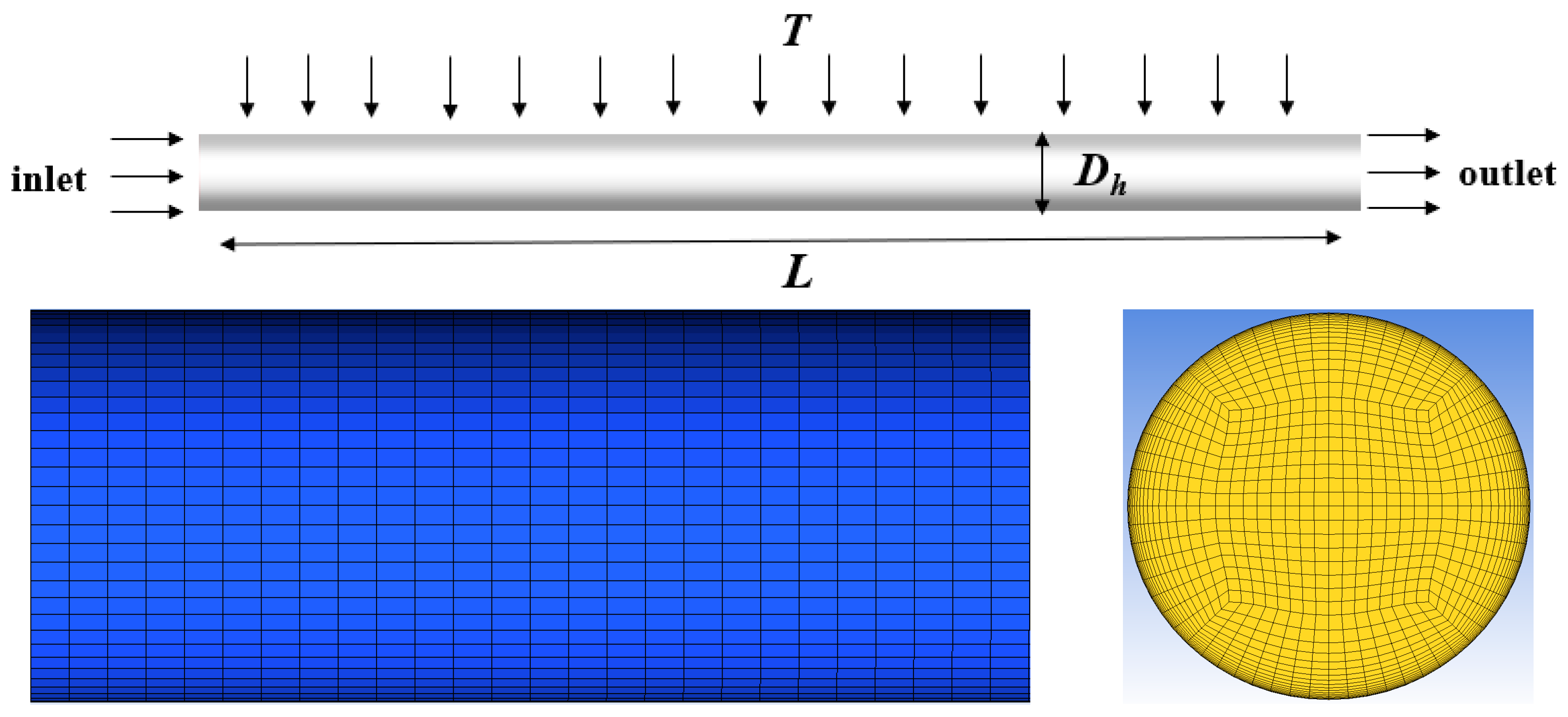
This study investigates a horizontal smooth tube with a diameter of 10 mm and a length of 1 m. The grid for the tube was generated using ICEM CFD 2021 R1, utilizing an O-type grid, which is well-suited for circular pipes due to its efficiency and accuracy. To accurately capture the flow and thermal boundary layers in the near-wall region, the grid was refined near the wall. A boundary layer grid growth rate of 1.1 was applied to ensure adequate resolution within the boundary layer, allowing for precise capture of the flow dynamics and temperature gradient variations. The final three-dimensional computational domain, shown in Figure 1, encompasses both the interior of the tube and the surrounding area, ensuring that the numerical simulation covers all critical regions and provides high computational accuracy.

2.2. Mathematical Model

2.2.1. Governing Equations

This study investigates the flow of Nano-organic working fluid within a straight tube as a multiphase flow problem, with a focus on the boiling heat transfer phenomena. This necessitates the consideration of changes between the gas and liquid phases. Compared to single-phase flow, multiphase flow calculations are inherently more complex due to the need to account for physical quantities and interactions between each phase.
Various research methods have been proposed to study gas–liquid phase transitions, including molecular dynamics (MD) simulations, lattice Boltzmann methods, immersed boundary methods, level set (LS) methods, and the Volume of Fluid (VOF) method. In 1981, Hirt and Nichols [45] introduced the VOF method, which is based on the Eulerian framework for modeling multiphase flow in continuous media. This method provides a simple and effective numerical approach for capturing free surfaces. In this study, the VOF model is used to describe the liquid–gas interface and bubble dynamics, with the volume fractions of the liquid and vapor phases denoted by the subscripts l and v, respectively, and their sum constrained to 1.
α l + α v = 1
The VOF model considers the fluid as a mixture, where the fluid properties, such as density (ρ), dynamic viscosity (μ), specific heat capacity (Cp), and thermal conductivity (k), are determined through arithmetic averaging, which can be
ρ = ρ l α l + ρ v α v
μ = μ l α l + μ v α v
C p = C pl α l + C pv α v
k = k l α l + k v α v
The dryness fraction is
x = ρ v α v ρ l α l + ρ v α v
The computation of energy and temperature is
E = α l ρ l E l + α v ρ v E v α l ρ l + α v ρ v
T = α l ρ l T l + α v ρ v T v α l ρ l + α v ρ v
The principle of mass conservation is grounded in the continuity equations for both phases, which can be
t α v ρ v + α v ρ v v = m · lv
t α l ρ l + α l ρ l v = m · lv
where t is the time in seconds (s), v is the average velocity of the fluid in meters per second (m/s), and m · lv represents the mass transfer from the liquid phase to the gas phase, i.e., the mass source term in kilograms per cubic meter per second (kg/(m3·s)).
The conservation of momentum is
t ρ v + ρ v v = p + μ v + ρ g + F
where p denotes pressure, Pa; g signifies the gravitational acceleration, m/s2; F refers to the external force, N. As per the Continuum Surface Force (CSF) model, the surface tension at the liquid–gas interface remains constant at a uniform temperature. Within the CSF model, surface tension is conceptualized as an external force term within the VOF model. The connection between the pressure differential (p2p1) across the interface, the two orthogonal radii (R1 and R2) at the interface, and the coefficient of surface tension (σ) is
p 2 p 1 = σ 1 R 1 + 1 R 2
Concerning the external force term (F) in the previously mentioned momentum equations, the expression that characterizes the surface tension is
F = 2 σ α l ρ l κ l α l + α v ρ v κ v α v ρ l + ρ v
Here, κ denotes the interfacial curvature, which can be
κ l = κ v = α l α l
Energy is dependent on temperature, and the equation governing energy is
t ρ C p T + ρ v C p T = k T + S h
where T denotes temperature, measured in Kelvin (K); Cp refers to the specific heat capacity, expressed in Joules per kilogram per Kelvin (J/(kg·K)); k signifies the thermal conductivity of the mixture, reported in Watts per meter per Kelvin (W/(m·K)); and Sh is an indicator of the heat source within the mixture.

2.2.2. Phase Change Model

Evaporation and condensation are prevalent natural phenomena, involving the transformation of a liquid into a vapor at a specific temperature and its subsequent return to a liquid state at a cooler temperature. This thermal cycle is captured by a phase transition model. Within the context of the evaporation-condensation model, the interactions between the liquid and vapor phases are in a state of balance, where the chemical potentials of the two phases are equal. This study employs the Lee model for phase transitions, which is extensively used in the field of mass and energy transfer during phase changes between two states. The fundamental concept of the Lee model is that phase transitions are driven by the discrepancy between the interface temperature and the saturation temperature (Tsat), with the rate of phase transition being directly related to this temperature difference. The formulation of the mass transfer equation within the Lee model is
m · lv = γ l α l ρ l T l T sat T sat ( T l > T s a t ,   Evaporation   Process )
m · vl = γ v α v ρ v T sat T v T sat ( T v < T sat ,   Condensation   Process )
where Tsat denotes the saturation temperature, Tl is the temperature of the liquid phase, and Tv is the temperature of the vapor phase. m · lv represents mass transfer due to evaporation, m · lv represents mass transfer due to condensation. At a specific stage of the calculation, if the temperature within a liquid phase cell exceeds the saturation temperature, Equation (16) is invoked for the mass transfer calculation, and this calculation is not performed for cells within the vapor phase. Conversely, for vapor phase cells, if their temperature falls below the saturation temperature, Equation (17) is employed. The coefficient γ can be understood as a relaxation time, with γl and γv serving as the time relaxation parameters for mass transfer in the liquid and vapor phases, respectively, measured in inverse seconds (s−1). As a standard practice in model parameterization, the default values for γl and γv in the context of the evaporation process are typically set at 0.1 s−1.

2.2.3. Turbulence Model

The standard k-ε model is renowned for its stability, computational efficiency, and precision, which has led to its widespread adoption among turbulence models. Nevertheless, its turbulence representation relies on the premises of isotropic and homogeneity, constraints that somewhat confine its utility. In response to these constraints, researchers have developed a range of enhanced models, including the RNG k-ε model, the Realizable k-ε model, and several other variants. Notably, the Realizable k-ε model distinguishes itself from the standard k-ε model in two key aspects: it incorporates a novel formulation for turbulence viscosity, and its ε-equation has been modified to align with an exact formulation for the transport of mean square vorticity fluctuations. For the purposes of this study, we have chosen to utilize the Realizable k-ε model. The equations governing turbulent kinetic energy (k) and dissipation rate (ε) are
t ρ k + x j ρ k u j = x j μ + μ t σ k k x j + G k + G b ρ ε Y M + S k
t ρ ε + x j ρ ε u j = x j μ + μ t σ ε ε x j + ρ C 1 S ε ρ C 2 ε 2 k + v ε + C 1 ε ε k C 3 ε G b + S ε
where Gk signifies the turbulent kinetic energy resulting from the mean velocity gradient; Gb refers to the turbulent kinetic energy arising from buoyancy effects; YM reflects the impact of fluctuating expansion in compressible turbulence on the total dissipation rate. The constants C2 and C are specified, with C2 and C representing distinct values. σk and σε are the turbulent Prandtl numbers associated with k and ε, respectively. Sk and Sε are custom source terms defined by the user. For the turbulence simulation calculations within this study, the parameters are set to C2 = 1.9, σk = 1, and σε = 1.2. These default constants were adopted to ensure the generality of the numerical model. Furthermore, their applicability is confirmed in the subsequent Model Feasibility Validation (Section 3.3), where the simulation results based on these standard parameters demonstrate sufficient calculation precision and excellent agreement with experimental data, limiting the need for case-specific tuning.

2.3. Thermophysical Properties of Nanofluids

Nanofluids exhibit greater complexity and variation during evaporation and boiling processes compared to traditional fluids. As a result, it is essential to customize and adjust models to account for the unique characteristics and environmental conditions of each nanofluid. Currently, there is extensive research and practical application involving nanofluids composed of metal oxides such as Al2O3, ZnO, TiO2, and others. The properties of these nanofluids are primarily influenced by the nanoparticle volume fraction, with relatively little dependence on temperature.
This study employs R123/TiO2 nanofluids as nano-organic working fluid in a smooth tube. The characteristics of R123 is displayed in Table 1.
The Physical parameters of TiO2 nanoparticles is presented in Table 2.
The density of the nanofluid (ρnf) is
ρ nf = ( 1 φ ) ρ bf + φ ρ np
The specific heat at constant pressure for the nanofluid (Cp,nf) is
( C p ) nf = ( 1 φ ) ( ρ C p ) bf + φ ( ρ C p ) np ρ nf
The viscosity of the nanofluid (μnf) is
μ nf = μ bf 1 + 2.5 φ , φ 2 %
μ nf = μ bf ( 1 φ ) 2.5 , φ > 2 %
In line with the thermal conductivity model for metal oxide nanofluids put forth by Vajjha and colleagues, the thermal conductivity of the nanofluid (knf) is
k nf = 2 k bf + k np + 2 φ ( k np k bf ) 2 k bf + k np φ ( k np k bf ) k bf + 5 × 10 4 β φ ρ bf C pbf k B T ρ np d np f ( T , φ )
f ( T , φ ) = ( 2.8217 × 10 2 φ + 3.917 × 10 3 ) T T 0 3.0669 × 10 2 φ 3.91123 × 10 3
The conversion formula between volume fraction and mass fraction is
φ = ω ρ b f ω ρ b f + ( 1 ω ) ρ n p
where the subscript ‘nf’ refers to the nanofluid, ‘bf’ refers to the base fluid, and ‘np’ refers to the nanoparticles. The symbol φ denotes the volume fraction of nanoparticles, ω refers to the mass fraction of nanoparticles, β signifies a function associated with the volume fraction, and f(T,φ) indicates a function that depends on both temperature and volume fraction. T0 is the reference temperature, set at 273 K. The symbol kB stands for the Boltzmann constant, with a value of 1.3807 × 10⁻²³ J/K.
Furthermore, the simulation methods for nanofluids differ from those used for conventional fluids. A review of previous research identifies two primary approaches for simulating the evaporation and boiling of nanofluids. The first is the two-component, two-phase flow model, where the mixture of nanoparticles and base fluid is treated as a single phase, while the vapor phase, composed of the evaporated base fluid, is treated as an independent gas phase. The second approach is the three-phase flow model, which distinguishes the nanoparticles, the base fluid, and the vapor of the evaporated base fluid as three separate phases. When the base fluid reaches its saturation temperature, it undergoes a phase change into vapor through wall evaporation and boiling. Lu et al. [46] indicate that the heat transfer coefficient derived from the two-component, two-phase flow model aligns more closely with experimental data, while the three-phase flow model results in a higher overall heat transfer coefficient within the pipe. The numerical results by Siavashi et al. [47] indicate that the parameters obtained using the two-phase model for TiO/water nanofluid are consistent with the experimental data. In this study, the nanofluid is considered as a homogeneous mixture, with factors such as particle migration, thermophoresis, particle agglomeration, and particle deposition not being taken into account. Therefore, the two-component, two-phase model is selected to simulate the evaporation and boiling processes of the nanofluid.

2.4. Boundary Conditions and Solution Approach

In this study, the inlet is defined by a velocity inlet boundary condition, with the velocity range between 0.075 and 0.353 m/s. The inlet consists of a base fluid, R123, mixed with nanoparticles, and the physical properties of the inlet base fluid are modified by adjusting the nanoparticle volume fraction. The outlet is defined by a pressure outlet boundary condition, with the pressure range between 0.1 and 0.2 MPa. The wall is specified with a constant wall temperature boundary condition, with the wall temperature varying between 393 and 423 K. To handle the coupling of pressure and velocity, the SIMPLE algorithm is selected as the solver due to its robustness, stability, and accuracy in solving fluid dynamics problems. For pressure discretization, the PRESTO scheme is chosen, providing a more accurate pressure field distribution. For the discretization of equations related to momentum, turbulent kinetic energy, and energy, the second-order upwind scheme is uniformly applied. This scheme is effective in capturing flow intricacies and conveying physical information, thereby improving the accuracy and reliability of the simulation. The simulation time step is set to 0.0001 s, with a total simulation time of 10 s. The convergence criterion for subsequent calculations is based on the stabilization of key parameters, including the heat transfer coefficient and temperature distribution.

3. Data Processing and Model Validation

3.1. Data Processing

This study employs the ICEM software to generate a detailed structured mesh for a horizontal smooth pipe. Since the convective heat transfer in straight pipes mainly depends on the heat transfer from the wall to the surrounding fluid, followed by the internal heat transfer through convection between the cooling fluid and the hot fluid within the pipe, the meshing of the fluid boundary layer is particularly crucial.
The convective heat transfer coefficient (hx) is
h x = q T w ¯ T x ¯
where q denotes the specified wall convective heat flux, W/m2; T x ¯ is the average temperature from the pipe inlet to the point on the pipe wall at position x, K; and T w ¯ is the mean temperature across the two sections at the pipe inlet and at the axial position x, K.
The Nusselt number is
N u = h D h k nf
where Dh denotes the hydraulic diameter, knf signifies the thermal conductivity of the nano-organic working fluid.
The Reynolds number is
R e = ρ nf v D h μ nf
The flow resistance coefficient (f) is
f = 2 Δ p D h ρ nf ν 2 L
where ρnf denotes the density of the nano-organic working fluid; ν indicates the fluid velocity; μnf refers to the dynamic viscosity of the nano-organic working fluid; and Δp is the pressure differential across the inlet and outlet.

3.2. Grid Independence Validation

The grid count is a critical factor in computational simulations, as it directly impacts the accuracy of the results. A higher grid count can improve calculation precision; however, an excessive number of grids not only increases computation time but also raises the demand on computational resources, which can negatively affect efficiency. Therefore, before initiating numerical simulations, it is essential to ensure the accuracy of the results while optimizing the use of computational resources, thus achieving a balance between simulation accuracy and efficiency. The process of grid independence verification is key to addressing this challenge. This section conducts a grid independence verification using a two-phase flow model involving liquid water and water vapor. Since the study focuses on a straight circular tube with a length of 1 m and a diameter of just 10 mm (giving a length-to-diameter ratio of 100), the meshing of the tube is heavily influenced by the number of grid nodes along its diameter. In this study, five different grid numbers are employed: 693,000, 816,000, 1,148,000, 1,344,000, and 1,805,000.
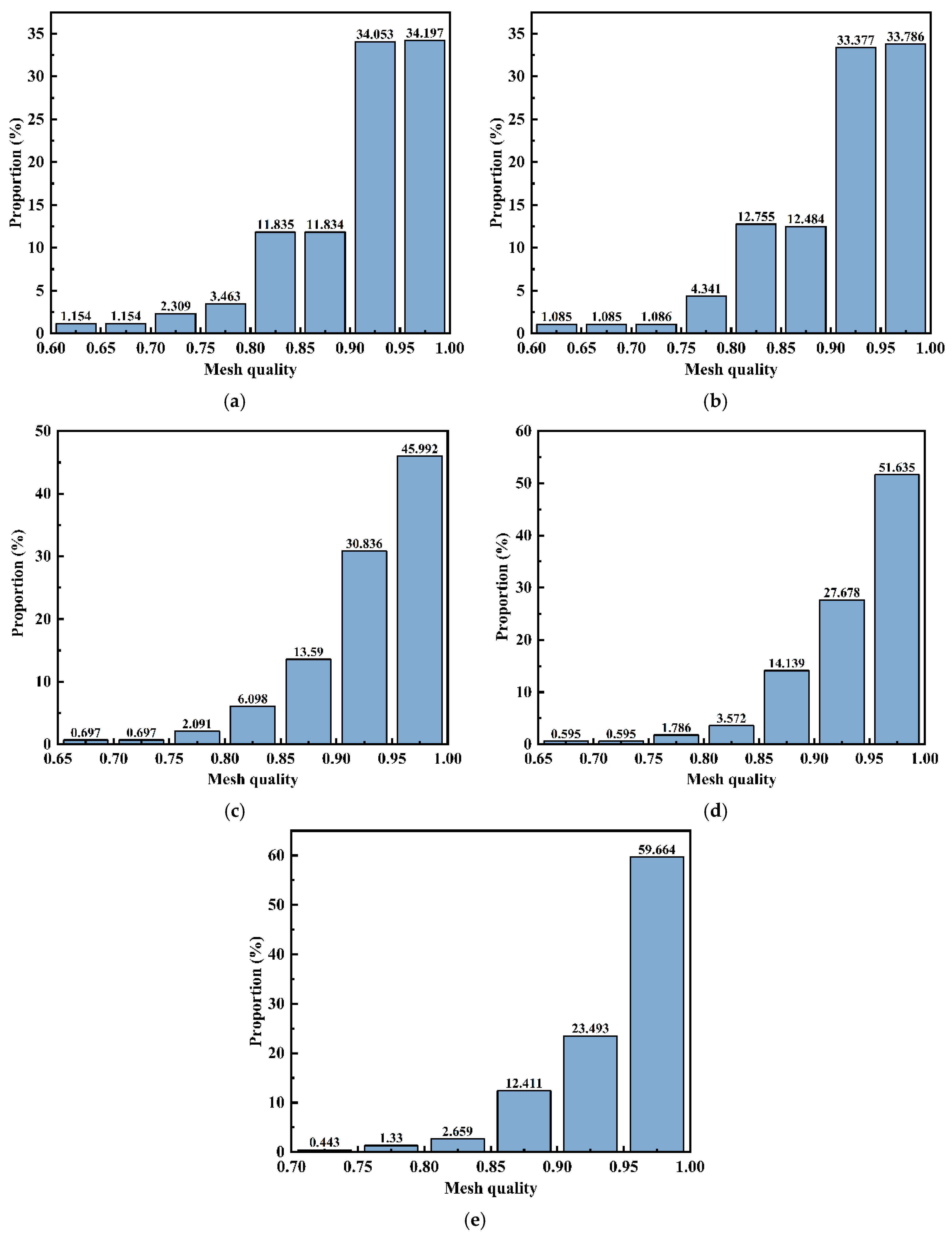
Before performing the grid independence verification, it is crucial to evaluate the quality of the grids. The 3 × 3 × 3 determinant metric is used to assess the volume consistency of grid cells and the regularity of their shapes, based on the determinant of the Jacobian matrix of the cells. A value of 1 indicates optimal grid quality, with lower values indicating decreasing quality. Negative values suggest the presence of cells with negative volumes, which can lead to errors in the computation. Therefore, the 3 × 3 × 3 determinant serves as a valuable metric for assessing the quality of hexahedral grids. Figure 2 presents the quality assessment for the five grid types used in this study. The figure shows that as the grid number increases, the proportion of high-quality grids (with a quality factor ranging from 0.95 to 1) progressively rises. Notably, the overall grid quality remains stable within the range of 0.6 to 1, with most grids exceeding a quality factor of 0.7, indicating that the generated grids are generally of high quality and suitable for the precision requirements of subsequent numerical calculations.
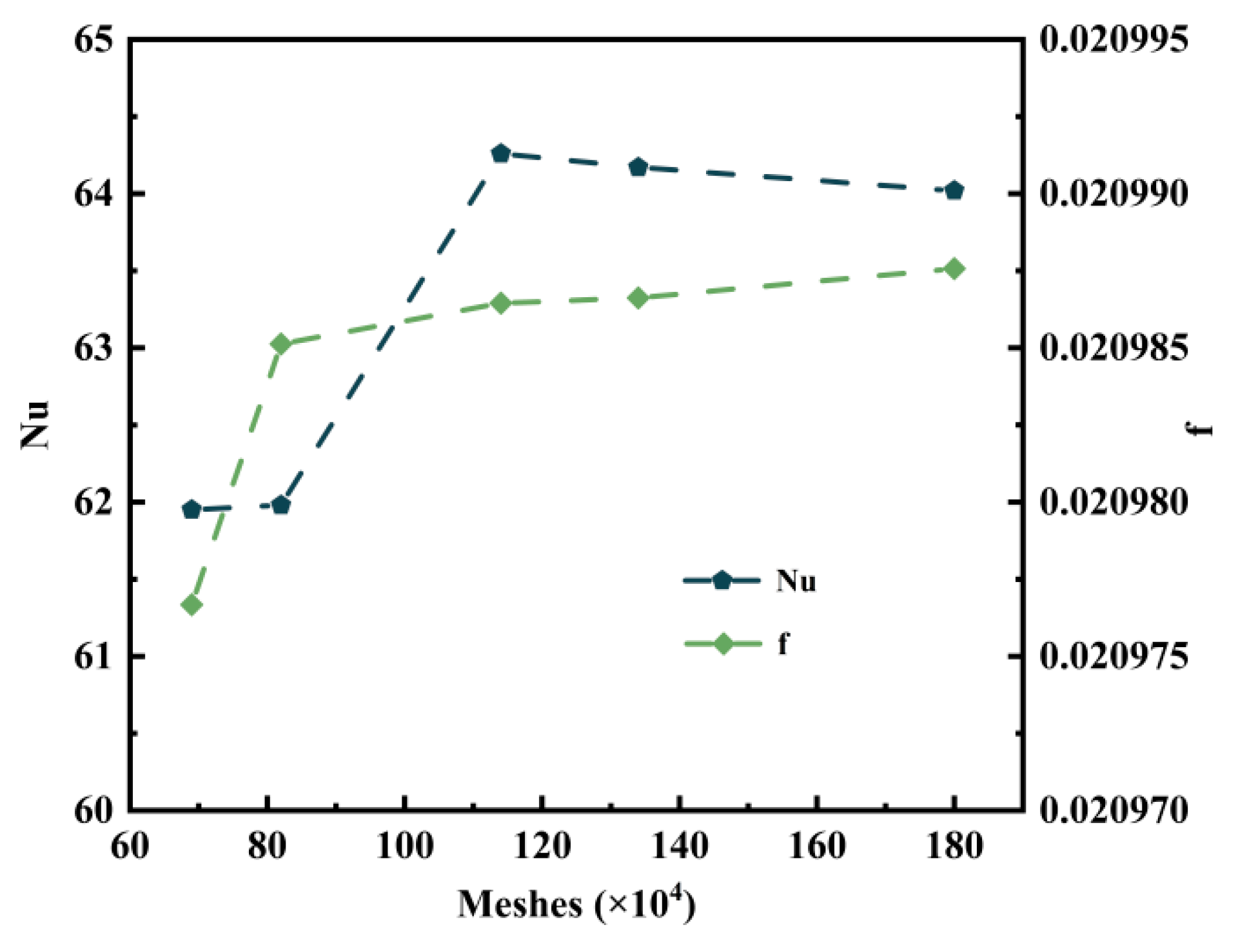
Figure 3 depicts the variation in Nusselt number and friction coefficient with grid count. It can be found that when the number of grid points is relatively low, changes in the grid count have a substantial impact on the calculated results. As the grid count increases, both the Nusselt number and the friction coefficient rise, suggesting a lack of stability in the calculation outcomes at this stage. Conversely, once the grid count reaches 1,148,000, the change in Nusselt number and friction coefficient with the addition of more grid points becomes minimal and can be largely disregarded.
To evaluate the accuracy of the simulation results under various configurations, the simulation data are compared with the experimental data on the boiling of pure water, as reported by Abedini et al. [48]. The comparison between the convective heat transfer simulation results for different mesh configurations and the corresponding experimental data is summarized in Table 3. It can be found that as the number of grid points rises, the relative deviation initially exhibits a diminishing trend, suggesting that more detailed mesh divisions enhance the precision of the simulation. Nonetheless, once the grid count surpasses a certain threshold, the relative deviation starts to slightly rise, potentially due to numerical errors or other issues during the calculation. When the total number of grid points is relatively low, the relative deviation between the simulation and experimental data is around −5%, indicating that the simulation results are slightly lower than the experimental values. As the grid count increases, the relative deviation decreases. When the total grid count reaches 1,148,000, the relative deviation reaches its lowest point at −1.19%, signifying the closest match between the simulation results and experimental data at this mesh density. Even with an increase in the number of grid points beyond this point, the relative deviation remains nearly constant, and the overall deviation is small and reasonable. This indicates that the grid-independence criterion is satisfied once the grid count reaches 1,148,000. Balancing computational time and accuracy, choosing 1,148,000 grid points for this calculation ensures accurate simulation results without excessive computational resource usage.

3.3. Model Feasibility Validation

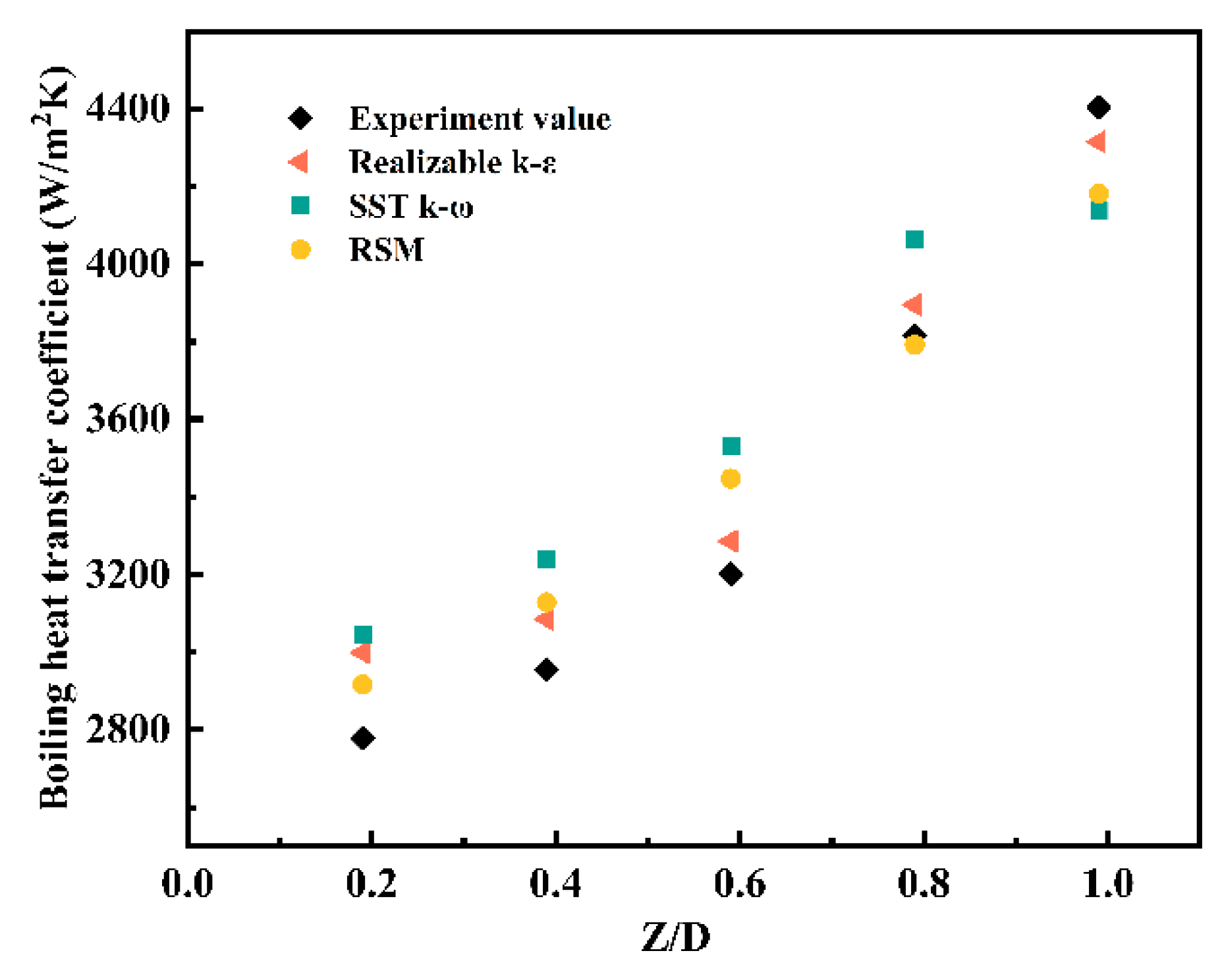
To confirm the feasibility of the model, the simulation is conducted using three distinct turbulence models. The simulation results for the convective boiling heat transfer coefficient of pure water are compared with experimental data under the following conditions: saturation temperature of 373.124 K, wall heat flux of 102,000 W/m2, mass flow rate of 303 kg/(m2·s), and an inlet temperature of 336.25 K. The experimental section uses a copper tube with an outer diameter of 12 mm, a wall thickness of 1.5 mm, and a length of 2 m [49]. Both heating sections employ electric heating, with the heating wires evenly arranged on the outer surface of the copper tube and powered by a stable power supply. FLUENT offers a range of turbulence models, with the k-ε model being the default choice for many researchers. As a result, this study chooses to perform the calculations using three commonly used turbulence models, as shown in Figure 4 and Table 4. As depicted in Figure 4, the realizable k-ε model demonstrates a closer match to the experimental data in comparison to the k-ω and Reynolds Stress Model (RSM) models. Employing the realizable k-ε model, the maximum and minimum discrepancies between the results and the experimental data are 10.27% and 2.03%, respectively, with an average error of 3.85%. The calculated results closely mirrored the trend observed in the experimental data. As shown in Table 4, the k-ε model demonstrated higher accuracy than the other two models, with the smallest relative deviation of −2.04%, and the error magnitude remained within an acceptable range. This suggests that using the Realizable k-ε model to simulate the flow boiling heat transfer process in a horizontal pipe is a viable approach. Therefore, the calculations in this study are performed using the Realizable k-ε model.
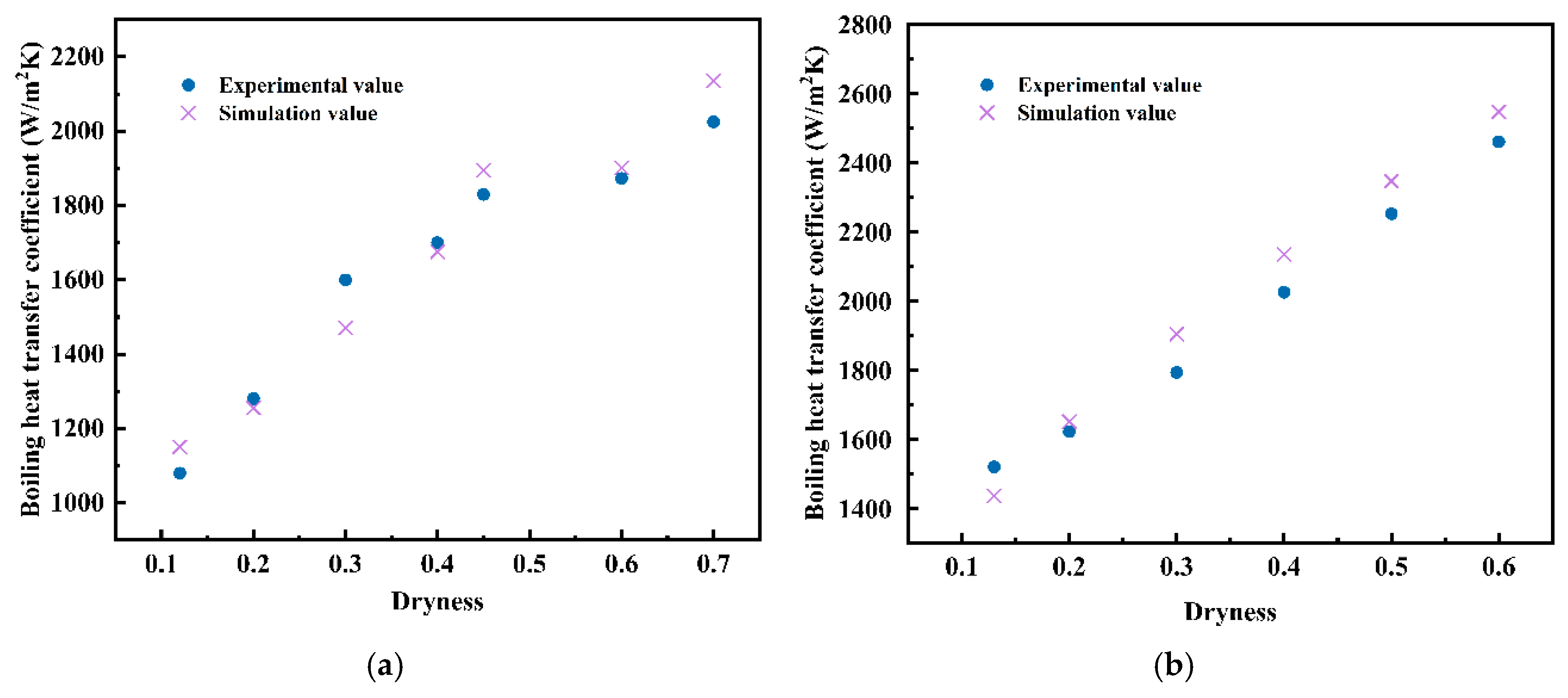
Figure 5 illustrates the comparison between simulation results and experimental data using R123 and nano-organic working fluid of 0.1 wt% TiO2/R123. It can be found that the simulation results for the R123 show excellent agreement with experimental data, with a maximum discrepancy of approximately 5%, which is within the acceptable error margin for engineering applications. Both the simulated and experimental data exhibit similar trends, highlighting the model’s accuracy and reliability. For the TiO2/R123 nano-organic working fluid at a mass concentration of 0.1 wt%, the simulated values of heat transfer coefficient are slightly higher than the experimental results. The overall consistency is still good, with a maximum error of 6.1%, which is also within an acceptable range. The deviation is mainly attributed to various losses during the experiments, such as fluid-wall friction, localized resistance within the pipes, and other forms of energy dissipation. As these losses have minimal impact on the overall results, they are not accounted for in the simulation.

4. Results and Discussion

4.1. Flow Field Distribution

Fluid motion within a circular tube is complex and dynamic. In transient simulations, the simulation duration is a crucial factor that affects the accuracy of the results and the temporal evolution of observable physical processes. Over different time intervals, the fluid’s temperature, volume fraction, and velocity within the tube exhibit significant changes. These variations are often difficult to capture in real time during experimental studies, making numerical simulations a valuable tool for uncovering such phenomena. To better understand the internal dynamics of the fluid at various times and positions, this section focuses on R123 as the primary subject of investigation. By conducting transient simulation analyses of the temperature, multiphase flow, and velocity fields within a horizontal circular tube, the study elucidates the intricate processes and mechanisms governing fluid movement within the tube. The following descriptions refer to the transient snapshots at the corresponding times, while the final reported results are averaged over a steady-state period after the system has stabilized.
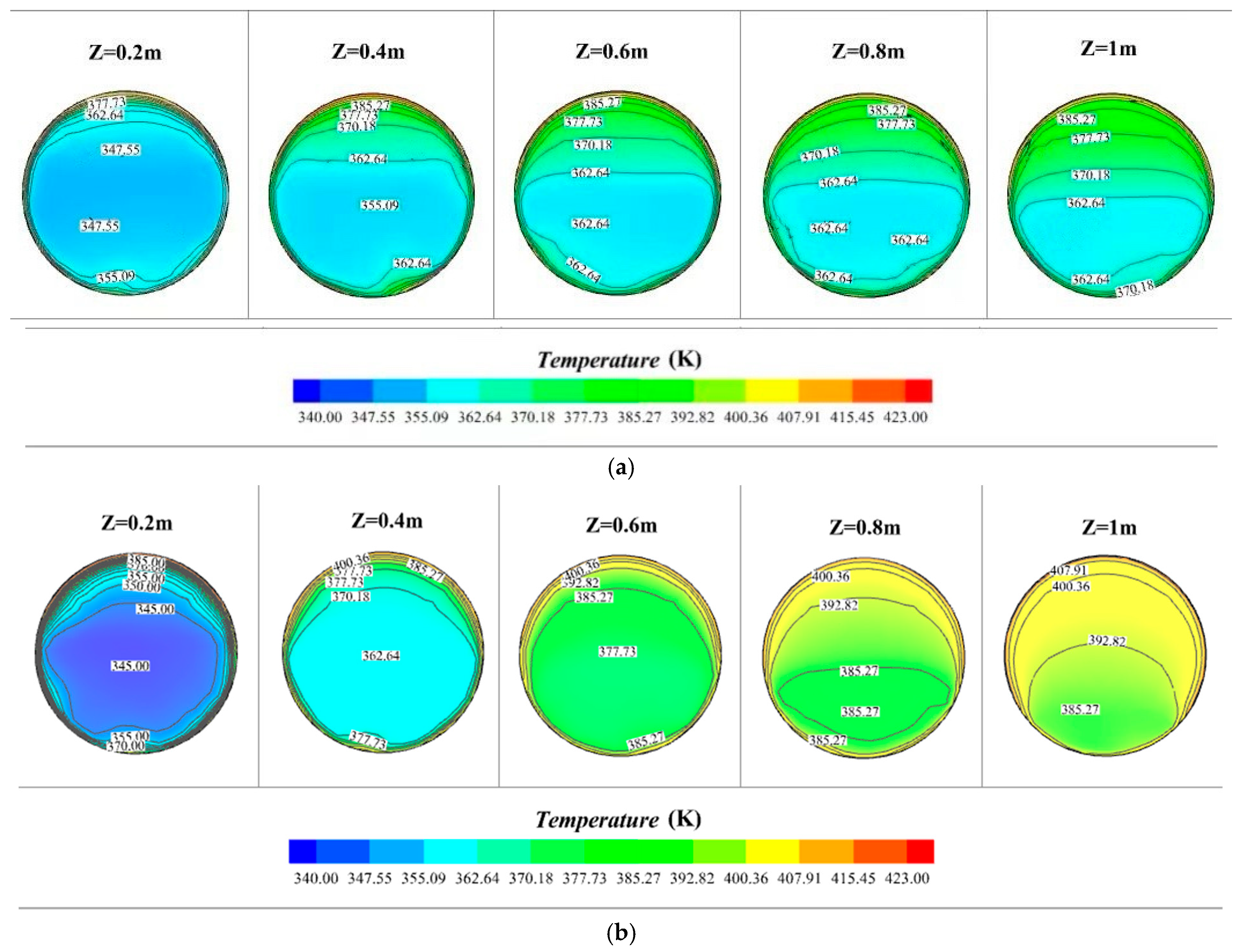
Figure 6 illustrates the temperature distributions within the circular tube at different simulation times. The fluid temperature increases gradually along the pipe. After 5 s of simulation, the temperature rise is observable but not significant, with much of the fluid at the pipe’s center maintaining a stable temperature of approximately 362.64 K. This suggests that heat transfer is limited over short time scales. At 8 s, the temperature at Z = 0.2 m is about 345 K, at Z = 0.6 m it rises to 377.73 K, and at Z = 1 m it reaches approximately 392.82 K, indicating a clear vertical temperature gradient. These results emphasize that heat transfer is a time-dependent process, where substantial temperature changes may not occur within a short simulation period, even when a temperature differential is present. Additionally, the temperature distribution is influenced by factors such as the fluid’s flow dynamics and the characteristics of the flow field.
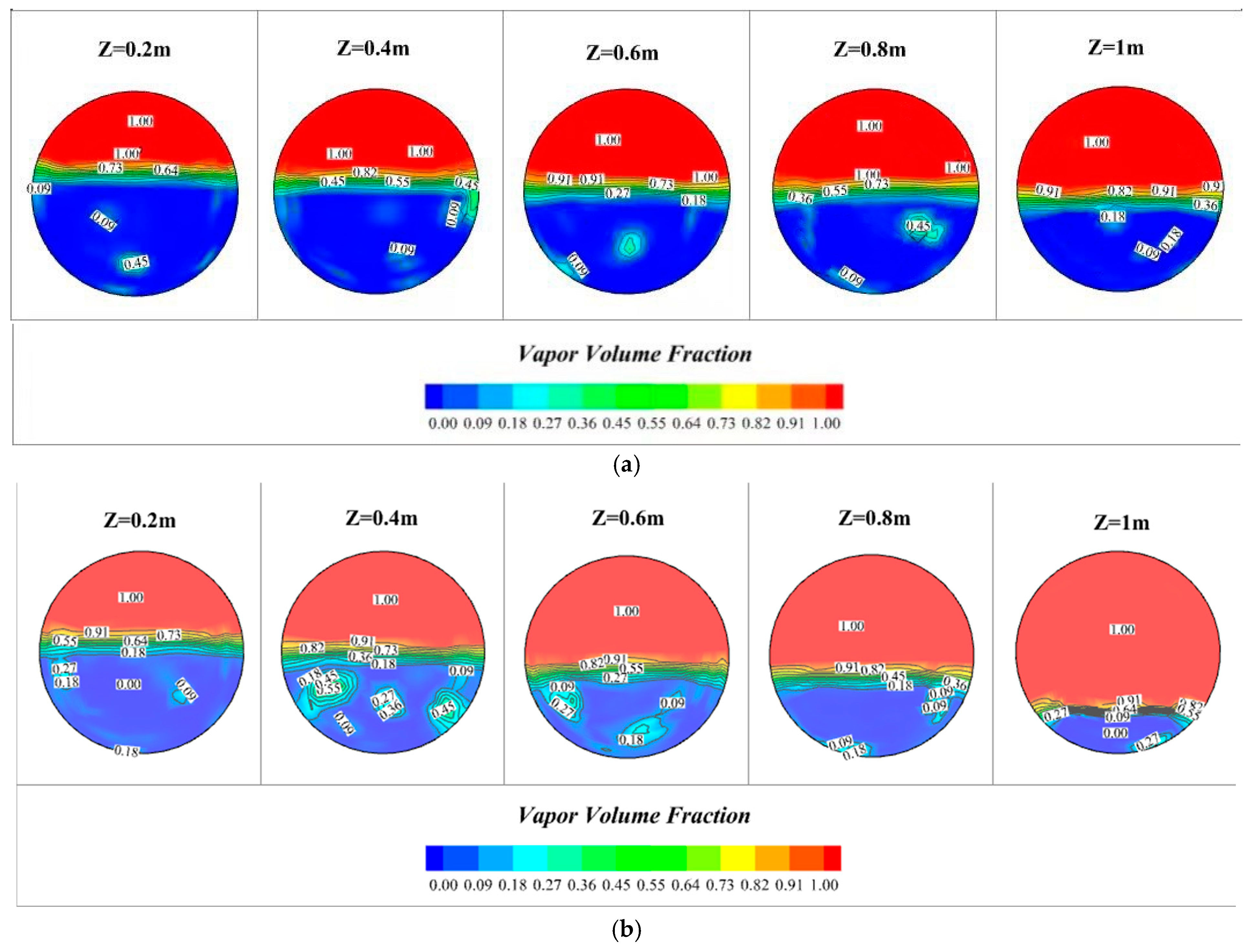
Figure 7 illustrates the distribution of the vapor volume fraction at different simulation times. At a simulation time of 5 s, it is observed that the vapor phase volume fraction reaches approximately 0.3 at the axial position of Z = 0.2 m, marking the initial development of the two-phase flow region. This phase transition is physically driven by the local fluid temperature exceeding the saturation temperature, which triggers the mass transfer from liquid to vapor. As the simulation progresses to 8 s, the vapor generation intensifies significantly, with the volume fraction escalating from ~0.3 to approximately 0.85. This substantial increase reflects the rapid expansion of the gas phase, which drastically reduces the effective mixture density and signifies a transition toward a vapor-dominated flow regime.
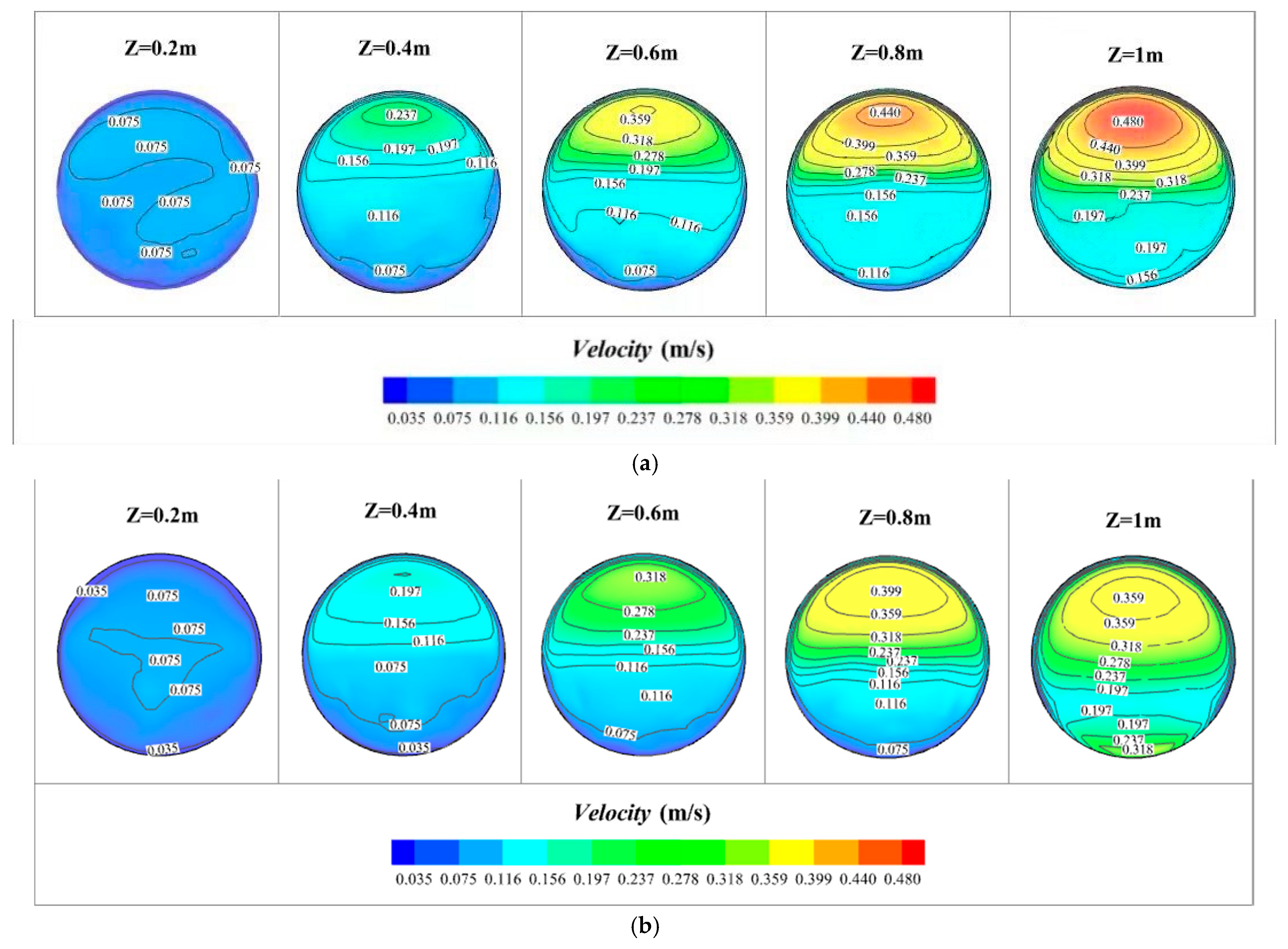
Figure 8 illustrates the velocity field distributions at different simulation times. The figure clearly shows an increase in fluid velocity as the position along the pipe progresses. Compared to Figure 7, high-velocity regions are mainly concentrated in the vapor phase, especially in the upper and middle sections of the pipe. At 5 s, with the increase in vapor phase velocity near the wall, the maximum velocity reaches 0.48 m/s at Z = 1 m. This high-speed flow not only amplifies the disturbance of the working fluid but also significantly intensifies the scouring effect on the liquid film inside the pipe. This scouring action further enhances convective heat transfer, improving the heat transfer efficiency. At 8 s, the flow velocity inside the pipe decreases significantly, with the maximum velocity at Z = 1 m dropping to 0.359 m/s. The progression of the phase change increases the vapor volume fraction, which drastically reduces the effective mixture density. The dominance of the vapor phase stabilizes the flow regime and alters the viscosity distribution near the wall. Consequently, the reduced velocity diminishes the turbulent intensity and the convective heat transfer coefficient, thereby weakening the boiling heat transfer effect.
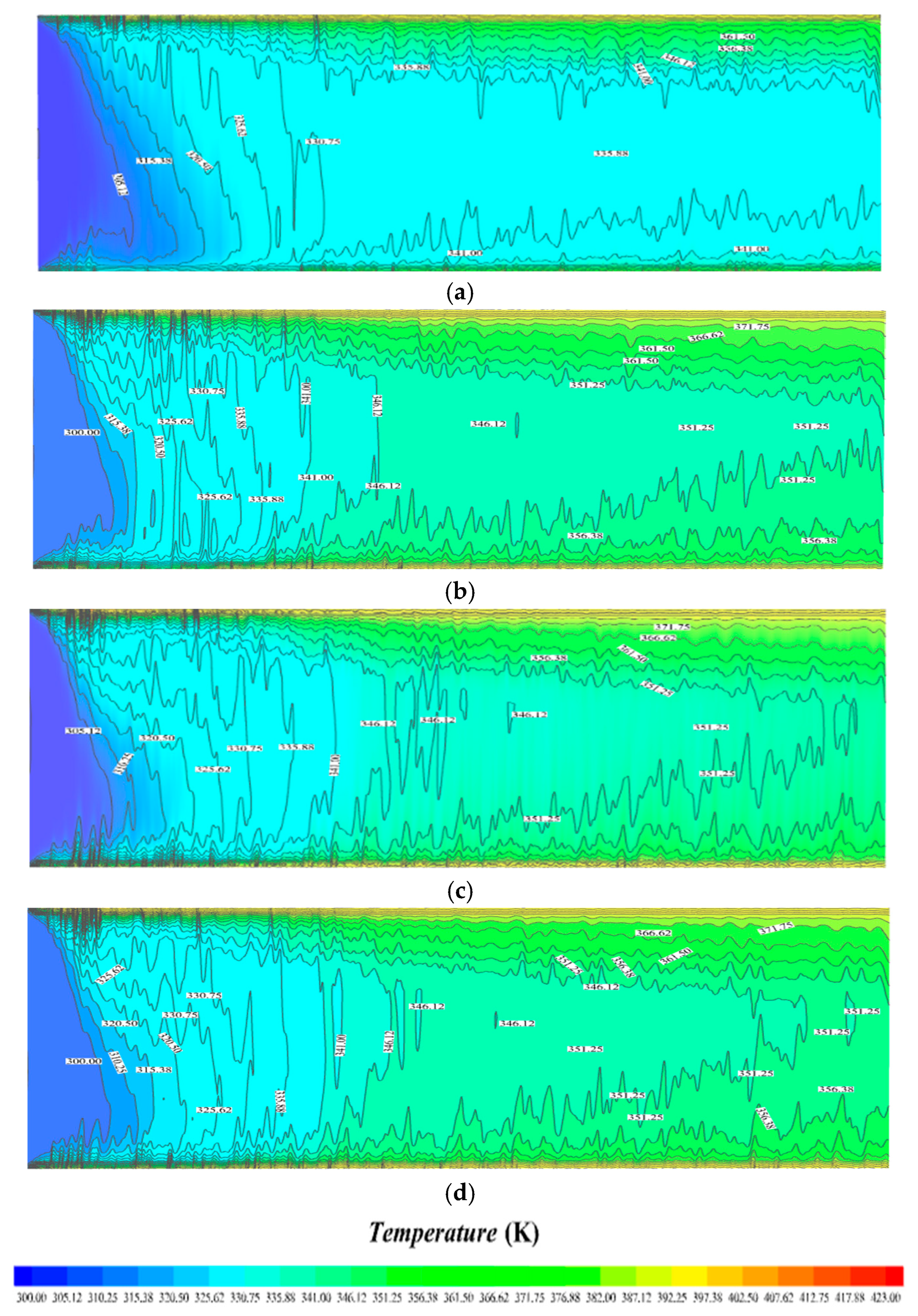
As previously mentioned, the effectiveness of the simulation does not continue to improve indefinitely with longer durations. Selecting an appropriate simulation time is crucial for ensuring the accuracy and efficiency of results. In addition to simulation time, the choice of working fluid is a critical factor that influences the boiling heat transfer process. Simulations provide a visual representation of the internal flow field under different fluids, which is vital for enhancing our understanding and optimizing the boiling heat transfer process. Figure 9 presents the temperature field distributions for four different working fluids (R123, 0.04 wt% TiO2/R123, 0.06 wt% TiO2/R123, and 0.1 wt% TiO2/R123) at the same simulation time. The temperature of R123 mixed with nanoparticles is significantly higher than pure R123, with the largest increase near the pipe wall, greatly improving convective heat transfer efficiency. Moreover, it is apparent that the mass concentration of nanoparticles has a relatively minor impact on the overall temperature distribution. There is a clear trend of increasing temperature for the nano-organic working fluid as the nanoparticle concentration gradually increases.
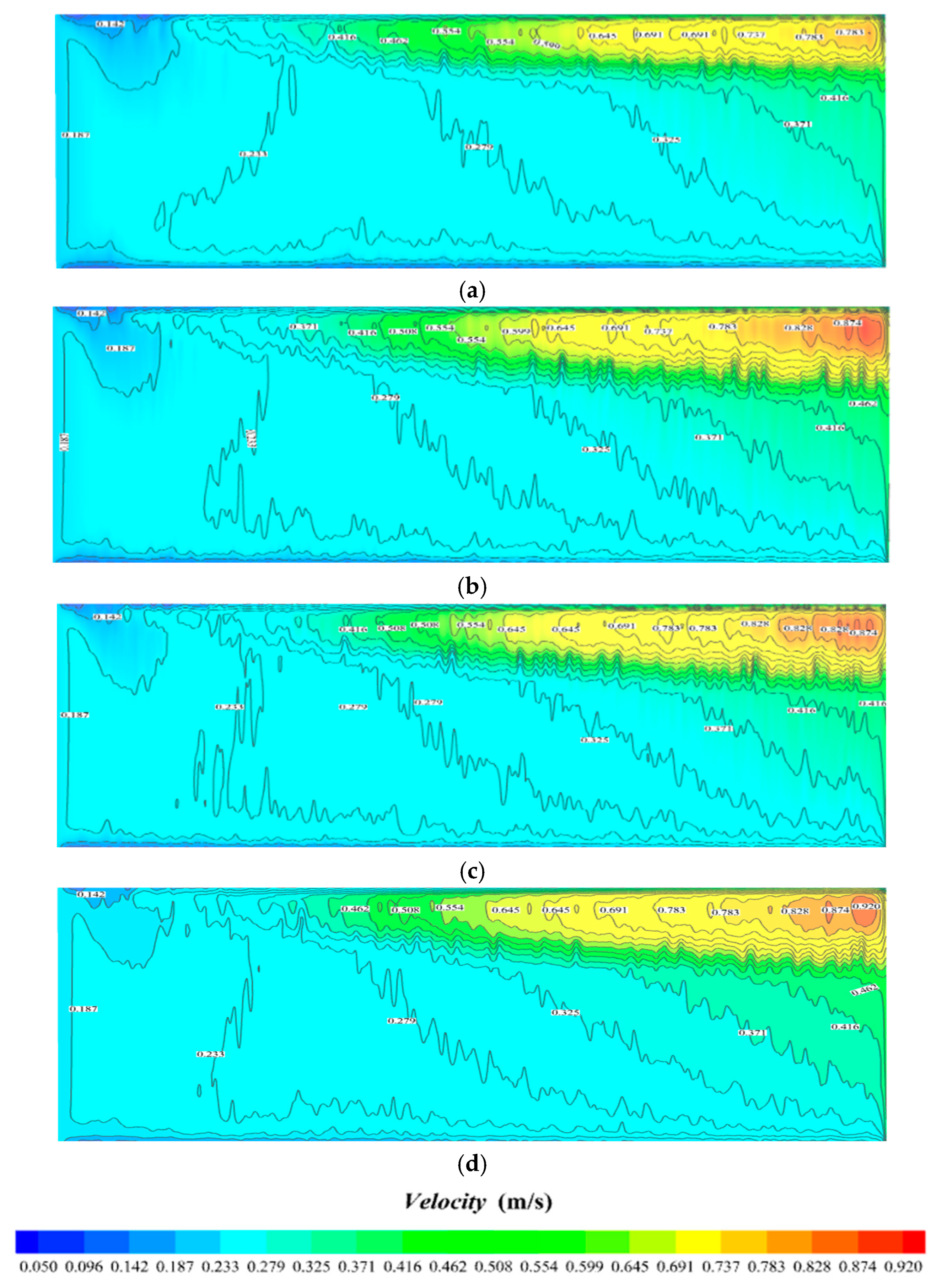
Figure 10 presents the velocity field distributions for four working fluids at the same simulation time. The figure reveals that the highest velocities are predominantly located in the upper section of the latter half of the pipe. An increase in velocity corresponds to a higher convective heat transfer coefficient between the fluid and the heat transfer surface, signifying enhanced heat transfer efficiency. The velocity profile for pure R123 is notably lower compared to the nano-organic working fluid. Furthermore, as the mass concentration of nanoparticles increases, there is a noticeable trend of increasing velocity. The increase in nanoparticle concentration elevates the fluid temperature by improving the heat transfer efficiency, promoting a more vigorous phase change. Moreover, higher flow velocities contribute to reducing the fluid’s residence time on the heat transfer surface, which in turn diminishes the boundary layer thickness and thermal resistance, paving the way for additional improvements in heat transfer efficiency.

4.2. Flow Boiling Heat Transfer Analysis

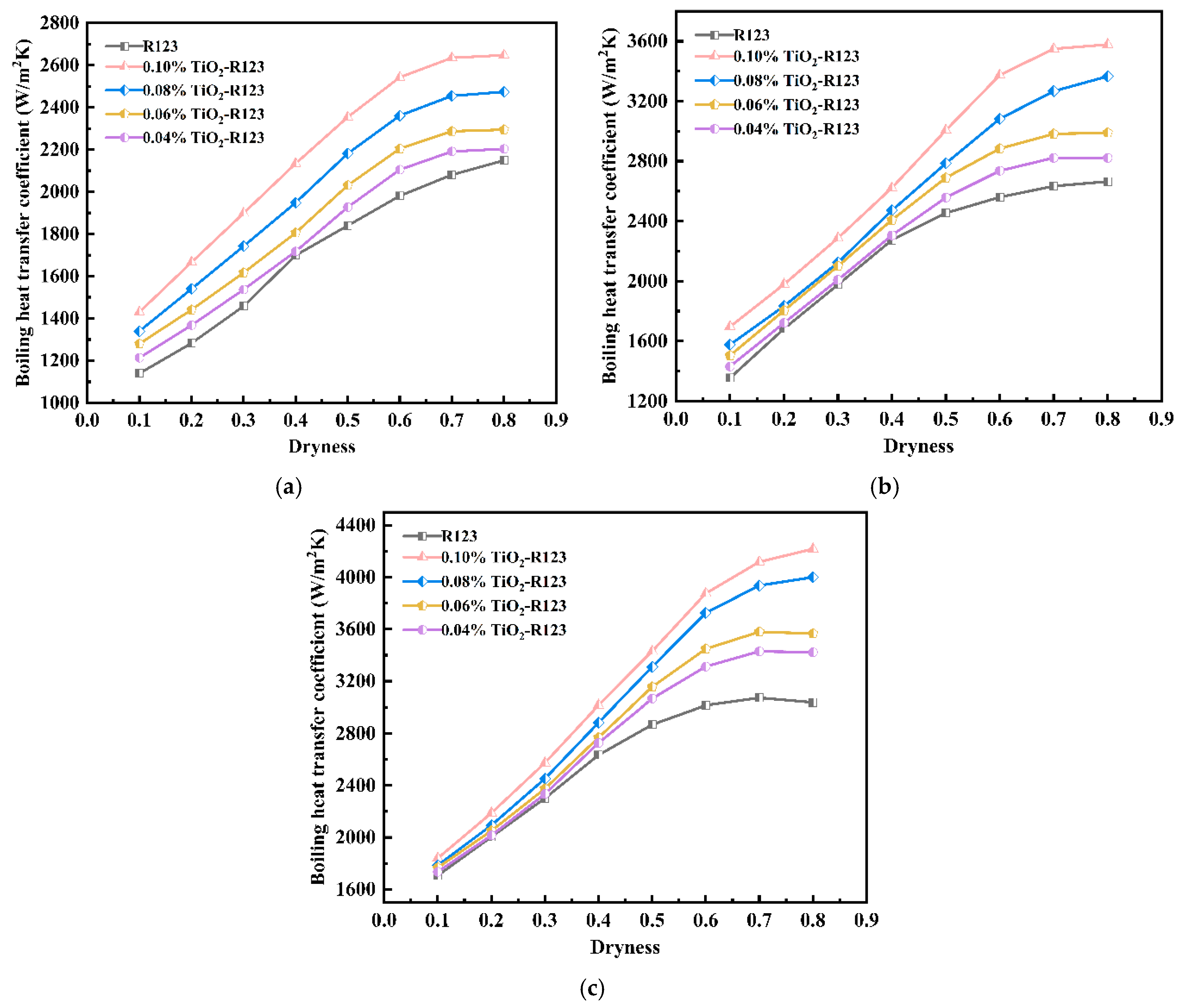
Figure 11 displays the variations in convective heat transfer coefficients for different working fluids in a horizontal tube with constant wall temperature. It is evident that the incorporation of TiO2 nanoparticles into R123 significantly boosts the heat transfer coefficient of the fluid within the tube, thereby effectively intensifying the heat transfer process. When the mass flux and dryness fraction are kept constant, increasing the nanoparticle mass concentration leads to a higher heat transfer coefficient. For instance, at a mass flux of G = 250 kg/(m2·s), the boiling heat transfer coefficient for 0.1 wt% TiO2/R123 varies from 1430.11 to 2647.25 W/(m2·K), which represents a 23.2% increase compared to R123. The higher thermal conductivity of nanoparticles alters the thermophysical properties of the fluid. As the mass concentration of nanoparticles rises, the overall thermal conductivity of the fluid also improves, contributing to enhanced heat transfer. Additionally, when the mass concentration of particles and dryness fraction are held constant, an increase in mass flux also elevates the heat transfer coefficient. The rise in mass flux strengthens the convective interaction between the fluid and the tube wall, disrupting the thermal boundary layer and enabling more efficient heat transfer from the wall to the fluid. Higher mass flux involves more fluid molecules or particles in heat transfer, leading to more uniform heat distribution. This uniformity helps to minimize the formation of local hotspots and improves overall heat transfer efficiency. It is also worth noting that in the low dryness fraction region, the heat transfer coefficient of the working fluid increases rapidly. However, as the dryness fraction approaches approximately 0.7, the rate of increase gradually slows down, and in some cases, it even starts to decrease. This is because in the early stage of heat transfer, the fluid is mainly in the liquid phase, resulting in a lower heat transfer coefficient. As the dryness fraction reaches a certain level, the formation of numerous bubbles and intense boiling phenomena generates a gas film on the tube wall. This gas film increases heat transfer resistance, leading to a deterioration in heat transfer and ultimately reducing the heat transfer coefficient.
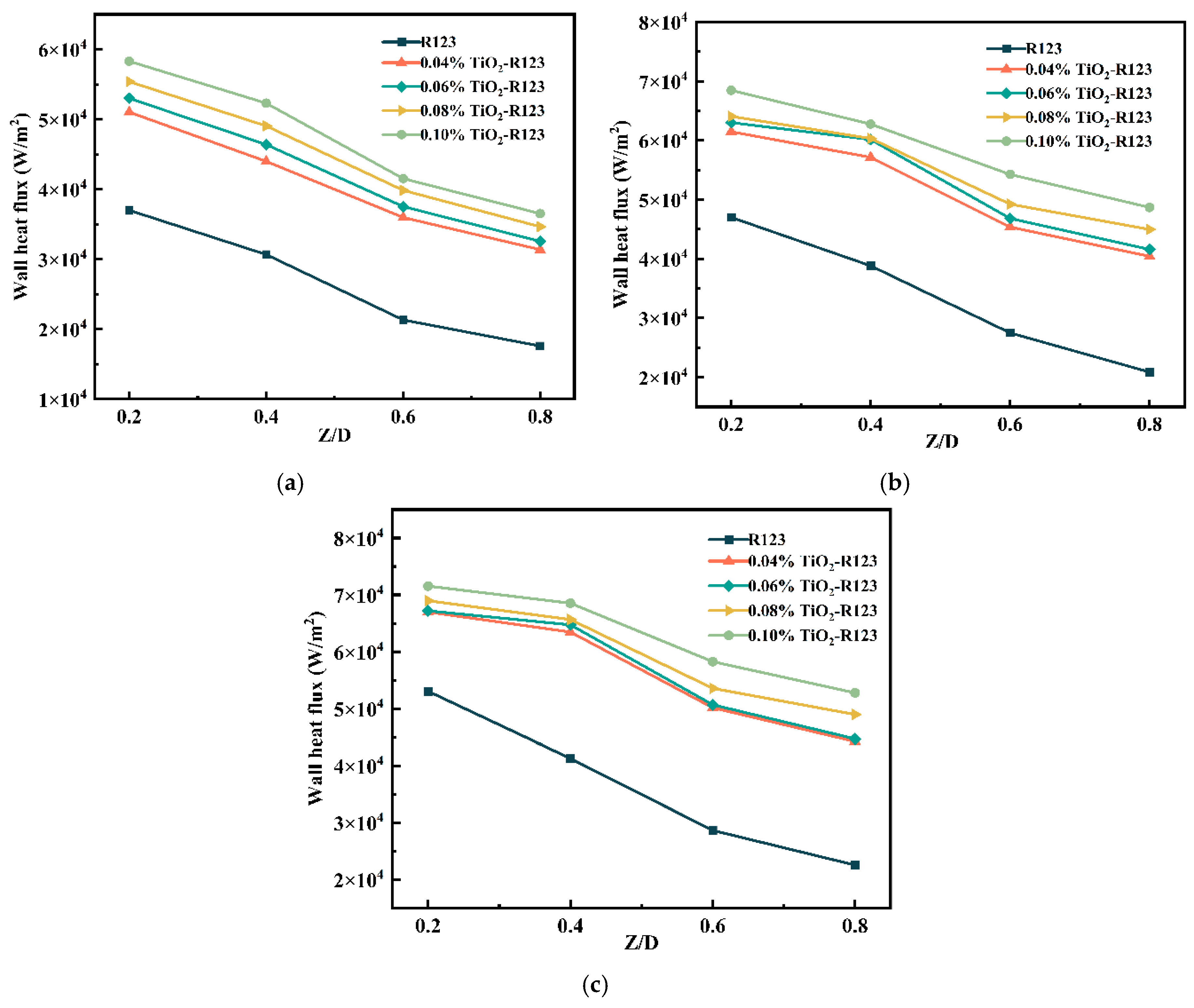
Figure 12 illustrates the variations in wall heat flux along the tube length for different working fluids. The figure clearly shows that the wall heat flux for the working fluid mixed with TiO2 nanoparticles is significantly higher than that of pure R123 and increases with nanoparticle mass concentration. An increase in nanoparticle mass concentration results in a higher wall heat flux, meaning that under the same conditions, the working fluid containing nanoparticles can transfer more heat. Meanwhile, as the tube length increases, the temperature difference between the tube wall and the fluid decreases, leading to a notable reduction in wall heat flux. This also suggests that the heat transfer process requires a greater heat input. Evaporation involves the absorption of latent heat as the liquid changes into gas. Initially, the liquid near the tube wall evaporates rapidly, absorbing a significant amount of heat and maintaining a high heat flux. However, as evaporation continues, the decreasing liquid volume slows the evaporation rate, which in turn reduces heat absorption and leads to a decline in heat flux. Furthermore, it is observed that an increase in mass flux also elevates the wall heat flux. As previously mentioned, higher mass flux enhances the heat transfer coefficient, intensifies turbulence, and improves heat transfer efficiency, all raising wall heat flux.

4.3. Flow Resistance Under Different Mass Fluxes

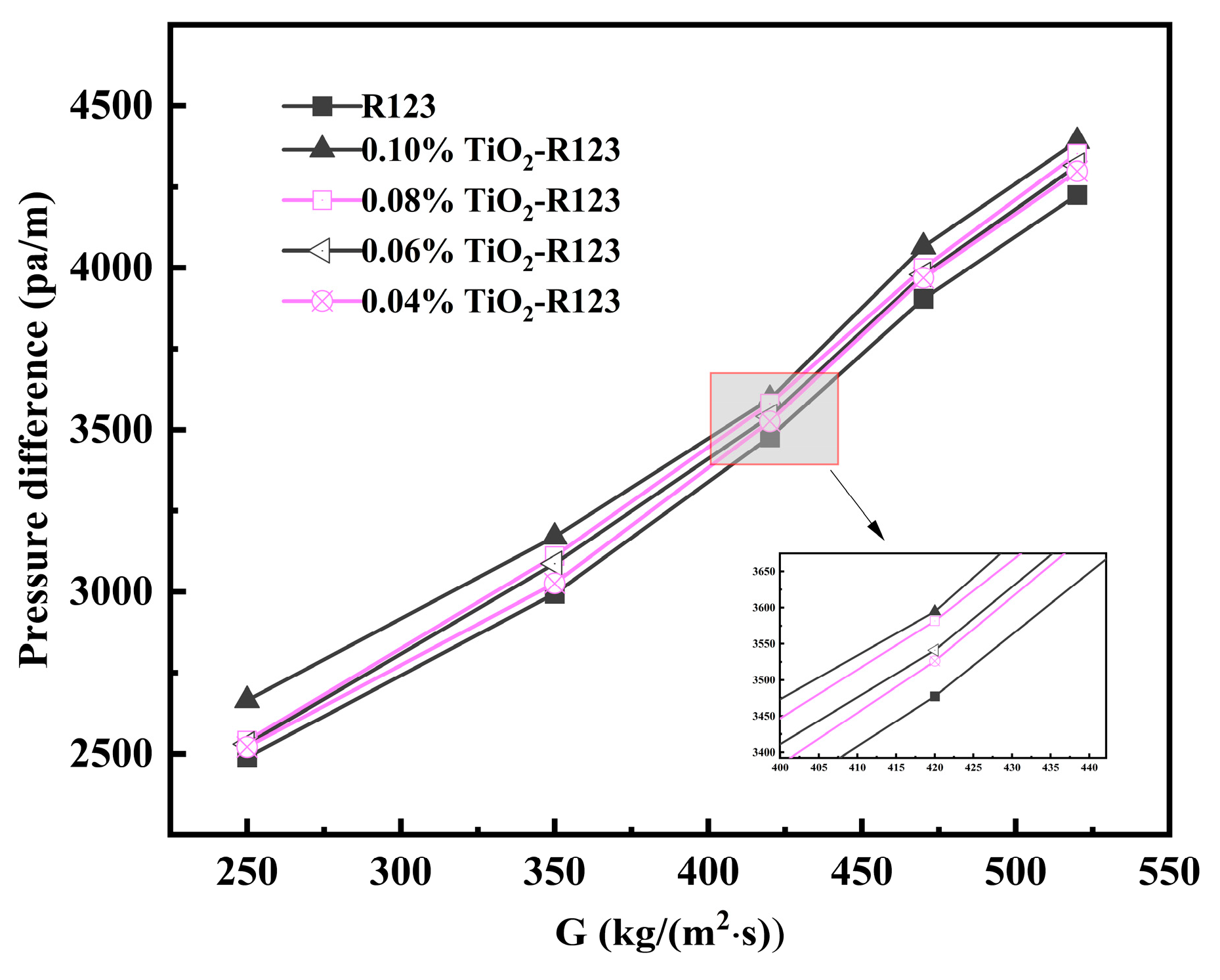
Figure 13 demonstrates the variations in unit pressure drop for different working fluids at varying mass fluxes. It is evident from the figure that as the mass flux rises, the unit pressure drop also increases for each working fluid. However, this increase is not linear and depends on various factors, including changes in flow velocity and fluid density. When comparing the unit pressure drops of the nano-organic working fluid and pure R123, the difference is subtle but noticeable. Adding nanoparticles increases the pressure drop, with this effect becoming more pronounced as the nanoparticle concentration increases. Nanoparticles also increase the fluid’s viscosity, which further contributes to the rise in pressure drop.
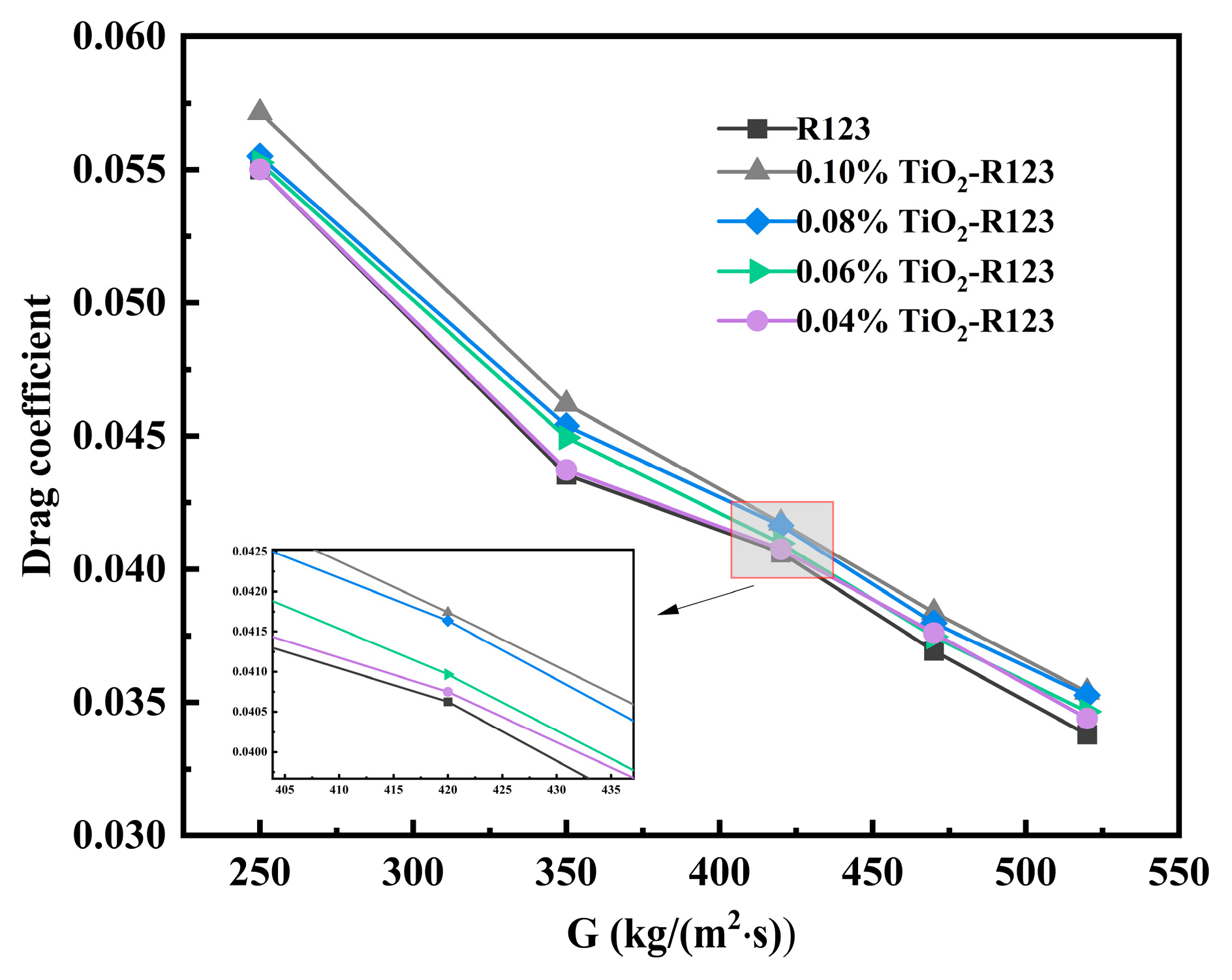
Figure 14 depicts the variation in flow resistance coefficients for different working fluids at different mass fluxes. It is evident that the flow resistance coefficient for pure R123 ranges from 0.0337 to 0.055, while 0.1 wt%TiO2/R123 exhibits the highest values, ranging from 0.0353 to 0.0571. This trend indicates that incorporating nanoparticles slightly increases the flow resistance of the nano-organic working fluid. However, at lower nanoparticle mass concentrations (e.g., 0.04 wt%), the flow resistance coefficient of the nano-organic working fluid closely resembles that of pure R123. From an engineering application perspective, the selection of a working fluid involves a critical trade-off between thermal efficiency and hydraulic resistance. A comparative analysis with Section 4.2 reveals that the substantial 23.2% increase in heat transfer coefficient (at 0.1 wt%) significantly outweighs the moderate pressure drop penalty observed here. In practical heat exchanger design, this superior thermal performance allows for a reduction in the heat transfer area, which can effectively lower the manufacturing costs and enhance the compactness of the ORC system. Therefore, despite the increased pumping power requirement, the TiO2/R123 nanofluid demonstrates strong potential for improving the overall cycle performance and economic viability of waste heat recovery systems.

5. Conclusions

The heat transfer and flow characteristics of TiO2/R123 nano-organic working fluid are investigated by simulation and compared with that of pure R123. A three-dimensional numerical model of the smooth circular tube with a diameter of 10 mm and a length of 1 m is established, and the thermodynamic properties of the nano-organic working fluids are rectified with the volume of fluid model. The grid independence validation is conducted, and the simulation results from three models (the k-ε model, the realizable k-ε model, and the Reynolds Stress Model (RSM)) are evaluated against experimental data. The distributions of temperature and velocity field contours are analyzed, and the interactions between key operating parameters (mass flow rate and vapor volume fraction) and evaluation indicators (boiling heat transfer coefficient) are explored. The main conclusions are as follows:
  • Among the four working fluids (R123, 0.04 wt% TiO2/R123, 0.06 wt% TiO2/R123, and 0.1 wt% TiO2/R123), the temperature field distribution of 0.1 wt% TiO2/R123 exhibits the most pronounced variation, particularly near the pipe wall, where the maximum increase reaches 4.57%. Meanwhile, this fluid experiences the highest level of disturbance, significantly enhancing the heat transfer process.
  • At a fixed mass flux and dryness fraction, increasing the nanoparticle mass concentration enhances the heat transfer coefficient of the working fluid. When the mass flux is G = 250 kg/(m2·s), the boiling heat transfer coefficient for 0.1 wt% TiO2/R123 varies from 1430.11 to 2647.25 W/(m2·K), which represents a 23.2% increase compared to R123. When the nanoparticle mass concentration and dryness fraction are held constant, increasing the mass flow rate enhances the heat transfer coefficient. However, as the dryness fraction approaches around 0.7, this growth trend diminishes and may, in some cases, reverse into a decline.
  • As the nanoparticle mass concentration increases, both the pressure drop and flow resistance coefficient of the nano-organic working fluid rise. For pure R123, the flow resistance coefficient ranges from 0.0337 to 0.055, whereas for 0.1 wt% TiO2/R123, it ranges from 0.0353 to 0.0571. Notably, when the nanoparticle mass concentration is 0.04%, the flow resistance coefficient of the nano-organic working fluid is nearly identical to that of pure R123.

Limitation and Future Work

This study investigates the boiling heat transfer mechanism at low nanoparticle concentrations (up to 0.1 wt%). A limitation of the adopted numerical model is that the nanofluid is treated as a homogeneous Newtonian mixture. Consequently, complex microscopic interactions, such as particle migration, thermophoresis, particle aggregation, and deposition, are not explicitly accounted for. Additionally, the model does not capture the thermal sensitivity of rheological properties characteristic of non-linear fluids. To bridge the gap between theoretical simulation and practical application, future studies should focus on: 1. Rheological Properties: Exploring the critical concentration and temperature thresholds where the nanofluid transitions from Newtonian to non-Newtonian behavior. 2. Thermo-Hydraulic Performance: Introducing the Performance Evaluation Criterion (PEC) to systematically evaluate the overall energy efficiency. By calculating the quantitative ratio of the relative Nusselt number to the relative friction factor (typically expressed as P E C = N u n f / N u b f ( f n f / f b f ) 1 / 3 ), future research will rigorously balance the heat transfer benefits against the pressure drop penalties to optimize engineering designs.

Author Contributions

Conceptualization, Y.F.; Methodology, Y.J. and Y.F.; Software, S.T., Z.L. and X.W.; Investigation, Y.W. and H.S.; Data curation, Y.W.; Writing—review & editing, S.T.; Visualization, H.S.; Project administration, Y.F. All authors have read and agreed to the published version of the manuscript.

Funding

This research work has been supported by the Key Research and Development Program of Jiangsu Province, China (BE2019009-4), the Key Research and Development Program of Taizhou City, China (TS202201) and Anhui Provincial Science and Technology Key Project (Key Project), China (202423110050006).

Data Availability Statement

The data presented in this study are available on request from the corresponding author, the data are not publicly available due to privacy.

Conflicts of Interest

The authors declare no conflict of interest.

Nomenclature

Cpspecific heat capacity (J/(kg·K))
Ddiameter (m)
Einternal energy (J/kg)
fflow resistance coefficient
Fexternal force (N)
ggravitational acceleration (m/s2)
Gturbulent kinetic energy
hxconvective heat transfer coefficient (W/(m2·K))
kthermal conductivity (W/(m·K)); turbulent kinetic energy
Llength (m)
mmass transfer rate from liquid to gas phase (kg/(m2·s))
NuNusselt number
qheat flux (W/m2)
ReReynolds number
ppressure (Pa)
ShHeat source (kg/(m3·s))
kBBoltzmann constant
xDryness fraction
Sk, Sεcustom source terms
ttime (s)
Ttemperature (K)
vaverage velocity (m/s)
Greek symbols
αvolume fraction
βparameter related to volume fraction
γrelaxation time, parameter related to temperature and volume fraction
δturbulent Prandtl number
ηturbulent Prandtl number
λmean free path
κinterfacial curvature
μdynamic viscosity
εdissipation rate
ρdensity
σsurface tension coefficient (N/m)
εdissipation rate
τrelaxation time (s)
ωMass fraction of nanoparticles
Φpotential function
φvolume fraction of nanoparticles
Subscripts
avgaverage
bfBase fluid
expexperiment
ffluid
ggas
ininlet
lliquid
npnanoparticle
nfnanofluid
outoutlet
ssolid
satsaturation
simusimulation
ttotal
vvapor
wwall
Acronyms
CFDComputational Fluid Dynamics
CSFContinuum Surface Force
LSLevel Set
MDMolecular Dynamics
ORCOrganic Rankine Cycle
RSMReynolds Stress Model
SIMPLESemi-Implicit Method for Pressure-Linked Equations
VOFVolume of Fluid

References

  1. Fawaz, A.; Hua, Y.; Le Corre, S.; Fan, Y.; Luo, L. Topology optimization of heat exchangers: A review. Energy 2022, 252, 124053. [Google Scholar] [CrossRef]
  2. Zhang, J.; Zhu, X.; Mondejar, M.E.; Haglind, F. A review of heat transfer enhancement techniques in plate heat exchangers. Renew. Sustain. Energy Rev. 2019, 101, 305–328. [Google Scholar] [CrossRef]
  3. Alam, T.; Kim, M.H. A comprehensive review on single phase heat transfer enhancement techniques in heat exchanger applications. Renew. Sustain. Energy Rev. 2018, 81, 813–839. [Google Scholar] [CrossRef]
  4. Sun, Z.; Yao, Q.; Jin, H.; Xu, Y.; Hang, W.; Chen, H.; Li, K.; Shi, L.; Gu, J.; Zhang, Q.; et al. A novel in-situ sensor calibration method for building thermal systems based on virtual samples and autoencoder. Energy 2024, 297, 131314. [Google Scholar] [CrossRef]
  5. Sun, Z.; Yao, Q.; Shi, L.; Jin, H.; Xu, Y.; Yang, P.; Xiao, H.; Chen, D.; Zhao, P.; Shen, X. Virtual sample diffusion generation method guided by large language model-generated knowledge for enhancing information completeness and zero-shot fault diagnosis in building thermal systems. J. Zhejiang Univ. Sci. A 2025, 26, 895–916. [Google Scholar] [CrossRef]
  6. Sidik, N.A.C.; Adamu, I.M.; Jamil, M.M.; Kefayati, G.H.; Mamat, R.; Najafi, G. Recent progress on hybrid nanofluids in heat transfer applications: A comprehensive review. Int. Commun. Heat Mass Transf. 2016, 78, 68–79. [Google Scholar] [CrossRef]
  7. Sidik, N.A.C.; Jamil, M.M.; Japar, W.M.A.A.; Adamu, I.M. A review on preparation methods, stability and applications of hybrid nanofluids. Renew. Sustain. Energy Rev. 2017, 80, 1112–1122. [Google Scholar] [CrossRef]
  8. Mahian, O.; Bellos, E.; Markides, C.N.; Taylor, R.A.; Alagumalai, A.; Yang, L.; Qin, C.; Lee, B.J.; Ahmadi, G.; Safaei, M.R.; et al. Recent advances in using nanofluids in renewable energy systems and the environmental implications of their uptake. Nano Energy 2021, 86, 106069. [Google Scholar] [CrossRef]
  9. Li, J.; Zhang, X.; Xu, B.; Yuan, M. Nanofluid research and applications: A review. Int. Commun. Heat Mass Transf. 2021, 127, 105543. [Google Scholar] [CrossRef]
  10. Cui, W.; Bai, M.; Lv, J.; Zhang, L.; Li, G.; Xu, M. On the flow characteristics of nanofluids by experimental approach and molecular dynamics simulation. Exp. Therm. Fluid Sci. 2012, 39, 148–157. [Google Scholar] [CrossRef]
  11. Wang, Y.; Peng, Y.; Tao, Y.; Shi, L.; Liu, Q.; Ma, Y.; Tu, J.; Liu, X. Evaluation methods of thermo-hydraulic performance in nanofluids: A comprehensive review. Appl. Therm. Eng. 2023, 240, 121989. [Google Scholar] [CrossRef]
  12. Chandrasekar, M.; Suresh, S.; Senthilkumar, T. Mechanisms proposed through experimental investigations on thermophysical properties and forced convective heat transfer characteristics of various nanofluids—A review. Renew. Sustain. Energy Rev. 2012, 16, 3917–3938. [Google Scholar]
  13. Abbasi, S.; Zebarjad, S.M.; Baghban, S.H.N.; Youssefi, A. Statistical analysis of thermal conductivity of nanofluid containing decorated multi-walled carbon nanotubes with TiO2 nanoparticles. Bull. Mater. Sci. 2014, 37, 1439–1445. [Google Scholar] [CrossRef]
  14. Dombek, G.; Nadolny, Z.; Przybylek, P. The study of thermal properties of mineral oil and synthetic ester modified by nanoparticles TiO2 and C60. In Proceedings of the 2014 ICHVE International Conference on High Voltage Engineering and Application, Poznan, Poland, 8–11 September 2014; pp. 1–4. [Google Scholar]
  15. Xie, H.Q.; Chen, L.F. Mechanism of enhanced convective heat transfer coefficient of nanofluids. Acta Phys. Sin. 2009, 58, 2513–2517. [Google Scholar] [CrossRef]
  16. Gan, Y.Y.; Ong, H.C.; Ling, T.C.; Zulkifli, N.W.M.; Wang, C.T.; Yang, Y.-C. Thermal conductivity optimization and entropy generation analysis of titanium dioxide nanofluid in evacuated tube solar collector. Appl. Therm. Eng. 2018, 145, 155–164. [Google Scholar] [CrossRef]
  17. Wei, M.S.; Shi, L.; Ma, C.C.; Noman, D.S. Simulations of waste heat recovery system using R123 and R245fa for heavy-duty diesel Engines. Adv. Mater. Res. 2013, 805, 1827–1835. [Google Scholar] [CrossRef]
  18. Sezer, N.; Atieh, M.A.; Koç, M. A comprehensive review on synthesis, stability, thermophysical properties, and characterization of nanofluids. Powder Technol. 2019, 344, 404–431. [Google Scholar] [CrossRef]
  19. Duangthongsuk, W.; Wongwises, S. Comparison of the effects of measured and computed thermophysical properties of nanofluids on heat transfer performance. Exp. Therm. Fluid Sci. 2010, 34, 616–624. [Google Scholar] [CrossRef]
  20. Qin, J.; Tao, Y.; Liu, Q.; Li, Z.; Zhu, Z.; He, N. Experimental and Theoretical Studies of Different Parameters on the Thermal Conductivity of Nanofluids. Micromachines 2023, 14, 964. [Google Scholar] [CrossRef]
  21. Cieśliński, J.T.; Lubocki, D.; Smolen, S. Impact of temperature and nanoparticle concentration on turbulent forced convective heat transfer of nanofluids. Energies 2022, 15, 7742. [Google Scholar] [CrossRef]
  22. Batmunkh, M.; Tanshen, M.R.; Nine, M.J.; Myekhlai, M.; Choi, H.; Chung, H.; Jeong, H. Thermal conductivity of TiO2 nanoparticles based aqueous nanofluids with an addition of a modified silver particle. Ind. Eng. Chem. Res. 2014, 53, 8445–8451. [Google Scholar] [CrossRef]
  23. Zhu, H.; Zhang, C.; Liu, S.; Tang, Y.; Yin, Y. Effects of nanoparticle clustering and alignment on thermal conductivities of Fe3O4 aqueous nanofluids. Appl. Phys. Lett. 2006, 89, 023122. [Google Scholar] [CrossRef]
  24. Li, Y.J.; Liu, C.J.; Guo, Z.Q.; Lv, Q.J.; Xie, F. Investigation on Thermal Conductivity of Low Concentration AlN/EG Nanofluids. Key Eng. Mater. 2013, 546, 112–116. [Google Scholar] [CrossRef]
  25. Ambreen, T.; Kim, M.H. Heat transfer and pressure drop correlations of nanofluids: A state of art review. Renew. Sustain. Energy Rev. 2018, 91, 564–583. [Google Scholar] [CrossRef]
  26. Sarkar, J.; Ghosh, P.; Adil, A. A review on hybrid nanofluids: Recent research, development and applications. Renew. Sustain. Energy Rev. 2015, 43, 164–177. [Google Scholar] [CrossRef]
  27. Murshed, S.M.S.; Estellé, P. A state of the art review on viscosity of nanofluids. Renew. Sustain. Energy Rev. 2017, 76, 1134–1152. [Google Scholar] [CrossRef]
  28. Agromayor, R.; Cabaleiro, D.; Pardinas, A.A.; Vallejo, J.P.; Fernandez-Seara, J.; Lugo, L. Heat transfer performance of functionalized graphene nanoplatelet aqueous nanofluids. Materials 2016, 9, 455. [Google Scholar] [CrossRef]
  29. Hojjat, M. Nanofluids as coolant in a shell and tube heat exchanger: ANN modeling and multi-objective optimization. Appl. Math. Comput. 2020, 365, 124710. [Google Scholar] [CrossRef]
  30. Esfe, M.H.; Saedodin, S.; Mahian, O.; Wongwises, S. Thermophysical properties, heat transfer and pressure drop of COOH-functionalized multi walled carbon nanotubes/water nanofluids. Int. Commun. Heat Mass Transf. 2014, 58, 176–183. [Google Scholar]
  31. Yang, Z.; Liu, S.; Wang, X.; Zhang, X. Combustion inhibition of cup-burner flame with C2HF3Cl2 and its kinetics mechanism investigation. Chem. Phys. Lett. 2023, 813, 140275. [Google Scholar]
  32. Zhang, X.; Wang, X.; Yuan, P.; Ling, Z.; Bian, X.; Wang, J.; Tian, H.; Shu, G. Experimental study on the comparative performance of R1233zd (E) and R123 for organic rankine cycle for engine waste heat recovery. Int. J. Green Energy 2024, 21, 3305–3312. [Google Scholar] [CrossRef]
  33. Feng, Y.; Zhang, Q.; Liu, Y.; Liang, H.-J.; Lu, Y.-Y.; He, Z.-X.; Wang, Q. Experimental investigation on stability and evaluation of nanorefrigerant applied on organic Rankine cycle system. Appl. Therm. Eng. 2024, 236, 121683. [Google Scholar] [CrossRef]
  34. Sundar, L.S.; Ramana, E.V.; Singh, M.K.; Sousa, A.C. Thermal conductivity and viscosity of stabilized ethylene glycol and water mixture Al2O3 nanofluids for heat transfer applications: An experimental study. Int. Commun. Heat Mass Transf. 2014, 56, 86–95. [Google Scholar] [CrossRef]
  35. Soltani, O.; Akbari, M. Effects of temperature and particles concentration on the dynamic viscosity of MgO-MWCNT/ethylene glycol hybrid nanofluid: Experimental study. Phys. E Low-Dimens. Syst. Nanostruct 2016, 84, 564–570. [Google Scholar] [CrossRef]
  36. Li, H.; Wang, L.; He, Y.; Hu, Y.; Zhu, J.; Jiang, B. Experimental investigation of thermal conductivity and viscosity of ethylene glycol based ZnO nanofluids. Appl. Therm. Eng. 2015, 88, 363–368. [Google Scholar] [CrossRef]
  37. Feng, Y.; Shi, R.J.; Liu, Y.Z.; Wang, X.; Wu, X.Z.; Huang, X.L.; He, Z.X.; Hung, T.-C. Flow and heat transfer characteristics of nano-organic working fluid during evaporation for organic Rankine cycle. Appl. Therm. Eng. 2023, 218, 119310. [Google Scholar] [CrossRef]
  38. Jiang, F.; Zhu, J.; Xin, G. Experimental investigation on Al2O3-R123 nanorefrigerant heat transfer performances in evaporator based on organic Rankine cycle. Int. J. Heat Mass Transf. 2018, 127, 145–153. [Google Scholar] [CrossRef]
  39. Khan, K.; Su, C.W.; Rehman, A.U.; Ullah, R. Is technological innovation a driver of renewable energy? Technol. Soc. 2022, 70, 102044. [Google Scholar] [CrossRef]
  40. Wijesooriya, K.; Mohotti, D.; Lee, C.-K.; Mendis, P. A technical review of computational fluid dynamics (CFD) applications on wind design of tall buildings and structures: Past, present and future. J. Build. Eng. 2023, 74, 106828. [Google Scholar] [CrossRef]
  41. Wang, M.; Wang, Y.; Tian, W.; Qiu, S.; Su, G. Recent progress of CFD applications in PWR thermal hydraulics study and future directions. Ann. Nucl. Energy 2021, 150, 107836. [Google Scholar] [CrossRef]
  42. Moghadassi, A.; Ghomi, E.; Parvizian, F. A numerical study of water based Al2O3 and Al2O3–Cu hybrid nanofluid effect on forced convective heat transfer. Int. J. Therm. Sci. 2015, 92, 50–57. [Google Scholar] [CrossRef]
  43. Li, L.; Gu, Z.; Xu, W.; Tan, Y.; Fan, X.; Tan, D. Mixing mass transfer mechanism and dynamic control of gas-liquid-solid multiphase flow based on VOF-DEM coupling. Energy 2023, 272, 127015. [Google Scholar] [CrossRef]
  44. Rashidi, S.; Akar, S.; Bovand, M.; Ellahi, R. Volume of fluid model to simulate the nanofluid flow and entropy generation in a single slope solar still. Renew. Energy 2018, 115, 400–410. [Google Scholar] [CrossRef]
  45. Hirt, C.W.; Nichols, B.D. Volume of fluid (VOF) method for the dynamics of free boundaries. J. Comput. Phys. 1981, 39, 201–225. [Google Scholar] [CrossRef]
  46. Xin, C.; Lu, L.; Liu, X. Numerical analysis on thermal characteristics of transpiration cooling with coolant phase change. J. Therm. Anal. Calorim. 2018, 131, 1747–1755. [Google Scholar] [CrossRef]
  47. Siavashi, M.; Jamali, M. Heat transfer and entropy generation analysis of turbulent flow of TiO2-water nanofluid inside annuli with different radius ratios using two-phase mixture model. Appl. Therm. Eng. 2016, 100, 1149–1160. [Google Scholar] [CrossRef]
  48. Abedini, E.; Behzadmehr, A.; Sarvari, S.; Mansouri, S. Numerical investigation of subcooled flow boiling of a nanofluid. Int. J. Therm. Sci. 2013, 64, 232–239. [Google Scholar] [CrossRef]
  49. Feng, Y.; Zhang, Q.; Song, J.; Liu, Y.; Xu, K.-J.; He, Z.-X.; Markides, C.N. Experimental investigation and development of heat transfer correlation for flow boiling of nanorefrigerants through horizontal tubes. Appl. Therm. Eng. 2025, 268, 125856. [Google Scholar] [CrossRef]
Figure 1. Circular pipe meshing model.
Energies 19 00469 g001
Figure 2. Grid quality assessment: (a) Group 1, (b) Group 2, (c) Group 3, (d) Group 4, and (e) Group 5.
Energies 19 00469 g002
Figure 3. Grid-independent verification.
Energies 19 00469 g003
Figure 4. Model feasibility validation.
Energies 19 00469 g004
Figure 5. Comparison between simulation results and experimental data for G = 250 kg/(m2·s): (a) R123, and (b) 0.1 wt% TiO2/R123.
Energies 19 00469 g005
Figure 6. Temperature field at different simulation times: (a) Simulation time of 5 s, and (b) Simulation time of 8 s.
Energies 19 00469 g006
Figure 7. Multiphase flow fields at different simulation times: (a) Simulation time 5 s, and (b) Simulation time 8 s.
Energies 19 00469 g007
Figure 8. Velocity field at different simulation times: (a) Simulation time of 5 s, and (b) Simulation time of 8 s.
Energies 19 00469 g008
Figure 9. Temperature field distributions of different working fluids: (a) R123, (b) 0.04 wt% TiO2/R123, (c) 0.06 wt% TiO2/R123, and (d) 0.1 wt% TiO2/R123.
Energies 19 00469 g009
Figure 10. Velocity field distributions of different working fluids: (a) R123, (b) 0.04 wt% TiO2/R123, (c) 0.06 wt% TiO2/R123, and (d) 0.1 wt% TiO2/R123.
Energies 19 00469 g010
Figure 11. Convective heat transfer coefficient with dryness for different working fluids: (a) G = 250 kg/(m2·s), (b) G = 350 kg/(m2·s), and (c) G = 520 kg/(m2·s).
Energies 19 00469 g011
Figure 12. Wall heat flux with pipe length for different working fluids: (a) G = 250 kg/(m2·s), (b) G = 350 kg/(m2·s), and (c) G = 520 kg/(m2·s).
Energies 19 00469 g012
Figure 13. Unit pressure drop for different working fluids at different mass fluxes.
Energies 19 00469 g013
Figure 14. Flow resistance coefficients for different working fluids at different mass fluxes.
Energies 19 00469 g014
Table 1. Thermodynamic properties of R123.
ParameterValue
Molecular FormulaCF3CHCl2
Molecular Weight (g/mol)152.93
Boiling Point (K)300.85
Critical Temperature (K)456.7
Critical Pressure (MPa)3.673
Table 2. Thermodynamic properties of TiO2.
ParameterValue
Molecular FormulaTiO2
Molecular Weight (g/mol)79.87
Density (kg/m3)4260
Standard Molar Entropy (J·mol−1·K−1)−944.5
Standard Molar Enthalpy of Fusion (J·mol−1·K−1)56.98
Table 3. Comparison of simulated and experimental heat transfer coefficients for different mesh number.
Grid GroupRadial Node DistributionAxial Node DistributionTotal Grid Numberhx,simuhx,expRelative Deviation
1401001693,0004183.74404.76−5.02%
2431001816,00041864404.76−4.97%
35110011,148,0004352.54404.76−1.19%
45310011,344,0004332.24404.76−1.64%
56010011,805,0004323.64404.76−1.84%
Table 4. Comparison of simulated and experimental values under different turbulence models.
Turbulence Modelhx,simuhx,expRelative Deviation
Realizable k-ε4314.9064404.76−2.04%
RSM4181.0874404.76−5.07%
SST k-ω4138.0634404.76−6.05%
Disclaimer/Publisher’s Note: The statements, opinions and data contained in all publications are solely those of the individual author(s) and contributor(s) and not of MDPI and/or the editor(s). MDPI and/or the editor(s) disclaim responsibility for any injury to people or property resulting from any ideas, methods, instructions or products referred to in the content.