Design Optimization and Control System of a Cascaded DAB–Buck Auxiliaries Power Module for EV Powertrains





Abstract
1. Introduction
1.1. State-of-the-Art HV-LV APM Topologies
1.2. Research Gap
1.3. Contributions of the Paper
- A multi-objective hardware design optimization framework is developed for a high-power (13 kW) HV–48 V DAB converter, enabling the systematic selection of the bill of materials (BOM) to maximize efficiency and power density while minimizing cost.
- Detailed analytical models for losses, volume, and cost of the DAB converter are formulated and integrated into the optimization framework, allowing realistic comparison of candidate designs under electrical and thermal constraints.
- An impedance-based small-signal modeling and stability analysis methodology is derived for cascaded DAB–buck converters supplying dual low-voltage buses (48 V and 12 V), addressing the dynamic interaction and stability challenges inherent to multi-LV architectures.
- A structured controller design and tuning approach based on phase margin and crossover frequency constraints is proposed to ensure the stable voltage regulation of both low-voltage buses under dynamic load conditions
1.4. Paper Organization
2. Hardware Design Optimization
2.1. BEV Auxiliary Loads
2.2. Equivalent Circuit Diagram
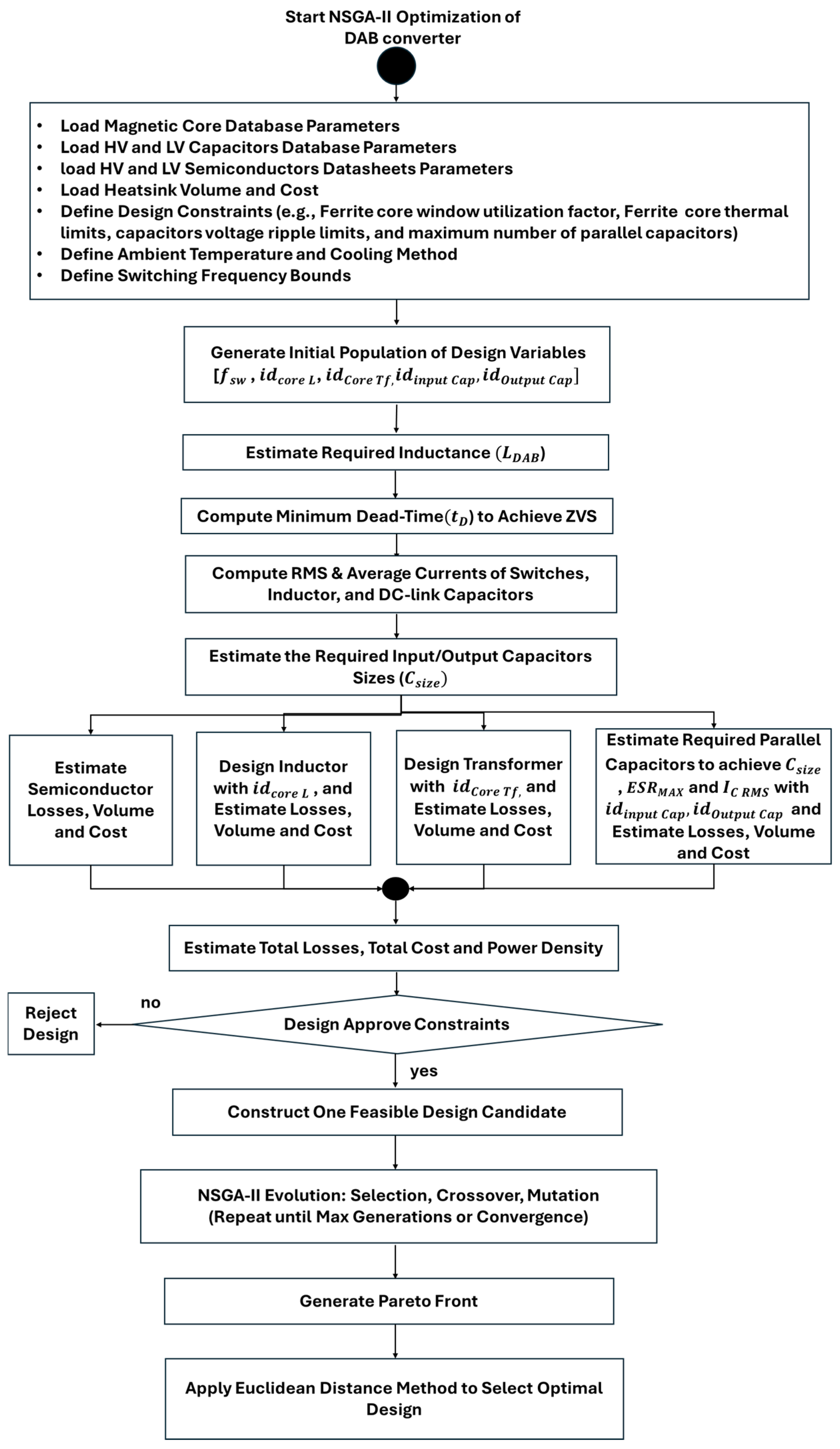
2.3. DAB Multi-Objectives Hardware Optimization Framework
2.4. DAB Semiconductor Selection for the HV and LV Sides
2.5. Formulation of Objective Function and Constraints
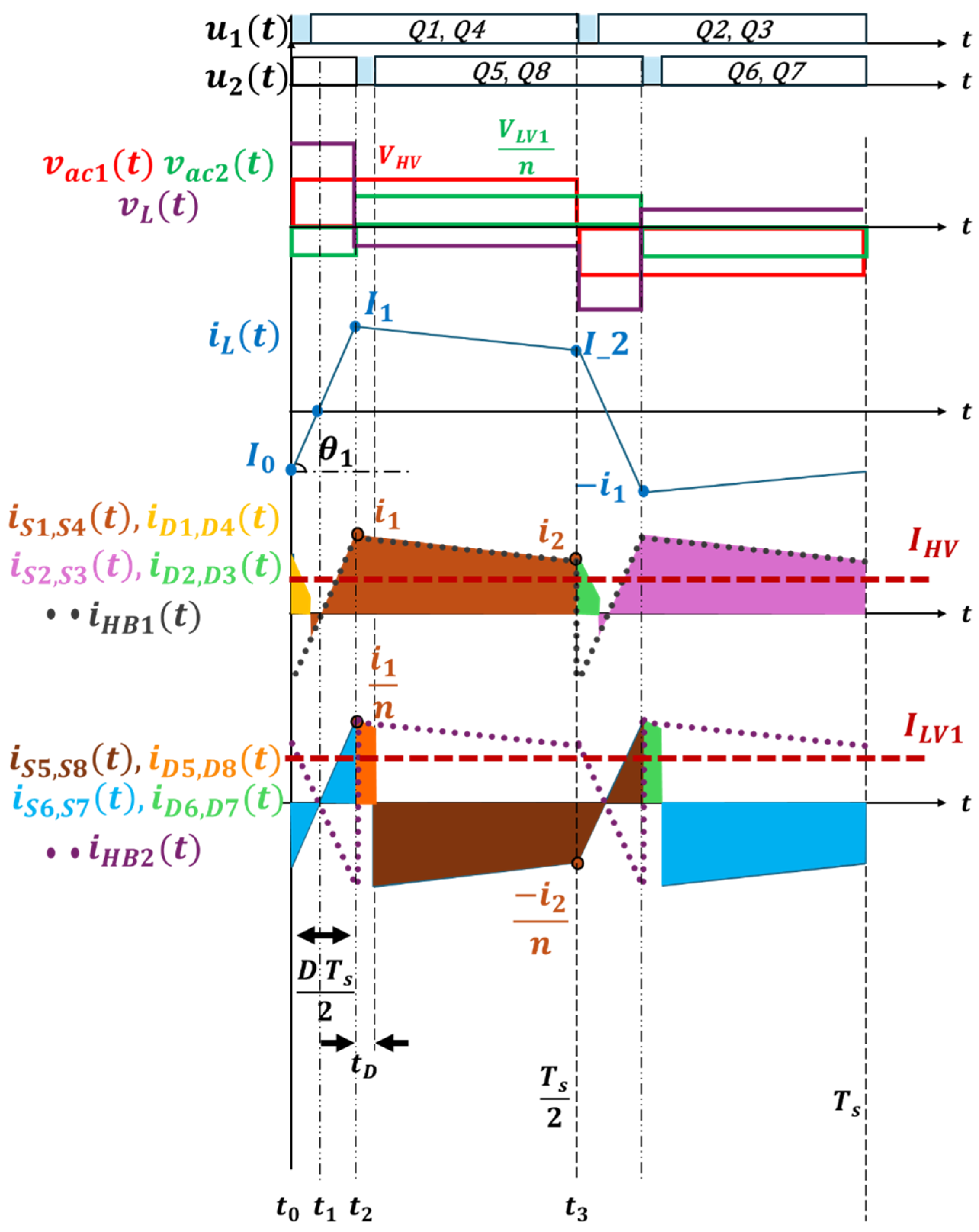
2.6. Modeling, Design, and Operation of DAB Stage
2.7. DAB Analytical Losses Modeling
2.8. DAB Power Density Modeling
2.9. DAB Cost Modeling
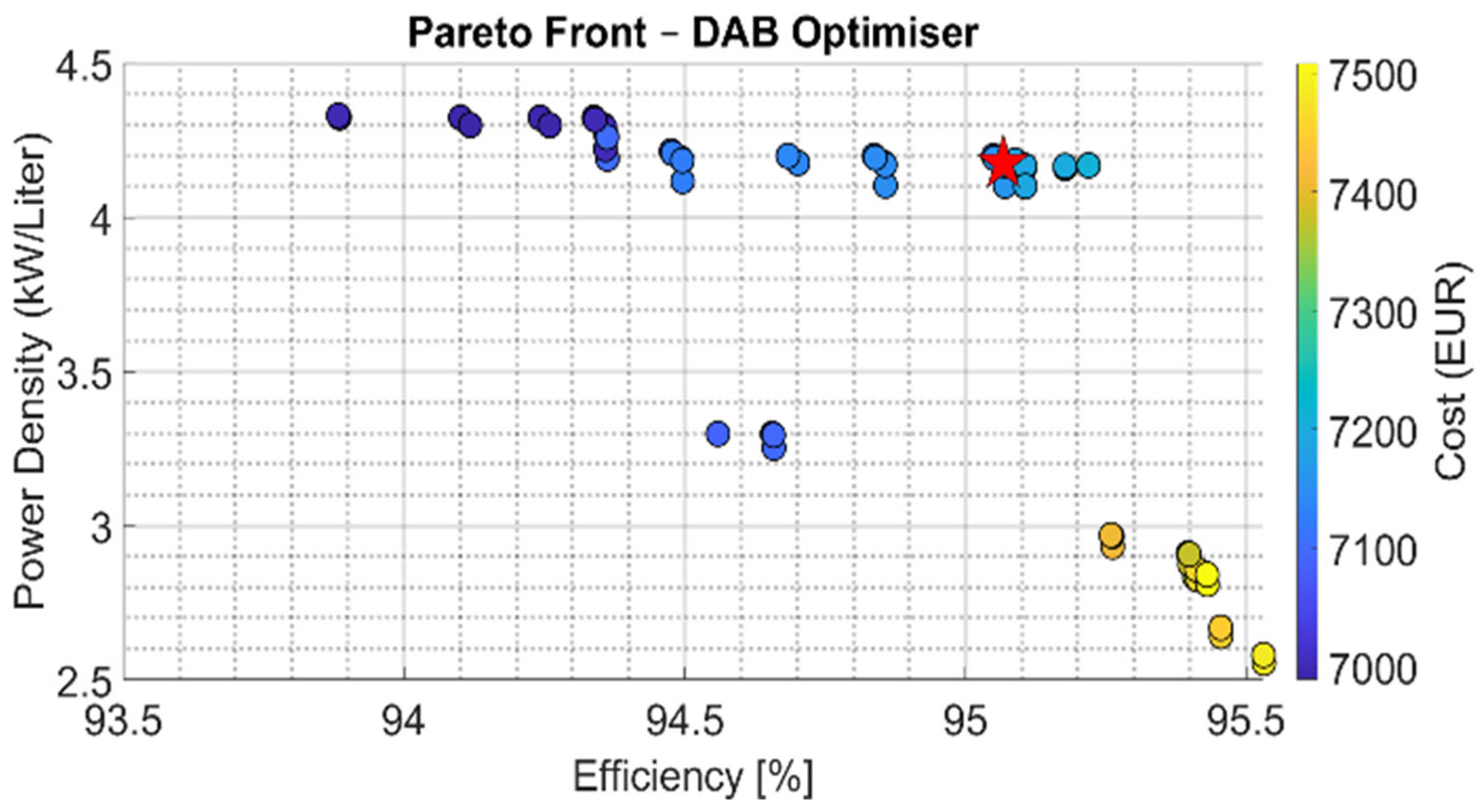
2.10. DAB Design Optimization Results
3. Control Design and Stability Analysis
3.1. DAB Stage Control Design
3.2. Buck-Stage Control Design
3.3. Parameter Tuning and Stability Analysis
3.3.1. DAB Voltage Controller Tuning
- must be lower than the voltage sensor bandwidth .
- must be lower than , where is the DAB switching frequency.
3.3.2. Buck Current Controller Tuning
3.3.3. Buck Voltage Controller Tuning
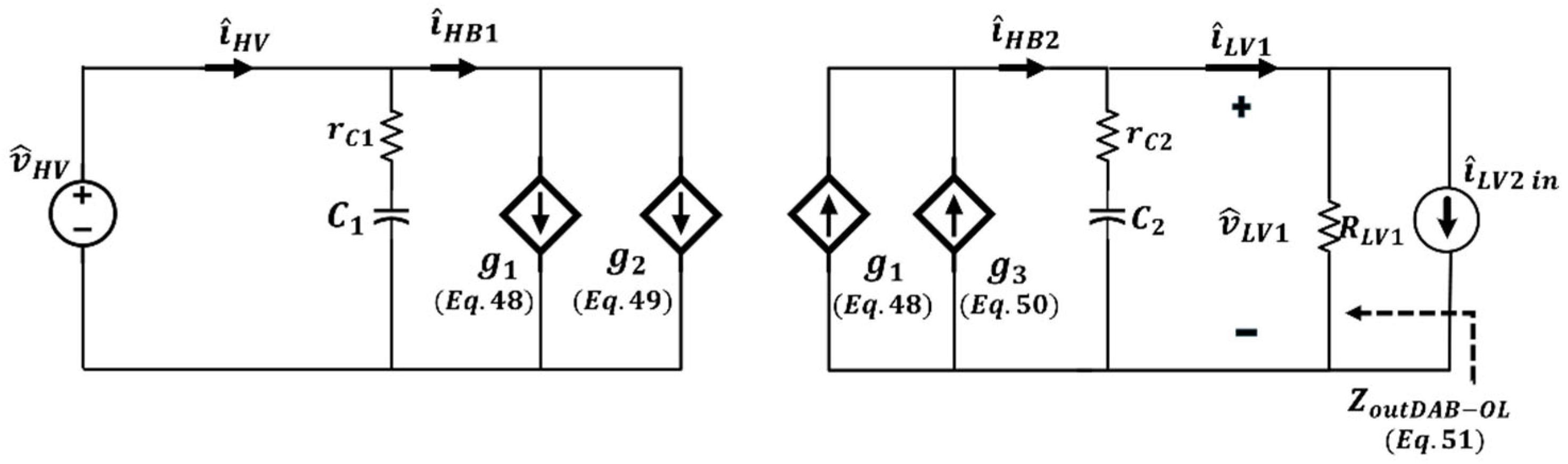
3.3.4. Stability Analysis
4. Experimental Setup and Validation
4.1. DAB-Stage BOM and Losses Estimation Validation
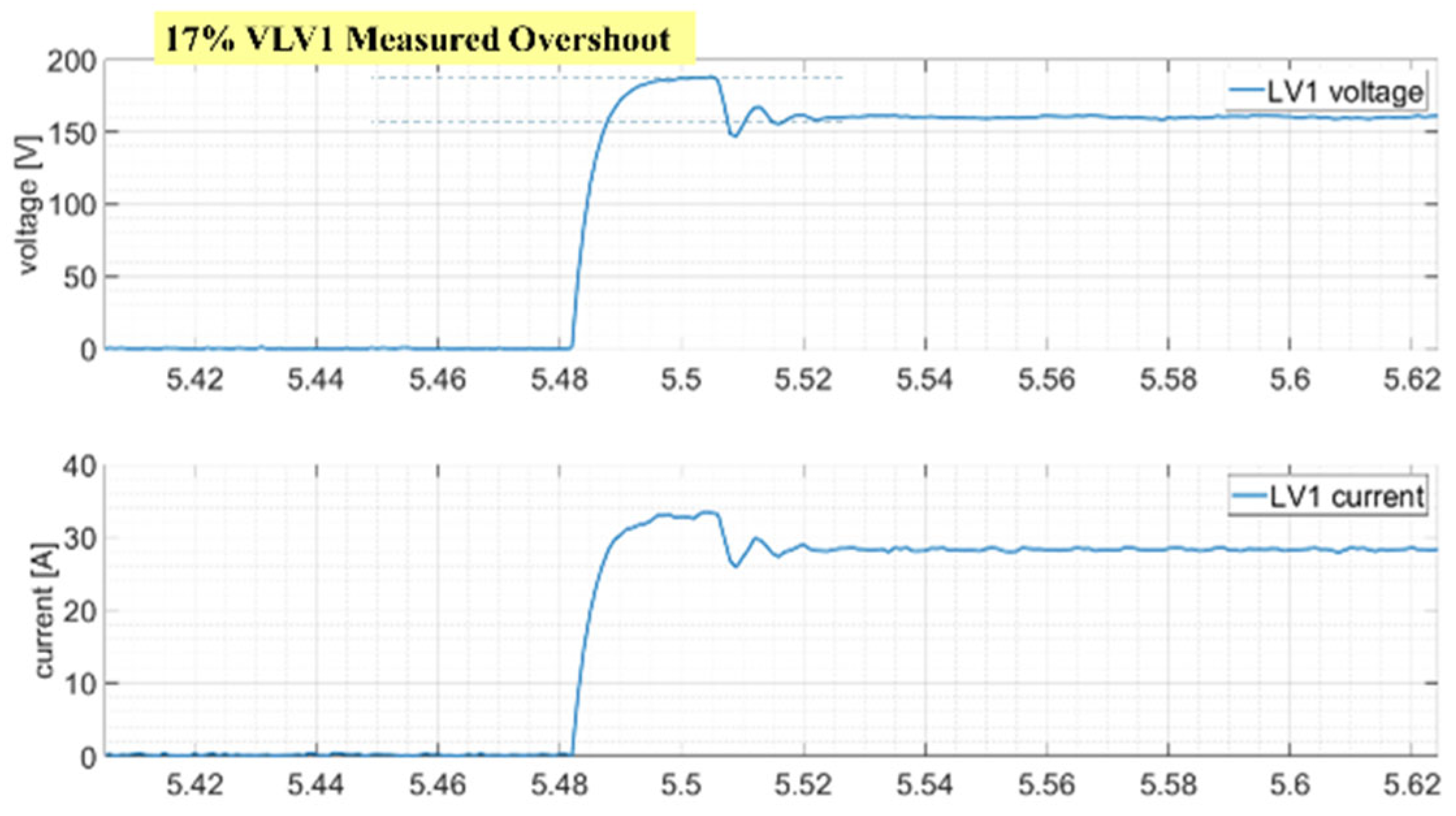
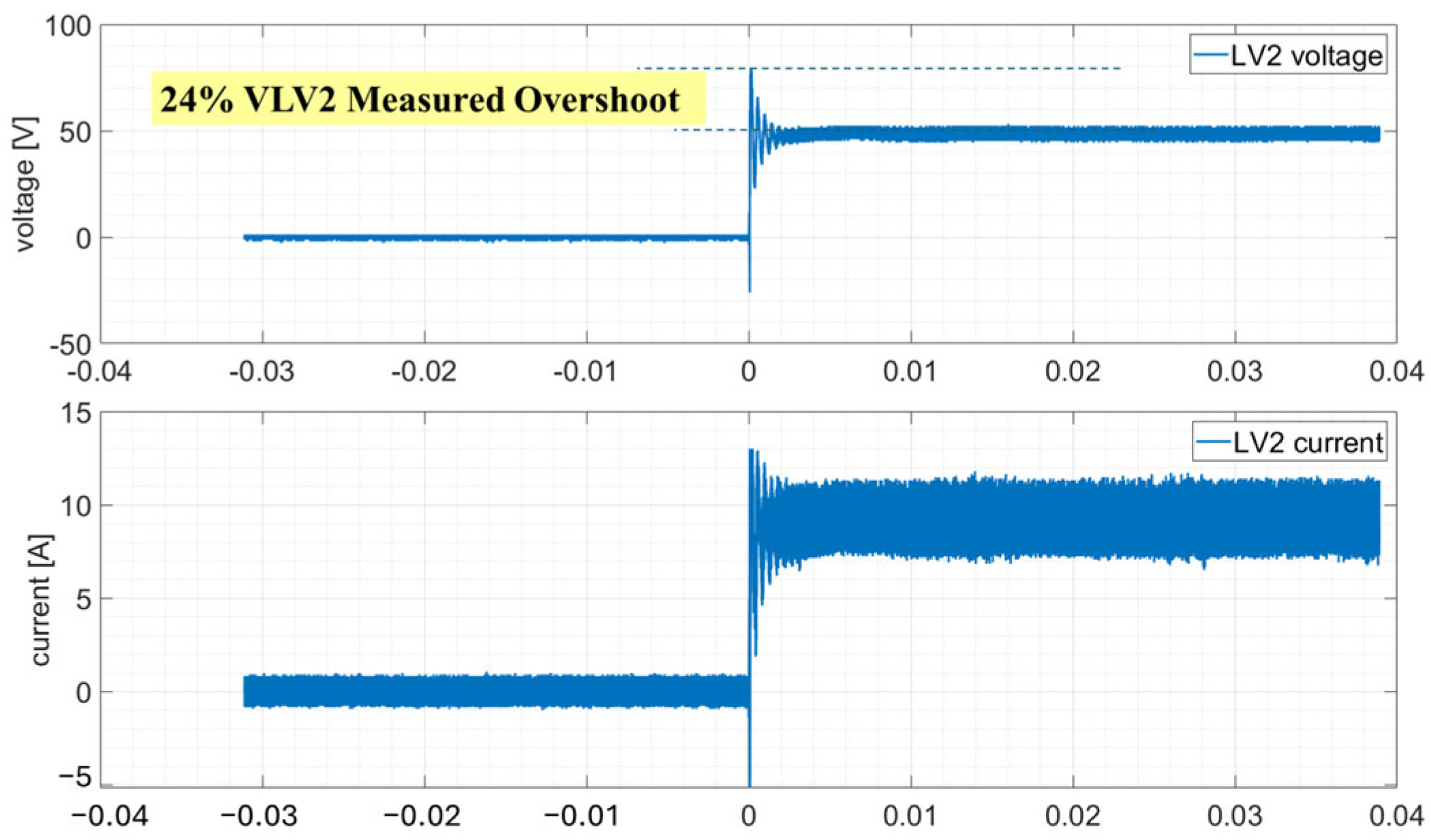
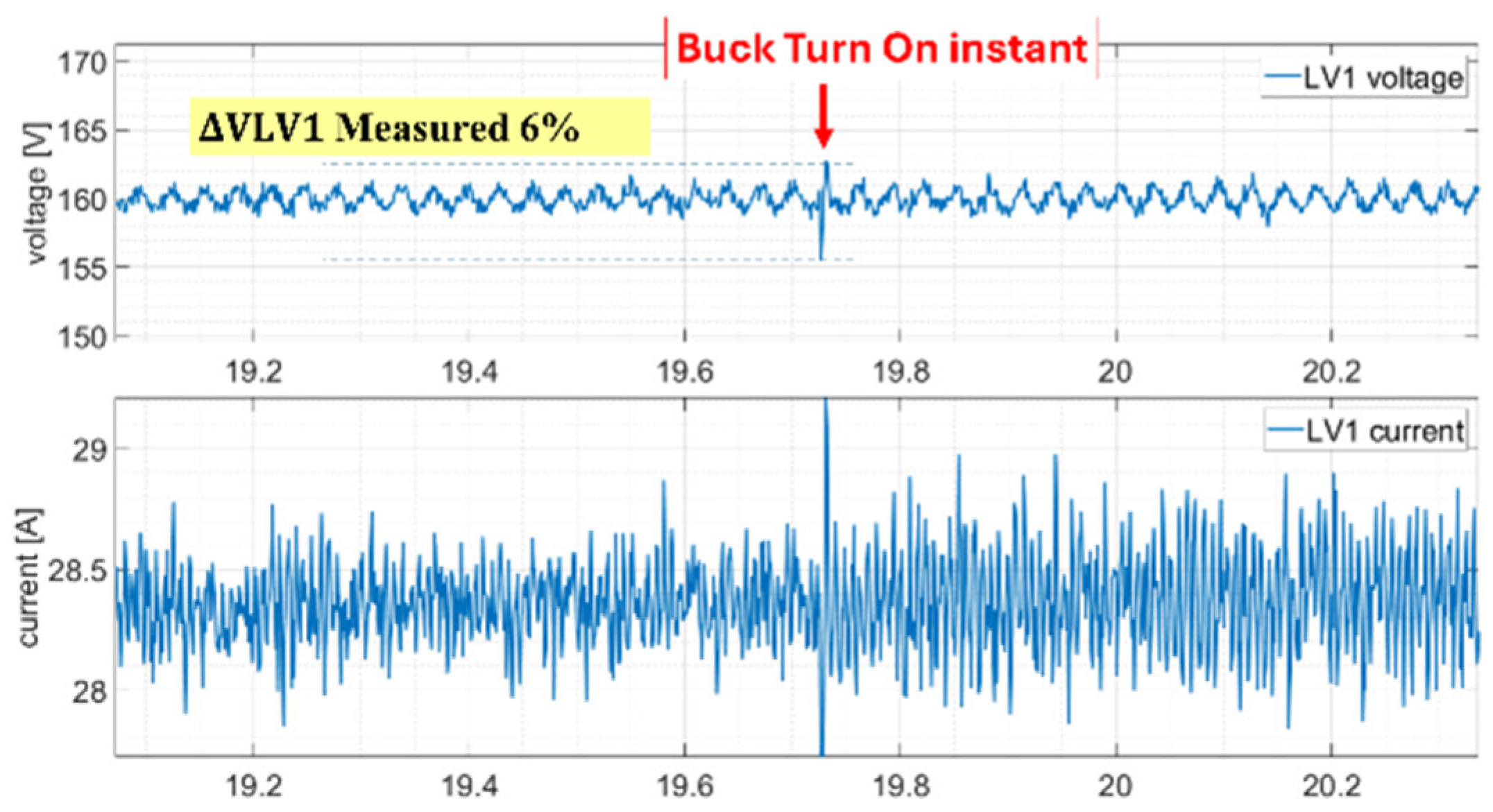
4.2. Cascaded DAB and Buck Converters Control Stability Validation
5. Conclusions
Author Contributions
Funding
Data Availability Statement
Acknowledgments
Conflicts of Interest
Nomenclature
| APM | Auxiliary Power Module |
| BEV | Battery Electric Vehicle |
| HV/LV | High Voltage/Low Voltage |
| LV1/LV2 | 48 V Low-Voltage Bus/12 V Low-Voltage Bus |
| DAB | Dual Active Bridge Converter |
| TAB | Triple Active Bridge Converter |
| HB1/HB2 | Primary/Secondary H-bridge of the DAB converter |
| SPS | Single Phase Shift Modulation |
| ZVS | Zero-Voltage Switching |
| NSGA-II | Non-dominated Sorting Genetic Algorithm II |
| ESR | Equivalent Series Resistance |
| PM | Phase Margin |
| BW | Bandwidth |
| BOM | Bill of Materials |
| OBC | On-board Charger |
| OEM | Original Equipment Manufacturer |
| High-Voltage DC Bus Voltage | |
| 48 V Low-Voltage Bus Voltage | |
| 12 V Low-Voltage Bus Voltage | |
| 48 V Low-Voltage Bus Load Current | |
| 12 V Low-Voltage Bus Load Current | |
| DAB Series Inductance to the Transformer | |
| Parasitic Resistance of the DAB Inductor | |
| Transformer Primary Winding Resistance | |
| Transformer Secondary Winding Resistance | |
| n | Transformer Secondary to Primary Turns Ratio |
| Switching Frequency | |
| ω | Angular Switching Frequency |
| D | Phase-shift Ratio of the DAB Converter |
| Dead time | |
| Output Capacitance of Switching Device | |
| Buck Converter Duty Cycle | |
| Buck Converter Inductance | |
| Buck Inductor Parasitic Resistance | |
| Filter Capacitor | |
| PI Voltage Controller s-Domain Model | |
| PI Current Controller s-Domain Model | |
| Filter Capacitor Equivalent Series Resistance | |
| Output Impedance of the DAB Converter | |
| Input Impedance of the Buck Converter | |
| Crossover Frequency | |
| Number of Magnetic Cores in the Database | |
| Number of HV DC-Link Capacitor Models in the Database | |
| Number of LV DC-Link Capacitor Models in the Database | |
| Efficiency | |
| Power Density |
References
- Kotb, R.; Chakraborty, S.; Tran, D.-D.; Abramushkina, M.; El Baghdadi, M.; Hegazy, O. Power electronics converters for electric vehicle auxiliaries: State of the art and future trends. Energies 2023, 16, 1753. [Google Scholar] [CrossRef] [Scilit]
- Verbruggen, F.J.R.; Hofman, T. Design sensitivity analysis for heavy-duty hybrid electric trucks with a waste heat recovery system. In Proceedings of the 2017 IEEE Vehicle Power and Propulsion Conference (VPPC), Belfort, France, 11–14 December 2017; IEEE: New York, NY, USA, 2017; pp. 1–6. [Google Scholar]
- Schöttle, R.; Bosch Hans-Joachim Schröder, R.; Ulrike Sinner, B.; Waldemar Stabroth, V.; Weitzel, J.; Michael Günther Zeyen, I. 48-Volt Electrical Systems—A Key Technology Paving the Road to Electric Mobility; ZVEI-German Electrical and Electronic Manufacturers’ Association Electronic Components and Systems and PCB and Electronic Systems Divisions: Frankfurt am Main, Germany, 2016; Available online: www.zvei.org (accessed on 1 December 2025).
- Wang, C.; Zheng, P.; Bauman, J. A review of electric vehicle auxiliary power modules: Challenges, topologies, and future trends. IEEE Trans. Power Electron. 2023, 38, 11233–11244. [Google Scholar] [CrossRef] [Scilit]
- ISO 6469-3; Electrically Propelled Road Vehicles—Safety Specifications—Part 3: Electrical Safety. ISO: Geneva, Switzerland, 2021.
- Emrani, A.; Adib, E.; Farzanehfard, H. Single-switch soft-switched isolated DC-DC converter. IEEE Trans. Power Electron. 2012, 27, 1952–1957. [Google Scholar] [CrossRef] [Scilit]
- Avila, A.; Garcia-Bediaga, A.; Alzuguren, I.; Vasic, M.; Rujas, A. A Modular Multifunction Power Converter Based on a Multiwinding Flyback Transformer for EV Application. IEEE Trans. Transp. Electrif. 2022, 8, 168–179. [Google Scholar] [CrossRef] [Scilit]
- Hack, T. Flyback controller improves cross regulation for multiple output applications. In Analog Circuit Design; Elsevier: Amsterdam, The Netherlands, 2015; pp. 497–498. [Google Scholar] [CrossRef] [Scilit]
- Hou, R.; Emadi, A. Dual active bridge-based full-integrated active filter auxiliary power module for electrified vehicle applications with single-phase onboard chargers. In Proceedings of the IEEE Applied Power Electronics Conference and Exposition—APEC, San Antonio, TX, USA, 22–26 March 2016; Institute of Electrical and Electronics Engineers Inc.: New York, NY, USA, 2016; pp. 1300–1306. [Google Scholar] [CrossRef] [Scilit]
- Yan, Y.; Gui, H.; Bai, H. Complete ZVS Analysis in Dual Active Bridge. IEEE Trans. Power Electron. 2021, 36, 1247–1252. [Google Scholar] [CrossRef] [Scilit]
- Zhang, J.M.; Xie, X.G.; Wu, X.K.; Qian, Z. Comparison study of phase-shifted full bridge ZVS converters. In Proceedings of the PESC Record—IEEE Annual Power Electronics Specialists Conference, Aachen, Germany, 20–25 June 2004; pp. 533–539. [Google Scholar] [CrossRef] [Scilit]
- Baggio, J.E.; Hey, H.L.; Gründling, H.A.; Pinheiro, H.; Pinheiro, J.R. Isolated interleaved-phase-shift-PWM DC-DC ZVS converter. IEEE Trans. Ind. Appl. 2003, 39, 1795–1802. [Google Scholar] [CrossRef]
- Schäfer, J.; Bortis, D.; Kolar, J.W.; Schäfer, J.; Bortis, D. ETH Library Multi-Port Multi-Cell DC/DC Converter Topology for Electric Vehicle’s Power Distribution Networks. In Proceedings of the 2017 IEEE 18th Workshop on Control and Modeling for Power Electronics (COMPEL), Stanford, CA, USA, 9–12 July 2017. [Google Scholar] [CrossRef]
- Shukla, R.K.; Saha, D.; Fernandes, B.G. A Multifunctional Current Fed Triple Active Bridge Converter for EV Application. In Proceedings of the International Conference on Power Electronics, Drives, and Energy Systems for Industrial Growth, PEDES, Mangalore, India, 18–21 December 2024; Institute of Electrical and Electronics Engineers Inc.: New York, NY, USA, 2024. [Google Scholar] [CrossRef] [Scilit]
- Soleimanifard, M.; Varjani, A.Y. A bidirectional buck-boost converter in cascade with a dual active bridge converter to increase the maximum input and output currents and extend zero voltage switching range. In Proceedings of the 2020 11th Power Electronics, Drive Systems, and Technologies Conference (PEDSTC), Tehran, Iran, 4–6 February 2020; IEEE: New York, NY, USA, 2020; pp. 1–6. [Google Scholar]
- Everts, J. Design and optimization of an efficient (96.1%) and compact (2 kW/dm3) bidirectional isolated single-phase dual active bridge AC-DC converter. Energies 2016, 9, 799. [Google Scholar] [CrossRef] [Scilit]
- Dindar, S.; Hardalac, F.; Aksoy, E.; Ayturan, K. Investigation of Multi-Output Single-Switch Forward Converter in Terms of Cross-Regulation Using Weighted Control Method. Appl. Sci. 2025, 15, 365. [Google Scholar] [CrossRef] [Scilit]
- Shao, S.; Chen, L.; Shan, Z.; Gao, F.; Chen, H.; Sha, D.; Dragičević, T. Modeling and Advanced Control of Dual-Active-Bridge DC-DC Converters: A Review Index Terms-DC-DC, dual active bridge (DAB), reduced-order model, generalized average model, discrete-time model, feedback control, feedforward control, model predictive control. IEEE Trans. Power Electron. 2021, 37, 1524–1547. [Google Scholar] [CrossRef] [Scilit]
- Tarisciotti, L.; Chen, L.; Shao, S.; Dragicevic, T.; Wheeler, P.; Zanchetta, P. Finite Control Set Model Predictive Control for Dual Active Bridge Converter. IEEE Trans. Ind. Appl. 2022, 58, 2155–2165. [Google Scholar] [CrossRef] [Scilit]
- Byrne, D.; Director Industry Marketing; Transportation, TTI Europe. An Engineer’s Guide to the DC Power Train Architecture of an Electric Vehicle; The Specialist in Electronic Component Distribution; TTI Inc.: Maisach, Germany, 2017. [Google Scholar]
- Mio, T.; Komatsubara, Y.; Ohmi, N.; Kimoto, Y.; Iizuka, K.; Suganuma, T.; Maruyama, S.; Sugiyama, T.; Sato, F.; Shinoda, S.; et al. Auxiliary power supply system for electric power steering (EPS) and high-heat-resistant lithium-ion capacitor. World Electr. Veh. J. 2019, 10, 27. [Google Scholar]
- ZVEI-Task Force Voltage Classes. Voltage Classes for Electric Mobility; ZVEI: Frankfurt, Germany, 2013; Available online: https://www.zvei.org/fileadmin/user_upload/Presse_und_Medien/Publikationen/2014/april/Voltage_Classes_for_Electric_Mobility/Voltage_Classes_for_Electric_Mobility.pdf (accessed on 29 May 2022).
- Dhage, A. Auxiliary Systems Power Consumption in Electric Vehicles. Available online: https://www.batterydesign.net/auxiliary-systems-power-consumption-in-electric-vehicles/?utm_source=chatgpt.com (accessed on 9 April 2025).
- Zhang, Y.; Tong, L. Regenerative braking-based hierarchical model predictive cabin thermal management for battery life extension of autonomous electric vehicles. J. Energy Storage 2022, 52, 104662. [Google Scholar] [CrossRef] [Scilit]
- Wagner, D.; Steinsträter, M.; Förth, M.; Stohwasser, M.; Hoffmann, J.; Lienkamp, M. Battery independent regenerative braking using model predictive control with auxiliary power consumers. Forsch. Ingenieurwesen/Eng. Res. 2019, 83, 843–852. [Google Scholar] [CrossRef] [Scilit]
- Das, D.; Basu, K. Optimal design of a dual-active-bridge DC–DC converter. IEEE Trans. Ind. Electron. 2020, 68, 12034–12045. [Google Scholar]
- Iyer, V.M.; Gulur, S.; Bhattacharya, S. Optimal design methodology for dual active bridge converter under wide voltage variation. In Proceedings of the 2017 IEEE Transportation Electrification Conference and Expo (ITEC), Chicago, IL, USA, 22–24 June 2017; IEEE: Piscataway, NJ, USA, 2017; pp. 413–420. [Google Scholar]
- Lin, F.; Li, X.; Zhang, X.; Ma, H. STAR: One-Stop Optimization for Dual Active Bridge Converter with Robustness to Operational Diversity. IEEE J. Emerg. Sel. Top. Power Electron. 2024, 12, 2758–2773. [Google Scholar] [CrossRef] [Scilit]
- Burkart, R.M.; Kolar, J.W. Comparative eta-rho-sigma Pareto Optimization of Si and SiC Multilevel Dual-Active-Bridge Topologies With Wide Input Voltage Range. IEEE Trans. Power Electron. 2016, 32, 5258–5270. [Google Scholar] [CrossRef] [Scilit]
- Wu, W.; Lee, N.-C.; Schuellein, G. Multi-phase buck converter design with two-phase coupled inductors. In Proceedings of the Twenty-First Annual IEEE Applied Power Electronics Conference and Exposition, APEC’06, Dallas, TX, USA, 19–23 March 2006; IEEE: Piscataway, NJ, USA, 2006; p. 6. [Google Scholar]
- Rahman, M.S. Buck Converter Design Issues; Institutionen för systemteknik: Linköping, Sweden, 2007. [Google Scholar]
- Lee, J.-P.; Cha, H.; Shin, D.; Lee, K.-J.; Yoo, D.-W.; Yoo, J.-Y. Analysis and design of coupled inductors for two-phase interleaved DC-DC converters. J. Power Electron. 2013, 13, 339–348. [Google Scholar]
- EPC Company. EPC9163 KIT—Evaluation Board. Available online: https://epc-co.com/epc/products/evaluation-boards/epc9163 (accessed on 14 July 2025).
- Chakraborty, S. Advanced Lifetime Assessment and Modelling of an Optimized WBG-Based Interleaved Bidirectional DC/DC Converter for Electric Drivetrain Applications. Ph.D. Thesis, Vrije Universiteit Brussel, Ixelles, Belgium, 2022. [Google Scholar]
- McLyman, C.W.T. Transformer and Inductor Design Handbook; Marcel Dekker: New York, NY, USA, 2004. [Google Scholar]
- Akbar, G.; Di Fatta, A.; Rizzo, G.; Ala, G.; Romano, P.; Imburgia, A. Comprehensive Review of Wide-Bandgap (WBG) Devices: SiC MOSFET and Its Failure Modes Affecting Reliability. Physchem 2025, 5, 10. [Google Scholar] [CrossRef] [Scilit]
- Roig, J.; Gomez, G.; Bauwens, F.; Vlachakis, B.; Rodriguez, J.; Rogina, M.R.; Rodriguez, A.; Lamar, D.G. Series-Connected GaN Transistors for Ultra-Fast High-Voltage Switch (>1 kV). In Proceedings of the 2017 IEEE Applied Power Electronics Conference and Exposition (APEC), Tampa, FL, USA, 26–30 March 2017. [Google Scholar]
- Van Do, T.; Trovao, J.P.F.; Li, K.; Boulon, L. Wide-Bandgap Power Semiconductors for Electric Vehicle Systems: Challenges and Trends. IEEE Veh. Technol. Mag. 2021, 16, 89–98. [Google Scholar] [CrossRef] [Scilit]
- Jain, H.; Rajawat, S.; Agrawal, P. Comparision of wide band gap semiconductors for power electronics applications. In Proceedings of the 2008 International Conference on Recent Advances in Microwave Theory and Applications, Jaipur, India, 21–24 November 2008; IEEE: Piscataway, NJ, USA, 2008; pp. 878–881. [Google Scholar]
- Texas Insturments. BI-Directional, Dual Active Bridge Reference Design for Level 3 Electric Vehicle Charging Station; Texas Instruments: Dallas, TX, USA, 2019. [Google Scholar]
- Rodriguez, A.; Vazquez, A.; Lamar, D.G.; Hernando, M.M.; Sebastian, J. Different purpose design strategies and techniques to improve the performance of a dual active bridge with phase-shift control. IEEE Trans. Power Electron. 2014, 30, 790–804. [Google Scholar] [CrossRef] [Scilit]
- Naayagi, R.T.; Forsyth, A.J.; Shuttleworth, R. High-power bidirectional DC-DC converter for aerospace applications. IEEE Trans. Power Electron. 2012, 27, 4366–4379. [Google Scholar] [CrossRef] [Scilit]
- Akagi, H.; Kinouchi, S.-I.; Miyazaki, Y. Bidirectional Isolated Dual-Active-Bridge (DAB) DC-DC Converters Using 1.2-kV 400-A. CPSS Trans. Power Electron. Appl. 2016, 1, 33–40. [Google Scholar]
- Erickson, R.W. Fundamentals of Power Electronics; Chapman & Hall: Boca Raton, FL, USA, 1997. [Google Scholar]
- Martínez, S.E.; Zaragoza, J.; Capelì, G.; Berbel, N. Exploring GaN Semiconductors Power Losses in DAB Converter Simulation via PLECS. In Proceedings of the 2024 IEEE 33rd International Symposium on Industrial Electronics (ISIE), Ulsan, Republic of Korea, 18–21 June 2024. [Google Scholar]
- Graovac, D.; Purschel, M.; Kiep, A. MOSFET Power Losses Calculation Using the Data-Sheet Parameters; Infineon Technologies AG: Neubiberg, Germany, 2006. [Google Scholar]
- Väisänen, V.; Hiltunen, J.; Nerg, J.; Silventoinen, P. AC Resistance Calculation Methods and Practical Design Considerations When Using Litz Wire. In Proceedings of the IECON 2013-39th Annual Conference of the IEEE Industrial Electronics Society, Vienna, Austria, 10–13 November 2013. [Google Scholar]
- Iuravin, E. Transformer Design for Dual Active Bridge Converter. Master’s Thesis, Miami University, Oxford, OH, USA, 2018. [Google Scholar]
- Burkart, R.; Kolar, J.W. Component cost models for multi-objective optimizations of switched-mode power converters. In Proceedings of the 2013 IEEE Energy Conversion Congress and Exposition, Denver, CO, USA, 15–19 September 2013; IEEE: New York, NY, USA, 2013; pp. 2139–2146. [Google Scholar]
- D’Azzo, J.J.; Houpis, C.H.; Sheldon, S.N. Linear Control System Analysis and Design with MATLAB; Dekker, M., Ed.; Marcel Dekker, Inc.: New York, NY, USA, 2003. [Google Scholar]
- Chen, Y.; Zhang, Y.; Qu, E.; He, M. Active Damping Method for LC-DAB System Based on a Power-Based Impedance Model. IEEE Trans. Power Electron. 2023, 38, 4405–4418. [Google Scholar] [CrossRef] [Scilit]
- Iyer, V.M.; Gulur, S.; Bhattacharya, S. Small-signal modeling and stability analysis of a bidirectional electric vehicle charger. In Proceedings of the 2017 IEEE 6th International Conference on Renewable Energy Research and Applications (ICRERA), San Diego, CA, USA, 5–8 November 2017; IEEE: Piscataway, NJ, USA, 2017; pp. 1030–1035. [Google Scholar]
- Nguyen, H. Design, Analysis and Implementation of Multiphase Synchronous Buck DC-DC Converter for Transportable Processor; Academia.edu: San Francisco, CA, USA, 2004. [Google Scholar]
- Kapat, S.; Krein, P.T. A Tutorial and Review Discussion of Modulation, Control and Tuning of High-Performance DC-DC Converters Based on Small-Signal and Large-Signal Approaches; Institute of Electrical and Electronics Engineers Inc.: New York, NY, USA, 2020. [Google Scholar] [CrossRef] [Scilit]
- Liu, B.; Davari, P.; Blaabjerg, F. An enhanced generalized average modeling of dual active bridge converters. In Proceedings of the 2020 IEEE Applied Power Electronics Conference and Exposition (APEC), New Orleans, LA, USA, 15–19 March 2020; IEEE: Piscataway, NJ, USA, 2020; pp. 85–90. [Google Scholar]



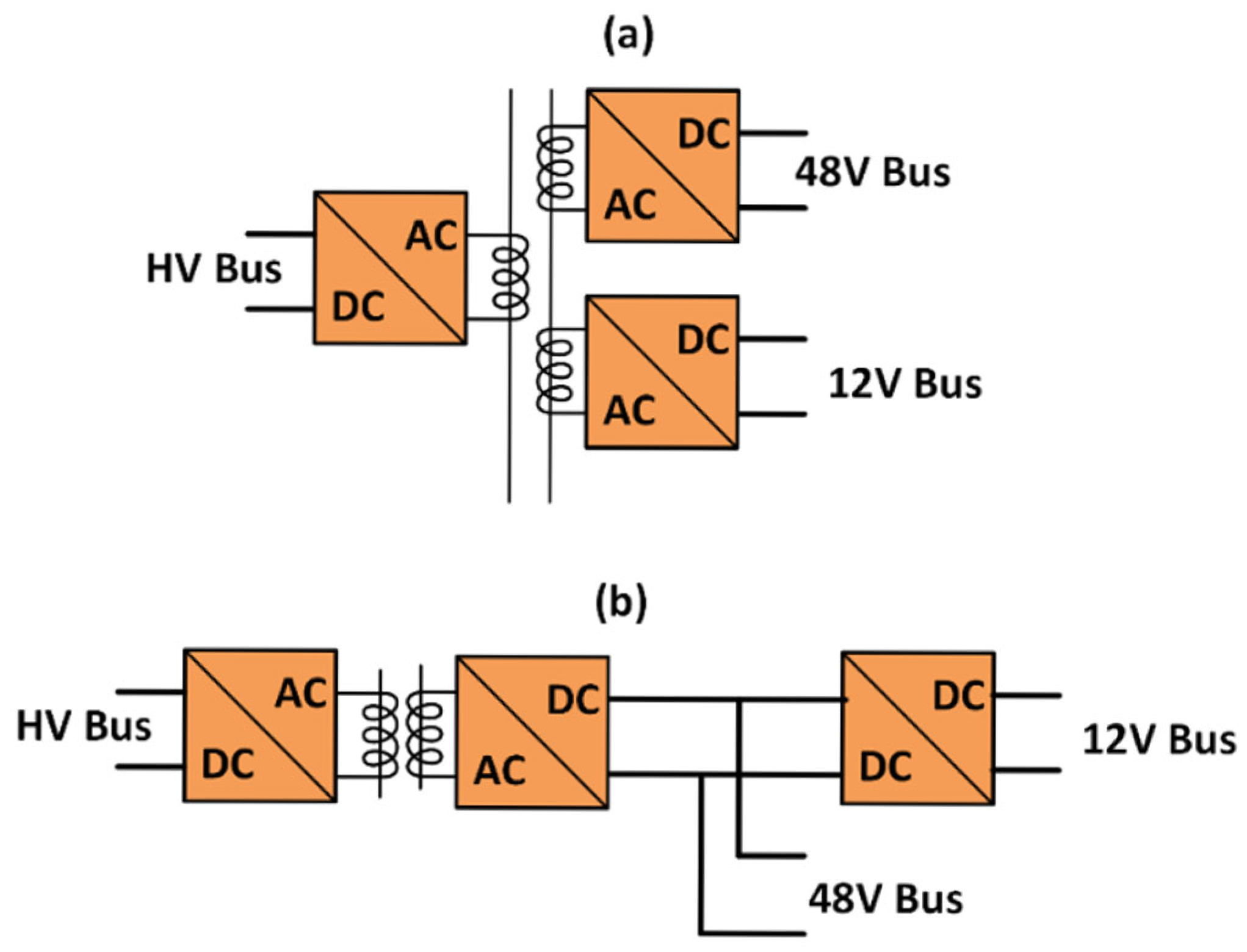
| Metric | Cascaded Topologies Using a Single Secondary Isolated Stage Followed by a Non-isolated DC–DC Stage | Transformer-Based Topologies with Multiple Secondary Windings | Reference |
|---|---|---|---|
| Bidirectional | Yes | Yes | [1] |
| Control complexity | High | Medium | [13,15] |
| Efficiency | Medium | High | [1] |
| Size | Smaller footprint | Larger footprint | [16] |
| Cost | High | Medium | [17] |
| Scalability | Single or Multi-LV | Fixed design | [1] |
| Load | Power Rating (kW) | SOTA Supply Voltage |
|---|---|---|
| Refrigerant compressor for HVAC and battery chiller systems | 3.4 | HV |
| HVAC Cabin Air Blower | 0.1 | LV |
| HVAC Cabin PTC Heater | 2.4 | HV |
| Battery PTC Heater | 2 | HV |
| Cooling pumps for Electric Drive and Battery | 1 | LV |
| Breaking motors | 0.3 | LV |
| Electric Power Steering (EPS) | 2 | LV |
| Anti-Lock Braking System (ABS) | 0.2 | LV |
| Wipers | 0.2 | LV |
| Power seats | 0.3 | LV |
| Heating seats | 0.1 | LV |
| lamps | 0.1 | LV |
| Horn | 0.1 | LV |
| Infotainment system | 0.1 | LV |
| GBS | 0.05 | LV |
| Speakers | 0.2 | LV |
| Advanced Driver Assistance System (ADAS) | 0.6 | LV |
| Interior lighting | 0.02 | LV |
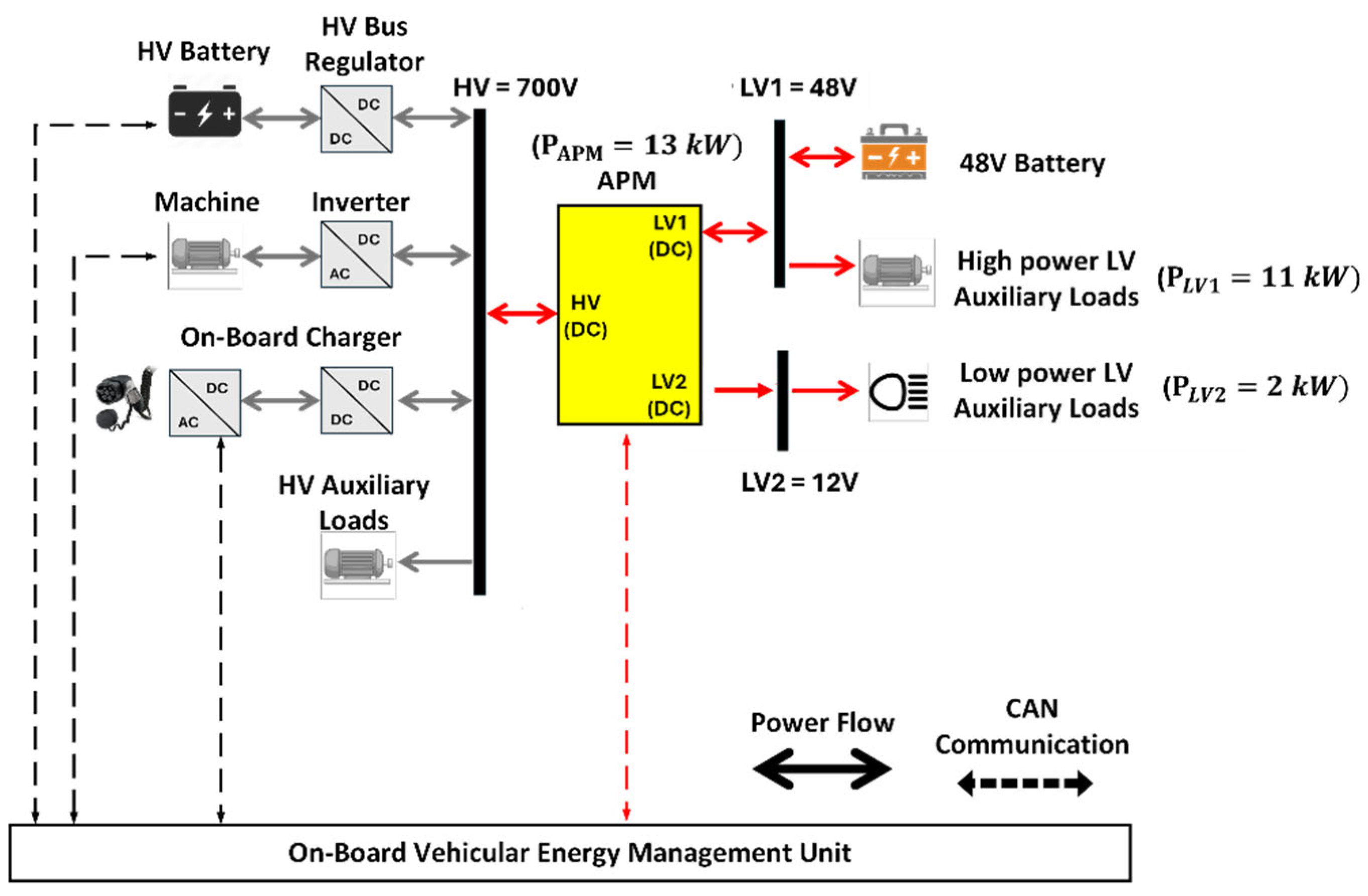
| Total APM Power Rating | 13 kW |
| Type | ||||||||
|---|---|---|---|---|---|---|---|---|
| N87 | 10 | 500 | 0.39 | 2200 | 0.02 | 0.03 | 1.78 | 2.62 |
| N97 | 10 | 500 | 0.41 | 2300 | 0.02 | 0.01 | 1.86 | 2.47 |
| Parameter | Value |
|---|---|
| () | 5.5 |
| () | 7 |
| () | 10 |
| (-) | 40 |
| (-) | 26 |
| (kg) | 8940 |
| Parameter | Symbol | Value/Range |
|---|---|---|
| HV nominal voltage | 700 V | |
| HV H-Bridge semiconductors | (Q1–Q4) | SiC MOSFET (E3M0075120K, 1200 V/30 A) |
| LV nominal voltage | 48 V | |
| LV H-Bridge semiconductors | (Q5–Q8) | GaN FET 4× (EPC7018, 100 V/90 A) |
| Rated output power | 13 kW | |
| Phase shift variable | D | 0.25 |
| Transformer turns ratio | n = | 0.068 |
| Switching frequency bounds | 10–75 kHz | |
| Input voltage ripple limit | ||
| Output voltage ripple limit | ||
| Ambient temperature | Tamb | 25 °C |
| Max allowed core temperature rise | Trise | 100 °C |
| Cooling method | - | Liquid |
| Inductor ferrite core database index range | 1… 15 | |
| Transformer ferrite core database index range | 1… 15 | |
| HV capacitor database index range | 1… 9 | |
| LV capacitor database index range | 1… 19 | |
| Heatsink volume | - | 9.5 × 17.5 × 4 mm3 |
| Heatsink cost | - | 100 € |
| Parameter | Value |
|---|---|
| 25 kHz | |
| E/E 40/16/12 | |
| 18 | |
| E/E 65/32/27 | |
| Transformer number of turns () | 28:2 |
| HV DC filter capacitor size and technology | (Film Capacitor) rc: 3 mOhm |
| LV1 filter capacitor size and technology | (Electrolyte Capacitor) rc: 1.1 mOhm |
| Power Density () | 4.17 |
| Cost () | 7152 |
| Peak Efficiency (%) | 95% |
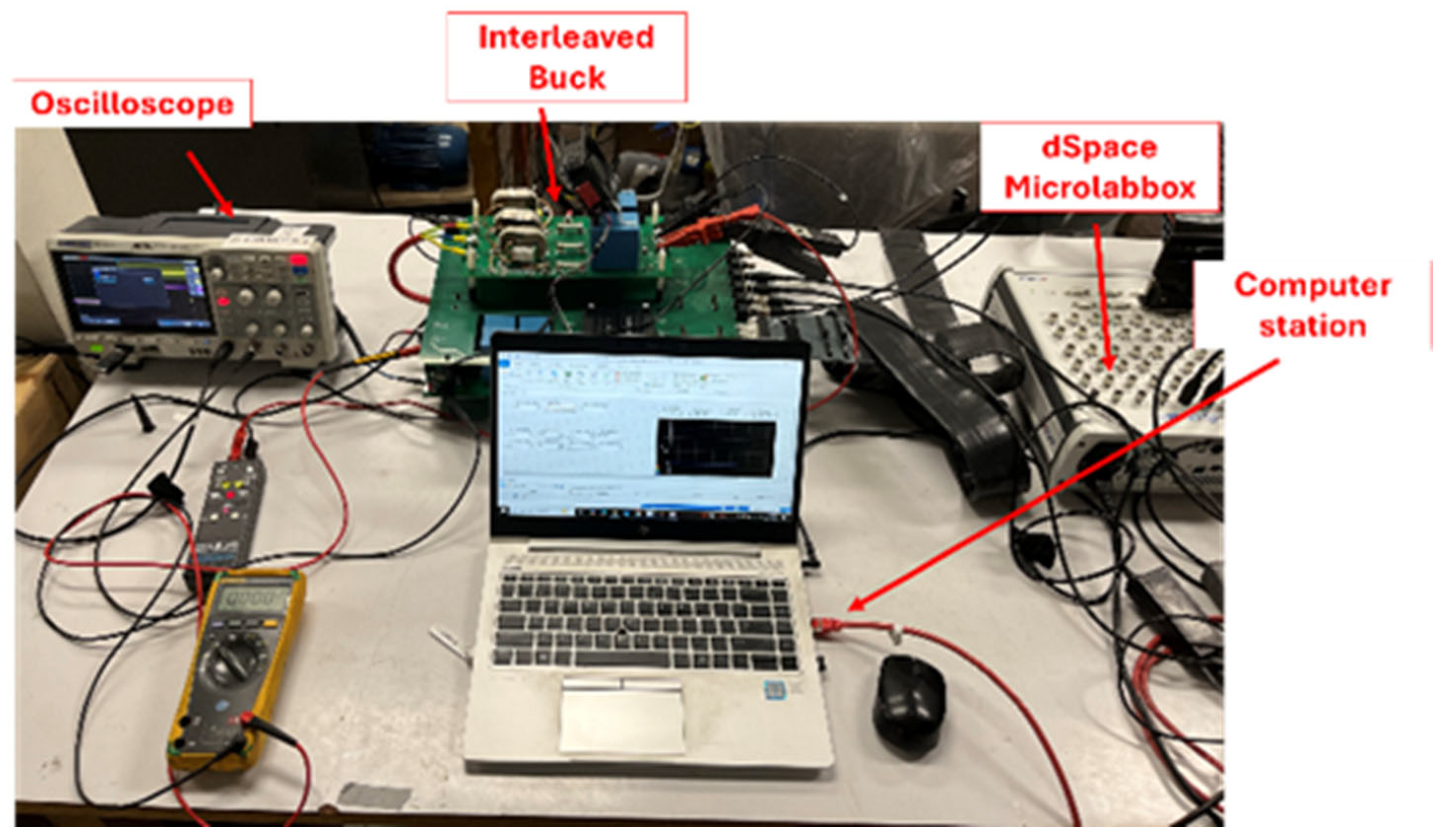
| Parameter | Value |
|---|---|
| 500 Hz | |
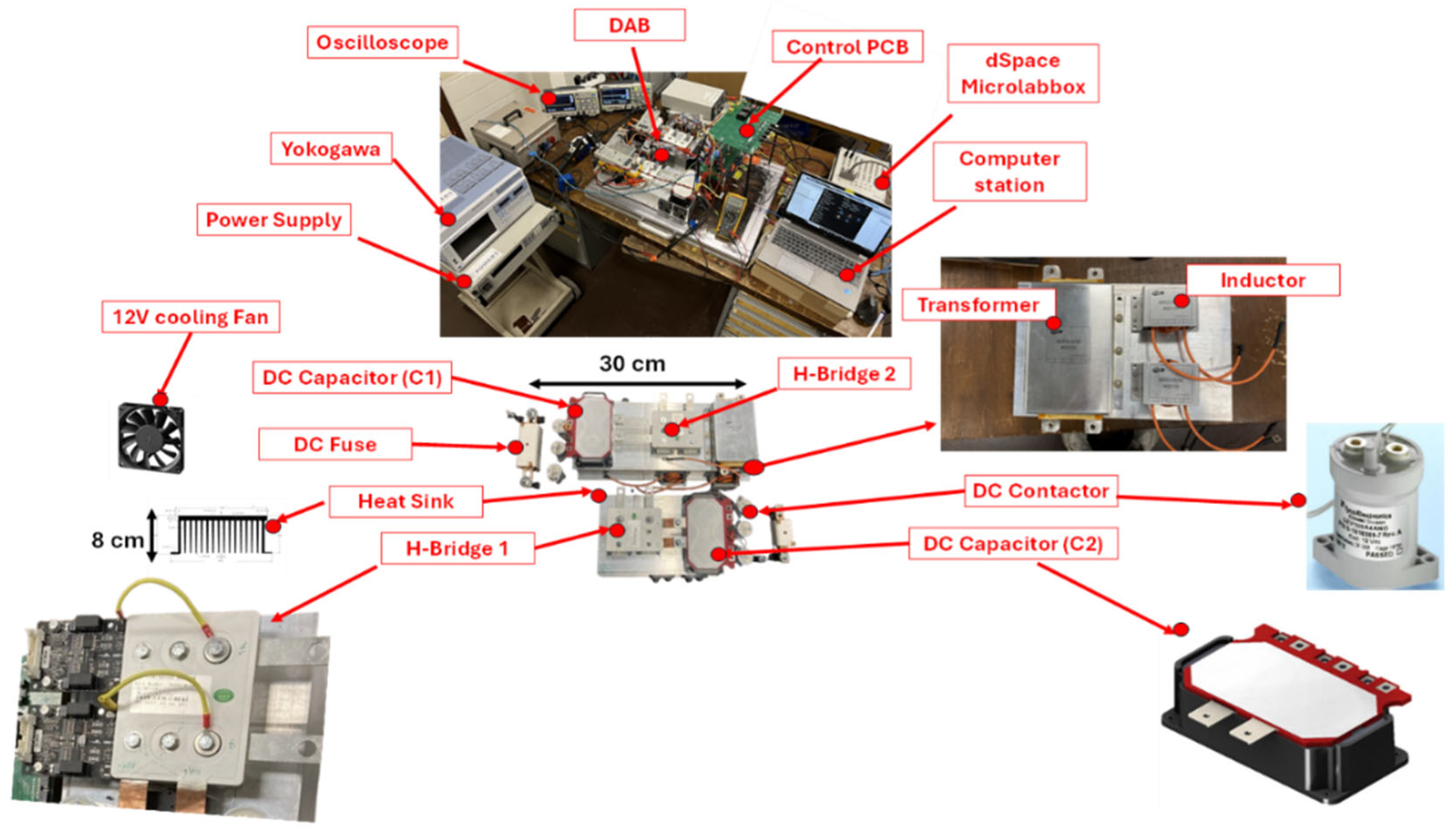
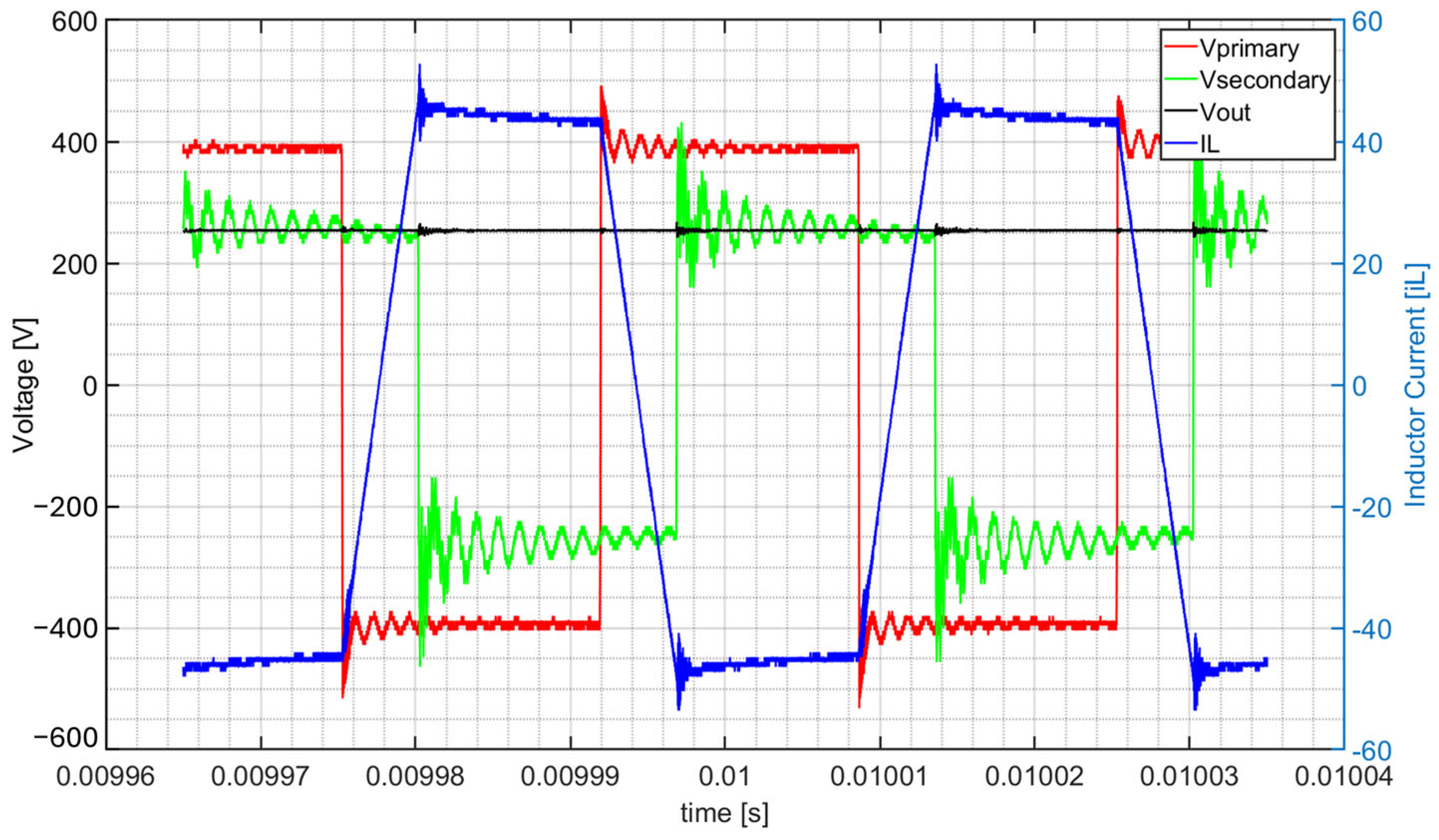
| Parameter | Laboratory Setup Value |
|---|---|
| 13 kW | |
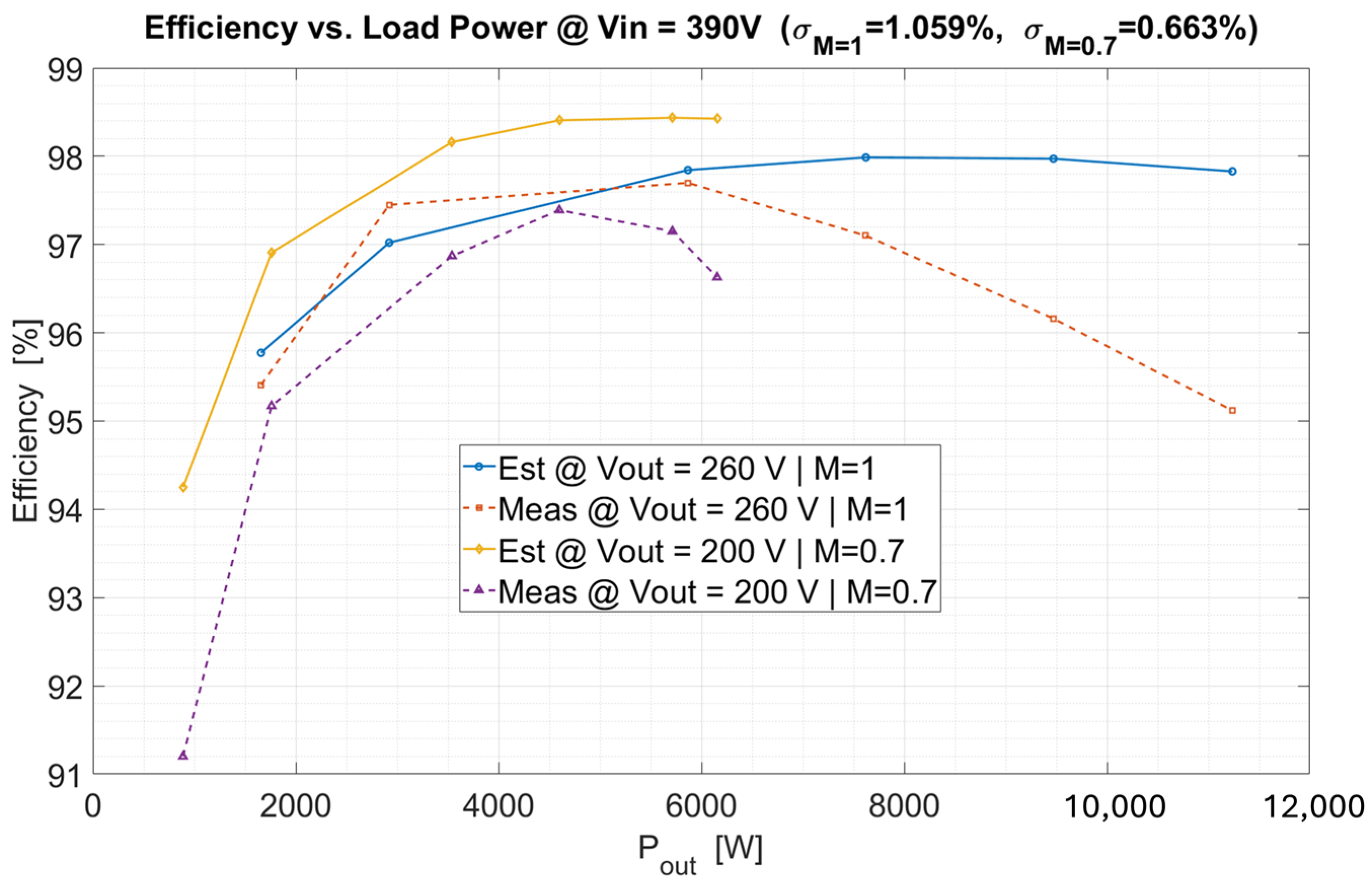
| HV side voltage | 390 V |
| LV side voltage | 260 V |
| Semiconductor (Q1–Q8) | SiC MOSFET (1.2 kV/120 A) (CAS120M12BM2) |
| 30 kHz | |
| (2 × 22.5 ) | |
| ELP 64/10/50 | |
| E/E 102 | |
| Transformer number of turns () | 12:8 |
| Input filter capacitor size and technology | (Film Capacitor) rc: 1 mOhm |
| Output filter capacitor size and technology | 1 × 500 μF (Film Capacitor) rc: 1 mOhm |
Disclaimer/Publisher’s Note: The statements, opinions and data contained in all publications are solely those of the individual author(s) and contributor(s) and not of MDPI and/or the editor(s). MDPI and/or the editor(s) disclaim responsibility for any injury to people or property resulting from any ideas, methods, instructions or products referred to in the content. |
© 2026 by the authors. Licensee MDPI, Basel, Switzerland. This article is an open access article distributed under the terms and conditions of the Creative Commons Attribution (CC BY) license.
Share and Cite
Kotb, R.; Dalir, A.; Chakraborty, S.; Hegazy, O. Design Optimization and Control System of a Cascaded DAB–Buck Auxiliaries Power Module for EV Powertrains. Energies 2026, 19, 431. https://doi.org/10.3390/en19020431
Kotb R, Dalir A, Chakraborty S, Hegazy O. Design Optimization and Control System of a Cascaded DAB–Buck Auxiliaries Power Module for EV Powertrains. Energies. 2026; 19(2):431. https://doi.org/10.3390/en19020431
Chicago/Turabian StyleKotb, Ramy, Amin Dalir, Sajib Chakraborty, and Omar Hegazy. 2026. "Design Optimization and Control System of a Cascaded DAB–Buck Auxiliaries Power Module for EV Powertrains" Energies 19, no. 2: 431. https://doi.org/10.3390/en19020431
APA StyleKotb, R., Dalir, A., Chakraborty, S., & Hegazy, O. (2026). Design Optimization and Control System of a Cascaded DAB–Buck Auxiliaries Power Module for EV Powertrains. Energies, 19(2), 431. https://doi.org/10.3390/en19020431