


Abstract
Transformers are essential power transformation equipment in power systems. Winding deformation is one of the main forms of transformer winding faults, which may cause performance degradation or even overall damage to the equipment. As the commonly used methods for diagnosing winding deformation, frequency response analysis (FRA) has problems such as the reliance on expert experience, insufficient universality for windings of different voltage levels and connection methods, etc. If the equivalent network parameters of the windings are identified based on the frequency response curve, the universality and effectiveness can be fundamentally guaranteed. This paper presents a comprehensive review and classification of domestic and international methods for parameter identification of transformer winding equivalent network based on FRA. It elaborates on the principles of parameter identification, as well as the correlation mechanism between frequency response curves and the equivalent network model of transformer windings. In addition, an evaluation is conducted on the principles, strengths, and key challenges of different algorithmic of parameter identification. Drawing upon existing research cases, practical recommendations are provided for the application of different algorithms. Finally, the challenges currently facing research in transformer winding parameter identification are analyzed, and potential future development trends are discussed.
1. Introduction
Transformers are the energy hubs of power systems, undertaking the crucial functions of electrical energy transmission and voltage level conversion. Its stable operation directly determines the reliability of power supply in the power system and is a fundamental device for ensuring the stability of electricity supply for social and public welfare purposes [1,2]. However, during operation, assembly, transportation and other processes, transformer windings may be affected by factors such as circuit current impact, improper transportation and installation, overload operation, chemical and environmental factors, etc. These factors subject the transformer windings to mechanical and electromagnetic forces, causing irreversible changes in their dimensions, shapes and other parameters [3]. This will affect the mechanical strength, insulation performance, and electrical performance of the transformer, and further pose serious hidden dangers to the safe and stable operation of the equipment itself and the entire power system [4,5].
To assess the health of the transformer, winding deformation tests are usually conducted regularly in engineering practice [6]. At present, the methods for detecting the state of transformer windings can be classified into online detection methods and offline detection methods based on whether the transformer is in operation. Among them, the online detection methods mainly include vibration analysis method, online frequency response testing method, ultrasonic detection method, distributed optical fiber sensing technology, etc. [7]. This type of method does not require the transformer to be shut down during the detection process and will not affect the power supply continuity of the power system. In addition, during the detection process, personnel do not need to touch the electrified equipment. Data is collected remotely through sensors, ensuring high operational safety and enabling long-term continuous detection [8]. However, this type of method is greatly affected by on-site electromagnetic interference and environmental noise, and requires complex signal filtering and anti-interference processing, making it difficult to ensure the accuracy of the detection results. Meanwhile, the installation and maintenance investment is relatively high, requiring the purchase of dedicated online monitoring equipment and system integration debugging [9,10,11]. Therefore, it has not been widely applied in the project. Offline detection methods mainly include short-circuit impedance method, sweep frequency impedance method, low-voltage pulse method, frequency response analysis (FRA) method, etc. [12,13]. This type of method is carried out in a static environment after power failure, free from electromagnetic interference and load fluctuations. The detection environment is stable and reliable, with high detection accuracy. It can accurately identify faults such as inter-turn short circuit and radial displacement of the winding. The data repeatability is good, and no complex anti-interference treatment is required. The results are highly reliable and have the advantages of low investment and low maintenance cost [14,15]. Currently, the technology is relatively mature and has become the main method for on-site tests of transformer winding deformation.
FRA is a typical offline analysis method, which was first proposed by Canadian scholar E. Dick in 1978. It has the advantages of high detection sensitivity, convenient on-site use, and the ability to determine the deformation of transformer windings without lifting the transformer cover [16,17]. Therefore, it has become the mainstream method recommended by international standards for determining whether there is a deformation fault in transformer windings. This method is based on the principle that the transformer winding can be equivalent to a passive linear two-port network composed of inductors, capacitors and linear resistors at higher frequencies. By loading the sweep frequency voltage signal at the beginning of the transformer winding and collecting the voltage data at the beginning and end, the decibelized voltage ratio is obtained using Equation (1) to reflect the frequency response data at different frequencies. Thus, a frequency response curve containing the mechanical information of the winding is obtained [18].
Since the zero and pole distribution of the equivalent network transfer function is correlated with the internal component parameters, after the winding deforms, the changes in the internal inductance and capacitance distribution parameters will cause changes in the winding transfer function and the frequency response curve. Therefore, the winding deformation can be perceived through the frequency response curve [8,19]. This method can be applied to transformer equipment of different voltage levels. Currently, the technology and standards are relatively standardized, and it can be used to determine the type and degree of faults. However, the analysis of its results is complex, relying on the experience of technicians and ignoring the mechanical information of the winding carried by the phase-frequency characteristic curve [20]. Therefore, it is usually necessary to further identify the parameters in combination with the frequency response data.
To fully explore the information contained in the frequency response curve, such as the position, type and degree of winding deformation, scholars have introduced mathematical indicators to reflect the differences in the frequency response curves of normal and faulty windings across the entire frequency band, and to determine the type and degree of faults based on the variation [21,22]. To further identify the location and degree of winding deformation, scholars equivalent the transformer to an equivalent network composed of resistance, inductance and capacitance, and use different identification algorithms to achieve parameter inversion of the equivalent network with the transformer frequency response curve as a reference, such as based on the criteria characterizing the differences in frequency response curves, curve shape analysis or machine learning methods [23]. However, such methods have their limitations. The identification of equivalent network parameters is essentially an optimization problem of multiple parameters. The determination of the feasible region, the selection of the objective function and algorithm will all affect the efficiency of the identification algorithm, and the dimensionality reduction processing in data analysis will lead to the loss of curve information [24]. Some machine learning algorithms need to collect a large amount of data from different types of transformers for modeling, which has poor universality and makes it difficult to provide a clear physical explanation for the diagnostic results [25]. Therefore, how to mine and utilize the winding state information contained in the frequency response curve and propose an efficient and accurate network parameter identification method still requires further and thorough research.
A substantial body of existing research has focused on the identification of transformer winding parameters using FRA. At the testing level, offline testing techniques have matured significantly and are now widely adopted in practice, whereas online testing remains limited in application due to challenges associated with electromagnetic interference and high implementation costs. Regarding equivalent modeling, the ladder equivalent model has emerged as the preferred approach in engineering applications, owing to its simplicity, computational efficiency, and strong adaptability. Although distributed parameter models offer superior accuracy in high-frequency or high-precision scenarios, their practical adoption is hindered by the complexity of modeling and significant computational demands. At the algorithmic level, traditional optimization methods are effective in linear or mildly nonlinear contexts but struggle to address high-dimensional parameter coupling issues. Global optimization algorithms and hybrid approaches have enhanced the capability to handle nonlinearities; however, a universally accepted performance evaluation framework has yet to be established.
At present, existing research still focuses on a single model and algorithm, lacking universal analysis of different voltage levels and winding structures as well as systematic analysis of different algorithms. The differences in experimental conditions among different studies also lead to a lack of comparability in algorithm performance. Based on this, this paper presents a comprehensive review of existing research on transformer winding parameter identification techniques based on FRA, clarifying the performance characteristics and application scenarios of various modeling methods and optimization algorithms, thereby providing standardized references for engineering practice. This paper systematically analyzes, through the main frameworks of FRA testing principles, equivalent model construction, algorithm optimization, and engineering applications, the adaptability of different approaches to transformer windings and the accuracy of parameter identification, offering a guideline for algorithm selection in future research, which contrasts with existing studies that typically focus on the analysis and comparative evaluation of individual algorithms. In Section 2, the fundamental principles of FRA testing, associated wiring configurations, and the laws governing parameter influence are introduced. Section 3 presents a comparative analysis of the construction methodologies and application domains of centralized and distributed parameter equivalent models. Section 4 elaborates on the mathematical formulation of parameter identification, along with the classification of objective functions and optimization algorithms. Section 5 evaluates the practical performance of various algorithms based on existing research cases. Subsequently, Section 6 discusses current technical challenges and outlines prospects for future development, thereby providing support for subsequent research and engineering applications.
2. Frequency Response Analysis
FRA is a non-invasive diagnostic technique that assesses the mechanical state of a transformer winding by measuring the ratio of the voltage U2 at the response terminal to the voltage U1 at the excitation terminal at different frequencies. The core principle is to equivalent the transformer winding to a linear network composed of distributed parameters such as linear resistance, inductance (mutual inductance), and capacitance. By injecting signals and measuring the ratio of output to input voltages, that is, the transfer function, the frequency domain characteristics of the winding are obtained. The test diagram is shown in Figure 1. When a mechanical fault occurs in the winding, its equivalent circuit parameters, such as capacitance and inductance, will change, causing the transfer function curve to have a resonant peak shift or amplitude change in a specific frequency band. Therefore, based on the frequency response curve for parameter inversion, the identification of transformer winding parameters can be achieved.
Figure 1.
Illustration of the FRA testing.
2.1. Test Principle of FRA
FRA is mainly classified by testing methods into port voltage ratio method, current injection method, open circuit method and short circuit method. The connection method is shown in Figure 2. Among them, the port voltage ratio method is widely used due to its ease of operation and high signal-to-noise ratio. In addition, in order to improve the diagnostic accuracy of FRA, researchers have introduced mathematical modeling and parameter identification methods, such as fitting RLC networks or transfer function models [26], to quantify the parameter changes corresponding to each resonant frequency order.
Figure 2.
Common test settings for identifying transformer winding parameters: (a) Opened Driving Point Admittance; (b) Grounded Driving Point Admittance; (c) Opened Voltage Transfer Ratio; (d) Voltage Transfer Ratio.
The port voltage ratio method is mainly divided into two categories based on the different properties of the input excitation power supply, i.e., sweep frequency response analysis (SFRA) and impulse frequency response analysis (IFRA) [27]. SFRA measures the response directly in the frequency domain by applying a sinusoidal signal with a fixed amplitude and varying frequency. IFRA applies low-voltage pulses rich in wide-band components to the windings as excitation and measures the response in the time domain. In actual testing, FRA typically employs frequency-domain scanning, using sweep signals or network analyzers as signal sources to collect excitation and response signals, respectively [28]. The sweep frequency voltage signal is usually a sine wave ranging from 10 Hz to 2 MHz. After measuring this signal and its response signal, the complex frequency transfer function is calculated through Fourier transform or network analysis methods. This transfer function can be expressed in various forms such as amplitude-frequency response, phase-frequency response or impedance-frequency response, depending on the measurement configuration and diagnostic target. In current research, amplitude-frequency response is usually recommended because it is highly sensitive to local structural disturbances and is convenient for comparison with historical curves.
According to whether the transformer is in operation during the test, the testing methods of FRA can be divided into offline and online methods. The traditional FRA method requires offline testing of the transformer after power-off, disconnecting all windings from the system power grid and grounding them to avoid common-mode interference. However, this approach has problems such as complex operation and high power outage costs. Researchers have proposed a variety of online FRA methods [29,30,31]. By extracting the excitation and response waveform signals of the transformer during operation to construct the frequency response, the health status of the windings can be monitored online. For instance, Nasirpour et al. compared the accuracy and anti-interference ability of different mathematical methods in extracting online transfer functions [32], laying the foundation for the practical application of online FRA.
SFRA and online FRA methods are widely studied due to their advantages. SFRA, with its stable and accurate characteristics, when combined with high-performance signal sources and analyzers, stands out in the detection of complex equipment. Online FRA, by leveraging advanced sensors and signal processing technologies, breaks through the limitations of offline methods and achieves real-time monitoring. The integration of the two, combined with artificial intelligence and big data analysis, is expected to enhance the accuracy of fault diagnosis, expand the application of FRA in multiple fields such as power and industry, and ensure the reliable operation of the system. It is an important research direction for FRA methods in the future. However, due to its high cost and low technological maturity, online FRA has not been widely promoted and applied at present.
2.2. Test Setup and Frequency Band Sensitivity of FRA
In transformer testing, the accuracy and validity of FRA test results are significantly influenced by the wiring method employed during the test. Different wiring configurations modify the excitation and signal acquisition pathways of the windings, which directly impact the ability to extract critical parameters such as core magnetic inductance, winding leakage inductance, and inter-winding coupling capacitance. These factors ultimately determine the sensitivity in identifying different types of faults. Currently, IEEE standards have explicitly outlined four typical wiring methods that are suitable for FRA testing of transformer windings. Each method corresponds to distinct testing objectives and scenario adaptation requirements [19,33], as illustrated in Figure 3.
Figure 3.
FRA measurement types. (a) End-to-End Open Circuit; (b) End-to-End Short Circuit; (c) Capacitive Inter-Winding; (d) Inductive Inter-Winding.
- (A)
- End-to-end open circuit: The two ends of the winding under test are, respectively, connected to the test signal input and output terminals, while the same-phase secondary winding remains open or floating. All non-measured windings should be kept open. This test method is not only applicable to Y and delta connections of three-phase windings but also to single-phase windings. The winding under test can be either the high-voltage winding or the low-voltage winding. The end-to-end open circuit method has a strong ability to independently analyze each winding, but if a complete analysis of each winding’s response is required, the test needs to be repeated multiple times.
- (B)
- End-to-end short circuit: The two ends of the winding under test are, respectively, connected to the output and input terminals, while the two ends of the same-phase secondary winding are short-circuited. The end-to-end short circuit method helps eliminate the influence of core magnetization inductance from the response, thereby determining whether the damaged component is the core. As the frequency increases, the eddy current effect inside the core intensifies, limiting the core’s ability to conduct magnetic flux. This results in an increase in radial magnetic flux and a corresponding decrease in axial magnetic flux. Consequently, the inter-turn and inter-laminate coupling weakens, and the equivalent inductance significantly decreases. That is, the response in the low-frequency range is mainly dominated by the core’s magnetization inductance, which is gradually suppressed as the frequency increases, and the response in the high-frequency range is mainly dominated by the leakage inductance in the winding. There is no core influence in the short-circuit connection response, so the low-frequency range response is only determined by the winding’s leakage inductance. The low-frequency responses of the open-circuit and short-circuit connection methods are quite different, and the low-frequency range trough of the short-circuit connection method may shift to the right. The high-frequency responses of the two test methods are similar.
- (C)
- Capacitive inter-winding: The signal input terminal is one end of a winding, and the output terminal is one end of the same-phase secondary winding, with the other two ends suspended. The capacitive inter-winding method is highly sensitive to radial deformation of the winding. Since the series and common windings are not insulated, this test method is not suitable for autotransformers. Additionally, compared to the end-to-end test method, the response of this test reflects the winding condition less ideally.
- (D)
- Inductive inter-winding: One end of the input terminal is one end of a winding, the output terminal is one end of the same-phase secondary winding, and the other two ends are grounded. The other terminals remain floating. Similarly to the capacitive inter-winding, this test has not been widely adopted either.
The accuracy of interpreting the FRA test results directly determines the accuracy of transformer parameter identification. The full play of FRA’s winding parameter identification ability highly depends on the intrinsic connection between test settings and frequency band sensitivity [34,35,36]. Test settings directly control the response capture ability of key components such as the core and windings by changing the winding excitation path and boundary conditions. The selection of the frequency band range determines whether the characteristic frequency intervals of different fault types can be covered. Both together constitute the core technical basis of FRA testing.
According to the definition in relevant standards [28,33,37], the FRA spectrum of transformers naturally presents multi-region characteristics. The low-frequency to high-frequency bands are, respectively, dominated by the magnetic characteristics of the core, the coupling between windings, and the structural details of the windings, while the highest frequency band is affected by the test leads. Moreover, the frequency boundaries of each region dynamically change with the equipment parameters. At the same time, different test configurations such as open circuit and short circuit form differentiated spectral features. For instance, short-circuit testing can eliminate the interference of core magnetization inductance, and capacitive wiring is more sensitive to radial deformation. The differences in the definition of test frequency bands in industry standards such as DL/T 911-2016 [28] and IEC 60076-18 [38] further highlight the engineering logic that frequency band selection needs to be adapted to diagnostic requirements and on-site conditions. Therefore, it is necessary to systematically analyze the mechanism of FRA spectrum regional division and explore the regulation laws of typical test settings on spectral features.
Figure 4 presents the frequency spectrum regions of FRA and divides the frequency response into four regions. The low-frequency region (A) is mainly influenced by the core, the mid-frequency region (B) is affected by the interaction between windings, the high-frequency region (C) is influenced by the structure and internal connections of each winding, and the highest frequency region (D) is determined by the measurement leads. The frequency dividing points of different regions are not fixed but are related to the size and rated parameters of the transformer.
Figure 4.
Spectral region of the frequency response curve [37].
Due to the diverse designs and application scenarios of transformers, factors such as the main winding effect, low-frequency core behavior, and winding configuration may contribute to variations in fault identification results [37]. Moreover, differences in measurement types can also lead to discrepancies in the obtained frequency response analysis (FRA) curves. However, the general trends of curve alterations are typically consistent. In terms of FRA curve variations, changes such as an increase or decrease in the number of resonance peaks, shifts in resonance peak frequencies, and overall amplitude deviations usually indicate more severe faults [39,40], as summarized in Table 1.
Table 1.
FRA trace variations that correspond to potential winding fault types.
2.3. The Influence of Key Parameters on FRA Characteristics
Transformer windings can be equivalently modeled as a linear network of parameters such as inductance (L), capacitance (C), resistance (R), and mutual inductance (M). The equivalent circuit of a transformer is shown in Figure 5. Physical changes in these parameters during fault conditions directly map to shifts in the resonant peaks, amplitude attenuation, and changes in the number of peaks and valleys of the FRA curve. Understanding the physical causes of parameter changes and their intrinsic relationship with the curve characteristics is crucial for improving the accuracy of FRA fault diagnosis. The physical causes of parameter changes and their intrinsic relationship with FRA curve characteristics are summarized as follows, as shown in Table 2.
Figure 5.
Equivalent circuit of a transformer.
Table 2.
The correlation between transformer parameter variations and FRA curve characteristics.
- (A)
- Inductance: Inductance is the dominant parameter in the low-frequency band of FRA (1 kHz–100 kHz). Its changes mainly result from alterations in the structural integrity of the winding and the magnetic properties of the core. On one hand, mechanical deformations such as axial compression and radial bulging of the winding can change the number of turns per unit length, for instance, short-circuit impact-induced winding compression can concentrate the turn distribution, thereby increasing the inductance value [3,41,42]. On the other hand, the dynamic changes in the core’s magnetic permeability directly affect the inductance characteristics. At high frequencies, the increased eddy current losses in silicon steel sheets can lead to a significant decrease in magnetic permeability [43], for example, at 1 MHz, the magnetic permeability is only 20% of that at 1 kHz [44]. Core saturation caused by high current or DC bias can also cause a sudden drop in magnetic permeability, both of which result in a nonlinear decrease in inductance. Additionally, an increase in oil temperature can reduce the core’s magnetic permeability, thereby decreasing the inductance value [45]. These physical variations are clearly reflected in the FRA curve: when inductance increases, the resonant peaks in the low-frequency band shift towards lower frequencies and the amplitudes increase; when inductance decreases, the resonant peaks shift towards higher frequencies and the amplitudes decrease. In the medium-frequency band, inductance also interacts with capacitance. Local inductance anomalies can lead to a reduction in the number of resonant peaks or peak distortion, providing a basis for diagnosing local winding deformation.
- (B)
- Capacitance: Capacitance is the core sensitive parameter in the high-frequency band of FRA (100 kHz–2 MHz). Its changes are mainly determined by the characteristics of the insulating medium and the spatial position of the winding. From the perspective of insulation state, moisture absorption (with a 1% increase in water content) and aging (with a 30% decrease in degree of polymerization) of oil-paper insulation can increase the dielectric constant, causing the winding-to-ground capacitance Cg and inter-ply capacitance Cs to increase by 5–10% and 8–12%, respectively [46]. From the mechanical state perspective, overall winding displacement, lead offset, or spacer detachment can change the electrode spacing [3,4]. For instance, a 5 mm approach of the winding to the core can increase the winding-to-ground capacitance by 10–15%, while a displacement away from the core can reduce the capacitance by 20%. Additionally, an increase in oil temperature can lower the dielectric constant of transformer oil, causing the capacitance value to decrease with temperature [47]. The characteristic changes in capacitance directly determine the shape of the curve in the medium and high-frequency bands. When capacitance increases, the resonant peaks in the medium-frequency band shift towards lower frequencies and the amplitudes increase; when capacitance decreases, the resonant peaks shift towards higher frequencies and the amplitudes decrease. In the high-frequency band, even minor changes in the winding-to-ground capacitance can cause the entire curve to shift, serving as a key basis for diagnosing overall winding displacement and lead faults.
- (C)
- Resistance: Resistance plays a damping role throughout the entire frequency band of FRA, and its influence significantly increases with frequency. Its changes are mainly related to the skin effect of current, temperature, and the integrity of the winding conductor. At high frequencies, the skin effect causes the current to concentrate on the surface of the conductor, reducing the effective cross-sectional area and increasing the AC resistance to 5–10 times the DC resistance [48]. The proximity effect in multi-layer windings further aggravates the uneven current distribution, increasing the amplitude of high-frequency resistance. Temperature is an important factor affecting resistance; for every 10 °C increase in winding temperature, the DC resistance increases by approximately 4%. Additionally, defects such as broken strands and poor welding can directly lead to abnormal increases in local resistance. The variation in resistance is manifested as a full-frequency band damping effect on the FRA curve: when resistance increases, the overall amplitude attenuation of the curve increases, the difference between the resonant peak and valley decreases, and severe defects such as broken strands or poor welding may even cause the low-frequency band amplitude attenuation to exceed 20 dB; in the high-frequency band, an increase in resistance also changes the slope of the curve, which is an important feature for identifying conductor integrity defects.
- (D)
- Mutual Inductance: Mutual inductance is a crucial parameter in the analysis of multi-winding transformers, including auto-transformers and split-winding transformers, through FRA. Its magnitude depends on the coupling strength between windings and the magnetic permeability of the core. The physical mechanism is mainly related to the spatial coupling of windings and the performance of the core. The spacing and arrangement of windings directly affect the coupling strength. Studies have shown that a 50% increase in winding spacing due to deformation can reduce the mutual inductance value by 30% to 50%, and the difference in winding arrangement, such as concentric and overlapping, can cause a change in the order of magnitude of mutual inductance [49,50]. Changes in core magnetic permeability also affect mutual inductance. A 40% decrease in magnetic permeability due to core saturation or aging can reduce the mutual inductance amplitude by 25%. The characteristic changes in mutual inductance are presented on the FRA curve as multi-peak resonances and symmetry differences. Under normal conditions, mutual inductance, self-inductance, and capacitance work together to form multiple resonant peaks. A decrease in mutual inductance will lead to a reduction in the number or a shift in the position of resonant peaks in the medium-frequency band (100 kHz–600 kHz) [51,52]. In three-phase transformers, the symmetry of mutual inductance is an important diagnostic indicator. When the mutual inductance value of one phase differs from the other two phases by more than 10%, a significant deviation will appear in the inter-phase FRA curves when compared laterally, providing a direct basis for judging asymmetric deformation of windings.
3. Equivalent Model of Transformer Windings
The essence of the equivalent model for transformer windings lies in accurately mapping the electromagnetic response characteristics of the windings through a combination of circuit components. Furthermore, the choice of excitation signal plays a crucial role in determining both the quality and validity of the input data for the model. Currently, the sweep frequency excitation technology has become the preferred excitation method in the field of transformer winding modeling due to its wide frequency coverage and efficient testing process [8,53]. The sweep frequency excitation method can generate continuous frequency signals ranging from 10 Hz to 2 MHz in a single test, fully covering the entire frequency band response of the winding from power frequency steady state to high-frequency resonance, effectively avoiding the limitation of single-frequency excitation in missing local characteristics. The data measured under wideband excitation includes the frequency-dependent characteristics of winding resistance and inductance as well as the high-frequency effects of distributed capacitance, providing complete characteristic samples for constructing equivalent models of transformer windings in different frequency bands. This chapter presents an analysis of the construction of equivalent models for transformer windings and systematically discusses the modeling approaches for lumped parameter networks as well as distributed parameter networks.
3.1. Constructing the Equivalent Model of Transformer Windings
The construction of the equivalent model of transformer windings revolves around two core aspects, i.e., frequency adaptability and the balance between accuracy and efficiency. Based on the spatial distribution characteristics of electromagnetic parameters, it is typically divided into lumped-parameter networks and distributed-parameter networks.
- (A)
- Lumped-Parameter Network Model
The lumped-parameter network model is anchored in the lumped-parameter assumption, which postulates that electromagnetic parameters of transformer windings, including resistance (R), inductance (L), and capacitance (C), are concentrated within a finite set of circuit elements. Notably, these element parameters remain invariant with frequency, and the propagation velocity of electromagnetic energy is assumed to be infinite. In essence, this model constitutes a macroscopic simplification of the winding’s electromagnetic behavior. Its core advantages lie in its clear structural framework, facile parameter acquisition, and high computational efficiency.
To attain the objective of confining electromagnetic parameters to a finite number of electromagnetic elements, the following assumptions are typically adopted [18,54]:
- (1)
- The electromagnetic parameters of the winding exhibit uniform spatial distribution and can be equivalently represented as lumped components.
- (2)
- The skin effect, proximity effect, and spatial variations in distributed capacitance at high frequencies are neglected.
- (3)
- The magnetic permeability of the core is assumed to be constant, and the parameters of the excitation branch remain invariant with respect to frequency and magnetic flux density.
Currently, three technical approaches dominate lumped-parameter modeling: geometric parameter-driven white-box modeling, test data inversion-based gray-box modeling, and improved modeling for frequency extension [55].
For white box modeling, it typically relies on the established design parameters of the transformer and calculates lumped parameters directly using analytical formulas or the finite element method [56]. This approach is suitable for model construction analysis during the design phase and exhibits a strong dependence on design data. Its primary advantage lies in the clear physical interpretation of lumped parameters, which can be correlated with winding set size and electromagnetic characteristics. However, this method cannot be directly applied to identify winding parameters during sweep frequency excitation in existing transformers.
For transformer winding parameter identification, the primary target scenario is the lack of design parameters for in-field transformers. Accordingly, the gray-box modeling method based on swept-frequency test data inversion has been developed. Reference [57] proposed a genetic algorithm (GA)-driven gray-box modeling technique that eliminates the need for winding design data. Precise estimation of lumped parameters can be achieved solely by utilizing frequency response curves (FRCs) under open-circuit conditions and terminal test data. By constructing an error objective function for the amplitude-frequency characteristics of “simulation-measurement” pairs, the GA is employed to perform a global search for the optimal parameter combination. In tests on a 60 MVA transformer, the estimated parameters showed high consistency with the design values.
Frequency-domain extended improved modeling is a parameter correction strategy proposed to overcome the frequency limitations of traditional lumped models. Studies have shown that the error of the conventional lumped RLC model increases significantly above 2 MHz. To this end, an improved lumped parameter network is constructed by compensating for the attenuation characteristics of the admittance with frequency through negative capacitance [58]. In field measurements of large power transformers, the effective frequency range of this model is extended to 4 MHz, while its computational complexity remains comparable to that of the traditional model, which effectively resolves the issue of insufficient lumped modeling accuracy in the medium-to-high frequency bands. The core of such methods lies in simulating high-frequency effects via equivalent compensation components, which avoids increasing the model dimension and thus balances accuracy and efficiency.
Lumped parameter models are widely employed in transformer short-circuit fault simulation, basic condition assessment, and other related applications. Characterized by a concise structure and strong engineering adaptability, they serve as the mainstream approach for low-frequency modeling and fundamental analysis. However, due to the three aforementioned assumptions, their limitations are also notable. For instance, at high frequencies, the skin effect leads to an increase in winding resistance as frequency rises, while the capacitive reactance of the distributed capacitance experiences a sharp decline. At this point, the assumption of a centralized parameter network becomes invalid, leading to significant fitting errors in the model within the high-frequency range, thereby compromising its effectiveness for fault diagnosis at higher frequencies [24].
- (B)
- Distributed Parameter Network Model
The distributed-parameter network model is constructed to account for the distributed effect under high-frequency excitation. Its core lies in treating the winding as a transmission line structure formed by cascading numerous infinitesimal RLC units, each comprising resistance (R), inductance (L), capacitance (C), and conductance (G) per unit length. The parameters are continuously distributed along the winding length, such that voltage and current are functions of both time and space. This model enables accurate characterization of high-frequency behaviors including wave propagation and resonance, and thus stands as one of the core technologies for high-frequency modeling.
The theoretical foundation of distributed parameter models lies in transmission line theory. When the signal frequency increases to a point where the winding length becomes comparable to the wavelength of electromagnetic waves, the time delay and spatial distribution of energy propagation must be considered. Currently, two primary modeling frameworks are employed for this category of modeling approaches [59,60,61]. The first is the single-conductor transmission line model, which treats the entire winding as a single transmission line and is applicable to small transformers with a small number of turns or scenarios requiring simplified analysis. Its time-domain equations are given by (2) and (3).
The characteristic impedance and propagation velocity of the winding can be obtained by solving the wave equation. However, this model neglects the inter-turn and inter-ply coupling within the winding and can only reflect the overall response, with limited accuracy. The second is the multi-conductor transmission line (MTL) model. This method regards each conductor or coil of the winding as an independent transmission line and considers the mutual inductance and mutual capacitance between conductors. It is currently the mainstream high-precision modeling method. Its core is to construct the parameter matrix of unit length, and the time-domain equation is expressed in vector form as (4) and (5).
where U and I denote the voltage and current vectors of each conductor, respectively. This model is governed by three core assumptions, i.e., uniform turn length, propagation of transverse electromagnetic (TEM) waves, and disregard of delay effects. It is applicable to diverse winding configurations, including continuous and interleaved structures.
The accuracy of distributed parameter models hinges on the precise acquisition of parameter matrices. Given that analytical calculations introduce significant errors due to geometric simplifications, current research primarily integrates analytical methods with the finite element method (FEM) to enhance precision. In the modeling of 110 kV transformers, researchers established a two-dimensional (2D) eddy current field model. The distributed parameters of the winding body were first calculated, followed by the correction of coupling effects between the iron core and oil tank via a 3D model-this reduced the parameter extraction error by over 40% [62]. Reference [63] proposed main coupling retention and weak coupling neglect strategy to simplify matrix dimensions, addressing the issue where the parameter matrix dimension of the MTL model expands drastically with increasing conductor count, leading to a surge in solution complexity. Results demonstrate that this method improves computational efficiency by 50% while preserving accuracy.
The core advantage of the distributed parameter model lies in its high-precision characterization of high-frequency characteristics. In the frequency band of 800 kHz to 2 MHz, its fitting accuracy is improved by more than 40% compared to the lumped model. However, this model has obvious shortcomings. First, the modeling complexity is high, with at least n units needed to be divided for a winding containing n coils, resulting in a large number of nodes and equations. Second, the cost of parameter acquisition is high, as finite element modeling and simulation require professional software and computing power, and a single parameter extraction can take several hours. Third, the engineering adaptability is weak, making it difficult to be directly integrated into conventional power system simulation platforms, and it is mostly used for specialized research rather than daily operation and maintenance. Therefore, in current engineering applications, the lumped-parameter network modeling method is still more often chosen as the modeling method for transformer winding parameter identification.
3.2. Construction of Winding Lumped Network Under FRA Test Conditions
According to the excitation frequency, ranging from low to high, the windings of power transformers can be equivalently represented by T-type circuits, lumped equivalent networks, and multi-conductor transmission line models. The sweep excitation range for the frequency response method typically spans from 10 Hz to 2 MHz. Within this frequency range, T-type circuits are not applicable. Instead, lumped equivalent networks are predominantly employed [23]. The multi-conductor transmission line model introduces distributed parameters to accommodate higher excitation frequencies. However, its complexity significantly surpasses that of lumped networks, so is unnecessary for applications within the frequency response excitation band.
The lumped equivalent network is exemplified by the single-phase double-winding model depicted in Figure 6 [64]. This network comprises 2n units with a uniform topology, where each unit corresponds to a specific segment of the winding structure. The parameters constituting the i-th network unit include equivalent resistance Ri, equivalent longitudinal capacitance Csi and conductance Gsi, equivalent parallel capacitance Cgi and conductance Ggi, as well as distributed capacitance Chli and conductance Ghli associated with adjacent units in relation to other windings. Additionally, it encompasses equivalent self-inductance Li and mutual inductance Mij with respect to the j-th unit [65].
Figure 6.
Double-winding lumped equivalent network model [64].
Since the fineness of the element division in the ladder network modeling is inversely proportional to the computational complexity, some scholars have proposed model simplification and optimization strategies for ladder network modeling. Australian scholar A. Abu-Siada proposed a method of ignoring conductance [66]. Through sensitivity analysis, it was found that the conductance Gi has the least impact on the frequency response characteristics, and can be ignored to simplify the calculation, increasing the solution efficiency by 40%. Indian scholar L. Satish proposed short-circuiting and grounding the nontested winding. When post-processing the constructed and measured magnitude response of the tested HV winding, the existence and influence of the low-voltage winding were ignored, reducing its coupling interference to the tested winding [67]. During the modeling process, S. Wang’s team incorporated the core eddy current losses by equivalently representing the core cross-section as multiple magnetic circuits and individually formulating the corresponding loop equations. By introducing radial network elements associated with these magnetic circuits, they developed a comprehensive equivalent model that accounts for the core’s magnetic circuit characteristics, as illustrated in Figure 7. In addition, some references have proposed the extension of fault modeling for ladder network modeling, such as local fault simulation and fault location verification [68], and have achieved beneficial results in related tests.
Figure 7.
Lumped equivalent network units considering the influence of core magnetic circuits [62].
The ladder equivalent network is often used in transformer winding parameter identification, fault location, and medium and high-frequency characteristic analysis due to its frequency compatibility and sensitivity to local unit parameter changes. Indian scholar S. Maulik simulated the radial and axial deformation of transformer windings and located the fault position of the transformer winding by analyzing the rate of change in the fault unit capacitance Ci, with a positioning error of less than one coil and a deformation degree diagnosis error of less than 10% [69]. Iranian scholar M. Shabestary proposed a ladder model with non-uniform units for the simplified characterization of the medium and high-frequency characteristics of transformer windings, and its fitting accuracy was improved compared to uniform units [70]. Overall, the ladder equivalent network is characterized by high sensitivity to local faults and can approximate distributed characteristics with limited complexity. Additionally, it balances accuracy and efficiency, enabling quantitative diagnosis of deformation location and type based on its parameter identification results. However, it also exhibits limitations such as redundant unit parameters, susceptibility to multiple solutions during identification, and significant identification errors in the high-frequency range.
4. Mathematical Description of Transformer Winding Parameter Identification
The precise identification of transformer winding parameters based on frequency response curves is essential for diagnosing the location, type, and extent of winding deformation. Some scholars at home and abroad have attempted to conduct research using machine learning algorithms. While machine learning modeling methods demonstrate effective diagnostic capabilities for similar types of transformers, they exhibit limited adaptability and necessitate the collection of extensive data from various transformer types for model training, resulting in a substantial workload. Furthermore, elucidating the intrinsic mechanisms by which changes in frequency response curves reflect winding deformation poses significant challenges from a physical perspective, making it difficult to establish a universal, comprehensive, and effective method for diagnosing winding deformations. To address these challenges from the standpoint of methodological universality, this study constructs a universal equivalent model of the winding under sweep frequency excitation. It investigates the correlation characteristics between the parameters of this equivalent model and the corresponding frequency response curve while exploring parameter identification methods based on optimization algorithms. This chapter categorizes existing algorithms applied in research related to transformer winding parameter identification and summarizes their application outcomes as well as advancements made in this field.
The essence of identifying the equivalent parameters of transformer windings involves inverting the equivalent network parameters through measurable electrical quantities, such as voltage, current, and frequency response curves. This process can be characterized as a constrained nonlinear optimization problem. It primarily encompasses several steps, i.e., establishing a mathematical model, constructing an objective function, determining constraint conditions, and developing an evaluation system. The mathematical description process for the transformer winding parameter identification problem is illustrated in Figure 8. Notably, creating a mathematical model that accurately reflects the electromagnetic characteristics of the winding is essential for successful parameter identification. Common modeling methods, along with their specific advantages and disadvantages, have been thoroughly analyzed in Section 3.
Figure 8.
The mathematical description process of the transformer winding parameter identification problem.
4.1. Construction of the Objective Function for the Problem of Transformer Winding Parameter Identification
After completing the mathematical modeling of the transformer, it is essential to construct the objective function. The primary goal is to minimize the deviation between the model’s calculated values and the measured values. The specific form of this function should be selected based on the identification scenario and error characteristics. Common forms can be categorized into three main types.
- (A)
- Least-Squares Objective Functions
The least-squares objective function is a commonly used formulation that achieves parameter optimization by minimizing the sum of squared differences between model outputs and measured data. The corresponding mathematical expression is provided in Equation (6).
where θ is the parameter vector to be identified, ymea(k) is the kth measured value, ycal(θ, k) is the model calculated value, and N is the amount of measurement data. The study [71] employed this objective function to achieve online identification of winding resistance and leakage inductance, with its effectiveness validated through simulations. The method is specifically designed for applications under harmonic interference conditions. The recursive damped least-squares objective function incorporates a damping factor to suppress parameter divergence, thereby improving the stability of the identification process.
- (B)
- Weighted Least Squares Objective Function
When there is heteroscedasticity in the measurement data, such as uneven error distribution in different frequency bands, using a weighted form can increase the weight of high-credibility data. The expression is shown in Equation (7).
where represents the weight coefficient of the kth data. Reference [72] integrates rough sets (RS), fuzzy wavelet neural networks (FWNN), and the least squares weighted fusion algorithm to address the limitations of traditional diagnostic algorithms. Based on a test dataset comprising 60 samples, this method has been validated to effectively mitigate constraints on training parameters while maintaining a high learning rate and achieving high diagnostic accuracy, which holds significant promise for the identification of various latent faults in power transformers.
- (C)
- Absolute Error Type Objective Function
To reduce the influence of outliers on the identification results, some studies adopt the sum of absolute errors as the objective function, whose expression is shown in Equation (8).
Salah K. EIsayed et al. achieved accurate estimation of transformer saturation characteristic parameters by minimizing the objective function within the framework of the Artificial Hummingbird Optimization algorithm [73]. The Slime Mold Optimization algorithm employs a squared relative error-based objective function, which further enhances the accuracy and stability of parameter estimation [74].
4.2. The Setting of Constraint Conditions for the Transformer Winding Parameter Identification Problem
After the objective function is determined, constraint conditions must be applied to ensure the physical rationality and engineering feasibility of the identified parameters. These constraints are primarily categorized into two types, i.e., physical constraints and engineering constraints. Physical constraints are derived from fundamental principles of electromagnetic theory, ensuring that the resulting parameter estimates adhere to physically meaningful behavior. In the context of transformer winding parameter identification, physical constraints typically encompass the following four aspects:
- (1)
- The parameters of resistance (R), inductance (L) and capacitance (C) are all positive values to avoid the result of physical meaning contradictions.
- (2)
- Mutual inductance should conform to the physical essence of inductive coupling, that is, satisfy
- (3)
- The value of mutual inductance decreases progressively as the distance increases, that is, Ls > M12 > M13 > … > M1(N−1).
- (4)
- The difference between self-inductance and mutual inductance between adjacent units, as well as the difference between mutual inductance between adjacent units, decreases successively as the physical distance between units increases, that is,
In addition to physical constraints, the parameter values are also subject to engineering constraints derived from transformer operational experience and manufacturing standards. For example, the winding resistance must be consistent with copper loss calculation results, and the leakage inductance parameters must comply with short-circuit impedance specifications. Properly defined constraint conditions can significantly improve the reliability of the identification results. For instance, in the parameter identification of ladder networks, restricting the parameter search domain helps reduce computational burden and enhance convergence stability [75].
4.3. Evaluation Indicators for Identification Effect
To quantitatively assess the performance of transformer winding parameter identification, a multidimensional evaluation index system should be established. Commonly used metrics include error-based indicators, curve-fitting indicators, and algorithmic performance indicators.
Error-based indicators reflect the magnitude of discrepancy between the identified values and the actual values. In existing studies, various methods have been proposed for error evaluation. The mean absolute percentage error is commonly used to assess identification performance, the parameter calculation is given in Equation (9), which quantifies the average deviation between the estimated and true parameter values. F. Ren from Shandong University adopted the objective function value as an evaluation metric in [64], directly reflecting the overall discrepancy between the calculated and measured curves. Through algorithmic optimization, the objective function value was reduced by 79.54%. Some studies have introduced the concept of relative standard deviation to evaluate the stability of parameter estimation. In GA-based identification, this indicator can be maintained below 1%, ensuring result repeatability.
The determination of curve-fitting indicators is currently usually carried out from two aspects. One is the similarity of curves, which uses correlation coefficients or cosine similarity to measure the degree of match between the calculated curve and the measured curve, such as FRA curves, DPA curves, etc. Generally, it is considered that the identification curve is qualified when the similarity in the high-frequency band is above 95%. On the other hand, there is the curve deviation degree, which describes the degree of offset at the peak and trough positions of the curve.
The evaluation of algorithm performance indicators usually takes parameters such as convergence speed and robustness as evaluation indicators. Convergence speed refers to the number of times an iteration reaches a stable accuracy. In reference [76], the number of convergence times was reduced by more than 30% through parameter optimization by improving the differential evolution algorithm. Robustness mainly characterizes the ability to maintain identification accuracy under interference. In reference [77], the relative error was still less than 1% under harmonic interference by combining BP neural network with tolerance estimation.
The commonly utilized quantitative fitting indicators, along with their definitions, mathematical formulations, engineering applications, and performance characteristics, are presented as follows. In addition, the practical significance of these indicators in winding identification is discussed in conjunction with existing research.
- (A)
- Cross-Correlation Coefficient(CC)
The Cross-Correlation Coefficient is used to measure the degree of linear correlation between two curves in the overall trend, reflecting the ability of the simulation curve to follow the variation law of the measured curve. Its expression is as follows.
where ymea and ycal denote the mean values of the measured and calculated data, respectively, and N represents the number of data points. The correlation coefficient ranges from −1 to 1. A value closer to 1 indicates stronger consistency in the curve trend. In winding FRA curve fitting, CC is one of the indicators for evaluating algorithmic optimization performance. By normalizing the denominator, it avoids the direct influence of the original amplitude scale on the deviation calculation and focuses more on the matching of signal shapes. However, CC is not sensitive to amplitude differences and cannot identify such anomalies when the shapes are similar, but the amplitudes are significantly different, which may lead to a decrease in the accuracy of parameter identification. Usually, it needs to be used in combination with other discriminant parameters [19].
- (B)
- Pearson Correlation Coefficient (PCC)
The Pearson Correlation Coefficient (PCC) focuses on measuring the strength of linear correlation between two curves. It is based on a principle similar to that of CC but places greater emphasis on the statistical properties of data distribution. The calculation formula of PCC is as follows:
where n denotes the number of samples, and the remaining parameters have the same meanings as in Equation (10). The PCC ranges from −1 to 1. It is generally accepted that a PCC value greater than 0.98 indicates high similarity between the curves. PCC is widely used in the diagnosis of transformer winding deformation faults and serves as a key threshold for assessing curve consistency. In some transformer winding deformation testing systems, PCC is explicitly combined with the mean square error (MSE) [28], such that if the PCC in two or more frequency bands falls below 0.98 and the MSE exceeds 3.0, a winding deformation fault may be identified. This indicator is computationally efficient and possesses clear statistical significance. However, it exhibits limited sensitivity to amplitude differences in the curves. Reference [78] used the PCC as the evaluation index, analyzing a 675 MVA transformer that had suffered a fire. The lowest PCC was 0.9882. Based on this data, it was determined that the mechanical condition of the transformer was good. After internal inspection and verification, the transformer was put back into use.
- (C)
- Mean-Square Error (MSE)
The mean square error quantifies the overall error level between curves by calculating the mean sum of the squares of the deviations between the measured values and the simulated values. It is the most commonly used error-type objective function in parameter identification, which expression is shown as (12).
The meanings of the parameters in the equation are the same as before. The value of MSE is non-negative, and the smaller the value, the higher the fitting accuracy. MSE is the core objective function for winding parameter optimization, and almost all identification algorithms aim to minimize MSE as their optimization direction. Reference [71] in the identification of winding resistance and leakage inductance based on the least squares method, the online estimation of parameters was achieved by minimizing MSE, and the validity of the objective function was verified through simulation. The advantage of this indicator lies in its sensitivity to overall errors. However, its drawback is that the penalty for outliers and peak deviations is too high, which may lead to the optimization results being biased towards suppressing large error points.
- (D)
- Spectrum Deviation Value (SD)
The Spectrum Deviation value is used to measure the degree of offset of the resonant peak or valley position of the FRA curve, directly reflecting the frequency characteristic offset caused by the change in winding parameters. Its calculation equation is shown in (13).
where m represents the number of characteristic peaks/valleys, fmea,i, fcal,i are the frequency values of the i-th characteristic peak/valley of the measured and simulated curves, respectively. The smaller the SD, the better the frequency characteristic matching. SD is a key indicator for diagnosing winding deformation. When the winding undergoes radial contraction, axial distortion and other deformations, changes in inductance and capacitance parameters will cause the frequency of the resonant peak to shift [28,37]. After winding deformation, the peak value of the spectrum may shift towards high or low frequencies, and the SD value increases. This indicator can be used to quantify the extent of deformation. It is highly specific and effectively captures differences in local frequency characteristics, but it does not fully reflect the overall trend of the curve. Reference [79] conducted a detailed discussion on the application of SD as an evaluation parameter in the identification of transformer winding parameters. Using a transformer winding with an inner diameter of 140 mm as the benchmark, the changes in SD were calculated as the winding inner diameter varied from 145 mm to 165 mm. The conclusion was drawn that the threshold of SD can be used to determine whether there is radial displacement or deformation in the winding, as well as the severity of the defect.
- (E)
- Energy Band Distribution (EBD)
The Energy Band Distribution (EBD) is a method of calculating the energy values of curves in different frequency intervals and comparing the energy distribution differences between the measured and simulated curves. It is suitable for analyzing the fitting effect of segmented frequency characteristics. The analysis steps are as follows.
- (1)
- Divide the frequency range into several sub-frequency bands. For instance, the low-frequency band 0.5 to 200 kHz, the mid-frequency band 200 kHz to 1 MHz, and the high-frequency band 1 to 2 MHz, etc.
- (2)
- Calculate the energy of the curves within each sub-frequency band through Equation (14), where Y(f) is the frequency response function.
- (3)
- Define the Energy Band Distribution, as shown in (15), where p is the number of sub-frequency bands. The smaller the EBD, the better the energy distribution matches.
EBD is widely used in the live monitoring of winding deformation. By analyzing the energy differences in each frequency band, the frequency range where deformation occurs can be located. Reference [80] analyzed the energy field of a 250 kVA distribution transformer by combining wavelet transformation with artificial intelligence, solving the problem of fault detection in the case of transformer winding short circuit, and the verification accuracy rate was above 90%. The advantage of this indicator lies in its ability to reflect the fitting quality of segmented frequency characteristics. However, its drawback is that the calculation is complex and it relies on precise frequency band division and energy integration calculation.
- (F)
- Combined Application of Multiple Indicators
In the selection of single indicators, it is generally advisable to prioritize choices based on core evaluation objectives. For instance, selecting CC/PCC for trend analysis, MSE for overall error assessment, and SD for frequency characteristic evaluation, as illustrated in the following Table 3. However, a single indicator often fails to provide a comprehensive assessment of curve fitting performance. Therefore, in practical research, a combination of multiple indicators is typically employed. In engineering applications, PCC is combined with mean square error to diagnose winding deformation, and multi-dimensional judgment criteria are established to improve the accuracy of fault diagnosis. The integration of multiple indicators enables simultaneous consideration of various aspects, including global trends, local features, and error magnitudes, making it a key approach to enhancing identification reliability. In engineering practice, a multi-index combination strategy is commonly recommended; for example, PCC + MSE balances trend consistency and error level, while SD + EBD supports deformation localization and segmented characteristic analysis, both contributing to more robust evaluations. At the same time, computational resource requirements must also be considered. Low-complexity metrics (e.g., CC, PCC, MSE) are suitable for real-time online monitoring, whereas high-complexity metrics (e.g., EBD) are better suited for offline precise analysis.
Table 3.
Comparison of objective function indicators.
4.4. Comparison of Commonly Used Parameter Identification Algorithms
The core of transformer winding parameter identification lies in minimizing the deviation between the model-calculated values and the measured data through optimization algorithms. Different algorithms exhibit significant differences in convergence speed, identification accuracy, robustness, and other performance aspects. This section elaborates on three categories of algorithms, i.e., traditional algorithms, global optimization algorithms, and hybrid optimization algorithms. Systematically comparing their underlying principles, characteristic features, performance metrics, and applicable scenarios, and providing a reference for algorithm selection.
- (A)
- Traditional Algorithm
Traditional algorithms are typically based on mathematical iteration or gradient optimization principles and are widely employed in the identification of linear or weakly nonlinear parameters. These methods are characterized by their conceptual simplicity and low computational complexity.
The least squares method is a classical approach for parameter identification, which constructs an objective function based on the sum of squared errors and seeks parameter estimates that minimize this deviation. It offers advantages such as straightforward computation, stable convergence, and suitability for real-time identification of linear models. In estimating transformer winding resistance and leakage inductance, real-time updates can be achieved using a recursive implementation. However, its performance deteriorates significantly when applied to nonlinear models, and it is sensitive to outliers. Due to these characteristics, the least squares method is primarily used for linear or mildly nonlinear winding models in online monitoring applications with stringent real-time requirements. Research cited in reference [71] demonstrates its application for online winding parameter identification, with simulation results indicating that identification error under fundamental frequency signals can be maintained within 3%. Furthermore, recursive least squares enhances convergence stability by incorporating a variable data window to refine parameter estimates adaptively [81,82].
Gradient descent is an iterative algorithm that updates parameters in the direction opposite to the gradient of the objective function, regulating step size by a learning rate to gradually approach the optimal solution [83]. This method is easy to implement, robust to initial parameter values, and exhibits high numerical stability. Nevertheless, it suffers from slow convergence, typically linear, and reduced efficiency during later iterations as it nears the optimum. In addition, the choice of learning rate critically influences identification accuracy. Consequently, gradient descent is commonly applied to low-dimensional linear models where precision requirements are moderate or serves as a preliminary estimator to generate initial values for more sophisticated iterative algorithms in winding parameter estimation, thereby facilitating subsequent high- precision identification processes.
The Levenberg–Marquardt (LM) algorithm integrates the fast quadratic convergence of the Gauss-Newton method with the robustness of gradient descent by dynamically adjusting a damping factor to switch between optimization strategies [84]. It features rapid convergence, insensitivity to initial values, and strong applicability to nonlinear model identification. However, it may converge to local optima rather than the global minimum, and its computational efficiency declines when dealing with high-dimensional or highly complex models. In nonlinear parameter fitting tasks, its convergence performance is markedly superior to basic gradient descent. By adaptively tuning the damping factor, the LM algorithm effectively balances convergence speed and numerical stability. As such, it is particularly suited for identifying parameters in nonlinear winding equivalent circuit models where both fast convergence and reliable stability are required.
- (B)
- Global Optimization Algorithm
Global optimization algorithms, which are based on swarm intelligence or stochastic optimization mechanisms, exhibit strong global search capabilities and high robustness, making them well suited for identifying complex nonlinear winding parameters. Currently, a wide variety of such algorithms exist and represent an active research frontier in the field of transformer winding parameter identification.
GA mimics biological evolutionary processes and achieves iterative population optimization through selection, crossover, and mutation operations, enabling exploration of optimal solutions within the solution space. It demonstrates strong robustness and can effectively handle complex nonlinear models without dependence on initial value settings. GA performs particularly well in identifying gray-box winding models where design data are unavailable, although it suffers from slow convergence and high computational cost. In transformer winding parameter identification, it is primarily applied to nonlinear models involving complex winding structures and multi-parameter coupling. Iranian scholar V. Rashtchi identified the equivalent parameters of the ladder network based on the frequency response curve of a 1.2 MVA high-voltage winding model of a distribution transformer, utilizing GA [85]. It was found that within the frequency range of 1 kHz to 1 MHz, the LCRM parameters and resonant frequency values determined by the GA exhibited smaller errors compared to those obtained through traditional analytical methods. Indian scholar S. Kulkarni also employed the GA algorithm to identify network parameters for various types of models, leveraging differences in feature frequencies and amplitudes, respectively [86].
The particle swarm optimization (PSO) algorithm simulates the cooperative behavior of particle swarms, updating particle velocity and position based on individual and global best positions. This approach features fast convergence, straightforward implementation, and strong adaptability to high-dimensional parameter spaces. In high-frequency winding parameter identification, PSO exhibits superior reliability and robustness compared to GA, though it remains susceptible to premature convergence into local optima. It is commonly employed in transformers for medium- and high-frequency parameter identification and for optimizing multi-modal objective functions. Algerian scholar A. Chanane applied PSO algorithm for network parameter identification. The flowchart of the PSO procedure is shown in Figure 9. To enhance the convergence of the algorithm, a stricter search range for inductance parameters was established to achieve precise identification of high-frequency winding parameters, with an error margin stabilized within 2% [87]. The research includes experimental tests on hollow single windings and continuous cake windings and conducts a comparative analysis with the test results obtained from the transfer function method (TF) and GA. This study confirms the advantages of PSO in terms of parameter recognition accuracy and convergence reliability, among other factors.
Figure 9.
Flowchart of the PSO procedure [87].
The simulated annealing (SA) algorithm achieves global optimization by simulating the physical process of annealing, regulating the probability of accepting inferior solutions by temperature reduction [88]. By employing the Metropolis criterion, SA can escape local optima, demonstrating strong robustness and suitability for multi-peak optimization problems. However, its performance depends heavily on parameter settings, such as initial temperature and cooling rate, and it generally exhibits slow convergence. This method has been applied to the identification of complex winding parameters prone to local trapping, such as in ladder network model optimization. Comparative analyses show that, by balancing exploration and exploitation through temperature scheduling, SA exhibits superior global optimization capability over traditional algorithms when identifying parameter variations caused by winding deformation. Iranian scholar S. Bagheri employed SA to process the frequency response curve through wavelet transform, thereby obtaining precise characteristic frequencies [89]. This study utilized a traveling wave model to derive the reference transfer function of the transformer and decomposed the signal using Hal wavelet transform to identify the optimal frequency range. The key parameters of the winding were identified and optimized separately by applying both SA and GA. Ultimately, by comparing parameter identification deviations from both algorithms along with their corresponding amplitude and phase characteristics of the transfer function, as shown in Figure 10 and Figure 11, it was demonstrated that the simulated annealing algorithm effectively identified network parameters for the tested winding, achieving excellent identification results. This research provides technical support for initial fault diagnosis and condition monitoring related to transformer winding displacement, deformation, and other issues.
Figure 10.
Comparison of the transfer function magnitude frequency response: identified with GA, SA and reference [89].
Figure 11.
Comparison of the transfer function phase’s frequency response: identified with GA, SA and reference [89].
The ant colony (AC) algorithm performs parameter optimization by simulating the pheromone-based communication mechanism used by ants during foraging, guiding path searches through pheromone concentration and gradually converging toward optimal solutions [90]. It demonstrates strong adaptability and can address both continuous and discrete optimization problems. The collaborative nature of the swarm enhances search diversity. However, parameter tuning, such as determining the number of ants and pheromone evaporation rate, is complex, and the algorithm is prone to stagnation in local optima. Due to these traits, AC has been explored for identifying multi-parameter, multi-constrained winding equivalent circuit models. Its pheromone update mechanism enables efficient exploration of the parameter space, though identification accuracy is highly sensitive to parameter configuration and must be tailored to specific problem characteristics. Indian scholar P. Mukherjee proposed an equivalent circuit synthesis scheme utilizing the artificial bee colony (ABC) to address the limitations of existing FRA methods in identifying the mechanical damage location of windings and assessing their severity [91]. The search domain for network element parameters is estimated based on winding design parameters, aiming to derive network element values that closely approximate true values. However, it is evident that winding design parameters are often unavailable. By implementing enhancements such as defining constraint conditions, optimizing error functions, and establishing parameter boundaries, several issues inherent in traditional evolutionary algorithms for equivalent circuit synthesis, such as non-uniqueness, computational inefficiency, dependence on initial guesses, and physical infeasibility, have been effectively resolved.
The chaos optimization algorithm (COA) leverages the randomness and ergodicity of chaotic sequences to perform global searches in the solution space, effectively avoiding local optima. It features a broad search range, insensitivity to initial values, and the ability to escape local convergence. However, the convergence speed of a single chaotic optimizer is relatively slow. Through parallelization, its stability and identification efficiency can be significantly enhanced. This approach has been studied in the global optimization of highly nonlinear winding models and high-dimensional parameter spaces. V. Rashtchi proposed the application of COA for model parameter identification, addressing the limited accuracy in parameter calculations stemming from the analytical formula of the ladder network model based on geometric structures. This study established an experimental platform to conduct impulse voltage tests on transformer windings with specific configurations, collecting time-domain signals and converting them into frequency-domain transfer functions. Utilizing this transfer function, a fitness function was constructed, allowing for iterative optimization of the model parameters through COA. The findings ultimately confirmed that COA offers significant advantages in identifying parameters within transformer ladder networks and can more accurately represent the transient behavior of transformers [92].
- (C)
- Hybrid Optimization Algorithm
Hybrid optimization algorithms integrate the strengths of different methods, effectively balancing global search capabilities with local optimization efficiency. They represent a key research direction for enhancing the performance of winding parameter identification. Currently, common hybrid approaches primarily include combinations of local and global optimization algorithms, as well as Bayesian optimization techniques.
The local and global hybrid approach combines the broad exploration ability of global optimization algorithms with the precise convergence properties of local methods. Examples include the integration of PSO with SA [93], and the coupling of GA with the LM-algorithm [94]. Through such algorithmic fusion, these methods achieve faster convergence, higher identification accuracy, and enhanced robustness. The PSO-SA hybrid algorithm improves the local search process via simulated annealing, resulting in over 40% improvement in convergence efficiency compared to individual algorithms. Reference [64] presents a hybrid approach that combines GA with iterative algorithm (IA), integrating the global search capabilities of GA with the local optimization features of IA. This combination addresses the limitations inherent in using either algorithm independently. GA is utilized to provide high-quality initial values, while IA serves to minimize iterative redundancy. Compared with the single optimization method, the hybrid algorithm significantly reduces the calculation number of the objective function, improves the comprehensive efficiency, and achieves higher network fitting accuracy and more reliable fault diagnosis results. Furthermore, integrating PSO with the improved Big Bang-Big Crunch algorithm has enabled multi-objective optimization in split-winding transformer design, where both convergence speed and design precision surpass those of standalone methods. Current research on these algorithms focuses on complex winding models requiring high accuracy, particularly in scenarios demanding simultaneous global exploration and local refinement.
Bayesian optimization algorithm constructs a probabilistic model to approximate the posterior distribution of the objective function and guides the search process using acquisition functions such as the expected improvement criterion. It can be combined with tree-structured parzen estimator (TPE) to further enhance search efficiency. This approach is insensitive to initial values, exhibits fast convergence, adapts well to high-dimensional parameter spaces, and reduces dependence on extensive measurement data. Recently, it has been applied to identify dynamic winding parameters under complex operating conditions with limited measurements. A TPE-based Bayesian optimization model was employed for parameter identification in distribution network transformers [95]. Results demonstrated high accuracy under three-phase balanced conditions, with residuals randomly distributed, indicating good fitting performance. This improves the efficiency and reliability of the identification process.
The characteristics of traditional algorithms, global optimization algorithms, and hybrid optimization algorithms are summarized in Table 4. Overall, traditional algorithms are well suited for linear or weakly nonlinear scenarios, offering simplicity and computational efficiency, though they are limited in identification accuracy. Global optimization algorithms exhibit strong robustness and are capable of handling complex nonlinear models. However, they often face challenges related to convergence stability and high computational complexity. Hybrid algorithms combine the strengths of global exploration and local refinement, achieving superior overall performance in terms of accuracy and reliability. Nevertheless, they also suffer from high computational demands. Therefore, algorithm selection should be determined based on a comprehensive consideration of model characteristics, required identification accuracy, and real-time processing constraints.
Table 4.
Parameter identification algorithm settings and calculation results.
5. Research Advances in Parameter Identification of Winding Lumped Equivalent Networks Based on FRA
The FRA curve can facilitate the extraction of changes in transformer winding parameters to a certain extent. However, during implementation, its interpretation relies heavily on expert experience, and curve comparison lacks a unified quantitative standard. Longitudinal and transverse comparisons are highly subjective, increasing the risk of misjudgment. In modeling, constructing an accurate equivalent circuit for transformer windings presents inherent challenges. In high-frequency applications, the model accuracy is constrained by the number of ladder network sections, and traditional approaches struggle to establish a generalized mathematical representation. After a short-circuit event, winding deformation induces complex distortions in the FRA curve, making it difficult for a single characteristic parameter to fully capture the variation patterns of winding parameters. Parameter identification algorithms can quantify curve similarity through objective functions, enabling more objective and reproducible analysis. Moreover, their global search capability allows efficient matching between equivalent circuit parameters and measured FRA data, while multi-dimensional feature integration enhances the depth and reliability of interpretation. Therefore, current research usually conducts parameter identification of the lumped equivalent network of transformer windings based on FRA.
5.1. Data Preprocessing and Feature Extraction of FRA Results
The preprocessing and feature extraction of FRA data are the prerequisites for the optimization algorithm to accurately identify the parameters of transformer windings. It is necessary to combine the data characteristics and engineering requirements, and achieve denoising, correction, and feature enhancement through standardized processes to provide high-quality input for subsequent parameter optimization.
5.1.1. Data Preprocessing
Data preprocessing refers to the process of extracting effective signals from raw measurement data, aiming to address issues such as noise interference, baseline drift, and data inconsistency encountered during the FRA measurement process, thereby eliminating irrelevant disturbances. Commonly used preprocessing methods are typically classified into the following four categories:
- (1)
- Data cleaning and outlier handling. Invalid data, including samples with incomplete frequency segments or a significant number of missing amplitude values, are removed. For datasets with missing points, linear interpolation based on adjacent frequency point amplitudes is applied to reconstruct the missing values. Potential outliers, which amplitude values deviating from the mean by more than three standard deviations, are first identified using the 3 Sigma principle and are flagged as candidates. Subsequently, in combination with the valid extreme point judgment criterion. If the amplitude difference ΔR between adjacent extreme points is less than 0.01 R (R is the difference between the maximum and minimum amplitudes of the curve), they are determined as noise interference points and eliminated. Additionally, frequency intervals and amplitude units across different measurements are standardized, and data consistency calibration is performed to eliminate deviations arising from variations in measurement conditions.
- (2)
- Noise suppression. The primary methods include narrowband digital filtering [96] and singular value decomposition (SVD) denoising [97]. For on-site electromagnetic interference, narrowband filtering synchronized with the sweep frequency is employed to suppress signals outside the measurement frequency band, thereby effectively improving the signal-to-noise ratio. SVD denoising involves constructing a signal matrix from FRA data, performing SVD to obtain a singular value sequence, setting thresholds based on energy distribution, and reconstructing the signal after discarding small singular values associated with noise. This method demonstrates superior suppression performance for high-frequency measurement noise compared to traditional wavelet transform techniques.
- (3)
- Baseline correction and environmental compensation. Due to the changes in the distribution parameters of the measured cables, the FRA curve is prone to baseline skew in the low-frequency band. At this point, a 5th-order polynomial can be used to fit the baseline for correction. By performing the difference operation between the original curve and the fitted baseline, the curve after zero basis line correction can be obtained, which can ensure the accuracy of the relevant characteristics of the inductance parameters in the low-frequency band. In addition, some studies have proposed compensation methods for environments such as temperature, if the measured temperature deviates from the standard temperature 20 °C by ±5 °C, the influence of temperature on the measurement of capacitance and inductance parameters is eliminated through Equation (16) correction, where α is the amplitude-temperature coefficient, with a value range of 1.2 × 10⁻⁴ to 2.5 × 10⁻⁴/°C.
- (4)
- Data normalization processing. For different optimization algorithm requirements, there are currently two standardization methods. The first is Z-score standardization, as shown in Equation (17), where μ is the mean and σ is the standard deviation. This method is applicable to linear optimization algorithms and can eliminate dimensional differences. Another type is Min-Max normalization, and the expression is shown in Equation (18). This method is applicable to nonlinear algorithms such as neural networks, mapping the amplitude to the (0,1) interval to enhance the convergence speed. During normalization processing, the normalization parameters are usually calculated based on the amplitude data of the full frequency band from 10 Hz to 1 MHz to avoid standardization distortion caused by fluctuations in local frequency band data and ensure the comparability of FRA data under different winding states.
5.1.2. Feature Extraction
After data preprocessing, it is necessary to further extract informative features. Typically, the focus is on the correlation between changes in winding parameters and morphological variations in the FRA curve, aiming to extract feature quantities that are both sensitive and distinguishable. This approach not only ensures a responsive detection of variations in inductance and capacitance but also avoids redundant information that could increase the complexity of the optimization algorithm. Common feature extraction methods are primarily categorized into three types:
- (1)
- Numerical characteristics. This type of feature enables quantitative description of key points on the FRA curve. Existing research primarily focuses on extracting basic feature parameters, difference quantification indices, and the zeros and poles of the transfer function. Basic characteristic parameters serve as core numerical features for accurate representation of the amplitude-frequency response curve and include the number of resonant peaks and valleys, characteristic frequency points, peak-to-peak amplitude difference, half-power bandwidth, and amplitude attenuation rate. The difference quantification index involves calculating characteristic variation metrics, such as the amplitude difference coefficient Ka and frequency difference coefficient Kf, by comparing measurements from the same winding at different times or from healthy windings of the same model, as shown in Equations (19) and (20). A Fault Detection Index (FDI) is then derived by weighting these two coefficients, as given in Equation (21), thereby enabling quantitative assessment of curve changes. In Equations (19)–(21), Ax represents the amplitude to be measured, A0 is the reference amplitude, fx is the frequency to be measured, and f0 is the reference frequency. and are weight coefficients, and their sum is 1.The zeros and poles of the transfer function are also critical numerical characteristics. For the FRA transfer function H(s) = N(s)/D(s), the zeros (roots of N(s) = 0) and poles (roots of D(s) = 0) can be determined using analytical or numerical methods. Among them, the dominant poles, i.e., the one or two poles closest to the imaginary axis, directly reflect the equivalent inductance and resistance of the winding, while the zero locations are strongly correlated with variations in distributed capacitance.
- (2)
- Matrix characteristics. The matrix feature is mainly used to construct the global feature of the parameter space. Usually, the frequency segments are taken as rows and the winding nodes as columns, and the amplitude data of each node at different frequency segments are constructed into an M × N-dimensional feature matrix, thereby retaining the global distribution information of the parameter space and forming the feature matrix. In view of the characteristic of many winding nodes in high-voltage level transformers, some studies have proposed the method of sparse matrix optimization. The sparse list algorithm is adopted to compress the feature matrix, retaining only the non-zero elements with amplitude change rates exceeding the threshold, thereby reducing the amount of subsequent optimization calculations.
- (3)
- Image-based features. Imagification features transform curves into visually recognizable features, such as curve imagification conversion. The normalized amplitude-frequency response curve is expanded along the frequency axis, and the details in the mid and high frequency bands are enhanced through logarithmic changes, then converted into 256-scale and grayscale images. To meet the input requirements of deep learning-based optimization algorithms, some studies have proposed image feature enhancement methods, such as using Gaussian filtering to smooth image noise, extracting curve edge characteristics through the Sobel operator, and processing through image cropping, size normalization, and other methods. After the curve is visualized, data enhancement and expansion can be carried out. For instance, operations such as image rotation, brightness adjustment, and mirror flipping can be adopted to expand the feature samples, thereby addressing the issue of insufficient generalization ability of the algorithm caused by inadequate on-site measured data.
5.1.3. Feature Selection
After feature extraction, redundant features can be eliminated while key information is preserved through feature selection, thereby reducing the computational complexity of the optimization algorithm and improving identification accuracy. The choice of feature selection method varies depending on the type of optimization algorithm. For linear optimization algorithms, the filter method is commonly employed, which selects features based on their divergence and correlation with the target variable. Examples include the variance threshold method, which removes features with variance below 0.01, and the mutual information method, which retains features exhibiting a mutual information value greater than 0.3 relative to winding parameter variations. For swarm intelligence optimization algorithms, the wrapper method is more suitable, where feature subsets are evaluated based on the performance feedback of the optimization process. A representative example is recursive feature elimination (RFE), which uses curve fitting error as the objective function and iteratively removes features contributing minimally to model accuracy. For deep learning-based optimization models, the embedded method is preferred, integrating feature selection directly into the model training process. For instance, by leveraging weight parameters from support vector machines (SVM) or neural networks, features with higher absolute weights can be automatically identified as the most influential ones.
5.2. Case Study and Example of Parameter Identification for Winding Lumped Networks Based on FRA
The core value of parameter identification of the winding lumped equivalent network based on FRA lies in achieving precise identification of transformer winding parameters and quantitative assessment of fault status through a closed-loop process of measured curves, model simulation, and parameter optimization. At present, identify the parameters of winding lumped equivalent network based on FRA has become a research hotspot in the field of transformer fault diagnosis. This section will summarize the typical research achievements in recent years in Table 5, and Figure 12 presents the process of identifying the parameters of winding lumped equivalent network based on FRA.
Table 5.
Research results on the parameter identification of winding lumped equivalent network based on FRA.
Figure 12.
Parameters identification process of winding lumped equivalent network based on FRA.
By analyzing the aforementioned research, it is evident that there are several urgent issues in the field of transformer winding network parameter identification that require resolution. Firstly, all optimization algorithms employed for parameter identification are random search algorithms characterized by strong global search capabilities. However, none of these algorithms account for the correlation between network parameters and frequency response functions, leading to significantly reduced efficiency during the later stages of optimization. Secondly, with regard to the uniformity of windings, parameters for different ladder units are typically set to be consistent in order to alleviate computational load. In practice, however, due to variations in manufacturing processes, the winding shapes and spatial positions associated with different ladder units differ considerably. Thus, their parameters cannot be assumed to be entirely consistent. Moreover, a significant portion of existing literature concentrates on constructing equivalent networks solely for the primary winding model without adequately considering how both the core and secondary winding of physical transformers influence network construction. Finally, it should be noted that selecting an optimization algorithm is not a critical issue. Regardless of which global optimization algorithm is utilized, the resulting network parameters obtained after multiple calculations exhibit minimal variation. Prior to achieving satisfactory results, various optimization algorithms necessitate extensive computations to identify optimal parameters thereby consuming substantial computing resources.
5.3. Advantages and Limitations of Identifying Parameters of Winding Lumped Network Based on FRA
The core value of identifying parameter of the winding lumped equivalent network based on FRA lies in overcoming the technical limitations of traditional analysis methods and significantly improving the accuracy and engineering applicability of winding parameter identification. In terms of modeling accuracy, parameter identification algorithms enable the FRA curve generated by equivalent circuit models to achieve high consistency with measured data, reducing the average parameter deviation by several orders of magnitude and providing precise parameter support for fault discrimination. Regarding automated analysis, these algorithms eliminate reliance on expert experience in FRA interpretation, automatically performing optimization and curve matching through objective functions, thereby lowering the barrier to practical engineering implementation. In addition, the application of the algorithm can handle high-dimensional and nonlinear winding parameter optimization problems, breaking through the limitations of traditional models on the complex geometric structure of windings, and making FRA applicable to parameter identification problems under different fault states. Certain optimization approaches also reduce the number of matrix inversions or lower computational complexity, enhancing overall computational efficiency without compromising accuracy.
However, parameter identification algorithms exhibit notable scenario dependencies and face key technical challenges in FRA applications. First, achieving a balance between computational accuracy and cost remains challenging. For example, convex optimization methods such as linear programming and second-order cone programming offer high precision, but their computational complexity grows significantly with the number of constraint equations, leading to substantial resource consumption. Second, some algorithms are sensitive to initial values, with optimization outcomes heavily dependent on the initial parameter settings. Poorly chosen initial values may result in slow convergence or entrapment in local optima. Third, generalization capability is often limited. While most algorithms perform well under specific winding configurations, frequency ranges, or experimental setups, their performance across different voltage levels and fault types require further validation. Finally, parameter identification algorithms are highly sensitive to data quality. When FRA measurements contain significant noise or missing data, even after preprocessing, the parameter identification accuracy can be severely degraded. For instance, excessively high noise levels can adversely affect parameter estimation, leading to significant deviations in the calculated winding parameters and inadequate reconstruction of the original FRA curve. In addition, the absence of FRA data may result in the loss of crucial mechanical condition information inherent in the FRA response, thereby causing the synthesized FRA curve, based on identified network parameters, to exhibit a high degree of curve fitting while failing to reflect the actual physical state of the winding.
6. Challenges and Development Directions
6.1. Challenges Faced in the Identification of Transformer Winding Parameters
Although transformer winding parameter identification technology based on FRA and optimization algorithms has achieved significant progress, it still faces multiple challenges in complex engineering scenarios and deeper technological applications.
First, the trade-off between convergence efficiency and accuracy in high- dimensional optimization remains a critical issue. With the development of ultra-high- voltage and large-capacity transformers, the number of parameters in winding equivalent models has exceeded one hundred. When addressing such high-dimensional nonlinear optimization problems, traditional optimization algorithms are prone to converge to local optima. Moreover, for every additional 10 constraint equations, the average computational time increases by 25%, making it difficult to meet real-time requirements for online monitoring. Even improved swarm intelligence algorithms, which reduce the number of convergence iterations by 37.5%, still fall short of fulfilling the rapid optimization demands for high-dimensional parameters.
Second, the lack of unified evaluation criteria leads to limited comparability across research studies. Existing works typically employ single or combined metrics such as CC and RMSE. However, the weighting of these indicators lacks standardized guidelines, and differences in parameter sensitivity across frequency bands are often overlooked. Without clearly defined weights for resonant peak characteristics in medium- and high-frequency bands, identical identification results may yield inconsistent conclusions under different evaluation frameworks.
Third, parameter identification becomes significantly more challenging when transitioning from dual-winding configurations to physical transformers. In dual-winding structures, mutual inductance coupling and multi-port signal interference increase model complexity. Meanwhile, physical transformers are subject to on-site electromagnetic interference, temperature drift, and other environmental factors, resulting in relatively low signal-to-noise ratio (SNR) in measured FRA data. Furthermore, due to insufficient access to complete design parameters, parameter inversion errors under gray-box modeling are considerably higher than those in laboratory settings. This is particularly evident in complex winding structures such as interleaved windings, where achieving high identification accuracy remains difficult.
Fourth, the scarcity of standardized test platforms and shared datasets hinders the generalization of the technology. Currently, only a few institutions provide limited access to transformer design and measurement data. Most studies rely on custom-built experimental setups, which vary significantly in data acquisition conditions and winding configurations. This variability prevents the establishment of a unified benchmark for evaluating the robustness of optimization algorithms. As a result, parameter identification models struggle to generalize across different voltage levels and structural types.
6.2. Future Development Directions and Suggestions
In view of the technical bottlenecks of the existing research analyzed in Section 6.1, and the increasing demands for high-precision and real-time transformer condition monitoring under modern power system development, future advancements in transformer winding parameter identification technology can be achieved through the following strategic directions.
- (1)
- In response to the problems of difficulty in balancing convergence efficiency and accuracy in high-dimensional parameter optimization and the fact that traditional algorithms do not take into account the correlation between network parameters and frequency response functions, a parameter recognition system integrating FRA, optimization algorithms and deep learning technology can be developed in the future. Leveraging FRA data, the framework exploits the strong feature extraction capability of deep learning to automatically discover the nonlinear mapping between frequency response curves and winding parameters, eliminating reliance on manual feature engineering. Optimization algorithms are then employed to jointly refine hyper-parameters and equivalent circuit parameters of deep learning models, integrating data-driven generalization with model-driven physical consistency. This hybrid approach enables a trans-formative shift from traditional curve comparison to direct, interpretable mapping of parameters and fault states.
- (2)
- For the challenges of difficult modeling of complex winding structures and the impact of multi-physics field coupling on the accuracy of parameter identification, in the future, advanced interdisciplinary integration can be adopted to expand engineering applications. For example, coupling multi-objective evolutionary algorithms such as NSGA-II with Physics-Informed Neural Networks (PINNs) to form a hybrid NSGA- PINN model. This integrated framework satisfies electromagnetic and thermal multi- physics constraints while simultaneously optimizing multiple objectives, such as efficiency and power density, yielding Pareto-optimal solutions suitable for complex scenarios like high-frequency transformer design. Additionally, constructing a fusion architecture combining Long Short-Term Memory (LSTM) networks with Model Predictive Control (MPC), the LSTM model predicts the temporal evolution of winding parameters, while MPC dynamically adjusts the search domain of the identification algorithm, thereby improving real-time performance and accuracy in online parameter tracking.
- (3)
- For the current problems such as the lack of a unified benchmark in research, the incomparability of data from different laboratories, and the difficulty in verifying the robustness of algorithms, it is recommended to establish a standardized testing platform and a shared data ecosystem. In alignment with CIGRE technical guidelines, standardize data acquisition equipment, measurement configurations, and frequency ranges. Build an open-access dataset encompassing diverse voltage levels, winding topologies, and fault types. By integrating digital twin technology, construct a full-lifecycle virtual simulation platform for transformers. Through electromagnetic-structural field coupling simulations, generate large-scale labeled datasets to compensate for the scarcity of physical experimental samples and support robust algorithm validation.
- (4)
- Considering the computing resource limitations of the online monitoring system and the challenges of the existing algorithms, such as high computational complexity and difficulty in integration into the conventional operation and maintenance platform, the lightweight and engineering adaptability of the algorithms can be enhanced in the future. To address computational limitations in online monitoring systems, adopt model compression and edge computing techniques to reduce power consumption and response latency. Meanwhile, develop a parameter identification method tailored for steady-state operating conditions. By leveraging existing measurements from wide-area synchronized phasor measurement units (PMUs), additional sensors become unnecessary, enabling an integrated protection-and-monitoring architecture. This not only improves the economic feasibility but also enhances the scalability and practical value of the technology in real-world deployment.
7. Conclusions
Focusing on transformer winding parameter identification technology, this paper reviews the advancements in FRA and optimization algorithms, covering model construction, technical characteristics, and engineering applications. The advantages of FRA in offline fault detection and the limitations of traditional analysis methods, particularly their reliance on expert experience and insufficient accuracy, are systematically elaborated. The integration of FRA with optimization algorithms is thoroughly analyzed, and the theoretical framework of FRA, the features of equivalent circuit models, the mathematical formulation for parameter identification, and the performance of various optimization algorithms are systematically organized. Furthermore, closed-loop technical workflows encompassing FRA data processing, feature extraction, and algorithm integration are summarized to quantify the accuracy and adaptability of different approaches across diverse application scenarios. Finally, current challenges in transformer winding parameter identification are examined, and prospective research directions in this field are outlined, providing a foundation for future studies.
With the advancement of technologies such as renewable energy integration into power systems and ultra-high-voltage transmission, transformers are expected to operate under increasingly complex conditions, accompanied by heightened demands for condition monitoring. Transformer winding parameter identification may face technical challenges including high-dimensional optimization, accurate modeling of complex winding structures, and limited generalization capability. Future research should therefore prioritize key directions such as multi-physics field coupling modeling, real-time online monitoring, and cross-scenario generalization, which are essential for achieving further breakthroughs in this domain.
Author Contributions
Methodology, R.Z. and Q.L.; formal analysis, R.Z.; investigation, Z.K., Y.Z. and S.L.; resources, F.R.; data curation, K.H., H.W. and J.W.; writing—original draft, R.Z.; Writing—review and editing, F.R. and H.L. All authors have read and agreed to the published version of the manuscript.
Funding
This research was funded by the National Natural Science Foundation of China (Grant No. U25B20199), the National Natural Science Foundation of China under Grant (52307180) and the Major Fundamental Research Project of Shandong Province (Grant No. ZR2024ZD29).
Data Availability Statement
No new data were created or analyzed in this study.
Conflicts of Interest
The authors declare no conflict of interest.
References
- Zhang, H.; Yang, B. Dynamic deformation analysis of power transformer windings in short-circuit fault by FEM. IEEE Trans. Appl. Supercond. 2014, 24, 1–4. [Google Scholar] [CrossRef] [Scilit]
- Mortazavian, S.; Shabestar, M.M. Experimental studies on monitoring and metering of radial deformations on transformer hv winding using image processing and UWB transceivers. IEEE Trans. Ind. Inform. 2015, 11, 1334–1345. [Google Scholar] [CrossRef] [Scilit]
- Shang, H.; Ouyang, X.; Zhou, Q. Analysis of transformer winding deformation and its locations with high probability of occurrence. IEEE Access 2023, 11, 71683–71691. [Google Scholar] [CrossRef] [Scilit]
- Yousof, M.F.M.; Ekanayake, C.; Saha, T.K. Frequency response analysis to investigate deformation of transformer winding. IEEE Trans. Dielectr. Electr. Insul. 2015, 22, 2359–2367. [Google Scholar] [CrossRef] [Scilit]
- Yuan, Y.; Zhao, J.; Hong, K.; Wang, N.; Zheng, J. Assessment of the winding mechanical condition based on transformer vibration during transient processes. Electronics 2024, 13, 2519. [Google Scholar] [CrossRef] [Scilit]
- Martinez, J.A.; Walling, R.; Mork, B.A.; Martin-Arnedo, J.; Durbak, D. Parameter determination for modeling system transients-Part III: Transformers. IEEE Trans. Power Deliv. 2005, 20, 2051–2062. [Google Scholar] [CrossRef] [Scilit]
- Zhao, Z.; Tang, C.; Zhou, Q.; Xu, L.; Gui, Y. Identification of power transformer winding mechanical fault types based on online IFRA by support vector machine. Energies 2017, 10, 2022. [Google Scholar] [CrossRef] [Scilit]
- Çuhadaroğlu, H.; Uyaroğlu, Y. Detection of transformer faults: AI-supported machine learning application in sweep frequency response analysis. Energies 2025, 18, 2481. [Google Scholar] [CrossRef] [Scilit]
- Wu, S.; Ji, S.; Zhang, Y.; Wang, S.; Liu, H. A novel vibration frequency response analysis method for mechanical condition detection of converter transformer windings. IEEE Trans. Ind. Electron. 2024, 71, 8176–8180. [Google Scholar] [CrossRef] [Scilit]
- Behjat, V.; Vahedi, A.A.; Setayeshmehr, H.; Gockenbach, E. Diagnosing shorted turns on the windings of power transformers based upon online FRA using capacitive and inductive couplings. IEEE Trans. Power Deliv. 2011, 26, 2123–2133. [Google Scholar] [CrossRef] [Scilit]
- Rahbarimagham, H.; Esmaeili, S.; Gharehpetian, G.B. Discrimination between radial deformation and axial displacement in power transformers using analysis of electromagnetic waves. IEEE Sens. J. 2017, 17, 5324–5331. [Google Scholar] [CrossRef] [Scilit]
- Suassuna, R.; Picher, P.; Meghnefi, F.; Fofana, I.; Ezzaidi, H. Reproducing transformers’ frequency response from finite element method (FEM) simulation and parameters optimization. Energies 2023, 16, 4364. [Google Scholar] [CrossRef] [Scilit]
- Miyazaki, S. Detection of winding axial displacement of a real transformer by frequency response analysis without fingerprint data. Energies 2022, 15, 200. [Google Scholar] [CrossRef] [Scilit]
- Tang, W.H.; Shintemirov, A.; Wu, Q.H. Detection of minor winding deformation fault in high frequency range for power transformer. In Proceedings of the IEEE PES General Meeting, Minneapolis, MN, USA, 25–29 July 2010. [Google Scholar]
- Zheng, J.; Huang, H.; Pan, J. Detection of winding faults based on a characterization of the nonlinear dynamics of transformers. IEEE Trans. Instrum. Meas. 2019, 68, 206–214. [Google Scholar] [CrossRef] [Scilit]
- Banaszak, S.; Gawrylczyk, K.; Trela, K. Frequency response modelling of transformer windings connected in parallel. Energies 2020, 13, 1395. [Google Scholar] [CrossRef] [Scilit]
- Kakolaki, S.; Hakimian, V.; Sadeh, J.; Rakhshani, E. Comprehensive study on transformer fault detection via frequency response analysis. IEEE Access 2023, 11, 81852–81881. [Google Scholar] [CrossRef] [Scilit]
- Shintemirov, A.; Tang, W.H.; Wu, Q.H. Transformer core parameter identification using frequency response analysis. IEEE Trans. Magn. 2010, 46, 141–149. [Google Scholar] [CrossRef] [Scilit]
- Kim, J.; Park, B.; Jeong, S.; Kim, S.; Park, P. Fault diagnosis of a power transformer using an improved frequency-response analysis. IEEE Trans. Power Deliv. 2005, 20, 169–178. [Google Scholar] [CrossRef] [Scilit]
- Abu-Siada, A.; Mosaad, M.I.; Kim, D. Estimating power transformer high frequency model parameters using frequency response analysis. IEEE Trans. Power Deliv. 2020, 35, 1267–1277. [Google Scholar] [CrossRef] [Scilit]
- Sofian, D.M.; Wang, Z.; Li, J. Interpretation of transformer FRA responses-part ii: Influence of transformer structure. IEEE Trans. Power Deliv. 2010, 25, 2582–2589. [Google Scholar] [CrossRef] [Scilit]
- Abeywickrama, K.G.N.B.; Podoltsev, A.D.; Serdyuk, Y.V.; Gubanski, S.M. Computation of parameters of power transformer windings for use in frequency response analysis. IEEE Trans. Magn. 2007, 43, 1983–1990. [Google Scholar] [CrossRef] [Scilit]
- Muhammed, A.; Satish, L.; Kumar, U. Elegant procedure to estimate series capacitance of a uniform transformer winding from its measured FRA: Implementable on existing FRA instruments. High Volt. 2020, 5, 444–453. [Google Scholar] [CrossRef] [Scilit]
- Cheng, B.; Wang, Z.; Crossley, P. Using lumped element equivalent network model to derive analytical equations for interpretation of transformer frequency responses. IEEE Access 2020, 8, 179486–179496. [Google Scholar] [CrossRef] [Scilit]
- Beheshti, M.; Fofana, I.; Meghnefi, F.; Brahami, Y.; Souza, J. A comprehensive review of transformer winding diagnostics: Integrating frequency response analysis with machine learning approaches. Energies 2025, 18, 1209. [Google Scholar] [CrossRef] [Scilit]
- Tarimoradi, H.; Gharehpetian, G.B. Novel calculation method of indices to improve classification of transformer winding fault type, location, and extent. IEEE Trans. Ind. Inform. 2017, 13, 1531–1540. [Google Scholar] [CrossRef] [Scilit]
- Breytenbach, R. Winding frequency response analysis using the impulse frequency response analysis (IFRA) method. In IEEE FRA Specification; Starlogic IFRA Submission Version; IEEE: New York, NY, USA, 2003; Volume 1, p. 29. [Google Scholar]
- DL/T 911-2016; Frequency Response Analysis on Winding Deformation of Power Transformers. China Electric Power Press: Beijing, China, 2016.
- Cheng, Y. Field experiments on a magnetic-coupling-based online frequency response curve measurement system for the online monitoring of power transformers. IEEE Trans. Power Deliv. 2025, 40, 2799–2810. [Google Scholar] [CrossRef] [Scilit]
- Cheng, Y.; Chang, W.; Bi, J.; Pan, X. Signal injection by magnetic coupling for the online FRA of transformer winding deformation diagnosis. In Proceedings of the 2016 IEEE International Conference on Dielectrics (ICD), Montpellier, France, 3–7 July 2016. [Google Scholar]
- Rampersad, R.; Singh, A.; Bahadoorsingh, S.; Sharma, C. Platform for studying online frequency response analysis of power transformers. In Proceedings of the 2015 IEEE Electrical Insulation Conference (EIC), Seattle, WA, USA, 7–10 June 2015. [Google Scholar]
- Nasirpour, F.; Samimi, M.H.; Mohseni, H. Evaluation of online techniques utilized for extracting the transformer transfer function. Sci. Iran. 2019, 26, 3582–3591. [Google Scholar] [CrossRef] [Scilit]
- IEEE Std C57.149-2012; IEEE Guide for the Application and Interpretation of Frequency Response Analysis for Oil-Immersed Transformers. IEEE: New York, NY, USA, 2012.
- Samarawickrama, K.; Jacob, N.D.; Gole, A.M.; Kordi, B. Impulse generator optimum setup for transient testing of transformers using frequency-response analysis and genetic algorithm. IEEE Trans. Power Deliv. 2015, 30, 1949–1957. [Google Scholar] [CrossRef] [Scilit]
- Trela, K.; Gawrylczyk, K.M. Modeling of axial displacements of transformer windings for frequency response analysis diagnosis. Energies 2024, 17, 3274. [Google Scholar] [CrossRef] [Scilit]
- Suassuna, R.; Picher, P.; Ezzaidi, H.; Fofana, I. A machine-learning approach to identify the influence of temperature on FRA measurements. Energies 2021, 14, 5718. [Google Scholar] [CrossRef] [Scilit]
- GB/T 1094.18-2016; Power Transformers-Part 18: Measurement of Frequency Response. China Electrical Equipment Industry Association: Beijing, China, 2016.
- IEC 60076-18-2012; Power Transformers -Part 18:Measurement of Frequency Response. IEC: Geneva, Switzerland, 2012.
- Samimi, M.H.; Tenbohlen, S.; Akmal, A.S.; Mohseni, H.; Joneidi, I.A. Effect of different terminating resistors on the FRA method sensitivity. In Proceedings of the 2015 30th International Power System Conference (PSC), Tehran, Iran, 23–25 November 2015. [Google Scholar]
- Samimi, M.H.; Tenbohlen, S.; Akmal, A.S.; Mohseni, H. Effect of different connection schemes, terminating resistors and measurement impedances on the sensitivity of the FRA method. IEEE Trans. Power Deliv. 2017, 32, 1713–1720. [Google Scholar] [CrossRef] [Scilit]
- Wang, S.; Zhang, H.; Wang, S.; Li, H.; Yuan, D. Cumulative deformation analysis for transformer winding under short-circuit fault using magnetic–structural coupling model. IEEE Trans. Appl. Supercond. 2016, 26. [Google Scholar] [CrossRef] [Scilit]
- Hashemnia, N.; Abu-Siada, A.; Islam, S. Improved power transformer winding fault detection using FRA diagnostics-part II: Radial deformation simulation. IEEE Trans. Dielectr. Electr. Insul. 2015, 22, 564–570. [Google Scholar] [CrossRef] [Scilit]
- Smajic, J.; Hughes, J.; Steinmetz, T.; Pusch, D.; Monig, W.M. Numerical computation of ohmic and eddy-current winding losses of converter transformers including higher harmonics of load current. IEEE Trans. Magn. 2012, 48, 827–830. [Google Scholar] [CrossRef] [Scilit]
- Li, Y.; Yan, X.; Wang, C.; Yang, Q.; Zhang, C. Eddy current loss effect in foil winding of transformer based on magneto-fluid-thermal simulation. IEEE Trans. Magn. 2019, 55, 1–5. [Google Scholar] [CrossRef] [Scilit]
- Susa, D.; Lehtonen, M.; Nordman, H. Dynamic thermal modelling of power transformers. IEEE Trans. Power Deliv. 2005, 20, 197–204. [Google Scholar] [CrossRef] [Scilit]
- Geng, C.; Liu, J.; Zhang, H.; Liu, C.; Luo, Y.; Zhang, Y. Diffusion mechanism of furfural in transformer oil–paper insulation under moisture effect. IEEE Trans. Dielectr. Electr. Insul. 2022, 29, 485–492. [Google Scholar] [CrossRef] [Scilit]
- Wang, H.; Yang, Q.; Li, Y.; Wang, J.; Zhao, Y. Numerical calculation and experimental verification for leakage magnetic field and temperature rise of transformer core tie-plate. IEEE Trans. Appl. Supercond. 2019, 29, 1–5. [Google Scholar] [CrossRef] [Scilit]
- Filipović-Grčić, D.; Filipović-Grčić, B.; Uglešić, I. High-frequency model of the power transformer based on frequency- response measurements. IEEE Trans. Power Deliv. 2015, 30, 34–42. [Google Scholar] [CrossRef] [Scilit]
- Oliveira, L.M.R.; Cardoso, A.J.M. A permeance-based transformer model and its application to winding interturn arcing fault studies. IEEE Trans. Power Deliv. 2010, 25, 1589–1598. [Google Scholar] [CrossRef] [Scilit]
- Liu, J.; Zhao, Z.; Tang, C.; Yao, C.; Li, C.; Islam, S. Classifying transformer winding deformation fault types and degrees using FRA based on support vector machine. IEEE Access 2019, 7, 112494–112504. [Google Scholar] [CrossRef] [Scilit]
- Liao, W.; Zhang, Y.; Cao, D.; Ishizaki, T.; Yang, Z.; Yang, D. Explainable fault diagnosis of oil-immersed transformers: A glass-box model. IEEE Trans. Instrum. Meas. 2024, 73, 1–4. [Google Scholar] [CrossRef] [Scilit]
- Asadi, N.; Kelk, H.M. Modeling, analysis, and detection of internal winding faults in power transformers. IEEE Trans. Power Deliv. 2015, 30, 2419–2426. [Google Scholar] [CrossRef] [Scilit]
- Yoon, Y.; Son, Y.; Cho, J.; Jang, S.; Kim, Y.-G.; Choi, S. High-frequency modeling of a three-winding power transformer using sweep frequency response analysis. Energies 2021, 14, 4009. [Google Scholar] [CrossRef] [Scilit]
- Davister, N.; Henrotte, F.; Frebel, F.; Geuzaine, C. Multiple resonance prediction through lumped-parameter modeling of transformers in high-frequency applications. IEEE Trans. Magn. 2023, 59, 1–4. [Google Scholar] [CrossRef] [Scilit]
- Aghmasheh, R.; Rashtchi, V.; Rahimpour, E. Gray box modeling of power transformer windings based on design geometry and particle swarm optimization algorithm. IEEE Trans. Power Deliv. 2018, 33, 2384–2393. [Google Scholar] [CrossRef]
- Lopez-Fernandez, X.M.; Alvarez-Marino, C. Computation method for transients in power transformers with lossy windings. IEEE Trans. Magn. 2009, 45, 1863–1866. [Google Scholar] [CrossRef] [Scilit]
- Cheng, B. Parameter identification of transformer lumped element network model through genetic algorithm-based gray-box modelling technique. IET Electr. Power Appl. 2024, 18, 265–277. [Google Scholar] [CrossRef] [Scilit]
- Yang, Y.; Wang, Z.-J.; Cai, X.; Wang, Z.D. Improved lumped parameter model for transformer fast transient simulations. IET Electr. Power Appl. 2011, 5, 479–485. [Google Scholar] [CrossRef] [Scilit]
- Hosseini, S.M.H.; Baravati, P.R. New high frequency multi-conductor transmission line detailed model of transformer winding for PD study. IEEE Trans. Dielectr. Electr. Insul. 2017, 24, 316–323. [Google Scholar] [CrossRef] [Scilit]
- Zhang, Q. Application of an improved multi-conductor transmission line model in power transformer. IEEE Trans. Magn. 2013, 49, 2029–2032. [Google Scholar] [CrossRef]
- Kane, M.M.; Kulkarni, S.V. MTL-based analysis to distinguish high-frequency behavior of interleaved windings in power transformers. IEEE Trans. Power Deliv. 2013, 28, 2291–2299. [Google Scholar] [CrossRef] [Scilit]
- Wang, S.; Guo, Z.; Zhu, T.; Feng, H.; Wang, S. A new multi-conductor transmission line model of transformer winding for frequency response analysis considering the frequency-dependent property of the lamination core. Energies 2018, 11, 826. [Google Scholar] [CrossRef] [Scilit]
- Ahour, J.N.; Seyedtabaii, S.; Gharehpetian, G.B. Detection and localization of disk-to-disk short circuits in transformer HV windings using an improved model. Int. Trans. Electr. Energy Syst. 2017, 27, e2393. [Google Scholar] [CrossRef] [Scilit]
- Ren, F.; Kang, Z.; Ji, S.; Li, Q. High-frequency ladder network synthesis of transformer winding for its mechanical condition assessment. IEEE Trans. Ind. Electron. 2023, 70, 6261–6271. [Google Scholar] [CrossRef] [Scilit]
- Lu, G.; Zheng, D.; Zhang, P. An advanced wideband model and a novel multitype insulation monitoring strategy for VSC-connected transformers based on common-mode impedance response. IEEE Trans. Ind. Electron. 2022, 69, 879–889. [Google Scholar] [CrossRef] [Scilit]
- Abu-Siada, A.; Hashemnia, N.; Islam, S. Understanding power transformer frequency response analysis signatures. IEEE Electr. Insul. Mag. 2013, 29, 48–56. [Google Scholar] [CrossRef] [Scilit]
- Pramanik, S.; Satish, L. Estimation of series capacitance for a three-phase transformer winding from its measured frequency response. IEEE Trans. Power Deliv. 2013, 28, 2437–2444. [Google Scholar] [CrossRef] [Scilit]
- Ren, F.; Ji, S.; Liu, Y. Application of Gauss–Newton iteration algorithm on winding radial deformation diagnosis. IEEE Trans. Power Deliv. 2019, 34, 1736–1746. [Google Scholar] [CrossRef] [Scilit]
- Maulik, S.; Satish, L. Localization and estimation of severity of a discrete and localized mechanical damage in transformer windings: Analytical approach. IEEE Trans. Dielectr. Electr. Insul. 2016, 23, 1266–1274. [Google Scholar] [CrossRef] [Scilit]
- Shabestary, M.M.; Ghanizadeh, A.J.; Gharehpetian, G. Ladder network parameters determination considering nondominant resonances of the transformer winding. IEEE Trans. Power Deliv. 2014, 29, 108–117. [Google Scholar] [CrossRef] [Scilit]
- Jin, E.S.; Liu, L.L.; Bo, Z.Q.; Klimek, A. Parameter identification of the transformer winding based on least-squares method. In Proceedings of the 2008 IEEE Power and Energy Society General Meeting-Conversion and Delivery of Electrical Energy in the 21st Century, Pittsburgh, PA, USA, 20–24 July 2008. [Google Scholar]
- Dong, L.; Xiao, D.; Liang, Y. Rough set and fuzzy wavelet neural network integrated with least square weighted fusion algorithm based fault diagnosis research for power transformers. Electr. Power Syst. Res. 2008, 78, 129–136. [Google Scholar] [CrossRef] [Scilit]
- El-Fergany, A.A.; Yousef, M.T.; El-Alaily, A.A. Fault diagnosis in power systems-substation level-through hybrid artificial neural networks and expert system. In Proceedings of the 2001 IEEE/PES Transmission and Distribution Conference and Exposition. Developing New Perspectives, Atlanta, GA, USA, 28 October–2 November 2001. [Google Scholar]
- Salah, K.; Elsayed, M.; Agwa, A.; Elattar, E.E.; Elsayed, S.K. Slime mold optimizer for transformer parameters identification with experimental validation. Intell. Autom. Soft Comput. 2021, 28, 639–651. [Google Scholar] [CrossRef] [Scilit]
- Liu, Y.; Pei, X. Improved identification method for equivalent network parameters of transformer windings based on driving point admittance. IEEE Access 2025, 13, 10062–10069. [Google Scholar] [CrossRef] [Scilit]
- Elsayed, S.M.; Sarker, R.A.; Essam, D.L. An improved self-adaptive differential evolution algorithm for optimization problems. IEEE Trans. Ind. Inform. 2013, 9, 89–99. [Google Scholar] [CrossRef] [Scilit]
- Li, G.; Huang, L.; Wang, G.; Yao, C. Research on parallel rate control based on BP neural network. In Proceedings of the 2018 International Conference on Audio, Language and Image Processing (ICALIP), Shanghai, China, 16–17 July 2018. [Google Scholar]
- Kennedy, G.M.; McGrail, A.J.; Lapworth, J.A. Using cross-correlation coefficients to analyze transformer sweep frequency response analysis (SFRA) traces. In Proceedings of the 2007 IEEE Power Engineering Society Conference and Exposition in Africa—PowerAfrica, Johannesburg, South Africa, 16–20 July 2007. [Google Scholar]
- Nirgude, P.M.; Ashokraju, D.; Rajkumar, A.D.; Singh, B.P. Application of numerical evaluation techniques for interpreting frequency response measurements in power transformers. IET Sci. Meas. Technol. 2008, 2, 275–285. [Google Scholar] [CrossRef] [Scilit]
- Afandi, O.; Najafi, A. Distribution transformer winding fault detection based on hybrid wavelet-CNN. Int. Trans. Electr. Energy Syst. 2025, 1, 9936120. [Google Scholar] [CrossRef] [Scilit]
- Araújo, J.; Florentino, M.; Ferreira, T.; Luciano, B.; Costa, E. The use of recursive least square to determine the model parameters of a transformer in different frequencies. In Proceedings of the 22nd International Conference and Exhibition on Electricity Distribution (CIRED 2013), Stockholm, Sweden, 10–13 June 2013. [Google Scholar]
- He, Q.; Chen, L.; Wang, L.; Han, M.; Jiang, L.; Zhao, Z. Identification method of transformer leakage reactance based on recursive least squares. In Proceedings of the 2022 Asian Conference on Frontiers of Power and Energy (ACFPE), Chengdu, China, 21–23 October 2022. [Google Scholar]
- Das, A.K. Multi-variable optimization methodology for medium-frequency high-power transformer design employing steepest descent method. In Proceedings of the 2018 IEEE Applied Power Electronics Conference and Exposition (APEC), San Antonio, TX, USA, 4–8 March 2018. [Google Scholar]
- Rubio, J.d.J. Stability analysis of the modified levenberg–marquardt algorithm for the artificial neural network training. IEEE Trans. Neural Netw. Learn. Syst. 2021, 32, 3510–3524. [Google Scholar] [CrossRef] [Scilit] [PubMed]
- Rashtchi, V.; Rahimpour, E.; Rezapour, E.M. Using a genetic algorithm for parameter identification of transformer R-L-C-M model. Electr. Eng. 2006, 88, 417–422. [Google Scholar] [CrossRef] [Scilit]
- Mondal, M.; Kumbhar, G.B.; Kulkarni, S.V. Localization of partial discharges inside a transformer winding using a ladder network constructed from terminal measurements. IEEE Trans. Power Deliv. 2018, 33, 1035–1043. [Google Scholar] [CrossRef] [Scilit]
- Chanane, A.; Bouchhida, O.; Houassine, H. Investigation of the transformer winding high-frequency parameters identification using particle swarm optimisation method. IET Electr. Power Appl. 2016, 10, 923–931. [Google Scholar] [CrossRef] [Scilit]
- Kirkpatrick, S.; Gelatt, C.D.; Vecchi, M.P. Optimization by simulated annealing. Science 1983, 220, 671–680. [Google Scholar] [CrossRef] [Scilit] [PubMed]
- Bagheri, S.; Effatnejad, R. Transformer winding parameter identification based on frequency response analysis using hybrid wavelet transform (WT) and simulated annealing algorithm (SA) and compare with genetic algorithm (GA). Indian J. Sci. Technol. 2014, 7, 614–621. [Google Scholar] [CrossRef] [Scilit]
- Niu, W.; Xu, L.; Hu, S. Fault diagnosis method for power transformer based on ant colony -SVM classifier. In Proceedings of the 2010 The 2nd International Conference on Computer and Automation Engineering (ICCAE), Singapore, 26–28 February 2010. [Google Scholar]
- Mukherjee, P.; Satish, L. Construction of equivalent circuit of a single and isolated transformer winding from FRA data using the ABC algorithm. IEEE Trans. Power Deliv. 2012, 27, 963–970. [Google Scholar] [CrossRef] [Scilit]
- Rashtchi, V.; Rahimpour, E.; Fotoohabadi, H. Parameter identification of transformer detailed model based on chaos optimisation algorithm. IET Electr. Power Appl. 2011, 5, 238–246. [Google Scholar] [CrossRef] [Scilit]
- Zhang, P. Microseismic source location based on improved artificial bee colony algorithm: Performance analysis and case study. J. Intell. Constr. 2023, 1, 1–15. [Google Scholar] [CrossRef] [Scilit]
- Zhao, Y.; Li, J.; Wang, P.; Jia, W. Research on optimization of GA-BP algorithm based on LM. In Proceedings of the 2021 IEEE 4th International Conference on Computer and Communication Engineering Technology (CCET), Beijing, China, 13–15 August 2021. [Google Scholar]
- Song, F.; Wang, H. Hybrid algorithm based on Levenberg-Marquardt Bayesian regularization algorithm and genetic algorithm. In Proceedings of the 2013 International Conference on Advanced Mechatronic Systems, Luoyang, China, 25–27 September 2013. [Google Scholar]
- Johansson, H.; Wanhammar, L. Wave digital filter structures for high-speed narrow-band and wide-band filtering. IEEE Trans. Circuits Syst. II Analog. Digit. Signal Process. 1999, 46, 726–741. [Google Scholar] [CrossRef] [Scilit]
- Arampatzakis, V.; Pavlidis, G.; Mitianoudis, N.; Papamarkos, N. Geometry meets attention: Interpretable transformers via SVD inspiration. IEEE Access 2025, 13, 119077–119089. [Google Scholar] [CrossRef] [Scilit]
- Shintemirov, A.; Tang, W.J.; Tang, W.H.; Wu, Q.H. Improved modelling of power transformer winding using bacterial swarming algorithm and frequency response analysis. Electr. Power Syst. Res. 2010, 80, 1111–1120. [Google Scholar] [CrossRef] [Scilit]
- Jahan, M.S.; Keypour, R.; Izadfar, H.R.; Keshavarzi, M.T. Detecting the location and severity of transformer winding deformation by a novel adaptive particle swarm optimization algorithm. Int. Trans. Electr. Energy Syst. 2019, 29, e2666. [Google Scholar] [CrossRef] [Scilit]
- Thango, B.A.; Nnachi, A.F.; Dlamini, G.A.; Bokoro, P.N. A novel approach to assess power transformer winding conditions using regression analysis and frequency response measurements. Energies 2022, 15, 2335. [Google Scholar] [CrossRef] [Scilit]
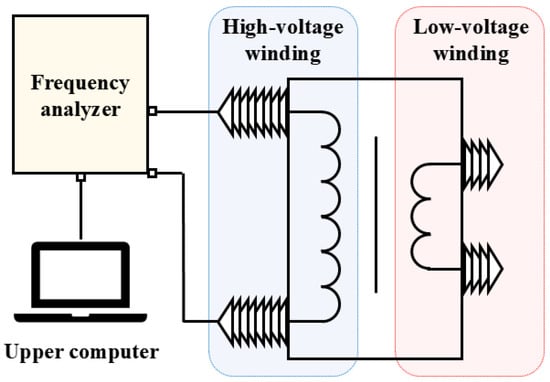
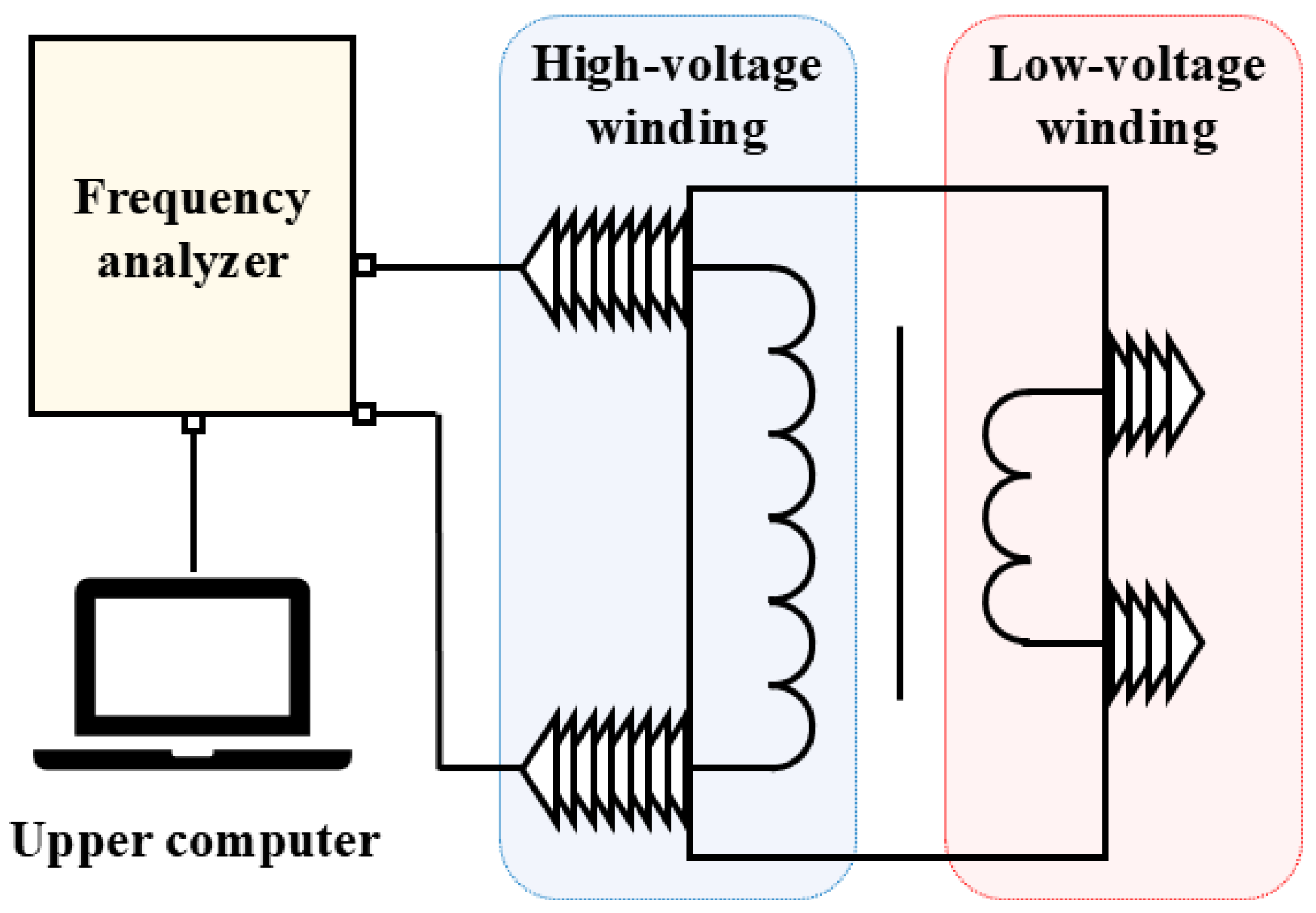
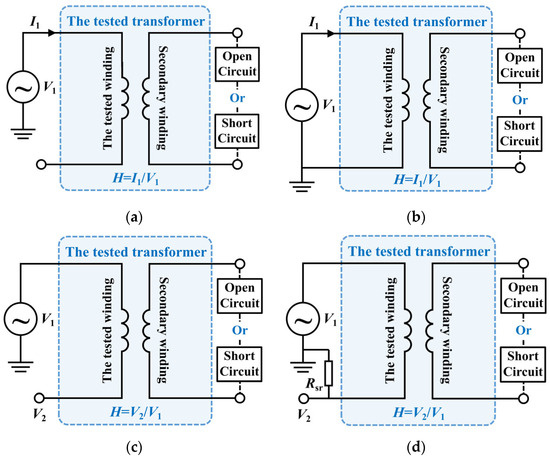
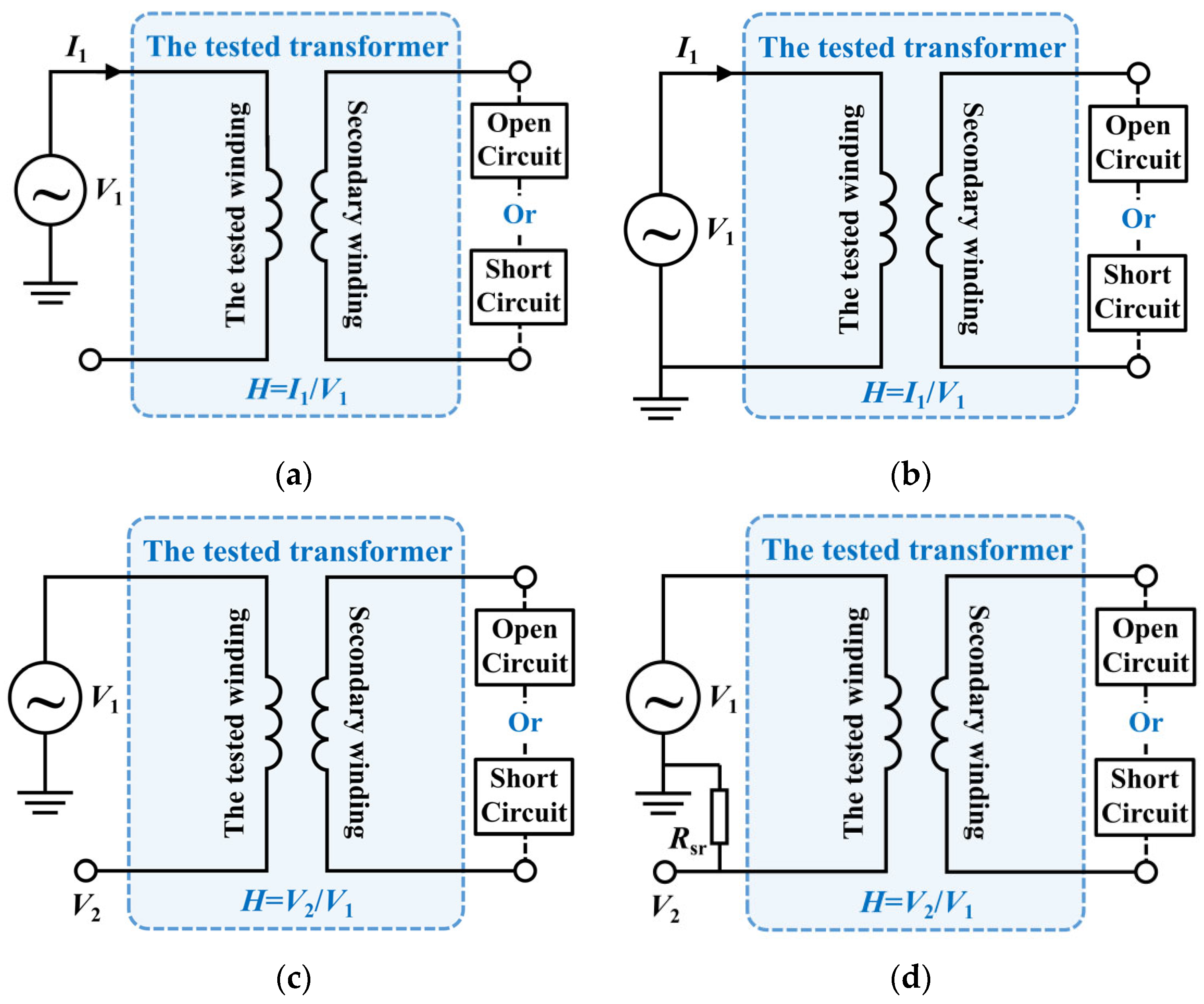
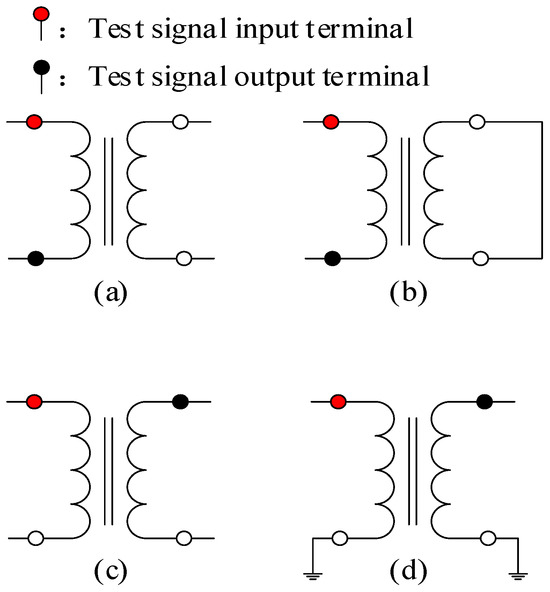
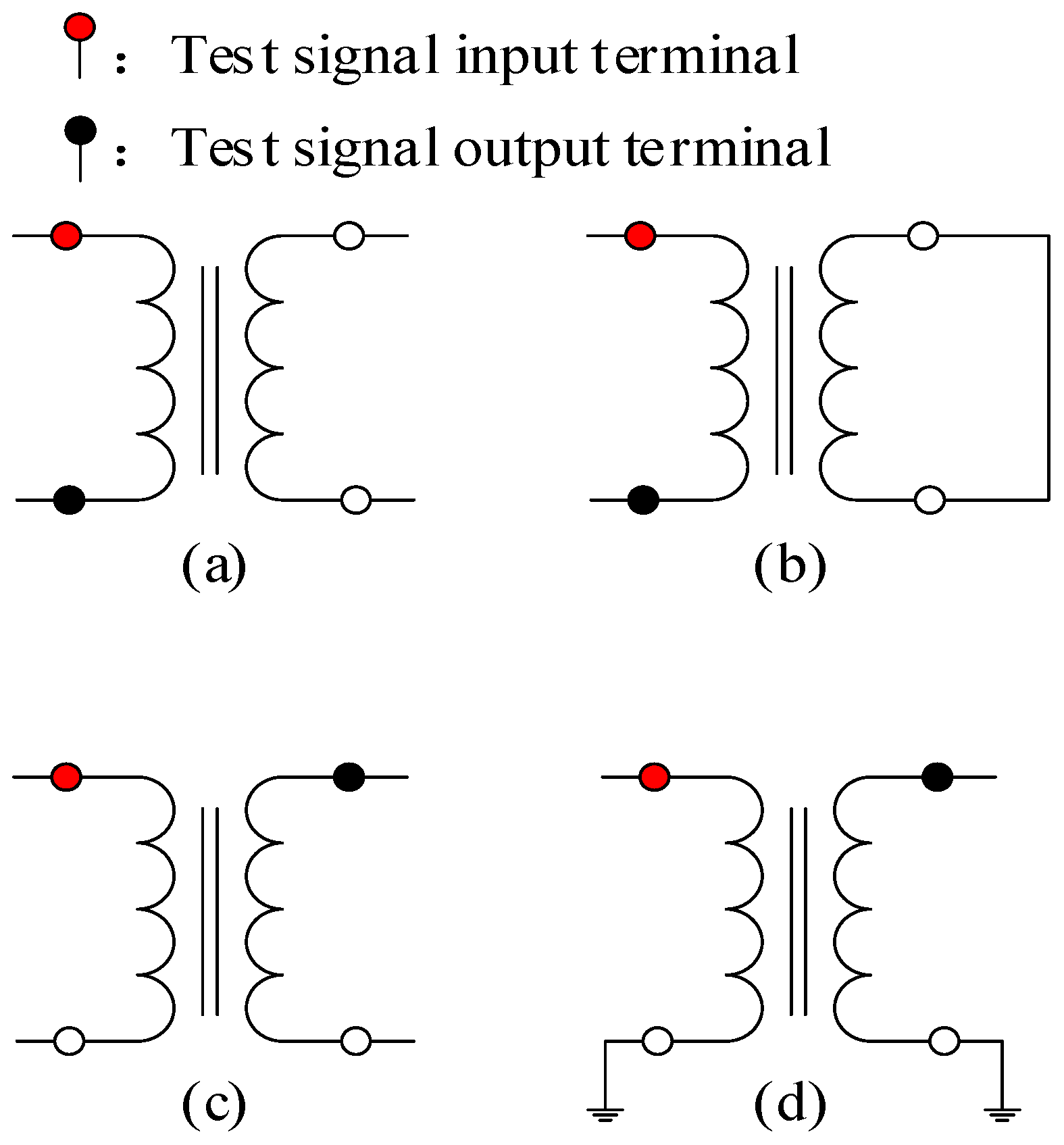
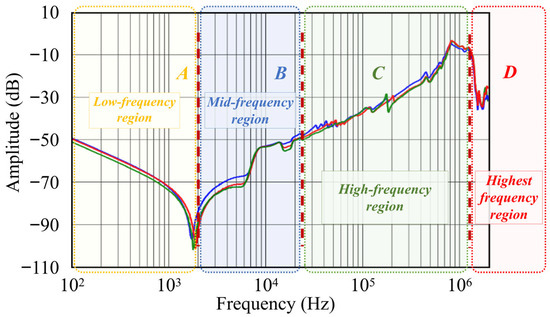
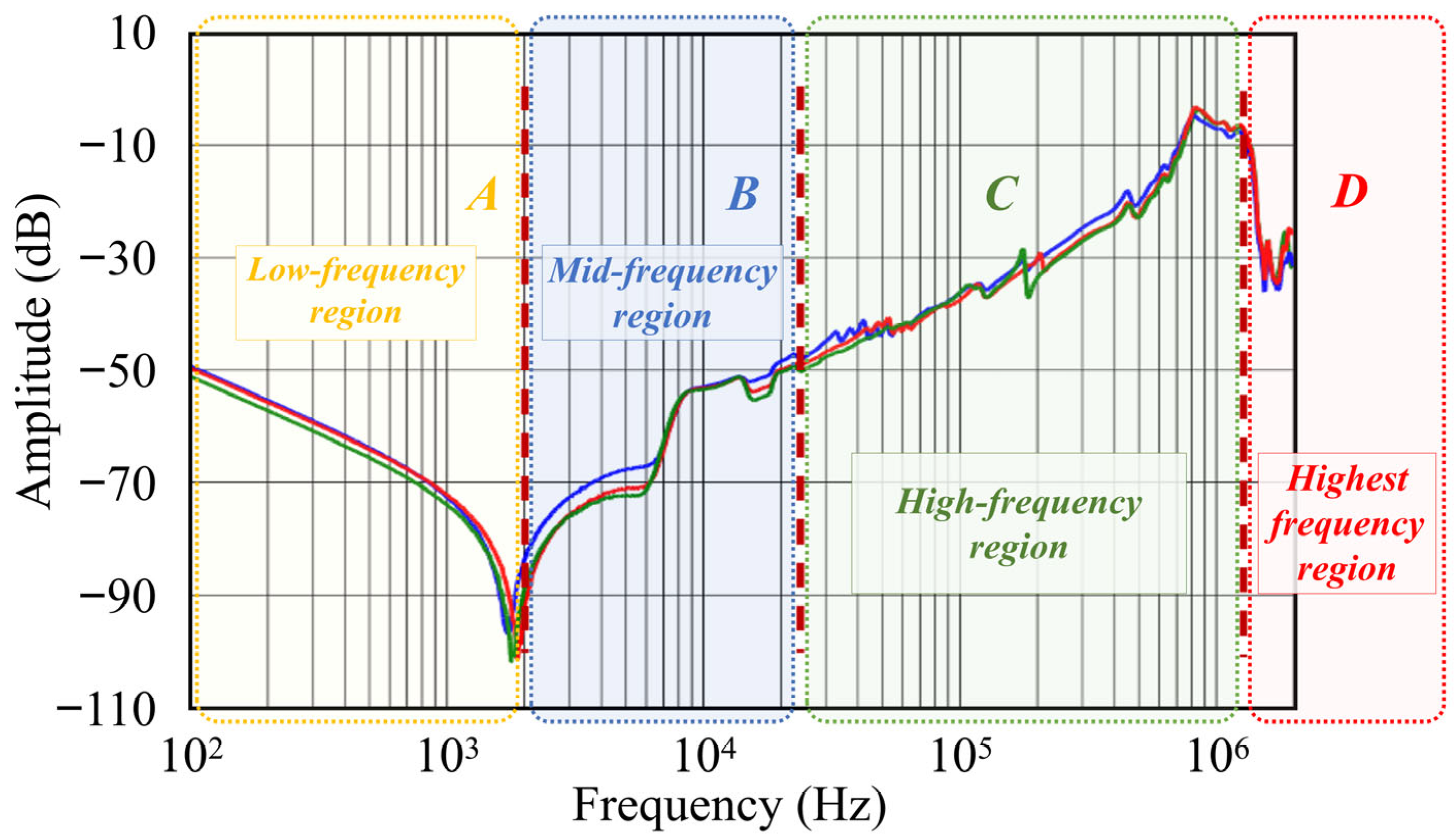
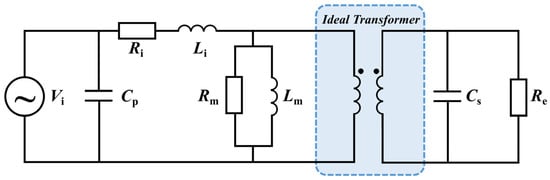
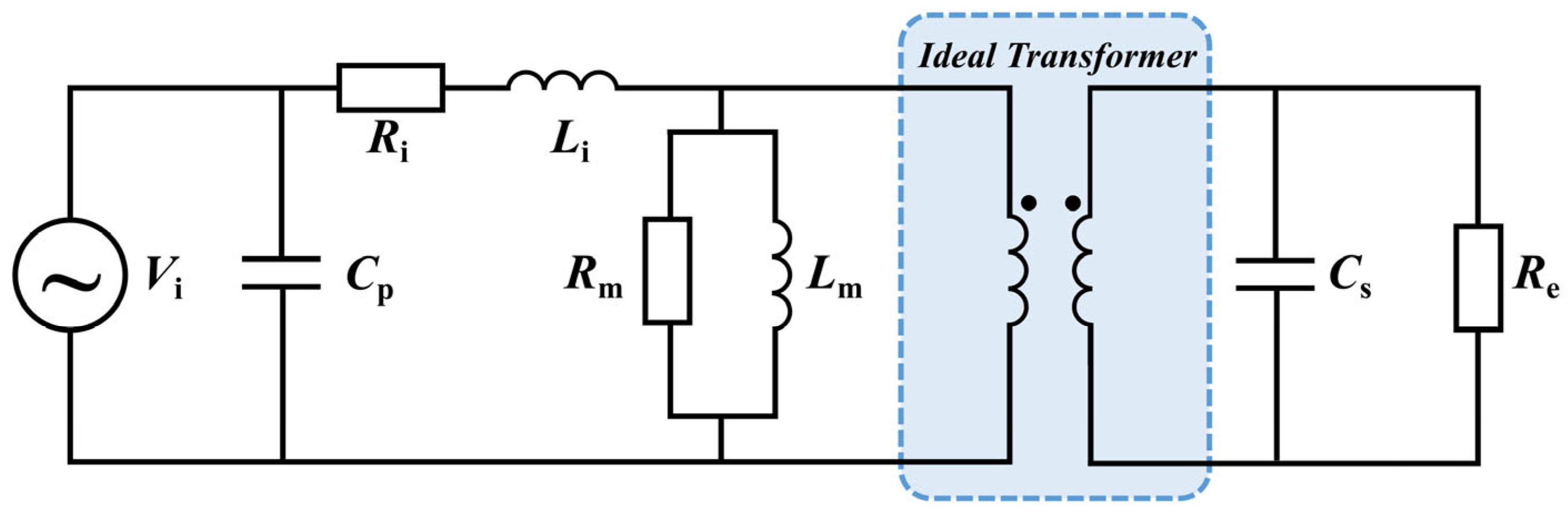
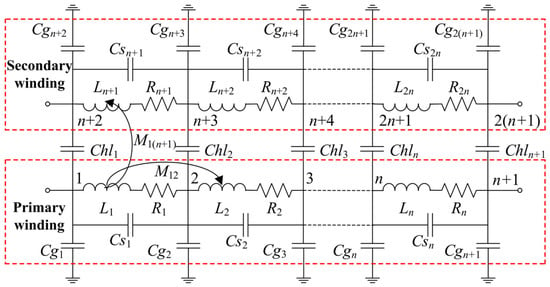
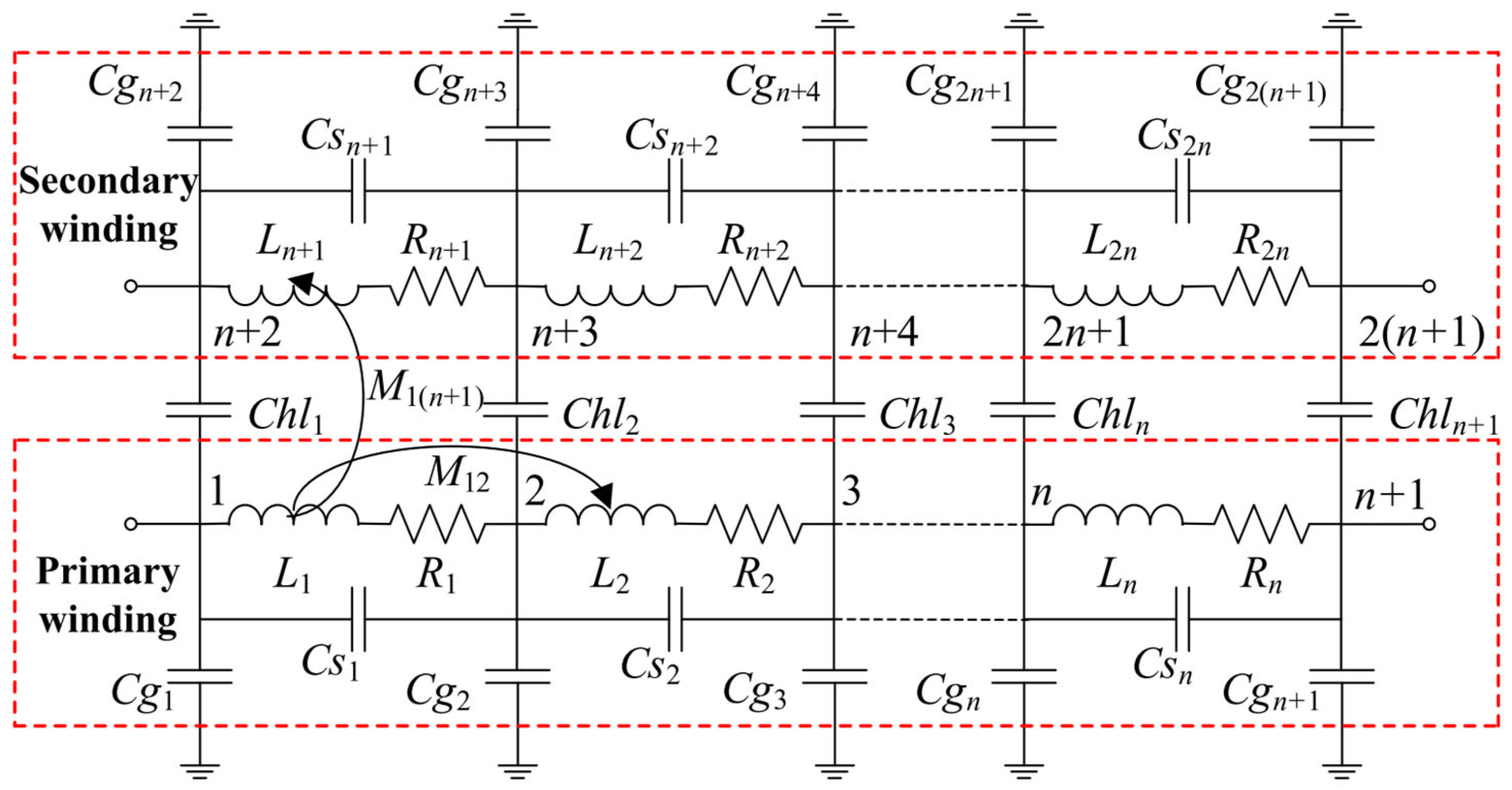
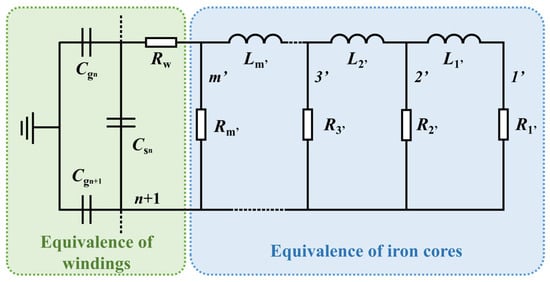
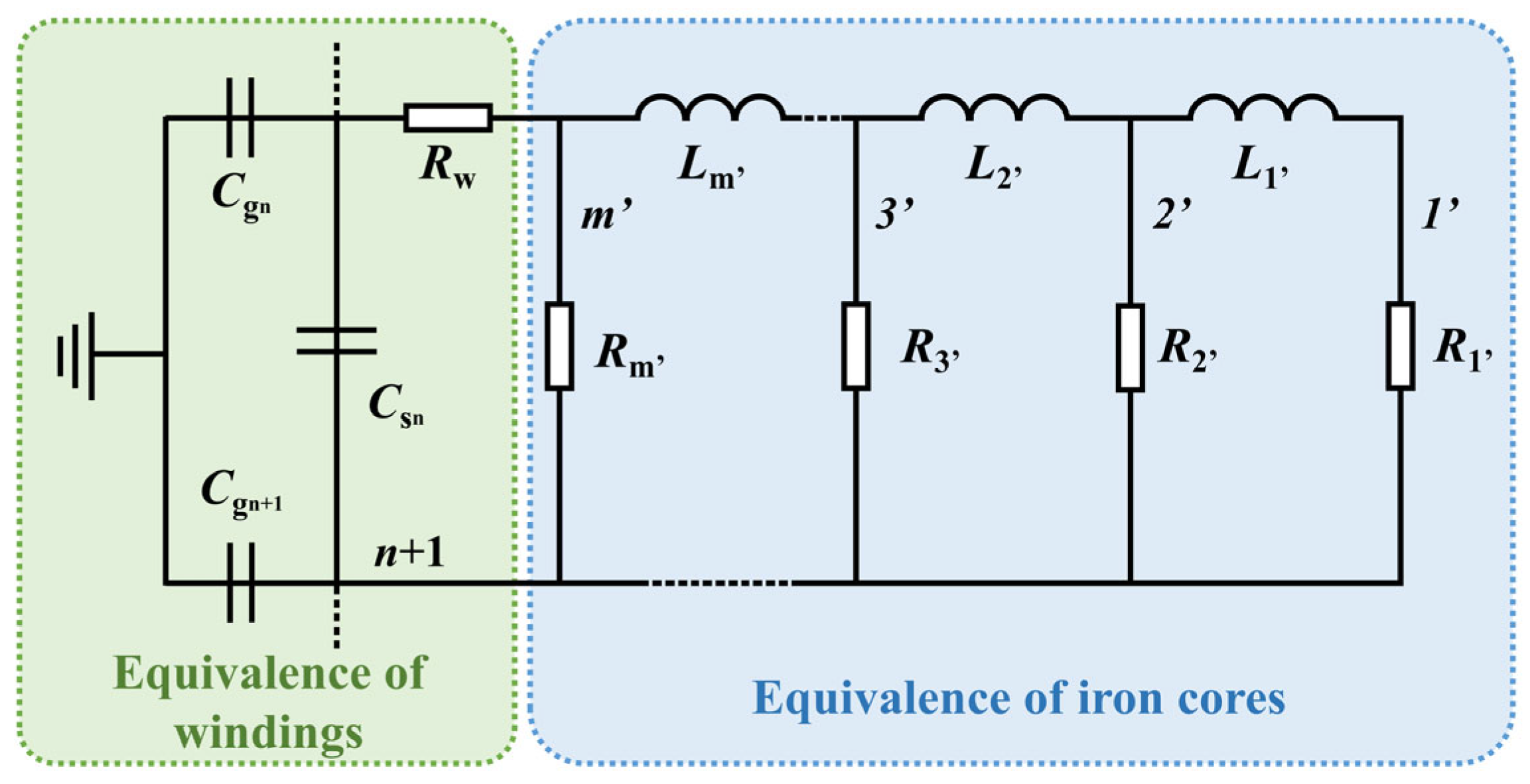
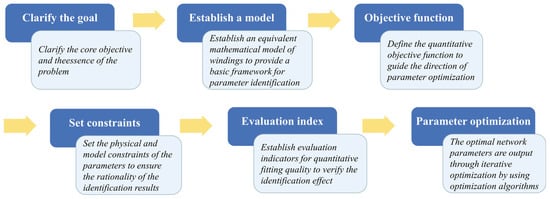
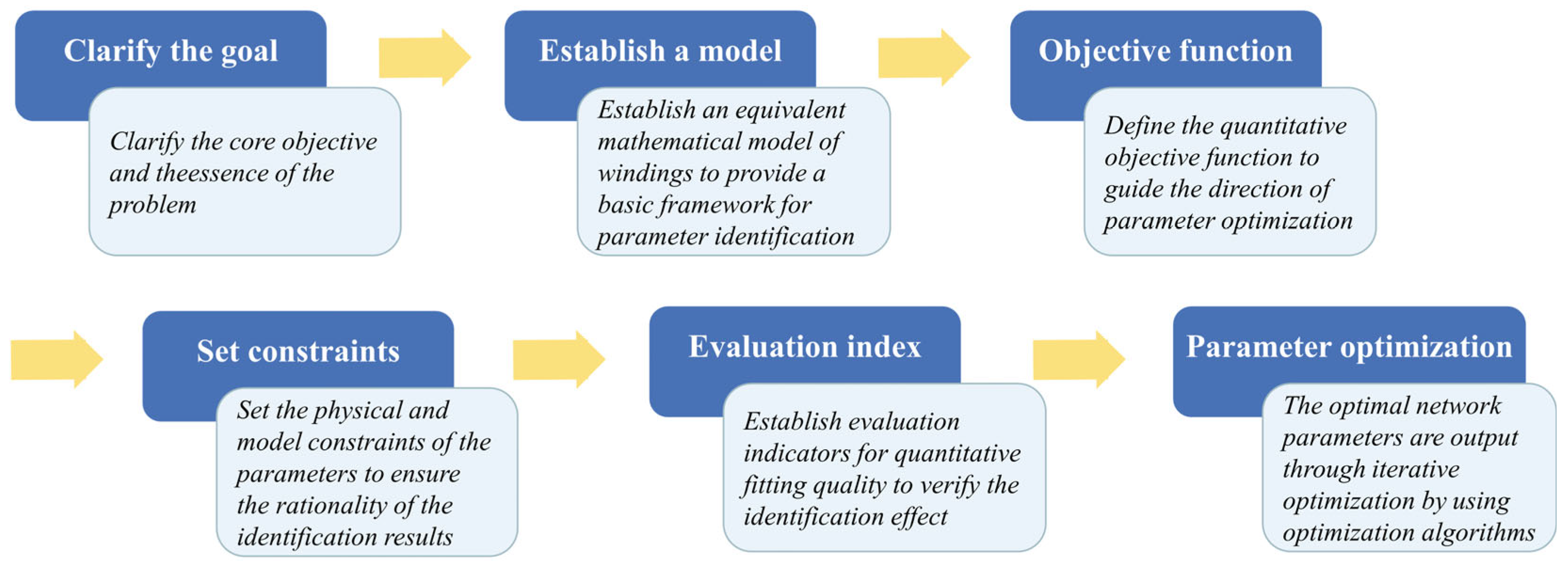
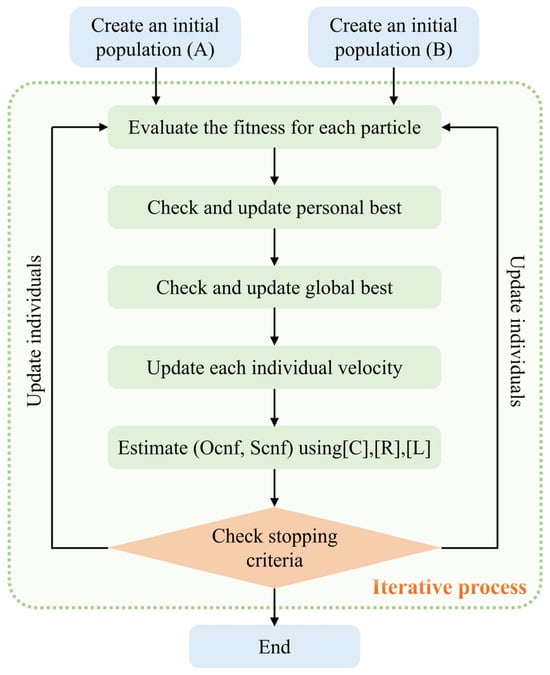
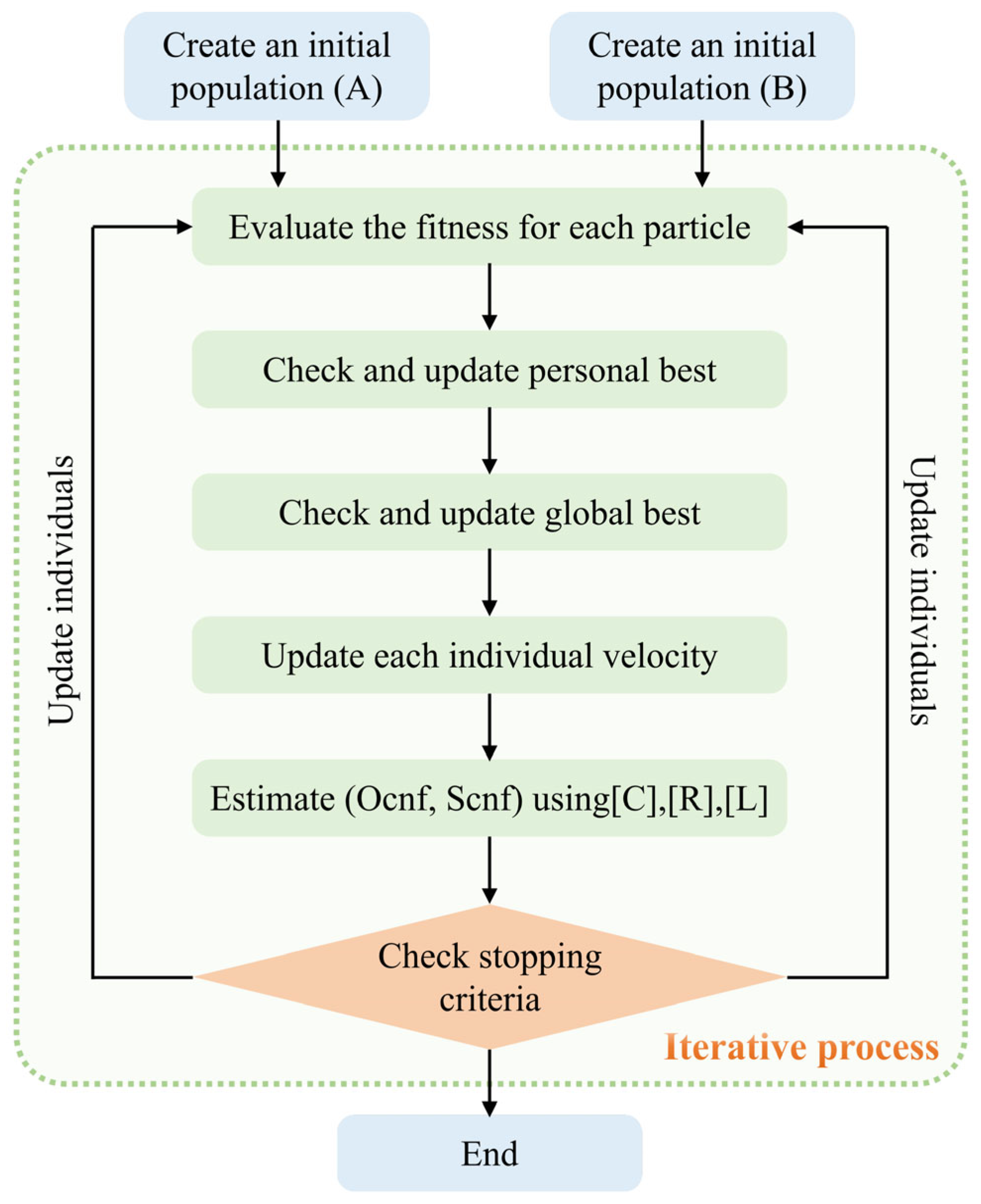
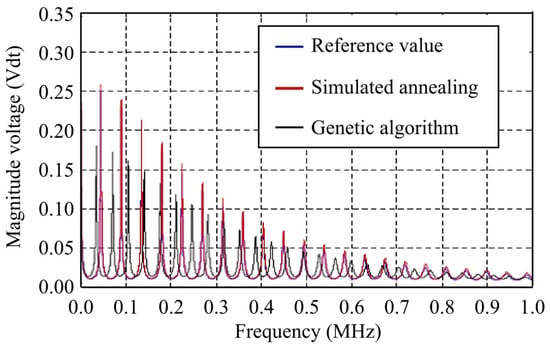
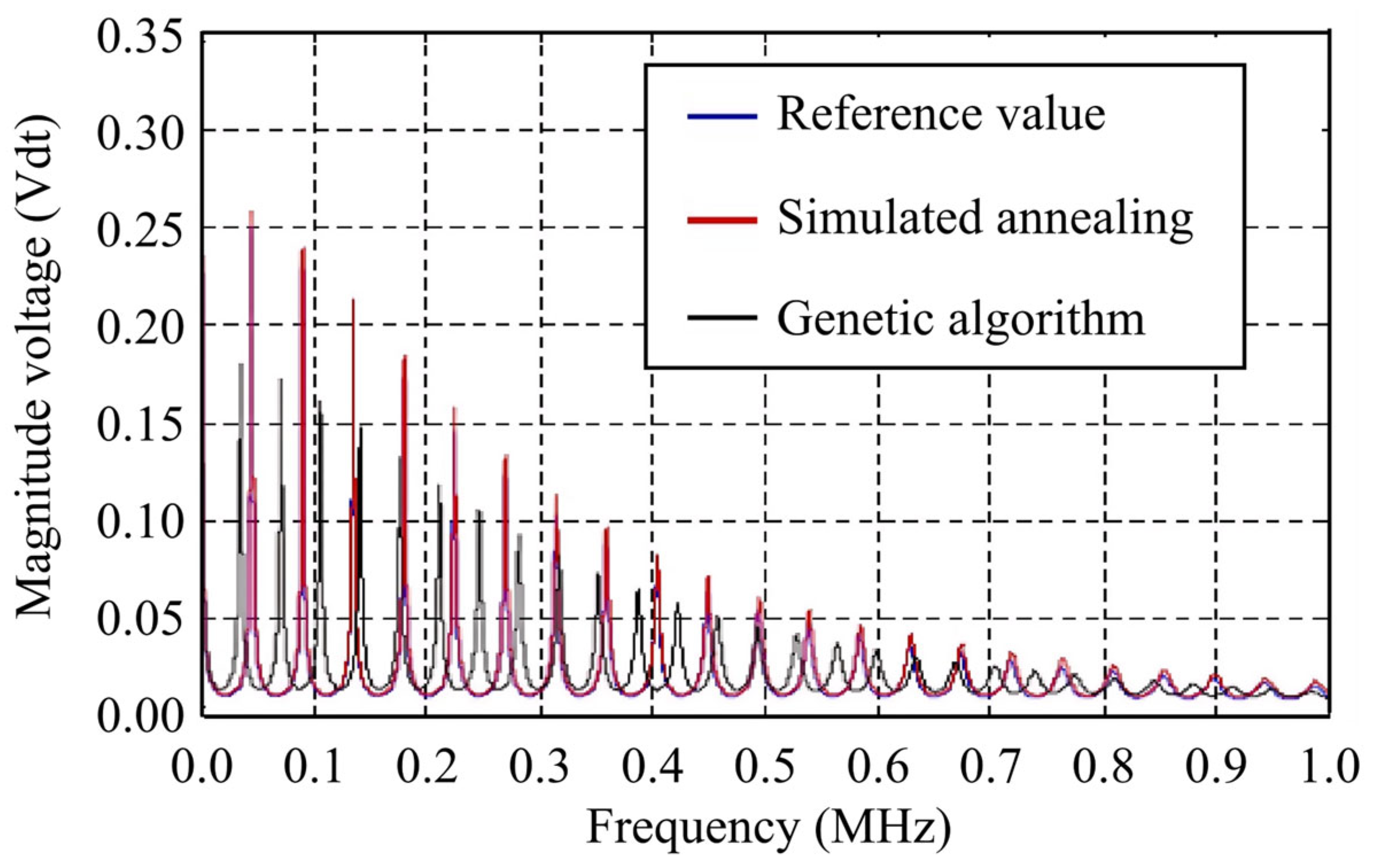
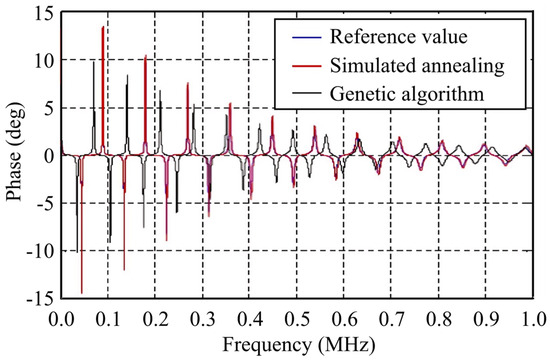
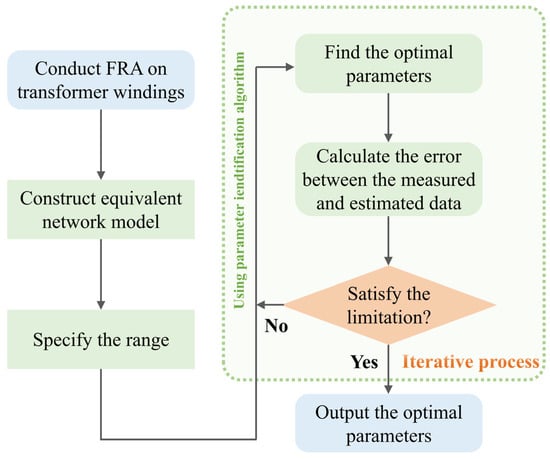

Disclaimer/Publisher’s Note: The statements, opinions and data contained in all publications are solely those of the individual author(s) and contributor(s) and not of MDPI and/or the editor(s). MDPI and/or the editor(s) disclaim responsibility for any injury to people or property resulting from any ideas, methods, instructions or products referred to in the content. |
© 2026 by the authors. Licensee MDPI, Basel, Switzerland. This article is an open access article distributed under the terms and conditions of the Creative Commons Attribution (CC BY) license.