Research on Effectiveness Evaluation Method of Vehicle Speed Prediction in Predictive Energy Management


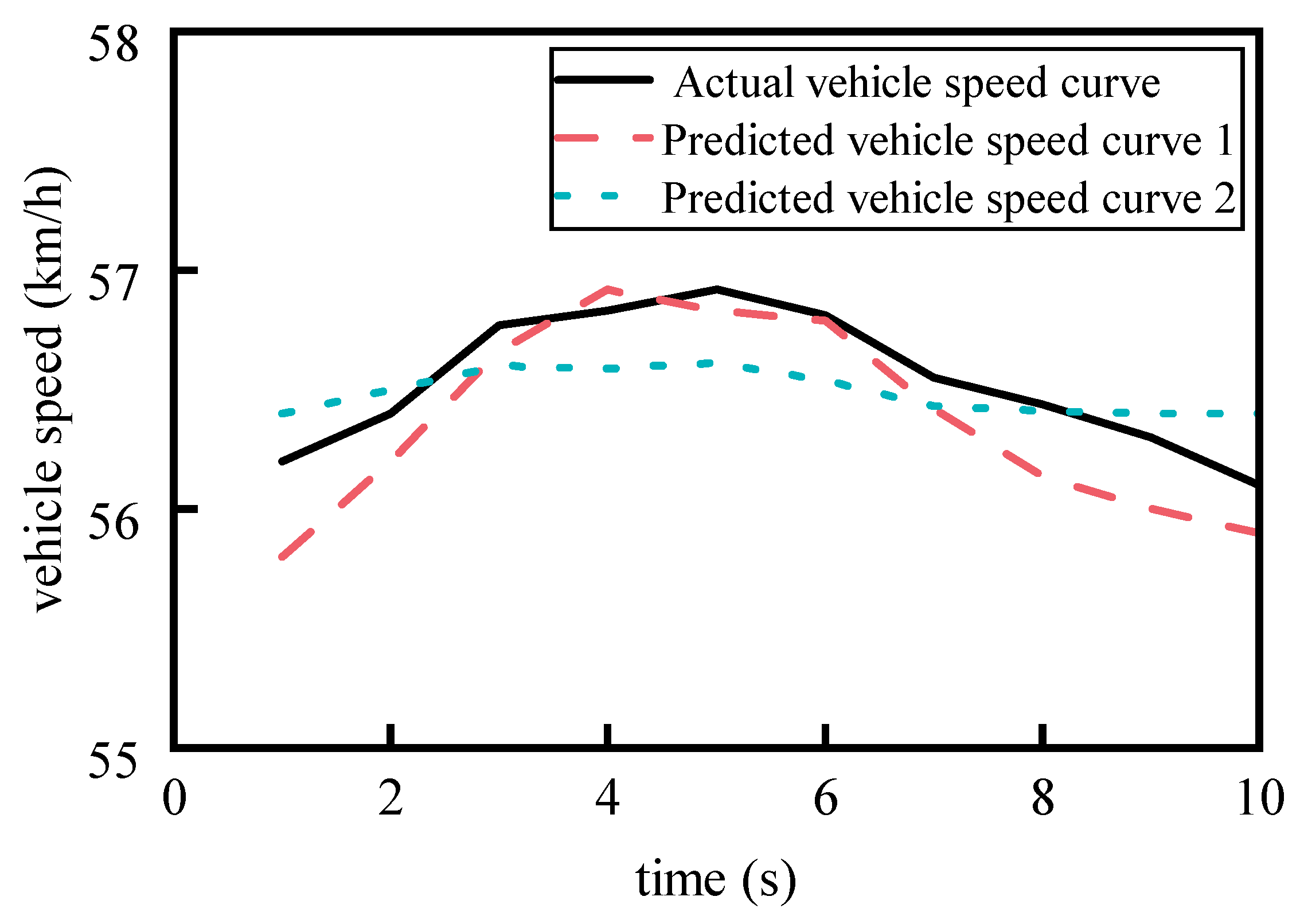
Abstract
1. Introduction
2. Research Method for Evaluating the Validity of Vehicle Speed Prediction Curves
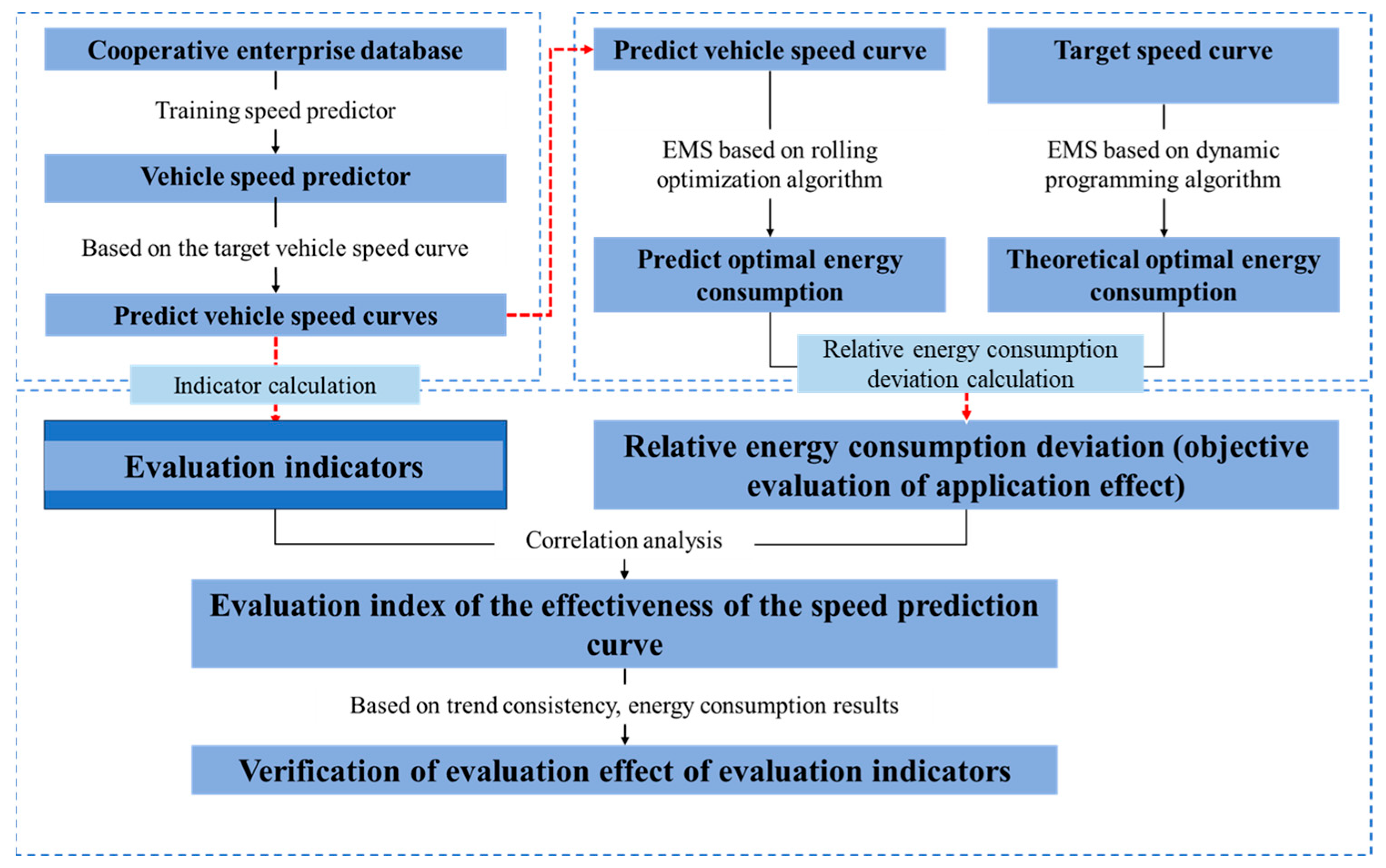
2.1. Overall Framework of the Research Method
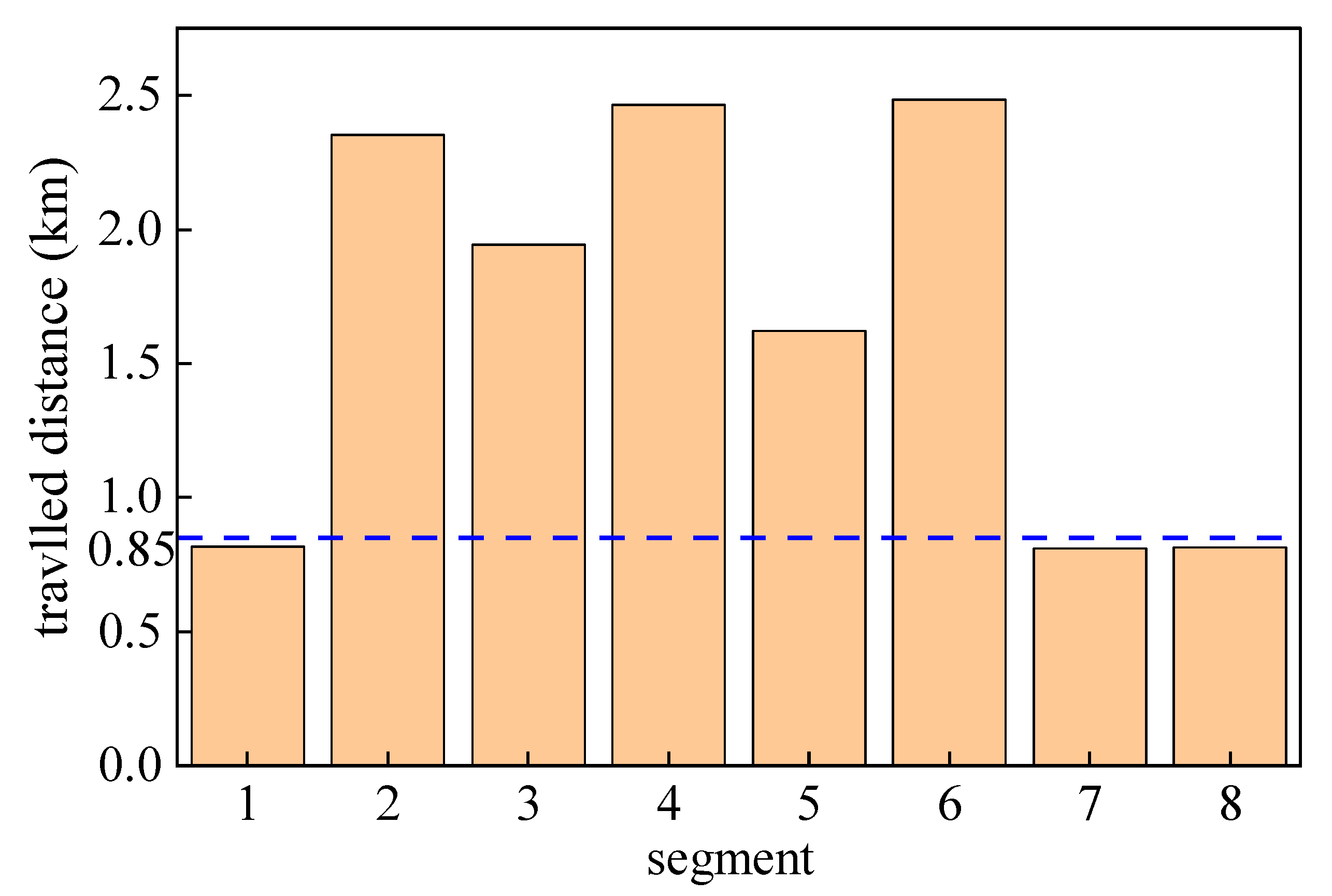
2.2. Preparation of Predicted Vehicle Speed Curves
2.2.1. Acquisition of Predicted Vehicle Speed Curves
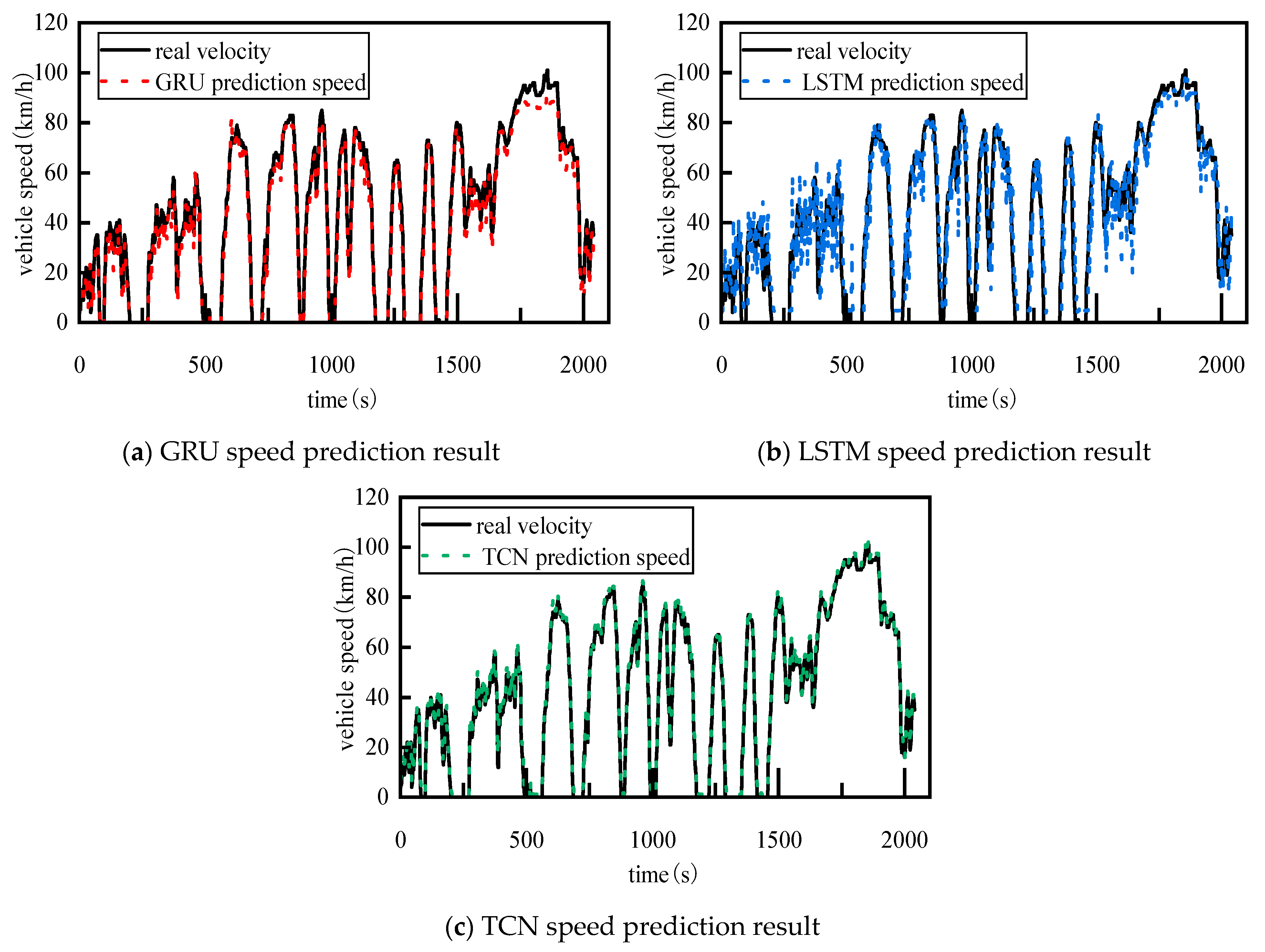
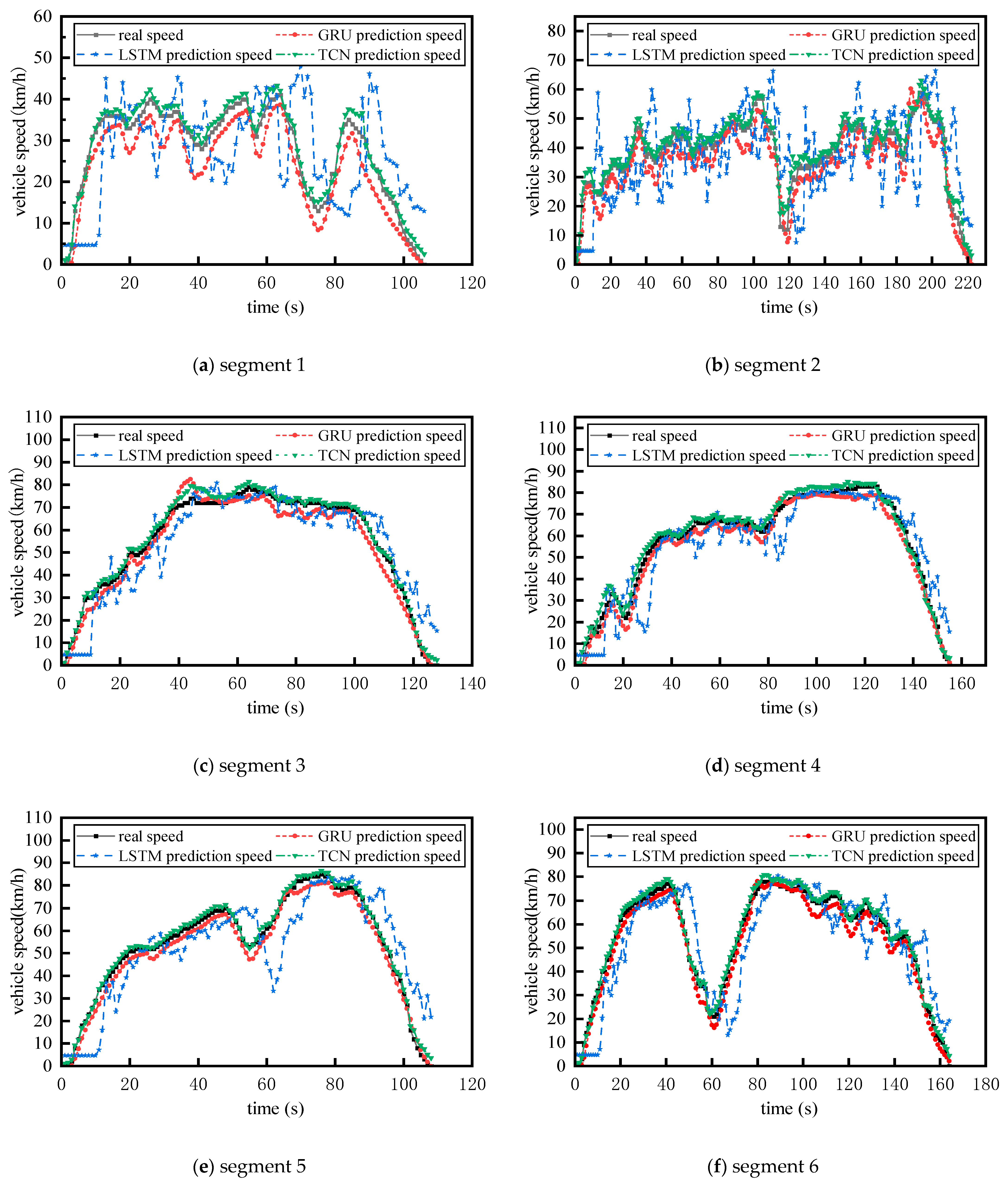
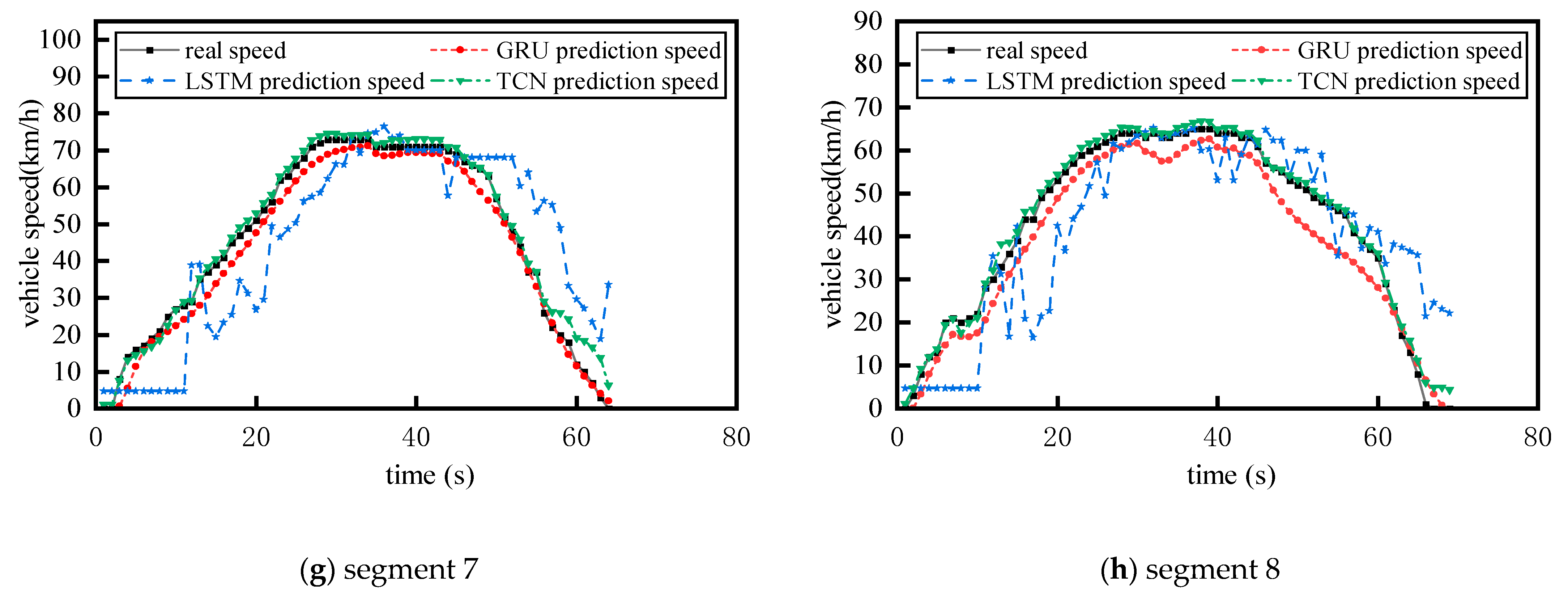
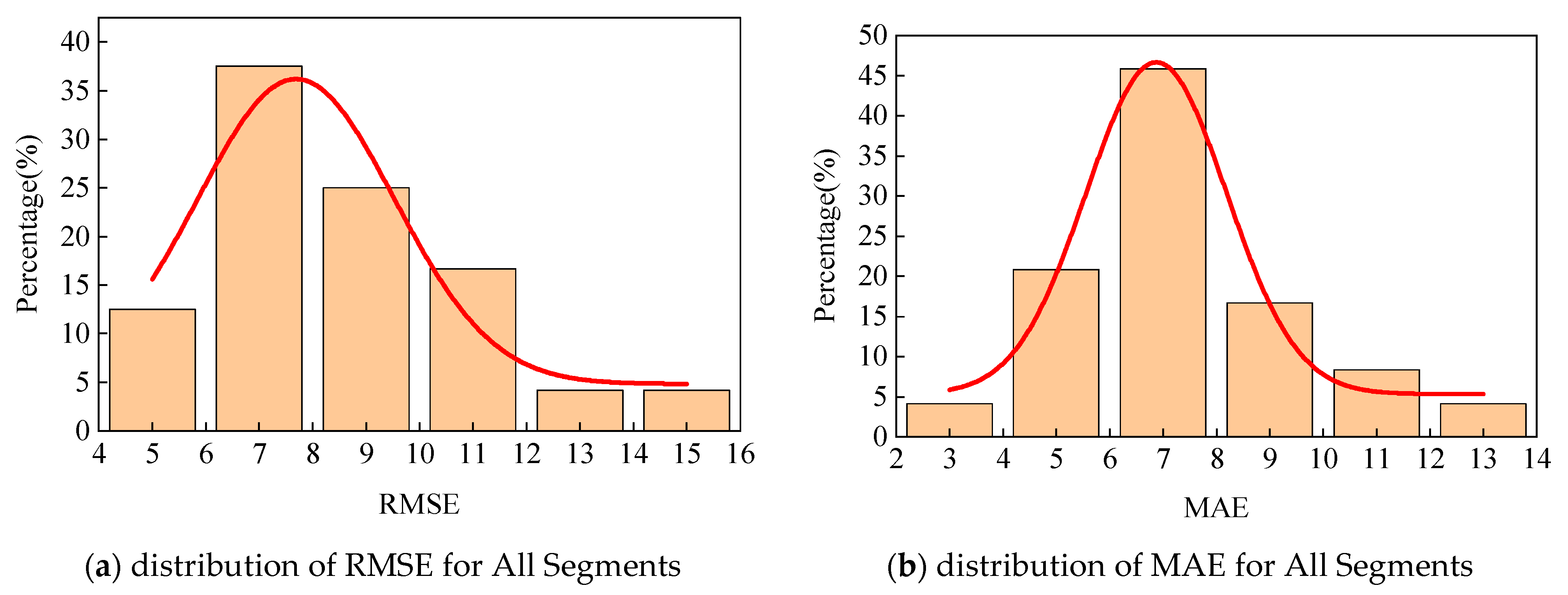
2.2.2. Analysis of Vehicle Speed Prediction Results
2.3. Acquisition of Energy Consumption Deviation Data
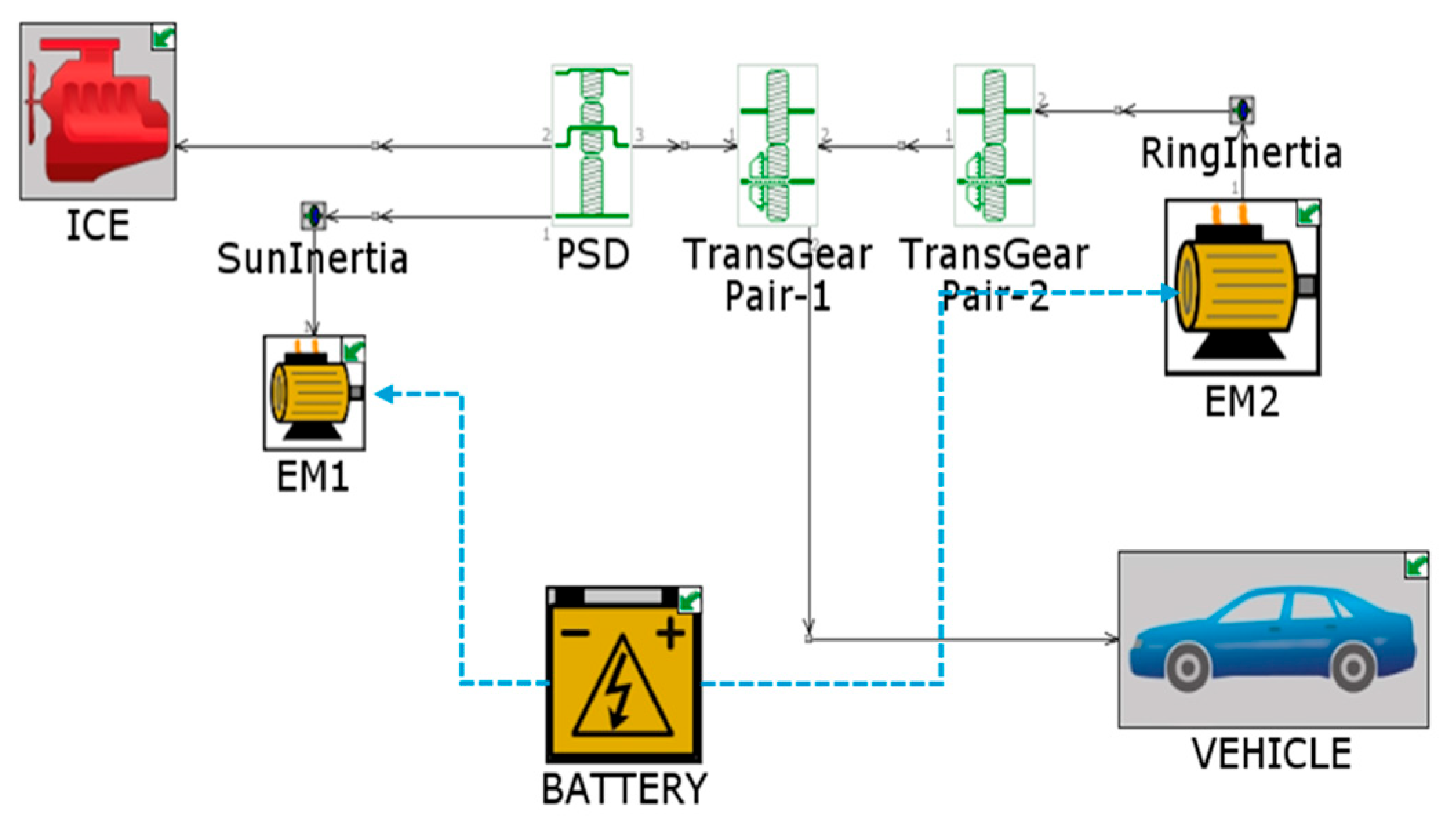
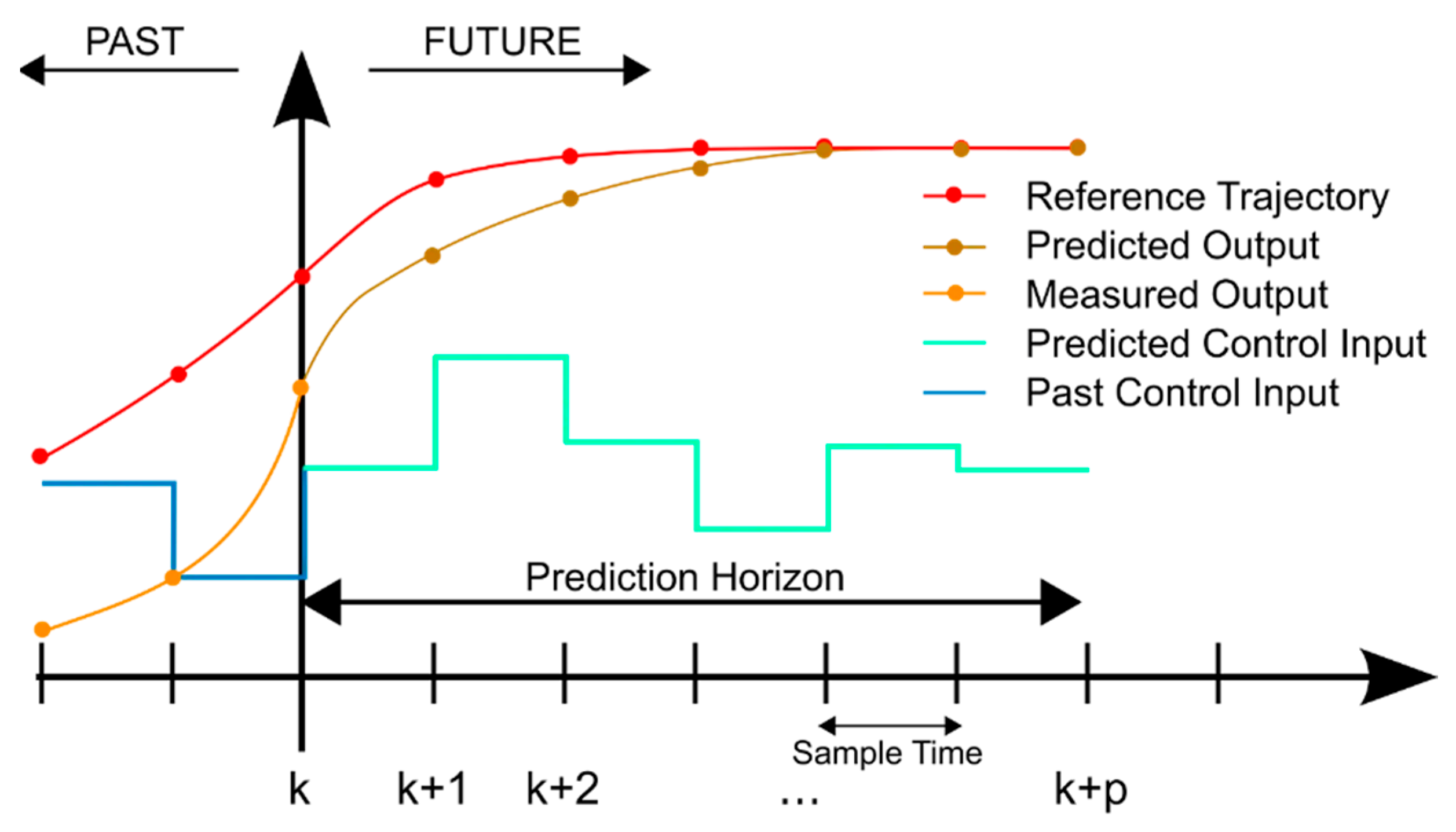
2.3.1. Hybrid Vehicle Simulation Platform and Predictive Energy Management Strategy
2.3.2. Acquisition of Theoretical Optimal Energy Consumption and Execution Energy Consumption
2.3.3. Relative Energy Consumption Deviation
3. Analysis of Effectiveness Evaluation of Vehicle Speed Prediction Results
3.1. Correlation Analysis of Vehicle Speed Prediction Result Evaluation Indicators
3.1.1. Pearson Correlation Coefficient
3.1.2. Correlation Analysis of Other Indicators
3.2. Validation of Vehicle Speed Prediction Effectiveness Evaluation Indicators
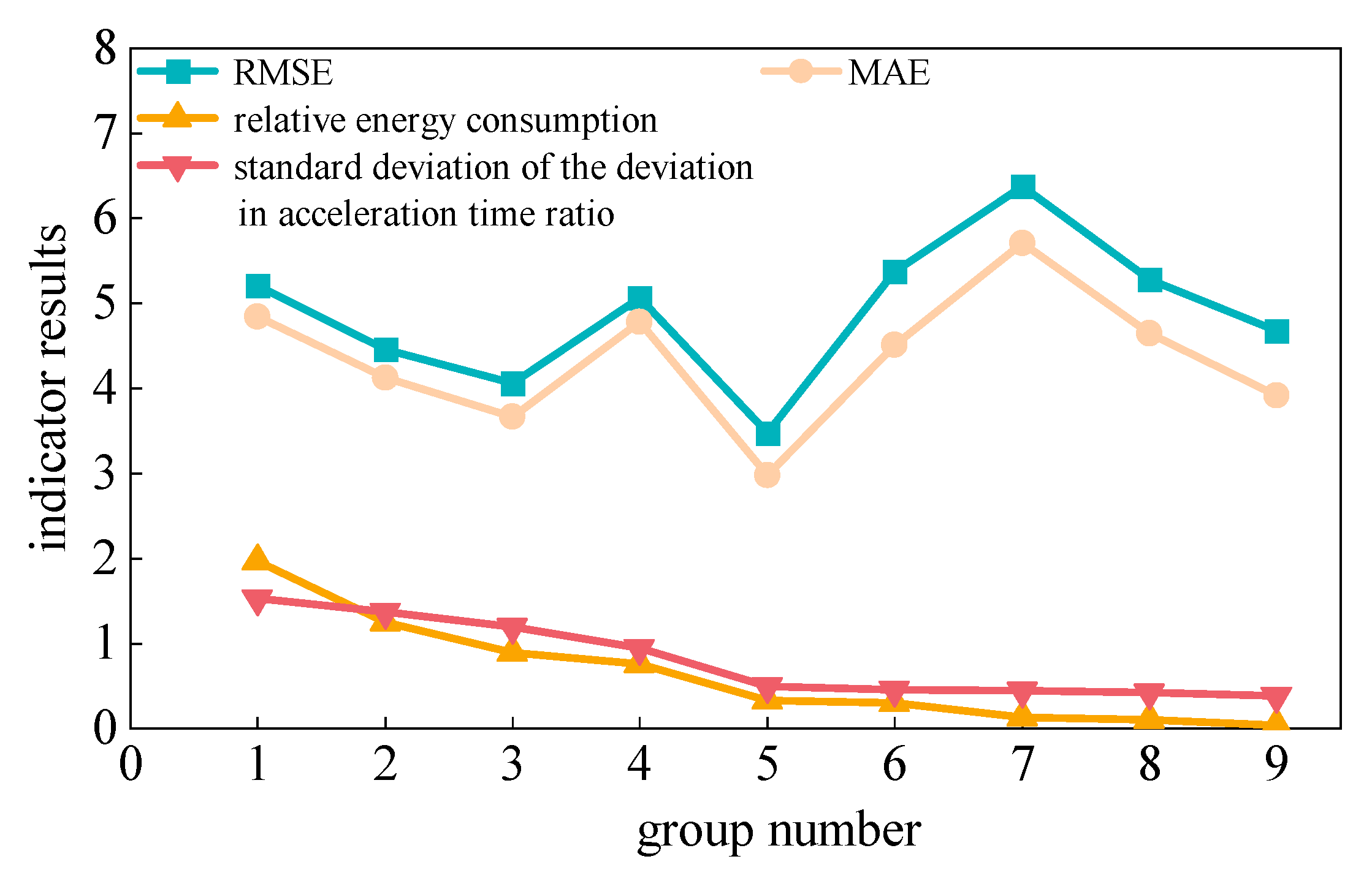
3.2.1. Trend Consistency Verification
3.2.2. Energy Consumption Result Verification
4. Conclusions
Author Contributions
Funding
Data Availability Statement
Conflicts of Interest
Abbreviations
| RMSE | Root mean square error |
| MAE | Mean absolute error |
| R2 | R-square |
| LSTM | Long short-term memory |
| GRU | Gated recurrent unit |
| TCN | Temporal convolutional network |
| DP | Dynamic programming |
References
- Hou, J.; Yao, D.; Wu, F.; Shen, J.; Chao, X. Online Vehicle Velocity Prediction Using an Adaptive Radial Basis Function Neural Network. IEEE Trans. Veh. Technol. 2021, 70, 3113–3122. [Google Scholar] [CrossRef] [Scilit]
- Zhang, H. Research and Implementation of Road Speed Prediction Algorithm Based on Deep Learning. Master’s thesis, Beijing University of Posts and Telecommunications, Beijing, China, 2020. [Google Scholar]
- Huang, W.; Song, G.; Hong, H.; Xie, K. Deep Architecture for Traffic Flow Prediction: Deep Belief Networks With Multitask Learning. IEEE Trans. Intell. Transp. Syst. 2014, 15, 2191–2201. [Google Scholar] [CrossRef] [Scilit]
- Lin, C.-C.; Wang, M.-S. Vehicle speeding early warning model using frame feature detection and HMM. In Proceedings of the 2011 IEEE 15th International Symposium on Consumer Electronics (ISCE), Singapore, 14–17 June 2011; pp. 241–244. [Google Scholar] [CrossRef] [Scilit]
- Feng, Y.; Chen, T.; Li, Y.; Gao, Y.; Zhang, G.; Cao, G. Short-Term Vehicle Speed Prediction Based on Spatio-Temporal Traffic Graph Networks. IEEE Access 2025, 13, 43557–43571. [Google Scholar] [CrossRef] [Scilit]
- Qi, L.; Zhang, J.; Jiao, X. Predecessor speed prediction-based predictive cruise control of connected autonomous vehicle in platoon with multiple-human-driven-vehicles. Control Eng. Pract. 2025, 158, 106286. [Google Scholar] [CrossRef] [Scilit]
- Kadechkar, A.; Llauradó, X. AI-Enhanced Velocity Prediction for Efficient EV Energy Management with Hybrid Storage. In Proceedings of the 2024 12th International Conference on Smart Grid (icSmartGrid), Setubal, Portugal, 27–29 May 2024; pp. 659–665. [Google Scholar] [CrossRef] [Scilit]
- Karunasingha, D.S.K. Root mean square error or mean absolute error? Use their ratio as well. Inf. Sci. 2022, 585, 609–629. [Google Scholar] [CrossRef] [Scilit]
- Lei, H.; Chong, B.; Li, K. MPC Based Optimal Energy Management of Electrical Vehicles with Hybrid Energy Storage on Fixed Routine. In Proceedings of the 2025 IEEE/AIAA Transportation Electrification Conference and Electric Aircraft Technologies Symposium (ITEC+EATS), Anaheim, CA, USA, 18–20 June 2025; pp. 1–6. [Google Scholar] [CrossRef] [Scilit]
- Lin, B.; Wei, C.; Feng, F. A Vehicle Velocity Prediction Method with Kinematic Segment Recognition. Appl. Sci. 2024, 14, 5030. [Google Scholar] [CrossRef] [Scilit]
- Deng, Y.; Zhang, L.; Chen, J.; Deng, Y.; Liu, J. Pedestrian Trajectory Prediction Based on an Intention Randomness Influence Strategy. Electronics 2024, 13, 2008. [Google Scholar] [CrossRef] [Scilit]
- Zhao, H.; Kou, Y.; Xue, Y.; Wang, S.; Gu, Z. TiFSN: A wavelet-EC-TCN model for quadrotor UAV trajectory prediction based on time–frequency–spatial feature fusion. Perform. Eval. 2025, 170, 102515. [Google Scholar] [CrossRef] [Scilit]
- Kim, D.; Khalil, A.; Nam, H.; Kwon, J. OPEMI: Online Performance Evaluation Metrics Index for Deep Learning-Based Autonomous Vehicles. IEEE Access 2023, 11, 16951–16963. [Google Scholar] [CrossRef] [Scilit]
- Chai, T.; Draxler, R.R. Root mean square error (RMSE) or mean absolute error (MAE)?—Arguments against avoiding RMSE in the literature. Geosci. Model Dev. 2014, 7, 1247–1250. [Google Scholar] [CrossRef] [Scilit]
- Jin, Y.; Chen, T.; Chen, D.; Gao, Y. A Predictive PHEV Energy Management Strategy Based on GRU and Enhanced Dynamic Programming. In Proceedings of the 2022 6th CAA International Conference on Vehicular Control and Intelligence (CVCI), Nanjing, China, 28–30 October 2022; pp. 1–6. [Google Scholar] [CrossRef] [Scilit]
- Zhao, Y.; Xu, L.; Zhao, C.; Xu, H.; Yan, X. Research on Energy Management Strategy for Hybrid Tractors Based on DP-MPC. Energies 2024, 17, 3924. [Google Scholar] [CrossRef] [Scilit]
- Feng, G.; Feng, Z.; Sun, P.; Guo, L.; Chen, Z. A Overview of Energy Management Strategies for Hybrid Power Systems. Energies 2025, 18, 4769. [Google Scholar] [CrossRef] [Scilit]
- Richalet, J.; Rault, A.; Testud, J.L.; Papon, J. Model predictive heuristic control: Applications to industrial processes. Automatica 1978, 14, 413–428. [Google Scholar] [CrossRef] [Scilit]
- Schober, P.; Boer, C.; Schwarte, L.A. Correlation Coefficients: Appropriate Use and Interpretation. Anesth Analg. 2018, 126, 1763–1768. [Google Scholar] [CrossRef] [Scilit] [PubMed]
- Liu, P.; Wang, S.; Zhao, P. Robust estimation and test for Pearson’s correlation coefficient. Random Matrices Theory Appl. 2024, 13, 2450023. [Google Scholar] [CrossRef] [Scilit]



| Energy Consumption | Theoretical Optimal Energy Consumption (g) | The Execution Energy Consumption of The GRU Predictor (g) | The Execution Energy Consumption of The LSTM Predictor (g) | The Execution Energy Consumption of The TCN Predictor (g) |
|---|---|---|---|---|
| Segment 1 | 10.41 | 26.16 | 28.80 | 34.46 |
| Segment 2 | 31.84 | 78.80 | 90.64 | 82.13 |
| Segment 3 | 34.67 | 45.17 | 65.91 | 46.31 |
| Segment 4 | 51.19 | 72.38 | 92.45 | 64.08 |
| Segment 5 | 37.79 | 48.41 | 62.34 | 49.14 |
| Segment 6 | 42.75 | 74.50 | 49.37 | 44.40 |
| Segment 7 | 17.21 | 19.01 | 30.26 | 23.51 |
| Segment 8 | 26.05 | 28.73 | 35.78 | 29.53 |
| Relative Energy Consumption | Energy Consumption Deviation of GRU Predictor | Energy Consumption Deviation of LSTM Predictor | Energy Consumption Deviation of TCN Predictor |
|---|---|---|---|
| Segment 1 | 1.51 | 2.06 | 1.50 |
| Segment 2 | 1.47 | 1.85 | 1.58 |
| Segment 3 | 0.30 | 0.90 | 0.34 |
| Segment 4 | 0.41 | 0.81 | 0.25 |
| Segment 5 | 0.28 | 0.65 | 0.30 |
| Segment 6 | 0.74 | 0.15 | 0.04 |
| Segment 7 | 0.10 | 0.76 | 0.37 |
| Segment 8 | 0.10 | 0.37 | 0.13 |
| Correlation Coefficient | Pearson Correlation Coefficient | Spearman Correlation Coefficient |
|---|---|---|
| Correlation Results | 0.51 | 0.54 |
| Significant Results (p-value) | 0.010 | 0.007 |
| Energy Consumption | Energy Consumption of The GRU Predictor (g) | The Execution Energy Consumption of Improved Version of GRU Predictor (g) | The Energy Savings of the Improved Predictor Compared to The Original Predictor (g) |
|---|---|---|---|
| Segment 1 | 26.16 | 33.36 | −7.20 |
| Segment 2 | 78.80 | 65.05 | 13.75 |
| Segment 3 | 45.17 | 39.05 | 6.12 |
| Segment 4 | 72.38 | 62.18 | 10.21 |
| Segment 5 | 48.41 | 44.98 | 3.43 |
| Segment 6 | 74.50 | 64.32 | 10.18 |
| Segment 7 | 19.01 | 21.92 | −2.92 |
| Segment 8 | 28.73 | 29.90 | −1.17 |
Disclaimer/Publisher’s Note: The statements, opinions and data contained in all publications are solely those of the individual author(s) and contributor(s) and not of MDPI and/or the editor(s). MDPI and/or the editor(s) disclaim responsibility for any injury to people or property resulting from any ideas, methods, instructions or products referred to in the content. |
© 2026 by the authors. Licensee MDPI, Basel, Switzerland. This article is an open access article distributed under the terms and conditions of the Creative Commons Attribution (CC BY) license.
Share and Cite
Sun, C.; Chen, D.; Cao, G.; Zeng, M.; Chen, T. Research on Effectiveness Evaluation Method of Vehicle Speed Prediction in Predictive Energy Management. Energies 2026, 19, 325. https://doi.org/10.3390/en19020325
Sun C, Chen D, Cao G, Zeng M, Chen T. Research on Effectiveness Evaluation Method of Vehicle Speed Prediction in Predictive Energy Management. Energies. 2026; 19(2):325. https://doi.org/10.3390/en19020325
Chicago/Turabian StyleSun, Chaoyang, Daxin Chen, Guowei Cao, Mingwei Zeng, and Tao Chen. 2026. "Research on Effectiveness Evaluation Method of Vehicle Speed Prediction in Predictive Energy Management" Energies 19, no. 2: 325. https://doi.org/10.3390/en19020325
APA StyleSun, C., Chen, D., Cao, G., Zeng, M., & Chen, T. (2026). Research on Effectiveness Evaluation Method of Vehicle Speed Prediction in Predictive Energy Management. Energies, 19(2), 325. https://doi.org/10.3390/en19020325