You are currently viewing a new version of our website. To view the old version click .
Energies
  • Article
  • Open Access

7 January 2026

Dynamic Cost Management Throughout the Entire Process of Power Transmission and Transformation Projects Based on System Dynamics

,
,
,
,
and
1
Economic and Technological Research Institute of State Grid Gansu Electric Power Company, Lanzhou 730050, China
2
School of Economics and Management, North China Electric Power University, Beijing 102206, China
*
Author to whom correspondence should be addressed.
This article belongs to the Special Issue The Future of Energy Management and Economics: Innovation, Technology, Sustainability, and New Business Models

Abstract

With the advancement of the “dual carbon” goals, power transmission and transformation projects face complex challenges arising from the construction of new power systems. Traditional cost management models struggle to meet dynamic management demands, necessitating the establishment of analytical methods that systematically reflect the relationship between cost management levels and cost dynamics. This paper introduces system dynamics theory and methodology to construct a cost management model applicable to all phases of transmission and transformation projects. It aims to deeply analyze the relationship between project cost levels and expenses from the perspectives of system structure, feedback mechanisms, and dynamic behavior. Research indicates that pathways such as controlling cost deviations and optimizing resource allocation significantly impact total project costs. Specifically, enhancing design accuracy can effectively mitigate cost shocks caused by carbon price fluctuations, while timely implementation of cost control measures can significantly improve cost management levels. The system dynamics approach effectively reveals the dynamic interaction mechanism between cost management levels and costs in power transmission and transformation projects, providing theoretical foundations and methodological support for enhancing project cost control efficiency.

1. Introduction

With China’s sustained growth in electricity demand and the deepening advancement of the “carbon peak and carbon neutrality” goals, the construction of new power systems continues to advance. As a core component of power grid infrastructure, transmission and transformation projects involve continuously expanding investment scales. However, the scientific rigor and precision of full-process cost management for these projects struggle to meet demands, placing project construction under multiple challenges. On one hand, the large-scale integration of new energy sources such as wind and solar power imposes higher demands on grid flexibility and reliability. On the other hand, evolving external policy environments, the establishment of market-based carbon pricing mechanisms, and fluctuations in raw material prices have heightened uncertainties and risks in project cost management [1].
Traditional cost management methods, however, predominantly focus on static accounting and post-event control. They struggle to reveal the feedback mechanisms between management levels and costs over time, and are even less capable of capturing the dynamic impacts of factors like carbon price fluctuations and design changes. Consequently, they fail to anticipate the long-term effects and chain reactions that various management measures may bring, ultimately leading to lagging and one-sided management decisions.
In the early 20th century, Frederick Taylor, the “father of scientific management,” introduced the concept of scientific management. Through continuous evolution, this evolved into concepts like Life Cycle Cost Management (LCCM) and Lean Management. LCCM emphasizes comprehensive control across all project phases—from preliminary planning, design, and construction to later operation and maintenance—to enhance project economic benefits [2]. Lean management philosophy reduces project costs by minimizing waste and optimizing processes, thereby effectively controlling cash flow [3]. Martina Signorini et al. argue that cost ontology is the foundation for modernizing and digitizing building LCCM [4]. Dui Hongyan et al. established a comprehensive life cycle cost model from the perspective of system reliability and risk, providing an LCCM optimization scheme based on “importance metrics” [5]. Practical verification demonstrates that LCCM achieves varying degrees of cost reduction and efficiency enhancement across different fields. Licia Felicioni, Elena Tamburini, Julius Jandl, and other scholars centered on LCCM, integrating life cycle assessment and cost–benefit analysis with other methodologies to apply it in the construction industry [6], agricultural vegetation management [7], and integrated photovoltaic systems [8]. These cost management theories remain instructive for cost management in power transmission and transformation projects.
Today, driven by emerging technologies like big data and the Internet of Things, cost management is evolving toward intelligent and dynamic approaches. Among these, Building Information Modeling (BIM) technology has brought innovative transformation to dynamic project cost management [9], particularly through the integration of BIM with big data, which plays a crucial role in achieving cost control [10]. Muhammad Altaf et al. integrated Life Cycle Cost Analysis (LCCA) with BIM, enhancing decision-making capabilities and promoting sustainability in construction projects by eliminating retrieval barriers and automating LCCA [11]. Yi Yunmei et al. proposed an integrated BIM-based whole-process cost management framework aimed at achieving efficient cost prediction and control while optimizing resource allocation [12]. Elijah Kusi et al. utilized Building Information Modeling (BIM) technology to compare green building models with traditional construction models [13]. Their research revealed that green building models achieved 25% energy savings while reducing carbon dioxide emissions by 46.8%. Llewellyn Tang introduced various BIM-based energy efficiency optimization techniques across different disciplines and project lifecycle stages, demonstrating BIM’s role in project optimization and its impact on overall energy efficiency through case studies [14]. Zhang Yun’s research analysis concludes that integrating BIM technology into cost control (C-C) significantly reduces construction project expenditures [15]. After analyzing the negative impact of economic crises on construction cost management, Tatyana Simankina and colleagues emphasize BIM’s critical role in enhancing cost management efficiency [16].
System dynamics also provides managers with implementation methods and pathways for optimizing cost management, thereby achieving project cost reduction and efficiency enhancement. Research by Chen Xiaoyan et al. using this approach indicates that the impact of Collaborative Innovation Performance (CIP) in major projects exhibits nonlinear growth, with cumulative effects strengthening over time [17]. The combined influence of multiple factors significantly promotes CIP improvement. Sun Xiaorong et al. developed a novel integrated carbon capture, utilization, and storage (CCUS)-enhanced oil recovery (EOR) business model and conducted a comprehensive investment-benefit assessment using system dynamics methodology. Results indicate that oil price volatility may jeopardize projects with insufficient economic returns [18]. Wang Zhewei et al. developed a broader economic benefit assessment framework based on system dynamics, overcoming the limitations of traditional cost–benefit analysis that directly emphasizes benefits [19]. This framework provides guidance for investment decisions promoting sustainable, knowledge-based urban development. Hassan Riaz et al. constructed a system dynamics model of Total Quality Management (TQM) to evaluate the causal relationships and complexity of TQM implementation in the construction sector of developing countries [20]. Results indicate enhanced TQM effectiveness under defined systems. Mary Bajomo et al. identified issues such as cost overruns and schedule delays in project execution [21]. They established a system dynamics model for the construction materials supply chain (CMSC) to capture relevant factors influencing these problems and propose countermeasures, providing decision-makers with reference points for optimization.
Beyond BIM and system dynamics approaches, numerous scholars have explored other methodological frameworks in their research on construction cost management. Both improvements in management methodologies and enhanced accuracy in cost forecasting play crucial roles in elevating the level of construction cost management. From the perspective of cost management methodology design, Shinji MOCHIDA and colleagues predicted cost allocation ratios by analyzing linguistic relationships and complexity among requirements in system development projects, thereby enabling refined project cost management [22]. Addressing the issue of insufficient accuracy in preliminary cost estimates for Russian construction projects, Dobysheva T VXu proposed an improved method based on extrapolation formulas to enhance budget preparation accuracy and elevate cost management levels [23]. Xu Xiaoyu explored the application of full-process engineering consulting in power grid project cost management, demonstrating that this model effectively improves cost control through comprehensive professional services covering the entire project lifecycle [24]. Xilong Jin et al. investigated full-process cost management in green building projects, employing entropy weighting and fuzzy comprehensive average methods for quantitative evaluation [25]. They concluded that the design phase exerts the most significant influence on cost management. Medsalem Nandjebo et al. validated through structural equation modeling that strengthening historical project cost analysis and financial management practices in public project management significantly improves project time and quality performance [26]. Other scholars found significant variations in material cost growth rates after disaggregating highway project cost indices, demonstrating that budget planning using this method could save $6–8 billion in expenditures [27]. Selcuk Yilmaz et al. developed and validated a construction cost management framework integrating PMBOK standards with BIM technology, which effectively enhances cost control precision and decision efficiency [28]. Li Xiaomeng’s research on applying genetic algorithms to cost optimization in prefabricated construction offers solutions to cost management challenges in traditional construction methods [29]. Garg Harish et al. proposed a decision-making method based on an improved dual-hesitant fuzzy correlation coefficient [30]. By integrating intra-attribute and inter-attribute information to construct a weight optimization model, it effectively addresses uncertainties in construction cost management.
From the perspective of cost prediction accuracy, most scholars opt for a multi-method approach to forecast final costs. Zhao Mengyuan et al. proposed integrating the Cost Performance Index from Earned Value Management with simple exponential smoothing techniques to establish a construction cost prediction model capable of accurately forecasting project final costs [31]. Abdullah M. Alsugair et al. developed a model integrating DEMATEL and system dynamics to predict cost variations in Saudi Arabian construction projects [32]. Addressing existing issues in construction cost management, Ding Xiaojing et al. integrated BIM and information and communication technology to establish a neural network comprehensive prediction model, enhancing the precision of cost control [33]. Chen Guo proposed a genetic algorithm-optimized hybrid neural network model (GA-ANN) for construction cost prediction [34]. Case studies validated that this model can control prediction errors within 2.5%. Chen Shen et al. introduced a construction cost estimation system integrating case reasoning and exponential smoothing [35]. Experiments demonstrated that this system effectively enhances the reliability of early-stage project cost predictions. Guangying Jin and Chunhui Yang integrated fuzzy analytic hierarchy process with genetic algorithm-optimized backpropagation neural networks to form a hybrid intelligent model capable of more precise residential construction cost prediction [36]. Shasha Peng et al. proposed a hybrid deep learning model integrating an improved whale optimization algorithm with convolutional neural networks to forecast transmission and transformation project costs in high-altitude regions [37]. Xue Ping Jia et al. developed an engineering cost prediction method based on vague similarity, with case studies demonstrating its positive impact on enhancing quotation efficiency and accuracy [38]. Shaojing Zhuang et al. proposed a convolutional neural network model enhanced with a stochastic gradient descent momentum optimizer for cost prediction in power grid projects under low-carbon conditions [39].
Despite extensive research on construction cost management, systematic studies on dynamic cost management throughout the entire process of transmission and transformation projects remain underdeveloped, failing to address current challenges at this stage of development. Therefore, this paper leverages the systematic, dynamic, and strategic experimental characteristics of system dynamics to construct a model linking the overall cost management level of transmission and transformation projects to construction-phase costs. By establishing three scenarios—baseline, carbon price fluctuation, and improved design accuracy with carbon price fluctuation—it predicts fluctuations in cost management levels under varying internal and external conditions. Based on these predictions, targeted management improvement measures are proposed. This research not only expands the application scope of system dynamics from an academic perspective but also reduces cost prediction deviations, optimizes resource allocation, and enhances the resilience and stability of transmission and transformation projects in practical engineering. Consequently, it elevates project cost management standards, improves investment returns, and ultimately accelerates the realization of China’s dual carbon goals.

2. Method

This paper employs a system dynamics model, combined with literature review, expert scoring, and sensitivity analysis, to construct a dynamic simulation model for the full-process cost management of transmission and transformation projects. This reveals the intrinsic pathways linking cost variations to cost management effectiveness. Through comparative simulations of baseline scenarios, carbon price fluctuation scenarios, and composite scenarios combining carbon price fluctuations with enhanced design precision, the study quantitatively analyzes the impact of varying external conditions and internal optimization strategies on cost management effectiveness, providing decision-making support for corporate cost planning.
System dynamics has established mature application systems in transportation, logistics, and other fields, demonstrating significant effectiveness in cost, quality, and performance management within engineering construction. However, research on applying this methodology to dynamic cost management throughout the entire power transmission and transformation project lifecycle remains nascent. Particularly weak is the exploration of the dynamic influence mechanism between cost management levels and cost control, with a lack of theoretical frameworks adapted to new power system construction. Against this backdrop, this paper employs system dynamics to construct a model linking cost management levels and costs across all phases: decision-making, design, bidding, construction, and final settlement and audit supervision. Through structural analysis and simulation modeling, this study identifies key factors and feedback pathways influencing cost control. It further incorporates external variables such as carbon price fluctuations, policy adjustments, and market environment changes to conduct multi-scenario dynamic analysis. Consequently, it systematically reveals the intrinsic mechanisms governing the dynamic interaction between management levels and costs throughout the entire lifecycle of transmission and transformation projects. This research aims to expand the application boundaries of system dynamics and provide theoretical foundations and decision support for constructing a cost control system adapted to the demands of energy transition.

3. Development of a Dynamic Model for the Full-Process Cost Management System of Power Transmission and Transformation Projects

3.1. Relevant Basic Concepts

3.1.1. Concept of Engineering Cost Management

Project cost management refers to a series of management activities involving the scientific prediction, planning, control, accounting, analysis, and evaluation of costs incurred throughout the entire project lifecycle—from investment decision-making, design, and construction to final settlement. Its core objective is to effectively control project costs and enhance investment efficiency while ensuring engineering quality and safety. Two key elements are central: first, full-process management, encompassing all stages from investment estimation, design estimates, construction drawing budgets, tender control prices, contract prices, project settlements, to final completion settlements, enabling dynamic cost tracking and control; second, comprehensive management, where investors focus on project economics, investment returns, and risk control, contractors concentrate on cost optimization, profit margins, and contract fulfillment, while consulting/supervision parties provide impartial cost review, process cost monitoring, and full-process consulting services.
The level of construction cost management serves as a key indicator reflecting the quality of such management. It refers to the comprehensive control capability of project participants (including the construction unit, design unit, construction unit, cost consulting agency, etc.) over the entire project lifecycle (decision-making, design, bidding, construction, final settlement, settlement supervision) regarding the “resource input—cost control—value realization” process. Its core objective is to achieve precise cost forecasting, dynamic control, and optimized allocation while meeting project functional requirements, quality standards, and compliance obligations (including low-carbon and environmental policies). This ultimately aims for “cost control and value maximization,” rather than merely pursuing “lowest cost”.
Fundamentally, project cost management proficiency integrates “technical capabilities, management processes, methodologies, and risk responses.” It encompasses both traditional cost control (materials, labor, machinery, administrative expenses) and adaptation to emerging costs (e.g., carbon costs, policy compliance expenses), serving as a core metric for evaluating project management maturity and industry competitiveness.

3.1.2. Concepts of System Dynamics

In the 1950s, Professor Jay Forrester at the Massachusetts Institute of Technology (MIT) established System Dynamics (SD), a significant branch of systems science and management studies. It is applied to investigate the complex interactions between structural and behavioral dynamics in intricate systems [40]. This theory aims to better explore and understand dynamic behavioral patterns within systems through temporal feedback processes [41]. Simultaneously, SD models support scenario simulation and uncertainty analysis, facilitating the formulation of optimized policy recommendations [42].
The core principle of System Dynamics is to view real-world problems dynamically and holistically. It primarily employs three key graphical languages: feedback loop diagrams, causal loop diagrams, and stock-flow diagrams. ① Feedback loops, also termed causal chains, are categorized into positive feedback loops (enhancing loops) and negative feedback loops (regulating loops). These illustrate that even the most complex system behaviors are almost invariably the result of multiple positive and negative feedback loops intertwining and counterbalancing each other. ② Causal loop diagrams reveal system structure, identifying and mapping key processes of input indicators and their impact on system goals [43]. They serve as visual representations of feedback loops. ③ Stock-flow diagrams are generated through quantitative simulation based on causal loop diagrams. Their advantage lies in transforming ambiguous causal relationships into precise mathematical relationships that can be calculated or simulated, thereby avoiding issues arising from the indeterminate nature of variables. This paper primarily employs causal loop diagrams and stock-flow diagrams to illustrate the influencing factors in cost management for power transmission and transformation projects.

3.1.3. Purpose of System Dynamics Modeling

This study focuses on cost management levels and construction-phase costs within power transmission and transformation project cost management. It introduces system dynamics methods to construct simulation models. The research aims to achieve the following objectives through modeling and simulation: First, systematically identify key factors influencing management levels throughout the entire cost process—from investment decisions to final settlement—clarifying the mechanisms and pathways linking these factors to construction-phase costs. Second, traditional research frameworks struggle to comprehensively analyze such multi-stage complex feedback mechanisms. System dynamics, through its feedback structures and causal loops, can explore the dynamic connections and feedback effects between construction phases, their intrinsic factors, and cost management levels, revealing the underlying drivers and deep causes of management level fluctuations at the system level [44]. Third, by constructing a system dynamics model and integrating it with actual engineering cases, multiple future scenarios can be set and simulated to evaluate changes in cost management levels under different external environments [45]. This approach also proposes control strategies and management recommendations to help construction enterprises achieve their expected profits.

3.2. Model Construction of the Dynamic Cost Management System for Power Transmission and Transformation Projects

3.2.1. Key Management Points and Challenges Across Cost Management Phases

Cost management is a systematic process spanning the entire project lifecycle, with its core lying in precise control at each stage. This paper divides it into five key phases: investment decision-making, design, bidding, construction and final settlement, and settlement supervision.
(1)
Investment Decision Stage
The investment decision stage is the origin of cost control and has a decisive impact on the total project investment. The rationality of decision-making directly affects the implementation of the entire project [46]. During this phase, investment capacity assessment and planning are required. Based on grid development needs and corporate operational conditions, grid planning and investment schedules must be rationally arranged. In-depth project feasibility studies should be conducted, thoroughly considering project characteristics, technical solutions, market pricing, and policy changes to produce accurate investment estimates. Through technical-economic comparisons, the optimal investment plan should be selected. Potential cost risks (such as geological conditions, land acquisition and demolition, and policy adjustments) must be identified and evaluated, with corresponding mitigation strategies developed.
However, foundational work in the project investment decision-making phase still faces systemic challenges. Key issues include unreasonable macro-level control over pricing bases, preparation standards, and cost composition, coupled with the failure to establish a dynamic, authoritative reference system for obtaining and applying price information. This leads to distorted cost foundations. More critically, in specific technical aspects like cost category classification and quota application, the estimation and budgeting process deviates significantly from industry norms and quota standards. Furthermore, in aggregating key components such as other project expenses, failure to strictly adhere to the latest policy regulations and project classification requirements has resulted in cost calculation errors or inconsistent aggregation criteria.
These issues create potential logical contradictions and abnormal deviations throughout the entire process from quantity calculation to cost listing. Consequently, they fail to accurately reflect the project’s anticipated resource consumption, undermine the authority of estimates and budgets as decision-making references, and pose hidden risks for subsequent investment control and construction management.
(2)
Design Phase
The design phase is a critical stage for controlling project costs and significantly impacts subsequent construction expenses. During this phase, preliminary design and budget preparation are conducted based on the approved feasibility study and investment estimate. It is essential to ensure sufficient design depth to avoid later changes and cost increases caused by inadequate design, omissions, or missing items.
However, current cost estimation practices fall short in terms of standardization, accuracy, and depth. The primary issue lies in deviations from dynamic grasp and strict adherence to pricing bases. On one hand, price information updates lag behind, and the listing of equipment and material unit prices lacks sufficient and authoritative market references, leading to distorted cost bases. On the other hand, the understanding and application of current quota standards and cost calculation regulations are insufficiently thorough, failing to accurately apply and adjust coefficients based on the actual characteristics of the project. This results in overestimation, underestimation, or omission of costs. Secondly, the technical rigor of cost preparation needs to be strengthened. Quantity calculations frequently diverge from project realities and quota rules, revealing logical inconsistencies. Particularly in specialized projects like transmission lines, transportation plans and cost allocations fail to accurately reflect project characteristics, undermining the rational distribution of costs. Furthermore, the listing of miscellaneous expenses often deviates from the latest project classifications and policy requirements, resulting in misallocated costs or the inclusion of already-deducted expenses, thereby weakening the compliance of cost structures. These issues ultimately obscure the reasons for discrepancies when comparing design outcomes with generic cost estimates or feasibility study approvals, depriving investment decisions and controls of clear, reliable foundations. Notably, personnel responsible for project design often lack familiarity with construction-related technologies. This can result in construction drawings that diverge from actual construction practices, delaying progress and causing resource wastage [46]. Therefore, enhancing the standardization and precision of cost estimation during the design phase is essential for strengthening full-process cost management and ensuring investment returns.
(3)
Bidding and Contract Signing Stage
During the bidding and contract signing phase, the core objective of cost management is to establish a contractor through standardized bidding procedures based on principles of fairness, impartiality, and transparency. This process involves drafting contracts with clearly defined rights and responsibilities and reasonable pricing terms, thereby laying a solid foundation for smooth project implementation. During the bid budgeting period, the construction entity must strictly control costs across all management processes, maintain costs within reasonable limits, allocate resources appropriately, and ensure the accuracy of bid proposals to avoid blind bidding [47]. The bill of quantities and maximum bid limit generated during this phase serve as the critical bridge connecting design and construction. The quality of their preparation directly impacts the fairness of bidding competition, the accuracy of contract pricing, and the smoothness of subsequent project settlement.
However, current practices in this phase still exhibit deficiencies in the standardization of pricing bases and the rigor of contract terms. In preparing maximum bid limits and bill of quantities, issues frequently arise such as inappropriate selection of pricing principles, erroneous or omitted descriptions in the bill, and inaccurate quantity calculations. Failure to strictly adhere to pricing standards, quota norms, and specific requirements from the construction management entity leads to distorted limits and discrepancies between bill characteristics and actual quantities, sowing seeds of potential disputes for subsequent construction and settlement. Simultaneously, deficiencies in contract standardization are particularly pronounced. Inconsistencies between contract terms and bidding documents, ambiguous or contradictory key settlement principles, and the absence of price adjustment mechanisms frequently occur, severely undermining the contract’s efficacy as the core basis for cost control. Furthermore, non-standard competitive practices in bidding quotations themselves further exacerbate the complexity of cost management.
Collectively, these issues underscore the imperative to strengthen standardization and compliance during bidding and contract execution phases. Ensuring that bidding outcomes and contract texts clearly, accurately, and comprehensively define the responsibilities, rights, and obligations of all parties is essential for effective investment control and mitigation of performance risks.
(4)
Construction and Final Settlement Phase
During the construction phase of power transmission and transformation projects, cost management serves as the core mechanism for dynamic investment control and ensuring settlement quality and efficiency. In the final settlement phase, the primary task of cost management is to confirm the project’s total investment over its entire lifecycle. The quality of work performed during this stage directly determines the ultimate effectiveness of project investment control.
Process cost management during this phase continues to face challenges in execution and refinement. The primary issue lies in weak foundational process control, where technical and economic briefings fail to clearly define responsibilities and key contract terms, hindering subsequent change orders and settlements. Second, management of design changes and site certifications often becomes a mere formality. Common issues include incomplete approval procedures, insufficient factual basis, non-standard cost calculations, and even circumvention of major certification approvals. This results in process documentation failing to accurately and comprehensively reflect actual project conditions, rendering it unsuitable as a legal basis for settlement. Regarding new unit price calculations and progress payment disbursements, failure to strictly adhere to contractually agreed pricing rules and payment ratios creates risks such as non-compliant approvals and excessive payments. Additionally, unreasonable behaviors existing in the construction stage, such as the "segmented" management approach, and improper estimation, allocation and utilization of construction materials, especially consumable ones, often lead to waste of construction materials and resources [48]. Increased construction costs also directly impact project profitability [49]. Furthermore, partial settlements intended to enhance management efficiency fail to fulfill their role in locking costs at each stage due to the omission of incurred change order costs and incomplete calculation bases. Collectively, these issues reveal deficiencies in the systematic rigor of process cost management, making dynamic cost control targets difficult to achieve and ultimately accumulating risks and conflicts until the final settlement stage.
Therefore, it is imperative to strengthen the standardization of the construction and final settlement phases, ensuring they are strictly based on solid process documentation and contractual agreements. This will enable precise control and closed-loop management of project investments.
(5)
Settlement Supervision Phase
During settlement supervision, the review and audit of final settlements ensure the authenticity and compliance of project investments. This phase not only verifies the final project cost but also serves as a systematic assessment of the project’s overall cost management capabilities.
However, current settlement supervision practices reveal significant shortcomings in the oversight process. The core issue lies in the severe inadequacy of settlement report accuracy and the reliability of supporting documentation. Fundamental oversights are prevalent in settlement documents, including errors in data reconciliation relationships, inconsistent cost allocation and estimation criteria, and unclear interfaces between owner-supplied and contractor-supplied materials leading to duplicate or omitted settlements. These reflect sloppy preparation work that fails to accurately reflect the project’s final status. A deeper-rooted problem lies in the absence of effective, full-process oversight and auditing during critical phases such as design changes and material procurement, creating management loopholes [50]. This manifests as: numerous design changes and site certifications lack standardized procedures and supporting documentation, leaving settlement costs without legitimate justification; lax contract enforcement leads to cost overruns, misallocated expenses, and even settlements exceeding contract terms; and financial accounting remains disconnected from project settlements, causing confusion in cost attribution. Collectively, these issues frequently cause significant discrepancies between audited investments and approved estimates that defy reasonable explanation, undermining the authority of settlement outcomes.
Therefore, settlement supervision must not only correct technical errors in settlement documents but also drive improvements in the precision and compliance of management across all preliminary stages. This ensures settlements are well-founded, investments remain controllable and within limits, and truly achieves closed-loop management of project investments.

3.2.2. Establishing an Indicator System for Cost Management Level

In power transmission and transformation project cost management, factors influencing project cost management levels span multiple dimensions including core facilities [51], technology, economics, labor [52], and environment. Through analysis of key management points, problem identification, and empirical research across project phases, critical influencing factors were identified and categorized into primary, secondary, and tertiary indicators based on their impact severity and interrelationships, as illustrated in Table 1. Primary indicators exert direct and significant influence on project cost management performance, while secondary and tertiary indicators exert indirect influence by affecting primary indicators or through mutual interdependencies. This hierarchical framework provides the model with systematic, multidimensional input features, enabling it to more effectively learn complex nonlinear relationships [37]. Simultaneously, it aids in identifying core risk points within cost management, thereby enhancing the precision of cost control and overall project management quality.
Table 1. Key Factors Affecting Cost Management in Power Transmission and Transformation Projects.

3.2.3. System Assumptions

Based on the characteristics of system dynamics, the following assumptions are made during modeling to enhance the realism and reliability of system simulation:
(1)
The management entity in the full-process cost management of transmission and transformation projects is a multi-stakeholder collaborative system, typically centered around the project owner (usually the power grid company) and involving multiple key participants. This paper designates the power grid company as the management entity, as it serves as the core of responsibility and decision-making.
(2)
Costs in the system study are based on the construction phase, considering only the impact of primary factors on the system’s internal operations. This primarily includes construction costs, excluding expenses from other phases such as operational costs.
(3)
During both construction and operation phases, the market economic environment is assumed to be in a stable development state. Future anticipated changes are addressed through appropriate adjustment factors.
(4)
Certain parameter variables in the model are assigned values based on relevant research literature, reports, and policy documents, taking into account results from comprehensive system calculations.

3.2.4. Causal Loop Diagram

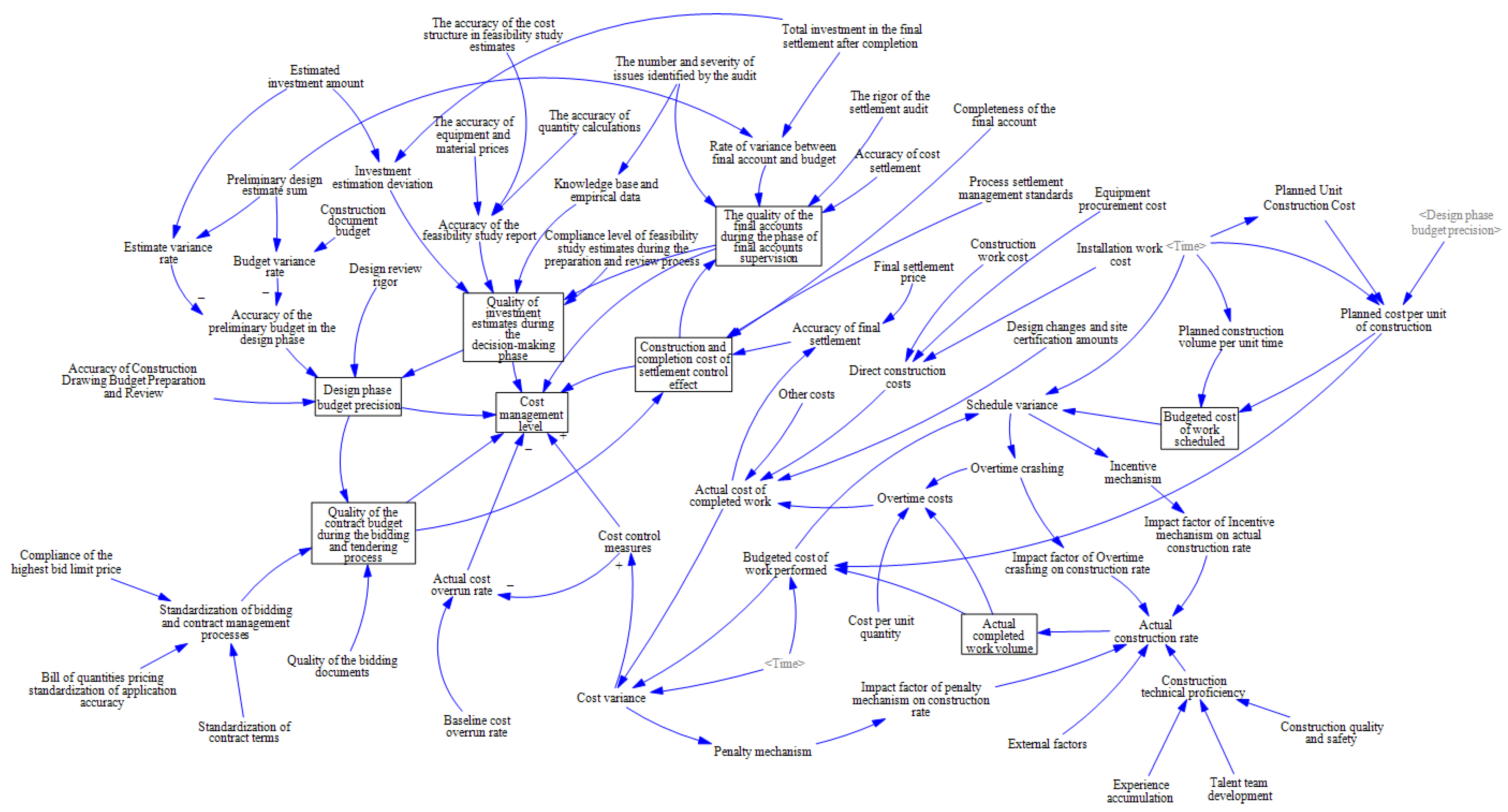
Based on the identification of factors influencing cost management levels in power transmission and transformation projects, the intricate feedback relationships among these factors are analyzed. The causal loop diagram primarily consists of two subsystems: cost management level and construction phase cost control. The cost management level subsystem comprises five core dimensions: investment estimate quality during the decision-making phase, design phase estimate accuracy, contract budget quality during bidding, cost control effectiveness during construction and final settlement, and final settlement quality during settlement supervision. Each dimension includes several quantitative or qualitative indicators. The construction phase cost control subsystem uses key variables such as “direct construction costs,” “design change and site certification costs,” “cost variance,” and “cost control measures” to directly reflect dynamic cost changes during construction. Multiple causal chains form a tight feedback mechanism between the two subsystems. For instance, enhancing the quality of estimates and budgets during the decision-making phase improves cost management standards while reducing cost variances during construction. Cost variances during construction then drive optimization of “cost control effectiveness,” lowering the rate of cost overruns. This, in turn, feeds back into the overall improvement of “cost management standards,” creating a positive reinforcement cycle: “Cost Management Standards ↑→ Construction Phase Cost Control Effectiveness ↑→ Further Improvement in Cost Management Standards ↑.”
A causal loop diagram illustrating the relationship between project cost management level and construction phase costs was created using “Vensim” software, as shown in Figure 1. This causal loop diagram clearly reveals the dynamic characteristics of the cost management system for power transmission and transformation projects: a strong correlation exists between cost management level and construction phase cost control, with an amplifying effect created through the transmission of indicators across phases. Positive loops drive continuous optimization of cost management control, while negative loops lead to the accumulation of cost risks. Identifying and intervening in key causal chains is central to achieving dynamic cost management.
Figure 1. Causal Cycle Diagram of Project Cost Management Level.

3.2.5. Stock-Flow Diagram

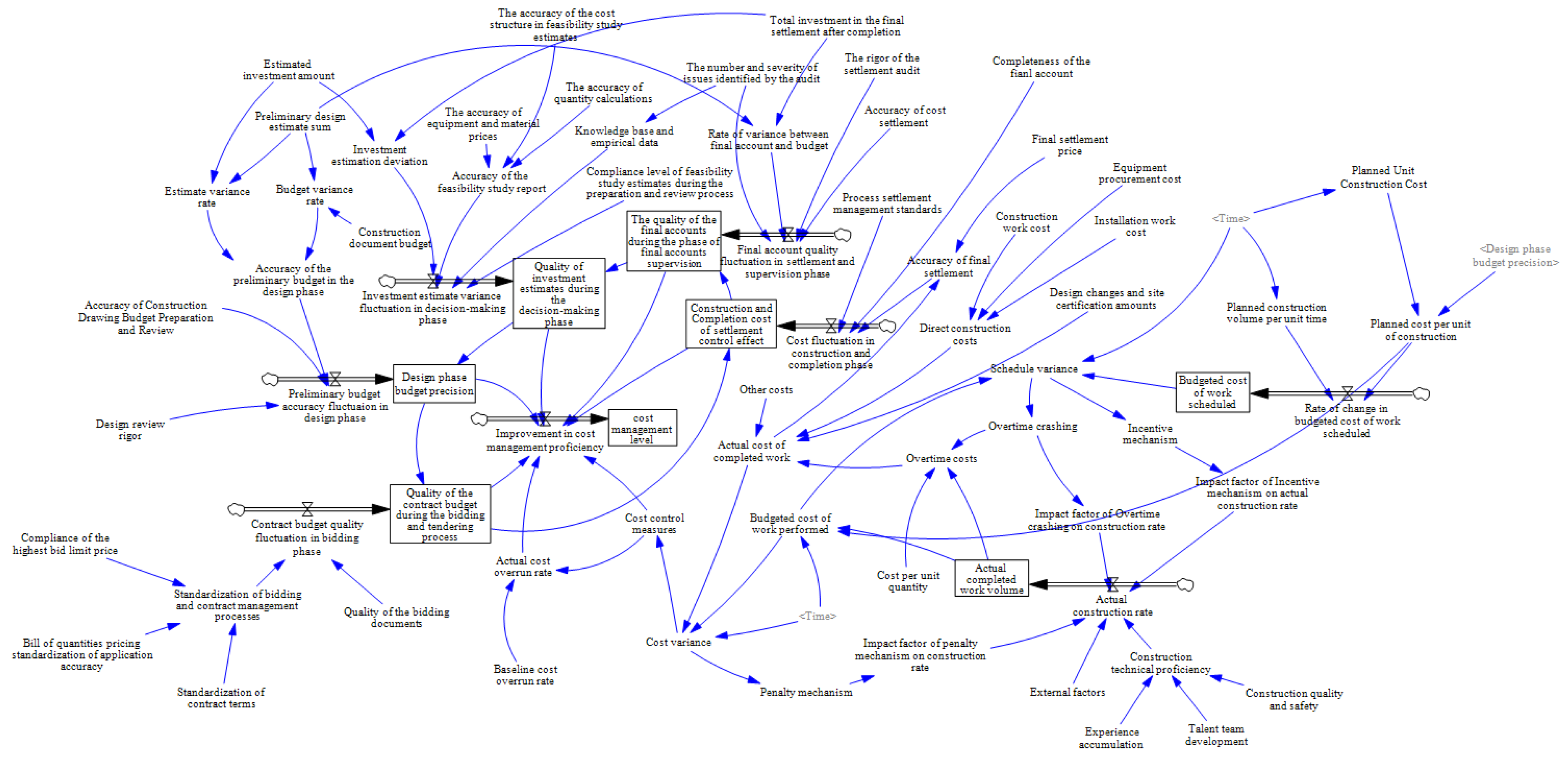
Based on the causal loop diagram, after in-depth analysis of quantitative relationships and causal links among factors, a stock-flow diagram is constructed; Figure 2 provides a more intuitive representation of the system’s dynamic behavior. The construction of this stock-flow diagram primarily involves two key aspects: First of all, considering model operability and data availability, constants such as benchmark cost overrun rate, unit engineering cost, and investment estimate amount were introduced. These constants serve as foundational parameters for the model, aiding in quantifying fixed factors within the cost control process. Secondly, it incorporates eight state variables: investment estimate quality during the decision phase, budget accuracy during the design phase, contract budget quality during the bidding phase, cost control effectiveness during construction and completion, cost management level, planned cost for completed work, and actual completed work volume. These variables dynamically reflect changes across project cost management stages. Among these, the first five variables directly constitute the core elements of cost management proficiency. Through mutual influence, they collectively determine the setting and adjustment of the sixth variable—the planned cost for completed work. All variables maintain close feedback connections, enabling the entire model to simulate the complex interactions and evolutionary processes of cost control in real projects.
Figure 2. Existing Flow Chart.

3.2.6. Construction of System Dynamics Equations

Given the inherent difficulty in directly quantifying cost management performance, this study integrated expert evaluations from design institutes, power grid companies, and consulting firms. By employing an expert scoring methodology, we transformed numerous qualitative indicators into quantitative metrics. Through standardized scoring procedures and weight calculations, we ensured the representativeness and reliability of parameter values. Under this framework, a score of 0.6 indicates average performance: scores below 0.6 are marked as “unqualified” (indicating poor performance), while scores exceeding 0.6 represent progressively higher levels. Specifically, scores between 0.6 and 0.7 are classified as “acceptable”, 0.7–0.8 as “good” and 0.8–0.9 as “excellent”, with the target cost management level set at 0.9. The study involved 12 experts from design institutes, power grid companies, and cost consulting firms, divided into three groups of four. Each expert scored the minimum (min), most likely (mlk), and maximum (max) values at each boundary point. The min, mlk, and max values for each factor were calculated as the average score assigned by the four members in each group, with each group’s score calculated as y a = ( m i n ac + 4   ×   m l k ac + m a x ac ) / 6 . The initial value of each influencing factor was determined by averaging the scores from all three groups. Based on these initial values, ten additional experts were invited to re-evaluate the factors, resulting in subjective weightings as shown in Table 2.
Table 2. Subjective weights of influencing factors.

3.2.7. Model Validation

Before conducting simulations, the model must undergo comprehensive validation to ensure it can accurately perform relevant simulation operations and guarantee its reliability and effectiveness. The model constructed in this study underwent rigorous structural and stability validation. Structural validation primarily assessed the consistency of the model’s internal logic, component interactions, and overall architecture to ensure compliance with theoretical requirements. Stability validation tested the model’s response and disturbance resistance under varying conditions by simulating different parameters and boundary conditions. These validation results demonstrate that the model can be reliably applied in subsequent simulation studies, providing a solid foundation for related analyses.

4. Construction of a System Dynamics Model

4.1. Project Overview

This paper analyzes the SZ Project in Gansu Province, simulating the relationship between cost variations during the construction phase and cost management levels. The current phase involves the expansion of Main Transformer No. 2 at the 750 kV substation. The expansion site is located in the central-western part of the station area, utilizing reserved space within the existing perimeter wall without requiring new land acquisition.

4.2. Parameter Design

Model parameters are set based on the actual conditions of the SZ project.
(1)
Initial values of qualitative factors
Initial values for each influencing factor of the SZ project were calculated using the triangular distribution method, based on the determined subjective weights of each indicator level and combined with the expert panel’s scoring results, as shown in Table 3. These initial values reflect the current state assessment results of the SZ project across various cost management stages and will serve as the starting point for system dynamics equation calculations, to be substituted into subsequent equations for simulation modeling.
Table 3. Initial Values of Qualitative Factors.
(2)
Initial values of quantitative factors
Based on the actual conditions of the SZ project, the initial values for quantitative factors were determined using the project feasibility study report, historical engineering databases, and market research data, as shown in Table 4 below. These serve as core input variables for the system dynamics equations and, together with the initial values for qualitative factors in Table 3, form the baseline scenario parameter system for the simulation model.
Table 4. Initial Values of Quantitative Factors.

4.3. Multi-Scenario Simulation and Analysis of the Case

Based on the actual circumstances of the SZ project, this paper establishes a baseline scenario, a carbon price fluctuation scenario, and a design accuracy improvement-carbon price fluctuation scenario. The simulation step size is set to 0.25 months, with a simulation duration of 10 months. It simulates the dynamic feedback processes among various variables under different conditions, thereby revealing the intrinsic evolutionary patterns of the full-process cost system for power transmission and transformation projects and providing decision support for their dynamic management.
(1)
Base-Case Scenario
The baseline scenario simulation establishes a reference framework. It assumes the existing management system operates fully compliant with design specifications, with all critical variables—such as material prices, labor costs, and technical efficiency—maintaining industry standard or historical average levels. The market carbon price is set at CNY 50/ton. Through system dynamics methodology, it reproduces the dynamic equilibrium state of project costs throughout the entire lifecycle. This scenario models an idealized full-process cost management system, encompassing all stages from investment estimation and design budgeting to construction budgeting and final settlement. It ensures optimal resource allocation and minimized risk. The final outcome generates a standardized cost baseline, enabling quantitative comparison of deviations in actual projects—such as cost overruns or savings—and evaluating the practical effectiveness of different management strategies or interventions, thereby providing scientific grounds for decision-making.
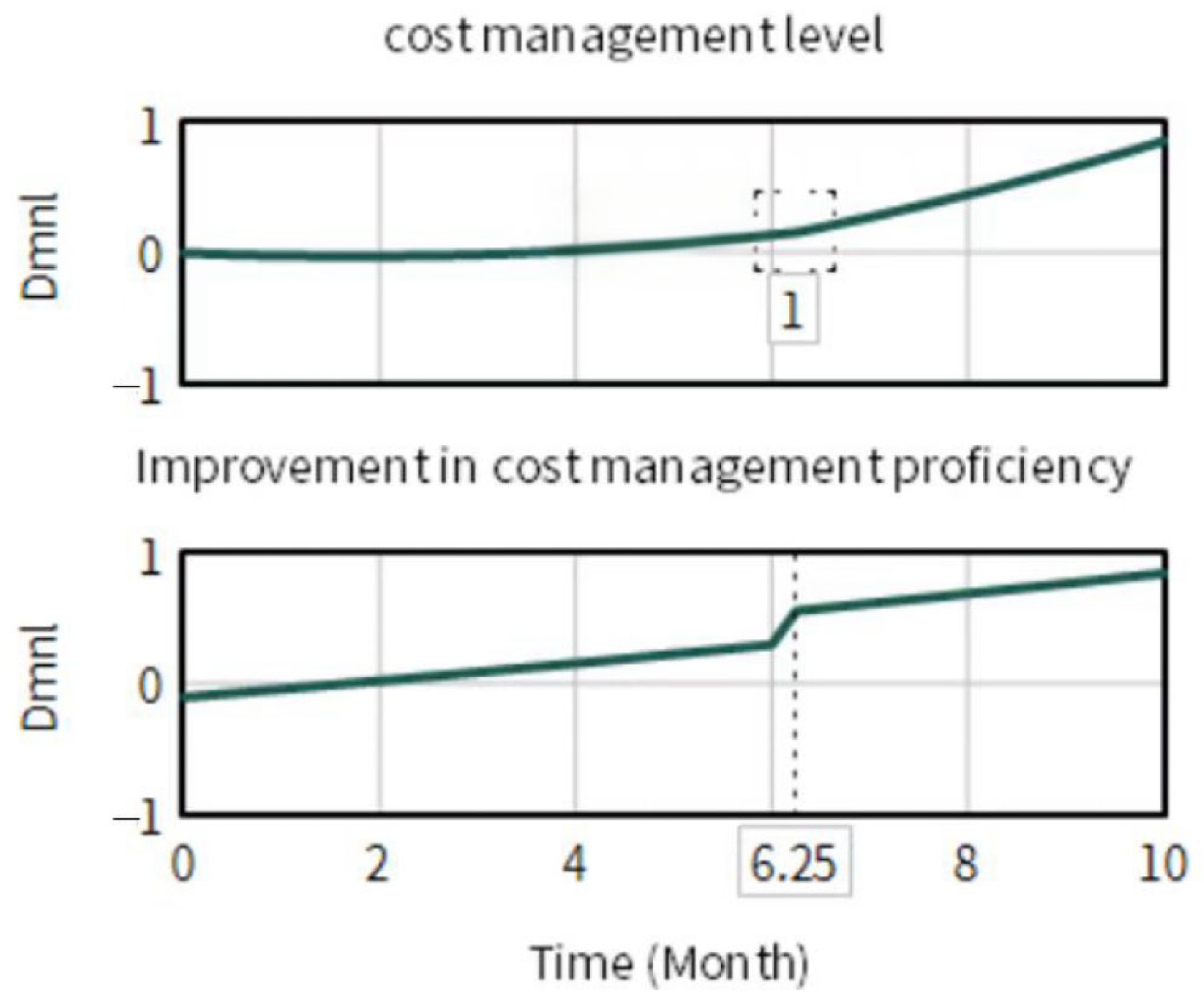
As shown in Figure 3, the cost management level of power transmission and transformation projects typically improves progressively throughout the lifecycle, evolving from macro-level estimation to micro-level control at each stage. A distinct inflection point is evident in the cost management level curve: the rate of increase prior to 6 months is markedly slower than afterward, the rapid increase continued until 6.25 months (as indicated by the dashed line in Figure 3). This corresponds to the turning point in the input variable representing the enhancement of cost management level.
Figure 3. Cost Management Level Change Chart for Scenario 1.
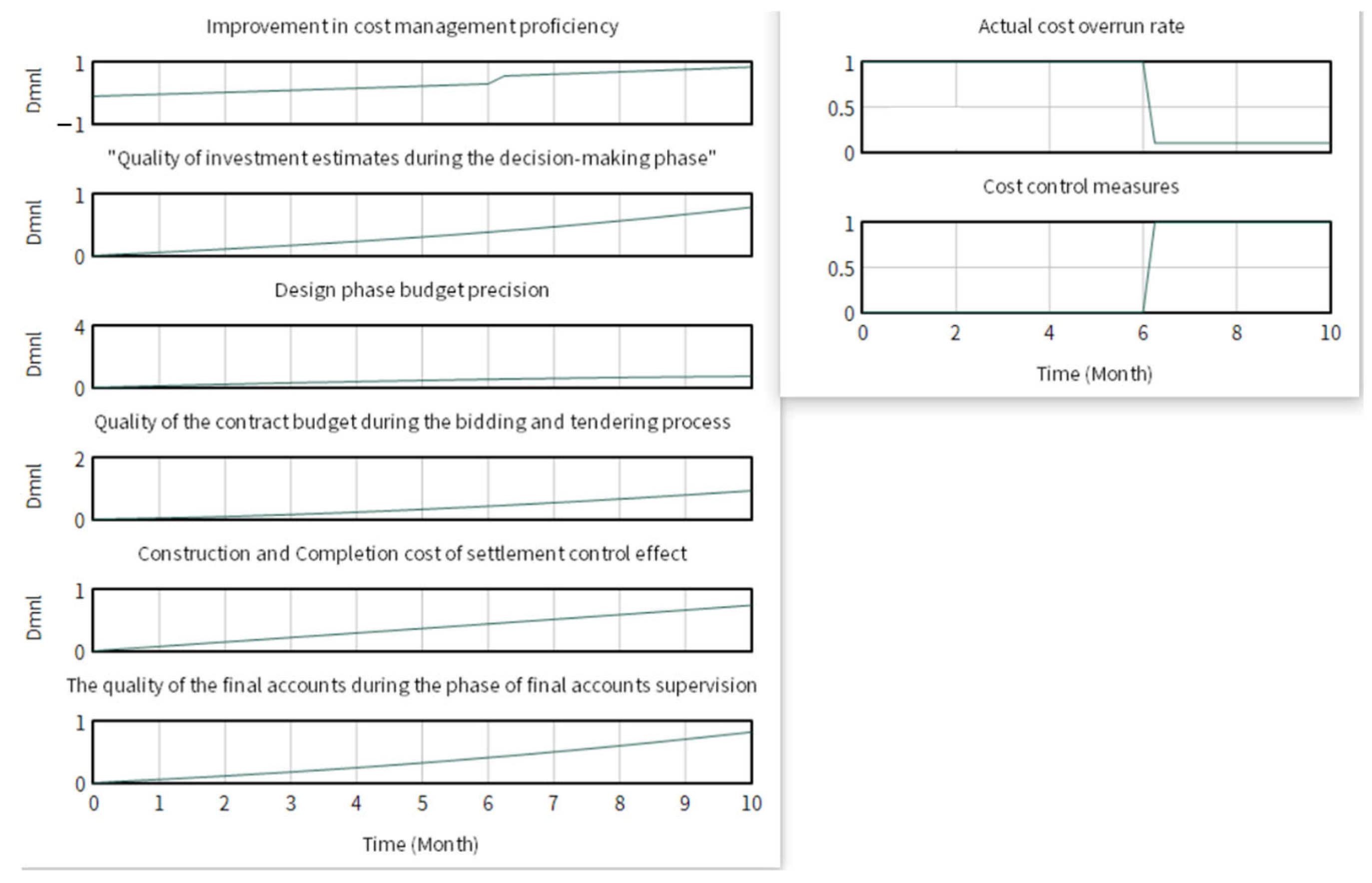
The diagram illustrating the reasons for cost management level improvement reveals that its trajectory mirrors that of cost control measures. This occurs because as transmission and transformation projects advance, the inclusion of critical factors like construction costs gradually increases negative cost variances, indicating budget overruns. This triggers cost control measures (represented by value 1 in the diagram), as shown in Figure 4. Following the implementation of cost control measures, the rate of actual cost overruns decreased, and cost management levels improved. This demonstrates that timely cost control measures contribute to enhancing cost management levels.
Figure 4. Curves showing the changes in various factors.
(2)
Carbon price fluctuation scenarios
To align with national “dual carbon” strategic goals, this study incorporates the dynamic market mechanism of carbon price fluctuations into cost management considerations. As a persistent market signal, carbon pricing will drive long-term technological innovation within the supply chain and the substitution of low-carbon materials, thereby altering traditional cost structures. Since carbon pricing is not a fixed cost, it directly increases energy expenses for high-energy-consumption building materials and construction machinery, potentially generating additional carbon allowance costs. These impacts are directly passed on to material costs and machinery shift fees. Therefore, distinct carbon sensitivity coefficients were established based on the characteristics of equipment acquisition costs, construction engineering costs, and installation engineering costs, thereby adjusting the initial values of these three primary direct construction costs, as shown in Table 5. Constrained by multiple factors and historical data limitations, this scenario roughly simulates market changes by raising carbon prices to CNY 100/ton, CNY 150/ton, and CNY 200/ton, designated as Scenarios 2-100, 2-150, and 2-200, respectively. Based on simulation results, project cost vulnerabilities under energy transition are identified, enabling timely adjustments to cost control measures to enhance construction cost management. Ultimately, this provides a quantitative basis for enterprises to formulate more resilient cost control and risk response strategies amid uncertainty.
Table 5. Direct Cost Adjustment Table.
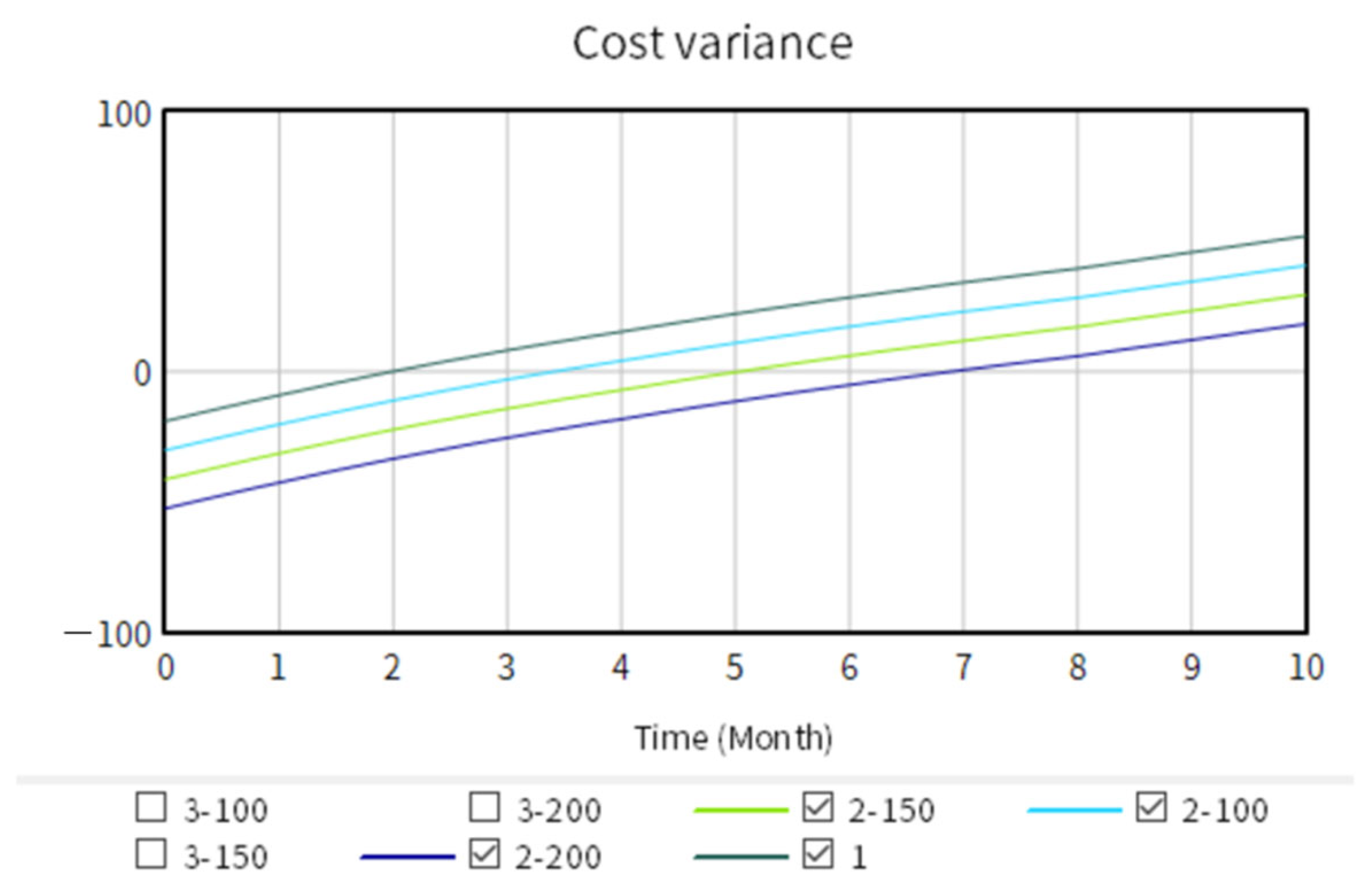
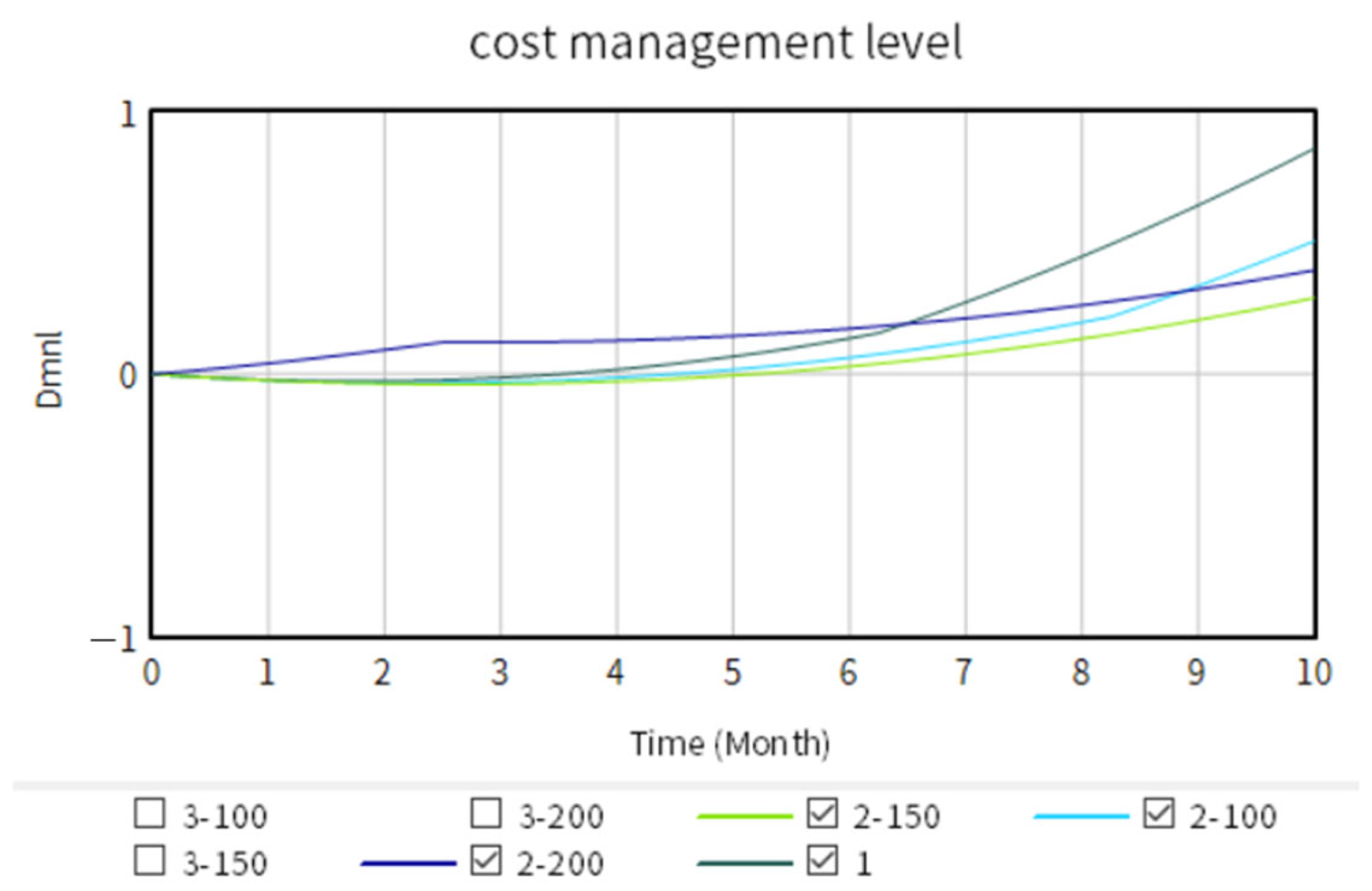
Due to the potential for significant upfront capital expenditures in project initiation, Figure 5 shows that cost deviation in the early phase exhibits the most severe overspending at 2-200, followed by 2-150 and 2-100, with Scenario 1 being the least affected. Correspondingly, the trigger points for cost control measures under the three carbon pricing scenarios also differ, leading to distinct trends in cost management performance. As shown in Figure 6, the cost management level follows the order 2-100 > 2-200 > 2-150, indicating that the impact of carbon prices on this management level is nonlinear and not directly proportional to carbon prices. However, all cost management level results under this scenario are significantly lower than the 0.86 benchmark scenario. This demonstrates that fluctuations in market carbon prices do indeed impact the overall cost management level of power transmission and transformation projects, with the severity of this impact varying according to the degree of carbon price volatility.
Figure 5. Cost Deviation Changes in Scenarios 1 and 2.
Figure 6. Changes in Cost Management Level under Different Carbon Prices.
(3)
Enhanced design accuracy-Carbon price fluctuation scenario
Analyzing carbon price fluctuations alone reflects only external cost pressures. Linking this to the internal technical variable of design precision allows simulation of more complex corporate strategic choices. High-precision design directly reduces material consumption and carbon emissions by optimizing material usage and minimizing construction rework, thereby creating an internal hedge against carbon price costs. Through dynamic scenario evaluation, we assess whether investing more resources upfront to enhance design precision can yield positive economic returns over the project’s entire lifecycle by saving carbon costs under varying carbon price fluctuation magnitudes.
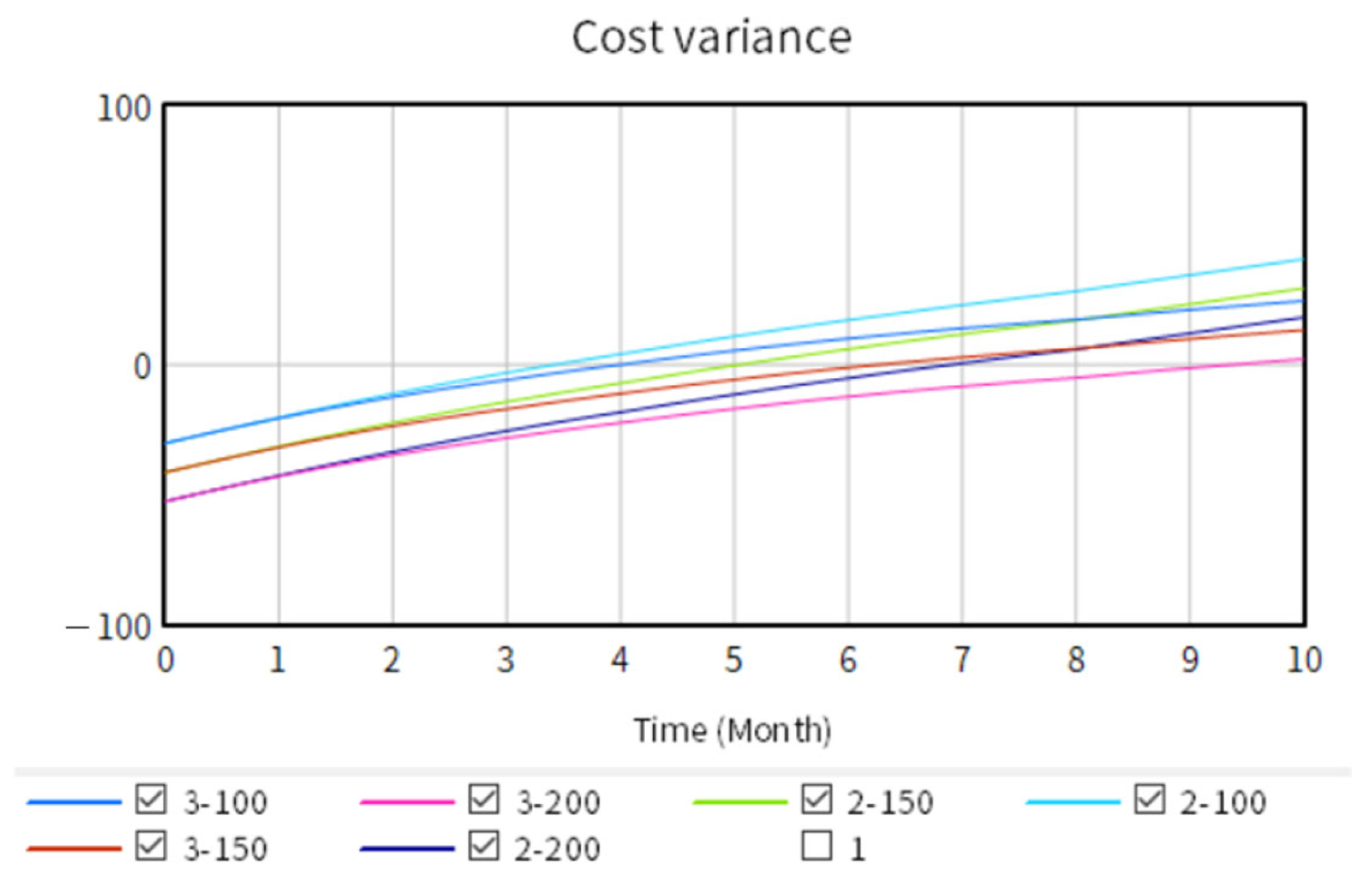
In this scenario, the three carbon price fluctuation cases remain unchanged from Scenario 2, designated as 3-100, 3-150, and 3-200. Building upon this, the accuracy of preliminary estimates during the design phase is enhanced to investigate whether improved design precision can mitigate the negative impact of rising construction costs on cost management levels as carbon prices increase. Considering that the quality of investment estimates during the decision-making phase impacts the accuracy of preliminary budgets during the design phase within this system dynamics model, the accuracy of equipment and material pricing, feasibility study cost composition estimates, and quantity calculation accuracy are each increased by 10%. This achieves an overall improvement in investment estimate quality. Additionally, the accuracy values for construction drawing budget preparation and review in the design phase were simultaneously increased by 10%. The combined adjustments to these two phases ultimately enhance the accuracy of preliminary budgets during the design phase.
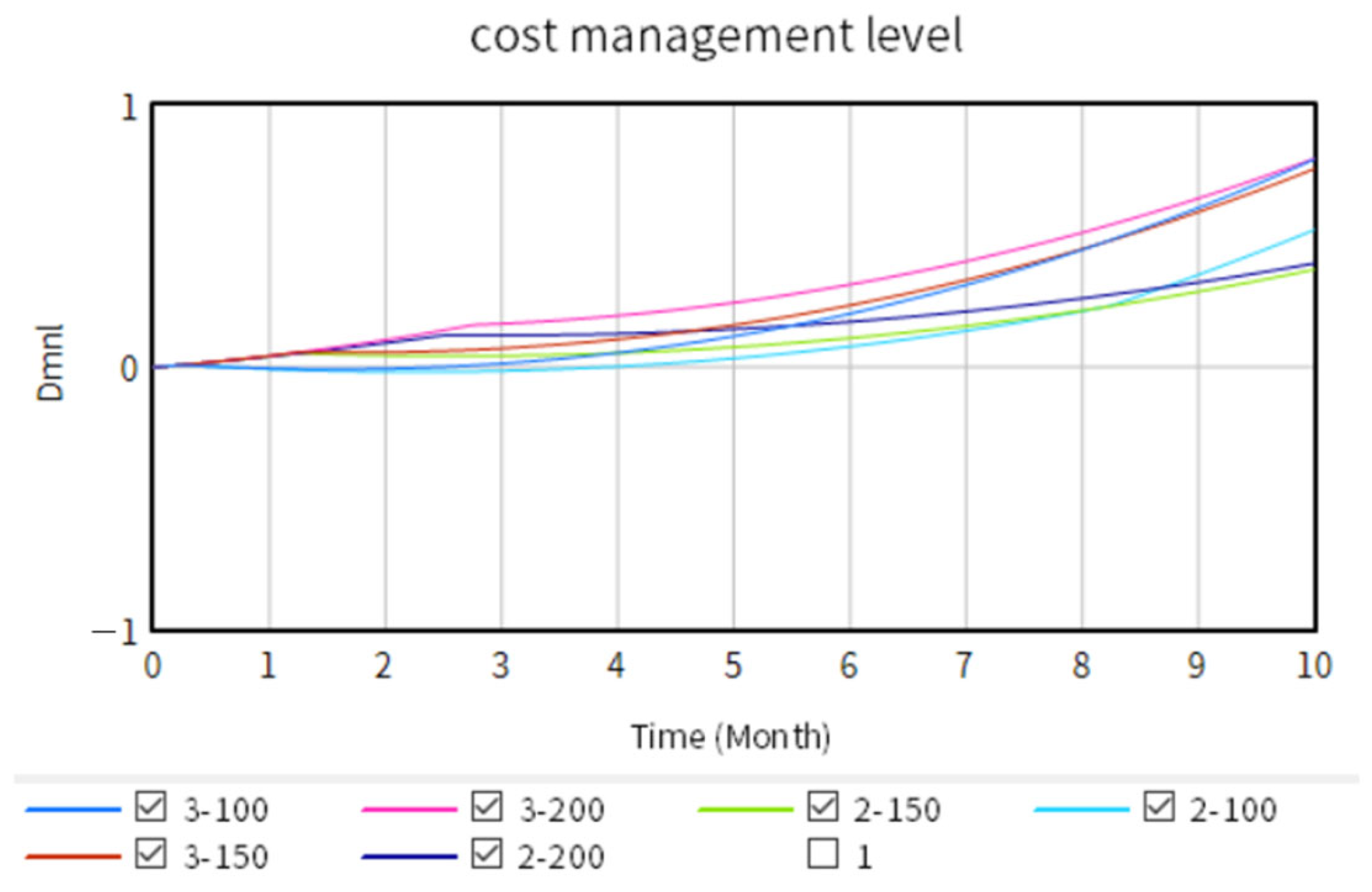
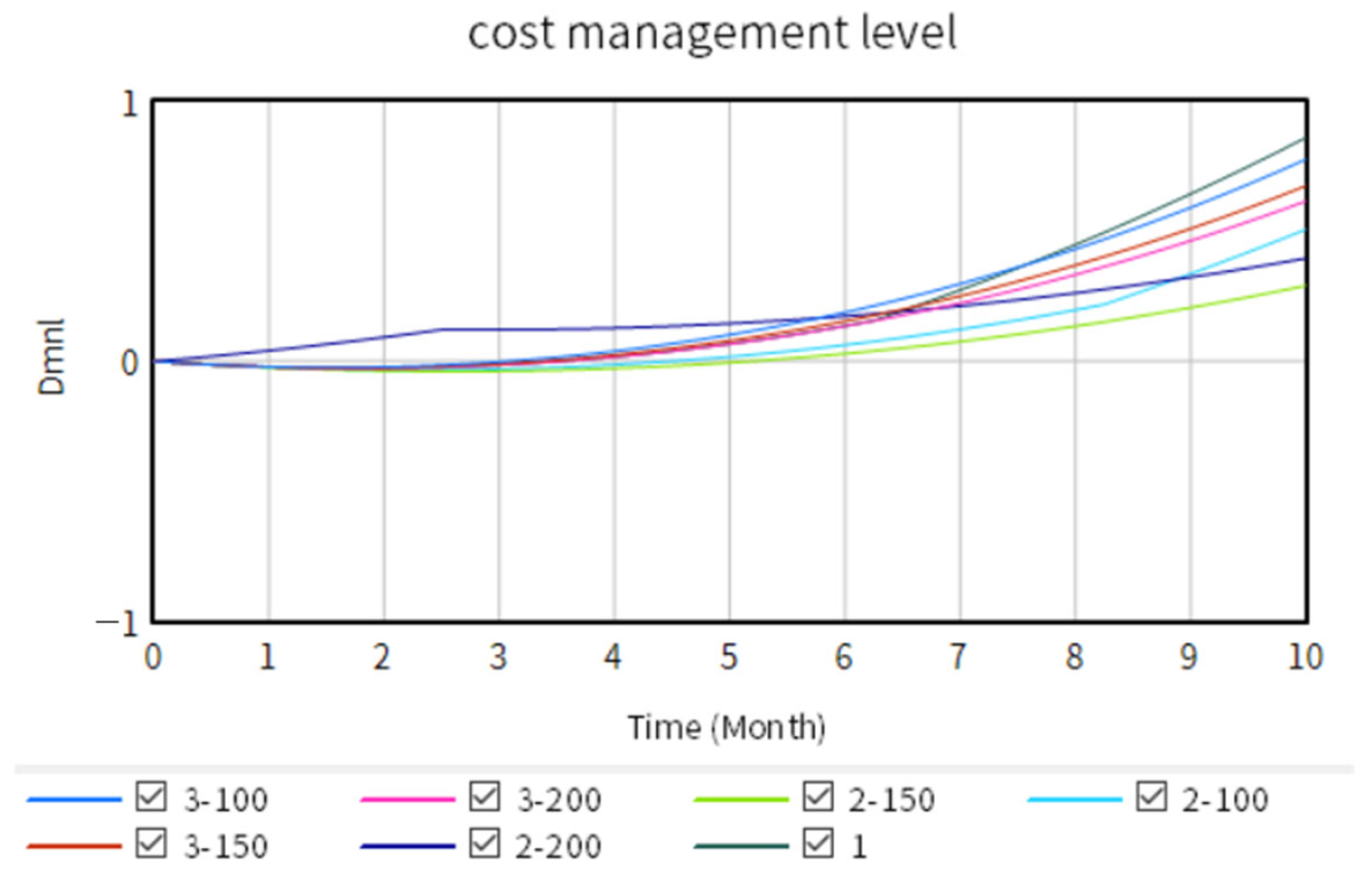
As shown in Figure 7, Scenarios 2-100 and 3-100, 2-150 and 3-150, and 2-200 and 3-200 share identical starting points. This indicates that under identical carbon prices, Scenarios 2 and 3 exhibit comparable initial cost overruns. However, the final cost deviation points for 3-100, 3-150, and 3-200 are closer to zero than those for 2-100, 2-150, and 2-200, directly attributable to the enhanced design precision in Scenario 3. This improved design accuracy ultimately impacts cost management effectiveness. As shown in Figure 8, the cost management level in Scenario 3 exceeds that of Scenario 2 across all carbon price levels. This result clearly indicates that enhancing the accuracy of design-stage estimates and budgets can effectively mitigate market carbon price shocks and positively influence cost management capabilities
Figure 7. Comparison of Cost Deviation Changes Between Scenarios 2 and 3.
Figure 8. Comparison of Cost Management Level Changes Between Scenarios 2 and 3.
Figure 9 illustrates changes in cost management levels across the three scenarios, with specific numerical results presented in Table 6. Despite adopting enhanced design precision in Scenario 3 to mitigate carbon price volatility, its management level still falls short of Scenario 1. This demonstrates that relying solely on improved design precision is insufficient to fully mitigate market risks; comprehensive risk response strategies must incorporate additional cost control measures. Data from Table 6 reveals that while Scenario 3’s cost management level is lower than Scenario 1, it shows a significant improvement over Scenario 2. This enhancement is particularly pronounced under the high carbon price scenario (3-200), further validating the effectiveness of design precision enhancement in mitigating carbon price volatility.
Figure 9. Changes in Cost Management Levels Across Three Scenarios.
Table 6. Key Indicator Output Values Across Three Scenarios.

4.4. Sensitivity Analysis

This study employs a single-factor sensitivity analysis method to conduct sensitivity testing on the 28 parameters within the model. Each parameter was set with a reasonable variation range of ±10%. Cost management level, as the core output variable, was selected as the analysis object, while other parameters were held constant at their baseline values. Individual parameters were sequentially adjusted and simulations run. Using the baseline scenario simulation results as reference, the sensitivity coefficients of each parameter were calculated to quantify their impact. The strength of parameter sensitivity was determined by combining this quantification with the deviation observed in the simulation curves. The sensitivity coefficient quantification table is shown in Table 7.
Table 7. Quantification Table of Sensitivity Coefficients.
The results indicate: ① The highly sensitive parameters significantly affecting model outputs are Final settlement price, The accuracy of equipment and material prices, and Equipment procurement cost, with sensitivity coefficients of 7.31%, 6.52%, and 6.22%, respectively. When these parameters fluctuate by ±10%, the core output variable changes by over 5%, showing a pronounced deviation in the curve; ② Moderately sensitive parameters include six factors such as Preliminary design estimate sum and Completeness of the final account. Their variations exert a slight influence on results but do not alter the core trend; ③ Weakly sensitive parameters comprise 19 factors including Accuracy of Construction Drawing Budget Preparation and Review and Estimated investment amount. Simulation curves after parameter adjustments nearly coincide with the baseline curve, indicating no significant impact on results. These findings indicate that the model’s core conclusions are driven by highly sensitive parameters, demonstrating robust overall stability.

5. Conclusions and Discussion

5.1. Conclusions

This study investigates the impact of cost variations during the construction phase on cost management effectiveness, defining the system’s boundaries, structure, and interrelationships among factors. Employing system dynamics methodology, it elucidates causal feedback loops within the cost management process. By establishing variable equations, it describes the interactions among influencing factors within the system. Using Vensim software (PLE x64 Version), system dynamics simulations and factor sensitivity analyses were conducted. The conclusions are as follows:
(1) Sensitivity analysis was conducted on 28 factors influencing cost management levels. Results indicate that within a ±10% variation range, the top five critical factors affecting project cost management performance are: Final settlement price, Accuracy of equipment and material prices, Equipment procurement cost, Preliminary design estimate sum, and Completeness of the final account. Nineteen factors in the model exhibited weak sensitivity. Even when highly sensitive parameters fluctuated within reasonable ranges, the core output variables maintained their fundamental trends, demonstrating the model’s robust stability.
(2) Fluctuations in carbon prices exert significant impacts on cost management. Greater carbon price volatility intensifies uncertainty in cost transmission. The construction phase, as the stage with the highest carbon emissions, is also the most directly affected by carbon price fluctuations. Rising carbon prices directly increase direct costs such as high-carbon building materials. These incremental costs are transmitted through successive levels to the project cost, thereby influencing cost management performance. Compared to the baseline scenario, a ¥50 per ton increase in carbon prices reduces cost management effectiveness by approximately 41%, advances cost control measures by about 0.95 months, and decreases cost savings by ¥112,900. A ¥100 per ton increase reduces cost management effectiveness by about 66%, advances cost control measures by approximately 5.25 months, and decreases cost savings by ¥255,290 (see Table 6).
(3) Enhancing design accuracy can mitigate the impact of carbon price fluctuations to some extent. Under the same carbon price fluctuation—such as a 50 yuan per ton increase—adjusting the accuracy of the preliminary budget during the design phase from 0.71 to 0.77 improves cost management levels while increasing cost savings, offsetting approximately 53% of the negative effects of carbon price fluctuations.

5.2. Recommendations

Based on the simulation analysis results presented earlier, this paper proposes the following management optimization directions for power grid enterprises to explore:
(1) Adopt a “Life Cycle Cost (LCC)” mindset. Grid companies should abandon traditional notions of “lowest bid price” and “prioritizing construction over decision-making,” instead focusing on the long-term value of projects. Cost control is central to enhancing cost management and must be integrated throughout the entire lifecycle of transmission and transformation projects. Controlling preliminary design estimates with investment estimates, and controlling construction drawings budgets with preliminary design estimates, creates a tiered constraint system that maximizes cost control effectiveness in the project’s early stages. Concurrently, enterprises can establish dynamic project cost ledgers to continuously compare planned versus actual costs, enabling timely warnings and corrective actions for cost overrun risks.
(2) Incorporate the impact of carbon pricing into the preliminary design phase and other considerations. Power grid companies should recognize that the external market environment is constantly evolving, and fluctuations in market carbon prices will have a persistent impact on equipment materials, construction energy consumption, and operational costs, thereby reducing cost management efficiency. Therefore, power grid companies may consider integrating carbon pricing into their routine risk monitoring framework. For instance, leveraging intelligent databases to track national carbon trading policies and international carbon price trends can gradually establish dynamic forecasting models for medium-to-long-term carbon prices, providing reference for cost budgeting. Additionally, during bidding processes, piloting low-carbon scoring mechanisms can incentivize bidders to propose low-carbon, energy-efficient, and green equipment and construction solutions. Prioritizing the assessment of green materials and technologies’ full lifecycle costs aims to reduce project carbon footprint and cost sensitivity at the source.
(3) Enhance precision management during the design phase. As demonstrated by the multi-scenario simulations above, design accuracy can mitigate the impact of rising carbon prices. Power grid enterprises should recognize that design precision plays a positive role in countering environmental impacts and controlling costs. A rough design can lead to frequent changes during construction, material waste, and other issues, thereby amplifying all external environmental shocks. Power grid companies must first enhance cross-departmental coordination during the design phase. Regular cost coordination meetings should be held to establish rapid channels for identifying, reporting, and resolving issues, preventing delays and cost overruns caused by communication gaps leading to design inaccuracies. Secondly, strict cost ceilings should be set early in projects, requiring design teams to conduct multi-scenario comparisons. Finally, companies can leverage digital design tools like BIM technology to conduct construction simulations, minimizing potential risks during implementation.
(4) Strengthen management during the settlement phase. Upon project completion, power grid enterprises should compile actual cost data, compare initial investment estimates, design budgets, and final settlements, and analyze causes of cost overruns or savings. Through post-project evaluations, feed lessons learned and data into new projects, creating a continuous improvement management loop and knowledge repository.
In summary, against the backdrop of the “dual carbon” goals and facing the challenge of carbon price volatility, it is recommended that power grid companies shift their cost management for transmission and transformation projects from reactive to proactive. Enhancing precision during the design phase is fundamental to effectively resisting future external environmental shocks and serves as an effective pathway to elevate the level of whole-process cost management.

Author Contributions

Conceptualization, X.Z. and W.N.; methodology, W.N.; formal analysis, X.Z., W.N., Z.C. and X.W.; investigation, X.Z., Z.C. and Y.H.; resources, X.Z., W.N., X.W., Z.C., Y.H. and J.Z.; data curation, X.W. and Y.H.; writing—original draft preparation, X.Z., W.N. and X.W.; writing—review and editing, Z.C., Y.H. and J.Z.; visualization, X.W.; supervision, J.Z.; project administration, J.Z. All authors have read and agreed to the published version of the manuscript.

Funding

This research received no external funding.

Data Availability Statement

The original contributions presented in this study are included in the article. Further inquiries can be directed to the corresponding author.

Acknowledgments

The authors have reviewed and edited the output and take full responsibility for the content of this publication.

Conflicts of Interest

Author Xiaomei Zhang, Wenqin Ning and Xue Wei were employed by the Economic and Technological Research Institute of State Grid Gansu Electric Power Company. The remaining authors declare that the research was conducted in the absence of any commercial or financial relationships that could be construed as a potential conflict of interest.

References

  1. Zhao, H.; Guo, S. Comprehensive Performance Evaluation of Electricity Grid Corporations Employing a Novel MCDM Model. Sustainability 2018, 10, 2310. [Google Scholar] [CrossRef]
  2. Liu, R.; Zhou, N.; Luo, J. Application of Total Life Cycle Cost Management in Electricity Enterprises. In Proceedings of the 6th International Conference on Information Technologies and Electrical Engineering, Changde, China, 3–5 November 2023; pp. 690–694. [Google Scholar]
  3. Presciuttini, A.; Frecassetti, S.; Ferrazzi, M.; Cantini, A.; Portioli-Staudacher, A. Integrating lean management and emerging technologies for enhanced sustainable performance: Empirical evidence based on double machine learning approach. Data Sci. Manag. 2025, in press. [Google Scholar] [CrossRef]
  4. Signorini, M.; Gatto, C.; Cassandro, J.; Pavan, A.; Spagnolo, S.L. Cost Efficiency in Buildings: An Ontological Perspective for Sustainable Life Cycle Management. Sustainability 2025, 17, 5685. [Google Scholar] [CrossRef]
  5. Dui, H.; Lu, Y.; Chen, L. Importance-based system cost management and failure risk analysis for different phases in life cycle. Reliab. Eng. Syst. Saf. 2024, 242, 109785. [Google Scholar] [CrossRef]
  6. Felicioni, L.; Casalone, L.; Marchi, L.; Gaspari, J. Integrating life cycle assessment and cost analysis in decision making: Optimising design choices in a public building case study. Energy Build. 2025, 347, 116399. [Google Scholar] [CrossRef]
  7. Tamburini, E.; Soana, E.; Monti, M.; Fano, E.A.; Castaldelli, G. Introducing Life Cycle Assessment in costs and benefits analysis of vegetation management in drainage canals of lowland agricultural landscapes. Water 2020, 12, 2236. [Google Scholar] [CrossRef]
  8. Julius, J.; Elie, M.; Abraham, Y.; Sabrina, S. Building-integrated photovoltaics in Mediterranean net-zero energy neighborhoods:Life cycle cost, energy, and environmental impact. Sustain. Energy Technol. Assess. 2025, 82, 104550. [Google Scholar] [CrossRef]
  9. Lu, K.; Jiang, X.; Yu, J.; Tam, V.W.; Skitmore, M. Integration of life cycle assessment and life cycle cost using building information modeling: A critical review. J. Clean. Prod. 2021, 285, 125438. [Google Scholar] [CrossRef]
  10. Lu, W.; Lai, C.C.; Tse, T. BIM and Big Data for Construction Cost Management; CRC Press: Boca Raton, FL, USA, 2018. [Google Scholar]
  11. Altaf, M.; Jaffari, R.; Alalaoul, W.S.; Musarat, M.A.; Ammad, S. Developing automated strategy of life cycle cost analysis (LCCA) with building information modeling (BIM) integration for building projects. Results Eng. 2025, 25, 104179. [Google Scholar] [CrossRef]
  12. Guo, X. Research on Cost Management in the Whole Process of Construction Project Based on Computer BIM. J. Phys. Conf. Ser. 2021, 1744, 022087. [Google Scholar] [CrossRef]
  13. Kusi, E.; Boateng, I.; Danso, H. Energy consumption and carbon emission of conventional and green buildings using building information modelling (BIM). Int. J. Build. Pathol. Adapt. 2025, 43, 826–854. [Google Scholar] [CrossRef]
  14. Tang, L.; Chen, C.; Tang, S.; Wu, Z.; Trofimova, P. Building Information Modeling and Energy Efficiency Optimization, Encyclopedia of Sustainable Technologies, Second Edition: Volumes 1–4; Elsevier: Amsterdam, The Netherlands, 2024; Volume 2, pp. 336–345. [Google Scholar]
  15. Zhang, Y. Application of Building Information Modeling in cost control of engineering projects. Proc. Inst. Civ. Eng.-Smart Infrastruct. Constr. 2024, 177, 83–92. [Google Scholar] [CrossRef]
  16. Simankina, T.; Ćetković, J.; Verstina, N.; Evseev, E. Influence of the economy crisis on project cost management. IOP Conf. Ser. Earth Environ. Sci. 2017, 90, 012209. [Google Scholar] [CrossRef]
  17. Chen, X.; Zhu, W.; Chen, Y.; He, Q. Improving collaborative innovation performance in megaprojects: A system dynamic approach. Eng. Constr. Archit. Manag. 2025, 32, 5099–5131. [Google Scholar] [CrossRef]
  18. Sun, X.; Zhao, X.; Gu, L.; Jin, C.; Pan, X.; Jang, S. A system dynamics-based comprehensive investment benefit and carbon reduction evaluation for CCUS-EOR projects. Technol. Forecast. Soc. Change 2025, 220, 124320. [Google Scholar] [CrossRef]
  19. Wang, Z.; Chan, H.Y.; Xu, Y.; Chen, A. System dynamics in railway project appraisal: Assessing student productivity and wider economic benefits in the knowledge economy. Transp. Res. Part E Logist. Transp. Rev. 2025, 202, 104325. [Google Scholar] [CrossRef]
  20. Riaz, H.; Khan, K.I.A.; Ullah, F.; Tahir, M.B.; Alqurashi, M.; Alsulami, B.T. Key factors for implementation of total quality management in construction Sector: A system dynamics approach. Ain Shams Eng. J. 2023, 14, 101903. [Google Scholar] [CrossRef]
  21. Bajomo, M.; Ogbeyemi, A.; Zhang, W. A systems dynamics approach to the management of material procurement for Engineering, Procurement and Construction industry. Int. J. Prod. Econ. 2022, 244, 108390. [Google Scholar] [CrossRef]
  22. Mochida, S.; Righter, J.; Summers, J.D. A Study of Project Cost Management Based on Requirements Analysis. Int. J. Biomed. Soft Comput. Hum. Sci. 2017, 21, 21–27. [Google Scholar] [CrossRef]
  23. Dobysheva, T.V. On the issue of improving the accuracy of construction cost calculations at the pre-project stage. IOP Conf. Ser. Earth Environ. Sci. 2021, 751, 012139. [Google Scholar] [CrossRef]
  24. Xu, X. Application Research of Full Process Engineering Consulting in Power Grid Engineering Cost Management. IOP Conf. Ser. Earth Environ. Sci. 2020, 565, 012011. [Google Scholar] [CrossRef]
  25. Jin, X.; Zhu, Q. Application Strategy of Whole Process Engineering Cost Management in Modern Green Building Economy. Sci. J. Econ. Manag. Res. 2025, 7, 87–93. [Google Scholar] [CrossRef]
  26. Nandjebo, M.; Akande, J.O.; Olutuase, S.O. Modelling the effect of project cost management on project management performance: An application of SEM to Namibian MRCs. Int. J. Proj. Organ. Manag. 2021, 13, 150. [Google Scholar] [CrossRef]
  27. Emily, W.; Omar, S. New Construction Cost Indices to Improve Highway Management. J. Manag. Eng. 2021, 37, 04021030. [Google Scholar] [CrossRef]
  28. Yilmaz, S.; Kumar, D.; Hada, S.; Demirkesen, S.; Zhang, C.; Li, H. A PMBOK-based construction cost management framework for BIM integration in construction projects. Int. J. Constr. Manag. 2025, 25, 861–875. [Google Scholar] [CrossRef]
  29. Li, X. Research on Cost Optimization of Prefabricated Buildings Based on Genetic Algorithm. E3S Web Conf. 2024, 565, 01017. [Google Scholar] [CrossRef]
  30. Harish, G.; Sun, Y.; Liu, X. Dual hesitant fuzzy Correlation coefficient-based decision-making algorithm and its applications to Engineering Cost Management problems. Eng. Appl. Artif. Intell. 2023, 126, 107170. [Google Scholar] [CrossRef]
  31. Zhao, M.; Zi, X. Using Earned Value Management with exponential smoothing technique to forecast project cost. J. Phys. Conf. Ser. 2021, 1955, 012101. [Google Scholar] [CrossRef]
  32. Alsugair, A.M.; Al Gahtani, K.S.; Alsanabani, N.M.; Hommadi, G.M.; Alawshan, M.I. An integrated DEMATEL and system dynamic model for project cost prediction. Heliyon 2024, 10, 26166. [Google Scholar] [CrossRef]
  33. Ding, X.; Lu, Q.; Varatharajan, R. Construction cost management strategy based on BIM technology and neural network model. J. Intell. Fuzzy Syst. 2021, 40, 6669–6681. [Google Scholar] [CrossRef]
  34. Guo, C. Research on Modern Construction Cost Economic Management Based on the Whole Process of Genetic Algorithm. J. Phys. Conf. Ser. 2021, 1802, 032039. [Google Scholar] [CrossRef]
  35. Shen, C.; Meng, P.; Shen, J.; Sun, G. A construction cost estimation system based on case-based reasoning and exponential smoothing. J. Build. Eng. 2025, 113, 114120. [Google Scholar] [CrossRef]
  36. Jin, G.; Yang, C. A systematic intelligent prediction model for residential construction cost based on fuzzy AHP and GA-BP neural network. Adv. Eng. Inform. 2026, 69, 103858. [Google Scholar] [CrossRef]
  37. Peng, S.; Zuo, Y.; Li, X.; Zhao, M.; Li, B. Cost Prediction for Power Transmission and Transformation Projects in High-Altitude Regions Based on a Hybrid Deep-Learning Algorithm. Process 2025, 13, 2092. [Google Scholar] [CrossRef]
  38. Jia, X.; Liu, Y. Research on engineering cost prediction based on similarity. Sci. Rep. 2025, 15, 23134. [Google Scholar] [CrossRef]
  39. Zhuang, S.; Chen, W.; Zhou, X. Power grid project cost prediction based on improved CNN under low carbon backgroundm. Int. J. Low-Carbon Technol. 2024, 19, 1682–1688. [Google Scholar] [CrossRef]
  40. Li, W. Research on the Carbon Reduction Efficiency Test and Optimization of Taiwan’s Transportation Policy Based on System Dynamics. Ph.D. Thesis, Huazhong University of Science and Technology, Wuhan, China, 2021. [Google Scholar] [CrossRef]
  41. Xuan, Z.; Chang, N.B.; Wanielista, M. Modeling the system dynamics for nutrient removal in an innovative septic tank media filter. Bioprocess Biosyst. Eng. 2012, 35, 545–552. [Google Scholar] [CrossRef]
  42. Luo, Y.; Ahmadi, E.; McLellan, B.C.; Tezuka, T. A hybrid system dynamics model for power mix trajectory simulation in liberalized electricity markets considering carbon and capacity policy. Renew. Energy 2024, 233, 121164. [Google Scholar] [CrossRef]
  43. Khan, K.I.A.; Flanagan, R.; Lu, S.-L. Managing information complexity using system dynamics on construction projects. Constr. Manag. Econ. 2016, 34, 192–204. [Google Scholar] [CrossRef]
  44. Xue, G.; Niu, W.; Xu, Z.; Zhu, X.; Wu, Y.; Chen, C. Modeling the Carbon–Electricity Coupled System with Multi-Entity Participation Under Carbon Emission Trading Market Coverage Expansion: A System Dynamics Approach. Processes 2025, 13, 2969. [Google Scholar] [CrossRef]
  45. Pan, Z.; Wang, Y.; Guo, J.; Zhang, X.; Xue, S.; Li, W.; Chen, Z.; Liu, Z. Modeling the Tripartite Coupling Dynamics of Electricity–Carbon–Renewable Certificate Markets: A System Dynamics Approach. Processes 2025, 13, 868. [Google Scholar] [CrossRef]
  46. He, Z. Problems and Countermeasures in Cost Control of Civil Construction Engineering. Eng. Adv. 2023, 3, 284–287. [Google Scholar] [CrossRef]
  47. Yu, G. Problems and Countermeasures of Fine Management of Budget Implementation in Colleges and Universities//Institute of Management Science and Industrial Engineering. In Proceedings of the 2018 6th International Education, Economics, Social Science, Arts, Sports and Management Engineering Conference (IEESASM 2018), Qingdao, China, 29–30 December 2018; Wuhan Textile University: Wuhan, China, 2018; pp. 485–489. [Google Scholar]
  48. Chen, Z. Research on Whole-Process Cost Control of Residential Construction Projects. Lect. Notes Educ. Arts Manag. Soc. Sci. 2025, 3, 132–135. [Google Scholar] [CrossRef]
  49. Gong, S. Exploring the Problems and Countermeasures in Cost Control of Civil Engineering Projects. In Proceedings of the International Conference on Education, Management, Business, Jiaxing, China, 23–24 September 2023. [Google Scholar]
  50. Luo, L. Problems and Countermeasures for Logistics Cost Control in Construction Enterprises. In Proceedings of the 6th International Conference on Information Management, Innovation Management and Industrial Engineering, Xi’an, China, 20–22 January 2013; pp. 372–374. [Google Scholar] [CrossRef]
  51. Li, M.; Wang, Q.; Liao, S.; Guo, T.; Xiong, Y.; Ming, Y.; Zou, Y. Research on Cost Prediction of Power Transmission and Transformation Project Based on Combination Prediction Model. IOP Conf. Ser. Earth Environ. Sci. 2021, 769, 042019. [Google Scholar] [CrossRef]
  52. Chen, C.; Chen, K.; Chen, X.; Zhu, X.; Ke, Y. Construction of Power Transmission and Transformation Project Cost Information Platform Based on Big Data Analysis. J. Phys. Conf. Ser. 2022, 2146, 012004. [Google Scholar] [CrossRef]
Disclaimer/Publisher’s Note: The statements, opinions and data contained in all publications are solely those of the individual author(s) and contributor(s) and not of MDPI and/or the editor(s). MDPI and/or the editor(s) disclaim responsibility for any injury to people or property resulting from any ideas, methods, instructions or products referred to in the content.

Article Metrics

Citations

Article Access Statistics

Multiple requests from the same IP address are counted as one view.