Next Article in Journal
Reproducible Agent-Based Modelling of Residential PV Adoption in Community Microgrids: Integrating Economic, Infrastructural, and Social Drivers
Previous Article in Journal
Experimental Investigation of Natural Ventilation Rates in a Domestic House in Laboratory Conditions
Previous Article in Special Issue
Anaerobic Digestion of the Halophyte Salicornia ramosissima in Co-Digestion with Swine Manure in Lab-Scale Batch and Continuous Reactor Tests
error_outline You can access the new MDPI.com website here. Explore and share your feedback with us.
 
 
Review

Anaerobic Digestion of Flower Waste: A Mini Review on Biomethane Potential, Process Optimization, and Sustainability Perspectives


by
Mariana Rodriguez Popich
1,
Miguel Nogueira
2 and
Rita Fragoso
3,*
1
School of Agriculture, University of Lisbon, Tapada da Ajuda, 1349-017 Lisboa, Portugal
2
LEAF-Linking Landscape, Environment, Agriculture and Food Research Center, School of Agriculture, University of Lisbon, Tapada da Ajuda, 1349-017 Lisboa, Portugal
3
LEAF-Linking Landscape, Environment, Agriculture and Food Research Center, Associate Laboratory TERRA, School of Agriculture, University of Lisbon, Tapada da Ajuda, 1349-017 Lisboa, Portugal
*
Author to whom correspondence should be addressed.
Energies 2026, 19(2), 289; https://doi.org/10.3390/en19020289
Submission received: 30 October 2025 / Revised: 10 December 2025 / Accepted: 31 December 2025 / Published: 6 January 2026
(This article belongs to the Special Issue Biomass Resources to Bioenergy: 2nd Edition)

Abstract

The global floriculture industry generates massive organic residues that pose environmental risks but offer untapped bioenergy potential. This mini review evaluates the feasibility of valorizing flower waste through anaerobic digestion (AD) by synthesizing experimental data on substrate characterization, pretreatment efficacy, and reactor performance. The results indicate that biochemical methane potentials (BMP) vary significantly, ranging from 89 to 412 mLCH4·g−1VS, depending on plant species and tissue composition. Major bottlenecks include high lignocellulosic recalcitrance (lignin content up to 0.28 g·g−1TS) and the presence of inhibitory phenolic compounds. Analysis reveals that while alkaline pretreatments effectively disrupt lignocellulosic structures, co-digestion strategies are essential to mitigate inhibition and balance nutrient ratios. However, current research is predominantly limited to laboratory-scale batch assays, leaving a critical knowledge gap regarding long-term process stability and inhibition dynamics in continuous systems. To transform this laboratory concept into a scalable technology, future efforts must focus on pilot-scale continuous reactor trials, standardized testing protocols, and comprehensive techno-economic and life cycle assessments.

1. Introduction and Scope

According to World Bank data, the organic fraction of waste in low- and middle-income countries, comprising food and garden residues, may constitute up to 50% of total waste generation, while in higher-income economies such as those in Europe and North America, this proportion is closer to 32% [1]. The fundamental challenge, however, concerns the management of these green wastes. Despite belonging to the latter economic category, Portugal has faced difficulties in organic waste management, with landfill disposal increasing since 2015 despite initiatives to enhance separate collection [2]. This pattern contributes to environmental degradation, including soil contamination from leachate and atmospheric pollution from elevated greenhouse gas emissions, notably methane (CH4) and carbon dioxide (CO2) [3,4].
The scale of flower waste generation presents a significant environmental challenge, particularly in countries with strong cultural and religious traditions involving floral offerings. In India alone, approximately 8 million tonnes of floral waste are generated annually, with an estimated 800,000 tonnes dumped into rivers and water bodies, leading to severe water quality degradation and aquatic ecosystem disruption [5]. The country’s temples and mosques generate substantial daily floral waste, with studies documenting the scale of this environmental burden [5]. The accumulation of organic matter in water bodies provokes eutrophication and increases biochemical oxygen demand (BOD), resulting in fish mortality and broader aquatic ecosystem damage [5,6].
When flower waste decomposes anaerobically in water bodies or landfills, it releases methane (CH4), a greenhouse gas with a global warming potential that is 28–86 times greater than CO2 over different time horizons [7]. Uncontrolled decomposition also produces offensive odours due to volatile organic compound (VOC) emissions and contributes to eutrophication through nutrient leaching into aquatic systems [8,9]. Furthermore, pesticides and insecticides used in commercial flower cultivation accumulate in water bodies, with floral waste contributing to pollution in India [10].
To mitigate these harmful consequences, anaerobic digestion (AD) presents a sustainable approach for organic waste valorization, transforming biodegradable materials into biogas and digestate through a complex, organized sequence of steps in which various microbial communities function under anaerobic conditions [11]. Biogas can be exploited for energy applications, and the resulting digestate can subsequently be applied as a fertilizer, thereby decreasing dependence on synthetic and fossil alternatives [12,13]. AD encompasses four successive phases: hydrolysis, acidogenesis, acetogenesis, and methanogenesis, each governed by distinct microbial groups and their interactions [14].
Anaerobic digestion of organic waste represents a sustainable approach to recycling and valorization, while simultaneously generating economic benefits through biogas and renewable energy production [15]. Prior studies have highlighted the energy potential of waste valorization, estimating that this technique could produce between 7.5 and 12.5 GW of biogas and combined heat and power (CHP) [16,17], which has motivated researchers for years to investigate energy recovery from organic sources. Considering the scale of the global floral industry, where North America and Europe alone accounted for exports exceeding USD 25.7 billion in 2023, and where major producers worldwide, such as the Netherlands, Colombia, India, and China, generate substantial amounts of floral waste daily, utilizing this biomass through AD could present a significant opportunity [18]. Given the global growth of floriculture and associated waste, this biomass stream represents an overlooked but potentially valuable feedstock for renewable energy recovery.
Nonetheless, flower waste valorization benefits from pretreatments due to its lignocellulosic composition (mainly cellulose, hemicellulose, and lignin in complex three-dimensional structures), which renders it resistant to anaerobic degradation. This resistance comes from the crystalline form of cellulose and the hydrophobic nature of lignin, which reduces microbial access and slows the breakdown of polymers into fermentable sugars [19]. Flower waste also contains antioxidant and phenolic compounds that may further inhibit microbial activity [20]. Unlike conventional lignocellulosic feedstocks such as crop residues or grasses, floral waste has a complex biochemical matrix that presents unique challenges for anaerobic digestion. Beyond the standard cellulose-hemicellulose-lignin structure, floral tissues (particularly petals) are rich in soluble polysaccharides like pectin and secondary metabolites, including phenolic pigments (e.g., anthocyanins), essential oils, terpenes, and tannins. These bioactive compounds, while valuable for biorefinery applications, can act as antimicrobial agents that inhibit hydrolytic and methanogenic consortia, potentially destabilizing the digestion process. Furthermore, the high pectin content in soft floral tissues facilitates rapid hydrolysis compared to structural lignocellulose, leading to accelerated volatile fatty acid (VFA) production that may exceed the methanogenic consumption rate. Therefore, although lignocellulose-rich biomass such as flower waste is abundant, it is still not widely explored as a substrate for waste valorization through AD [21]. Despite this availability, systematic reviews on the anaerobic digestion of flower residues are absent from the literature. This review synthesizes existing studies on the AD of flower waste, summarizes process performance and optimization strategies, and identifies key gaps and opportunities for future research.

Search Strategy and Analytical Methods

A systematic literature review was conducted using the Web of Science and Scopus databases, supplemented by targeted searches in Google Scholar, covering the period from January 2000 to January 2025. To ensure reproducibility, the following specific Boolean search string was employed across all databases:
(“anaerobic digestion” OR “biochemical methane potential” OR “biogas yield”) AND (“flower waste” OR “floral residues” OR “ornamental plants” OR “lignocellulosic biomass”) AND (“pretreatment” OR “co-digestion” OR “hydrolysis”).
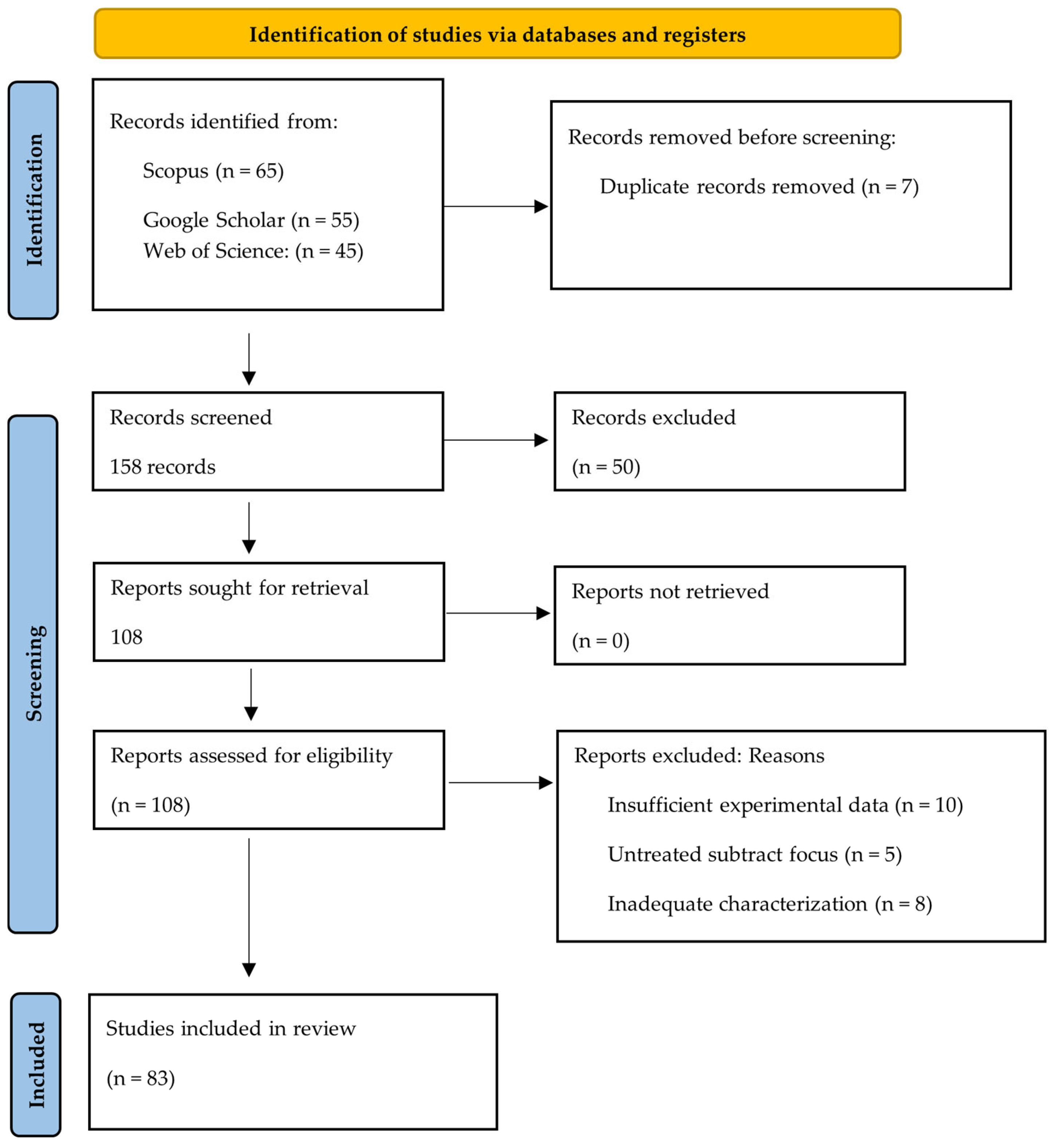
The selection process followed the Preferred Reporting Items for Systematic Reviews and Meta-Analyses (PRISMA) guidelines, as illustrated in Figure 1.
Studies were selected based on the following inclusion criteria: (i) reported primary experimental data on biogas or methane production from flower-derived substrates; (ii) provided substrate characterization data (e.g., total solids, volatile solids, cellulose, hemicellulose, lignin, C/N ratio); and (iii) presented quantitative performance indicators. Exclusion criteria comprised studies focusing on non-floral feedstocks, reviews lacking primary data, or articles not published in peer-reviewed English-language journals. The initial database search retrieved 165 records. After removing 7 duplicates, 158 unique records were screened by title and abstract. Following this screening phase, 108 full-text articles were assessed for eligibility. Of these, 25 were excluded due to: insufficient experimental data (n = 10), unrelated substrate focus (n = 5), review articles without primary data (n = 2), and inadequate characterization (n = 8).
The final review included 83 studies, comprising 14 core studies directly addressing flower waste anaerobic digestion (listed in Supplementary Table S1) and 69 supporting references providing contextual insights on substrate characterization, pretreatment methods, co-digestion optimization, process modeling, and techno-economic and life cycle assessment perspectives.
Exploratory and correlation analyses were subsequently performed to examine the influence of pretreatment parameters (substance type, concentration, duration, and temperature) and biological factors (plant species and tissue type) on biochemical methane potential (BMP). All BMP values were standardized to mLCH4·g−1VS, and normalized to Standard Temperature and Pressure (STP) conditions to ensure cross-study comparability. Data processing and statistical analyses were carried out using Python (v3.11) in Google Colab, supported by GitHub Copilot and Claude (Sonnet 4.5) for code refinement. The libraries Pandas (v2.3.3), NumPy (v2.3.3), Seaborn (v0.13.2), and Matplotlib (v3.10.6) were used for data manipulation, visualization, and correlation analysis. Pearson correlation coefficients (r) were computed to quantify relationships between treatment parameters and BMP outcomes. To validate results, complementary correlation tests and plots were reproduced in R (v4.3) using the ggplot2 and stats packages. Given the small sample size (n = 14) and inherent heterogeneity in experimental conditions, substrates, and methodologies, the statistical analyses presented here should be considered exploratory in nature. The reported correlation coefficients provide preliminary insights into potential relationships between operational parameters and methane yield; however, these findings require validation with more extensive, standardized datasets before definitive mechanistic conclusions can be drawn.

2. Biomass Composition and Properties

2.1. Flower Waste Characterization and Their Suitability for AD

The biochemical composition of flower waste shows a broad variability. Table 1 summarizes the physicochemical characterization of different flower waste used as substrate for AD. Overall, flower waste exhibits a cellulose-dominant composition (0.04–0.5 g·g−1TS) with highly variable lignin contents (0.03–0.28 g·g−1TS), which strongly influences biodegradability. The heterogeneity between plant organs underscores the need for selective feedstock sorting or blending strategies prior to digestion.
Reported total solids (TS) values range from as little as 4 to 30 g·kg−1 in highly humid substrates such as Limonium leaves and Chrysanthemum stems, to more than 955 g·kg−1 in dried rose stalks and mixed floral waste with overall values typically spanning 100–900 g·kg−1 TS and 70–95% volatile solids (VS) [21,22,23]. This variability highlights the need for standardized reporting units across studies, since results may be expressed on either a fresh matter or dry matter basis. Flower waste typically contains approximately 80% of moisture content. The lignocellulosic fraction includes hemicellulose (HEM) ranging from 0.012 to 0.374 g·g−1TS, with marigold petals exhibiting the highest concentration [21,24]; cellulose (CELL) ranging from 0.43 to 0.524 g·g−1TS, with the highest value found in yellow stems of Chrysanthemum indicum; and lignin (LIG) with average values between 0.028 and 0.278 g·g−1TS [21,22,25]. Clear differences also emerge between plant parts: flowers tend to be richer in cellulose, leaves frequently show higher lignin contents, and stems present intermediate but variable profiles. Such variation underscores the heterogeneity of this biomass and the influence of both species and plant part on its chemical composition [7,26]. Overall, lignin typically accounts for around 25% of the plant cell wall, whereas carbohydrates such as cellulose and hemicellulose constitute the remaining 75% [26]. These structural features restrict microbial accessibility and reduce degradation efficiency during AD. For this reason, pretreatment of lignocellulosic substrates such as flowers is generally advisable [27,28,29].
Exploratory analysis of the compiled compositional data reveals important patterns for practical application. Among materials with high lignin content (>15%), pretreated samples showed substantially higher average BMP (264 vs. 187 mLCH4·g−1VS, representing +41% improvement), indicating that intensive processing is justified for highly recalcitrant feedstocks. Conversely, materials with lower lignin content (<10%) exhibited reduced yields after harsh pretreatment (194 vs. 227 mLCH4·g−1VS, −15% reduction), suggesting that readily biodegradable tissues may be damaged by intensive processing. Plant morphology also influences outcomes: flower tissues achieved higher BMP than structural parts despite lower cellulose content, likely due to differences in cellulose crystallinity and accessibility. However, these observations reflect diverse plant species and parts across the reviewed literature, indicating that composition-treatment relationships are complex and warrant further controlled studies with standardized conditions.
These patterns align with findings by [30], who reported that mono-digestion of cellulose yielded 251.4 mLCH4·g−1VS while hemicellulose ranged between 178 and 223.5 mLCH4·g−1VS. Notably, co-digestion of cellulose with hemicellulose produced 265 mLCH4·g−1VS, representing a 15% synergy compared to the expected individual contributions, demonstrating that co-digestion can enhance methane production beyond additive predictions.
The limited degradability of lignocellulosic biomass stems is primarily attributed to the physicochemical properties of lignin. Lignin forms a hydrophobic, three-dimensional polymer network that encapsulates cellulose and hemicellulose fibrils, limiting water penetration and enzyme diffusion. Its aromatic structure also enables strong non-productive adsorption of hydrolytic enzymes, reducing catalytic efficiency and slowing polymer depolymerization. Furthermore, the covalent linkages between lignin and hemicellulose create a rigid matrix that obstructs microbial access to carbohydrate chains, thereby constraining hydrolysis and subsequent acidogenesis during anaerobic digestion. Although pretreatment is advisable for lignocellulosic substrates, lignin condensation can negatively affect cellulose hydrolysis during pretreatment, reinforcing biomass recalcitrance [31]. The formation of secondary products and prolonged exposure may further increase acid production, consequently impairing methanogenic kinetics [28]. Beyond structural constraints, the presence of inhibitory compounds such as herbicides, pesticides, and tannins can also suppress methane formation.
Table 1. Physicochemical characterization of flower wastes used as substates for AD.
Plant SpeciesPlant PartTS
g·kg−1
VS
%
CELL g·g−1TSHEM g·g−1TSLIG
g·g−1TS
References
Ageratum conyzoidesn.a.13572n.a.n.a.n.a.Saha et al., 2018 [32]
Aster, Marigoldn.a.225n.a.n.a.n.a.n.a.Kulkarni and Ghanegaonkar, 2019 [33]
Flower wasten.a.95289n.a.n.a.n.a.Singh et al., 2007 [23]
Floral wasten.a.16496n.a.n.a.n.a.Jaysingpure and Khobragade, 2024 [34]
Rosen.a.206n.a.n.a.n.a.n.a.Deepanraj et al., 2015 [35]
Sambangin.a.92n.a.n.a.n.a.n.a.
Gulmoharn.a.142n.a.n.a.n.a.n.a.
Marigoldn.a.466n.a.n.a.n.a.n.a.
Tulips chaffn.a.7995n.a.n.a.n.a.Frankowski et al., 2020 [25]
Rosen.a.22093n.a.n.a.n.a.
Sunflowern.a.21494n.a.n.a.n.a.
Chrysanthemumsn.a.25589n.a.n.a.n.a.
Marigoldn.a.268860.2080.1480.246Poveda and Alzate, 2021 [24]
Cup Plantn.a.n.a.n.a.0.3040.1150.082Schmidt et al., 2018 [36]
Virginia mallown.a.399850.4010.0910.078
Reed canary grassn.a.n.a.n.a.0.3260.1170.088
Tall Wheatgrassn.a.n.a.n.a.0.4180.1160.101
Giant Knotweedn.a.211n.a.0.3280.0310.182
Wild plant mix (25 species)n.a.n.a.940.3120.1790.106
MarigoldPetals932870.3760.3740.028Pandey and Dhoble, 2025 [37]
SunflowerHead90580n.a.n.a.0.095Zhurka et al., 2019 [38]
SunflowerStalk91988n.a.n.a.0.187
RoseStalk955910.4430.0200.152Liang et al., 2016 [22]
SunflowerStalk940940.1950.3180.278Monlau et al., 2012 [39]
Zantedeschiaelliottiana/aethiopicaFlower7.46930.0720.0190.158Pereira et al., 2022 [21]
Gerbera jamesoniiFlower15.1950.1520.0320.08
Chrysanthemum indicum whiteFlower9.1870.1130.030.167
Chrysanthemum indicum purpleFlower8.6870.1140.0360.16
Chrysanthemum indicum yellowFlower9.02870.0430.0180.244
Chrysanthemum indicum yellowFlower9.92890.0640.0380.184
Limonium michiganFlower46.6930.1820.0470.233
Gerbera jamesoniiFlower15.1950.1520.0320.08
Lilium sp.Flower5.19820.120.0370.067
Limonium sinuatumFlower81940.2950.0120.21
Zantedeschiaelliottiana/aethiopicaFlower7.46930.0720.0190.158
Gerbera jamesoniiLeaves16.1800.1020.0550.071
Chrysanthemum indicum purpleLeaves9.06780.0740.0290.085
Chrysanthemum indicum whiteLeaves8.6780.0450.0160.229
Chrysanthemum indicum purpleLeaves9.06780.0740.0290.085
Chrysanthemum indicum yellowLeaves8.83740.0630.020.169
Elleboro winterbellsLeaves23890.0920.0570.141
Limonium michiganLeaves28.6910.160.0660.184
Limonium sinuatumLeaves17.6870.1370.0380.175
Lilium sp.Leaves7.49810.0520.0320.2
Zantedeschiaelliottiana/aethiopicaLeaves10.2860.0990.0550.089
Gerbera jamesoniiStems10.6930.3590.0820.057
Chrysanthemum indicum purpleStems23.5930.110.0260.088
Chrysanthemum indicum whiteStems19.2900.4390.0990.092
Chrysanthemum indicum purpleStems23.5930.110.0260.088
Chrysanthemum pompon yellowStems21.5930.3570.1120.1
Chrysanthemum indicum yellowStems21.5910.5240.0880.089
Chrysanthemum indicum yellowStems18.9890.4780.0710.121
Elleboro winterbellsStems17880.2070.0340.029
Limonium michiganStems21.5930.3470.1040.132
Limonium sinuatumStems28.3930.3250.0360.079
Lilium sp.Stems7.86870.450.0920.042
Zantedeschiaelliottiana/aethiopicaStems4.11720.1670.0260.066
n.a.—not available.

2.2. Complementary Substrates for Flower AD

When compared with other substrates commonly used in AD, flower waste stands out for its higher variability and stronger recalcitrance. For instance, cattle manure contains 140–227 g·kg−1 TS, 11.9–72.0% VS and a moisture content of 77–85% [40,41], while pig manure ranges from 82 to 367 g·kg−1 TS, 6.2–82% VS, and 63–85% moisture content [41,42,43]. Likewise, food waste (FW) typically shows about 200 g·kg−1 TS, 19% VS, around 80% moisture, and 0.074 g·g−1 TS cellulose content [44].
These substrates, while diverse, generally pose fewer structural barriers to microbial degradation than flowers, whose lignin-rich and chemically heterogeneous matrix poses significant challenges to efficient bioconversion. This recalcitrance becomes more evident when flower waste is analyzed by plant component. Flowers themselves exhibit a very low mean total solids content of approximately 20 g·kg−1 TS, reflecting their high water content (98%). Despite this, they present high organic content, with volatile solids accounting for 91% of TS. Their chemical composition includes moderate levels of cellulose (0.125 g·g−1TS) and lignin (0.158 g·g−1TS), and comparatively low hemicellulose content. In contrast, stalks show a substantially higher mean TS value of 202 g·kg−1 and a high VS proportion (90%), reflecting their strong degradability. With a lower moisture content (80%), stalks display a more robust structure due to their higher cellulose concentration (0.322 g·g−1TS) and moderate lignin level (0.107 g·g−1TS), which are lower than those observed in flowers. As a result, floral waste presents a unique operational challenge distinct from conventional substrates. Unlike cattle manure, which provides high buffering capacity and microbial stability despite lower volatile solids (11.9–72.0% VS), or food waste, which is characterized by readily degradable organics and low cellulose (0.074 g·g−1TS), floral residues exhibit a dual constraint. They combine the high moisture content and rapid acidification potential of fresh organic waste with the structural recalcitrance typical of dry agricultural residues. This heterogeneity, where petals degrade rapidly while stems remain recalcitrant, necessitates specific pretreatment and co-digestion strategies that differ from the standardized protocols used for homogenous manure or food waste streams. When compared with agricultural straw, flower waste presents lower but comparable lignocellulosic content, which theoretically provides sufficient fermentable sugars for anaerobic digestion [45]. However, flower waste exhibits distinct characteristics that complicate its bioconversion. The relatively higher lignin content in flowers contributes to increased biomass recalcitrance, while elevated concentrations of phenolic compounds, including flavonoids and linolenic fatty acids, exert antimicrobial properties that may inhibit hydrolytic enzyme activity [46,47]. These compositional features, combined with the intense moisture content, distinguish flower waste from conventional lignocellulosic substrates.
To overcome these structural challenges, studies have shown that the recalcitrance constraint can be addressed through co-digestion strategies, substituting plant mono-digestion with mixtures including readily available biomass such as canteen food waste and dairy residues [44,48]. Nevertheless, the proportions and ratios of co-substrates require careful optimization, since imbalanced mixtures can promote excessive acidification, thereby inhibiting methanogenic activity [49].
Overall, these findings highlight the compositional complexity of flower waste relative to conventional substrates such as manure or food waste. Its high moisture content, structural recalcitrance, and phenolic inhibitors justify targeted pretreatment or co-digestion strategies to unlock its full biochemical methane potential. In summary, the high structural complexity and chemical heterogeneity of flower waste require tailored pretreatment and co-digestion strategies to achieve efficient bioconversion.

3. Experimental Studies on the AD of Flower Waste

3.1. Overview of Available Literature

Lignocellulosic materials have long been used for methane production through AD, and their potential is well documented, particularly when used after silage [50,51,52,53]. By contrast, the use of flower waste as a substrate for biogas generation remains far less explored in the peer-reviewed literature.
Geographically, nearly 60% of studies were conducted in South Asia, revealing regional concentration and possible substrate-specific cultural influences. A considerable proportion of these studies originate from India, where flowers are abundant due to their cultural and religious significance. Among the most frequently investigated species are marigold (Tagetes), followed by tulip, chrysanthemum, and sunflower, amongst others [35]. An important feature of the current body of research is that most experiments have been conducted at laboratory scale, typically using batch assays. Although such studies provide valuable insights, they remain limited in terms of scale up to pilot or industrial applicability. Only two studies reported both batch and continuous processes, suggesting not only a lack of know-how in scaling up flower-based AD to pilot or industrial levels but also the possible emergence of inhibitory effects during prolonged operation [33,38].
However, a critical analysis of the selected studies reveals distinct biases in the current evidence base. Geographically, there is a strong clustering of research in South Asia, driven by the specific management needs. This geographic bias implies that data on cold-tolerant species common to Northern European markets remains underrepresented. Furthermore, the literature is heavily skewed toward laboratory-scale batch optimization, with continuous reactor data being notably scarce. This limitation hinders the assessment of long-term inhibition dynamics, suggesting that current TRLs are insufficient for immediate industrial scale-up without further pilot testing. Additionally, a significant limitation of the current evidence base is the inconsistent reporting of statistical variance; standard deviations are included in this review only where reported by primary authors.

3.2. Pretreatments Applied

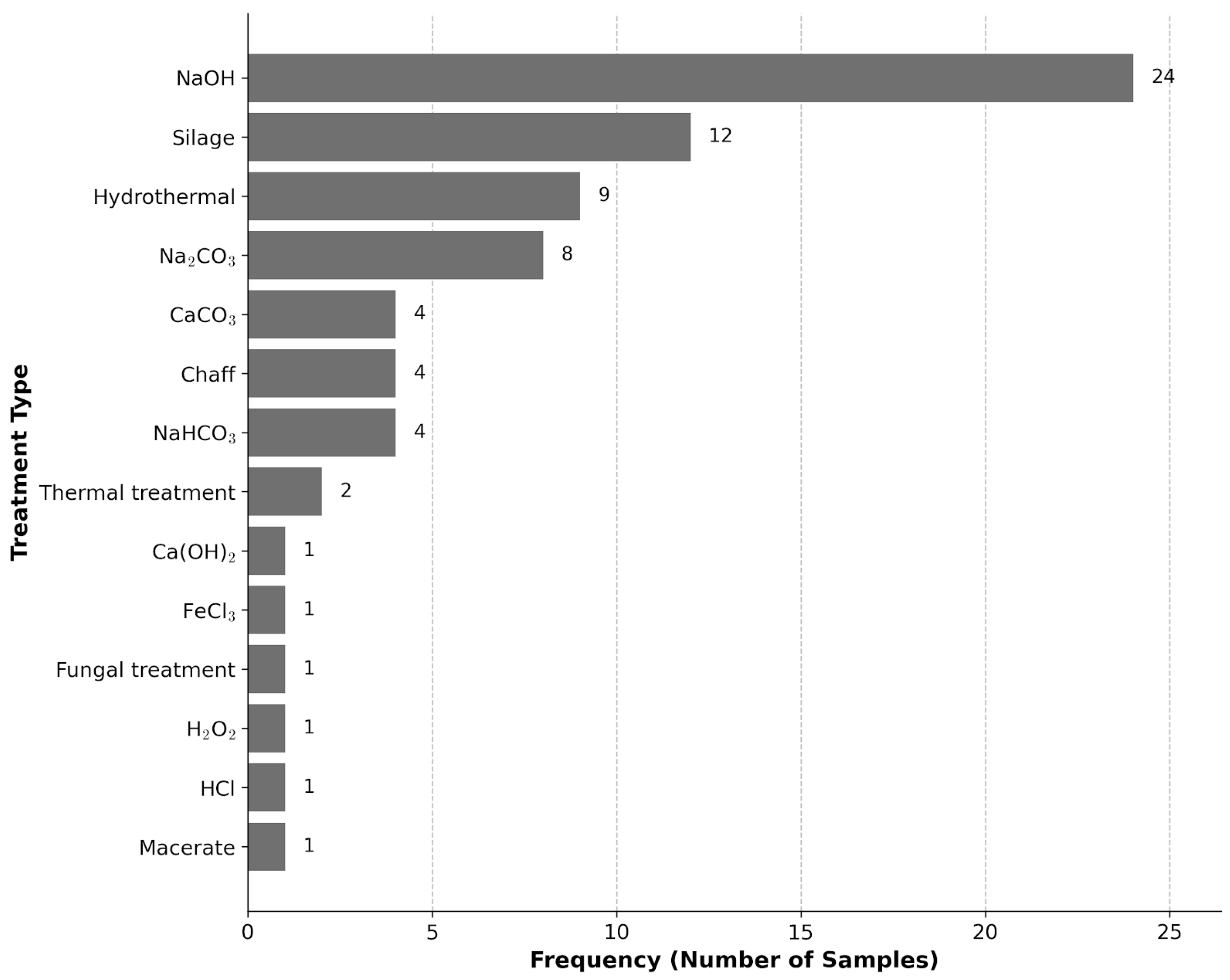
Across the studies summarized in Figure 2 and Table 2, researchers applied a wide range of pretreatments to reduce the recalcitrance of floral waste. A descriptive overview identified 118 distinct pretreatments, though their distribution was uneven. Chemical methods accounted for 42% of all cases; thermal and silage each represented around 10%; hydrothermal approaches 8.5% (10 treatments in a single study); and acid pretreatments were uncommon, at just under 2%. Chemical pretreatments were most frequent and showed substantial variation. Most studies used sodium hydroxide (NaOH) at concentrations up to 11%, with exposure times from several hours to multiple days. Reported temperatures ranged from 18 to 130 °C, with 55 °C as the most common set point (n = 9).
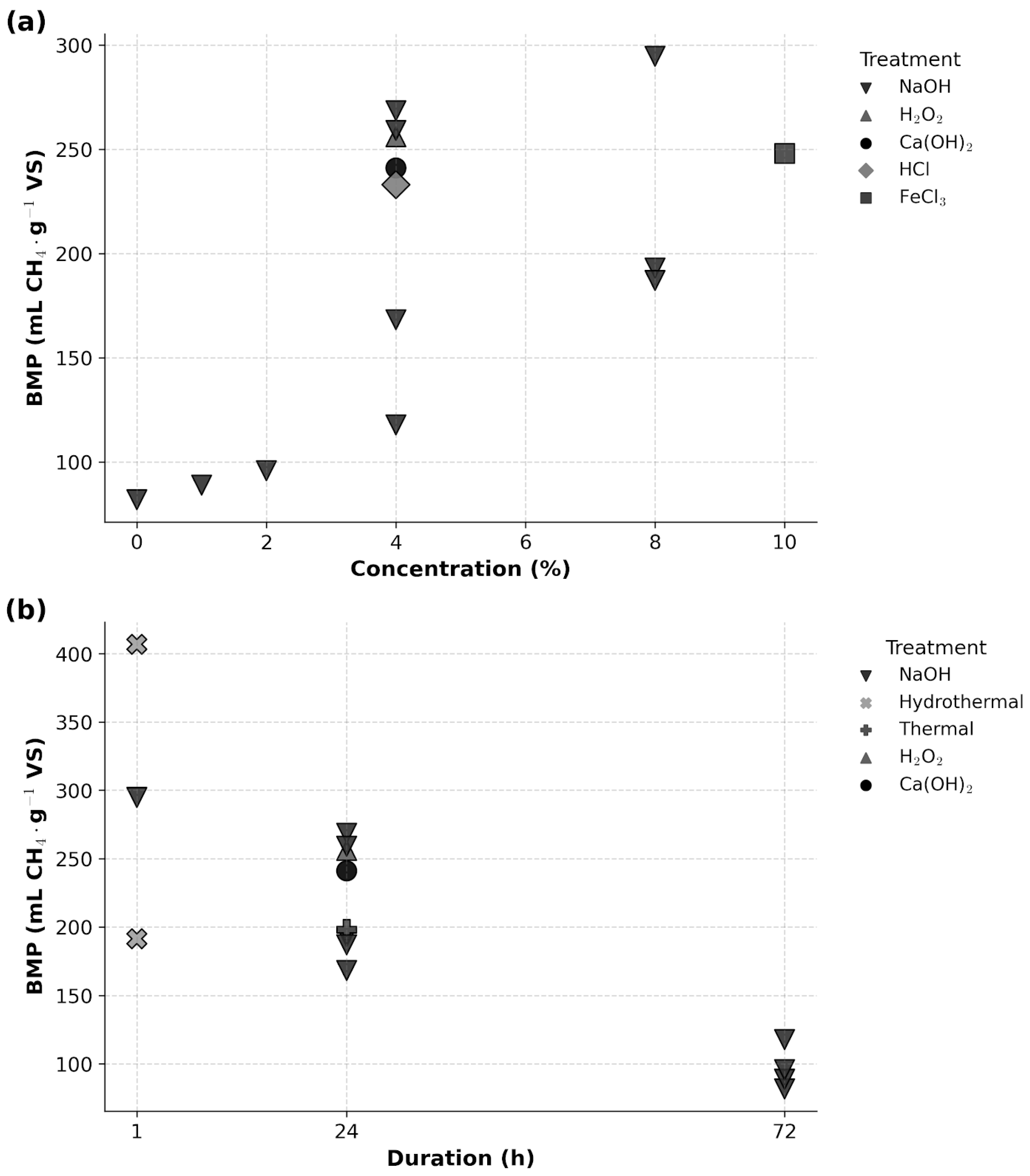
In terms of performance, 4% of Ca(OH)2 yielded 241 mLCH4·g−1VS, whereas 8% NaOH reached 294.6 mLCH4·g−1VS. For most chemical agents, higher concentrations tended to coincide with higher BMP. NaOH exhibited a strong positive concentration-BMP relationship (Figure 3). The effectiveness of NaOH pretreatment arises from its capacity to disrupt lignin–carbohydrate complexes and to induce fiber swelling through saponification of ester linkages within the cell wall matrix. This enhances substrate porosity and increases enzyme and microbial accessibility to cellulose and hemicellulose. Alkaline agents such as NaOH selectively solubilize lignin while preserving carbohydrate integrity, thereby improving overall biodegradability and methane yield. However, excessively high concentrations can lead to carbohydrate loss and generate inhibitory by-products, highlighting the need for dosage optimization.
Regarding oxidative pretreatments, H2O2 also trended positively, but its effect plateaued and sometimes declined at very high doses relative to the highest NaOH levels [38,39]. The plateau observed with hydrogen peroxide treatment can be attributed to its oxidative mechanism. At moderate doses, H2O2 effectively oxidizes phenolic structures within lignin, reducing its recalcitrance and enhancing enzymatic digestibility. Yet at higher concentrations or longer exposure, oxidative degradation of cellulose and hemicellulose occurs, diminishing fermentable sugar availability and thus limiting methane potential. This explains the observed yield stabilization or decline at elevated oxidant levels. As expected, untreated controls consistently yielded the lowest BMP, confirming the advantage of chemical pretreatment. Correlation analysis showed a strong positive association between BMP and agent concentration, in particular with pretreatments like NaOH (r = 0.74) (Figure 3), a very strong negative association with treatment duration in hours (r = −0.93), and a moderately positive association with pretreatment temperature (r = 0.44).
A comparison between NaOH and H2O2 pretreatments under identical conditions (4% concentration, 55 °C, 24 h) in batch systems showed no significant difference in methane yields (259 and 256 mLCH4·g−1VS, respectively) [39]. This finding underscores the need to identify more cost-effective and readily available reagents for the pretreatment of floral waste.
Another study assessed sunflower heads and stalks under untreated conditions and after alkaline pretreatment with 4% and 8% NaOH in both batch and continuous modes. Even without pretreatment, the two plant parts differed: heads yielded 211 mLCH4·g−1VS, whereas stalks produced 128 mLCH4·g−1VS. Pretreating heads with 4% NaOH at 55 °C for 24 h increased the yield to 268 mLCH4·g−1VS. For stalks, the effect was modest, about a 30% increase relative to the untreated value (168 mLCH4·g−1VS). By contrast, in a continuous reactor (HRT 15 days; OLR 749 mg·L−1·d−1), the methane yield declined to 193 mLCH4·g−1VS, suggesting process inhibition, likely from limited methanogenic substrates (e.g., acetate) or volatile fatty acids (VFA) accumulation that depressed methane formation [38,55]. In 2019, Kulkarni and Ghanegaonkar [33] compared Aster and Marigold wastes under different alkaline concentrations and thermal regimes. The study found that Aster reached its maximum biogas production rate of 140 mL·d−1 at 5% NaOH under thermophilic conditions (50 °C), whereas Marigold achieved higher rates of 149 mL·d−1 at 8% and 11% NaOH under the same conditions. These findings highlight not only the influence of pretreatment intensity but also species-specific differences in responses to alkaline processing. Other alkaline reagents generally yielded lower biogas outputs than NaOH. Notably, the same authors reported that a feed with 70% flower waste in combination with 30% food waste produced biogas rates comparable to NaOH-treated mixtures. Relative to mono-digestion, the biogas rate increased from 93 to 123 mL·d−1 with food-waste co-digestion, underscoring the efficiency gains from co-substrates [56,57]. By contrast, acid/oxidative methods generally require much harsher conditions (typically high temperatures in combination with strong acids or oxidants) yet do not necessarily achieve higher methane yields, while demanding greater energy input for processing [39,54].
In terms of hydrothermal processes, Hashemi et al. [54] evaluated hydrothermal pretreatment at 120–180 °C for 1–5 h. While the whole substrate performed best at 120 °C for 1 h, the liquid fraction of safflower straw treated at 180 °C for 1 h achieved 407 mLCH4·g−1VS (54% CH4), indicating that fractionation and higher temperatures may benefit specific substrate components.
Regarding biological approaches, these pretreatments are less frequently reported but are considered economically and environmentally favorable and potentially effective. In the present study, fungal pretreatment was conducted using Trichoderma longibrachiatum under controlled conditions. Autoclaved floral waste (30 g) was inoculated with a fungal suspension at 75% (w/w) moisture content. The inoculated substrate was thoroughly mixed and incubated in 250 mL flasks statically at 30 °C for 5 days to facilitate lignocellulose degradation. The fungal-pretreated biomass yielded 206 mLCH4·g−1VS, which was not statistically different from untreated floral waste (221 mLCH4·g−1VS). However, fungal pretreatment significantly accelerated biogas production kinetics, advancing the methane production peak from 18 to 9 days, representing a 50% reduction in the time required to achieve maximum methane production rates [37].
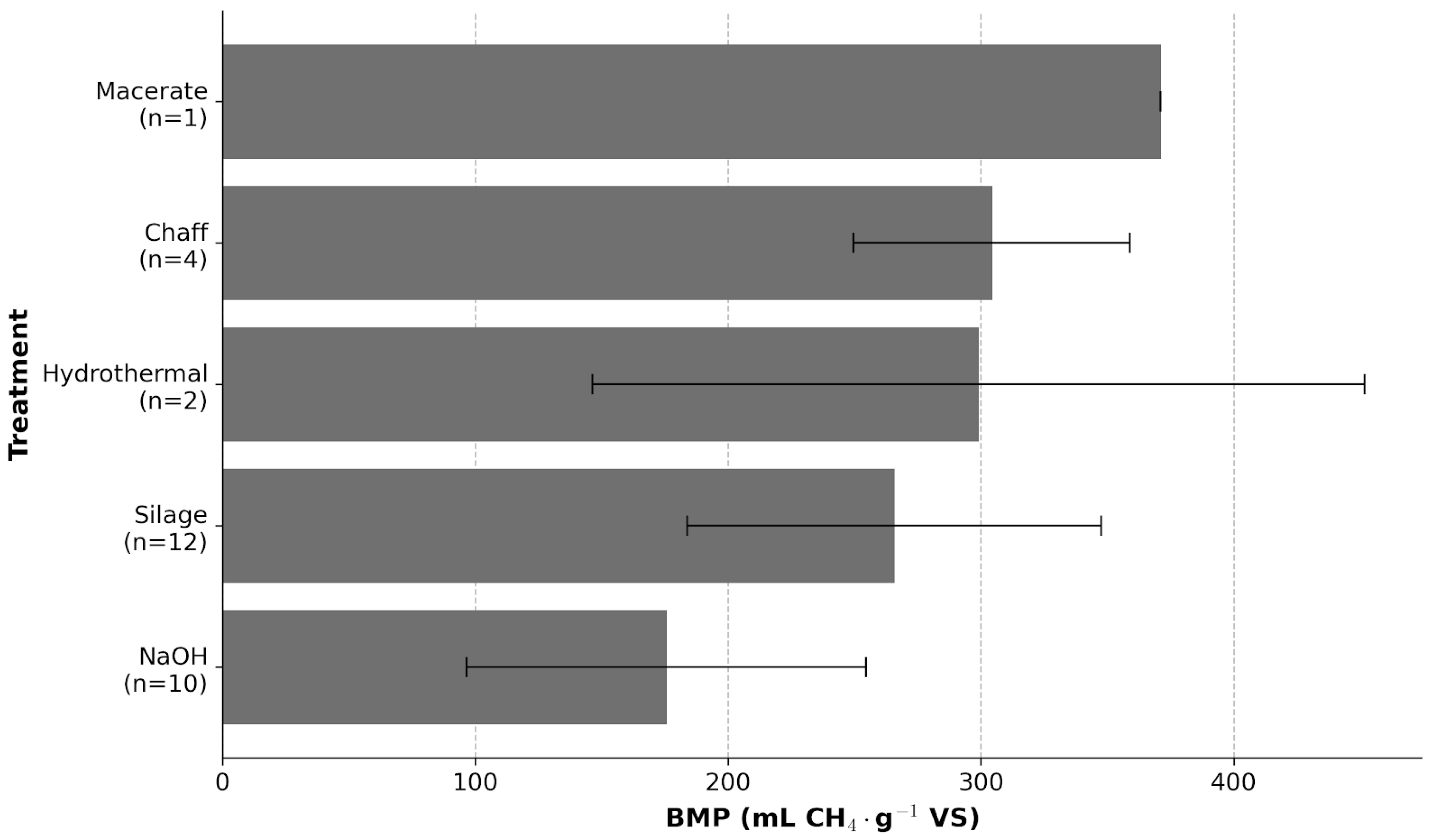
Silage is a well-established and widely applied strategy for enhancing the degradability of lignocellulosic residues in anaerobic digestion, owing to its simplicity and cost-effectiveness [58]. Schmidt et al. [36] demonstrated the effectiveness of this approach with six perennial energy crops, showing that methane yields varied significantly depending on plant species and soil type. In their study, the biomass was chopped to approximately 3 cm particle size and subsequently ensiled in sealed plastic bags under vacuum at room temperature. Fermentation gases generated during the ensiling process were periodically drained by opening and resealing the bags under vacuum, this procedure was repeated twice to achieve sample stabilization. The results demonstrated substantial variability, tall wheatgrass cultivated on fertile soil achieved up to 389 mLCH4·g−1VS, whereas the same crop grown on clay-rich soil produced 336 mLCH4·g−1VS. These results highlight that AD efficiency is influenced by multiple factors beyond plant species alone, including biomass provenance, harvest maturity, and substrate preparation. Notably, methane yields from ensiled materials are often comparable to those achieved using maceration, chaffing (Figure 4), or thermal pretreatments, highlighting silage as a practical and energy-efficient alternative. The improvement observed in silage-based digestion results primarily from biochemical acidification during ensiling, as lactic and acetic acids partially hydrolyze complex polysaccharides and disrupt lignin–hemicellulose associations. This pre-hydrolysis process lowers substrate pH, reduces polymer crystallinity, and creates more accessible surfaces for microbial colonization during anaerobic digestion. Consequently, silage acts as a mild, energy-efficient biological pretreatment that enhances methane yields without chemical inputs.
It was also seen that performance varied considerably across reactor configurations. The lowest biogas production rate (62 mL·d−1) was observed in a continuous reactor fed with dried flower waste, suggesting inhibitory effects during prolonged operation, potentially due to nutrient imbalances or accumulation of toxic intermediates. In contrast, the highest rate (642 mL·d−1) was achieved through mild alkaline pretreatment (1% NaOH) combined with co-digestion of flower waste with canteen, dairy, and yard wastes in a batch system [33,34]. This result underscores the benefits of co-digestion strategies, which not only dilute potential inhibitors but also improve nutrient balance and buffer capacity.
Figure 4 illustrates the overall distribution of pretreatment types and their relative influence on BMP, demonstrating the predominant strategies and the growing relevance of silage as a low-energy alternative.
Frankowski et al. [25] took an interesting approach to the anaerobic digestion of tulips, preparing both whole-plant macerate and chaff, and operating under mesophilic and thermophilic conditions. They reported high biomethane potentials (371–375 mLCH4·g−1VS), likely because the mechanical pretreatment enhanced lignocellulose degradation and, in turn, methanogenic enzymatic activity [59].
Both plant species and plant parts significantly affect biomethane potential. When flowers were digested separately, methane yields ranged from 86 mLCH4·g−1VS (Limonium sinuatum) to 330 mLCH4·g−1VS (Zantedeschia elliottiana/Z. aethiopica), with a mean value of 211 mLCH4·g−1VS.
The relatively high performance of flower tissues may be partially explained by their elevated volatile solids content (up to 91% of TS), indicating high organic matter availability for microbial conversion [21], despite flowers presenting the highest mean lignin content (0.158 g·g−1TS) and moderate cellulose content (0.125 g·g−1TS).
Leaf tissues displayed a similar pattern but with slightly higher average performance (approximately 220 mLCH4·g−1VS). This unexpected result contrasts with the general trend, as leaves exhibited lower volatile solids content (around 82% of TS) and marginally reduced lignin concentration (0.143 g·g−1TS). The improved methane yield may be explained by their substantially lower cellulose content (0.090 g·g−1TS), which compensates for the reduced organic matter availability by enhancing substrate accessibility for microbial attack.
Surprisingly, stems exhibited similar volatile solids content to flowers (90% of TS) and the lowest lignin concentration among plant parts (0.082 g·g−1TS), suggesting comparable degradability. Yet, stalks yielded the lowest mean methane production (204 mLCH4·g−1VS), which can be attributed to their significantly elevated cellulose content (32.3% of TS), approximately 2.6 times higher than flowers (12.5%) and 3.6 times higher than leaves (9.0%). This high cellulose concentration increases structural recalcitrance and poses greater challenges for microbial degradation [21,54].
Across all the studies, inoculum sources vary significantly, from anaerobic sewage sludge (most common, 67% of studies) to cow dung (20%) and pre-adapted consortia (13%). Inoculum-to-substrate ratios (ISR) range from 1:1 to 4:1 (VS basis) where reported. However, 40% of the studies fail to specify ISR, representing a critical methodological gap. Saha et al. [32] systematically investigated food-to-microorganism ratios for Ageratum conyzoides, identifying an optimal F/M ratio of 2, which enhances methane production and increases volatile solids degradability. Such systematic approaches warrant broader application across flower waste types.
Finally, air-drying and other physical pretreatments primarily serve as preparatory steps, reducing particle size and improving microbial accessibility and enzymatic activity [36].
While chemical pretreatments such as NaOH or H2O2 have demonstrated substantial yield improvements, their application entails both economic and environmental trade-offs. Chemical costs, neutralization requirements, and potential effluent treatment add to overall process energy demand and operational expenses. In contrast, biological or silage-based methods are slower but environmentally benign, relying on natural microbial activity and requiring minimal external reagents. Therefore, the optimal pretreatment strategy for flower waste should balance effectiveness with sustainability, ideally within integrated circular systems that recover or recycle chemical inputs. These findings collectively demonstrate that pretreatment intensity, substrate type, and reactor configuration interact strongly to determine overall methane potential, warranting closer examination of operational parameters.
Beyond these conventional chemical and biological approaches, other pretreatment methodologies widely applied to lignocellulosic biomass include bacterial degradation, high-pressure homogenization (HPH), and ultrasound treatment. Bacteria are attractive for lignocellulosic biomass degradation due to their rapid growth and adaptability to new conditions [60]. Cupriavidus basilensis incubated for 7 days at 30 °C (150 rpm) achieved 45% kraft lignin removal and 37% total carbon reduction [61]. Similarly, cassava waste inoculated with a microbial consortium isolated from soil containing decomposed lignocellulosic material enhanced lignocellulose-degrading enzymes, benefiting anaerobic digestion and increasing methane yield by 97% compared to control [62]. Ultrasound pretreatment via acoustic cavitation physically disrupts plant cell walls, releasing enzyme-accessible substrates. Application of 40 kHz ultrasound for 5 min at 60 °C increased glucose concentration by 6.8% in corn meal [63]. Likewise, sonication of corn slurry enhanced glucose release by 30%, improving carbon availability for microbial metabolism [64].
Despite proven effectiveness with lignocellulosic biomass, literature searches revealed limited application of these advanced pretreatment technologies to floral waste. This gap likely reflects the high capital investment required—particularly for HPH and ultrasound systems—which is economically prohibitive for both small-scale producers and large-volume operations, confining such methods to laboratory research.

4. Factors Affecting AD of Flower Wastes

The anaerobic digestion of flower waste is influenced by multiple factors that affect BMP and biogas production rates. As shown in the previous chapter, pretreatment type, plant part, and plant species correlate directly with methane formation. However, these results are also affected by operational parameters that determine the reactor’s overall performance, reflecting the interconnected nature of process variables [65].

4.1. pH and Temperature Effects

Despite the limited dataset (n = 4), preliminary analysis suggested that slightly more acidic pH conditions (below 7.0) may favor enhanced methane potential relative to more neutral pH values [66]. Slightly acidic conditions (pH ≈ 7.0) likely favor hydrolytic and acidogenic activity, which enhances the solubilization of complex polymers such as cellulose and hemicellulose. These conditions stimulate fermentative bacterial growth and enzymatic activity, promoting VFA formation and substrate breakdown. However, methanogenic archaea are sensitive to pH fluctuations and exhibit optimal activity near neutrality; values below 6.8 can inhibit methanogenesis by reducing enzyme functionality and altering intracellular proton gradients. Maintaining a stable pH between 6.8 and 7.2 is therefore critical to sustain balanced microbial consortia and maximize methane yield. The relationship between reactor temperature and BMP was examined using 43 data points. While a positive trend was observed (r = 0.24), the correlation was weak and not statistically significant (p = 0.12). The weak relationship between temperature and BMP is likely to result from counterbalancing biological effects. Under a thermophilic regime (50–55 °C), enzymatic hydrolysis and solubilization rates increase, accelerating the degradation of lignocellulosic components. However, these benefits can be offset by elevated ammonia release and VFA accumulation, which suppress methanogenic populations and reduce overall biogas stability. Mesophilic conditions (35–40 °C) tend to provide a more stable microbial environment and higher process resilience, even if maximum specific methane yields are slightly lower. Mesophilic temperatures were most commonly employed and generated an average BMP of 219 ± 70 mLCH4·g−1VS, with the large standard deviation indicating high inter-study variability. It should be noted that these results were predominantly obtained from batch systems rather than continuous operation due to limited data availability for the latter [33,67,68].

4.2. Hydraulic Retention Time (HRT)

The relationship between Hydraulic Retention Time (HRT) and BMP could not be clearly established from the nine available data points, as no consistent pattern emerged due to the small dataset size and considerable inter-study variability. The absence of a clear HRT–BMP relationship across studies may stem less from intrinsic substrate characteristics and more from methodological inconsistency. Differences in inoculum source, reactor configuration, and substrate particle size influence hydrolysis and acidogenesis rates, making direct comparison difficult. Moreover, flower waste often exhibits heterogeneous particle composition and variable biodegradability, leading to uneven retention and microbial adaptation within digesters. Standardized reactor operation and inoculum characterization are required before robust kinetic correlations can be established. This contrasts with literature findings suggesting that HRT of 15–20 days optimizes methane yield by promoting methanogenic populations. Shorter retention times may favor alternative microbial communities, including Actinobacteria, which could explain reduced methane production at lower HRT values [66,69].

4.3. Organic Loading Rate (OLR) and Co-Digestion Strategies

Few studies systematically examined the relationship between organic loading rate (OLR) and methane production from flower waste. Zhurka et al. [38] reported modest improvements in continuous reactor performance at elevated OLR: 193 mLCH4·g−1VS at 791 mgVS·L−1·d−1 compared to 187 mLCH4·g−1VS at 657 mgVS·L−1·d−1. While this suggests potential for optimization within this loading range, the limited data available prevent definitive conclusions regarding optimal OLR for flower waste digestion. Conversely, Ünyay et al. [70] demonstrated that in semi-continuous reactor operations, an increase in the organic loading rate (OLR) from 1 to 1.5 gVS·L−1·d−1 led to a significant reduction in biogas production rate, declining from approximately 340 to 214 mL·L−1·d−1. This decrease was attributed to excessive solid content and associated mixing inefficiencies.
However, applying these general loading parameters to floral waste is complicated by its specific biochemical heterogeneity. Mechanistically, flower waste exhibits a dual solubilization pattern: the pectin-rich petal fraction hydrolyzes rapidly, potentially causing immediate VFA accumulation and pH drop, while the lignin-rich stems degrade more slowly, limiting substrate availability for methanogens [15]. Furthermore, unlike standard agricultural residues, floral tissues contain secondary metabolites, specifically phenolic compounds, tannins, and essential oils (terpenes), which can disrupt the cell membranes of methanogenic archaea, inhibiting activity even at neutral pH levels. These distinct inhibitory factors suggest that mono-digestion of flowers is inherently unstable at higher loadings.
Co-digestion strategies appear to exert a more pronounced effect, with substrate combinations increasing biogas production by up to 45% when food waste was mixed with garden waste, demonstrating that substrate complementarity may be more influential than OLR alone in optimizing performance. Central to understanding these co-digestion benefits is the effect of C/N ratio balance on AD performance. The stability of mono-digestion depends on substrate origin and composition. Zhang et al. [71] demonstrated that mono-digestion of food waste and cattle manure maintained stability throughout 40 days of digestion, yielding methane at 541 and 244 mLCH4·g−1VS, respectively, with pH ranging from 7.2 to 7.4 at an organic loading rate (OLR) of 2 gVS·L−1·d−1. When the OLR was doubled, methane yield decreased to 483 and 212 mLCH4·g−1VS, and VFA increased but remained within normal ranges, with a pH level maintained above 7 for both substrates. These results highlight differences in substrate composition and their biodegradability.
In contrast, when corn straw was used as the sole substrate at an OLR of 2 gVS·L−1·d−1, methane yield reached 272 mLCH4·g−1VS, with stable pH above 7 and low VFA concentrations. However, when the OLR doubled to 4 gVS·L−1·d−1, total VFA gradually increased from 314 mg·L−1 to above 6000 mg·L−1, causing pH to drop to 5.8. This likely inhibited methanogenic bacteria, as evidenced by the decrease in methane production from 245 to 27 mLCH4·g−1VS. These findings demonstrate that substrate composition affects methane yield and that excessive organic loading can be detrimental, particularly for lignocellulosic substrates where excess carbon sources cause degradation and accumulation of fatty acids, inhibiting methanogenic development [71].
Furthermore, Haider et al. [72] investigated the co-digestion of food waste and rice husk at four different C/N ratios in combination with optimal substrate-to-inoculum (S/I) concentrations to avoid possible inhibition from fatty acid accumulation. Anaerobic digestion of food waste at a C/N ratio of 20 achieved the highest specific methane yield (557 mLCH4·g−1VS); conversely, methane yield decreased by 20 to 38% when the C/N ratio increased from 25 to 35. At a C/N ratio of 20, the higher proportion of food waste relative to rice husk provided more readily biodegradable substrates for microorganisms. For the specific case of S/I concentration M1 (0.25), the specific biomethane yield was 1.22 times greater than at S/I ratio of 0.5. The authors attributed this to higher microbial populations relative to substrate that degrade substrates more rapidly at lower S/I ratios. However, as the S/I ratio increased (more substrate, less inoculum), specific methane production decreased, likely due to substrate overloading, increased acid concentrations, and inhibition of methanogenic bacteria.
Similar results were reported by [73], who investigated co-digestion of MSW with food waste, finding that co-digestion at C/N ratios between 20 and 25 maintained the balance between carbon and nitrogen sources, achieving pH values within the optimal range for methanogenic microbiota. Moreover, an S/I ratio of 0.5 yielded the highest specific methane production; above this ratio, higher substrate concentrations increased fatty acid formation, negatively affecting the microbial community in the inoculum. This outcome aligns with findings reported by Zhang et al. [71], who demonstrated that elevated abundance of Syntrophomonadaceae (26% of the total microbial consortium) from co-digestion of food waste and corn straw correlated with enhanced process performance. According to [74], these syntrophic bacteria degrade volatile fatty acids, producing hydrogen and short-chain fatty acids such as acetate and formate, which serve as substrates for methanogenic consortia in methane production. When substrate loading exceeds optimal levels, the syntrophic relationship becomes disrupted, leading to VFA accumulation and process inhibition. These findings underscore the complexity of microbial interactions in anaerobic digestion systems.

4.4. Microbial Community Dynamics and Mechanisms

Beyond conventional operational parameters, microbial community adaptation plays a decisive role in determining process efficiency. Crucially, a significant gap exists in the microbial characterization of flower waste digestion. None of the reviewed studies employed advanced molecular techniques (e.g., qPCR) to track shifts in key methanogenic populations such as Methanosaeta or Methanosarcina. Consequently, correlations between VFA profiles and specific archaeal community shifts remain hypothetical. Unlike food waste systems, where inhibition is typically driven by rapid acidification (VFA accumulation), floral waste introduces bioactive secondary metabolites that may selectively suppress methanogens via membrane disruption even at stable pH levels.
Although specific metagenomic data for flower waste is absent, the biological plausibility of the observed inhibition can be inferred from the behavior of microbial communities in similar lignocellulosic and essential-oil-rich feedstocks. The recalcitrance of flower stems is likely linked to the specific requirements of the hydrolytic consortia [75]. While general lignocellulose degradation requires the enrichment of Firmicutes and Bacteroidetes populations, particularly Clostridium and Cellulomonas species [76], recent analyses of wheat straw digestion suggest that recalcitrant stalks require a more specialized community. Jensen et al. observed that efficient degradation of these lignocellulosic matrices correlates strongly with the enrichment of specific phylotypes, including Ruminofilibacter, Caldicoprobacter, and Treponema [76]. These groups possess specialized hydrolytic machinery essential for disrupting rigid cell walls, suggesting that the lower methane yields observed in mono-digestion of flower stalks may stem from the slow establishment of this complex syntrophic consortium in the absence of an adapted inoculum.
A more critical factor for flower waste is the presence of secondary metabolites. Unlike food waste, floral residues contain significant concentrations of terpenes (essential oils) and phenolic compounds. Mechanistic studies have demonstrated that monoterpenes, such as limonene, act as potent inhibitors by disrupting the cell membranes of methanogenic archaea, leading to leakage of intracellular components and loss of transmembrane proton gradients [77]. Furthermore, phenolic monomers derived from floral pigments and lignin degradation have been shown to selectively inhibit acetoclastic methanogens (e.g., Methanosaeta and Methanosarcina), which are responsible for the majority of methane production [77,78].
This selective inhibition provides a mechanistic explanation for the VFA accumulation observed in batch studies. As highlighted by Faisal et al., the stability of the methanogenic community is precarious, while hydrolytic bacteria continue to produce organic acids, the methanogenic consumers are suppressed by chemical toxicity or nutrient imbalance, leading to rapid acidification [79]. Co-digestion likely mitigates this failure mode not only by balancing the C/N ratio but by diluting these inhibitory metabolites below the toxicity threshold, allowing the recovery of sensitive acetoclastic populations and restoring syntrophic balance [80].
Future studies should therefore integrate metagenomic or 16S rRNA analyses to link microbial community shifts with inhibition phenomena, particularly regarding phenolic degradation pathways and syntrophic interactions. Such insight will be essential for developing inoculum management and bioaugmentation strategies tailored to flower waste digestion.
Overall, the optimization of pH, temperature, and loading parameters remains hindered by the scarcity of standardized continuous experiments. Future work should systematically evaluate these parameters under controlled conditions while monitoring microbial community adaptation.

5. Challenges and Future Perspectives

5.1. Reactor Configuration and Scale-Up Challenges

A critical limitation of current research is the predominance of batch reactor systems operated at laboratory scale. Among the fourteen studies reviewed, only two [52,53] investigated continuous operation, and both reported performance challenges. Continuous anaerobic digestion of dried flower waste resulted in a biogas yield of merely 62 mL·d−1, representing the lowest production rate observed in this study. This substantially reduced performance indicates significant inhibitory effects during sustained operation, which can be attributed to inadequate substrate co-digestion ratios between flower waste and food waste, presumably stemming from nutrient imbalances and/or the accumulation of inhibitory intermediates within the reactor [52]. Such inhibition in long-term continuous systems often arises from the accumulation of VFA, ammonia, and phenolic compounds derived from lignocellulose degradation. These intermediates lower pH and suppress methanogenic activity, leading to unstable biogas production. Understanding such inhibition dynamics is crucial for establishing operational thresholds and control strategies for continuous processes.
In contrast, batch systems consistently achieved higher biogas production rates, with the highest reported value of 642 mL·d−1 obtained through alkaline pretreatment and co-digestion [58].
The persistent batch–continuous performance gap thus represents a major technological bottleneck, corresponding to a Technology Readiness Level (TRL) below 4 for flower waste AD. Bridging this gap requires experimental data under controlled continuous conditions to develop reliable kinetic and inhibition models that account for inhibition phenomena. The scale up implications are substantial: batch experiments provide valuable insights into substrate methane potential, but do not capture long-term operational stability, microbial community dynamics under continuous feeding, or potential inhibition phenomena that emerge over extended periods [70,81]. The lack of pilot-scale or industrial trials represents a significant knowledge gap, as factors such as mixing efficiency, heat transfer, process control, and economic feasibility remain largely unexplored for flower waste AD systems [82]. These knowledge gaps directly constrain process optimization efforts. Overall, the optimization of pH, temperature, and loading parameters remains hindered by the critical scarcity of standardized continuous experiments. With only two continuous reactor studies available in the literature, conclusions regarding long-term stability and optimal operational parameters for flower waste digestion remain limited in scope and generalizability. Future work should systematically evaluate these parameters under controlled continuous conditions while monitoring microbial community adaptation at pilot scale to bridge the gap between laboratory findings and industrial implementation.

5.2. Future Research for Flower Waste

Reactor technology selection for flower waste digestion remains an understudied area requiring further investigation. Comparative studies evaluating the performance of continuously stirred tank reactors (CSTRs) against batch technology are notably scarce in the literature. CSTRs present distinct advantages for this application, particularly their superior mass transfer capabilities and the independence of substrate mixing from OLR, which provides greater operational flexibility [83] versus anaerobic sludge blanket (UASB) systems with green tuff addition could enhance methanogenic bacterial activity, thereby improving flower waste degradation [84]. Comparative evaluation between these reactor designs remains scarce, but such studies are essential for determining optimal configurations that balance energy efficiency with process stability. Coupling reactor performance assessment with microbial community monitoring would further clarify the roles of syntrophic and methanogenic consortia in long-term operation. Two-stage configurations that separate acidogenesis and methanogenesis are commonly employed for recalcitrant lignocellulosic substrates. Moestedt et al. [85] evaluated a two-stage system using the organic fraction of municipal solid waste (OFMSW) and achieved a 12% increase in specific methane production and a 6.2% increase in methane content. Interestingly, although complete sulphidogenesis did not occur as intended, the improved performance was attributed to enhanced homoacetogenic bacterial activity, which facilitated more efficient methanogenic conversion. Given the lignocellulosic nature of flower waste, a two-stage anaerobic system separating acidogenesis and methanogenesis appears to be a promising approach warranting further investigation for enhanced methane production and process stability.
Addressing these limitations demands coordinated research efforts that combine biochemical, engineering, and environmental perspectives. Interdisciplinary studies are particularly needed to quantify how pretreatment, inoculum adaptation, and co-digestion influence scalability and process resilience. The transition from laboratory batch assays to continuous pilot-scale and ultimately industrial-scale systems will require: (i) systematic investigation of continuous operation at varying HRT and OLR; (ii) evaluation of different reactor configurations tailored to flower waste properties; (iii) development of strategies to prevent long-term inhibition and maintain process stability; and (iv) techno-economic assessments to determine commercial viability. Until these scale-up challenges are addressed, the practical implementation of flower waste AD remains constrained to theoretical potential rather than proven technology. From a policy standpoint, such research would directly support European circular economy goals and national waste valorization frameworks, where biological treatment of high-moisture organic residues is prioritized under the EU Waste Framework Directive (2018/851).
Addressing these scale-up challenges is particularly important from a circular economy perspective, where the integration of biorefineries supports comprehensive resource management, waste minimization, and sustainable development [86,87]. Such integration facilitates the realization of closed-loop systems that maximize the recovery of raw materials from products at their end-of-life, thereby advancing the principles of circularity [68]. The conversion of lignocellulosic waste into value-added products, such as biofuels, biochemicals, and biomaterials, supports the transition from a fossil fuel-based economy towards a more sustainable model [69,88]. In this regard, flower residues are abundant and, as lignocellulosic substrates, they can be utilized to produce a wide range of co-products. These include biofuels, organic acids, enzymes, and fermentable sugars with potential applications in the food industry. Beyond these, flower waste also holds promise for the production of pharmaceuticals, incense, and organic fertilizers, further broadening their valorization potential [7,89]. Another advantage is the production of pathogen-free digestate that improves soil carbon content and nutrient availability, particularly nitrogen (N) and potassium (K). If digestate separation is well established, this by-product could generate additional economic revenue [90,91], provided substrate composition is carefully regulated to maintain soil biochemical balance [92]. Nevertheless, to meet regulatory standards for soil application, such digestates require post-treatment, including moisture reduction and additional hygienization, which can substantially increase processing costs [93].
Beyond reactor design and operational optimization, the long-term sustainability and policy integration of flower waste AD remain central challenges, as discussed in the following sections.

5.3. Integration with Carbon Capture and Utilization

While current research focuses on maximizing methane yields, the substantial CO2 fraction in biogas (30–45%) represents an underutilized resource [94,95]. For flower waste valorization to align fully with circular bioeconomy principles, future pilot-scale implementations must move beyond conceptual designs to operationally viable Carbon Capture and Utilization (CCU) strategies. However, the application of these technologies to floral biomass faces specific physiochemical constraints that must be managed within defined operational windows.

5.3.1. In Situ Biomethanation: Operational Limits and pH Control

In situ biomethanation involves injecting exogenous hydrogen (H2) directly into the digester to convert endogenous CO2 to CH4 via hydrogenotrophic methanogenesis [95,96]. While this approach can upgrade biogas to 99% methane content, it fundamentally alters the digester’s carbonate equilibrium. The consumption of CO2 removes bicarbonate (HCO3), which acts as the primary buffer in the anaerobic process, leading to a rise in pH [95].
For flower waste digestion, establishing a strict pH control strategy is critical. Analogous systems treating cattle manure and lignocellulosic material have established a pH threshold of 8.5, with the operation above this level resulting in the inhibition of methanogenesis and process deterioration [95,96]. Studies on sewage sludge and synthetic feeds have further narrowed the stable operating window to pH 7.9–8.2 depending on total ammonia nitrogen (TAN) levels, suggesting that floral waste digesters must operate below these limits to prevent system collapse [97].
To counteract this alkalinity shift without chemically dosing the reactor, co-digestion strategies must be engineered to provide buffering capacity. For example, co-digestion with acidic substrates, such as cheese whey or acidic organic wastes, has been successfully employed in manure-based systems to hinder pH increase during H2 injection [95]. Given the heterogeneous nature of flower waste, similar co-digestion ratios must be determined to maintain the pH below the 8.5 threshold while sustaining sufficient inorganic carbon for hydrogenotrophic activity [96]. Furthermore, H2 partial pressure must be carefully regulated; concentrations exceeding 10 Pa can inhibit VFA degradation, leading to the accumulation of propionate and butyrate, which can fatally acidify the system despite the CO2 consumption [95,96,98].

5.3.2. Phenolic Inhibition and Biocatalyst Sensitivity

The viability of CO2 valorization in flower waste AD is uniquely constrained by the presence of phenolic compounds (tannins, flavonoids) inherent to floral tissues. Unlike standard agricultural residues, these compounds can act as antimicrobial agents. Operational benchmarks from model phenolic studies indicate that concentrations of 7.5% w/w (equivalent to 17.5 mg⋅L−1) of simple phenolics such as gallic acid and epicatechin can reduce methane yields from cellulose and other biopolymers (major components of floral cell walls) by 34% to 73% [99].
This presents a specific engineering challenge for in situ biomethanation: hydrogenotrophic methanogens (e.g., Methanobacterium and Methanoculleus species) are the key biocatalysts for CO2 conversion [95,96,97,100]. If phenolic concentrations in the flower waste hydrolysate exceed these inhibition thresholds, the specific activity of these archaea may be suppressed, rendering H2 injection ineffective. Therefore, pre-treatment or co-digestion protocols must ensure that phenolic concentrations in the liquid phase remain below inhibitory levels (e.g., <54 mg⋅L−1 as seen in olive oil waste analogues) to maintain the functionality of the hydrogenotrophic pathway [99].

5.3.3. Alternative Bio-Electrochemical and Enzymatic Pathways

If the physicochemical properties of flower waste prove too inhibitory for direct in situ methanation, Microbial Electrolysis Cells (MECs) offer an alternative integration pathway. MECs can facilitate CO2 reduction while simultaneously oxidizing organic matter at the anode [95,97,98,101]. The integration of MECs has been shown to reduce CO2 emissions by up to 90% and enhance methane production by 75% in analogous organic waste systems. Critically, for flower waste, MECs can help stabilize the process against VFA accumulation by promoting the growth of electroactive bacteria capable of consuming propionate and butyrate, thereby offering resilience against the organic overloading often associated with rapidly degradable floral tissues [100].
Alternatively, enzymatic capture utilizing Carbonic Anhydrase (CA) presents a route for post-combustion capture. CA biocatalysts can accelerate CO2 absorption into aqueous solvents with lower energy penalties than conventional amines [100]. However, the presence of impurities in biogas flue gas, such as SOx and NOx, can inhibit enzyme activity [102]. Consequently, the implementation of this pathway for flower waste biogas would require rigorous gas cleaning protocols to ensure enzyme stability, adding to the operational complexity compared to biological methanation routes.
In summary, while CO2 valorization offers a pathway to carbon-negative flower waste AD, it is not merely a “plug-and-play” solution. It requires maintaining reactor pH strictly below 8.5, managing H2 partial pressures to prevent VFA accumulation, and ensuring phenolic inhibitor concentrations remain below established toxicity thresholds (17.5 mg⋅L−1) to protect the hydrogenotrophic consortia.

5.4. Policy and Economic Context

In addition to technological challenges, socioeconomic and policy considerations strongly influence the adoption of flower waste AD. The advancement of flower waste AD aligns with broader European sustainability targets under the EU Circular Economy Action Plan and the Waste Framework Directive (Directive (EU) 2018/851), which prioritize the recovery and valorization of biodegradable waste streams. By converting floral residues into renewable biogas and organic fertilizers, AD directly supports the EU’s 2030 decarbonization goals and the European Green Deal’s objective of climate neutrality by 2050. In a national context, integrating flower waste AD into municipal or horticultural waste management systems could contribute to compliance with organic waste diversion mandates and reduce dependence on landfilling, thereby cutting methane emissions at the source. Such alignment of waste valorization policies with bioenergy targets can accelerate deployment and improve circularity within regional waste management frameworks.

5.5. Sustainability Assessment and Life Cycle Considerations

Comparative LCA studies reveal trade-offs between anaerobic digestion and composting for organic waste management. For yard and flower waste with moderate-to-high lignin content, composting achieves net greenhouse gas reductions of approximately −41 kg CO2eq per tonne when properly managed [9].
Anaerobic digestion with biogas upgrading to renewable natural gas (RNG) achieves reductions ranging from −36 to −2 kg CO2eq per tonne [9]. Net climate benefits depend on: (i) biogas capture efficiency and leakage rates, (ii) biogas end-use (combustion, electricity, or vehicle fuel), and (iii) digestate management practices.
Meta-analysis of 82 LCA studies confirms both composting and AD are environmentally superior to incineration or landfilling for climate impacts [103]. Combined AD-composting systems demonstrate optimal performance: co-digestion of dairy manure with food waste followed by digestate composting achieved 81% GHG reduction (4495–19,256 tonnes CO2eq·year−1 avoided) and 447% eutrophication reduction versus baseline manure management [103].
Composting GHG profiles vary with feedstock: yard waste produces ~80% methane of total GWP100, while nitrogen-rich wastes generate 50–90% N2O [9]. Flower waste (C/N ratio 20–30) likely exhibits intermediate GHG characteristics.
Incineration with energy recovery, despite effective volume reduction and pathogen destruction, generally underperforms biological treatments in LCA studies. An Italian study found that AD with digestate composting demonstrated lower human and terrestrial toxicity than incineration, particularly at source segregation rates > 50% [104].
Incineration’s key disadvantages for flower waste include: (i) loss of recyclable soil organic matter and nutrients, (ii) immediate CO2 release versus potential soil carbon sequestration, and (iii) foregone digestate benefits. Thermochemical processes (gasification, pyrolysis) show lower environmental burdens than AD for some feedstocks, particularly manure-based systems [105], but remain energy-intensive and economically unviable for wet, heterogeneous flower waste.
Despite being a viable technique producing substantial biogas yields, life cycle assessment (LCA) remains necessary for comprehensively evaluating system sustainability. Tian et al. [106] demonstrated that small-scale AD systems treating food waste with biochar at high organic loading reduced emissions and fossil fuel consumption. However, economic barriers persist, necessitating innovations in automation, capital cost reduction, and operational efficiency to achieve commercial viability.
Although interest in flower waste valorization is increasing, no LCA specifically targeting this substrate has been published to date. However, insights from comparable lignocellulosic systems suggest that such valorization pathways could achieve net greenhouse gas (GHG) emission reductions of approximately 45–60% compared to conventional waste disposal methods. These savings arise from avoided methane emissions, renewable energy substitution, and nutrient recycling through digestate application. The true sustainability of flower waste AD must also account for energy return on investment (i.e., the ratio of usable energy produced to energy consumed during the process) and digestate management costs.
A comprehensive LCA framework should evaluate not only climate impacts but also resource efficiency, toxicity potential, and land-use implications. Integrating LCA with techno-economic analysis offers a robust decision-support framework for identifying the most sustainable and economically feasible valorization pathways. Establishing such assessments represents a priority research direction to ensure that flower waste digestion contributes meaningfully to circular bioeconomy objectives. Furthermore, given the global nature of the floriculture market, future sustainability assessments should employ Environmentally Extended Multi-Regional Input-Output (EE-MRIO) frameworks. Unlike standard LCAs, EE-MRIO can capture the indirect environmental burdens and cross-border emission flows embedded in the international trade of cut flowers.
While Life Cycle Assessment (LCA) is effective for optimizing local anaerobic digestion parameters, standard assessments often truncate the analysis at the regional border, failing to account for the complex, cross-border environmental burdens inherent to the global floriculture trade. Environmentally Extended Multi-Regional Input-Output (EE MRIO) analysis resolves this by tracking “embedded emissions” across international trade routes, linking consumption in one region to production impacts in another [107].
In the context of the floral industry, this framework is essential for distinguishing the environmental “histories” of physically identical waste streams. For instance, LCA studies on cut flowers reveal a stark dichotomy in the supply chain [108]. Roses cultivated in Northern European greenhouses are characterized by high direct energy inputs due to heating and artificial lighting, often resulting in carbon footprints exceeding 3 kg CO2 per stem [109]. Conversely, roses imported to the EU from equatorial regions incur lower production emissions but significant transport-related impacts, with air freight accounting for over 90% of their total carbon burden [110].
An EE MRIO framework applied to flower waste valorization would quantifiably demonstrate that “wasting” a European rose represents a loss of natural gas resources, whereas “wasting” an equatorial rose represents a loss of aviation fuel [111,112]. This distinction is invisible to standard BMP tests but is critical for policy. By linking the downstream AD process with these upstream “hotspots” using global databases such as EXIOBASE or Eora [113], future research can determine where energy recovery via biogas yields the highest net decarbonization benefit, effectively preventing “carbon leakage” in the global floral trade.
Overall, aligning reactor-scale innovation with policy incentives and sustainability metrics will be key to establishing flower waste AD as a commercially viable, low-carbon bioenergy solution.

6. Conclusions and Recommendations

Anaerobic digestion of flower waste presents a promising yet underexplored route for renewable energy generation and resource recovery within circular economy frameworks. The studies reviewed demonstrate that flower residues can yield between 89 and 412 mLCH4·g−1VS, depending on species, plant part, pretreatment method, C/N balance, and S/I ratio thereby influencing process stability and avoiding inhibition. Despite this potential, the predominance of laboratory-scale batch assays and limited characterization of substrates and inoculum highlight the early developmental stage of this practice.
Current research successfully identifies key parameters influencing methane production (particularly the effects of lignocellulosic structure, pretreatment chemistry, and co-digestion strategies). However, systematic process optimization and scale-up remain insufficiently investigated. Addressing these gaps will require a coordinated, interdisciplinary approach that integrates biochemical, engineering, and sustainability perspectives. To guide future research and practical implementation, the following actions are recommended:
(i)
Standardize analytical and experimental protocols for biochemical methane potential testing of floral substrates, including clear reporting of total solids, volatile solids, inoculum-to-substrate ratios, reactor conditions, and statistical variance derived from adequate replication, to enable data comparability across studies. This standardization will enable systematic integration of pretreatment mechanisms with microbial community dynamics, linking operational parameters (C/N ratio, S/I ratio, OLR) to syntrophic relationships and inhibition pathways specific to flower waste.
(ii)
Perform pilot- and full-scale continuous AD trials using optimized co-digestion ratios to balance carbon-to-nitrogen content, mitigate inhibition, and improve process stability under realistic operational conditions. Addressing the identified batch-to-continuous performance gap as a Technology Readiness Level bottleneck (TRL < 4), which is critical for establishing clear benchmarks for technological advancement and validating laboratory findings at industrial scale.
(iii)
Integrate life cycle assessment and techno-economic analysis into experimental and modeling studies to evaluate environmental impacts, energy recovery efficiency, and economic viability within regional or national waste management frameworks, establishing a strategic, evidence-based research agenda that bridges fundamental mechanistic understanding with industrial implementation requirements.
Beyond technical feasibility, the implementation of flower waste AD systems is aligned with UN Sustainable Development Goals (SDG). Biogas production supports affordable clean energy access (SDG7) while mitigating GHG emissions (SDG13) and reducing air pollution from traditional biomass combustion (SDG3). Digestate application as organic fertilizer promotes sustainable agriculture (SDG2), protects terrestrial ecosystems from land degradation (SDG15), and creates employment opportunities in waste management and renewable energy sectors (SDG8). The progress of flower waste AD from niche research topic to applied technology will depend on coordinated collaboration between academia, industry, and policymakers to unlock these environmental, economic, and social co-benefits.
Collectively, these actions will help transform the current laboratory-focused understanding of flower waste digestion into scalable, sustainable bioenergy applications. The valorization of floral residues through anaerobic digestion represents a viable yet underdeveloped pathway to advance the diversification of the bioeconomy, warranting multidisciplinary collaboration across microbiology, process engineering, and sustainability assessment.

Supplementary Materials

The following supporting information can be downloaded at: https://www.mdpi.com/article/10.3390/en19020289/s1, Table S1: Anaerobic Digestion of Flower Waste: A Mini Review on Biomethane Potential, Process Optimization, and Sustainability Perspectives.

Author Contributions

Conceptualization, M.R.P., M.N. and R.F.; Methodology, M.N. and R.F.; Validation, M.N.; Formal Analysis, M.R.P.; Investigation, M.R.P.; Resources, R.F.; Data Curation, M.R.P., M.N. and R.F.; Writing—Original Draft Preparation, M.R.P.; Writing—Review and Editing, M.N. and R.F.; Visualization, M.R.P. and M.N.; Supervision, R.F.; Project Administration, R.F.; Funding Acquisition, R.F. All authors have read and agreed to the published version of the manuscript.

Funding

This work was supported by FCT—Fundação para a Ciência e Tecnologia, I.P., through project reference UID/04129/2025, and RE-FEED project through PRR/IFAP/Agendas Mobilizadoras para a Inovação Empresarial—R&D + I Projects (N.º 19/C05-i03/2022—PRR-C05-i03-I-000248).

Data Availability Statement

The data supporting the conclusions of this review are available within the article. Raw data files in other formats are available from the corresponding author upon reasonable request.

Acknowledgments

During the preparation of this manuscript, the authors used ChatGPT (GPT-5, OpenAI) to assist in improving the clarity, grammar, and conciseness of the text, and to reduce redundancy in the writing. Additionally, Claude (Claude Sonnet 4.5, Anthropic) and GitHub Copilot (Microsoft) were used to support data analysis and verify the accuracy of Python scripts applied in the study. The authors have thoroughly reviewed, edited, and validated all outputs produced with these tools, ensuring the integrity, accuracy, and originality of the final manuscript. The authors take full responsibility for the content of this publication.

Conflicts of Interest

The authors declare no conflicts of interest.

Abbreviations

The following abbreviations are used in this manuscript:
ADAnaerobic Digestion
BMPBiochemical Methane Potential
BODBiochemical Oxygen Demand
CCUCarbon Capture and Utilization
CHPCombined Heat and Power
CSTRContinuously Stirred Tank Reactor
EE-MRIOEnvironmentally Extended Multi-Regional Input-Output
F/MFood-to-Microorganism Ratio
FWFood Waste
GHGGreenhouse Gas
GWPGlobal Warming Potential
HPHHigh-Pressure Homogenization
HRTHydraulic Retention Time
ISRInoculum-to-Substrate Ratio
LCALife Cycle Assessment
MSWMunicipal Solid Waste
OFMSWOrganic Fraction of Municipal Solid Waste
OLROrganic Loading Rate
PRISMAPreferred Reporting Items for Systematic Reviews and Meta-Analyses
RNGRenewable Natural Gas
SDGSustainable Development Goals
TEATechno-Economic Assessment
TRLTechnology Readiness Level
TSTotal Solids
UASBUpflow Anaerobic Sludge Blanket
VFAVolatile Fatty Acids
VOCVolatile Organic Compounds
VSVolatile Solids

References

  1. Kaza, S.; Van Woerden, F.; Bhada-Tata, P.; Yao, L. What a Waste 2.0; World Bank: Washington, DC, USA, 2018. [Google Scholar]
  2. Costa, E.; Oshita, K.; Takaoka, M. Municipal Solid Waste Management in Portugal Using Material Flow Analysis: Regional Assessment. J. Mater. Cycles Waste Manag. 2025, 27, 3238–3251. [Google Scholar] [CrossRef]
  3. Mor, S.; Ravindra, K. Municipal Solid Waste Landfills in Lower- and Middle-Income Countries: Environmental Impacts, Challenges and Sustainable Management Practices. Process Saf. Environ. Prot. 2023, 174, 510–530. [Google Scholar] [CrossRef]
  4. Ozbay, G.; Jones, M.; Gadde, M.; Isah, S.; Attarwala, T. Design and Operation of Effective Landfills with Minimal Effects on the Environment and Human Health. J. Environ. Public Health 2021, 2021, 6921607. [Google Scholar] [CrossRef]
  5. Sushma Devi, N.; Tagi, N.; Tabing, R. Flower Waste Management: A Review. Environ. Ecol. 2022, 40, 251–257. [Google Scholar]
  6. Waghmode, M.S.; Gunjal, A.B.; Nawani, N.N.; Patil, N.N. Management of Floral Waste by Conversion to Value-Added Products and Their Other Applications. Waste Biomass Valorization 2018, 9, 33–43. [Google Scholar] [CrossRef]
  7. Gupta, V.K.; Kumar, R.; Dhanker, R.; Kamble, S.S.; Mohamed, H.I. Sustainable Management of Floral Waste to Reduce Environmental Pollution by Conversion to Value-Added Products and Their Applications in the Synthesizing of Nanomaterials: A Review. Water Air Soil Pollut. 2024, 235, 436. [Google Scholar] [CrossRef]
  8. Zhang, Y.; Yue, D.; Liu, J.; He, L.; Nie, Y. Effect of Organic Compositions of Aerobically Pretreated Municipal Solid Waste on Non-Methane Organic Compound Emissions During Anaerobic Degradation. Waste Manag. 2012, 32, 1116–1121. [Google Scholar] [CrossRef]
  9. Nordahl, S.L.; Preble, C.V.; Kirchstetter, T.W.; Scown, C.D. Greenhouse Gas and Air Pollutant Emissions from Composting. Environ. Sci. Technol. 2023, 57, 2235–2247. [Google Scholar] [CrossRef]
  10. Pereira, P.C.G.; Parente, C.E.T.; Carvalho, G.O.; Torres, J.P.M.; Meire, R.O.; Dorneles, P.R.; Malm, O. A Review on Pesticides in Flower Production: A Push to Reduce Human Exposure and Environmental Contamination. Environ. Pollut. 2021, 289, 117817. [Google Scholar] [CrossRef]
  11. Appels, L.; Baeyens, J.; Degrève, J.; Dewil, R. Principles and Potential of the Anaerobic Digestion of Waste-Activated Sludge. Prog. Energy Combust. Sci. 2008, 34, 755–781. [Google Scholar] [CrossRef]
  12. Piadeh, F.; Offie, I.; Behzadian, K.; Rizzuto, J.P.; Bywater, A.; Córdoba-Pachón, J.R.; Walker, M. A Critical Review for the Impact of Anaerobic Digestion on the Sustainable Development Goals. J. Environ. Manag. 2023, 349, 119458. [Google Scholar] [CrossRef] [PubMed]
  13. Bajracharya, S.; Adhikari, A.; Shrestha, P.P.; Ghimire, A. Life-Cycle Assessment of Solid Waste Management in Dhulikhel Municipality, Nepal. J. Environ. Eng. Sci. 2022, 17, 147–154. [Google Scholar] [CrossRef]
  14. Meegoda, J.N.; Li, B.; Patel, K.; Wang, L.B. A Review of the Processes, Parameters, and Optimization of Anaerobic Digestion. Int. J. Environ. Res. Public Health 2018, 15, 2224. [Google Scholar] [CrossRef] [PubMed]
  15. Alengebawy, A.; Ran, Y.; Osman, A.I.; Jin, K.; Samer, M.; Ai, P. Anaerobic Digestion of Agricultural Waste for Biogas Production and Sustainable Bioenergy Recovery: A Review. Environ. Chem. Lett. 2024, 22, 2641–2668. [Google Scholar] [CrossRef]
  16. Pavičić, J.; Mavar, K.N.; Brkić, V.; Simon, K. Biogas and Biomethane Production and Usage: Technology Development, Advantages and Challenges in Europe. Energies 2022, 15, 2940. [Google Scholar] [CrossRef]
  17. Menardo, S.; Balsari, P. An Analysis of the Energy Potential of Anaerobic Digestion of Agricultural By-Products and Organic Waste. Bioenergy Res. 2012, 5, 759–767. [Google Scholar] [CrossRef]
  18. International Fresh Produce Association. A Look Back and a Look Forward: Floral Industry 2024; International Fresh Produce Association: Washington, DC, USA, 2024. [Google Scholar]
  19. Isikgor, F.H.; Becer, C.R. Lignocellulosic Biomass: A Sustainable Platform for the Production of Bio-Based Chemicals and Polymers. Polym. Chem. 2015, 6, 4497–4559. [Google Scholar] [CrossRef]
  20. Baysal, I.; Ekizoglu, M.; Ertas, A.; Temiz, B.; Agalar, H.G.; Yabanoglu-Ciftci, S.; Temel, H.; Ucar, G.; Turkmenoglu, F.P. Identification of Phenolic Compounds by Lc-Ms/Ms and Evaluation of Bioactive Properties of Two Edible Halophytes: Limonium Effusum and L. Sinuatum. Molecules 2021, 26, 4040. [Google Scholar] [CrossRef]
  21. Pereira, T.D.S.; Catenacci, A.; Guerreschi, A.; Bellandi, G.; Malpei, F. Biochemical Characterization and Anaerobic Degradability of Flower Wastes: Preliminary Assessment and Statistical Interpretation towards Energy Recovery. Sci. Total Environ. 2022, 830, 154842. [Google Scholar] [CrossRef]
  22. Liang, Y.G.; Cheng, B.; Si, Y.-B.; Cao, D.J.; Li, D.L.; Chen, J.F. Effect of Solid-State NaOH Pretreatment on Methane Production from Thermophilic Semi-Dry Anaerobic Digestion of Rose Stalk. Water Sci. Technol. 2016, 73, 2913–2920. [Google Scholar] [CrossRef]
  23. Singh, S.P.; Rathore, M.; Tyagi, S. Feasibility Study of Biogas Production from Flower Waste. Indian J. Environ. Prot. 2007, 27, 597–603. [Google Scholar]
  24. Poveda-Giraldo, J.A.; Cardona Alzate, C.A. A Biorefinery for the Valorization of Marigold (Calendula officinalis) Residues to Produce Biogas and Phenolic Compounds. Food Bioprod. Process. 2021, 125, 91–104. [Google Scholar] [CrossRef]
  25. Frankowski, J.; Zaborowicz, M.; Dach, J.; Czekała, W.; Przybył, J. Biological Waste Management in the Case of a Pandemic Emergency and Other Natural Disasters. Determination of Bioenergy Production from Floriculturalwaste and Modeling of Methane Production Using Deep Neural Modeling Methods. Energies 2020, 13, 3014. [Google Scholar] [CrossRef]
  26. Aguilera-Sáez, L.M.; Arrabal-Campos, F.M.; Callejón-Ferre, Á.J.; Suárez Medina, M.D.; Fernández, I. Use of Multivariate NMR Analysis in the Content Prediction of Hemicellulose, Cellulose and Lignin in Greenhouse Crop Residues. Phytochemistry 2019, 158, 110–119. [Google Scholar] [CrossRef] [PubMed]
  27. Chakraborty, N.; Sarkar, G.M.; Lahiri, S.C. Effect of Pesticide (Tara-909) on Biomethanation of Sewage Sludge and Isolated Methanogens. Biomass-Bioenergy 2002, 23, 75–80. [Google Scholar] [CrossRef]
  28. Chen, Y.; Cheng, J.J.; Creamer, K.S. Inhibition of Anaerobic Digestion Process: A Review. Bioresour. Technol. 2008, 99, 4044–4064. [Google Scholar] [CrossRef]
  29. Khalil, E.F.; Whitmore, T.N.; Gamal-El-Din, H.; El-Bassel, A.; Lloyd, A.D. The Effects of Pesticides on Anaerobic Digestion Processes. Environ. Technol. 1991, 12, 471–475. [Google Scholar] [CrossRef]
  30. Li, W.; Khalid, H.; Zhu, Z.; Zhang, R.; Liu, G.; Chen, C.; Thorin, E. Methane Production Through Anaerobic Digestion: Participation and Digestion Characteristics of Cellulose, Hemicellulose and Lignin. Appl. Energy 2018, 226, 1219–1228. [Google Scholar] [CrossRef]
  31. Li, M.; Pu, Y.; Ragauskas, A.J. Current Understanding of the Correlation of Lignin Structure with Biomass Recalcitrance. Front. Chem. 2016, 4, 45. [Google Scholar] [CrossRef]
  32. Saha, B.; Sathyan, A.; Mazumder, P.; Choudhury, S.P.; Kalamdhad, A.S.; Khwairakpam, M.; Mishra, U. Biochemical Methane Potential (BMP) Test for Ageratum conyzoides to Optimize Ideal Food to Microorganism (F/M) Ratio. J. Environ. Chem. Eng. 2018, 6, 5135–5140. [Google Scholar] [CrossRef]
  33. Kulkarni, M.B.; Ghanegaonkar, P.M. Biogas Generation from Floral Waste Using Different Techniques. Glob. J. Environ. Sci. Manag. 2019, 5, 17–30. [Google Scholar] [CrossRef]
  34. Jaysingpure, V.; Khobragade, M. Optimization of Parameters Responsible for the Rate of Gas Generation Through Mixed Anaerobic Digestion. Adv. Sci. Technol. Res. J. 2024, 18, 256–271. [Google Scholar] [CrossRef]
  35. Deepanraj, A.; Vijayalakshmi, S.; Ranjitha, J. Production of Bio Gas from Vegetable and Flowers Wastes Using Anaerobic Digestion. Appl. Mech. Mater. 2015, 787, 803–808. [Google Scholar] [CrossRef]
  36. Schmidt, A.; Lemaigre, S.; Delfosse, P.; von Francken-Welz, H.; Emmerling, C. Biochemical Methane Potential (BMP) of Six Perennial Energy Crops Cultivated at Three Different Locations in W-Germany. Biomass Convers. Biorefinery 2018, 8, 873–888. [Google Scholar] [CrossRef]
  37. Pandey, K.P.; Dhoble, A.S. Impact of Fungal Pretreatment on Methane Enhancement and Microbiome Dynamics in the Anaerobic Digestion of Floral Waste. Biomass Bioenergy 2025, 197, 107817. [Google Scholar] [CrossRef]
  38. Zhurka, M.; Spyridonidis, A.; Vasiliadou, I.A.; Stamatelatou, K. Biogas Production from Sunflower Head and Stalk Residues: Effect of Alkaline Pretreatment. Molecules 2020, 25, 164. [Google Scholar] [CrossRef]
  39. Monlau, F.; Barakat, A.; Steyer, J.P.; Carrere, H. Comparison of Seven Types of Thermo-Chemical Pretreatments on the Structural Features and Anaerobic Digestion of Sunflower Stalks. Bioresour. Technol. 2012, 120, 241–247. [Google Scholar] [CrossRef]
  40. Li, Y.; Achinas, S.; Zhao, J.; Geurkink, B.; Krooneman, J.; Willem Euverink, G.J. Co-Digestion of Cow and Sheep Manure: Performance Evaluation and Relative Microbial Activity. Renew. Energy 2020, 153, 553–563. [Google Scholar] [CrossRef]
  41. Nwokolo, N.; Mukumba, P.; Obileke, K.; Enebe, M. Waste to Energy: A Focus on the Impact of Substrate Type in Biogas Production. Processes 2020, 8, 1224. [Google Scholar] [CrossRef]
  42. Ferrer, I.; Gamiz, M.; Almeida, M.; Ruiz, A. Pilot Project of Biogas Production from Pig Manure and Urine Mixture at Ambient Temperature in Ventanilla (Lima, Peru). Waste Manag. 2009, 29, 168–173. [Google Scholar] [CrossRef]
  43. Duan, N.; Zhang, D.; Lin, C.; Zhang, Y.; Zhao, L.; Liu, H.; Liu, Z. Effect of Organic Loading Rate on Anaerobic Digestion of Pig Manure: Methane Production, Mass Flow, Reactor Scale and Heating Scenarios. J. Environ. Manag. 2019, 231, 646–652. [Google Scholar] [CrossRef] [PubMed]
  44. Yong, Z.; Dong, Y.; Zhang, X.; Tan, T. Anaerobic Co-Digestion of Food Waste and Straw for Biogas Production. Renew. Energy 2015, 78, 527–530. [Google Scholar] [CrossRef]
  45. Guan, R.; Li, X.; Wachemo, A.C.; Yuan, H.; Liu, Y.; Zou, D.; Zuo, X.; Gu, J. Enhancing Anaerobic Digestion Performance and Degradation of Lignocellulosic Components of Rice Straw by Combined Biological and Chemical Pretreatment. Sci. Total Environ. 2018, 637–638, 9–17. [Google Scholar] [CrossRef] [PubMed]
  46. Lachguer, K.; El Merzougui, S.; Boudadi, I.; Laktib, A.; Ben El Caid, M.; Ramdan, B.; Boubaker, H.; Serghini, M.A. Major Phytochemical Compounds, In Vitro Antioxidant, Antibacterial, and Antifungal Activities of Six Aqueous and Organic Extracts of Crocus sativus L. Flower Waste. Waste Biomass Valorization 2023, 14, 1571–1587. [Google Scholar] [CrossRef]
  47. Zara, S.; Petretto, G.L.; Mannu, A.; Zara, G.; Budroni, M.; Mannazzu, I.; Multineddu, C.; Pintore, G.; Fancello, F. Antimicrobial Activity and Chemical Characterization of a Non-Polar Extract of Saffron Stamens in Food Matrix. Foods 2021, 10, 703. [Google Scholar] [CrossRef]
  48. Kim, J.; Kang, C.M. Increased Anaerobic Production of Methane by Co-Digestion of Sludge with Microalgal Biomass and Food Waste Leachate. Bioresour. Technol. 2015, 189, 409–412. [Google Scholar] [CrossRef]
  49. Lin, J.; Zuo, J.; Gan, L.; Li, P.; Liu, F.; Wang, K.; Chen, L.; Gan, H. Effects of Mixture Ratio on Anaerobic Co-Digestion with Fruit and Vegetable Waste and Food Waste of China. J. Environ. Sci. 2011, 23, 1403–1408. [Google Scholar] [CrossRef]
  50. André, L.; Pauss, A.; Ribeiro, T. Solid Anaerobic Digestion: State-of-Art, Scientific and Technological Hurdles. Bioresour. Technol. 2018, 247, 1027–1037. [Google Scholar] [CrossRef]
  51. Kainthola, J.; Kalamdhad, A.S.; Goud, V.V. A Review on Enhanced Biogas Production from Anaerobic Digestion of Lignocellulosic Biomass by Different Enhancement Techniques. Process Biochem. 2019, 84, 81–90. [Google Scholar] [CrossRef]
  52. Gao, Z.; Alshehri, K.; Li, Y.; Qian, H.; Sapsford, D.; Cleall, P.; Harbottle, M. Advances in Biological Techniques for Sustainable Lignocellulosic Waste Utilization in Biogas Production. Renew. Sustain. Energy Rev. 2022, 170, 112995. [Google Scholar] [CrossRef]
  53. Yang, L.; Xu, F.; Ge, X.; Li, Y. Challenges and Strategies for Solid-State Anaerobic Digestion of Lignocellulosic Biomass. Renew. Sustain. Energy Rev. 2015, 44, 824–834. [Google Scholar] [CrossRef]
  54. Hashemi, S.S.; Karimi, K.; Mirmohamadsadeghi, S. Hydrothermal Pretreatment of Safflower Straw to Enhance Biogas Production. Energy 2019, 172, 545–554. [Google Scholar] [CrossRef]
  55. Tartakovsky, B.; Matteau-Lebrun, F.; McGinn, P.J.; O’Leary, S.J.B.; Guiot, S.R. Methane Production from the Microalga Scenedesmus sp. AMDD in a Continuous Anaerobic Reactor. Algal Res. 2013, 2, 394–400. [Google Scholar] [CrossRef]
  56. Zhang, S.; Xiao, M.; Liang, C.; Chui, C.; Wang, N.; Shi, J.; Liu, L. Multivariate Insights into Enhanced Biogas Production in Thermophilic Dry Anaerobic Co-Digestion of Food Waste with Kitchen Waste or Garden Waste: Process Properties, Microbial Communities and Metagenomic Analyses. Bioresour. Technol. 2022, 361, 127684. [Google Scholar] [CrossRef]
  57. Kim, M.; Abdulazeez, M.; Haroun, B.M.; Nakhla, G.; Keleman, M. Microbial Communities in Co-Digestion of Food Wastes and Wastewater Biosolids. Bioresour. Technol. 2019, 289, 121580. [Google Scholar] [CrossRef]
  58. Sieborg, M.U.; Jønson, B.D.; Larsen, S.U.; Vazifehkhoran, A.H.; Triolo, J.M. Co-Ensiling of Wheat Straw as an Alternative Pre-Treatment to Chemical, Hydrothermal and Mechanical Methods for Methane Production. Energies 2020, 13, 4047. [Google Scholar] [CrossRef]
  59. Motte, J.C.; Escudié, R.; Hamelin, J.; Steyer, J.P.; Bernet, N.; Delgenes, J.P.; Dumas, C. Substrate Milling Pretreatment as a Key Parameter for Solid-State Anaerobic Digestion Optimization. Bioresour. Technol. 2015, 173, 185–192. [Google Scholar] [CrossRef]
  60. Sankaran, R.; Parra Cruz, R.A.; Pakalapati, H.; Show, P.L.; Ling, T.C.; Chen, W.H.; Tao, Y. Recent Advances in the Pretreatment of Microalgal and Lignocellulosic Biomass: A Comprehensive Review. Bioresour. Technol. 2020, 298, 122476. [Google Scholar] [CrossRef]
  61. Shi, Y.; Yan, X.; Li, Q.; Wang, X.; Liu, M.; Xie, S.; Chai, L.; Yuan, J. Directed Bioconversion of Kraft Lignin to Polyhydroxyalkanoate by Cupriavidus Basilensis B-8 Without Any Pretreatment. Process Biochem. 2017, 52, 238–242. [Google Scholar] [CrossRef]
  62. Zhang, Q.; He, J.; Tian, M.; Mao, Z.; Tang, L.; Zhang, J.; Zhang, H. Enhancement of Methane Production from Cassava Residues by Biological Pretreatment Using a Constructed Microbial Consortium. Bioresour. Technol. 2011, 102, 8899–8906. [Google Scholar] [CrossRef]
  63. Nikolić, S.; Mojović, L.; Rakin, M.; Pejin, D.; Pejin, J. Ultrasound-Assisted Production of Bioethanol by Simultaneous Saccharification and Fermentation of Corn Meal. Food Chem. 2010, 122, 216–222. [Google Scholar] [CrossRef]
  64. Khanal, S.K.; Montalbo, M.; Van Leeuwen, J.; Srinivasan, G.; Grewell, D. Ultrasound Enhanced Glucose Release from Corn in Ethanol Plants. Biotechnol. Bioeng. 2007, 98, 978–985. [Google Scholar] [CrossRef] [PubMed]
  65. Holliger, C.; Laclos, F.D.; Astals, S.D.; Alves, S.; Andrade, M.; Appels, D.; Azman, L.; Bagnoud, S.; Fernandez, U.; Battista, J.; et al. Requirements for Measurement and Validation of Biochemical Methane Potential (BMP); DTU Library: Lyngby, Denmark, 2021; Volume 4. [Google Scholar]
  66. Tsapekos, P.; Kougias, P.G.; Angelidaki, I. Anaerobic Mono- and Co-Digestion of Mechanically Pretreated Meadow Grass for Biogas Production. Energy Fuels 2015, 29, 4005–4010. [Google Scholar] [CrossRef]
  67. Hafner, S.D.; de Laclos, H.F.; Koch, K.; Holliger, C. Improving Inter-Laboratory Reproducibility in Measurement of Biochemical Methane Potential (BMP). Water 2020, 12, 1752. [Google Scholar] [CrossRef]
  68. Liguori, R.; Faraco, V. Biological Processes for Advancing Lignocellulosic Waste Biorefinery by Advocating Circular Economy. Bioresour. Technol. 2016, 215, 13–20. [Google Scholar] [CrossRef] [PubMed]
  69. Monclaro, A.V.; Gomes, H.A.R.; Duarte, G.C.; de Souza Moreira, L.R.; Filho, E.X.F. Unveiling the Biomass Valorization: The Microbial Diversity in Promoting a Sustainable Socio-Economy. Bioenergy Res. 2024, 17, 1355–1374. [Google Scholar] [CrossRef]
  70. Ünyay, H.; Yılmaz, F.; Başar, İ.A.; Altınay Perendeci, N.; Çoban, I.; Şahinkaya, E. Effects of Organic Loading Rate on Methane Production from Switchgrass in Batch and Semi-Continuous Stirred Tank Reactor System. Biomass Bioenergy 2022, 156, 106306. [Google Scholar] [CrossRef]
  71. Zhang, W.; Kong, T.; Xing, W.; Li, R.; Yang, T.; Yao, N.; Lv, D. Links between Carbon/Nitrogen Ratio, Synergy and Microbial Characteristics of Long-Term Semi-Continuous Anaerobic Co-Digestion of Food Waste, Cattle Manure and Corn Straw. Bioresour. Technol. 2022, 343, 126094. [Google Scholar] [CrossRef]
  72. Haider, M.R.; Zeshan; Yousaf, S.; Malik, R.N.; Visvanathan, C. Effect of Mixing Ratio of Food Waste and Rice Husk Co-Digestion and Substrate to Inoculum Ratio on Biogas Production. Bioresour. Technol. 2015, 190, 451–457. [Google Scholar] [CrossRef]
  73. Ahmad, R.M.; Javied, S.; Aslam, A.; Alamri, S.; Zaman, Q.U.; Hassan, A.; Noor, N. Optimizing Biogas Production and Digestive Stability through Waste Co-Digestion. Sustainability 2024, 16, 3045. [Google Scholar] [CrossRef]
  74. Dworking, M. The Prokaryotes; Dworkin, M., Falkow, S., Rosenberg, E., Schleifer, K.-H., Stackebrandt, E., Eds.; Springer: New York, NY, USA, 2006; ISBN 978-0-387-25494-4. [Google Scholar]
  75. Monlau, F.; Sambusiti, C.; Barakat, A.; Quéméneur, M.; Trably, E.; Steyer, J.P.; Carrère, H. Do Furanic and Phenolic Compounds of Lignocellulosic and Algae Biomass Hydrolyzate Inhibit Anaerobic Mixed Cultures? A Comprehensive Review. Biotechnol. Adv. 2014, 32, 934–951. [Google Scholar] [CrossRef]
  76. Jensen, M.B.; de Jonge, N.; Dolriis, M.D.; Kragelund, C.; Fischer, C.H.; Eskesen, M.R.; Noer, K.; Møller, H.B.; Ottosen, L.D.M.; Nielsen, J.L.; et al. Cellulolytic and Xylanolytic Microbial Communities Associated with Lignocellulose-Rich Wheat Straw Degradation in Anaerobic Digestion. Front. Microbiol. 2021, 12, 645174. [Google Scholar] [CrossRef]
  77. Wikandari, R.; Gudipudi, S.; Pandiyan, I.; Millati, R.; Taherzadeh, M.J. Inhibitory Effects of Fruit Flavors on Methane Production during Anaerobic Digestion. Bioresour. Technol. 2013, 145, 188–192. [Google Scholar] [CrossRef] [PubMed]
  78. He, J.; Luo, T.; Shi, Z.; Angelidaki, I.; Zhang, S.; Luo, G. Microbial Shifts in Anaerobic Digestion Towards Phenol Inhibition with and Without Hydrochar as Revealed by Metagenomic Binning. J. Hazard. Mater. 2022, 440, 129718. [Google Scholar] [CrossRef] [PubMed]
  79. Faisal, S.; Thakur, N.; Jalalah, M.; Harraz, F.A.; Al-Assiri, M.S.; Saif, I.; Ali, G.; Zheng, Y.; Salama, E.S. Facilitated Lignocellulosic Biomass Digestibility in Anaerobic Digestion for Biomethane Production: Microbial Communities’ Structure and Interactions. J. Chem. Technol. Biotechnol. 2021, 96, 1798–1817. [Google Scholar] [CrossRef]
  80. Fitamo, T.; Treu, L.; Boldrin, A.; Sartori, C.; Angelidaki, I.; Scheutz, C. Microbial Population Dynamics in Urban Organic Waste Anaerobic Co-Digestion with Mixed Sludge During a Change in Feedstock Composition and Different Hydraulic Retention Times. Water Res. 2017, 118, 261–271. [Google Scholar] [CrossRef]
  81. Hinks, J.; Edwards, S.; Sallis, P.J.; Caldwell, G.S. The Steady State Anaerobic Digestion of Laminaria Hyperborea—Effect of Hydraulic Residence on Biogas Production and Bacterial Community Composition. Bioresour. Technol. 2013, 143, 221–230. [Google Scholar] [CrossRef]
  82. Batstone, D.J.; Tait, S.; Starrenburg, D. Estimation of Hydrolysis Parameters in Full-Scale Anerobic Digesters. Biotechnol. Bioeng. 2009, 102, 1513–1520. [Google Scholar] [CrossRef]
  83. Cherkasov, N.; Adams, S.J.; Bainbridge, E.G.A.; Thornton, J.A.M. Continuous Stirred Tank Reactors in Fine Chemical Synthesis for Efficient Mixing, Solids-Handling, and Rapid Scale-Up. React. Chem. Eng. 2022, 8, 266–277. [Google Scholar] [CrossRef]
  84. Kuroda, K.; Shinshima, F.; Tokunaga, S.; Noguchi, T.Q.P.; Yamauchi, M.; Nobu, M.K.; Narihiro, T.; Yamada, M. Assessing the Effect of Green Tuff as a Novel Natural Inorganic Carrier on Methane-Producing Activity of an Anaerobic Sludge Microbiome. Environ. Technol. Innov. 2021, 24, 101835. [Google Scholar] [CrossRef]
  85. Moestedt, J.; Nordell, E.; Hallin, S.; Schnürer, A. Two-Stage Anaerobic Digestion for Reduced Hydrogen Sulphide Production. J. Chem. Technol. Biotechnol. 2016, 91, 1055–1062. [Google Scholar] [CrossRef]
  86. Duan, Y.; Pandey, A.; Zhang, Z.; Awasthi, M.K.; Bhatia, S.K.; Taherzadeh, M.J. Organic Solid Waste Biorefinery: Sustainable Strategy for Emerging Circular Bioeconomy in China. Ind. Crops Prod. 2020, 153, 112568. [Google Scholar] [CrossRef]
  87. Wainaina, S.; Awasthi, M.K.; Sarsaiya, S.; Chen, H.; Singh, E.; Kumar, A.; Ravindran, B.; Awasthi, S.K.; Liu, T.; Duan, Y.; et al. Resource Recovery and Circular Economy from Organic Solid Waste Using Aerobic and Anaerobic Digestion Technologies. Bioresour. Technol. 2020, 301, 122778. [Google Scholar] [CrossRef]
  88. Li, C.; Chen, C.; Wu, X.; Tsang, C.W.; Mou, J.; Yan, J.; Liu, Y.; Lin, C.S.K. Recent Advancement in Lignin Biorefinery: With Special Focus on Enzymatic Degradation and Valorization. Bioresour. Technol. 2019, 291, 121898. [Google Scholar] [CrossRef] [PubMed]
  89. Arias, A.; Feijoo, G.; Moreira, M.T. Process Modelling and Environmental Assessment on the Valorization of Lignocellulosic Waste to Antimicrobials. Food Bioprod. Process. 2023, 137, 113–123. [Google Scholar] [CrossRef]
  90. Grandas Tavera, C.; Raab, T.; Holguin Trujillo, L. Valorization of Biogas Digestate as Organic Fertilizer for Closing the Loop on the Economic Viability to Develop Biogas Projects in Colombia. Clean. Circ. Bioecon. 2023, 4, 100035. [Google Scholar] [CrossRef]
  91. Vaish, B.; Srivastava, V.; Singh, U.K.; Gupta, S.K.; Chauhan, P.S.; Kothari, R.; Singh, R.P. Explicating the Fertilizer Potential of Anaerobic Digestate: Effect on Soil Nutrient Profile and Growth of Solanum melongena L. Environ. Technol. Innov. 2022, 27, 102471. [Google Scholar] [CrossRef]
  92. Horta, C.; Carneiro, J.P. Use of Digestate as Organic Amendment and Source of Nitrogen to Vegetable Crops. Appl. Sci. 2022, 12, 248. [Google Scholar] [CrossRef]
  93. Parra-Orobio, B.A.; Rotavisky-Sinisterra, M.P.; Pérez-Vidal, A.; Marmolejo-Rebellón, L.F.; Torres-Lozada, P. Physicochemical, Microbiological Characterization and Phytotoxicity of Digestates Produced on Single-Stage and Two-Stage Anaerobic Digestion of Food Waste. Sustain. Environ. Res. 2021, 31, 11. [Google Scholar] [CrossRef]
  94. Baena-Moreno, F.M.; le Saché, E.; Pastor-Pérez, L.; Reina, T.R. Membrane-Based Technologies for Biogas Upgrading: A Review. Environ. Chem. Lett. 2020, 18, 1649–1658. [Google Scholar] [CrossRef]
  95. Angelidaki, I.; Treu, L.; Tsapekos, P.; Luo, G.; Campanaro, S.; Wenzel, H.; Kougias, P.G. Biogas Upgrading and Utilization: Current Status and Perspectives. Biotechnol. Adv. 2018, 36, 452–466. [Google Scholar] [CrossRef] [PubMed]
  96. Bassani, I.; Kougias, P.G.; Treu, L.; Angelidaki, I. Biogas Upgrading via Hydrogenotrophic Methanogenesis in Two-Stage Continuous Stirred Tank Reactors at Mesophilic and Thermophilic Conditions. Environ. Sci. Technol. 2015, 49, 12585–12593. [Google Scholar] [CrossRef] [PubMed]
  97. Bywater, A.; Heaven, S.; Zhang, Y.; Banks, C.J. Potential for Biomethanisation of CO2 from Anaerobic Digestion of Organic Wastes in the United Kingdom. Processes 2022, 10, 1202. [Google Scholar] [CrossRef]
  98. Aworanti, O.A.; Ajani, A.O.; Agbede, O.O.; Agarry, S.E.; Ogunkunle, O.; Laseinde, O.T.; Kalam, M.A.; Fattah, I.M.R. Enhancing and Upgrading Biogas and Biomethane Production in Anaerobic Digestion: A Comprehensive Review. Front. Energy Res. 2023, 11, 1170133. [Google Scholar] [CrossRef]
  99. Milledge, J.J.; Nielsen, B.V.; Harvey, P.J. The Inhibition of Anaerobic Digestion by Model Phenolic Compounds Representative of Those from Sargassum muticum. J. Appl. Phycol. 2019, 31, 779–786. [Google Scholar] [CrossRef]
  100. Theodoropoulou, A.; Bagaki, D.A.; Gaspari, M.; Kougias, P.; Treu, L.; Campanaro, S.; Hidalgo, D.; Timmers, R.A.; Zrimec, M.B.; Reinhardt, R.; et al. Technological Approaches for the Capture and Reuse of Biogenic Carbon Dioxide Towards Sustainable Anaerobic Digestion. Sustainability 2025, 17, 10385. [Google Scholar] [CrossRef]
  101. Grigorescu, A.; Lincaru, C.; Dincer, H.; Sahil, S.; Nanda, S. Process Intensification of Anaerobic Digestion of Biowastes for Improved Biomethane Production: A Review. Sustainability 2025, 17, 6553. [Google Scholar] [CrossRef]
  102. Neves, L.A.; Afonso, C.; Coelhoso, I.M.; Crespo, J.G. Integrated CO2 Capture and Enzymatic Bioconversion in Supported Ionic Liquid Membranes. Sep. Purif. Technol. 2012, 97, 34–41. [Google Scholar] [CrossRef]
  103. Morris, J.; Scott Matthews, H.; Morawski, C. Review and Meta-Analysis of 82 Studies on End-of-Life Management Methods for Source Separated Organics. Waste Manag. 2013, 33, 545–551. [Google Scholar] [CrossRef]
  104. Di Maria, F.; Micale, C. Life Cycle Analysis of Incineration Compared to Anaerobic Digestion Followed by Composting for Managing Organic Waste: The Influence of System Components for an Italian District. Int. J. Life Cycle Assess. 2015, 20, 377–388. [Google Scholar] [CrossRef]
  105. Orlandella, I.; Fiore, S. Life Cycle Assessment of the Production of Biofertilizers from Agricultural Waste. Sustainability 2025, 17, 421. [Google Scholar] [CrossRef]
  106. Tian, H.; Ee, A.W.L.; Yan, M.; Tiong, Y.W.; Tan, W.; Tan, Q.; Lam, H.T.; Zhang, J.; Tong, Y.W. Life Cycle Assessment and Cost-Benefit Analysis of Small-Scale Anaerobic Digestion System Treating Food Waste Onsite Under Different Operational Conditions. Bioresour. Technol. 2023, 390, 129902. [Google Scholar] [CrossRef] [PubMed]
  107. Kitzes, J. An Introduction to Environmentally-Extended Input-Output Analysis. Resources 2013, 2, 489–503. [Google Scholar] [CrossRef]
  108. Salehpour, T.; Khanali, M.; Rajabipour, A. Environmental Impact Assessment for Ornamental Plant Greenhouse: Life Cycle Assessment Approach for Primrose Production. Environ. Pollut. 2020, 266, 115258. [Google Scholar] [CrossRef]
  109. Sahle, A.; Potting, J. Environmental Life Cycle Assessment of Ethiopian Rose Cultivation. Sci. Total Environ. 2013, 443, 163–172. [Google Scholar] [CrossRef]
  110. Alig, M.; Frischknecht, R. Life Cycle Assessment Cut Roses Migros-Genossenschafts-Bund (MGB); Fairtrade: Uster, Switzerland, 2018. [Google Scholar]
  111. Wandl, M.T.; Haberl, H. Greenhouse Gas Emissions of Small Scale Ornamental Plant Production in Austria—A Case Study. J. Clean. Prod. 2017, 141, 1123–1133. [Google Scholar] [CrossRef]
  112. Havardi-Burger, N.; Mempel, H.; Bitsch, V. Sustainability Challenges and Innovations in the Value Chain of Flowering Potted Plants for the German Market. Sustainability 2020, 12, 1905. [Google Scholar] [CrossRef]
  113. Lenzen, M.; Moran, D.; Kanemoto, K.; Geschke, A. Building Eora: A Global Multi-Region Input–Output Database at High Country and Sector Resolution. Econ. Syst. Res. 2013, 25, 20–49. [Google Scholar] [CrossRef]
Figure 1. PRISMA flow diagram.
Energies 19 00289 g001
Figure 2. Frequency distribution of pretreatment methods identified in the literature review. The values at the end of bars indicate the count (n) of individual experimental samples reported. Data points represent distinct experimental runs derived from the literature; replicates were not pooled. For the specific source study, plant species, and feedstock details corresponding to each data point, please refer to Table 2.
Energies 19 00289 g002
Figure 3. Influence of pretreatment operational parameters on Biochemical Methane Potential (BMP). (a) Effect of chemical concentration (%) on methane yield; (b) Effect of pretreatment duration (hours) on methane yield. Data points represent individual experimental runs; markers differentiate treatment types.
Energies 19 00289 g003
Figure 4. Comparative effects of different pretreatment categories on the Biochemical Methane Potential (BMP) of flower waste. Bars represent the mean methane yield. Error bars indicate standard deviation (±SD) where variance was calculable. Sample sizes (n) are provided in the axis labels. Note: For the “Macerate” treatment (n = 1), the bar represents the mean value only; standard deviation was not reported.
Energies 19 00289 g004
Table 2. Effect of pretreatments on BMP of different plant species and plant parts.
Plant
Species
Plant PartTreatmentConcentration
%
Duration
h
Temperature
°C
BMP
mLCH4·g−1VS
BMP
SD
References
RoseStalksNaOH0725582±13.1Liang et al., 2016 [22]
RoseStalksNaOH1725589±8.2
RoseStalksNaOH2725596±26.4
RoseStalksNaOH47255118±15.9
Marigoldn.a.NaOH81130295n.a.Poveda & Alazate, 2021 [24]
MarigoldPetalsAutoclaven.a.n.a.120193n.a.Pandey and Dhoble, 2025 [37]
MarigoldPetalsUntreatedn.a.n.a.n.a.221n.a.
MarigoldPetalsFungal treatedn.a.n.a.30206n.a.
SunflowerHeadn.a.n.a.n.a.n.a.211±1.9Zhurka et al., 2019 [38]
SunflowerStalksn.a.n.a.n.a.n.a.128±5.2
SunflowerHeadNaOH42455268±3.4
SunflowerStalksNaOH42455168±6.8
SunflowerHeadNaOH82435193±3.5
SunflowerHeadNaOH82435187±2.5
SunflowerStalksn.a.n.a.n.a.n.a.192±2Monlau et al., 2012 [39]
SunflowerStalksThermal treatmentn.a.2455198±11
SunflowerStalksNaOH42455259±6
SunflowerStalksH2O242455256±2
SunflowerStalksCa(OH)242455241±13
SunflowerStalksn.a.n.a.1 h170219±8
SunflowerStalksFeCl3101 h170248±6
SunflowerStalksHCL41 h170233±2
SafflowerStrawn.a.n.a.n.a.n.a.97n.a.Hashemi et al., 2019 [25,54]
SafflowerStrawHydrothermaln.a.1120191n.a.
SafflowerStrawHydrothermaln.a.1180407n.a.
TulipsWhole plantsChaff (M)n.a.n.a.n.a.375 *n.a.Frankowski et al., 2020 [25]
TulipsWhole plantsMacerate (M)n.a.n.a.n.a.371 *n.a.
RosesWhole plantsChaff (M)n.a.n.a.n.a.316 *n.a.
SunflowerWhole plantsChaff (M)n.a.n.a.n.a.278 *n.a.
ChrysanthemumsWhole plantsChaff (M)n.a.n.a.n.a.248 *n.a.
Cup PlantWhole plantSilagen.a.n.a.n.a.289 **±24.5Schmidt et al., 2018 [36]
Virginia mallowWhole plantSilagen.a.n.a.n.a.314 **±19.1
Reed canary grassWhole plantSilagen.a.n.a.n.a.355 **±19.8
Tall WheatgrassWhole plantSilagen.a.n.a.n.a.389 **±25.2
Wild plant mix (25 species)Whole plantSilagen.a.n.a.n.a.218 **±5.3
Giant KnotweedWhole plantSilagen.a.n.a.n.a.147 **±9.5
Cup PlantWhole plantSilagen.a.n.a.n.a.272 ***±19.8
Virginia mallowWhole plantSilagen.a.n.a.n.a.213 ***±27.9
Reed canary grassWhole plantSilagen.a.n.a.n.a.315 ***±5
Tall WheatgrassWhole plantSilagen.a.n.a.n.a.336 ***±20.5
Wild plant mix (25 species)Whole plantSilagen.a.n.a.n.a.208 ***±8.5
Giant KnotweedWhole plantSilagen.a.n.a.n.a.132 ***±4.5
n.a. = not available data; * Mesophilic digestion data only, for consistency with laboratory work. Thermophilic data from the same study [25] not shown. Tulips tested with chaff and macerate; other species with chaff only. ** Altrich site-rich and fertile soil [36]. *** Klosterkumbd site-clay-rich soil [36].
Disclaimer/Publisher’s Note: The statements, opinions and data contained in all publications are solely those of the individual author(s) and contributor(s) and not of MDPI and/or the editor(s). MDPI and/or the editor(s) disclaim responsibility for any injury to people or property resulting from any ideas, methods, instructions or products referred to in the content.