Article

Impact of Grid-Following and Grid-Forming Inverter Integration on Bus Impedance Characteristics of Power Grids

1
State Key Laboratory of Advanced Power Transmission Technology, China Electric Power Research Institute Co., Ltd., Beijing 100192, China
2
School of Electrical Engineering, Xi’an Jiaotong University, Xi’an 710049, China
*
Author to whom correspondence should be addressed.
Energies 2026, 19(18), 4446; https://doi.org/10.3390/en19184446 (registering DOI)
Submission received: 20 July 2026 / Revised: 4 September 2026 / Accepted: 11 September 2026 / Published: 19 September 2026
(This article belongs to the Special Issue Simulation, Stability, and Control in Inverter-Dominated Power Grids)

Abstract

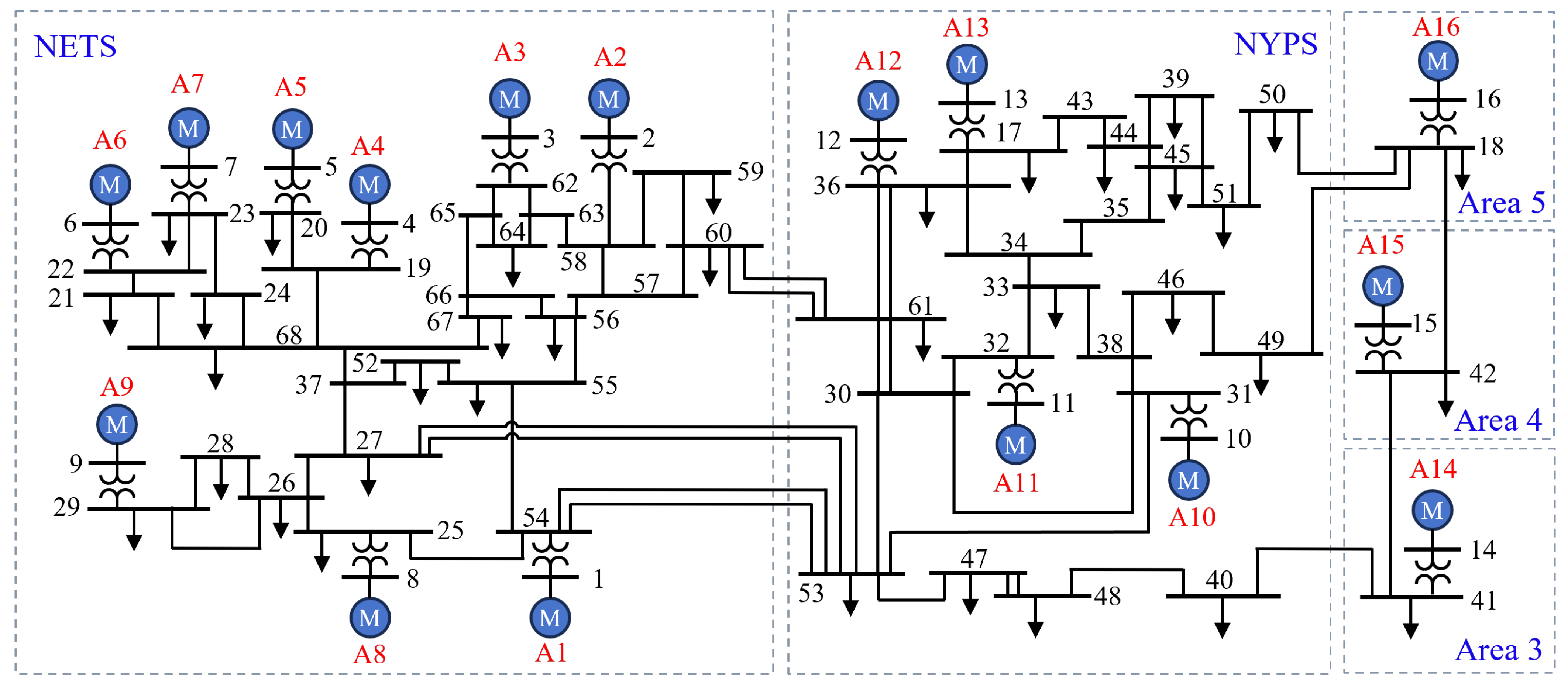
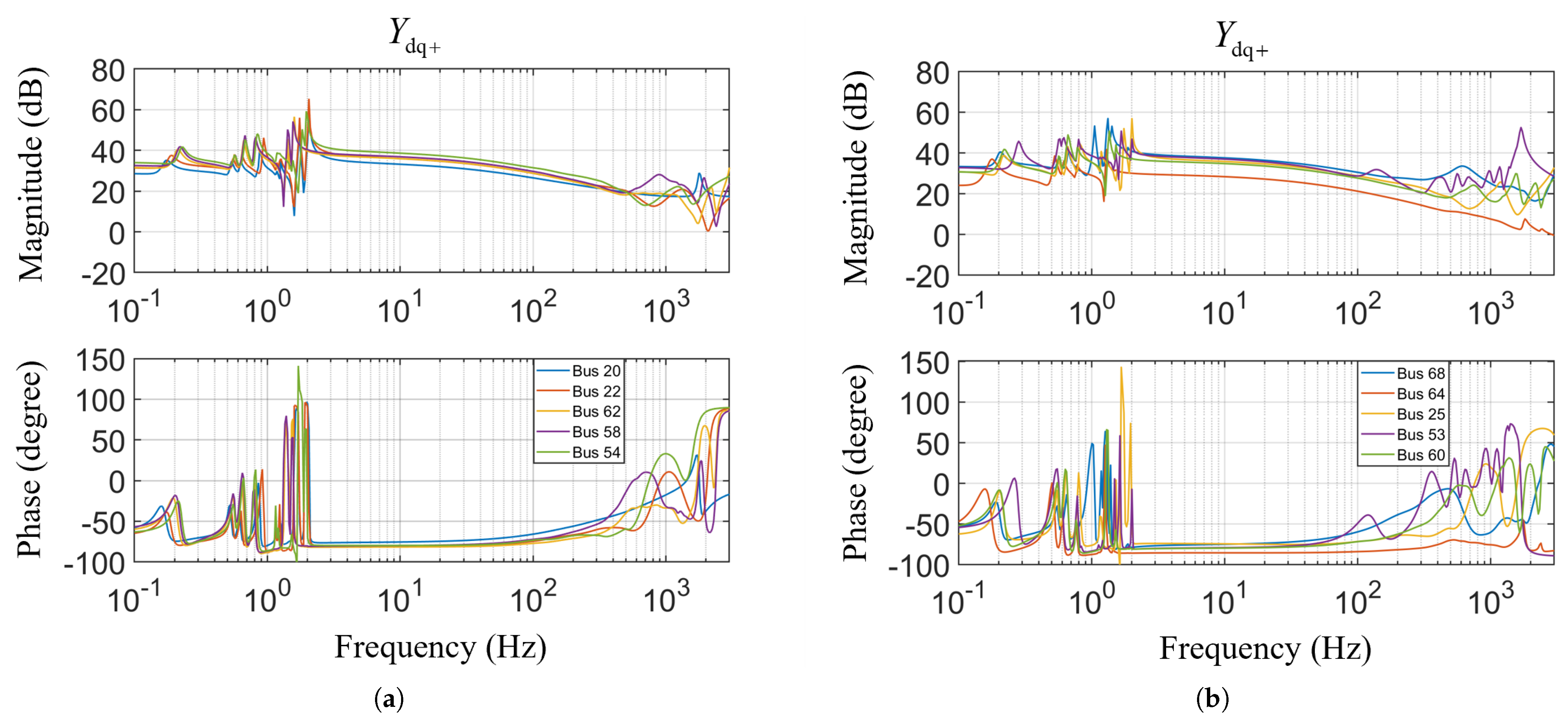
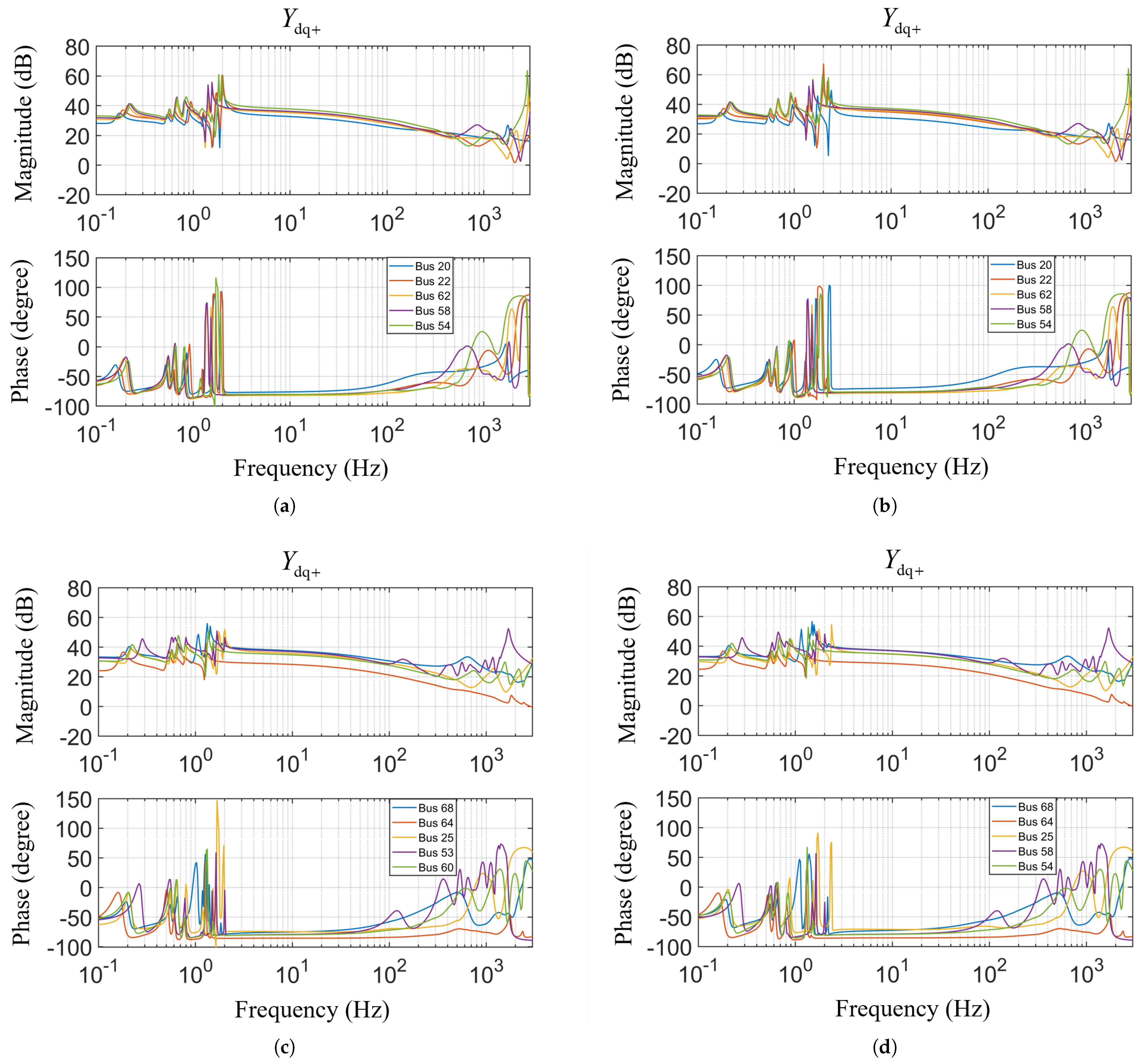
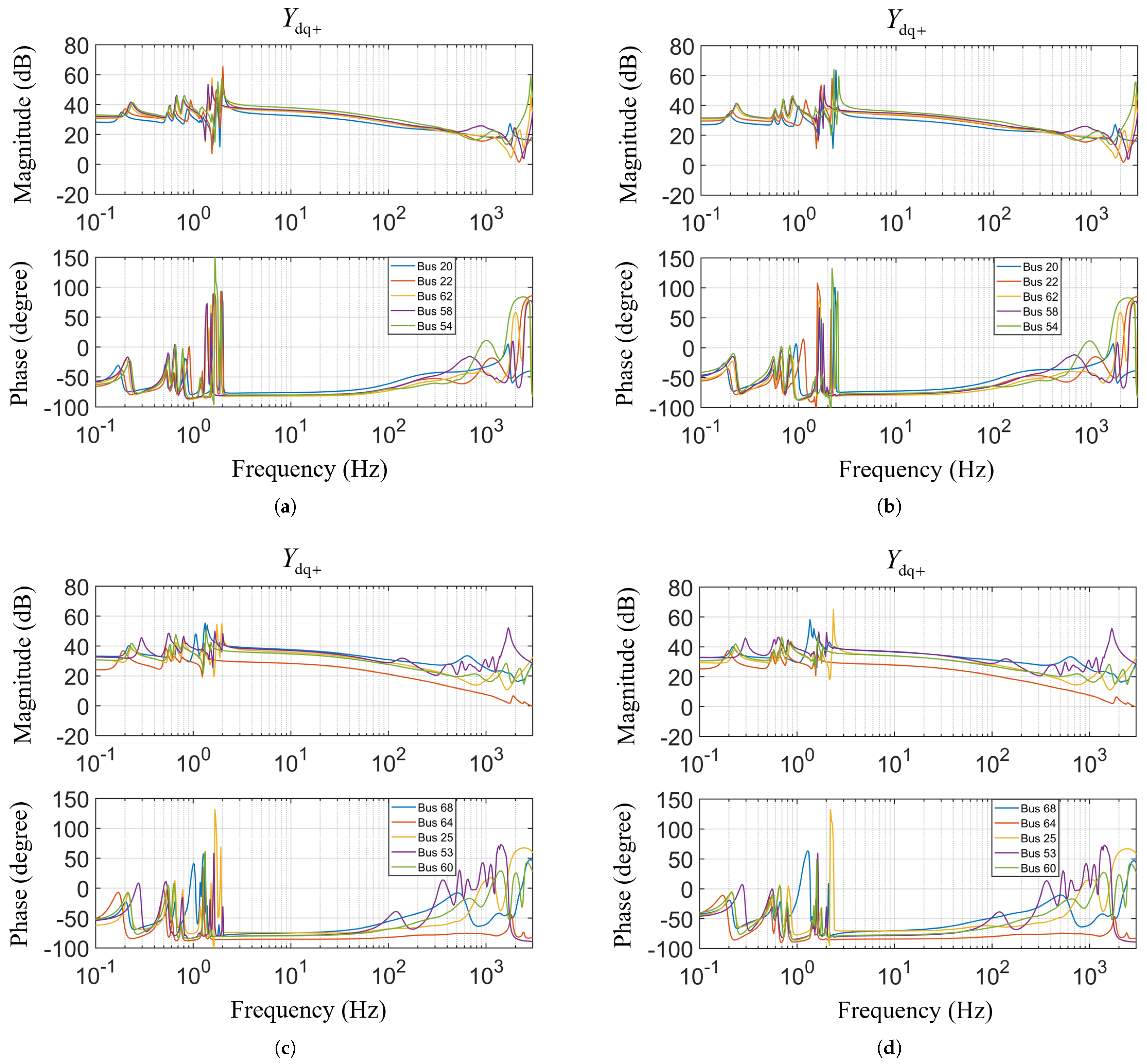
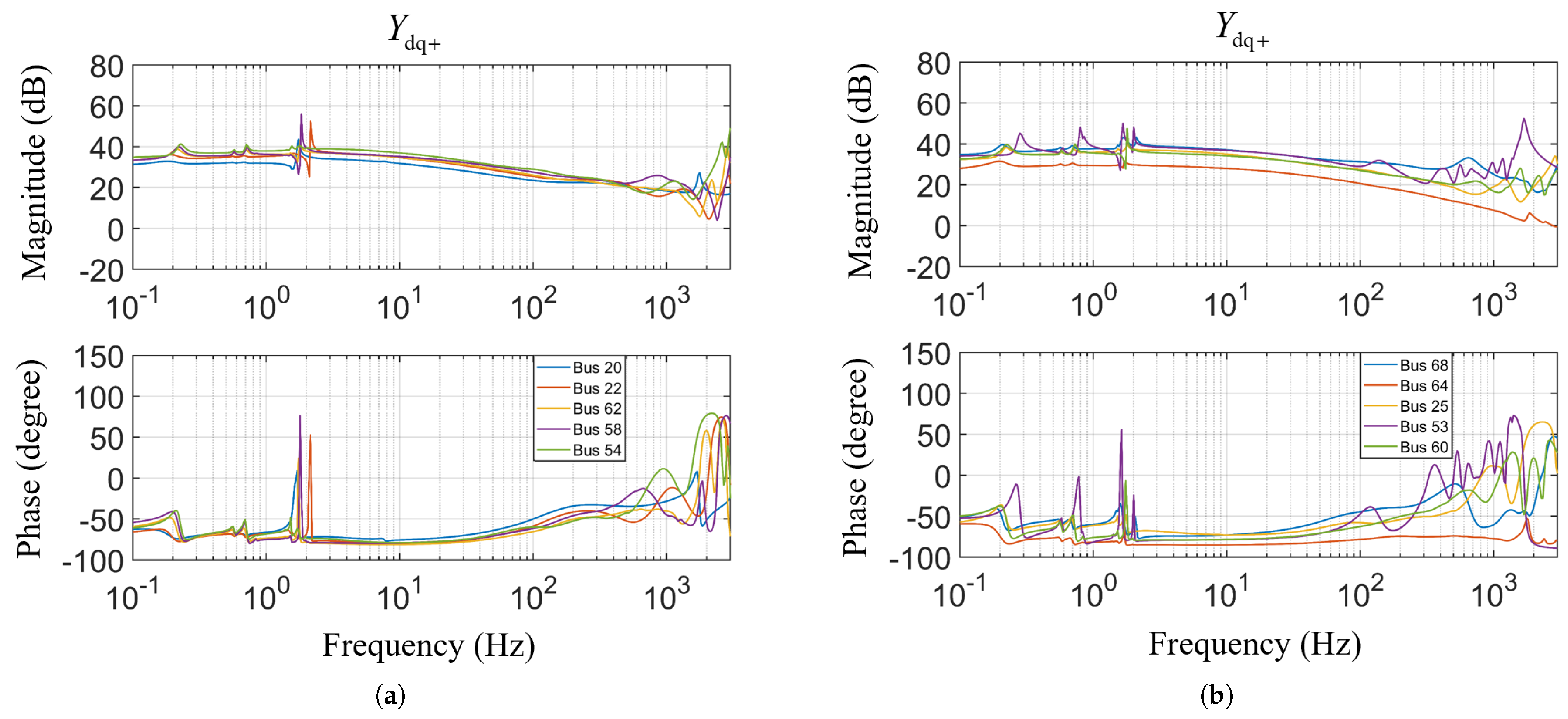
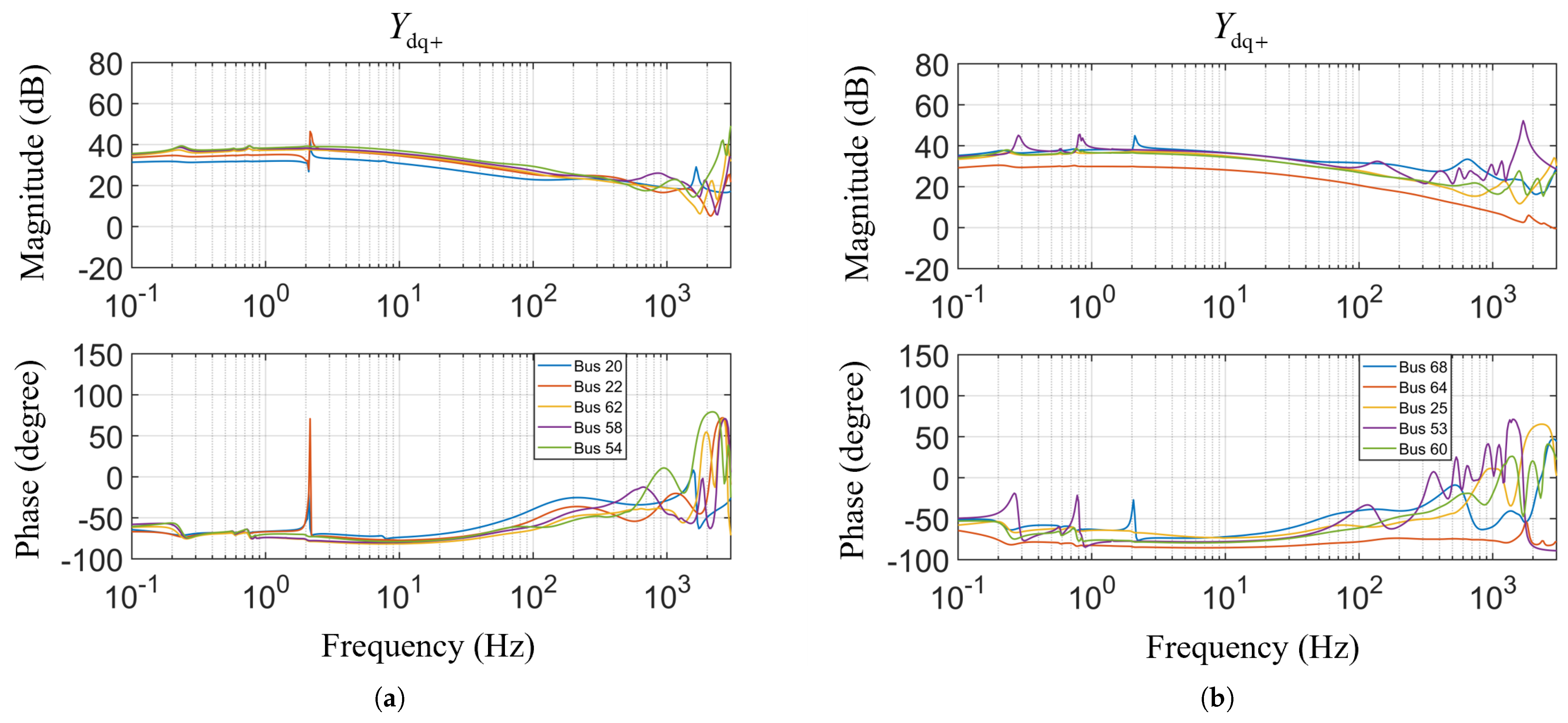
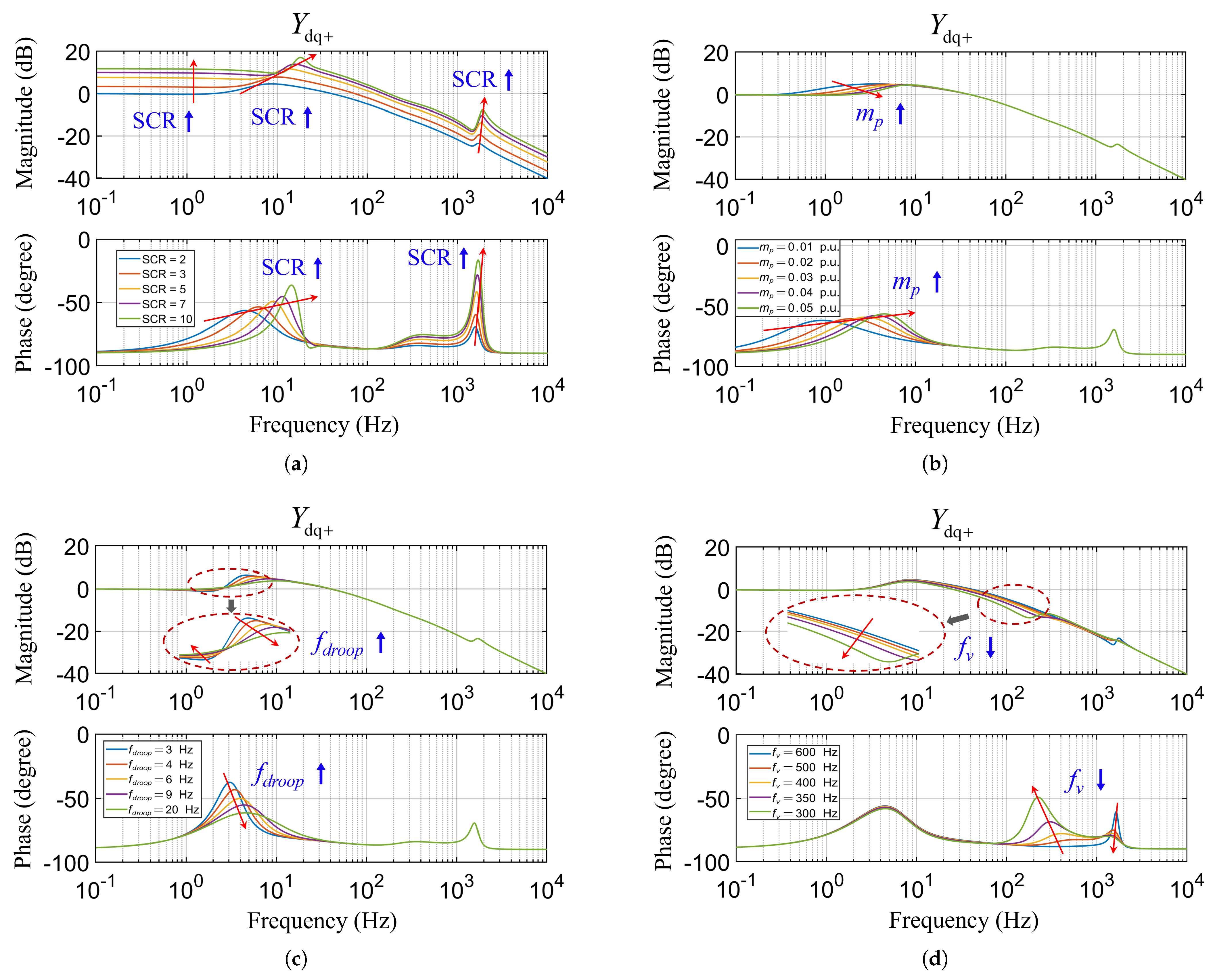
The increasing replacement of synchronous generators (SGs) by grid-following (GFL) and grid-forming (GFM) inverters is reshaping the dynamic bus characteristics of modern power systems. This transition makes a fixed ideal-voltage-source representation of the upstream main grid increasingly inadequate, especially when the interaction between inverter controls and network dynamics becomes significant. This paper investigates how the upstream grid bus admittance evolves with changes in source composition and observation location. An existing whole-system closed-loop impedance modeling framework is adopted. First, the parameter-dependent port characteristics of individual GFL and GFM inverters are analyzed to identify the frequency ranges dominated by external grid strength, synchronization mechanisms, and inner control loop dynamics. All frequencies reported herein are expressed in the synchronous dq frame. Five representative scenarios are then constructed on the IEEE 16-machine 68-bus system to describe the transition from SG-dominated operation to GFL-rich and SG/GFL/GFM hybrid operation. The results show that increasing GFL penetration together with SG decommissioning does not cause a uniform change in bus admittance, but redistributes the low-frequency resonance characteristics among different locations. At 40% GFL penetration, disconnecting the corresponding SGs changes the dominant peak at electrically remote buses from 56.2 dB at 1.32 Hz to 66.0 dB at 2.44 Hz. When the GFL share is kept at 40% and 15% GFM capacity is introduced, the dominant low-frequency peaks decrease by 8.9 dB and 14.0 dB for buses close to generation sources and electrically remote buses, respectively, while the corresponding average low-frequency magnitude variations decrease by 20.6 dB and 14.7 dB. However, the dependence of bus admittance on network location remains evident. These results indicate that future transmission and distribution interface equivalents should account for source composition, observation location, and frequency dependence rather than relying solely on a fixed grid equivalent.
Keywords: grid-following inverter; grid-forming inverter; whole-system impedance modeling; bus admittance characteristic grid-following inverter; grid-forming inverter; whole-system impedance modeling; bus admittance characteristic