Review

Embedded AI/ML Systems for Partial Discharge Monitoring: A Review

by
Bartosz Owczarczuk
1,
Bogdan Dziadak
2 and
Jacek Starzyński
2,*
1
Łukasiewicz Research Network—Tele and Radio Research Institute, Ratuszowa 11 Street, 03-450 Warsaw, Poland
2
Electrical Engineering Department, Warsaw University of Technology, 00-661 Warsaw, Poland
*
Author to whom correspondence should be addressed.
Energies 2026, 19(18), 4411; https://doi.org/10.3390/en19184411 (registering DOI)
Submission received: 27 July 2026 / Revised: 9 September 2026 / Accepted: 15 September 2026 / Published: 17 September 2026
(This article belongs to the Section F: Electrical Engineering)

Abstract

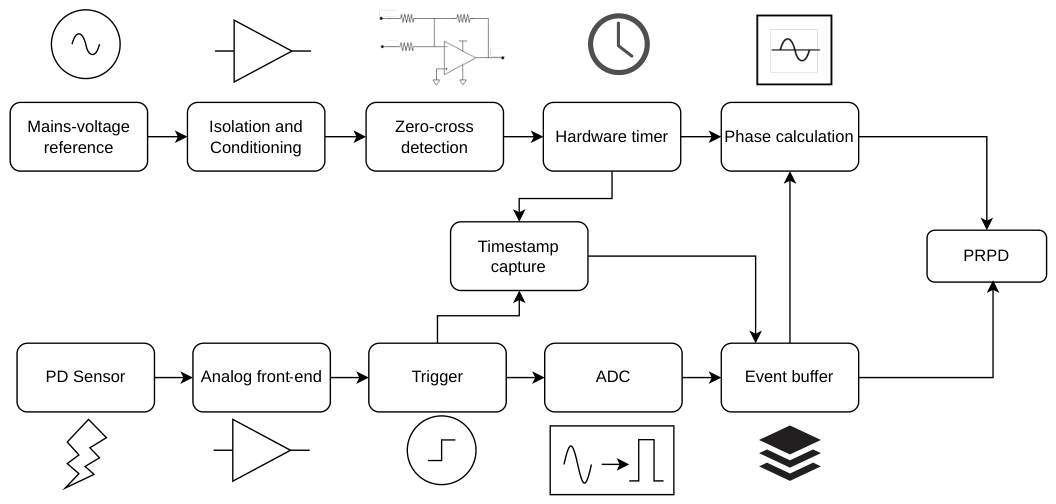
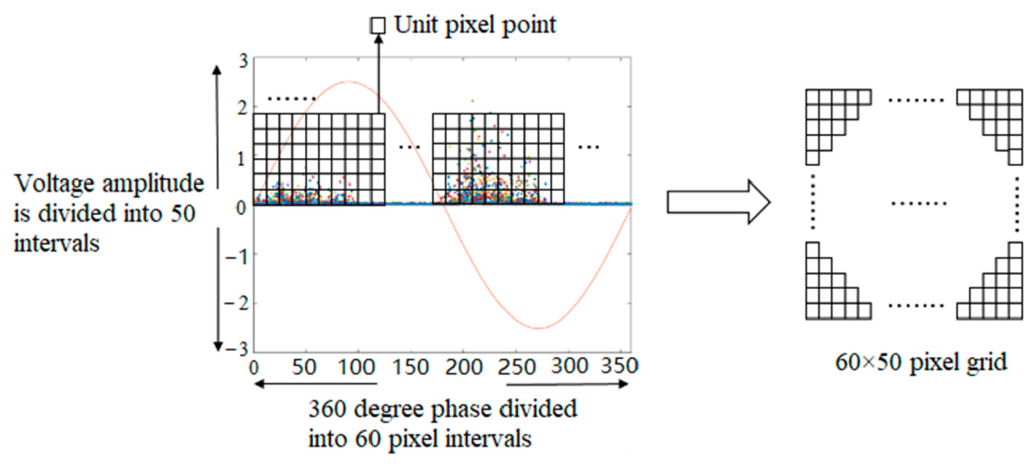
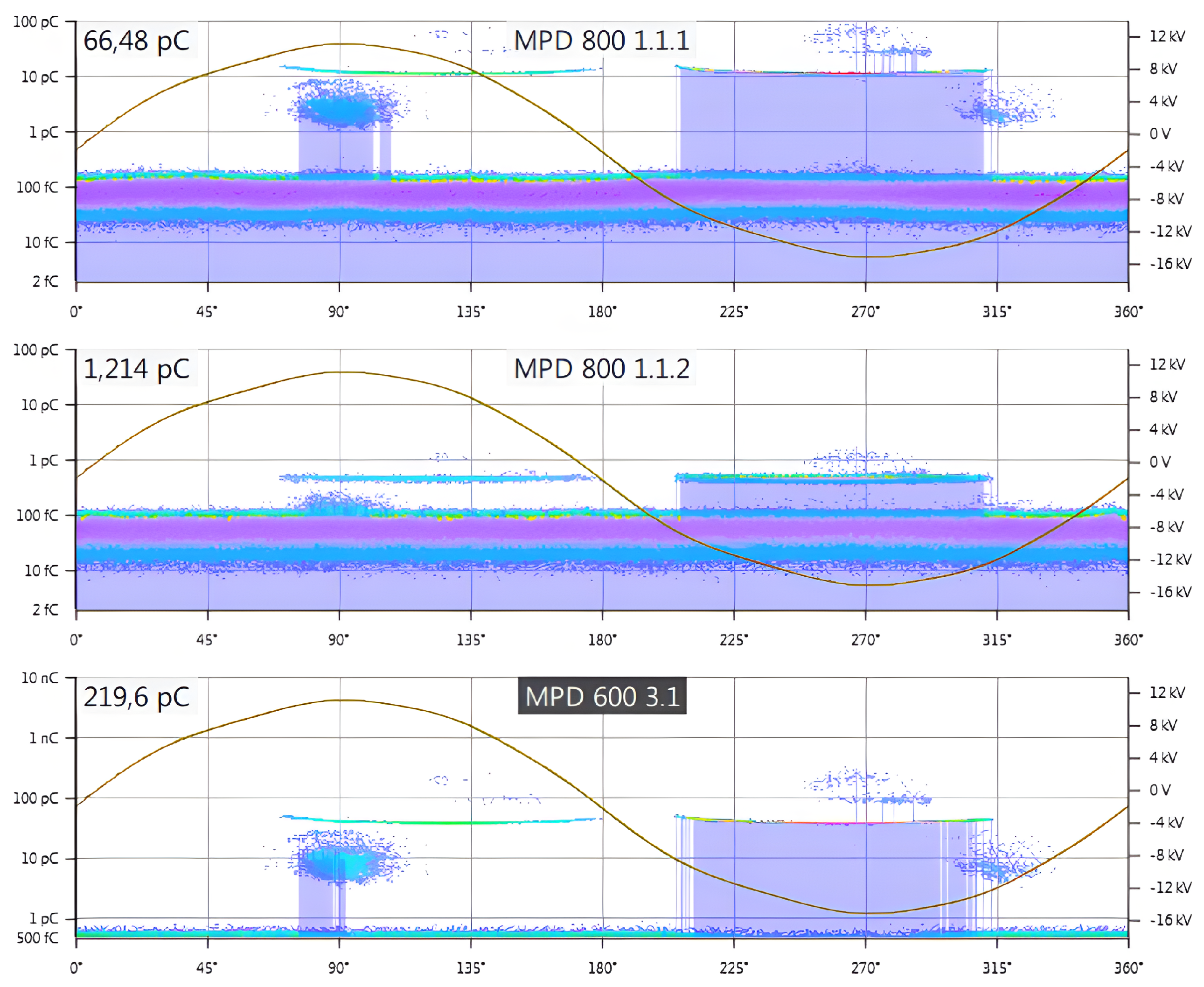
Online partial discharge monitoring is increasingly complementing periodic offline testing in medium-voltage switchgear, particularly through the use of embedded and edge-computing platforms. This review critically examines systems based on artificial intelligence and machine learning for partial discharge detection and classification, considering the complete diagnostic chain from sensing to field deployment. The analyzed literature is organized into five interdependent layers: sensors and analog front-ends, data acquisition and triggering architectures, phase-synchronized signal representations, machine learning models, and target embedded hardware. Sensing techniques based on high-frequency current transformers, transient earth voltage, and ultra-high-frequency sensors are compared in terms of bandwidth, sensitivity, installation requirements, and immunity to interference. Particular attention is given to phase-resolved partial discharge patterns, time–frequency representations, event-driven acquisition, hardware-assisted data reduction, and synchronization mechanisms. The analysis demonstrates that high classification accuracy obtained under offline laboratory conditions does not, by itself, indicate deployment readiness. Practical implementations must also satisfy constraints related to analog-to-digital converter bandwidth, buffering, memory usage, inference latency, energy consumption, quantization, thermal performance, and field noise. Lightweight neural networks, optimized object detectors, input dimensionality reduction, quantized inference, and multimodal data fusion are identified as promising development directions. However, current research remains limited by laboratory-scale validation, incomplete hardware reporting, and insufficient long-term field datasets.
Keywords: partial discharge; online monitoring; embedded systems; edge computing; edge artificial intelligence partial discharge; online monitoring; embedded systems; edge computing; edge artificial intelligence