Control Strategies and Intelligent Optimization for Ammonia–Hydrogen Dual-Fuel Engines: A Control-Oriented Review




Abstract
1. Introduction
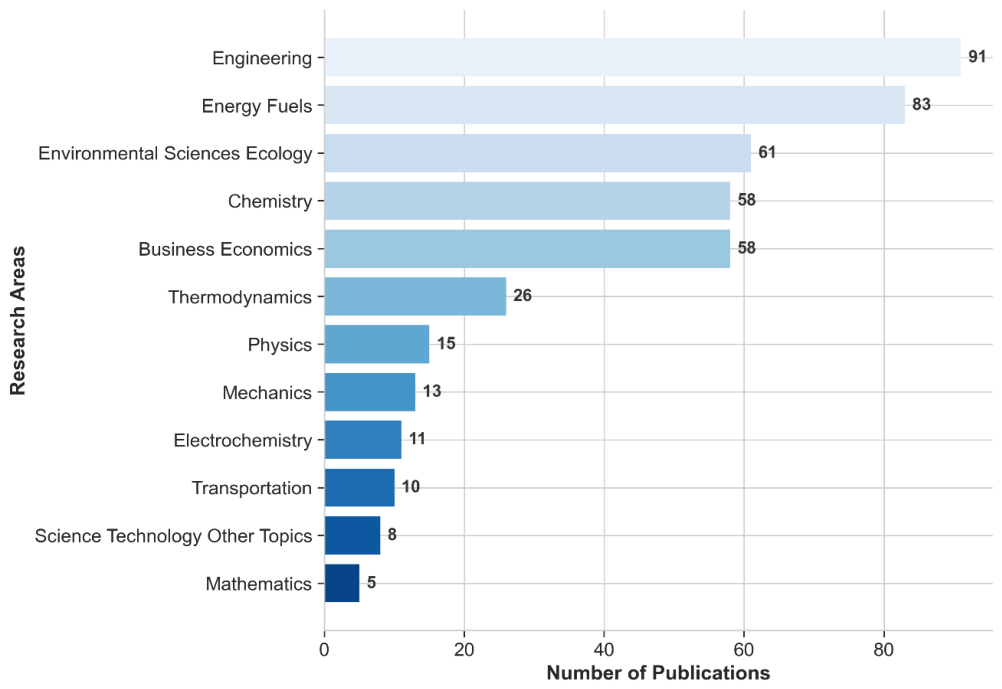
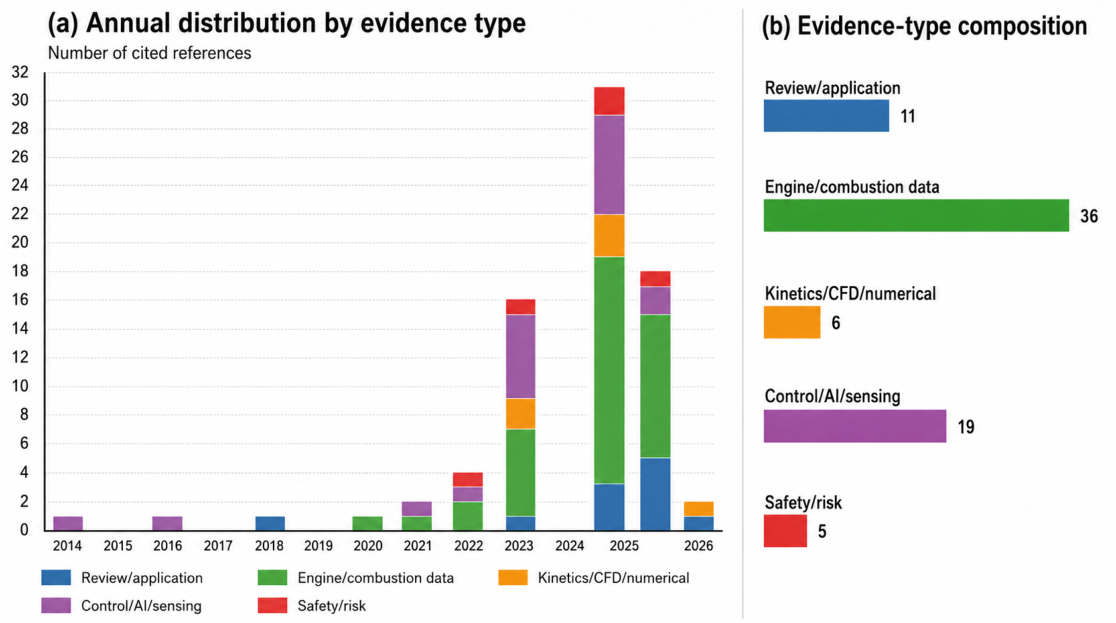
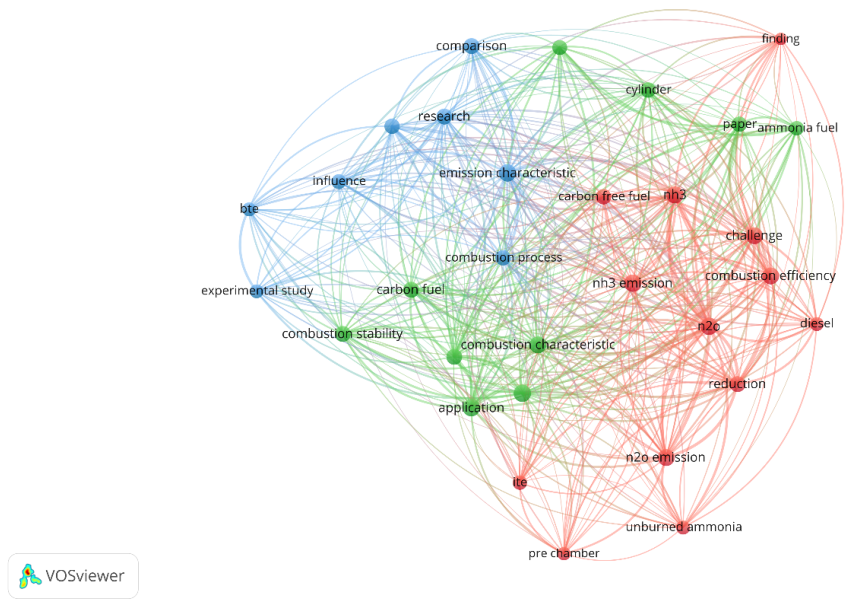
2. Review Methodology and Positioning
3. Applications and Control-Relevant Combustion Characteristics
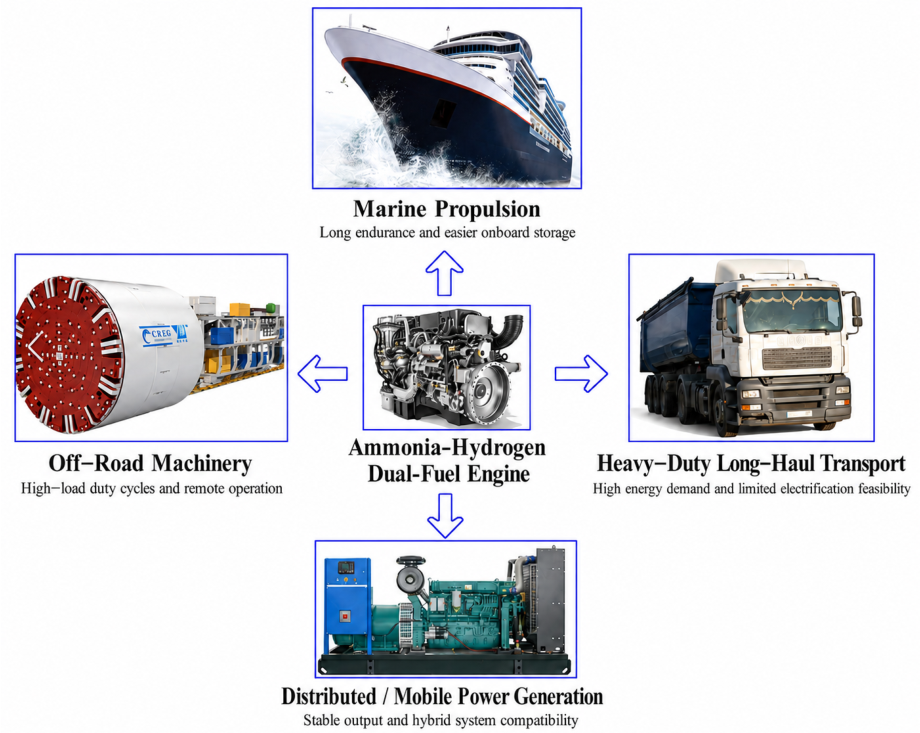
3.1. Application Scenarios
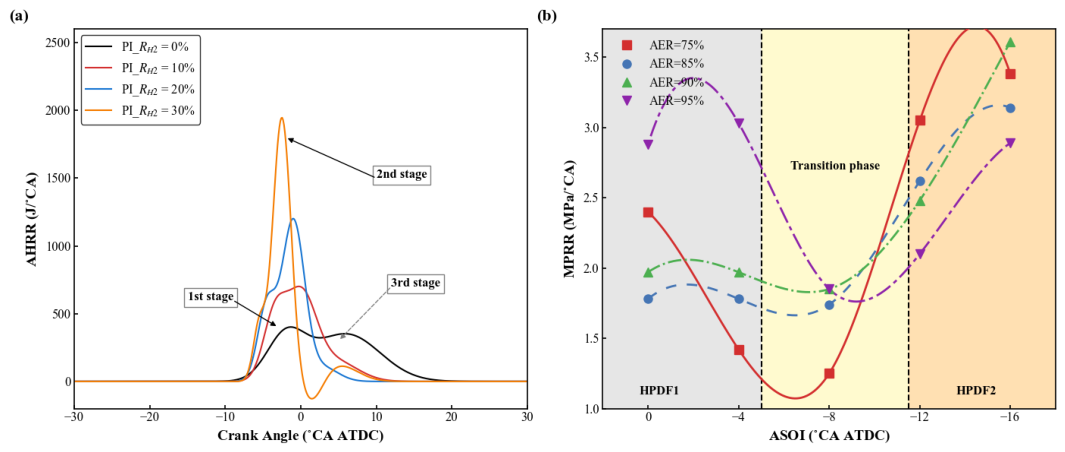
3.2. Nonlinear Mode Transitions
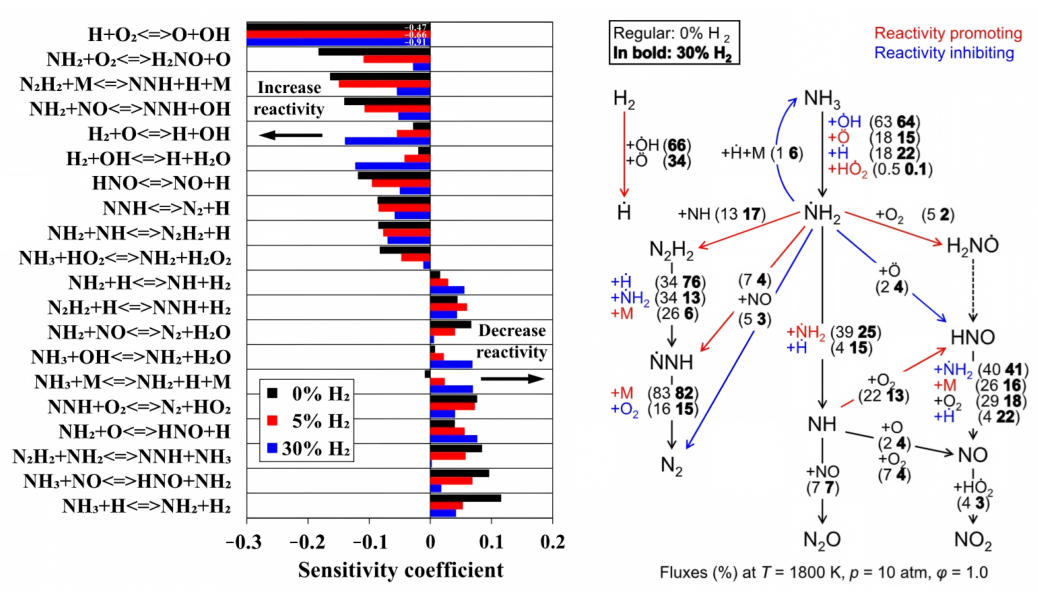
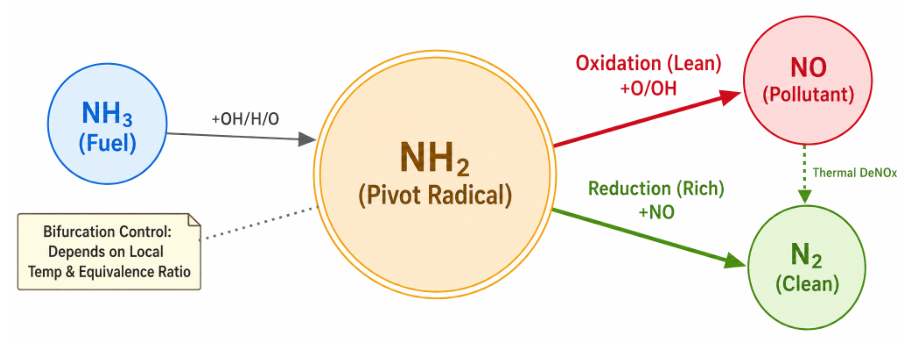
3.3. Emission Chemistry and the Branching Problem
3.4. Control-Oriented Metrics and Monitoring Challenges
4. Actuator-Level Control Strategies
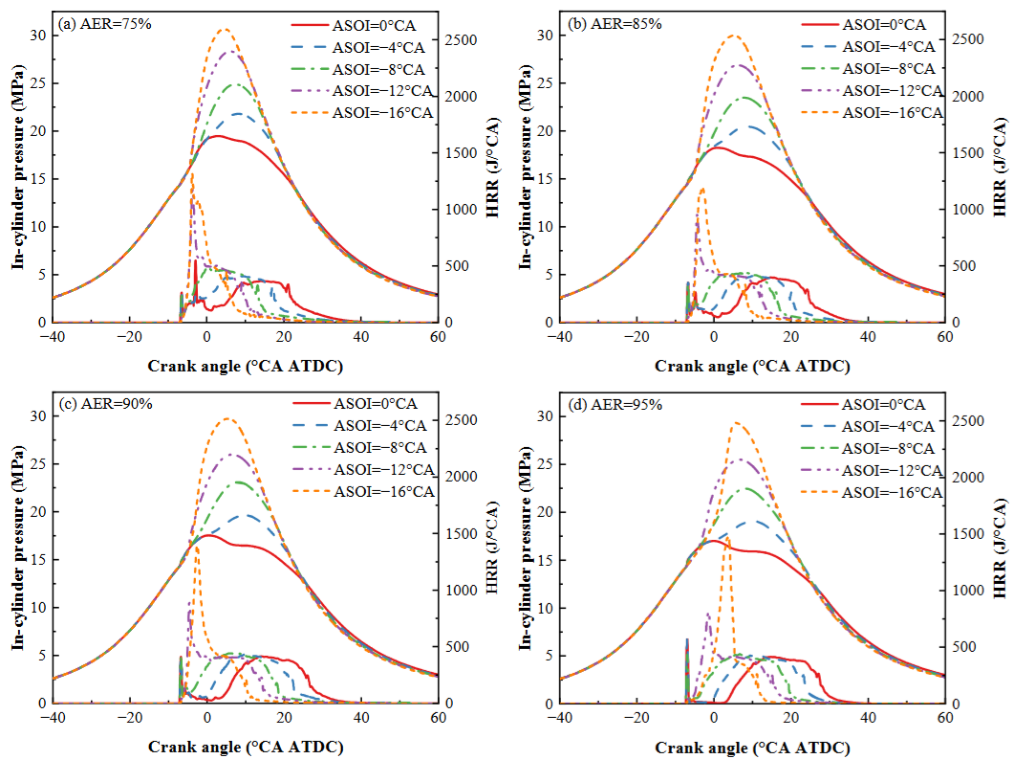
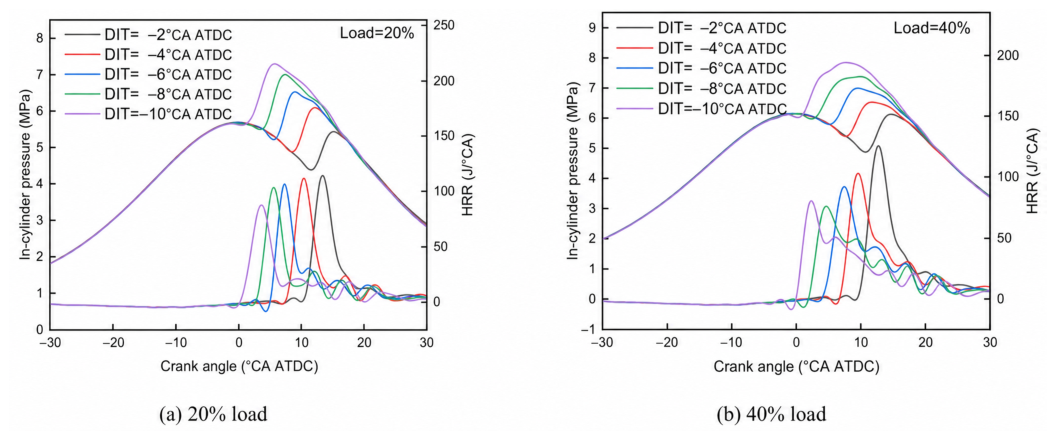
4.1. Injection Timing and Combustion-Mode Selection
4.2. Spatial Fuel Distribution: PFI, DI, and HPDI
4.3. Hydrogen Blending Ratio Control
4.4. Air-Path and EGR Control
4.5. Ignition-System Control
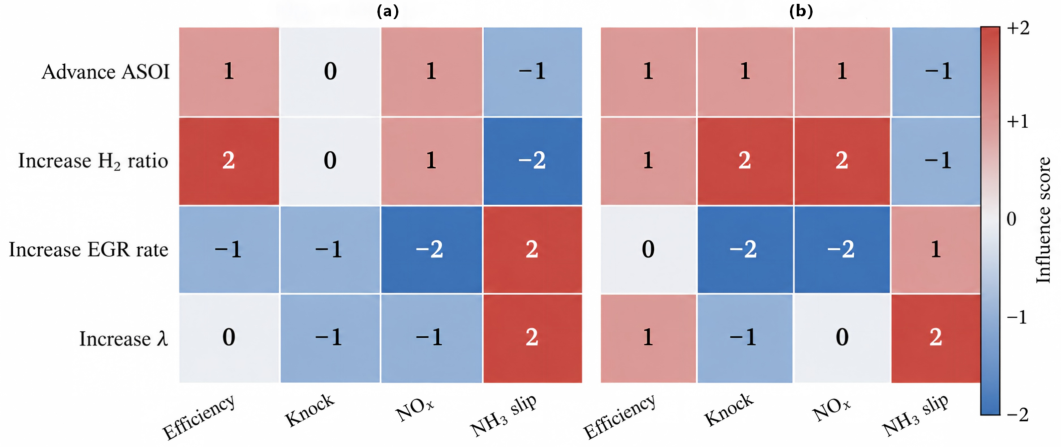
5. Control-Variable Synthesis
6. Advanced Control Algorithms and Intelligent Optimization
6.1. From Static Maps to Constrained Predictive Control
6.2. Virtual Sensing for Emission and Combustion-State Observation
6.3. AI-Based Closed-Loop Control and Reinforcement Learning
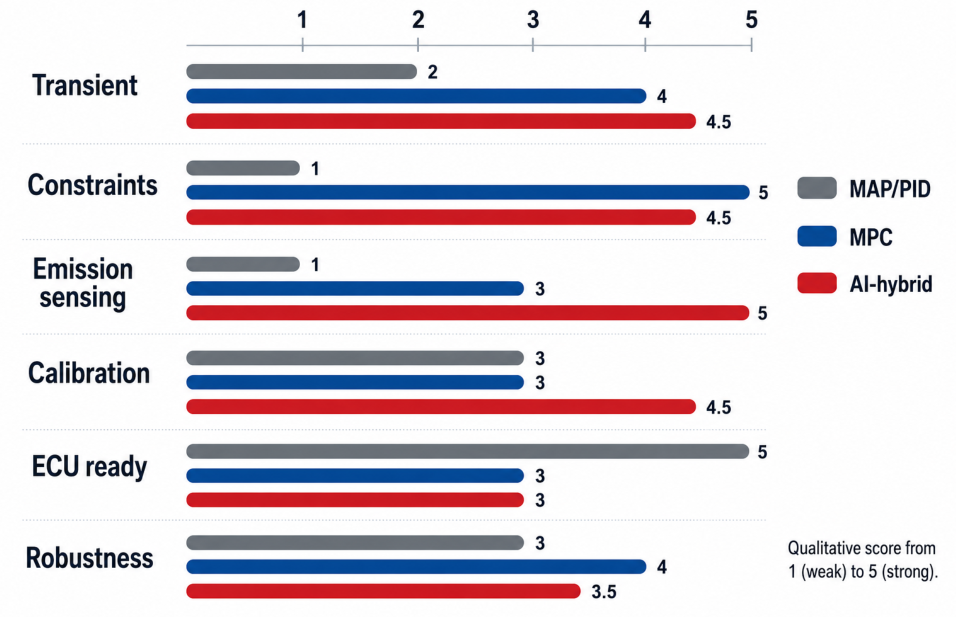
6.4. Comparison of Control Methods
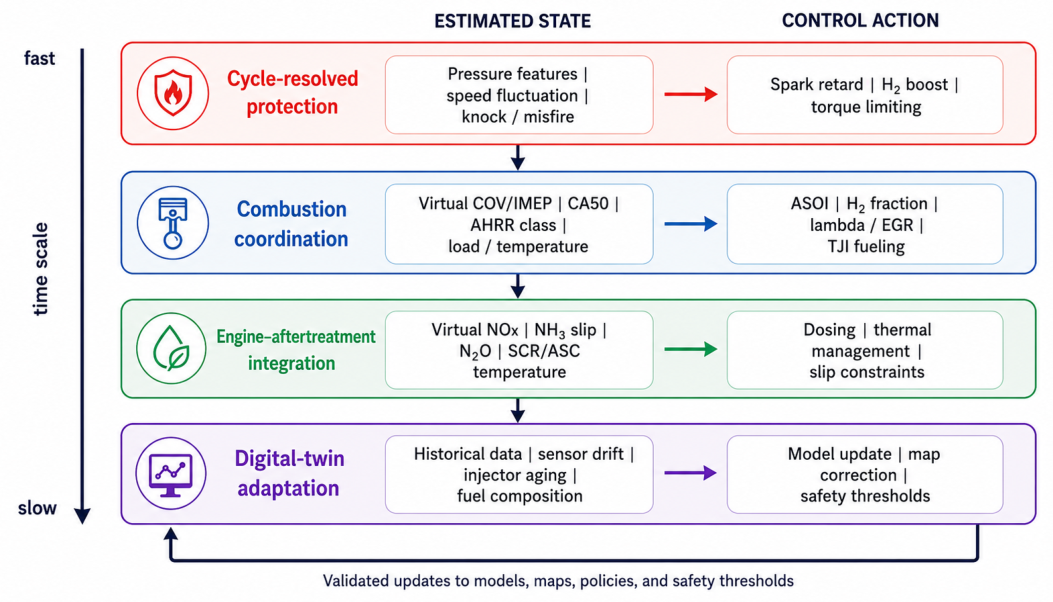
6.5. A Hierarchical Control Architecture for Deployable Systems
7. Remaining Challenges and Future Research Directions
7.1. Engine–Aftertreatment Co-Optimization
7.2. Safety, Toxicity, and Failure-Mode Constraints
7.3. Reliable Virtual Sensors for NH3 Slip and N2O
7.4. Mode-Aware Control-Oriented Modeling
7.5. Uncertainty Quantification and Robustness
7.6. Transient Control and Hydrogen Economy
7.7. ECU Deployment, Robustness, and Certification
8. Conclusions
Author Contributions
Funding
Institutional Review Board Statement
Informed Consent Statement
Data Availability Statement
Acknowledgments
Conflicts of Interest
References
- Valera-Medina, A.; Xiao, H.; Owen-Jones, M.; David, W.I.F.; Bowen, P.J. Ammonia for power. Prog. Energy Combust. Sci. 2018, 69, 63–102. [Google Scholar] [CrossRef] [Scilit]
- Zhou, X.; Li, T.; Chen, R.; Wei, Y.; Wang, X.; Wang, N.; Li, S.; Kuang, M.; Yang, W. Ammonia marine engine design for enhanced efficiency and reduced greenhouse gas emissions. Nat. Commun. 2024, 15, 2110. [Google Scholar] [CrossRef] [Scilit] [PubMed]
- Cheng, Q.; Muhammad, A.; Kaario, O.; Ahmad, Z.; Larmi, M. Ammonia as a sustainable fuel: Review and novel strategies. Renew. Sustain. Energy Rev. 2025, 207, 114995. [Google Scholar] [CrossRef] [Scilit]
- Lhuillier, C.; Brequigny, P.; Contino, F.; Mounaim-Rousselle, C. Experimental study on ammonia/hydrogen/air combustion in spark ignition engine conditions. Fuel 2020, 269, 117448. [Google Scholar] [CrossRef] [Scilit]
- El-Adawy, M.; Nemitallah, M.A.; Abdelhafez, A. Towards sustainable hydrogen and ammonia internal combustion engines: Challenges and opportunities. Fuel 2024, 364, 131090. [Google Scholar] [CrossRef] [Scilit]
- Qi, Y.; Liu, W.; Liu, S.; Wang, W.; Peng, Y.; Wang, Z. A review on ammonia-hydrogen fueled internal combustion engines. eTransportation 2023, 18, 100288. [Google Scholar] [CrossRef] [Scilit]
- Figueroa-Labastida, M.; Zheng, L.; Streicher, J.W.; Hanson, R.K. Ammonia/hydrogen laminar flame speed measurements at elevated temperatures. Int. J. Hydrogen Energy 2024, 63, 1137–1146. [Google Scholar] [CrossRef] [Scilit]
- Li, J.; Zhang, R.; Pan, J.; Wei, H.; Shu, G.; Chen, L. Ammonia and hydrogen blending effects on combustion stabilities in optical SI engines. Energy Convers. Manag. 2023, 280, 116827. [Google Scholar] [CrossRef] [Scilit]
- Hu, X.; Li, J.; Pan, J.; Zhang, R.; Wei, H.; Shu, G. On combustion and emission characteristics of ammonia/hydrogen engines: Emphasis on energy ratio and equivalence ratio. Fuel 2024, 365, 131183. [Google Scholar] [CrossRef] [Scilit]
- Li, Y.; Cao, H.; Meng, X. Optical investigation on low-temperature lean combustion characteristics for diesel pilot-ignited premixed ammonia. Fuel 2024, 371, 132047. [Google Scholar] [CrossRef] [Scilit]
- Li, C.; Yang, S.; Li, Y. Impact of Ammonia Energy Ratio on the Performance of an Ammonia/Diesel Dual-Fuel Direct Injection Engine Across Different Combustion Modes. Processes 2025, 13, 1953. [Google Scholar] [CrossRef] [Scilit]
- Sun, X.; Meng, Q.; Liang, Y.; Jia, Y.; Ma, T. Evaluating combustion modes of ammonia/diesel two-stroke marine engine with multiple criteria decision making. Int. J. Hydrogen Energy 2025, 186, 151959. [Google Scholar] [CrossRef] [Scilit]
- Chen, Y.; Zhang, J.; Zhang, Z.; Zhang, B.; Hu, J.; Zhong, W.; Ye, Y. Optimization of ammonia energy ratio and injection timing for ammonia diesel dual-fuel engines based on RSM. Fuel 2025, 381, 133660. [Google Scholar] [CrossRef] [Scilit]
- Bonfils, A.; Creff, Y.; Lepreux, O.; Petit, N. Closed-loop control of a SCR system using a NOx sensor cross-sensitive to NH3. J. Process Control 2014, 24, 368–378. [Google Scholar] [CrossRef] [Scilit]
- Aliramezani, M.; Ebrahimi, K.; Koch, C.R.; Hayes, R.E. NOx sensor ammonia cross sensitivity analysis using a simplified physics based model. In Proceedings of the Combustion Institute—Canadian Section Spring Technical Meeting, University of Waterloo, Waterloo, ON, Canada, 10–12 May 2016. [Google Scholar]
- Kang, L.; Lou, D.; Zhang, Y.; Fang, L.; Luo, C. Research on cross sensitivity of NOx sensor and Adblue injection volume in accordance with the actual situation based on cubature Kalman filter. Energy 2023, 284, 128666. [Google Scholar] [CrossRef] [Scilit]
- Abubakar, S.; Li, Y. Ammonia-fueled internal combustion engines: A review of research trends. Fuel 2026, 406, 137016. [Google Scholar] [CrossRef] [Scilit]
- Zhang, X.; Zhao, S.; Zhang, Q.; Wang, Y.; Zhang, J. A Review of Ammonia Combustion Reaction Mechanism and Emission Reduction Strategies. Energies 2025, 18, 1707. [Google Scholar] [CrossRef] [Scilit]
- Wu, H.; Almatrafi, F.; Ben Houidi, M.; Fang, T.; Roberts, W.L. A review on liquid-ammonia injection and combustion for engine applications. Engineering 2025, 59, 82–117. [Google Scholar] [CrossRef] [Scilit]
- Tornatore, C.; Sementa, P.; Catapano, F. Enhancing ammonia combustion in internal combustion engines: A review on dual-fuel strategies with hydrogen. Energies 2025, 18, 3159. [Google Scholar] [CrossRef] [Scilit]
- Zhu, Y.; Curran, H.J.; Girhe, S.; Murakami, Y.; Pitsch, H.; Senecal, K.; Yang, L.; Zhou, C.-W. The combustion chemistry of ammonia and ammonia/hydrogen mixtures: A comprehensive chemical kinetic modeling study. Combust. Flame 2024, 260, 113239. [Google Scholar] [CrossRef] [Scilit]
- Chen, Z.; Ju, P.; Gong, M.; Shi, X.; Qin, C.; Shi, L. Study on control-oriented emission predictions of ammonia-diesel dual-fuel engine with combustion identification. Energy 2025, 333, 137390. [Google Scholar] [CrossRef] [Scilit]
- Gu, J.; Wang, Y.; Hu, J.; Zhang, K.; Shi, L.; Deng, K. Real-time prediction of fuel consumption and emissions based on deep autoencoding support vector regression for cylinder pressure-based feedback control of marine diesel engines. Energy 2024, 300, 131570. [Google Scholar] [CrossRef] [Scilit]
- Liao, J.; Hu, J.; Yan, F.; Chen, P.; Zhu, L.; Zhou, Q.; Xu, H.; Li, J. A comparative investigation of advanced machine learning methods for predicting transient emission characteristic of diesel engine. Fuel 2023, 350, 128767. [Google Scholar] [CrossRef] [Scilit]
- Norouzi, A.; Shahpouri, S.; Gordon, D.; Shahbakhti, M.; Koch, C.R. Safe deep reinforcement learning in diesel engine emission control. Proc. Inst. Mech. Eng. Part I J. Syst. Control Eng. 2023, 237, 1440–1453. [Google Scholar] [CrossRef] [Scilit] [PubMed]
- Li, J.; Zhang, R.; Mao, X.; Wang, L.; Wei, H.; Pan, J. Ammonia and hydrogen blending effects on knocking characteristics in an optical SI engine. Fuel 2025, 385, 134067. [Google Scholar] [CrossRef] [Scilit]
- Xin, G.; Ji, C.; Wang, S.; Hong, C.; Meng, H.; Yang, J.; Su, F. Experimental study on the load control strategy of ammonia-hydrogen dual-fuel internal combustion engine for hybrid power system. Fuel 2023, 347, 128396. [Google Scholar] [CrossRef] [Scilit]
- Hong, C.; Ji, C.; Wang, S.; Qiang, Y.; Liu, Q. A comprehensive experimental study to analyze the cyclic variation of a hydrogen-blended ammonia engine with the Miller cycle. Int. J. Hydrogen Energy 2024, 55, 1335–1346. [Google Scholar] [CrossRef] [Scilit]
- Hong, C.; Ji, C.; Wang, S.; Xin, G.; Meng, H.; Yang, J.; Su, F. An experimental study of various load control strategies for an ammonia/hydrogen dual-fuel engine with the Miller cycle. Fuel Process. Technol. 2023, 247, 107780. [Google Scholar] [CrossRef] [Scilit]
- Wu, G.; Gan, H.; Li, Y. Low-temperature lean combustion and emissions characteristics of pilot diesel-ignited premixed ammonia in a constant volume chamber. Int. J. Hydrogen Energy 2024, 93, 158–168. [Google Scholar] [CrossRef] [Scilit]
- Li, J.; Wang, L.; Shu, G.; Pan, J.; Wei, H.; Hu, X.; Zhang, R. Jet ignition characteristics of ammonia-hydrogen passive pre-chamber: Emphasis on equivalence ratio and hydrogen/ammonia ratio. Energy Convers. Manag. 2024, 315, 118785. [Google Scholar] [CrossRef] [Scilit]
- Zhu, J.; Liu, R.; Lin, H.; Jin, Z.; Qian, Y.; Zhou, D.; Yin, Y.; Li, Z.; Lu, X. Computational insights into flame development and emission formation in an ammonia engine with hydrogen-assisted pre-chamber turbulent jet ignition. Energy Convers. Manag. 2024, 314, 118706. [Google Scholar] [CrossRef] [Scilit]
- Meng, X.; Zhu, W.; Yin, S.; Tian, J.; Cao, J.; Long, W.; Bi, M. Study for improving ammonia combustion and emissions using different hydrogen addition strategies in pre-chamber turbulent jet ignition mode. Energy 2025, 323, 135814. [Google Scholar] [CrossRef] [Scilit]
- Sitaraman, R.; Batool, S.; Borhan, H.; Velni, J.M.; Shahbakhti, M. Data-Driven Model Learning and Control of RCCI Engines based on Heat Release Rate. IFAC-PapersOnLine 2022, 55, 608–614. [Google Scholar] [CrossRef] [Scilit]
- Batool, S.; Naber, J.D.; Shahbakhti, M. Machine learning approaches for identification of heat release shapes in a low temperature combustion engine for control applications. Control Eng. Pract. 2024, 144, 105838. [Google Scholar] [CrossRef] [Scilit]
- Batool, S.; Naber, J.D.; Shahbakhti, M. Closed-loop Control of SI–RCCI Mode Transitions in a Multi-Mode Combustion Engine. IFAC-PapersOnLine 2023, 56, 79–84. [Google Scholar] [CrossRef] [Scilit]
- Nogueira, S.C.d.L.; Och, S.H.; Moura, L.M.; Domingues, E.; Coelho, L.d.S.; Mariani, V.C. Prediction of the NOx and CO2 emissions from an experimental dual fuel engine using optimized random forest combined with feature engineering. Energy 2023, 280, 128066. [Google Scholar] [CrossRef] [Scilit]
- Mao, G.; Shi, T.; Mao, C.; Wang, P. Prediction of NOx emission from two-stage combustion of NH3-H2 mixtures under various conditions using artificial neural networks. Int. J. Hydrogen Energy 2024, 49, 1414–1424. [Google Scholar] [CrossRef] [Scilit]
- Sok, R.; Jeyamoorthy, A.; Kusaka, J. Novel virtual sensors development based on machine learning combined with convolutional neural-network image processing-translation for feedback control systems of internal combustion engines. Appl. Energy 2024, 365, 123224. [Google Scholar] [CrossRef] [Scilit]
- Duong, P.A.; Kang, H. Decarbonizing maritime transportation: Ammonia as a promising candidate for green shipping. Energy 2025. Advance online publication. [Google Scholar]
- Huang, Y.; Yu, J.; Zhao, Z.; Hu, S.; Zhang, H.; Li, J. Modeling and control strategy analysis of ammonia-hydrogen engine and fuel cell hybrid powertrain for heavy-duty vehicles. Energy 2026, 346, 139605. [Google Scholar] [CrossRef] [Scilit]
- Zhang, Y.; Zhou, W.; Liang, Y.; Yu, L.; Lu, X. An experimental and detailed kinetic modeling study of the auto-ignition of NH3/diesel mixtures: Part 1- NH3 substitution ratio from 20% to 90%. Combust. Flame 2023, 251, 112391. [Google Scholar] [CrossRef] [Scilit]
- Suresh, R.; Kalvakala, K.C.; Aggarwal, S.K. A numerical study of NOx and soot emissions in ethylene-ammonia diffusion flames with oxygen enrichment. Fuel 2024, 362, 130834. [Google Scholar] [CrossRef] [Scilit]
- Liang, Y.; Wang, Z.; Dong, D.; Wei, W.; Zhang, H.; Li, G.; Zhang, Z. Effects of hydrogen volume fraction, air fuel ratio, and compression ratio on combustion and emission characteristics of an SI ammonia-hydrogen engine. Energy 2024, 308, 132858. [Google Scholar] [CrossRef] [Scilit]
- Wang, X.; Li, T.; Chen, R.; Li, S.; Kuang, M.; Lv, Y.; Wang, Y.; Rao, H.; Liu, Y.; Lv, X. Exploring the GHG reduction potential of pilot diesel-ignited ammonia engines-Effects of diesel injection timing and ammonia energetic ratio. Appl. Energy 2024, 357, 122437. [Google Scholar] [CrossRef] [Scilit]
- Pyrc, M.; Gruca, M.; Tutak, W.; Jamrozik, A. Assessment of the co-combustion process of ammonia with hydrogen in a research VCR piston engine. Int. J. Hydrogen Energy 2023, 48, 2821–2834. [Google Scholar] [CrossRef] [Scilit]
- Barbier, A.; Salavert, J.M.; Palau, C.E.; Guardiola, C. Analysis of the Euro 7 on-board emissions monitoring concept with real-driving data. Transp. Res. Part D Transp. Environ. 2024, 127, 104062. [Google Scholar] [CrossRef] [Scilit]
- Scharl, V.; Sattelmayer, T. Ignition and combustion characteristics of diesel piloted ammonia injections. Fuel Commun. 2022, 11, 100068. [Google Scholar] [CrossRef] [Scilit]
- Lang, M.; Su, Y.; Wang, Y.; Zhang, Y.; Wang, B.; Chen, S. Experimental study on the effects of pilot injection strategy on combustion and emission characteristics of ammonia/diesel dual fuel engine under low load. Energy 2024, 303, 131913. [Google Scholar] [CrossRef] [Scilit]
- Lee, J.; Park, C.; Jang, I.; Kim, M.; Park, G.; Kim, Y. Experimental research on the effect of diesel post-injection conditions on the efficiency and global warming potential in a single-cylinder four-stroke marine engine fueled with ammonia and diesel. Energy 2025, 314, 134244. [Google Scholar] [CrossRef] [Scilit]
- Wang, X.; Li, T.; Zhou, X.; Huang, S.; Chen, R.; Yi, P.; Lv, Y.; Wang, Y.; Rao, H.; Liu, Y.; et al. Reductions in GHG and unburned ammonia of the pilot diesel-ignited ammonia engines by diesel injection strategies. Appl. Therm. Eng. 2025, 260, 124967. [Google Scholar] [CrossRef] [Scilit]
- D’Antuono, G.; Lanni, D.; Galloni, E.; Fontana, G. Numerical modeling and simulation of a spark-ignition engine fueled with ammonia-hydrogen blends. Energies 2023, 16, 2543. [Google Scholar] [CrossRef] [Scilit]
- Lanni, D.; Galloni, E.; Fontana, G.; D’Antuono, G. Assessment of the operation of an SI engine fueled with ammonia. Energies 2022, 15, 8583. [Google Scholar] [CrossRef] [Scilit]
- Khalid, A.H.; Said, M.F.M.; Veza, I.; Abas, M.A.; Roslan, M.F.; Abubakar, S.; Jalal, M.R. Hydrogen port fuel injection: Review of fuel injection control strategies to mitigate backfire in internal combustion engine fuelled with hydrogen. Int. J. Hydrogen Energy 2024, 66, 571–581. [Google Scholar] [CrossRef] [Scilit]
- Molina, S.; Novella, R.; Gomez-Soriano, J.; Olcina-Girona, M. Impact of medium-pressure direct injection in a spark-ignition engine fueled by hydrogen. Fuel 2024, 360, 130618. [Google Scholar] [CrossRef] [Scilit]
- Kim, S.; Lee, J.; Lee, S.; Lee, S.; Kim, K.; Min, K. Effects of various compression ratios on a direct injection spark ignition hydrogen-fueled engine in a single-cylinder engine. Int. J. Automot. Technol. 2024, 25, 1159–1172. [Google Scholar] [CrossRef] [Scilit]
- Huang, Z.; Yuan, S.; Wei, H.; Zhong, L.; Hu, Z.; Liu, Z.; Liu, C.; Wei, H.; Zhou, L. Effects of hydrogen injection timing and injection pressure on mixture formation and combustion characteristics of a hydrogen direct injection engine. Fuel 2024, 363, 130966. [Google Scholar] [CrossRef] [Scilit]
- Zhang, Z.; Di, L.; Shi, L.; Yang, X.; Cheng, T.; Shi, C. Effect of liquid ammonia HPDI strategies on combustion characteristics and emission formation of ammonia-diesel dual-fuel heavy-duty engines. Fuel 2024, 367, 131450. [Google Scholar] [CrossRef] [Scilit]
- Liu, Y.; Liu, Y.; Guo, Z.; Xie, F.; Wang, Z.; Zhang, H.; Li, X. Experimental study on the combustion and emission characteristics of ammonia-hydrogen dual-fuel engines under low load conditions with respect to ammonia energy ratio and excess air coefficient. J. Clean. Prod. 2024, 479, 144092. [Google Scholar] [CrossRef] [Scilit]
- Koike, M.; Suzuoki, T.; Takeuchi, T.; Homma, T.; Hariu, S.; Takeuchi, Y. Cold-start performance of an ammonia-fueled spark ignition engine with an on-board fuel reformer. Int. J. Hydrogen Energy 2021, 46, 25689–25698. [Google Scholar] [CrossRef] [Scilit]
- Li, J.; Zhang, R.; Wang, L.; Shu, G.; Wei, H.; Pan, J. Hydrogen stratification improving ammonia combustion and emission performance in SI engines. Energy Convers. Manag. 2025, 344, 120332. [Google Scholar] [CrossRef] [Scilit]
- Zhang, R.; Shu, G.; Zhao, H.; Chen, L.; Wei, H.; Pan, J. A comparative study on NH3/H2 and NH3/CH3OH combustion and emission in an optical SI engine. Fuel 2024, 369, 131731. [Google Scholar] [CrossRef] [Scilit]
- Masoumi, S.; Houshfar, E.; Ashjaee, M. Experimental and numerical analysis of ammonia/hydrogen combustion under artificial exhaust gas recirculation. Fuel 2024, 357, 130081. [Google Scholar] [CrossRef] [Scilit]
- Pandey, J.K.; Dinesh, M.H.; Kumar, G.N. A comparative study of NOx mitigating techniques EGR and spark delay on combustion and NOx emission of ammonia/hydrogen and hydrogen fuelled SI engine. Energy 2023, 276, 127611. [Google Scholar] [CrossRef] [Scilit]
- Uddeen, K.; Tang, Q.; Shi, H.; Magnotti, G.; Turner, J. A novel multiple spark ignition strategy to achieve pure ammonia combustion in an optical spark-ignition engine. Fuel 2023, 349, 128741. [Google Scholar] [CrossRef] [Scilit]
- Braun, A.; Gruninger, M.; Back, D.; Carlsson, T.; Angeby, J.; Toedter, O.; Koch, T. Development of a Spark-Ignited Combustion Strategy for 100% Ammonia (NH3) Operation in Internal Combustion Engines. Energies 2025, 18, 5051. [Google Scholar] [CrossRef] [Scilit]
- Lanni, D.; D’Antuono, G.; Galloni, E.; Fontana, G.; Contino, F.; Brequigny, P. Improving Ammonia Combustion in Spark-Ignition Engines Coupling Hydrogen Enrichment with Multiple Spark Plugs. Energy Fuels 2025, 39, 7137–7145. [Google Scholar] [CrossRef] [Scilit]
- Zhang, X.; Song, E.; Yan, Y.; Han, Z.; Zhao, X. Emission-constrained LPV-MPC control for marine RCCI engines based on hybrid grey-box modeling. Energy 2025, 338, 138792. [Google Scholar] [CrossRef] [Scilit]
- Del-Valle-Echavarri, J.; Lopez-Guede, J.M.; Estevez, J. Harnessing NOx emission management: A virtual sensor model for natural gas power generation engines with active pre-chamber. Internet Things 2024, 27, 101259. [Google Scholar] [CrossRef] [Scilit]
- Xu, Z.; Pan, L.; Shen, T. Model-free reinforcement learning approach to optimal speed control of combustion engines in start-up mode. Control Eng. Pract. 2021, 111, 104791. [Google Scholar] [CrossRef] [Scilit]
- Omran, I.; Mostafa, A.; Seddik, A.; Ali, M.; Hussein, M.; Ahmed, Y.; Aly, Y.; Abdelwahab, M. Deep reinforcement learning implementation on IC engine idle speed control. Ain Shams Eng. J. 2024, 15, 102670. [Google Scholar] [CrossRef] [Scilit]
- Wimer, N.T.; Henry de Frahan, M.T.; Yellapantula, S. Deep reinforcement learning to discover multi-fuel injection strategies for compression ignition engines. Int. J. Engine Res. 2023, 24, 3985–4007. [Google Scholar] [CrossRef] [Scilit]
- Duong, P.A.; Ryu, B.R.; Song, M.K.; Nguyen, H.V.; Nam, D.; Kang, H. Safety assessment of the ammonia bunkering process in the maritime sector: A review. Energies 2023, 16, 4019. [Google Scholar] [CrossRef] [Scilit]
- Pocitarenco, N.; Aneziris, O.; Koromila, I.; Nivolianitou, Z.; Gerbec, M.; Maras, V.; Salzano, E. A systematic literature review on safety of ammonia as a marine fuel. Chem. Eng. Trans. 2025, 116, 733–738. [Google Scholar] [CrossRef]
- Yadav, A.; Jeong, B. Safety evaluation of using ammonia as marine fuel by analysing gas dispersion in a ship engine room using CFD. J. Int. Marit. Saf. Environ. Aff. Shipp. 2022, 6, 99–116. [Google Scholar] [CrossRef] [Scilit]
- Abubakirov, R.; Yang, M.; Scarponi, G.E.; Moreno, V.C.; Reniers, G. Towards risk-informed design and operation of ammonia-powered ships: Critical aspects and prospective solutions. Ocean Eng. 2024, 314, 119753. [Google Scholar] [CrossRef] [Scilit]
- Yang, M.; Lam, J.S.L. Risk assessment of ammonia bunkering operations: Perspectives on different release scales. J. Hazard. Mater. 2024, 468, 133757. [Google Scholar] [CrossRef] [Scilit] [PubMed]






| Reference Focus | Main Contribution | Gap Addressed by This Review |
|---|---|---|
| Ammonia as fuel and energy carrier [1,3] | Fuel properties, production, storage, and broad application pathways | Links fuel properties to engine control variables and actuator constraints |
| Ammonia-fueled ICE trends [5,6,17] | Research trends, engine configurations, and development challenges | Reorganizes engine studies around closed-loop control and state observation |
| Combustion mechanisms and emission reduction [18,21] | Chemical kinetics, radical pathways, and emission-control mechanisms | Connects chemical branching to real-time control constraints for NOx, N2O, and NH3 slip |
| Liquid-ammonia injection and dual-fuel combustion [19,20] | Injection technologies, dual-fuel concepts, and performance-emission trends | Compares injection, air-path, ignition, and hydrogen-fraction control within one control framework |
| Engine control and AI studies [22,23,24,25] | Control-oriented models, virtual sensors, and reinforcement learning in related engine systems | Synthesizes their transferability to ammonia–hydrogen engines and identifies deployment barriers |
| Study or Group | Platform/Source Type | Main Control Variable | Control-Relevant Finding | Main Limitation for Generalization |
|---|---|---|---|---|
| Lhuillier et al. [4] | SI engine experiment | NH3/H2 fraction | Hydrogen enrichment improves ammonia flame development and expands stable SI operation. | Single-engine conditions; limited transient information |
| Li, Hu, and co-workers [8,9,26] | Optical SI engine experiments | Hydrogen ratio and equivalence ratio | Hydrogen improves stability but may increase NOx and knock tendency when excessive. | Optical-engine boundary conditions differ from production engines |
| Xin, Hong, and co-workers [27,28,29] | Ammonia–hydrogen engine experiments | Load-control and hydrogen scheduling | Hydrogen can act as a fast reactivity actuator during load changes and stability-limited operation. | Controller implementation and safety constraints remain limited |
| Wu, Li, Sun, and Chen groups [11,12,13,30] | Ammonia/diesel dual-fuel engine and chamber studies | AER and ASOI | AER and ASOI shift ignition, heat-release mode, pressure-rise behavior, efficiency, and emissions. | Diesel-pilot systems are not directly equivalent to SI ammonia–hydrogen engines |
| Li, Zhu, and Meng groups [31,32,33] | Pre-chamber/TJI numerical and engine-oriented studies | Pre-chamber fueling and jet ignition | Hydrogen-assisted pre-chamber ignition can stabilize ammonia-rich mixtures and reduce global hydrogen demand. | Design-specific jet dynamics and thermal boundary conditions |
| Chen et al. [22] | Control-oriented ammonia/diesel modeling | Combustion identification and emission prediction | Combustion-state recognition can support emission prediction for constrained control. | Model transfer to other architectures requires validation |
| Sitaraman and Batool groups [34,35,36] | RCCI/multi-mode engine control studies | LPV modeling and MPC | Mode-aware predictive control can track CA50/IMEP while constraining MPRR during mode transitions. | Methodological transfer; not ammonia-specific |
| Nogueira, Mao, Liao, and Sok groups [24,37,38,39] | Virtual-sensor studies in related engines or combustion systems | ML and temporal emission prediction | ML can infer difficult-to-measure emissions from pressure, operating, or image-derived features. | Accuracy, latency, and extrapolation depend on dataset and species |
| Control Variable | Primary Control Role | Typical Benefit | Main Risk or Trade-Off | Evidence Basis |
|---|---|---|---|---|
| ASOI | Mixture preparation and combustion-mode selection | Can shift between diffusion and premixed modes; improves combustion completeness when optimized | Abrupt mode transition; higher MPRR or NOx if heat release becomes too concentrated | Engine experiments and numerical HPDF studies |
| Pilot injection | Ignition support and early heat-release shaping | Reduces misfire and improves ammonia ignition | Excess pilot fuel reduces carbon-reduction benefit and may increase soot/CO2 | Engine and constant-volume combustion studies |
| Post-injection | Late-cycle oxidation and slip cleanup | Can reduce unburned NH3 and incomplete products | May reduce efficiency if poorly phased; increases calibration complexity | Marine-engine experimental studies |
| Hydrogen fraction | Reactivity control | Improves cold start, flame speed, and COVIMEP | Excess hydrogen increases NOx, MPRR, and knock tendency | SI engine experiments and optical studies |
| Hydrogen stratification | Local reactivity placement | Reduces global hydrogen demand; improves ignition authority | Requires precise injection and mixing control | Optical engine and numerical studies |
| Global dilution and temperature control | Lowers combustion temperature and NOx in bounded range | Excessive dilution increases misfire and NH3 slip | Engine experiments; condition-dependent synthesis | |
| EGR | Oxygen and temperature dilution | Suppresses NOx and can smooth combustion at low rates | Slower burning, higher COVIMEP, more slip under excessive dilution | Engine experiments and flame-speed studies |
| High-energy ignition | Flame-kernel robustness | Enables ammonia-rich or pure-ammonia operation | Higher hardware cost and electrode durability concerns | Engine experiments and ignition studies |
| TJI | Multi-site jet-driven ignition | Enhances lean combustion and low-reactivity mixtures | Pre-chamber design, jet variability, and thermal management complexity | CFD, pre-chamber, and engine-oriented studies |
| Method | Strength | Representative Metric or Evidence | Limitation | Deployment Readiness |
|---|---|---|---|---|
| Static MAP/PID | Mature, transparent, low computational cost | Real-time capable; performance depends on offline calibration density and safety margins | Weak under strong coupling and mode transitions | Production-ready baseline and fallback |
| DoE/RSM optimization | Efficient offline calibration and response-surface exploration | Provides fitted response surfaces for selected variables; validity is bounded by the design space | Limited extrapolation and transient ability | Mature offline calibration tool |
| Gray-box/LPV models | Control-oriented, interpretable, compatible with MPC | RCCI studies report CA50/IMEP tracking with MPRR constraints; ammonia/diesel studies report control-oriented emission prediction | Requires mode scheduling and validation | Near-term if ammonia-specific validation is available |
| MPC | Explicit multi-objective and constrained optimization | Related dual-fuel studies explicitly constrain MPRR, including limits around 8 bar/CAD, while tracking CA50 or IMEP | Solver burden and model dependence | Promising supervisory controller |
| Classical ML virtual sensors | Good for limited data; moderate interpretability | Random forest, SVR, and neural-network studies report NOx, CO2, and fuel-consumption prediction using pressure or operating features | May miss transient memory and extrapolate poorly | Useful for steady or slowly varying operation |
| Deep temporal models | Capture dynamics, delay, and transient peaks | GRU, LSTM, TCN, and related models have been tested for transient diesel-emission prediction | Data-hungry and harder to certify | Transferable but needs ammonia-specific datasets |
| Physics-informed AI | Better physical consistency and extrapolation potential | Can embed conservation, heat-release, monotonicity, or simplified-kinetic constraints into learning | Requires careful formulation of constraints and losses | High potential for robust virtual sensing |
| DRL | Can search high-dimensional policies | Demonstrated in related diesel-emission, start-up, idle-speed, and multi-fuel injection studies; direct ammonia-engine evidence remains limited | Safety, validation, and sample-efficiency barriers | Prospective offline calibration or supervisory tool |
| Layer | Main Information | Main Decisions | Key Risk to Manage |
|---|---|---|---|
| Cycle-resolved protection | Pressure features, crank-speed fluctuation, misfire and knock indicators | Spark retard, hydrogen boost, torque limiting, fallback maps | Knock, misfire, excessive MPRR, unstable combustion |
| Combustion coordination | Virtual COVIMEP, CA50, AHRR-shape class, load, temperature | ASOI, hydrogen fraction, ignition strategy, , EGR | Mode switching, NOx–NH3 slip trade-off, hydrogen overuse |
| Engine–aftertreatment integration | Virtual NOx, NH3 slip, N2O, SCR storage, ASC temperature | Combustion phasing, ammonia slip allowance, reductant dosing, thermal management | Tailpipe NOx, ammonia breakthrough, catalyst temperature window |
| Digital-twin adaptation | Historical data, sensor drift, injector aging, fuel composition, catalyst degradation | Model update, map correction, policy validation, diagnostic thresholds | Dataset shift, unsafe extrapolation, unverified AI policies |
Disclaimer/Publisher’s Note: The statements, opinions and data contained in all publications are solely those of the individual author(s) and contributor(s) and not of MDPI and/or the editor(s). MDPI and/or the editor(s) disclaim responsibility for any injury to people or property resulting from any ideas, methods, instructions or products referred to in the content. |
© 2026 by the authors. Licensee MDPI, Basel, Switzerland. This article is an open access article distributed under the terms and conditions of the Creative Commons Attribution (CC BY) license.
Share and Cite
Zhou, J.; Wu, G.; Chen, Y.; Zong, H. Control Strategies and Intelligent Optimization for Ammonia–Hydrogen Dual-Fuel Engines: A Control-Oriented Review. Energies 2026, 19, 3444. https://doi.org/10.3390/en19143444
Zhou J, Wu G, Chen Y, Zong H. Control Strategies and Intelligent Optimization for Ammonia–Hydrogen Dual-Fuel Engines: A Control-Oriented Review. Energies. 2026; 19(14):3444. https://doi.org/10.3390/en19143444
Chicago/Turabian StyleZhou, Jiacheng, Gang Wu, Yong Chen, and Haoran Zong. 2026. "Control Strategies and Intelligent Optimization for Ammonia–Hydrogen Dual-Fuel Engines: A Control-Oriented Review" Energies 19, no. 14: 3444. https://doi.org/10.3390/en19143444
APA StyleZhou, J., Wu, G., Chen, Y., & Zong, H. (2026). Control Strategies and Intelligent Optimization for Ammonia–Hydrogen Dual-Fuel Engines: A Control-Oriented Review. Energies, 19(14), 3444. https://doi.org/10.3390/en19143444