Article

Solar Energy Generation: A Case Study of Integrated CSP and PV Technologies for Green Hydrogen Production


ENEA C.R. Casaccia, Via Anguillarese, 301, 00123 Rome, Italy
*
Author to whom correspondence should be addressed.
Energies 2026, 19(14), 3407; https://doi.org/10.3390/en19143407
Submission received: 12 June 2026 / Revised: 13 July 2026 / Accepted: 17 July 2026 / Published: 19 July 2026

Abstract

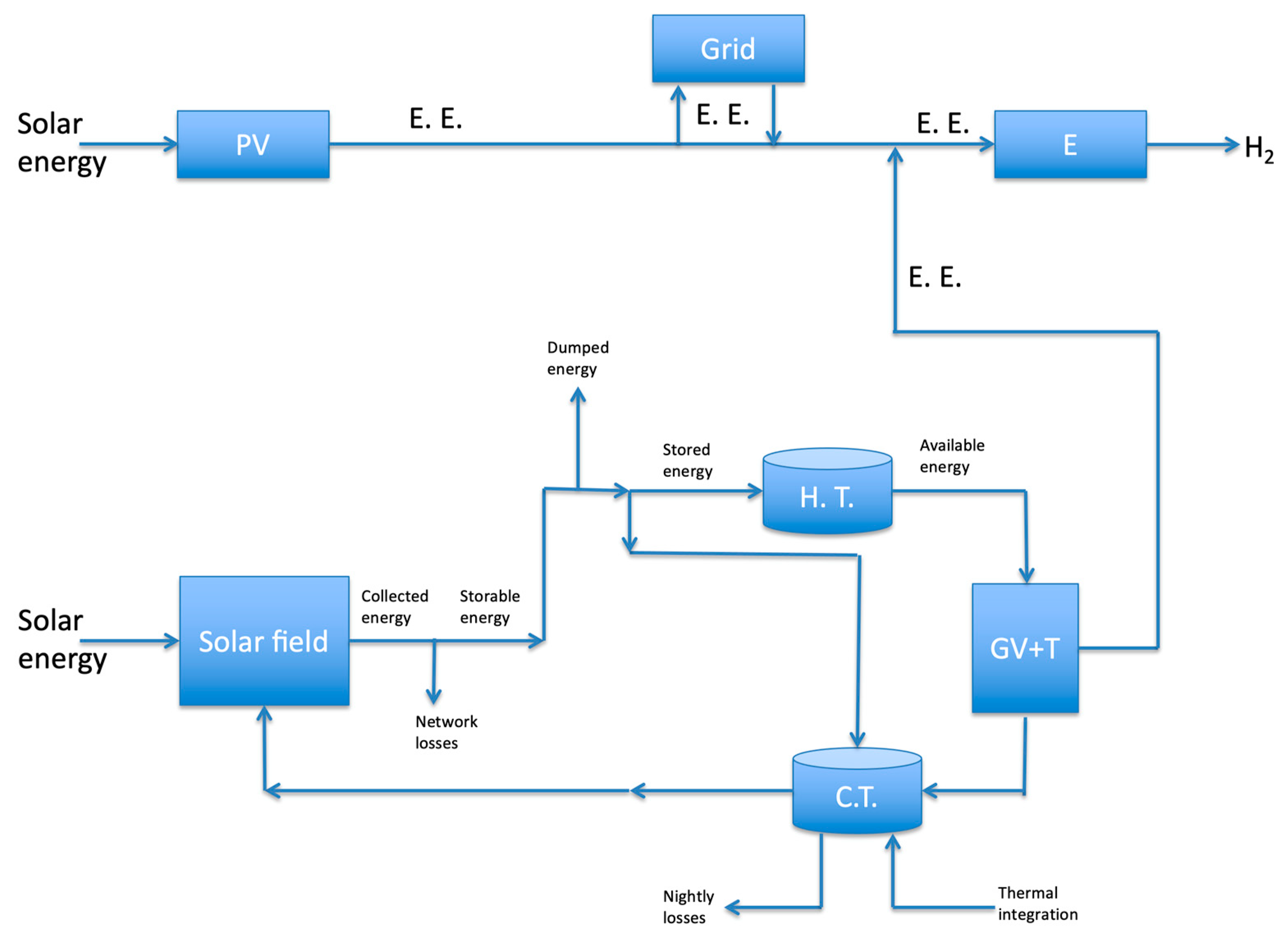
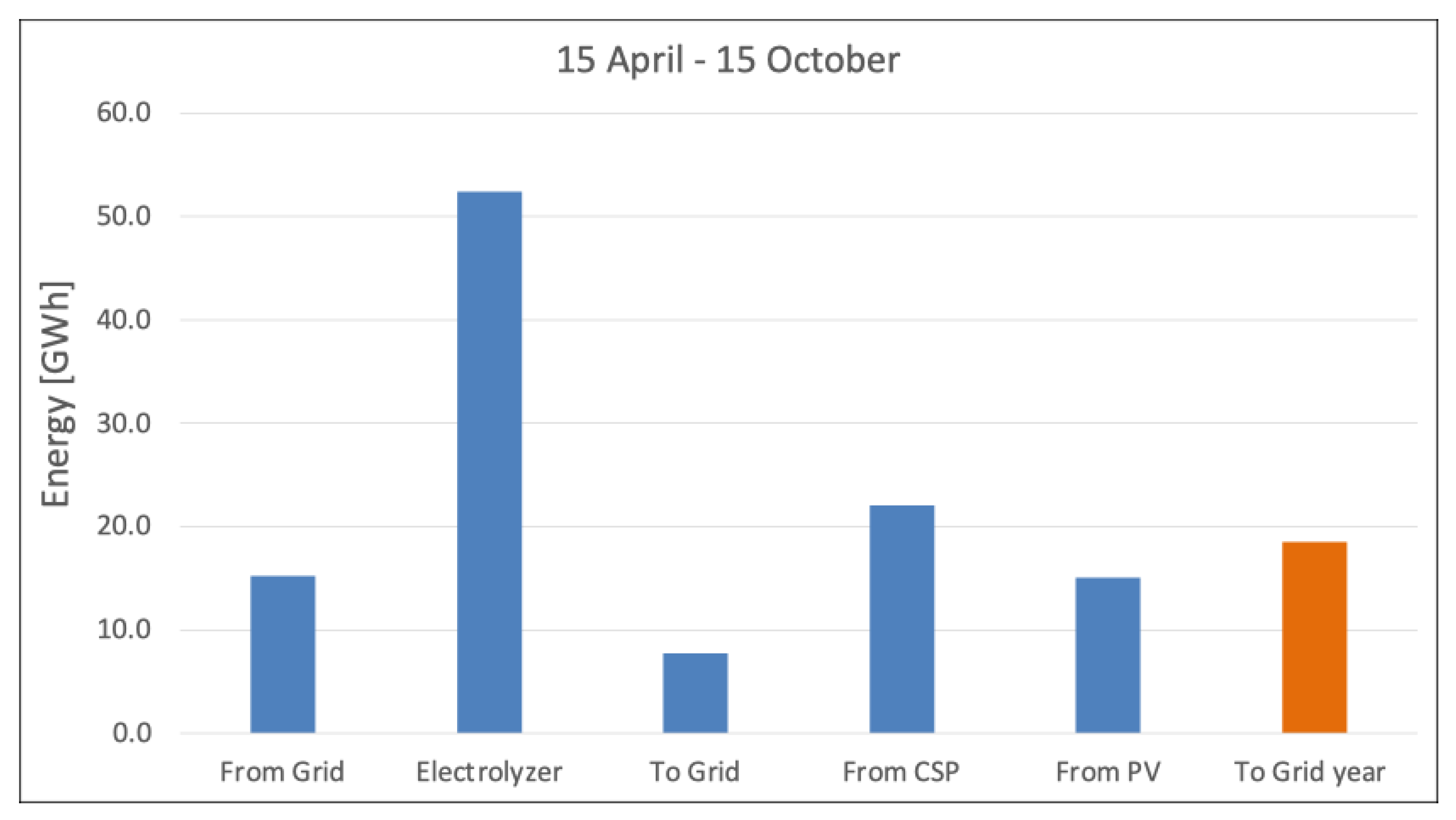
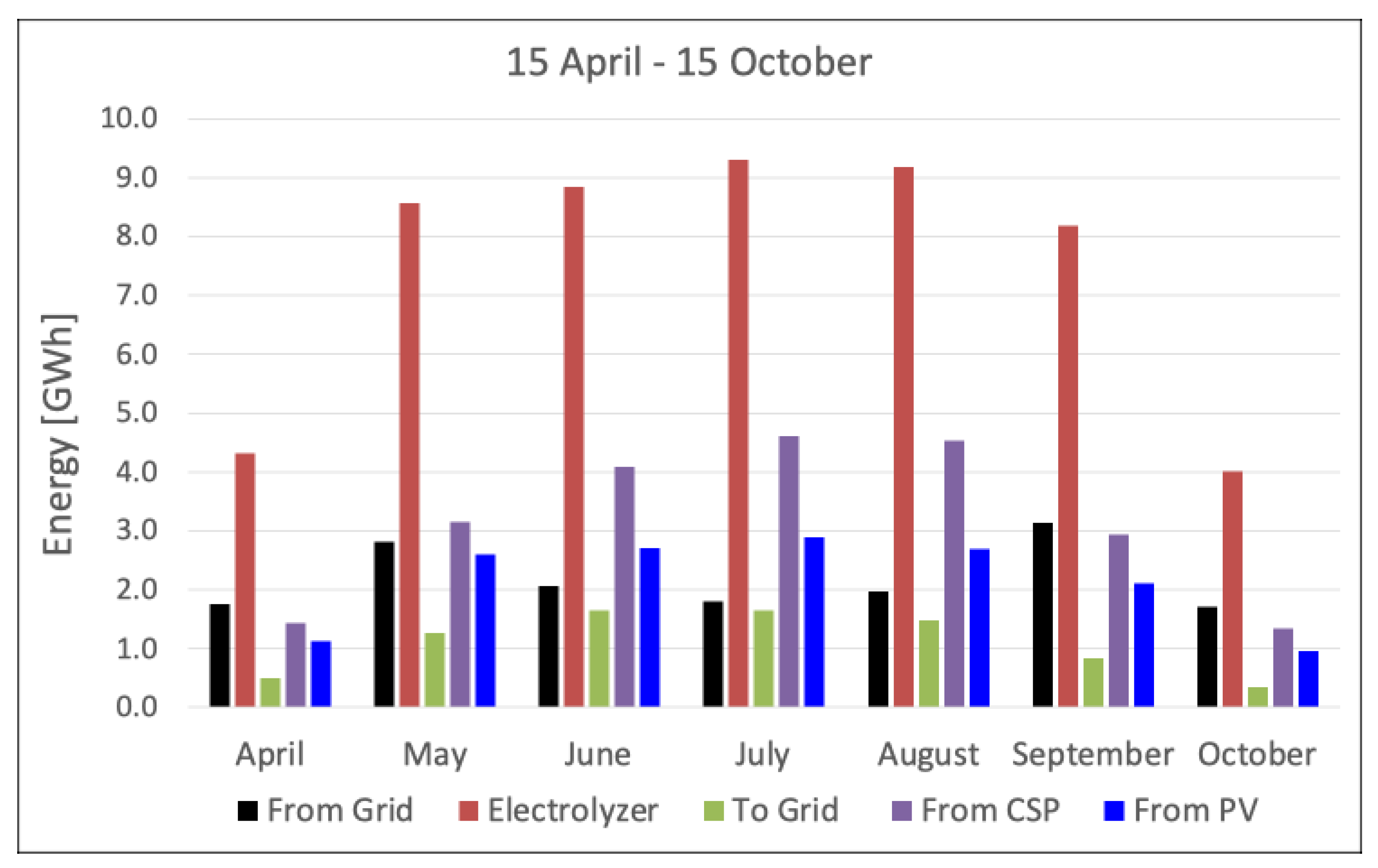
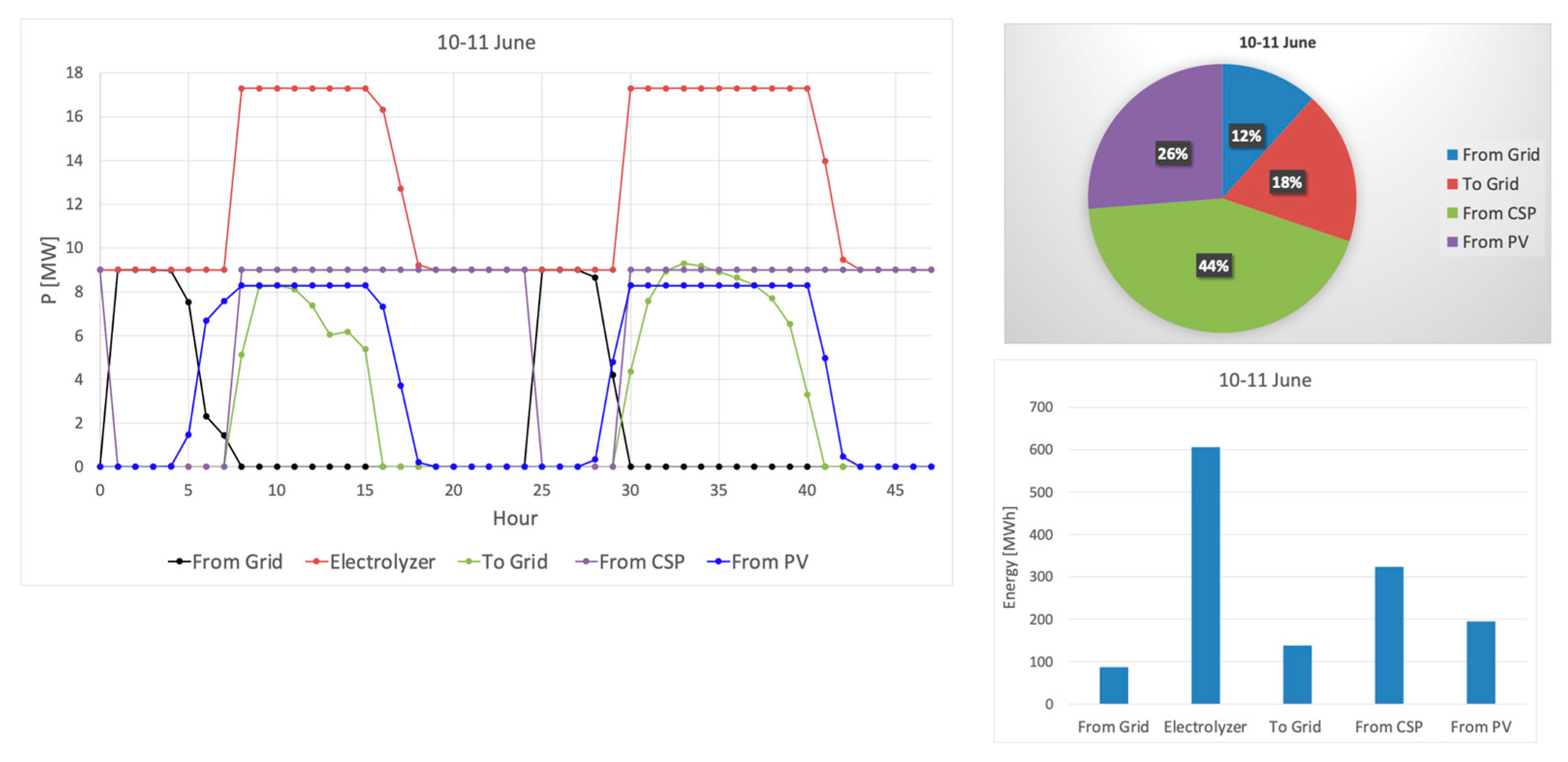
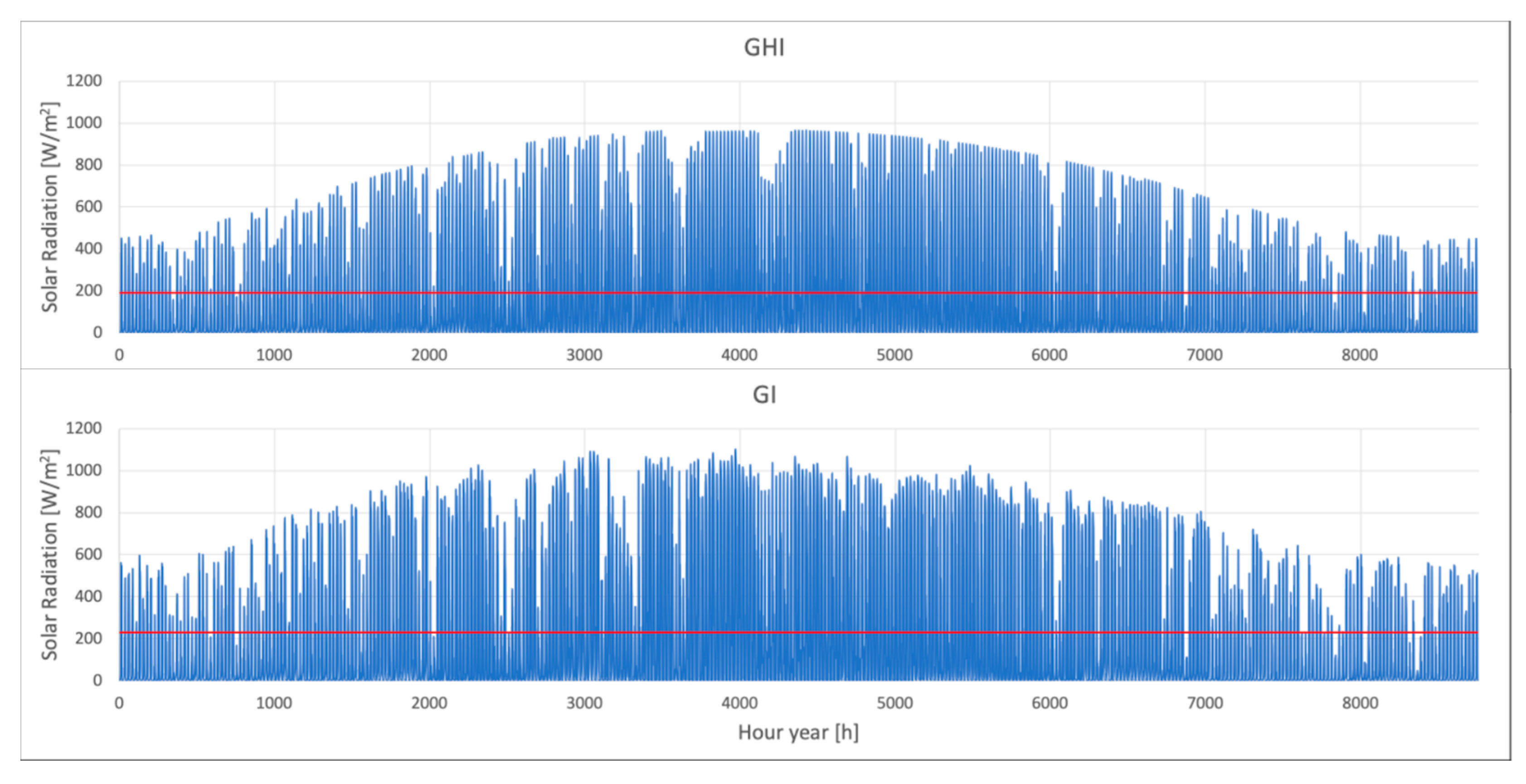
The integration of Concentrated Solar Power (CSP) and Photovoltaic (PV) technologies represents a promising strategy to enhance the reliability, flexibility, and dispatchability of solar-based electricity generation. The novelty of this work lies in the development and assessment of an integrated PV–CSP hybrid power plant in a series configuration, where the two technologies are energetically coupled and coordinated with thermal energy storage and an electrolyzer under a grid-minimization operating strategy. Unlike most previous studies, which investigate PV and CSP systems as standalone or loosely coupled technologies, the proposed approach simultaneously optimizes renewable electricity utilization, dispatchable operation, and green hydrogen production. A comprehensive simulation framework was developed using site-specific solar irradiance data, component performance models, thermal energy storage characteristics, and electrolyzer operating constraints. A seasonal operating strategy was adopted, with the CSP plant and the electrolyzer operating from 15 April to 15 October, while the PV system generated electricity throughout the entire year. Under these conditions, the electrolyzer operated for 4416 h·year−1, producing 1000 t·year−1 of green hydrogen and requiring an annual electricity demand of 52.4 GWh. The hybrid renewable system supplied 37.2 GWh of this demand, corresponding to a renewable penetration of approximately 71%, while the remaining 29% was covered by grid electricity purchases. Results show that the series hybridization of CSP and PV technologies improves overall plant performance compared with standalone solar systems. In particular, the integration of thermal energy storage within the CSP subsystem enabled dispatchable generation and more stable electrolyzer operation. All the electricity generated by the CSP plant was directly utilized by the electrolyzer, and approximately 17% of the renewable electricity supplied to the electrolyzer was delivered during periods when PV production was unavailable, corresponding to 12.2% of the total annual electricity demand of the electrolyzer. Furthermore, of the total annual PV generation of 33.6 GWh, 15.1 GWh were directly used for hydrogen production, while 18.5 GWh were exported to the electrical grid, resulting in a positive annual electricity balance. The analysis provides design and operational guidelines for optimizing integrated PV–CSP plants coupled with hydrogen production systems under a grid-minimization strategy. The findings confirm that hybrid solar systems integrating dispatchable CSP generation, thermal energy storage, and PV technologies can significantly increase renewable penetration, support stable, low-carbon power generation, and enable large-scale green hydrogen production with reduced dependence on grid-supplied electricity.
Keywords: CSP; PV; green hydrogen; technical performance CSP; PV; green hydrogen; technical performance