Article

Adaptive Multi-Branch Heterogeneous Fusion Network for Wind Vector Prediction
School of Cyberspace Security (School of Cryptology), Hainan University, Renmin Avenue 58, Haikou 570228, China
*
Author to whom correspondence should be addressed.
These authors contributed equally to this work.
Energies 2026, 19(14), 3406; https://doi.org/10.3390/en19143406
Submission received: 18 June 2026 / Revised: 14 July 2026 / Accepted: 16 July 2026 / Published: 19 July 2026

Abstract

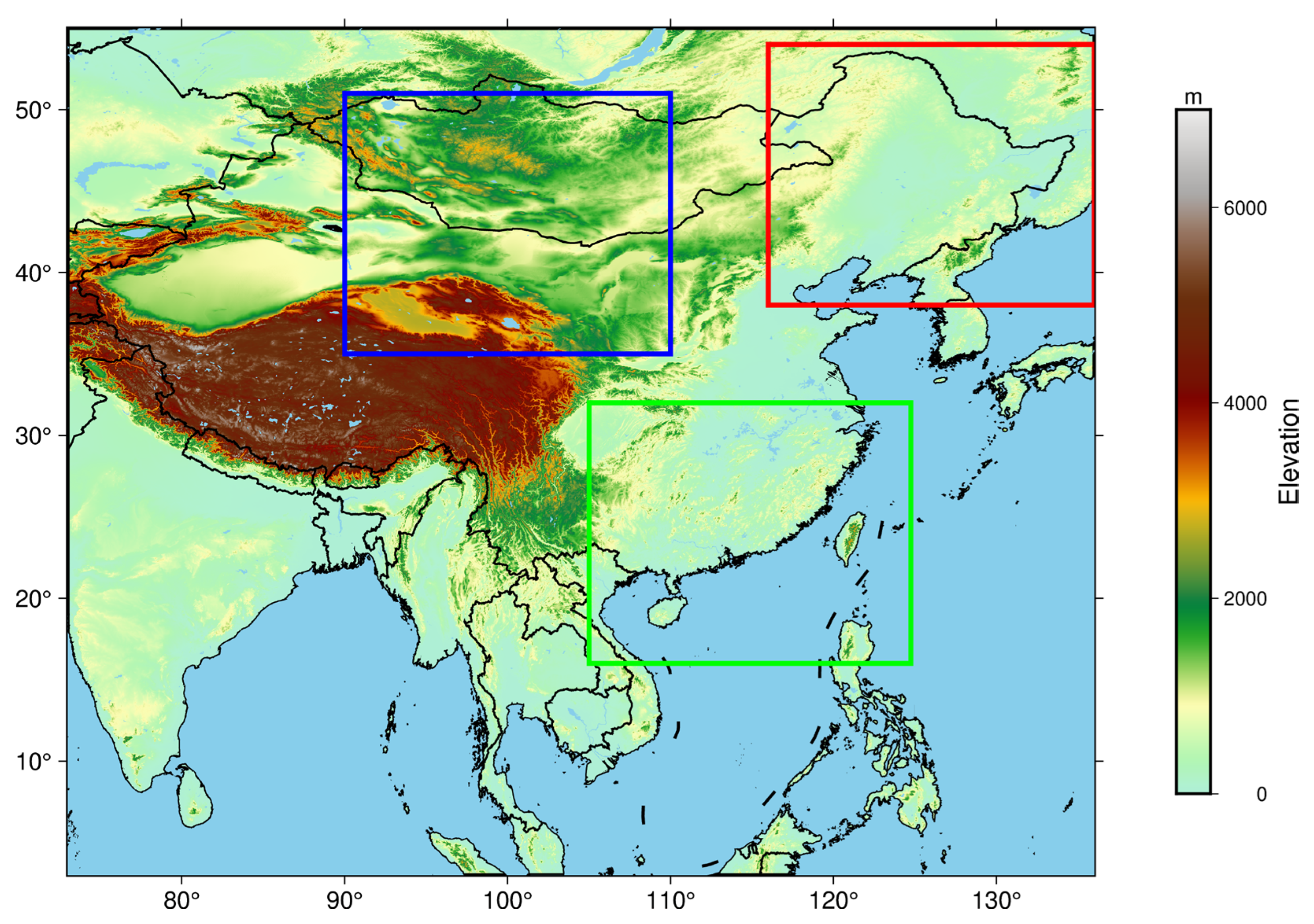
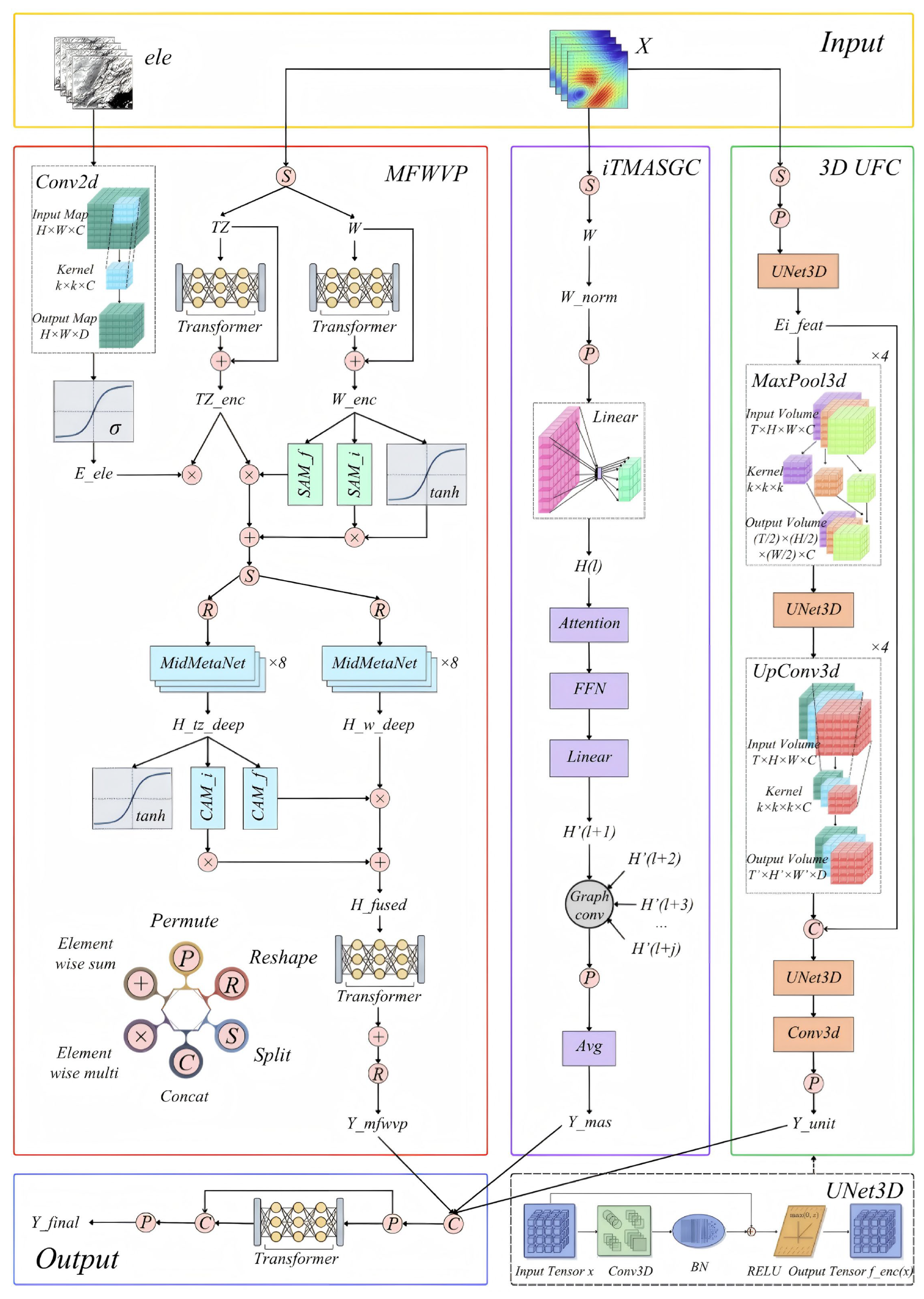
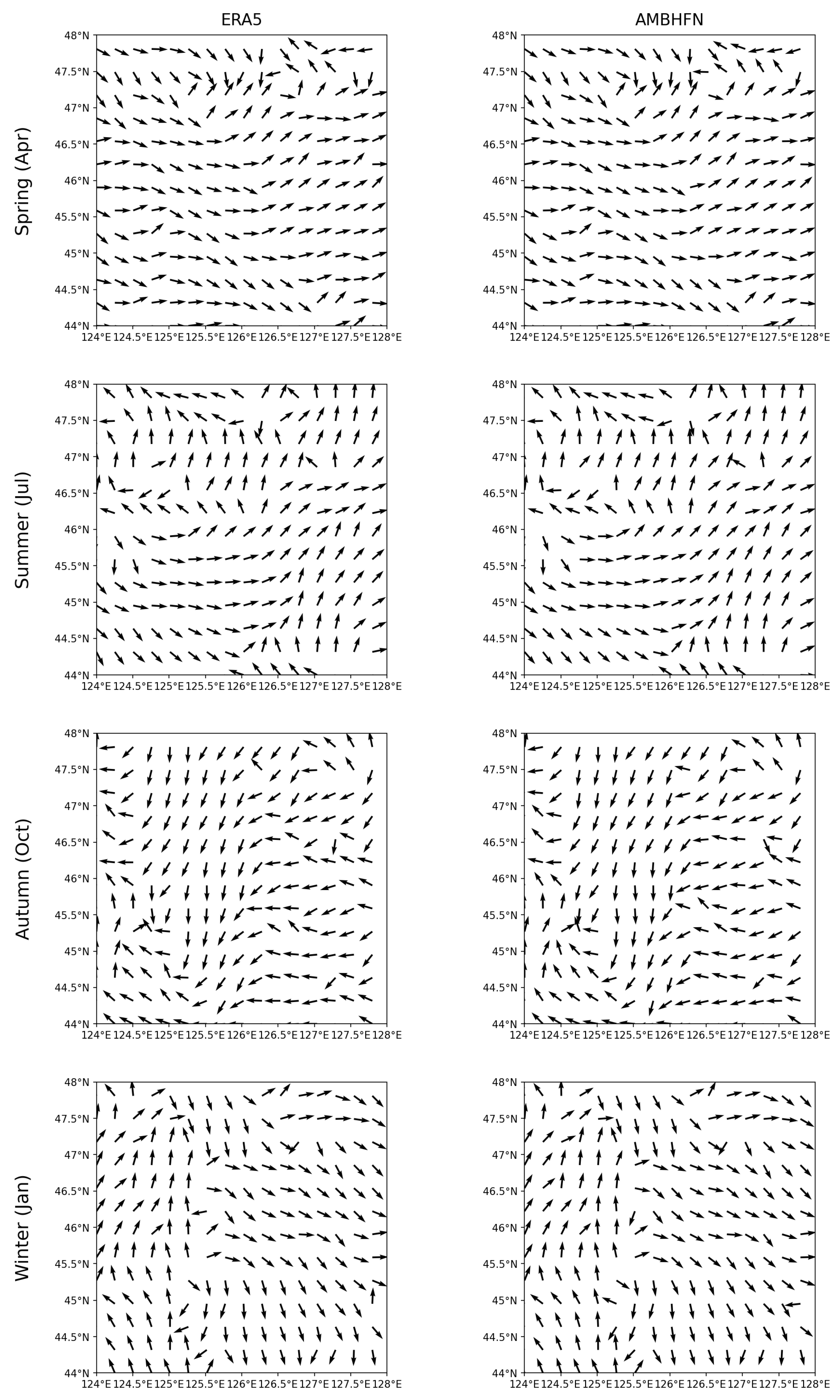
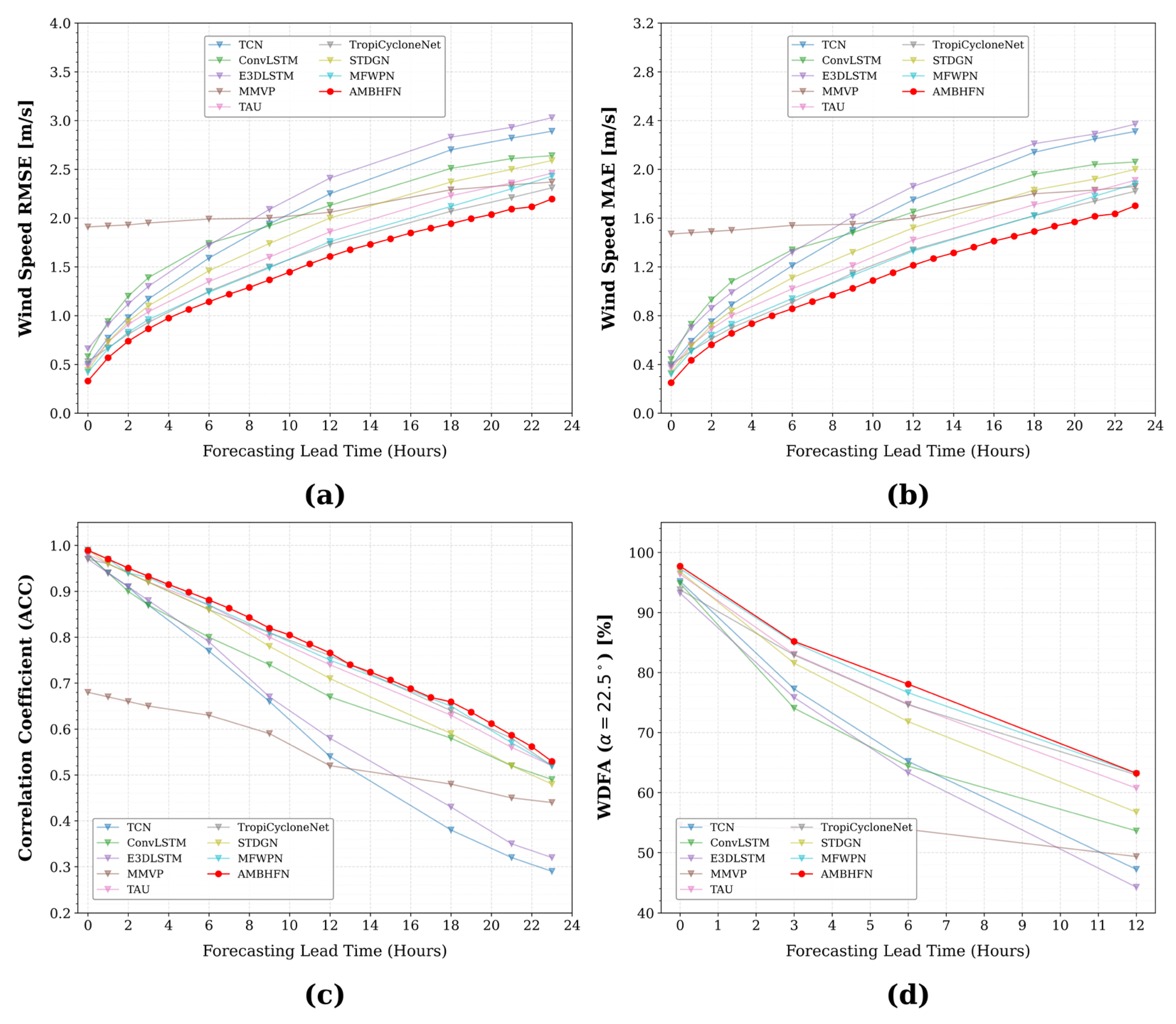
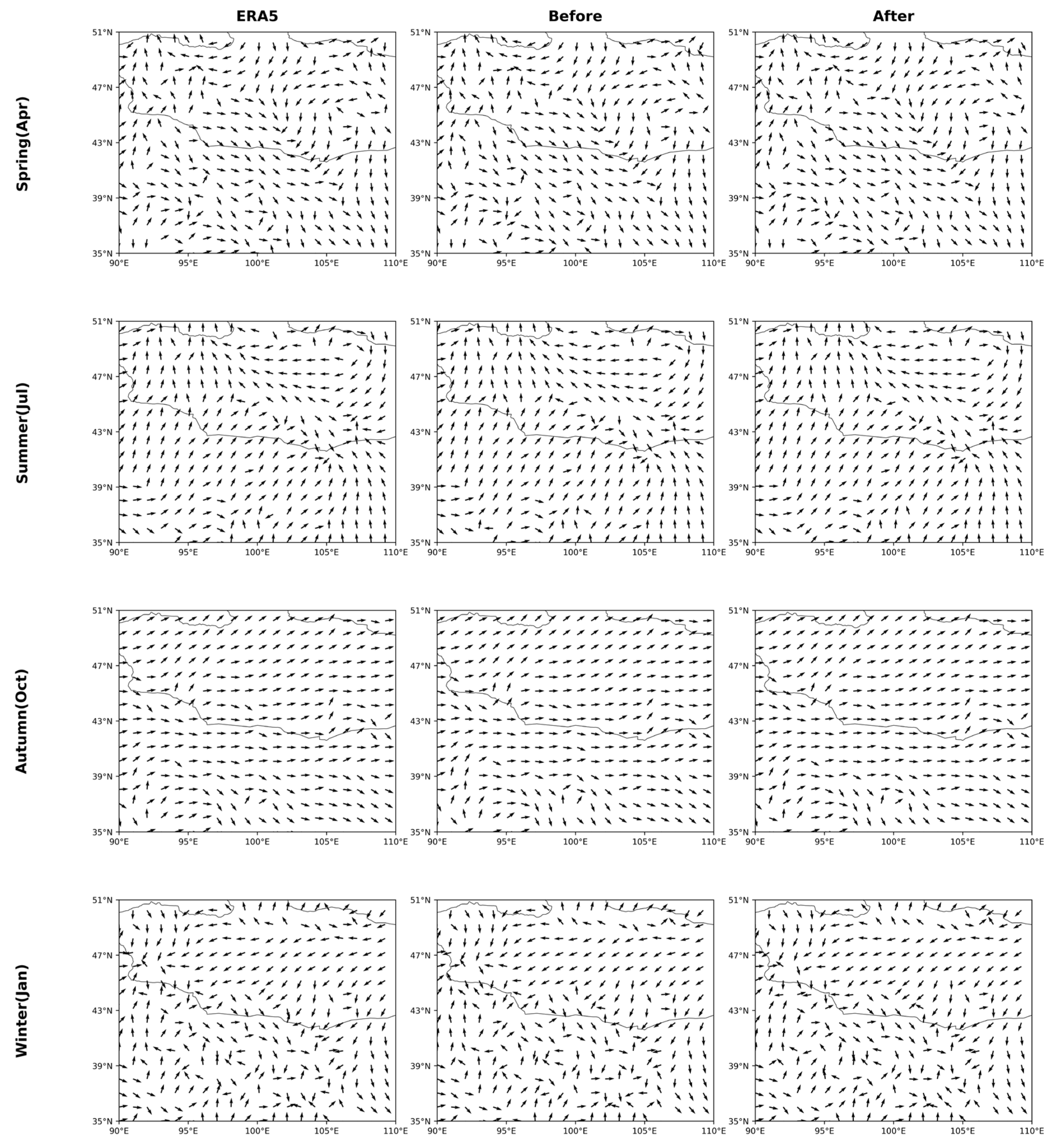
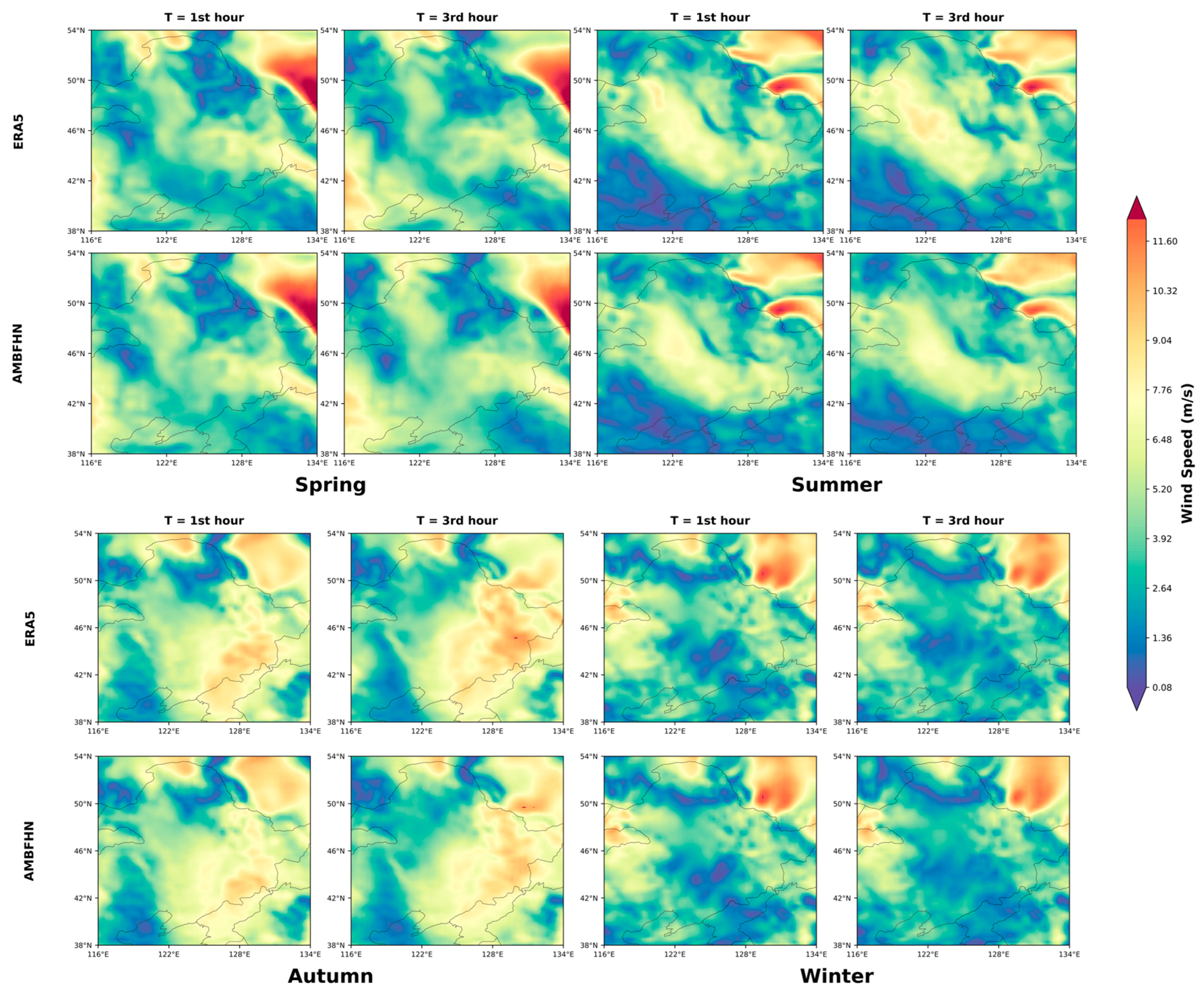
Accurate wind vector prediction is essential for renewable energy utilization and power system stability, yet existing methods struggle to jointly model local dynamics, global structures, and temporal robustness. To address this limitation, an Adaptive Multi-Branch Heterogeneous Fusion Wind Prediction Network (AMBHFN) is proposed. Local dynamic, global structural, and temporal robustness modeling are assigned to dedicated heterogeneous branches, whose outputs are coordinated through the Adaptive Multi-Branch Prediction Collaboration Mechanism (AMBPC). Multi-source meteorological variables and terrain information are used for local dynamic modeling, while global spatiotemporal structures are captured by a 3D U-shaped fully convolutional branch and temporal robustness is enhanced by an iTransformer-based multi-agent branch with graph convolution. Experiments on ERA5 data show that AMBHFN outperforms eight retrained baselines over the 0–23 h forecast horizon, with an average error reduction of more than 12%. At the first forecast step, the root mean square error (RMSE) and mean absolute error (MAE) are 0.33 m/s and 0.25 m/s, respectively. Under the strict 22.5° threshold, wind direction forecast accuracy (WDFA) reaches 97.72% at 0 h and 78.06% at 6 h. Fine-tuning in two target regions reduces the 13–23 h RMSE to 1.54 and 1.96. Statistical tests confirm significant improvements over MFWPN, and ablation studies verify the complementarity of the three branches. With 128 giga floating-point operations (GFLOPs) and a 22 ms per-sample forward inference time, AMBHFN achieves a competitive balance among accuracy, stability, and efficiency.
Keywords: wind vector prediction; heterogeneous collaborative prediction; local dynamic modeling; global structural modeling; temporal robustness wind vector prediction; heterogeneous collaborative prediction; local dynamic modeling; global structural modeling; temporal robustness