1. Introduction
The study of petroleum systems is one of the key directions of modern petroleum geology and organic geochemistry, as it makes it possible to reconstruct the processes of hydrocarbon generation, migration, and accumulation, as well as to evaluate the characteristics of the formation and internal architecture of oil and gas accumulations [
1,
2]. The petroleum system concept considers the relationship between source rocks, migration pathways, reservoirs, and traps as a single natural system that controls the distribution patterns of hydrocarbons within sedimentary basins [
1,
2].
The development of organic geochemistry has significantly expanded the possibilities for studying petroleum systems through the use of biomarkers, isotopic characteristics, and molecular indicators, which enable the determination of oil genetic types, source rock depositional conditions, thermal maturity of organic matter, and the migration history of hydrocarbons [
3,
4,
5,
6,
7,
8,
9]. Over recent decades, geochemical methods have become important tools not only for regional studies of petroleum basins but also for solving practical problems related to field development and reservoir management [
5,
10,
11,
12,
13,
14,
15,
16].
A special place in reservoir geochemistry is occupied by oil fingerprinting, which is based on the comparative analysis of the molecular composition of crude oils. This approach makes it possible to identify hydrocarbon mixing and fractionation processes, establish the genetic relationships between oils, reconstruct fluid migration pathways, and assess the degree of reservoir connectivity [
5,
13,
15]. The development of high-resolution analytical techniques, including multidimensional gas chromatography and gas chromatography coupled with mass spectrometry, has significantly improved the accuracy of geochemical correlations and the reliability of interpreting intra-reservoir and inter-reservoir connections [
3,
13].
Additional information on the origin and evolution of oils is provided by biomarker analysis, which is widely used to investigate depositional environments, source rock lithology, thermal maturity of organic matter, and secondary hydrocarbon migration processes [
3,
4,
8,
9]. The integration of fingerprinting and biomarker data allows for a more reliable assessment of genetic relationships among oils, identification of mixed petroleum charges, and characterization of the formation and evolution of reservoir systems [
13,
15,
16].
In recent years, geochemical methods have been increasingly applied to reservoir production monitoring, evaluation of inter-reservoir fluid communication, assessment of reservoir connectivity, and identification of reservoir compartmentalization [
5,
13,
14,
15,
16]. Such studies are particularly important in structurally complex petroleum basins characterized by multistage hydrocarbon migration, tectonic segmentation, and the presence of multiple petroleum systems [
17,
18,
19].
The Pre-Caspian Basin is one of the largest petroleum-bearing regions of Eurasia and is characterized by a complex geological structure, intensive salt tectonics, an extensive fault network, and a multi-level petroleum-bearing architecture [
17,
18]. Geochemical investigations of Kazakhstan oils indicate the existence of different genetic types of hydrocarbons associated with multiple source rock systems and multistage hydrocarbon migration processes [
20,
21,
22,
23,
24,
25,
26]. Previous studies have demonstrated the high effectiveness of oil fingerprinting and biomarker analysis for the genetic classification of oils, reconstruction of hydrocarbon migration pathways, and development of regional geochemical models within the Pre-Caspian, Mangyshlak, South Torgay, and Ustyurt petroleum basins [
22,
23,
24,
25,
26,
27,
28,
29,
30,
31,
32,
33,
34,
35,
36].
Despite the considerable amount of accumulated data [
17,
18,
19,
20,
21,
22,
23,
24,
25,
26,
27,
28,
29,
30,
31,
32,
33,
34,
35,
36,
37], issues related to reservoir connectivity and compartmentalization within individual structures and petroleum-bearing complexes of the Pre-Caspian Basin remain insufficiently studied. Under conditions of complex tectonic architecture and pronounced geochemical heterogeneity of oils, the application of an integrated approach based on oil fingerprinting, biomarker analysis, and multivariate statistical data processing becomes particularly relevant.
The results demonstrate the presence of distinct oil families and varying degrees of reservoir compartmentalization controlled by tectonic segmentation and migration pathways. The study provides new insights into the internal architecture and fluid communication of petroleum reservoirs in the southern Pre-Caspian Basin.
The aim of this study is to evaluate reservoir connectivity and compartmentalization of petroleum reservoirs in the southern part of the Pre-Caspian Basin based on the results of oil fingerprinting, biomarker analysis, and statistical interpretation of geochemical parameters. The obtained results provide new insights into the internal architecture of reservoir systems, reveal the nature of inter-reservoir fluid communication, and assess the influence of geological factors on the distribution of hydrocarbons within the study area.
Geological Setting and Petroleum Potential of the Study Area
The Pre-Caspian Basin represents one of the largest petroleum-bearing basins in Eurasia and constitutes a complex sedimentary system formed as a result of prolonged tectonic evolution, multi-stage sedimentation, and successive processes of hydrocarbon generation, migration, and accumulation. The basin is located in the western part of Kazakhstan and is characterized by a thick Paleozoic–Mesozoic sedimentary cover, complex structural architecture, and high petroleum potential.
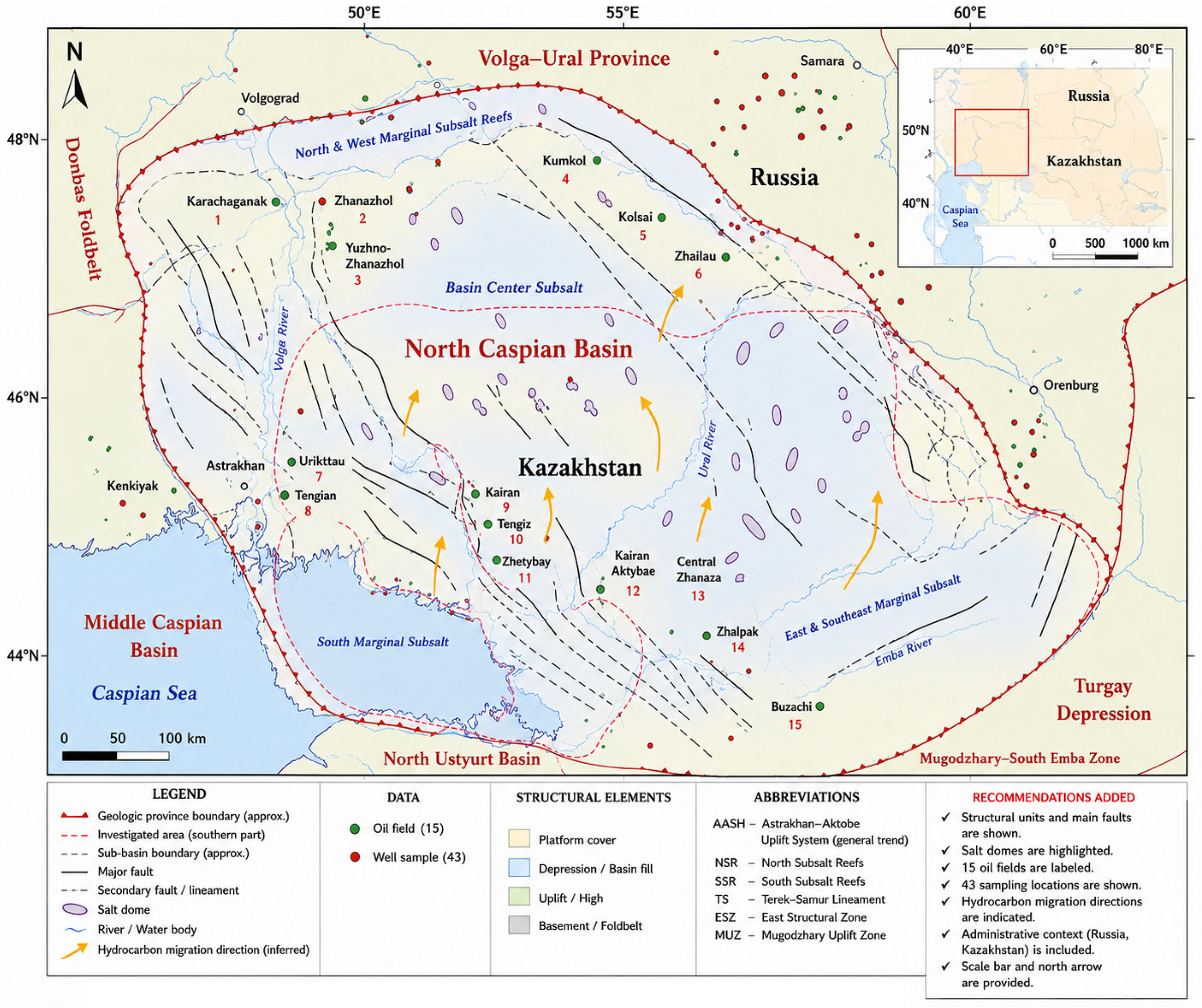
The study area covers the southern part of the Pre-Caspian Basin and includes 15 oil fields distributed across different structural and tectonic zones of the basin. A total of 43 oil samples were collected from the Aktobe, Dosmukhambetovskoye, Eastern Saztyube, Kalamkas, Karaton, Karasor, Karazhanbas, Kashagan, Kisimbay, Korolevskoye, North Nurzhanov, Tengiz, Teren-Uzyuk, West Yelemes, and West Prorva oil fields. These fields occur within various tectonic settings, including uplifted zones, subsided basin sectors, fault-bounded structural blocks, and areas affected by salt tectonics. The reservoirs are characterized by differences in lithology, structural configuration, hydrocarbon charge history, and reservoir properties, providing an opportunity to evaluate the influence of geological factors on hydrodynamic connectivity and reservoir compartmentalization.
The spatial distribution of the studied oil fields relative to the major structural elements, fault systems, salt domes, and inferred hydrocarbon migration pathways of the southern Pre-Caspian Basin is presented in
Figure 1. The investigated area is influenced by the Astrakhan–Aktobe uplift system, regional fault networks, and widespread salt tectonic structures, which play an important role in controlling hydrocarbon migration, trapping mechanisms, and fluid communication between reservoirs.
From a structural perspective, the investigated territory is confined to the southern part of the Astrakhan–Aktobe uplift zone and includes the Karaton–Tengiz uplift zone, the Biikzhal regional high, and adjacent structures of the North Caspian structural domain. The Karaton–Tengiz uplift zone is located on the southern flank of the Biikzhal high and comprises the Karaton, Tengiz, and North Kultuk structural blocks, which progressively deepen southward.
The Karaton–Tengiz uplift is characterized by the predominant development of Late Devonian–Early Carboniferous carbonate petroleum systems. The formation of these deposits occurred within a shallow marine environment, promoting the development of carbonate platforms and highly productive reservoir systems. Major fields such as Tengiz, Karaton, and adjacent hydrocarbon accumulations are associated with this structural zone.
The Biikzhal arch represents a complex assemblage of sedimentary formations comprising both terrigenous and carbonate reservoirs. This region is characterized by significant lithofacies variability, heterogeneity of reservoir properties, and structural complications that influence hydrocarbon distribution and accumulation patterns.
The North Caspian structural domain is characterized by a complex geological framework and widespread development of various petroleum-bearing complexes. Within this area, the Kalamkas and Karazhanbas fields are geographically located within the Buzachi uplift; however, they were included in the present study due to their regional significance and their importance for comparative geochemical evaluation of oils from western Kazakhstan.
One of the most distinctive features of the Pre-Caspian Basin is the widespread development of salt tectonics associated with the thick Kungurian evaporite sequence of Permian age. Halokinetic processes resulted in the formation of numerous salt domes, diapirs, and salt walls, which significantly modified the initial architecture of the sedimentary cover. The growth of salt structures was accompanied by the formation of local uplifts, zones of enhanced fracturing, and fault systems that controlled the distribution of hydrocarbon traps and the spatial arrangement of petroleum accumulations.
The tectonic framework of the study area is complicated by a system of regional and local faults that exert a significant influence on hydrocarbon migration and reservoir hydrodynamic connectivity. Depending on their development and properties, faults may act either as pathways facilitating vertical and lateral hydrocarbon migration or as sealing barriers responsible for the formation of isolated reservoir compartments. The combined influence of salt tectonics and faulting resulted in the development of a complex, multi-level petroleum accumulation system within the southern part of the Pre-Caspian Basin.
Hydrocarbon migration is interpreted to have occurred through a combination of vertical and lateral pathways. Vertical migration was controlled by fault zones and fractured intervals formed due to tectonic deformation and halokinetic activity, whereas lateral migration occurred mainly along permeable carbonate and terrigenous reservoir units. The interaction between source rocks, migration pathways, salt structures, and fault systems resulted in the formation of hydrocarbon accumulations characterized by different degrees of hydrodynamic connectivity and distinct geochemical signatures.
Therefore, the structural–tectonic evolution, salt tectonics, fault development, and hydrocarbon migration processes played a fundamental role in controlling petroleum accumulation within the southern part of the Pre-Caspian Basin. These factors define the present-day reservoir architecture and the degree of compartmentalization and provide the geological framework for interpreting the results of oil fingerprinting, biomarker analysis, and multivariate statistical evaluation performed in this study.
2. Materials and Methods
Sampling and Preparation of Oil Samples. This study presents the results of geochemical analysis of 43 crude oil samples collected from productive horizons in the southern part of the Pre-Caspian Basin. The investigated samples cover various stratigraphic levels and oil accumulation zones.
The main physicochemical properties of the investigated crude oils, including density, specific gravity, and dynamic viscosity, are summarized in
Table 1.
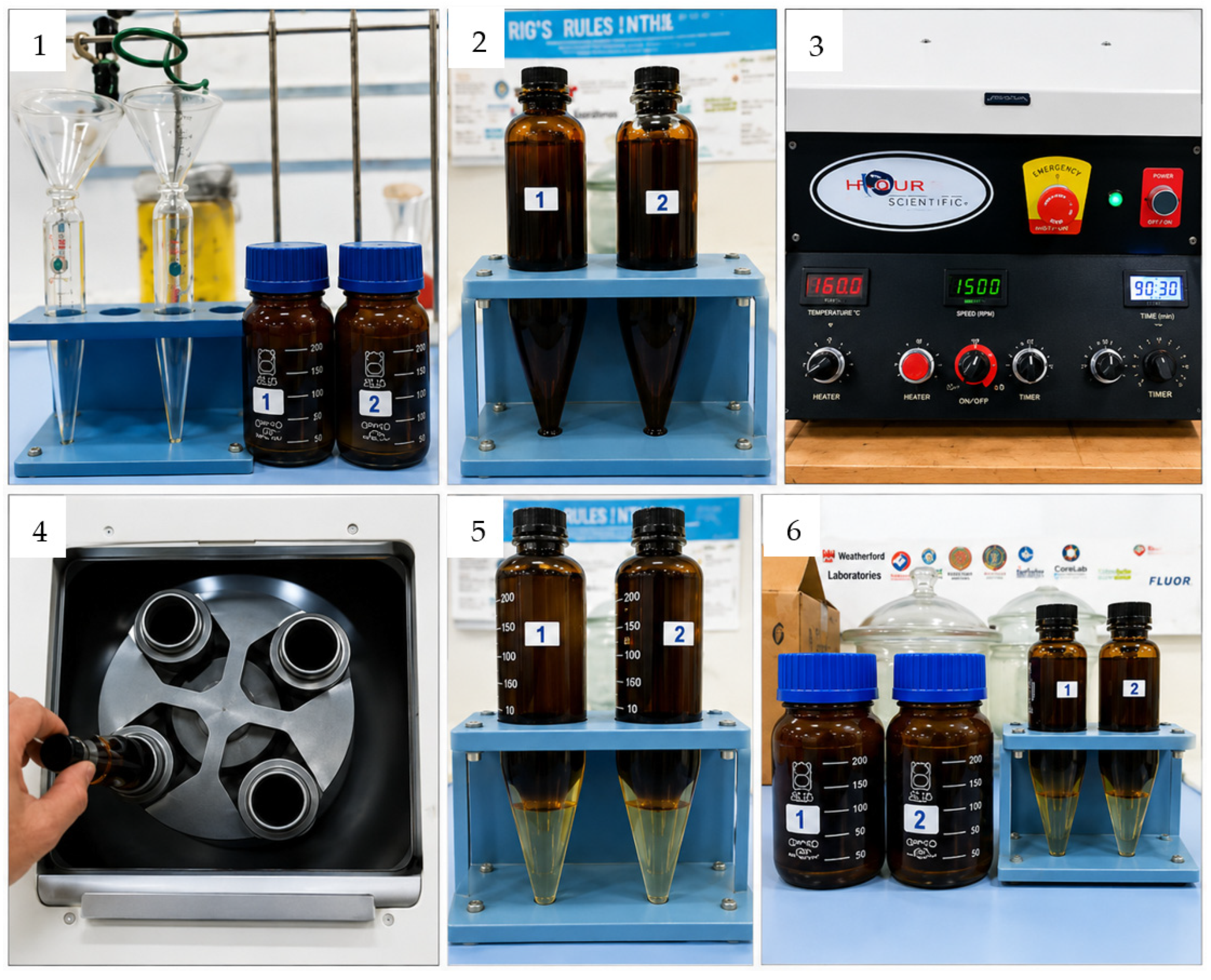
Sampling, transportation, and preparation of crude oil samples for analysis were performed in accordance with established laboratory procedures and the requirements of GOST 2517-2012. After collection, the samples were placed in airtight containers to prevent secondary alterations of oil composition and the loss of light hydrocarbon fractions (
Figure 2).
Prior to analytical investigations, the oil samples underwent standard laboratory preparation, including fraction separation and the addition of an internal standard 5-methyl-3-heptanone (ISTD). 5-methyl-3-heptanone was used as a chromatographic performance control compound. The standard n-alkane mixture included hydrocarbons in the C6–C15 range, ensuring proper calibration of component retention times.
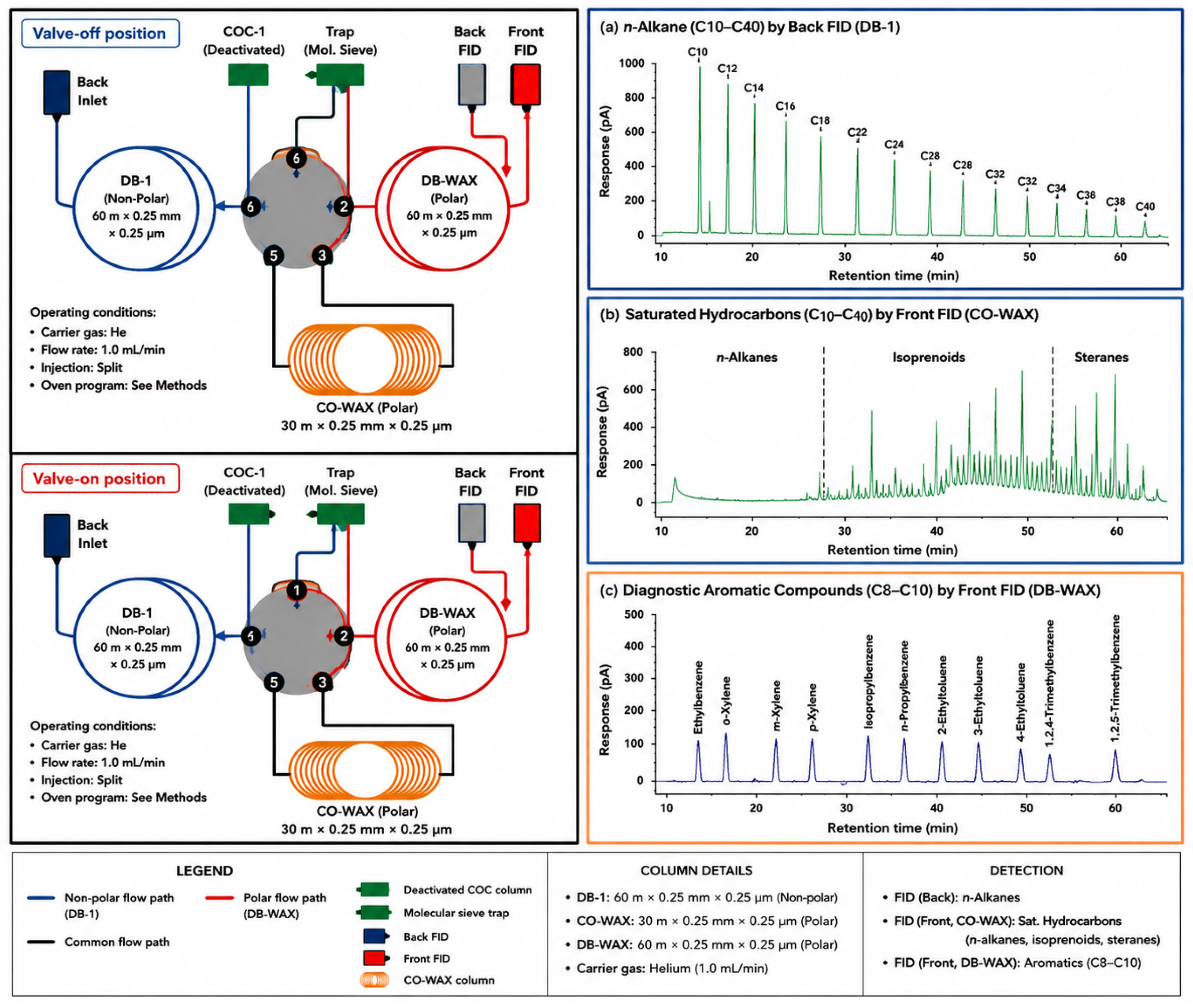
Oil Fingerprinting Analysis. Oil fingerprinting was performed using a multidimensional low thermal mass gas chromatography system (LTM-MD-GC) equipped with two flame ionization detectors (FID), enabling simultaneous detection of aliphatic and aromatic fractions of crude oil.
The schematic diagram and operating principle of the LTM–MD–GC system are presented in
Figure 3.
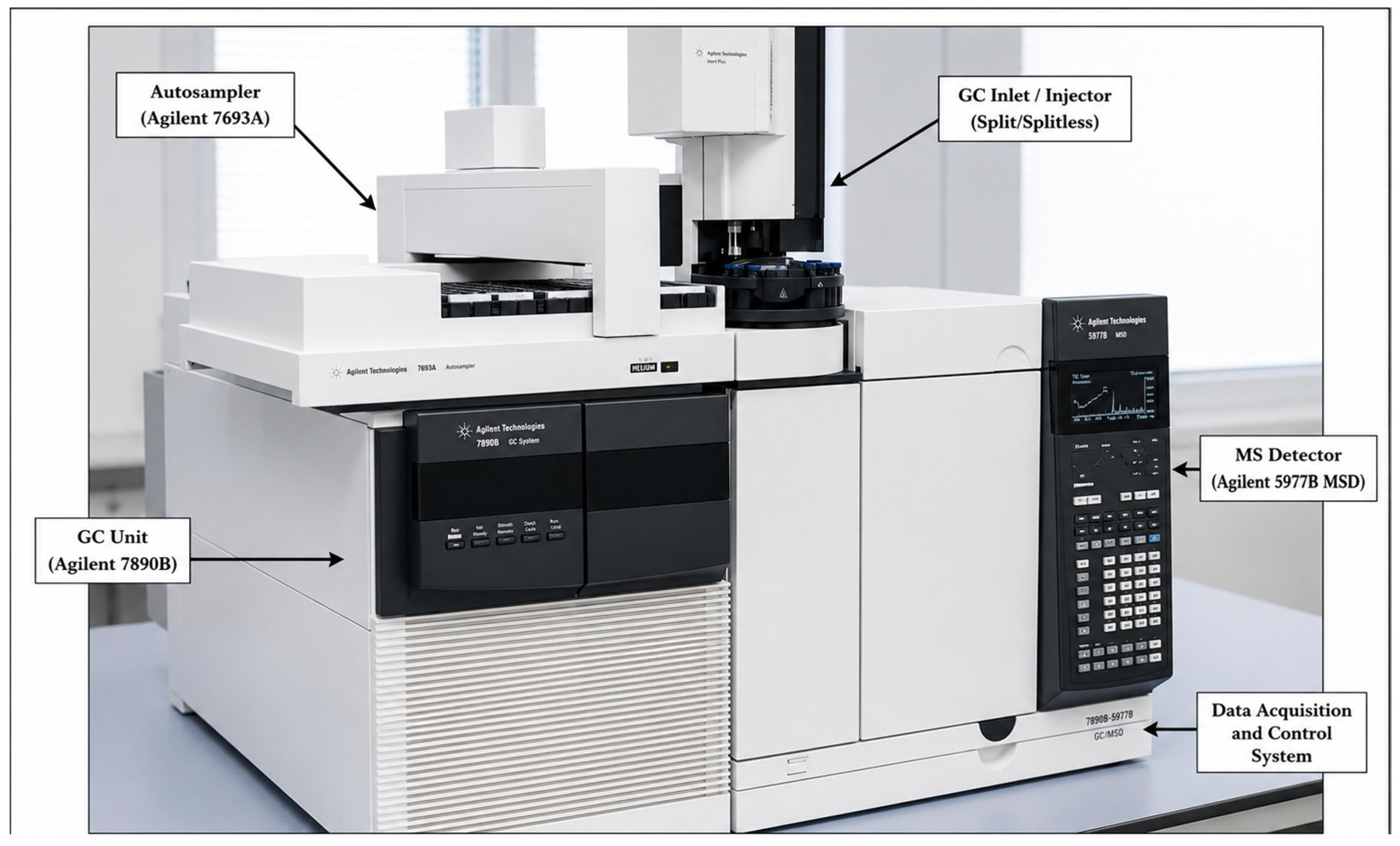
Geochemical analyses were carried out in the Laboratory of Geochemical Studies of Oil, Water, and Rocks at KMG Engineering LLP using an Agilent 7890B gas chromatograph (Agilent Technologies, Santa Clara, CA, USA) gas chromatograph in accordance with approved analytical methodologies.
The LTM-MD-GC method is based on a two-stage separation of oil components. In the valve-off mode, n-alkanes passed through a DB-1 capillary column (60 m × 0.25 mm i.d. × 0.25 μm film thickness; Agilent Technologies, Santa Clara, CA, USA) column and were recorded by the rear FID. In the valve-on mode, diagnostic aromatic compounds of crude oil, including 11 compounds within the C8–C10 range (ethylbenzene, o-xylene, m-xylene, p-xylene, isopropylbenzene, n-propylbenzene, 2-ethyltoluene, 3-ethyltoluene, 4-ethyltoluene, 1,2,4-trimethylbenzene, and 1,3,5-trimethylbenzene), were directed to a DB-Wax column and detected by the front flame ionization detector (Front FID). This approach enables the selective separation of aliphatic and aromatic hydrocarbons within a single analytical cycle.
For the qualitative and quantitative characterization of crude oils, 5-methyl-3-heptanone was added to each sample prior to LTM-MD-GC analysis as an internal standard. A standard n-alkane mixture covering the C6–C15 range was used for calibration and component identification. Based on the obtained chromatograms, the retention times of n-alkanes in the C8–C10 range were determined and used to establish the corresponding retention time windows required for accurate configuration and operation of the multidimensional gas chromatography method.
The retention times of components were determined by their molecular weight and boiling point: lower-molecular-weight compounds eluted earlier than heavier fractions.
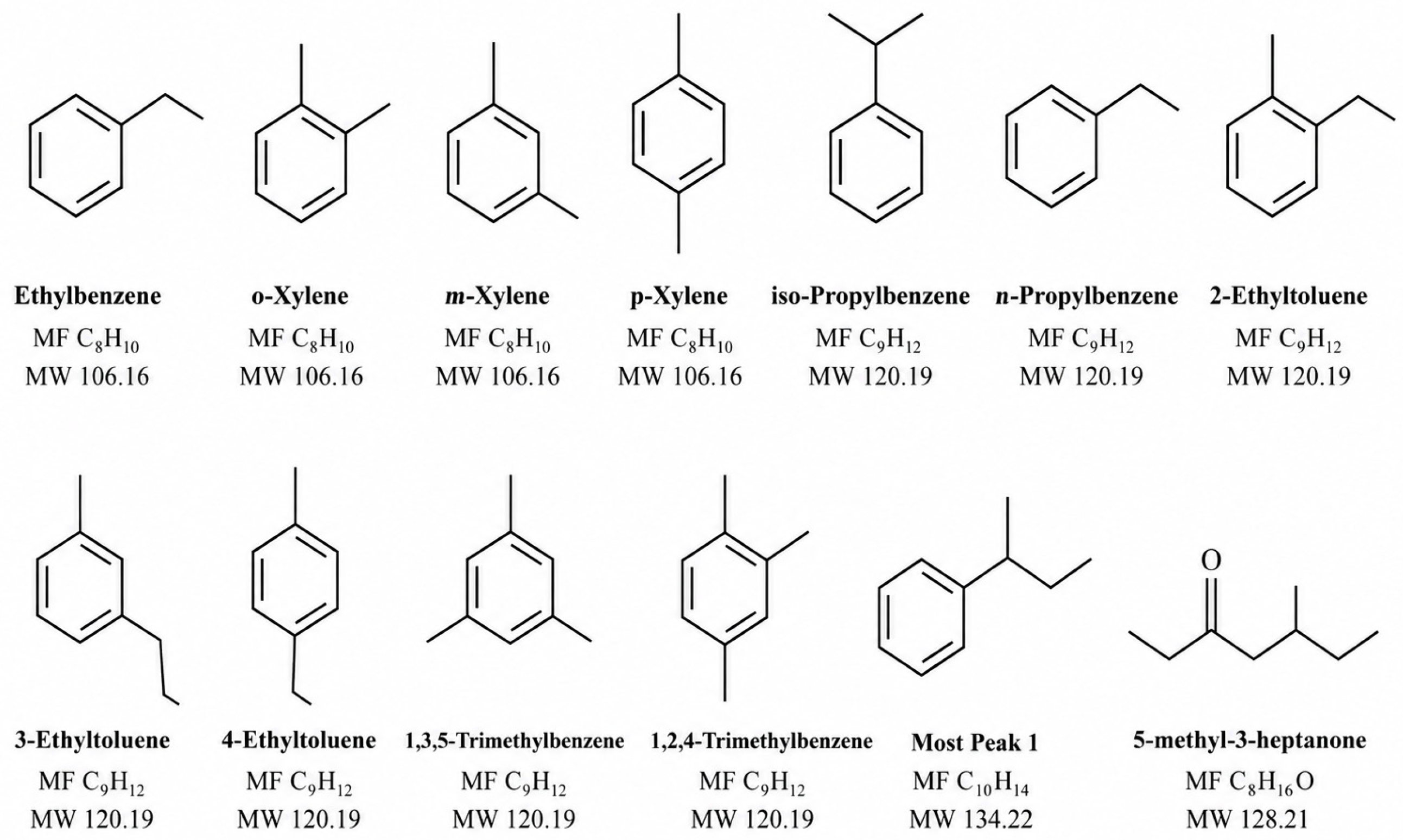
The structures and chemical formulas of diagnostic aromatic compounds used for constructing fingerprint profiles are presented in
Figure 4. These compounds serve as molecular markers and provide the basis for inter-well and inter-reservoir oil correlation.
The interpretation of the results was based on the relative abundances of 11 diagnostic aromatic compounds in the C8–C10 range, including ethylbenzene, o-xylene, m-xylene, p-xylene, propylbenzene, ethylmethylbenzenes, and trimethylbenzenes.
The obtained data were used to construct molecular profiles and radar (spider) plots for oil-to-oil correlation among wells, reservoirs, and fields. Statistical approaches are increasingly applied in engineering research for the quantitative interpretation of complex datasets and decision support [
38].
All samples were analyzed in duplicate to ensure reproducibility of the results. The analytical error for non-biodegraded oils was less than 1%, which confirms the high analytical reliability of the LTM-MD-GC method for oil fingerprinting and reservoir geochemistry applications.
GC–MS Biomarker Analysis. Biomarker analysis of crude oil samples was conducted using an Agilent 7890B gas chromatograph coupled with a 5977B mass selective detector (Agilent Technologies, Santa Clara, CA, USA) (
Figure 5).
Organic compounds were separated on a DB-1 capillary column (60 m × 0.25 mm i.d. × 0.25 μm film thickness). High-purity helium (99.999%) was used as the carrier gas at a constant flow rate of 2.0 mL/min. The operational temperature range of the column was 0–350 °C. Mass spectrometric analyses were performed in electron ionization (EI) mode at an ionization energy of 70 eV. Initial mass spectral acquisition was carried out in full-scan (SCAN) mode over the m/z range of 50–550.
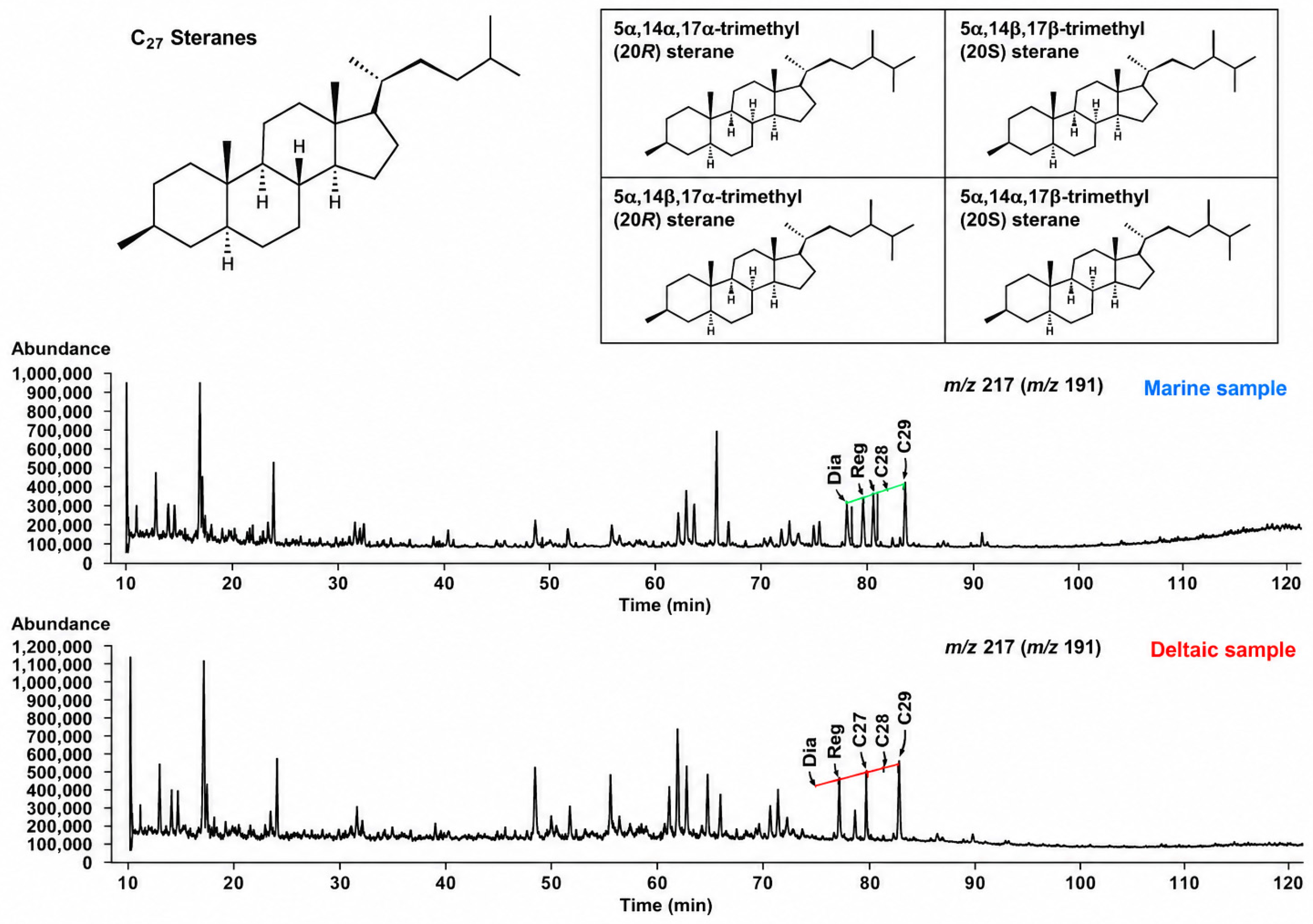
Biomarker compounds were identified using selected ion monitoring (SIM) mode. Terpanes were analyzed using the diagnostic ion m/z 191, whereas steranes were monitored using the diagnostic ions m/z 217 and m/z 218. The obtained mass spectra were interpreted based on characteristic diagnostic ions and comparison with reference library spectra.
Biomarker identification, including n-alkanes, isoprenoid hydrocarbons, steranes, and terpanes, was performed using published literature data and diagnostic mass fragments characteristic of the corresponding compound classes.
The analysis was undertaken to evaluate the genetic characteristics of the oils, depositional environments of the source rocks, lithological characteristics of the organic matter source, thermal maturity, and potential hydrocarbon migration pathways.
Aromatic compounds were identified based on 11 diagnostic aromatic compounds determined by GC–MS analysis. The internal standard 5-methyl-3-heptanone (ISTD) was used for quality control and quantitative normalization of chromatographic data. The list of analyzed aromatic compounds and the internal standard is presented in
Table 2.
For interpretation, the distributions of steranes, diasteranes, terpanes, methyldibenzothiophenes, and methylphenanthrenes were used. Terpane analysis was performed using the m/z 191 ion, while sterane analysis was conducted using the m/z 217 ion in SIM mode.
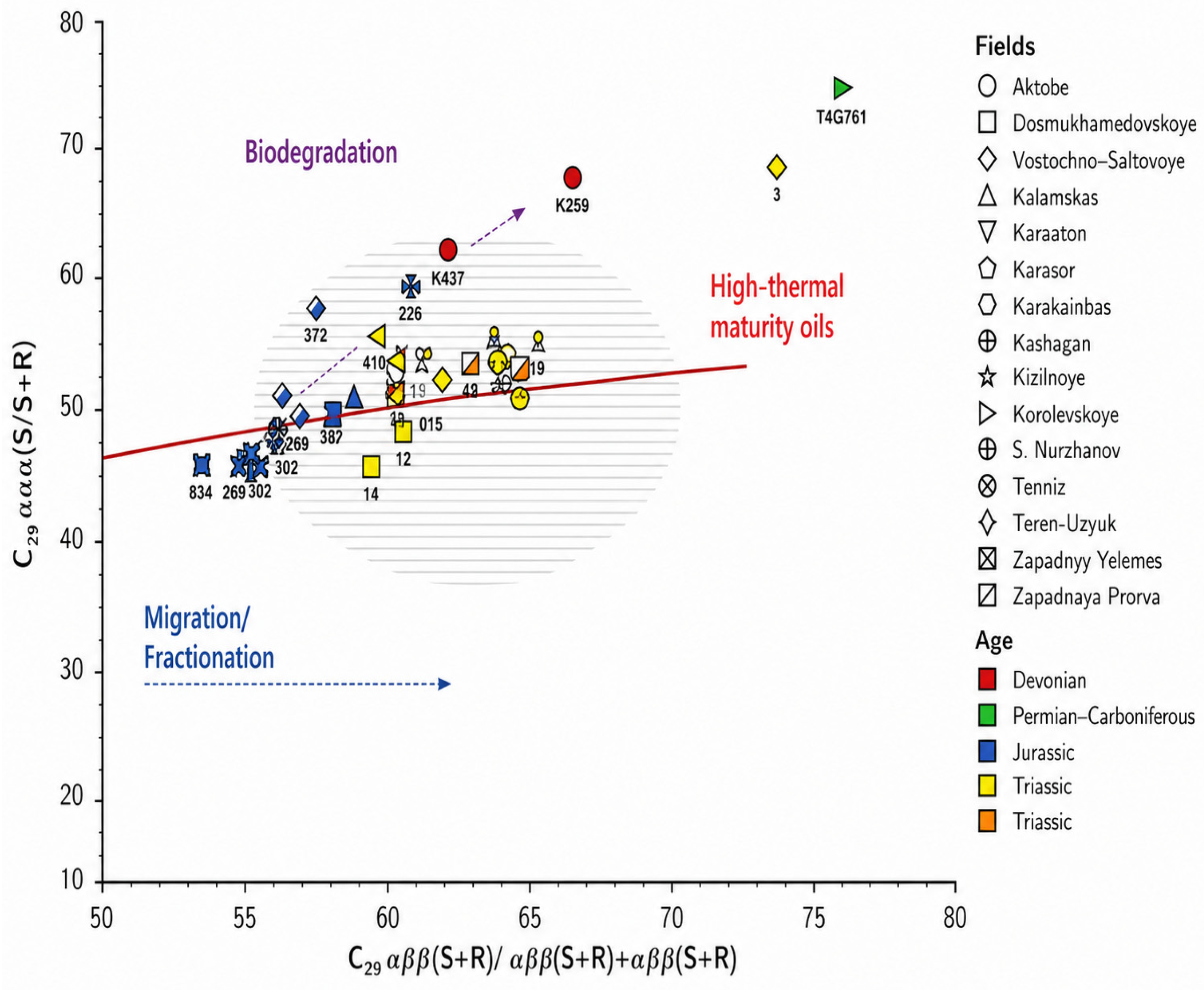
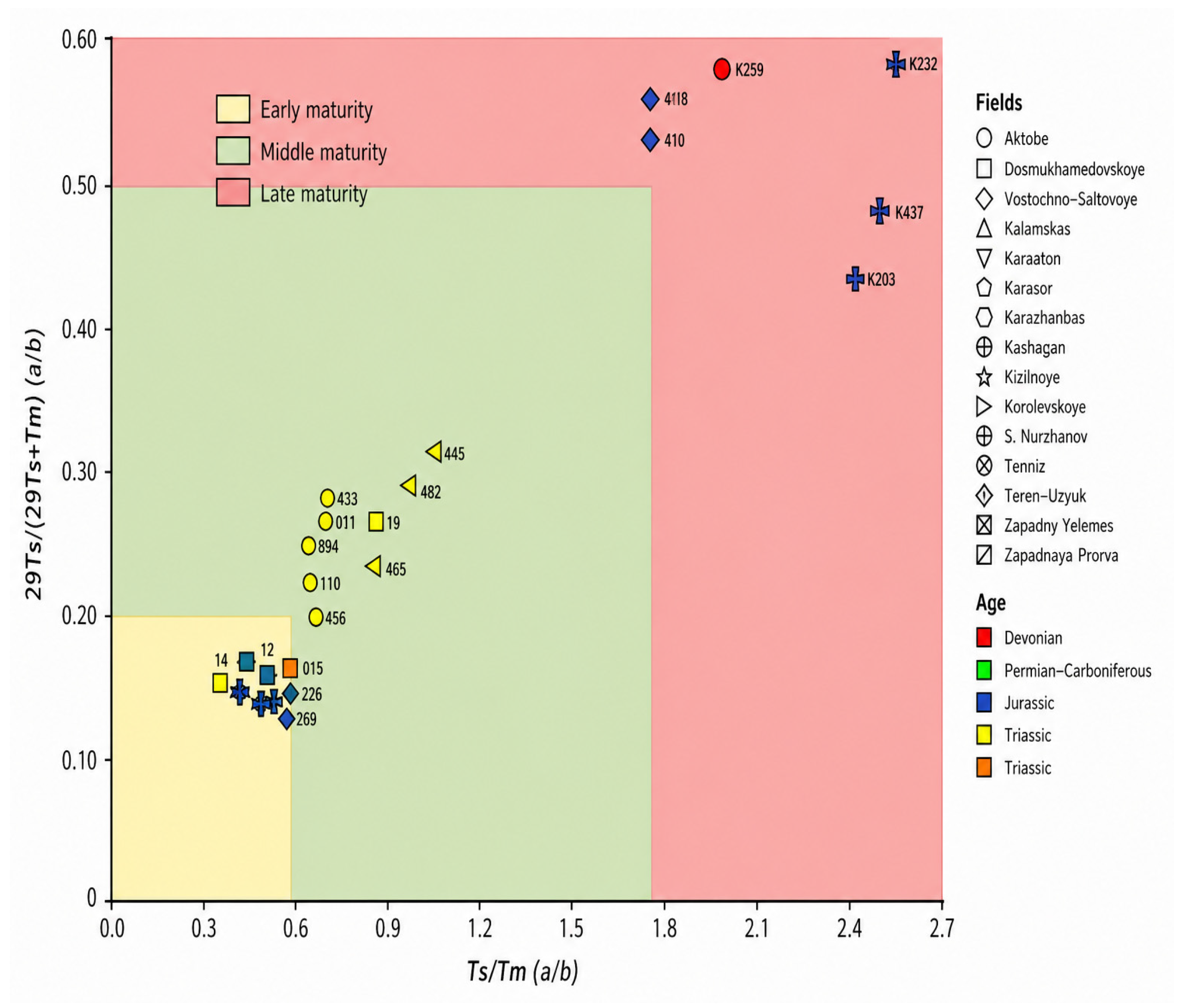
Oil thermal maturity was assessed using sterane and terpane isomerization parameters, including C29 ααα 20S/(20S + 20R), C29 ββ/(ββ + αα), and Ts/Tm ratios, as well as aromatic maturity indicators MPI-1 and 4MDBT/1MDBT.
To evaluate depositional environments and the lithology of source rocks, sterane and terpane homolog distribution parameters were used, including C27–C28–C29 steranes, C29Hopane/C30Hopane, C24Tet/26TT, and 23TT/24TT ratios.
Statistical Analysis. To assess the genetic relationships between oils and to identify patterns in the distribution of geochemical parameters, multivariate statistical methods were applied, including principal component analysis (PCA) and Ward’s hierarchical clustering.
Statistical processing was performed using a set of biomarker parameters, including facies-genetic and catagenetic indicators. The analysis considered thermal maturity parameters, biomarker distributions, and ratios of aromatic compounds.
PCA was used to visualize similarities and differences among oils based on a combined set of geochemical features, whereas Ward’s dendrograms were applied to identify genetically related oil families and to evaluate the degree of their geochemical similarity.
Prior to PCA, all geochemical variables were standardized using Z-score transformation (autoscaling), whereby the mean value of each parameter was set to zero and the standard deviation to one. This procedure eliminated the influence of differences in the scale and range of variation among variables.
Cluster analysis was performed using hierarchical agglomerative clustering with Ward’s linkage method and Euclidean distance as a measure of similarity between samples. The resulting dendrograms were used to identify genetically related oil families and to evaluate the degree of their geochemical similarity.
Prior to statistical analysis, the dataset was screened for potential outliers. Outlier detection was carried out using boxplot analysis and principal component analysis (PCA). Samples that fell within the confidence limits and did not exert a significant influence on the overall data structure were retained in the final dataset. No samples were excluded from the statistical analysis.
3. Results
3.1. Interpretation of Oil Fingerprinting Results
The results of oil fingerprinting obtained using multidimensional low thermal mass gas chromatography (LTM-MD-GC) demonstrate significant variability in the molecular composition of crude oils from 15 fields of the Astrakhan–Aktobe uplift system. The molecular “fingerprint” approach allows identification of both genetically related petroleum systems and zones of pronounced reservoir compartmentalization.
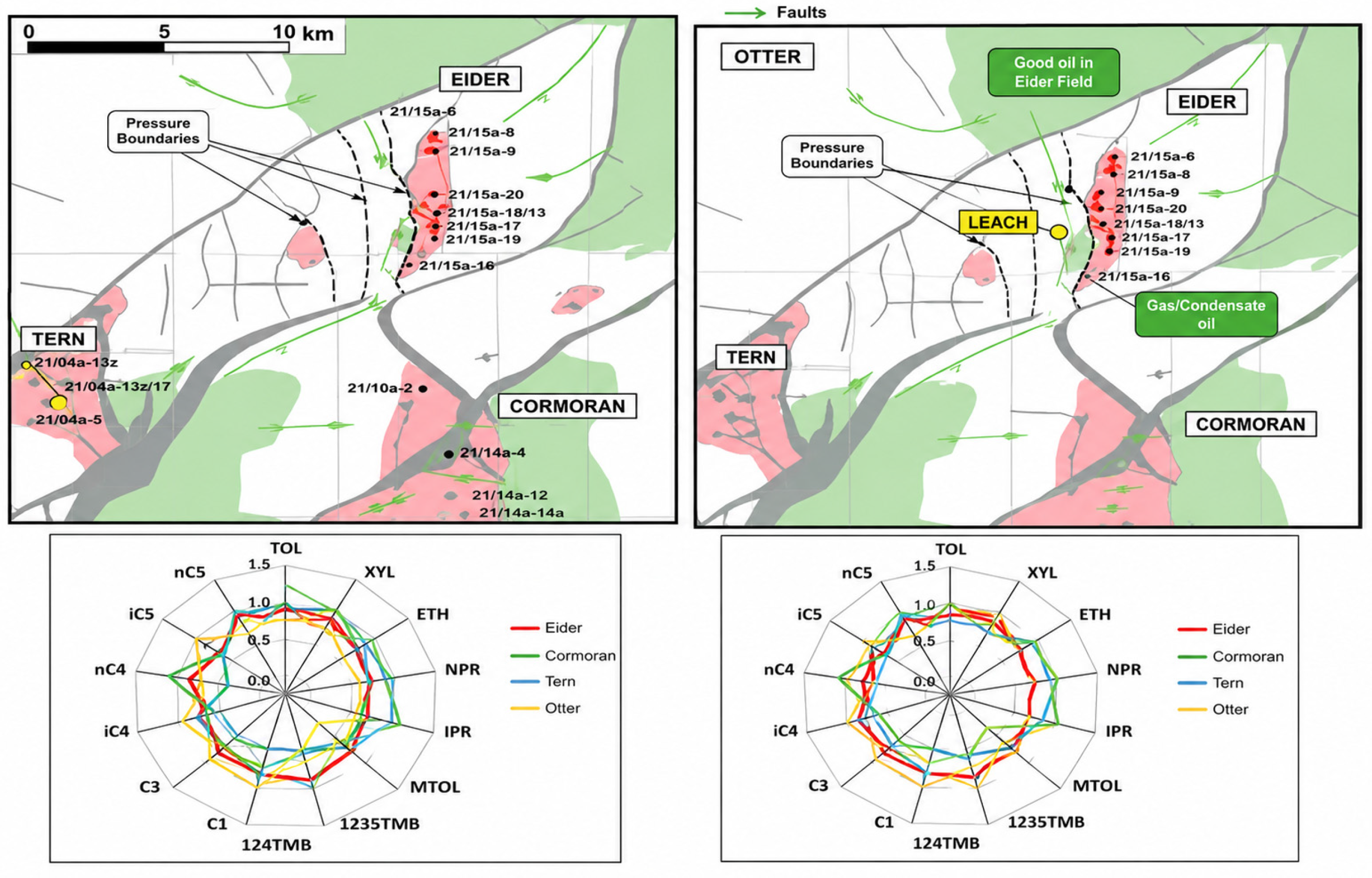
The general conceptual model of hydrocarbon migration and reservoir filling based on fingerprinting results is presented in
Figure 6, where possible directions of fluid flow, oil mixing processes, and the formation of reservoir systems with varying degrees of isolation are illustrated.
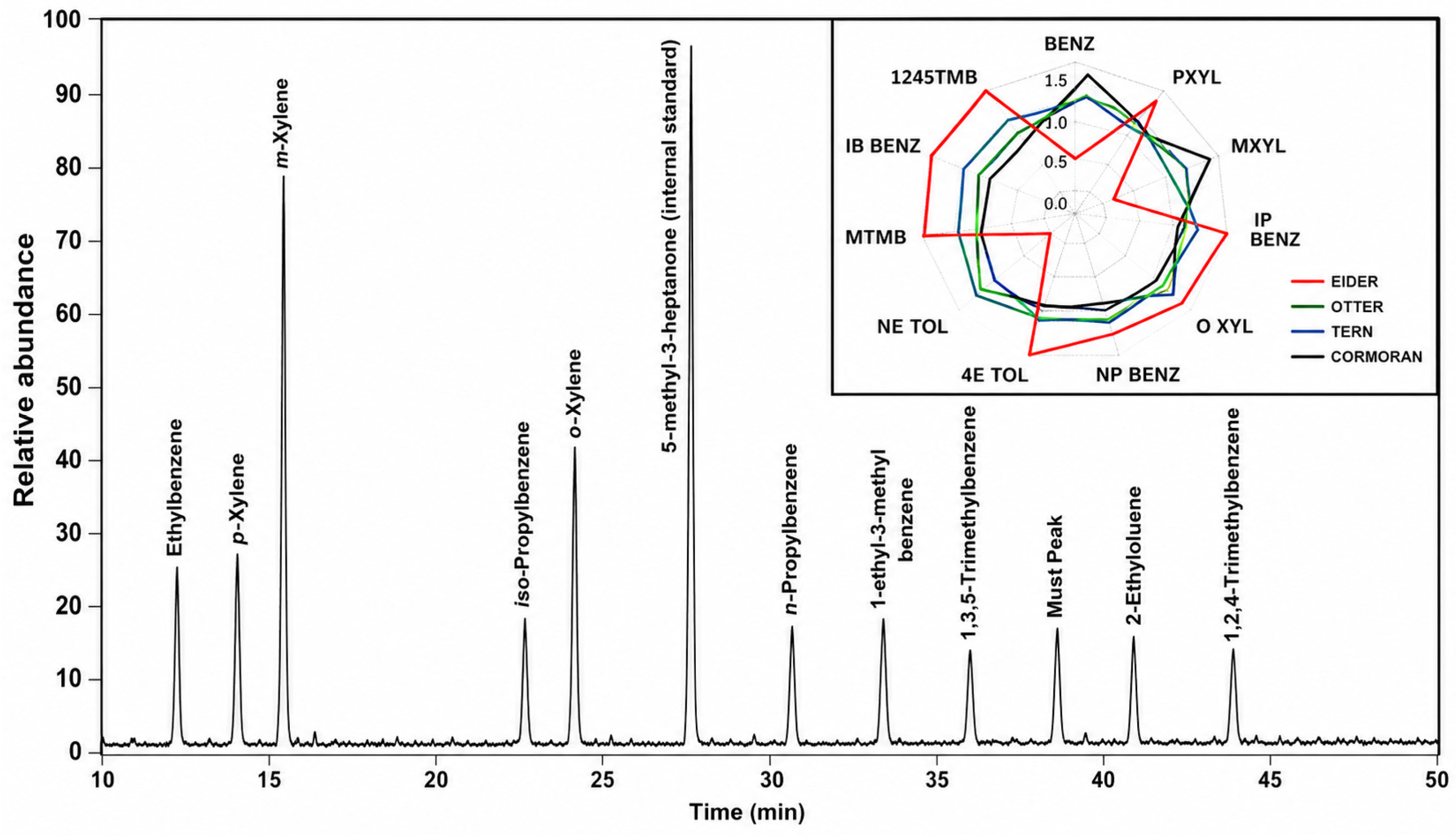
For interpretation of the molecular composition, gas chromatography and LTM-MD-GC analytical data were used. A typical chromatogram of a representative crude oil sample and the corresponding oil fingerprinting result in the form of a “radar” (spider) diagram are presented in
Figure 7. This approach allows simultaneous evaluation of the distribution of diagnostic aromatic compounds and their ratios, reflecting the unique characteristics of the oil.
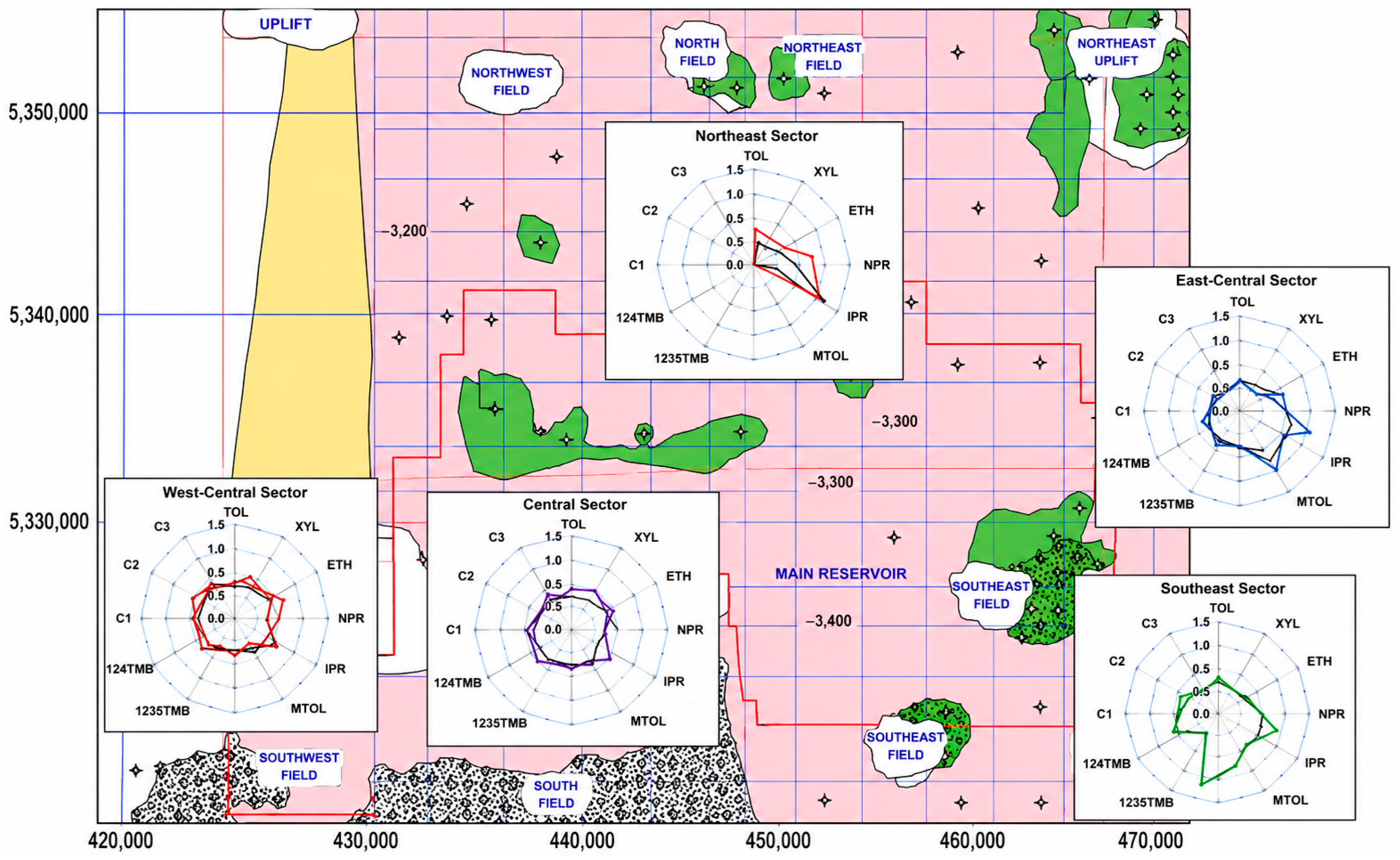
Based on the distribution of diagnostic aromatic compounds, all studied fields were conditionally divided into three main genetic groups corresponding to the major structural elements of the region. The first group includes the fields of the Karaton–Tengiz uplift. The fingerprinting results of this group are presented in
Figure 8, where both pronounced similarities and local differences in molecular “fingerprints” are observed.
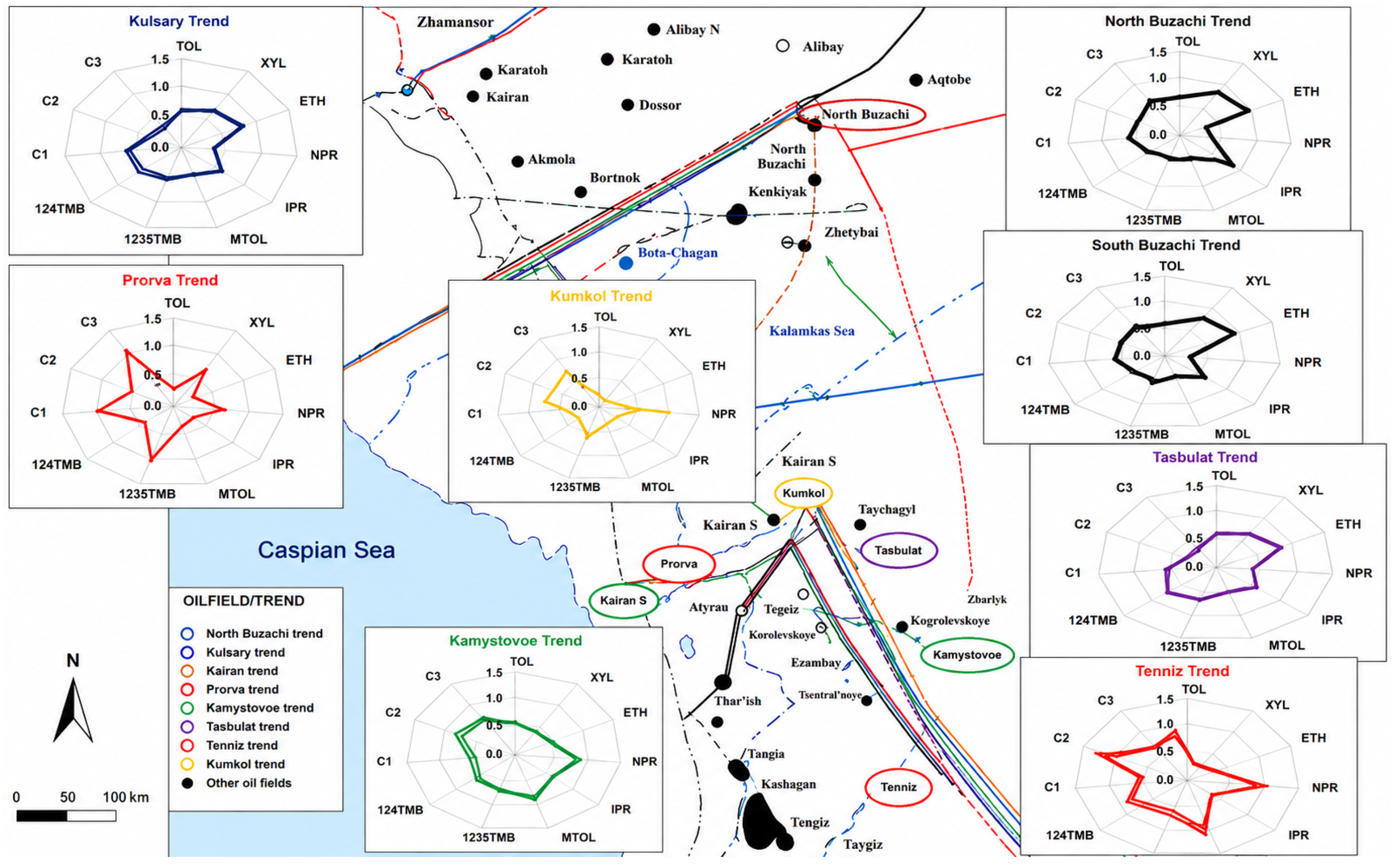
The similarity in the shapes of radar diagrams for individual fields, such as S. Nurzhanov and West Prorva, indicates a probable common petroleum system and possible hydrodynamic connectivity. In contrast, differences between neighboring fields (Aktobe, Dosmukhambetovskoye, and Karasor) suggest the presence of tectonic barriers, fault segmentation, and processes of secondary oil fractionation.
A similar analysis was carried out for fields related to the Biikzhal uplift. The results are presented in
Figure 9. This group is characterized by a high degree of fingerprint heterogeneity, reflecting the complex structure of reservoir systems and the influence of tectonic factors.
Both matching molecular profiles of certain field pairs (for example, B. Zholamanov and North Kotyrtas) and pronounced differences between closely located fields are observed. This may indicate limited hydrodynamic connectivity or the presence of fault-related barriers.
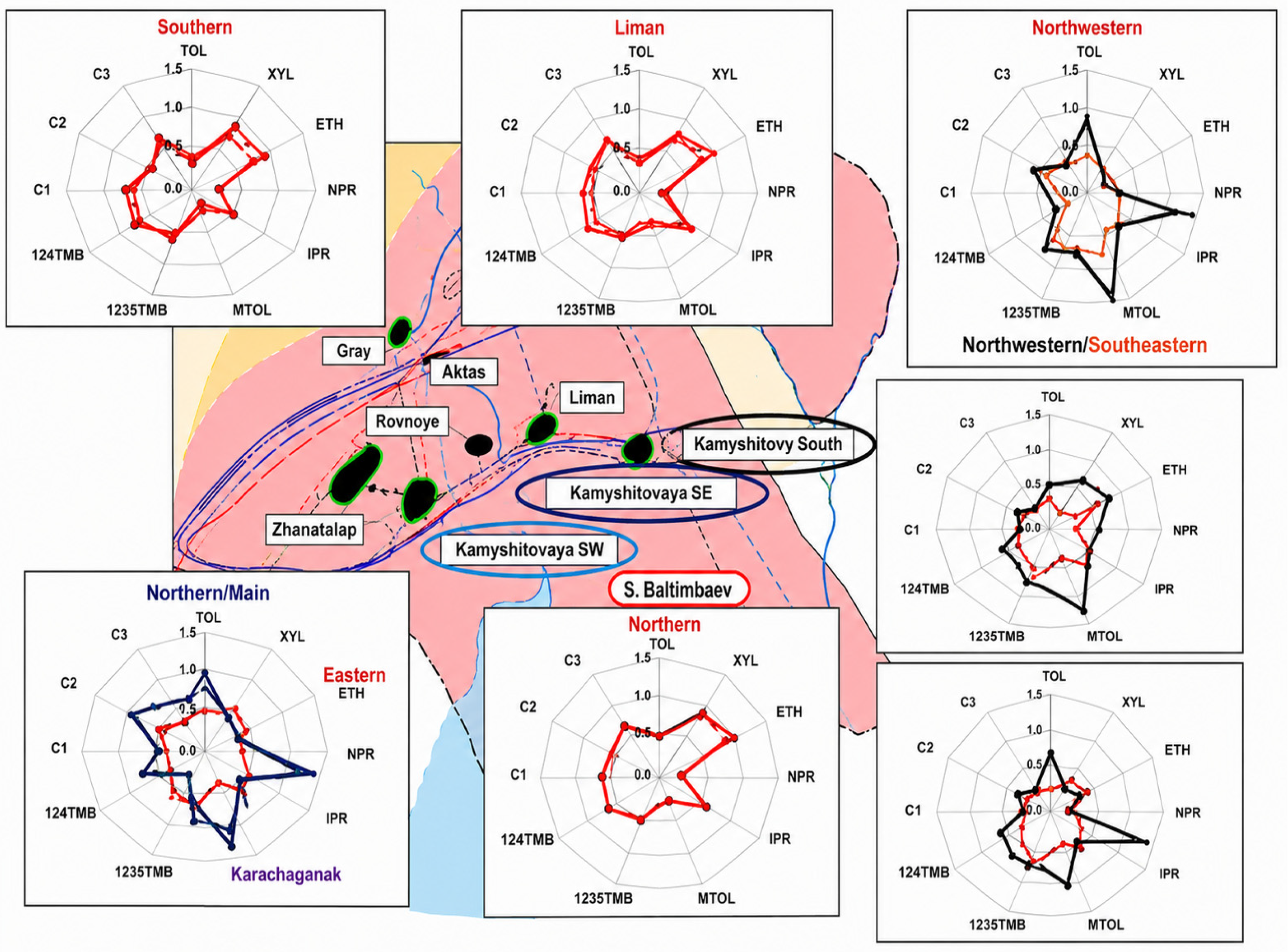
For fields of the North Caspian structural area, the fingerprinting results are presented in
Figure 10. This group is characterized by the highest geochemical heterogeneity, reflecting a complex combination of migration, mixing, and reservoir compartmentalization processes.
Individual fields exhibit similar molecular characteristics, which may indicate a common hydrocarbon source or closely connected migration pathways. However, significant variations between individual wells suggest multiphase filling processes and local isolation of productive horizons.
3.2. Biomarker Characteristics and Genetic Typing of Oils
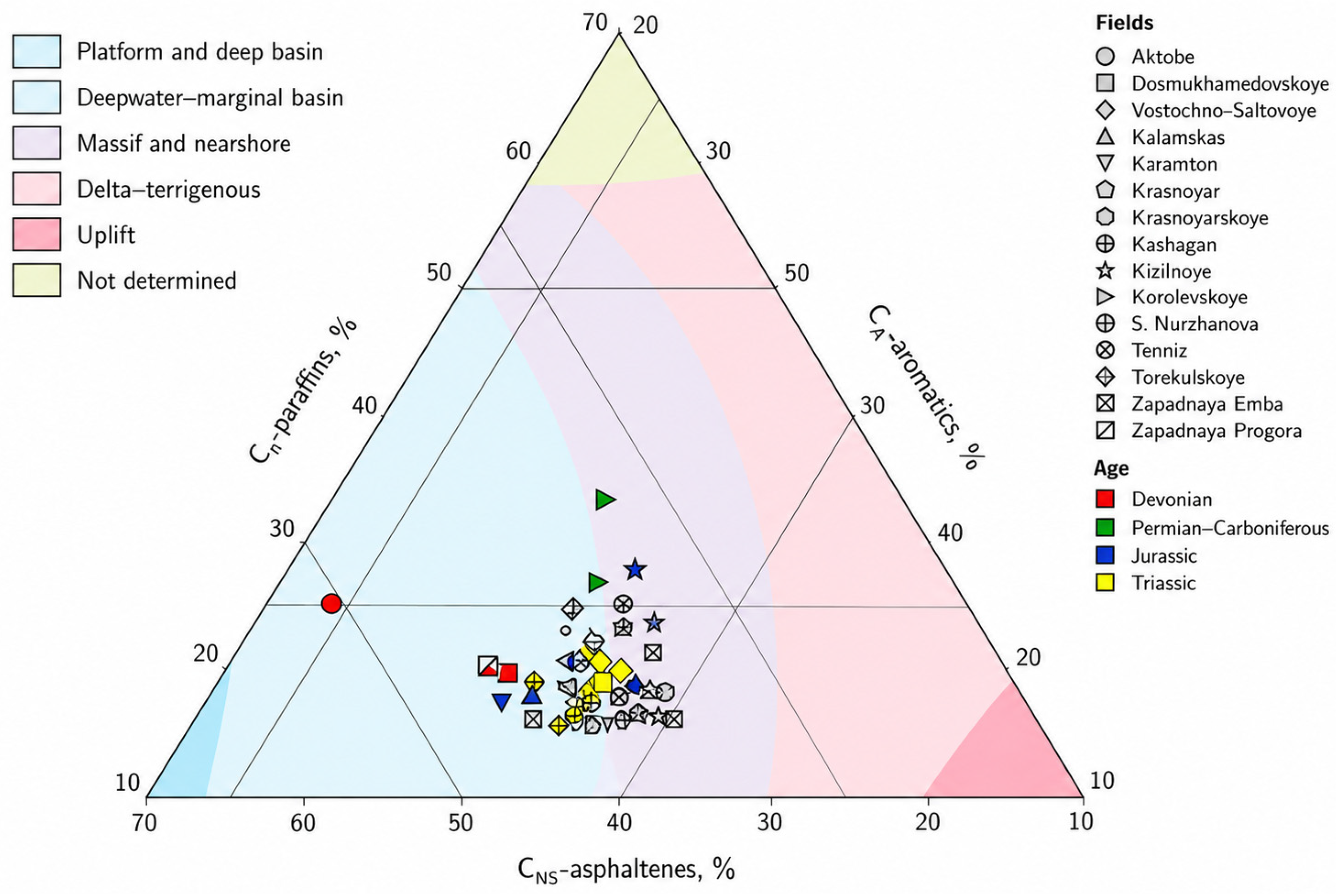
Biomarker analysis confirms that the studied oils were formed from different types of organic matter under varying depositional conditions, reflecting a complex evolution of source-rock systems within the Astrakhan–Aktobe uplift zone. The distribution of C27–C28–C29 steranes indicates a predominance of marine origin for most samples, suggesting the dominance of marine planktonic organic matter in the original sediments.
The similarity of sterane profiles in oils from the Tengiz, Karaton, and Teren-Uzuk fields indicates their genetic relationship despite differences in stratigraphic levels. This suggests the presence of a common or closely related organic matter source and a shared evolution of source rocks within a unified petroleum system.
Figure 11 presents the distributions of C27–C28–C29 steranes in the studied crude oils. The analysis showed that all investigated samples are predominantly derived from marine organic matter; however, variations in the C27/C28/C29 ratios are observed, reflecting differences in depositional facies conditions and the contribution of different bioproductivity sources.
The oils from the Tengiz, Karaton, and Teren-Uzuk fields are characterized by an almost identical sterane distribution despite differences in the ages of the productive horizons, which may indicate their genetic equivalence and belonging to a single petroleum system. It has also been established that with increasing burial depth of productive horizons, the contribution of marine organic matter increases, which is especially typical for Triassic and Devonian deposits, reflecting more reducing depositional conditions and better preservation of lipid material.
3.3. Terpane Distribution and Source Rock Properties
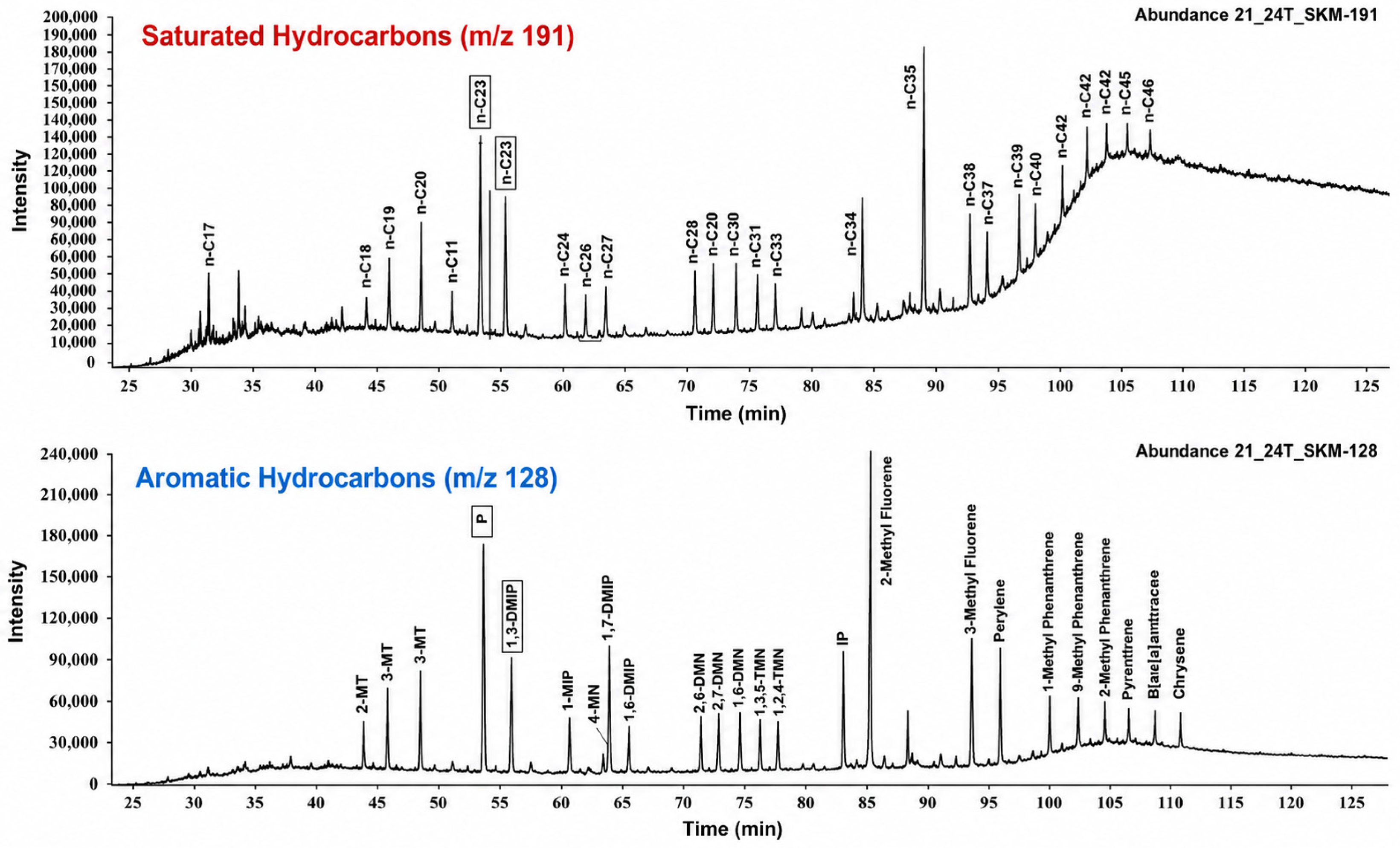
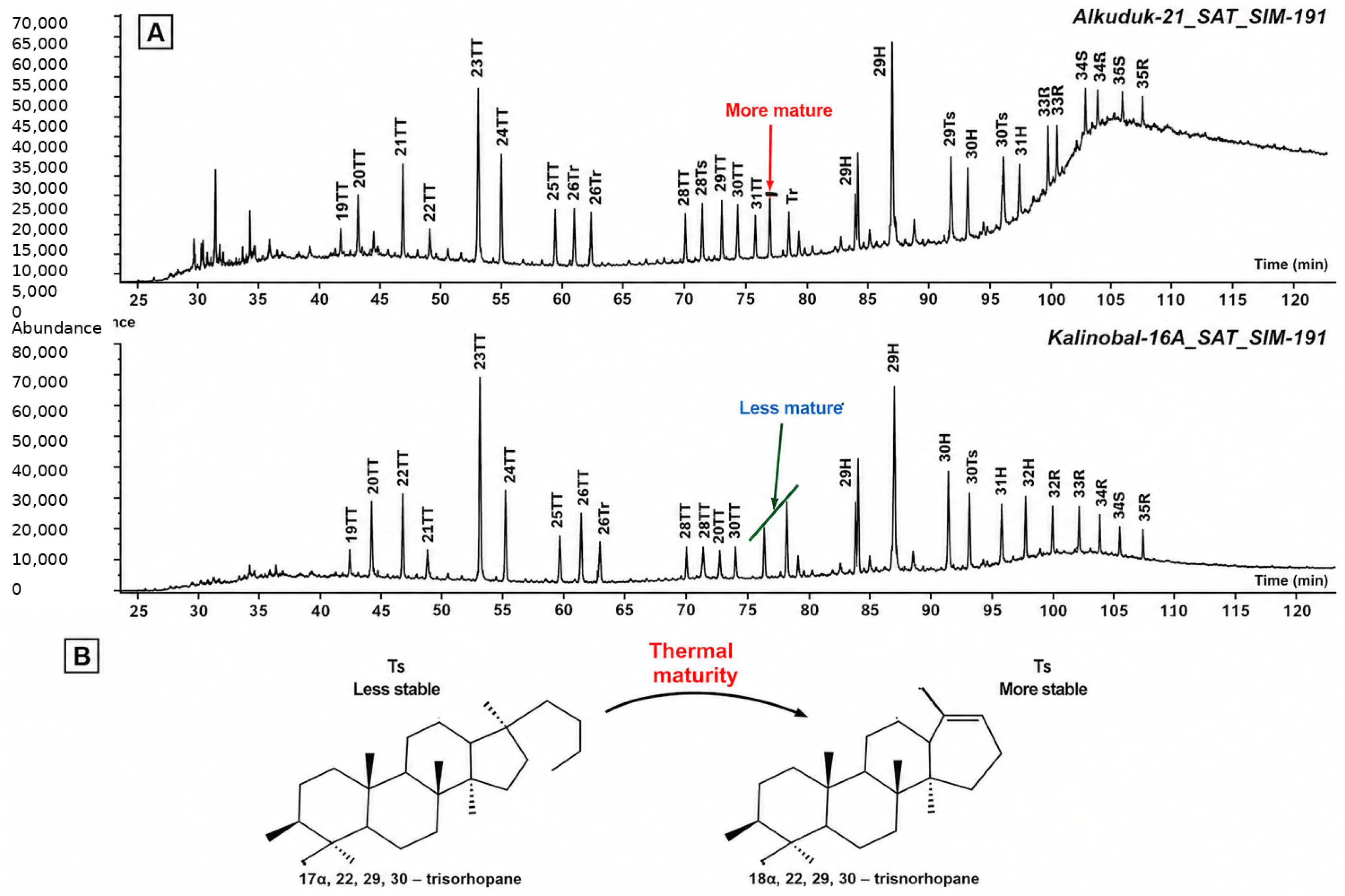
The distribution of terpanes according to the
m/
z 191 ion (
Figure 12) allowed the determination of lithological characteristics of the source rocks. Interpretation of the hopane series parameters is a key indicator of depositional environments and source rock type.
For most studied oils, high values of the C29Hopane/C30Hopane ratio (29H/30H > 1) are characteristic, indicating an increased bacterial input and carbonate depositional settings. Elevated concentrations of C24 tetracyclic terpanes (C24Tet/26TT > 1) and the predominance of C23 over C24 tricyclic terpanes (23TT/24TT > 1.5) reflect specific diagenetic conditions in carbonate environments with limited terrigenous input. High C35 homohopane values further confirm the reducing nature of the depositional environment and the high preservation potential of organic matter.
Taken together, these parameters clearly indicate a predominantly carbonate origin of the source rock intervals. In contrast, oil from the Akkuduk field exhibits opposite geochemical characteristics, reflecting a significant contribution of terrigenous organic matter, which confirms the presence of multiple independent oil sources within the region.
3.4. Thermal Maturity of Oils
To assess the thermal maturity of the oils, sterane and terpane isomerization parameters were used, which reflect the degree of progressive evolution of organic matter under catagenetic conditions.
Figure 13,
Figure 14,
Figure 15,
Figure 16 and
Figure 17 present the ratios of sterane and terpane isomers, illustrating different stages of organic matter maturity.
It was established that oils from the Tengiz, Karaton, Korolevskoye, Teren-Uzyuk, and Kashagan fields correspond to the late stage of oil generation, indicating their formation under conditions of maximum thermal exposure and complete passage through the “oil window”. Oils from the Karasor and Dosmukhambetovskoye fields are characterized by an early maturity stage, which may indicate a lower thermal history or shallower burial depth of the source rocks. Oils from the Aktobe, S. Nurzhanov, and West Elemes fields correspond to the peak oil generation stage, reflecting optimal conditions for hydrocarbon generation.
The obtained results are of significant importance for reconstructing hydrocarbon migration pathways and assessing reservoir hydrodynamic connectivity. The higher thermal maturity of oils from the Aktobe field compared to the Dosmukhambetovskoye field, despite their high biomarker similarity, may indicate directed lateral migration of hydrocarbons from more deeply buried or more thermally mature zones toward the Dosmukhambetovskoye field. This pattern suggests the possible existence of a hydrodynamically connected fluid system with a maturity gradient.
3.5. Migration Indicators and Aromatic Parameters
Additional information on migration processes was obtained from aromatic hydrocarbons.
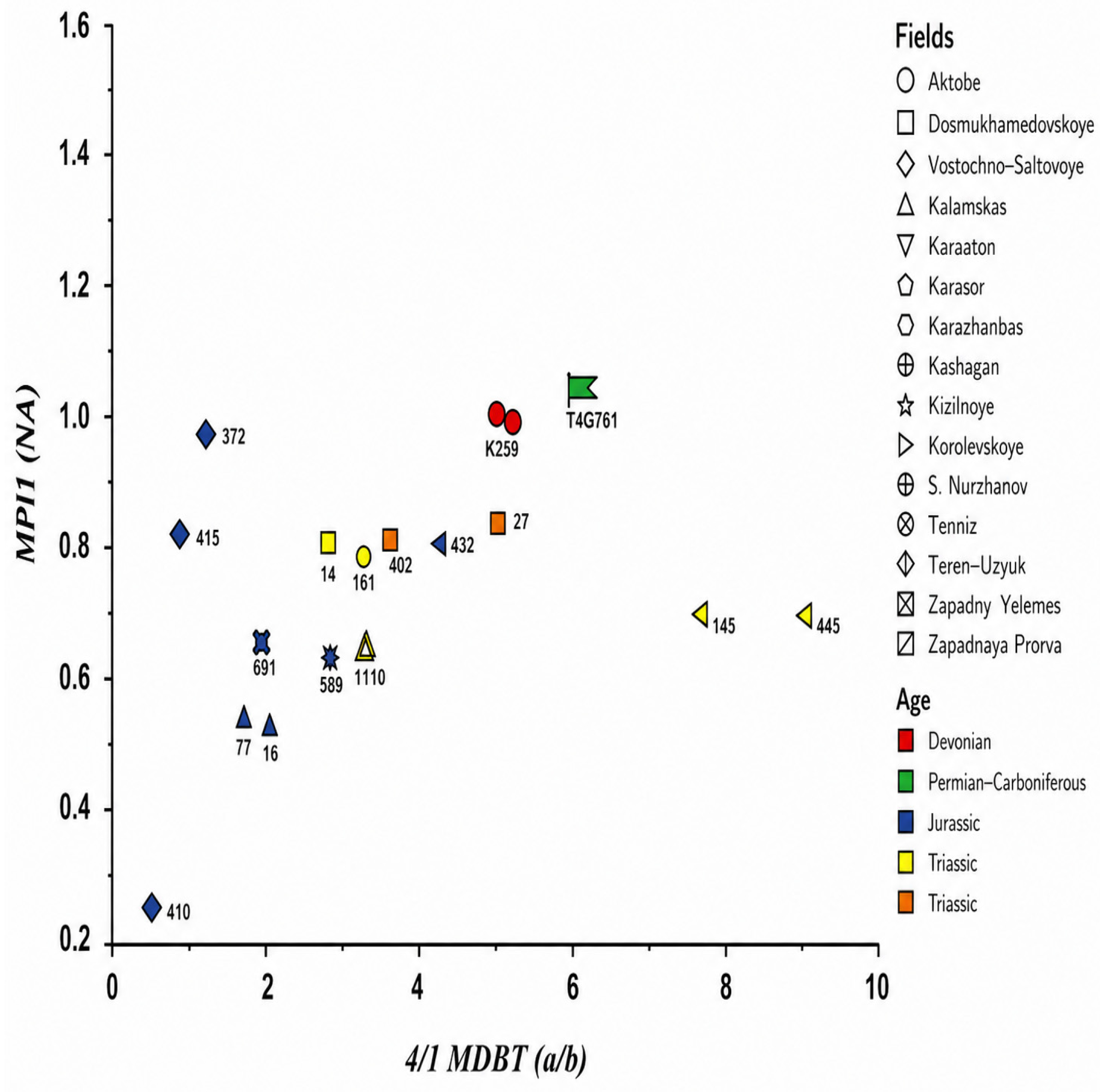
Figure 18 presents the relationship between the methylphenanthrene index (MPI-1) and the 4MDBT/1MDBT ratio. These parameters differ in their sensitivity to thermal evolution and migration processes: MPI-1 primarily reflects thermal maturity, whereas 4MDBT/1MDBT is sensitive to migration distance and the fractionation of aromatic compounds.
The interpretation of these parameters allowed the identification of probable hydrocarbon migration pathways and the delineation of fluid systems with different degrees of hydrodynamic communication.
3.6. Hydrocarbon Migration Indicators and Aromatic Parameters
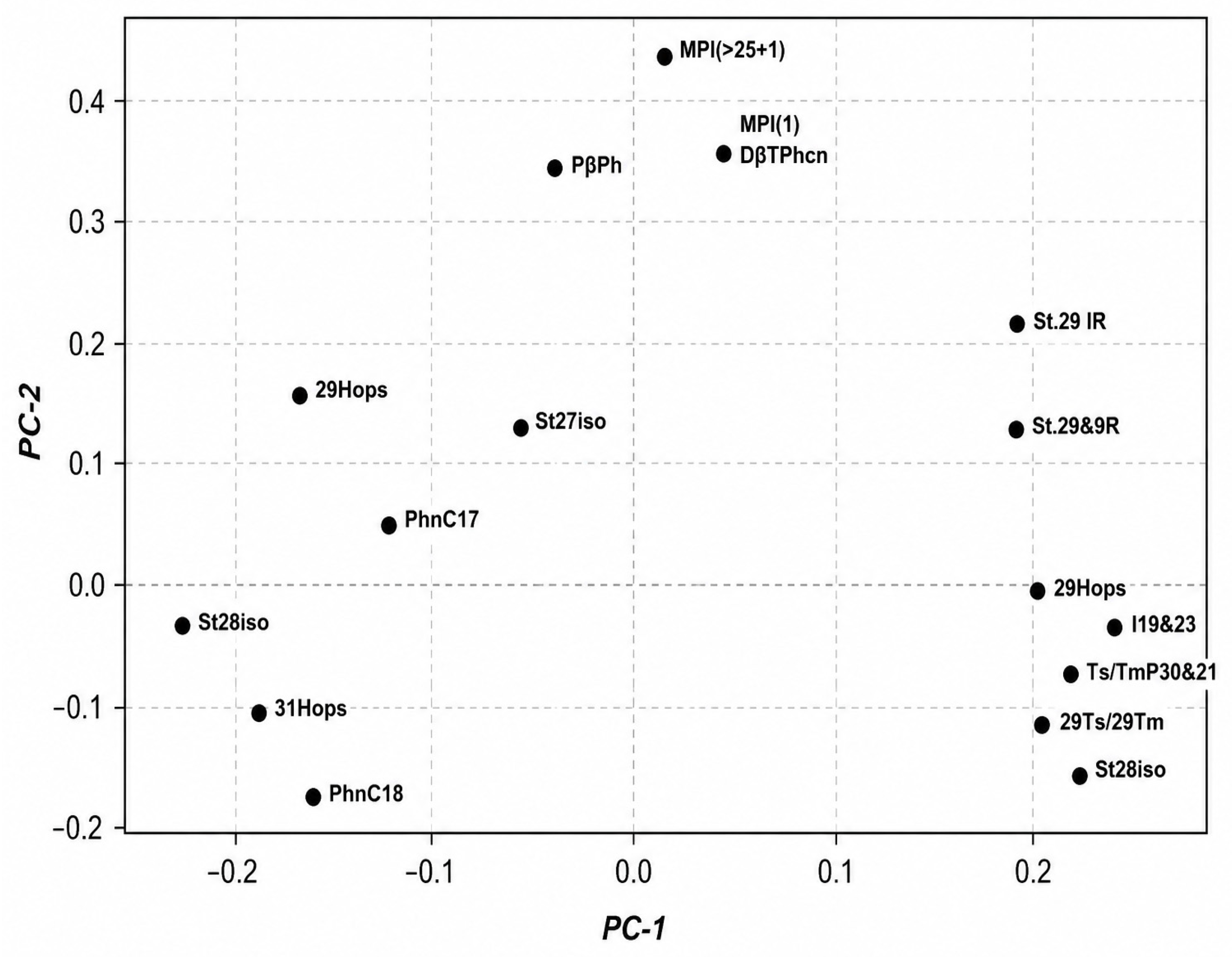
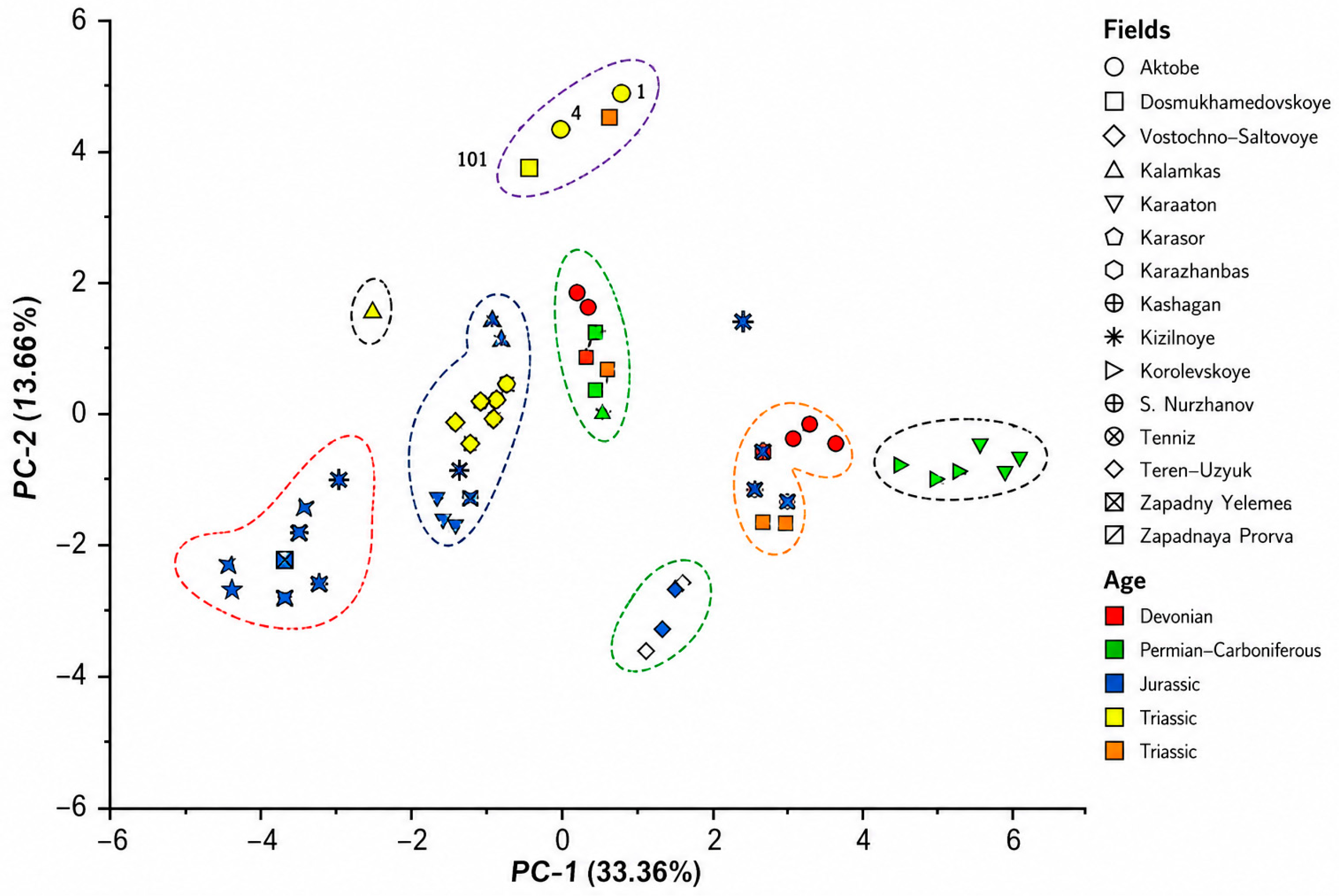
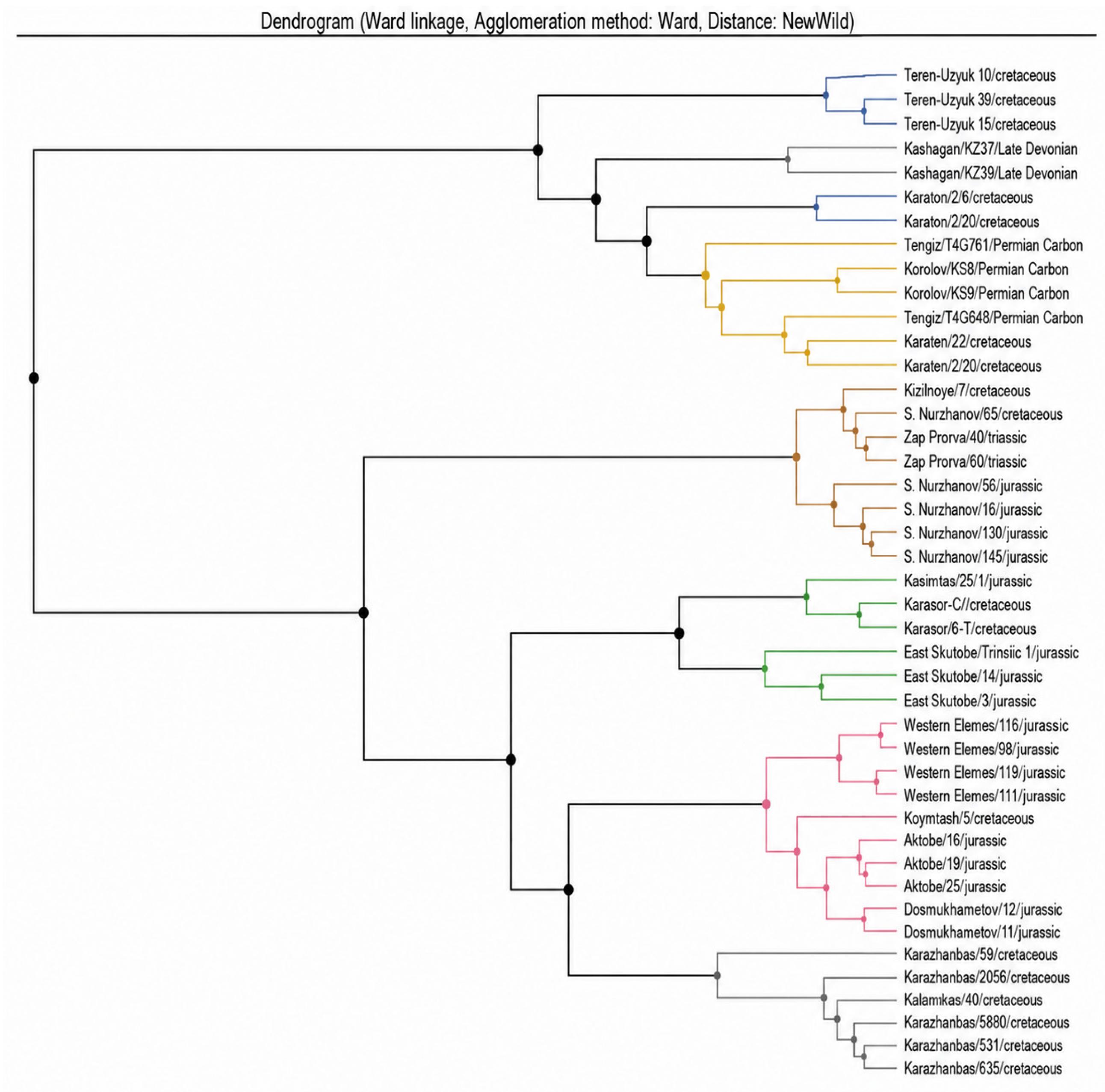
The results of PCA and Ward’s dendrogram clustering (
Figure 19 and
Figure 20) revealed the presence of several genetically distinct oil families. Oils from the Tengiz, Karaton, Korolevskoye, Kashagan, and Teren-Uzyuk fields form a separate cluster characterized by high thermal maturity, a similar genetic signal, and a common type of source rock.
In contrast, oils from the Aktobe, Dosmukhambetovskoye, and West Elemes fields form a compact group with a high positive correlation, which may indicate their belonging to a single petroleum system and the presence of inter-reservoir fluid communication.
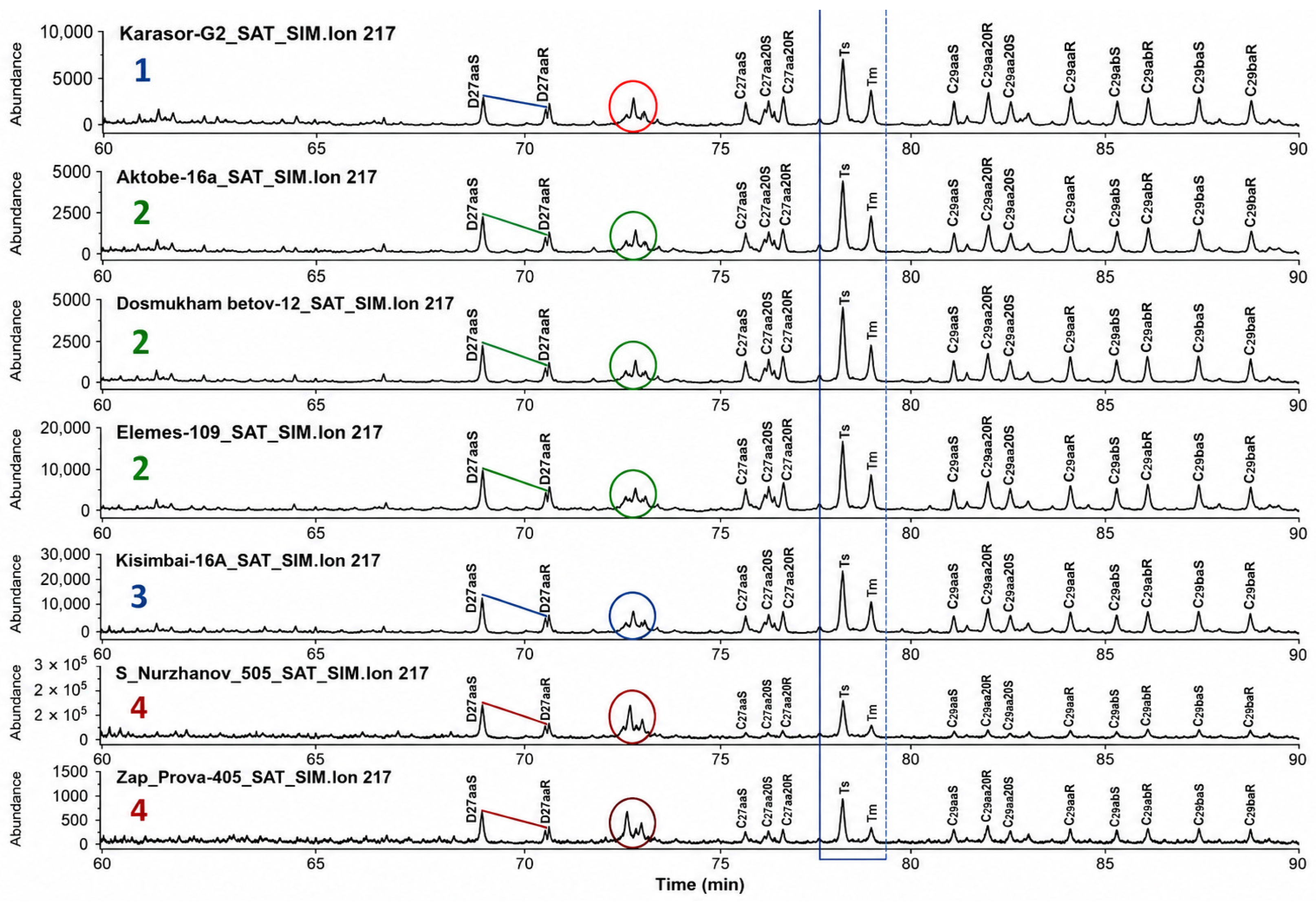
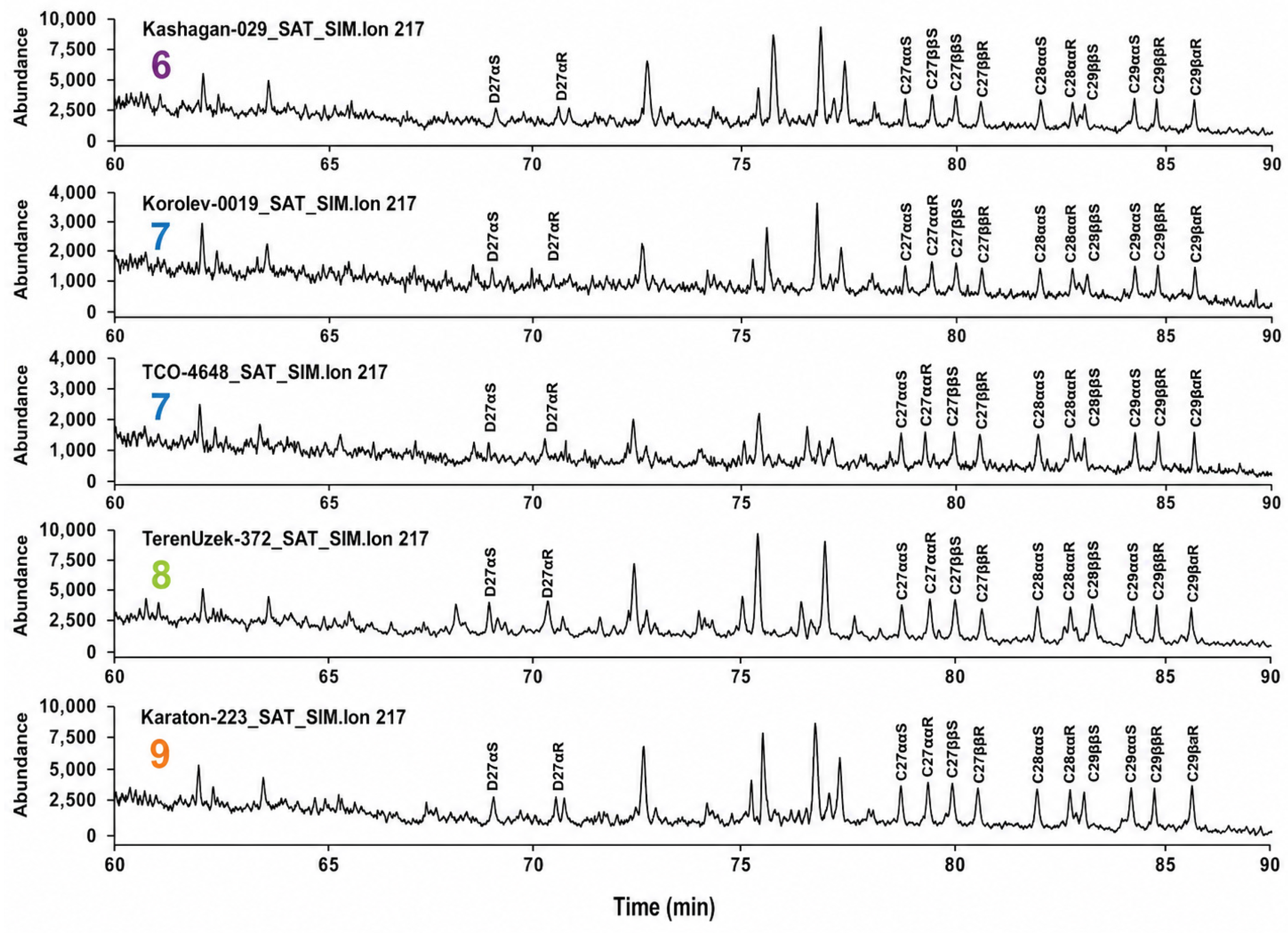
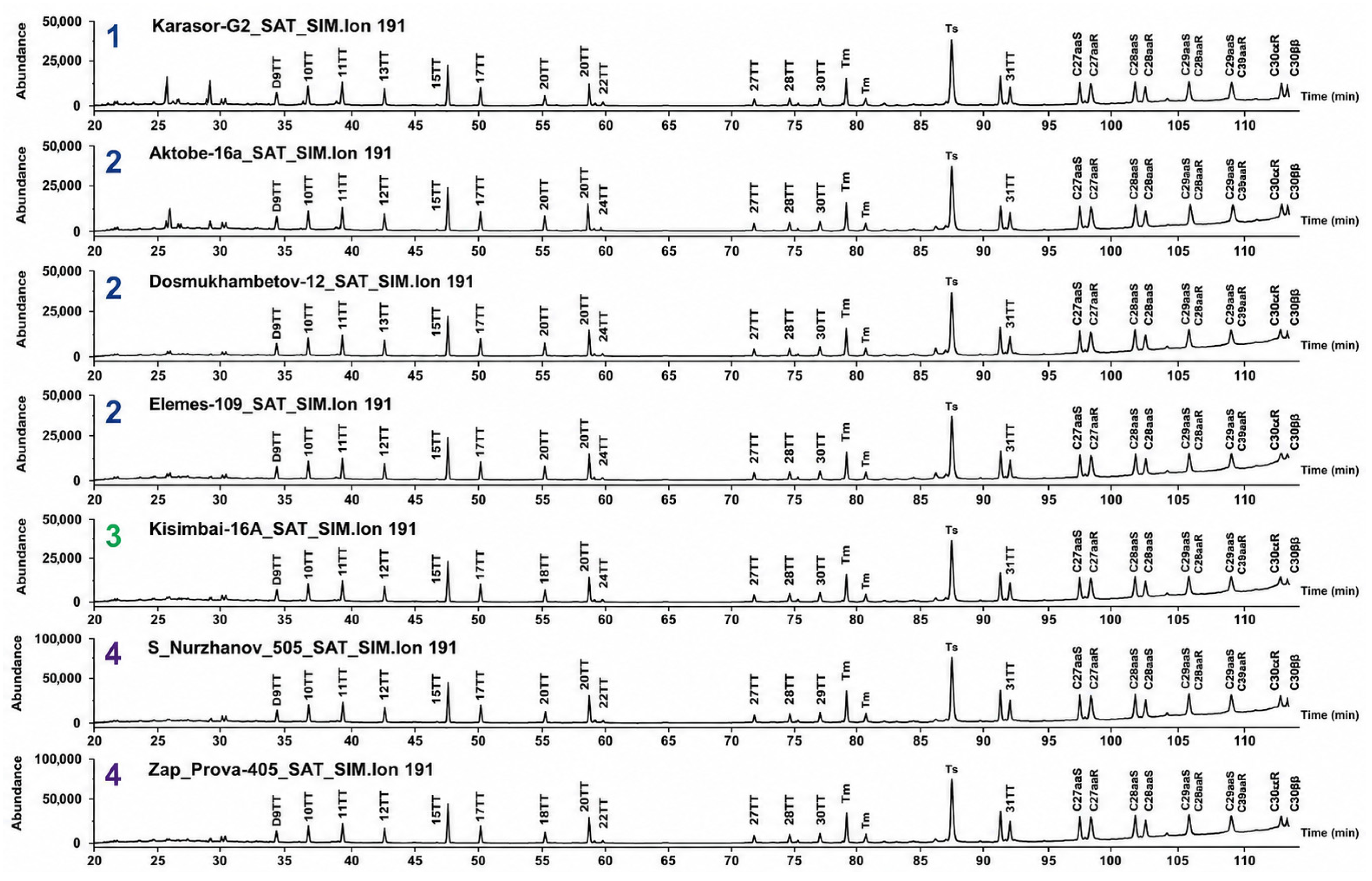
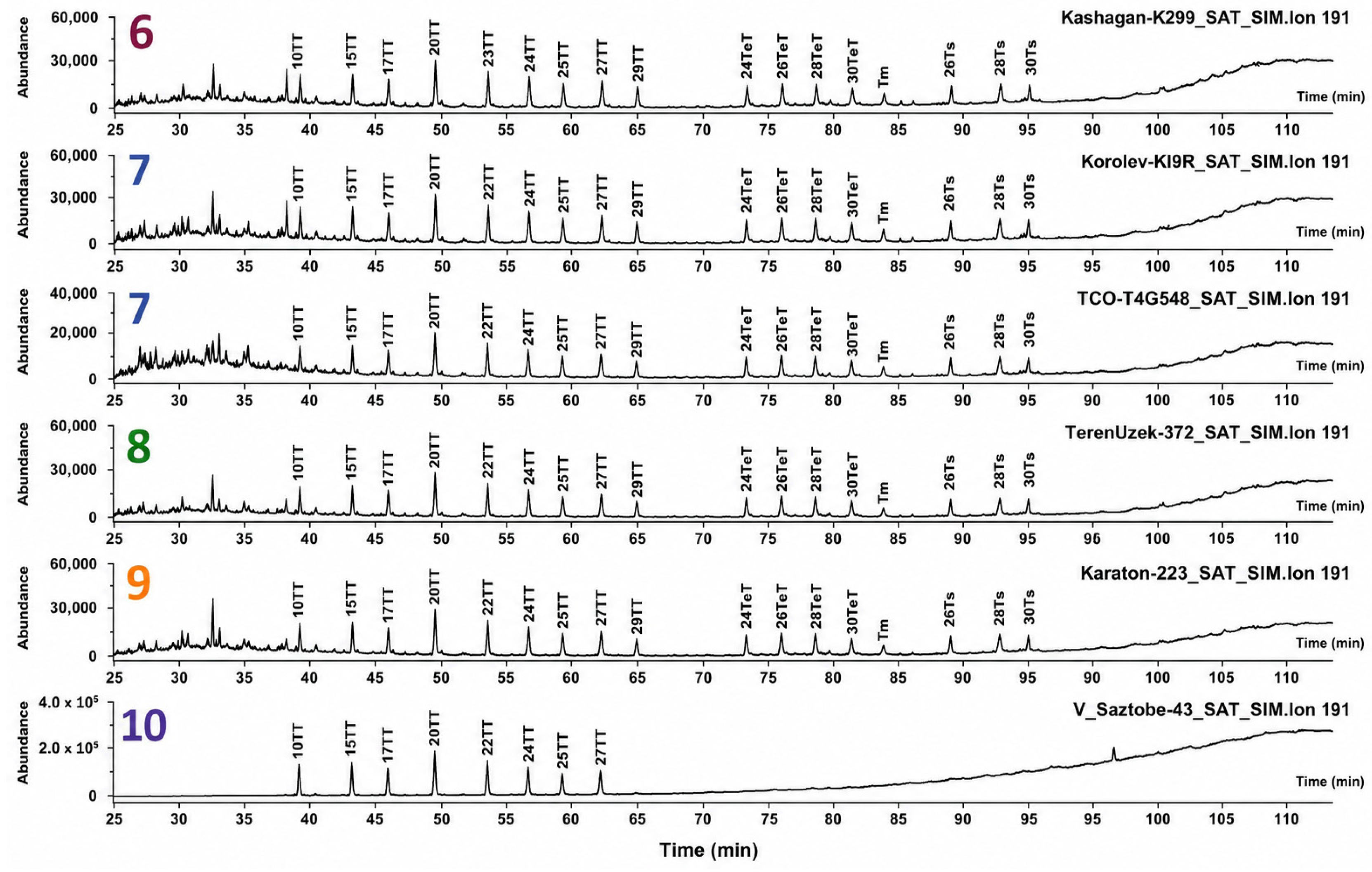
Visual comparison of mass fragmentograms
m/
z 217 and
m/
z 191 (
Figure 21,
Figure 22,
Figure 23 and
Figure 24) confirmed a high degree of similarity between certain groups of oils. In particular, the distributions of steranes and diasteranes in the Aktobe, Dosmukhambetovskoye, and Elemes oils are very close, indicating a common genetic source.
At the same time, the Karasor and Kisimbay oils show significant differences, suggesting the presence of different source rocks or varying degrees of secondary alteration.
Of particular interest is the detection of the 19TT peak in the Karasor oil, which is also characteristic of oils from Paleozoic formations, potentially indicating a more ancient source of organic matter.
3.7. Comparative Analysis of Biomarker and Aromatic Distributions
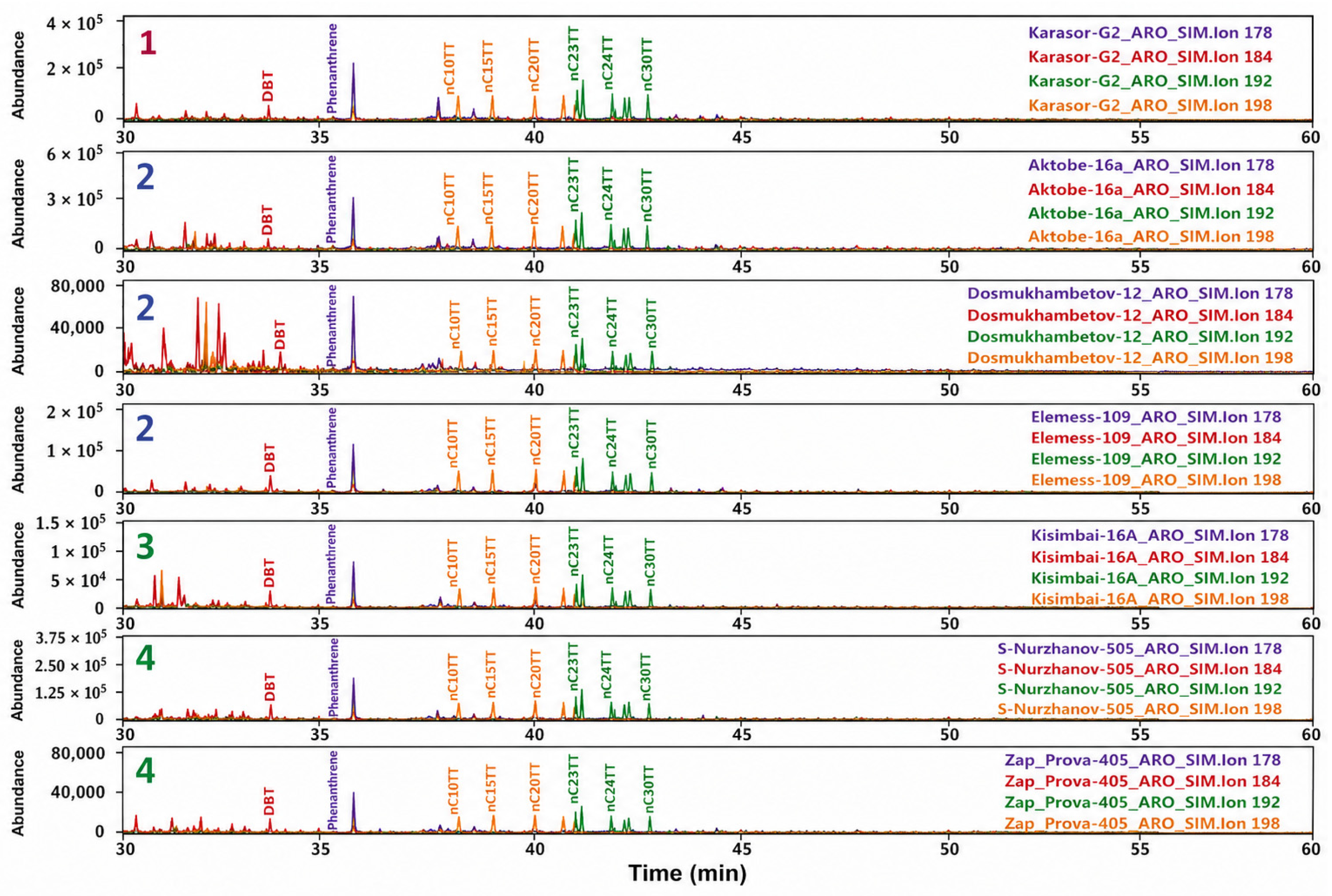
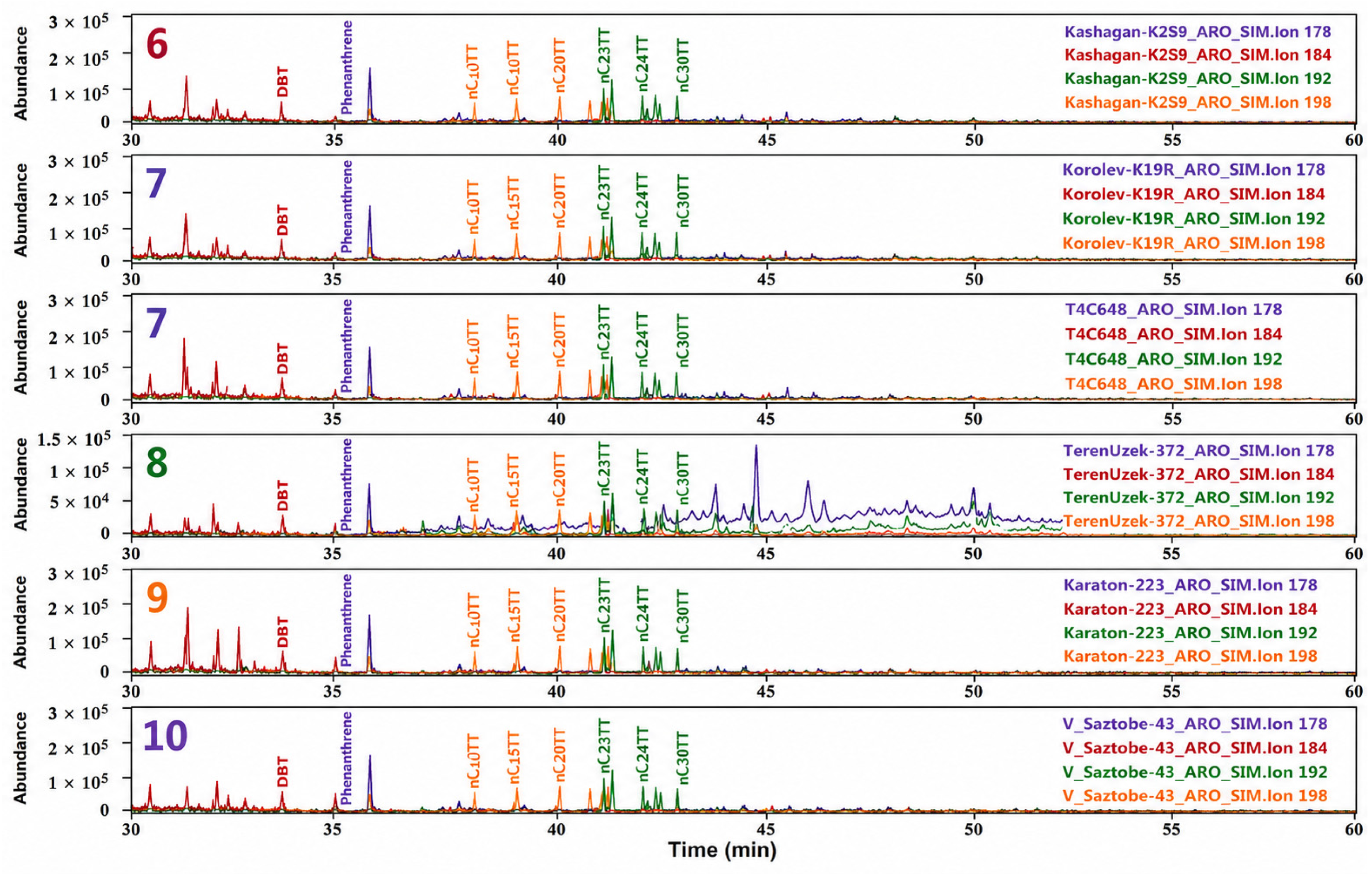
The aromatic fractions (
Figure 25 and
Figure 26) demonstrate significant differences in the distribution of dibenzothiophenes and methylphenanthrenes. These variations may be attributed to a combination of factors, including biodegradation, differences in thermal maturity, and local reservoir compartmentalization, further confirming the complex fluid architecture of the region.
4. Discussion
The integration of oil fingerprinting and biomarker analysis data revealed patterns reflecting the complex internal organization of reservoir systems within the Astrakhan–Aktobe uplift zone. The geochemical heterogeneity of the studied oils is controlled by the combined influence of source organic matter type, tectonic segmentation, and multi-stage processes of hydrocarbon generation, migration, and mixing.
Comparative analysis of biomarker parameters allowed the identification of two major genetic groups of oils associated with carbonate and clay-rich source rocks. At the same time, it was established that the genetic affiliation of oils does not always correspond to a single reservoir system, indicating possible fluid mixing processes and a complex migration history. Biomarker data primarily reflect the source characteristics and formation conditions of oils, whereas the spatial organization of fluid systems requires additional evaluation using oil fingerprinting techniques.
Analysis of oil fingerprinting results made it possible to refine the degree of fluid communication between fields and within individual structures. Within the Karaton–Tengiz uplift, a combination of genetically related and significantly different petroleum systems was identified. The similarity of molecular fingerprints of oils from the West Prorva and S. Nurzhanov fields suggests possible hydrodynamic connectivity and a common fluid source. In contrast, pronounced differences among oils from the Aktobe, Dosmukhambetovskoye, and Karasor structures indicate reservoir compartmentalization and the presence of isolated blocks. Particularly significant intra-reservoir variability observed within the Karasor structure suggests the existence of internal flow barriers.
Within the Biikzhal arch, a mosaic pattern of fluid systems was also recognized. Several pairs of fields, including B. Zholamanov–North Kotyrtas and Kulsary–East Makat, exhibit similar molecular characteristics, which may indicate hydrodynamic connectivity. At the same time, substantial differences among other fields reflect the influence of tectonic segmentation and local barriers to fluid migration.
The most complex pattern was observed within the North Caspian region, where both genetically similar petroleum systems (Liman, Gran, and S. Balgimbayev) and strongly differentiated fluid complexes occur simultaneously. This indicates multi-phase hydrocarbon migration, mixing of different petroleum charges, and the development of a complex reservoir architecture. The presence of multiple oil types within individual fields further confirms a high degree of reservoir compartmentalization and limited fluid connectivity.
The differences between the identified oil families are primarily controlled by the characteristics of the source rocks, the degree of thermal maturity of the organic matter, and the subsequent history of hydrocarbon migration. Oils associated with carbonate source rock intervals are characterized by biomarker assemblages indicating a predominantly marine origin of organic matter and its accumulation under relatively reducing conditions. In contrast, oils genetically related to clay-rich source rocks demonstrate a more significant contribution of mixed marine and terrestrial organic matter.
Variations in maturity-sensitive biomarker parameters indicate that hydrocarbon generation occurred at different stages of thermal evolution. More mature oils were likely generated in deeper and more thermally altered hydrocarbon kitchens, whereas less mature oils are associated with source rocks that experienced relatively lower burial depths.
An additional factor contributing to the observed geochemical heterogeneity was the occurrence of secondary hydrocarbon migration and mixing processes involving fluids derived from different petroleum source systems. This interpretation is supported by the presence of multiple oil types within individual reservoirs and oil fields.
The obtained results are in good agreement with previously published studies of petroleum basins within the Precaspian region, where multi-stage hydrocarbon migration, the existence of multiple petroleum source systems, and the significant role of tectonic segmentation in reservoir development have also been reported [
17,
18,
22,
23,
24,
29,
32]. Previous studies have demonstrated that Devonian–Carboniferous carbonate and clay-rich source rock intervals acted as hydrocarbon sources for various petroleum systems within the region, resulting in substantial geochemical variability of oils. A similar pattern is observed in the present study, where the identified oil families reflect differences in the composition of source organic matter and its thermal maturity, whereas oil fingerprinting results reveal the influence of hydrocarbon migration, fluid mixing processes, and tectonic compartmentalization of reservoirs. Therefore, the obtained data not only support the existing regional concepts of petroleum system evolution in the Precaspian Basin but also provide a more detailed characterization of the spatial organization of reservoirs and the degree of hydrodynamic connectivity between them within the Astrakhan–Aktobe uplift zone.
The integration of biomarker analysis and oil fingerprinting provides a more comprehensive reconstruction of the evolution of petroleum systems in the region. Biomarkers allow the determination of the genetic origin and formation conditions of oils, whereas fingerprinting reflects the degree of fluid communication and the spatial organization of reservoirs. The combined application of these methods enables a more reliable distinction between hydrodynamically connected and compartmentalized reservoir systems.
Thus, the petroleum systems of the Astrakhan–Aktobe uplift zone represent a complex combination of hydrodynamically connected reservoirs with stable molecular characteristics and tectonically isolated systems exhibiting a high degree of geochemical heterogeneity. The formation of this structure is controlled by the combined influence of the regional tectonic framework, variations in the composition of source organic matter, and multi-stage processes of hydrocarbon generation, migration, and accumulation. In contrast to previous regional studies, the present work provides a more detailed characterization of fluid system organization at the reservoir scale through the integration of biomarker characteristics, reflecting the genetic nature of oils, and oil fingerprinting parameters, indicating the degree of fluid connectivity. This integrated approach enables the differentiation between geochemical signatures inherited from source petroleum systems and processes associated with subsequent hydrocarbon migration, fluid mixing, and tectonic reservoir compartmentalization.
Study Limitations
Despite the application of oil fingerprinting, biomarker analysis, and statistical data processing methods, several limitations of this study should be considered. The analysis is based on a limited dataset of oil samples collected from 15 fields within the Astrakhan–Aktobe uplift zone; therefore, the identified genetic oil groups and conclusions regarding the degree of reservoir hydrodynamic connectivity may not fully represent the entire complexity of petroleum systems within the Pre-Caspian Basin.
The assessment of reservoir connectivity in this study was performed primarily based on geochemical and statistical criteria, which limits the interpretation in the absence of comprehensive integration with additional geological, geophysical, and production data. Furthermore, biomarker and oil fingerprinting parameters reflect the combined influence of source organic matter characteristics, thermal maturity, hydrocarbon migration processes, and secondary alteration, resulting in a certain degree of uncertainty in distinguishing the individual factors controlling the observed geochemical heterogeneity.
Further expansion of the dataset through the analysis of a larger number of samples, inclusion of additional fields, and integration with high-resolution geological and geophysical information will improve the reliability of interpretations and provide a more comprehensive understanding of petroleum system evolution within the Pre-Caspian Basin.




 ,
,