A Non-Intrusive Load Identification Method Based on the Fusion of Steady-State Features and Lightweight Network


Abstract
1. Introduction
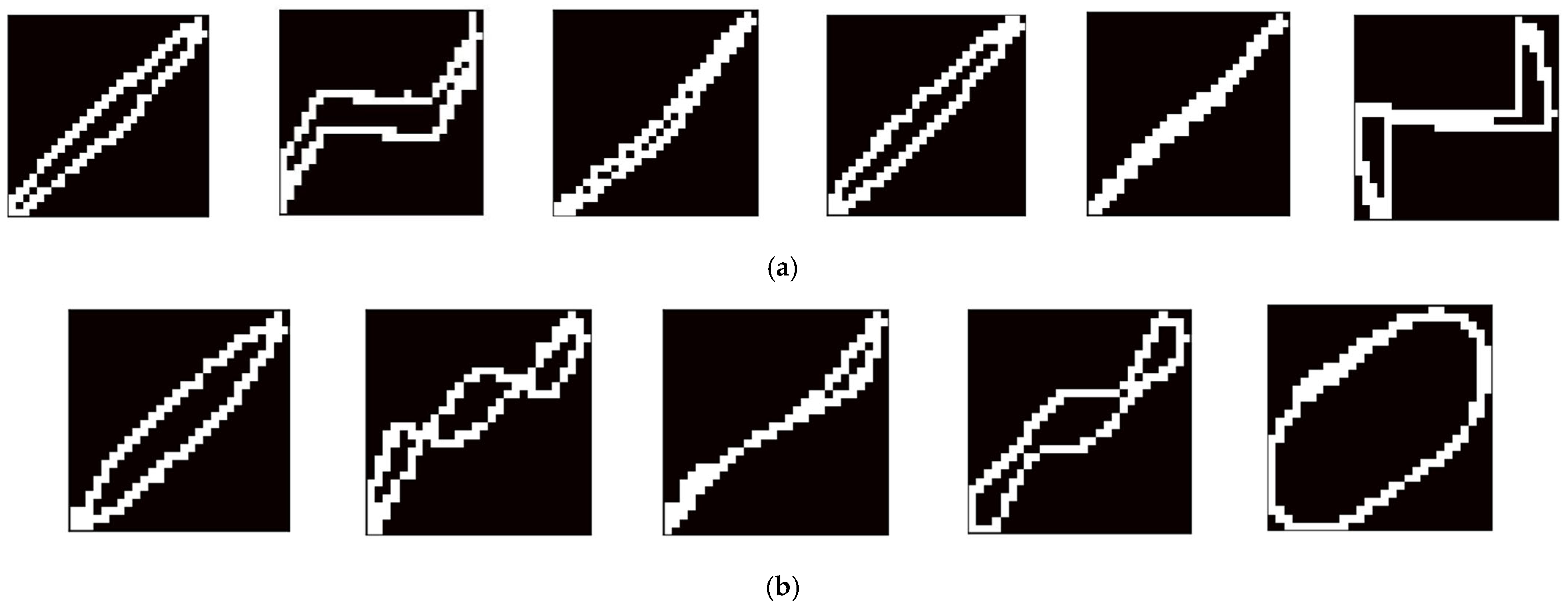
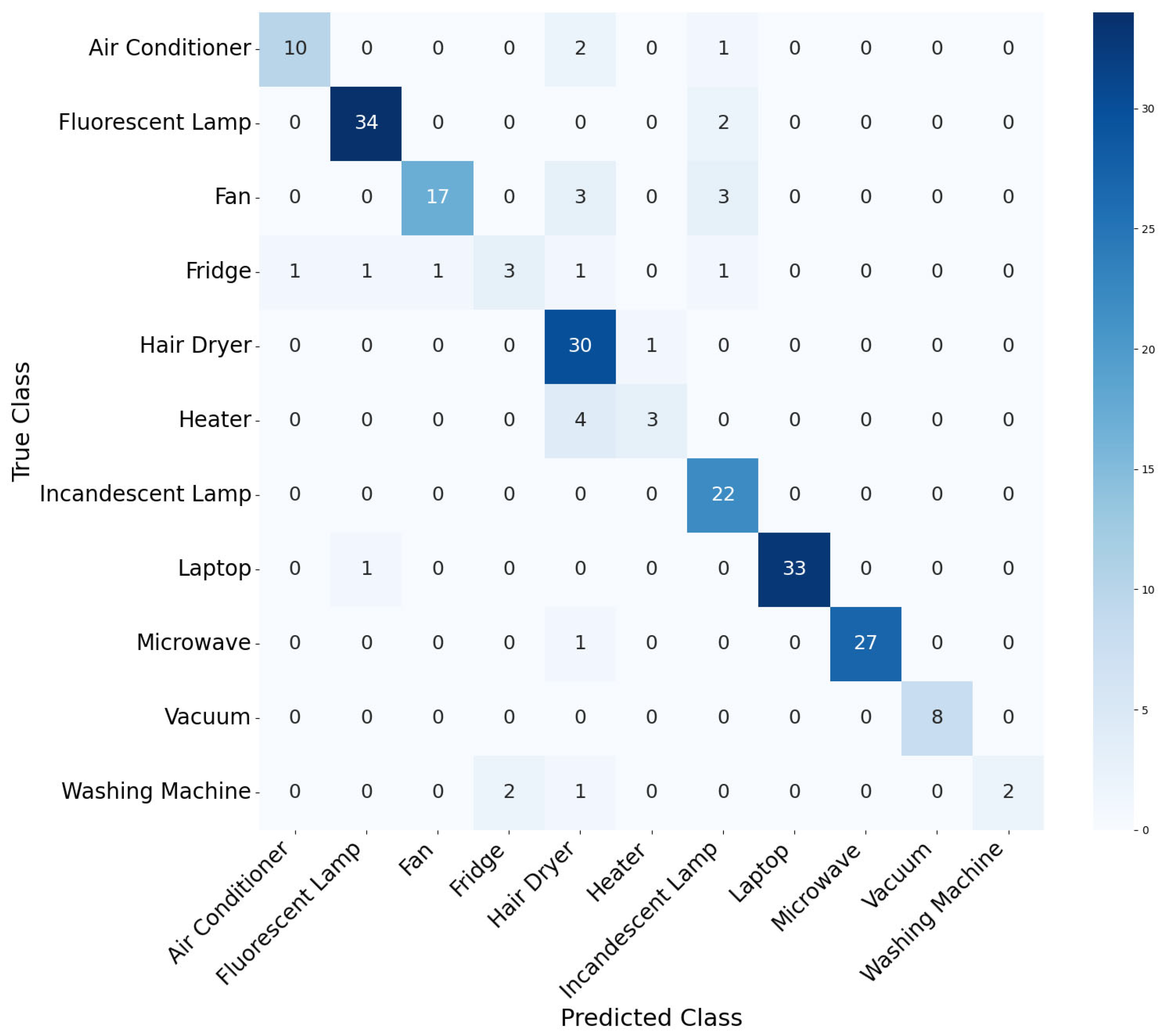
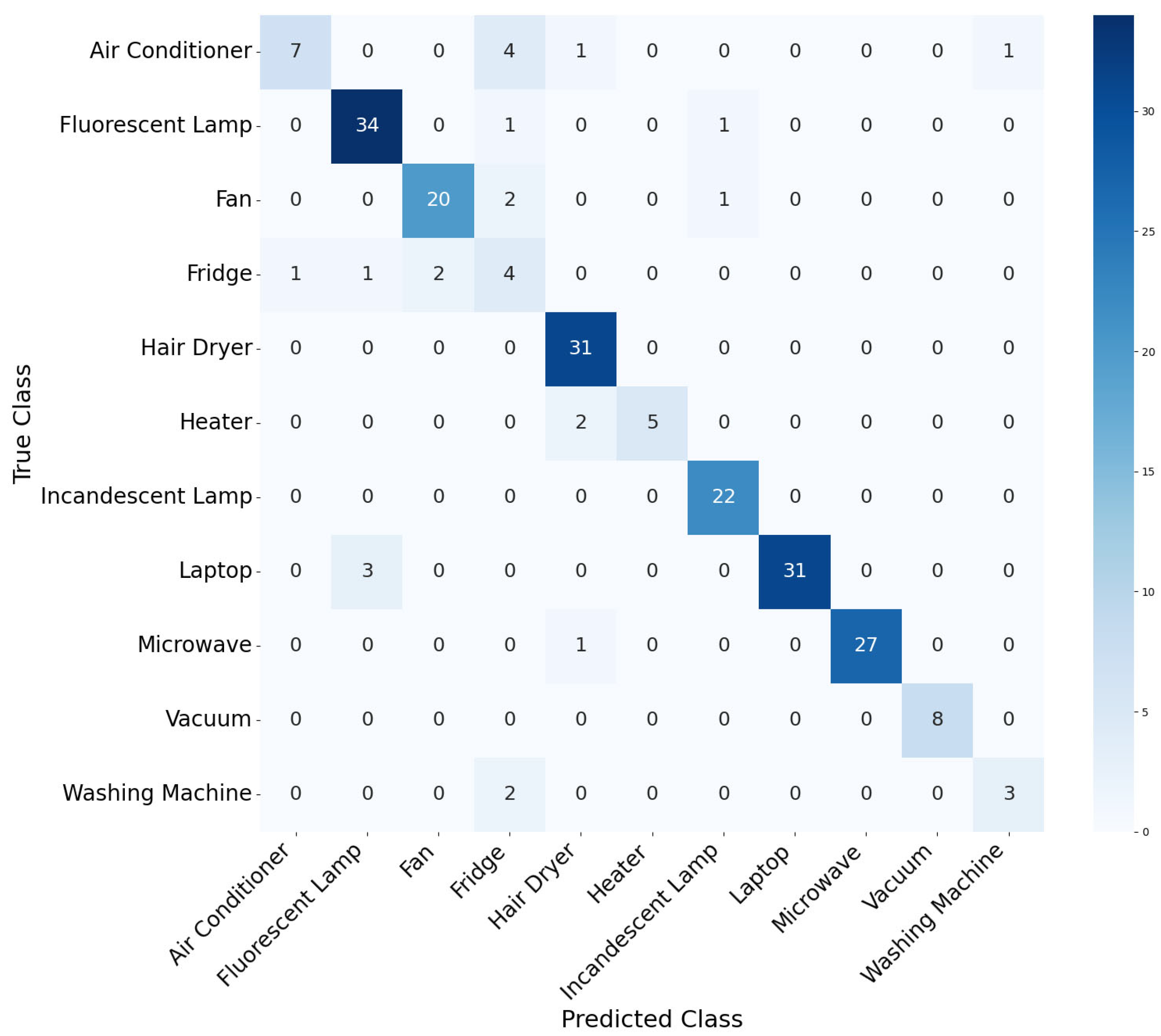
- Due to the poor discrimination of the characteristics of each measured load, the V-I trajectories of hair dryers and heaters, as well as those of different brands of refrigerators, are very similar. Therefore, the model is prone to misjudgment. For example, the V-I trajectory shapes of air conditioners and fans are extremely similar, and it is extremely difficult to distinguish them based on a single feature.
- Due to the limitations of single-modal feature information, when using power features or V-I trajectory features to represent the electrical characteristics, it is inevitable that they cannot fully and reliably reflect the electrical characteristics, especially for multi-state complex electrical appliances. The information content of a single-modal feature is still insufficient to support accurate classification. Specifically, the power of microwave ovens and electric kettles is close, but their harmonic features are very different. Therefore, a single power feature cannot well distinguish them.
- Due to the inability to achieve both high accuracy and efficiency in deep learning models, high-precision models generally use deep networks, which have large parameter quantities and high computational complexity. Therefore, it is difficult to directly deploy them on edge devices with extremely limited resources, while lightweight models necessarily sacrifice accuracy. As mentioned in Table 4 of Reference [35], for instance, the parameter quantities of neural network models such as Convolutional Neural Network and AlexNet are all greater than 20M, while the parameter quantity of the lightweight model used is approximately 1.07M. Therefore, this paper hopes to build upon Reference [35], without sacrificing too much accuracy, and reduce the parameter quantity of the lightweight model to below 1M.
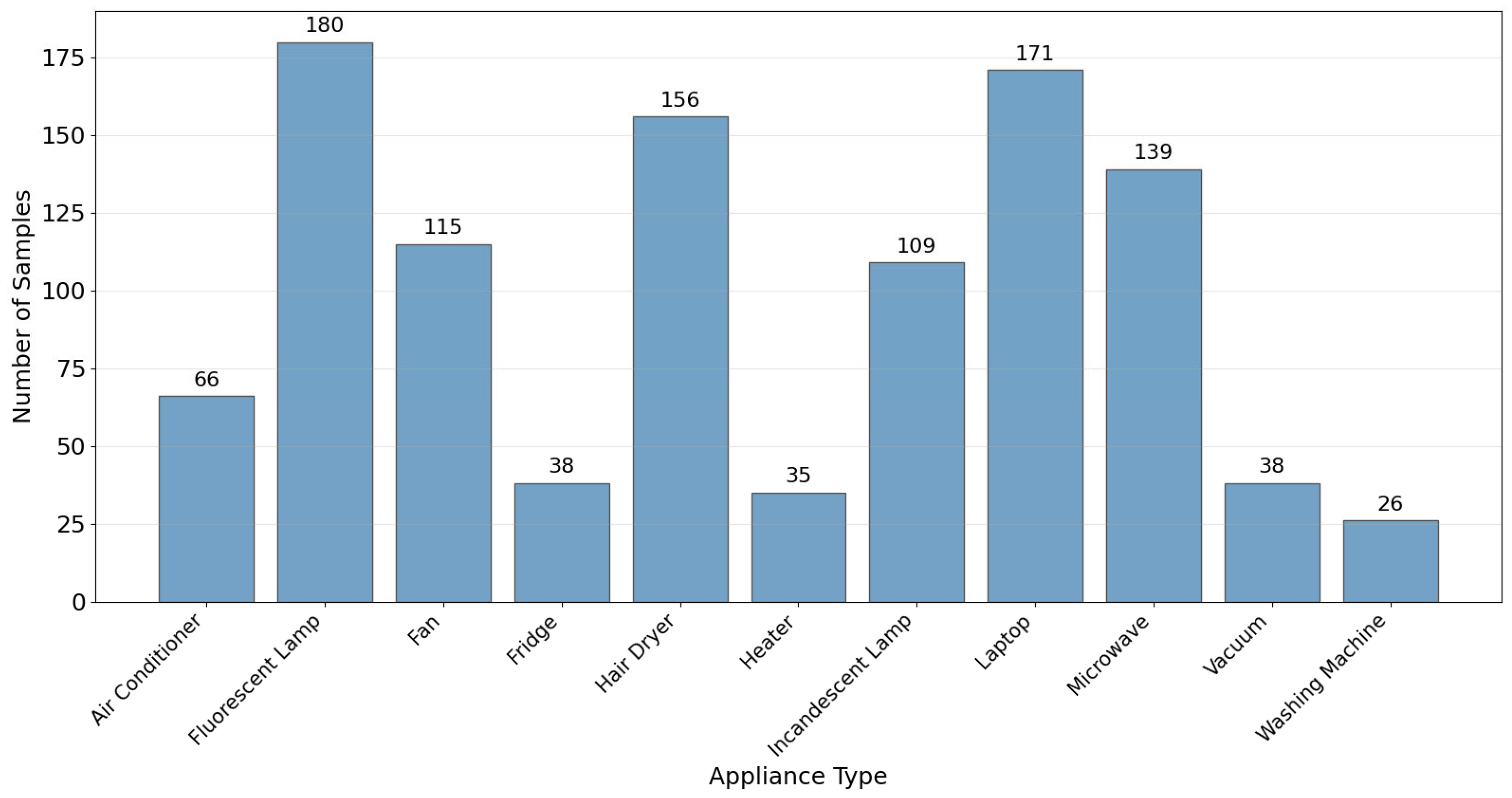
- Due to the extremely unbalanced distribution of samples in the PLAID dataset, for example, there are only 26 samples for washing machines, while there are 180 samples for energy-saving lamps, the sample imbalance naturally leads to the model’s bias towards most classes and poor recognition of minority classes.
- Due to the insufficient attention of the academic community to model lightweighting, most existing literature focuses on improving recognition accuracy without considering the feasibility of deploying the designed model on edge devices. Therefore, there is a lack of analysis of parameter and computational quantities.
2. Materials and Methods
2.1. Data Preprocessing
2.1.1. Dataset and Original Data
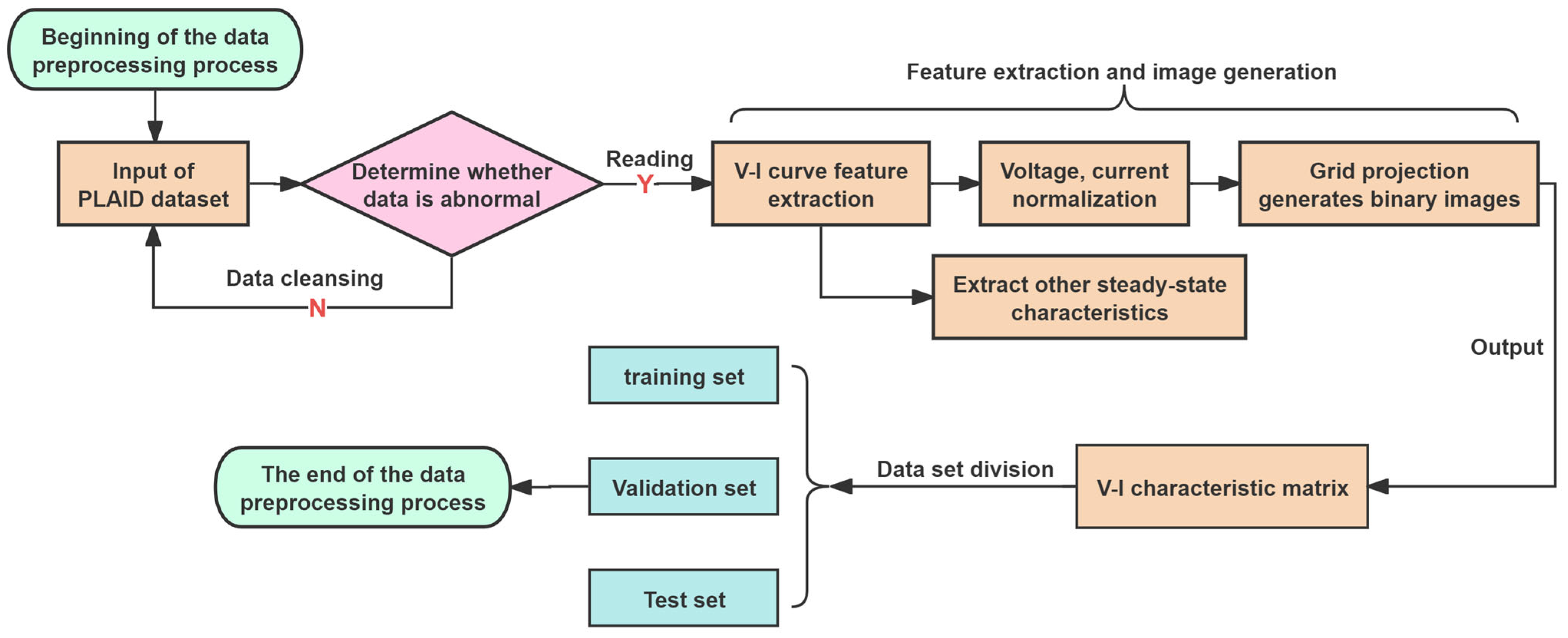
2.1.2. V-I Trajectory Generation Algorithm
- 1.
- Data standardization
- 2.
- Amplitude clipping
- 3.
- Generation of 2D Histogram
- 4.
- Logarithmic Transformation
- 5.
- Normalization
2.1.3. Other Steady-State Feature Extraction
- 1.
- Power Feature Extraction
- 2.
- Digital Feature Extraction of V-I Trajectory
- 1.
- Data Preprocessing Procedure

- 2.
- Data Set Partitioning Strategy
2.2. Load Identification Model
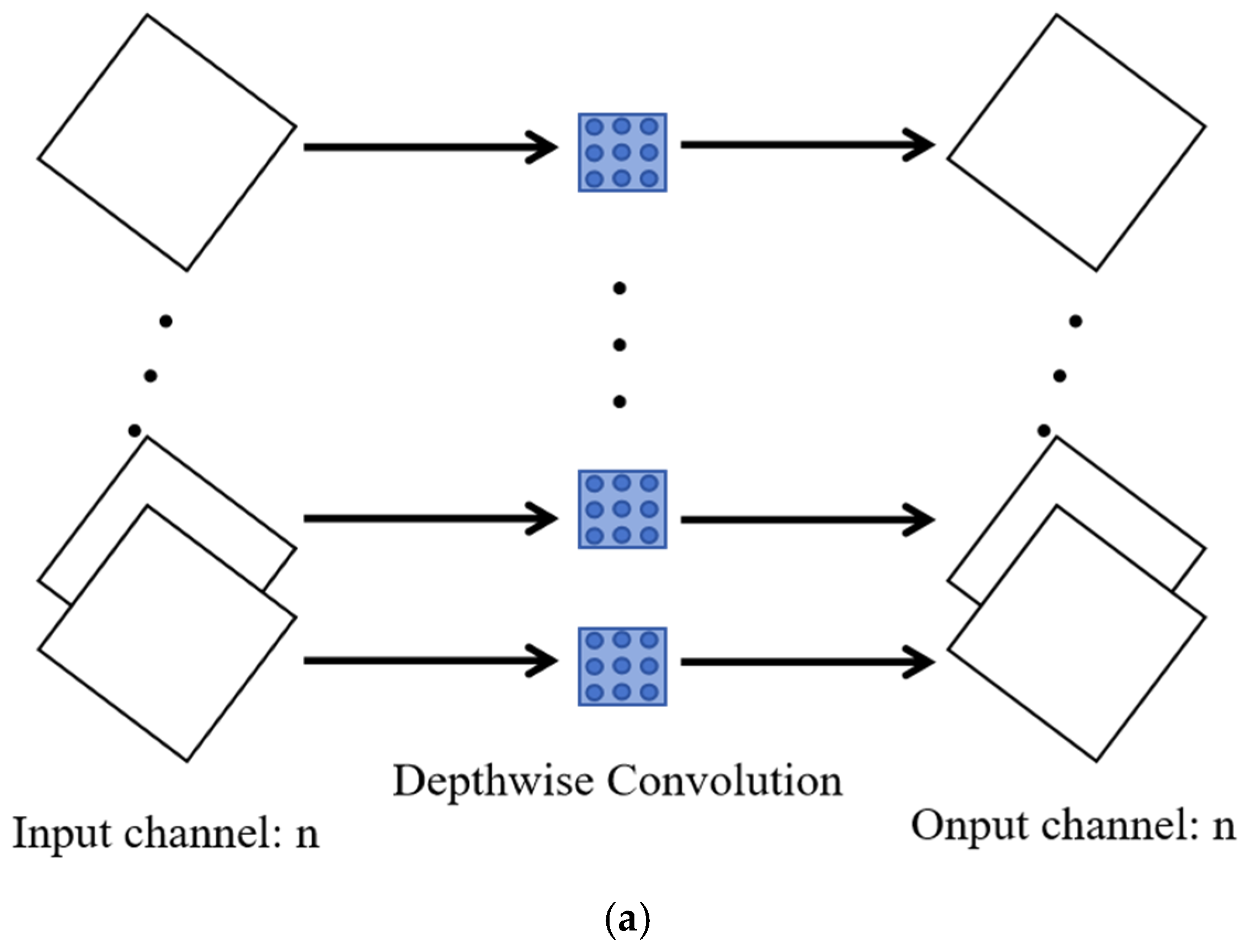
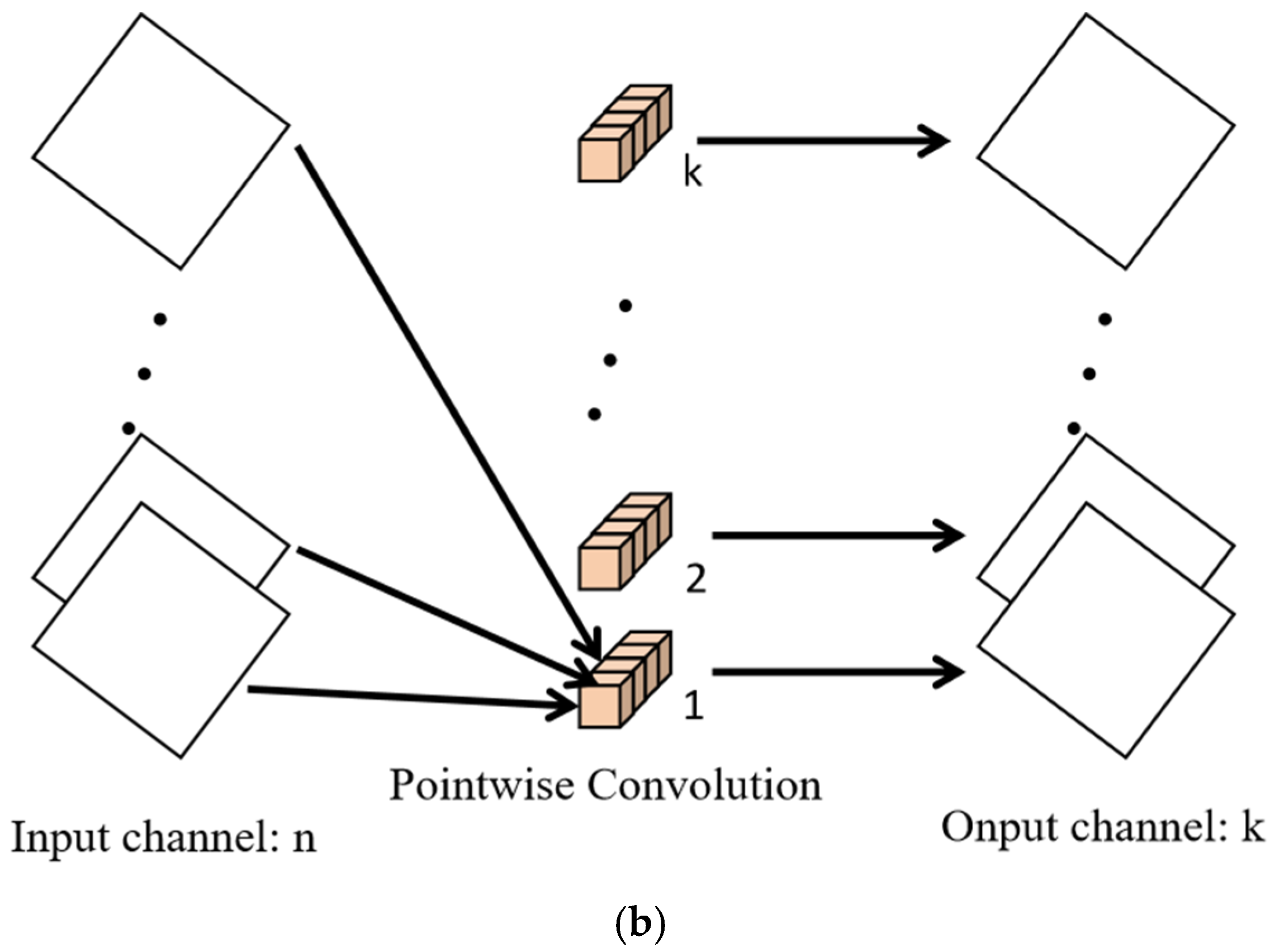
2.2.1. Depthwise Separable Convolution
- 1.
- Depthwise Convolution
- 2.
- Pointwise Convolution
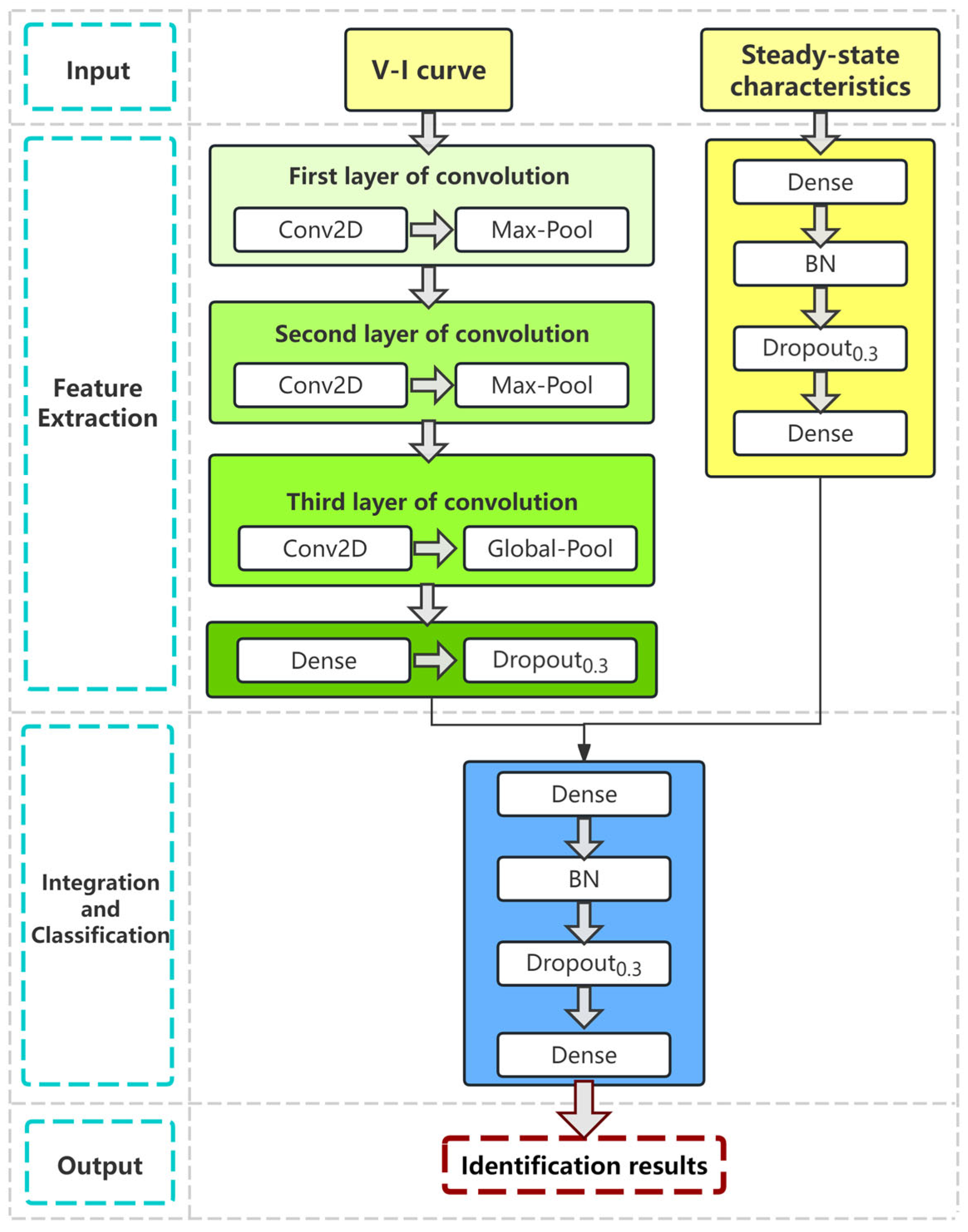
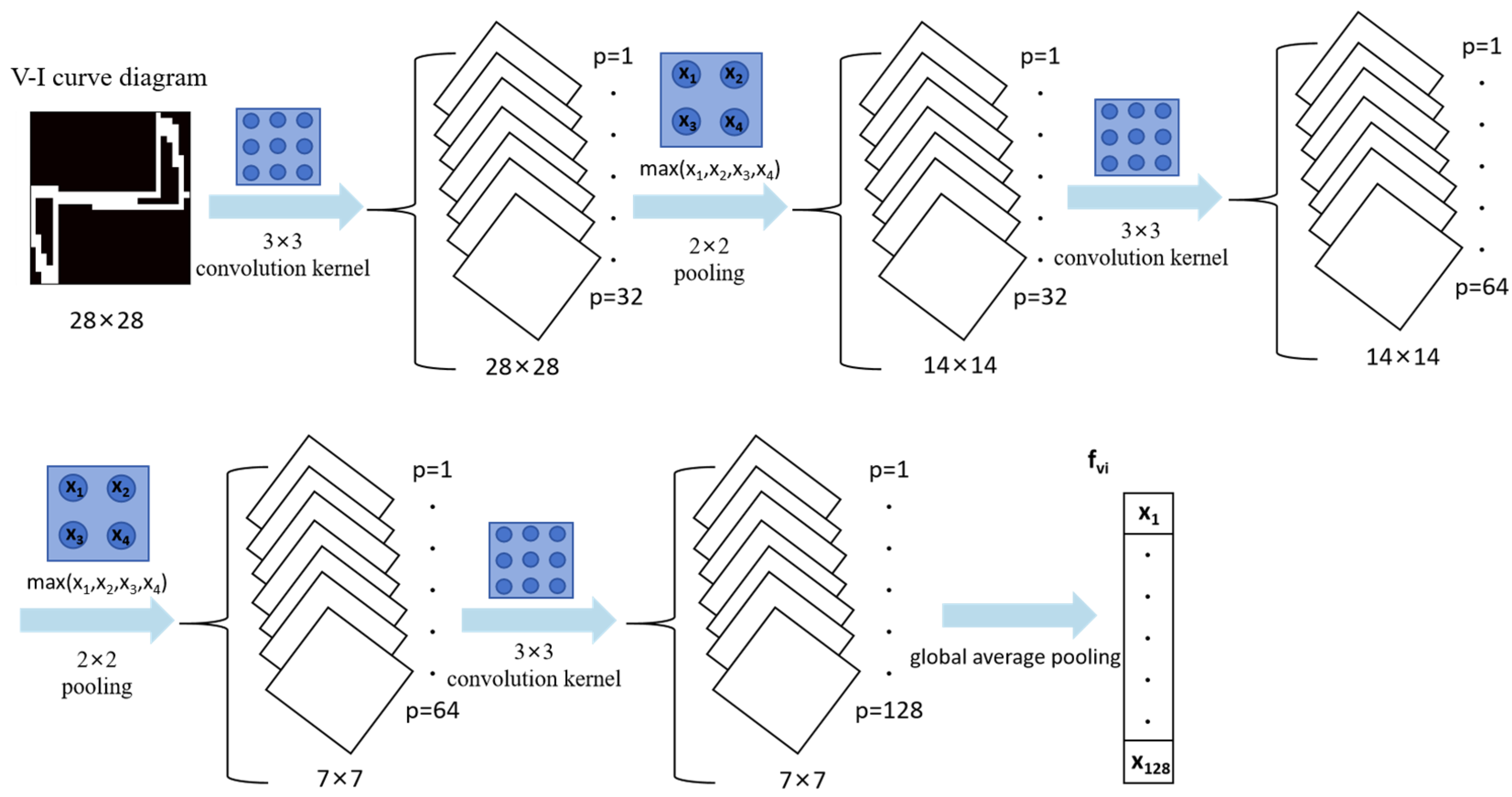
2.2.2. Convolutional Feature Extraction Module
- 1.
- First layer convolution
- 2.
- Second Layer Convolution
- 3.
- Third Layer Convolution
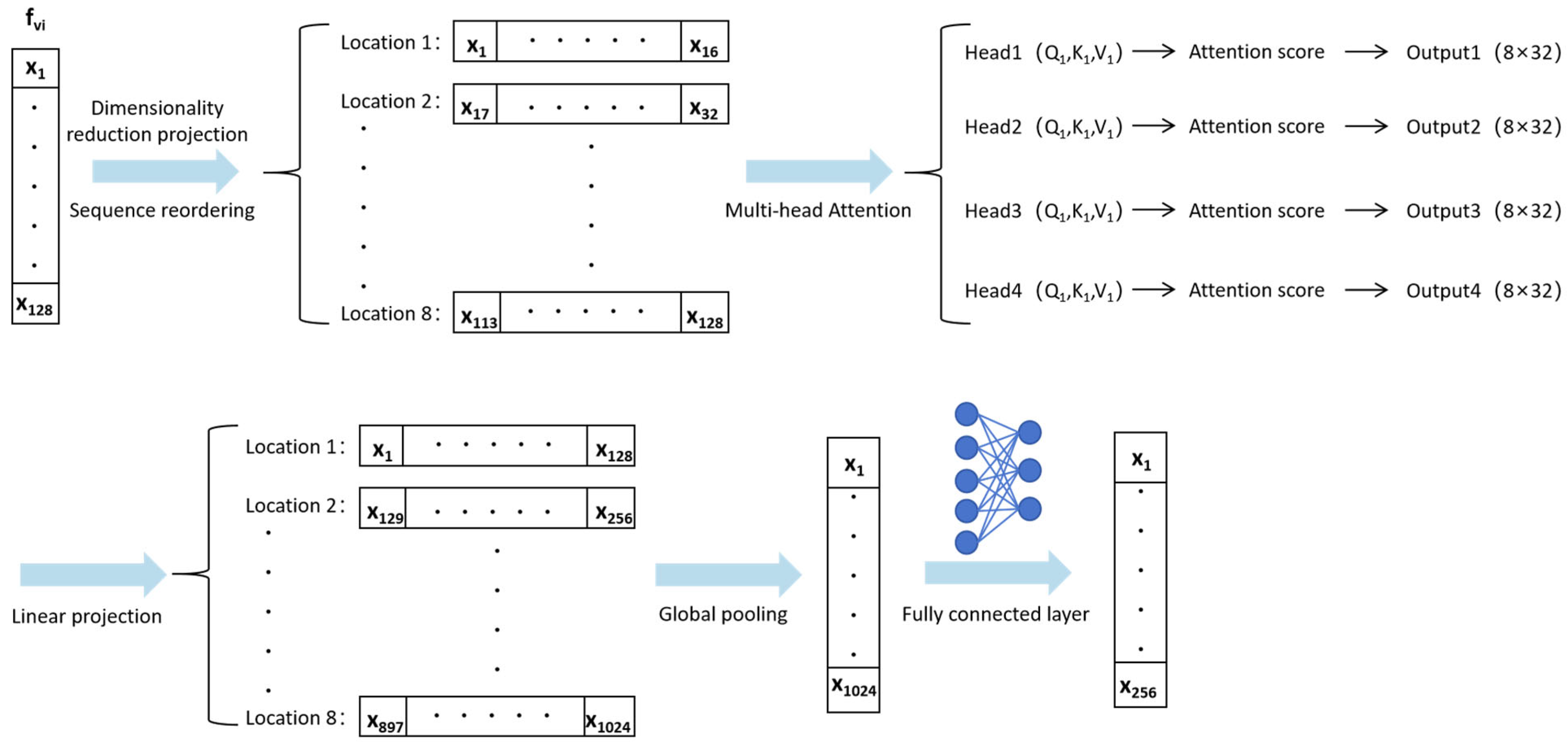
2.2.3. Multi-Head Attention
- 1.
- The basis of self-attention mechanism
- 2.
- Multi-head Attention Mechanism Calculation
- 3.
- Lightweight Multi-head Attention Design
2.2.4. Other Steady-State Feature Extraction Module
- 1.
- First layer: Feature expansion
- 2.
- Second layer: Batch normalization and activation
- 3.
- Third layer: Feature compression
2.2.5. Feature Fusion and Model Training Strategies
- 1.
- Feature Fusion and Classification
- 2.
- Model Training Strategy
3. Results
3.1. Contrast Experiment
3.1.1. Environmental Setup for Contrast Experiment
3.1.2. Performance Analysis of Lightweight Dual-Branch CNN Model Alone
- 1.
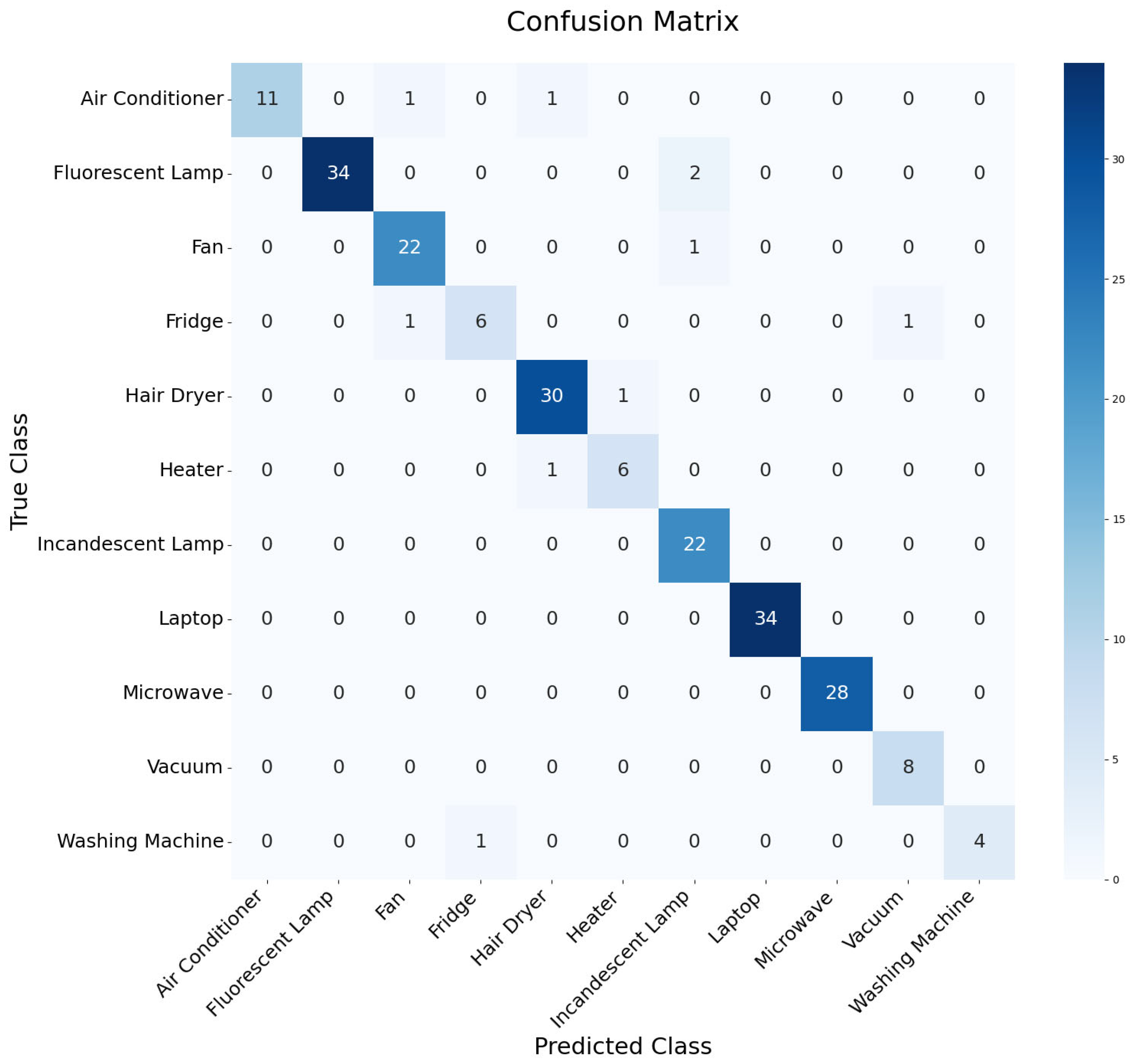
- Analysis of Confusion Matrix for Lightweight Models
- 2.
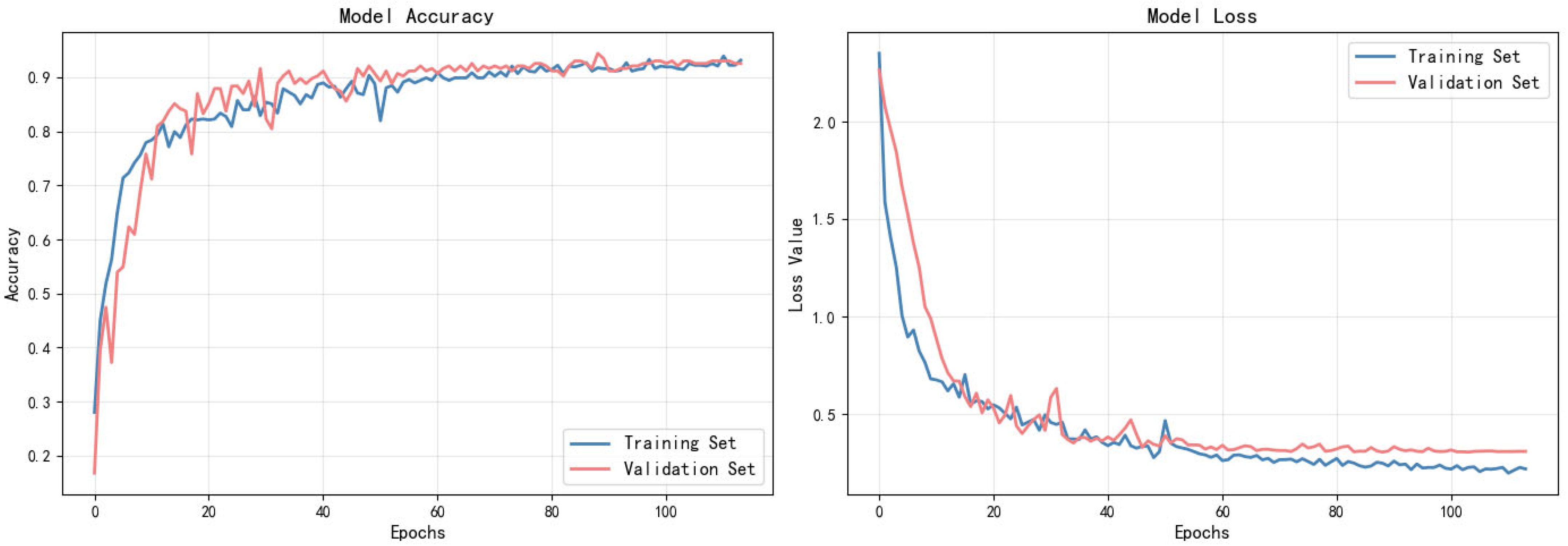
- Stability Analysis of Lightweight Model Training
3.1.3. Multi-Model Contrast Experiment Analysis
- 3.
- Comparison of Confusion Matrices
- 4.
- Comprehensive Comparison of Model Performance
- 5.
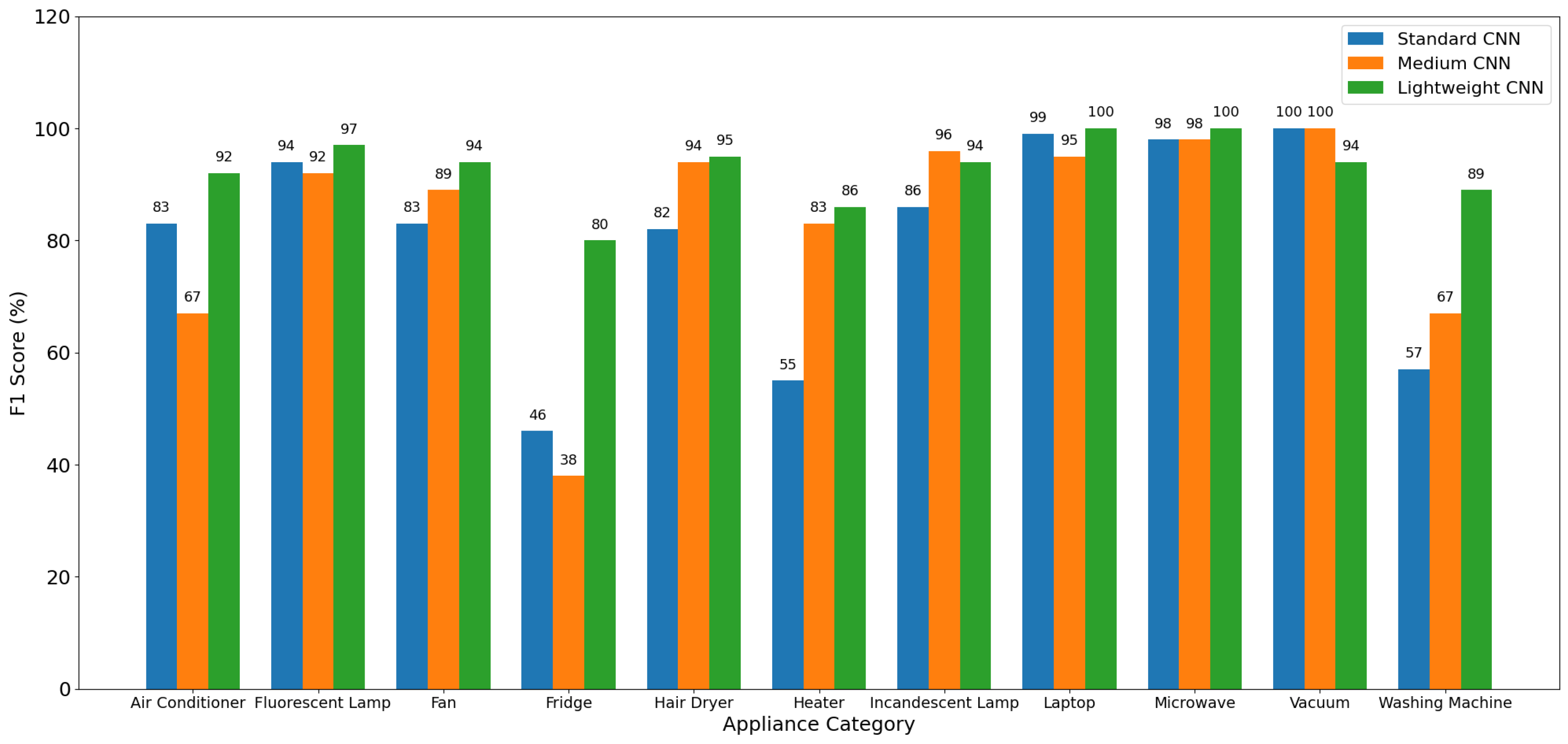
- Comparison Analysis of F1 Scores for Various Categories
- 6.
- Advantages of Lightweight Models and Engineering Application Value
3.2. Ablation Experiment
3.2.1. Environmental Setup for Ablation Experiment
- Single-branch model (only V-I trajectory): Using only the V-I trajectory as the input feature;
- Dual-branch model (V-I trajectory + other steady-state features): Fusing other steady-state features on the basis of the V-I trajectory.
3.2.2. Comparison of Model Performance of Single-Branch and Dual-Branch Models
- 1.
- Overall Performance Comparison
- 2.
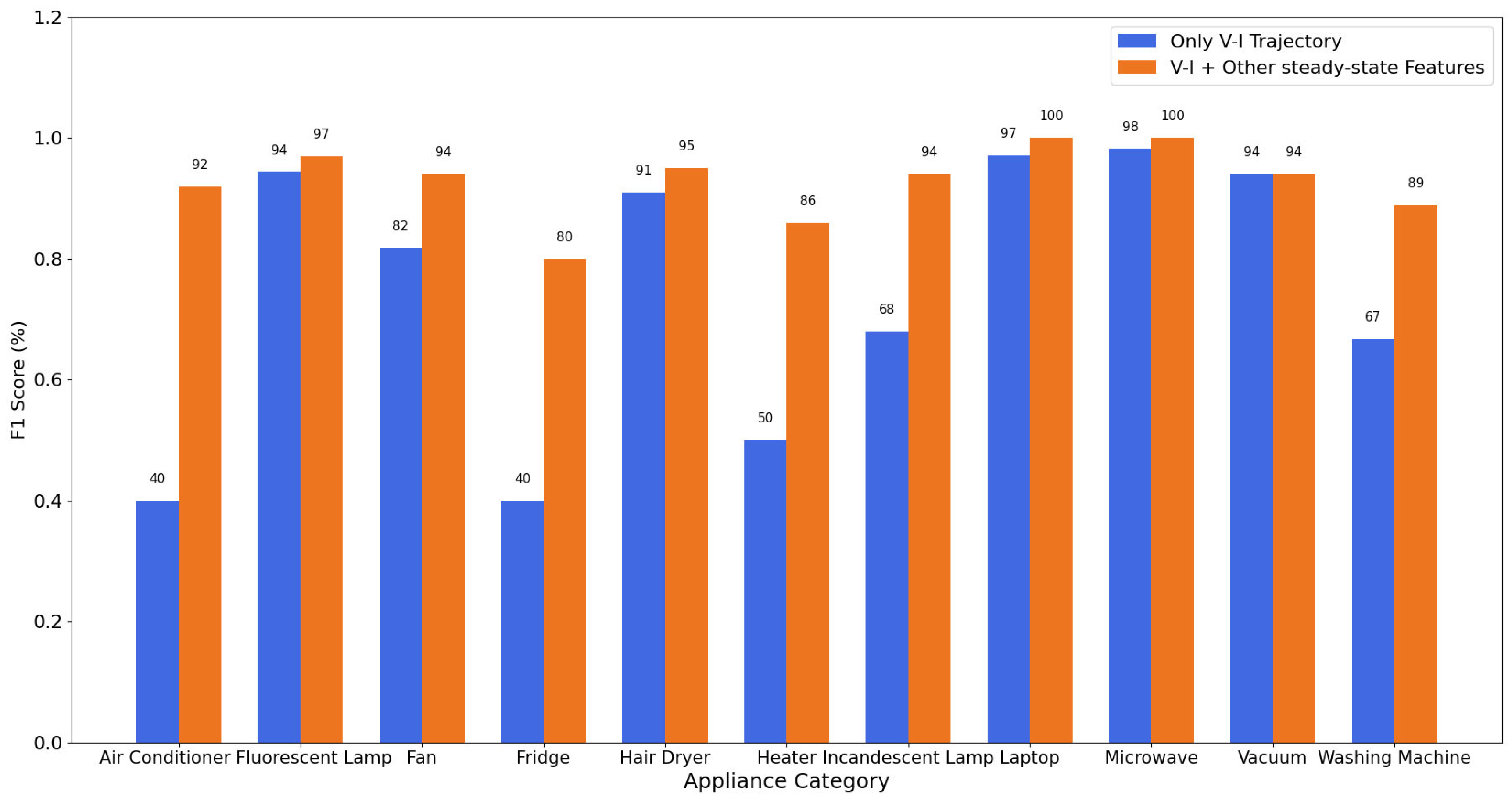
- Analysis of Performance in Various Categories
- 3.
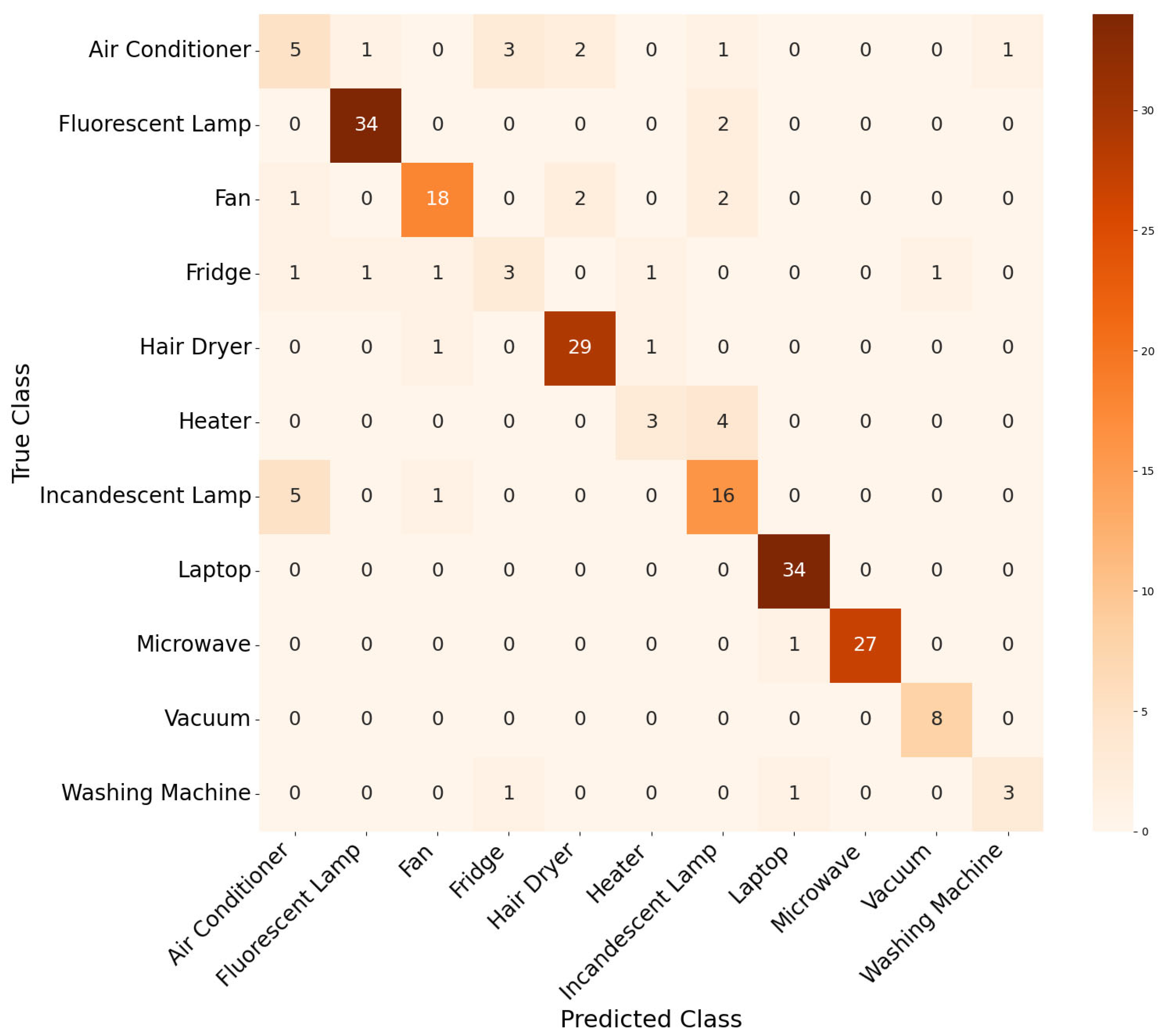
- Confusion Matrix Analysis
4. Discussion
4.1. The Advantages of This Model
4.1.1. Advantages of Lightweight Model in Edge Deployment
4.1.2. Comparison of Lightweight Models with Other Models
4.2. Limitations of This Model and Potential Challenges
4.2.1. Limitations of This Model
- All experiments only adopt single-appliance operating conditions without verification under multi-load superposition scenarios. All training and testing samples in this paper are derived from the PLAID dataset where each electrical device operates independently. In real households, multiple appliances work simultaneously, resulting in overlapping and aliasing of aggregated voltage and current waveforms. Since the existing dataset cannot simulate such superposition operating conditions, the model’s capability to decompose and identify mixed loads remains unvalidated.
- Only steady-state features are utilized while transient load signatures are absent. The model inputs merely consist of steady-state V-I images and power geometric features, without incorporating transient characteristics such as inrush starting current, waveform mutations during appliance switching and transient duration. The identification of cyclic multi-state loads like refrigerators and air conditioners heavily relies on transient information, and the lack of such features restricts the recognition accuracy for complex multi-mode loads.
- The model lacks generalization across diverse appliance types and practical scenarios. The PLAID dataset only contains 11 categories of American household appliances, lacking emerging loads such as new energy vehicle chargers and energy storage converters, as well as small household appliances unique to China. When confronted with unseen appliances outside the training set, the model’s misclassification rate rises sharply. In addition, no incremental learning mechanism is integrated, making it unable to rapidly adapt to newly added load types.
4.2.2. Potential Challenges
- Hardware resource bottlenecks of commercial smart meters: Mass-produced smart meters are equipped with low-performance microcontroller units (MCUs) with limited on-chip Flash and static random-access memory (SRAM). Although the model only has 0.17M parameters, intermediate feature matrices generated during inference are highly likely to cause memory overflow. Moreover, continuous high-frequency sampling plus convolution calculations will increase the power consumption of meters, exceeding the power supply threshold of metering modules and potentially triggering hardware protection shutdown after long-term operation.
- Interference from on-site power grid noise: Residential power grids suffer from voltage fluctuations, line losses and electromagnetic interference, which distort V-I trajectories and steady-state power indicators.
- Difficulties in identifying unseen new loads: Household appliances are updated rapidly, and numerous unknown load devices constantly emerge beyond the training set. The proposed model is a closed fixed classifier without few-shot or incremental learning modules. It can only output incorrect categories when encountering unfamiliar loads and fails to support unknown load identification and early warning functions required by power grid operation and maintenance.
4.2.3. Future Research Directions
- Add a transient feature extraction branch to integrate starting current and time-domain switching features, construct joint steady-transient multi-modal inputs, and improve the identification accuracy of cyclic loads such as air conditioners and refrigerators.
- Supplement training samples with multi-load superposition datasets including the REDD dataset, and build a multi-label classification framework to realize simultaneous decomposition and identification of multiple running appliances.
- Introduce few-shot and federated incremental learning algorithms to quickly fine-tune the model for new loads without uploading users’ raw electrical data.
- Complete full-process tests including model transplantation, power consumption and memory occupancy on mainstream meter MCUs, and optimize feature caching and computing scheduling logic to reduce memory usage and operating power consumption of edge terminals.
5. Conclusions
- A V-I trajectory generation scheme based on 2D histogram logarithmic transformation is proposed. The 28 × 28 trajectory images and four types of steady-state numerical features (active power, reactive power, trajectory area and PCA global slope) are extracted simultaneously to construct a complementary multi-modal feature set, which effectively makes up for the insufficient representation ability of single V-I trajectory features.
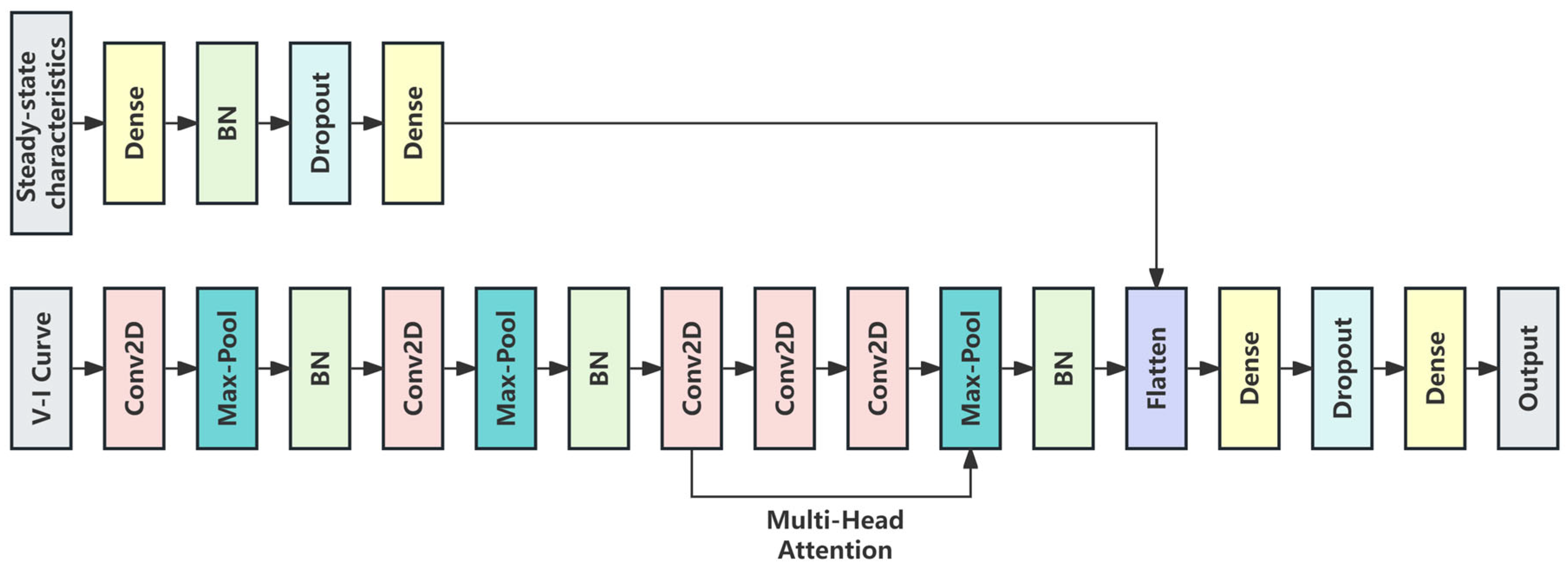
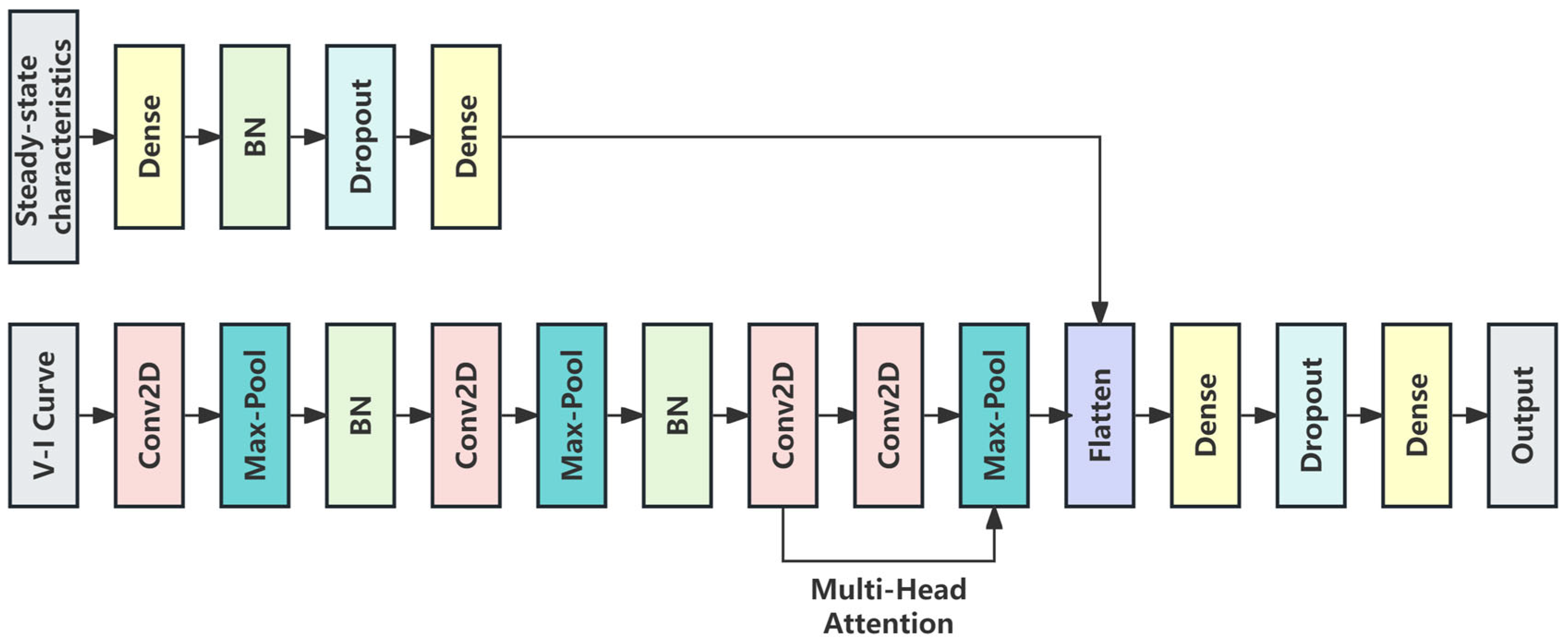
- A lightweight dual-branch neural network architecture is designed. The visual branch adopts three layers of depthwise separable convolution combined with lightweight multi-head attention to mine global spatial correlation features of V-I trajectories; the numerical branch uses multi-layer fully connected networks to perform nonlinear encoding of steady-state features; load classification is realized via concatenated feature fusion. Global average pooling and channel reduction strategies are introduced to greatly compress model parameters.
- Multiple comparative experiments and ablation experiments are carried out on the PLAID dataset to fully verify the superiority of the proposed method. The model contains only 0.17M parameters with a recognition accuracy of 95.35%, a Macro F1 of 92.73% and a Weighted F1 of 95.31%. All performance indicators outperform the comparison models, and the single-sample inference delay is only 0.52 ms. Ablation experiments demonstrate that the fusion of steady-state features improves the overall recognition accuracy by more than 11.6%, and greatly optimizes the classification performance of confusing small-sample loads, such as air conditioners, refrigerators and washing machines.
Author Contributions
Funding
Data Availability Statement
Conflicts of Interest
References
- International Energy Agency. Global Energy Review 2026; IEA: Paris, France, 2026. [Google Scholar]
- Xiang, H.T.; Su, W.J.; Zong, Y. Non-Intrusive Load Monitoring: A Systematic Review of Methods, Scenario-Specific Challenges, and Pathways to Practical Deployment. Energies 2026, 19, 1883. [Google Scholar] [CrossRef] [Scilit]
- Han, F.J.; Wang, X.H.; Qiao, J.; Shi, M.J.; Pu, T.J. Research Review on New Power System Load Forecasting Based on Artificial Intelligence Technology. Proc. CSEE 2023, 43, 8569–8592. [Google Scholar]
- Chen, H.Y.; Cai, W.J.; Chen, J.R. Power Internet of Things Technology Integrating Energy and Information. Power Syst. Prot. Control 2021, 49, 8–17. [Google Scholar]
- Liu, B. Key Technologies of Fully Autonomous Non-Intrusive Power Load Monitoring. Master’s Thesis, Tianjin University, Tianjin, China, 2019. [Google Scholar]
- Guo, H.X.; Lu, J.W.; Yang, C.; Liu, Z.J. Review on Key Technical Problems of Non-intrusive Load Monitoring. Electr. Power Autom. Equip. 2021, 41, 135–146. [Google Scholar]
- Ridi, A.; Gisler, C.; Hennebert, J. A survey on intrusive load monitoring for appliance recognition. In Proceedings of the 22nd International Conference on Pattern Recognition, Stockholm, Sweden, 24–28 August 2014. [Google Scholar]
- Deng, X.P.; Zhang, G.Q.; Wei, Q.L.; Peng, W.; Li, C.D. A Review of Non-intrusive Load Monitoring. Acta Autom. Sin. 2022, 48, 644–663. [Google Scholar]
- Cheng, X.; Li, L.Z.; Wu, H.; Ding, Y.; Song, Y.H.; Sun, W.Z. Review of Non-intrusive Load Monitoring and Decomposition. Power Syst. Technol. 2016, 40, 3108–3117. [Google Scholar]
- Luan, W.P.; Wei, Z.; Liu, B.; Liu, Z.S.; Yu, Y.X. Test and Evaluation Method of Non-intrusive Load Monitoring Algorithm. Power Syst. Technol. 2022, 46, 4568–4579. [Google Scholar]
- Hart, G.W. Nonintrusive appliance load monitoring. Proc. IEEE 1992, 80, 1870–1891. [Google Scholar] [CrossRef] [Scilit]
- Angelis, G.F.; Timplalexis, C.; Krinidis, S.; Ioannidis, D.; Tzovaras, D. NILM applications: Literature review of learning approaches, recent developments and challenges. Energy Build. 2022, 261, 111951. [Google Scholar] [CrossRef] [Scilit]
- Niu, L.L.; Jia, H.J. A transient event detection algorithm for non-intrusive load monitoring. Autom. Electr. Power Syst. 2011, 35, 30–35. [Google Scholar]
- Shi, S.B.; Zhang, H.; Deng, S.C.; Zhou, D.G.; Zhou, H.; Hu, W.S. CUSUM transient event detection algorithm based on composite sliding window. Electr. Meas. Instrum. 2019, 56, 13–18. [Google Scholar]
- Nakano, Y.; Murata, H.; Yoshimoto, K.; Hidaka, S.; Tadokoro, M.; Nagasaka, K. Non-intrusive electric appliances load monitoring system using harmonic pattern recognition—Performance test results at real households. In Proceedings of the Fourth International Conference on Energy Efficiency in Domestic Appliances and Lighting (EEDAL), London, UK, 21–23 June 2006; pp. 477–488. [Google Scholar]
- Srinivasan, D.; Ng, W.; Liew, A. Neural-network-based signature recognition for harmonic source identification. IEEE Trans. Power Deliv. 2006, 21, 398–405. [Google Scholar]
- Gillis, J.; Alshareef, S.; Morsi, W. Nonintrusive Load Monitoring Using Wavelet Design and Machine Learning. IEEE Trans. Smart Grid 2016, 7, 320–328. [Google Scholar]
- Yang, Y.R.; Huang, Y.K.; Chen, W.H. Non-intrusive load monitoring algorithm based on V-I trajectory features. Comput. Digit. Eng. 2020, 48, 2353–2358. [Google Scholar]
- Du, L.; He, D.W.; Harley, R.G.; Habetler, T.G. Electric load classification by binary voltage-current trajectory mapping. IEEE Trans. Smart Grid 2016, 7, 358–365. [Google Scholar]
- Xie, Y.; Mei, F.; Zheng, J.Y.; Gao, A.; Li, X.; Sha, H.Y. Non-intrusive load identification method based on V-I trajectory color coding. Autom. Electr. Power Syst. 2022, 46, 93–102. [Google Scholar]
- Li, P.; Yu, Y.X. Non-intrusive power load online decomposition. J. Tianjin Univ. 2009, 42, 303–308. [Google Scholar]
- Liu, X.J.; Cao, M.H.; Xu, Y.J. Non-intrusive load monitoring based on improved chicken swarm algorithm. Electr. Power Autom. Equip. 2018, 38, 235–240. [Google Scholar]
- Song, X.F.; Zhou, M.; Tu, J.; Li, G.Y. Non-intrusive load monitoring method based on k-NN combined with kernel Fisher discriminant. Autom. Electr. Power Syst. 2018, 42, 73–80. [Google Scholar]
- Wang, Y. Non-intrusive Load Identification and User-Level Load Forecasting Based on the Integration of Steady-State Characteristics and Event-Triggered Mechanisms. Master’s Thesis, University of Electronic Science and Technology, Chengdu, China, 2025. [Google Scholar]
- Liu, Y.; You, W.X.; Yang, M. Non-Intrusive Load Identification Based on Multivariate Features and Information Entropy-Weighted Ensemble. Energies 2025, 18, 2369. [Google Scholar] [CrossRef] [Scilit]
- Yan, F.; Zhang, R.X.; Sun, Y.J.; Tao, Y.H.; Huang, G.P.; Sun, W.T. Non-intrusive load identification method based on improved KNN algorithm. J. Fudan Univ. (Nat. Sci.) 2021, 60, 182–188. [Google Scholar]
- Wang, S.X.; Guo, L.Y.; Chen, H.W.; Deng, X.Y. Non-intrusive load identification algorithm based on feature fusion and deep learning. Autom. Electr. Power Syst. 2020, 44, 103–110. [Google Scholar]
- Zhu, H.; Cao, N.; Lu, H.; Zhang, Z.J.; Ke, W. Non-intrusive load identification method based on feature weighted KNN. Electron. Meas. Technol. 2022, 45, 70–75. [Google Scholar]
- Zhang, D.; Gong, Y. The comparison of LightGBM and XGBoost coupling factor analysis and prediagnosis of acute liver failure. IEEE Access 2020, 8, 220990–221003. [Google Scholar] [CrossRef] [Scilit]
- De Baets, L.; Ruyssinck, J.; Develder, C.; Dhaene, T.; Deschrijver, D. Appliance classification using VI trajectories and convolutional neural networks. Energy Build. 2018, 158, 32–36. [Google Scholar] [CrossRef] [Scilit]
- Kelly, J.; Knottenbelt, W. Neural nilm: Deep neural networks applied to energy disaggregation. In Proceedings of the 2nd ACM International Conference on Embedded Systems for Energy-Efficient Built Environments, Seoul, Republic of Korea, 4–5 November 2015. [Google Scholar]
- Zhang, C.; Zhong, M.; Wang, Z.; Goddard, N.; Sutton, C. Sequence-to-point learning with neural networks for non-intrusive load monitoring. In Proceedings of the AAAI Conference on Artificial Intelligence, New Orleans, LA, USA, 2–7 February 2018. [Google Scholar]
- Gu, G. Research on Non-Intrusive Household Power Load Monitoring Technology Based on Deep Learning. Master’s Thesis, Donghua University, Shanghai, China, 2025. [Google Scholar]
- Moreno, S.; Teran, H.; Villarreal, R.; Vega-Sampayo, Y.; Paez, J.; Ochoa, C.; Espejo, C.A.; Chamorro-Solano, S.; Montoya, C. An Ensemble Method for Non-Intrusive Load Monitoring (NILM) Applied to Deep Learning Approaches. Energies 2024, 17, 4548. [Google Scholar] [CrossRef] [Scilit]
- Kulathilaka, M.J.S.; Saravanan, S.; Kumarasiri, H.D.H.P.; Logeeshan, V.; Kumarawadu, S.; Wanigasekara, C. NILM for Commercial Buildings: Deep Neural Networks Tackling Nonlinear and Multi-Phase Loads. Energies 2024, 17, 3802. [Google Scholar] [CrossRef] [Scilit]
- Howard, A.G.; Zhu, M.; Chen, B.; Kalenichenko, D.; Wang, W.; Weyand, T.; Andreetto, M.; Adam, H. MobileNets: Efficient convolutional neural networks for mobile vision applications. arXiv 2017, arXiv:1704.04861. [Google Scholar]
- Ma, N.; Zhang, X.; Zheng, H.T.; Sun, J. ShuffleNet V2: Practical guidelines for efficient CNN architecture design. In Proceedings of the European Conference on Computer Vision, Munich, Germany, 8–14 September 2018. [Google Scholar]
- Wang, P.Y.; Ding, H.Y.; Tang, W.; Chen, J.X.; Liu, W.P.; Luan, W.P.; Zhang, X.P. Non-intrusive load identification method based on lightweight neural network. Proc. Chin. Soc. Electr. Eng. 2026, in press. [Google Scholar]
- Abu Sbeitan, M.; Shareef, H.; Asna, M.; Errouissi, R.; Daud, M.Z.; Guntupalli, R.; Duddeti, B.B. Phase-Space Reconstruction and 2-D Fourier Descriptor Features for Appliance Classification in Non-Intrusive Load Monitoring. Energies 2026, 19, 1512. [Google Scholar] [CrossRef] [Scilit]
- Dong, Z.; Zhang, X.; Cai, S.; Yang, Y.; Jiang, W.; Song, Y.; Zhao, W.; Zhang, D. Real-time NILM: A Lightweight and Low Power Approach. Energy 2025, 335, 138100. [Google Scholar] [CrossRef] [Scilit]
- Serna, D.; Arias, C.; Manrique, T.; Guerrero, A.; Sierra, J. Assessing Computational Resources and Performance of Non-Intrusive Load Monitoring (NILM) Algorithms on Edge Computing Devices. Energies 2025, 18, 5991. [Google Scholar] [CrossRef] [Scilit]
- Liu, X.J. A Non-Intrusive Load Monitoring Method for Edge Computing. Master’s Thesis, Ningxia University, Yinchuan, China, 2023. [Google Scholar]



| Grid Size | Test Accuracy | Macro F1 | Model Parameters (M) | V-I Trajectory Inference Time (ms) |
|---|---|---|---|---|
| 14 × 14 | 88.84% | 81.8% | 0.16 | 0.4016 |
| 28 × 28 | 94.42% | 90.59% | 0.17 | 0.5600 |
| 56 × 56 | 92.98% | 89.03% | 0.21 | 1.0506 |
| Electrical Appliance Type | Trajectory Characteristics | Typical Shape |
|---|---|---|
| Pure resistive loads (e.g., heater) | Linear through the origin | straight line |
| inductive load (e.g., fan) | ellipse | ellipse |
| capacitive load (e.g., power supply) | Nonlinear, multi-ring | tortile |
| Rectifying load (e.g., laptop) | Central depression | Belt-like shape |
| Layer | Standard Convolution Parameter Quantity | Depthwise Separable Convolution Parameter Quantity | Reduction |
|---|---|---|---|
| First Layer (132, 3 × 3) | 288 | 41 | 85.8% |
| depthwise convolution | 3 × 3 × 1 = 9 | ||
| pointwise convolution | 1 × 1 × 1 × 32 = 32 | ||
| Second Layer (32–64, 3 × 3) | 18,432 | 2336 | 87.3% |
| depthwise convolution | 3 × 3 × 32 = 288 | ||
| pointwise convolution | 1 × 1 × 32 × 64 = 2048 | ||
| Third Layer (64–128, 3 × 3) | 73,728 | 8768 | 88.1% |
| depthwise convolution | 3 × 3 × 64 = 576 | ||
| pointwise convolution | 1 × 1 × 64 × 128 = 8192 | ||
| summation | 92,448 | 11,145 | 87.9% |
| Name of Parameter | Symbol | Value | Explanation |
|---|---|---|---|
| Batch size | 32 | The number of samples processed in each iteration | |
| Maximum round | 200 | Maximum training rounds (early stopping can terminate prematurely) | |
| Initial learning rate | 0.001 | Initial learning rate of Adam optimizer | |
| Learning rate decay rate | 0.96 | Decay factor per 100 steps | |
| L2 regularization coefficient | Weight decay intensity | ||
| Dropout rate | 0.2/0.3/0.5 | The dropout ratios of each layer | |
| Early Stop Pacing Value | 30 | Number of consecutive cycles without improvement |
| Model Type | Accuracy | Parameter Quantity | Macro F1 | Weighted F1 |
|---|---|---|---|---|
| standard CNN | 86.51% | 38.31M | 80.34% | 87.31% |
| medium CNN | 87.91% | 1.84M | 83.52% | 89.53% |
| lightweight CNN | 95.35% | 0.17M | 92.73% | 95.31% |
| Model Type | Accuracy | Macro F1 | Weighted F1 |
|---|---|---|---|
| Only the V-I curve | 83.72% | 74.64% | 83.34% |
| V-I curve + other steady-state characteristics | 95.35% | 92.73% | 95.31% |
| Model Type | Parameter Quantity | Average Inference Time (ms) | Batch Single-Sample Time (ms) |
|---|---|---|---|
| standard CNN | 38.31M | 65.799611 | 1.669903 |
| medium CNN | 1.84M | 62.724812 | 0.754371 |
| lightweight CNN | 0.17M | 49.896312 | 0.522945 |
Disclaimer/Publisher’s Note: The statements, opinions and data contained in all publications are solely those of the individual author(s) and contributor(s) and not of MDPI and/or the editor(s). MDPI and/or the editor(s) disclaim responsibility for any injury to people or property resulting from any ideas, methods, instructions or products referred to in the content. |
© 2026 by the authors. Licensee MDPI, Basel, Switzerland. This article is an open access article distributed under the terms and conditions of the Creative Commons Attribution (CC BY) license.
Share and Cite
Li, Y.; Li, Y.; Han, P. A Non-Intrusive Load Identification Method Based on the Fusion of Steady-State Features and Lightweight Network. Energies 2026, 19, 3131. https://doi.org/10.3390/en19133131
Li Y, Li Y, Han P. A Non-Intrusive Load Identification Method Based on the Fusion of Steady-State Features and Lightweight Network. Energies. 2026; 19(13):3131. https://doi.org/10.3390/en19133131
Chicago/Turabian StyleLi, Yiran, Yan Li, and Peng Han. 2026. "A Non-Intrusive Load Identification Method Based on the Fusion of Steady-State Features and Lightweight Network" Energies 19, no. 13: 3131. https://doi.org/10.3390/en19133131
APA StyleLi, Y., Li, Y., & Han, P. (2026). A Non-Intrusive Load Identification Method Based on the Fusion of Steady-State Features and Lightweight Network. Energies, 19(13), 3131. https://doi.org/10.3390/en19133131