Towards 50% Efficiency in Opposed Free-Piston Linear Generators Operating with Natural Gas and HCCI Combustion

 , ,
, ,
Abstract
1. Introduction
- The proposed computational framework, based on the Flamelet Generated Manifold approach, is validated against experimental RCM data from Svrcek [21] under both motored and fired conditions with stoichiometric methane–air mixtures, consolidating the experimental findings on maximum achievable efficiency.
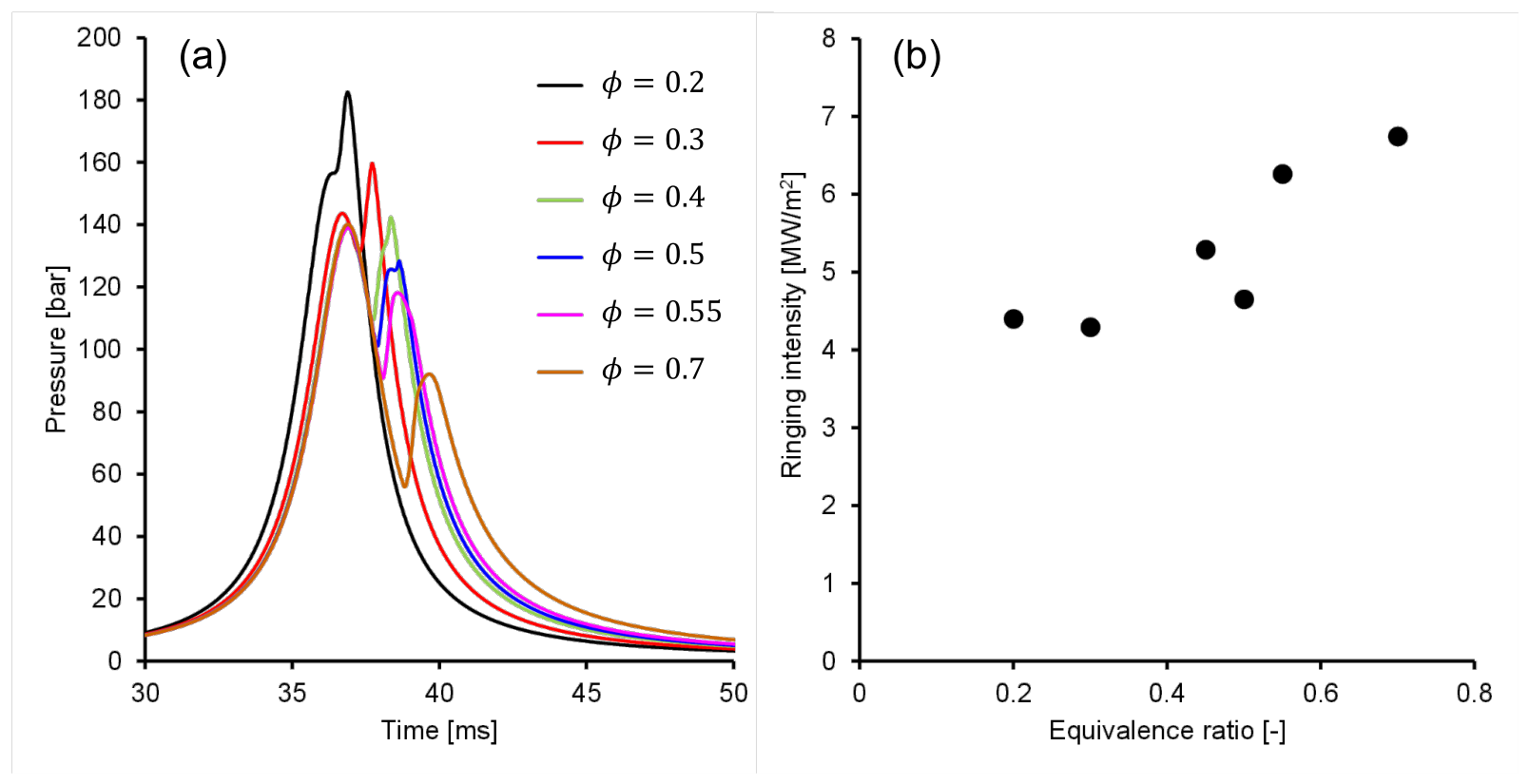
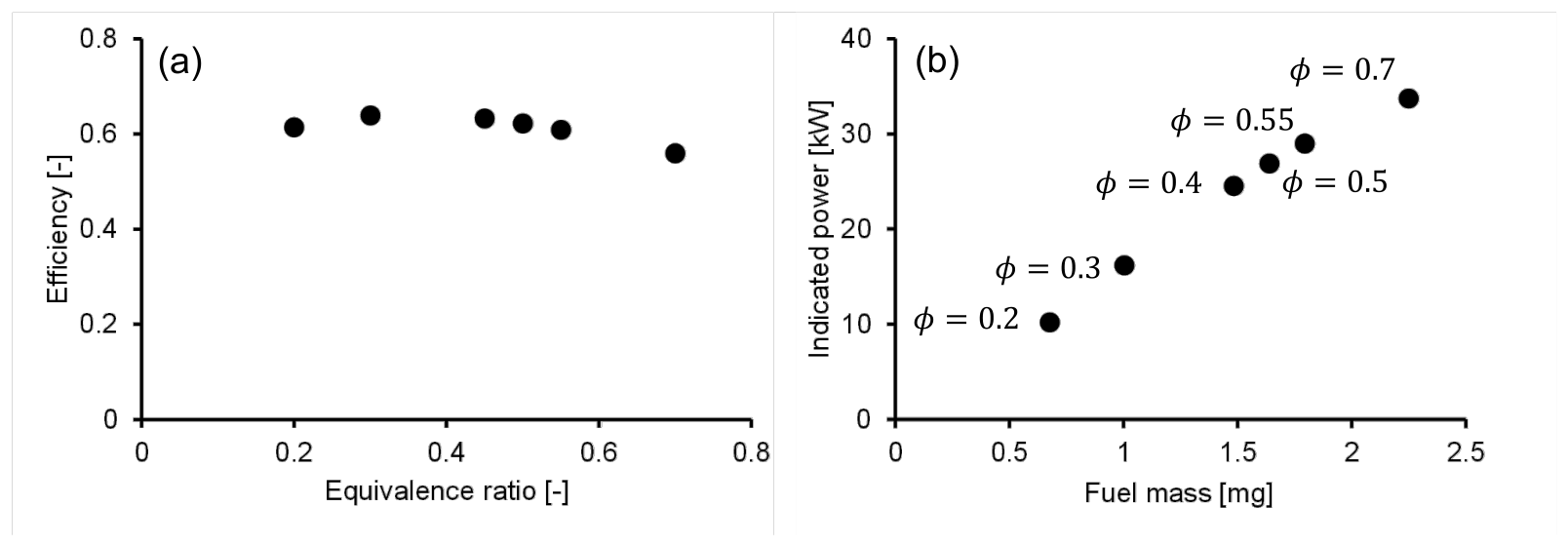
- A novel RCM-2 configuration is introduced to better reproduce the dynamic behavior of an opposed-piston FPLG, incorporating an air-spring system and a larger bore diameter representative of commercial prototypes. An extensive parametric study over the equivalence ratio range = 0.2–0.7 identifies optimal operating conditions in terms of indicated efficiency, ringing intensity and NOx emissions potential, providing a first basis for the subsequent FPLG design.
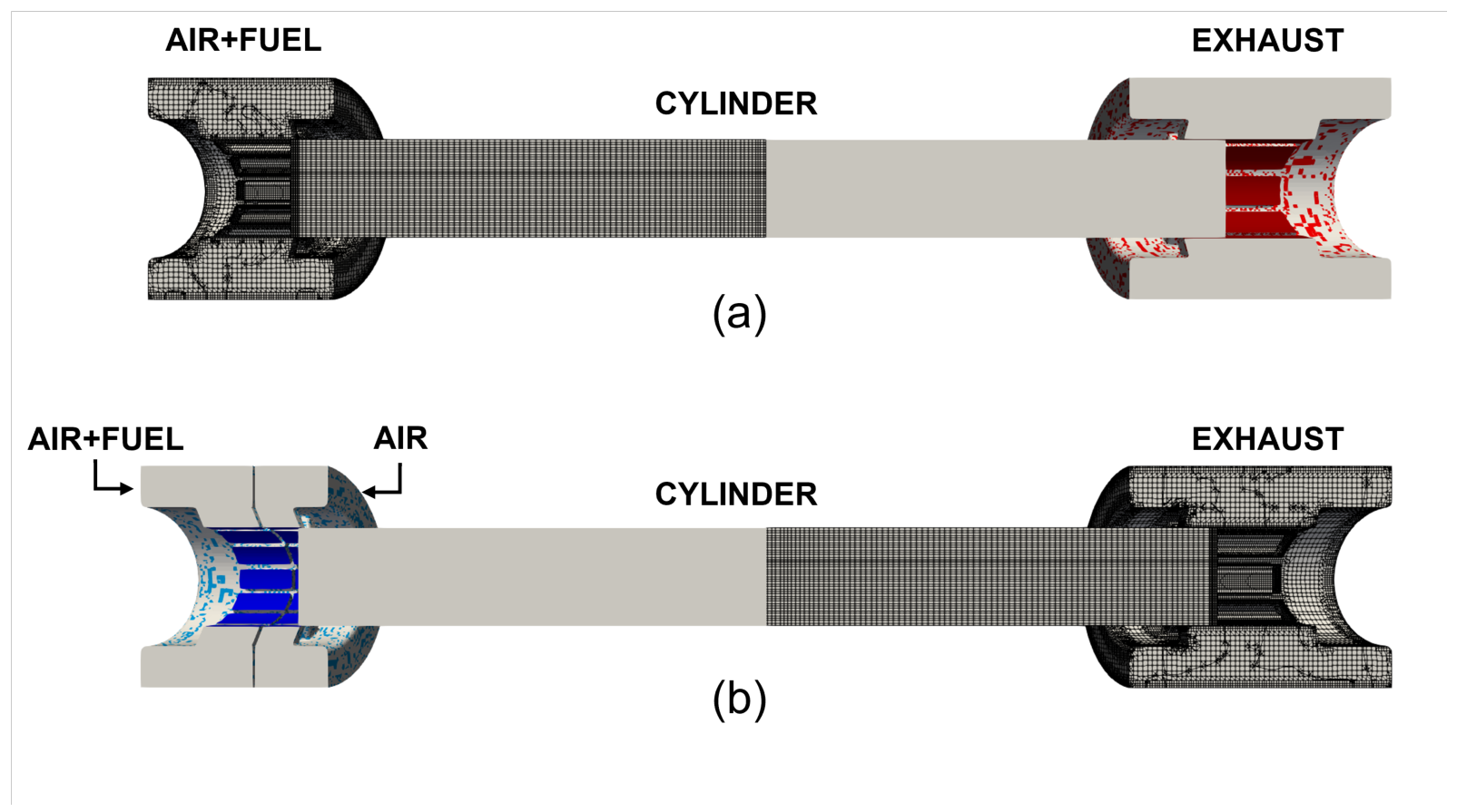
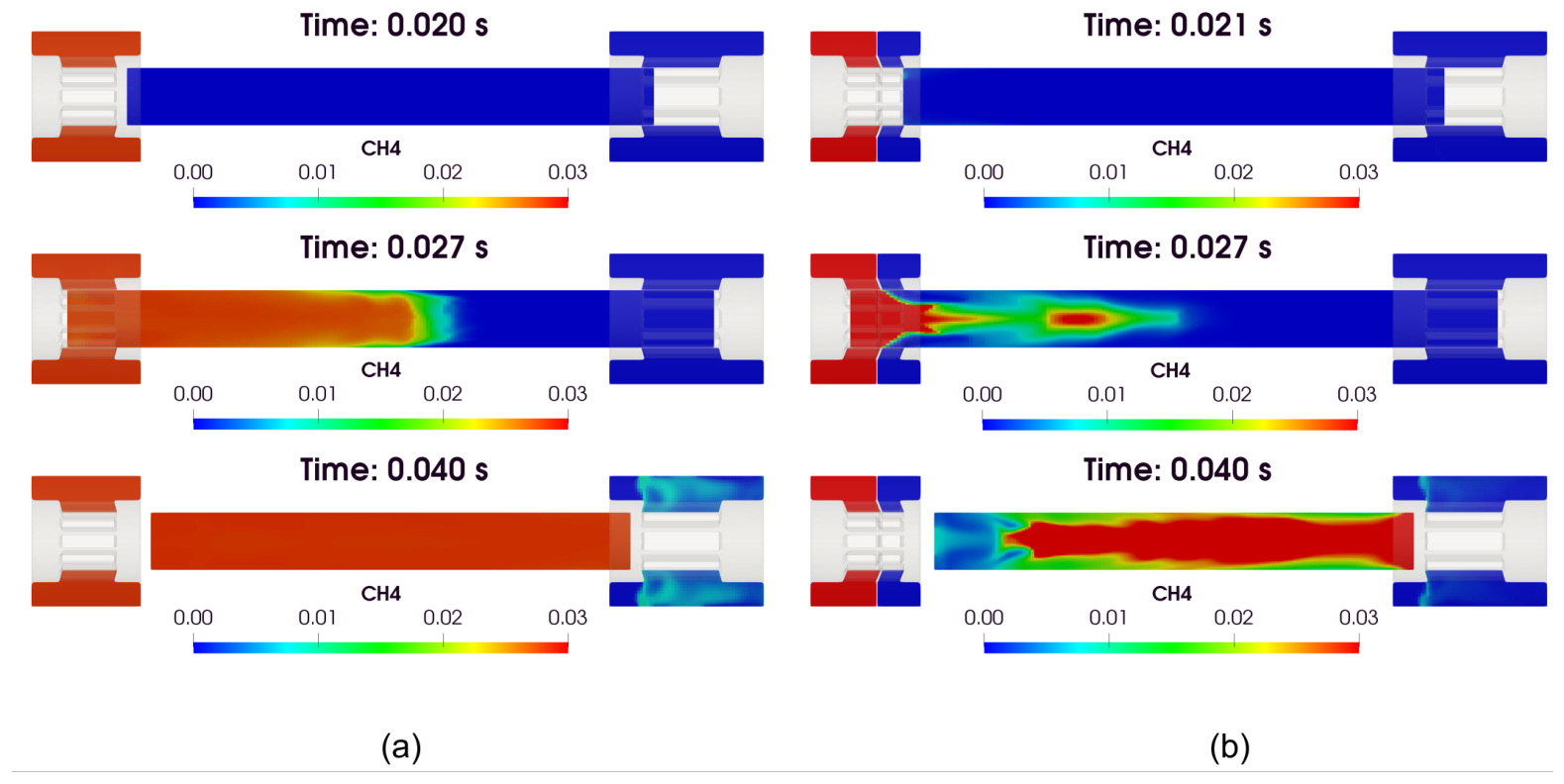
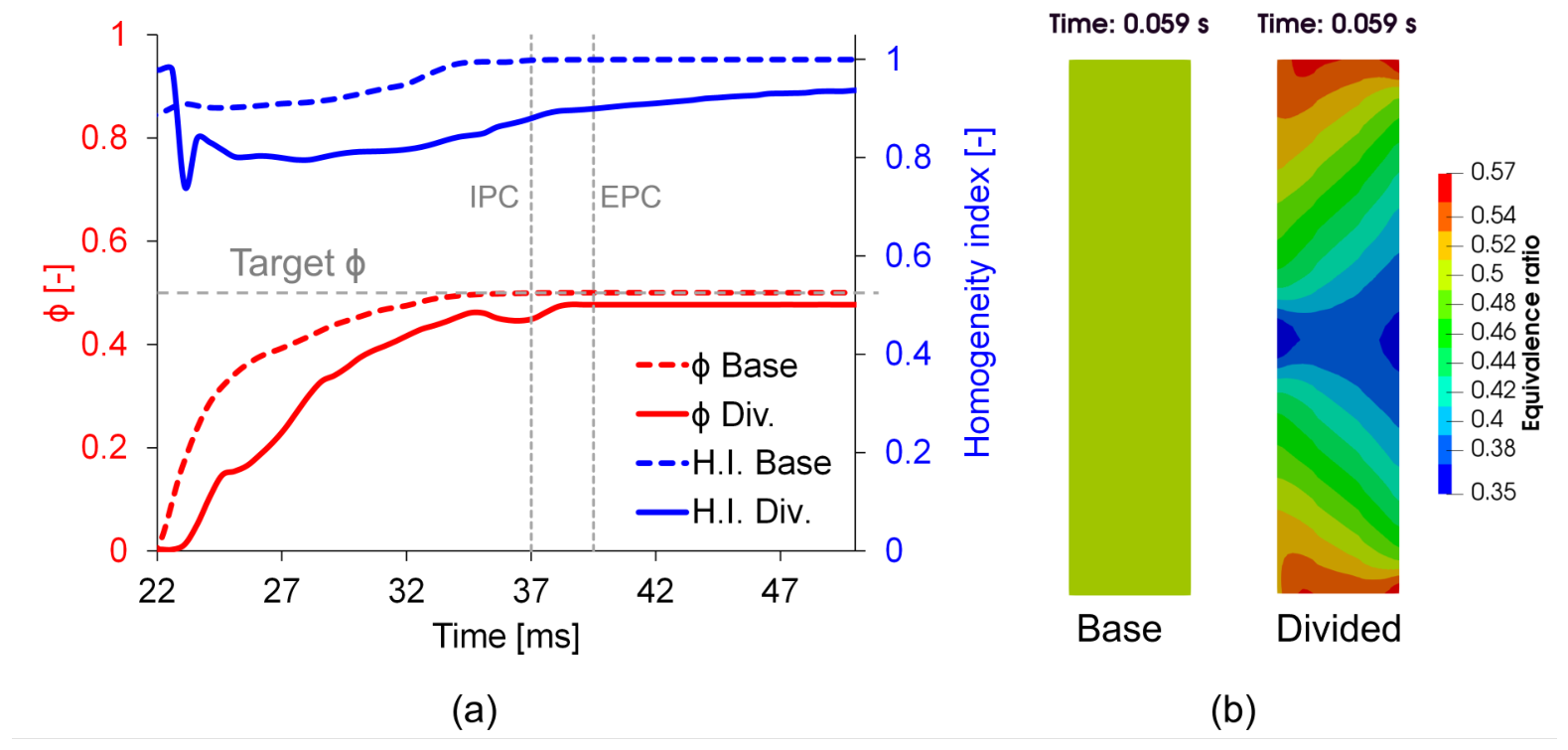
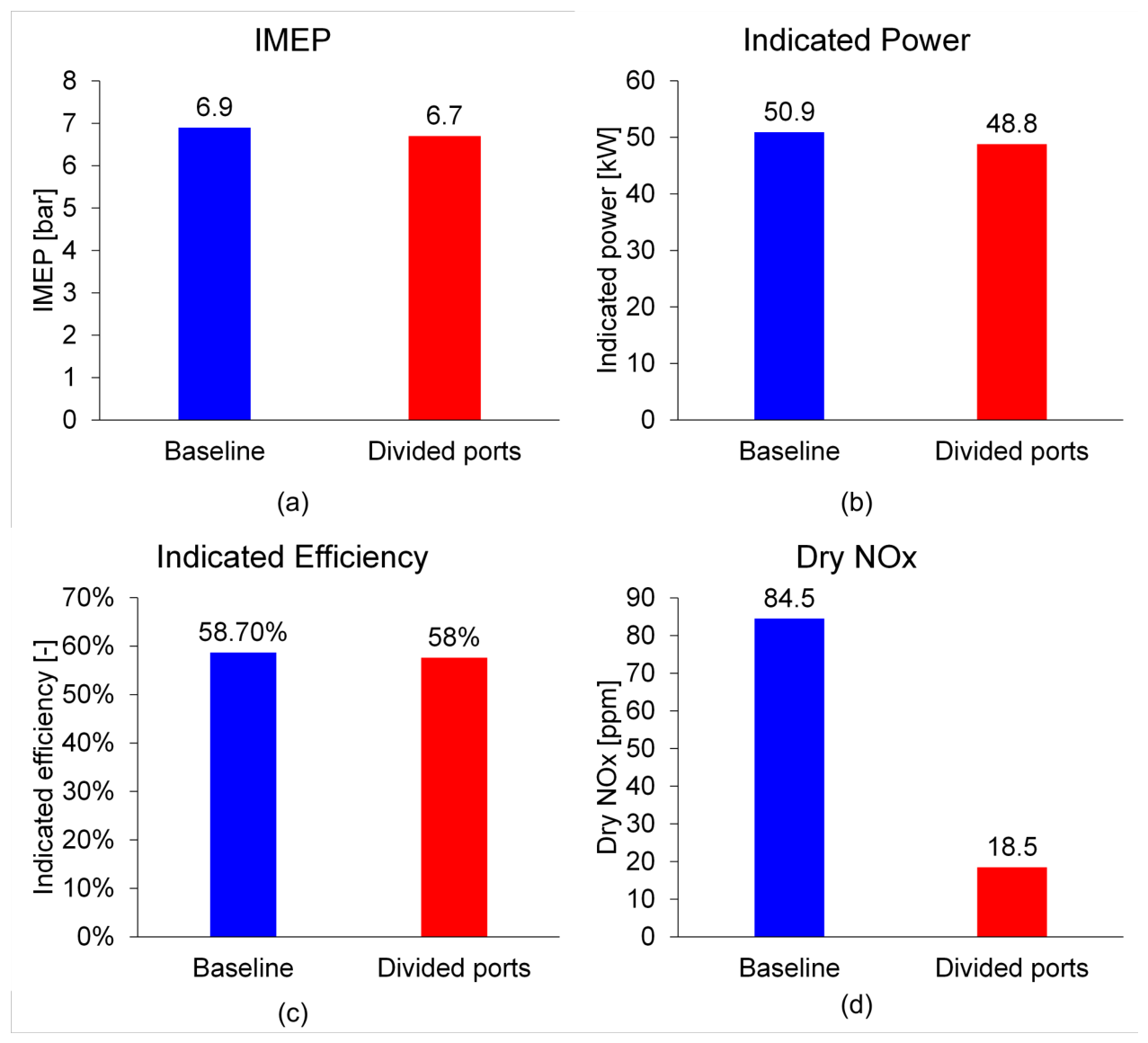
- Based on the RCM-2 results, a proto-FPLG configuration is defined, including bore, stroke, port geometry and piston motion profile. A novel divided-port scavenging configuration is proposed and evaluated through full-cycle CFD simulations. The strategy is shown to significantly reduce methane slip and to induce charge stratification that mitigates knocking behavior, while preserving indicated efficiencies above 58% and achieving near-zero NOx emissions, demonstrating a viable path toward next-generation high-efficiency distributed power generation.
2. Computational Models
3. HCCI Combustion Assessment in Rapid Compression Machine
3.1. Experimental Validation with Stoichiometric Methane–Air Mixture
3.2. RCM-2 Configuration Towards HCCI Free-Piston Linear Generator
- The cylinder bore was increased to 80 mm, approaching the value adopted in modern opposed-piston engine prototypes that have undergone extensive experimental testing [42].
- The piston mass was increased to 10 kg, representing a more realistic value to achieve an operating frequency of approximately 15 Hz, comparable to that of the first commercial opposed-piston FPLG applications.
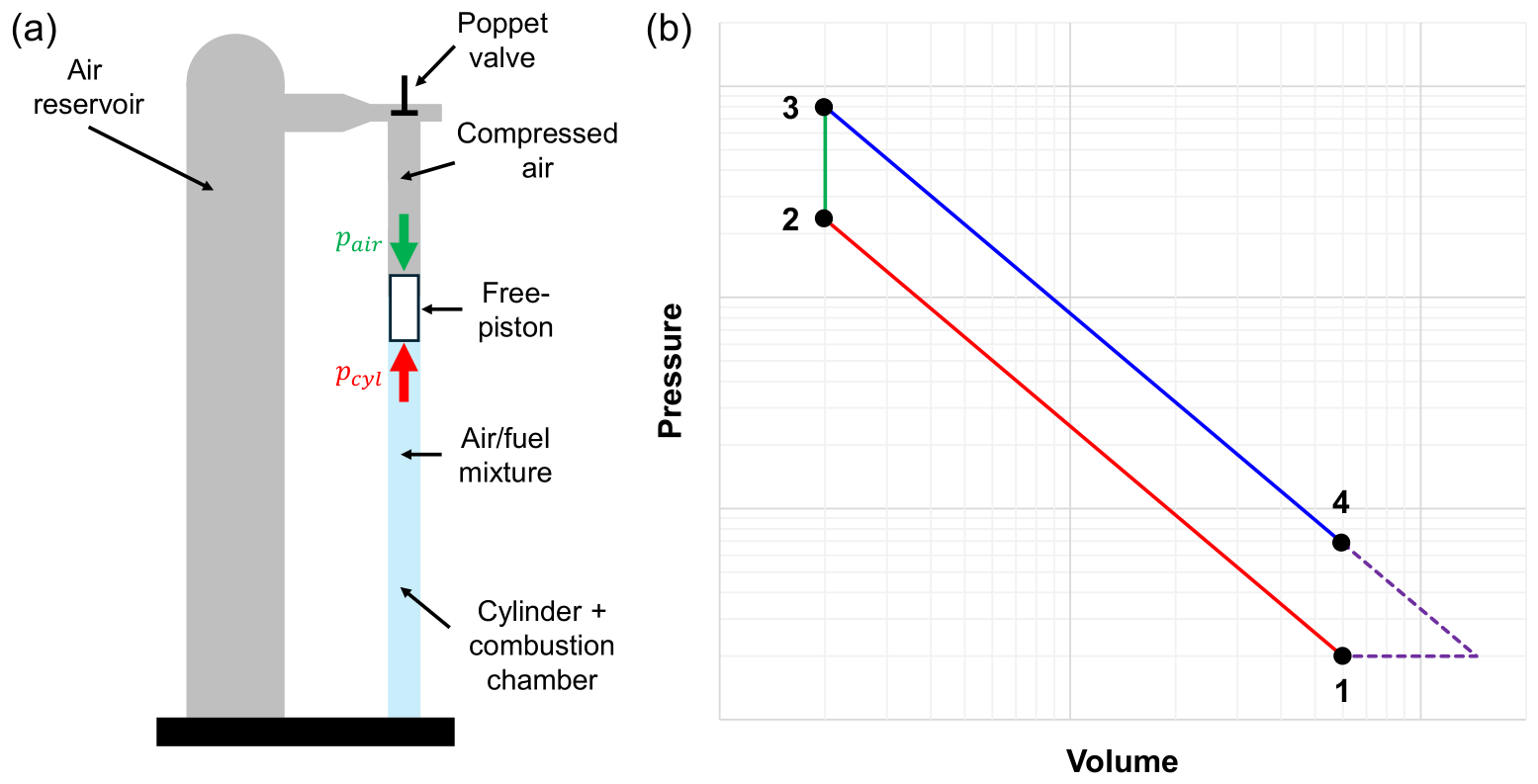
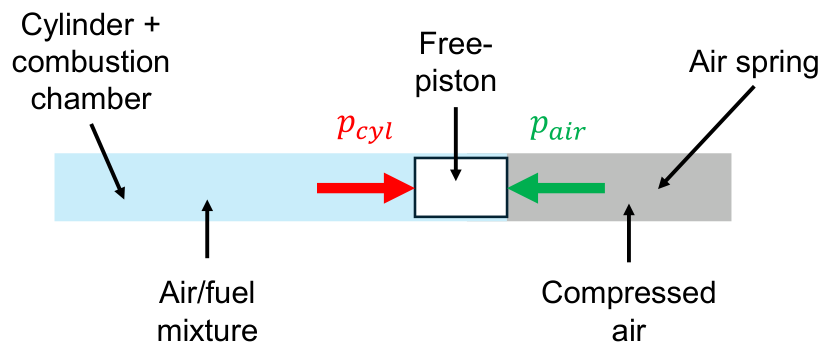
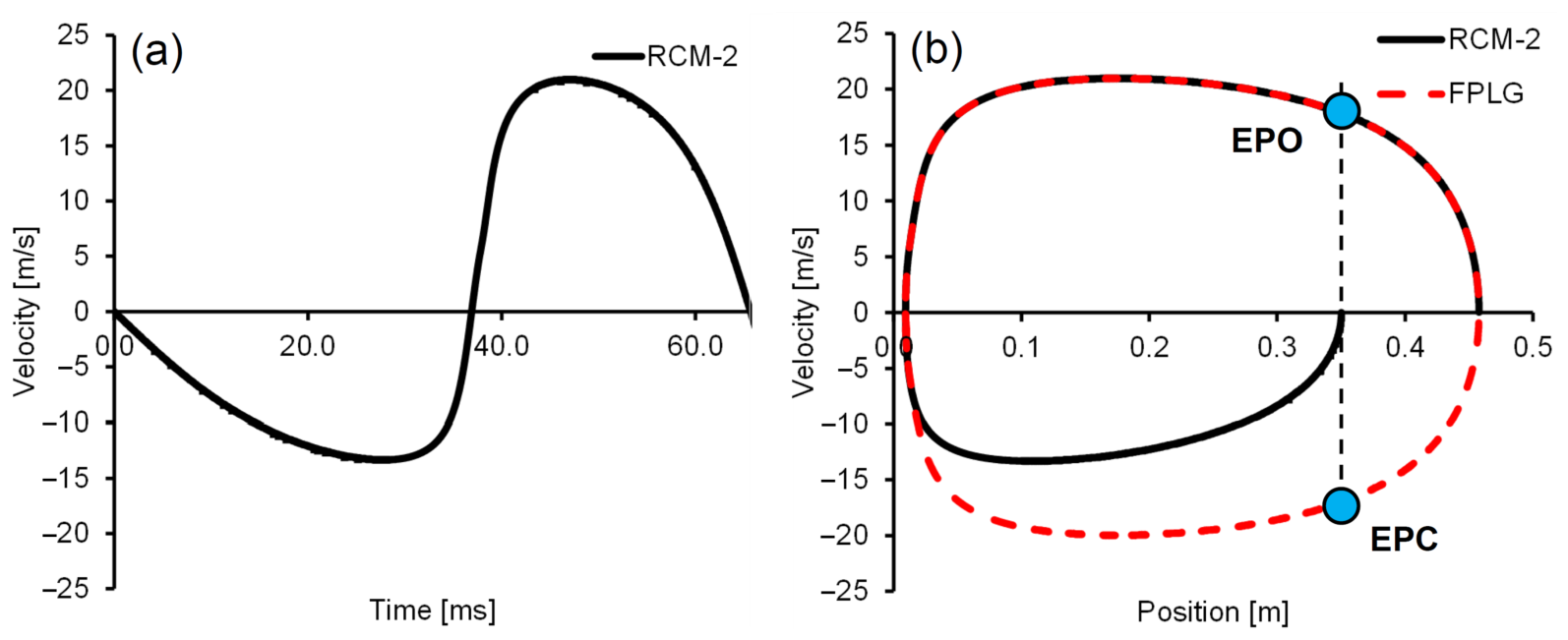
- The pressurized air reservoir was replaced by an air-spring with variable volume and the same combustion chamber displacement. The air-spring undergoes a polytropic expansion–compression process with index n = 1.3, which accounts for heat transfer effects between the gas and the spring walls. This configuration is expected to increase piston acceleration at the start of the expansion stroke, thereby reducing the PRR. At the start of the simulation, the air-spring volume is defined as a fraction of the cylinder volume:
- Operation under lean air–fuel conditions is adopted to further reduce pressure rise rates and improve emissions control.
4. Preliminary Assessment of FPLG
4.1. Baseline and Divided Ports Configurations
4.2. Simulation of the Scavenging Process
4.3. Combustion Simulation
5. Conclusions and Future Work
- RCM simulations validated against experimental data confirmed that indicated efficiencies of 58–60% are attainable under lean operating conditions ( = 0.2–0.5) and high compression ratios. Stoichiometric operation, in contrast, results in excessive pressure rise rates and unacceptable ringing intensity levels, making it unsuitable for continuous power generation.
- The RCM-2 configuration, developed to better represent actual FPLG dynamics, demonstrated that lean mixtures are effective in controlling combustion phasing and reducing knocking tendency while maintaining high efficiency. For equivalence ratios up to = 0.5, ringing intensity remains below the critical threshold of 6 MW/m2 while indicated efficiency consistently exceeds 60%.
- The linear relationship between indicated power and trapped fuel mass confirmed the suitability of HCCI-based FPLGs as modular power generation systems, enabling flexible load while maintaining nearly constant efficiency.
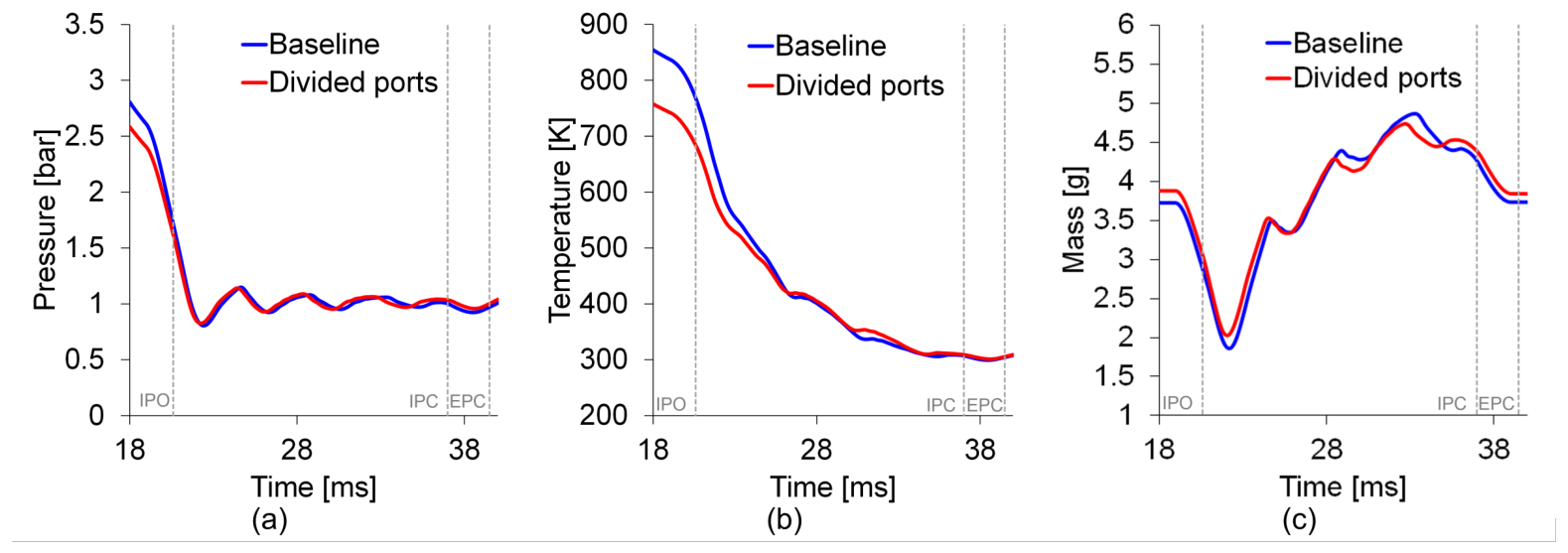
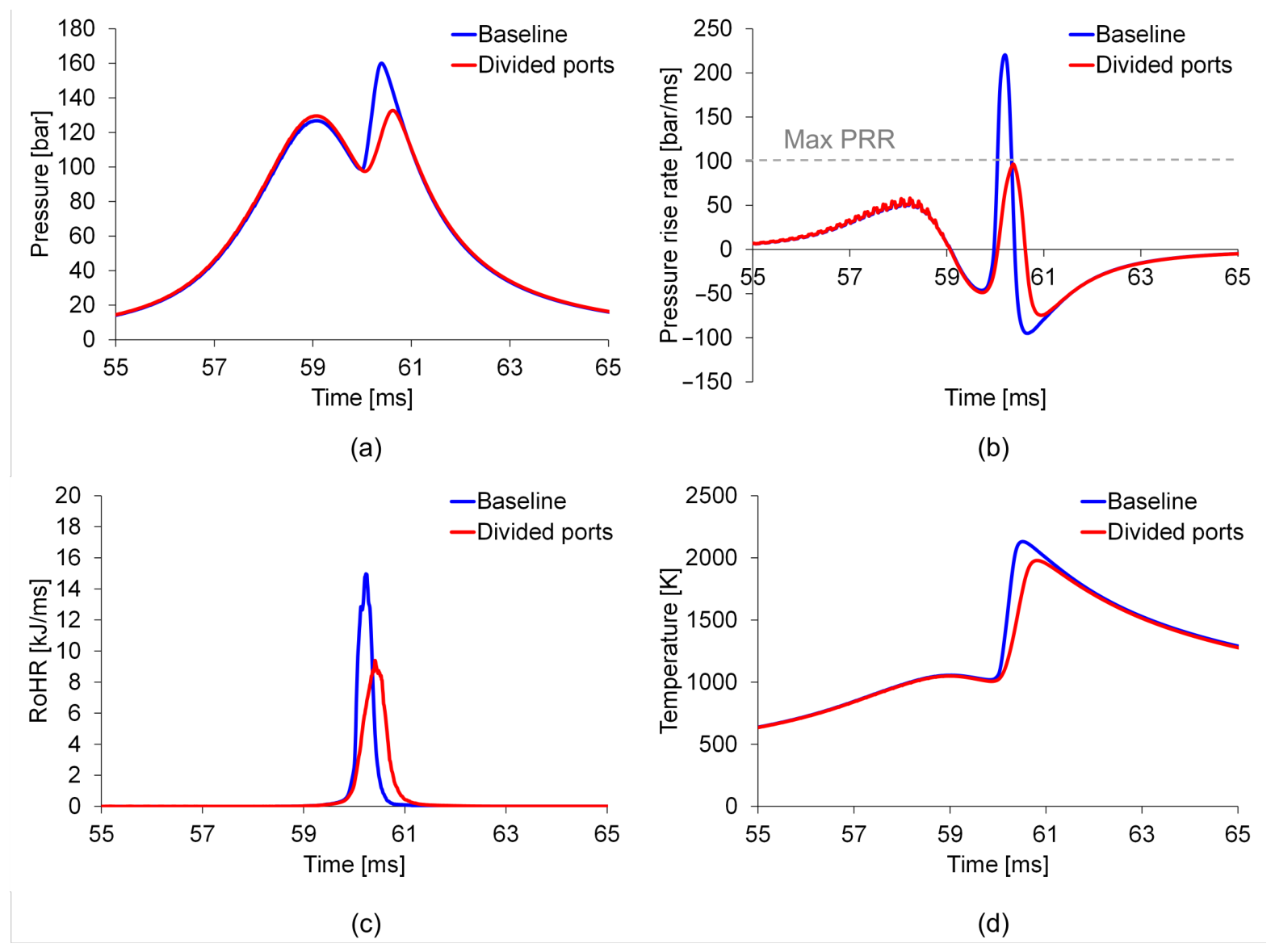
- Combustion simulations confirmed that the baseline configuration is unsuitable for continuous operation due to excessive PRR and ringing intensity. The divided-port configuration limits peak pressure below 140 bar, PRR within 100 bar/ms and RI to approximately 6 MW/m2, while achieving an indicated efficiency of 58% and near-zero NOx emissions (18.5 ppm dry), confirming the strong potential of this architecture for high-efficiency, low-emission stationary power generation.
Author Contributions
Funding
Data Availability Statement
Acknowledgments
Conflicts of Interest
Abbreviations
| ACMI | Arbitrarily coupled mesh interface |
| BDC | Bottom dead center |
| CFD | Computational fluid dynamics |
| CHP | Combined heat and power |
| Effective compression ratio | |
| EV | Electric vehicle |
| EPC | Exhaust port closing |
| EPO | Exhaust port opening |
| FGM | Flamelet generated manifold |
| FPLG | Free-piston linear generator |
| HCCI | Homogeneous charge compression ignition |
| ICE | Internal combustion engine |
| IMEP | Indicated mean effective pressure |
| NOx | Nitrogen oxides |
| PCCI | Premixed charge compression ignition |
| PRR | Pressure rise rate |
| RANS | Reynolds-averaged Navier–Stokes equations |
| RCM | Rapid compression machine |
| RI | Ringing intensity |
| RoHR | Rate of heat release |
| SI | Spark-ignition |
| TDC | Top dead center |
References
- International Energy Agency. Electricity 2025: Analysis and Forecast to 2027, Report, Revised version, February 2025; International Energy Agency: Paris, France, 2025. [Google Scholar]
- Roy, D.; Ngwaka, U.; Shivaprasad, K.V.; Zhu, S.; Taghavifar, H.; Williams, R.; Smallbone, A.; Roskilly, A.P. Techno-economic assessment of a fuel flexible free piston engine generator based energy system for cold ironing application. Energy 2025, 332, 136954. [Google Scholar] [CrossRef]
- Mostacciuolo, E.; Baccari, S.; Rubino, L.; Iannelli, L.; Beatrice, C.; Capasso, C.; Capuano, F.; Saviano, R.; Veneri, O.; Liuzza, D.; et al. Power Extraction for Free Piston Linear Generator. In Proceedings of the 2025 International Conference on Clean Electrical Power (ICCEP), Villasimius, Italy, 24–26 June 2025; pp. 102–108. [Google Scholar] [CrossRef]
- Simpson, A.; Davidson, K.; Energy, M. High-Efficiency and Ultra-Low Emissions Linear Generator Demonstration Project in Southern California; Technical Report CEC-500-2024-037; California Energy Commission: Sacramento, CA, USA, 2024.
- Svrcek, M. The Omnivorous Generator: Mainspring’s Linear Generator can Run on Almost any Fuel. IEEE Spectr. 2023, 60, 34–39+46. [Google Scholar] [CrossRef]
- Regner, G.; Johnson, D.; Koszewnik, J.; Dion, E.; Redon, F.; Fromm, L. Modernizing the opposed piston, two stroke engine for clean, efficient transportation. In Proceedings of the Symposium on International Automotive Technology 2013, Pune, India, 9 January 2013. [Google Scholar] [CrossRef]
- Naik, S.; Johnson, D.; Koszewnik, J.; Fromm, L.; Redon, F.; Regner, G.; Fuqua, K. Practical applications of opposed-piston engine technology to reduce fuel consumption and emissions. In Proceedings of the 8th SAEINDIA International Mobility Conference & Exposition and Commercial Vehicle Engineering Congress 2013 (SIMCOMVEC), Chennai, India, 4 December 2013; Volume 12. [Google Scholar] [CrossRef]
- Kosaka, H.; Akita, T.; Moriya, K.; Goto, S.; Hotta, Y.; Umeno, T.; Nakakita, K. Development of free piston engine linear generator system part 1—Investigation of fundamental characteristics. In Proceedings of the SAE 2014 World Congress & Exhibition, Detroit, MI, USA, 8 April 2014. [Google Scholar]
- Goto, S.; Moriya, K.; Kosaka, H.; Akita, T.; Hotta, Y.; Umeno, T.; Nakakita, K. Development of free piston engine linear generator system part 2—Investigation of control system for generator. In Proceedings of the SAE 2014 World Congress & Exhibition, Detroit, MI, USA, 8 April 2014. [Google Scholar]
- Moriya, K.; Goto, S.; Akita, T.; Kosaka, H.; Hotta, Y.; Nakakita, K. Development of Free Piston Engine Linear Generator System Part 3—Novel Control Method of Linear Generator for to Improve Efficiency and Stability; SAE Technical Papers; SAE: Warrendale, PA, USA, 2016. [Google Scholar]
- Wang, J.; Feng, H.; Zhang, Z.; Wu, L.; Yang, F. Development of a coupling model and parametric analysis of an opposed free-piston engine linear generator. Appl. Therm. Eng. 2023, 219, 119205. [Google Scholar] [CrossRef]
- Lu, J.; Xu, Z.; Liu, L. Compression Ratio Control of an Opposed-Piston Free-Piston Engine Generator Based on Artificial Neural Networks. IEEE Access 2020, 8, 107865–107875. [Google Scholar] [CrossRef]
- Brosnan, P.; Tian, G.; Zhang, H.; Wu, Z.; Jin, Y. Non-linear and multi-domain modelling of a permanent magnet linear synchronous machine for free piston engine generators. Energy Convers. Manag. X 2022, 14, 100195. [Google Scholar] [CrossRef]
- Brosnan, P.; Montanaro, U.; Tian, G. Motoring control of a free piston engine and linear electric machine. Appl. Energy 2026, 412, 127649. [Google Scholar] [CrossRef]
- Schneider, S.; Chiodi, M.; Friedrich, H.; Bargende, M. Development and Experimental Investigation of a Two-Stroke Opposed-Piston Free-Piston Engine. In Proceedings of the SAE/JSAE 2016 Small Engine Technology Conference & Exhibition, Charleston, SC, USA, 15 November 2016. [Google Scholar]
- Zhang, Q.; Xu, Z.; Liu, S.; Liu, L. Effects of injector spray angle on performance of an opposed-piston free-piston engine. Energies 2020, 13, 3735. [Google Scholar] [CrossRef]
- Zhang, Z.; Feng, H.; Zuo, Z. Numerical investigation of a free-piston hydrogen-gasoline engine linear generator. Energies 2020, 13, 4685. [Google Scholar] [CrossRef]
- Zhang, C.; Xu, Z.; Wang, Y.; Liu, L. Development of a hydrogen free-piston engine generator for range extenders. Sustain. Energy Technol. Assess. 2024, 65, 103788. [Google Scholar] [CrossRef]
- Miller, S.; Svrcek, M.; Teh, K.Y.; Edwards, C. Assessing the feasibility of increasing engine efficiency through extreme compression. Int. J. Engine Res. 2011, 12, 293–307. [Google Scholar] [CrossRef]
- Svrcek, M.N.; Edwards, C.F. Homogeneous charge compression ignition with nondilute stoichiometric methane-air at extreme compression ratios. Int. J. Engine Res. 2013, 14, 479–495. [Google Scholar] [CrossRef]
- Svrcek, M.; Miller, S.; Edwards, C. Diesel spray behavior at compression ratios up to 100:1. At. Sprays 2010, 20, 453–465. [Google Scholar] [CrossRef]
- Svrcek, M.; DeGraaff, D.; Walters, K.; Wylie, C.; Powers, J.; Lawler, J.; Sherman, S.; Prudhomme, J.; Coakley, S. Integrated Linear Generator System. United States US 12,027,956 B2, 2 July 2024. [Google Scholar]
- Simpson, A.; Miller, S.; Svrcek, M. High-Efficiency Two-Piston Linear Combustion Engine. U.S. Patent 8,413,617 B2, 9 April 2013. [Google Scholar]
- Lucchini, T.; Della Torre, A.; D’Errico, G.; Onorati, A. Modeling advanced combustion modes in compression ignition engines with tabulated kinetics. Appl. Energy 2019, 247, 537–548. [Google Scholar] [CrossRef]
- Lucchini, T.; Schirru, A.; Mehl, M.; D’Errico, G.; Rorimpandey, P.; Chan, Q.N.; Kook, S.; Hawkes, E.R. Modeling hydrogen–diesel dual direct injection combustion with FGM and transported PDF. Proc. Combust. Inst. 2024, 40, 105213. [Google Scholar] [CrossRef]
- Nodi, A.; Sforza, L.; Lucchini, T.; Gianetti, G.G.; Onorati, A.; Buttitta, M.; Lupi, C.; Marmorini, L. Numerical analysis of a high-performance motorbike engine: From conventional to pre-chamber combustion strategy. Int. J. Engine Res. 2025, 26, 1120–1141. [Google Scholar] [CrossRef]
- Ramognino, F.; Sforza, L.; Lucchini, T.; Welch, C.; Böhm, B.; Onorati, A. A CFD ignition model to predict average-cycle combustion in SI engines with extreme EGR levels. Int. J. Engine Res. 2024, 25, 911–927. [Google Scholar] [CrossRef]
- Lucchini, T.; D’errico, G.; Onorati, A.; Frassoldati, A.; Stagni, A.; Hardy, G. Modeling non-premixed combustion using tabulated kinetics and different fame structure assumptions. SAE Int. J. Engines 2017, 10, 593–607. [Google Scholar] [CrossRef]
- D’Errico, G.; Gianetti, G.G.; Lucchini, T.; Heaton, A.G.; Kook, S. CFD Analysis of Diesel Pilot Injection for Dual-Fuel Diesel–Hydrogen Engines. Energies 2026, 19, 380. [Google Scholar] [CrossRef]
- Pelosin, M.; Novella, R.; Bracho, G.; Fernandes, C.; Lucchini, T.; Marmorini, L.; Zhou, Q. Combustion Modeling Approach for the Optimization of a Temperature Controlled Reactivity Compression Ignition Engine Fueled with Iso-Octane. Energies 2022, 15, 8216. [Google Scholar] [CrossRef]
- Schirru, A.; Lucchini, T.; D’Errico, G.; Mehl, M.; Hilfiker, T.; Soltic, P. Numerical investigation on the use of Dimethyl Ether (DME) as an alternative fuel for compression-ignition engines. Fuel 2023, 354, 129434. [Google Scholar] [CrossRef]
- Contino, F.; Jeanmart, H.; Lucchini, T.; D’Errico, G. Coupling of in situ adaptive tabulation and dynamic adaptive chemistry: An effective method for solving combustion in engine simulations. Proc. Combust. Inst. 2011, 33, 3057–3064. [Google Scholar] [CrossRef]
- Contino, F.; Masurier, J.B.; Foucher, F.; Lucchini, T.; D’Errico, G.; Dagaut, P. CFD simulations using the TDAC method to model iso-octane combustion for a large range of ozone seeding and temperature conditions in a single cylinder HCCI engine. Fuel 2014, 137, 179–184. [Google Scholar] [CrossRef]
- Contino, F.; Foucher, F.; Dagaut, P.; Lucchini, T.; D’Errico, G.; Mounaïm-Rousselle, C. Experimental and numerical analysis of nitric oxide effect on the ignition of iso-octane in a single cylinder HCCI engine. Combust. Flame 2013, 160, 1476–1483. [Google Scholar] [CrossRef]
- Valiño, L.V. A field Monte Carlo formulation for calculating the probability density function of a single scalar in a turbulent flow. Flow Turbul. Combust. 1998, 60, 157–172. [Google Scholar] [CrossRef]
- Svrcek, M. Exploration of Combustion Strategies for High-Efficiency, Extreme-Compression Engines. Ph.D. Thesis, Standford University, Stanford, CA, USA, 2011. [Google Scholar]
- Kéromnès, A.; Metcalfe, W.K.; Heufer, K.A.; Donohoe, N.; Das, A.K.; Sung, C.J.; Herzler, J.; Naumann, C.; Griebel, P.; Mathieu, O.; et al. An experimental and detailed chemical kinetic modeling study of hydrogen and syngas mixture oxidation at elevated pressures. Combust. Flame 2013, 160, 995–1011. [Google Scholar] [CrossRef]
- Bagheri, G.; Ranzi, E.; Pelucchi, M.; Parente, A.; Frassoldati, A.; Faravelli, T. Comprehensive kinetic study of combustion technologies for low environmental impact: MILD and OXY-fuel combustion of methane. Combust. Flame 2020, 212, 142–155. [Google Scholar] [CrossRef]
- Huh, K.Y.; Chang, I.P.; Martin, J.K. A comparison of boundary layer treatments for heat transfer in IC engines. J. Engines 1990, 99, 558–571. [Google Scholar]
- Eng, J. Characterization of Pressure Waves in HCCI Combustion; SAE Technical Papers; SAE: Warrendale, PA, USA, 2002. [Google Scholar]
- Gharehghani, A. Load limits of an HCCI engine fueled with natural gas, ethanol, and methanol. Fuel 2019, 239, 1001–1014. [Google Scholar] [CrossRef]
- Regner, G.; Herold, R.E.; Wahl, M.H.; Dion, E.; Redon, F.; Johnson, D.; Callahan, B.J.; McIntyre, S. The achates power opposed-piston two-stroke engine: Performance and emissions results in a medium-duty application. SAE Int. J. Engines 2011, 4, 2726–2735. [Google Scholar] [CrossRef]
- Soylu, S. Examination of combustion characteristics and phasing strategies of a natural gas HCCI engine. Energy Convers. Manag. 2005, 46, 101–119. [Google Scholar] [CrossRef]
- Kobayashi, K.; Sako, T.; Sakaguchi, Y.; Morimoto, S.; Kanematsu, S.; Suzuki, K.; Nakazono, T.; Ohtsubo, H. Development of HCCI natural gas engines. J. Nat. Gas Sci. Eng. 2011, 3, 2066–2080. [Google Scholar] [CrossRef]
- Mikalsen, R.; Jones, E.; Roskilly, A. Predictive piston motion control in a free-piston internal combustion engine. Appl. Energy 2010, 87, 1722–1728. [Google Scholar] [CrossRef]
- Li, Q.F.; Xiao, J.; Huang, Z. Parametric study of a free piston linear alternator. Int. J. Automot. Technol. 2010, 11, 111–117. [Google Scholar] [CrossRef]
- Mattarelli, E.; Cantore, G.; Rinaldini, C.A.; Savioli, T. Combustion System Development of an Opposed Piston 2-Stroke Diesel Engine. Energy Procedia 2017, 126, 1003–1010. [Google Scholar] [CrossRef]
- Blair, G.P. Design and Simulation of Two-Stroke Engines; SAE International: Warrendale, PA, USA, 1996. [Google Scholar]
- Lucchini, T.; D’Errico, G.; Jasak, H.; Tukovic, Z. Automatic Mesh Motion with Topological Changes for Engine Simulation. In SAE World Congress & Exhibition; SAE Technical: Warrendale, PA, USA, 2007. [Google Scholar]
- Brown, A. Boosted HCCI for High Power without Engine Knock and with Ultra-Low NOx Emissions—Using Conventional Gasoline (2010-01-1086). In Green Technologies and the Mobility Industry; SAE: Warrendale, PA, USA, 2011; pp. 235–252. [Google Scholar]



| Equivalence Ratio | 0.2 | 0.3 | 0.45 | 0.5 | 0.55 | 0.7 |
|---|---|---|---|---|---|---|
| 40.1 | 38.0 | 37.6 | 37.6 | 37.7 | 38.4 | |
| p@TDC [bar] | 156 | 144 | 139 | 139 | 139 | 140 |
| T@TDC [K] | 1113 | 1081 | 1061 | 1056 | 1052 | 1043 |
| Tmax [K] | 1525 | 1692 | 1946 | 2001 | 2037 | 2284 |
| RCM-2 Result | FPLG Design Parameter | Value |
|---|---|---|
| Optimal equivalence ratio | Target equivalence ratio | 0.5 |
| Effective compression ratio | Compression ratio (raised) | 50 |
| Cylinder bore | Bore | 80 mm |
| Piston stroke from piston-velocity diagram | Stroke | 446 mm |
| Piston velocity profile during expansion | Piston motion law | Figure 8b |
| Operating frequency | Frequency | 16.5 Hz |
| Initial cylinder pressure | Intake pressure | 1.05 bar |
| Initial cylinder temperature | Intake temperature | 300 K |
Disclaimer/Publisher’s Note: The statements, opinions and data contained in all publications are solely those of the individual author(s) and contributor(s) and not of MDPI and/or the editor(s). MDPI and/or the editor(s) disclaim responsibility for any injury to people or property resulting from any ideas, methods, instructions or products referred to in the content. |
© 2026 by the authors. Licensee MDPI, Basel, Switzerland. This article is an open access article distributed under the terms and conditions of the Creative Commons Attribution (CC BY) license.
Share and Cite
Gianetti, G.G.; Morandi, N.; Lucchini, T.; Ferrarini, M.; Onorati, A. Towards 50% Efficiency in Opposed Free-Piston Linear Generators Operating with Natural Gas and HCCI Combustion. Energies 2026, 19, 2833. https://doi.org/10.3390/en19122833
Gianetti GG, Morandi N, Lucchini T, Ferrarini M, Onorati A. Towards 50% Efficiency in Opposed Free-Piston Linear Generators Operating with Natural Gas and HCCI Combustion. Energies. 2026; 19(12):2833. https://doi.org/10.3390/en19122833
Chicago/Turabian StyleGianetti, Giovanni Gaetano, Nicola Morandi, Tommaso Lucchini, Matteo Ferrarini, and Angelo Onorati. 2026. "Towards 50% Efficiency in Opposed Free-Piston Linear Generators Operating with Natural Gas and HCCI Combustion" Energies 19, no. 12: 2833. https://doi.org/10.3390/en19122833
APA StyleGianetti, G. G., Morandi, N., Lucchini, T., Ferrarini, M., & Onorati, A. (2026). Towards 50% Efficiency in Opposed Free-Piston Linear Generators Operating with Natural Gas and HCCI Combustion. Energies, 19(12), 2833. https://doi.org/10.3390/en19122833