Review

North American Forest Biomass Supply Chains for Efficient Bioenergy Production

by
John Sessions
1,
Rene Zamora-Cristales
1,*,
Robert J. Macias
2,
Andres Susaeta
1 and
Francisca Marrs Belart
1
1
Department of Forest Engineering Resources, and Management, College of Forestry, Oregon State University, Corvallis, OR 97331, USA
2
Department of Wood Science and Engineering, College of Forestry, Oregon State University, Corvallis, OR 97331, USA
*
Author to whom correspondence should be addressed.
Energies 2026, 19(12), 2772; https://doi.org/10.3390/en19122772 (registering DOI)
Submission received: 30 April 2026 / Revised: 31 May 2026 / Accepted: 4 June 2026 / Published: 9 June 2026

Abstract

Forest bioenergy holds significant potential for North American decarbonization and energy security, yet persistently high logistics costs, feedstock quality variability, and geographic dispersion of biomass resources continue to constrain commercial viability. This review asks what it will take for forest bioenergy supply chains to achieve economic and operational lift-off, identifying key bottlenecks and the most promising pathways to scale. We systematically review 237 peer-reviewed studies and technical reports with the majority published between 2000 and 2025, covering feedstock types ranging from logging residues and woody biomass to short rotation woody crops, and end-products spanning solid biofuels, heat and power, thermochemical products, and sustainable aviation fuel. The literature consistently identifies delivered cost, feedstock quality control, and the geographic mismatch between biomass supply and conversion facility location as the three primary barriers to sector viability. Depot-based preprocessing, cascading utilization strategies, and participatory landowner contracting emerge as the most effective near-term solutions for improving supply chain economics and mobilizing economically recoverable biomass. At the frontier, AI-enabled optimization, digital twin modeling, and integrated biorefinery configurations show strong potential to manage spatial variability and unlock the scale economies on which commercial viability depends. Translating these advances into practice will require stable, long-term policy signals and coordinated investment across the full supply chain.

1. Introduction

In North America, renewable energy from forests represents an opportunity to supply societal needs and diversify energy sources [1]. In a world facing an energy crisis due to increasing demand and the finite nature of fossil resources, bioenergy plays a central role in producing the next generation of renewable energy and reducing dependence on conventional fuels [2]. However, bioenergy from forest biomass is considered a byproduct of timber and pulp production or a low-value asset in firewood production; therefore, optimizing the value chain at the operational level becomes a key factor to ensure sustainability and generate innovation in forest biomass supply chains [3]. Forest bioenergy products can be broadly categorized into solid and liquid fuels. Solid products range from traditional firewood, hog fuel and wood chips to more refined forms like pellets, torrefied pellets, and briquettes, each offering increasing energy density and standardization [4,5,6]. These are the most widely deployed forest bioenergy products in North America, used in applications from residential heating to industrial co-firing in power plants and large-scale export markets [7,8]. Firewood is vastly used for cooking in Mexico, representing a key resource for maintaining livelihoods of local communities.
Liquid bioenergy products from forests include jet fuel, ethanol, and biodiesel, all of which convert woody biomass into energy-dense liquids suitable for transportation [9,10]. The feedstocks supplying these products form a hierarchy, based on quality and cost [11]. High-quality mill residues like sawdust and shavings feed pellet and briquette production [12], while lower-grade materials such as logging residues, bark, hog fuel, and salvage wood from fire- or pest-disease-damaged stands supply chips, industrial boilers, and biochar production [13,14]. Short-rotation woody crops like willow, eucalyptus and poplar offer a dedicated, plantation-grown supply suited to both biochemical and thermochemical conversion [15,16].

1.1. Aim of the Review and Knowledge Gap Addressed

The aim of this review is to present the state of the art of North American forest biomass supply chains in the United States, Canada, and Mexico, including their challenges, opportunities, and potential optimization strategies to increase the efficiency of bioenergy production while maintaining the health and productivity of forests and enhancing the provision of key ecosystem services. We synthesize the published literature from 2000 to 2025 on forest biomass and its current and potential uses in the United States, Canada, and Mexico in order to: (a) characterize the supply and how feedstock characteristics, preprocessing operations, and logistic configurations jointly determine delivered costs and economically available biomass; (b) identify products and markets based on research and applications from the last 25 years; (c) outline gaps and opportunities given current technological limitations; and (d) identify areas where forest biomass energy supply chains can be improved and made more cost-efficient to compete with non-renewable alternatives.
This review is framed around four interrelated questions that, together, define what it means to assess and improve forest biomass supply chains in North America. These questions progress from system-level definition: (1) What defines an efficient supply chain for forest residue utilization and its components? (2) What are the specifications for forest biomass feedstocks?; (3) Where does upgrading need to occur?; and (4) Where are there political and social constraints to feedstock availability?
Efficiency in this context is not a single criterion. It encompasses delivered cost per unit of usable energy, feedstock quality consistency, supply reliability over the operating life of a conversion facility, energy return on invested energy, and a defensible carbon profile relative to the alternative fates of the residue, including in-forest decomposition, pile burning, or wildfire fuel. The review identifies which of these dimensions are most often binding in published assessments, which are typically treated as secondary, and how the trade-offs among them are resolved in practice.
The manuscript is structured as follows: this section highlights the objectives and the current role of forest in a changing environment. Section 2 describes the review framework. Section 3 reviews feedstock properties and the specifications required by different conversion pathways (combustion, densification, pyrolysis, hydroprocessing). Section 4 examines forest residue and short-rotation energy plantation supply chains and the costs. Section 5 synthesizes preprocessing and upgrading operations (ash removal, moisture management, particle size control, densification and mild thermal pretreatment) and the role of depots. Section 6 integrates preprocessing cost, landowner participation, and supply reliability into a system-level cost framework. Section 7 presents the discussion on key challenges, emerging opportunities and strategic direction. And, finally, Section 8 presents concrete conclusions.

1.2. The Evolving Role of Forests

Forests have served humanity’s energy needs for centuries. Firewood remains a primary source of cooking and heating fuel across many countries in the Global South and is widely recognized as a key provisioning ecosystem service worldwide. In recent decades, however, the use of forest biomass has gained increasing attention as societies seek alternatives to fossil-based energy sources. What is new about the role of forests today is not the use of biomass for energy, which is old, but the conditions under which that use occurs. Three shifts are particularly consequential. First, forest biomass for energy is increasingly treated not as waste feedstock but as a commodity within integrated, multi-product harvesting systems, in which the same operation produces sawlogs, pulpwood, and biomass simultaneously and the economics depend on the joint distribution of values rather than on the price of biomass alone [1,3,17]. Second, in fire-adapted ecosystems across North America, residue removal has been reframed from a disposal cost into a forest-health and wildfire-risk-reduction tool, aligning a portion of biomass demand with federal forest management objectives in a way that did not exist before due to ongoing extreme weather events and increasing disturbances in fire regimes [18]. Third, the modern supply chain is quality-driven rather than volume-driven: advanced thermochemical, hydroprocessing, and biochemical conversion pathways impose specifications on ash, moisture, particle size, and bulk density that historical industrial-combustion users did not enforce. These quality requirements have, in turn, motivated a shift away from spot-market transactions toward contract- and depot-based supply arrangements that bundle quality, reliability, and scale. Underlying all three shifts is a more fundamental change in how supply itself is conceptualized: the binding constraint on scale is no longer biophysical inventory, but market readiness, landowner participation, and policy action [18,19,20].

1.3. Feedstock Potential from North America

According to the Food and Agriculture Organization (FAO) Forest Resource Assessment (FRA) report 2025 [21], forests continue to play a key role in the economies of the three countries, although this role is more prominent in the United States and Canada. The U.S. accounts for 16% of global industrial roundwood production, the world’s single largest producer [21], with global industrial roundwood removals at roughly 300–315 million m3 annually. The U.S. also accounts for about 3% of global woodfuel production, adding an estimated 50–60 million m3 of fuelwood for a total roundwood figure in the range of 350–375 million m3/year. Canada accounts for 6% of global industrial roundwood production, putting it at roughly 115–120 million m3 of industrial roundwood per year. Canada’s total roundwood production, including fuelwood, is estimated at around 140–150 million m3 annually. Mexico is not among the top global industrial roundwood producers. Based on FAOSTAT data, Mexico’s total roundwood production is estimated at roughly 45–50 million m3 per year, a significant portion of which is woodfuel used for domestic energy. Mexico’s production forest sector is considerably smaller than those of its northern neighbors, reflecting different forest types, including tropical and subtropical dry forests; land tenure complexity, as much forest is communally held under ejido and Indigenous community systems; and comparatively less intensive industrial forestry. Table 1 shows the forest area and average production. Because forest biomass for bioenergy production is tied to roundwood production, we provide an approximation of the feedstock potential.

1.4. General Challenges

A main challenge to scaling forest bioenergy in North America is the high cost of harvesting, processing, and transporting biomass from forests, where logistics alone can represent 40–60% of delivered cost [15]. Dispersed and low-density feedstock sources, difficult terrain, particularly steep conditions, and long-haul distances compound these expenses, particularly when biomass must compete with fossil-fuel alternatives on price [23]. Compounding these cost challenges is the unreliability of both suppliers and purchasers; market instability across forestry products can undermine long-term investment in supply infrastructure [24], while landowner willingness to participate and competition with traditional timber markets remain uncertain [25].
U.S. policies add further complexity, as regulatory frameworks governing public forestlands can constrain the pace and scale of biomass removal, even when restoration objectives align with feedstock supply goals [26]. The federal Clean Air Act, as amended by the Energy Policy Act of 2005 and the Energy Independence Act of 2007, restricted certain feedstocks, including specific forestry and harvest residues, from generating Renewable Identification Numbers (RINs) under the Renewable Fuel Standard program. RINs are an important credit for renewable transportation fuel production. The restricted harvest residues include those from most federal lands, including lands managed by the USDA Forest Service and the Bureau of Land Management. e-RINs from federal forest harvest residues have also recently been prohibited for the production of electrical energy for electric vehicle charging. Unlike U.S. policy, forest harvest residues from public Crown lands in Canada are generally eligible for biomass subsidies, provided they are harvested under strict sustainable forest management guidelines. Mexico also supports subsidies for harvest residue utilization for clean energy from public lands under sustainable forest management guidelines.
Meanwhile, the expansion of short-rotation energy plantations raises tensions with food security and carbon management, since dedicated bioenergy crops may compete for productive agricultural land, and the net carbon benefits depend heavily on assumptions about land-use change and baseline conditions [27]. Feedstock quality represents another persistent challenge throughout the supply chain. Forest residues are inherently heterogeneous in moisture content, ash content, and particle size, all of which directly affect conversion efficiency and product value [28]. Elevated ash levels, often caused by soil contamination during harvesting and handling, can reduce yields and affect conversion equipment [29], while high and variable moisture content increases transportation costs and lowers net energy output [30]. Managing these quality attributes requires preprocessing investments such as air classification for ash reduction [31] and field-drying protocols, which add cost and complexity to an already challenging logistics system and may potentially disqualify part of the feedstock supply [32].
In addition to these challenges, in Mexico, the biomass market is less developed, and several barriers remain, including a lack of feasibility studies, processing facilities, public understanding of the products, and technical knowledge to produce feedstock [6,33]. In Canada, numerous studies have shown the vast availability of forest biomass from harvest residues [34,35,36]. However, transportation infrastructure limitations, high logistics costs, a developing biomass market, and government policy make the economic viability of using harvest residues for bioenergy a challenge. Table 2 summarizes the most generalized barriers to producing biomass for biofuels.

1.5. Bioenergy and Climate Change Mitigation

The barriers reviewed in Section 1.4 do not operate in isolation from the climate framing of forest bioenergy. Many of the most consequential policy instruments, including the U.S. Renewable Fuel Standard [37], Canada’s Clean Fuel Standards [38], and the European Union’s Renewable Energy Targets [39], define eligibility in terms of life-cycle carbon performance. The carbon balance of forest bioenergy is therefore not only an environmental question but, increasingly, the determinant of which feedstocks are economically usable.
Forest bioenergy is generally considered renewable, provided that the harvested forest is regenerated and land use is not converted to non-forest purposes, such as urbanization or agriculture [40]. However, the production and delivery of bioenergy can itself increase fossil-fuel consumption and diesel dependence during the collection, processing, and transportation of biomass, potentially offsetting a portion of the climate benefits and increasing the need to develop life-cycle assessments to measure this impact [41]. The magnitude of this effect depends on the energy product being produced, the complexity of the supply chain, the sources of energy for conversion, and the conversion pathway employed [42,43]. Life-cycle assessments of forest residue logistics show that GHG emissions vary substantially with haul distance, preprocessing intensity, and biorefinery scale, underscoring the need for supply chain optimization to ensure net climate benefits [44].
The carbon accounting of forest bioenergy remains a matter of discussion, especially when biomass is used for direct combustion in power generation. Critics argue that burning wood releases stored carbon instantaneously, while forest regrowth requires decades to recapture an equivalent amount, creating a carbon debt that may persist for several rotation periods [45]. However, proponents counter that displacing fossil fuels in the power sector yields long-term climate benefits and that the appropriate comparison is not against an unharvested forest but against the counterfactual fate of the biomass. In most management regimes, logging residues would otherwise decompose on site or be burned in slash piles as part of site preparation, releasing carbon with no energy recovery [46]. The literature broadly supports the use of forest biomass for bioenergy when it is sourced from residues and waste streams that would otherwise yield no productive value [47]. Forest thinning operations designed to reduce fire risk offer a particularly compelling case: removing excess biomass lowers wildfire severity and the associated uncontrolled emissions while simultaneously generating feedstock for bioenergy with potential climate benefits [13,48].
These accounting choices have direct implications for how supply-chain decisions should be evaluated. Truck haul distance, for example, directly increases diesel consumption, which can erode a meaningful share of the substitution benefit relative to fossil-fuel baselines [49,50]. Preprocessing intensity has similar consequences: drying, comminution, and densification consume energy that, if sourced from natural gas or grid electricity, reduces the net climate benefit, whereas the same operations powered by waste heat or biomass-derived energy largely preserve it [51,52]. The counterfactual is equally consequential: residues that would otherwise be pile-burned or that would contribute to wildfire fuel loads in fire-adapted forests have a more favorable carbon balance when mobilized for energy than residues that would have remained on site [53,54].

1.6. Policy and Public Incentives for Private Landowners

Participation of private forest landowners in bioenergy markets in North America is best characterized as conditional, selective, and strongly influenced by economic incentives, rather than widespread or automatic. Empirical evidence consistently shows that landowners are more willing to supply woody biomass when it is integrated into existing timber harvest operations rather than conducted as a stand-alone activity. Joshi and Mehmood (2011) [19] found that willingness to participate increases with expected revenues, landholding size, and familiarity with bioenergy markets. In addition, Dwivedi et al. (2009) [55] highlight that stakeholder perceptions of economic viability, logistical constraints, and policy support play a critical role in shaping the development of forest biomass supply systems.
Non-price factors further shape landowner participation decisions and, in many cases, can be as important as economic incentives. Forest owners often balance biomass harvesting opportunities against objectives such as maintaining forest health, wildlife habitat, and aesthetic values, which can limit their willingness to engage in biomass markets. Empirical evidence suggests that landowners are less likely to participate when biomass removal is perceived to negatively affect wildlife habitats or soils [20,56]. In addition, landowner heterogeneity, particularly differences in ownership objectives, residency status, and prior management experience, plays a critical role in shaping supply behavior [19]. Policy design also matters, as incentive structures and program characteristics can influence landowner participation decisions [19,57]. More broadly, studies emphasize that knowledge of bioenergy markets, trust in market stability, and access to technical assistance significantly affect willingness to supply biomass [58]. Together, these findings highlight that participation in bioenergy markets is not solely a function of prices but rather the result of interactions among economic incentives, landowner objectives, and institutional context. These participation constraints are incorporated into the supply reliability analysis presented in Section 6.

2. Review Framework

For this review, we developed a methodology that generated a typology and database and compiled the most relevant literature. The literature search drew on scientific journal subscriptions available through the Oregon State University Library, including Scopus, Web of Science, Elsevier, and Google Scholar for peer-reviewed sources. We also searched technical reports from government agencies, FAO, and FAOSTAT resources. In addition, we searched Spanish-language databases such as SciELO and Redalyc, as well as the Mexican journals Madera y Bosques and Ra Ximhai of the Autonomous Indigenous University of Mexico, Mexico, UAIM to capture local experiences not represented in the English-language literature.
Records were retained if they (a) were published between 2000 and 2025, with selected earlier references where appropriate; (b) were peer-reviewed articles or authoritative agency reports, such as those from the U.S. Department of Energy, FAO, and FAOSTAT; (c) addressed North American forest biomass supply chains or methodologically transferable evidence from other regions; and (d) were available in English or Spanish.
For each retained record, we coded authors, title, journal, year, DOI, short summary, key messages, geographic scope (U.S., Canada, Mexico, or transferable evidence), feedstock type (forest residues, sawmill residues, low-grade roundwood, or short-rotation woody crops), bioenergy product (combustion, pellets, pyrolysis bio-oil, renewable diesel, SAF, biochar, or fuelwood), main focus (supply chain, preprocessing, conversion, policy, or behavior), and relevance to the review. The database was used both to ensure systematic coverage across feedstocks, regions, and supply-chain stages and to identify recurring quantitative ranges that are reported and discussed throughout the manuscript.
We reviewed 237 references from relevant literature focused in North America. Forest residues and logging residues were the most commonly studied feedstock, appearing in 39.4% of papers, followed by studies addressing forest residues and woody biomass more broadly (25.5%) and woody biomass in general terms (16.4%). Together these three categories account for over 80% of the reviewed literature. Short rotation plantations represented 7.9% of papers, while pulpwood and roundwood accounted for 4.2%. Smaller proportions of studies focused on mill and processing residues such as sawdust, bark, and shavings (2.4%), forest residues combined with agricultural biomass (1.8%), mixed woody feedstocks (1.8%), and softwood bark specifically (0.6%). In terms of bioenergy end-product, the largest share of papers (29.7%) addressed general feedstock supply and logistics without specifying a particular conversion pathway. Among studies targeting a defined product, solid biofuels including chips, pellets, and briquettes were the most frequently studied (17.6%), followed by papers considering multiple bioenergy pathways simultaneously (17.0%) and heat and power generation via combustion (12.7%). Thermochemical products, biochar, bio-oil, and syngas, featured in 9.1% of studies, while liquid biofuels such as ethanol and bio-oil accounted for 5.5%. Sustainable aviation fuel was the focus of 4.8% of papers, a share that is notably concentrated in more recent publications, reflecting growing policy and industry interest in forest-derived SAF. Cellulosic biofuel and other general biofuel categories together comprised the remaining 4.2%.
Following the compilation of sources, the literature was synthesized in two complementary ways. First, a qualitative synthesis identified recurring themes, integration gaps, and unresolved questions across the supply-chain stages, organized according to the different sections. Second, a quantitative synthesis compiled reported ranges of cost, quality, and operational parameters; these are presented as reference ranges rather than as a formal meta-analysis because the underlying studies use heterogeneous productivity assumptions, equipment specifications, and operating conditions that preclude a single pooled estimate. Monetary values from different years are reported in real 2026 USD using the Producer Price Index (PPI) for the logging industry from the United States Bureau of Labor Statistics [59].
Some limitations are worth flagging. First, despite the inclusion of Spanish-language sources, the Mexican literature on rural fuelwood is unevenly indexed; some relevant household-energy studies are reported only in technical reports from NGOs and university programs and may be underrepresented. The review covers North America and uses non-North American literature only where methodologically transferable; readers seeking detailed comparisons with Scandinavian, Brazilian, or Australian supply chains should consult region-specific reviews, especially given the vast experience of these regions in the bioenergy research from forest.

3. Bioenergy from Wood

Forest biomass represents one of the largest renewable energy resources available in North America. In the United States and Canada, woody biomass derived from forest management operations, including logging residues, thinning materials, mill residues, and small-diameter trees, has been widely identified as a key feedstock for bioenergy and bioproduct systems [1,2,60]. For example, the U.S. Department of Energy’s Billion-Ton assessments estimate that U.S. biomass resources could exceed one billion dry tonnes annually (U.S. short tons), including forest-derived materials [1,60]. Under moderate feedstock price scenarios, forest biomass could supply approximately 80–100 million dry tonnes/yr, while agricultural residues and energy crops provide the remainder of the projected biomass supply [61].
A significant portion of this resource originates from harvesting residues. Logging residues, including branches, tops, and non-merchantable stem sections, can represent 15–30% of harvested tree biomass, depending on harvesting practices, stand conditions, and recovery efficiency [62]. These materials are often left on site or burned for disposal, meaning they represent a potentially low-cost feedstock if economically recovered and integrated into biomass supply chains. Unlike many agricultural residues that are strongly seasonal, forest residues are generated continuously as by-products of timber harvesting and forest management activities, providing a relatively stable resource base for bioenergy supply chains.
From a chemical perspective, woody biomass is composed primarily of cellulose (≈40–45%), hemicellulose (≈25–30%), and lignin (≈20–30%), with smaller amounts of extractives and inorganic components [63,64,65]. This lignocellulosic composition results in relatively high energy density compared with many other biomass types. The higher heating value (HHV) of dry woody biomass typically ranges between 18 and 21 MJ kg−1, making it suitable for thermochemical conversion pathways such as combustion, gasification, and pyrolysis [2,11,66,67]. In addition, clean wood typically exhibits low ash contents (0.3–1.5 wt%), although bark fractions and soil contamination can significantly increase mineral concentrations [11,68].
Despite these favorable properties, forest residues rarely enter bioenergy systems in uniform condition. Fresh residues typically exhibit moisture contents of 40–55% (wet basis), which reduces effective energy density and increases transportation costs [30,68,69,70]. Harvesting operations also introduce variability in particle size distribution, bark content, and mineral contamination. Soil contact during forwarding or piling operations can increase ash content and introduce alkali metals that influence thermochemical conversion performance [71]. As a result, the physical and chemical properties of forest biomass can vary significantly across regions, harvesting systems, and seasons [72].
This variability directly affects bioenergy conversion systems, starting with moisture content, which influences transport efficiency and reactor energy balance, while ash and inorganic contaminants can affect slagging behavior, catalyst stability, and product yields in thermochemical processes [67]. In addition, particle size distribution influences heat transfer, reaction kinetics, and feeding reliability. Because of these sources of variability, many bioenergy pathways impose strict feedstock specifications for moisture content, ash concentration, and particle size in order to ensure stable operation and efficient conversion.
Another consideration is the geographic distribution of forest biomass resources, which also plays a critical role in their economic viability. The largest concentrations of forest residues occur in regions with intensive timber harvesting, particularly the U.S. Southeast, the Pacific Northwest, and forest-rich regions of Canada [1]. Within those regions, biomass resources are spatially dispersed, and transportation costs increase rapidly with haul distance. Supply chain analyses therefore emphasize the importance of integrated harvesting systems, regional logistics networks, and appropriate facility siting for economically mobilizing forest biomass resources [73].
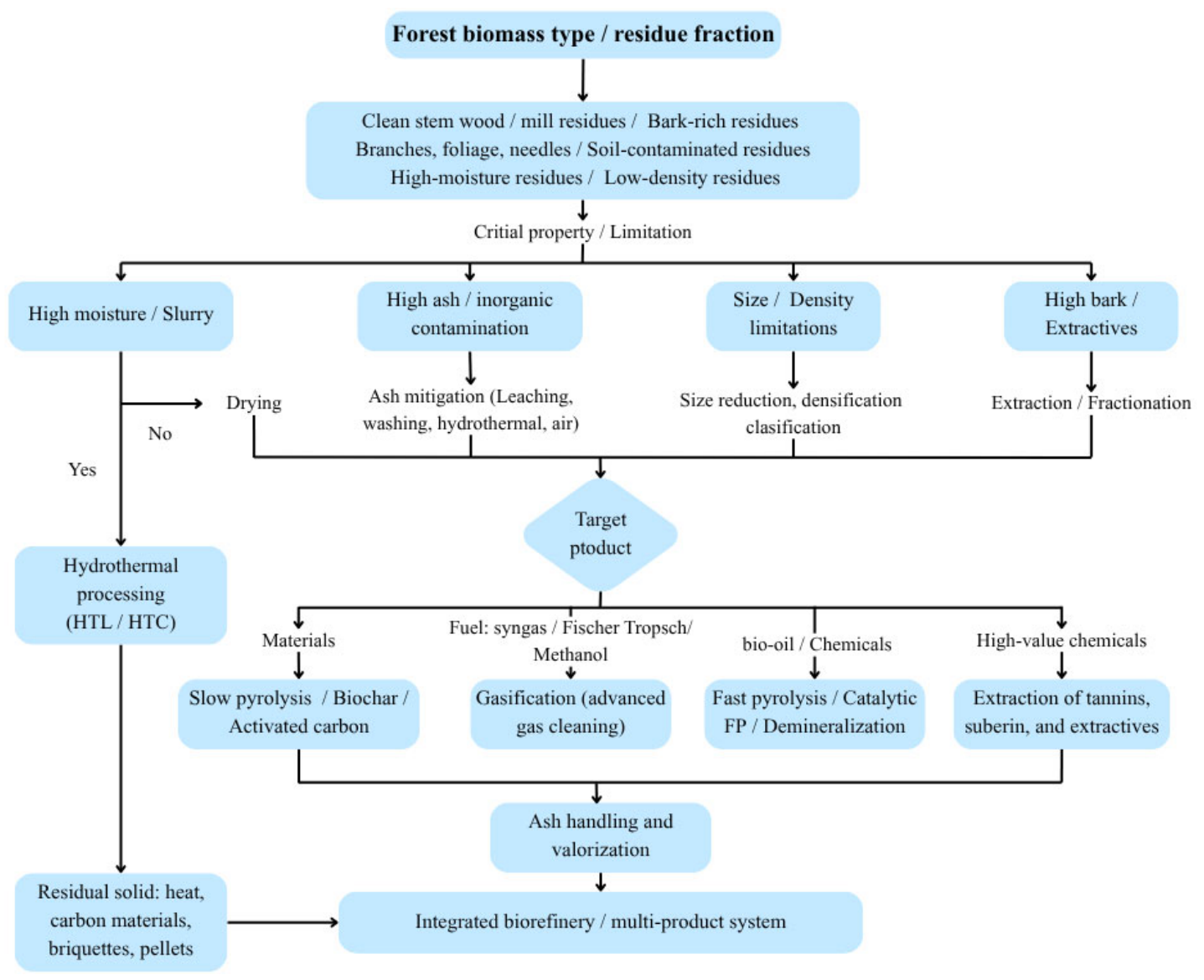
The following sections examine how feedstock properties influence the design of bioenergy pathways derived from woody biomass and how different conversion technologies impose distinct feedstock specifications that ultimately shape supply chain configuration and preprocessing strategies. To summarize this relationship, Figure 1 presents a conceptual framework linking forest biomass type or residue fraction, critical feedstock limitations, required pretreatment or conditioning, and suitable conversion routes.

Feedstock Specifications for Bioenergy Conversion

The physical and chemical characteristics of woody biomass strongly influence the design and performance of bioenergy systems. In North American forest biomass supply chains, feedstock properties determine transportation efficiency, preprocessing requirements, and the suitability of biomass for different energy conversion pathways. These pathways include direct combustion for heat and power, densified solid fuels such as pellets and briquettes, thermochemical intermediates such as pyrolysis bio-oil and syngas, and upgraded liquid fuels, including renewable diesel and sustainable aviation fuels. Understanding how feedstock properties influence these pathways is therefore essential for matching biomass resources with appropriate conversion technologies.
To improve readability, feedstock specifications are separated into two complementary summaries. The first part of Table 3 presents the main physicochemical properties and typical benchmarks for forest biomass feedstocks, while the second part of Table 3 summarizes how these properties influence major bioenergy conversion pathways.
These tables emphasize that feedstock specifications are not universal thresholds, but pathway-dependent quality targets shaped by conversion technology, product specifications, and supply-chain configuration.
Direct combustion remains the most widely deployed biomass energy pathway globally and plays an important role in utilizing forest residues for heat and power generation [109]. Biomass combustion is a series of chemical reactions in which carbon reacts with oxygen to produce heat, carbon dioxide, and water, as well as products of incomplete combustion [110]. Woody biomass is commonly used in industrial boilers, district heating systems, and combined heat and power (CHP) plants. These systems are relatively tolerant to feedstock variability compared with advanced thermochemical processes, allowing the use of wood chips or hog fuel with moisture contents often exceeding 30–50 wt% [111].
Typical lower heating values (LHVs) for dry woody biomass range between 17 and 20 MJ kg−1, making forest residues suitable fuels for combustion-based energy systems [112]. However, high moisture content significantly reduces effective energy density and combustion efficiency, increasing transportation costs and limiting feasible supply radii. As a result, combustion-based systems often rely on regional supply chains where biomass is sourced within relatively short transport distances. Although combustion systems are more tolerant of feedstock heterogeneity, ash composition remains an important operational parameter. Wood and bark properties, such as density, also contribute to changes in combustion efficiency [113]. Mineral elements such as potassium and sodium can promote fouling and slagging in boilers, particularly when contaminated forest residues are used. Mechanical preprocessing techniques such as screening and air classification are therefore commonly applied to reduce soil-derived ash contamination before combustion [71].
On the other hand, densification technologies such as pelletization and briquetting play a critical role in improving biomass logistics and enabling larger-scale bioenergy systems. Raw forest residues typically exhibit bulk densities between 80 and 250 kg m−3, which significantly limits transportation efficiency [93]. Pelletization increases bulk density to approximately 600–700 kg m−3, improving transport efficiency and producing standardized fuels suitable for residential heating, industrial boilers, and co-firing in coal power plants. Optimal moisture levels for densification generally fall within 8–20 wt%, although high-moisture pelletization systems have demonstrated operation at moisture contents up to 30 wt%, reducing drying requirements [76,77,82,94,97,114].
Thermochemical conversion processes, including pyrolysis and gasification, enable the production of liquid and gaseous intermediates that can be further upgraded to transportation fuels. Fast pyrolysis, in particular, has emerged as a promising pathway for converting lignocellulosic biomass into liquid bio-oil intermediates suitable for upgrading into renewable fuels [83,115,116,117,118,119,120].
Fast pyrolysis works by rapidly heating biomass to approximately 450–600 °C in the absence of oxygen, producing bio-oil, char, and non-condensable gases. Under optimized conditions, 50–75% of the biomass mass or energy content can be converted into liquid bio-oil. This liquid intermediate can then be upgraded through catalytic hydrotreating or hydrocracking to produce renewable diesel, gasoline-range fuels, or sustainable aviation fuel [102,103,104,105,106,121,122,123].
Particle size plays a critical role in heat transfer and reaction kinetics in pyrolysis. Experimental studies show that increasing biomass particle size from 0.3 mm to approximately 1.5 mm can reduce bio-oil yields due to slower heating rates and changes in lignin-derived product formation during pyrolysis [87,88,89,90,124].

4. Forest Residue Supply Chain and Costs

Efficient forest biomass supply chains, all other things equal, deliver feedstocks at the lowest per unit cost. Different systems for field drying, collection, processing (comminution) and transport are available for forest managers and landowners in the United States, Canada and Mexico. In this section we summarize current practices and costs from those regions currently utilizing forest residues and energy plantations for bioenergy other than firewood [125,126,127,128,129,130,131,132].

4.1. Residue Recovery Methods by Region

Residue recovery methods vary across North America because harvesting systems, terrain, stand conditions, and market infrastructure differ substantially by region. Systems differ in whether they collect small branches and foliage or leave them in the field. Systems that recover forest residues with foliage intact generally have higher ash and lower yields for transportation fuel conversion for two reasons: (1) smaller branches have a higher percentage of bark, and (2) foliage does not contribute to bio-oil in thermal processes or cellulose in biological processes. Foliage removal can also export a significant percentage of nutrients from the forest site [133]. For this reason, several states and certification standards limit removals of branches and foliage. Across regions, field drying before comminution and transport can reduce transportation costs by lowering moisture content, promote foliage detachment and improve transportation efficiency [125,126,127,128,129,130,131,132].
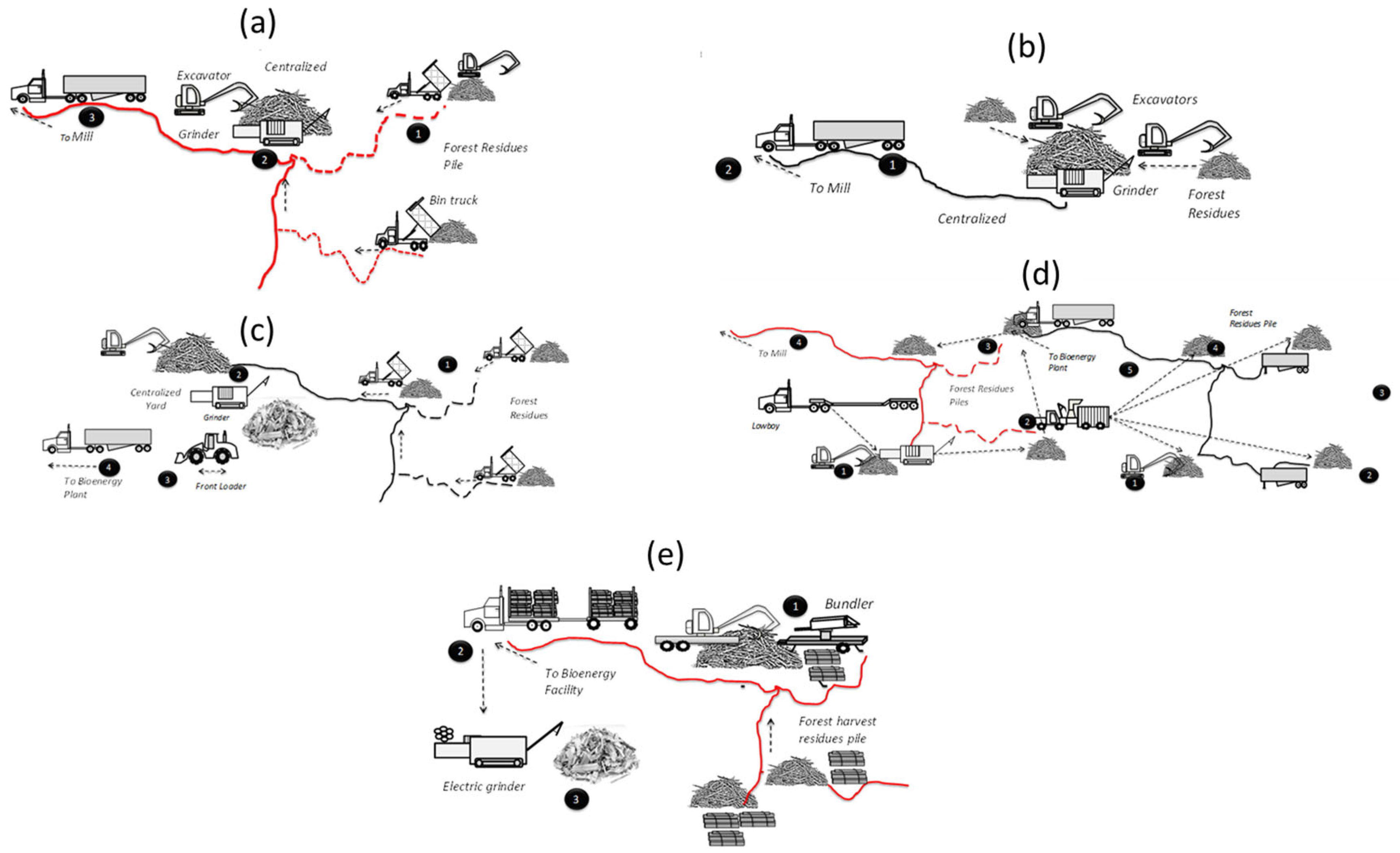
U.S West: Harvest residues are either aggregated near log landings or scattered in the field, depending on the harvest method [78]. With cable logging systems, breakage may occur during yarding, but the recoverable forest residues are generally those that end up at the landing because the cost of recovering material from the rest of the harvest unit is excessive in steep terrain. With feller-buncher systems, some residues may reach the landing as tops or defective material, but most branches and foliage break off in the field and need to be collected in a separate pass [134]. With cut-to-length methods, residues are left in the field and must be collected separately if utilized [27,135]. Several processing and transportation systems have been evaluated for western U.S. conditions (Figure 2), [3,136]. Following data collection in western Oregon after shovel logging, Zamora-Cristales and Sessions (2016) [134] simulated several combinations of loaders and forwarders collecting and forwarding residues to landings. The lowest-cost equipment combination for most situations was a loader aggregating residues and loading the forwarder.
U.S. Southeast: Flatter terrain and landing-based processing create different recovery conditions. Mechanized felling and grapple skidding predominate. Residues are typically aggregated at the delimbing gate or at the log landing following the processing of sawtimber [137], although a significant percentage can remain on site due to breakage and skidding [138]. Meadows et al. 2011 [136] evaluated a prototype motorized trailer-mounted bundler that could bundle green slash from a landing-based delimbing gate and transport green bundles at about $46/BDMT ($49.9/BDMT 2026 USD). Reference costs for forest biomass processing in North American regions utilizing forest biomass excluding firewood, as cited and updated to 2026 USD using the Producer Price Index. The residues could then be dried at the mill yard or depot and chipped using electricity. Chain-flail delimber–debarkers are also used where pulp-quality chips are produced at forest landings.
U.S. Lake States: The cut-to-length system is heavily used [27]. The harvester–processor cuts and processes the tree on site and a second operation is required to collect the residues, often by forwarder. Forwarder efficiency can be increased if the harvester–processor has previously arranged the residues in piles. However, if harvest residues are placed on skid trails for soil protection during the forwarding operation, soil contamination can be an issue.
Canada West: Feller–bunchers and grapple skidders are commonly used to bring whole trees to roadside, similar to operations in the inland U.S. West, followed by chipping [139].
Canada East: Cut-to-length systems are common with operations similar to the U.S. Lake States, and forwarders are typically used to move residues [139].

4.2. Comminution, Loading and Transport

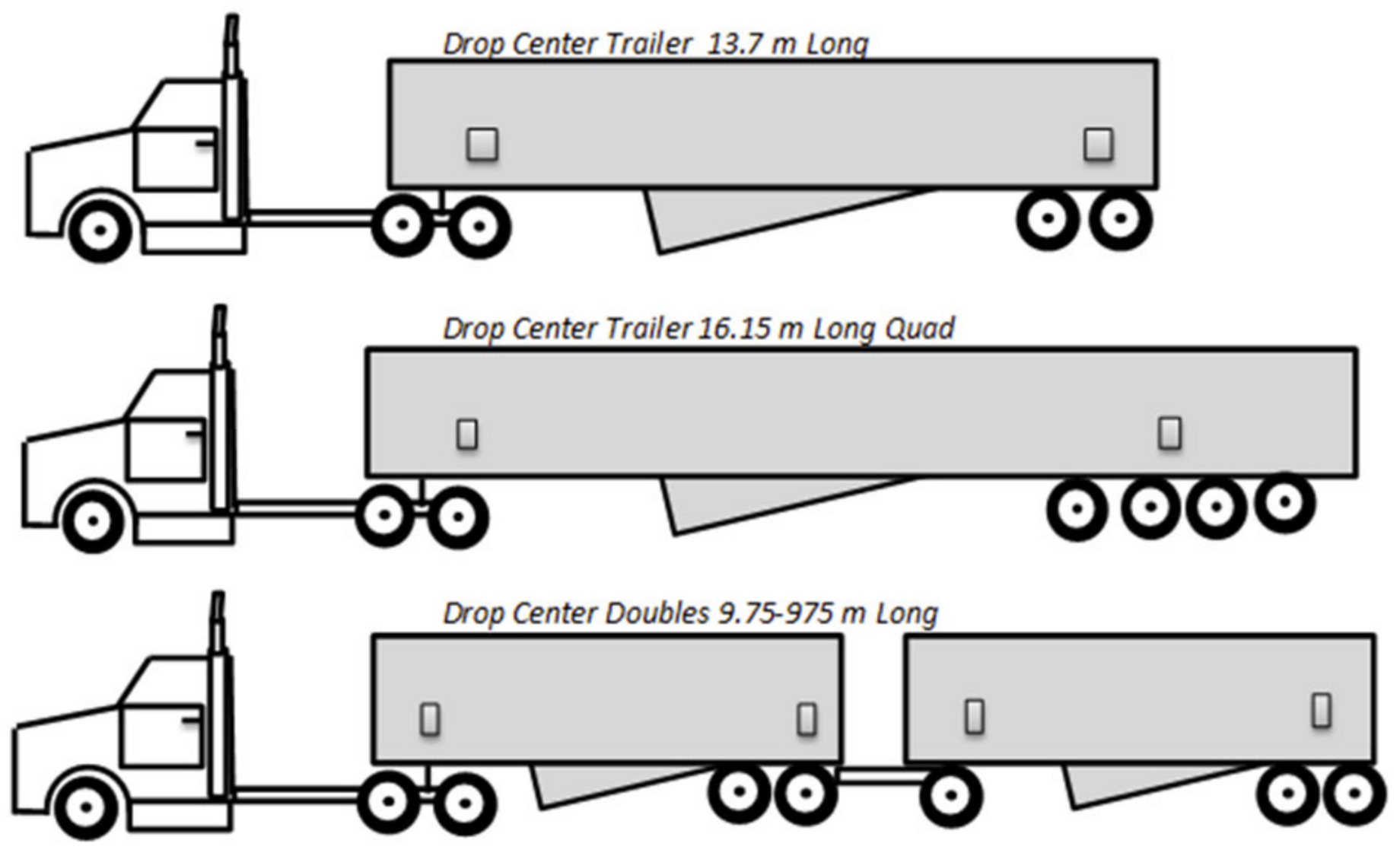
Comminution options include stationary horizontal grinders, either electric or diesel, tub grinders, and, in rare cases, forwarder-mounted mobile chippers [3,140]. Short-distance in-forest transportation options for unprocessed residues include small trucks, such as hook-lift trucks, bin trucks, and dump trucks [17,141,142]. Long-distance transportation options for comminuted residues include chip vans with different tractor–trailer configurations [41,143]. Trailers vary in length from 9.75 to 16.15 m, with double trailers used for longer transport distances [96,144].
Loading in the western United States most often takes place with the truck present, particularly when loading occurs by gravity drop from a conveyor while the truck moves the trailer [3]. In the Southeast, set-out trailers may be used to improve truck utilization if the material is chipped rather than ground [137]. An extension in the bottom center of the trailer, known as a drop-center, increases chip-hauling capacity but decreases the ability of the truck to cross vertical curves due to possible high-centering. Specialized trailers with steerable rear axles and adjustable trailer clearances have been developed for access to steep terrain [145]. In Canada, trucking options are similar, but Canadian provinces often permit the use of heavier vehicles, and tri-axles are more common than in the United States. The effect of comminution efficiency on cost and quality has been studied by several researchers [127,129,140,146]. Most studies have focused on reducing moisture content and ash. However, Zamora-Cristales et al. (2017) [147] found that, for aviation fuel produced using biological processes, the benefit of fresh residues over dry residues exceeded the value of moisture reduction.
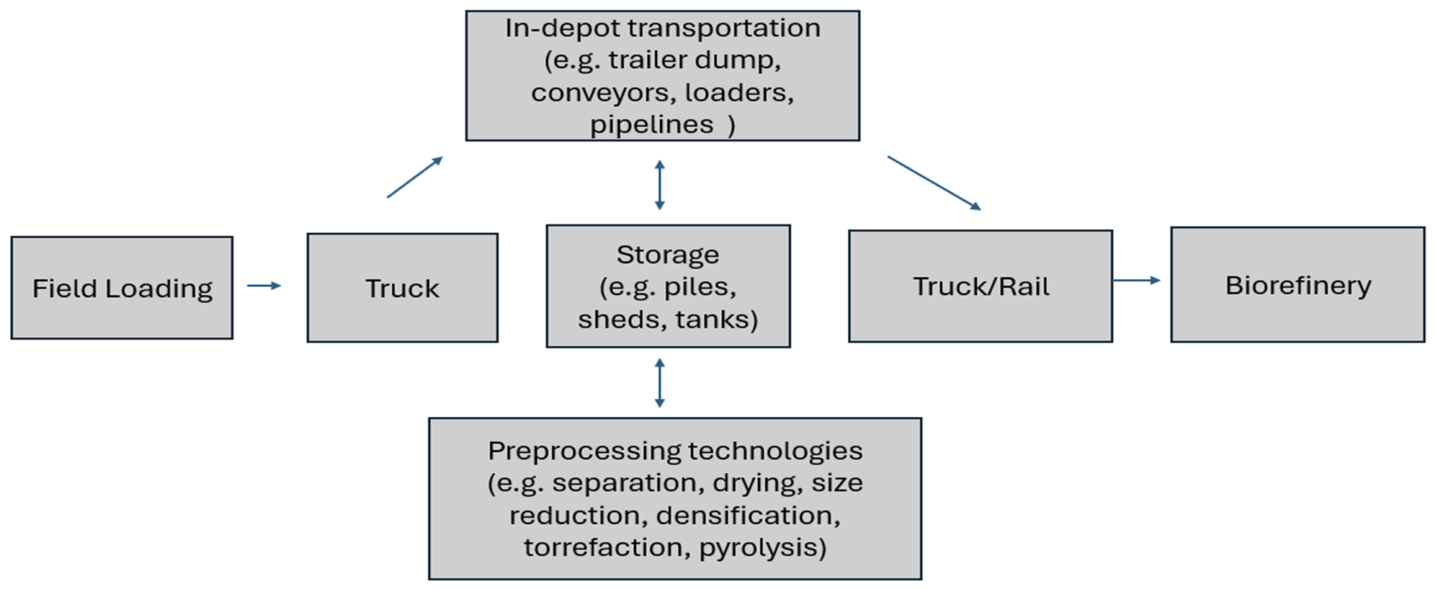
As a rule, the most efficient, or lowest-unit-cost, truck and trailer combination is the one that can haul the largest dry biomass equivalent from the forest comminution site. However, this must be balanced against trailer logistics for double trailers [3] and the cost of specialized trailers [145]. Almost all transport of forest residues is by truck (Figure 3). Mahmudi and Flynn (2006) [148] identified 145 km as the maximum economic shipping distance for harvest-residue wood chips in a study in Alberta, Canada. Zhang et al. (2016) [149] developed a Michigan biomass planning model to optimize multimodal biomass transport. The model used a loading and unloading cost for truck transport of $3.72/ton, a truck variable mileage cost of $0.074/ton-mile, a rail fixed cost of $6.54/ton, and a rail variable cost of $0.037/ton-mile. Lautala et al. (2012) [150], had found a breakeven distance of 130 miles (210 km) when temporary storage was not required. However, Erickson (2016) [151], cautioned that railroad cost functions are discrete, not linear as often portrayed.
At low moisture content, truck trailers become volume limited. To accommodate larger payloads two approaches have been used: (1) increase the packing density by air blowing, physical compaction, crowning and settlement through vibration [96]; and (2) increase trailer size using steerable axles and sliding axles to increase truck accessibility on narrow forest roads [152]. The use of double trailers provides the largest trailer capacity but is most economical only on long hauls due to trailer logistics [3] and perhaps between depots and biorefineries. Rail cars, due to stiffness, may have an advantage over thin-walled truck trailers for increasing bulk density for chip transport. Railcar shakers or vibrators are often used for settling bulk materials such as grains or minerals and to loosen bulk materials for unloading. McDonald et al. (1995) [95] tested vibration and compaction of green chips obtaining an average of 20% increase in bulk density with vibration and 30% increase with mechanical compaction. Tests are needed with initially low moisture material.
Supply chain cost varies with harvest system, biomass location, biomass geometry, comminution parameters [146], truck access, transportation distance, and moisture content. Table 4 provides examples of supply chain costs for North American regions utilizing forest biomass excluding firewood.
Where road access is not available for large chip vans, then off-highway dump trucks, on-highway dump trucks, and various types of hook-lift (roll-off) truck trailers [141,142,153] have been used to move biomass to a concentration yard or centralized landing before comminution. Of the various options, the off-highway dump truck has been the most cost-efficient with a combined loading and transport cost of about $10/BDMT ($10.1/BDMT in 2026 USD) [153].

4.3. Supply Chain for Energy Plantations

Although energy plantations cover a small area in North America (<0.2 million ha planted as energy crops compared to the 744 million ha of native forests and 10–20 million ha of agricultural lands) we include energy plantations for completeness. Energy plantations, also referred to as short-rotation woody crops or dedicated tree crops, are typically fast-growing, young plantations often harvested at less than 12 years of age. They are usually small diameter with a high number of trees per hectare on well-roaded plantations with short distances to the roadside. In the southeast United States, the tree species is typically pine, while in other areas, tree species are often hardwoods, particularly hybrid poplars and willows, but can also include eucalyptus, silver maple, black locust, sycamore, and sweetgum. Unlike commercial forests, energy plantations can often be established near conversion facilities. Storage is less of an issue as tree crops can be stored on the stump and harvested as needed [156]. However, harvest costs may vary significantly by season [157]. In the United States, forest plantations less than 12 years of age are generally subject to regulatory rules typical of agriculture as opposed to forestry. In Canada, energy plantations, where permitted, generally follow agricultural regulations, while in Mexico energy plantations are under forestry regulation. Although energy plantations share many of the advantages of agricultural energy crops, they also share similar social and environmental concerns, including competition with food crops, biodiversity impacts, and possible escape of genetically modified material. Although species specific, relative to agricultural energy crops, energy plantations are generally considered to be less nutrient demanding, have greater biodiversity, and promote greater soil stabilization [158]. Differences in water demand are species specific. Most species in energy plantations in North America are angiosperms for which pathways to sterility are understood [159].
Unlike forest harvest residues from harvesting native forests, the full cost of stand establishment and harvesting and transport must be carried by the harvest value, although in some cases, such as soil remediation, there can be other sources of revenue. Bucholz et al. [160] reported that at a productivity of 12 BDMT ha−1 year−1 in willow with a biomass price of $60/BDMT ($65/BDMT 2026 USD), the IRR is 5.5%. Studies of willow plantations in eastern Canada suggest that prices must rise from $80.90 Canadian (2012) to $116.40 Canadian (2012) ($79.76 2026 USD to $114.76 2026 USD) to provide a 6% rate of return depending on topographic slope [161].
Three harvesting methods have evolved: (1) single pass cut and chip forage harvester loading an accompanying truck or wagon; (2) feller–buncher with grapple skidding, traditional and high-capacity; or (3) feller–buncher with extraction to roadside landings using a rubber-tired loader. The forage harvester is limited to stems less than five inches in diameter. Cut-to-length harvesting using harvesters and forwarders is not as effective at short distances due to the intensive loading and unloading activities. Also, the cut-to-length harvesters process the stems in the field, leaving branches and tops for collection on a subsequent pass. The most common harvesting method in North America is with feller–bunchers and grapple skidders [162]. Depending on specifications, the biomass might be chipped or ground with bark attached, or a chain-flail delimber–debarker might be used before chipping.

4.3.1. Modified Forage Harvester

Eisenbies et al. (2014) [15] reported costs of about $30/BDMT (55% moisture content) using a modified agricultural harvester with truck or wagon in 3-year-old willow coppice. Eisenbies et al. (2016) [163] reported that the mean ash collected from three sites of willow harvest was 2.1% (SD 0.59) dry basis and ranged from 0.8 to 3.5% for samples collected from 224 truckloads of chips. Part of the reason for the high ash content may be the higher percentage of bark in younger trees [164] and bark has higher ash content than wood [165]. Hardwood stands are often harvested during the dormant season to reduce nutrient loss from leaves and to reduce ash content [16]. Air classification methods for trees harvested during the growing season can remove leaves and reduce ash but increase costs [157]. Harvester throughput was greatest during the dormant season (leaf-off) and dry or frozen ground conditions. The presence of leaves or the presence of wet ground decreased average throughput by approximately 50%. Annual harvest costs averaged about $40/BDMT ($41.4 2026 USD) if standing biomass was greater than 60 wet tonnes per ha [157], but rose rapidly if yields were lower.

4.3.2. Traditional Feller–Buncher with Grapple Skidder

Productivity and costs were evaluated for a traditional ground-based system (feller–buncher, skidder, loader, and grinder) in a small-diameter (6.4–11.9 cm) 7-year-old hybrid poplar plantation, at 108 m3/ha, in Escanaba, Michigan [166]. The estimated cost of the traditional system was $284.00/SMH ($287/SMH 2026 USD), (feller–buncher, grapple skidder, and grinder). Productivity varied between 8.82–35.44 BDMT/PMH, with an average cost of $22.30/BDMT ($22.59/BDMT 2026 USD). The authors estimated that if utilization could be raised to 80%, the costs would be $17.92/BDMT ($18.12/BDMT 2026 USD).

4.3.3. Modified Shear and High-Capacity Grapple Skidder

In a test in the SE USA in an 11-year-old loblolly pine plantation using a modified high-speed shear on a feller–buncher and a grapple skidder with a modified high-capacity grapple [167] felled and skidded trees to roadside landings at an estimated cost of about $6.4 per green metric ton, or about $13/BDMT ($13.2/BDMT 2026 USD). During the study, the feller–buncher achieved an average production rate of 43 green metric tonnes/productive machine hour and the skidder had an average production rate of 102 green metric tonnes/PMH with an average skid of 460 m. In the supply chain, a chain-flail delimber–debarker was used at the landing prior to making clean chips with an ash content of approximately 0.5% [168].

4.3.4. Rubber-Tired Front-End Loader

With the often short distances to roadside and on gentle terrain and firm ground, a rubber-tired front-end loader was found to be competitive with the traditional grapple skidder system. Spinelli and Hartsough et al. (2001) [162] found that a rubber-tired front-end loader had higher productivity than a conventional grapple skidder in an 8-year-old eucalyptus stand in California. Trees were felled with a disc-saw feller–buncher. At the landing, trees were processed with a flail-chipper. Production rates considering only extraction averaged 40 green metric tonnes/PMH for the skidder and 67 green metric tonnes/PMH for the loader. The loader’s production rate for both extraction and landing work averaged 43 green metric tonnes/PMH. The front-end loader, although slower, could carry more than twice the load, deliver cleaner trees with less dirt and ash, and could carry out landing tasks such as feeding a chipper without the need for an additional machine on the landing [162]. Fiber recovery was measured following a similar harvesting operation using a feller–buncher and front-end loader harvesting system in a 10-year-old hybrid poplar plantation in eastern Oregon [169]. A chain-flail debarker–delimber was used to process the trees on the landing before chipping. Because of breakage of small stems by the flail, wood recovery was relatively low, ranging from 40 to 95%, showing the challenges of using this technology to debark smaller trees. Most of the wood loss for smaller trees showed up in the bark discharge rather than as chipper rejects. A summary of reference costs is presented in Table 5.

4.4. Underutilized or Unutilized Pulpwood Supply Chain

Much of the semi-arid western United States lacks access to pulpwood markets. Typically, the part of the stem less than 15.2–17.8 cm in diameter, depending on species, is left on the landing and disposed of by burning. This pulpwood-like material is a high-quality resource that is capable of being loaded on conventional log truck trailers, hauled to locations where electricity is available, debarked and chipped. Transport on log truck trailers and chipping on electricity are both less expensive than comminution on diesel in the forest and transport in chip vans. Perhaps, more importantly, the percentage of ash in the debarked wood is low. This is in contrast to forest residues consisting of tops and branches where the bark and ash content are higher and are not easily removed through screening and air classification. Even when successful, there is a significant loss of initial material [32].
There have been several recent evaluations to use this higher-quality material. Halbrook (2020) [172] evaluated chipping this pulp-like material adjacent to railroad access in Arizona and shipping the chips to South Korea, taking advantage of the low-cost empty container return to Asia. Kizha and Han (2016) [14] evaluated sorting residues on forest landings in northern California to separate pulpwood-like material that could be debarked and chipped in the woods from branch-like material that would either be ground and transported to power plants or disposed of on site. Berry et al. (2018) [173] used a similar strategy to separate material on the landing but transported the pulpwood-like material to a conversion facility where it had a positive value for bioenergy while leaving lower-quality residues to be burned.
Petitmermet et al. (2019) [174] evaluated using tethered cut-to-length harvesting in an integrated sawlog–pulpwood harvest to provide feedstock for a biochar plant in southwest Oregon where it had a positive value for bioenergy. The pulpwood-like material, as discussed previously, has much higher packing density than forest residues, does not need to be commuted using diesel-powered grinders on the forest landing before shipment using diesel-powered grinders, and is a lower cost material to transport. Branches and tops were left in the forwarder trails and compacted by the passes of the forwarder and not utilized.
In summary, in areas that lack pulpwood markets, utilizing this pulpwood like material for clean chips as a high-quality low ash feedstock for bio-products either with or without the residue utilization has potential to provide bioenergy feedstock while simultaneously reducing carbon to the atmosphere from burning in the forest for disposal. For some energy products such as torrefied wood and direct combustion, ash is less of a consideration. But at some point, there is the question about whether low-quality pulpwood, even where pulpmills exist, should be diverted to products such as transportation fuels. Market competition will sort that out, but it may depend on government policies such as the designation of which biomass is eligible for RIN credits.

5. Feedstock Upgrading

In this review, feedstock upgrading refers to the set of physical, mechanical, thermal, and logistical operations used to reduce variability in forest biomass and align raw material quality with the requirements of downstream bioenergy conversion technologies. Upgrading is therefore not a single process, but an integrated quality-control strategy across the supply chain. It includes physical conditioning, such as size reduction, screening, and particle-size classification; cleaning operations aimed at reducing soil-derived ash, fines, bark, foliage, and inorganic contaminants; drying strategies to reduce moisture content and increase effective energy density; densification processes, such as pelletization and briquetting, to improve bulk density, storage, and transportation efficiency; mild thermal pretreatments, including torrefaction or roasting, to improve grindability, hydrophobicity, and energy density; and logistical organization through preprocessing depots or storage facilities that enable blending, quality control, inventory buffering, and more reliable delivery to conversion facilities.
These operations differ in cost, energy demand, biomass loss, and downstream benefits. For this reason, feedstock upgrading should be evaluated according to the dominant limitation of the raw material and the target conversion pathway. For example, high-moisture residues may require drying before combustion, pelletization, or pyrolysis; soil-contaminated residues may require screening or air classification before thermochemical or catalytic conversion; low-density materials may benefit from densification when long-distance transport is required; and highly heterogeneous residues may require depot-based blending and storage to meet reactor-ready specifications. Thus, upgrading decisions represent a trade-off between additional preprocessing cost and potential gains in transportation efficiency, reactor stability, product yield, catalyst protection, and supply reliability.

5.1. General Overview

In forest systems, upgrading operations function as quality-control mechanisms that reduce variability, mitigate operational risk, and influence conversion performance, hydrogen demand, equipment wear, and product yield. In the North American context, upgrading decisions are not purely technical; they are economic reallocations within the supply chain. Each additional preprocessing step increases upfront costs in the feedstock supply chain but can reduce operational inefficiencies, catalyst deactivation, yield losses, equipment downtime, and maintenance costs during downstream conversion. The net value of upgrading therefore depends on the balance between incremental preprocessing cost and avoided conversion penalties [175]. Burli et al. (2021) [32] using performance simulations, found that extrinsic soil ash was a major pinch point for system performance, accounting for 53% of failures and 36% of total downtime. This example illustrates that feedstock upgrading decisions should be driven by the dominant constraint of the raw material rather than applied uniformly across all biomass streams. Similar decision points occur for moisture content, particle size distribution, bulk density, and storage stability, each of which affects both supply-chain cost and downstream conversion performance. Yet the literature commonly evaluates engineering performance, delivered cost modeling, and conversion requirements in isolation. Few studies integrate preprocessing intensity, supply reliability, and downstream conversion outcomes within a unified framework. As renewable diesel and upgraded bio-oil pathways expand, where feedstock consistency directly affects hydrogen consumption and catalyst stability, this gap becomes increasingly consequential. To translate these trade-offs into practical selection criteria, Table 6 integrates the decision logic and cost–benefit implications of major feedstock upgrading operations. The table links raw material condition, dominant limitation, recommended operation, relative cost or energy intensity, biomass loss risk, expected benefit, and the most relevant conversion pathway.
This section synthesizes technical and economic evidence from North American forest biomass systems (2000–2025), highlighting where quantitative consensus exists and where integration across preprocessing and conversion remains limited.
This matrix is intended as a qualitative decision framework rather than a fixed prescription, because optimal upgrading intensity depends on feedstock quality, conversion technology, plant scale, transportation distance, and the value assigned to avoided downtime, yield losses, and catalyst deactivation.
The following subsections discuss these upgrading options in greater detail, beginning with inorganic and ash-forming elements because mineral contamination is one of the most consequential constraints for thermochemical conversion, catalyst stability, and reactor availability.

5.2. Removal of Inorganics and Ash-Forming Elements

5.2.1. Inherent and Extrinsic Ash

Forest residues rarely enter bioenergy systems in an ideal state, and ash should be differentiated by origin. Inherent ash is the mineral fraction naturally present in stem wood, bark, foliage, needles, and small branches, and varies with species, anatomical fraction, season, and harvest timing. Extrinsic ash refers to soil-, sand-, dust-, and mineral-derived contamination introduced during harvesting, skidding, forwarding, piling, comminution, storage, and handling [176,177]. This distinction is operationally important because inherent ash is mainly controlled through feedstock selection, anatomical fractionation, leaf-off harvesting, and bark/foliage management, whereas extrinsic ash can be reduced through improved handling, screening, mechanical cleaning, or air classification (see Table 7) [178]. Both ash types affect conversion, but their impacts are pathway-specific. In combustion and gasification, ash and alkali metals increase fouling, slagging, bed agglomeration, and corrosion risks. In pyrolysis and catalytic upgrading, alkali and alkaline earth metals (AAEMs) catalyze cracking reactions, promote secondary char formation, suppress bio-oil yield, and accelerate catalyst deactivation in downstream upgrading units [101,179].

5.2.2. Mechanical Fractionation and Ash Mitigation

Mechanical fractionation is most effective when ash is mainly extrinsic and concentrated in fines, bark, foliage, or low-density fractions. Air classification exploits density and aerodynamic differences to concentrate ash-rich particles into a relatively small rejected fraction. Experimental work on pine forest residues reported that over 40% of total ash could be isolated into less than 7% of the biomass mass, reducing ash content from 1.69 to 1.07 wt% in forest thinnings and from 1.09 to 0.68 wt% in logging residues at an estimated cost of approximately $2.23 per dry ton [71]. However, cleaning performance depends on particle-size distribution, harvest system, moisture content, and the proportion of bark, foliage, and soil-derived fines. For example, studies of Douglas fir forest residues have shown that larger particle fractions (>12.7 mm) can represent roughly 60% of collected material while containing only about 35–37% of the total ash and bark, illustrating the strong association between fines and mineral contamination [180]. These improvements, however, involve a trade-off between ash reduction and biomass loss. Supply-chain assessments from the U.S. Department of Energy indicate that up to 23% of incoming biomass may fail to meet ash specifications without preprocessing or fractionation, requiring rejection, reallocation to lower-value uses such as combustion, or replacement with cleaner biomass [32]. Therefore, ash mitigation should be evaluated not only by the direct cost of cleaning, but also by rejected biomass, replacement feedstock demand, avoided downtime, lower fouling and slagging frequency, improved liquid yield, and extended catalyst lifetime.

5.2.3. Leaching, Blending, and Ash-Specification Trade-Offs

More intensive approaches combining air classification with dilute acid leaching report ash removal efficiencies exceeding 60%, with total processing costs between $6 and $9 per dry ton depending on yield loss and wastewater handling [181]. Such strategies are particularly relevant for catalytic fast pyrolysis and hydroprocessing pathways to renewable diesel-range fuels. Yet most techno-economic analyses enumerate cleaning costs without propagating reduced ash into measurable changes in bio-oil yield, hydrogen consumption, or catalyst lifetime. The cost of removal is visible; the conversion benefit is rarely modeled. Preprocessing may also function as formulation rather than removal. Depot-based systems aggregate heterogeneous streams and standardize quality through selective fractionation and blending. Air-classified materials can be recombined to meet ash specifications below 5 wt% for biochemical pathways [31]. However, feedstock thresholds are typically imposed as fixed constraints rather than optimized against marginal gains in reactor performance or fuel yield. Depot economics are therefore often evaluated independently of conversion sensitivity, limiting insight into optimal quality targets [146].
Densification and torrefaction are among the most structurally transformative upgrading strategies in forest biomass systems. Pelletization increases bulk density roughly threefold, fundamentally reshaping transport economics [182,183]. However, pellet production is also sensitive to feedstock quality. Industrial pellet mills typically favor relatively clean woody materials such as sawdust or shavings, as excessive bark, mineral contamination, or soil-derived ash can accelerate die wear and increase maintenance requirements, limiting current usage of forest harvest residues, particularly bark and non-woody materials such as pine cones [184]. Bark fractions in particular often contain significantly higher ash concentrations (typically 3–8 wt%) compared with debarked wood (<1 wt%), making feedstock preparation an important operational consideration [112,185]. Sorting of forest residues for alternative uses is one way to reduce bark content in biomass feedstock [129]. Bark fractions are related to tree species, tree size, and residue component. Average bark percent by species as a ratio of wood volume can vary from 9% to 25% [186], with smaller trees having a larger bark percent than larger trees [187]. Small branches have a greater percentage of bark than larger branches. Clark and Taras [188], in studying four major pines in the US south, identified that across a wide range of tree diameters, the ratio of bark mass content in the branches to bark mass content in the stem was about 2.5.
In British Columbia pellet supply chains, pellet production accounts for ~40% of delivered pellet cost, while raw material procurement and transport contribute ~29% [8]. Delivered cost can shift 1–5% depending on drying fuel choice and feedstock blending strategy [8,189]. Torrefaction further increases energy density and hydrophobicity [5]; yet most studies emphasize logistics competitiveness rather than quantifying impacts on oxygen content, hydrogen demand, or catalyst stability in liquid fuel pathways [11].
These examples show that ash mitigation should be treated as both a feedstock-quality and conversion-risk problem. The optimal level of cleaning depends not only on ash removal cost, but also on rejected biomass, replacement feedstock demand, avoided downtime, fouling and slagging reduction, liquid-yield preservation, and catalyst lifetime.

5.3. Preprocessing Facilities and Unit Operations

Preprocessing facilities, whether mobile in-woods systems or centralized industrial plants, translate abstract quality targets (ash, moisture, particle size, density) into operational decisions. These unit operations rarely operate in isolation. Each affects not only feedstock conditions, but cost structure, logistics configuration, and ultimately conversion performance.

5.3.1. Debarking and Inorganic Removal

Mineral contamination in forest residues originates primarily from soil contact during harvesting and handling [190,191]. Even modest increases in ash content shorten maintenance intervals, elevate fouling and slagging frequency, and increase operational risk in thermochemical systems [192,193,194]. Debarking and air classification therefore function as operational risk mitigation strategies rather than merely compositional adjustments.
Bark fractions are an important source of inherent ash in forest residues [129]. Bark commonly contains higher ash concentrations, typically 3–8 wt%, compared with debarked wood, which is often below 1 wt% [112,185]. Bark content also varies with species, tree size, and residue component. Average bark percentage by species, expressed as a ratio of wood volume, can vary from 9% to 25% [186], with smaller trees generally having higher bark percentages than larger trees [187]. Small branches also contain proportionally more bark than larger branches; Clark and Taras reported that, across four major southern pine species, the ratio of bark mass in branches to bark mass in stems was approximately 2.5 [188]. These anatomical differences explain why debarking, selective collection, and fractionation can reduce ash variability before downstream conversion.
As discussed in Section 5.2, air classification can reduce extrinsic ash by rejecting ash-rich fines and low-density fractions, but its value depends on the trade-off between ash reduction, rejected biomass, and replacement feedstock requirements [32,71]. In preprocessing facilities, this operation should therefore be treated as a risk-reduction step rather than only as a compositional adjustment. Its economic value depends on avoided downtime, lower fouling and slagging frequency, reduced maintenance, and the possibility of reallocating rejected biomass to less ash-sensitive uses such as combustion. Accordingly, the sequence of unit operations matters, as final size reduction or drying may be delayed until after ash-rich fractions are removed to avoid processing biomass that will ultimately be rejected [195]. Thus, within preprocessing facilities, debarking, screening, and air classification should be positioned early in the process sequence when ash-rich fractions are expected, so that drying, grinding, or densification energy is not spent on material that may later be rejected.

5.3.2. Moisture Management and Drying Systems

Moisture content (MC) strongly affects hauling efficiency, grinding energy demand, drying requirements, and reactor thermodynamics. In catalytic hydroprocessing pathways, higher moisture can also increase downstream severity by contributing to water management and hydrogen demand during oxygen removal [196]. Field storage and slash-pile drying can substantially reduce moisture prior to transport. Residue moisture is controlled by initial moisture content, pile geometry, local climate, drying duration, and season of comminution [131]. For example, moisture reductions from ~52% to ~12% after approximately 12 months of field storage have been reported [30] while roadside storage trials in Northwestern Ontario reduced MC to ~15.1% after two years [68]. Lower MC increases dry mass delivered per truckload when transport is weight-limited. Under such conditions, reducing MC from 50% to 30% (wet basis) can increase dry tonnes delivered per load by roughly 40% based on simple mass balance considerations. However, transport systems handling low-density forest residues often become volume-limited as moisture decreases. In practice, this threshold may occur near ~35–40% MC depending on particle size distribution and trailer configuration. Once loads become volume-limited, further moisture reduction does not significantly increase delivered dry mass unless feedstock bulk density is increased through compaction or particle size modification. Technologies such as chip production or micro-chipping, which allow pneumatic loading and improved packing density compared with belt-loaded ground residues, have been proposed as potential approaches to increase trailer payload efficiency.
Moisture reduction also influences conversion performance. Net process efficiency gains of approximately ~1% per 1% MC reduction above ~50% MC and ~0.5% per 1% reduction below ~40% MC have been reported [30]. In Ontario storage trials, gross calorific value remained within ~19.5–23.1 MJ/kg while ash ranged from ~0.4 to 8.4%, indicating that storage regime can significantly influence delivered fuel quality and net energy yield [68]. Reported storage benefits include moisture reductions of up to ~25 percentage points, increases of roughly ~4 kWh/kg in heating value, and economic gains of approximately ~$9–$15 per oven-dry ton ($8.8–$14.6 2026 USD), while pile construction costs were estimated at ~$37–$48 per pile ($36.2–$46.9 in 2018 2026 USD) [30].
These results highlight an important supply-chain tradeoff: field drying reduces downstream drying costs and improves conversion efficiency, but its transport benefits depend on whether hauling systems are weight-limited or volume-limited. Improving packing density through feedstock conditioning therefore represents a key research gap in forest biomass logistics.

5.3.3. Size Reduction and Comminution

Comminution is one of the most economically sensitive upgrading decisions. Forest residues are heterogeneous mixtures of bark, branches, and fines; grinding must satisfy both reactor size constraints and logistics density requirements. Sensitivity analysis for Pacific Northwest bio-jet supply chains shows grinding cost variation alone can reach ~$26 per oven-dry ton, while bulk density improvements can reduce hauling cost by >$11 per oven-dry ton [146]. Tightening particle size specifications rapidly escalates marginal grinding cost, and density benefits depend on moisture and truck weight limits. From a conversion perspective, oversize particles increase plugging and regrinding energy, whereas excessive fines concentrate ash-rich fractions and reduce yield [197]. Despite this, most models treat particle size as fixed rather than as a co-optimized decision variable. Conversion studies rarely propagate size constraints upstream into grinding energy or wear assumptions. Integrated comminution–conversion models remain limited. Thus, particle-size specifications should be treated as a coupled logistics–conversion decision rather than as a fixed reactor input.

5.3.4. Densification and Mild Thermal Pretreatment

Raw forest residues typically exhibit low bulk densities, around 150–200 kg m−3 for woody resources and as low as 80–100 kg m−3 for agricultural residues, which complicates storage, transportation, and reliable feeding into conversion systems [52]. Under these conditions, transport systems often become volume-limited rather than weight-limited, constraining hauling efficiency. Various forms of densification have been developed. Among those are pelletization and briquetting that aim to convert heterogeneous biomass into a uniform, high-density commodity feedstock suitable for industrial supply chains. Pelletization typically increases bulk density to 600–700 kg m−3, effectively tripling the amount of energy transported per truckload while improving handling, flowability, and storage stability. The process also enhances feedstock uniformity in terms of particle size distribution and mechanical durability—attributes that are essential for automated feeding systems and large-scale bioenergy facilities [52]. These improvements have driven rapid growth in densified biomass markets; global pellet consumption increased from approximately two million tonnes in 2000 to more than 30 million tonnes by the mid-2010s, reflecting expanding demand for standardized solid biofuels in power generation and heating sectors [198].
From a supply-chain perspective, densification fundamentally reshapes transport economics. In British Columbia pellet supply chains, pellet production accounts for approximately 40% of delivered pellet cost, while raw material procurement and transport contribute roughly 29%, indicating that densification itself represents the dominant processing cost within the logistics chain [8]. Delivered cost can vary by 1–5% depending on plant configuration, drying fuel, and blending strategies, highlighting the sensitivity of densification economics to process integration decisions [8,189]. Plant scale introduces an additional layer of trade-offs. Larger densification facilities benefit from capital cost spreading and improved thermal integration but require wider and more stable feedstock draw areas [189]. Expanding procurement radii increases exposure to supply variability, moisture heterogeneity, and contracting risk. Consequently, optimal plant size is not determined solely by capital efficiency but also by feedstock reliability and quality control across an expanded procurement network.
Beyond mechanical densification, mild thermal pretreatment has emerged as a complementary strategy for stabilizing forest residues prior to densification or thermochemical conversion. Typical operating windows include 200–300 °C for torrefaction, 180–230 °C for steam-based treatments, and 180–260 °C under autogenous pressure for hydrothermal carbonization. Processes such as torrefaction, steam treatment, and hydrothermal carbonization partially decompose hemicellulose and alter biomass structure, increasing energy density while reducing hygroscopicity and biological degradation during storage [70,199,200]. For woody residues, torrefaction can reduce grinding energy requirements to approximately 24 kWh t−1, approaching the grindability of coal-like fuels, while increasing heating value by roughly 20% under optimized conditions [201,202]. At the same time, the treatment significantly decreases moisture uptake; saturated moisture absorption in torrefied pellets can decline from roughly 20% in untreated material to below 10% in torrefied products [70,200]. For torrefied pellet systems, techno-economic analyses report up to 20% lower delivered costs relative to conventional pellets and ~10% lower production costs under optimized configurations [5]. These changes improve feedstock stability and reduce variability during storage, handling, and downstream conversion.
However, the benefits of mild thermal pretreatment are accompanied by trade-offs that influence integration with densification systems. Increasing torrefaction severity improves hydrophobicity and energy density but also reduces mass yield and may increase pelletization energy demand by more than 50% due to the loss of natural binding components [199,203]. Similar stabilization effects have been reported for steam-based pretreatments. For example, steam treatment of Douglas fir residues increased pellet breaking strength by 1.4–3.3 times, reduced equilibrium moisture content by 2–4 percentage points, and increased heating value from 18.9 to about 20.1 MJ kg−1, although compaction energy increased by 12–81% relative to untreated material [204,205]. In hydrothermal carbonization systems, even stronger energy densification has been reported; hydrochar produced from spruce residues at 260 °C for 1 h reached heating values near 28.7 MJ kg−1, enabling pellets with densities above 1000 kg m−3 and durability approaching 99.5% [206,207].
Across these pathways, mild thermal pretreatment functions less as a stand-alone calorific upgrading step and more as a feedstock stabilization strategy within the supply chain. By lowering hygroscopicity, improving grindability, and reducing physical variability, pretreatment can enhance the reliability of densified biomass logistics and produce more consistent precursors for downstream conversion pathways such as fast pyrolysis, gasification, and hydroprocessing [70,200,202]. However, these benefits must be balanced against penalties in mass yield, densification energy, and capital cost. In practice, the optimal severity of pretreatment is therefore system-dependent and must be evaluated jointly with pelletization conditions, plant scale, and procurement logistics. This coupling between preprocessing intensity, supply stability, and delivered cost becomes particularly relevant when scaling forest biomass supply chains, where participation rates, feedstock variability, and procurement costs ultimately determine the economic feasibility of advanced biofuel pathways.
Taken together, the unit operations discussed in this section reinforce the decision framework presented in Table 6: preprocessing facilities should be designed as integrated quality-control systems rather than as collections of isolated operations. The optimal sequence depends on whether the dominant limitation is ash, moisture, particle size, bulk density, storage stability, or regional supply variability.
Across ash mitigation, moisture management, size control, densification, and mild thermal pretreatment, a consistent pattern emerges: preprocessing decisions are often optimized locally, primarily for logistics cost or transport efficiency, while their downstream conversion implications remain weakly integrated. Some recent design frameworks, particularly those developed in U.S. DOE supply-chain analyses, explicitly configure preprocessing to meet reactor-ready feedstock specifications [11]. However, many techno-economic studies still evaluate preprocessing operations independently of detailed conversion modeling. As higher-variability residues enter supply chains, this fragmentation becomes more consequential because quality improvements that appear marginal upstream may yield disproportionate gains in reactor stability, catalyst life, or hydrogen efficiency.

5.4. Depots

Biomass processing depots (Figure 4), sometimes referred to as bio-hubs [139], have been proposed for a number of years as a key to the logistical challenges of the cellulosic biofuel industry [208]. Although forest biomass is less affected by the extreme seasonality of agricultural feedstocks, it shares many of the other challenges and opportunities. Pradhan et al. (2022) [139] classified depots by function as (1) storage and reloading, (2) storage, sorting, and reloading, (3) storage, sorting, processing, and reloading, and (4) storage, sorting, processing, conversion to intermediates, and reloading.

5.4.1. Improved Logistics and Efficiency

Forest biomass depots offer opportunities to improve logistics and transportation efficiency through drying, densification, removal of waste materials [50] and points to change modes of transportation, for example, from small truck to large truck, single trailer to double trailer, truck to rail, or truck to barge [209,210]. The added cost of densification is acceptable if it can abate both storage and transportation costs. Densifying biomass allows for more weight per truck, thereby decreasing the number of trucks required. Alternatively, depots can be placed along rail lines, replacing road transportation from the depot to the biorefinery with cheaper rail transportation [208]. Gautam et al. (2017) [211], in a case study in Canada, found that incorporating a terminal forest biomass between the forest and the biorefinery allowed delivery of feedstock 4–11% lower in MC while reducing procurement costs 11–32%. Similar in objective to depots, mobile refineries and mobile modular installations have been evaluated to reduce the transport cost of woody biomass. Mirkouei et al. (2016) [212] evaluated the use of a mobile refinery to produce bio-oil to reduce woody feedstock transport costs. He found the concept most useful when distances between the forest and a central fixed refinery increase. Berry and Sessions (2018) [173] also evaluated a mobile conversion facility for producing biochar and found that for the conditions evaluated, a modular system design with movement frequency of 1 to 2 years was the most viable when comparing savings in biomass transport costs against economies of scale of a fixed conversion facility.

5.4.2. Feedstock Quality Control

Critical activities at a depot to convert woody feedstock into reactor-ready biomass include drying high-moisture content feedstock and comminution (i.e., size-reducing and screening) into a target particle size, meeting the conversion needs of a biorefinery. For woody biomass initial drying starts in the field and size reduction usually occurs at the landing, so the depot configuration would start with second stage drying followed by second stage grinding [50] with screening to improve feedstock quality before shipment. Conversion facilities using thermodynamic processes require low moisture content (<10%), low ash content (<1%) and small particle sizes (2 mm) [11]. Ash-related downtime due to machinery wear in preprocessing activities can also be significant. Biorefinery operation inefficiencies caused by inconsistent feedstock quality is a common issue for biorefineries [28]. Biomass that does not meet specifications can be substantial. In a study by the Idaho National Labs (INL), 23% of the feedstock did not meet specification [11]. Depots offer an opportunity to remove this non-qualifying material before long-distance transport and possibly use it to provide drying energy. In INL’s case, the volume of material not meeting specification was high enough to implement size reduction with a rotary shear followed by sorting to remove bark and ash prior to secondary drying instead of the conventional practice of drying to reduce energy requirements of secondary size reduction by hammermill [195]. Castillo-Villar et al. (2016) [213], in a case study in Tennessee, concluded that the total supply chain cost increased 7%, on average, for each additional percent in the final ash content.

5.4.3. Supply Chain Resilience

Utilizing depots in a biofuel supply chain to procure and preprocess feedstock has additionally been found to mitigate supply risk in regions of low biomass availability, as well as reduce the biorefinery footprint [214]. Consolidating biomass helps manage the inherent variability of supply due to seasonal changes or harvesting limitations. This creates a more stable, predictable flow of material, reducing the risk of shortages for large-scale processing facilities. Multimodal transport using both truck and rail terminals could increase the resiliency of the supply chain, addressing supply uncertainties due to natural calamities and equipment breakdown. Hossain et al. (2022) [215] evaluated potential depot locations throughout the contiguous United States that could take advantage of both forest resources and short-rotation woody crops to meet quality and quantity targets through blending at the depots.

5.4.4. Cost Management

While adding an initial step, depots can reduce the spatial variability of feedstock costs and allow for economies of scale as well as economies of transport. Depots can produce feedstocks that existing biorefineries can utilize directly without additional capital investment [214]. For example, Burli et al. (2021) [32] estimated depot operational costs for handling, separating, drying and size reduction at $41.36/BDMT plus $3.26/BDMT ($42/BDMT plus $3.31/BDMT in 2026 USD) in facility construction to produce reactor-ready feedstock for pyrolysis (note that any costs from Burli et al. are in $2016, not $2021).

5.4.5. Socioeconomic Benefits

Depots can provide local employment and support rural economies [210]. However, a depot must be able to pay for itself in terms of the benefits provided [209]. For example, Lan et al. (2020) [28] found decentralized depots more efficient than a centralized facility for improving material quality in some, but not all, scenarios evaluated. Crandall et al. (2017) [210] concluded that no biomass depots would be established in western Oregon at biomass prices less than $55/BDMT ($ 55.6/BDMT in 2026 USD) regardless of operating or capital cost.
A number of decision support models have been developed to analyze and plan depot operations. Mathematical programming and simulation have been widely applied to depot location, capacity planning, production planning, risk management, route planning, biomass flow, resource management, economic, environmental, and social aspects. An extensive survey is provided by Valipour et al. (2024) [216].

5.5. Relevance of Scale

5.5.1. Transportation Cost and Scale

Because feedstock is often the largest variable cost in bioenergy production, there has been interest in developing smaller refineries to shorten the distance for transporting biomass, particularly biomass with high moisture content. However, in situations where the biorefinery is at the center of a large, circular forest area, the forest area accessed, all other things being equal, increases with the square of the transport distance. This means that the forest area accessed can be doubled with less than a 50% increase in the average transport distance. Also, at longer transport distances, a higher percentage of the trip may occur on higher standard roads, reducing the variable cost of transport.

5.5.2. Refinery Cost and Scale

Similarly, doubling the size of a refinery does not double the cost of the refinery. The relationship between plant investment cost and production capacity is referred to as the “Chilton 0.6 rule” [217], which is widely used as an approximation to adjust plant investment with scale of operation in chemical engineering processes. Using the 0.6 rule, the fixed cost varies as the ratio of production capacity to the 0.6 power. So, a doubling of the production capacity increases the investment cost 2 0.6 , or about 50% from the base production level. However, the transportation and investment costs come from very different starting points. As an example, consider the Northwest Advanced Renewables Alliance (NARA) project managed by Washington State University under a grant from the US Department of Agriculture to develop a supply chain for aviation fuel from forest harvest residues. Although the cost of feedstock was the largest variable cost, the contribution to cost per gallon rose relatively slowly [146] compared to the high impact on cost reduction per gallon due to plant scale and production level (Figure 5). The Chilton rule is expressed mathematically as:
C o s t 2 = C o s t 1   C a p a c i t y 2 C a p a c i t y 1 0.6
where C o s t 1 is the cost of the existing plant; C o s t 2 is the estimated cost of the new scaled-up plant; C a p a c i t y 1 is the capacity of the existing plant; C a p a c t i t y 2 is the capacity of the new plant; and 0.6 is the scale factor exponent.
That is not to say that controlling feedstock cost is not important, just that processing scales may be more important at smaller plant scales. NREL has adopted 2000 BDMT of feedstock as their standard model [11], or approximately 660,000 BDMT per year.

5.5.3. Supply Risk and Scale

Increasing scale increases supply risk [218]. At a small scale, the feedstock supply interruptions can be dealt with more easily if there is surplus supply in a region, or if an adequate buffer has been maintained. At larger scales, feedstock diversification and the use of depots have been proposed. Lamers et al. (2015) [50] agree that although processing operations at the depot increase feedstock supply costs initially, they enable wider system benefits, including supply risk reduction, leading to lower interest rates on loans, industry scale-up, conversion yield improvements, and reduced handling equipment and storage costs at the biorefinery. They concluded that cost reductions per liter of gasoline equivalent (LGE), would be between –$0.46 to –$0.21 per LGE (–$0.46 to –$0.21 per LGE in 2026 USD) for biochemical and –$0.32 to –$0.12 per LGE (–$0.32 to –$0.12 per LGE in 2026 USD). Hansen et al. 2015 [218] compared a conventional supply system using trucks alone to an alternative supply system using depots, pellets, and trains, and found that supply system risk was reduced from 83% in the conventional system to 4% in the alternative system where supply system risk was the risk of not meeting production goals.

6. Preprocessing Costs, Landowner Payments, and Supply Reliability

The distinction between technically available and economically available biomass underpins North American supply assessments, yet preprocessing decisions sit precisely at the boundary between these domains. Static supply analyses suggest that substantial volumes of residues may be mobilized at $50–100 per metric tonne [219], but these estimates depend heavily on sustainable removal rates, recovery efficiencies, and collection costs. Once preprocessing, field collection, grinding, sorting, drying, and transport are explicitly incorporated, the economically viable share of biophysical supply contracts sharply [60].
This contraction reflects threshold effects in both logistics and behavior. From a logistics perspective, preprocessing frequently represents a dominant share of delivered costs. Network optimization studies show that adjustments in grinder location, forwarding configuration, and road utilization can reduce total feedstock cost by up to 11% [220], confirming that preprocessing configuration materially shapes delivered cost per dry ton. For example, the same authors reported that, holding the amount of forest residues constant, the cost per oven-dry ton (including processing, transportation loading, machine mobilization and site construction) increases by $1.50 when the distance to the concentration yard increases from 2000–3000 m to over 3500 m. However, such models generally assume full accessibility once harvesting constraints are satisfied, overstating reliable supply.
Behavioral participation imposes a more structural constraint. In a two-stage supply framework applied to logging residues in the U.S. Lake States, managers of 52% of the forestland were willing to allow residue [27,221]. Incorporating this participation filter can reduce effective supply relative to inventory-based projections and increase supply-curve inelasticity. In practical terms, short-run price elasticity of supply declines, limiting the capacity of price signals alone to expand residue mobilization. Similarly, Dulys-Nusbaum et al. (2019) [221] found that, at prices ranging from $4 to $11 Mg−1 ($4.1 to $11.3 Mg−1 2026 USD), most commercial forest managers were willing to permit residue removal during timber harvest operations. At higher prices, between $13 and $26 Mg−1 ($13.3 and $26.7 Mg−1 2026 USD), up to half of non-industrial private forest owners in Michigan and Wisconsin were also willing to allow residue removal.
For system design, this implies that the marginal cost of throughput rises rapidly as facilities scale against a participation-adjusted supply base. Preprocessing investments must therefore be evaluated against effective supply, not theoretical biomass availability.
Econometric analyses of nonindustrial private forest owners indicate that higher woody bioenergy prices can stimulate both pulpwood production and labor demand. Specifically, a 1% increase in the bioenergy price was estimated to increase pulpwood production by 1.6% and labor demand by 2.4% [222], demonstrating measurable cross-price elasticities and highlighting the interconnected nature of forest product markets. Likewise, biomass availability can rise or fall with pulpwood demand [78]. Yet responses vary across ownership classes, as non-timber objectives moderate participation elasticity. Consequently, supply expansion is nonlinear and ownership dependent.
This heterogeneity translates directly into supply reliability risk. Facilities designed around the target annual throughput are particularly sensitive to participation volatility. When realized biomass inflow falls below design capacity, utilization declines, increasing fixed cost per processed ton and raising risk-adjusted delivered cost, especially in capital-intensive centralized systems such as pellet plants or depots [216,223,224].
Landowner payments form the economic interface between participation and mobilization. Although residues are often framed as low-value byproducts, their removal alters nutrient cycling, soil carbon retention, regeneration conditions, wildlife habitat and wildfire risk, sometimes positively, other times negatively [225,226,227,228,229]. Compensation structures, stumpage adjustments, per-ton payments, or bundled harvest contracts therefore vary across regions and ownership types, introducing spatial variability in procurement cost. When residue demand competes with pulpwood or sawtimber markets, cross-market feedback emerges and higher bioenergy prices can shift pulpwood supply and increase landowner returns [222]. Delivered cost models that treat stumpage as exogenous may therefore underestimate feedstock price volatility as renewable fuel demand expands.
Preprocessing cost can therefore be interpreted through a participation-adjusted delivered-cost framework rather than as a purely technical logistics cost. This framework is intended as a conceptual accounting structure that links landowner participation, effective supply, facility utilization, and delivered feedstock cost. The effective biomass supply available to a facility can be expressed as:
Q e f f = R p × Q t e c h
where Q e f f is the is the participation-adjusted effective biomass supply, Q t e c h is the technically available biomass supply, and R p is the participation rate of landowners or forest managers willing to provide residues under a given payment or contract structure. The participation rate is expressed as a fraction between 0 and 1 and reflects the share of technically available biomass that is practically accessible under prevailing payment levels, ownership objectives, contracting structures, and residue-removal restrictions. Facility utilization can then be represented as:
U = m i n Q e f f Q d e s i g n ,   1
where U is the annual facility utilization factor, Q e f f is the participation-adjusted effective biomass supply, and Q d e s i g n is the annual design throughput of the facility. The function min ( . ) limits utilization to a maximum value of 1, corresponding to full operation at design capacity. When Q e f f < Q d e s i g n , the facility operates below capacity and fixed costs are distributed over fewer processed dry tonnes.
A simplified delivered-cost expression can therefore be written as:
C d e l = C p r e + C t r a n s + P l a n d + C f i x e d U   ×   Q d e s i g n
where C d e l is the delivered feedstock cost per dry ton, C p r e is the preprocessing cost per dry ton, C t r a n s is the transportation cost per dry ton, P l a n d is the landowner payment, stumpage adjustment, or residue-removal compensation per dry ton, C f i x e d is the annualized fixed cost of the preprocessing, depot, or conversion infrastructure (annual basis), U is the facility utilization factor, and Q d e s i g n is the annual design throughput. The term C f i x e d U   ×   Q d e s i g n represents the fixed cost allocated to each dry ton actually processed. This framework illustrates why participation and utilization cannot be treated as neutral assumptions. Under low participation, R p is small, Q e f f may fall below design throughput, utilization declines, and fixed cost per dry ton increases. Under moderate participation, effective supply may satisfy part of the design requirement but may still require wider procurement radii, higher landowner payments, additional storage, or more flexible contracting. Under high participation, facilities are more likely to operate near design capacity, reducing fixed cost per ton and lowering the probability of feedstock stockouts. For example, if only half of the technically available biomass is accessible because of landowner participation constraints, a facility designed around the full technical supply would operate at approximately 50% utilization unless it expands its procurement radius or increases payments. In that case, the annualized fixed preprocessing cost per dry ton would approximately double before accounting for additional transport or contracting costs.
Thus, the delivered cost of forest biomass is shaped not only by technical preprocessing efficiency, but also by the behavioral and contractual conditions that determine whether technically available residues become reliable industrial supply.

7. Key Challenges, Emerging Opportunities, and Strategic Directions

The studies reviewed in the preceding sections describe a forest bioenergy sector whose technical feasibility is well established but whose economic viability remains conditional on the configuration of the supply chain, the value attributed to co-benefits, and the policy environment in which it operates. The purpose of this section is to identify the systemic factors most likely to improve efficiencies in bioenergy value chains from forest biomass and articulate the policy and operational conditions under which forest biomass can move from a marginal to a sustainable contributor to low-carbon energy systems. Several consistent findings emerge across the literature:
  • Delivered feedstock cost remains the dominant barrier to competitive bioenergy production.
  • Preprocessing decisions, ash removal, moisture management, particle size control, and densification are routinely optimized in isolation from downstream conversion performance, creating a persistent integration gap that prevents identification of optimal pathways.
  • The gap between technically available and economically available biomass is substantially wider than most resource assessments acknowledge, constrained not only by logistics but by landowner participation, market reliability, and policy uncertainty with respect to development opportunity. Fourth, federal policies could be revisited to ensure policies align with broader energy goals. Selected issues and actions are presented in Table 8.
The following subsections synthesize key strategic directions for improving the economic viability, resilience, and sustainability of forest biomass value chains across the continent.

7.1. Improving the Efficiency and Economics of Forest Biomass for Bioenergy

The economics of bioenergy from forest biomass remain marginal under current market conditions. A fundamental issue is that forest biomass is often treated as a standalone commodity, or even as a liability, competing primarily on price. In reality, it should be considered an integrated co-product whose value is realized across the entire harvesting and conversion system.
When biomass is expected to independently cover the costs of collection, grinding, and transportation, it almost inevitably becomes uncompetitive with fossil-fuel alternatives, even during periods of high energy prices. Economic viability improves when biomass recovery is embedded within existing timber and pulpwood operations. In such integrated systems, shared equipment, road access, mobilization, and landing infrastructure distribute fixed costs across multiple product streams. Consequently, the most immediate priority for improving project economics is to expand biomass utilization within existing harvesting and supply-chain networks rather than developing dedicated biomass procurement systems. Leveraging established infrastructure and prioritizing feedstocks already being harvested can reduce operational costs and improve supply reliability with minimal additional investment.
Under current operational paradigms, harvesting systems are optimized for sawtimber and pulpwood, while residual biomass, including tops and branches, is frequently left in the forest or burned because of its low market value and higher handling costs. This is particularly evident in regions lacking strong pulpwood markets, such as southern Oregon, northern California, and parts of the southwestern United States, where utilization often stops at stem diameters of approximately 15–17 cm. In such contexts, prioritizing pulpwood for bioenergy can be economically rational because it generally has lower ash content, higher bulk density, and lower transportation and preprocessing costs than bark-rich residual fractions.
From a conversion perspective, these preferences are reinforced by process constraints. Residual fractions such as tops and branches are typically bark-rich and contain higher levels of ash and inorganic species, particularly alkali and alkaline earth metals. These constituents can increase slagging, fouling, bed agglomeration, and catalyst deactivation risks in thermochemical conversion systems. In gasification-based pathways followed by Fischer–Tropsch synthesis, inorganic contaminants can also negatively affect syngas quality and impose additional gas-cleaning requirements, thereby increasing both capital and operating costs. As a result, although bark-rich residues are technically feasible feedstocks, their utilization often requires more robust preprocessing, pretreatment, and gas-conditioning systems than cleaner pulpwood streams [232].
However, this cost structure reflects current market and technological constraints rather than inherent limitations of the resource. Forest residues are compositionally distinct materials containing not only higher ash contents but also valuable extractives and biopolymers that remain largely underutilized. A significant fraction of harvested biomass, particularly tops and branches, is currently left in the field or burned despite its potential for conversion and valorization. Therefore, the limitations identified in the present study, particularly those associated with feedstock quality, ash-related constraints, and process integration, highlight the need for alternative valorization strategies beyond conventional fuel-only pathways [177].
In the medium term, investments should focus on improving feedstock quality management through targeted preprocessing and pretreatment technologies that reduce ash-forming constituents and enhance conversion efficiency. Targeted pretreatment strategies, including water or acid leaching, can remove approximately 80–90% of K and Cl and, in some cases, more than 90% of total inorganics. Hydrothermal conditioning can also remove up to approximately 90% of key ash-forming species, improving conversion efficiency and catalyst stability. Such measures can expand the range of economically viable feedstocks while reducing operational risks associated with bark-rich residues.
Over the longer term, integrated biorefinery systems capable of producing multiple products from forest residues offer the greatest opportunity to transform project economics. Rather than treating bark-rich materials as low-value fuels, future systems should employ cascading utilization strategies in which high-value compounds are recovered prior to energy conversion. For example, tannins with reported yields of 3.6–29.5 wt% can be extracted from bark before thermochemical processing [233]. Subsequent conversion could then occur through ash-tolerant pathways such as gasification with advanced gas cleaning, hydrothermal liquefaction, or biochar production [231,232,234]. Hydrothermal liquefaction of bark has demonstrated biocrude yields up to approximately 67% with heating values of 25–39 MJ/kg [236], while bark-derived activated carbons can achieve surface areas exceeding 1300 m2/g and adsorption capacities of approximately 218 mg/g [233]. These examples highlight strong opportunities for material valorization beyond fuel-only pathways.
At the system level, integrated configurations, particularly those co-located with pulp and paper facilities, have shown potential to reduce climate impacts by up to approximately 30% while improving overall process economics, although trade-offs related to toxicity and material losses remain [237]. Collectively, these findings suggest a clear sequence of actions. In the short term, biomass recovery should be integrated within existing forest operations to reduce marginal collection and logistics costs. In the medium term, feedstock quality should be improved through preprocessing, pretreatment, and logistics optimization. In the long term, integrated multi-product biorefineries should be developed to maximize value from all biomass fractions. Such progression would improve economic resilience, increase resource-utilization efficiency, and create more competitive pathways for converting currently underutilized forest residues into energy, fuels, and biobased products.

7.2. Enabling Markets

A recurring observation across the studies reviewed is that the economic case for forest biomass is constrained less by operational cost than by market depth, along with the absence of stable, contractable, multi-year demand at predictable prices. Without long-term offtake, residual material is converted into a stranded cost; with it, the same material becomes an investable revenue stream. The mechanisms that translate this principle into practice are well established and underutilized.
Long-term offtake contracts, typically 10–20 years, underpin essentially all of the large-scale pellet and bioenergy investments now operating in Europe and parts of North America. Their absence in regional markets reflects not technical barriers but institutional and risk-allocation problems that policy can address.
Sustained and reliable demand is essential for viable biomass markets. Long-term agreements are essential to secure reliable feedstock supply and quality, provide price stability, and enable the financing and deployment of bioenergy facilities. However, large industrial landowners are significantly more likely to participate in long-term bioenergy supply contracts than small family forest owners. This disparity reflects differences in economic scale, management objectives, and the logistical and transaction costs associated with aggregating and delivering forest residues. The lack of current long-term projects for small and medium forest landowners could increase risk for bioenergy investors and discourage investment. Additionally, fluctuations in pulpwood markets directly influence biomass availability. Periods of underutilized pulpwood present an opportunity to increase the supply of high-quality feedstock for both solid and liquid bioenergy applications.
Beyond contractual arrangements, market development would benefit from greater standardization of biomass quality specifications and sustainability certification systems. Feedstock standards addressing moisture content, ash concentration, particle size distribution, contamination levels, and energy content can reduce transaction costs, improve conversion performance, and increase confidence among buyers and investors. Similarly, certification frameworks that verify sustainable forest management practices, carbon accounting, and chain-of-custody requirements can facilitate market access, particularly in jurisdictions where renewable energy incentives or low-carbon fuel programs require documented environmental performance. Such mechanisms help transform biomass from a heterogeneous local resource into a tradable commodity capable of supporting larger and more liquid markets.
Markets for biochar, pyrolysis-derived bio-oil, sustainable aviation fuel, and bioplastics are growing but are currently small relative to the supply potential reviewed in earlier sections, and the price signals they send are not yet sufficient to drive supply expansion at scale. Nevertheless, these emerging sectors may offer substantially higher value propositions than conventional electricity generation or industrial heat production. Demand for SAF is expected to increase as airlines seek pathways to meet decarbonization commitments and comply with renewable fuel mandates, while biochar markets are expanding due to growing interest in carbon sequestration, soil enhancement, environmental remediation, and carbon-credit generation. Similarly, opportunities exist for forest biomass to supply feedstocks for renewable chemicals, engineered biocarbons, bioplastics, and other biobased products. Diversification across multiple end-use markets can reduce dependence on any single commodity stream and improve the resilience of biomass supply chains.
A broader observation is that markets for forest biomass do not develop in isolation from energy and industrial policy. The same framework that prices carbon, mandates renewable content in transportation fuels, or sets emissions performance standards for industry simultaneously creates demand for biomass and determines its competitive position relative to alternatives. Reviews that focus narrowly on the biomass supply chain risk missing the policy leverage that most strongly affects supply chain economics. Policy instruments such as production and investment tax credits, low-carbon fuel standards, renewable portfolio standards, carbon offset programs, grants for infrastructure development, and loan guarantees for first-of-a-kind facilities can significantly improve project economics by reducing investment risk and narrowing the cost differential between biomass-derived products and fossil-based alternatives. Equally important is policy stability; investors are more likely to commit capital when support mechanisms are transparent, predictable, and maintained over sufficiently long time horizons to justify infrastructure investments. Ultimately, the development of robust biomass markets will require coordinated action across forest management, energy policy, industrial decarbonization strategies, and bioproduct development, ensuring that forest biomass is valued not only as an energy source but also as a feedstock for a broader forest bioeconomy.

7.3. Policy Instruments for Forest-Based Bioenergy Value Chains

Policy support is critical to improving the competitiveness of forest biomass. Instruments such as subsidies, tax incentives, direct payments, and carbon credits can help offset costs and reduce investment risk, particularly when biomass utilization contributes to mitigating wildfire hazards. Many landowners currently perceive biomass value chains as a net cost due to logistical and market complexities. However, biomass utilization can reduce the need for post-harvest residue burning, lowering environmental impacts and slash disposal costs. Having a unified and comprehensive carbon accounting system could contribute to better inform policymakers of the benefits of using forest harvest residues for bioenergy production. U.S. federal rules prohibiting RIN credits for harvest residues from most U.S. federal forests could be revisited.

7.4. Integration of AI and Optimization at the Operational Level

Given the high costs associated with forest biomass supply chains, optimization is increasingly important for identifying economically viable opportunities. While optimization models exist at strategic, tactical, and operational levels, their effectiveness depends on high-quality input data.
Advances in artificial intelligence (AI) and precision forestry offer significant potential in this area. Real-time data from harvesting machines and transport fleets can be used to estimate productivity and inform operational decisions. Integrating these data streams into optimization models can improve equipment allocation based on site-specific conditions. Additionally, machine learning approaches can help predict feedstock quality under varying conditions, enabling better planning and targeting of high-value biomass recovery.

7.5. Multimodal Transportation

Transportation remains one of the largest cost components in forest biomass value chains. Bulk density, payload limits, fuel price, driver hours and road restrictions make transport prohibitively expensive for residues and chips beyond 100 to 150 km. Densification can help to increase the radius. Integrating truck transport with rail systems could significantly expand the economically accessible supply radius, particularly once sufficient scale is achieved. Multimodal logistics solutions therefore represent a key opportunity for improving overall supply chain efficiency and reducing delivered costs. Practical limitations that deserve more attention in the planning literature include rail car availability (chronic in some regions competing with passenger train traffic), terminal transfer times and costs, permit and weight regulations that vary by jurisdiction, and the difficulty of contracting rail capacity at the scale required for smaller biomass projects.

7.6. The Relevance of Firewood in the Case of Mexico

Unlike the United States and Canada, where the bioenergy agenda has shifted toward advanced conversion pathways such as pellets and sustainable aviation fuel, Mexico’s bioenergy is mainly driven by the use of fuelwood. This particular context means that firewood is not merely a low-value residue but a central component of rural livelihoods and energy security. Looking forward, Mexico’s forest bioenergy future is likely to follow a dual trajectory. In the near term, the highest social and environmental returns will come from modernizing the traditional firewood value chain through improved cookstoves, community-scale briquette and charcoal production from mill residues, and formalized local fuel. In the medium to long term as conversion technologies become more accessible and Mexico’s forest industry intensifies, there is potential to integrate more advanced bioenergy products where residue volumes exceed local solid fuel demand. However, this transition will require supply chain research tailored to Mexico’s specific conditions, smaller scales, communal governance, tropical and subtropical species, and limited infrastructure, conditions fundamentally different from those underlying the U.S. and Canadian literature.

8. Conclusions

This review examined the state of the art of North American forest biomass supply chains across the United States, Canada, and Mexico, spanning feedstock characterization, harvesting and collection systems, preprocessing and upgrading strategies, transportation logistics, conversion-pathway requirements, and the policy and behavioral dimensions that shape biomass mobilization. We organize the conclusions as direct answers to the four questions posed in the Section 1.
What defines an efficient forest residue supply chain, and what are its components? Efficiency is not a single criterion but a joint outcome across delivered cost per unit of usable energy, feedstock quality consistency, supply reliability over the operating life of the conversion facility, energy return on invested energy, and a carbon profile defensible against the residue’s counterfactual fate. The evidence indicates that the binding component is rarely the biophysical resource and most often delivered cost, within which logistics alone account for 40–60% of the total. An efficient chain is therefore one in which biomass is recovered as a co-product of timber and pulpwood operations rather than as a dedicated stream, so that road access, mobilization, landing infrastructure, and equipment are shared across multiple product values. Under this definition, the unit of analysis that best predicts efficiency is the integrated forest operation, not the biomass stream in isolation.
What are the specifications for forest biomass feedstocks? Feedstock requirements are pathway-specific rather than universal, and they are defined principally by ash content, moisture content, particle size, and bulk density, with energy content comparatively stable across sources. Clean wood carries low ash, whereas bark-rich tops and branches carry higher ash and alkali and alkaline-earth metals that raise slagging, fouling, and catalyst-deactivation risk in densification, pyrolysis, gasification, and catalytic upgrading. The practical consequence is a feedstock hierarchy in which low-ash, high-density pulpwood-like material is the preferred feedstock where pulpwood markets are absent, while heterogeneous residues require either tolerant conversion routes or more intensive upgrading.
Where does upgrading need to occur? Upgrading is best distributed across the chain according to the dominant limitation and the relative cost of acting at each stage. Ash is most economically managed in the forest (leaving foliage and fine branches, full-suspension collection, debarking log-like material at the landing, and controlling season of collection) and refined at the depot or plant (air classification, which can remove ash-rich fines, and leaching). Moisture is best addressed first through field and roadside drying and then through controlled storage or mechanical drying at the depot. Density and flowability are addressed through presorting, grinding, and densification, with depots serving as the natural location for blending and standardization that buffer upstream variability. The depot thus emerges as the pivotal node linking quality control, storage, reliability, and multimodal transport, where rail becomes competitive with trucking only beyond breakeven distances.
The literature reveals a layered constraint architecture on feedstock upgrading: (i) Technical constraints: ash, moisture, particle size specifications. (ii) Operational constraints: grinder productivity, relocation cost, transport radius. (iii) Behavioral constraints: participation rates and ownership heterogeneity. (iv) Market constraints: stumpage volatility and cross-price elasticities.
Most models optimize within a single layer—logistics cost minimization, static quantity–price estimation [220] or participation elasticity analysis—but rarely integrate them [219].
As biorefineries scale toward renewable diesel and upgraded bio-oil pathways, where feedstock variability affects hydrogen consumption, catalyst lifetime, and hydrotreatment severity, the cost of supply unreliability increases. Variability propagates downstream as higher hydrogen demand, unstable reactor conditions, and increased maintenance frequency. In this context, preprocessing reliability becomes a determinant of conversion efficiency.
Three research frontiers emerge:
  • Integrated cost–behavior–conversion models incorporating participation elasticity into preprocessing optimization.
  • Dynamic contract design linking landowner payment mechanisms to long-term throughput stability.
  • Scale-dependent reliability modeling quantifying how participation-adjusted supply constrains optimal facility capacity.
Advancing these areas requires moving beyond static delivered-cost metrics toward dynamic, risk-adjusted system models that integrate technical quality control, behavioral participation, and market feedback. Only under such frameworks can preprocessing be evaluated as a strategic lever in resilient forest-to-fuel systems rather than as an isolated cost center.
What political and social constraints shape feedstock availability? The gap between technically and economically available biomass is largely institutional rather than technical. Policy eligibility is decisive and divergent across the three countries: U.S. federal forest harvest residues are largely excluded from Renewable Identification Number generation under the Renewable Fuel Standard, whereas residues from Canadian Crown lands and Mexican public lands are generally eligible under sustainable-management guidelines. Landowner participation is conditional, selective, and shaped as much by nonprice objectives (forest health, wildlife habitat, soils, aesthetics) and ownership heterogeneity as by price, and it propagates downstream as supply-reliability risk that raises fixed cost per processed ton when facility utilization falls. In Mexico, the social dimension is distinct, with fuelwood remaining a primary household energy source central to rural livelihoods.
Taken together, these answers describe a layered constraint architecture: technical (ash, moisture, particle size), operational (machine productivity, relocation cost, transport radius), behavioral (participation rates and ownership heterogeneity), and market (stumpage volatility and cross-price elasticities, where a 1% rise in bioenergy price has been estimated to increase pulpwood production by 1.6%). Forest biomass can become a reliable contributor to low-carbon energy, materials, and fire-resilient forest management, but only if it is treated as part of an integrated forest, energy, and rural-development system rather than as a commodity in isolation.

Author Contributions

Conceptualization, J.S., R.Z.-C., and R.J.M. The Introduction was led by R.Z.-C. in collaboration with A.S., with contributions from all authors. The section on bioenergy from wood was developed by R.J.M. in close coordination with J.S. The forest residue supply chain and cost analysis were developed by R.Z.-C., F.M.B., and J.S. Sections on bioenergy from wood and feedstock upgrading were led by J.S. and R.J.M. The sections on preprocessing costs, landowner payments, and supply reliability were co-developed by A.S., J.S., and R.Z.-C. All authors have read and agreed to the published version of the manuscript.

Funding

This research received no external funding.

Data Availability Statement

Database of references is available in an Excel format.

Acknowledgments

The authors are grateful for the support that enabled this work, provided by the Strachan Chair in Forest Operations in the College of Forestry at Oregon State University. We also thank the International Union of Forest Research Organizations (IUFRO) Division 3 on Forest Operations Management and Engineering for their valuable support in connecting us with their network, facilitating access to recent global research on simulation and providing expert feedback.

Conflicts of Interest

The authors declare no conflicts of interest.

References

  1. Langholtz, M.H.; Stokes, B.J.; Eaton, L.M. 2016 Billion-Ton Report: Advancing Domestic Resources for a Thriving Bioeconomy; Oak Ridge National Laboratory: Oak Ridge, TN, USA, 2016. [CrossRef]
  2. Cambero, C.; Sowlati, T. Assessment and optimization of forest biomass supply chains from economic, social and environmental perspectives—A review of literature. Renew. Sustain. Energy Rev. 2014, 36, 62–73. [Google Scholar] [CrossRef]
  3. Zamora-Cristales, R.; Sessions, J.; Boston, K.; Murphy, G. Economic optimization of forest biomass processing and transport in the Pacific Northwest USA. For. Sci. 2015, 61, 220–234. [Google Scholar] [CrossRef]
  4. Paulson, J.S.; Kizha, A.R.; Han, H.S. Integrating Biomass Conversion Technologies with Recovery Operations In-Woods: Modeling Supply Chain. Logistics 2019, 3, 16. [Google Scholar] [CrossRef]
  5. Yun, H.; Clift, R.; Bi, X. Process simulation, techno-economic evaluation and market analysis of supply chains for torrefied wood pellets from British Columbia: Impacts of plant configuration and distance to market. Renew. Sustain. Energy Rev. 2020, 127, 109745. [Google Scholar] [CrossRef]
  6. Orozco-Ramírez, Q.; Cohen-Salgado, D.; Arias-Chalico, T.; García, C.A.; Martínez-Bravo, R.; Masera, O. Barreras para la producción y el mercado de biocombustibles sólidos forestales en México desde la perspectiva de las empresas. Madera Bosques 2022, 28, e2812404. [Google Scholar] [CrossRef]
  7. Garren, A.M.; Bolding, M.C.; Barrett, S.M.; Aust, W.M.; Coates, T.A. Characteristics of forest biomass harvesting operations and markets in Virginia. Biomass Bioenergy 2022, 163, 106501. [Google Scholar] [CrossRef]
  8. Mobini, M.; Sowlati, T.; Sokhansanj, S. A simulation model for the design and analysis of wood pellet supply chains. Appl. Energy 2013, 111, 1239–1249. [Google Scholar] [CrossRef]
  9. Brandt, K.; Camenzind, D.; Zhu, J.Y.; Latta, G.; Gao, J.; Wolcott, M. Methodology for quantifying the impact of repurposing existing manufacturing facilities: Case study using pulp and paper facilities for sustainable aviation fuel production. Biofuels Bioprod. Biorefining 2022, 16, 1227–1239. [Google Scholar] [CrossRef]
  10. Ringsred, A.; van Dyk, S.; Saddler, J. Life-cycle analysis of drop-in biojet fuel produced from British Columbia forest residues and wood pellets via fast-pyrolysis. Appl. Energy 2021, 287, 116587. [Google Scholar] [CrossRef]
  11. Hartley, D.S.; Thompson, D.N.; Feedstocks, H.C.W. 2020 State of Technology Report; Idaho National Laboratory: Idaho Falls, ID, USA, 2020. [CrossRef]
  12. Lee, E.; Bisson, J.A.; Han, H.S. Evaluating the production cost and quality of feedstock produced by a sawdust machine. Biomass Bioenergy 2017, 104, 53–60. [Google Scholar] [CrossRef]
  13. Sessions, J.; Smith, D.; Trippe, K.M.; Fried, J.S.; Bailey, J.D.; Petitmermet, J.H.; Hollamon, W.; Phillips, C.L.; Campbell, J.D. Can biochar link forest restoration with commercial agriculture? Biomass Bioenergy 2019, 123, 175–185. [Google Scholar] [CrossRef]
  14. Kizha, A.R.; Han, H.-S. Processing and sorting forest residues: Cost, productivity and managerial impacts. Biomass Bioenergy 2016, 93, 97–106. [Google Scholar] [CrossRef]
  15. Eisenbies, M.H.; Volk, T.A.; Posselius, J.; Foster, C.; Shi, S.; Karapetyan, S. Evaluation of a Single-Pass, Cut and Chip Harvest System on Commercial-Scale, Short-Rotation Shrub Willow Biomass Crops. BioEnergy Res. 2014, 7, 1506–1518. [Google Scholar] [CrossRef]
  16. Volk, T.A.; Spinelli, R.; Eisenbies, M.; Clark, R.; Emerson, R.M.; Frank, J.; Hallen, K.; Therasme, O.; Webb, E. Harvesting Systems for Short Rotation Coppice Crops Influence Cost, Performance, and Biomass Quality. In Handbook of Biorefinery Research and Technology: Biomass Logistics to Saccharification; Springer Netherlands: Dordrecht, The Netherlands, 2024; pp. 51–82. [Google Scholar] [CrossRef]
  17. Anderson, N.; Chung, W.; Loeffler, D.; Jones, J.G. A Productivity and Cost Comparison of Two Systems for Producing Biomass Fuel from Roadside Forest Treatment Residues. For. Prod. J. 2012, 62, 222–233. [Google Scholar] [CrossRef]
  18. North, M.P.; Stephens, S.L.; Collins, B.M.; Agee, J.K.; Aplet, G.; Franklin, J.F.; Fulé, P.Z. Reform forest fire management. Science 2015, 349, 1280–1281. [Google Scholar] [CrossRef]
  19. Joshi, O.; Mehmood, S.R. Factors affecting nonindustrial private forest landowners’ willingness to supply woody biomass for bioenergy. Biomass Bioenergy 2011, 35, 186–192. [Google Scholar] [CrossRef]
  20. Markowski-Lindsay, M.; Stevens, T.; Kittredge, D.B.; Butler, B.J.; Catanzaro, P.; Damery, D. Family forest owner preferences for biomass harvesting in Massachusetts. For. Policy Econ. 2012, 14, 127–135. [Google Scholar] [CrossRef]
  21. FAO. Global Forest Resources Assessment 2025; FAO: Rome, Italy, 2025. [Google Scholar] [CrossRef]
  22. FAO. FAOSTAT. Available online: https://www.fao.org/faostat/en/#data/fO (accessed on 25 March 2026).
  23. Sahoo, K.; Bilek, E.; Bergman, R.; Kizha, A.R.; Mani, S. Economic analysis of forest residues supply chain options to produce enhanced-quality feedstocks. Biofuels. Bioprod. Biorefining 2019, 13, 514–534. [Google Scholar] [CrossRef]
  24. Abasian, F.; Rönnqvist, M.; Ouhimmou, M. Forest bioenergy network design under market uncertainty. Energy 2019, 188, 116038. [Google Scholar] [CrossRef]
  25. Conrad, J.L.; Bolding, M.C.; Smith, R.L.; Aust, W.M. Wood-energy market impact on competition, procurement practices, and profitability of landowners and forest products industry in the U.S. south. Biomass Bioenergy 2011, 35, 280–287. [Google Scholar] [CrossRef]
  26. Swezy, C.; Bailey, J.; Chung, W. Linking Federal Forest Restoration with Wood Utilization: Modeling Biomass Prices and Analyzing Forest Restoration Costs in the Northern Sierra Nevada. Energies 2021, 14, 2696. [Google Scholar] [CrossRef]
  27. Swinton, S.M.; Dulys, F.; Klammer, S.S.H. Why Biomass Residue Is Not as Plentiful as It Looks: Case Study on Economic Supply of Logging Residues. Appl. Econ. Perspect. Policy 2021, 43, 1003–1025. [Google Scholar] [CrossRef]
  28. Lan, K.; Park, S.; Kelley, S.S.; English, B.C.; Yu, T.H.E.; Larson, J.; Yao, Y. Impacts of uncertain feedstock quality on the economic feasibility of fast pyrolysis biorefineries with blended feedstocks and decentralized preprocessing sites in the Southeastern United States. GCB Bioenergy 2020, 12, 1014–1029. [Google Scholar] [CrossRef]
  29. Gautam, S.; Pulkki, R.; Shahi, C.; Leitch, M. Quality assessment of cut-to-length logging residues for bioenergy production in Northwestern Ontario. Int. J. For. Eng. 2013, 24, 53–59. [Google Scholar] [CrossRef]
  30. Kizha, A.R.; Han, H.-S.; Paulson, J.; Koirala, A. Strategies for Reducing Moisture Content in Forest Residues at the Harvest Site. Appl. Eng. Agric. 2018, 34, 25–33. [Google Scholar] [CrossRef]
  31. Thompson, V.S.; Lacey, J.A.; Hartley, D.; Jindra, M.A.; Aston, J.E.; Thompson, D.N. Application of air classification and formulation to manage feedstock cost, quality and availability for bioenergy. Fuel 2016, 180, 497–505. [Google Scholar] [CrossRef]
  32. Burli, P.H.; Hartley, D.S.; Thompson, D.N. 2021 State of Technology Report; Idaho National Laboratory: Idaho Falls, ID, USA, 2021. [CrossRef]
  33. Ayala-Mendivil, N.; Sandoval, G. Bioenergía a partir de residuos forestales y de madera. Madera Bosques 2018, 24. [Google Scholar] [CrossRef]
  34. Paré, D.; Bernier, P.; Thiffault, E.; Titus, B.D. The potential of forest biomass as an energy supply for Canada. For. Chron. 2011, 87, 71–76. [Google Scholar] [CrossRef]
  35. Barrette, J.; Paré, D.; Manka, F.; Guindon, L.; Bernier, P.; Titus, B. Forecasting the spatial distribution of logging residues across the Canadian managed forest. Can. J. For. Res. 2018, 48, 1470–1481. [Google Scholar] [CrossRef]
  36. Sebastian, R.M.; Billal, M.M.; Kumar, A. The development of a framework to assess waste and biomass availability: A case study for Canada. Resour. Conserv. Recycl. 2025, 215, 108170. [Google Scholar] [CrossRef]
  37. Taheripour, F.; Baumes, H.; Tyner, W.E. Economic Impacts of the U.S. Renewable Fuel Standard: An Ex-Post Evaluation. Front. Energy Res. 2022, 10, 749738. [Google Scholar] [CrossRef]
  38. Saini, R.; Osorio-Gonzalez, C.S.; Brar, S.K.; Kwong, R. A critical insight into the development, regulation and future prospects of biofuels in Canada. Bioengineered 2021, 12, 9847–9859. [Google Scholar] [CrossRef]
  39. Sikkema, R.; Proskurina, S.; Banja, M.; Vakkilainen, E. How can solid biomass contribute to the EU’s renewable energy targets in 2020, 2030 and what are the GHG drivers and safeguards in energy- and forestry sectors? Renew. Energy 2021, 165, 758–772. [Google Scholar] [CrossRef]
  40. Montoya, J.M. Potencial y Riesgo Ambiental de los Bioenergéticos en México. Ra Ximhai 2010, 6, 57–62. [Google Scholar] [CrossRef]
  41. Chen, C.X.; Pierobon, F.; Zamora-Cristales, R.; Ganguly, I.; Sessions, J.; Eastin, I. Modeling the Processing and Transportation Logistics of Forest Residues Using Life Cycle Assessment. J. For. 2017, 115, 86–94. [Google Scholar] [CrossRef]
  42. Shadbahr, J.; Bensebaa, F.; Ebadian, M. Impact of forest harvest intensity and transportation distance on biomass delivered costs within sustainable forest management—A case study in southeastern Canada. J. Environ. Manag. 2021, 284, 112073. [Google Scholar] [CrossRef]
  43. Gahane, D.; Biswal, D.; Mandavgane, S.A. Life Cycle Assessment of Biomass Pyrolysis. Bioenergy Res. 2022, 15, 1387–1406. [Google Scholar] [CrossRef]
  44. Cambero, C.; Sowlati, T.; Pavel, M. Economic and life cycle environmental optimization of forest-based biorefinery supply chains for bioenergy and biofuel production. Chem. Eng. Res. Des. 2016, 107, 218–235. [Google Scholar] [CrossRef]
  45. Mackey, B.G.; Lindenmayer, D.B.; Keith, H.; de Bie, J. Burning Forest Biomass Is Not an Effective Climate Mitigation Response and Conflicts With Biodiversity Adaptation. Clim. Resil. Sustain. 2025, 4, e70015. [Google Scholar] [CrossRef]
  46. Ahmadvand, S.; Sowlati, T. A robust optimization model for tactical planning of the forest-based biomass supply chain for syngas production. Comput. Chem. Eng. 2022, 159, 107693. [Google Scholar] [CrossRef]
  47. Locoh, A.; Thiffault, É.; Barnabé, S. Sustainability Impact Assessment of Forest Bioenergy Value Chains in Quebec (Canada)—A ToSIA Approach. Energies 2022, 15, 6676. [Google Scholar] [CrossRef]
  48. Chang, H.; Han, H.S.; Anderson, N.; Kim, Y.S.; Han, S.K. The Cost of Forest Thinning Operations in the Western United States: A Systematic Literature Review and New Thinning Cost Model. J. For. 2023, 121, 193–206. [Google Scholar] [CrossRef]
  49. Roni, M.S.; Eksioglu, S.D.; Searcy, E.; Jha, K. A supply chain network design model for biomass co-firing in coal-fired power plants. Transp. Res. Logist. Transp. Rev. 2014, 61, 115–134. [Google Scholar] [CrossRef]
  50. Lamers, P.; Roni, M.S.; Tumuluru, J.S.; Jacobson, J.J.; Cafferty, K.G.; Hansen, J.K.; Kenney, K.; Teymouri, F.; Bals, B. Techno-economic analysis of decentralized biomass processing depots. Bioresour. Technol. 2015, 194, 205–213. [Google Scholar] [CrossRef] [PubMed]
  51. Pa, A.; Bi, X.T.; Sokhansanj, S. A life cycle evaluation of wood pellet gasification for district heating in British Columbia. Bioresour. Technol. 2011, 102, 6167–6177. [Google Scholar] [CrossRef]
  52. Tumuluru, J.S.; Wright, C.T.; Hess, J.R.; Kenney, K.L. A review of biomass densification systems to develop uniform feedstock commodities for bioenergy application. Biofuels. Bioprod. Biorefining 2011, 5, 683–707. [Google Scholar] [CrossRef]
  53. Repo, A.; Tuomi, M.; Liski, J. Indirect carbon dioxide emissions from producing bioenergy from forest harvest residues. GCB Bioenergy 2011, 3, 107–115. [Google Scholar] [CrossRef]
  54. Lippke, B.; Oneil, E.; Harrison, R.; Skog, K.; Gustavsson, L.; Sathre, R. Life cycle impacts of forest management and wood utilization on carbon mitigation: Knowns and unknowns. Carbon Manag. 2011, 2, 303–333. [Google Scholar] [CrossRef]
  55. Dwivedi, P.; Alavalapati, J.R. Stakeholders’ perceptions on forest biomass-based bioenergy development in the southern US. Energy Policy 2009, 37, 1999–2007. [Google Scholar] [CrossRef]
  56. Gruchy, S.R.; Grebner, D.L.; Munn, I.A.; Joshi, O.; Hussain, A. An assessment of nonindustrial private forest landowner willingness to harvest woody biomass in support of bioenergy production in Mississippi: A contingent rating approach. For. Policy Econ. 2012, 15, 140–145. [Google Scholar] [CrossRef]
  57. Lal, P.; Wolde, B.; Alavalapati, J.; Burli, P.; Munsell, J. Forestland owners’ willingness to plant pine on non-forested land for woody bioenergy in Virginia. For. Policy Econ. 2016, 73, 52–57. [Google Scholar] [CrossRef]
  58. Hodges, D.G.; Chapagain, B.; Watcharaanantapong, P.; Poudyal, N.C.; Kline, K.L.; Dale, V.H. Opportunities and attitudes of private forest landowners in supplying woody biomass for renewable energy. Renew. Sustain. Energy Rev. 2019, 113, 109205. [Google Scholar] [CrossRef]
  59. United States Bureau of Labor Statistics. Producer Price Index. Available online: https://www.bls.gov/ppi/databases/# (accessed on 27 May 2026).
  60. Downing, M.; Eaton, L.M.; Graham, R.L.; Langholtz, M.H.; Perlack, R.D.; Turhollow, J.A.F.; Stokes, B.; Brandt, C.C. U.S. Billion-Ton Update: Biomass Supply for a Bioenergy and Bioproducts Industry; U.S. Department of Energy: Washington, DC, USA, 2011. [CrossRef]
  61. White, E.M.; Latta, G.; Alig, R.J.; Skog, K.E.; Adams, D.M. Biomass Production from the U.S. Forest and Agriculture Sectors in Support of a Renewable Electricity Standard. Energy Policy 2013, 58, 64–74. [Google Scholar] [CrossRef]
  62. Skog, K.; Barbour, J.; Buford, M.; Dykstra, D.; Lebow, P.; Miles, P.; Perlack, B.; Stokes, B. Forest-Based Biomass Supply Curves for the United States. J. Sustain. For. 2013, 32, 14–27. [Google Scholar] [CrossRef]
  63. Al-Rumaihi, A.; Shahbaz, M.; Mckay, G.; Mackey, H.; Al-Ansari, T. A review of pyrolysis technologies and feedstock: A blending approach for plastic and biomass towards optimum biochar yield. Renew. Sustain. Energy Rev. 2022, 167, 112715. [Google Scholar] [CrossRef]
  64. Hendriks, A.; Zeeman, G. Pretreatments to enhance the digestibility of lignocellulosic biomass. Bioresour. Technol. 2009, 100, 10–18. [Google Scholar] [CrossRef]
  65. Díez, D.; Urueña, A.; Piñero, R.; Barrio, A.; Tamminen, T. Determination of Hemicellulose, Cellulose, and Lignin Content in Different Types of Biomasses by Thermogravimetric Analysis and Pseudocomponent Kinetic Model (TGA-PKM Method). Processes 2020, 8, 1048. [Google Scholar] [CrossRef]
  66. Brózdowski, J.; Witczak, M.; Sikorska, K.; Ratajczak, I.; Woźniak, M.; Bartkowiak, M.; Cofta, G.; Dąbrowska, G.B.; Zborowska, M. Valorization of Forest Biomass Through Pyrolysis: A Study on the Energy Potential of Wood Tars. Energies 2025, 18, 1113. [Google Scholar] [CrossRef]
  67. Bridgwater, A.V. Review of fast pyrolysis of biomass and product upgrading. Biomass Bioenergy 2012, 38, 68–94. [Google Scholar] [CrossRef]
  68. Gautam, S.; Pulkki, R.; Shahi, C.; Leitch, M. Fuel quality changes in full tree logging residue during storage in roadside slash piles in Northwestern Ontario. Biomass Bioenergy 2012, 42, 43–50. [Google Scholar] [CrossRef]
  69. Tumuluru, J.S. Specific energy consumption and quality of wood pellets produced using high-moisture lodgepole pine grind in a flat die pellet mill. Chem. Eng. Res. Des. 2016, 110, 82–97. [Google Scholar] [CrossRef]
  70. Lam, P.S.; Sokhansanj, S.; Bi, X.T.; Lim, C.J.; Larsson, S.H. Drying characteristics and equilibrium moisture content of steam-treated Douglas fir (Pseudotsuga menziesii L.). Bioresour. Technol. 2012, 116, 396–402. [Google Scholar] [CrossRef]
  71. Lacey, J.A.; Aston, J.E.; Westover, T.L.; Cherry, R.S.; Thompson, D.N. Removal of introduced inorganic content from chipped forest residues via air classification. Fuel 2015, 160, 265–273. [Google Scholar] [CrossRef]
  72. Wendt, L.M.; Zhao, H. Review on Bioenergy Storage Systems for Preserving and Improving Feedstock Value. Front. Bioeng. Biotechnol. 2020, 8, 370. [Google Scholar] [CrossRef]
  73. Sahoo, K.; Upadhyay, A.; Runge, T.; Bergman, R.; Puettmann, M.; Bilek, E. Life-cycle assessment and techno-economic analysis of biochar produced from forest residues using portable systems. Int. J. Life Cycle Assess. 2021, 26, 189–213. [Google Scholar] [CrossRef]
  74. Kaliyan, N.; Morey, R.V. Factors affecting strength and durability of densified biomass products. Biomass Bioenergy 2009, 33, 337–359. [Google Scholar] [CrossRef]
  75. Tumuluru, J.S. An Overview of Preprocessing and Pretreatment Technologies for Biomass. In Densification Impact on Raw, Chemically and Thermally Pretreated Biomass: Physical Properties and Biofuels Production; World Scientific: Singapore, 2023; pp. 1–14. [Google Scholar] [CrossRef]
  76. García, R.; Gil, M.V.; Rubiera, F.; Pevida, C. Pelletization of wood and alternative residual biomass blends for producing industrial quality pellets. Fuel 2019, 251, 739–753. [Google Scholar] [CrossRef]
  77. Miranda, T.; Montero, I.; Sepúlveda, F.J.; Arranz, J.I.; Rojas, C.V.; Nogales, S. A review of pellets from different sources. Materials 2015, 8, 1413–1427. [Google Scholar] [CrossRef]
  78. Zamora-Cristales, R.; Boston, K.; Long, J.; Sessions, J. Economic Estimation of the Available Biomass following Logging Operations in Western Oregon and Washington. For. Prod. J. 2018, 68, 191–198. [Google Scholar] [CrossRef]
  79. Belart, F.; Sessions, J.; Murphy, G. Seasonal Changes in Live Tree Branch Moisture in Oregon, USA: Four Case Studies. For. Sci. 2019, 65, 100–107. [Google Scholar] [CrossRef]
  80. Yu, C.L.; Deng, Q.; Jian, S.; Li, J.; Dzantor, E.K.; Hui, D. Effects of fly ash application on plant biomass and element accumulations: A meta-analysis. Environ. Pollut. 2019, 250, 137–142. [Google Scholar] [CrossRef]
  81. Naik, S.; Goud, V.V.; Rout, P.K.; Jacobson, K.; Dalai, A.K. Characterization of Canadian biomass for alternative renewable biofuel. Renew. Energy 2010, 35, 1624–1631. [Google Scholar] [CrossRef]
  82. Zamorano, M.; Popov, V.; Rodríguez, M.L.; García-Maraver, A. A comparative study of quality properties of pelletized agricultural and forestry lopping residues. Renew. Energy 2011, 36, 3133–3140. [Google Scholar] [CrossRef]
  83. Tanger, P.; Field, J.L.; Jahn, C.E.; DeFoort, M.W.; Leach, J.E. Biomass for thermochemical conversion: Targets and challenges. Front. Plant Sci. 2013, 4, 218. [Google Scholar] [CrossRef]
  84. Lacey, J.A.; Aston, J.E.; Thompson, V.S. Wear properties of ash minerals in biomass. Front. Energy Res. 2018, 6, 397453. [Google Scholar] [CrossRef]
  85. Vasileios, F.; Ioannis, P.; Nikolaos, S.; Ioannis, E.; Kostas, T. Analysis of logging forest residues as an energy source. J. Agric. Inform. 2018, 9, 14–25. [Google Scholar] [CrossRef]
  86. Lacey, J.A.; Emerson, R.M.; Thompson, D.N.; Westover, T.L. Ash reduction strategies in corn stover facilitated by anatomical and size fractionation. Biomass Bioenergy 2016, 90, 173–180. [Google Scholar] [CrossRef]
  87. Shen, J.; Wang, X.S.; Garcia-Perez, M.; Mourant, D.; Rhodes, M.J.; Li, C.Z. Effects of particle size on the fast pyrolysis of oil mallee woody biomass. Fuel 2009, 88, 1810–1817. [Google Scholar] [CrossRef]
  88. Yin, R.; Liu, R.; Wu, J.; Wu, X.; Sun, C.; Wu, C. Influence of particle size on performance of a pilot-scale fixed-bed gasification system. Bioresour. Technol. 2012, 119, 15–21. [Google Scholar] [CrossRef]
  89. Zhou, S.; Garcia-Perez, M.; Pecha, B.; McDonald, A.G.; Westerhof, R.J.M. Effect of particle size on the composition of lignin derived oligomers obtained by fast pyrolysis of beech wood. Fuel 2014, 125, 15–19. [Google Scholar] [CrossRef]
  90. Hernández, J.J.; Aranda-Almansa, G.; Bula, A. Gasification of biomass wastes in an entrained flow gasifier: Effect of the particle size and the residence time. Fuel Process. Technol. 2010, 91, 681–692. [Google Scholar] [CrossRef]
  91. Guizani, C.; Sanz, F.J.E.; Salvador, S. Influence of temperature and particle size on the single and mixed atmosphere gasification of biomass char with H2O and CO2. Fuel Process. Technol. 2015, 134, 175–188. [Google Scholar] [CrossRef]
  92. Eisenbies, M.H.; Volk, T.A.; Therasme, O.; Hallen, K. Three bulk density measurement methods provide different results for commercial scale harvests of willow biomass chips. Biomass Bioenergy 2019, 124, 64–73. [Google Scholar] [CrossRef]
  93. Tumuluru, J.S. Biomass Densification: Systems, Particle Binding, Process Conditions, Quality Attributes, Conversion Performance, and International Standards; Springer Nature: Durham, NC, USA, 2021; pp. 1–191. [Google Scholar] [CrossRef]
  94. Pradhan, P.; Mahajani, S.M.; Arora, A. Production and utilization of fuel pellets from biomass: A review. Fuel Process. Technol. 2018, 181, 215–232. [Google Scholar] [CrossRef]
  95. Mcdonald, T.P.; Stokes, B.J.; Mcneel, J.F. Effect of Product Form, Compaction, Vibration and Comminution on Energywood Bulk Density. In Preparation and Supply of High Quality Wood Fuels, 1994 June 13–16, Garpenberg, Sweden: IEA/BA Task IX; USDA: Washington, DC, USA, 1995; pp. 6–23. [Google Scholar]
  96. Michaelsen, J.; MacGregor, D. Maximizing the Payload on Chip vans, Rapid, Technical Note TN-229. Quebec, 1995. Available online: https://library.fpinnovations.ca/media/FOP/TN229.PDF (accessed on 29 April 2026).
  97. Rupasinghe, R.L.; Perera, P.; Bandara, R.; Amarasekera, H.; Vlosky, R. Insights into Properties of Biomass Energy Pellets Made from Mixtures of Woody and Non-Woody Biomass: A Meta-Analysis. Energies 2024, 17, 54. [Google Scholar] [CrossRef]
  98. Graham, S.; Ogunfayo, I.; Hall, M.R.; Snape, C.; Quick, W.; Weatherstone, S.; Eastwick, C. Changes in mechanical properties of wood pellets during artificial degradation in a laboratory environment. Fuel Process. Technol. 2016, 148, 395–402. [Google Scholar] [CrossRef]
  99. Lee, S.M.; Ahn, B.J.; Choi, D.H.; Han, G.S.; Jeong, H.S.; Ahn, S.H.; Yang, I. Effects of densification variables on the durability of wood pellets fabricated with Larix kaempferi C. and Liriodendron tulipifera L. sawdust. Biomass Bioenergy 2013, 48, 1–9. [Google Scholar] [CrossRef]
  100. He, Z.; Liu, S.; Wang, S.; Liu, W.; Li, Y.; Feng, X. Reduced Pollutant Emissions and Slagging Rate of Biomass Pellet Combustion by Optimizing the Multilayer Distribution of Secondary Air. ACS Omega 2022, 7, 28962–28973. [Google Scholar] [CrossRef]
  101. Pienihäkkinen, E.; Lindfors, C.; Ohra-Aho, T.; Oasmaa, A. Improving Fast Pyrolysis Bio-Oil Yield and Quality by Alkali Removal from Feedstock. Energy Fuels 2022, 36, 3654–3664. [Google Scholar] [CrossRef]
  102. Oasmaa, A.; Fonts, I.; Pelaez-Samaniego, M.R.; Garcia-Perez, M.E.; Garcia-Perez, M. Pyrolysis Oil Multiphase Behavior and Phase Stability: A Review. Energy Fuels 2016, 30, 6179–6200. [Google Scholar] [CrossRef]
  103. Dutta, A.; Sahir, A.; Tan, E.; Humbird, D.; Snowden-Swan, L.J.; Meyer, P.; Ross, J.; Sexton, D.; Yap, R.; Lukas, J.L. Process Design and Economics for the Conversion of Lignocellulosic Biomass to Hydrocarbon Fuels: Thermochemical Research Pathways with In Situ and Ex Situ Upgrading of Fast Pyrolysis Vapors; National Laboratory of the Rockies: Golden, CO, USA, 2015. [CrossRef]
  104. Kersten, S.; Garcia-Perez, M. Recent developments in fast pyrolysis of ligno-cellulosic materials. Curr. Opin. Biotechnol. 2013, 24, 414–420. [Google Scholar] [CrossRef]
  105. Pecha, M.B.; Garcia-Perez, M. Pyrolysis of lignocellulosic biomass: Oil, char, and gas. Bioenergy Biomass Biofuels Waste Energy 2020, 581–619. [Google Scholar] [CrossRef]
  106. Sorunmu, Y.; Billen, P.; Spatari, S. A review of thermochemical upgrading of pyrolysis bio-oil: Techno-economic analysis, life cycle assessment, and technology readiness. GCB Bioenergy 2020, 12, 4–18. [Google Scholar] [CrossRef]
  107. Filbakk, T.; Jirjis, R.; Nurmi, J.; Høibø, O. The effect of bark content on quality parameters of Scots pine (Pinus sylvestris L.) pellets. Biomass Bioenergy 2011, 35, 3342–3349. [Google Scholar] [CrossRef]
  108. Chan, E.; Epelle, E.I. Advanced oxidation for optimising biomass-to-biofuel conversion. J. Environ. Chem. Eng. 2025, 13, 118517. [Google Scholar] [CrossRef]
  109. Lanzerstorfer, C. Grate-Fired Biomass Combustion Plants Using Forest Residues as Fuel: Enrichment Factors for Components in the Fly Ash. Waste Biomass Valorization 2016, 8, 235. [Google Scholar] [CrossRef] [PubMed]
  110. Jenkins, B.M.; Baxter, L.L.; Miles, T.R.; Miles, T.R. Combustion properties of biomass. Fuel Process. Technol. 1998, 54, 17–46. [Google Scholar] [CrossRef]
  111. Basu, P. Biomass gasification and pyrolysis: Practical design and theory. In Biomass Gasification and Pyrolysis: Practical Design and Theory; Elsevier: Amsterdam, The Netherlands, 2010; pp. 1–365. [Google Scholar] [CrossRef]
  112. Vassilev, S.V.; Baxter, D.; Andersen, L.K.; Vassileva, C.G. An overview of the chemical composition of biomass. Fuel 2010, 89, 913–933. [Google Scholar] [CrossRef]
  113. Ragland, K.W.; Aerts, D.J.; Baker, A.J. Properties of wood for combustion analysis. Bioresour. Technol. 1991, 37, 161–168. [Google Scholar] [CrossRef]
  114. Mei, B.; Wetzstein, M. Burning wood pellets for US electricity generation? A regime switching analysis. Energy Econ. 2017, 65, 434–441. [Google Scholar] [CrossRef]
  115. Elkasabi, Y.; Mullen, C.A. Progress on Biobased Industrial Carbons as Thermochemical Biorefinery Coproducts. Energy Fuels 2021, 35, 5627–5642. [Google Scholar] [CrossRef]
  116. Jha, S.; Nanda, S.; Acharya, B.; Dalai, A.K. A Review of Thermochemical Conversion of Waste Biomass to Biofuels. Energies 2022, 15, 6352. [Google Scholar] [CrossRef]
  117. Bahng, M.-K.K.; Mukarakate, C.; Robichaud, D.J.; Nimlos, M.R. Current technologies for analysis of biomass thermochemical processing: A review. Anal. Chim. Acta 2009, 651, 117–138. [Google Scholar] [CrossRef]
  118. Garcia-Perez, M.; Ramasamy, K.K. Virtual Special Issue of Recent Advances in Biomass and Wastes Thermochemical Processing. Energy Fuels 2022, 36, 2919–2922. [Google Scholar] [CrossRef]
  119. Garcia-Perez, M.; Chejne-Janna, F. Thermochemical Conversion of Lignocellulosic Materials: Theory, Design, and Applications for the Future; Elsevier: Amsterdam, The Netherlands, 2025. [Google Scholar]
  120. Perez, V.H.; Silva, N.R.F.; Junior, E.G.S.; Rocha, D.C.; Justo, O.R.; David, G.F.; Roman, D.C.C.; Lacerda, V.; Garcia-Perez, M. Integrated Process of Biomass Thermochemical Conversion to Obtain Pyrolytic Sugars for Biofuels and Bioproducts. Lignocellul. Biorefining Technol. 2020, 285–311. [Google Scholar] [CrossRef]
  121. Guda, V.K.; Steele, P.H.; Penmetsa, V.K.; Li, Q. Fast Pyrolysis of Biomass: Recent Advances in Fast Pyrolysis Technology. In Recent Advances in Thermochemical Conversion of Biomass; Elsevier: Amsterdam, The Netherlands, 2015; pp. 177–211. [Google Scholar] [CrossRef]
  122. Garcia-Perez, M.; Wang, X.S.; Shen, J.; Rhodes, M.J.; Tian, F.; Lee, W.J.; Wu, H.; Li, C.Z. Fast pyrolysis of oil mallee woody biomass: Effect of temperature on the yield and quality of pyrolysis products. Ind. Eng. Chem. Res. 2008, 47, 1846–1854. [Google Scholar] [CrossRef]
  123. Liaw, S.S.; Wang, Z.; Ndegwa, P.; Frear, C.; Ha, S.; Li, C.Z.; Garcia-Perez, M. Effect of pyrolysis temperature on the yield and properties of bio-oils obtained from the auger pyrolysis of Douglas Fir wood. J. Anal. Appl. Pyrolysis 2012, 93, 52–62. [Google Scholar] [CrossRef]
  124. Demirbas, A. Effects of temperature and particle size on bio-char yield from pyrolysis of agricultural residues. J. Anal. Appl. Pyrolysis 2004, 72, 243–248. [Google Scholar] [CrossRef]
  125. Lin, Y.; Pan, F. Effect of In-Woods Storage of Unprocessed Logging Residue on Biomass Feedstock Quality. For. Prod. J. 2013, 63, 119–124. [Google Scholar] [CrossRef]
  126. Roise, J.; Catts, G.; Hazel, D.; Hobbs, A.; Hopkins, C. Balancing Biomass Harvesting and Drying Tactics with Delivered Payment Practice Refining Woody Biomass Feedstock Logistics; NC State University: Raleigh, NC, USA, 2013. [Google Scholar]
  127. Greene, W.D.; Cutshall, J.B.; Dukes, C.C.; Baker, S.A. Improving Woody Biomass Feedstock Logistics by Reducing Ash and Moisture Content. Bioenergy Res. 2014, 7, 816–823. [Google Scholar] [CrossRef]
  128. Lin, Y.; Pan, F.; Srivastava, A. A Linear Programming Optimization Model of Woody Biomass Logistics Integrating Infield Drying as a Cost-Saving Preprocess in Michigan. For. Prod. J. 2016, 66, 391–400. [Google Scholar] [CrossRef]
  129. Bisson, J.; Han, H.-S. Quality of Feedstock Produced from Sorted Forest Residues. Am. J. Biomass Bioenergy 2016. [Google Scholar] [CrossRef]
  130. Belart, F.; Sessions, J.; Leshchinsky, B.; Murphy, G. Economic implications of moisture content and logging system in forest harvest residue delivery for energy production: A case study. Can. J. For. Res. 2017, 47, 458–466. [Google Scholar] [CrossRef]
  131. Belart, F.; Leshchinsky, B.; Sessions, J. Finite element analysis to predict in-forest stored harvest residue moisture content. For. Sci. 2017, 63, 362–376. [Google Scholar] [CrossRef]
  132. Sessions, J.; Tuers, K.; Boston, K.; Zamora, R.; Anderson, R. Pricing forest biomass for power generation. West. J. Appl. For. 2013, 28, 51–56. [Google Scholar] [CrossRef]
  133. Rothstein, D.E.; Gadoth-Goodman, D. Changes in ecosystem nutrient pools through stand development following whole-tree harvesting of jack pine (Pinus banksiana) on sandy, nutrient poor soils in northern Lower Michigan. For. Ecol. Manag. 2023, 529, 120648. [Google Scholar] [CrossRef]
  134. Zamora-Cristales, R.; Sessions, J. Modeling harvest forest residue collection for bioenergy production. Croat. J. For. Eng. 2016, 37, 287–296. [Google Scholar]
  135. Petitmermet, J.H.; Fried, J.S.; Sessions, J. Estimating biomass availability and cost when implementing forest restoration with tethered harvest systems. J. For. 2019, 117, 323–339. [Google Scholar] [CrossRef]
  136. Meadows, S.; Gallagher, T.; Mitchell, D. A New Slash Bundling Concept for Use in a Southern US Logging System. For. Prod. J. 2011, 61, 210–215. [Google Scholar] [CrossRef]
  137. Jernigan, P.; Gallagher, T.; Aulakh, J.; Tufts, R.; McDonald, T. Implementing residue chippers on harvesting operations in the southeastern US for biomass recovery. Int. J. For. Eng. 2013, 24, 129–136. [Google Scholar] [CrossRef]
  138. Grace, J.; Klepac, J.; Taylor, S.; Mitchell, D. Residue distribution and biomass recovery following biomass harvest of plantation pine. In Proceedings of the 2016 ASABE International Meeting, American Society of Agricultural and Biological Engineers, Orlando, FL, USA, 17–20 July 2016. [Google Scholar] [CrossRef]
  139. Pradhan, P.; Akbari, M.; Sebastian, R.M.; Dwivedi, A.; Kumar, A. Development of Techno-Economic Model for Assessment of Bio-hubs in Canada Final Report, Edmonton, 2022. Available online: https://www.ieabioenergy.com/wp-content/uploads/2022/12/Biohub-IEA-Bioenergy-Task-43-Final-Report.pdf (accessed on 25 May 2026).
  140. Dukes, C.C.; Baker, S.A.; Greene, W.D. In-wood grinding and screening of forest residues for biomass feedstock applications. Biomass Bioenergy 2013, 54, 18–26. [Google Scholar] [CrossRef]
  141. Montgomery, T.D.; Han, H.-S.; Kizha, A.R. Modeling work plan logistics for centralized biomass recovery operations in mountainous terrain. Biomass Bioenergy 2016, 85, 262–270. [Google Scholar] [CrossRef]
  142. Harrill, H.; Han, H.S. Application of hook-lift trucks in centralized logging slash grinding operations. Biofuels 2010, 1, 399–408. [Google Scholar] [CrossRef]
  143. Simwanda, M.; Sessions, J.; Boston, K.; Wing, M.G. Modeling biomass transport on single-lane forest roads. For. Sci. 2015, 61, 763–773. [Google Scholar] [CrossRef]
  144. Zamora-Cristales, R.; Sessions, J. Are double trailers cost effective for transporting forest biomass on steep terrain? Calif. Agric. 2015, 69, 177–183. [Google Scholar] [CrossRef]
  145. Daugherty, B.; Sessions, J.; Zamora-Cristales, R.; Wing, M.G. Improving Large Trailer Access for Biomass Recovery in Steep Terrain. For. Sci. 2018, 64, 429–441. [Google Scholar] [CrossRef]
  146. Marrs, G.; Zamora-Cristales, R.; Sessions, J. Forest biomass feedstock cost sensitivity to grinding parameters for bio-jet fuel production. Renew. Energy 2016, 99, 1082–1091. [Google Scholar] [CrossRef]
  147. Zamora-Cristales, R.; Sessions, J.; Marrs, G. Economic implications of grinding, transporting, and pretreating fresh versus aged forest residues for biofuel production. Can. J. For. Res. 2017, 47, 269–276. [Google Scholar] [CrossRef]
  148. Mahmudi, H.; Flynn, P.C. Rail vs. Truck Transport of Biomass. Appl. Biochem. Biotechnol. 2006, 129, 88–103. [Google Scholar] [CrossRef]
  149. Zhang, F.; Johnson, D.M.; Wang, J. Integrating multimodal transport into forest-delivered biofuel supply chain design. Renew. Energy 2016, 93, 58–67. [Google Scholar] [CrossRef]
  150. Lautala, P.; Pouryousef, H.; Handler, R.; Chartier, S. The Role of Railroads in Multimodal Woody Biomass Transportation in Michigan. In Proceedings of the 2012 Joint Rail Conference, American Society of Mechanical Engineers, Houston, TX, USA, 9–15 November 2012; pp. 465–473. [Google Scholar] [CrossRef]
  151. Erickson, T.F. A Railroad Manifesto: Fifty Short Articles on Railroad Economics, Operations, and Management, 2nd ed.; University Press of America, Inc.: Lanham, MD, USA, 2016. [Google Scholar]
  152. Sessions, J.; Wimer, J.; Costales, F.; Wing, M.G. Engineering considerations in road assessment for biomass operations in steep terrain. West. J. Appl. For. 2010, 25, 144–153. [Google Scholar] [CrossRef][Green Version]
  153. Bisson, J.A.; Han, S.-K.; Han, H.-S. Evaluating the System Logistics of a Centralized Biomass Recovery Operation in Northern California. For. Prod. J. 2016, 66, 88–96. [Google Scholar] [CrossRef]
  154. Conrad, J.L.; Bolding, M.C.; Aust, W.M.; Smith, R.L.; Horcher, A. Harvesting productivity and costs when utilizing energywood from pine plantations of the southern Coastal Plain USA. Biomass Bioenergy 2013, 52, 85–95. [Google Scholar] [CrossRef]
  155. Whalley, S.; Klein, S.J.W.; Benjamin, J. Economic analysis of woody biomass supply chain in Maine. Biomass Bioenergy 2017, 96, 38–49. [Google Scholar] [CrossRef]
  156. Schnepf, R. Cellulosic Ethanol: Feedstocks, Conversion Technologies, Economics, and Policy Options, Library of Congress. Congressional Research Service. 2010. Available online: https://digital.library.unt.edu/ark:/67531/metadc812622/ (accessed on 18 April 2026).
  157. Eisenbies, M.; Volk, T.; Amidon, T.; Bergey, S.; Bold-Erdene, Z.; Clark, R.; DeSouza, D.; Ebadian, M.; Emerson, R.; Gantz, C.; et al. Improved Advanced Biomass Logistics Utilizing Woody and other Feedstocks in the Northeast and Pacific Northwest (Final Report), Golden, CO (United States); SUNY-ESF: Syracuse, NY, USA, 2020. [Google Scholar] [CrossRef]
  158. Zalesny, R.S.; Cunningham, M.W.; Hall, R.B.; Mirck, J.; Rockwood, D.L.; Stanturf, J.A.; Volk, T.A. Woody Biomass from Short Rotation Energy Crops. In Sustainable Production of Fuels, Chemicals, and Fibers from Forest Biomass; ACS Publications: Washington, DC, USA, 2011; pp. 27–63. [Google Scholar] [CrossRef]
  159. Fritsche, S.; Klocko, A.L.; Boron, A.; Brunner, A.M.; Thorlby, G. Strategies for Engineering Reproductive Sterility in Plantation Forests. Front. Plant Sci. 2018, 9, 1671. [Google Scholar] [CrossRef]
  160. Buchholz, T.; Volk, T.A. Improving the Profitability of Willow Crops—Identifying Opportunities with a Crop Budget Model. Bioenergy Res. 2011, 4, 85–95. [Google Scholar] [CrossRef]
  161. Lantz, V.A.; Chang, W.-Y.; Pharo, C. Benefit-cost analysis of hybrid willow crop production on agricultural land in eastern Canada: Assessing opportunities for on-farm and off-farm bioenergy use. Biomass Bioenergy 2014, 63, 257–267. [Google Scholar] [CrossRef]
  162. Spinelli, R.; Hartsough, B.R. Extracting whole short rotation trees with a skidder and a front-end loader. Biomass Bioenergy 2001, 21, 425–431. [Google Scholar] [CrossRef]
  163. Eisenbies, M.H.; Volk, T.A.; Patel, A. Changes in feedstock quality in willow chip piles created in winter from a commercial scale harvest. Biomass Bioenergy 2016, 86, 180–190. [Google Scholar] [CrossRef]
  164. Hytönen, J.; Nurmi, J. Heating value and ash content of intensively managed stands. Wood Res. 2015, 60, 71–82. [Google Scholar]
  165. Hytönen, J. Biomass, nutrient content and energy yield of short-rotation hybrid aspen (P. tremula × P. tremuloides) coppice. For. Ecol. Manag. 2018, 413, 21–31. [Google Scholar] [CrossRef]
  166. Carter, Z.; Pan, F.; Lin, Y.; Miller, R.O.; Srivastava, A. A traditional ground-based system for woody biomass harvesting in Short Rotation Woody Crop (SRWC) plantations—A case study in Michigan. Int. J. For. Eng. 2017, 28, 47–56. [Google Scholar] [CrossRef]
  167. Jernigan, P.; Gallagher, T.; Mitchell, D.; Smidt, M.; Teeter, L. High Tonnage Harvesting and Skidding for Loblolly Pine Energy Plantations. For. Prod. J. 2016, 66, 185–191. [Google Scholar] [CrossRef]
  168. Taylor, S.E.; Mcdonald, T.P.; Fasina, O.O.; Gallagher, T.; Smidt, M.; Mitchell, D.; Klepac, J.; Thompson, J.; Sprinkle, W.; Carter, E.; et al. High Tonnage Forest Biomass Production Systems from Southern Pine Energy Plantations Tigercat; Auburn University: Auburn, AL, USA, 2014. [Google Scholar]
  169. Hartsough, B.; Spinelli, R.; Pottle, S. Delimbing hybrid poplar prior to processing with a flail/Chipper. J. For. Eng. 2000, 2, 59–67. [Google Scholar]
  170. Eisenbies, M.H.; Volk, T.A.; de Souza, D.P.L.; Hallen, K.W. Cut-and-chip harvester material capacity and fuel performance on commercial-scale willow fields for varying ground and crop conditions. GCB Bioenergy 2020, 12, 380–395. [Google Scholar] [CrossRef]
  171. Spinelli, R.; Magagnotti, N.; Lombardini, C.; Leonello, E.C. Cost-effective Integrated Harvesting of Short-Rotation Poplar Plantations. BioEnergy Res. 2020, 14, 460–468. [Google Scholar] [CrossRef]
  172. Halbrook, J. Chip & Ship: Testing the Logistics of Supplying Wood Chips over Long Distances Using Intermodal Railroad Transportation; Oregon State University: Corvallis, OR, USA, 2020. [Google Scholar]
  173. Berry, M.D.; Sessions, J. The Economics of Biomass Logistics and Conversion Facility Mobility: An Oregon Case Study. Appl. Eng. Agric. 2018, 34, 57–72. [Google Scholar] [CrossRef]
  174. Petitmermet, J.; Sessions, J.; Bailey, J.; Zamora-Cristales, R. Cost and productivity of tethered cut-to-length systems in a dry-forest fuel-reduction treatment: A case study. For. Sci. 2019, 65, 581–592. [Google Scholar] [CrossRef]
  175. Dutta, A.; Talmadge, M.; Iisa, K.; Wrasman, C.; Chen, X.; Griffin, M.; Mukarakate, C.; Watanasiri, S.; Ou, L.; Cai, H. Catalytic Fast Pyrolysis Oil Stand-Alone and Co-Hydroprocessing Case Studies: Design, Cost, and Sustainability Based on Process Model Predictions. 2025. Available online: https://docs.nlr.gov/docs/fy25osti/90984.pdf (accessed on 31 May 2026).
  176. Backman, M.B.; Strandberg, A.; Thyrel, M.; Bergström, D.; Larsson, S.H. Does Mechanical Screening of Contaminated Forest Fuels Improve Ash Chemistry for Thermal Conversion? Energy Fuels 2020, 34, 16294–16301. [Google Scholar] [CrossRef]
  177. Ding, L.; Cheng, M.H.; Lin, Y.; Lin, K.T.; Sale, K.L.; Sun, N.; Donohoe, B.S.; Ray, A.E.; Li, C. Understanding the impacts of inorganic species in woody biomass for preprocessing and pyrolysis–A review. Energy 2025, 322, 135697. [Google Scholar] [CrossRef]
  178. Bożym, M.; Gendek, A.; Siemiątkowski, G.; Aniszewska, M.; Malaťák, J. Assessment of the Composition of Forest Waste in Terms of Its Further Use. Materials 2021, 14, 973. [Google Scholar] [CrossRef]
  179. Mourant, D.; Wang, Z.; He, M.; Wang, X.S.; Garcia-Perez, M.; Ling, K.; Li, C.-Z. Mallee wood fast pyrolysis: Effects of alkali and alkaline earth metallic species on the yield and composition of bio-oil. Fuel 2011, 90, 2915–2922. [Google Scholar] [CrossRef]
  180. Zhang, C.; Zhu, J.Y.; Gleisner, R.; Sessions, J. Fractionation of Forest Residues of Douglas-fir for Fermentable Sugar Production by SPORL Pretreatment. Bioenergy Res. 2012, 5, 978–988. [Google Scholar] [CrossRef]
  181. Hu, H.; Westover, T.L.; Cherry, R.; Aston, J.E.; Lacey, J.A.; Thompson, D.N. Process Simulation and Cost Analysis for Removing Inorganics from Wood Chips Using Combined Mechanical and Chemical Preprocessing. Bioenergy Res. 2017, 10, 237–247. [Google Scholar] [CrossRef]
  182. Stelte, W.; Clemons, C.; Holm, J.K.; Sanadi, A.R.; Ahrenfeldt, J.; Shang, L.; Henriksen, U.B. Pelletizing properties of torrefied spruce. Biomass-Bioenergy 2011, 35, 4690–4698. [Google Scholar] [CrossRef]
  183. Thek, G.; Obernberger, I. The Pellet Handbook; Routledge: Oxfordshire, UK, 2012. [Google Scholar] [CrossRef]
  184. Kantová, N.Č.; Holubčík, M.; Čaja, A.; Trnka, J.; Jandačka, J. Analyses of Pellets Produced from Spruce Sawdust, Spruce Bark, and Pine Cones in Different Proportions. Energies 2022, 15, 2725. [Google Scholar] [CrossRef]
  185. Werkelin, J. Ash-Forming Elements and Their Chemical Forms in Woody Biomass Fuels; U.S. Department of Energy: Washington, DC, USA, 2008.
  186. Miles, P.D.; Smith, W.B. Specific Gravity and Other Properties of Wood and Bark for 156 Tree Species Found in North America; USDA: Washington, DC, USA, 2009. Available online: https://research.fs.usda.gov/treesearch/34185 (accessed on 21 April 2026).
  187. Jenkins, J.C.; Chojnacky, D.C.; Heath, L.S.; Birdsey, R.A. National-Scale Biomass Estimators for United States Tree Species. For. Sci. 2003, 49, 12–35. [Google Scholar] [CrossRef]
  188. Clark, A., III; Taras, M. Biomass of Shortleaf Pine in a Natural Sawtimber Stand in Northern Mississippi. For. Prod. J. 1976, 26, 25–29. [Google Scholar]
  189. Boukherroub, T.; LeBel, L.; Lemieux, S. An integrated wood pellet supply chain development: Selecting among feedstock sources and a range of operating scales. Appl. Energy 2017, 198, 385–400. [Google Scholar] [CrossRef]
  190. Braghiroli, F.L.; Passarini, L. Valorization of Biomass Residues from Forest Operations and Wood Manufacturing Presents a Wide Range of Sustainable and Innovative Possibilities. Curr. For. Rep. 2020, 6, 172–183. [Google Scholar] [CrossRef]
  191. Kenney, K.L.; Smith, W.A.; Gresham, G.L.; Westover, T.L. Understanding biomass feedstock variability. Biofuels 2013, 4, 111–127. [Google Scholar] [CrossRef]
  192. Collard, F.X.; Bensakhria, A.; Drobek, M.; Volle, G.; Blin, J. Review on the catalytic effects of alkali and alkaline earth metals (AAEMs) including sodium, potassium, calcium and magnesium on the pyrolysis of lignocellulosic biomass and on the co-pyrolysis of coal with biomass. J. Anal. Appl. Pyrolysis 2022, 163, 105479. [Google Scholar] [CrossRef]
  193. Wang, W.; Lemaire, R.; Bensakhria, A.; Luart, D. Analysis of the Catalytic Effects Induced by Alkali and Alkaline Earth Metals (AAEMs) on the Pyrolysis of Beech Wood and Corncob. Catalysts 2022, 12, 1505. [Google Scholar] [CrossRef]
  194. Das, K.C.; Singh, K.; Bibens, B.; Hilten, R.; Baker, S.A.; Greene, W.D.; Peterson, J.D. Pyrolysis Characteristics of Forest Residues Obtained from Different Harvesting Methods. Appl. Eng. Agric. 2011, 27, 107–113. [Google Scholar] [CrossRef]
  195. Trejo-Pech, C.O.; Yu, T.E.; Lanning, D.N.; Dooley, J.H.; Larson, J.A.; English, B.C. A Techno-Economic Analysis Comparing a Hammermill and a Rotary Shear System to Process Woody Biomass for Biofuel Production. Energies 2024, 17, 886. [Google Scholar] [CrossRef]
  196. Mazhkoo, S.; Soltanian, S.; Odebiyi, H.O.; Norouzi, O.; Ubene, M.; Hayder, A.; Pourali, O.; Santos, R.M.; Brown, R.C.; Dutta, A. Process intensification in hydrothermal liquefaction of biomass: A review. J. Environ. Chem. Eng. 2025, 13, 115722. [Google Scholar] [CrossRef]
  197. Emerson, R.M.; Saha, N.; Burli, P.H.; Klinger, J.L.; Bhattacharjee, T.; Vega-Montoto, L. Analyzing Potential Failures and Effects in a Pilot-Scale Biomass Preprocessing Facility for Improved Reliability. Energies 2024, 17, 2516. [Google Scholar] [CrossRef]
  198. Ibitoye, S.E.; Jen, T.C.; Mahamood, R.M.; Akinlabi, E.T. Densification of agro-residues for sustainable energy generation: An overview. Bioresour. Bioprocess. 2021, 8, 75. [Google Scholar] [CrossRef]
  199. Lam, P.S.; Sokhansanj, S.; Bi, X.; Lim, C.J.; Melin, S. Energy input and quality of pellets made from steam-exploded douglas fir (Pseudotsuga menziesii). Energy Fuels 2011, 25, 1521–1528. [Google Scholar] [CrossRef]
  200. Phanphanich, M.; Mani, S. Impact of torrefaction on the grindability and fuel characteristics of forest biomass. Bioresour. Technol. 2011, 102, 1246–1253. [Google Scholar] [CrossRef]
  201. Kumar, L.; Tooyserkani, Z.; Sokhansanj, S.; Saddler, J.N. Does densification influence the steam pretreatment and enzymatic hydrolysis of softwoods to sugars? Bioresour. Technol. 2012, 121, 190–198. [Google Scholar] [CrossRef] [PubMed]
  202. Li, H.; Liu, X.; Legros, R.; Bi, X.T.; Lim, C.J.; Sokhansanj, S. Torrefaction of sawdust in a fluidized bed reactor. Bioresour. Technol. 2012, 103, 453–458. [Google Scholar] [CrossRef]
  203. Tooyserkani, Z.; Sokhansanj, S.; Bi, X.; Lim, J.; Lau, A.; Saddler, J.; Kumar, L.; Lam, P.S.; Melin, S. Steam treatment of four softwood species and bark to produce torrefied wood. Appl. Energy 2013, 103, 514–521. [Google Scholar] [CrossRef]
  204. Peng, J.H.; Bi, X.T.; Sokhansanj, S.; Lim, C.J. Torrefaction and densification of different species of softwood residues. Fuel 2013, 111, 411–421. [Google Scholar] [CrossRef]
  205. Wang, C.; Peng, J.; Li, H.; Bi, X.T.; Legros, R.; Lim, C.J.; Sokhansanj, S. Oxidative torrefaction of biomass residues and densification of torrefied sawdust to pellets. Bioresour. Technol. 2013, 127, 318–325. [Google Scholar] [CrossRef] [PubMed]
  206. Seraj, S.; Azargohar, R.; Dalai, A.K. Hydrothermal carbonization of sawmill shavings for fuel pellet production: A robust strategy for sustainable energy. J. Clean. Prod. 2023, 418, 138120. [Google Scholar] [CrossRef]
  207. Peng, J.; Bi, X.T.; Lim, C.J.; Peng, H.; Kim, C.S.; Jia, D.; Zuo, H. Sawdust as an effective binder for making torrefied pellets. Appl. Energy 2015, 157, 491–498. [Google Scholar] [CrossRef]
  208. Eranki, P.L.; Bals, B.D.; Dale, B.E. Advanced Regional Biomass Processing Depots: A key to the logistical challenges of the cellulosic biofuel industry. Biofuels. Bioprod. Biorefining 2011, 5, 621–630. [Google Scholar] [CrossRef]
  209. Nicholls, D.; Vaughan, D.; Mitchell, D.; Han, H.-S.; Smidt, M.; Sessions, J. Forest Bio-Hubs to Enhance Forest Health While Supporting the Emerging Bioeconomy—A Comparison between Three U.S. Regions. Energies 2022, 15, 931. [Google Scholar] [CrossRef]
  210. Crandall, M.S.; Adams, D.M.; Montgomery, C.A.; Smith, D. The potential rural development impacts of utilizing non-merchantable forest biomass. For. Policy Econ. 2017, 74, 20–29. [Google Scholar] [CrossRef]
  211. Gautam, S.; LeBel, L.; Carle, M.-A. Supply chain model to assess the feasibility of incorporating a terminal between forests and biorefineries. Appl. Energy 2017, 198, 377–384. [Google Scholar] [CrossRef]
  212. Mirkouei, A.; Mirzaie, P.; Haapala, K.R.; Sessions, J.; Murthy, G.S. Reducing the cost and environmental impact of integrated fixed and mobile bio-oil refinery supply chains. J. Clean. Prod. 2016, 113, 495–507. [Google Scholar] [CrossRef]
  213. Castillo-Villar, K.; Minor-Popocatl, H.; Webb, E. Quantifying the Impact of Feedstock Quality on the Design of Bioenergy Supply Chain Networks. Energies 2016, 9, 203. [Google Scholar] [CrossRef]
  214. Martinkus, N.; Latta, G.; Brandt, K.; Wolcott, M. A Multi-Criteria Decision Analysis Approach to Facility Siting in a Wood-Based Depot-and-Biorefinery Supply Chain Model. Front. Energy Res. 2018, 6, 124. [Google Scholar] [CrossRef]
  215. Hossain, T.; Jones, D.S.; Hartley, D.S.; Thompson, D.N.; Langholtz, M.; Davis, M. Nth-plant scenario for forest resources and short rotation woody crops: Biorefineries and depots in the contiguous US. Appl. Energy 2022, 325, 119881. [Google Scholar] [CrossRef]
  216. Valipour, M.; Mafakheri, F.; Gagnon, B.; Prinz, R.; Bergström, D.; Brown, M.; Wang, C. Integrating bio-hubs in biomass supply chains: Insights from a systematic literature review. J. Clean. Prod. 2024, 467, 142930. [Google Scholar] [CrossRef]
  217. Tribe, M.A.; Alpine, R.L.W. Scale economies and the “0.6 rule”. Eng. Costs Prod. Econ. 1986, 10, 271–278. [Google Scholar] [CrossRef]
  218. Hansen, J.K.; Jacobson, J.J.; Cafferty, K.G.; Lamers, P.; Roni, M.S. Quantifying Supply Risk at a Cellulosic Biorefinery. In Proceedings of the 33rd International Conference of the System Dynamics Society, Cambridge, MA, USA, 19–23 July 2015. [Google Scholar]
  219. Kumarappan, S.; Joshi, S.V.; MacLean, H. Biomass Supply for Biofuel Production: Estimates for the United States and Canada. Bioresources 2009, 4, 1070–1087. [Google Scholar] [CrossRef]
  220. Han, H.; Chung, W.; Wells, L.; Anderson, N. Optimizing biomass feedstock logistics for forest residue processing and transportation on a tree-shaped road network. Forests 2018, 9, 121. [Google Scholar] [CrossRef]
  221. Dulys-Nusbaum, E.; Klammer, S.S.H.; Swinton, S.M. How willing are different types of landowner to supply hardwood timber residues for bioenergy? Biomass Bioenergy 2019, 122, 45–52. [Google Scholar] [CrossRef]
  222. Susaeta, A.; Lal, P.; Carter, D.R.; Alavalapati, J. Modeling nonindustrial private forest landowner behavior in face of woody bioenergy markets. Biomass Bioenergy 2012, 46, 419–428. [Google Scholar] [CrossRef]
  223. Asamoah, S.S.; Mousavi, S.; Brown, T.; Malmsheimer, R.W.; Volk, T.; Frank, J. Techno-economic evaluation of landowner participation in willow biomass production for a biorefinery. Biomass Bioenergy 2025, 200, 108060. [Google Scholar] [CrossRef]
  224. Nair, S.K.; Emerson, R.M.; Solomon, J.R. Biomass Supply Chain Risk: Towards a Better Understanding of Feedstock Availability, Cost, Variability, and Uncertainty to Catalyze and De-risk Biobased Investment. In Handbook of Biorefinery Research and Technology; Springer: Dordrecht, The Netherlands, 2024; pp. 1–28. [Google Scholar] [CrossRef]
  225. Achat, D.L.; Deleuze, C.; Landmann, G.; Pousse, N.; Ranger, J.; Augusto, L. Quantifying consequences of removing harvesting residues on forest soils and tree growth—A meta-analysis. For. Ecol. Manag. 2015, 348, 124–141. [Google Scholar] [CrossRef]
  226. Achat, D.L.; Fortin, M.; Landmann, G.; Ringeval, B.; Augusto, L. Forest soil carbon is threatened by intensive biomass harvesting. Sci. Rep. 2015, 5, 15991. [Google Scholar] [CrossRef]
  227. James, J.; Page-Dumroese, D.; Busse, M.; Palik, B.; Zhang, J.; Eaton, B.; Slesak, R.; Tirocke, J.; Kwon, H. Effects of forest harvesting and biomass removal on soil carbon and nitrogen: Two complementary meta-analyses. For. Ecol. Manag. 2021, 485, 118935. [Google Scholar] [CrossRef]
  228. Riffell, S.; Verschuyl, J.; Miller, D.; Wigley, T.B. Biofuel harvests, coarse woody debris, and biodiversity—A meta-analysis. For. Ecol. Manag. 2011, 261, 878–887. [Google Scholar] [CrossRef]
  229. Sullivan, T.P.; Sullivan, D.S.; Klenner, W. Fate of Postharvest Woody Debris, Mammal Habitat, and Alternative Management of Forest Residues on Clearcuts: A Synthesis. Forests 2021, 12, 551. [Google Scholar] [CrossRef]
  230. Zamora-Cristales, R.; Sessions, J.; Smith, D.; Marrs, G. Effect of grinder configuration on forest biomass bulk density, particle size distribution and fuel consumption. Biomass Bioenergy 2015, 81, 44–54. [Google Scholar] [CrossRef]
  231. Şen, U.; Esteves, B.; Pereira, H. Pyrolysis and Extraction of Bark in a Biorefineries Context: A Critical Review. Energies 2023, 16, 4848. [Google Scholar] [CrossRef]
  232. Neiva, D.M.; Ek, M.; Sels, B.F.; Samec, J.S.M. Toward sustainable upgrading of bark. Chem. Catal. 2024, 4, 101022. [Google Scholar] [CrossRef]
  233. Abilleira, F.; Varela, P.; Cancela, Á.; Álvarez, X.; Sánchez, Á.; Valero, E. Tannins extraction from Pinus pinaster and Acacia dealbata bark with applications in the industry. Ind. Crops Prod. 2021, 164, 113394. [Google Scholar] [CrossRef]
  234. Goncalves, D.; Orišková, S.; Matos, S.; Machado, H.; Vieira, S.; Bastos, D.; Gaspar, D.; Paiva, R.; Bordado, J.C.; Rodrigues, A.; et al. Thermochemical Liquefaction as a Cleaner and Efficient Route for Valuing Pinewood Residues from Forest Fires. Molecules 2021, 26, 7156. [Google Scholar] [CrossRef]
  235. Mariyam, S.; Al-Ansari, T.; McKay, G. Particle size impact on pyrolysis of multi-biomass: A solid-state reaction modeling study. Energy Sources Part A Recovery Util. Environ. Eff. 2023, 45, 3681–3691. [Google Scholar] [CrossRef]
  236. Feng, S.; Yuan, Z.; Leitch, M.; Xu, C.C. Hydrothermal liquefaction of barks into bio-crude—Effects of species and ash content/composition. Fuel 2014, 116, 214–220. [Google Scholar] [CrossRef]
  237. Thompson, D.N.; Hartley, D.S.; Wiatrowski, M.R.; Klinger, J.; Paudel, R.; Ou, L.; Cai, H. Techno-economic and life-cycle analysis of strategies for improving operability and biomass quality in catalytic fast pyrolysis of forest residues. Next Energy 2025, 7, 100225. [Google Scholar] [CrossRef]
Figure 1. Conceptual framework linking forest biomass type, critical feedstock properties, pretreatment requirements, and recommended bioenergy conversion routes. The figure summarizes how residue fractions and feedstock limitations such as moisture, ash, particle size, density, bark content, and extractives guide conditioning strategies and conversion-route selection within an integrated biorefinery system.
Energies 19 02772 g001
Figure 2. Examples of forest residue recovery systems: (a) centralized landing yard with bin trucks transporting residue to the central location, where an excavator–grinder (diesel powered) loads the processed material directly into chip vans; (b) centralized landing yard without bin trucks, in which the excavator–grinder system loads chip vans directly; (c) centralized yard with a stationary grinder and a front-loader feeding the processed material into trucks; (d) mobile chipper operating between landings and loading directly into single trailers; (e) bundler producing residue bundles, which are loaded by an excavator onto trucks and processed at a centralized yard with electric grinder [3].
Energies 19 02772 g002
Figure 3. Truck and trailer options commonly used in the United States. Where permitted, additional drop axles are used to increase permitted vehicle gross weight. Tri-axles are common in Canada.
Energies 19 02772 g003
Figure 4. Conceptual schematic of depot operations, including opportunities for upgrading and multi-modal transport.
Energies 19 02772 g004
Figure 5. Minimizing production cost of plant investment plus woody biomass feedstock. Units are in imperial system US bone dry tons (one metric tonne = 1.10231 US tons) and gallons (one gallon = 3.78541 L).
Energies 19 02772 g005
Table 1. Summary of North America’s approximate feedstock potential according to FAO FAOSTAT forestry production data for the year 2024 [21,22].
CategoryUnited StatesCanadaMexico
Forest Area 308.9 M ha368.8 M ha66.3 M ha
Industrial Roundwood 319.1 M m3/year114.9 M m3/year9.5 M m3/year
Woodfuel (does not include total technically available biomass) 64 M m3/year12 M m3/year38.1 M m3/year
Global Industrial Roundwood Share 16%6%<1%
Table 2. Summary of general barriers for biomass for bioenergy production.
BarriersConsequencesPossible Mitigation Strategies
High production costsLess competitive compared to fossil-fuels marketOptimized supply chain, integrating biomass production into timber harvesting, government subsidies
Market instabilityLack of investment and processing facilities and consequent biomass low valueLong-term bioenergy policies
Public policy restrictionsInconsistent feedstock supply, higher production cost, feedstock that cannot be utilizedLong-term bioenergy policy, public education on biofuels, changes in laws
Feedstock variabilityLess efficient transportation and high energy productionHarvesting residue moisture management, integration of harvest residue management and final product, feedstock selectivity
Table 3. Key physicochemical properties of forest biomass feedstocks relevant to bioenergy conversion.
Feedstock PropertyTypical Range/BenchmarkMain RelevanceReferences
Moisture contentRaw residues: 30–55 wt% wb; pellet feed: ~8–20 wt%Transport cost, drying demand, reactor heat balance[74,75,76,77,78,79]
Ash contentClean wood: usually <1–2 wt% db; bark/contaminated residues higherSlagging, fouling, corrosion, catalyst exposure[77,80,81,82,83]
Ash-forming elementsK, Na, Ca, Mg, Si, Cl, PAsh melting, agglomeration, corrosion, catalyst poisoning[80,83,84,85,86]
Particle sizePathway-specific; often <1–3 mm for pellets/fast pyrolysisFeeding, heat transfer, grinding energy[87,88,89,90,91]
Bulk densityRaw residues: ~80–250 kg m−3; pellets: >600 kg m−3Storage, transport, feeding reliability[74,77,92,93,94,95,96].
Pellet durabilityIndustrial pellets: commonly ≥96.5–97.5%Dust generation, handling loss, storage stability[76,77,94,97,98,99]
Implications of feedstock quality parameters for bioenergy conversion pathways.
Conversion PathwayMost Critical Feedstock ParametersMain ImplicationsReferences
Direct combustion/CHPMoisture, ash content, ash chemistry, particle sizeEfficiency losses, fouling, slagging, corrosion[80,81,83,100]
Pelletization/
briquetting
Moisture, particle size, bulk density, ash, bark contentDurability, die wear, product grade[74,76,77,94,97]
Fast pyrolysisParticle size, moisture, ash, alkali metalsBio-oil yield, char formation, oil stability[87,101,102,103,104]
GasificationMoisture, ash composition, particle size, bulk densityAffects syngas quality, tar formation, bed agglomeration, feeding, and conversion efficiency[88,89,90,91]
Catalytic upgrading/hydroprocessingAsh, AAEMs, solids, moisture, bio-oil qualityCatalyst deactivation, higher upgrading severity[101,102,103,105,106]
Biochemical conversionMoisture, ash, anatomical fraction, cellulose/hemicellulose accessibilityPretreatment severity, sugar yield, enzyme accessibility, and solids handling[64,86,107,108]
Note: AAEMs = alkali and alkaline earth metals; db = dry basis; wb = wet basis. The values shown are indicative ranges or commonly reported benchmarks and may vary with feedstock type, anatomical fraction, harvest method, storage conditions, and conversion technology.
Table 4. Reference costs for forest biomass processing in North American regions utilizing forest biomass excluding firewood, as cited and updated to 2026 USD using the Producer Price Index for logging from the U.S. Bureau of Labor Statistics [59].
SystemBiomass LocationTransport Distance (km One-Way)Moisture Content
% Wet Basis
$/BDMT
(As Cited)
$/BDMT (Updated to 2026 USD/PPI)RegionReference
Horizontal grinder 552 kWLanding62 km30%5454USA PNW[3]
Horizontal grinder 745 kWLanding62 km30%5454USA PNW
Tub grinder 745 kWLanding62 km30%6161USA PNW
Mobile chipper 331 kWIn-field62 km30%6868USA PNW
BundlerIn-field62 km30%7074USA PNW[17]
Grinder 552 kWLanding0 km24%2425USA PNW[17]
Hydraulic loader + off-highway truck + 745 kW grinderIn-field to central landing to highway24 km25%4950USA PNW[153]
Hook-lift truck + centralized grinderLandingShortVaries3338USA PNW[142]
Off-highway dump truck + grinderIn-field to landingShortVaries~10 USA PNW[153]
Multiple configurations (aviation fuel SC)LandingVariesVaries64–7565–76USA PNW[137]
Disc chipper 240 kWLanding67 km47%3434USA SE[137]
Trailer-mounted bundlerLanding<80 km50%4650USA SE[136]
Chip-only harvest (all stems chipped)Landing67 km50%36 *36USA SE[154]
Chipper (biomass as waste, chip cost only)LandingVaries50%2222USA NE[155]
Chipper (partial harvest)LandingVaries50%6057USA NE[27]
Collect limbs following
cut-to-length/chip on landing
Landing50 km50%4845USA Michigan[27]
Felling, skidding, chipping whole trees on landingLanding-50%42 USD38Western Canada[139]
Chipping roadside residues on landingLanding-50%14 USD13Western Canada[139]
*: Converted from reported green ton costs using at 50 Moisture content.
Table 5. Reference costs for short-rotation plantation biomass processing, as cited and updated to 2026 USD.
SystemBiomass LocationMoisture Content
(% Wet Basis)
$/BDMT
(As Cited)
$/BDMT (Updated
to 2026 USD)
RegionReference
Modified forage harvester Field to truck/wagon, including chipping55%40
(>60 wet metric tonnes/ha)
41USA NE/PNW[170]
Traditional feller–buncher/grapple skidder/grinder Field to truck, including grinding50%2222USA
Midwest
[166]
Modified feller–buncher/modified grapple skidder Field to landing50%1313USA
SE
[168]
Feller–buncher/front-end loader Field to landing50%Not reported but productivity higher than grapple skidder-USA PNW[171]
Table 6. Integrated decision matrix and cost–benefit summary for forest biomass feedstock upgrading.
Raw Material Condition/Dominant ProblemRecommended OperationMain ObjectiveRelative Cost/Energy IntensityBiomass Loss RiskExpected BenefitMain Conversion Pathway
Soil-contaminated residues; ash-rich finesScreening, air classification, mechanical cleaningRemove extrinsic ash and mineral-rich finesLow–mediumMediumLower fouling, slagging, bed agglomeration, and catalyst deactivationCombustion, gasification, fast pyrolysis, catalytic upgrading
Bark-, foliage-, or needle-rich residuesAnatomical fractionation, leaf-off harvesting, selective collectionReduce inherent ash and nutrient exportLow–mediumMediumLower ash variability and improved feedstock qualityPellets, combustion, pyrolysis
Fresh residues with high moisture, typically 40–55 wt%Field drying, covered storage, forced drying when justifiedReduce moisture and improve effective energy densityLow for field drying; high for forced dryingLow–mediumLower transport/drying burden and improved thermal efficiencyCombustion, pelletization, pyrolysis
Oversized or heterogeneous particlesChipping, grinding, milling, screeningMeet feeding and reactor size specificationsMedium–highLowImproved feeding, heat transfer, and conversion uniformityFast pyrolysis, gasification, pelletization
Excessive fines or dust-prone materialFines removal, screening, air classificationReduce dust, entrainment, and ash concentrationLow–mediumLow–mediumImproved handling and reactor stabilityCombustion, pyrolysis, gasification
Low bulk-density residuesDensification, pelletization, briquetting, compactionIncrease volumetric energy densityMedium–highLowImproved storage, handling, and long-distance transportPellets, co-firing, export fuels, centralized biorefineries
Hygroscopic or biologically unstable biomassTorrefaction, steam treatment, mild thermal pretreatmentImprove hydrophobicity, grindability, and storage stabilityHighMediumHigher energy density, lower moisture uptake, improved stabilityCo-firing, gasification, torrefied pellets
Highly heterogeneous regional supplyDepot storage, blending, quality controlStandardize feedstock and buffer supplyMediumLowMore consistent reactor-ready feedstock and reduced supply riskLarge-scale combustion, biorefineries, renewable fuels
Table 7. Indicative ash tolerance and mitigation priorities for forest biomass conversion pathways.
Conversion PathwayIndicative Ash Target *Main RiskPreferred Mitigation
Premium wood pellets≤0.7–1.0 wt% dbProduct grade, slaggingClean wood, bark control, screening
Industrial pellets/co-firing~1–3 wt% dbFouling, slagging, dustScreening, blending, air classification
Direct combustion/CHP~1–5 wt% db, system-dependentFouling, slagging, corrosionScreening, blending, boiler-specific control
Gasificationpreferably <1–3 wt% dbBed agglomeration, tar/ash interactionsLow-ash feedstock, screening, air classification
Fast pyrolysispreferably <1 wt% dbLower bio-oil yield, char/coke formationFines removal, air classification, low-bark feedstock
Catalytic pyrolysis/hydroprocessingas low as practical; often <1 wt% dbCatalyst poisoning/deactivationAir classification, leaching, strict quality control
* Values should be interpreted as indicative rather than universal limits because acceptable ash levels depend on reactor design, ash chemistry, operating temperature, catalyst sensitivity, and product specifications.
Table 8. Selected issues and actions to upgrade forest biomass feedstock for bioenergy production, based on the present review.
IssueLocationActionImpact on Conversion SystemReferences
High ashForestLeave foliage, small branchesReduces intrinsic ash and AAEMs; improves bio-oil yield and reduces slagging[86,100,107,133]
ForestFull suspension during collectionReduces soil contact and contamination[162,169]
ForestDebark log-like biomass at landingRemoves bark (high ash fraction), reduces AAEM content[162,167,168]
ForestControl season of collection (leaf-off/dormant; dry or frozen ground)Reduces nutrient-rich foliage and ash content, mineral contamination[16,170]
Depot/PlantAir classification (mechanical fractionation of fines)Removes ash-rich fines (up to ~40% ash in <10% mass)[31,32,71,180]
PlantAcid (or water) leachingRemoves AAEMs; improves bio-oil yield and catalyst stability[177,181]
Depot/PlantBlending and depot standardizationEnsures consistent ash specifications for conversion[11,31]
High moistureForestField/landing air drying (slash-pile or roadside storage)Reduces moisture, increases transport efficiency[30,68,79,130,131]
Depot/PlantMechanical drying using natural gas, electricity, or biomass residuesAchieves target moisture for conversion[8,50,189]
Depot/PlantControlled storagePrevents degradation and dry matter loss[72]
Low densityForestPresort log-like material; chip with pneumatic loading or transport whole to depot/plantIncreases transport efficiency and feedstock quality[3,14,17,137,146,172,173]
Grind biomassIncreases packing density and improves handling[17,146,230]
Control particle sizeImproves yield[146,197]
Vibrate or compress biomass during loadingIncreases bulk density by ~20–30%[95,96,152]
DepotPelletize or compress biomass into briquettesIncreases density (3–10 times); improves feeding and transport[8,52,183]
Disposal of rejectsDepot/PlantUse rejects as fuel for dryingImproves energy integration and reduces waste[11,32,195]
Recover chemicals/extractives (e.g., tannins, activated carbon, biochar via HTL)Creates value-added coproducts[231,232,233,234]
High oxygen contentPlantMild thermal pretreatment (torrefaction, steam, hydrothermal carbonization)Reduces O/C ratio; increases energy density, improves fuel stability and hydrophobicity[5,70,199,200]
High hydrogen demandPlantReduce moisture content; reduce ash to limit oxygen-removal water formationReduces hydrogen consumption during upgrading[30,101,175]
Low catalyst stabilityPlantReduce ash and bark (limit alkali/alkaline-earth metals)Limits oxygen removal via water formation[86,101,179]
Low flowabilityPlantControl particle size distribution; densify (pellets/briquettes) for uniform feedingPrevents bridging and improves feeding[11,52,235]
Disclaimer/Publisher’s Note: The statements, opinions and data contained in all publications are solely those of the individual author(s) and contributor(s) and not of MDPI and/or the editor(s). MDPI and/or the editor(s) disclaim responsibility for any injury to people or property resulting from any ideas, methods, instructions or products referred to in the content.