Article

Energy Recovery from Sewage Sludge: Biogas Yield and Electricity Production

by
Wiktor Halecki
1,
Anna Młyńska
2,
Michał Gąsiorek
3,*,
Karolina Jóźwiakowska
4,
Agnieszka Petryk
5 and
Krzysztof Chmielowski
6
1
Institute of Technology and Life Sciences—National Research Institute, Falenty, Al. Hrabska 3, 05-090 Raszyn, Poland
2
Department of Water Supply, Sewerage and Environmental Monitoring, Faculty of Environmental Engineering and Energy, Cracow University of Technology, Warszawska 24, 31-155 Cracow, Poland
3
Department of Soil Science and Agrophysics, University of Agriculture in Krakow, Al. Mickiewicza 21, 31-120 Cracow, Poland
4
Department of Agricultural, Forestry and Transport Machines, Faculty of Production Engineering, University of Life Sciences in Lublin, ul. Głęboka 28, 20-612 Lublin, Poland
5
Department of Space Management and Social-Economic Geography, Krakow University of Economics, Rakowicka 27, 31-510 Cracow, Poland
6
Department of Natural Gas Engineering, Faculty of Drilling, Oil and Gas, AGH University of Science and Technology, Al. A. Mickiewicza 30, 30-059 Cracow, Poland
*
Author to whom correspondence should be addressed.
Energies 2026, 19(12), 2769; https://doi.org/10.3390/en19122769 (registering DOI)
Submission received: 11 May 2026 / Revised: 31 May 2026 / Accepted: 3 June 2026 / Published: 9 June 2026
(This article belongs to the Collection Feature Papers in Bio-Energy)

Abstract

This study assessed the long-term energy self-sufficiency and operational dynamics of a full-scale wastewater treatment plant over the period 2015–2023, with particular emphasis on biogas-driven energy recovery and time-dependent process interactions. The relationship between biogas production and electricity and heat generation was evaluated alongside the influence of different sludge streams on system performance using cross-correlation analysis. The results demonstrated a high level of energy recovery, with biogas-derived electricity covering, on average, 60% of the plant’s demand and reaching a maximum of 74% annually. A very strong correlation was observed between annual biogas production and electricity generation (r = 0.94), confirming the direct energetic coupling of both processes. Monthly analyses further indicated strong consistency between biogas yield and both electricity and heat production (r = 0.55–0.91 and r = 0.86, respectively). Cross-correlation analysis identified Thickened Waste Activated Sludge and Primary Sludge as important process drivers, with statistically significant delayed effects at 10–20 days. In contrast, recirculation-related streams exhibited negligible influence on system dynamics. Statistical analysis revealed that most heavy metals, including Cd, Cr, Ni, and Hg, exhibited high variability (Coefficient Variability > 40%), which can directly impact the stability of methane production. These results indicate that wastewater treatment plants’ energy performance is governed by delayed process responses linked to sludge residence time, highlighting the need for predictive models incorporating at least two weeks of historical operational data. In addition, physicochemical analysis of sewage sludge confirmed generally stable nutrient content, despite variability in biological parameters and heavy metal concentrations. Overall, the study demonstrates that integrating long-term operational datasets with time-lag analysis provides valuable insights for optimizing energy recovery and supporting circular economy strategies in wastewater treatment plants.

1. Introduction

Municipal sewage sludge is a residue produced during municipal sewage treatment processes and is characterized by high water content, large amounts of organic matter, the presence of nutrients (nitrogen, phosphorus), and the potential presence of pathogens, heavy metals, and organic pollutants [1,2]. With proper processing (stabilization through anaerobic or aerobic fermentation, dewatering, and sanitization), sewage sludge can be a valuable raw material, not just waste [3,4]. Properly treated and managed sewage sludge closes the material cycle; it allows nutrients to be recovered from sewage instead of being disposed of, improves soil fertility, especially in soils poor in humus, improves soil structure, aeration, and water retention capacity, they are a cheaper alternative to mineral fertilizers (they contain a lot of nitrogen, phosphorus, and often potassium, calcium, magnesium, and micronutrients), and they support the reclamation of degraded soils [5,6,7]. The potential use of treated sewage sludge in agriculture is particularly important, as it contains many components that are beneficial to soil and plants. However, proper processing and compliance with strict sanitary and environmental standards are crucial here [8,9]. The continuous expansion of wastewater treatment infrastructure, driven by urbanization and stricter environmental regulations, has resulted in a steady increase in sludge production worldwide, making its sustainable management a critical environmental and technological challenge.
In recent years, sewage sludge has increasingly been recognized not merely as waste, but as a valuable resource that can contribute to energy production and nutrient recovery. One of the most important pathways for sludge utilization is energy recovery through anaerobic digestion, which enables the production of biogas composed mainly of methane and carbon dioxide. The use of biogas in combined heat and power (CHP) systems allows wastewater treatment plants (WWTPs) to improve their energy efficiency and, in some cases, achieve partial or full energy self-sufficiency [10,11]. These developments position WWTPs as potential energy hubs within decentralized and low-carbon energy systems.
To further enhance process performance, recent research has focused on optimizing anaerobic digestion through advanced technological and operational strategies. Co-digestion of sewage sludge with external organic substrates, such as food waste or agro-industrial residues, has been widely demonstrated to increase methane yields and improve process stability. In parallel, pretreatment methods—including thermal hydrolysis, ultrasonic disintegration, microwave irradiation, and enzymatic hydrolysis—are increasingly applied to enhance sludge biodegradability and accelerate digestion kinetics [12,13].
In addition to improving biogas production, increasing attention is being given to biogas upgrading technologies. The conversion of biogas into biomethane through processes such as membrane separation, pressure swing adsorption, or chemical scrubbing enables its injection into natural gas grids or use as a transportation fuel, thereby significantly enhancing its economic value. Simultaneously, carbon dioxide recovery and its utilization within carbon capture and utilization (CCU) systems are emerging as promising strategies for further reducing greenhouse gas emissions [14,15].
Beyond energy recovery, sewage sludge constitutes an important source of organic matter and nutrients that can be reused in agricultural applications. The application of treated sludge to soil contributes to nutrient recycling, particularly for phosphorus, which is considered a critical raw material due to its limited global reserves [16]. Numerous studies have demonstrated that sludge application can improve soil physicochemical properties, increase organic carbon content, and enhance microbial activity, thereby supporting soil fertility and plant growth.
Recent research also highlights the potential of sludge-derived products, such as compost and biochar, to improve long-term soil stability and contribute to carbon sequestration. Furthermore, advances in phosphorus recovery technologies—such as precipitation, crystallization, and thermal processing of sludge ash—enable the production of high-quality fertilizers, reducing dependence on non-renewable phosphate resources. These developments align with broader efforts to integrate waste management with sustainable agriculture and resource efficiency [17,18].
Despite these benefits, the use of sewage sludge is associated with several environmental and health concerns. The presence of heavy metals, organic micropollutants, and pathogenic microorganisms poses potential risks to soil quality, ecosystems, and human health [19]. In addition, emerging contaminants such as pharmaceuticals, microplastics, and antibiotic resistance genes are increasingly detected in sludge and raise concerns due to their persistence and insufficiently understood long-term effects [20]. Importantly, recent studies indicate that contaminant bioavailability, rather than total concentration, plays a role in determining environmental risk, highlighting the importance of soil–sludge interactions and site-specific conditions.
Recent developments in sewage sludge management emphasize the integration of energy recovery, nutrient recycling, and environmental protection within a single system. Life cycle assessment studies demonstrate that such integrated approaches provide the greatest environmental benefits by reducing greenhouse gas emissions, improving resource efficiency, and supporting the transition toward circular and energy-efficient wastewater treatment systems [21].
Biogas produced during sludge stabilization is widely recognized as a strategic resource that can support energy self-sufficiency, particularly when used in combined heat and power (CHP) systems. Although numerous studies have examined methods for increasing methane yield, such as co-digestion, thermal hydrolysis, or mechanical pretreatment, far less attention has been given to the operational dynamics governing biogas generation in full-scale facilities. In real WWTPs, biogas production does not respond instantaneously to changes in sludge loading. Instead, digestion performance is shaped by time-dependent and delayed process interactions, driven by hydraulic retention time, solids residence time, and the variable characteristics of incoming sludge streams [22]. For example, thermal hydrolysis has been shown to enhance sludge solubilization and increase methane content by up to 73%, but these improvements do not address the temporal dynamics of digestion under real operating conditions [23]. Existing research often relies on short-term laboratory tests or batch-mode methane potential assays, which provide valuable information on substrate degradability but do not capture the lagged responses observed in continuous full-scale digesters. For example, studies evaluating Primary Sludge digestibility report methane yields and biodegradability metrics but do not analyze how these parameters translate into delayed biogas production patterns in operational settings [24].
Despite their practical importance, these temporal relationships remain poorly quantified. Most existing research relies on short-term datasets or evaluates only instantaneous correlations, which limits the ability to understand how specific sludge streams influence energy production over operationally relevant time horizons. This gap is particularly important for facilities aiming to optimize energy recovery or implement predictive control strategies. Without knowledge of lagged dependencies between sludge characteristics and biogas output, operators cannot accurately forecast energy generation, adjust feeding regimes, or identify early indicators of process disturbances. As a result, the potential of long-term monitoring data remains underutilized. To address this gap, the present study integrates nine years of operational data (2015–2023) from a full-scale municipal WWTP with cross-correlation analysis to identify time-lagged relationships between sludge streams and energy production. Unlike previous studies that focus on technological enhancements or laboratory-scale performance, this work examines the temporal dynamics of a functioning digestion system under real operating conditions. We hypothesized that the quantity and composition of sewage sludge significantly influence biogas production, and that biogas output is strongly and consistently correlated with electricity and heat generation at the wastewater treatment plant. Furthermore, we expected that multi-year operational data would reveal stable patterns enabling the assessment of energy self-sufficiency and circular-economy potential. Particular emphasis is placed on (i) quantifying the contribution of biogas to plant-wide electricity and heat demand, (ii) determining the strength and direction of relationships between biogas production and energy outputs, and (iii) identifying which sludge streams exert delayed effects on system performance.

2. Materials and Methods

2.1. Research Area

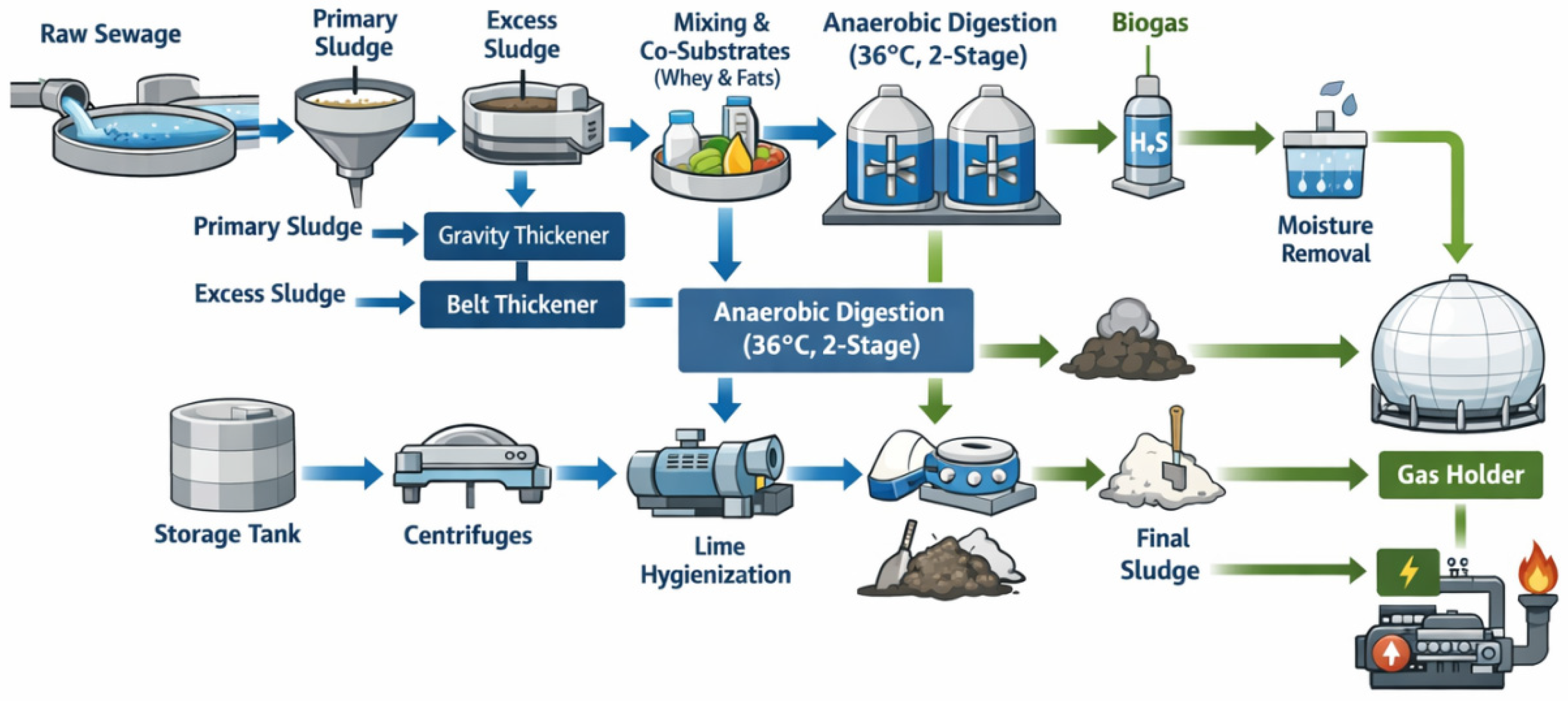
The process begins with handling two types of sludge. Primary Sludge is thickened in gravity thickeners, while excess activated sludge is processed in a belt filter thickener. To improve fermentation efficiency, external substrates such as whey and fats are added before the mixture enters the digesters. Biological stabilization occurs in two closed chambers operating under mesophilic conditions (~36 °C). Methane-producing bacteria decompose the sludge, supported by mixers and heat exchangers. After digestion, the sewage sludge is stored, dewatered in centrifuges, and disinfected with quicklime before being transported for storage.
The WWTP system is divided into two sections. Gallery I includes biological treatment units such as reactors, aeration tanks, and recirculation systems. Gallery II covers mechanical and sedimentation units, including clarifiers and sludge handling systems. The process (Figure 1) starts with raw sewage entering primary tanks, producing sludge characterized by certain parameters. This sludge undergoes anaerobic digestion, where biogas is generated and later used for energy production. Biogas (~60% methane) is collected, purified by removing hydrogen sulfide and moisture, and stored in a gas holder. It is then used in a combined heat and power (CHP) unit to generate electricity and heat, or in boilers for thermal energy. Excess gas is burned in a flare. Biogas produced in the digesters was transported via low-pressure pipelines over short distances within the WWTP premises (tens of meters) to the boiler room and the CHP unit. After desulfurization and moisture removal, the gas was stored in a double-membrane gas holder and then directed either to three gas boilers or to a combined heat and power (CHP) unit. Electricity was generated exclusively in the CHP system operating entirely on biogas, without co-firing with any other fuels. Excess biogas was combusted in a flare. No solid-fuel boilers or mixed-fuel combustion systems were used at any stage of the process. A generative AI tool was used as a supportive aid in the preparation of Figure 1 to assist with the initial visualization and structuring of the graphic.
Overall, sludge is thickened, fermented, and converted into biogas, which is cleaned, stored, and used for energy recovery (Figure S2). The study was conducted at a municipal wastewater treatment plant (WWTP) operating with anaerobic sludge digestion and biogas recovery. Two types of sludge were analyzed: Primary Sludge thickened in gravity thickeners and excess activated sludge thickened using a belt filter. Prior to digestion, co-substrates (whey and fats) were added to enhance the organic load and improve biogas yield. Anaerobic digestion was carried out in a two-stage mesophilic system at approximately 36 °C. The reactors were equipped with mechanical mixers and external heat exchangers to maintain stable operating conditions. After digestion, the sludge was dewatered using centrifuges and hygienized with quicklime.
Biogas produced during digestion was collected from closed chambers, purified through desulfurization (iron-based media) and moisture removal, and stored in a double-membrane gas holder. The biogas was subsequently utilized in a combined heat and power (CHP) unit for simultaneous electricity and heat generation. Excess gas was combusted in a flare system.
Operational data were collected across stages, including sludge characteristics, digestion parameters, and biogas production (volume and methane content), enabling evaluation of the sewage-to-biogas conversion efficiency. This study was also based on data, including monthly biogas production, monthly electricity generation from biogas, and monthly electricity consumption at the WWTP in Dębica, recorded for the years 2015–2023. In addition, more detailed datasets were available for 2023. These included monthly measurements of biogas directed to the cogenerator for electricity and heat production, the monthly volume of biogas supplied to the boiler (used for process heat generation, office heating, and domestic hot water preparation), as well as the monthly amount of excess biogas combusted in the flare. The 2023 dataset also contained monthly measurements of heat production from biogas. Furthermore, detailed monthly electricity consumption data for 2023 were collected for individual facilities at the WWTP in Dębica, including the main pumping station, Primary Sludge pumping station, recirculation pumping station, compaction and dewatering units, grit chambers, biological treatment facilities, blowers, and the administration building, along with the sewage reception station, boiler room, and separated digester chambers.

2.2. Characteristics of the Research Facility

The municipal sewage sludge analyzed was produced by Wodociągi Dębickie sp. z o.o. in Poland (WWTP in Dębica). This sludge underwent treatment processes, i.e., thickening, fermentation, dewatering, and sanitization. General characteristics of the sewage sludge were analyzed, taking into account both quantitative data (the amount of sewage sludge produced and managed) and qualitative data (physical and chemical composition of sewage sludge) in subsequent years. The entire analysis covers the 2015–2023 multi-year period, but with some reservations. The year 2019 was completely excluded from the study due to incidental gaps in the source documentation (discontinuity of archival data). The omission of this year does not significantly affect the long-term trend, but only represents a break in the time series, which was taken into account in the interpretation of the graphs and statistics.
Data on the amount of sewage sludge generated in the analyzed facility came from each month between 2015 and 2020 (excluding 2019). The unavailability of data on the weight of sewage sludge produced in 2021–2023 is due to changes in the waste recording system (transition to the BDO system—Waste Database). In order to maintain reliability, in the period 2021–2023, the focus was therefore only on qualitative analysis (physical and chemical parameters), omitting the analysis of the mass flow.
Data on sewage sludge quality were collected between 2015 and 2023 (excluding 2019). In each measurement series (at least two per year, but in some years, as many as thirteen measurements per year), the following parameters were tested: pH, dry matter (d.m.) (%), organic matter (o.m.) (% d.m.), total nitrogen (TN) (% d.m.), ammonium nitrogen (N-NH4+) (% d.m.), total phosphorus (TP) (% d.m.), calcium (Ca) (% d.m.), magnesium (Mg) (% d.m.), number of viable parasite eggs (N.V.P.E.), lead (Pb) (mg∙kg−1 d.m.), cadmium (Cd) (mg∙kg−1 d.m.), chromium (Cr) (mg/kg d.m.), copper (Cu) (mg∙kg−1 d.m.), nickel (Ni) d.m.), mercury (mg∙kg−1 (Hg) (mg∙kg−1 d.m.), zinc (Zn) (mg∙kg−1 d.m.).
Mandatory limit values for heavy metals in sewage sludge and in soils receiving sludge have been established to ensure environmental and human safety [22]. Compliance with these regulations is essential to prevent harmful effects on soil, vegetation, animals, and humans, while enabling the safe agricultural use of sludge. The measured concentrations of individual contaminants were compared with the permissible levels defined in EU legislation [25] and in Polish regulations [26]. Polish standards are more restrictive, as the allowable concentrations of heavy metals in sewage sludge intended for agricultural use correspond to the lower limits of the EU range. Thus, the maximum acceptable concentrations are as follows: Pb—750, Cd—20, Cr—500, Cu—1000, Ni—300, Hg—16, and Zn—2500 mg∙kg−1 d.m. Additionally, Polish legislation requires that the total number of viable eggs of intestinal parasites (Ascaris sp., Trichuris sp., Toxocara sp.) in 1 kg of sludge dry matter intended for agricultural use must be zero.
When testing the composition of sewage sludge, if the analyses showed a lead concentration of “<15” (below the detection limit in standard analysis), the minimum limit values, i.e., 15 mg∙kg−1 d.m., were used for statistical analysis. Similarly, when the tests showed a cadmium concentration of “<1” (below the detection limit in standard analysis), minimum limit values of 1 mg∙kg−1 d.m. were adopted for statistical analysis. An extremely important aspect in the context of analyzing the composition of sewage sludge after treatment processes intended for further use is to compare the results obtained during the tests with the maximum permissible values specified in the currently applicable legal acts.

2.3. Statistical Analysis

The normality of the distribution of sludge production and application data for the study period was evaluated using the Shapiro–Wilk test at a significance level of α = 0.05. The results indicated a statistically significant deviation from normality (p < 0.05), so non-parametric methods were applied in subsequent analyses. Differences in sludge quantities between months were assessed using the Kruskal–Wallis test, which revealed statistically significant variation in both produced and applied sludge (p < 0.05). Significant differences were also observed in the amount of sludge produced across the analyzed years, whereas annual differences in the amount of sludge applied were not statistically significant (p > 0.05). Trends in sludge production and application were examined using linear regression, with time (consecutive months) as the independent variable and sludge quantity as the dependent variable. Trend significance was evaluated based on the slope coefficient. No statistically significant temporal trend was detected for either produced or applied sludge (p > 0.05 in both cases). Data processing and visualization were performed using Microsoft Excel 2016 and Statistica 13.3. Basic descriptive statistics were calculated for both sludge quantity and quality, including measures of central tendency, i.e., average (Avg), median (Me), minimum (Min), maximum (Max), range (R), and measures of dispersion, i.e., standard deviation (STD) and coefficient of variation (CV). The coefficient of variation (CV) for sewage sludge characteristics was interpreted according to Mucha’s classification [27], which distinguishes the following variability categories: low (0–20%), moderate (20–40%), high (40–100%), very high (100–150%), and extremely high (>150%). Statistical analyses were conducted at a significance level of α = 0.05. The normality of the distribution of data on the composition of sewage sludge produced at the WWTP in Dębica during the study period was verified using the Shapiro–Wilk test at a significance level of α = 0.05.
The results obtained indicated that a normal distribution (p > 0.05) was found for the content of organic substances and zinc. All other parameters did not show normal distribution (p < 0.05). Therefore, due to the lack of normality of the distribution of most of the analyzed parameters, non-parametric tests were used to assess the relationship between the variables. The Kruskal–Wallis test was used to assess differences in sludge composition between individual test series. Statistically significant differences were found between individual months in terms of chemical analysis of sewage sludge (p < 0.05) in the context of most of the indicators studied, i.e., dry matter, total nitrogen, ammonium nitrogen, magnesium, lead, cadmium, chromium, copper, nickel, mercury, and zinc. Spearman’s rank correlation analysis showed statistically significant relationships of varying strength—from weak to strong—between selected parameters determining the composition of sewage sludge. In addition, Spearman’s rank correlation coefficient (rs) values are statistically significant (p < 0.05).
The cross-correlation function (CCF) was applied to quantify the strength of time-lagged relationships. Error decomposition was performed by analyzing model residuals, enabling the separation of systematic components from random variation and facilitating the assessment of model fit quality. All computations were conducted in Python 3.3 using Google Colab.
To improve clarity and methodological transparency, all statistical indicators used in the study are summarized in Table S1. The table includes the purpose of each indicator, interpretation of value ranges, and the significance thresholds applied in the analysis.

3. Results

3.1. Statistical Characterization of the Parameters

As shown in Table 1, the average and median values for some parameters (pH, dry matter, organic matter, TP, TN, Ca, Pb, Cu, Zn) were similar to each other, while the standard deviations were relatively low, which means that individual values in the data series were similar to each other and fluctuated around the average. This is further confirmed by the values of the coefficient of variation (CV) below 40%, which also confirms low variation in values within individual data series. However, in the case of N-NH4+, Cd, Cu, Ni, and Hg, high variability was observed (CV in the range 40–100%). Particularly noteworthy here are parameters such as magnesium content (CV = 110.38%) and the number of viable parasite eggs (CV = 423.16%), which means that for these two indicators, very large variations in values were recorded during the study period. The content of viable parasite eggs varied within an exceptionally wide range, from 0 to 150.

3.2. Comparison of Biogas and Electricity Production

The analysis showed that electricity produced from biogas at the WWTP in Dębica largely covered the WWTP’s total electricity demand (Figures S2 and S3). Over the 2015–2023 period, on average, nearly 60% of the WWTP’s total energy demand was met by energy produced from biogas (Figure S2). In particular years, electricity from biogas was able to cover from 36% (in 2016) to 74% (in 2019) of the total energy demand (Figures S2 and S3). The lowest share of electricity produced from biogas in total monthly energy consumption was recorded in March 2017 (8%), and the highest, at 92%, in September 2019 (Figure S3).
The graphs in Figure S4 show a similar pattern of biogas production at the WWTP (orange lines) and energy production (green lines), indicating a relationship between these parameters.
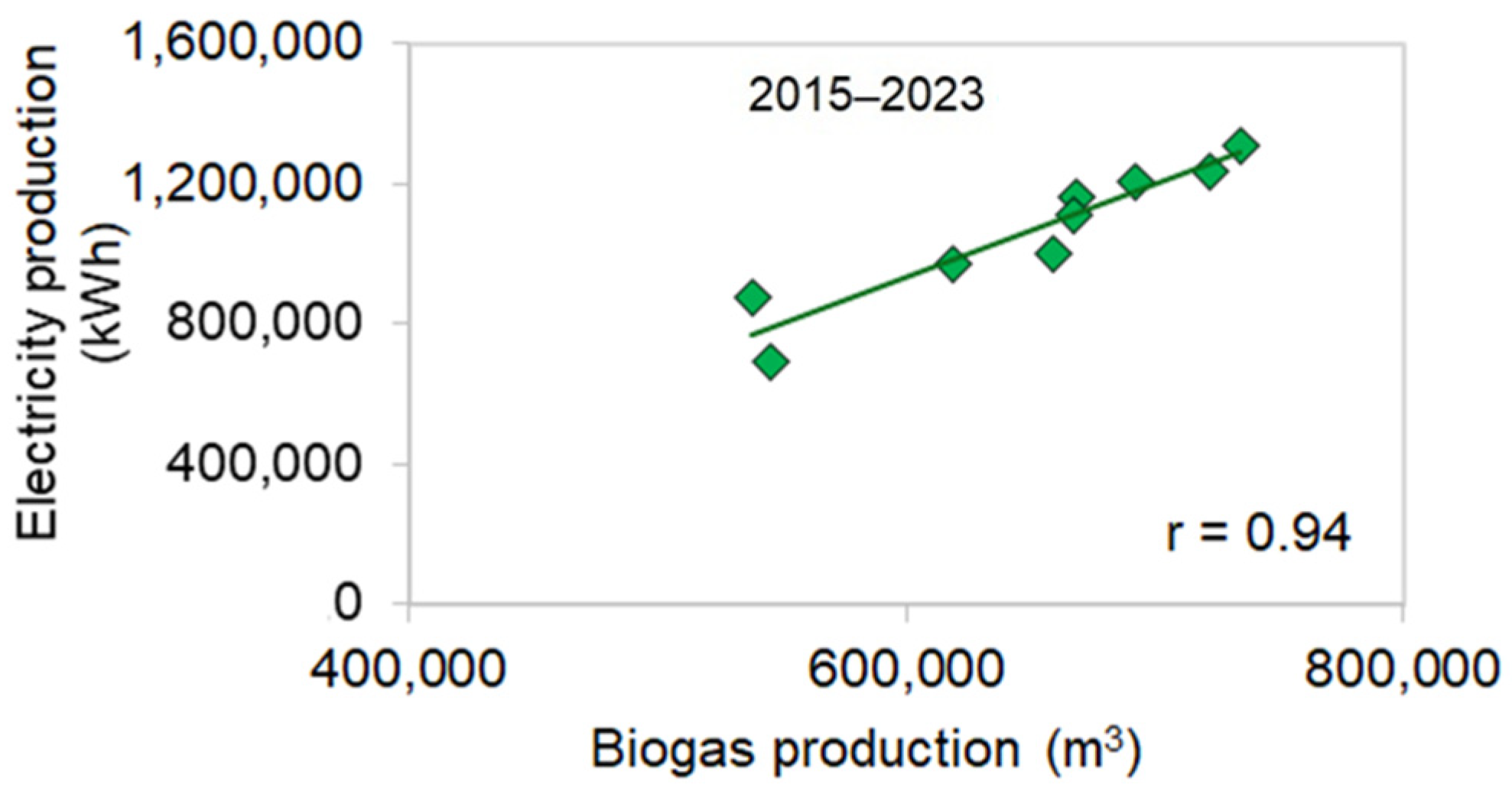
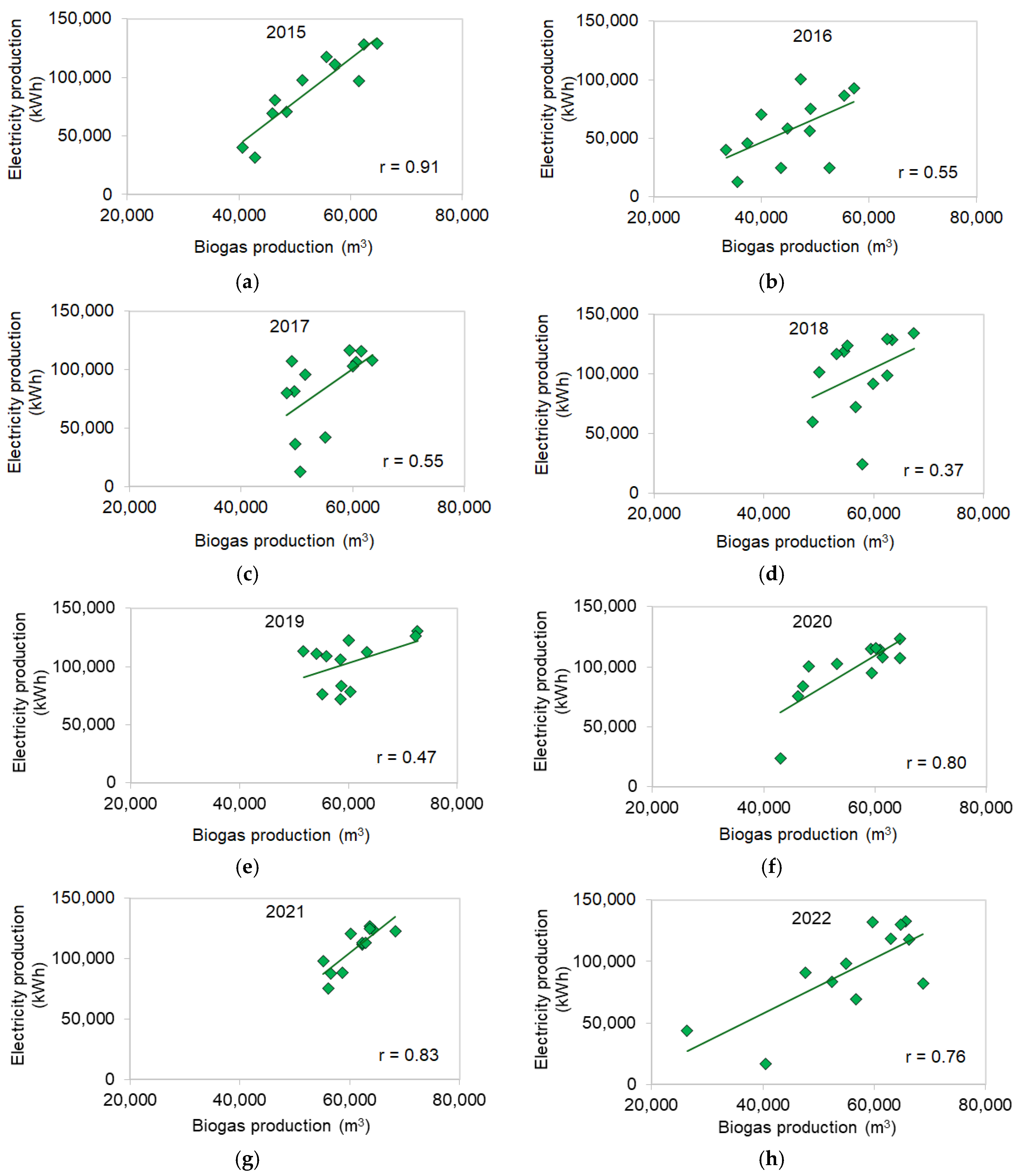
The correlation results presented in Figure 2 and Figure 3 confirm the existence of a clear relationship between electricity production and biogas production. The amount of electricity produced is proportional to the amount of biogas produced. The correlation coefficient r = 0.94 for the period 2015–2023 (Figure 2) indicates a very strong relationship between annual electricity production and annual biogas production. In particular years of the eight-year research period (Figure 3), the strength of the relationship between monthly electricity production and monthly biogas production varied from average correlation in 2018 and 2019 (r = 0.37 and r = 0.47, respectively), through a high correlation in 2016 and 2017 (r = 0.55), through a very high correlation in 2020–2022 (correlation coefficient (r) around 0.80), to almost complete correlation in 2015 and 2023 (r = 0.91).
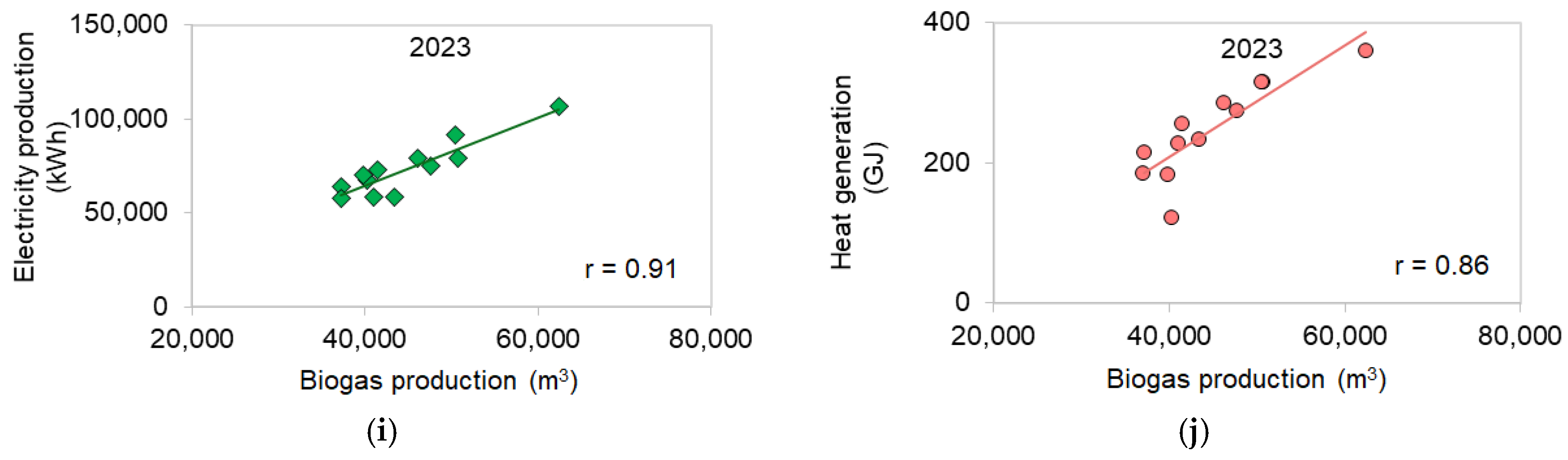
The relationship between the monthly amount of heat produced and the amount of biogas produced was examined only for 2023 (Figure 3). Similar to the relationship between the amount of electricity produced and the amount of biogas produced, a clear correlation between these parameters was observed. The amount of heat produced was proportional to the amount of biogas produced, with a very high correlation (r = 0.86).

3.3. Interrelationships Between Nutrients and Heavy Metals

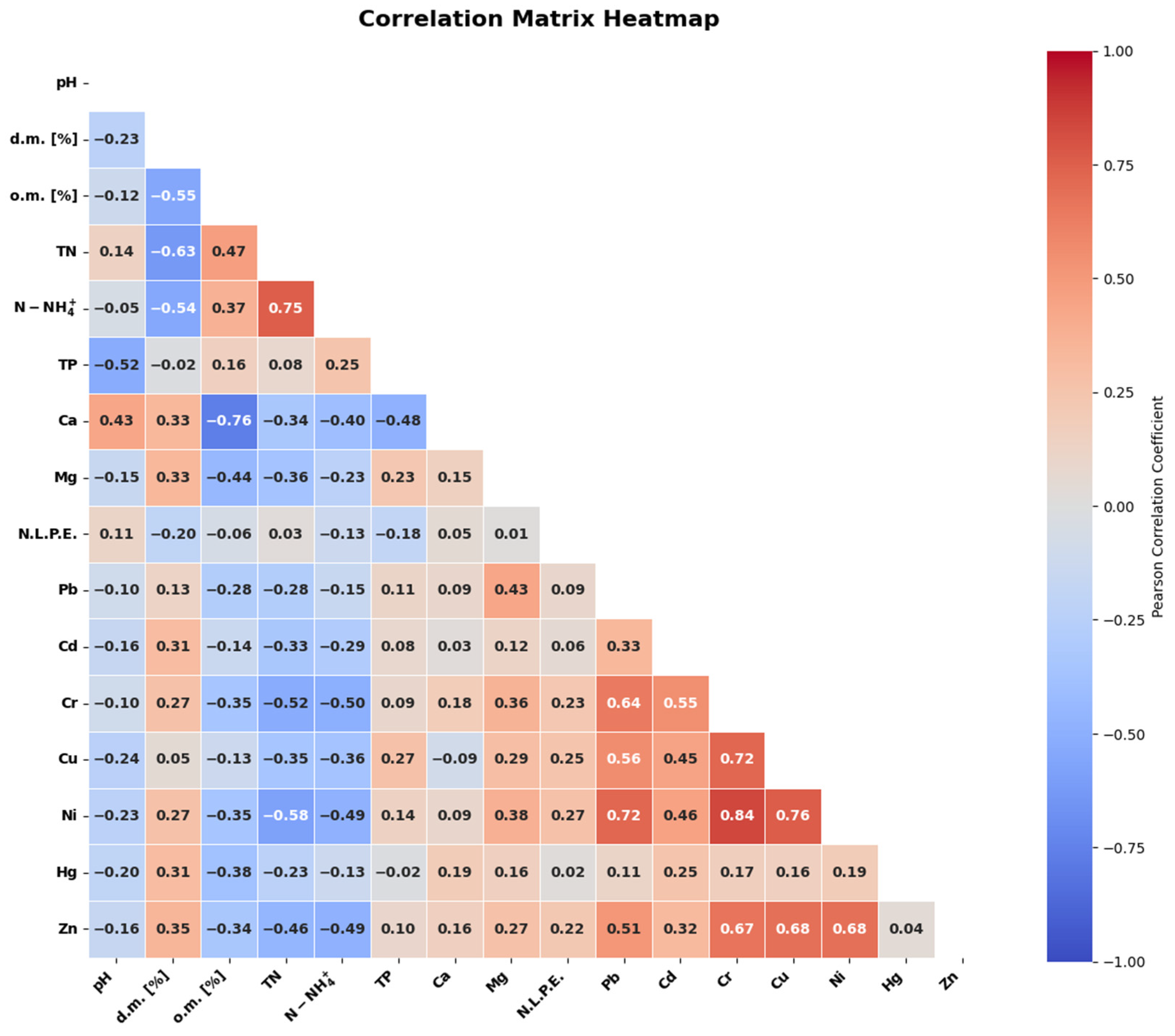
The statistical analysis revealed several significant relationships between the examined soil parameters and heavy metal concentrations. A very strong positive correlation was observed within the heavy metal group, particularly between chromium, nickel, and copper, which suggested their common origin. Conversely, a distinct negative correlation occurred between organic matter and calcium content, indicating an antagonistic relationship in the studied environment. Total nitrogen and ammonium nitrogen also showed a strong positive dependency, confirming the stability of nitrogen forms in the samples. Overall, these findings demonstrated that the chemical composition of the substrate was shaped by both natural mineral processes and external metal accumulation (Figure 4).
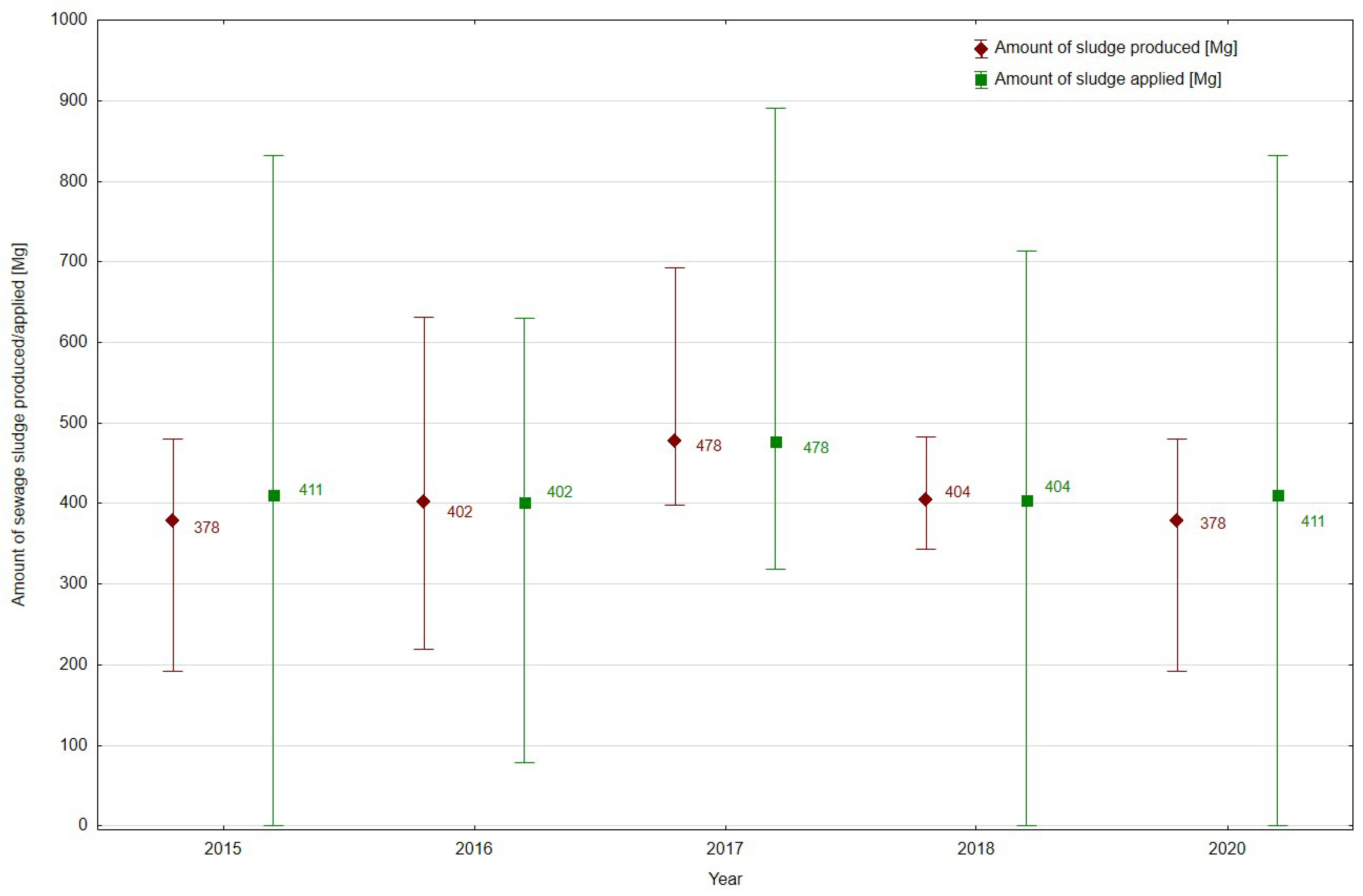
In 2016–2018, the amounts produced and applied sewage sludge were identical, indicating full utilization of all generated sludge. In 2015 and 2020, the applied sludge slightly exceeded production, suggesting the use of previously stored material. Overall, the trend remains stable, with the highest values recorded in 2017 and no major fluctuations over the period (Figure 5).
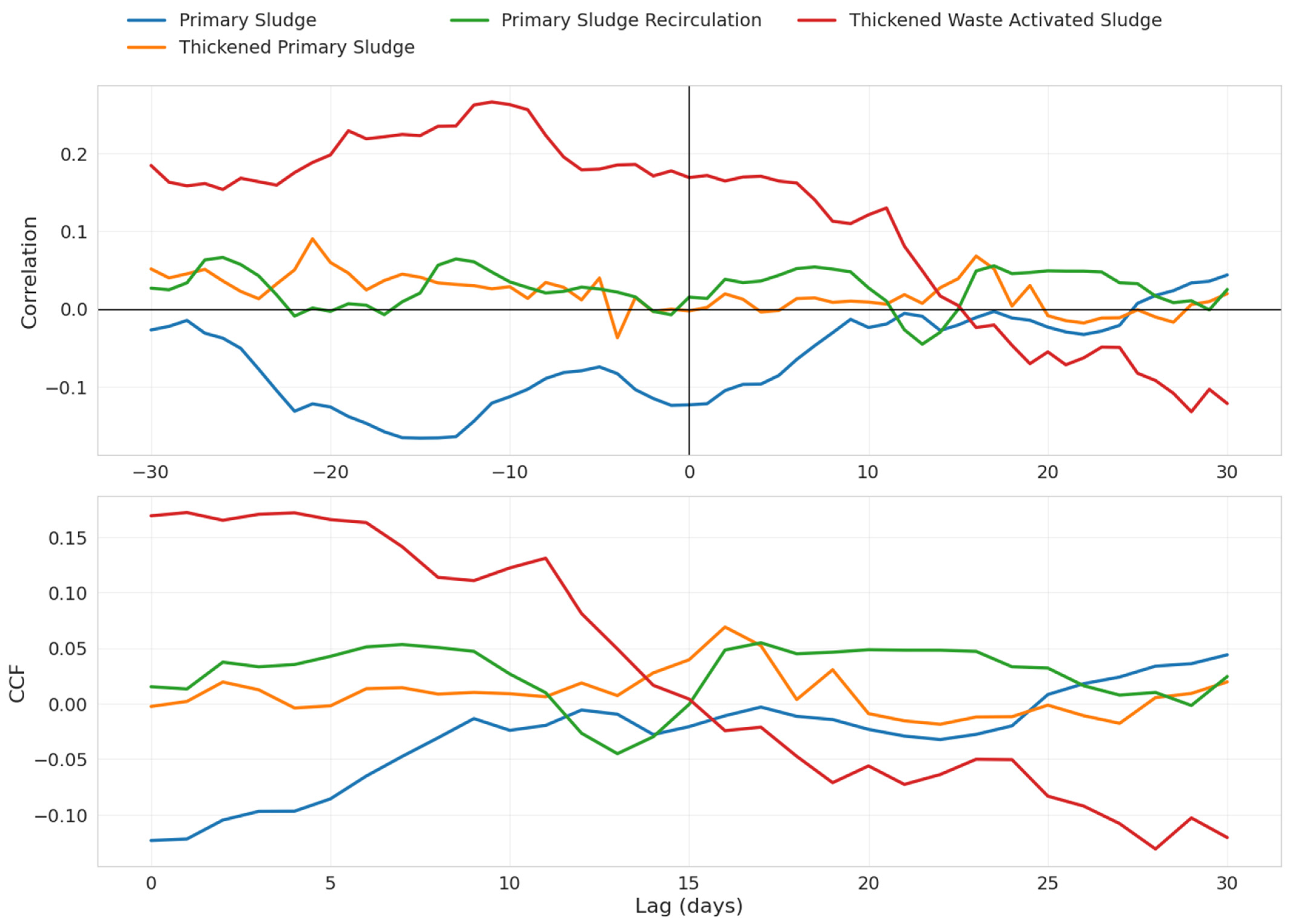
The correlation plot (Figure 6) showed how four sludge streams—Primary Sludge, Primary Sludge recirculation, thickened Primary Sludge, and Thickened Waste-Activated Sludge—related to each other across a lag window of −30 to +30 days. Each stream exhibited distinct correlation patterns, with some showing positive correlations at specific lags and others displaying negative or near-zero relationships. The cross-correlation function plot, limited to positive lags, revealed how changes in one sludge stream preceded or followed changes in another. Several sludge types showed peaks at short lags, indicating rapid response relationships, while others displayed broader or weaker correlation structures across the lag range.

3.4. The Influence of Sludge Loading and Residence Time on Process Performance

The cross-correlation analysis identified Thickened Waste Activated Sludge (TWAS) and Primary Sludge (PS) as the primary process drivers, as they exhibited significant correlations at lags of 10 to 20 days. TWAS showed a strong positive correlation (peaking at 0.25) during negative lags, whereas Primary Sludge displayed a notable inverse relationship (reaching −0.18), suggesting that these streams exerted delayed, contrasting influences on system performance. In contrast, Primary Sludge Recirculation and Thickened Primary Sludge maintained weak correlations near zero, indicating a minimal temporal impact. These results suggested that the system was governed by long residence times, implying that predictive modeling required at least two weeks of historical data to accurately reflect the delayed effects of sludge loading (Figure 6).
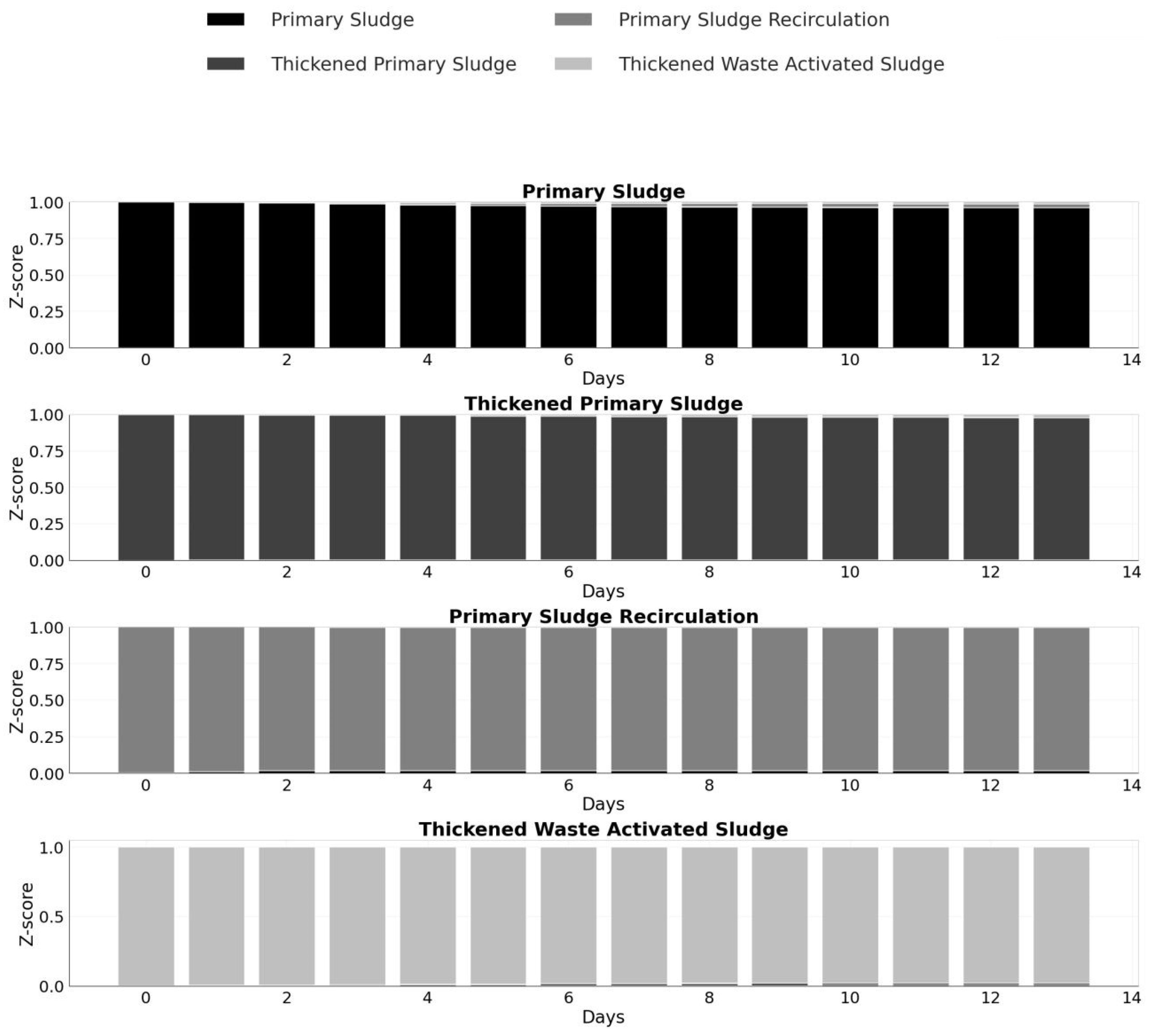
Thickened Primary Sludge and Primary Sludge recirculation show the most noticeable growth in contribution over time, while Thickened Waste-Activated Sludge remains comparatively small throughout. Despite these shifts, the biogas generator continues to explain the largest portion of variance across all horizons. The analysis examined how four sludge streams behaved over a 14-day period: Primary Sludge (PS), recirculated Primary Sludge (TPS), thickened Primary Sludge (PSR), and Thickened Waste Activated Sludge (TWAS) (Figure 7).

4. Discussion

4.1. Heavy Metals and Sanitary Safety in Treated Sewage Sludge

Throughout the entire research period, no exceedances of the permissible concentrations for any of the analyzed heavy metals were recorded. The average contents of individual heavy metals were also significantly lower than the maximum permissible levels, constituting several to several dozen percent of the standard. This indicates that the sewage sludge produced at the analyzed facility, after appropriate processing, meets the required standards for heavy metal content and can be safely used, e.g., for agricultural purposes, without posing a risk of environmental contamination.
The exception was the parameter concerning viable parasite eggs, as legal guidelines require that sewage sludge intended for agricultural use must not contain any viable parasite eggs [26]. In the tested samples, their presence was recorded four times between 2015 and 2023 (one case each in 2015, 2016, 2017, and 2020), with the highest number reaching 150 eggs in 2017. This suggests occasional issues with sludge sanitation, meaning that stabilization processes at the facility were at times insufficient to eliminate viable parasite eggs. Such sludge could not be used for agricultural purposes.
The strongest positive correlation among all analyzed parameters was found between nickel and chromium content (very strong positive correlation; rs = 0.84). These metals typically share a common origin in sewage sludge, most often from industrial sewage streams (e.g., metal processing) or from corroding installations and tend to accumulate in the solid phase by binding to sludge particles [21].
The strongest negative correlation was observed between organic matter content and calcium content (rs = −0.76). Sewage sludge consists of mineral and organic fractions, with calcium predominantly present in the mineral fraction (e.g., carbonates, silicates, oxides). Therefore, higher organic matter content corresponds to a lower mineral fraction and thus, lower calcium content. Additionally, liming used for sludge hygienization introduces alkaline calcium compounds, which accelerate organic matter decomposition and promote stabilization, further reducing organic matter levels [28,29]. A moderate positive correlation between pH and calcium content likely results from the alkaline nature of calcium compounds. Conversely, a moderate negative correlation between pH and total phosphorus may be due to phosphorus precipitation as poorly soluble phosphates under alkaline conditions [16]. These relationships highlight the complex chemical interactions within sewage sludge, where pH and mineral composition influence the forms and availability of biogenic elements.
For the number of viable parasite eggs, only two statistically significant weak positive correlations were identified with copper (rs = 0.25) and nickel (rs = 0.27). No other parameters significantly affected parasite egg survival after sludge treatment processes (thickening, anaerobic digestion, dewatering, hygienization). The heavy metal content in sewage sludge after treatment in the studied mechanical system can be compared with sludge from drying beds in five WWTPs in South Africa [19]. All tested heavy metals had lower average concentrations in mechanically treated sludge than in sludge from drying beds: for Cu, Cr, Ni, and Zn, approximately two times lower, and for Pb, even four times lower. This suggests that the mechanical treatment system is more effective in reducing heavy metals than natural drying beds. The color-coded Spearman’s rank correlation matrix in Figure 4 revealed two clear patterns. Heavy metals were consistently negatively correlated with pH, organic matter, total nitrogen, ammonium nitrogen, and total phosphorus, indicating that higher nutrient and organic content coincided with lower metal concentrations. In contrast, metals showed weak positive correlations with dry matter content and strong positive inter-metal correlations. Chromium and copper displayed the highest number of moderate to very strong associations with other metals, suggesting a shared origin, most likely industrial sewage from metal processing or electroplating activities [30]. Among all heavy metals, mercury showed the weakest dependence on other parameters, with only weak correlations: a negative one with organic matter and positive ones with dry matter and cadmium.
Some researchers also reported no issues with excessive heavy metal concentrations in sewage sludge [20,31,32,33]. However, other authors observed exceedances of metals such as Cd and Pb [6,7], Cr, Cu, Zn, Pb, and Co [34], as well as bacterial contamination in sludge intended for agricultural use. Therefore, proper monitoring, treatment, and management of sewage sludge are essential to ensure safe disposal, minimize environmental risks, and reduce potential health hazards when preparing sludge for further use, including agricultural applications [6,7]. Primary Sludge (PS) exhibited bigger differences relative to its processed derivatives, reflecting changes in concentration and physical properties. Thickened waste-activated sludge (TWAS) showed the largest differences compared with all Primary Sludge streams, consistent with its biological origin and distinct composition. Overall, the results confirmed a logical and stable relationship between the streams: PS split into TPS and PSR, which remained related but not identical, whereas TWAS formed a clearly separate group (Figure 7). Spearman’s rank correlation showed a weak relationship (rs = 0.30) between the amount of sludge produced at the analyzed facility and the amount of sludge sent for further use. In some months during the study period, the mass of sewage sludge applied was greater than the mass of sludge produced in that month (Figure S3). This is a very common situation in WWTPs. It results from the need to periodically store sludge during the non-growing season and then apply it during the growing season. Thus, for example, sludge produced in January, February, and March could have been stored on sludge beds or in lagoons. In April (the agricultural season), both current sludge and sludge stored from previous months were transported to the fields. The parameters showing the highest number of statistically significant interdependencies (p < 0.05) with other indicators were total nitrogen, copper, and nickel, each demonstrating eleven partial correlations. In contrast, the lowest number of correlations was observed for the number of viable parasite eggs (only two partial correlations), as well as for pH and mercury content (three partial correlations each). The strongest positive relationship among all analyzed parameters was identified between nickel and chromium content (very strong positive correlation, rs = 0.84). These metals typically share a common origin in sewage sludge, most often entering sewage from industrial sources, such as metal processing or electroplating, or through corrosion of installations. Both metals tend to co-occur and accumulate in the solid phase by binding to sludge particles [21].
This study showed that sewage sludge was often reported as being applied directly as fertilizer on specific field areas. When documentation did not specify the fertilized area, it indicated that sludge had been transferred for further use, but most likely, not applied in agriculture. In such cases, sewage sludge could have been used for land reclamation (e.g., closed landfills), compost or soil-improver production by external companies, thermal treatment (incineration), or temporary storage at an intermediary site. Mu et al. (2020) [35] showed that anaerobic co-digestion of sewage sludge with food and yard waste improved process stability and significantly increased biogas production.
Correlation and cross-correlation analyses indicate that the behavior of individual sludge streams is interconnected, although the timing and strength of these relationships vary. Positive peaks at short lags suggest operational linkages in which changes in one stream rapidly influence another, likely reflecting hydraulic or process-driven dependencies within the treatment line. Broader or weaker correlations point to slower or more diffuse interactions, potentially associated with digestion dynamics or storage effects. The presence of both positive and negative correlations across the lag spectrum highlights the complexity of sludge-flow behavior and underscores the importance of understanding temporal dependencies when optimizing sludge handling and stabilization processes (Figure 7). The normalization highlights that Primary Sludge (PS) and its processed derivatives (TPS and PSR) follow similar temporal patterns, reflecting their shared origin and consistent hydraulic behavior within the treatment line. In contrast, Thickened Waste-Activated Sludge (TWAS) exhibits the largest deviations from the other streams, confirming its distinct biological character and the higher variability associated with microbial activity and operational conditions in the aeration tanks. The divergence between TWAS and the Primary Sludge streams supports the cross-correlation findings, where TWAS and PS were identified as the dominant drivers of system performance with delayed effects of 10–20 days. The z-score profiles, therefore, provide a complementary visualization of the underlying process dynamics, demonstrating that the system is governed by long sludge residence times and that fluctuations in biological sludge loading propagate through the digestion line with measurable delays. This reinforces the need for predictive models that incorporate historical data to capture these time-dependent interactions.

4.2. Energy Optimization in WWTP Through Anaerobic Sludge Processing

Municipal sewage treatment is a highly demanding process, both technically and economically. Rising energy prices and increasingly ambitious sustainability targets intensify the need for solutions that reduce operational costs and dependence on fossil fuels. Within the circular-economy framework, biogas generated during anaerobic sludge stabilization is considered a key component in achieving energy self-sufficiency in WWTPs [12]. Lima et al. (2023) [11] provided a comprehensive review of strategies for enhancing biogas production from sewage sludge, identifying co-digestion and pretreatment as the most effective approaches to improving energy autonomy in WWTPs. Pretreatment technologies, including thermal hydrolysis, fine-mesh sieving, and combined physicochemical methods, further enhance methane potential and overall energy recovery. Numerous studies confirm substantial improvements in sludge degradability and downstream process efficiency following such treatments [3,10,12]. Economic analyses from Brazil and Poland demonstrate that biogas production from anaerobic and aerobic sludge can meaningfully contribute to energy diversification and reduce reliance on fossil-based natural gas [36,37]. In this context, the strong coupling between biogas generation and electricity production observed in the present study provides empirical support for these findings. The correlation results presented in Figure 2 and Figure 3 confirm the existence of a clear relationship between electricity production and biogas production. The amount of electricity produced is proportional to the amount of biogas produced. Such a high correlation is consistent with previous reports highlighting the central role of biogas in improving the energy balance of WWTPs [37,38]. Fluctuations in energy intensity at the analyzed facility suggest alternating periods of higher and lower electricity demand per cubic meter of treated sewage [39]. The year-to-year variability in the correlations shown in Figure 3 reflects normal operational fluctuations in full-scale wastewater treatment plants. Annual changes in the proportions and characteristics of primary and waste activated sludge, together with occasional operational disturbances such as maintenance or mixing interruptions, influence digestion stability and weaken correlations in some years. Seasonal temperature effects and variations in retention time further modify the delay between sludge loading and methane generation. Additional changes related to measurement precision and sensor calibration also contribute to variability. These combined factors explain why certain years show strong relationships, while others exhibit weaker or non-significant correlations.
Another rapidly developing area involves the application of digital tools and data-driven approaches for process optimization. Machine learning and predictive modeling techniques are being implemented to forecast biogas production, optimize feeding regimes, and detect operational disturbances [40]. These approaches are particularly relevant in systems characterized by long hydraulic and solids retention times, where delayed system responses require the integration of historical data to ensure accurate process control. To mitigate these risks, a range of advanced treatment technologies has been developed, including thermal processes (e.g., pyrolysis and incineration), composting, and advanced oxidation methods [41]. These approaches aim to reduce pathogen loads, decrease contaminant mobility, and improve overall sludge quality. At the same time, regulatory frameworks at both European and national levels establish strict limits for pollutant concentrations and define requirements for sludge treatment and agricultural application [42,43]. Nevertheless, ongoing research indicates the need to update these regulations to address emerging contaminants and incorporate recent technological advances. In this context, wastewater treatment plants are increasingly evolving into multifunctional facilities that simultaneously produce energy, recover valuable materials, and protect environmental quality [44,45].

4.3. Study Limitations and Practical Implications

Despite the robustness of the dataset and the multi-year scope of the analysis, several limitations should be acknowledged. First, the absence of selected measurements for 2019 introduces minor discontinuities in the sludge quality dataset, although it does not affect the complete time series of biogas and electricity production used for correlation modeling. Second, the study is based on data from a single wastewater treatment plant, which may limit the generalizability of the results to facilities with different technological configurations, sludge characteristics, or operational regimes. Third, the high variability of certain parameters, such as heavy metals and parasite eggs, reflects real environmental and operational fluctuations but also indicates the need for more frequent sampling to capture short-term dynamics. Finally, the study focuses on correlations rather than mechanistic modeling, meaning that causal relationships between sludge composition, digestion efficiency, and energy output require further targeted research.
The conducted energy assessment shows that biogas plays a decisive role in improving the overall energy efficiency of the wastewater treatment plant. Throughout the years 2015–2023, electricity generated from biogas consistently supplied a substantial share of the facility’s energy needs, averaging close to 60%, although the exact contribution fluctuated between individual years and months. The parallel behavior of the biogas production and electricity generation curves (Figure S4) confirms stable conversion performance and effective use of the available gas. The strong correlations observed across the entire dataset demonstrate that higher biogas output directly results in increased electricity production. A similar pattern was identified for heat generation in 2023, where biogas production showed a very strong association with thermal energy output (r = 0.86). These findings indicate that further gains in energy self-sufficiency are achievable through improved process control, minimization of biogas losses, and enhanced recovery of heat from the digestion system.
The results obtained in this study have clear practical applicability for wastewater treatment plant management and energy optimization. The strong relationship between biogas production and electricity generation, confirmed both annually (r = 0.94) and monthly (r values ranging from 0.37 to 0.91 across the study years), demonstrates that biogas can serve as a reliable and predictable energy source for plant self-sufficiency. The observed coverage of 36–74% of the total annual electricity demand, and up to 92% in individual months, highlights the potential for further optimization of digestion processes and operational scheduling. Moreover, the detailed characterization of sewage sludge composition, including high variability in selected parameters such as viable parasite eggs (CV = 423%) and heavy metals (e.g., Cr, Ni, Cd with CV > 40%), provides essential information for planning safe agricultural use, monitoring contamination risks, and adjusting sludge treatment strategies. Together, these findings support data-driven decision-making in energy management, sludge utilization, and long-term operational planning.

5. Conclusions

The conducted long-term analysis of a full-scale WWTP (2015–2023) confirmed that anaerobic sludge digestion is a highly effective pathway for energy recovery in municipal wastewater systems. Biogas production showed a strong and stable relationship with both electricity and heat generation, with a very high correlation observed at the annual scale (r = 0.94), demonstrating the robustness of the energy conversion system. The plant achieved a significant level of energy autonomy, with biogas-derived electricity covering on average 60% of total demand and reaching up to 74% under optimal conditions. However, substantial seasonal and interannual variability was observed, indicating that energy self-sufficiency remains sensitive to operational and influent conditions. Cross-correlation analysis revealed that Thickened Waste Activated Sludge (TWAS) and Primary Sludge (PS) are the dominant drivers of system performance, exhibiting delayed impacts of approximately 10–20 days. This confirms that the WWTP operates as a time-dependent system governed by sludge retention and biological transformation processes. In contrast, recirculation and secondary sludge streams showed minimal influence on energy outcomes. Physicochemical analysis of sludge indicated generally stable nutrient content and compliance with environmental standards for heavy metals, although occasional deviations in sanitary parameters (parasite eggs) were observed. While zinc (Zn) showed a normal distribution and relative stability, the statistically significant monthly variations (p < 0.05) in other metals suggest that the sludge’s toxicological profile changes over time, potentially inhibiting energy recovery efficiency during peak concentration periods. These findings confirm that while the sludge is suitable for resource recovery, continuous monitoring of hygienic quality remains necessary. Overall, the results highlight that WWTP energy performance is strongly dependent not only on instantaneous biogas production but also on delayed interactions within sludge processing streams. Incorporating time-lag effects into predictive models is therefore essential for improving operational control, maximizing energy recovery, and supporting the transition toward circular economy-based wastewater management.

Supplementary Materials

The following supporting information can be downloaded at: https://www.mdpi.com/article/10.3390/en19122769/s1, Figure S1: Overview of process flows and interactions between primary sludge (PS), thickened waste activated sludge (TWAS), and mixed sludge, including their respective contributions to the anaerobic digestion process and subsequent biogas generation; Figure S2: The share of electricity from biogas produced and electricity from other sources in total electricity demand in particular years of the multi-year period 2015–2023; Figure S3: The share of electricity from biogas produced and electricity from other sources in total electricity demand in particular months of the multi-year period 2015–2023; Figure S4: Monthly biogas production, electricity production and electricity consumption in particular years of the multi-year period 2015-2023 with monthly heat generation in 2023; Table S1: Summary of statistical indictors used in the study and interpretation of value ranges.

Author Contributions

Conceptualization, W.H. and A.M.; methodology, W.H.; software, A.M.; validation, W.H. and M.G.; formal analysis, A.M.; resources, K.C.; data curation, A.M. and K.J.; writing—original draft preparation, W.H., A.M. and A.P.; writing—review and editing, A.P., A.M., W.H. and M.G.; visualization, A.M., W.H. and K.J.; supervision, W.H., K.C. and M.G.; project administration, K.C.; funding acquisition, M.G. All authors have read and agreed to the published version of the manuscript.

Funding

The publication presents the results of the Project co-financed from the subsidy granted to the Krakow University of Economics-Project nr 027/GGR/2026/POT.

Data Availability Statement

The data presented in this study are available in this article.

Acknowledgments

During the preparation of this manuscript, the authors used Microsoft Copilot to refine the language, improve grammatical accuracy, and ensure methodological clarity. It is a cloud-based service and is updated continuously. It currently uses several models at the same time—including GPT-5.5, GPT-5.2, and Claude Opus 4.8. Following the use of this tool, the authors reviewed and edited the generated content as needed and take full responsibility for the final integrity and accuracy of the publication. We used ChatGPT-5.0 Mini only to prepare the initial layout concept for Figure 1. We provided the prompt describing our research methodology, as detailed in the Section 2, and the model generated the preliminary image. In Section 2, all steps were subsequently carefully verified, redrawn, and finalized manually by the authors. The authors take full responsibility for the accuracy and technical correctness of all figure details.

Conflicts of Interest

The authors declare no conflicts of interest.

References

  1. Nunes, N.; Ragonezi, C.; Gouveia, C.S.S.; Pinheiro de Carvalho, M.Â.A. Review of sewage sludge as a soil amendment in relation to current international guidelines: A heavy metal perspective. Sustainability 2021, 13, 2317. [Google Scholar] [CrossRef]
  2. Rechcigl, J.E. Soil Amendments and Environmental Quality; CRC Press: Boca Raton, FL, USA, 1995. [Google Scholar]
  3. Sugurbekova, G.; Nagyzbekkyzy, E.; Sarsenova, A.; Danlybayeva, G.; Anuarbekova, S.; Kudaibergenova, R.; Frochot, C.; Acherar, S.; Zhatkanbayev, Y.; Moldagulova, N. Sewage sludge management and application in the form of sustainable fertilizer. Sustainability 2023, 15, 6112. [Google Scholar] [CrossRef]
  4. Płonka, I.; Kudlek, E.; Pieczykolan, B. Municipal sewage sludge disposal in the Republic of Poland. Appl. Sci. 2025, 15, 3375. [Google Scholar] [CrossRef]
  5. Yakamercan, E.; Ari, A.; Aygün, A. Land application of municipal sewage sludge: Human health risk assessment of heavy metals. J. Clean. Prod. 2021, 319, 128568. [Google Scholar] [CrossRef]
  6. Vitenko, T.; Marynenko, N.; Kramar, I. Characteristics of sewage sludge composition for agricultural use. Econ. Environ. 2023, 2, 296–307. [Google Scholar] [CrossRef]
  7. Rakić, N.; Šušteršič, V.; Gordić, D.; Jovičić, N.; Bošković, G.; Bogdanović, I. Characteristics of biogas production and synergistic effect of primary sludge and food waste co-digestion. Bioenergy Res. 2024, 17, 646–659. [Google Scholar] [CrossRef] [PubMed]
  8. Delibacak, S.; Voronina, L.; Morachevskaya, E. Use of sewage sludge in agricultural soils: Useful or harmful? Eurasian J. Soil Sci. 2020, 9, 126–139. [Google Scholar] [CrossRef]
  9. Kumar, S.; Sangwan, V.; Kumar, M.; Deswal, S. A survey on constructed wetland publications in the past three decades. Environ. Monit. Assess. 2023, 195, 992. [Google Scholar] [CrossRef] [PubMed]
  10. Mainardis, M.; Buttazzoni, M.; Gievers, F.; Vance, C.; Magnolo, F.; Murphy, F.; Goi, D. Life cycle assessment of sewage sludge pretreatment for biogas production: From laboratory tests to full-scale applicability. J. Clean. Prod. 2021, 322, 129056. [Google Scholar] [CrossRef]
  11. Lima, D.; Appleby, G.; Li, L. A scoping review of options for increasing biogas production from sewage sludge: Challenges and opportunities for enhancing energy self-sufficiency in wastewater treatment plants. Energies 2023, 16, 2369. [Google Scholar] [CrossRef]
  12. Mukawa, J.; Pająk, T.; Rzepecki, T.; Banaś, M. Energy potential of biogas from sewage sludge after thermal hydrolysis and digestion. Energies 2022, 15, 5255. [Google Scholar] [CrossRef]
  13. Azevedo, A.; Lapa, N.; Moldão Martins, M.; Duarte, E. Opportunities and challenges in the anaerobic co-digestion of municipal sewage sludge and fruit and vegetable wastes: A review. Energy Nexus 2023, 10, 100202. [Google Scholar] [CrossRef]
  14. Galloni, M.; Di Marcoberardino, G. Biogas Upgrading Technology: Conventional Processes and Emerging Solutions Analysis. Energies 2024, 17, 2907. [Google Scholar] [CrossRef]
  15. Tomczak, W.; Gryta, M.; Daniluk, M.; Żak, S. Biogas Upgrading Using a Single-Membrane System: A Review. Membranes 2024, 14, 80. [Google Scholar] [CrossRef]
  16. Deng, L.; Dhar, B.R. Phosphorus recovery from wastewater via calcium phosphate precipitation: A critical review of methods, progress, and insights. Chemosphere 2023, 330, 138685. [Google Scholar] [CrossRef]
  17. Hossain, M.K.; Strezov, V.; Chan, K.Y.; Nelson, P.F. Agronomic properties of wastewater sludge biochar and bioavailability of metals in production of cherry tomato (Lycopersicon esculentum). Chemosphere 2010, 78, 1167–1171. [Google Scholar] [CrossRef]
  18. Agrafioti, E.; Bouras, G.; Kalderis, D.; Diamadopoulos, E. Biochar production by sewage sludge pyrolysis. J. Anal. Appl. Pyrolysis 2013, 101, 72–78. [Google Scholar] [CrossRef]
  19. Shamuyarira, K.K.; Gumbo, J.R. Assessment of heavy metals in municipal sewage sludge: A case study of Limpopo Province, South Africa. Int. J. Environ. Res. Public Health 2014, 11, 2569–2579. [Google Scholar] [CrossRef] [PubMed]
  20. Tytła, M.; Widziewicz, K.; Zielewicz, E. Heavy metals and their chemical speciation in sewage sludge at different stages of processing. Environ. Technol. 2016, 37, 899–908. [Google Scholar] [CrossRef] [PubMed]
  21. Smith, S.R. Organic contaminants in sewage sludge (biosolids) and their significance for agricultural recycling. Philos. Trans. R. Soc. A 2009, 367, 4005–4041. [Google Scholar] [CrossRef]
  22. Rühl, J.; Engelhart, M. Flexible Biogas Production from Anaerobic Digestion of Sewage Sludge by Discontinuous Feeding. Waste Biomass Valorization 2025, 12, 1–19. [Google Scholar] [CrossRef]
  23. Cardova, A.; Jenicek, P.; Srb, M.; Sykora, P.; Rosicky, J.; Appels, L. Intensification of Thermophilic Anaerobic Digestion of Sewage Sludge by Thermal Hydrolysis. Water Sci. Technol. 2025, 92, 843–855. [Google Scholar] [CrossRef] [PubMed]
  24. Maharaj, S.D.; Rashama, C.; Christian, R.; Masebe, T.; Inderpal-Pillay, M.; Matambo, T.S. Anaerobic Digestion of Wastewater Treatment Plant Primary Sludge for Biogas and Energy Recovery. Processes 2026, 14, 1277. [Google Scholar] [CrossRef]
  25. Council Directive 86/278/EEC of 12 June 1986 on the Protection of the Environment, and in Particular of the Soil, When Sewage Sludge Is Used in Agriculture, Consolidated Version, 2022. Available online: https://eur-lex.europa.eu/eli/dir/1986/278/oj/eng (accessed on 9 April 2026).
  26. Minister of Climate and Environment. Announcement of 18 November 2022, on the Publication of the Consolidated Text of the Regulation of the Minister of Environment on the Use of Municipal Sewage Sludge; Minister of Climate and Environment: Warsaw, Poland, 2022. (In Polish) [Google Scholar]
  27. Mucha, J. Metody geostatystyczne w dokumentowaniu złóż [Geostatistical Methods in Mineral Deposit Documentation]; Wydawnictwo AGH: Kraków, Poland, 1994. (In Polish) [Google Scholar]
  28. Bień, J.B. Sewage Sludge: Theory and Practice; Częstochowa University of Technology Publishing House: Częstochowa, Poland, 2011. (In Polish) [Google Scholar]
  29. Fytili, D.; Zabaniotou, A. Utilization of sewage sludge in EU: Application of old and new methods—A review. Renew. Sustain. Energy Rev. 2008, 12, 116–140. [Google Scholar] [CrossRef]
  30. Chen, Q. Accurate identification of sewage sludge contamination sources utilizing city and village industrial structure distinctions. SSRN 2023, preprint. [Google Scholar] [CrossRef]
  31. Alonso, J.M.; de Abreu, A.H.M.; Andreoli, C.V.; Teixeira, P.C.; Polidoro, J.C.; Leles, P.S.d.S. Chemical characteristics and valuation of sewage sludge from four different wastewater treatment plants. Environ. Monit. Assess. 2023, 196, 34. [Google Scholar] [CrossRef]
  32. Iticescu, C.; Georgescu, L.P.; Murariu, G.; Circiumaru, A.; Timofti, M. The characteristics of sewage sludge used on agricultural lands. AIP Conf. Proc. 2018, 2022, 020001. [Google Scholar] [CrossRef]
  33. Liu, J.; Smith, S.R. The link between organic matter composition and the biogas yield of full-scale sewage sludge anaerobic digestion. Water Sci. Technol. 2022, 85, 1658–1672. [Google Scholar] [CrossRef]
  34. Jumasheva, K.; Syrlybekkyzy, S.; Serikbayeva, A.; Nurbaeva, F.; Kolesnikov, A. Study on the composition and environmental impact of sewage sludge. J. Ecol. Eng. 2023, 24, 315–322. [Google Scholar] [CrossRef]
  35. Zhang, X.; Jiao, P.; Wang, Y.; Wu, P.; Li, Y.; Ma, L. Enhancing methane production in anaerobic co-digestion of sewage sludge and food waste by regulating organic loading rate. Bioresour. Technol. 2022, 363, 127988. [Google Scholar] [CrossRef]
  36. Odirile, P.T.; Marumoloa, P.M.; Manali, A.; Gikas, P. Anaerobic digestion for biogas production from municipal sewage sludge: A comparative study between fine mesh sieved primary sludge and sedimented primary sludge. Water 2021, 13, 3532. [Google Scholar] [CrossRef]
  37. Benites Cañote, S.; Barros, R.; Lora, E.; Olmo, O.; Santos, I.; Velásquez Piñas, J.A.; Ribeiro, E.M.; de Freitas, J.V.; De Castro e Silva, H.L. Energy and economic evaluation of the production of biogas from anaerobic and aerobic sludge in Brazil. Waste Biomass Valorization 2021, 12, 947–969. [Google Scholar] [CrossRef]
  38. Ruszel, M.; Masłoń, A.; Ogarek, P. Analysis of biogas from sewage sludge digestion in terms of diversification in the natural gas production structure in Poland. Desalin. Water Treat. 2021, 232, 298–307. [Google Scholar] [CrossRef]
  39. Doriya, K.; Saroj, P.; Gunasekaran, S.; Hemalatha, M.; Habibullah, S.; Mallick, S.P. Advancements and Challenges in Biogas Technology: A Comprehensive Review on Sustainable Approach to Waste Management and Renewable Energy. BioEnergy Res. 2026, 19, 7. [Google Scholar] [CrossRef]
  40. Shoushtarian, F.; Fard, M.G.; Ghandehari, S.S.; Hassanein, A.; Koupaie, E. Applications of artificial intelligence (AI) for optimization of anaerobic digestion and the future trends. In Anaerobic Digestion for Bioenergy; Woodhead Publishing: Sawston, UK, 2026; pp. 421–448. [Google Scholar] [CrossRef]
  41. Zhang, L.; Xu, C.; Champagne, P.; Mabee, W. Overview of current biological and thermo-chemical treatment technologies for sustainable sludge management. Waste Manag. Res. 2014, 32, 586–600. [Google Scholar] [CrossRef]
  42. Yunta, F.; Schillaci, C.; Panagos, P.; Van Eynde, E.; Wojda, P.; Jones, A. Quantitative analysis of the compliance of EU Sewage Sludge Directive by using the heavy metal concentrations from LUCAS topsoil database. Environ. Sci. Pollut. Res. 2025, 32, 16554–16569. [Google Scholar] [CrossRef] [PubMed]
  43. Salva, J.; Sečkár, M.; Schwarz, M.; Samešová, D.; Mordáčová, M.; Poništ, J.; Veverková, D. Analysis of the current state of sewage sludge treatment from the perspective of current European directives. Environ. Sci. Eur. 2025, 37, 59. [Google Scholar] [CrossRef]
  44. Brémond, U.; Bertrandias, A.; Steyer, J.P.; Bernet, N.; Carrere, H. A vision of European biogas sector development towards 2030: Trends and challenges. J. Clean. Prod. 2021, 287, 125065. [Google Scholar] [CrossRef]
  45. Halecki, W.; Młyńska, A.; Gąsiorek, M.; Petryk, A.; Chmielowski, K. Short-Term and Annual Variability of Continuously Monitored Biogas Yield from Sewage Sludge at a Wastewater Treatment Plant. Energies 2026, 19, 1377. [Google Scholar] [CrossRef]
Figure 1. Evaluation of sewage sludge for recycling, composting, and biogas production. Blue arrows denote sludge flow (raw sludge streams entering the digestion line), while green arrows represent post-fermentation flow, indicating the direction toward the digester and biogas production pathway.
Energies 19 02769 g001
Figure 2. Dependence of annual electricity production on annual biogas production in the multi-year period 2015–2023.
Energies 19 02769 g002
Figure 3. Dependence of monthly electricity production on monthly biogas production in particular years of the multi-year period 2015–2023, and monthly heat generation on monthly biogas production in 2023: (a) Electricity production vs. biogas production in 2015; (b) Electricity production vs. biogas production in 2016; (c) Electricity production vs. biogas production in 2017; (d) Electricity production vs. biogas production in 2018; (e) Electricity production vs. biogas production in 2019; (f) Electricity production vs. biogas production in 2020; (g) Electricity production vs. biogas production in 2021; (h) Electricity production vs. biogas production in 2022; (i) Electricity production vs. biogas production in 2023; (j) Heat generation vs. biogas production in 2023.
Energies 19 02769 g003aEnergies 19 02769 g003b
Figure 4. Spearman’s rank correlation matrix for individual sewage sludge quality indicators.
Energies 19 02769 g004
Figure 5. Average annual, minimum, and maximum monthly amounts of sewage sludge produced and applied during the study period.
Energies 19 02769 g005
Figure 6. Temporal relationships among primary, recirculated, thickened, and waste-activated sludge.
Energies 19 02769 g006
Figure 7. Z-score comparison of primary, recirculated, thickened, and biological sludge streams over 14 days.
Energies 19 02769 g007
Table 1. Descriptive statistics for sewage sludge composition in the study period.
ParameterAvgMeMinMaxRSTDCV
(%)—for d.m.
(% d.m.)—for o.m., TN, N-NH4+, TP, Ca, Mg
(mg∙kg−1 d.m.)—for Pb, Cd, Cr, Cu, Ni, Hg, Zn
(%)
pH8.628.506.5012.405.901.0712.42
Dry matter (d.m.)24.8123.1014.7045.7031.006.3525.60
Organic matter (o.m.)57.5656.8046.9070.9024.005.569.65
Total nitrogen (TN)4.664.782.856.864.010.9921.35
Ammonium nitrogen (N-NH4+)0.910.850.281.651.370.4549.56
Total phosphorus (TP)2.562.611.423.001.580.2610.26
Calcium (Ca)7.297.040.2314.3014.072.4633.71
Magnesium (Mg)0.940.730.265.485.221.03110.38
Number of viable parasite eggs (N.V.P.E.)6.280.000.00150.00150.0026.56423.16
Lead (Pb)16.0315.008.0040.0032.004.9630.92
Cadmium (Cd)1.161.000.453.903.450.5446.60
Chromium (Cr)29.4824.0010.00108.0098.0017.9860.98
Copper (Cu)132.30126.0073.00187.00114.0030.2122.84
Nickel (Ni)20.2218.007.1047.0039.909.3546.25
Mercury (Hg)0.630.610.081.801.720.2540.17
Zinc (Zn)639.20623.00148.001064.00916.00204.8032.04
where Avg—average, Me—median, Min—minimum, Max—maximum, R—range, STD—standard deviation, CV—coefficient of variation.
Disclaimer/Publisher’s Note: The statements, opinions and data contained in all publications are solely those of the individual author(s) and contributor(s) and not of MDPI and/or the editor(s). MDPI and/or the editor(s) disclaim responsibility for any injury to people or property resulting from any ideas, methods, instructions or products referred to in the content.