Experimental Study of Impingement-Film Compound Cooling in the Leading Region of a Turbine Vane

Abstract
1. Introduction
2. Experimental Setup
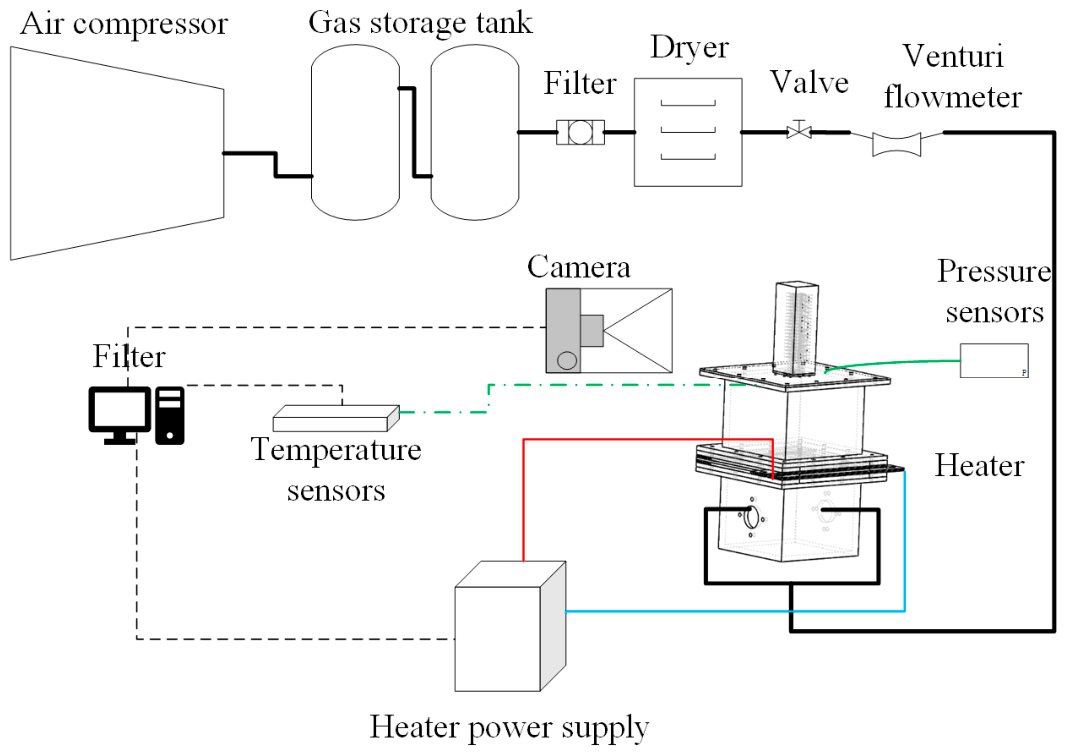
2.1. Visualization Test System
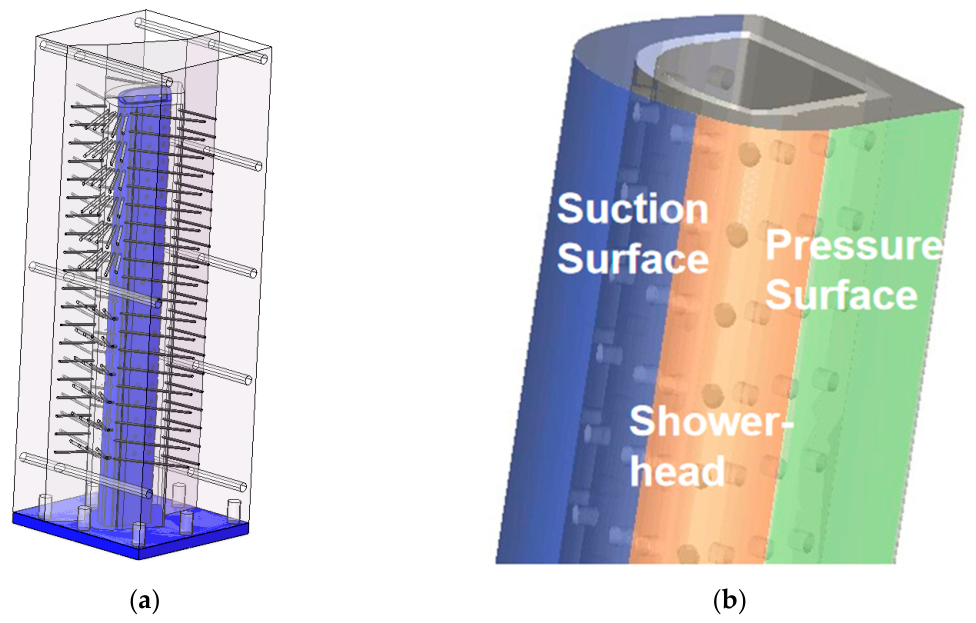
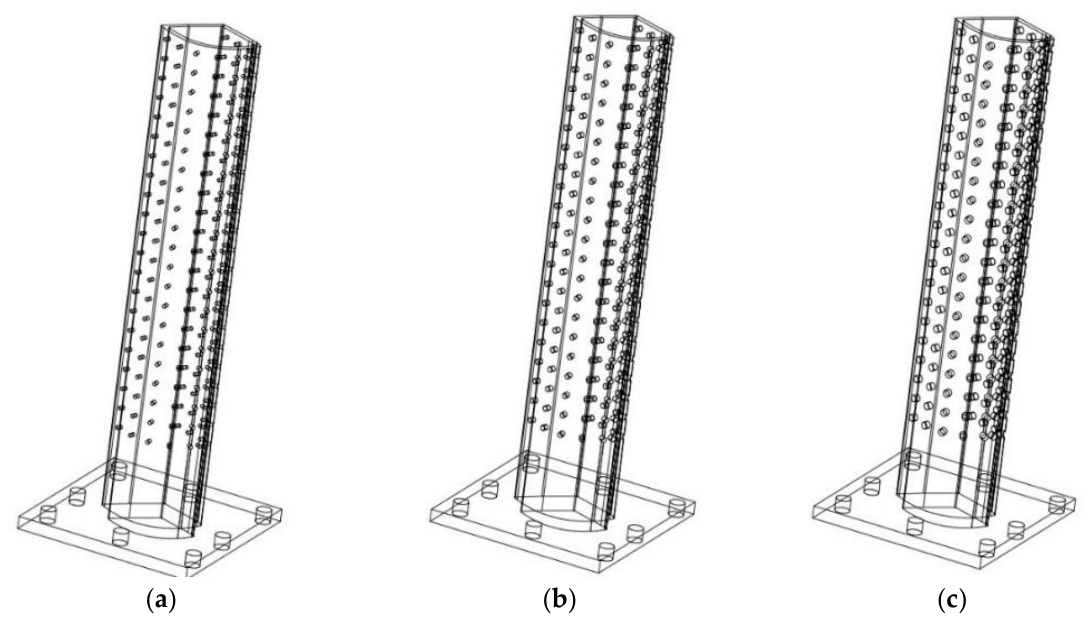
2.2. Models
2.3. Transient Liquid Crystal
2.4. Parametric Calculation
- The diameter of the channel Dh is used to define the Reynolds number Re, as below:
- b.
- The jet Reynolds number Rej at the jet hole is described as follows:
- c.
- The friction coefficient f of the channel is described as follows:
- d.
- The reference friction coefficient f0 of the smooth channel can be described as follows:
- e.
- The local Nusselt number Nu is defined as follows:
- f.
- The reference Nusselt number Nu0 for a fully developed turbulent wall on a smooth surface can be calculated by:
- g.
- The turbulent kinetic energy TKE can be described as follows:
- h.
- The TPF characterizes the degree of intensification of the heat transfer capacity per unit of pump work, which can be described as follows:
2.5. Uncertainty
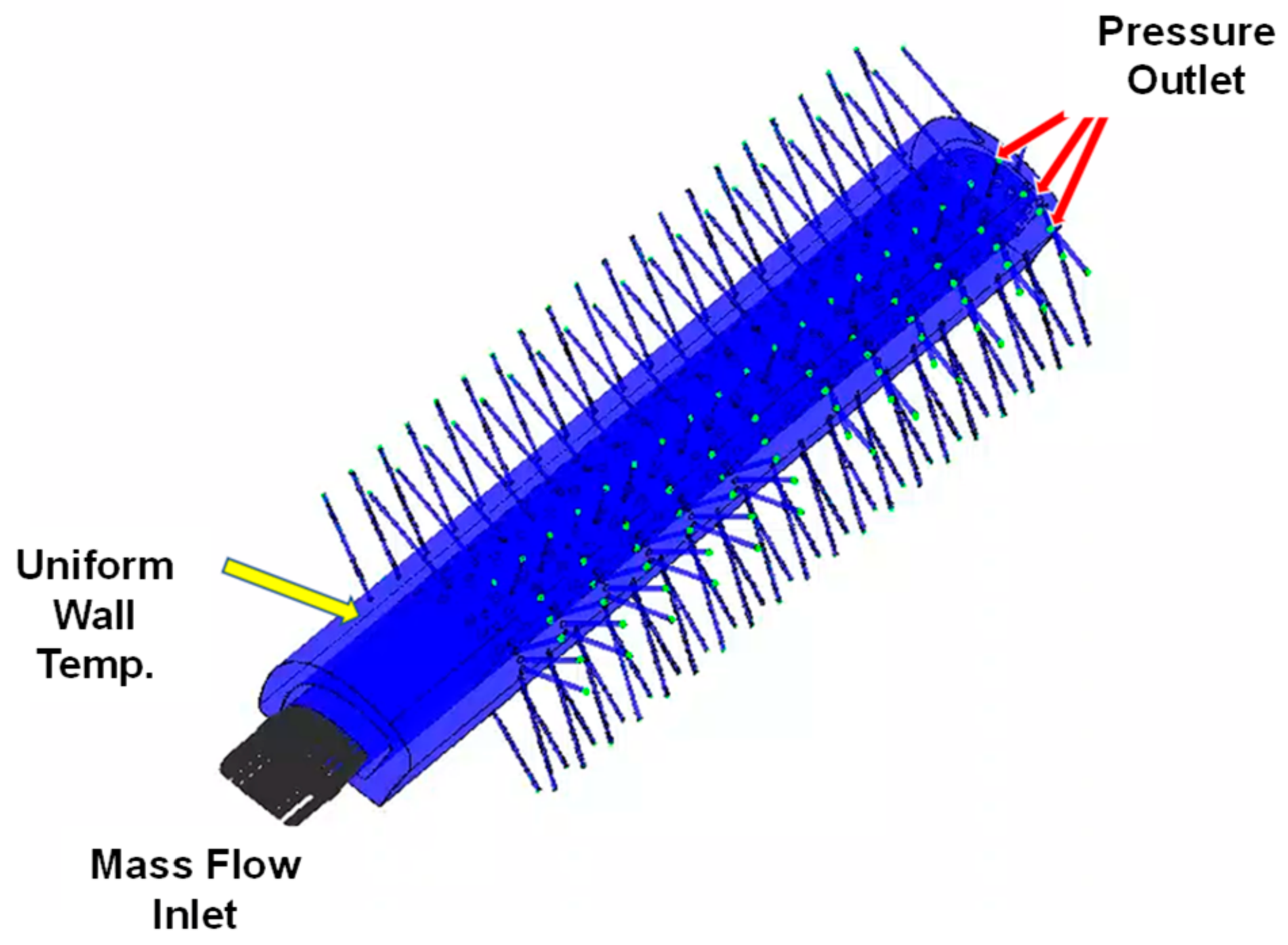
3. Numerical Calculation
4. Results and Detailed Discussions
4.1. Heat Transfer Characteristics
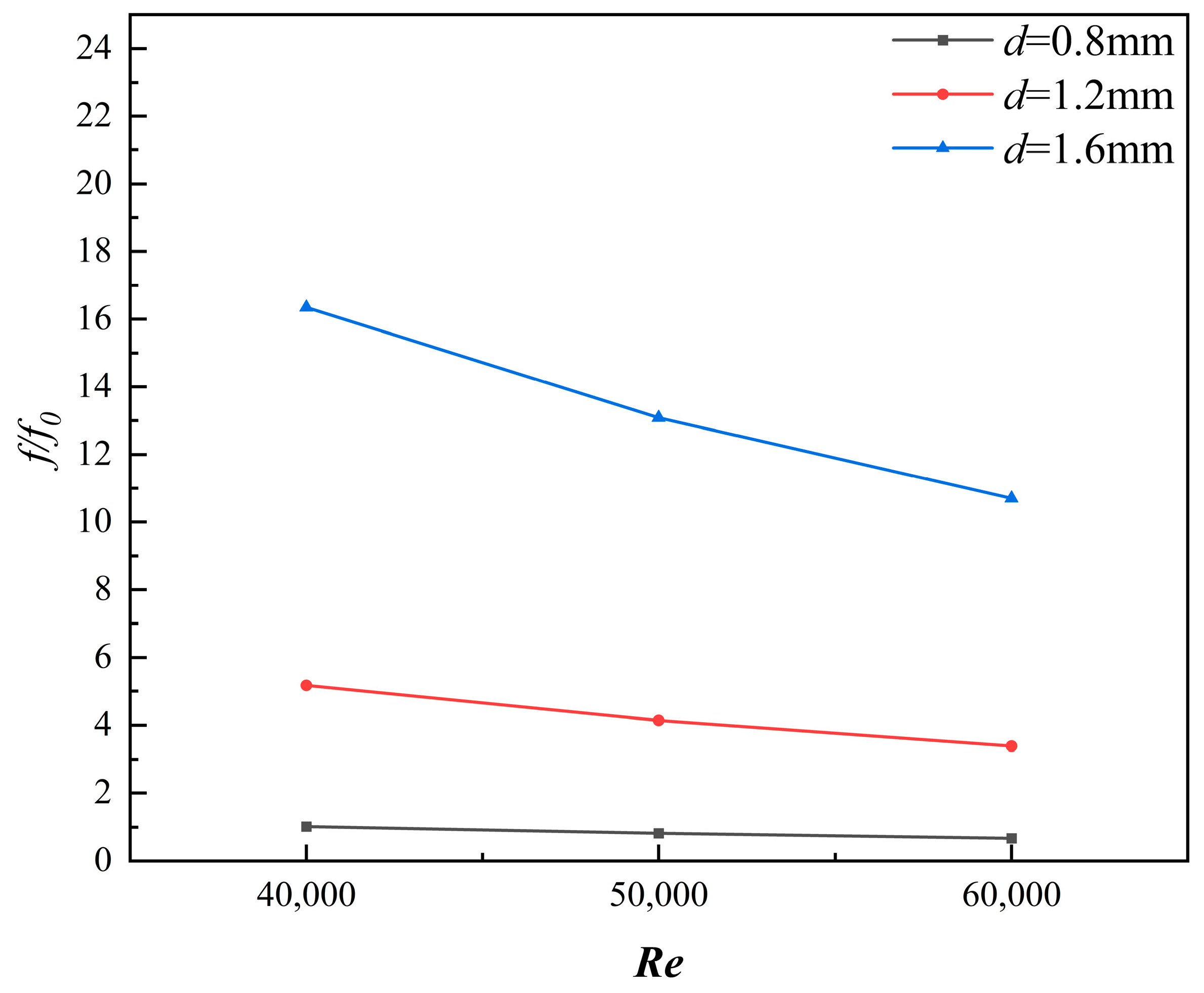
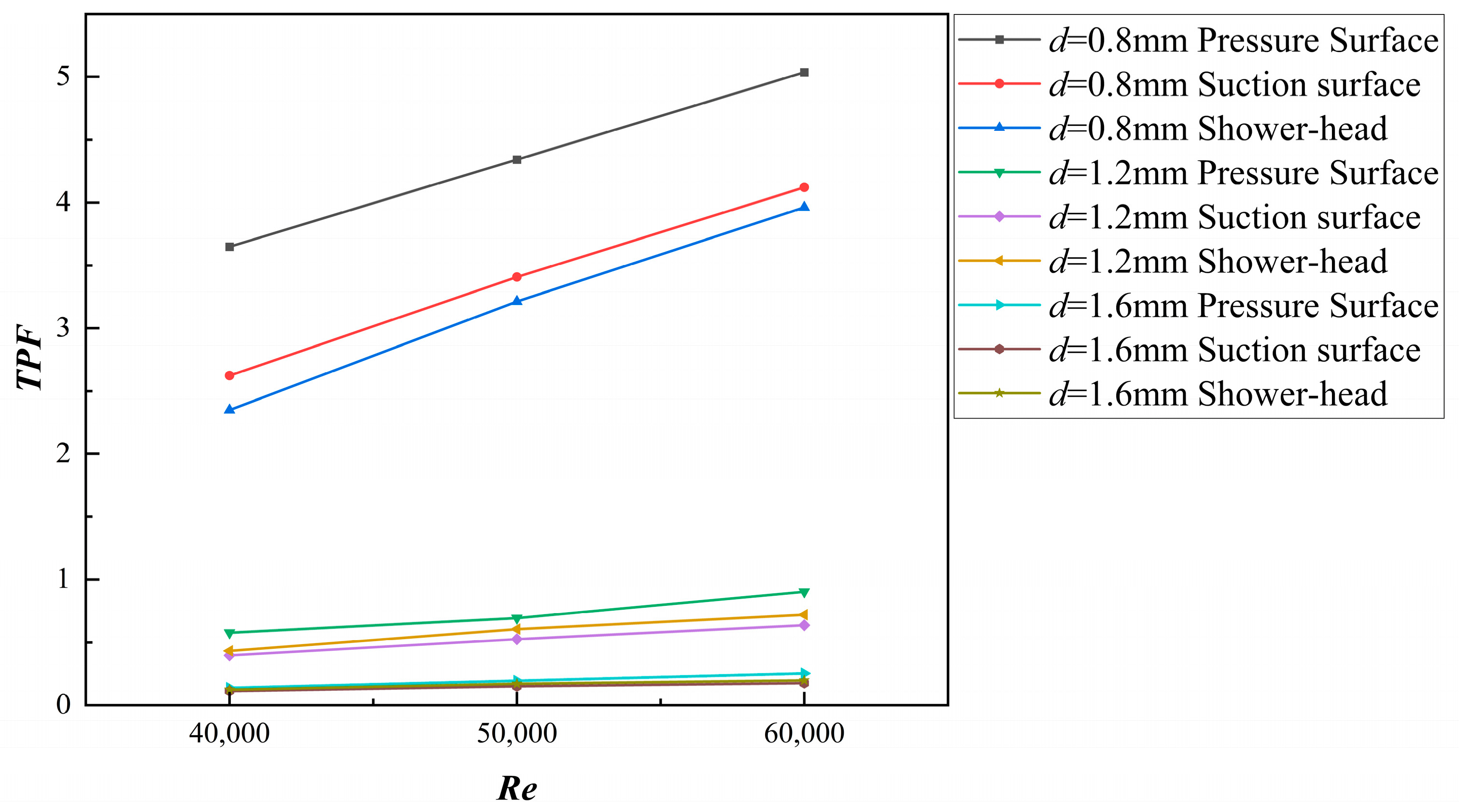
4.2. Friction Coefficient and Combined Heat Transfer Efficiency
5. Conclusions
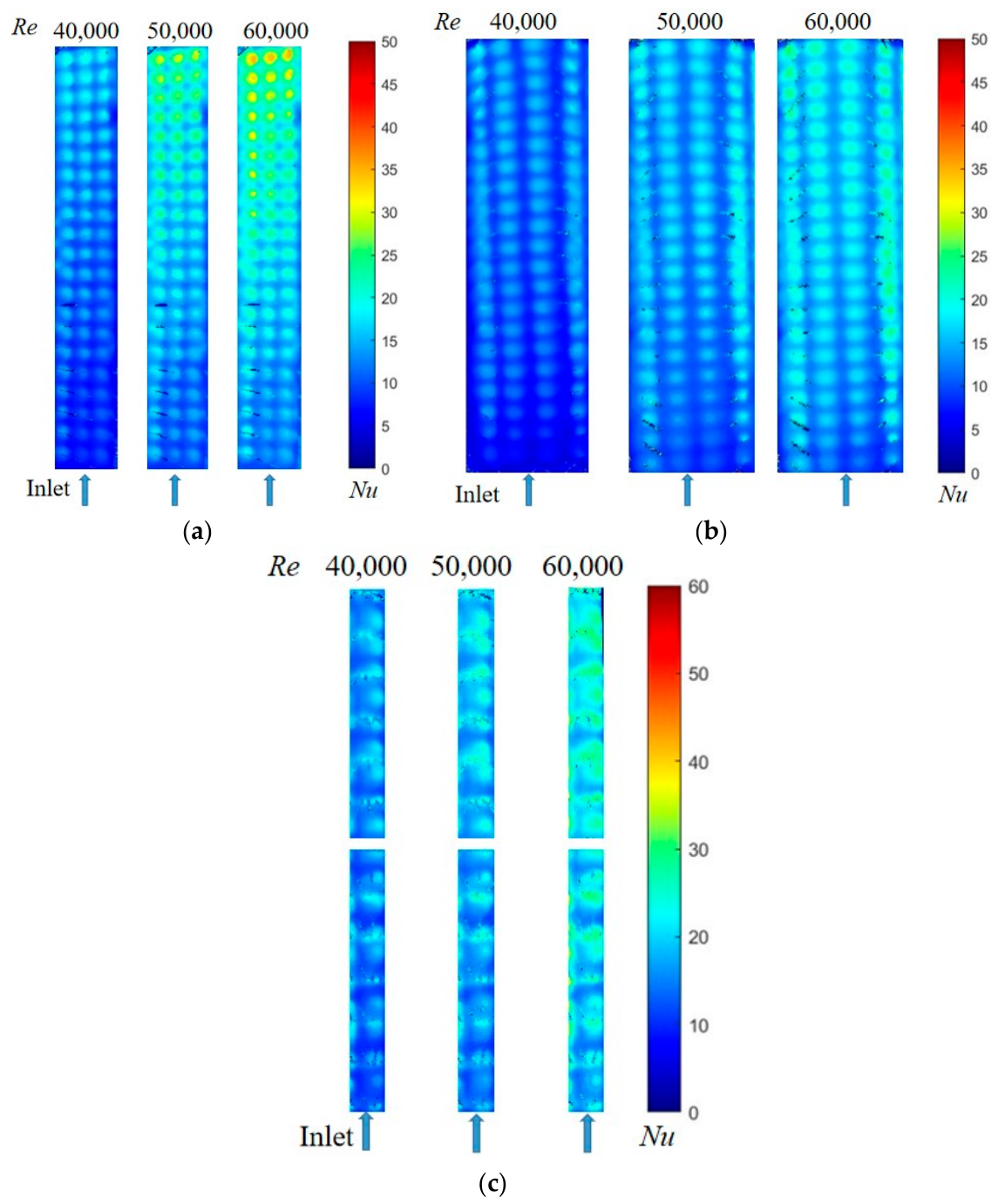
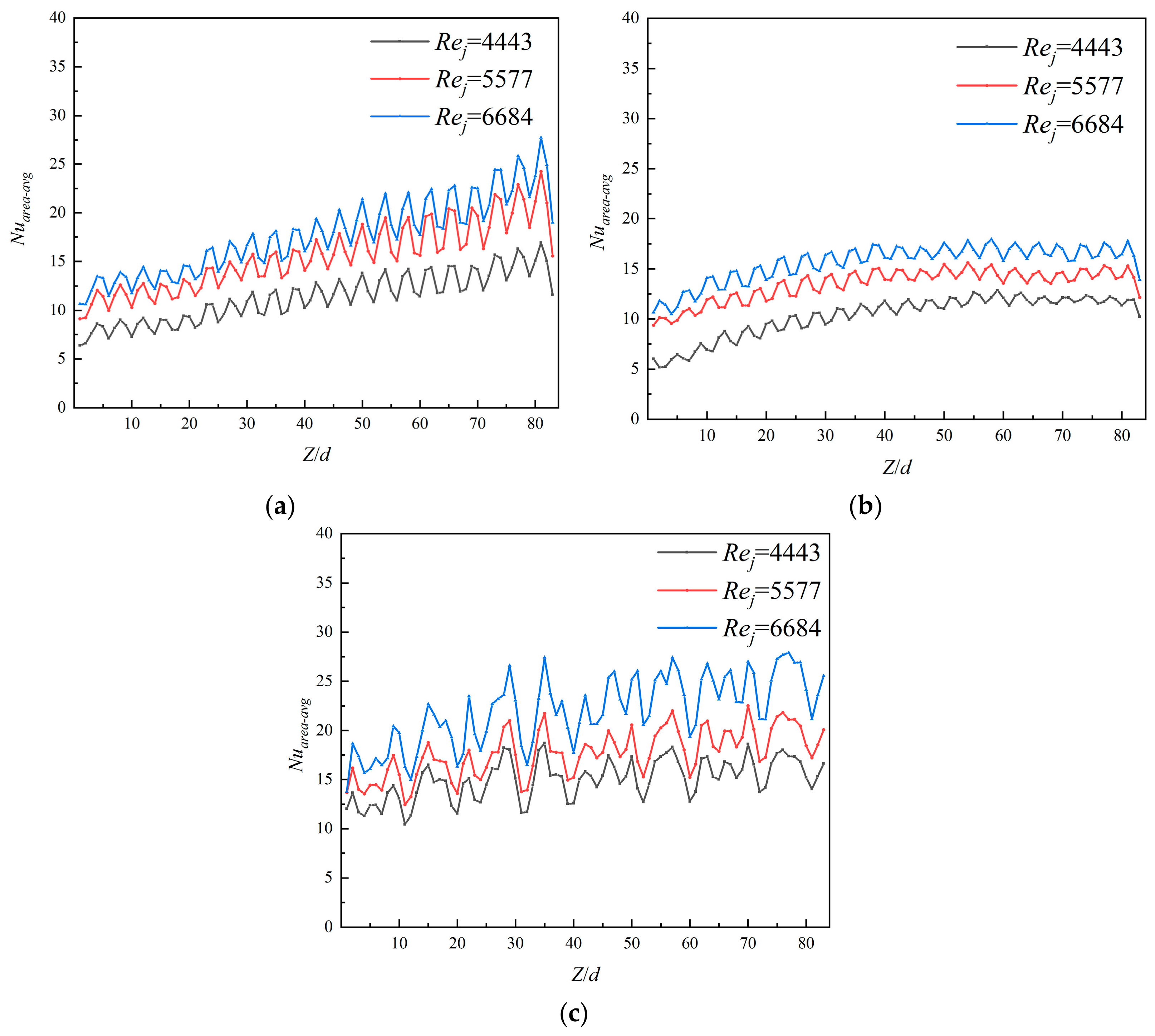
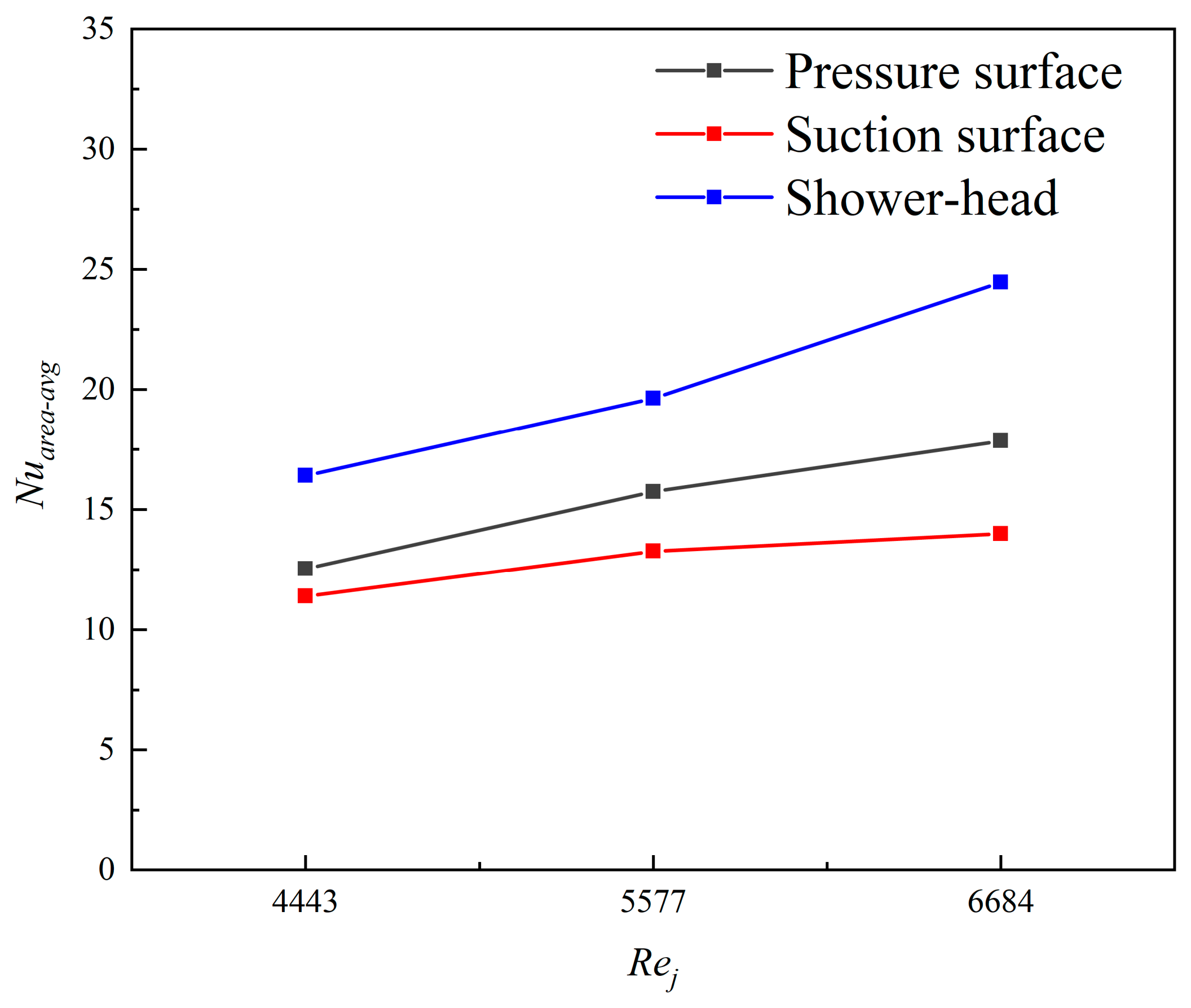
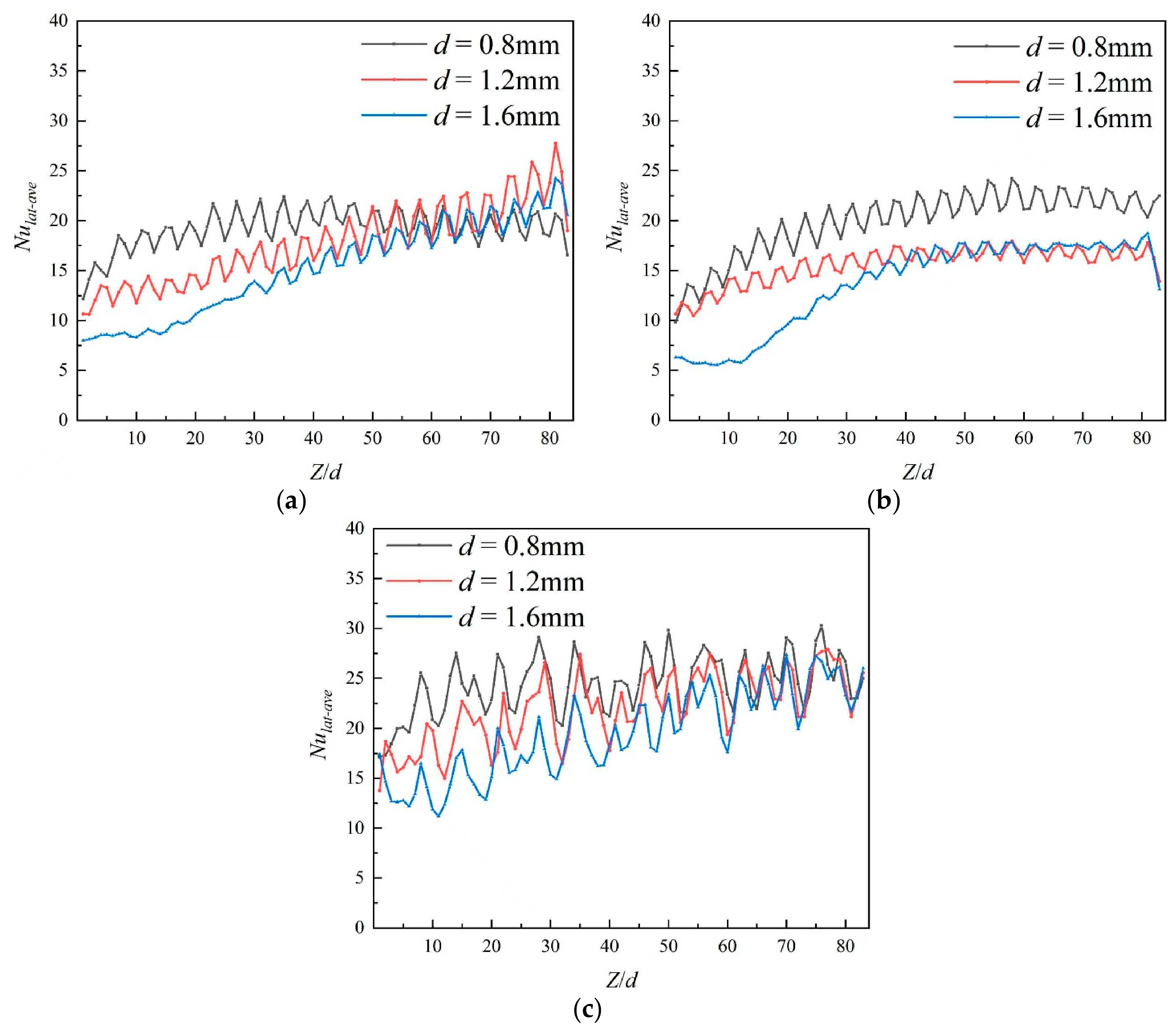
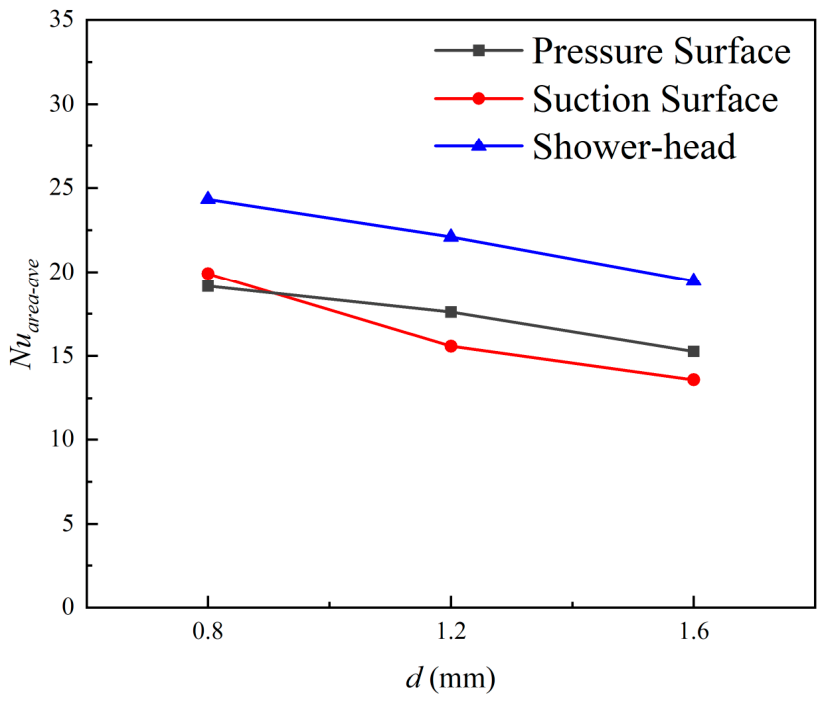
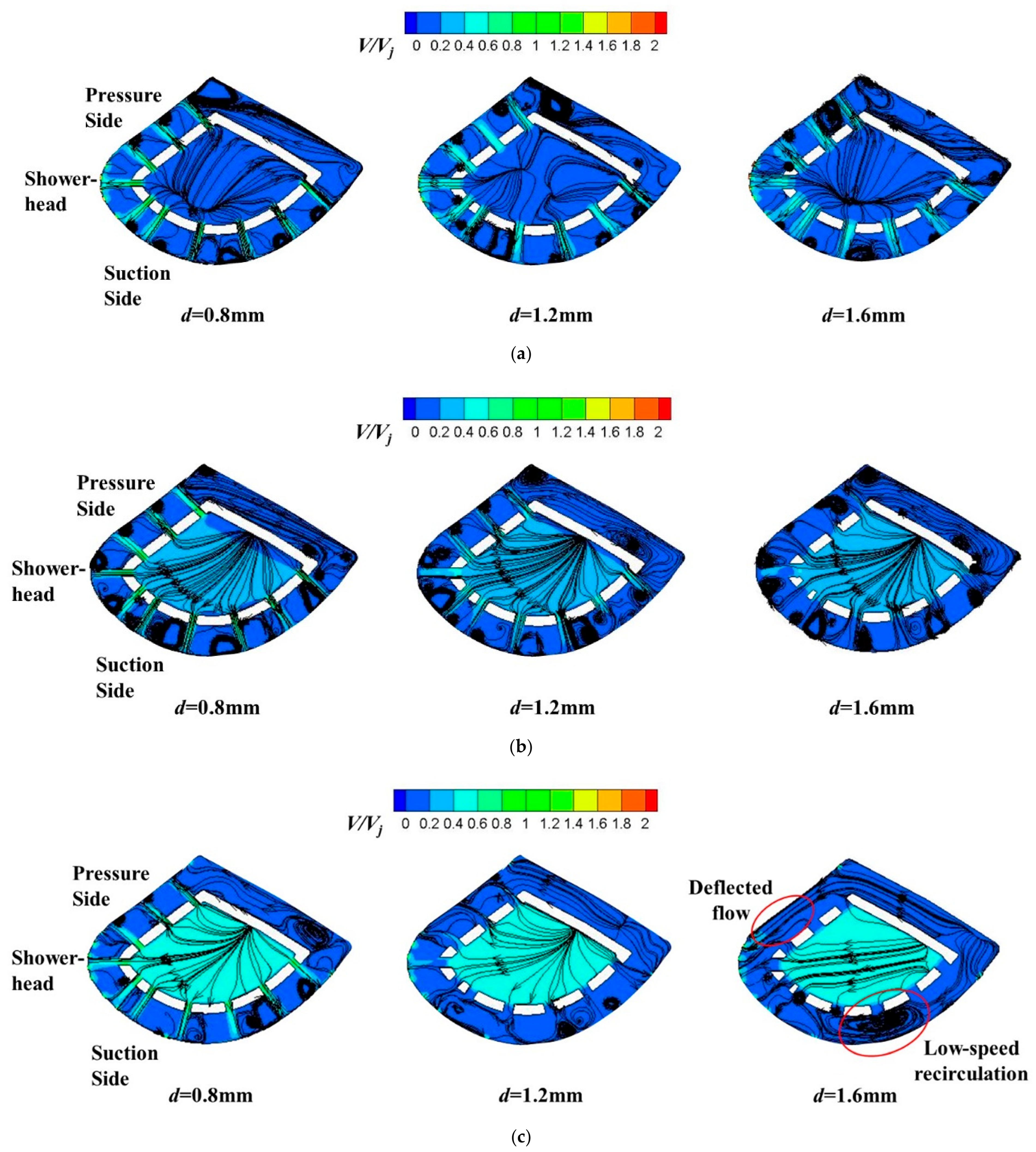
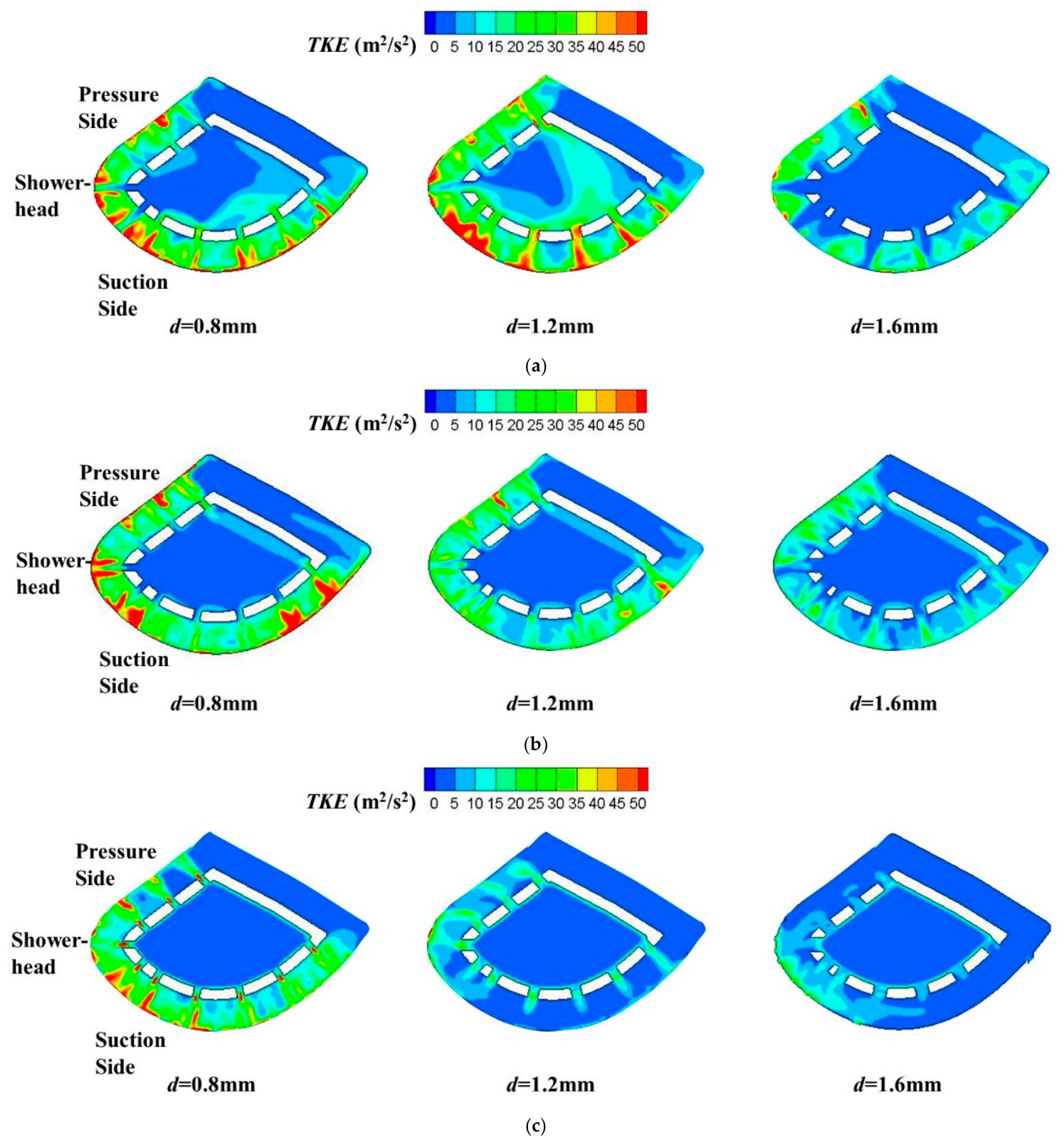
- In the spanwise direction, overall Nu distribution initially increases, then continues rising or stabilizes to a constant value, with the highest Nu typically near the tip. The area-averaged Nu generally follows the pattern: shower-head > pressure > suction. Notably, the heat transfer enhanced regions are shifted toward the shower-head on both pressure and suction surfaces. This trend aligns with the velocity and TKE distributions.
- Bleeding from film holes significantly affects the heat transfer enhancement in the stagnation region of the impingement, and there is a significant flow acceleration and TKE enhancement near film holes due to bleeding, where the Nu increases by 10.69% compared to the region without film holes.
- The overall heat transfer of the target surface is elevated with the increase of Rej. The average Nu and TKE increase with Rej. However, the flow field structure does not change significantly.
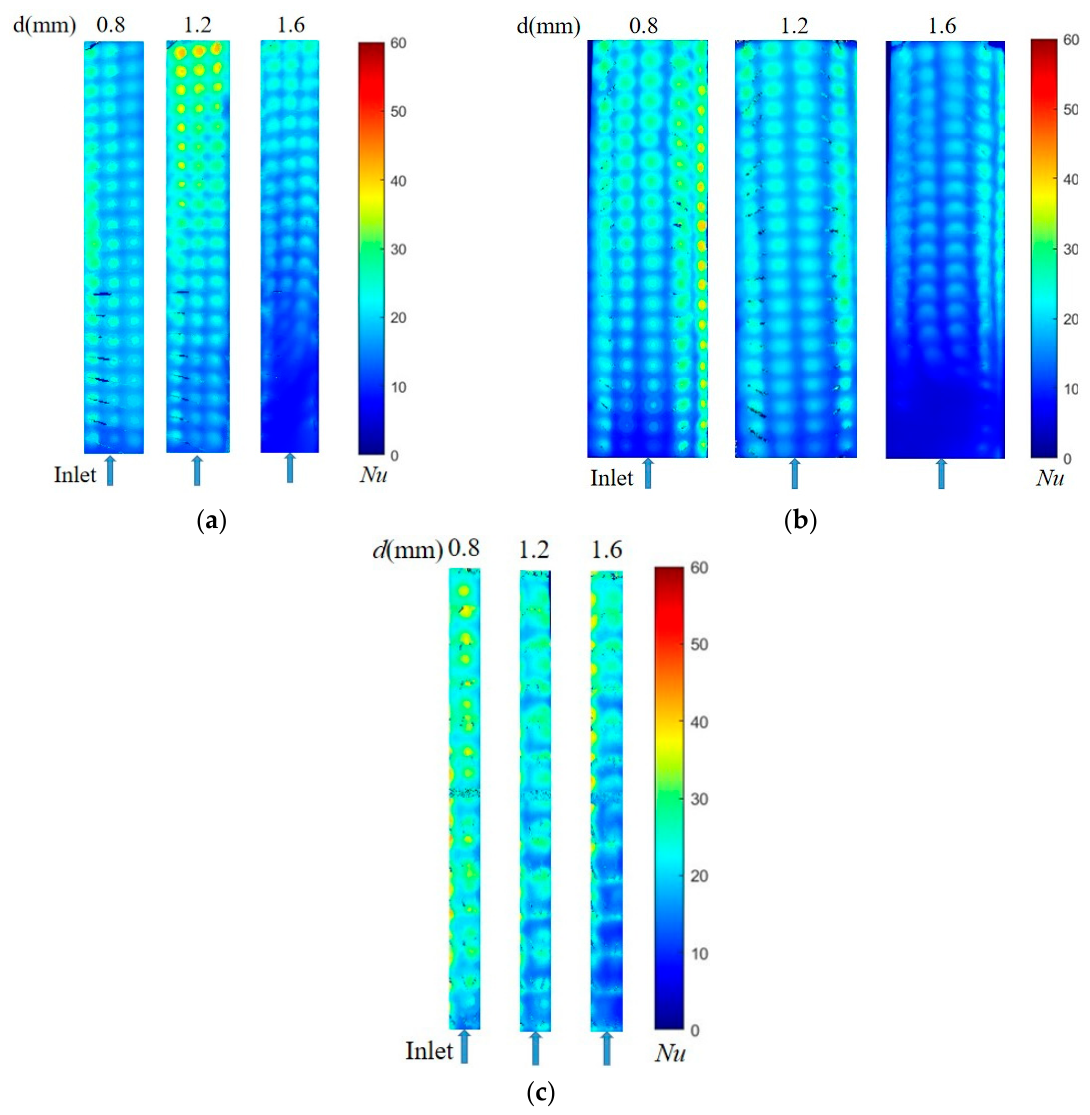
- The average Nu and TKE decrease with jet hole diameter d increased due to the decrease of jet velocity, and the Nu gradient also rises on the target surface. For Model 3 (d = 1.6 mm), recirculation near the suction surface and deflected jets near the pressure surface at 5% span plane weaken heat transfer on both surfaces.
- The f/f0 decreases with Rej and increases with d. And, TPF increases with Rej and decreases with d. The TPF of Model 1 (d = 0.8 mm) is the largest, with a high Nu gradient and non-uniformity. In current research, considering Nu and its uniformity, f/f0, and TPF, Model 2 (d = 1.2 mm) has a better application prospect.
Author Contributions
Funding
Data Availability Statement
Conflicts of Interest
References
- Han, J.C. Advanced Cooling in Gas Turbines—2016 Max Jakob Memorial Award Paper. J. Heat Transf. 2018, 140, 113001. [Google Scholar] [CrossRef]
- Martin, H. Heat and Mass Transfer between Impinging Gas Jets and Solid Surfaces. In Advances in Heat Transfer; Hartnett, J.P., Irvine, T.F., Eds.; Elsevier: Amsterdam, The Netherlands, 1977; pp. 1–60. [Google Scholar]
- Metzger, D.E.; Florschuetz, L.W.; Takeuchi, D.I.; Behee, R.D.; Berry, R.A. Heat Transfer Characteristics for Inline and Staggered Arrays of Circular Jets with Crossflow of Spent Air. J. Heat Transf. 1979, 101, 526–531. [Google Scholar] [CrossRef]
- Florschuetz, L.W.; Truman, C.R.; Metzger, D.E. Streamwise Flow and Heat Transfer Distributions for Jet Array Impingement with Crossflow. J. Heat Transf. 1981, 103, 337–342. [Google Scholar] [CrossRef]
- Xing, Y.; Spring, S.; Weigand, B. Experimental and Numerical Investigation of Heat Transfer Characteristics of Inline and Staggered Arrays of Impinging Jets. J. Heat Transf. 2010, 132, 092201. [Google Scholar] [CrossRef]
- Obot, N.T.; Trabold, T.A. Impingement Heat Transfer Within Arrays of Circular Jets: Part 1—Effects of Minimum, Intermediate, and Complete Crossflow for Small and Large Spacings. J. Heat Transf. 1987, 109, 872–879. [Google Scholar] [CrossRef]
- San, J.-Y.; Lai, M.-D. Optimum jet-to-jet spacing of heat transfer for staggered arrays of impinging air jets. Int. J. Heat Mass Transf. 2001, 44, 3997–4007. [Google Scholar] [CrossRef]
- Katti, V.; Prabhu, S.V. Influence of Streamwise Pitch on Local Heat Transfer Distribution for In-Line Arrays of Circular Jets with Spent Air Flow in Two Opposite Directions. Exp. Heat Transf. 2009, 22, 228–256. [Google Scholar] [CrossRef]
- Gau, C.; Chung, C.M. Surface Curvature Effect on Slot Air-Jet Impingement Cooling Flow and Heat Transfer Process. J. Heat Transf. 1991, 113, 858–864. [Google Scholar] [CrossRef]
- Bunker, R.S.; Metzger, D.E. Local Heat Transfer in Internally Cooled Turbine Airfoil Leading-edge Regions: Part I—Impingement Cooling Without Film Coolant Extraction. J. Turbomach. 1990, 112, 451–458. [Google Scholar] [CrossRef]
- Martin, E.L.; Wright, L.M.; Crites, D.C. Computational Investigation of Jet Impingement on Turbine Blade Leading-edge Cooling with Engine-Like Temperatures. In Turbo Expo: Power for Land, Sea, and Air; American Society of Mechanical Engineers: New York, NY, USA, 2012. [Google Scholar]
- Martin, E.L.; Wright, L.M.; Crites, D.C. Impingement Heat Transfer Enhancement on a Cylindrical, Leading-edge Model with Varying Jet Temperatures. J. Turbomach. 2013, 135, 031021. [Google Scholar] [CrossRef]
- Haider, S.A.; Yan, X.T. Jet Diameter Effect on Impingement Jet Cooling on the Leading-edge of a Turbine Blade. In Proceedings of the 54th AIAA Aerospace Sciences Meeting, San Diego, CA, USA, 4–8 January 2016. [Google Scholar]
- Cao, Y.; Fu, J.-L.; Zhang, C.; Zhang, P.; Liu, J.-J. Numerical Investigation on the Influence of Cooling Configurations on Film/Impingement Cooling Performance. J. Eng. Thermophys. 2020, 41, 1332–1340. [Google Scholar]
- Yan, H.-J.; Chen, G.-J.; Rao, Y. Experiment on Flow and Heat Transfer of Impingement-Film Edge of Turbine Blade. J. Eng. Thermophys. 2020, 41, 2970–2976. [Google Scholar]
- Kulkarni, R.V.; Wright, L.M. Heat Transfer and Pressure Loss Correlations for Leading-edge, Jet Impingement Using Racetrack-Shaped Jets with Filleted Edges. ASME J. Heat Mass Transf. 2023, 145, 121801. [Google Scholar] [CrossRef]
- Wang, M.; Zhu, H.; Liu, C.; Wang, R.; Wu, Z.; Yao, C. Numerical Investigation of Flow and Heat Transfer in Vane Impingement/Effusion Cooling with Various Rib/Dimple Structure. J. Therm. Sci. 2023, 32, 1357–1377. [Google Scholar] [CrossRef]
- Wang, M.; Zhu, H.; Ye, L.; Liu, C.; Li, J.; Niu, J.; Guo, T. Flow Mechanism and Heat Transfer Analysis on Ribbed/protruded Surface in Impingement/effusion Cooling of a Turbine Guided Vane Based on Conjugate Heat Transfer. J. Therm. Sci. 2026, 35, 132–150. [Google Scholar] [CrossRef]



| Channel Inlet Flow \ (kg/s) | Channel Inlet Reynolds Number (Re) | Jet Reynolds Number (Rej) | ||
|---|---|---|---|---|
| Model 1 | Model 2 | Model 3 | ||
| 0.01681 | 40,000 | 6665 | 4443 | 3332 |
| 0.02110 | 50,000 | 8366 | 5578 | 4183 |
| 0.02529 | 60,000 | 10,026 | 6684 | 5013 |
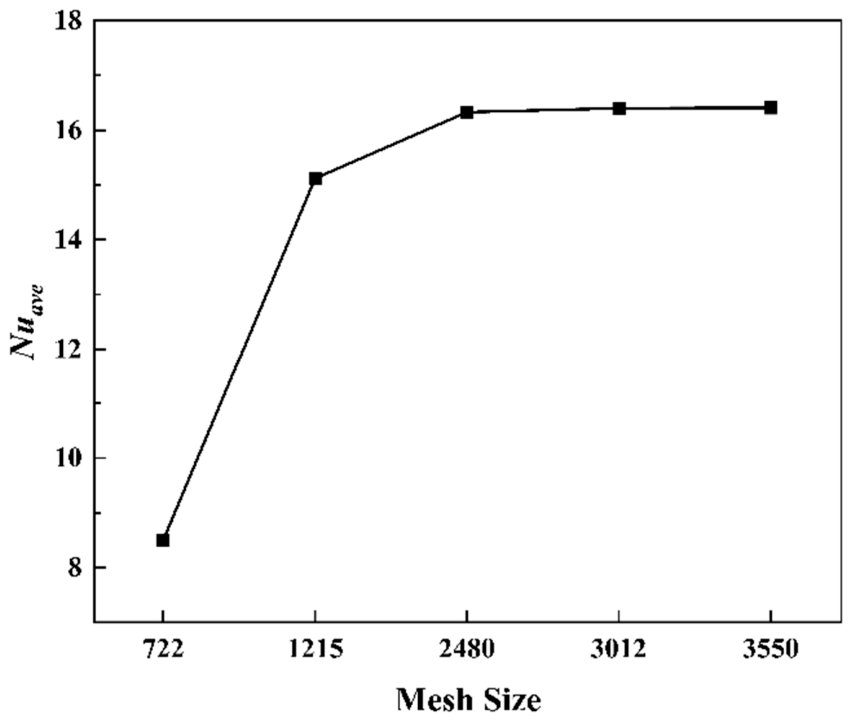
| Mesh | Number of Grids |
|---|---|
| Mesh1 | 7.22 M |
| Mesh2 | 12.15 M |
| Mesh3 | 24.80 M |
| Mesh4 | 30.12 M |
| Mesh5 | 35.50 M |
Disclaimer/Publisher’s Note: The statements, opinions and data contained in all publications are solely those of the individual author(s) and contributor(s) and not of MDPI and/or the editor(s). MDPI and/or the editor(s) disclaim responsibility for any injury to people or property resulting from any ideas, methods, instructions or products referred to in the content. |
© 2026 by the authors. Licensee MDPI, Basel, Switzerland. This article is an open access article distributed under the terms and conditions of the Creative Commons Attribution (CC BY) license.
Share and Cite
Li, J.; Zhuang, W.; Lei, J.; Zhang, P.; Xu, J.; Wu, H. Experimental Study of Impingement-Film Compound Cooling in the Leading Region of a Turbine Vane. Energies 2026, 19, 2688. https://doi.org/10.3390/en19112688
Li J, Zhuang W, Lei J, Zhang P, Xu J, Wu H. Experimental Study of Impingement-Film Compound Cooling in the Leading Region of a Turbine Vane. Energies. 2026; 19(11):2688. https://doi.org/10.3390/en19112688
Chicago/Turabian StyleLi, Jiang, Wansong Zhuang, Jiang Lei, Peng Zhang, Jin Xu, and Hong Wu. 2026. "Experimental Study of Impingement-Film Compound Cooling in the Leading Region of a Turbine Vane" Energies 19, no. 11: 2688. https://doi.org/10.3390/en19112688
APA StyleLi, J., Zhuang, W., Lei, J., Zhang, P., Xu, J., & Wu, H. (2026). Experimental Study of Impingement-Film Compound Cooling in the Leading Region of a Turbine Vane. Energies, 19(11), 2688. https://doi.org/10.3390/en19112688