Study on the Heat Release Behaviors During Oxidation of Pulverized Coal-Dispersed Ventilation Air Methane in Regenerator Channels


Abstract
1. Introduction
2. Numerical Simulation Methods
2.1. Model Construction Methods
2.2. Governing Equations and Combustion Mechanism Models
2.2.1. Flow Governing Equations
- (1)
- Mass conservation equation
- (2)
- Momentum equation
- (3)
- Energy conservation equation
- (4)
- Component mass conservation equation
2.2.2. Pulverized Coal Particles Combustion Model
- (1)
- Moisture drying model
- (2)
- Volatiles pyrolysis model
- (3)
- Coke combustion model
2.2.3. Reaction Mechanism of Low-Concentration Methane
2.3. Model Selection and Boundary Conditions
2.3.1. Gas-Phase Turbulent Flow Model
2.3.2. Gas–Solid Two-Phase Flow Model
2.3.3. Radiation Model
2.3.4. Boundary and Initial Conditions
2.4. Fuel Properties
3. Results and Discussion
3.1. Heat Release Behaviors During Low-Concentration Methane Oxidation in Regenerator Channels
3.1.1. Patterns of Heat Release During Low-Concentration Methane Oxidation
3.1.2. Effect of Operating Parameters on Heat Release During Low-Concentration Methane Oxidation
- (1)
- Effect of inlet velocity
- (2)
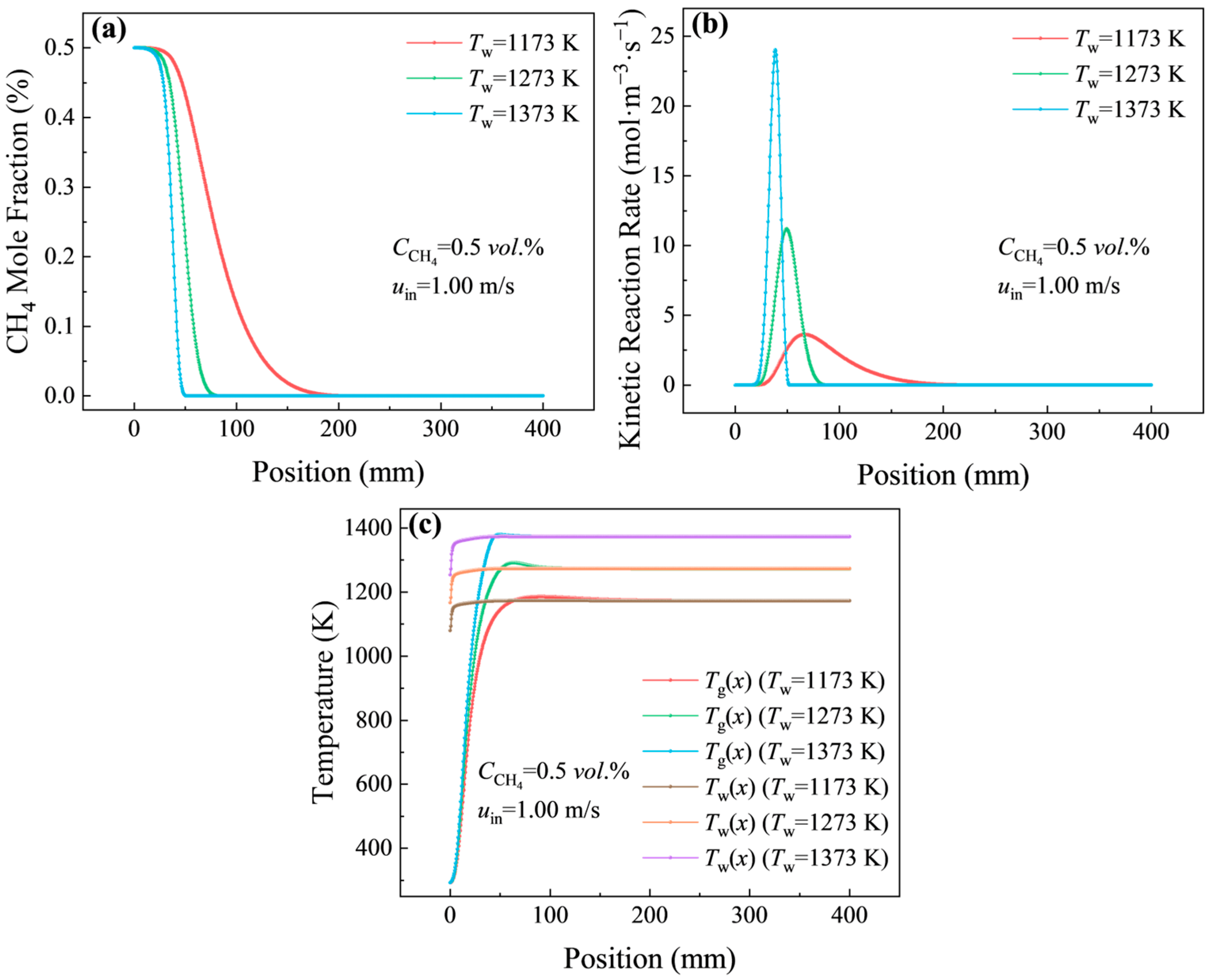
- Effect of channel wall temperature
- (3)
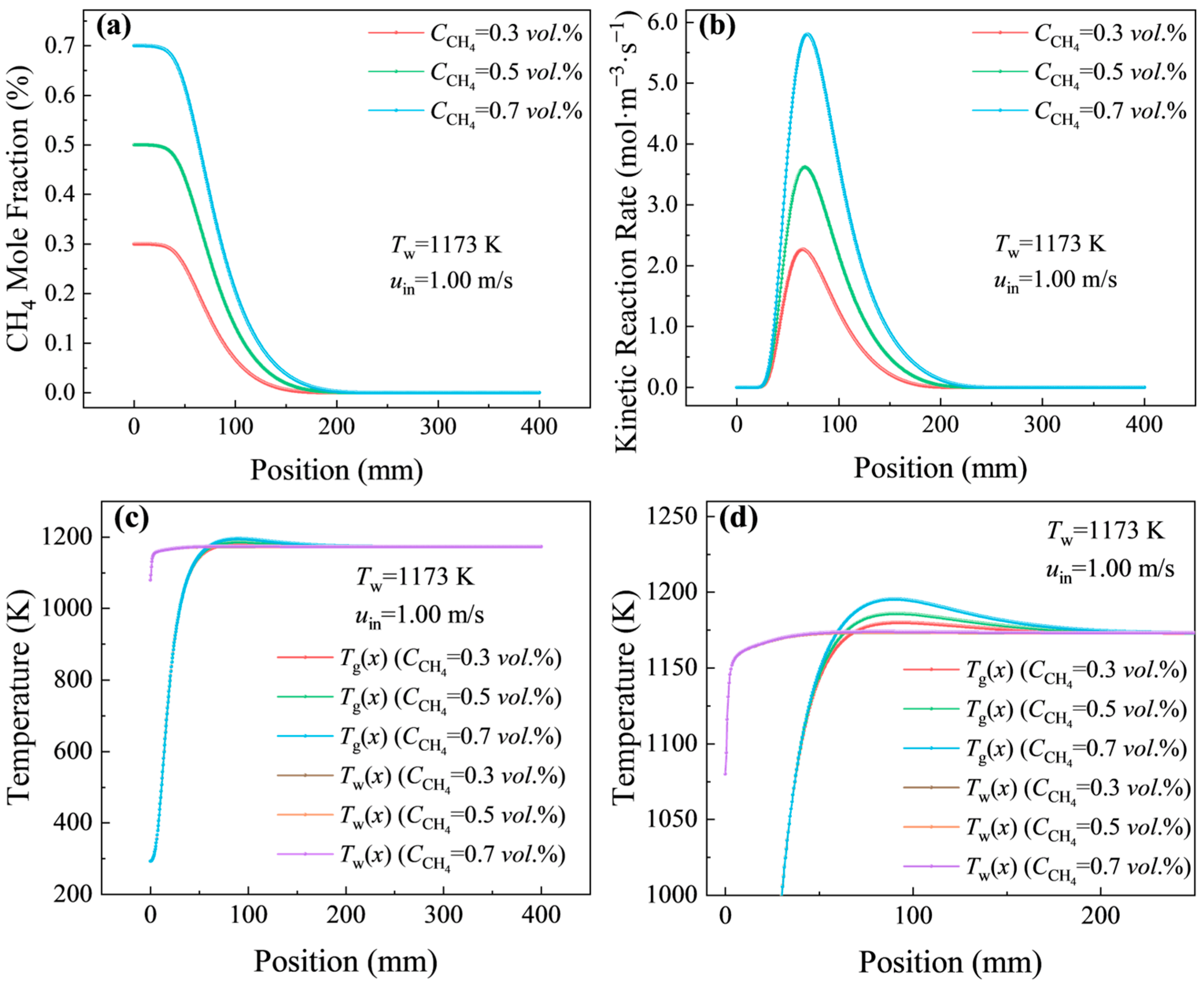
- Effect of methane concentration
3.2. Heat Release Behaviors During Pulverized Coal Oxidation in Regenerator Channels
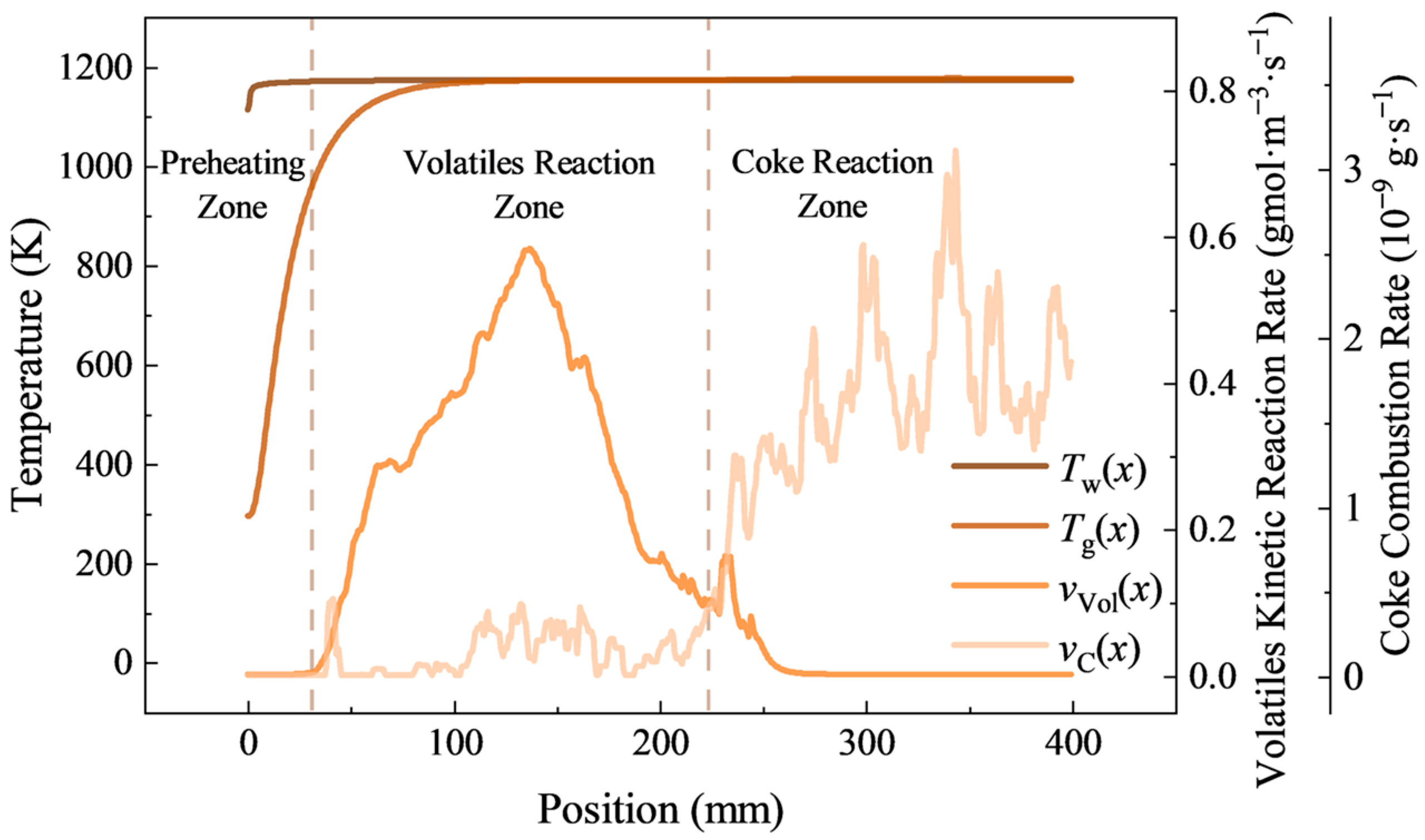
3.2.1. Patterns of Heat Release During Pulverized Coal Oxidation
3.2.2. Effect of Operating Parameters on Heat Release During Pulverized Coal Oxidation
- (1)
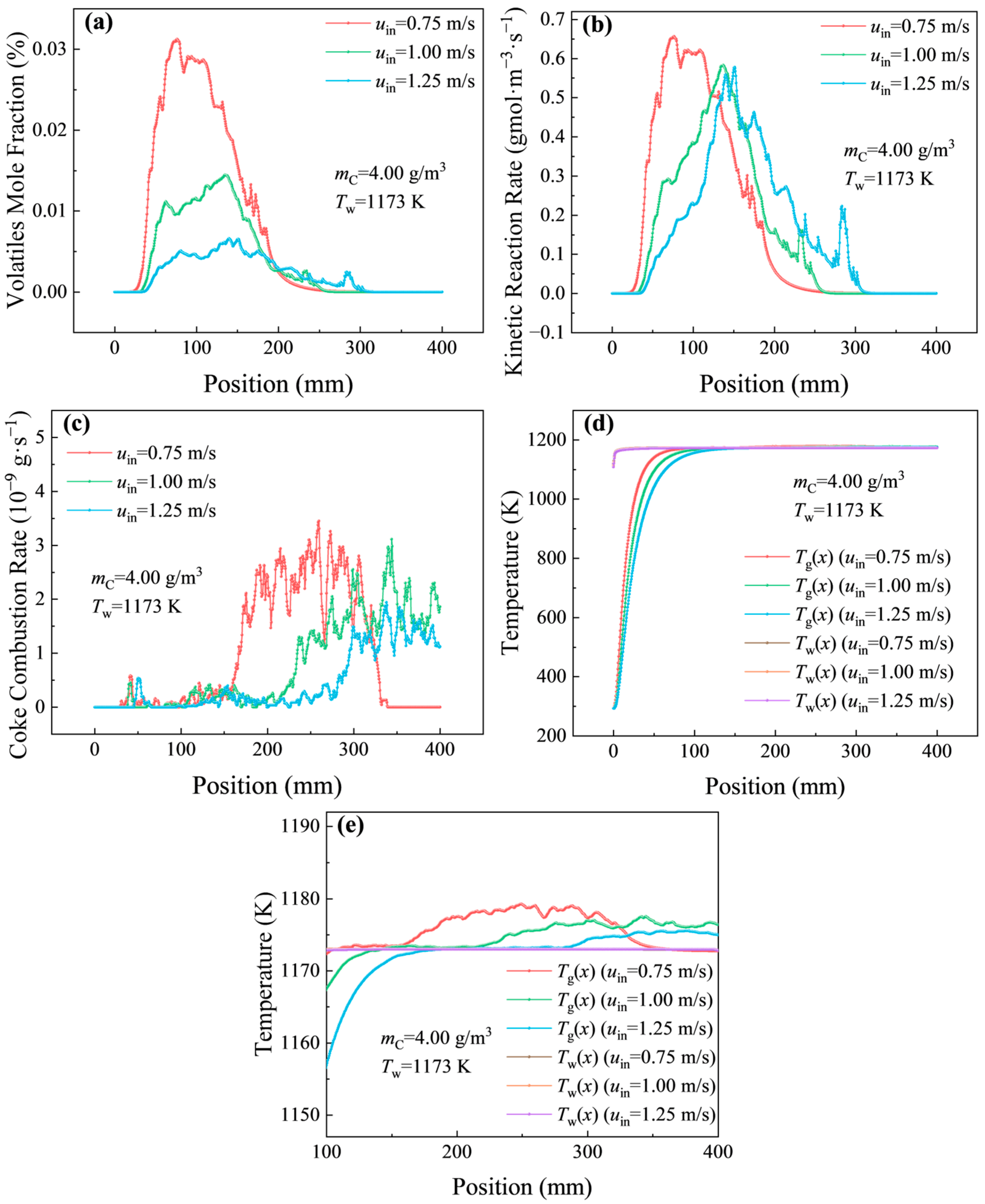
- Effect of inlet velocity
- (2)
- Effect of channel wall temperature
- (3)
- Effect of pulverized coal feed rate
3.3. Heat Release Behaviors During Oxidation of Pulverized Coal-Dispersed Ventilation Air Methane in Regenerator Channels
3.3.1. Effect of Coal–Methane Heat Input Ratios on Heat Release During Oxidation of Pulverized Coal-Dispersed Ventilation Air Methane
3.3.2. Patterns of Heat Release During Oxidation of Pulverized Coal-Dispersed Ventilation Air Methane in Regenerator Channels
4. Conclusions
- (1)
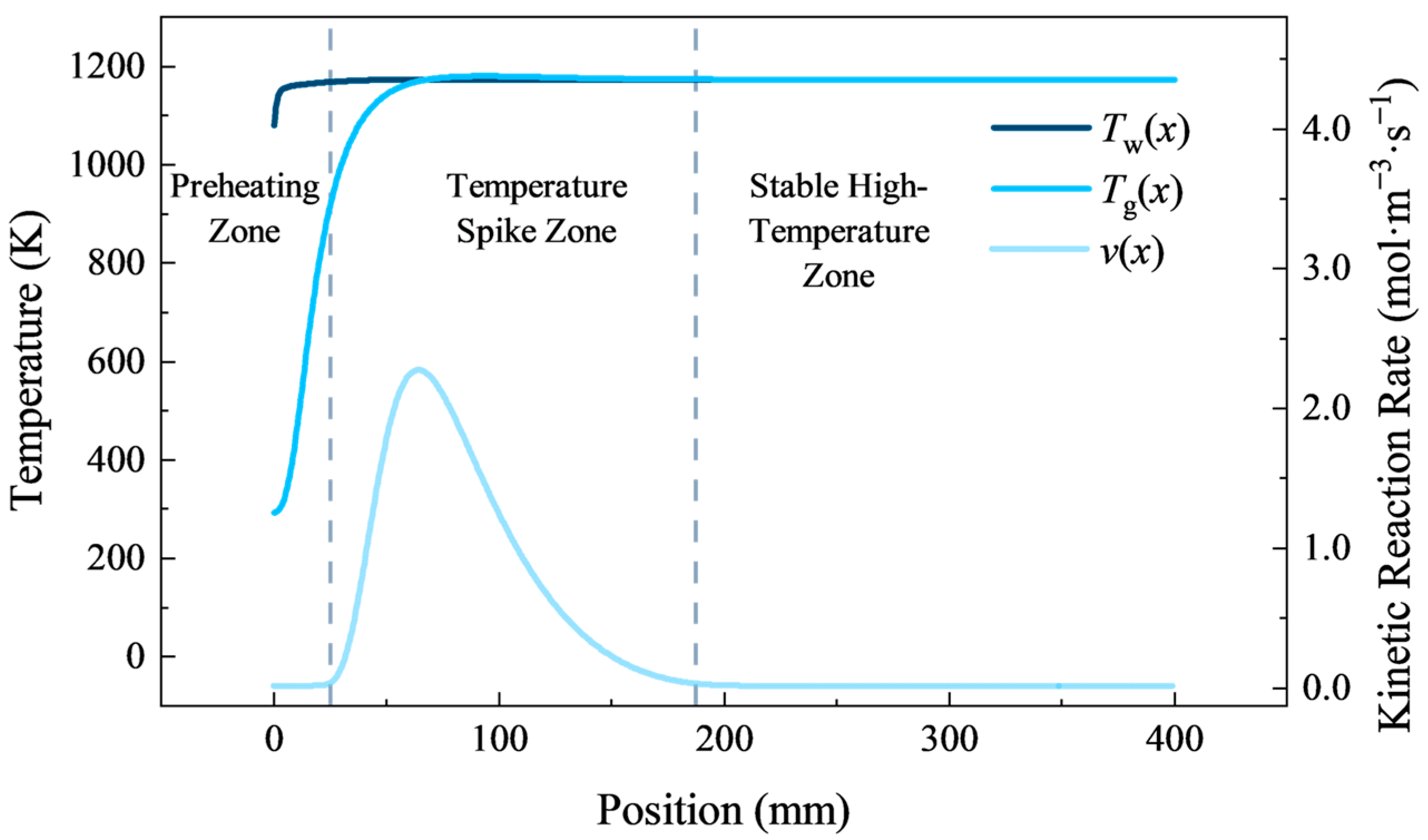
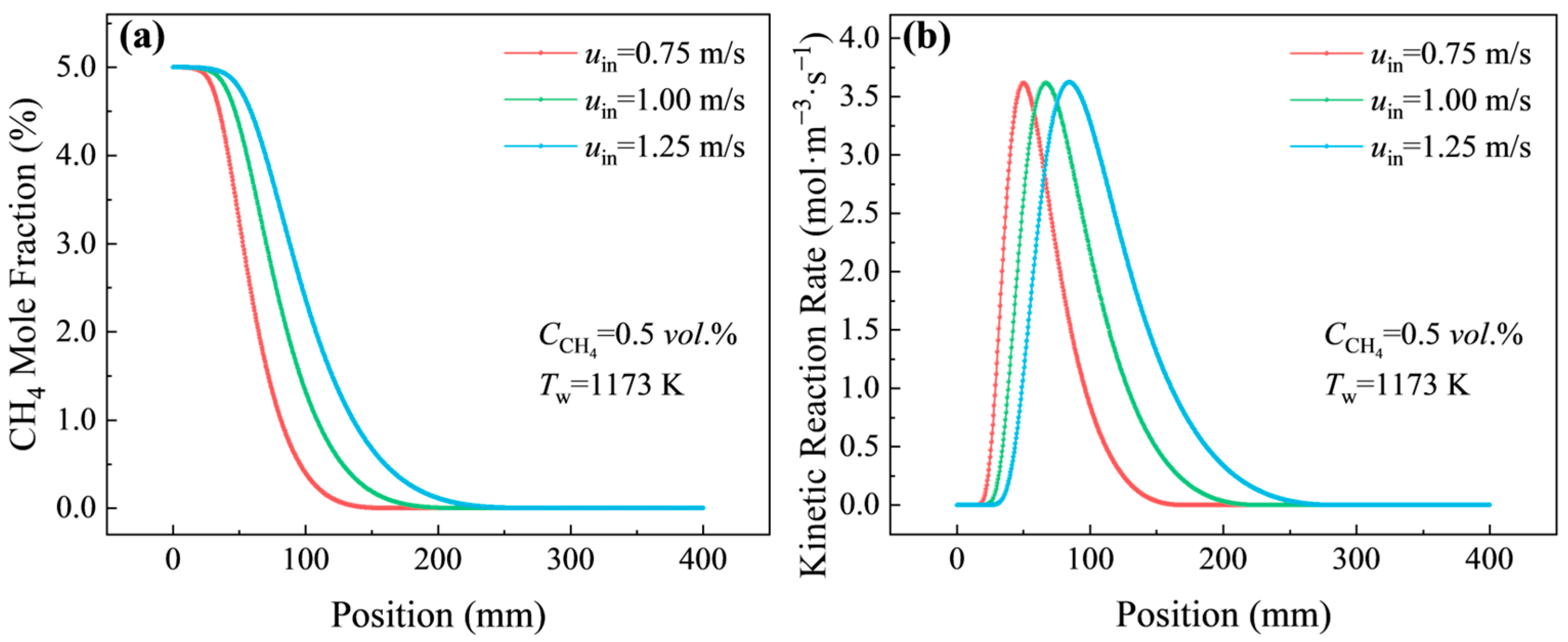
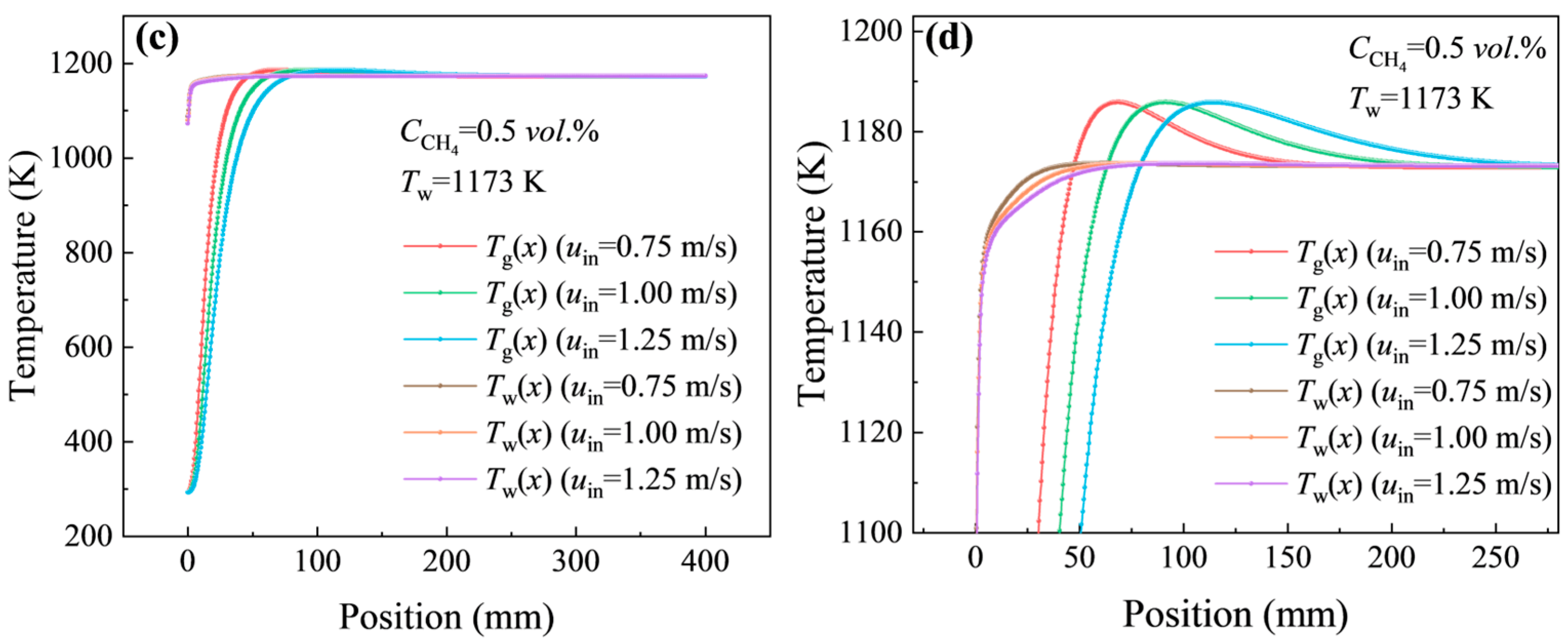
- Low-concentration methane oxidation involves preheating, temperature spike and stable high-temperature stages. The inlet velocity alters the reaction’s spatial onset and axial distance without changing the peak rate. The wall temperature dominantly controls the oxidation intensity, with the rate increasing 5.3 times from 3.72 to 23.87 mol·m−3·s−1, as the temperature rises from 1173 K to 1373 K. The methane concentration has little effect on ignition onset, but higher concentrations increase the peak reaction rate, temperature rise, and oxidation-zone length.
- (2)
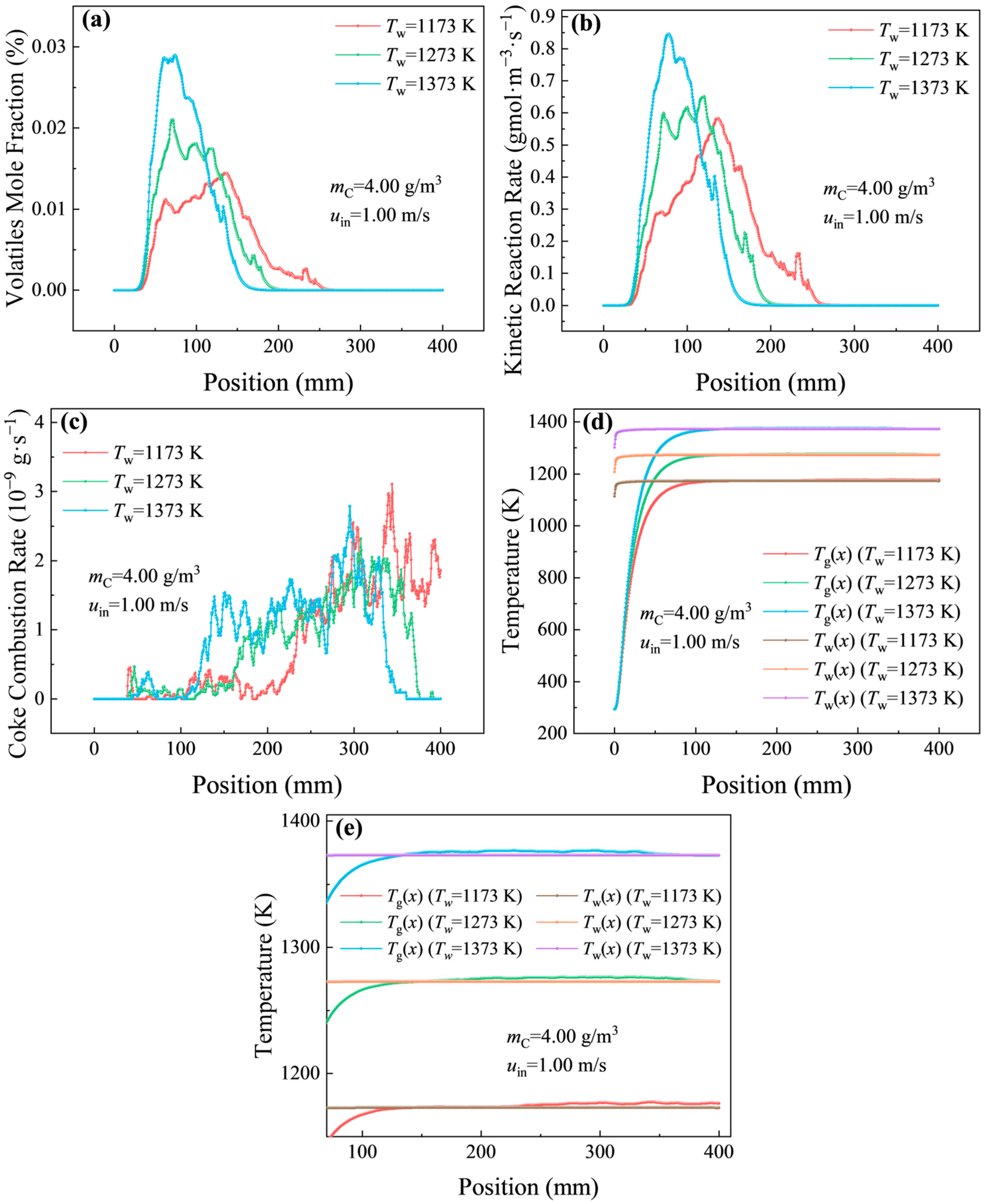
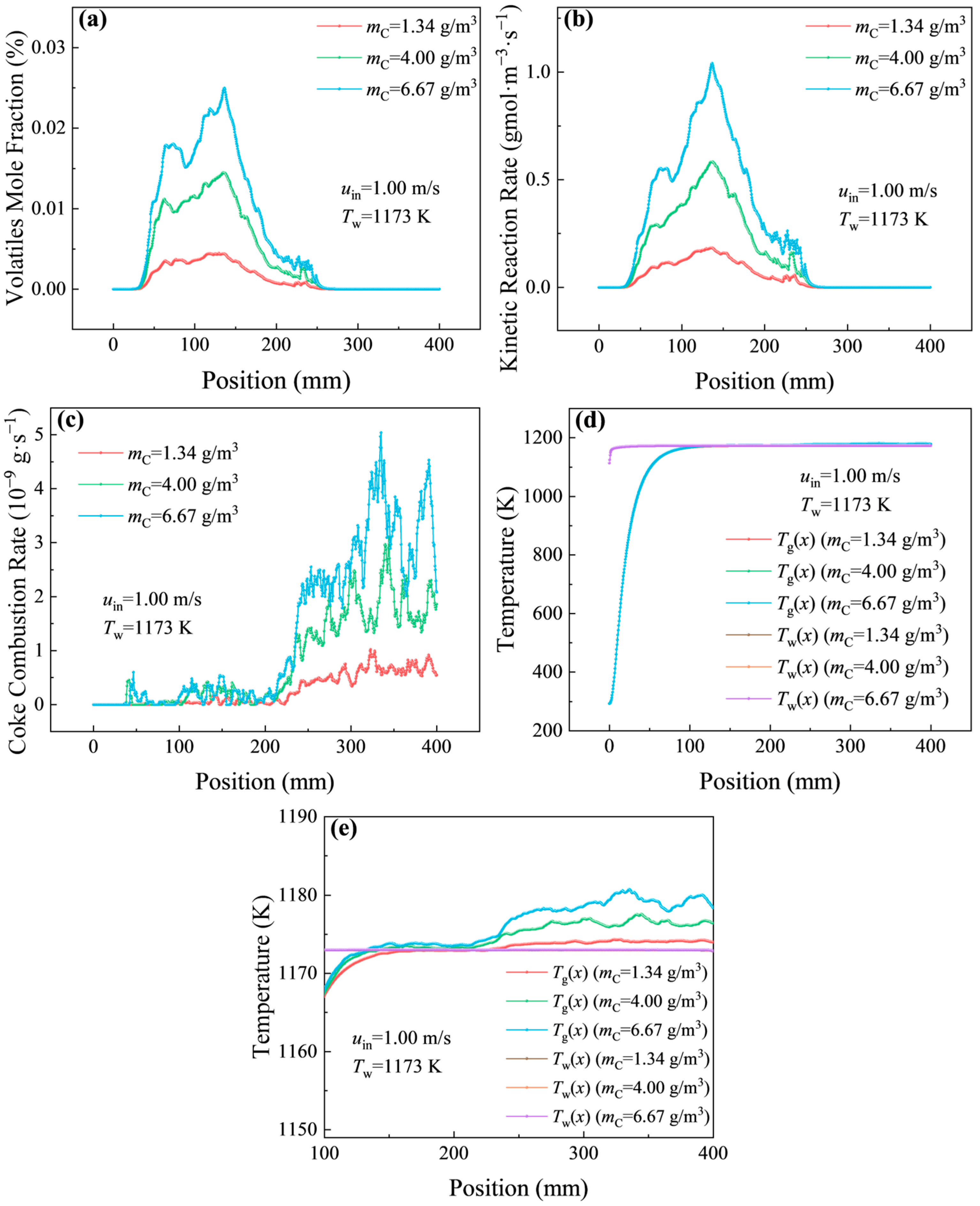
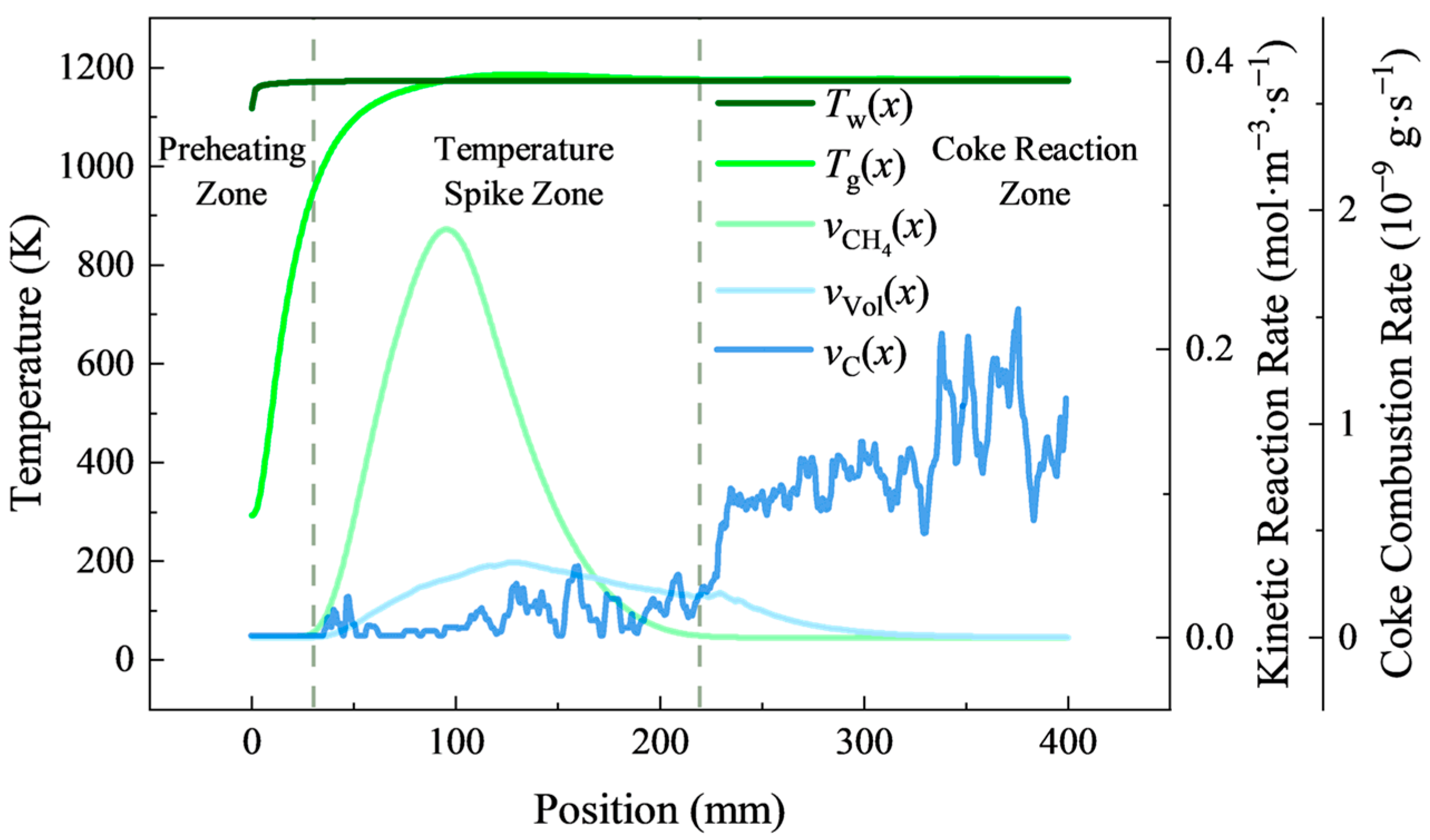
- Pulverized coal oxidation proceeds stepwise through preheating, volatile and coke combustion. The inlet velocity determines the combustion completeness. Here, 0.75 m/s enables full coke burnout within 350 mm, and higher velocities lead to unreacted coke discharge. A wall temperature above 1273 K ensures full combustion in the channel. The volatile reaction rate increases linearly with the coal feed rate.
- (3)
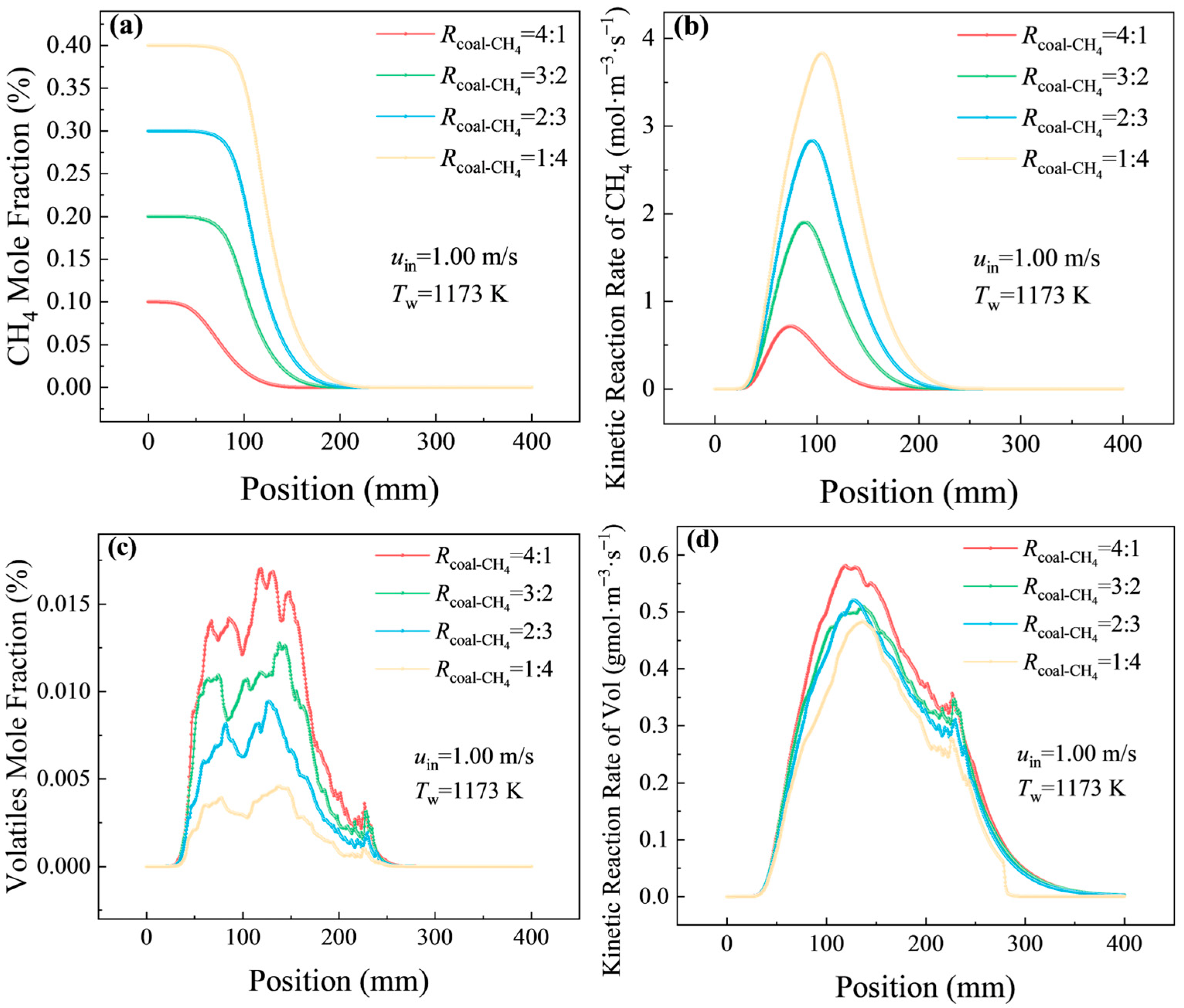
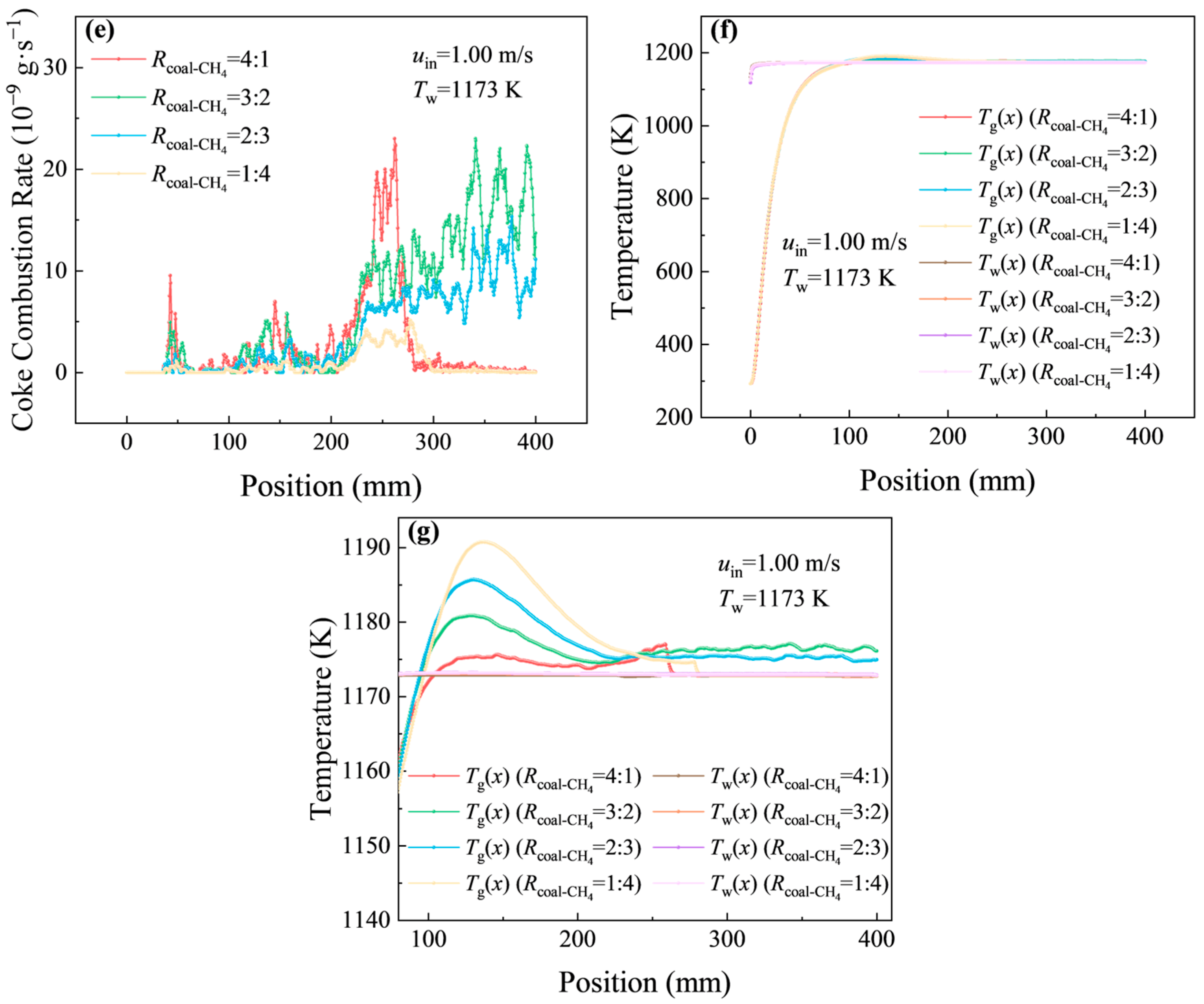
- Among the four tested coal–methane heat input ratios, the 4:1 case shows the most favorable burnout behavior from an engineering perspective, whereas the 2:3 case is more suitable as a representative condition for mechanistic analysis because it preserves the dual-fuel interaction while maintaining methane as the dominant research object. Under this representative co-combustion condition, methane provides rapid upstream heat release, whereas pulverized coal, especially through subsequent coke oxidation, sustains downstream heat release. This complementary heat-release pattern delays the completion of methane oxidation from about 150 mm to about 220 mm, alleviates the temperature drop after methane consumption, and helps maintain the local temperature peak within about 20 K above the wall.
Supplementary Materials
Author Contributions
Funding
Data Availability Statement
Conflicts of Interest
Abbreviations
| VAM | Ventilation Air Methane |
| TFRRs | Thermal Flow Reversal Reactors |
| CFD | Computational Fluid Dynamics |
| LHV | Lower Heating Value |
| DO | Discrete Ordinates |
| DPM | Discrete Phase Model |
| NOx | Nitrogen Oxides |
References
- Song, C.; Zhu, J.-J.; Willis, J.L.; Moore, D.P.; Zondlo, M.A.; Ren, Z.J. Methane emissions from municipal wastewater collection and treatment systems. Environ. Sci. Technol. 2023, 57, 2248–2261. [Google Scholar] [CrossRef]
- Song, S.; Lyu, Y.; Guo, B.; Liu, H.; Jin, Y.; Ran, J.; Niu, J. Photothermal synergistic empowerment of Ni/Ce1−xZrxO2 catalyst for DRM: Photothermal coupling regulation and product generation mechanism. DeCarbon 2025, 10, 100131. [Google Scholar] [CrossRef]
- Wang, X.; Zhou, F.; Ling, Y.; Xiao, Y.; Ma, B.; Ma, X.; Yu, S.; Liu, H.; Wei, K.; Kang, J. Overview and outlook on utilization technologies of low-concentration coal mine methane. Energy Fuels 2021, 35, 15398–15423. [Google Scholar] [CrossRef]
- Yin, F.; Nie, B.; Wu, J.; Yang, Y.; Wei, Y.; Zhu, T. Combustion characteristics of ventilation air methane blending with dimethyl ether in a thermal reverse flow reactor. Energy Fuels 2022, 37, 547–559. [Google Scholar] [CrossRef]
- Iwaniszyn, M.; Pawlaczyk-Kurek, A.; Kołodziej, A.; Rotkegel, A.; Tańczyk, M.; Skiba, J.; Hildebrandt, R.; Bałaga, D.; Siegmund, M.; Gancarczyk, A. Ventilation Air Methane (VAM) utilisation: Comparison of the thermal and catalytic oxidation processes. Energies 2025, 18, 1428. [Google Scholar] [CrossRef]
- Shi, Y.; Liu, Y.; Zhou, Y.; Sun, P.; Mao, M.; Zhang, Y. Study on dynamic heat extraction characteristics of heat exchanger tube embedded in thermal flow reverse reactor for heat recovery. Process Saf. Environ. Prot. 2022, 162, 846–858. [Google Scholar] [CrossRef]
- Tang, A.; Yang, J.; Shao, S.; Cai, T.; Zhang, Z.; Xiao, L. Experimental investigations on the thermal destabilization and performance enhancement of ventilation air methane in a reversed flow oxidation reactor. Chem. Eng. Process. Process Intensif. 2024, 204, 109958. [Google Scholar] [CrossRef]
- Yang, Z.; Hussain, M.Z.; Marín, P.; Jia, Q.; Wang, N.; Ordóñez, S.; Zhu, Y.; Xia, Y. Enrichment of low concentration methane: An overview of ventilation air methane. J. Mater. Chem. A 2022, 10, 6397–6413. [Google Scholar] [CrossRef]
- Zhang, G.; Li, Q.; Liu, X.; Lin, B.; Li, D. Investigations on the mitigation of ventilation air methane and energy recovery in site trial thermal flow-reversal reactor. Chem. Eng. Process. Process Intensif. 2022, 170, 108703. [Google Scholar] [CrossRef]
- Li, S.; Zhang, J.; Xie, S.; Gao, K.; Zhang, H. Autoignition of methane/coal particle/air mixture under constant-volume conditions. Combust. Flame 2023, 258, 113111. [Google Scholar] [CrossRef]
- Rahman, M.; Andersson, H.I. Heat and fluid flow in revolving fluid-particle suspensions with suction. Comput. Therm. Sci. 2020, 12, 417–428. [Google Scholar] [CrossRef]
- Wang, S.; Luo, K.; Hu, C.; Lin, J.; Fan, J. CFD-DEM simulation of heat transfer in fluidized beds: Model verification, validation, and application. Chem. Eng. Sci. 2019, 197, 280–295. [Google Scholar] [CrossRef]
- Patro, B.; Kiran Kumar, K.; Jaya Krishna, D. Prediction of local heat transfer characteristics of dilute gas-solid flows through an adiabatic, horizontal pipe. Heat Transf. Asian Res. 2019, 48, 1987–2006. [Google Scholar] [CrossRef]
- Taofeeq, H.; Al-Dahhan, M. Heat transfer and hydrodynamics in a gas-solid fluidized bed with vertical immersed internals. Int. J. Heat Mass Transf. 2018, 122, 229–251. [Google Scholar] [CrossRef]
- Li, B.; Ma, M.; Yu, Y.; Chen, C.; Zhou, Z. Particle scale study on heat transfer of gas-solid spout fluidized bed with hot gas injection. Part. Sci. Technol. 2019, 37, 781–790. [Google Scholar] [CrossRef]
- Bisognin, P.C.; Bastos, J.C.S.C.; Meier, H.F.; Padoin, N.; Soares, C. Influence of different parameters on the tube-to-bed heat transfer coefficient in a gas-solid fluidized bed heat exchanger. Chem. Eng. Process. Process Intensif. 2020, 147, 107693. [Google Scholar] [CrossRef]
- Uwitonze, H.; Kim, A.; Kim, H.; Brigljević, B.; Ly, H.V.; Kim, S.-S.; Upadhyay, M.; Lim, H. CFD simulation of hydrodynamics and heat transfer characteristics in gas-solid circulating fluidized bed riser under fast pyrolysis flow condition. Appl. Therm. Eng. 2022, 212, 118555. [Google Scholar] [CrossRef]
- Kim, J.; Lee, S.; Tahmasebi, A.; Jeon, C.-H.; Yu, J. A review of the numerical modeling of pulverized coal combustion for high-efficiency, low-emissions (HELE) power generation. Energy Fuels 2021, 35, 7434–7466. [Google Scholar] [CrossRef]
- Zhu, S.; Zhu, J.; Lyu, Q. NOx emissions of pulverized coal combustion in high-temperature flue gas. Asia-Pac. J. Chem. Eng. 2020, 15, e2534. [Google Scholar] [CrossRef]
- Hashimoto, N.; Hayashi, J. Coal particle devolatilization and soot formation in pulverized coal combustion fields. KONA Powder Part. J. 2021, 38, 168–188. [Google Scholar] [CrossRef]
- Zhang, T.; Hu, Z.; Zhou, Y. The determination method of the ignition modes of single coal particle with a transient coal ignition and combustion model. Combust. Flame 2022, 241, 112092. [Google Scholar] [CrossRef]
- Yang, P.; Guo, W.; Yu, Z.; Gao, K.; Jing, W.; Jie, Z.; Shang, J.; Yang, B.; Wu, Z. Modified network kinetic model for coal pyrolysis with high-value products and low carbon emissions. Appl. Energy 2023, 351, 121763. [Google Scholar] [CrossRef]
- Launder, B.E.; Spalding, D.B. The numerical computation of turbulent flows. Comput. Methods Appl. Mech. Eng. 1974, 3, 269–289. [Google Scholar] [CrossRef]
- Benim, A.C.; Deniz Canal, C.; Boke, Y.E. A validation study for RANS-based modelling of swirling pulverized fuel flames. Energies 2021, 14, 7323. [Google Scholar] [CrossRef]
- Yang, X.; Xi, T.; Qin, Y.; Zhang, H.; Wang, Y. Computational fluid dynamics-discrete phase method simulations in process engineering: A review of recent progress. Appl. Sci. 2024, 14, 3856. [Google Scholar] [CrossRef]
- Varaksin, A.Y.; Ryzhkov, S.V. Mathematical modeling of gas-solid two-phase flows: Problems, achievements and perspectives (a review). Mathematics 2023, 11, 3290. [Google Scholar] [CrossRef]
- Du, F.; Guo, Y.; Wang, L.; Xu, C.; Zhou, A.; Wang, G. EDEM-FLUENT coupled simulation of coal-gas outburst two-phase flow. Energy Explor. Exploit. 2021, 39, 1786–1802. [Google Scholar] [CrossRef]
- Sommerfeld, M.; Taborda, M.A. Understanding solid particle transport in a gas cyclone separator. Int. J. Multiph. Flow 2024, 181, 104992. [Google Scholar] [CrossRef]
- Nguyen, P.D.; Nguyen, H.T.; Domingo, P.; Vervisch, L.; Mosca, G.; Gazdallah, M.; Lybaert, P.; Feldheim, V. Flameless combustion of low calorific value gases, experiments, and simulations with advanced radiative heat transfer modeling. Phys. Fluids 2022, 34, 045123. [Google Scholar] [CrossRef]
- Mazumder, S.; Roy, S.P. Modeling thermal radiation in combustion environments: Progress and challenges. Energies 2023, 16, 4250. [Google Scholar] [CrossRef]
- Ge, W.; David, C.; Modest, M.F.; Sankaran, R.; Roy, S.P. Comparison of spherical harmonics method and discrete ordinates method for radiative transfer in a turbulent jet flame. J. Quant. Spectrosc. Radiat. Transf. 2023, 296, 108459. [Google Scholar] [CrossRef]



| No. | Parameter | Condition |
|---|---|---|
| 1 | Solver type | 3ddp |
| 2 | Turbulence model | Realizable k-ε |
| 3 | Radiation model | DO |
| 4 | Species transport model | Finite-rate/eddy dissipation |
| 5 | Inlet boundary condition | Velocity inlet |
| 6 | Outlet boundary condition | Pressure outlet |
| 7 | Pressure–velocity coupling | Simple |
| Item | Symbol | Unit | Value | |
|---|---|---|---|---|
| Proximate Analysis | Moisture (air-dried basis) | Mad | % | 2.16 |
| Ash (as-received basis) | Aar | % | 3.41 | |
| Volatile matter (dry ash-free basis) | Vdaf | % | 36.74 | |
| Fixed carbon (as-received basis) | FC,ar | % | 61.82 | |
| Ultimate Analysis | Carbon (as-received basis) | wC,ar | % | 73.6 |
| Hydrogen (as-received basis) | wH,ar | % | 4.71 | |
| Oxygen (as-received basis) | wO,ar | % | 14.82 | |
| Nitrogen (as-received basis) | wN,ar | % | 6.32 | |
| Sulfur (as-received basis) | wS,ar | % | 0.55 |
Disclaimer/Publisher’s Note: The statements, opinions and data contained in all publications are solely those of the individual author(s) and contributor(s) and not of MDPI and/or the editor(s). MDPI and/or the editor(s) disclaim responsibility for any injury to people or property resulting from any ideas, methods, instructions or products referred to in the content. |
© 2026 by the authors. Licensee MDPI, Basel, Switzerland. This article is an open access article distributed under the terms and conditions of the Creative Commons Attribution (CC BY) license.
Share and Cite
Zhang, T.; Zhang, Z.; Wu, J.; Liu, Y.; Zhu, J.; Jiang, Z.; Yang, Z. Study on the Heat Release Behaviors During Oxidation of Pulverized Coal-Dispersed Ventilation Air Methane in Regenerator Channels. Energies 2026, 19, 2600. https://doi.org/10.3390/en19112600
Zhang T, Zhang Z, Wu J, Liu Y, Zhu J, Jiang Z, Yang Z. Study on the Heat Release Behaviors During Oxidation of Pulverized Coal-Dispersed Ventilation Air Methane in Regenerator Channels. Energies. 2026; 19(11):2600. https://doi.org/10.3390/en19112600
Chicago/Turabian StyleZhang, Tao, Zhigang Zhang, Jie Wu, Yanbao Liu, Jing Zhu, Zhang Jiang, and Zhongqing Yang. 2026. "Study on the Heat Release Behaviors During Oxidation of Pulverized Coal-Dispersed Ventilation Air Methane in Regenerator Channels" Energies 19, no. 11: 2600. https://doi.org/10.3390/en19112600
APA StyleZhang, T., Zhang, Z., Wu, J., Liu, Y., Zhu, J., Jiang, Z., & Yang, Z. (2026). Study on the Heat Release Behaviors During Oxidation of Pulverized Coal-Dispersed Ventilation Air Methane in Regenerator Channels. Energies, 19(11), 2600. https://doi.org/10.3390/en19112600