1. Introduction
The rapid growth in global energy demand, combined with the urgent need to mitigate climate change, has significantly accelerated the transition toward low-carbon and sustainable energy systems. In this context, the building sector plays a particularly critical role, as it accounts for a substantial share of global energy consumption and greenhouse gas emissions, estimated at approximately 30–40% worldwide [
1,
2]. As a result, improving the energy performance of buildings has become one of the key priorities in international energy policies and climate strategies, including the widespread implementation of nearly zero-energy buildings (NZEB) and net-zero energy buildings (ZEB) [
3,
4].
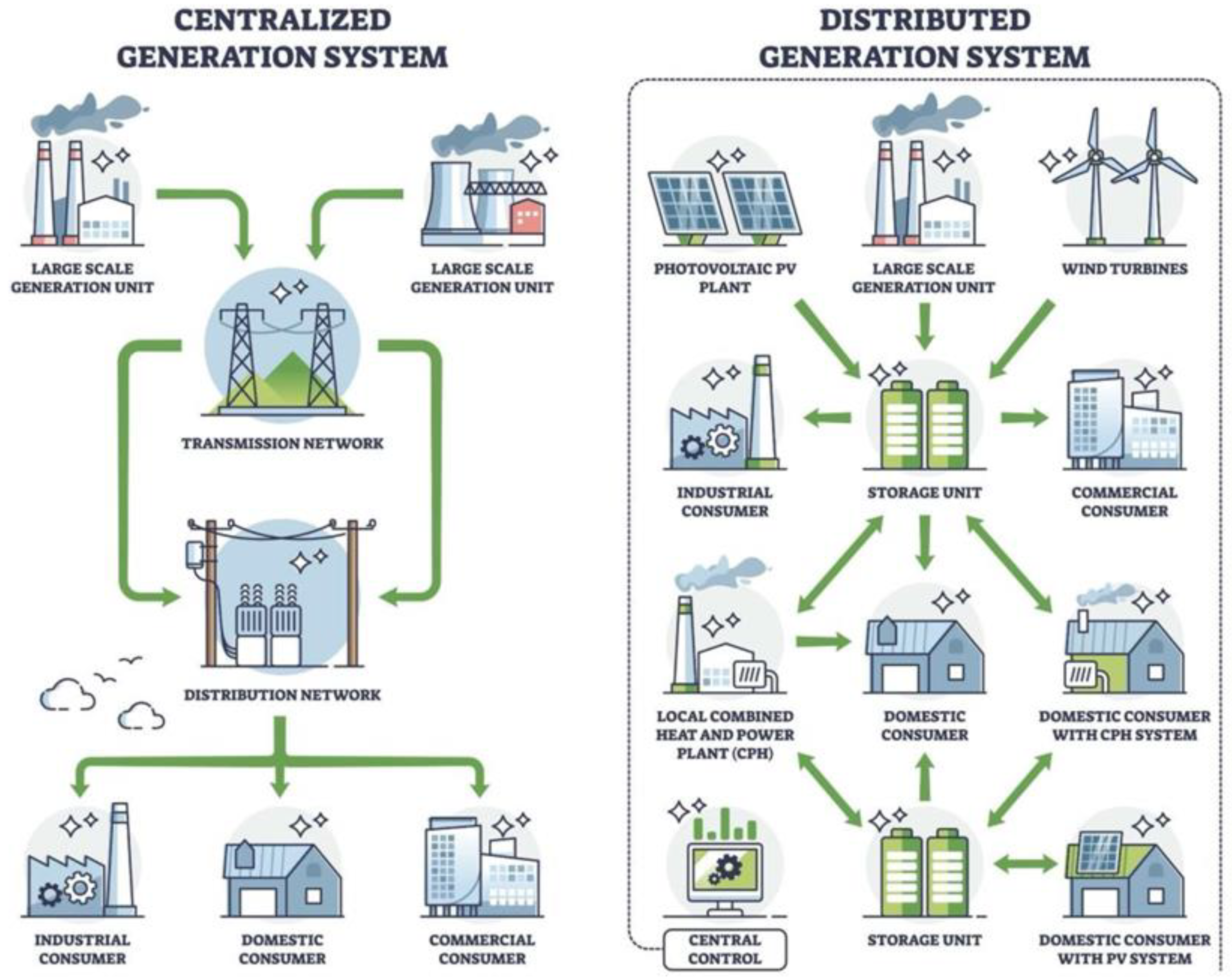
Among the available renewable energy technologies, photovoltaic (PV) systems have emerged as one of the most accessible and scalable solutions for on-site energy generation in buildings. In recent years, the integration of PV systems directly into building structures—referred to as photovoltaic-integrated buildings (PIB), including both building-integrated photovoltaics (BIPV) and building-attached photovoltaics (BAPV)—has gained increasing attention [
5,
6]. Such systems enable decentralized electricity production, reduce transmission losses, and contribute to lowering the carbon footprint of the built environment [
7]. At the same time, advances in PV technology and decreasing installation costs have further accelerated their deployment in both residential and commercial buildings [
8].
Despite these advantages, the inherent variability and intermittency of solar energy remain significant challenges. PV energy generation is strongly dependent on weather conditions, solar irradiance, and seasonal variations, which leads to frequent mismatches between energy production and building demand profiles [
9,
10]. In practice, this results in periods of surplus energy as well as energy deficits, complicating energy management and limiting the effective utilization of locally generated electricity [
11]. Moreover, increasing penetration of PV systems at the building and district scale can introduce additional stress on power grids, including voltage fluctuations and peak load issues [
12].
Traditional approaches to building energy management, often based on rule-based control or simplified physical models, are typically insufficient to address these challenges in a dynamic and uncertain environment [
13]. These methods generally lack adaptability, struggle to capture complex nonlinear relationships, and are unable to respond effectively to real-time changes in both energy generation and consumption [
14]. These limitations clearly indicate that conventional approaches are no longer sufficient to ensure efficient and adaptive energy management in PV-integrated buildings. Consequently, there is a growing need for more advanced, data-driven solutions capable of improving both prediction accuracy and control performance.
In recent years, artificial intelligence (AI) has emerged as a powerful tool for enhancing the operation of energy systems in buildings. Techniques such as machine learning (ML), deep learning (DL), and reinforcement learning (RL) have demonstrated significant potential in addressing key challenges related to PV-integrated buildings [
15,
16]. AI-based models are increasingly used for accurate forecasting of PV power generation and building energy demand, enabling better planning and scheduling of energy flows [
17]. In parallel, AI-driven control strategies allow for real-time optimization of building energy systems, including heating, ventilation, and air conditioning (HVAC), energy storage, and grid interaction [
18]. These approaches make it possible to move beyond static control schemes toward adaptive, self-learning systems capable of continuously improving their performance.
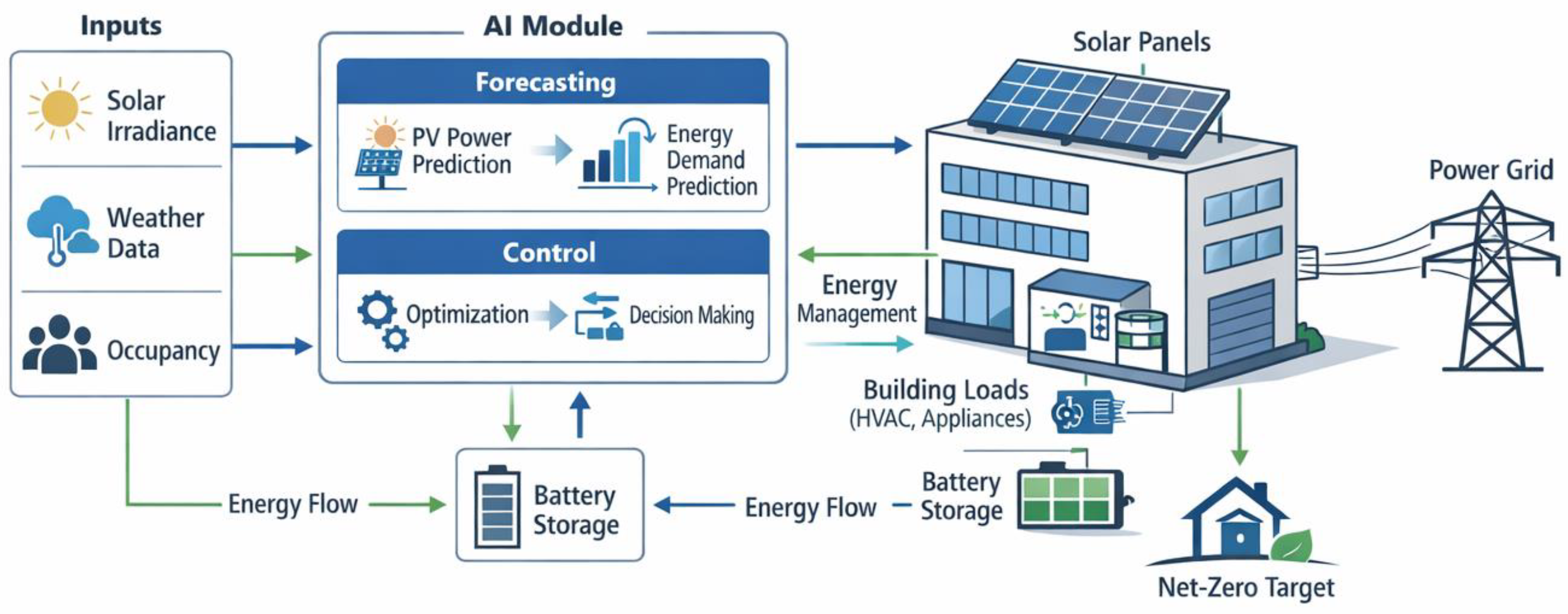
Although the application of AI in energy systems has been widely studied, existing research tends to focus on specific aspects, such as solar power forecasting or intelligent control of individual building subsystems [
19,
20]. However, the integration of these components into a unified framework that simultaneously considers forecasting, control strategies, and the broader objective of achieving net-zero energy performance remains insufficiently explored. In particular, there is a lack of comprehensive reviews that systematically address the role of AI across the entire energy management chain in photovoltaic-integrated buildings. To better illustrate the interactions between forecasting, control strategies, and energy flows in PV-integrated buildings, a conceptual framework is presented in
Figure 1.
Therefore, this paper aims to provide a comprehensive and structured review of artificial intelligence applications in photovoltaic-integrated buildings, with a particular focus on energy forecasting, intelligent control strategies, and pathways toward net-zero energy performance. The review synthesizes recent advances in AI methodologies, evaluates their effectiveness in real-world applications, and identifies key challenges and future research directions in this rapidly evolving field.
Unlike existing review studies, which typically address photovoltaic power forecasting, artificial intelligence in buildings, or control strategies as separate research areas, this work provides an integrated and system-level perspective on photovoltaic-integrated buildings.
In particular, this review combines three key aspects: energy forecasting, advanced control strategies, and real-time energy management systems, highlighting their interdependencies and combined impact on building energy performance. Furthermore, the study goes beyond descriptive analysis by incorporating a critical comparison of methods, quantitative performance indicators, and discussion of practical implementation challenges.
Methodology of the Review
This review is based on a structured and systematic literature analysis aimed at identifying, evaluating, and synthesizing recent advances in the application of artificial intelligence in photovoltaic-integrated buildings. The literature search was conducted using major scientific databases, including Scopus, Web of Science, and Google Scholar.
The selection of relevant studies was guided by the following inclusion criteria: (i) direct relevance to photovoltaic-integrated buildings or closely related building energy systems, (ii) application of artificial intelligence methods, including machine learning, deep learning, or hybrid approaches, in forecasting or control, and (iii) publication in peer-reviewed journals. Additional consideration was given to studies addressing real-world applications, energy management systems, and grid interaction.
The review primarily focuses on publications from the last decade, reflecting the rapid development of AI-based methods in energy systems. Earlier foundational studies were also included where necessary to provide context and methodological background. In total, approximately 153 studies were analyzed, covering a broad range of forecasting techniques, control strategies, and system-level applications.
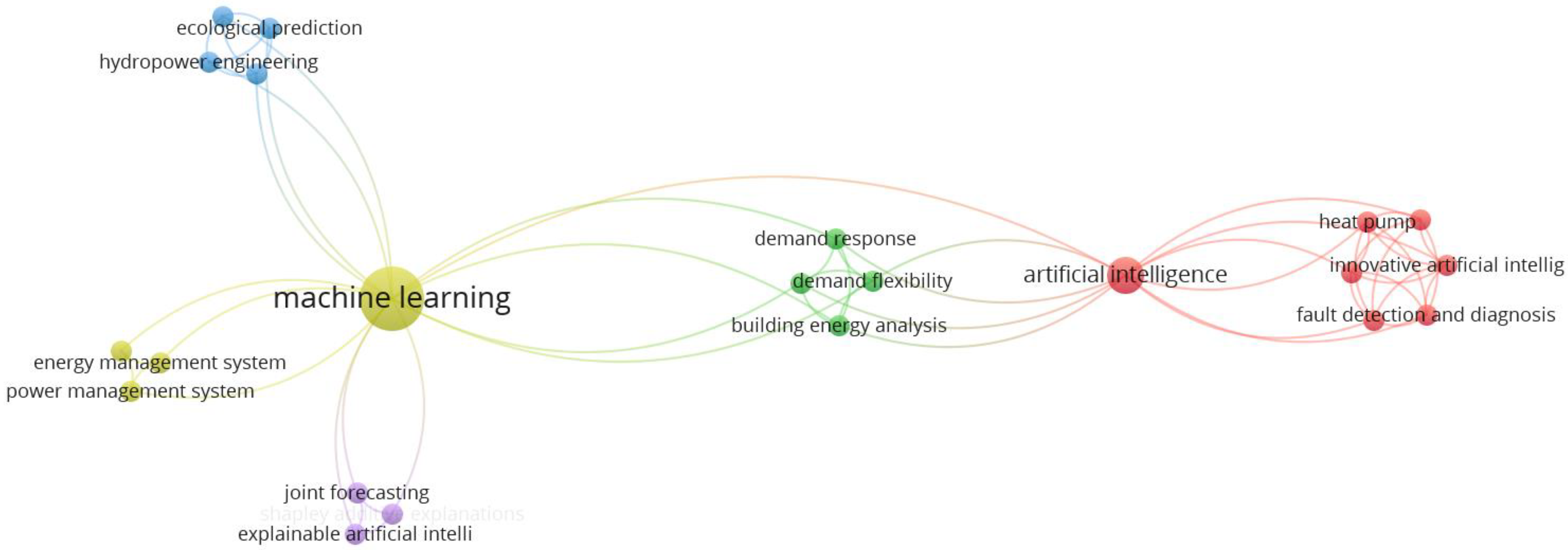
To support the structured analysis of the literature, a keyword co-occurrence analysis was performed to identify the main research trends and relationships between key topics (
Figure 2).
The literature search was conducted using combinations of keywords such as “photovoltaic”, “artificial intelligence”, “machine learning”, “energy management”, “forecasting”, and “control”. Boolean operators (AND, OR) were used to refine the search and ensure relevance to photovoltaic-integrated building systems.
The keyword co-occurrence analysis reveals several distinct research clusters in the field of AI applications in photovoltaic-integrated buildings. The central role of “machine learning” and “artificial intelligence” highlights their widespread use across different applications.
A strong cluster is associated with energy management systems and power optimization, indicating the importance of AI in operational control. Another cluster focuses on demand response and building energy analysis, reflecting increasing interest in smart building integration.
Additionally, emerging topics such as explainable artificial intelligence and hybrid forecasting methods suggest a growing focus on model transparency and advanced predictive capabilities.
Overall, the results confirm the interdisciplinary nature of the field and the increasing integration of forecasting, control, and energy management strategies. The results indicate a strong interconnection between photovoltaic systems, energy forecasting, and control strategies, confirming the integrated nature of AI applications in building energy systems.
The selected studies were systematically categorized according to their application domain (photovoltaic forecasting, building energy demand prediction, and control strategies), methodological approach (statistical, machine learning, deep learning, and hybrid models), and evaluation criteria, including commonly used performance metrics such as MAE, RMSE, and MAPE.
A comparative and critical analysis was subsequently performed to identify key trends, methodological strengths and limitations, and practical challenges associated with each approach. Particular attention was given to real-world applicability, data requirements, computational complexity, and integration with energy management systems.
This structured approach enables a comprehensive and balanced assessment of the current state of the art, while also highlighting existing research gaps and future directions in the field of AI-driven photovoltaic-integrated buildings.
Unlike previous reviews, which typically focus on forecasting or control separately, this study provides a unified and system-level perspective integrating forecasting, control strategies, and real-time energy management in photovoltaic-integrated buildings.
Furthermore, this review incorporates quantitative performance indicators, critical comparison of methods, and practical implementation challenges, which are often overlooked in existing studies.
3. Artificial Intelligence in Energy Forecasting
Accurate energy forecasting is essential for the efficient operation of photovoltaic-integrated buildings, as it supports decision-making related to energy management, storage utilization, and grid interaction [
47]. Due to the variability of solar energy generation and the dynamic nature of building energy demand, reliable prediction of future system states is necessary for maintaining energy balance and optimizing system performance.
Photovoltaic-integrated buildings operate under highly uncertain and time-dependent conditions, where both energy generation and consumption continuously fluctuate. These uncertainties limit the effectiveness of conventional control methods and increase the importance of forecasting as a tool for proactive energy management [
47].
Traditional forecasting approaches based on statistical analysis or simplified physical models often struggle to capture the nonlinear relationships present in photovoltaic-integrated building systems. In contrast, artificial intelligence (AI) methods can identify complex patterns, learn from historical data, and adapt to changing operating conditions [
48]. As a result, AI-based forecasting models have attracted increasing attention due to their improved accuracy and robustness. However, deep learning models typically require large, high-quality datasets and may have limited transferability across different buildings and climatic conditions.
In PIB systems, forecasting tasks mainly involve photovoltaic power generation and building energy demand prediction. These aspects are closely interconnected, as their combined analysis supports more efficient coordination of energy flows, storage systems, and grid interaction [
25].
This section reviews AI-based approaches for photovoltaic power forecasting and building energy demand prediction, followed by a comparative analysis of forecasting methods, key challenges, and future research directions.
3.1. Photovoltaic Power Generation Forecasting
Accurate forecasting of photovoltaic (PV) power generation is a key component of energy management in photovoltaic-integrated buildings. Because PV output strongly depends on environmental conditions such as solar irradiance, temperature, and cloud cover, energy generation is characterized by significant variability and uncertainty [
49].
PV forecasting supports energy flow scheduling, optimization of self-consumption, and coordination between generation, storage, and building loads. Short-term forecasting is particularly important for real-time control and operational decision-making, whereas long-term forecasting supports energy planning and system design [
50].
A wide range of forecasting approaches has been developed, including traditional statistical methods, machine learning techniques, and deep learning models. Each approach offers specific advantages and limitations depending on forecasting horizon, data availability, and system complexity. The following subsections review the main forecasting methods applied in photovoltaic-integrated building systems.
The main approaches used for photovoltaic power forecasting are summarized in
Table 3.
3.1.1. Traditional Forecasting Methods
Traditional approaches to PV power forecasting are primarily based on statistical analysis and physical modeling. These methods typically rely on historical data, empirical relationships, or simplified representations of solar radiation and atmospheric conditions. Although they have been widely used in early-stage applications, their effectiveness is often limited in complex and highly variable environments.
Statistical methods, such as linear regression, autoregressive (AR), and autoregressive integrated moving average (ARIMA) models, have been commonly applied for short-term forecasting of PV output [
51]. These models aim to identify temporal correlations in historical data and extrapolate them into the future. While relatively simple and computationally efficient, statistical approaches are generally limited in their ability to capture nonlinear relationships and sudden changes in weather conditions.
Physical models, on the other hand, are based on the mathematical description of solar radiation processes and PV system characteristics. These models often incorporate meteorological data, such as solar irradiance, ambient temperature, and cloud cover, to estimate PV power generation [
52]. Although physical approaches can provide physically interpretable results and perform well under stable conditions, they require accurate input data and detailed system parameters, which are not always readily available.
Despite their limitations, traditional methods still play an important role as baseline models for comparison and validation of more advanced approaches. However, their inability to effectively capture nonlinear dependencies and adapt to rapidly changing environmental conditions has driven the development of more sophisticated data-driven techniques, particularly those based on artificial intelligence [
53].
3.1.2. Machine Learning Models for PV Power Forecasting
Machine learning (ML) techniques have become increasingly popular in photovoltaic power forecasting due to their ability to model complex and nonlinear relationships between input variables and energy output. Unlike traditional statistical or physical models, ML approaches are data-driven and can learn patterns directly from historical datasets without requiring explicit assumptions about system behavior [
54].
Among the most widely used ML models in PV forecasting are artificial neural networks (ANN), support vector machines (SVM), and tree-based methods such as random forest (RF) and gradient boosting algorithms. These models typically use input features such as solar irradiance, ambient temperature, humidity, wind speed, and historical PV output to predict future energy generation [
21,
22,
55,
56].
Artificial neural networks (ANN) are one of the earliest and most extensively applied ML approaches in PV forecasting. They consist of interconnected processing units (neurons) organized in layers, enabling the model to approximate complex nonlinear functions [
57]. ANN models have demonstrated good performance in short-term forecasting tasks, particularly when sufficient training data is available. However, their performance is highly dependent on network architecture, training quality, and the selection of input features.
Support vector machines (SVM) represent another important class of ML models, particularly effective in handling high-dimensional data and avoiding overfitting [
58]. By mapping input data into a higher-dimensional feature space, SVM models can identify optimal decision boundaries for regression or classification tasks. In PV forecasting, SVM has been successfully applied for both short-term and medium-term prediction, often providing robust performance under varying conditions.
Tree-based models, including random forest and gradient boosting methods, have also gained significant attention due to their ability to capture nonlinear interactions and handle complex datasets [
58]. These models operate by constructing ensembles of decision trees, which improves prediction accuracy and reduces variance. In addition, they are relatively interpretable compared to neural networks, allowing for the assessment of feature importance and model behavior.
Despite their advantages, machine learning models also face several limitations. Their performance strongly depends on the availability and quality of training data, and they may struggle to generalize well under unseen conditions or extreme weather events [
53]. Furthermore, many ML models require careful hyperparameter tuning and feature selection to achieve optimal results. As a result, while ML approaches offer significant improvements over traditional methods, they are often complemented by more advanced techniques, such as deep learning models, which are better suited for capturing temporal dependencies and complex patterns in time-series data.
The main machine learning models used for PV power forecasting and their characteristics are summarized in
Table 4.
3.1.3. Deep Learning Models for PV Power Forecasting
In recent years, deep learning (DL) models have emerged as the most advanced and widely applied approaches for photovoltaic power forecasting, primarily due to their ability to capture complex nonlinear relationships and temporal dependencies in time-series data. Unlike conventional machine learning methods, deep learning architectures can automatically extract relevant features from large datasets, reducing the need for manual feature engineering and improving prediction accuracy [
56].
Among deep learning techniques, recurrent neural networks (RNN) and their variants—particularly long short-term memory (LSTM) and gated recurrent unit (GRU) networks—have demonstrated superior performance in PV power forecasting tasks. These models are specifically designed to process sequential data and capture long-term temporal dependencies, which are essential for modeling solar energy generation influenced by dynamic weather patterns [
59]. LSTM networks, in particular, address the vanishing gradient problem associated with traditional RNNs, enabling more stable and accurate predictions over extended time horizons.
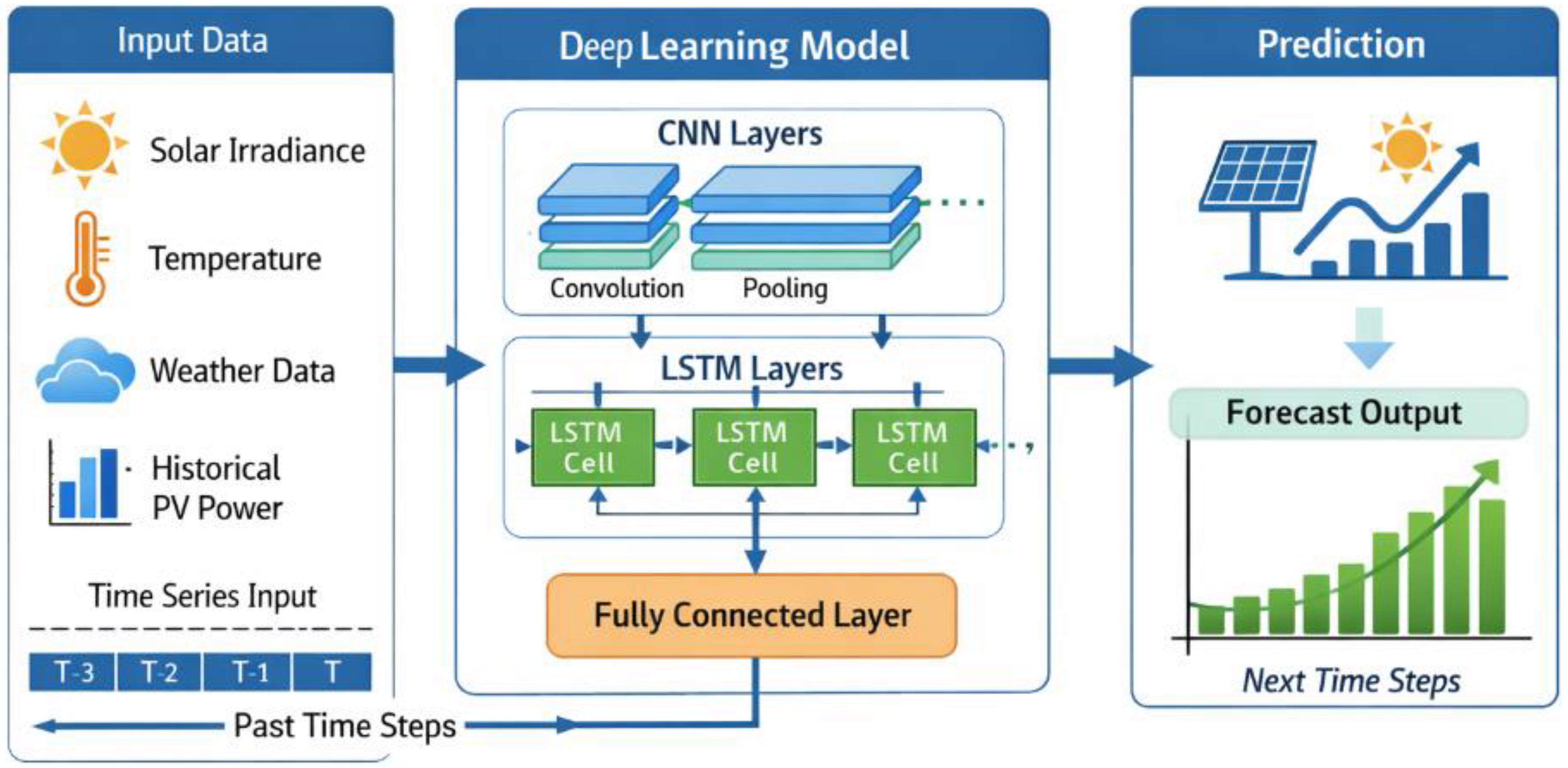
Convolutional neural networks (CNN) have also been increasingly applied in PV forecasting, either as standalone models or in combination with recurrent architectures. CNN models are particularly effective in extracting spatial features from input data, such as satellite images or irradiance maps, and can improve forecasting performance when spatial variability plays a significant role [
60]. Hybrid CNN–LSTM models have gained considerable attention, as they combine the strengths of both architectures—spatial feature extraction and temporal sequence learning—resulting in enhanced predictive capabilities. An example of a deep learning-based forecasting architecture is illustrated in
Figure 4.
In addition to these architectures, recent studies have explored the application of attention mechanisms and transformer-based models in PV forecasting [
48,
60]. These approaches allow the model to focus on the most relevant parts of the input data, improving both accuracy and interpretability. Although still relatively new in this domain, transformer models show strong potential for handling long-term dependencies and large-scale datasets [
61].
Despite their high predictive performance, deep learning models also present several challenges. They typically require large volumes of high-quality data for training and involve significant computational resources, which may limit their applicability in real-time or resource-constrained environments [
62]. Furthermore, the lack of interpretability in many deep learning models—often referred to as the “black-box” problem—can hinder their adoption in practical energy management systems where transparency and reliability are critical [
63].
Nevertheless, deep learning approaches have consistently demonstrated superior performance compared to traditional and conventional machine learning models in many PV forecasting applications, particularly in short-term and ultra-short-term prediction scenarios [
64,
65]. Their ability to model complex temporal dynamics and integrate multiple data sources makes them a key component of modern AI-driven energy management systems in photovoltaic-integrated buildings [
66].
3.1.4. Hybrid and Ensemble Models for PV Power Forecasting
In recent years, hybrid and ensemble models have gained increasing attention in photovoltaic power forecasting as a means of improving prediction accuracy and robustness [
67,
68]. These approaches combine multiple modeling techniques—such as physical models, machine learning algorithms, and deep learning architectures—in order to leverage their complementary strengths and mitigate individual limitations.
Hybrid models typically integrate different types of methods within a single framework. For example, physical models based on solar radiation and meteorological data can be combined with machine learning or deep learning techniques to enhance prediction performance [
69,
70]. In such approaches, physical models provide a structured representation of system behavior, while data-driven models capture nonlinear relationships and adapt to changing environmental conditions. This combination allows for improved generalization and more reliable forecasting under varying operating scenarios.
Ensemble methods, on the other hand, involve combining the outputs of multiple models to produce a final prediction. Techniques such as bagging, boosting, and model averaging are commonly used to reduce prediction errors and increase model stability [
71,
72]. By aggregating predictions from different models, ensemble approaches can effectively handle uncertainties in input data and reduce the impact of model-specific biases.
Hybrid deep learning architectures, such as CNN–LSTM or LSTM–GRU models, have demonstrated particularly strong performance in PV forecasting applications [
73,
74]. In addition, recent studies have explored the integration of optimization algorithms, such as genetic algorithms and particle swarm optimization, to enhance model training and parameter tuning [
75].
Despite their advantages, hybrid and ensemble models also introduce increased complexity in terms of model design, training, and computational requirements [
76]. The integration of multiple components may lead to higher implementation costs and reduced interpretability, which can limit their practical applicability in real-time energy management systems. Nevertheless, these approaches represent a promising direction for future research, particularly in the context of highly dynamic and data-rich environments such as photovoltaic-integrated buildings [
77].
Overall, hybrid and ensemble models provide a flexible and powerful framework for improving PV forecasting performance, bridging the gap between traditional methods and advanced deep learning techniques [
78].
3.1.5. Probabilistic Forecasting and Uncertainty Quantification
Most forecasting approaches discussed in the previous sections are based on deterministic prediction, where a single expected value of photovoltaic power generation or building energy demand is estimated. However, due to the inherently variable and uncertain nature of renewable energy systems, deterministic forecasting alone is often insufficient for reliable energy management in photovoltaic-integrated buildings [
50].
In practical applications, photovoltaic power generation is strongly influenced by uncertain weather conditions, cloud movement, seasonal variability, and measurement errors, while building energy demand is additionally affected by occupancy behavior and operational variability [
49]. As a result, forecasting models should not only provide point predictions but also quantify the associated uncertainty.
Probabilistic forecasting approaches address this challenge by estimating prediction intervals, probability distributions, or confidence bounds instead of a single deterministic value [
54,
57]. These methods enable energy management systems to better assess operational risks and improve decision-making under uncertainty. In photovoltaic-integrated buildings, probabilistic forecasting is particularly important for battery scheduling, demand response strategies, grid interaction, and model predictive control applications [
11,
13,
35].
Several artificial intelligence techniques have recently been applied for probabilistic forecasting in energy systems. These include quantile regression methods, Bayesian neural networks, ensemble learning approaches, Monte Carlo dropout techniques, and probabilistic deep learning architectures such as Bayesian LSTM models [
54,
56,
57,
62]. In addition, ensemble forecasting methods combining multiple prediction models have demonstrated improved robustness and reliability under highly variable operating conditions [
20,
21].
Compared to deterministic forecasting, probabilistic approaches provide more informative predictions and improve the resilience and adaptability of intelligent energy management systems. Consequently, uncertainty-aware forecasting is increasingly recognized as a key component of advanced AI-driven photovoltaic-integrated building systems and an important direction for future research.
3.2. Building Energy Demand Forecasting
In addition to photovoltaic power generation, accurate forecasting of building energy demand is a critical component of energy management in photovoltaic-integrated buildings [
79]. While PV generation determines the available energy supply, building demand defines how this energy is utilized, stored, or exchanged with the grid. Therefore, reliable prediction of energy consumption is essential for achieving optimal coordination between supply and demand, improving self-consumption rates, and enhancing overall system efficiency [
80].
Compared to PV forecasting, building energy demand prediction is often more complex due to the strong influence of human behavior and operational factors [
81]. Energy consumption patterns in buildings are shaped not only by environmental conditions but also by occupancy schedules, user preferences, and control strategies applied to building systems such as heating, ventilation, and air conditioning (HVAC). This introduces additional uncertainty and variability, making demand forecasting a challenging task.
Similarly to PV forecasting, a wide range of methods has been developed for predicting building energy demand, including statistical approaches, machine learning techniques, and deep learning models [
82,
83]. These methods differ in terms of accuracy, computational requirements, and their ability to capture nonlinear relationships and temporal dependencies. The following subsections provide a detailed review of these approaches, starting with the key factors influencing energy demand in buildings.
3.2.1. Factors Affecting Building Energy Demand
Building energy demand is influenced by a wide range of interacting factors that can be broadly classified into environmental, operational, and behavioral categories [
84]. Understanding these factors is essential for developing accurate forecasting models and selecting appropriate input variables.
Environmental factors play a significant role in determining energy consumption, particularly in relation to heating and cooling loads [
85]. Key variables include outdoor temperature, solar radiation, humidity, and wind conditions, all of which directly affect the thermal balance of the building [
86]. Seasonal variations and climate conditions further contribute to long-term changes in energy demand patterns.
Operational factors are associated with the physical characteristics of the building and its technical systems. These include building design, insulation properties, orientation, window-to-wall ratio, and the efficiency of HVAC systems and other energy-consuming equipment [
87]. The operation schedules of these systems, including set-points and control strategies, also have a direct impact on energy consumption [
88].
Behavioral factors, related to occupants and their activities, introduce an additional layer of complexity [
89]. Occupancy patterns, user preferences, and interaction with building systems can significantly influence energy demand, often in unpredictable ways. For example, variations in occupancy schedules or manual adjustments of temperature settings can lead to substantial deviations from expected consumption profiles.
The combined effect of these factors results in highly dynamic and nonlinear energy demand patterns, which are difficult to model using traditional approaches. Consequently, advanced data-driven methods, particularly those based on artificial intelligence, are increasingly used to capture these complex relationships and improve forecasting accuracy [
90]. The main factors influencing building energy demand and their impact on energy consumption patterns are summarized in
Table 5.
3.2.2. Machine Learning Models for Building Energy Demand Forecasting
Machine learning (ML) techniques have been widely applied in building energy demand forecasting due to their ability to capture complex and nonlinear relationships between influencing factors and energy consumption patterns [
91]. Compared to traditional statistical methods, ML models provide greater flexibility in handling diverse input variables, including environmental data, building characteristics, and occupancy-related information.
Among the most commonly used ML approaches are artificial neural networks (ANN), support vector machines (SVM), and tree-based models such as random forest (RF) and gradient boosting algorithms [
92]. These models typically utilize input features such as outdoor temperature, solar radiation, time-of-day indicators, occupancy schedules, and historical energy consumption data to predict future demand.
Artificial neural networks (ANN) have been extensively used for building energy forecasting due to their capability to approximate complex nonlinear mappings between inputs and outputs [
93]. ANN models are particularly effective in short-term demand prediction and have been successfully applied in both residential and commercial buildings. However, their performance is strongly influenced by the quality of training data and network architecture design.
Support vector machines (SVM) have also demonstrated strong performance in demand forecasting tasks, especially in cases with limited datasets or high-dimensional input spaces [
94]. Their ability to generalize well and avoid overfitting makes them suitable for modeling building energy consumption under varying operating conditions. Nevertheless, SVM models can be sensitive to kernel selection and parameter tuning.
Tree-based models, including random forest and gradient boosting techniques, have gained popularity due to their robustness and interpretability [
95]. These models are capable of capturing nonlinear interactions between input variables and can provide insights into feature importance, which is particularly valuable in understanding the drivers of energy consumption. In addition, they are relatively less sensitive to noise and missing data compared to other ML approaches.
Despite their advantages, ML models for building energy demand forecasting face several challenges. The strong influence of occupant behavior and operational variability introduces uncertainty that is difficult to fully capture using conventional ML techniques [
96]. Furthermore, these models often require careful feature engineering and may struggle to represent long-term temporal dependencies in time-series data.
As a result, while machine learning models offer significant improvements over traditional forecasting approaches, their limitations have led to the increasing adoption of deep learning techniques, which are better suited for modeling complex temporal dynamics and large-scale datasets in building energy systems [
97].
3.2.3. Deep Learning Models for Building Energy Demand Forecasting
In recent years, deep learning (DL) models have become the dominant approach for building energy demand forecasting, primarily due to their ability to capture complex temporal dependencies and nonlinear relationships in time-series data [
97]. Compared to conventional machine learning techniques, deep learning models can automatically extract hierarchical features from large and heterogeneous datasets, significantly improving prediction accuracy.
Among the most widely used architectures are recurrent neural networks (RNNs), particularly long short-term memory (LSTM) and gated recurrent unit (GRU) models [
97]. These architectures are specifically designed to handle sequential data and are highly effective in modeling temporal patterns in building energy consumption. LSTM networks, in particular, are capable of learning long-term dependencies, which are essential for capturing daily, weekly, and seasonal variations in energy demand [
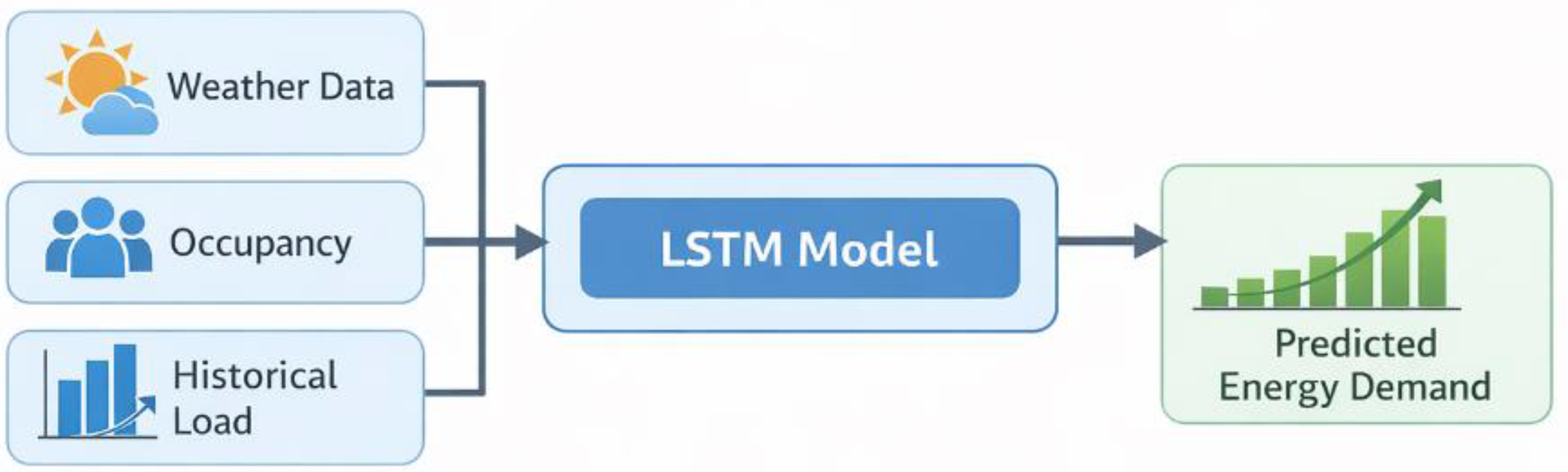
97]. An example of a deep learning-based forecasting framework for building energy demand is illustrated in
Figure 5.
Deep learning models for building energy forecasting typically incorporate multiple input variables, including environmental data (e.g., temperature and solar radiation), operational parameters (e.g., HVAC schedules), and occupancy-related information. The integration of these heterogeneous data sources enables more accurate modeling of real-world energy consumption patterns, which are strongly influenced by both external conditions and human behavior.
In addition to standalone RNN-based models, hybrid deep learning architectures such as CNN–LSTM and attention-based models have gained increasing attention [
97]. These models combine spatial feature extraction with temporal sequence learning, allowing for improved performance in complex forecasting scenarios. More recently, transformer-based models have also been explored, offering enhanced capability for modeling long-range dependencies and large-scale datasets [
61].
Despite their advantages, deep learning models face several challenges, including high computational requirements, the need for large training datasets, and limited interpretability [
63]. The “black-box” nature of these models can make it difficult to understand the underlying decision-making process, which may limit their application in practical building energy management systems [
98].
Nevertheless, deep learning approaches have consistently demonstrated superior performance in building energy demand forecasting, particularly in short-term and medium-term prediction tasks [
99,
100]. Their ability to integrate multiple data sources and capture complex temporal dynamics makes them a key tool in the development of intelligent and adaptive energy management systems for photovoltaic-integrated buildings.
3.3. Comparative Analysis of Forecasting Methods
The wide range of forecasting methods applied to photovoltaic-integrated buildings presents both opportunities and challenges in selecting appropriate models for specific applications [
101]. While traditional, machine learning, and deep learning approaches have all demonstrated effectiveness under certain conditions, their performance varies significantly depending on data availability, forecasting horizon, and system complexity.
Traditional methods, including statistical and physical models, are generally characterized by low computational requirements and high interpretability [
102]. However, their limited ability to capture nonlinear relationships and adapt to rapidly changing conditions restricts their applicability in dynamic environments such as photovoltaic-integrated buildings [
102]. As a result, these approaches are often used as baseline models or in combination with more advanced techniques.
Machine learning models provide a significant improvement over traditional approaches by enabling the modeling of nonlinear dependencies and incorporating multiple input variables [
88]. Techniques such as artificial neural networks, support vector machines, and ensemble tree-based models offer good predictive performance, particularly in short-term forecasting tasks [
95]. Nevertheless, their reliance on feature engineering and limited capability in capturing long-term temporal dependencies can constrain their effectiveness in complex time-series applications [
96].
Deep learning models, especially LSTM, GRU, and hybrid architectures, have consistently demonstrated superior performance in both photovoltaic power generation and building energy demand forecasting [
99,
100]. Their ability to automatically extract features and model temporal dynamics makes them particularly well-suited for handling large, heterogeneous datasets and highly variable system behavior. However, these advantages come at the cost of increased computational complexity, higher data requirements, and reduced interpretability [
63].
Hybrid and ensemble approaches aim to bridge the gap between different modeling paradigms by combining their strengths [
78]. These methods often achieve improved robustness and accuracy by integrating physical knowledge with data-driven techniques or aggregating predictions from multiple models [
76]. Despite their effectiveness, the increased complexity of these approaches can pose challenges in terms of implementation and scalability [
71].
A comparative summary of the main forecasting methods is presented in
Table 6.
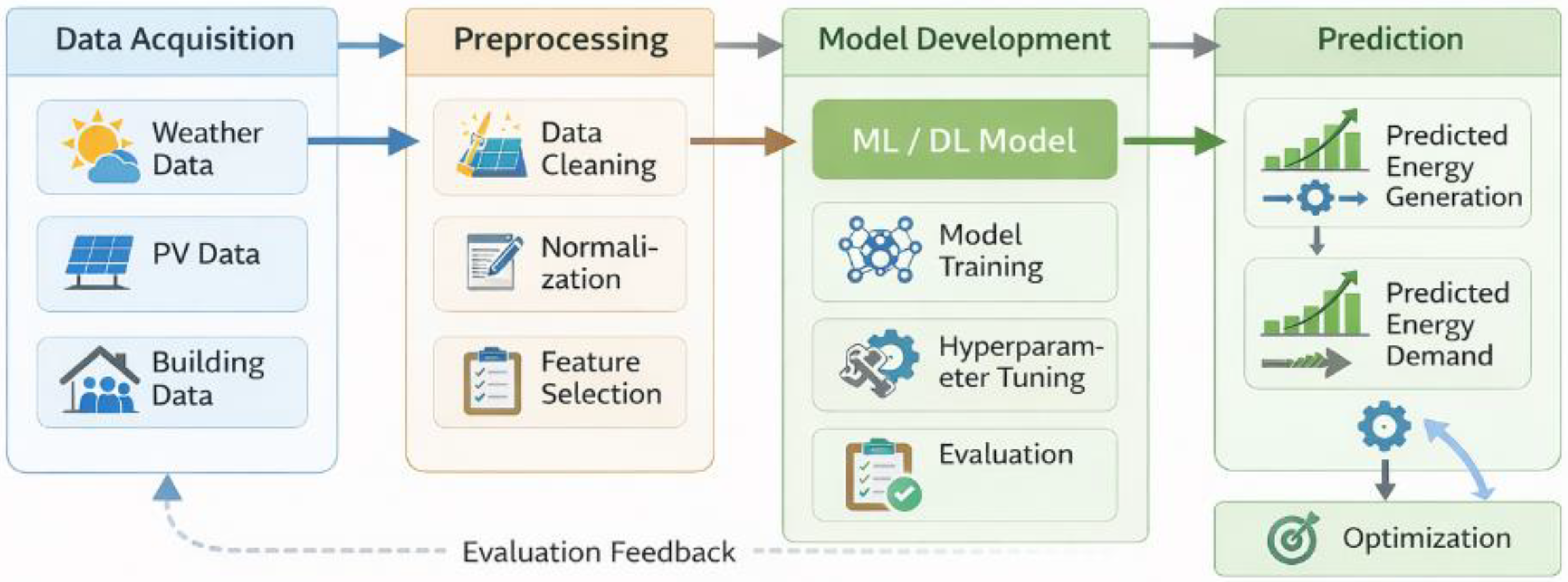
A general workflow of AI-based forecasting in photovoltaic-integrated buildings is illustrated in
Figure 6.
The performance of forecasting models is typically evaluated using standard statistical indicators such as MAE, RMSE, and MAPE, which provide a quantitative measure of prediction accuracy.
To enable a more objective comparison of different forecasting approaches,
Table 7 presents a quantitative summary of commonly used performance metrics, including mean absolute error (MAE), root mean square error (RMSE), and mean absolute percentage error (MAPE), as reported in recent studies.
The results indicate that deep learning models, particularly LSTM and hybrid CNN–LSTM architectures, consistently outperform traditional machine learning methods in terms of prediction accuracy. In many cases, hybrid approaches combining multiple techniques achieve the lowest prediction errors, with MAPE values typically below 4%.
However, it should be noted that the reported performance strongly depends on data quality, forecasting horizon, and system characteristics, which makes direct comparison across studies challenging.
3.4. Challenges in AI-Based Energy Forecasting
Despite significant progress in AI-based energy forecasting, several challenges still limit its practical implementation in photovoltaic-integrated buildings [
97]. These challenges are mainly related to data quality, model robustness, computational complexity, and interpretability. AI models require large and diverse datasets, yet real-world data are often incomplete, noisy, or inconsistent, reducing forecasting accuracy and reliability [
97,
101]. In addition, heterogeneous data sources increase the complexity of preprocessing and feature selection.
Another important issue is the limited generalization capability of AI models [
96]. Many approaches perform well under specific conditions but struggle when applied to different buildings, climates, or operational scenarios, often requiring retraining or adaptation. Overfitting also remains a common problem, particularly when datasets are limited or insufficiently representative.
Deep learning models such as LSTM, CNN, and transformer architectures provide high accuracy but require significant computational resources, limiting their applicability in real-time or resource-constrained systems. Furthermore, the “black-box” nature of many AI models reduces interpretability and may hinder their adoption in practical energy management systems [
63]. Additional concerns include data privacy, cybersecurity, and interoperability issues associated with IoT-enabled smart buildings [
76].
Overall, these challenges highlight the need for more robust, interpretable, and computationally efficient AI methods to enable reliable and scalable deployment in photovoltaic-integrated buildings.
To provide a structured comparison of the reviewed approaches,
Table 8 summarizes the key characteristics, advantages, and limitations of the most commonly used AI-based forecasting methods in photovoltaic-integrated buildings.
A critical limitation that remains insufficiently addressed in the literature is the gap between research and real-world deployment.
Despite significant advances in AI-based methods, most studies remain limited to simulation environments or small-scale experimental setups. The transition toward real-world deployment is hindered by issues such as data availability, model robustness, integration complexity, and lack of standardized evaluation frameworks.
3.5. Future Trends in AI-Based Energy Forecasting
The rapid development of artificial intelligence and data-driven technologies continues to create new opportunities for improving energy forecasting in photovoltaic-integrated buildings [
66]. Future research is expected to focus on enhancing model robustness, scalability, and real-time applicability while addressing challenges related to data quality, interpretability, and computational complexity.
One promising direction is the integration of digital twin technology with AI-based forecasting models [
105]. Digital twins enable real-time monitoring, simulation, and predictive analysis of building energy systems, improving system optimization and energy management. Another emerging trend is the use of edge AI and distributed intelligence, which allow data processing directly at the device level, reducing latency and enabling faster real-time decision-making in smart building applications [
106].
Federated learning is also gaining attention as a privacy-preserving approach that improves model generalization by training AI models across decentralized devices without sharing raw data [
107]. At the same time, advances in explainable artificial intelligence (XAI) are expected to improve transparency and trust in AI-based forecasting systems through techniques such as feature importance analysis and attention mechanisms.
Future research will also increasingly combine forecasting models with advanced control strategies, including model predictive control (MPC) and reinforcement learning (RL), enabling autonomous and adaptive energy management systems. In addition, the growing availability of high-resolution data from smart meters, IoT devices, and remote sensing technologies, combined with advanced architectures such as transformers, is expected to further improve forecasting accuracy and scalability [
108].
Overall, AI is expected to transform energy forecasting into an integral component of intelligent, adaptive, and self-optimizing building energy systems, supporting the transition toward net-zero energy buildings.
4. AI-Based Control Strategies in PV-Integrated Buildings
Artificial intelligence-based forecasting plays a key role in reducing uncertainty in photovoltaic-integrated building (PIB) systems by enabling accurate prediction of energy generation and demand [
19,
56]. However, forecasting alone is insufficient to ensure optimal system performance. Effective energy management also requires advanced control strategies capable of coordinating energy flows between photovoltaic generation, energy storage, building loads, and grid interaction [
30,
32,
36].
In PIB systems, energy management is a real-time and multi-objective problem involving the optimization of energy efficiency, operational cost, occupant comfort, and grid stability [
11,
33,
83]. The variability of solar energy and the stochastic nature of building demand require adaptive and robust control approaches [
13,
49,
52]. Traditional rule-based methods are often unable to manage such complexity due to their limited flexibility and inability to respond to nonlinear and time-varying conditions [
66,
84].
In this context, artificial intelligence has emerged as an important tool for advanced control in PIB systems [
48,
62,
90]. Techniques such as model predictive control (MPC), reinforcement learning (RL), and hybrid AI-based methods enable real-time optimization and more autonomous system operation [
66,
92,
103]. By integrating forecasting outputs with intelligent decision-making, these approaches support proactive energy management and facilitate the transition toward net-zero energy buildings [
3,
4,
7].
This section reviews AI-based control strategies applied in photovoltaic-integrated buildings, with particular emphasis on MPC, reinforcement learning, hybrid approaches, and their integration within real-time energy management systems [
18,
82,
90].
4.1. Role of Control in PV-Integrated Buildings
Photovoltaic-integrated buildings operate as dynamic systems with continuous interactions between energy generation, storage, consumption, and grid exchange [
11,
13,
32]. Although forecasting provides essential information about future system states [
16,
48,
56], efficient operation also requires advanced control strategies capable of transforming predictions into optimal real-time decisions [
30,
36].
Control strategies play a central role in balancing energy supply and demand while optimizing HVAC operation, battery usage, load shifting, and grid interaction [
32,
66]. Because system behavior is highly nonlinear and influenced by weather conditions and occupant behavior [
18,
82], control methods must continuously adapt to changing conditions [
36,
90].
Traditional rule-based approaches are often insufficient in such environments due to their limited flexibility [
66,
84]. In contrast, AI-supported control methods integrate forecasting with real-time optimization, enabling more efficient and autonomous system operation [
48,
56,
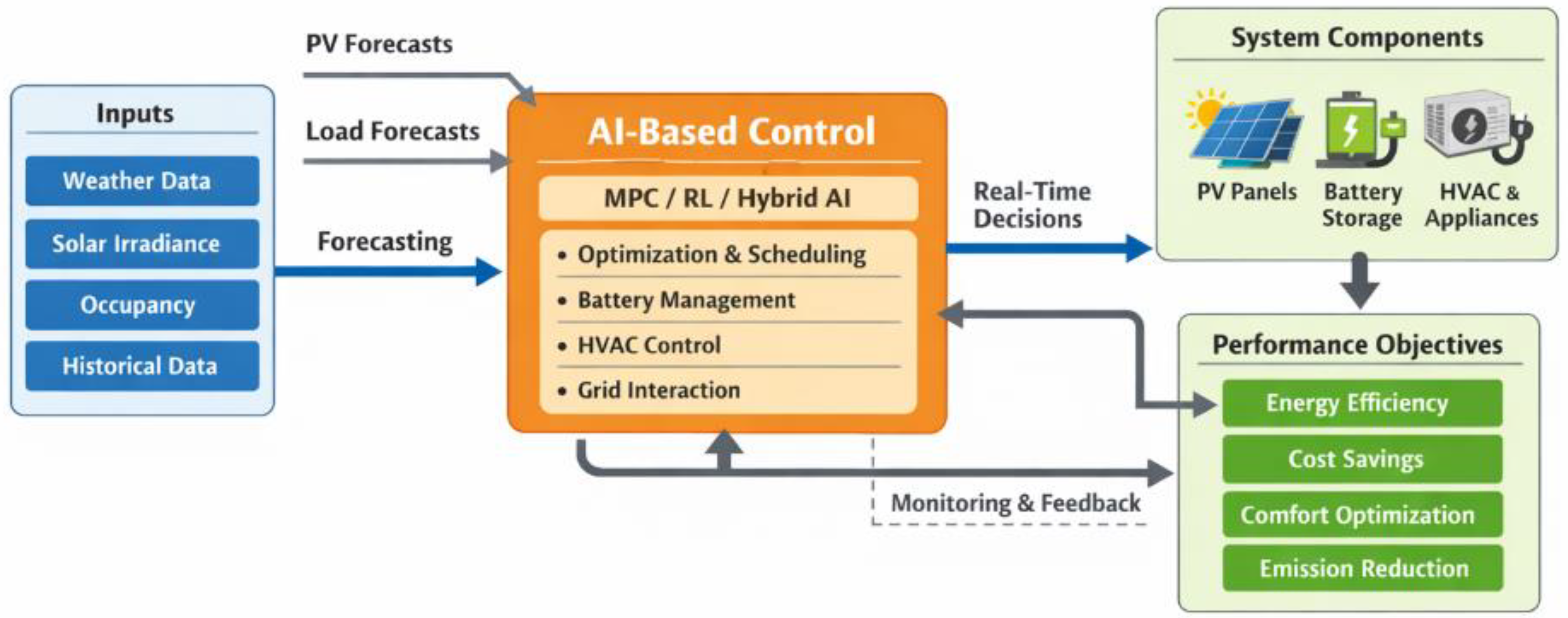
92]. As illustrated in
Figure 7, AI-based control acts as a central decision-making layer linking forecasting, system components, and performance objectives in photovoltaic-integrated buildings [
30,
33].
4.2. Model Predictive Control (MPC)
Model predictive control (MPC) is one of the most widely used advanced control strategies for energy management in photovoltaic-integrated buildings [
109,
110,
111]. MPC is a model-based optimization approach that uses predictions of future system states to determine optimal control actions over a predefined time horizon. By continuously updating decisions using real-time measurements and forecasts, MPC enables adaptive and dynamic system operation [
109,
112].
In PIB systems, MPC integrates forecasts of photovoltaic generation, building energy demand, and environmental conditions with mathematical models describing building thermal behavior, battery storage dynamics, and PV system performance [
13,
48,
56,
109,
110]. At each time step, an optimization problem is solved to minimize predefined objectives while satisfying operational constraints [
109,
111].
Typical objectives include reducing operational costs and energy consumption, maximizing self-consumption of PV energy, and minimizing greenhouse gas emissions [
32,
109,
113]. MPC also accounts for constraints related to battery capacity, HVAC operation, and grid interaction, ensuring reliable system control [
11,
110].
Compared with traditional rule-based approaches, MPC can anticipate future system behavior and proactively adjust control actions, improving energy efficiency and overall system performance [
110,
114]. Its receding horizon strategy further enables continuous adaptation to changing operating conditions [
49,
109].
However, MPC performance strongly depends on the accuracy of forecasting inputs and system models [
48,
109]. Prediction errors and model mismatch may reduce control effectiveness, while real-time optimization can introduce significant computational complexity in large-scale systems [
57,
111].
Despite these limitations, MPC remains a benchmark approach for advanced energy management in photovoltaic-integrated buildings and is widely used as a reference for evaluating other AI-based control strategies, including reinforcement learning [
109,
115].
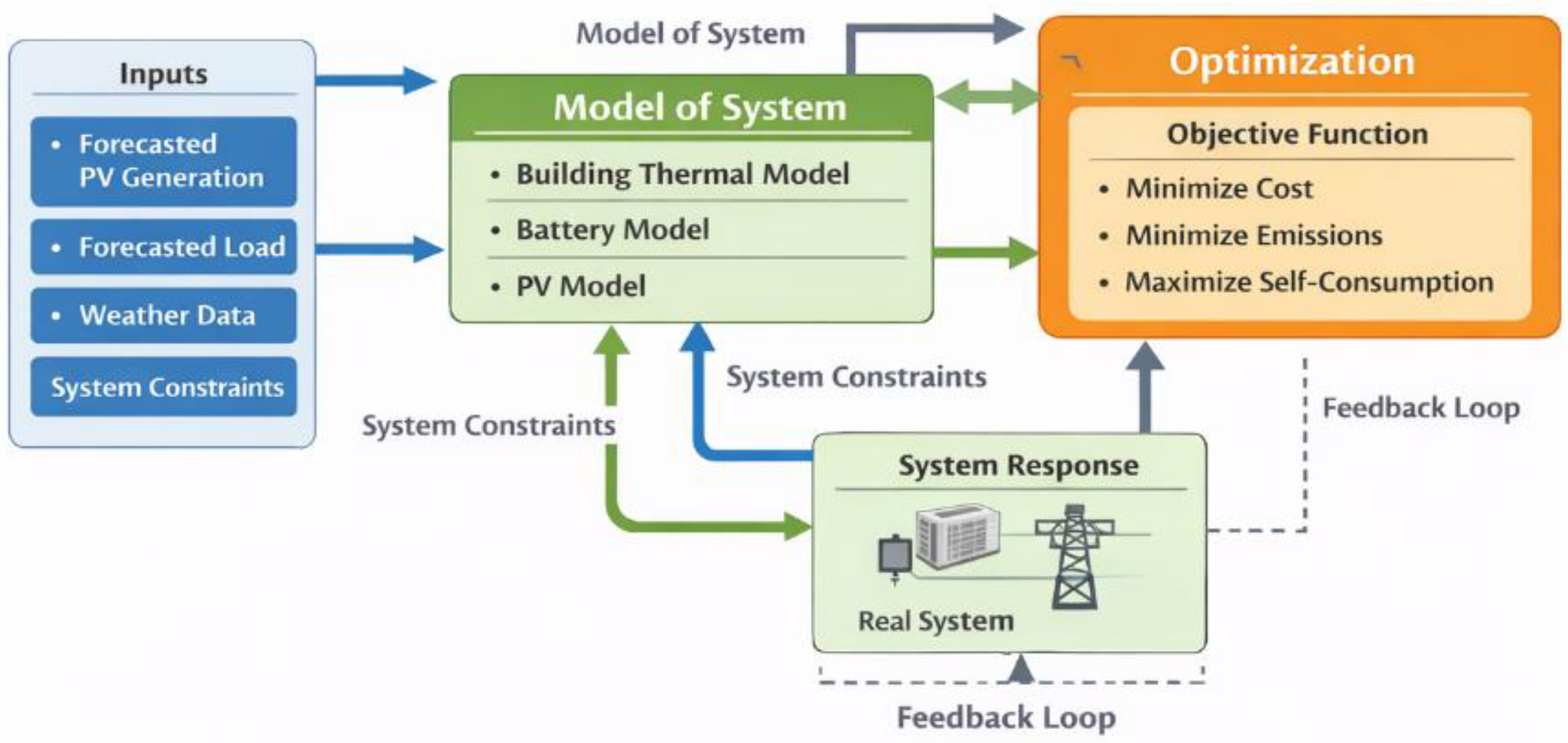
Figure 8 illustrates the conceptual framework of MPC-based optimization in photovoltaic-integrated buildings, including forecasting inputs, system modelling, optimization objectives, and real-system feedback.
4.3. Reinforcement Learning for Energy Management
Reinforcement learning (RL) has emerged as a promising data-driven approach for control and decision-making in photovoltaic-integrated buildings [
115,
116,
117]. Unlike model predictive control (MPC), which relies on predefined system models, RL is a model-free approach in which an agent learns optimal control strategies through interaction with the environment [
116,
118].
In PIB systems, the RL agent observes variables such as photovoltaic generation, energy demand, battery state of charge, indoor temperature, and electricity prices, and selects control actions related to HVAC operation, load scheduling, or battery management [
11,
66]. Based on system responses, the agent receives reward signals and continuously updates its control policy to improve performance [
115,
116].
A major advantage of RL is its ability to handle nonlinear, stochastic, and dynamic systems without requiring explicit mathematical models [
116,
117]. This makes RL particularly suitable for photovoltaic-integrated buildings, where system behavior is influenced by uncertain weather conditions, occupancy patterns, and interactions between multiple system components [
18,
119]. RL also enables continuous adaptation as new operational data become available [
115].
RL methods used in building energy systems can be divided into classical approaches and deep reinforcement learning (DRL) techniques. Classical methods, such as Q-learning, are suitable for relatively simple problems with limited state spaces [
118]. In contrast, DRL methods use deep neural networks to approximate value functions or control policies, enabling applications in more complex systems [
116,
120]. Common DRL approaches include Deep Q-Networks (DQN), policy-gradient methods, and actor–critic algorithms, which have been applied in HVAC optimization, demand response, and energy storage management [
32,
115].
Despite their advantages, DRL methods require large datasets, significant computational resources, and careful tuning to ensure stable operation [
120,
121]. In addition, RL algorithms may suffer from training instability, convergence issues, and limited interpretability [
54,
116,
122]. Another challenge is the incorporation of operational constraints, such as physical limits of building components, which often requires additional mechanisms such as constrained RL or reward shaping [
109,
120].
Nevertheless, reinforcement learning remains a promising direction for autonomous and adaptive energy management in photovoltaic-integrated buildings and has strong potential to complement or extend traditional model-based control approaches [
115,
117].
4.4. Hybrid AI-Based Control Approaches
Hybrid control approaches have emerged as an effective solution for overcoming the limitations of both model-based and data-driven methods in photovoltaic-integrated buildings [
109,
122,
123]. By combining techniques such as model predictive control (MPC), reinforcement learning (RL), and machine learning algorithms, hybrid frameworks aim to improve system performance, robustness, and adaptability in complex energy systems [
109,
115,
124].
In PIB systems, hybrid approaches typically integrate forecasting models, optimization-based control, and AI algorithms within a unified framework [
48,
56,
123]. One common strategy combines MPC with machine learning or deep learning models to improve system modeling and forecasting accuracy [
52,
123]. For example, neural networks can approximate building thermal dynamics or photovoltaic generation patterns, providing more accurate inputs for MPC optimization [
57,
110]. This improves control performance while preserving the interpretability and constraint-handling capabilities of MPC [
109].
Another important approach integrates reinforcement learning with model-based control [
115,
124]. In such frameworks, RL can optimize control policies or tune MPC parameters, while the model-based component ensures stability and compliance with operational constraints [
109,
124]. Constrained and safe RL methods have also been developed to address limitations related to system safety and feasibility [
122,
125].
Hybrid deep learning architectures additionally support advanced control applications. Neural-network-based surrogate models can replace computationally intensive physical models, enabling faster real-time optimization [
110,
123]. Similarly, attention-based and transformer models improve the handling of long-term dependencies and complex temporal patterns in energy systems [
60,
126].
The main advantage of hybrid approaches is their ability to combine accuracy, adaptability, and interpretability [
109,
123]. By integrating physical knowledge with data-driven methods, hybrid frameworks often achieve better performance than standalone MPC or RL approaches [
115,
124]. However, they also introduce higher computational complexity, increased data requirements, and implementation challenges related to stability and real-time operation [
57,
109,
123].
As summarized in
Table 9, hybrid control approaches combine the strengths of model-based and data-driven methods, enabling improved performance, robustness, and adaptability in photovoltaic-integrated building systems [
30,
123]. These approaches represent a key direction for the future development of intelligent energy management systems.
However, the integration of different methodologies also introduces additional complexity in system design, implementation, and computational requirements. Hybrid models may require careful tuning, large datasets, and advanced optimization techniques, which can limit their practical deployment. Furthermore, ensuring stability, robustness, and real-time performance remains a key challenge in the development of hybrid control systems.
Despite these challenges, hybrid AI-based control strategies represent one of the most promising directions for future research in intelligent building energy management. Their ability to combine predictive capabilities with adaptive control mechanisms makes them a key enabler of fully autonomous, efficient, and resilient photovoltaic-integrated buildings.
4.5. Real-Time Energy Management Systems in Photovoltaic-Integrated Buildings
The implementation of advanced control strategies in photovoltaic-integrated buildings is realized through real-time energy management systems (EMS), which coordinate energy flows and execute control decisions based on forecasting models, control algorithms, and real-time data acquisition [
30,
32,
127]. EMS integrate key system components, including photovoltaic generation, energy storage, HVAC systems, and grid interaction, enabling adaptive and efficient operation under dynamic conditions [
11,
13,
128].
A key function of EMS is the integration of forecasting and control strategies [
48,
109,
127]. Forecasts of photovoltaic generation and building energy demand provide essential inputs for decision-making, while control methods such as model predictive control (MPC), reinforcement learning (RL), and hybrid approaches optimize system operation in real time [
109,
115,
123]. This enables proactive energy management focused on improving self-consumption, reducing peak demand, and optimizing grid interaction [
13,
127].
The integration of artificial intelligence has significantly enhanced EMS capabilities by enabling real-time processing of heterogeneous data, adaptive control, and improved handling of uncertainties associated with renewable energy generation and building demand [
18,
49,
83]. However, practical implementation still faces challenges related to data quality, interoperability, cybersecurity, and computational complexity [
29,
33,
129].
Nevertheless, EMS remain a fundamental component of intelligent photovoltaic-integrated buildings. By integrating forecasting, control, and system monitoring within a unified framework, EMS support improved energy efficiency, operational flexibility, and net-zero energy performance [
4,
7]. As summarized in
Table 10, MPC provides high reliability and interpretability, while RL offers superior adaptability. Hybrid approaches combine these advantages and are increasingly emerging as the most promising solution for advanced energy management in photovoltaic-integrated buildings [
109,
115,
123].
Artificial Intelligence as an Enabling Technology for Net-Zero Energy Buildings
Artificial intelligence plays a fundamental role in supporting the transition toward net-zero energy buildings by enabling intelligent, adaptive, and predictive energy management in photovoltaic-integrated building systems [
4,
7,
30]. While photovoltaic installations provide on-site renewable energy generation, achieving net-zero performance requires continuous balancing between energy production, storage, consumption, and grid interaction under highly dynamic operating conditions.
In this context, AI-based forecasting and control methods contribute directly to improving the overall energy balance of buildings. Accurate forecasting of photovoltaic power generation and building energy demand enables more effective coordination of energy flows, allowing energy management systems to optimize self-consumption of locally generated electricity and reduce unnecessary energy exchange with the grid [
48,
56,
109]. In addition, predictive control strategies can minimize peak demand and improve the utilization of battery storage systems, thereby enhancing operational flexibility and reducing dependence on external energy supply.
Advanced control methods such as model predictive control and reinforcement learning further support net-zero operation by dynamically adjusting HVAC systems, battery charging and discharging schedules, and demand-side management strategies in response to changing environmental conditions, occupancy patterns, and electricity prices. This adaptive operation enables buildings to maintain a closer balance between annual energy generation and consumption, which represents a core requirement for net-zero energy performance [
109,
115,
123].
Furthermore, AI-driven energy management systems facilitate the integration of distributed renewable energy sources and support interaction with smart grids and demand response programs. These capabilities are particularly important in buildings with high penetration of intermittent renewable energy generation, where real-time optimization and uncertainty management are essential for maintaining system stability and energy efficiency [
11,
127,
128].
Recent studies indicate that AI-based energy management systems can significantly improve renewable energy utilization, increase self-consumption rates, reduce operational costs, and enhance the resilience and flexibility of photovoltaic-integrated buildings. Consequently, artificial intelligence should be viewed not only as a forecasting or control tool, but as a key enabling technology for the development of intelligent, autonomous, and net-zero energy buildings [
4,
7,
123].
To better illustrate the relationship between artificial intelligence methods and net-zero energy performance in photovoltaic-integrated buildings,
Table 11 summarizes the main AI approaches, their operational functions, and their contributions to achieving net-zero energy objectives.
As shown in
Table 11, artificial intelligence contributes to net-zero energy operation through multiple interconnected mechanisms, including forecasting, predictive optimization, adaptive control, and intelligent coordination of energy flows. Rather than functioning as isolated tools, AI-based approaches operate as integrated components of advanced energy management systems, enabling photovoltaic-integrated buildings to achieve higher energy efficiency, improved renewable energy utilization, and reduced dependence on the electrical grid.
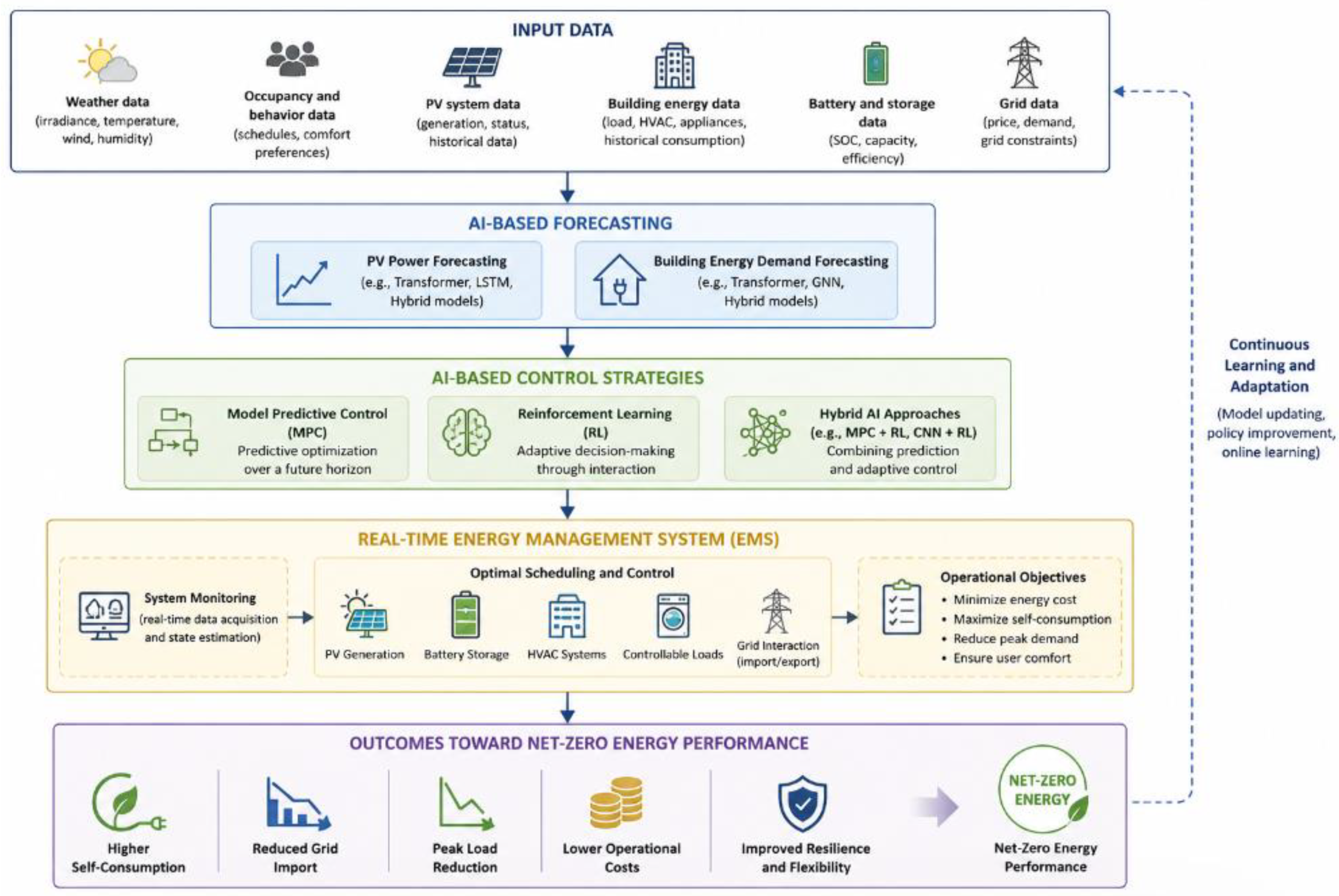
The interaction between AI-based forecasting, intelligent control strategies, and energy management systems in supporting net-zero operation is illustrated in
Figure 9. The conceptual framework highlights how artificial intelligence enables coordinated optimization of photovoltaic generation, energy storage, building loads, and grid interaction under dynamic operating conditions.
As illustrated in
Figure 9, AI-based forecasting models provide predictive information regarding photovoltaic generation and building energy demand, while advanced control strategies dynamically optimize system operation in real time. The integration of these components within energy management systems enables improved self-consumption of renewable energy, reduction in peak loads and grid dependence, and enhanced operational flexibility. Consequently, artificial intelligence can be regarded as a key enabling technology for the development of intelligent and autonomous net-zero energy buildings.
4.6. Grid Integration, Tariff Structures, and Policy Implications
Model predictive control (MPC) is particularly effective in grid-connected environments because it can explicitly incorporate operational constraints, including power export limits, voltage bounds, and transformer capacity, within the optimization framework [
109,
130,
131]. In contrast, reinforcement learning (RL)-based approaches provide greater adaptability but typically require constrained learning techniques or reward shaping to ensure stable and safe operation under real-world grid conditions [
115,
124,
125,
132].
Electricity pricing structures, including time-of-use tariffs and dynamic pricing schemes, further increase the complexity of energy management by introducing time-dependent operational costs [
133,
134]. In such environments, AI-based methods can optimize energy consumption, storage operation, and grid interaction in response to changing price signals [
135]. RL approaches are particularly suitable for dynamic pricing scenarios due to their adaptive learning capabilities, while MPC strategies can directly incorporate price forecasts into the optimization process [
109,
119,
121,
134]. Hybrid approaches combining MPC with machine learning or RL offer a promising balance between adaptability and reliable constraint handling [
123,
124].
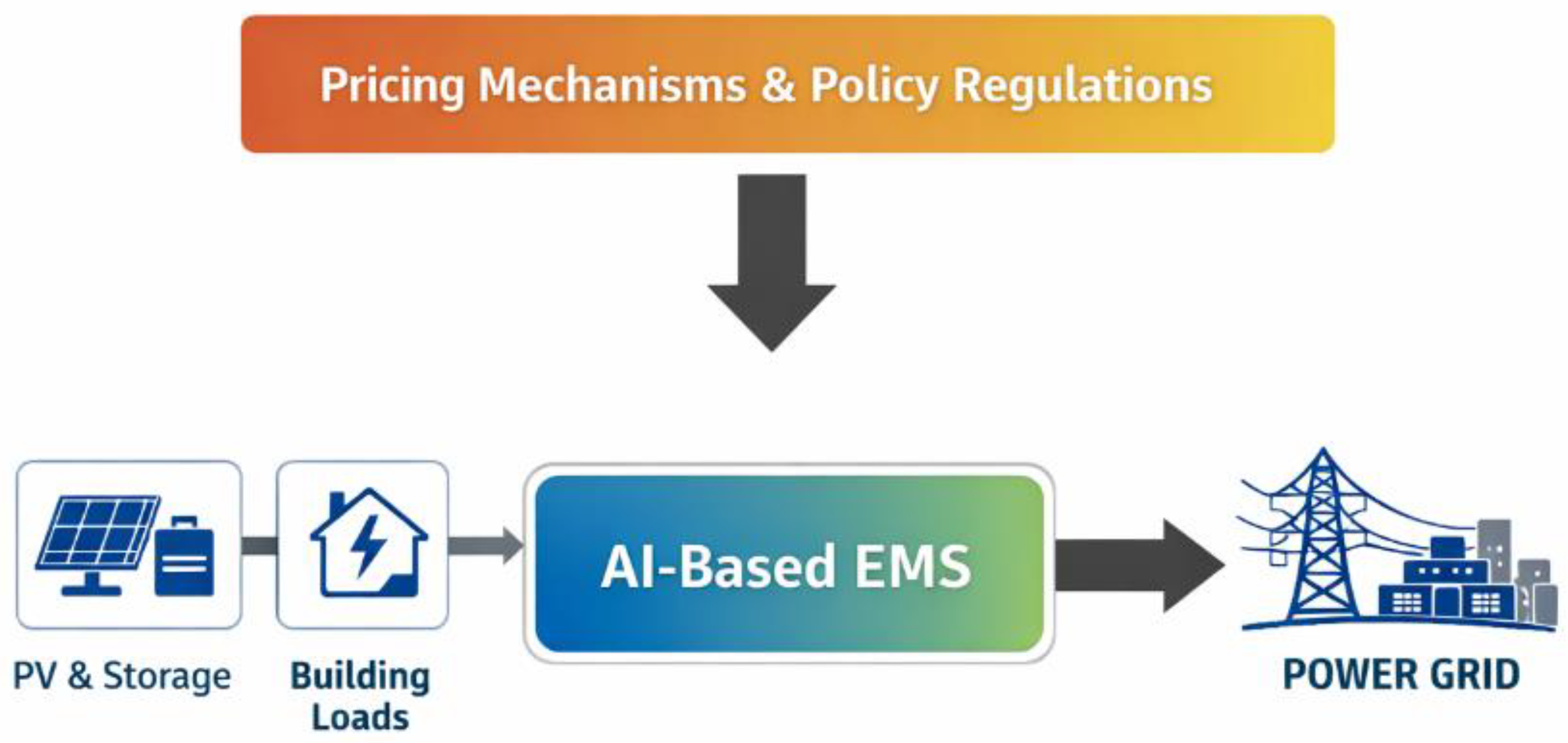
To better illustrate the interaction between photovoltaic-integrated buildings, the power grid, and external economic drivers, a conceptual framework of AI-based energy management is presented in
Figure 10.
Regulatory mechanisms such as net metering, feed-in tariffs, and demand response programs also strongly influence operational strategies by affecting the trade-off between self-consumption, energy export, and storage utilization. In addition, the growing participation of buildings in demand response and flexibility markets increases the need for scalable and adaptive AI-based control systems capable of simultaneously considering local building objectives, grid constraints, and market signals.
Overall, future research should focus on integrated AI frameworks capable of co-optimizing energy flows at both building and grid levels while ensuring robustness, scalability, and compliance with regulatory requirements.
4.7. Practical Implementation and Comparative Analysis of AI-Based Control Strategies
Despite significant progress in AI-based forecasting and control methods, their practical implementation in photovoltaic-integrated buildings remains limited. Bridging the gap between theoretical models and real-world applications requires not only high predictive performance but also reliable integration, scalability, and operational robustness.
4.7.1. Practical Implementation of AI-Based Energy Management Systems
In real-world photovoltaic-integrated buildings, AI-based energy management systems (EMS) integrate forecasting, optimization, and real-time control of photovoltaic generation, energy storage, HVAC systems, and grid interaction [
13,
127,
136]. Forecasting models such as LSTM networks and hybrid deep learning approaches are commonly used to predict short-term photovoltaic generation and building energy demand [
48,
56,
136], while control strategies optimize energy flows and storage utilization [
109,
123].
During periods of high solar generation, excess energy can be stored or used for load shifting, whereas stored energy may be utilized during peak demand or high electricity price periods to reduce grid consumption [
127,
137]. Recent studies report that AI-based EMS can reduce operational costs by approximately 10–25% and increase self-consumption by 15–30%, depending on system configuration and operating conditions [
134,
138]. However, large-scale deployment remains limited by data availability, integration complexity, and computational requirements [
123,
129].
4.7.2. Comparative Analysis of Control Strategies
The selection of an appropriate control strategy depends on system complexity, model availability, and operational objectives [
109,
115,
123]. Model predictive control (MPC) is particularly effective in applications requiring explicit constraint handling and reliable optimization, such as HVAC control, battery scheduling, and grid-constrained operation [
109,
134].
Reinforcement learning (RL) is better suited for highly dynamic environments and applications involving demand response, dynamic pricing, and adaptive energy management [
137,
139]. However, RL methods may suffer from training instability and difficulties in incorporating operational constraints [
120,
125].
Hybrid approaches combining MPC with machine learning or RL provide a balance between adaptability and reliable constraint handling, making them one of the most promising solutions for complex and uncertain photovoltaic-integrated building systems [
123,
124,
134].
4.7.3. Failure Conditions and Engineering Bottlenecks
Despite their advantages, AI-based control strategies still face several practical limitations. MPC performance strongly depends on model accuracy and forecasting quality, while RL approaches may generate unstable or infeasible control actions if constraints are not properly considered [
109,
120,
125,
134].
In addition, all approaches are sensitive to data quality and may perform poorly under noisy, incomplete, or inconsistent real-world conditions [
83,
136]. Hybrid methods further increase system complexity and computational requirements, which may limit their scalability and practical deployment [
123,
136].
4.7.4. Summary of Applicability of AI-Based Control Strategies
Table 12 summarizes the key characteristics, advantages, and applicability of different AI-based control strategies in photovoltaic-integrated buildings.
Overall, the results indicate that no single control strategy is universally optimal, and the selection of an appropriate method depends on system characteristics, data availability, and operational objectives [
115,
123]. Deep learning models generally provide high forecasting accuracy but often require large datasets and offer limited interpretability [
62,
139]. Model predictive control (MPC) ensures reliable constraint handling and transparent optimization [
109,
134], whereas reinforcement learning (RL) enables adaptive decision-making in dynamic environments but may involve high data and computational requirements [
120,
139].
Hybrid approaches combine predictive capabilities with adaptive learning, offering a balanced trade-off between accuracy, robustness, and practical applicability. As a result, they are increasingly considered one of the most promising solutions for complex real-world photovoltaic-integrated building systems [
124,
140].
4.8. Challenges in AI-Based Control of Photovoltaic-Integrated Buildings
Despite significant progress in AI-based control strategies for photovoltaic-integrated buildings, several challenges still limit their large-scale practical implementation [
123,
140]. These challenges are primarily associated with data quality, model reliability, computational complexity, system integration, and operational constraints.
AI-based methods require large volumes of high-resolution data related to weather conditions, photovoltaic generation, energy demand, and occupancy patterns [
141,
142]. In real-world applications, such data are often noisy, incomplete, or inconsistent, which may significantly reduce forecasting and control accuracy [
48,
83]. In addition, integrating heterogeneous data sources increases preprocessing complexity and system design requirements.
Model reliability and generalization also remain important concerns [
143,
144]. AI models developed for specific buildings or climatic conditions may not perform effectively in different environments, limiting scalability. This issue is particularly relevant for reinforcement learning approaches, where policies trained in simulation may not transfer reliably to real-world systems [
145].
Computational requirements represent another important limitation, especially for advanced methods such as MPC and deep reinforcement learning [
146,
147,
148]. Real-time optimization in highly integrated systems requires efficient algorithms and sufficient computational resources, which may not always be available in practical building energy management systems.
The incorporation of physical and operational constraints also remains challenging. While MPC explicitly handles constraints, reinforcement learning methods typically require additional mechanisms to ensure safe and feasible operation [
149,
150]. Furthermore, many deep learning and reinforcement learning models still suffer from limited interpretability, which may reduce trust and acceptance in practical deployment [
151,
152].
Additional challenges include interoperability between photovoltaic systems, energy storage, HVAC systems, and grid infrastructure, as well as cybersecurity and data privacy concerns associated with IoT-based energy management systems [
148,
150]. Economic factors, including hardware, software, and maintenance costs, may further limit large-scale adoption [
30].
Nevertheless, ongoing advances in data processing, computational efficiency, and explainable artificial intelligence are expected to improve the robustness, scalability, and practical applicability of AI-based control systems for photovoltaic-integrated buildings.
5. Discussion
The findings of this review highlight the growing role of artificial intelligence in improving energy management and operational efficiency in photovoltaic-integrated buildings. The integration of forecasting and control strategies is particularly important for achieving adaptive and energy-efficient system operation under dynamic conditions.
A key conclusion is that accurate forecasting alone is insufficient to ensure optimal building performance. Although AI-based forecasting methods, especially deep learning approaches, provide high prediction accuracy for photovoltaic generation and building energy demand, their practical effectiveness depends on integration with advanced control strategies. Without appropriate control mechanisms, forecasting improvements cannot be fully translated into operational benefits.
From a comparative perspective, no single control strategy is universally optimal. Model predictive control (MPC) remains the most reliable and practically deployable approach in systems with well-defined models and operational constraints [
109,
134]. Reinforcement learning (RL) offers greater adaptability and model-free operation but still faces challenges related to training stability, computational requirements, and constraint handling [
115,
120]. Hybrid approaches combining MPC with machine learning or RL appear to offer the best balance between predictive performance, robustness, and adaptability under uncertain operating conditions [
123,
124,
140].
This review also demonstrates that photovoltaic-integrated buildings should be considered interconnected energy hubs rather than isolated systems. The effectiveness of AI-based control strategies depends not only on local optimization but also on interaction with the electrical grid, demand response programs, and distributed energy resources. Consequently, scalable and coordinated control architectures will become increasingly important for future smart energy systems.
Despite substantial research progress, practical deployment remains limited. Major barriers include data quality issues, integration complexity, computational requirements, and interoperability with existing building management systems. In addition, many AI-based approaches are still validated primarily in simulation environments, highlighting the persistent gap between research developments and large-scale real-world implementation.
Another important limitation is the lack of standardized benchmarking procedures. Differences in datasets, performance metrics, and experimental conditions make direct comparison between AI-based approaches difficult and limit the identification of universally effective solutions. Furthermore, the limited interpretability of deep learning and reinforcement learning models remains a challenge for practical deployment and operator trust, emphasizing the importance of explainable artificial intelligence (XAI) methods.
Future research should focus on improving scalability, robustness, and practical applicability of AI-based energy management systems. Transfer learning, domain adaptation, probabilistic forecasting, and digital twin technologies represent particularly promising research directions for enhancing model generalization and real-time optimization capabilities. In addition, tighter integration between AI-based building control systems, smart grids, and demand response mechanisms will be essential for enabling flexible and resilient energy management.
Overall, the transition toward net-zero energy buildings will depend not only on renewable energy technologies, but also on the development of intelligent and adaptive control systems capable of managing complex energy flows in real time. The findings of this review indicate that hybrid AI-based approaches integrated with advanced energy management systems represent one of the most promising pathways toward achieving this objective.
Based on the conducted analysis, the key future research directions in AI-based photovoltaic-integrated building systems are summarized in
Table 13.
These directions highlight the transition toward more intelligent, adaptive, and scalable energy systems.
From a practical perspective, the selection of control strategy depends on system characteristics and operational requirements.
Model predictive control (MPC) is particularly suitable for systems with well-defined models and strict operational constraints, such as HVAC control and battery management, where reliability and safety are critical. In contrast, reinforcement learning (RL) offers advantages in highly dynamic and uncertain environments, especially those involving variable renewable energy generation and dynamic pricing, where adaptive and data-driven decision-making is required.
Hybrid approaches provide the greatest practical value in complex real-world systems, where both predictive accuracy and adaptability are needed. By combining model-based and data-driven methods, hybrid strategies enable improved robustness, flexibility, and overall system performance.