1. Introduction
The accelerating climate crisis has rendered incremental energy policy reform insufficient [
1]. Deep decarbonization requires not merely technological substitution but systemic socio-technical transformation embedded within governance structures, institutional logics, and political economies [
2,
3,
4,
5]. Sustainability transitions scholarship has repeatedly demonstrated that energy systems are stabilized through interlocking configurations of policy, finance, market structures, and socio-cultural norms [
6,
7]. Consequently, the transition toward low-carbon public infrastructure cannot be reduced to technological optimization; it fundamentally involves political authority, distributive justice, and institutional accountability. In this context, accelerating renewable energy deployment within public institutions has become increasingly important due to rising climate-related risks, growing electricity demand, and public-sector decarbonization commitments. However, many public institutions face substantial barriers when attempting to implement large-scale renewable energy infrastructure projects, including limited capital availability, complex procurement regulations, fiscal constraints, and institutional risk aversion. Energy Performance Contracting (EPC) models have therefore emerged as practical implementation mechanisms capable of supporting low-carbon infrastructure transitions while reducing upfront financial burdens for public institutions.
In recent decades, policy scholars have emphasized the emergence of governance instruments designed to steer complex socio-technical systems beyond traditional command-and-control regulation [
8]. Within this context, Energy Performance Contracting (EPC) has emerged as a hybrid financial and governance mechanism that reallocates risk, mobilizes private capital, and operationalizes performance-based accountability [
9,
10,
11]. EPC models implemented through Energy Service Companies (ESCOs) are increasingly considered key instruments for accelerating decarbonization in public institutions [
12,
13]. Recent empirical analyses of EPC projects in public and educational buildings further highlight the importance of integrating contractual arrangements with institutional energy management structures and monitoring frameworks [
14]. Despite these developments, the literature remains divided on whether EPC arrangements function as transformative governance mechanisms or primarily reproduce existing institutional asymmetries within public sector energy management systems [
15,
16].
The complexity of this debate is reinforced by the recognition that sustainability transitions require coherent policy mixes rather than isolated policy instruments [
7,
17]. The problems outlined above apply to all renewable energy sources, where conversion efficiency can limit their development at both micro and macro scales [
18]. Developing quantifiable systems for converting renewable energy into electricity can play an important role in advocating for institutional support for renewable energy development. Policy mix scholarship emphasizes interactions among regulatory, financial, and informational instruments and identifies consistency, credibility, and comprehensiveness as critical conditions for accelerating technological change. However, several studies argue that the political economy underlying these policy configurations remains insufficiently theorized [
19,
20]. Coalition dynamics, distributional consequences, and institutional inertia can influence energy transition outcomes as strongly as technological performance. From this perspective, climate capitalism frameworks emphasize the intertwined nature of decarbonization strategies and economic restructuring, raising important questions regarding whose interests are served by performance-based contracting arrangements [
21].
Public sector decarbonization occupies a particularly strategic position within this broader governance landscape. Governments simultaneously function as regulators, policymakers, and large-scale energy consumers. Public buildings therefore represent both significant sources of energy demand and visible symbols of climate leadership [
22,
23]. Energy efficiency programmes remain central to achieving sustained greenhouse gas emission reductions [
24,
25]. European experiences with large-scale urban efficiency programmes further demonstrate how institutional investment frameworks can stimulate systemic improvements in public infrastructure [
26]. Nevertheless, fiscal constraints often limit the ability of public institutions to finance upfront investments in renewable energy technologies. Off-balance-sheet financing mechanisms such as EPC have therefore been promoted as pragmatic instruments capable of reconciling fiscal discipline with climate policy ambitions [
27,
28].
Despite this promise, empirical evidence regarding the effectiveness of EPC implementation remains mixed. Market development studies highlight persistent structural barriers within ESCO markets, including regulatory fragmentation, limited market maturity, and institutional distrust [
10,
11]. Within the ALKU case, fragmented institutional responsibility refers to the separation between technical system operation, administrative procurement procedures, financial oversight, and sustainability reporting functions distributed across different institutional units. This institutional fragmentation may reduce coordination efficiency during renewable energy project implementation and long-term monitoring processes. Case-based analyses from several countries including Italy, Poland, Malaysia, and China identify procurement constraints, information asymmetries, and contractual complexities as key barriers to effective implementation [
16,
29,
30,
31]. Technical research has also documented discrepancies between projected and realized energy savings, commonly referred to as the energy performance gap [
32]. From an economic perspective, concerns remain regarding transaction costs, risk allocation, and long-term contractual stability [
9,
33,
34]. At the same time, recent research on renewable energy integration in building energy systems suggests that EPC mechanisms increasingly interact with broader renewable energy policies and energy transition strategies [
35,
36].
Beyond financial and technical dimensions, governance scholarship emphasizes that decentralization, polycentric coordination, and sub-national experimentation can significantly shape energy transition trajectories [
6,
37,
38]. Comparative studies of renewable energy transitions across different global regions demonstrate how institutional capacity, regulatory clarity, and governance maturity influence policy outcomes [
39,
40,
41,
42]. These findings align with sustainability transitions theory, which conceptualizes systemic change as a multi-level process involving niche innovation, regime transformation, and broader landscape pressures [
2].
An additional dimension of EPC implementation concerns issues of normative legitimacy and social acceptance. The acceptability of energy policies is strongly influenced by perceptions of fairness, value alignment, and participatory governance [
43]. Educational institutions represent particularly relevant governance environments because they combine infrastructural energy consumption with behavioural change, knowledge production, and stakeholder engagement [
44,
45,
46,
47,
48]. At the macro level, comparative analyses of national energy efficiency performance also demonstrate the importance of governance capacity for successful energy transition policies [
49]. Without transparent monitoring mechanisms and equitable distribution of benefits, performance-based contracts risk reinforcing technocratic opacity rather than strengthening institutional accountability.
Digitalization further complicates governance dynamics in contemporary energy systems. Emerging research highlights how digital transformation can enhance organizational agility and support sustainability integration in institutional decision-making processes [
50,
51]. At the same time, algorithmic accountability and smart service governance introduce new challenges related to transparency and democratic oversight [
52,
53]. The measurement of climate policy itself increasingly relies on text-as-data analytical approaches, suggesting that transparency in energy governance is not only institutional but also epistemic [
54]. EPC implementation in digitally monitored public buildings therefore intersects with broader debates regarding data governance, institutional trust, and accountability.
Sectoral analyses further demonstrate that decarbonization pathways are embedded within broader development dynamics. Infrastructure decisions influence energy security trade-offs, hydrogen transitions, regional economic disparities, and technological cooperation initiatives [
55,
56,
57]. Even developments in peripheral technological domains such as smart agricultural systems illustrate how digital innovation and sustainability transitions increasingly intersect across sectors. These cross-sectoral interactions highlight the growing importance of policy coherence and institutional learning in the governance of energy transitions.
Taken together, this literature reveals several structural tensions. First, the instrumental logic of EPC focusing on efficiency and cost recovery may conflict with broader objectives related to social justice and participatory governance. Second, policy mix coherence often remains fragile in institutional contexts characterized by administrative fragmentation [
7,
17]. Third, governance and accountability mechanisms frequently evolve more slowly than technological deployment, potentially undermining the legitimacy of energy transition policies [
19,
20].
Despite the expanding body of research on sustainability transitions, public sector energy governance, and Energy Performance Contracting, several important gaps remain in the literature. First, a substantial portion of EPC research focuses primarily on technical performance or financial outcomes, while relatively limited attention has been devoted to the broader governance structures through which EPC mechanisms operate in public institutions. Second, existing studies often analyse EPC projects as isolated contractual arrangements rather than components of wider policy mixes shaping energy transitions. As a result, the interaction between EPC implementation, institutional governance capacity, and digital monitoring infrastructures remains insufficiently explored. Third, while sustainability transitions literature provides valuable theoretical insights into multi-level transformation processes, empirical studies rarely connect these frameworks with real-world EPC applications in public sector energy infrastructure. This fragmentation between governance theory, policy analysis, and engineering performance evaluation limits the ability of current research to provide an integrated understanding of EPC as a systemic decarbonization instrument.
This article addresses these limitations by conceptualizing Energy Performance Contracting as a multidimensional governance architecture embedded within sustainability transitions. Rather than examining EPC solely as a financial or technical mechanism, the study integrates perspectives from policy mix theory, political economy, institutional governance, and digital accountability frameworks. By combining engineering-based performance indicators with governance-oriented analytical approaches, the article develops a comprehensive framework for evaluating EPC implementation in public institutions. This interdisciplinary perspective enables a more nuanced understanding of how EPC arrangements interact with institutional capacity, regulatory environments, and technological monitoring systems. In doing so, the study contributes to sustainability transitions scholarship by bridging the analytical divide between infrastructure performance analysis and governance theory, thereby advancing a more holistic framework for assessing public-sector decarbonization strategies.
This study addresses these challenges by reconceptualizing Energy Performance Contracting as a governance architecture embedded within sustainability transitions rather than merely a financial instrument. By integrating insights from policy mix theory, political economy, ESCO market analysis, institutional governance, digital accountability, and social acceptance research, the article proposes a multidimensional framework for evaluating EPC implementation in public institutions. In doing so, it contributes to ongoing debates within sustainability transitions research [
3,
4] and responds to calls for integrated climate governance aligned with the Sustainable Development Goals [
58,
59].
The central argument advanced in this article is that EPC can function as a transformative governance instrument only when embedded within coherent policy mixes, transparent monitoring systems, and accountability mechanisms that promote institutional trust. Without such integration, EPC risks remaining a narrowly technocratic financing mechanism with limited systemic impact.
By situating EPC within the broader governance dynamics of sustainability transitions, this study seeks to bridge engineering performance metrics with normative governance theory and thereby contribute to more equitable and accountable pathways for public sector decarbonization.
2. Materials and Methods
This study adopts a case study research design combined with quantitative performance analysis in order to evaluate the operational effectiveness and governance implications of a photovoltaic (PV) energy investment implemented under an Energy Performance Contract (EPC) framework in the public sector. The case study focuses on the rooftop solar power plant installed at the Kestel Campus of Alanya Alaaddin Keykubat University (ALKU) in Türkiye. With an installed capacity of 1.71072 MWp, the system represents one of the large-scale renewable energy investments implemented within a public university through a performance-based contractual model. The ALKU case was selected because it represents one of the largest EPC-supported rooftop photovoltaic implementations within a Turkish public university context and provides access to continuously monitored operational SCADA data. In addition, the case offers a relevant institutional setting for examining the interaction between technical energy performance and governance-related implementation processes in public-sector renewable energy transitions. The EPC structure enables the realization of renewable energy projects without direct upfront public investment while ensuring performance monitoring and accountability through contractual obligations.
The research design integrates technical system performance assessment with institutional and governance considerations associated with EPC implementation. In this context, the photovoltaic system is analyzed not only as an energy generation technology but also as a policy instrument facilitating the adoption of renewable energy solutions in public institutions. Such integrated approaches are frequently used in energy transition research to understand the interaction between technological performance and governance mechanisms. The qualitative component of the study consisted of document analysis focusing on EPC contractual structures, institutional sustainability reports, energy management procedures, procurement-related administrative records, and operational monitoring documents associated with the photovoltaic installation. The analysis aimed to identify governance-related implementation barriers, institutional coordination practices, and transparency mechanisms within the EPC framework. In addition, informal consultations were conducted with technical personnel responsible for system monitoring and operational management within the university administration. The qualitative assessment specifically examined institutional responsibilities, monitoring practices, operational accountability, and coordination between technical and administrative actors involved in the EPC implementation process.
The empirical dataset used in this study is derived from the plant’s digital monitoring infrastructure and Supervisory Control and Data Acquisition (SCADA) system using the FusionSolar monitoring platform (Huawei Technologies Co., Shenzhen, China). The dataset includes monthly electricity generation records, solar irradiation measurements, inverter output data, and system monitoring indicators covering the 2024–2025 operational period. Monitoring systems installed in photovoltaic plants provide continuous real-time operational data and are widely used in scientific analyses evaluating renewable energy system performance. Solar irradiation measurements were used to evaluate the relationship between seasonal solar resource availability and monthly electricity generation performance. The irradiation data obtained from the monitoring platform supported the interpretation of seasonal production variability observed during the monitoring period. To ensure data accuracy, electricity generation values obtained from the monitoring platform were cross-checked with inverter-level production reports and plant electricity meters.
Electricity generation values were recorded in megawatt-hours (MWh), while solar irradiation measurements were expressed in megajoules per square meter (MJ/m2). According to the validated SCADA monitoring records, the photovoltaic system generated approximately 2.13 GWh of electricity in 2024 and 2.44 GWh in 2025. All annual values reported in the manuscript were recalculated based on monthly production records to ensure consistency between tables, figures, and textual interpretations. Despite these validation procedures, the study remains subject to limitations associated with short-term operational monitoring and site-specific environmental conditions that may influence photovoltaic performance variability. The availability of two consecutive operational years enables a comparative evaluation of production variability, seasonal irradiation patterns, and the stability of system performance. Monthly production values were therefore analyzed together with corresponding solar irradiation measurements in order to examine the relationship between solar resource availability and electricity generation performance.
The technical performance of the photovoltaic installation was evaluated using widely accepted indicators applied in photovoltaic system performance analysis. One of the primary indicators used in the study is the performance ratio (PR), which represents the ratio between the actual electricity generation of the PV system and the theoretical electricity generation under reference solar irradiation conditions. The performance ratio is calculated as:
where Yf represents the final yield calculated as the ratio of actual electricity generation to the installed capacity of the system (kWh/kWp), while Yr represents the reference yield derived from measured solar irradiation values. In addition to the performance ratio, the analysis includes specific energy production (kWh/kWp) and monthly electricity generation trends in order to evaluate seasonal variations and operational stability. Performance ratio (PR) evaluation was incorporated into the monitoring framework to assess the operational efficiency of the photovoltaic system under varying seasonal conditions. The PR assessment enabled comparison between actual electricity generation and theoretical production potential derived from solar irradiation conditions.
In order to assess the environmental contribution of the photovoltaic system, the study also estimates the avoided carbon dioxide (CO
2) emissions associated with renewable electricity generation. The avoided emissions are calculated using the national electricity grid emission factor for Türkiye. The calculation follows the widely used methodology expressed as:
where E represents the total electricity generated by the PV system (kWh) and EF represents the emission factor associated with grid electricity production (kg CO
2/kWh). This approach enables the quantification of the climate mitigation benefits of the solar power plant by estimating the amount of fossil-fuel-based electricity displaced by renewable energy generation.
By integrating technical performance indicators with institutional and contractual dimensions of EPC implementation, the methodological framework provides a multidimensional evaluation of renewable energy investments in public institutions. The EPC model is evaluated not only as a financial mechanism but also as a governance tool enabling renewable energy deployment in public institutions.
3. Results
This section presents the empirical findings obtained from the operational data of the photovoltaic system during the 2024–2025 monitoring period. The analysis focuses on the seasonal electricity generation patterns of the PV installation, year-to-year production variations, and the broader implications of these results for evaluating the effectiveness of Energy Performance Contracting (EPC) models in public-sector renewable energy investments.
3.1. Monthly Electricity Generation and Solar Irradiation Analysis
The operational performance of the photovoltaic system installed at the ALKU Kestel Campus was evaluated using monthly electricity generation data recorded during the 2024–2025 monitoring period. The dataset provides a detailed overview of the seasonal electricity production patterns of the PV installation and allows the assessment of the relationship between solar resource availability and electricity generation performance. According to the SCADA-based monitoring records confirmed that the photovoltaic system generated approximately 2.13 GWh in 2024 and 2.44 GWh in 2025. These values were verified using aggregated monthly electricity generation records obtained from inverter-level monitoring outputs.
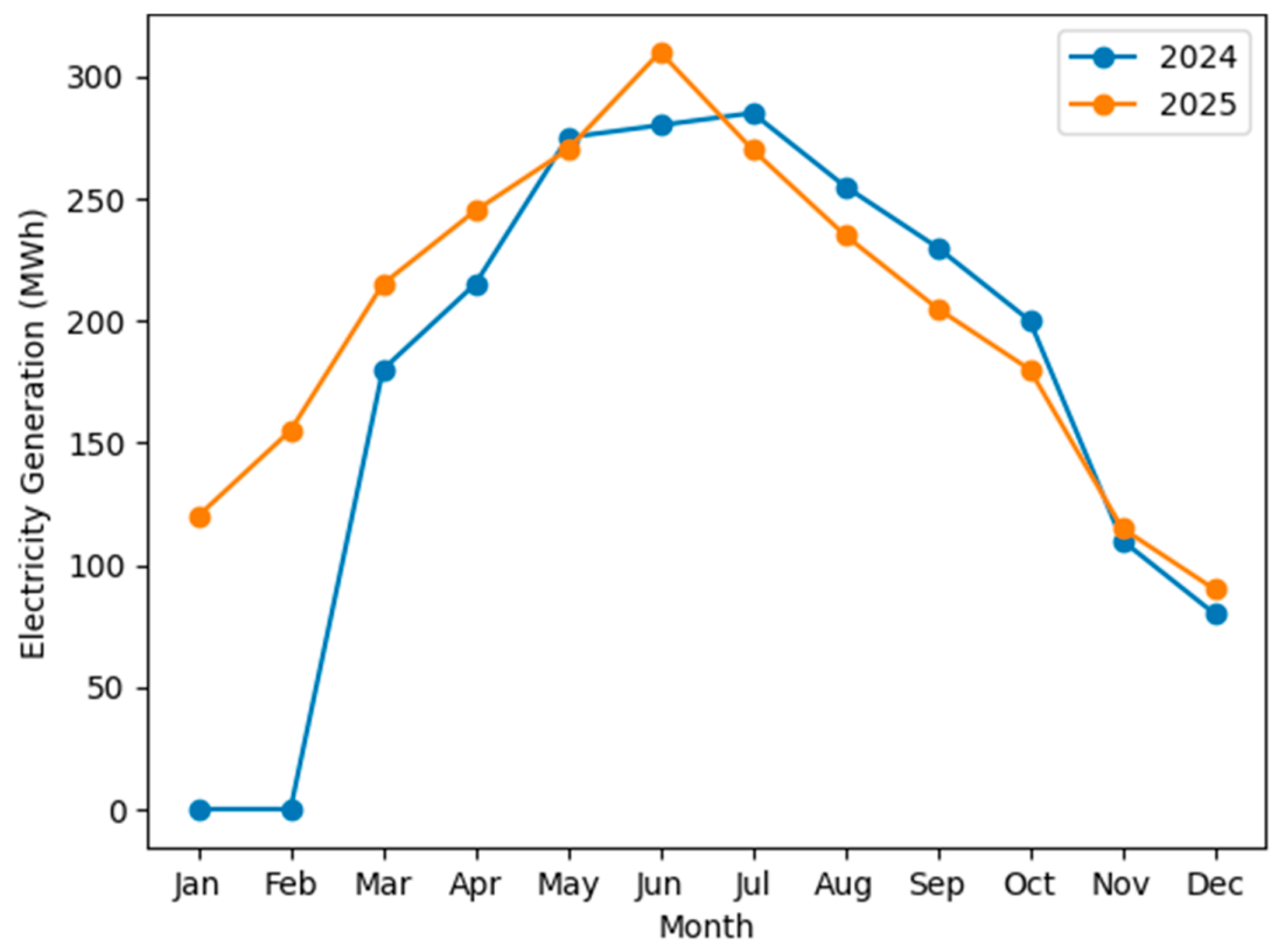
Table 1 presents the monthly electricity generation values recorded for the photovoltaic system during the monitoring period. The results reveal a clear seasonal production pattern typical for photovoltaic systems operating under Mediterranean climatic conditions. Electricity production levels increase rapidly during the spring months as solar irradiation levels rise. The increase becomes particularly evident between March and May, reflecting the seasonal growth in solar radiation availability. It should be noted that the photovoltaic system was still undergoing commissioning and operational activation procedures during January and February 2024. Consequently, the zero-generation values recorded during these months do not fully represent stabilized operational conditions. Therefore, direct annual comparisons between 2024 and 2025 should be interpreted cautiously, as part of the higher annual electricity generation observed in 2025 is associated with the inclusion of fully operational winter-period electricity production.
Electricity generation reaches its highest levels during the late spring and summer months, when solar irradiation conditions are most favorable for photovoltaic electricity production. During this period, the system recorded monthly electricity generation values exceeding 270–300 MWh, indicating optimal operating conditions for the PV installation. Such production levels demonstrate the ability of the system to efficiently convert available solar radiation into electricity under favorable climatic conditions.
Following the summer peak, electricity generation gradually declines during the autumn months as solar irradiation levels decrease. The decline becomes more pronounced during November and December, when shorter daylight duration and lower solar angles significantly reduce solar energy availability. Consequently, electricity generation during winter months remains considerably lower compared with the production levels observed during spring and summer months.
As illustrated in
Figure 1, electricity generation closely follows the seasonal solar radiation cycle. Production begins to increase in early spring, reaches its peak during late spring and summer, and gradually declines toward autumn and winter. The comparison of the two monitoring years indicates a consistent seasonal production pattern, confirming the stable operational behavior of the photovoltaic system.
A comparison of the monthly production values also indicates that electricity generation in 2025 is slightly higher than in 2024 during several months, particularly during the late spring and early summer period. This difference contributes to the higher total electricity generation observed in 2025. Such improvements in production performance may be associated with favorable meteorological conditions, improved system monitoring, reduced operational losses, or enhanced inverter performance during the later stages of plant operation.
Overall, the results demonstrate that the photovoltaic installation operates with stable seasonal performance characteristics and effectively converts available solar irradiation into electricity. These findings provide important empirical evidence for evaluating the operational effectiveness of renewable energy investments implemented through Energy Performance Contracting (EPC) frameworks in public institutions.
3.2. Annual Electricity Production Comparison
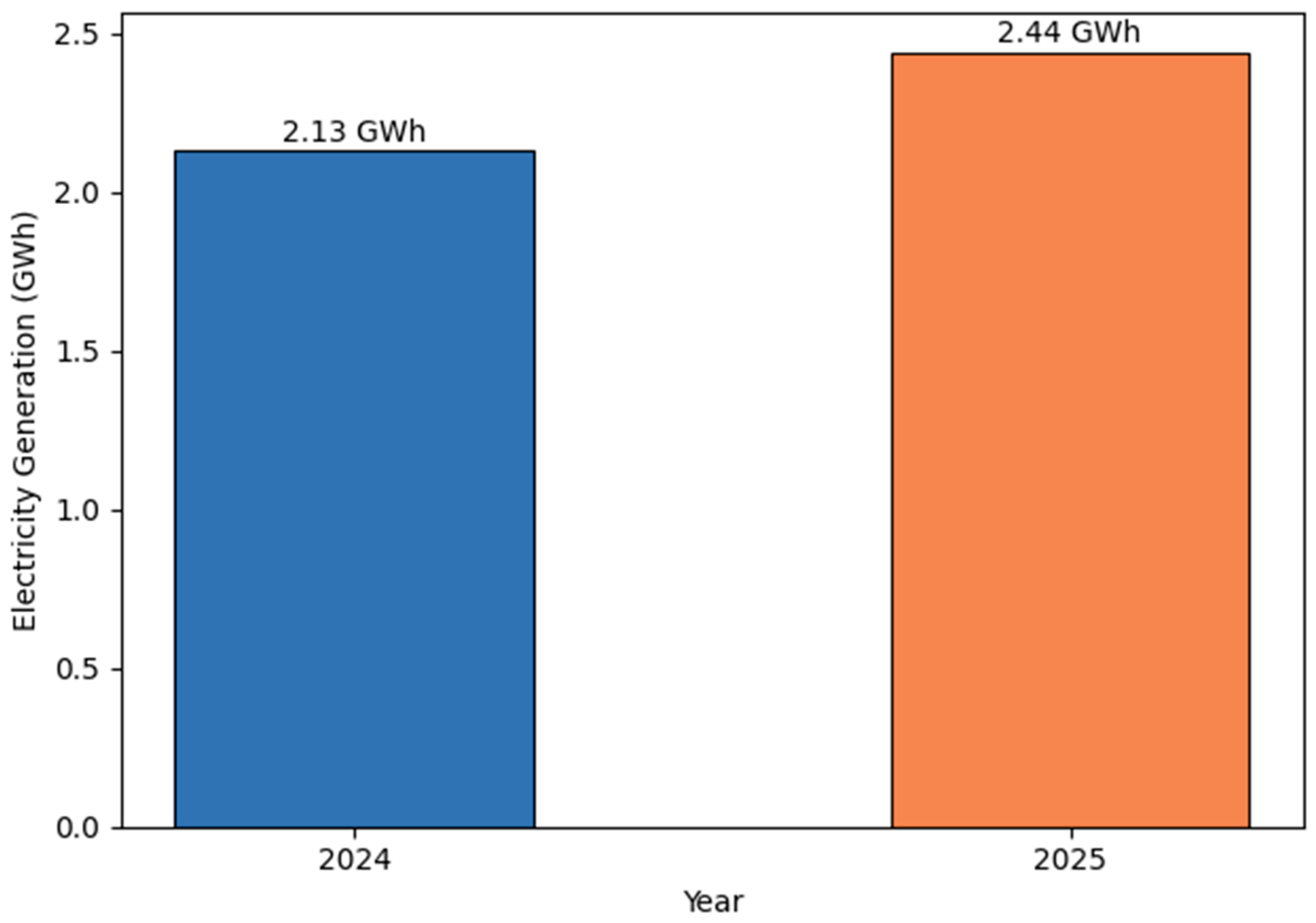
Based on the validated monitoring records, the photovoltaic installation generated approximately 2.13 GWh in 2024 and 2.44 GWh in 2025. The revised calculations confirm the operational consistency of the system during the two-year monitoring period. Minor discrepancies identified during the review process were corrected through recalculation of cumulative monthly electricity generation values.
As presented in
Figure 2, the photovoltaic system produced approximately 14% more electricity in 2025 compared to 2024. This increase suggests that the system maintained stable operational conditions while achieving slightly higher electricity production during the later stage of plant operation. Such improvements in annual electricity generation are commonly observed in photovoltaic systems as operational monitoring, system calibration, and maintenance practices become more optimized over time.
Several factors may contribute to the observed increase in electricity generation between the two monitoring years. First, interannual variations in solar irradiation levels may influence the total electricity production of photovoltaic systems. Slightly higher solar resource availability during certain months can significantly increase the annual electricity yield. Second, operational improvements such as enhanced monitoring practices, improved inverter performance, and reduced system losses may also contribute to higher electricity production levels. Continuous monitoring of system performance through digital energy management platforms allows operators to detect operational inefficiencies and implement corrective measures that improve system efficiency.
From an institutional perspective, the observed increase in electricity generation also demonstrates the importance of performance monitoring mechanisms embedded within Energy Performance Contracting (EPC) frameworks. EPC-based renewable energy projects rely on continuous performance verification and operational transparency to ensure that expected energy savings and generation targets are achieved. The consistent production levels observed in both monitoring years indicate that the photovoltaic installation operates reliably and that the EPC implementation framework supports effective system management.
Overall, the year-to-year comparison confirms that the photovoltaic system provides stable electricity generation and continues to contribute significantly to renewable energy production within the university campus. The observed improvement in electricity production during the second monitoring year further highlights the effectiveness of EPC-based renewable energy investments in supporting long-term energy transition strategies in public institutions.
3.3. Carbon Emission Reduction Analysis
Beyond electricity generation performance, one of the most important sustainability outcomes of the photovoltaic system is its contribution to carbon emission mitigation. Renewable electricity generation from solar photovoltaic systems replaces electricity that would otherwise be produced from fossil-fuel-based power plants within the national grid. In countries where fossil fuels still constitute a significant share of the electricity mix, the environmental benefits of photovoltaic deployment become particularly substantial.
In this study, the annual carbon emission reduction potential of the ALKU rooftop photovoltaic system was estimated based on the total electricity generation values observed during the monitoring period. The calculation follows a commonly applied approach in renewable energy assessment studies, where the amount of avoided emissions is derived from the multiplication of total electricity generation and the average grid emission factor.
The carbon emission reduction can therefore be expressed as:
For Türkiye, the average grid emission factor is commonly reported in the literature to range between 0.42 and 0.50 kg CO2/kWh, depending on the annual energy mix and methodological approach used in national greenhouse gas inventories. The emission factor applied in this study represents the average carbon intensity of grid electricity generation displaced by photovoltaic electricity production. The calculation approach follows commonly used methodologies in renewable energy and greenhouse gas mitigation assessments. Considering this range, the environmental benefits of the photovoltaic installation can be evaluated conservatively by applying an average emission factor representative of the national electricity system.
Based on the monitored electricity production values, the photovoltaic system generated approximately 2.13 GWh in 2024 and 2.44 GWh in 2025. When these values are translated into avoided carbon emissions, the results indicate a substantial reduction in greenhouse gas emissions associated with campus electricity consumption.
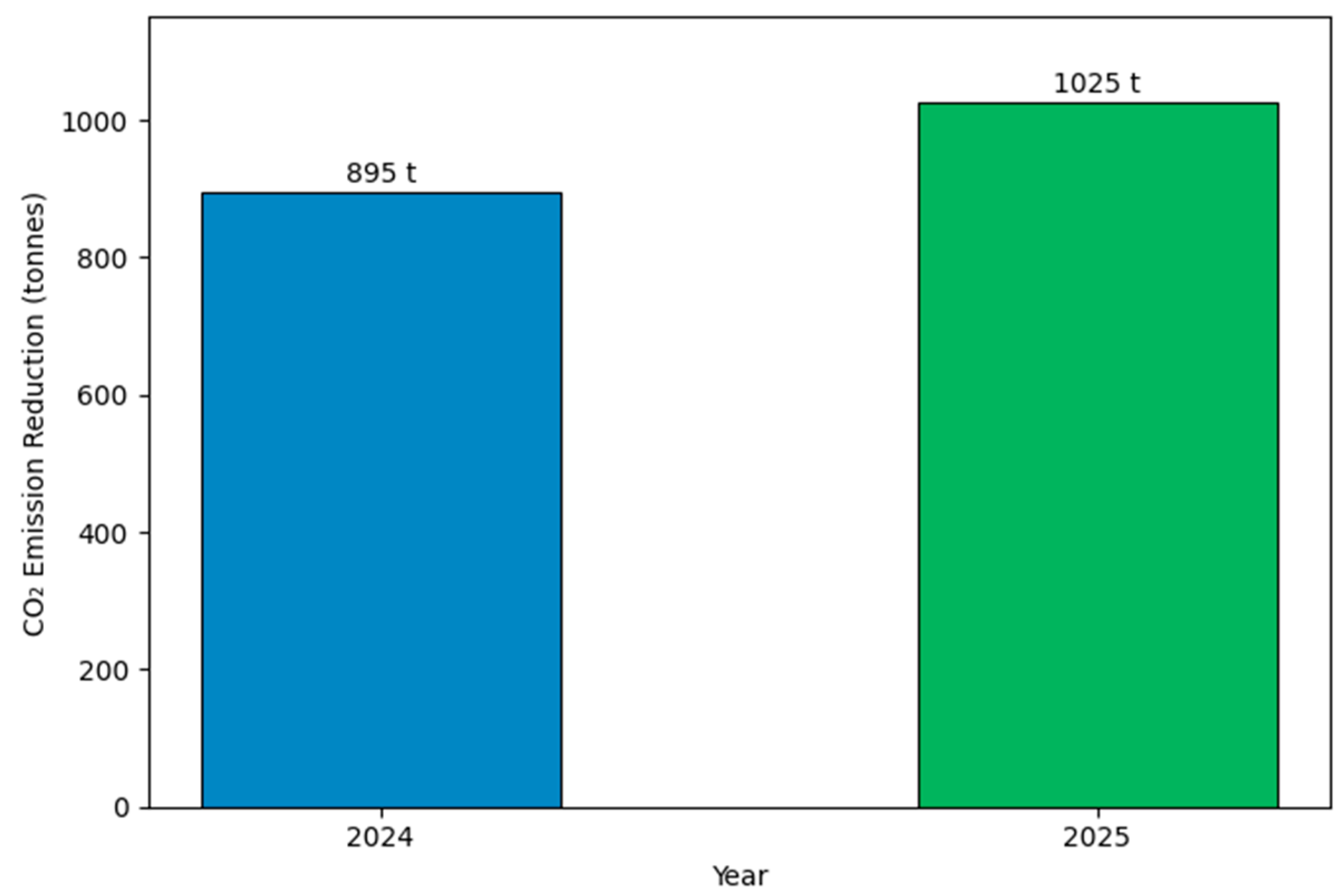
The estimated annual avoided emissions reached approximately 895 tonnes of CO2 in 2024 and 1025 tonnes of CO2 in 2025, demonstrating the significant environmental contribution of the EPC-based solar energy investment. The observed increase in avoided emissions between the two monitoring years is primarily related to the higher electricity production recorded in 2025.
These results highlight that EPC-financed photovoltaic investments can simultaneously generate economic savings and environmental benefits for public institutions. In addition to reducing operational energy costs, such projects contribute directly to institutional climate action strategies and national decarbonization targets. For universities in particular, renewable energy installations serve not only as infrastructure investments but also as demonstrative sustainability projects supporting education, research, and environmental awareness.
The findings therefore confirm that the EPC-based solar PV installation at ALKU provides measurable contributions to carbon mitigation while strengthening institutional energy governance and sustainability performance.
Figure 3 illustrates the environmental benefits associated with the EPC-based photovoltaic installation implemented at ALKU. The results indicate that the system avoided approximately 895 tonnes of CO
2 emissions in 2024 and 1025 tonnes in 2025. The increase in avoided emissions between the two monitoring years reflects the higher electricity production observed in 2025. These findings demonstrate that EPC-supported renewable energy investments can significantly reduce the carbon footprint of public institutions while supporting institutional climate action strategies and long-term decarbonization goals.
3.4. Governance and Institutional Implications of EPC Implementation
The implementation of the photovoltaic system at ALKU provides important insights into the governance implications of Energy Performance Contracting (EPC) within public sector institutions. While EPC models are traditionally discussed as financial mechanisms designed to overcome upfront investment barriers in energy efficiency projects, their application in renewable energy investments demonstrates a broader institutional transformation potential. In this context, EPC can be interpreted not only as a financing tool but also as a governance mechanism that facilitates the adoption of sustainable energy infrastructure in public organizations.
Public institutions often face structural barriers when implementing large-scale renewable energy investments. These barriers typically include limited capital availability, rigid procurement regulations, institutional risk perceptions, and fragmented decision-making processes. EPC models address several of these challenges by transferring part of the technical and financial risks to specialized Energy Service Companies (ESCOs), while allowing institutions to implement energy infrastructure projects without immediate capital expenditure.
The case of the ALKU rooftop photovoltaic installation demonstrates how EPC mechanisms can support renewable energy deployment within higher education institutions. Through the EPC framework, the university was able to implement a large-scale solar energy system while maintaining financial predictability and operational continuity. The contractual structure ensured that performance monitoring, system operation, and long-term efficiency remained aligned with the objectives of both the institution and the service provider. Within the ALKU implementation framework, EPC governance mechanisms included performance-based monitoring obligations, periodic electricity production verification procedures, coordination between technical and administrative units, and operational reporting practices associated with energy management processes. These governance arrangements contributed to improving monitoring transparency and institutional accountability during system operation. These governance-related implementation dimensions were analytically interpreted alongside operational performance indicators in order to evaluate how institutional coordination and monitoring structures may influence the long-term operational stability of EPC-supported renewable energy systems.
In addition to financial and technical benefits, EPC-based renewable energy projects contribute to strengthening institutional energy governance. The implementation process requires systematic monitoring of electricity production, performance evaluation, and transparent reporting mechanisms. These processes promote data-driven energy management practices and encourage the integration of sustainability objectives into institutional decision-making.
Universities represent particularly suitable environments for the deployment of EPC-supported renewable energy projects. Beyond their operational energy demand, universities function as knowledge centers where infrastructure investments can simultaneously support research, education, and public awareness. Solar photovoltaic systems installed on university campuses therefore provide not only energy generation benefits but also educational and demonstrative value for students, researchers, and the wider community.
Furthermore, EPC-based renewable energy investments align closely with national and international climate policy frameworks. Universities adopting such models contribute directly to greenhouse gas reduction targets, sustainable development goals, and institutional sustainability commitments. In this sense, EPC mechanisms support the transition toward low-carbon institutional infrastructures while strengthening the governance capacity of public sector organizations.
Overall, the ALKU photovoltaic project illustrates how EPC models can act as enabling governance instruments that facilitate renewable energy deployment, improve institutional energy management practices, and contribute to broader sustainability transitions in the public sector.
4. Discussion
The results of this study provide empirical insights into the technical performance and governance implications of photovoltaic systems implemented through Energy Performance Contracting (EPC) models in public sector institutions. The monitored electricity generation data obtained from the ALKU rooftop photovoltaic system demonstrate that EPC-based renewable energy investments can achieve stable electricity production while simultaneously contributing to carbon emission mitigation and institutional sustainability objectives.
The annual electricity generation values of approximately 2.13 GWh in 2024 and 2.44 GWh in 2025 indicate that the photovoltaic system operates within the expected performance range for rooftop solar installations located in Mediterranean climatic conditions. Seasonal variations observed in the production data reflect regional solar radiation patterns, with higher electricity generation occurring during spring and summer months. Similar seasonal performance patterns have been widely reported in photovoltaic performance studies and renewable energy assessments in comparable climatic regions [
35,
49]. These findings confirm the reliability of the monitored production data and demonstrate the operational consistency of the installed photovoltaic system. The observed seasonal production profile and annual electricity generation values are broadly consistent with photovoltaic performance patterns reported in Mediterranean-climate university and public-sector installations described in previous international studies [
35,
49]. The findings suggest that EPC-supported photovoltaic systems in public institutions should not be evaluated solely through electricity generation performance indicators. Rather, operational sustainability appears closely linked to institutional coordination capacity, monitoring transparency, and the integration of technical management practices within broader organizational governance structures. In this respect, the ALKU case demonstrates how institutional governance conditions may directly influence the long-term effectiveness of EPC-based renewable energy investments.
Beyond technical performance, the results highlight the significant environmental benefits associated with EPC-based renewable energy investments. The estimated avoided carbon emissions of approximately 895 tonnes of CO
2 in 2024 and 1025 tonnes in 2025 illustrate the substantial contribution of photovoltaic electricity generation to reducing greenhouse gas emissions in institutional energy systems. Previous studies have emphasized that renewable energy deployment in the public sector plays a critical role in supporting national decarbonization strategies and climate mitigation policies [
20,
25]. In this context, photovoltaic systems implemented within public institutions contribute directly to the broader transition toward low-carbon energy infrastructures.
An important dimension emerging from this study concerns the governance implications of EPC implementation. Public institutions often face financial and institutional barriers when implementing large-scale energy infrastructure projects, including limited capital resources, complex procurement procedures, and institutional risk perceptions. EPC models address many of these challenges by enabling energy investments without requiring immediate capital expenditure while transferring part of the technical and financial risks to specialized energy service providers. Previous research has highlighted that EPC mechanisms can effectively mobilize investments in energy efficiency and renewable energy projects within the public sector [
9,
10]. In addition, EPC frameworks contribute to improving transparency and accountability in energy management by requiring systematic monitoring and performance verification. Although the study integrates governance-oriented discussion with technical performance analysis, the governance assessment primarily relies on institutional document analysis and operational evaluation rather than formal interview-based stakeholder analysis. Future research could strengthen the analytical depth of EPC governance assessment through structured interviews, comparative institutional analysis, and multi-case evaluation frameworks.
From a broader sustainability transition perspective, EPC-supported renewable energy investments can be interpreted as institutional mechanisms facilitating technological and governance transformations within public infrastructures. Sustainability transition research emphasizes the importance of policy frameworks, institutional innovation, and technological deployment in accelerating the adoption of low-carbon energy systems [
2,
3,
17]. The implementation of photovoltaic systems through EPC mechanisms therefore represents not only a financial solution but also a governance approach supporting the broader energy transition.
Universities represent particularly suitable environments for the deployment of EPC-based renewable energy systems. In addition to their significant electricity demand, higher education institutions serve as knowledge centers where energy infrastructure projects can simultaneously support research activities, educational programs, and public awareness initiatives. Previous studies have highlighted that energy efficiency and renewable energy initiatives implemented on university campuses contribute to both operational sustainability and environmental education [
47,
48]. In this context, photovoltaic systems installed in university campuses provide demonstrative value for students and researchers while strengthening institutional sustainability strategies.
Despite these advantages, several challenges remain in expanding EPC-supported renewable energy investments across public sector institutions. Regulatory uncertainties, institutional capacity limitations, and complex procurement procedures may still hinder the large-scale adoption of EPC mechanisms. Addressing these barriers requires supportive policy frameworks, improved institutional expertise, and stronger collaboration between public institutions and energy service companies. Previous studies have emphasized that policy support, regulatory stability, and institutional learning are critical factors for accelerating the diffusion of energy performance contracting models [
24,
31].
Overall, the findings of this study demonstrate that EPC-supported photovoltaic systems can simultaneously deliver reliable electricity production, substantial carbon emission reductions, and improved institutional energy governance. The case of the ALKU rooftop photovoltaic system therefore provides valuable insights into the potential role of EPC mechanisms in facilitating renewable energy deployment and sustainability transitions within public sector institutions. Nevertheless, the findings of this study should be interpreted within the contextual limitations of a single-case research design. While the ALKU case provides valuable empirical insights into EPC-supported photovoltaic implementation in public institutions, the results cannot be directly generalized to all institutional or national contexts without consideration of differences in governance structures, regulatory environments, climatic conditions, and institutional energy management capacities.
5. Conclusions
This study evaluated the performance, environmental impact, and governance implications of a rooftop photovoltaic system implemented under an Energy Performance Contracting (EPC) model at ALKU. By analyzing monitored electricity generation data for the 2024–2025 period, the research provides empirical evidence on the operational reliability and sustainability contribution of EPC-based renewable energy investments in public sector institutions.
The results indicate that the photovoltaic system achieved stable electricity production levels throughout the monitoring period. Annual electricity generation reached approximately 2.13 GWh in 2024 and increased to around 2.44 GWh in 2025, demonstrating consistent system performance under real operating conditions. Monthly production patterns reflect the expected seasonal variability associated with solar radiation levels in Mediterranean climatic regions, with higher electricity generation observed during spring and summer months.
In addition to technical performance, the photovoltaic system generated significant environmental benefits by reducing carbon emissions associated with electricity consumption. The estimated avoided emissions reached approximately 895 tonnes of CO2 in 2024 and 1025 tonnes in 2025, highlighting the role of renewable electricity generation in supporting institutional decarbonization efforts. These results demonstrate that photovoltaic systems installed within public institutions can contribute meaningfully to climate mitigation objectives while reducing dependence on fossil-fuel-based electricity generation.
From an institutional perspective, the implementation of the photovoltaic system through an EPC model illustrates the potential of performance-based contracting mechanisms to overcome financial and administrative barriers commonly encountered in public sector energy investments. By enabling infrastructure development without requiring substantial upfront capital expenditure, EPC frameworks facilitate the adoption of renewable energy technologies while ensuring performance monitoring and operational accountability.
The case of ALKU also highlights the broader role of universities in advancing sustainability transitions. As large energy consumers and knowledge-generating institutions, universities provide suitable environments for demonstrating renewable energy technologies and integrating sustainability practices into campus operations. Photovoltaic systems implemented within university campuses therefore provide not only operational energy benefits but also opportunities for applied research, sustainability education, and public awareness.
Overall, the findings of the ALKU case study suggest that EPC-supported photovoltaic investments may contribute to improved energy performance, greenhouse gas mitigation, and institutional sustainability governance within public-sector university settings operating under similar institutional and climatic conditions. The results presented in this study provide practical insights for public institutions seeking to accelerate renewable energy deployment while maintaining financial stability and operational efficiency. Future monitoring and comparative analysis across similar institutional contexts may further support the development of scalable EPC-based renewable energy strategies in the public sector.






 ,
,