Quantifying Dominant Remaining Oil Distribution in Displacement Units of High-Water-Cut Reservoirs

 ,
,
Abstract
1. Introduction
2. Seepage Characteristics and Characterization Methods of Displacement Units
2.1. Dynamic Evolution Patterns of the Seepage Field
2.2. Quantitative Characterization Methods for the Seepage Field
3. Time-Varying Laws of Reservoir Physical Properties
4. Characterization and Classified Evaluation Method of Remaining Oil in Displacement Units
4.1. Quantitative Characterization Method of Remaining Oil
4.2. Classified Evaluation Method of Remaining Oil
5. Field Application
6. Conclusions
- (1)
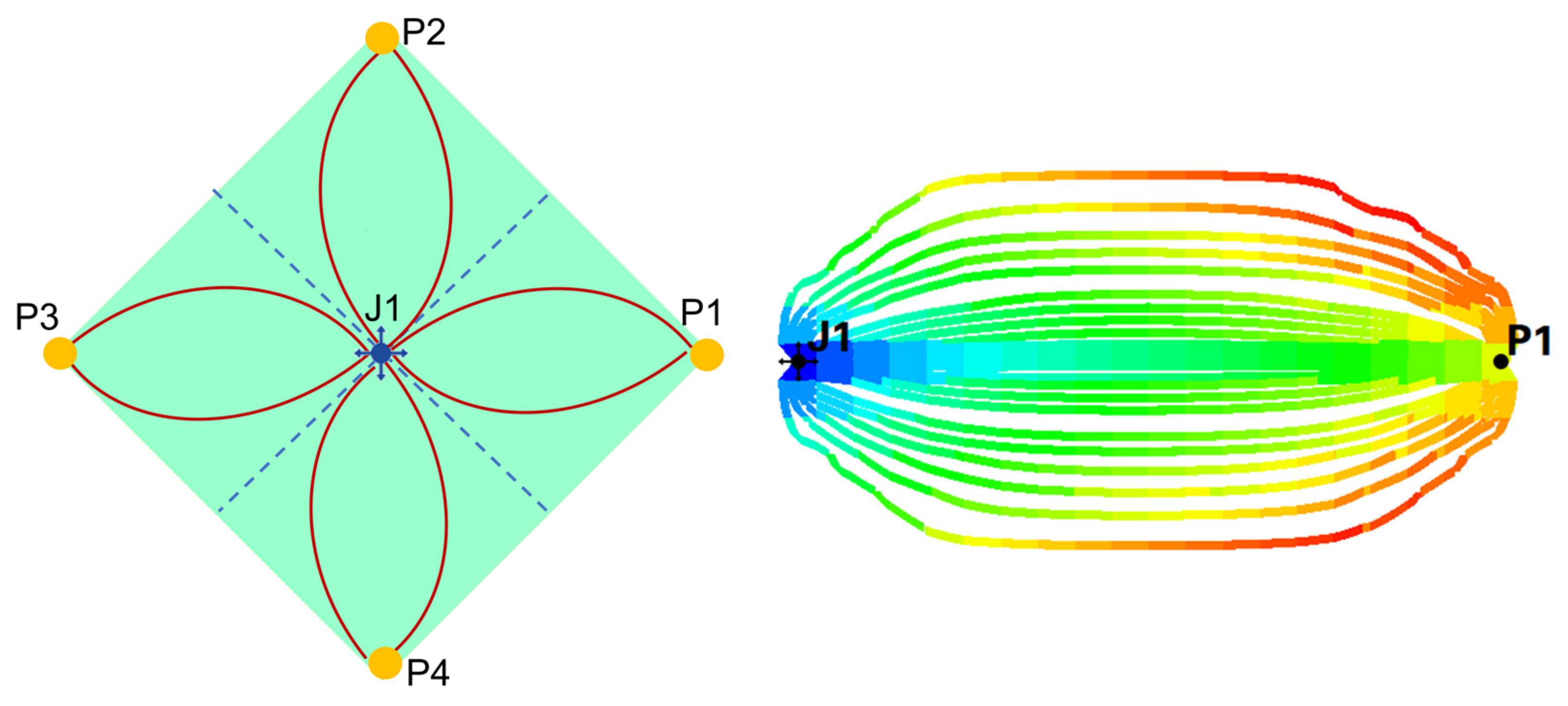
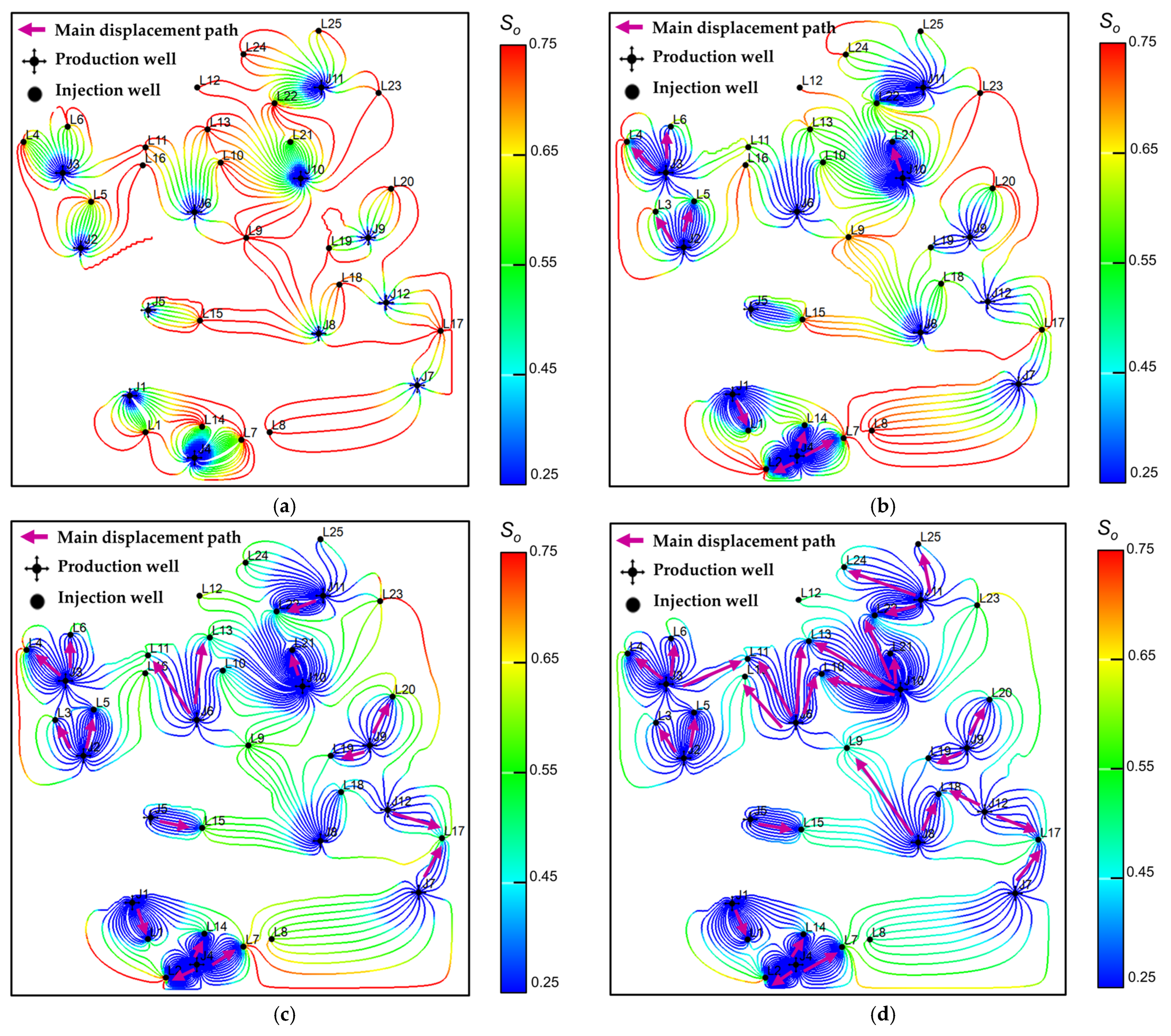
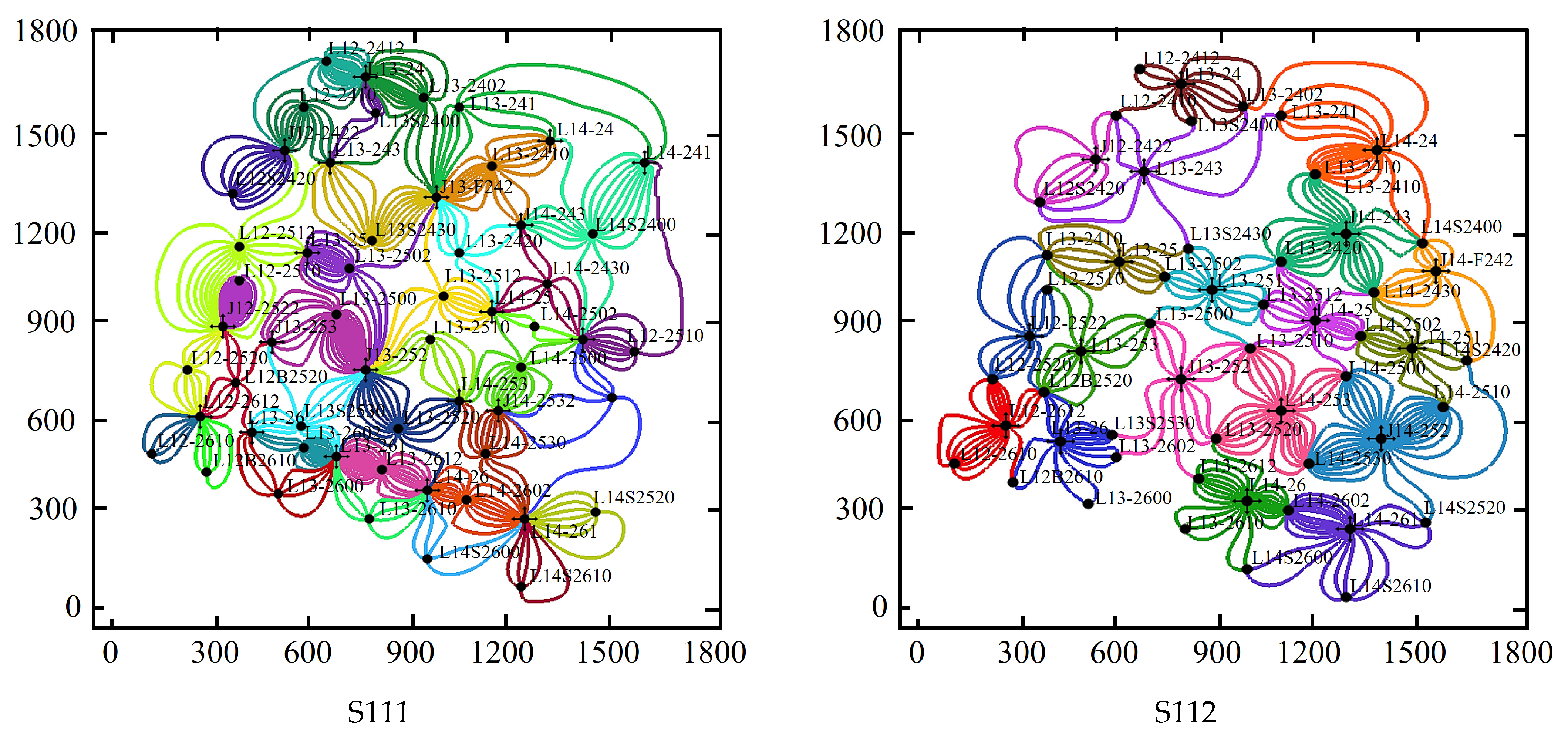
- Displacement units can effectively characterize the dynamic seepage regions between injection and production wells. During long-term waterflooding, reservoir heterogeneity and injection-production pressure differences jointly control the migration and reorganization of streamline enclosed displacement regions, leading to preferential flow paths in high permeability and well-connected zones.
- (2)
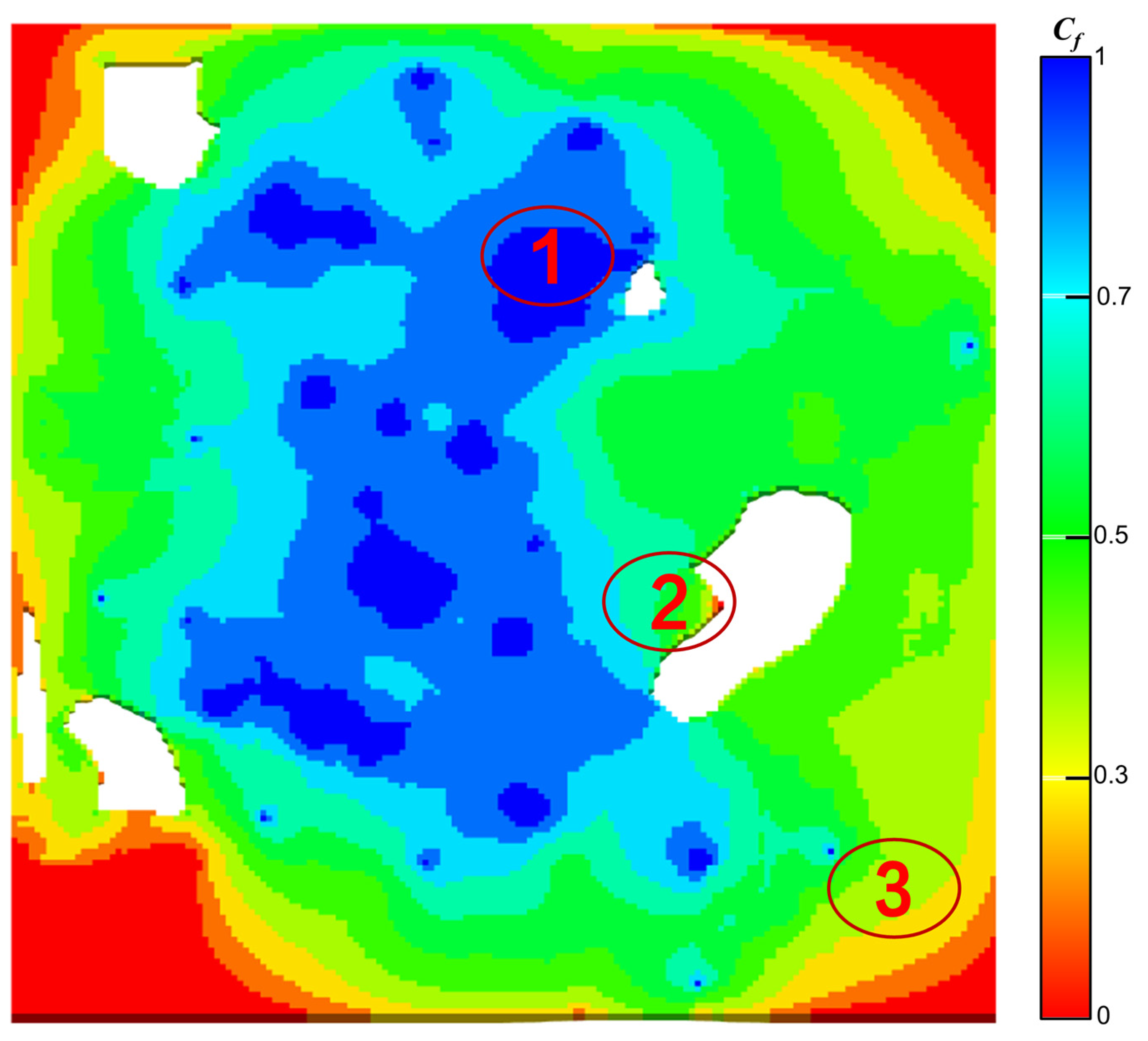
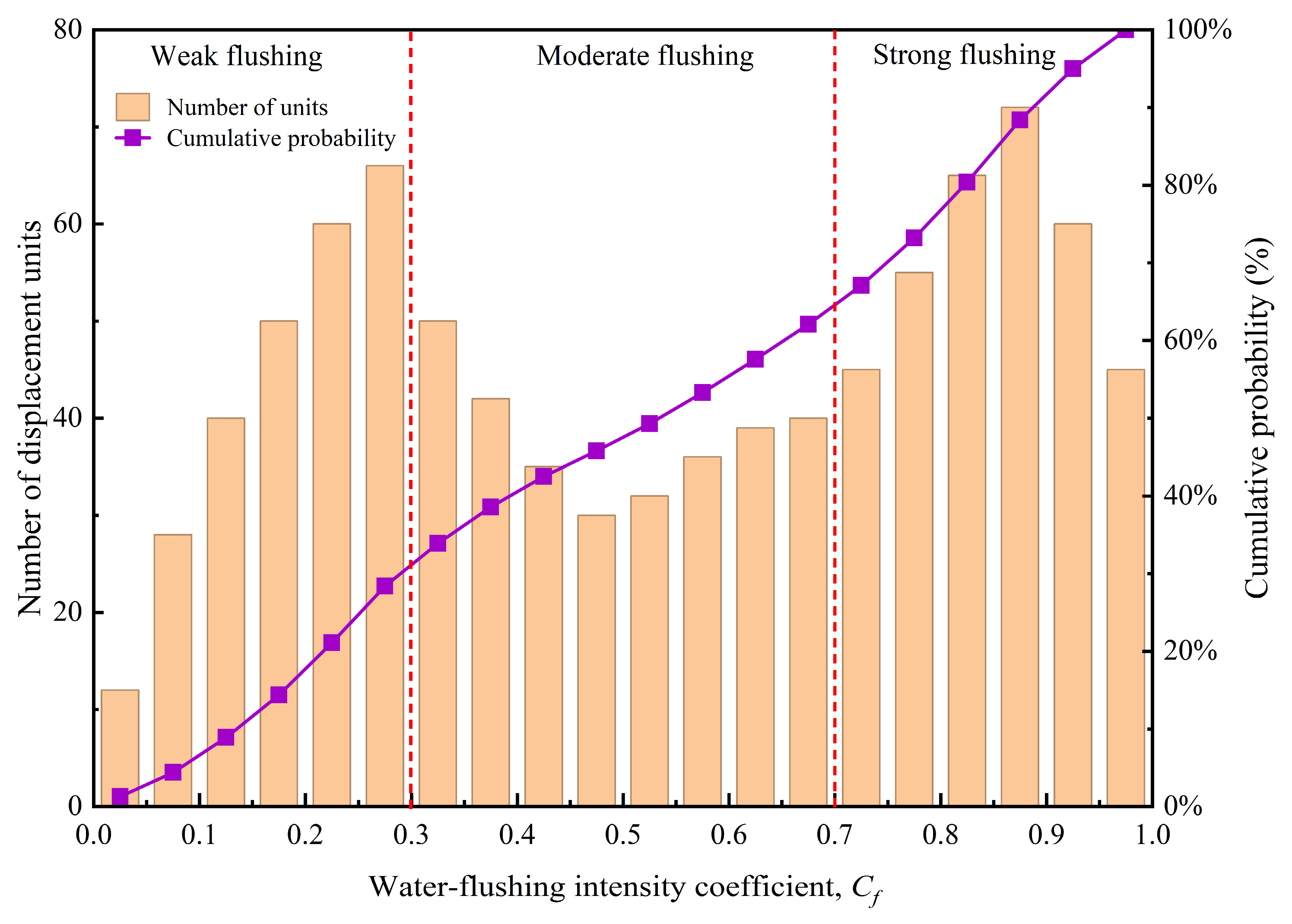
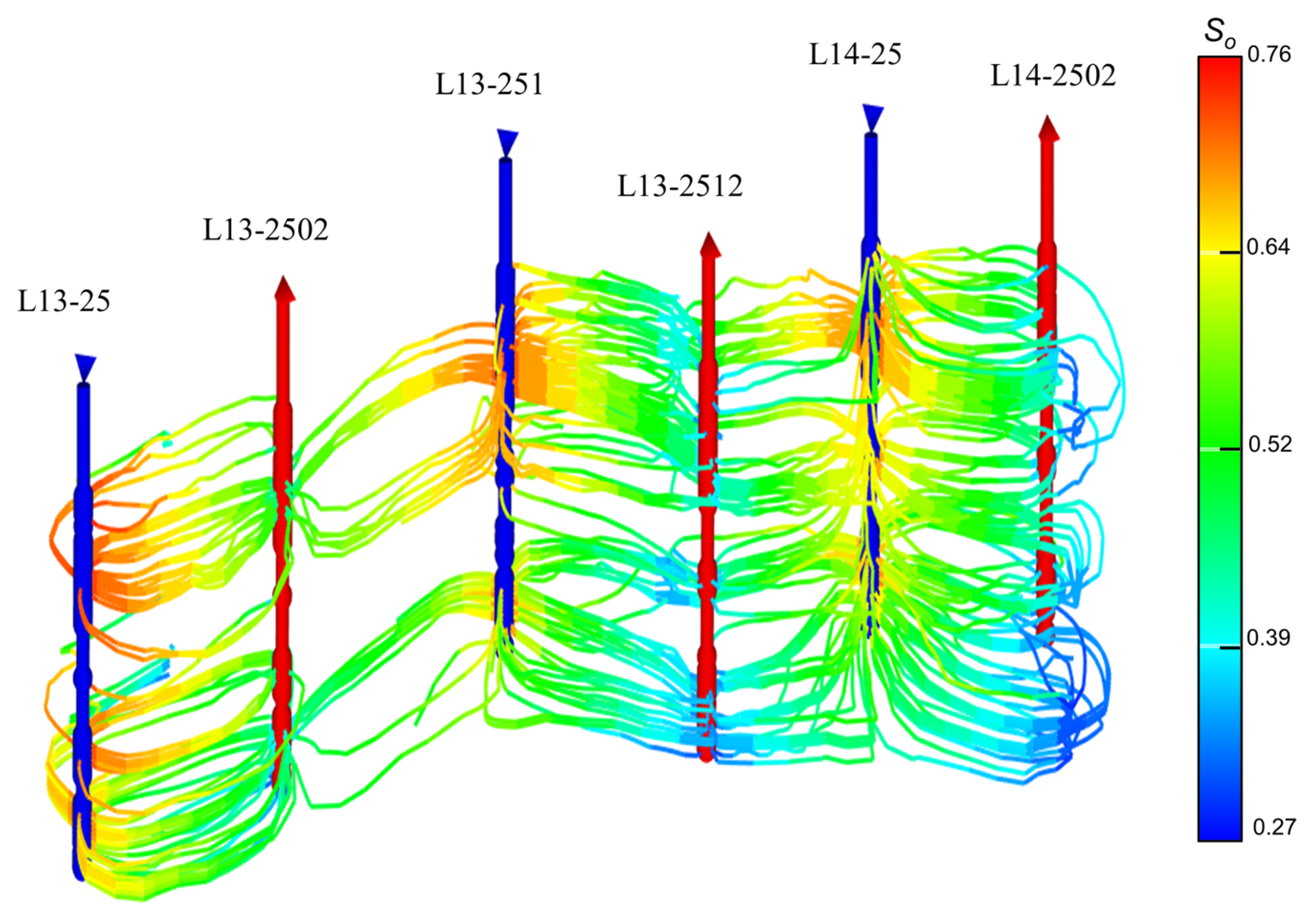
- The combination of the remaining oil abundance index Iso and the water flushing intensity coefficient Cf provides a quantitative basis for classified evaluation of remaining oil. Iso reflects the remaining oil enrichment degree, while Cf characterizes the cumulative water flushing intensity within each displacement unit.
- (3)
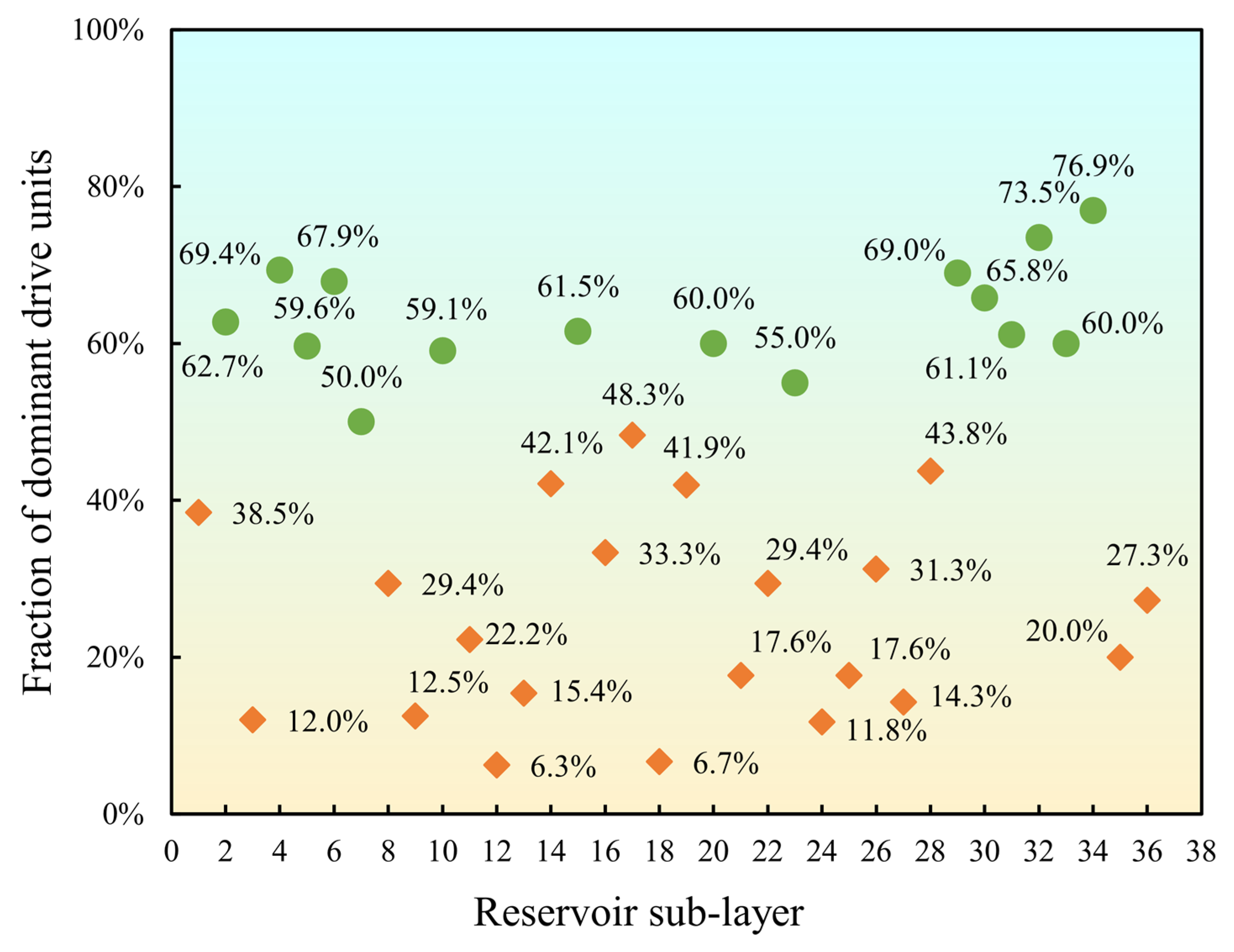
- In the W Oilfield block, 902 displacement units were identified, including 342 strongly dominant units, 304 weakly dominant units, and 256 non-dominant units, accounting for 37.9%, 33.7%, and 28.4%, respectively. In 15 sublayers, strongly dominant units accounted for more than 50%, indicating significant preferential water flow in these layers.
- (4)
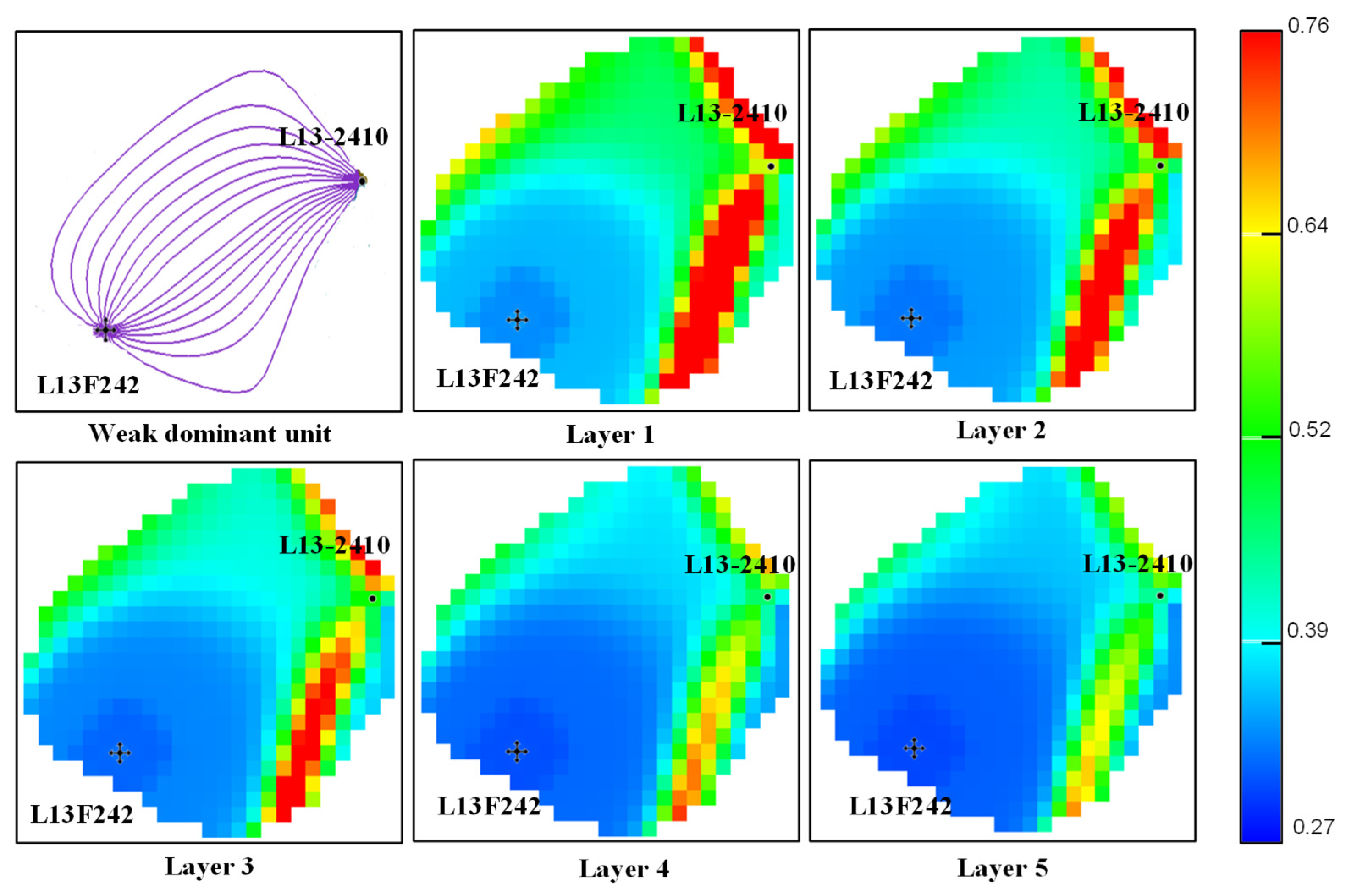
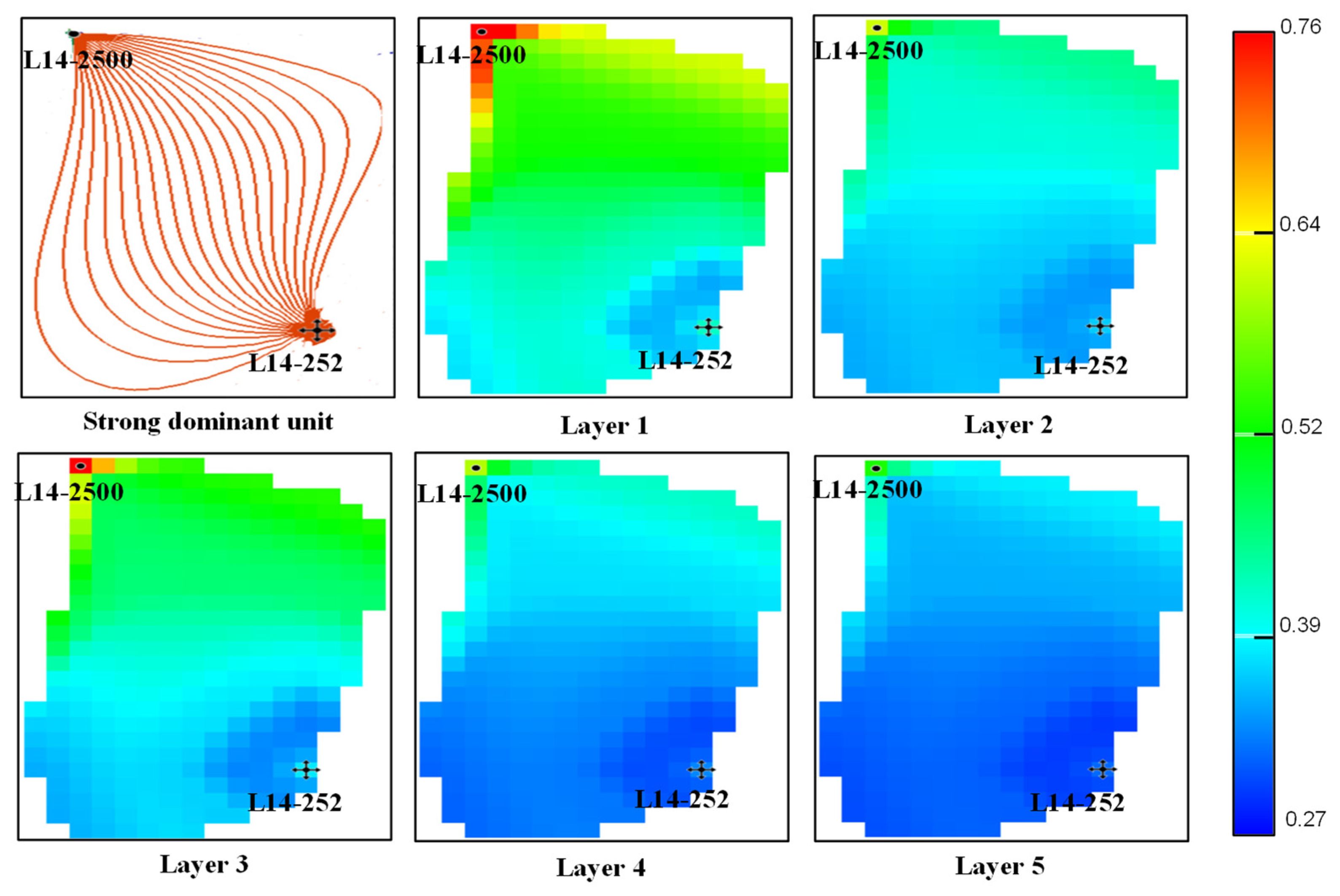
- Strongly dominant units were characterized by high water flushing intensity and low remaining oil abundance, whereas weakly dominant units retained more remaining oil near the margins of displacement units. The proposed method was applied to one representative field block; future work should further verify the method using tracer tests, production logging data, and additional field cases with different reservoir conditions.
Author Contributions
Funding
Data Availability Statement
Conflicts of Interest
References
- Blaizot, M. Worldwide shale-oil reserves: Towards a global approach based on the principles of Petroleum System and the Petroleum System Yield. Bull. Soc. Geol. Fr. 2017, 188, 33. [Google Scholar] [CrossRef]
- Andersen, P.O.; Standnes, D.C.; Skjæveland, S.M. Waterflooding oil-saturated core samples–Analytical solutions for steady-state capillary end effects and correction of residual saturation. J. Pet. Sci. Eng. 2017, 157, 364–379. [Google Scholar] [CrossRef]
- Zhang, Z.; Li, H.; Zhang, D. Water flooding performance prediction by multi-layer capacitance-resistive models combined with the ensemble Kalman filter. J. Pet. Sci. Eng. 2015, 127, 1–19. [Google Scholar] [CrossRef]
- Cao, R.; Jia, Z.; Cheng, L.; Wang, Z.; Ye, T.; Rui, Z. Using high-intensity water flooding relative permeability curve for predicting mature oilfield performance after long-term water flooding in order to realize sustainable development. J. Pet. Sci. Eng. 2022, 215, 110629. [Google Scholar] [CrossRef]
- Wang, S.-C.; Zhang, N.; Tang, Z.-H.; Zou, X.-F.; Sun, Q.; Liu, W. Time-dependent model for two-phase flow in ultra-high-water-cut reservoirs: Time-varying permeability and relative permeability. Pet. Sci. 2024, 21, 2536–2553. [Google Scholar] [CrossRef]
- Kazem, M.H.; Hussein, M.A.; Adnan, M.S.; Alfarge, D.; Mansour, I.J. The performance of streamline simulation technique to mimic the waterflooding management process in oil reservoirs. Fuel 2023, 348, 128556. [Google Scholar] [CrossRef]
- Qi, G.; Zhao, J.; He, H.; Sun, E.; Yuan, X.; Wang, S. A New Relative Permeability Characterization Method Considering High Waterflooding Pore Volume. Energies 2022, 15, 3868. [Google Scholar] [CrossRef]
- Feng, G.; Zhou, Y.; Yao, W.; Liu, L.; Feng, Z.; Yi, Y.; Feng, Y. Countermeasures to Decrease Water-cut and Increase Oil Recovery from High Water-cut, Narrow-Channel Reservoirs in Bohai Sea. Geofluids 2021, 2021, 6671098. [Google Scholar] [CrossRef]
- Zahoor, M.K.; Derahman, M.N. New approach for improved history matching while incorporating wettability variations in a sandstone reservoir—Field implementation. J. Pet. Sci. Eng. 2013, 104, 27–37. [Google Scholar] [CrossRef]
- Meng, L.; Ju, B. Experimental Study of Water Displacement Rates on Remaining Oil Distribution and Oil Recovery in 2D Pore Network Model. Energies 2022, 15, 1501. [Google Scholar] [CrossRef]
- Aliyev, A.; Zivar, D.; Pourafshary, P. Investigation of replacing tracer flooding analysis by capacitance resistance model to estimate interwell connectivity. Petroleum 2023, 9, 61–71. [Google Scholar] [CrossRef]
- Guo, Q.; Zhuang, T.; Li, Z.; He, S. Prediction of reservoir saturation field in high water-cut stage by bore-ground electromagnetic method based on machine learning. J. Pet. Sci. Eng. 2021, 204, 108678. [Google Scholar] [CrossRef]
- Hou, J.; Zhang, Y.; Wang, D.; Zhou, K. Numerical simulation of reservoir parameters’ synergetic time-variability on development rules. J. Pet. Explor. Prod. Technol. 2016, 6, 641–652. [Google Scholar] [CrossRef]
- Li, S.; Feng, Q.; Zhang, X.; Yu, C.; Huang, Y. A new water flooding characteristic curve at ultra-high water-cut stage. J. Pet. Explor. Prod. Technol. 2023, 13, 101–110. [Google Scholar] [CrossRef]
- Liu, C.; Zhou, W.; Jiang, J.; Shang, F.; He, H.; Wang, S. Remaining oil distribution and development strategy for offshore unconsolidated sandstone reservoir at ultrahigh-water-cut stage. Geofluids 2022, 2022, 6856298. [Google Scholar] [CrossRef]
- Liu, F.; Qiao, Y.; Wang, K.; Zhou, W.; Li, K. Scalar and Vector Evaluation Methods for Remaining Oil Potential of Water-Driven Reservoirs. Chem. Tech. Fuels Oils 2021, 57, 796–803. [Google Scholar] [CrossRef]
- Yu, H.; Wang, Y.; Zhang, L.; Zhang, Q.; Guo, Z.; Wang, B.; Sun, T. Remaining oil distribution characteristics in an oil reservoir with ultra-high-water-cut. Energy Geosci. 2022, 5, 100116. [Google Scholar] [CrossRef]
- Jia, H.; Deng, L.H. Oil reservoir water flooding flowing area identification based on the method of streamline clustering artificial intelligence. Pet. Explor. Dev. 2018, 45, 328–335. [Google Scholar] [CrossRef]
- Lyu, D.; Lin, C.; Ren, L.; Dong, C.; Song, J. Residual oil evolution based on displacement characteristic curve. Int. J. Min. Sci. Technol. 2020, 30, 337–343. [Google Scholar] [CrossRef]
- Masoudi, P.; Tokhmechi, B.; Bashari, A.; Jafari, M.A. Identifying productive zones of the Sarvak formation by integrating outputs of different classification methods. J. Geophys. Eng. 2012, 9, 282–290. [Google Scholar] [CrossRef]
- Wang, Y.S.; Shi, C.F.; Wang, J.Q. New equations for characterizing water flooding in ultra-high-water-cut oilfields. Oil Gas Geol. 2020, 41, 1282–1287. [Google Scholar] [CrossRef]
- Cui, C.; Xu, J.; Wang, D.; Yang, Y.; Liu, Z.; Huang, Y. A new water flooding characteristic curve at ultra-high water-cut stage. Acta Pet. Sin. 2015, 36, 1267–1271. [Google Scholar] [CrossRef]
- Techniques for Improving the Water-Flooding of Oil Fields During the High-Water-Cut Stage/Oil & Gas Science and Technology–Revue d’IFP Energies Nouvelles n.d. Available online: https://ogst.ifpenergiesnouvelles.fr/articles/ogst/full_html/2019/01/ogst180247/ogst180247.html (accessed on 5 December 2024).
- Flow-Path Tracking Strategy in a Data-Driven Interwell Numerical Simulation Model for Waterflooding History Matching and Performance Prediction with Infill Wells/SPE Journal/OnePetro n.d. Available online: https://onepetro.org/SJ/article/25/02/1007/453362/Flow-Path-Tracking-Strategy-in-a-Data-Driven (accessed on 5 December 2024).
- Zhu, W.; Zou, C.; Wang, J.; Liu, W.; Wang, J. A new three-dimensional effective water-flooding unit model for potential tapping of remained oil in the reservoirs with rhythmic conditions. J. Pet. Explor. Prod. Technol. 2021, 11, 1375–1391. [Google Scholar] [CrossRef]
- Zhang, M.; Fan, J.; Zhang, Y.; Liu, Y. Study on the relationship between the water-cutting rate and the remaining oil saturation of the reservoir by using the index percolating saturation formula with variable coefficients. J. Pet. Explor. Prod. Technol. 2020, 10, 3649–3661. [Google Scholar] [CrossRef]
- Yan, K.; Han, P.; Xie, K.; Meng, L.; Cao, W.; Cao, R.; Zhang, T.; Li, X.; Li, S. Identification and characterization of dominant seepage channels in oil reservoirs after polymer flooding based on streamline numerical simulation. Alex. Eng. J. 2024, 106, 704–720. [Google Scholar] [CrossRef]
- Xu, L.; Yao, X.; Yan, S.; Wen, Z.; Xue, J. Fine Characterization of Nonmain Oil Layer Distributions in Complex Fault Block Oilfield and Its Development Model. Geofluids 2024, 2024, 2183265. [Google Scholar] [CrossRef]
- Debossam, J.G.S.; Freitas, M.M.; Souza, G.; Souto, H.P.A. Picard–Newton method for water-alternating-gas injection simulation in heterogeneous reservoirs. Processes 2025, 14, 20. [Google Scholar] [CrossRef]
- Zhu, W.; Zhu, Y.; Bu, W.; Wang, Y.; Liu, Y. Study on displacement units for water flooded low-permeability oil reservoirs. Heliyon 2024, 10, e33140. [Google Scholar] [CrossRef]
- Zhao, H.; Liu, W.; Rao, X.; Sheng, G.; Li, H.A.; Guo, Z.; Liu, D.; Cao, L. INSIM-FPT-3D: A Data-Driven Model for History Matching, Water-Breakthrough Prediction and Well-Connectivity Characterization in Three-Dimensional Reservoirs. In Proceedings of the SPE Reservoir Simulation Conference, Houston, TX, USA, 26–28 October 2021. SPE-205191-MS. [Google Scholar]
- Song, K.; Wang, D.; Yang, E.; Wu, X.; Dong, C.; Sun, P. A novel method to identify preferential flow paths by considering the time-varying effect of petrophysical parameters in ultra-high-water-cut reservoirs. Geoenergy Sci. Eng. 2024, 241, 213172. [Google Scholar] [CrossRef]
- Tang, B.; Ren, K.; Lu, H.; Li, C.; Geng, C.; Wei, L.; Chai, Z.; Wu, S. Study on residual oil distribution law during the depletion production and water flooding stages in the fault-karst carbonate reservoirs. Processes 2023, 11, 2147. [Google Scholar] [CrossRef]
- Sun, K.; Liu, H.; Wang, Y.; Ge, L.; Gao, J.; Du, W. Novel Method for Inverted Five-Spot Reservoir Simulation at High-water-cut Stage Based on Time-Varying Relative Permeability Curves. ACS Omega 2020, 5, 13312–13323. [Google Scholar] [CrossRef] [PubMed]
- Brooks, R.H. Hydraulic Properties of Porous Media; Colorado State University: Fort Collins, CO, USA, 1965. [Google Scholar]
- Song, K.P.; Wu, Y.S.; Ji, B.Y. A φ-function method for estimating the distribution of residual oil saturation in water-drive reservoirs. Acta Pet. Sin. 2006, 27, 91–95. [Google Scholar]
- Buckley, S.E.; Leverett, M.C. Mechanism of fluid displacement in sands. Trans. AIME 1942, 146, 107–116. [Google Scholar] [CrossRef]
- Welge, H.J. A simplified method for computing oil recovery by gas or water drive. J. Pet. Technol. 1952, 4, 91–98. [Google Scholar] [CrossRef]
- Dumitrache, L.; Nistor, I.; Suditu, S.; Badea, A.M. Simulating salt precipitation in dry gas reservoirs using ECLIPSE Thermal CO2STORE. Rev. De Chim. 2018, 69, 251–254. [Google Scholar] [CrossRef]



| Remaining Oil Abundance Zones | High Abundance Zone | Low Abundance Zone | Hard-to-Recover Zone |
|---|---|---|---|
| Range of Remaining Oil Abundance Index | 0.53 | 0.21–0.53 | 0–0.21 |
| Scheme | Thresholds of Iso | Thresholds of Cf | Strongly Dominant Units | Weakly Dominant Units | Non-Dominant Units |
|---|---|---|---|---|---|
| S1: Relaxed thresholds | 0.19/0.50 | 0.25/0.65 | 360 (39.9%) | 301 (33.4%) | 241 (26.7%) |
| S2: Baseline thresholds | 0.21/0.53 | 0.30/0.70 | 342 (37.9%) | 304 (33.7%) | 256 (28.4%) |
| S3: Strict thresholds | 0.23/0.56 | 0.35/0.75 | 320 (35.5%) | 307 (34.0%) | 275 (30.5%) |
| Classification | Remaining Oil Abundance Index | Water Flushing Intensity Coefficient |
|---|---|---|
| Strongly dominant displacement unit | Iso < 0.21 | Cf ≥ 0.7 |
| Weakly dominant displacement unit | 0.21 ≤ Iso < 0.53 | 0.3 ≤ Cf < 0.7 |
| Non-dominant displacement unit | Iso ≥ 0.53 | Cf ≤ 0.3 |
| Method Type | Main Basis | Strength | Main Limitation | Improvement in This Study |
|---|---|---|---|---|
| Static remaining-oil evaluation | Porosity, permeability, water-cut, oil saturation | Simple and suitable for rapid field diagnosis | Cannot capture dynamic seepage-field evolution during long-term waterflooding | Introduces dynamic displacement units and water-flushing intensity |
| Streamline simulation | Flow paths, time of flight, streamline density | Effective for visualizing flow paths and waterflood sweep | Mainly focuses on flow-path description; remaining-oil abundance is not explicitly classified | Couples streamline-defined units with remaining-oil abundance evaluation |
| Interwell connectivity methods | Production–injection response, connectivity coefficients | Quantifies injector–producer communication | Usually lacks direct coupling with saturation evolution and remaining-oil classification | Incorporates interwell pressure response into injected-water allocation |
| Time-varying petrophysical methods | Dynamic permeability, apparent viscosity, flow resistance | Considers reservoir-property evolution during high-water-cut development | Mainly identifies preferential flow paths, but does not classify displacement-unit-scale remaining oil | Combines time-varying properties with φ-function-based saturation tracking |
| Existing displacement-unit methods | Analytical or geological division of displacement units | Provides a unit-scale description of waterflooded reservoirs | Dynamic injection–production response and remaining-oil dominance are insufficiently integrated | Establishes a dual-index dynamic classification framework based on Iso and water flushing intensity |
Disclaimer/Publisher’s Note: The statements, opinions and data contained in all publications are solely those of the individual author(s) and contributor(s) and not of MDPI and/or the editor(s). MDPI and/or the editor(s) disclaim responsibility for any injury to people or property resulting from any ideas, methods, instructions or products referred to in the content. |
© 2026 by the authors. Licensee MDPI, Basel, Switzerland. This article is an open access article distributed under the terms and conditions of the Creative Commons Attribution (CC BY) license.
Share and Cite
Chen, C.; Li, Z.; Liu, Z.; Zhang, M.; Yu, Y.; Xiang, J.; Wang, D. Quantifying Dominant Remaining Oil Distribution in Displacement Units of High-Water-Cut Reservoirs. Energies 2026, 19, 2519. https://doi.org/10.3390/en19112519
Chen C, Li Z, Liu Z, Zhang M, Yu Y, Xiang J, Wang D. Quantifying Dominant Remaining Oil Distribution in Displacement Units of High-Water-Cut Reservoirs. Energies. 2026; 19(11):2519. https://doi.org/10.3390/en19112519
Chicago/Turabian StyleChen, Chao, Zhou Li, Zhenping Liu, Menghao Zhang, Yaopan Yu, Junyao Xiang, and Daigang Wang. 2026. "Quantifying Dominant Remaining Oil Distribution in Displacement Units of High-Water-Cut Reservoirs" Energies 19, no. 11: 2519. https://doi.org/10.3390/en19112519
APA StyleChen, C., Li, Z., Liu, Z., Zhang, M., Yu, Y., Xiang, J., & Wang, D. (2026). Quantifying Dominant Remaining Oil Distribution in Displacement Units of High-Water-Cut Reservoirs. Energies, 19(11), 2519. https://doi.org/10.3390/en19112519