Article

Improved LADRC Damping of Sub-Synchronous Oscillation in DFIG-Based Wind Power Systems Under Multiple Operating Conditions


1
College of Computer and Control Engineering, Northeast Forestry University, Harbin 150040, China
2
College of Electrical Engineering and New Energy, China Three Gorges University, Yichang 443000, China
*
Author to whom correspondence should be addressed.
Energies 2026, 19(10), 2378; https://doi.org/10.3390/en19102378
Submission received: 11 April 2026 / Revised: 13 May 2026 / Accepted: 13 May 2026 / Published: 15 May 2026

Abstract

An active damping control technique based on improved linear active disturbance rejection control (LADRC) is suggested to address the inadequate damping of doubly fed induction generator (DFIG) systems coupled to the grid using series compensation capacitors. Conventional LADRC still has certain limitations under complicated operating conditions, primarily because of its inadequate periodic disturbance estimate capabilities, which limit the system’s dynamic performance and disturbance-rejection capability. An enhanced LADRC scheme is created for the inner current loop of the rotor-side converter (RSC) in the DFIG system in order to lessen these restrictions. To enable a real-time estimate and adjustment of sub-synchronous disturbances, a decoupled linear extended state observer (LESO) is first proposed. In order to effectively attenuate both sub-synchronous oscillation and periodic disturbances, a composite control structure with enhanced suppression capability is constructed by incorporating an improved repetitive control scheme into the linear state error feedback law. The results show that the improved LADRC significantly enhances damping performance and disturbance rejection capability in the subsynchronous frequency range, suppressing active power oscillations within approximately 0.3 s based on a ±10% settling band. Compared with the conventional LADRC, the average THD of the grid current is reduced from 3.43% to 0.56%.

1. Introduction

The penetration of renewable energy in power systems has continued to rise as the world’s energy problem has gotten worse recently [1]. Due to its clean and sustainable qualities, wind energy has been used extensively among many renewable energy sources [2,3]. In 2025, wind power generation reached approximately 1130 TW/h in China, 132.6 TW/h in Germany, and 49.6 TW/h in France. In Denmark, wind power accounted for about 58.7% of electricity generation; based on a total electricity generation of 38.42 TW/h, this corresponds to approximately 22.5 TW/h. These figures further highlight the growing importance of wind power in modern power systems and the practical relevance of improving damping control and oscillation stability under high renewable penetration [4,5,6,7,8].
However, the widespread grid integration of renewable energy sources, such as wind power, has also created new oscillatory stability problems, which pose serious challenges to the stable and safe operation of power systems [9,10]. Wind turbines based on doubly fed induction generators (DFIG) are among the most popular wind power generation technologies. Although series compensation devices are widely used to enhance transmission capacity and improve voltage stability in weak grids, their interaction with DFIG converter control systems can induce subsynchronous oscillation (SSO) [11].
In contrast to the SSO observed in conventional thermal power units, the SSO frequency in wind power systems is not constant. Instead, it is jointly influenced by the output level of the wind farm, the network configuration of the transmission system, and the converter control scheme [9,12]. The oscillation frequency usually shows notable time-varying characteristics since wind power generation is intermittent and unpredictable [13,14]. In order to improve the stability of wind farm grid integration, suppressing SSO under various operating conditions is of significant engineering importance [15,16]. Numerous suppression techniques have been documented in the literature to handle this oscillation problem.
In [17,18], a supplementary sub-synchronous damping control (SSDC) scheme was incorporated into the original control system of the DFIG to suppress SSO. In [19,20], SSDC was further implemented in a static var compensator (SVC) to mitigate SSO in the system. However, the introduction of additional hardware generally results in a more complex system configuration and a corresponding increase in implementation cost. In general, the main limitation of the SSDC strategy lies in its relatively restricted applicability. The controller parameters often need to be adjusted when the DFIG’s working conditions change.
To overcome the limitations of existing suppression strategies, the proportional–integral (PI) control employed in the rotor-side converter (RSC) has been replaced in some studies by more advanced control schemes for mitigating SSO. In [21,22], sliding mode control (SMC) and active disturbance rejection control (ADRC) were introduced, respectively, in place of PI control, and effective SSO suppression was achieved. However, parameter tuning remains relatively complex. In [23], linear active disturbance rejection control (LADRC) was adopted to replace the PI control for SSO suppression. Although the favorable dynamic performance of ADRC was retained and the tuning process was simplified to some extent, the disturbance observation capability of LADRC remained insufficient. As a result, when it is applied to the suppression of SSO in DFIG-based wind turbines, the overall disturbance rejection performance of the system may be limited. In [24], a particle swarm optimization-based LADRC was proposed to enhance controller tuning and disturbance rejection. However, this approach requires a significant computational effort and does not provide a noticeable improvement in the total harmonic distortion, limiting its practical applicability in engineering. In [25], a current harmonic suppression strategy for permanent magnet synchronous motors combining LADRC with a three-parameter notch filter was proposed to reduce current distortion and improve steady-state performance. However, its effectiveness is limited under variable-speed operation or harmonic frequency drift because it relies on fixed-frequency harmonic compensation and cannot adapt to changes in the harmonic spectrum.
As a weak-model-dependent disturbance-rejection control method, LADRC does not rely on an accurate mathematical model of the DFIG system; instead, it estimates and compensates the lumped total disturbance online, including parameter variations, unmodeled dynamics, external disturbances, and SSO-related oscillatory components [26].
This article presents a comparison table of the advantages and disadvantages of some modern control methods, as shown in Table 1.
Thus, this research suggests an improved LADRC based on the conventional LADRC. This article has accomplished the following tasks:
(1)
An improved LADRC framework is developed for the DFIG system, where a decoupled linear extended state observer estimates the total disturbance and simplifies parameter tuning, enhancing the overall control structure. A feedforward repetitive control (RC) branch is integrated to suppress periodic subsynchronous components, which is further implemented as a fast repetitive control (FRC) structure to reduce delay while maintaining frequency-selective suppression.
(2)
The PI controller in the q-axis current inner loop of the RSC is replaced with the improved LADRC to suppress SSO. The mathematical model of the grid-connected DFIG system is established, and the principle of SSO suppression by the LADRC is analyzed.
(3)
The proposed improved LADRC demonstrates effective suppression of SSO and a reduction in total harmonic distortion (THD) across varying wind speeds, series compensation levels, and different numbers of DFIGs.

2. The Occurrence and Suppression Mechanism of Doubly Fed Wind Turbines

2.1. Mechanism of SSO in DFIG

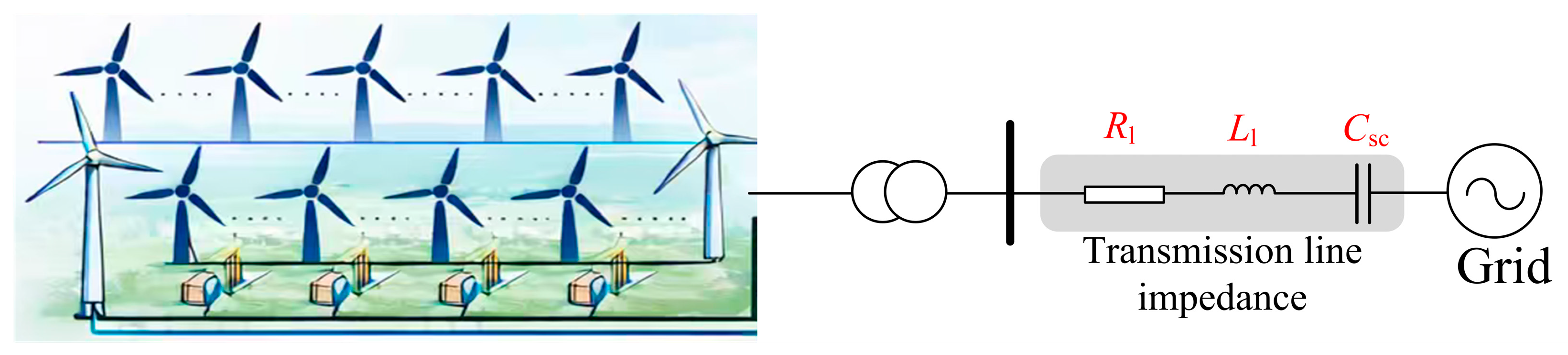
Figure 1 depicts the architecture of a wind power plant connected to the main grid through a transmission line.
The transmission line of series compensation is primarily characterized by the line resistance Rl, line inductance Ll, and series compensation capacitor Csc, and its impedance is expressed as follows [31]:
Z line = R l + s L l 1 s C sc
In the formula, s represents the complex frequency variable in the Laplace domain.
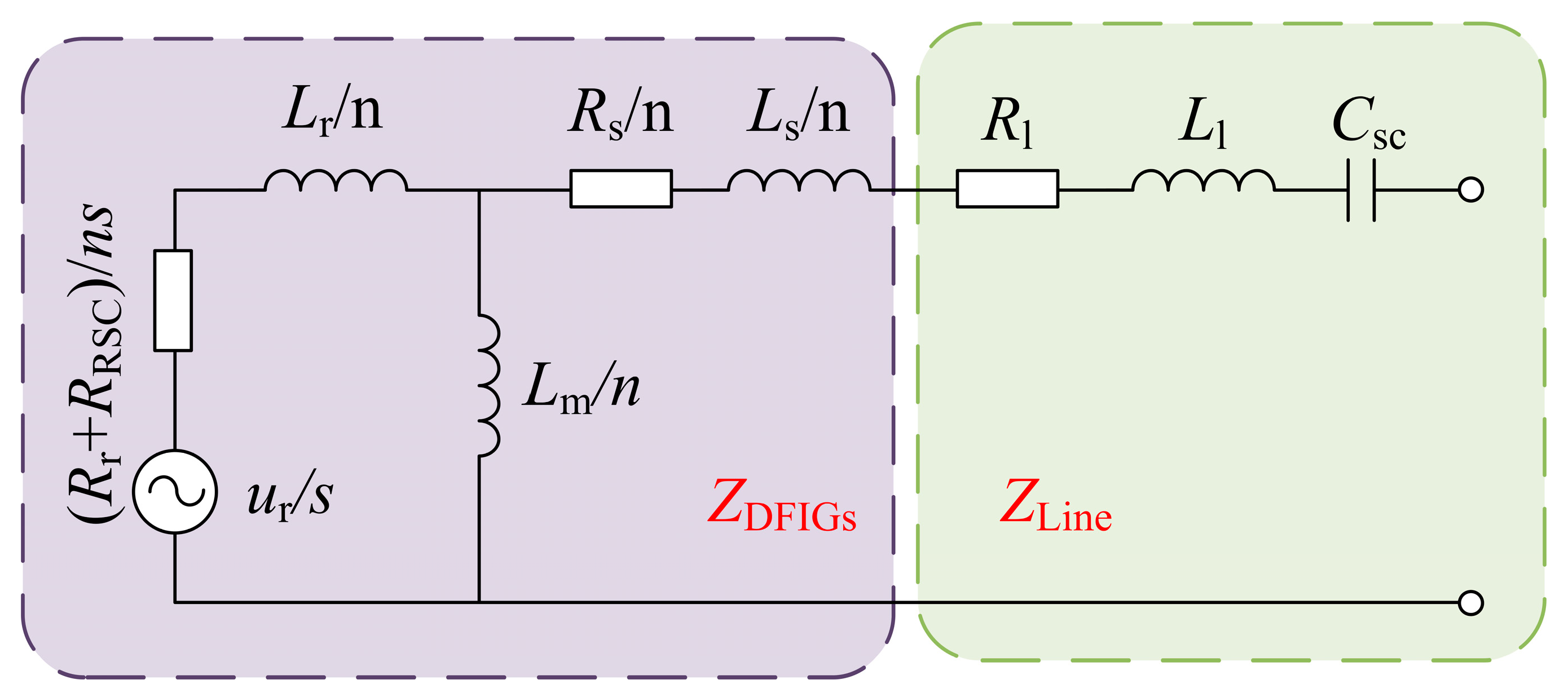
According to [32], the impedance expression of the DFIG is given by:
Z DFIG = R s + s L s + s L m Z RSC
Z sys = Z DFIG n + Z line
A DFIG-based wind farm linked to the electrical grid via a series-compensated transmission line has the following equivalent impedance:
Z sys = R s + s L s + s L m Z RSC n + R l + s L l 1 s C sc
Figure 2 depicts the equivalent impedance model of a DFIG-based wind farm linked to the electricity grid [33,34].
A sub-synchronous angular frequency ωer is produced when the transmission line is linked to the series compensating capacitor Csc [35]. Accordingly, the slip of the DFIG is expressed as sslip:
s slip = ω er ω r ω er
Here, ωr denotes the rotor angular frequency. Consequently, the grid-connected system’s equivalent impedance model at the resonant angular frequency ωer can be written as follows:
R eq = R r + R RSC s slip + R s + R l X eq = ω er ( L r + L m ) n + ω er L l 1 ω er C sc
Once the system is disturbed, sustained electrical oscillations will be generated provided that the conditions in (7) and (8) are satisfied:
R eq = R r + R RSC s + R s + R l < 0
ω er ( L r + L m n + L l ) 1 ω er C sc
When the equivalent resistance Req < 0, the system loses effective damping and may become unstable once a disturbance is introduced. This can be attributed to the amplification of the sub-synchronous current in the rotor winding by the positive and negative feedback actions within the RSC, thereby continuously strengthening the interaction between the converter and the series compensation capacitor [36].
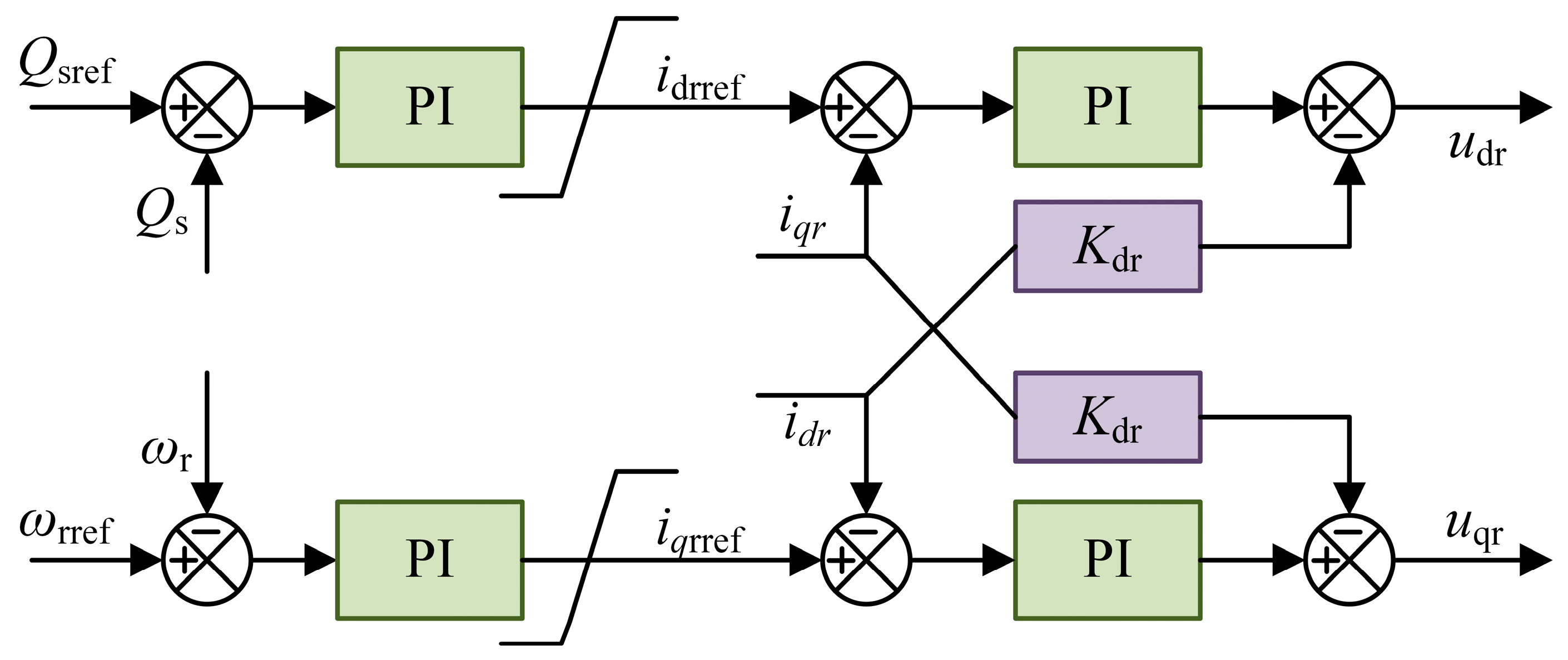
As a result, the RSC exhibits a more pronounced negative-resistance characteristic, causing Req to decrease further into the negative region [37]. Therefore, it is necessary to improve the control strategy of the RSC. Figure 3 illustrates the operating principle of the RSC.
Previous studies have shown that the SSO frequency and damping level are influenced by the wind speed, the series compensation degree, and the number of in-service wind turbines [38,39]. Therefore, in this study, the proposed improved LADRC strategy is evaluated under different wind speeds, series compensation degrees, and numbers of in-service wind turbines.

2.2. The Mechanism of SSO Suppression

The improved LADRC suppresses SSO by estimating the lumped disturbance in the RSC q-axis channel, which includes external disturbances, parameter variations, and coupling effects. The estimated disturbance is actively compensated in the control input, providing additional damping and reducing the effect of the subsynchronous component on both the q-axis and coupled d-axis currents. This prevents amplification of SSO by the converter control loop and stabilizes the system. The dq-axis output voltage of the RSC current loop can be expressed as follows [40]:
u rd = ( r r + σ L r d d t ) i rd s slip σ L r i rq u rq = ( r r + σ L r d d t ) i rq + s lip σ L r i rd s slip L m L s ψ s
where urd and urq are the d-axis and q-axis rotor voltage components; ird and irq are the d-axis and q-axis rotor current components; rr is the rotor resistance; Lr is the rotor inductance; Lm is the mutual inductance between the stator and rotor windings; Ls is the stator inductance; σ is the leakage coefficient; sslip is the slip angular frequency; and ψs is the stator flux linkage.
When DFIGs are connected to a series-compensated transmission line, the interaction between the converter control system and the compensated network may produce subsynchronous components in the transmission line current and rotor current. Under this condition, the current in the RSC current control loop can be expressed as follows:
d i rd d t = u rd σ L r r r σ L r i rd + s lip i rq + D l ( Δ i rd sub , Δ i rq sub ) d i rq d t = u rq σ L r r r σ L r i rq s lip i rd + s lip L m L s ψ s + D 2 ( Δ i rd sub , Δ i rq sub )
where D1ird_sub, Δirq_sub) and D2ird_sub, Δirq_sub) represent the disturbances of the d-axis and q-axis caused by the subsynchronous current.
When the improved LADRC replaces the conventional PI controller, it is able to observe and compensate for the subsynchronous components in real time. The dq-axis current dynamics under the improved LADRC become:
d i r d d t = u r d σ L r r r σ L r i r d + s lip i r q d i r q d t = u r q σ L r r r σ L r i r q s slip i r d + s lip L m L s ψ s
This shows that under SSO conditions, the dq-axis rotor current output of the DFIG remains consistent with the stable operation case. The comparison between (11) and (9) indicates that subsynchronous components in the DFIG system are effectively suppressed by the improved LADRC through action on the q-axis RSC channel, preventing their amplification and propagation. Rapid transient response is ensured by the proportional feedback branch, while periodic residual SSO components are attenuated by the repetitive-control branch.

3. Improved LADRC Strategy

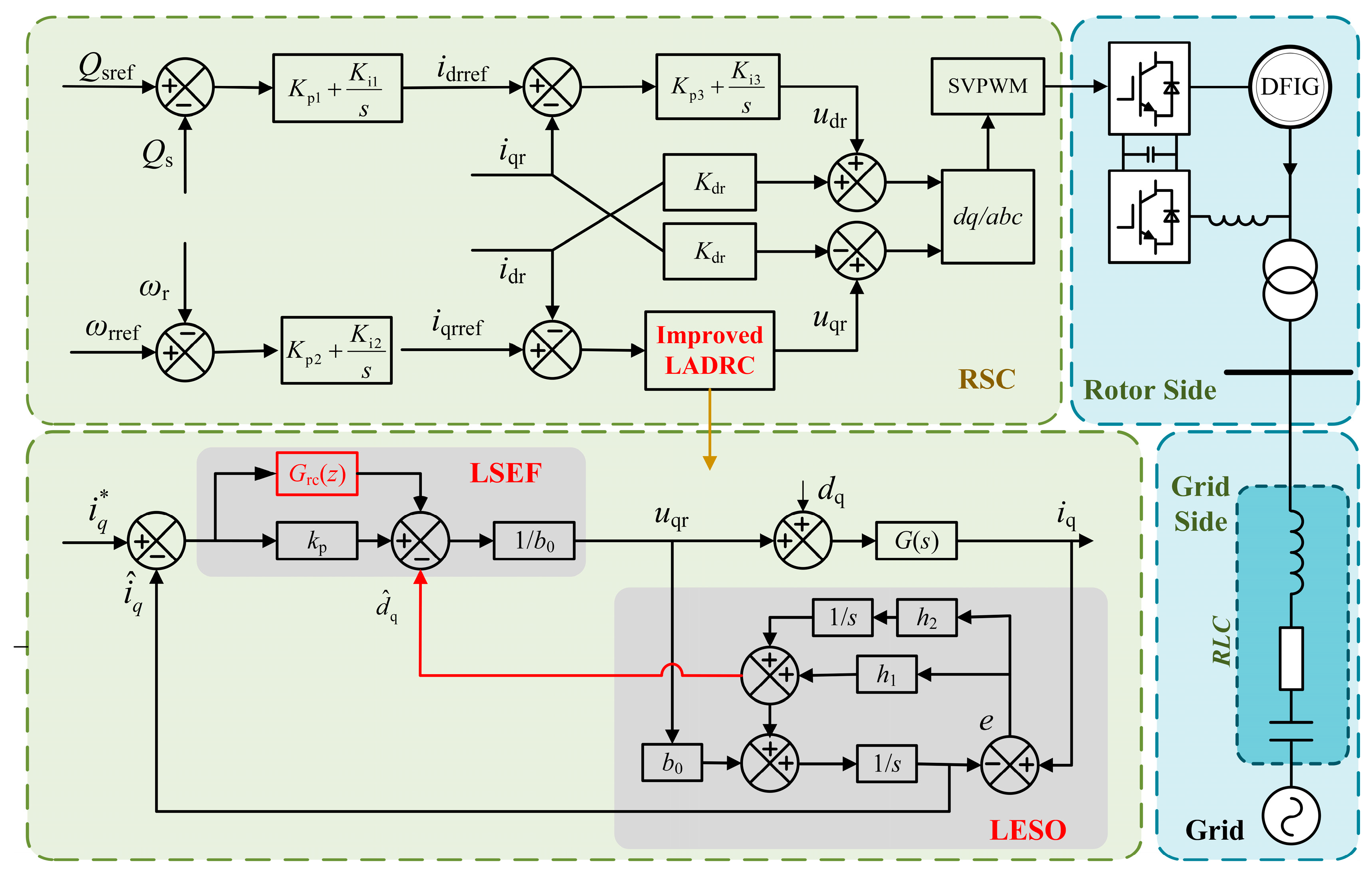
This section first presents the decoupled LADRC strategy, which improves the system’s resistance to periodic disturbances and enhances the suppression capability against interference in the sub-synchronous frequency band by integrating fast reactive control with the linear state error feedback law (LSEF). In order to effectively suppress SSO and enhance the current loop’s dynamic response capabilities and resilience to periodic disturbances, the RSC uses the upgraded LADRC in place of the conventional PI control in the q-axis inner current loop.

3.1. Decoupled LADRC Strategy

The rotor winding is energized, and oscillating currents within the subsynchronous frequency band are produced when a current flows through the series compensation circuit. In the rotor-side dq-axis current loop, the current components within this frequency range can be observed.
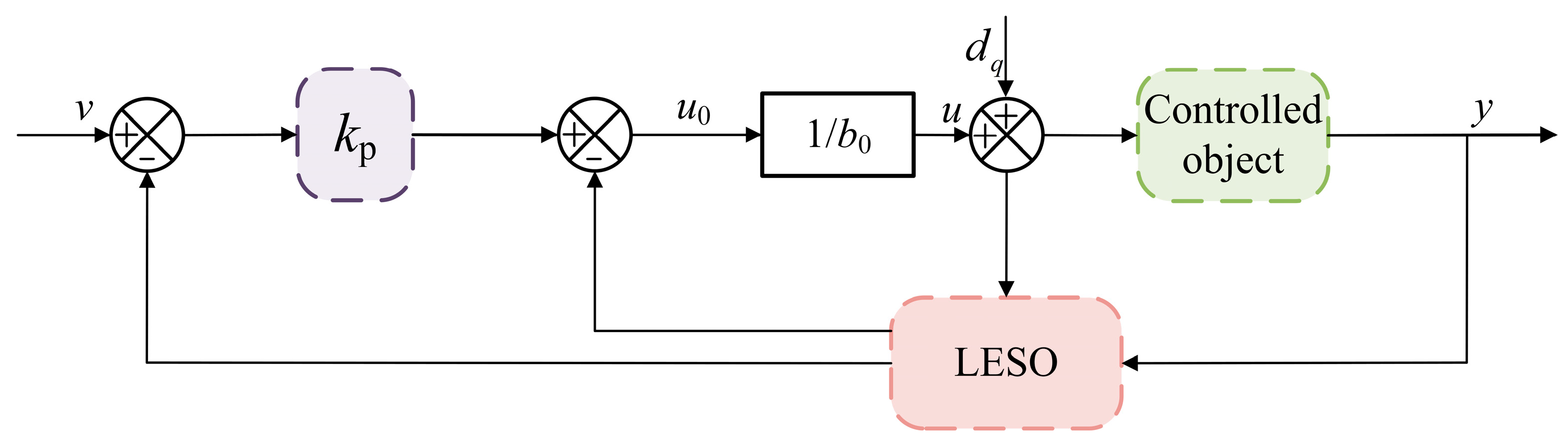
In the traditional LADRC, if a transition link is introduced into the current loop, the response speed is affected. Since rapid tracking is required in the current loop, the transition process is not adopted here, as shown in Figure 4.
In this paper, the controlled object is defined as the decoupled single-axis rotor current channel of the RSC. After dq-axis decoupling and feedforward compensation, this current channel can be approximated by a first-order RL-type model for controller synthesis, rather than by assuming the entire DFIG–RSC system to be first-order. Then the controlled object is set as:
d d t y = ε + b 0 u a 1 y
In the equation, u stands for the control system’s input, y for the system’s output, a1 and b0 are nonzero constants, and ε indicates the system’s unknown disturbance.
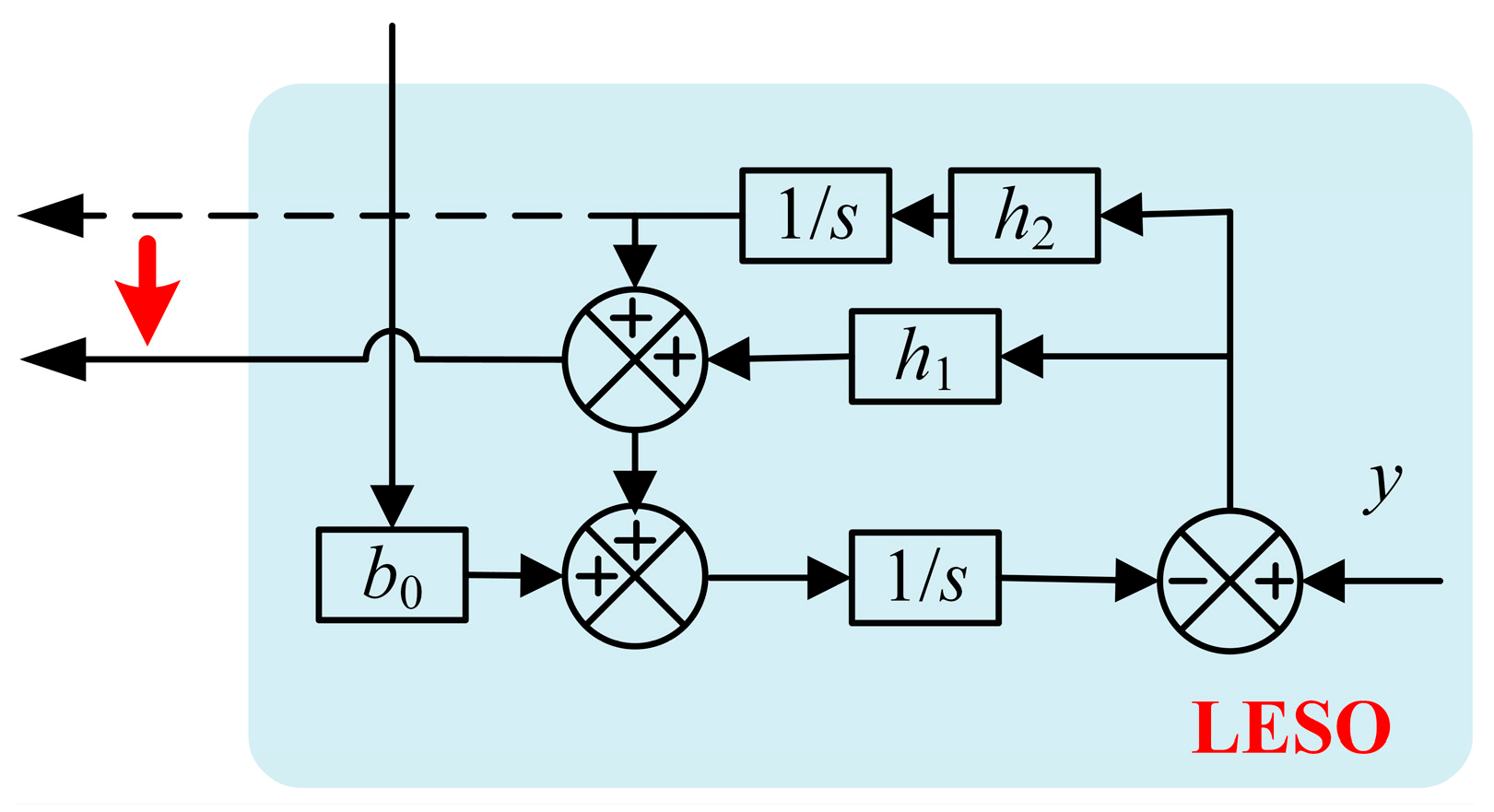
Then the LESO is designed as:
d d t x ^ 1 = x ^ 2 + b 0 u + h 1 ( x 1 x ^ 1 ) d d t x ^ 2 = h 2 ( x 1 x ^ 1 )
In the equation, x1 and x2 are the system state variables, while h1 and h2 are the nonzero gains of the LESO. The feedback law of the proposed design strategy is given as follows:
u = u 0 ε b 0
In the equation, the expression of u0 is:
u 0 = k p ( ν x ^ 1 )
In the equation, kp denotes the proportional coefficient, and v denotes the reference input variable of the control system.
Consequently, the following represents the analytical relationship between the specified bandwidth and the observer’s internal gains:
L = h 1 h 2 T = 2 ω eso ω eso 2
Consequently, the system’s closed-loop transfer function is:
G ( s ) = k p k p + s + s 2 + ( h 1 + k p ) s ( s + k p ) ( s 2 + h 1 s + h 2 )
The traditional LADRC strategy is subject to certain limitations in engineering applications. Its parameter tuning is cumbersome and sensitive to system variations, resulting in a substantial tuning workload and a strong dependence on experience. In order to minimize parameter sensitivity and simplify the tuning process, the LADRC structure and tuning technique must be modified in order to increase the system’s robustness and flexibility.
Figure 5 displays the redesigned block diagram following the decoupling of the linear extended state observer. Consequently, this autonomous subsystem’s transfer function can be written as follows:
G L ( s ) = s s 2 + h 1 s + h 2
The equivalent s domain representation of the independent LADRC architecture is given as follows:
G c l ( s ) = k p s + k p + s s 2 + h 1 s + h 2
As can be seen from Equation (19), the tracking performance of this strategy is determined only by kp, whereas the disturbance rejection performance is determined solely by h1 and h2.
Through structural decoupling, disturbance suppression and command tracking can be considered independently. This optimization scheme makes the controller design more systematic and further improves the functions of each part of the controller to a certain extent.
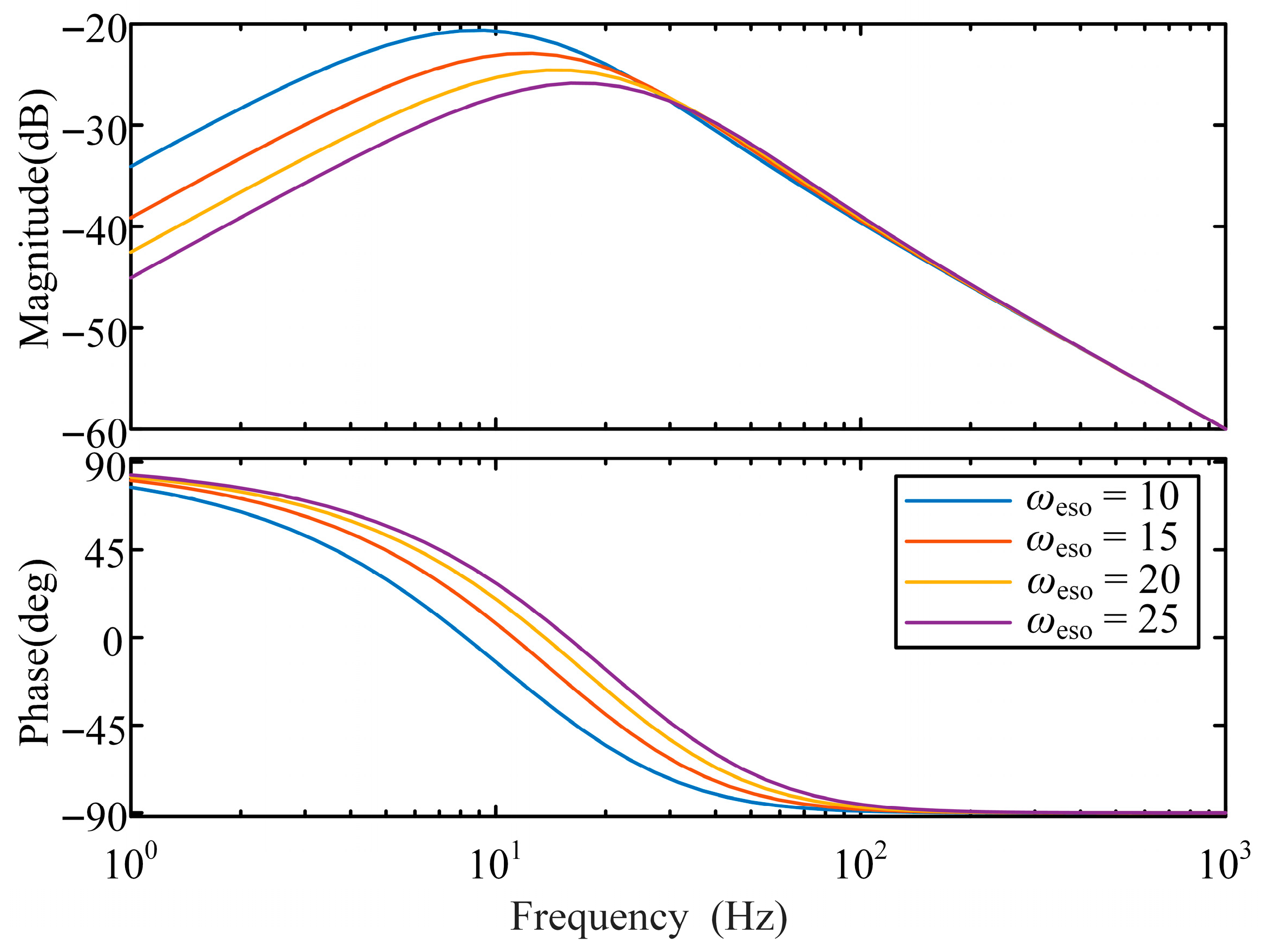
The parameters of the improved LADRC are selected according to the bandwidth-based tuning principle. Since LADRC is weakly dependent on an accurate mathematical model, its parameters are mainly determined by the desired response speed, disturbance estimation capability, noise sensitivity, and converter control constraints. The parameter kp affects the closed-loop response speed. A larger kp can accelerate SSO attenuation, but an excessively large value may lead to overshoot, current fluctuation, or converter saturation. The observer bandwidth ωeso determines the disturbance estimation speed. A larger ωeso improves the estimation of SSO-related disturbances but may also amplify measurement noise and high-frequency components.
Figure 6 shows the Bode diagram of the decoupled LADRC. As indicated by Figure 6, an increase in ωeso enhances the amplitude gain of the decoupled LADRC in the sub-synchronous frequency band, thereby improving its disturbance rejection capability in this band. Therefore, in this paper, the improved LADRC parameters are set as kp = 30, ωeso = 25, and b0 = 0.005.

3.2. Improved Repetitive Control

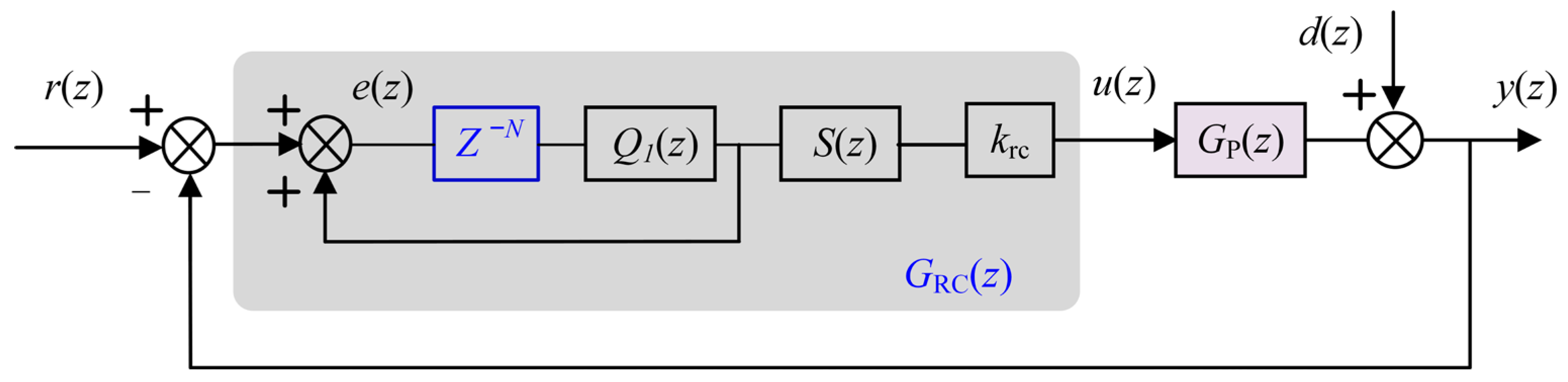
The internal model concept is the foundation of RC. By superimposing the control deviation signal from the previous cycle on the current control input, periodic input signals can be effectively tracked, periodic disturbances can be suppressed, and the control quality of the system can be significantly improved. The traditional RC is shown in Figure 7. Owing to the existence of the delay time T0, the effect of RC cannot be exerted during the initial stage of the system response, resulting in relatively weak dynamic response capability at this stage.
G RC ( z ) = k rc Q 1 z N 1 Q 1 ( z ) z N S ( z )
In this formulation, N denotes the total number of discrete data points within one fundamental period, krc is the RC gain, S(Z) is the correction link, and Q1(Z) is the filter link.
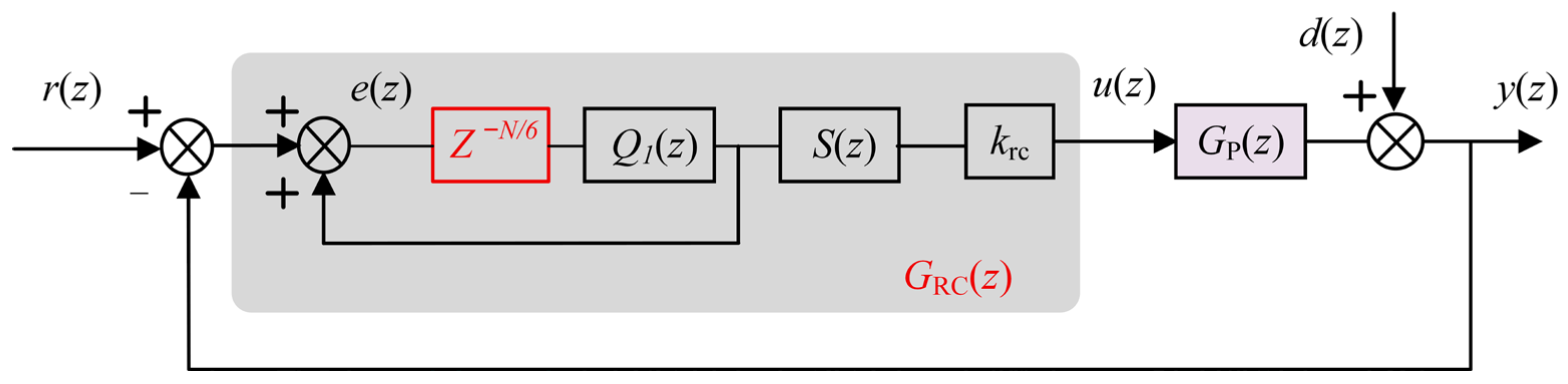
Therefore, to ensure system stability while achieving a rapid dynamic response, an FRC scheme is designed, as shown in Figure 8.
The RC is implemented in the discrete-time domain with a sampling frequency of fs = 900 Hz, and the corresponding sampling period is Ts = 1/900 s. The delay time of the repetitive branch is given by Td = NTs, where N denotes the number of delay samples. In the conventional RC structure, the frequency spacing of the repetitive branch is determined by Td = 384 × Ts = 0.426 s. To suppress the subsynchronous frequency component effectively, a narrow suppression frequency spacing of approximately 2∼3 Hz is generally required [41].
Although this structure can suppress the subsynchronous component, the long delay may slow down the transient suppression process. To enhance the dynamic response, an FRC structure is adopted by reducing the delay length to N/6 samples. FRC, while retaining the periodic compensation capability of RC, reduces the phase lag. As a result, the proposed approach is able to effectively suppress SSO and further enhance the operational robustness of the DFIG-based wind farm.
Q1(Z) is generally designed as a zero-phase low-pass filter, and its expression is given as follows:
Q 1 ( z ) = a 0 + i = 1 M ( a i z i + a i z i ) a 0 + 2 i = 1 M a i
In the equation, M is the order of the zero-phase filter. As the order increases, more frequency components can be suppressed, but the corresponding phase variation becomes more pronounced.
Considering that the filter is only used to construct the internal model coefficient in the FRC and only needs to satisfy the low-pass characteristic requirements, the order is set to M = 2.
Then the transfer function of FRC is as follows:
G FRC ( z ) = k rc Q 1 z N / 6 1 Q 1 z N / 6 S ( z )
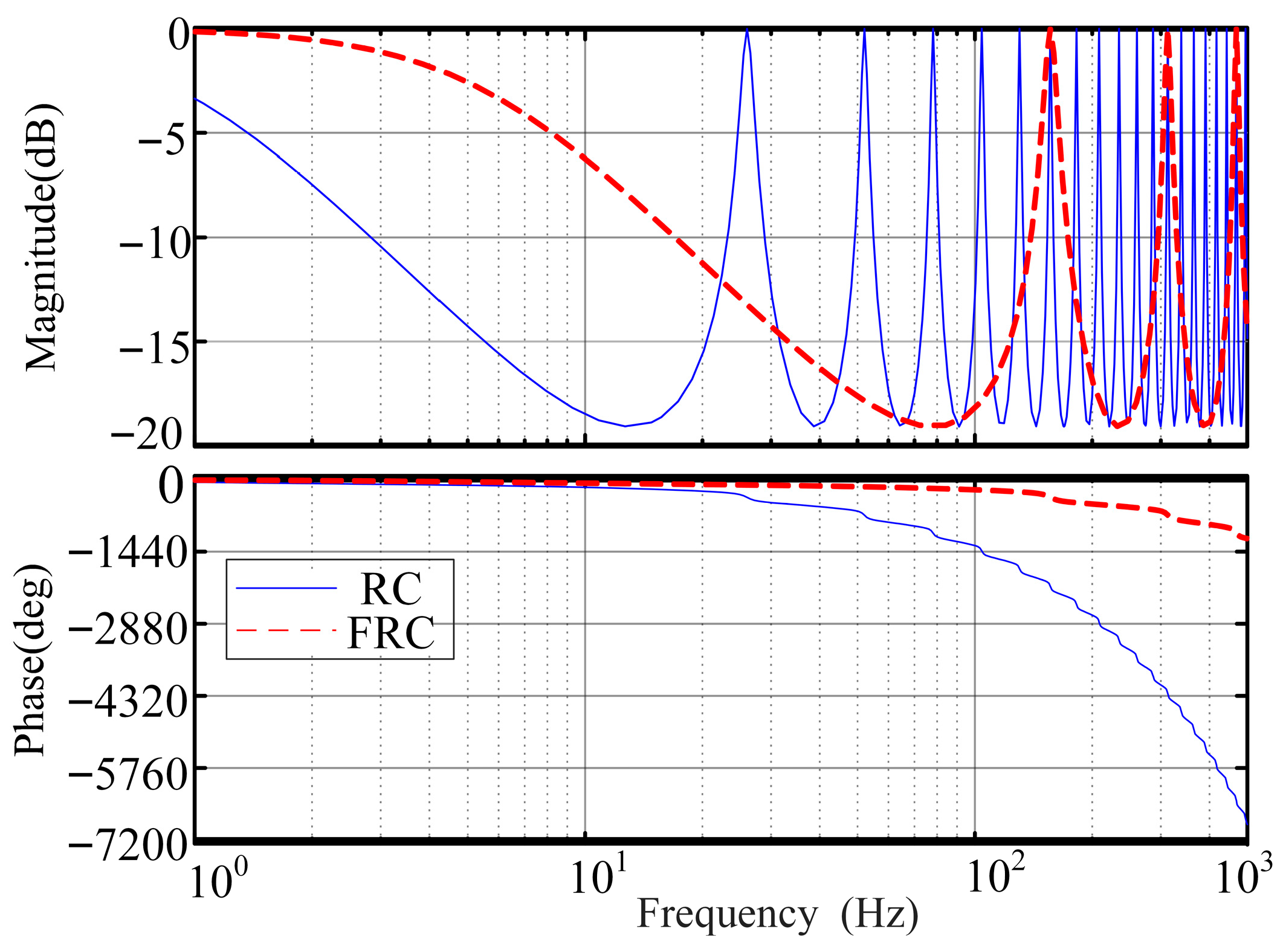
Figure 9 shows a comparison of the Bode plots of FRC and RC. As can be seen from Figure 9, unlike traditional RC, which exhibits dense resonant characteristics at multiple frequencies, FRC reduces the period delay, so that the control gain is concentrated in the dominant frequency band of SSO. The suppression ability of the improved FRC has significantly improved.
The zero-phase filter Q1(Z) is configured with a0 = 0.6, a1 = 0.25, a2 = 0.006. After normalization, these coefficients ensure that Q1(Z) = 1, so that the unity gain in the low frequency range is preserved and the repetitive compensation capability around the target frequency is maintained. In addition, the relatively large central coefficient a0 = 0.6 helps preserve the low frequency components, the moderate coefficient a1 = 0.25 provides the main low-pass filtering effect, and the small coefficient a2 = 0.006 is mainly used for fine-tuning of the high frequency response.
This ensures effective suppression of the target oscillation component while reducing the gain amplification and phase lag problems in non-target frequency bands. Consequently, the control parameters are selected as N = 387, with the phase compensator designed as S(Z) = z4.
At the same time, the FRC is introduced into the LSEF to improve the suppression capability against periodic disturbances, and the resulting improved LADRC strategy is shown in Figure 10. When this composite control strategy is implemented in the q-axis of the RSC, the overall robustness of the system and its capability to reject periodic disturbances are further improved.

3.3. Stability Analysis

The dynamic equation of the present observation error is developed as follows in order to examine the stability of the LESO:
e ˙ = A e e
e 1 e 2 = i q i ^ q d q d ^ q A e = 0 1 h 2 h 1
det ( s I A s ) = s 2 + h 1 s + h 2 = 0
Equation (16) defines the gain of the LESO. When the LESO bandwidth ωeso is positive, stability of the LESO is ensured.
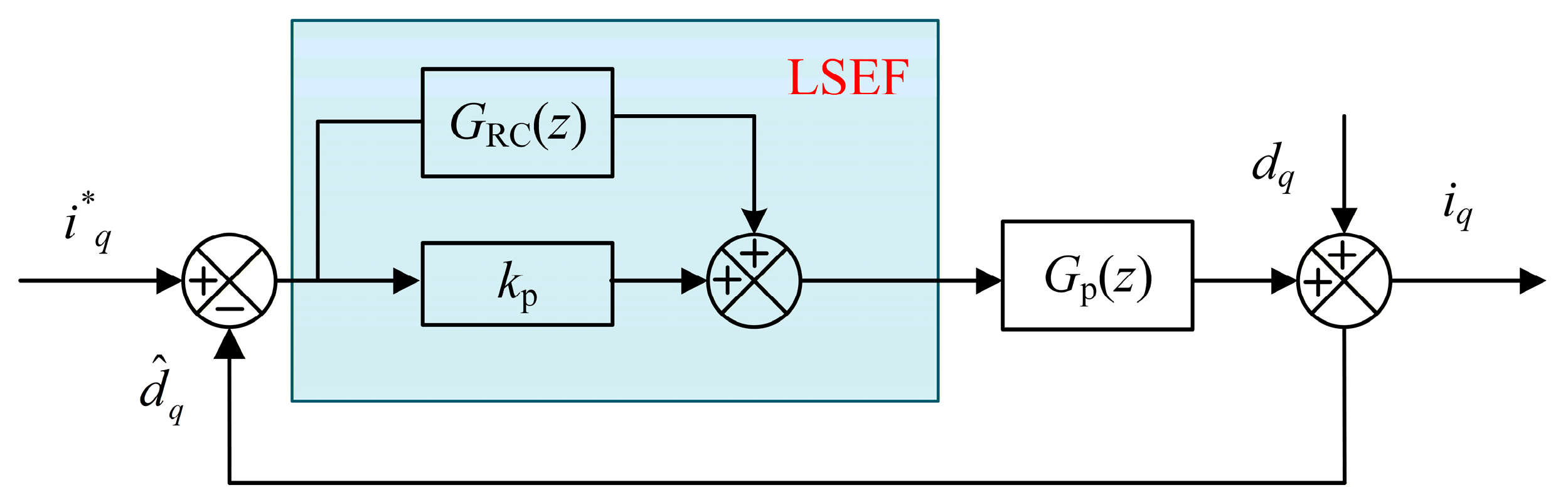
When feedforward traditional RC is introduced, it is assumed that aperiodic disturbances can be completely suppressed by the LESO. Under this condition, the q-axis current loop can be approximately represented as a pure integral link regulated only by the LSEF, and the resulting equivalent q-axis current loop structure is presented in Figure 11.
To reconcile tracking accuracy with closed-loop robust stability, an FRC loop is incorporated. The transfer function in the discrete domain and the internal filter Q1(Z) are expressed in (20) and (21). The filter-parameter set is designed in accordance with the frequency-domain stability criterion of discrete-time control systems. After normalization, the steady-state condition of Q1(Z) is satisfied. In accordance with the internal model principle, a sufficiently high open-loop gain is achieved in the low frequency region and around the target characteristic frequency, thereby ensuring accurate tracking of periodic reference signals and effective suppression of periodic disturbances.
Meanwhile, with respect to the high-frequency components outside the target frequency band, the zero-phase filter is designed to strictly satisfy the following condition:
| Q 1 ( e j ω T s ) | < 1
By virtue of this high-frequency attenuation characteristic, the pole originally located on the unit circle is driven into the interior of the unit circle, thereby ensuring the stability of the closed-loop system. To further suppress the oscillation tendency caused by the positive-feedback loop in the internal model, the gain krc = 0.95 < 1 is employed. Consequently, a sufficient amplitude stability margin is ensured for the closed-loop system, and the robustness of the system is improved. By this means, a sufficient amplitude stability margin is preserved for the closed-loop system, and enhanced system robustness is achieved.
For the repetitive structure, full system stability is ensured when the following two conditions are satisfied:
  • All poles of GFRC(Z) are inside the unit circle.
  • Satisfies the following equation.
Q 1 ( Z ) 1 k rc S ( Z ) G cl ( Z ) < 1 ; Z = e i ω T s , 0 < ω < π T s
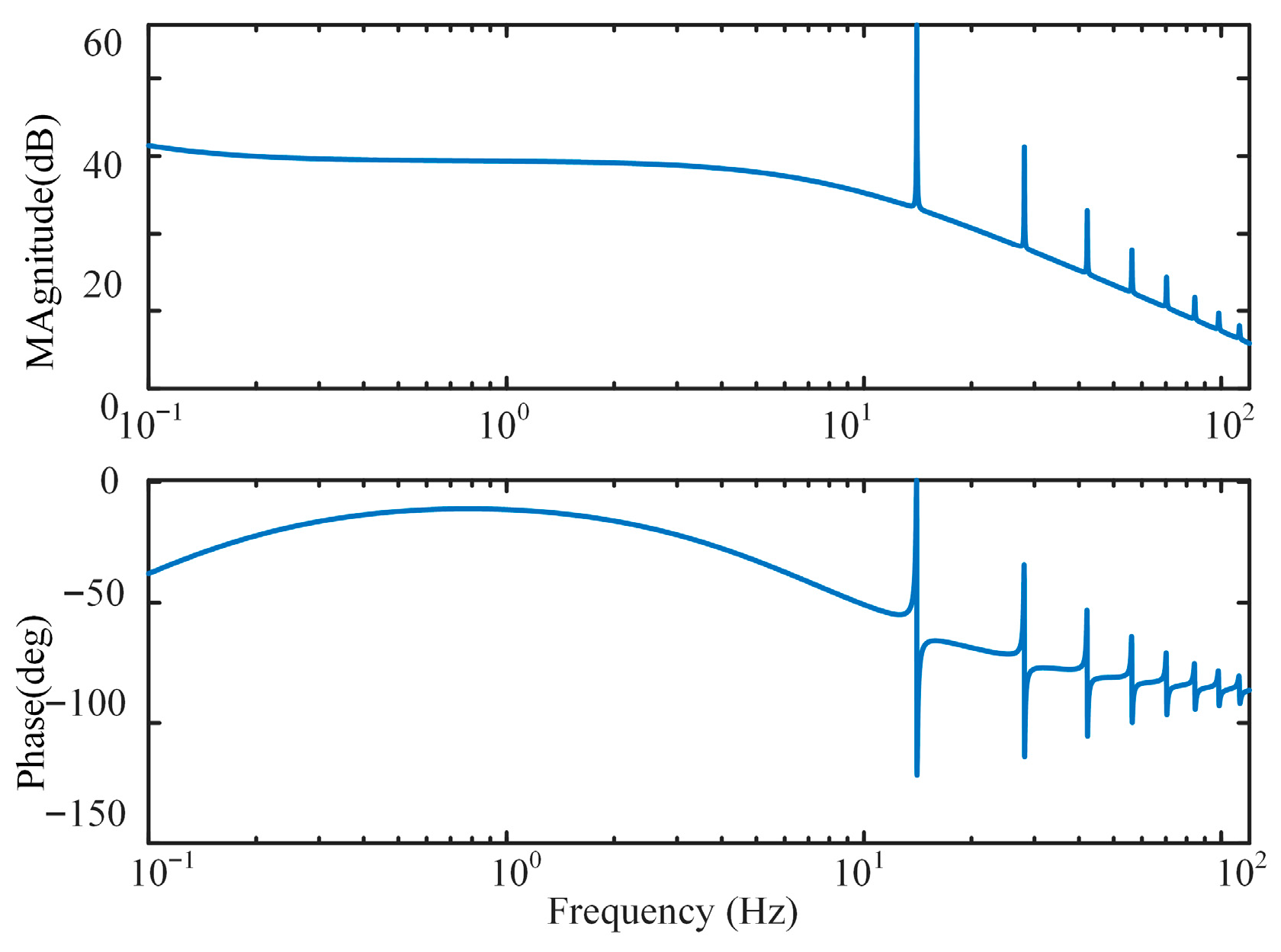
Figure 12 shows the Bode plot of the overall open-loop transfer function of the controlled system. According to the frequency-domain stability interpretation, the corresponding closed-loop system is stable under the designed controller parameters.
Since the decoupled LADRC loop remains stable and the RC branch is bounded over the entire frequency range, the above conditions can be satisfied. Consequently, asymptotic stability can be maintained by the proposed improved LADRC system, while the suppression of SSO is significantly enhanced.

4. Simulation and Analysis

4.1. Simulation Model of DFIG Grid-Connected System

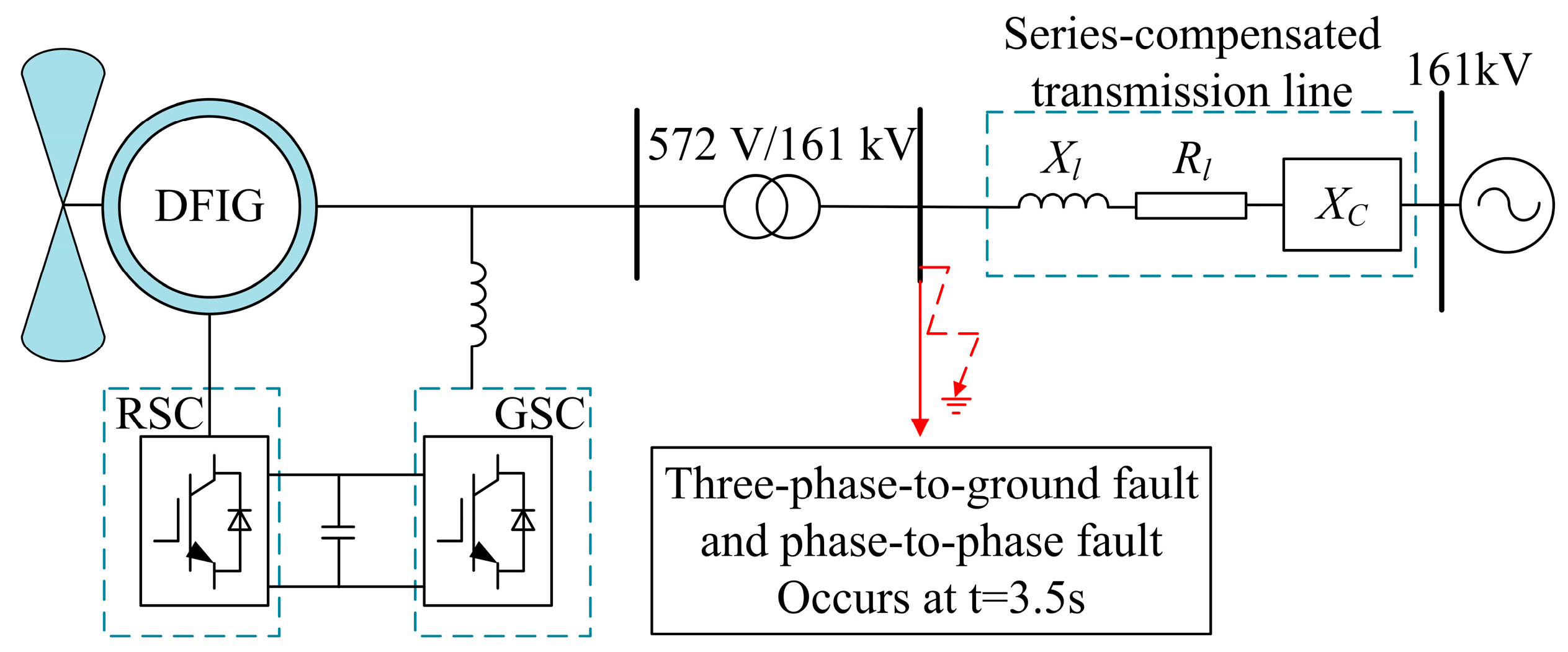
The effectiveness of the proposed improved LADRC algorithm in alleviating SSO is demonstrated through time-domain simulation. Based on the first benchmark model of IEEE, this paper constructs a wind farm with a series-compensated DFIG in MATLAB/Simulink 2024a, as shown in Figure 13. The wind farm consists of 66 wind turbines, each with a rated voltage of 0.69 kV and a capacity of 1.5 MW. The wind turbines are boosted by transformers, and the generated electricity is transmitted to the grid through a transformer with a rated voltage of 572 V/161 kV and a series-compensated transmission line. The transmission line is represented by the equivalent reactance Xl, resistance Rl, and series compensation reactance XC. A three-phase-to-ground fault and a phase-to-phase fault are applied at the location marked in the figure at t = 3.5 s. The parameters of the simulation system are shown in Table 2.

4.2. Simulation Verification

4.2.1. Verification of SSO Suppression at Different Series Compensation Levels

Since wind speed, series compensation degree, and the number of in-service wind turbines are key factors affecting the SSO frequency and damping characteristics of DFIG-based wind farms, they are selected as representative fixed scenarios for validation. In addition, the proposed improved LADRC estimates and compensates the lumped total disturbance online, including parameter variations, unmodeled dynamics, external disturbances, and SSO-related components, rather than relying on an explicitly parameterized uncertainty model. Therefore, its robustness is evaluated under these representative SSO-sensitive conditions, which directly reflect the main factors influencing SSO behavior in DFIG-based series-compensated systems.
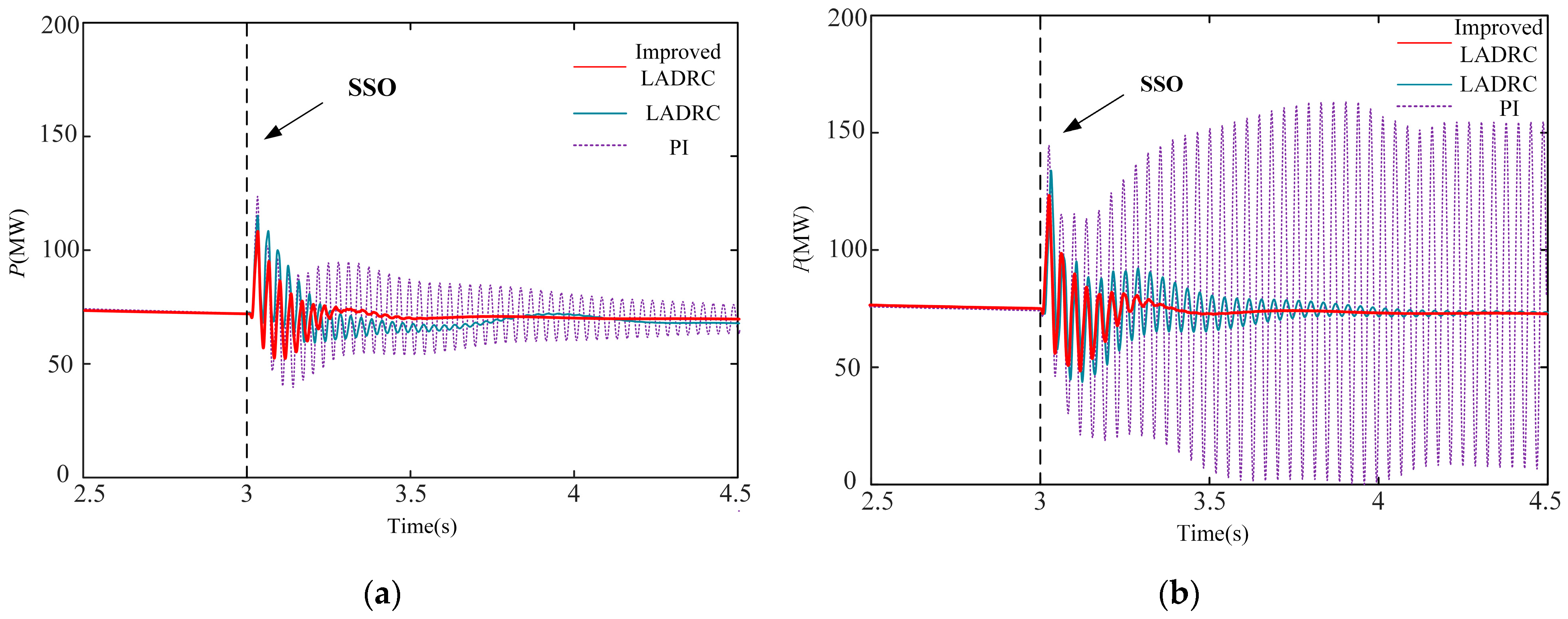
To evaluate the damping capability of the improved LADRC scheme under different series compensation ratios, simulations were conducted for the 40% and 55% cases. When the LADRC is employed in the RSC, SSO can be effectively suppressed.
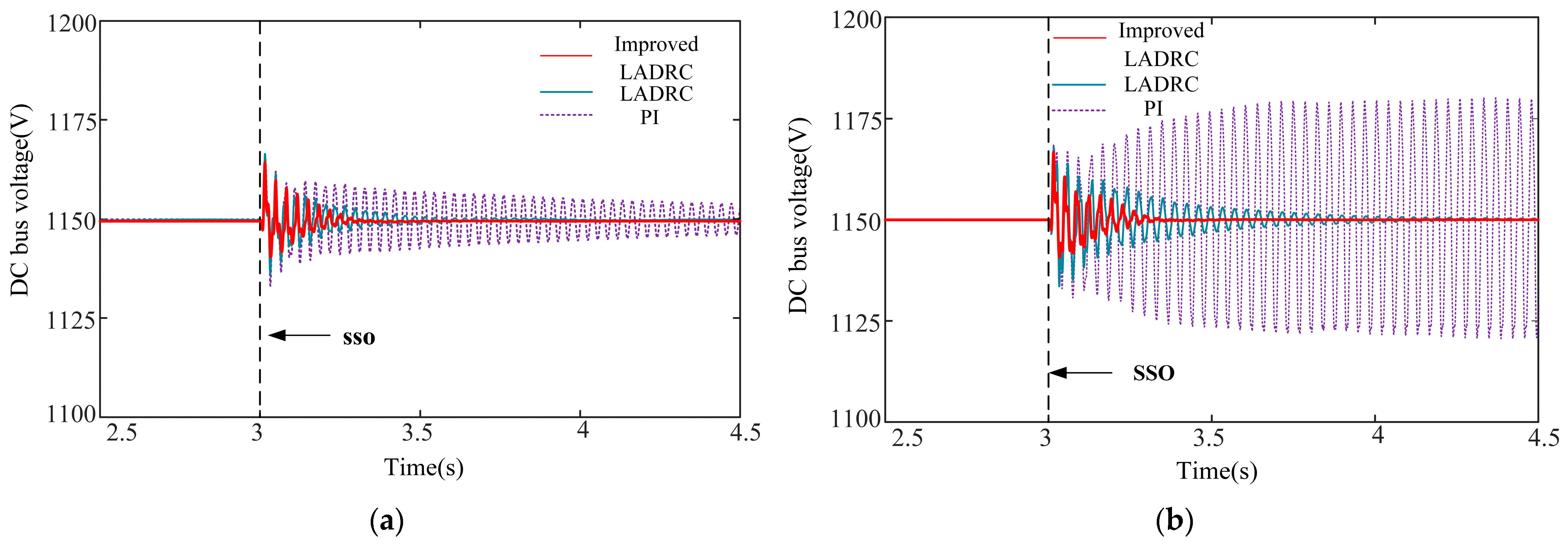
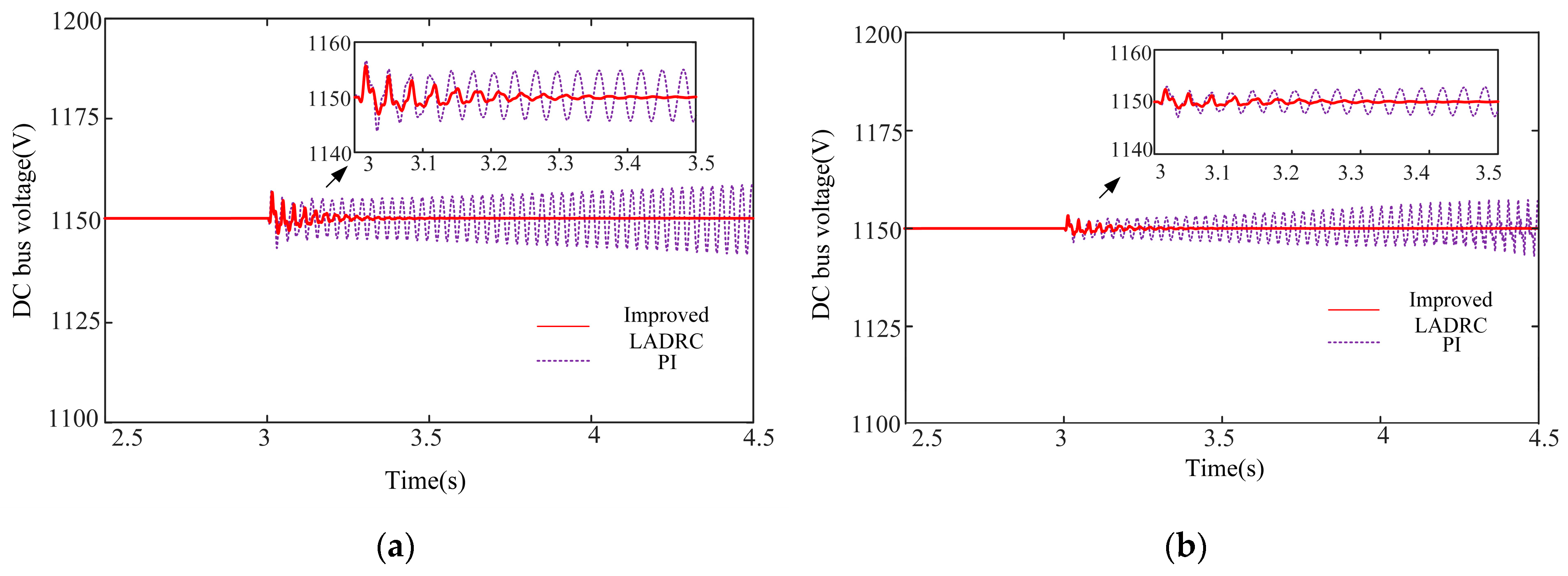
Figure 14 and Figure 15 show the active power and DC-link voltage responses of the PI, LADRC, and improved LADRC under 40% and 55% series compensation levels. The results indicate that both LADRC and the improved LADRC can suppress SSO, whereas the PI controller exhibits weaker damping performance. Compared with the conventional LADRC, the improved LADRC achieves faster oscillation suppression and better steady-state performance.
As shown in Figure 14, the active power oscillation is suppressed within approximately 0.3 s by the improved LADRC and remains within a ±10% band around its steady-state value. In addition, Figure 15 shows that the improved LADRC effectively reduces the fluctuation of the DC-link voltage under different compensation levels.
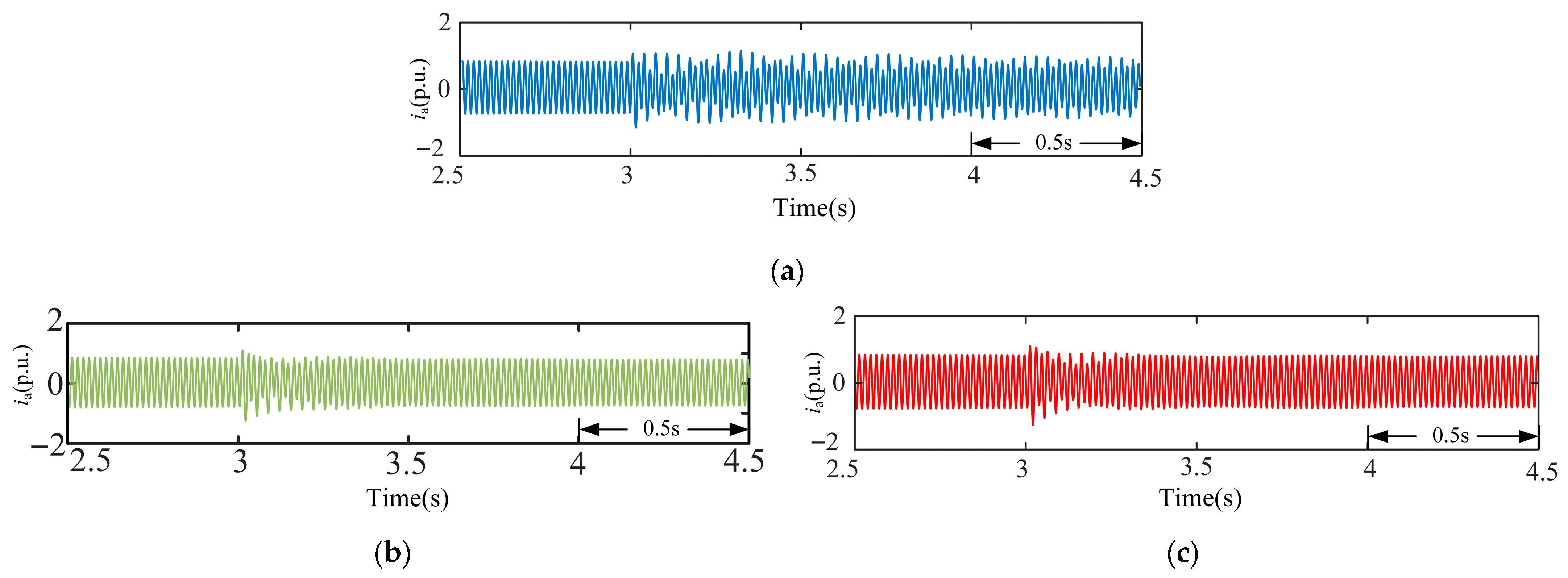
However, due to the limited disturbance observation capability of the conventional LESO, noticeable residual fluctuations can still be observed in the active power and DC-link voltage when the conventional LADRC is applied. To further evaluate the current quality, Figure 16 presents the time-domain single-phase current waveform under the 40% series compensation condition. It can be observed that current distortion remains under the conventional LADRC, while the improved LADRC provides a smoother current response. Furthermore, FFT analysis is performed on the single-phase current over a 0.5 s interval starting from t = 4 s, and the corresponding harmonic spectrum is also shown in Figure 16.
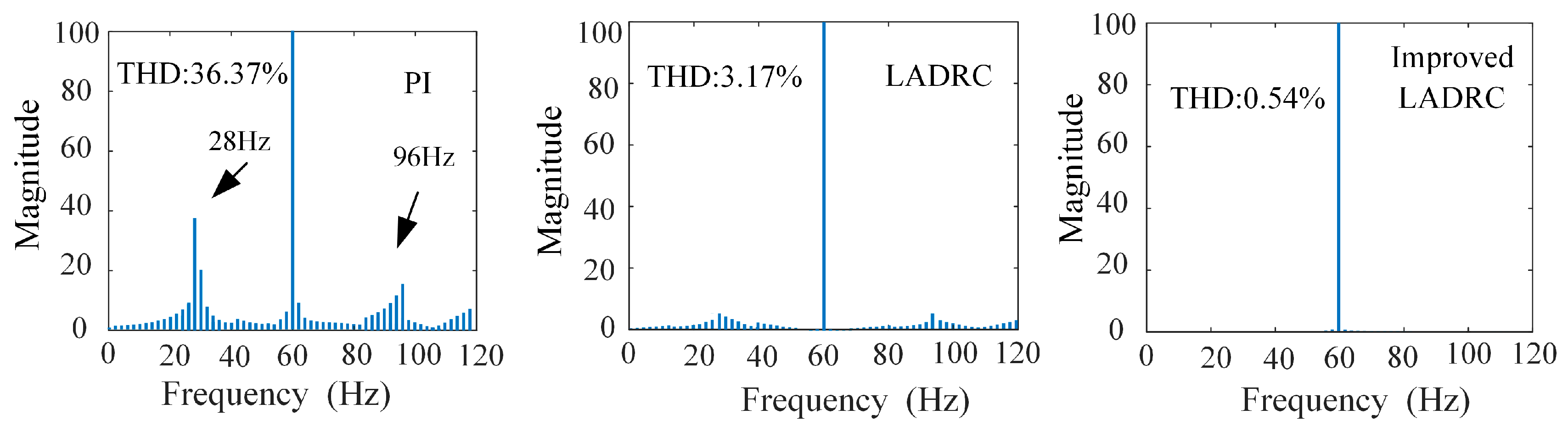
The FFT spectrum, extracted from the representative steady-state waveform, is specifically shown in the 0–120 Hz range to emphasize the SSO-related components. As illustrated in Figure 17, after the series compensation capacitor is connected, under PI control, the sub-synchronous and super-synchronous frequency components in phase-A current are mainly concentrated at 28 Hz and 96 Hz, respectively, and the THD of the grid current reaches 36.37%. By contrast, under both LADRC and the improved LADRC, phase-A grid current contains only the 60 Hz fundamental component, while no high-amplitude disturbance components appear at other frequencies. This indicates that both control strategies are capable of suppressing the generation of sub-synchronous components and thereby mitigating SSO.
However, when LADRC is adopted in the RSC, the THD of the grid current remains at 3.17% because of the limited observation accuracy of the controller. In comparison, when the improved LADRC is employed, the THD is further reduced to 0.54%, indicating that the quality of the grid’s current is significantly enhanced. Based on the above analysis, the proposed suppression strategy provides stronger disturbance-rejection capability and better steady-state performance than conventional LADRC, while effectively suppressing SSO.
The stability of the enhanced LADRC system under various wind speeds and DFIG counts was assessed using time-domain modeling. The suppressing impact of the enhanced LADRC on SSO was further examined under two operational circumstances of wind speeds of 8 m/s and 5 m/s. When the series compensation capacitor was attached at t = 3 s, with the compensation level set at 40%, the system experienced SSO. At the start of the simulation, the system was in a stable functioning condition.
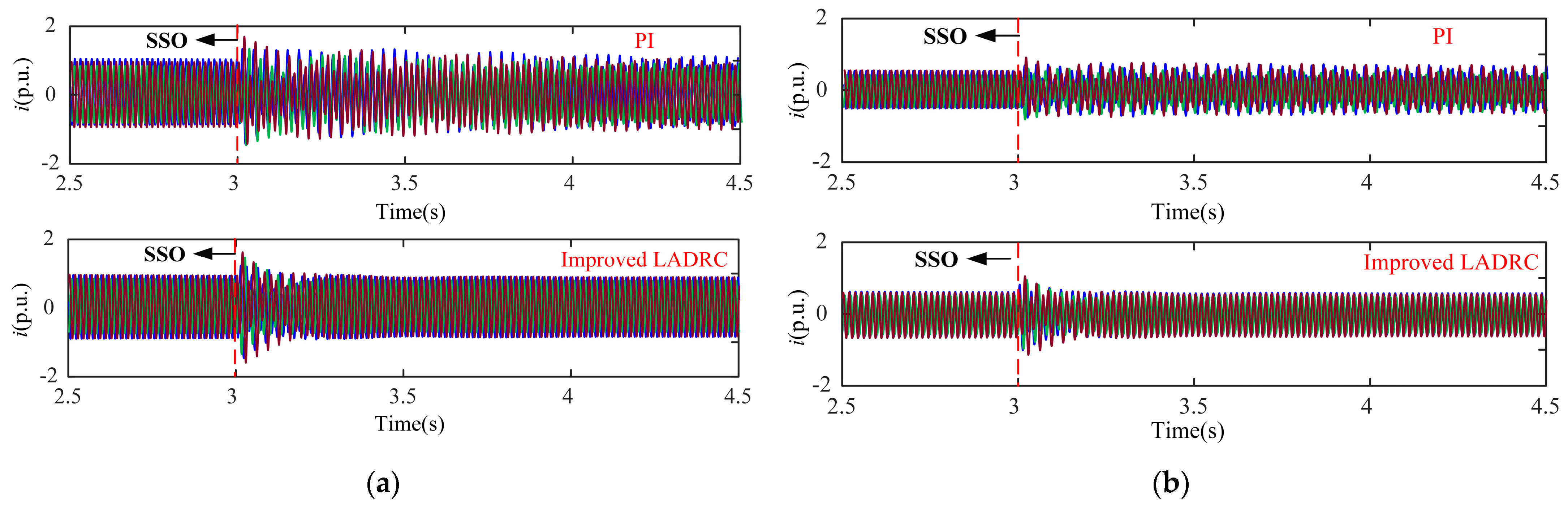
As shown in Figure 18, the effective mitigation of SSO is achieved by the improved LADRC over a range of wind speeds. As shown in Figure 19, the grid’s current responses of the DFIG-based wind farm were examined for different numbers of grid-connected DFIG units under a 40% series compensation level. As demonstrated by the results, SSO is effectively suppressed by the improved LADRC under varying series compensation levels, wind speeds, and numbers of grid-connected wind turbines.

4.2.2. Multi-Scenario Statistical Validation of THD Reduction

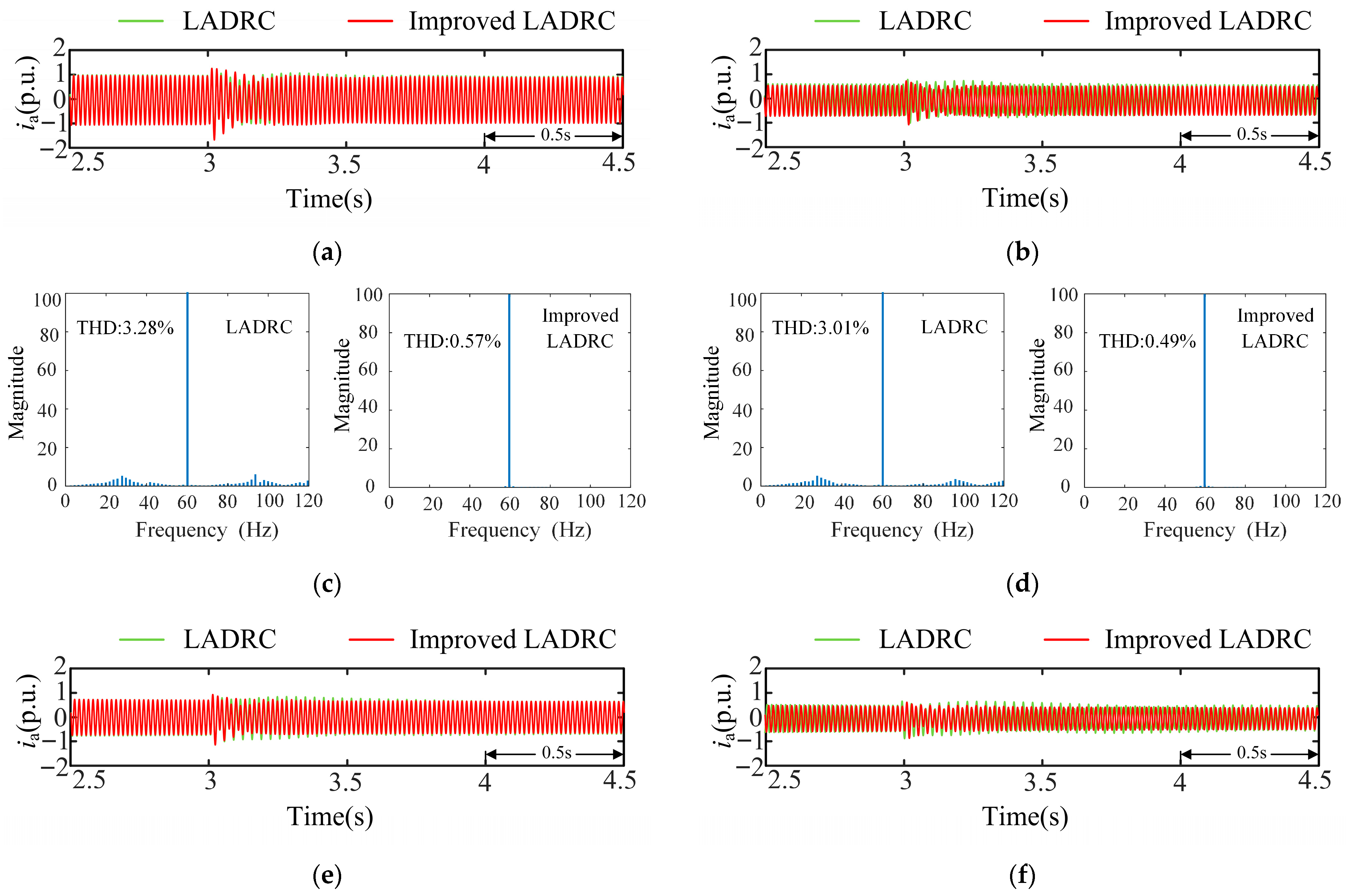
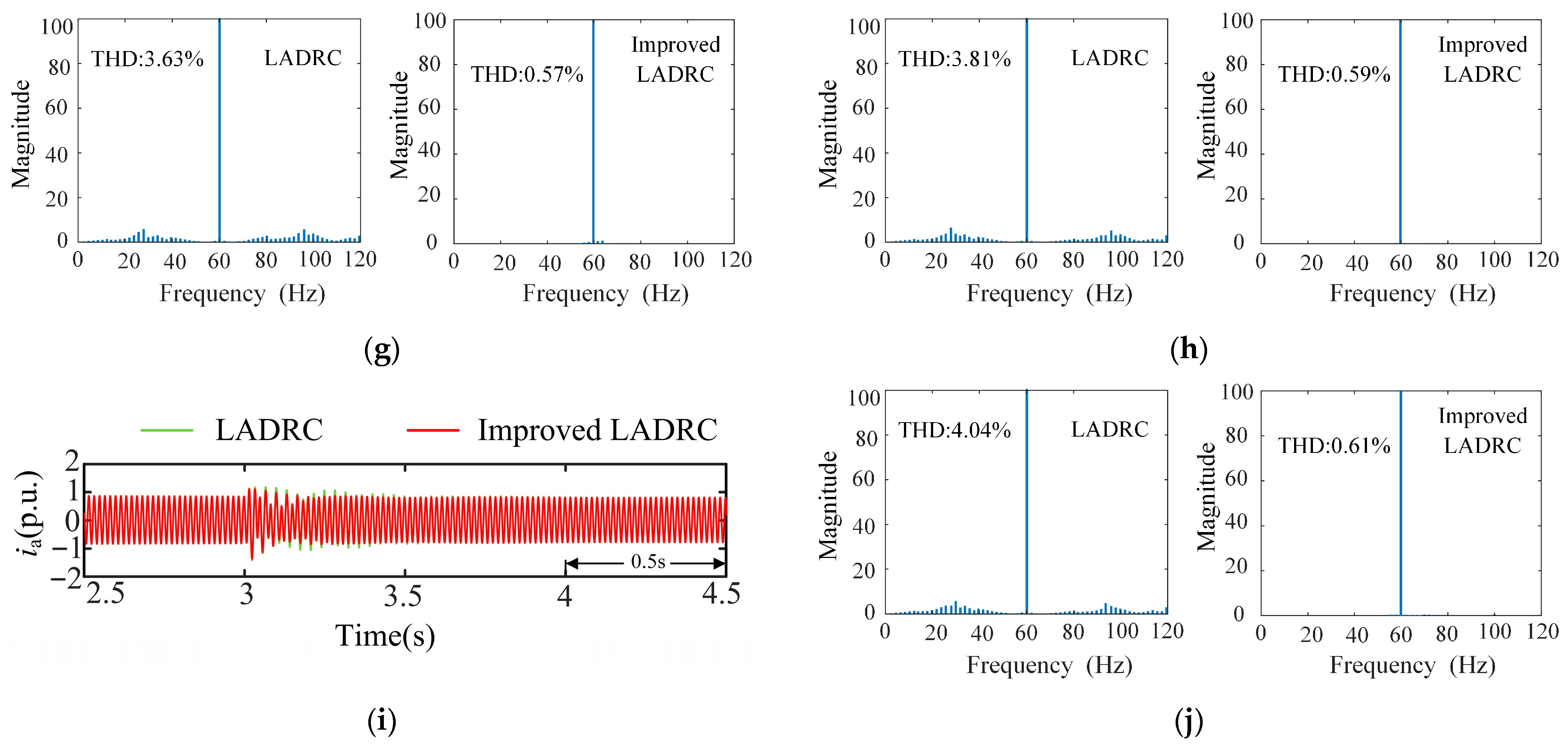
Figure 20 shows the single-phase current waveforms and the corresponding FFT analysis under different operating conditions, including different wind speeds, different numbers of grid-connected DFIG units, and different series compensation levels. The results indicate that the proposed method can effectively reduce harmonic components under all tested scenarios, demonstrating that the THD reduction is not limited to a single operating condition.
As shown in Figure 17, under the 40% series compensation condition, the THD is reduced from 3.17% to 0.54%. When the number of grid-connected wind turbines varies, the THD decreases from 3.28% to 0.57% and from 3.01% to 0.49%, respectively. Under different wind speed conditions, the THD is reduced from 3.42% to 0.57% and from 3.64% to 0.59%, respectively. Moreover, when the series compensation level is increased to 55%, the THD decreases from 4.04% to 0.61%. These results demonstrate that the improved LADRC is not only effective in a representative operating case but also maintains good harmonic suppression performance under different wind farm and grid operating conditions.
Considering all tested cases, the average THD obtained with the conventional LADRC is approximately 3.43%, whereas that obtained with the improved LADRC is reduced to approximately 0.56%. This corresponds to an average THD reduction of about 83.7%. Meanwhile, the time-domain current waveforms show that the improved LADRC suppresses current oscillations more effectively and provides a smoother steady-state response. Therefore, the multi-scenario test results further verify the robustness and general applicability of the proposed improved LADRC.

4.2.3. Verification of SSOs Under System Failure

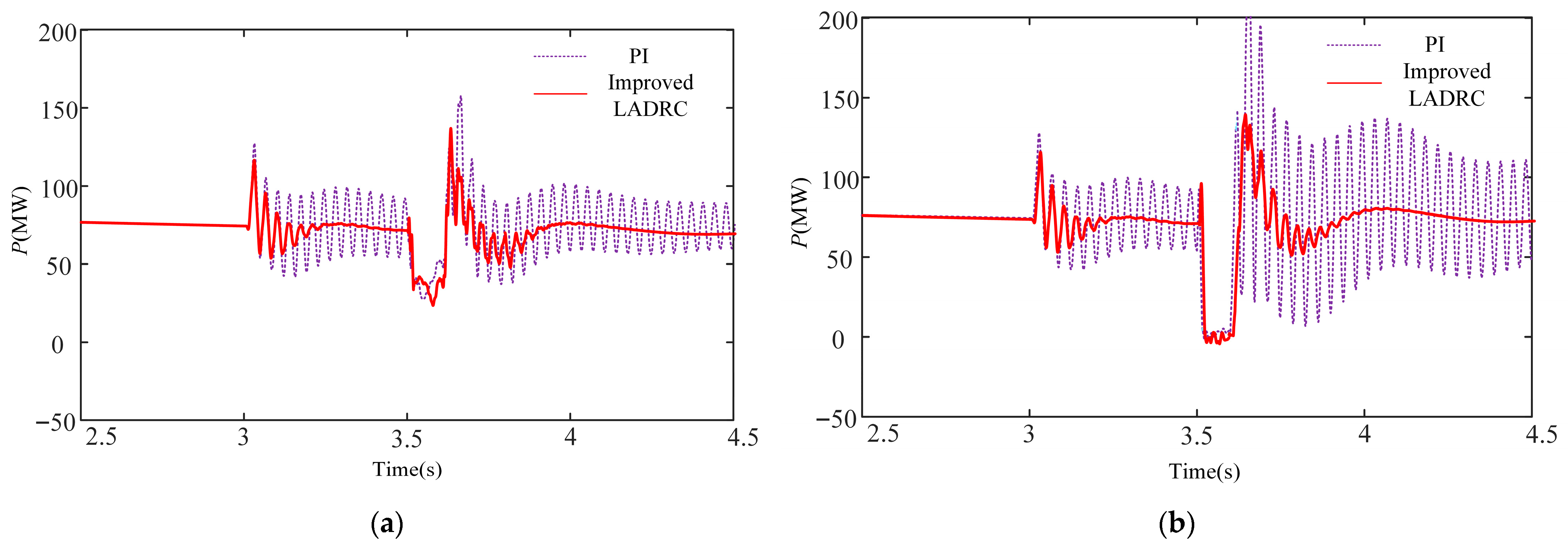
Power system faults, especially transmission line short-circuit and open-circuit faults, are regarded as serious threats to system stability. In a DFIG-based wind farm connected to a series-compensated network, the fault clearance process may excite the SSO of the compensated network. Therefore, phase-to-phase and three-phase-to-ground fault cases are considered to evaluate the post-fault SSO damping capability of the proposed improved LADRC under severe grid disturbances.
As shown in Figure 13, the phase-to-phase fault and the three-phase-to-ground fault were applied on the high voltage side of the 572 V/161 kV step-up transformer at t = 3.5 s after steady-state operation was achieved; the fault was cleared after 0.1 s The level of series compensation and wind speed were set to 40% and 11 m/s, respectively, and the capacitor of series compensation was turned on at t = 3 s.
As illustrated in Figure 21, severe oscillations were observed under both PI control and the improved LADRC during the fault period. However, under the improved LADRC, the system was rapidly restored to a stable operating state after fault clearance. It was demonstrated by the simulation results that the improved LADRC offers significant advantages under fault conditions.

4.3. Comparison Between Improved LADRC and SSDC

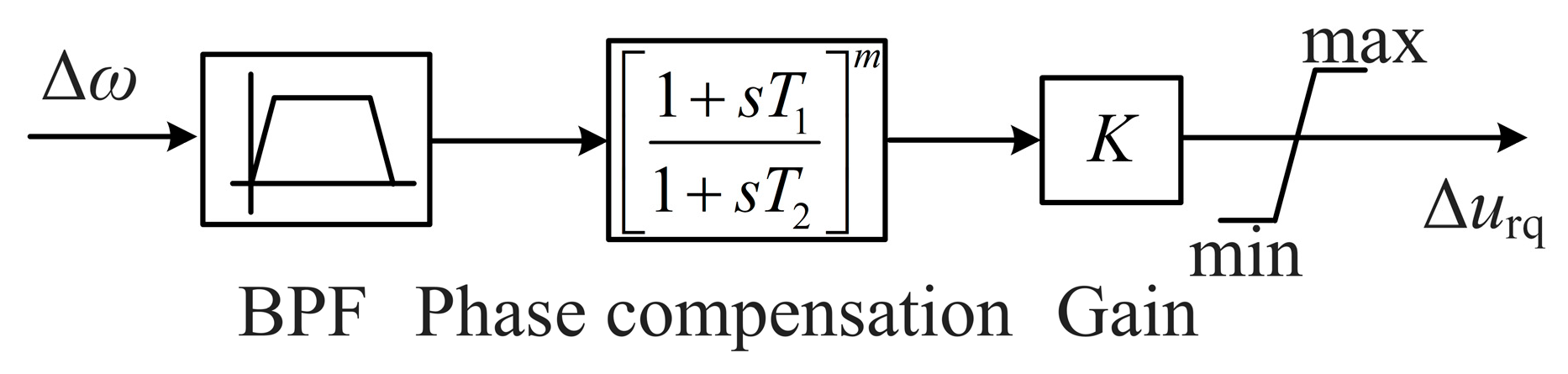
Supplementary damping control, especially SSDC, is widely used to mitigate subsynchronous instability in grid-side and generator-side converter systems. SSDC is also commonly adopted as a benchmark in existing studies [42]. To provide a more comprehensive comparison, this paper compares the improved LADRC with both conventional SSDC and H∞ control. The typical SSDC structure is shown in Figure 22, which consists of a band-pass filter (BPF), a phase compensation unit, and a gain unit. The BPF extracts the subsynchronous component from the rotor speed signal, and the processed signal is used to generate the damping signal. Compared with SSDC, H∞ control is a representative robust control method for improving damping performance under model uncertainties and operating condition variations. It should be noted that the performance of the H∞ controller may depend on the selected model and design parameters, which could affect its effectiveness under varying operating conditions [43].
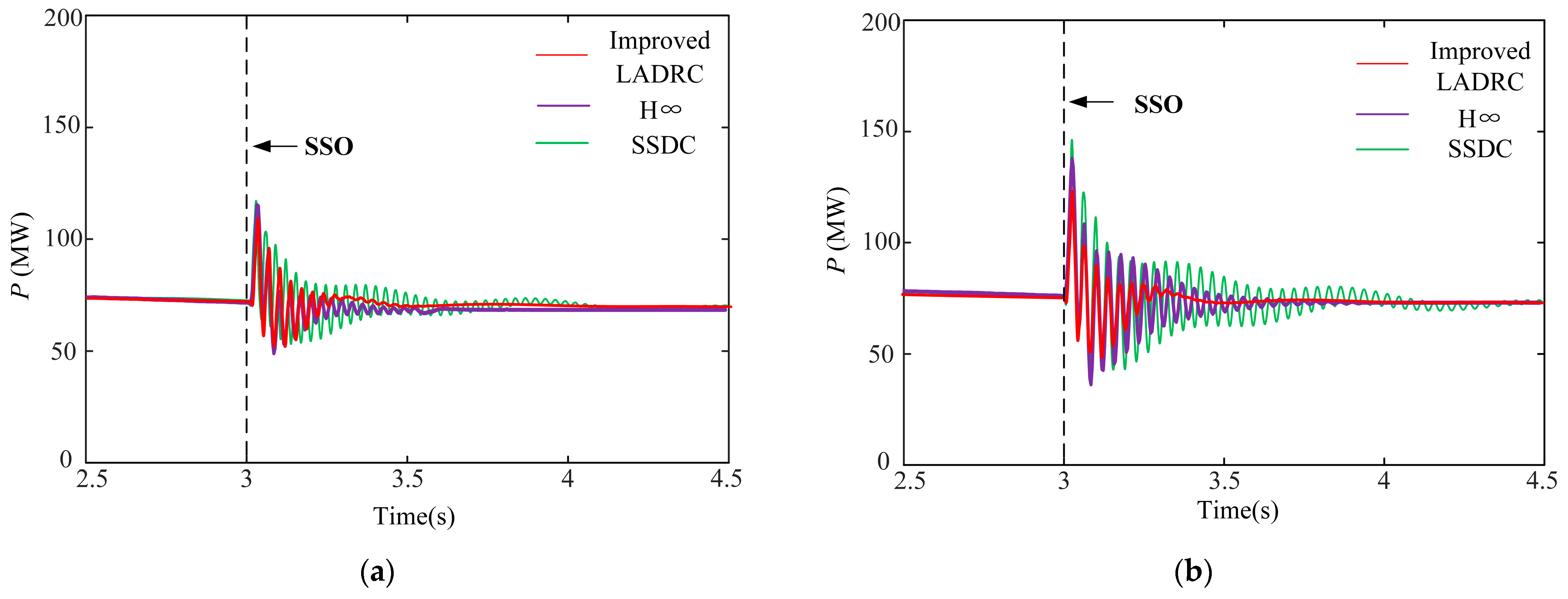
The three controllers are tested under different series compensation levels. At t = 3 s, the series compensation level is set to 40%, while the other network parameters remain unchanged. As shown in Figure 23a, all controllers can suppress SSO. However, the improved LADRC provides faster stabilization and lower power oscillation amplitude. The H∞ controller shows better robustness than SSDC, but its transient response is slower than that of the improved LADRC.
A further test is conducted under 55% series compensation. As shown in Figure 23b, the change in compensation level shifts the system resonant frequency, which weakens the damping effect of SSDC due to its dependence on the BPF and phase compensation parameters. The H∞ controller maintains better robustness than SSDC, while the improved LADRC still achieves faster dynamic recovery and stronger oscillation suppression. This is because the improved LADRC can estimate and compensate for the total disturbance online.
Therefore, the simulation results indicate that the improved LADRC provides better transient damping performance than conventional SSDC and H∞ control under the tested conditions. Although H∞ control has strong robustness, it usually requires an accurate uncertain model and a more complex synthesis process. In contrast, the improved LADRC has a simpler structure and better adaptability to resonant-frequency variations.

5. Conclusions

This paper proposes an improved LADRC strategy for DFIG-based wind power systems to mitigate SSO by integrating a decoupling-based observer with FRC. The proposed method effectively suppresses SSO within approximately 0.3 s.
Time-domain simulations under various conditions, including different wind speeds, series compensation levels, number of grid-connected units, and fault scenarios, demonstrate that the improved LADRC enhances system stability, accelerates oscillation damping, and improves disturbance rejection capability. In addition, the THD is significantly reduced, indicating improved power quality. Compared with conventional LADRC, the proposed method shows superior overall performance.
Compared with SSDC and H∞ strategies, no parameter retuning is required for the proposed improved LADRC when the SSO frequency shifts due to variations in the series compensation level. By contrast, both SSDC and H∞ rely on predefined design parameters, and their performance may be affected if the system conditions change. The improved LADRC enhances system damping across different SSO frequencies and effectively suppresses the occurrence of SSO.
But hardware-in-the-loop testing has not yet been performed, and economic aspects, including implementation cost and engineering cost-effectiveness, have not been considered. These limitations may restrict the direct applicability of the results in practical engineering scenarios. Therefore, future work will include hardware-based validation, comprehensive economic assessment, and further testing under more complex operating conditions.

Author Contributions

Conceptualization, Z.Z.; methodology, Z.Z., P.T., and R.W.; software, P.T.; validation, P.T.; formal analysis, Z.Z.; investigation, Z.Z., P.T., and R.W.; resources, P.T.; data creation, P.T.; writing—original draft preparation, R.W.; writing—review and editing, Z.Z. and R.W.; visualization, P.T.; supervision, Z.Z. and P.T.; funding acquisition, P.T. All authors have read and agreed to the published version of the manuscript.

Funding

This research received no external funding.

Data Availability Statement

The new data created in this study are available on request from the corresponding author.

Acknowledgments

The author expresses his gratitude to his mentor and friends for their help.

Conflicts of Interest

The authors declare no conflicts of interest.

Abbreviations

The following abbreviations are used in this manuscript:
LADRCLinear Active Disturbance Rejection Control
PIProportional–Integral
RSCRotor-Side Converter
ADRCActive Disturbance Rejection Control
SSCISub-Synchronous Control Interaction
SSOSub-Synchronous Oscillation
DFIGDoubly Fed Induction Generator
RCRepetitive Control
FRCFast Repetitive Control
LESOLinear Extended State Observer
LSEFLinear State Error Feedback
UPFCUnified Power Flow Controller
MPPTMaximum Power Point Tracking
BPFBand-Pass Filter
SSDCSub-Synchronous Damping Control

References

  1. Liu, Z.; Yu, C.; Liang, N.; Han, J.; Luo, J. Sub-synchronous oscillation damping control strategy of DFIG based on expansion state observation. Electr. Mach. Control 2023, 27, 143–154. [Google Scholar] [CrossRef]
  2. Summerfield-Ryan, O.; Park, S. The power of wind: The global wind energy industry’s successes and failures. Ecol. Econ. 2023, 210, 107841. [Google Scholar] [CrossRef]
  3. Wang, Y.; Wang, R.; Tanaka, K.; Ciais, P.; Peñuelas, J.; Balkanski, Y.; Sardans, J.; Hauglustaine, D.; Liu, W.; Xing, X.; et al. Accelerating the energy transition towards photovoltaic and wind in China. Nature 2023, 619, 761–767. [Google Scholar] [CrossRef]
  4. National Energy Administration of China. The Situation of Grid-Connected Operation of Renewable Energy Sources in 2025. 2026. Available online: https://www.nea.gov.cn/20260212/742b8c6a078347b0b39de676c05c5d58/c.html (accessed on 21 April 2026).
  5. Bundesnetzagentur. Bundesnetzagentur Publishes 2025 Electricity Market Data. 2026. Available online: https://www.bundesnetzagentur.de/SharedDocs/Pressemitteilungen/EN/2026/20260104_SMARD.html (accessed on 21 April 2026).
  6. RTE. 2025 Review—Generation. 2025. Available online: https://analysesetdonnees.rte-france.com/en/annual-review-2025/generation (accessed on 21 April 2026).
  7. Energy-Charts. Column Charts on Electricity Generation. Denmark. 2025. Available online: https://www.energy-charts.info/charts/energy/chart.htm?c=DK&interval=year&l=en&year=-1 (accessed on 21 April 2026).
  8. Electricity Maps. Grid in Review: Denmark. 2025. Available online: https://www.electricitymaps.com/grid-in-review-2025/denmark (accessed on 21 April 2026).
  9. Mahroug, R.; Matallah, M.; Abudura, S. Modeling of wind turbine based on dual DFIG generators. Int. J. Power Electron. Drive Syst. 2022, 13, 1170–1185. [Google Scholar] [CrossRef]
  10. Leon, A.E.; Amodeo, S.J.; Mauricio, J.M. Enhanced Compensation Filter to Mitigate Subsynchronous Oscillations in Series-Compensated DFIG-Based Wind Farms. IEEE Trans. Power Deliv. 2021, 36, 3805–3814. [Google Scholar] [CrossRef]
  11. Sadiq, E.H.; Mohammed, L.A.; Taha, H.M. Enhancing Power Transmission Efficiency Using Static Synchronous Series Compensators: A Comprehensive Review. J. Intell. Syst. Control 2024, 3, 71–83. [Google Scholar] [CrossRef]
  12. Hassan, M. Sampled-Data Control Under Time-Varying Delays: A Robust Approach for High-Renewable Smart Grids. Sci. Rep. 2026, 16, 9674. [Google Scholar] [CrossRef] [PubMed]
  13. Shair, J.; Xie, X.; Wang, L.; Liu, W.; He, J.; Liu, H. Overview of Emerging Subsynchronous Oscillations in Practical Wind Power Systems. Renew. Sustain. Energy Rev. 2019, 99, 159–168. [Google Scholar] [CrossRef]
  14. Chen, Y.; Wu, F.; Shi, L.; Li, Y.; Wang, Z.; Ding, Y. Analysis and Suppression Strategies of Sub-Synchronous Oscillations in DFIG Wind Farm Integrated with Synchronous Pumped Storage System. Sustainability 2025, 17, 4588. [Google Scholar] [CrossRef]
  15. Mahish, P.; Pradhan, A.K. Mitigating Subsynchronous Resonance Using Synchrophasor Data Based Control of Wind Farms. IEEE Trans. Power Deliv. 2020, 35, 364–376. [Google Scholar] [CrossRef]
  16. Wang, Y.; Liang, M.; Xie, F.; Long, C.; Yang, R. Sub-Synchronous Oscillation Analysis and Suppression in Hybrid Wind Farm. Energies 2025, 18, 140. [Google Scholar] [CrossRef]
  17. Meng, F.Y.; Sun, D.Y.; Zhou, K.; Wu, J.; Zhao, F.Q.; Sun, L. A sub-synchronous oscillation suppression strategy for doubly fed wind power generation system. IEEE Access 2021, 9, 83482–83498. [Google Scholar] [CrossRef]
  18. Wu, X.; Ning, W.; Yin, T.R.; Yang, X.; Tang, Z.Y. Robust design method for the SSDC of a DFIG based on the practical small-signal stability region considering multiple uncertainties. IEEE Access 2018, 6, 16696–16703. [Google Scholar] [CrossRef]
  19. Mohammadpour, H.A.; Santi, E. SSR damping controller design and optimal placement in rotor-side and grid-side converters of series-compensated DFIG-based wind farm. IEEE Trans. Sustain. Energy 2015, 6, 388–399. [Google Scholar] [CrossRef]
  20. Dong, H.; Su, M.; Liu, K.; Zou, W. Mitigation strategy of subsynchronous oscillation based on fractional-order sliding mode control for VSC-MTDC systems with DFIG-based wind farm access. IEEE Access 2020, 8, 209242–209250. [Google Scholar] [CrossRef]
  21. Boussaid, I.; Harrouz, A.; Hartani, M.A.; Kayisli, K. Optimization of Sliding Mode Control for Doubly Fed Induction Generator Systems Using Particle Swarm and Grey Wolf Algorithms. Electr. Power Compon. Syst. 2023, 52, 1782–1795. [Google Scholar] [CrossRef]
  22. Mohapatra, S.P.; Dash, P.K.; Bisoi, R. A new approach to instantaneous power-based control of DFIG using active disturbance rejection control. e-Prime Adv. Electr. Eng. Electron. Energy 2024, 9, 100740. [Google Scholar] [CrossRef]
  23. Liu, H.; Bu, F.; Huang, W.; Qin, H.; Tan, Y.; Qian, Z. Linear Active Disturbance Rejection Control for Dual-Stator Winding Induction Generator AC Power System. IEEE Trans. Ind. Electron. 2023, 70, 6597–6607. [Google Scholar] [CrossRef]
  24. He, H.-Y.; Wang, M.-D.; Xu, H.-Y.; Wang, S.-Y. Optimized LADRC for sub-synchronous oscillation suppression in wind turbines. Appl. Sci. 2026, 16, 2702. [Google Scholar] [CrossRef]
  25. Zhang, Z.; Chen, Y.; Xie, S.; Feng, X.; Qin, H.; Zhao, C. Current harmonic suppression for permanent-magnet synchronous motor based on notch filter and LADRC. Energy Rep. 2022, 8, 175–182. [Google Scholar] [CrossRef]
  26. Zhang, X.; Li, X.; Wang, Y.; Liu, H. Research on subsynchronous oscillation suppression of doubly-fed wind turbine based on linear active disturbance rejection control. Electr. Power Constr. 2024, 45, 118–126. (In Chinese) [Google Scholar] [CrossRef]
  27. Liu, Z.; Wang, W.; Luo, J.; Li, M. Sub-Synchronous Oscillation Suppression Strategy for Virtual Synchronous DFIG Grid-Connected Systems Based on MPC. Electr. Mach. Control Appl. 2024, 51, 75–84. [Google Scholar] [CrossRef]
  28. Ghafouri, M.; Karaagac, U.; Mahseredjian, J.; Kocar, I.; Lei, M. Design of a Robust and Practicable SSI Damping Controller Using H∞ Technique for Series Compensated DFIG-Based Wind Farms. Energy Rep. 2023, 9, 647–655. [Google Scholar] [CrossRef]
  29. Wang, T.; Zheng, J.; Li, D.; Li, M.; Liu, Y.; Song, W. Adaptive Harmonic Current Compensation Method for DFIG-Based Wind Farm to Block the Propagation of Subsynchronous Oscillation. Electr. Power Syst. Res. 2024, 234, 110532. [Google Scholar] [CrossRef]
  30. Zhou, J.; Sun, Y.; Chen, S.; Lan, T. A Fast Repetitive Control Strategy for a Power Conversion System. Electronics 2024, 13, 1186. [Google Scholar] [CrossRef]
  31. Hoq, M.T.; Wang, J.; Taylor, N. Review of Recent Developments in Distance Protection of Series Capacitor Compensated Lines. Electr. Power Syst. Res. 2021, 190, 106831. [Google Scholar] [CrossRef]
  32. Yang, X.W.; Bao, Y.M.; Meng, Z.C.; Xu, C.T.; Wang, Y.N.; Xue, H. Restraining method of subsynchronous oscillation in virtual synchronous generator based on impedance reshaping. Proc. CSEE 2024, 44, 5538–5548. [Google Scholar] [CrossRef]
  33. Thirumalaivasan, R.; Janaki, M.; Prabhu, N. Damping of SSR Using Subsynchronous Current Suppressor With SSSC. IEEE Trans. Power Syst. 2013, 28, 64–74. [Google Scholar] [CrossRef]
  34. Ali, M.T.; Zhou, D.; Song, Y.; Ghandhari, M.; Harnefors, L.; Blaabjerg, F. Analysis and Mitigation of SSCI in DFIG Systems with Experimental Validation. IEEE Trans. Energy Convers. 2020, 35, 714–723. [Google Scholar] [CrossRef]
  35. Chen, A.; Xie, D.; Zhang, D.; Liu, C.; Zhang, Y.; Li, S. PI Parameter Tuning of Converters for Sub-Synchronous Interactions Existing in Grid-Connected DFIG Wind Turbines. IEEE Trans. Power Electron. 2019, 34, 6345–6355. [Google Scholar] [CrossRef]
  36. Touti, E.; Abdeen, M.; El-Dabah, M.A.; Kraiem, H.; Agwa, A.M.; Alanazi, A.; Alanazi, T.I. Sub-synchronous oscillation mitigation for series-compensated DFIG-based wind farm using resonant controller. IEEE Access 2024, 12, 66185–66195. [Google Scholar] [CrossRef]
  37. Cai, W.; Guo, K.; Liu, L. Sub-synchronous oscillation mitigation strategy based on first-order LADRC for direct drive wind turbines. Electr. Power 2022, 55, 175–184. [Google Scholar]
  38. Li, W.; Sha, P.; Li, C.; Deng, J.; Hu, Y.; Peng, L.; Xiang, Z.; Wang, C.; Li, P.; He, C. Dynamic series suppression strategy for sub-synchronous oscillation in DFIG-based wind farms connected to series-compensated network. Int. J. Electr. Power Energy Syst. 2025, 171, 110977. [Google Scholar] [CrossRef]
  39. Zheng, J.; Li, B.; Chen, Q.; Zhang, Y.; Liu, Y. HPF-LADRC for DFIG-based wind farm to mitigate subsynchronous control interaction. Electr. Power Syst. Res. 2023, 214, 108925. [Google Scholar] [CrossRef]
  40. An, S.; Luo, C.; Pu, Q.; Ma, Q.; Liu, M.; Zhu, L. A novel method for mitigating the SSO of DFIG based on active disturbance rejection controller. In Proceedings of the 2024 7th International Conference on Energy, Electrical and Power Engineering (CEEPE), Yangzhou, China, 26–28 April 2024; pp. 428–435. [Google Scholar] [CrossRef]
  41. Wang, T.H.; Zheng, J.Y.; Chen, Q.C.; Song, W.L. Mitigation of Subsynchronous Control Interaction in DFIG-Based Wind Farm Using Repetitive-PI. IEEE Access 2023, 11, 60807–60816. [Google Scholar] [CrossRef]
  42. Li, P.; Wang, J.; Xiong, L.; Tariq, M.A.; Chen, Z. Energy-shaping controller for DFIG-based wind farm to mitigate subsynchronous control interaction. IEEE Trans. Power Syst. 2021, 36, 2975–2991. [Google Scholar] [CrossRef]
  43. Wang, Y.; Wu, Q.; Yang, R.; Tao, G.; Liu, Z. H∞ current damping control of DFIG based wind farm for sub-synchronous control interaction mitigation. Int. J. Electr. Power Energy Syst. 2018, 98, 509–519. [Google Scholar] [CrossRef]
Figure 1. The structure diagram of the series compensation type doubly fed wind farm grid connection system.
Energies 19 02378 g001
Figure 2. The impedance model of the DFIG series compensation wind farm.
Energies 19 02378 g002
Figure 3. A block diagram of the rotor-side converter.
Energies 19 02378 g003
Figure 4. Block diagram of LADRC.
Energies 19 02378 g004
Figure 5. A block diagram of LESO.
Energies 19 02378 g005
Figure 6. The decoupled LADRC Bode diagram.
Energies 19 02378 g006
Figure 7. A block diagram of the repetitive controller.
Energies 19 02378 g007
Figure 8. A block diagram of the fast repetitive controller.
Energies 19 02378 g008
Figure 9. A comparison of Bode plots between FRC and RC.
Energies 19 02378 g009
Figure 10. The sub-synchronous oscillation suppression strategy based on the improved LADRC.
Energies 19 02378 g010
Figure 11. A block diagram of the equivalent Current Loop q-axis.
Energies 19 02378 g011
Figure 12. The Bode plot of the improved LADRC.
Energies 19 02378 g012
Figure 13. A structure diagram of the DFIG connected to the grid.
Energies 19 02378 g013
Figure 14. Active power at various series compensation degrees: (a) when the series compensation degree is 40% and (b) when the series compensation degree is 55%.
Energies 19 02378 g014
Figure 15. DC bus voltage under different shunt compensation degrees: (a) when the series compensation degree is 40% and (b) when the series compensation degree is 55%.
Energies 19 02378 g015
Figure 16. The single-phase current of the DFIG under each controller: (a) PI; (b) LADRC; and (c) improved LADRC.
Energies 19 02378 g016
Figure 17. The spectral diagrams of single-phase current under the two controllers.
Energies 19 02378 g017
Figure 18. The DC bus voltage diagram of the wind farm at various wind speeds: (a) when the wind speed is 8 m per second and (b) when the wind speed is 5 m per second.
Energies 19 02378 g018
Figure 19. Three-phase current diagrams of wind farms with different numbers of grid-connected wind turbines: (a) when 77 units are connected to the grid and (b) when 55 units are connected to the grid.
Energies 19 02378 g019
Figure 20. Analysis of the single-phase current in different scenarios of LADRC and improved LADRC and FFT analysis: (a) the single-phase current of the system under the grid connection condition of 77 DFIG units; (b) the single-phase current of the system under the grid connection condition of 55 DFIG units; (c) the FFT analysis of currents under grid connection conditions for 77 DFIG units; (d) the FFT analysis of currents under grid connection conditions for 77 DFIG units; (e) the single-phase current of the wind farm under an 8 m/s wind speed condition; (f) the single-phase current of the wind farm under an 5 m/s wind speed condition; (g) the analysis of the current in the wind farm under an 8 m/s wind speed condition; (h) the analysis of the current in the wind farm under an 5 m/s wind speed condition; (i) the single-phase current of the DFIG at a 55% series compensation level; and (j) the FFT analysis of DFIG current at 55% series compensation level.
Energies 19 02378 g020aEnergies 19 02378 g020b
Figure 21. The active power under fault conditions: (a) the active power under phase-to-phase fault and (b) the active power under three-phase-to-ground fault.
Energies 19 02378 g021
Figure 22. A structure diagram of the additional damping control.
Energies 19 02378 g022
Figure 23. The active power at various series compensation degrees: (a) when the series compensation degree is 40% and (b) when the series compensation degree is 55%.
Energies 19 02378 g023
Table 1. A comparison of the advantages and disadvantages of some modern control methods.
ReferenceMethodsAdvantagesLimitations
[27]Model Predictive ControlStrong dynamic response; can handle multivariable control.Requires an accurate prediction model; higher computational burden
[28]H∞ robust damping controlSuitable for uncertain DFIG wind farm systems.A precise model of the uncertain state space is required; The order of the controller is very high, which may result in noise interference.
[29]Variable-gain super-twisting sliding-mode controlChattering is reduced compared with first-order SMC; suitable for nonlinear systems.Control law and gain design are more complicated; they may face noise sensitivity
[30]Adaptive harmonic current compensationStrong frequency adaptability; effective for wide-band SSO variationThis depends on the accuracy of the frequency detection; multi-frequency SSO may require multiple compensation branches; the suppression speed is relatively slow
Table 2. The main parameters of the system model.
SymbolParameter SpecificationNumerical Value
PRated power100 MW
frNatural frequency60 Hz
RrRotor resistance0.016 p.u.
RsStator resistance0.025 p.u.
LrRotor inductance0.16 p.u.
LsStator inductance0.17 p.u.
LmMutual inductance2.8 p.u.
Xt1T1 reactance0.020 p.u.
Xt2T2 reactance0.020 p.u.
XL161 KV line reactance0.5 p.u.
RL161 KV line resistance0.02 p.u.
Disclaimer/Publisher’s Note: The statements, opinions and data contained in all publications are solely those of the individual author(s) and contributor(s) and not of MDPI and/or the editor(s). MDPI and/or the editor(s) disclaim responsibility for any injury to people or property resulting from any ideas, methods, instructions or products referred to in the content.